• BurnoutParadiseArtWith the way people talk about open world ‘sandbox’ games, you’d think the designers had taken the afternoon off and forgotten to design half the game, under the guise of creating an ‘unguided experience’.  They’re written about as if players were left to their own devices, free to do whatever they want without constraint, free to do whatever they want any old time.

    In truth there are only a handful of games that actually do that.

    And that’s largely because the concept of freedom in videogames is furphy.  In most cases freedom is nothing more than a contrived concept in games, referring to the player’s relatively self-defined passage through its scripted content, rather than a blank canvas upon which to draw their experience.  The change in development costs and price and consumer expectation has necessitated that the structure of the modern games change to present an entirely new value proposition, one that embraces longer play times, and at the very least creates the illusion of value for money.  Relative to the games of yore, sure, these games are free as a bird.  But in actuality it’s nothing more than smoke and mirrors.

    But Freedom hey, it sounds good, doesn’t it?  A nice little thing to put on the back of the box, a selling point for the press to mention off the cuff in their videos, and more importantly great YouTube fodder for the screechy millionaires playing games for people’s entertainment.  But it’s imagined, because what they’re really selling is a nonlinearity of progression, a way in which you choose to play through the game’s milestones and objectives.  Take Far Cry 4, which offers a map full to brim of activities to complete at your own pace, in your own way.   The open world tricks us into thinking we have real choice, but as far as mechanics go, most open world games – like Far Cry 4 – restrict how you finish their missions by putting rules in place that govern fail states.  Sure, these new games may make old school level-based games look like Guantanamo Bay, but while the progression boundaries are bigger they’re still there, and complete with barbed wire to keep players fenced in.

    So when was the last game that truly allowed you to pissfart around in its world, throwing you a playground to almost literally do what you please?  A game so special that its scale and scope are only limited by your own concept of enjoyment and entertainment.  A game that doesn’t limit you to set pieces or mission types and instead trusts you to create your own fun with the game’s core mechanics.  A game that is, almost literally, an electric playground.

    A game like Burnout Paradise.

    It’s an anomaly really, a game where the designers threw the keys at you and practically said “here’s a car mate, ‘ave a go”. And off you went.  It was a game so rich in the things that make games ‘feel’ right, that it didn’t feel the need to put in place a series of rigid rules and regulations to keep people boxed into a curated experience, rather almost encouraged them to be creative in the way they played the game.  Sure the world had its boundaries, and if you were so inclined there were inbuilt objectives to pursue, but the faith the designers had in the game they had made showed.  It was a game design risk to let players have the freedom to have fun the way they wanted to.  But it was a risk that paid off because both online and off, Burnout Paradise was something incredibly special indeed, and a triumph of brilliant game design. Both for what it did do, and what it didn’t.

    In Burnout Paradise Criterion Games’ best and brightest created the model for freedom in games, and one that games like Minecraft while disparate in their core concept and design, have learnt from.  By having faith in the core mechanics of the game, by understanding just what made their game so incredibly enjoyable, Criterion Games were redefining player freedom in video games by trading solely on the ‘fun factor’ proposition they offered player.  And as it turns out those stocks were the bluest of blue chip.

    BurnoutP

  • Wolfenstein The New Order Xbox 360Nazis, robots, alternative timelines – on paper, Wolfenstein: The New Order (buy on Amazon) sounds like the sort of straight-to-video B-movie nonsense you’d bypass with a tired shake of the head were you to spot it in a video shop (if such places even exist any more). Yet it manages to be, as Sir Gaulian found, far more than the sum of its parts.

    My first impression wasn’t good, however. By halfway through the opening level, I was questioning whether I’d even bother playing through the rest of the game. It opens with a classic beach-storming episode of the like we’ve played through hundreds of times before in dozens of WW2 shooters, and it quickly reminded me of the dire Return to Castle Wolfenstein from a decade or so ago. Yes, there are robot dogs: otherwise though, it could be any old Call of Duty or Medal of Honor game from the turn of the century. But then it gets interesting.

    Hero B. J. Blazkowicz takes some shrapnel to the head and goes into a catatonic state. He wakes up 14 years later in a mental asylum, only to find that the Nazis have taken over the world thanks to some mysterious advanced technology. And its the chilling depiction of this world, along with some brilliant characterization, that really elevates this game to the next level.

    Whereas previous Wolfenstein games had you gunning down Nazis just because, you know, they’re Nazis, here you’re given a reason to really hate them. The game presents you with a world where Nazism is taken to its logical extreme – the quest for a pure Aryan race is taken to levels of unimaginable genocide and repression, the development of nuclear weapons has led to the subjugation of America and the quest for lebensraum has ensnared the whole globe – and even other planets. Blaskowicz’s shock at waking up to this nightmare is palpable. He declares that he wants to join the resistance, to fight against the rise of the Nazis, but he’s given the chilling response: “What resistance?” The whole world has fallen.

    Wolfenstein the New Order mental asylum

    It gives you an uncomfortable feeling of helplessness. How can you possibly do anything to change this horrendous world? Of course, the game gives you a conduit to do just that, but the way it explores the consequences of living in a Nazi-dominated world really provides pause for thought. What would I do in that circumstance? What could anyone do?

    The plot and characters are also far, far better than they have any right to be for a ‘dumb’ first person shooter. Many’s the time that I’ve played through a game without giving two hoots about the other characters, mostly because they have the depth and personality of a wet lettuce (Halo is a good example). But here I really bought into the plight of these NPCs, mostly thanks to some excellent voice acting and a taut script.

    Gameplay-wise, it’s also something of a revelation. The use of health packs came as a breath of fresh air after years of getting used to regenerating health – battles feel terrifically exciting as a result, as you desperately hunt for extra health while under fire. Dual wielding also feels fresh again, and opting for this over just using a single weapon has a big impact on the way you play the game.

    Wolfenstein The New Order Abbey Road

    There’s also room for a bit of black humour – the LPs you collect are brilliantly done, featuring Nazified versions of sixties singers, and the fact that the designers actually recorded the songs shows an amazing attention to detail. The only criticism I’d level at the game is that the collectibles are largely pointless – I would have liked to see more of the letters you find, detailing individuals’ struggles to survive, rather than various useless gold statues. Oh, and the ending… well, maybe that’s an article for another time.

    All in all though, Wolfenstein: The New Order turned out to be a surprisingly affecting and eminently playable game that has managed to push the FPS genre to new heights. With this and the wonderful Alien: Isolation, my gaming year has already got off to a tremendous start.

  • PierrevanHooijdonk
    Pierre van Hooijdonk

    While playing games our own little legends are born.  The stories we form in our heads, the narratives we create to put context to what’s happening on screen, they always go on to become things of legend that tell our own personal tale of time spent with a game.  In many ways it’s this imagined narrative that cements games in our memories, more than the stories being told by characters on the screen, and more than the resolution the credits rolling brings.  It is in a lot of ways more important than the scripted tale woven by the talented writers and artists, and definitely more insidious, as your brain constantly seeks to put imagined but relevant context to what’s happening on screen.  From the simplicity of Space Invaders and Galaga, to the sprawling open worlds of Far Cry and Grand Theft Auto, our imaginations fill in the gaps to create something unique to us.  We all may be playing the same game, but the meta-game – the one happening in only our minds, defines our experience.  That is until we hand these stories down, telling tales to friends and families of our conquests, creating folklore in the process.

    And this is no truer than for sports games.

    I’ve played more sports games for more hours than I care to admit.  From the early days of International Soccer on the Commodore 64 right through the most recent Pro Evolution and NHL games, I’ve been a virtual winner and loser for nearly 30 years.  And i’ll play however I can get it, single player exhibition, tournaments, seasons, Be a GM – you name it i’ve poured hours into it.  But even though I’ll sit there on my lonesome, hunched over on the couch watching the virtual minutes (and real life hours) pass by, it’s the multiplayer that has provided me with the best memories over the years.  Mainly because of the legends that were created.

    Football games were a mainstay in my household growing up.  It was almost impossible for it not to be being an Amiga 500 household, where Kick-Off and Sensible Soccer were both legitimately amazing ways to spend a few hours each day.  This fascination continued as long as I lived at home well into the Playstation 2 era,  and while Pro Evolution Soccer was my football game of choice, it’s actually Sony’s This is Football series that kept us playing together.  Having dutch heritage we derived inordinate amounts of fun cooperatively taking the men in orange to the finals of the faux World Cup.  Sure the team and player licenses weren’t as complete as FIFA or Pro Evolution Soccer were, but for us, that was half the fun.  And he first time we lifted the cup was a thing of legend.  Every victory brought us closer and closer to glory, with some games being close and others thrashings.  But every game had one thing in common.

    Enter Dutch Striker Pierre van Hooijdonk.  Or should I say ‘van Hood’.  The man that became a thing of legend, scoring at every opportunity, often clinching the win in the dying minutes.  He was our super sub, the man we would bring on at the most dire of moments, and take the game to the opposition with such intensity and vigour.  “Get the ball the van Hood!” we’d say as the 90 minute mark approached and victory seemed all but impossible, and the ever elusive lifting of the cup seemed out of reach.  Suddenly he’d appear as if by magic, seemingly everywhere on the pitch all at once, more often than not ready to knock the pinpoint accurate cross into the goals but more often than should be possible ready to take a last chance shot from outside the box.  van Hood made history and became a legend in the process.

    Our next task was to take an English Premier League team to the top, the chips fell on Manchester United, and Rio Ferdinand – “Big Bad Ferdinand” – was our muscle ready, willing and able to take the red card by hacking at the legs of the opposition.  That is if he, like van Hood before him, wasn’t scoring supernatural goals at the other end of the pitch.  That year, Man Utd were crowned champions, and Ferdinand immortalised in our minds at the man that did it.

    Funny thing is, neither van Hood or Rio Ferdinand were statistical outliers with impossibly high players stats, even relative to the worst players in the team.  But we had created our own narratives and our own legends around those fateful victories.  Just as in real life where sport is – for the spectator at least – more about the journey than the end result, sports games are full of moments and passages of plays that without context, are just a series of numbers on a screen.  Games are about the player on player contests, the amazing forward passes, that cross the just edged past the defender onto the head of the striker, the goal just on 90 minutes.  And that’s just for football games.  In all cases the physical reaction to these moments, and the way our minds remember them, is damn near identical to if we were sitting in the stadium or watching on our televisions.  Which is why we love them so much.


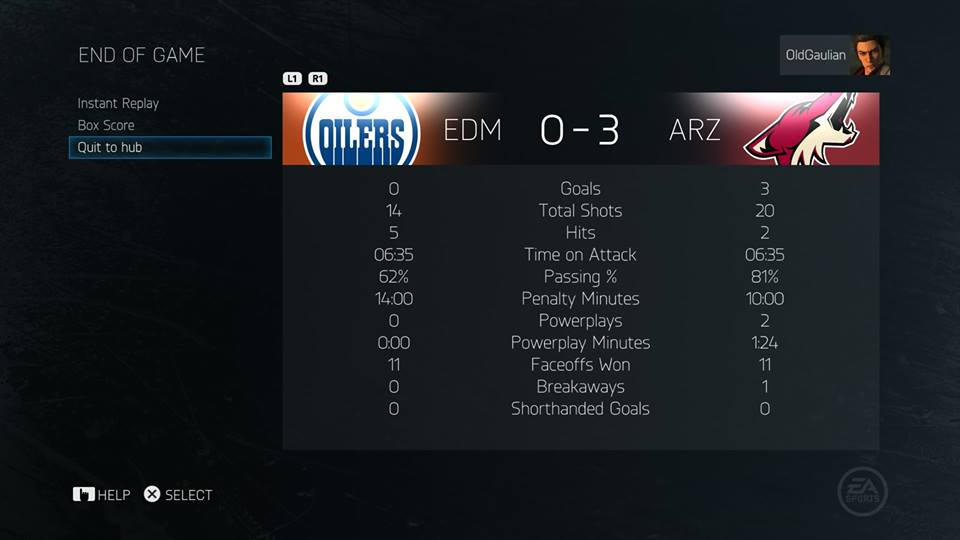
    ScoreBoardNHL2015


  • DKPixelIn the very early days of video games they were primarily aimed at teaching the player how to progress. Improvement was a key driver of early arcade games, incentivised both through the per play pricing structure of the machines, and the most basic of desires to be the best by appearing on the high score table.  It was a clear cut case of games being mechanically simple, but progressively more difficult, encouraging betterment through dedication and analysis.  There may have been some elements of randomness, but anyone that has played these games or watched documentaries about them knows that learning their patterns is key to becoming truly great at them.  They may not be dense on content or variety, but having that sole focus gives these old games a mechanical transparency that makes them ‘masterable’.

    Since those arcade games of yesteryear however, the medium has fundamentally changed, in part because the enabling technology has, but also because the market is far broader than it was.  They have become sprawling masterpieces with life like graphics and sound, enormous in scope, and not shy of ambitions to top even the biggest of silver-screen blockbusters.  Games have in some ways become more mechanically dense, but in doing so have hidden what makes them tick behind smoke and mirrors, relying instead on bombarding players with a virtual cornucopia of ways to interact with the worlds that have been created.   Fail one way and rest assured there’ll be another way to progress just around the corner. But even though the way games pull their players through has changed, games start to finish are about learning the mechanics, and applying them in scenarios the designers throw at you.  It’s just that the art of variety has brought upon the loss of mastery.

    And this change has fundamentally changed the way we think of and consume video games, and in a circular way, has continued the rapid change of game design sentiment through the ages.  No longer do play games solely in the pursuit of success, with the pursuit of winning, with our eyes on the highly coveted prize of typing our initials on a high score table.  Rather we consume them in the same way we watch television, more often than not to see something to a conclusion, or to reach some sort of finality.  This desire to have an endgame is the biggest change that has occurred in video games in their history, and is one that while not entirely killing off the one-and-done nature of arcade games, has certainly made selling them for anything more than a few bucks hard for consumers to swallow.

    The games industry has evolved and with it the expectations of people that play them.  It is a change that above all else has made us rather impatient when the going gets tough, unable to stomach trial and error or god forbid retrying, and less than impressed if save points are conveniently placed no more than a few in-game metres away from each other.  But is it the modern game design sentiment or is it us as players that have led to our reduced tolerance for difficulty?

    Thinking back to school, drawing on my own personal experience, I was always ahead of the class which usually meant that while the rest of the kids were finishing off their long division, I was outside kicking a ball against a wall.  It’s the main limitation of our education system, that teaching and curriculum is developed for universal consumption, and therefore is more often than not targeted at either the lowest common denominator right at the centre of that bell curve.  And the latter case works for a majority of students, but for those on either side of that great big bell curve aren’t catered for, and are held back from reaching their potential as a result.  What’s good for the goose is good for the gander.

    Analogies can be drawn to how video games are designed.  With the natural broadening of the market, games are no longer the realm of the dedicated few, but rather an exercise in courting the masses.  The standard skill distribution of the player base has widened, and the gulf between the highly skilled and the least skilled is an enormous band of average.  Not a problem in and of itself, but it’s the way game developers respond to this incredibly challenging design problem that causes the most issues, and one that is not easy to overcome.

    And that’s largely because we expect – and designers design for – outcomes for someone playing a game to be roughly the same, whether you’re at one end of the player skill spectrum or the other.  Since the dawn of time the school of thought for game designers has been to artificially band these players with difficulty levels, while still ensuring that, for the most part, their ability to get to the end isn’t hampered by the obstacles the designer throws at them.  And this works to shape the experience into something that provides equitable access to the end game.  If that’s the ultimate aim for the design of the game, then the problem is solved, and it becomes a matter of finely tuning those difficulty levels to band those players accurately.  If that’s not the case, however, the questions still remains as to whether reducing the learning curve or difficulty the best way to teach the game and engage the player with the game’s mechanics.  It is this art of teaching, the games’ pedagogy, that defines our relationship with these virtual worlds.

    I have written before about how video games skewed my perception of success through reinforcing the very binary nature of failure, and in much the same way video games impact the way we learn and absorb information.  The feedback loop of a game is vital in drawing the player in, giving them the information they need to move through, and clearly signalling what led to failure.  The 2004 Ninja Gaiden reboot and its 2008 sequel, for example, were unrelenting in their difficulty but their design signalled back to the player where they went through.  It was learning through attrition, but it was learning nonetheless, and in many ways teaches the virtues of persistence.  But for some, that was too much, and many people never saw the credits roll.  And then of course there’s the roguelike, which in and of itself has a different method of teaching.  Still, like difficulty levels, the outcome is expected to be the same for all players.

    And so it becomes clear that the constraint to how games teach players is the idea of equitable access to the end game – something which is increasingly the case in games without predefined difficulty levels.  Games are averaging out their difficulty to appeal to that ‘bell’ in the curve, and in so doing, are adversely impacting those on either end, in much the same way the public school system impacts students.  The end result, in most cases, is games with little challenge that reward lateral thinking as opposed to constructive learning.  And that has fundamentally changed how we approach games, and how game designers have responded to player preference and behaviour.

    The response to this problem is a change in game design sentiments, either to reward players who ‘learn’ the game and perform better than average, or to have the game stick rigidly to its static difficulty model and provide greater and individualised feedback to players upon failure to teach them how to play.  The first solution is an incentive based teaching method, and one which incentivises players to improve in order to experience the game in its entirety.  The second is more of the roguelike school of thought, but instead of in-game growth, players themselves are learning through persistence and through contextualised tutoring .  Both models are highly individualised, allowing players to learn at their own pace, and providing the incentives and tools to learn the mechanics games through their mistakes.  They also remove the requirement to design games cater through deaveraging the estimate of the player skill, which while removes the concept of ‘equitable access’, has the potential to improve outcomes at either end of the skill spectrum.

    There is no right answer to how games teach players ‘how to play’, and the broadening of the market has made it a difficult and in many cases thankless task.  The complexity of games, and an inherent assumption that players will understand the rules of the game world, just adds to that task.  But games for me have started feeling like they’re been designed with the path of least resistance in mind, ready and willing to give players any and all chances to bypass the challenge, often at the expense of fully understanding and appreciating the carefully designed game mechanics on which they are based.  While we are a long way from the age where game design solely being mechanics driven, there is still something magical about the moment when a game just ‘clicks’, something which games could do so much more to help more players achieve.  We just need to let go of the idea that every game can be for everyone. After all, I’m no teacher, but isn’t the aim of education to maximise outcomes for all?

    Ninja Gaiden

  • Do not pass go, do not collect 200 dollars

    The way consumers act you’d think the big publishers of the video gaming world have landed on Mayfair and Park Lane and stacked them high with as many hotels as the properties would allow, that they’ve landed on them, and they’ve had to mortgage their rubbish buildingless Old Kent Road to pay the rent.  The way consumers act you’d think that the games industry is one enormous monopoly board ready to eat their pay cheque the moment they pass go.

    And it’s absolute rubbish.

    Coming off a year that the internet sensationally decried as one of the worst the industry has seen, it’s pretty hard to see through the facade that is put up by the press and the players, one that paints the big developers and publishers as sharp-toothed monopolists seek super profits by taking advantage of their market position.  Video games are analysed like they are a utility, where in absence of regulatory intervention consumption is relatively price inelastic, and where marginal cost is equal to marginal revenue.  In this world consumers are price takers, forced to pay for the monopoly rent-seeking behaviour of the firm, unable to significantly adjust their consumption in response to high prices.

    This doesn’t include consumers that are simply unwilling to adjust their consumption.

    The same economic rationale applies to post launch, where consumers pan monetisation plans that they consider unfair or unjust, but consume it anyway.  The logic more often than not being that .  I’m a firm believer that economics can help inform game design, and given that, am of the view that the relationship between the player and the game is a pseudo market where time is the currency and gameplay the good and in some cases service.  In that context, when people talk about playing games for longer than they can justify, it is a clear market failure based on irrational consumer behaviour.

    And the press don’t help the situation, acting as a pseudo-regulator, taking to arms against what they consider the exertion of market power.  It’s not unusual for the media to take stands against pre-orders, calling for price reductions, for longer games, even boycotts for games they consider don’t fulfill an implied consumer contract – the press are the regulator and the prosecutor.

    You see we live in a world where playing games, games that are unbroken and fulfill our own pent up expectations, is considered a right.  And when it all goes wrong we take to the internet and express our disgust when things go wrong, never taking responsibility to be an informed consumer, instead shifting all the blame to the evil empires that reached into our bank accounts and extorted our money.

    The evil empires that are all experiencing incredibly tight margins and significant competition from other evil empires.  Not much of a monopoly really, is it?

    So next time you’re about to post on a forum to complain about how disappointed you are with Destiny – the game you just spent 300 hours with and bought all the post-launch content for – think twice before looking the fool.

    In short – don’t be that guy.

    oldkentroad

  • MLFMutant League Football eh, yeah, that old chestnut.  You know the one that everyone talks about seemingly every five minutes, pining for its return, practically begging to take to the field as a mutant with tracks instead of feet?  Yeah, well it was one of seemingly hundreds of ‘fantasy’ sports video games that took a shotgun to the sports we know and love, blew their brains out, and left them covered in blood and more extreme than ever before.  And we loved it, so much so in fact that I’d hazard a guess that anyone over the age of 25 has a special little place in their heart for at least one of those virtual bloodsports, Mutant League Football or otherwise.  Extreme violence was the next evolution of sports in the 90’s and we lapped it up.

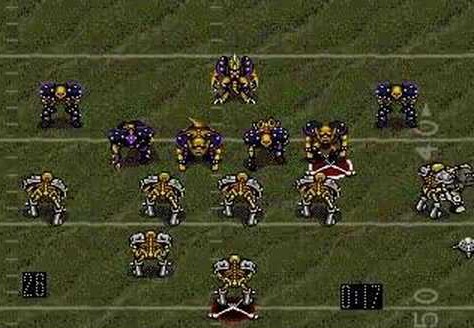
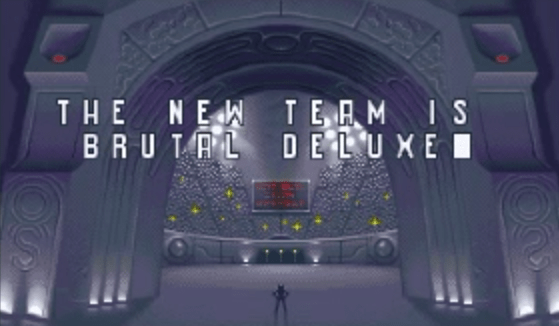
    I would’ve been about five years old when I first got my taste of blood, with the Bitmap Brothers’ futuristic gaelic footy-ice hockey hybrid, Speedball. And it was great.  But it wasn’t until the second game, Speedball 2: Brutal Deluxe, that I fell head over heels in love with the series.  Taking Brutal Deluxe to the top of the tables as with any other sports game was a real treat, but it was the getting there that was the real joy, as you build up a rag tag bunch of souped-up hardly-humans ready to send anyone that stands in your way to hospital.  And hospital you will send, as you rack up points for laying the bodies of your opponents out on the cool-hard steel floor, bringing play to a screeching hault.  Violence is part and parcel – practically a prerequisite – for victory as you come up against the likes of Violent Desire and Steel Fury in the pursuit of greatness.  The future of sports and society more broadly is a violent one, if you ask the good people of the video game industry.

    Fast forward 10 years, multiple generations of hardware later, and we got the closest thing to Speedball 2 in a decade, in Deathrow.  But nothing had really changed, and while the game was a fantastically solid piece of software, the personality that Speedball 2 exuded was gone.  But it didn’t matter, as people like me couldn’t wait to satiate our taste for blood, under the guise of a sports game.  Sadly the audience had moved on and sales were low, so while Deathrow didn’t fall far from the Speedball 2 tree, was simply built on sentiments of a bygone era.  So with nowhere to go the futuristic sport genre simply disappeared.

    But the ideas and concepts of those games lived on, appropriated by other genres looking to ignite a spark in the player base, ending up with games seeded with far more macabre premises like The Club.  Balls has given way for guns, and goals for kills, and bloodsport really meant just that.  It was effectively the gladiator of the modern day, the lower classes being exploited by the wealthy, made to hunt down and kill each other for their entertainment.  But it was still futuristic sport built on the foundations of societal breakdowns, with less stringent rules and regulations and care for human well-being, and with excessive violence being the glue that holds it all together.  The Club isn’t your traditional sports game, but underneath all the third person shooting and headshots, developer Bizarre Creations was leaning on the same premise that the Bitmap Brothers had almost two decades before.  Futuristic sports and violence in these worlds came packaged together in a neatly tied together bundle.

    In fact it usually is the excessive violence that is the only major departure from the sports our kids play at school and we all see on television.  When we’re given the opportunity to make changes to our sports, make them more fantastical, it’s perhaps a sign of the times or the industry that violence is the first place we go.  We could have players with wings or time travel – we could even have teams of jedi – but instead we put spikes on the players’ gloves and call it a day.  It is perhaps indicative of our contempt for our own species that we envisage a dystopian future for ourselves, where even the rules on the pitch are lost in the fullness of time.  But that aside it also shows an inherent awareness of just how finer line there is between civility and disorder, how if we remove the rules we’re no better than your common animal.  Or mutant in the case of Mutant Football Leagues.

    In a perverse way, these overly violent takes on sports we don’t think twice about playing in real life, appeal to us on an almost primal level.  But perhaps most strikingly, these often dystopian futuristic blood sports are the proof in the pudding that when it comes to sport, violence and physical aggression are generally accepted by society.  You only have to watch a game of Rugby Union – a game I love dearly – to see that sport is held to entirely different standards from other often more artistic mediums.  We accept it as part of the game, and govern it accordingly, through very strict rules and regulations.  The NFL players practically wear chain mail, cricketers wear helmets, and Rugby tackles are strictly monitored to mitigate the risk of spinal injuries.  But it’s still there, and in fact, is often an integral part of the game in real life.  Despite the increased prevalence of violence, there isn’t a big gulf between Speedball 2 and the sports we watch week in and week out, cheering as players hit each other with enough force to move mountains.  Video games just take this to the next logical extreme, making physical harm and violence an incentivised part of the game.  And Speedball 2 just happens to be the best example of it.

    Screen Shot 2015-01-31 at 1.23.16 pm

  • ArmchairWhat ho, chums!

    So no doubt you’ve already heard the news by now: Club Nintendo is to close later this year, which will be very sad news for fans of free tat. Perhaps ‘tat’ is being a bit harsh, but there’s no denying the fact that the stuff being hoiked through the UK site is not a patch on some of the free things they get abroad. Whereas the US and Japanese fans get free games, we get… golf balls and wrapping paper. I kid you not.

    Still, all this stuff IS free, so it seems churlish to complain. Although having said that, slogging through all those marketing questionnaires to claim your Club Nintendo stars sometimes felt almost like having a second job. And you have to have a serious amount of stars in order to get anything partway decent.

    See? Golf balls and wrapping paper.
    See? Golf balls and wrapping paper.

    I’ve only ever managed to get three things through Club Nintendo in the 12 or so years of its existence: some Mario themed hanafuda cards, which were pretty cool but ultimately fairly useless; a Pikmin keychain that looked amazing but broke after about a week; and a Yoshi cuddly toy, which is one of my favourite things ever (apart from Fire Emblem amiibo, natch). Yoshi-san is currently still in his wrapping, as I’m planning on giving him to Merriweather Jr when he arrives later this year. Although having said that, I may have to carefully ‘look after’ Yoshi myself until MJ is old enough to treat him with the respect he deserves (i.e. not puking all over him). I reckon he should be mature enough at about sixteen.

    The Yoshi plush toy. Too good to give to a child.
    The Yoshi plush toy. Too good to give to a child.

    So a mixed haul from Club Nintendo, then. Perhaps its demise is no bad thing – although I still think the very fact that Nintendo has a loyalty programme is an indicator of how differently the company goes about its business in comparison to Sony and Microsoft. No wonder Nintendo fans are so devoted.

    Nintendo has promised us that Club Nintendo will be replaced with a ‘new scheme’, although they’ve yet to release any details. I’ve got my fingers crossed that it will be linked in to some sort of gamer account that will let you transfer your profile between machines more easily, as the current system is a right pain. What are your thoughts on Club Nintendo’s demise, and what do you want as a replacement?

    In other news, I was pleased to see the reception to my article on Kotaku UK about Douglas Adam’s Starship Titanic – last time I checked it had been shared on Facebook and Twitter over 2,000 times, which put a big smile on my face. I’ve just finished another one, so hopefully it will appear on their website in the not too distant future.

    Toodle-pip for now!

  • PES5Being a migrant-built country founded by Brits and living in a city made home by a wave of Italians and Germans, it isn’t surprising that Football of the soccer variety came naturally to plenty of kids at my school in Australia. While Adelaide is a city in love with its Aussie Rules football, for a while there growing up I was more likely to come across kids wearing shin guards than mouthguards, and crying “HAND BALL!” over “Hand Pass!”.  Like cricket, the sport of roundball comes naturally to me, meaning the games based on it also do.

    Because of that, throughout the early to mid-2000’s, I always favoured Konami’s Pro Evolution Soccer series to EA Sports’ FIFA franchise, meaning that while i’d buy PES every year on the year, I’d only really dip my toes into the FIFA pool once every few years.  And that was the perfect way for me to get my football fix – PES was always going to be my football diet staple, but dalliances with EA Sports’ series was the ‘there is such a thing as too much of a good thing’ dessert.  And it was this way for a lot of my football-playing friends both in Australia and abroad – the United Kingdom was PES mad for example – with PES being the go-to game for get togethers and solo seasons.  FIFA was a distant, distant second.

    And that’s because while it may not have had the real life TV presentation or the fancy true to life graphics of FIFA, PES did have a great grasp of the feel and flow of that 90 minutes on the pitch.  And it had it in spades.  Its nuanced approach was made to appeal to the diehard football fan, and appeal it did, as every gathering of a bunch of mates turned into a celebration of the best representation of virtual football on the market and inevitably ended in a virtual penalty shootout.  Oh the stories I could tell you about classic PES 5 matches both in the lead up and during to the 2006 World Cup.

    But FIFA was a different beast, preferring flashy style and arcade pacing, splashed with amazing presentation to cover it all up.  That’s not to say it wasn’t a good game – it was – but it was also an incredibly abstracted version of the sport.  While the rules and core concepts were all there, and the real life teams and players made it look the part, it never quite felt right.  Of course to the average punter, it was a bloody sexy version of a ridiculously approachable sport, and so for them it was the perfect entry point to one of the oldest simulated sports in video games.  If they hadn’t played a football game since International Soccer on the Commodore 64, or Kick-Off on the Amiga 500, FIFA was the best entry point.  And in America, it quite simply WAS football games for most people, sitting right next to Madden and NBA Live on store shelves.  But for many of us that were raised playing the game, it was the hobbled little brother that never quite learnt how to ride his bike without training wheels.  And so we sledged it and those who played it.

    But that’s football.

    When it comes to American sports – the baseballs, the gridirons, the basketballs – hearing that a game doesn’t capture the nuance or subtlety of the sport it is simulating instantly catches my attention.  Of course saying that is meant to be the video game industry equivalent of slinging an enormous pile of shit onto it and then cutting off the water supply to the shower.  And to most people, its effect is just that, and they stay well away from the virtually excrement-stained piece of software.  But for me it’s the consumer equivalent of the fifth lights coming on sitting on the starting grid of an F1 race, my foot is poised on the accelerator and my hand is on shifter ready to go.  And EA Sports’ NBA Live series fits that bill to a tee.

    It’s the PES-FIFA paradigm, only in this case, I fall on the FIFA side of things.  For me, an american sports luddite, all I need are the basics of the game.  Can I throw a ball through a hoop?  Tick.  Can I pass the ball?  Tick.  Can I scream BOOM SHAKA LAKA while I hang off of the ring?  BIG TICK.  Fans of the sport may deride me for my rather simplistic take on their beloved hoop ball, but to me, pulling off a full court press or a zone offence means absolutely diddly squat.  Or on other words, the NBA 2K series while excellent, is far too complicated to be an entry point to the sport in games. Like those FIFA-playing Americans before Major League Soccer grew in popularity on the back of the introduction of the ‘Beckham Rule’,  I really just want to have a good time running a ball back and forth on a field, and hopefully score some goals in the process.  But if I have to remember 639 different button combinations and 24 different set pieces to do it then count me out.

    And guess what, NBA Live doesn’t require that, just as TV Sports Basketball didn’t 20 years ago, and the myriad of PS1 games in between didn’t.  While the days of arcade sports games are seemingly long gone, there is always going to be room for the game that doesn’t quite nail it, and comes off as a bit of a shell of the sport on which it’s based.  The purists, like I was with Pro Evolution Soccer, will always be critical of over simplification of their beloved sport.  But for the FIFA crowd of old, the casual consumer and perhaps foreign player that just wants a taste, just enough is good enough.

    NBA Live


  • ShaneWarne99Bats and Balls.  That’s where the similarities end.

    I grew up on a healthy diet of cricket. Sport is so entrenched in Australian culture that it’s kind of hard to escape, with backyard cricket an afternoon and family gathering staple, and television programming and ratings being quite literally dictated by what sports are on the telly.  From the two different versions of the Footy Show shown on primetime thursday nights – depending on if you’re a Rugby or an AFL city – to the five days of lounging about watching the beauty of a cricket test match play out, Australia is sports mad.  But of all those sports nothing gets me more excited than the sound of leather on willow cricket season brings.

    Strangely though, until very recently with the release of Don Bradman Cricket 14, there hadn’t been a ‘must-have’ cricket game since Shane Warne Cricket ’99. EA sports had a few cracks – and decent ones at that – but for cricket fans across the world we were left languishing with a few half-baked sequels to that classic Playstation game that is probably still the best way to spend an afternoon with a few mates and a couple of beers. Basically, cricket as a sport is severely underdone in the video game sphere, and for tragics of the sport like me it has always felt like an enormous void in my yearly gaming rituals.

    So I turned to the next closest thing in baseball, which while enjoying mild successes downunder, is tenth in line to the venerable cornucopia of sports we aussies follow with cult-like vigour. But boy I have played a hell of a lot of baseball games over the years.  I was a Hardball tragic back in the Amiga 500 days and more recently played more hours of the recent The Bigs and The Bigs 2 than I care to admit.  And on the back of that thirst for video game representations of America’s favourite pastime, I entered the world of Sony’s baseballs series, MLB: The Show.  And the early signs were good . It has bats and balls, it has catches, it has balls flying over the boundary, and it has runs. The terminology had me feeling right at home from the get go.  But as I dug into these games, I realised that despite some superficial similarities, baseball and cricket are absolutely nothing alike.  And so the learning curve began and I realised that I understand absolutely nothing about THAT American sport.

    Despite that, since 2012 I have bought MLB: The Show every year, hoping that it will click one day, and the game of baseball will suddenly make sense to me.  But the Picking up MLB: The Show for the first time in 2012 was a bit like being bowled a wrong’un.  Not because I didn’t understand the mechanics of the game – after all it’s not a terribly complex sport – but because the flow of the game was foreign to me.  After the first game, which I seem to recall having a final scoreline of 3-2 against me, I scratched my head confused at what had just happened.  What seemed like an hour had passed and I had only managed to hit a handful of balls to the effect of scoring a handful less runs.  And my pitching was even worse.  What sorcery was this, “this would never happen in cricket”, I thought to myself.

    And it wouldn’t happen in cricket.  It’s not unusual to see a batsman score upwards of 150 in the modern five-day version of the game or have run chases of upwards of 400 runs per innings.  In a recent four-game test series between Australia and India, two batsman alone put on far in excess of 1000 runs, something that while perhaps unusual isn’t necessarily atypical.  Your average decent test player has an average of around 50 runs per innings, at a strike rate of somewhere around the same number.  Cricket like baseball is a game of statistics, but while victory in both is based around some of the same metrics, numerically they almost couldn’t be any further apart.

    All of these stats have a tangible impact on the game, because it changes my approach to the game, in much the same way it would a player out on the field.  Strategies win and lose games in both codes and pacing is a key to implementing those strategies.  I know that in cricket if you’re looking to speed up the over rate or slow down the run rate of the batsmen, I know to bring a leg spinner into the mix at one end of the pitch and bring in the field to make him play defensively from his crease.  And guess what in a good cricket game the same logic holds. So if my fast bowlers are getting smashed to the boundary too often and going for 15 runs an over, it’s time to rotate the bowlers and change the field.  It’s all in recognising where the game statistically is on average and changing your game plan accordingly.

    But what is average in baseball?  If I’m scoring three runs a match with a batting average of 0.2 is that normal?  If my pitcher is pitching an average of two balls per five pitches is that average.  What about fouls, they seem to happen all the time, but that doesn’t seem quite right.  How many runs are scored in an average game? And so as I continue my yearly baseball journey through the lens of video games, the questions go on and on, and what I thought was a decent understanding of the sport crumbles, something that is reflected in my incredibly poor record in the games.  My pitchers are shithouse and my batsman left swinging at air most of the time.  And after all that what I’m left with is a feeling of betrayal and hopelessness, that The Bigs series is a mere shadow of the game it represents, and that i’ll never truly understand what has Americans excitedly drinking that terrible Budweiser beer by the litre while sitting staring at their television.

    But I persist and still play MLB: The Show every year, hoping that it will click one day, and the game of baseball will suddenly make sense to me.  And I enjoy it a hell of a lot, even if most of the time it’s like trying to read heavily faded elvish while wearing 3D glasses.  And because I never quite feel I’m playing it right, the stats pages fly over my head, and my game plans are largely stochastic selections from the batting and pitching roster.  But while the nuance is lost, the magnificence of the game remains, and I still get giddy when I see the ball hit for six over the boundary.  Or is that a Home Run?  I’ve forgotten already.

    For a better – and AMERICAN – take on the sport of baseball in video games, and sports gamers in general, I highly recommend THE SPORTING GAMER from our friend over at MURF VS. Follow him on twitter @CTMurfy.

    In cricket we'd call that an illegal bowling action
    In cricket we’d call that an illegal bowling action


  • FMIf you’ve ever sifted through the pre-owned section of your local games store, or scrolled through the seemingly endless video game listings on ebay, you know just how little value we as people place on old sports games.  Every year like clockwork, developers and publishers push out a new version of their sports simulator, while the old versions are traded in to get yellow stickers slapped on the front of them and are sold for a dime a dozen.  It’s a sad sight, but one that’s inevitable when you consider how quickly rosters become outdated, and how much money there is for companies that revise them.  It’s the way of the world.

    But as historical records I am fascinated by these obsolete pieces of plastic.  Aside from giving us the ability to recall and replay our favourite sporting moments with our favourite athletes, it also gives us an insight into multiple unrealised realities. They are the version of reality driven by enormously complex algorithms, based on estimations of any particular athletes’ perceived strengths and weaknesses in any given year. These old games are at the very least a piece of history and tangible realisation of sentiments around players and teams in that year. But if you think about the potential behind these enormous mathematical machines they are so much more. And it’s all in the numbers.

    These old sports games are ways to track how players rose and fell, and for that reason alone they are priceless.  Every year these stats and attributes sheets are painstakingly filled out by teams of people, capturing every nuance behind a player’s behaviour on – and increasingly off – the pitch. But behind all of this was a predictor of future success – a  ‘potential’ stat acting as an upper bound and in a lot of ways an error margin for player development.  We all know Lionel Messi turned out to be one of the greatest players ever to don a pair of shin pads, but that was never going to be a given.  Injuries, poor form, poor training, low morale – all of these things contribute to how good ol’ Messi could’ve turned out.   It is from these numbers that, in conjunction with player action, the world takes shape.  Every time the little loading disc spins, and the splines are reticulated, the game is performing probably hundreds if not thousands of equations to find one of probably infinite possible outcomes for each and every fixture.  This may be in some ways no different to most games that we play and enjoy, but there’s something about seeing into the machine and watching those cogs turn and the numbers play out, that makes it more mesmerising if brave.

    And of all the sports simulators on the market Sports Interactive’s Football Manager wears its numbers most proudly on its sleeve. Rather than hiding its mathematical prowess behind a series of slightly more abstracted 1’s and 0’s, it practically made an artform out of keeping its numbers at front and centre. It is as mesmerising as it is a masterpiece, and anyone that has ever played Football Manager and has even a passing interest in the sport will tell you of their time on with it like they were Sir Alex Ferguson sitting on the sidelines of Old Trafford leading their team to victory. Of course what they really mean is they stared at numbers on a spreadsheet for hours on end. It is the most beautiful game of the beautiful game.

    And that’s because staring at spreadsheets is a fine art.  Taking punts on a young talent is one of the more satisfying feelings, and I’m convinced that balancing your team subject to budget constraints is the way algebra should be taught in school.  Watching what plays out season after season, as youth become senior players and new blood comes into the squad is what gives the game legs and keeps people coming back year after year.

    While perhaps not as mathematically complex as the Football Manager games, more ‘active’ sports games also provide this same sense of satisfaction, particularly as the games get more advanced.  Creating the ultimate team in Pro Evolution Soccer 2015 means more now than it did in Pro Evolution Soccer because the inherent function driving the outcomes of each player’s statistics is more complex.  In some ways it is seemingly more random, but that is a far better reflection of the world of sport than predictability.  In FIFA 2004 I built Feyenoord into the ultimate team of Dutch superstars and was unbeatable.  But as history has shown, that same team of superstars didn’t manage to win the World Cup is testament to just how many outcomes there can be when mathematics are involved.  When people say ‘on paper they are the best team’ they’re talking numbers, and as almost every sport on the planet has shown, the number’s don’t always add up.  Favourites are only favourites on paper.

    And that’s why there’s something immensely satisfying going back and playing old Football Manager games or other long-running sports series.  Going back to Football Manager 2006 and buying up Messi for a bargain basement price of 5 million pounds knowing he became the superstar is a fascinating experiment, and one that only these old sports titles afford us.  Going back and playing through Ronaldinho’s glory years in Pro Evolution Soccer 5 or the FIFA series equivalent is a nostalgic trip, but it’s also ways to change history.  Ronaldinho didn’t have the long and prosperous career many had hoped, but in your world, that Ronaldinho of 2005 can fully realise his potential and bask yourself in the glory associated with it.  It’s that amazing feeling of leading your team to victory that hasn’t changed throughout the history of sports games, and one that keeps people coming back year after year to trade in their old copies for a cool ten bucks of the newest version.

    But when you remove the player names, the teams and the glory,  it’s actually the numbers and the maths that keeps people coming back.  It may say Manchester City or Southampton at the top of the screen, but it’s really the numbers behind the scenes that makes the game so compelling.  It’s because football in a lot of ways Football Manager is an enormous forecasting tool, and one where you can prove your mettle against real life Football Managers, in a virtual way.  But it is also a fixed point from which various realities are created.  As the numbers crunch and goals are scored, it is effectively creating one version of a reality that could’ve played out, leaving other realities behind.  If you’re into time travel, or multiple realities or dimensions – or just nuts about numbers and probability – sports games should automatically tickle your fancy.  And when the real outcomes are known, which is the case with older sports games, it is effectively like watching a Doctor Who episode.  Only more athletic.

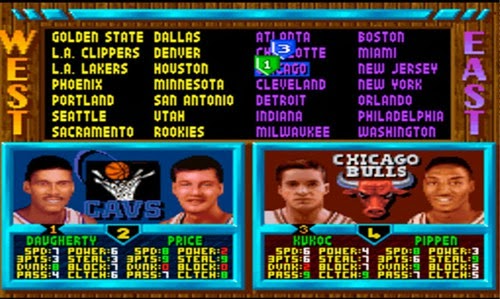
    Games are fundamentally built on mathematics, and our behaviour in those games is driven by numbers.  We all chose the Chicago Bulls in NBA Jam because the numbers were higher,  and we all min max in role playing games because statistically it serves our path through the game better, and we all made Wayne Gretzky’s head bleed in NHL ’94.  But it is when these numbers are transparent that things get interesting.  To think that people are watching players and ranking them on countless attributes is an amazing thought, one that is a tangible record of how players were regarded.  But the idea that we can travel back in time and change sporting history is one that I quite simply cannot ever get over.  And so while these games change and evolve, leaving the antiquated mechanics of their forbears in our wake, I can’t help but feel that their intrinsic value of these games as time machines is higher than their pre-owned labels indicate.  As games they may not be up to snuff, but as an electronic abacus and forecasting tool, they’re absolutely priceless.

    NBA Jam

  • CaoCaoWhen I was a kid I was fascinated by Monkey Magic (commonly known as Monkey).  I would watch reruns on Saturday mornings, staring at the screen in sheer wonderment, admiring just how different it was from the world I lived in.  The design of the costumes, the demons, the world, not to mention the stark contrast of its heroes to the world of comic books and cartoons, it hit something of a nerve in my brain that practically implored me to read further.  And so I did.  Finding out just how culturally significant the story of Monkey is for chinese buddhist mythology gave it an air of gravitas that no english literature i’d read ever did.  And that kickstarted a life-long fascination with the east.
    I was worried when japan started to lose its grip on the industry last generation.  Not because I’m a fan of any particular japanese developer, or couldn’t live without the next entry in the long and storied Dragon Quest or Final Fantasy series, but because the games they developed were so different from anything else I encountered.  There were largely no stories about modern conflicts in the middle east, alternate takes on european history, or games about shooting sprees through modern metropolises with stories thrown in for good measure.  These were the tales of the west, and the east, well that was something a little more dare I say exotic.  Losing that could’ve been the end, for me at least.

    You see learning about other cultures and places – both real and imagined – is one of the key reasons I love playing games.  But it’s learning about the world around me that really inspires me and gives me the shove I need to learn more.  It’s part of the reason Jade Empire is my favourite Bioware game, with its fantastical take on asian culture providing a fantastic insight into the regional melting pot that made asian such a historically and culturally rich part of the world.  It’s also why Asura’s Wrath – a thoroughly average game mechanically – held my attention for so long.  The world was so rich with pseudo hindu and buddhist imagery that progressing through its story was a sheer joy, if only just to see the next beautiful cutscene.

    If i’m honest it’s that same incentive that keeps me playing and enjoying Dynasty Warriors games.  It’s easy to make jokes about the series’ serial retelling of the Three Kingdoms story, but unless you’ve read a little bit further into it, you probably wouldn’t ever understand just how significant it is for China both historically and understanding the country’s role in the current geopolitical climate.  It may not be my lineage or even yours, but with the rapid onset of globalisation and migration the tales of Lu Bu and company’s galavanting around the Middle Kingdom is as relevant to our collective cultures as the Italian Renaissance, the First Fleet or the decades of Western-led wars in Afghanistan.  And I think Koei’s series is just about the best place to start that journey of discovery – a journey I just about guarantee I never would’ve embarked on without.

    Fast forward to this generation and Far Cry 4 is the next great big sprawling adventure.  But it’s not the guns, the charismatic Pagan Min, or stealthily taking out an outpost that caught and held my attention.  Rather it was the fictional Himalayan country of Kyrat, complete with religious and cultural detail, that captured my imagination.  I am lucky to live with someone who studied southeast asian art and artefacts, which I vicariously learnt bits and pieces of through conversation, and witnessing representations of these artefacts ‘in situ’ as it were was more exciting than it should’ve been.  “Which one was this one again?” I asked as I walked up to a stone statue sitting in a cave tucked away behind a waterfall. “I think it’s a kind of representation of Avalokiteśvara” she responded.  After an afternoon of research, I think she was right, and that is the coolest thing about the game.  It’s these little things, both in the latest game and to a lesser extent Far Cry 3, that makes the Far Cry games amazing cultural adventures.  They may not be accurate, and they may be sensational and distilled versions of cultural stereotypes, but the fact that I am compelled to find out is an enormous testament to the strength of the worlds created.  Without them, they’d just be a few bozos with guns, just like every other game about bozos with guns.

    In the end Japan didn’t lose its grip on the industry, but even if it did, the willingness for western developers to embrace other cultures would’ve no doubt filled that gap.  And that’s only a good thing.  Sure we’re going to still see games spruiking just how great anglo civilisation is, but only as long as that is balanced or even drowned out by the voices and stories of other nations and people will video games continue to grow, and become the inspiring and culturally relevant artistic endeavours they should be.  Maybe one day without the guns.

    FarCry4

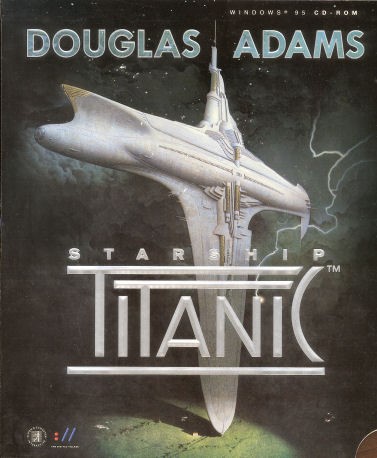
  • My article on the Starship Titanic employee forum has just gone live on Kotaku UK: http://www.kotaku.co.uk/2015/01/23/secret-douglas-adams-rpg-people-playing-15-years.

    This was a fascinating article to write – big thanks to Yoz Grahame, Carolyn Wilborn and Tony Marks for their help. It’s all about the game Starship Titanic, which was the brainchild of the late, great Douglas Adams. Yoz set up a secret Starship Titanic ’employee forum’ back in 1998 to promote the launch of the game, but it evolved into something far beyond his imagination…

    Starship Titanic box art

  • The next wave of amiibos is released today, and look what was waiting for me in the post box…

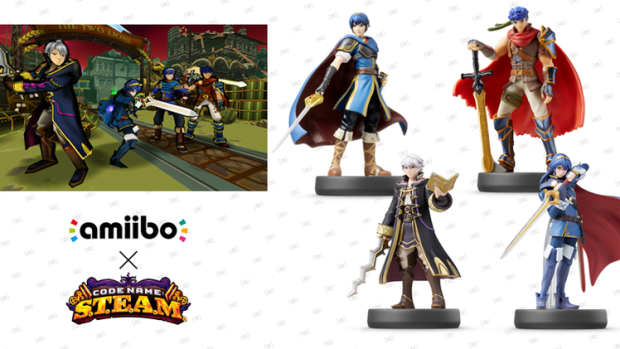
    IMG_2356 - CopyIke will now be joining Marth on the fireplace as my collection of Fire Emblem-related amiibos grows steadily larger. I’ve pre-ordered Lucina and Robin too (although they won’t be out until April), and I’m hoping that Nintendo release a few more Fire Emblem-themed ones to coincide with the upcoming game, although who knows when that will come out. Sir Gaulian’s amiibo Achilles heel is Warioware, and I reckon Fire Emblem is mine (and possibly Pikmin). Oh, and I pre-ordered Toad as well. I mean, come on, it’s Toad!

    IMG_2360 - CopyOne thing I’m confused about is why each amiibo comes with an instruction booklet. The gist of these ‘instructions’ is essentially ‘don’t eat amiibos, and don’t put them next to a fire’. Surely that’s just common sense? There clearly must be a legal obligation to include these pointless booklets (which are written in about a dozen different languages), or else Nintendo is being extremely careful about not being sued.

    "Don't eat amiibos. Don't set amiibos on fire. Don't punch yourself in the head."
    “Don’t eat amiibos. Don’t set amiibos on fire. Don’t punch yourself in the head.”
  • Alien Isolation Xbox 360 coverI’ve just finished Alien: Isolation, and I’m almost glad. On the plus side, it hopefully means an end to the xenomorph-related nightmares and the dangerously high heart rates I’ve experienced while playing the game. On the other hand, it’s one of the best things I’ve played in years, and I’m very, very sad it’s over.

    If you’ve never heard of the game, basically it’s just like the first Alien film – a terrifying haunted house in space – but this time you’re playing Ellen Ripley’s daughter, Amanda. She’s on the hunt for clues to her mother’s disappearance, which leads her to the Sevastopol, a crumbling space station that has become home to the flight recorder from the Nostromo. Along with something else.

    The Sevastopol space station is a thing of decaying beauty.
    The Sevastopol space station is a thing of decaying beauty.

    I read an interesting article on Outside Your Heaven recently that compared Alien: Isolation with The Evil Within and criticised the former for essentially being a retread of the first Alien film. That’s a fair enough point – the designers have painstakingly recreated may elements from the 1979 film and, as the author notes, it would never have been greenlit as a film sequel because it shares too many similarities with the original. However, as a game it feels highly original – I can’t think of many others that pit you against an essentially invincible enemy and then make you cower for your life for the best part of 20 hours. It’s a nerve-shredding experience, but a highly addictive one.

    You can distract the Alien, even scare it off, but you can never, never beat it. Whereas other games empower you with exotic weapons and give you a sense of superiority, here you’re bestowed with an overwhelming sense of helplessness. During the few times when you’re sufficiently tooled up, it feels extremely cathartic to do some damage to the space station’s psychotic androids, mostly because for the rest of the game you’ll be hiding in a locker, leaning backwards and holding your breath (there’s actually a button for that), and hoping to god that the Alien doesn’t see you.

    Not a good situation to be in.
    Not a good situation to be in.

    For all the terror, it’s strangely compelling. Although it can get a bit too much. At one point I was trying to sneak to an elevator, and the Alien kept spotting me and devouring me before I could reach it. One time I was almost there – I’d managed to sneak through the vents, and I’d paused just before exiting into the corridor so that I could check the coast was clear. Suddenly, the Alien appeared out of nowhere and grabbed me/Amanda, and yanked her out of the vent as she desperately scrabbled at the metal surface. I mean, it came out of nowhere, man. Seriously, I had to turn off the game and just sit quietly for a bit after that one.

    And that was right near the end of the game, too. You’d think by that point I might be quite blasé about being repeatedly gobbled by an Alien, but it never seemed to get any less shocking. Watch the video below to get an idea of just how traumatic it is.

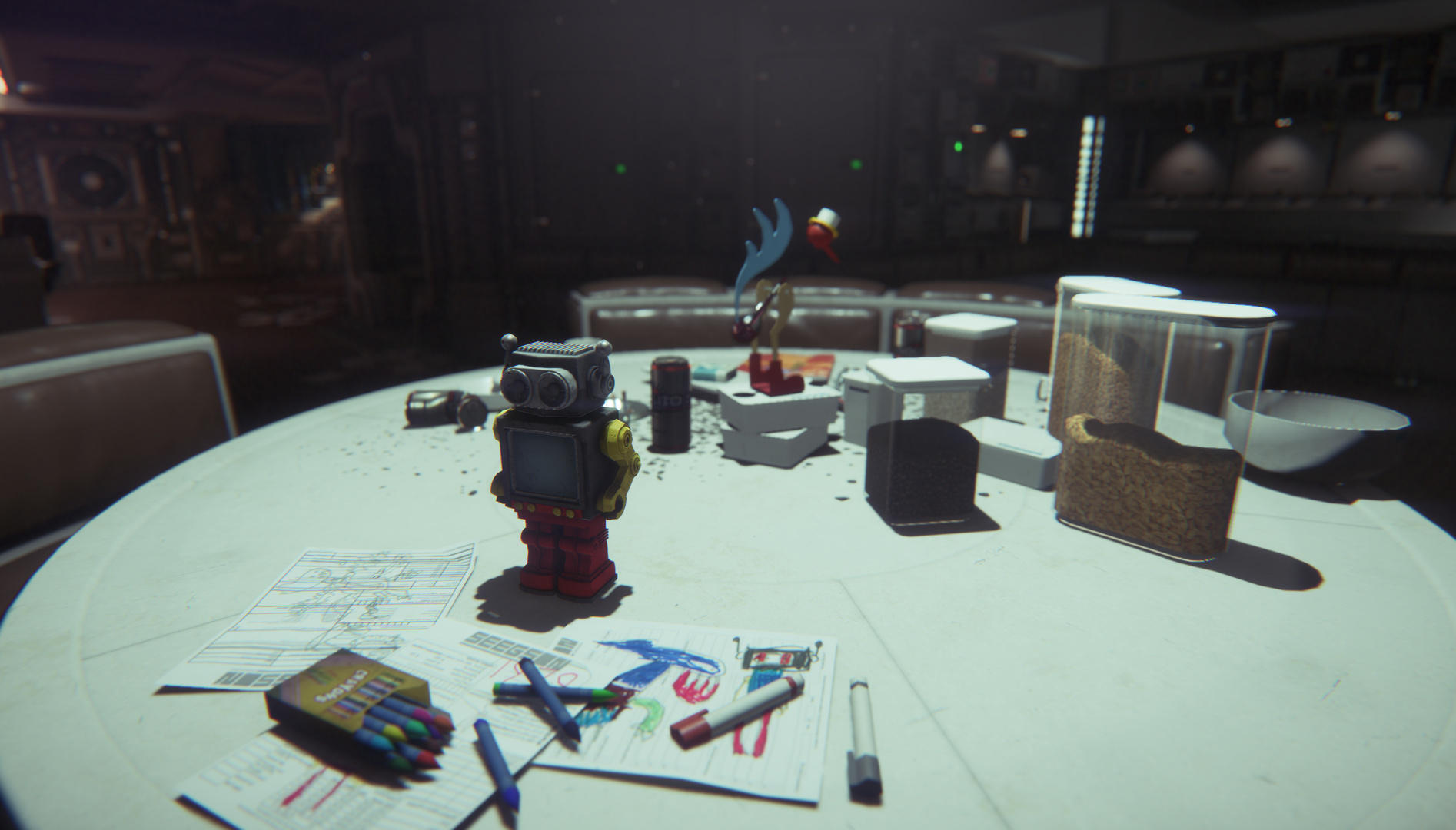
    Graphically, the game is astonishing. I was playing on the Xbox 360 and it looked pretty amazing, so it must be utterly astounding on the newer consoles. At one point you get to go outside the space station, and the view is gobsmacking. But perhaps more importantly, the attention to detail is spot on. The designers have painstakingly recreated the 1970s future tech and interior design from the original film, and it gives the game a unique feel. They’ve even put in that little bobbing bird thing from the movie, you know the one I mean.

    If anything, the sound is even better than the graphics. The Alien’s footsteps still send a shiver through my spine, and towards the end of the game (I won’t spoil it) there’s an aurally amazing sequence that made me wish the speakers on my TV weren’t so knackered.

    Some people have criticised Alien: Isolation for being a bit too long, but the length was just about right if you ask me. One thing I would say is that it’s a bit slow to get going, and the plot is a little weak to start with, but it picks up the pace in the second half. It also plays it a little safe in plot terms, sticking mostly with ideas that have been developed in the films – I’d love to see a sequel that stays true to the hide and seek gameplay of the original but takes the series into seriously uncharted narrative waters.

    In the meantime though, buy this game (if you haven’t bought it already). It’s just passed one million sales after three months on release – a figure that the dreadful Aliens: Colonial Marines passed in just over a month. Show your support for good games, make sure it surpasses the sales of A:CM! Then, hopefully, we’ll get a sequel…

    Look! That bird thing!
    Look! That bird thing!
  • Having played video games from a very early age, it was inevitable that they’d somehow influence the person I’d become.  But while the pre-classification world I grew up in was concerned about the impacts of violence, of sex, or of staring at a screen for hours on end, it has influenced my personality in a far more subtle but arguably a more damaging way.  You see rather than becoming a psychopath or sex addict that the 90’s pundits would have predicted, i’ve instead become a fiercely competitive person obsessed with success.  Sure that’s probably no different to most people thirty-somethings, but my version of success is something directly borne by the games I played growing up.  And it’s become a little bit of a problem.

    And it’s all about how a majority of games are designed. Video games teach players that a very particular type of logic leads to success.   Success is progress, is moving forward, is winning.  It’s the natural progression for most video games that “winning” is moving forward in the game and beating whatever obstacles or hurdles it throws at you.  Whether it be levels or stages, or something a little more open like objectives or missions, they’re all designed with the sole purpose of moving the player through and providing positive reinforcement when they do.  Of course if you succumb to the game, failure is a very final and absolute state, and one that results in losing progress or stagnation.  The aim of the game is to win, and win at all costs.  Fail, on the other hand, and it’s back to the drawing board.  It’s that or give up and start something new in the hopes of greater success.

    That logic has manifested itself through a constant need to be moving forward in my career. Success is one very specific defined thing, that is moving forward and climbing the corporate ladder to ‘beat the boss’, and ultimately win the game.  It is why I am there, for the most part, and as the mental achievements pop up on the screen the desire to see the ‘game’ has only grown stronger.  But it’s the fear of stagnation bred into my through years of objective arrows and losing progress at virtual deaths that has crept into my approach to work.  And so when things start to go wrong, or I’m not nearing the next milestone before the mental game timer nears zero, I move onto the next ‘game’. In other words the time cost of failure has become so high that it’s become easier to give up and try something new.  I’ve turned my career into a game, and one where the only objective is to win.

    But then Roguelikes came along.  Roguelikes – games like Dead Rising, Shiren the Wanderer, Dark Souls, Spelunky – where progress is in many cases failure.  Games that actively encourage persistence, that even though have an ultimate goal of progression, focus on the journey there.  Failure and stagnation aren’t setbacks, rather they are necessary in reaching your end goal.  It’s a refreshing change of pace that tips the traditional game design concepts of winning and losing on its head, and instead creates a game environment for players to learn and to thrive in a constructive and meaningful way.  But more importantly it makes every step of the way feel worthwhile.

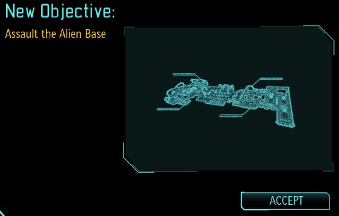
    It was this moment of clarity that saw the mental objective markers dissipate, and the game clock click back up to ∞.  It brought a new confidence that even if things begin to slow down or stall, or if there were setbacks of losses, that I could start again safe in the knowledge that the journey to failure wasn’t for nought.  Suddenly what I used to call ‘failure’ became ‘success’ and every step, right or wrong, made me a stronger and better person.  Now I’m not saying I’m reformed or that old ‘win’ or ‘lose’ mentality doesn’t creep in every now and then.  It does.  But Roguelikes helped me realise that there is no such thing as absolute failure and that it is a necessary step toward success. And I think that’s just what I needed to start enjoying my career again.

    XboxObjective

  • R18If you can say one thing about the capitalist system its that its players are risk averse when it comes to one things – that is decisions that negatively impact revenue. The rise of the publicly traded publisher was, in some ways, accompanied with a proportionate reduction in risky development projects.  While the days before classification in Australia saw games like Doom and Mortal Kombat push the boundaries of what was at the time socially acceptable, the onset of legally binding ratings across the world saw games take a more conservative approach to their depictions of violence and a near total absence of sex in the medium.  Rightly or wrongly it is arguable that  the conservatism of shareholders in response to the changing market curtailed the rather rapid uptick in gratuity and replaced it with a more measured approach to mature content.

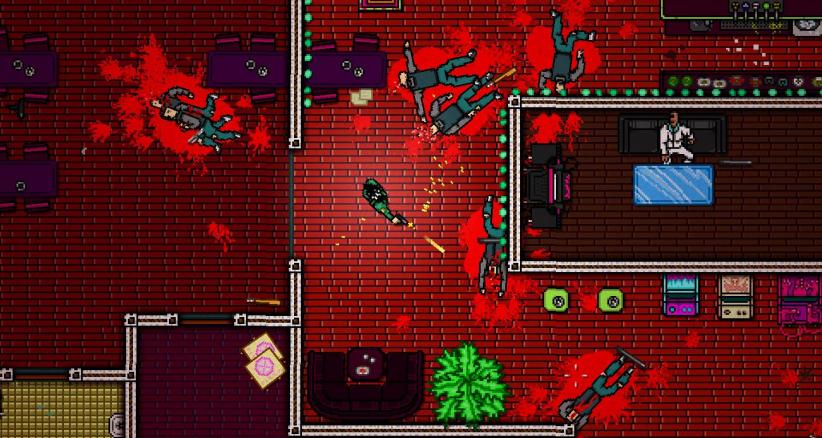
    The refused classification status of Hotline Miami 2 down here in Australia has again put the spotlight on the classification board.  While internet jockeys decrie the unfair treatment and make jokes about Australia being a nanny-state, if you look at the problem objectively, it’s hard to argue the decision even in the presence of an R18+ classification category.  The question of whether consenting adults should have access to any content they choose to consume is a different one, though, and one that should be separated from the Hotline Miami 2 case.  And while it’s a rather difficult question to answer, not in the least because it inherently evokes emotive responses, it is one that is easy to make a case for both from an outcomes perspective and in terms of being the best policy response.

    And the rise of the independent publisher has only strengthened the case for regulation of video games.  The removal or at least reduction of the financial incentive to take a risk averse approach to game publication lessens the supply response to regulation.  While costs associated with video game development aren’t necessarily sunk, they are high, and if there is a moderate risk that a game will be refused classification or the potential market reduced by a restrictive rating they will respond in kind.  Without shareholders this ‘natural’ regulated effect is removed, and has the potential to both increase the number of offending games and increase the level of gratuitous content in those games aimed at capturing audiences through shock and controversy  But while governments can’t control the creative process and the supply of what could be considered gratuitous content in video games, they can at least have avenues to refuse classification where it is considered socially unacceptable.

    The case is only strengthened when you start to consider the cowboy attitude of self publishing developers aiming to capture audience through shock and controversy.From a pure policy-making perspective open and transparent classification boards and processes are the ‘least bad’ option, designed to have the least impact economic and social costs, while still effectively meeting its objectives.  And for businesses there is no better regulation: companies are able to make wise investment decisions based on a set of clearly defined rules of the playground.  The guidelines provide an indication of just where their games will be able to be sold, and more importantly, who to.  Shareholders are amazing profit-maximisers, and that inherent trait, combined with the move to transparent guidelines based classification systems is an efficient way of enforcing our own social values.

    I should make it clear that I’m not in favour of censorship – Australia is a country that did away with socially conservative laws that banned books and other ‘offensive’ material half a century ago – nor am I in favour of overly restricting freedom of speech.  But I’m also not a libertarian and I strongly believe it is a government’s role in consultation with its society to decide where the lines of freedom are and protect them according. I believe that light touch regulation is usually the most appropriate mechanism by which governments can do this and mitigate against the risks of economic and/or social harm caused by gratuitous content or socially unacceptable material.  Classification isn’t censorship and it’s not silencing, but it is government intervention and intervention that invariably impacts the market.  In the case of video games, the benefits far outweigh the costs, and from the perspective of a policy-maker, that’s about as good a case for action as any.  Hotline Miami 2 is a victim of our classification system, but I’d argue it’s deserving of that status.

    HM2

  • All this excitement over the launch of the new 3DS in the UK has put me in mind of those fantastic Japanese adverts that came out last October. For the launch of the new 3DS in Japan, Nintendo brought in Japanese pop singer Kyary Pamyu Pamyu and created the most colourful, upbeat advert I’ve ever seen:

    No matter how many times I watch that ad, it still makes me smile. Here’s hoping that Nintendo come up with something just as bonkers for the UK (although somehow I doubt they will).

    Unfortunately I’ll be missing out on all this colourful cover-plate-swapping action – I’ve preordered the new 3DS XL, and only the smaller, new 3DS has the changeable cover plates. I definitely prefer the look of the smaller new 3DS over the XL, but I’ll mostly be playing Monster Hunter 4 on the new system, and that game really suffers from being played on a small screen. C’est la vie, no Yoshi plates for me.

    I’ll bet these cover plates will be an enormous money spinner for Nintendo, especially in Japan. When I was over there in 2013, I was astonished at how many accessories were on sale for the 3DS (see photo below, taken in the shop Kyoto Yodabashi). The accessories section was almost as big as the game section, and it was filled with every possible kind of case, stylus and cover. This fits in with the trend for accessorising mobile phones – no Japanese teenager would be seen dead without multiple straps and/or stickers covering their keitei.

    No doubt the aisles of Kyoto Yodabashi are heaving with 3DS cover plates right now.

    Just some of the 3DS accessories for sale in Kyoto Yodabashi.
    Just some of the 3DS accessories for sale in Kyoto Yodabashi.
  • The massacre in Port Arthur, Tasmania, haunts Australia’s collective memories.  With 35 people killed and 23 people wounded, it was the impetus for then Prime Minister John Howard’s gun reforms that saw the Government ban, buyback and destroy more than 700,000 firearms.  It was the day we became a country that knows guns are the problem and not the solution.  It is a moment etched in our history, and i’m sure most people alive to remember it would be able to tell you exactly where they were and what they were doing the moment the news came over the airwaves.  On Sunday 28 April 1996, Australia almost literally stood still.

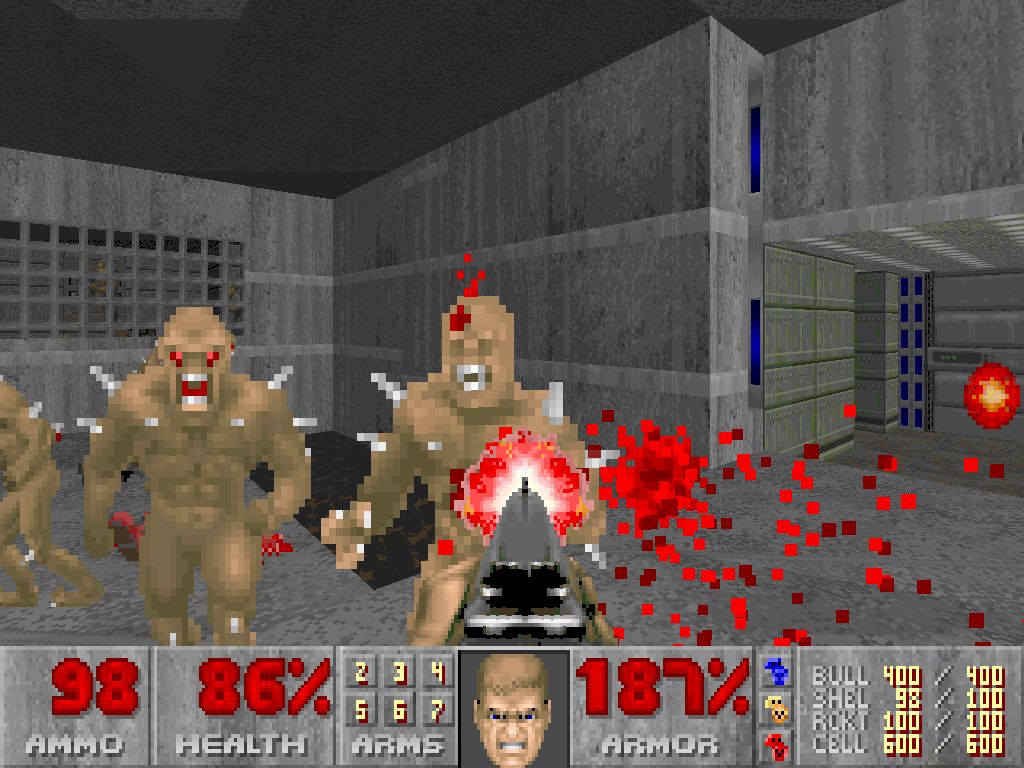
    I vividly remember the moment the first reports came through.  Sitting at the computer playing a game while my brother sat attentively at his desk listening to the radio in the hopes that they’d play something from Pearl Jam.  Not that I noticed, I was so engrossed in what was happening on the screen that, not even my brother screaming my name in my ear could pull my gaze from that screen.  That game was Doom II and at the time it was the most violent thing I’d ever seen.  I’m embarrassed to say that I was fixated on the game’s violence, taking glee at the giblets flying across the screen, and the cries of the dying echoed through the speakers.  The 1990’s can be defined by bombast across many mediums, and video games were absolutely no different, with games creating buzz on just how visceral their depictions of violence were.  It was the way things were, and while parents were worried, we youngsters knew it was just a game.  And Doom II was our pinnacle.

    It is possibly the most inappropriate yet somehow appropriate game to be playing as the atrocities unfolded, and as the blood splattered on the monitor the news continued to flow as to the severity of events unfolding in the island State.  After my brother finally managed to pull my gaze from the screen I sat there, with my brother and eventually the entire family, heads in our hands as commercial radio playlists came to a stop and the hosts turned their attention to hope.  Hope that against all odds people caught up in the mess would survive, and in some ways, hope that it was all just a dream.

    Eventually I went back to playing Doom II, while the commentary continued, and police gave their updates.

    For me that single moment decided my views on violence in video games.  That moment clearly defined the difference between simulated violence and real violence – games were games and real life was sadly real life.  While that line has become significantly blurred – with developers pushing the limits of depiction of realistic violence in video games- I for the most part see no real connection between violent video games and incidence of violent crime in real life.  Even where I have felt less than comfortable in situations where violence is the driving force behind player agency – Borderlands to me was just a game about becoming a better killer – it isn’t because I’ve felt mentally vulnerable or impacted.  It’s because there are better ways to engage players and, quite frankly, better gameplay mechanics.  I’d be lying if I said I don’t enjoy violent games, but if that’s the sales pitch, I’ll gladly exercise my right not to play it.

    But that doesn’t mean I think other people shouldn’t have that option, nor does it mean that games should go unregulated or unclassified, or that developers shouldn’t strive for other forms of expression.  Like the depiction of women in games, we have a long way to go to hit the sort of maturity many of us would like to see from the medium. But for now, while Doom II will forever be associated with the massacre in my mind,  at no point did I look at the screen and make a connection to the mass murder on the screen.  And that was a comforting thought. But what is even more comforting is that even if there was a connection, people in Australia wouldn’t have the means to act on it. And that’s one connection that can never be disputed.

    DOOM II

  • image

    I’ll be honest, I think that pixel-perfect recreations of retro game experiences is a bit played out. In Super Meat Boy it was cool, but seemingly hundreds of indie games and Shovel Knight later, it was a bit old. I was there too, and it was a great time, but I think it’s time to let go.  As a crutch it’s getting a little bit rickety.

    That doesn’t mean I don’t like pixel art. It’s a legitimate almost mondrian-esque style that has its place in the lexicon of art history that, while perhaps overplayed in the game space right now, is still culturally relevant and absolutely eye catching in other mediums.  And I love when it’s used properly.  The IT Crowd DVD menus never fails to amuse me, for example.

    So imagine my delight when I spotted The Battle At Kemble’s Cascade, a game that wears its classic arcade shooter influences on its sleeve, as it strives to reproduce the genre in board game form. And wow is it pretty – one look at the board and its cards and you’ll swear it’s a Bitmap Brothers or Cope-Com joint.  The characters alone have that Xenon-esque feel to them that really evokes that era of shooters on the Amiga 500.  As a Commodore kid myself, and having a particular soft spot for games of that ilk, I simply had to have it.  Although perhaps more than an argument in favour of well-done pixel art, The Battle At Kemble’s Cascade is a reminder of of just how great the hand-drawn box art we got in 80’s was. I was practically sold on it before i’d even picked it up.

    The funny thing about pixel art, or at least the modern use thereof, is that is focuses on such a tiny part of the style’s history.  The Mega Mans and the Marios are all well and good to mimic in the name of nostalgia, but where’s the Turrican and Aarbron mimicry?  Modern pixel art  has morphed into something in and of itself, evoking nostalgia for a certain crowd, and in doing so under representing what the style means to many others.  It’s this mimicry of mimicry that has led it to a point where it’s all, to be frank, a bit samey.

    But The Battle At Kemble’s Cascade is the antithesis of the modern ‘throwback’ movement sweeping across videogames, and the sort of celebration of aspects of my childhood I hold dearly   I can absolutely get behind . It’s the sort of clever ode to the 80’s shooter that you’d expect from its european designers at the epicentre of the home computer movement, bringing to life the both the art and gameplay of the genre without simply recreating it piece by piece.  And as a tribute to classic 80’s shooters, it is absolutely bang on target.  As a boardgame?  I guess I’ll soon find out.

    Kemble'sCascadeBoard

  • Sadly it seems I will have to jump through several hoops in order to enjoy my new 3DS XL (buy on Amazon) on the day of purchase. I’ll be trading in my old 3DS on the day, so I’ll need to transfer all my old games and saves to the new 3DS: unlike with Apple devices, you can only have your Nintendo Network ID (NNID) active on one device at a time.

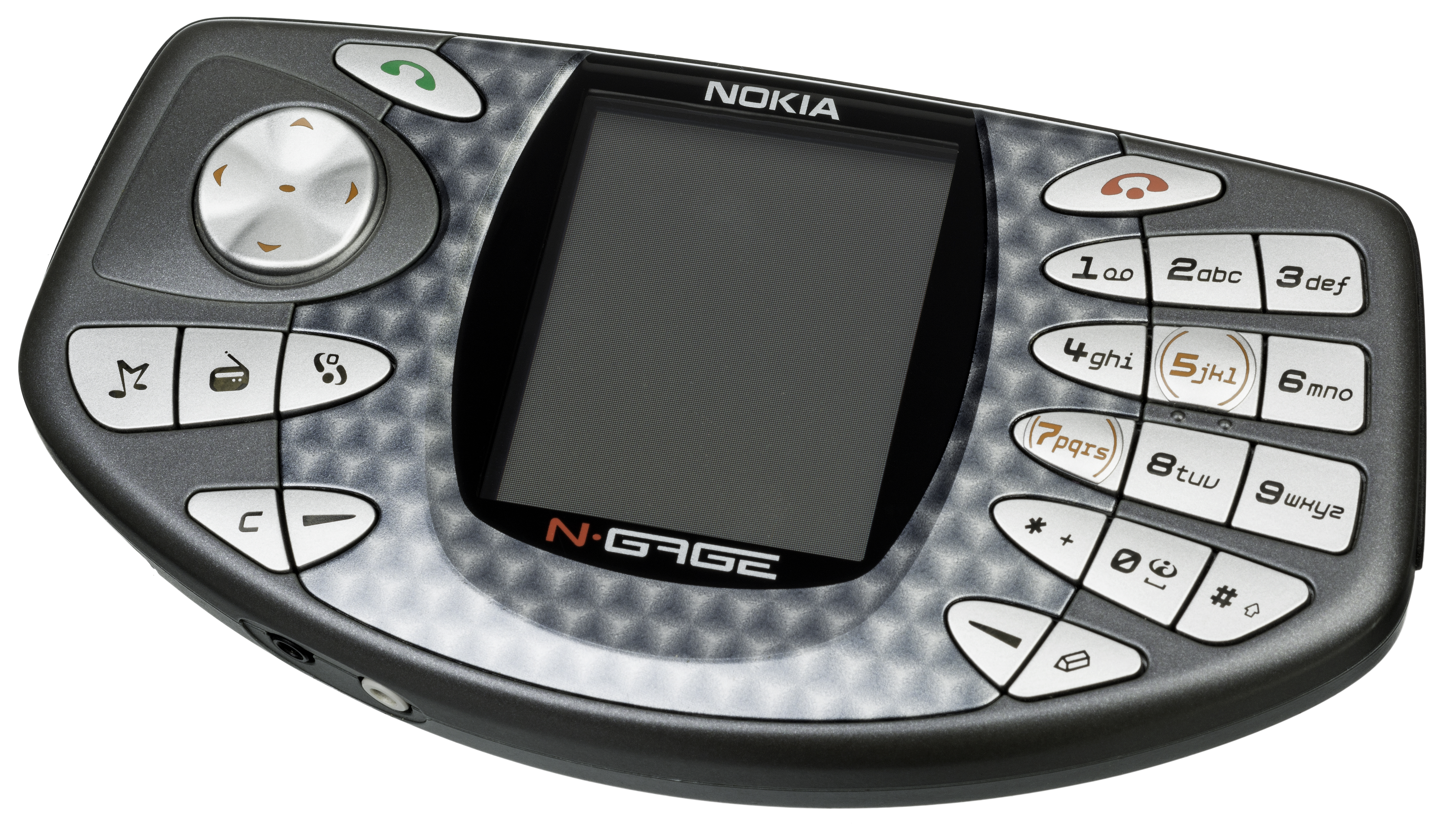
    So for a start I’ll need to connect both 3DSs to Wi-Fi in the shop to do the transfer (the transfer is via bluetooth I think, but the 3DS needs to connect to the internet to verify the NNID). Hopefully this should be easy enough, as long as I can log on to the shop’s Wi-Fi.

    Getting a new 3DS? Make sure you have one of these handy.
    Getting a new 3DS? Make sure you have one of these handy.

    But then it gets a bit tricky. I also need to transfer my 16 GB SD card into the new 3DS – which is a problem because the only way to get at the SD slot in the new 3DS is to take the back off with a #0 screwdriver. This seems like a ludicrous design decision considering that a huge number of new owners will have to change or update the SD card at some point, and it’s not like most people have a #0 screwdriver lying around. Even worse, there have been some reports of people shearing the screws as they try to take the console apart.

    The problems don’t end there though. The new 3DS comes with a micro SD card rather than an SD card, and the standard one is only 4 GB. That means I’ll have to buy a new 16 GB (or higher) micro SD card, along with a micro SD card adapter, and then transfer the save data from my old SD card to the new micro SD card using a PC.

    A new 3DS with its bottom exposed.
    A new 3DS with its bottom exposed.

    But possibly the most niggling question is what happens to the pre-installed game on the new 3DS. Monster Hunter 4 Ultimate is already saved onto the new 3DS XL – presumably on the 4 GB micro SD card – so what happens to it when I transfer my old games and swap in my new 16 GB micro SD? I checked on the forums, and some people think that you’ll be able to download the game again from the eShop after doing the transfer, but I’ve written to Nintendo for confirmation.

    Most of these problems could be avoided if Nintendo copied Apple’s system and allowed you to have your NNID on multiple systems, so you could download games you’d already purchased and keep your save files in the cloud. If anything, this would be a big help if your 3DS is ever lost, broken or stolen, which sadly happened to me not long ago (thankfully, Nintendo were very helpful and sent me new versions of the downloaded games I’d lost, although I still lost all my saves and pictures). But the decision to hide the micro SD card behind a screwed-in panel seems ludicrous. It reminds me of the ill-fated Nokia N-Gage, a mobile phone/portable console that had to be dismantled if you wanted to switch games.

    Ah, the N-Gage, why did it ever fail? Oh, wait a minute, I know why.
    Ah, the N-Gage, why did it ever fail? Oh, wait a minute, I know why.

    The folks at GAME have promised they’ll be on standby to help out with this system transfer nonsense on the day of release – fingers crossed they have some #0 screwdrivers handy. I have a feeling it will be a very long morning.

  • I spent my lunch break yesterday happily watching the latest Nintendo Direct, rather like a Victorian child with his hands pressed against the window of a sweet shop, licking his lips in delicious anticipation. For a Nintendo fanboy like me, the range of wares on offer was intoxicating.

    Mine in just a month...
    Mine in just a month…

    The biggest news was the announcement of a street date for the rather wonderful-looking ‘new’ 3DS, which will arrive in the UK on 13th February, along with Monster Hunter 4 Ultimate and the 3D remake of The Legend of Zelda: Majora’s Mask. Both games will have rather spiffy-looking special-edition 3DSs to go with them, and the Monster Hunter one in particular has stolen my heart – in fact, I’ve just got back from GAME, where I’ve already placed a preorder. I’ve been meaning to upgrade to a 3DS XL for a while now, and this seems like the perfect opportunity. Can’t wait to play MH4U either – the previous MH game has sustained me for the best part of two years.

    Another reason to upgrade to the new 3DS XL is that it can read amiibos – and the wonderful-looking Code Name S.T.E.A.M. (which was announced at E3 last year) will be compatible with the Fire Emblem amiibos from the Smash Bros. collection. I already have Marth, and Ike’s on preorder, so now it’s a no brainer for me to get Lucina and Robin as well when the figures are released in March. Oh, and of course I need to get Captain Toad too, obviously. Dammit Nintendo, just take my wallet!

    So, yeah, just put me down for all of these. Here, take my watch, too.
    So, yeah, just put me down for all of these. Here, take my watch, too.

    Another announcement that caught my eye was the release of Wii games as downloads for the Wii U, each at an introductory price of £8.99. I’ve already played most of the games listed, but one caught my eye: Pandora’s Tower. I’ve been on the hunt for this for a while, and it currently goes for silly money on eBay, so this will be a fantastic chance to bag it for £9.

    Speaking of RPGs, Xenoblade Chronicles X looks amazing, although that running animation looks a bit weird to me, as if the characters are ice skating. Did that bug anyone else? Still, it feels almost churlish to point that out in the face of the rather stunning giant monsters that flip and jump about in the trailer. There’s a new Fire Emblem on the way too (hurrah!), and this time the writer will be Shin Kibayashi, apparently. Yes, I don’t know either. But I looked up his Wikipedia page, and among the many manga he’s authored is Sherlock Bones, in which the famous Victorian detective is reincarnated as a dog. Which sounds like the best idea for a comic I’ve ever heard.

    Best, Manga. Ever. Probably.
    Best, Manga. Ever. Probably.

    Another highlight was a Mario version of the Japanese smash-hit puzzle game Puzzle and Dragons, which is being released in combination with Puzzle and Dragons Z. This cross between an RPG and a puzzle game looks right up my street, and I was pleased to see it was a boxed release rather than a ‘free to play (but we won’t ever stop bugging you for money)’ title (the original is an F2P mobile game). “Good old Nintendo,” I thought, “nice to see them holding out against the insidious free to play money trap.” And then straight afterwards they announced Pokémon Shuffle… a free to play game that looks very similar to Puzzle and Dragons. Ah.

    Pokémon Shuffle. Cutesy? Yes. An insidious foreshadowing of what's to come? Almost definitely.
    Pokémon Shuffle. Cutesy? Yes. An insidious foreshadowing of what’s to come? Almost definitely.
  • MKII fatalityFighting games are pretty incredible things really. Sure, they’re amazingly complicated, perfectly balanced and almost mathematical in the precision of their design.  But they also happen to be great at doing so much with so little. Whether it be their limited scope for impressing graphically, or the amazing maximisation of “wow” from a very limited bag of tricks, they really are the most efficient beasts of the industry.  That’s probably no small factor in why they’ve been key showpieces – often determinants of consoles’ successes – through the history of the medium.  From the 1990’s which were practically high on them, to the late 2000’s which saw the genre rise up from stasis, fighting games have proven reliable and resilient in the face of a changing consumer, and the seeming need for spectacles on every corner.  They may not be the show-stoppers they once were, but those fighting games, you just can’t stop them.

    But what is a fighting game without its characters.  A major part of my attraction to a fighting game is how interesting the roster of characters is, including how appealing I find the art style.  I like the art style of King of Fighters better than Street Fighter.  I prefer Tekken’s to Dead or Alive’s.  And I appreciate Primal Rage’s more than any of them.  Fighting games live and die by their characters, and if you’ve just whacked a dollar into the arcade machine and are feeling uninspired by the ugly mugs staring back at you, you’d hardly be inspired to have a second bout.  Rise of the Robots isn’t derided just because it’s a rotten fighting game, it’s looked down upon because its characters were boring and uninspired.

    And it’s crazy because in a lot of ways this is where the natural constraints of the genre hit hardest.  There’s often no real room – or desire for that matter – for character or plot development and in most cases players quite frankly couldn’t give a flying vagina about why the bloke is there beating up on another bloke.  As someone who hasn’t read a manual for what feels like a decade, I absorb every bit of information about a game from playing it, and so for me the age of reading a fighter’s backstory in a manual is way in the past.   If they look cool and fight even better, all is well in the cosmos, and I’ll fight to their heart’s desire.  And so the fireballs and dragon punches continue to flow.

    All of which has resulted in a devil may care attitude to the creation of characters and their wild backstories.  If you’ve ever sat down and watched some of the more recent Tekken or Dead or Alive character introduction and ending movies, you’ll no doubt have noticed just how bananas it has all become.  While the most recent Mortal Kombat and its younger cousin Injustice: Gods Among Us handled story brilliantly, building a whole story around what ostensibly amount to match-ups through the roster, in most games story takes a justified backseat to the fisticuffs.

    And that’s because while fleshing out stories has stayed sidelined for the most part, guys and girls that take their positions on the far left and right of the screen are given so much character in more passive ways.  The way they animate, their idle animations, their taunts – even the way they speak – it all goes a long way to building your relationship and feelings toward these characterless characters.  I don’t need cutscenes to establish that Terry Bogard is a bit of a wanker, his incessant cries of “c’mon c’mon!” and the way he carries himself says its all.  That’s all I really need to know before taking him to battle.  Same goes for Vega, for Baraka, for Steve Fox, for Brad Burns.  I have a fighting game type, and it’s through these passive cues I can pick my ‘soulmate’, and fight on into the early hours of the morning.

    KoF98Roster

    And all of this culminates in just how blown away I am with how the new Super Smash Bros gives life to ostensibly lifeless characters.  I’m not talking just about the Marios and Donkey Kongs – we all know their worlds and their motivations (for want of a better word) – but its some of the stranger characters that populate Smash’s roster that never fail to amaze me.  Who is this Ness bastard?  Why does he look a bit simple?  Earthbound, huh?  It’s a cult game?  What because it didn’t sell?  So why do so many people like it then? Wii Fit Trainer?  Really?  That woman that I had that hot and heavy week long affair with in 2008?  What’s she doing there?  It’s a roster that when I scroll the cursor across it for the first time  raises so many questions about who the flaming ‘eck these people are and what their deal is.  And that’s the absolute worst feeling when you’re playing a fighting game for the first time.

    But then you get into a fight and all of that doubt and concern about the banality and foreignness of the roster goes away, because these characters don’t need scripted personalities when so much attention to detail has been paid to every part of their fighting persona.  These characters are all defined perfectly by their actions that what you know about even the more iconic Nintendo characters falls away and their SSB personas take centre stage.   Toon Link isn’t the kid that saves the world in Wind Waker any more, he’s the guy that throws bombs and whose spin attack defies gravity.  But despite the familiar faces that dot the roster,  it’s Wii Fit Trainer that won my heart from the moment I saw her (and him, I guess) in action.  The ultimate in (quite literally) faceless characters is given the biggest personality of all – from her speed-walking across the stage, to her power-bringing yoga moves, to even the way she spikes the volleyball – it all adds up to a character that has come to largely define my time with the game.  She has no back story and she does even really have an identity as such outside of SSB, but in spite of that, she manages to be the fighter with the most personality in a game that is full to the brim of them.  And that for me has always been the sign of a good fighting game roster.

    Super Smash Bros seems to have moved to the head of the Nintendo class recently, and it’s that very smart and seemingly calculated separation from the source material that makes the series stand so well on its own merits.  SSB may not be the most technical fighting game on the planet – it may not even be a fighting game in the traditional sense of the term – but it is certainly the one with the most character.  By bringing together a ridiculously diverse and incongruous roster, Nintendo and developer Sora Ltd achieved what Capcom couldn’t with Street Fighter III, successfully treading that fine line of keeping with the old characters while bringing in the new.  But it’s this daring that has always pushed the Super Smash Bros series, and through the slaving detail to the bread and butter of its characters old and new, has seen it reach new and better heights with each entry.

    I felt like I’d written a lot about fighting games recently.  Turns out I was right.  So for further reading feel free to indulge on my thoughts on why Clayfighter could be Nintendo’s answer to the revived fighting game war, or perhaps something about how Tekken and Soul Calibur’s Yoshimitsu was integral to keeping the crazy in the genre.  Of course you could also take a trip down memory lane with me and remember the age of the arcade perfect home conversion.

    WiiFitWiiU

  • Vic20panelAs a group – that is thirty something people that play games – we are pretty lucky.  Having practically grown up alongside the medium, we witnessed first hand the ups and downs and trials and tribulations the industry has gone through pretty much from its beginnings to its relatively recent explosion into mainstream popularity.  From when primal chaos reigned, to when the Stone Monkey emerged.  It was irrepressible!  I take it for granted, but the fact that my earliest video gaming memories were playing Raid on Fort Knox, Gorf and Jupiter Lander on the VIC-20 is actually pretty incredible.  And it is through these collective memories that we, for all intents and purposes, are the primary sources for what will most likely be considered most important period in the games industry’s history.
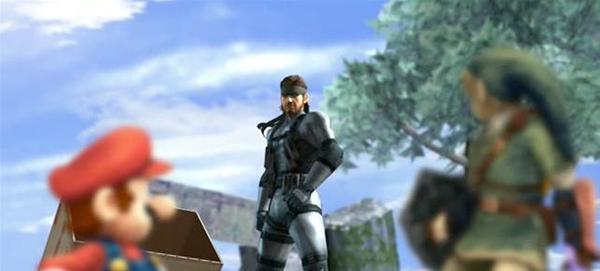
    It may surprise you to know that I actually don’t read a lot about video games.  It’s a bit old fashioned, but most of what I know comes from experience, from what I’d played for myself or heard friends talk about both in my school and University years.  I like old games, but beyond those that I played between each innings of backyard cricket after school, I don’t have a thirst or desire to be the font of all knowledge.  I’m a perpetual student of economic history and theory, and really, that’s about all my brain can – but more importantly wants to – support.

    Sitting down and playing Super Smash Bros for Wii U with someone younger than half my age the other day made me realise that to his generation, video games are a constant history lesson. He would’ve been born around the same time Metroid Prime rebooted the franchise.  He would’ve been born around the same time Hideo Kojima pulled his Raiden bait and switch on the world with Metal Gear Solid 2.  He would’ve been around the same time Resident Evil was remade.  To him Mortal Kombat: Deadly Alliance is old Mortal Kombat and Mortal Monday is practically jurassic.  Basically his perceptions of the world of video games are entirely different to mine.

    But it wasn’t the fact that time had passed, that I was getting old, or the weird and overdue reality check that Primal Rage isn’t the newest and hottest fan-dangled thing in arcades anymore that hit me hardest.  It was that this kid knew things about games that came out when he was five years old, or in some cases, not even born.  Games he hadn’t seen.  Games he hadn’t played.  Games he’d probably never play.  Super Smash Bros is naturally a game that inspires nostalgia for the old and discovery for the young.  But he had taken it beyond the game and was keen to regale an old hand at his knowledge. He had factoids on seemingly every aspect of the series past and present, from tidbits about Masahiro Sakurai’s modus operandi, to how Hideo Kojima worked to ensure that Solid Snake ended up in Super Smash Bros: Brawl.  He hadn’t played Metal Gear Solid like I had as a teenager – he probably hadn’t ever played anything from Hideo Kojima’s storied career – but he knew how one of the most surprising franchise crossovers of last generation came to be. Sure, I have a hell of a lot of knowledge that I’ve accumulated along my 30-odd year journey with video games, but it’s never gone beyond that.I was being well and truly schooled by a true historian of the medium.

    And then I spotted a recently purchased copy of Skate 3 below the TV.  And it all made sense.  He was a student of PewDiePie, of Did You Know Gaming, of YouTube.  He didn’t know these things because he was there, he knew them because he had taken the time to read about them, to research them, to put it all in context.  He was a scholar of the medium and with the benefit of hindsight, it’ll be people like him that write the industry’s equivalent of  The History of the Decline and Fall of the Roman Empire.  And in a bittersweet kind of way it’s people like me that he’ll be referencing when he writes about what it was truly like playing games in the 80’s and 90’s.

    SmashBrawlSnake

  • ArmchairWhat ho, chums!

    After struggling to enjoy Assassin’s Creed III, I finally decided to permanently shelve the game this week. It’s not often that I’ll leave a game unfinished – I hate abandoning things halfway through, and the same goes for TV series, books and pretty much anything really. So that gives you an indication of just how much Assassin’s Creed III was irritating me: you should have heard the names I was calling Connor the other night when I directed him to air assassinate General Pitcairn, only for him to leap onto the back of Pitcairn’s horse instead. Presumably, when I pressed the button marked “assassinate” he interpreted it as a command to “ride off into the sunset with the target and live happily ever after”. Actually, perhaps they should introduce a button that does specifically that, might make a change from all the murdering.

    Still, all this irritation got me thinking of the select club of other games I’ve given the old heave ho while halfway through. There are a few that have been so mind-bendingly difficult that it was all but impossible to get to the end: old school games like Kid Icarus, Castlevania and Mega Man 6 spring to mind. Having said that, I’m proud to say that I finished Battletoads on the NES all those years ago – I guess paying £45 for it in 1990s money was enough incentive to see that bastard-hard game through right to the end.

    Possibly the most infuriating moment was leaving Star Wars: Knights of the Old Republic unfinished. I’d borrowed it from a friend, but I was just about to head off and live in Japan, so I had to give it back when I was right near the end – just before the infamous twist, as I found out later. I always vowed to buy it myself and go back to finish it off, but I never did.

    I almost gave up on Deus Ex: Human Revolution a couple of times because it annoyed me so much, but in the end I saw it through. The same can’t be said of Jade Empire, which I began and enjoyed, but I just couldn’t face the idea of pouring 60 hours of my life into it when there were so many newer games around that I wanted to play more (I bought the game a long time after it was released). The same was true of GTA: San Andreas and GTA: Vice City Stories – once something has been sitting unplayed on your game shelf for long enough, the excitement at playing it dwindles down to nothing, especially as newer and more interesting games begin to emerge. I recently got rid of a slew of old PS2 games that I was partway through, simply because I had no idea when I would find the time to play them. I also remember parting with Half-Life because it just became too frustrating, even though the start of the game was fantastic.

    So what games have you left unfinished, and why? And are there any you wish you could go back to?

    Toodle-pip for now!

    Did you ever finish Half-Life?
    Did you ever finish Half-Life?
  • Assassin's Creed Wii UI’ve been intrigued by the reviews of Assassin’s Creed: Rogue. Although it was brought out in the shadow of its bigger, next-gen only brother – Assassin’s Creed: Unity – most reviewers agree it outshines its graphically superior sibling in terms of gameplay. And certainly, its bonkers mix of narwhal hunting and assassinating assassins looks like a lot of fun. The only problem is that I’m still two years behind in the Assassin’s Creed series, and I’m far too anal to start playing the newest game without having played the previous ones.

    In an effort to bring myself up to date, I’ve recently been tucking into Assassin’s Creed III, which came out in 2012 and has been sitting on The Mantelpiece since not long after its release. Sadly, it’s not that good.

    Rather than list all of the things that are wrong with the game, I refer you instead to this article on kotaku.com, which pretty much nails the problems. I bridled at Kirk Hamilton’s use of the word “jank” (eh?) but otherwise he speaks a lot of sense. However, I’d add a few more points to his list of ten.

    11. Boston just isn’t that interesting

    In previous games we’ve been given medieval Rome or Constantinople to explore, and I’m afraid 18th century Boston just doesn’t cut it. In the 1770s the city was tiny and lacked landmark buildings of any note – there’s no equivalent of the Coliseum or the Blue Mosque here. In fact, most of the city looks the same, with only the tall ships in the harbour giving you any sense of bearing. And whereas exploring a city in previous games was a joy spread over many hours, here you’re only given the option to look around Boston sporadically, with a huge chunk of the game instead taking place in trees. Which are even less interesting than Boston.

    Eighteenth-century Boston: not as interesting as Rome. Or Florence. Or Paris. Or...
    Eighteenth-century Boston: not as interesting as Rome. Or Florence. Or Paris. Or…

    12. The history gets in the way of the gameplay

    More so than in previous games in the series, the history gets in the way of the fun. The designers have made the fatal flaw of looking at historical events and then thinking “how can we depict that in a game?” rather than thinking up something fun to do and then working how it could fit into the timeline. Some “missions” simply involve walking between characters and listening to interminable speeches, whereas another just involves following a revolutionary around and watching him start riots.

    13. It’s So. Slow.

    You only get your assassin costume halfway through, for pity’s sake. This being the fifth game in the series, you’d expect the designers to allow those who’ve been following from the beginning to just jump in and start assassinating. Yet the first five sequences of the game are essentially a tedious tutorial.

    14. It’s stupidly over-complicated

    Ubisoft seemingly hate to throw ideas away, even the not-very-good ones. By Assassin’s Creed III, we can now add hunting and ‘peg leg missions’ to the teetering pile of pointless distractions that litter the already over-cluttered game map. No doubt a certain percentage of people delight in mining the Assassin’s games for all they’re worth, collecting every last feather and finding every last weapon. Yet most of these activities are exceedingly tedious and pointless, and utterly overwhelming in their number.

    And yet… and yet I’m still playing it. Partly it’s a feeling of obligation, a need to see the end of this game before I start the next one (and Assassin’s Creed IV is reportedly very good). To this end I’m speeding through it as quickly as I can, avoiding all superfluous missions. The naval combat is also fun, if underused, and it’s interesting to learn about the lead up to the American revolution, a subject I previously knew very little about. But I’m also impatient for it all to end.

    What I’d really like to see is Ubisoft take the brave step of sweeping away all of the current conventions of the Assassin’s series and starting again from the basics, in a similar way to Square Enix’s approach with Tomb Raider. The series is crying out for some fresh thinking, and making it simpler will only make it better.

    Hunting in Assassin's Creed III: like Red Dead Redemption, but not as good.
    Hunting in Assassin’s Creed III: like Red Dead Redemption, but not as good.
  • ShadowWarrior2014 logo

    2014’s Shadow Warrior and Wolfenstein reboots left me feeling a teensy bit nostalgic.  As someone who doesn’t have any particular affinity for the copious amounts of pixel-fuelled indie platformers that have had the blood flowing to people’s nether-regions, it was nice to finally have that warm and fuzzy feeling that thinking about the good ol’ days tends to elicit, even if the tendrils that connect them both to their forebears were wobbly at best.  Wolfenstein of course made it into my Most Agreeable Games of 2014, and rest assured Shadow Warrior wasn’t ever too far away from making the cut.

    To think that two shooters that cut their teeth in the 90’s  were my two favourite first person shooters of the year is pretty crazy, particularly when the genre is close to being crowded out by the big end of town throwing every piece of eight they can scrounge up at development.  Perhaps even more surprising is that neither game has multiplayer – a god send for someone like me that wouldn’t touch it with a ten metre snag – which is perhaps is indicative of the developer’s broader shunning of modern genre conventions.  But there was something about both games that perfectly treaded the very dangerous line making a game that respects its elders and one that worships them.  The lack of pandering was admirable for both games, but its the way that they still managed to capture the essence of the spirit of both games in a way that plays in the modern era, that had me clenching my controller tightly and hogging the telly.  For me it was a reminder that despite cutting my own teeth on the plethora of old-school platformers on both Commodore computers and the Game Boy in the 80’s and 90’s, it’s the move to three dimensions – faux or not – is where my greatest retro affinity lies.  And Shadow Warrior hit all the right notes to have me yearning for the days of shooter yore.

    But I shouldn’t detract from the fact that Lo Wang’s modern Shadow Warrior adventure is one mighty fine bloody shooter.  Its focus on fast-paced action had my adrenaline pounding so hard that I almost burst a pooper-valve, with the circle strafe making a much needed triumphant return in a very timely reminder that cover just isn’t all that.  And the upgradeable weapons are a big part of what makes the game the fun and throwback-ish romp that it is, with each and every weapon being deadly in the right circumstance and ammunition never scarce.  Rest assured you’ll find your play style and reason to use each and every one of the game’s weapons  – from the the ugly-arse shotgun (their words) to the rocket launcher that fires “Nuke Dukem” missiles – which is perhaps a kind reminder to modern first person shooter design of how liberating giving player choice can be.

    Shotgun Shadow Warrior

    But great weapons aside, the katana is the real star of the show, and what a relief it was to see that the series’ melee weapon staple wasn’t relegated to last resort status.  Ample ammunition would’ve been the easiest excuse in the world to leave the short range of the sword behind as soon as you have a gun in your hand, but an actually useful range of upgrade abilities powered by Ki (read: Chi) elevates it to an almost mandatory part of your arsenal.  It is an effective and stylish way to cut your way through the hordes of enemies the game will throw at you, spewing giblets and limbs all over the place, until the otherwise beautiful cherry-blossom lined environments are covered in all manner of viscera.  Melee combat quite simply hasn’t been this good since Riddick, and add to that both offensive and defensive ‘spells’ that can be unlocked, and you’ve got first-person sword fighting that tops even most of the front-runners in the roleplaying genre.

    Across all media I’m a fan of creators cleverly playing on people’s nostalgia through great writing or subtle references, rather than simple rehashing it in the most obvious way possible.  Back to the Future wasn’t great because it brought back the 1950’s, it was great because it juxtaposed it against the then modern world, to draw out just how much the world has changed in a very fish out of water way.  It was clever because it was simple, and Robert Zemeckis didn’t need to shoot the film in sepia tone, and the audience didn’t have to have been there, to make it feel nostalgic.  Shadow Warrior brings out those warm and fuzzy sentimental feelings in the same way, never being overly self referential or in your face rather instead subtly paying homage to its roots at just the right times to remind you that the game has 90’s pedigree.  It’s not perfect, it’s not smart or clever and it’s visually stunning take on eastern lore and culture – which as a setting is sorely underutilised – is a bit skewiff, but the strength of its gameplay alone (and the occasional dick joke) had me losing track of the hours in much the same way I did with early pioneers of the genre.  Shadow Warrior has the spirit of the 1997 but the design of 2014, which as it turns out, is a match made in heaven.


    ShadowWarriorScreen

  • DukeNkemI spent the evening of 31 December 1999 playing Duke Nukem: Time to Kill, by far my favourite of his adventures. While his potty-mouthed schtick and penchant for sexism was well and truly worn by 1998, its more action-oriented take on the style of game made popular by classic platformer, Tomb Raider, was nothing short of brilliant.  I’d saved the game to play as I rang in the new millenium, after begging and pleading mum and dad to buy it for me for my sixteenth birthday not long before.  And it all went according to plan – while the rest of the country was either panicking over the Y2K bug or too drunk to care, I was running through time with the wise-cracking chauvinist kicking arse and chewing bubble gum.

    And you know what?  I wouldn’t have had it any other way.

    There is no dancing around the fact that Duke Nukem is more than tiny bit despicable.  Ever the teenage boy fantasy, he is the epitome of the male power-trip fantasy, complete with objectification of women, and a healthy dose of salty language.  Even writing it now I’m a little bit embarrassed by just how much I liked the games in the 90’s.  But there is something about his bombast, and his departure from the incredibly serious tone most console games at the time, that really appealed to me as straight-laced teenager.  The fact that those early post-3D games were actually pretty great games was almost inconsequential.

    It was mature in that late night comedy dick joke way, and in a weird way, it made me feel like a grown up.  For many, that’s probably a cornerstone of their relationship with the Duke.   I still remember the first time I saw Duke Nukem 3D on the solitary 386 in primary school library and how much it felt like accidentally seeing a nipple when you snuck out to watch TV late at night.  It was the forbidden fruit that wasn’t just the violence of Mortal Kombat – which let’s be honest was getting rather tame by 1996 – it was that next level of adult that gave the incredible illusion that games were growing up.

    And they were, but it certainly wasn’t Duke Nukem that was bringing on that revolution, rather he just represented all the taboo things one thinks are ‘adult’ when you’re not one.  And a rather crass representation at that.  Duke Nukem wouldn’t play in the post-internet proliferation era, but at the time, he was what people meant when they said “video games are maturing”. Bless the 1990’s.

    A lot has changed since then, and ringing in the new millenium with a thoroughly 90’s cliche, feels in hindsight incredibly appropriate.  Sitting in my beanbag in a dimly lit room in front of an old-arse ‘His Master’s Voice’ CRT telly playing a ridiculously misogynistic and juvenile video game was a great welcome to an era that tried its darndest to dispose of almost all of the above.  Because, while Duke Nukem is still great as a retrospective curio and look into what videogame culture was like in the 90’s, he feels like a relic of the past.  And so, at 00:00, 1 January 2000, we kissed the relevance of gaming’s greatest chauvinist goodbye.

    Forever.

    Happy New Year everyone!  Thanks for your support in 2014 – I hope 2015 brings you many successes!

    DukeNukemTTKscreen

  • AshleyWariowareI’m as surprised as anyone that I’m playing not one, but two versions of Super Smash Bros.  I had a sum total of zero intention of buying either version, until word of mouth started perforating my usually strong iron will, and interest into the saccharine sweet beat ’em up started seeping into my brain.  After being laughed out of the store when I went in cold to buy the Wii U version the morning it launched, I begrudgingly picked up the 3DS version.  I liked it.  And so the Wii U version followed.  Suddenly I’m Super Smash Bros crazy, and although I’m confining myself to the incredibly well fleshed-out single player portions of the game, the games are so good I reckon I’d buy it again if Nintendo had a third pillar.

    More than anything, though, Super Smash Bros reminded me just how rich Nintendo’s history is.  Although my history is relatively short, beginning and ending with Nintendo’s handhelds – I was a bit of a Gameboy tragic – until the Gamecube came along, for North America and Japan where Nintendo dominated throughout the 80’s and 90’s I can only imagine the endless stream of warm and fuzzy feelings the game sends their way.  Even for me it’s a great trip, often down someone else’s memory lane, and a great tribute to the japanese giant – not to mention a very clever device to keep people playing.  Everyone loves an in-game collectible and Super Smash Bros is collecting at its very best.

    And then there’s Amiibos.  There is no questioning that’s Nintendo’s intention with its ridiculously and unexpectedly figurines, which finally caught Lucius not long ago, and I suspect he’s not off the hook just yet.  I haven’t fallen yet, but I know exactly where my line is, and I’m sure its only a matter of time until Nintendo gets there.  So the question is: where is that line?

    I didn’t know I realised exactly where that line was when I unlocked the Ashley trophy – the mischievous but cute as a button witch-in-training – in Super Smash Bros for 3DS.  Thats the very same time I realised that it’s not the usual suspects – the Super Mario Lands, Donkey Kong Lands or Kirby’s Dream Lands  – that evoke the greatest feelings of Nostalgia for me.  Rather it was that little Microgame collection released in 2004,  the game that in and of itself was a gigantic homage to its own company’s heritage, that holds within it all of my fondest Nintendo memories.  That game is WarioWare, Inc.: Mega Microgames! – and to a very slightly lesser extent its sequels even though i’m well aware that Twisted! at the very least is a better game. Regardless, they are bloody fantastic.

    AshleyTrophy

    Unlike most games that I hold dear, sometimes for very good reason and others with a severe case of rose-tinted glasses, the first Warioware game came out when I was just about to leave my teenage years.  Its clever self-referential and offbeat tone and its seemingly very deliberate attempt to capture the 8-bit magic of a simpler time.  Oddly, Warioware was my first taste of the Nintendo of the 80’s that the internet seems so awfully fond of.  Before Warioware (and arguably even after it, if you’re being technical) I’d never set eyes on let alone played the classics like Punch Out and Duck Hunt – in much the same way that Animal Crossing was my gateway to Excitebike and Balloon Fight.  And it’s this juxtaposition of these old games with the simplistic and minimalist that to me made it such an endearing game, and in some ways, ahead of its time for its neo retro-ness.  There was always something very retro feeling about Warioware as a franchise, so much so that I think my brain has been tricked into thinking its older than it actually is.

    Look, I’m well aware that Warioware is far from ‘old’ Nintendo, and that in the pantheon of Nintendo characters Wario is practically a newborn.  But for me – that is someone that was weaned kicking and screaming into the world of consoles from home computers – Nintendo was just another company that made consoles and then made games to play on them.  It wasn’t the company with the cute roster of characters with a penchant for quality, that company that defined video games in the 90’s, or the company that practically invented – or at least refined – a fair chunk of the gameplay mechanics we rely so heavily on today.  It was just Nintendo the maker of the Game Boy, the alternative to Sega, and eventually, the company usurped by Sony.

    But Warioware changed that.  Suddenly it all made sense, the way Nintendo was held so dearly by so many, suddenly it’s as though I finally got it.  The game was a perfect mix of zany characters, beautiful art style and sound design, and gameplay that perfectly walked the very fine line between being simple and being boring.  But most of all it was the game’s concept that caught me and indoctrinated me into the world of Nintendo.  It was an utterly ridiculous concept – Wario starting the titular Warioware Inc video game company to make games and capitalise on rising game sales – that was impossible not to love.  Somewhat serendipitously but suitably, Warioware the game about making games, defined the company for me.  And in doing so made its characters – and those like Ashley that came in later games – my own personal mascots for the company.

    Without a rich history of Nintendo nostalgia, while I love the Marios and Yoshis as much as the next man, I haven’t felt the need to run out and buy into Nintendo’s latest money-making scheme.  But everyone has their achilles heal, and I’m afraid of what will happen should the funkmaster Jimmy T or jack-of-all trades Mona, make their way to store shelves.  Because I’d like nothing more than to have the faces of those that define my relationship with Nintendo staring right back at me from atop my mantelpiece.

    Not delved into the world of amiibo yet?  Where is your line?  Tell us in the comments below!

    Wariowarechars

  • If i’m ever asked what my favourite game of all time is, the first game that pops into my head is Dead Rising.  I don’t know why because it was an incredibly flawed experience that, although I had a hell of a good time with it, delivered moments of incredible frustration.  But even with those flaws and that controller chucking madness, it was a bloody good time, and one that evoked feelings of excitement and limitless positivity for the future of the medium that I haven’t had since.  I played it for hours and hours at a time – something i’m not generally want to do – slaughtering countless of the undead before usually coming to an untimely end and having to start again bigger and stronger than before.  I finally finished the game in a marathon session over the easter long weekend of 2007, and was so enamoured by the experience, I started it all over again.  It for me is a well-designed top-shelf modern video game experience.

    But is it my favourite game of all time?

    The truth is, ask me on a day where I’m feeling incredibly nostalgic, and my answer could vary wildly.  It is a question that sends my brain into a flurry, and I can almost picture miniature bespectacled neuron men and women frantically searching through the filing cabinets that hold all of my gaming memories, flinging neatly labeled files into the air.  If it was a film you’d have a montage with game titles flying across the screen as these little guys flick through my visual memories – Super Mario Land 3: Wario Land, Another World, Power Monger, Doom II, Resident Evil 2 – each bringing with them warm and fuzzy feelings of nostalgia of growing up in the family home, my first kiss, my first….ehem…wicket.  It is a fun exercise, sure, but one that inevitably pulls out more questions than answers.

    PowerMongerscreen

    And that’s mainly because video games can never ever be viewed objectively, and my gaming memories are often more about time and place, rather than the actual act of playing the game.  Naturally, that is going to favour the older games that as I get older, remind me of a simpler time in my life and a perhaps more aspirational time for the industry.  Whether it was sulking under a desk lamp in my room playing Burgertime Deluxe after getting a stern parental talking to as a young lad,  or just marvelling at what Rare had achieved with Donkey Kong Land, it was a great time to be growing up alongside games.  Nostalgia is a juggernaut that more often than not can’t be beaten.

    But when i’m not feeling nostalgic, I realise just how far we’ve come, and how amazingly talented the modern game developer is.  Super Mario Galaxy and Persona 3 were both mechanically brilliant games that kept me glued to the television over two consecutive summers, while there are short and sweet games like FEAR and Vanquish that I play every year almost as a matter of tradition.  And that’s when i’m not thinking about Dead Rising.  The fact is for some kids out there that didn’t grow up in the 80’s and 90’s these are the games that defined their childhood, and ergo, could well be at the top of their piles.

    So is it an answerable question?  I’m sure there is a game out there that, if you develop an algorithm complex enough, is objectively the best game ever made.  But unless you’ve grown up in a vacuum, every game you’ve ever played and perhaps written about, has been the victim or benefactor of exogenous factors.  And that’s not a bad thing – despite the internet’s insistence to the contrary – it just means that much of the gaming-centric focused corner of the internet’s reliance on “best of” lists is undermined by the fact we are human.  And that is a wonderful realisation.

    While Dead Rising be my favourite game today, tomorrow it could be an entirely different answer, so it’s just best not to ask.

    DeadRising_Esc

  • Another World, starring Sir "Lester" Gaulian.
    Another World, starring Sir “Lester” Gaulian.

    I just finished playing Another World: 20th Anniversary Edition on the 3DS, which was a bargain in the Nintendo eShop at £3.49. I remember when the original game came out on the Amiga in 1991: the cinematic graphics were mind-blowing at the time. Unfortunately, I never had a chance to play it back in the day, so I’m glad I finally got the opportunity to play Eric Chahi’s masterpiece.

    The graphics still look fantastic – the silky smooth animation on Lester looks stunning, and the backdrops have a minimalist look that means they’ve barely dated. The gameplay, on the other hand, is showing its age somewhat. Much of the game involves trial and error puzzles, and one wrong move means instant death. Several times in the game you’ll enter a room only to be instantly killed because there you didn’t do something several rooms back. Or a guard will just pop up and vapourise you in one shot.

    But I found myself compelled to finish it nonetheless, mostly because the game’s presentation and story are top notch. It does a brilliant job of forging the atmosphere of a strange, faraway and hostile planet where you’re never really sure what’s going on. The creators of Ico said that the game had a strong influence on them, and I can well believe that.

    Perhaps the best thing about the game is that it leaves a lot unexplained – you never really find out who your captors are, or what the  motives of your alien companion are. Instead you’re encourage to fill in the blanks, and the game’s all the better for it. I’d rather a little mystery than exposition-heavy cut scenes every five minutes.

    another-world-20th-anniversary-edition-14-700x466

  • Taxi

    Santa (or Father Christmas as he was known to me as a kid) has come and gone and you’ve probably had way too much egg nog by now.  ‘Tis the season, after all.  But most importantly we’re mere hours away from the first ball being bowled annual boxing day Test Match at the Melbourne Cricket Ground.  It’s a wonderful time of year isn’t?

    Anyway, yesterday I ran through six games that if you’re feeling rather antisocial on Christmas morning, are so short you could polish them off.  If you’ve just had Christmas lunch, and have answered more than your fair share of questions about when you’re getting married or having kids, or “why you kids change jobs so often”, here are another six games to keep you away from the, by now, very drunk family.  Merry Christmas and stay safe.

    7. Warioware: Touched!

    (Nintendo DS)

    You could put the names of all the Warioware games in a hat and pick any of them, really, but Touched! is probably the easiest one to find and play these days.  But really any of them will do, because not only is Warioware one of the best pick up and play series around, it is als0 probably my favourite of any of Nintendo’s properties.  While the first of Nintendo’s reverent mini-game collections is still for mine the best in the series, making its home on the Game Boy Advance, Warioware: Touched! on the Nintendo DS was my introduction to the two-screened monstrosity that would dominate my game time for the next half a decade, and so holds a very special place in my heart. But while you can make your way through the game within a couple of good solid hours, if you stop there you’re kinda missing the point.amo

    Warioware_Touched

    8. Project Rub XY/XX

    (Nintendo DS)

    The courting of the opposite sex is hard.  Long gone are the days where the matriarch would spot a rich, agreeable chap riding into town on his horse, invite him to a spout of Victorian era dancing, and you’d have your daughter married of within the month.  Now it’s a long drawn of process of the man playing the hero, puffing his chest out, and beating off his competition with a stick.  Sega’s Nintendo DS launch title, the unfortunately named Project Rub XX/XY, captures that vital part of the human experience perfectly with a series of mini games that have you vying for the affections of a girl that didn’t quite have the ‘love at first sight’ you did.  It’s ridiculous, it’s over-the-top, and it just also happens to appeal to the most basic of human instincts.

    ProjectRub

    9. Gargoyle’s Quest

    (Nintendo Game Boy / Nintendo 3DS)

    Gargoyle’s Quest was the Game Boy’s quiet achiever for a long time.  I played the game when it came out, borrowing it off of a relative, and finding my way through to the credits by the end of the day.  But it was a mighty special experience, and like anyone that owned a Game Boy in the 90’s I knew in my heart of hearts that it was an instant classic, blending the overhead shenanigans of your typical JRPG with action platforming, to make a gaming cocktail fit for a king.  But to most, it didn’t rate a mention, struggling to get its head above the Marios and Donkey Kongs that got instant recognition as black and white classics seemingly on name alone.  Thankfully, the gospel that we Game Boy devotees had been spouting for years was spread when it finally made its way to Virtual Console, and finally Gargoyle’s Quest was put on the pedestal it so well and truly deserved, for everyone to see and admire.

    Gargoyle's Quest, mine at long last.

    10. Touch my Katamari

    (PS Vita)

    Katamari is the closest thing to intravenous happiness this side of Rayman Legends.  You could argue that, after six mainline console entries in the series, Katamari is getting a little long in the tooth. And yeah, sure, it hasn’t evolved a whole lot in that time, still having you roll a giant adhesive ball around ridiculously japanese real-life inspired locales, picking up everything in your path until the timer runs out (or, in some cases, you pick up a cow).  But does that matter when the simple fact is that Katamari’s infectious charm and addictive gameplay can make your heart sing even on the worst day?  And like a stack of games on this list, while you can make it to the end of the PS Vita game in a couple of hours, by the time you’ve gone back and collected everything and found all of the Prince’s adorable cousins, you’ll have the japanese lyrics to Everlasting Love etched into your brain.  And you’ll still have no clue what its about.

    KatamariVita

    11. Another World

    (Everything, ever.)

    In the scheme of things I think Another World is the game that had the most influence on my gaming tastes growing up.  It taught me video game violence didn’t need to be tasteless, that games could be smart without being complicated, and that you don’t need narrative shoved in your face to enjoy a good yarn.  But it also encapsulates everything I love about video games.  Games have been more real and believable – and sure as hell prettier – than Another World in the more than 20 years since its release, but none have managed to thoroughly transport me to a fictional planet quite like Eric Chahi’s masterpiece.  You could perhaps put it down to the fact that Lester is the spitting image of me, but I feel like I took that deadly journey, and survived to tell the tale.  Unless you consider Heart of the Alien cannon, I guess.

    AnotherWorld

    12. Prince of Persia

    I miss the days where games weren’t judged on their length.  Prince of Persia comes from a time where it was okay to advertise that, hey, this game is exactly one hour long and if you can’t save the princess in an hour, well too bad Johnny but you lose.  It’s hard and fast time constraint wasn’t even worth a bullet point back in the day, but going back and playing the game all these years later, it’s a refreshing change in pace to games that seem to try their absolute hardest to pad their games out with meaningless distractions.  Bring the time limit back I say.  After all, saving the world can seldom wait.

    PoP1989

  • ArmchairWhat ho, chums!

    As we hurtle down the final furlong of the year, I for one will be grateful for the powerful respite offered by the festive season. The past few months have seen unending turmoil, mostly thanks to my relocation from London to “The McManor” in beautiful Edinburgh. This tumult has been combined with oodles of work-related travel and a punishing editing schedule, meaning that I am, for want of a more gentlemanly word, utterly knackered.

    Thankfully I have a fairly quiet January to look forward to, and I have lined up a series of gaming treats to while away the gloomy hours, ranging from Pokemon X to Alien: Isolation. I’m also looking forward to a marathon Monster Hunter 3 Ultimate session with my sister on Christmas Day while the rest of the family digest turkey and slump in front of whatever dreadful film they’re showing on BBC1 (I’ve just checked, it’s Gnomeo & Juliet).

    But in the meantime, I managed to sneak in a little gaming this weekend. After a last-minute dash to the post office, followed by frantic cleaning and fevered present wrapping, I miraculously found myself with a little bit of time to myself. And to top it all off, Super Smash Bros. for Wii U arrived in the post that very morning – fate decreed a gaming night.

    Sonic, Mega Man and Mario together in a game at last.
    Sonic, Mega Man and Mario together in a game at last.

    After settling down with Smash, I was initially very confused. But after working through the myriad menus and sub-menus, I eventually found the single-player campaign and joyfully tore my way through Classic mode with a couple of different characters. First impressions are very favourable: the game looks stunning, and it seems to be a big improvement on Super Smash Bros. Brawl, which never really grabbed me. And once I started rooting through all the different menus, I was astonished by how much content was on offer – there are dozens of ways to play the game, of which All-Stars mode is my favourite so far. And then there’s the Amiibo compatibility – training an Amiibo to fight was surprisingly fun, even though really there’s not a lot you can do with them in the game except fight alongside one in online or local multiplayer. But it’s difficult to avoid getting attached to them and start ascribing them with a personality, especially with all the customisation options on offer. And now I want more Amiibos (see ‘Amiibo fever‘).

    Little Inferno: it's mostly about burning things.
    Little Inferno: it’s mostly about burning things.

    After a few hours of pummelling Nintendo characters, I decided to take a break and see what was happening on the Nintendo eShop. Well, a Christmas sale, as it turns out, which quickly prompted purchases of Little Inferno and Another World: 20th Anniversary Edition. Yes, after months of fastidiously whittling down my gaming backlog, it’s suddenly growing again, undoing all that hard work. But dammit, it’s Christmas, the time for unbridled consumer spending!

    I loaded up Little Inferno straight away, and the art style and bizarre humour immediately grabbed me. The game itself simply involves throwing various strange objects into a fireplace and watching them burn, but the twisted characters and mysterious plot make it strangely compelling, along with the odd ways in which the objects combust. I’m looking forward to playing all the way through to find out more about the strange world it’s set in.

    Haytham: more interesting than Connor.
    Haytham: more interesting than Connor.

    After an hour of flinging things into a fire I fancied a change, so I loaded up Assassin’s Creed III. I started playing the Wii U version of this recently, and I’m not that far in. So far, my impressions have been decidedly mixed. Barely anything happens for the first few missions, and rather than placing you in the midst of a metropolis that you can explore at your leisure, you’re instead funneled down fairly linear routes in the American countryside. Also, I found Haytham Kenway to be a far more interesting character than Connor Kenway, and it was quite disappointing to find out I’d be mostly stuck with the latter. Then there’s the perennial modern-day bits with Desmond Miles, a character so bland that it feels as if he’s been designed by a committee. But despite all of this, I still quite enjoyed romping through the trees, being all assassin-ey, even if the game takes an absolute age to get going. On the strength of what I’ve seen so far, however, it’s definitely the weakest in the series.

    So, dear reader, what are your gaming plans for the Christmas period and beyond? And what games are you looking forward to in 2015?

    Toodle pip for now… and Merry Christmas!