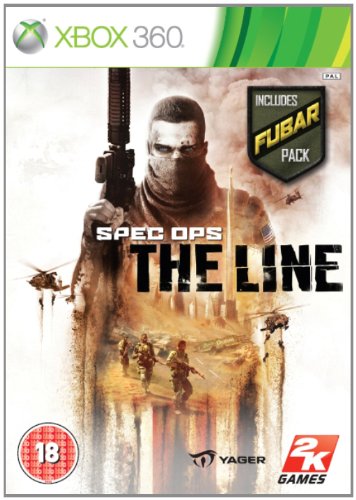
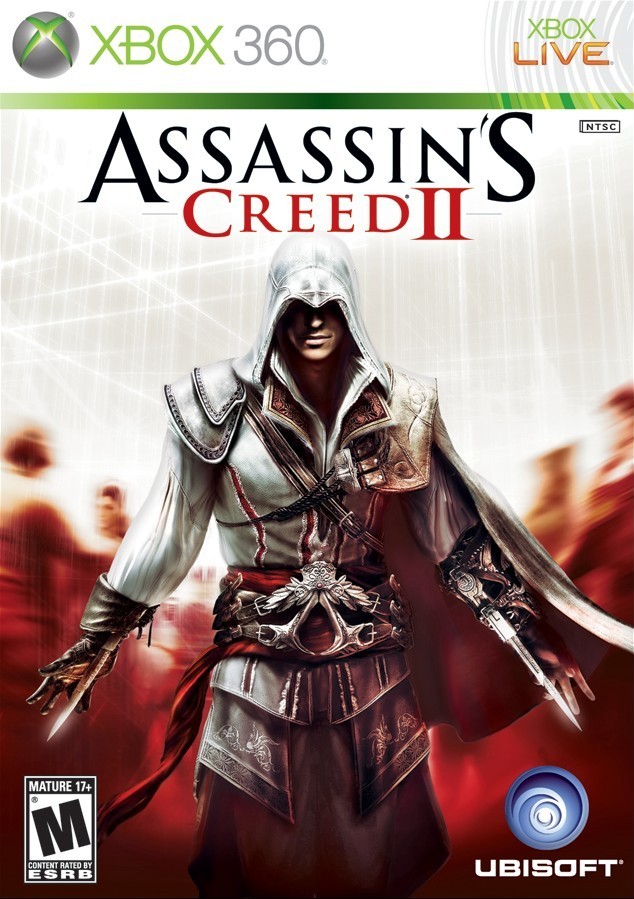
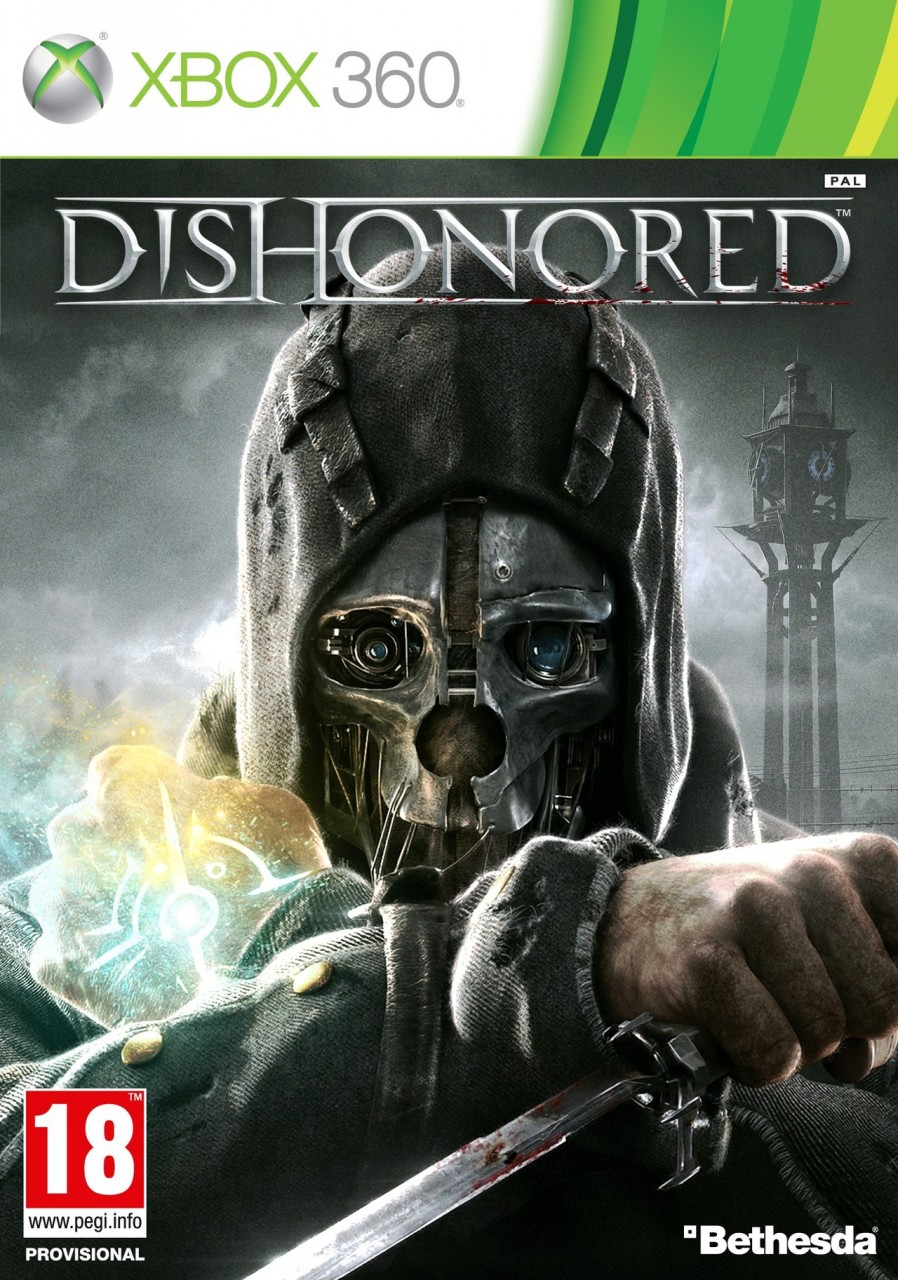
• Strategic Value AbsoluteI like Warhammer 40K: Space Marine more than I ought to.  Before playing it I had never been into a Games Workshop and have certainly never painted a figurine, but Relic’s game made me walk into a store, lined with unpainted models and filled to the brim with players sitting at tables discussing their armies, and consider for a brief moment taking a dive into the world of miniature warfare.  I didn’t of course but that game, but that simple third person action game that told the tale of humanity’s struggles against Chaos, got me the closest to tabletop gaming I have ever been.  And so I left the store with a copy of  the first book in the Horus Heresy series knowing that I was only a hair’s breadth away from being consumed by a very expensive hobby.  Thanks to Space Marine I know the difference between an Ultramarine and a Bloodangel.  I have extended my library of books with all manner of Space Marine related literature waiting for a rainy day to read them cover to cover. I even occasionally marvel at the character and art design of the wholly cohesive universe created by Games Workshop.  So what started with an impulse buy of a game I knew very little about turned into an interest in Space Marine lore that still hasn’t waned.

    And that’s what videogames are about, or used to be.  They were about inspiring imagination, about bringing you into a world and making you believe you were there.  They are the reason that the DOOM books existed, that there are Mario themed birthday cards, clothes and breakfast cereals, and there are people walking around with big Lambda symbols on their t-shirts paying respect to the wondrous Half Life.  We didn’t want these worlds to end and it is clearly evident that we want the chance to experience and further our relationship with these games, these worlds, these characters.  Fan Fiction, blogs, podcasts, all of these things extend our enjoyment of the video games we play and give us outlets to remember and give credit where it is due to the creators of this content.  For many of us the rolling of the credits in a game is just the beginning of our relationship with it.

    SpaceMarineScreen

    And it goes beyond the associations we form in our mind between videogames and our own lives, although that is no doubt an important factor. Playing DOOM II will always be coloured by hearing the shocking news of the Port Arthur Massacre while playing it, for example. But video games also have this ability to draw us in, pique our interest, even teach us something about the world we inhabit.  Did you know of the Borgias or the Medicis before Assassins Creed II?  I sure didn’t and the game inspired me to track down and read The Rise And Fall Of The House Of Medici.  How many of us learnt about the Mongolians from Sid Meier’s Civilization, or got our first look into economics from Elite?  Did you learn everything you know about Skateboarding from the Tony Hawk series?  I bet for many people that is the case.

    Video games are no different from other media in that their scope and potential to influence and to inform is great. I can’t count how many times I have been inspired to learn more about the subject matter of a video game.  Microprose Grand Prix on the Amiga 500 kickstarted my interest in Formula One, and International Soccer on the Commodore 64 my interest in football (soccer) before that.  These are things that have stuck with me and have not only made me into the person I am today but have also been the catalyst for many of my friendships.  Whether it be the politics or stratagems of ancient Rome, the tactics of the Nazis during World War II, or the hard fought football match on the weekend between rival teams, I have built lifelong friendships on things I have learnt or been introduced to through a game.   So while video games are often considered isolating, solitary activities – and in some cases rightly so – they also have the wonderful and often unrealised potential to help us interact with others and build friendships on common interests.

    And so I say this – when you play games let your imagination run away with you.  Games aren’t developed in isolation they are built on lore, from source material and influenced by other media.  If you find yourself interested in a game’s subject investigate it further, read, listen, write.  Games are wonderful gateways to worlds within our television screens – but if take them beyond the screen – they can be so much more. A truly most agreeable pastime.

  • LordsofShadowBoxThere is no series I have spent more time with over the years than Castlevania.  Irrespective of whether I’m running through Wygol Village, Climbing Dracula’s castle, or the trudging through the contents of Portraits of Ruin’s paintings, Castlevania games have always had this unmatched ability to draw me in and keep me fixated on the (usually tiny) screen.  Whether it be the ‘if it ain’t broke don’t fix it’ attitude to the games’ designs, or the fact that I’d much rather spend my time with the more intimate experience handhelds afford, Castlevania has been the rock that I have consistently leant on to remind me not only why I like games in the first place, but why they still have a place in my increasingly busy lifestyle.

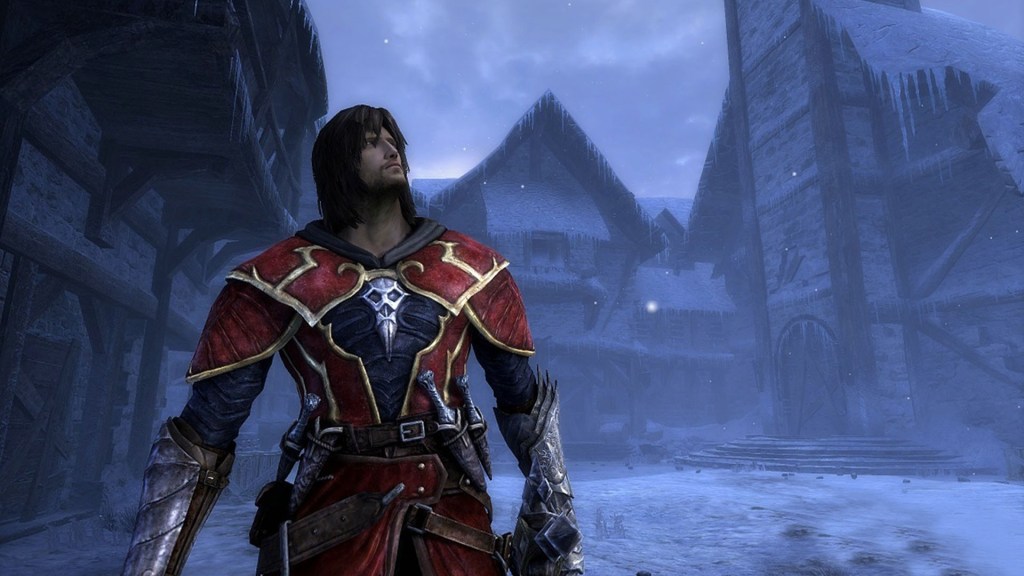
    Castlevania: Lords of Shadow threatened all of this with a great big revamp that swapped sprites for sexy polygons, and the more traditional side scrolling  exploration aspects of games past for a more action packed and linear affair.  Simply put, developer MercurySteam’s take on the classic series is a thoroughly different beast to what the game became after Alucard’s adventure in Symphony of the Night (SoTN).  Instead of exploring one huge sprawling castle, you’re set loose on a level to level affair that takes you from forests, to snow covered abbeys, to a Vampire-ridden castle.  Combat-wise things got an overhaul too, with the game drawing strongly from other contemporary third person action games, with area and direct attacks from the game’s one weapon being able to be chained into devastating combos to decimate all manner of supernatural abominations.  If the folks at Konami wanted Castlevania wanted to be modern, then Mission Success.  The game looks, feels and plays like a modern action adventure game, and would satiate the desires of most fans of the genre.  Including this one.  It is Castlevania reimagined.

    ButcherLordsofShadow

    But dig below those superficial things, like the pretty graphics and the complex combat system,  and you’ll likely find that underneath those beautifully realised Lycan and the plethora of viscera flying across the screen at a rate of knots, is an authentic take on Castlevania’s traditional gameplay.  The powers you gain throughout the game pave the way forward, albeit in a more linear manner, and the more traditional level-based structure of the game allows you to go back and open up new areas and secrets with your newly gained powers.  While it doesn’t deliver quite the same satisfaction as the likes of Super Metroid or Castlevania’s own kin, it is nice that the developer thought about ways to incorporate the series’ signature design elements in a way that doesn’t compromise its modern and remixed designed.  And if you actually think about it even the post SoTN  entries, while they were ‘open’ to the extent that you could move between areas freely if you had the means to do so, that really was just a way to compartmentalise the game and force the player to progress through the game via a set path.  Even if that path was very wide.  Lords of Shadows’ path is certainly more narrow, but it saves the same purpose.

    The same goes for a lot of the game, really.  While there is only one primary weapon, supported by a well-balanced combo system, secondary weapons are implemented incredibly well into the game’s combat system, making them a real highlight of combat encounters and incredibly satisfying to use.   My one major criticism of the game is that it doesn’t use any sort of item system similar to those used in the past – but because the developer has thought of clever ways  to give the player the same level of control over how they approach combat, it is ultimately a moot point.  The game’s dual magic system,  allows players activate light and shadow magic with modifying effects on weapons, and combined with purchased combos and moves, really personalise how they approach combat.  So while it is a rather combo-heavy game I never found myself falling back on old faithful combos to get myself through.  Again like classic Castlevania there will never be a shortage of fodder, but its those instances where you’re taking on those formidable series stalwarts such as a Black Knight or an Axe Armour one on one that Lords of Shadow really shines.

    Even the environments don’t step that far away from the best in the series.  While the traditional Vampire Castle you explore around halfway through the game is a clear highlight, there is never a dull moment as you make your way across incredibly varied locations and environments.  From swamps, to forests through icy-villages, and even to a graveyard of larger than life Titans, one of Lords of Shadow’s greatest strengths in its art design is really able to shine through.  It is a beautiful, beautiful game, and with its fixed camera, the developer really puts its all into crafting an incredibly cinematic and breathtaking experience. While purists will argue that Castlevania is best when its is based in one area, it always felt slightly contrived to me that one castle would have such an incoherence in theme or interior design.  After all even the Lord of Darkness himself surely would like matching rooms?

    Lords of Shadow doesn’t look like a Castlevania game.  But it is the closest Konami have come to evoking the spirit of the series in three dimensions.  The structure is linear, but gives the player the freedom to jump between levels.  The combat is more complex but is smattered with enough duals that invoke those memorable encounters with classic enemies in previous games that it retains the feel of Castlevania.  And thematically while it takes itself far more seriously than previous games, it still has that super slick period-gothic look that for me has always been a big draw for the series.  It is as Castlevania as one could expect with a huge leap forward in technology, and while it manages to catch up with action-adventure contemporaries, it still has maintained enough footing in the series’ roots to make it a worthy and appealing prospect for anyone who has found love in the series before, regardless of what its detractors have told you.

    Belmont

  • As usual I’m a little late to the party, but isn’t The Walking Dead brilliant? Despite hearing nothing but good things about it, I’ve only just got around to playing Telltale’s 2012 games series over the past few weeks. I read the first couple of Walking Dead comic books several years ago, and although I thought they were brilliantly written, the unrelenting bleakness put me off continuing with the series. So when the game game out I was reluctant to begin playing it for the same reason of wanting to avoid lingering depression.

    However, I’m very glad I did try the game in the end – it’s bleak, yes, but it’s also one of the best games I’ve played in years. And even better, my girlfriend Alex got into it just as much as I did, providing one of the rare games (along with Bastion) that we’ve both enjoyed equally. It’s not often you come across a game that’s as fun to watch as it is to play and, to top it off, has equal appeal to both sexes.

    Walking Dead Clementine will remember that

    In terms of actual gameplay, there’s very little to it. Most of the game involves making dialogue choices, solving very simple puzzles and whacking buttons in Shenmue-style QTE challenges – hardly the stuff to set worlds alight. But the game triumphs for two simple reasons – the acting and script are phenomenally good, and the decisions you make have permanent effects.

    The characters in this game as so well-realised and well-acted that it just highlights how far behind most of the industry is in comparison – the forgettable, one-dimensional characters of games such as Gears of War appear like cardboard cut-outs next to the fully-fleshed-out denizens of Walking Dead‘s world, and this is essential because it means you end up caring what happens to them. So when things go wrong, it can be devastating – on several occasions I found myself shouting “NOOOOOOOO!” at the television when something horrendous befell one of my favourite characters.

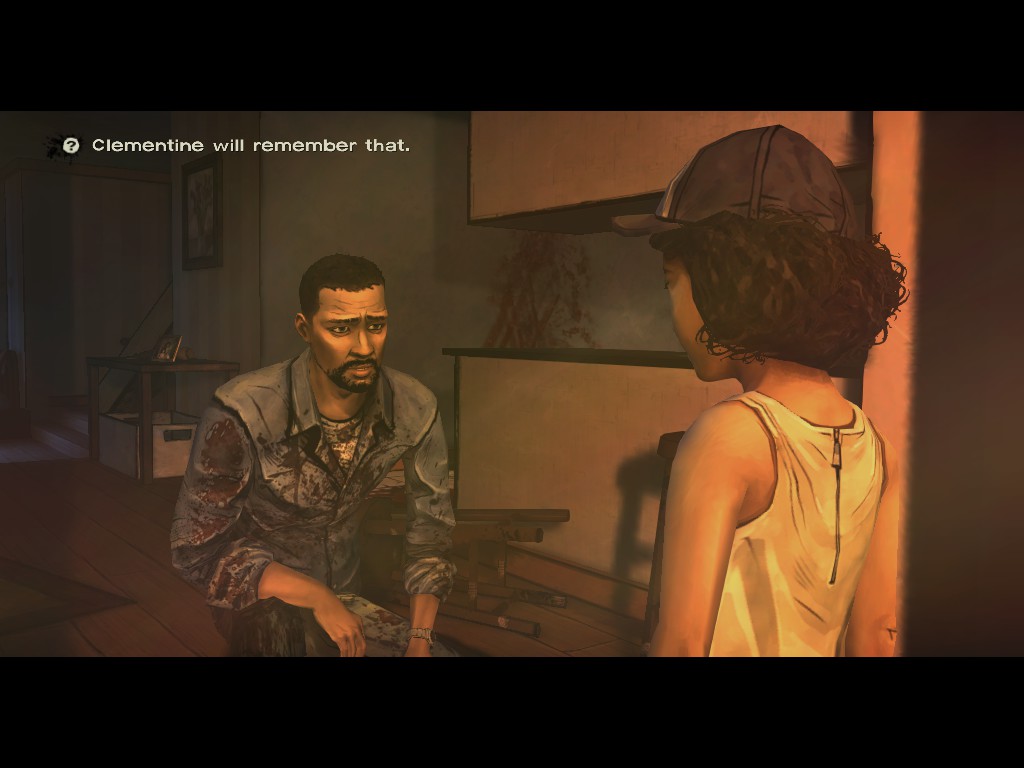
    But what strengthens this emotional investment even more is the fact that your decisions have permanence. Even now, as I’m just starting out on the second season, decisions I made at the start of the first season are still having repercussions. The message “Clementine will remember that”, sums up the appeal and the terror of the game – the decisions you make have a permanent effect on the girl you’re charged with looking after.

    It’s heartening to see how far Telltale Games have come, and it’s inspiring to see a company slowly perfect its ideas and methods. When Telltale started out a decade ago, its first few games were underwhelming (it released a slew of disappointing CSI tie-ins), and the company took a while to find its feet. I remember playing Sam & Max: Season One, which was a sequel to one of my all-time favourite games, Sam & Max Hit The Road, and being generally disappointed with the obtuse puzzles and naff driving sections, but also thinking that the game had something, a real potential, particularly in the dialogue. Now, all of these years later, it’s clear that the years of experimentation and the iterative changes to the Telltale Tool (the company’s game engine) have paid off, and the company has found a perfect match in the content of The Walking Dead.

    As Samuel Beckett once said: “Ever tried. Ever failed. No matter. Try Again. Fail again. Fail better.”

    Buy The Walking Dead: Game of the Year Edition on Amazon.

  • DriverSanFranciscoBoxUbisoft’s acquisition of Playstation stalwart Reflections, and with it the Driver name, was a stroke of genius.  Driver is one of the most versatile and potentially valuable properties in video games, having potential as a brand to extend beyond the tales of car chases and dodgy criminal masterminds and cops it has told until now, into anything its creators want it to be.  Driver likely means different things to different people, and while it may have have been tarnished in years gone by with the less than stellar entries in the series, there is likely still a soft spot in many gamers’ hearts for the game that once touted its burnout button as a feature.  And for those not acquainted with the brand there’s always time for conversion.  If you’ve never played a Driver game before,  Driver: San Francisco it is the closest I think developer Reflections has come to making the ultimate driving game that isn’t a racer.  There is simply no better place to start

    While many people get a bit snarky about the franchise based on its troughs, the fact is when Driver is firing on all cylinders and is at its peak, it is a wonderful series.  Driver can be anything.  To me it is the recreating of the thrill of driving dangerously that has drawn me time and time again to the series.  But with such a catch-all title it leaves open so many possibilities for creativity and innovation.  It’s this strength, this ability for the series to be malleable that is its greatest strength.  The first Driver on the Playstation blew us all away with how straight it played its take on the 1970’s car chase caper and is revered for what it achieved.  The way the weight of the car shifted onto the suspension as you slid around corners at high speeds, police in tow, is one of my favourite video game memories and ushered in an era that has seen a seemingly endless pursuit of realism in our video games.  It was nothing short of a milestone, particularly on consoles,  and so Driver became synonymous with realistic physics and handling that ultimately put developer Reflections onto a collision course with the monotonous iteration culminating in the critical disaster that was Driver 3.

    But how things have changed.

    Driver San Francisco on the other hand is a more wild and creative take on the car chase incorporating supernatural elements into what is on the whole more arcade like experience.  Driver, like Doctor Who or Super Mario, stands more for a sentiment.  Reflections don’t appear to want to create the most realistic driving experience possible; they want to create the most thrilling one.  They’re not at the mercy of physics, or realism, but rather to their own ambitions to create the ultimate representation of driving dangerously.  Driver San Francisco is an evolution of a series that has never felt the need to adhere to a strict formula and the result is a game that could turn the most car averse people into raving revheads that crave the smell of burning rubber.  And that is the strength of the Driver name.  Ubisoft no doubt realise that it is sitting on a goldmine ready to be exploited, and I for one can’t wait to follow the trail of fumes to its next adrenaline fueled entry.  As long as they don’t forget to strap creativity into the passenger seat.

    Did you know Driver San Francisco had a companion novel?

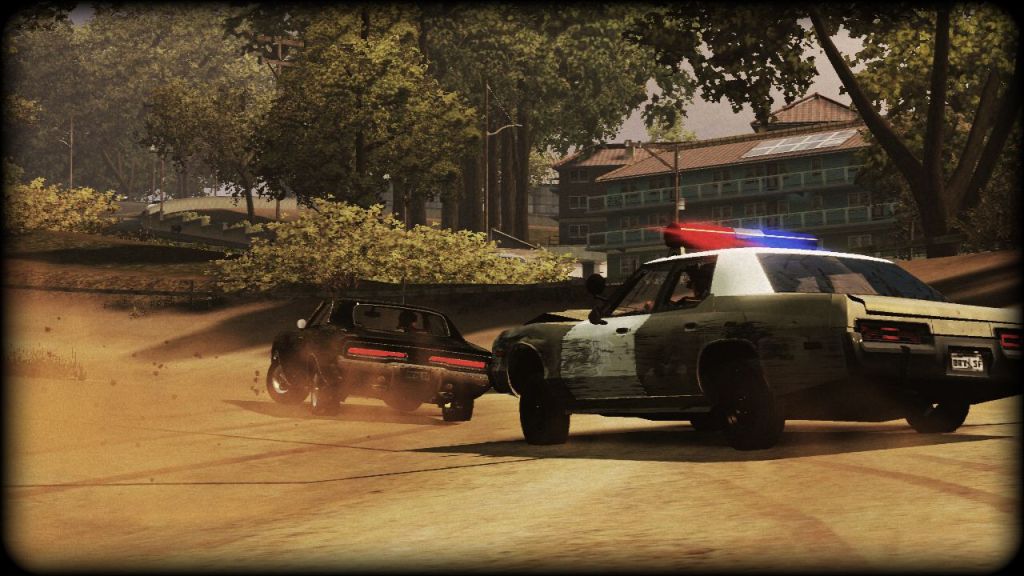
    DriverScreenChase

  • inFamous2boxartinFamous 2 is the best superhero game ever made.  It’s the best anti-hero game ever made.  And its one of the best open world games ever made.  I played the first inFamous close to launch and loved it to bits but years later just couldn’t get the enthusiasm up to take the plunge and play through the sequel.  And so it sat there gathering dust on my shelf.

    The problem was I was never in the mood for what inFamous 2 advertised.  I didn’t feel like being an electric badass gliding and sliding my way around an open world shooting bolts of pure lightning from my hands at gangs of radicals and mutants, and I certainly didn’t feel like climbing buildings to find a seemingly endless number of collectibles.  It all just felt a bit ‘by the numbers’ after a generation of playing like-minded open world games that put you in the shoes of the one guy that can come up against innumerable odds and reign victorious.  And so main protagonist, social outcast and anti-hero Cole McGrath’s story of redemption and revenge went unfinished.

    Until last weekend that is when I found myself grabbing the game and putting it in the PS3 randomly.  And I’m glad I did.  Putting the game on it all came flooding back.  So while for so long I delayed playing inFamous 2 because I didn’t feel like being an electric superhero pseudo jedi type, I was forgetting that the draw isn’t what the game does, but how it does it.  As proven by Sly Raccoon before, Developer Sucker Punch aren’t so much masters of concept than they are at execution and inFamous 2 is executed so well you won’t be able to put it down before you end the arc of the conduit Cole McGrath’s story.

    Last(?) console generation saw the phrase ‘feel of the game’ creep into the vernacular of video game enthusiasts trying to describe that indescribable but very tangible feeling of having the controller in your hand.  inFamous 2 is for me the perfect example of how to use that phrase because everything just feels silky smooth.  Given how many options for approaching both combat and traversal at any one time it is a minor miracle that it never feels overwhelming.  When you watch someone else playing the game the barrier to enjoying the game seems insumrmountably high, as you watch them glide, slide, jump and climb, traversing the destroyed beauty that form the game’s urban areas.  Combine with that the fact that the game often requires combat to be managed simultaneously and you’re likely left wondering how many hands and/or fingers you’ll need to get through inFamous unscathed.  Once you’re in the game though all of that falls away and you’re left with a game that just feels right from the very beginning.  Even when things get more complicated by the additional traversal options given to you as you level Cole up, the developers doles out the new powers at such a pace that you’ll always be given the chance to learn your powers before new ones are handed to you.

    And its not just the traversal that feels just right; combat too is equally as well designed and paced, giving you enough variety to keep you thinking about new and better ways to approach different combat combinations, while keeping it all balanced enough to make sure you never find a ‘killer combo’ approach to any given situation.  The result of all of this is a game that hits both combat and traversal for six – something many if not most sandbox games only dream of.

    But what impressed me most about inFamous 2 was the twists and turns the story took, highlighted by the overused in recent times morality system the developers employed to give the player greater agency and choice throughout the course of the game’s narrative.  Like almost every other game that features some sort of binary morality system making decisions in either the good (blue) or bad (red) is tied directly to what character upgrades you’ll have access to – completing “red” missions will give you access to entirely different powers to if you played the goodie two-shoes “blue” path”.  It’s all a bit contrived, really, and a system that I’m not sure has meant terribly much outside of Bioware’s fare.  But inFamous 2, while definitely walking a path well-trodden, mixes things up while managing to not stray too far from the status quo by the writing and narrative that forms around it all.  The tale will take twists and turns as it progresses culminating in a few final decisions that won’t sit easy regardless of which path you’ve chosen.    It blurs that line between what is right for a few versus what is right for the many in such a way that is so well done that your loyalties will likely be tested.  As in the real world, good isn’t always good and bad isn’t always bad, something that I think Sucker Punch nails with its writing.  While the decisions don’t impact the way the narrative progress until the very end, it is the way they inactively affect your own relationship with the characters as the player that is where inFamous 2’s writing really stands out. It pulls at the player’s loyalties with characters that aren’t always what they appear to be by putting you in a position to really understand the plight of all of the parties you are forced to choose for.  Its clever writing more than clever mechanically absolutely; but it is pulled off so well that you’ll forget that the morality system is nothing but a different way to navigate a skill tree.

    The thematically dark comic-book presentation highlights perfectly the tone and pitch Suckerpunch is going for with the series; and the anti-hero it creates is amongst the best in the medium.   Cole McGrath is a mildy interesting character but it is his interaction and contrast against the surrounding cast and their backstories that makes him so much more compelling than he appears on the surface.  On the surface inFamous 2 is about Government conspiracy, but look a bit deeper and you’ll see it is really a commentary on the social dynamics of an outcast.  Of course when all is said and done, inFamous 2 like its predecessor, is a well polished open world game that makes you feel like the all-powerful character it has you taking control of, and in some ways that’s all that matters.  But in other ways its nice to have a big dumb action game take a slightly more intelligent approach to how it frames that action within the context of its world and its characters.  Either way inFamous 2 certainly doesn’t disappoint.

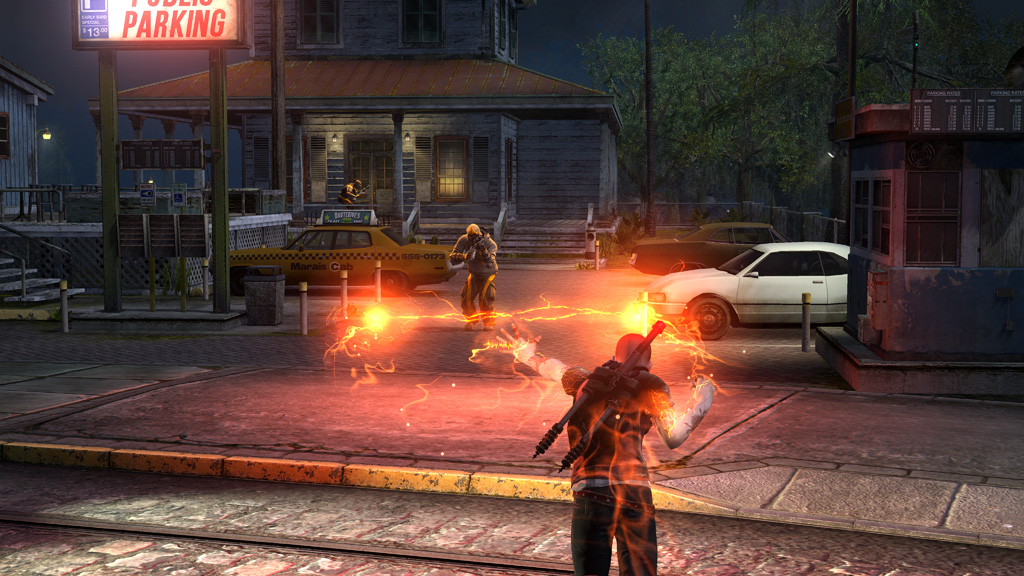
    infamous 2 screen

  • OutlandBoxHow many times do you think the average video game enthusiast says “this is the game I dreamt of playing when I was a kid”.  I’d hazard a guess it is a hell of a lot.  But regardless of how many times I’ve thought it or written it (I did a search of the blog and I think I’m clean), Outland is actually the game I dreamt of playing as a kid.  The game design is straight from the nineties and is a beautiful rendition and revision of the types of games I lapped up in my younger years.  There is no way I could’ve known how prevelant 3D would become across the industry and looking at Outland it is almost the perfect evolution of old-school game design.  But it also adds a few new twists to the formula that makes it feel like a thoroughly modern title, successfully combining the best aspects of Mega Man or Castlevania with the more interesting aspects of shoot ’em ups like ‘polarity’ and ‘bullet-hell’ Ikaruga or DoDonPachi make Outland more puzzle oriented and complicated than your average run and jump platformer.  Basically Outland isn’t just a great throwback to simpler times, it is a crazy combination of two disparate genres that makes for one of the most compelling platformers of the last few years.  And I loved it.

    Platformers are great for two reasons.  One, they often beg of the player a level of precision and skills that many modern games just don’t.  Two, they usually don’t require complicated control schemes to navigate in what is obstensibly an eight-way plane.  Outland takes these two great traits of the genre and runs with them, creating a game that is easily accessible by all but the most uncoordinated of players, and injecting with devious bouts of difficulty that make an otherwise pretty straightforward game design incredibly rewarding.  The game’s structure is vaguely similar to genre stalwarts like Metroid and Symphony of the Night, locking off areas and dolling out powers liberally to give you new ways to fight and traverse the world.  It’s an oldie-but-a-goodie and developer Housemarque has arguably implemented the system better than most, with powers being required to traverse upcoming levels, but only optionally for backtracking in pursuit of collectibles.  In this way, although on the surface Outland is comparable to Super Metroid-esque open worlds, its modular strucutre of its levels which rarely ever rely on backtracking makes it progress more like your standard level-based platform fare than its more openly designed brethren.  And it’s to the credit of the design team that Outland’s connected but modular world feels as epic as it does.  The levels themselves are simple in their construction but because of clever and well-thought out placement of enemies and obstacles, always feel larger than they actually are.  The worlds are littered with enemies that are interesting, but not deadly, and traps that are devious but not impossible.  If not for the polarity system, whereby you can shift your ‘polarity’ from light to dark to avoid damage from projectiles and obstacles of the same colour, Outland’s levels would be dull and boring.  But the way that mechanic is incorporated into its level design is genius and gives it that cerebral edge over your standard platformer.  Its not solely about measuring your jumps perfectly and avoiding enemies when you’re having to navigate your way through intrinsic bullet patterns.

    Of course none of this would matter if the game wasn’t as smooth as it is.  Its precise controls make playing it feel natural, and while there are devilishly difficult parts of the game (many of them boss fights) you’ll never be in want of a better control scheme.  Expletives will be tossed around the room at times as the game demands almost superhuman dexterity and hand-eye coordination, but they will never be levelled at the game, and every time I fell foul to the game’s at times devious design, it was always pretty clear that I had made the mistake.  Practice makes perfect though and Outland’s smooth pacing and well-balanced difficulty, spikes and all, make getting through difficult passages always seem within reach.  For a game that lives and dies by how it controls that is high praise indeed.

    Outlandscreen1

    But like Limbo before it the first thing that will strike most people is how strikingly attractive Outland is.  A far cry from the detailed and painterly qualities of Rayman Legends, Outland employs a silhouette style that keeps things stylistically simple, but infuses it with intricate detail in places to give the game a real sense of place.  The trible images of otherworldly beings and powers that are strewn across the pitch black architecture, all contrasted against simple yet beautifully animated coloured backgrounds is nothing short of striking, and give Outland a unique identity amongst the swag of pixel-laden indie games populating download services across all platforms.  Whether it was intentional or not Outland’s story, as bare bones as it is, is told almost all through the world itself.  So while you don’t have more than a couple of pages of story, the story of the world is constantly unfolding in front of you, almost like wandering through a foreign city and imagining the place’s history.  If you go into Outland looking for an epic story you’ll be disappointed, but come for the atmosphere and you’ll leave well and truly satiated.

    The greatest testament to Outland’s quality though is that I just could not put it down, ostensibly finishing it up in two sittings.  The game’s bite-sized design would make it equally easy to play in small chunks but its rhythm just felt so good that it became hard to put down.  The game never really surprises you with new things to do, but its how it mixes its core polarity and platforming mechanic to offer challenge that will keep you on your toes.  There is a sense of accomplishment that comes with what basically boils down to multi-tasking, as your fingers almost instinctively move from button to button in an almost impossible manner, changing polarity, jumping, dodging and weaving, sometimes all at the same time.  But its testament to developer Housemarque that, like in its other titles Resogun and Super Stardust, the difficult that can make playing the game infuriating at times, is the very same thing that will keep you coming back for more.

    OutlandScreen2

  • prototypeIt took me five years to finish Prototype and while I don’t necessarily want to review it the game did provoke me to think about what games have become, where they’re going, and why Prototype is perhaps one of the more important games for me of last generation.

    I am almost certain that Prototype is the ten year old version of me’s favourite game.  The game in some ways feels like a conversation with an adolescent boy, explaining what he’s seeing on the playground, or about the abstract picture he’s drawing in crayon.  It has that unbounded outrageousness about it that the 30 year old version of me would struggle to think up without trying to rationalise it.  Kids on the other hand are pretty amazing architects of worlds, mainly because they aren’t confined to what we know to be the rules of the world, but also because they don’t ask questions of their own thought processes.  “What if your hand turned into a blade and then you could make spikes come out of the ground and then run really fast and you’d kill them and blood and guts would go everywhere but you’d just eat monsters and be better.”  

    Prototype reminded me of how I used to enjoy games.  As a pure piece of entertainment Prototype is almost flawless as it gives you the means to not only run riot through a recreation of Manhattan but also to regress to an almost primal sense of enjoyment.  It was like being transported back to my childhood bedroom where I would spend hours upon hours playing Turrican, entranced by everything that was happening on the screen, absolutely unaware of what was happening in the outside world.  Prototype was simply an escape from reality and a meaningless power trip that allowed me to be someone I’m not.  Whenever I’d play the game it was almost like a reverse version of the storyline of the film BIG in that for those moments I was playing it I was given the opportunity to be a kid again and let my imagination run wild to surround myself in a fantastical and faraway land. Prototype truly was escapism at its very best.

    I’m not the same person that sat in my room playing games and enjoyed them for what they were rather than what they weren’t.  The adult version of me would write that the narrative wasn’t fully formed.  The adult version of me would write that the game’s controls were sometimes fiddly or its difficult curve erratic.  But while the adult version of me can’t always turn off the critical parts of my brain or divest myself entirely from his responsibilities, he can learn from that more innocent and less tainted version of myself.  I’m not a religious man but perhaps the one thing I can get behind is recognising and being thankful for the things we do have rather than lament the ones we don’t.  Never did I think that would be my take away from a game that took such joy in giving me countless ways to mame and massacre thousands of mutants.  But it is a takeaway nonetheless and for that I’m grateful.  So thank you Prototype for those ten hours I was allowed to be a kid again.

    Proto360screen

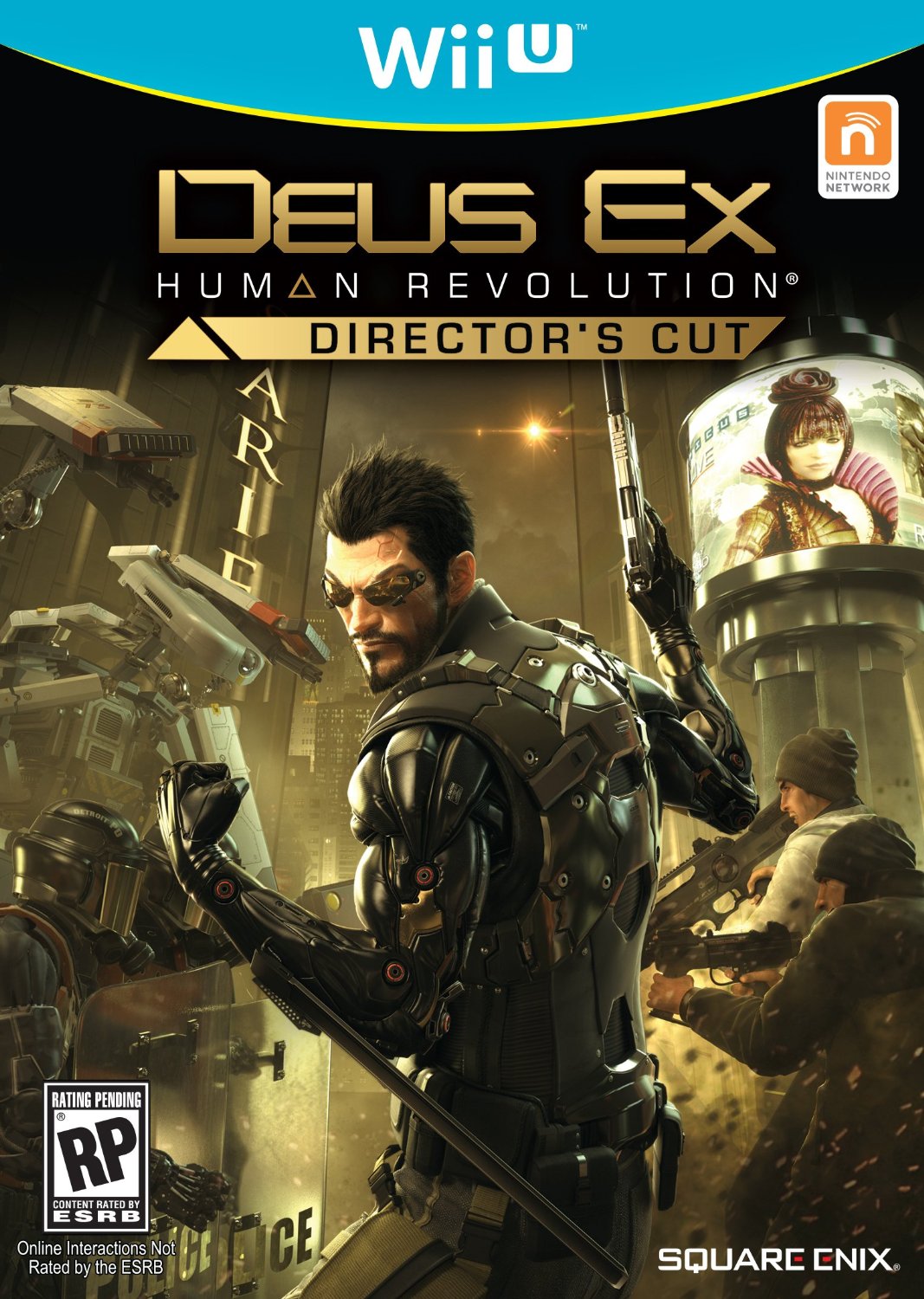
  • deus-ex-wiiuI played Deus Ex: Human Revolution – Director’s Cut immediately after finishing The Last of Us, and I have to say the comparisons are unkind to the former. Then again, seeing as we voted The Last of Us as the second best game of this generation, anything that I played immediately afterwards was probably going to feel lacking in comparison.

    Whereas The Last of Us felt like a glimpse into the future, Deus Ex: Human Revolution in many ways feels like a relic from the past. I haven’t played any of the earlier games in the series, but I know that the first game was pioneering in its use of binary choices, allowing you to pick the path you took through the game and ultimately determine the ending. Since the first Deus Ex was released in 2000, player choice has become a staple of many video games, but in Human Revolution I had the distinct feeling that my choices made absolutely no difference. The main choice is whether you take a stealthy approach or go for all out assault, but either way the result is the same, the only difference being the amount of body bags needed.

    Early in the game, however, you really only have one choice: stealth. Any attempt to take on enemy guards with your woefully underpowered character in these early stages will inevitably end in failure, so you have little choice but to creep around in the shadows. This proved incredibly frustrating, and at one point I was ready to give up. The biggest problem is the horrendous loading times – taking a stealthy approach inevitably means restarting from an earlier save point after you’ve been spotted and summarily murdered, and I found myself staring at a loading screen for periods of time that were reminiscent of the bad old days of the PlayStation 1’s dawdling CD drive. Getting through each stage was a dismal exercise in death by a thousand cuts, and I began to realise that perhaps I’m not cut out for stealth games – I never got into Metal Gear Solid for the simple reason that I quickly got bored of hiding in cupboards.

    Deus Ex Wii U Directors Cut 1

    Thankfully, Deus Ex does give you a choice in this regard – if you opt for the more combat-oriented augmentations you can mostly do away with stealth and just launch into each level guns-a-blazing, but it takes a helluva long time to unlock those essential augs. It was only about a third of the way into the game that I actually started having fun, taking out groups of bad guys with my Typhoon ammo system and generally causing havoc. But this fun was a long time coming – whereas The Last of Us promotes stealth but gives you the tools to deal with being spotted by the bad guys, Deus Ex dictates stealth by making it ridiculously easy to die until you’ve played the game long enough to beef up your character. It’s a game that definitely falls into the ‘hardcore gamer’ category.

    You could argue that perhaps I lack the patience for stealth games, so in this sense it’s not the game’s fault that I struggled to enjoy it in places, but then that’s not the only thing that I found troublesome about the game. For a start, the conversation cut scenes border on the hilarious. Adam Jensen’s gravelly voice is Christian Bale-ridiculous, and for some reason all of the characters twitch and shake during conversation like they’ve got Parkinson’s disease – I found this very distracting, especially after the silky smooth cut scenes of The Last of Us. Plus the plot, with its gumpf about the Illuminati and shadowy corporations, feels cliched to the point of absurdity – this kind of story was all the rage back in the late 1990s and early 2000s, but nowadays it seems very tired. How quickly we move on.

    One of the things that the game has been lauded for is its realistic depiction of a near future in which society has been split between the augmented elite and the resentful ‘naturals’, and in this regard there are seemingly thousands of emails and books that provide information on the society at large. The trouble is that there’s too much of this stuff – after I’d hacked my hundredth computer to read emails on cleaning rotas or some other such b****cks I’d completely given up caring about the game world. World-building through in-game texts is a laudable idea, but information should be sparse enough that it makes you want to read it – Dishonored had the level pegged about right, but Deus Ex deluges you with info, much of it meaningless.

    Deus Ex Wii U Directors Cut 2

    I played the Director’s Cut version of the game on the Wii U, which came out in November last year with several improvements over the original, most notably the loving integration of the Wii U gamepad. Indeed, so useful is the gamepad in this game, with its handy map overview and inventory system, that I struggled to imagine how anyone could have played the game without it. Apparently the boss fights have also been improved in this version but, in addition, the Director’s Cut manages to introduce a flaw that is UTTERLY UNFORGIVABLE. The designers have taken the optional DLC level of the original game, The Missing Link, and shoved it into the main game around three-quarters of the way through, which makes some kind of sense in terms of narrative. But because the DLC was meant to be a standalone level, you begin it with all of your weapons and augmentations being taken away from you. And yes, that is as annoying as it sounds.

    I’ve played a few games that take away your powers/guns at certain points in the game, and I continually marvel at why game designers think this is a good idea. Let’s just get this straight: IT IS NEVER A GOOD IDEA. Usually though, the game-makers have the good sense to return all your hard-won powers to you shortly afterwards, but in Deus Ex you don’t get them back for OVER THREE HOURS. A handful of guns and augs are returned to you after about 15 minutes, but the rest don’t turn up until the end of the DLC chapter. One of my guns was a heavy rifle that I’d lovingly upgraded over the course of a few hours, but now I found that it had been returned sans ammo. Even worse, because my ‘strength’ aug had been removed, I didn’t have room in my inventory for all of my upgraded weapons, so I was reluctantly forced to dump a few of them. I clung onto my favoured heavy rifle for a few hours, but I eventually realised that the game wasn’t going to give me any ammo for it, so I ended up having to dump that too to make room. Plus because my fancy augs had been taken away, I was suddenly a sitting duck again, forcing me to go back to tedious creeping around like in the first part of the game. “Not this sh*t again,” I thought.

    By the time I got everything back I was thoroughly dispirited – imagine spending 15 hours patiently doing side missions to gain experience and upgrades only for all that to be taken away for the sake of shoving in some DLC. I trawled through the remaining levels, but by that point the joy had gone out of it for me. The last level proved to be a crushing disappointment – I’d finally become a fully-tooled-up, death-dealing cyborg again, but for the final part you’re faced with crazed civilians rather than evil corporate mercenaries. After being forced to crawl around for hours avoiding conflict, I’d looked forward to cutting swathes through ranks of bad guys with my futuristic weaponry in a grand finale, but my moral compass refused to allow me to turn the barrel on the innocent. If you’re the kind of person who enjoys gunning down civilians you might have enjoyed it, but if you are that kind of person then please seek help.

    All in all then, Human Revolution was very much a mixed bag – enjoyable in places, but utterly frustrating in others. If you’re a huge fan of stealth games then you’ll no doubt get a kick out of it, but everyone else should probably steer clear. Just play The Last of Us instead.

    [As penned in frustration by Lucius Merriweather.]

  • SRIVcoverI really loved the Saints Row franchise.  It may have followed (closely) in the footsteps of the Grand Theft Auto but the first Saints Row on the Xbox 360 was an admirable attempt at bringing that style of game into the next generation.  Many people criticised it for that and for that reason it perhaps is remembered a tad more harshly than it deserved to, but despite the calls that it was derivative of the GTA behemoth that had won over millions of PS2 (and later Xbox) owners, developer Volition proved that it was more than capable of bringing to market a cracking open world crime-’em-up.

    Not content with resting on its laurels, Volition blew out of the gate in 2008 with the vastly improved sequel Saints Row 2, which took everything from the first game and made it more ridiculous and the process more fun.  At a time when Rockstar was experimenting with mature and adult themes in a more grounded playground, it also brought into stark contrast the differences in approach to both tone and gameplay from both developers, and in doing so set the tone for the franchise for future games.  Saints Row: the Third  upped the ante again and went on to gain both critical and player acclaim, selling over 4 million copies in the process.

    And then there’s Saints Row IV.  The only game in the series I haven’t been able to finish.

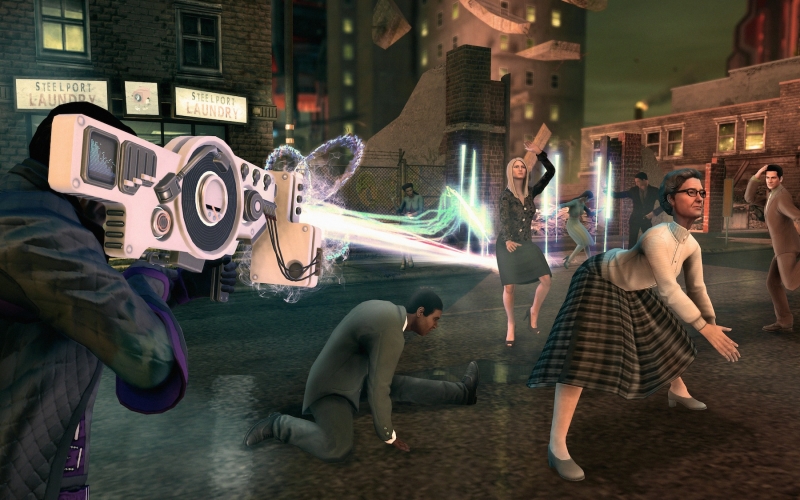
    Saints Row IV is the most ambitious game in the series and  right from the start its ludicrous premise makes it blatantly obvious that Volition didn’t pull any punches, and if the Alien invasion doesn’t give it away the superpowers you acquire early on certainly will.  Saints Row IV is the series’ equivalent of the fourth and final season of The OC in that any semblance of sensibleness and continuity is thrown out and the writers and designers seem have been given absolute creative freedom.  The Third was a bit crazy, sure, but next to Saints Row IV it looks positively tame.  It seems that the mantra behind the development of the game was throw everything in the mix and hope for the best.  It is an admirable approach and one that resulted in probably the most interesting and feature complete game in the series.  But it also makes it perhaps the most inconsistent and underwhelming from where I sit.

    I appreciate how much thought went into making this game as fun, as ridiculous and outrageous, and as humourous for the player as possible.  In most of those respects Volition have succeeded admirably.  If you’re into open worlds that throw everything but the kitchen sink at you, Saints Row IV is your game.  If you like dick jokes, Saints Row IV is your game.  If you like travelling into the mind of a creative madman, Saints Row IV is ABSOLUTELY your game.  Dildos, pimps, dubstep guns, arse jokes, transvestites – they’re all here.  You will fall in love with Saints Row IV and have the same great experience that I had with previous games in the series. 

    But for the same reasons many people will love Saints Row IV I was left wanting.  It felt like the game was brainstormed but never designed.  While there have been countless great ideas added to an already sound game, there doesn’t seem to have been the same amount of thought put into how to actually make them work and fit in the broader context of the game.   The superpowers are the game’s biggest additions but like so many other ideas they never feel like they’ve been integrated into the overall design of the game.  Not only do they make travelling by vehicle redundant but they are taken away as soon as you enter a mission meaning they never feel fully integrated into the game and are left feeling like a gimmick thats function is never fully explored.  So while the game in the over-world is something new and exciting when it comes to actually progressing through the linear mission-based storyline you’re relegated to a regular joe in a regular third person shooter.  So while the designers show off their ideas in the open world and unstructured Steelport, none of that translates into the game proper. leaving you with nothing more than a new and remixed version of its predecessors.  While the game’s concept easily explains away this strange design decision, at least where I got up to, it doesn’t make it any easier to deal with the fact that Saints Row IV is just a mutton dressed up as lamb.

    But the bigger problem for me was that while Saints Row IV introduces a whole swathe of new powers and ways to traverse the world, it is constrained by an engine and control scheme that wasn’t build for it.  Jumping hundreds of metres in the air is a great feeling but you never feel fully in control of your character when you’re doing it.  So while ridiculous feats of athleticism feel natural in games like Assassins Creed IV where the game is  built from the ground up around that type of player movement; in Saints Row IV it feels amateurish and tacked on.  Rather than a sequel with refined gameplay so much of the game feels like a third party mod and that’s rarely seen as a compliment.  The superpowers should have been the biggest strength of the game but rather their poor implementation makes them its biggest liability.

    Saints Row IV is different things to different men.  Some people loved that the unarguably talented men and women at Volition turned it up to 11 (for want of a better cliche).  But I couldn’t get past the fact that while some things change, something things remain the same.   It isn’t very often I can’t pull myself through a game but SRIV unfortunately found itself on that very short list at the beginning of the year.  Quite simply after a good six hours flying around a virtual Steelport I lost interest in what it had to offer and haven’t returned since.  A flight of fancy turned to frustration as the smoke and mirrors fell away and revealed a game that was confused about its identity, something the over-the-top and often times laboured humour can never make up for.  SRIV had all the markings of a game that had evolved into something new, something bigger, something more magnificent.  But the marks just covered up old scars that although hidden still held the game firmly in the past.  Saints Row IV isn’t necessarily a bad game; but its one thats schizophrenia didn’t allow me to embrace the game its developers aspired for it to be.  And that’s a real shame because somewhere amongst the mish mash of ideas is the makings of one unbelievably great sandbox game.  It just needed more designing.

    The greatest compliment I can pay the game is that although I didn’t like it; I can absolutely see why scores more people did.  And that is the wonder of video games in a nutshell.

    SaintsRowIV

  • As an economist I analyse markets for a living.  But I am shocked at the amount of absolute garbage being written day after day by professional writers who somehow think there is some hidden meaning or grand plan hidden in plain sight within often straightforward announcements to investors. Here’s a hint,  there’s not, and believe it or not the games press is not the centre of the world.

    Markets are complicated things but at the surface they represent something really quite simple.  Businesses, similarly, operate with regards to two key metrics; profit and loss – past, future and everything in between.  The decisions that they make are hard, yes, but the drivers for decisions are not.  But somehow game journalists, game bloggers, the twittersphere and everyone from whom the word ‘video game’ has pursed their lips choose to weave a rather large and intriguingly complex web while playing business advisor to the mega corporations that rule the industry and in turn save them from an untimely demise.

    Twelve months ago Sony was dead;  six months ago Criterion Games was a goner;  and for the last month or so nothing but doom and gloom has been on the minds of everyone that dares speak the word ‘Nintendo’.  They’ve all been wrong, and will likely continue to be, but for all that think themselves a bit of a market soothsayer, here’s a little markets 101 for you to think about before you write your next fact-filled but ultimately frivolous article; in 79 words.

    Businesses invest in consoles.  Businesses invest in games to sell those consoles.  When consoles sell they provide capital for longer development times and better games.  When consoles are successful other businesses make games for those consoles.  If consoles aren’t selling there will be fewer games for them.  If consoles fail businesses invest again with a new strategy.  Businesses don’t typically walk away from investment.  And finally very little of the cost involved in developing a console is sunk cost.  

    …And also please stop.

    Nintendo

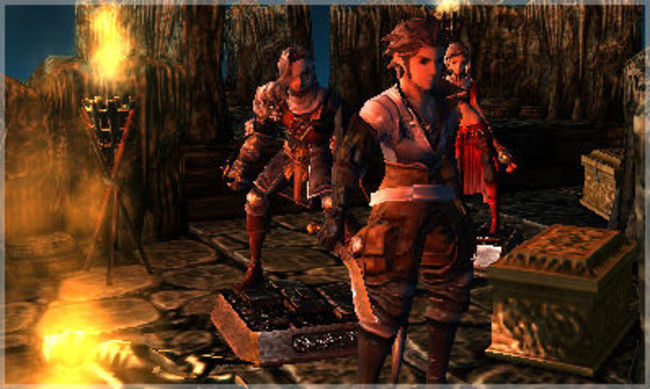
  • Crimson-Shroud-title-screenCrimson Shroud snuck out for release on the Nintendo eShop around Christmas 2012, and it quickly became one of my favourite 3DS games. It was created by Yasumi Matsuno, director of Vagrant Story and Final Fantasy Tactics among others, and it’s easily the highlight of the Guild01 series developed by Level-5.

    In modern RPGs there’s been a trend towards hiding the mechanics – the virtual dice rolls that determine whether you hit your opponent and how much damage you cause. It all goes back to the roots of the RPG in Dungeons & Dragons, where the dice rolls are actual and the characters are nothing more than hunks of metal brought to life with a little imagination. Modern games like Mass Effect all but do away with the numbers game, and on the surface they look just like first-person shooters – but somewhere under the flashy graphics, the game is still throwing those virtual dice, it’s just hiding the numbers from you.

    Stat heaven.
    Stat heaven.

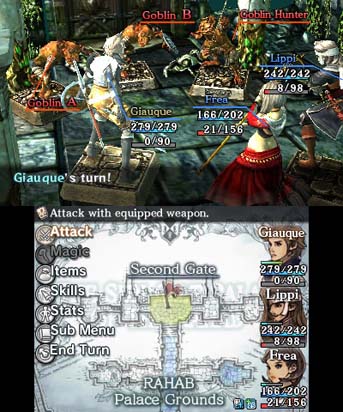
    In a wonderful conceit, Crimson Shroud flips this trend on its head – here you’re actually asked to roll those virtual dice with a flick of the stylus, and the characters are all static models on dinky little stands. But rather than being set on a living room table with a cardboard playing field, the backgrounds change markedly as you venture further into the dungeon. It’s a great idea, and the dice rolling feels very natural – you can even knock dice off the virtual table if you roll them too hard.

    Living room D&D succeeds or fails on the strength of the story being told by the Dungeon Master, and in Crimson Shroud the story is a real highlight. The text is sumptuously written, and although there’s a lot of it, it’s always a pleasure to read. Similarly, the battles are tense and exciting, forcing you to constantly weigh up your opponents’ weaknesses and decide on whether to save dice for a devastating attack or concentrate on using magic to strengthen your defence. It gets very tactical towards the end, but even though I have no experience of playing D&D, I picked it up very quickly.

    The downside is that often you’ll need to grind to get the best weapons, and there’s a particularly bad part in the second chapter where progress comes down to fighting a gang of skeletons again and again until one of them drops a key. Get past this bit though and the game opens up a lot more in terms of variety, and waiting for that sweet sweet loot to drop at the end of a battle becomes addictive.

    I actually enjoyed this game so much that I started a second playthrough on the Game+ mode, which is something I never do. Usually once I’ve finished a game I won’t go back to it, but I just couldn’t get enough of Crimson Shroud. If you’re at all interested in RPGs and own a 3DS, it’s well worth dropping a few pounds on this little gem. Here’s hoping Matsuno-san is working on a sequel.

    Aw, look at their little pedestals.
    Aw, look at their little pedestals.

    [As penned by +4 Mage Lucius Merriweather.]

  • 007BSCoverIts sad that the end of Bizarre Creations happened the way it did.  Once at the top of the pile leading both of Microsoft’s first two consoles out of the gate with the excellent Project Gotham Racing series, a shift to Activision in 2007 saw it release a number of games to little commercial success before being shuttered in 2010.  It was a loss for the industry, but also for people whose experiences with the Xbox brand in particular had been shaped in some form or another with by a game sporting the Bizarre Creations logo.  Be it Geometry Wars or Project Gotham Racing, Bizarre Creations were consistent purveyors of electronic masterpieces.

    While PGR4 may have been the last game the developer made under the Microsoft Game Studios umbrella, the change in publisher did little to tarnish the quality of its output, and while the powers that be had changed the appetite for quality software was not gone.  2008’s The Club was an interesting attempt at changing the direction of the third-person shooter, while Blur was a solid if uninspired attempt at merging the arcade gameplay of Mario Kart with the real life car worship brought out through its own PGR experience.  But its biggest challenge came in the form of being handed the licence to a much beloved MI6 superspy and lady’s man.  It was a challenge that whether they accepted it with open arms or not they embraced the subject matter entirely and set out to do justice to the man they call Bond.  James Bond.

    And Bloodstone is flat out the best Bond game I’ve played, no hard task given the last I played in earnest was the Spy Who Loved Me for the Amiga 500, I’ll admit.   Bond has had a storied history in gaming, from the heights of Goldeneye of which I can only attest to its appeal as a multiplayer game amongst groups of teenage boys, to the lows of Legends which unfortunately is fresh in my mind as both the last game to brandish the Bond name and perhaps the biggest pile of garbage starring Daniel Craig’s likeness to hit our screens.  And while there has been merit in many interactive 007 experiences, none of them from my experience, captured what it was to be the man that Britain denies exists.  Bizarre Creations changed that with a game that was equal parts brawler, shooter and joyride; but mostly an interactive experience that is as close to playing through a film as the titular hero as it can get.  In terms of what I want from a Bond game you really can’t get much better than that.

    Bloodstoneshoot

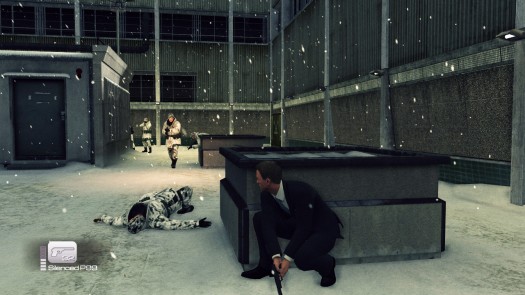
    A third person shooter isn’t necessarily, on the surface at least, the genre that does the Bond licence the most justice.  Bond is at times trigger happy, but most of the time he’s a watcher, sneaker, undercover agent – and if caught – a close-quarters brawler.  So while the new Bond is less gadgets and more gusto, he’s still not the type of run and gun hollywood hero video games so often pay homage.   Luckily the developer thought of very clever ways to keep the action flowing while still being true to the source material.  While the moment to moment action, on foot at least, mainly entails moving from cover to cover and taking opportunistic shots at the enemy, the way the game encourages you to engage in fisticuffs seeks to ensure you play Bond the way he is meant to be played.  Melee or stealth kills will earn you focus shots which are code for direct one-hit kills for any enemy you target.  Having a few of these on hand will make life a hell of a lot easier in tough situations and so you’ll constantly be looking for ways to clock your enemies in the jaw or sneak up behind them for a stealthy choke-hold.  While its not necessarily the most original idea – Splinter Cell: Conviction had a similar system – it gives Bloodstone an extra level of depth that made it feel all a bit more Bond and less Booker.  

    It’s no surprise though that while a majority of the game is blasting your foes away with high powered rifles and shotguns, it is few the driving sections where Bizarre Creations have really shown their skills.  High speed chases through cramped European city streets and daring escapes against all odds across crumbling ice roads are exhilarating and break up the more standard shooting fare.  The controls are tight as they should be and, in much the same way as both Reflections’ and Paradigm Entertainment’s entries in the Stuntman series, the high speed action is all choreographed almost to perfection.  Of course like those games the need for precision can often lead to frustration, but the feel of getting behind the wheel of an Aston Martin DBS V12 is so spine-tingling that any misgivings will be left in a trail of smoke and rubber.  It may not be Project Gotham Racing 5 but there is enough high speed driving in Bloodstone to remind you that Bizarre Creations were one of the best in the racing business.

    Of course all of this is covered in a very classy and well-choreographed cinematics and action sequences, including a brilliant opening animated sequence complete with an excellent track performed by English singer/songwriter Joss Stone.  Sure cutscenes should never be the main attraction, but in this case they go a long way to making Bloodstone feel like a worthy James Bond adventure.  It may not have the strong writing of a Casino Royale or Skyfall but I’ll be damned if it doesn’t look and feel the part.

    Bloodstone was Bizarre Creations’ last game, and while its not the way I would’ve liked to have seen them go, it was a nonetheless a polished and well crafted experience that both proved the developer’s chops outside of the racing genre and did justice to Ian Fleming’s British superspy.  Bizarre Creations weren’t just racing genre stalwarts, they were unbelievable game designers that could apply their craft to anything they put their mind to.  Crafting a game based on an established licence is never easy but Bloodstone manages to be both an excellent addition to the Bond canon and a worthy action game experience.

    Bloodstonedriving

  • Seven years after its launch in the UK, I can finally give you my first impressions of the PS3.

    Here on A Most Agreeable Pastime, we’ve never been ones to hurry. We can often be found dawdling around The Manor, idling flicking through The Times and absent-mindedly wondering how long it will be until Mrs Fetchgrub the cook bangs the dinner gong. We may occasionally glance at the teetering pile of unplayed games on The Mantelpiece: a flicker of guilt may flit across our collective brow at the thought of all those neglected games, but the thought is dismissed with a harrumph and a muttering of “All in good time, all in good time…” as the newspaper is flicked upwards again. We would never be so ungentlemanly as to rush.

    So it comes as no surprise that I’m fashionably late to the PS3 party, but I’m glad I joined it in the end. For a start, The Last of Us is reason enough to buy the system on its own and is easily one of the best games I’ve played in years. Then there are other great games like Ni No Kuni, Journey and Heavy Rain that I can’t wait to play. But how does the system itself compare to the Xbox 360? Here’s my better-late-than-never comparison.

    Aesthetics

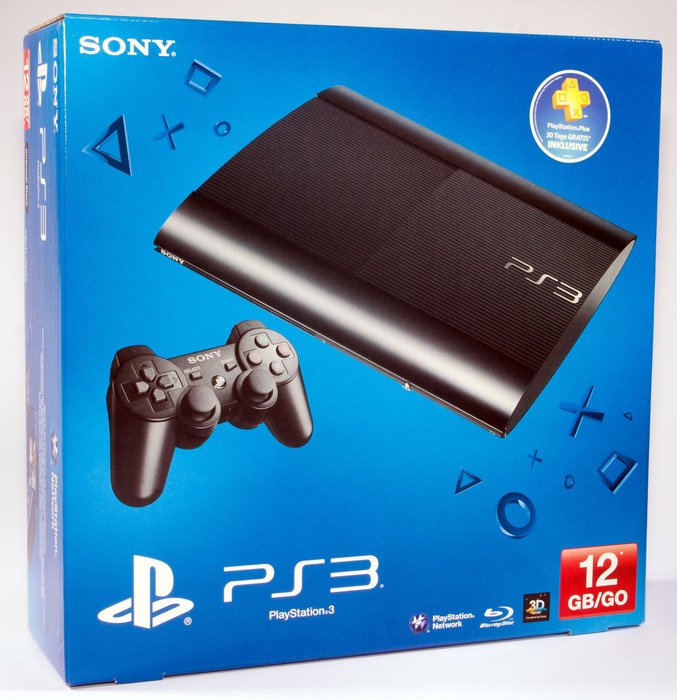
    I bought the ‘super slim’ PS3 model, and oooooooh it’s a stylish beast. I love the oval outline and the curved top with its ridges – it certainly looks a damn sight better than my crumbly old Xbox 360. And speaking of my Xbox 360, the difference between them in terms of noise is remarkable. I fired up the Xbox again the other day and I was astonished at how loud it is compared to the PS3 – the 360 sounds like a vacuum cleaner, and it’s really noticeable when watching films. I’ve heard that the Xbox 360 slim is a bit less loud, but the PS3 is quiet as a mouse when it’s in use. It’s also pleasingly slimline, as suggested by the ‘super slim’ moniker, although it’s still about twice the size of the PS2 slim. The only thing I’m not a fan of, aesthetics-wise, is the cheap-feeling disc tray, which you have to manually slide back to load the disc. It’s clear that this was a change to bring the price down, but it just feels a bit naff.

    Sadly my PS3 didn't come with this teak effect, which would have really fit in with the decor of The Manor.
    Sadly my PS3 didn’t come with this teak effect, which would certainly have fitted in with the decor of The Manor.

    Controller

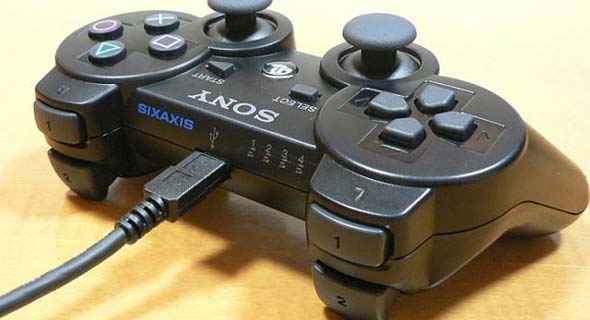
    I really like the fact that the PS3 controller has a built-in rechargeable battery, and I’m impressed that it holds its charge for a good length of time (I have an official rechargeable battery back for my Xbox 360 pad, but it loses charge at a ridiculous rate). The downside is that the charging cable is stupidly short, so if the controller runs dry during a game and I have to plug it in, I end up uncomfortably close to the telly. Also, the PS3 pad is frankly not a patch on the brilliant 360 pad – apart from the addition of analogue triggers, there are no real improvements over the PS2 controller (I’m not counting motion control), and the analogue sticks feel horrible. There’s a massive dead zone in the middle of them, the curved surface means your thumb keeps slipping, and I much prefer the asymmetrical stick set-up of the 360 pad (although maybe this is just because it’s what I’m used to).

    Shame that cable's just a BIT too short...
    Shame that cable’s just a BIT too short…

    Operating System

    I’m not a big fan of the current ‘Metro’ Xbox 360 operating system – the front end is cluttered with irritating adverts, it’s confusing to navigate and the things that I use all the time, like the iPlayer app, are buried behind loads of menus. It feels like a system built on an agenda rather than on the basis of what would benefit the user, designed to push content rather than gather useful functions in one place (or at least letting you customise it to do so). Bearing this in mind, I was ready to welcome the PS3 operating system with open arms, so I was shocked when it turned out to be even worse than the Microsoft one. The XrossMediaBar (XMB) interface, which is standard across all Sony products, is bland, sparse and, most importantly, incredibly confusing. The menus don’t seem to have any logic to them: I spent ages looking under ‘Settings’ to see how much space I had on my hard drive, only to eventually find that hard drive management was under ‘Game’. Even worse, half of the menu items seem to be in technospeak, and the system has a love of unnecessary abbreviations. I’m still not sure what ‘BD’ means – ‘Blu-Ray Drive’ maybe? Or ‘Bad Design’? For all the ridicule that the Wii U has suffered at the hands of internet grumblers, one thing is for sure – it has by far the most intuitive, customisable, colourful and easy-to-use operating system of the bunch. Microsoft and Sony, take note.

    The XMB operating system: dull, sparse, confusing and frankly rubbish.
    The XMB operating system: dull, sparse, confusing and frankly rubbish.

    Games

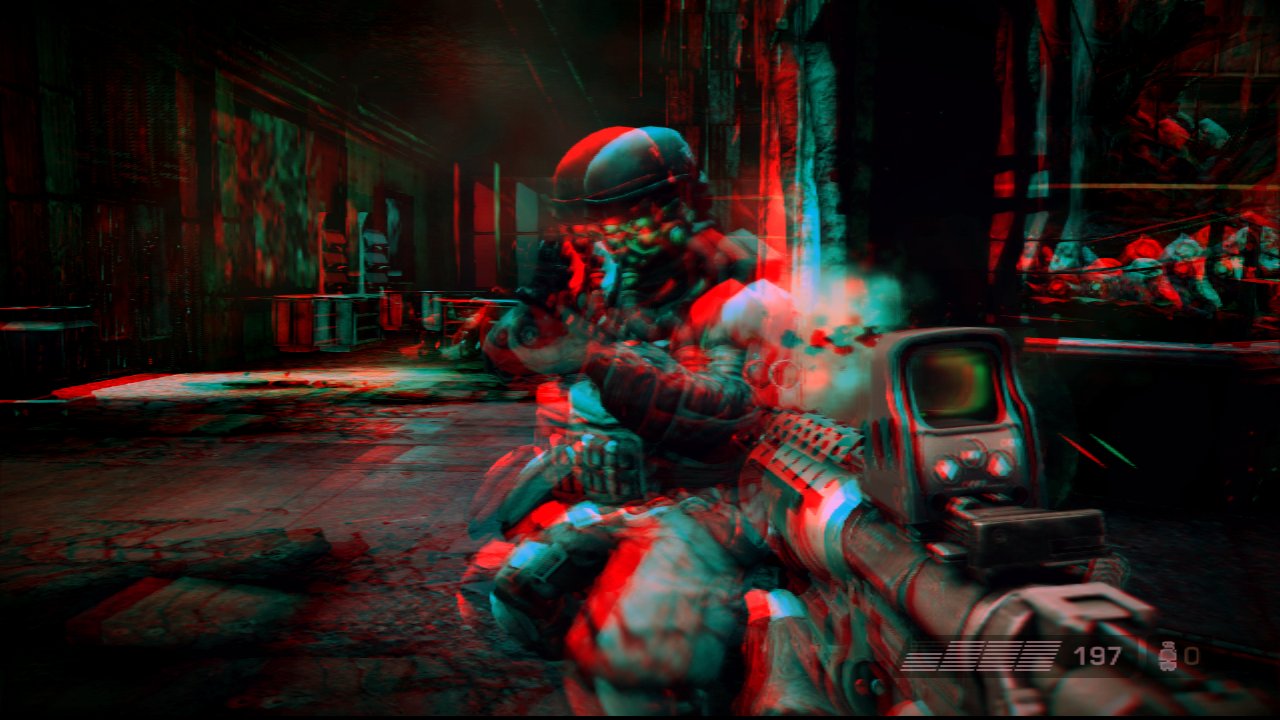
    And so to the most impartant aspect of all – the games. I’ve played a couple of first-party titles – Killzone 3 and The Last of Us – and I have to say the graphics are noticeably better than the 360’s best. Killzone 3 also has the option of playing in 3D, something that the Microsoft console lacks. My dad has a huge 3D TV, so after I unboxed my PS3 at Christmas I set it up on his telly, donned my 3D specs and had a go. The 3D is very impressive, particularly when huge ships come flying overhead, and it definitely adds something to the game… but then again neither is it essential to it. The 3D is undoubtedly an excellent bonus if you have a suitably beefy TV, but it’s not the revolution something like the Oculus Rift could be.

    This looks a lot better with 3D glasses
    This looks a lot better with 3D glasses

    Movies

    I’m mightily impressed with the Blu-Ray drive on the PS3, which even manages to make DVDs look better than on my old DVD player, and I’m sure the fact that the PS3 plays Blu-Rays is why a lot of people bought one. Also, and most importantly, Netflix and Lovefilm are free to use on PS3, whereas on Xbox 360 you have to pay £40 a year for an Xbox Live Gold membership to use these apps. How on earth Microsoft can justify charging me to watch films on Lovefilm, DESPITE THE FACT THAT I’VE ALREADY PAID TO WATCH THEM VIA MY LOVEFILM SUBSCRIPTION, is absolutely beyond me. A win for Sony there, and a black mark against Microsoft’s name.

    So overall I’ve been impressed with the PS3 – it looks great, it’s got a Blu-Ray player and it doesn’t charge you for things that should be free anyway. However, it’s let down by its ancient controller design and rubbish user interface, which means that in the end there’s not a huge amount to choose between the PS3 and 360. Although having said that I’m currently favouring the Sony machine, simply because I tried to watch a YouTube video on my 360 a few days ago only to be told I had to get an Xbox Live Gold subscription to watch it. Bloody Microsoft.

    [As deliberated over by Lucius Merriweather.]

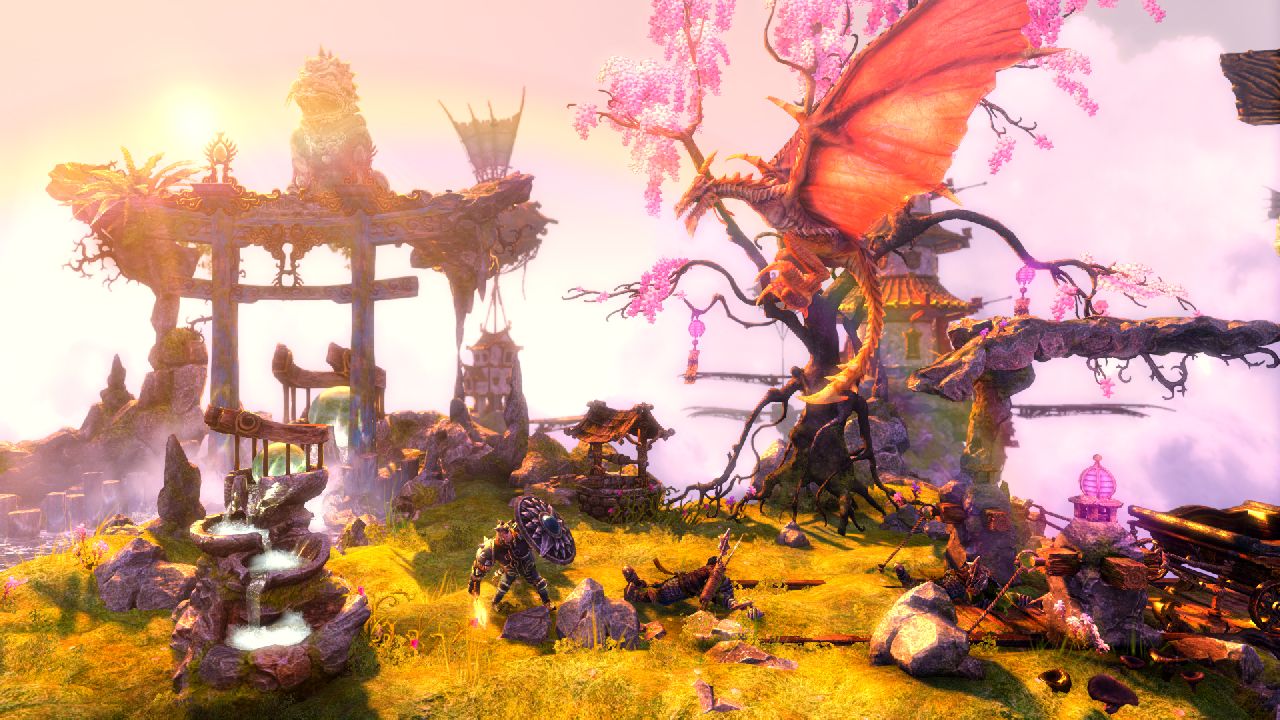
  • Trine 2: Director’s Cut was an impulse purchase on the weekend I received my Wii U, and it quickly turned into a surprise hit with my two sisters. Since then I’ve been playing through the game with my friend Mark at intervals of a few months, and last week we finally finished it, over a year after I bought the game.

    Trine_2_Directors_Cut_Banner

    I’d never even heard of Trine 2 when I first saw it on the Nintendo eShop, but the demo video looked great and, flush with the excitement of owning a new console, I decided to buy the game on the spot – a rare occasion of buying without reading the reviews first. Thankfully it turned out to be brilliant, and it’s one of those few and far between games that’s just as much fun to watch as it is to play. The gameplay centres around swapping between three characters – a knight, a wizard and a thief – and using their different abilities to solve puzzles and defeat goblins. The wizard is probably the most entertaining of the bunch, as he can produce mechanical boxes and planks out of thin air, as well as manipulate various bits of scenery with a wave of his hand. The knight, by contrast, has the sword-swinging abilities you’d expect, and the thief can grapple onto bits of scenery and fire arrows at enemies and targets. It all reminded me a bit of The Lost Vikings on the SNES, which featured three hairy dudes with pointy hats that had similarly varied abilities, but I’m surprised the mechanic hasn’t been used more often since the 16-bit days, as it works very well.

    Probably the chief reason that I enjoyed Trine 2 so much was the unintentional hilarity of cooperating with Mark. Often this would involve one of us playing the wizard and building some sort of rickety tower in an attempt to reach the next section; meanwhile the other player would attempt to climb the tower, only for the wizard to unintentionally/deliberately cause some element of the death-trap tower to disappear, causing the knight/thief to plunge to their doom. With hilarious results.

    Trine_2_Goblin_Menace_13452131378826

    Honestly, I’ve never laughed so hard at my own ineptitude as I did during the fun-filled hours playing this game. I made a point of only playing it in co-op, as it’s easily twice as much fun when you’re attempting to bodge together some unorthodox solution with a friend compared with playing solo. And speaking of unorthodox solutions, I’m certain that some of the methods we came up with weren’t the ones that the designers intended, but the game has a wonderfully flexible system when it comes to puzzle solving, and it really encourages experimentation.

    It’s not all great though. In particular, the controls feel a bit floaty, and the plot is hardly anything to write home about: frankly, neither of us gave two hoots about the princess we were trying to save. The game also provoked the occasional prolonged bout of swearing and controller abuse on my part, although this was usually down to my own incompetence or frustration at watching Mark try and fail to jump onto a platform for the nineteenth time. On occasion I may, may, have uttered the words “Look just give it here and let me do it”, like some sort of pushy dad. For this, I am ashamed.

    But overall the fun far outweighed the frustration, and to top it all off the game looks stunning. Seriously, it even puts Rayman Legends to shame when it comes to beautiful 2D side scrollers, and apparently there’s an even more gorgeous PS4 version on the way. Overall it comes highly recommended, especially if you have a friend or two to play it with.

    [Calamitously penned by Lucius Merriweather.]

    trine_2_directors_cut_mountains_shot_1_vgblogger_exclusive_720p

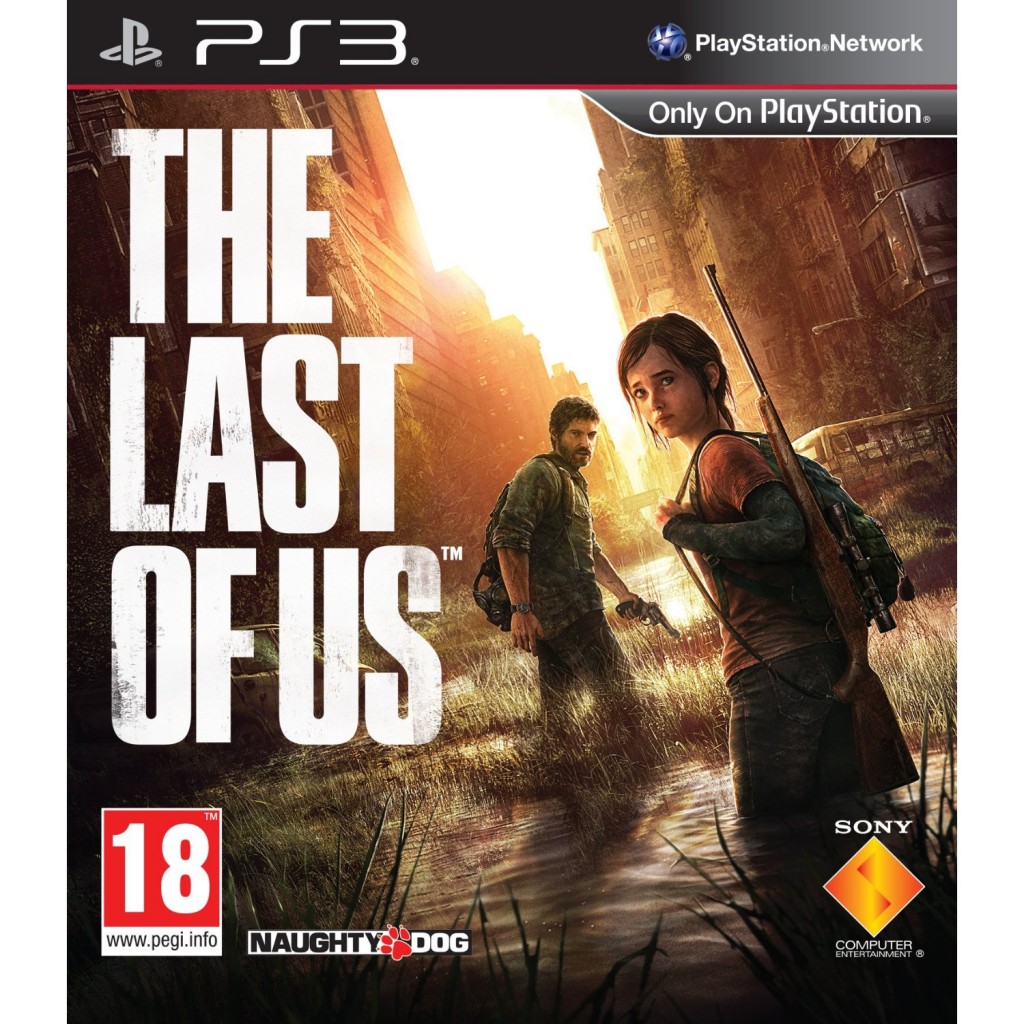
  • Last-of-us-cover-1024x1024When we created our rundown of the best games of the generation a couple of months back, I took Sir Gaulian’s word for it that The Last of Us should come in at number two, having not played the game myself. Now that I’ve had some time to hang out with Joel and Ellie in the ruins of America, I emphatically agree with Gaulie’s judgement – and there’s even grounds for even moving it up a place.

    The Last of Us sucked me in from the very beginning and kept me hooked right up until the astonishing finale. It starts as it means to go on, with a brutal opening that hits you in your emotions gland with the weight of an articulated lorry, possibly a lorry carrying a cargo of dying kittens. And remarkably, the game keeps that emotional weight all the way through. By the end I found I was physically gasping whenever one of the two leads was placed in peril, such is the emotional attachment I forged with the characters.

    There have been games with emotional weightiness and formidable storytelling before, of course. Spec Ops: The Line told a cracking yarn with a memorable ending, and Fallout 3 had some surprisingly moving moments. But until The Last of Us, I’d never played a game that tells such a compelling tale throughout, combining shocks with comedy and creating characters that change perceptibly over time. It’s an astonishing achievement, and one that has set the new benchmark for characterization in video games.

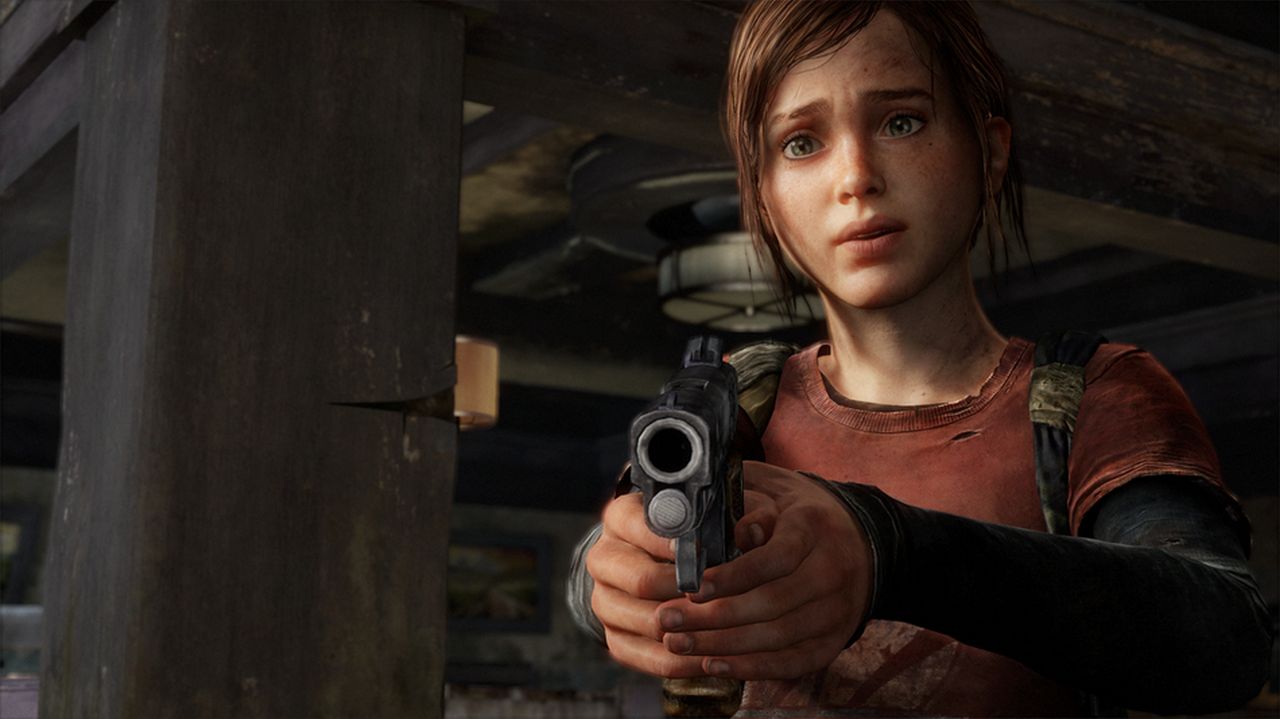
    This is an actual gameplay screenshot - the attention to detail is stunning.
    This is an actual gameplay screenshot – the attention to detail is stunning.

    The setting itself isn’t particularly original – the zombie apocalypse is a trope that has been used countless times before, although the idea that ‘zombieism’ is caused by a mind-controlling parasitic fungus (a fungus that, scarily, exists in real life) is one that I haven’t seen before. However, rather than becoming an all-out zombie-killing fest, like Dead Island and its ilk, The Last of Us borrows more from The Walking Dead by focusing on how the people involved cope with the end of civilization. Half of the time the baddies you’re facing are humans rather than zombies (although the game never uses the ‘z’ word, referring instead to the ‘infected’). And often there’s an uncomfortable ambiguity about whether all of the slaughter is ‘right’.

    Gameplay-wise there’s little we haven’t seen before, with the usual selection of guns and tools and the tried and tested mechanics of sneaking and shooting. What’s impressive though is how seamlessly it’s all been integrated – I found myself picking up the controls with no trouble at all, and it’s ingenious the way that the screen clutter has been kept to a bare minimum to avoid detracting from the action. Graphically, the game is phenomenal, and streets ahead of anything else on the current generation. The attention to detail adds enormously to the game’s power to draw you in – assets are rarely reused, so each abandoned house you enter feels unique and draws you into the game world further. Immediately after I finished The Last of Us I began playing Deadly Premonition, and the difference in graphical fidelity was remarkable: Deadly Premonition looks almost like a PS2 game by comparison, and as such its power to absorb you is diminished accordingly (although it’s still great; write up coming soon). Don’t believe what you hear: graphics do matter.

    There’s loads more I want to say about the story, but I’ll leave it here for now – sometime in the future Gaulie and I might end up doing a spoilery discussion of Joel and Ellie’s fate. In the meantime though, if you’ve not done so already, I’d recommend rushing off to play The Last of Us now. If you don’t have a PS3, get one: this game is worth it.

    [As penned in mortal peril by Lucius Merriweather.]

    Apparently Ellen Page accused the designers of ripping off her likeness for Ellie - you can see her point.
    Apparently Ellen Page accused the designers of ripping off her likeness for Ellie – you can see her point.
  • There have been so many dissertations written about the Super Mario series of games, with everything from the physics of the jump, to the design of the levels being subject to critical analysis by video game enthusiasts and game designers. I’m not a professional game designer, but I am an economist and so with that experience I try and do the same level of assessment, but this time with Mario’s currency: the iconic Coin.  This relates directly  to Nintendo’s Super Mario series of games, but its lessons can apply equally to the free-to-play market.

    A History Lcoinesson: On 12 December 1983, the Australian Government floated the dollar, until which time it had been a fixed exchange rate pegged to a number of currencies over the course of its life.  Since then the value of the dollar has fluctuated with the market, reaching a high in July 2011 trading at higher than $1.10 against the US dollar.  There has been pain on both sides of the coin, for both importers and exporters, but for the most part it has served the country well.  In short it was a good economic decision.  Fixed currencies are not in vogue within economic schools of thought these days and for good reason; the precedents being set by crises in both the Bretton-Woods system and the gold standard before it.  The question is has Nintendo sticking to its guns on how it uses its Mario coins set in on a path for rendering its currency obsolete?

    I am fascinated by the economics of video games.  Not how much they sell and at what price, but how the designers shape the gameplay around the fundamental economic principles, often unknowingly.  Like it or not every video game has an in-game economy and whether it be collectables, coins or currency, or loot; each and every decision a designer makes to encourage people to act or behave (or not) in a certain way is driven by conventional or behavioural economics. Nintendo has maintained a fixed exchange rate for Mario games, effectively pegging the currency against lives at a rate of $100.00.  It may seem a bit abstract by the value of the coin has not changed for the most part throughout the history of the series.  That is with with the exception of the 2013 game New Super Mario Brothers 2 which saw Nintendo place a whole new value into its coin system.  But we’ll get more into that a bit later.  For now let’s stick with history.

    Mario games have undergone a pretty fundamental shift in the way they treat their players.  While the concept of lives still exists (and the concept of death), they have become less and less important as the game designers have shifted toward a more user friendly game play experience, offering unlimited continues with very little cost or penalty to the player.  While many people would argue it is because of the more ‘casual’ nature of Nintendo consoles in recent years, there is probably more truth in an argument that the designers have moved with the technology.  No longer are games hamstrung by password systems and lack of system storage and so gone is the gameplay device that forces players to learn and perfect a game in order to get through it in a sitting.  Whatever the reason the fundamental design of what a Mario game game is had to change and in that transit the coin got dragged kicking and screaming along with it – for better for worse. new-super-mario-bros-u It is almost impossible to argue that the value of Mario’s coins hasn’t fallen.  With lives forming all but lip service to the games’ legacy the coins play no real functional role in the economy of Mario’s game design.  They exist almost purely for their intrinsic value and to that end the game makes the assumption that players place a high  value on the coins.  This belief is inherent in almost all aspects of the game design: coins are often out of reach of the player at which point the game assumes it is worth the player’s time to collection them; and reinforcing that fundamental assumption is that quicker times through stages is met with a coin reward.  Its a bit paradoxical to think that the game’s built-in opportunity cost is measured in coins; but the fact is that coins are a very large and central part of Mario’s in-game economy.  

    The problem is that these iconic shining circles in fact hold very little true economic; and with that the key economic proposition being based around them any game play mechanic that relies on them heavily gives the player no inherent incentive to collect them, or play to maximise their coin returns.  Fundamentally Nintendo has lost its ‘lever’ over player behaviour, and what its left with is a perceived over-reliance on the physical mechanics of the game – essentially how the game behaves according to player input. How big of a problem is this for traditional Mario games moving forward?  Well it entirely depends on what Nintendo’s mantra for the series is.  The key question is if it is not worth a player collecting coins how does Nintendo design the levels to coerce the player into new areas?  Coins are more than just currency they are also in so instances ‘markers’ that point toward new or hidden areas.  If the coins hold low or little value to the player then there is no incentive to collect them, causing problems not just for how the economy is balanced, but also potentially as a device to encourage exploration.  This effectively changes how the developers have to think about level design and try and shape player action in some other way.  It may not be a terminal problem but it does call for thought to be put into how Nintendo try and guide player behaviour with the invisible hand and sign post parts of their game that are not found along the path of least resistance.

    It is a problem that to date no modern 2D incarnation of the series has tackled. With the exception of New Super Mario Bros 2 on the 3DS that is, which threw any supply constraints on the coin out of the window.  In fact it went so far in the other direction that not only did it increase the money supply it actively encouraged a drop in the market value of the coins by setting the players goals to horde its money.  The gameplay choice worked a treat and mixed things up enough to keep the pursuit of coins fresh and exciting; but it did little more than provide an artificial stimulus on the demand for coins in the hope of driving an interest in collecting them.  Again though legacy design decisions such as the exchange rate for lives remaining fixed made it more stimulus and less structural change; with the impact being a short term devaluation of the value of coins in pursuit of a greater gameplay design decision.  It was a good gameplay decision but a terrible one for the already failing coin.

    This all looks like it is leading to a financial crisis for the humble coin as Nintendo wrestles with very rapid depreciation of its iconic currency with an unwillingness to shift from its design choices of old.  But look beyond the coin and things get somewhat brighter because the team has sought to diversify its holdings to avoid disaster.

    The answer is introducing new and competing currencies into their games’ markets.  The economic proposition in the case of collectibles is quite a simple one; they must have some value to the player usually beyond the simple act of attaining it; and for the most part both the star coins and stamps in the latest Super Mario 3D World for the Wii U do so successfully.   These coins and stamps actively unlocked more content for players, which in and of itself placed an opportunity cost value on them, forcing players to assess whether the time afforded to collecting them was worth it with respect to the value of the reward.  It has become a central part of Mario games and has featured prominently in the structure of recent games and in part resolved some of the issues surrounding the old-money by drawing players toward collecting these often hard to find and prized collectibles.  They in some ways have become the premium money in the game: supply constrained and able to be tendered for valuable in-game goods.  There are other tiers; primarily the ability to ‘bank’ power-ups, but these hold no value in the long-run and as such are merely play the role of a hedging currency more than anything else. This being the case though, I still believe there is merit in reassessing the value of the coin by changing its ‘pegging’ within the game.

    The question is do they retain control and set the value or do they let player action decide how valuable those coins are?  Lets explore those options: We have established that the current pegging of the coin is fraught with negative economic consequences; notably the rampant deflation of the coin’s value.  But one of the key features of a fixed exchange rate is the ability for the policymaker (or game designer in this case) to reassess its rate against current market conditions.  Doing so would require Nintendo to make fundamental changes to what the coin represents in its economy.  With the near obsolescence of lives it is plainly clear that keeping coins pegged against them is keeping its value down.  Structural change is clearly required.  But this will come at the expense of the series’ conventions.  Either way whatever the currency is fixed to must in and of itself have a value to the player – could pegging it against continues work?

    Nintendo could theoretically constrain the supply of continues  and fix the value of the coin directly to them to increase the exchange rate to artificially raise its value?  Perhaps powerups?  These are the questions this option would need to explore and answer; but there is inherent risk for the game’s balance if player behaviour is misunderstood by the designer.  Fixing the currency against another game-good is possible but fraught with issues. Which leaves us with a more market-based mechanism, similar to a floating of the dollar.  But what would this look like?

    Like central banks the one thing Nintendo has up its sleeve is that its playing with an entirely known quantity of coins in the game’s economy, which makes life somewhat easier.  A system whereby the value of the coin is directly relate to player demand for the coins would not only allow for Nintendo to increase the value of the currency, but also for players to decide for themselves what value they place on the coins.  This system would see the tender value of coins for in-game goods and services to fluctuate according to how many they collect.  If the money supply in a level remains high due to a decision by the player to not actively collect them, the tender value of that currency to purchase goods and services will fall.  That is if more coins are left in a level then the number of coins required to purchase lives, continues or power-ups would be higher than it would in a situation whereby a player has collected all of the coins in a level.  It is a simple market mechanism that both gives the player incentive to collect coins by placing a higher value on them; but it also allows the developer to better balance its in-game economy.  It’s a win-win for everyone and in my view the best way to maintain the allure of the iconic Super Mario coin. So while it may on the surface look like the coin is destined for a collapse of enormous proportions, taking with it the entire Mario universe, Nintendo have taken steps toward stabilising (or balancing in game design terms) the 2D Mario economy.

    Diversifying its currency base was a major step toward fixing some of the problems caused in some part by game design but in most part by the changing nature of how and who games are played by.  The problem still remains though that the core of Mario games is still entrenched in the monetary system of old, based on a currency that now has no inherent draw.  If Mario’s coins are going to remain an integral part of the games’ experiences then Nintendo needs to think long and hard about the role they play in balancing the in-game economy; retaining their value; and therefore how they move to shape player action and progression.  Without this those sparkling gold bullions will slowly fade into the darkness and Nintendo will be left with a real “Monkey on its back” and a dilemma in terms of how it designs its Mario games into the future.

    Sir Gaulian is an economist with almost a decade of experience in markets.  He even dipped his toes into free-to-play game design once upon a time.  Get in touch on twitter @Oldgaulian or keep the discussion alive in the comments below. MarioQ

  • Another year with too many games to play.  Not that having too much of a good thing is a bad thing in this case, but when it comes to putting some semblance of a list together at the end of the year it’s hard to see just how many great games I missed out on.  It is a shame when games like Super Mario 3D World, Pikmin 3, the Wonderful 101, The Legend of Zelda: Link Between Worlds, Puppeteer and Metro: Last Light don’t make a list of my favourite games of the year.  But time is limited and time for games even more so.  So with that in mind here are my Most Agreeable games of the year (that I actually got the time to play).

    Tomb Raider

    TombRaiderscreen

    I am as surprised by how excellent the Tomb Raider reboot turned out as anyone.  Developer Crystal Dynamics has done a stellar job keeping Lara’s adventures fresh and modern this generation, but in recognising that the series simply just needed an overhaul they have made a game that doesn’t just hold up in the modern era, but stands toe-to-toe with the best games of the generation.  The focus on combat was a smart one and Tomb Raider’s cover based shooting is amongst the best around, with weapons feeling suitably powerful and enemies intelligently moving around the battlefield.  But as with Tomb Raider of old its the excellent puzzle-filled traversal and exploration that makes Tomb Raider such an addictive joy.  Thanks to this brilliant effort Lara Croft has never been more relevant and I for one can’t wait to see what they do with the storied adventurer next.

    Bioshock Infinite

    Bioshock Infinite screenshot 1

    Bioshock Infinite has its problems but for the most part I didn’t notice them until people with greater axes to grind pointed them out.  I’m sure the narrative is a variation of something that’s come before (what’s not, after all) and I have no doubt that first person shooting has been done better a million times before; but none of that detracts from the amazing yarn Irrational Games have woven in Bioshock Infinite.  Companion Elizabeth is a delight, the player character Booker DeWitt an Enigma and their common enemy, Zachary Commstock an egregious example of humanity, and together with the amazingly realised floating world of Columbia, Bioshock Infinite manages to create one of the most interesting and complex worlds of the generation.  It may not be perfect but Bioshock Infinite is a one of a kind game that simply must be played.

    Rayman Legends

    RaymanlegendsWiiUscreen

    Rayman Legends is the best Don’t Kill Yourself Book ever made.  The game is so gleeful it practically grabs the sides of your mouth and hoists them up with meat hooks to make sure there is no trace of a frown on your face.  It is bright, it is colourful, it is absolutely stunning to look at, but most importantly it is the best 2D platformer I’ve played this generation.  Rayman takes the best bits of 2D Sonic and Mario games to make a game that is as much about precise platforming as it is lightning fast speed and reflexes.  Most impressively Ubisoft Montpellier had the audacity to coat it all in a very European, dare I say French, art style and still managed to pull off what is one of the best looking games ever made.  It would be a travesty for you to not play Rayman Legends because whether you’re sad or not, it will make your day just that little bit brighter.

    Forza 5

    Forza5screen

    Even with all of its problems Forza 5 is an outstanding racing game.  It may have taken a step back in almost every other area, and the asynchronous multiplayer could use some work, but the driving in Forza 5 is still as brilliant as ever. The way the cars behave on the road is second to none helped in large part by a physics engine that captures everything from the grip of the tyres to the way the weight of the car shifts as you fly at high speed around the game’s tracks.  There is certainly less game here both terms of cars and tracks, and it may not be the progressive racing game it deserved to be following on from the pedigree of Forza 4 but when you’re behind the wheel of any one of the beautifully realised super cars in the game you’ll hardly notice.

    F1 2013

    F12013classic

    I find it absolutely amazing what Codemasters have become.  The transformation from a jack-of-all-trades developer to one with a sole focus on the racing genre must’ve made business sense, but rarely do you see a shift in focus from a developer or publisher pulled off quite so well.  Codemasters are the masters of the racing genre and you don’t have to look far beyond what they’ve done with the Formula One license to see that, and F1 2013 is the best entry in the series yet.  It still looks and plays beautifully but the inclusion of classic cars and tracks from the 80’s and 90’s was the killer blow that the series needed to make it into one of my favourite games of the year.  Codemasters’ love for the sport shines through and players can take a 2013 Ferrari F138 around the new and exciting Yas Marina, or if you prefer, the iconic Lotus 100T around the Brands Hatch. Its this passion for the sport that makes F1 one of the only annualised franchises I buy into and one that I cannot wait to see what the team do with the next generation of hardware.

    The Last of Us

    TLOUss

    The Last of Us made it to number two on our Most Agreeable games of the generation list, but I have a feeling if Lucius had’ve played it it would’ve easily made number one.  I haven’t got enough digits on my body to count how many times I sat staring at the screen in shock throughout the course of The Last of Us.  The narrative beats that pound as the game’s story plays out will hit so hard you’ll have a headache by the end, as the developer takes you through an incredibly well crafted story of the human condition and spirit.  The characters are brilliantly realised and the world suitably bleak, punctuated by incredibly violent moments that have the player engaging in high stakes kill or be killed combat, with ridiculously violent hand to hand combat and satisfying and precise gunplay.  But its all in service of the creation of a very real world and characters, making for a landmark title that will come to define Naughty Dog as a developer, but also redefine what gaming narratives can be if a little bit of heart is put into them.

    Almost there…. With so many deserving games that it is simple mathematics that something has to miss out on first class honours.  So while they didn’t quite  make it to the top congratulations to Lego City Undercover,  Killzone Mercenary, Disney Infinity , Dead Rising 3 and Zoo Tycoon for helping to make 2013 a great year to play games.

    I’m cheating a little but…

    Hotline Miami (Ps3/PSVita)

    In July of last year I wrote that Hotline Miami for the Vita was “Bloody, bright and brutal, HotlinMiami is a loving homage to 80′s culture and pixel art that takes old school game design and injects it with the blood-lust and maturity of a modern title“, lumping praise on it for its fast action, gratuitous violence and eye melting visuals.  Although the game was released on the PC in 2012, as someone who doesn’t play PC games the Vita and PS3 versions were my first opportunity to experience the sheer insanity that is Hotline Miami, and the wait was well worth it.  The old adage easy to learn hard to master applies here almost better than anywhere and underneath what appears to be a simple arcade romp is a deep and rewarding action game with enough meat in it to keep you slashing your way through 1980’s Miami for hours upon hours

  • Well, 2013 has certainly been an eventful year for gaming. The Xbox One and PS4 arrived with chest-beating bombast but a fairly shoddy line-up of games, and instead the real action was to be had on those soon-to-be-relegated ‘legacy’ consoles. The PS3 received what many are saying is its best game with The Last of Us, and we were treated to several huge and highly playable blockbusters in the form of Assassin’s Creed IV, Tomb Raider, BioShock Infinite and GTAV. Although Wii U sales are still glacially slow, Nintendo had one of its best ever years in terms of quality games: the Wii U finally ended its game drought with Pikmin 3, Super Mario 3D World and The Wonderful 101, and the 3DS had its best ever year with a bevy of fantastic releases, including Fire Emblem: Awakening, Luigi’s Mansion 2 and A Link Between Worlds. I actually managed to play a fair few games in 2013, but I still only scratched the surface in terms of what’s out there – here’s a quick run down of my favourite games from last year, as well as a few that I wish I’d had a chance to play.

    The Best Games of 2013 That I Actually Played

    Pikmin-3-FruitPikmin 3

    In terms of sheer fun, this was probably my favourite game of the year. It had me smiling from start to finish, and the transition to HD has led to a superbly detailed and wonderfully vibrant game. I’ve waited since the GameCube generation for a sequel to Pikmin 2, and I’m pleased to say the wait was worth it. It also has the best-looking fruit you’ll ever see in a video game.

    ace attorney 5Phoenix Wright: Ace Attorney: Dual Destinies

    I just finished this game, which is the fifth in the Ace Attorney series, and I can safely say that it’s the best one yet. It looks absolutely brilliant, the mechanics have been rethought and streamlined to avoid the frustrations of the earlier games and, most importantly, the trials are brilliantly written and often hysterically funny. A welcome and long overdue return for Phoenix and co.

    Bioshock Infinite screenshot 3BioShock Infinite

    I can’t remember the last time a game sunk its teeth into me like this one, to the point where I couldn’t wait to rush home from work and play it every night. It looks stunning, the story is great (the ending actually made me yelp out loud in surprise) and Elizabeth sets a new high for NPCs. It’s not without its faults of course, plot holes being one, but it’s a game that will stick in my memory for some time to come.

    Far Cry 3: Blood Dragon

    Far Cry 2 irritated me so much that I deliberately avoided its sequel, but then Blood Dragon came along. A genius idea, it took the gameplay mechanics of Far Cry 3 but made the game into a standalone spoof of naff eighties action flicks – it even had Michael Biehn (Kyle Reese in The Terminator) doing the voiceover. With this game and Saints Row IV, 2013 legitimized the spoof as a game genre all of its own.

    Monster Hunter 3 Ultimate

    After years of listening to my sister telling me how good Monster Hunter is, I finally dived into the franchise for the first time with Monster Hunter 3 Ultimate, and I was hooked from the beginning. It’s not an easy game by any means, and its reputation for being frustratingly obtuse when it comes to revealing its game mechanics is a deserved one, but a game hasn’t sunk its teeth into me this deeply since Phantasy Star Online on the Dreamcast.

    BUBBLING UNDER: Honorary mentions should also go to Luigi’s Mansion 2, The Wonderful 101 and Deus Ex: Human Revolution: Director’s Cut.

    The Best Games of 2013 That I Would Have Played If I’d Had The Time

    the-last-of-us-joel-ellieThe Last of Us

    I actually received this game for Christmas along with my new PS3, but the last week has been so hectic that I haven’t had a chance to play it. Sir Gaulian maintains it’s one of the best games he’s ever played, so I’m looking forward to spending January wandering through the end of the world with Super-Ear Joel.

    Assassins Creed 4 black flagAssassin’s Creed IV: Black Flag

    I’ve still yet to play through Assassin’s Creed III (which has been sat on my shelf since about February), but I’m tempted to just skip it and go straight to number 4, such is the allure of being a pirate. Black Flag took the brave decision to dial back many of the series’ traits in favour of plundering the Carribbean, and it looks all the better for it – Assassin’s Creed has had its ups and downs, but this game could be the pinnacle of the series.

    TombRaiderscreenTomb Raider

    I’m a huge fan of the Tomb Raider games, and I was a bit worried when I heard that Lara Croft was to get a ‘gritty’ makeover (why does everything always have to be gritty these days?). Thankfully, the reboot was released to rave reviews, and I’m determined to find time in 2014 to play through Lara’s new adventure.

    Super_Mario_3D_WorldSuper Mario 3D World

    When I first saw it, I wasn’t too impressed with Super Mario 3D World, which comes across as a sort of mix between Super Mario 3D Land and New Super Mario Bros., but everything I’ve heard about it since makes me want to play it more and more – Eurogamer even made it their game of the year. I almost, almost, bought it on day one, but I’m determined to finally finish Super Mario Galaxy 2 and New Super Mario Bros. U before I add yet another Mario game to The Backlog.

    BUBBLING UNDER: Deadly Premonition: Director’s Cut, Attack of the Friday Monsters!, Fire Emblem: Awakening, Bravely Default, Pokémon X/Y, The Legend of Zelda: A Link Between Worlds, Ni No Kuni: Wrath of the White Witch, XCOM: Enemy Within, Remember Me and Gone Home.

    [As written by Lucius Merriweather while devouring the last of the Christmas bonbons. Happy New Year everyone!]

  • DeadRising3Dead Rising 3 is a deeper, more complex, more rewarding and more open game than its predecessors and Capcom Vancouver have set the bar for what to expect in the next generation of open world game design.  And it’s not blind faith and fanaticism for the Dead Rising series that made me love Dead Rising 3 so much. While I do have an incredible love for the seriesm, it sincerely felt incredibly rewarding to be slaughtering literally tens of thousands of zombies.  That I didn’t at any point notice that I didn’t care about the characters until the very end is perhaps the greatest compliment I can pay the game, because the game’s core mechanics are so strong  that I didn’t care about anything else the developers brought to the table.  So it was a surprising bonus that the narrative kicked in right at the end to deliver an incredibly memorable ending to a mostly mediocre story.

    Dead Rising 3 is organised chaos.  Thousands of zombies cram the large open world, ready to kill or be killed, shuffling lifelessly all the way to the horizon.  Sure it is an impressive technical feat, but one that also happens to serve an important purpose in the structure of the game.  The player will be regularly swarmed by shuffling zombies and pitched against seemingly impossible odds and the developer leans strongly on evoking this feeling throughout the course of the experience, and that feeling of doom, perhaps more-so than in previous games in the series, is what makes it such a satisfying experience.  There is nothing quite like fearing for your virtual life, but it doesn’t come close to the feeling you get from surviving the seemingly impossible.

    But while the odds are almost always stacked against you the game equips you with everything you need to survive.  It controls well and the weapons feel suitably dangerous without making you feel like an invincible superhero.   The player controlled character Nick has a sense of weight to him and the priority of animation gives close encounters with the walking dead enough anxious moments to deliver some truly heart-pounding moments.  While there is no doubt the designers have put a focus on giving the player as many ways to dispose of the zombies as they could think of, it’s not at the expense of challenge.  And credit should be paid to the imaginative combo weapons that the developer has dreamt up for the player to experiment with because they are a highlight of the game and one of the pillars the game relies on to keep the player moving forward.  Building upon the combo weapon system found in Dead Rising 2 there will be moments where you will be forced to construct weapons on the fly in order to survive. It is at the core of the gameplay experience and thankfully keeping track of your collected blueprints, which you find strewn across the city, and constructing them is a painless and user friendly experience. You’ll instantly be drawn to some weapons over others, but while you will have access to some incredibly powerful weapons by the end of the game, the deterioration of weapons manages to maintain some sort of balance and prevent the game from becoming an unconstrained bloodbath cakewalk.

    Similar levels of credit should be aimed at the level designers.  Open worlds are difficult things to design but Dead Rising 3’s world provides an almost perfect balance between open path and linear crafting.  Streets are cleverly blocked off to force the player to travel on foot, and zombie hordes are organically placed and sized to accommodate the items placed around them.  If there are thick hordes of zombies there will more often than not be weapons, combo weapon blueprints or vehicles that are perfect for mass carnage.  Similarly in the quieter areas of Los Perdidos there’ll be weapons aimed at close quarters combat.  It’s clear that its not randomised from the outset but it all feels natural and organic enough that the excellent level design feels more like serendipity than strategic placement.  It is intelligent design disguised as evolution and its something that so many open world games could learn from.

    Dead Rising 3’s narrative is nearly non-existent – that is until it pulls out all stops to deliver one of the most incredible narrative turnarounds I’ve seen in videogames.  When it began to feel that the narrative was an afterthought the developer cleverly decided to shake things up to such an extent that it gave such great gravity to everything preceding it.  It is as though Capcom Vancouver had taken a master class in pacing and with outstanding results.  Just as it was becoming difficult to polish off the dying moments of the game the developers gave an incredible impetus to pull through and finish the fight.   It also serves to mask some of the more linear, and unsurprisingly least exciting, passages of the game.  It was a stroke of pure genius and while it may in some ways rely too much on the franchise’s adoring fans, I have no doubt that even Dead Rising newbies will feel some level of gravitas, even if it doesn’t pack the same punch as it would with someone who had played the first two games.  Either way the developer knew when to pull its narrative punches and let the stellar gameplay do the talking.  But more impressively it also knew when to let rip with that killer uppercut to deliver a narrative knockout.  There’s not much there but when its firing, its doing so on all cylinders.  

    Dead Rising 3 is a lesson in pace and player reward and just as things are starting to feel like a grind is the designers find another way to get their hooks in.  The compulsion loop inherent in the game’s clever but-not-so-original level up system only takes it so far, but the use of collectables to compel exploration and tinkering in the world provides enough impetus to keep coming back even after you feel the game’s systems are starting to outweigh its welcome.  The word ‘playground’ gets bandied around a bit too much for my liking but in the case of Dead Rising 3 there is no better description.  It is clear the designers know what the attraction of the series is and have focused on creating the ultimate zombie slaughterhouse.  The weapons are creative and you’ll never be lost for ways to dispose of the countless undead.  The number of zombies on screen in impressive and a real show of what the next generation of hardware can deliver, but its everything surrounding it that makes Dead Rising 3 a spectacular and almost must play experience.

    DeadRising3Screen

  • Forza5boxartForza 5 is an excellent racing simulation.  On the surface you’ve got probably the best racing simulation currently available on consoles with excellent controls giving you the means to race at blistering speeds around some breathtakingly picturesque tracks. Racing around Bathurst’s Mount Panorama, new  to the series, is a pure joy and highlights the game’s real strengths.  The complex track is a driver’s dream, with its numerous fast straights punctuated by sequences of tight corners, making it one of the more interesting and technical tracks on the roster.  It is a spectacular experience in even the lowest sports hatch class in the game, but it really comes into its own when you’re behind the wheel of a V8 muscle car, the way nature intended.  From the moment you first rev your engine to the moment you cross the finish line Forza 5 packs a great big walloping punch full of realistic racing thrills – don’t be surprised if your hair gets wind swept.

    And its all in the physics that underpin the whole game.  The cars for the most part behave as you would imagine they should, and while I personally get more satisfaction from powerful touring cars that rely on their tyres for grip, the faster supercars that rely more on downforce to stick to the track require you to manage your speed more carefully to avoid losing control.  The addition of open-wheel racing    The force feedback in the Xbox One’s controller is put to excellent use, signalling when your tyre adhesion is starting to reach its limit.  It all adds to the immersion that makes Forza 5 a joy to play and incredibly rewarding to learn.  The game may not be the full featured and well-structured game of its predecessors, having taken a step back in a number of ways from the last game in the series, but that doesn’t make it a bad game by any stretch of the imagination.  If you like driving fast cars and being challenged while doing so, Forza 5 is absolutely your game, and one that I can not recommend enough if you’re a new Xbox One owner.

    But it’s not perfect.  Having spent quite a lot of time with the game now I feel like there are a few key areas that the designers could improve on in the next iteration of the game that would make Forza an unbeatable force.  Better still implementing some of these changes now could potentially make Forza 5 the Xbox One’s first killer app.  Here are the five key changes I would make to Forza 5 the best experience on the console.

    Forza5screen

    1. Fix the Drivatar

    Forza 5’s biggest innovation and it just so happens that it is a very large thorn in its side.  The drivatar is in my opinion a bit of a disaster with every corner in the first lap of each race feeling more like a game of Destruction Derby than anything closely resembling a racing simulation.  The underlying idea, though, is a good one that is misguided in its implementation and I think misses a stellar opportunity to provide a unique experience for each player that caters toward their play-style and skill level.  The problem is while the issue does fix the rigid AI issue that has forever plagued offline single player simulation racers, it doesn’t fix the real underlying issue that the racing part doesn’t in any way resemble a real race.  You can get your physics spot-on but when the other cars on track aren’t behaving as they should, that means diddly.

    The fix: have the AI Drivatars learn from the player rather than a world full of players who play their own way.  It’s all well and good to have drivers that behave more like real players, but when those real players are for the most part maniacal drivers, it doesn’t help for those of us that want to ‘play’ race driver for the day.  By having AI drivers learn from the player you’re in essence building up a database of sound AI that know how to react to at times erratic players.  And that can only be a good thing when it comes to delivering dynamic AI opponents to players in offline.  Make them drive like player opponents, not like players themselves and I think you’ll solve some of the game’s most fundamental issues.

    2. More ways to compete in Rivals mode

    I could not be happier that Forza 5 places such a great emphasis on multiplayer competition.  While I don’t necessarily gel with real-time online play outside of my friends list, competing with real people is where games like Forza shine, forcing you to continue to improve and push the car outside of your comfort level. The Rivals mode comes bloody close to making Forza 5 the first must-have game of the new generation, featuring a dynamic leaderboard that provides the impetus to improve your own driving and mastery of the game.  While this is best experienced against your own Xbox Live friends, having a world of drivers’ ghosts at your fingertips is definitely a reason to keep playing.

    But it’s not perfect.  The Rivals system is hamstrung a bit by the way it has implemented its challenges.  On the rivals menu you are provided with the opportunity to challenge the ghost of the player next on the leaderboard from you.  It’s great but has a few issues that make it far from the user friendly and compelling experience it could be.  The first change would be to instantly update the ghost to the next rival on the leaderboard once you’ve beaten one.  This is a minor change that would make a big difference to the flow of the game.  But there are other changes that would make it a far more compelling experience.

    The problem is that its all focused on lap times.  In order to capture and hold the attention and interest more than just the best of the best, because the fact is unless you’re a seasoned driver you’re never likely to come close to the best times worldwide. Casting the net wider and allowing competition on a broader base of metrics could fix this.  The game tracks so many performance based metrics that it is seriously insane that the game doesn’t use them in any meaningful way.  Corner perfection, racing lines, top speeds; all of these could be used as a basis for competition and leaderboards.  Not only would this make it more interesting and varied, it would offer those that haven’t mastered the game the confidence and a real gateway into the magic of competitive racing.  And combining all of these into one factors into a lap ‘score’ could be the cherry on top that shows players that lap times aren’t the only thing that matters in racing.

    3. Add wagers

    Forza 5 could be the ultimate multiplayer racing sim with just a few tweaks to its rivals mode.  Adding extra metrics on which to compete on aside from just lap times would be a good start, but that’s only going to last as long as players are compelled to keep coming back.  While these challenges do provide monetary rewards upon beating ghosts from players all over the world, that may not be enough to compel players in the long run and keep them coming back to the game.

    Forza 5 collects truckloads of information about how players play in forming the Drivatars.  It should therefore follow that this telemetry could help form a global picture of how capable or likely the player base is to perform any objective put before them.  Use this information to allow players to set challenges for their friends.  Want to challenge your friends to beat the V8 Supercar lap record  of 2:08.46 at Bathurst?  Let them do it.  The amount of information ‘in the cloud’ should allow the game to calculate the odds of success and allow you to offer up a reward to any player that can beat your challenge based on the ‘degree of difficulty’.  It would need careful balancing but allowing you to challenge your friends would play into that competitive edge in all of us that makes us want to keep playing.

    4. Forza 5 ‘snappable’ App

    If competition is, as it should be, at the heart of the Forza 5 experience it needs to do a better job of keeping you in the game.  Criterion’s implementation of its Autolog features have always led the pack, and with good reason, the designers put a strong focus on keeping the competition alive to keep players coming back. Burnout Paradise really changed how we compete online with friends by keeping track of an amazing level of detail about how friends were performing across a whole stack of actions in-game, but more importantly the team realised that in order to give your game multiplayer legs, you need to keep the players in the game.  At any one moment playing any of Criterion’s brilliant and critically acclaimed racers you are presented with countless challenges: countless ways to outdo your friends, and countless ways your friends have outdone you.  It’s this game of leapfrog that kept these games so exciting and in the drives of many people for months, perhaps years, after release.  The first problem for Forza 5 is that because its stat tracking doesn’t just include your friends rather it includes seemingly every person that has ever raced on that track, presumably in the class of the car you’re in.

    The second and perhaps bigger issue is that the game’s competitive side isn’t readily apparent, meaning you have to go searching for how you’re tracking against your rivals.  This should be front and centre and  I’m sure having all of this wealth of content and multiplayer stats impacts the longevity of the game to all but the most dedicated racing enthusiasts.  This should never be the case, and if I’m having to remind myself that I’m competing, something is wrong.

    So transparency is incredibly important.  Giving easy access to how players are tracking against their rivals (or just friends) is paramount in encouraging healthy and ongoing competition and keep them thinking about the game even when they’re not playing.  The unique interface of the Xbox One provides the perfect opportunity to fix this.  Adding a Forza 5 leaderboard app that could be snapped to the side of the screen whenever the Xbox One is perhaps the best move the developers could make toward giving their game longevity.   Imagine watching TV or playing another game while being able to keep a keen eye on how your lap times are holding up against your friends.  It’s such a good idea I’d be surprised if we don’t see developers start using this functionality in the coming 12 months.  Which is a win-win for everyone in my books.

    5. Make Forza 5 the Killer App by separating the rivals mode out

    This is my final recommendation and probably the biggest change to the game.  You’ll notice that most of these recommendations are based on keeping the competitive nature of Forza 5 exciting and dynamic.  With good reason, simply put Forza 5 is best when you’re pushing yourself to the limit, and what better way to do that than against the world’s best.

    As you can probably tell I am enamoured by what the Rivals mode tried to do and by changing the way it is distributed could make it the Xbox One’s first killer app.  The rivals mode is so separate from the rest of the game that there would be no harm in providing it free of charge as an individual product in the market-place and allowing players to buy cars and tracks individually.  Not only would it allow players to get involved with a lower price of entry,  coupled with the other changes to the multiplayer it could have the potential to be a real money maker for Turn10 and Microsoft.  If you saw your friends posting blisteringly quick times at the Circuit de la Sarthe in an Audi R10 tell me you wouldn’t want to do the same.  Who hasn’t spent money to outdo their friends?  At the end of the day the game should let players play the game with friends on their own terms.

    Forza5PaganiZ

    Played Forza 5?  Agree with me or disagree?  Tell us in the comments below or continue the discussion on twitter @oldgaulian.

  • hotel-dusk-room-215-coverHotel Dusk: Room 215 is a brilliant example of that most niche of genres, the visual novel. It’s difficult to classify Hotel Dusk as a game, if by ‘game’ you mean having some sense of autonomy in a virtual world – here it’s a mostly passive experience in which you talk to different characters, scroll through reams of text and attempt to ask the right questions to trigger the next plot point. Very few of these types of game make it to the West – the most well-known example is the Ace Attorney series – but they’re hugely popular in Japan, and I’m a big fan of them.

    Games like this tend to live or die on the quality of the writing, and thankfully Dusk gets a big thumbs up on this point. The set-up is nothing original – a grizzled seventies detective on a missing person hunt – but the story and setting provide atmosphere in spades, and each chapter throws more intriguing mysteries into the mix. Visually the game is a winner too, and the pencil-drawn animation provides a really unique look that I can’t recall seeing in a game before.

    The plot kept me hooked right up to the end, although I was left slightly wanting by the climax – some mysteries are left unexplained, which was frustrating but also brave on the developers’ part. There were a few niggles along the way, too – probably the most frustrating thing was aimlessly wandering the hotel in search of someone to interview. Often you’re given clues as to where to go next, but sometimes it’s really unclear what you’re meant to do, and I found myself consulting a guide a few times. The nadir is probably around a third of the way through, when you’re given a pen with an engraving and a hint that you need to put something into the engraved letters to be able to read them. Cue lots of needless wandering and searching, followed by an exasperated trip to GameFAQs.

    Hotel Dusk screenshot

    Another potentially frustrating feature is the way a single wrong choice can abruptly lead to a game over screen. Annoy someone too much or wander into the wrong place and you’re likely to get kicked out of the hotel by the owner, forcing you to restart from your last save. After the first couple of ‘Game Over’ screens, I learnt to save frequently, and despite the potential frustration, I quite liked this harsh but fair system – it adds a lot of weight and tension to the game and stops you blithely skipping through conversations with no fear of consequence.

    Sadly, the developer Cing folded in 2010, but before they went they created a sequel – Last Window: The Secret of Cape West – so I’m currently on the hunt for it on eBay. Cing had a varied and unique output: they created one of my all-time favourite Wii games, Little King’s Story, as well as a few esoteric visual novels that have met with varied critical reception. Importantly though, they weren’t afraid to try doing something a bit different – we could do with a few more developers like them.

    [As investigated by Lucius Merriweather.]

  • The PS4 and Xbox One have now both launched in the UK, so the question is, which one am I going to get for Christmas? Well, the answer is neither: I’m getting a PS3 instead.

    Both the PS4 and Xbox One look like impressive pieces of kit, but I’ve yet to see a single stand-out reason that I should own either of them right now. The launch games for both machines are impressive in their number but disappointing in their quality, and neither machine has a stand-out ‘must buy’ game. Indeed, I’m sure we’ll see the likes of Knack, Fighter Within and Ryse: Son of Rome confined to bargain bins in the very near future. The best-reviewed games, such as Assassin’s Creed 4 and Call of Duty, are already available on Xbox 360 and PS3, and by all accounts the next-gen versions offer little improvement over their old-gen cousins. Similarly, there’s very little on the next-gen horizon for me to get excited about, with the possible exception of Titanfall, and even that’s not particularly appealing – online multiplayer first-person shooters are most definitely not my bag, even if they feature giant robots (very much my bag).

    So which one to get? Well, neither as it happens...
    So which one to get? Well, neither as it happens…

    Then there are all the little problems associated with buying a console at launch. Both the Xbox One and PS4 have features that didn’t quite make it in time for launch day, such as streaming of PS3 games using Gaikai for the PS4 and the compatibility with UK set-top boxes for the Xbox One (a seemingly glaring omission considering that the Xbox One reveal was centred around using the console to watch TV). Then there’s the ‘baffling incompetence‘ of the Xbox One interface, which seems to have removed useful and well-used functions such as being able to see what achievements you’ve unlocked and how much power your controller has left (the latter being a particularly odd omission). Microsoft have said that this is just the ‘first version’ of the interface, but it’s hardly encouraging me to rush out and buy an Xbox One. Furthermore, seeing as the intention appears to be to align the Xbox One interface with Windows 8 (surely one of the most hated operating systems of all time, and I’m saying that as a frustrated user), this hardly bodes well for future updates.

    I’m certain that both consoles will find their feet in time, and in a couple of years from now I’m sure the problems will be fixed and each will have a healthy roster of fantastic games, but right now I see no need to upgrade. On the other hand, I see every reason to invest in a PS3.

    I’ve owned an Xbox 360 since the early days of this generation, but it was more through luck than choice: my uncle sold me his 360 for a bargain price when he upgraded to the Elite version. I’ve never felt the need to buy a PS3 up until now because most games I’ve wanted to play are available for both machines, but as we near the sunset of the seventh generation, the PS3 has acquired an enviable line-up of exclusive games that I’m itching to play. Now that PS3s have been slashed in price on the launch of the PS4, it seemed the right time to treat myself to one for Christmas – I managed to blag a new console with Killzone 3 for just £134.

    £134 with Killzone 3? Bargain!
    £134 with Killzone 3? Bargain!

    It will stay firmly in its box until Christmas day, but in the meantime I’ve already bought copies of The Last of Us and Deadly Premonition: Director’s Cut in preparation for Chrimble day. Then, come the January sales, I’m hoping to expand my collection with the Uncharted series, Ni No Kuni, Little Big Planet and Journey, to name a few.

    With amazing titles such as these, plus all the phenomenal Xbox 360 and Wii games I’ve yet to play (Mass Effect 2, Xenoblade Chronicles and The Legend of Zelda: Skyward Sword are just a few of the games in my backlog), I see no reason to launch into the next generation for some time to come.

    [As penned in patience by Lucius Merriweather.]

  • Today is the final in our 30 year countdown of games, which unfortunately also for me, means I am soon to exit my 20’s and move head-first into my 30’s.  I’d like to thank you all for reading and I hope it’s been as fun for you as it has for me. 

    F1 Race Stars

    Sometimes I wish the internet was full of free-willed individuals.  Thinking for one’s self is a wondrous thing; developing one’s individual tastes, becoming an individual who is able to express one’s self.  Child psychologists believe that children become aware of themselves as an individual entity early in life, somewhere between 18 and 24 months.  While many of us retain that trait, sadly video game enthusiasts who live their lives through the internet, do not.  This regression is unfortunate as it leads to millions of clones wandering the information superhighway, spouting off the gospel of their internet video gaming churches.  The prophets call themselves ‘the reviewers’, brainwashing their minions with their own thoughts, beliefs and ideas, removing from them the ability to think for themselves, leading to a dangerous hibernaculum of group thinkers.

    Of course some of us just call it ignorance.  I’d be fine with ignorance if it weren’t so widespread, and those people who chose its path would keep their mouths shut. It upsets me that the performance of a game is so dependent on the voices of the few purporting to be the voice of the many.

    Codemasters’ F1 Race Stars fell victim to this unfortunate phenomenon.

    On its surface F1 Race Stars is a kart racer like so many others that hit the market each year.  And every time a kart racer hits the reviewers decry the genre, supposedly searching for the next big innovation.  “The genre hasn’t changed since Mario 64” they yell.  “It’s not worth your money, stick with Mario Kart” they instruct their minions.  Yet when one comes along that changes this up they ignore it and search for other problems.  I’m certainly not claiming the F1 Race Stars is perfect, in fact far from it.  But what it did do was change the genre up in a way that no other game has.  Earlier this year I reviewed both Sonic and Sega All Stars Racing and its excellent sequel Transformed which were great games that stuck rigidly to the formula forged by Nintendo 20 years ago. F1 Race Stars was a genuine attempt at creating something new and the development team deserve credit for that.

    The excellent thing about F1 Race Stars is that it feels like what Formula One would be if it were a kart racer.  Formula One is at its foundation a technical sport and it is admirable that this game takes aspects of the sport and tailors them to fit into an accessible racer.  All the racers are here, along with interesting and technical tracks based on the locales (not the tracks) of the 2012 F1 Racing season.  But most intriguingly so is the KERS system.  KERS (Kinetic Energy Recovery System) is technology that allows F1 cars to store energy from braking for faster acceleration during at designated parts of the track.  While its not that complicated each track has designated KERS areas that the player can use to gain a brief turbo boost, manually ‘boosting’ by letting go and holding down the accelerator.  It’s not automatic and there are three levels of boost that can be attained, but this is one example of the game trying to draw on and infuse its kart racer with real life Formula 1 rules and regulations.

    Probably most pronounced a difference from other kart racers is that there is no drifting.  None at all.  Instead, like real racing, the closer you stick to the racing line the better you’ll perform.  That means entering a corner slowly and accelerating out of the apex at speed.  While that all sounds pretty straightforward, the impact it has on the game as a kart racer is pronounced.  Overtaking is no longer a matter of boosting out of a corner around a slow opponent, instead like Formula 1, it becomes a battle of wits and skills as the same logic that applies in the sport transfers across to F1 Race Stars.  We’re not looking at the level of simulation seen in Codemasters’ F1 series proper, but it is a unique take on the kart racing genre that successfully captures the essence of Formula 1 and permeates it through a more accessible and light-hearted racing experience.

    There are things the game could’ve done better, there usually are.  But it’s important to acknowledge where a developer innovates.  F1 Race Stars isn’t perfect and its not even best in show; but it is a genuine attempt at something new.  It may not be the best kart racer available but it’s different enough to sit, if not on top of, right next to the Mario Karts and Sonic All Stars.  F1 Race Stars represents more than just a decent racer, it represents effort and ambition.  Even with the flaws Codemasters should be proud of what they’ve achieved, even when the group thinking internet tries to bring them down.

    F1RaceStars

    2011 – 2010 – 2009 – 2008 – 2007 – 2006 – 2005 – 2004 – 2003 – 2002 – 2001 – 2000 – 1999 – 1998– 1997 – 1996 – 1995 – 1994 – 1993 – 1992 – 1991 – 1990 –1989 – 1988 –1987 – 1986 – 1985 – 1984 – 1983

  • I’m waving goodbye to my 20′s and to celebrate I’m counting down 30 games from the last 30 years.  Join me while I countdown 30 great years of game memories.

    Thor: God of Thunder

    WayForward Technologies.  Give them a round of applause for almost single-handedly keeping 2D side scrolling beat ’em ups and platformers alive.  From the excellent Shantae on the Gameboy Color, to the sickeningly sweet A Boy and His Blob or the under the radar Aliens: Infestation, WayForward has been the harbinger of all things neo-retro.

    They also have a pretty good knack for bringing a bit of spice to the often (unjustifiably at times) maligned licensed game world.  Batman: The Brave and the Bold held its own against the ever-popular Arkham Asylum in its more cartoony portrayal of the Bat, and recent efforts with both games based on the Adventure Time and Regular Show are well worth tracking down, not just for their licences but also because they’re pretty good retro-inspired games in their own right.  The same can be said for the often forgotten Thor: God of Thunder for the DS, which unlike efforts on other systems, is actually an excellent game based on the film of the same name.

    Thor is simple in its execution, and it’s this simplicity that goes a long way to making it so endearing.  Straight away anyone over the age of 20 will be thrown back to the heyday of 16-bit brawlers – and that feeling never goes away.  Thor’s design document could well have been transplanted right from a Super Nintendo or Mega Drive game and we’d be none the wiser – you run left and right, taking on multiple enemies along a 2-D plane, and unleash awesomely devastating multi-hit combos and special moves.  It’s pure and unadulterated retro brawling and while here’s nothing new here per se, in an era where games are seemingly out to out-complicate one another, it is sometimes nice to go back to basics, and when it’s done as well as this who cares that it feels like a 20 year old game.

    The developer has a great track record when it comes to its art and Thor is no exception.  I hesitate to call it ‘stunning’, but Thor’s pixel spritework and animation is, like all of its output, close to second to none.  There is a certain retro beauty to the game’s graphics that isn’t matched by the smoother, higher resolution sprites in today’s games.  It looks old, but underneath the game’s still appearance, is a master-craftsman’s work.   Some of the best artists in human history are known for the details of their execution rather than the overall aesthetic of their work; and WayForward are no different in this respect.  The way it moves, the way the characters react to attacks, the excellent use of parallax scrolling for its backgrounds – it is these things that makes it a beautiful game.  Screenshots don’t do this game justice, watching it in motion is a revelation of just how amazing WayForward are as artists.I

    ThorDS

    Have a favourite game from 2011?  Tell us in the comments below.  Don’t forget to come back soon for the next game in our countdown.  Miss a year?  Catch up below.

    2010 – 2009 – 2008 – 2007 – 2006 – 2005 – 2004 – 2003 – 2002 – 2001 – 2000 – 1999 – 1998– 1997 – 1996 – 1995 – 1994 – 1993 – 1992 – 1991 – 1990 –1989 – 1988 –1987 – 1986 – 1985 – 1984 – 1983

  • I’m waving goodbye to my 20′s and to celebrate I’m counting down 30 games from the last 30 years.  Join me while I countdown 30 great years of game memories.

    Shin Megami Tensei: Strange Journey

    The Nintendo DS was the undisputed king of the japanese role playing game for most of its life cycle.  It is the close to fact that the traditional Japanese RPG experienced a marked decline this (last?) generation and so those that wanted a taste of roleplaying both old and new were best served by picking up Nintendo’s two screened wonder.  While the big boys of the genre were there, the Final Fantasy and Dragon Quests, it also raised the profile of a number of classic series that perhaps didn’t have a mass fanbase outside of Japan, like the long-running Shin Megami Tensei.

    It would be disingenuous to give all the credit to the DS for raising the series’ profile, given its prolific presence on both the Playstation Portable and the Playstation 2, it certainly didn’t hurt that publisher Atlus focused on the system.  While the world’s collective eyes were firmly planted on the more modern Persona games, and perhaps rightly so, the developers were busy crafting more traditional JRPG experiences to take advantage of the DS hardware.  The Devil Survivor series was an excellent take on turn based RPGs, while Strange Journey was very much in the tradition of classic SMT first person dungeon-crawling.  They were all excellent games that I highly recommend anyone with an interest in RPGs period, play.  But there’s one that captured my imagination like no other.

    Strange Journey Character

    Strange Journey  rose to the top and captured my time and imagination with its sci-fi storyline, excellent art style and addictive exploration.  It was also not ashamed to frustrate with its retro, and in some ways archaic, game design.  The top screen shows the majority of the action while the bottom screen is home to additional information on your enemies during battle, and an excellent auto map during exploration.  If that sounds a bit like Etrian Odyssey, that’s because it shares a developer.  In some ways its Etrian Odyssey for dummies.

    But that doesn’t mean Strange Journey is a pushover.  Far from it, actually.  Taking its cues from earlier game in the series, Soul Hackers (recently re-released for the 3DS), Strange Journey takes a no prisoners approach to its gameplay.  Enemy encounters are seemingly random and more often than not capable of wiping your party out, and if you happen to die its back to the save point for you.  Given the game doesn’t auto save and there are only set places at which you can save your process, that could have well been an hour ago.  You’ll learn your lesson soon enough though and once your head is out of the hand holding style of play we’ve become accustomed to over the last few years, you’ll slip into a routine.  It’s hard, but fair.

    MatadorStrangeJourney

    The game is also intuitive despite an appearance to the contrary.  The game will throw term after term and gameplay mechanic after gameplay mechanic at you in the first hour or so, mainly comprising a well-disguised tutorial.  But once you’ve actually been let loose you’ll find it’s all pretty straight forward.  Battles are turn-based affairs, and while they do have some clever twists, are largely in-line with genre conventions.  Like other SMT games it employs a demon recruitment mechanic that forms the basis for building and levelling up your party.  Negotiating with demons is seldom boring, often hilariously funny, and for the most part rewarding if you manage to convince them to join you.  It’s not quite Pokemon but it will, at times, scratch that perhaps latent obsessive collector in all of us.

    Where the game will either win or lose you is its polarising art style.  There is something about Kazuma Kaneko’s art style that I am instantly attracted to.  Its is in stark contrast to a majority of the japanese game industry’s output and stands out as a refreshing change from the doe-eyed, school girl, upskirt-filled art that you often see.  Not that there’s anything wrong with that per se, but Kaneko, who also directed Strange Journey, has an art style that feels more mature and distinguished than that of his peers.  His work on Shin Megami Tensei: Digital Devil Saga is best in class, but Strange Journey isn’t too far behind.

    Strange Journey is a uniquely japanese take on the hard sci-fi genre that is worth experiencing.  It is unapologetic in its old school game design and is a reminder that, despite moving forward, there is still merit in the game design tropes of yesteryear.  All in all the developer succeeded in making a simple and streamlined throwback to old school RPGs.  While it may require patience, but it is an excellent trip back for those of us familiar with the likes of Wizardry, and an excellent faux-history lesson for those willing to get past its significant learning curve.

    SMTStrangeJourney

    Have a favourite game from 2010?  Tell us in the comments below.  Don’t forget to come back soon for the next game in our countdown.  Miss a year?  Catch up below.

    2009 – 2008 – 2007 – 2006 – 2005 – 2004 – 2003 – 2002 – 2001 – 2000 – 1999 – 1998– 1997 – 1996 – 1995 – 1994 – 1993 – 1992 – 1991 – 1990 –1989 – 1988 –1987 – 1986 – 1985 – 1984 – 1983

  • I’m waving goodbye to my 20′s and to celebrate I’m counting down 30 games from the last 30 years.  Join me while I countdown 30 great years of game memories.

    A Boy and His Blob

    They tell you there is nothing sweeter than honey.  They tell you too many sweet treats will give you diabetes.  They tell you it’ll rot your teeth.  Well they’re lying.  WayForward Technologies’ A Boy and His Blob is the sweetest thing on Earth – and there is no such thing as too much.

    I have a long and storied history with the Boy and His Blob, spanning right back to the original games on the Nintendo Entertainment System and the Game Boy.  While this game shares a name it is a far cry from the at times gruelling unabashedly old school game design of those classic puzzle platformers.  While some of the puzzles will make you scratch your head, sometimes in frustration, instead WayForward took the approach of making 2009’s Nintendo Wii exclusive A Boy and His Blob a friendly and approachable 2D platformer – a move that paid off in spades.

    The game follows the same basic formula of David Crane’s 1980’s and 1990’s classics as you take on the role of a boy who is assisted by a blob who shapeshifts when fed jellybeans.  Like those games it is less about the platforming and more about the puzzling.  Which is a godsend because the boy moves at a slow and plodding pace and his athletic ability is severely limited.  Needless to say the game designers don’t rely much on that mechanic and instead presents the player with clever scenarios one after the other in a progression really not too unlike a Scribblenauts game, but instead of a long list of items, you rely on those defined by the designers and distilled into a small pellet-sized piece of candy.  It’s a safe callback to the original games and one that provides the game with most of its charm and its challenge.

    A Boy and His Blob, like most of WayForward’s output, is gorgeous.  The excellent animation of the 2D sprites exudes charm and the areas are beautifully drawn.  One of the big selling points of the game prior to its release was that it was entirely hand drawn, and rightly so, because it looks like nothing else released this generation.  If there was ever a game that proves that horsepower and resolution aren’t the be all end all of video games, this is it.

    It could argued that the game is too cutesy, but only the heartless and soulless demons of the underworld could possibly be repulsed by WayForward Technologies’ hand drawn masterpiece.  It is at times a devious puzzler, but even when you’ve got your head in your hands stumped by a puzzle, all you’ll want to do is give the Blob a hug.

    Just press up on the d-pad.

    BoyandHisBlobWii

    Have a favourite game from 2008?  Tell us in the comments below.  Don’t forget to come back soon for the next game in our countdown.  Miss a year?  Catch up below.

    2008 – 2007 – 2006 – 2005 – 2004 – 2003 – 2002 – 2001 – 2000 – 1999 – 1998– 1997 – 1996 – 1995 – 1994 – 1993 – 1992 – 1991 – 1990 –1989 – 1988 –1987 – 1986 – 1985 – 1984 – 1983

  • Sir Gaulian’s experience of the Xbox One launch was underwhelming to say the least: only a handful of people turned up for what sounds like a mostly joyless and slightly militaristic midnight launch in Canberra. Having said that, it sounds like the launch went off with more of a bang in Sydney, and London was looking pretty lively too. I happened to be walking through Leicester Square last night, and I was surprised to come across an enormous green ‘X’ dominating the centre of the square, complete with a DJ nesting beneath it.

    Xbox One launch 1

    Dotted around were a few gladiators too, presumably to promote the launch of Ryse: Son of Rome (a game that, from the sounds of the reviews, will quickly be heading to bargain bins). They must have been bloody cold in those little skirts, but they gamely mugged for photos with the general public.

    Xbox One launch 2

    So much for central London, but things were a little less glamourous on the outskirts. I popped into Sainsbury’s in Walthamstow earlier today, where I spotted this heart-rendingly tragic Xbox One display. In case you haven’t spotted it, the Xbox One is that half-trampled cardboard thing on the floor.

    Xbox One launch 3

  • Kotaku has reported that retailer EBGames has called the launch of the Xbox One the ‘biggest launch in Australian gaming history’.  While the photos in the article show long lines full of eager video game enthusiasts waiting to get their hands on the next generation of console gaming, the picture was very different in the nation’s capital.

    wpid-DSC_0225.jpg
    11:45 – There is a rope line to the left of EBGames to keep the hordes at bay

    I arrived at 9pm expecting hordes, but instead was met by four employees, and a guy that had come down from McDonalds during his break to “suss this shit out”.  I smiled and nodded and then proceeded directly to the counter and handed over my receipt and Fast Pass.  In return I was handed my copies of Forza 5: Limited Edition, Dead Rising 3, and (oddly) my Playstation 4 copy of Assassin’s Creed IV: Black Flag, along with a raffle ticket thats purpose at the time wasn’t entirely clear to me.  Reassured I wasn’t going to have to stand around aimlessly for three hours I walked back home.

    I returned at 11:45 expecting a bit more fanfare than earlier, but again was met with a scattering of people sitting in the adjacent food court, obviously there to pick up their consoles but somehow less excited than the random pimply McDonalds kid from before.  I was at this stage still convinced there would be a late minute rush.

    wpid-DSC_0227.jpg
    This man was confused that the only EA Sports franchise not coming to the Xbox One was NHL 2014. He broke down into tears a few minutes after this photo was taken.
     At about 11:55 the small gathering was called to the store by a rather loud young sales assistant who proceeded to tell us how the launch was going to work.  Turns out that the raffle tickets that were distributed earlier were sorting mechanisms, Black for Day One, Blue for FIFA 14 edition and Yellow for the last minute orders.  We proceeded to be lined up by colour the order in which we surrendered our receipts earlier in the evening.  It all felt a little bit concentration camp, but at number two I was convinced it was the even numbers that would escape unharmed, while the odd numbers were taken out the back and disposed of.
    The Orcs of Sauron storm Helm's Deep.
    The Orcs of Sauron storm Helm’s Deep.  Luckily the security guard was there to protect us.
    We were waved into the store in twos and handed our consoles without fuss but also without fanfare.  I walked out of the store happily brandishing one of the boxes that would sit under my TV for the better part of the next decade, but I couldn’t help but feel for the plight of Microsoft.  Was it all that bad?  Did the irrational early reaction to the Xbox One destroy its chances in the market?  Was it going to be another Wii U?  Going by the launches in other more major Australian cities the answer to all of those is a very hearty NO, but I couldn’t help but be disappointed that the ushering in of the next generation was less fanfare and more full-on fizzle, as happy as I was to have the console without the fuss of a crowd.
    Welcome to the next generation.
    The Spoils of war.
    The Spoils of war.
  • It’s crazy to think that it’s been eight years since the dawn of this generation. Kicked off by the launch of the Xbox 360 in 2005 in North America (early 2006 in other territories) and slowly followed by the PlayStation 3 in early 2007, the current generation of hardware ushered in the HD generation and fuelled an explosion in HDTV sales. Games were prettier than ever, and people wanted to view them in all of their high resolution glory.

    Although things didn’t start with a bang, the generation brought with it some incredible game experiences over the following years. Some have defined genres, some have created them, and others brought them back from the dead. One thing is certain: regardless of your tastes, there is bound to have been something released that has tickled your fancy.

    We have deliberated and decided, and here are what we think are the best games of the first generation of HD consoles. (Earlier this month we compiled a list of our favourite Wii games. If motion control is more your style, read more here.)

    The Top 15

     15. Spec Ops: The Line
    Spec Ops The Line Xbox PALLucius – It’s rare that you’ll see me playing a military shooter, but this is so unlike Modern Warfare et al. that I’d hesitate to put it in the same category. The story is the focus here: based on Heart of Darkness and Apocalypse Now, the game cleverly reclocates the setting to near-future Dubai, which has been devastated by epic sandstorms. Cue lots of imagery depicting the hubris of capitalism and the fallibility of man, all leading towards a stunning ending… and it’s a pretty decent shooter to boot. A game that sticks in the memory long after it’s over. (See Lucius’s review.)

    Sir Gaulian – I played Spec Ops: The Line earlier this year over the span of a couple of days. It was an excellent game to be sure, with the shooting brilliantly balanced, the setting varied and the story a masterstroke in video game storytelling. But I didn’t come away happy, and it’s that feeling that makes the game so memorable. Underneath what looks like a standard military shooter is a thought-provoking plot that is absolutely worth experiencing if you haven’t already. You won’t just come away questioning how games handle narrative, you’ll come away questioning humanity. Not many games you can say that about. (See Sir Gaulian’s review.)

    14. Vanquish

    Vanquish Xbox 360 boxSir GaulianVanquish is so stylish it’s the sort of thing that Gok Wan would wear if you could wear a video game. It’s a big, beautiful, bombastic and brilliant game that I suspect probably induced seizures in a small majority of people who played it. The flashes on the screen, the speed at which it moves, the explosions, the acrobatics… Vanquish isn’t just a great game, its a modern classic – something that developer Platinum has proved it is more than capable of delivering on a regular basis. But above all of that it’s proof that Japanese developers can indeed go toe-to-toe with Western developers on third-person shooters.

    Lucius – It’s the knee slide that does it. Boosting between one bit of cover and the next by rocket sliding on your knees is as fun as it sounds, and it makes for a frenetic and endlessly entertaining slice of entertainment. Add in the obligatory giant robot to climb up and destroy, and you’ve got one of the most fun games of the generation. (See Lucius’s review.)

    13. Assassins Creed II

    assassins-creed-2-xbox-360Lucius – We’re six games in to the Assassin’s Creed series now, but Assassin’s Creed II still remains the highlight (although the just-released Assassin’s Creed IV: Black Flag looks like giving it a run for its money). This impressive sequel significantly improved on every aspect of the original game, as well as giving us the most wonderful-looking city the series has recreated: Renaissance Florence. It’s worth playing this game just to clamber up Santa Maria del Fiore and take in the view. The plot, which involves the intrigue and backstabbing of the infamous Borgias, is also one of the best in the series, although unfortunately those naff sections in the modern day still remain – it’s telling that these sections have all but disappeared in later games. (See Lucius’s review.)

    Sir Gaulian – I liked the first Assassin’s Creed when I played it. I recognised the limitations but learnt to live with them so as to continue my quest to become the ultimate hooded assassin. Then Assassin’s Creed II came along and made me hate everything that the first game was. The Renaissance setting, the excellent characters (including Ezio, who will go down as one of the best this generation) and the fundamental changes the developer made from the first game all combined to create a game that wasn’t just beautiful, it was also a blast to play. Simply put, the sequel did everything so much better.

    12. Dishonored

    Dishonored Xbox 360 cover artLucius – What a breath of fresh air this game was when it arrived late last year. The ‘Blink’ move was one of the best things to happen to gaming in years, and the mix of stealth and all-out action meant that there were loads of different ways to approach each level – although I mostly ended up blundering through unintended firefights owing to my inept attempts at being sneaky. Most of all though, like the majority of games in our top 15, it did an amazing job of creating a sense of place – Dunwall is so beautiful and intriguing that it almost feels like I’ve actually been there in real life. (See Lucius’s review.)

    Sir Gaulian – I appreciate everything Dishonored did but never felt like I was playing it right. I tried the stealthy approach and found it clumsy. I tried the full-frontal assault approach and it felt wrong. On its surface Dishonored is the perfect game for me: it has stealth, its world is beautifully realised, and its narrative from the outset seemed like it was going somewhere interesting. Despite all of that though, I couldn’t pull myself through more than the first couple of hours with the game, and there it sits right at the top of my backlog. Despite all of this, Lucius has convinced me to go back and give it another chance.

    11. Fallout 3

    fallout3xbox360Lucius – OK, let’s get this out of the way first: Fallout 3 is buggy. Sometimes hilariously so. But despite that, it does a phenomenal job of crafting a breathtakingly large and fascinating post-apocalyptic world – with scope this large, a few bugs are forgivable. There are so many surprises and stories to uncover in the Capital Wasteland that I spent far more time traversing it than I probably should have – this is easily in my top three for the amount of time spent playing a single game. But I’d happily go back and do it again… and I might spare Megaton next time.

    Sir Gaulian – I’ll admit to never having finished Fallout 3. That didn’t stop me from plugging a good 120 hours into the game over two seperate playthroughs. The half-arsed story didn’t do much to pull me through, but I found myself compelled to, sometimes aimlessly, wander the destroyed beauty that was the Wasteland. Years later and I still can’t get the Ink Spots’ “I Don’t Want to Set the World on Fire” out of my head.

    10. Dead Space

    dead space xbox 360Sir Gaulian – I was a survival horror tragic in the era of the Playstation 2. I would play anything I could get my hands on just to get my fix. Honestly though, 95 per cent of those games I played didn’t come close to being half the game that Dead Space is. It was as good an action game as it was a horror game, making it not only terrifying at times, but also a cracking game to play. If Resident Evil 4 evolved the genre, then Dead Space damn-near perfected it.

    Lucius – Until ZombiU shuffled onto the scene, this was undoubtedly the scariest game I’d ever played. It’s the sound effects more than anything else – the eerie quiet of the deserted ship is occasionally punctuated by distant clanks and creaks that could just be parts of the old ship breaking down… or could signal the approach of a bloodthirsty necromorph. It’s a game that constantly keeps you on edge, and when one of the alien fiends manages to sneak up on you, it’s all you can do not to panic and spray precious ammo into the walls and ceiling in a effort to get away from the damn thing. A chillingly good example of survival horror at its best.

    9. Bayonetta

    BayonettaBoxLucius – Hooray for excess. From the opening battle against angels in a graveyard, you know you’re in for a treat with Bayonetta, and it just gets better and more ludicrous from that point onwards. It all climaxes in one of the most enjoyable, silly and over-the-top sequences I’ve yet seen in a game (I won’t spoil it for you here), and the end credits are genuinely hilarious. Add to this a solid and suprisingly versatile combat system, and you’ve got easily one of the best games of the generation. (See Lucius’s review.)

    Sir Gaulian – Another Platinum game, this one even more outwardly crazy than Vanquish. Bayonetta took everything I love about the Devil May Cry series and amped up the crazy, even if it is a bit garish at times. Its bizarre character design, nonsensical plot, and what can only be described as batshit boss fights were a breath of fresh air that this generation sorely needed, and its complex free-flowing combat picked up the slack of disappointing entries in both the Ninja Gaiden and Devil May Cry series.

    8. Forza 4

    Forza4boxSir Gaulian – I’m a bit of a sucker for racing sims. While I’m not the kind of guy that will go out and spend $600 for a full racing cockpit set up, I find I can spend hundreds of hours racing my favourite cars around some of the world’s premier tracks. Although Forza Horizon was an excellent change of pace, it’s still the purity of Forza‘s racing that won my heart. While the fourth entry (and third for the generation) improved the tyre physics and career mode, the only thing you need to know is that on the road Forza 4 is one of the best, possibly the best, racing games available. Now if you’ll excuse me for a moment I’m off for another lap around Suzuka circuit in my Mercedes-Benz SLS AMG.

    Lucius – I’m afraid I haven’t played this one, and I’m not a huge racing game fan anyway, but Sir Gaulian’s ravings about Forza have suitably convinced me that it deserves a place in the top ten!

    7. Batman: Arkham Asylum

    BatmanArkhamLucius – It was difficult to decide between Arkham Asylum and Arkham City, but Asylum perhaps has the slight edge in terms of a feeling of coherent place and story (although it lacks the batgliding fun of the sequel). As a bit of a Batman fan though, what’s so impressive about this game is the sheer attention to detail and the reverence when it comes to handling the character – finding all of the references to various villains was brilliant fun, and Batman himself has a weight and movement that is simply spot on. Ignore the various films, THIS is the definitive interpretation of The Bat.

    Sir Gaulian – I played Batman: Arkham Asylum over a few scorching summer days in the Christmas of 2009, and I honestly think that they are some of the best days of gaming I have ever experienced. Swinging around in the darkness and clocking the Joker’s goons in what is probably the most intuitive and instantly gratifying combat systems in gaming was addictive fun. But the real star of the show was Arkham Asylum itself, which the developers managed to give a real sense of place. After finishing the game I knew the layout so well that I felt like I’d actually been to Arkham Asylum. But more importantly, I felt like I didn’t want to leave.

    6. Bioshock Infinite

    Bioshock Infinite PAL coverSir Gaulian – I  haven’t held back from my criticisms of the original BioShock – while the premise and setteing were excellent, the gameplay never gripped me. The sequel fixed a lot of that but still didn’t sink its claws into me in the way I expected it to. BioShock Infinite, however… well that delivered in just about every way. Like its predecessors, it tackles interesting themes and issues that no other game has managed to in quite the same way, but it was the improvements to how the game plays that sealed the deal for me. Elizabeth too was an excellent touring partner that didn’t need to be wrapped up in cotton wool, rather helping the player through some of the more difficult areas of the brilliantly defined world of Columbia. Masterful stuff.

    Lucius – The first couple of hours of BioShock Infinite are stunning, and that opening is probably one of my favourite experiences in video gaming so far. For a start, Columbia looks amazing, and the sheer imagination and love that has gone into its creation bleeds off the screen. Then there’s Elizabeth, who marks a new high for AI – finally, a non-player character who actually feels like a companion rather than an irritating cardboard cut-out with a propensity to wander into your line of fire. The story is impressively intricate (if a little pot-holed, perhaps an inevitability when you start flipping between dimensions), and the ending will stick in my memory for years to come. The only downside is that your interaction with the remarkable world of Columbia is sadly limited to gunning down its inhabitants – now if only there was a BioShock RPG… (See Lucius’s review.)

    5. The Portal series

    Portal-2-xbox-360Sir Gaulian – So, Portal. That little game that accompanied the behemoths Half Life 2 and Team Fortress 2 but managed to outshine them both. That was pretty good. The first game was an excellent, contained point of contact that anyone who played it couldn’t help but talk about to unsuspecting randoms on the street. But for me it was the sequel, Portal 2, that really proved that Portal was more than just a flash in the pan. It expanded on everything that made the first game great, added some new puzzle elements and ‘weapons’, and mixed things up in the environmental stakes. Almost more importantly though, it remained consistently laugh-out-loud funny for the entire duration of the game. All of the games on this list are great, but if there is one that I would brand ‘must-play’, it’s Portal, if only for the feeling of real satisfaction you get from solving its sometimes brain-scratching puzzles. Brilliant stuff.

    Lucius – I’ve yet to play through Portal 2, but the original Portal is easily one of the most delightful, funny and thoughtful games I’ve ever played. It’s only a few hours long, but in its brief expanse it does a remarkable job of creating a believeable, fascinating world through just one speaking character and a few simple props in bare rooms. Plus the portal gun is one of gaming’s greatest toys – a simple idea that provides endless complexity and amusement.

    4. Mass Effect Trilogy

    Mass Effect Trilogy XboxLucius – I’m still working my way through Mass Effect 2, but despite arriving late to the series, I’m overawed by its ambition. The first game felt like a work in progress, with too many placeholder sub-missions and frankly dull planet exploration, but it was still compelling thanks to its gripping plot and astonishing attention to detail when it comes to world-building. That attention provides a solid foundation to build on in the sequel, which manages to improve on every single aspect of the original, and the way that your decisions in the first game are carried over to the second is genius. This fact alone means that every choice you make in the game feels meaningful.

    Sir GaulianMass Effect, in a word, is epic.  The first game was a flawed gem that had great intentions but didn’t necessarily pull them off as I’m sure the game’s designers would have hoped.  The second game though, by jove, what a game. Thinking back, I can’t remember much that the game did wrong: its place as a sci-fi epic was fully cemented with what seemed like a living, breathing word, and its gameplay… well, let’s just say it out-shot the shooters. Although many Bioware fans of old cried foul of the more streamlined approach the sequels took to the RPG elements, there is no doubt that Mass Effect 2 and 3 were both deep gameplay experiences, if not perfect RPGs.

    3. XCOM: Enemy Unknown
    XCOM-Enemy-Unknown-Xbox-360Sir Gaulian – The first night I got XCOM: Enemy Unknown I played it for about 15 hours straight. It’s just that kind of game. I’m a sucker for turn-based strategy, but XCOM‘s excellent micro game combined with its addictive and high-stakes macro game blows almost everything else out of the water. Its dynamic approach to battles provided for seemingly endless options for disposing of Earth’s enemies, and with the permanent death of squad mates always hanging over the battlefield like a black cloud, the game rewarded patience and strategy. XCOM isn’t just one of the best strategy games of the generation, it is one of the best strategy games period.

    Lucius – My podcasting buddy Ian spent countless hours playing the original XCOM (aka UFO: Enemy Unknown) when we were at university, so when this remake came out I was keen to see what all the fuss was about. And by jove, it deserves that fuss. It deserves all the fuss it can get. It deserves to have ladles of fuss poured down its flanks as it reclines in a tin bath full of fuss. You see, it’s obvious from the moment you begin playing that an enormous amount of care and attention has gone into this game – every single facet of the experience has been polished ’til it gleams, and the designers have done a remarkable job of making a brilliantly intricate and nuanced strategy game fantastically easy to play and understand. The updated version, XCOM: Enemy Within, arrived on my doorstep a few days ago, so I’m sure that will keep me going for another year at least. (See Lucius’s review.)

    2. The Last of Us

    Last-of-us-cover-1024x1024Sir Gaulian –  The Last of Us actually made me cry.  The only other game I can say that for was Final Fantasy IX. Narrative is an obvious strength for The Last of Us, but every other part of the game was executed perfectly by Naughty Dog, resulting in a game that is nigh on perfect. It created and maintained tension in a way that no other game has: couple that with excellent character development and relationship building, and you’ve got not only a great video game narrative and world, but one that in more ways than not outplays the big boys of cinema. (See Sir Gaulian’s review.)

    Lucius – Sadly, I’ve yet to play this game, but judging by Sir Gaulian’s rapturous praise and the fervour with which it was met by the games industry, I’m happy to see it in the number 2 slot. The advances in video game acting over this generation have been astonishing, and along with The Walking Dead, Enslaved and LA Noire, The Last of Us points towards a bright future for convincing performances in gaming.

    1. Red Dead Redemption

    Red Dead Redemption-box art-360Lucius – The other day I was wondering whether Rockstar will ever do a sequel to Red Dead Redemption. The truth is, I’m not sure that there’s any point in doing a follow-up because I don’t see how you could improve on the original – it’s rare to find a game that pretty much nails everything first time (let’s just ignore the weird, Capcom-developed, RPG hybrid Red Dead Revolver for now). The designers have carefully taken every single Wild West trope and distilled it into a game that captures the very essence of roaming around the Great Plains of America. And even three years down the line, it still looks stunning – I often found myself just stopping to simply enjoy the sunset. More importantly, the attention to detail is astounding – this is a truly open-world game in which every possibility has been carefully thought through by the designers and incorporated into the final experience. “Can I jump onto the back of my horse from a balcony?” I wondered. I can! “Can I tie someone to a railway track like in those old Westerns?” I pondered. I can! And with hilarious results! Not only this, Rockstar sought to make sure that this truly open world is packed to the gunwhales with things to do and see, so that although there’s an option to fast travel anywhere, it’s always worth it to take the slow route, just to marvel at what the Wild West has to offer.

    Sir Gaulian – Rockstar is always full of good intentions and excellent ideas, but Red Dead Redemption is the first game that I think has delivered on everything it has set out to achieve.  The game was a classic tale of redemption, a beautiful tribute to the Wild West that was as much about creating a believable open world as it was about telling the story of the people in it. The sparsely populated environment is full of detail and comes to life as the sun sets or a storm rolls in over the horizon while you ride confidently across the countryside. Setting this aside though, protagonist John Marston’s yarn is a well-spun one that is well worth experiencing, and his outlaw turned honest persona is one that feels absolutely genuine. For the first time, I felt like Rockstar had avoided the narrative dissonance that has plagued them at almost every corner as they’ve tried to fit a tight narrative into a loose gameplay construct. John Marston’s motivation, plight, or actions never feel outside the realms of how you would expect a man in his desperate situation to behave. Red Dead Redemption is a beautiful game set in a dirty and dastardly world, and it should be the very template that next-generation developers look to when shaping the games we play in the coming years.

    Do you agree?

    So, there you have it. Inevitably, in narrowing down eight years of video games – equivalent to hundreds of games played between us – some had to lose out. We’ll focus on some of those that missed out on the top 15 later next week, but for now we want to hear what some of your picks would be for this generation. Tell us below in the comments.
  • I’m waving goodbye to my 20′s and to celebrate I’m counting down 30 games from the last 30 years.  Join me while I countdown 30 great years of game memories.

    Condemned 2: Bloodshot

    Although its probably better known for its FEAR series, a series that I love dearly, it is Monolith Productions’ Condemned series that made me recognise just how brilliant that studio is.  Both games are horror-inspired first person shooters, but while FEAR takes the more fast paced approach with a series of jump-scares, Condemned is a more plodding and atmospheric experience characterised by long silences between pulsing red fits of genuine heart-wrenching fear.  Both games were released close to the launch of the Xbox 360, and while both had their merits, it was Condemned: Criminal Origins that had a lasting impact, leaving a lingering sense of unease that will remain in the back of your mind, rearing its head only when you are alone and vulnerable.

    It was also a cracking game, successfully mixing excellent first-person melee combat with crime scene investigation elements, taking on the role of Ethan Thomas in a gritty search for Serial Killer X (SKX).  Creeping around abandoned buildings with drugged-up loonies waiting in ambush, their footsteps echoing from the upstairs floor, is one of the moments that has defined this generation for me.  While Condemned wasn’t perfect it was a great game that dared to be different and scored more hits than it did misses in the process.

    Condemned 2: Bloodshot released in 2008 was a bigger, better and more ambitious game than its predecessor, managing to take what was good about the first game and make it even better.  Ethan Thomas and disorderly returns a drunk man, scarred from the encounter with SKX, when he is recalled to help solve a series of murders that appear to be connected to that prior case.  The story is a decent conspiracy story that takes a series of interesting twists and turns, but Condemned 2, like its predecessor, lives and dies by its gameplay.  Luckily it lives up to its predecessor, delivering a brutal journey through a gritty, dirty, violent and crumbling city.  The melee is more brutal, with more violent finishing moves to really earn that mature rating.  It doesn’t add much to the game itself, but it certainly gives off the impression that the team wasn’t mucking around when it came to delivering an earnest mature experience.  Similarly the investigative aspects of the game have had a significant overhaul, which while not quite reaching the heights (the overrated) LA Noire did a few years later, did go some way to lending a degree of actual investigative work to the process.  Upon coming across a dead body you’ll be required to assess the crime scene and either ask or answer a few questions that may lead to Police HQ having some idea of what led to the death.  It’s not overly complex or technical, and there are only a few scripted instances throughout the course of the game, but it was a nice touch that broke up the combat and exploration sequences.

    Condemned 2 isn’t the kind of game you come across very often.  Its innovations were great but arguably ignored by the industry at large and its tone was unashamedly dark and mature.  The developers weren’t afraid to go against what the market had proven it wanted, instead sticking to their vision for the game.  Sadly it didn’t pay off and Condemned 2 didn’t sell enough to warrant a sequel.  The reality is, though, it is the sort of game you expect to see the world going crazy for on Steam these days.  Unfortunate as it is, it was really just a case of wrong place, wrong time, wrong pitch.  As an indie darling it could’ve blown the world away, but unfortunately against the big boys of boxed retail, particularly in the first person category, Condemned 2 couldn’t compete.

    condemned2screen

    Have a favourite game from 2008?  Tell us in the comments below.  Don’t forget to come back soon for the next game in our countdown.  Miss a year?  Catch up below.

    2007200620052004200320022001200019991998 199719961995199419931992 1991199019891988198719861985 19841983

  • I’m waving goodbye to my 20′s and to celebrate I’m counting down 30 games from the last 30 years.  Join me while I countdown 30 great years of game memories.

    Overlord

    Overlord is one of the more unique games released this generation.  First appearing on the Xbox 360 and then later in a slightly expanded form on the Playstation 3, Triumph Studios’ action-strategy game gave you control of the titular Overlord as he journeys across the lands to take revenge on those responsible for slaying his predecessor.  Of course he is not alone in his quest and he is accompanied by minions who he can call on to do his bidding.  You have minions with different skills who allow you to progress through levels, navigate treacherous lands, and solve some elementary puzzles, that’s it in a nutshell.  Think Pikmin in a fairytale inspired land and you aren’t too far off the mark.

    While the Overlord can fight himself, it’s not very effective, and so your role in the game is little more than commander of the vast army of goblins you have at your disposal.  The different types of minions you find will have different characteristics and in most cases will be required to be called upon to progress.  While the standard brown minions are your battle-ready brutes, the others are less natural warriors and more suited to either ranged attacks, or immune to environmental hazards, again, like Pikmin.  There is a level of satisfaction that comes from unleashing the hordes in Overlord that is unmatched by almost any other game this generation.  Watching your little guys pillage and plunder their way through villages and houses brings out the mega-lo-maniac in anyone, but its watching them come back with the spoils of war that is perhaps one of the most memorable parts of the game, as you amass minions wearing pumpkins, brandishing helmets and swords.  And this stuff isn’t just for show, a kitted-out minion is stronger and more resilient, making it easier to sweep across the land ridding it of your enemies, your horde at your side.

    I guess I should mention at this point that you’re the bad guy.

    That’s right, the Overlord isn’t the hero of this story, in fact his quest is to slay the heroes that slayed the ultimate evil that preceded him.  Overlord turns the fairytale fantasy genre on its head and the result is a crass and hilarious take on the Pikmin formula.   The result of all of this is that Overlord sits right at the top of my list of games I will likely revisit for many years to come.

    Overlord spawned a sequel in 2009 and two spin-offs, Overlord: Dark Legend and Overlord: Minions for the Nintendo Wii and Nintendo DS respectively.

    Overlord360screen

    200620052004200320022001200019991998 199719961995199419931992 1991199019891988198719861985 19841983

  • I’m waving goodbye to my 20′s and to celebrate I’m counting down 30 games from the last 30 years.  Join me while I countdown 30 great years of game memories.

    Outrun 2006: Coast to Coast

    SEGA are one of the most interesting video game companies out there.  Their journey from hardware manufacturer to the SEGA we know today is a long and storied one.  It’s successes in the Mega Drive era (masterfully documented by Greg Sewart in his Generation 16 series) have of late been overshadowed by its more recent failures, both in the demise of the Dreamcast and its failures to really capitalise on its position as a third party developer.  But perhaps the more tragic oversight is that SEGA always had racing pedigree both in arcades and at home.  While its perhaps best known for its more recent failures to capture the magic of Sonic the Hedgehog,  it’s exploits in the arcades are legendary: from Monaco GP to Daytona, SEGA consistently outplayed and outclassed its competitors, leading to some of the most loved arcade racing games of all time.  The house that Sonic built wasn’t just fast on foot, it had some serious racing chops.

    And then of course there is the iconic Outrun series.

    Outrun 2 is perhaps the perfect video game.  Bite-sized chunks of fast, simple driving around winding courses, all against the clock.  It was excellent in the arcade, it was excellent on the Xbox a few years later, but it was perhaps its best in its portable form on the Playstation Portable.  From a technical standpoint it was mindblowing that the Sony’s portable could be home to the game, and while it obviously wasn’t as accomplished as other versions of the game, it moved at a cracking pace and looked bloody fantastic in the process.  Part of Outrun’s appeal is its simplicity and for that reason it was a perfect fit for the portable platform.  Add to that that nothing was lost in the transition and the result was an excellent portable version of what I consider to be perhaps the best arcade racer ever made.  

    There’s not much I can say about Outrun 2 that hasn’t already been said ad nauseum elsewhere.  But if you haven’t played any iteration of Outrun 2 you are certainly missing out on one of gaming’s simple pleasures.

    And Magical Sound Shower is pretty great….

    OutrunPSP

    Have a favourite game from 2006?  Tell us in the comments below.  Don’t forget to come back soon for the next game in our countdown.  Miss a year?  Catch up below.

    20052004 – 20032002 – 2001 – 2000 – 1999 – 1998 – 1997 – 1996 – 1995 – 1994 – 1993 – 1992 – 1991 – 1990 –1989 – 1988 – 1987 – 1986 – 1985 – 1984 – 1983