I picked out the wordless point-and-click adventure LUNA The Shadow Dust as one of my highlights of EGX Rezzed, and now the demo I played is available to the public (link to download for PC and for Mac).
It was great to have a chance to play the demo again away from the noise and distractions of the show floor. LUNA feels wonderfully dream-like, and I love the Ghibli-inspired artwork. It’s a stunning game. The puzzles are fun and clever, too, and the orchestral music is simply wonderful. Screenshots below:
The demo is only about 20 minutes long, so it’s only a brief taster – and I can’t wait to play the finished thing. My only real criticism at this point is that it would be useful to be able to select both rabbit boy and his furry companion at the same time, or at least to be able to switch between them while one is performing an action. Right now, to exit a room for example, you have to select one character, wait for them to finish walking, then select the other and wait for them to do the same. A keyboard shortcut to switch between the two would be helpful, too.
This is just a minor gripe though – otherwise LUNA The Shadow Dust is looking very promising indeed. No firm release date yet, just ‘summer 2019’ for PC and Mac.
I’ve been playing Red Dead Redemption 2 on and off for a few months now. Sometimes I’ll get totally sucked in and marvel at the world Rockstar has created. But all too often my enjoyment of the game is tarnished by dozens of tiny little annoyances that add up to create a sense of frustration.
This article by Film Crit Hulk on Polygon does a fantastic job of really getting into the nitty gritty of what Red Dead Redemption 2 does right and what it does wrong. It’s a long old read, but I’d highly recommend putting aside your lunch hour to delve into it if you’ve played RDR2 and come away with a nagging feeling that something’s not quite right about it.
The big take-home message is that the controls just don’t make sense a lot of the time. The menus are overly complicated and inconsistent in the commands they require you to enter, for example. I’m glad it’s not just me who has been struggling with this – last night, for instance, I spent a good long while hunting through the menu system for my binoculars, despite having played the game for around 50+ hours. It’s not intuitive in the slightest.
The other main point is that Rockstar mistakes complication for realism. All the fiddly mechanics you have to deal with don’t make it a more realistic simulator of the Old West, they just make it annoying. Sure, there are plenty of lovely touches that do increase immersion, like the joyful whinny your horse emits when you feed it, but there are also plenty of supposedly realistic actions that actually break the immersion. To whit:
Cooking food in a video game can take one button press or 20, but more button presses won’t fool your brain into thinking you’re actually cooking a dish. Game designers tend to confuse “complicated” with “realistic,” and our minds aren’t wired to think something is real just because it takes a long time to happen and requires many small actions on our part.
There are dozens and dozens of excellent insights like this in @FilmCritHULK‘s article, all of which had me nodding vigorously in agreement. It’s not that I don’t like Red Dead Redemption 2 – in fact, I rather enjoy it – but often that enjoyment is in spite of the obvious annoyances that the game keeps throwing my way. It feels like the game needed some sort of uber-producer, like Shigeru Miyamoto, to swoop in and say “this bit isn’t fun, take this out or rework it” and “why did you throw in this idea and never develop it?”
RDR2 is like a 1,500-page novel from a renowned author that has been waived through the editing process on the strengths of the artist’s past works, but as a result is bloated and riddled with strange choices. And the inherent complication of the control scheme is the most obvious of those – the Polygon writer’s description of learning the game in the opening hours as “laborious” is totally spot on.
In short, RDR2 isn’t a bad game by any means – but it deliberately makes itself wilfully obscure and needlessly complex. Basically, it needed an editor with an iron will.
As reported by Eurogamer, there’s a remake of the excellent cel-shaded shooter XIII on the way in November. I played the game a few years back and was thoroughly impressed with its comic-like graphics and intriguing plot – so much so that I went out and bought the entire French graphic novel series it’s based on. It’s basically The Bourne Identity but French and 80s and very very cool.
My XIII graphic novel collection. I bloody love it.
I don’t recall the game being a massive success though, so it’s a little surprising to hear that it’s getting the remake treatment. Then again, the graphic novel is massively popular in France, home of original publisher Ubisoft, so perhaps it’s not that surprising.
XIII – like Sniper Elite, if it was a cartoon.
The remake is being handled by Playmagic and will be published by Microids – you can see the teaser trailer below. It doesn’t give away much, but here’s hoping they keep XIII’s excellent cel-shaded style. Incidentally, Microids is also behind the upcoming Blacksad: Under the Skin, another game based on an excellent graphic novel.
The XIII remake is being released on PS4, Xbox One, Switch, PC and Mac in November 2019.
I wrote about the Casio Loopy – a strange 90s console that was marketed towards girls and included a built-in sticker printer – for Eurogamer last year. But I find it such a fascinating and weird machine that I was itching for a chance to do something more in depth. Luckily, the editor of Retro Gamer agreed that it warranted a deep dive – hence the appearance of my six-page feature on the Loopy in issue 193.
I am hugely indebted to Casio’s PR team for their help with this one. They spent weeks tracking down people who had worked on the Loopy some 25 years ago, as well as arranging video interviews. I think the designers were very bemused to have some guy picking their brains about a console that, to all intents and purposes, was a massive flop and quickly forgotten by the rest of the world. But they revealed some fascinating insights about the Loopy’s development.
For a start, they provided the tech specs on the console, which as far as I’m aware is the first time they’ve ever been made public. They further revealed that the Loopy was a result of an internal push for innovative products at Casio, which also resulted in the development of the world’s first consumer digital camera. And at one point, the Loopy was going to be a handheld.
Big thanks to Frazer Rhodes (@frazer_HX), too, a collector who was incredibly knowledgeable about the Loopy and also just a very fun person to chat to. His pristine Neo Geo AES collection can be seen in Bitmap Books’Neo Geo: A Visual History. And Frazer himself can be seen in the Loopy article, proudly clutching his mint Casio console.
If you want to read the article, unfortunately it’s only available in print – if you can’t find the issue in the shops or you’re not in the UK, you can order it online here. Enjoy!
Heaven’s Vault is the first game to actually make me feel like an archaeologist. Sure, Nathan Drake and Lara Croft might call themselves archaeologists in polite company, but everyone knows that they’re essentially cultural vandals, as likely to collapse a historical site as to glean secret knowledge from it. Aliya in Heaven’s Vault, on the other hand, is the real deal – right down to translating ancient texts and dating artefacts. And as an added bonus, her archaeological studies happen to be conducted in space, which obviously makes everything approximately 2.7 times better.
The plot of Heaven’s Vault is wonderfully absorbing. Aliya works as an archaeologist for Iox University in the Nebula, an archipelago of moons that are linked by ‘rivers’ that spiral through space. Aliya has a sort of spaceship/boat hybrid that can float along these rivers, and she uses it to explore the ruins littered across the moons to try to piece together the Nebula’s intriguing history. She’s accompanied by Six, an ancient robot who is one of many that were found buried throughout the Nebula.
It’s a weird but compelling set up. Who built the robots? Why were they buried? How was the knowledge of the seemingly technologically superior ancients lost, and why? And what exactly is the Heaven’s Vault of the title? I’m around 16 hours into the game now, and every time I uncover an answer to one of my many questions, two more mysteries pop up. It’s a wonderfully constructed narrative, and I’m totally hooked – I MUST find out what happens. Or rather, what happened.
But perhaps the best thing about the game is the archaeology itself. As you carefully explore each location, you’ll come across scraps of text written in ‘Ancient’, the language of your ancestors, which no one alive now understands. At first, you’ll only be able to decipher simple phrases based on their context. The writing on the cover of an ancient tome is likely to contain the word ‘book’ for example, and you’re given a range of words to complete the phrase and make sense of the squiggles in front of you. But there’s also a good chance your translations might be wrong – each word is given a question mark until you can find other phrases that corroborate your guesses, at which point the question mark disappears as you become confident of your translation. But equally, later inscriptions might indicate that your original translation was wide of the mark, necessitating a look back through previous phrases to work out what you did wrong.
And the language itself is incredibly clever – I can’t imagine how much work it took to create. What at first appears to be a meaningless mass of shapes gradually reveals its meaning – that squiggle with what look like legs, for example, could that mean ‘human’? And those lines swooshing downwards, maybe they mean ‘light’? It’s easy enough to make guesses like this at first, but the complexity piles on as you delve deeper into the game and start having to deal with grammar and words made up of complex strings of symbols. But there’s an immense satisfaction to working it all out – like the ‘aha’ moment I had when realising that a certain symbol acts as a modifier to create the past tense.
Let me say this again – the language is incredibly clever. It’s essentially one massive puzzle, with constantly evolving difficulty. There’s an amazing sense of satisfaction to be found from mastering the meaning of certain symbols, allowing you to translate phrases with ease – only then to be given a new, entirely unrecognisable symbol, plunging you back into that urgent quest for meaning once again. I’ve never experienced anything quite like it – except, perhaps, for learning to read Japanese in real life. (Something that I’m afraid to say I eventually gave up on. Real life is harder than games.)
It’s not perfect though. There are two things about Heaven’s Vault that niggled me throughout, one of which is the character animation, or rather, the lack of it. The game looks beautiful in screenshots. But in motion, Aliya jerks between static 2D poses while her feet blur out of existence, and frankly, it looks rubbish.
One of the developer’s from Inkle responded to a fan’s concerns about the animation on a Steam community post, and I think it’s worth publishing their comments here in full:
Hey! The style is a bit different, we know, but we love it…
It’s inspired by two things – first up, we love hand-drawn art: it’s more expressive, and human, than 3D characters can be (well, unless you go SUPER photorealistic, or Pixar-style).
And secondly it means we can have a *lot* of characters, doing a *lot* of things. Animating every movement would hugely limit the size of our cast, and how much they can get up to. (Even the walk cycle: we’d need to hand-draw every in-between frame for every step from every angle; which is hundreds of extra frames that … aren’t very exciting?)
So overall, it’s partly the rotoscoping effect – we were inspired by the Last Express – and partly, the graphic novel thing: we love that *every* screenshot in the whole game looks like a frame from a comic book.
(We also find that people playing the game don’t notice the crossfade as much as people watching videos of the game; we think it’s because when you’re moving a character you’re looking more at the environment. YVMV.)
So clearly the look is a compromise as well as an artistic decision, and I respect that. Also, it’s unreasonable to expect an indie studio to have the resources to create photorealistic animation. Nevertheless, I maintain that it looks pretty damn awful in motion.
The second thing is the ‘space’ sections as you glide along the rivers that link the moons. Every time I was faced with another one of these journeys, I uttered an inward groan, because unfortunately, they’re mostly tedious and uneventful. There’s little skill involved, as your ship automatically avoids any objects like rocks in the rivers, and your only real job is to steer into the middle of the stream where the current is faster, as well as to make the occasional turn indicated by a flashing arrow. In short, you’re given very little to do.
Very, very occasionally you’ll come across a small ruin by the river that Six can explore, sometimes bringing back a scrap of text, sometimes bringing back nothing. And that’s it. It feels like these exploration sections are a huge missed opportunity – they would have been far more compelling if there was much more incentive to explore, more things to discover and people to meet. But for the most part, they’re just an interlude between moons and the real meat of the game: picking your way through ancient locations.
These flying sections are plagued by technical problems, too. The camera is far too close to your ship, which means it’s often hard to see what’s coming, and it’s also very bad at staying behind your craft – often you’ll turn a corner and find yourself looking at your ship at right angles, prompting some right-stick camera wrangling. And the lack of a minimap is clearly a stylistic decision, but it makes finding your way very frustrating since you’ll be constantly pausing to open the Nebula map.
And discovering new sites is also far more dull than it should be. Often you’ll find artefacts that point you towards an area in the Nebula, and the more artefacts you find, the narrower the search range becomes (I’m not quite sure how that works, but there you go). Still, when you get to the search location, you’ll basically spend ages going around in circles on very slow-moving rivers until you stumble across what you’re looking for. It feels less like an exciting episode of space exploration and more like being trapped on the one-way system of an unfamiliar city while hunting for a parking space.
I would have liked to see a system whereby you could work out the location of new sites for yourself – perhaps decoding a piece of text that revealed that X site was west of Y moon, with other texts providing further directions so you could accurately triangulate the location. And adding more secrets to discover and random encounters along the way would have made travelling far more entertaining – instead it’s a bit of a slog to get around for the most part.
But. BUT. Despite these Two Big Moans, I’d heartily recommend Heaven’s Vault. The core of the game – proper archaeology! – is fantastically absorbing, and I’ve simply never played anything quite like it. And then there’s the brilliantly twisting plot and thoroughly engaging writing, which gives each character a memorable personality. Quite often in games I’ll forget the names of the characters as soon as I stop playing, but in Heaven’s Vault I can’t wait to dive back in and catch up with Aamir, Mina and the rest of the cast.
In short, Heaven’s Vault, although not without its flaws, is a wonderful breath of fresh air – an intelligent, compelling journey. Here’s hoping it sparks a new wave of archaeology adventures.
Heaven’s Vault was developed by Inkle and is available for PC and PS4. We reviewed the PC version.
Disclosure statement: Review code for Heaven’s Vault was provided by Inkle. A Most Agreeable Pastime operates as an independent site, and all opinions expressed are those of the author.
I wrote a feature for issue 11 of Wireframe magazine on weird game distribution methods in the 1980s. Reasearching it was absolutely fascinating.
Did you know that loads of people individually worked out that you could download games from the radio? Microcomputer games used to come on audio cassettes, so you could play the cassettes on the radio, then listeners could tape the broadcast and load the program onto their computer. Wireless downloads before Wi-Fi even existed!
And there was even a sort of proto-Internet called Prestel that was run by the Post Office, and people could download games from that, too. AND you could download BBC Micro games from teletext. AND there was even a way to download games from a TV programme using a light sensor. The 80s were a crazy, experimental time in the computer world.
You can read the full article in Wireframe issue 11, but if you can’t find it in the shops, you can download a free PDF using this link. Enjoy!
The Red Strings Club was a very pleasant surprise indeed. Newly released for Nintendo Switch, this cyberpunk thriller manages to take the tired old neon-future tropes in new, unexpected directions – and above all, it’s just a very intelligently written game.
It starts with a man falling from a tall building while lamenting how he got here – a classic noir opening. Then we cut to a bar – the titular Red Strings Club – a few days earlier. The man, Brandeis, is with his boyfriend Donovan, who’s the owner of the bar, when an android named Akara-184 comes crashing through the door, having escaped from a morally suspect megacorp named Supercontinent. Shenanigans ensue, with all the twisting conspiracy theories and shady characters you’d expect – as well as a lot of things you wouldn’t suspect.
This is the genetic pottery bit – I wasn’t a fan.
Unfortunately, I found the early part of the game to also be its weakest. You start by playing through Akara’s flashback, where she’s crafting ‘genetic implant pottery’ to insert into a conveyor belt of high-ranking Supercontinent execs. These implants can do things such as suppress the recipient’s need to feel popular on social media, along with other zeitgeist-skewering modifications, and it’s a pretty funny gag – especially the way the ‘pottery’ is shoved indelicately into the peoples’ abdomen with an accompanying squelching sound. However, I found actually crafting the things was fiddly and annoying, and on about the sixth time I was asked to do it I was groaning with frustration. Luckily, the game gets a lot better from there.
Mixing drinks, on the other hand, was actually very good fun.
The main section sees you playing Donovan, a self-proclaimed ‘information broker’ who has the ability to manipulate his customers’ moods by mixing drinks to match their feelings. This is a fun little mini game that develops over time, adding more drinks and mixing methods, and carefully pouring out just the right shot is very tactile and satisfying. But the really great bit about this section is the branching conversations.
After mixing a drink, you can ask the customer questions, but you have to make sure you pursue the ones that are most likely to get a response given the patron’s mood. So, for example, if you stimulate their regret, they may be more likely to open up about a morally unsound secret project they’ve been working on and feel uncomfortable about. But if you ask the same question after triggering euphoria, for example, they’ll probably refuse to talk about work and the opportunity to ask that question is lost for good.
I should mention that the pixel-art graphics are GORGEOUS.
There are multiple customers all with very different personalities, and I found it fascinating to slowly piece together the plot details by prodding and poking around in their memories. There are multiple ways to get at most information, but it’s easy to miss things on one playthrough – I’m very tempted to go back again to get more of the big picture. And the plot itself is excellent, heading in directions that I didn’t expect and frequently causing me to emit a mental gasp.
I was also impressed by how things like same-sex relationships and trans people were treated with a simple matter-of-factness rather than being displayed as some grand gesture to inclusiveness. They just are. And that left me to invest in Brandeis and Donovan’s evolving relationship, which I honestly found very moving. As I said above, it’s a clever game, and wonderfully written with wit and passion. And the fact that your decisions matter and will ultimately come back to haunt you towards the end of the game is brilliantly implemented.
This bit is great. I won’t tell you what happens though. Go play it.
The final section of the game involves some corporate espionage with Brandeis… but I won’t spoil it for you here, it’s best you find out for yourself. And DO find out if you have a spare few hours – The Red Strings Club is too good to miss. In fact, my only real criticism – apart from the pottery – is that it feels a little short. By the end, I was left wanting to find out more about these characters and explore their world. And that’s probably the best recommendation I can give.
The Red Strings Club was developed by Decontructeam and published by Devolver Digital, and is available for PC, Mac, Linux and Switch.
Disclosure statement: Review code for The Red Strings Club was provided by Indigo Pearl. A Most Agreeable Pastime operates as an independent site, and all opinions expressed are those of the author.
A few months back, Charlie Fink got in touch with me after seeing my article about the BattleTech arcade machines on GamesRadar. Charlie used to be vice-president of the animation division of Walt Disney Pictures, and these days he’s something of an AR/VR evangelist – he regularly writes about virtual reality for Forbes, and he was behind the AR-enabled book Charlie Fink’s Metaverse. He has a Wikipedia page and everything.
Charlie was interested in getting me to write a couple of chapters for a follow-up book, Convergence: How The World Will Be Painted With Data. And that’s exactly what I did, penning chapters on ‘AR and Journalism’ and ‘AR and AI’, as well as a few columns on Niantic, Pokemon Go and the AR firm Rokid.
I received my copy of the book this week, and it looks fantastic – as well as being utterly massive. Charlie has huge respect from me for actually putting something like this together, including all its AR features, which can be accessed by downloading an app on your phone. Charlie, I salute you.
Anyway, if you’re at all interested in the current state and future of augmented reality, then Convergence is well worth a read – it’s admirably comprehensive. You can buy the print version through Charlie’s site or on Amazon, and the (slightly cheaper) ebook is available here.
I like the way that other ships criss-cross beneath you now.
The free Wayfarer update for the brilliant Sunless Skies (review here) launched on 9th April, and it provides some major shake-ups. Chiefly, this involves a complete reworking of Albion, one of the four areas you can warp between in the game, and the home of London in Space. (Well, it’s not really called that, but that’s literally what it is. Or maybe it should be called Risen London?)
I spoke to James Chew, a writer for Failbetter Games, at EGX Rezzed last week, and he said that Failbetter’s chief concern was that Albion felt too empty. At the game’s launch, London was a fairly small settlement surrounded by a ring of not very much, and the developer felt that this didn’t quite fit with the city’s position as the capital of a space empire. So the entire region has been reworked – now, London is a huge warren of buildings, with space locomotives zipping to and fro beneath you, and the edge of the city blurs right into its industrial hinterland, rather than being separated by a ring of fresh(ish) air.
There’s a lot more detail going on in the background now.
I spent a couple of hours exploring the newly renovated Albion last night, and the change really is comprehensive. London is now a network of industrial corridors, more reminiscent of the twisting paths through The Reach rather than the vast and open area it once was. It’s a change for the better, in my opinion, although I was a little alarmed when I logged in to discover my map of Albion was once again blank as a result of the update. Thankfully, all my story progress in Albion was saved, it just meant I had to re-explore the area from scratch – and to be honest it’s great to have an excuse to discover things anew. Some monuments, like the Avid Horizon, now have interaction options as well, so in many ways it’s like playing the game for the first time all over again.
Albion: a blank canvas once again.
There are far more changes in the Wayfarer update than the Albion revamp – head this way to see a full list. One of the most interesting, and possibly divisive, changes is that terror levels now increase far more quickly. I like the way this adds tension to exploration, but I think it might be a little extreme – it’s now very hard to keep terror levels below 50%, and there are far more ways to increase terror than reduce it. I suspect this might be toned down again in subsequent patches.
Phew, that’s another Rezzed over with – and I’m exhausted, but happy. I got to speak to loads of devs and industry types, and I’ve returned with lots of exciting news to share with you! Here are the games that really leapt out at me, along with a few honourable mentions…
Guntastic
Guntastic was probably my favourite game on show at Rezzed. It’s by two Italian developers, Francesco Camarlinghi and Simone Ferroni (aka Ludicrous Games), and it’s their first title – yet it feels incredibly polished and brilliantly balanced, even though they were only showing alpha code. The game takes place on a single screen, and the aim is to grab weapons and eliminate your opponents – but the beauty of it is the incredibly fast pace. Each round only lasts 25 seconds, and it takes just a single hit to kill a foe, which leads to some frantic scrambles to grab a gun while dodging bullets.
It’s one of those games that’s incredibly simple to pick up and play but that has surprising depth. The environments have lots of traps that you can learn to use to your advantage, like a platform with spinning saws that you can drop on your opponents. And the weapons each have certain advantages and disadvantages – for example, there’s a drill that you can use to hit opponents on the other side of a wall, but it’s slower to fire than other weapons like the laser beam.
I had an absolute blast playing Guntastic in local multiplayer – and the devs say they’re currently fine-tuning the online multiplayer ahead of the game’s release later this year (platforms TBC). I can see this becoming a firm favourite for couch PvP, as well as a big hit with streamers – it’s definitely one to watch. The only negative point is the name – it’s so generic that I had trouble remembering it even seconds after playing the game!
LUNA: The Shadow Dust
The publisher Application Systems Heidelberg was behind one of my favourite games of last year, Unforeseen Incidents, and this year they were showing off a new game by the artist Beidi Guo, one of four people who make up Lantern Studio. LUNA is heavily influenced by Studio Ghibli, right down to your Totoro-esque companion, and the hand-drawn art is simply superb.
You play a young boy who finds himself lost in a strange, dream-like world. A tower appears, and the game sees you work your way upwards, room by room, trying to solve the mystery of where you are and why you’re there. Each room is essentially a puzzle that requires careful scanning of the objects within and some playful experimentation to decipher how to open each locked door. It’s slow paced, but that’s no bad thing – I found the dreamy music and gentle puzzle-solving to be incredibly relaxing. The only downside is that LUNA is a relatively short game at 3-4 hours – but those few hours promise to be joyous.
Mable and the Wood
We love Metroidvanias here at AMAP, but even so, it takes something special for a game to stand out in this crowded genre – and Mable and the Wood feels suitably unique. You play a young girl who sets out to prove herself against a background of sceptical adults – the solo designer, Andrew Stewart (@triplevisgames), says he was inspired by his young daughter. But the really unique thing about this game is the way you take on the abilities of the bosses you defeat. And as an added facet of uniqueness, Mable can’t jump or even swing the heavy sword she drags behind her.
In the demo, Mable starts with the ability to turn into a fairy for a limited time, which lets her flutter up to high platforms while leaving her sword behind. Then a quick button press summons the sword back to her, hurting any enemies between her and the sword. Later, after defeating a spider boss, she gains the ability to turn into a spider herself and climb walls, as well as shooting her sword into the ceiling on a silk string and swinging from it. It’s a neat little mechanic, and Andrew says there will be multiple bosses and abilities in the finished game, as well as the option to play through the whole thing in pacifist mode without killing any enemies. Intriguing.
Partisans 1941
One of the journalists I spoke to joked that the Unreal Engine Zone at Rezzed should have been dubbed the ‘Facsimile Room’, and I can see what they were getting at. There was Pacer, a thinly-disguised version of WipeOut; Negative Atmosphere could have easily been mistaken for Dead Space; Close to the Sun was the spitting image of BioShock; and Gripmay as well have been called Rollcage. Then, tucked at the back of the room, was Partisans 1941, aka Commandos: Behind Enemy Lines. But as Partisans‘ Russian developers Alter Games pointed out, it’s been well over a decade since the last Commandos game – and its brand of tactical infiltration is long overdue a revival.
Partisans 1941 focuses on the rarely explored setting of the Eastern Front, and the struggles of local forces to hold back the Nazi invasion. It’s a complex beast, too, with myriad ways to achieve the objectives on each mission, combined with things like procedurally-generated weather that can affect the health of your troops: soggy soldiers are more likely to get ill, meaning you’ll spend time searching out medicines to heal them. I should also mention that it looks absolutely gorgeous – seriously, you could just frame screenshots from this game.
SteamWorld Quest: Hand of Gilgamech
The SteamWorld games have all been excellent so far, and upcoming RPG SteamWorld Quest looks like it’s not about to break that trend. I spent a good long time at Rezzed playing through the game’s first two bosses, and I have to say it was an utter delight. The artwork is beautiful and wonderfully quirky, continuing the unique style of the SteamWorld series (check out the bird-brained Canary Knight below). Although here, the steam-powered robots find themselves in a fantasy setting rather than space or the Wild West.
Combat takes the form of turn-based card battles, with different cards reflecting moves by each of the three characters in your party. Basic moves build up a steam gauge at the top of screen, and that steam power can in turn be used to activate more-powerful cards, like area-effect spells. And if you use three cards linked to the same character in a row, you activate an additional combo card. Building a balanced deck is key – for instance, at one point I found myself with too many power cards and not enough basic cards to build up the required steam to activate the former, prompting some frantic deck reshuffling.
The important thing is that it’s simple to pick up the rules, but the battles themselves have considerable depth, which bodes well for the game’s longevity. Image & Form’s community manager Julius Guldbog told me the game clocks in at around 25 hours, while there are opportunities to continue playing after the ending – and although I&F are not working on any DLC for the time being, they’re considering it after the game is released. And that’s not too far away – SteamWorld Quest is coming to Nintendo Switch on 25th April. Can’t wait!
Afterparty
Night School Studio, the folks behind Oxenfree, are back with a really bizarre and fascinating game in which two dead teenagers attempt to beat Satan in a drinking contest in order to secure their release from Hell. As you do.
I didn’t get to play Afterparty, but I watched someone else complete the demo, and I found myself chuckling over his shoulder the entire time. The dialogue displays a rare, sharp wit – I particularly liked a demon doorman correcting the teenagers when they refer to Satan as the Prince of Lies: “Yeah, well, around here we prefer to call him the Prince of Partying.” And indeed, Hell appears to be one big purple party, a labyrinthine city packed with bars and clubs, all surrounding the Devil’s ‘Party Tower’. As a vision of the underworld, there’s never been anything quite like it.
Nanotale: Typing Chronicles
I discovered Nanotaleby the Belgium-based developer Fishing Cactus right at the very end of Rezzed, just as the food stands were packing up and weary booth attendants were glancing at their watches. And what a discovery! I’ve never played anything quite like this – the closest I’ve seen is probably The Typing of the Dead, where you have to type words to down enemies, but here that concept is taken much, much further.
You play an archivist who is attempting to catalogue the plants and animals of a dying world – but some of those animals aren’t particularly friendly. If they attack, a tap of the space bar causes you to raise your spellbook, prompting words to appear above your foes’ heads. Typing the word will fire a spell at the recalcitrant animal, knocking off some energy and causing another word to appear. But you have to type fast, because the baddies’ energy quickly regenerates.
And things are further complicated by spell modifiers – typing HOT primes a fire spell, for example, while adding RAY and LARGE makes it into a devastating fireball. But do you have time to type all that while a nasty beast is bearing down on you? It’s a fun risk/reward mechanic, and it’s complemented by some very satisfying puzzles. For example, at one point I was trying to catalogue some shy bunny-type creatures who kept running off when I got near. The solution was to pop a nearby water plant to irrigate the ground, which in turn caused vines to grow, providing me with enough cover to get close. Clever.
Honourable mentions
Untitled Goose Game still looks amazing, and although I didn’t get a chance to play it, I embarrassingly laughed out loud while watching another player steal the groundskeeper’s keys and lob them in a lake.
Doggerland Radio is an MA project by the mega-talented artist Amy Godliman (@acgodliman). More of an experience than a game, it involves tuning the dial of a radio to discover BBC Home Service-style announcements, ambient noises and snippets of book readings, which in turn link up with the map and strange novel on the table in front of you. I found it mesmerising.
Metamorphosis was one of the best games of last year’s Rezzed, and this year Ovid Works were showing off a much bigger demo. It looks stunning, and playing as a Kafka-inspired bug is an experience unlike anything I’ve had before. One to watch for when it’s released for PC and consoles in the autumn.
The Collage Atlas by John Evelyn (@johnevelyn) was intriguing – the whole game is hand-drawn using paper and ink, leading to some beautiful scenes. The gameplay is fairly simplistic, but I was drawn in by wanting to see the next bit of stunning art.
PHOGS! was another game I picked out last year, and this time we were treated to a longer demo – but the sad news is that the game has been pushed back to 2020. To be fair though, it’s only being made by three people (aka Bitloom), so I’m not surprised it’s taking a while to finish! We are happy to wait patiently for the two-headed stretchy dog snake.
Divinity: Fallen Heroes confused the hell out of me in the ten minutes or so I played of it, but that’s not surprising considering that the combat in Divinity: Original Sin 2 (which I haven’t played) apparently takes hours to master according to a journo friend. Still, it sure looks purdy, and I’m intrigued by this turn-based-tactics Divinity spin-off.
Close to the Sun, as noted above, looks more than a little like BioShock. But then again, BioShock was great, and we aren’t likely to get any more games in the series any time soon, so yeah, why not? I’m in.
And that’s about it! What do you think? Any of these catch your eye? And are there any great games you saw at Rezzed that aren’t listed here? Let me know in the comments!
Wargroove is an almost pixel perfect recreation of Advance Wars, a game I loved back in the days of the Game Boy Advance. So why am I not enjoying it? I’ve had code for weeks, and night after night I keep skipping over the game in favour of playing something, anything else. And I think it might be something to do with Luke Skywalker neurons.
WarGroove might share 90% of its DNA with Advance Wars, but the handful of differences are important. For one, your commander actually joins the field as a powerful unit here, although if they snuff it, then it’s game over, prompting a level restart. Another change is that you can heal troops when they’re standing next to villages by paying cash. But the biggest change is that the modern tanks of Advance Wars have been swapped for a medieval fantasy setting, where you’re fighting vampires and skeletons.
And it’s this last change that kicked in the old Luke Skywalker neurons, or rather, the Fire Emblem neurons. I’ll explain.
In 2016, a neuroscience study looking at associative memory found that when subjects were shown pictures of celebrities, certain neurons lit up – but so did other neurons associated with people linked to that celebrity:
If, for example, one of the subjects was shown different pictures of Luke Skywalker, a similar set of neurons fired up for each picture. But a photo of Skywalker also triggered neurons associated with the memories of similar characters like Yoda, Darth Vader, and Han Solo.
And so, when playing WarGroove, my Advance Wars neurons were flashing like mad, but the medieval fantasy setting was also causing my Fire Emblem neurons to light up. And all the way through, I couldn’t help but keep thinking, “Yeah, but this isn’t anywhere near as good as Fire Emblem.”
For one thing, there’s a massive focus on attacking in WarGroove. Your attack is linked to your unit’s energy levels, so, for example, if you attack an enemy unit while you’re at 100% strength, you might whittle them down to 40%, which means that they counterattack with just 40% of their strength. As you can imagine, this makes defensive strategies all but useless – whoever attacks first has a massive advantage. This leads to battles where you warily circle the enemy, staying just out of range until you have an opportunity to swoop in and make the first attack.
The different units have different strengths and weaknesses – for example, Spearmen are very handy against Cavalry, while Mages are one of the only units that can attack flying creatures. But really, all of these advantages and disadvantages are sort of pointless, because there’s always a big advantage to attacking first, even if your unit isn’t the ‘right’ one to counter the enemy unit. And indeed, it’s very tricky to actually coordinate your troops so that the ‘right’ ones attack the enemy unit that they’re strong against, since you’ll often be faced with a mixture of enemy types that have different weaknesses.
In short, WarGroove often feels like a war of attrition. You spend most rounds just throwing units at the enemy, while replenishing lost units by spending gold to recruit more at your barracks. You earn gold each turn from the number of villages you hold, and you can also heal troops in the field by spending gold when they’re next to a village. But this depletes the village’s defences, and it’s also very expensive – economically, it makes more sense to just recruit a new unit and leave the injured unit to their fate, perhaps using them as a human shield to protect another unit at full strength.
And it’s for this reason that the battles in WarGroove often feel futile. Unlike in, say, Fire Emblem, it’s impossible to get attached to any of your units – they’re simply there to be fed into the slaughter. And the relative lack of defensive options means that the game feels unbalanced – your only real options for defence are to build a catapult or recruit an archer to target enemies at long range, but these units are expensive and difficult to deploy effectively.
It’s not all bad, though. For a start, the pixel-art graphics are wonderful, and just ooze personality. I particularly liked the dog commander, Caesar, who is a Very Good Boy indeed. And there are some wonderful little animated cut scenes with cute dialogue. Still, this can’t detract from the fact that I just didn’t have very much fun playing WarGroove.
I gave it a chance. I played around 8-9 hours of the campaign, spaced over a few weeks. I kept diving back into the game after a break, thinking that a gap between sessions might give me a chance to look at the game with fresh eyes. But every time I just found my will to keep on playing gradually drain away as the battles dragged on. Partly, this is due to the absurdly big maps on the later levels. Your units can only move a few squares at a time, and each one has to be moved individually, so it’s very time consuming to position them all. Plus, on the bigger maps, even getting your newly recruited troops from the barracks to the front line can take several turns. I turned off the (admittedly cute) battle animations and set the movement speed to fast, but even then I found that some levels could take an hour or more. It’s fair to say that they drag on for far too long, the initial excitement turning to resignation as you patiently funnel your troops forward. (I will say, however, that I haven’t sampled the multiplayer mode, so if fighting against fellow humans is your thing, then this could well play very differently.)
All of this has made me wonder: was the original Advance Wars actually any good in the first place? I certainly remember enjoying it at the time, but perhaps there’s a reason why Intelligent Systems has abandoned the series in favour of creating Fire Emblem games. Maybe, ultimately, it’s just a little dull and simplistic. I’m tempted to go back and play the first Advance Wars again to see whether it holds up. But maybe it’s better to merely hold onto those rose-tinted memories.
WarGroove was developed by Chucklefish and is available on PC, Switch, Xbox One and PS4. We reviewed the PC version.
Disclosure statement: Review code for WarGroove was provided by Evolve PR. A Most Agreeable Pastime operates as an independent site, and all opinions expressed are those of the author.
I had a great time at EGX Rezzed last year, but because of other work commitments I’ll only be there for two rather than the full three days this time. I’ve already booked in a few interviews, and I can’t wait to discover more indie gems!
If you’re at the show, it would be great to meet – just get in touch via the Contact tab above, or through @LewisPackwood on Twitter.
Turok for the Nintendo Switch is interesting for many reasons. But its road to resuscitation over 20 years is the most intriguing of all.
The most fascinating thing is to see where it initially came from: a set of stories from the 1950s and 1960s that starred a young Native American man and his brother as they try to escape a valley lost in time. Turok and his sibling Andar journeyed through a realm filled with dinosaurs, from pterodactyls to tyrannosaurs, hoping to escape the Lost Lands. Fast forward 30 years, and the character gets revived by Valiant Comics, now with the requisite 90s edginess, replete with an egregious amount of muscle and semi-automatic weapons. The Lost Lands are now stuck in a literal time loop, with our hero fighting not just thunder lizards, but aliens, mercenaries and demons. Just to take the layer of abstraction for this niche character one step further, publisher Acclaim bought up the property and launched a series of very successful first-person shooters with the help of lauded studio Iguana Entertainment.
Now here we sit, 20 years later, with a long-lost game based on a long-forgotten property made by a long-defunct developer and a long-ignored publisher, magically revived by Nightdive Studios. I’ll get to the game proper in a minute, but it’s worth mentioning that replaying Turok was a delight not just because it’s still a solid game all these years later, but because someone saw fit to find the rights to it and bring it back verbatim. There are a few new amenities like achievements, gyro controls and a higher resolution, but for the most part this is the same game we all tried to wrangle on those goofy Nintendo 64 controllers. In fact, this game is a better rendition merely due to the presence of a true dual analog stick set-up along with decades’ worth of practice at 3D spatial recognition on my part, which has turned the platforming that people hated so much at the time and made it, well, kind of fun.
Turok is a throwback to a time after the likes of Doom and Wolfenstein 3D defined first-person shooters but before more open experiences like Halo and Half-Life. Which is to say that it makes it a weird amalgamation of the two design philosophies. Although many gamers fault the game for it’s thick, load-hiding fog, in all honesty it provides the somewhat sparsely jungle themed stages with a little ambience. For the first few stages (and a few later on), the game mostly works as a series of narrow pathways that punctuate larger areas, usually filled with obstacles or ruins and the like. They feel freeform even though in practice they’re actually cleverly designed corridors; but the illusion is good enough to keep things interesting. The game falters a bit on the fourth stage and last stage as the game attempts to make things much more open by giving you big constructs to explore – but with a spotty map and not a lot of landmarks to navigate by, these tend to be tedious and reminiscent of those early 90s FPSes I mentioned.
There’s something oddly satisfying about the menagerie of foes, a mix of humanoids (who start as your average camouflaged mercenary and finish with alien-like beings… with the same move set), flittering bugs and bionic dinosaurs. Even though you could probably count the polygons it took to make them, there’s still something terrifying about coming face-to-face with a dimetrodon with machine guns strapped to its sides. Even though I don’t have any real knowledge of the source material, your enemies are a fun assortment of goofy villains – even the handful of broken boss battles that try to add tension, but end up feeling cheap.
One has to question whether or not something like Turok (a) holds up by today’s standards and (b) is worthwhile to those who don’t have nostalgia for it. The technical issues that seemed to plague the game upon release are alleviated by the fact that gamers now have a base knowledge of how games in first person work, so analog aiming and knowing the “feel” of jumps don’t end up as infuriating as they once were. As for the second part of the question, the frenetic pace, tight controls and gnarly dinosaurs make it playable; my kids enjoyed it immensely, seeing the low-poly design not as a sign of its age, but as a visual design choice.
I love that such a weird, niche title like Turok not only managed to claw its way back from the dead, but also managed to be worth playing beyond the rose-tinted memories of the majority of players who will pick it up. In short, it’s still inherently good. So kudos to Nightdive for recognizing the potential of bringing back long lost fare for all to enjoy. I can’t wait to see what they dig up next!
Turok was developed by Nightdive Studios and is available on Switch, Xbox One, Mac and PC. We reviewed the Switch version.
Disclosure statement: Review code for Turok was provided by Nightdive Studios. A Most Agreeable Pastime operates as an independent site, and all opinions expressed are those of the author.
Then there’s the unreliable nature of streaming – you can announce all the teraflops you want, saying it’s X times more powerful than this console or that, but it doesn’t mean anything if your internet is too slow to actually make it work properly. And internet speeds, at least in the UK, are a complete lottery. Sure, some people will have superfast connections that could handle streaming with ease, but others will spend whole days waiting for game patches to download. And of course, if your internet drops out completely, then your gaming will come to an abrupt halt.
Then there’s the ephemeral nature of streaming. Like with Netflix, there’s the likelihood that content will disappear from the service at short notice, which could be infuriating if you’re halfway through a 60-hour game. And for people who like to go back and revisit old games, there’s no guarantee that the service will even still be available in, say, ten years’ time.
But. BUT. I have the feeling that, as a nearly 40-year-old curmudgeon who’s set in his ways, Google Stadia isn’t really aimed at me. One of the things that leapt out from Google’s presentation was the idea of watching a YouTube or Twitch streamer play a game, then immediately loading up the same game to play within seconds using Stadia. I can see that being a big draw for people who like to watch other people play games – i.e. not me, but definitely a large proportion of today’s yoof.
Plus there’s the big draw of not having to drop a huge wad of cash on buying a new console. I recently bought a Switch, and even for an adult with a steady income, finding £300+ to spend on a new console and its various accessories is a big stretch. For a kid or teenager, it might be impossible. Many young ‘uns will be playing on older consoles handed down from older siblings, and owning a next-gen console of their own might be just a pipe dream. Yet for a small fee, Stadia gives them the potential to play cutting-edge games on a super-powerful machine.
There’s a big caveat here, however, and that’s price. Google has yet to announce how much Stadia will cost, and whether it will be subscription only, pay-per-game, or a mixture of the two. Are we looking at Netflix-level subscription prices, or something that costs considerably more? Then there’s subscription fatigue: families who already have subscriptions to Netflix, Spotify, Hulu and whatever else might baulk at the idea of adding yet another monthly service. I can already envisage the conversations happening in households with teenagers:
Teenager: “Mum, can we subscribe to Stadia? It’s only £XX per month, it’s loads cheaper than buying games!”
Mum: “But I already got you subscriptions to X, Y, and Z, and you never even use Z any more!”
Teenager: “Aw, but mum!”
Still, if canny kids can convince parents of the low cost per game of a subscription service and the lack of the upfront costs associated with buying a new console, they could be coming out on top in this argument across the world. Just as long as their parents’ broadband can handle it, of course.
I wrote a Minority Report article on the Amiga CD32 for the issue 192 of Retro Gamer, and I’m very pleased with the way it’s turned out. I’ve been a fan of the magazine for years, but this is the first time I’ve ever had anything published in it, so it’s super exciting.
I’m working on some more articles for them at the moment, so watch this space!
It’s brilliant not because its presentation is unique (it is), or that it lets you rewind time to fix your mistakes (it does), or even that the puzzles it presents to you are clever (they are). It’s brilliant because it makes you as a player feel resourceful in your creativeness.
Baba is You, by Hempuli (aka indie dev Arvi Teipari), is a game where the goal is simple – reach the flag. But it’s only simple until you realize that in order to get there, you can’t just saunter over; you have to manipulate the environment instead. And the method of doing this adds another layer of abstraction: you change the world by pushing around simple ‘is’ statements to alter the level. Wall is block. Door is shut. Pillar is push.
Baba is you.
By moving these phrases, you change the rules of the game, and in doing so utterly alter the way you perceive a level: almost to the point of absurdity. In the early stages, you can unlock doors by changing what the key is, or by circumventing the door entirely, making it so you can push open the wall rather than the door. You can even turn the goal into a jellyfish instead of a flag. You dictate the sense of what things are and what they do. Even if it doesn’t make sense.
Baba is You does a phenomenal job of acclimating you to this way of thinking by casually reminding the player of what they are capable of, then mixing in multiple elements for you to juggle. The challenge is in attempting to think outside the box. Or is it thinking like a box? Honestly, I don’t know anymore. Trying to describe Baba is You in terms beyond praising its cleverness is an exercise in futility.
The game rewards experimentation: if not necessarily in a solution, then at least in a funny outcome. With the press of a shoulder button, you can back Baba up and try a different route, and I found that this constant experimenting and rewinding is often the best way to play. Any attempt at rational thinking on my part usually meant everything slowed to a standstill while I tried to work out my next move – it’s better to just play around and see what works. And actually, the ideal way to play Baba is You is with other people watching, by applying group think to muddle your way through things. This was especially the case with my kids, whose imaginations are still fruitful and who are unafraid of defying expectation – and who often hit upon the solution as a result.
I want to pick apart each and every level of Baba is You in order to give you more examples of how this game works in such a weird but adept way – but doing so would ruin the experience. Much of the enjoyment is in experimenting, failing in an amusing muddle of events, and eagerly trying again. The less you know about Baba is You going in, the more entertaining it will be. Looking back, I’m impressed at how the game escalates enormously in complexity, yet still manages to feel as simple and easy to understand as on the opening levels. It’s an indication of the game’s wonderfully clever design.
In case you couldn’t tell, I came away from Baba is You extremely impressed. While I enjoy all the fundamental elements that make up the game, what truly blew me away is how it was able to change my way of thinking – not just in terms of the experience at hand, but towards video games as a whole. It messes with your senses in the best possible way.
Baba is brilliant.
Baba is You was developed by Arvi Teikari and is available on PC, Mac, Linux and Switch. We reviewed the Switch version.
Disclosure statement: Review code for Baba is You was provided by Arvi Teikari. A Most Agreeable Pastime operates as an independent site, and all opinions expressed are those of the author.
I recently got to
try out the first couple of hours of A
Plague Tale: Innocence, the upcoming adventure/puzzle game from Asobo
Studio. As the title may suggest, it is not a story of happiness and sunshine. The
game is set in 14th Century France, a land gripped by war and
disease, and is centred on Amicia De Rune. You’re introduced to her as she’s
walking through the woods with her knightly father, off to practice her already
impressive sling skills.
Amicia’s frolic through the forest soon turns into a day to forget, however, especially once her family receives an unexpected visit from the Inquisition. Amicia is forced to flee her home with her younger brother, Hugo. The two barely know each other, as Hugo has been effectively quarantined with his mother due to a mysterious illness. The two have to start relying on each other though, and quickly, as it soon emerges that their world is dark and full of terrors.
The most obvious thing about A Plague Tale is that its visuals are amazing. The outdoor environments are deliberately reminiscent of classical landscape paintings, while the interiors vary from rustic houses to gothic church buildings. Where it really shines though is in its facial animations, which are as good as any I can recall. My feeling is that this isn’t just for show either; it really helps to build emotional engagement with the narrative. A Plague Tale clearly wants you to care about the De Rune children; in fact, it really needs you to care. Looking at Hugo’s sad, perfectly realised five-year-old face, it’s difficult not to feel for him.
It’s worth noting though that having Hugo tag along doesn’t mean A Plague Tale is one long escort mission. Although he does occasionally get himself (and by extension, Amicia) into trouble, he is far from useless. He can squeeze under walls and through windows that are too small for Amicia, clearing your way forward. The AI seems pretty solid too – far closer to Elizabeth from Bioshock: Infinite than Natalya from Goldeneye 64. Apparently, the De Runes encounter other runaway kids along the way, and it will be interesting to see how they fit in from both a story and a gameplay perspective.
The bulk of that gameplay is based on environmental puzzle solving. Amicia and Hugo spend most of their time on the run, and need to sneak around to avoid capture (or worse). You can distract patrolling guards with noise, hide in long grass or dash past when they’re not looking. The game does a good job of introducing you to the basic concepts early on and, at least in the parts I’ve played, Hugo offers up suggestions if you’re taking a while over any one problem. Of course, if you’ve seen any footage of the game already, you’re probably aware that angry men with swords are not the only threat to the De Runes. There are also the rats. Lots of rats.
To be clear, if you have a fear of rats (musophobia, for the record) then you will not enjoy A Plague Tale. Think of that bit in Indiana Jones and the Last Crusade, except with rats that can strip a man to the bone in 30 seconds. Fortunately for Amicia and Hugo, the rats avoid fire. This in turn forms the basis of the other main puzzle mechanic, i.e., how to traverse environments without getting devoured by bloodthirsty vermin. It’s a creepy and impressively implemented twist on similar ideas from other games (stay out of the shadows/light/lava, etc.). I’ve seen footage from later in the game where the two puzzle systems overlap, forcing you to account for both soldiers and land-piranhas at the same time.
The biggest potential hurdle I can foresee A Plague Tale facing come its full release on 14th May is its presentation of Amicia. It feels like it’s trying to walk the same tightrope as the 2013 Tomb Raider reboot. That game portrayed Lara Croft as frightened and vulnerable, but also a highly resourceful killing machine. While Amicia doesn’t appear to be quite as lethal, she’s far from helpless. She’s capable of head-shotting guards and knocking armour off of hulking soldiers. There’s a crafting system in place, allowing Amicia to upgrade her sling and the creation of special ammunition. Although all this makes sense from a gameplay perspective, it jars somewhat with her age and background.
That’s a relatively minor gripe though. And the only other one is that I experienced a few technical issues – but this is preview code, and given the overall quality of what was on show, I’d be very surprised if these weren’t resolved by release day.
On the whole, I was very impressed with what I saw. It looks great, the story is interesting and the characters are engaging. I’m looking forward to finding out where the plague has come from and just why the Inquisition is so interested in the De Rune family. The puzzle design will need to be good to prevent it from becoming too repetitive, but I’m hopeful that Asobo Studio knows what it’s doing. To be honest, A Plague Tale: Innocence was on the periphery of my wishlist beforehand, but I’m now eager to see how the full release will turn out.
A Plague Tale: Innocence is being developed by Asobo Studio and will be released on 14th May 2019 on PC, Xbox One and PS4.
Disclosure statement: Preview code for A Plague Tale was provided by Koch Media. A Most Agreeable Pastime operates as an independent site, and all opinions expressed are those of the author.
As I’ve grown older, I’ve come to appreciate puzzle games a lot more. Some of that has to do with a firmer understanding and enjoyment of the systems that games are built around. But it’s mostly hinged on the fact that my wife loves them, and finding something with a competitive element is an easy and enjoyable way to spend time together. Even if she pretty much whips me every time.
When I saw the first trailer for Treasure Stack, I didn’t understand a lot of what was going on, but seeing four different boards going at the same time clearly implied that multiplayer was a focus. Which in turn meant that here was something new that I could delude myself into thinking I might be better at than my significant other. For once, this actually happened… but not for the reasons you’d think.
My first impression of Treasure Stack is that it plays very much like Nintendo’s slightly obscure puzzler Wario’s Woods, which it’s safe to assume was an inspiration. At its core, you have to match the ubiquitous treasure chests with their similarly colored keys in order to clear them off the board. As the game progresses, garbage blocks pop up to give you trouble, along with a set of weapons that’ll help you to stay in the game. Rather than moving a cursor around, you have a little avatar who can jump or toss a grappling hook to drag blocks down. If that sounds a smidgen too complicated, you’d be right.
This is how I got better at Treasure Stack than my wife – it was too complicated for her, to the point where she wound up frustrated and gave up in favor of something else. She’s not a sore loser by any means, but I think there was one too many layers of abstraction for her to handle, and it dulled the experience as a whole.
For me, I enjoyed learning the nuances of the game play, and cherished that feeling of accomplishment every time I did marginally better than my last play. But I’ve been trained over decades to enjoy experiencing games that way. My wife wants the instant gratification of knowing the rules from the get-go and instead enjoying the competitive nature of the game. It’s a fundamental difference in thought process that I think is the crux of whether or not you’ll enjoy Treasure Stack yourself.
Beyond unfurling the subtlety of its mechanics, Treasure Stack does offer a lot of incentive to keep playing. There’s a plethora of unlockable avatars and grappling hooks to push you along, giving you a lot of customization options that really help to separate you from those you play against. You can play locally or online, with the latter giving you a lot of choices and rankings to tackle, including not only Switch players but those on other platforms thanks to cross play. There’s also a season mode, a popular inclusion these days, to encourage you to keep coming back. This feels a little more non-committal than your usual ‘games as a service’ fare, which in turn makes me want to pop back in every now and again.
I’m at a bit of a crossroads as to whether I’d give Treasure Stack a full recommendation. On one hand, I love discovering new strategies and at the very least unlocking new things for my effort even if I lose on the road to mastery. But on the other hand, for someone looking for an accessible puzzle game that’s easy to understand from the start, I don’t think it holds up. You have to put in the work – but in doing so, you’ll find that Treasure Stack is a brilliant puzzler.
Treasure Stack was developed by PIXELAKES and is available on PC, Xbox One and Switch.
Disclosure statement: Review code for Treasure Stack was provided by Evolve PR. A Most Agreeable Pastime operates as an independent site, and all opinions expressed are those of the author.
I’ve finally gone back to ploughing through the last of my Wii U games (although confusingly for anyone who’s just joined us, most of them are actually Wii games or Virtual Console purchases). Anyhoo, my noble task just got a bit more urgent, as I’ve ‘accidentally’ bought a Nintendo Switch. I went into town to trade in some old PS4 games, and I saw the Switch sat there on the shop shelf, and I thought: “Dammit, I’m just going to buy it.”
And yes, I am impulsive.
So yeah, I now have a Switch! But I also need some space under the telly – not to mention a spare plug socket – which means the Wii U will have to go sooner rather than later. So I’ve spent the couple of weeks or so whizzing through the games left on my Wii U backlog – here are my thoughts on the stragglers.
The Legend of Zelda: Skyward Sword
I gave up on Skyward Sword. That news might be shocking to some, but I just did not get on with it AT ALL.
It starts off amusingly enough, with a great little scene where you smash up pots – as per usual in a Zelda game – only this time one of the other characters tells you off. After decades of Link entering people’s houses and gleefully smashing up their property while they impassively gaze ahead, finally someone has called him out. Good gag, Nintendo, good gag.
But it’s all downhill from there. The tutorial is excruciatingly slow and boring, and it was literally hours before I was let off the leash to actually do some proper adventuring. But worse than that are the motion controls, which are a form of exquisite torture. I remember actually exclaiming “ARGH, this is awful” as I attempted to control my flying bird by wobbling the remote around in the palm of my hand. And trying to get Link to charge his sword by thrusting it into the air is frankly comical. The motion controls make a slightly dull game simply infuriating.
Oh, and don’t get me started on Fi, your robot-like, sword-based companion. Who the hell thought she was a good idea? The moment I turned off the game for good was when I finally got to the Great Deku Tree, which totally filled the screen ahead. “Finally I’m getting somewhere,” I thought. Then Fi piped up with: “My sensors detect there is a large tree ahead”, or something equally stupid and obvious, and I decided then and there that there was no way I could put up with another 30-odd hours of this. Done.
Silent Hill: Shattered Memories
Silent Hill at least shows Zelda how motion controls SHOULD be done. Their integration is very clever and intuitive, with the remote controlling your flashlight on screen, and lots of puzzles that involve various methods of grasping, poking and pulling. I also really liked the way you hold the Wiimote to your ear to answer in-game phone calls. The conceit is that your daughter is calling you from the ‘other side’, and hearing her crackly voice emanate from the remote’s speaker is genuinely unsettling.
I enjoyed what I played of Silent Hill: Shattered Memories, but in the end I didn’t see it through to the finale – partly because it looks very dated now, and partly because this is a remake of the first game, so I felt like I’d seen most it all before, even if Shattered Memories shakes things up in interesting ways. Apparently it has a very good twist ending based on your answers to a psychiatrist’s questions at the very start – but I don’t have the stamina and patience to get that far.
Tokyo Mirage Sessions #FE
Someone pointed out to me a while back that Tokyo Mirage Sessions takes the initials of Shin Megami Tensei and uses them backwards. I love that factoid.
If you’ve never heard of TMS, it’s a Wii U exclusive crossover between Atlus’s Shin Megami Tensei games and Intelligent System’s Fire Emblem characters – although it’s much more like the former than the latter. The FE characters appear in heavily modified form as personas that you can summon, but the game itself is based around pop idols and turn-based battles. The battles are pretty clever, too – I like the way you can create combos between characters by matching certain moves, and there’s quite a bit of strategy involved.
That said, the game didn’t really grab me, and I baulked at the thought of playing it for 60 hours or however long it takes to complete. It’s nice enough, but not essential.
EarthBound and EarthBound Beginnings
OK, here’s a big admission – I don’t like EarthBound very much. Map Schwartzberg (aka Matt) has probably dropped to the ground clutching his chest after reading that.
The thing is, I never played the original game, because it wasn’t released in Europe, so my first taste of it was as an adult when it was finally released on the Virtual Console. And playing it as an adult doesn’t have quite the same effect that I’d imagine playing it as a young kid would have. It reminded me of reading The Catcher in the Rye when I was in my 20s and thinking, “That was OK… but it would have rocked my world if I was 15.”
Same thing here. The idea of going off on an urban adventure as a child is endearing, and I loved the way you have to call your mum to save the game. But a lot of the humour isn’t as surprising or, well, funny as it would have been 25-odd years ago to an adolescent me. And the battles are very simplistic, and frankly dull. The ideas in this game would have blown my mind in the 1990s, but they’ve been copied so much since then that it doesn’t have the same impact it once would have had.
Basically, I’m saying I missed the boat on this one a couple of decades ago, and now that I’m finally on the boat, it’s full of holes and the captain is dead.
I also bought the prequel – EarthBound Beginnings – a while back in a moment of impulse (see above), but to be honest I haven’t even played it. If I didn’t enjoy EarthBound, I doubt I’d enjoy an older, less good version of it.
Soul Axiom
Soul Axiom shares a lot of DNA with the later game State of Mind – both feature protagonists trapped in a low-poly world after their personalities have been uploaded into computer system. Unfortunately both are a little, well, boring. The plot of Soul Axiom is intriguing, but the puzzles are mostly pretty dull. Shame.
Fire Emblem: Shadow Dragon
I love the Fire Emblem series, and I was keen to sample this Nintendo DS remake of the first game, available now through Nintendo’s Virtual Console. But after a couple of hours’ play, I keenly felt the lack of the series’ later innovations, such as fully developed character interactions. By the standards of the modern games, this feels bare bones. It’s playable enough, but nowhere near as exciting as, say, Fire Emblem Awakening.
Metroid: Other M
This much lamented game is a weird semi-3D version of Metroid, with action viewed from side on but with the ability to switch to a first-person view to scan the environment. It works surprisingly well – you hold the Wii remote sideways and use the D-pad to move, but if you turn it to face the TV, the game automatically switches to the view from inside Samus’s helmet, allowing you to aim missiles and search for hidden upgrades and routes.
You can tell it’s made by Team Ninja, the folks behind Ninja Gaiden, as there’s a much greater emphasis on fast-paced combat than in any of the other Metroid games. Moving at the last possible moment enables a dodge to avoid enemy attacks, and if you press A at the same time, you can immediately gain full power on your charge beam. There are loads of other flashy moves as well, like jumping on an enemy’s head and discharging a high-powered shot into their cranium, plus finishing moves and all sorts of other chunky combat abilities. It’s a different direction, and I quite like it.
What I didn’t like, however, was the characterisation of Samus in this game. She’s fully voiced here, and ends up collaborating with a group of Galactic Federation soldiers headed by Adam, her old superior when she was in the army. And she has a weird, uncomfortable relationship with Adam, viewing him as a sort of father figure, despite him constantly talking down to her and even sexually discriminating against her. It’s the very definition of an abusive relationship. Samus even agrees to not use her full arsenal of weapons until the deployment of each one is ‘authorised’ by Adam. This is not the kick-ass, lone bounty hunter I know – if I was Samus, I would have immediately told Adam exactly where he could stick his authorisations.
Despite this, I actually quite enjoyed Metroid: Other M, but I eventually gave up on it for two reasons. First, the tiny Wiimote D-pad is very uncomfortable to use in such a fast-paced game, and it really began to hurt my thumb after a while. Plus, although clever, the constant switching between 2D and 3D by turning the remote gets tiresome, and I couldn’t help but feel that the game would have been much better played on a ‘proper’ controller with a button to flip between viewpoints. And second, the combat is just too damn hard. I gave up around a quarter of a way in, when I’d just ran through a health-draining lava room only to face a chamber full of hard-as-nails cyborg space pirates while already low on energy. After several attempts to defeat them, not helped by that tiny D-pad, I was ready to throw that damn remote at the wall. That controller was a fun idea at the time, but it’s utterly bobbins for playing fast-paced action games.
The Legend of Zelda: The Minish Cap/Spirit Tracks/Wind Waker HD
I’ll be honest with you, I’m all Zelda’d out right now. I began the Year of Zelda with enthusiasm in 2017, with the intention of playing through all the games I’ve missed over the years, but I quickly ran out of steam. The thing is, they’re mostly the same, aren’t they?
I started Minish Cap, a beloved entry in the series, and it was fine, and charming enough. But I was just overcome with ennui while playing, thinking I just can’t face playing through yet another Zelda game. Reader, I have Zelda fatigue. I think I need to just step away from the series for a while, so that I can come back to it refreshed and enthusiastic for the next entry. And with that thought in mind, I didn’t even bother loading up Spirit Tracks, which I know is one of the weaker entries, anyway. Likewise, I didn’t try Wind Waker HD – I got this as a free download in some Nintendo promotion, but I’ve already played through it on the GameCube, and I didn’t feel the need to retread old ground.
Zelda games, I love you, but we just need some time apart. It’s not you, it’s me, I need some space right now. Absence makes the heart grow fonder, you know?
And I had that thought in mind as I queued up to buy my new Switch. I initially approached the counter with Breath of the Wild in hand, but as I was staring at the cover I was overwhelmed with Zelda fatigue. I know BOTW is a great game, but I need a break from Link before I dive into it. I put it back on the shelf and picked up Mario + Rabbids: Kingdom Battle instead. Mario in the style of XCOM? Now there’s something genuinely new and exciting.
I gave a few first impressions of Steins;Gate Elite last week, and those mostly still hold true. This game version of the 2011 Steins;Gate anime – which in turn was based on a 2009 video game – retains the series’ fascinating time travel plot, stuffed as it is with mischief, intrigue and tragedy. In a nutshell, a teenage student styles himself as a mad scientist, in the same way that many youngsters create elaborate personas when they head to university, but in this case, his fanciful ramblings about an evil ‘Organization’ running the world out to be true. Oh, and he accidentally invents a time machine by attaching a phone to a microwave – although this comical beginning gets really dark as the series goes on.
However, since that initial post, my feelings towards Steins;Gate Elite have soured a little.
The trouble is that Steins;Gate Elite is barely a game at all. In fact, I’ve spent most of my time just watching it – you can click ‘square’ to enable auto play, eliminating the need to even press X to continue at the end of each sentence. In essence, I was just watching the anime all over again, as the visuals and dialogue are lifted directly from the TV series. But because I’ve already seen the anime, and know all its crazy plot twists and shocking reveals, it was somewhat underwhelming to go through it all again. It’s like watching a murder mystery where you already know who the killer is. Interesting on some level, but a pale imitation of the feelings evoked during the first viewing.
To be honest, after around six hours of watching Steins;Gate Elite, I gave up on it. I was hoping for a bit more interaction, some alternative plot lines or dialogue. But my interactions were limited to the very occasional messages arriving on protagonist Okabe Rintaro’s phone, and my responses to them had zero impact on the story.
There are SOME differences from the anime, in that sometimes you’ll get to hear Okabe’s thoughts during conversations. But to be honest, this just makes an already slow game even slower. The anime is famously hesitant to get going, and this game is even more sluggish – I reckon a half-hour episode of the anime is equivalent to about an hour of gameplay here, thanks to the padding. At six hours in, I still hadn’t even got to the meat of the game – Okabe’s disastrous attempts at time travel, and presumably the parts where your few and far between choices might actually make a difference. But I’m so bored by this point that I can’t stick it out any longer in the hope of getting to the ‘good bits’. This is a 30-hour game, after all.
I’ve been a bit negative about Steins;Gate Elite so far, but it’s far from a bad game. In fact, if you’ve never seen the anime, this would be a good alternative – for a start, there’s a helpful ‘tips list’ that explains various terms and Japanese idioms, which acts as a handy guide to otaku culture. So in many respects, this is a superior way to experience the anime series. But if you’ve already seen the anime, you’re basically just watching it again in its entirety with a handful of extra scenes and alternative routes.
I’m curious to know how this compares with the original Steins;Gate game from 2009, which I’ve yet to play. Presumably, that game had a lot more interactivity built in from the start, whereas this one has had interactive parts retrofitted into a mostly passive experience. In short, it’s a game you watch rather than play, more so than any other visual novel I’ve come across. And that’s fine if you’ve never seen the anime, because it’s a bizarre, fascinating time travel story with some unique and memorable characters. But if you have seen the anime, it’s not really worth a second run.
Steins;Gate Elite was developed by Spike Chunsoft and is available on PC, Switch and PS4. We reviewed the PS4 version.
Disclosure statement: Review code for Steins;Gate Elite was provided by Koch Media. A Most Agreeable Pastime operates as an independent site, and all opinions expressed are those of the author.
Avast! The Steam Trawler sets sail again! Do steam ships set sail? Anyway, we will continue on our mission to sort the hidden pearls of Steam’s new releases from the Lovecraftian horrors by simply picking the ten latest releases and blindly playing through them. Just to be clear though, there are no Lovecraftian horror games on this list… although it’s probably only a matter of time.
For the purposes of this exercise, I am excluding Far Cry: New Dawn (you may have heard of that already) and PuppetShow: Lightning Strikes Collector’s Edition on account of the latter being a re-release. But this week’s list DOES include some intriguing adventure games. And some boring adventure games. And some games that adventurously rip off other, better games. Also, scantily clad anime girls. Always anime girls.
The Floor Is Really Cheap Lava
Kain Swartzberg – free
The Floor Is Really Cheap Lava is a danger-dodging endless runner. You control a metal ball and have to avoid orange-coloured tiles (the titular cheap lava) as they approach at increasing speeds.
There isn’t much else to say about The Floor Is Really Cheap Lava. It’s not an ambitious game but it’s executed well enough. The music is quite fun and the price is right, too (i.e., free). Fine if you’ve got a few minutes to kill.
R.I.C.A
Seldom Ludious – free
R.I.C.A. is a top-down mystery-adventure game. Your cat has escaped into a spoooooky abandoned castle, and you give chase. Perhaps inevitably, you become locked in this castle and have to find a way out. You do this by exploring the castle, finding secrets and solving puzzles. At least that’s what I assume you need to do. I became hopelessly stuck about 20 minutes in and I can’t tell if that’s my fault or the game’s.
I pressed a couple of hidden buttons, but none of them seemed to do anything. I must’ve interacted with every available object. I’m pretty sure there was meant to be background music playing (the store page specifically referred to it), but there was none. As such, I can’t tell if it’s broken, or if I’m just missing something. But it’s completely free, so maybe give it a try yourself – if you do, then please tell me if you work out how to get off the ground floor.
Slime Adventure
Vlad Dunaev – £0.55 (30% off)
I would like you to picture a game about a gelatinous cube. One day, the cube’s girlfriend is kidnapped by an evil villain. The cube sets out on a dangerous mission to rescue her. The cube has to navigate many dangerous traps and obstacles by jumping over them. He dies many times. If you’re thinking: “Wait, isn’t this a description of Super Meat Boy?”, then you would be correct. However, it is also a description of Slime Adventure.
Yes, Slime Adventure is ‘heavily inspired by’ Super Meat Boy. It’s just less good, obviously. Its biggest problem is that it’s much slower than its inspiration. Your slime cube lacks the ability to jump off walls and is generally more sluggish. This necessitates a more ponderous approach and by extension means that death is very aggravating. It also lacks both the humour and the excellent design of the earlier title. Slime Adventure is not a badly made game per se; however, it seriously suffers in comparison to Team Meat’s epic. You could argue this game serves as a cheaper alternative to Super Meat Boy, but the latter was free on the Epic Store around a month ago, so… yeah.
Just play Super Meat Boy.
The Queen of Blackwood High
RhinoGearz – £3.19 (20% off)
The Queen of Blackwood High is pitched as a visual novel containing meaningful, story-changing choices. You play as Brooke, a new arrival at the eponymous Blackwood High School. You almost immediately cross paths with Kendra, the alpha-female bully/queen of Blackwood. For reasons that are not readily obvious, Brooke becomes rather infatuated with Kendra and is intent on learning more about her. She seems convinced that something lies beneath her open hostility, and maybe she’s right?
To be honest, I found The Queen of Blackwood High to be dreadfully dull. Imagine Life Is Strange, but with all the intrigue, characterisation and emotional heft taken out. My biggest issue though is with why Brooke, who has moved schools because of bullying, decides Kendra is simply misunderstood in spite of all evidence and testimony to the contrary. The whole plot centres on them becoming friends (or more). Maybe she’s just a better person than me?
Also, choices were few and far between; in my time with the game they were half as frequent as variations of the phrase “eyebrows pinched into a frown”. I know that seems like an odd criticism, but that term comes up so often it becomes genuinely distracting. Frown-inducing, even.
Foto Babes
Drunken Apes – £3.19 (20% off)
Phwoar! Anime babes! PHWOAR!!
Foto Babes is a game where you take photos of anime girls in bikinis. There’s a “hide and seek” mode where you take photos of hidden girls. These girls then burst into tears (creepy). There’s a “cat walk” [sic] mode where you have to take photos of girls before they run away (creepy+). Finally there’s a “battle babe survival” mode, where the girls put on clothes, grab katanas and try to murder you (fair).
I have no idea who this game is for. If it sounds fun to you, then you’re probably not old enough to play it. Besides, Google image search is still a thing.
The Ballad Singer
Curtel Games – £19.49
The Ballad Singer is essentially a choose your own adventure novel in video game form. You start out by selecting one of the four available heroes; each has their own narrative, but the stories cross paths with each other. The tales being told are pretty standard fare and will feel familiar to any D&D or Fighting Fantasy veterans. Each step of each story is fully narrated, with unique illustrations for all of them.
Death is common in The Ballad Singer; however, it’s actually more forgiving than the traditional books. While decisions often feel arbitrarily fatal, there’s a “fate” mechanic that lets you redo your choices. It’s sort of a formalised version of the “fingers in the pages” mechanic that I was once a master of. If your hero dies and you’ve run out of fate points, you switch to a different hero on a different path.
While not the most original concept, it’s well done. Having multiple heroes is a neat idea too. If the sight of a copy of Deathtrap Dungeon excites you, or if you enjoyed the 2013 video game version of Sorcery!, then this is definitely worth a look.
Creepy Vision
Orange Valley – £3.99
When I first saw a game called Creepy Vision in the new-release list, I was a bit apprehensive. Fortunately though, there’s not a crudely drawn teenage boob in sight. In fact, Creepy Vision is a delightfully bananas puzzle/exploration game. Set in what looks like a psychiatric unit in the Robot Kingdom, you’re tasked with escaping without going insane. This isn’t easy though, as first you need to find VHS tapes explaining your past and how you ended up there.
In truth, a lot of what Creepy Vision offers up is pretty basic. You wonder around, find a thing and then run through a fairly rudimentary mini-game of some sort. Throw in a few jump scares and you’re done. However, it’s put together with enough imagination and flair that it’s a fun and interesting experience. Different, in a good way.
The Expedition
Life Jumb DT/MyDreamForever – £0.47 (41% off)
The Expedition is a turn-based tactical game. In it, you control a pair of cowboys on a treasure-hunting trip to Atlantis for some reason. Every ten paces or so, you fight a small group of bad cowboys. Each group is slightly tougher than the last. Your characters level up as you go, with all of them having access to the same skill options.
Frankly, I found it really boring. While the enemy groups get incrementally tougher, there’s little variety in how the fights play out. Your party’s health fully restores after each fight, so there’s minimal jeopardy. Also, the characters all look like children playing dress-up, which is a bit disconcerting. More tedious than tactical.
Ellen
Red Mount Media/Antarsoft – £4.31 (40% off)
Ellen is a pixel-art horror/adventure game. You play as James, an investigator looking into the murder of an entire family at their mansion year ago. Well not quite the entire family; the daughter, Ellen, was never found. Now though, strange shadows have been seen at the windows…
Ellen is a very creepy game. It quickly becomes apparent that something supernatural is at play and the house is full of monsters and mysteries. The art style is remarkably affecting and atmospheric. The music and sound design is excellent and helps instil a sense of foreboding. Some of the puzzles are a bit obtuse though; I’m not sure you can actually pick a lock with a feather, for example. But if you’re a fan of old-school point-and-click games, then I would recommend this.
Extreme Truck Simulator
A Nostru – £1.67 (1% off)
Extreme Truck Simulator is neither extreme, nor a simulator. In it you drive a truck, quite slowly, around different tracks. You have to make checkpoints in time, otherwise you run out of fuel. This strikes me as poor engineering on the truck maker’s part. There are no other vehicles on the track, but there are some ramps to spice things up a bit. You can unlock more trucks, upgrades and tracks over time.
Essentially, Extreme Truck Simulator feels like a school project. It’s not particularly well made and, although it’s clearly not meant to be ground-breaking, it’s also not very good. Even at this price, there are better games available for less.
Pick of the list this month would have to be Ellen. It’s a well-designed, engaging game which is well worth £7 of anyone’s money. The Ballad Singer and Creepy Vision are also worthy of attention, especially if you’re fans of their respective genres. Just to re-iterate though, if you give R.I.C.A. a go, then really do shout if you work it out!
As always, if you’ve come across any indie games you’ve enjoyed, then please mention them in the comments below!
I received a review copy of Steins;Gate Elite a few days back, and although I haven’t played enough to really do a proper review, I thought I’d write up a few first impressions seeing as the game is out today. The game is a complete remake of the 2009 visual novel Steins;Gate, which released to a rapturous reception, being favourably compared with the excellent 428: Shibuya Scramble (and you can read a review of that game here).
It takes place in the geek haven of Akihabara in Tokyo, where a group of nerdy friends accidentally invent a phone/microwave that can send messages back in time. The game was turned into an anime in 2011, and Steins;Gate Elite is basically a video-game version of that anime. All of the anime’s scenes are included – with full voice acting – and the developers also commissioned new scenes to account for alternative paths that the player can take in the game. Unfortunately, I haven’t actually seen any of these new sections yet, as much like its anime inspiration, Steins;Gate Elite is incredibly slow to get going.
I almost gave up on the anime when I first started watching it. After three episodes, barely anything had happened. But I’d heard it gets better, so I persevered – and I’m very glad I did. What starts off as a light-hearted love letter to otaku culture eventually goes to some unexpected and extremely dark places as protagonist Okabe Rintaro accidentally changes history and struggles to repair his mistakes.
I’m over three hours in to Steins;Gate Elite, and barely anything of note has happened yet. But I also know from the anime series that the craziness is going to kick off very soon, so it will be worth sticking with it. That said, this game basically IS the anime series, so really I’m just re-watching something I’ve already seen. There are a few extra bits, mind: it’s nice to hear some of Okabe’s private thoughts, which fill in a bit of background, and you also get Okabe’s phone popping up from time to time with new messages from various characters. You get to choose how to reply to these messages, but otherwise that’s the only real interaction on display – besides that, you’re just watching the anime and pressing ‘X’ to advance scenes.
I know from watching the series that the phone will become much more important later on – but Steins;Gate Elite‘s slow start is the very essence of the old JRPG joke “it gets better after the first 117 hours“. There’s a great story here, but it requires a lot of patience – and if you’ve already watched the anime, bear in mind that you’re being served up the same thing.
And it makes for uncomfortable viewing in places, too, with a few ‘jokey’ scenes about sexual harassment. The hacker character Daru has an all-consuming obsession with a ‘cat maid’ called Faris, and there are a couple of scenes with Okabe that are borderline bullying and sexual discrimination. It’s one of those things that you could easily just brush off as being lost in translation – but be warned that it might make you squirm a little in your seat, depending on your sensitivity to this kind of depiction.
If you’re planning to pick up Steins;Gate Elite, also bear in mind that you get a free digital copy of the spinoff game Steins;Gate: Linear Bounded Phenogram if you buy it on PS4, and if you buy it on Switch, you get the retro-style 8-Bit Adv Steins;Gate (check out the cute trailer for that below).
I’ll post a full review of Steins;Gate Elite when I eventually get around to finishing it!
Steins;Gate Elite was developed by Spike Chunsoft and is available on PC, Switch and PS4. We reviewed the PS4 version.
Disclosure statement: Review code for Steins;Gate Elite was provided by Koch Media. A Most Agreeable Pastime operates as an independent site, and all opinions expressed are those of the author.
I sought out Reverie: Sweet As Edition by Rainbite because of its more than passing resemblance to EarthBound. It’s hard to imagine anybody matching the charm of Nintendo’s underrated gem, but seeing Reverie’s dot-eyed protagonist take on innocuous forest animals with a cricket bat in a colorful suburban setting was enough to pique my interest.
Although it’s clothed in a satisfying EarthBound aesthetic, I discovered that Reverie is actually a Legend of Zelda-like, replete with dungeons that house secret doo-dads you can use to explore the world, hidden maps to help you get your bearings and hidden alcoves and mini-games to help flesh out the tiny island of Toromi.
While there’s a lot to love about Reverie (which I’ll get to in just a moment), I do have to point out that beyond the things that it borrows from seminal classics, there’s not much to the plot that draws you in. Our hero, Tai, is off to visit his grandparents on an island with a mythical past. The story goes that four brothers went fishing and one pulled the island out of the sea. For reasons unknown, the other three get jealous and drown the triumphant sibling, then find themselves cursed and trapped on the island he drug up. Also: your grandma lives there.
Apparently this is based on a Maori legend (the developer, Rainbite, is based in New Zealand), and I wonder whether I perhaps lacked the context to fully appreciate the story. However, as a game, Reverie skips along at such a pace that it doesn’t have appear to have time to explain what’s happening, and the dialog, while charming, doesn’t elaborate either. Luckily, from a mechanical perspective, Reverie is great in that it does an excellent job of covering you in a nostalgic blanket for a few hours.
As I said, Reverie is a Zelda-like in many respects, but mostly in its gameplay beats. As you travel around the small island, you must tackle six dungeons to help the cursed brothers. The screen scrolls in chunks as you reach the end of one “map” and zip to another. You break crates instead of pots to earn money, which you can then use to buy power-ups and salves. There’s a handful of mini-games, including a shmup and a Pong clone that earn you collectable feathers rather than any sort of upgraded kit. You can also find the feathers tucked away in little nooks and crannies to fill out a “feather journal” – which of course, I just had to complete.
Although it wears its inspirations on its sleeve, Reverie feels more like a jaunt than an tough, old-school adventure. Toromi Island is small in size and stature, so getting anywhere isn’t much of a slog. Enemies mostly run around waiting for you to smack them, and bosses have pretty simple patterns that keep the game going at a good clip. I actually appreciated its briskness, because in this busy day and age it felt good to make progress constantly. I got the satisfaction of empowerment that occurs when you push forward with minimal wait. Although I’m a die-hard gamer at heart, in reality I have only an hour or less to play games on any given day, so it’s wonderful to feel some sense of momentum in that short time.
Reverie: Sweet As Edition doesn’t hold up to the lofty standards of EarthBound or the Legend of Zelda, but it doesn’t really need to. It’s the best Reverie I’ve ever played, which is to say it’s a gratifying and light adventure game with a heart of gold and a cricket bat of solid, earthy oak.
Reverie: Sweet As Edition was developed by Rainbite and is available on Switch.
Disclosure statement: Review code for Reverie: Sweet As Edition was provided by Rainbite. A Most Agreeable Pastime operates as an independent site, and all opinions expressed are those of the author.
Although Metroidvanias are a dime a dozen (and I should know, I’ve reviewed my fair share here), one word you don’t often hear used to describe them is quaint. That probably subverts a lot of expectations for some folk, but in the case of Momodora: Reverie Under the Moonlight it’s more of an appraisal of its setting and mood than it is of its action and progression.
Reverie Under the Moonlight is the fourth in the Momodora series, and stars a quiet priestess named Kaho, who is on a pilgrimage to the city of Karst to talk to its queen in the hope of figuring out how to lift a curse that’s befallen the land. The game starts in a dim, fall forest with our heroine working her way towards the castle, where the majority of the game takes place. There isn’t a lot of pomp and circumstance in the beginning, with Kaho casually talking to a few forest denizens while working her way through those familiar corridors and secret grottoes people come to expect from a game like this. But there’s a unique sense of lonesomeness to her quest that permeates every step, even when the action gets heated and the bosses consume the screen.
In keeping with Momodora‘s running theme, Kaho’s move set feels quaint – in a good way – as it’s both simple but perfectly adapted for the experience at hand. She has a melee attack in the form of a, uh, swinging maple leaf, which you can use to perform a very satisfying combination attack, as well as a bow and arrow that you can charge to give your arrows a boost. She also comes equipped with a double jump, an assortment of stat-boosting accoutrements and an inventory that replenishes at waypoints in a similar way to Dark Souls. The acquirement of goods and power-ups is fairly minimal, and those looking to get lost in a world of collectibles might find this disappointing. But as someone whose free time is at a premium, I kind of enjoyed that it was a bit more deliberate and on point than many other exploratory games.
What struck me as great about Momodora is the world in which you find yourself and the joy of discovering new places. Although the character design didn’t resonate with me, the world design and aesthetic was so compelling that I had to keep going just to see what other delights the developer Bombservice had waiting for me further on. While the platforming feels, once again, quaint, it’s slick enough to give me a sense of gratification and that I was doing more than I really was. Combat is often brutal, and I often heard Kaho’s bloodcurdling scream of failure – but fortunately, you aren’t waylaid a whole lot by death. And I found that in repeating the same sections over and over again I was able to learn enemy patterns and exploit the situation in a way that also reminded me of Dark Souls, in that sometimes your progress is marked in mastery of the game and skill and less about getting to point B.
Momodora: Reverie Under the Moonlight was something of an surprise for me. Although going in I was hesitant to play what feels like my millionth Metroidvania, Momodora turned out to have the right mix of new ideas, comforting tropes and satisfying exploration to allow it to rise above the sea of ‘retro-inspired’ games. Don’t let the cutesy, anime-inspired palette fool you – Momodora is a wonderful exploration game that any fan of the genre will enjoy immensely.
Momodora: Reverie Under the Moonlight was developed by Bombservice and is available on PC, Switch, Xbox One and PS4. We reviewed the Switch version.
Disclosure statement: Review code for Momodora: Reverie Under the Moonlight was provided by DanGen Entertainment. A Most Agreeable Pastime operates as an independent site, and all opinions expressed are those of the author.
I’ve tried my hand at a few different bridge-building simulators. But as interesting as I find the idea of becoming an amateur architect and making sure vehicles cross ravines safely, I always bounce off them because the logistics and geometry involved eat away my enthusiasm.
When Ski Lifts Go Wrong has changed my disposition to the burgeoning genre. This is likely because every hang up I’ve had in trying to create my own personal Golden Gate Bridge has been assuaged by the seeming simplicity of making sure a gondola reaches its destination without bludgeoning its passenger against a mountainside.
The game has a very gentle learning curve (pun intended!) that teaches you the ins and outs of ski-lift construction – and this easy introduction is essential, as When Ski Lifts Go Wrong is chock full of options and buttons that execute said options. There are touch screen controls, but I found that the controller layout worked best for me – and both are far better than the terrible pointer controls I’ve suffered through in other games of this ilk.
When Ski Lifts Go Wrong makes failure fun, which helps to emphasize the point that you’re supposed to experiment. Sure, my supports crumbled the moment I started the lift, but at least there was a good giggle in watching a hapless polygonal skier plummet to their doom. The game also doesn’t chastise you for going over budget or missing optional goals like nabbing medals dangling in thin air; rather, it incentivizes you to try harder and work smarter to reach these side goals.
Even more fun is the fact that at certain moments, you get to control your resort goers, from snowboarders to snowmobilers, while building ramps and the like. Moving them around is a little finicky, but it’s hard to get too upset at your own bumbling when you hilariously crash someone into oblivion unintentionally (or is that intentionally?). And I really enjoyed the game’s presentation, even if simplistic polygons seem to be practically standard for the construction genre. I live near quite a few slopes myself, so perhaps the views of snow-capped mountains and frosted pines remind me of home a little bit.
While playing When Ski Lifts Go Wrong, I tended to get into the mindset of a resort manager, so I felt personally invested in both the aesthetics and structural design of my creations. It was such a satisfying experience that I often found myself watching the loop of skiers sliding down the hill and riding my rig back up quite a few times before moving on to the next task. Plus, figuring out how to get those damn dangling medals is addictive.
The campaign, as it were, is a fun jaunt and reason alone to play When Ski Lifts Go Wrong, but I kept coming back to the game’s sandbox mode after all was said and done. It’s best played with others, passing the controller around as ideas crop up and you build crazy, ill-advised monstrosities, only to watch vacationers plummet into the snow as soon as you start them up. I played it often with my kids, who help to remind me of the joy of play for play’s sake, and escaping the confines of a progressive game.
In this respect, When Ski Lifts Go Wrong is actually two experiences in one – with both of them being very much worth your time.
When Ski Lifts Go Wrong was developed by HugeCalf Studios and is available on PC and Switch. We reviewed the Switch version.
Disclosure statement: Review code for When Ski Lifts Go Wrong was provided by Plan of Attack. A Most Agreeable Pastime operates as an independent site, and all opinions expressed are those of the author.
I’ve said before that I’m not a big fan of stealth games. I generally find them frustrating and tedious. But I can’t stop playing Hitman, which is one of February’s free games on PlayStation Plus.
I think the key to what makes it so fun is that it has a brilliantly black sense of humour. Every level is packed with really inventive ways to despatch your targets, from dropping a church bell on them to switching in an exploding golf ball. And the disguises are comedy gold. My favourite is dressing as a scarecrow to surprise unsuspecting bodyguards. Each level is densely packed with entertaining opportunities to take out your foes – it’s basically a murder playground.
And then there’s the unintentional comedy. The times when I’m dragging an unconscious body towards a dumpster when a passerby comes around the corner and witnesses my crime, prompting me to lob a brick at their head. But then someone else sees me lob the brick, so I have to lob a brick at them, too. And then someone else sees that brick… and comedy ensues. Or the countless times I’ve accidentally stabbed someone to death with a screwdriver instead of engaging them in a ‘gentle’ choke hold because I forgot I had it equipped. Or when I dropped a lighting fixture on the wrong person.
Rather than a silent assassin, my hitman is more of a comically lethal Inspector Clouseau – and I’m just fine with that.
Have you been participating in #DiscoverIndies? It’s a fun exercise on the first Friday of every month where you buy an indie game completely blind and then tweet about it. For February, Achtung! Cthulhu Tactics caught my eye, primarily because it combines XCOM-style gameplay with the Cthulhu mythos in a World War 2 setting, and that to me seems like a delicious combination. It was £19.99, so a bit of a punt for a game I’d never heard of before, but I thought I’d give it a shot.
And it’s fun! It plays in a very similar way to XCOM, but with two major differences. First, you’re given action points rather than the simple option of moving or firing. This gives the game a bit more tactical depth in the sense that you can opt for, say, a pistol that only costs 4 AP to fire, meaning you can squeeze out three shots from your 12 AP on a single turn, albeit with lower damage. I liked the options that this system provided. For example, would it make more sense to move my machine gunner forward using 4 AP and then fire one round using 8 AP? Or ‘mount’ the machine gun using 4 AP, so that subsequent shots only cost 6 AP but are limited to a fixed range? The system leads to wonderfully meaty decisions like this, and I thoroughly approve.
Second, your squad of four has a pool of ‘Momentum Points’ that any of them can draw on in addition to using AP. The Momentum can be used for special abilities, like shots that do triple damage against Mythos creatures, and they can also be used to activate ‘overwatch’, so your characters can fire on baddies during the enemy’s turn. Your pool of Momentum is linked to whichever character has the highest ‘Leadership’ stat, but you can earn more Momentum by scoring critical hits or killing enemies. It’s a really clever idea, and judicious use of these points is the key to winning.
In short, Achtung! Cthulhu Tactics has a brilliant, fun foundation – but it’s let down by its frankly bare-bones presentation. You begin by facing off against Nazis from the Nachtwulfe and Black Sun regiments, which have been dallying with the occult, and a few missions in you come across your first proper Cthulhu Mythos beast, the Shoggoth. And then that’s it. No more enemies are introduced after about mission three, and you find yourself fighting the same old things again and again. There are countless creatures in the Lovecraftian canon, so I have no idea why the game limits itself to the Shoggoth. And to be honest, this supposedly scary creature looks a bit naff – just a big purple slime ball with tentacles sticking out.
The lack of content extends throughout the game. There are 11 main missions and 10 optional side missions, but every one involves doing exactly the same thing – moving forward, killing all the enemies that pop up, then repeating exactly that over and over again. The final level changes things up slightly by presenting you with a powerful tank that can only be damaged using Panzerfausts that you search for in crates – and all the while, reinforcements appear from different sides of the map. This final battle is without doubt the game’s highlight, and I don’t know why ideas like this weren’t spread throughout the game. Why not have enemy reinforcements turning up from the rear on certain missions? Or missions to defuse a bomb against a tight time limit? Or enemy ambushes? Or levels where your troops are forcibly split up by the environment? Instead we have the same structure repeated ad infinitum.
This is an official screenshot from the PC version, as I realised I forgot to take any screenshots of the baddies when I was playing on PS4. Just look at that ugly tentacled Nazi fella.
It doesn’t help that every level looks the same. You start in a forest, then find a Nazi bunker… and then you’ll see that exact same bunker and that exact same forest throughout the campaign. Oh, except for the ‘dream’ levels – which are set in the same locations, just with a wibbly purple overlay. And although you can unlock items such as first aid kits and gun scopes as you progress, you’re limited to the same four characters and the same old guns all the way through the game. The level cap is also set at just 10, and I hit that when I was still two missions away from finishing the game. By that point I’d unlocked a game-breakingly powerful skill for one of my characters in the form of ‘infinite overwatch’, or the ability to fire whenever an enemy character moves rather than having overwatch expire after firing on one enemy. That made the last few levels a breeze.
And just like the rest of the game, the story is incredibly bare bones. The entirety of it consists of four elite soldiers parachuting into the Ardennes forest to stop occult Nazi experiments by, well, killing everyone. The End. This lack of plot seemed all the more surprising after I discovered that Achtung! Cthulhu Tactics is actually based on a tabletop RPG called Achtung! Cthulhu, which itself is a reworking of the classic RPG Call of Cthulhu. There’s clearly a lot of story to draw on, so it’s a mystery to me why all we get here in terms of plot are a few brief mission intros of little importance (although I must admit, the voiceover work is good).
But despite all these negative points, I did enjoy the tactical decisions afforded by AP and Momentum – there’s a solid base here, it’s just crying out for more content. I found out that this game originated on Kickstarter, and that gives me the strong suspicion that the developer or publisher simply ran out of money and had to put out something that’s basically half-finished. Which is a shame, because this could be a truly brilliant game with a bit more love and attention. I hold out hope that we’ll see a few updates down the line that add more varied weapons, enemies and missions. Fingers crossed.
Achtung! Cthulhu Tactics was developed by Auroch Digital and published by Ripstone Games. It’s available on PC, Xbox One, PS4 and Switch. We reviewed the PS4 version.
Sunless Skies is a Victorian-themed Lovecraftian horror – with liberal doses of black humour – in which you pilot a locomotive across space. I love every bit of that premise. And if you do too, then just go buy this game right now, it’s ruddy great. But if you need even more persuading, read on…
Sunless Skies is a sequel to Sunless Sea, which we picked out as one of our top ten games of 2018. And frankly, Sunless Skies is even better. The previous game was set on a vast underground sea, on the edge of which stood Fallen London, with the capital having been transported there as result of some unholy deal conducted by Queen Victoria. But in Sunless Skies, the Victorians have found a route to the heavens via a mysterious gate at Avid Horizons on the Unterzee, and London has quickly colonised these new reaches of space.
You play the captain of a space-faring locomotive, and much like in Sunless Sea, your aim is to travel between ports, uncovering stories and building up money and experience through trading and completing missions. Superficially, the games are very similar, although Sunless Skies benefits from some truly lovely backdrops that are much more visually interesting than dark, endless waves. But whereas I criticised Sunless Sea for being slow and intimidating at the start, Sunless Skies is much quicker to get going, and has numerous quality-of-life improvements.
For a start, you burn through fuel and supplies at a much reduced rate, so although it’s important to stock up on them when in port, they’re not such a massive drain on your resources. Also, the price of both is now fixed, making long journeys much more forgiving – previously, fuel and supplies tended to be much more expensive at ports outside London, but here you pay the same wherever you go. Similarly, trading is much easier. In Sunless Sea, you’d need a complex spreadsheet to work out the best trading routes, and often you’d only make a slim profit. But in Sunless Skies, you’re given ‘Prospects’ – demands for certain goods at an inflated price – along with rotating ‘Bargains’ in each port, which let you stock up on certain goods at a rock-bottom price. By purchasing Bargains and using them to fulfil a Prospect, you can make money relatively quickly, without having to painstakingly plot optimal trade routes.
All this is a Very Good Thing, because it shifts the focus more towards the story. Or rather, stories, as Sunless Skies is basically a fantastical web of tall tales that you gradually uncover through your exploration. You’ll come across some macabre and wonderful things. Obsessed scientists conducting weird experiments at a bizarre, mostly carnivorous nature reserve. A sort-of spa treatment centre run by devils. The grave of what might well be a god hidden in the woods. A sentient, space-faring fungus. An idyllic English village green on a floating island. And all of this in just the first area you visit.
Which brings me onto another point – Sunless Skies is vast. There are four main areas to explore, which you can teleport between via certain mysterious arrays, as long as you can provide the necessary goods. I’m well over 35 hours into the game and I’ve still only visited three of the four areas, yet I’m far from exhausting the possibilities in the worlds I’ve already visited. There is just so much to see here. And more importantly, it’s so rewarding to discover. In a recent interview with EDGE magazine, Failbetter Games said the aim was to make ‘reading a reward’, and they’ve certainly achieved that here. Each little snippet of text you unlock at each port is beautifully composed, often gripping, usually very dark and occasionally downright hilarious. It’s an absolute joy to read.
It’s relatively easy to get going in the game, as well. A neat little introduction sequence takes you through the controls of your locomotive and sets up an initial plot for you to delve into with clear directions about what to do. This is a huge improvement on Sunless Sea, which basically says ‘here’s a ship, now go and get on with it’. Combat is also much more satisfying – in the previous game, the default combat strategy was essentially ‘go backwards and press fire’, but now you have strafe buttons to add a bit more nuance to fights. And the rival locomotives and weird beasts you come across are also a bit more nimble and tricky to hit, leading to some tense space dogfights.
Having said that, simply surviving battles is much harder. Enemy attacks tear through your hull like it’s paper, and running away isn’t always an option, as many enemies have guns with ranges that can hit your retreating locomotive. In short, I have died A LOT in this game. Certainly a lot more than in Sunless Sea. And on that note, I was a bit miffed by the removal of the manual save in this game – the clear intention is that you should role play as a captain, then when that captain dies, you create another and take up where they left off. And in that respect, death is less punishing in Sunless Skies than its prequel, with your subsequent captains retaining a lot of experience, along with their locomotive. But death is still very punishing.
Luckily, you do have the option of restarting from your last save rather than submitting to death – although the game only saves in ports, so you might end up retracing a lot of your journey if your last port visit was a while back. I suppose this prevents ‘save spamming’ – but to be honest I’m all about save spamming, and quite unashamedly did it all the time in Sunless Sea. I don’t have a massive amount of time to play games these days, and I don’t want to spend that time going back and doing the same things I’ve done before.
And while we’re dwelling on the negative, some of the enemy animations are pretty basic. The Scrive-Spinster in particular has an almost comical ‘throw’ animation that looks more like a placeholder graphic than something you’d expect in a finished game. Still, this is a minor point – I only bring it up because it makes something supposedly scary actually look a bit ridiculous. And like the autosaves, it’s something you can easily overlook because the rest of the game is just so damn good.
In short, Sunless Skies is an absolute triumph of storytelling and a thoroughly enjoyable trip through a twisted cosmos. I cannot recommend this game highly enough.
Sunless Skies is made by Failbetter Games and is available on PC and Mac. We reviewed the PC version.
Disclosure statement: Review code for Sunless Skies was provided by Failbetter Games. A Most Agreeable Pastime operates as an independent site, and all opinions expressed are those of the author.
Vampyr is a good game. But it has a bad case of the ol’ ludonarrative dissonance.
If you’re not familiar with the term, it basically means your actions don’t match up with the story. You’ll probably recognise this from most RPGs, where you’re given an urgent quest to save the kingdom without delay, then spend hours grinding low-level baddies and completing side quests with no apparent impact on your ‘urgent’ main quest.
As the protagonist Dr Jonathan Reid, you’re bitten by a vampire at the start of the game and then proceed to spend the rest of it either resisting or giving in to your vampiric tendencies. On more than one occasion, Jonathan expresses outrage at another character, accusing them of cold-blooded murder – yet by the time he’s had that conversation, he’s killed hundreds of people himself. And on another occasion, Jonathan is utterly indignant with a character after he discovers that they’ve been looting corpses – even though that’s exactly what he’s been doing for hours.
These are small moments, but jarring ones – and particularly so because Vampyr does such a good job of creating believable characters and interesting moral questions. The setting is inspired – vampires have always had a strong association with disease, so placing the game in London during the Spanish flu pandemic of 1918 is a clever move. And the people you meet are interesting, well acted and riddled with moral ambiguities. I enjoyed uncovering their stories and completing their side quests.
But as you’re journeying around London to complete missions, you’re confronted with hundreds of vampire hunters and ‘skals’, which are basically feral vampires. A huge amount of the game involves fighting your way through these hordes – and although some reviewers have criticised Vampyr‘s combat, I actually found it quite fun once I’d got used to it. You have several special powers, like a claw sweep, and the ability to bite foes to regain energy if you manage to stun them, along with collectible weapons that you can modify to make more powerful. But the murder rampages you regularly find yourself on don’t really fit with the tone of the rest of the game.
It feels like a there’s a clever, well-written vampire story with swathes of moral ambiguity that’s been Frankensteined with a brawl ’em up. Vampyr is a good game, but its crisis of identity prevents it from being a really great one.
Follow A Most Agreeable Pastime on Twitter: @MostAgreeable
I made some outstanding progress over Christmas in getting through a big chunk of my unplayed games. Some of them have been sitting unplayed on my shelf or hard drive for years. It felt good to get through them, so I’ve resolved that 2019 is the year that I finally beat my backlog.
I’ve decided to lay down a few sensible ground rules. Hopefully, if I can stick to these, my backlog should be history by this time next year. Let’s meet back in 2020 and see how that went. Onwards!
Rule #1: If I buy a new game, I have to play it straight away
I’m an absolute sucker for sales. I’ll gladly hoover up video-game ‘bargains’, but in reality they’re not bargains at all unless I play them straight away. For example, I bought Nier: Automata about a year ago when it was discounted, but I still haven’t got around to playing it. And if I bought it right now, I’d pay much less than I did a year ago.
So from now on, if I buy a game, it’s because I’m going to play it straight away. There’ll be no more trawling through sales and hoovering up ‘bargains’ that I tell myself I’ll get around to playing ‘one day’.
Rule #2: I won’t buy any new games until I’ve finished with the ones I’ve got
This is going to be the hardest rule to stick to, I think. For example, I was sorely tempted to pick up the Resident Evil 2 remake this weekend – it’s one of the games I’m most looking forward to playing in 2019. But I’ve already got Resident Evil VII on my shelf, which I’ve yet to play, not to mention a dozen or more other games across several systems.
But notice I’ve said ‘finished with’ rather than ‘finished’ – I’m not committing to completing all of the games in my backlog. If I try out a game and it doesn’t click with me, then it’s being moved to the ‘finished with’ pile. Games are in plentiful supply these days, but my time is not, so I’ll only finish games that I really like. And judging by the low statistics for ‘game completed’ trophies on PS4 across the board, it seems I’m not alone. Very few people bother seem to bother actually completing games these days, and when games are so cheap and plentiful, this is hardly surprising. When I was a kid, I’d complete the same games again and again because I couldn’t afford to buy any more. That’s definitely no longer the case.
Rule #3: PlayStation Plus doesn’t count
I’ve got to give myself a little leeway, and this is it. Games on PS Plus don’t count as part of my backlog, simple as that. It’s great that I get ‘free’ games each month (although of course they’re not really free), but it’s impossible to keep up with them all. And frankly, most of them fall into the ‘oooh I’d be quite interested to play that’ category rather than the ‘oh wow I’ve wanted to play this for ages’ category. The rest come under ‘I’ve never heard of this game, I wonder what the reviews for it were like…. oh, not exactly great’.
Darksiders II definitely came under the ‘I’ve wanted to play this for ages category’, and I happily piled my way through it. But others, like Bloodborne, Onrush and Steep, are games I’d quite like to try but realistically aren’t in my ‘top ten list of games I want to play right now’.
So the PS Plus games can just carry on accumulating – for the purposes of this exercise, they don’t count.
Rule #4: Unsolicited review codes don’t count either
We request codes for the games we’re most interested in reviewing here at A Most Agreeable Pastime, and naturally these get priority if/when they come in. But occasionally I get sent codes for games I’ve never heard of without asking for them. Usually they are very bad. Not always, but usually.
So unsolicited review codes will go straight to the bottom of the play pile, only to be fired up if I’m particularly bored or in the unlikely event that I’ve finished all the other games in my backlog. There’s always the chance I could be missing out on a hidden gem, but the more likely scenario is that I’ll end up asking why the hell I’ve just spent an hour playing this load of rubbish.
There we go then, my plan to eliminate my backlog by the end of the year. Why not join me? I’d love to hear how you get on!
When I first heard that Steam was under pressure, I thought nothing of it. After all, isn’t that the very purpose of steam? Then it was pointed out to me that the headlines weren’t referring to the steam which powers my horseless carriage, but rather the games storefront of the same name. [Ed: This laboured set-up is appalling. As punishment I am taking away your chaise longue privileges forthwith.]
There are two main factors causing Steam’s headaches.
Firstly, Steam is no longer the only game in town. Epic Games has grabbed a lot
of attention with its new store, which gives developers a much larger cut of
the proceeds compared to Valve’s offering. This is in addition to other new
stores from Discord and Bethesda, as well as more established platforms like Itch.io,
EA’s Origin or CD Projekt’s GOG. They’re all still much, much smaller than Steam,
but they’re aiming to change that.
The other source of strain is Steam’s own wilful lack of quality control. It’s been some time since the company took an active role in curating the games they sell. In June 2018 though, Steam announced that they would “allow everything… except for things that we decide are illegal, or straight up trolling”. This served to exacerbate problems the smaller, independent developers already faced. There are many devs who report that Steam does little to earn its 30% cut of the sales. Also, the sheer quantity of games on the platform (both good and bad) means it’s harder than ever to get their games noticed.
Frankly, Steam’s problems are not my concern. However, I do feel for those smaller teams whose games are being lost in the shuffle. Therefore, I endeavoured to find some hidden gems among the morass of miscellanea that is the Steam new releases list. This was a strictly scientific affair; I picked a point in time, then selected the ten most recent releases. I gave no preference to obvious quality (or lack thereof). The only restriction was that they had to be full releases – no demos or early access.
And so, I present the ten selected games in order of release, most recent first. Hold on to your hats, it’s a bit of a roller-coaster…
The Jekoos
BMC Studio – £1.35 (35% off)
If BMC Studio sounds familiar, it’s because they achieved
minor notoriety a couple of years ago with Kimulator:
Fight For Your Destiny. This was memorably eviscerated by
Jim Sterling, on account of it being bafflingly awful. The Jekoos isn’t as bad as Kimulator,
but then it isn’t really much of anything.
With a run-time which could be generously described as “less
than 10 minutes”, The Jekoos is
basically a short series of not funny jokes. The idea is that The Jekoos,
doodles-come-to-life, are shown in various set-ups with the player deciding the
outcome from a couple of options. I’m not 100% convinced it’s actually a game;
“interactive animation” would probably be a more apt description. In fairness,
the animation itself is quite good. I don’t think I laughed once though. You
can play-through it again to try out the other options, but even at this price I
felt pretty hard done by.
Awake: Definitive Edition
Storyyeller Games/Off The Beaten Track – £1.53 (30% off)
Another monochrome game! Although, this one is quite good. Awake was originally an entry in Adventure Jam 2016. It was well received and has now been reworked and released as this “definitive edition”. A point-and-click adventure game, Awake is set at an isolated campsite, where a couple are having a romantic getaway. However, it soon becomes apparent that they are not alone…
I’m going to avoid spoilers, but Awake makes the most of its limited scale. It’s a short game, but it tells an interesting story. My first run-through took just over 20 minutes, but it will keep you occupied for longer if you want to solve all of its puzzles. The presentation is to a high standard, with solid audio and visuals. All-in-all, Awake is well worth its asking price.
持猫少女凯蒂/Kaidi, Armed with a Cat
49肆酒 – £0.79
I’ll be
honest, I did not have especially high hopes for Kaidi, Armed with a Cat, but I was pleasantly surprised! Kaidi is essentially an endless runner
set in “Mewbourne”, a 100% authentic recreation of a typical Australian city.
As you skate through town collecting fish, you’ll have to deal with everyday
Aussie issues like boxing kangaroos, bin chickens and pooping seagulls. Also,
your cat is a gun.
Kaidi, Armed with a Cat is remarkably endearing. It has
obviously been made with a lot of love. Extra outfits can be earned, which give
different abilities. There are also pictures to unlock, which apparently tell
of the developer’s experiences as an international student. A few of the little
touches, like the glint in the eye of the ibis birds as they throw garbage at
you, add an extra something too. It’s not a game I’m going to put loads of time
into, but I found it quite charming.
MORGENSHTERN
easygame – £4.31 (10% off)
I had never heard of Morgenshtern, but apparently he’s quite
well known in Russia. The vlogger / rapper has a fairly sizeable following
there, and as far as I can tell he’s a pretty media-savvy chap. It is then
perhaps a little surprising that a game featuring his name and likeness is
quite as bad as this one is. Set in a rooftop nightclub paddling pool(?),
you’re tasked with fighting a man. If you win that fight then you fight
another, identical looking, but slightly tougher man in the same location. And
so on.
In short, this is a sack of shite. There are no sound effects, only
Morgenshtern tracks playing in the background. The controls feel sluggish,
there’s no save function and no pad support. Unusually for a rapper-based
fighting game, your character is hugely underpowered compared to the enemies;
even the first has double your hit points. I don’t mind hard games, but there
is zero incentive to stick with this. The character models look ok, and the
developer seems very proud of this as there are two identical copies of
Morgenshtern in the corner that just stand there and cheer. I could go on, but
I won’t.
Escape Velocity
4/5 Dentists – Free
Full disclosure – I despise endless runner platform games. I
mention this as Escape Velocity is just
that. After dying in the same place five times in a row I gave up because I
hated it. As such, consider this the equivalent of a “not applicable” in terms
of an opinion. It’s free, so maybe try it yourself? The set-up is that you’re
hit by a truck at the start of the game and are now reliving your earlier life;
mostly by running and jumping.
One thing I would say though is that the end point of at least
the first level is called “WaluigiO’s”, which has an upside-down McDonald’s
logo. I feel this is probably just asking for trouble…
Find Life EP1
João Fílipe – £0.55 (30% off)
Find Life is a game made with the best of
intentions, by only two people. They designed and built it themselves, which in
of itself is worthy of admiration. Unfortunately, Find Life is a bad game, with fundamental issues too numerous to
cover comprehensively here. As far as I can make out, you are the commander of
a spaceship with a mission to find extra-terrestrial life. You’re revived from
stasis (I think) by the ship’s AI, in order to help try and save the life of
one of your crew.
The rest of
the Find Life’s 30 minute runtime
features getting a medical, going to a funeral and then going to bed. Oh, and
listening to the AI. Lots of listening. The English language translation is
patchy at best, made worse by the fact that the dialogue is clearly voiced by text-to-speech
software. You don’t actually do much of anything apart from follow the AI’s
orders, which it repeats incessantly until you finish.
Find Life’s saving grace
though is that it is unintentionally hilarious. There were points where I was
crying with laughter. The dialogue includes some truly ridiculous sentences.
The odd mispronunciations and deadpan delivery serve to make it all very funny.
Add in some wonky physics and you’ve got some classic “so bad it’s good”
entertainment. If you can find the fun in the films of Ed Wood or Tommy Wiseau,
then Find Life might be something
you’d enjoy.
Nya Nya Nya Girls 2
Zloy Krot Studios – £0.47 (41% off)
Nya Nya Nya Girls 2 is a picture sliding puzzle game featuring
drawings of mostly naked anime girls. You can solve the puzzles instantly by
pressing the H key. I assume it’s aimed at people who don’t know Google
image search is a thing.
What’s notable is the extent to
which NNNG2 goes to make it clear all
the girls featured are over 18. I never realised that age is a concept that
could apply to cartoons. Apparently though, child sexualisation is one of the
few things Steam still clamps down on (standards!). It’s as reassuring as a
“Not Child Pornography” label can be.
Boobs or GTFO
KZG – £1.18 (40% off)
Boobs or GTFO is an emotive metaphor for the struggles facing women
in the 21st century. Reduced to two-dimensional sex objects, they’re
forced to endlessly deal with arbitrary obstacles while trying not to get
jabbed by an unwanted penis. I applaud the developer for producing such a
powerful piece of social commentary.
Seriously though, it’s trash.
Obviously.
Mola Mola
Mola game – £1.01 (40% off)
Mola Mola is a picture sliding puzzle game featuring drawings of
mostly naked anime girls. You can solve the puzzles instantly by pressing the E
key. I assume it’s aimed at people who don’t know Google
image search is a thing.
What’s notable is the extent to which Mola Mola goes to make it clear all the girls featured are over 18. I never realised that age is a concept that could apply to cartoons. Apparently though, child sexualisation is one of the few things Steam still clamps down on (hooray!). Still as reassuring as a “Not Child Pornography” label can be. [Ed: Hold on, didn’t you just say all this? …Oh wait, I see what you’re doing, ignore me! Very clever, you can use the chaise longue for ten minutes.]
Chromatic Aberration
TristanDeanGames – £2.09
Back to the good stuff! Chromatic
Aberration is effectively a love letter to Doom (1993) era shooters. Set in
an 80’s-style future city, you get drafted into the resistance against AI
controlled cyber-soldiers who roam the streets. This quickly leads to the kind
of frantic just-keep-moving gunplay that anyone who has played those older
titles will be familiar with.
Enemies explode with groans and gore when they’re gunned
down. The weapons blam and blat in a satisfying manner. The music is original,
but feels very much of the time Chromatic
Aberration seeks to emulate. There’s some extra tweaks and flourishes to
play around with too, like a “VHS filter” which makes it look as though the
game is being played back from an old tape. It’s all pretty impressive,
especially as this is two years’ work by largely one person, with one other
providing the music. In truth, you’ve likely played something like this before.
However, if it’s a genre you enjoy then you should definitely check Chromatic Aberration out.
In summary then, quite a mixed bag. I’d say just over half the above are objectively bad. However, it was definitely a worthwhile exercise. I ended up playing some good games I would otherwise have missed entirely. Awake and Chromatic Aberration are certainly worth giving a go, and Find Life was undoubtedly a unique experience. It’s a shame it took quite so much effort to find them though. Even getting a basic list of all new releases, unaffected by preference filters, required some faffing about. That said, it’s little work compared to the months and years some of these devs spent on their games. If you’ve come across any smaller games worth shouting about, then please feel free to do just that in the comments below!
Capcom’s remake of Resident Evil 2 launches today – and it’s one of our 32 most anticipated games of 2019. To celebrate its launch, I’ve dug out this old podcast from 2011 that I recorded with Ian from 101 Video Games That Made My Life Slightly Better, in which we discuss what made the original Resident Evil 2 so damn good. Click on the play button below to listen to the podcast in your browser:
Alternatively, you can find it on iTunes (along with a load of our other podcasts) by clicking here. And if you want to download the podcast, click this link, then right click and select ‘Save audio as’. You can also find the original post here. Finally, if you just can’t get enough of our silky voices, check out our movie podcast, 101 Films You Should Have Seen… Probably.


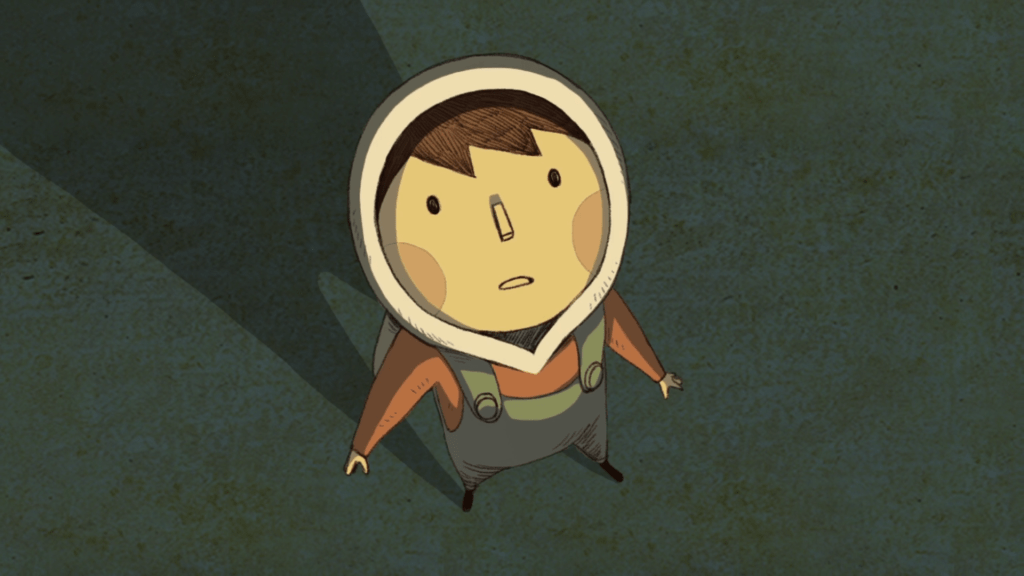
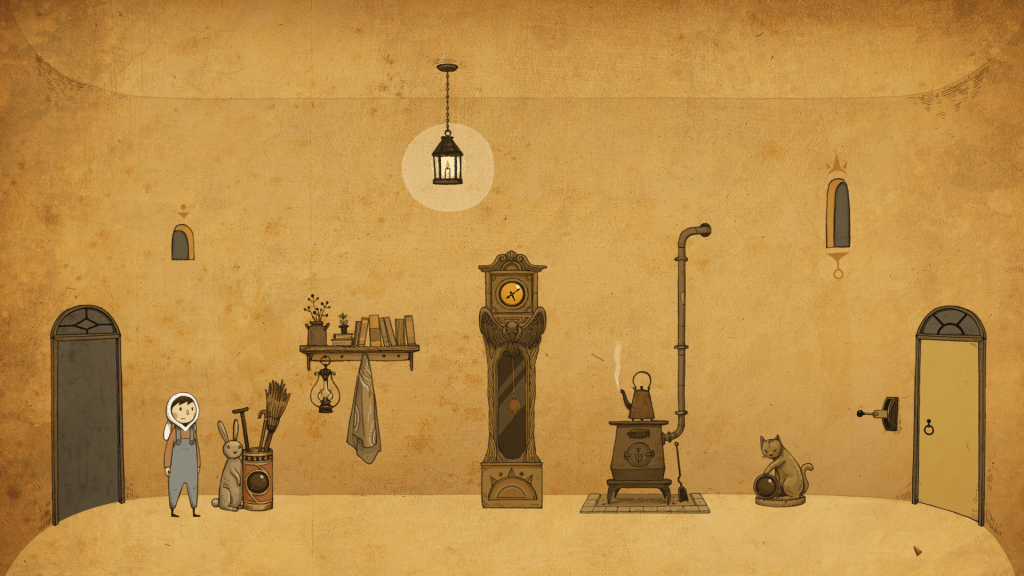


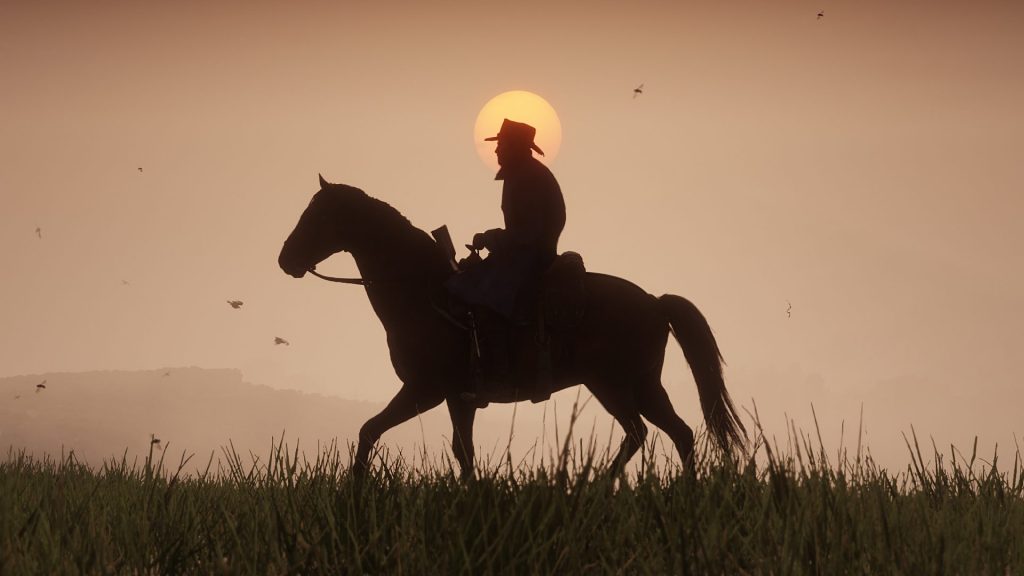


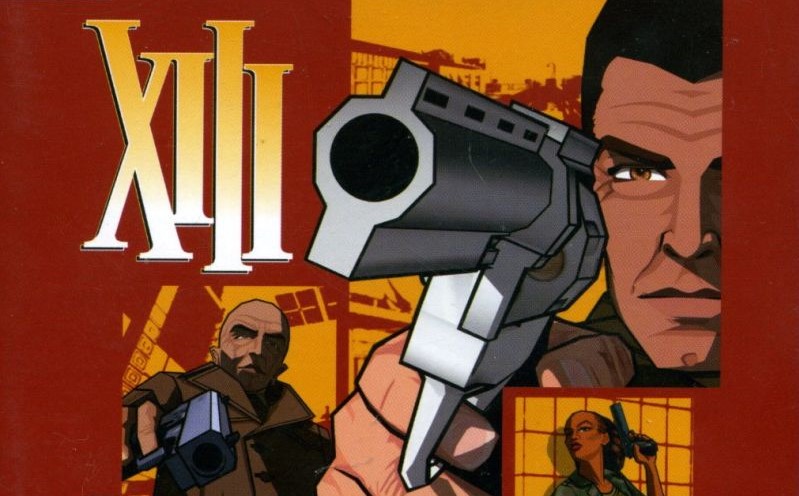
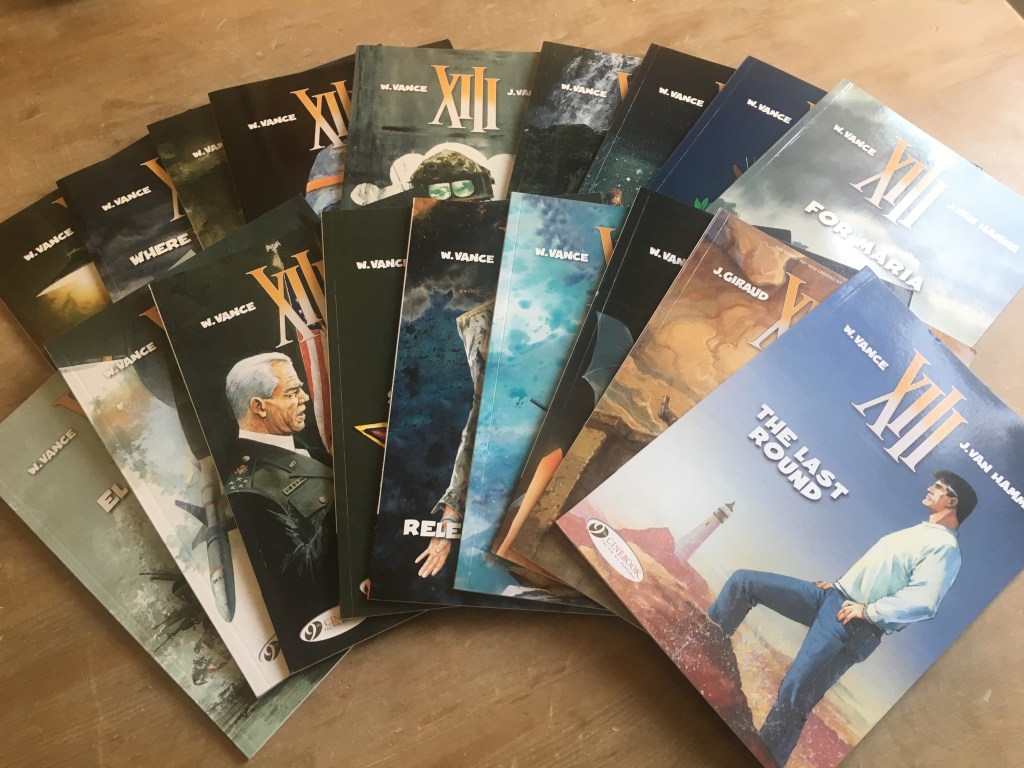
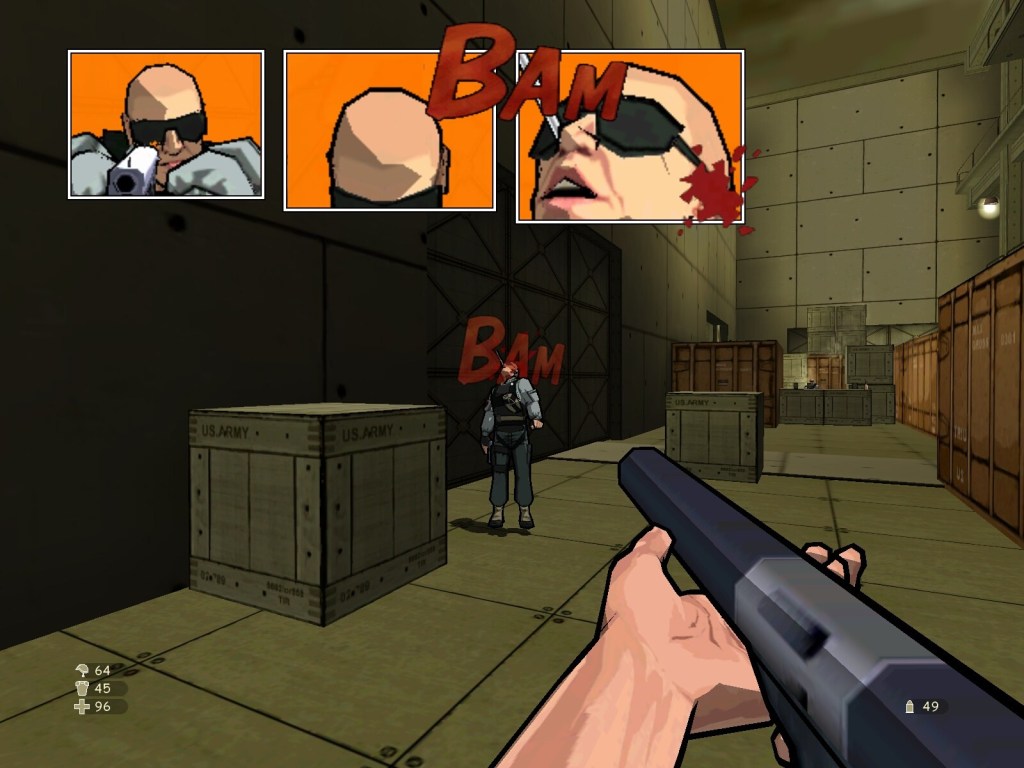
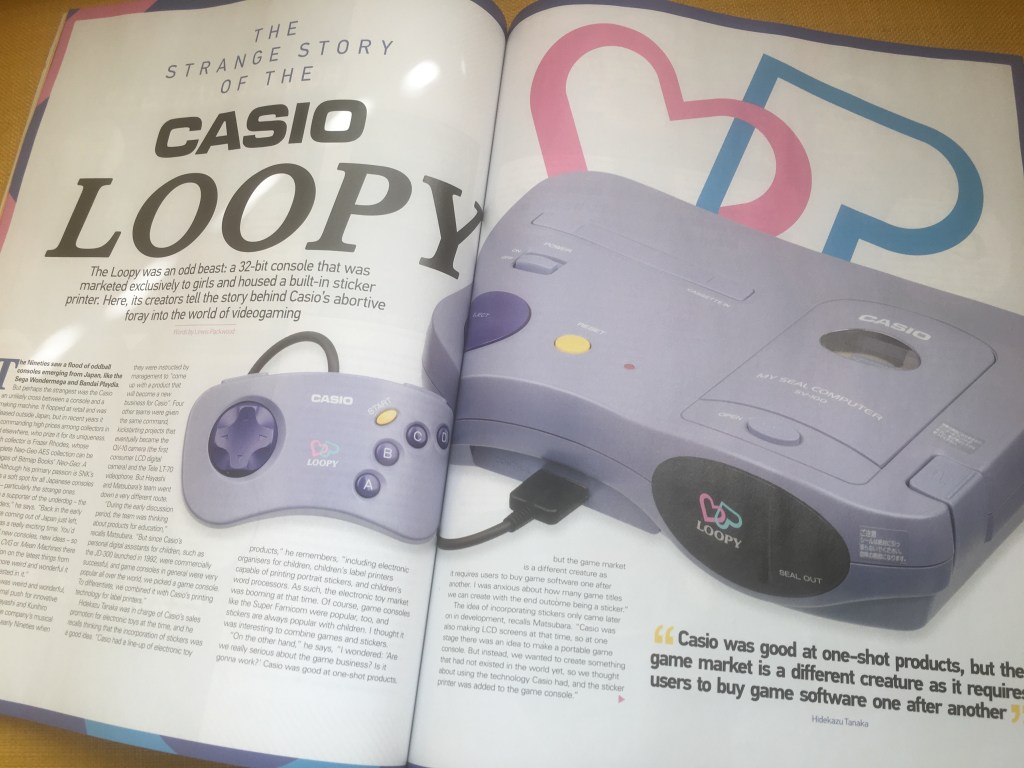

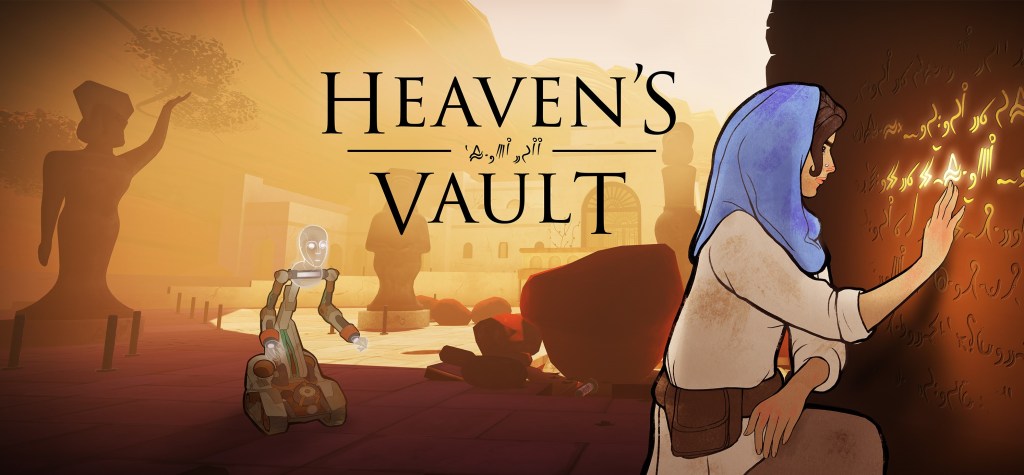

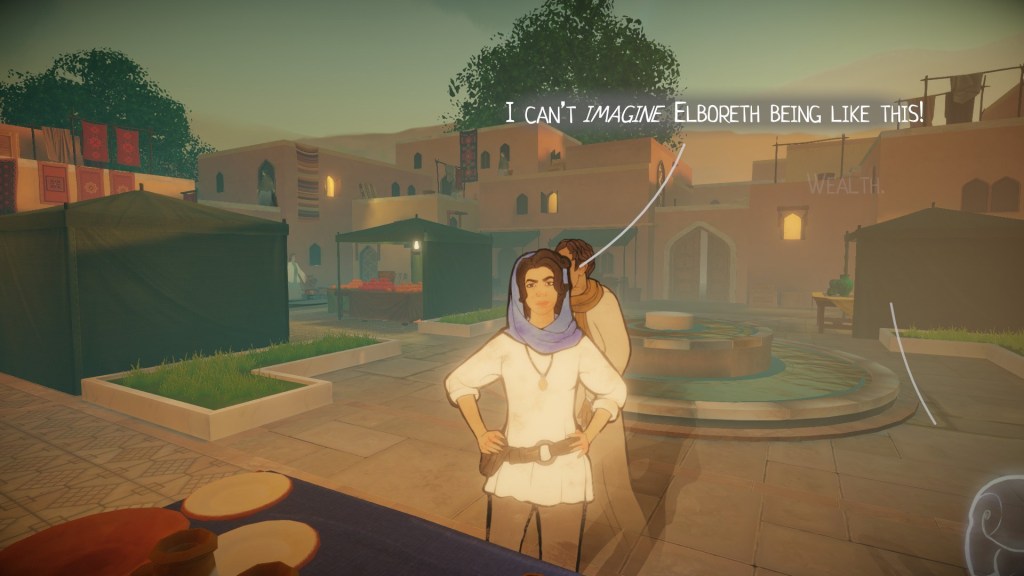


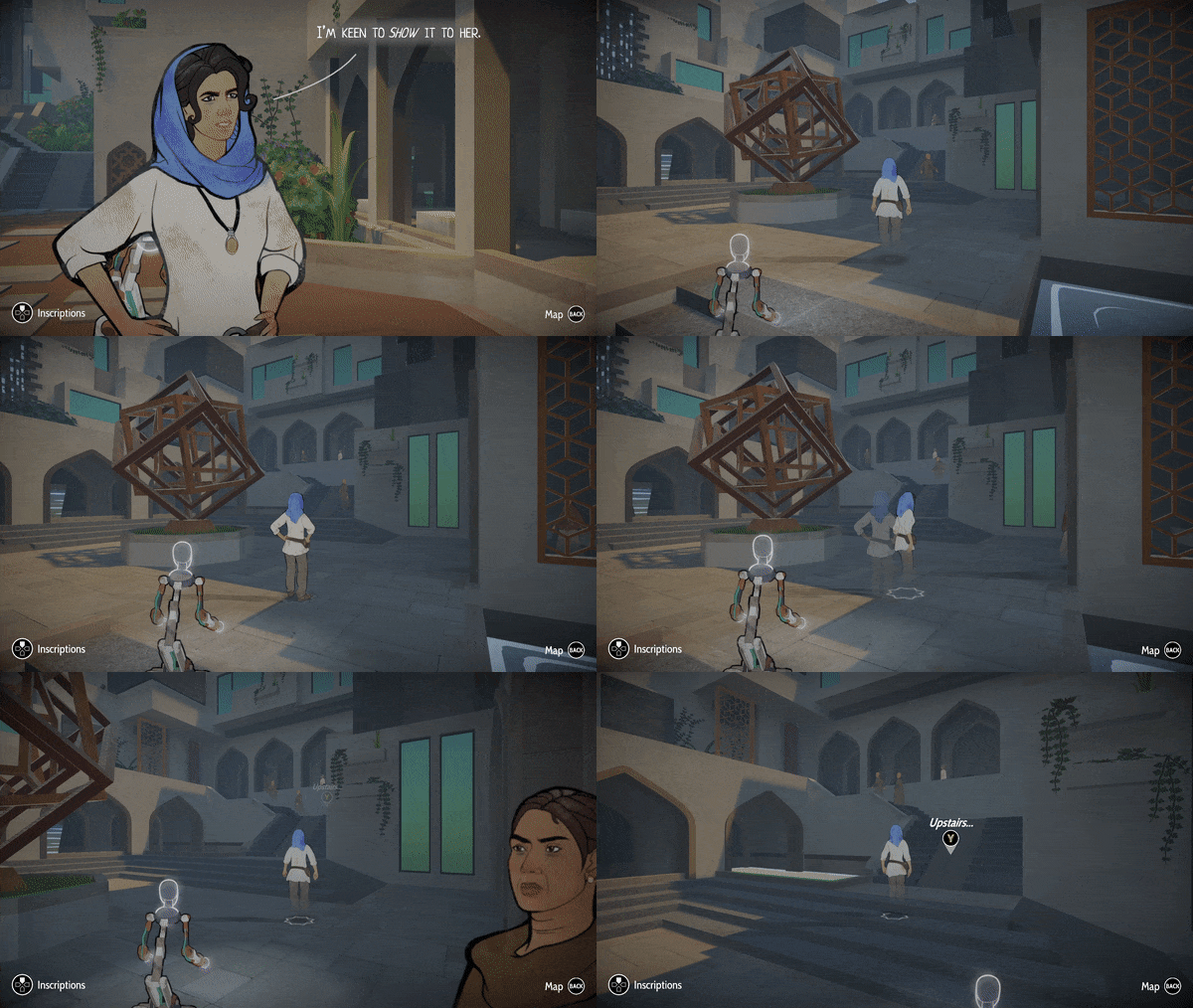

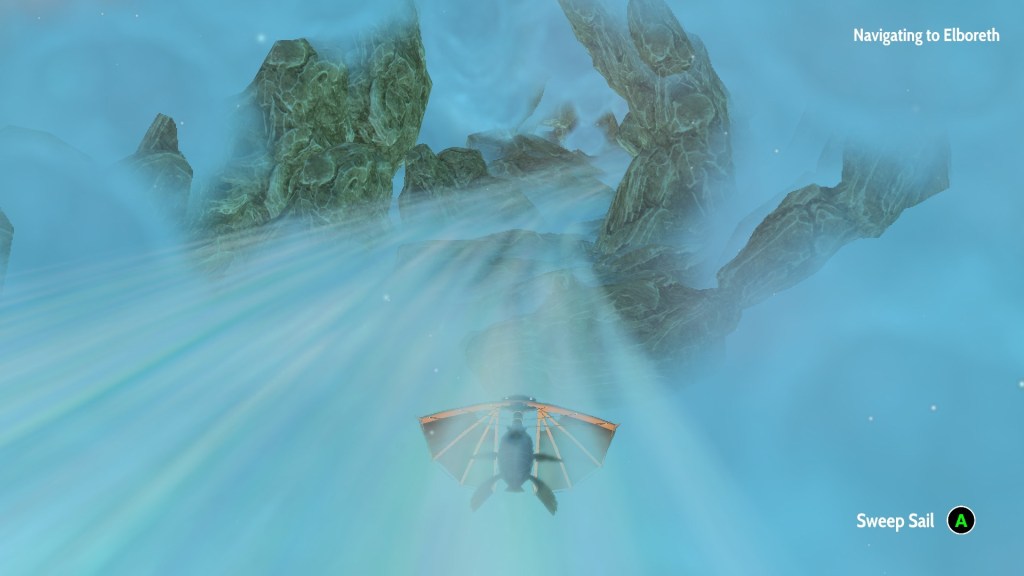
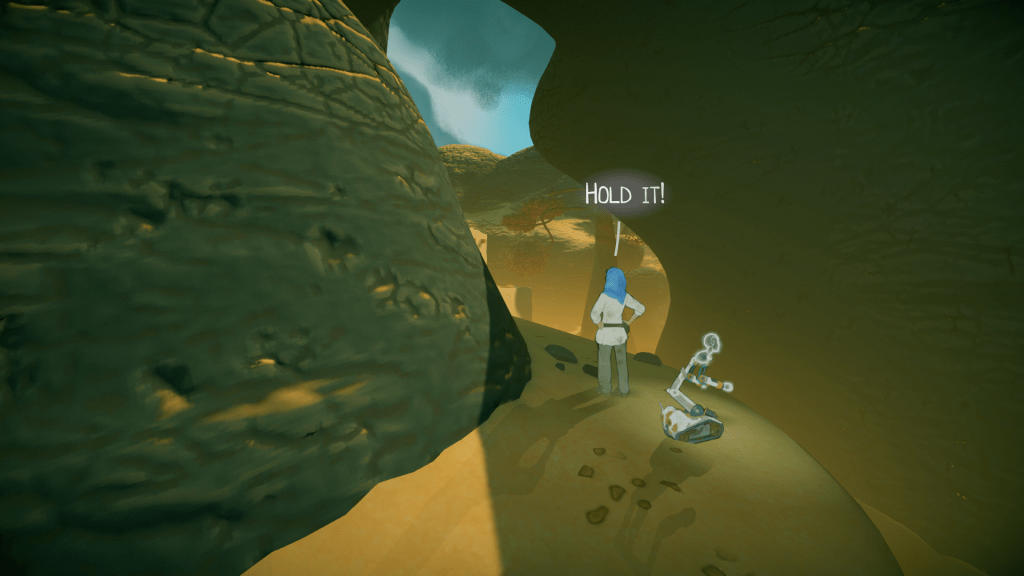
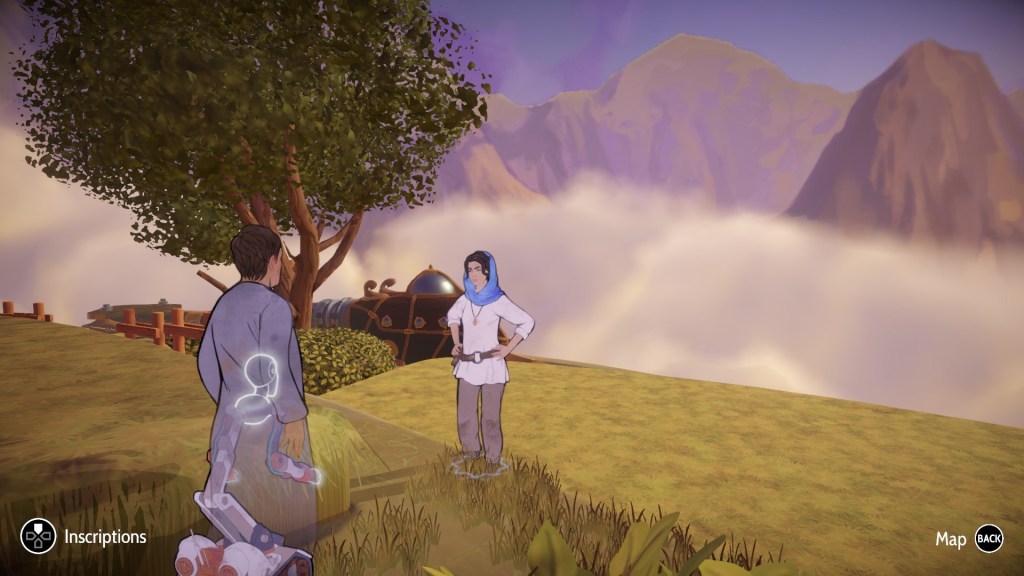

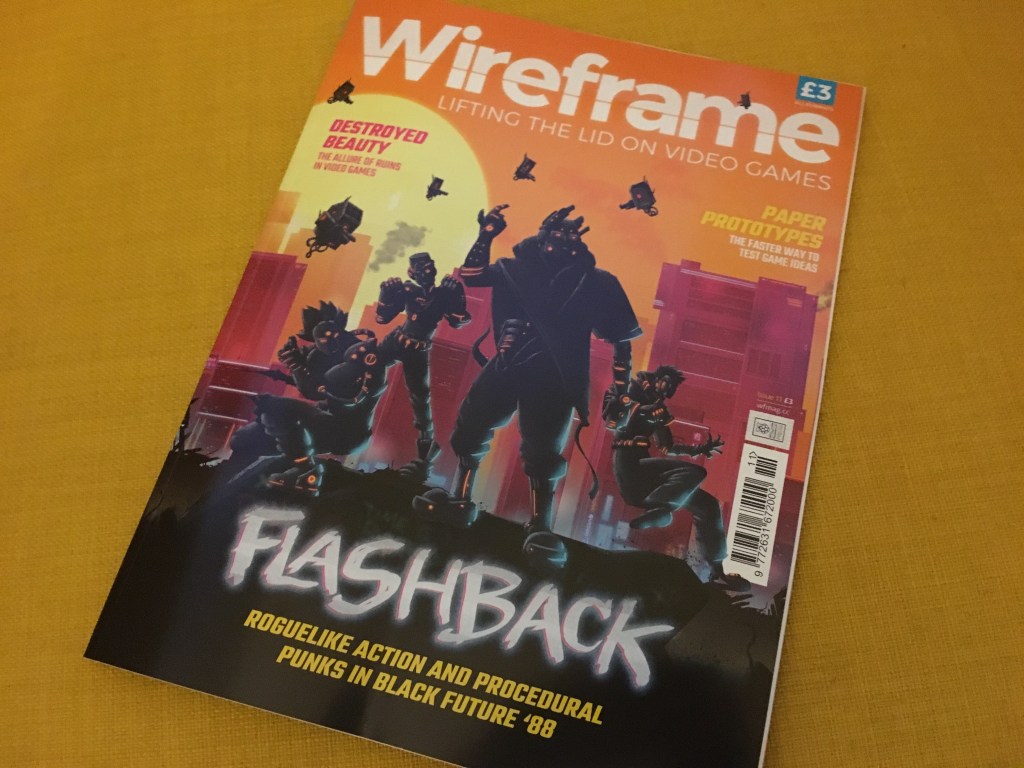


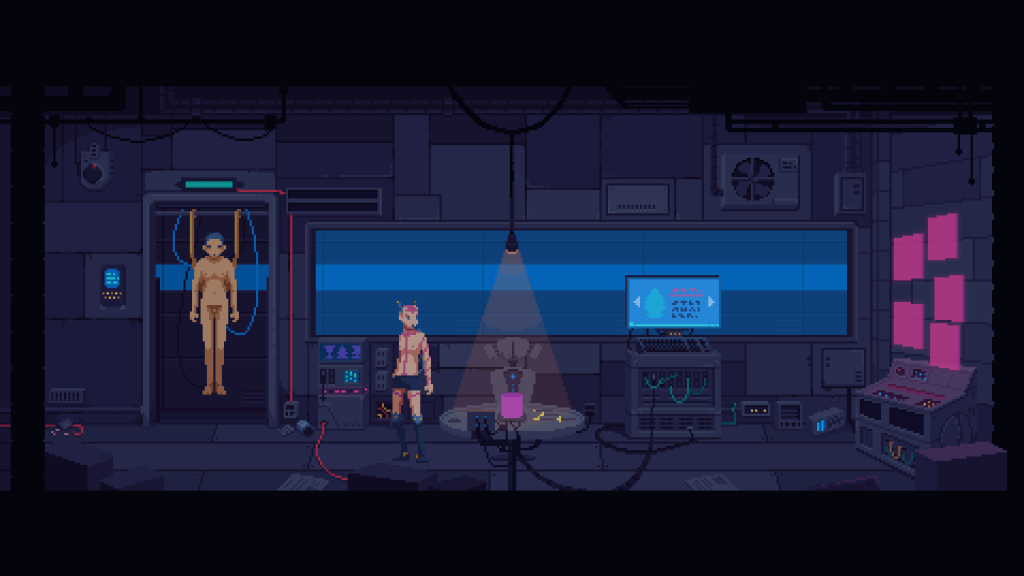

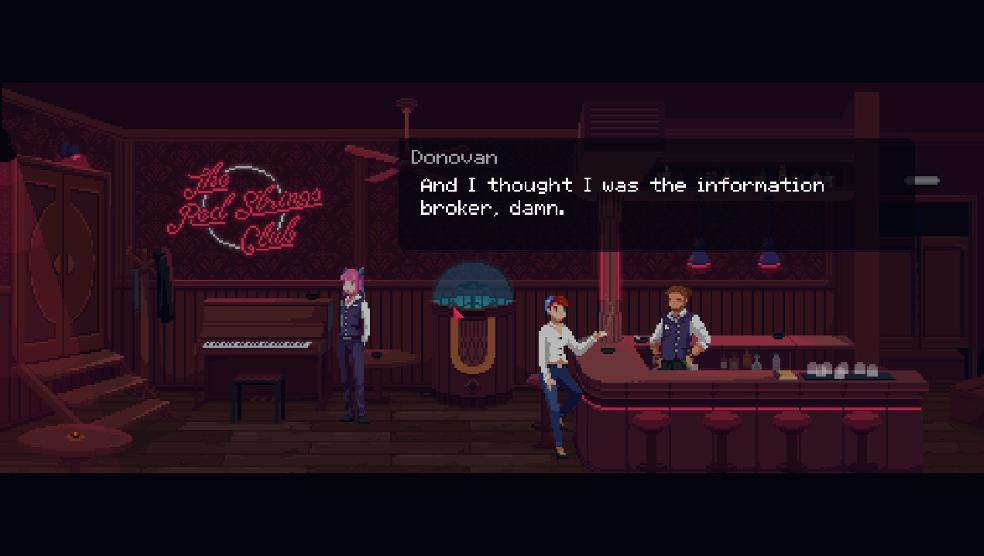
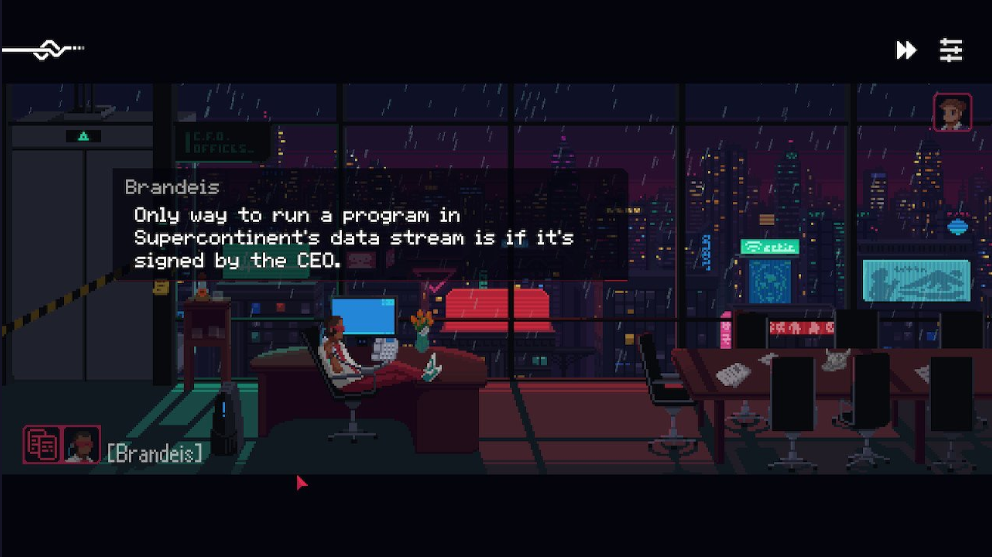


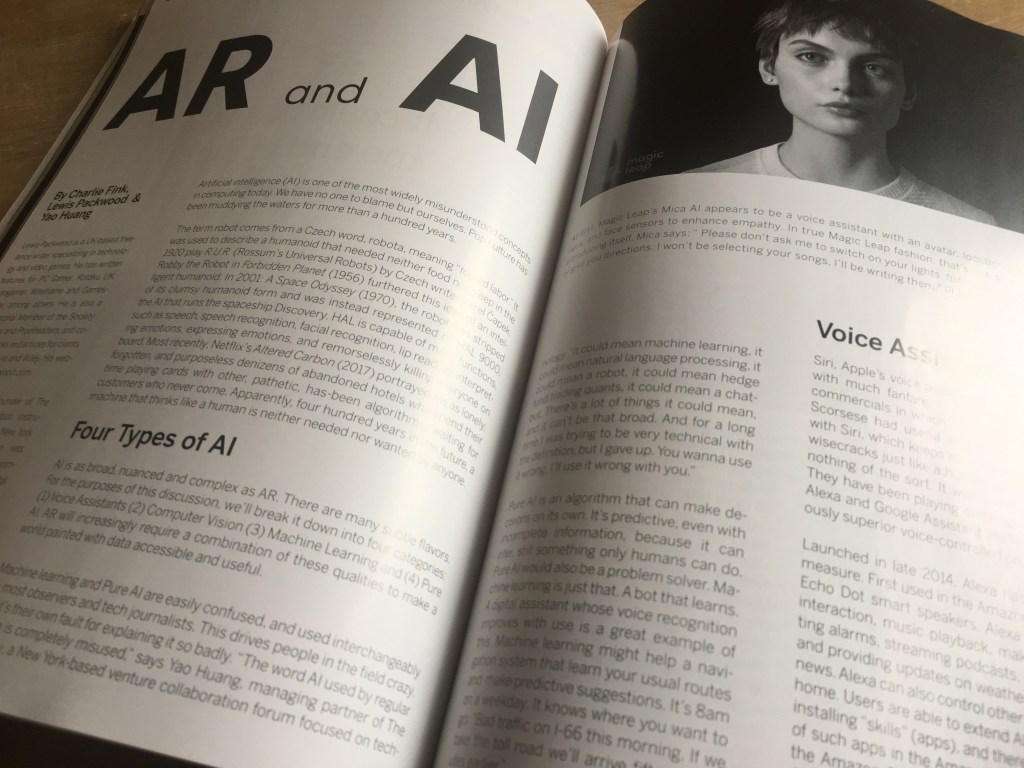


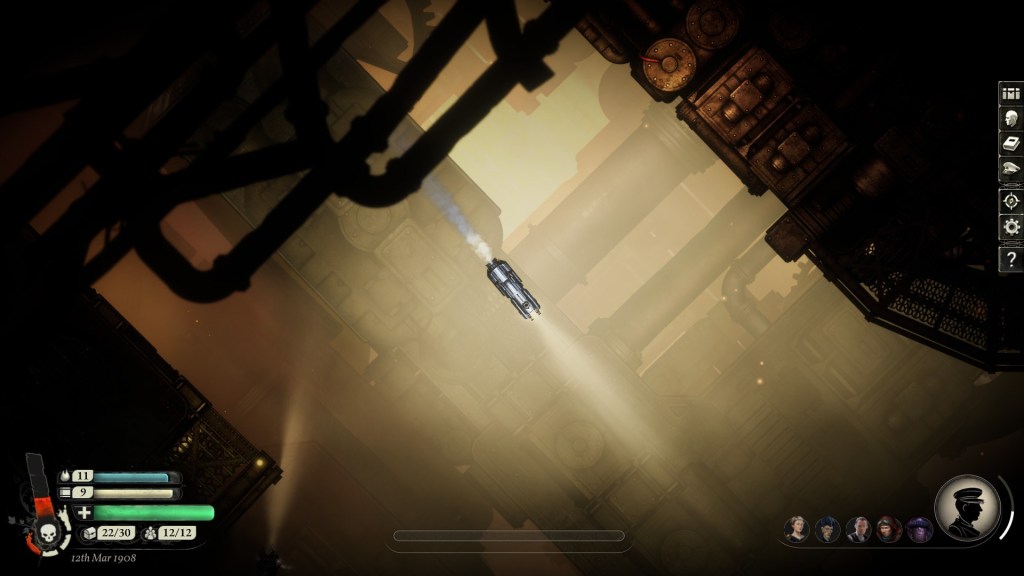

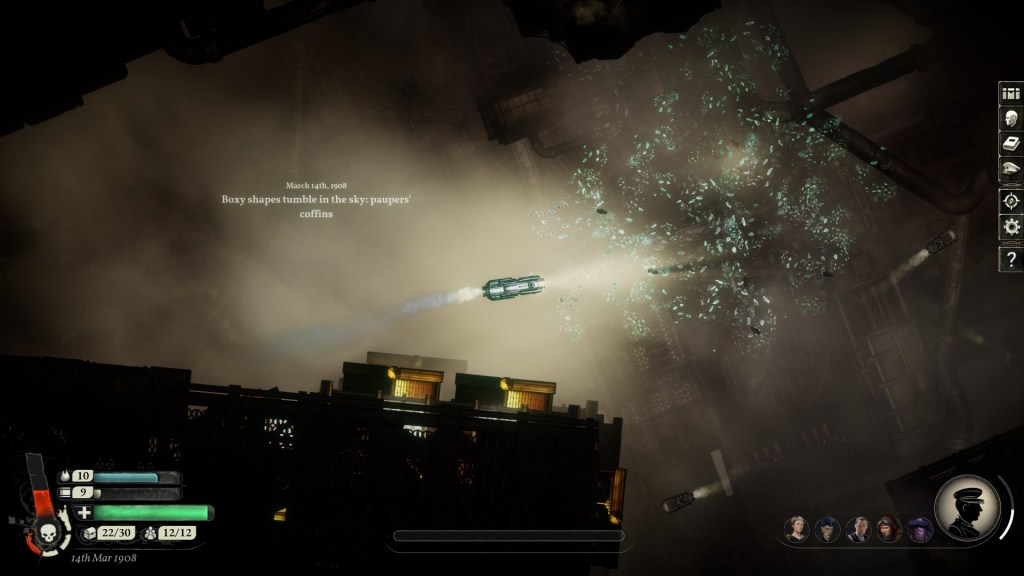
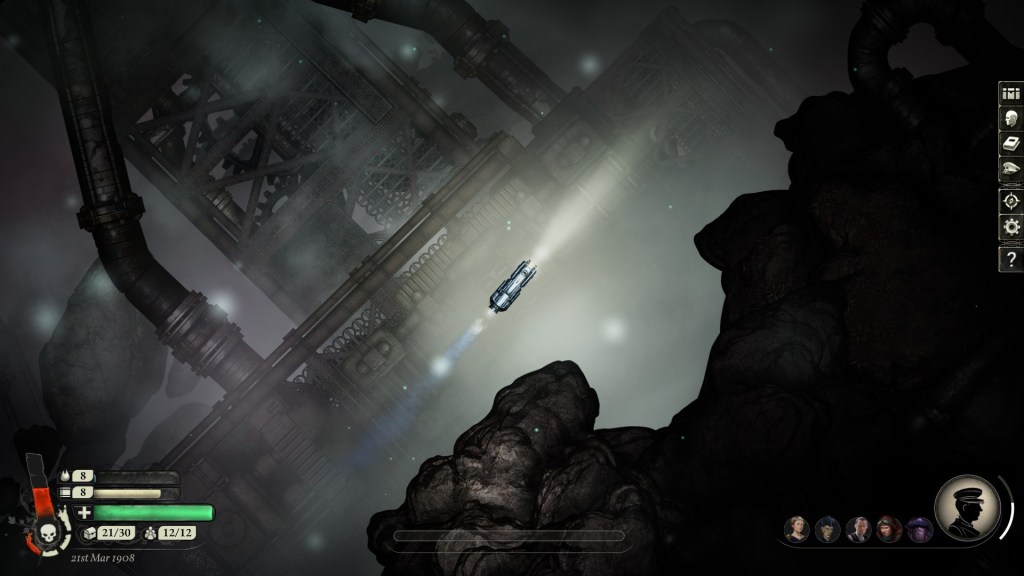
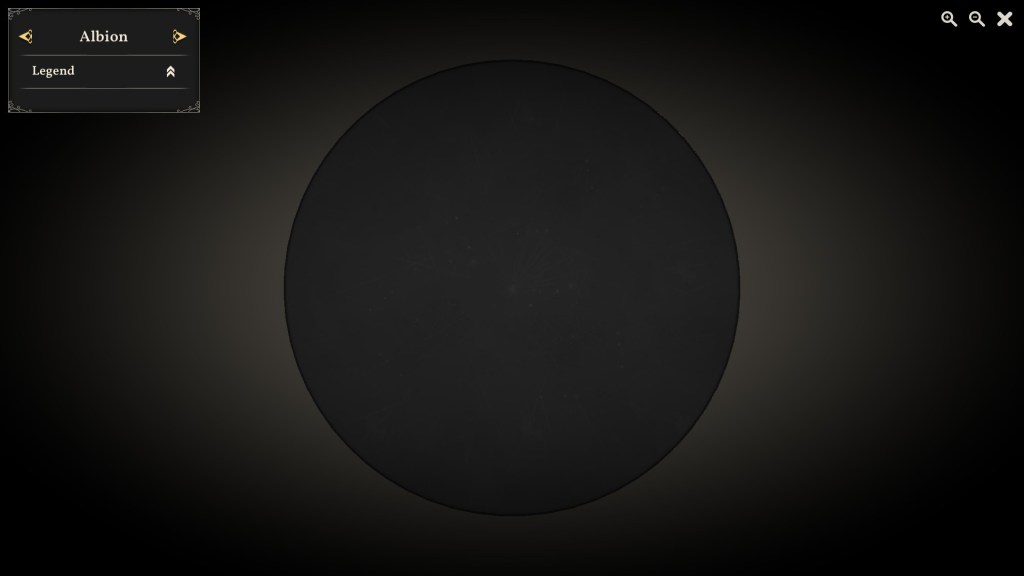


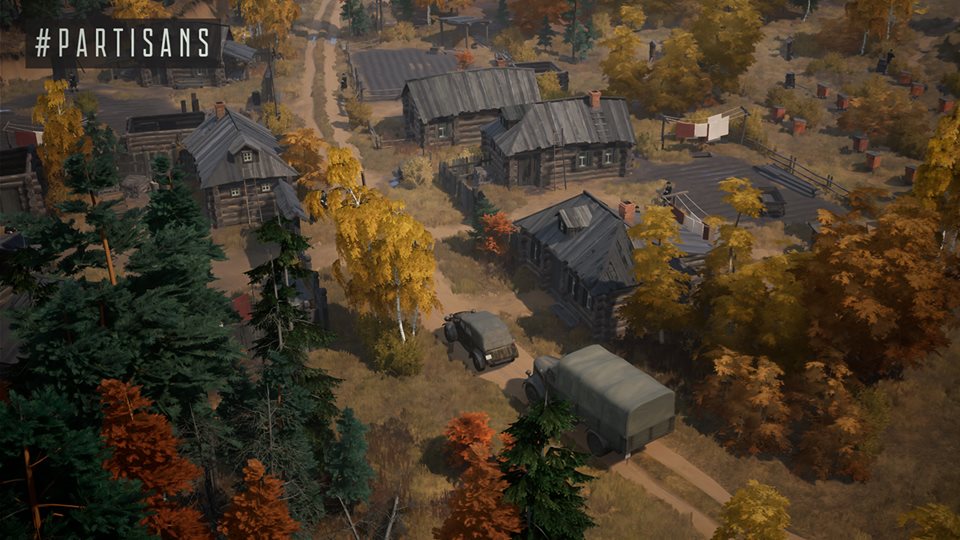
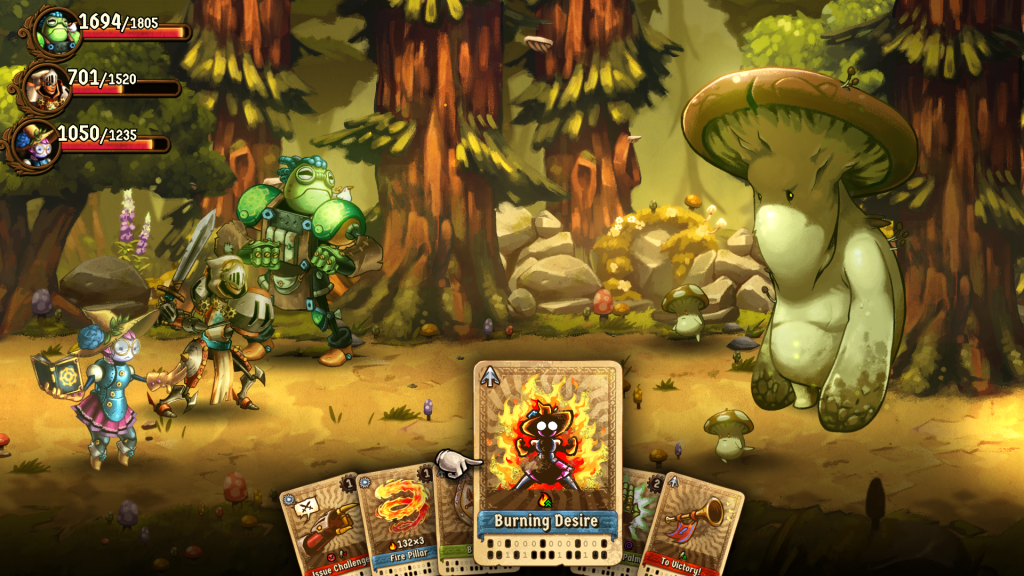
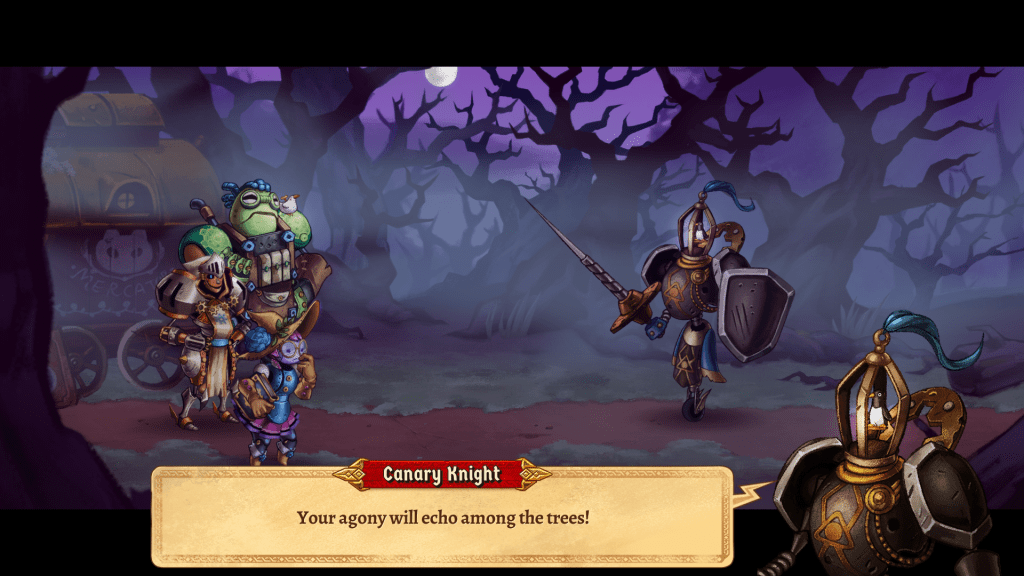
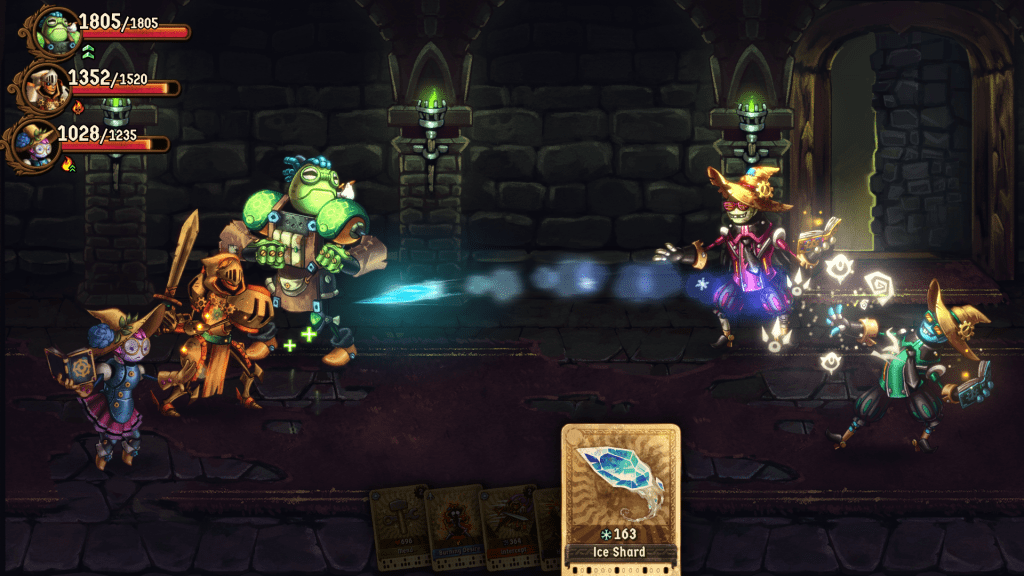


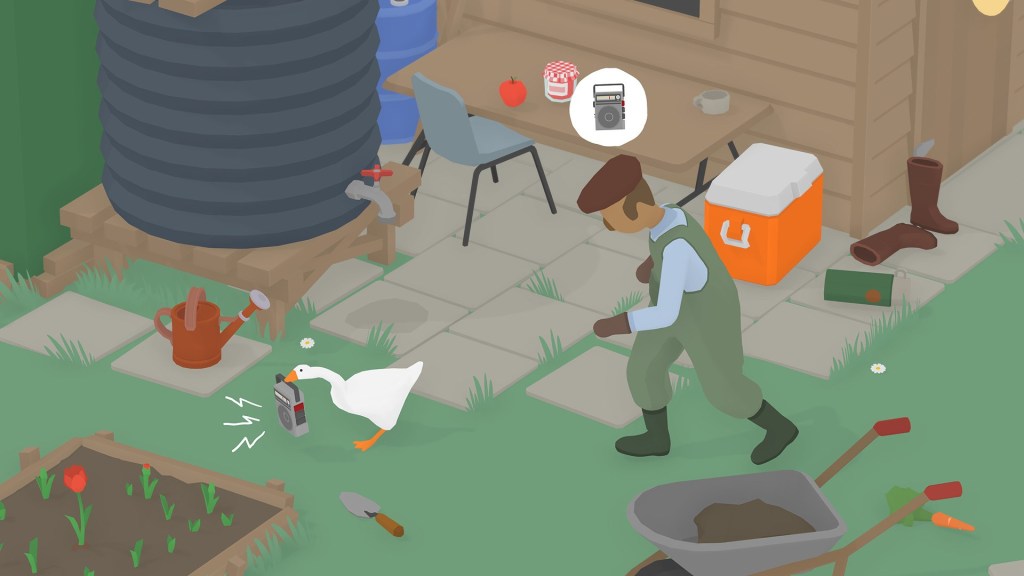


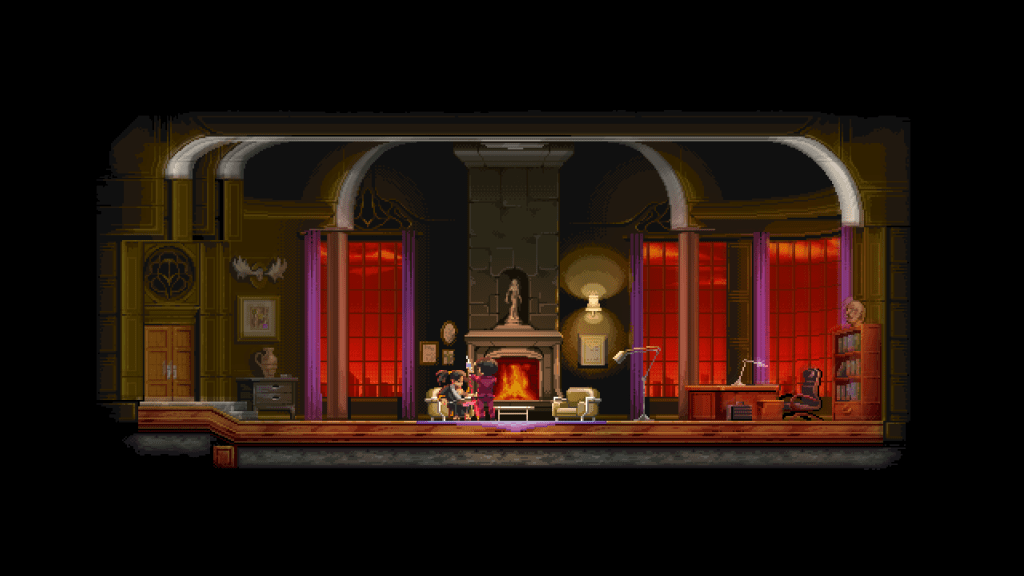


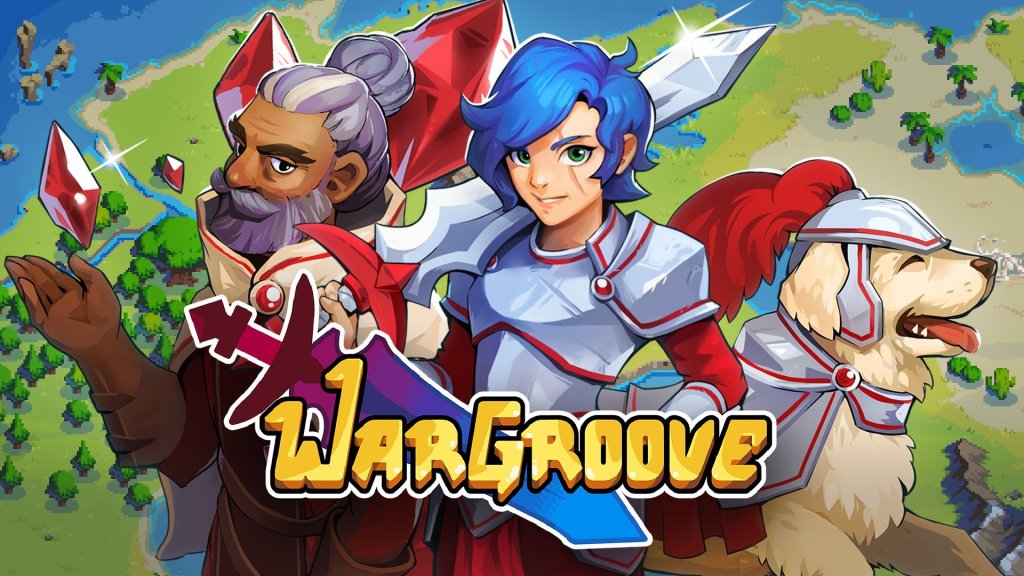


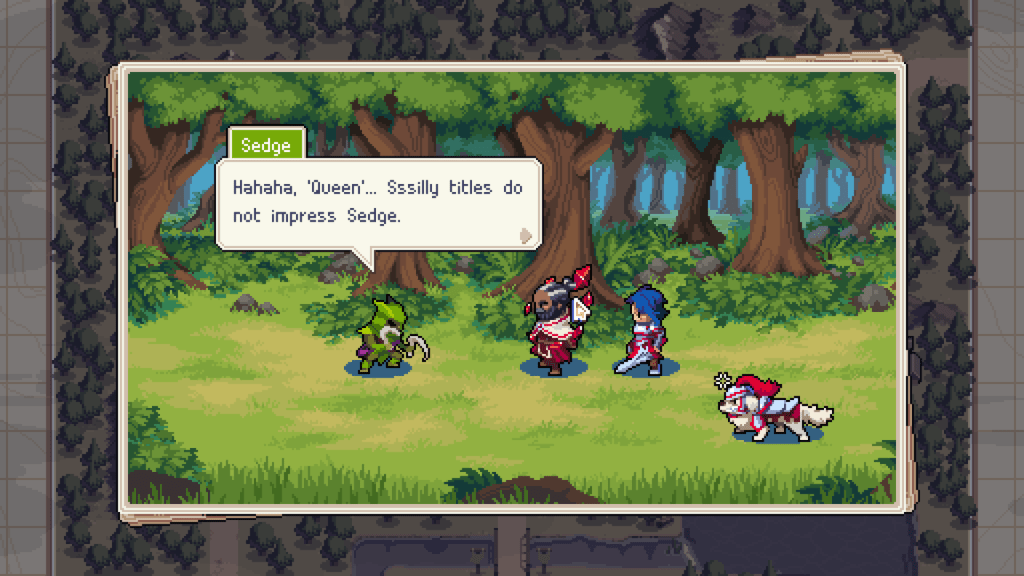
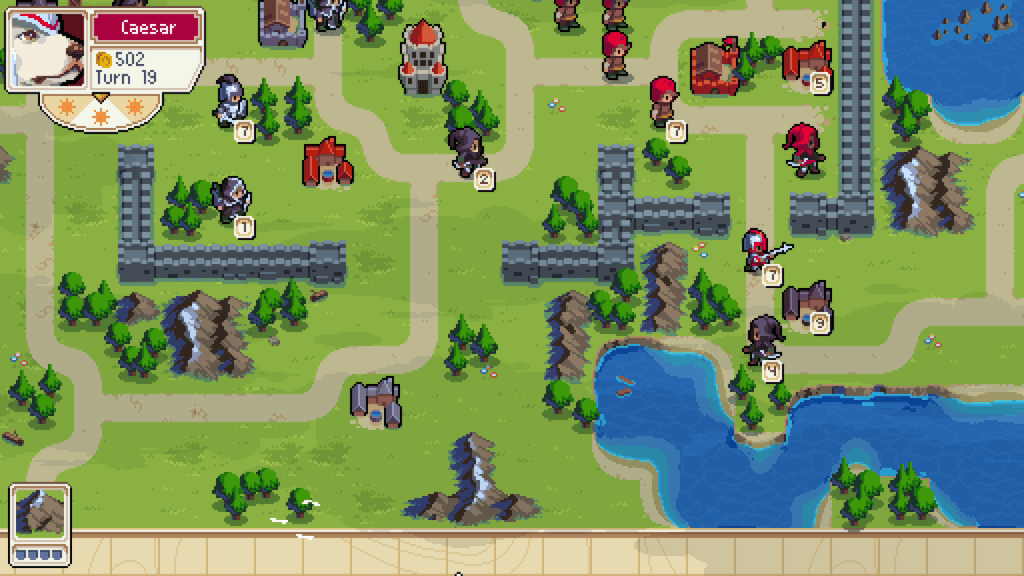





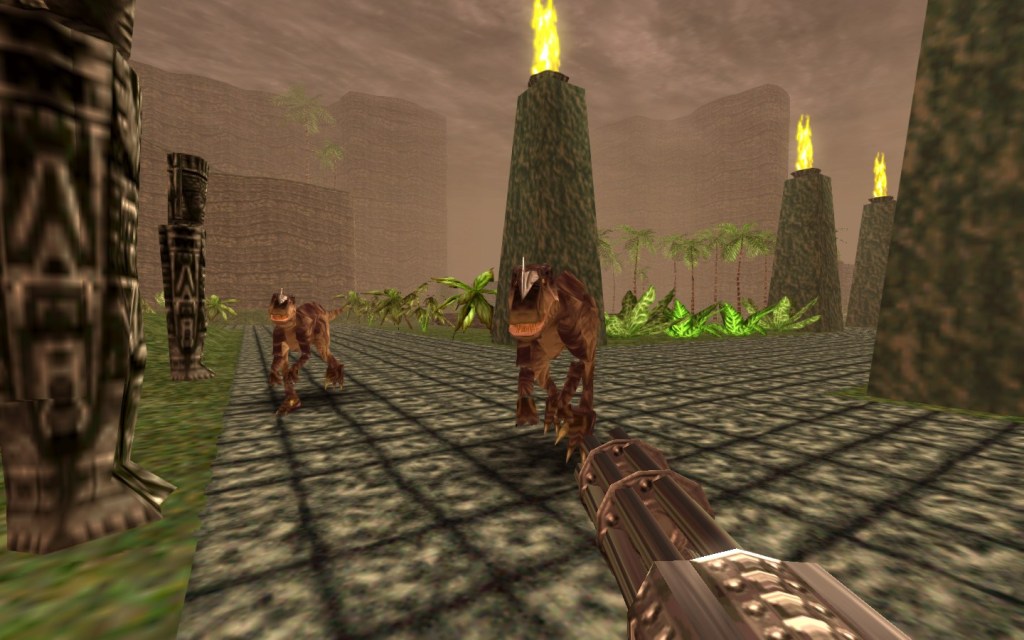


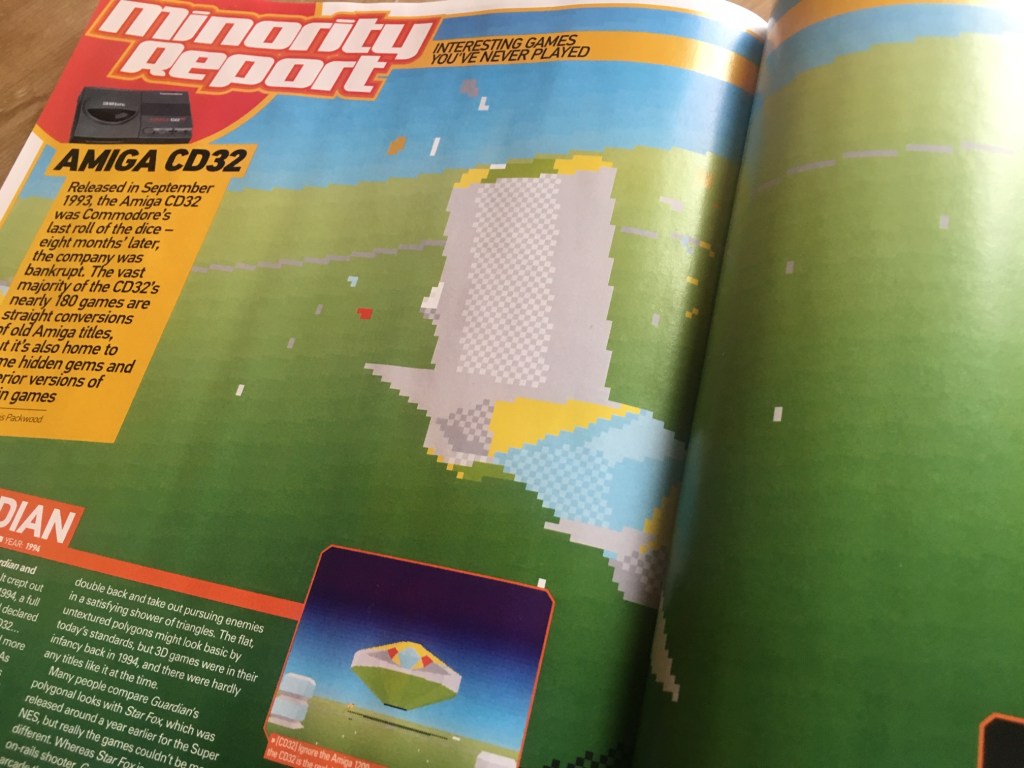


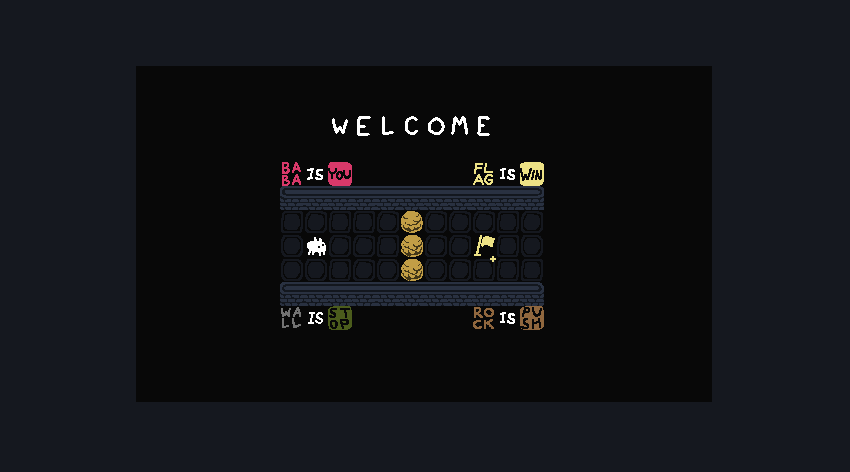



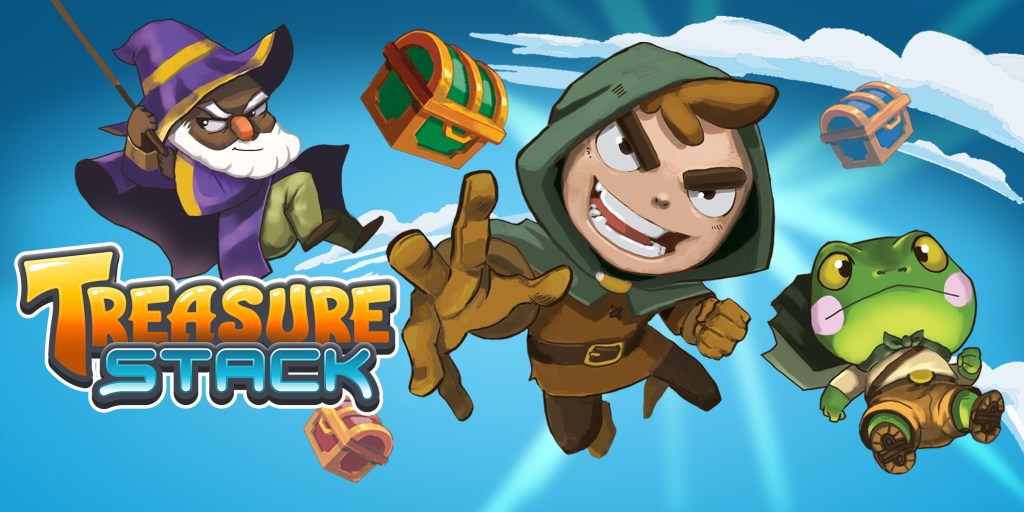


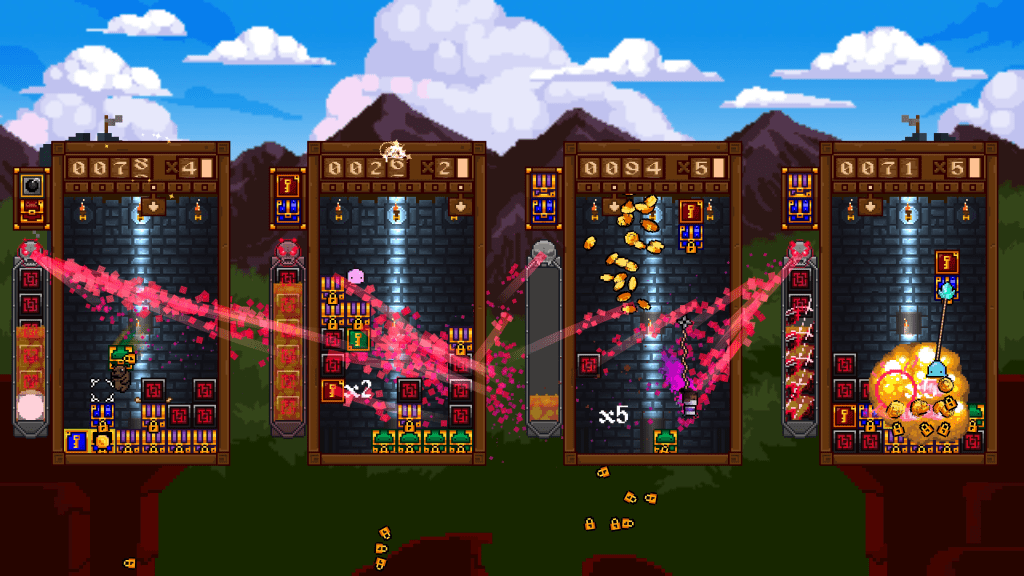
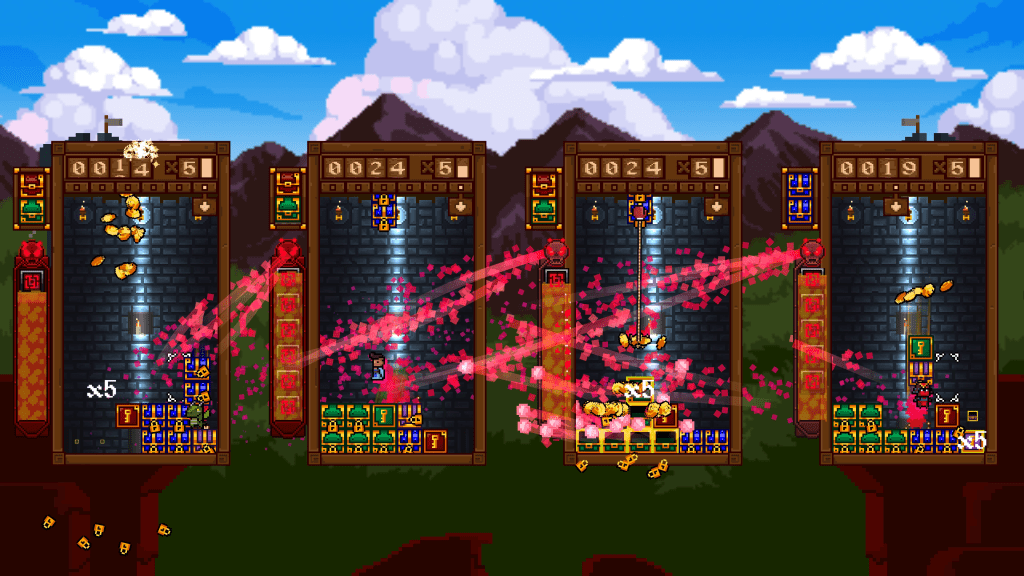
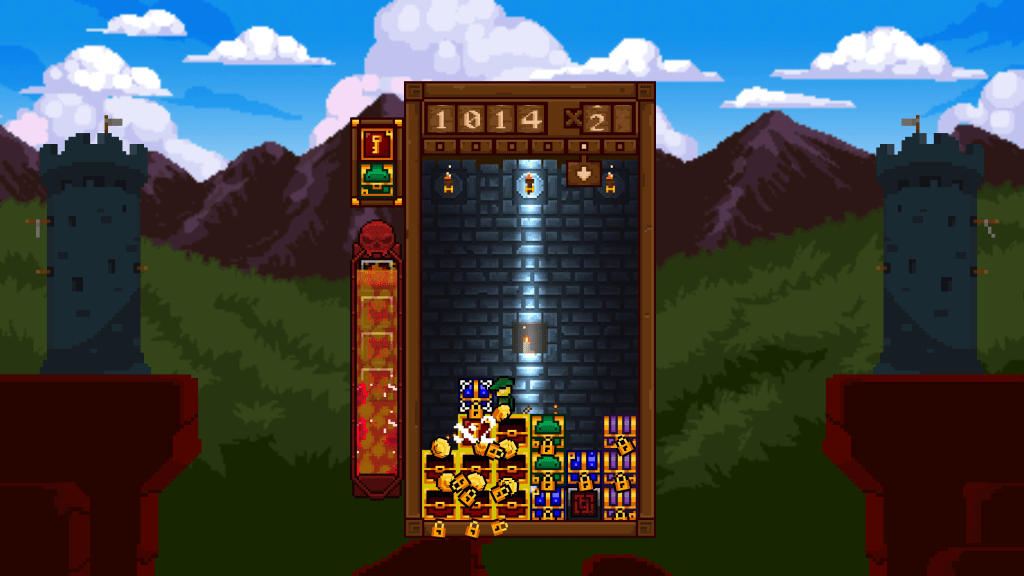

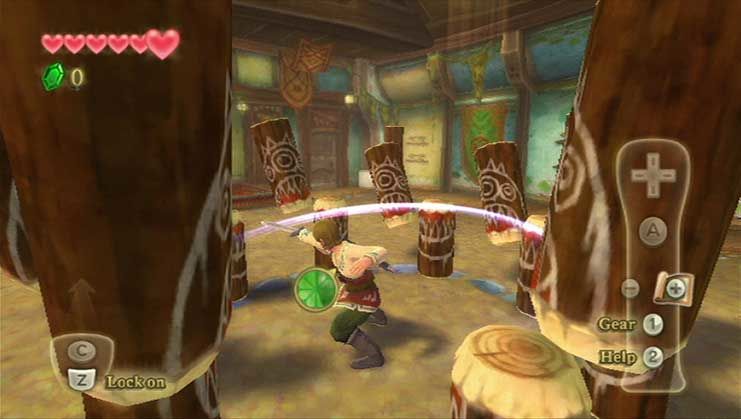
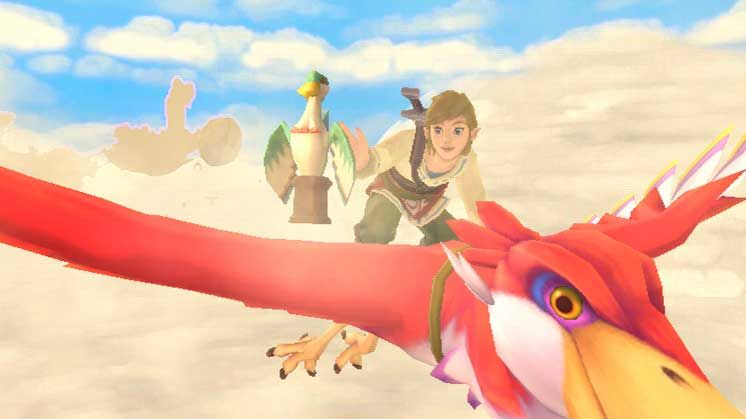

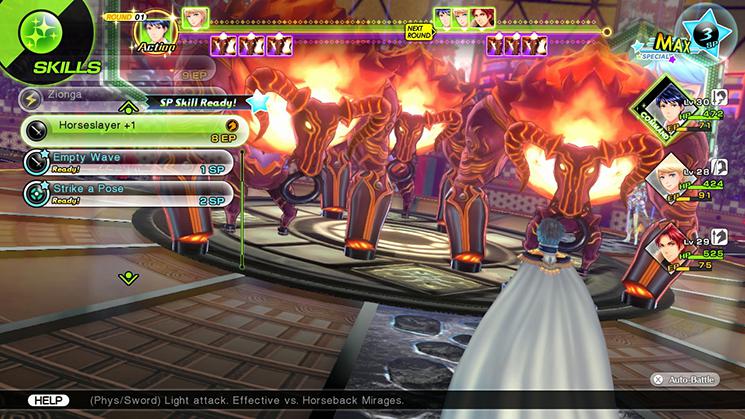
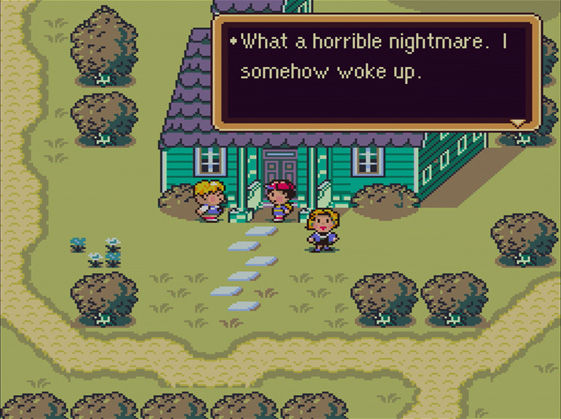
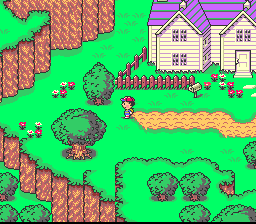

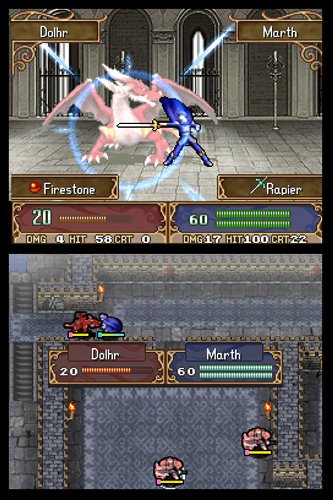
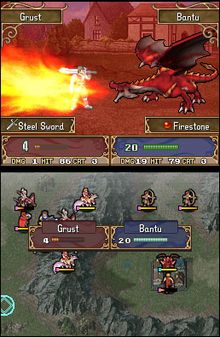
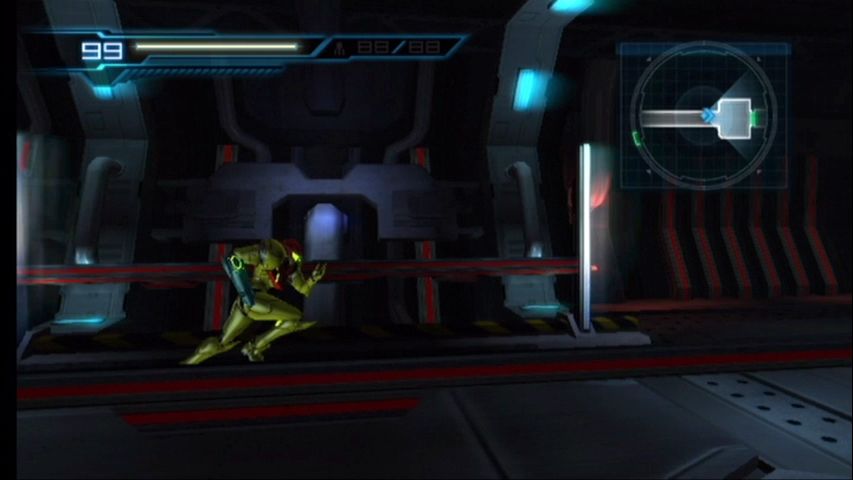
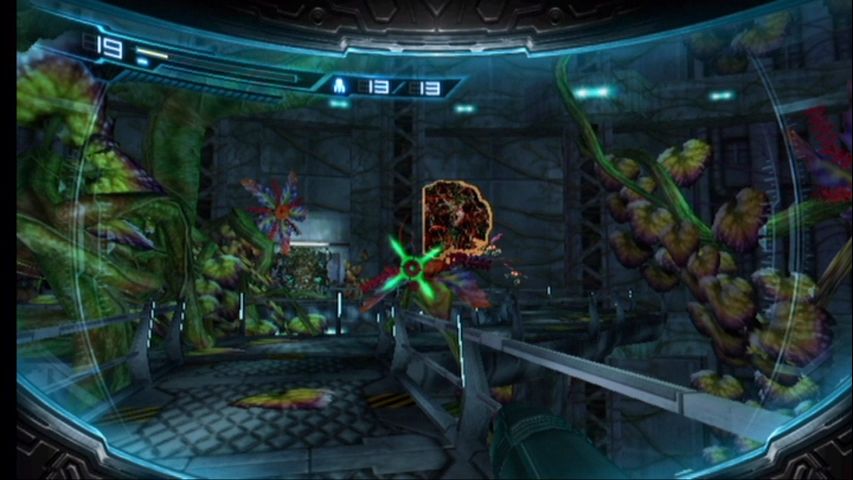
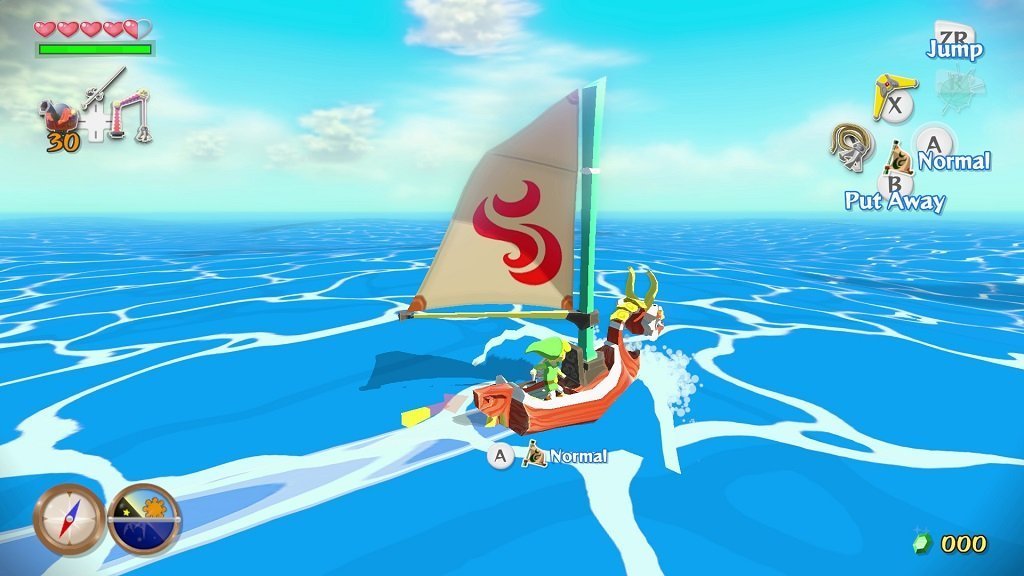

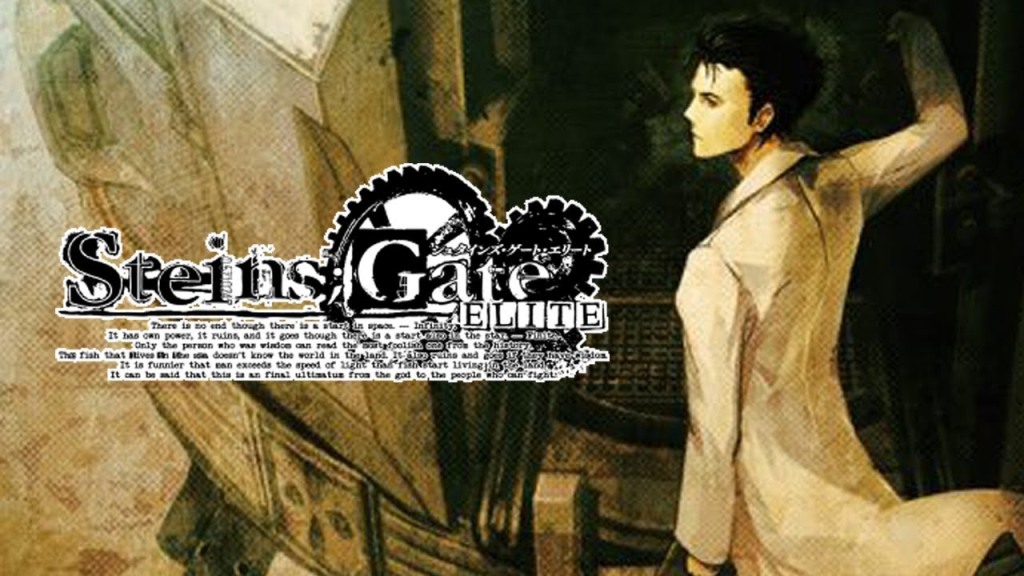
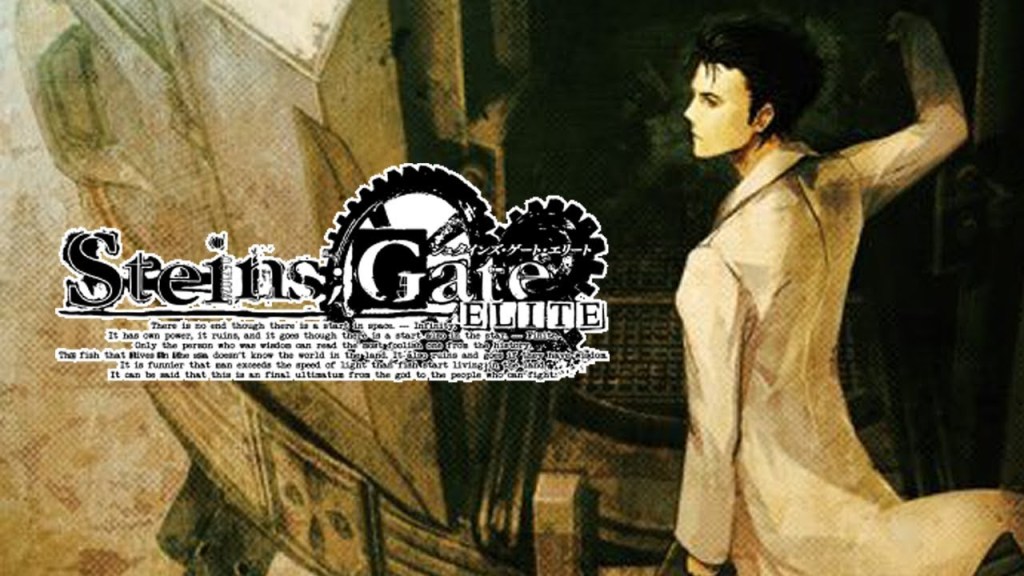

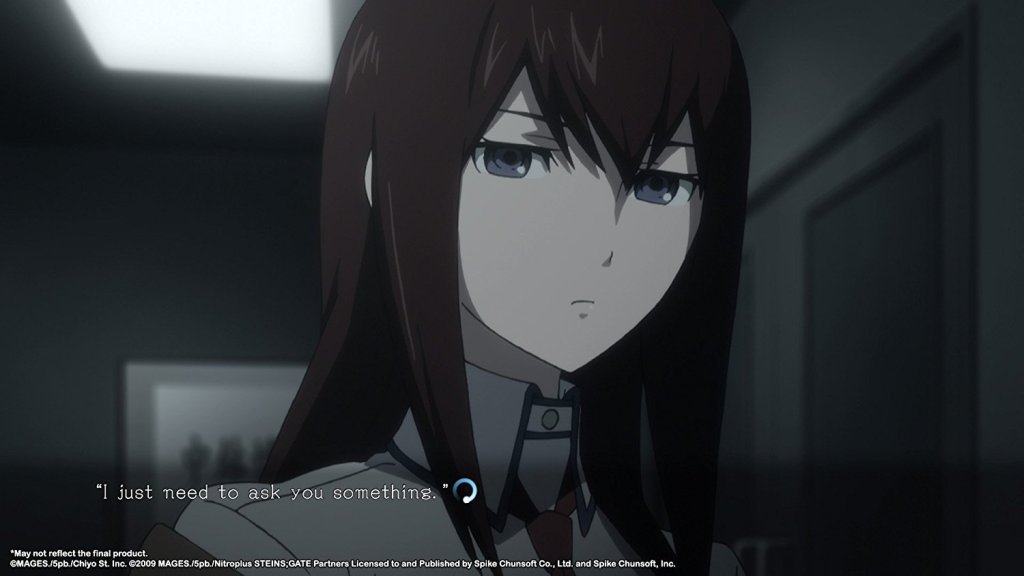

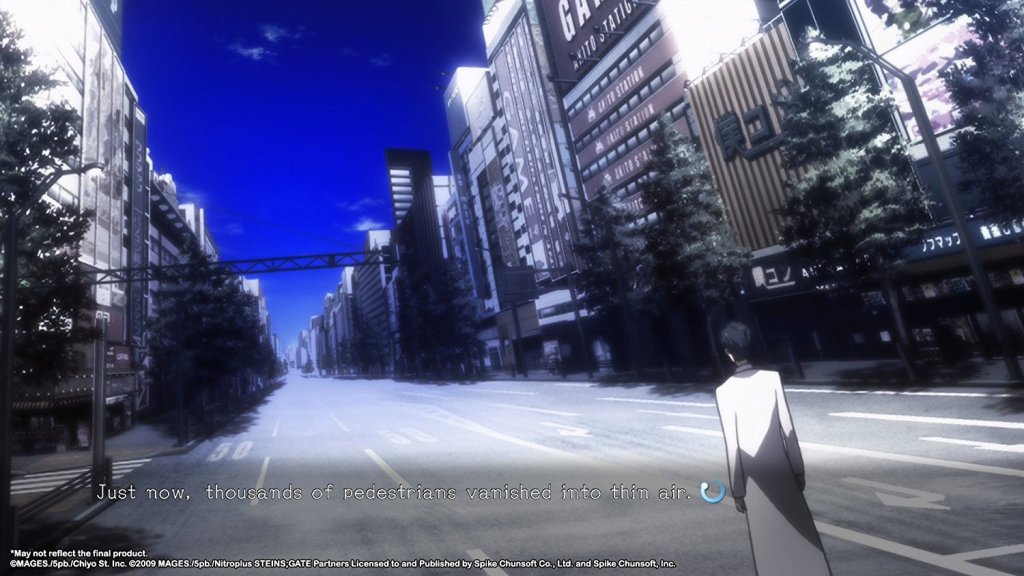

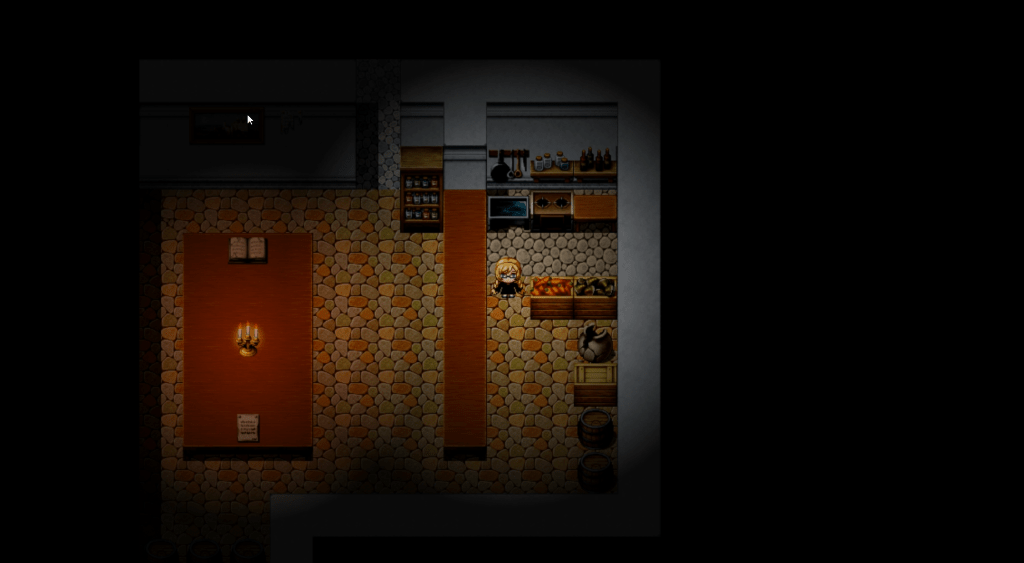
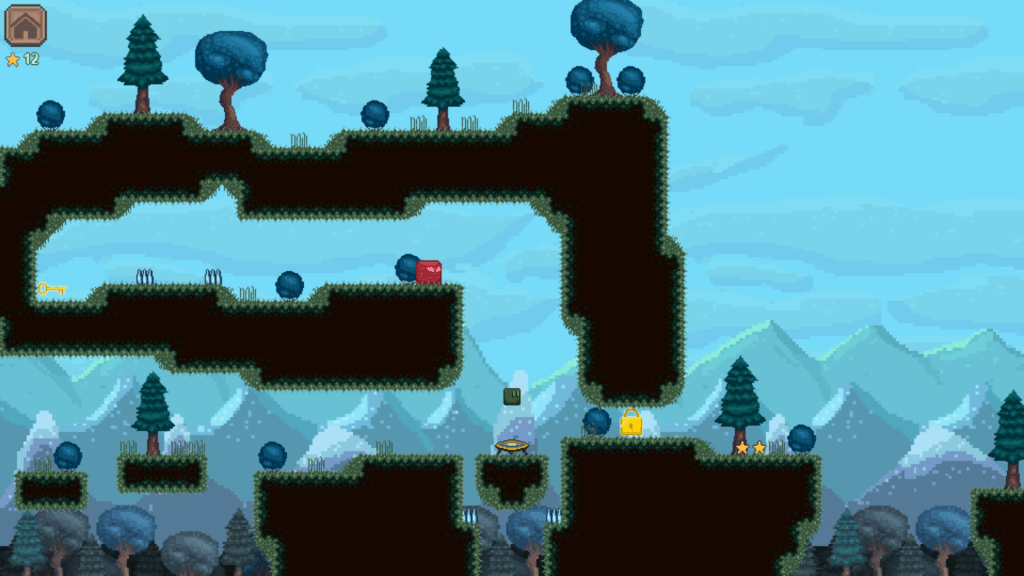
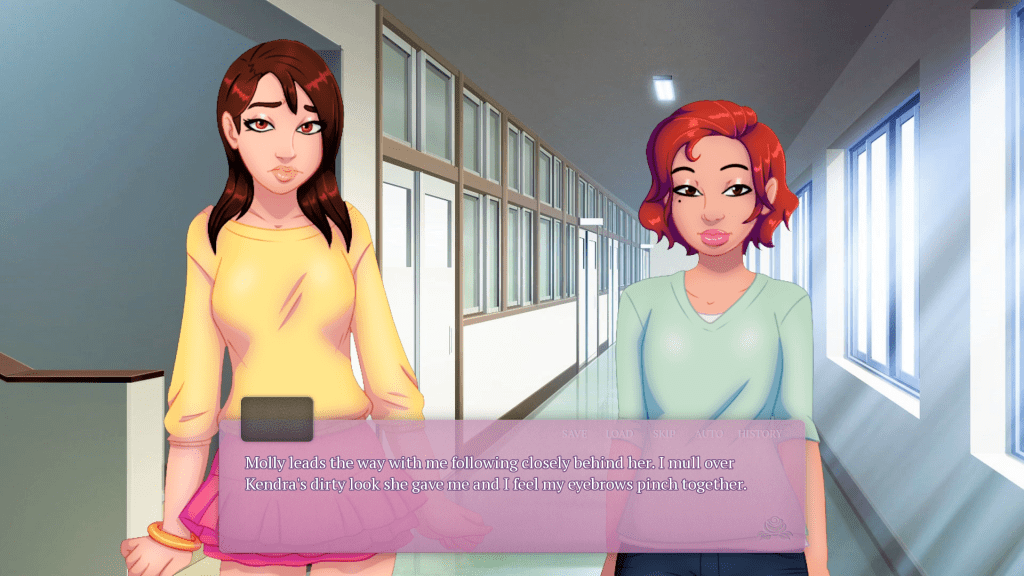
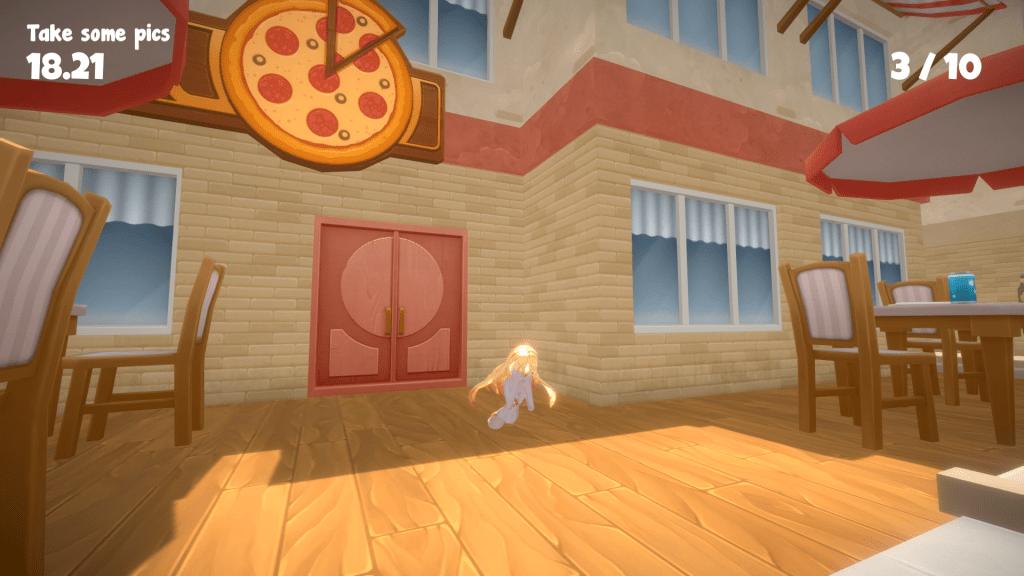
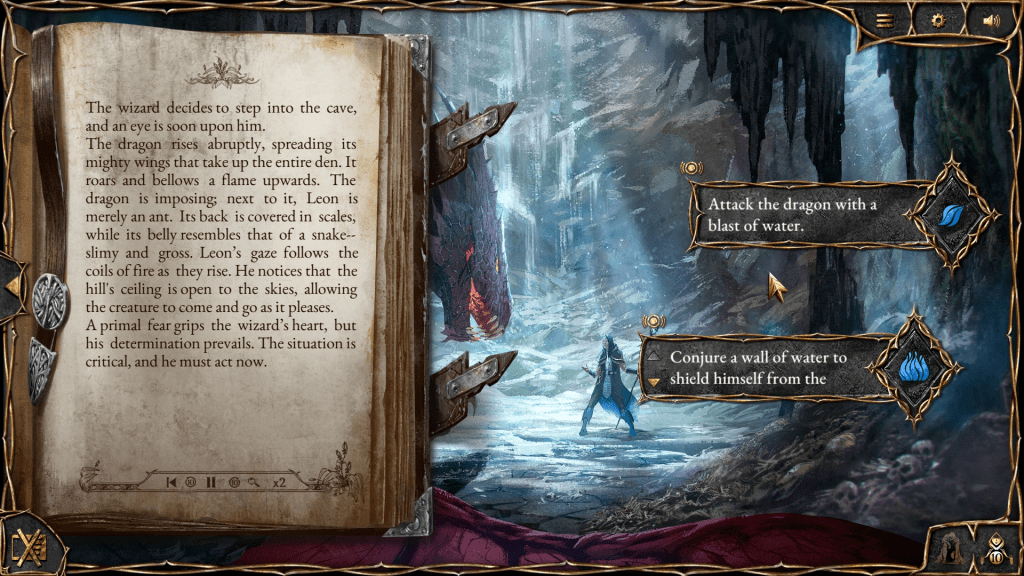

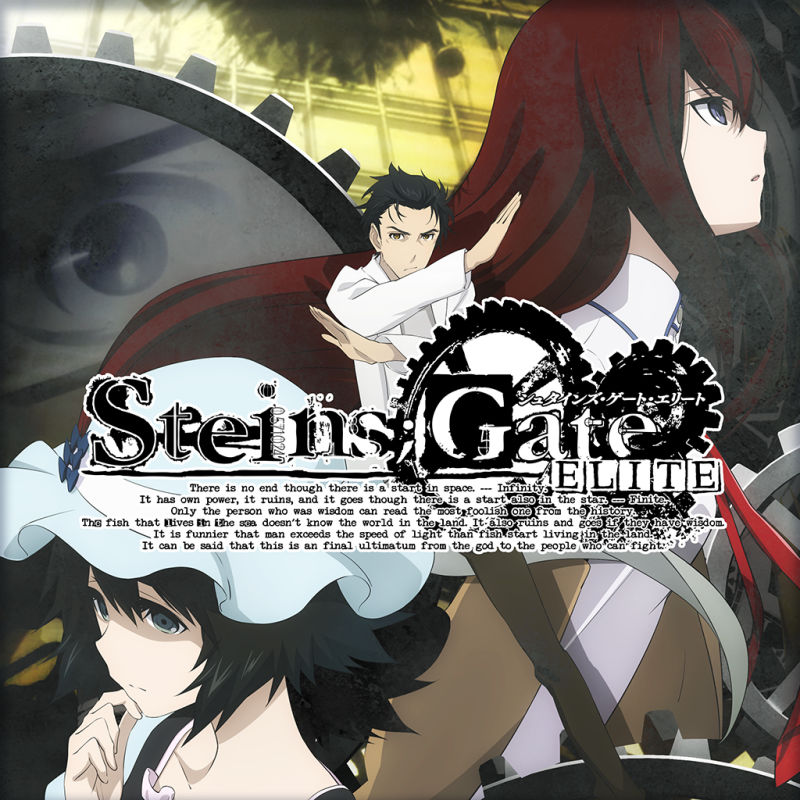





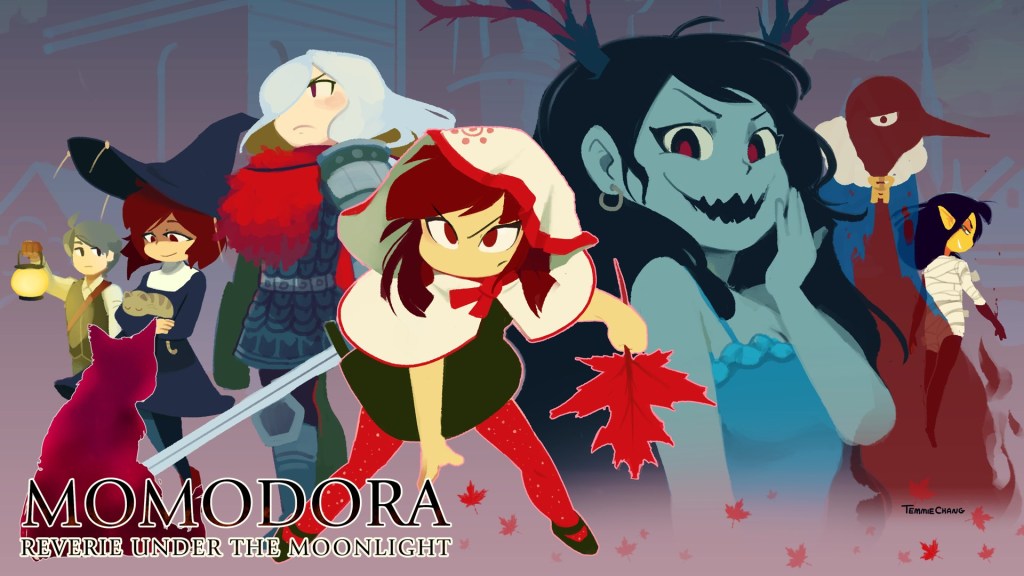
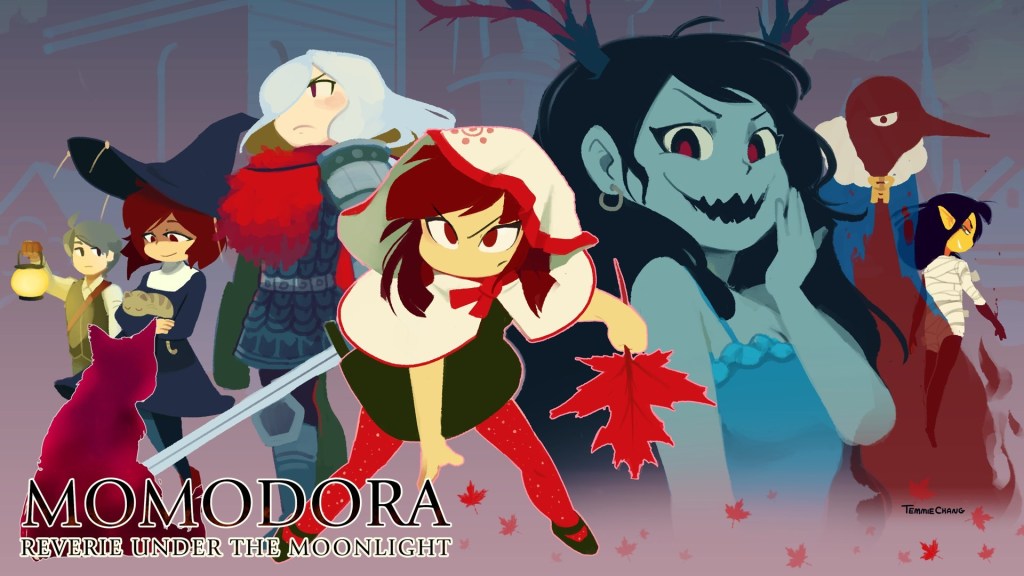
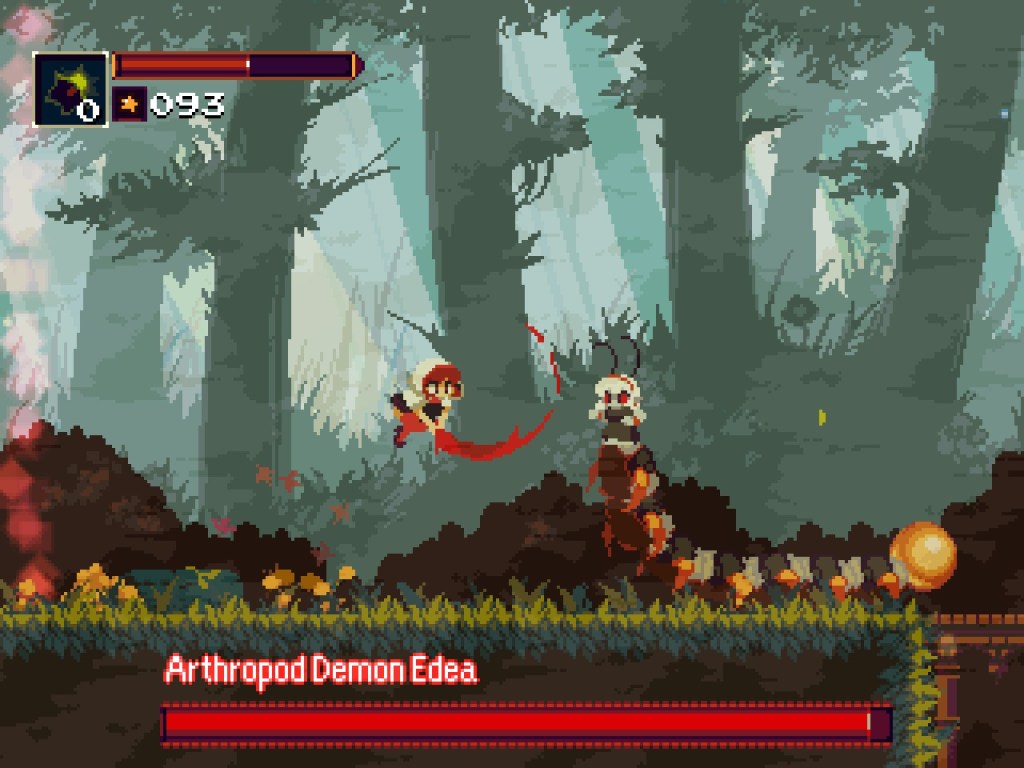
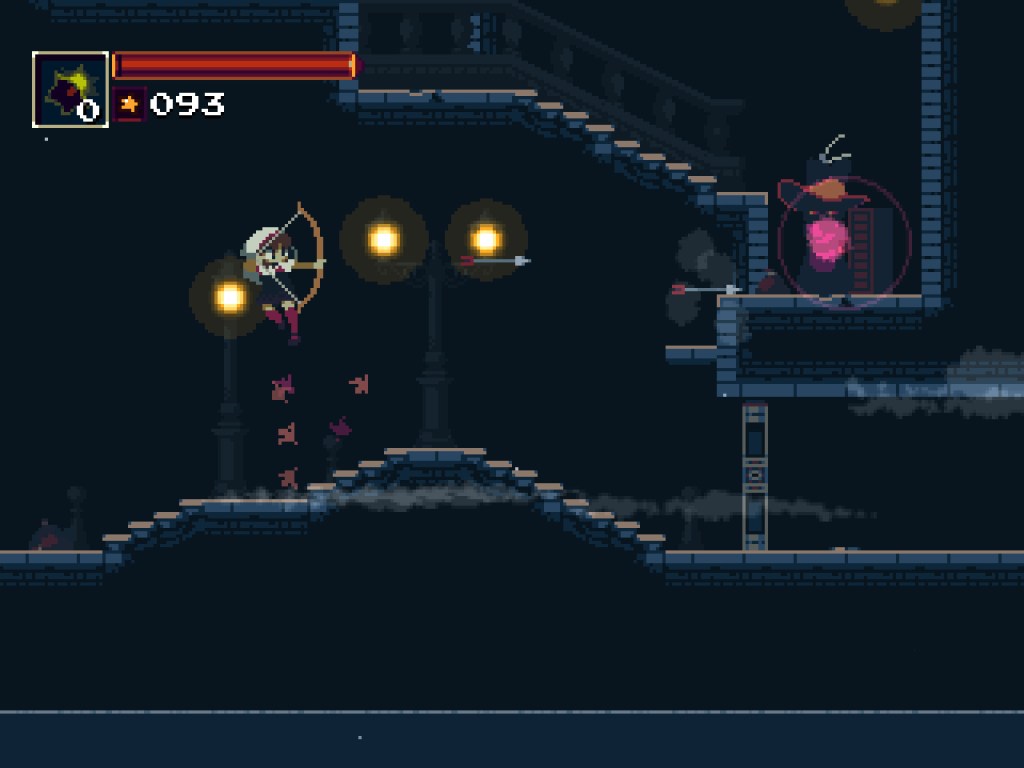



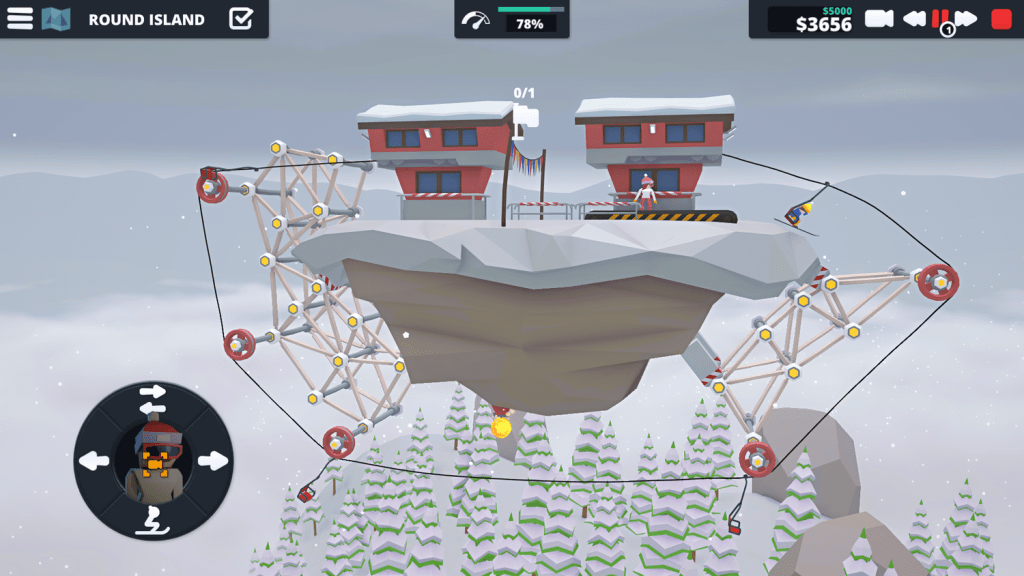
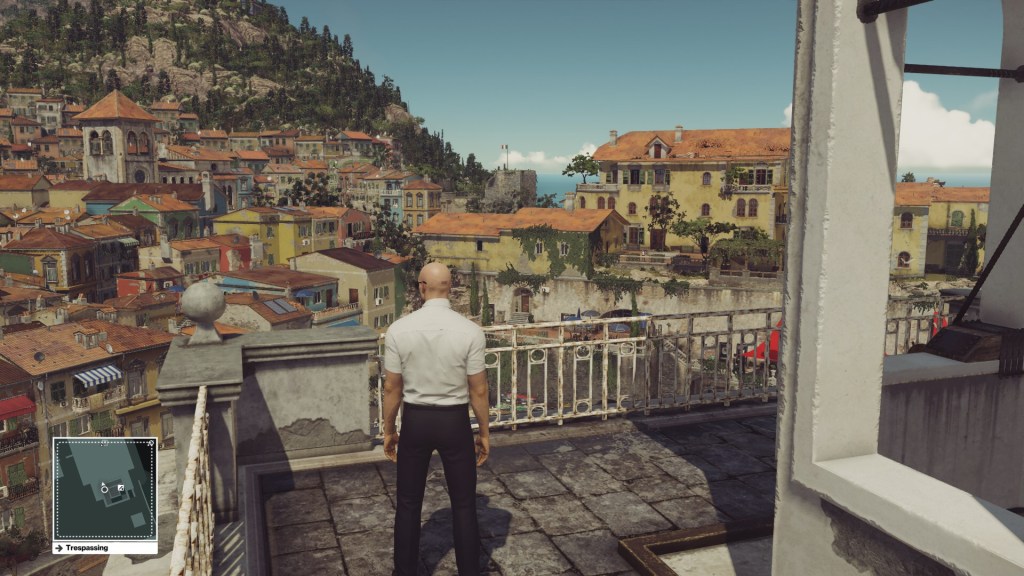



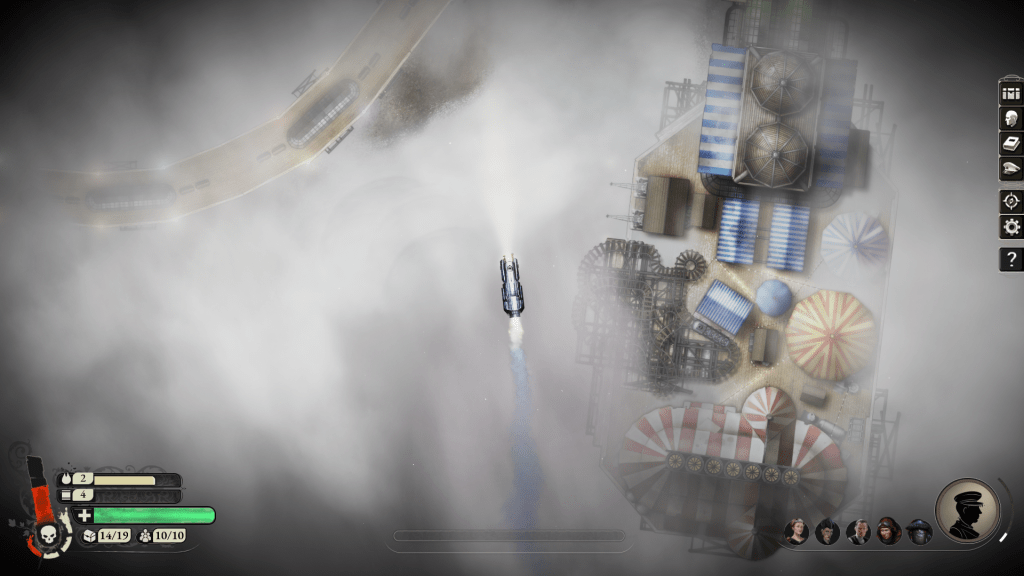
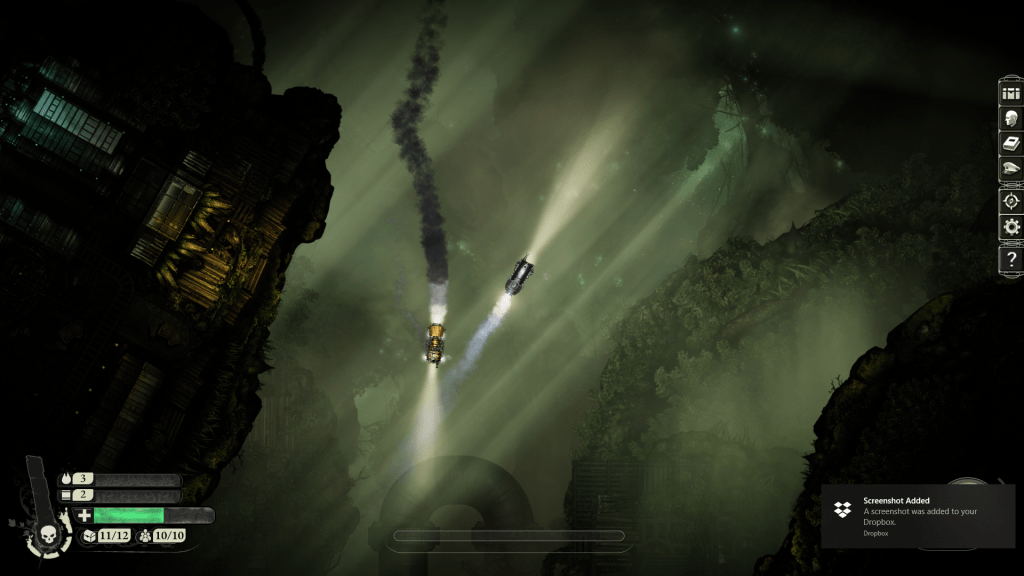

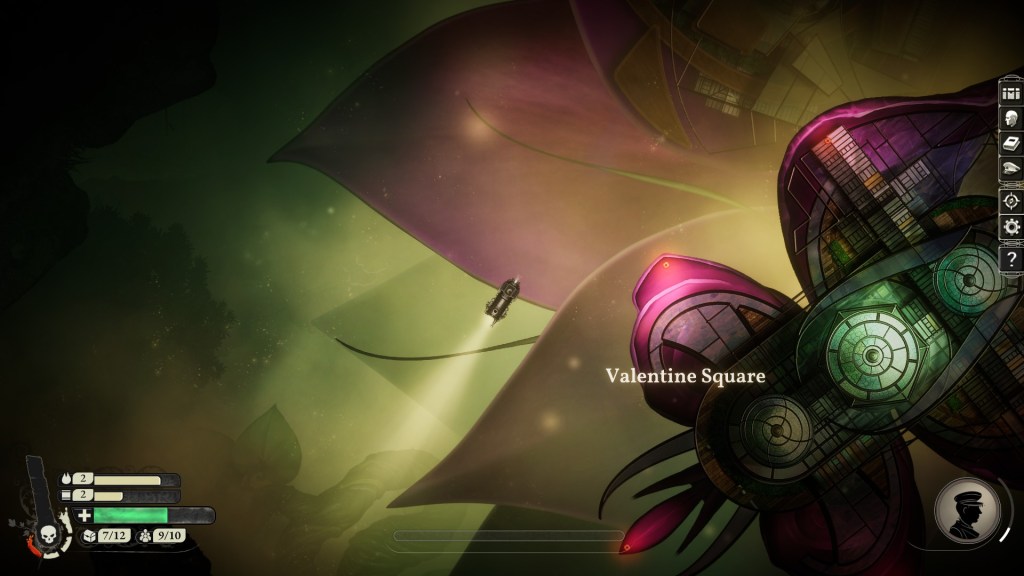






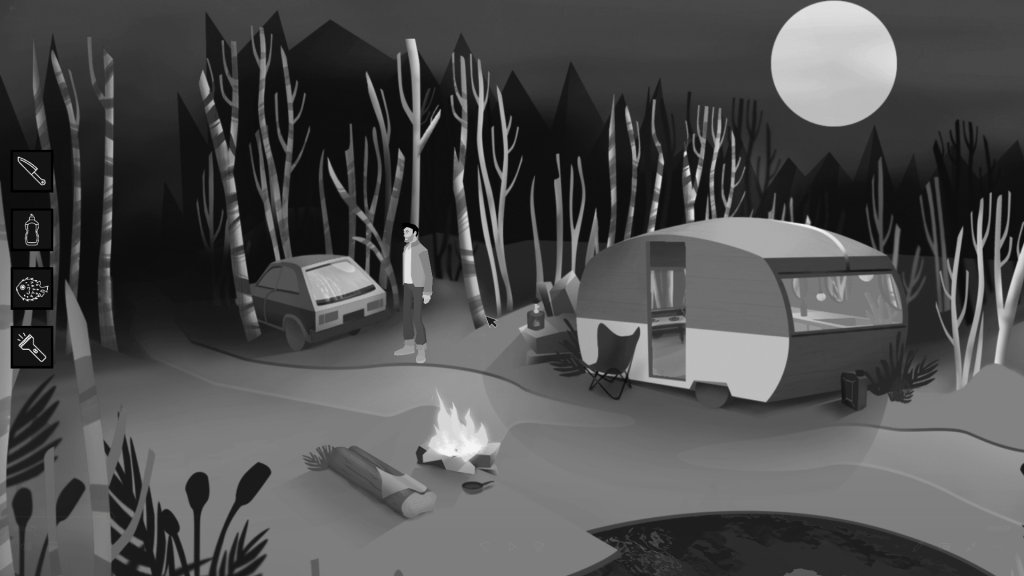





 A MOST AGREEABLE PASTIME