It’s sad to see Brick and Mortar retail in such doldrums that spectators have all but pronounced it dead. Not because the prices were good and certainly not because the service was good, but more so because the retail experience was so full of sensory delights and paraphernalia. I distinctly remember walking in video rental stores, or dedicated video game retailers and seeing posters everywhere: hanging on walls, hanging from the ceilings and plastered across and behind the counter. The excitement in the air was palpable whenever a landmark title was close to launching and retailers and promoters certainly had no hesitation in reminding you just how close the next big thing was, and how much you want, nay, needed it. This is something my theoretical children will probably never see, but I hold onto those memories fondly.
Jurassic Park is a name that needs no introduction. In the mid 90’s dinosaurs were all the rage largely spurred on by what would become the highest grossing film up to its release. The video game industry got in on the act and Jurassic Park games appeared on almost every console with any currency. Needless to say the marketing blitz was on for old and young and I can remember posters everywhere for every incarnation of the video game based on the movie. SEGA were at the front of that pack, advertising collectively their suite of game products across all three platforms they had in the market at the time – the Mega Drive, the SEGA CD and the Game Gear. “CAUTION: DINOSAURS AT PLAY” the promo material read. Not surprisingly all three games were very different games, both the Game Gear and Mega Drive versions were your industry-staple side scrolling action games, the SEGA of America version was a first person point and click adventure game. They all probably sold like hot-cakes.
What once hung from the rafters of a popular video rental store, and then hung proudly in my room in my teenage years, now sits idle in the back of a wardrobe covered in dust. The double sided vinyl poster shown below is a Fossil from a time where B&M retailers ruled the roost. Like Dinosaurs though, they are slowly becoming extinct and it is relics like this that in years to come will be all that remains of what once was such an important part of our favourite pastime.
The first 12 months of the Xbox 360’s life were a bit touch and go. Hardware failures and a market that wasn’t really in the mood for the shift into a new generation plagued Microsoft well into the life of its shiny new jet-engine of a console. Add to that a software drought and being an owner of a new Xbox in 2006 wasn’t all smiles.
Its crazy to think of the plenitude of budget software that flooded the market disguised as full-priced at the launch of the Xbox 360 almost a decade ago. They didn’t review well and for the most part they didn’t deserve to, but they filled an all important gap in the market. And in that regard it was merely business as usual as cheap-to-develop games sat on shelves for consumers who either couldn’t afford (or didn’t know better to buy) higher-priced triple-A titles or were so desperate for software that they’d probably buy a game about buttocks. But they played an important part nonetheless, and for many probably characterised their early experiences with their shiny, brand-spanking new HD consoles. Whether it was the silly fun of Earth Defense Force 2017 or the dogfighting action of Over-G Fighters, budget games were everywhere, and everyone probably consumed at least one in the early days of HD console ownership. Perhaps not what owners expected when they plonked down 700 bucks for their new toy, such games represented something to play, even if what was on offer wasn’t perfect.
This wasn’t necessarily a new phenomenon, although the timing of it was unprecedented. Budget software has always been a part of any console’s life. What seems like eons ago I wrote about how the latter years of the PS2 were full of some pretty innovative games that took significant risks because of the cost profile of developing for ageing technology. The same logic, albeit in a slightly different guise, holds for budget games, and so the Simple 2000 series and publishers like Funbox Media, Phoenix and Midas took to the skies with low-budget and often low-rent productions. Low costs of production mean you can sell at a lower price; and combine that with reduced barrier to entry for consumers with lower prices for hardware and you’ve got the perfect market for low-budget games targeted at the mass-market. It has been like this for years and it has been generally accepted as the way of life as consoles enter their twilight years. But the edge on price that gives these products a viable and commercial place in the market may be at risk of being eroded.
It’s no surprise to anyone who follows the industry that it’s gone through a bit of a structural change over the current generation. The bigger studios consolidated, those that didn’t want to go formed indie studios, and the middle guys have been starved out of the market as the scraps left by the other two segments haven’t been enough to sustain their businesses. And this leaves the indies to eat up the rest of the market. Indie games are often cheap to produce, cheap to distribute and cheap to buy products that are in no way sub-par. My review of Hotline Miami paints a glowing picture of what the indie space can do at the heights of its talent. I’m far from a black-rimmed-glasses-wearing indie game elitist, but I appreciate what the indie guys do for the industry (and for themselves). If often from a distance. Combine this with the onslaught of cheap offerings on Android and iOS and you’ve got the perfect storm for the death of the budget publisher.
This leaves these dedicated budget developers and publishers in a somewhat precarious position somewhere between n0-mans-land and six-feet-under. The traditional battleground for budget was physical retail, an avenue that is likely cost prohibitive and perhaps not as lucrative as it once was, meaning that they can’t compete on their one key difference: price. Leaving them with digital distribution as the obvious method for delivery, a market segment that is becoming increasingly saturated by indies who sit on the very price point advantage previously occupied by budget developers and publishers, and they again can’t compete on price or in many cases quality and are being pushed out of their own market. What this means is that the actual form of budget games has changed – no longer are they these low-rent, arse-ugly games that prey on an eager and often uninformed market when consoles hit a relatively high install base. They are different beasts that don’t compromise on quality or game design, but rather skimp on other areas to cut the costs of development. Budget has been beaten at its own game.
Most people won’t miss them and perhaps rightly so. But I will miss budget games. I will miss the satisfaction of uncovering a hidden gem, a diamond-in-the-rough, if you will. The market will miss them because there is less access to cheap software. And platform holders will miss them because their absence may result in the tail of their hardware being cut short. But no fuss will be made, and budget games will die a silent death in what will likely be the first real casualty of the next hardware generation.
Colarado is a beautiful place travelling at 300kmph. The varied locales, from sweeping highways to winding cliffside roads, are all breathtaking vistas that make for a picturesque backdrop to Forza Horizon’s open-world racing action. The cars are equally as pretty as they glisten in the light of the sun during the day and the street lights at night. That will be the first thing you notice about Forza Horizon because it is an absolute stunner of a game.
Of course that’s all a fringe benefit really when everything outside of your focal point over the hood of any one of the world’s fastest cars is a blur. You’re more likely to be focusing on the musical sounds of your engine revving and your tyres screaming as you cruise past opponents or brake heavily and push the nose of your car into the apex of a tight turn respectively. Feeling your tyres creep toward the edges of their traction limit as you ease on the accelerator coming out of the corner is equally as visceral as the controller rumbles and the rear of your car kicks out and your car slides into the straight leaving a trail of smoke, and hopefully your competitors, behind. It’s moments like this that make Horizon a truly exhilirating and rewarding experience.
The driving felt so good that it was easy to put it into the back of my mind and focus on the finer details as to how it felt in my hand. And that’s a great thing because Horizon is packed full to the brim with good racing times. The game’s premise is that a racing festival, the Horizon Festival, is taking place across Colarado. It’s a cool premise that lends itself well to the open-world nature of the game. Race events are dotted around the map, mostly made up of circuit and point to points affairs. It does deviate at times however with some events requiring you to race hot air balloons, helicopters and planes around a circuit, which are much fairer than they sounds on paper. These are an absolute blast, but in reality they feel like nothing more than cleverly disguised time-trial events. Luckily they’re few and far between so they never really wear out their welcome and rather make for an interesting detour from the more standard racing staples. There are also stunt and photography based challenges that upon completion earn you the ability to fast travel between ten outposts. They’re not brilliant but the payoff is worth it and you’ll find yourself growing to love them over the course of the game as you come to better understand the intricacies of the game’s driving model. At the very least you’ll find the ability to fast travel worth the time and effort. There are a few touches that give you a reason to drive yourself across the map; speed traps and average speed cameras are scattered across the open-world and track your personal bests and compare them to people on your friends list, and you can challenge random drivers throughout the world to point to point races by pulling up behind them. These instances are not terribly compelling or essential but they are quick and dirty fun and sometimes serve to break up the more structured elements of the game.
Forza Horizon is a big game and you’ll need to dedicate a significant proportion of time if you want to see everything Horizon Racing Festival has to offer. And that’s great because when the rubber hits the road, the racing is for the most part excellent. Underpinned by an accessible but deep driving model, you’ll find yourself moving from race to race absolutely oblivious to the passage of time in the real world. The progression of the game encourages long play sessions as you earn points in order to level up in pursuit of earning wristbands and climbing your way up the popularity ladder opening new, often faster, events in the process. It is a simple premise that keeps you going through the game and moving up from the slower hatchback racers to the ultimate in supercar rides, a progression that is more than worth the time you invest on the track. It’s not all roses though, and in many cases multi-lap races will often come down to mounting a final lap comeback against opponent drivers that seem to lose a few seconds of time over previous laps. It’s not a deal breaker but it does at times like it’s all a little scripted. Admittedly though it make for some rather tense and exciting finishes as you draft behind the leader to overtake them on the final corner or on the final straight, so all is not loss regardless of what is behind the quirk.
Forza Horizon perfectly straddles the sim-racing style of its namesake and a more arcade style racing in the similar style of Codemasters’ Grid games. In doing so it makes it one of the most accessible racers of the generation. The game is by no means perfect but as a game that attempts to combine the best of both schools or racing thought, Horizon passes with flying colours. Combine that with that enormous amount of content on offer and you’ve got a game that could well sit in your Xbox 360 for months on end. Put this bad boy in in the evening and expect to see the sun rise above the horizon the next day. It’s just that good.
I really REALLY don’t like GTA V. Before you go bananas and scream abuse, let me just get this straight: GTA V is a great game. Everything about the production is absolutely top-notch. The little details that the internet has collectively circle-jerked over are, admittedly, nothing short of jaw-dropping. The voice acting for the most part is Hollywood blockbuster quality. The graphics are stunning. The gameplay improves on everything Rockstar has done in the past, and then some. There is no debating that Rockstar have done a bang-up job with this game and it (for the most part) deserves every kilogram of praise lumped upon it by the enthusiast press and the general gaming populous.
And I appreciate everything it does right. The game itself plays like the GTA of your dreams did, with characters having a weight to them while still remaining agile and athletic, and cars having realistic-esque physics that don’t let that old chestnut inertia ruin every car chase through busy traffic. Shooting received a similarly demonstrable facelift that finally brings GTA close to on par with where every other game has been for the past decade. Basically GTA V lives up to all of its promises, its lofty ambition and certainly is a worthy entry into a very versatile and ever-green popular series.
So why am I not enjoying GTA V? If I can see how great the game is, why has my personal experience with the game largely been one of wanting a mission to end so I can turn the game off? Every minute I spend with the game I am thinking about what other games I could be playing and the problem is the open-world structure of the game just doesn’t have the lure or the claws to grab me and hold my interest. The characters are abhorrent, the story (from what I’ve experienced) contrived and the open world absolutely unnecessary. Its presentation as a parody and satire is just constantly at odds with its attempts at presenting an edgy and adult piece of storytelling, resulting in something that comes across as either intentionally schizophrenic or just poorly planned. These factors combined have resulted in a game that I not only am not enjoying, but began to actually actively hate spending time with. Sure maybe its a time and place thing. Maybe in three, six, twelves months I’ll change my tune and join the collective global orgasm over this great piece of interactive entertainment.
For now though it is time to call ‘time’ on GTA V. A great game. A milestone. A game I just didn’t enjoy very much.
There have been a few announcements over the past couple of weeks about Valve’s upcoming Steam Box, but I’m still utterly clueless as to what it is or why it’s important. I’m not sure whether this is intentional on Valve’s part as a sort of intrigue-generating PR strategy or whether it’s just the result of poor communication. I’m not even sure what the Steam Box (or Steam Machine?) actually is. Is it a console? A PC? A concept? I’ve read this article from January, in which ‘Gabe Newell lays out Valve’s Steam Box plans’, twice now and I still don’t have a clue what it’s going on about.
An artist’s impression of what an army of Steam Boxes will look like under your TV. Probably. I really don’t know what’s going on here.
My best guess is that it’s a sort of PC where Valve makes the operating system but other companies manufacture the hardware – a bit like the 3DO, perhaps? Let’s hope it’s not too much like the 3DO for Valve’s sake, we all know what happened to that. Last week Valve revealed the specs of its Steam Machine (is this what we’re calling it now?), but they may as well have written the press release in binary for all the sense it made to me – just tell me whether it’s more powerful than a PS4 and I’ll willingly believe you.
If I’m understanding the idea correctly, it’s intriguing – that Valve are making an easy-to-use, open-source PC that sits under your TV and lets you download games easily and cheaply from Steam. I’ve never really been much of a PC gamer – some dreadful experiences with crashy games and recalcitrant hardware in the early days put me off PC gaming for life – but the recent resurgence of the PC gaming scene has made me interested in getting back into it. The idea of a PC-type box that sits under the telly and plays games without me having to do anything too technical to it sounds like a great idea. But I’ve got a couple of reservations: namely, how much is this going to cost, and what happens when the hardware goes out of date?
The major trouble with PC gaming as far as I see it is that graphics cards are constantly evolving, which means that your machine becomes outdated much more quickly than a console would. Does this mean I’ll have to buy a new Steam Box every two years? And how will they compare to consoles in terms of price?
Despite my confusion, I’m quietly hopeful for the Steam Box, whatever it is, simply because Valve are making it and they’ve generally done GOOD THINGS in past. One of the things I did understand was the release of images of the new controller. Well, I sort of understood it… but why are the buttons tucked in the corners like that? Isn’t that going to make things a bit difficult?
Is it an owl? Darth Vader? No, it’s the Steam Controller, with its fancy haptic feedback trackpads.
Still, I’m all for innovation in gaming, and it’ll be interesting to see how developers use those weird, vibratey trackpads…
I finished The Wonderful 101 at the weekend, and I’m still not sure whether I enjoyed it or not. The game has a nasty habit of being utterly opaque and confusing, yet it offers up moments of sheer delight along the way.
For the first few hours of the game I was frankly lost. The basic idea is that you control a group of 100 heroes – the Wonderful 100 (the 101st is you, the player, cheesily) – and you can morph them into various shapes by drawing on the touch screen. At first you begin with just a few heroes and can only form a fist, but the number of heroes and the moves you can perform steadily increase across the game, so by the end you’ll be drawing screen-filling boomerangs and the like.
But to start with, it’s just bewildering. The game keeps throwing new moves at you and then expecting you to remember how to use them with little prompting. An example is when fighting one of the first boss battles, a giant robot. I struggled for ages to work out how to get across to its other arm to destroy some temptingly glowy blue orbs on its fist, but I was totally stuck. I ended up looking online for an answer, and the solution was to use a ‘Wonder-bridge’ – a concept that had been introduced only once, very briefly, about an hour previously in game time (and about three days previously in real time).
It took me AGES to work out how to get from one arm to the other.
There are loads of instances like this where the game provides you with very little clue about what you’re meant to be doing. At first I had absolutely no idea how the fighting worked whatsoever – it was only by trial and error that I worked out that only the ‘lead’ hero takes damage and that the trailing heroes can be hit without depleting the energy meter. In another example, I died tens of times on the opening levels, utterly unsure of how to avoid enemy attacks, and it was only after I purchased the ‘dodge’ move that I could turn the tables (I’ve no idea why this move isn’t included in the basic move set from the start, as it’s almost impossible to play the game without it). Really, the difficulty curve is all wrong – the game is intensely frustrating and hard at the start, but by the last few levels you’ll be breezing through it thanks to more powerful moves and increased numbers of heroes.
Then there’s the controls. Drawing the morph shapes on the touch screen is a fun idea, but you quickly realise that it’s much easier and quicker to draw the shapes using the right thumb stick, and by the end I wasn’t using the touch screen at all. Drawing your attacks is a unique idea, but it also feels like a bit of a gimmick – the need to stop and draw your next attack means that combos never feel very fluid, and I can’t help thinking that using more traditional button combinations would actually have improved the game.
The cut scenes are frustrating too. Some of the writing and acting is very good, but almost without exception they drag on for FAR too long – perhaps as a result of trying to cram in so many characters. Plus some of the jokes really aren’t that funny – in particular, the gag about Wonder-Red laboriously giving everyone their full title every time he addresses them begins to grate almost immediately. Also, there’s an awkward adultness about some of the dialogue that jars horribly with a cartoonish game that’s designed to appeal to children – nob gags and cougar references really don’t belong here.
The colourful graphics really look sensational.
Then there’s the way that some boss fights can drag on for ridiculous amounts of time (clearly a homage to the epic fights in Dragonball Z), but this all too often ends up as irritating, as is the way that the gameplay style keeps changing throughout a level. Every now and then the game will ask you to pilot a spaceship or robot after a brief screen showing the new controls, and by the time you’ve properly worked out what you’re meant to be doing, the game has dumped that section and moved onto something else. The effect is bewildering, although it delights too: there are clear homages to Punch-Out!!, Space Harrier and the Neo-Geo game Viewpoint on several stages, and these brought a big smile to my face. God knows what an eight-year-old would make of them though.
I’ve been very negative about the game so far, but there are plenty of plus points too. For a start it looks… ahem… wonderful. Often there will be hundreds of sprites on screen at once, all bursting with colour, and the stages are brilliantly inventive. One moment you’ll be shooting down flying saucers from a rooftop, and the next you’ll have plunged inside a building to solve a puzzle – represented by the characters moving onto the gamepad screen. The bosses are utterly enormous, and fighting them really feels momentous and exciting. The trouble is that every time I found myself grinning away in delight, some big fat gameplay problem would rear up and smack all of the fun out of it.
I think the problem to an extent is that the designers made a game for themselves. This is no bad thing in itself: as Sir Gaulian often points out, games that have too much input from fans and publishers tend to lose their focus and individuality. But in this case, it feels like the designers made a game they wanted to play, including all of the nob gags and obscure game references, but then forgot to tell everyone else how to play it. The first few levels are a masterclass in how to bewilder and alienate new players (I was ready to give up on a few occasions), and the overly long cut scenes just feel like self-indulgence.
Overall this is a worthy purchase if you own a Wii U, as long as you’re prepared to put up with a stupidly steep learning curve and are willing to embrace the frustrations the game throws at you. However, it’s very much a cult game rather than perhaps the universally appealing classic that Nintendo needed or wanted. I’m glad I made it through to the end – in particular, one gag in the final battle made me laugh out loud – but I doubt many will have the patience to get this far.
InFamous made developer Sucker Punch a household name. Its open-world superhero game mixed open world traversal, platforming and deep combat in a way that no other developer to that point had to great success. Sucker Punch was the new hotness and their games were absolutely on fire.
For many of us though their talents weren’t totally new hat. We had been enjoying the developer’s brand of slick platforming for years and for mine, the Sly Raccoon series was the best of the character action-platformer actions Sony sported in its stable during the age of the Playstation 2. You’d be forgiven for not noticing however, with Sly vying for the attention of rabid PS2 owners along with Insomniac’s Ratchet and Clank and Naughty Dog’s Jak and Daxter, both already with serious pedigree in the platforming arena.Such competition made it hard for even the most seasoned of developers to break through and hit mass market, let alone a relative newcomer with only one slightly obscure Nintendo 64 title under its belt.
What Sucker Punch lacked in experience though it more than made up for in style and fine-tuned gameplay, and Sly Raccoon: Thievius Raccoonus was an absolute early PS2 gem. At its heart Sly is a platformer, but the skeleton the developers built around it is what sets it apart from almost any other game available of its ilk available. Unlike its Sony brethren, Sly Cooper is built on platforming, but doesn’t lean on encouraging precise player movement or heavy-handed combat for the most part to populate its challenge. Rather, like inFamous, Sly has an almost magnetic quality to him, which largely mitigates the risk of death by falling, drowning or impaling, for even the least hand-eye coordination gifted player. So while the platforming and traversal parts of the game are the game’s bread and butter, the developer doesn’t rely on them as the only source of challenge. Combat is similarly handled and head-to-head fighting is largely an annoying obstacle on your way to climbing a pole or sliding down a rail. One hit kills most enemies and to that end is a rather trivial affair as you run up to said enemy, avoid their attack, and bop them on the head with your cane. Even when you gain new combat abilities they are seldom required, and its easier to just ignore them and carry on with your direct approach to combat. That may seem like a problem but for me it was simple and unobtrusive, and not really the reason I come to a game like this.
Sly’s lax approach to traditional platforming is outweighed by its absolutely stellar implementation of simple stealth mechanics within that framework. Put simply, outside of your Sam Fishers and your Solid Snakes, Sly Raccoon has probably the best implemented sneaky-bits in video games. It doesn’t rely on complex metres, line of sight or gadgets a-go-go, rather Sly’s back to basics approach to staying in the shadows is limited to avoiding visual cues such as spotlights, lasers and torch-toting enemies. Timing is key if you want to survive, jumping over laser trip wires, dodging between swift moving spotlights and sneaking around behind enemies requires razor sharp timing and steady premeditated movement. And it is these moments that makes Sly so enjoyable. There is a certain type of reward that comes from staying out of sight and not triggering the alarms apart from potentially keeping you alive for longer. Even though the punishment for getting caught is never more than a few minutes of progress, and in most cases can be reversed with the simple smashing of a checkpointed alarm, getting through a heavily secured area without triggering an alarm is one of gaming’s simple joys. Sly isn’t all stealth all the time, but when it is, it is absolutely on song.
Sly’s cell-shaded look still looks absolutely gorgeous a decade on
It’s level design is another highlight, and on returning to Sly something about its levels made me feel like I was going home for the holidays. The easily identifiable and greatly varied levels bring me a sense of familiarity that most games I’ve played, some as recently as yesterday, just don’t. The levels are small and contained and relatively easy to navigate, but despite this still have a sense of scope, whether it be climbing mountains or traversing rooftops,that many games simply don’t achieve with three or four times the real estate. It is this clever deception that makes you feel well-travelled at the end of the rather short 6-8 hour campaign. It also helps that throughout that time the developers stack on enough variety as you jet set from country to country, that no one area outstays its welcome. It’s like a world trip without having to leave your couch. Just with slightly more crime.
Sly Raccoon is an 11 year old game and often these once-great games can be weather-worn by time, as technology, expectations and preferences change. To my delight though this was not the case with the Sly Raccoon which remains as stylish and fun as it ever did. For me experiencing the game in glorious cell-shaded HD more than a decade later was a sheer delight filled not only with nostalgia, but a friendly reminder that Sly as a franchise can go toe to toe with the best family-friendly platformers Nintendo and SEGA can offer up. If you haven’t played it; I implore you to do so. You’d be stealing from yourself by not.
I really didn’t get on with Donkey Kong Country Returns 3D – so much so that I sold it when I was just halfway through the second world. I figured I’d prefer that my copy gave someone else some pleasure rather than simply causing me consternation.
I had the original Donkey Kong Country on the SNES when I was a kid, and I absolutely loved it. I remember it being fairly easy, but it was fun to play, and the CD that came with it was brilliant – I have a vague feeling it had ‘Creep’ by Radiohead on it, but I’m not entirely sure. In fact, now I come to think of it, I’m not entirely sure why they bothered to bundle a game with a CD of songs that are entirely unrelated to it – but then again it was the nineties, and companies were doing stuff like that all of the time. Every other game seemed to come with a novel, or a sticker set or, at the very least, a tiny poster. Now we’re lucky if we get an instruction manual… although to be honest I’m not that bothered, as most of the things I just mentioned were utterly bobbins anyway.
Except the CD. That was ace. I think it might have had the Inspiral Carpets on it as well…
The game looks lovely – this level is particularly wonderful in 3D.
Anyway, I missed out on Donkey Kong Country Returns when it was triumphantly released on the Wii a while back, so when the retweaked 3DS version emerged a couple of months ago, I decided to snap it up. My first impressions were good – it captures the feel of the old SNES game well, but the graphics are obviously a lot better. In particular, the 3D effect works brilliantly, especially on one particular level where cannons are being fired at you from the background. The designers have also made it a lot more challenging that the original, which is no bad thing. Although they might have gone a bit too far in that area – there are a few irritating difficulty spikes, even in the few levels I played, and the restart points are obscenely far apart.
The biggest problem I had with the game though was that it’s just so dull. I admit I haven’t played that many platform games since their heyday in the nineties, but judging by this game nothing has changed whatsoever – it’s still the usual trudge from left to right, collecting various random things along the way (I couldn’t actually work out what half of the things I was collecting were actually for – it may have been revealed in time, but I certainly didn’t feel an urgency to collect any of them). Then there’s a shop, an end of world boss, life-giving hearts… you know the drill, you’ve played this game a million times before.
But it doesn’t have to be this way – the evolving Mario games have shown that platform games can still be exciting and relevant, and that the genre doesn’t always have to fall back on cliches. Clearly this game didn’t get that memo.
Don’t get me wrong, it’s not a bad game – I’m sure little kids will love it – it’s just that I found it terribly, terribly boring. So much so that I gave it the old heave-ho with nary a thought.
Yesterday afternoon I had a chance to check out this year’s Eurogamer Expo at Earl’s Court, which proved to be a lot of fun. I have to say I’m paying for it now though – I had a cold coming on yesterday morning, and half a day of excitedly wandering around buzzing and flashing booths didn’t do it much good – I feel bloody terrible today. Still, I thought I’d share a few thoughts and photos with you from my sick bed.
The Eurogamer Expo at Earl’s Court Exhibition Centre. In an act of supreme foolishness, Mayor Bojo has scheduled this historic building for demolition to make way for flats. Unbelievable.
Once you get past the slightly disturbing Nazi-a-like Wolfenstein banners at the entrance, the first thing you see is the Nintendo stand, which was stacked with Wii Us playing Super Mario 3D World. It looks pretty good, but I’m still finding myself struggling to get excited about it… A Link Between Worlds, on the other hand, has got me all hot under the collar and marks a welcome return to top-down Zelda territory. Mario Kart 8 was in evidence, but the lack of queues for it spoke volumes – perhaps this is a sequel too far? It certainly looks very pretty, but there’s a sense of diminishing returns. There were huge queues for Pokémon X and Y on the other hand: clearly the Pokémon appeal has yet to diminish.
Good old Zelda, still drawing them in…
Onto the Xbox One stand. A couple of large, restricted booths made sure that innocent eyes couldn’t witness the gory delights of Ryse, Killer Instinct and Dead Rising 3, but it also meant that I didn’t witness them either – there was no way I was going to join the huge queue (more on queuing in a minute). I have to admit, none of these titles really interested me, and there was little else that caught my eye on the Xbox stand, although it was pleasing to watch people make fools of themselves playing on Kinect.
It was a similar story on the PS4 stand – there was a huge queue to get into the main area so I didn’t get a chance to play much, but what I saw didn’t really set the pulse racing. There are all the usual driving and shooting games (Drive Club, Kill Zone, etc.), and the only thing that really stood out for me were the indie games and slightly more off the wall titles – Octodad in particular looks pretty funny, although those finnicky controls might prove irritating after a while.
The PS4 stand was HUGE. As was the queue…
When I was leaving the Xbox One stand there was a Forza 5 demonstration going on, and I overheard the announcer blithely contradicting himself in mid-sentence: “Already you can see the difference between Forza 4 and Forza 5, it’s subtle but it’s a huge difference.”
That’s the trouble with the next-gen consoles: we’re told that there’s a huge difference, but up close it’s pretty hard to tell. In fact there were some PS3 games that I thought were actually PS4 games until I saw the PS3 sign (Beyond: Two Souls looks especially incredible), and likewise I’m sure that most of the PS4 indie games could run on a PS3. There IS a subtle difference of course, but it will take more time for developers to squeeze the next-gen systems enough to make them truly mind-blowing.
Still, having said that, it was amazing to see how far we’ve come as well. The retro section offered up consoles and games all the way from the BBC Micro to the PS2, and it was great to relive some gaming memories, but I couldn’t get over how primitive some games looked. Tomb Raider looked positively ancient, as did Banjo Kazooie, although I remember both being pretty cutting edge at the time. Elite, on the other hand, had a timeless charm – if anything its simple, wireframe graphics have aged better than some of its later cousins.
A particular highlight for me was the chance to play on a fully working Vectrex console – I was amazed at how crisp and smooth the vector graphics were, it must have been phenomenal in the early 1980s.
The Vectrex. I’m not entirely sure what game I was playing – I think it was Space Wars.
I’ve mentioned queuing a lot already, and that’s because it was pretty much inescapable. I was only there for the afternoon, and it took me most of that time to wander round all of the stands, so I only had time to queue up for one ‘big’ thing. Would it be the Xbox One or PS4? Well, neither actually, it was the Oculus Rift.
I waited in line for an hour to have a go on the famed VR system, and I’m happy to say it wasn’t a disappointment. I remember playing the horrendous old VR machines at the London Trcodero back in the 90s, and it’s astonishing how far the technology has moved on. People wanted VR back then but the hardware simply wasn’t up to scratch – now, finally, the technology has caught up with the dream.
Of course the massive downside of VR technology is that it makes you look like an absolute tit.
I played a WW2 flight-sim game called WarThunder, which thankfully was a lot better than its terrible name suggests. It was an eerie sensation – looking down in the cockpit revealed my virtual knees, and I found my brain fighting against the sensation of simultaneously being in the air and being sat on a stool at a convention centre. Initially I felt a bit dizzy, but after a few minutes my brain began to accept the illusion, and I found myself looking around in wonderment.
THIS is the future, ladies and gentlemen – not subtly fancier-looking cars and ever bloodier first person shooters. There are rumours that Sony is investing in VR technology, and it would be a shrewd move – it’s the key technology that will really separate the next-gen from the current one.
I’m not convinced by omni-directional treadmills. Amusingly, the guy kept getting tangled in the wires from his headset as he turned around.
I’m not convinced about the omni-directional treadmill though – can you really imagine anyone putting one of these in their homes? Still, there’s definitely a gap in the market for them – I could see these being a big hit in arcades, especially if there were a few linked together for multiplayer deathmatches.
Other highlights included Sir, You Are Being Hunted (a brilliantly atmospheric game featuring pipe-smoking Victorian robots – we should adopt it as the official game of A Most Agreeable Pastime), Yaiba: Ninja Gaiden Z (a new, fantastically violent game from Keiji Inafune), Titanfall, Wolfenstein: The New Order and Destiny (I’m not a huge fan of FPSs, but all three looked amazing).
Just in case any of the cosplayers get carried away and bring in real weapons…
Finally, it was great to see all of the cosplayers wandering about – I saw a great Akuma from Street Fighter IV and Ezio from Assassin’s Creed, and the Pyramid head costume from Silent Hill was impressive. But the prize for the most up-to-the-minute costume has to go to Wonder-Red from the just-released Wonderful 101 (see pic)… Hold on, where’s Wonder-Blue? And Wonder-Green? And Wonder-Pink? And…
Me and Wonder-Red from The Wonderful 101. I’m the one with the beard and the StarFox T-shirt.
Just in case it’s escaped your attention, the Wii U isn’t doing very well. Not very well at all, in fact.
It got off to an OK start, with around 3 million consoles sold worldwide between its November 2012 launch and the end of 2012. These sales weren’t quite as good as the Wii’s (3.19 million Wii consoles had been sold less than a month after launch), but they weren’t far behind. However, since then sales have trailed off alarmingly – between April and June this year, Nintendo sold just 160,000 Wii U consoles worldwide. Breaking that figure down, 90,000 Wii Us were sold in Japan, 60,000 in the USA and just 10,000 in Europe, Australia and the rest of the world. Yes, you read that right, 10,000. To give you an idea how bad that figure is, between April and June 2007, 3.43 million Wii consoles were sold worldwide: 0.95 million in Japan, 1.44 million in the USA and 1.04 million in the rest of the world.
This is what a Wii U looks like. If you live in Europe or Australia, there’s a good chance you’ve never seen one in the flesh.
What went wrong?
There are a number of things that could account for these disappointing sales. First of all there’s the problem that few people I speak to even know what the Wii U is. There seemed to be very little advertising (in Europe at least) around the Wii U’s launch, and for the most part the console seems to have completely escaped the public’s consciousness. It’s a far cry from the furore around the Wii when it launched – even my gran knew about Wii Sports, perhaps helped by newspaper articles depicting smashed TVs.
And speaking of Wii Sports, the Wii U is desperately in need of a killer app. Nintendoland just doesn’t cut the mustard, and New Super Mario Bros. U frankly isn’t much different from the oldNew Super Mario Bros., at least in Joe Public’s eyes. So much for the launch games, and since then there’s been very little in the way of new releases: Pikmin 3 and Monster Hunter 3 Ultimate have been welcome additions, but they’re hardly console sellers. Importantly, none of the games released so far have really sold the Wii U gamepad as an essential item – not in the same way as Wii Sports sold the Wii remote as a genuinely new gameplay experience. There’s a nagging sensation that most of the games for the Wii U would work just as well without the secondary touchscreen (perhaps with the exception of the excellent ZombiU).
It was clear that Nintendo were making an attempt to lure back ‘hardcore’ gamers with the launch of the Wii U – the presence of games like Assassin’s Creed 3 and Mass Effect 3 on the day-one line up was evidence of that, along with the high-profile signing of Platinum Games. But most of these gamers already own an Xbox 360 or PS3 that’s just as powerful as a Wii U, and with the release of the Xbox One and PS4 only months away, the Wii U is going to look embarrassingly underpowered. Likewise, there’s little for casual gamers to get excited about either – a touchscreen joypad is hardly the mainstream breakthrough that motion control was back in 2006. Motion control was the Wii’s triumph, but every console offers this now, and there’s a sense that the novelty has long since worn off. And what does that touchscreen do exactly?
So is the Wii U any good?
I’ve painted a pretty bleak picture for the Wii U, but I’ll admit I’m a big fan of the console. There’s not a huge distance in graphics between it and the Xbox 360, but it’s a massive improvement over the Wii – playing Mario in glorious HD is truly a joy.
The controller is a sublime piece of engineering too – it’s surprisingly light and comfortable to hold, and I love the way you can also use it as a TV remote. It’s absolutely fantastic for Lovefilm and Netflix – I can get both of these on my Xbox 360, but I always watch films on the Wii U. The touchscreen makes it really easy to search for films you want to see, and it feels very natural to fast forward or rewind TV using your finger, plus it’s also really handy to see how long is left on a film just by looking at the gamepad. In fact, whenever I’m watching normal TV or a DVD, I find I really miss having that touchscreen.
Take a good look Microsoft, this is what an easy-to-use dashboard looks like. Spot any adverts? Me neither.
Miiverse is also brilliant – it’s far less intimidating that the online world of the Microsoft or Sony, and it has a real sense of community. It’s particularly handy if you find yourself getting stuck on a game – a quick call for help on Miiverse is all that’s needed. Then there’s the improved Nintendo eShop and Virtual Console, as well as the marvellous Wii U Street and Panorama View, which are brilliant showcases for what the console can do (Panorama View in particular left me gobsmacked when I first tried it – it’s like a 360 degree video).
All in all it’s a friendly, easy-to-use and wonderfully designed console. But…
Games drought
Let’s be frank, the Wii U is in desperate need of some games. Earlier this year, Nintendo President Satoru Iwata publicly apologised to Wii U owners for the games drought, but there’s little sign of it ending. Pikmin 3 and The Wonderful 101 were welcome summer arrivals, but there’s not a huge amount on the horizon to get excited about right now. We’ve been promised a new Mario Kart, Smash Bros. and Donkey Kong Country, but we’ve had so many of these games over the years already that I’m struggling to get excited about any of them. The new 3D Mario game looks promising, but it also doesn’t look anywhere near as enticing as Super Mario Galaxy. Wii Fit U is around the corner, but I’m doubtful that it will convince anyone to blow the dust off their balance boards. Wii Sports Club is a welcome return, but this should be free with the console, not cost £8.99 per sport. Finally, Bayonetta 2 is something I’m very much looking forward to, but at the end of the day it’s a cult game, not a console seller.
Bayonetta 2 – a new haircut isn’t going to sell consoles.
The point is that all of these games should have been out by now. Nintendo should have been capitalising on its head start over the PS4 and Xbox One, but instead it’s slipping further behind its rivals. Shigeru Miyamoto said in an interview that Nintendo’s development teams had struggled to get to grips with the Wii U, and as a result most games are taking six months longer to make than anticipated – that’s a long time in the gaming world. In the meantime, third party developers have abandoned the console in droves, no doubt put off by the combination of low sales and the difficult time they had selling anything on the Wii that didn’t feature Mario or ‘Just Dance’ on the cover.
What now?
What the Wii U needs is something fresh and totally new. It needs a game that uses that touchscreen for something more interesting than a map. It needs a killer app.
I’d love to see something with a collaborative edge emerge on the Wii U – something with the creativity of Minecraft but with the charmingness of Animal Crossing and the compulsiveness of Pokémon. That controller is perfect for drawing, so what about a Pokémon-style game where you draw the characters yourself? Or a Spore-type game about raising and evolving animals you create by photographing objects with the gamepad, then swapping them online?
Approaching it from another angle, one of the best parts of ZombiU was the tension created when you were forced to divide your attention between the two screens – it was such a brilliant mechanic that I’m surprised it hasn’t cropped up again. And why is everyone in such a hurry to use every single button on the gamepad? The DS showed that games can be played solely with a stylus, and games like Ace Attorney would be perfectly suited to the Wii U. And what about the Wii remote? Imagine a tense action game in which you had to solve a puzzle on the gamepad using the stylus while defending yourself from attacking aliens on the TV by shooting at them with the Wii remote.
Miyamoto-san has hinted that there’s new Nintendo IP in development, but judging by the delays the company has faced so far it’s likely to be a long way off… and there’s always the chance it could be a disappointment, like Wii Music. But a single, well-timed, ‘must-have’ game could turn the console’s fortunes around.
At least we can be assured that Nintendo won’t be going under anytime soon – sales of the 3DS are going from strength to strength, and as IGN puts it, the company has ‘warehouses of cash‘ to spare. But in all likelihood the Wii U isn’t going to add significant amounts to those cash warehouses, bar the release of some phenomenal, console-selling killer app.
A photo of Nintendo’s headquarters in Kyoto.
It seems that the Wii U is going the way of the GameCube – sales will remain steady, but it will lag significantly behind its rivals, and receive very little third party support. The hardcore Nintendo lovers will stay true, but the masses will stay away. Without a doubt though, it will be home to some truly amazing games… even if they’re few and far between.
The internet is generally a wonderful thing. It allows creators to meet, it allows communities to form, and it allows businesses to get feedback directly from consumers about their business. It’s all good, solid stuff. Thanks internet for making all of our lives easier.
But with easy access to everyone, all the time, about seemingly anything comes, the reality is that when people don’t like things they will tell you. Loudly. And many, many times over. Feedback is great, but it often comes from uninformed or selfish places.
This dark side of the internet has been around with regards to video games since the dawn of time. But it is getting worse and worse, with consumers thinking they have agency in the process a game’s development or a system’s design (I wrote something on how much the furore around the XBOX ONE drove me bananas). The simple fact is the consumer is given too high of a place in the development of a modern video game. Did van Gogh crowdsource for ‘the Starry Night?’. Do you think Woody Allen tweets to his fans asking whether Hannah and Mickey should marry? Probably not. And both were masterpieces
My point is there is enough expertise, enough creative energy and objective critiquing power within development teams themselves, that games aren’t released without heavy assessment as to whether they meet the designer’s intent. Rest assured the games that are released to be utter garbage wouldn’t have been helped by your two cents worth. There are stories behind every failure, and no amount of armchair game development in most cases couldn’t have turned crap into gold.
At the end of the day I don’t want to play something designed by committee. I like video games but sure as hell wouldn’t have a clue how to make them. I leave that to the people whose day jobs it is to do just that.
If you want to make a game, by all means, go for it. But don’t profess to know how to make someone else’s better. Keep of of their lawn.
It’s fair to say the Wii U hasn’t gotten off to the best of starts. I met a gamer the other day and told him I owned a Wii U, and his look of surprise was palpable – he admitted that I was the first person he’d met who actually owned one. With just 10,000 Wii U consoles sold in Europe in the first quarter of this year, finding a fellow owner is about as rare an occurrence as finding someone who still doesn’t know what twerking is. Still, it pays to be a member of the exclusive club of Wii U ownership – after a slow start, there are some great games coming out for the console, including the just released Wonderful 101 and the brilliant, brilliant Pikmin 3.
I’ve been a big fan of Pikmin since the GameCube days, and it’s criminal that we’ve had to wait so long for the third game in the series, but on the plus side it’s easily the best yet. For a start, the graphics have benefitted enormously from an HD makeover: each leaf and stone is vibrantly realistic, and the fruit you collect looks so good you could almost reach into the screen and take a bite out of it. I never thought I’d spend so long looking at rotating images of virtual fruit, but the fruit gallery is like a meta-game in its own right.
Look at the size of that lemon!
The basic gameplay doesn’t stray too far from the winning formula of the original, although the flying Pikmin are a great new addition. They’re frankly hopeless in a fight, but they’re extremely handy for ferrying bits and bobs back to your spaceship in short shrift – although they have a suicidal blind spot for spider’s webs. The other major change is that you now have 3 characters available that you can switch between at any time, allowing for some fancy multitasking… if your brain can keep up. I’ve no doubt that masters of the game could finish it in a few hours thanks to some expert juggling of the three, but it does make your brain hurt after a while. Still, there’s an undeniable thrill from skillfully swapping between three groups of Pikmin in a desperate bid to get all your tasks finished before sundown.
The bosses are a highlight – this one was particularly vicious.
I was pleased to find that it’s quite a long game too – it took me around 15 hours or so to finish, and I didn’t even touch the mission levels (which see a welcome return for the white and purple Pikmin). All in all there’s a surprising amount of content there, and it really was a delight to play from start to finish. If only all games could be this fun and rewarding.
We’ve all been there at some point in our careers: worked long hard hours, taken a personal interest in a project, only to see it abandoned before your very eyes, seemingly without reason. Outraged you storm out to the nearest coffee shop to cool down, where you order a regular flat white and vent to the barista (earning a paltry $10 an hour) about how your job is terrible and how you’re underpaid and unhappy, proposing that you’re going to work at the local supermarket packing shelves. You return to work, slightly less angry but still unable to let go of that project, trying to justify to your superiors why the project should in fact continue.
What happens next is a hard lesson to learn, but an important one.
You are told by senior management that the project was pulled for business or strategic reasons beyond your control. While you are sitting isolated in your cubicle or office, surrounded everyday by the nuances of this one project, there are people whose job it is to make sure that every task, every project, every arse on a seat, is leading to something positive. That can be profit, that can be social outcomes, or that can be a piece of art – but more often its a combination of all three. This is the big picture, and this is what drives businesses, governments, and not-for-profit organisations, not the small picture. The old advice that the journey is the important part just doesn’t apply in a majority of cases and it certainly doesn’t pay the bills.
Even when this is the case, decision to pull a project is undoubtedly a hard one, particularly for those who have shed blood, sweat and tears for their passions. Developers and Publishers don’t take the decision to pull the plug on a product lightly, particularly where there are high levels of sunk costs, but it is almost always in the best interest of the business – and by virtue of that fact — often in the interests of a studio’s survival. Creators need to be creative, but they also need to play within the same economic reality as anyone else.
The solution to all of this isn’t simple, but it is obvious. The goal should be to reduce costs, not increase revenue. It lowers the risk of an uneconomic product, it gives developers more creative control and in turn makes game development more sustainable. More importantly for publicly listed companies, it gives shareholders greater confidence to ride out any downturns in the industry. And that is good for everyone, the businesses, the creators and the consumer.
This week Creative Director of the brilliance-machine that is Criterion Games, Alex Ward, noted that the studio most recently responsible for Need For Speed: Most Wanted was down to 16 people with one more on the way. What followed was the internet speculating about what was to become of the studio. Surely it’s the end of an era. You can’t possibly make games with 17 people, right? Ward then went into clarification mode, explaining in a tweet that “a small team where everyone focuses on gameplay first is better than 140 people. We have felt this way for years”.
Regardless of this very clear statement from Ward the internet continued to explode as forum posters began writing the eulogy for the studio, and I can see it now: “Criterion were great years ago, then Electronic Arts bought them and killed them. They sold out”.
Suddenly Criterion had become the ‘studio that was’. The dream was over. Forget them and move on. EA were folding them, they were going the way of Bullfrog, they were sh!t anyway. You name it the internet thought of it. All because of a reduction in staff. Of course not one month ago those same people were hailing the achievements of the Fullbright Company, the team of four responsible for indie-darling Gone Home.
There is no reason to think Criterion will falter where that team flourished.
It feels strange to be making this analogy but businesses are like governments, and as such with changes in priorities comes a change in strategy and a change in resourcing requirements. The ‘new’ Criterion is a task-force of the best of the best to move it onto its next big project. The Criterion of 2013 is the think tank, the brains, that will come up with the next industry defining feature. It takes one person to come up with an idea, only many to implement it. A current employee said on the genre-changing Autolog:
The reality is Criterion will likely continue to be one of the high achievers of the industry. The minds behind some of the greatest games of the last decade, some of my favourite games, will have their names on credits of future games of the year. So let’s be better than this and give these guys the credit and benefit of the doubt they deserve because they have more than earned it.
Modern Warfare 3 shows that war really never does change. Not that there’s anything wrong with that. I’ve never been a huge fan of Call of Duty Multiplayer. I appreciate what it brings to the table, and why millions upon millions flock to it. But its not my cup of tea. The single player campaigns on the other hand I find are a great sub-10 hour popcorn romp through set piece after set piece of destruction and mayhem. They are a palette cleanser – and have served their purpose rather well to date. I play them, love them at the time, and then more often than not forget about them. And that’s the way I like it.
Call of Duty 4: Modern Warfare was, and still is, a revelation in first person shooter campaigns. Lucius wasn’t a big fan, but I found it to be an almost perfect blend of fast-paced action and portrayal of the human spirit over adversity and sorrow that warranted the praise that was lumped on it at launch. The overly violent hollywood style kill-box action sequences were punctuated by nigh-on perfectly choreographed dramatic storytelling moments, bringing a certain emotional and human element to what is clearly a pop-culture influenced conflict. Hundreds of guys can be taken out by a chosen few, but it is the plight of the protagonists, the good guys, that resonates with the player’s heartstrings. COD4 is basically the ultimate post-post-modern war story and to this day it is the sort of game I still think about replaying during the slower winter months.
And the studios responsible for the COD series have successfully replicated the very same formula that brought Activision millions and millions of dollars with each subsequent game. The same action and the same dramatic set pieces have been recreated time and time again, upping the ante with every sequel. What begun as basically a regional conflict, turned into an invasion of US home soil, and ended with World War III in Modern Warfare 3. The stakes were higher but Modern Warfare 3 was, for all intents and purposes, cut from the same cloth as COD4.
Which is why I’m a bit confused as to why this didn’t feel as special as those that preceded it. It was a great game that ultimately felt like a bit of a slog.
The moment to moment action in Modern Warfare 3 is still first class. The weapons have a weight to them, the shooting itself feels snappy and movement is fast and furious. Shooting dudes as they run from cover to cover, or pop their head out from behind a barrier to take a pot shot feels as fantastic as it did five years ago. The enemies themselves aren’t the brightest bunch, but they’re definitely not stupid either, meaning that while most areas can be traversed with a bit of run and gun attitude, there are still rare stalemates leading to tense moments. Although the intensity of these moments is largely fleeting because of the genre-staple regenerating health, those moments where you are a bullet away from death and under siege from multiple enemy positions are still exciting. This should make for a stellar, number one experience, just like those Modern Warfares before. So where does it go wrong?
It’s turning the dial up to 11. Explosions are everywhere in Modern Warfare 3. Watching terrorism in the UK, or the fall of the Eiffel Tower in France are just part and parcel of the whole Call of Duty schtick. What should be dramatic moments, watching our world crumble at the hands of ourselves, are nothing more than spectacles that bring with them a whole lot more shooting. The same goes for the more gut wrenching moments of experiencing death through the eyes of the dying or watching scores of innocents slaughtered at the hands of a madman’s minions, like seen in “Shock and Awe” in Call of Duty 4 or “No Russian” in Modern Warfare 2. Those moments were special, memorable moments, and in trying to repeat them in this game, Infinity Ward has turned them into crutches to drag the story along and in some ways break up the action. For every one of those moments in the first game, there seems to be four or five resulting in a very thinly veiled attempt at recreating those special moments. The result is that those very human moments have absolutely no impact – which is sad because it was those moments from the first games that stuck with me.
Don’t get me wrong Modern Warfare 3 is a bloody good action game. It ticks all the boxes around its combat, its level design is functional but not outstanding, it has spectacular set pieces and most of all has more explosions than Fantavision. But I expect more from Call of Duty campaigns. I expect tales of the human spirit and sorrow in the face of adversity. Sure you have some deaths here and there of characters that have been with us since the beginning, but the problem is Modern Warfare was always built on the very threadbare but implied relationships between the characters, not between the player and the characters, meaning there’s a bit of dissonance between how you think you should feel and how you actually do when the game kills off a member of its cast. So while Modern Warfare has the bombast of its predecessors, it is missing some of its heart, leaving me more than a little disappointed with what I’ve come to expect from these campaigns. It’s a good action game let down by poor ‘everything else’.
The video game industry is an amazing microcosm of capitalism. Businesses rise and fall. They invest, research, innovate and create, all with a view to make a few extra dollars and more importantly compete in the marketplace. Publishers and investors are speculators in the industry merely looking to put their chips on a winning number. It’s business, pure and simple. But at the fringe of that you’ve got the guys doing it for the love of the art, the socialists, commies, hippies. These are the indies that we all know and love, putting their creativity on show for us all to enjoy. It’s ‘You’ve got mail’ or the original film on which it is based ‘The Shop around the corner’ playing out right in front of our eyes. People love a good David vs Goliath story and that’s exactly what the industry is giving us at the moment. We simply can’t take our eyes off of it.
But it would be remiss to think that all parties aren’t doing it for the money.
Video games like any form of entertainment built on trying to capture expendable income and is a highly competitive business with platform holders, publishers and developers all jostling for position on the podium. And you don’t have to look far to see symptoms of the industry’s fantastic health. Platforms, in most cases, are loss leaders. That is they sell the main console hardware itself for a loss, underpinned by an assumption that profits from complementary goods and services will fill the red in the books with black. And there is plenty of room for recovering any losses incurred in one business unit or area through cross-subsidisation given that in 2012 the video game industry was worth around $78 billion globally according to Reuters. By way of comparison the International Federation of the Phonographic Industry (IFDA) estimates that the recorded music industry was worth just shy of $40 billion in the same year.
Games are undoubtedly a growing industry and big companies and their shareholders, including platform holders, intend to keep it that way. Development costs have soared, with one of the latest big releases, Disney Infinity, reportedly costing upwards of $100 million to develop. It’s a big risk, but a big reward if it hits the mark. Software is never a guaranteed to be success, and so substantial costs are incurred with selling these products -marketing, messaging, community, public relations. It’s like a well oiled political machine trying to spread the message that its game is the next big thing. Sometimes it does, but other times it doesn’t. Either way it’s business and business is ruthless – celebrating the successes and punishing the failures by studio closures of consolidation. An agreeable altruistic pastime video games is most certainly not.
And so we see the rise of the Indies, the saviour of creativity, the last bastion of hope for the free developers’ world, the guys sticking it to the man. These are the people the community hail as the real artists who care about games as a creative outlet and endeavour and are not in it for the money. The rise of indie developers has defined the tale end of this generation and will define the start of the next, depending on your definition of what an indie developer is, of course. We’re seeing names of boutique development houses, celebrity indie developers and indie-super groups thrown around at the virtual water coolers that are forums and websites. Praise and adoration is heaped enmasse to the minimalism, pixel art, environmental storytelling and unique situations and concepts often contained within these low-fi video games. The indie game has become more than just about ‘indie’ or ‘DIY’, but more about the feel and mentality behind it all. But the community itself clings on to the commerciality argument as to some way paint these people as the struggling, starving artists – the Vincent van Gogh’s developing pieces of art. It is in this way that these indie-game fanatics that hold them up as the messiahs of creativity and innovation in pursuit of nothing but the love of the craft. and in doing so present an either/or situation where its the good versus the bad.
But are the indie-tragics setting themselves up for a generation of sellouts as the sustainability of these studios and individuals bites their bottom lines and they’re forced to sell themselves or their ideas to the highest bidder in order to put food on the table? Maybe not. But the push for self-publishing on both of the major consoles is a clear signal that these guys want to be on more platforms, for more people with the end goal of selling their products to more consumers. If it were simply about games as a creative outlet their would be no dogged pursuit of removing barriers to entry in certain markets. Far from a dramatic artistic statement, they just want equality when it comes to the ability to appear on as many storefronts as possible. And that’s okay.
But is it really US versus THEM? Well no, not really. The approach may be different but the end goal is the same for both groups, to differing degrees. It definitely can be argued that publishers have moved to a more profit maximising, and often-times risk averse, business model. This can in some cases lead to less innovation and creativity and more reliance on what the market tells it in wants through sales figures and focus groups. But with every truth in all of that there is a falsehood. There is no doubt that the independent nature of these indie guys and girls gives them full creative freedom. It is true that they are not held back by profit and lost statements of publishers or shareholders’ needs, but in most cases they are constrianed by the same commercial realities as Electronic Arts, Activision, 2K or SEGA, just orders of magnitudes lower. Where indies need to only cover the costs of their development plus their costs of living, big commercial businesses have far more riding on what their games bring in. Shareholders expect dividends and decent prospect for future earnings, as do private investors and equity partners. Large publishers just don’t have the flexibility to run their operations on the certainty of short term losses, but only the prospect of a long term gain. And so this pressure trickles down to developers. It isn’t a loss of creativity it is an economic reality, and one that most certainly isn’t confined to big business in the long-run. If revenue isn’t covering costs of living or recouping costs of devlopment, one day creativity will make way for smart-business decisions. And that may mean increasing prices – even in the indie space.
We all love video games because they provide us with escapes from our daily lives, the grind of work and relationships, or an opportunity to experience the fantastical. An artist will say that they are thrilled at the prospect of the smile on someone’s face, but really like all of us, they are likely looking forward to the big pay cheque when the man and woman all dressed in fur come in and decide that the canvas will look nice above their mantelpiece. It is nice to think that this is all one big happy family who are doing it for the love of the craft, and that may be the case in some instances. But the video games industry and its players are driven by the same desires and needs of any other within a capitalist system – and for the most part they’re all just chasing the Glengarry leads toward the next big paycheque.
I’m a big fan of the Phoenix Wright games, as regular readers will have gathered from my glowing reviews of games one, two and three in the series. But Apollo Justice: Ace Attorney – the fourth game – almost defeated me.
I was keen to complete Apollo Justice ahead of the release of Ace Attorney 5 in the autumn, but there was a point about halfway through where it felt more like a slog than anything vaguely enjoyable. I seriously considered just jacking it in and looking up the ending on Wikipedia.
The game doesn’t start terribly well. It’s set seven years after the last game, and Phoenix Wright has now become a drunken gambler after being fired from his job for allegedly forging evidence. As far as openings go, it certainly has shock value: the superstar lawyer you’ve been playing for the previous 70+ hours has now turned into… well, frankly, he’s an absolute dick. It’s a bit like going to visit your favourite uncle only to find that he now spends his days drinking Special Brew on a park bench and can barely remember who you are. Oh, and he now has a daughter, for some reason.
Phoenix… what happened?
Instead, you step into the shoes of the young Apollo Justice, a rookie lawyer who frankly isn’t a patch on the Phoenix of old. Whereas Phoenix would occasionally be nervous in the face of overwhelming odds but always fought through with a steely will in the name of justice, Apollo just hasn’t a clue what he’s doing. It’s a humiliating comedown to step into the shoes of an amateur after being a pro for so long. It’s telling that the high point of the game is getting the chance to ‘be’ Phoenix again right at the end – it made me realise just how much I’d missed him for the rest of the game.
But boy, that high point is a long time coming. After 20+ hours of gameplay, the mysteries of the past are finally revealed and Phoenix is absolved, but in the meantime you have to slog through easily the worst cases of the series so far. In one, a tiny, apparently blind boy who speaks no English and has no motive is on trial for shooting a man with a .45 Magnum that it’s claimed most adults wouldn’t be able to use. If that doesn’t make any sense to you, it’s because it really doesn’t make any sense. Throughout, the writing is flat and sometimes idiotic, the characters are dull, and the prosecutor you face off against isn’t a patch on the previous ones in the series.
There’s a slight return to form in the final case, which eventually ties together all the plot lines that have painstakingly been laid down over the rest of the game, but it’s still not a patch on the previous games. Here’s hoping that Ace Attorney 5 marks a return to form.
[As penned in disappointment by Lucius Merriweather.]
It wasn’t even deliberate, I just did it. I bought into Disney Interactive’s $100 million-plus gamble, Disney Infinity. And not just the starter pack, but all the playsets and all the individual characters. Chuck in a few power discs for good measure? Why not. $250AUD later and I had two full bags of Disney Infinity wares.
The combination of my partiality toward all things Disney and the proven track record of developer Avalanche Studios definitely pulled at my wallet-strings after I narrowly avoided the toy-game craze that is Skylanders (which netted Activision Blizzard a cool $1.5 Billion in revenue).
As the species at the top of the food chain, humans – particularly in the more affluent countries – don’t really know what it is to struggle to survive. We complain about the job we didn’t get, about the price of petrol and food, and about the girl or boy that got away. We even complain about our own ‘brothers and sisters’ seeking refuge to escape persecution or war. But our survival isn’t about life or death, it’s about luxury, wealth and pleasure – and we have forgotten parts of our humanity in the process.The Last Of Us reminds us what it is to be human.
The world envisaged by Naughty Dog is a bleak one. The Last Of Us tells the story of humanity being brought to its knees after the rapid spread of a fungal infection that renders its victims walking dead, with only a few quarantine zones as the last bastions of hope. Those that remain are fighting to survive, scrounging for food and supplies, fighting against their infected foes and turning on each other in a bid to stay alive.
The Last Of Us is breathtakingly stunning. The buildings are crumbling after years of neglect and the trees have overgrown our once great architectural achievements. But the sheer artistry of Naughty Dog’s artists and designers makes this destroyed world beautiful and brimming with detail. These aren’t just kill boxes, or walled environments covered in detailed textures, they are homes and workplaces, restaurants and shops. The world feels real and lived-in, and is stunningly realised. It manages to paint a bleak picture of the world you’re playing in, while still oozing with beauty and an impossible serenity. The frantic moments where you are fighting for your life are masterfully punctuated by stretches of exploration, time for you to stop and take a breath and admire the beautiful world. And you will feel compelled to explore each and every nook and cranny. Each and every location tells a story – the homes that were evacuated in a hurry, coffee still on the table and childrens’ toys on the the bed show the panic at the onset of the pandemic. The people that once lived in these cities may be dead, but the environments have all had life breathed into them by first-class craftsmanship. You play as Joel, a battle hardened and world-weary man who lived through the onset of the virus and suffered his own losses in the process. Early in the game he is partnered with Ellie, a sharp-tongued teenager who knows nothing other than life in the quarantine zone. And it is the interaction between these two, an odd-pairing, and the people they meet along the way that brings it all together into one cohesive whole. Ellie in particular left me in awe of how real these characters feel. Born after the event, Ellie is inspiring in her observations of the world she never knew. Her new-found obsession with comic books, her curiosity at pop culture are refreshing – watching her flick through records in an abandoned store is one of the most amazing moments in any video game I’ve ever played. Similarly her dismay at the horrible acts committed by able-bodied and -minded humans against one another are haunting and disturbing reminders of just how bad we can be as a species. But amongst all of this there is this amazing sense of hope emanating from her character. She embodies the side in all of us, admittedly or not, that can see through the horror and the hopelessness to what could be. And it is the way that this hope gradually rubs off on Joel, the hardened survivor of the wasteland, that makes it a jaw-dropping and heartwarming depiction of the importance of relationships in our daily lives.
I felt like I was Joel and by the end of the game I felt like I knew Ellie as well as anyone in real life. I would do anything to protect her, and whenever we were seperated my heart remained in my mouth until I found her safe and unharmed. I felt like I had lived through the nightmarish hell that these characters had to go through just to survive. The places, the situations, the near death experiences, the kills and the loss – they all now sit firmly in my mind as if they were my own memories. And while there are no polaroid pictures or diary entries, that 16 or so hours I spent making my way across a depressing and dilapidated version of the United States of America felt like a burden I had to bear. While the Last of Us is a brilliantly designed game that is moment to moment a blast to play through, the mechanics of the game, the controller in my hand, they were all irrelevant compared to the characters, the places and the story that Naughty Dog has told. The Last Of Us wasn’t a game, it was a journey. And it was a journey that has left me speechless.
I only finished ZombiU a few weeks ago, despite buying it when it came out in November 2012. This isn’t just because it’s hard to find time to play games these days (although I do struggle to fit them in), it’s because I couldn’t play it for more than an hour without wanting to rush round the house turning all the lights on.
It’s easily the scariest game I’ve ever played, and it’s a masterclass in manipulating tension. Whereas Resident Evil specialises in cheap scares to make you jump, like those dogs jumping through that window in the first one, ZombiU creates a sense of palpable dread. You find yourself constantly listening for the ‘ping’ that warns of an approaching zombie, then cautiously shuffling forward in grim expectation of what lurks behind the next corner.
This is a very bad situation to be in. One bite and you’re dead.
The secret to its tension is that you can die very, very easily. We’ve got used to games like Dead Rising, where zombies can – literally – be mown down with ease, but in ZombiU even one undead Londoner can take you out quite easily. Meet two in a room and the panic starts setting in. Meet three and it’s time to run like hell in the other direction.
Adding to this is the fact that when you die, your character stays dead. Well, undead in fact – when you leap into the body of the next survivor, your first mission is to track down your previous character and retrieve your precious backpack from their undead clutches. You only get one chance to do this too – if you die on your way to retrieve your stuff, it’s gone forever.
It’s refreshing to play a game where death actually means something – all too often it’s just treated as a minor inconvenience in modern games, but ZombiU shows us a different way forward. Not only do you lose all the stuff you’ve worked so hard to attain, you also lose any skills you’ve built up with that character. But perhaps more importantly, you lose the character him/herself. You can’t help but build up a fondness for your avatar, particularly if you’ve managed to keep them alive for a long time, so when the inevitable death comes, it can be devastating (see ‘KAYLA MITCHELL IS DEAD‘).
Oh god, the Nursery. I’m still having flashbacks about this bit.
All of this means that every encounter with a zombie is fraught with tension, and playing the game forces you into a state of heightened awareness as you constantly remain hyper-alert for any sign of possible danger. Ammo is in short supply too, so most encounters involve getting up close and personal with a cricket bat, rather than spraying and praying from a safe distance. All of which leads to dangerously high heart rates, all of the lights being turned on and frequent cups of camomile tea to sooth frazzled nerves.
There are a few rough edges of course – graphically the game can look a bit ‘muddy’, and it could do with a bit of a polish. Still, the dull palette suits the grim atmosphere, and I love the fact that it’s set in London, and mostly in Brick Lane of all places. The plot is a little hokey in parts, but the ‘Prepper’, your guide, is a great character – I’d love to see his role expanded on in a sequel.
Sadly though, it looks like a sequel isn’t forthcoming, which is an absolute crying shame. ZombiU is one of the most innovative and clever games of this generation, and by far the scariest. Here’s hoping that if or when sales of the WiiU turn around, Ubisoft might reconsider its rash decision.
I respect the current models designed to monetise free-to-play games. They use that ol’ chestnut concept of ‘opportunity cost’ to encourage players to internalise the value of their time, and convert that into revenue for the publisher – that is if their time is worth more than the price set for goods and services in game, they’ll plonk down some cash and be on their way. It is a system that obviously works so well that it has become the industry norm. But diminishing returns are setting in, some of the bigger free-to-play developers and publishers are struggling to reach the heights of profit they have in the past, and players are using free-to-play as just that. Something that is absolutely free.
It’s time for a change. Opportunity cost has run its course, and so its time to employ another one of those brilliant economic concepts to try and get the money flowing again.
The problem with these free game economies is that they aren’t closed. They are effectively infinite in supply of goods, as long as demand for those goods keeps coming. This means that prices for those goods don’t shift even if there is a great shock in demand. ‘Resources’ and the goods therein are, whether it be loot drops, resources required to tend to crops or lives are all in infinite supply and largely only restricted by arbitrary rules placed on the player. This leads to a situation whereby most players won’t convert into revenue unless the condition whereby their time or progress in the game is worth more than their valuation of the cost to purchase those commodities, and outside of this there is no real disadvantage to staying ‘free’. This may only be a small proportion and for those with ample time, or low value of progress in the game, there is never an incentive to move away from the notion of free entertainment.
Having a model that eliminates this endless supply would be a decent way to remove this constraint. We have grown accustomed as players to in-game economies that are not reflective of how markets work in the real world. But what if a free-to-play video game economy was entirely closed and subjected to resource and item scarcity? That is that the in-game economy including items and factors of production, are bound by the same rules and restrictions that face markets in real life. New in game progress can only be ‘produced’ if the factors of production are available, and as the number of players participating in the game increases, so too does scarcity. Free suddenly becomes more expensive.
So how do you monetise that? Well the simplest way would be to follow a pretty standard model of providing benefits by way of greater ‘efficiency’ or ‘productivity’. In the real world the Cobb Douglas production function in its simplest form includes a variable that embodies increases in production not related to capital or labor inputs – defined as total factor productivity. Generally it is taken as a proxy for innovation, technological change or advancements, or other measures of increased efficiency. By playing with this concept it may be possible to provide the incentive to pay in order to increase a player’s overall personal ‘economy’. Whether that incentive is a permanent increase in the player’s in-game efficiency, a temporary advantage, or giving players access to a new and unconstrained market in order to ‘import’ goods to sell in the the free-to-play arena. The aim though is always the same – giving players a way to be comparatively more efficient within a constrained environment. If well-designed and compelling that efficiency gain will drive progress, the game’s equivalent of revenue.
By imposing scarcity into a closed in-game economy you can remove some of the problems that are starting to plague free to play developers. Falling revenues and low conversion are likely to continue to be the biggest risk facing developers and finding a new way to price F2P will become an increasing focus for many looking to provide a greater return to investors. I am a firm believer that a game must be appealing, fun, to a consumer in order to get them playing – spending after all is a function of demand, which is a function of consumer preferences. A game can’t change a player’s preference, but it can appeal to it. And this should always be the aim of monetization. While the above idea is abstract, inconsistent and absolutely incomplete, it does point of some of the flaws of current free to play models, and attempts to address them by applying real world economics. Something needs to change for the industry to remain sustainable, and a scarcity-based model is as good a place as any to start.
Sir Gaulian is an economist by trade and has a serious thing for auction and pricing theory. Follow him on twitter @oldgaulian and keep the discussion going below.
My first article for Eurogamer was published yesterday, and judging by the positive comments piling up beneath it, I’m pleased to say it was well received. Phew!
If you missed it, here’s everything you ever wanted to know about the DIY computer revolution in Yugoslavia: http://www.eurogamer.net/articles/2013-07-30-the-story-of-yugoslavias-diy-computer-revolution. I’d be the first to admit that it doesn’t sound like the most promising of topics, but trust me, it’s a lot more interesting than it sounds. While everyone in the UK was busy playing on their Spectrums and C64s, people in Yugoslavia were building their own computers – Galaksijas – from detailed plans provided by an amazing chap named Voja Antonić.
Voja Antonic is on the right, preparing a Galaksija prototype.
I managed to track him down through Serbian DJ Zoran Modli, who I’d got in touch with for another, as-yet-unpublished article. Voja was amazingly helpful, and I’m truly grateful to him for all the input he gave to the article. I’m still bowled over by the story of the Galaksija – imagine coming up with the idea for a new computer, but instead of selling it, just giving it away for free to introduce a nation to computer science. Amazing.
Anyway, I’m hoping to pitch a few more articles to Eurogamer in future, so hopefully this will be the first of many. Also, apologies for my lack of posting on A Most Agreeable Pastime recently – I went freelance a couple of months ago, and I’ve been rushed off my feet since then. Hopefully things will calm down soon and you can expect a few more posts here.
(As penned in excitement and exhaustion by Lucius Merriweather.)
Far Cry 3 is brilliant at making you feel like whatever you want to be. While you play the role of rich-kid and kind-of-a-jerk Jason Brody it is easy to mistake yourself for the best hit and run warriors of the Viet Cong or Sam Fisher at the height of his stealthiness. The game gives you the tools to inflict grievous bodily harm and lets you go and discover your inner soldier – whether it be a close combat silent-type, a long-ranged sniper or a run and gun killer – the game doesn’t tell you how to go about massacring its ill-willed inhabitants. You are trapped on an island trying to save your friends from raging psychopathic murderers on a holiday gone wrong and you’re fighting for survival. And you will grow into these role quickly and efficiently, becoming more and more of a hunter with every passing minute until you feel like you are the ultimate predator. Killing will become instinct and you will be sitting at the very top of the food chain. If Far Cry 3 were to be judged on the merits of tapping that primal urge to hunt we all intrinsically have it would pass the exam with full-mark Honours.
Which is why the fact that the start to the game’s narrative setup doesn’t live up to its promise is so disappointing. Immediately the game draws you in with themes of insanity and exploitation only to leave most of those threads hanging to become nothing more than a summer blockbuster story line about saving yours and your friends’ and families’ skin. It is constantly teasing with imagery and words, hinting at twists and turns and that all you see may not be as it seems only to leave you you the straightest possible path through a truly intriguing and engrossing world, delivering little more than a vanilla narrative. It hits some high notes toward the end with some adrenaline pumping moments but the story never feels like it really hits its stride. Equally most of its characters while delivering some interesting dialogue never live up to their potential. The American spy, the German private soldier and the crazy recluse drug dealer all could’ve been used to deliver memorable storylines and interesting missions, but end up feeling like stepping stones along a rather benign story path. The result is that the game’s pacing and progress through its story feel like meandering aimlessly between mission givers rather than a real organic and cohesive story. On the flipside the game’s villains are memorably heinous and interesting and worth discovering for yourself, even if the early glints of promise aren’t ever fully realised. All in all Far Cry 3’s yarn is decent if, sadly against its promising opening, uninspired.
Of course this really is by-the-by because Far Cry 3 is simply a pleasure to play. Whether it be liberating outposts to gain territory, hunting wildlife to craft new gear, performing hits, or moving the game’s narrative along, you won’t notice the hours pass for all the fun you’re having. Far Cry 3’s idyllic isolated island certainly isn’t a relaxing holiday, but it’s still a nice thing to come home to after a hard day’s real world work. You’d simply have to be mad not to play this game.
Hotline Miami (PS Vita, PS3) – Hotline Miami is like a drug-enduced high that will take you on a trip through the violence, white suits and craziness of a brutal 1980’s Miami that will leave your eyes blood-shot, your sense heightened and your mind warped and twisted. Bloody, bright and brutal, Hotline Miami is a loving homage to 80’s culture and pixel art that takes old school game design and injects it with the blood-lust and maturity of a modern title. The result is a satisfying and addictive game that has a deceptive level of depth and replayability, not to mention enough blood and inards to deck out the set of a Hellraiser movie.
On booting up Hotline Miami you’ll either be blown away or disgusted by its vivacious art style. Its bright top-down neon-inspired pixel art brings with it an instant retro feel that feels rather in-context with how the game starts out, feeling staunchly like a throwback to a simpler time, as you quickly take to your enemies with baseball bats, shotguns or just your fists as you kill everyone in each stage and move onto the next chapter. It is fast paced and rewards quick thinking and acting as you chain together kill combos to increase your score. But whats starts off as simple map layouts with enemies placed as to almost beg you to strew their brains and innards across the floors and walls quickly becomes an exercise in patience and strategy. One hit can kill you in Hotline Miami, and as it will remind you over and over again, you can’t afford to make any errors if you want to survive. As it introduces more and more enemies with guns that can kill you from outside the screen it becomes more frustrating but also more rewarding on the off chance that things go right. Simply put it becomes brutally difficult.
But it is also fair. The map designs aren’t nearly as much the star of the show as the enemy placement. Enemies are deviously placed just out of view or hidden in plain site just waiting to splatter your head into a million pieces. The game basically trains you with a choker collar to carefully plan out your route through the level. But at the same time it dangles the carrot of a spectacular kill in your face, placing a blisfully unaware ‘melee-class’ enemy in a position ripe for an easy kill, but right in the sights of a dude with a shotgun. Luckily the game respawns you at the start of that ‘stage’ of a chapter instantly, leaving your only penalty to be the few minutes it took you to progress to that point. The game punishes you but never lets there be any uncertainty as to why you were cruelly cut in half, beaten to a pulp, or filled with hundreds of bullet holes. When you die you know why and the game lets you correct your errors in the next run through making it as compulsive as Super Meat Boy and as complatative as Metal Gear Solid, a marriage that shouldn’t work but does and in doing so becomes the closest thing to an addictive substance in all of video games.
Hotline Miami is brutally bombastic bludgeon-em up that will have you questioning your sanity as the bodycount piles up and the nightmarish world becomes more and more twisted. But as the ear to ear smile becomes cemented on your face with each and every kill you won’t notice the sadist in you growing in power.
NBA 2K13 has single-handedly defined Nintendo’s newest console’s place in my life. Sitting there playing through a basketball season with the Celtics on the gamepad made me realise just how awesome of a proposition the Wii U is for a subset of people. Being someone who spends a majority of my game time buried deep in my handhelds, the idea of seamlessly transitioning from the television screen to the gamepad is always tantalising and the Wii U in most cases lives up to the promise of playing console games without monopolising the television screen. But until recently I hadn’t really appreciated what a boon that feature really is.
And there is something truly special about knowing that what you’re playing is the real deal. NBA 2K13 on the Wii U is as full-featured and realised basketball sim as any other on the market, featuring all the players, teams and stadiums from the NBA. And it plays a serious game of basketball, featuring a complex yet intuitive control system and layers upon layers of tactical depth, while still managing to be approachable and enjoyable. Basically NBA 2K13 is one of the best sports games currently available on any platform regardless of the system you play it on. The fact that it now can be played without hogging the television just makes it a slightly more compelling proposition.
But if you’ve grown accustomed to the love and care put into polishing the Xbox 360 and PS3 versions of the NBA 2K series in the past, you’re in for a shock. Simply put the Wii U version looks and performs worse than the game on its competitors’ systems, with a frame rate sitting somewhere in the vicinity of 30 frames per second rather than the consistently close to 60 frames per second on the PS3 and Xbox 360, and with what look like slightly lower resolution textures and character models. It still looks great, oozing style from every orifice, but it is significantly less stellar than what has been delivered on other platforms now for quite a number of years. Of course if the last basketball game you played was NBA Courtside 2002 for the Gamecube, or just hadn’t played the other versions of the game for that matter, you would be none the wiser to the differences.
The differences though, while pronounced (particularly the frame rate difference), were never enough to detract from the versatility being able to play through my basketball career without needing to takeover the entire living room. It is a benefit that far outweighs the costs and one can’t help but pontificate about the many competitive scenarios Nintendo’s Wii U would’ve brought to the scene had it released alongside the PS3 and Xbox 360 almost a decade ago. It may not be ‘technically brilliant’ but NBA 2K13 on the Wii U is the most game-changing sports game to hit consoles in a very long time. Just for different reasons than I expected.
The release of the Xbox Controller “S” was accompanied by wild cries and applause from all of those for whom the original whopper-sized controller didn’t fit into their hands. Understandably too, it was a bloody handful that while technically ergonomic wasn’t really designed with the average 2002 human’s hand-size in mind.
But amongst my friends that Xbox “Duke” was a thing of legend; a controller that held mystic powers that were beyond our comprehension. It was our “Ark of the Covenant”, something we all wanted to hold but never understood its real power.
But before I go into that story, it’s best to start at the beginning.
By 2003 Microsoft’s XBOX had well and truly become the multiplayer gaming console of choice for my friends. Not really because it held any clear advantage over the other but rather because a friend whose parents had rather lax rules and regulations governing the teenager and his friends comings and goings had one in his larger-than-average bedroom. Days turned to nights turned to weeks in the company of that particular friend, and if we weren’t at the oval at the school across the road playing a hit of cricket in 44 degree weather, we were inside playing fiercely competitive multiplayer games.
Gatherings of friends crowded around the small CRT TV became cornerstones of our summers. Year after year there would be that game that hooked us and has us playing, laughing, yelling and punching each other in the arm as we waged battle on the television screen. Controllers, including the one “Duke” controller, were passed or thrown between sometimes six or seven guys over the course of hours as we played Halo, Jedi Knight, Jedi Outcast or Dark Alliance.
But not all controllers were considered equal, and having the Duke Baton passed to you was akin to the poisoned chalice – in the beginning. The look on the face of the receiving party was not unlike what you would imagine the expression of someone who has been told that their one-night-stand was pregnant with their child would be. The colour drained from their faces and their pupils dilated as they took hold of the whopper-sized controller and fixed their eyes on the screen.
But then something started happening. The person holding the Duke controller began winning irrespective of who it was. Watching people slowly become accustomed to the controller, alter their grip and gain a comparative advantage through doing so was like watching a child take its first steps, which while gradual was certainly marked. As if a symbiotic relationship between the player’s hands and the controller had occured the performance benefits of using that controller over the ‘new and improved’ S were there.
We slowly picked up on all of this and as we did, tried to psych each other out with mind games, hoping that we were the only ones that knew, and trying to keep the pro-Duke club as exclusive as possible. We were like Jedi trying to keep control of the force as with it absolute power, using our jedi mind tricks to alter the perceptions of each other. In the background you’d hear “oh dude you’ve got the duke”, “man you’re stuffed with that controller” and the less than subtle “love this small controller it is rad”. Soon we could no longer maintain secrecy over our secret weapon and it was obvious to all that the Duke had magical powers and whoever had that controller in their hands wielded near infinite power. It became the Ring and we were all beholden to its power. Matches were thrown, tantrums had and the onset of anarchy began as the rules governing how controllers were allocated and how games were won or loss were thrown into disarray.
The Duke had worked its magic on us and we were turning on each other to wield its power.
“It is no crime to be ignorant of economics, which is, after all, a specialized discipline and one that most people consider to be a ‘dismal science.’ But it is totally irresponsible to have a loud and vociferous opinion on economic subjects while remaining in this state of ignorance.” – Murray Rothbard
My co-author wrote a couple of pretty spectacular and personable posts on the issues surrounding Microsoft’s botched messaging and shamble-ridden announcement of the XBOX One a few weeks ago. I don’t want to retread old ground, rather I recommend going to read what he wrote here and here. For the record though, and contrary to my illustrious co-author I will state that I had no problems with the DRM policies of the Xbox ONE, the always online requirement, or the price of the system.
What does bother me however is the reactions to Microsoft’s policies. Let me be clear, I can understand being upset or angry at the aspects of the system that you either don’t agree with or lifestyle doesn’t support. That’s cool and best of luck to you in continuing to voice your opinion and be heard. But I think that the argument’s direction has ignored one key aspect, that is that we are in no way required or obliged to buy into Microsoft’s new ecosystem. The price of the Xbox ONE does not have any impact on consumers that are choosing to not buy it. The price of the new Xbox ONE does not impact those consumers choosing to purchase a Playstation 4 solely. We are not required to pay the price of admission and as such can exercise our right to choose to not purchase a new system. The Xbox ONE is continuing Microsoft’s fight in a highly contestable market. Sony and Nintendo are both strong competitors who can not only compete on content, but also on price. So in short we are absolutely in control over whether Microsoft’s pricing structure allows them to meet demand forecasts and turn a profit.
The way the enthusiast press has discussed this issue has been nothing short of non-sensical on this matter. There is no better example of this irrational discussion than Garnett Lee’s outburst on the most recent Weekend Confirmed episode where he derided Mr Don Mattrick and Microsoft for a level of complacency in pricing the Xbox ONE. It was ill-informed and irrational and showed a high level of disregard and lack of understanding about how competitive markets work.
And the problem lays, I think, in the fact that there is a fundamental misunderstanding that Microsoft hold a significant position of market power (SMP). Now whether this is due to their previous position in other markets where they most certainly had a position of SMP, or because of their successes in this console generation is unclear. But what is clear is that Microsoft’s motivations are being interpreted with base assumptions that are wrong. The fact is that Microsoft are, in the console market particularly, price takers. That is they are not able to exercise significant influence over the prices of the market and the significant capital costs of building their hardware makes it difficult to engage in predatory pricing. That is they are tied to make a modest profit, or a modest loss, depending on the pricing model they wish to employ. The price it has set is what it as a company views as the point whereby it is palatable at launch for the market, but also at a level where the ongoing business case for the system is sound. It is fact that it is in the best interests of Microsoft to have as many systems in peoples’ collective hands as possible. Because one, it recovers costs associated with the development of the system, but two it also gives them greater bargaining power when negotiating exclusives with third parties. Without third party support the Xbox ONE would be relying too strongly on its first parties and cross-platform titles, and would be have a harder time differentiating itself from its competition. At a higher price point it is a hard case to make to consumers without exclusive content. And the cycle continues leading to Microsoft having the incentive to maximise profits across both hardware sales and software sales, with regards to pricing for both and the resultant demand. A position of SMP it does not have in this market.
For Microsoft the new Xbox isn’t Windows. Where it had the clear advantage there, it doesn’t here and as a result Microsoft is forced to compete both on its feature set, its services and more importantly its price. Consumers will make the decision based on the price and Microsoft in no way are obliged to meet the price of its competitors. It doesn’t have to answer to any of us as to why it is AU$50 more expensive than its closest competitors. It has shareholders that will hold it accountable to that end. All you can do is make a decision whether or not your willingness to pay for the system lines up with Microsoft’s price and then, act accordingly.
And if you complain that it is too expensive now and still buy it, well that’s the very definition of irrational consumer behaviour and I will not shed a tear for that hole in your wallet.
When Capcom revamped Resident Evil: Revelations for console release recently, I was tempted to pick it up for the Wii U. After playing the demo though, it just didn’t quite feel right on the big screen – it was designed for the 3DS after all – so I ended up buying the original 3DS version instead. What became a slightly underwhelming console game is truly a graphical marvel on a handheld.
At a computer show back in the nineties, I remember playing a demo of an ill-fated attempt to convert Resident Evil to the original Game Boy. The game never saw the light of day, but the demo was impressive – somehow they’d managed to get the underpowered 8-bit handheld to display rudimentary pseudo-3D graphics, and I remember the excitement of playing through the first level. In the end though the game never saw the light of day, and we ended up with the perfectly serviceable but considerably less pretty Resident Evil Gaiden instead.
Resident Evil on the Game Boy Color – apparently the game was almost finished but never got released.
Cut to 2012 and we were finally, FINALLY treated to a fully fledged 3D Resident Evil game on a portable console* – but was it worth the wait? Interestingly, Capcom chose to set Revelations on a cruise ship, just like Gaiden, and it proves to be an inspired decision. The cramped setting harks back to the mansion of the original 1996 Resident Evil, and it’s all the better for it. It lends the game a claustrophobia that really suits the series, and it feels far more fitting than the open air roaming of Resident Evil 5. Unlike the original game though, ammo is in much more plentiful supply, so you never quite feel the desperation of trying to make every single bullet count, and the oppressive hordes of shuffling zombies consequently don’t feel like as much of a threat as they should do.
I used the Circle Pad Pro when playing, and I liked the way the game lets you switch to first person when aiming. Having said that though, the Pro itself is a cumbersome beast, and the extra pad is in exactly the wrong position – it should be underneath the buttons, not slung out on the far right. I actually started developing pains in my right thumb after playing for a while. The pad clearly needs a rethink, and hopefully the next generation of 3DS will have a second pad in that sweet spot under the B button.
Still, back in the actual game, I really like what they’ve done with the inventory system – gone is the tedious inventory shuffling of old, and instead the only dilemma you’re faced with is what gun to bring with you, up to a maximum of three. It keeps things moving nicely, but it still retains a tactical element, especially when it comes to choosing which weapons to upgrade.
The zombies are pleasingly shuffly, just like the original.
Another aspect I like is the episode format – the game is divided into 12 or so episodes, each of which begins with a LOST-style “Previously on Resident Evil Revelations…” recap, and it suits the handheld format perfectly in terms of providing bite-sized chunks of gameplay. What I wasn’t particularly fond of, however, is the way you keep being dragged out of the main story – Jill’s exploration of the ship – to play as other characters in fairly inconsequential gameplay sections. It just ends up diluting the game, when all I really wanted to do was barrel around the ship as Jill.
Speaking of the other characters though, I have to give a shout out to newcomer Parker Luciani, who has quickly eclipsed Barry Burton as one of my all time favourites. With his unplaceable accent, magnificent beard and physique verging towards what some might call “stocky”, Parker is someone you can’t fail to warm to. Shame his dialogue too frequently falls into Barry Burton-esque “master of unlocking” awfulness, although the voice actor does his darned best to rise above the naffness of the script.
That’s the trouble, see – in terms of story and dialogue, Resident Evil has barely moved beyond its schlocky origins, and Revelations acts like it’s still 1996. The plot is, for the most part, pretty damn terrible, and some of the dialogue is beyond belief. This kind of stuff was forgivable in 1996, but not in 2013.
Still, I have a soft spot for Resident Evil games, and this is certainly a lot better than Resident Evil 5 (and probably Resident Evil 6 too, although I’ve yet to play it). The trouble is, the designers just don’t seem to know where to go with the series, although the move back towards more cramped interiors feels right. Revelations isn’t quite the return to form it should have been, but it’s on the right track, and it’s certainly a fun way to spend a few hours.
*After writing this I discovered that a version of the original PlayStation game (Resident Evil: Deadly Silence) was ported to the Nintendo DS in 2006, so technically Revelations this isn’t the first 3D Resi game on a handheld – although it’s the first one in actual 3D. Although to be honest you don’t notice the 3D after a while – Nintendo still seem to be the only ones who can actually use the 3D effect properly in their games.
Killer 7 (Gamecube) – “At the very least you will appreciate the game’s style”. That’s what I told people way back in 2004 when they asked about Killer 7. A collaboration between Capcom heavyweights Shinji Mikami and Hirokyuki Kobayashi, and the enigmatic Goichi Suda (Suda 51) Killer 7 promised a hyper-violent and hyper-stylised video game experience. And it delivered for the most part. It looked good, it was cool, it had interesting ideas and it seriously brought to contention the video games as art debate. But taken simply as a game it certainly wasn’t the pièce de résistance of either the Gamecube or Playstation 2 back catalogues. Critics responded to game accordingly with mixed reviews.
Killer 7 spins a fantastic, if at times nonsensical, yarn. Essentially a tale of political intrigue, terrorism and international relations, you take control of seven assassins working ‘for’ a mysterious wheelchair-ridden man, Harmon Smith, contracted to take out a series of targets in pursuit of maintaining global peace. Of course all is not as it seems and you are taken on a roller-coaster ride of twists and turns as the storyline becomes more complicated, more confusing and more interesting. It is a game that doesn’t pull any punches in conveying an adult story in an adult tone, and in doing so was a breath of fresh air when it was released in 2004. I can remember first playing the game and being blown away at how cerebral it all seemed – it was like watching a David Lynch film that doesn’t feel the need to spell everything out for the viewer. It was an experience unlike anything else I had ever played and one that from that moment on changed my expectations of what videogames as a medium could deliver narratively and thematically.
The game itself is simplistic in its mechanics. Playing somewhere between a rail shooter and a first person shooter Killer 7’s gameplay leaves a lot to be desired. In some ways the lack of any complex mechanics highlights just how visceral and stylised the game’s violence is, allowing you to take in the full effect of whats happening on screen without worrying too much about navigating combat sequences. And I think the simplicity of playing the game comes in part from how easy and intuitive it is. Navigating the game’s environments is, albeit with some slight deviations in path, completely on-rails with you controlling your character from a third person perspective in almost the same way you would a slot car, if it had differing paths. Combat is handled from the first person perspective but firmly plants your character’s feet in place with shooting them becoming something like a shooting gallery. It isn’t complex and it certainly isn’t deep but it was fun, engaging and addictive. It was a serviceable and simple way to tell the story and show the choreography and sheer insanity that the developers had crafted.
But on some level, the simplicity of the core game play showed a naïvety in what designers Suda-san and Mikami-san – both veterans of the industry – thought players wanted from video games. An ‘experience’ built on art and feel may go a long way now, but a decade ago it was all about the gun in your characters hand or the bounce in their step. And while there may have been some degree of appetite from some consumers out there, merely putting a gun in your characters hand in the game gave the market significant expectations of what the game would be. Early trailers for the game looking more like a dynamic third person action-first person shooter hybrid with stylistic gunplay, rather than the rather on-rails game it actually was. It looked cool, edgy and more importantly to the market it look violent. Perhaps not intentionally, but Capcom and Grasshopper Manufacture set the expectations for this game as something they couldn’t, but more importantly, were never aiming to meet.
Like the best films or books isolating one part of a whole piece of work doesn’t do it justice. It would be like taking the sugar out of a bottle of Coke and telling someone to review what was left. This is kind of how I feel about Killer 7 in that it is simply is better than the sum of its parts. Where the gameplay either bores or lacks depth, the other elements come in and pull the player through to the next crazy moment. The game marked, for all intents and purposes, the entry of Suda 51 into the western consciousness. The ideas don’t necessarily all come together all the time but you can see the glimpses of greatness even within some of the clumsiest aspects of the game. A divisive title, Killer 7 was held back by its own lofty ambition and attempts to differentiate itself from every other game on the market.
Me? I love Killer 7. And I’ll be damned if it isn’t one of the greatest video games ever made.
Did you know that a graphically enhanced port of SkiFree was released on the Game Boy Color as part of a compilation of PC games that included six other games, including Minesweeper and Free Cell. The Microsoft Entertainment Pack was released in 2001. Released in 1991 the original SkiFree was developed for Microsoft Windows and was included in the Microsoft Entertainment Pack 3, and later the Best of Microsoft Entertainment Pack. The game is a high-score based game that puts you in control of a skier tasked with avoiding obstacles, hazards and a rather terrifying abominable snowman along an endless slope. Although simple, its pick up and play nature and addictive qualities make it an enduring classic. Think about it hard enough and SkiFree could well be the first entry in the endless runner genre.
First person shooters, racing games, character action platformers, after a while they all blend into one another. An innovation one year is a stale convention the next; we all throw our arms up in the air; developers respond with a nice little token change; and the cycle repeats. Okay, okay I’m being overly dramatic to the point where I really deserve to be on some kind of top-rated podcast, but there is a nugget of truth in all of that. Of course we are all at fault because we shamelessly hand our cash over for games, then we turn around and chastise developers and publishers on the internet for being money grabbing and complacent. It is a vicious cycle that, in some kind of masochistic way, we love to loathe.
Of course there are alternatives. There are games that aren’t just different in theme or aesthetic but are entirely different or unique gameplay experiences out there. Sitting in retailers’ bargain bins around the world going largely unnoticed by scores of video game players rushing to the best sellers section to buy the latest blockbuster. Niche titles perhaps, but they are nonetheless very different games that will either convince you that the path of less resistance is great and Call of Duty is still pretty awesome, or will expand your horizons and enter a world of unimaginable wonder. Or you’ll read this and think that it’s all a bit retarded and go and read a book.
And now for something completely different.
Le Tour De France (aka Pro Cycling Manager)
Hey so that Tour de France, its pretty great right? Actually I don’t quite understand the fuss to be honest, and while I respect and admire the athletes themselves for the strength, perseverance and talent required to partake in the event, it doesn’t really make for exciting television viewing. But the scenery is pretty picturesque, right? I’m clearly in the minority though because while the Tour de France is on, given the time difference here in Australia, plenty of co-workers come into work bleary eyed muttering nonsense about yellow jerseys, un échappé and performance enhancing substances. I listen, because that’s the kind of guy I am, but it all falls on deaf ears because quite simply I don’t really care.
But as is often the case put the same thing into videogame form and I am all over it like a rash. Suddenly I am all about the Grand Boucle, the breakaway, the pack. Enter Le Tour De France, the hey guys we’ll sell more renaming of the long-running Pro Cycling Manager series, is yours and my opportunity to stand next to virtual incarnations of mildly attractive women on the podium after taking the coveted yellow jersey. And like the sport itself, that reward at the end of a stage is hard earned, with the game requiring incredible patience and nigh on perfect pacing through the quite long stages. It isn’t exciting but it is strangely relaxing as it lulls you into a semi-hypnotic state if you let it.
The great thing is because (1) next to no-one bought it and (2) the few people that did bought it decided it was dead boring and returned it, so you can pick it up for a pittance if you look hard enough. It may not convert you from the more high octane game experiences available, but I’ll be damned if you don’t end up spending a few lazy afternoons intrigued and mildly obsessed with guiding your cyclist to victory. Or at the very least get a nice picturesque view of the French countryside.
G1 Jockey requires careful management of your horse throughout the race. Remember, you’re the jockey, not the horse, so you can only control the same things a jockey could: namely the speed and position of the horse. While it sounds slightly dull, it actually requires a quite a bit of skill, and after the initial resistance of ‘I can’t believe I stooped this low’, you’ll find yourself lulled by the rhythm of the race….
Well unsurprisingly I am going to echo just that sentiment here. The G1 Jockey series is quite simply one of my favourite underdog series’ of all time. It is a game concept that shouldn’t work, but does. It is the kind of game that will have your friends staring at you, as if you farted in their mouths while kissing their girlfriends or boyfriends, while you describe to them that photo finish as you pushed hard in the final furlong or a hard fought race. It is more about micro-managing your horse through a race, maximising rhythm while minimising energy expended, to pace your way to the end. It is a marathon not a sprint, and like Le Tour De France above, the game will require discipline and patience. Exercise those traits though and you’ve got yourself a tremendously rewarding gaming experience.
Port Royale 3: Pirates and merchants
I have an irrational fear of water almost to the point where walking on the beautiful St Kilda jetty in Melbourne makes me fall onto the ground and convulse uncontrollably. That sucks for a number of reasons, firstly because Australia isn’t a great country to be terrified of water given the abundance of great beaches we have, but secondly because I’ll likely never go on a pleasant cruise across the pacific with my lady-friend. And that second one sucks because ever since I was a kid I’ve had an absolute fascination with sea-faring vessels from the European Colonial period. Something about those perfectly engineered vessels purpose built for their primary function, a big British Man-o-war or a small merchant Sloop, just gets me going. It is human ingenuity at its finest since the invention of the bicycle and Port Royale 3 has boats in spades.
It also has complex commodity markets which in and of itself makes it pretty much the perfect game. Economics is great and this game has a relatively decent representation of a closed economy, with supply and demand responding dynamically to other variables in the game. It is a hands-on economics tutorial dressed up in a pirates and traders costume. In other words don’t go in expecting a constant flurry of cannon fire, ship battling or sword fighting.
Endless Ocean & Endless Ocean 2
Remember the Nintendo Wii? That system that saw extreme shortages for the first six months of its life, that was all the rage in gaming and non-gaming circles for 12 months, and then for the six years after that was derided for its lack of software? Well turns out that very system had some rather interesting games for it, among them japanese developer Arika’s Endless Ocean series.
Endless Ocean and its sequel were diving games, and quite good ones at that, where you explore vast and intricately modelled underwater environments checking out the scenery, the wildlife, and even finding the occassional treasure or two. If there was one game that justified the Wii Remote as a control device, it is this one. Using nothing but the Remote as a pointer you effortlessly guide your diver avatar through vast spaces of ocean and through narrow caves in what can only be described as the most relaxing videogame experience I’ve had outside of ThatGameCompany’s Flower. Endless Ocean isn’t the deepest game nor does it have a sweep you off your feet type narrative, but it is a brilliantly designed and beautiful game that happens to also be a relaxing good time. How many video games can you say that for?
Do you have any ‘different’ games that you’re fond of? Perhaps you have a few that you think are utter rubbish. Either way we want to hear from you in the comments.
Follow us on twitter @mostagreeable and Sir Gaulian @oldgaulian
I admire a developer that pours so much care and attention into its games that it is infectious. Milestone – a small developer located in Milan, Italy – has lovingly crafted racing titles of both the two and four wheel persuasion since the mid-nineties. Since screaming onto the scene with Screamer Rally in 1996, the ’boutique’ studio has developed entries in some of the biggest franchises in motorsport including the World Rally Championship (WRC), MotoGP and SBK (Super Bike Championship). Unlike similar developers though, Milestone isn’t anywhere near a household name, despite being more prevalent in its releasing games than the big names of motorsport such as Polyphony Digital, Turn 10 and Codemasters. But that doesn’t stop them from enduring, iterating and improving its products year on year, striving to be the best at what it does.
Something about Milestone’s games has the ability to draw me in and believe in its cause. The games aren’t always the best looking, nor are they the most feature-rich games on the market, but they always seem like they are hand crafted works of art that seek to perfect the on-track action rather than perfect the package. Superficially this is counter-intuitive, but if you’ve ever played one of its games, you will likely have come away being wowed by its hits and endeared by its misses. It is abundantly clear that these games are crafted by people that love the source material and consider that first and foremost their mandate when designing not just how the game plays, but how it feels and sounds.
The SBK series is probably the most prominent, and certainly the most frequent, of its franchises in recent years. Between dipping in and out of the venerable MotoGP series, Milestone built the SBK series from the ground up, from its first go at the series, to its follow up under Electronic Arts in 2001 and now to the recent incarnation of the series which has been published annually by Black Bean Games from 2008 to 2012. The games have made significant strides toward crafting two-wheeled racer that is friendly both to the fan of the sport, and to the newcomers, and despite being received luke-warmly by critics , the SBK series is the game to beat when it comes to bike racing. That is, when Milestone wasn’t on MotoGP duties for Capcom.
The current generation of hardware heralded in a new breed of racing simulation with the likes of Forza and Gran Turismo pushing the boundaries of what console gamers expected not only in how a game looks, but also how it feels and its underlying physics and handling. The same went for two wheel racers and SBK 2008 had a lot to live up to with a pretty high benchmark being set by its four-wheeled brethren in the early years. The game certainly lived up to expectations in the way it felt, but a serious lack of modes and overall sterile feel made the game feel less polished and full-featured.
In true Milestone fashion though SBK 2008 was only a glimpse of what it could do, and the solid riding mechanics in that game allowed it to put more emphasis on making future games highly polished and content-rich experiences. And they certainly didn’t disappoint in that regard. Through to the latest iteration, SBK: Generations, Milestone made significant strides toward making the game that you could tell they always wanted to make but were constrained in doing so. Out was a vanilla simulation and in was the closest console motorbike racing has been to Gran Turismo. Full-featured modes fleshed out what had become an incredibly customisable racing experience to become something that not only played well but had the modes to hold peoples’ interest for the duration of the Superbike season. SBK: Generations wasn’t just good, it was quite simply the best two-wheeled racing game since Polyphony Digital’s Tourist Trophy for the PS2.
But two-wheels, while seemingly where the developer seems most comfortable, aren’t the only trick Milestone has up its sleeve. While it is most famous for rekindling the WRC licence, previously held by Sony who published games on both the PS2 and PSP, it has had its toes dipped in car-based racing games since the mid-nineties. Its output on the PS2 and Xbox was substantive even if relatively unnoticed against its competition, releasing three games across the two systems between 2003 and 2006. Milestone unlike other developers managed to strike the appropriate balance between the simulation style of Gran Turismo or Forza, while still catering to more casual players who preferred more arcade-y handling and a less steep learning curve. While Squadra Corse Alfa Romeo (SCAR) and Evolution GT for the PS2 were great racers in their own right, it was the Xbox exclusive Racing Evoluzione where the developer really showed their racing chops.
It would be an understatement to say that few people noticed the release of Racing Evoluzione. In 2006 Eurogamer put the game on its ‘Bluffer’s Guide to Xbox Cult Classics‘ list, and for good reason. While the game was not as polished or comprehensive as Gran Turismo 3 A-Spec which was running laps around the PS2 at the time, and it didn’t drive quite as well as the Project Gotham Racing on Microsofts own, it was a great racer with an interesting concept, and a handling model that sat quite nicely between console-sim and arcade. But it was the Dream Mode that really set this game apart from the pack. Rather than playing through what was essentially the career mode working your way up to owning that ultimate super car, Dream Mode had you taking control of a car manufacturer and building your own cars and building your business up basically from scratch. In reality the car building boiled down to nothing more than choosing from a set of pre-designed blueprints, and managing that business was far from simulation, it was a different twist on the racing game genre that was certainly a breath of fresh air amidst what was an increasing stable of same-y racers at the beginning of the PS2 and Xbox generation.
Years later in 2010 Milestone would revisit its rally racing roots with the release of the first game in the WRC series since being given the licence. It was a big ask of the developer, with the WRC licence laying dormant since the Playstation 2 and Playstation Portable games, and coming up against the venerable rally series, Codemasters’ Dirt . But the developer stepped up to the task and delivered a clinical point to point rally racing simulation that has all the cars, drivers and stages of the World Rally Championship. It wasn’t pretty, it wasn’t fancy and it didn’t have the polish of Dirt (nor the budget I would imagine), but what Milestone delivered is exactly what a rally game had been in years past – a game that required precision driving and concentration to shave one-hundredth of a second off of your stage time to edge out your competition. Criticisms of the game were valid, with many critics citing the lack of tactility between the road and the car, making it feel like the car was gliding across the track. But while the feedback may have been missing the physics that dictated the interaction between track and tyre felt dynamic and realistic, resulting in a game that if you put the time in, you could really understand and master how you drove the car around the twists and turns around the game’s stages. It may not have been conveyed well but WRC’s racing model was a complicated and nuanced take on off-road racing. Since that initial game Milestone have gone on to developer two sequels to that title, both iterating and improving on that original title to deliver a much more tactile drive, while fleshing out the game’s structures and modes to make it much more in line with the big guns of the genre. The WRC series will never topple Codemasters’ king of off-road, but then again I’m not sure that’s what the studio was ever aiming for.
Milestone have a clear modus operandi – make games with passion. The games it puts out are designed to satiate the appetite the fans of the sports it mimics and to that end it is almost second to none in its pursuits. I can’t remember the last time I saw a Milestone game in the ‘best sellers’ shelf at my local retailer, but lack of mainstream appeal shouldn’t ever be equated with quality. Make no mistake Milestone is a quality developer with incredibly talented staff and its pursuit of excellence and its clear love of the subject matter are infectious. It starts with perfecting its mechanics and then builds the game around it, and this ground up approach is what makes its games such a refreshing experience. Knowing the amount of love and care that goes into crafting the experience rather than the marketing message makes you remember why you love videogames in the first place.
Milestone, hats off to you.
Milestone is currently developing MotoGP 2013 which is scheduled for release later this month.

 It’s sad to see Brick and Mortar retail in such doldrums that spectators have all but pronounced it dead. Not because the prices were good and certainly not because the service was good, but more so because the retail experience was so full of sensory delights and paraphernalia. I distinctly remember walking in video rental stores, or dedicated video game retailers and seeing posters everywhere: hanging on walls, hanging from the ceilings and plastered across and behind the counter. The excitement in the air was palpable whenever a landmark title was close to launching and retailers and promoters certainly had no hesitation in reminding you just how close the next big thing was, and how much you want, nay, needed it. This is something my theoretical children will probably never see, but I hold onto those memories fondly.
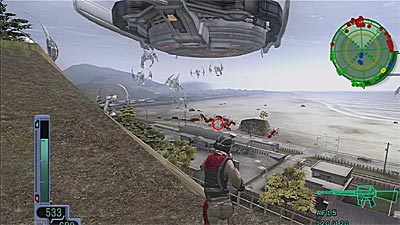
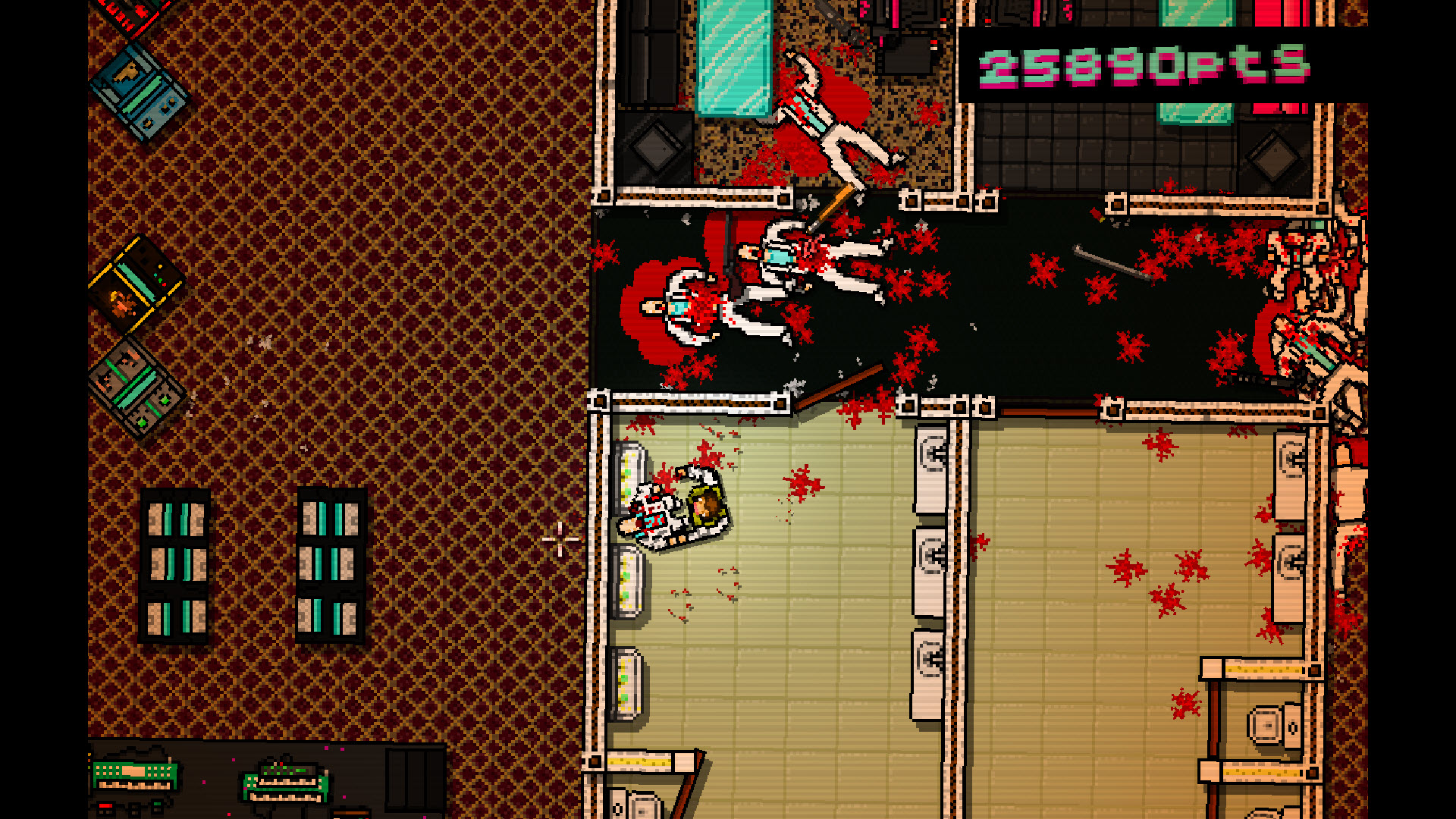

 Colarado is a beautiful place travelling at 300kmph. The varied locales, from sweeping highways to winding cliffside roads, are all breathtaking vistas that make for a picturesque backdrop to Forza Horizon’s open-world racing action. The cars are equally as pretty as they glisten in the light of the sun during the day and the street lights at night. That will be the first thing you notice about Forza Horizon because it is an absolute stunner of a game.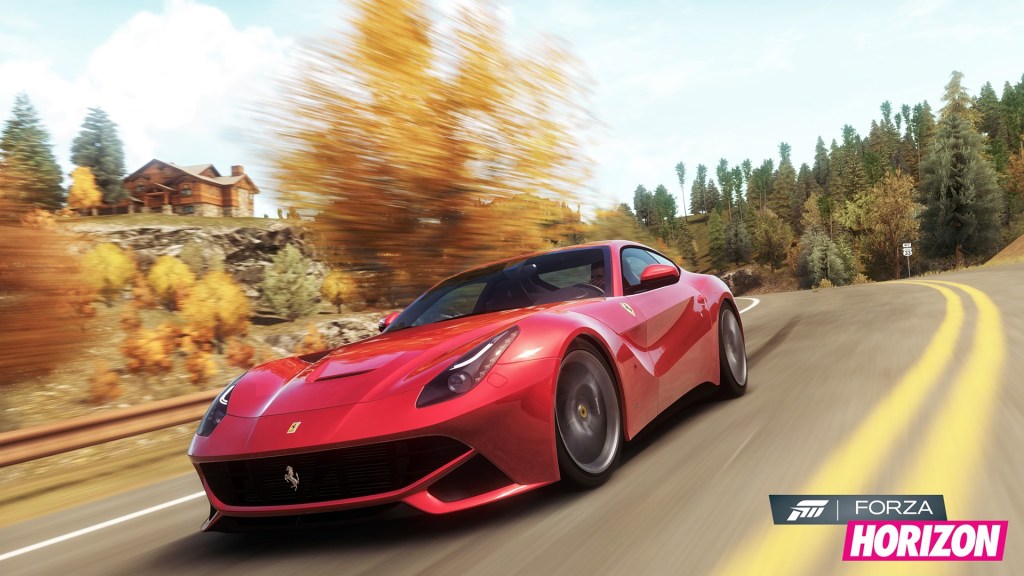


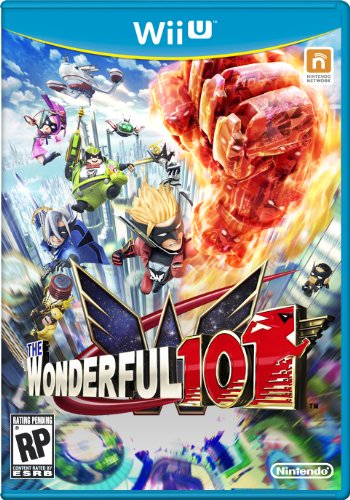
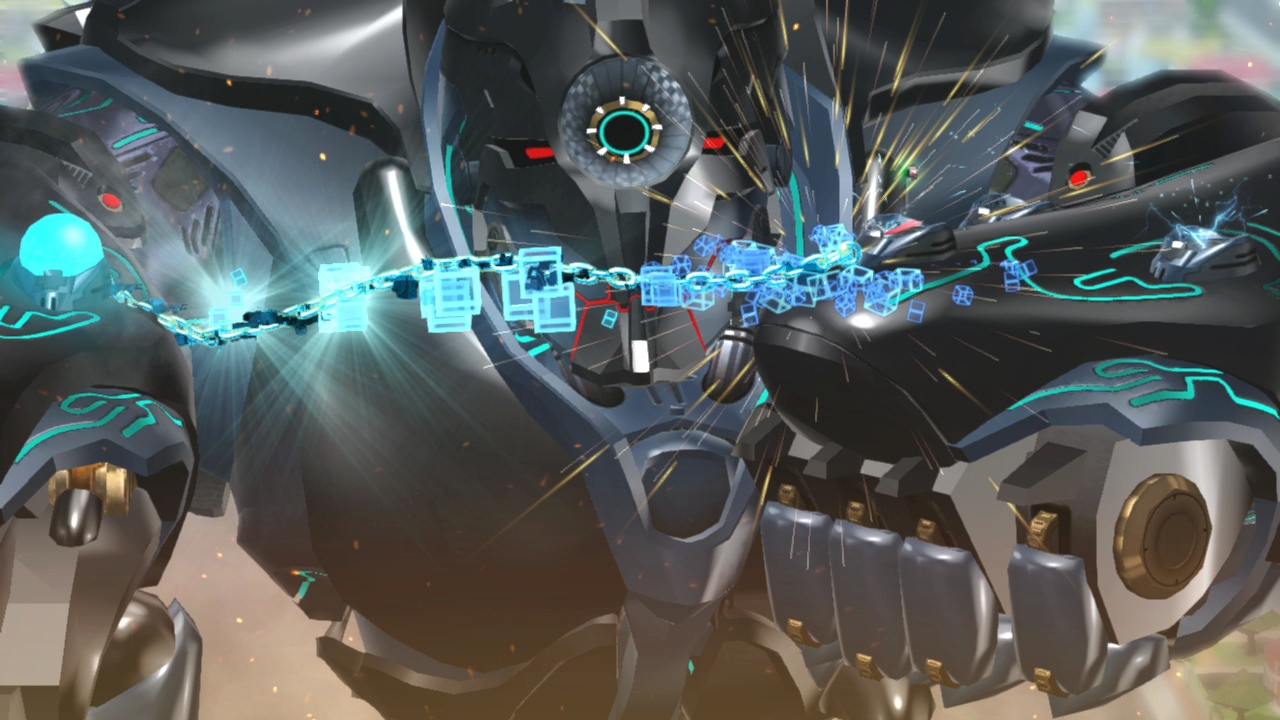
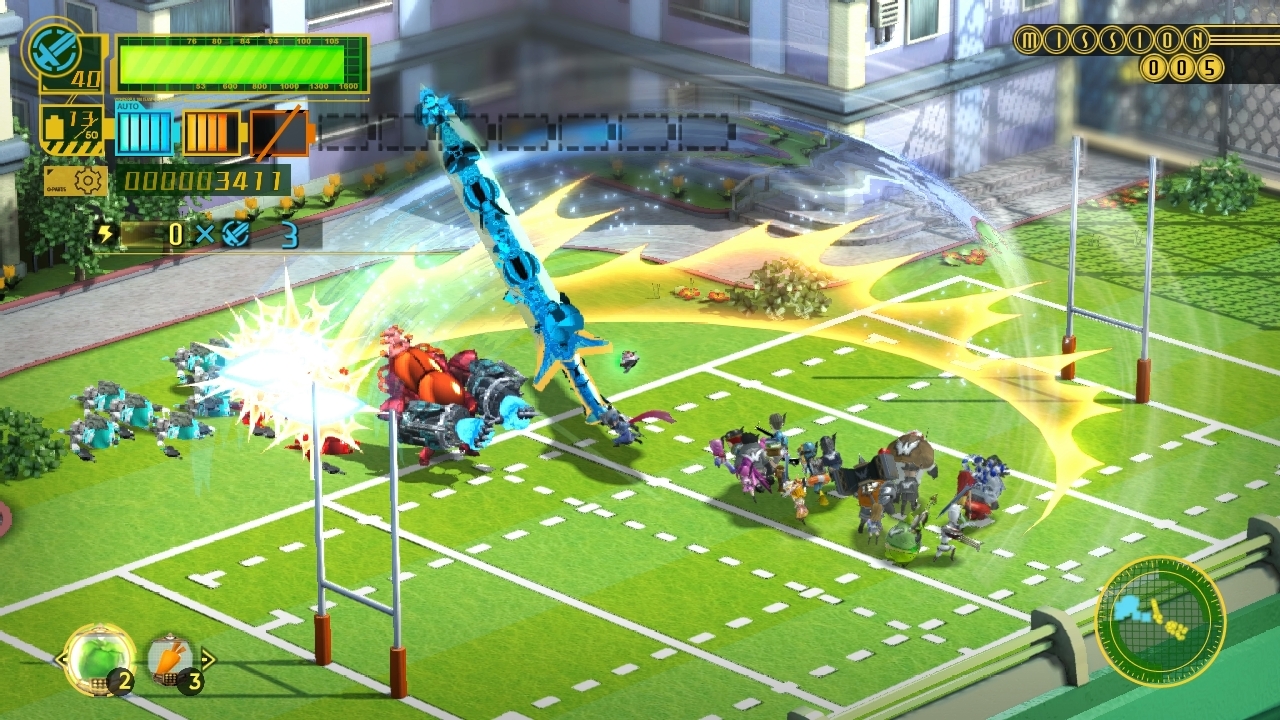

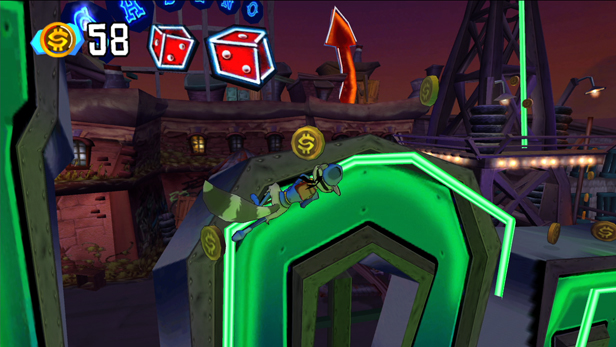

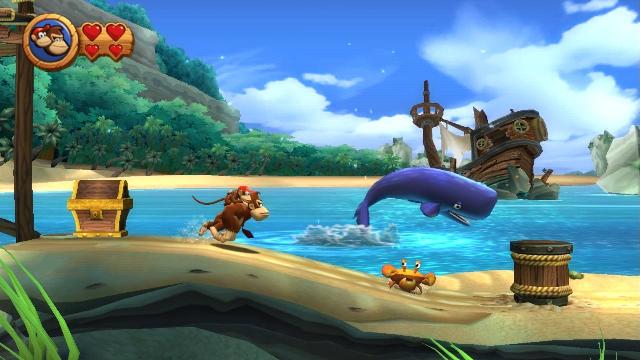


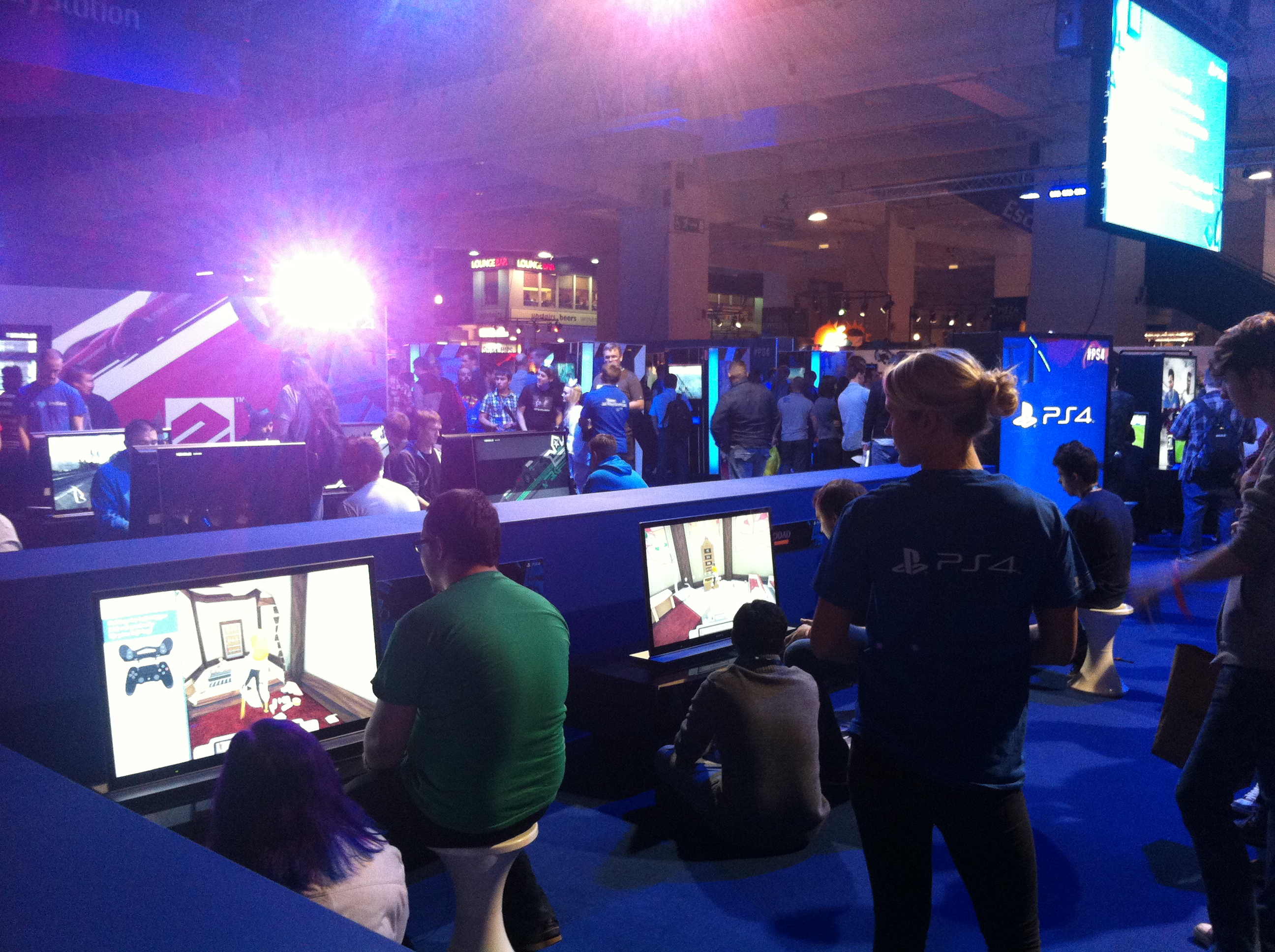
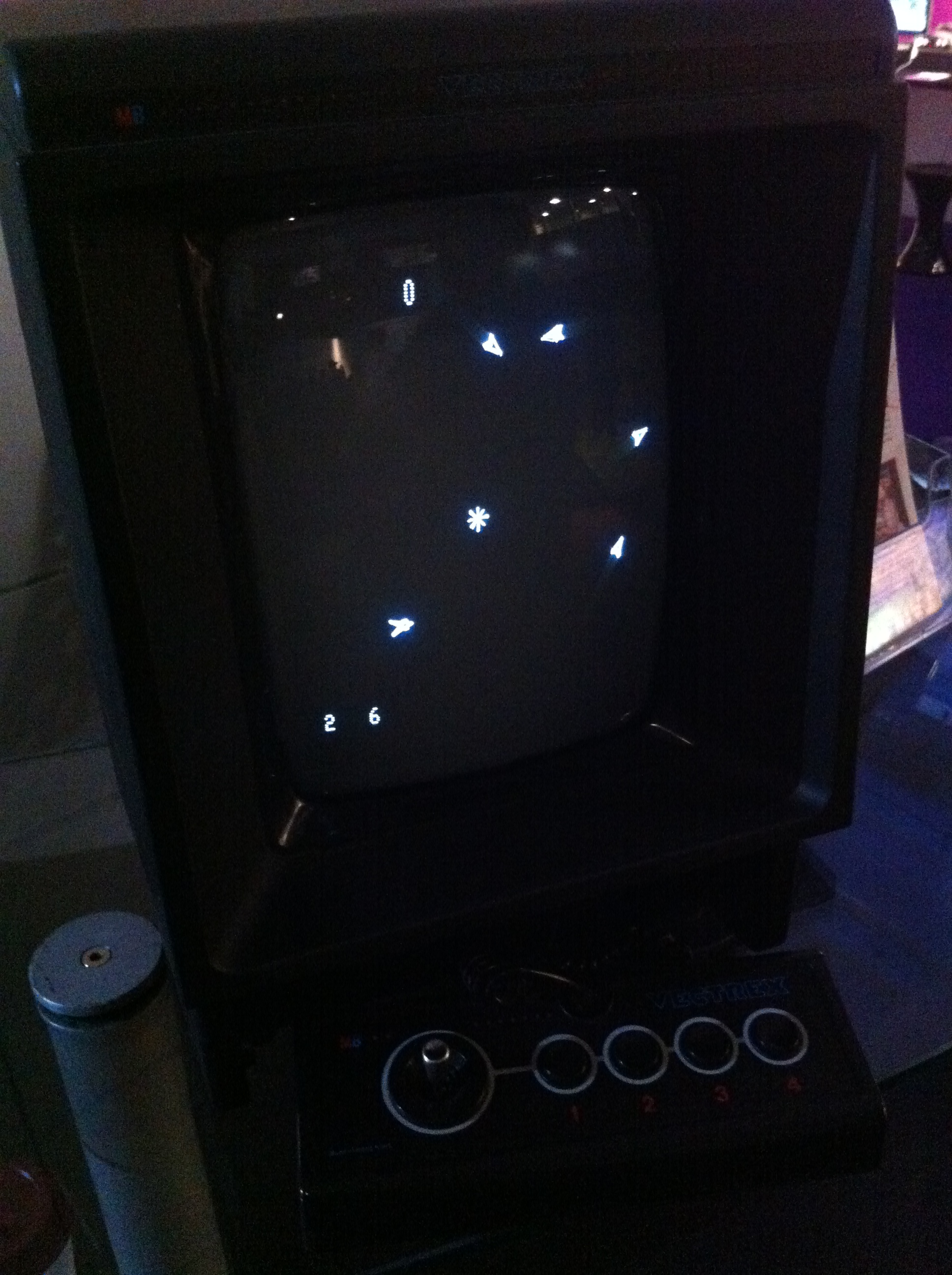
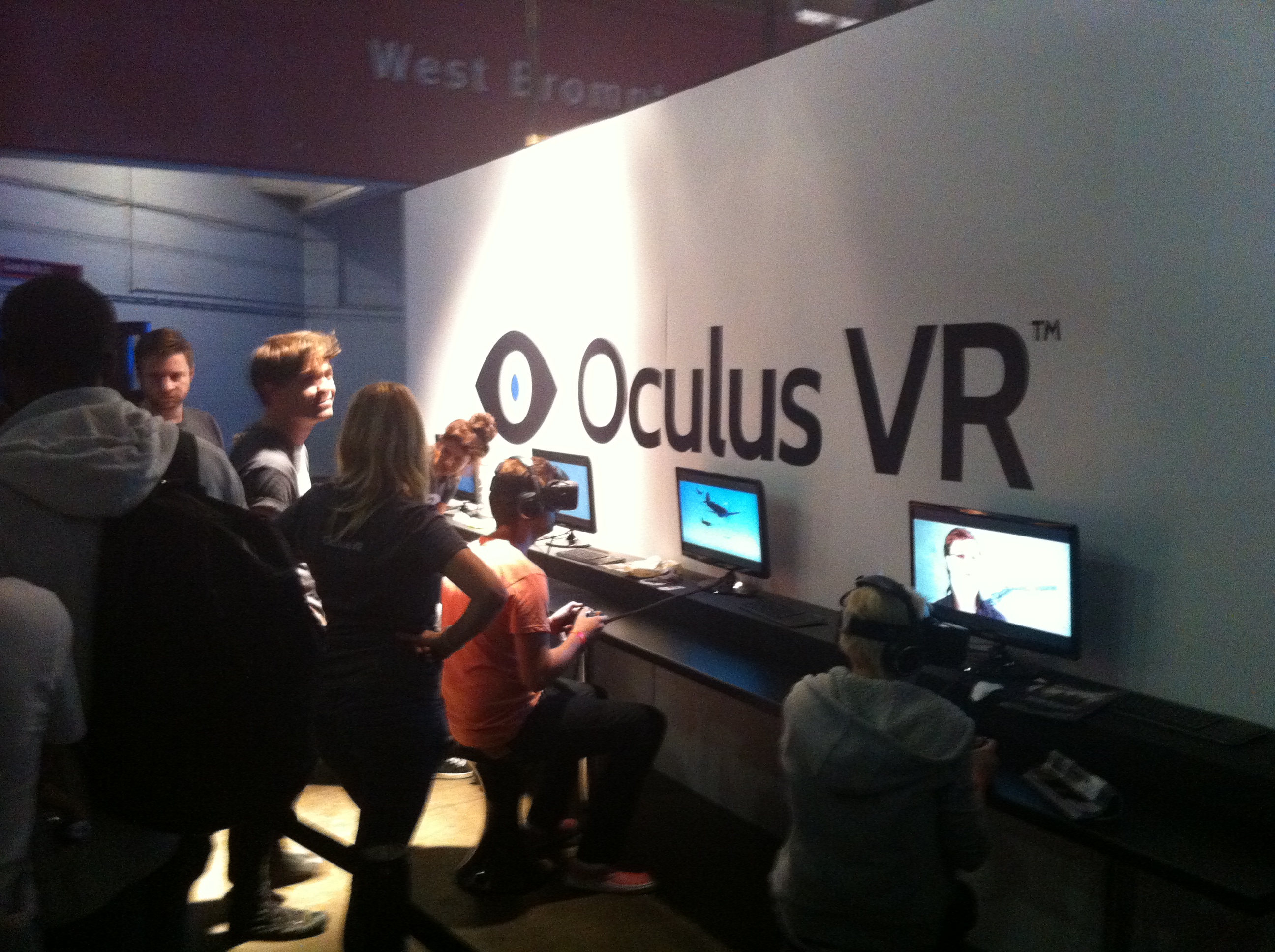
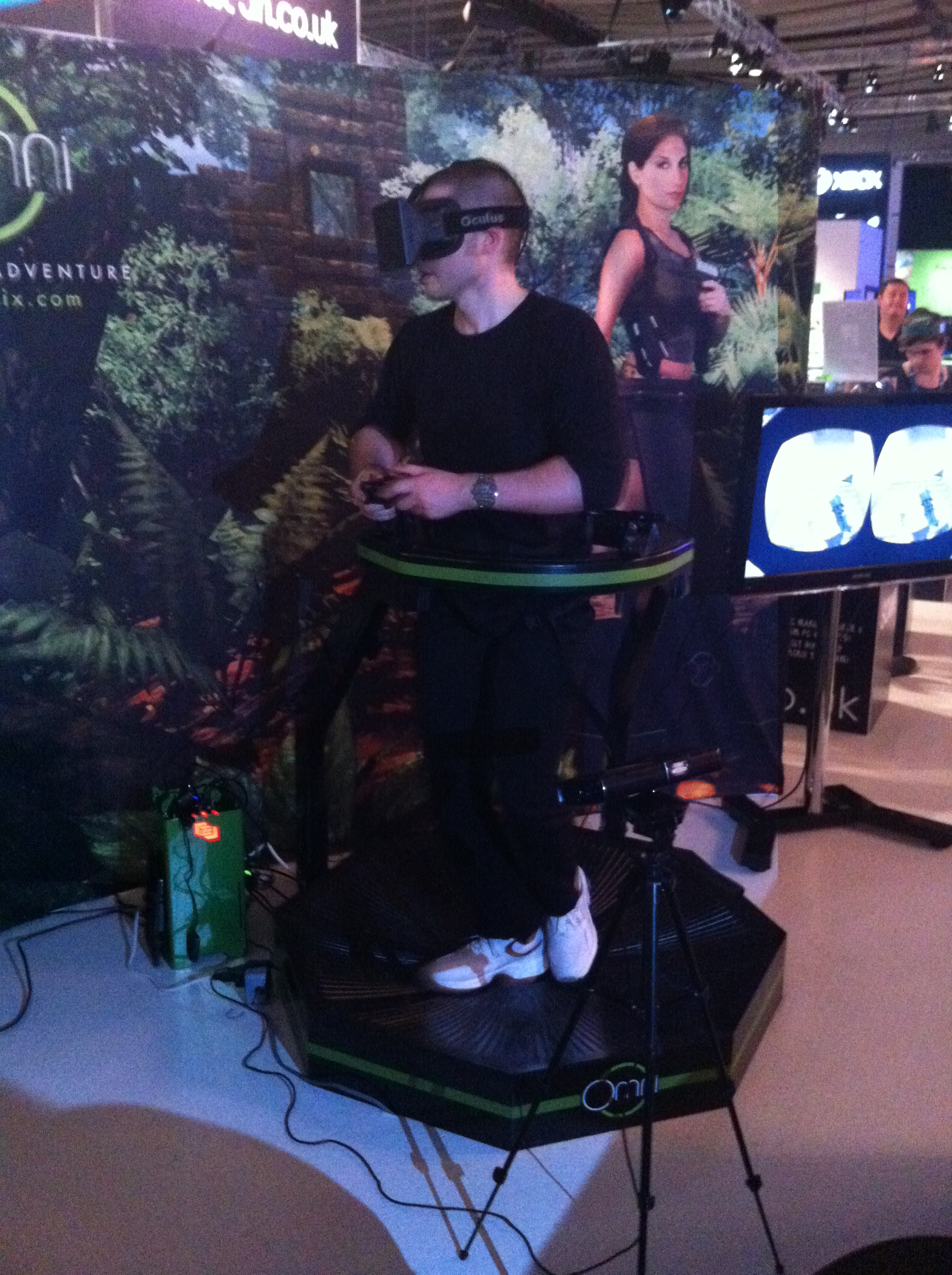
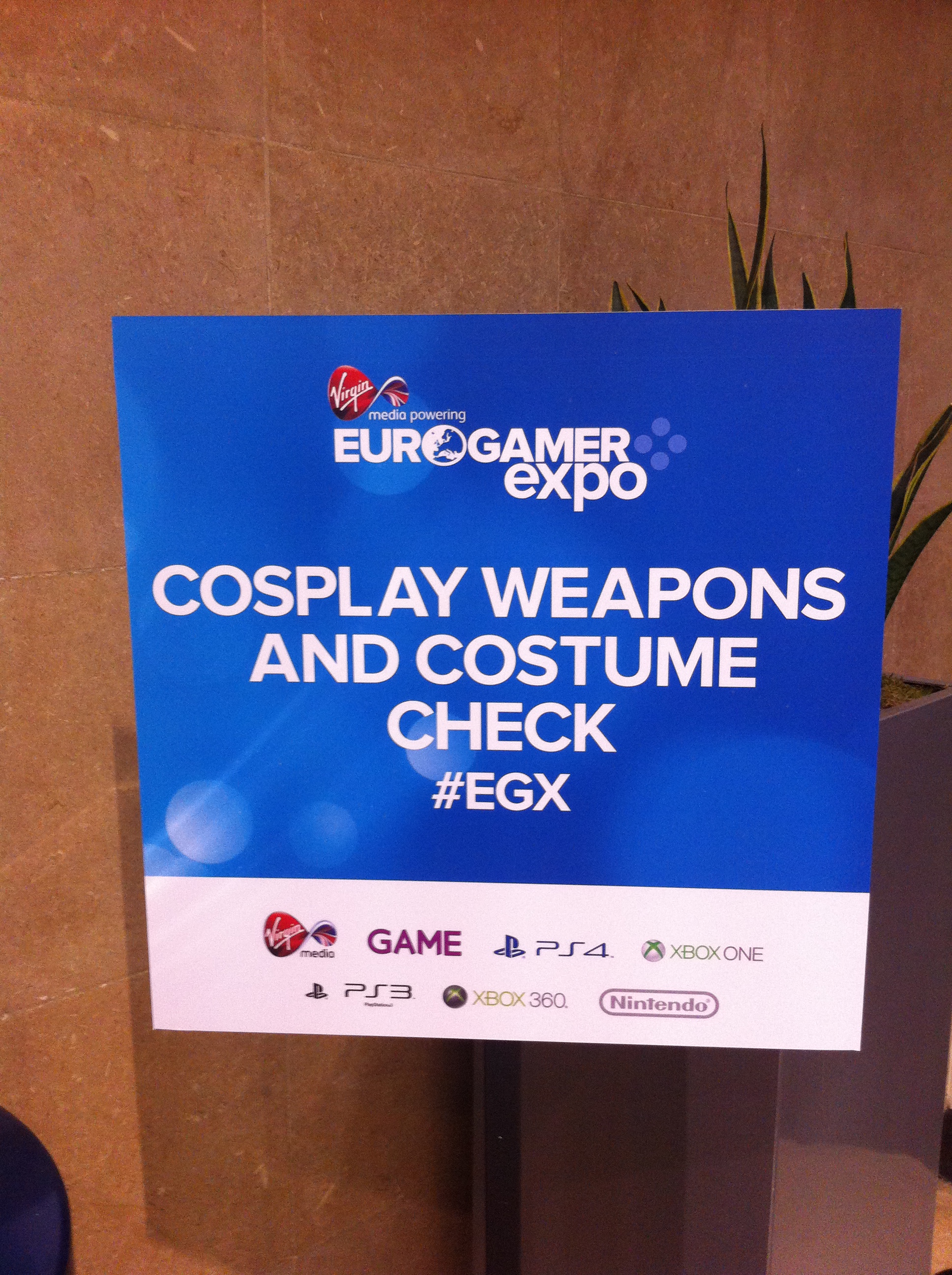

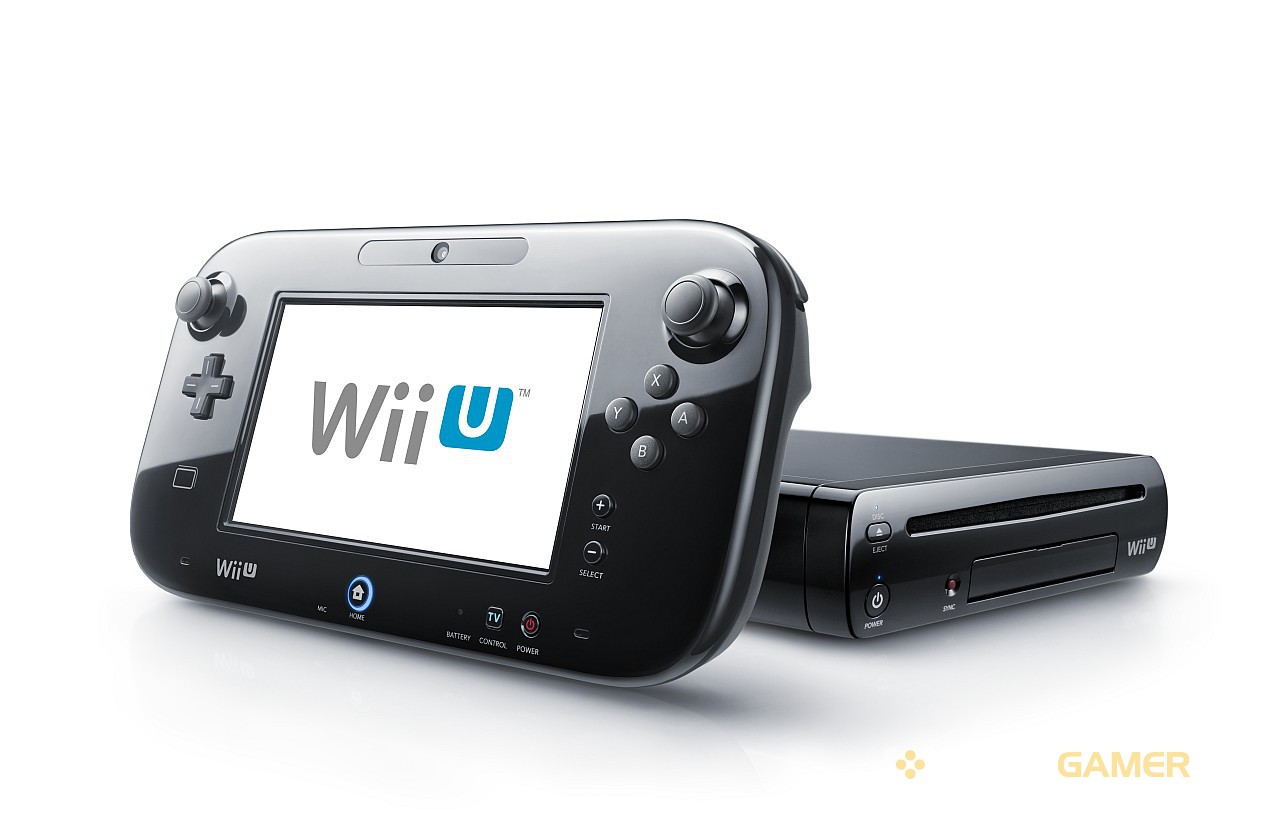
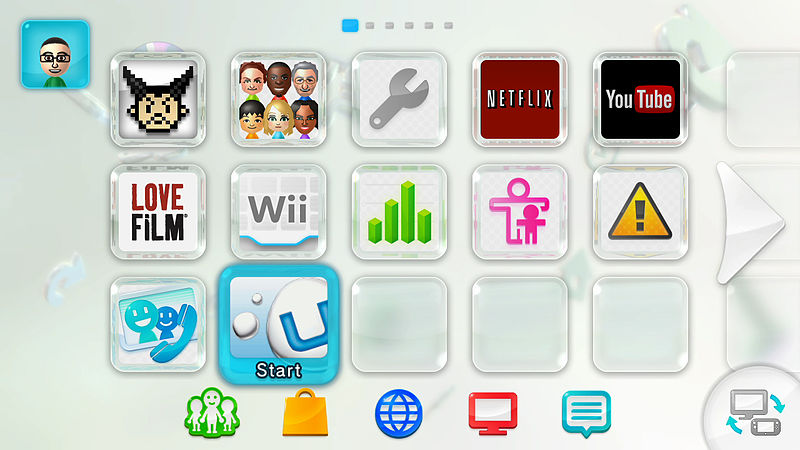


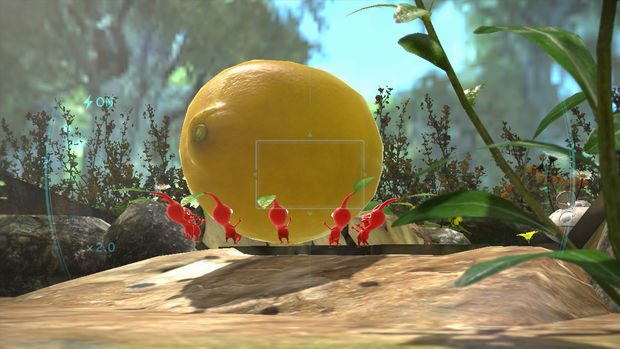
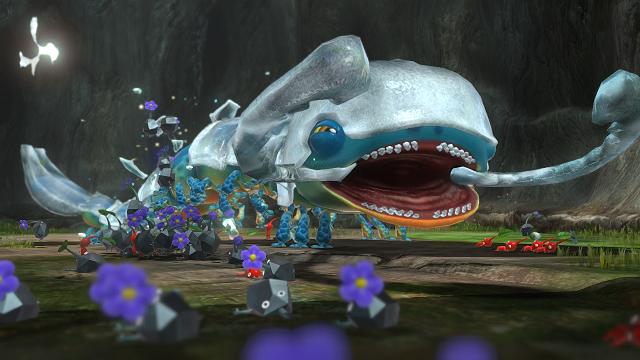



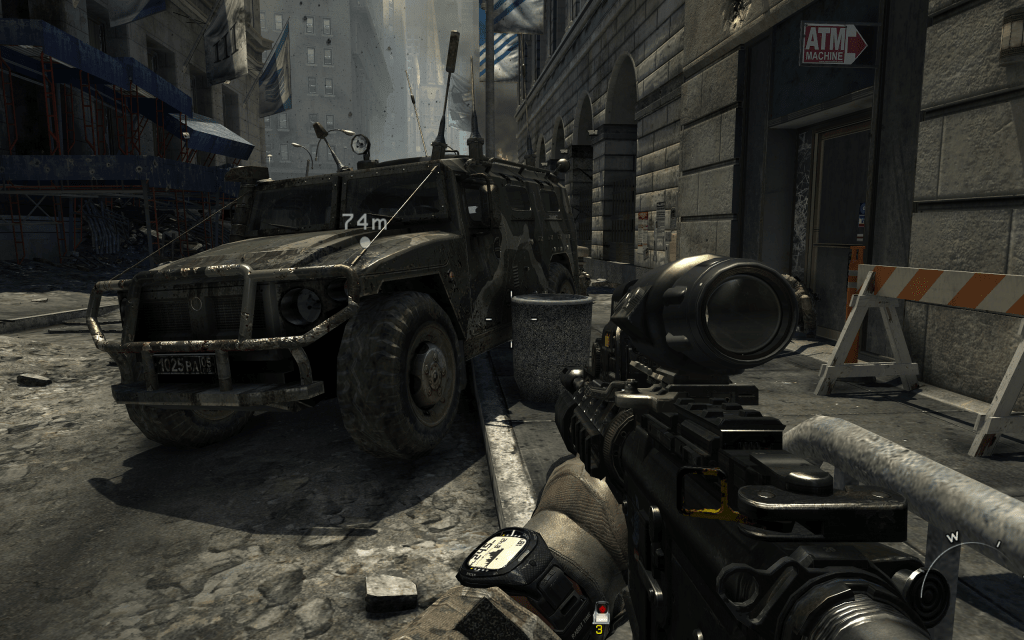

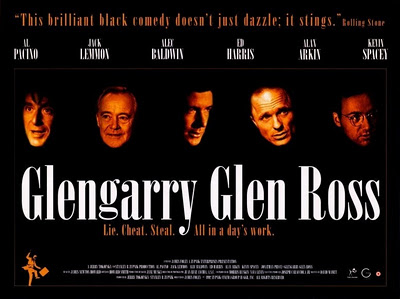
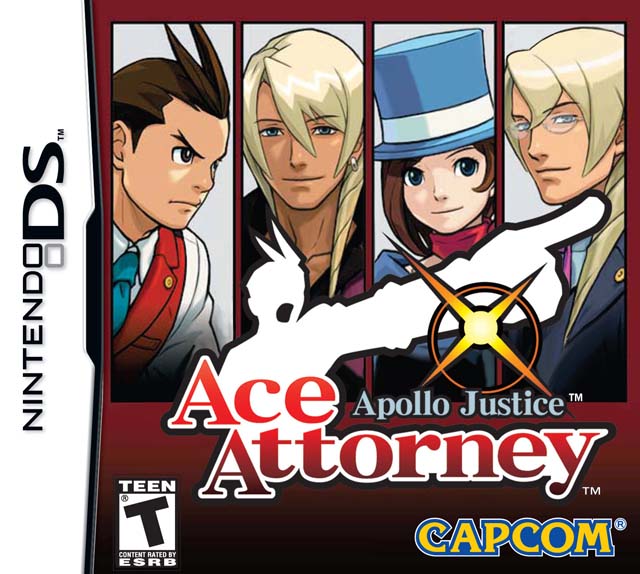


 As the species at the top of the food chain, humans – particularly in the more affluent countries – don’t really know what it is to struggle to survive. We complain about the job we didn’t get, about the price of petrol and food, and about the girl or boy that got away. We even complain about our own ‘brothers and sisters’ seeking refuge to escape persecution or war. But our survival isn’t about life or death, it’s about luxury, wealth and pleasure – and we have forgotten parts of our humanity in the process.
 You play as Joel, a battle hardened and world-weary man who lived through the onset of the virus and suffered his own losses in the process. Early in the game he is partnered with Ellie, a sharp-tongued teenager who knows nothing other than life in the quarantine zone. And it is the interaction between these two, an odd-pairing, and the people they meet along the way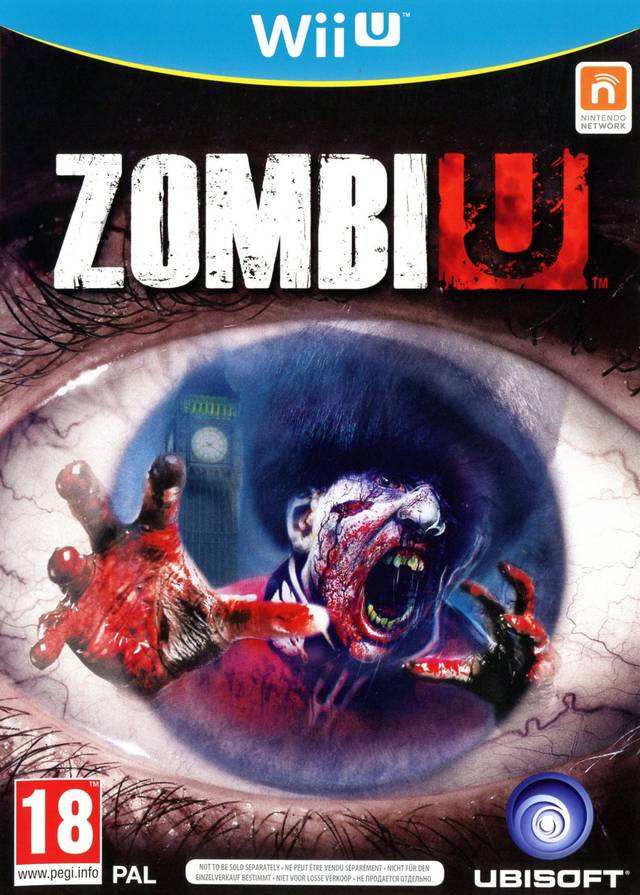
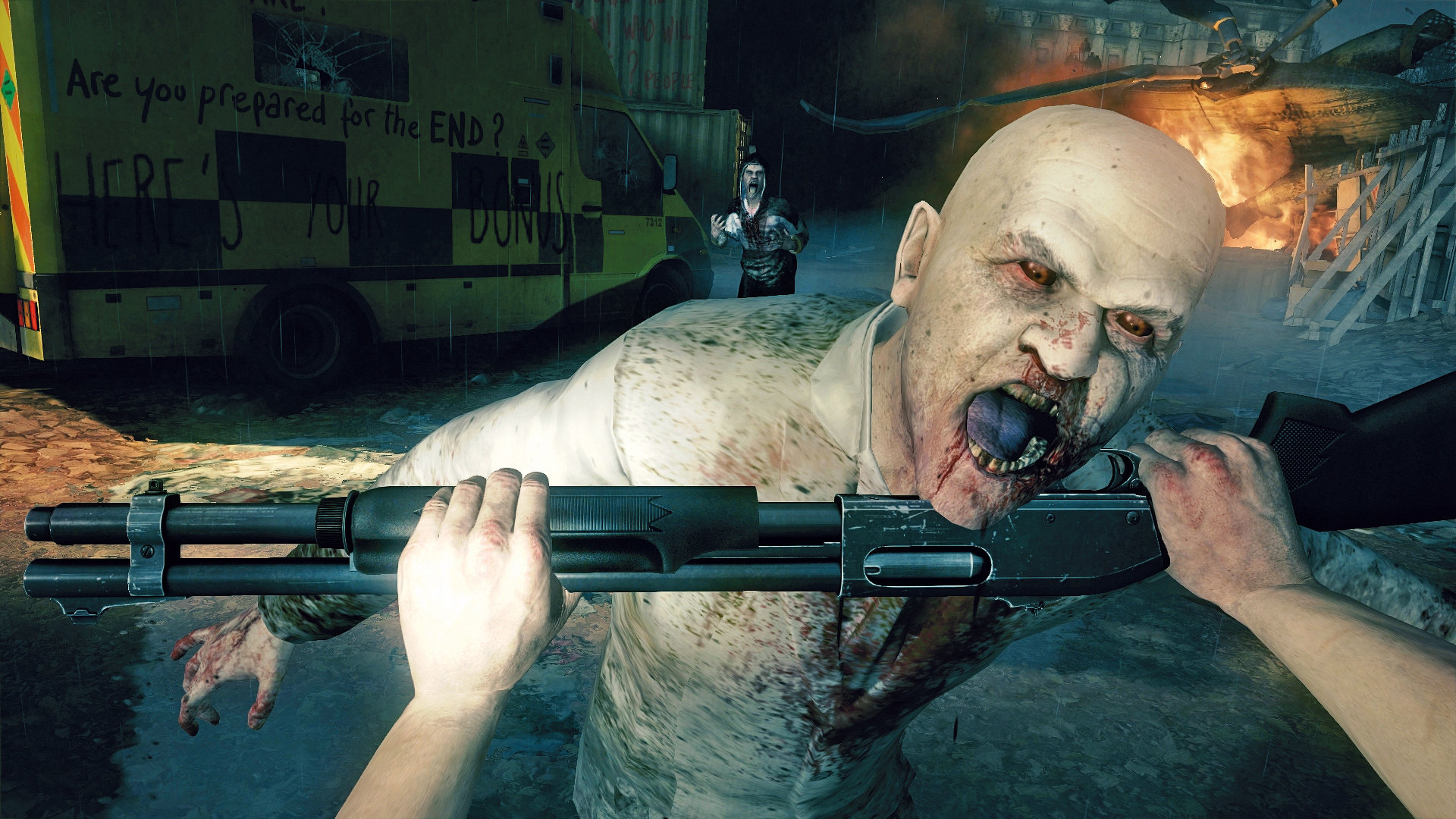


 Hotline Miami (PS Vita, PS3) – Hotline Miami is like a drug-enduced high that will take you on a trip through the violence, white suits and craziness of a brutal 1980’s Miami that will leave your eyes blood-shot, your sense heightened and your mind warped and twisted. Bloody, bright and brutal, Hotline Miami is a loving homage to 80’s culture and pixel art that takes old school game design and injects it with the blood-lust and maturity of a modern title. The result is a satisfying and addictive game that has a deceptive level of depth and replayability, not to mention enough blood and inards to deck out the set of a Hellraiser movie.







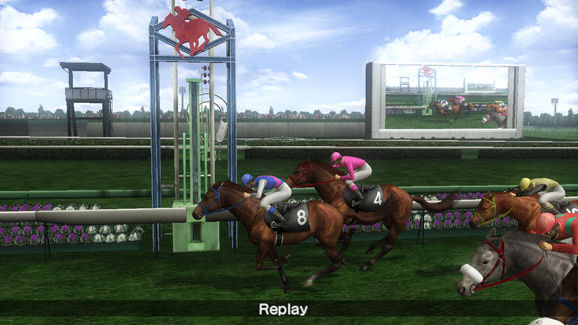


 Milestone – “Games Made With Passion”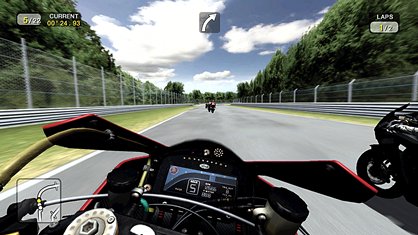


 A MOST AGREEABLE PASTIME