Ghost Recon: Shadow Wars is easily my favourite game on the 3DS so far, and without doubt the best of the 3DS launch games. Rather than being a first person shooter in the vein of its console cousins, Ghost Recon on the 3DS takes the form of a turn-based tactical shooter, and is all the better for it. The genre is perfectly suited to gaming on the go: you can just take a few turns on the bus before picking up where you left off later on, and I’m really glad they didn’t just attempt to squeeze a cut down version of a Ghost Recon FPS onto a handheld. Well done to Ubisoft for thinking outside the box.
The game was produced by Julian Gollop of UFO: Enemy Unknown fame (although it’s better known as X-COM), so with pedigree like that, it’s no surprise the game is a cracker. It’s a little bit simpler than Gollop’s previous games in that there’s no between-stage research into alien technology and you only control six soldiers who you use all the way through the game, but it does get quite complex the further you go on. Each soldier has a unique weapon and stats, so it’s all about using them to their advantages. The roster is a fairly standard division of classes (sniper, engineer, machine gunner, etc.), but one soldier stands out from the rest: the stealth commando. Banshee has optical camouflage, giving you the satisfying ability to creep up on the bad guys and go for some sneaky one-hit kills. In some ways she’s so good she almost provides a game-breaking advantage, but her low hit points mean that if one of the enemy soldiers spots her, she can be finished off fairly quickly, so sometimes the gamble of sending her in doesn’t quite pay off.
And speaking of gambling, the whole game really hinges around weighing up the risks and working out which strategy will provide you with the best odds of taking down the enemy without taking too much damage. At its best, it’s like a game of chess – a case of carefully anticipating the enemy’s moves and planning your own accordingly, working out how to position your strongest troops in the firing line to protect your weaker ones from harm. And also like chess, it takes a while to play. Quite a long while in fact – many of the campaign levels take over an hour to finish, and with 37 levels in the campaign game, there’s plenty to get your teeth into. It took me over 40 hours to complete the main game, and I haven’t even touched the standalone ‘skirmish’ levels yet, or the multiplayer. Considering I picked it up for £15 in the January sales, it’s brilliant value for money.
In many ways it’s very similar to Fire Emblem on the GBA (which I loved), but I preferred Shadow Wars‘ focus on just six main characters. The huge number of characters in Fire Emblem meant that some characters inevitably got overlooked and became more of a liability, but Ghost Recon‘s focus on just six means you really get to know how to use each character well.
It’s not all perfect though. In particular, the game only lets you have one save slot per level, so if you end up saving when you’re in an unwinnable position (where you can’t avoid one of your soldiers getting killed on the next go), then you’re forced to start the level over again. After a while though I learned to only save in safe positions, so it’s not a game breaker, although some of the later levels are pretty gruelling, especially when they start throwing killer drones at you. It’s hugely addictive though – it has that “just one more go” factor in spades.
I really can’t recommend this game enough. If you have a 3DS, you MUST own this game.
The Vita is the kind of system you’ll want to grab out on the bus or train ride into work or university to show off how great it is, and by virtue of that fact, how great you are for owning it. You want to be turning heads of the granny next to you that you hope, on spotting your brand-spanking new handheld gaming device, asks you a question that allows you to run off the laundry list of features contained within. And that is one might long list of features.
So when none of that happens, and the regular that picks his nose is still picking his nose, and the guy that seems to have been reading that copy of Stephen King’s Dark Tower since June 2011is still only up to CHAPTER F**KING FIVE , you start to doubt whether the Vita is really as exciting as you think it is. You start to doubt the awesomeness that is Wipeout 2048. Maybe it’s just you that is still into this stupid hobby – I mean the world has moved on – you see more people sporting Kindles than a knitting bag on public transport these days. Maybe dedicated portable gaming is knitting in this scenario.
Just at that point you start to panic. Where did you place that thing that you bought in March the year before. You know, that thing. The thing that you bought that had ALL the 3D. Goddamnit, I hope I haven’t lost it. What’s the name of it? I can picture it, it’s right on the tip of my tongue…
That’s right the Nintendo 3DS. Now where did I put that thing?
Yes, I bought this colour. What of it?
I retraced my steps, starting with March 2011 when I excitedly went down to the local store to pick up the latest and greatest handheld, the Nintendo 3DS. Not terribly impressed with the launch software line-up, but acknowledging that I needed something to play on the thing, I (resentfully) picked up a copy of Super Street Fighter IV 3D edition. I must really like Street Fighter IV, I thought to myself, realising that it was the third time I had bought something bearing the name Street Fighter IV. But I didn’t care, Super Street Fighter IV is an awesome game, and the 3DS game certainly didn’t disappoint in that department. So for the next few months I played SSFIV3D for about 20 minutes a day – as long as it took me to get to and from work on the bus. And it was a good time – being able to play a pretty good version of a great home console game on my way to work was seemingly worth that AU$350 investment I had made.
After about 4 months of this, I had used it just enough to be able to convince the more fiscally responsible side of my brain (instilled in me by my parents) that it was actually worth the money I paid for it at launch. Fast-forward to Christmas 2011 (and hopefully to a time where I could come closer to working out where the 3DS actually was) and I was loving the 3DS, for a while at least. It was like a fleeting summer relationship, and we couldn’t be separated. Summer Lovin’ had me a blast.
It turned colder, that’s where it ends.
And then I’d remembered where I had left it. It was looking at me from its charging dock where it belonged. The same place I had put it just after Christmas.
Turns out I just didn’t care where I had left it and the fact that it wasn’t in my bag meant that portable gaming just wasn’t relevant to me anymore. Sad as it was to think about, I had moved on.
I came back to the present, still on that same bus, still playing Wipeout 2048. Nose picking guy wasn’t there, and the guy that normally gets off at my stop was nowhere to be seen. I had missed my stop. But I didn’t care because all it meant was that I had more time to spend with my Vita.
Suddenly portable gaming was entirely relevant again. And those people on the bus, they just sucked, because trust me when I say that I will not be forgetting where my Vita is in a hurry.
Back in January I got all excited at the thought of playing a version of Star Fox 64 in real 3D, and I have to say I haven’t been disappointed. Out of all of the 3DS games I’ve played so far, the 3D in Star Fox is by far the most impressive: giant starships fly over your head, asteroids spin lazily across the screen and flocks of space fighters swoop and twirl in front of your eyes in wonderful, glorious, eye-popping 3D. If you’re interested in impressing your friends with what the 3DS can do, then this is definitely the game to show it off to its full potential (although seeing as it’s still early days for the system, it will be fascinating to see how far developers can push it in the future).
The graphics are way, way better than the N64 original, as you’d expect, and the water and lava effects in particular are a sight for sore eyes, although overall the graphics keep that classic blocky feel of previous Star Fox games, revealing the series’ origin on the SNES. The sound effects are all present and correct as well, and it was particularly rewarding to hear all of the cheesy dialogue again, vis a vis:
General Pepper: It’s about time you showed up, Fox. You’re the only hope for our world. Fox McCloud: I’ll do my best. Andross won’t have his way with me.
Oooh err Fox, I sincerely hope not. Speaking of dialogue, I spent pretty much the entire game trying to work out who Slippy Toad’s voice reminded me of, and it finally came to me when I was writing this post: Martin from The Simpsons. I did a quick check though, and apparently Martin is voiced by Russi Taylor, whereas Slippy is voiced by Lyssa Browne (interestingly, Slippy was voiced by men for the subsequent games Star Fox Adventures and Star Fox Assault, although I think I prefer Lyssa’s effort: have a listen for yourself and see which you prefer).
Gameplay-wise, Star Fox 64 3D is pretty much exactly the same as the original, which is no bad thing really seeing as the game was an absolute delight to play in the first place. The only major change is that they’ve now introduced an option whereby you can play using the 3DS’s motion controls – although as far as I can see, this is utterly pointless. As I mentioned in a previous post, the 3DS motion controls seem completely redundant to me, as moving your head (or the machine) out of the ‘sweet spot’ means the 3D illusion is immediately broken, so the only real way to use the motion controls is to turn the 3D off… which kind of defeats the whole point of the system. Plus why use fiddly and unresponsive motion controls when you could use the much more accurate circle pad? And why would you want to wave your 3DS around in public like a crazy person? Perhaps I’m missing something Nintendo, so please correct me if I’m wrong, but the 3DS motion controls seem to be a complete waste of time… Anyway, thankfully motion controls are optional for Star Fox 64 3D, and I found the circle pad and buttons to be wonderfully responsive. I really think that circle pad is an amazing achievement: compare it to the ‘nubbin’ of the PSP and you can see just how far handheld controls have moved on over the past half decade.
The one big flaw of Star Fox is sadly still evident: it’s just too damn short. It’s easy to finish the game on your first go, and you probably won’t be playing for more than a couple of hours. Still, the game’s longevity is increased by the fact you can unlock various routes through the Lylat System, and despite finishing the game several times, I still haven’t seen every level. However, I suppose the real key to the game’s longevity – like every shoot ’em up – is attempting to beat your own high score on each level, but this is something that’s never really appealed to me. As I’ve said before, once I’ve completed a game, I very rarely go back to it, so I expect Star Fox will eventually find its way onto eBay when I’ve finally worked out how to worm my way through all the levels. Ah well, it was fun while it lasted.
Let me take you back to the dim and distant past of January 2010. I’m in deepest darkest Dunstable, visiting my dear friend Curly (or Rich as he’s now known in respectable society) for his annual birthday bash. It’s rather late, and we have repaired to his luxury chalet for some refreshment and nibbles. Messrs Burke, TB and Manwich are in attendance, and they throw out the delightful suggestion that we play a newly released game by the name of ‘Modern Warfare 2’.
It turns out to be jolly good fun. Even though I am awful at it. As the evening draws to a close, I vow to keep up with my chums more often, and to this end I buy a shiny new Gold subscription to Xbox Live along with a brand new copy of Modern Warfare (the first one that is), fully intending to play with my pals online.
A year later my Gold subscription expires after I’ve managed to play online just three times, each for around half an hour. I work out that my failed attempt to join the ranks of the online gamers has cost me around £25 per hour in subscription fees. I decline to renew my subscription.
Cut to January 2012. I’m in Dunstable again, and my chums are excitedly talking about the delights of Modern Warfare 3. I shamefully admit that I still haven’t played Modern Warfare 1, despite having purchased it two years ago. They look at me with a mixture of confusion and pity. I vow to regain their trust and respect by at least making an effort to play one Modern Warfare game this decade.
But I have to say, playing Modern Warfare solo is a world away from the ribald joshing and playful oneupmanship of that birthday night two years ago. In place of the friendly, liquor-fuelled rivalry of the living room is the cold, hard, horror of war beamed directly from your telly box right into your pleading eyes.
I’ve played a fair few first person shooters, but my tastes tend to veer towards the sci-fi/supernatural (BioShock, Halo, Gears of War, FEAR 2, etc.), so playing a game whose main intention is to create a realistic representation of conflict was quite a shock. One of the early levels in the game places you in the streets of an unnamed Middle Eastern capital as part of an American invasion force, and the designers go to great lengths to recreate the confusion and chaos of warfare. Bullets zip past you from all directions, and mostly you can’t tell where they’re coming from, so you’re spinning round in a panic trying to find cover, and all the while your comrades are shouting and screaming and barking orders and one by one they’re dropping like flies and it feels like there’s nothing you can do to save them and then a grenade appears out of nowhere and BAM you’re dead. It’s as convincing a portrayal of an actual firefight as I’ve seen, and it’s eerily reminiscent of footage from ’embedded’ reporters in actual war zones. But is it fun? Well, not really. Harrowing, perhaps. Draining, yes. Fun? No.
I guess the point is, whenever I’ve been watching footage from war zones on the 9 o’clock news, I’ve never, ever thought to myself, “Oooh, that looks like a laugh, I wouldn’t mind a go at that.” So I really rather wonder why you’d want to recreate that great war feeling in your own living room.
I realise I might be in the minority here (14 million Modern Warfare owners can’t be wrong).
About halfway through the game I was just about ready to jack it in: I was pretty much fed up to the back teeth of gunning down wave after wave of brown-skinned ‘bad guys’ before being blown to bits by an unseen grenade. Even worse, there seemed very little strategy to all the running and gunning – carefully picking off enemies from behind cover was a surefire way to meet swift grenade death, yet, against all reason, running straight at the enemy with guns blazing and grenades flying proved to be a surprisingly effective strategy. I was beginning to doubt the game’s ‘realistic’ credentials.
Then, just past the halfway point, the designers suddenly remembered they were meant to be making an enjoyable computer game rather than a harrowing war documentary and decided to include levels that are fun instead of drawn out stamina tests. It begins with ‘All Ghillied Up’.
Suddenly you’re transported from the modern-day Middle East to the Ukraine circa 1996, deep within the exclusion zone around Chernobyl. The visualisation of the deserted, radiation-ridden city of Pripyat is thoroughly absorbing, and the level simply drips with atmosphere – you really feel like you’re stepping into long-abandoned, forbidden territory. In a refreshing change of pace, the focus switches to carefully making your way past enemy guards rather than melting off the faces off insurgents with sustained machine gun fire, and the new approach makes for some heart-stopping moments. There was a particularly excellent scene in which you’re making your way across a field of long grass when suddenly an armoured column hoves into view. You drop to the ground and pray that your ghilly suit keeps you hidden from the enemy, but at the same time you need to shuffle out of the way of the incoming tanks. You know that any sudden movement will alert the troops, so you’re forced to crawl away painstakingly slowly as a 40-tonne tank bears down on you with alarming speed. Tense stuff. In fact, this level is so damn good that Now Gamer voted it number 20 in their 50 Greatest Gaming Moments.
The remaining levels of the game don’t quite hit the high point of ‘All Ghillied Up’, but they’re generally far more inventive and interesting than the first half of the game: the level in which you infiltrate a bunker against a tight time limit is particularly good, as is the final escape mission. So it’s safe to say that the single-player game goes some way to redeeming itself by the denouement – what could have been a tasteless, repetitive shooter ends up displaying some surprising inventiveness and a flair for dramatization.
However, I suppose I’m missing the point here.
The main reason that those 14 million or so gamers bought Modern Warfare wasn’t to sit there playing and replaying the single-player game, it was to shoot the crap out of their friends online, and this is where I just don’t get the appeal. I loved playing Modern Warfare 2 against Curly et al. in that epic late-night birthday gaming session, but when it comes to swapping bullets with randoms over t’interweb I’m just not interested. My limited online multiplayer experiences mostly consisted of me dying repeatedly to the mocking cries of people I’d never met, which, frankly, wasn’t fun in the slightest. Obviously, with a huge amount of patience and practice, it could eventually be me doing the killing rather than the dying, but the thought of the many, many hours I’d have to put into the game to reach that kind of level just puts me off completely.
The whole experience has really brought it home to me that I’m essentially a story gamer: I play games to see what happens next, and once I’ve finished a game once I hardly ever go back to it. I’m still partial to the odd local multiplayer session when circumstances allow, but these occasions are extremely rare nowadays, and I’ve realised that the thing I enjoy the most about gaming is being able to lose myself within an entirely new world. Which I suppose is why a game based around the horrors of real-life combat didn’t really click with me.
I guess in some ways I’m missing out on all the online fun – but on the other hand, I’m looking forward to the next drunken deathmatch in Dunstable.
PS. The title is a pun on ‘This Is Just A Modern Rock Song’ by Belle & Sebastian. I know, I’m referencing Belle & Sebastian songs, I really shouldn’t be playing these nasty war games. Anyway, here’s the song if you want to have a listen:
I love portable gaming. The sheer audacity for Capcom to claim that the graphics are ‘So Real You’ll Forget It’s Only A Game‘ is nothing short of hilarious. Of course back in 1990, Gargoyle’s Quest probably was the best looking game to grace a handheld, and to put it in context, it was a fantastically attractive game running on a culmination of technology from the 1970s and 1980s. But what the advertisement doesn’t tell you is that Gargoyle’s Quest, as a game, was probably the most ambitious Game boy title of the day, and even to this day is probably one of the best games for the platform.
And that is simply what I love about portable consoles – the concessions that have to be made in order to deliver a quality product that appeals to whatever subset of people the developer is going for. What I love even more is as the Game Boy (in particular) matured it tried, man did it try, to emulate what was happening one the ever-more-powerful home consoles. And don’t even mention the fact that the Game Boy had only two buttons that were feasibly usable for game play. Of course, that didn’t stop them from trying to implement control schemes that heavily relied on the Select Button, with one example coming to mind being the Game Boy version of NBA Jam Tournament Edition, which used the select button for the almost mandatory Turbo function. This didn’t stop me playing more of the game than I care to think about – I just had to utilise an early version of the clawthat PSP Monster Hunter fans are so familiar with.
There were reasons for trying to shoehorn these games onto a system that was clearly not designed for it though. Back in the 1990s, the arcade was king, and the biggest deal in the world was that fateful day when those arcade classics came to home consoles for the first time. The launch of Mortal Kombat on every console known to man at the time was a big deal, with September 13 1993 being dubbed Mortal Monday in an incredibly intelligent marketing campaign, accompanied by full page adverts in most gaming publications.
And the hype was worth it. the console versions, for the most part, lived up to what was expected from an arcade port at the time, and delivered the game play that made the arcade version so popular (without the Fatalities on the Super Nintendo, that is). Unfortunately, the Game Boy version was a shadow of its former self, delivering a game with almost unplayable levels of controller input lag, a shrunken roster, and game play that more resembled a Tiger Electronics handheld game than anything that had been seen on the Game Boy to date. Looking at a screenshot (as below), you can’t help but see the promise though, and admire what the development team at Probe Entertainment attempted.
Promise that was largely reached with the follow up entry in the series, Mortal Kombat II, which abandoned any hopes of emulating what the bigger home consoles could do, in favour of just making a good old fashioned fast-paced portable brawler. The decision to develop the game on the system’s own merits reaped rewards, and although the graphics varied greatly from other console versions and the roster was again shrunken down from the arcades, the game was to date the best 2D fighter on the market for Nintendo’s humble handheld. Unfortunately the third game in the series took a massive step backwards with Software Creations cramming an awful lot into the Game Boy cartridge, at the expense of game play. Admirable, but perhaps a little too ambitious.
Of course Midway weren’t the only company to have a go at giving gamers on the go that beat ’em up they craved. In 1996, Atari Games entered the ring vying for some of that arcade beat ’em up conversion money that Capcom and Midway had been raving about. The game was Primal Rage, launched in the wake of Jurassic Park fever, and although the game in hindsight wasn’t that great, at the time it was the latest thing that had kids lining up in droves at the local arcade to play. Not only did it look absolutely amazing with its stop motion animation, but in terms of sheer blood and visceral violence, it went toe-to-toe with the unbeatable behemoth Mortal Kombat II. With this in mind it was a no-brainer to bring it to console audiences, and development was started across all major platforms, which by this stage included the next generation of hardware. Obviously seeing the profitability of other genre leaders porting to handhelds, Atari commissioned Probe Software (who were handling most, if not all of the console ports) to handle the Game Boy and Game Gear versions of the game. And the results, at least on the Game Boy version, weren’t too far off the mark. The game looked and played the part, and was a worthy version for those who didn’t have access to any home consoles at the time. And while there were omissions – one character, Vertigo, was missing from this version – it wasn’t enough to render it entirely unidentifiable from its brethren on other systems. In fact a Game Boy owner could consider that they had experienced Primal Rage even if they had only ever played the portable version.
And for these achievements, I have nothing but absolute admiration for these developers who worked so hard to cram so much into the Game Boy. By the end of its life cycle, it had seen entries in most major 2D fighter series of the day, including Street Fighter II (which played more like Super Street Fighter II) and Killer Instinct, and even a few attempts at matching what developers were achieving on the Super Nintendo, including the illustrious Donkey Kong Country experience through its sister series Donkey Kong Land, which in its lifetime saw three games that mimicked the respective entries on the SNES. While these achievements aren’t that impressive, in particular when compared to what is being achieved these days on the 3DS and the Vita, within the confines of Nintendo’s little green- and grey-screened beast these games present nothing short of genius from the programmers working on them.
My lovely girlfriend bought me a shiny new Nintendo 3DS for Christmas and has hardly regretted it at all, despite the fact that I now tend to ignore her in favour of Princess Zelda whenever we’re on a train journey. Poor girl. Anyway, it’s been exactly a month since I unwrapped Nintendo’s latest little wonder, so I thought I’d better share my thoughts on the good and not so good things about my little Cosmos Black 3DS.
Oooooh, look, it’s in 3D!
The first question everyone asks is “Does the 3D work?” Well, yes, it does. I don’t know how it does, but it does, and it looks pretty damn good too. The best thing about it is that it creates a really impressive feeling of depth, which works a lot better than those gimmicky 3D films where things keep flying out of the screen towards you. In fact, it’s generally in moments when objects pass directly in front of the foreground that the 3D effect is tarnished a little – your eyes tend to get thrown off when something passes very close to your face, but the effect works very well in creating a sense of distance.
The 3D also tends to work better in some games more than others: I struggled a little bit with the 3D effects in Ocarina of Time 3D, as I found that with large busy landscapes moving around fairly quickly, my eyes would often get thrown off, particularly when I found myself looking around at different points in the landscape. By contrast, the effect works extremely well in Ridge Racer 3D, despite the fact it moves very quickly – I suppose this is because you’re mostly focused on a single point in the distance.
Ow, my eyes!
I’ve not experienced any trouble with eye strain yet, although I can see that playing with the 3D on for extended periods of time could easily cause your eyes to give out with a feebly protesting whimper. And of course, the beauty of the system is that clever little slider on the side of the screen that lets you find a comfortable level of depth, or to even turn off the 3D effect completely. I’ve generally been playing with the 3D on, as I really think it adds to your immersion in the game, but it’s almost impossible to play in 3D if you’re on public transport. This is probably the system’s greatest setback – the 3D effect requires you to keep your head and the 3DS almost completely still, as any movement tends to throw out your eyes and requires you to refocus. This of course is disastrous if you’re on a bumpy tube or train, so I’ve found myself turning off the 3D whenever I’m on a journey… but those are also the exact occasions on when I’m most likely to be playing on a handheld console.
Motion schmotion
The fact that you need to keep your head and the 3DS reasonably still for the 3D to work also makes the 3DS’s motion controls somewhat pointless. The motion controls are undeniably clever, and surprisingly accurate, but having to constantly refocus your eyes as you wave the machine around somewhat drains the fun. Also, I can just about live with the shame of waggling a Wii remote in the privacy of my own living room, but waving a 3DS around in a crowded tube carriage is an ignominy I’m simply unwilling to bear.
Showing off potential
But despite being adamant that putting motion controls in a handheld console is an utterly pointless innovation, I am willing to concede that it’s a good way to make your relatives look foolish: watching my dad playing Face Raiders was probably the highlight of Christmas. And the 3DS is an undeniably impressive console – everyone I’ve shown it too has been intrigued by the 3D effect, and the pack-in games Face Raiders and AR Games are remarkably clever from a technical point of view. I was particularly impressed with AR Games, and I believe my jaw may actually have dropped at one point (have a look for yourself below).
The 3D camera also made people smile when I showed it to them, but to be honest I’ve only ever used it to show new people what the 3DS can do. At the end of the day it’s pretty blurry, and there’s not really much you can actually do with the pictures once you’ve taken them. Similarly, Face Raiders and AR Games are fun for five minutes, but I’ve no real desire to go back to them now the initial excitement has faded.
So, what DO you like about it then?
I’ve been a bit lukewarm about the system so far, but there are a few things about it that I absolutely love. I’ve already mentioned that the 3D effect is pretty damn impressive as long as you’re sat fairly still, but I’m also slightly addicted to Streetpass. Streetpass is a system in which your 3DS can swap information with other people’s 3DSs as you pass by them, which most often means that their Mii character ‘jumps’ onto your console and you can use that character in a game called Streetpass Quest. Although at heart I know that it really is very slight entertainment, I always get a little tingle of excitement when I get that little green light telling me a new Mii has popped in to say hello. And yes, I’m aware that this is incredibly sad.
Another nice feature is the pedometer – the system counts how many steps you’ve taken and converts them into ‘play coins’, which you can then use to buy features in games. It’s a neat little idea, and I like the way it gives kids an incentive to get out and walk around.
But by far my favourite thing about the 3DS is the games: so far I’ve got Ocarina of Time 3D, Ridge Racer 3D, Star Fox 64 3D and Ghost Recon: Shadow Wars, and I absolutely love all of them (although Shadow Wars is my runaway favourite right now). With top quality software like this, there’s your reason to buy a 3DS right there.
The sting in the tail
Ah, but there’s a catch – that bloody battery. With the 3D on, battery life is barely three hours, and the system has run out of juice on me at least twice now. You can extend the battery life by turning off the 3D and turning down the sound, but that does take away from the playing experience somewhat. And don’t even think about putting the system into sleep mode while you’re in the middle of playing a game – having a program running during sleep mode eats up the battery like nobody’s business.
Final thoughts
Oh, that cheeky wee 3DS. It certainly is a charmer with it’s fancy looks and clever 3D trickery, but it’s an awfully naughty boy when it comes to squandering electricity. But then again, the 3D is amazingly good – as long as you’re in a position to turn it on – and I’ll be interested to see how game companies think of new ways to use it in the future. And speaking of games, there’s recently been a flurry of fantastic software for the system – with games like these, it’s easy to forgive the minor niggles.
Oh, and I love Streetpass. Did I mention that?
[As dictated by Lucius Merriweather in The Library]
Huge apologies, but this week’s post has been slightly delayed – the perils of holding down a full-time job! Check back here tomorrow evening for my thoughts on Nintendo’s latest handheld box ‘o tricks.
I am an Imperial knight named Swarley with an innate ability for cutting dudes up with a sword, for protecting my jewels with a shield and for conning the honest to goodness merchants scattered all throughout Cyrodiil out of hard earned revenue with nothing but my alleged good looks and silver tongue. Of course that pecker of an elf in the imperial city deserves a bit of scamming, with prices like his, he’s practically asking to be scammed. Welcome to the world of The Elder Scolls IV: Oblivion.
Thirty minutes into my journey I met a guy just outside of the imperial city. Having just escaped from a life sentence in a dungeon, I was starved for human contact, and keen to make some friends. So I agreed to hunt down and kill some special fish for him. Whatever, not like I have a whole lot else to do. And I had the best of intentions, I swear; I wanted to find those fish. But as I explored the world, killed a few spirits of deceased Elven Kings, smashed a few underground necromancer operations, and became the best mercenary-for-hire, hit-man and arena fighter in the land, those fish that the guy that I couldn’t even remember the name of became trivial. I was above all that. I was the king of the world. I had the power to do anything – good or evil.
I guess, like in real life though, I couldn’t have everything. So while I could practically kill anything by looking at them, jump what seemed like six feet in the air, and light up a room with a slight hand gesture, I couldn’t pick a simple god damned lock to save my life. So consider me humbled (but I still didn’t find those fish).
That was pretty much the only frustration, albeit one that plagued me almost for the entirety of the 80 hours I poured into my adventures in the world of Cyrodiil, that could possibly make me think ill of Bethesda’s masterpiece. After all, what was the incentive to fight my way through samey dungeons, Elven ruins and miscellaneous mine-like locales if I would stumble upon a chest right at the very end that may or may not contain something valuable or useful to my character? You wouldn’t think much.
Apparently not how I role. Play.
But something drove me to do all of the above, and that annoyance is also what made Oblivion so absolutely fantastic in the end. After getting over the fact that I was not born to pick locks, I accepted that it was my choices that led to my inaptitude in that area. Too often you hear how freedom opens so many doors, but for me, its the choices and decisions you make, all the way down to the character you create, that can also lock things off. That may not tickle many people’s fancy, but to me it is what I’m missing out on that can make an experience just that much more involving. Because hey, that’s life.
It is high praise when the biggest faults I could find with the game were the same things that I felt made it utterly fantastic. Unfortunately though, they are faults that look terrible on paper and so come off rather scathing. But if you actually read into what I’ve written there, nothing stopped me from playing the game night after night after night (80 hours is nothing to scoff at), and in spite of a couple of glaring sore spots, nothing can take the shine away from what is largely considered to be 2006’s game of the year. And it is probably because it was 2006’s game of the year that those ‘sore spots’ even exist at all – time can be a cruel, cruel beast. Not cruel enough to make Oblivion anything short of a ‘must-play’ video game though – and even though I preferred the world and story of its predecessor Morrowind, my time in Oblivion was well worth the subsequent decline of my social life. Just don’t let me see that Skyrim case sitting, waiting in ambush next to my TV.
I remember when this was spectacular
And with that I successfully knock my first game off of The Mantelpiece. Feel free to send me gifts in celebration.
A New Year’s message from Lucius Merriweather, Esq.
As you probably know by now, both Sir Gaulian and I have a considerable backlog of games to play through (see The Mantelpiece), so most of my 2011 was actually spent playing through games from 2010 and earlier. As such, I almost finished the year without playing any games released in 2011 whatsoever, although an 11th hour Christmas gift of a Nintendo 3DS ensured that I did at least partake of some of the gaming glories that 2011 had to offer (look forward to more on my experiences with the 3DS in a later post).
This means I can’t really speak with any authority about the ‘best’ games of 2011, seeing as I didn’t actually play any of them, so instead here’s a list of my top ten games I WOULD have played, had I the time. (And let’s face it, seeing as I can barely find the time to play one game a month, I’m unlikely to play any of these in 2012 either… but hey ho, one can but dream.)
10 – Shadows of the Damned
Sir Gaulian is a particular fan of this one, so I won’t go on about it suffice to say that you should read Gaulie’s fawning praise of the game here and here. A game made by Suda 51 AND Shinji Mikami? Sign me up please.
9 – Elder Scrolls V: Skyrim
I never played Elder Scrolls IV, but I finally got round to playing Fallout 3 at the beginning of 2011 and loved every minute of it, so I’m pretty keen to experience more of what Bethesda have to offer. Sadly though, considering the sheer number of game hours that Skyrim requires, I very much doubt I’ll ever get round to playing through it – I mean, I’ve still got to play through Mass Effect 1 and 2, and those games aren’t exactly short. Still, if I ever win the lottery and resign myself to a life of leisure, I’ll give this a go to while away the hours of languor.
8 – Dead Space 2
I loved the original Dead Space, and I’m happily playing through Dead Space: Extraction at the moment, so I can’t wait to finally play Dead Space 2. It seems to tick exactly the right boxes for a sequel – all the niggly annoying bits from the previous game have been expunged, and everything else has been made bigger and better, but importantly it seems to have retained the crap-your-pants scariness of the original. And seeing as my good friend and co-podcaster Ian actually has a copy of this game he can lend me, there’s a somewhat better than even chance I might actually get round to playing this one before the year’s out.
7 – Star Fox 64 3D
Star Fox? In 3D? But, like, actual 3D where it looks like you’re going into the screen? And with improved graphics? Ambassador, you are spoiling us! I remember how completely blown away I was by the original Star Fox on the SNES, so I’m hoping that this new 3D version will boggle my mind all over again.
6 – L.A. Noire
I really can’t wait to play this one – even my non-game-playing friends have commented on the uncanny realism of the motion capture, and the interrogation sequences look really superb. It’s a shame that the makers Team Bondi imploded earlier this year, making the prospect of a sequel unlikely. Still, it’s set an impressive milestone for video game technology, and it will be really interesting to see how this motion capture technique is developed in other games.
5 – From Dust
Ooooh, this one looks good. It’s been described as a “spiritual heir to Populous“, but it reminded me more of one of my most fondly remembered GameCube games, Doshin the Giant (although, er, without the giant). The graphics are nothing short of sublime and it’s received fantastic reviews, so I’m sure I’ll be spending my hard-warned Microsoft Points on this one soon.
4 – Bastion
I first heard of this game through the blog Grinding Down, and the idea of a narrator commenting on your every move really intrigued me. It’s one of those “why has no-one thought of this before?” ideas, so I’m really intrigued to giving this a go. Plus it’s yet another game on this list with very stylised, beautiful artwork – it seems 2011 was the year for fancy looking painting-style graphics.
3 – Batman: Arkham City
I almost, ALMOST bought this on day one – something I haven’t done for about ten years. I completely fell in love with Arkham Asylum, and so I was far more excited than any grown man should be about the prospect of a second slice of Batman gaminess, leading me to hover agonisingly over the ‘pre-order’ button on Amazon for what felt like hours. In the end though, the guilt of having all those unplayed games on The Mantelpiece stopped me from ordering it, and I resolved to wait until it came down in price and I’d thinned down the backlog a bit. Happily though, Ian caved in and bought it in the first week, so now I can just borrow it from him for free. Result!
2 – El Shaddai: Ascension of the Metatron
I love completely batshit Japanese games, so I was eager to learn of El Shaddai, which is an utterly bonkers action game based around the Book of Enoch (an ancient Jewish script). It sounds a bit like the wonderful Bayonetta on paper (in particular the quasi-religious imagery) and looks absolutely amazing, but it seems to have completely split reviewers, receiving an ecstatic 9/10 from Eurogamer but a lacklustre 5/10 from IGN. I have to say though, I think the IGN reviewer completely missed the point – I watched the IGN video review and was surprised to hear this American chap drone on about the fact the game “changes too much”, whereas the Eurogamer reviewer seems to more closely reflect my point of view in praising El Shaddai‘s diversity: “…about a third of the way through the game, it begins to reinvent itself dramatically with every new chapter. It gets better and better.” All said and done, El Shaddai looks right up my street, and it will definitely be the first game I buy from this list… just as soon as I’ve finished playing through my backlog that is.
1 – The Legend of Zelda: Skyward Sword
I actually got this for Christmas, but I’ve yet to play it as I’ve been working my way through Ocarina of Time and Ghost Recon on the 3DS. I can’t wait to get stuck into it though – I’m a massive Zelda fan, and the reviews for Skyward Sword have been off the scale. A fitting swansong for the Wii I think. Having said that, I seem to do most of my gaming on the Wii at the moment: thanks to Dead Space: Extraction, Umbrella Chronicles, Darkside Chronicles, MadWorld and Sin and Punishment 2, my Xbox 360 hasn’t been turned on for months…
And Finally…
Two games from 2011 that I actually DID get to play in 2011 (just) are The Legend of Zelda: Ocarina of Time 3D and Ghost Recon: Shadow Wars, both of which are superb so I thought I’d better mention them here too. I was particularly impressed with Ghost Recon, simply because I didn’t really know what to expect and was pleasantly surprised to discover it was designed by Julian Gollop of UFO: Enemy Unknown fame. Look out for my thoughts on both games over the coming weeks.
So, you’ve heard our thoughts on the best games of 2011 – do you agree? Let us know what you think in the comments section…
2011 was a ripper year for gaming. Ken Levine, in an interview with Eurogamer, even went as far as to proclaim it the best year for gaming since 2007. While I would draw the bow slightly longer to compare it to 1998, there is no doubt that the last 12 months has been an incredible year. And for the record, 2007 was an average year, and Bioshock wasn’t that great. Sorry Ken. The point is, whatever your taste, 2011 was a fantastic for video games and hard to isolate a few highlights. But alas, it is a New Year public holiday, I’m back to work tomorrow and I’m short on time. So what better time for a list of sorts. So behold, the most agreeable video games for 2011. That I played at least.
Shadows of the Damned
Back in August I poured my heart out to Shadows of the Damned. I’m a big fan of both Suda 51 (Killer 7, Michigan, No More Heroes) and Shinji Mikami’s (Resident Evil, Vanquish) collective works, so the mere thought of the two artists coming together for one product was too much for me to contain. And the wait was worth it. Not only was the setting, characters and story line fantastic, but as a video game it totally held up. And the game was genuinely laugh out loud funny, so bonus points for a joke about demon pubes.
Portal 2
Portal 2 may have successfully overthrown the Half Life series as Valve’s most important property. Everything that was good about Portal is in its sequel – and for that reason alone Portal 2 is not only probably the best game of the year, but perhaps one of the greatest games ever made. While for most it probably would have been enough to just push on with the whole GLaDOS thing, Valve went above and beyond to create new characters and environments that not only make the game very different from its predecessor, but also flesh out a relatively sterile and purpose-built world. Even without the fear of death, I would gladly keep testing for Aperture.
Dark Souls
Because I have to earn money to live, I have a job. Because I have a job, I haven’t played anywhere near as much Dark Souls as I would have liked. But in the barely 15 hours I have put into it, it has successfully made me look at University websites to look at what additional degrees I could do, rejig my budget to see if I could survive working only 10 hours a week, and has also made me wish more games are like this. The answer to all of those questions is no, but at least I still have Dark Souls. It is the game that other developers are afraid to make. And I love it.
Warhammer 40,000: Space Marine
I think the fact that I don’t even like the Warhammer 40,000 table top game speaks volumes to the incredibly high quality of Relic’s Space Marine. Put simply, no other game this year has been so blissfully fun. The combination of very visceral gun play and heavy melee combat makes being a Space Marine incredibly rewarding, and using the wide range of weaponry at your disposal as an Ultra Marine to tear the enemy to shreds makes Space Marine the one game on this list that I would probably recommend to anyone with a pretty decent idea that they will get scores of enjoyment from it. And in an age where sequels are all too common, main character Titus is actually a Space Marine you should be wishing to see in a sequel.
Tactics Ogre: Let us Cling Together
I actually feel like I’ve cheated on handheld games this year by playing almost exclusively console games. But when I was reaching for a handheld, it was Sony’s system with Tactics Ogre cemented firmly in. The game itself never did see a release in European territories (and by virtue, Australia) despite being released in Japan for the Super Famicom back in 1995, re released in 1996 for the Saturn in Japan, and then released in Japan and North America for the Playstation in 1998/1998. Finally this year though, it saw a release on the PSP, and an enhanced release at that. Not that I was waiting – but the ‘wait’ was totally worth it, and Tactics Ogre represents the best of the genre on a system that includes Final Fantasy Tactics, Jeanne D’arc and Disgaea.
Where was…
I actually played a hell of a lot of video games from last year, last year. Unfortunately though, despite my best efforts, there is no way in hell I could have gotten close to playing all of the games I wanted to – sorry El Shaddai. The list of games that I didn’t get to is incredibly embarrassing only rivaled by that of the dream where you somehow left home and went about your normal day with no pants or underwear on. You know the one, right?
Merry Christmas and Happy New Year! Huge apologies for the lack of posts this week: lavish helpings of mince pies and Heston’s Christmas pud have sent me into a Yuletide food coma that I’ve yet to quite shake off. I shall attempt to jot something down over the next couple of days… if I can tear myself away from my shiny new Nintendo 3DS for long enough that is.
Yes, I know I said I wouldn’t be buying any more games until I’ve finished all of the titles lying around on The Mantelpiece, but I have an excuse, honest! Last week I went up to Yorkshire to visit my nan, so faced with a 5-hour trip each way, I thought I’d better charge up my iPhone with a few unplayed games before I went. Broken Sword: Director’s Cut was a no-brainer purchase as I’ve been wanting to play through it for years now, but I also spotted that Scribblenauts: Remix was floating around on the App Store for the measly sum of 69p – “I’d buy that for a dollar,” I thought, quoting the memorable line from RoboCop and later Smash TV, and also noting that 69p is approximately equal to one US dollar at today’s exchange rates.
Safely ensconced in the car passenger seat and winging my way up the M1, I booted up Scribblenauts to see what all the fuss is about. The Remix version incorporates stages from both the original Scribblenauts DS game and its sequel Super Scribblenauts, and it also lets you use adjectives, a key improvement that was made in the sequel. If you’re not familar with the game, the basic idea is that you have to help this little chap called Maxwell finish each level by conjuring up various objects to deal with the situations he’s facing. The clever thing is, you can type in almost any word, and whatever you type will appear on the screen and start interacting with the other characters. Type in ‘grumpy dragon’ for example, and all hell breaks loose as a foul-tempered lizard storms around the screen.
It’s a really clever system, and the most fun part of the game is typing in random words (‘possessed toaster’, ‘zombie fridge’) and seeing what pops up. Or even better, seeing who will win in a fight between God and a giant shark (perhaps surprisingly, the giant shark came out on top in that one). However, the way this amazing system is used in the actual game is dull, dull, dull.
Most of the levels take the form of puzzles, where it’s simply a case of guessing what you need to draw – probably the most tedious level in the entire game was one in which you were given a dressmakers dummy and told to conjure up three items of clothing to put on it. Yawn. Of course, I did my best to think up some natty threads for the dummy to wear (‘platform boots’, ‘rainbow kaftan’), but the actual idea behind the level is as dull as ditchwater. And although the dummy escapade was certainly the game’s nadir, most of the levels were afflicted with similarly uninspiring situations.
However, one level in particular showed the game’s true potential. In this level you were tasked with protecting a family from an approaching army of zombies, so suddenly you’re forced to quickly think on your feet and generate not only some form of protection for the family but also some way to dispose of the zombies (my solution: ‘spiked wall’ and ‘lawnmower’, natch). It’s a brilliant level because for once you’re up against a tight time limit, which generates a bit of tension, and you’re also forced to divide your attention between protecting and attacking in the style of the best real-time strategy games. Suddenly you realise the huge potential this game has – what if all the levels were like this? And what if rather than just zombies, there were lots of different types of enemies that all required different strategies to defeat? The possibilities are amazing… so why do the designers think it’s fun just to dress dummies?
In the end it’s a case of “clever idea, shame about the game”. What a pity, it could have been amazing…
A lot happens during a horse race. It may look like its just a race down a couple of stretches around an oval but believe me when I say there’s a level of depth there that isn’t rivaled in a lot of other ‘sports’. At least that’s what I’m lead to believe from playing video games based on the sport.
While I certainly am not an aficionado of horse racing games, I know more about them than probably 99 per cent of gamers across the world. Mainly because only 1 per cent of people probably even know these games exist. A general search on vgchartz shows that every game on the database including the word ‘jockey’ from the SNES onwards has sold a grand total of 460,000 units – roughly 400,000 of which were in Japan. Of course, add to that the Japanese sales of Gallop Racer and we’re talking some serious numbers – but still, that’s only in Japan. The latter point aside, I think we can safely say that the horse racing genre on consoles is niche.
The steep, steep learning curve certainly doesn’t help to propel these games from niche masterpieces to mainstream successes. The barriers to entry are high, and chances are that unless you have someone next to you explaining the intricacies and strategies required while you race, you will never grow to enjoy being a virtual jockey.
But give the games some time, and you may find virtual horse racing is a niche that you wish you’d paid more attention to over the years. Of course we all know the G1 Jockey series from Koei and the Gallop Racer series from Tecmo (don’t we?), but virtual horse racing didn’t start there. In fact, did you know that there was a horse-racing game on the Commodore 64? Or that a ‘rein’ add-on (which straddled the analogue sticks of the PS2 controller) was released with one of the games in Japan? No? Well now’s your chance to further your knowledge of this oft-neglected niche gaming genre.
Derby Day (Commodore 64 (below), ZX Spectrum, CRL Group, 1984)
According to the internet, this game didn’t exist. Or at least no one actually remembers that it exists. How many copies did it sell though? Probably more than it should’ve done, simply due to the prominence of the ZX Spectrum and C64 in Europe at the time. While not strictly a horse racing game, Derby Day was all about betting on virtual horses. Sound exciting? In hindsight, probably not. But apparently it must have been a good idea, because search Google for derby day video game and you’ll come up with a list of virtual horse-betting games (mostly online) that have been developed recently. Of course, instead of the innocence of this C64 and ZX Spectrum game, these games are designed to take your real money. Have I mentioned I hate horse-racing?
Derby Day (Commodore 64)
Final Furlong (Arcades, Namco, 1997, 1999)
The special USA episode of Game Center CX (if you don’t know what that is, Crunk games is the best source of information) reminded me that arcades have always been a place for really giant, often silly, mechanised machines. Final Furlong is one of the last vestiges of this to be seen in the West (well, aside from those ridiculous Dance Dance Revolution machines), and the cabinets can still be spotted in arcades and cinemas across Australia (and probably Europe and the USA) if you look hard enough. Unlike the West, Japan still has arcades full of these exorbitant machines, something which I find super exciting because they represent a place for the uninhibited among us to do all sorts of stupid things in public without feeling the slightest bit embarrassed. And trust me, I know from experience that Final Furlong is one of those ‘make you look like a a bit of a dick’ machines. The great thing is though, because the arcade cabinet could support up to 4 players, Final Furlong gave you the opportunity to look like a dick with a number of other friends, and the game still remains an incredibly fun experience with a bunch of mates. Search for Final Furlong on Youtube and watch as comedy ensues.
The game itself, like future jockey simulators, required the player to pace themselves out the gate and play to their horse’s strengths. Going out hard, as I learnt, was the fastest way to lose; and keeping physical momentum on your virtual horse was integral to ensuring that your horse was maintaining speed. This type of depth wouldn’t have worked for any other genre – but for Final Furlong it was precisely that which made the game an interesting, if tiring, depiction of what I had previously thought was an old man’s pastime.
Final Furlong was even so popular that it spawned a sequel in 1999 that introduced the ever-exciting Steeplechase event, though Namco, unlike other Japanese developers, never attempted to bring horse racing to home consoles.
G1 Jockey (PS1, Ps2, Wii, PS3, Koei, 2000-2008 )
G1 Jockey was arguably one of the franchises, along with Dynasty Warriors, that put Japanese developer Koei into the spotlight. Of course, G1 Jockey wasn’t as big a success as DW, but chances are if you go into any store that sells ‘pre-loved’ video games, there’ll be at least one copy of a game from the G1 Jockey series in the bargain bin.
What I find most interesting about horse-racing sims of the PS1 and PS2 eras is that there was bona-fide competition between two seperate companies with two seperate series: both Tecmo and Koei had front runners jockeying for first place. While the West was being won over who could develop a first-person shooter that could be half as good as what was available on the PC, Japanese developers were striving for horse-racing perfection – something that was arguably achieved near the end of the PS2’s life cycle with G1Jockey 4, which was so successful that it was remade to incorporate motion controls in the next generation.
There’s not really a way to make a horse racing game into an arcade experience in the same vain as something like a Daytona or Hang-On. Aside from jostling for position, there wouldn’t be a whole lot to do if you could go balls-out the entire race and drift around corners. G1 Jockey, like Final Furlong, requires careful management of your horse throughout the race. Remember, you’re the jockey, not the horse, so you can only control the same things a jockey could:L namely the speed and position of the horse. While it sounds slightly dull, it actually requires a quite a bit of skill, and after the initial resistance of ‘I can’t believe I stooped this low’, you’ll find yourself lulled by the rhythm of the race. This micro management of your horse also requires keeping your horse’s spirit up, both by playing to its preference for position in or outside the pack, and by not beating it senseless with your whip. Who was to know that a little bit of whipping goes a long, long way?
G1 Jockey 2008 (PS3)
What makes the G1 Jockey a fully-fledged console game, however, is its career mode, complete with horse breeding and horse training. Deciding which races favour your horse can mean the difference between losing every race and gaining some momentum and, with it, the trust of other stables. Continued success will see you rise through the ranks to higher stakes and higher quality races. I have no idea what a G1 class is, but I’ll be damned if I’m not aiming for it.
There is also a whole lot of stuff about breeding horses, but honestly I found that so complicated and random that I didn’t bother with it. That depth is there though if you’re so inclined.
This basic horse management was already a good concept, but the addition of motion controls made it an entirely engrossing experience. Despite the fact that G1 Jockey Wii was essentially G1 Jockey 4, the addition of a control scheme that took advantage of the Wii’s capabilities resulted in the game becoming something very, very special. The addition of Wii balance board functionality for the sequel to the Wii game, creatively named G1 Jockey 2008, took the whole physical functionality of the Wii a bit too far, but the first game still remains a benchmark for horse-racing games on consoles (and it’s a far sight better than G1 Jockey 2008 on the PS3).
Interestingly enough, while Koei’s G1 Jockey series is the more well-known of the two major horse-racing simulators in the West, Gallop Racer is no also-ran in the race for jockey supremacy and actually pre-dates the G1 series by a couple of years, with the first game in the series being released in arcades in 1996. It also happens to be the more popular of the two series in Japan, notching up an impressive 1 million sales across all games in the series. The games, however, despite receiving some pretty impressive review scores, never really caught on outside of Japan.
Gallop Racer Arcade
Like the G1 Jockey series, Gallop Racer puts a focus on the off-track stuff associated with horse racing, as well as managing and pacing yourself throughout the race and playing to your horse’s strengths. If that sounds like a carbon copy of the feature set of G1 Jockey, you’d be right. Not that it’s a bad thing, as to be expected there is only so much you can do with simulating a horse race, and it is a solid foundation on which to build a game that’s essentially about riding an animal as efficiently as you can. But I can imagine that people didn’t buy both Gallop Racer and G1 Jockey games religiously like they may do for other genres. For me though, Gallop Racer‘s arcade roots gave it somewhat of a more colourful and playful aesthetic, which I find slightly more endearing than the look and feel of Koei’s more clinical and dreary G1 Jockey.
Unfortunately, unlike G1 Jockey, the Gallop Racer series didn’t make the transition to next-generation consoles, with the last game in the series being released for the PS2 in 2006.
Which brings me to the latest game in what is a long line of jockey/horse racing simulators. Champion Jockey, released last month for all current consoles, is the first horse racing game from the unified Tecmo Koei – former competitors now unified under one banner (one could draw a comparison to the Capcom vs SNK games), hopefully bringing the best of both games to a whole new audience. While I doubt the latter is true, the game supports Kinect, Move and the Wii’s motion controls, making it the most widely released console game in the genre. Although the genre’s transition to the current generation of consoles has been for the most part lacking, the potential of the genre is still there, and I for one hope that a broader release across a wider range of consoles improves the visibility of the genre across a broader cross section of video game enthusiasts.
Champion Jockey (Xbox360, Wii, PS3) – probably not at a store near you
And finally… Derby Jockey series(Asmik Ace Entertainment, Inc., 1995-2001)
To be honest, I’ve only mentioned this series because I just wanted an excuse to post what has now become my favourite box art of all time. That is one INTENSE horse.
As you can probably tell by the fact I’m writing a blog about video games, I’m rather partial to them. It’s a love affair that goes right back to the days of the Sinclair Spectrum (if you’re wondering kids, it’s like an Xbox 360 that refuses to load any games), and if anything I’ve got more fascinated with the world of gaming as I’ve got older. Far from growing out of my hobby, gaming has grown up with me, and now it’s extended its reach to a far wider demographic than I would have ever thought possible – even my girlfriend’s mother has a Nintendo DS.
The reason I love games is that they can offer an experience that’s utterly unlike anything else – the very best games can transport you into another world where you can lose yourself for hours, or even days. Games like Fallout 3 can tell a story equally as well as any film, but with the added bonus that you can decide exactly how deep you want to delve into the plot. Even better, your actions will determine the story’s ending, for better or for worse.
But not every game has to be a complicated epic to be worthy of playing – my favourite games are the ones that demand attention through their sheer imagination (Katamari Damacy, BioShock) or their stunning depictions of another world (Okami, Enslaved). With every new generation of game consoles, the games on offer have got bigger and better, and I’m excited to see where games will go in the future – if games have evolved this much in 30 years, what will they be like when I’m 60?
The world of gaming really is a wonderful, surprising place to lose yourself in, so it’s only natural that I’d want to share my experiences with other people, and especially the person closest to me – my girlfriend.
But alas, it’s not always that easy…
It’s not that she’s averse to playing games per se – she grew up playing Sonic The Hedgehog, and throughout university she was addicted to Mario Tennis. But when it comes to finding games that we can play and enjoy together, it’s been a long, hard struggle. Along the way I’ve brought home many a game that I thought might fit the bill, but only a few have stuck. Wii Fit raised some initial interest but was soon relegated to the cupboard, and Wii Sports‘ charms have long since faded. Lego Star Wars was a surprise success but was over too quickly, and Punch-Out!! was initially a huge hit, but eventually proved too frustrating (we’ve still to finish it). I even thought Sega Superstars Tennis might rekindle her love for the Mario Tennis of old, but it’s barely been played since it went back on the shelf.
Turns out though that I’ve been wasting my time with all these family-friendly games – what my girlfriend really likes to do is shoot stuff.
Enter Resident Evil: The Darkside Chronicles. As I encouraged her to give it a go, I wasn’t quite sure what she’d make of it, but it was an instant hit – there really is nothing like blowing the heads off zombies to bring two people together. The Darkside Chronicles may not be a complicated epic or a tour de force for the imagination, but it IS goddamned fun.
The beauty of it is that there’s none of the complicated controls that act as a barrier for entry to most modern games – just point, shoot, and you’re done. It’s the recipe for blissful hours together spent mowing down the armies of the undead, joyfully shouting “Use the grenade!”, “Aim for the weak spot!” and “No YOU’RE blue, I’M red!”
Yep, just pure, unadulterated enjoyment in a little white case.
But despite its simple gameplay, The Darkside Chronicles is actually somewhat of a complicated beast under the hood – the labyrinthine plot of the Resident Evil games is legendary, and this game is packed to the rafters with information about the backstory behind the main games… Although to be honest, I think it was only me who was interested in learning what Leon Kennedy got up to between Resident Evil 2 and Resident Evil 4 – she was (rightly) more interested in blowing up the various mutant beasties lurching out of every corner.
Sadly, it’s all over now. The 7 or 8 hours of gameplay went by in a flash, and we were both sad when we reached the end of one of the few games we’ve both loved equally – thank God we still have The Umbrella Chronicles to play through. There’ll be more romantic nights in with Resident Evil to come…
From what I understand, necromancers are vile, vile creatures. If you thought that those kids you see in malls all across Australia (and no doubt other parts of the world) wearing black from head to toe were bad, wait ’til you meet a necromancer. They are so obsessed with death that they want to see it reanimated – not rejuvenated, reanimated. That means that a guy with sixteen lashes across his chest exposing his innards is now walking around like nothing happened? “What, it’s just a scratch” he says as he sits at the foodcourt table next to yours scoffing down a Big Mac. It also means that a guy with no arms could be sitting next to you at the cricket over the summer, asking you if you can raise his plastic cup full of diluted beer up to his mouth so he can drink. The worst part is that these necromancers, they don’t keep a clean house. The caves these guys operate in are nothing short of dirty, and unhygenically so. Leaving a pile of dirty underwear in the corner of the room I guess I can tolerate (at a stretch), but leaving a head, a couple of arms and a mashed up bloody corpse on the dining room table in the middle of the house isn’t just dirty, it’s a breeding ground for all sorts of microscopic nasties that will pillage your organs at the drop of a hat – and that won’t just be fixed by a spray of Glen20 into those odour filled placed. Its for that reason that I don’t often find myself visiting the local necromancer cave.
Occasionally though, the loot makes it worthwhile, and trudging through darkness in the hopes of finding some enchanted glass sword or an ancient dwarven cuirass can be rewarding. But more often than not its not worth the trouble. I feel much the same way about visiting modern video game stores, the only difference being that instead of being dimly lit (if at all) by the occassional wall-mounted torch or luminescent fungus, they are brightly lit with far too many unbearable fluroscent lights. The only difference being that the overpriced copy of Assassin’s Creed II or Call of Duty: Black Ops just isn’t worth the pain.
Necromancer’s lair, complete with hanging bodies and a panoramic view of death (Oblivion)
You see you walk into an EBgames, JB HiFi or GAME in any capital city here in Australia and you’ll automatically wonder why video gaming is your favourite hobby. The sights, sounds and smells are something that you really don’t ever want to be confronted with, particularly voluntarily. And if you think the customers are bad – a mixture of that ‘just been at school smell’ that is instantly recognisable and exponentially repulsive, and that ‘I ate McDonalds for both breakfast and lunch for the past six years’ smell – the sales people are even worse. The modern gaming store chain clerk is the equivalent of an amalgamation of someone that was told by their parents that they are incredibly special in every way (when they’re not), and that guy at the record store that has been a fan of Henry Rollins since Black Flag even though he’s 16 years old and the last Black Flag album was released before his mother even hit puberty. Add to this the fact that they call Grand Theft Auto: San Andreas retro, and they think that Contra is the ‘street name’ for the Xbox Controller S, and you’ve got a person that I not only want to avoid like the plague, but actively display general disdain toward. Hearing a shop assistant talking in JB HiFi about how the multiplayer for Battlefield 3 or Modern Warfare 3 is far better than the single player and that he’s spent hours on it already with a kill:death ratio of 6:1 a month before the game’s release is something I just can’t handle. It actually makes me want to go home and shoot myself for being in any way associated with these people, even tangentially, through a similar interest or hobby.
Strangely enough, the game shopping experience I DO like is much like a necromancer’s lair in its physical attributes. Dark, dank and chock-full of treasures and curios that are often shoved in a corner in no particular order. Dungeon Crawl (www.dungeoncrawl.com.au), a video game store that sells mostly new games almost right in the heart of Melbourne’s CBD, is probably my favourite place to go to buy the latest and greatest video games, usually stocking not only the latest blockbusters but a wide range of imports from Asia and Europe – particularly for the portable systems. The range is one reason to shop there, but it is a place where the staff not only know their stuff, and you can honestly accidentally spend a lunch break talking to them about why it was absolutely worth importing Jeanne D’arc for the PSP and know that when they put forward a different opinion about how Yggdra Union is better (they’re wrong), they aren’t just basing it on a press release or the latest news on their favourite website. It is a new-school independent video game store with a bunch of awesome dudes working there that somehow manages to enable that sense of discovery that I look for in a retail experience, even though 95 per cent of the stock is for current generation systems.
The only thing better than Dungeon Crawl is a shop that stocks games that were developed before Monica Lewinski’s dress needed dry-cleaning to remove the stains. My personal favourite is a place just in St Peters outside of the Adelaide CBD that looks like the kind of place you’d come across in a post-apocalyptic wasteland, but instead of finding bottle caps or hair clips on shelves, you find that copy of Little Big Adventure for the PS1 or an import copy of Parodius for the Sega Saturn you’ve been looking for for ten years. And when you’ve parted ways with that hard earned cash that probably would’ve just been spent on the latest novelty flavour of Pringles at the supermarket if you hadn’t bought the games, you can browse through the piles of old copies of Electronic Gaming Monthly emblazened with all the video game mascots of yesteryear that didn’t have the appeal to last beyond a couple of games (and usually for good reasons, Gex). It’s at this point you realise that games were way better in the old days, that Mortal Kombat II for the Game boy looks like ass but plays like a dream, and that you’d forgotten about how much you wished Primal Rage II was released even though in hindsight the first game wasn’t that great. These are the experieces that you come out of loving video games more than ever before, and what part of being a video game enthusiast is all about.
“People, if you want to play this game and really enjoy it, expect your eyes to burn a little on Sundays, or when you’re driving by places of worship.”
That’s the warning given by John DiMaggio, the voice behind Bender from Futurama and co-commentator on MadWorld (along with Greg Proops from Whose Line is it Anyway?). All good Christians, look away now…
For lo, MadWorld is violent. VERY violent. HILARIOUSLY violent. FANTASTICALLY, BEAUTIFULLY violent. It takes violence, puts it on a stick, parades it through the town square and invites you to laugh at it, then chainsaws its legs off and feeds them to the pigs. And it’s brilliant.
The game is set in Varrigan City, which has been taken over by a gameshow called ‘DeathWatch Challenge’. Like The Running Man, the only rules of the game show are ‘kill or be killed’; your character, Jack, pitches up to the games as a contestant, but also has another agenda as an undercover agent. Thankfully though, the game doesn’t let itself get bogged down in concepts like plot or realism, and instead concentrates on constructing more and more ludicrous situations in which to mete out punishment.
The utterly absurd extremes to which the game goes in the name of cruelty to other human beings are its crowning achievements, and are probably best illustrated by the ‘Bloodbath Challenges’ that pepper the levels, the first of which sees you punting hapless assailants into the blades of a jet engine (with predictably visceral results). The challenges only get better as you go along, arguably reaching their pinnacle with the self-explanatory ‘Man Golf’, which I predict may actually replace real golf by 2025.
A typical fight might see you rip up a signpost and ram it through an opponent’s skull, followed by a few swift punches to the kidney and a barrel over the head, topped off by lobbing them under a train or into a meat grinder. Even that might only give you a score of ‘Routine Violence’ – an award of ‘Extreme Violence’ requires a seriously meticulous and prolonged assault on an unlucky bad guy.
The hilariously over-the-top fights are accompanied by some genuinely funny commentary from Greg Proops and John DiMaggio, in the guise of Howard ‘Buckshot’ Holmes and Kreese Kreeley – their ludicrous and often downright filthy comments suit the atmosphere perfectly. In the words of Anthony Burch on Destructoid:
Crass, unsophisticated, and frequently appealing to the lowest common denominator, their color commentary is rife with penis references, ex-wife jokes, and other forms of humor too risque for anyone above the age of seven and too unsophisticated for anyone over the age of sixteen.
And it’s goddamned brilliant.
I couldn’t agree more – Kreese and Howard’s pearls of wisdom are likely to stay with me for a long time. Example:
Howard: Pay attention, kids! Jack’s enjoying the benefits of eating his vegetables!
Kreese: Dude, you are so full of shit!
Howard: Guilty as charged! Everybody knows that vegetables are poison, and the only food real men eat are bull testicles and moonshine!
Yes, it’s stupid, yes it’s puerile, but it’s also (mostly) very funny, and the end credits are a tour de force for the talents of Proops and DiMaggio (see video below).
It’s not all good news though – despite there being a huge variety of insane ways to gleefully murder your opponents, eventually you’ll find yourself repeating the same actions again and again, and the novelty does tend to wane in the second half. At its heart, MadWorld is a simple-as-they-come beat ’em up, and Final Fight and its ilk aren’t exactly known for their diversity. Still, in the current trend for increasingly complex ‘hardcore’ games, it’s a refreshing change to play something so simple in concept, and the ultra-slick presentation doesn’t waver throughout. The super-stylised, Sin City-style black and white graphics are a real treat, and the bizarre character design really makes this game stand out as a stone-cold classic.
It’s a shame that MadWorld didn’t sell as well as it should have on its release, but I’m certain that it will go on to be regarded as a must-have for collectors – there really is nothing quite like it out there. If you have a Wii, show it some love by feeding it a copy of this brilliant game (it’s super-cheap on eBay right now).
Finally, here’s a video of the very funny, very puerile end-credits sequence, in which the commentators lay into the myriad people who worked on the game. In their words: “So many nerds, so little time…”
WARNING: there’s gratuitous swearing from the start, so probably best not to watch this one at work… Oh, and obviously don’t watch it if you don’t want to spoil the ending for yourself.
“They only had one guy as the blood effects designer? He must have been working 24/7!”
[As dictated by Lucius Merriweather]
PS. You can read the full script for MadWorld‘s commentators here.
The 3DS is one of the dustiest consoles I own. It sits, usually idle, on my bed side table collecting a whole lot of dust, and really only being opened to check what small additions have been made to the e-Store in the latest update.
Enough with the negativity. I am going to try and be positive.
Honestly I am sick of the negativity surrounding the Nintendo 3DS. Negativity that I am just as guilty of. When asked by friends whether they should buy one, without hesitation I answer in the negative. When asked what the best game on the system is, I add a negative slant to my answer by including the caveat “…but you could play that on the N64 or Virtual Console”. With negativity like this, even the iPhone couldn’t catch a break in the market.
What is even worse is there’s not a whole lot of positivity surrounding the admittedly sparse to this point software line-up. With the exception of the 3D remake of Ocarina of Time, the reaction from critics to 3DS games have been almost universally mixed, or worse absolutely slammed. At the front of that line is Capcom’s Resident Evil: Mercenaries.
Things didn’t start off too well for the arcade shooter, with the hullabaloo surrounding the save data on the cartridge. People were up in arms about the fact that progress could never be deleted from the cartridge – rendering the game pretty much unsellable on the second hand market. While it is a pretty stealthy and underhanded tactic by Capcom, it certainly doesn’t warrant the ridiculous outcry across the internet that followed – perhaps even having an impact on the overall scores given to the game by critics. Needless to say the reaction to the game from critics has been on average, luke-warm.
Let me just say, before I go on, I actually think that RE: Mercenaries is one of the better games currently available for the 3DS system.
I am what you could characterise as a bit of a Resident Evil fan. Not a fanboy – I sure can recognise the crap from the cream – but I have played a hell of a lot Resident Evil since 1996. Recently though I had all but given up on the franchise after quite frankly thinking that Resident Evil 5 was boring and retarded and failed to complete it after pushing my way through level after level of boring encounters until around the fourth chapter (although it did redeem itself somewhat with the Lost in Nightmare DLC). Let’s just say my expectations going into RE: The Mercenaries were far from euphoric. And that’s coming from someone who secretly enjoyed Resident Evil: Gaiden on the Game Boy Color.
Luckily, I was pleasantly surprised and found in the game something that, while may be short on content with regards to a single play through of its main campaign, is certainly not short on fun. My personal exposure to Mercenaries is limited to the mode contained in the brilliant Resident Evil 3 for the Playstation, but the Mercenaries arcade time attack mode has been an incredibly popular aspect of both Resident Evil 4 and 5, pitting the player against the clock to shoot as many dudes as quickly as possible, earning combos for quick chain kills, and earning time extensions by destroying icons located across the maps, or by melee killing enemies. And Resident Evil: The Mercenaries 3D is just that mode bundled into a full retail release. I loved the Mercenaries mode in RE3, and I can see exactly why people loved it in RE4 and RE5. It is just plain fun.
While the game itself is fantastic fun, and lives in my 3DS when I’m travelling or during commutes, there is nothing I can say to defend Capcom over the lack of long term content in the game for those people who will play through the ‘campaign’ and be done with it. For those people – I can see exactly why there may be a bit of disappointment about, because even a slow one-time play through may last only a matter of three or so hours. Needless to say if you’re one of those people, certainly don’t pay full price. But for the rest of us, there is a game that encourages replay, and provides enough incentive to do so. The perk system certainly kept me coming back just to see what skills I could open up in order to improve my scores.
Even though there may be long term staying power for the more dedicated, it is still questionable as to whether the game is worth paying full retail for. (For the record I only paid $29 AUD). So despite my continuing enjoyment with the game, it just feels like a game that at its core is just a bit bare bones. With only eight playable characters and two costumes each (and no Leon), it certainly doesn’t take advantage of the fact that it is, in essence, a non-canonical entry into the long and storied gaming franchise with a whole stack of cool characters and locations. When playing the game as Hunk I couldn’t help but think of what could’ve been if Capcom had’ve taken the vs Capcom approach to the game – what if they included Tofu, Brad Vickers or even Regina from Dino Crisis? It really could’ve been a really great Capcom fan service in the same way that Smash Brothers is for Nintendo. And it certainly would’ve added a whole lot of variety to a tried and tested game design. Needless to say I have been having dreams of running through RE:Mercenaries’ levels as Mega Man.
As it stands though, RE: The Mercenaries 3D isn’t a terrible game. In fact its incredibly competent at what it does. But I can’t help but be disappointed – not for what it is, but rather for what its not and particularly at full retail price. It just seems to be a product of a bygone era where players made their own replayability. There is no doubt that it is a ‘cash-in’ for Capcom – in this case however they’re lucky that they have kind of pulled it off and in turn released a game that is likely to stay in the 3DS of the more committed for a long time to come. Just don’t go in expecting too much and you’ll come out satisfied.
Hurrah! Another game has been knocked from The Mantelpiece! They’re falling thick and fast… I’ve worked out that if I can manage to finish one game a week, I might be able to get to the end of my LIST OF SHAME in about six months. Not bad. Although seeing as there are some pretty lengthy games on the list (Mass Effect, Fable II, Grand Theft Auto: San Andreas), that might be a bit of a tall order… Ah well, no rush I suppose.
I’ve been interested in playing Phoenix Wright ever since the first game came out on the DS several years ago, but somehow I’ve never quite got round to buying Nintendo’s much-loved handheld console. It’s a shameful confession I know, particularly as my co-author Sir Gaulian is so into his handheld gaming, but the most up-to-date handheld console I own is a Game Boy Micro (so I’m only about 5 years out of date). I do love my little green Micro though, it really is a cracking little machine.
A green Game Boy Micro, yesterday.
I was reading an article about ‘handfeel’ the other day (on how game controllers should be measured on their ‘handfeel’ in a similar way to how drinks are measured by their ‘mouthfeel’), and it immediately put me in mind of the Gamy Boy Micro – it’s small enough and light enough to really fit snugly into the palm of your hand, and even though the screen is small, it’s so bright and sharp that you barely even notice its diminutive size. The author of the article claims the the Game Boy Advance SP is the console with “the best handfeel in history”, but he’s wrong – it’s the Micro, hands down. I also have an SP, but it never gets a look-in when the Micro’s to hand.
Speaking of handfeel, the iPhone 4 has by far the best handfeel of any phone I’ve ever owned. I only bought my first iPhone this year, so I’m still very much in the honeymoon phase – you can take my gibbering ravings with a pinch of world-weary salt – but I’m adamant that the iPhone 4 just feels right sitting in the palm of your hand. I’ve tried various other smartphones, and none of them come close in terms of handfeel – the screen is always too spongy, or the plastic feels cheap and sticky, or they’re too big, or there’s just something that doesn’t feel quite right… My girlfriend still thinks the iPhone 4 is too heavy, but when it comes to handfeel, heavy is actually an advantage – it feels right. And of course, as we all know, heavy equals expensive (as I’ve previously noted in my review of Star Fox).
Anyway, after getting my shiny new iPhone, I was delighted to discover that Phoenix Wright: Ace Attorney had been converted to iOS, so of course it became one of my first purchases. I wasn’t really sure what to expect from the game, put I was pleased to discover it has a real Japanese RPG feel to it, even though it plays very differently. The actual gameplay itself is paper thin – it’s merely a case of combing each scene for clues, making sure you go through every dialogue option with all of the potential witnesses and then choosing the right time to show evidence in court. Often, the court scenes are just a case of trial and error – going through all of the available evidence until you find the piece that’s needed. Likewise, the investigation levels are actually quite linear – often, characters won’t appear until you’ve found the correct piece of evidence, and there’s no chance of going to court unprepared because every piece of evidence you find is used in some way.
However, the game really triumphs in its characterisation – each character is wonderfully designed and completely barmy, and the localisation team have gone above and beyond the call of duty when it comes to the dialogue. All too often in JRPGs, you find yourself trawling through reams of dull, repetitive dialogue options, but in Phoenix Wright, every single dialogue line is a treat, and often genuinely funny. The actual game has very little to it away from moving to different locations and tapping your way through conversations, but if you view it as more of an interactive storybook, it’s a real triumph. I found myself on hanging on every twist and turn as I waited to see how each case would resolve, and the various courtroom dramas have a way of really ramping up the tension and putting real importance on your choice of evidence, even if it can sometimes come down to a simple guessing game.
Sadly, only the first Phoenix Wright game is currently available on iPhone, so it looks like I’ll have to finally get a DS (or more probably a 3DS) to get my next fix of Japanese legal strangeness. It’s just a shame the DS versions don’t cost £2.99 like the iPhone game…
I think the title of this post pretty much sums it all up. If you’ve played Shadow of the Colossus, you’ll know exactly what I’m talking about. If you haven’t, what the hell are you playing at? BUY THIS GAME NOW. (Or even better, get the shiny new HD remake for the PS3.)
While you’re busy ordering the game from your favourite internet retailer, I’ll give you a brief rundown of the plot. In a nutshell, you play a young chap by the name of Wander, who journeys to a forbidden land in an attempt to revive a dead girl by the name of Mono. There’s little explanation for who exactly Mono is, or indeed her relationship to Wander, but one of the game’s endearing strengths is its willingness to present only the barest amount of exposition and then let the player fill in the gaps for themselves. It makes for a refreshing change from the tedious “plot shotgun” approach taken by most games, wherein the gameplay is regularly interrupted by jarring cut scenes that attempt to gun as many plot details into you as possible before you go back to the usual running and gunning.
Anyway, Wander brings Mono to an enormous temple, and the god(?) of the temple instructs him to slay the 16 giants that inhabit the forbidden land if he wants to revive his beloved girlfriend/wife/princess/sister (in my head, I opted for princess).
And that’s pretty much it.
Apart from the colossi, there are no other enemies in this vast and empty land, and nothing to do except find them and kill them. It’s an incredibly brave departure from the usual expectations of video game, but it’s also a wonderful breath of fresh air when you realise that this time – for once – there will be no “collect 100 of X to unlock Y”, no pointless escort missions and definitely no repetitive slaying of lowly creatures in an attempt to gain “experience”: this time it’s just you versus the colossi.
And what amazing creatures they are. The first time I saw one in motion, my jaw practically hit the floor. Not only are they utterly enormous, they’re animated and designed with wonderfully creative attention to detail – I really did believe they were living, breathing creatures, which made it all the more difficult to kill them. In fact, slaying your first colossus feels like nothing short of murder.
The same scenario plays out for most of the confrontations in the game: the colossus is peacefully minding its own business, then you turn up with your glowy sword and start climbing all over it, stabbing it in its weak spots and watching as black blood sprays from the wound like a fountain. Every time I slew a colossus it was the same: there would be an initial feeling of elation after working out the secret to killing it, followed by a rush of adrenalin as the fight escalated, and ending with a feeling of euphoria as I finally triumphed over the beast.
Then immediately after would come the guilt.
Why have I killed this beautiful and unique creature? Is all of this killing really worth it to resurrect just one human life? Am I doing the right thing? It’s powerful stuff, and I can’t think of another game that dredges up so much emotion in the player (except perhaps the original Ico).
I can’t really say any more about the game without spoiling it, but before I finish, I have to mention Wander’s horse, Agro. Agro is your only companion in the vast and forbidding landscape, and I found myself quickly becoming attached to him – like the colossi, he feels like a living, breathing part of the world, a being with a personality of its own, despite his inability to speak. I think the EDGE review sums it up best:
He isn’t just a convincing portrayal of a horse, he’s a convincing portrayal of a specific horse: handsome, weighty and a little intimidating at close quarters. But as soon as you take the reins, it’s easy to be disappointed. Control – a basic point’n’squirt system – is clumsy, crude and unpredictable, and his majestic grace is undermined by being banged into cliff walls and tight corners with an ungainly thump. But, as the game’s first few hours slip by, something subtle and seductive happens. You learn that Agro isn’t badly implemented, just a little badly behaved: headstrong and independent, he isn’t always going to go where he’s led. You notice that, actually, he’s a rather bigger horse than the wanderer seems used to riding, causing him to shift a little side-saddle when left idle, to ease the ache in his hips. You notice that Agro is intelligent enough to manage simple pathfinding himself, taking responsibility for both of you across crumbling bridges. And since, by then, the game’s overpowering sense of solitude and emptiness has started to sink into your bones, his moments of spirited disobedience are as welcome as his screams of terror when he sees you thrown flying by a lazy swipe of a colossal hand.
Shadow of the Colossus is a truly wonderful experience, and a game that everyone should play at least once: I guarantee it will take your breath away.
Warhammer 40,000: Squad Command was an isometric squad turn-based strategy game developed by RedLynx and published by THQ for the Playstation Portable and the Nintendo DS systems.
In the Warhammer 40,000 universe, the Ultra Marines are under no delusion that they are single-handidly saving the universe from the scourge of Chaos. Everyone is expendible, and living to fight for the Emperor is a privilege worth dying for. The Ultra Marines are considered the most noble of all Chapters of the Space Marines
What a thoroughly nerdy start to this post. Despite how it may seem, I actually have almost ZERO exposure to the table top game in which the 40K universe comes based from. I do however, have some degree of experience in playing as the hulking great big powerhouses that are the Space Marines albeit in videogame form. From that experience there is no other way to describe the various chapters of the Space Marines than as utterly badass – and not just because they are hugely tall, powerful and can rip the head of an Ork with their bare hands. But also because they command respect from the human race in general, viewed as almost gods by some (if you’re not familiar with Space Marines, think Gears without the general disdain toward them). That feeling makes playing as one of these walking tanks an absolute pleasure, and the latest game based on the universe, creatively titled Space Marine is probably the best example of this.
What these game often don’t do, however, is convey the importance of the squad to the success against both the Orks and the forces of Chaos. Yeah sure these guys have strength far in excess of anything a normal human could ever imagine, but that doesn’t mean they’re invincible. Having guys around you that you can trust and have your back is important even to superhumans, and the failure of a team mate to do so is almost certain to lead to death. Squad Command gets this right and has you thinking of not only your offence, but your defence.
Movement and actions in the game are governed by Action Points (AP), with both firing and movement being tied directly to this turn-based ‘currency’. At the beginning of each turn Each squad member has a set number of APs based on its armoury and ammunition to use on movement or firing on enemies within that turn. Obviously as logic would indicate, the closer you get to an enemy, the better chance you have of hitting them. In the case where you want to strategically sit back to avoid situations whereby you move a squad member to certain death, you can increase the number of APs you assign to a shot to increase its accuracy. It is this type of strategy (which I’m told is a pretty close replication of the table top game) that makes the game stand out from the usually Japanese turn based strategy games I’m used to.
Given that the whole premise of Squad Command is that you need to shoot dudes (cerebrally, of course) in order to save some other dudes from the dudes that you are shooting, getting your squad of Marines (and sometimes accompanying vehicles) is incredibly important. But the depth of Squad Command for me comes at the end of each turn. If you have AP left over at the end of any movement or direct firing your units have undertaken, it will go into ‘Overwatch’ mode which allows your squad to fire on any enemy entering a unit’s field of vision during the opposing side’s turn. The addition of this incredibly inuitive gameplay mechanic means that unlike the grid turn-based strategy games I’m accustomed to, whereby the only form of defence is often either using a tank type character with high evade stats and a whole lotta HP to take the damange, and/or ensuring your characters are all facing in the direction your enemies are more likely to attack from to ensure your guys don’t take more damage than they need to. The result of ‘Overwatch’ mode is that you are constantly balancing your strategy between keeping your squad alive and pushing forward through the enemy toward objectives; meaning that at the end of a turn it is not uncommon to have a whole lot of units who haven’t moved or fired in that turn in defensive positions waiting to fire on any attacking units. Pulling out to the tactical map allows you to see exactly the defensive coverage from units that have enough remaining AP at the end of the turn. Ensuring that you accomplish your mission is often a matter of identifying the corridors by which you are likely to be attacked and keep an ‘overwatch’ on them and getting ‘actively attacking’ units to safety behind vehicles, walls, or by ducking behind cover, and make. It is often here where battles are won and loss – and as a result it is the part of the game that kept drawing me back to the game looking for that strategic fill that it provided.
It is incredibly refreshing of the Warhammer 40K games to often not put the player is this role as the messiah, the one guy or squad that in the actions it takes through the course of the game, turns the tide of the war or in the most ridiculous of cases, wins the war themselves. I love the fact that you know that despite your best efforts the war will wage on and that the Space Marines are still the last bastion of human hope and survival in a war whereby the odds of victory seem almost insurmountable. In the end you’re just a very small part waging a battle that may or may not have an impact on the overall war. And any chance to be involved in a playable incarnation of the incredibly interesting and fleshed out universe of Warhammer 40K is something I certainly can’t turn down.
WARNING: Inevitably, being an article all about the endings of games, this article contains some spoilers. If there’s a game you don’t want to know the ending for, I’ll let you know when to look away.
Video game endings are notoriously bad, I reckon. In quite a lot of the games I’ve played, there’s a significant drop in quality over the last couple of levels, and the ending often feels like an afterthought. Psi-Ops: The Unnecessary Subtitle (which I recently reviewed) is a prime example of this – the last couple of levels felt rushed, and the denouement was a brief, by-the-numbers cliffhanger that left me cold. Then again, the plot for that game was absolutely dreadful anyway, so I didn’t really expect much more…
Anyway, the point is that whereas incredible importance is placed on the endings of most films and books, the same care and attention is rarely given to the endings of games. Considering that you’ll probably have spent a minimum of 8 hours playing through any given game, it seems almost criminal for the designers not to have bothered to provide a decent ending – it’s like a slap in the face to the player: “Thanks for the 40 quid, now clear off mate, nothing to see here.”
Of course, the usual reason for the archetypal tacked-on ending is that the designers simply ran out of time and money – hence why often highly polished early levels give way to buggy, unfinished final stages. In some ways this makes sense – many players will never get through to the final levels, let alone the ending, so it’s logical to focus on the early levels, which are the ones that most people will see. On the other hand, providing a shoddy ending is hardly the way to reward the most dedicated and persistent fans of your game, and is unlikely to entice them to purchase a sequel.
That said, there have been a few games where the ending was so brilliant, shocking or memorable that it’s stayed with me for a long time – I’ve picked my three favourites, but first it’s time to name and shame the worst video game ending I’ve ever experienced…
THE WORST VIDEO GAME ENDING
Grand Theft Auto 2(PlayStation)
Without doubt, GTA2 takes the prize for the laziest ending I’ve ever witnessed. [NB, I’d mark this next bit as a SPOILER ALERT, but as you’ll see, there really is nothing to spoil…] Picture the scene: you’ve spent hours and hours working your way through all of the various missions on offer and you’re closing in on the big three crime bosses – take them down and you’ll be the ruler of the criminal underworld in Liberty City. After many frustrating attempts, you eventually complete the final mission, and you patiently await the fruits of your labour in the final cut scene… only to be presented with the following (skip to 2:50) :
I was absolutely stunned when I saw this. Not even a ‘Congratulations!’ or ‘Thanks For Playing!’ – just a dry recognition that there is no more game to play, nothing more for you to do here, i.e. “GAME COMPLETE” (note the lack of exclamation mark), followed by a link to the main menu. Not even a list of credits! Unbelieveable – definitely Rockstar’s darkest hour.
THE BEST VIDEO GAME ENDINGS
Prince of Persia(Xbox 360)
The 2008 version of Prince of Persia was a bit of an underrated classic in my opinion. After the ‘Sands of Time’ triology, it was an attempt to reboot the series with an entirely new storyline and graphical style, and I think it succeeded magnificently. Unfortunately, the game-playing public didn’t agree, and poor sales saw this reboot come to a dead end – a real shame, as I’d really love to see what happens to the Prince after the cataclysmic finale to the game.
To explain the brilliant ending, I have to explain the plot, so bear with me a bit. Basically, there’s a god of darkness (Ahriman) and a god of light (Ormazd), and at the start of the game the god of darkness has been imprisoned within a tree in a temple. Playing as the Prince, your first encounter is with Elika, a princess who becomes your companion and eventual love interest throughout the game. Soon after you meet Elika, her father chops down the tree in which Ahriman has been imprisoned and releases the god of darkness into the world, causing the entire kingdom to become corrupted. It transpires that he does this because of a deal he made with Ahriman – before the game bgean, Elika had died, but Ahriman agreed to resurrect her if the mourning king would free him from his prison.
Throughout the game, you’re seeking to put right the destruction Ahriman has caused, accompanying Elika as she heals each land in turn. It’s a really wonderful game, and one of the nice touches is that you’re able to speak to your companion Elika at any point by tapping the shoulder button, meaning it’s pretty much left up to you as to how much plot exposition you’d like. I took the opportunity to talk with Elika as much as I could, because not only was the acting fantastic, it also did a really good job of creating a believable, developing relationship between the two: a relationship founded in wisecracks and insults, but with an undercurrent of real affection. I can only think of a handful of games that have done such a good job of creating such a believable relationship (Enslavedis one of them), so huge kudos to the script writers and actors for this one.
[SPOILER ALERT – don’t read this next bit if you plan to play the game.] Because of this believable, blossoming relationship between the two protagonists, the ending has a huge impact. In the final battle with Ahriman, Elika sacrifices herself to reseal the god within the temple tree – her earlier remarks hinted she knew this would have to happen, but she kept it a secret from the Prince. The next bit is a truly wonderful sequence – the shocked and lovelorn Prince picks up the body of Elika, and control of the character is returned to you as you walk down the long corridor to the light of the temple entrance. The credits roll on one side of the screen, and you eventually manoeuvre the Prince, still holding Elika’s body, into the sunlight outside, where you lay the corpse onto a dais. It’s a surprisingly moving sequence.
The credits finish rolling but, oddly, you’re still in control of the Prince. A sinister whispering begins on the wind – it’s the voice of Ahriman, telling you how you can save Elika. Four trees of light have grown outside the temple. Do you really want to undo all of your work by chopping them down and releasing Ahriman again? Still in control of the Prince, you hesitate, but then begin to hack down the trees anyway. Just as her father did before you, you release Ahriman to save Elika. As you carry the now stirring Elika away from the temple, the darkness once again sweeps across the land.
It’s a complex, powerful ending, and I love the way it emphasises human frailty and fallibility – we don’t always do the right thing. Or do we?
BioShock 2: Minerva’s Den(Xbox 360)
All of the BioShock games have pretty decent endings, but the one that really stayed with me was for Minerva’s Den, an extra downloadable episode for BioShock 2. As in the main game, you’re given control of a Big Daddy, but this time you’re in the giant shoes of Subject Sigma. You’ve been sent to investigate Rapture Central Computing, which leads to some wonderful imaginings of what an enormously powerful 1940s computer might look like (there’s even a hidden, Spacewar-like early video game).
You’re guided through the game by Charles Porter, who is co-creator of The Thinker, an all-powerful supercomputer at the heart of Rapture. Porter has revived you to help him fight Reed Wahl, an unhinged rival genius who also helped to design The Thinker, but who wants to use it to predict the future to give himself power.
[SPOILER ALERT – don’t read this next bit if you plan to play the game.] You become aware early on that The Thinker may have the power to flawlessly replicate the personality of human beings, and several audio diaries lead you to believe that a bereft Porter has used The Thinker to replicate the personality of his dead wife, Pearl. As you get nearer to The Thinker, you’re prepared for the machine to reveal itself as Pearl… but in actual fact it reveals itself to be Charles Porter. In a moving twist, it transpires that the machine has replicated its creator, seemingly in a bid to save itself from a doomed Rapture by facilitating its own rescue. But even more revelatory is the fact that Subject Sigma turns out to be… the actual Charles Porter. Porter was apparently double-crossed by Reed Wahl and sent by Andrew Ryan to be turned into a mindless Big Daddy with no memory of his former life, and The Thinker chooses to rescue its creator, along with itself, by directing Porter/Sigma throughout the game.
The final part sees you head towards a bathysphere and escape, but as you leave you pass by several photos of your long-lost wife. I found this bit surprisingly moving – perhaps because as an anonyomous player of the game, you find yourself in exactly the same position as the amnesiac Subject Sigma. Like the Charles Porter imprisoned in the diving suit of the Big Daddy, you suddenly become aware of a lost love and an entire previous life that you had no idea existed until a few moments previously, and so it’s easy to empathise with the character’s plight. It’s a very clever finale, and more proof that there are some things that can be achieved in games that simply can’t be done in any other medium.
The House of the Dead: Overkill(Wii)
The ending of House of the Dead: Overkill sticks in the mind for a somewhat different reason. I say “sticks in the mind”, but perhaps “burned onto my retinas” would be a more appropriate way to describe the shocking denouement. If you’re not familiar with this game, it’s basically an entry into the House of the Dead series that’s been done in the style of a grindhouse movie, complete with schlocky characters, generous gore, outrageous swearing and even continuity errors (apparently, the game designers were inspired by watching Planet Terror).
[SPOILER ALERT – don’t read this next bit if you plan to play the game.] At the very end, the main antagonist, Clement Darling, reveals that he has removed the brain of the woman you’re trying to rescue, Varla Guns, and has transplanted the brain of his dying mother into Varla’s body. We also become horribly aware of Clement’s incestuous relationship with his mother, but then Varla/Mother mutates into an enormous mutant hag thing. The main characters, G and Isaac, prepare to fight the beast, but we’re instead presented with a ‘MISSING REEL’ placeholder card, and the game cuts back in just after the pair have killed the monster using two miniguns that they conveniently found lying around (I love this gag). Then this happens…
Ewwwww. I’m definitely not going to forget THAT in a hurry…
So those are the best three video game endings in my opinion – does anyone know of any other that could beat this top three?
It has been a tumultuous life cycle for the PSP. It started off being lauded as the ‘future of handhelds’ and a sure-fire successor to the throne that had been occupied by Nintendo pretty much since the beginning of time when they released the Gameboy. But that adoration was soon buried beneath a pile of vitriol as once-proud owners of Sony’s Gameboy killer were faced with long load times and nothing to play. Coupled with the minor irritation of having to connect the PSP to a power supply for firmware updates causing outrage across the internet, and the once proclaimed white pegasus has become somewhat of a donkey in the eyes of the gaming public.
Launched in 2004 in Japan, and 2005 in North American, European and other (including Australia) markets, the Playstation Portable was nothing short of a technical marvel. Audiences at E3 were wowed by the graphical quality and sheer appearance of Sony’s widescreen portable beast – a sentiment that was continued when the PSP were first spotted in public in the form of demo booths in retail outlets. It was nothing short of a marvel, and watching Ridge Racers with its console-like production values running at 60FPS was a sight worth seeing. These early impressions were enough for many to proclaim that the Nintendo’s DS was dead in the water in the face of the behemoth.
Reality however told a very different story. Within 12 months of the release of the PSP, Nintendo had all but proclaimed victory in the handheld stakes and the perception among the gaming press and communities around the internet was that the amount of worthwhile software being released for PSP gamers had decreased to a level that was signalling that Sony had raised the white flag to its steam-rolling opposition.
Underneath all of that however, is an incredibly amazing piece of machinery that at the time of launch was pushing the boundaries of what handheld gaming could be. System specs aside though, it is the incredibly rich catalogue of games available that makes the PSP a system worth owning. Some, like Final Fantasy Tactics: War of the Lions are incredibly obvious in their quality, but others like Warhammer 40K: Squad Commander run a real risk of falling into the depths of time forgotten. I mention these two specifically because I REALLY dig on turn based tactical games, but chances are, whatever your gaming vice, the PSP has a piece of software that can stand toe to toe with anything else on any other portable system.
Interestingly enough, unlike the launch of most consoles, the PSP launched with a number of games that still remain best in breed. Ridge Racers still remains to this day one of the most content-rich and fully functioned racers on the market. If you like Ridge Racer games (an important caveat) chances are you were a pretty happy PSP owner back in 2005 when the portable system finally found its way onto North American, European and Australian shores.
But Namco’s classic arcade racing series wasn’t the only game likely to be viewed as somewhat of a classic sometime into the future. The continuation of a number of franchises spearheaded the launch, with technically impressive and immensely playable entries in the Twisted Metal (Twisted Metal Head On) and Jak and Daxter (Daxter) giving players a reason to push through the more frustrating elements of the system and keep their eyes glued to that still-impressive screen. Others like Metal Gear (Metal Gear Acid), while perhaps not classics in the purist sense will be remembered as oddities worth experiencing only by the most adament collector.
Despite this however, a problem that has plagued the PSP through its entire life cycle started to rear its ugly, as developers started to aim their development efforts more at the power of the system, rather than the portability. Games became console style games, suited more to couch play than something suited to 15-30 minute bursts. While this suits my strong preference for portable handheld systems, for a lot of people once the technical marvel had worn off, it was a source of frustration – especially when compared to the pick up and play friendly titles on Nintendo’s DS system (interestingly enough I did’t see anyone criticising the move by Square Enix to develop Dragon Quest IX exclusively for the DS)
In spite of this however, developers still managed to push out some incredible titles in the system’s early teething period. While games like Loco Roco and Wipeout Pure were a display of the strong push from Sony’s first party, the third party developers also put in a good showing for the system, showing the handheld wasn’t just Playstation in name, but also in philosophy. Capcom put out two stunningly playable ports of classic 2D fighters Street Fighter Alpha 3 and Darkstalkers, while even the minnows of the business released some surprisingly polished games in the form of Farsight Studios’ Pinball Hall of Fame: Gottlieb Collection (a much-improved port of the PS2 game and probably still the most played game in my collection). It also managed to successfully modernise the stagnated 2D platform genre, ironically in the form on an improved in-every-way update of the classic first entry in the Mega man series in the form of Mega man: Powered Up. Add to this the delightfully simplistic Loco Roco and the PSP, while perhaps not a rival to the similar revival occuring on the DS, certainly showed that 2D sidescrolling game design didn’t have to be synonymous with 16-bit sidescrolling game design.
It was during the early days that the PSP also attained a bit of a reputation for being mighty fantastic for puzzle games, due in no small part to the amazing success both critically and sales wise of Lumines. Tetsuya Mizuguchi’s musical puzzler was a reason to own the PSP in its first 12 months, and while its sequel Lumines 2 was almost nothing more than a reskinning with popular commerical tracks, it too was a shining example of why portable handheld systems are a natural fit for puzzle games. And so the industry caught on to this and we were privy to great titles such as Mercury Meltdown (a much better sequel to the launch title Archer Maclean’s Mercury) and further trance-enducing puzzlers from Q-Entertainment such as Every Extend Extra andGunpey which although were just jazzed up versions of already available flash games, felt right at home on the PSP.
It is fair to say that the PSP didn’t start off on the front foot, plagued by down-ports from the PS2 and games that while impressive from a technical standpoint, just didn’t play to the portable nature of the system. But amongst these were some incredible titles that did just what a portable system should do, and led by example as the console moved to the more comfortable stage of its life cycle as both the platform holder and developers became more at ease with what they should (and shouldn’t) be doing with the system.
So by 2007 the PSP had hit somewhat of a stride. It still wasn’t enormously popular and it was still uncommon to see one out in the wild, but those of us who did take the plunge into the world of Sony handheld experiences weren’t disappointed. While the same frustrations still applied, developers had largely found ways to deal with the shortcomings of the system, and the likelihood was that no matter your gaming taste there would be something for you.
But its not that fact that these already well established genres were well represented on the system a few years that for me makes the PSP an incredibly solid gaming system. It’s the experiences that started appearing on store shelves circa 2007. A few weeks ago I wrote about the current generations coming of age, making particular reference to when those console defining titles finally hit a console and actually define it as a system. For the PSP, like many other consoles, this started to happen in around 2007, with the release of Sony’s first-party game Patapon. Despite being surprised that the first game spawned two sequels, the latest of which was released only 6 months ago, Patapon for me defines the Playstation portable. It is elegant, it is artistically striking and it plays to the portable nature of the system almost perfectly. It also had that certain something that only a Sony game can possibly have. While some people criticised the grind heavy nature of the game itself, it is hard to argue the finer points of the game far outweight those minor irritations. And Sony Japan’s masterpiece was just the start of the onslaught of first party titles that will likely be remembered once the PSP is long forgotten, with Ready at Dawn delivering an amazingly faithful portable installment of God of War to the system, and High Impact games delivering a well received and technically impressive Ratchet and Clank game into our hands.
But this was just a sign of things to come, with some of the major third party publishers putting their weight completely behind the PSP. Of course they weren’t all winners, but among the seeming stampede of third party titles were a number of gems that made the decision as to which portable system to put in my bag just that much harder. Level 5’s historical turn based RPG Jeanne D’arc was probably the highlight of the bunch (unfortunately never seeing a release outside of Japan and North America), placing you in control of a squad of French revolutionary types charged by the divine to put an effective end to the hundreds year war. While not being a challenge to the throne held by Final Fantasy Tactics or Tactics Ogre (released this year), Jeanne D’arc did just enough to stand out among the crowd and more importantly was just as good as 90 per cent of the JRPG offerings on the NDS. What the impact of such a title was on the sales of the PSP I can’t say – but there is no doubt that games like Jeanne were keeping the system on the radar of gaming enthusiasts, even those who had all but completely shifted their allegiance over to the NDS and the abundance of Dragon Quest titles.
It is a common misconception that the PSP was not a successful console. It is true that in comparison to the current yard stick set by the unprecedented success of the Nintendo DS, the PSP was an abysmal failure. But that is almost like comparing an athlete’s ability to run a full marathon to man’s ability to walk on the moon – the sheer runaway success of the DS is an impossible success to attain by anyone’s standards. Insofar as this is correct, by 2010 the war was well and truly over and Nintendo had sunk its almight stylus into the gut of the dying Playstation Portable. Of course, this was only the tale in the west, with games like Monster Hunter keeping it well and truly alive in Japan.
It is important to pondering on why this may be the case for a moment. The below graph is a time series graph showing what is clearly (although the trend line is arguable) a steady decline in sales of the console from September 2007 to March 2010 (I particularly like this graph because it leaves off the jubilation felt at the launch of a console which can often end up being somewhat of an outlier in terms of a longer term data set).
Interestingly enough, the figures don’t really paint a picture that the PSP was a failure. While there is an underlying downward trend in sales, it is equally matched by quite large spikes in demand around the holiday season. Assuming that there were no significant retail-wide price decreases around this period, these spikes indicate that there certainly was underlying demand for the console, and it is hard to envisage that the release of any one software title is enough to drive platform sales in such a regimented way every 12 months. This being case, the question then becomes why during normal retail periods were the PSP’s sales numbers so different?
Regardless of the origins of this bizarre market trend (which I add I would like to analyse a bit further at some point), the steady decline in interest for prospective PSP buyers by no means meant that publishers had given up, however. Stelwarts of the industry (and two publishers who stuck rigidly to the PS2 in its twilight years) Atlus and Square-Enix have continued to support the system even at this late stage, with an apparent flurry . This late effort from third parties is certainly not a symptom of a dying or unsuccessful console, and the fact that there are intensive (and incredibly impressive) localisation efforts being made to release these games in North America and other English-speaking regions is a sign that the observation that the PSP has been a failure is not resonated within the industry itself. Tactics Ogre: Let us Cling together, 3rd Birthday, a number of entries in the relatively dormant yet still enormously popular Ys series, and a couple of (I’m told) faithful remakes of the first two Persona games are just a few examples of the continued support the PSP enjoys from third party developers at a time where the NDS has almost been relegated to receiving mediocre licensed titles. So while the PSP maybe didn’t hit the mark in the public consciousness like its competitor it is difficult to argue that the PSP was a failure, and in light of the focus being placed on its successor the Playstation Vita Sony must think it did kinda alright as a first-go portable console.
I bought this game YEARS ago. Seriously, I think it was in about 2008, or maybe even 2007, which means it’s taken me nearly four years to get round to finishing it. Yowch. The trouble is, I just don’t have the time to spend on playing games that I used to – whereas at university I would happily while away a whole weekend grinding through Phantasy Star Online on the Dreamcast, nowadays I don’t have two hours to rub together when it comes to partaking in my favourite hobby (playing video games that is, not grinding through Phantasy Star Online – I eventually got bored of that at around the 60-hour mark).
Anyway, I originally bought Psi-Ops all those years ago after reading an interesting ‘Time Extend’ feature on it in EDGE magazine and, in a happy conincidence, EDGE have recently included it again in a feature of the 50 best ‘obscure’ games you have to play (see issue 231). I have to agree with EDGE on this point – Psi-Ops is a real hidden gem, if a little rough around the edges (but more on that in a minute).
I’ve recently gone back to my PS2 after being inspired by Sir Gaulian’s plan to restrict himself to playing only games released before 2006 – although seeing as he’s recently been raving about Deus Ex: Human Evolution and Resident Evil: Mercenaries, I’m guessing that plan hasn’t come to fruition yet. Still, it’s always interesting to take a look into the past, and the speed at which the world of gaming moves means that even though Psi-Ops was only released in 2004, it feels positively Stone Age when compared to the latest first-person shooters. For a start, the graphics are horribly murky and blurry, which takes a bit of getting used to after years of being mollycoddled with high definition – I had to whack up the brightness on my telly to maximum just to make out what was going on.
Still, considering the age of the game, you can just about forgive murky graphics – what’s unforgiveable though is the utterly dreadful and instantly forgettable storyline. I criticised the hokey sci-fi plot of Assassin’s Creed a few weeks ago, but that game displayed Tolstoy-esque levels of sophistication compared to Psi-Ops. Such bland characters! Such threadbare emotion! Such BLOODY AWFUL acting! My God, why… Plus there’s an awful ‘jump the shark’ moment towards the end of the game, when suddenly you’re faced with invisible floating ‘aura beasts’ from another dimension – I half-expected The Great Gazoo to pop up. Anyway, I can’t be bothered to get into the shakey set-up for the game (head here if you want a plot synopsis) – all you need to know for the purposes of this review is that you’re a soldier with various mind powers, and it’s these powers that elevate an otherwise average shooter into the realms of ‘must-play classic’.
I believe I’m right in saying that this was one of the first games to fully integrate realistic physics into the main gameplay – one of the first ‘psi-powers’ you unlock is telekinesis, which lets you pick up various game furniture and fling it about with wanton abandon. Not only that, you can pick up enemies too, and one of the most satisfying parts of the game is being able to lift up some hapless grunt and casually fling him off the side of a building. Evil, but fun. More and more of these psi-powers are unlocked as you go through the game, and each one encourages you to alter your playing style accordingly – for example, the ‘mind control’ power gives you the option of possessing an enemy and then forcing them to fire on their own side, providing you with a more tactical option than just wading in and lobbing rocks at everyone in sight.
The game is at its absolute best when you’re given the chance to use your various powers creatively: on some of the later levels you’re presented with some large, open plan areas that are swarming with enemies, and these can be approached in a number of ways. Do you opt for the stealth option, using remote viewing to suss out the positions of your enemies before picking them off with the sniper rifle? Or do you distract them using mind control before lobbing a boulder at them while their back is turned? There are loads of different ways to approach the game depending on how you like to play, and I loved the opportunity to exercise some real creativity when it came to planning your way through the enemy’s defences.
I’ll have to admit though, I did struggle in a few places – for a start, the game is rock hard at some points, which came as a bit of a shock after the modern shooters I’ve been playing recently. I’m too used to health regeneration, autosaves, graceful difficulty curves and closely bunched checkpoints, so plunging back into a time when none of these existed caused a few hair-pulling moments. “What, you mean I have to restart ALL the way back there?” was a common refrain throughout the game, along with “Where are all the bloody health packs?” Far from being a bullet sponge, the main character will croak after a few direct hits from gunfire – presumably this is to encourage you to use your psi-powers intelligently rather than wade in with all guns blazing (in fact, your own guns are fairly weak compared to your psi-powers). However, this did detract from the enjoyment a little – the game is at its best when it allows you to feel like some all-powerful demigod, able to toss around enemy soldiers like so many ragdolls, so being humiliatingly brought to your knees by a few shots from a pop gun is a bit frustrating. Plus, the cynical part of me can’t help but feel the fragility of the main character might be a way to artificially extend the lifespan of this otherwise short game – my completion time was about four and a half hours, but if you factor in all of the restarts, I easily spent twice that long playing.
Other points that let the game down are the noticeably wobbly collision detection and the somewhat tricky controls: I actually developed ‘gamer’s claw’ at one point, which hasn’t happened since Street Fighter II. Worst of all though are the one-hit-kill invisible mines that pop up right at the end. A note to all game designers: INVISIBLE MINES HAVE NEVER, EVER BEEN A GOOD IDEA. Please, please, PLEASE do not include invisible hurty things in your games: all they do is make gamers want to hunt you down and post nasty things through your letterbox.
However, despite all of the negative points above, I still really enjoyed Psi-Ops. I briefly contemplated sending it to the charity shop last year, but I’m glad I gave it a chance because the psi-powers really do make for an interesting and (almost) unique gameplay experience. Sure, it’s a bit rough around the edges, but as long as you can put up with the niggles described above, it’s a fun retro experience.
When I finally got around to ditching my old ‘dumb’ phone and upgrading to a considerably smarter iPhone 4, I approached the App Store with all the excitement and fervour of a kid in a sweet shop. So many games! And so cheap! I immediately purchased Angry Birds (if only in an attempt to beat my girlfriend’s high score), which was quickly followed by Cut The Rope, Tiny Wings and various other casual ‘pick-up-and-play’ games that I’m sure most of the iPhone-owning population already have. However, what I was REALLY excited about was replaying some of the classic games of my youth, and The Secret of Monkey Island: Special Edition was right at the top of the list.
Ever since I’d heard about the re-release of this Amiga classic, I’d been hankering to play it. I loved the humour of the original game but I never managed to complete it (I had to give it back to the friend I’d borrowed it from), so I was looking forward to playing through the whole thing.
Initial impressions were very encouraging – the controls have been handled well, and I love the way you can swipe the screen to switch to the original graphics (I have to say though, the original graphics look positively Stone Age compared to the update – it’s really remarkable just how far games have progressed over the years). The opening was just as good as I remember, in particular the fourth-wall-breaking conversation with the “Ask Me About Loom” pirate, and the dialogue in general was pretty funny. I also really loved the incorporation of a hint system, which I found completely invaluable, particularly as some of the later puzzles are frustratingly obtuse. In fact, I found myself relying more and more on the hints as I went on, mostly because of the frustrating and time-consuming backtracking on Monkey Island itself.
Which leads me to the biggest problem with the game – the need to comb every inch of the screen, pixel by pixel, to find every last object. I suppose this is a general bugbear with the whole of the adventure genre, not just Monkey Island, but I found it particularly frustrating. Perhaps because this is one of the earlier examples of a graphic adventure it suffers more than later entries from ‘frustratingly tiny object syndrome’, made worse by the small screen, but I practically gave up after spending about half an hour combing every inch of Monkey Island only to discover there was a tiny object I’d missed (I think it was some gunpowder).
Which brings me onto the awful map screens. These were utterly dreadful in the original, and the iPhone’s small screen makes them even worse – where is the fun in trying to guide your one-pixel-high character towards a one-pixel-high pirate/monkey/boat? And moving between locations is SO SLOW! I could just about put up with it on the relatively small Melee Island, but watching tiny Guybrush crawl his way painfully slowly across the four screens of gigantic Monkey Island was enough to make me weep. And don’t get me started on the maze sections. Maze sections have NEVER been fun in ANY game in the history of mankind, and Monkey Island serves to enforce that rule.
Thankfully, the dialogue and general imagination of the game kept a smile on my face for the most part – I particularly enjoyed the conversations with Herman Toothrot and the Storekeeper – and the voice acting is generally very good. I have to say though, it didn’t tickle my ribs quite as much as it did when I was an adolescent – I guess that just goes to show that something you find funny as a 15-year-old might not necessarily float your boat as a 31-year-old. I mean, I used to collapse into tiny, gibbering heaps of laughter when watching Bottom on BBC2, but I caught an episode again recently and found myself stony-faced throughout all the fart gags and mallet-based testicle whacking. Ah well, c’est la vie [shrugs shoulders].
I am not an avid reader but Bret Easton Ellis is one of my favourite authors. His writing is unique, interesting and often confronting in a way that books, let alone television or film, often aren’t. He gets me reading when its the last thing I feel like doing when I get home from work at the end of a day spent, well, mostly reading. But its not the violence or swearing, the mature themes or modern settings, or an overwhelming macabre atmosphere or characters that draw me into his writings. All of that is good and makes for an interesting read, even if slightly altering your frame of mind for a duration after reading his books. But it is the sense that anything could happen in his stories that, for all intents and purposes, seem to be a relatively accurate look at parts of modern society. That is what really grabs me.
The way in which he writes should resonate with the way most people think. Scattered images and words that often share no commonality between one another. A dream for example, is the sub-conscious version of one’s thought process and can often be about anything and anyone. But often, although a dream can be made up of disparate parts, it can also have a relatively pointed and direct narrative. In both dreams and Ellis’ writings, the details serve only to provide vivid visual images to accompany a well structured story, even though the author often seems spend more time on tangents than actually progressing the plot. These details and seemingly erroneous details however play some important role in the overall progression of the story, whether it be providing support to developing the characters further, or setting the scene.
At the beginning of Lunar Park, his ‘autobiography’ of sorts, Ellis compares and contrasts the beginning of each book preceding it. As the it points out, by his third full length novel, American Psycho, the author has almost started to document his thought process when writing. His punctuation seemingly can be identified directly with the momentary pause between thoughts as the words form a setting and situation. Rather than subconciously editing out details that most authors (or people, perhaps) may consider insignificant, Ellis captures them in full detail. Everything from clothes to body language and the character’s (Patrick Bateman) feelings on the latest Genesis album are vividly spelled out – sometimes in such an incoherent manner that it begins to sound like a child making up a story on the fly. Strangely though, every seemingly meaningless details provides the impetus to keep moving through the story, where any other author’s attempts at benality would simply end with the reader putting the book down and perhaps never reaching its conclusion. While perhaps the benality isn’t fitting, the rest can largely be applied to the work of Suda 51, CEO of Grasshopper Manufacture and producer and director of more than 18 games dating back to the Super Famicom.
Suda 51’s gameography reads something like a nightmare, a description that certainly is not indicative of the quality of the titled developed under his watchful eye. Rather it is an apt description for the tone and feel of his games, which often feel disjointed and confusing, but always feel like they have something larger happening within the subtext of the narrative, shown through disturbing imagery, bizarre dialogue and incredible artistic direction. His games, both when directing and producing, range from the political intrique of Killer 7, to the larger than life comical storylines found within No More Heroes. But always the narrative and visual style of the game combined with a real sense of expectation of what may happen around any given corner because in Suda 51’s world, anything can happen.
And often it does. Shadows of the Damned, Suda 51’s latest game, is perhaps Suda 51’s most traditional ‘game’ since the inception of Grasshopper manufacture. But on top of the mechanics of an incredibly sound and well controlling third person shooter, he manages to pack the game with enough eccentricity, humour and flat out bizarre game mechanics that it doesn’t feel like its ‘just’ a third person shooter. Shooting a goat’s head to dispel the darkness from a room doesn’t make a lot of sense outside of the context of the game, but inside the demon world featured in Shadows of the Damned, it feels strangely familiar. Drawing a comparison to Killer 7, its the details that transformed Killer 7 from more than just an ‘on-rails shooter’ to perhaps one of the most interesting and mature video games available for the last generation of consoles. The same can be said for Shadows of the Damned.
Variety is another facet of Suda 51’s games that, again, Shadows of the Damned has in spades. Aside from the wonderful breaks from the standard action provided for by the stylish, but brief, horizontal shooter sequences in the game, the environments that the game has Garcia Hotspur running through are nothing short of amazing (if not slight celebrations of death, decay and darkness). The absurdity of the demon world’s ‘red light district’ is a particular highlight, which despite its brevity, manages to almost single-handedly define the entire game experience – an experience where anything goes and you could be anywhere doing anything at any point throughout the game. Shooting a goat’s head on a wall is nothing compared to stuffing a strawberry into an infant demon’s mouth to open a door. This is absurdity that haven’t seen in a game since Platinum Games’ Bayonetta over one and half years ago. And I couldn’t have been smiling more.
But what would be the point of all of all of these deliciously depicted and vividly imagined environments if the characters were dull and lifeless? Luckily the characters in Shadows of the Damned are likeable to the point of almost stealing the show away from other aspects of the game. The exploits of the duo of Garcia Hotspur and his ‘sidekick sidearm’ Johnson are fun to watch, sure, but its the conversations between the two that lends the most insight into the motivations behind them. It is the lack of force behind developing these characters that makes them come to life in an incredibly natural way in spite of the incredibly fantastical scenario. Of course characterisation is something that Suda 51 specialises in, with most of his games having an incredibly strong narrative as a result of the characters and their own vendettas and personal histories driving the experiences forward. There is no better example of this than his depiction of Harman Smith and his multiple personas in Killer 7. Needless to say if you haven’t played that game, his role alone is worth more than the price of admission. A similar sentiment applies to Shadows of the Damned, whereby while the shooting, the guns, the violence and the environments are all fantastic – it is the relationship between the main protagonists that makes the game something incredibly special.
Suda 51 has a way of capturing my imagination that no other director/producer can. That really is the key point to all of this. Shadows of the Damned put a smile on my face and gave me something to look forward to at the end of the day. It is the type of game that comes along in the midst of the repetition and soullessness of a majority of other releases and makes you remember why you spend money on playing games when there are so many alternatives competing for your dollar. And while perhaps its not a work of literary genius the journey of Garcia Hotspur was entirely justified by an ending that blew my mind. Not because it was poignant, life changing or terribly deep – but because it reminded you how awesome Garcia Hotspur, Johnson and the world Grasshopper Manufacture have created actually are.
While I often refrain from comparing literature or film to video games, it honestly is the only point of comparison I have for Suda 51’s works Shadows of the Damned at its core its a third person shooter, but like Ellis’ writings, Suda 51 packs the game with enough detail and strange imagery to keep the player running through until the fitting conclusion to a story about love and sacrifice with characters that are some of the best in the medium. But the best part is that as soon as the credits rolled, I jumped right back in. It is a video game after all.
Sir Gaulian’s recent article on ‘crowd combat’ games immediately made me think of Chaos Legion, a long-forgotten PS2 game from Capcom and the first gaming gem to be uncovered in The Cellar. Chaos Legion isn’t a perfect game by any means, but it is a lot of fun, and it’ll be right up your street if you’re a fan of the Dynasty Warriors series.
I first discovered this game a few years ago, when I was teaching in Japan. I’d bought a Japanese PS2 not long after I arrived in the country, but my less-than-perfect Japanese language skills somewhat hampered my ability to play most of the games available. It felt like every other game in my local game shop was an RPG, and although I love RPGs, there’s really not much point in playing them if you don’t know what’s going on. Likewise, text-heavy games like Metal Gear Solid 3 were right out, and there were surprisingly few ‘action’ games available – in particular, hardly any first person shooters were being released in Japan at the time (although I do remember buying Medal of Honor: Rising Sun and feeling distinctly guilty about gunning down hundreds of Japanese soldiers). There were plenty of sports games available – as long as you like baseball – but seeing as I’m neither a big fan of sports games nor of baseball, that didn’t help. And I certainly wasn’t going to start buying dating sims, which seemed to be surprisingly popular.
That didn’t leave me with many options, and my trips to the game shop would often be dispiriting affairs as I gazed at shelf upon shelf of games I either couldn’t or didn’t want to play. On the plus side though, secondhand games were amazingly cheap, and my limited choices also forced me into trying some different genres that I might have normally ignored, and this in turn led me to some absolute classics such as Katamari Damacy and Ring of Red.
Likewise, I doubt I would have normally played Chaos Legion, but I’m very glad I did.
The game basically involves kicking seven shades of crap out of various very stylish-looking demons. And that’s pretty much it frankly: as long as you’re not looking for any great depth, you won’t be disappointed, and seeing as all I was looking for was a game I could play without a Grade 1 qualification in Japanese, it fitted the bill perfectly. Somewhere underneath all the button bushing there’s a plot of sorts, but for the most part it’s utterly impenetrable and, to be honest, completely dispensable. The cut scenes are all very dark and moody, and the main character is so earnestly emo you want to punch him, but none of it makes any sense, and all I could gather on my first playthrough was that Mr Red Hair’s girlfriend had died and he was a bit angry about it. If you want to know what it’s all about, you can read a plot summary here, but all you really need to know is that button is ‘jump’, that button is ‘attack’ and that button summons your demon minions: now go hit stuff.
Speaking of minions, these are definitely one of the things that makes the game stand apart from its crowd combat brethren – i.e. the ability to summon a gang of bruiser demons to do your dirty work for you. Your ‘legion’ certainly adds an extra layer of strategy, as you can only use them for limited amounts of time, plus there are various different paths to upgrade them to suit your playing style and seven different types of minion to choose from. There are definitely no Final Fantasy levels of complexity on show here, but the upgrade system gives you a good sense of progress, and it’s very satisfying when you finally max out one of your legions.
Perhaps the best thing about the game is the graphics. I’m not quite sure how to describe the art style of this game – perhaps Francis Bacon meets Devil May Cry – but it certainly looks wonderful, and despite coming out in 2003, it still looks great today: take a gander at the trailer below to see what I mean. (Thinking about it, some of the enemies vaguely reminded me of the baddies from Phantasy Star Online, but only vaguely.) The environments don’t quite match up to the imagination of the enemy design, but it’s nonetheless a very interesting game to look at.
The big downside of Chaos Legion is the sheer repetitiveness, which is something that marrs the crowd combat genre as a whole. There’s really very little variation in the gameplay from start to finish, and it’s not even a particularly long game. There’s little reason to return to it after the end credits have rolled, which might be irritating if you’d purchased it at full price, but it’s perfectly fine if you’ve just picked it up for a pittance on eBay. Still, what it does, it does well, and as long as you approach it with no expectations other than for a pretty, mildly diverting button basher, it should raise a smile.
The original Warioware, Inc: Mega Microgame$! is unequivocally one of my favourite games of all time. Everything about it was new, unique and awesome when it was released back in 2003 for the Game boy Advance, and it was the foundation on which the amazing sequels that followed were built. At the time I was gripped by games on that pushed the portable system seemingly to its limits, with the system becoming the home for the Castlevania series almost by accident, as well as also straining my eyes with games like Metroid Fusion and Tales of Phantasia. So it really came as a surprise to me that a game so simple is the one game that would come to define the Game Boy Advance for me in the years to come.
Originally drawn to the game by the fact that it was a game featuring the anti-hero of the Warioland series, I vividly recall the morning I strolled down to the local electronics store to pick up the game on the day of its release. Not really knowing what to expect, I happily parted with my AU$59.95 – the standard new release price for game boy games for as long as I could remember – and went along my merry way. Looking back it was perhaps the best video game purchase I’ve ever made .
From there on in the game filled me with surprise and wonderment every step of the way. From the amazing diversity and creativity of the mini games, to the ‘toys’ that were earnt through dedication – Warioware was like that box of chocolates that shall not be mentioned. The first surprise came when I opened up the instruction booklet, which was more like a sticker book than any instructional literature that I’d ever seen accompanying a game. Call me old fashioned, but I’m a big fan of a good quality instruction booklet and this one was among the best. Rather than just giving you a bunch of mundane ‘press A for X’ instructions on how to play the game, the booklet introduced the world, game and characters with incredibly witty writing that really set the tone for the game. Although these were all new characters it instantly brought them right to the forefront of Nintendo characters, second perhaps to only to the Koopalings from Super Mario Bros 3. It was funny and creative and certainly earned the Nintendo seal of approval placed firmly on the first page of the booklet. Not that it stands for much these days – but I digress….
The minute I ‘booted’ the game up, I knew that I had backed a winner. It was as addictive as it was creative, and it just screamed revolutionary. Needless to say following the release of the game developers cottoned onto the fact that mini games could be the next big thing and incorporated them into almost every game for the next five years. None, however, came anywhere near having the variety and polish of the mini games contained within the original Warioware, which would see the player do anything from picking a nose to catching a glass of water being slid across a bar. On paper, these sound absolutely mundane and ridiculous, but being able to combine them into a fun and simple arcade style game is what underpins the brilliance of the series.
The quirkiness and fun of the game was made even more exciting with the second game in the series which is arguably not only the best game in the series to date, but also the best game on the Game Boy Advance full-stop. Warioware: Twisted was almost a sign of things to come for Nintendo and looking back it is hard to see how we all didn’t see the Wii coming. The game utilised motion controls to create a game that was just as innovative as its predecessor, managing to keep the appeal and simplicity of the first game despite adding a second layer of complexity and precision through the gyro sensor. The concept of the game hadn’t changed since the first game, but the motion controls ( which were restricted to tilting on the x-axis) added just enough to avoid feeling too much like the first game. The motion control, achieved through a gyro sensor in the cartridge, made playing the game slightly more nuanced. Rather than just having a series of mini games based largely on timing, the introduction of a surprisingly sensitive sensor meant that the games could be slightly more involved with a lot more margin for error – which certainly increased the chances that the rapid pace of the game would be compromised. Luckily however, the developer was able to design the mini games so that they took advantage of the analogue motion controls without having to make compromises on the rapid fire game play.
Twisted wasn’t only the last game of the series to be released for the Game boy Advance – but it was arguably also the last big ticket game to be released for the system full stop. Luckily however, the end of the GBA as Nintendo’s flagship handheld system didn’t signal the end of the series, which continued its reign as the only mini game collection worth really caring about on Nintendo’s next generation of handheld consoles, while also managing to have an original entry in the series released on a home console.
Despite the huge amount of progress that has been made in terms of women’s rights over the last century, they still get a bum deal in contemporary media. A quick look at the 2011 list of the top 40 highest paid stars in Hollywood reveals that only six are women, illustrating an inequality that’s so ingrained we hardly notice it anymore.
Likewise, the depiction of women in TV, films and games still leaves a lot to be desired. In particular, the action genre has an embarrassing lack of female protagonists: just try to name ten action fims with a female in the lead role. I guarantee that the first female lead you’ll think of is Ripley in Alien, but that film is over thirty years old now, and it didn’t exactly lead to a tumultuous wave of female action heroes.
Samus Aran at the end of Metroid.
If anything, the situation in video games is worse. For most of the eighties and early nineties, female characters seemed to appear in games solely so they could be rescued by the male hero. One notable exception is Samus Aran, the tough bounty hunter from the Metroid series, who is revealed to be a woman during the end credits of the first game. “At last! A game with a strong female lead character!” I hear you cry. But alas, when she is revealed in all her womanness, she’s pictured in a bikini, which sort of tarnishes the message somewhat: it’s less “equality for women” and more “hey lads, get a load of this!” (If you’re into pixellated 8-bit women, that is.)
And so we uncover a worrying undercurrent that seems to be utterly persistent throughout video gaming: the unwritten game designers’ rule that says “It’s OK To Portray A Strong Woman In Your Game, Just As Long As She’s Semi-Nude”.
In the nineties, the one on one beat ’em up became the unlikely chief source of female portrayals in games, with Chun Li from Street Fighter II leading the pack. As ever though, the above rule was rigidly stuck to – Chun Li is as likely to be remembered for flashing her knickers as for pioneering the portrayal of strong women in video games. She opened the floodgates for a slew of impractically but alluringly attired female beat ’em up characters, from Cammy in her unitard to Anna Williams in her thigh-split evening dress to Ivy Valentine in her full-on S&M costume. Yep, you can have your female role models, as long as they flash a bit of leg.
The major breakthrough for the portrayal of women in games came with Tomb Raider in the mid-90s, when we were finally presented with a female lead who was ambitious and intelligent, as well as more than capable of showing the boys a thing or two when it came to gun fights and general ass-kickery. Sadly, Lara Croft is more often remembered for another one of her assets… well, two of them actually. Her ginormous bosom is reportedly the result of an ‘accident’ during her design, but it sent out the message that it was OK to have intelligent female characters in games, just as long as they looked like plastic porn stars. And of course, over the many years of the Tomb Raider franchise, the designers have been quick to find any excuse to pour Lara’s ample frame into a wetsuit or similarly clinging attire. Again, the ‘semi-nude’ rule refuses to be broken – and the less said about the frankly embarrassing ‘shower’ ending of Tomb Raider II, the better.
Having said that, Lara has never been portrayed as an airheaded bimbo, and her central role in Tomb Raider proved that gamers were ready to accept the idea of a lead female character. Even though the audience for video games is (still) predominantly male, Tomb Raider showed that men can happily accept the idea of ‘being’ a female character in a game, and this in turn led to the appearance of more and more female leads over the years to follow, even if not all of these games were successful (anyone remember Urban Chaos?).
Jill Valentine was another pioneer actionwoman who appeared in Resident Evil at about the same time as Tomb Raider burst onto the scene, although she was a bit more sensibly proportioned and modestly attired attired than Lara. Almost inevitably though, the designers succumbed to tempatation by stripping her down to a miniskirt and boobtube for her next appearance in Resident Evil 3: perhaps it’s just me, but the more clothes you remove from a character, the harder it is to take them seriously. And call me boring, but I doubt miniskirts are very practical for zombie warfare.
Hana from Fear Effect provided an engaging and intelligent female lead in 2000, and by the early 21st century it certainly seemed like female characters were becoming more common, if not exactly commonplace. But sometimes it feels like “two steps forward, one step back”: although I never played 2001’s Fear Effect 2, I cringed when I heard that Hana had been given a dodgy subplot that involving a lesbian relationship with one of the other main characters. I’d love to imagine that this amounted to a genuine step forward for the representation of gay relationships in video games, but the whole thing smacked of tawdry male wish-fulfillment. However, at least both of the above games attempted to deliver relatively complex and well-thought-out female characters, which is in marked contrast to the one-dimensional portrayal of women as scantily-clad lust objects in most other games (I’m looking at you, Dead Or Alive).
I’m not the kind of prude who thinks that all female characters should cover up, but at the same time game designers have an awful habit of shoving their well-rounded (no pun intended) female avatars in a bikini, seemingly just because they can.
Take Sheva in Resident Evil 5 for example. I was really impressed by this character while playing the game: not only did she have some excellent dialogue, she had an interesting backstory and was an excellent example of a strong female portrayal in a video game. But then you find out that one of her unlockable costumes is a leopard-skin bikini. Which kind of makes you wonder whether the designers actually meant any of the things they thought up for Sheva to say, or whether they just spent the entire development period drooling over her in some adolescent fantasy world.
Likewise, Trip in Enslaved was an absolutely fantastic female character with some genuinely moving dialogue (which I’ve written about before), so I was incredibly disappointed to discover she has a ‘sexy robot‘ costume available as DLC. ‘Disappointed’ is exactly the right word here – for once I thought the developers had created a truly three-dimensional, well-respected female character, but it turns out they’re quite happy to exploit her as an object just for the sake of titillating teenage boys. What is it with these unlockable costumes? Why do games designers think it’s OK to dress up their so-called ‘sophisticated’ female leads like glamour models as long as they include it as unlockable content?
Perhaps things are changing for the better, and we’re certainly past the crass exploitation used by games like Barbarian, but it feels like the industry is moving at a glacial pace compared to the rest of society when it comes to the representation of women. Sometimes it still feels like most games are designed by teenage boys, or at least by men who think like teenage boys – so just when is the games industry going to grow up?
I’m sure there must be many more sympathetic portrayals of women in video games than those I’ve listed here (I’ve heard Jade in Beyond Good & Evil is an excellent character for example, although I’ve yet to play the game), so please do let me know if there are any I’ve missed. Perhaps things aren’t as bad as I’ve made out… or are they worse? I’d love to hear your opinion.
[As dictated by Lucius P. Merriweather in The Library.]
Nobunaga Oda as portrayed in the Samurai Warriors series (Omega Force, Tecmo KOEI)
I can see the fun in almost any game. Sure, I am not the biggest fan of many sports games, real time strategy games or anything requiring me to get online and duke it out with faceless men*, but I usually at least give any game or its respective genre the look it deserves before coming to the conclusion that its not for me. But one genre that has almost flown straight past me since its inception in the early years of the Playstation 2 is the ‘crowd-combat’ genre.
Crowd-combat, or musou, generally describes games where the odds are stacked against the player with regards to the sheer number of opponents faced at any one time. More specifically, it refers to Dynasty Warriors. I write that in somewhat of a facetious tone because while Dynasty Warriors is perhaps the most prominent example they are not the only games in the genre. I also convey an apparent disrespectful tone because KOEI’s hit series, despite having an army of obviously loyal fans, is the butt of an industry-wide joke. Needless to say the games industry is just waiting for an entry in the series to be called Dynasty Warriors: Again.
Simply put, developer Omega Force is not known for making sweeping changes between series iterations. But in recent time I have found that my sweeping generalisation on KOEI’s franchise, which if I’m honest are not really based on any real experience, were perhaps unjustified.
I am a pretty open kind of guy when it comes to accepting and enjoying a wide range of genres. Which is why its surprising that I never gave the Dynasty Warriors games the time they deserved back when they were big news on the Playstation 2. Before we go any further lets straighten out what are the Dynasty Warriors games, exactly? On the surface they are incredibly simple hack and slash games where your primary objective is to crudely kill a whole lot of opposing soldiers. I just didn’t get the appeal despite having friends who were enamoured by the large scale combat and historical content of the games. When I asked a good friend of mine why he played the games he said:
‘Its the epic feel of the combat…’
From his perspective the appeal was simple, and as it happens my relative inexperience with the Dynasty Warriors series means nothing when it comes to being able to critically assess why these games are popular in the context of that ‘epic feel’. The overarching formula of repetition and a supreme feeling of strength over masses of opponents is one I absolutely understand outside of the context of crowd fighting based video games. My adoration for Cave developed ‘bullet hell’ shooters (and Ikaruga of course), and games like Sin and Punishment 2 gives away the fact that I really like games that put me up against the odds.
So while not a terribly prescriptive reason, the ‘epic feel’ may be a contributing factor to the series’ initial success. Back in 2001 when the Playstation 2 release there was nothing quite like Dynasty Warriors 2 – a sequel to a PS1 one-on-one fighting game that was the very definition of taking advantage of the hardware. Unlike the perception of the series today, at the time Dynasty Warriors 2 was a technical marvel, frequently displaying seemingly hundreds of on screen enemies at once. While this doesn’t seem like much now, at the time the number of on-screen characters was somewhat of a selling point ten years ago- with other developers following suit with ‘crowd-combat’ games such as State of Emergency and later on in the console’s life-cycle the Capcom developed Devil Kings (known as Sengoku Basara in Japan). Combine that with large battlefields and a degree of strategic freedom and you’ve got something that was a reason to own a PS2 in 2002. In fact the crowd factor was even a selling point for publishers at the launch of the Xbox 360, with both Capcom and Microsoft Game studios publishing Dead Rising and Ninety-Nine Nights respectively, which pushed the number of on screen enemies to ridiculous levels with arguably varying success. Although I personally think both games had merit – Dead Rising so much so that it would probably be one of my ten favourite games of all time if I ever gave it consideration.
This screenshot from Warriors Orochi is a good indication of what you can expect from any of Omega Force’s games.
That ‘epic’ feel of the battles however has not been enough to sustain mass market interest in the Dynasty Warriors series, so while the success of the franchise was initially high, it has slowly but surely decreased in all regions – including Japan. Using the United States (or the Americas to be accurate) as an indicative example, the below figures show the difference across regions in sales between the newest entry in the series, and the 3rd game in the series released for the PS2 which is the point from which the data is available for both regions. These figures are a total of sales across all platforms (sourced from vgchartz.com):
Dynasty Warriors 3 (the Americas)- 0.49 million
Dynasty Warriors 3 (Japan) – 1.17 million
Dynasty Warriors 7 (the Americas) – 0.12 million
Dynasty Warriors 7 (Japan) – 0.45 million
Although on average (with the available data) it is evident that there is a downward trend in the sale of numbered Dynasty Warrior games since the third game in all regions, there is still a high degree of disparity in the popularity of the series between Japan and the rest of the world.
The question is why has the series fallen so far in popularity in western markets? Personally the genre has never really appealed to me despite my extremely open approach to games of all persuasions, so I can’t comment from personal experience. What I can do however is attempt to discern what about these games makes them ‘rock hard’ in Japan but fizzle and die here in Australia and similar countries. While it is acknowledged that western gamers have a distinctly different taste from their eastern counterparts, the severe difference between the two regions here highlights a difference in tastes and preferences in the United States and Japan. This is no surprise, but it does raise as an interesting question is, why do these differences exist and are they simply a difference in culture or lifestyle?
To answer this question I will first take an atypical long running ‘western’ style franchise and try and discern what makes it so popular. Call of Duty is fast becoming the most successful video game franchise of all time, a success that is primarily built on its success in western markets. While it posts modest sales in Japan, its success in western markets is literally unprecedented (all platforms sales to date in Japan are currently 0.37 million as compared to the Americas sales of 14.6 million). But what makes it so successful? Is it the ultra violence? Is it the set pieces? Is it the admittedly great graphics and well established? Having only played the series until Call of Duty 4: Modern Warfare at which point I decided I had experienced all the series had to offer, I am not informed enough to make a judgement call. But in reading the coverage of the subsequent games, and if the trajectory the Medal of Honor series took throughout its life span is anything to go by, the innovation between games has been few and far between. In an attempt to clarify this I took a look at the crude aggregation tool of Metacritic to try and get a better understanding of the critical reaction to the latest game, which to date is the most successful video game of all time in the United States and the United Kingdom. While most were certainly enamored by the game, below are two excerpts I found to resonate with my feelings on the Call of Duty series more broadly (sourced from metacritic):
Edge – It feels more like a yearly update than a sequel, a new campaign with old multiplayer. The game isn’t distinct from its predecessors in any important way, and fatigue sets in quicker than before. [Jan 2011, p.94]
Giant Bomb – Do you want to play more Call of Duty? I’m guessing the answer is yes, and by all means, Black Ops is worth playing.
While I think it would be difficult to argue that there is an appeal of the Call of Duty games, and at its heart a lot of the appeal is the multiplayer which certainly isn’t the focus of the Dynasty Warriors series, it seems that that the same thing that stopped me from playing the games past Modern Warfare are starting to be recognised more broadly in the gaming press. Of course the sales numbers are not reflecting this and the repetition and lack of innovation or change between iterations is almost celebrated rather than lauded as is the case with the reception to Dynasty Warriors. Let’s face it, and this certainly isn’t meant as a criticism, but Call of Duty is just shooting a whole lot of people in a different environment from the last game.
Not dissimilar to Dynasty Warriors really, which prides itself on reliving the epic battles of the three kingdoms era of Chinese History to kill a lot of people. And the difference between games, aside from the greater emphasis on RPG elements as the games have evolved, is the scenarios in which you are killing said enemies. Repetition seems to be the order of the day for the Dynasty Warriors series and its various spin-offs, not only in terms of only minor iterations between sequels but also in terms of the overall game mechanic. This seems to be its most polarising feature. Where some people love the simplicity of the combat, others are put off by it. It really is just an issue of taste.
The point of bringing Call of Duty into the discussion was this – despite the critics leaning on the repetition and lack of change between games when it reacts negatively to a new Dynasty Warriors or related spin-off, it really is more of an issue of cultural differences and the variance in taste between the average person within the western and japanese gaming populous. The mass appeal of Call of Duty despite its formula seemingly being set in stone is testament to this. But whether it a disinterest in asian history in the West, or a more acquired taste for highly stylised games in the Japan there is obviously a core difference between a consumer in Japan and one in the United States or Australia. One thing that does remain the same however is that killing enormous amounts of virtual people in rapid succession is incredibly popular in both markets – and that’s one thing that western and japanese developers alike are incredibly adept at creating experiences around.
I bet you never expected anyone to compare Dynasty Warriors and Call of Duty.
Enslaved: Odyssey To The West becomes the second game to fall from The Mantelpiece – at this blistering rate I might even get to the end of my ‘List of Shame’ by Christmas! (Christmas 2015 that is.) Still, if all of the games on the list are as fun as this one, it’s going to be a very enjoyable three or four years…
The first thing that strikes you about Enslaved is that the acting is simply stunning. Watching the performances of Monkey and Trip suddenly makes you realise just how damn poor most video game acting is – we’ve had to put up with so much dross over the years that we’ve just become used to it, and it takes a game like Enslaved to make you suddenly realise that it doesn’t have to be like this: you can have good acting in a video game. Andy Serkis (who played Gollum and King Kong in the Peter Jackson films) really puts his heart and soul into portraying Monkey as a restless bundle of violent energy, lumbering yet graceful at the same time. However, it’s Lindsey Shaw’s turn as Trip that’s perhaps the most pleasant surprise. When we’re introduced to her near the start of Chapter 2, she’s terrified out of her mind, hugging her knees with fear, and it’s probably the most convincing emotional portrayal I’ve ever seen in a game. And because she’s so convincingly scared, it really makes you want to protect her, so potentially annoying ‘escort and protect’ missions actually become nail-biting episodes of life or death.
Of course, it’s hard to have good acting without good dialogue, and the Alex Garland-penned script keeps things engaging throughout. The bits that are supposed to be funny are actually funny, the bits that are supposed to be sad are actually sad (and occasionally quite moving), and if you think that both of these statements sound like what should be the bare minimum requirement for a video game script, then you obviously haven’t played many video games. (I challenge you to play through any of the Gears of War games without cracking up at the unintentionally hilarious dialogue and painfully bad attempts at pathos.)
Visually, Enslaved raises the bar incredibly high. Part of the reason the acting is so successful is the convincing lip synching and facial animation, which is streets ahead of most other games (except perhaps L.A. Noire). But in addition to the character models, the apocalyptic environments are simply gorgeous, providing a truly imaginative vision of a ruined but stunningly verdant future New York. It initially reminded me of the lush urban environments of GRIN’s criminally underrated Bionic Commando reboot from 2009 (see below), but the sheer graphical vibrancy of Ninja Theory’s creation makes it something unique.
The lush, ravaged New York that Monkey and Trip travel through in the first few levels is by far the graphical highlight of the game (see screenshot below), and although the later levels certainly pack a graphical punch, nothing quite lives up to the ruined beauty of the Big Apple. Gameplay-wise too, I had the feeling that game peaked quite early: the adrenalin rush of the insane first level lingers in the memory long after it’s over, and the skyscraper playground of New York is a real joy to swing through. The game gets a little bit bogged down around the levels set in Pigsy’s junkyard, but things really pick up again for the ending, which involves a truly epic fight.
The only really disappointing thing about Enslaved is that it’s far too short, and once it’s over there’s little incentive to play through it again (except just, you know, for fun). It’s a shame, because there are so many good ideas in there that the existing content could quite easily have been stretched into a game at least twice as long. For example, the impressive ‘dogbot’ (for want of a better word) is a fantastically scary enemy that chases you through one of the earlier levels until you eventually find the means to defeat it, but I’m surprised this beast didn’t turn up more often. There’s one more encounter a couple of levels later, but that’s it, which seems a waste of a good idea. There’s a great sense of progression when you fight the dogbot for the second time, as by now you’ve perfected the techniques for killing it and your character is also in the possession of a few nifty upgrades, so why not take this progression further? Why not make Monkey fight two or three dogbots at the same time? Why not drop in a dogbot along with a few other types of enemy to really shake things up a bit? Likewise, the brilliant ‘rhinobot’ provides a very entertaining boss battle towards the end, but, criminally, this is the sole appearance of the beast.
It’s like the Enslaved team were terrified of reusing their ideas in case the game appeared repetitive. Instead, we have a very short game that’s an absolute rollercoaster of fantastic ideas, but those ideas appear so briefly they never get a chance to truly shine. For example, I really loved the interaction between Trip and Monkey, whereby you can distract enemies and draw their fire away from the other character as they run from cover to cover, but it seems that rather than develop this neat idea, Ninja Theory had all but forgotten about it by the end. It’s a shame, because it’s a clever idea, and it could have been developed in the form of almost puzzle-like action sequences in which you have to keep Trip in cover while you defend her. As it is, this little dynamic barely raises its head again after the first few levels.
I really loved Enslaved: it’s rare to see a game realised with such attention to detail, visual flair and genuine innovation, so it’s a crying shame there isn’t more of it. Let’s just hope Namco see sense and give the green light for a sequel…
I’ll say right off the bat that not a whole lot has changed, functionally at least, from Pro Evolution Soccer 2010 to Pro Evolution Soccer 3D. As a result, what has been said before can be said again – if you liked PES before, you’ll likely enjoy it now. Aside from the addition of the 3D in this portable rendition of the once great football franchise, it looks and plays like the game that I came to know and love on the Playstation 2. But what can now be said is that if you haven’t played a PES game before, there is no better way to discover the series than through Pro Evolution Soccer 3D. I have always been a fan of the PES series. To me it always felt that Konami wasn’t looking to push cutting edge-graphics technology or ooze production values with the series, but more to release a game that could satiate the wants of both the casual football fan and the player who wants the option to play a technical game of footy by learning the intricacies of its mechanics and controls, while customising formations and strategies that fundamentally change the way in which the AI would move around on the field. And even though the game has seen better days, having been almost rendered completely irrelevant with the strides FIFA has taken in recent years, a game of PES is always a game of PES. And it is good. Unsurprisingly, none of that has changed with PES 3D for the Nintendo 3DS. When on the attack, opening up space in the middle of the pitch and placing the ball onto the feet of a running Centre Forward who has broken through the defence is easy and feels exactly as it should. Similarly, running the ball up the wing and smashing a lingering cross onto the head of a striker is as satisfying as ever, and even more so if the ball sees the back of the net. Likewise, moving the ball around your own half while looking for the chance to move the ball swiftly through the midfield is not only possible, but also encouraged by the way in which the AI seems to just know how a real team of players would move on the pitch. But while the attacking half of PES is still as good as it gets, the sometimes clumsy mechanics of defending your own goal can result in the pulling out of many-a-hair as things go awry, sometimes resulting in the loss of a match where you had a majority of possession for most of the 90 odd minutes of the game. Putting pressure on a player is great conceptually, but when it comes to moving in to tackle the ball from a player, things get a little more clumsy, with AI players often being unsure with what to do with the ball once it has been removed from the feet of the opposition. Too many times a swift counter attack from the opposition from a fumble led to my defence being unable to scramble in time to prevent a goal. Setting an appropriate formation can mitigate this to some extent, but the defensive aspects of the PES series still aren’t its strongest and can often lead to the slamming of the 3DS shut in protest.
Luckily the game gives you the best reason to hold possession of the game, in that the gratification for scoring that rare goal is amongst one of the great moments in gaming. Anyone that has played PES before can recount tales of that great goal, the one that was placed in the top right hand corner of the net, that culminated from a slow burn of passing the ball around the pitch until a hole in the defence opened up through which the ball was put to the striker’s feet, who controlled the ball, feinted right and then blasted it past the last defender and just out of reach of the goal keeper. These moments have always been what keeps me buying PES games year after year, and am happy to say, are still more than intact in the 3DS version.
Miraculously, somehow, these moments of brilliance that defined the series last generation for many players are made even more special with the addition of 3D, particularly in its default Player view camera setting. When playing from this camera angle, every opening, every pass and every successful throughball or cross seems that much more poignent and the camera follows the ball across the vast area of the pitch to that perfectly positioned player. With the 3D effect off, the camera is merely another camera angle that deprives you of a view of player placement behind you, but with the 3D effect turned on, moving the ball forward into your attacking half seems like an unattainable goal as the pitch stretches out for seemingly miles, seemingly even beyond the horizon at times. Every opening becomes a tangible and urgent opportunity as you watch the opposing team’s players scramble to stop you from capitalising on sloppy defence by placing the ball on that seemingly acute angle straight through to a teammate. Similarly, every tackle from behind is genuinely surprising, yet deserved, as you realise you weren’t aware enough of your surroundings to be able to outsmart your opponent and move the ball on quickly enough to avoid de-possession. Being able to accept your mistakes as your own goes a long way to aid your enjoyment of playing from this view.
A game that was once about seemingly arbitrarily moving the ball around the pitch to a very clear end has now become something entirely different through allowing you to experience what being on the pitch is actually like as a player, not a detatched puppeteer outside of the fourth wall. It is clear that while the more conventional camera settings are still available, getting the most out of the unique perspective that the addition of 3D visuals offers sometimes means persevering through some of the steep learning curves associated with the default player camera perspective. For example, not being able to see player movement behind you can take some getting used to, but keeping an eye on the map at the bottom of the screen will go some way to alleviating the frustrations this can cause early on. But after pushing through some of these teething issues, you’ll find it difficult to go back to the ‘vanilla’ wide horizontal view that has become an industry standard for football simulations, for fear of losing the immersion that the player view in this 3DS version offers.
Fundamentally, PES 3D is a solid portable football game that gains nothing in terms of functional gameplay from its predecessors, but gains a whole lot in terms of the experience it offers. The Master league is still there, as is the ability to play an exhibition match or a consolidated UEFA Champions League tournament, so the content mirrors almost exactly what the game has been pushing for a number of years on other platforms, including the sporadic inclusion of a number of licensed leagues and teams including the Dutch Eredivisie (my league of choice – go Feyenoord) and the Spanish La Liga. So if you’re halfway interested in football, the game goes a long way to satisfying what you would expect from a game that depicts the sport. Convincing you to buy this game for this system depends on whether you’re interested in trying something new and experiencing a football simulation from an entirely different perspective. If you are open to enduring through learning to play a football videogame in an entirely new way or have been a fan of the PES series in the past, I can wholeheartedly recommend PES 3D. For everyone else, it depends on whether you can find the game for the right price to justify in your own mind that you should give it a chance.
At only 27 years of age I already hate teenagers. I really can’t help it – they wear stupid shoes, stupid hats, stupid pants and have stupid hair. Worst of all they speak entirely in vowels and the word ‘like’ features far too prominently in their conversations. Perhaps not an apt analogy for how I feel about video games, but sometimes I don’t feel like it’s far off. But in good time most of these fast talking teenagers mature to become upstanding citizens ready to contribute to society. Video games are no different. The launch of a console is generally one of the most hit and miss periods when it comes to the availability of engrossing, quality software. The Playstation 2 had its fair share of clunkers at launch. But over time, the gaming experiences became more varied and interesting as developers grew into the hardware and the Playstation 2 found its way into more houses across the world than any console before it. Eventually toward the end of its life cycle, the PS2 was home to some of the most divisive games and interesting in history, with veteran game designer and Clover Studios alumni Shinji Mikami-san leading the charge with God Hand. While not a great success story, God Hand is exactly the kind of game that you wouldn’t see at the start of a generation. It’s crude. It’s weird. And its tongue is planted firmly in cheek. These are the games that define a console, despite often coming so late in its life cycle.
Some of the most successful consoles of all time have been plagued by poor launch line ups. My memories of the first year with my go-to portable console, the 147 million unit seller Nintendo DS, mainly revolve around playing Final Fantasy Tactics Advance on the way to econometrics lectures at University and Castlevania: Harmony of Dissonance before going to sleep at night – games that although backwards compatible were designed for the system the DS replaced. The same happened with the first cab off of the next generation rank which sat idly in my living room next to its less powerful console brethren collecting dust. It seemed that the shiny high definition graphics, wireless controllers and admittedly poor line up of launch titles was not entice me from the comfort of the then current generation of 128 Bit consoles. As a result I didn’t really give the current generation of hardware the go it deserved when it first started arriving on the scene back in 2006.
All that said, however, eventually I do grow into the new generation. The current generation of hardware did eventually fight its way into my heart in 2010, as games like Vanquish and Bayonetta made me remember why I loved gaming in the first place – a positive trend that seems to be continuing with Shadows of the Damned, which I am itching to get my hands on. I could write pages upon pages about how Vanquish and Bayonetta are possibly two of the greatest modern video games ever made, and that they successfully bridge the gap between retro-gaming sentiments while still managing to hopefully appeal to a broader audience of modern gamers expecting pretty graphics and obscene acts of violence. What makes me the saddest is that I saw both of these games in the bargain bin about a month after their respective releases.
Vanquish (Platinum Games, 2010)
So after 5 years of owning the first piece of current generation of console hardware, despite playing a whole stack of games that I had a great time with, at no point did I have the smile on my face that I did while sliding around the awesomely cool environments in Vanquish, or dancing around killing angels and the like as a cool, sexy and witty witch in Bayonetta. Not a great testimony for the current state of the video game industry is it?
Actually I’ve perhaps misled the readers with what I’ve written above, because although they are the highlights for me in many ways, they aren’t the only great games of this generation. In fact one could argue that, pound for pound, this generation has provided gamers with more top tier video games than at any other time in our pastime’s short history. And that argument would be highly defensible in even the toughest of high school debates. We’ve had games with high production values, amazing set pieces and mind blowing visuals and stories coming out of our orifices consistently since 2006. This year alone we’ve been graced by such amazing titles as Portal 2 and Dead Space 2, which continues the amazing form we saw from developers last year where I was so amazed by Red Dead Redemption and Mass Effect 2 that I practically wrote a love letter to them in a former life. It is so great to be a gaming enthusiast right now and generally speaking I am pretty darn happy when I come home from a busy day at the office to my ever growing game collection.
Bullet Witch (Cavia, 2007)
But what I’m talking about isn’t these games that set the gaming world on fire. I love those games as much as we all do, trust me. I’m talking about those games that turn up later in a console’s life cycle – games that while they may not be million-seller set piece fiestas, they fill that niche gap between top tier mass appeal titles. And because I’m not into online competitive gaming, with the exception of fighters, that gap is exceptionally large. It is these titles that the current generation just hasn’t really supplied me with en masse, despite getting off to a good start at the beginning of the console cycle with games like Bullet Witch, Earth Defence Force 2017 and the Dutch-developed semi-masterpiece, Overlord being released within around 12 months of the console’s release in PAL regions. Games like these – while perhaps not masterpieces, were a sign that some of the smaller more niche Japanese developers had taken a fancy Microsoft’s behemoth. Unfortunately these early signs weren’t indicative of how things would turn out – for the first few years at least.
To me, this is what a console’s coming of age is all about – a well rounded catalogue of games from the triple-A to the barely playable. So naturally given the nature of developing for new hardware, this takes time. At a console’s launch everything is shiny, new and best of all, profitable for a big developer with the propensity to spend big on developing tech at the start of a console cycle. And while this is great for those of us (me included) who want the next Epic Games blockbuster or Id tech driven monster-piece, it doesn’t really extend the olive branch out to the smaller developers who develop for niche audiences or perhaps don’t have the profile to launch new IP successfully.
As noted however, it really is just a matter of time before this happens on any console because as the costs of development fall as tech ages, more risks are taken by developers releasing games in markets that may or may not be receptive to their game. A few years in as the current generation consoles starts to find their way into more homes, these risks become more calculated, and even those developers who were on the margin start to feature more prominently on store shelves with full retail releases. Which all means I get some more interesting and obscure games to sink my teeth into.
The cost of gaming (both consuming and anecdotally, developing) this generation has followed a very clear and rapid downward trend, even in comparison to the stickiness of software prices in previous console generations – evidenced by the fact that I can go to either of the proprietary software delivery platforms of the consoles and download a well-rounded quality game like Limbo or Super Meat Boy for less than the opportunity cost of me walking to my local store to pick up a second hand copy of Gears of War. Whichever you choose, both options are a win for gamers because either way you’re going to be a satisfied customer once you boot up the game on your favourite console.
But there is no doubt that downloadable games on consoles has had the greater impact on the gaming industry, and one that is likely to persist beyond the short term. The rising prominence of XBLA and PSN as delivery methods for short and more niche gaming experiences that may not perhaps be viable for retail releases has given developers the push they needed to realise that gamers’ collective appetites are varied enough for them to fill a void in someone’s collection. Not only that, but it is a more palatable test environment for new IP, and provides small niche developers, who often are the innovators of the industry, the revenue stream to fund larger games aimed at a retail market. These are the developers that have the potential to provide the masses with new gaming experiences that will become future cult classics or perhaps even give birth to major franchises. Most importantly they are the developers that may provide us with some variety in our gaming experiences. This diversity in play experiences is the bread and butter of what made the last generation, particularly the PS2, so successful and well-rounded last generation.
Onechanbara: Bikini Samurai Squad (Tamsoft Corporation, 2009) – While this may not be to everyone's taste, it certainly represents diversity of available software
Although it REALLY doesn’t feel like it, we’re more than five years into this console generation which was kick started by the release of Microsoft’s Xbox 360 in North America in 2005, and the rest of the world in 2006. Now let’s put that into perspective. The Playstation 2, also the first console in the next generation console war (excluding Sega’s Dreamcast) was released in October 2000 in North America, and in its life span, which could for all intents and purposes,be considered to have ended in 2007, it had its fair share of amazingly innovative and game changing titles. It wasn’t all guns and glory for Sony’s record breaking console, and its first year in the ring was full of games that were far from inspiring. But in stark contrast to the Xbox 360’s beginnings, for every one of those games there was a Sky Odyssey, Ring of Red or Summoner to soften the blow of the best game available for the PS2 being released for the PS1 only a few months beforehand (Vagrant Story still remains one of the better games across any of Sony’s consoles). The Xbox 360 on the other hand had owners of the new system literally moving from game to game – seemingly regardless of quality simply because of the relatively limited number (and variety) of games available – and the story wasn’t much better on the Xbox 360 a year later.
Throughout its 7 year reign at the top, the Playstation 2 amassed a catalogue of over 2000 games in PAL regions alone. Its ever increasing install base meant that a developer or publisher could employ economies of scope in its development and distribution to produce titles, that on any other system, would not be economic to do so. Amongst this cornucopia of titles, the PS2 housed a number of groundbreaking and unique titles like Ico and the Disgaea series, as well as being the system responsible for kicking franchises such as Grand Theft Auto, Onimusha, and Devil May Cry into the limelight and the hands of gamers across the world. I don’t want to bog this tale down in economic theory, but the fact of the matter was that the market dominance of Sony in the console stakes gave them an insurmountable edge in attracting and supporting developers to develop titles specifically for their console.
The economic fortunes resulting from a very clear market dominance meant that the Playstation 2 represented the the first time in some time that a number of niche developers were able to rise to prominence as a result of the sheer number of consoles in people’s homes. Nippon Ichi is one such developer, and although the studio itself had been around since 1994 and had released games into western markets (Rhapsody: A Musical Adventure), it wasn’t until Disgaea : Hour of Darkness was released in 2003 that Nippon Ichi as a developer started to increase in popularity. While the success of the game was not instant, the word of mouth was so positive – particularly on the internet, that even though the title remained a niche title that only resonated with a certain type of video gamer, that was still enough to ensure Disgaea’s success outside of Japan. Since then Nippon Ichi has developed a dedicated fan base and has gone on to release multiple sequels and spin-offs to Disgaea and a number of other RPG-type games to success across multiple platforms: success that was launched on the platform of the Playstation 2’s dominance.
Disgaea: Hour of Darkness (Nippon Ichi Inc, 2003)
The onslaught of unique and niche video games on the PS2 continued through to the end of the console’s life cycle proper. In through the major game release period between 2005 and 2006, the Playstation 2 maintained its place as a home for high quality and sometimes niche titles that could not be found on any other console – including the newly released Xbox 360. Shadow of the Colossus, Okami, God Hand, Valkyrie Profile 2, Siren 2 and Shadow Hearts: From a New World were all incredible games released in the twilight years of the PS2, at a time where the current generation competition was winding down the release of games on their systems. This trend continued through to 2007 when Level 5, the developer of the popular Professor Layton series of games, released the incredible cell-shaded space pirate RPG, Rogue Galaxy in North America and Europe. To put this into perspective the Xbox 360’s top line RPG, Blue Dragon, was released one month before. Even in 2007 the Playstation 2 was still a viable competitor to the ‘next generation’ consoles built simply on the relative strength and variety of titles its back catalogue, and surprisingly, the sheer number of gaming experiences that could not be found on any other platform.
It has taken some time to get going, but I would argue that we are reaching the point of maturity for current generation consoles.
I have already mentioned Platinum Games’ incredibly stylish 2010 releases Vanquish and Bayonetta, but this is only the tip of the iceberg of incredibly interesting innovative and fun releases to burst onto the next generation scene in the last 12 months or so. In the lead up to Christmas 2010, the Xbox 360 and Playstation 3 was home to a slew of titles that will in the future likely be viewed as cult classics, as many gamers look back and regret not getting their hands on them earlier. Game Repubic’s Majin and the Forsaken Kingdom, and Ninja Theory’s Enslaved were two such games that were good enough to go toe to toe with the best that the top tier developers had to offer gamers in the prime holiday sales period. Unfortunately by Christmas both games had been been discounted heavily and sales still haven’t picked up with Majin only managing to sell 22,000 copies across both the Xbox 360 and Playstation 3 worldwide to date. Enslaved faired better and has shifted around 610,000 units to date (all sales figures sourced from http://www.vgchartz.com/).
By comparison Call of Duty: Black Ops has sold just under 23 million units to date across console platforms, and Halo Reach has shifted just under 8.5 million units.
Of course sales aren’t everything (the first Overlord sold just over 410,000 units and spawned a sequel) and while this highlights a minor weakness for the video game industry as a whole – the gulf between sales for a top tier mass market title and a smaller more niche title surely isn’t sustainable – the signs for the rest of the duration of the current generation are positive. The current generation of hardware seems to have hit its stride, and developers seem able to recoup their costs even with their titles posting only modest sales numbers. More importantly the install base of both of the major next generation consoles, with both now having hardware sales numbers in excess of 50 million, is high enough now that those calculated risks to develop and release games and new IP into the market are being taken on more and more often. The result of this market maturity is games like Shadows of the Damned, and the efforts put in by developers to enhance and remake games like No More Heroes for the HD generation, which is further evidence that it may now prove economic to introduce games that aren’t surefire hits. This is the precise point where new IPs and innovative titles start to materialise. It was no accident that Clover Studios’ divisive swan song, God Hand, was released so close to the end of the PS2’s life cycle.
God Hand (Clover Studios, 2006)
The single most important factor that defined the success of the Playstation 2 last generation was the rate at which new IPs were pushed and supported by publishers. This certainly hasn’t been absent this generation, and the big studios were fast to adapt to the new hardware and produce new IP for the systems that have become some of the best examples of gaming this generation, Uncharted for the Playstation brand and Gears of War for Microsoft among them. But if this isn’t supported by the medium to small studios acting in the same manner, these titles alone aren’t enough to push a console to maturity. As I have noted this generation hasn’t been without its new IP and innovative titles, some of which came very early on in this generation: Monolith’s Condemned being one that immediately springs to mind. But that ‘trend’ seemed to drop off for while, so the fact that we are again starting to see publishers and developers of smaller titles acting in this fashion now can only mean positive things for the industry, and gamers moving forward; and with all signs pointing to a longer console life span this generation than almost any other prior, things can only get better from here on in. The question is, will the Xbox 360 and Playstation 3 get their Persona 4 long after their successors enter the market? Only time will tell.
[researched and transcribed by Sir Gaulian in The Library]
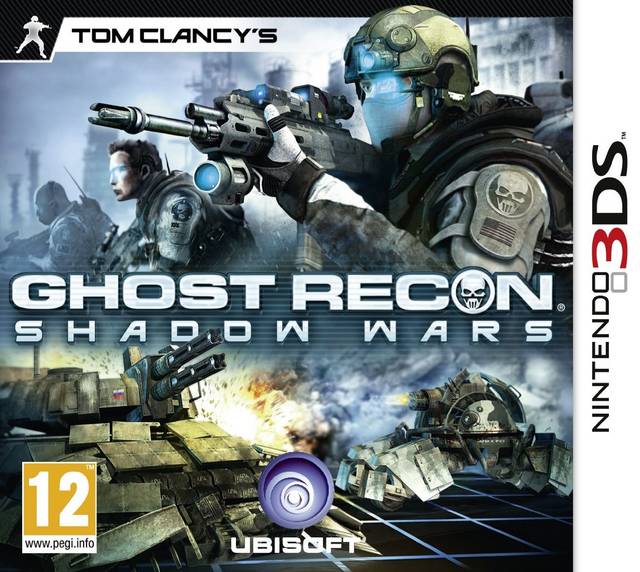 Ghost Recon: Shadow Wars is easily my favourite game on the 3DS so far, and without doubt the best of the 3DS launch games. Rather than being a first person shooter in the vein of its console cousins, Ghost Recon on the 3DS takes the form of a turn-based tactical shooter, and is all the better for it. The genre is perfectly suited to gaming on the go: you can just take a few turns on the bus before picking up where you left off later on, and I’m really glad they didn’t just attempt to squeeze a cut down version of a Ghost Recon FPS onto a handheld. Well done to Ubisoft for thinking outside the box.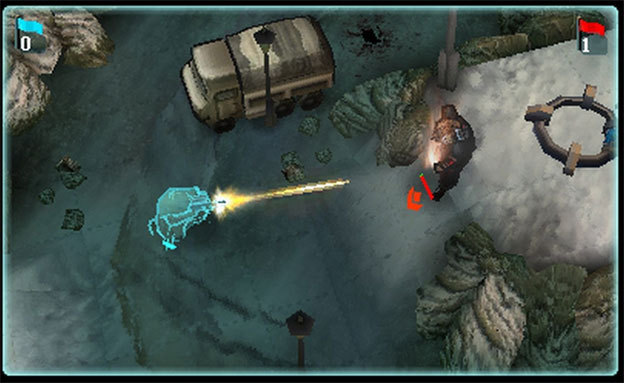


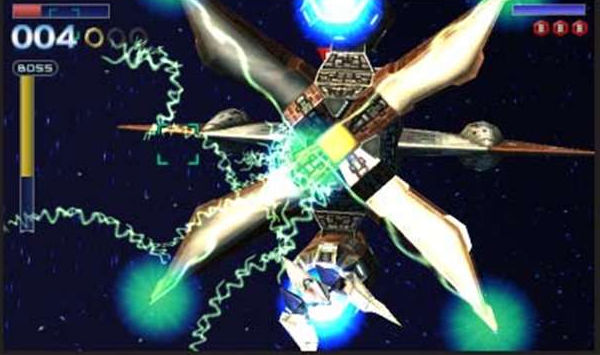
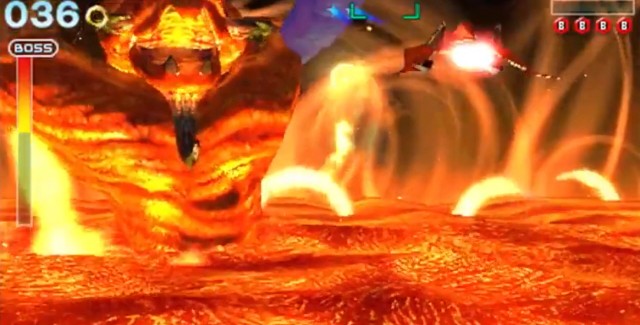

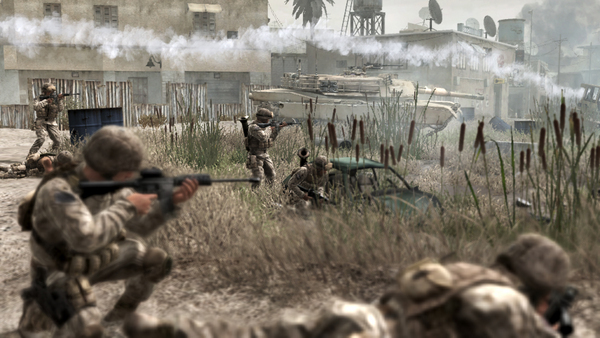
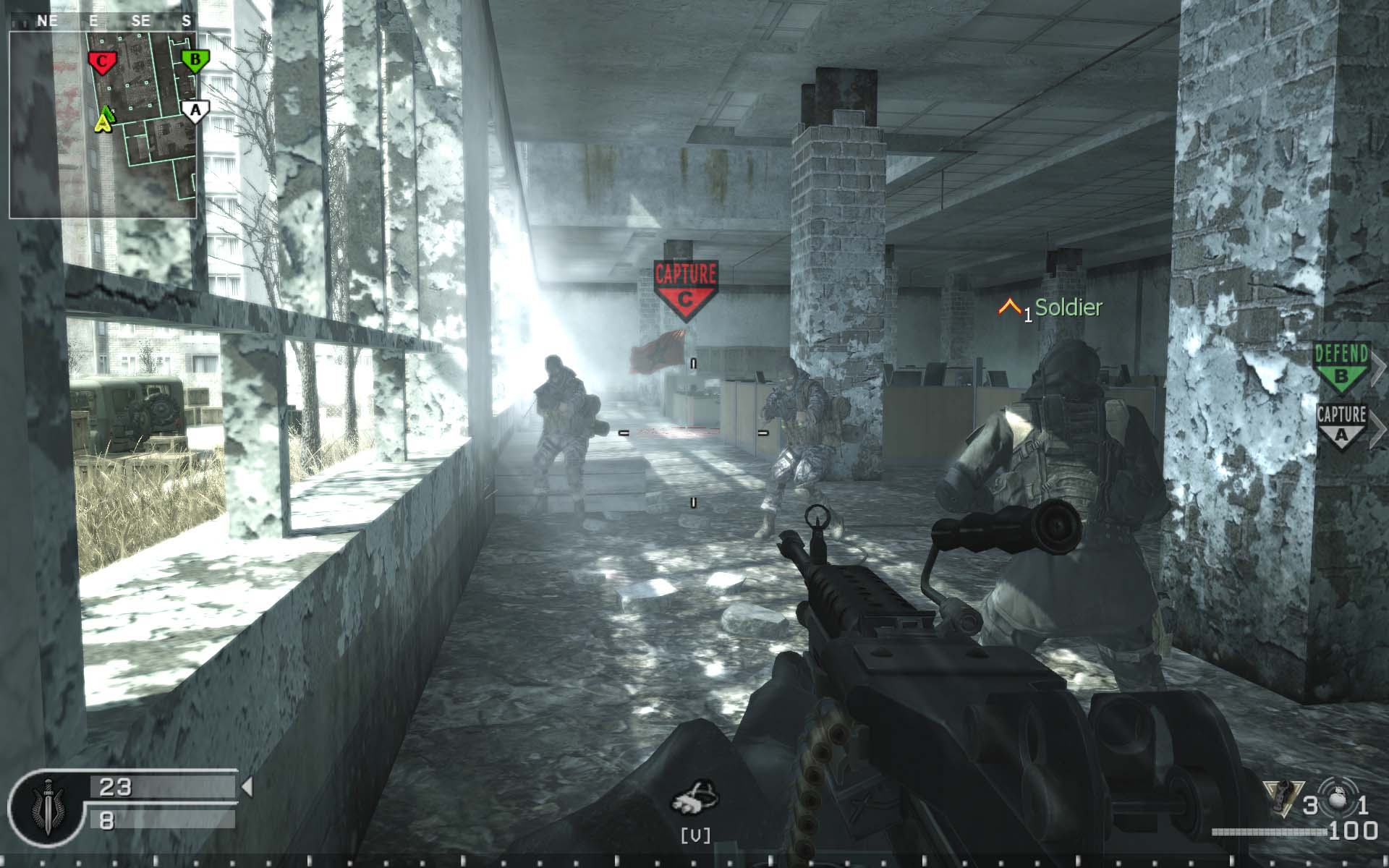



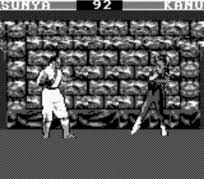
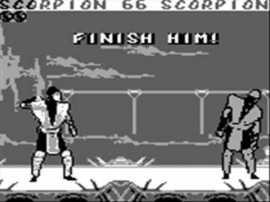




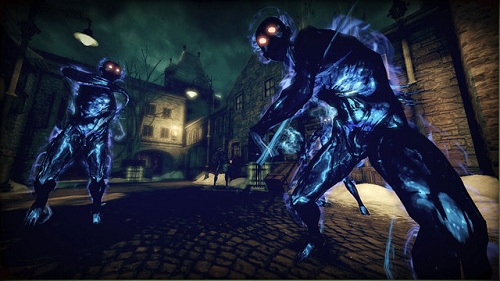
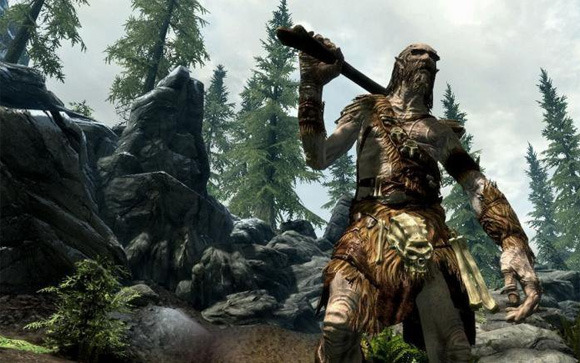
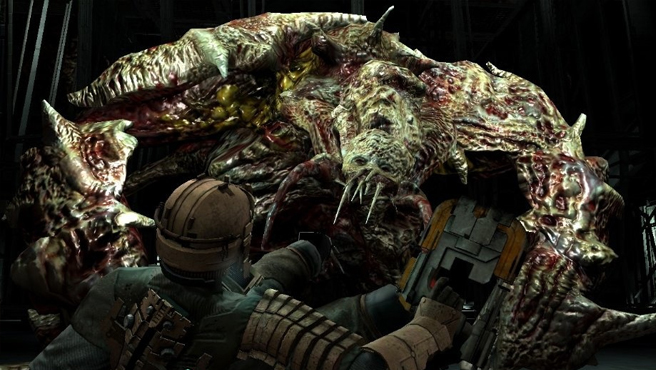

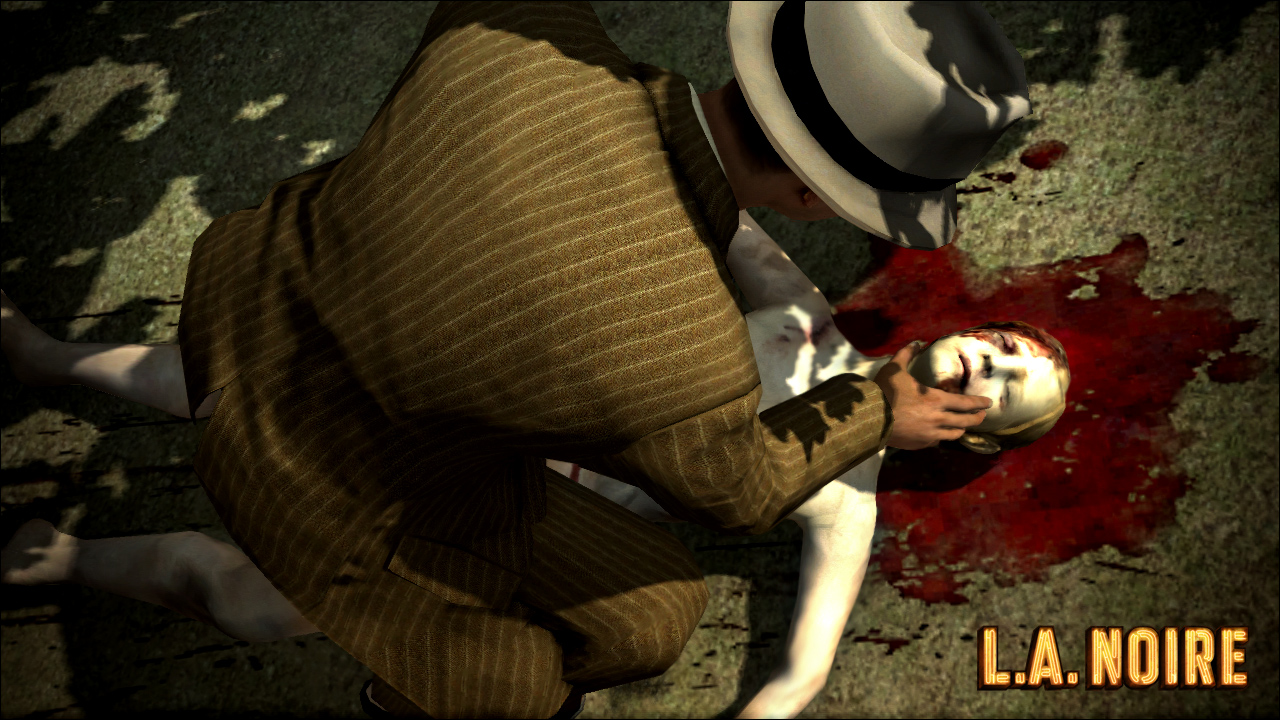
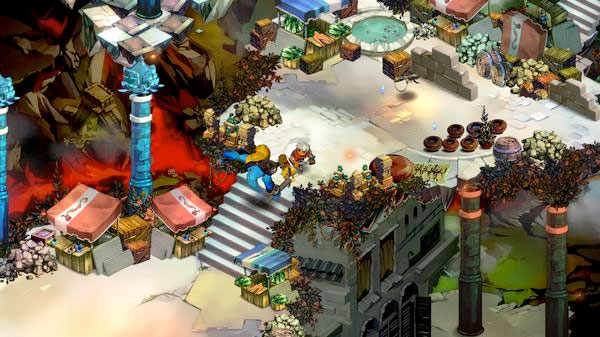
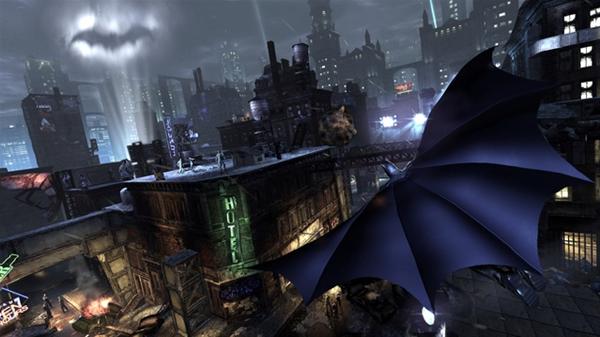
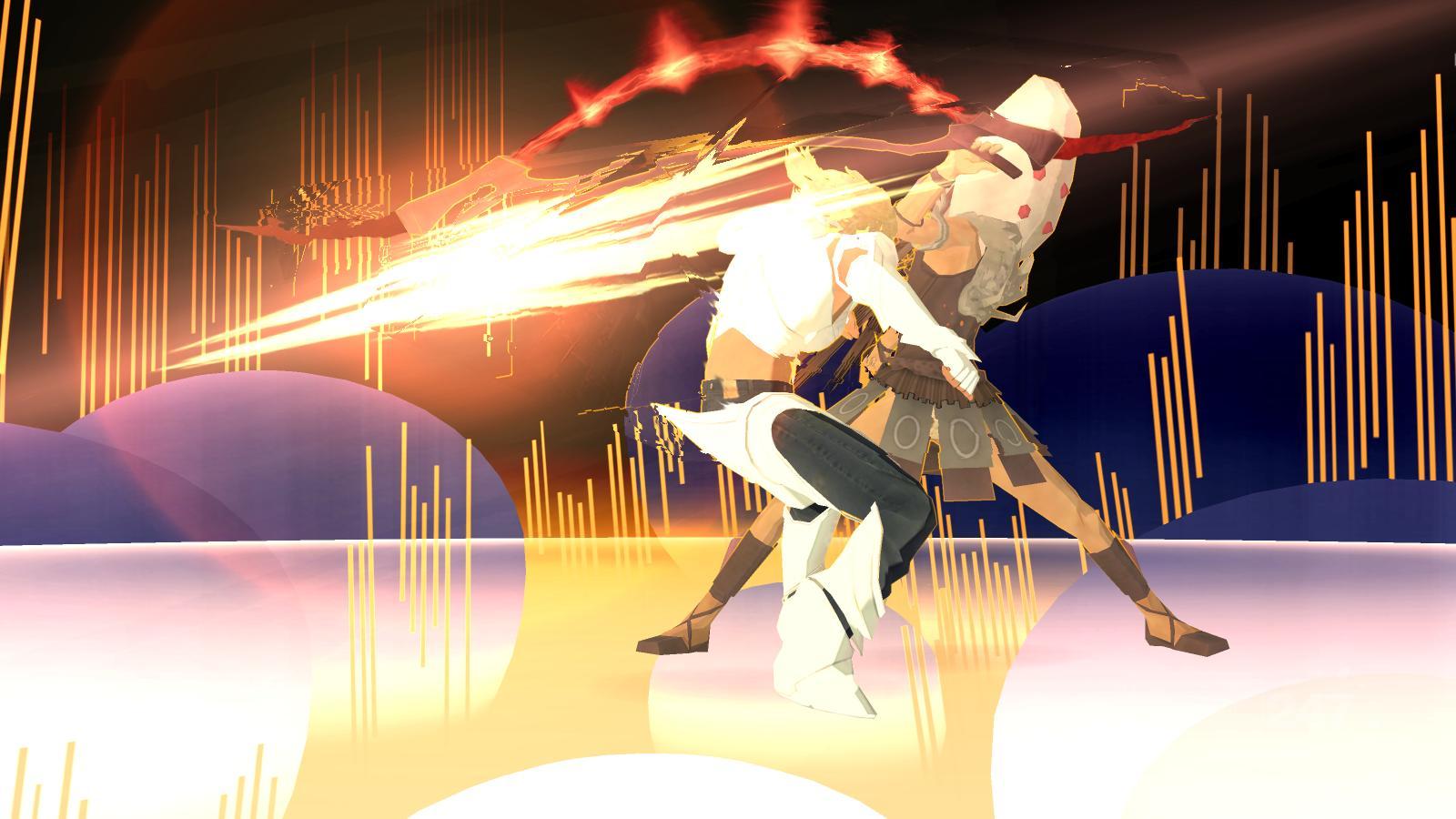
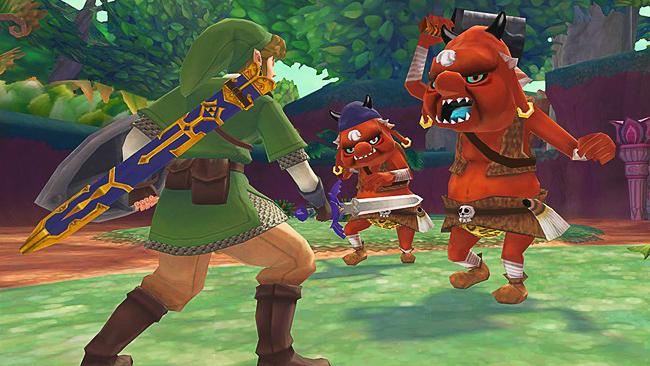



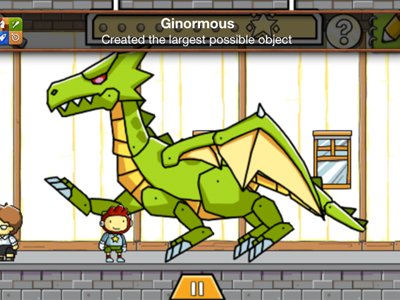
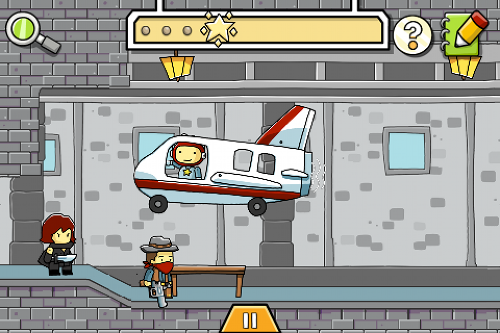

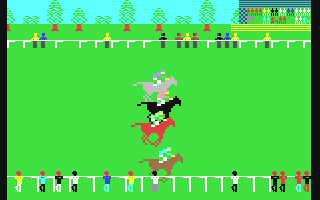


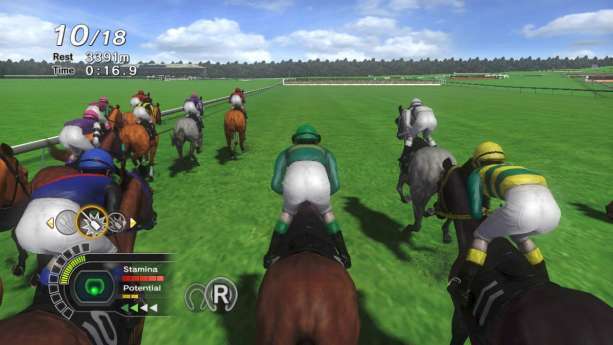

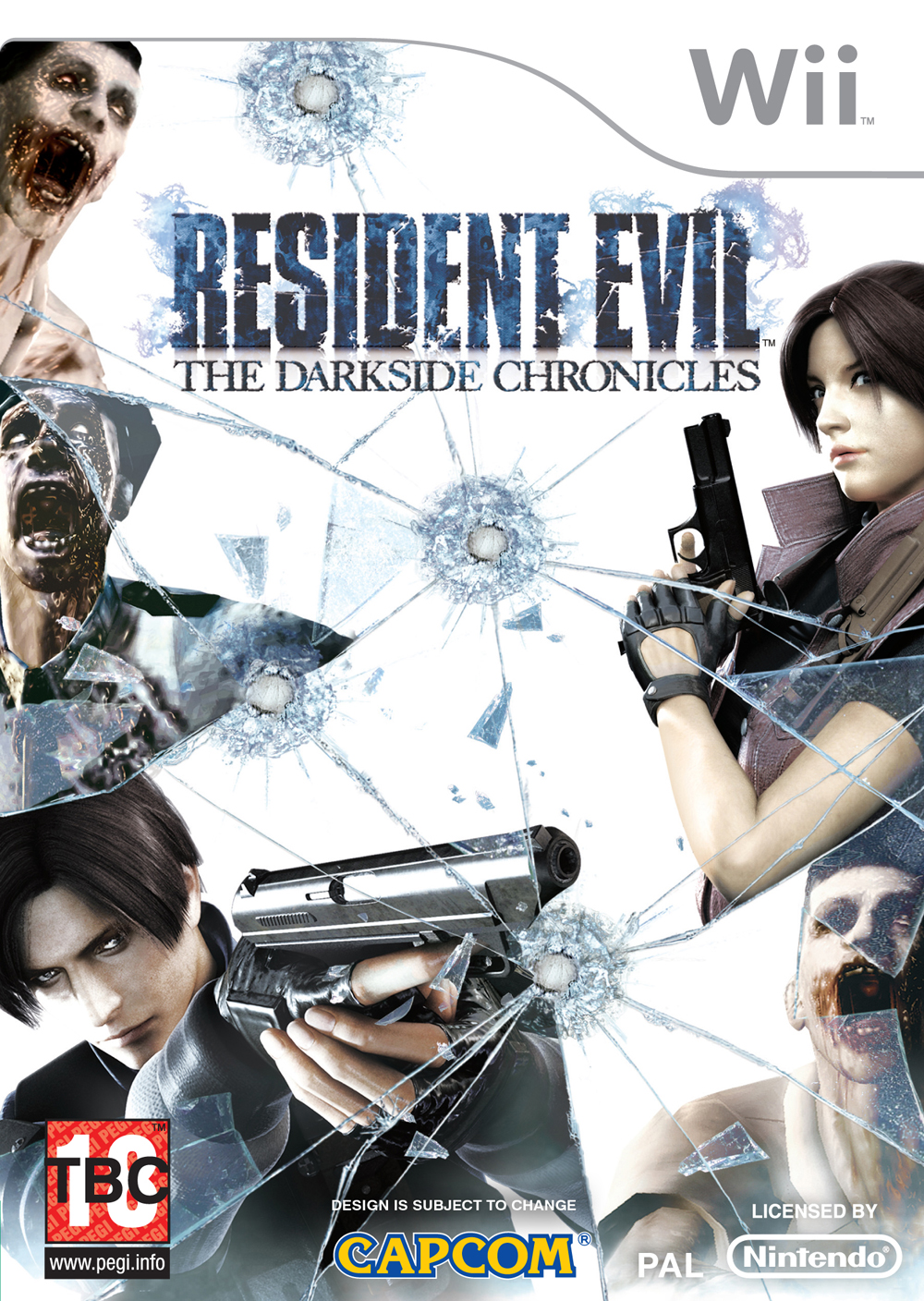

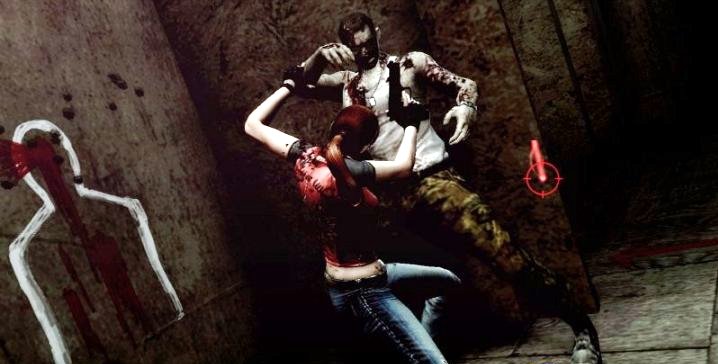


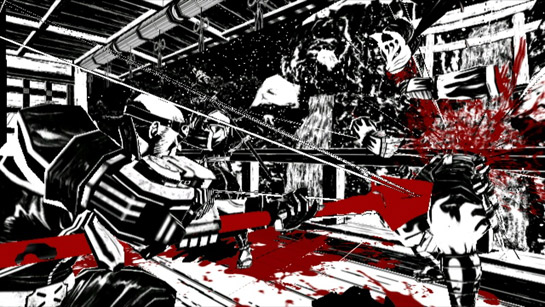


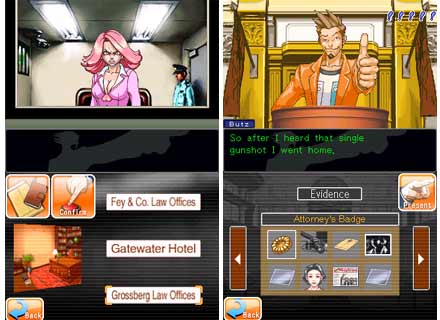



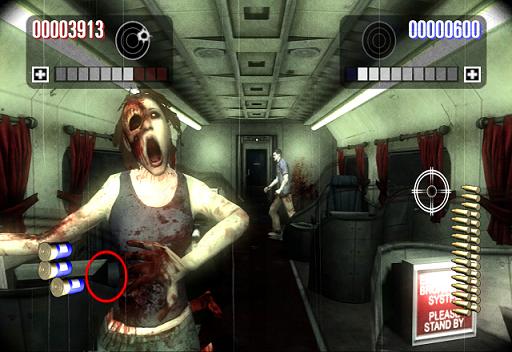



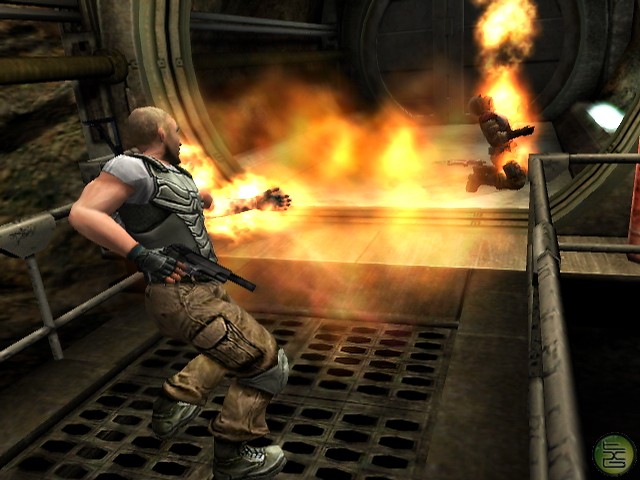





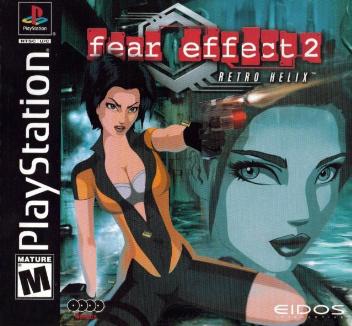

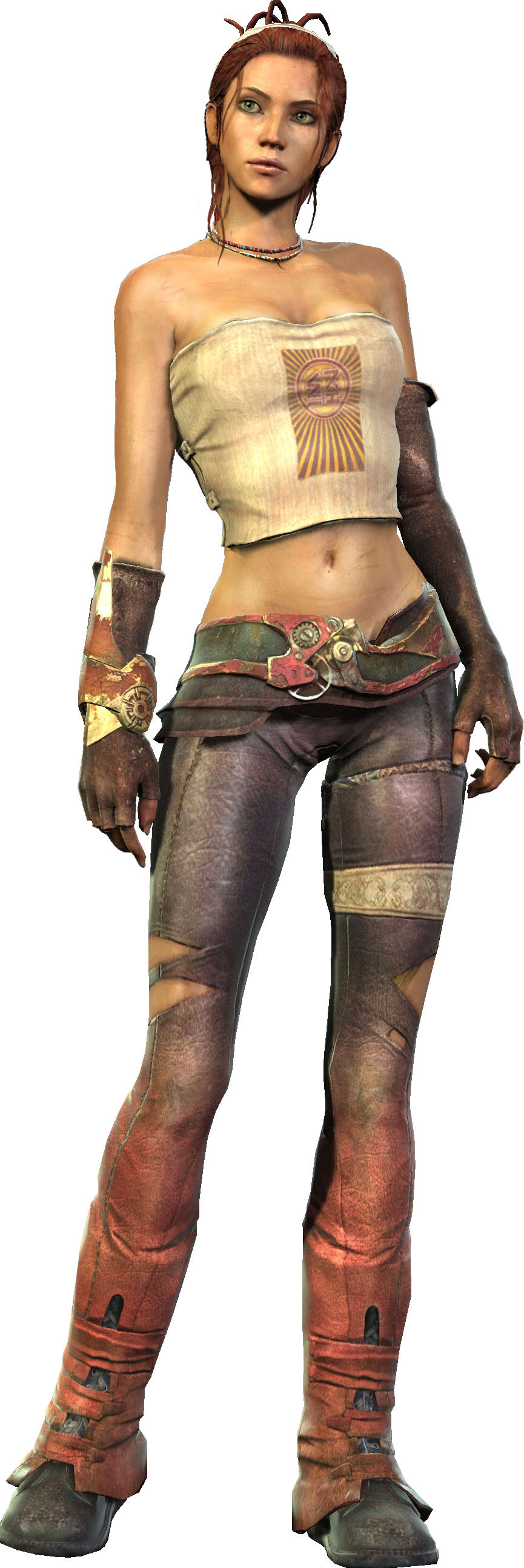


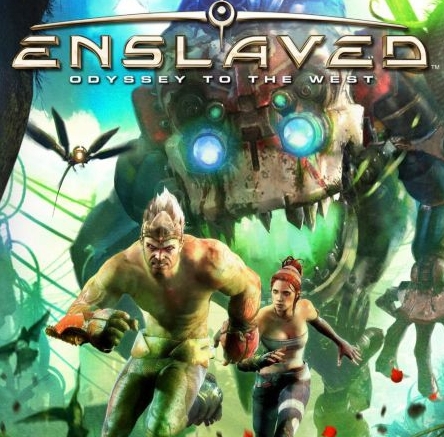


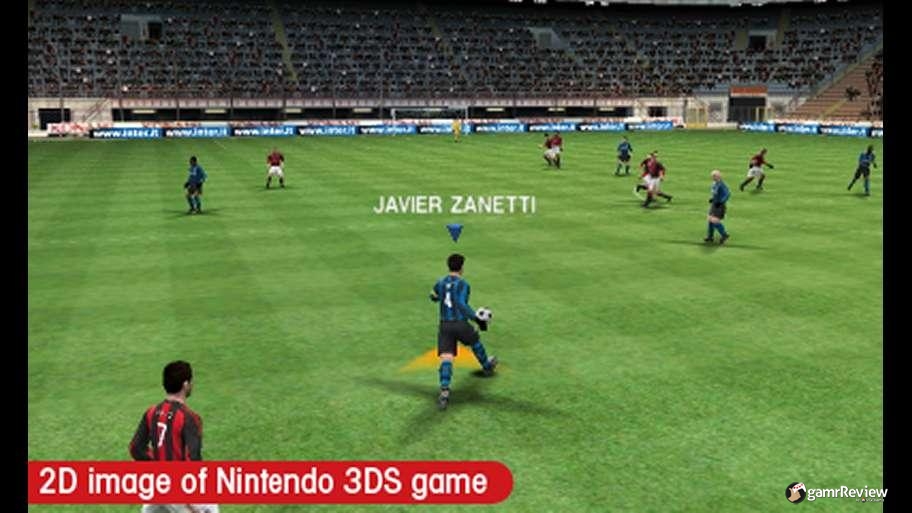


 A MOST AGREEABLE PASTIME