• Review: Flinthook (Switch)

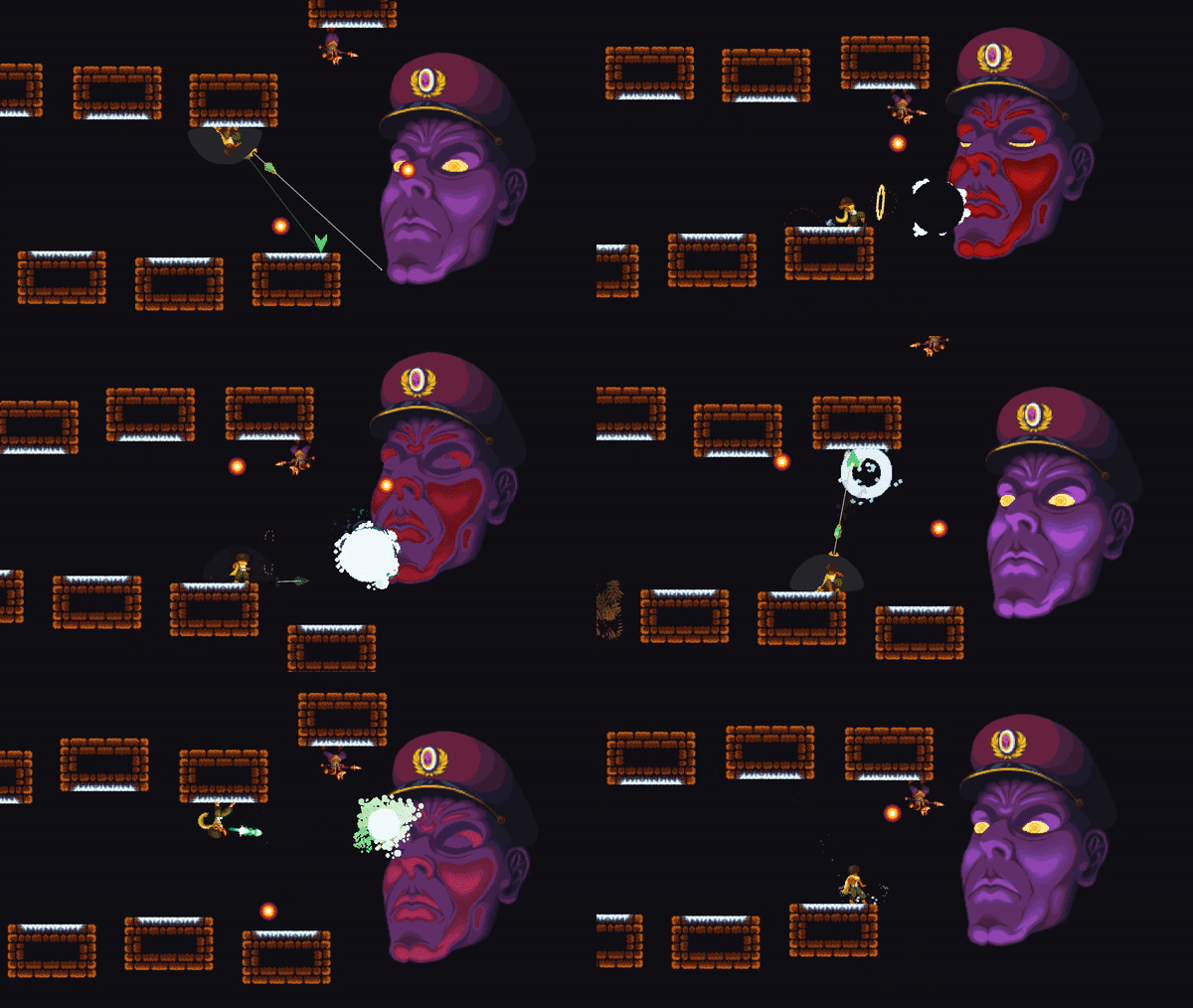
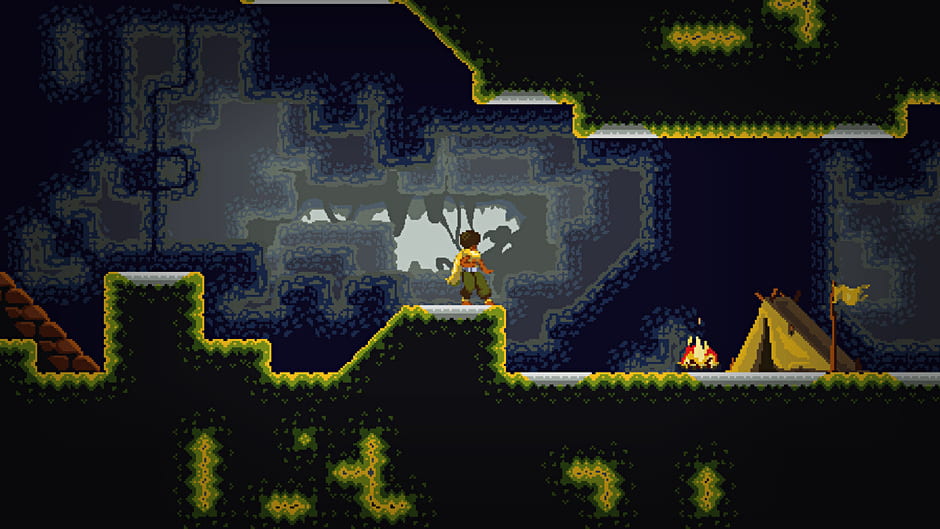
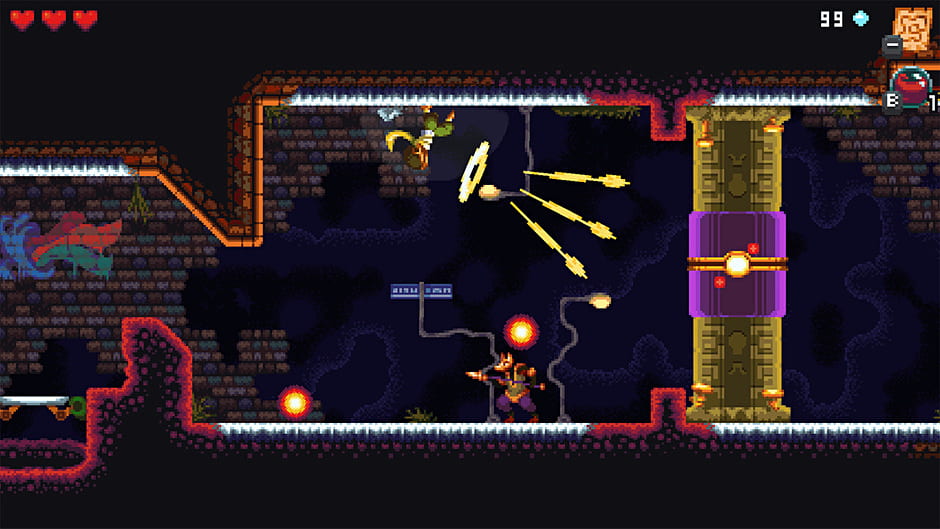
    If Mega Man, Bionic Commando and Rogue had a baby, it’d be Flinthook. I usually try my hardest not to make lazy comparisons like that, but it’s what I think every time I boot up the game. Also worth noting: those are awesome games and a combination of the three means that Flinthook is an amalgamation of greatness.

    Flinthook has a solid and enjoyable gameplay loop. You star as a cartoony space captain who plays the part of an intergalactic Robin Hood: robbing rich pirates of their plunder to, uh, better your own situation. You do so by boarding various procedurally generated spaceships, relieving them of coins, power-ups and collectables as you work your way up to one of the heads of the eponymous Cluster Clan. Rinse, wash, repeat. This in itself is a fun concept, but when you look at the disparate parts of Flinthook and how they work together, it’s hard not to admire it from a different level.

    At its core, Flinthook is a platformer. The good captain is a marvel to control, which in itself sets the game above most others. His jumping is very precise and weighted, which is where the Mega Man comparison comes in. It’s focused and comfortable, meaning movement feels second nature rather quickly. Everything else in his repertoire feels perfect, too: a hookshot you constantly use to propel yourself around in magnificent fashion, a blaster that feels solid and destructive and can shoot in any direction, and the ability to slow down time to get past barriers and sticky situations alike. Even though Flinthook never pushes beyond this move set, the controls feel so fantastic that the limited options never get old.

    The next layer to the game is the distinct and entertaining stages. Each gets more complex as you go on, as you work your way to the pirate boss skulking at the end of the level. They are built from a random assortment of ‘building blocks’: pre-constructed rooms that are tacked together to make a unique ship. Even as busy and detailed as they are, the repeated visual design of them could wear thin for some players after a while – but I liked the familiarity. Up until the final encounter you have the option to pick from an assortment of ships, with modifiers underneath them letting you know what to expect from each choice. Some are more combat focused, others have shops you can peruse, and so on. This keeps Flinthook exciting, with the only dampener coming from dying and have to work your way back up the stage.

    The influence of Rogue is felt in the conceit of the game. Namely that you get one chance to get to the pirate boss and if you don’t, well, sucks to be you. Being sent to the bottom of the ladder can be a hard pill to swallow, but unlike Rogue’s actual mechanic of forcing you to start from scratch, in Flinthook you can level up the captain to the point where you can blast through levels by sheer force of will alone. There are slots in which you can add power-ups that change the way Flinthook approaches each new run. You can extend his life or change his weapons, give yourself a health boost at the start of each new stage or have barrels and such give you more money – and so on and so forth. Customizing Flinthook is an engaging and powerful mechanic, one that’ll make you really think about what you’re trying to accomplish, and perhaps even gamble a little bit on what you think you’re capable of doing.

    It sounds like a cliché to say it, but the loop of solid gameplay, ever-changing stages and constant progression – even if you lose – makes Flinthook a slightly addicting experience. And the fact that it’s on the take-it-anywhere-you-never-ever-need-to-stop-playing Switch means it’s all too easy to succumb to that “one more run” mentality – after all, the console’s sitting right there, next to you on your nightstand or end table. The pull of becoming a space pirate is hard enough to resist as it is; having access to it at a moment’s notice makes it nigh-on inescapable.


    Flinthook is available for PC, PS4, Xbox One and Switch. We reviewed the Switch version.

    Disclosure statement: Review code for Flinthook was provided by Tribute Games. A Most Agreeable Pastime operates as an independent site, and all opinions expressed are those of the author.

    [amazon_link asins=’B01MS6MO77,B01MY7GHKJ,B078Y4FLCL,B01N1037CV,B071JRMKBH,B01MUAGZ49,B01N9QVIRV’ template=’ProductCarousel’ store=’mostagreeable-21′ marketplace=’US’ link_id=’de4e568f-3cf5-11e8-a7ab-1359ab4fa3a5′]

  • When coding goes wrong – amusing bug tales

    I interviewed ex-Linden Lab coder Yoz Grahame several years back for a feature about a secret Douglas Adams RPG that people had kept going for over a decade (still one of the most enjoyable articles I’ve ever written IMO). We were emailing the other day, and he told me a fantastic story about how an update to Second Life inadvertantly sent pet horses skating to their deaths.

    It was such a funny story that I thought it would be great to do a round up of weird bugs that have caused havoc in games, and I pitched the idea to PCGamesN. Little did I know that finding similarly excellent stories would be a tough task…

    Considering how short it is, I did a phenomenal amount of research on this article – chiefly because I kept coming up against dead ends. A forum might put me onto an interesting-sounding bug story, only for it to turn out to be deathly dull, incredibly technical or simply unverifiable. For instance, I found a great thread about an apparant bug that causes spells in Diablo II to fire in a star shape rather than a circle, all because of the substitution of a plus for a minus in one equation, but it was utterly impossible to confirm it.

    Still, I eventually managed to source five pretty good tales – although the sliding horse one is still by far my favourite:

    World of Warcraft blood plagues and religious fanatics in Civilization 6 – gaming’s funniest bugs

    Thanks to my old uni mate Chris at Unity for putting me onto the Treasure Island Dizzy bug – Chris, you’re a lifesaver!

  • Review: Burly Men at Sea (Switch)

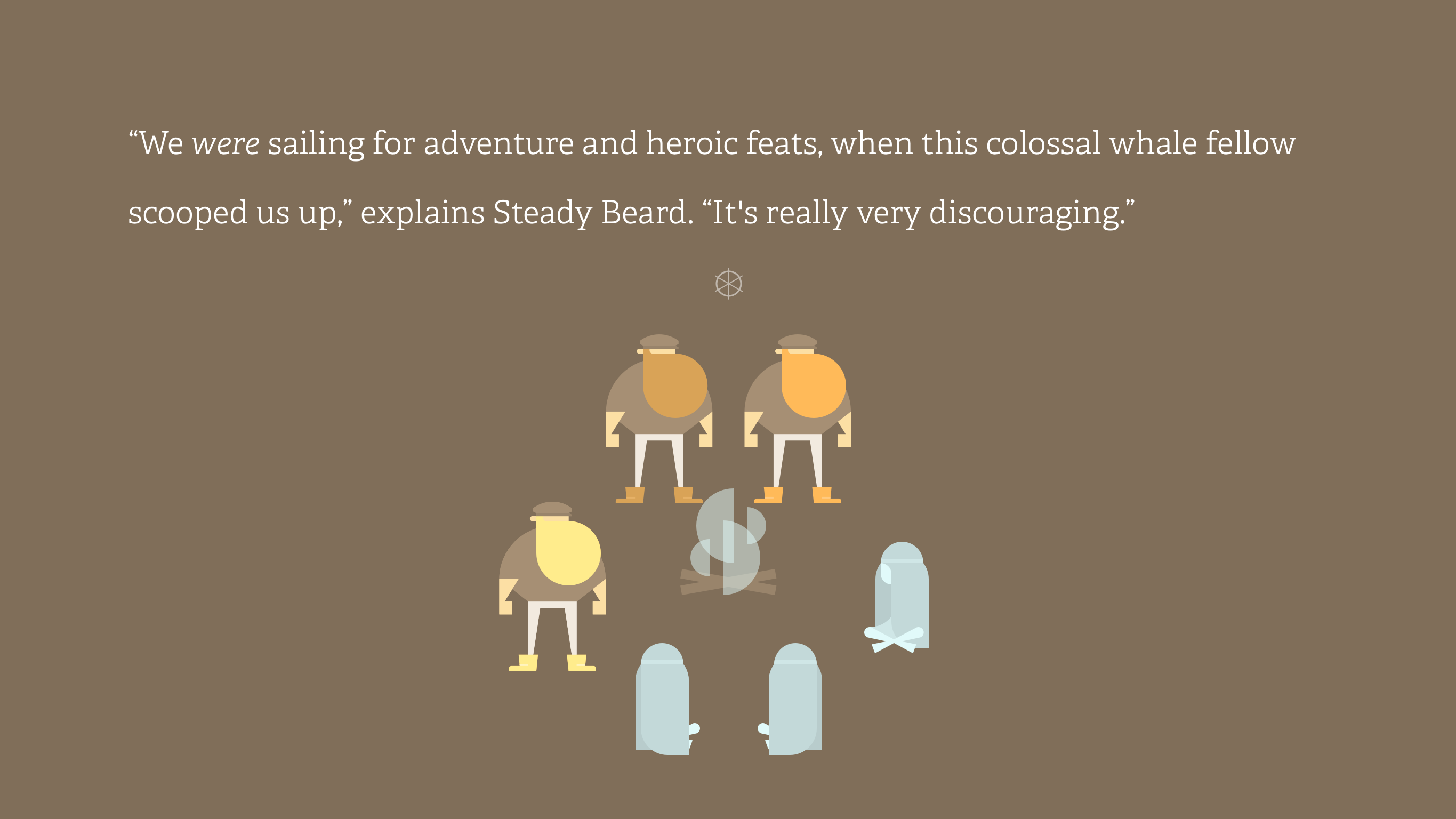
    Burly Men at Sea is a reminder that the best tales are those you create yourself. The game stars three bearded brothers as they haul ashore at a sleepy fishing village, clutching a message in a bottle. It contains a blank sea chart, and an old man informs them that they must search the ocean to fill in the blank space. Thus the burly men set off to look for adventure – and whatever they encounter becomes their story. And each time you play, the story is slightly different.

    Much like Old Man’s Journey, Burly Men at Sea is an interactive experience that sits somewhere between a video game and a child’s picture book – essentially, it’s a folk tale simulator. As you take the three brothers on their adventure, their journey is narrated via typewriter-font words that are full of expression, which is a big part of the game’s charm – as is the minimalist presentation with its basic characters and backgrounds, and homemade sound effects. In summary, Burly Men at Sea is a very inviting game – which is good, because it expects you to revisit it again and again.

    The game is meant to be played in one sitting, which isn’t difficult as you can work your way through it in 30 minutes or so. There’s a reason why it’s worth returning to, which I won’t spoil here, but even without that tantalizing hook you’ll want to come back to it time and again, the same way you’d return to a beloved and well-worn music album. Because you control the narrative (and sometimes the world), you can make each experience as unique as you want. The game is best played on Switch in handheld mode, as you can manipulate things more intuitively with a finger, but the pointer controls for the TV are also solid. Plus, sharing the experience with your family is easier that way!

    What you find at the end of your story is up to you; you decide what the brothers encounter and whether they learn anything. This was what I found so magical about Burly Men at Sea; rather than demanding that the player learn to master its systems, the game instead expects you to learn something about yourself. Games that are not only enjoyable but also encourage you to pause for self-reflection are few and far between. That’s reason enough to play Burly Men at Sea – you won’t regret it!


    Burly Men at Sea is available for PC, Mobile, PS4, Vita and Switch. We reviewed the Switch version.

    Disclosure statement: Review code for Burly Men at Sea was provided by Seaven Studio. A Most Agreeable Pastime operates as an independent site, and all opinions expressed are those of the author.

    [amazon_link asins=’B071JRMKBH,B01N1037CV,B078Y4FLCL,B01N9QVIRV,B01MY7GHKJ,B01MS6MO77,B0711RJQBP,B01MUAGZ49′ template=’ProductCarousel’ store=’mostagreeable-21′ marketplace=’US’ link_id=’615c7272-3cac-11e8-8181-3b45129bd0b3′]

  • Midnight Deluxe works a bit like Angry Birds, but without all the pigs to destroy. Or golf but with no golfer and a square ball. The basic aim is to fling your smiling white cube towards the glowing exit without getting it impaled on spikes, fried by lasers or otherwise killed in various horrible ways. It’s pretty good fun.

    The controls are impressively precise, with the analogue stick used to gauge the level of power – you just hold it in the direction you want to catapult your square and then press X to release. The single-screen levels usually have a fairly obvious route to the way out, but the skill is in gauging the right amount of power and the direction of your jump to reach a high ledge or avoid obstacles like bottomless pits.

    I flew through the initial levels, but later on there were some that left me scratching my head, faced with a seemingly impossible to reach exit. Still, a bit of patience and some trial and error would always end up birthing a ‘eureka moment’ as I finally figured it all out.

    And patience is something you’ll definitely need – several levels require incredibly precise leaps that took me dozens of tries. So it’s a good thing that retries are instant with basically no loading whatsoever.

    I did find it all whipped by rather too quickly though. Within an hour I’d reached level 42 out of 70, and I’d also unlocked every single trophy in the game without really trying. Indeed, if you’re after a quick way to boost your trophy score, then this is perfect. But the game’s relative brevity is hardly ideal if you’re after value for money. Still, it’s not exactly expensive either – it currently goes for £3.99/$4.99 on the PSN store. And there’s always the option to replay levels to get the full three stars for finishing with the minimum number of jumps.

    But… I found that I didn’t really want to take that option. After booting up my PS4, I might hover over the Midnight Deluxe icon, thinking perhaps I could raise my score on one of those early levels. And then I’d always think I’d have much more fun fooling around in Monster Hunter World or getting a bit further in Deus Ex: Mankind Divided, and Midnight Deluxe would be quickly forgotten about.

    And that’s the problem really. Midnight Deluxe feels like a mobile game, an ideal time waster for when you have five minutes to kill before the bus comes – yet bizarrely, it’s not currently available on mobile phones. It might be better suited to the portable nature of the Switch and Vita (which it’s also available on), but on PS4 I wondered why I would choose to play this over the many much-more-involved games I have in my collection.

    It’s a problem of perception, I suppose. When I settle down in front of my PS4, after Merriweather Jr is tucked up in bed and the washing up is finally finished, I want to lose myself in an epic game for a few hours before bedtime – not flick through a series of 30-second puzzles. Midnight Deluxe is a fun little golf-like puzzle game, but it feels out of place on the big screen – if it sounds like your cup of tea, you’d be best off buying it for Switch or dusting off your old Vita. Or even waiting for the surely inevitable port to mobiles.


    Midnight Deluxe is available for PS4, Vita and Switch. We reviewed the PS4 version.

    Disclosure statement: Review code for Midnight Deluxe was provided by Ratalaika Games. A Most Agreeable Pastime operates as an independent site, and all opinions expressed are those of the author.

  • The closure of Grainger Games – as told by the staff

    I was very sad to hear that Grainger Games was set for closure. It was a great chain, and I went to my local shop regularly. But it struck me that however sad I was feeling, it must be nothing compared to how the shop staff must be feeling. For a start, they’ve all lost their jobs at very short notice.

    Whenever big retail closures like this happen, the headlines are all about how many millions the company owed, or what the company was doing wrong. But the people who are the most affected – the staff – barely get a mention. So I decided to interview some of the Grainger employees to find out how they feel about the whole thing and to ask them what they plan on doing next. The article has just been published on Kotaku UK:

    The Final Days of Grainger Games — As Told By Those Who Worked There

    The people I spoke to emphasised just how close-knit Grainger was, and how it feels almost like a family splitting up. The sudden closure has also left them much worse off – the two who have found another job have both taken a pay cut. And Stuart’s wife has had to cut short her maternity leave to go back to work to support their four kids.

    These are difficult times, and I wish all ex-Grainger employees out there the best of luck for the future.

  • Review: Last Day of June (Switch)

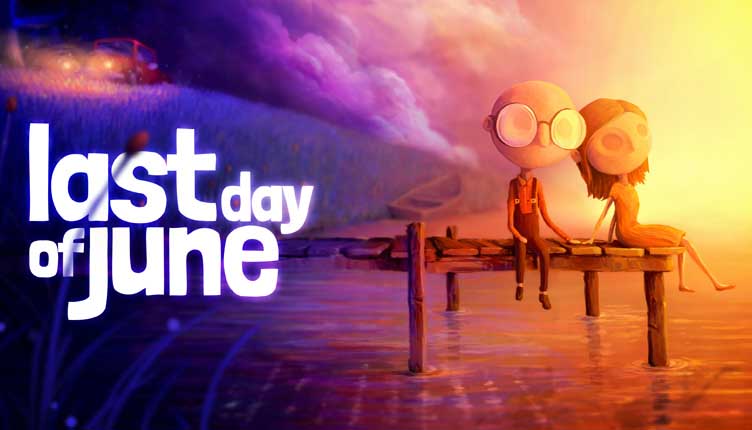
    I think at some point in life most people will ask the question, “If I could go back in time and change something, would I?” Under most circumstances this is usually to change something minor, like taking back what you said so you don’t hurt someone, or putting money in stock that at one point was pennies on the dollar and is now worth millions. Last Day of June takes this concept and turns it into a heady adventure game where the goal of protagonist Carl isn’t something inconsequential like giving yourself winning lottery ticket numbers, but life and death itself.

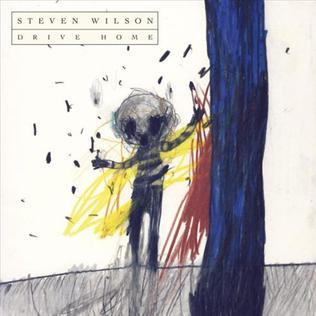
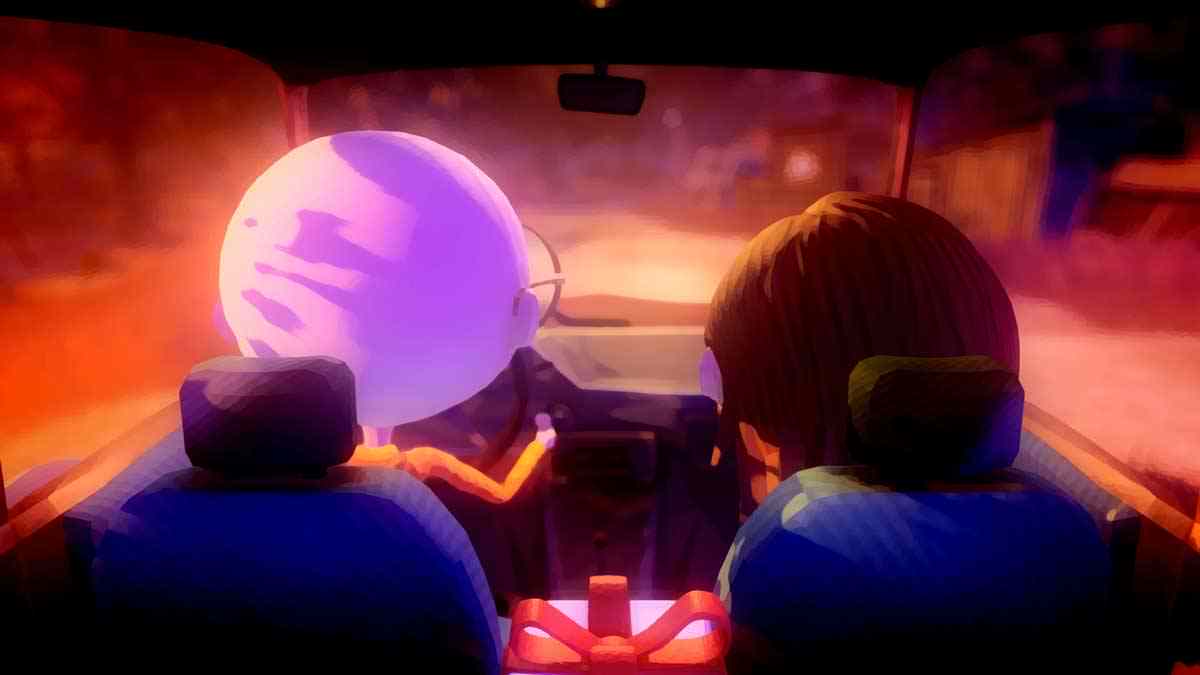
    Last Day of June tells its entire story wordlessly, with hollow-eyed yet endearing characters who make simple sounds, but who intimate their feelings clearly. The game begins with Carl and the love of his life, June, spending time together on a date. As Carl and June leave, the rain begins to pour; their car then careens off the road, and we move forward to see Carl at home, heartbroken and wheelchair-bound, without June by his side. Based largely on Steven Wilson’s EP Drive Home, Last Day of June wears its inspiration on its sleeve; from its painterly aesthetic to its haunting soundtrack, it is an homage that makes it distinct in the world of gaming.

    Steven Wilson’s Drive Home EP.

    As he dejectedly makes his way through life without the love of it, Carl stumbles into June’s closed-off studio and discovers he can somehow go back in time and relive the moments of the other people in his little hamlet who had an effect on that fateful day. Herein lies the rub.

    The village that Carl and his neighbors reside in is a wonderfully idyllic place, ripe for exploration and admiration. It’s filled with little details that make it feel lived in, and sometimes you’re even rewarded with discoverable memories that flesh out the characters a bit more with painted stills of their everyday life. However, the actual game part, as inventive as it can be at times, leans on the dusty old adventure-game mechanic of hunting for items and then figuring out how to use them to progress. This can ruin the pacing at times because – also like the adventure games of old – this process can be obtuse, and you’re often left wandering around trying to figure out the next step.

    In order to give Last Day of June legs, the game has you reliving the moments of four different neighbors, and on occasion you have to go back to a previous completed segment to “fix” a moment for another. It’s a curious design choice, one that is equal parts intriguing and frustrating, as again it can lead to aimless wandering and confusion. However, you’ll want to see Carl’s story through to the end because his plight is so heartfelt, and the people he lives with are just so gosh-darned endearing.

    Whether or not you would take an opportunity to change your past is always an interesting concept; whether or not you actually should is another story. Although Last Day of June may mire itself in tired adventure-game tropes from time to time, it pushes boundaries in storytelling, animation and heart.


    Last Day of June is available for PC, PS4 and Switch. We reviewed the Switch version.

    Disclosure statement: Review code for Last Day of June was provided by Wonacott Communications. A Most Agreeable Pastime operates as an independent site, and all opinions expressed are those of the author.

    [amazon_link asins=’B0758GJJFX,B078Y4FLCL,B071JRG7RW,B01N9QVIRV,B01MS6MO77,B01N1037CV,B0721325R7,B01MY7GHKJ,B071JRMKBH’ template=’ProductCarousel’ store=’mostagreeable-21′ marketplace=’US’ link_id=’6e8951c7-3419-11e8-8198-072c27256ce9′]
  • Grainger Games has gone – another tragedy for the already hard hit north-east

    Grainger Games in Bishop Auckland

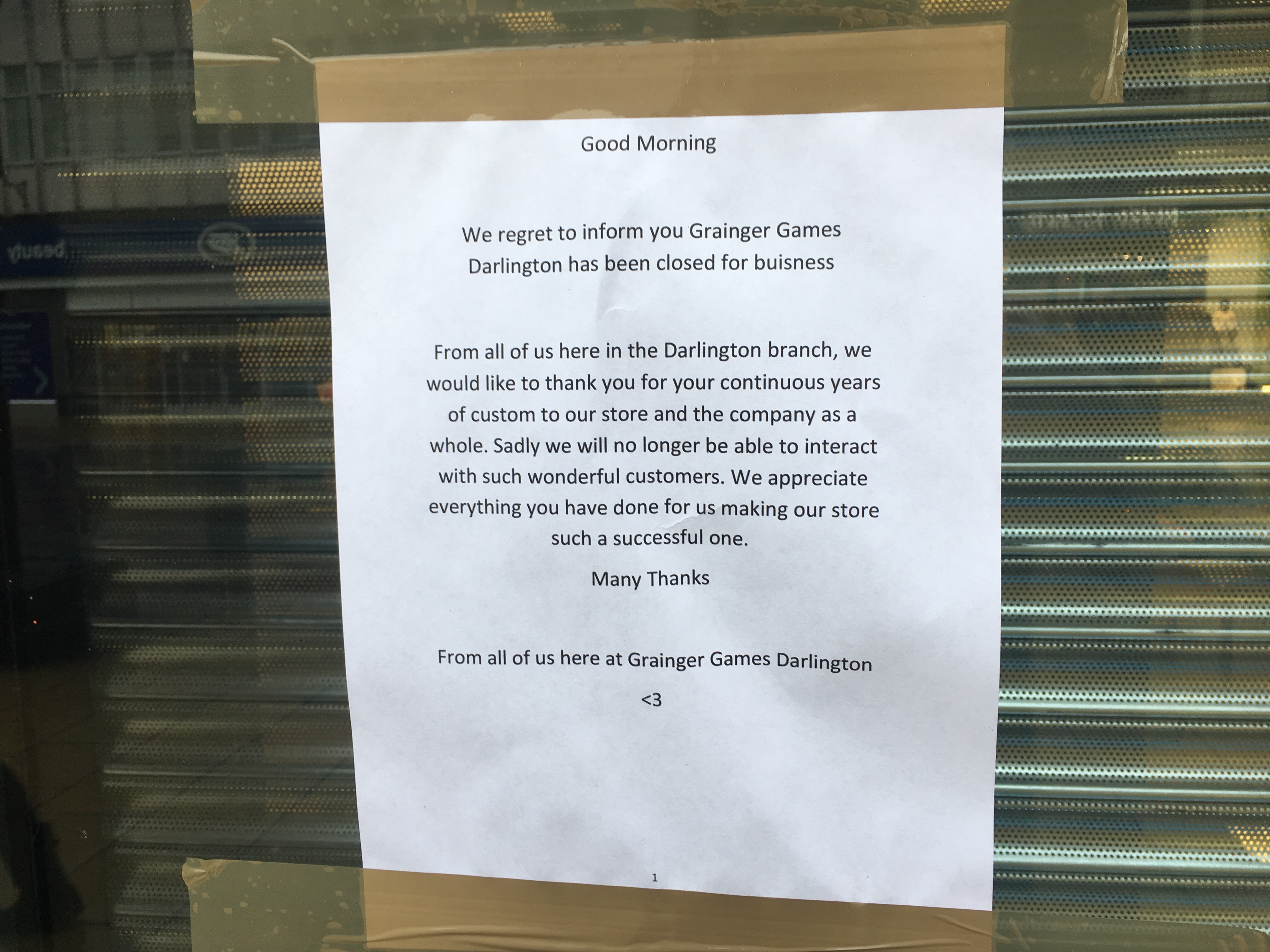
    Well that’s it. After yesterday’s surprise announcement that 21 of its stores would close, Grainger Games has shut the remainder today, according to Eurogamer. I feel very sorry for all of the employees who are now suddenly out of a job – and according to the comments on this Kotaku UK article, some weren’t even aware that they were being made redundant until they read it on the news.

    It seems that there won’t be a closing down sale either, with the remaining staff being ordered to pack up all of the stock. It means there won’t even be a chance to say goodbye to my local store, to wander around it one last time and commiserate with the staff. It might sound trite to say it, but it feels like someone I know has suddenly died.

    Grainger Games has been a north-east success story – it started out as a market stall in Newcastle and grew to a total of 67 stores, mostly in the north of England. I discovered Grainger Games for the first time last year, when I moved from Scotland to the north-east and was pleasantly surprised to discover this local chain with knowledgeable staff and competitive prices. And now, less than a year since I moved, it’s all gone. Just like that.

    Grainger Games in Bishop Auckland - interior
    Grainger Games in Bishop Auckland – now closed.

    It feels like an especially bitter blow because North-East England, where my partner hails from, has had an utterly shit time of it for the past two decades, and this is just the latest in a long line of terrible blows. The north-east as a whole has suffered from heavy industry and coal mines shutting down over the past few decades, and the recession of 2008 hit the area particularly hard. Whereas other parts of the country recovered a few years on, it feels like nothing has changed at all in the north-east. House prices quickly bounced back after dipping post-2008 in most other areas, but in the north-east, house prices haven’t budged at all, or have even fallen. In fact, the average house price is just £123,000 in the north-east right now – it was £139,000 in 2008. It’s no wonder the majority of voters up here went for Brexit – what’s the point of voting for everything to stay the same, when things are actually getting worse for you?

    In this context, the closure of Grainger Games is a particularly bitter blow. You could once point to the chain and say, “Look, here’s a north-east success story,” but now it’s gone, along with all of the other shops that once crowded the town centre. I mean, Starbucks pulled out of Darlington just the other month. Starbucks! Starbucks, who are known to operate two or three (or even four) outlets in the same street, now don’t have a presence in a town of 100,000 people. McDonald’s left Darlington, too. MCDONALD’S! I mean, come on.

    So yes, the closure of Grainger Games feels like another bitter blow for an already struggling area. And I for one am extremely sad to see it go, not just because I loved the store, but because it leaves yet another hole in the already hollowed out north-east high street.

  • As Grainger Games teeters on the brink things are looking gloomy for video games on the high street

    Grainger Games in Bishop Auckland

    There was some very sad news this morning as Grainger Games shut 21 of its 67 stores with immediate effect. The chain is primarily based in the north east of England, and it’s one of only three major video game store chains left in the UK, along with GAME and CEX.

    Last week, Grainger Games said it was having trouble sourcing credit – basically, lenders have whacked up their rates because they’re not confident they’ll get their money back. Not a good sign. And now with these store closures, which amount to almost one-third of the stores shops, it seems Grainger may very well be done for. The fact that the store’s website was taken offline today is another worrying sign.

    I’m a big fan of Grainger Games – I’ve written before about their great customer service and reasonable prices – so it would be a great shame if the chain disappeared from the high street. And it makes me wonder how long video game stores have got left, something I wrote about for GamesRadar not long ago. I wouldn’t be surprised if most game shops disappeared in the next five years – especially if Sony and Microsoft continue to aggressively push digital games. Independent game stores have expressed alarm at the advent of Microsoft’s Game Pass, aka Netflix for games – it’s basically another nail in the coffin for physical retailers. One store owner told GamesIndustry.biz that: “Essentially, it’s made [our Xbox business] worthless overnight.”

    Chris Bowman from Console Connections, which is near me in County Durham, said this in the same article: “People still want boxed product but with the price of an Xbox Game Pass, how long will they continue to do so? If Sony and Nintendo were to follow suit, it’s game over.” And with new consoles expected to be announced in the next year or two, I reckon there’s a good chance that all of the major players might start up some sort of Netflix-style game service. I mean, why wouldn’t they? It’s essentially taking money directly from consumers without having to pay a cut to retailers or distributors.

    I interviewed Chris for a Eurogamer article, and he was very worried about the falling margins on new games and the rise of digital – retro games seem to be one of the few areas that still bring in real money. I really hope that Grainger Games and independent stores like Chris’s can find a way to keep going – it’s important to have places like these where customers can source expert advice. But I worry that their days are numbered.

  • Review: Dandara (PS4)

    Dandara is a metroidvania game with a difference – you can’t run, or even walk. The titular Dandara only has one method of locomotion: leaping from floor to ceiling.

    It’s a pretty novel take, and leads to dizzying levels where there’s no real difference between up and down. And once you get used to the unusual control system, you can zip through levels with dizzying speed. It’s very satisfying indeed.

    Dandara herself is a reference to a real-life leader of a slave revolt in Brazil back in the seventeenth century. Indeed, as this article notes, the game was pointedly released on 6th February, the same date that Dandara chose to kill herself rather than surrender to her oppressors.

    The start of the game sees Dandara being summoned to protect Creation from forces that seek to control it and impose order on it. I’ll admit that most of the story went a bit over my head, but I’ve since read up on some of the symbolism in the game, and it’s really fascinating – this article on the relationship of the game to capoeira is particularly interesting. Long Hat House is a Brazilian studio, and it’s refreshing to see a game so heavily based on Brazilian iconography and heroes. It also made me realise how so many games are narrowly focused on US or Japanese culture, reflecting their origins in the big studios of those countries. Even games like those in the Grand Theft Auto series, which are primarily made in Scotland, are chiefly about America.

    As in any metroidvania, the aim is to hunt down new abilities that open up new areas of the game world, and that also allow you to backtrack and grab items that were previously inaccessible. The levels are intricately designed, often looping back on themselves, and there are usually several choices of routes to take. But exploring can be perilous.

    The developers have implemented a campsite system that’s inspired by the bonfires in Dark Souls – get to a campsite and you can light a fire that acts as a restart point, and your hearts and energy will be completely recharged. You can also use the ‘Pleas of Salt’ you collect to power up Dandara at campsites, buying extra hearts or energy – both of which are essential to have a hope of surviving. Unlike, say, the Metroid games, enemies don’t drop energy when they die – the only way to top up your hearts when you’re exploring is by using an ‘Essence of Salt’. But you have to collect these essences – I had a total of seven by the time I finished the game – and they only get recharged when you reach a campsite. So once you’ve used all your essences and you’re down to your last few hearts, the only way to top up your hearts is to visit a campsite. But the catch is that after you visit a campsite, all of the enemies you’ve killed respawn. It’s a neat mechanic that balances risk and reward – keep going without stopping at a campsite and you’ll have an easier time with fewer enemies about – but if you push on too far and die, then you’ll be returned to the last campsite you visited minus all the precious Salt you collected.

    The only way to get back your Salt is to visit the place you died, where your floating body holds your valuable Salt collection – but if you die before reaching your body, then all that Salt is lost forever. It makes for some tense gameplay, especially as the places you die are usually some of the most challenging areas, so it’s not a simple prospect to recover your body and its precious Salt. Quite a few times I ended up howling in frustration as I died in a hail of energy bullets just short of Dandara’s floating corpse. It means you’re constantly trying to weigh up whether to press on or backtrack to the nearest campsite and cash in all your Salt for extra energy.

    Let’s get this straight – this is a challenging game, and no mistake. There were a couple of bosses that had me tearing my hair out, and eventually I resorted to watching YouTube videos to figure out how on earth to beat them. I managed to finish the game, but it was tough – and I noted that only 15% of players have actually managed to beat it so far, according to the PlayStation Trophies. The extra weapons you collect are also a bit of a mixed bag, and I found only one or two to be really useful in a fight.

    Having said that, I found Dandara to be thoroughly enjoyable, and it certainly comes highly recommended if you’re a metroidvania fan – just be warned that you’ll need some quick reflexes to go with your lust for exploring.


    Dandara is available for Linux, PC, Mac, Android, iOS, PS4, Xbox One and Switch. We reviewed the PS4 version.

    [amazon_link asins=’B01GW8Y9SM,B01GW8XOY2,B01EZA0D8Y,B071J1S2M7,B071QY1WLY,B01GKGVI8U,B01M21NR51,B06ZXTGFDR’ template=’ProductCarousel’ store=’mostagreeable-21′ marketplace=’US’ link_id=’66cf2a9a-3036-11e8-8793-3d14c8f01690′]
  • Review: The Long Reach (PS4)

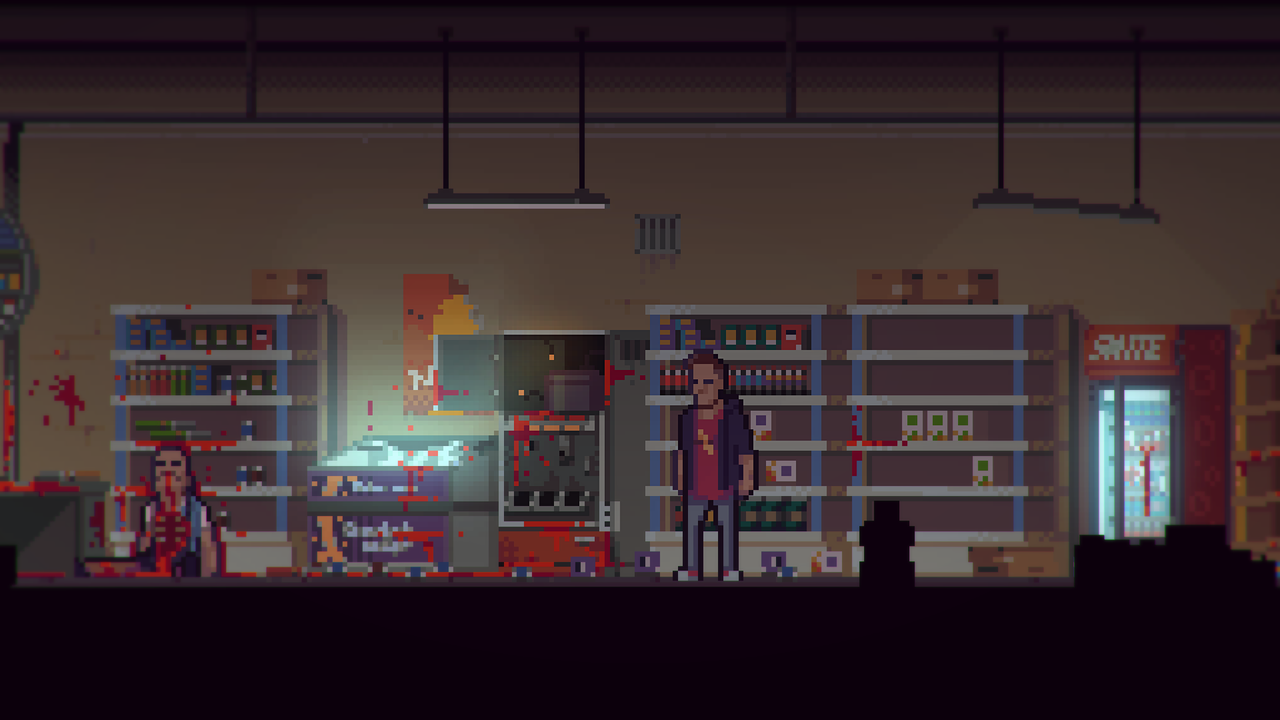
    I grew up on Amiga point and click adventures like Curse of Enchantia and The Secret of Monkey Island, so I felt at home playing The Long Reach straight away. There’s no pointing and clicking per se, but this is still very much in the same vein – scour the screen for objects, then work out where to use them to progress. It’s an old trick, but it still works beautifully.

    The game starts with a wonderful bait and switch that I’ll try not to spoil, but it’s a good indication of the quality of the story and writing throughout. In a nutshell, an experiment in a nefarious laboratory goes horrendously wrong, and the rest of the game is about the efforts to find out what happened and put it right. The dialogue is one of the game’s highlights – its packed with natural sounding conversation and deliciously funny reply options, with my only complaint being that I wanted more of it. The game does a great job of fleshing out the personalities of each character with a minimum of exposition, and I found myself engrossed in their stories, willingly clicking onward to find out what happens to all of them. And it turns out a great deal happens, with some wonderful and unexpected twists and turns along the way.

    You control your character directly, using the analogue stick to move them around the 2D corridors, and objects you can interact with are helpfully highlighted in yellow as you walk past them. This means it’s very hard to miss something important, unlike in the point and clickers of old – I remember once missing an object in Monkey Island that was about a pixel wide somewhere in the forest, and spending unhappy hours backtracking in vain. Thankfully there’s none of that here – and each area only encompasses a few screens, so if you do end up missing something, it’s fairly simple to check all the rooms for anything you’ve missed.

    Having said that, the game does fall afoul of the age-old point and click problem of the illogical puzzle. There were three points in the game where I had no clue about what to do next, and so resorted to consulting an online guide. Each time, rather than greet the solution with an “Aha, of course!”, I found myself muttering “Really?” – generally the sign of an unsatisfying puzzle. Yet having said that, most of the puzzles in the game are fairly straightforward, following the pattern of “What on earth do I do with this?” followed by “Well perhaps if I try…” and ending on a triumphant “Yes, did it!” And to be honest, I still haven’t played a point and clicker that doesn’t have at least one illogical puzzle – it seems they’re par for the course in this particular genre, unfortunately.

    The pixel graphics deserve a special mention – they’re brimming with character, and genuinely beautiful in some places – and downright unnerving in others. The music, too, although sparse, is well suited and even gives you a hint to a puzzle solution later on, a really nice touch that made me smile when I realised it. Overall, the game presentation is excellent, and despite getting stuck a few times, I thoroughly enjoyed the whole thing. In fact, I didn’t want it to end. Indeed, the game is fairly short – I finished it in around four hours I think – but what’s there is wonderful, and I’d happily play a sequel.

    Point and click adventures are rare these days, and good ones are even rarer, so this is a welcome find indeed.


    The Long Reach is available for PC, PS4 Xbox One and Switch. We reviewed the PS4 version.

    Disclosure statement: Review code for The Long Reach was provided by Merge Games. A Most Agreeable Pastime operates as an independent site, and all opinions expressed are those of the author.

    [amazon_link asins=’B015X1M30A,B017AGIDV4,B01AVZIAY6,B01M5GD1NB,B075LDKCRJ,B06WVNVLNX’ template=’ProductCarousel’ store=’mostagreeable-21′ marketplace=’US’ link_id=’61cbd399-2ee0-11e8-bc34-b94cd2c84f9f’]

  • The BattleTech arcade machines that were years ahead of their time

    A couple of months back, a collector in Texas got in touch with me after reading my article on the man who is trying to preserve the old Virtuality VR machines from the early 1990s. He told me he had a collection of old BattleTech pods that he was trying to repair and install in an arcade somewhere, and would I be interested in doing a story on them?

    The answer was a definite yes – until that point I’d never even heard of these BattleTech pods, but I was fascinated by what he told me. These things were years ahead of their time, and still seem futuristic even now. They are basically fully enclosed cockpits that mimic the controls of a giant mech, and people were using them in international 3D deathmatches back when the Super NES hadn’t even been released in the United States. The later versions – the so-called Tesla pods – were even more impressive, boasting seven monitor screens and switches for everything under the sun, right down to controlling the heat output from your mech. If you remember Steel Battalion and its insane controller back on the original Xbox, it was basically that, but far, far more impressive.

    GamesRadar+ just published the story – check it out for yourself:

    Battletech arcades were decades ahead of their time, holding global 3D matches before we’d even played a SNES – here’s their story

    I think my favourite detail is that one of the tutorial videos for the game featured Judge Reinhold, Weird Al Yankovic and Joan Severance, who played the villain in the Gene Wilder and Richard Pryor comedy See No Evil, Hear No Evil. It’s amazing, a real hidden gem.

    I’d really love to play on one of these machines myself, but sadly it seems the only ones left in existence are all in America, although a few groups take them to trade shows. One day, one day…

    [amazon_link asins=’B071J1S2M7,B01F84ZHMI,B071QY1WLY,B01EZA0D8Y,B01GW8Y9SM,B01GKGVI8U,B01M21NR51,B06ZXTGFDR,B078918FCH’ template=’ProductCarousel’ store=’mostagreeable-21′ marketplace=’US’ link_id=’7e160a81-2ed7-11e8-9b65-6990ca46b473′]

  • Review: Clustertruck (Switch)

    Never has a game’s elevator pitch been more succinct than in Landfall Games’ Clustertruck. It is, in a nutshell, a digital recreation of the old “don’t touch the lava” game that children played back in the day (and no doubt still do). Only couch cushions and mossy stones have been replaced with with semi-trucks, and the magma is simply not touching the ground and getting trampled by the stampede of Peterbilts. However, the fun isn’t just in careening over longbeds, but figuring out how to do so while they’re on the move in the hopes of reaching a goal out in the distance.

    None of this would work if the feeling of hopping from truck to truck didn’t feel right, and this is where Clustertruck absolutely shines. There’s a dash to give you a little extra oomph and a solidly super heroic jump, which are matched with a fantastic physics system that makes you feel in complete control, even when you’re hopping across a gaggle of 18-wheelers. There is a slight learning curve in that platforming in first-person can be kind of tough to pick up, but the need to look around at different angles isn’t a necessity. It would have been nice to be able to modify your control scheme to put jump be on a trigger button instead of a face one – that way you could control the camera while jumping. But even so, this wasn’t as big of an issue as I first assumed.

    What struck me when playing Clustertruck is how well thought out the stages are. There’s definitely a puzzle-like element to them, with a sense of theme as to what you’re supposed to do, whether that’s dealing with trucks charging towards you or jumping over fallen logs. I use the word ‘theme’ because even your best-laid plans can and often will fail because of a certain randomness – I think the trucks’ reactions to the environment and each other are a bit procedurally generated. Often I’d try to game the system by finding certain trucks that I thought would consistently make it through a gully or other obstacle, only to find that every now and again that truck would crash into a pillar instead. There’s definitely an element of luck involved, but it makes for a thoroughly gratifying high when you conquer a level.

    Clustertruck falls into the trial-and-error category, as you’ll constantly fail and retry stages. The idea is that most of the fun is from training yourself to think in different ways because of these failures – although at the same time you could fall into the trap of sabotaging yourself out of frustration from too many retries. Luckily the game is very quick to put you straight back into the action after a game over screen.

    The highest praise I can give Clustertruck is that when I intend to play it in small chunks before or after a bigger game, I end up binging on it for 30-60 minutes instead. That “just one more go” feel is prevalent – you know you can parkour yourself to victory if you just tweak the angle of that jump slightly or get the ‘right’ run of trucks. Whether you’re five or 40, staying out of the lava is a timeless and enjoyable activity.


    Clustertruck is available for Steam and Switch. We reviewed the Switch version.

    Disclosure statement: Review code for Clustertruck was provided by tinyBuild. A Most Agreeable Pastime operates as an independent site, and all opinions expressed are those of the author.

    [amazon_link asins=’B071JRMKBH,B01N9QVIRV,B07BBMV8MY,B077ZQYXY2,B01MY7GHKJ,B071JRG7RW,B01N1037CV’ template=’ProductCarousel’ store=’mostagreeable-21′ marketplace=’US’ link_id=’6fb28557-2dae-11e8-95a6-d985f8293e24′]

  • Review: Toki Tori 2+ (Switch)

    The idiom of “you can’t judge a book by its cover” is clichéd and old as time but it remains as apt as ever, particularly in this case. I went into Toki Tori 2+ figuring it to be a light puzzle-platformer with an obscenely cute little bird; what I got was a deviously designed open world game in which you can totally go off the beaten path… assuming you even know you can do that to begin with.

    The beauty of Toki Tori 2+ is that our fine feathered friend can do all of two things. He can whistle, which is used to call other animals to you and, as you later discover, to belt out a few game altering tunes, and he can stomp, which can often send things careening off in the opposite direction. Obviously you can move around and hop over short ledges, but the gist of the game comes from using this somewhat simple move set to the fullest by manipulating your environment.

    At first the game is as I assumed it would be: a pretty straightforward puzzle-platformer that will gently guide you from scenario to scenario, showing you the ropes but without holding your hand too much. The pieces are laid out in front of you – your job is to work out how to put them together. There are moments where this can be frustrating, such as when you don’t pick up on cues or don’t realize you can do something. But usually this is just a failure in your powers of observation, as the game is very slick at building you up to certain challenges. However, whether you figure things out immediately or after throwing everything at the wall in the hope that something will stick, the sense of satisfaction is immense and will immediately wipe out any ire you might have had.

    Much like the actual game design itself, your goals are rather fluid – meaning there are plenty of things to do, but not all of them are readily apparent. Your main objective is to save the world from an all-encompassing evil, but there are collectables that will lengthen the experience and raise the difficulty in that familiar, Nintendo-like way. There are also hidden tunes that, once discovered, give you some sweet bonuses such as the ability to take photographs of other animals to fill a bestiary, or the option – which is exclusive to the new Switch version – of creating an instant checkpoint. Whether you’re trying to re-do areas or want a nice place to stop and save if you have to quit, the checkpoint song is a welcome addition.

    The beauty of Toki Tori 2+ comes from the realization that there’s more to the game than meets the eye. At first blush it feels, and perhaps intentionally so, like a straightforward, level-based affair. But doubling back through areas reveals objects that may have passed you by on your first attempt but that you later learn can be manipulated to reveal new routes. That “a-ha!” moment is a thrilling one; it makes you feel accomplished in that your ability to read the world has improved. There are no special power-ups to find that will get you over the next obstacle or open the next door – the trick is that you were able to move that object the entire time, you just didn’t realize you could do it until now.

    The presentation still doesn’t do anything for me; the cutesy visuals feel a bit vanilla and the soundtrack is forgettable. But what it lacks in first impressions, it definitely makes up for in ingenuity, creativity and solidness. If you take anything away from this review, I hope it’s that you can overlook your instinct to avoid Toki Tori 2+ because it looks like it’s for the younger set and give it the chance it deserves. You’ll find a challenging and rewarding experience that transcends its cutesy trappings and will change your expectations of a genre.


    Toki Tori 2+ is available for Steam, PS4, Wii U and Switch. We reviewed the Switch version (head this way to see the new additions to the Switch version, including the checkpoint song).

    Disclosure statement: Review code for Toki Tori 2+ was provided by Two Tribes. A Most Agreeable Pastime operates as an independent site, and all opinions expressed are those of the author.

    [amazon_link asins=’B01CIXUH2M,B071JRG7RW,B07BBMV8MY,B078Y4FLCL,B01MY7GHKJ,B071JRMKBH,B01MS6MO77,B078YM9ZL5′ template=’ProductCarousel’ store=’mostagreeable-21′ marketplace=’US’ link_id=’c802459a-2d22-11e8-9848-ff5f83a5c842′]

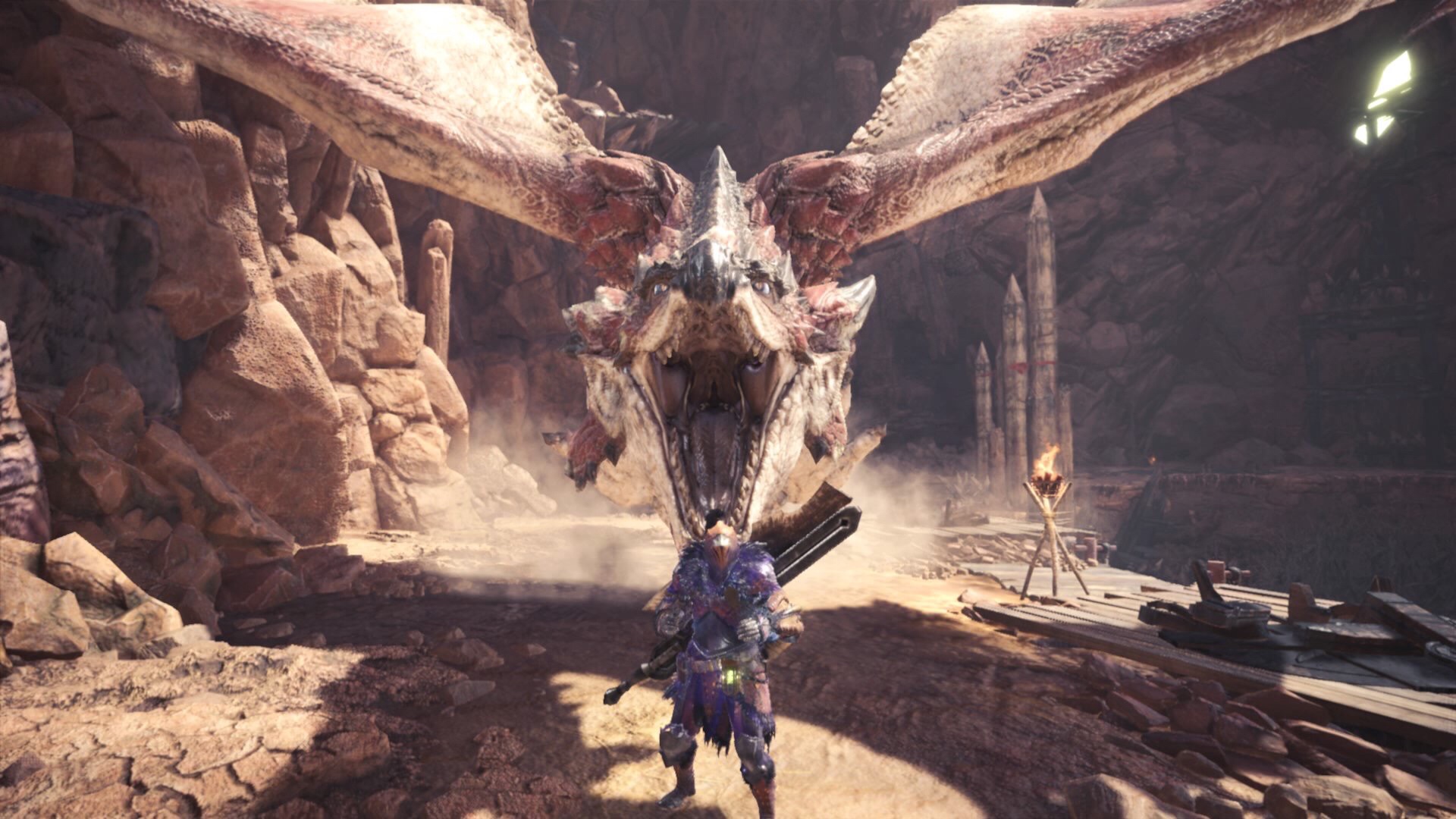
  • I’m rather obsessed by Monster Hunter World at the moment, and as a consequence I just can’t get enough of all things Monster Hunter right now.

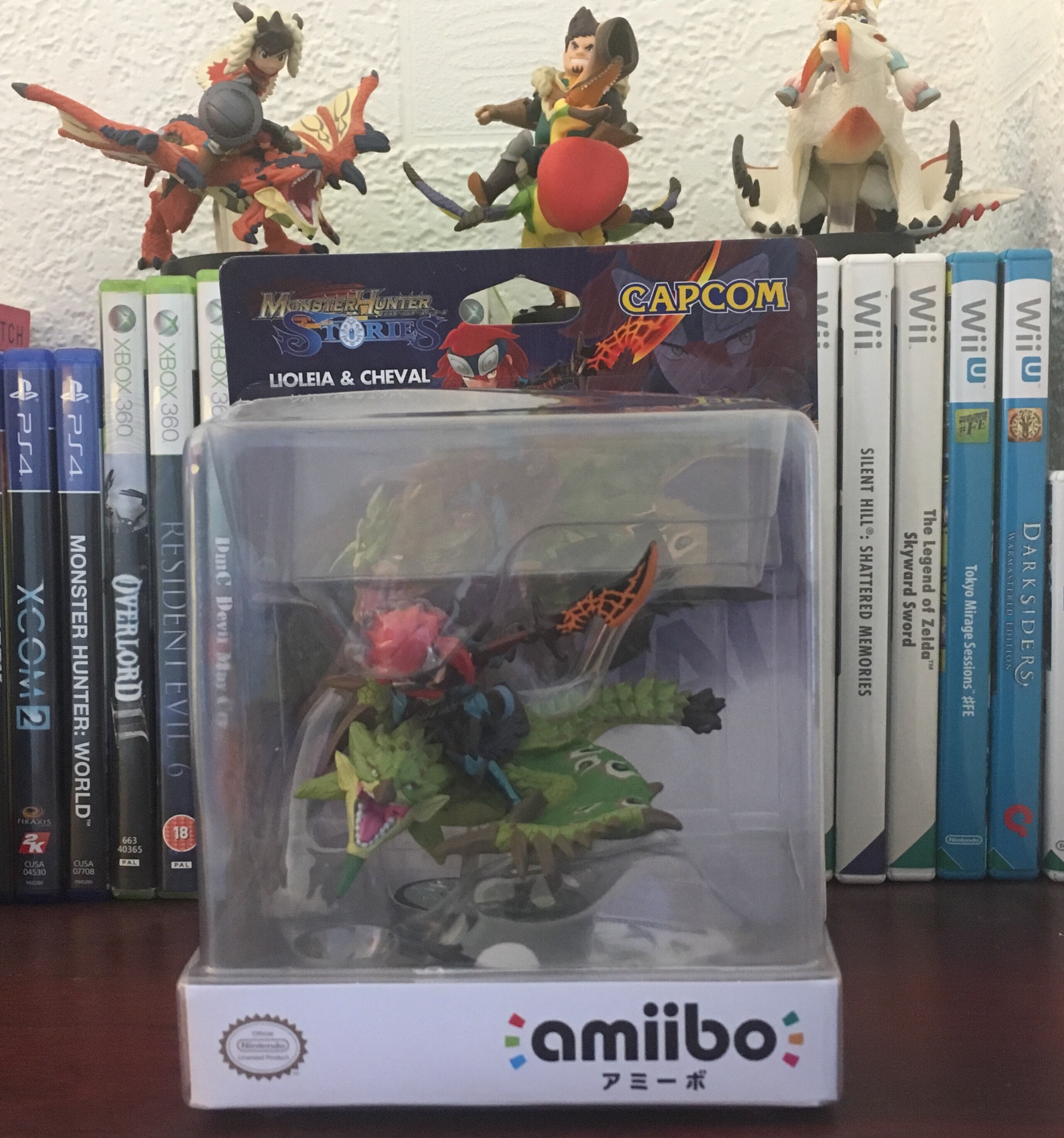
    I picked up three of the six Monster Hunter Stories amiibo a little while back, and not long after that I bought the Monster Hunter Stories 3DS game to go with them. And now I have this awesome Rathian amiibo, too.

    This is the character Cheval atop his pet Rathian (a monster known as Lioleia in Japanese). As with the other MHS amiibo, you can take the figure off and just display the Rathian on its own, or swap the riders to different monsters. What a great touch.

    I find the pose a bit awkward here – Cheval is so hunched over you can barely see his face. I’m also not sure why the Rathian has such a stubby tail – this could be a game reference that I haven’t got to yet.

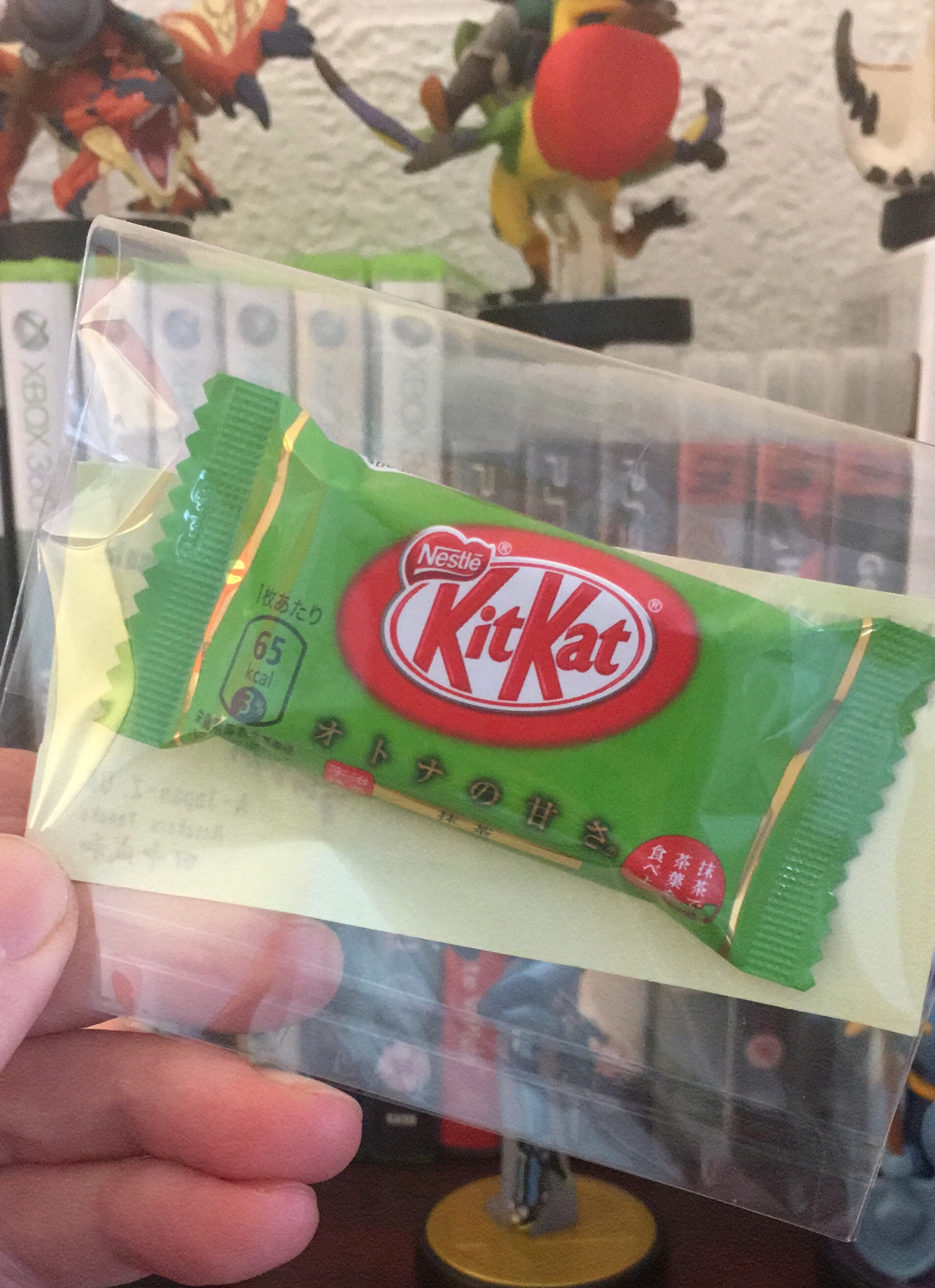
    Anyway, these are minor quibbles – it’s still another beautifully detailed Monster Hunter amiibo, which have quickly become my favourites. And as an added bonus, the Japanese eBay seller threw in a complimentary Green Tea Kit-Kat. Oishii!

    [amazon_link asins=’B06ZXRH9KJ,B01I4FGW5O,B01I4FGW0E,B01HK5DJAU,B01I4FGVZU,B01N9O8OLB’ template=’ProductCarousel’ store=’mostagreeable-21′ marketplace=’US’ link_id=’50e4a38f-2c4f-11e8-813e-9f87ea6246fc’]

  • Review: The Trail: Frontier Challenge (Switch)

    If The Trail: Frontier Challenge has taught me anything, it’s that there’s a disparity between mobile and console games. Not that one can’t work in the other’s space; rather that when it doesn’t fit into a different environment, it’s very noticeable.

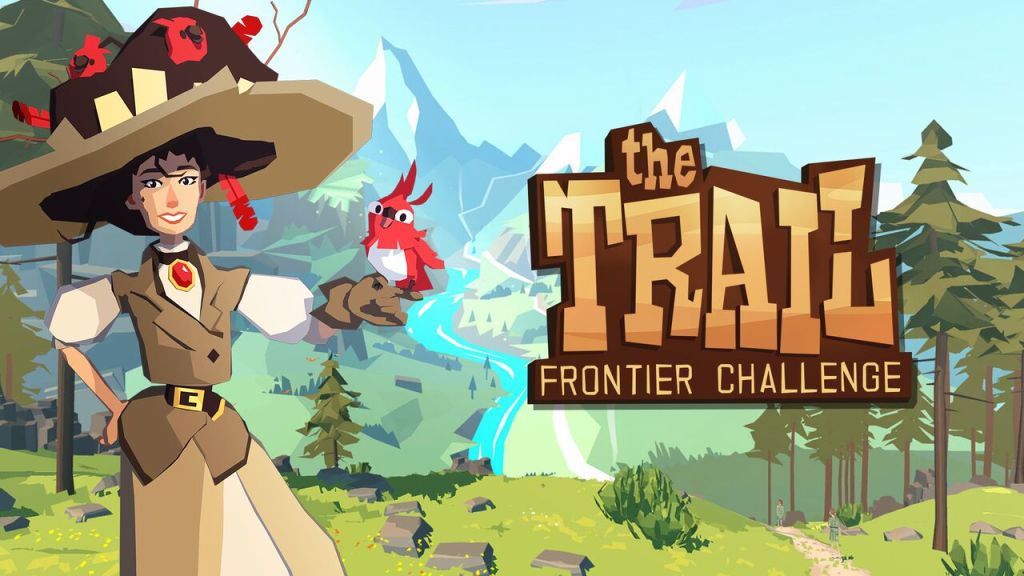
    The Trail has you taking a bumpkin of your choosing across the pond to the new world to, well, hike. There’s no noble path here – you get a letter from your uncle that plants the travel bug in your mind, and you just solemnly set out to follow in his footsteps. In an even more curious twist, the bulk of the game is hands off. Your pioneer trots along of their own volition down the ubiquitous trail, stopping at encampments. While walking, you can swivel the camera to find spoils to gather as well as make your settler speed up. And that’s kind of it. The loop is you that you try to plunder the paths and fill your backpack, craft new items to further your gathering, and then set off again.

    Later down the road (get it!?) you’ll also stumble across a town which will further add to your checklist of things to do in the way of outfitting things there as well as on your traveler. Point is, this journey is neither about the destination or the getting there – it’s about constantly upgrading things in a mostly mindless loop that triggers the basest instincts. There are tools you can build, such as slingshots and axes that you can use to start simple mini-games in which you gather different materials from those you’d find on the trail. And there are clothing options, which are beneficial as well as stylish, in addition to a bartering game that you can use to raise funds for various needs. None of it feels particularly interactive, which is a hard thing to swallow in a console game.

    Thankfully the game is a joy to look at, as the world you trek though has a simplistic beauty to it, and it’s all accompanied by lovely ambient sounds and decent voice acting. I’ve found myself caught in a few bugs as well as hard halts to the game, but somehow I haven’t lost any substantial progress because of it. It’s noticeable, but doesn’t break the game.

    Every time I booted up The Trail: Frontier Challenge, I couldn’t help but think it didn’t fit in on the Switch. Beyond the simple endorphin triggers that a mobile-targeted game like this is built around, something feels a little off with having to wait for it to boot only to then be greeted by a perfunctory and decidedly hands-off approach. However, as a time waster for a train ride or wait at the doctor’s office, I could see myself jumping in for a few minutes, upgrading my pioneer with new accoutrements and hopping back out as quickly… that is, I could see myself doing this if the game was on my phone.

    I enjoyed The Trail, but couldn’t help but think I would have enjoyed it more in its natural habitat.


    The Trail: Frontier Challenge is available digitally for PC, Mac and Switch, and as The Trail for Android and iOS. We reviewed the Switch version.

    Disclosure statement: Review code for The Trail: Frontier Challenge was provided by Kongregate. A Most Agreeable Pastime operates as an independent site, and all opinions expressed are those of the author.

    [amazon_link asins=’B01MY7GHKJ,B01N5OKGLH,B01MS6MO77,B01MUAGZ49,B0721325R7,B01N1037CV,B071JRG7RW,B071JRMKBH,B01N9QVIRV’ template=’ProductCarousel’ store=’mostagreeable-21′ marketplace=’US’ link_id=’6b457b63-2c33-11e8-8a45-cbd3f34f50cd’]

  • Spiffing Reads: Roman Numerals and Giant Beetles

    This week on Spiffing Reads – how are you on your Roman numerals?


    We talked to the British Museum about the logo for Call of Duty: Black Ops 4 (Eurogamer)

    There is nothing I like to read more than intensely researched articles about minor points that end up revealing some surprising truths. And this is a doozy. Lucius P. Merriweather


    No Man’s Sky Fans Rejoice After Finally Finding Rare Beetle (Kotaku UK)

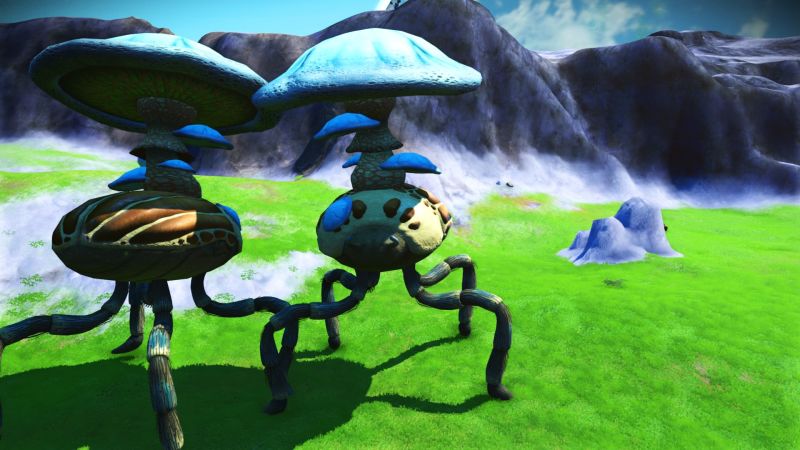
    This kind of stuff is making me want to play No Man’s Sky again… After weeks of searching, players have just discovered a building-sized beetle that they guessed would exist based on the game’s algorithms. Seems there’s a great little community built around the game these days, and the massive updates have changed the game enormously. LPM


    This Nintendo Switch CRT hack is useless, but man does it look cool (Polygon)

    This guy worked out how to play his Nintendo Switch on a black and white Sony pocket TV from 1986. Pointless, but fascinating. LPM


    Optimism at Atari? (GamesIndustry.biz)

    Oh Atari, how the mighty have fallen… And not just once, but again and again. This article looks back to the time ten years ago when Phil Harrison, who did great things at Sony, had just parachuted into Atari with an ambitious plan to turn the company around. Needless to say, it didn’t work… LPM


    And finally… Pokemon crossed with Eleanor Rigby by The Beatles. Genius.


    Spiffing Reads is a regular feature where we pick out the best gaming articles of the week. If you’ve read anything interesting, please let us know in the comments.

    [amazon_link asins=’B071WPKD5P,B071QY1WLY,B078Y4FLCL,B0721325R7,B071JRMKBH,B01N1037CV,B01MY7GHKJ’ template=’ProductCarousel’ store=’mostagreeable-21′ marketplace=’US’ link_id=’5eed84ab-1322-11e8-a771-2769a739578f’]

  • Star Citizen and the legal perils of virtual property

    I was asked by the eds of PCGamesN to write something about what it means to actually own property in a virtual world, particularly in light of the sale of land-claim beacons in Star Citizen, even though the land itself hasn’t been made yet. It was a pretty chunky assignment, involving tracking down a lawyer who could explain what you’re actually purchasing when you buy a virtual house or spaceship – or in this case, a beacon that you could potentially use to claim a plot of land at some unspecified point in the future. James Chang of the law firm Pillsbury was amazingly helpful in this regard, and I’m eternally grateful to him for his patient and detailed responses to my inane questions.

    I also contacted the people behind Star Citizen to get their take on the whole virtual property thing, and it all made for some fascinating reading. Here’s a link to the story:

    What Star Citizen can learn from the Second Life players who break into houses and have sex

    I have to say, I’m a bit disappointed in the headline that the PCGamesN eds went with – the phrase ‘clickbait’ springs to mind. But yes, the article does explore some bizarre implications of virtual property from Second Life, particularly when it comes to getting on with the neighbours – or at least learning to tolerate them.

    Whatever your opinion of the headline, hopefully it might get people reading the story who might not otherwise be interested in the real world rules behind virtual property. And the whole ownership thing really is a rabbit warren when you start looking into it. In a nutshell, you never really OWN anything in a virtual world – essentially it’s more like leasing property, but with a huge bunch of vigorous terms and conditions, and with the developer having final say over basically everything.

    I think the quote from a Second Lifer at the end pretty much sums it up: “Your entire virtual property is an illusion.”

    [amazon_link asins=’B071WPKD5P,B01EZA0D8Y,B078Y4FLCL,B01MY7GHKJ,B071JRG7RW,B071JRMKBH,B01N1037CV’ template=’ProductCarousel’ store=’mostagreeable-21′ marketplace=’US’ link_id=’5b44f19c-2880-11e8-b776-f78cbf3ba53c’]

  • Monster Hunter World deserves its record-breaking sales figures

    Capcom announced this week that Monster Hunter World has sold more than 7.5 million copies in just five weeks, making it the company’s best-selling game EVER. It sold more than any individual Resident Evil or Street Fighter title, despite only being out for just over a month. And it hasn’t even been released on PC yet.

    When Monster Hunter World was announced at E3 last year, I named it my game of the show and couldn’t wait to get my hands on it. But I was a bit sceptical about whether it would break through in the West – after all, the previous entries in the series have sold poorly in Europe and the US, whereas they’ve been monster (pun intended) hits in Japan.

    But it seems the changes Capcom have made to make the game more player friendly have paid off – not only is it much easier to get into now, it seems to have attracted a huge audience of new players. And of course it helps that the game is on PS4 and Xbox One – there’s no way that the game could have achieved its success by launching on 3DS alone, or even Switch.

    Speaking of the Switch, Capcom have said that the game was specifically developed for PS4 and Xbox One, so there’s no Switch version immediately incoming. But given the enormous sales of the game so far, I wouldn’t be surprised if the company had greenlit a Switch version to cash in on that huge market. It would be a challenge to squeeze this fantastic looking title on to a Switch cart, but the Switch version of Doom shows that it’s possible to do great things with Nintendo’s portable console – I’m sure Capcom could find a way.

    And speaking of graphics, MHW really looks fantastic – fighting monsters in HD is far more satisfying and dramatic than battling beasts on a tiny 3DS screen. It looks great, it plays great, and it also happens to have one of the most friendly online communities out there.

    I don’t normally play games online, but Monster Hunter World is the big exception. It’s the game that made me decide to get a PlayStation Plus subscription, and this week I even bought my first ever gaming headset just to use when playing the game online with my sister. If Monster Hunter World can convince a lifelong online-gaming sceptic to part with cash for the privilege of playing online, it’s clearly doing something right.

    The only problem I have with Monster Hunter World is that it’s so damn good I just can’t tear myself away from it. I have a big pile of games that deserve some love – not least the metroidvania Dandara, which I’ve started and already love – but I just can’t stop playing Monster Hunter World. I’m over 40 hours in, and yet I still feel like I’ve only just scratched the surface of what the game has to offer.

    If you want to join me on the hunt, my PSN name is LPMerriweather – give me a shout!

  • Spiffing Reads: the Papers, Please short film and Berlin-nightclub turn-based tactics

    It’s been fairly slow on the gaming news front recently, with a slow trickle of new releases and not much else. But a few stories have stood out over the past couple of weeks – notably, the release of the best ever video game to movie adaptation.


    You Can Now Watch The Brief Movie Version Of Papers, Please (Kotaku UK)

    This is an awesome short film based on the indie video game Papers, Please. Best of all, it’s utterly free, and I urge you to take ten minutes out of your day to watch it. The film was funded by Kickstarter, and Papers, Please designer Lucas Pope was involved in its conception. But what’s genuinely impressive is the level of atmosphere and tension that’s been evoked from a very limited budget, a handful of actors and basically one tiny but well-dressed set. Lucius P. Merriweather


    Lucas Pope on life after Papers, Please (Eurogamer)

    This article is actually from November last year, but it’s a good way to follow-up watching the Papers, Please short film above. (Have you watched that yet? No? Go and watch it now, it’s great!) Lucas Pope basically had such a massive hit with Papers, Please that he’s been able to take his time with his next game, Return of the Obra Dinn, which looks very interesting indeed. LPM


    All Walls Must Fall review – the tactics genre gets a quirky new treat (Eurogamer)

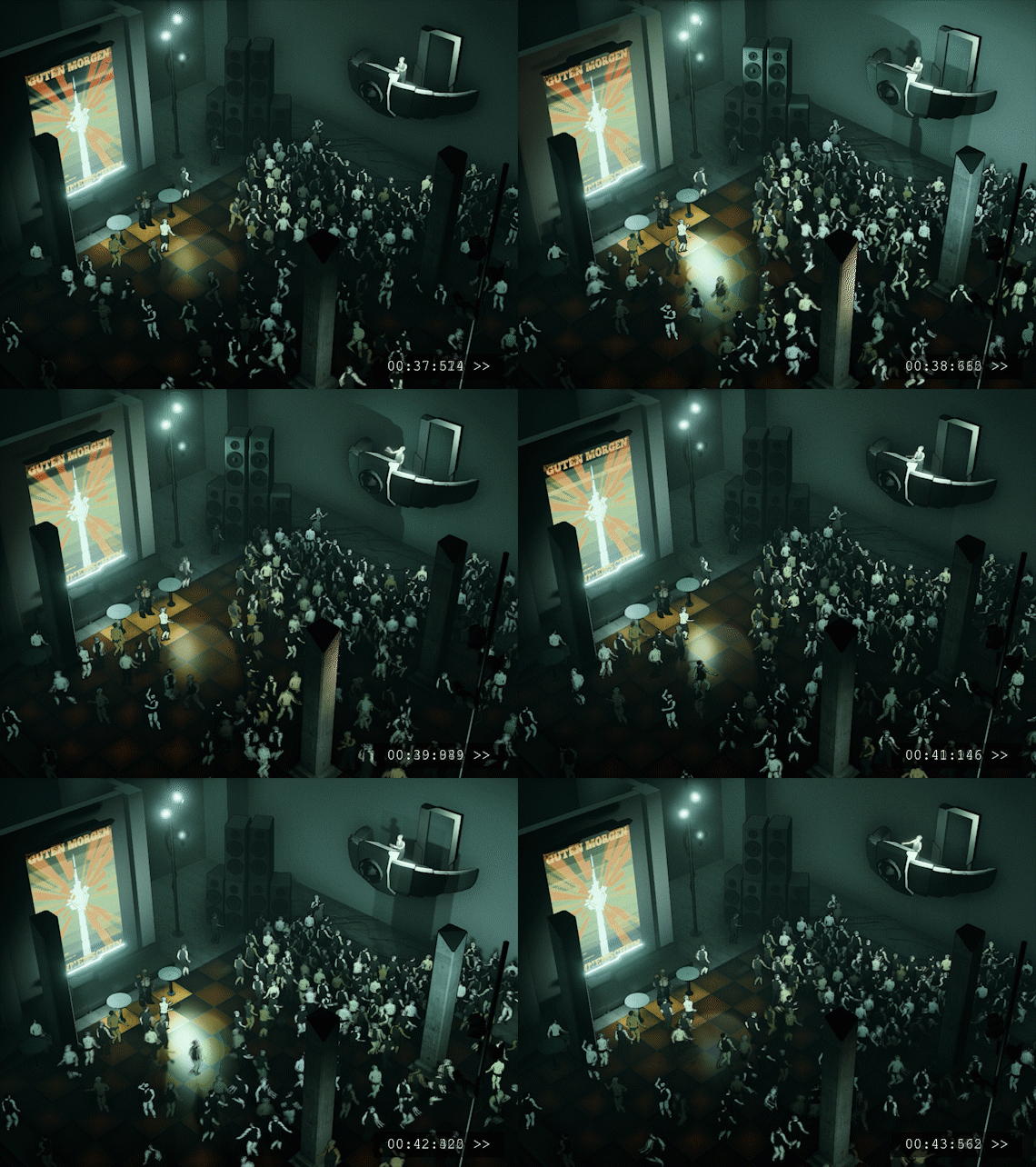
    All Walls Must Fall looks bloody amazing. It’s a PC turn-based tactics game set in a Berlin where the Cold War didn’t end – but rather than fighting on ruined streets, all of the battles take place in techno-spewing nightclubs. How cool is that? I want this game RIGHT NOW. But unfortunately, as I established the other week on AMAP, PCs are FOR WORK AND NOT FOR PLAYING GAMES, so here’s hoping it’s coming to PS4 or Switch soon… LPM


    https://gfycat.com/favorableweakindianhare

    Today I Learned Super Mario Bros. 3’s Tanooki Suit Can Stomp Fire (Kotaku UK)

    Oh my god. How on earth did I not know this? Did you know you could do this? I had no idea you could do this. It’s been nearly 30 years, and I’m still learning stuff about Super Mario Bros. 3. Crazy. LPM


    (Image from https://www.flickr.com/photos/gageskidmore/8566717881)

    No, Mr Trump, video games do not cause mass shootings (The Guardian)

    Finally, some more sobering news, with Donald Trump apparently starting a witch hunt against video games in the wake of the Florida school shooting. Katherine Cross makes a beautifully argued case about why this makes no sense: “It’s a remarkable series of logic leaps that allows a person to scorn a simulator while holding the actual gun whose use is seen as blameless, but here we are again. Video games, for all their newfound cultural hegemony, remain a soft target for sententious conservatives who want to moralise, cost free.” It’s the guns that cause kids to get shot, Donald, not the games. LPM


    Spiffing Reads is a regular feature where we pick out the best gaming articles of the week. If you’ve read anything interesting, please let us know in the comments.

    [amazon_link asins=’B071WPKD5P,B071QY1WLY,B078Y4FLCL,B0721325R7,B071JRMKBH,B01N1037CV,B01MY7GHKJ’ template=’ProductCarousel’ store=’mostagreeable-21′ marketplace=’US’ link_id=’5eed84ab-1322-11e8-a771-2769a739578f’]

  • Review: Fe (PS4)

    Fe is the first game to result from the EA Originals programme, whereby the giant company is helping to fund and publish games from indie studios. Cynics have argued that it’s just a way for EA to buy good press and detract from the outcry over loot boxes and microtransactions in games like Star Wars Battlefront II and FIFA. Others have suggested that it’s a way for the big publisher to give something back by supporting smaller developers, nurturing creativity and giving worthy games a boost.

    But let’s put the money politics to one side and just examine whether Fe is actually worth playing. And after spending just over a week with the game, playing it for a few hours every other night, I can confirm that it most definitely IS worth playing. In fact, it’s up there in my top games of 2018 so far.

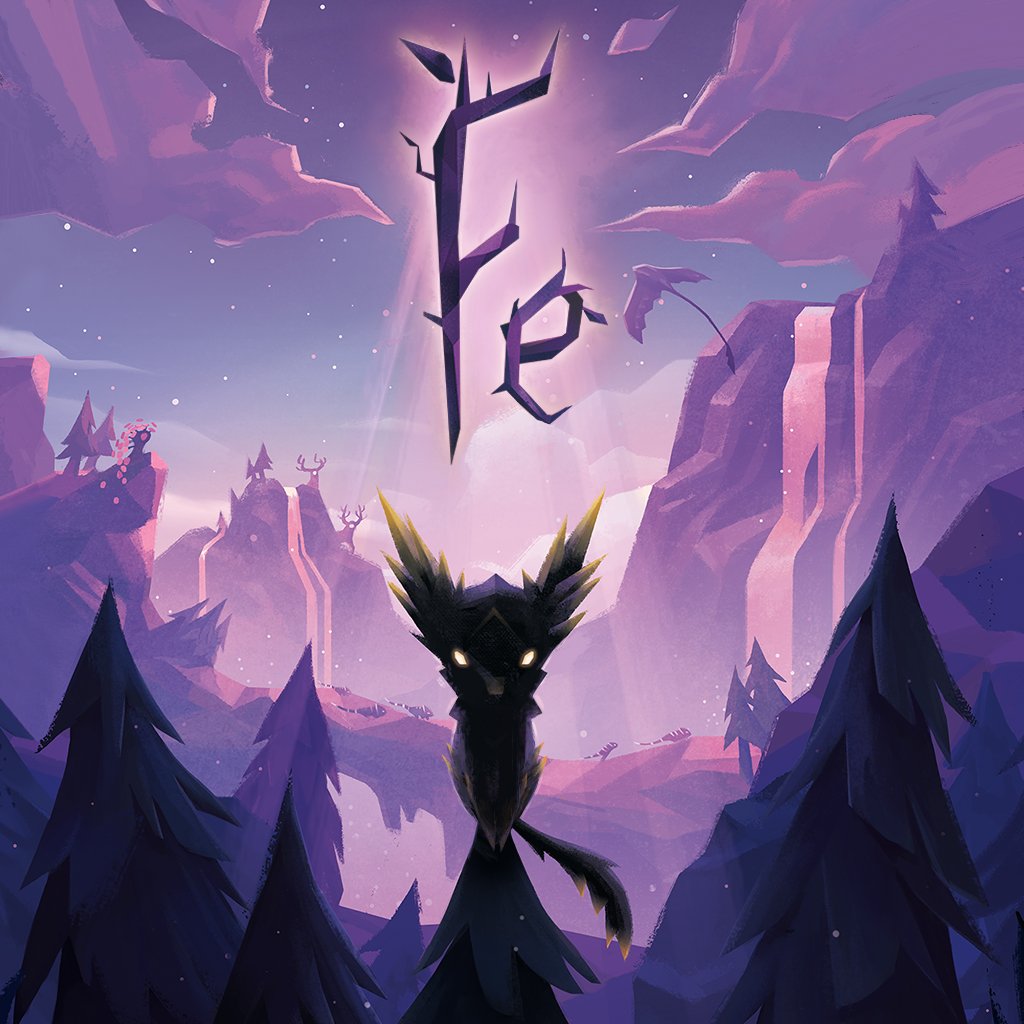
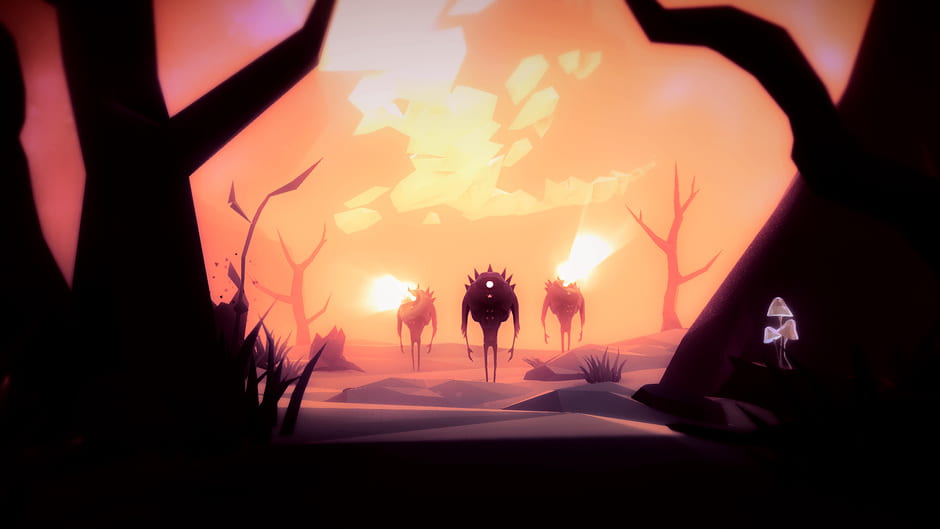
    First things first, it looks stunning. The backgrounds are chunky and stylised, while the characters are clever creations that are based on – but aren’t quite – woodland creatures. You play a fox-like creature that walks on two legs, and later you meet giant owls with long tails, odd snake creatures with horns that burrow underground, and giant boar things that sing to mushrooms. But get used to the colour purple, because you’ll be seeing it a LOT. At first I found it distracting, like I was exploring Prince’s fever dream, but I gradually came to appreciate the art direction – especially the way that the forest colour switches to yellow when you enter a dangerous area, or blue when you head underground.

    The game that Fe most immediately reminded me of is the excellent Hob from last year. Both games eschew dialogue in favour of visual representations that propel the story, and both provide very little handholding. In Fe, your fox creature wakes up in the middle of a forest, and essentially it’s up to you to work out what to do next. Some may find this frustrating, but I found it exhilarating – working out where to go and how to get there is incredibly rewarding, and there’s not really such a thing as a ‘wrong way’. Any diversions off the beaten track are rewards in themselves, as the game is absolutely packed with well-hidden collectibles. Indeed, some of my favourite moments with Fe were just ignoring the main path and exploring the forest, poking into caves and peeking behind waterfalls, or attempting to reach a tree on the top of a mountain, just to see what’s up there. In almost every case, your curiosity is rewarded with something to collect. And if you are unsure of where to go next, the game provides map waypoints to nudge you in the right direction – or you can always ask a bird to show you the way (more on that in a minute).

    Your fox gains the ability to climb trees very near the start of the game, but there are several other abilities that can be unlocked by collecting a total of 75 purple diamonds scattered across the landscape. Only the second ability you collect is essential for progressing in the game, but the other abilities make it easier to traverse the forest – and generally they’re just a lot of fun to play around with (I won’t spoil them for you here, best you discover them for yourself). In short, it’s worth digging around for the diamonds.

    The core mechanic of the game, however, is talking. Well, singing really. Pressing R2 starts your fox howling, and increasing or decreasing pressure on the trigger changes the pitch. The plot sees a swarm of mechanical folk called the Silent Ones descend on the forest, and the overall aim of the game is to enlist the help of the other animals to stop the baddies from kidnapping forest folk and generally causing mayhem. But at the start of the game, you can only speak ‘fox’ – you have to learn the languages of the other animals, usually by helping them out in some way, after which they’ll teach you their language as a mark of thanks. So later, for example, you’ll be able to talk an owl into carrying you on its back to reach high-up places. The ‘talking’ itself is a fun little mini game where you adjust the pitch of your singing to match the other animal’s – it’s a clever way of showing you (literally) reaching the same wavelength as the animal you’re chatting to.

    I was regularly surprised and delighted by Fe as I played through it. The bit with the stags in particular was amazing, although I don’t want to spoil it for you here – it’s best you experience it for yourself. I’m a big fan of the way the game leaves massive question marks hanging over it, even after you’ve finished. Who exactly are the Silent Ones? What do they want? And where did the forest and the creatures in it come from? The clues are all in there, sometimes in the form of memories triggered by finding a Silent helmet and experiencing the world from their point of view, but it’s not obvious how it all joins up. Even long after completing the game, I’m still puzzling over how some of the pieces fit together. But I’d much rather that than have the plot shotgunned into me via regular, unskippable cut scenes. Fe is more David Lynch than Michael Bay, and all the better for it.

    Some people have complained that the game is a little short, saying it can be completed in around 3 hours. Well, it probably can be completed in 3 hours if you just race through the main path and don’t bother exploring – but that would be to miss the main joy of the game. I don’t know exactly how long I’ve been playing Fe (why oh why is there no way to track time spent playing on PS4? Come on, Sony!), but I’d guess it’s about 8 hours, and I’m currently hunting back through the forest for the collectibles I missed. Once you’ve seen the end credits, you can go back and explore the world unimpeded by enemies, and I’m currently having a whale of a time just clambering up mountains and gliding over waterfalls.

    In summary then, Fe is a beautiful, thoroughly enjoyable game that’s well worth its asking price (currently around £18/$20) – particularly if you love exploring and working things out for yourself. Whatever you think about EA, I for one am pleased that their money has helped Zoink to grow this wonderful game and enable it to reach the audience it deserves.


    Fe is available digitally for PC, PS4, Xbox One and Switch. We reviewed the PS4 version.

    Disclosure statement: Review code for Fe was provided by EA. A Most Agreeable Pastime operates as an independent site, and all opinions expressed are those of the author.

    [amazon_link asins=’B0792TNM6F,B01NAGTKX3,B071J1S2M7,B01GW8XOY2,B078918FCH,B071QY1WLY,B01M21NR51′ template=’ProductCarousel’ store=’mostagreeable-21′ marketplace=’US’ link_id=’1003e4d7-1bae-11e8-ac6e-a796917efde9′]

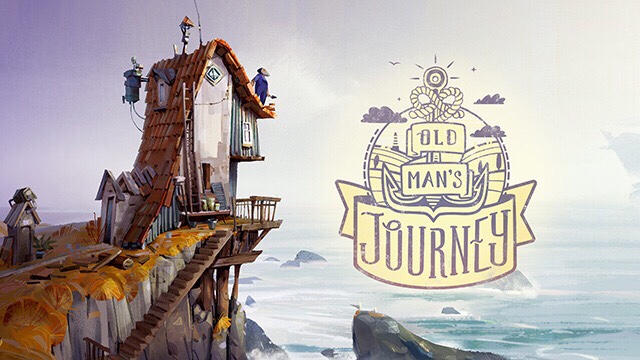
  • Video games get compared to a lot of different mediums. But you don’t see many games that try to emulate a child’s storybook. As someone who has kids of his own and a burgeoning library of said storybooks, I feel that trying to encapsulate such visual storytelling, replete with a moral and painterly style, is a bold move. Old Man’s Journey is unlike anything you’ve ever played.

    This is a good thing.

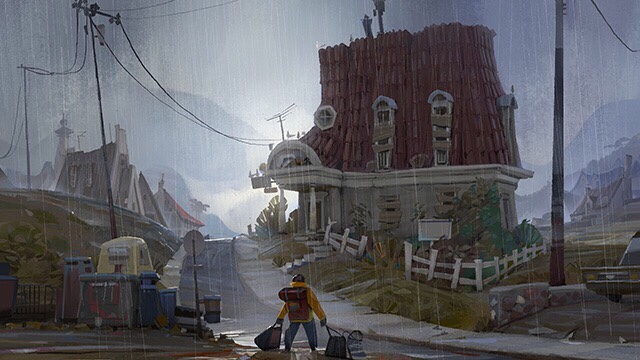
    Old Man’s Journey follows, well, an old man as he leaves his cottage by the edge of the sea after receiving what must be a dour letter from the postman. With a solemn look upon his face, he packs up a knapsack and blanket, picks up a solid looking walking stick and treks across a vaguely Mediterranean-looking countryside to atone for whatever that letter held.

    Old Man’s Journey has a wonderful sense of place. Each new area feels open with its rolling hills, roaring seas and well-worn footpaths. The game does a wonderful job of introducing you to each new place, giving it a much larger scope in perception than in actuality. You don’t control the old man directly – rather, you point to where you’d like him to go with either the touch screen or a marker you control with the analog stick. But he’ll be blocked off from his route unless you manipulate the environment to connect the various paths from the fore and background together. From a mechanical perspective, this is what you’ll do for the entirety of the experience. It’s an easy-to-grasp and simple gameplay style, yet like any proper adventure, it’s not about where you’re going, but how you get there.

    Each new area feels like a puzzle, with you moving hills up and down to try to get the old man to “hop” to the next vista. New mechanics are introduced, such as waterfalls and sheep that force you to not only manipulate the environment, but also consider how your actions affect the world around you. Nothing in particular is head-scratch inducing, but the sense of accomplishment feels solid nonetheless. At the end of each stretch you are treated to the old man laying his things down and resting, which gives you a beautifully depicted flashback of our protagonist’s life. It’s wonderfully tender as it builds up to and fleshes out why he chose to leave the house. You’ll eventually catch on to what may happen in the end, but it endears you to the old man as you can feel the sorrow you see in his eyes.

    The game is broken up from time to time with a different play style that involves a similar world-manipulating mechanic, but in more brisk and charming vehicle segments. I’d rather not give too many spoilers, but I will say that these segues feel apt and offer a nice break from what you’d normally do.

    At around two hours, Old Man’s Journey feels as short as the storybooks it tries to imitate. This isn’t to its detriment by any means; also like a good picture book, it gets to its point in the amount of time it needs to, and is all the better for it. The emotional rollercoaster you go through wouldn’t work as well otherwise, and its impact would be lessened. The gameplay is fresh and interesting, but the true meat of the game is in the little moments as you watch the old man push forward to try to make amends by any means necessary. You’ll smile, you’ll cheer, you’ll feel sad and maybe you’ll even shed a tear. Regardless, it’s worth doing all those things.


    Old Man’s Journey is available digitally for Android, iOS, Mac, PC and Switch. We reviewed the Switch version.

    Disclosure statement: Review code for Old Man’s Journey was provided by Broken Rules. A Most Agreeable Pastime operates as an independent site, and all opinions expressed are those of the author.

    [amazon_link asins=’B01MY7GHKJ,B078Y4FLCL,B071JRMKBH,B077ZGRQM2,B071JRG7RW,B0721325R7′ template=’ProductCarousel’ store=’mostagreeable-21′ marketplace=’US’ link_id=’36cbc2d2-1c73-11e8-a59b-510b92b44ce8′]

  • Amiibo invasion!

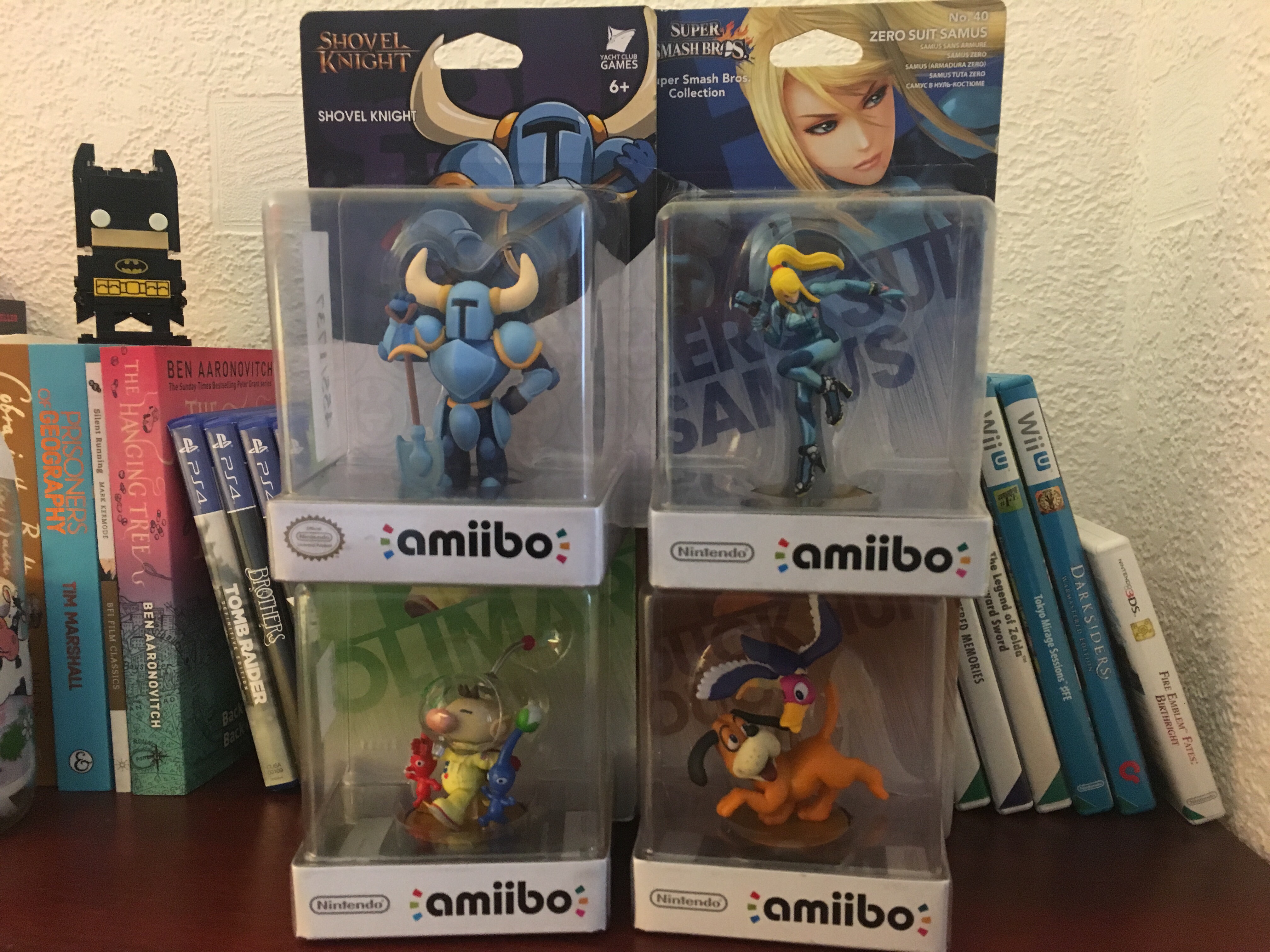
    Argos had a big sale on amiibo the other week, with loads of them down to £4.99. At that price I just couldn’t resist adding a few more to my collection…

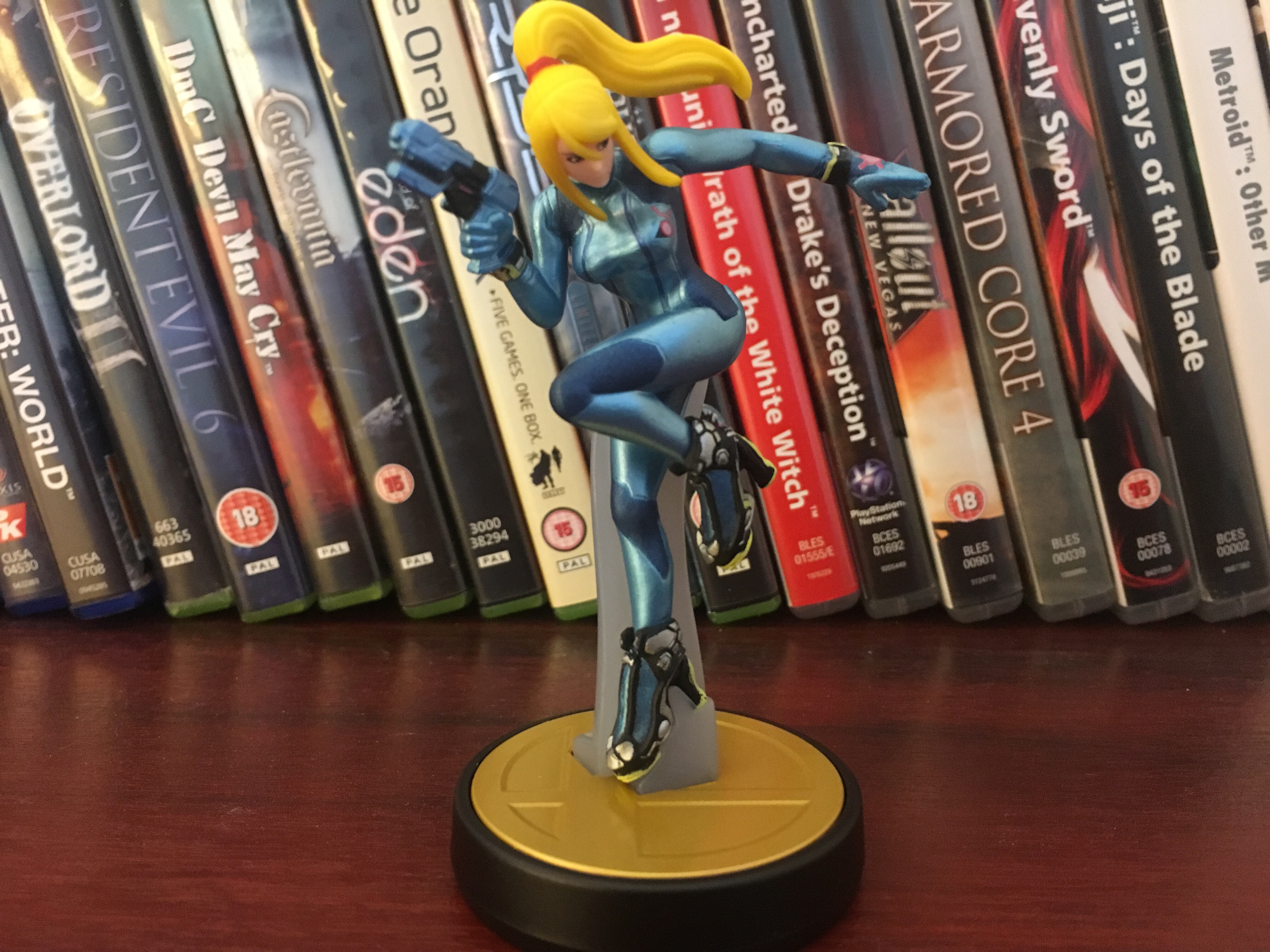
    As I wrote recently, I’m a big fan of all things Metroid, so I couldn’t pass up an opportunity to nab Zero-Suit Samus. Still not sure about the practicality of those high heels though.

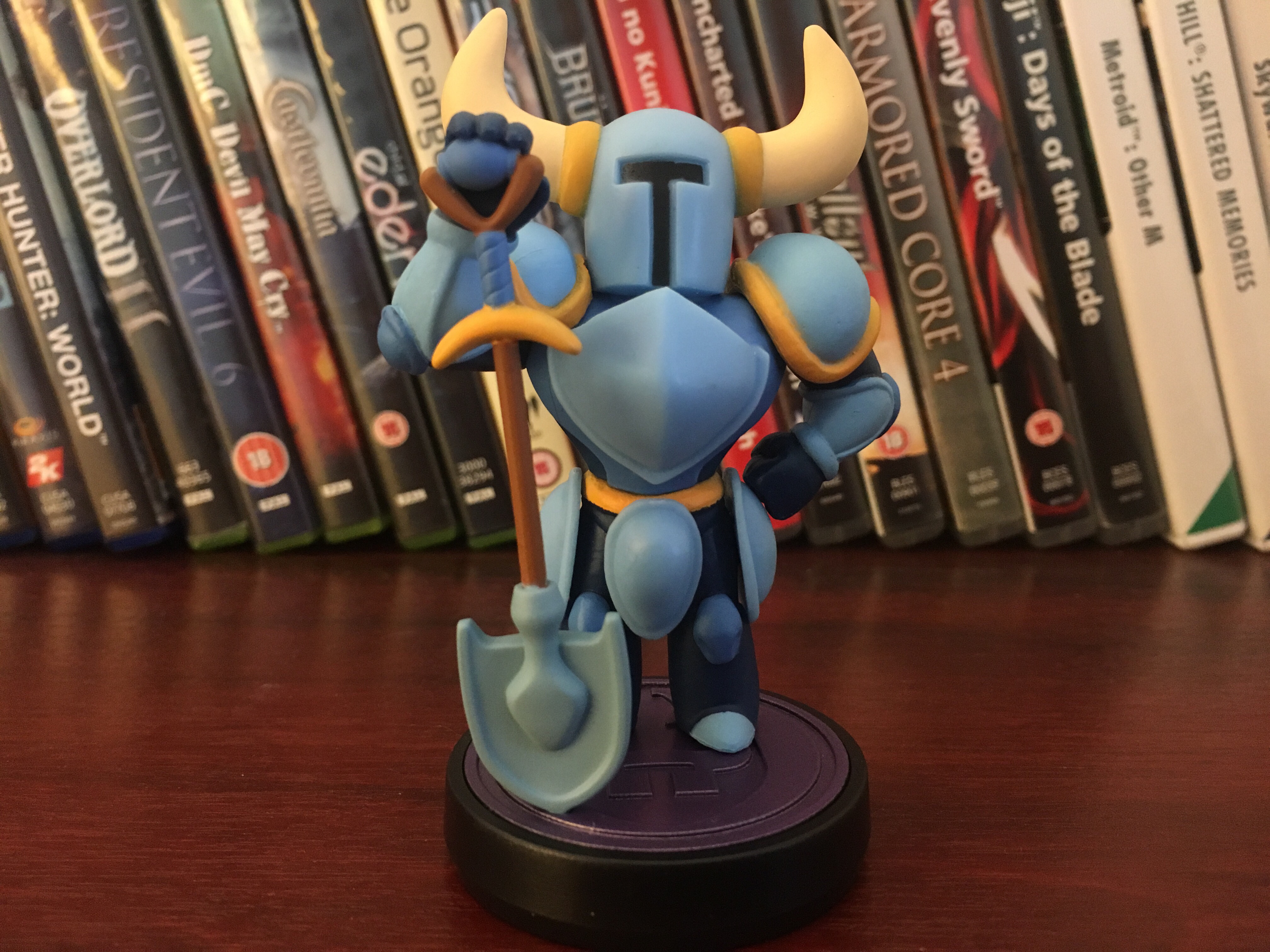
    I love the fact that Yacht Club Games got together with Nintendo to release a Shovel Knight amiibo. I’m secretly hoping that Image & Form do the same, so we can get a lovely range of SteamWorld amiibo. They teased one a while back, although sadly it just turned out to be a mock up that someone in the studio had made.

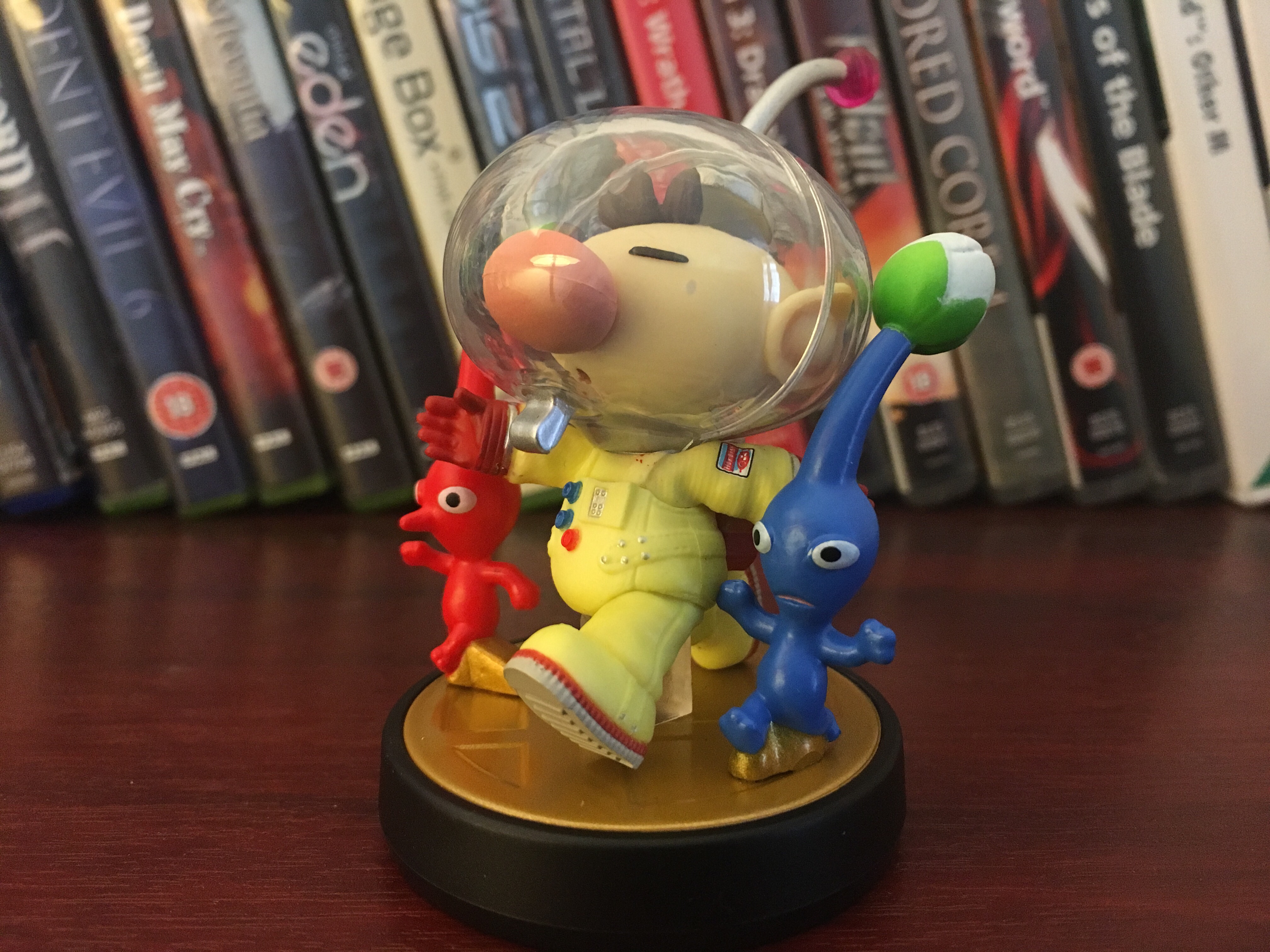
    Ah, Captain Olimar and his Pikmin chums. Pikmin is probably Nintendo’s most underrated franchise, so I’m happy to throw it some love by putting the O-Man on my shelf.

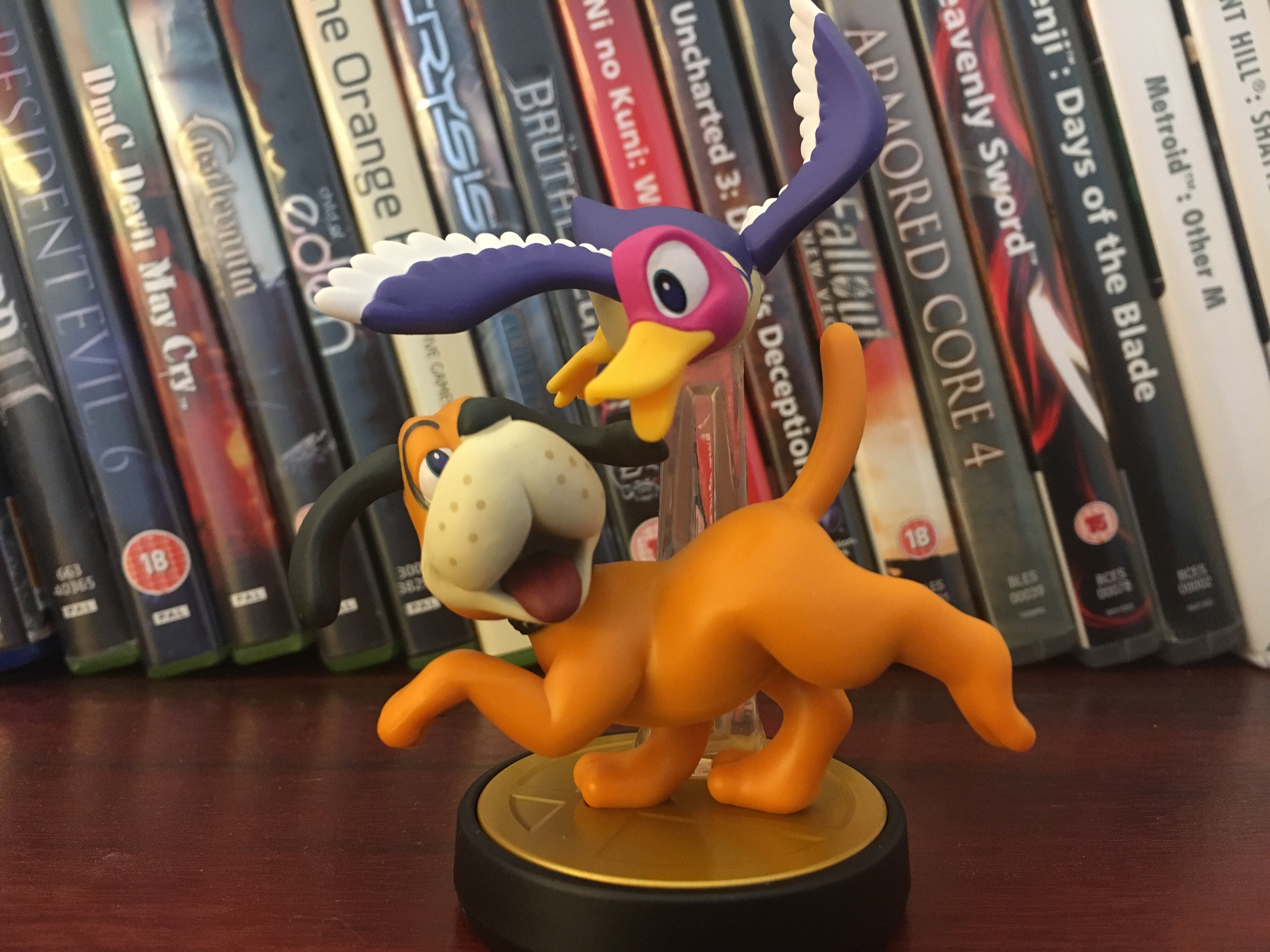
    I still can’t quite decide whether I love the Duck Hunt Dog or hate it. All those times he’d titter on my TV screen after I failed to bag any ducks with my Zapper were infuriating. But then again Duck Hunt is a game I have very fond memories of – even if some of those memories are trying to shoot the dog because he’s so bloody annoying.

    [amazon_link asins=’B078YQH6DB,B01HK5BT0W,B075XT9XDT,B00S7O6RJO,B00PIEI0IC,B06ZY1JT3V’ template=’ProductCarousel’ store=’mostagreeable-21′ marketplace=’US’ link_id=’ea0453d2-1a53-11e8-9ff9-f1b54b84ad20′]

  • GAME’s Reward Card is now a bit less rewarding

    I wrote a feature for Kotaku UK on how GAME has cut the rate at which you earn loyalty points by half:

    What’s Going on With GAME’s Reward Card?

    I went in depth, contacting the company for their opinion and trying to see how their loyalty offering holds up when compared to other companies. But in the end, it’s hardly a good deal for customers.

    I’ve written about GAME a few times over the past few months: previously I took a look at why the company has so much hate directed towards it and also investigated what the high-street chain is doing to hold out against the rise of digital gaming.

    Making cuts to the loyalty card scheme seems like a very regressive step – and it’s unlikely to win the company any new fans. The story I keep being told from current and ex-staff is that there’s a big disconnect between the head office and the people who actually work in the stores and have to implement decisions from higher-ups. No doubt that front-line staff will have been told to push the £36-a-year Elite scheme even harder, with the stick that the free Reward Cards now provide less money off.

    GAME has implemented Belong gaming arenas in a few stores in a bid to get punters in – I checked out the one in Soho the other day, and I was pretty impressed. Stuff like this is a great idea, but it needs to be backed up by the core business of selling games, and GAME is constantly undercut by online retailers, and even by its own online store, with prices being sometimes a good deal lower on GAME.co.uk. I’m surprised that GAME hasn’t resorted to deeper discounting in its high-street stores – they could attract customers in with a really low price for a brand-new title, then flog them all the accessories and secondhand games that provide a nice profit margin. And of course, encourage people to play in their gaming arenas. It might mean taking a hit on margins for the new game, but they’d make up the money elsewhere – and perhaps more importantly, it would make for some happy customers.

    It’ll be interesting to see how GAME fares over the next year, particularly as it’s just announced it will open concessions in Sports Direct stores. Will the fact that no new gaming hardware is due out this year really hit the company’s bottom line? Will Belong be enough to boost GAME’s fortunes? Only time will tell…

    Head over to my portfolio site to see a full list of the features I’ve written for Kotaku UK, Eurogamer, GamesRadar and PCGamesN.

    [amazon_link asins=’B071G5HZ7F,B01HK5BT0W,B071WPKD5P,B01MYBMMD0,B079YHJS63,B079YN39LS’ template=’ProductCarousel’ store=’mostagreeable-21′ marketplace=’US’ link_id=’a49b093f-17ea-11e8-abe4-15f0fd8b98de’]

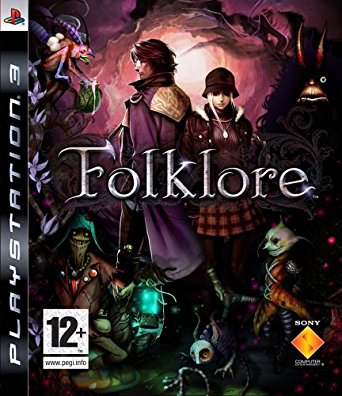
  • I wish there was a sequel to… Folklore

    Welcome to a new series in which we take a look at orphaned games that really deserve to have spawned an illustrious line of sequels. First up is Folklore, a 2007 PS3 exclusive from Game Republic, the Japanese studio behind the Genji series of slash ’em ups. Sadly, Game Republic closed its doors in 2011, so it’s highly unlikely we’ll ever see another instalment of Folklore – unless another studio picks up the rights. This is a real shame, as the game is undoubtedly Game Republic’s crowing acheivement.

    I only discovered Folklore by chance when browsing secondhand games in a local shop just recently. It was apparently a fairly high-profile PS3 exclusive back in 2007, but it completely passed me by at the time – probably because I didn’t own a PS3 back then. But having now played the game, I’m surprised that more people aren’t talking about it – there really is nothing quite like it out there.

    The easiest way to describe it is as a JRPG but set in Ireland – and with a combat system based on summoning folkore monsters with various abilities. Indeed, collecting the ‘folks’ is a large part of the game’s appeal. They’re wonderfully designed, really freakish imaginings of creatures from ancient stories, like boggarts and bug-a-boos. Each one has a distinctive personality, and often requires specific techniques to capture, so you may find yourself replaying levels to nab monsters that you missed first time around because you didn’t have the means to capture them. Like Pokemon or Yokai Watch, filling in your ‘folk-o-pedia’ (for want of a better word) is compelling, especially as the folks themselves are so individual. You can also level them up by completing specific actions, like killing ten enemies with a boggart, for example.

    The game it most reminded me of was a mostly forgotten classic from the GameCube era: Lost Kingdoms. I absolutely loved that game, although like Folklore, it didn’t sell too well on release. It has a similar combat technique whereby you summon different monsters to fight, each of which is assigned to a different button. But unlike Folklore, the monsters are imprisoned in ‘cards’ that get burned up after each use. Still, both games feel very similar in terms of gameplay, especially with the emphasis on completing a collection of monsters. More to the point, there are very few games like them.

    Apparently, Game Republic had planned a sequel to Folklore for the PSP, but Sony ended up turning it down on the basis of poor sales of the first game. Then Game Republic folded in 2011, and that pretty much put paid to all thoughts of Folklore 2. But by god does this game deserve a sequel – its remarkable originality of setting and combat, combined with some beautifully drawn characters really make it something special. It’s a long shot, but I hope that some developer picks up the license for this game – whoever owns it now – and carries on where Game Republic left off.

    [amazon_link asins=’B01GW8XOY2,B071WPKD5P,B071G5HZ7F,B017S3OPZM,B01M35Z9VL,B01GKHJP98′ template=’ProductCarousel’ store=’mostagreeable-20′ marketplace=’US’ link_id=’7d8208ee-0f34-11e8-b6b0-114805dc26ea’]

  • Burnout Paradise Remastered heading to PS4, Xbox One and PC

    Well this is exciting news. EA has just announced that Burnout Paradise Remastered will be released for Xbox One and PS4 on 16th March, marking the long-awaited return of the Burnout series.

    The remaster will include the original base game and the eight original add-ons, as well as “a range of technical enhancements”, such as support for 60fps on PlayStation 4 Pro and Xbox One X.

    The Burnout series was created by UK studio Criterion, which was snapped up by EA in 2004, just before the release of Burnout 3: Takedown. Since the release of Burnout Paradise in 2008, the studio has mostly been working on Need for Speed games. Matt Webster, General Manager at Criterion Games, had this to say about the remaster: “Burnout Paradise is an arcade racer built to provide players the thrill of racing with their friends, in a free form way that was both seamless and immersive, but also a little crazy with all the different stunts and crashes players could pull off. With the release of this remaster, we’re able to share this action-packed ride with a whole new generation of players.”

    Burnout Paradise Remastered will be available digitally and in stores for £34.99 on PS4 and Xbox One, and will be released “later this year” on PC. An early trial will be available for EA Access members, starting on 9th March. The official launch trailer is below.

    [amazon_link asins=’B071QY1WLY,B06ZXTGFDR,B079TH4GH6,B01NAGTKX3′ template=’ProductCarousel’ store=’mostagreeable-21′ marketplace=’US’ link_id=’838365c1-1663-11e8-bab8-09a6840c8ccd’]

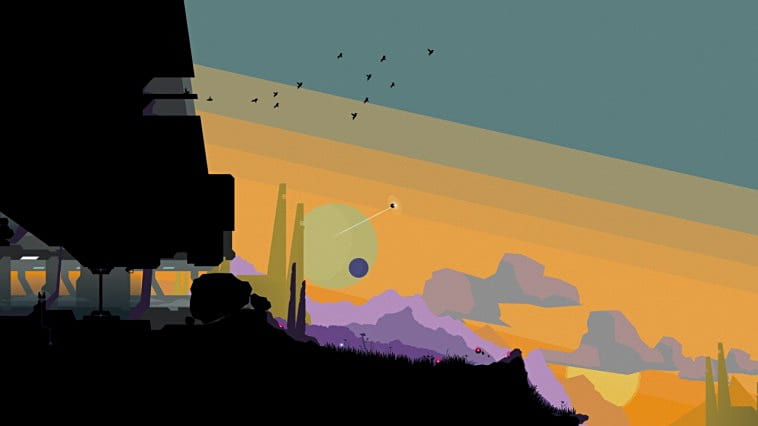
  • Why Forma.8 is brilliant and you should play it

    Map Schwartzberg and I have been playing (and very much enjoying) Forma.8 recently, so we got together to discuss what makes the game so good.


    Lucius P. Merriweather: I saw that you’ve been playing Forma.8 – bloody great, isn’t it? I’m about two-thirds of the way through, and I’m thoroughly enjoying it – so much so that I thought we could do an email chat about the game that we could morph into an AMAP article. I’m just desperate to talk about how good this game is!

    For a start, it reminds me a lot of the underrated Wii U game Affordable Space Adventures, which was just one of the best games on that system. And going further back, it shares a lot of DNA with Solar Jetman by Rare, one of my favourite games of that era. The whole diving into subterranean caverns with an inertia-driven spaceship thing – it’s sort of a mini-genre in it’s own right.

    Then again, it owes quite a debt to Metroid, too, don’t you think?

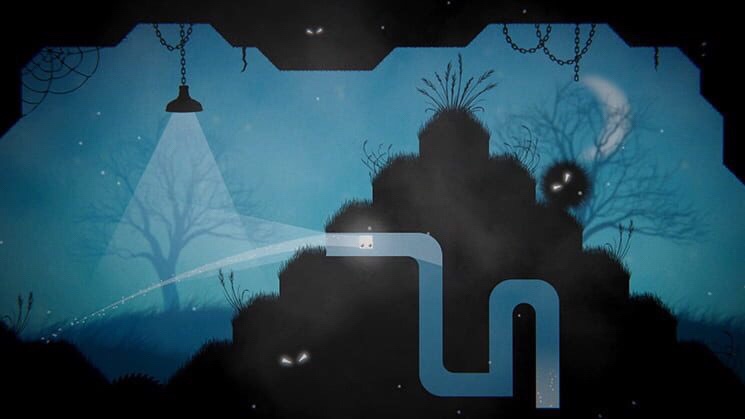
    Map Schwartzberg: There are a lot of superficial similarities to Metroid for sure – finding new tools to progress further into the game, jarring and impactful boss fights and that certain wanderlust that makes you want to go even further into the depths of a mysterious planet. What strikes me the most about Forma.8 is the sense of lonesomeness that pervades it. Like a certain bounty hunter, our little orb friend finds itself in a seemingly uncharted place where there are no given destinations, no dramatically epic music to prod you forward and this sense of dread as you realize you can be taken out quickly if you aren’t deliberate.

    While the game has combat, it’s often a secondary option to just scurrying out of the way. I don’t know if it was intentionally designed this way, but it gives Forma.8 this sense of weakness; that it can defend itself if need be, but really you’re just trying to figure out where to go and how to get there without being destroyed. Thoughts?

    LPM: Definitely. Combat is deliberately difficult, so fighting is always a less attractive option than just running away. I mean, you don’t even have a gun, right? Instead you can only drop bombs while fleeing in the other direction, or deflect attacking enemies with your shield. Or if you’re being really clever, you can drop bombs and then deflect them towards enemies with your shield, but it’s very tricky to get the angles lined up. The whole system is designed to make you feel vulnerable and tiny, an insignificant speck exploring a hostile alien planet. And in that sense it works brilliantly well – as you say, it’s a thoroughly lonely game.

    And because it feels so lonely, when you come across something large and significant, it really feels like a revelation, a proper discovery. Probably my favourite moment was stumbling across the crab. [MINOR SPOILERS FOLLOW] The screen zooms out and out and OUT, and suddenly you’re a tiny dot hovering over an absolutely ginormous crab, which seems to be attacking a tower. It’s only later that you discover she’s after her lost child – reuniting them is by far the most affecting moment in the game. [END SPOILERS] Loneliness, heartache… this is a game with FEELINGS, for all that it’s superficially about buzzing about and solving puzzles.

    MS: The moment with the crab is extremely moving. It’s very reminiscent to when you rescue the animals at the end of Super Metroid, where your only connection to them is being friendly in a hostile environment, but that kindness is enough to endear you to them. More to your point though, the feeling I get with Forma.8 is sheer wonderment. Not just the moment with the crab, but many times when you arrive back on the surface of the planet, the game likes to pan the camera out just to make you awestruck at how beautifully haunting it all is. It’s not necessarily explorable, but it fills your heart with an undeniable wanderlust. In some cases, you do get to poke around in the crannies (my that sounds dirty!)… once you’ve collected the right upgrades.

    The sense of empowerment you get when you have the ability to dash through barriers and later just straight up teleport through small walls turns the game on its head. My first go through Forma.8 I didn’t realize how much the game expects you to return to past areas and use these powers to find yourself in places you had no idea you could get to. More often than not you’re rewarded collectables. There are also those challenge rooms that seem nigh impossible that you can then later blaze through thanks to Forma.8‘s upgrades. There aren’t many power-ups, but what’s there feels substantial.

    LPM: Man, those challenge rooms! I spent ages fannying about trying to light all of the lamps within the brutal time limit. I’d ALMOST do it each time, and I think I must have retried the first room I came across about ten times. It was only later that I got the boost upgrade and realized that actually I COULDN’T have done it without that particular item. They became a breeze after that.

    Actually, that reminds me of one point – the game really doesn’t hold your hand. It basically expects you to work out what’s going on and what you should be doing, and I kind of liked that. It’s easy to miss stuff if you don’t pay attention, but it trusts you to figure it out. Like working out you can propel a bomb by hitting it with your shield – that becomes an essential technique, but at no point does the game tell you that you can actually do it, or how to do it.

    Having said that, I could have done with a better map. There are so many collectibles to gather, and unlike the recent Metroid: Samus Returns, the game doesn’t mark them on your map when you go near them. There were a few points where I got an upgrade and knew that there were a few items I’d passed that would now be accessible, but I couldn’t for the life of me remember where they were. It was only at the very end of the game [Ed’s note: by this point in our email conversation I’d completed the game], when I only had half-a-dozen or so items left to get, that I worked out how to obtain the compass that highlights rooms that still had pick-ups in them, which allowed me to go back and completely 100% the game. (Incidentally, this is the only game I’ve ever got all the achievements/trophies for EVER. I think that’s a good indication of how much I liked it.) But man, that compass was hard to get.

    Oh, and while we’re talking about frustrations, that pink blob thing can just f*** off and die right now. THE UTTER BASTARD.

    MS: I like that Forma.8 pushes you to “figure it out” on your own, too. I’ve griped (perhaps even on these hallowed pages) about some games’ need to force you to find every nick-knack before giving you the full ending, and while forma.8 definitely does that, I found myself realizing I wasn’t thorough enough and wanted to go back and find them. I felt invested in our little orbicular hero enough to give him the proper send-off. Scouring the world can be a bit annoying because, like you said, the map is a bit opaque. I actually made my own on paper, marking spots to come back to which was way more fun than anticipated. I hadn’t done that since probably the early 90s, but it felt great to do and also necessary as at the time of me playing it, there wasn’t a solid guide to be found online. I’m all for a little mystique in games, and this fit the bill nicely.

    LPM: And I guess the point is that the game is so enjoyable that it makes you want to create all these little paper maps to thoroughly explore the world. It challenges you to beat it – and it’s an enjoyable challenge. Basically, what I’m saying is that Forma.8 is bloody great and everyone should play it right now.


    Forma.8 is available digitally on Vita, PS4, Wii U, iPhone, PC, Mac, Linux, Xbox One and Switch.

    [amazon_link asins=’B071X7V8NR,B0731B91X8,B07315QTMY,B071WPKD5P,B01N1037CV,B01MY7GHKJ,B01MS6MO77′ template=’ProductCarousel’ store=’mostagreeable-21′ marketplace=’US’ link_id=’96a2e090-156f-11e8-b5ea-c5f9e50af8a2′]

  • Spiffing Reads: UK Switch Sales Slower Than Elsewhere

    One of the biggest news stories of the past few weeks was undoubtedly Nintendo announcing some phenomenal sales figures for the Switch. But it was interesting to read that the UK sales weren’t quite so astronomical…


    Why isn’t Nintendo Switch breaking records in the UK? (GamesIndustry.biz)

    Well this is an eye-opening statistic. Nintendo has been rightfully showing off the phenomenal sales of the Switch in the US and Japan, but sales are relatively sluggish in the UK. Switch sold 700,000 units in 48 weeks: certainly healthy figures, but quite some way off the PS4’s one million sales in the first 42 weeks after launch. Certainly, I’ve noticed that Switch displays are relatively small in shops over here, and the PS4 is utterly dominant – shown by the fact that 50% of boxed software sales in the UK were PS4 games in 2017. And recently, an indie store retailer told me that in their shop, PS4 games outsold Xbox One titles by about ten to one. Lucius P. Merriweather


    Celeste was a rewarding journey through my own mental health struggles (Cheap Boss Attack)

    “Not only is Celeste a masterclass in 2D platforming, nor does it simply provide a magical, pixelated world accompanied by a wonderful soundtrack, but it piles these tried-and-true mechanics atop a beautifully endearing story of overcoming self-struggles.” A wonderful, personal article on how a difficult game can also be encouraging. L.P.M.


    Sleep Is Death was ahead of its time (Eurogamer)

    I’d never heard of Sleep Is Death until I read this article, but it sounds like a fantastic idea. One player takes on the role of storyteller, reacting to the lines fed to him or her by the other player, and the storyteller can generate scenes using assets provided by the game (they can also construct their own in-game furniture). A remake could be perfect fodder for the Twitch generation. L.P.M.


    TFW a Twitter bot solves a video game mystery (Video Game History Foundation)

    This is quite a remarkable story. The Video Game History Foundation had been searching for information on a ‘lost’ game called StarTribes, which was never released – and no one seemed to know much about it. But then a Twitter bot ended up firing out images from the game – and a bit of digging found a whole stash of never-before-seen screenshots. I also love that it was a game based on claymation – you don’t see many of those these days. Or at all. L.P.M.


    Cheat codes: the old currency of cool (Later Levels)

    Cheat codes were big back in the nineties. Huge sections of gaming magazines were given over to them – although I was far too much of a goody-two-shoes to use them. This is a fun look back at the lost culture of cheat codes, and why we’ll never see the like again. L.P.M.


    Finally, it’s not strictly a ‘read’ but this Monster Hunter poster is utterly fantastic. You can buy it from Etsy.


    Spiffing Reads is a regular feature where we pick out the best gaming articles of the week. If you’ve read anything interesting, please let us know in the comments.

    [amazon_link asins=’B071WPKD5P,B071QY1WLY,B078Y4FLCL,B0721325R7,B071JRMKBH,B01N1037CV,B01MY7GHKJ’ template=’ProductCarousel’ store=’mostagreeable-21′ marketplace=’US’ link_id=’5eed84ab-1322-11e8-a771-2769a739578f’]

  • Review: Subnautica (PC)


    Subnautica has actually been around since December 2014, available to the masses via Steam Early Access. For the uninitiated, early access means exactly what you would expect it to mean – i.e. you get to play it before everyone else, but with the small caveat that it’s not finished yet. I plan to talk about this a bit more in a future article, but suffice to say that you obviously take a bit of a risk when you follow this particular road. The game might be great – but it could also be impossible to play, plain awful or, god forbid, it might never get properly released. Subnautica, however, made its full debut on 23rd January in all its oceanic glory. The 3-year development featured integrated community bug reporting and feedback, which in turn resulted in ongoing developer bug fixing and tweaking. It’s paid off.

    I’ve been playing since March 2017, the game having been hurled into my field of vision by Steam’s handy ‘recommendations’ feature. At its core, it’s a survival game, and seeing as I have a thing for the survival genre, this was a welcome plug indeed. The setting is thus: your nameless protagonist just about makes it into an escape pod before the starship you were traveling on explodes in the upper atmosphere of an uncharted ocean world. During a rocky descent, you are knocked unconscious by a violently flailing metal door panel and wake up, however long later, with your life pod completely in flames. You get up, grab the fire extinguisher and with a pull of the trigger to snuff out the blaze, you’ve started the game. A few hints and tips from the handy PDA tablet later and you’re ready to get on with your primary mission: survive.


    You go about this task by collecting a wide variety of resources throughout the game world, which is no mean feat as it’s a fair old size. In turn, you convert these resources into any number of useful, and downright essential, pieces of equipment using your pod’s emergency fabricator and, later on, other devices. In the Safe Shallows, where you initially find yourself, this mostly involves scavaging some titanium wreckage to get yourself a scuba tank, which you need to be able to stay under the surface for more than 30 seconds. Later, you begin to acquire copper and lead, gold and silver, lithium and diamonds and a load of other bits to make more and more sophisticated items, which are more and more essential for your survival. So far, so standard survival schtick. However, seeing as you’re smack bang in the middle of an ocean, you find that you need to go deeper and further into the depths to get your supplies, which in turn enable you to go deeper and further still. But why go into the scary abyss, you may ask, when you can scamper and paddle in the sun with the fishies? It’s to follow the story, which is fairly light touch, serving more as a means to get you from place to place on the map in order to discover new materials and bits of wrecked technology. Using your trusty scanner – one of the first things you should build – you catalogue these until, after you have enough fragments, you are rewarded with a blueprint for the complete piece. Building it will inevitably need something that you don’t yet have/haven’t discovered, so the narrative points you to the right path. It’s nice; direction and purpose, without anything screaming in your ear or flashing in your face, or relentlessly signposting you by taking up every piece of NCP dialogue. A couple of nice little features have also recently appeared, such as the Time Capsule. Buildable by end-game players just before they complete, the Time Capsule can be filled with game goodies, like nutrient blocks or first aid kits, along with player created note, and submitted online for review. If they receive enough votes, and the notes pass a screening process, they are seeded into the game world for other players to find. So far, I’ve had one filled with the basics and a lovely message telling me ‘Good luck out there’, and another full of alien creature eggs with a note that simply read ‘FREE RANGE’. Takes all sorts.


    The whole thing is beautiful. Jules Verne clearly wrote 20,000 Leagues Under the Sea after he’d had some prescient dream about the visuals in Subnautica. It always looked pretty, but one of the last major updates – the Eye Candy Update no less – replaced almost all the skins and all of the graphics options, delighting even those who had played since very early versions. The shallows have coral and brightly coloured fish, the sandy shelves have thick red grass and gleaming salt deposits, and the rocky trenches have deep shadows and cold hard rocks. However, while it is truly a playground, it’s not exactly nursery school. Beyond the aforementioned starting area, things get real. And deep. And dark. And full of things, so many terrible, terrible things. Being horribly afraid of the sea, it logically follows that a game where you are plunged straight into the middle of it gets my pulse up a bit. My phobic biases aside, however, it’s not a reaction unique to me.  Subnaurica is very popular with the Let’s Play folk of Youtube and Twitch, and you’ll find a wide selection of players gingerly piloting around a recently discovered nest of Sand Sharks, or jumping completely out of their skin the first time they encounter a Reaper Leviathan. These authentic reactions occur so readily simply because the world design is first class, and highly atmospheric to boot. The realisation that you actually have to head down into that ominous crack in the seabed is deeply uncomfortable to say the least, and the ambiance is made even more intense by the excellent sound design. Aside from things creeping up on you from behind or roaring off in the distance, there are nice little touches, like the sound of your submarine’s propeller coming from behind you, or the echoes you experience when walking across the metal floor of your base.  With headphones on it’s even more encompassing, and don’t get me started on what it must be like to play in VR.


    Aesthetics aside, the whole thing is remarkably glitch and error free. I’ve seen some clipping issues here and there, and some sudden patches of low resolution, but I’m pretty sure this is down to my PC showing its age, and even if it’s not then I am more than ready to overlook such trifles. This surprising level of polish can be easily attributed to the Early Access process and the excellent relationship that the developers have built up with the player community. From the get-go, an official feedback menu has been a core part of the game’s interface, and accessing this provides a simple and intuitive interface to report bugs and, noticeably, provide suggestions. While Early Access might not be for everyone, there is a goodly amount of satisfaction to be had from reporting a bug, and then discovering in a later version it’s been fixed. Major game breaks: gone. Strange visual effects: gone. Weird AI and logic events: gone. FPS drops upon enlarging the map: gone (mostly). Along with everything else in the world – Ocarina of Time exempted – it’s not PERFECT. However, it comes very very close, to a point that many AAA releases look downright shoddy in comparison. I’m more than a little envious of those who get to play it for the first time in its completed state.


    I’ve had a lot of fun with Subnautica throughout the months I’ve been a player, and I am certain there is a lot more to come. There are hints that the game might have more surprises in store for future updates – we are technically on v1.0 – and the aforementioned feedback menu remains open to suggestions and notes. For one thing, I’d like to see some co-operative play, something I think would really deepen the experience, even if it would take away from the feeling of peaceful solitude. So, if you are looking for something engrossing and enjoyable to while away the hours, then I highly recommend it. It best suits those who enjoy exploration, worldbuilding and an easy pace, and don’t mind getting chased down by giant sea beasts.


    Subnautica was fully released for PC on 23 January 2018 and is available on Steam and Arc. Early Access is available on Xbox One via the Microsoft Store, with a full release scheduled for early/mid-2018. PS4 news remains elusive.

    Played and enjoyed on PC, via Steam with an Xbox 360 wired control ‘cos I like to mix it up.

  • Not a Review: Hand of Fate 2 (PC)

    OK, let me get this out of the way first. From what I’ve played of it, Hand of Fate 2 is a thoroughly entertaining, original RPG from Australian developer Defiant Development, and it’s almost certainly worth picking up if you’re a fan of the genre. Like its predecessor, it has the neat idea that each individual level takes place on a card dealt out by ‘The Dealer’, with branching routes represented by different formations of cards. Select a card and you might be given a nugget of narrative choice or be thrust into a short, skirmish against, say, a band of thieves trying to rob a farmer. It’s a clever trick, well presented, and it’s a good fun.

    But here’s the problem: I’ve only played the first couple of levels of Hand of Fate 2, despite receiving review code way back in November 2017. Hence why this is ‘Not a Review’ – I can’t in all honesty say what the game is really like having only played an hour or two of it.

    At first, Hand of Fate 2 was a victim of the pre-Christmas game glut at The Manor, as we fought to review a flood of games. But since then I’ve had loads of time to sit down and play it properly – yet I haven’t. And this is despite me specifically requesting review code from the developers because I really wanted to play the game.

    I’ll attempt to explain what happened – but first, I have to offer my sincere apologies to Defiant Development for failing to do a proper review of their game. Sorry about that.

    PC jealousy

    I’ll give you a bit of background first. I’ve almost always been a console gamer, ever since I got an NES back in the early 1990s (although I’ve owned a couple of Amigas, too). But PC gaming was, and always has been, another world to me. Our family got its first PC sometime in the nineties, and the damn thing pretty much never worked properly, right from day one. My sister tried to play some of the Discworld games on it, but it was a huge faff trying to get them to work. And I think about the only game I ever played on it was The Settlers II, a sequel to a game I utterly adored on the Amiga, but that was pretty much it.

    I had a friend with a PC, and I loved playing games like Day of the Tentacle, Sam and Max and Carmageddon over at his house. But I was never really that interested in getting into PC gaming myself. I’d been put off by the fiddly nature of the machines, not to mention the expense, and in the late 90s, all the games I wanted to play were over on the PlayStation.

    But times have changed. Steam and GOG have made PC games far more accessible and easy to run. And Steam in particular has become a hotbed of innovation, with hundreds of fascinating indie experiments being released each month, like the creepy Bonbon. Even better, many of these games don’t require mega graphics cards, so I can run them on my humble laptop without having to fork out thousands for a top-of-the-line PC.

    I’ve been watching the Steam vaults grow with increasing jealousy from my console ivory tower. And when Hand of Fate 2 came out, I thought: “That looks really, really cool. I really want to play that.” So I thought I’d give it a go. “This could be the start of a new era of PC gaming for me!” I enthused. But there was just one problem.

    I bloody hate playing games on my PC.

    Work machine

    Don’t get me wrong, I actually quite like my little laptop – a whirry white HP covered in Digitiser 2000 stickers. But I also spend a massive chunk of my working life staring at it, which means that I don’t associate it with playing games and having fun. And that turned out to be far more important than I thought it would be.

    I’m a freelance writer and editor, so I’m chained to my laptop for upwards of seven hours a day, five days a week. When I slam shut its lid, that signals the end of the working day – time for family, food, films and probably a good few hours of gaming on the big telly. The last thing I want to do is open up my laptop again, even if it’s to play a video game – the association with work is just so strong that I found I couldn’t do it. My brain wouldn’t let me.

    Instead, I tried playing Hand of Fate 2 during breaks in the working day, so I wouldn’t have to turn on my laptop in non-work time. But that didn’t work either – I mostly write in coffee shops, and it was just weird plugging in a mouse (it’s too hard to play HOF2 on a trackpad) and playing the game in public. It felt wrong.

    And at home, I don’t really have anywhere suitable to use a mouse properly. I don’t have a desk, preferring instead to work on the sofa or in bed, and about the only comfortable solution I could find was propping the mouse on The Legend of Zelda: Hyrule Historia and playing in bed. But even that wasn’t particularly comfortable. And still the work association persisted – I found I couldn’t relax and enjoy playing because I kept thinking about standfirsts and grammar, simply because I was at my laptop.

    So here we are – I’ve officially given up. It’s been three months now, and I’m clearly not going to get anywhere near finishing Hand of Fate 2, so this pale ‘Not a Review’ will have to suffice. But for the record, both Kotaku and IGN really liked the game, so you should probably think about getting it if RPGs are your cup of tea.

    And do you know the really stupid thing? After months of struggling to overcome my pathological aversion to playing this game on my PC, I only just found out this very week that it’s also available on PS4 and Xbox One.

    Gah.

    So watch this space, one day soon I will download it on my PS4 and play the damn thing properly. But in the meantime I’ve learned a valuable lesson – playing games on my PC is too much like hard work.


    Hand of Fate 2 is available for Steam, PS4 and Xbox One. We didn’t review the PC version.

    Disclosure statement: Review code for Hand of Fate 2 was provided by Defiant Development. A Most Agreeable Pastime operates as an independent site, and all opinions expressed are those of the author.

    [amazon_link asins=’B01LYTD5D2,B01MYBMMD0,B079QNTQG8,B071WPKD5P,B01GW8XOY2,B075LC794Z’ template=’ProductCarousel’ store=’mostagreeable-20′ marketplace=’US’ link_id=’a1406681-0ff0-11e8-9802-431a687c5b90′]

  • Beholder is a funny yet brutal satire of living under an oppressive regime

    My friend Jason used to live in Berlin, and gave walking tours of the old city (he now runs a walking tour company in London). One of the most bizarre and unsettling things he ever told me was that the Stasi – East Germany’s secret police – used to collect people’s smells.

    They had a collection of thousands of tiny jars, each containing a scrap of cloth imprinted with a person’s scent. The idea was that if they needed to track someone down, they could present the person’s smell to a sniffer dog, which would then lead them to the dissident. The idea of a ‘smell library’ is almost comical, but it also shows how absolutely nothing in Communist East Germany was private, and the lengths to which the state would go to spy on its own people.

    Likewise, Beholder from Russian studio Warm Lamp Games is initially comical, with the government banning things like blue jeans and owning spare light bulbs, but it quickly becomes brutal – like when your daughter dies because you can’t afford to buy antibiotics on the black market, and then you get thrown in jail because you can’t afford to pay her funeral fees.

    The game sees you take on the role of the landlord of an apartment block, with orders from the government to spy on everyone living there. You’re encouraged to report every tiny detail of their lives, even banal things like their fondness for chess or tobacco. In that sense, it’s very much like the absurdly detailed dossiers that the Stasi kept on German citizens – right down to their particular smell.

    The game is a clever balancing act. On the one hand, you need to keep on the right side of your government paymasters, but on the other hand, you recoil from some of the things they ask you to do – especially as you get to know the people in the apartment block and start to consider them friends. And then there’s the fact that the only way to make enough money to treat your daughter and stop your son from being sent to the mines is to resort to blackmail.

    It’s clever, affecting stuff, and I’ve only scratched the surface so far. Look out for a full review once I’ve managed to play it all the way through – hopefully without my family dying.


    Beholder is out now for PS4, Xbox One, PC, Mac, IOS and Android.

    [amazon_link asins=’B071PB8QWY,B071QY1WLY,B01GKGVI8U,B06ZXTGFDR,B01GW8YDLK,B06WVKKHJM,B01GW8XOY2′ template=’ProductCarousel’ store=’mostagreeable-21′ marketplace=’US’ link_id=’4c254b8e-10a9-11e8-9bc4-655982b271ab’]

  • Predictions of the future of video gaming from 1993

    I remember buying the first issue of Edge magazine back in 1993. It had been heavily advertised in TOTAL – a Nintendo magazine that I bought every month – and it was utterly different from the more adolescent gaming mags of the time. For a start, it came in an intimidating black bag to deter casual reading in the newsagents: you actually had to buy the thing to reveal its secrets. And rather than the sneering toilet humour that characterised many nineties gaming magazines, Edge proclaimed itself to be Serious Journalism. With capitals.

    Some may regard Edge as little pompous – and it certainly has strayed over the line into pomposity several times down the years – but it was an important watershed moment. Gamers were growing up – and games were growing up. The arrival of the PlayStation a few years later cemented this trend, with the marketing for Sony’s new machine clearly aimed towards trendy twentysomethings rather than the kids and teenagers of the 16-bit years.

    Looking back at the first issue of Edge, nothing proclaimed its Serious Journalism credentials more than a sober feature on what the future of video games would be. ‘The Shape of Things to Come’ gathered opinions from some serious A-listers, like George Lucas and Arthur C. Clarke, as well as various heads of the video game industry. Reading it again 25 years on, it’s striking how accurate many of the predictions were. I took a lighthearted look at how the predictions stacked up for Kotaku UK:

    How Do 1993’s Future Predictions Stack Up 25 Years On?

    It was good fun to write, so I hope you enjoy reading it, too.

    [amazon_link asins=’B071QY1WLY,B01GKGVI8U,B01GW8XOY2,B01D9T0A1C,B01EZA0D8Y,B06ZXTGFDR,B06WVKKHJM’ template=’ProductCarousel’ store=’mostagreeable-21′ marketplace=’US’ link_id=’5bc27364-0ffe-11e8-ac36-6f023f0b6d51′]

  • From The Armchair: Metroidvania Marathon

    What ho, chums!

    You may have already seen my glowing review of the new Multiverse edition of Axiom Verge, and perhaps you’ve got some inkling of my love for the curiously monikered metroidvania genre. The very fact that Axiom Verge distracted me from playing Monster Hunter World, one of my most highly anticipated games of 2018, should give you an idea of just how good it is.

    I played Super Metroid back in the 16-bit days and totally fell in love with its intricate exploring. The real hook is coming across seemingly impassable barriers, then eventually discovering an item or ability that will let you traverse them – so you find yourself criss-crossing the map, backtracking to earlier locations and then pushing through into new routes with your improved inventory.

    I love the feeling of exploring into the unknown in video games, which is why I totally fell for No Man’s Sky. But that particular game can feel intimidatingly vast, and it suffers from diminishing returns – like many games – as you collect the same old things again and again. And this is where metroidvania games set themselves apart. The maps might not be huge but they’re intricately designed, and finding a new item might completely change the way you play the game – like discovering the morph ball in Super Metroid.

    Axiom Verge channels the spirit of Super Metroid.

    A few people have been moaning that nowadays there are too many metroidvanias, with indie devs churning them out like publishers churned out platform games with cute mascots back in the nineties. But as far as I’m concerned, I can’t get enough of them. I spent a big chunk of my adult life waiting for a new 2D Metroid game, and was finally rewarded with the excellent Metroid: Samus Returns last year. And over the past 30 years, metroidvania games have generally been as rare as hen’s teeth – so the recent resurgence of one of my favourite genres is cause for unrestrained celebration. I mean, bloody hell, I’ve waited long enough.

    Forma.8 is a wonderful cross between Metroid, the smartphone game Badland and underrated Wii U game Affordable Space Adventures.

    Forma.8 is a fantastic metroidvania title – but with spaceships – that was given away on PS Plus in January, and it was the first ever game that I gained 100% of the trophies for. I just couldn’t stop playing the damn thing. Map Schwartzberg of The Manor was similarly enamoured with it – look out for a gushing discussion post soon (UPDATE: It’s here!). Then I’ve spent the last couple of weeks totally engrossed in the peerless Axiom Verge – but now I’m done with that amazing game, I’m ready for my next metroidvania fix. And happily enough, one has come along at just the right time – Dandara was released last week for PC, PS4, Xbox One and Switch, and it looks phenomenally good. It’s all loaded up on my PS4 ready to go, so expect a review in the next couple of weeks.

    And after that? Well, all I can say is, keep making those metroidvanias, and I’ll keep playing ’em.

    Toodle-pip for now!

    [amazon_link asins=’B073ZWT5SQ,B073ZYTG23,B07982KJSV,B07983MBGJ,B071X7V8NR,B071K9NFC8,B072JYMLT3′ template=’ProductCarousel’ store=’mostagreeable-20′ marketplace=’US’ link_id=’6c086102-0f32-11e8-b6b1-8dacf231883e’]