• Want a prototype Playstation 3?  You know the one with the infamous ‘batarang controller’ announced by Sony at E3 2005?  Well I know where to get one.  At least according to the Australian Retailer Wow Sight and Sound’s website, you can get one there!  The screen grab from the website is right on the front page advertising a HUGE COLLECTION OF ITEMS – complete with an image of the prototype PS3 controller.

    With the Playstation 3 so cheap these days you’d be crazy not to buy one.  Just don’t expect it to look like that when it arrives.


  • As Lucius wrote a couple of days ago, E3 2014 gave everyone something to be excited about.  Nintendo came out fighting and exploded the internet in the process, while Sony and Microsoft justified their record breaking sales figures for the new-ish Playstation 4 and Xbox One consoles respectively by announcing plenty of amazing and groundbreaking software appearing on their platforms in the coming two years.  If E3 is one big sales pitch it well and truly succeeded, and I can only imagine the triggers being pulled on pre-orders for games being released in the distant future by itchy-fingers.

    Exclusive to EB Games for the low-low price of $219.99.
    Exclusive to EB Games for the low-low price of $219.99.

    Even I got in on the action, preordering the admittedly amazing looking Witcher 3 Collector’s edition, which will sit proudly alongside my dusty (by also admittedly amazing) Witcher 2 Collector’s edition.  A waste of money?  Absolutely.  But that’s what happens when you’re high on E3 adrenaline, and if I weren’t more disciplined I could’ve probably spent hundreds and hundreds of dollars based purely on teaser trailers and short snippets of gameplay footage.

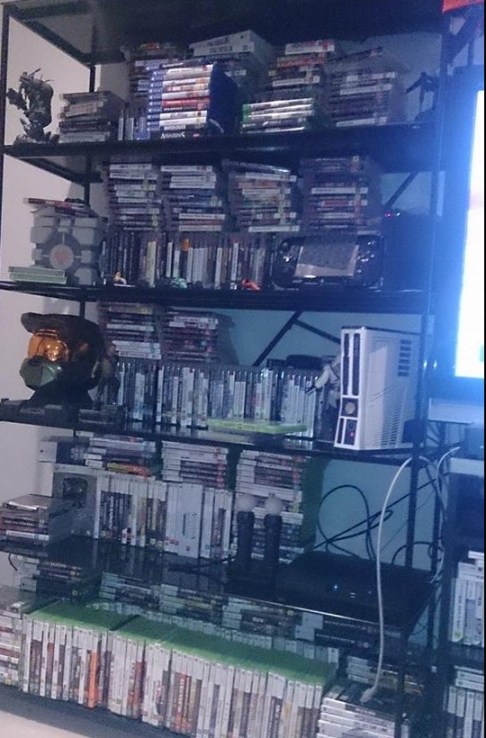
    And in previous years I may have done that.  I may have pre-ordered more games than I could possibly play.  I may have pre-ordered games I felt compelled to play.  I may have even pre-ordered games that I knew I was never going to play.  It was consumerism at its worst and it got me into a situation where I have shelves overflowing into plastic containers full of games I will likely never get around to playing.  Luckily, those days are over.

    Sadly, this is only a small part of a bigger problem.
    Sadly, this is only a small part of a bigger problem.


    You see, I recently got engaged and have a wedding to pay for – something I am incredibly, incredibly excited about.  I want that memorable day to remember for the rest of my life, but that costs money.  While I knew it wasn’t going to be cheap, I wasn’t prepared for just how expensive it was going to be, as I watch future income flash before my eyes.  Let’s just say every dollar not spent on subsisting will be going into a well-secured bank account located deep within a dank dark vault and guarded by a very, very angry cerberus.  Basically I need to tighten my belt and put my serious saving hat on.

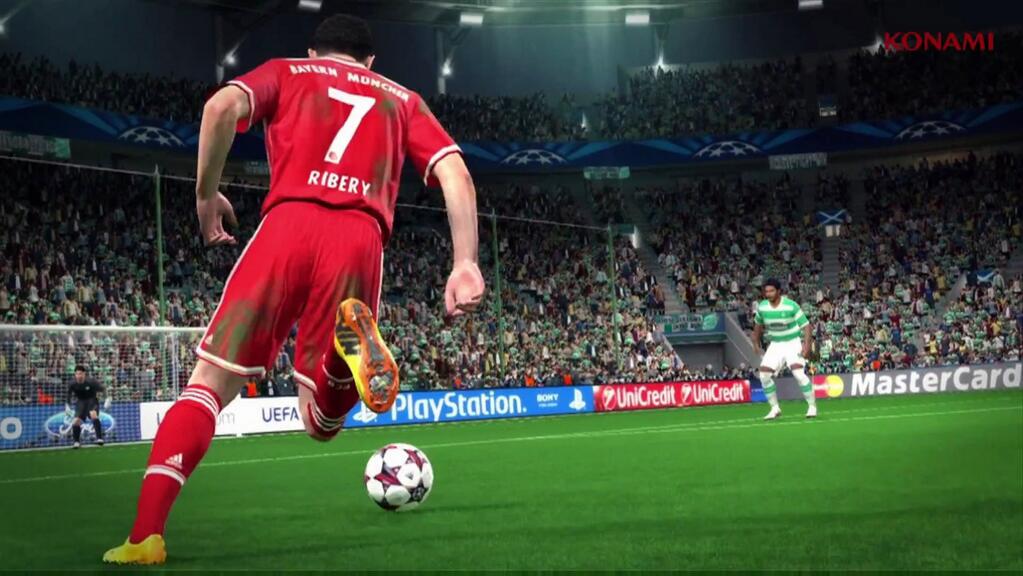
    That leaves very little money for buying games for the foreseeable future and so what I do buy has to have legs.  I need to get fully invested in these games enough to want to spend months and months at a time with them.  I need more games to join the ranks as the Pro Evolution Soccer series and NHL series as perennial favourites.  As someone that doesn’t play multiplayer games, that’s harder than it sounds.

    But i’m actually excited about changing my gaming habits.  E3 is the very embodiment of the increasing consumerist behaviour plaguing western society, something it feeds on as it tells you what to think, what to play, and how to play it.  It is one big advertisement wrapped up in a big and bombastic spectacle.  And I’m now impervious to it.  I just need to find the game that will continue keep my eyes away from the new release section of my nearest retailer.  Suggestions welcome.

    PES2014SS

  • So, E3 is over for another year, and I can finally stop checking gaming websites for E3 updates every five minutes. Undoubtedly the biggest controversy of the show was Ubisoft’s terrible gaffe about Assassin’s Creed: Unity, but in terms of sheer headline grabbing, there was nothing to compare to last year’s PR war between Microsoft and Sony. In fact, it was surprising to see a new, humble side to Microsoft under the leadership of Phil Spencer, who credited the “amazing games” made by Nintendo and Sony.

    One theme that stood out was delays – the gaming drought looks set to continue, as lots of big titles were pushed back to or revealed for 2015, leaving the Christmas 2014 line up looking fairly sparse. But on the plus side, there were some very exciting games unveiled, not least by Nintendo, who in my opinion came out of E3 in much better shape than Sony or Microsoft. Not only did they unveil a tantalising list of new games, many of them new IP, they followed up their slickly produced (and hilarious) 45-minute Digital Event with reveals of new games and information throughout the week via the Nintendo Treehouse YouTube channel. Plus they arguably caused the biggest buzz of the show with the reveal of a stunning new Zelda game for the Wii U.

    The new Zelda on Wii U - Nintendo claims this is all in-game footage. Wow.
    The new Zelda on Wii U – Nintendo claims this is all in-game footage. Wow.

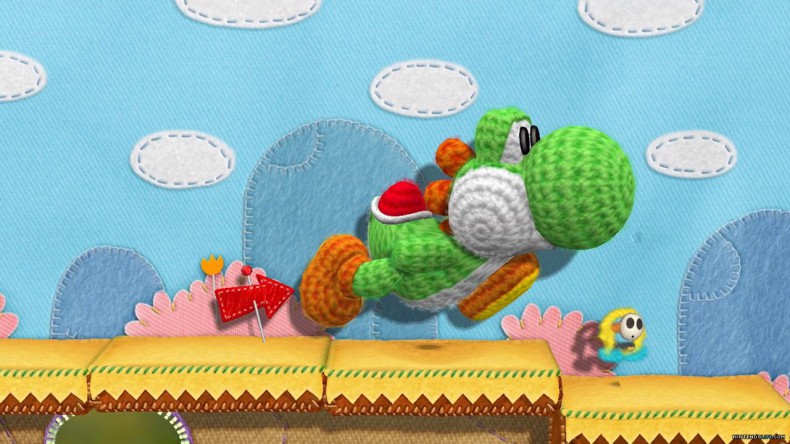
    Frankly, I wanted to rush out and buy all of the games in Nintendo’s line-up, not least Yoshi’s Woolly World, which had such kitten-in-a-teacup-playing-with-a-duckling-in-slippers levels of cuteness that I was practically welling up. (Let It Die this most definitely wasn’t, although that game gets kudos for having possibly the best name since Run Like Hell.) Other Nintendo highlights were Captain Toad: Treasure Tracker (need!), Super Smash Bros. Wii U (which looks better every time I see it), Splatoon (such a great idea for a competitive shooter) and Code Name: STEAM (which is a cross between XCOM and HP Lovecraft – sign me up now).

    Yoshi's Woolly World - so cute it makes me want to throw up rainbows.
    Yoshi’s Woolly World – so cute it makes me want to throw up rainbows.

    Microsoft had a bit of a mixed bag of games by comparison. The announcement of Halo: The Master Chief Collection, which includes remasters of Haloes 1 to 4, didn’t exactly set my world alight, but that’s the big game MS are banking on this Christmas. I’ve only just got around to playing through Halo 4, so I’m not in any rush to play through the earlier games again… plus I definitely have a sense of diminishing returns with the Halo series, certainly in the single player campaigns, and I’ve long since given up on attempting to follow the labyrinthine plot.

    By comparison, Sunset Overdrive looked a lot more fun, and Rise of the Tomb Raider is a game I’m really looking forward to. Scalebound, on the other hand, was a bit of an odd one: An Xbox One exclusive, it’s being developed by Platinum, whose games I adore, but the trailer left me stony faced. White-haired guy who looks a bit like Dante, giant fire-breathing dragon… all things we’ve seen a hundred times before. Ms. D was watching the trailer over my shoulder, and I asked her what she thought. “Looks just like a video game,” she concluded. “Just like any old video game.” Oooh, she can be cutting when she wants to be. Cutting but incisive.

    Hold on, was that a giant enemy crab in the trailer? It’s clear that Sony don’t have the monopoly on them when it comes to E3 presentations…

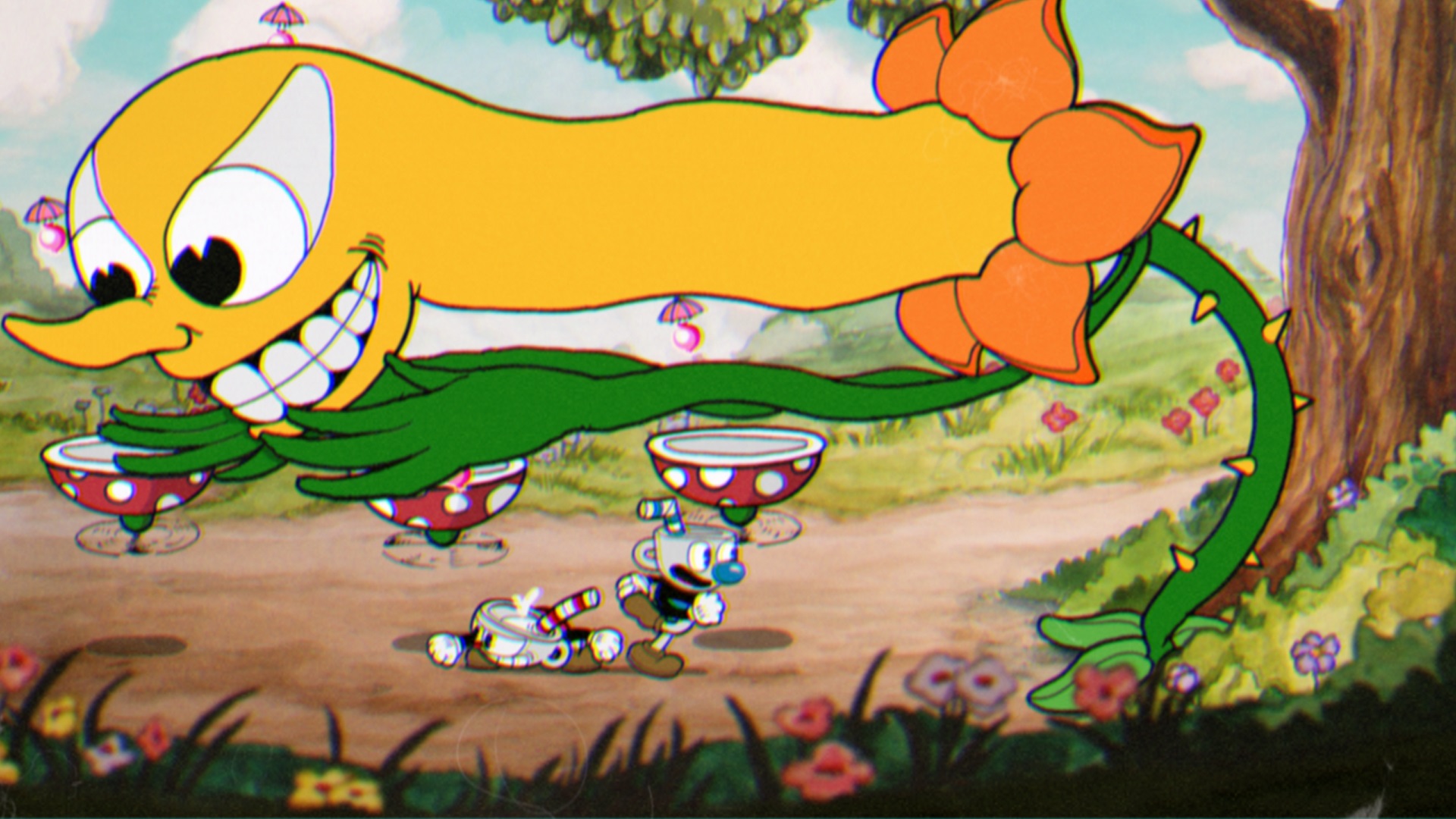
    Perhaps the highlight of Microsoft’s presentation was the indie reel, which I’d highly recommend you to watch. Sadly, the games flashed by far too quickly for my liking, but Ori and the Blind Forest looks stunning, and other stand outs include White Night, Below, Habitat and Lifeless Planet. But perhaps Cuphead is the game that stood out most for me, perhaps because it’s the one that’s most likely to give me nightmares with its evil Disney stylings.

    Cuphead, like being sucked into a 1930s cartoon and FIGHTING FOR YOUR LIFE.
    Cuphead, like being sucked into a 1930s cartoon and FIGHTING FOR YOUR LIFE.

    Sony also had a bit of a mixed bag of games, although there were perhaps a few more I’d want to play than in the Microsoft presentation, not least of which is the promised remake of Grim Fandango. I missed out on the game first time around, so I’d love to play a shiny new version. Is it enough to persuade me to buy a PS4? No. But it’s certainly helping the decision.

    If there’s one game I’d buy a PS4 for (or an Xbox One for that matter), it’s Batman: Arkham Knight, which looks simply stunning. The trailer featured in Sony’s presentation blew me away, and it’s perhaps the first game I’ve seen that really makes the most of the next-gen power at the developers’ disposal. “Look, the cut scenes are indistinguishable from the main game! Wowweeeeeeeeee!” says my inner child.

    Otherwise, the game everyone was talking about after Sony’s show (even BBC News) was No Man’s Sky, which admittedly looks amazing (see trailer above), especially considering it’s an indie game made by a tiny team. The idea of being able to explore an effectively infinite game space stuffed with unique planets and animals sounds enticing, but I second the question voiced by Ms. D: “What do you do?” I imagine planet exploration could get dull fairly quickly as you catalogue yet another animal that’s only slightly different from the last one. I’ll reserve judgement on No Man’s Sky until I know a bit more about it.

    Overall, the game of the show for me was undoubtedly Zelda: the new graphical style looks stunning, and the move towards an open world is a much-needed change for the series. Can’t wait for this one. Let’s watch the trailer again.

    How about you? What were your highlights of E3?

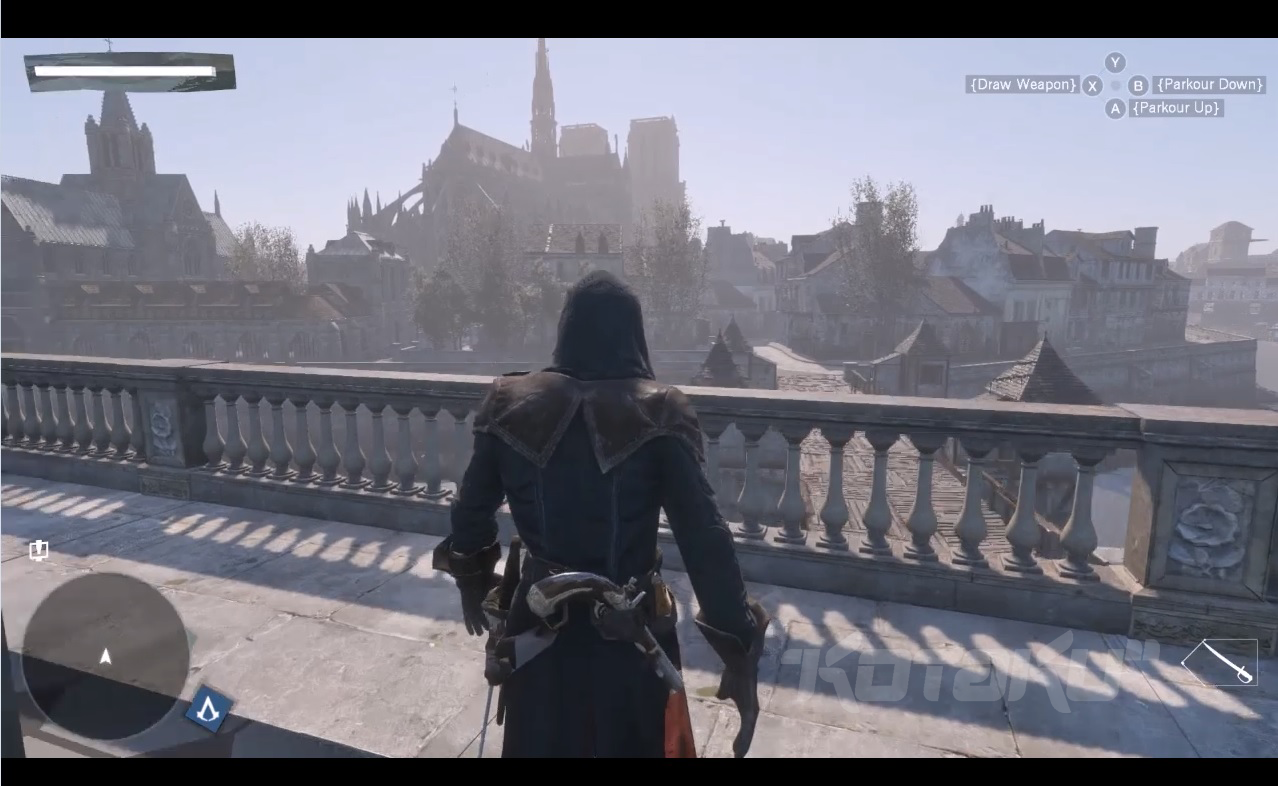
  • As you may have read already, Ubisoft creative director Alex Amancio caused a bit of controversy at the E3 gaming conference by saying that there are no female assassins in the upcoming Assassin’s Creed: Unity because it would have been too much work to put them in. His exact words were:

    “It’s double the animations, it’s double the voices, all that stuff and double the visual assets. Especially because we have customizable assassins. It was really a lot of extra production work. It’s not like we could cut our main character, so the only logical option, the only option we had, was to cut the female avatar.”

    Understandably, quite a few people were upset by the idea that putting women into a game counts as ‘extra’ production work, and the gaming media leapt on the statement. Similar revelations emerged around another Ubisoft game, Far Cry 4. Ubisoft stepped up to clarify the original statement, and Amancio claimed his wording was a “slip up”. But the furore surrounding the issue shows how contentious it is.

    Ubisoft had the resources to recreate 18th century Paris, but not to include female assassins...
    Ubisoft had the resources to recreate 18th century Paris, but not to include female assassins…

    Admittedly, some media outlets may be guilty of fanning the flames of outrage with this story, but the amount of comments that have been added to each post on the subject show that it’s a big deal. What’s interesting, however, is how neatly divided the comments have been between people who see the ‘slip up’ as indicative of the underlying sexism in games and people who declare it a ‘non-issue’ (example quote: “Why does everything have to turn out into a battle of human rights and equality these days?”).

    It saddens me that so many people won’t even acknowledge that there is a problem with female under-representation in games – and indeed their misrepresentation. As I’ve written before, women have historically been an afterthought in gaming history, and when they do appear it’s more often than not with big boobs and short skirt – i.e. women viewed from a male perspective. Strong female characters like Ellie in The Last of Us and Jade in Beyond Good and Evil are the exceptions that prove the rule.

    I can empathise with people who don’t think that this is an issue, because for them it probably isn’t an issue. Such commenters are overwhelmingly male, are more than likely to prefer playing male avatars to female avatars, and are more than happy to be served up with idealised visions of highly sexualised women. Despite shifts in the gaming demographic, the majority of gamers are still men, most games are still made by men, and many gamers probably don’t think twice about it. But maybe they should.

    Imagine you’re a woman (if you are a woman, this will be easy). The vast majority of games – Watch Dogs, Wolfenstein, Grand Theft Auto, etc, etc – plonk you in charge of a man. The overwhelming message is: “these are toys for boys, women aren’t welcome”. You might feel alienated. Some men claim that they find it difficult to inhabit a female avatar – if that’s true, then imagine how female gamers feel. As Leon Hurtley said on Kotaku: “Thinking about the Assassin’s Creed news this morning made me realise that if I was a girl almost every game would be [alienating].”

    Assassin's Creed: Liberation DID feature a female lead.
    Assassin’s Creed: Liberation DID feature a female lead.

    You could argue that if the majority of gamers are men, then companies are perfectly within their rights to target that majority. And this makes sense up to a certain point – but imagine if society was run like that. Governments that continually ignore the wishes of minorities don’t tend to last long.

    But it’s not just that female characters are scarce in games: publishers actively discriminate against female leads. The developers of Remember Me told how they were turned away by publishers who said: “You can’t have a female character in games. It has to be a male character, simple as that.” As Dontnod creative director Jean-Maxime Moris says, with thinking like that, “there’s no way the medium’s going to mature”.

    The gaming world is sexist, simple as that. The industry has been stuck in a protracted adolescence that it is struggling to shake off. Signs of maturity are emerging, particularly in some of the thoughtful work coming out of the indie scene, but it’s a slow process. We know the reasons for this: a (largely unfounded) perception that men don’t want to play as females; the perception by many (male) gamers that nothing needs to change; and the misfounded reasoning from some publishers that games with female characters don’t sell as well (somewhat of a self-fulfilling prophecy that doesn’t hold up to scrutiny).

    This thinking has to change. The relegation of women to second-class citizens in the gaming world is frankly embarrassing and, even worse, damaging. Think of all the children playing video games who will grow up thinking that it’s the norm to play as a man and that women always have secondary roles. Is that how we want women to be perceived?

    So how can we fix this? Some people have floated the idea of publishers enforcing ‘quotas’ for female characters, but such positive discrimination smacks of tokenism. However, there does need to be a change in how developers approach the way they make games. I’d wager that much of the perceived sexism in games is unintentional – it just doesn’t occur to male-dominated design teams that they need to include women or, in the case of the Assassin’s Creed affair, it comes up as a secondary concern. An easy way to change this would be to circulate a simple checklist at the start of development:

    • What gender will the main character be?
    • Why?
    • Can we offer a choice of genders?
    • How would the female characters in our game be perceived by a woman?
    • Would our game pass the Bechdel test?

    Not all games have to feature women, in the same way that not all films or TV shows have to feature men. In some cases featuring a single gender is appropriate to the story. But asking simple questions like those above would be a start towards setting the balance straight. We need more women in games because at the moment, half of our society gets short shrift in one of our biggest entertainment mediums.

    Remember Me was rejected by publishers for featuring a female protagonist.
    Remember Me was rejected by publishers for featuring a female protagonist.
  • ArmchairWhat-ho, chums!

    I’ve just returned from five glorious days in sun-kissed Sicily, and the shock of returning to the griminess of The Big Smoke has yet to soften, although some rare outbreaks of London sunshine are helping to alleviate the transition. As Ms. D and I were waiting for our flight home, I had a quick peek at my phone to check whether the internet was still there after five days of online abstinence on my part. I was glad to find the information superhighway in full working order, and I proceeded to flick through my usual gaming haunts for any exciting news.

    “What are you looking at?” asked Ms. D.

    “I’m reading about E3,” I replied.

    “What’s E3?” she asked, quizzically.

    “It’s… well…,” I began, struggling to explain the significance of the event, “It’s like the equivalent of the Oscars for video games, except there are no prizes.” She understandably looked confused. I tried again. “It’s a bit like Christmas for gamers. No, it’s bigger than Christmas!” She looked sceptical. I pressed on. “It’s when all the companies announce their latest games,” I said, simply. She seemed satisfied and went back to reading her book, although I wasn’t particularly satisfied with my explanation. It’s more than just gaming announcements – it’s the hype frenzy, the media circus, the heightened anticipation, the mud-slinging between the console giants, the spending of vast sums of money on glitz and celebrities. In short, it’s a lot of fun.

    This year, E3 feels more important than ever. After the massive PR win by Sony at last year’s E3, expectations for high-profile clashes between Sony and Microsoft are high, and Nintendo are rumoured to have something special under wraps, with lots of speculation about the release of Mario NFC figurines and new software coming before Christmas. More than anything though, expectation is high because the gaming world is in a bit of a slump right now: the release schedule is like a desert at the moment, with little but the usual yearly instalments being lined up for Christmas. Of course, we’ve just been treated to the glorious Watch Dogs/Wolfenstein/Mario Kart 8 triumvirate of releases, but there’s not much else coming up on the calendar.

    The Luigi Death Stare meme has had me in stitches: http://www.kotaku.co.uk/2014/06/04/best-luigi-death-stare-videos
    The Luigi Death Stare meme has had me in stitches: http://www.kotaku.co.uk/2014/06/04/best-luigi-death-stare-videos

    That’s probably a good thing for me at least: it’ll give me some time to plough through my backlog before the next wave of must-play games. But even so, I’m hoping for the announcement of new Zelda and Metroid games, and hopefully something new in the Fallout and Mass Effect worlds. I’d love a new XCOM too (although I’ve still yet to play through Enemy Within from last year), and I’m keen to see more of Bayonetta 2 and Mad Max.

    In the meantime though, I can see Mario Kart 8 will be keeping me busy for months to come. It’s the first video game that Ms. D has gotten excited about in a long time, and it’s been a long, long time since I played a video game this fun. I’m also happily finding my way through The Legend of Zelda: A Link Between Worlds, although Hyrule exploration has been temporarily put on hold due to the purchase of Batman Origins: Blackgate, which was on sale at 75% off on the eShop last week. It’s a fun little game that’s got me thoroughly hooked, although obviously it’s much slimmed down in comparison to its console cousin. The odd 2.5D graphics were a bit confusing at first, and the 2D map is utterly useless, but I love the Metroidvania gameplay. Definitely worth a pop for the price.

    For the next week, however, I’ll be glued to the news feeds, lapping up all the latest gaming annoucements from E3. Let me know what games you’re looking forward to in the comments below.

    Of course, the only downside to E3 is the animalistic whooping in the press conferences... come on guys, calm down.
    Of course, the only downside to E3 is the animalistic whooping in the press conferences… come on guys, calm down.
  • WatchDogsPS4You don’t have to look very far in Ubisoft’s Watch_Dogs to see how much time they’ve put into creating a realistic and immersive world, and with every person inhabiting the virtual Chicago having a back story, you could spend hours upon hours poring over every minute detail – some of it tragic and some of it funny.

    But part of the fun of Watch_Dogs is what i’ll call the ‘meta-game’ – the personal and unique tales that will be talked about amongst friends and on the internet – that makes it such a stroke of game design genius.  The ability to share all of this quickly and easily with the new generation of hardware just perpetuates an already inherently ‘social’ game premise.  Watch_Dogs will stay in the public consciousness by virtue of the spontaneity and uniqueness of everyone’s personal in-game experiences.

    As we’ve seen with Mario Kart 8, and the now infamous Luigi death stare meme, games now have a much wider reach than previously, with a propensity to go viral than unmatched by any other time in gaming history.  As a result these games are being defined not by playing them necessarily, but how they are being disseminated virally online.

    While Mario Kart 8 hasn’t necessarily brought out the inner online media socialite in me, Watch_Dogs has, and I’ve found myself sharing all manner of videos and screen captures online.  Some were of incredible one-off moments and others of interesting profiles of the plethora of people populating the incredibly dense world Ubisoft has created.  But it wasn’t until I posted a screenshot of a profile of one Spencer Lawley-Jones on Facebook that I realised the potential for Watch_Dogs to be the first game to show the potential for videogames to invade the mainstream online consciousness, and the almost boundless potential for fan fiction to exist outside of the game itself.

    You see I came across Spencer Lawley-Jones walking around a normal everyday suburban Chicago street.  An unassuming 30-something man wearing a baseball cap, a nice woolen jumper, and a pair of jeans – Spencer was the kind of guy you’d take no notice of.  Working as a bank teller by day, he’s the kind of guy you’d imagine would invite a few friends around on a Friday night to watch the football.  He probably drinks, but not a lot, and his main vice is the once a month he gets together with the guys from the office for a poker night, where he’ll smoke the only cigar he’ll smoke until the next poker night, and will lose $20 because his poker face isn’t so good.  He’s your average hard-working American joe.

    He also happens to have been fined for indecent exposure.

    I was taken aback by the revelation about Spencer Lawley Jones, so much so that I felt the need to share it with friends and family.  And that’s when Facebook asked me to “Tap to Tag a Friend”.   I considered it for a moment, “who could I tag as being the guy fined for indecent exposure?”, but decided against it for fear of hitting a raw nerve or accidentally upsetting someone.  But I took a screenshot of the moment for posterity, because years from now it is moments like these – moments in real life – that will define my memories and personal relationship with a game that I think will be remembered as a leap forward in immersion in video games.

    WatchDogsScreen

  • Hype is an absolutely amazing and wonderful thing that is sure to play into your future nostalgia in a very significant way.  While sometimes it can lead to unfounded excitement once you’ve got your shiny new game home, usually it is enough to build an incredibly strong memory of playing a game that will last you well into the future.

    The onset of the internet and the constant bombardment of information has made it easier than ever before for publishers and developers to build hype for their games.  Advertisements, interviews, screenshots – information is drip-fed directly into our brains, slowly but surely building excitement and giving products positive momentum and consumer sentiment leading up to release.

    But unless you were around in the 90’s you don’t know the meaning of hype.  A new intellectual property these days is met with an inherent excitement based purely around potential.  But in the 80’s and 90’s – a time ruled by the arcades – we were excited about very different game releases.  It wasn’t the new game teased on websites, or announced at E3 the previous year that we were running down to our local bricks and mortar store to preorder.  No,  we were excited about games we had played before, many of us routinely or obsessively for years.  Games we had probably paid the price of twice over in quarters.  Games we had been talking turkey with friends about in the schoolyard for the last two years. And games that we couldn’t believe we were getting to play in the comfort of our own homes.

    We were excited about arcade game conversions.

    Ryu

    And what a time it was to be playing games, as these technical tour de forces were adorning screens across the neighbourhood.  There was no room for smoke and mirrors or broken promises.  The hype wasn’t something created and curated, but something organic that came from the genuine excitement of bringing your favourite arcade game home.  We knew exactly what we were getting when we took Street Fighter II home for the first time on the Super Nintendo, but it didn’t make it any less exciting.  It was a time when the console market boomed in Australia on the back of home ports of arcade games, as people clambered to get their hands on their favourite arcade game, and console manufacturers invented the (largely baseless) term “arcade perfect” to get an edge of their competitors.  There was a very tangible excitement lingering in the air of retailers that I haven’t seen since, and in all likelihood, will never seen again.  We weren’t excited  about a promise or potential, we were excited about an already established love and adoration.  In a way we had built our own hype, and all the marketing teams were doing was giving us a little nudge.  But it was this organic hype that made it so memorable because there was no big come down once we actually got our hands on the game.

    Of course hype is still big business and key to filling the wallets of games industry shareholders and CEOs across the world.  But the equation is not the simple one it used to be, and preorders aside,  it is often the metacritic score that does the talking, as games more than ever rely on the big green light from critics.  Hype is important, but its no longer crucial with the onset of the 24 hour news cycle.  While there is a part of me that is glad consumers are more empowered than they perhaps have been in the past, I still feel profound sense of nostalgia (and sadness) for the good old days, where posters advertising upcoming games had kids begging their parents for advances on their pocket money, and kids flicked through catalogues planning their birthday and christmas lists based purely on box art.  But it was a different world where we weren’t betting on an unknown horse, but on a surefire winner. It was a time where there was a tangible excitement about something new, about the future, about video games.  Sure it may have been hype, but it is that bombastic attitude toward selling products that I remember the most fondly about video games in the 90’s.  And like many artefacts I’ve held onto since childhood, this poster advertising the release of Super Street Fighter II’s release on the SEGA Mega Drive, is a reminder of that time.  I will always remember that Super Street Fighter II was a 40MB cartridge, but I have no idea how big the modern blockbuster is.  Hyper isn’t just a fleeting feeling, it is a key component of my nostalgia.  And I’m eternally grateful to those marketers for that.

    Have a favourite arcade port, or memory of the hype leading up to the home release of an arcade blockbuster?  Let us know in the comments.

    SSF2 Mega Drive

  • A few of my thoughts on online streaming, as originally posted on 101 Films…

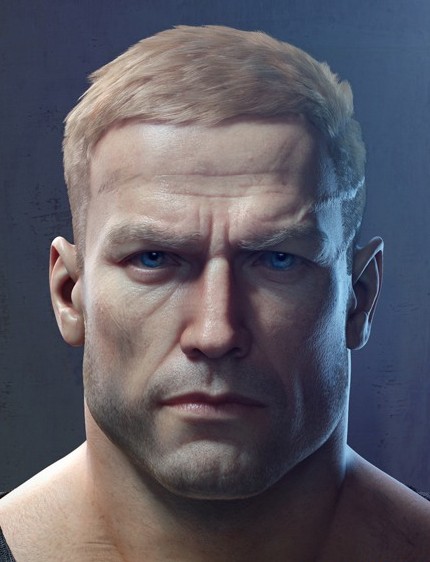
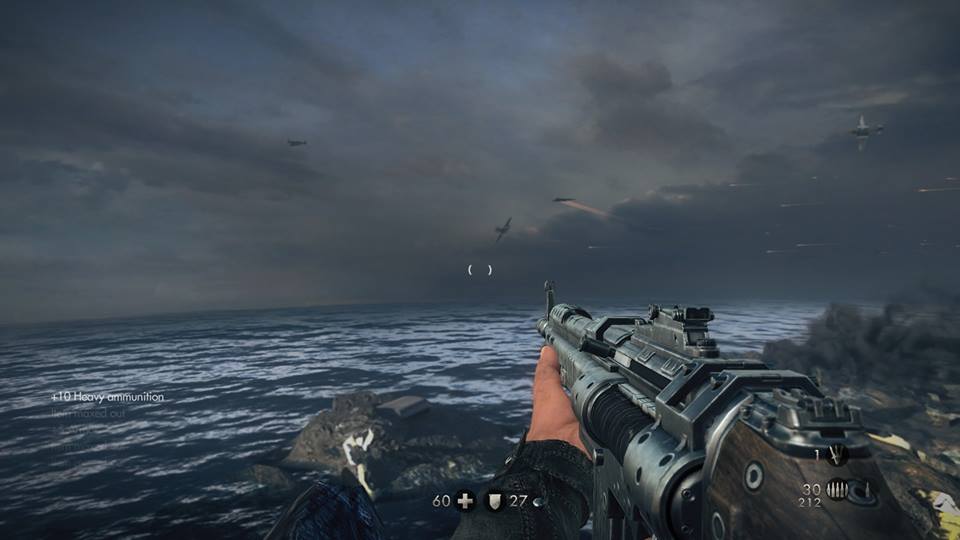
  • WolfensteinNewOrderI never thought it would be the Wolfenstein series that touches on the more sinister and taboo issues arising from the rise of the far right and Nazism during World War II.  We’ve had scores of games based on that six year period, 1939-1945 where most of the developed world was embroiled in war, as the Nazis pushed for control of Europe and the Japanese the control of the Pacific.  From these games we know that Adolf Hitler and his henchmen were maniacal supremacists committed to righting the wrongs imposed on Germany following the end of World War I and the crippling impact the Versaille Treaty had on its welfare.  We know that Japan was looking to continue its previous imperialistic push into much of Asia at the will of the Emperor (Hirohito).  We know that while Britain’s forces fought with incredible bravery and determination to hold off the push of Hitler’s forces from mainland Europe to the British Isles, it was the entry of the Americans into the war that put the first real chinks into the Nazi armour.  We know that victory was heralded by the allies in May of 1945, with the fall of Japan coming a few months later in August.

    But did you know that the Nazis were also responsible for one of the biggest programs of genocide the world has ever seen? If videogames are your only insight into the war, well you’d be forgiven for not knowing.

    It is a side of the war that video games seldom go near.  It is an inconvenient truth likely deemed too touchy for anything remotely interactive.  There are still survivors of the holocaust living today, and for many people, the experience of being held in concentration camps across Europe during the war is still very real.  While there are museums and documentaries that remind us of the atrocities committed under Nazi rule, the genocide, in particular the persecution of the jewish population of Europe, is something that pop culture well and truly avoids – particularly when it comes to interactive media.

    JBBlazcowicz

    But Wolfenstein: The New Order bucks that trend by creating an alternate universe where the Nazis triumphed over World War II and is able to pursue its aryan agenda.  It is a bleak alternative future that has seen the United States of America surrender at the hands of a nuclear enabled Nazi Germany, Europe occupied, and the people repressed.  It is a world where Nazi propaganda is rampant and the streets are guarded by heavily armed German soldiers and mecha.  And it is this bleak alternate history world that has enabled the developer Machine Games to explore the Nazi pursuit of purity through persecution.

    Tactfully and subtlety Wolfenstein exists in a world filled with intherent and widespread racism and genocide.  An early encounter with Nazi aryan supremacists in a train is a confronting one, with the enemy casually discussing the virtues of pure aryan blood, forcing you to take a test to prove your purity.  It is an uneasy moment in a game that perfectly sets the tone for the rest of the game.  Wolfenstein is confronting thematically but it is handled incredibly well within the confines of the narrative and the construction of the world.  Conversations and newspaper articles flesh out the world, never hesitating to touch on great acts of discrimination, almost all resulting in murder of innocents.  At one point you are told of an innocent baby being taken from its parents, probably murdered, because of a physical disability.  It is a world full of human atrocities, and atrocities that the developer has no qualms in bringing to the players attention.

    But Wolfenstein takes these themes in its stride, never stopping to labour on the point or make moral judgement.  Mentions of aryan bloodlines or religious or social ‘cleansing’ are fleeting.   It is clear that the nazi doctrine is one without virtue from the outset, and in an act of having faith in the intelligence of the player, Machine Games made the decision to not push a wider moral onto the player.  It isn’t romanticising their behaviour by staying silent but rather advocating a view that feelings of human equality should be universally held.  After all vivid imagery of torture and human suffering shouldn’t need a caption or a commentary track explaining why it is bad.  It just is.

    And that’s the way Wolfenstein tackles these weighty issues.  It just is.  Perhaps its the fact that Wolfenstein: The New Order takes place in an alternate universe that allows it so much freedom to explore these mature themes with such ease.  While it is clearly a time and place in history that we are familiar with, it is the fantastical nature created for Wolfenstein that distances it far enough from the human suffering experienced during World War II, to avoid criticism of juxtaposing issues of humanity with the bombast the Wolfenstein series is known for.  But whether it was intentional or not, Wolfenstein: The New Order heralds a new era of maturity in video games, one where issues of racism and the beliefs held by the far-right can be discussed and portrayed in such an open and honest manner.  But more importantly one where the darker side of human nature isn’t glossed over or made into black and white for populist consumption.  Wolfenstein doesn’t purport to be a dramatic statement against beliefs of aryan supremacy or pure bloodlines, but by taking these issues in its stride, Machine Games has created probably the most mature discussion of these themes in video games.

    Wolf

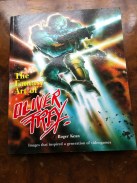
  • The Fantasy Art of Oliver FreyI was browsing through a book shop the other day when I came across a volume that got my nostalgia glands throbbing from just one look at its cover. The Fantasy Art of Oliver Frey is a celebration of the artwork of one of the most famous individuals in the eighties computing scene, and I found myself rushing to the counter to purchase it in less time than it takes to boot a Commodore 64.

    Oli Frey painted numerous covers for eighties computing magazines, including Crash and Zzzap!64, and I remember the excitement of seeing his artwork on newsagents shelves, hinting at the possibilities of what delights the games inside would hold. Frequently, of course, the artwork was much more exciting than the games themselves, but Oli’s covers showcased the enticing hidden world to be found in games, something intoxicating to a wide-eyed youngster.

    Oliver Frey Amstrad CPC

    Looking back at the above picture of giant Amstrad CPCs descending on an unknown planet, the disconnect between weedy eighties computers and a display of awesome power seems ludicrous. But I lapped up images like these at the time – they reflected my own excitement and the feeling that we gamers were at the cutting edge of technology. Even if it was an Amstrad.

    Oliver Frey Crash Number 1Oli Frey’s most famous picture is probably this one – the cover of Crash issue one, in which a terrifying alien has Space Invaders for eyes. It didn’t really have anything to do with what was inside the magazine, it was just meant to be an exciting image that was vaguely game-related. This was a surprisingly common theme in early games magazines – often the cover wouldn’t necessarily relate directly to the content.

    Oliver Frey King KongHere’s another famous Crash cover of King Kong munching on a Spectrum. Again, there was nothing about King Kong in the magazine, Oli just wanted to create a cool image. And I think you’ll agree he succeeded.

    Oliver Frey ChristmasI love Oli’s detailed paintings for Christmas specials, which usually featured the magazine’s editorial team. A few years back, Retro Gamer commissioned Oli to paint a similar Christmas-themed cover for their magazine, and I believe he’s done a few of them since.

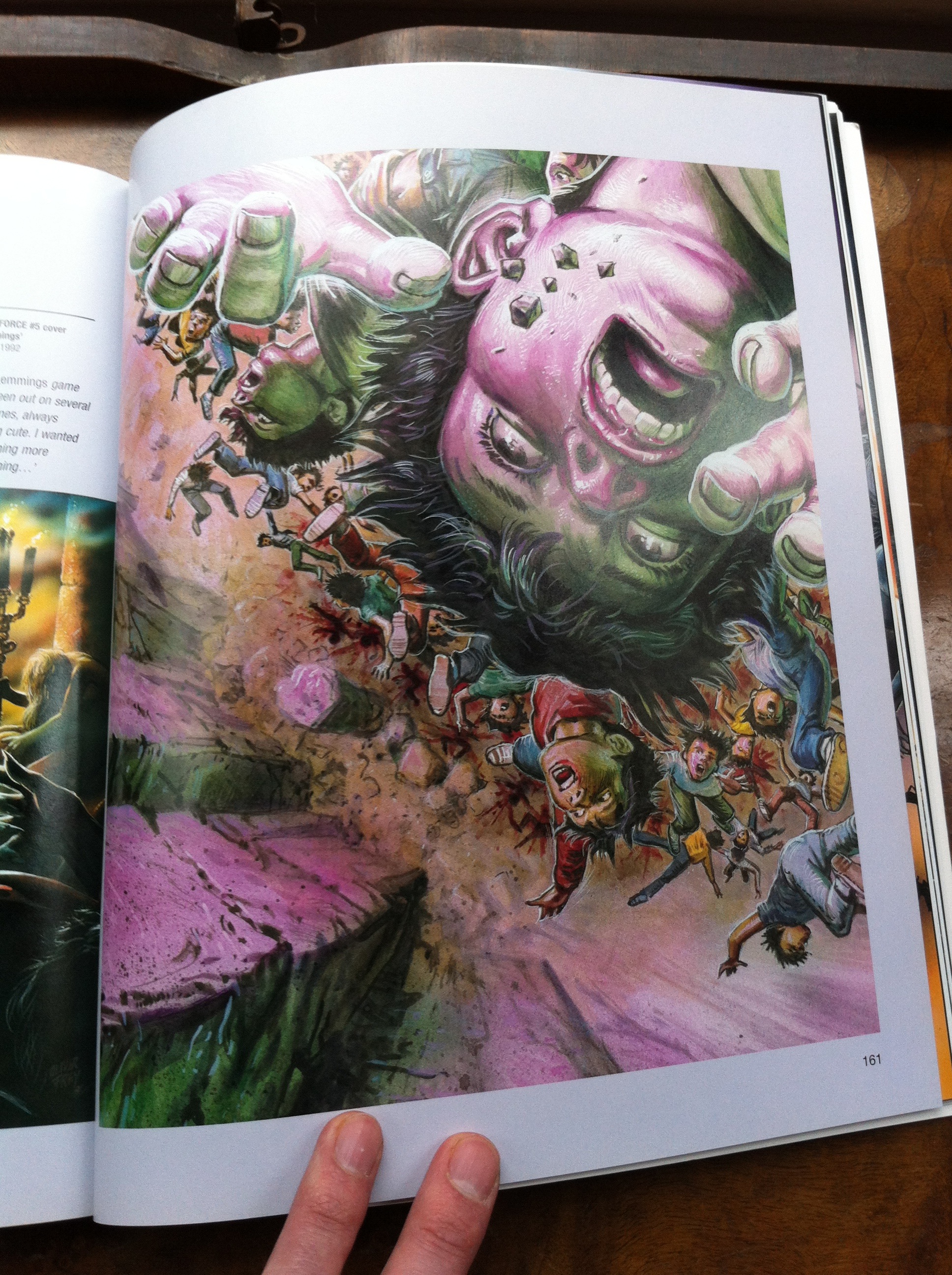
    Oliver Frey LemmingsThis is one of my favourite of Oli’s paintings – his idea of what a realistic Lemmings would be like if it featured people. I think this image appeared on a SEGA magazine in the late eighties. I love the use of perspective, but it also captures what appealed to me about Oli’s work – there’s a dark undercurrent that made video games seem dangerous, forbidden and exciting, even if they were mostly blocky pixels shuffling around on a black screen.

    It’s a shame the hand-painted magazine cover has died out: they’re so much more distinctive than highly polished modern covers. Hand-painted covers were still fairly common well into the nineties, and I remember TOTAL! used them quite often, but they gradually disappeared as digital artwork became easier to create.

    Oliver Frey is still making art, and you can order some of his iconic images via his website: http://www.oliverfreyart.com/. I’d also recommend ordering The Fantasy Art of Oliver Frey if you have any love for retro gaming, it really is a wonderful trip down memory lane.

  • ArmchairWhat ho, chums!

    It’s been fairly quiet in the gaming world over the past couple of weeks, no doubt because everyone is holding back announcements for the upcoming annual mayhem of E3 on 10th June. Add in the fact that I’ve been journeying around the untamed wilds of Scotland for the past few days, and it means that there is likewise little for me to report on the domestic gaming front. Although I can confirm that Scotland is very, very cold. Beautiful, but cold.

    However, I did eventually manage to finish Gargoyle’s Quest after much gnashing of teeth and frustrating restarts, and I’m pleased to say it turned out to be a lot of fun after the initial shock at how difficult games used to be. I’ve also made a bit of headway on Castlevania, although that game is astonishingly hard even by retro standards – god knows how anyone ever finished it without a save game system. It is strangely addictive though – despite having my posterior handed to me on a regular basis by Frankenstein’s monster, I still find myself drawn back to the game like an addict to the needle.

    Link: charming
    Link: charming

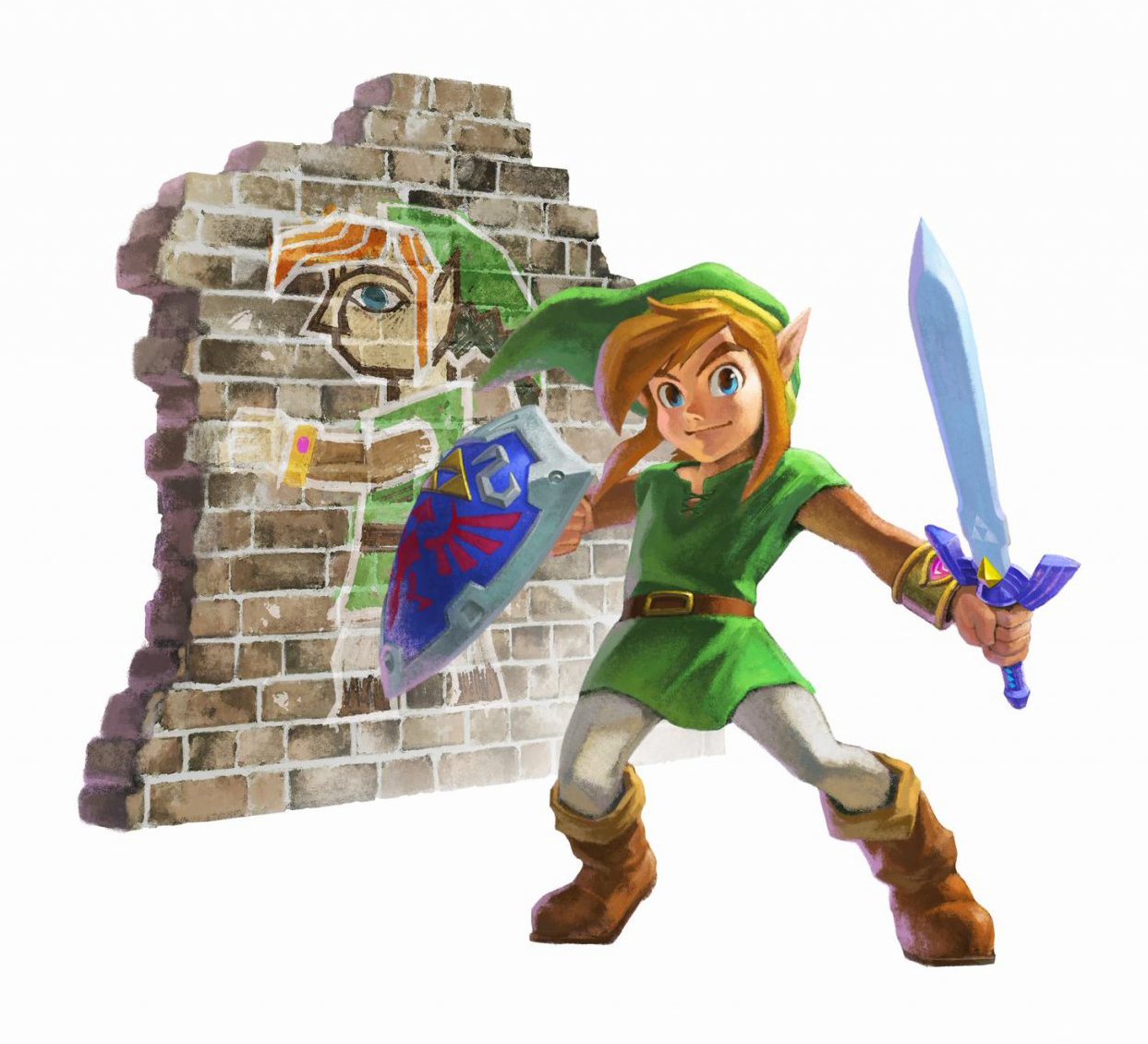
    I also treated myself to The Legend of Zelda: A Link Between Worlds: I’ve barely dipped my toe into the pastel-coloured waters of Hyrule, but it charmed me completely from the start. My face was set with a dreamy grin as I guided Link on his quest, quite different from the determined grimace that is a permanent fixture during my battles with Castlevania.

    It’s actually been a bit of a games-buying bonanza over the past few weeks after months of abstinence: I’m eagerly awaiting my pre-ordered copy of Mario Kart 8, and I bought Halo 4 in order to finally get up to date with the series and continue my quest to finish all of the Halo games in coop with my good friend Mr Sutton. I’ve also been sorely tempted by Wolfenstein: The New Order and Watch Dogs, although I managed to resist the devil’s subtle whisperings of enticement in the end. But should I eventually succumb, it’s likely that I will be hurling my shilling in the direction of Wolfenstein rather than Watch Dogs: hunting ludicrous sci-fi Nazis is more up my street than GTA with mobile phones.

    I did, however, hunt down and buy Mass Effect 3, such is my eager anticipation to see this series through to its conclusion. I’m currently hovering at around the 35-hour mark in Mass Effect 2, and I’m utterly enchanted by it: any of my spare time, of which there is sadly little, has been funnelled in the direction of this frankly quite remarkable game, which deservedly made it into the top five of our Most Agreeable Games of the Generation.

    The difference between Mass Effect 2 and its prequel is astonishing: as I said in my review, the first game has a great story but is fatally flawed by repetitive sidequests and dull exploration. Yet the sequel manages to fix pretty much every single flaw in the original, and the satisfying complexity of the game world makes it a joy to seek out quests and study the lore of the Mass Effect universe.

    However, I’ve spent most of my time recently trying to cop off with members of the crew.

    Miranda: annoying
    Miranda: annoying

    ‘Romance’ in Mass Effect is almost like a metagame in itself. The fact that your relationships from the previous game carry over into the sequel is a genius idea, and it adds weight to your awkward flirtations when you know that your decisions will carry over to the next game. Miranda is currently in a huff with me after I took Jack’s side in an argument, but I’m not particularly bothered as she’s frankly irritating (I’m sure I can’t be alone in thinking that). To be honest though, I’m surprised there hasn’t been an option to bed Jacob, such is the sexual tension whenever my male Shephard sidles into his quarters for a chat and leans suggestively against the desk.

    All of this soap opera posturing is highly entertaining, but the depth of the game still amazes me: at numerous points you’re offered decisions that cause the game to continue in radically different ways, and it’s perhaps the only game I’ve played since Fallout 3 that offers such varied ways to continue the story. This will mean nothing to people who haven’t played the game, but I just found out that there’s even an option to recruit Morinth and see that relationship through to its inevitable conclusion. In that case, love really would hurt.

    All of these choices, all of these consequences – I’m already contemplating a second playthrough to see how things might have worked out differently. At this rate, and with Mass Effect 3 waiting in the wings, I won’t need to buy any new games for at least another year.

    Toodle-pip for now!

  • Just hold R2.  ThaNail'dt’s how the instructions to Techland’s arcade offroad racer, Nail’d, should have read.  Jumping over canyons, flying through wind turbines, and riding your ATV or MXB through ancient greek romans are all done at an exceptional, almost unmatched, speed.  You’ll rely on almost inhuman reflexes to dodge incoming obstacles as the scenery blurs around you and you leave your opponents in a trail of dust and exhaust smoke.  It is an exhilarating ride that will have your adrenal glands pumping chemicals and your quick-twitch muscle fibres pulsing from start to finish.  It is a blink and you’ll miss it arcade racer, and its sense of speed never abates. Unless you crash into a ball of flames. And that’s pretty much Nail’d’ in a nutshell.  It’s got an amazing sense of speed that, when things are going right, is almost unrivalled.  But when things are going wrong the illusion that Nail’d is anything more than a slot car racer erupts into a screaming ball of scrap metal and brightly burning flames.  Not that there’s anything wrong with that.  You see there is a part of me that really appreciates what Nail’d brings to the table.  Its the same part that enjoys the rough edges of other rough not-quite top of the pile racers like Juiced 2 and Milestone’s WRC series.  I like these games because they’re fun, not because they achieved the video game equivalent of a Michelin 3-starred restaurant.

    While playing through Nail’d I realised that the way I play, and more importantly appreciate games, has changed significantly over the years.  Years ago I would’ve written a manifesto about how video games are the next great art form, able to tell amazing narratives and truly immerse players in an alternative world.  I would’ve written that I like games that challenge me, both physically and mentally.  And lastly I would’ve written that games aren’t just about fun, they’re about pushing technology to its limits to create new experiences memories for those that experience them.  I was like the video game equivalent of the worst kind of food critic – the one with the Cravat that has forgotten why we eat food in the first place and rather seeks some pseudo religious experience from consuming tiny meals on giant plates.

    NaildScreen

    Oh how naive I was.  To think that that has almost reversed entirely as I’ve gotten older is paradoxical.  Rather than my video game palate becoming more acquired, mature, I have regressed and crave the sickly sweet taste of unadulterated entertainment over the more refined and textured taste of contemporary artistic video game pursuits.  Of course, like most humans that inhabit a wealthy and prosperous nation, my diet is diverse, and so rather than choosing one, I have the ability to choose them both.  But invariably, while I love a culinary delight every now and then, it’s the pedestrian pepperoni pizza that I keep coming back to time and time again.

    Nail’d is almost by very definition pedestrian.  It is an arcade racer that seeks to achieve one thing and one thing only – speed.  And the developer chose its battle wisely, because Nail’d is so fast that all of its shortcomings .  Basically it is front-loaded so full of blistering speed that by the time the taste of travelling at what seems like a million miles an hour wears off, you’re so full of adrenaline that you won’t notice the game’s shortcomings, of which there are many.  But so to not dwell on the negatives let me just say that none of them are meal breakers.  Although the lacklustre menu of modes and the less than tantilising structure of the career mode is disappointing, it won’t stop you from wanting a dessert serving.

    And that’s exactly what games like Nail’d do well.  Although not perfect it has this moreish quality to it that enables you to look past its flaws and the absence of any sort of depth.  It provides enough substance to keep me entertained without feeling the need to be an overly taxing or complex experience.  Sitting back and enjoying a couple of ridiculously fast races is perfect after a day of having my brain taxed by the vicissitudes of daily life.  It is the guilty pleasure that the internet-at-large often ignores in favour of the sensitive new age games that are popping up left right and centre  But there is certainly a place for both types of experiences. With video games able to deliver so many experiences limited by nothing but your imagination, it would be a shame to lose that quality, that fun factor , in the transition to a more mature industry with more progressive experiences.  In the pursuit of relevance and maturity of video games as an art form do we need to let go of where we came from and embrace change?  In answering that, I ask you to imagine a world without pepperoni pizza and what kind of an existence that would be.

    miles davis big fun

  • ArmchairWhat ho, chums.

    Well, what an exciting week it’s been in the world o’ gaming. For a start it’s been an absolute rollercoaster ride for Nintendo: first they announced another loss on the back of dismal Wii U sales, then everyone got excited about the reveal of Skylanders-style figurines based on Mario and his ilk, then it all went horribly tits up when Nintendo of America decided to retreat into the 1970s in regards to gay relationships in Tomodachi Life (a story that even made BBC News, and which I intend to explore a bit further in a later post) and, finally, the company ended the week with a bit of good news thanks to the ecstatic reviews of Mario Kart 8 (which even got a rare perfect 10 from Eurogamer). Phew, what a time to be alive.

    But despite all of the excitement in the Nintendo camp, it’s been overshadowed by Microsoft’s momentous decision to ditch Kinect for Xbox One. Only a few weeks ago, Microsoft executives had been doggedly insisting that Kinect was an ‘integral’ part of Xbox One. It turns out that when they said ‘integral’, they actually meant ‘disposable’.

    It’s probably a good decision to ditch the unloved peripheral. Kinect has been around for four years now, but the initial excitement around it died off almost immediately – rapid sales gave way to general apathy within a short while, and in its four years of existence, no-one seems to have come up with a way of taking full advantage of its motion-tracking abilities. The idea of including Kinect with every Xbox One was good on paper, since it meant that game designers were more likely to build its functionality into their games, and it also acted as a key differentiator that set the Xbox One apart from its rivals. But now we’re well into the first year of the console’s life, and the Kinect-enabled games released so far range from the rubbish to the utterly abysmal; even worse, there’s no sign of any decent Kinect-powered games on the horizon. It’s hard not see Kinect as an expensive white elephant rather than the key distinguisher Microsoft hoped it would be.

    Some defended the system on the basis that Kinect voice commands make it easy to navigate the Xbox One menu system. But others point out that just designing a less-confusing operating system in the first place would negate the need to use Kinect when navigating it. And is it really worth diverting 10% of the Xbox One’s graphical power to running Kinect when that juice could be used to make prettier games?

    But Kinect is likely to come into its own when it comes to VR. Microsoft have been quiet on possible VR developments, but I suspect they might unveil something along these lines at the upcoming E3 conference. If they do reveal a VR peripheral, Kinect will be a key part of it. Although as I’ve said before, VR is only likely to appeal to a limited set of gamers, so it’s the right decision to make Kinect optional rather than compulsory, if only to bring down the eye-watering price of Xbox One.

    It’s tempting to draw comparisons between Nintendo and Microsoft when it comes to expensive peripherals. The Wii U’s gamepad adds considerably to the cost of the console and, like Kinect, it’s been poorly implemented into most games (although unlike Kinect, it’s also had its triumphs). Indeed, it might be in Nintendo’s interest to release a Wii U without the gamepad in order to reduce the cost and improve flagging sales. But whereas I feel sorry for Nintendo’s financial plight, I struggle to feel anything but cynicism towards Microsoft: the initial reveal of an always-online, secondhand-game-restricted, TV-focused Xbox One smacked of misguided intentions at best and bare-faced greed at worst. And the ever-watching Kinect eye was a terrifying concept from the start.

    Perhaps the key difference between Nintendo and Microsoft is one of trust. Microsoft has steadily eroded my trust through a litany of poor decisions, from charging me to watch Netflix on Xbox 360 to unleashing Windows 8 on an unsuspecting world. When Nintendo struggled to produce enough games for the Wii U, Nintendo president Satoru Iwata publicly apologised. When Microsoft back-tracked on yet another design decision by removing Kinect, they fired up the obfuscating PR cannon yet again to bombard us with marketing bumpf. And let’s not even get started on #dealwithit.

    I trust Nintendo. But I wouldn’t leave my family alone in a room with Microsoft.

    Bye-bye baby, bye-bye.
    Bye-bye baby, bye-bye.
  • When I was at school I had a pretty powerful kick on me.  When not out on the oval playing some pretty serious football, we were in the cricket nets kicking the ball as hard as we could at each other in the name of ‘science’.  Juvenile perhaps, but boy it was fun.  After a while I became known for it, the kid that kicks the ball a million miles an hour, the kid that gave Matthew Joy concussion, the kid whose kick you run away from.  It was a badge of honour, in some ways, but in others it pre-determined the young footballer I became and I was typecast as your big kicking goalkeeper – something that stuck with me throughout my entire playing career.

    And that judgement is all a natural part of growing up, and in many ways we are not in control of who we are or who we become in the early years. Call it social pressure, but as kids and teenagers its almost integral to forge your own identity through the things you do in order to survive what are some of the most gruelling and tribal years of your life.  Peer pressure grips many, while others have the willpower to go on and be the individual they want to be.  Individual or not, regardless of which clique you fit into there is a pressure, in some way, to fit into some sort of ‘norm’.  Whether it be the way you dress, the films you watch, the music you listen to, or the way you wear your hair, every moment of every day during those formative years, you are being judged superficially and that image in some ways becomes you.   If there is one benefit to growing up its leaving all of that behind.

    Games were never like that for me growing up, at least not to that level.  I am grateful that I lived somewhere where we all played games – boys and girls.  The school yard was full of pockets of children sharing stories (and often discs) of the latest Amiga games, tales of their latest arcade conquest.  But it was a very different hobby back then, we played anything and everything that came our way, and never formed little groups based on what sort of ‘gamer’ we were.  There weren’t the indie fans, the strategy fans and the RPG fans.  We were all one collective that loved and shared our enthusiasm for what was for many our childhood pastime with each other.  You played games and that was enough to afford you entry into a conversation.

    But with the onset of the internet it all changed.  It was less about what you actually like and more about what you should like.  Finding out that those games you loved as a kid are now deemed ‘bad’ because the retrogaming illuminati deem it so is heart-breaking.  But its the fact that we all follow their line of thinking that is the shameful part.  We the chameleons of the internet shape and mould at their behest, playing the games they deem worthy and constructing our identities around their manifestos.  Chuck Rock you’re out, Bonk you’re in. Your credentials as a retro game enthusiast came down to whether you played Earthbound or not.

    No ZOOP for you!
    No ZOOP for you!

    The strangest thing is these people are adults.  I find it gobsmacking that people well into their adult life feel the need to define themselves by anything let alone video games. And not only by the fact that they play video games, but the genres they play down to the most pedantic of delineators.  As a society of game players we are becoming so self conscious about who we are and what we play that we are often feeling the need to endure games we are simply not enjoying.  We have even rewritten our own histories in an attempt to align our own ‘shameful past’ with the popular opinion of the internet, one dominated by a US-centric version of events.  For many years I played games I had no interest in playing because it was the flavour of the month, in order to seemingly legitimising myself as an enthusiast.  And it was miserable, it was all-consuming, but more importantly it made me wonder why I did this in the first place.  The love of games came naturally, but forcing myself into the model picture of an enthusiast did not – it was less about enjoyment and more about conformity.  So I changed my perspective, read less about what others thought, thought less about what others thought, and played the games that instantly piqued my interest.  I stopped caring about whether I was missing out or whether I was the fount of all knowledge and in doing so remembered just what brought me to games in the first place.  It was escaping all of that and enjoying being in worlds free of the judgement and social pressure that follows us all daily that had me running home to play my latest muse.  And all the pressure fell away and games became that entertaining pastime once again.

    And as it bloody well should be because when all is said and done games are made for us to enjoy.  They are escapism, joy, happiness and laughter.  They are business for the few, but a pastime for the many.  What you play may in some ways say something about who you are as a person, but they certainly don’t make you who you are.  There are so many social norms we have to conform with on a daily basis to be part of the club we call modern society – some are necessary and others merely convention.  But video games aren’t one of them and just being involved is enough to join the global club of enthusiasts. So while its cool to where your fandom on your sleeve, don’t let it define you as a person or blind you to the millions of wonderful experiences available to you.  Both inside video games and out.

    NerfHerder


  • ArmchairWhat ho, chums.

    Last week I found myself in the unusual position of having nothing to play on my Nintendo 3DS. Considering the tottering (although diminishing) pile of unplayed games on The Mantelpiece, this was an almost unprecedented situation. But yet there I was, Saturday morning stretching ahead of me like a great shoe with its lights on, nothing but a lazy morning in bed planned, and no games to play on my 3DS.

    Some of you may at this point be suggesting that I should have instead gotten up and gone out for a walk. Or perhaps learned a foreign language. Indeed, I could have simply read an edifying book. But fie! I wanted to play a VIDEO GAME, goddamn you, and I went about exercising my rights as a free Englishman in pursuit of my chosen pastime.

    So, to the eShop. Ever since Sir Gaulian’s excellently nostalgic post about the ludicrously audacious advertising for Capcom’s Gargoyle’s Quest – “Graphics so real you’ll forget it’s only a game” – I’ve been meaning to play said game to put this bold claim to the test. I remember when Gargoyle’s Quest came out, back in 1891, when I was but a wee nipper and Nintendo’s Game Boy had only just found its way to Albion’s fair shores. I recall it received excellent reviews, and the game remained on my ‘To Buy’ list for years, but I never did save up enough pocket money. Now that I am comfortably in my 30s, my pocket money has been upped considerably, and I’ll admit it was eminently satisfying to make my childhood aspiration a reality. Following a virtual swipe of the credit card, Gargoyle’s Quest was mine at last, after a wait of only 23 years.

    Gargoyle's Quest, mine at long last.
    Gargoyle’s Quest, mine at long last.

    Emboldened by my purchase, I quickly snapped up 1888’s Castlevania too. Back in the early 90s, I had a rude introduction to the Castlevania series in the form of Castlevania: The Adventure for the Game Boy, which is widely regarded to be the worst Castlevania game ever made. I wasn’t to know that at the time, however, and this sluggish shambles of a game put me off the series for the next decade. Thankfully, I finally warmed to Castlevania through, of all things, the stripped-down mobile version of Aria of Sorrow that I bought for my crumbly old Sony Ericsson phone several years ago, and since then I’ve hankered to play through the series from the very beginning.

    Purchases made, I settled back to enjoy a relaxed morning of warm gaming nostalgia. Which was soon interrupted by the sound of prodigious and increasingly amplified swearing.

    “What the f**k? Dead again?”

    “Motherf**king bat spider!!!”

    “You must be f**king kidding me, I have to restart all the way back there?!?”

    “F**KING BAT SPIDER!”

    And so on, and so forth. Dear me, games used to be hard in the old days, didn’t they? I stopped counting after my fifteenth failed attempt to get through the first level of Gargoyle’s Quest. Yes, THE FIRST LEVEL. I’ll admit that my reflexes may have withered somewhat over the years, but they certainly haven’t withered that much – it’s an undeniable fact that games were rock hard back in the early days.

    The complaint that modern games are too easy is an oft-repeated one. But I for one am grateful that we no longer have to put up with restart points that are spaced so far apart you’d need a telescope to see the next one. Or one-hit-kill lava. Or enemies that knock you down bottomless pits for an instant death. Or bosses that absorb absurd amounts of damage and then kill you with one hit. Or HAVING TO GO BACK TO THE START OF THE GAME WHEN YOU DIE. Perhaps modern games are too easy in some cases, and there’s an argument that greater challenge provides greater reward, but there’s challenge and then there’s wanting to claw your own eyes out in frustration.

    Thankfully, the Virtual Console has an ace up its sleeve in the form of Restore Points – at any time you can create a save point, meaning that virtually impossible levels become just about doable with a reasonable level of patience. Without the Restore Point function, I would never have been able to proceed to the second level of Gargoyle’s Quest; but I’m glad I did, because it turns out to be a rather fun game (and oddly, it actually gets easier as it goes along, thanks to the abilities you continue to unlock). Some might say Restore Points are cheating. I say they’re the only thing that makes ancient games playable now that I no longer possess the limitless patience and dexterity of an 11 year old.

    And as for Castlevania… well, thanks to Restore Points I’m enjoying that too, but if anything it’s even harder than Gargoyle’s Quest. I’ve started to rethink my plan of playing through the series from the very beginning… Maybe I’ll pick up with the series at the point when the developers finally discovered save points.

    Welcome to the house of pain: the first boss in Castlevania.
    Welcome to the house of pain: the first boss in Castlevania.
  • spacemarineRelic’s Warhammer 40K: Space Marine is somewhat of a guilty pleasure of mine.  I acknowledge that it isn’t the deepest and most polished third person shooter of all time, but for me it made my imagination run wild and spurred an interested in that universe that hasn’t abated since I first played the game in 2011.  But if you played the game you’ll know that it ended on a not too-friendly cliffhanger, that if left unresolved, will likely itch at players for some time to come (in a last episode of Press Gang did she or didn’t she escape the fire kind of way.)  Which is why there is almost no game I’d like more to see announced (sooner rather than later) than Space Marine 2.

    In fact I wanted the game so much that I wrote an April Fools press release in an email to a fellow Space Marine tragic years in an attempt to trick him that the sequel had been announced (and spoilers for the first game are below):


    Relic Announces Warhammer 40K: Space Marine 2 – the Fall and Rise of Captain Titus

    Relic has announced that it is working on a direct sequel to its 2011 action adventure.  Warhammer 40K: Space Marine 2 – The Rise and Fall of Titus is scheduled to be shown at E3 2014 in June.  The game’s director has said that “fans will be surprised by how the game both stays true to the adrenaline-fuelled action of the original, while incorporating new gameplay mechanics that take the story forward in unexpected ways”.

     “The future of one of mankind’s greatest heroes is in your hands.”  After preventing an Ork victory on Graia in the events of Space Marine, Ultramarine Captain Titus is being by  tried by the Imperium for corruption and conspiring with the powers of Chaos.  It’s up to you to prove his innocence and continue Man’s war against the forces that conspire to destroy them.  In a first for the Warhammer 40,000 series you take the role of  Inquisitor Thrax, as you take to an open world universe to collect evidence, interview witnesses and retrace Captain Titus’ determined to prove his innocence in a branching storyline.  

    And for the first time in the series you will swap between characters as you once take control of Captain Titus.  As the investigation into his crimes progresses, you will relive some of Captain Titus’ greatest victories against mankind’s enemies through his own eyes.

    Space Marine 2: The Fall and Rise of Captain Titus is coming to next generation consoles and PC early 2015.


    It worked, and while it was funny for a while, all it really did was make me lament more at  the already apparent realisation that we probably will never see what happens to Captain Titus. And that is a real shame.  An LA Noir inspired adventure game put over the top of the trademark shooter/melee gameplay that made the first game so great sounds just peachy.  In absence of that game though, at least I’ll have the memories of mucking about with a good mate over something that we got into way more than any late twenty-somethings should have.

    Thrax

  • Indie developers are great.  It is truly impressive what these guys and girls can pull off with relatively small amounts of money while still being able to push genres forward.  They have carved out their little niche and its great that they are able to make ends meet, to some extent, pushing the bounds of their creativity.  It is even greater that the big platform holders are allowing them to self publish to reduce the burden of the commercial realities that may come with signing up with publishers.  In short Indies are great.

    But they’re not god.

    There is something about the current state of coverage and discussion about indies that rubs me up the wrong way. They are little bastions of creativity that deliver us fun, often thoughtful experiences, usually at a far lower price than mainstream contemporary publishers do. But there is nothing inherently special about these creators that make them different to anyone else working in the industry.  Every developer, big or small, is looking to at least recover the costs of their venture.  That is for better or worse the way business works.  When you are seeing a price point that is lower than that of full retail (or often downloadable) titles because it costs less to make these games.  It is business at its most fundamental.  They are doing what is right for them every step of the way.  The stakes are lower, absolutely, but they are entirely self-interested both as creators and as business people.

    That’s not to say the business model of indies isn’t different, because it is.  The appeal of these games can often be far less broad than a publicly listed company and therefore greater risks can be taken.  You would never see something like Papers, Please commercialised by a big publisher because, well, it just isn’t in their best interest to bring to market something that is unproven and incredibly niche.  But don’t think for a minute that big publishers aren’t taking risks – they are – and if they weren’t we wouldn’t see businesses like EA posting losses intermittently.  Every investment brings with it an element of risk and its important to understand that both indies and the mainstream games industry are taking very calculated risks every day.

    Indies are important for a number of reasons; creativity, lo-fi development, back to basics game design.  You name it they’re doing it.  As start-ups they learn to be incredibly efficient to deliver on what they aim to.  But here’s the kicker – so did Electronic Arts, Activision, and Ubisoft.  Over 30 years ago Electronic Arts was personally financed by founder Trip Hawkins on around $200,000 and from there grew through numerous venture capital equity injections and subsequent acquisitions to be one of the biggest market players.  The successful business model, but more importantly, the high quality of its product, allowed Electronic Arts to fund its expansion.  The tale of almost every corporation, with the obvious exception being state-owned enterprises, is one of risk and hardship, not that unlike what we’re seeing with indie developers right now.  And while the socialists among us, and those that like to feel they’re differentiating themselves by shunning the mainstream may not like that, we should all hope that the Vlambeers of the world continue their success and become bigger and great businesses as a result.  I’m here to tell you there is nothing wrong with growth in a competitive industry like the games industry and there is nothing wrong with companies with large capital reserves.  There are no monopolies in this industry and we should not treat successful businesses like they are.

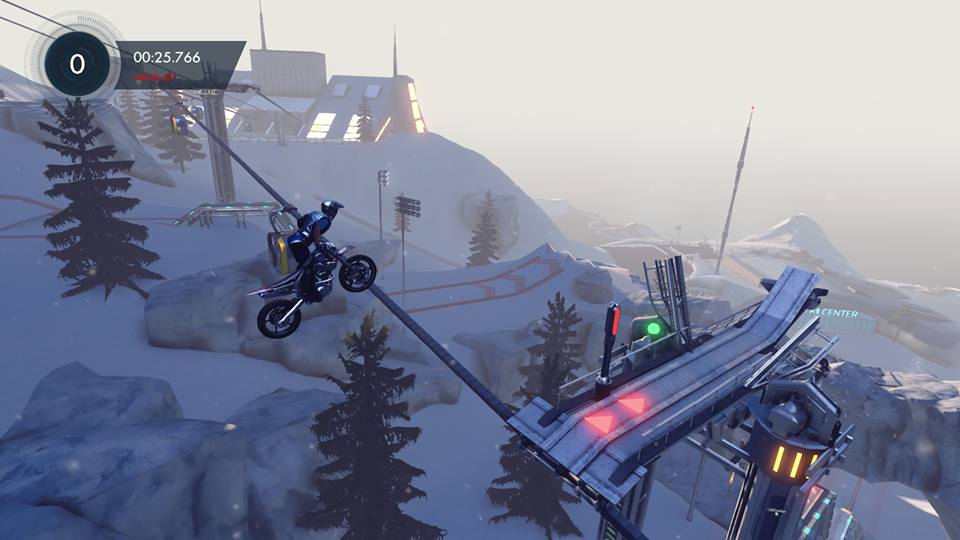
    You see I don’t have a problem with indie developers.  Period.  But I do have a problem with how they are treated and discussed on the internet. People defining themselves by their focus on indie games, people complaining about big publishers’ business models because they bought Luftrausers for $9.99 (which you should, by the way, its great) but then had to buy NBA 2K14 for $89.95 and then some.  People talking about indies as the ultimate in virtuous development while ignoring the piles and piles of steaming excrement that sit on iOS and Android, developed I might add, independently.  The internet is all too eager to point out when things go wrong, particularly when big publishers are involved, but almost never when things go right.  I might point out that Trials Fusion was developed by former indie-gone-mainstream RedLynx whose parent company is one of the biggest publishers in the world, Ubisoft.  It is a very one-sided take on the industry that has people clambering on and holding a mythical version of what indies have come to represent.

    I love watching entrepreneurs go out and do what they love to do.  I really do.  I love even more when that results in them being able to earn a living. The same holds for indie developers – there is nothing more satisfying than watching an unknown be put in the spotlight for a nice little ditty they put together from very little money.   Of course sometimes it goes horribly wrong and these developers are forced to retreat from their dreams and take up employment elsewhere.  It’s sad, but this is just the way of life.  Like it or not, we live in a society where we need to pay our way.  It’s not the market’s fault, it’s not the economy’s fault and it sure as hell isn’t the fault of the big publishers.  It’s just the way it is.  It’s capitalism at its best and its worst.  And while indies are a great little piece of this great microcosm we call the games industry, they’re not the ultimate bringers of truth and justice. They’re just another cog in the incredibly complex wheel that is the market.

    NBTB

  • ArmchairWhat ho, chums.

    I must admit, I can’t help but be drawn in whenever a new Nintendo Direct video pops up on my 3DS. These tiny saccharine video bonbons never fail to bring a smile to my embittered lips. Seeing Satoru Iwata and chums enthusiastically teasing their latest gaming treat with undisguised glee reminds me of why I got into games in the first place: they’re just damned fun. And in the primary-colour world of Nintendo Direct, it’s OK to see games as toys, because most of the time that’s just what they are, goddammit – at least in Nintendo’s world. Realistic war sims, super-complex strategy games and soul-searching ennui-’em-ups have their place, but when I just want to play something, you know, for fun, Nintendo is my number one destination.

    This week’s Nintendo Direct was dedicated to Mario Kart 8, and I have to say it sucked me in completely. I only intended to watch the first five minutes, mostly just to see Iwata-san do that brilliantly cheesy ‘DIRECT’ gesture, but I was so enticed that I stayed for the whole 34 mins, and by the end I’d preordered a copy of the game, complete with a free T-shirt. That I will never wear.

    To be honest, it was difficult to say no to the offer of a free Wii U game with with every purchase of Mario Kart 8 – of the ten games on offer, I have my eyes firmly set on The Legend of Zelda: The Wind Waker HD, which I loved the first time around. And it’s been far too long since I last played a Mario Kart game – in fact, the last one I played was Mario Kart Wii, which I bought an astonishing six years ago. Up until today, I’d found it hard to get excited about the prospect of yet another MK game, but watching the video reminded me just how bloody fun they are, and those new tracks looked utterly glorious in HD. I hate to say it, but Iwata got me, hook, line and sinker.

    One part of the video that stood out was when they revealed that most of the game’s music was recorded live, and a lengthy segment showed the musicians earnestly playing the game’s soundtrack in a studio (skip to 26.10). It was a great reminder of just how much craft and effort goes into making games these days. Long gone is the time when a lone programmer would wrangle bleeps and boops from a recalcitrant 8-bit chip – nowadays just as much effort goes into making music for triple A games as for blockbuster movies, and Nintendo has some of the best tunes around. Super Mario Galaxy 2 had probably the best music I can remember hearing in a game – I often found myself reluctant to press ‘start’ on the title screen because I was enjoying listening to the theme tune too much.

    Away from Nintendo, Bastion was a recent highlight in terms of game music, with a beatifully mellow acoustic guitar soundtrack that blended perfectly with the title’s idle wandering and bittersweet nostalgia. In fact, Ms. D liked the music so much that she actually bought the soundtrack.

    Which leads me to wonder: have you, dear reader, ever loved a game’s music enough to buy its soundtrack? And what are your aural highlights from the gaming world? I’d love to hear your thoughts in the comments below.

    Toodle-pip for now!

  • PersonaTarotI’m not afraid to admit that Ouran High School Host Club is not only one of the greatest anime series of all time, but perhaps even one of the greatest television series ever.  Based on the manga of the same name it tells the tale of lower middle class scholarship student, Haruhi Fujioka, who is forced to masquerade as a male host to pay a debt owed resulting from a smashed antique vase. Her male host cohorts are rich, vain, good-looking, and (at times) painful; seemingly unaware of the vicissitudes of life outside the walls of the very exclusive Ouran High School.  It all sounds a bit silly, and it is, but amongst the frivolity are some surprisingly heartwarming moments driven by some deceptively deep characters.  Dating sim, visual novel, adventure game – with great characters and clever writing, it is a series that is ripe for video game pickings.

    But behind the helm of a creative mind it could be something more than just your standard licensed fare.  Imagine the characters of the Host Club being put in extraordinary circumstances.  Ordinary High School kids forced to grow within and together in order to survive, I don’t know, say a demon invasion.  And all while keeping their host club up and running and building their own personal relationships.

    If that sounds familiar its because that’s pretty much every Persona game ever made.  And what could be better than a fish out of water story than one where characters from more than one universe are forced to work together.  Imagine the quiet and reserved playable character from Persona 3 interacting with the flamboyant leader of the Host Club Tamaki Suoh.  This is a game that is too good to not be made.

    OuranHighSchoolHostClub


  • ArmchairWhat-ho, chums.

    Of all the gaming news that I’ve browsed through this week, the one piece of information that made me sit forward in my armchair with a quizzically raised eyebrow was this: China has revealed its censorship rules for console games. I would encourage you to take a look at the long and sometimes baffling list of restrictions that China feels is necessary in order to ‘protect’ its citizens from harm. The ban on anything that ‘promotes cults or superstitions’ caught my eye in particular – does this include Harry Potter? What about vampires? Ghosts? All very confusing.

    I’m certainly not the first one to point this out, but it does seem a little rich for the Chinese government to come down so hard on official games when they seemingly do little about the rampant piracy and copyright infringement that plagues the country. It says something when even the Chinese military feel it’s perfectly OK to make a clone of Call of Duty (the wonderfully titled ‘Glorious Mission‘). Pretty soon though, Chinese citizens will have the choice, should they wish, of buying legitimate games and consoles, rather than ‘Chintendo Viis’ and ‘Nintendo PolyStations’.

    But considering the censorship restrictions, the Xbox One and PS4 will have few games to offer the Chinese market: a quick look at the list of games released so far reveals that most of them would probably fall foul of the censors on grounds of violence. Nintendo, on the other hand, have an ace up their sleeve in terms of the family-friendly Mario games – could Nintendo’s launch into the Chinese market prove to be the shot in the arm the Wii U so desperately needs?

    It wasn’t so long ago that this humble author was himself the victim of Chinese censorship. During my travels around Japan, I penned a humble webblog that one avid reader informed me had been blocked on Chinese shores. I could never fully understand the reasons behind this censorship by the Chinese authorities – perhaps they did not wish their citizens to see what a simply marvellous time I was having, lest they defected to search out the pleasures of Japan for themselves.

    I wonder, is A Most Agreeable Pastime available for perusal on the Chinese mainland? If you happen to be in the Middle Kingdom, do please let us know. Although if our offerings ARE being blocked by the Chinese censors, I’m not quite sure how you would be reading this missive…

    Ah well, maybe we will never know.

    In domestic gaming news, I raced through the entirety of Beyond Good & Evil HD this week, and thoroughly enjoyed myself along the way. The ending was particularly intriguing – I dearly hope the much-talked-about sequel finally gets made to clear up a few outstanding questions. I also particularly enjoyed the collectible system, and unusually I went out of my way to discover all that the game had on offer rather than racing to the end – this blog post does a good job of explaining what the game system gets right (and a bit of what it gets wrong).

    That’s all for this week, toodle-pip for now!

    Lucius Merriweather

  • An article published on Kotaku a few days ago read “OK, I’m addicted to Hearthstone“.  It is the sort of turn of phrase we throw around all the time without giving it so much as a split second’s thought.  Seemingly every game that we play and enjoy elicits a claim of addiction.  That Skyrim was so addictive.  My god Planet Puzzle League is addictive.  Dark Souls II addiction has set in.  Of course what we’re saying is that we are enjoying a game so much, that there is almost nothing we’d rather be doing.  Claiming game addiction has become a badge of honour.  The internet laughs and moves on to the next ‘addiction’.

    But ask people with problems with addiction and its probably not a laughing manner.  Addictive behaviour is a serious condition, in some circles considered a mental illness, that has serious social and personal implications for both those addicted and their friends and families.  In most cases these addictions are hidden from love ones and left untreated for long periods of time. Gambling addiction is one of the more publicised illnesses, and according to the Australian Government, up to 500,000 Australians are at risk of becoming, or are problem gamblers, at an estimated social cost of $4.7 billion every year.  And depending on who you ask, cases of internet and video game addiction are on the rise.

    The fact is there are people all around Australia and the world, that are or are at risk of becoming seriously addicted in some form.  It isn’t something they are proud of in most cases, and rarely are they likely to publicise their addiction as something to be proud of. So while we laugh at how ‘addicted’ we are to games, the reality is we can and do stop playing of our own volition.  That isn’t addiction and nor should we trivialise it as such.  So let’s try and remove it from our vocabulary, in respect of those people that are suffering from some form of legitimate addiction or addictive tendencies.

    And not to pick on Kotaku, but you know what, homelessness isn’t very funny either.

    DarkSouls2

  • BorderlandsBA

    I have played my fair share of violent video games.  I’m not proud of it, nor am I ashamed of it, it is just an accepted truth when you play as many games as I do.  In fact it is so common that I don’t tend to notice it any more.  A head blown off here, a torso torn apart there, it’s just the way it is for the most part, and I derive close to zero pleasure from watching some clever animator’s handy work in drawing a contorted and bloody torso.  I go to games for the stories, character development, clever mechanics.  The violence, well that is sometimes just a nice little wrapper, that entices nor offends.  It just is.

    That is until Borderlands.

    I have been playing Borderlands for just over 10 hours now and still am not entirely sure why.  I don’t find the role playing elements particularly gripping, the loot is uninspired, and the story, i think, is somewhere in the background noodling away.  The game looks great from a technical standpoint but is incredibly dull from an artistic one.  In short I’m not really that gripped by the game.  And so here I am debating whether I’m going to persist with it, but also unsure as to why I’ve come this far.  Or at least I’m in denial as to why.  The truth is Borderlands hits at something primal inside of me that I didn’t know, or at least hadn’t noticed, existed.  Video game violence is something I’ve denied (with caveats) is an issue for years.  I’ve defended video games from the siege laid upon them by lobby groups and the mainstream media who claim that video game violence is the bane of our modern existence.  And yet here I am with the stark realisation that, the only reason I persist with Borderlands is an inner thirst for violence.  Borderlands is no more or less violent than other games in its genre, but violent is all it is, really.  “It’s just a bit of fun” I said.

    And I maintain that video game violence is okay, providing it’s in service of, or at least, accompanying some greater narrative or mechanical draw.  The problem with Borderlands, at least personally, is that there is nothing outside of  the sheer act of inflicting harm on (virtual) others keeping my interested.  I think about the key mechanics driving me forward, the collection of better and faster ways to dispose of my enemies.  Without the distractions of story or character attachment, the guns and the violence, are the only real reason to persist.  Call of Duty is violent, yes, but I come to those for cheesy storylines of mateship and Government conspiracies.  With Borderlands everything is built in service of making you the best possible killer.  Bigger, faster and more powerful guns are the only aim.  And with that I’m forced to admit that, yes, I am only playing Borderlands because of the pleasure I’ve derived from killing people.  I play because I’m in the habit of finding better ways to kill.  .  And that’s not a great thing to admit.

    If you’ve seen the film The Hurt Locker (and minor spoilers here for those that haven’t) you would’ve been surprised at Sergeant First Class William James’ (played by Jeremy Renner) decision to leave his family and return to the battlefield, seemingly at odds with his traumatic experiences throughout the film.  But the film brilliantly sets out a character, and empathy for that character, that it is infinitely clear that he knows nothing else, that is driven by the adrenaline that comes with the combat scenario.  He obviously finds some personal growth from war, as humans we always strive to be better at what we do. Rightly or wrongly, he doesn’t continue because he wants to, he continues because he has to.   I’m not familiar with war, but I am familiar with being a creature of habit.  And I’ve come to the realisation that I’m not playing Borderlands because I want to, I’m playing Borderlands because my human nature is telling me I have to.  Its an inner-bloodlust that is keeping me playing, and while it would never translate into the real world, it is making me feel incredibly uneasy about who I am as a person.  To some people Borderlands is just light entertainment, to me its a window into my own psyche that I’m not entirely comfortable having open.  And so with that I’m making the decision to stop, rightly or wrongly.

    Have you ever played a game you thought was a bit ‘too much’ in its treatment of violence?  Tell us in the comments!

    BorderlandsCharacters

  • I can remember people laughing at cell phone games.  And its not really that long ago that people in the west laughed at Square-Enix releasing a Final Fantasy game in Japan exclusively for mobiles.  It goes to the fickleness of consumers and the games media proper that it was not long until they were celebrating mobile games and hailing them as the market to watch. Fickle industry aside, mobile games are now big business (for a select few). But for such a large segment of the videogame market, it is amazing how little is documented about mobile games.  Sure, we all will remember Flappy Bird for its moment in the sun, and Plants Vs Zombies because in some ways it was the first mobile game to really connect with traditional players; but what about the others, the older games that were released between mobile gaming milestones Snake and Wordjong?  There are a lot of them, and I’d hazard a guess that they’ll be lost to the annals of time, as we move from fashion to fashion, ditching these expendable pieces of entertainment for the new hotness for the price of little more (and more often less) than a free-to-play microtransaction.

    Personally I’ve never been one to indulge in mobile games, mainly because I don’t find myself in a situation where I absolutely need to play a game, but only have my phone handy.  Even in the toilet.  But I there have been a few instances where, just by absolute chance, I’ve happened upon a little mobile game that took my fancy.  In most cases they failed to hold my attention, and just as soon as I’d downloaded them, they were deleted from my phone never to be seen again.  But one game, more than a decade ago bucked that trend, and still remains to this day the mobile game I’ve spent the most time with.  That little game was Digital Chocolate’s simple colour matching puzzler, Bubble Ducky.

    Bubble Ducky

    Now I’m under absolutely no delusion that Bubble Ducky was a great game.  It brought absolutely nothing new to the video game table, and in most ways, was inferior to just about every other portable puzzler that has caught, but more importantly held, my attention over the years.  But it was simple enough to pick up and play, but deep enough to be more than something I played once and ditched.  It played into my slightly obsessive personality, as many puzzlers want to do, and ate at me until I had cleared the screen of bubbles and (to use an American term) beaten the game.  Best of all it disguised a pretty severe degree of difficulty with a bright and colourful aesthetic that was charming, and if I’m honest, brightened my days in a lot of cases.  So, no, it wasn’t a great game, but it was one that was impeccably designed to be fit for purpose, that is being a game that is designed to be consumed in bite sized chunks at times when you’ve got nothing you’d rather be doing than passing the time.

    Bubble Ducky is the only mobile game I’ve really ever spent significant amounts of time with.  Not because I have an in-principle or snobbish aversion to them, but more because I don’t have the place in my daily routine where a mobile game would come in handy.  But they are out there, and people are obviously consuming them at a rate of knots.  I hate to think how many mobile games have been released since Bubble Ducky, most of which have probably gone unnoticed.  I’ve written about the revisionist history of videogames where the press and enthusiasts are curating a version of the industry that they think is worthy of being remembered, and therefore perpetuating a false version of events.  Mobile games are likely to fall into this camp, and while many of these games aren’t masterpieces, it is a legitimate part of our pastime and one that we shouldn’t let fade into history.  After all there are seemingly countless parts of the internet covering the obscure and terrible corners of console and PC games of yore, and while enthusiasts like to discount its legitimacy, mobile games are still a tangible part of this industry we call videogames.

    There are some great sources for mobile games, so for more in-depth and ongoing analysis of the mobile games market:

    Pocketgamer.biz – Mobile Games industry news – www.pocketgamer.biz/

    Pocket Tactics the home of proper games on iPad, iPhone and Android

    Pocketgamer.com News and Reviews from the world of mobile and portable gaming

  • TrialsFusionIt’s funny just how similar Trials Fusion is to its predecessors.  On picking up the controller I was immediately thrown back into the light touch input mode that has caused me no end of repetitive strain injury symptoms from playing the series in the past, and before long the nuances of traversing across perilous platformers on two-wheels came flooding back.  Trials is a simple concept that has been finely tuned between entries.  It started as brilliant physics-based platforming disguised as a motorcross game; and Fusion is no different.  At its core Trials Fusion is the same game as Trials HD and Trials Evolution before it.  And that is in no way a bad thing.

    Video games are strange beasts of things.  The environment in which they exist is constantly changing, as technology brings with it new opportunities and expanding horizons.  Games adapt to these changing parameters, as developers seek squeeze every ounce of new power from new consoles, in pursuit of the ‘perfect’ game.  Of late this has been cleverly disguised by creative directors coming out and claiming that the new game is ‘how it was originally imagined’.  Of course what this is all leading to is changes of the guard from old to new.

    Progress is a great thing and it’d be naive of me to claim anything otherwise.  But when it comes to a long running series, it can bring with it wholesale changes that can in some circumstances represent a significant departure from previous entries.  Sometimes this results in something that plays worse – the long-running Sonic the Hedgehog’s transition to modern consoles immediately springs to mind, and while I have fond memories of Doom 3 it is far from a critical darling, especially compared to its predecessors.  But for the most part, anecdotally at least, games improve largely in line with technology, resulting in modern masterpieces like Rayman Legends or Metal Gear Solid V: Ground Zeroes.  And we so we should all rejoice in knowing that the best is still ahead of us.

    Rayman

    But this definitely has its downsides.  If you look at it from a slightly more cynical angle, you could argue that these small steps forward for games represent mass redundancy of everything that came before.  Rayman Legends is so beautiful and so fluid that going back to the first Rayman game released in 1995 is nearly impossible.  It is slow, it is plodding, and while it looked a treat at the time, it is well and truly showing its age now.  It’s not a bad game by any stretch, but when its compared to more modern entries in the series, it suffers in just about every respect.  It is a problem that is almost unique to video games and one that makes so much of our past near impossible to appreciate to anyone that doesn’t have that historical context.

    While many series are widely criticised for stagnation, there is an argument to be made for slow and methodical evolution rather than revolution.  Trials Fusion is a great evolution of a great series, but it doesn’t make everything that came before redundant.  I could (and have) happily gone back to some of the best tracks in Trials Evolution without their brilliance being lessened by the new and shiny sequel. Rather than the Trials game to rule them all, it is just another solid entry in an incredibly solid series.  In no way could, or should that be levelled as a criticism.

    Revolution is a sure fire way to gain critical and consumer acclaim, and it would be hard as a creative director to contain the desire to do something new and exciting.  But I think we give far less credit than is deserved to a developer that knows its formula and maintains a steady state.  While it may not get our hearts racing, and our Twitters tweeting about just how “our minds were blown”, being safe can in some ways be much kinder to your own legacy.  In the case of Trials Fusion it can, and likely will, be viewed as stagnation or void of creativity, but I prefer to be positive and think of it as future-proofing their series roots and legacy.  After all it would be nice to avoid those all too common words “it doesn’t hold up by modern standards” from being uttered by future video game enthusiasts.

    TrialsFusionScreen


  • Following on from my post on the Americanisation of gaming history I invited fellow games enthusiast, writer and friend, Matt Mason to lend a US perspective on the issue…

    ClashatdemonheadSPMatt – When I see a fresh-faced kid walking down the street, pants a bit too skinny and his hair a bit too foppish, wearing a shirt emblazoned with an NES controller and the word “roots” underneath it, I kind of have to shake my head.

    Someone bastardized my childhood and made an industry of it.

    The fine gentlemen of A Most Agreeable Pastime offered me the chance to try and redeem the seeming Americanization of videogame history. But…I can’t in all honesty do that. Sir Gaulian was right: the internet has kindly swept the likes of the Commodore 64 and Sega Master System under the rug in favor of a culture that was built upon Nintendo Entertainment Cereal, cartoons starring portly plumbers and other things stamped with an the big N’s gold-crested “seal of quality.”

    That’s what tends to happen with history though; we’re never given the nitty-gritty details, just the glossy and happy iteration that looks good in a book somewhere.

    E.T.: The Extra-Terrestrial obviously killed the Atari and video games as we know it. It had nothing to do with salacious software like Custer’s Revenge, in which you raped a Native American woman tied to a cactus or Chase the Chuck Wagon, the blatant advertisement in which you played as the titular carriage from Purina’s dog food commercials.

    1UPElectronic Arts has become the most terrible corporation because of its market manipulation, odd pricing schemes and abhorrent micro-transactions. But in no way is it gamers fault because they bought into it all in the first place, leading EA to consistently expand upon those dirty trends.

    We don’t want to hear the whole story – just the one that succinctly wraps it up in a bow and makes it look like a pot of gold at the end of a rainbow.

    By definition nostalgia is “a wistful desire to return in thought or in fact to a former time in one’s life, to one’s home or homeland, or to one’s family and friends; a sentimental yearning for the happiness of a former place or time.” It is by no means a tangible thing; but with the right sway, you can feel nostalgic even if it’s for something you haven’t experienced first-hand. Hence the aforementioned kid, probably not even a twinkle in his parents’ eyes when the NES came to be, living it up like he’s on to something nobody else is.

    Now don’t get me wrong; I’m all for younger generations playing the games of yore, if not for how engaging they can be than to at least look at them with an analytical eye and appreciate them for what they did. You can’t blame those who came after you for not necessarily enjoying them in the same way you did; it’s hard to fathom that the amount of tech and memory that’s used to animate Mario today is probably somewhat equal to the entirety of the original Super Mario Bros.

    What is weird is how when people ingrain themselves in a culture, and I don’t mean just in videogames, is that they kind of adopt social norms and take certain things as givens. Of course the NES was the roots of gaming; people within say it is and Hot Topic sells a shirt to corroborate that fact. Sure, arcades, home computers, Atari, ColecoVision, ZX Spectrum, Odyssey, Fairchild and Intellivision came before it; but damn it the NES was where it all began.

    IntellivisionLogo

    As humans, we have this predilection to remember the more dramatic things life has to offer. The more exciting, the more titillating, the more traumatic the better. Or, in the case of videogames, the more marketed, the more exposed, the more ingratiated the better.

    This whole post came about because of an interesting exchange I had with Sir Gaulian about an uber-obscure NES game called Clash at Demonhead. He had mentioned it as a pillar in the NES’ history, when in reality it was anything but. He didn’t know any better; he just heard the name in Scott Pilgrim vs. the World and assumed as much. I don’t know anybody who’s actually played it; hell, I’ve never actually seen a copy. But because Brian Lee O’Malley encountered it and named a band in his book after it, suddenly it was as big a part of classic games thinking as playground strategy sessions and Electronic Gaming Monthly.

    We are a culture that is inundated with ideas, thoughts and opinions that sometimes we forget to make out our own. When I started having kids, I so badly wanted to teach them the ropes, have them play the classics and apply their experiences to the games of today that I forgot to let them nurture their own nostalgia. My oldest son feels about Minecraft the way I do about Super Metroid. Instead of holding that against him, I should let him expound on it. He may never play EarthBound, Mega Man 2 or Secret of Evermore and I have to be OK with that.

    Instead of griping about the kid in the NES controller t-shirt whom never knew its initial impact, I should applaud him for at least acknowledging the past. Not every little tidbit is going to be discovered; but he’s on the right track. Not every game is going to be well-renowned, played ad naseum and debated upon. But that doesn’t make them any less important. They meant something to someone, even if it was just the developer who created it or the store clerk who stocks it or the kid who randomly finds it at a rummage sale.

    Even though it may not get the recognition or cultural clout that you wished it would, the fact that your favorite game/console/experience happened at all should be enough. And it is.

    Thanks to Matt for providing a uniquely American perspective on the early years of video games.   You can follow him on Twitter (@MHMason) or visit his blog at Obtain Potion.  Join me in thanking Matt in the comments.

  • FMClass14Anyone who grew up alongside Commodore’s home computer powerhouse, the Amiga 500, recognises the name Dino Dini.  As the man responsible for the incredibly popular Kick-Off series, his name is etched into all of our brains as one of the grandfathers of virtual football.  Kick-Off was fast, frantic, and a hell of a lot of fun, and for anyone only now learning about the wondrous world of 80’s and 90’s home computer games, should be one of your first ports of call.

    Perhaps even more influential however was Mr Dini’s Player Manager, widely considered to be one of the first, and certainly my first, football management sim.  A simple team and player management system was placed over the existing Kick-Off ‘engine’ to make what is still to this day one of the best, and easy to learn, examples of virtual football management.  And I spent days, week, months, with the game that in my view gave rise to a genre.

    Fast forward a decade and Sports Interactive’s Football Manager series (or Championship Manager as it was originally known) caught my imagination in much the same way Player Manager did all those years ago.  There is nothing quite like the feeling of taking a struggling team to glory, or taking a virtual version of the team you support to the Champions League final.  Football Manager has always been about carefully balancing risk with reward while being as efficient as you possibly can with spending and roster management.  It is like one massive economic problem ready to be solved; albeit one dressed up in short shorts and a muddy strip.  And the obsessive in me won’t stop until I’ve taken my team to the top.

    To me Football Manager is a giant sandbox full of an almost infinite number of possible combinations to experiment with.  Sure its nice to buy all of those dream players that Feyenoord could never afford in real life and build the modern-day equivalent of Rinus Michels’ 1974 Dutch world cup squad, but there is even more satisfaction in scouting and buying up a team of largely unknown quantities and building up to something big.  “It may not happen overnight, but it will happen”, you tell yourself as your team slumps to the 10th loss for the season.  “I just need one more game”.  And so you tweak, experiment and perfect your craft.  It is a feeling unrivalled in the gaming world, and I suspect the reason for the series’ incredible success over the years.

    The problem is Sports Interactive’s games are so comprehensive and full of options that it is now at a point where its just overwhelming.  Spreadsheet after spreadsheet of information is presented in a precise and clinical fashion with a near flawless level of detail, begging you to get down into the nitty gritty and micro manage every aspect of your team’s operation.  One loss and you’ll be searching for answers in training regimes, contract clauses and player dynamics.  It is ostensibly the perfect simulation of football, if not the perfect simulation of the humanity.  But after a long day’s work I honestly just cannot be stuffed.

    So it was with great sadness that I gave up a seemingly lifelong Football Manager habit . That was until the Playstation Portable versions.  The not-quite feature full versions of the game struck the perfect balance between accessibility and complexity to draw me back into the world of football managing.  Buying and selling players, tweaking set pieces and formations and managing training regimes became second nature and before long I was spending time staring into space during the day contemplating how I was going to beat cross-country rival Ajax.  Perhaps paradoxically while it was the digestibility that drew me in, it was the hidden complexity and nuance that held me there.  The slick and streamlined interface hides this surprising amount of depth beneath its surface in what is either a stroke of game and interface design genius, or a happy accident.  Football Manager is known for its complexity and completeness, bur the fact is the stripped down PSP versions took me back to the days of the simplistic joy Player Manager where you are always just one game away from success if you play your cards right.

    I feel like Football Manager Classic is built for me, the 30-something that grew up honing their football management craft, and now has less time on their hands to rekindle that love affair. It feels like Football Manager and plays like Football Manager, but instead of the oversaturation of information in the game propr, is built upon the same core values of simplicity and accessibility that made Player Manager so compelling and addictive in the 1990’s.  When it comes down to it, really when all is said and done, Football Manager ‘lite’ filled a spot in my gaming repotoir I save for pick up and play experiences.  A player transfer on the train, a sneaky game at work, a touch of roundball before dinner, and a spot of Football Manager before bed.  Either way it made managing footy on the go absolutely essential portable gaming that I’d kick myself for passing up on the Vita.


    Playermanager


  • competitionproA500Or Americanized….

    I never owned a Nintendo Entertainment System and in fact only knew a handful of people that did.  But if you talk a stroll through the virtual pathways of the internet you’ll likely find hundreds if not thousands of Australian video game enthusiasts in their 30’s and beyond spouting their eternal and undying love of all things Nintendo.  They’ll say how they’ve always been fans of Nintendo and how getting an NES on Christmas Day in the mid-eighties changed their lives for the better and kickstarted their interest in video games.

    I’m not calling these people liars, but they certainly weren’t the same kids I knew as young lad growing up in Australia.

    I grew up right alongside the renaissance of videogames in the 1980s, right after the industry’s fabled full-scale collapse in 1983.  But in Australia, and probably Europe and the United Kingdom, they never went away.  Atari was most definitely a thing, and almost every household I have ever been to has an old Atari sitting in an attic somewhere gathering dust, but it didn’t signal the end of all things interactive entertainment like it did in the United States.  In fact it didn’t really register on our radars.

    You see there was this little company called Commodore that, through much of the 1980’s and arguably the early 1990’s, cornered the market to become the premiere destination for games in Australia.  While the 16-bit era saw Mega Drive and Super Nintendo kiosks at big retailers spruiking the latest in console-based interactive entertainment, prior to that it was almost unheard of to see an NES in the wild.  No, down here it was all computer monitors running the latest Amstrad, Commodore 64, and later Amiga 500 (and ill-fated 2000) games. Shadow of the Beast, Space Ace, and the still incredibly impressive Stunt Car Racer were centre-pieces of electronics stores and department stores, wowing not just kids that wanted to find a home computer under the tree at christmas time, but also the parents who were blown away at the cinematic quality that these machines were pushing.  Commodore, and to a lesser extent Amstrad, were household names rather than phenomenons restricted to the younger consumer.

    It was a truly universal thing, and school yard discussions were less focused on Super Mario or the Legend of Zelda, and more on West Bank, Strange Loop, and later,  Shadow of the Beast.  This was helped in no small part by the rampant piracy of  software, particularly on Commodore platforms, with programs like X Copy taking pride of place as the premiere software used to copy and share games between friends in the school yard.  It was part of the culture of the industry at that time, and as most people of my age, we were just ignorant children who wanted to experience the latest Sensible Software release.  So while children in United States schools were talking about the Clash at Demonhead, in Australia we were plotting global conquest in what is arguably Peter Molyneux’s best work, Power Monger.

    PowerMonger

    It would be remiss of me to discount the impact that consoles had in this time, though.  The Sega Master System, released in the mid-eighties, enjoyed tremendous success in Australia and was a tour de force in the country well into the Mega Drive’s life.  The release of the Master System II in 1990, in hindsight a real oddity of a system in the context of its time, gave it legs to really sit side by side with its big brother on store shelves.  But as far as consoles go, while Alex Kidd was all the rage, Mario didn’t really hit his peak of popularity until Super Mario World and chances are most people had their first experience with NES Mario in their enhanced Super Mario All-Stars form.  An NES was a rare sight in the 1980’s and it wasn’t until much later that many of us, myself included, had the chance to experience many of the games heralded as classics by the American and Japanese retro gaming enthusiasts. To me Duck Hunting was something the royal family did, and Zelda was a rather pretty name for a young lady who was new to the school.  I’m being a tad dramatic, but I think you get my point.  To drive my point home there was one kid in my year level at primary school who owned an NES.

    Then things started to change, something I put down to the incredible popularity of the Game Boy in school yards across Australia, and the resurgence of arcades fuelled by the likes of classics such as NBA Jam, Street Fighter II and Mortal Kombat.  While Commodore’s popularity waned and its business case started to crumble, led by the abject failure of the Amiga 2000, and more importantly, the Amiga, CD32, the japanese giants of the industry started to gain ground on traditionally dominant home computers.  Instead of toting your Competition Pro to a friend’s house for an afternoon of Speedball, you were toting around your SNES or (more likely) Mega Drive pad for a round of Mortal Kombat.  And I will tell you now that it was more likely to be the version with the blood.

    By the early 1990’s the era of the console had begun in earnest.  The market dominance of the console manufacturers in the United States and Japan meant that they had the clout and money to draw developers into sinking huge amounts of capital into porting these technical powerhouses at the time to consoles.  The massive arcade renaissance was driving consoles into Australian homes at a rate of knots as consumers demanded arcade-perfect experiences in the comfort of their homes.  Retailers were pulling down their mounted Amiga displays and replacing them with stations playing Killer Instinct and Streets of Rage.  Japan had won and the era of the home computer as we knew it was over.  While PC gaming picked up a lot of the Amiga crowd years later, it never quite reached the same critical mass as Commodore had reached and maintained for more than a decade. It was an absolute paradigm shift for the industry down under, and one that would set the scene for the successes of Playstation and Xbox a decade later.

    Read the internet, though, and this isn’t the way it went down.  I admire the dedication to Nintendo who admittedly an incredibly influential and important company in the history of video games.  As a business it brought an entire industry back from the brink and was responsible for delivering to consumers some of the most well-loved and pervasive game series’ of all time.  But while they were around, they weren’t the be all end all.  Unfortunately, depending on how you look at it, the dominance by American outlets of retro gaming discussion on the internet has led to much of our own unique video game history being revised with people emulating their experience.  There are plenty of people wearing 8-bit 1UP t-shirts, but where are the Amiga 500 t-shirts or the vinyl statues of the Bitmap Kid?   It is not uncommon for people of my age to proclaim that their first great love was Princess Zelda, which isn’t impossible, but from my experience very unlikely.  But we are more likely to bore you to tears with tales of Turrican, Cannon Fodder or Kick Off.  I’m not calling for complete disregard for the incredible impact both the United States and Japan had on making the industry what it is today.  But I am asking that we don’t forget where we came from and how we all became who we are today.  The kids of today may not remember the pioneers of the home computer scene we grew up with, but that doesn’t mean they shouldn’t at least know about them.  After all, they’re why I’m here writing this today.

    Did you grow up playing videogames in Australia or the United Kingdom during the 1980’s and 1990’s?  Does this stack up against your experience?  Tell us in the comments below.

    BitmapBrothers


  • As the message comes up in the corner of the screen I can’t help but think to myself “I never do this”.  But here I am, just over 30 hours later with a shiny new Platinum trophy in my virtual ‘trophy cabinet’.

    I can’t stress enough – I never do this.

    Lego Marvel Super Heroes set something in my brain off that has laid dormant since I was a young lad.  It was this unquenchable thirst to find, see, and do everything the admittedly enormous game had to offer.  After finishing the game’s main story campaign, my usual signal to shelve a game never to be seen again, all I could think was how glad I was that I had barely scratched the surface of what it had to offer.  Admittedly, I am somewhat of a lapsed Marvel Comics fan, and so seeing the characters and worlds I am (or was) familiar with sent waves of pleasant nostalgia through my brain as it pulls out all the fan-service stops it has to tickle that bone in comic book die-hards.  And the sheer magnitude of content in Lego Marvel is incredible, with every corner of the expansive Marvel universe scaled for characters and references, to make it easily the most comprehensive game to don the Marvel license since Marvel Ultimate Alliance II way back in 2008.  Even then it has only just scratched the surface of the worlds contained in the comics (fans of Bishop, Cable and Mr Sinister, you’ll have to wait for the inevitable sequel, I’m afraid).

    Galactus

    And this is the exact reaction the game elicits.  Within minutes I was remembering storylines from comic books I read 15 years ago, long-forgotten but much-loved characters I had sketched crude impressions of in high school sketchbooks, and conversations with schools mates about who would win in a fight between <name your character> and <name your character>.  Within hours I was setting up unlikely alliances between foes and recreating famous moments from the comics I buried my head in as a youth, just to take screenshots and share them with friends online.  It was an odd regression, an odd flashback to a younger and more carefree and imaginative version of myself, given rise to simply by being presented with fictional characters and places I  know and let loose with only my imagination as constraint.  In that respect Lego Marvel Superheroes, for me at least, goes to the very core of what sandbox games can and should deliver, and made me realise why I couldn’t invest myself in Grand Theft Auto V or Saints Row IV.

    The developer knows that its strength is its source material and fan-service and the game is clearly designed and incentivised with this impulse in mind.  It dangles the prospect of new characters to play with in front of your nose to complete sometimes even the most mundane tasks.  Why the Silver Surfer desperately wants pizza is beyond me, but hey, if that means I get to surf my way around Manhattan I don’t much care. That same sentiment holds for the entire game – you’ll repeat the same basic mission types and activities over and over again and won’t give it a second thought because of what it will give to you in return.  You’d think collecting coins in the hundreds of thousands would devalue any currency it has, but the reality is that the sheer prospect of unlocking the Taskmaster or that alternative Cyclops will make your overactive critical eye blind to any potential balance or economy issues, even when the fourth-wall breaking Deadpool cleverly brings it to your attention.  Simply put, it is so well designed that you’ll find yourself having unqualified fun.

    SentinelvWolverine

    I should mention that all of this is wrapped around the same old Lego formula Traveller’s Tales have been peddling for years.  But that’s a second order issue in the grand scheme of things.  I don’t think anyone could, or has for that matter, stood up and claimed that the Lego games are mechanically dense or terribly cerebral experience.  Marvel Superheroes is no different in that respect.  But it knows its not and works well within the confines of what ostensibly is a game aimed at a younger audience, to deliver a thoroughly entertaining and compelling package for people of all ages.  It is clear to  Traveller’s Tales’ Lego games have always been about their licenses, and to that end Lego Marvel Super Heroes is absolutely the best yet.  But it also happens to be an intelligently designed game that favours content over depth, and is probably better for it.  The flashes of inspiration that make this game so special aren’t in what it does with artificial intelligence, or deep and complex mechanics, it is how it makes the Marvel Universe come alive in a way that I’m not sure has ever been equalled outside of the source material itself.  If you play the game’s lengthy storyline once, you’ll find a sound and whimsical dalliance through a Lego-fied Marvel Universe with household superheroes you know and love.  But if you choose to continue that journey in pursuit of that 100 per cent completion rating, you’ll find the greatest love letter to Marvel comics ever written.  And that love is absolutely contagious.

    MagnetoProfX

  • ArmchairWhat-ho, chums. It seems that barely moments after out last little chat about VR, Facebook caused the gaming community to fall off their bar stools in astonishment by buying Oculus Rift for a whacking great sum – $2 billion to be exact. Not exactly small change, but ’tis but a drop in the ocean for the hulking moneywhale that is Facebook. I must say, the move rather caught me on the hop, and it certainly had the community in uproar. The immediate reaction was one of horror that an ‘evil’ megacorp had stolen ‘our’ company to use for nefarious ends, probably involving FarmVille or Candy Crush, or some other such insidious free-to-play mugger game. But on the other hand, it could also be seen as a healthy sign that the technology we’ve all learned to love is finally, after years in development, about to wade out into the mainstream.

    I sympathise with the naysayers in some respects, especially those who funded Oculus through Kickstarter using their very own cash, simply from a will to see the technology succeed. It highlights a very real problem with Kickstarter – namely that it works fine for small projects where the end result is simply a game that never would have been made otherwise, but when it comes to kick-started new technology, the backers end up short-changed. If those backers had bought shares in Oculus in the traditional sense of the word, they would now be on the receiving end of a healthy financial return thanks to Facebook’s money cannon, and more to the point would have a say in what happens to the technology. As it is, they’re left wondering what on earth will happen to the fantastic contraption that they helped into the world. Will it evolve into the revolutionary gaming machine that was sold to them? Or will it become simply a fancy gizmo for watching basketball ‘as if you’re in a ringside seat’, as Mr. Zuckerberg so bizarrely touted? Only time will tell.

    Despite the Facebook buyout, or more likely because of it, the hype behind VR is escalating to absurd levels. This week the CEO of Epic Games claimed that VR will be “bigger than smartphones” – a comment that was rightly subjected to scathing scepticism. As I espoused from the comfort of my armchair last week, VR will be big, but not that big – the very fact that the technology requires one to don a medieval-style helmet necessarily limits its application, and this will instantly put off many people from using it. VR is unlikely to entirely usurp the more traditional way of playing games with a controller and TV, mostly because it still makes a lot of people feel sick, and fast-paced games really aren’t suited to the medium. I see it developing more along the lines of Kinect – a massive buzz will lead to rapid sales, but many will quickly dismiss the tech as a novelty. However, unlike Kinect, there will remain a dedicated and hardcore following who will wholly embrace the technology. Augmented reality systems such as Google Glass, on the other hand, are likely to become more mainstream, but I still doubt whether they will gain the market penetration of smartphones.

    In other news, Amazon entered the console market. After a fashion. Their set-top box allows users to stream games, but mostly it appears to be focused on allowing purchasers to watch Amazon’s video content. The fact that the game controller is sold separately indicates that games are an afterthought, and I doubt many readers of A Most Agreeable Pastime will be enticed by the prospect of the hundreds of free-to-play games said to be in the works for the system – for this gentleman at least, the words ‘free-to-play’ have become synonymous with ‘we-will-attempt-to-rip-you-off’.

    To be honest, I am left utterly clueless as to the market for Amazon’s Fire TV. Most gamers have consoles through which they can stream Netflix, etc. and aren’t interested in free-to-play games, and most non-gamers already stream such content through laptops, tablets or services like Sky. Add in the fact that Internet TVs are getting ever cheaper and offer the same streaming services, and I’m left pondering the point of Amazon’s new device.  Oh, and that controller looks awful, doesn’t it? Like a cheap knock-off of an Xbox One controller you might find on the local market, perhaps with a neon, star-shaped label attached, scrawled with “Genyuine X-boX 1 Controler! £9.99!!!!”

    amazon_fire_tv_controller
    “Genyuine X-boX 1 Controler! £9.99!!!!”

    Back in The Manor, it’s been an eventful week, as I finally finished both Fire Emblem: Awakening and L.A. Noire. Ms. D. and I were both impressed by the ending of the latter – which crescendoed in classic film-noir style. I’m saddened that our nights in with Cole Phelps and co. have come to an end, and I dearly hope that L.A. Noire 2 eventually emerges, although we may be in for a long wait. In the meantime, however, I’ve been consoling myself with the purchase of Steamworld Dig on the 3DS, which has proven to be an excellent buy… but I fear I’ve waffled on for too long already to tell you more: I shall leave that one for next time.

    Toodle-pip!

  • I am embarrassed to say I play games.  Not because it’s an unvirtuous or unjustifiable pastime, but because of what being passionate about games has come to represent.  We like to think we are more sophisticated and relevant than people that follow the Kardashians, hanging on their every word, waiting for their next nipple slip.  We are not.  We like to think that because we self-define videogames as art that vitriol and gossip about their makers is more sophisticated than scuttlebut about Miley Cyrus’ sexual escapades.  It’s not.  We like to think that our own subjective views are the only one true objective view about anything, ever.  They are not.

    You just have to look at the rumours and speculation surrounding the departure of Amy Hennig from Naughty Dog, the subsequent speculation, and the heavy handed response from Naughty Dog setting the record straight, to see that something is wrong.  Even after that Kotaku ran a story purporting to clarify the situation, only to then discredit it and perpetuate the unfounded accusations levelled at Naughty Dog.  It was later revised, removing the inflammatory commentary by the author, but the question remains as to why it was published before it was subject to editorial control.  It is a broader problem than just lays with Kotaku, but it is one that is exacerbating an already rampant culture of disrespect and rumour-mongering that exists within the industry.  And it happened again with the departure at Evolution Studios

    Screenshot_2014-03-07-16-04-25

    Rumour and speculation has always been a solid pillar of participating in the video game industry and its culture more broadly.  But it was never so personal, harsh and damaging.  The rumours published we about the existence of Sheng Long in Street Fighter, or a nude code for Lara Croft in Tomb Raider.  They were playful attempts at playing on the passions of people that enjoy video games.  It was all a bit immature and showed the youth of the industry, but it was fun and in good humour, and for the most part never hurt anyone.  Things have changed, as they should.  The medium has matured and the industry has become much bigger than it was.  But everything around the industry has gone backwards.

    And its all about not just people feeling entitled to their own opinion, but that their opinions are right.  That no one else has a view or that their views aren’t worth anything.  It would be fine if they disagree silently but all too often it devolves into a slanging match of sarcasm and self-righteousness on twitter, message boards or comments sections of popular websites.  The worst part is this usually involves so-called industry-luminaries, the video games media, justifying their own positions in a heavy-handed or snarky fashion.  You just have to look at some of the exchanges between people on the Facebook acquisition of Oculus VR to see the sheer amount of arrogance and misinformation being bandied around in positions of influence.  And while many of them are quick to distance their tweets from their professionally written work, the fact is there should be no distinction.  If you’re selling yourself as a personality and an authority, that counts as much at the dinner table as it does at the podium.

    If these are the people we have to look up to as beacons of hope for the future of the culture surrounding our favourite pastime, things aren’t looking great.  Across the board gaming culture fuelled by the anonymity and convenience of the internet has devolved into a spout of vitriol, ill-will and arrogance, and is driven by egos rather than excellence.

    There are beacons of light, of course, with Giantbomb’s Patrick Klepek representing a level-headed and respectful approach to games journalism, and I have a new-found respect for the understanding of the business world as well as thoughtfulness in writing of professionals like Pocketgamer.biz’s Keith Andrews.  But it’s not enough, and if we want the industry and the culture of video games to be respected more broadly, we need to start with ourselves and how we interact with each other.  I’m not sure anyone has but it quite as perfectly and succinctly as Polygon’s Justin McElroy when he tweeted:

    Games are mature, they are relevant and they are absolutely an important part of our social fabric.  But we need to reflect that in the way we as consumers and commentators conduct ourselves.  So instead of McDonald’s receipts perhaps consider getting that tattooed on your arm as a constant reminder to be a good video game industry (and internet) citizen.  And this applies doubly to those that get paid to do so.

    Do you think the games enthusiast press and internet commentators need a kick in the arse?  Tell us in the comments below.

    ShengLong

  • You sit there in a dark corner of an otherwise lit courtyard.  There are three armed men, vigilant in their task to find someone, anyone, that dares try and steal their secrets from the server room.  They’re searching for you, the super spy tasked with bringing an end to the cold war-esque rise of a wayward nation state, the only man who can put an end to the crisis.  You sit there, heart pounding, waiting for your opportunity to make a clean break for it – or die trying. 

    There’s just one problem- You know you’ll never be found.

    GarretI really like Stealth games and find myself in an enviable position as Thief currently occupies my Xbox One and Metal Gear Solid V: Ground Zeroes is about to sit in my Playstation 4.  Rest assured I will drain every ounce of gameplay from them as I sneak, shoot and strangle my way through carefully choreographed courtyards and corridors, dashing in and out of the shadows, and making opportunistic dashes across lit areas out of sight of the enemy.  There is nothing quite like ‘outsmarting’ enemy AI and getting to your objective unseen and unheard. I like procedural things, methodologies, processes – I like to think that the world is governed by a simple set of rules and that if you follow those rules you’ll more likely succeed than not.  Those rules aren’t necessarily ‘fair’, but they make navigating life a hell of a lot easier than it would otherwise be.
    But within this order, I also like an element of randomness within the bounds of the ruleset.  I don’t want things to be entirely predictable, because predictability may as well be synonymous with monotony, but I want enough in the way of stochasticity to make things interesting. A while ago I wrote about how way back in 2002, Tom Clancy’s Splinter Cell blurred the line between playing a game and understanding it.  It required an understanding of how the game world would react to your input, and how to exploit the game’s rules to win the game.  And Stealth games by their nature require this type of implicit communication between player and game designer in order to succeed.   And that was amazing at the time as the game appeared to present almost unlimited freedom to approach the scenarios, the logic problems, presented to the player.   The artificial intelligence, the playfield and the rules of engagement were all fixed – the only variable is the player’s interaction therein.  Basically the game gives you a set of guidelines and tells you to “solve for X”.  SC_XBOX Of course with enemy artificial intelligence and almost binary measures of light and dark the game really became an exercise in memory and timing, as you remain hidden until such a time as you can exploit the enemy’s predictable movement around the level.  It is never terribly cerebral, and when it comes down to it it amounts to nothing more than keen observation.  There is nothing random about it as it becomes predictable – enemies follow the same routes, at the same time, looking the same way, seeing the same things. It is, in a word, monotonous.  Unfortunately with that certainty comes the reality that if you follow the clearly defined rules, you know you’ll never lose.
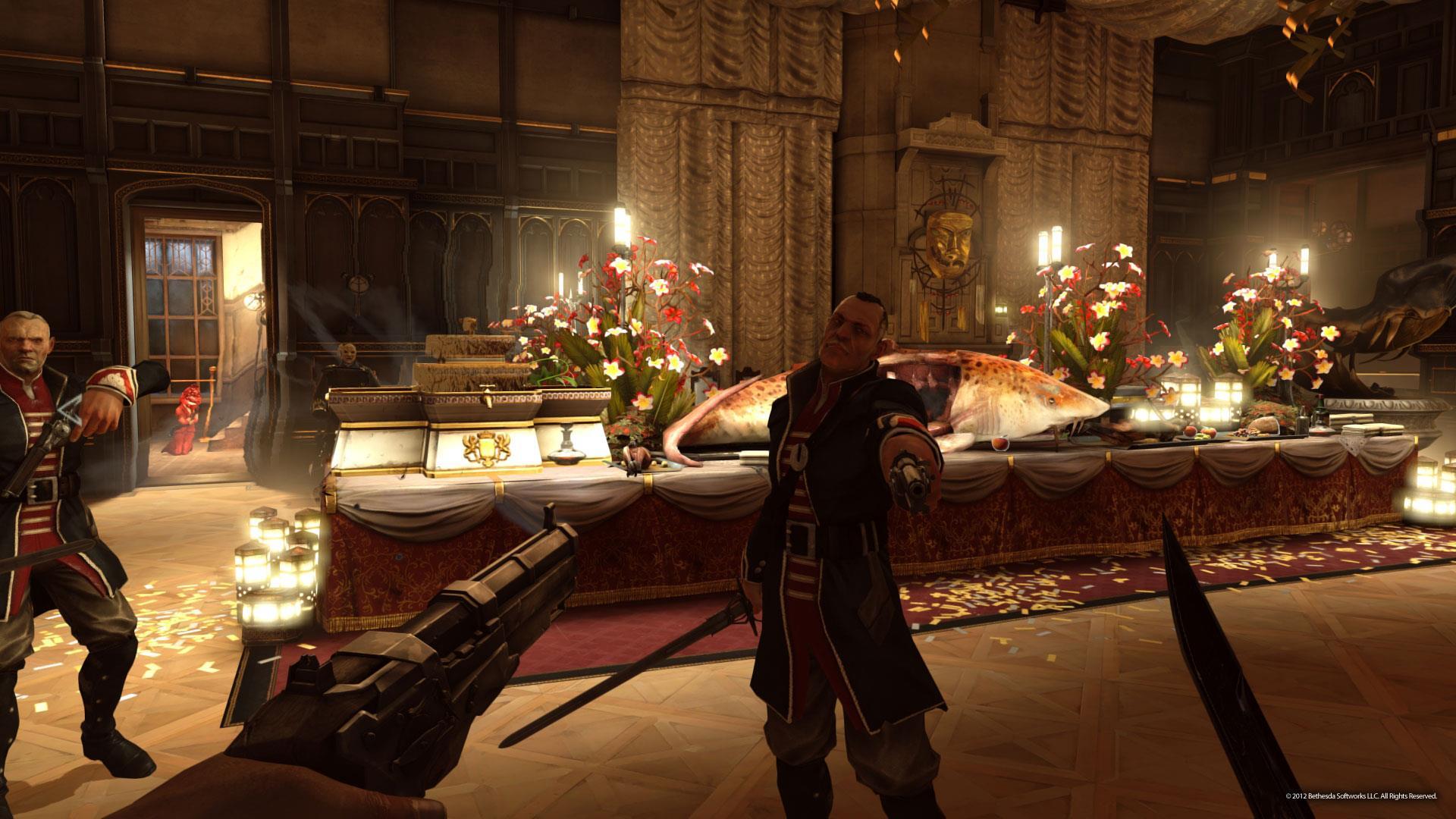
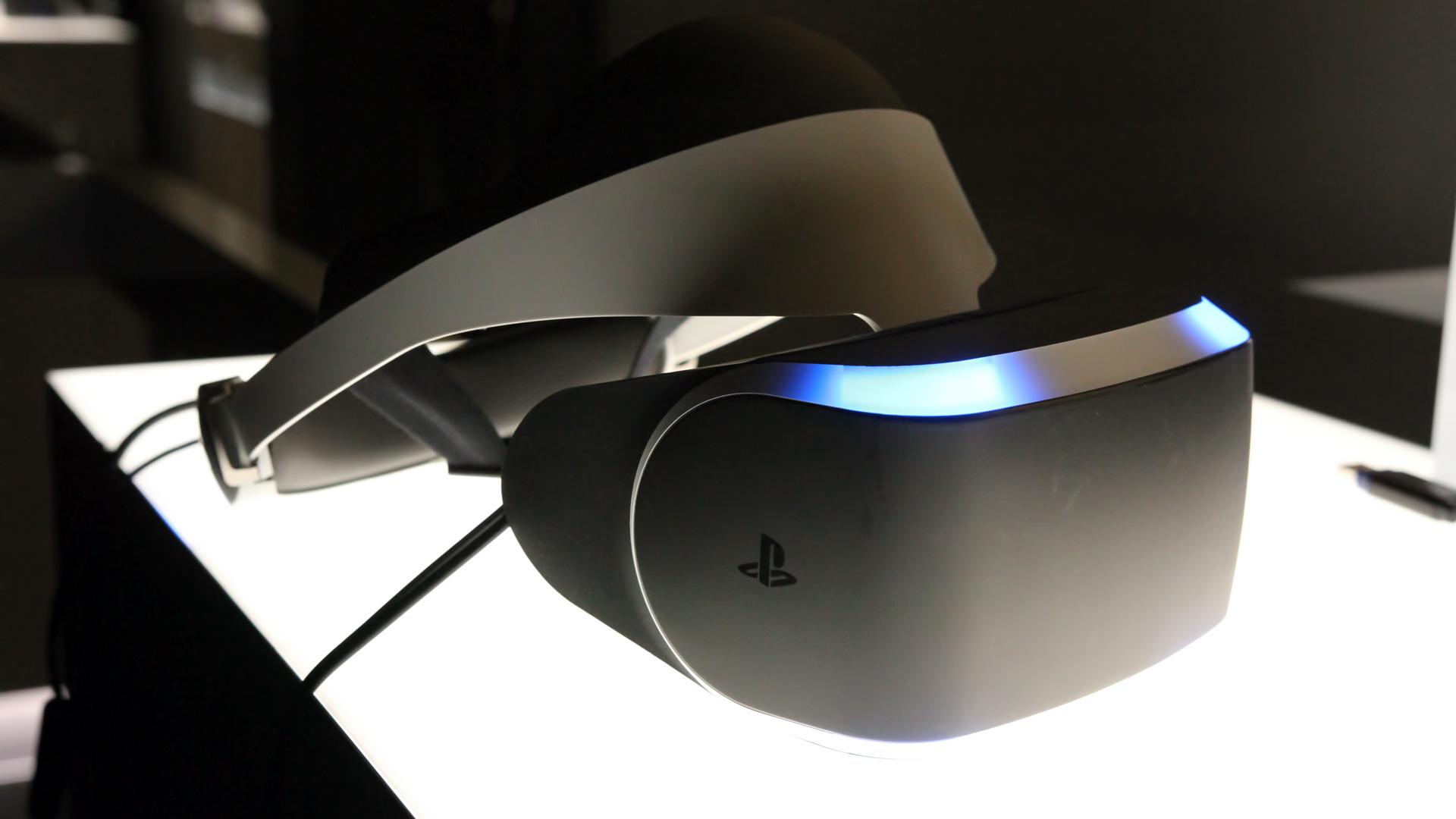
    Of course all of this changes once you’re spotted by an enemy and its as if they’ve taken a proton pill that has increased their intelligence ten-fold.  It’s at this time, until (to use the Metal Gear terminology) Alert Phase ends, that they begin to act more like real life human beings in pursuit of a known target.  They pursue, take cover, flank and shoot in a bullish yet logical fashion.  Predictability is replaced by stochasticity and the player is forced to react to what they see and think, rather than what they know.  It’s paradoxical that the most exhilarating and primal aspects of stealth games are the ones that are the result of ‘playing them wrong’.

    But how do you change such a well-worn but well-established genre?  Dishonored (which Lucius rather liked, enough to make it onto our best games of last generation list) gave the player greater freedom – better tools of movement and battle – to add an element of faux randomness to the player’s, and by virtue of that fact, enemy behaviour.  The result was a game that felt like a huge leap forward for the genre but really what  it did was hide the limitations of enemy intelligence and behaviour with a more stochastic and agile player. It was clever, and the closest thing we’ve had to a revolution of the stealth genre, but it still didn’t address the key underlying issues. Dishonored screenshot 2 Of course the other option is to change the way the artificial intelligence in-game behaves, forcing a sort of structural change in the way players approach each and every situation.  The thing is these games hide behind a very abstract depiction of human behaviour.  We are creatures of habit but not ones of predictability.  Humans are rational to an extent but behind every decision lays a complex thought process that can take into account any number of factors before we act, all in a split second.  And so while, on the surface at least, it may look as though we are acting in a predictable and rational manner, we are in fact making decisions based on all available information before deciding on our default action.  In economics we rely heavily on assuming consumers act in a rational manner, but we bloody well know that is not the case and that our models, our predictions and forecasts, are compromised by the highly volatile, or at least complex and calculating, nature of the human mind.

    Case in point: think about every time you walk into a public toilet.  I don’t know about you, but upon walking into a bathroom, numerous stalls lining the wall, about one thousand different factors run through my mind in making the tough decision as to which to choose.  The obvious first point to consider is state of the bowl itself, which I’m sure any human in the western world will attest to, can vary from repulsive to remarkably clean.  But there are other factors that go into the seemingly simple decision to choose one cubicle over another.  Privacy, for example is the second factor, and one that can take into account dozens of variables in determining the level of therein.  For example, the location of lighting as to not cast a shadow onto the ground, the location of mirrors that may reflect through tiny gaps between the cubicle doors, or the closeness of the chosen toilet to the main entry into the bathroom.  All of these things weigh in, in varying degrees, into our decision to make the decision to walk into a cubicle, drop your trousers, and do your business.

    But what happens when it all goes wrong and a third party enters the bathro0m and acts in a way you didn’t anticipate, as random, irrational people want to do?  I don’t know about you but it angers me to no end when someone enters the bathroom and chooses the cubicle right next to me, even though there are a number of cubicles to choose from that would maximise both of our levels of privacy.  The point is we make these decisions based on how we believe others will act – based on the knowledge of how we would act in that same situation.  But it’s imperfect information, so while we don’t know that Person X will come in and choose Cubicle Y, we can make guesses based on how we understand humans to behave when presented with a given set of factors.  It isn’t about observed human behaviour but rather perception and prediction of it.  Sometimes we’re wrong and we sit there irritated to the loud expulsion of waste matter in the stall next to yours.  But when you get it right, and no matter how many people enter the bathroom during your (hopefully) short stay it is perverse how much satisfaction you may derive.

    MGS PS2

    What if games took this same logic and applied it to a game scenario?  Stealth games at present are about watching and reacting, often in a quick and decisive manner.  But what if they were more about predicting enemy movement in relation to an environment?  What if you had the time to assess the environment carefully and then make a decision before setting things into motion?  Imagine Lemmings where they have free will, or the Incredible Machine where instead of being bound by the laws of physics you’re bound by the laws of human nature and behaviour.  It would be a paradigm shift that could potentially give the stealth game a new genre.  It would take ‘understanding a game’s rules’ to a whole new level, in much the same way stealth games have done in the past.  Sure it adds some randomness and potentially some frustration – but on the flip side it may also lead to the creation of some of the most rewarding, intelligent and memorable experiences for players.  Then again it may be the impossible dream that our technology just doesn’t allow for.

    What do you think?

  • ArmchairGood morrow to you all, and welcome to ‘From The Armchair’, the first in a series of regular posts in which I, Lucius P. Merriweather, spout forth on any old subject that’s been picking at my addled brain, as well as giving you the odd salacious titbit about what’s been happening behind the hallowed doors of The Manor.

    As you all know, Sir Gaulian ranges around the South Wing of The Manor, whereas I generally confine myself to the North Wing, occasionally communicating with Gaulie by missives sent via the elaborate pneumatic tube system we had installed at great cost. After a lengthy period of silence, a canister from Gaulie farted out of the tube system a couple of days ago, and the letter inside consisted of a general inquiry as to whether I was still alive and what the blazes I’d been up to.

    Well, in answer to his query, I’ve been up to rather a lot. For a start I’ve been furiously scribbling away on another article for the chaps and chappesses at Eurogamer, which hopefully should be appearing in the very near future, although lord knows when. Then I’ve been putting some serious hours in on Fire Emblem: Awakening, which has successfully ensnared me with its mix of tactical gameplay and awkward character interactions, which charmingly seem to mostly revolve around cooking and eating pies. I sneaked a peek at my total playing time the other day, and my eyebrows near shot through my hat – let’s just say it’s the longest period I’ve ever spent playing a single game, and that includes those joyous hours spent bumbling around the ruins of Washington in Fallout 3.

    Then there’s L.A. Noire, which the lovely Ms. D. and I have been happily working our way through together. Ms. D. generally isn’t a fan of video gaming, but occasionally a game will come along that sucks her into my favourite pastime – The Walking Dead and The Last of Us were hits, and Ms. D. has a soft spot for the hard-bitten, 40s-era L.A. Noire too, although she gets annoyed if I “don’t play it properly” by ramming into other cars and generally driving like a maniac.

    I’ve also been keeping a keen eye on the news coming out of GDC 2014 about Sony’s entry into the virtual reality race, Project Morpheus. After sampling the delights of Oculus Rift last September, I’m fully behind this re-ignition of interest in VR – finally the technology has caught up with the imagination. Back in 1992 we marvelled at The Lawnmower Man (well, the special effects at least), but the reality of VR was shonky Spectrum-esque graphics and a helmet the size of VW Polo, all for two quid a go. Needless to say, it bombed so badly that all thoughts of VR were expelled from hearts and minds for the next decade, but this time around the technology is good enough to live up to the dream.

    But lets not get too carried away. After all, this technology is only likely to appeal to the more hardcore end of the gaming spectrum, reliant as it is on expensive equipment and total isolation from the real world. Grandma may have been hooked by swinging a tennis racquet around in Wii Sports, but I doubt she’ll be enticed into locking herself into a helmet to pilot a space fighter. Still, there’s still an undeniable excitement surrounding the new tech – it reminds me of the dawn of 3D gaming back in the mid-90s, perhaps the last time such an enormous breakthrough in gaming technology was made. Mark my words, VR is going to be BIG.

    But perhaps not huge

    Project-Morpheus2