• I’m waving goodbye to my 20′s and to celebrate I’m counting down 30 games from the last 30 years.  Join me while I countdown 30 great years of game memories.

    Darkwatch

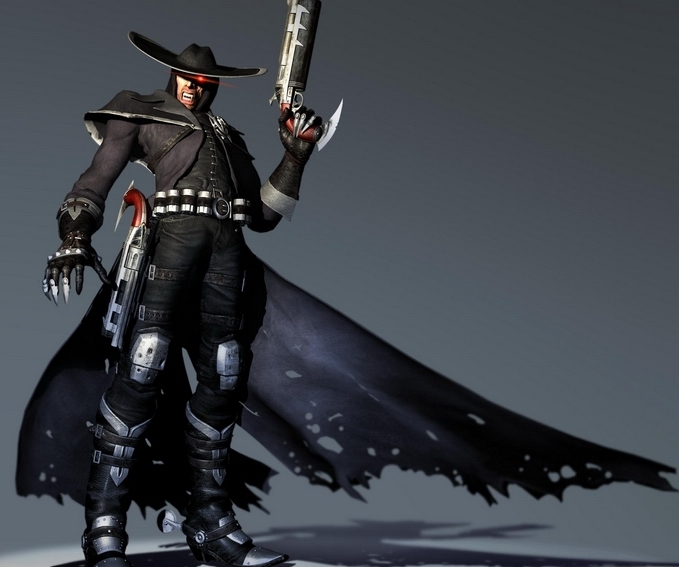
    Despite popular opinion, the Xbox and Playstation 2 were home to some absolutely cracking First Person Shooters.  Aside from a few decent attempts at doing it right on the Playstation 1 and Nintendo 64, it really wasn’t until last generation that things got going in earnest, kicking off with the original Halo in 2002.  Of course Halo cast such a dark shadow that it was hard for many of the games to get their foot in the door of Xbox owners and as such many went unnoticed if not ignored.  It’s not that they were bad, they were just competing with one of the most important FPS franchises of all time.  Not an admirable position for any game to be in. High Moon Studios’ Darkwatch was one such game that was shrouded in darkness and left to scavengers in bargain bins across the world.  Released at the tail end of last generation, Darkwatch was an occult-western whereby you take on the role of vampire-hunter and newly-branded vampire Jericho Cross in his quest to rid the world of the ultimate evil.  It’s a by the numbers if well-designed shooter that adds some cool character upgrade features that hinge on a skin-deep morality system based on how you act at predefined decision points.  It’s not a game changer but credit has to be given to the developer for trying to mix things up a bit, even if it feels a bit of a forced implementation of what was at the time the biggest thing on game designers’ minds. DarkwatchScreenXbox Front and centre though is the action and at the time I was drawn to the speed at which the game moves.  The enemies are fast and rarely sit in one place for more than a few seconds at a time and the guns let off rounds at a rapid fire rate.  Darkwatch was more Painkiller and less Halo, and it was all the better for it.  It also performed on a technical level, as it well should have coming at the tail end of the eeping up a solid 60fps was a rarity at the time but this game managed it, while looking pretty good while doing so, although the fact that the game takes place at night with little in the way of fancy lighting probably helped. The thing I remember most about Darkwatch was its excellent art direction.  In Video Game Art by Nic Kelman the game’s art is detailed from concept to execution, showing a marked evolution in the game’s look and feel.  What started off as an overly cartoony, almost caricatured character design, ended with the stylish and edgy Jericho Cross that we saw in the final game.  It  And the excellent art direction didn’t stop there.  Darkwatch’s steampunk-inspired western aesthetic was a far cry from the dimly lit metal corridors that permeated through an entire generation of FPS design, rather opting for a gruesome gothic world populated animated cadavers and ghastly ghouls.  I’d stop short of calling it attractive but its look was undoubtedly appealing, particularly if you’re a fan of its horror-inspired themes. Darkwatch was a great shooter the fell foul to a market that had simply moved on.  Halo ushered in a very different generation of FPS design.  Gone was the fast-paced, shoot anything that moves school of thought, and in was a more methodical brand of shooting anything that moves.  A small distinction, but an important one that in essence led to the games that dominate sales charts today.  While I lament the decline of the classic form of the genre, acknowledging the admirable attempts by Painkiller and Serious Sam to keep it alive, I accept that things had to change.  Darkwatch in some ways was a fitting farewell to not only a console generation, but a genre, and one that many of us grew up knowing and loving.  In other ways though it was the last gasp of a genre that was in serious need of medication.  I can’t help but see the same trend emerging as we wave goodbye to another generation.  The question is what form will the much beloved First Person Shooter take on next? JerichoCross

    Have a favourite game from 2005?  Tell us in the comments.  Don’t forget to come back soon for the next game in our countdown.  Miss a year?  Catch up below.

    2004 2003 2002 – 2001 – 2000 – 1999 – 1998 – 1997 – 1996 – 1995 – 1994 – 1993 – 1992 – 1991 – 1990 –1989 – 1988 – 1987 – 1986 – 1985 – 1984 – 1983

  • I’m waving goodbye to my 20′s and to celebrate I’m counting down 30 games from the last 30 years.  Join me while I countdown 30 great years of game memories.

    Mashed

    Growing up with siblings meant that multiplayer gaming was a big thing in my household.  Even in my university years I can remember coming home and fighting it out with my older brother every evening  in whatever game was the flavour of the month.  And it was super competitive and always had been, starting in the early days with Sensible SoccerKick off and Speedball 2 and perhaps the pinnacle of rivalry, Digital Illusions’ pinball duo of Pinball Dreams and Pinball Fantasies.

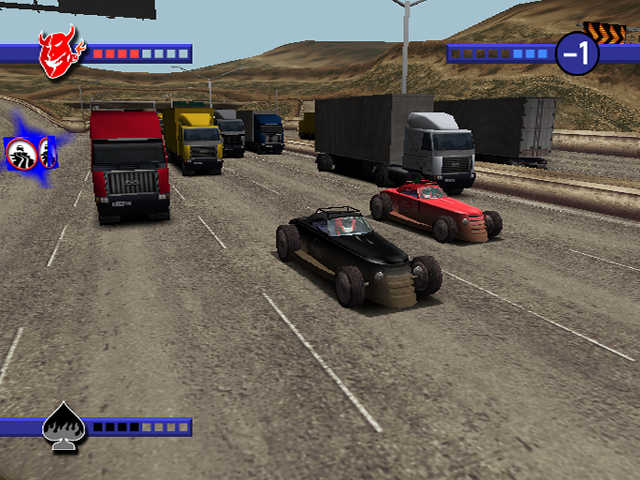
    The competition between us ten years on  game was just as fierce and with both of us now men the testosterone fuelled challenges that would prove us as men were violent and aggressive altercations.  Of course once the game was over it mattered little but when controllers were in hand it was go hard or go home.  Many games made their way through the systems during the era of the Playstation 2, but none struck our competitive bones quite like Supersonic Software’s  budget racer Mashed.

    I hate to think how much time we spent collectively playing Mashed.  The best way to think of the game is as Micro Machines without the licensed miniscule racers, because at its most fundamental it is the same game.  Races are won by winning points by extending your lead over the other players by a screen, and your opponents’ attempts to do so can be thwarted by weaponry found throughout the track or by knocking them off of the track.  Sure its a great feeling to win by way of excellent driving, but I’d be lying if I said employing dirty tactics wasn’t more satisfying.  And it is this mechanic that practically mandates grudge matches between players, which in itself is a sign that the designers got something very, very right.

    Like Micro Machines before it the game was practically built for multiplayer stoushes and therefore the game really came into its own when you had two experienced racers battling it out in matches that were forced into sudden death.  Two evenly matched players fighting an eternal battle of wits as they race around the course trying to out corner the other at high speed or cleverly force them off the track is an experience that is so unmatched by any most racers that it is unbelievable to me that no other developers have tried to pull it off.  Mashed didn’t look special but its spot-on arcade controls, excellent range of weaponry and inherently competitive game design make it one game no PS2 owner with more than one controller should live without.

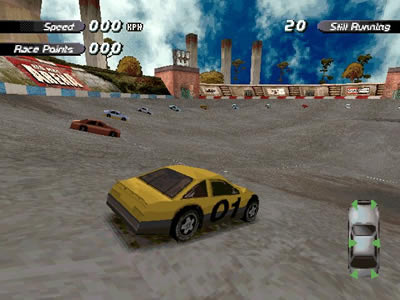
    MashedPS2screen

    Have a favourite game from 2004?  Tell us in the comments below.  Don’t forget to come back soon for the next game in our countdown.  Miss a year?  Catch up below.

    2003 – 2002 – 2001 – 2000 – 1999 – 1998 – 1997 – 1996 – 1995 – 1994 – 1993 – 1992 – 1991 – 1990 –1989 – 1988 – 1987 – 1986 – 1985 – 1984 – 1983

  • I’m waving goodbye to my 20′s and to celebrate I’m counting down 30 games from the last 30 years.  Join me while I countdown 30 great years of game memories.

    War of the Monsters

    I honestly don’t know anyone who doesn’t love big monsters.  Giant praying Mantises fighting oversized lizards or sentient laser toting robots and destroying entire cities in the process is simply just appealing on the most primal level.  Japan cottoned onto this sometimes latent human desire with Godzilla in 1954 and ever since has been plugging out film after film of giant v giant ever since.  Whether it be monster or machine there is just something satisfying about brawls of epic proportions.

    When you think giant monsters you think of pulp 1950’s cinema, after all that’s where it all began, something Incognito’s War of the Monsters for the Playstation 2 evokes perfectly.  The cheesy font, the ridiculous monster designs and the overly dramatic musical score and sound effects feel like a B-movie come to life, and its this style that take a great game and make it a classic.  The game itself is a simple stacks-on brawler where you pick a monster and take it through a campaign where the only real objective is to stay alive long enough to see off the other 80 foot giants roaming the arena.  In some ways it’s kind of a Smash Brothers or Power Stone on steroids with sprawling 3D arenas.  You have your basic brawling attacks, ranged projectile attacks, objects that can be picked up and thrown at opponents, and power ups scattered throughout the level that grant your monster devastating attacks.  And speaking of levels they really encourage players to role-play that King Kong climbing up buildings fantasy with most levels having a serious verticality to them. It is chaotic at times and because of the size of the levels it can be difficult to keep track of exactly what’s going on.  But in some ways that’s all part of the fun and in multiplayer can lead to some pretty entertaining scenarios.

    WarofthemonstersPS2

    Developer Incognito had incredible pedigree when it comes to all-on-all mass destruction, having brought the incredible Twisted Metal: Black and Twisted Metal: Head On to us for the PS2 and PSP respectively.  So it’s no accident that War of the Monsters feels like Twisted Metal ‘on legs edition’.  It’s also no accident that like Twisted Metal, it is a great game when solo but an absolutely outstanding one with someone sitting next to your on the couch.  It may be simple in concept, but the sense of scale and outrageous levels of over-the-top destruction makes War of the Monsters such a charming and enjoyable romp, regardless of how your take it.

    WaroftheMonsters

    Have a favourite game from 2003?  Tell us in the comments below.  Don’t forget to come back soon for the next game in our countdown.  Miss a year?  Catch up below.

    2002 – 2001 – 2000 – 1999 – 1998 – 1997 – 1996 – 1995 – 1994 – 1993 – 1992 – 1991 – 1990 –1989 – 1988 – 1987 – 1986 – 1985 – 1984 – 1983

  • I’m waving goodbye to my 20′s and to celebrate I’m counting down 30 games from the last 30 years.  Join me while I countdown 30 great years of game memories.

    Prisoner of War

    In the early 00’s I was a bit of a sucker for the ol’ stealth genre.  I found an inordinate and perhaps perverse level of entertainment from sneaking around undetected and the PS2 and Xbox generation provided an ever-flowing fountain of shadow crawling for me to gorge myself.  Some of the games were better than others and while most couldn’t reach the heights of Sam Fisher’s of Solid Snake’s adventures, the workmanlike approach developers took to emulating the successes of the big boys of stealth was admirable.  But it was when they did something different that really caught my attention.

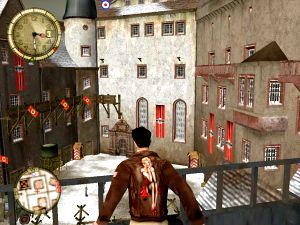
    Prisoner of War was an atypical example of a stealth game when it was released a decade ago.  Originality is a descriptor not often used to describe games set during the World War II, but Codemasters’ great escape was exactly that, providing a fresh take on a genre that was fast becoming stale.  Not only did you have to escape from prison without being spotted, but you had to keep with the routine of the camp as to not rouse suspicion.  Attending roll call and observing curfews, or at least seen to be, is integral to your escape.  Fail to turn up and a huge search will be launched, inevitably ending in your capture – or death.  The stakes are high and Prisoner of War in some ways is the ultimate game of risk and reward.  Also unlike other stealth games, perhaps more like adventure games, the game places significant emphasis on character interaction.  Building a rapport with your fellow inmates is key to your escape and you’ll find most of them are agreeable to your cause.  In most cases the characters are quest givers, pointing you in the direction of the next item or area that will aid you in your escape,  but it is a unique approach to the stealth genre that, even if not perfect in execution, should be applauded for what it tried to do.

    There was a game I can remember playing for hours on end on the Amiga 500 called Escape from Colditz.  Taking control of four prisoners of different nationalities your task was to escape Colditz prison, or die trying.  It was a tough game requiring organisation, resourcefulness and patience at a level my childhood brain couldn’t manage.  Needless to say I never escaped Colditz and those four allied prisoners died within those walls.

    More than a decade later I was able to right those wrongs with Prisoner of War.  It was far from a perfect game even when it was released.  It looked bland, voice acting in a word was rubbish, and the difficulty curve incredibly steep.  But the ultimate reward and relief at guiding yourself and your allies out of the hands of your Nazi captors was worth  persevering over every attempt of the game to make you hate it. 

    Prisoner of War PS2

    Have a favourite game from 2001?  Tell us in the comments below.  Don’t forget to come back soon for the next game in our countdown.  Miss a year?  Catch up below.

    2001 – 20001999 – 1998 – 1997 – 1996 – 1995 – 1994 – 1993 – 1992 – 1991 – 1990 –1989 – 1988 – 1987 – 1986 – 1985 – 1984 – 1983

  • I’m waving goodbye to my 20′s and to celebrate I’m counting down 30 games from the last 30 years.  Join me while I countdown 30 great years of game memories.

    Jurassic Park III: Park Builder

    The Jurassic Park series hasn’t had too bad of a run when it comes to video game adaptations.  The release of the original Jurassic Park in the mid nineties brought with it no less than eight games based on the film, and while they varied in quality, only one or two could be considered truly awful.

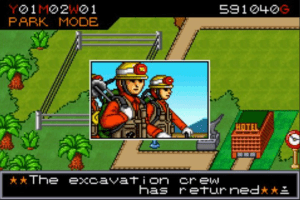
    Jurassic Park III too had a couple of   games to its name, both for the Game Boy Advance, neither directly related to the film, and both a far sight better than their namesake.  While Jurassic Park III: DNA Factor was a rather generic if at times pretty sidescroller publisher Konami took a different route for the second game, producing what is probably the deepest not to mention best simulation game available for Nintendo’s handheld.  Developed internally at Konami, Jurassic Park III: Park Builder is basically Zoo Tycoon with Dinosaurs.  And that is a great thing.

    Clearly the people that developed Park Builder hadn’t seen Jurassic Park because if there is one thing I learnt from Dr Ian Malcolm it is that life will not be contained.  Thankfully that warning wasn’t heeded because luring tourists to your carefully designed deathtrap waiting to happen is a hell of a lot of fun.  As the manager of an unnamed Jurassic Park you are tasked with designing and building a park that turns heads,  gets people excited, and ultimately gets arses through the front gate.   You’ll do this by breeding the leanest and meanest of dinosaurs , building a fence around them to avoid any unscheduled feeding time, and giving your patrons access to them by building a path.  The better and more diverse the mix of dinosaurs the more people will come.  It’s Jurassic Park building 101.

    As simple as that may be though its in the actual breeding of your specimens that a lot of the challenge and frustration lays.  You’ll need to send people out to excavate amber from around the world which you will analyse and synthesise DNA from to develop eggs.   With 140 species to collect it’s a time consuming exercise, but like Pokemon you’ll be compelled to keep playing to complete your collection.  The game also had a DNA trading feature using the link cable so you could trade specimens with friends.  Given I didn’t know anyone who had ever heard of the game let alone played it I naturally never used this feature.

    Park Builder is a bit of an oddity amongst the GBA’s catalogue.  If you listed things that the excellent handheld did well strategy games would list somewhere towards the bottom, not necessarily because they were bad but more because there weren’t many of them.  So while park builders rose to prominence during the Nintendo DS period the GBA was largely devoid of them.  Park Builder is a great game by any measure and while it doesn’t look great it is a deep simulation game that just happens to also feature dinosaurs.

    The Playstation 2 also had a Jurassic Park themed park builder.  Jurassic Park: Operation Genesis was developed here in Australia and released in 2003.

    JPPBIII

    Have a favourite game from 2001?  Tell us in the comments below.  Don’t forget to come back soon for the next game in our countdown.  Miss a year?  Catch up below.

    20001999 1998 199719961995199419931992 1991199019891988198719861985 19841983

  • I’m waving goodbye to my 20′s and to celebrate I’m counting down 30 games from the last 30 years.  Join me while I countdown 30 great years of game memories.

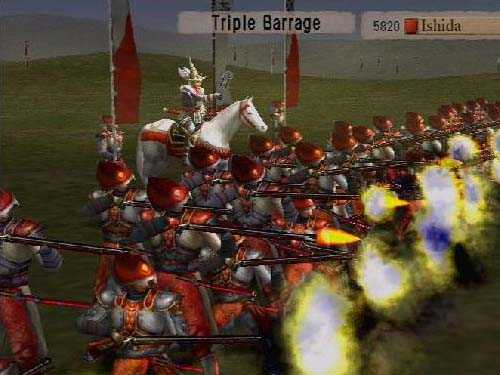
    Kessen

    The Playstation 4 is on our doorstep but it seems like only yesterday we were wowed by what the Playstation 2 was capable of.  Three dimensions weren’t enough any more and we were now people of discerned taste.  We were looking for frame rates, real time reflections, fancy lighting and as many on-screen characters as our eyes could manage.  And we were rewarded handsomely with games like State of Emergency throwing maximum carnage and maximum number of on-screen characters onto our screens and looking genuinely next generation while doing it.  Ultimately though it was the kind of game you find at launch, technically impressive but ultimately shallow. Koei’s Kessen too was a bit of a head turner, with plenty of on-screen characters, but unlike the former it was also a pretty deep game experience.

    Of course coming from Koei you know pretty much what to expect from its work on the Romance of the Three Kingdoms  and its associated spin-off Dynasty Warriors.  While taking place in feudal Japan, Kessen adopts the strategy of Koei’s other games, sitting somewhere between the two.  You initially  take control of Shogun Ieyasu Tokugawa beginning with his campaign against the traitor Ishida Mitsunari playing all the way through his consolidation of power at the siege of Osaka Castle to unify Japan.  Missions take place during famous battles over that 15 year period.

    The gameplay itself is a complicated beast that’s slow game pace will deter all but the most patient of players.  It is strategy is the strictest of sense of the word and if you’re expecting to be picking up a sword and hack and slash the thousands of enemies you’ll be sorely disappointed.  Instead you’ll be handing orders down to generals, deciding on high level tactics and analysing enemy forces to work out the way to best lead your side to victory. Think of it as controlling the general flow of the battle rather than the actual blow by blow action. It’s not always exciting but and while it isn’t as involved as your regular real time strategy game whereby you give direct orders to each and every unit it is probably the best feudal wartime battle simulator on console and a pretty unique experience.  That holds triple for those that have never been into PC gaming.

    If you’re not interested in japanese history and don’t have the patience to sit through what basically amounts to a real time strategy game then Kessen will rub you the wrong way at every possible turn. But if either hearing either pricked your ears up it is still worth tracking down and playing through even ten years later.

    Kessen had two sequels on the Playstation 2 and parts of its gameplay mechanic was emulated in the Hundreds Year War strategy-action title Bladestorm released on Xbox 360 and PS3.

    KessenScren

    Have a favourite game from 2000?  Tell us in the comments below.  Don’t forget to come back soon for the next game in our countdown.  Miss a year?  Catch up below.

    1999 – 1998 199719961995199419931992 1991199019891988198719861985 19841983

  • I’m waving goodbye to my 20′s and to celebrate I’m counting down 30 games from the last 30 years.  Join me while I countdown 30 great years of game memories.

    Rollcage

    There was probably no worse year for developer Attention to Detail and publisher Psygnosis to release its high speed gravity-defying racer Rollcage.  Released in the same year as arguably the best game in the Wipeout series, Wipeout 3, Rollcage never really stood a chance at market.  Which is a shame really because it was a brilliantly fast arcade racer that deserved people’s attention. 

    Wipeout’s influence on the game is obvious before you even hit the track.  You select from a series of ultra modern cars from ultra modern teams with ultra modern logos.  Turn the volume up and you’ll hear a soundtrack full of well known dance artists with thumping bass and looping samples.  At the turn of the century this was clearly the vision of the racetrack of the future and perhaps the formula developers and publishers thought would help sell their futuristic racers.

    RollcageS2

    Once you hit the track though you’ll notice one pretty major difference from the Wipeout games: that the vehicles in Rollcage have wheels.  “But you said it was a gravity-defying racer” I hear you say.  I did and that is one of the game’s unique features.  Rollcage’s vehicles are the real stars of the show because while they are tethered to the ground they are able to stick to and drive on walls and roofs. The ability for them to flip and still have their wheels maintain contact with the ground meant that even if you lost grip the race would continue, often with little to no speed or time penalty.  And that was a wise design decision because most of Rollcage’s appeal was how unbelievably fast it was.  The detailed futuristic scenery flew by as your car reached top speed, boosting off of genre standard boost pads one after another, so while it’s not as fast as Wipeout, it is still by any standard a ridiculously fast racer.

    But that’s just the problem: it’s not as good as Wipeout.  All of the ingredients were there – great tracks, fast cars, good graphics, well balanced weaponary and an excellent sense of speed.  But it was never going to match the polish and finely tuned action seen in Psygnosis’ other fast futuristic racer, and regardless of how great it was, it simply didn’t feature anti-grav craft by Feisar.  It’s not Wipeout, no, but but i’ll be damned if it it made a bloody good push at being just as good.

    A sequel Rollcage Stage 2 was released in 2000 and was another excellent futuristic racer.  Unbelievably the original official site is still live after 13 years.

    RollcagePS1screen

    Have a favourite game from 1999?  Tell us in the comments below.  Don’t forget to come back soon for the next game in our countdown.  Miss a year?  Catch up below.

    1998 – 1997 – 1996 – 1995 – 1994 – 1993 – 1992 – 1991 – 1990 – 1989 – 1988 – 1987 –1986 – 1985 – 1984 – 1983

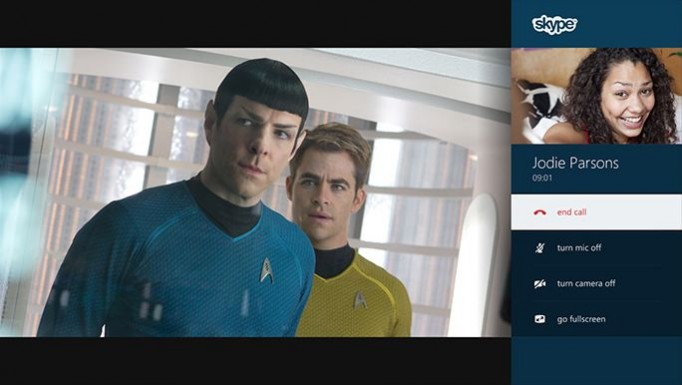
  • I was intrigued to read an update on the Snap feature of the Xbox One today. The feature was announced at the Xbox One’s fateful unveiling, but it was somewhat lost beneath the tidal wave of outrage at the console’s ‘always-on’ internet requirement and the fact that Microsoft might be spying on our bedrooms. Now, with the Xbox One launch weeks away, Microsoft are ‘bigging up’ the feature once again.

    Snap lets you bring up a second app while playing a game, so by bellowing “XBOX, SNAP TV!”, you can command your console to split the screen and bring up a little telly on a side bar. It also works with Skype and Internet Explorer, and it can be used to show your Friends List as well. Judging by the comments under the Eurogamer article linked above, it’s received a mixed reception.

    XboxOneSnapSkype

    Many rightly ask why the hell you’d want to watch TV when you’re already playing a game. Some point out that slower games, like Sim City, might work with this, but others rightly point out that games like Sim City are hardly a mainstay of consoles. Yet more people argue that it would be useful to have a football match showing, meaning you could play the game during the boring bits but then transfer your attention when something interesting happens. To me, this says more about the nature of watching football than the relative merits of the Xbox One feature.

    The Skype feature seems next to useless by comparison – who on earth is going to make a Skype call while playing a game? And who on earth would want to chat to someone while they’re mindlessly shooting aliens/bad guys/zombies? I already have images of long-suffering girlfriends shouting at their boyfriends to STOP PLAYING THAT BLOODY GAME while they’re attempting to hold a Skype conversation. I suppose it could be useful for gamers keeping in touch with each other while playing cooperatively online… but don’t we already have voice chat for that?

    However, I can see the benefits of being able to bring up the internet while playing a game, particularly in terms of looking for tips or guides to a game when you get stuck. Then again, like most gamers, I already have a ‘second screen’ in the form of a smartphone and laptop, so I can’t see how splitting the screen on the TV rather than searching the internet on my phone would be an improvement.

    To be honest, I’m a bit baffled by Snap – it seems like a feature for having the sake of a feature, and I’ve the feeling that most users will probably try it once and then never use it again. But maybe I’m wrong – maybe screen multitasking is the future, and I’m just too blind to see it?

    I’d be interested to know your thoughts on the whole thing – would you use Snap? If so, what for?

  • I’m waving goodbye to my 20′s and to celebrate I’m counting down 30 games from the last 30 years.  Join me while I countdown 30 great years of game memories.

    Vigilante 8

    It seems almost hard to believe that there was ever a time whereby multiple car combat games were being released in any one year.  Twisted Metal blew the genre up when it debuted almost day and date with the original Playstation at launch in 1995, but it wasn’t until its sequel, World Tour, released two years later that the frenzy began in earnest.  A year later it was on for young and old and as the Twisted Metal brand waned once it moved from its original developer Singletrac to Sony’s 989 Studios with the mediocre Twisted Metal III, its competitors swooped in for the kill.  One of these competitors was Luxoflux who too had a history with alternative takes on the driving game.  The game was Vigilante 8.

    Released originally for the Playstation, with versions for the Nintendo 64 and Game Boy Color following, Vigilante 8 was a departure from the format that Twisted Metal pioneered, incorporating objective based play alongside its traditional deathmatch style penchant for destruction. Set in a 1970’s era oil-deprived United States of America the Quest modes has you picking an of-the-era car from one of the two in-game factions, the Coyotes and the Vigilantes, and progressing through levels by completing objectives.  Of course once the Quest Mode was complete it was all about the split screen multiplayer, which like Twisted Metal, is really where Vigilante 8 shone.  Perhaps even a little brighter than Twisted Metal.

    It also certainly didn’t hurt that Vigilante 8 was a bit of a looker with its cool 1970’s vibe really shining through with the help of some incredible artwork.  The vehicles looked great and the varied and destructive and dynamic environments lit up by  rather impressive lighting looked a generation ahead of its competitors, including Rogue Trip: Vacation 2012 released in the same year.

    Vigilante 8 was also  a more ‘physical’ game than both Twisted Metal and Rogue Trip with the cars having a real sense of weight to them.  The first time I watched the weight of the car roll onto its suspension as it turned at speed was the very moment that I realised that while it shared some of the same gameplay mechanics, Vigilante 8 was a different beast from its inspiration.  It was by no means a slow game but it was a more methodical one and one that forced the player to be a little bit more thoughtful and considered in their driving.  It was certainly less accessible than Twisted Metal for the casual player but for the seasoned car combat veteran once the barrier was broken and they had grown accustomed to the vehicle control, Vigilante 8 was a welcome change to the frenetic pace of Twisted Metal, and in some ways a better game.

    Vigilante 8 was followed by a sequel Vigilante 8: Second Offence a year later which made a number of improvements to the original.

    Vigilante 8 (Luxoflux, 1998, Playstation 1)
    Vigilante 8 (Luxoflux, 1998, Playstation 1)

    Have a favourite game from 1998?  Tell us in the comments below.  Don’t forget to come back soon for the next game in our countdown.  Miss a year?  Catch up below.

    199719961995199419931992 1991199019891988198719861985 19841983

  • I’m waving goodbye to my 20′s and to celebrate I’m counting down 30 games from the last 30 years.  Join me while I countdown 30 great years of game memories.

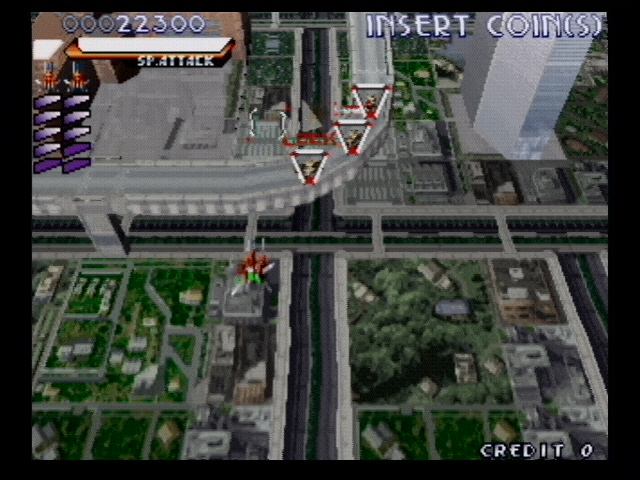
    RayStorm

    It was the mid nineties and the arcade scene was still thriving world wide. New arcade games were bursting onto the scene seemingly daily as kids would basically climb over one another to sample the new hotness at their local. Arcades were hives of activity – socialising, taunting and screaming – with crowds of people from all walks of life crowded around the more popular machines.  It was a time dominated by fighting games and racing games and edging toward the end of the decade some of the genres that had populated the corners of an arcade started to fall away in popularity.  The scrolling shooter was one such casualty and as they waned in popularity so too did their presence in arcades.

    The newer 3D capable consoles proved a safe haven for these relics though and developers started moving their efforts to developing for home audiences.  For people that grew up in arcades it was a bitter-sweet moment because while it was great to stop dropping dollar coins to play games, gone was the atmosphere and palpable grittiness of the arcades that couch play could never replicate.  Even if the games were still great.

    RayStormScreen

    One such game was Taito’s RayStorm.  Originally released as an arcade game in Japan in 1996, this vertically scrolling shooter made its way to the Playstation late the following year.  I received RayStorm as a christmas gift from a thoughtful grandparent who had taken the time to ask the salesperson what game to buy for a teenage boy.  Upon spotting  ‘90% Hyper Approval’ sticker the uninformed young man picked it up and handed it to my unassuming elder.  “This has spaceships shooting stuff” he said as finalised the sale.  He doesn’t know it but his nonchalance 16 years ago led to me being introduced to the person writing this today.

    When I first booted the game I knew I was in for something special and I absolutely fell in love with it the moment I took control of my ship and flew from Albion to Old Gaul City destroying any enemies in my path.  The electronic music accompanying the action was a suitable throwback to its forebears and the environments were stunningly beautiful contrasts to the war at hand.  Watching the impeccably designed ships, the R-Grays,  fly over glistening water, through crumbling cities at war and over planets was breathtaking, with the excellent transition camera work perfectly framing your ship’s movement in and out of new areas and into boss encounters.   It was more than just a game, it was proof that old game ideas could be updated to fit new sensibilities.  Arcades may have been dying a slow and painful death but the experiences that characterised them, and my childhood, lived on.   Loading up targets and watching as lightning bolt snaked itself around the screen destroying everything in its path was not a stretch from what I’d experienced over a decade before with its ancestors but it was still as fun and exciting as it had been then.  RayStorm for me wasn’t just a game it was an ethos that would frame my approach to appreciating video games for years to come.


    RaystormShip

    Have a favourite game from 1997?  Tell us in the comments below.  Don’t forget to come back soon for the next game in our countdown.  Miss a year?  Catch up below.

    19961995 – 199419931992 1991199019891988198719861985 19841983

  • I’m waving goodbye to my 20′s and to celebrate I’m counting down 30 games from the last 30 years.  Join me while I countdown 30 great years of game memories.

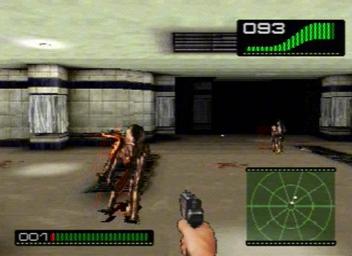
    Alien Trilogy

    It was hard going for first person shooters in the early years of the Playstation with many controlling poorly and others just lacking the look and feel people had come to expect from the genre from their time with PC games.  Some hit the mark, with the Playstation version of DOOM faithfully recreating the PC experience and Insomniac Games’ Disruptor having a decent stab at making its home on the system.  So while they were there they were few and far between good experiences.  In the worth playing pile though is Probe Development’s Alien Trilogy based on the films of the same name.

    The Aliens franchise is a perfect fit for the first person shooter genre.  The canon itself is based on a struggle for survival against the odds and Alien games from past to present have always tried to capitalise on that premise.  Alien Trilogy is no exception pitting the player against Xenomorphs from all three films as they struggle to survive and make their way to the end of each twisting level.  It’s not an original game but it leverages off the Aliens property incredibly well, with the result being a highly entertaining romp through the world so vividly established by Ridley Scott 34 years ago.

    The game loosely follows the three films as you take the role of Ripley, beginning with her arrival on LV-426 and ending with her escapades in the penal colony of planet Fiorina.  While it doesn’t follow the story in the strictest of senses the progression through the three films gives the game a very distinct set of locations to fight your way through.  In fact if Alien Trilogy does one thing particularly well its that it captures the signature elements and atmosphere of the films perfectly.

    Everything you’d expect from an Alien experience is there from the motion tracker to the signature sound of the Pulse Rifle as it loads off rounds into a face hugger or Xenomorph.  All of this detail results in a game that recreates the world of Alien perfectly and in doing so is a fitting tribute to a wonderful film trilogy.  It also happens to be a pretty decent early 32-bit era first person shooter.

    AlienTrilogyScreen

    Have a favourite game from 1996?  Tell us in the comments below.  Don’t forget to come back soon for the next game in our countdown.  Miss a year?  Catch up below.

    1995199419931992 1991199019891988198719861985 19841983

  • I’m waving goodbye to my 20′s and to celebrate I’m counting down 30 games from the last 30 years.  Join me while I countdown 30 great years of game memories.

    Destruction Derby

    You wouldn’t be human if you didn’t have an innate attraction to destruction and enjoying watching things crumble, break, explode, implode, collide or tear apart is seemingly part of our primal instinct.  Combine that with fast cars and you’ve got a seriously dangerous concoction.

    The dawn of the polygon heralded in earnest by SEGA’s Saturn and Sony’s Playstation brought with it so much potential, but nothing came close to the excitement that blowing and smashing things up in three dimension for the first time did.  Developer Reflections’ Destruction Derby for many was their that first experience and one likely changed what they expected from video games forever.  Watching realistic 3D models buckle and twist apart was an exhilirating experience, as parts of cars seemingly flying off into the distance and the smoke begins to pour out of the engine block.  Damage modelling was something we expect nowadays but back in 1995 it was a genuine surprise and its area specific damage system was not only impressive but encouraged strategic driving for maximum damage.  It doesn’t look much now but it was a technical marvel at the time and one I’m not ashamed to say I thought would never be topped.  Of course it was and Codemasters’ 2012 Dirt Showdown is at its a core just a prettier more modern version of the same game.

    Destruction Derby was a game built around what the new technology could do and that was a role is played admirably.  The driving was fast, the carnage brutal and the game offered up enough variance in the way of tracks and event types to ensure that the core mechanics of the game never got old.  Destruction Derby wasn’t the best game available in the early days of the system but it was sure one of the most enjoyable and one that I still go back to from time to time.

    A number of sequels to the game were released in the following years with  the faster and prettier Destruction Derby 2 being a particular highlight.

    DestructionDerbyScreen

    Have a favourite game from 1995?  Tell us in the comments below.  Don’t forget to come back soon for the next game in our countdown.  Miss a year?  Catch up below.

    1994 – 1993 – 1992 – 1991 – 1990 – 1989 – 1988 – 1987 – 1986 – 1985 – 1984 – 1983


  • I’m waving goodbye to my 20′s and to celebrate I’m counting down 30 games from the last 30 years.  Join me while I countdown 30 great years of game memories.

    Donkey Kong

    “Lateral Thinking of Withered Technology”, Gunpei Yokoi (1941-1997).

    It sometimes amazes me the things that developers pulled off with the original Game Boy.  Its aged hardware and architecture dated back to the 1970’s but clever design and coding magic resulted in a system that still to this day is home to some of my favourite games of all time.  1994 was a particularly impressive year with the first party developer Wario Land: Super Mario Land 3 and third party games Mortal Kombat 2 and Mega Man V all hitting shelves within months of one another, all of which made it well worth being a Gameboy owner.  But perhaps the best reason to be a Gameboy owner in the year of 1994 was a Donkey Kong.

    Donkey Kong ’94 as its known today is a modern classic.  But it is also the first example I can think of for a remake or remaster of a game.  The developers took the original Donkey Kong and expanded it beyond those four instantly recognisable levels of the original to make it a big and diverse puzzle game that was far beyond anything that had appeared on the Gameboy previously.  Gone was the simple loop of four levels and in were over a hundred levels and new abilities to help hero Mario pursue the mischievous Donkey Kong and save damsel in distress, Pauline.  It cleverly started off with a nostalgic reminder of its roots and quickly blew that away in favour of a more meaty and less arcade experience.  It was a timely reminder of just how far gaming had come since the early eighties, and just how powerful Nintendo’s handheld was in the right hands.

    There is no doubt that Donkey Kong ’94 is in the must own category of Gameboy games.  It managed to rekindle nostalgia for the original game while managing to masterfully retool a classic experience so that it was not only handheld friendly but appealed to an entirely new generation of players that were used to bigger and more varied game play experiences.  If you own one game for the Gameboy it should arguably be this one.

    DK94screen


    Have a favourite game from 1994?  Tell us in the comments below.  Don’t forget to come back soon for the next game in our countdown.  Miss a year?  Catch up below.

    1993 – 1992 – 1991 – 1990 – 1989 – 1988 – 1987 – 1986 – 1985 – 1984 – 1983

  • I’m waving goodbye to my 20′s and to celebrate I’m counting down 30 games from the last 30 years.  Join me while I countdown 30 great years of game memories.

    Jaguar XJ220

    Some would say Core Design’s Jaguar XJ220 is just a poor-man’s Lotus Turbo Esprit Challenge.    Racing games were a different beast in the 90’s, not blessed with the processing power to be able to do real world physics or three dimensions, they had to make do with black magic trickery to make their games tick.  Although Magnetic Fields was first cab of the Amiga 500 rank with their immensely popular Lotus series,  Core Design closely followed and what better way to outrun the competition with what was at the time the fastest production car on the road.  And so Jaguar XJ220 was born.

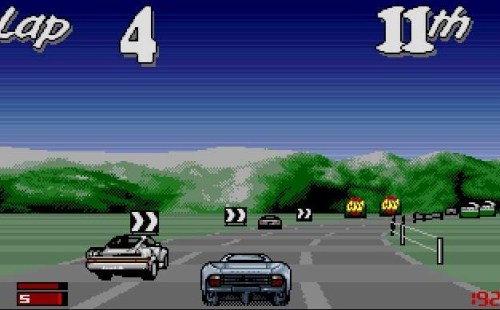
    Right off the bat there’s no denying that Jaguar doesn’t have the polish that its main competitor did.  While it seemed to have a similar sense of speed it never felt quite as smooth as Lotus did and as a result felt low-rent in comparison.  Similarly Jaguar doesn’t look as pretty on the road with trackside detail not quite as picturesque, the car models that look slightly out of proportion and the track design and locations are less inspired than those in Lotus.  Of course none of that mattered when you were cruising around the world at a top speed of 354 km/h because on the track Jaguar played well well enough to forgive any shortcomings.  Racing the exotic super car through traffic felt as it should and there was a certain satisfaction that came from driving one of the fastest vehicles on Earth.  But it was impossible to not consider Jaguar in light of its rival’s achievements and by that standard it was always going to come second best.  Far from a cheap knock off Jaguar XJ220 was a worthy competitor to the Lotus series’ crown.  But it would never usurp its main rival to claim first place.  Always the bridesmaid, never the bride.

    JaguarXJ220Amiga

    Have a favourite game from 1993?  Tell us in the comments below.  Don’t forget to come back soon for the next game in our countdown.  Miss a year?  Catch up below.

    1992 – 1991 – 1990 – 1989 – 1988 – 1987 – 1986 – 1985 – 1984 – 1983

  • I’m waving goodbye to my 20′s and to celebrate I’m counting down 30 games from the last 30 years.  Join me while I countdown 30 great years of game memories.

    Dr Franken

    I have a ridiculous soft spot for Nintendo’s handheld brick.  It was what I spent more of my childhood gaming years with under the booming brightness of a desk lamp and was home to a swathe fantastic games.  Of course there were also some not so fantastic games.   Sitting somewhere in the middle of that spectrum is UK developer Elite Systems’ (by way of subsidiary Motivetime Ltd) puzzle platformer Dr Franken.  Basically a glorified treasure hunt, the game has you playing as Franky (get it?) who is searching for the pieces of his girlfriend Bitsy (you can’t make this stuff up) which are strewn across his rather large gothic mansion.  Unlike many platformers of the day Dr Franken lets go of the player’s hand early on as you are forced to decipher sometimes incredibly cryptic riddles and clues in order to put poor dismembered Bitsy’s body back together.  Like most Game Boy platformers of the day there’s not much to the gameplay but it is far from an easy task navigating the rather large mansion to solve puzzles and find keys to unlock new areas.  It sounds simple in concept but in execution Dr Franken is quite a difficult game wrapped up in a child friendly wrapper.  

    It’s certainly not as complex as a Metroid or Castlevania game despite sharing some similarities, but for its time Dr Franken was a pretty unique experience and a great distraction from the seemingly hundreds of run-right platformers that polluted the Game Boy catalogue in the early 90’s.  It’s a rather macabre tale really but the tone of the game and the fact that you’re a hulking big green monstrosity running around a mansion distract from that fact that that what you’re really playing through is a rather sinister murder scene.  

    And I’m still not sure to this day why Franky could shoot lightning bolts from his head.

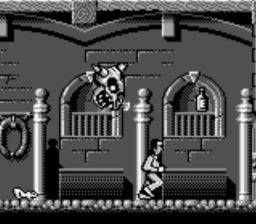
    DrFrankenGB

    Have a favourite game from 1992?  Tell us in the comments below.  Don’t forget to come back soon for the next game in our countdown.  Miss a year?  Catch up below.

    1991 – 1990 – 1989 – 1988 – 1987 – 1986 – 1985 – 1984 – 1983

  • I’m waving goodbye to my 20′s and to celebrate I’m counting down 30 games from the last 30 years.  Join me while I countdown 30 great years of game memories.

    Gobliiins

    Gobliiins was a charming point and click adventure puzzler released in 1990 by French Developer Coktel Vision.  A charmingly funny game, it doesn’t rely so much on clever writing as it does on clever design and its puzzles play to that strength by delivering some incredibly funny situations and solutions.  It won’t have you rolling around on the floor but it will undoubtedly make you chuckle throughout with its incredibly european-feeling humour.  What makes Gobliiins so memorable are the puzzles – the game  used a similar mechanic to the 16-bit classic Lost Vikings with you taking control of three characters each with their own special skills.  As a result its puzzles are logically designed and so playing through the game becomes is less about trial and error than it is thinking things through and approaching them accordingly.  More than I can say for a lot of adventure games released around the same period which often relied on obscure solutions and trial and error to get through.


    The French  have a very distinct art style and Gobliiins is absolutely exuding it from every crack.  The first thing you’ll notice about Coktel Vision’s game is that it is an exquisitely drawn game.  The Amiga 500 was known for its graphical prowess and this game takes full advantage of the hardware looking and feeling like it jumped straight from the pages of an Asterix novel.  The character sprites were simple but in motion everything animates brilliantly, with each character’s interactions with the world and other NPC brought to life with such gusto that the world and its inhabitants have a real sense of place.  Its this excellent craftsmanship that allows its humour to really shine through.

    The game had a number of sequels with the latest Goblins 4 being released in 2009.  Like its predecessors original designer Pierre Gilhodes was at the helm.

    Gobliiinsscreen

    Have a favourite game from 1991?  Tell us in the comments below.  Don’t forget to come back soon for the next game in our countdown.  Miss a year?  Catch up below.

    199019891988198719861985 19841983

  • I’m waving goodbye to my 20′s and to celebrate I’m counting down 30 games from the last 30 years.  Join me while I countdown 30 great years of game memories.

    Murder

    It’s 1990 and the world is swept up in murder investigation fever as fan favourite Law and Order series begins its run and Clue Jr is released capturing the hearts and minds of budding young investigators everywhere.  The video game world got in on the act too with the release of US Gold’s rather stylish detective adventure game Murder on the Amiga 500.

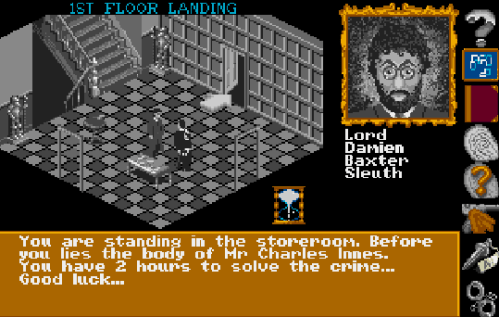
    The game kicks of with the scream as you are thrust into the middle of a 1940’s murder mystery tasked with solving the grisly crime. Played from an isometric perspective the game manages to pull the era off superbly with black and white graphics and beautifully detailed graphics that perfectly recreate a manion of the period.  But sightseeing isn’t on the agenda as you work against the clock interviewing suspects, collect evidence, dust for fingerprints and put together a case to bring the perpetrator to justice.  Murder was a unique take on the adventure game genre that hasn’t been successfully replicated (to my knowledge at least) since.  Everyone loves a classic whodunnit and Murder delivers that in spades.

    Now was it Colonel Mustard in the kitchen with the candlestick?  Or Miss Scarlett with the dagger in the cellar?

    MurderAmiga500

    Have a favourite game from 1990?  Tell us in the comments below.  Don’t forget to come back soon for the next game in our countdown.  Miss a year?  Catch up below.

    1989 – 1988 – 1987 – 1986 – 1985 – 1984 – 1983

  • With the launches of the Xbox One and PlayStation 4 just around the corner, much talk is being devoted to the various merits of the competing systems, and not least their line-ups of launch games. It’s worth being reminded here that for the most part, launch games tend to be generic, undercooked and quickly forgotten soon after the console hits its stride. Anyone remember FantaVision on the PS2? Or Street Fighter: The Movie on PS1? Fuzion Frenzy on the Xbox? Thought not.

    It’s not always like this of course: occasionally a console will launch with a game that blows everything else out of the water and sets the gaming agenda for years to come: Super Mario 64, Halo and WipeOut are a few launch games in this category. And sometimes there’s a launch game or two that, despite not sharing the limelight with the big hitters, offers up some unique and solid gameplay. This article is dedicated to the launch games that were quickly forgotten but that perhaps deserve a second look.

    Jumping Flash PS1Jumping Flash! (PS1)

    Sir Gaulian – They say “History is written by the victors” and that is no truer that in the case of  PlayStation launch title Jumping Flash. While Super Mario 64 is often referred to as the first 3D platformer, it was actually Jumping Flash that started a genre which would become a console stalwart for many years to come, albeit from a first person perspective. The game’s title pretty much says it all: Jumping Flash was all about the jumping, and to what great heights the robotic frog could jump. Do you remember Samus looking down when jumping between platforms in Metroid Prime? Jumping Flash did that too. It also happened to look bloody impressive while doing it, particularly for the early days of the Playstation and 3D games in general. It was an impressive piece of tech that showed off what polygons were all about way back in 1995.

    Smugglers Run PS2Smuggler’s Run (PS2)

    Lucius – I bought this game as present for my friend Paul years ago. I’d heard it was surprisingly good, but I had no idea it would turn out to be such a massive time sink for me and my friends. Graphics-wise it’s no great shakes – the designers have a questionable love of the colour brown – but it flies along at a fantastic pace and the action is non-stop. Essentially it’s a racing game without borders – you can go anywhere as long as you get to your destination in time and your car isn’t destroyed by rival gangs or the police. In two player it really comes alive as you battle with your friend over who can get to the cargo and return it to your base – if you’re first to get it, expect a queue of rivals and the police on your tail as you frantically blast your way over ridges and through valleys in an attempt to shake them. One of Rockstar’s earliest games and one of the best.

    ProjectRubProject Rub: Feel the Magic XY/XX (DS)

    Sir Gaulian – Remember mini games?  How could you forget, they were on any street corner over the life of the Nintendo DS.  While Warioware: Touched has remained in the minds of most early adopters of the system as the epitome of mini game collections, SEGA also had an early offering that not only offered an eclectic mix of mini games, but also a heart warming story and impressive minimalist visual style to go along with it.  Project Rub (or Feel the Magic XX/XY as it was known in other territories) tells a pretty standard boy meets girl love story, but the game itself revolves around his pursuit of the girl and the great lengths he goes to to win her heart.  His attempts play out through various mini games that are so unbelievably ridiculous that they are absolutely worth discovering and experiencing first hand.  Along with Warioware, Project Rub used every feature of the DS and in that way is the ultimate embodiment of the console’s 2004 launch.   Unbelievably there was a sequel to this game, The Rub Rabbits!, released in 2006.

    Polarium (DS)PolariumDS

    Sir Gaulian – Every portable console launch needs a puzzle game, and for the Nintendo DS it was Japanese developer Mitchell Corporation’s long-forgotten brain strainer Polarium. Polarium is a vertically oriented block game where the aim is to align blocks according to their polarity by tapping or drawing across them. Its simple concept and incredibly crude presentation masks an incredible layer of depth and complexity in what is probably my favourite puzzle game. In addition to your standard infinite mode there was a devious puzzle mode that required the player to clear the lines of a set pattern by drawing one continuous line. The combination made for a an addictive and excellent distraction from the world around and a magnificent time sink that was a mainstay in my travel bag. I wouldn’t be lying if I said Polarium continually occupying my Nintendo DS is probably the single biggest factor in ensuring that Animal Crossing: Wild World (released over 12 months later) never got its hooks in.

    MGAcidMetal Gear Acid (PSP)

    Sir Gaulian – It’s no wonder Metal Gear Acid gets lost amongst the shuffle. Overshadowed by its bigger and more explosive cousins, the non-canonical Metal Gear Acid is more Lost Kingdoms than it is Metal Gear Solid, with every movement and action being dictated by what cards the player has in their posession. But what it’s missing in instant action it more than makes up for in its approach to turn-based strategy, and way back at the launch of the PSP it made for a welcome change to a series more known for its stealth. The sequel released a couple of years later was a significant step forward from the original, but Metal Gear Acid still remains a portable-friendly game worth playing, particularly if you’re interested in a card game based on the Metal Gear characters and universe.

    Tony Hawk’s Pro Skater 2 (GBA)THPSGBA

    Sir Gaulian – I am a long-time fan of the Tony Hawk’s Pro Skater series and, like many others, I’ve been mortified at the steady downward spiral the series has taken this generation. But there was a time when publisher Activision could do no wrong with the series and everything that the Hawk touched turned to goal. That included bringing what is widely regarded as the best in the series, Tony Hawk’s Pro Skater 2, from its home on the PlayStation to the Game Boy Advance. Making the switch from a behind-the-skater viewpoint to an isometric one was a smart move, and developer Vicarious Visions managed to do the impossible by bringing the fully fledged console experience to a system that shouldn’t have been able to handle it. It looked the part, sounded the part and played the part: something that gave Vicarious Visions the right to develop six more entries in the series for the system, and several more for its successor the Nintendo DS.

    Battle Arena Toshinden PS1Battle Arena Toshinden (PS1)

    LuciusToshinden is unfairly dismissed by many in the fighting community. After the release of Tekken and Soul Calibur, the series quickly retreated into the shadows, petering out at Toshinden 4. But many forget how revolutionary the game was when it was released – after all, this was the first 3D fighter to feature weapons, and the first to introduce the sidestep, a move that was the key to its success. Being able to swiftly bob to the left or right of your opponent transformed the way fighting games were played, and I remember happily playing the demo of Toshinden with friends for hours when I got my PlayStation.

    TrickStyle DreamcastTrickStyle (Dreamcast)

    LuciusTrickStyle was clearly inspired by WipeOut, but it had the added bonus of hoverboards – anyone who grew up on Back to the Future II will know how much of a draw this is. As a launch game, it was an impressive display of the power of Dreamcast, and the futuristic version of London that you dived and spiralled through was an absolute treat. Pulling 360s with your board during races felt great, although the game was hampered by slight lack of speed – something that could easily have been fixed in a sequel that, sadly, never was.

    Bloody Roar Primal Fury GameCubeBloody Roar: Primal Fury (GameCube)

    Lucius – I bought a GameCube at launch, but I could only afford to get one game with it. After careful consideration, I chose this: Bloody Roar: Primal Fury. While everyone else was threading their way through Luigi’s Mansion, I was transforming into a lion and laying the smack down on giant metal moles: I definitely made the right choice. Like Toshinden, the Bloody Roar series seems to have petered out, which is a real shame: the character design was excellent, and the ability to transform into a beast added a real tactical element to the gameplay – as well as a lot of laughs.

    Wave Race Blue Storm GameCubeWave Race: Blue Storm (GameCube)

    Lucius – I was doing work experience at CVG just before the launch of the GameCube, and I was there when Wave Race: Blue Storm arrived along with one of the first GameCubes to reach the UK. I was given the task of taking screenshots of the game, which was one of the sweetest jobs I’ve ever been given – the chance to sit in an office all day and play a superbly crafted and (still) wonderful looking racing game made by Nintendo’s finest. If only I’d been paid for it, it would have been even sweeter.

    Sir Gaulian – I’ve played a lot of racing games in my time, but I’d be hard pressed to not put Nintendo’s brutally difficult Blue Storm in my favourites pile. It was a technical tour de force at the time of its release, with the water physics absolutely blowing the world away at the time. But while it looked awesome it was the way it played into the game that made it so spectacular, and being pushed off of your ‘racing line’ by a wayward wave made for a dynamic and unpredictable experience. Don’t let the difficulty put you off – Blue Storm is still to this day an excellent racer.

    Ghost Recon Shadow Wars screenshot 3Ghost Recon: Shadow Wars (3DS)

    Lucius – Finally, here’s something more recent – the best launch game for the Nintendo 3DS. Designed by Jullian Gollop of XCOM fame, this is a wonderfully designed strategy game that makes effective use of 3D effects and is perfect for handheld play. Even now it’s probably the 3DS game I’ve played for the longest time. Check out my review for more reasons on why you have to own this game if you’ve got a 3DS.

    Have memories of any of the games we listed? Think we missed something? Are you a FantaVision apologist? Tell us in the comments below.

  • I’m waving goodbye to my 20′s and to celebrate I’m counting down 30 games from the last 30 years.  Join me while I countdown 30 great years of game memories.

    Xenon 2: Megablast

    Almost no developer says “Amiga 500” like the Bitmap Brothers.  Responsible for some of the most well known games released over the system’s life, the developer has more than earned its place in the hearts of Amiga fans worldwide.  While games like Speedball 2 to Chaos Engine managed to crawl their way into the modern gamer’s vernacular, being remade seemingly every second year, shoot ’em up Xenon 2 is equally as brilliant yet often forgotten.

    Like anything with Bitmap Brothers‘ signature handprints all over it Xenon 2 is decidedly stunning.  It was the turn of the decade and the game bleeds that over the top style that the era is known for, with a ridiculously great soundtrack and graphics that at the time were some of the best around.  The turn of the decade always seems like a pretty radical and futuristic time but with Xenon 2 the Bitmap Brothers (in conjunction with fellow UK developer The Assembly Line) gave the 80’s era of video games a fitting send off.

    Xenon2-Screen

    Like fellow vertical scroller Hybris before it, Xenon 2 was all about upgrading your ship on the fly, to the point where if you last long enough and you’ll have modules of your ship flying all over the screen.  It was a cool graphical effect that also enhanced the gameplay, giving the player  a real incentive to stay alive.  After all a bigger ships means bigger gunpower in the shoot ’em up world.  As with most games power ups are core to the Xenon 2 experience, and while they can be collected in play, unlike many of its contemporaries the ability to buy power ups at predetermined points was integral to the experience. The game also happened to have the greatest shop keeper that side of Resident Evil 4.

    I’d be lying if I said Xenon 2 changed the world, rewrote the rules, changed the course of game design. What it did do was set a new benchmark for how games were expected to look and feel.  It felt like as much a piece of graphic artwork than it did a game and seemed to signal the start of video games as fashion, or dare I say it, art.  It was a spectacular looking and sounding game, with that trademark Bitmap Brothers shine, that played brilliantly. An apt send off for the decade known for its excess and exuberance.

    Xenon 2 Shop

    Have a favourite game from 1989?  Tell us in the comments below.  Don’t forget to come back soon for the next game in our countdown.  Miss a year?  Catch up below.

    1988 – 1987 – 1986 – 1985 – 1984 – 1983


  • I’m waving goodbye to my 20′s and to celebrate I’m counting down 30 games from the last 30 years.  Join me while I countdown 30 great years of game memories.

    Hybris

    I’m going to come off as some sort of scrolling shooter nut, and I assure you I’m not, but another game near and dear to my heart is a little Amiga 500 gem called ‘Hybris’.  Now I haven’t played this game for somewhere in the vicinity of 20 years but every time I think about it a wave of nostalgia and awe still sweeps through my mind.  In 1986’s entry I established that scrolling shooters were a force to be reckoned with in both arcades and home consoles throughout the eighties and early nineties.  The burgeoning Home PC scene was not immune to the onslaught and saw its own explosion in the genre.   But none of them captured my then-young imagination like Cope-Com’s vertical-scrolling shooter, Hybris.

    Part of what makes Hybris so special is its ship upgrade system.  What starts off as a rather simple ship grows as you play and collect power-ups.  Watching your ship go from minnow to mighty is part of  the fun of the game and was for the most part the reason it blew my tiny mind back in the day.  The fact that it was a fun and balanced shooter also helped and the mix of land sea and air based enemies made for some tough sequences that required thinking ahead to stay alive. While perhaps not the milestone Gradius, R-Type or perhaps most comparably Capcom’s 19XX series were, Hybris was still an incredible arcade shooter experience and it always sat on top of my Amiga 500 ready and waiting to be called up for duty.

    If you think Hybris sounds like your cup of tea Cope-Com are still active and last year released the follow up game Battle Squadron on mobile devices.  It’s available on Google Play and the App Store.  According to Cope-Com’s twitter account Hybris is scheduled to be released on mobile platforms in the near future.

    HybrisA500

    Have a favourite game from 1988?  Tell us in the comments below.  Don’t forget to come back soon for the next game in our countdown.  Miss a year?  Catch up below.

    19871986198519841983

  • I’m waving goodbye to my 20′s and to celebrate I’m counting down 30 games from the last 30 years.  Join me while I countdown 30 great years of game memories.

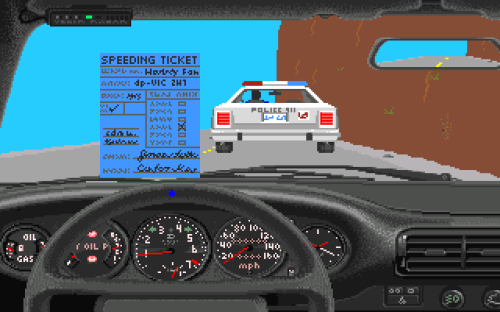
    Test Drive

    Before Don Mattrick was Don Mattrick CEO he was Don Mattrick game designer and one of the brains behind Canadian developer Distinctive Software.  You see the man has some serious game design chops and in earning those stripes Don Mattrick the game designer was responsible for some of the best games of the personal computer scene of the 1980’s.  Among those was Test Drive.

    Test Drive is one of those games that is immediately appealing.  Driving some of the world’s fastest road cars at full pelt along a cliffside road without any real life repercussions is something young boys and girls dream about at night, and Test Drive came good on that dream.  Racing along a windy road at 200 kmph toward oncoming traffic with police in pursuit was absolutely exhilarating and showed just how impressive of technical feat Test Drive was.  In motion it was simply a head turner and while it saw a release on a number of platforms it was at its most impressive on the Amiga 500.  Across all platforms though the game had a good sense of speed and the fully simulated in-car view, complete with working speedometer and tachometer, made it the closest thing to real driving we’d seen in a game.

    Distinctive Software’s custodianship of the Test Drive franchise was lost when it was acquired by Electronic Arts in the early 1990’s.  While publisher Accolade continued on with the series in 1996 it abandoned Test Drive’s focus on realistic driving for the arcade style seen in Test Drive 4.

    TestDrive

    Have a favourite game from 1987?  Tell us in the comments below.  Don’t forget to come back soon for the next game in our countdown.  Miss a year?  Catch up below.

    1986 – 1985 – 1984 – 1983

  • 30 Years of Video Games – Gradius (1986)

    I’m waving goodbye to my 20′s and to celebrate I’m counting down 30 games from the last 30 years.  Join me while I countdown 30 great years of game memories.

    Gradius

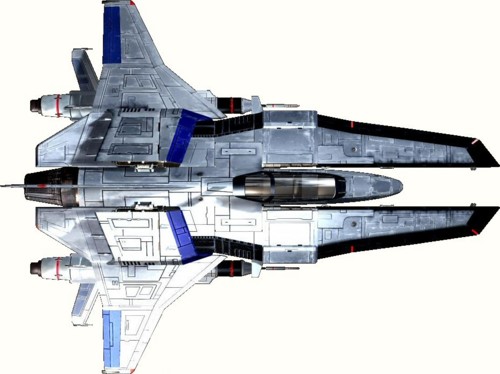
    I have a level of respect and fascination of Cave shooters that goes beyond just enjoying the act of playing them.  That admittedly waning fascination was kickstarted by early stalwarts of the genre, Konami’s Gradius and Irem’s R-Type.  While these two games don’t come close to Cave’s offerings in terms of sheer insanity and difficulty level, they can be given credit for effectively kickstarting the japanese side of the industry’s fascination with the genre.  That’s not to say they’re not hard, R-Type is particular can be brutal in places.  Of the two japanese horizontal scrolling shooters that dominated the genre in the early years of consoles though, Gradius is my pick, if only because the Vic Viper is one of the sleakest ship designs ever to grace a video game.

    Gradius proved to be one of Konami’s most popular franchise and by the end of the 80’s there were three games in the series.  The last Gradius game, Gradius IV, was released in arcades in 1999 and the PS2 at its launch.  While later games in the series added more depth to the game’s core weapon upgrade system the streamlined simplicity of the original’s weapon system is timeless.

    If you’ve never played Gradius it holds up incredibly well by today’s standards and if you have the resilience and determination to fight against the game’s difficulty it is absolutely worth finding a way to play it.  It was originally released in arcades under the name Nemesis and made its way to various home systems in following years. The Gradius Collection was released for Playstation Portable in 2006 and is probably your best bet if you’re looking to play it.

    GradiusVicViper

    Have a favourite game from 1986?  Tell us in the comments below.  Don’t forget to come back soon for the next game in our countdown.  Miss a year?  Catch up below.

    1985 19841983

  • I’m waving goodbye to my 20′s and to celebrate I’m counting down 30 games from the last 30 years.  Join me while I countdown 30 great years of game memories.

    The Way of the Exploding Fist

    This Australian-developed karate gem was a keystone of competitive gaming in my household.  It also happens to be the game that kickstarted my fascination with one-on-one fighting games.  Developed by sadly now defunct Melbourne House, the The Way of the Exploding Fist is more grounded than your standard fighting fare of today, employing real karate scoring systems focusing on execution and technique, rather than the depleting health bar that dominates the genre.  As with real Karate the game was as much about defence and positioning your fighter than it is about attacking.  Of course landing a clean blow will help –  win you the match in fact – but maintaining composure through good defence is key to opening up that opportunity.  While it is far from slow and plodding, The Way of the Exploding Fist is a deliberate and methodical fighting game.  Needless to say mastering the game requires patience and practice.

    It also happened to animate beautifully with all moves easily identifiable and as close to real as the technology of the time allowed.  It wouldn’t be a far stretch to argue that it was at the time the most impressive looking and moving game of the time.  While I played it on the Commodore 64 it was also available on other personal computers of the era.  But like many other games of the era the  C64 version had the technical advantage.

    image

     Have a favourite game from 1985?  Tell us in the comments below.  Don’t forget to come back soon for the next game in our countdown.  Miss a year?  Catch up below.

     19841983

    <Image Source: Lemon64.com>

  • 30 Years of Video games – SKULL (1984)

    I’m waving goodbye to my 20′s and to celebrate I’m counting down 30 games from the last 30 years.  Join me while I countdown 30 great years of game memories.

    1984 – SKULL

    Skull for the Commodore 64 is my earliest memory of masochistic game design.  It also happens to be the game that has the honour of being the first video game to give me nightmares.  Congratulations.  Years of sleepless nights, tears and bed wetting are on you.

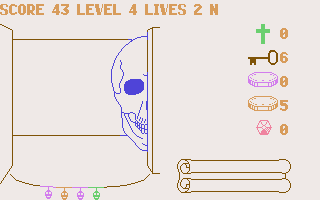
    Played from a first person perspective the game has you navigating a series of increasingly difficult wireframe mazes in pursuit of treasure.  While it is simple in concept  the game mixes things up by progressively rolling up your map, forcing you to rely on your memory to stay alive.  It is an interesting game mechanic that I haven’t really seen since and in all likelihood will never see again.

    I should mention that while navigating these increasingly more complicated mazes you’re being pursued by Skulls.  Really big Skulls.  Really big mean skulls that result in death if they touch you.

    Skull. Survival horror at its purest.

    Skull1984

     Have a favourite game from 1984?  Tell us in the comments below.  Don’t forget to come back soon for the next game in our countdown.  Miss a year?  Catch up below.

    1983

  • I’m waving goodbye to my 20’s and to celebrate I’m counting down 30 games from the last 30 years.  Join me while I countdown 30 great years of game memories.

    Jumpman (1983)

    Jumpman is your typical 80’s arcade game experience. Developed by pioneering video game developer Epyx, and released on various personal computer platforms in 1983, Jumpman can be best described as a more complicated, more difficult Donkey Kong-like experience.  The aim of the game is to navigate the levels collecting a set number of items in the world while avoiding enemies and traps.  There is no endpoint the player must reach rather once the final object is collected the level ends.  Jumpman however was far more freeform than many of its contemporaries, allowing the player to decide in what order he or she collects these items.  This design choice made for a more strategic game, taking inspiration from other arcade classic, Pac-Man.  There’s not much to Jumpman in the grand scheme of things, but what is does, it does well and the wide variety of levels set it apart from its kin at a time where games well and truly ‘borrowed liberally’ from one another.  Perhaps the other important thing to mention about this game is that its dead hard.

    Jumpman and its sequel Jumpman Jr also released in 1983 are timeless classics built on simplicity and an inherent challenge to the player to find it within themselves to overcome adversity and conquer its many and varied levels.  At the heart of every pixel-perfect platformer sits a tiny bit of Jumpman, and every time you’ve ever cursed at games with a set jumping trajectory you should have been shaking your fist at Jumpman.

    JumpmanC64

     Have a favourite game from 1983?  Tell us in the comments below.  Don’t forget to come back soon for the next game in our countdown.

  • *This review contains a very minor spoiler of Bioshock Infinite.  Spoiler sensitive readers be warned.

    SASRTBoxThere’s something about seeing something familiar in a totally new context.  Take Bioshock Infinite for example.  Seeing a very familiar Rapture out of context of how we know and love it was a special moment and one that simply punctuated what was an incredibly brilliant conclusion to an incredibly brilliant game.  As video game enthusiasts we love a bit of fanservice and any opportunity developers give us to stroke the old nostalgia bone is one that we tend to welcome with open arms.

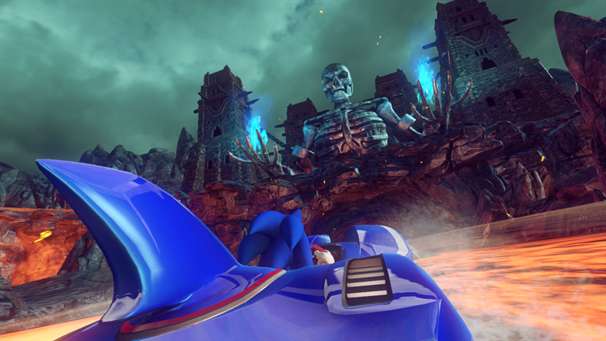
    Earlier this year I reviewed Sonic All Stars Racing in which I said it ‘manages to hit all of the bullet points one has come to expect from a Kart racer‘ and that it was ‘best in show’.  It also happened to do nostalgia brilliantly, a crutch it leaned on heavily in its inspiration from all things SEGA.  That’s not a criticism and I stand by the comments I made about the game.  In fact they apply in equal measure to its sequel, Sonic All-Stars Racing Transformed.

    Transformed is a kart racer.  That is probably the best descriptor one could give the game given its strict by-the-book adoption of a tried and true formula (with a few minor but meaty additions which I’ll get to below). The racing is as solid as it gets and combined with with creative track design, sliding around corners and boosting down straights is an exhilarating experience.  Like those that came before  it is excellent when things are going your way.  But when things are looking like the gods are out to get you, Transformed like every other kart racer on the planet,  can be a pube-pulling-ly frustrating experience with its hearty implementation of rubber banding.  If you’re well-versed in the kart racing experience you’ll brush it off as standard genre fare, but its strict adherence to said convention serves to show how little things have evolved in the kart-space over the past decade.

    As mentioned there have been a few changes – the ability for vehicles to transform to land, sea and air vehicles is the biggest change-up with this game and it is most definitely a worthy addition.  One-minute you can be careening down a hill in a tricked-out kart and the next you’ve transformed into a fighter and are soaring through the air.  This titular feature doesn’t fundamentally change the gameplay, but is does spike the difficulty a little with the difference in handling between vehicles.  The transformation from a kart to a jet or boat can be jarring at first but after a while it’ll become second nature and you’ll be boosting in those vehicles as readily as you would the standard 4-wheel variety.  Perhaps the biggest flow on from this addiiton though is the freedom it gave developers in designing the tracks.  Simply put Transformed‘s tracks are excellent and the possibly the biggest draw card for the game outside of its theme.  Racing on the deck of an aircraft carrier is cool enough, but add to that sea and air sections, and you’ve got possibly the best kart track since DK Mountain in Mario Kart: Double Dash.

    PSVitaSASRT

    The game is filled with content, some of it more compelling than others.   The meat of the game is in the World Tour Mode which has you competing in events to open up branching paths.  This is a new and improved version of the the scenario mode from the last game, interspersing standard racing with more novelty events like time attacks, eliminations and ring races.  Given most of the characters are unlocked through earning stars in this mode you’ll want to sink plenty of time into this mode before you head into the more standard karting fare the game has to offer in the form of the Grand Prix and time attack modes.  It’s not perfect, but the forced progression works well enough and has enough variety to keep it fresh and even if you only play this mode you’d still be getting your money’s worth.  

    It’s a better game than its predecessor but the improvements have been made at the margin, and while cool and novel, don’t serve change-up the genre in any meaningful way.  If you like kart racers this is the best we’ve seen.  If you don’t this most likely won’t change your mind.  Unless you’re a SEGA tragic that is.  If that’s you this is the closest thing to a must by we’ve seen.  Nostalgia for the house that Sonic built runs deep with this little gem.  Transformed reminds you that SEGA is, was, such an incredible creative force in the industry that delivered some of the most defining experiences of our collective memories.  And it digs deep into that well, covering even some of the more obscure SEGA properties such as Skies of Arcadia, Space Channel 5 and Panzer Dragoon.  As a kart racer it is a solid, if conventional, racer.  But as an opportunity to race through beautiful environments inspired by some of the greatest games ever made, Transformed is simply a superb way to experience a trip down memory lane.

    Transformed isn’t perfect but none of the criticisms I could come up with are unique to this game and could just as easily be levelled at its predecessor.  It’s not a revolution.  It’s barely even an evolution.  But it does just enough to mix up the gameplay to make it stand out from the crowd and maintain its place at the top of the kart racing podium.  But who cares about that when you’re racing through levels inspired by Golden Axe?  That should be why you’re really there.

    This review was based on both the PS Vita and Wii U versions of the game.

    SonicGoldenAxe

    [penned in nostalgia by Sir Gaulian]

  • EASportsLogoI watch a lot of sport.  I’ve played a lot of sport.  And I’ve played a lot of sporting based video games.  In short I know my sport.  If you know anything about sport you’ll know that it is often won on split second decisions by players, or player error on the part of the opponent.  Every player out on the field is playing their part according to their own play style and their own judgement.  As a result being a spectator or player of any sport can be an unpredictable and joyous experience.  Particularly if your team wins.

    It’s Spring Tour time for Rugby Union at the moment and I’ll see many a late night watching the Australian Wallabies take on the best of European Rugby.  For those that don’t know Rugby it’s a physical game where for a strength and agility can mean the difference between a turnover and breaking a tackle and running through for a try.  Similarly strength, technique and quick decisive actions in the scrum or during a breakdown phase can determine whether your team retains possession. Basically its a game of many variables like many, if not all, team sports.  Watch the decisiveness and unpredictability of the players in the highlight of the Wallabies vs the Lions from earlier this year below, which aside from a cracking piece of rugby shows how players think on their feet:

    The strides that video games have made to simulate these variables are admirable.  Having a degree of control over AI controlled team-mates allows you the strategic freedom to think beyond your player’s possession, and thus think to the play ahead.  Similarly more intelligent AI in addition to a greater emphasis on physics engines rather than animations leads to a greater sense of unpredictability and dynamism that you’d expect to see from sport being played at the top level.  Just as impressive is the opponent responding to the player’s actions, meaning that you can effectively ‘fake’ or draw players away from your attacking players and open up scoring opportunities.  This balanced approach to both attacking and defence from developers means that sports games are no longer about following a routine and exploiting it, but rather about playing to the strengths of your team and exploiting the weaknesses of the opposition.  That is a great step in the right direction and one that really has made a big difference in the world of sports sims, not just because it does balance the game a bit, but it feels more like the sports we know and love, and the very ones they are attempting to simulate.  EA’s  2013 entry in its annual sports franchise,  NHL 13, made a significant change to the way the Goaltender tracked attacking players that really made the game feel more realistic and less exploitable.  Rather than tracking only the player with the puck he would have an awareness of others flanking and therefore leave it less open to quick wrist shots to exploit the AI’s awareness.  A small change but one that really opened up the game for the better.

    But its still not perfect.  Take Union or Football (soccer) for example where much of the opportunities are opened up by the way the ball is played in the hand or on the foot respectively, or the footwork of the player with the ball.  I’ll continue with my Union example and use the specific example of the play directly following a tackle as the attacking player attempts to form a ruck.  The way the ball is played by the player, or the tackle is held will go on to decide the following passages of play.   If the tackler and opposing players can hold the player up, or force the attacking player to not release ball, the ball is effectively turned over which can drastically change the course of the game.  In this instance the attacking player with the ball want to keep control over the ball and use their bodies to their advantage and allow them to release the ball once tackled.  It is a similar proposition for when players enter the ruck once it’s formed.  In short its all about how the player manages his body, not just the physics coming into play.

    These are all split second decisions, under pressure, made often with very limited view as to how the game is playing out beyond what they can directly see.  Video games do not replicate this feeling, this situation, or the players actions in these situations.  Watching a player cleverly maneuver the ball underneath is all part of the game of rugby.  Similarly with the ‘beautiful game’, watching a soccer player using his centre of gravity to give himself greater control on his feet is key when you’re talking about the passage of play.  While this is reflected in-game by way of player stats the player, or shown in the way a player animates, it isn’t a decision that is consciously being made by the player and instead is left to back-end calculations and numbers.  In reality it’s more about the cognitive process of a player and his style of play or approach to any one given situation based on his perception of the game at that time than any one physical attribute.

    PES2014SS

    And it all comes down to the fact that when you’re playing a sports simulation you’re managing a team rather than playing the role of a player.  Even in situations whereby you are playing one role on a team of many, you’re managing the   passage of play for the team rather than managing how a player actually goes about his game.  On a more micro level while you are controlling a player, that control is guidance, a representation of how a player plays rather.  Behind every movement is an animation, a physical reaction and series of stats that determine how they will react to any exogenous factor.  While an ‘intelligence’ or ‘vision’ stat is often used to give all of this some semblance of random, dynamic, unpredictability it is nothing more than a calculation that dictates a random outcome.  So to put it simply – you are telling your player to dribble, rather than telling him how.  Anything more than that would be almost impossible to manage not only because of limits on input, but also because the brain isn’t capable of interpreting what is happening on screen in the same way as it would in a real life sport.  Not to mention that random reactions to situations that our brains automatically put into play.  Simply put any more than what we have and it would be a more complicated, near impossible, game of QWOP.

    We can have all the animation trickery, a brilliantly realistic physics engine and enhanced AI, but until the player thinks like someone on the pitch it is unlikely we’ll ever see a ‘true’ sports simulation.  Because unlike other forms of simulation based on rigid behaviour sports people live and die by their judgement on the pitch.  I accept video games can only go so far in their pursuit of simulating what it is actually like for a player to be on the pitch.  I just wish that simulation was less rigid and allowed for those flashes of inspiration and brilliance that make us stand on our feet in front of our couch or on the sideline.  It’s not a criticism by any stretch of the imagination, rather an observation that even at the best of times, a simulation of sport is nothing more than a crude interpretation of the flow of a game rather than anything that anywhere near replicates the feeling of having the ball in your hand or at your feet.  And that is something that is never likely to change.

    Any rant is a good rant.  And it follows that any opinions are good opinions.  Think any one game does it better than another?  Tell us in the comments below.

  • Last_Story_Box_ArtLast week we said farewell to the Wii with a list of our top ten games on the console, and right there in seventh place was this little gem: The Last Story. It snuck out for release in Europe in August 2012, right before the launch of the Wii U, but it turned out to be one of the best games to come out on Nintendo’s wonderful white box.

    It was directed by Hironobu Sakaguchi, the creator of the Final Fantasy series (Last Story, Final Fantasy, geddit?), and although he’s produced many games over the years, this is the first game he’s directed since Final Fantasy V. Visually, the game shares quite a few similarities with FF – notably the elaborate costumes and Cloud-a-like hero Zael – but in other ways it’s very different. The fighting is a blend of real-time hacking and slashing and careful strategy  – and it works surprisingly well. Running towards a monster will see you automatically start swiping at it with your sword, but you can block or dodge using the B and A buttons, respectively. As you attack you fill up a meter, and when it’s full you can pause the game and assign various magical and physical attacks to each member of your party, which can really turn the tide in battle. It works brilliantly, and more layers of complexity are added the further you get into the game, meaning it never gets dull.

    Probably the thing that surprised me most about The Last Story is that all of the characters have British accents – and bizarrely, the lead character is voiced by Jack Ryder off of EastEnders. I can’t remember the last game I played with all-British voice actors – usually there’s at least one character with a mid-Atlantic accent drawl. But no, here we have Northern, Welsh, Cornish, Scottish, Irish and London accents, with not a single American in sight (well, earshot). I don’t have anything against American accents in games, but it’s just so refreshing to play something where everyone speaks in accents I’m used to.

    The Last Story screenshot Zael

    Story-wise it’s fairly generic, although at least it’s not about a young boy leaving his tranquil village in response to a great tragedy. Still, it’s not hugely more original than that, and there were some irritating gaps in the back-stories of your companions – some of them have their past fleshed out slightly, but Syrenne and Lowell may as well have not existed before the game began. But the game whips along at a fair old pace, particularly during the second half when you’re hit by revelation after revelation. I also liked the decision to keep the game world fairly focused – for almost all of the game you’re in one location, which helps to keep things focused where other games submit to ‘world bloat’, trying to cram in too many places and spreading the game world too thinly as a result.

    All in all it’s a really fun game, and a must if you’re a fan of Japanese RPGs. The Wii saw a fantastic triumvirate of JRPGs released in its dying days – The Last Story, Xenoblade Chronicles and Pandora’s Tower – and I’m determined to complete the set by playing the other two. Watch this space…

    [Penned in a British accent by Lucius Merriweather.]

  • I had some time to kill the other day, so I took a wander through the Foyles bookshop in St Pancras station. As I idled through the new-books section I was astonished by the sheer number of titles that had been published in the run-up to Christmas. Most were the usual shelf-filler, but half a dozen or so caught my eye, and as I wandered through the rest of the shop I found at least a dozen more new books that I’d really like to read. But then I was struck with an oddly jarring thought: I will never be able to read these books.

    Say I went back and bought all 18 books right now. In all likelihood, by the time I finished reading them, 18 new books I want to read will have come out for next Christmas – and what about the 30-odd unread books I’ve got on my shelf already? It’s the same with games – I’m still struggling to play through all of the games I bought last year. I’m as excited as everyone else about getting Assassin’s Creed IV, but I already have Assassin’s Creed III sat on the mantelpiece, chiding me for a lack of attention.

    I definitely will get round to playing Assassin’s Creed III (and IV) at some point – I’ve come too far in the series to stop now, goddammit – but looking down my games backlog, I’ve come to the realisation that there’s a huge chunk of them that I’ll never get round to playing. Shockingly, I realised that I bought some of these games five years ago, and I still haven’t given them the attention they deserve. In the end, there’s only so much time I can devote to gaming, so inevitably I’m going to spend that time playing newer and more exciting games rather than trawling through old PS2 classics that are undoubtedly great but are starting to look a bit creaky by modern standards.

    Anyway, I thought I’d give this little lot a wordy salute before I ship them off to eBay. In the meantime, let us know in the comments what’s your longest time between buying and actually playing a game. Beat five years!

    GTA San AndreasGrand Theft Auto: San Andreas – I was living in Japan when this came out in Europe, so it almost completely passed me by – it didn’t get a Japanese release until 2007, three years after its Western debut. I loved Vice City though, so I bought San Andreas a few years back with the intention of catching up with the rest of the Western world. Unfortunately, since then GTA IV and GTA V have come and gone, and I still haven’t got round to playing San Andreas – and frankly it’s never going to happen. I’ll just jump in with GTA V and carry on from there. Or maybe I’ll wait ’til GTA VI

    gta-vice-city-stories-ps2Grand Theft Auto: Vice City Stories – Ditto for the above. I’m sure I’d love this game, but the thought of slogging through this huge open world just puts me off. I still haven’t played Fallout: New Vegas or Elder Scrolls V, so if I’m going to commit to a huge open-world game, I’d rather get stuck into one of those.

    Gregory_Horror_Show_CoverartGregory Horror Show – Now this is an interesting one. It’s based on a fairly obscure Japanese anime about people who are trapped in limbo, which takes the form of a creaky old hotel. Everyone is represented by a kind of animal, and at the start of the game, Death tasks you with stealing the souls from all of the hotel’s residents. However, each of the residents has hidden their soul carefully, and it’s up to you to figure out their movement patterns and hunt for clues as to how to distract them for long enough to nick their soul. There’s lots of brilliantly dark comedy, and I’d highly recommend it if you’re a fan of slightly ‘out there’ games. However, I never quite made it through to the end, and sadly I doubt I’ll ever get round to finishing it.

    Prince-of-Persia-The-Two-Thrones-PS2Prince of Persia: The Two Thrones – This is the third game in the Sands of Time trilogy, and it continues the emo trend set in motion by the second game. I’m still not quite sure why they decided to make the Prince all moody and dark for the sequels – I fear it might have been the misguided result of focus testing with sulky shut-in teens. Still, despite this, I love the Ubisoft Prince of Persia games, but it’s highly unlikely I’ll ever get round to going back and finishing this one – especially when I have the new Tomb Raider game sat waiting to be played.

    viewtiful-joe-2Viewtiful Joe 2 – I loved the first Viewtiful Joe, but I’ve just never found the time to finish its sequel. By all accounts it’s pretty much more of the same – not necessarily a bad thing, but not quite enough to move it to the top of my hypothetical ‘games to play next’ pile. And after my recent slog through The Wonderful 101 (which shares many graphical similarities with this game, just put Joe and Wonder-Red next to each other and you’ll see what I mean), I’ve had my fill of Clover/Platinum games for the time being. At least until Bayonetta 2 comes out, that is.

    Fahrenheit XboxFahrenheit – This one intrigued me enough to search it out, but the mixed reviews it’s received meant that I was always reluctant to get stuck into it. It’s an early game from Quantic Dream – makers of Heavy Rain and Beyond: Two Souls – but by all accounts it’s far less polished and coherent than those later games.

    Jade EmpireJade Empire – After BioWare did Star Wars: Knights of the Old Republic, they created this – a martial arts RPG. It seemed to slip under the radar a little bit, but it’s actually pretty damn fantastic and unique, and it’s certainly ripe for a revisit on the next-gen consoles. However, I don’t think I can really give it the time it deserves – after all, I’ve still got to finish Mass Effect 2.

    Super Smash Bros Brawl box art PALSuper Smash Bros. Brawl – I loved Super Smash Bros. Melee on the GameCube, but I just never really got into Brawl for some reason. It’s a fantastic game, I just… well, it just didn’t grab me. Maybe the concept feels a little stale, and it’s not clear where else they can go with it – the same reason I’m struggling to get excited about the new Smash Bros. game on Wii U.

    So, farewell then, old games. And what am I going to do with the proceeds from selling all these? Why, spend it on new games of course!

  • NintendoWiiThere was a sad piece of news last week as Nintendo announced that it was ceasing production of the Wii. It’s a console that’s divided many, but here at A Most Agreeable Pastime, it’s a gaming machine that we hold close to our hearts.

    The Wii has been criticised over the years for becoming a ‘dumping ground’ for minigame collections, but this is unfair to say the least: a quick glance at the Wii’s back catalogue reveals a plethora of triple-A-quality titles, many of which are exclusive to the system. In fact, it’s home to some of our favourite games of all time.

    As we say sayonara to the Wii, it’s only fitting that we should pay tribute to its greatest moments, so for your delectation we present our top ten favourite Wii games…

    10. House of the Dead: Overkill
    House of the Dead OverkillLucius – The Wii was home to some amazing light-gun games over the years, but this was probably my favourite – if only because it was so bloody hilarious. Think Tarantino’s Planet Terror and you’re pretty close. Back in the day I paid tribute to it in my very first (and laughably dreadful) podcast.

    Sir Gaulian – I have only played the PS3 version of this, but from all accounts that’s just a prettier version of what was already a spectacular, stylish, gory and tongue-in-cheek light-gun-like experience. Sometimes the simple things in life are often the best, and while House of the Dead: Overkill is simple, it also happens to provide some of the most laugh-out-loud fun available on any system. If the Wii is your weapon of choice, I can’t recommend this one enough, although it’s strictly for the adults.

    9. MadWorld

    MadWorldSir Gaulian – It’s no secret that I have a rather large soft spot for Platinum Games, and MadWorld for the Wii basically encapsulates what I love about their work. It’s stylish and bloody and never shies away from the ultra-violence that the Wii wasn’t really known for. Playing the game was a blast, and while the game is simple to learn, there’s a real incentive for you to master your approach to the free-flowing combat. Either way, in MadWorld the blood is well and truly flowing freely.

    Lucius – Rarely has there been a game as gleefully fun and inventive as MadWorld. Its stylised black and white graphics with gruesome splashes of red still look fantastic today, and the twisted, ultra-violent gameplay is an absolute hoot. It tends to get a little reptitive in the later stages, but it’s still a must-play game for any Wii owner.

    8. No More Heroes 2

    No_More_Heroes_2_Desperate_StruggleSir Gaulian – Suda51’s crazy first foray into the world of the Wii was a flawed gem, combining slick motion-controlled ultra-violence with a stylish yet simplistic graphical style. No More Heroes was great, but its sequel No More Heroes 2 takes everything that was brilliant about the first game and ditches everything that wasn’t to make what is probably one of Suda’s best. Using a faux-light sabre to cut up scores of enemies never gets old, and the removal of the sandbox elements basically mainlines the player straight to the violence, making No More Heroes 2 a gratuitously gory, must-play Wii game.

    7. The Last Story

    Last_Story_Box_ArtLuciusThe Last Story snuck out for a European release in the dying days of the Wii and turned out to be one of the best JRPGs in years. Designed by Final Fantasy creator Hironobu Sakaguchi, it’s clearly influenced by his earlier work, but the simplified fighting system makes this game much more accessible than the sometimes fussy FF games, and it looks fantastic to boot.

    6. Klonoa

    KlonoaSir Gaulian – I kind of pity Klonoa. Namco Bandai’s non-descript marsupial/mammal/rodent seems to have been overlooked at every turn, and this remake of Klonoa’s first adventure on the PS1, Klonoa Door to Phantomile, is no exception. While it may not have sold terribly well, Klonoa is easily one of the best platformers to grace Nintendo’s system. It didn’t revolutionise platforming in any way, and its bright and kiddy appearance may not have sold the masses on it, but Namco Bandai’s remake is well worth tracking down if 2D platforming is your thing.

     5. WarioWare: Smooth Moves

    WarioWare_-_Smooth_Moves_CoverartLucius – This was one of the Wii’s first games and also one of the best. It was the perfect introduction to the concept of motion control, encouraging all sorts of wacky gestures. My favourite involved actually putting the remote down on the table – a phone rings on screen, then when you pick up the remote to ‘answer’ it, a voice says “Hello?” from the remote’s speaker. Genuis.

    Sir Gaulian – As a long-standing fan of the WarioWare series, it feels like a crime to have WarioWare: Smooth Moves so low down the list, particularly when it’s so outstanding. The originality and outright insanity of WarioWare shines through in this one, although the addition of motion control does slow down the action a bit. But the microgames themselves are so insanely brilliant and original that it’s easy to overlook the fact that this one may not be quite as good as the WarioWares that came before.

    4. Little King’s Story
    Little_King's_StoryLucius – The Japanese developer Cing is sadly no longer with us, but before they departed they bequeathed one of my favourite ever games. Little King’s Story plays a bit like a cross between Pikmin and an RPG, and it brims with humour and imagination from start to finish. A sequel/remake was released for the Vita a while back, but it failed to capture the brilliance of the original – the Wii is still the only console on which you can play this essential and unique game.

    3. Metroid Prime Trilogy
    Metroid_Prime_TrilogyLucius – We’ve gone for the trilogy here, but this spot could just as easily have gone solely to Metroid Prime 3 on its own, which in my opinion is the pinnacle of the Prime series, and even gives Super Metroid a run for its money. The motion-control system doesn’t sound like it would work on paper, but playing the game is a revelation – afterwards, playing an FPS with traditional gamepad controls feels clunky and unresp0nsive compared to fluidity and accuracy afforded by the remote and nunchuk.

    Sir Gaulian – Unlike Lucius I am of the opinion that Metroid Prime 3 is the lesser of the trilogy, but it certainly caps off what was an immensely entertaining and likely timeless series. Say what you will about Metroid Prime 3 as a whole, but there is no denying that no developer did first-person motion-control schemes as well on the Wii, and if nothing else Metroid Prime Trilogy gives you the opportunity to play through both prequels, which originally appeared on the Gamecube, with Prime 3‘s control scheme. One could write a thesis on everything Retro Studios did right with the Metroid Prime Trilogy, but all you need to know is that it represents the best-value experience money can buy on the Wii. If you can find it, that is.

    2. The Legend of Zelda: Twilight Princess

    TheLegendOfZeldaTwilightPrincessLucius – Shamefully, neither of us have yet played The Legend of Zelda: Skyward Sword (see below), but Twilight Princess more than deserves its place in the top ten. It follows the design of Ocarina of Time extremely closely – no bad thing considering that it was one of the best games of all time – but adds an entirely new dimension with the ability to transform into a wolf, as well as some fantastically realised boss battles.

    Sir GaulianTwilight Princess was the game to have at the launch of the Wii (that didn’t come packed in at least), and while time has soured people’s views of it, for me it still stands up as a mighty fine way to spend 40 hours or so. Twilight Princess successfully took what 3D Zelda’s had done before and stepped it up a notch to make what was a huge homage to the games in the series that came before it. A beautiful world and a ‘homely feel’ to the aesthetics are what make this game so memorable; add to that the tried and true Zelda formula and you’ve got an outstanding piece of interactive entertainment.

    1. Super Mario Galaxy 1 & 2

    mario-galaxy-box-artWii_TitlesheetLucius – OK, we’ve cheated a bit here by including both games, but it really is too difficult to choose between them. They are quite simply the best Mario games of all time, each brimming with more ideas in a single level than most games manage for their entire length. Easily two of the most fun games ever made, and probably the best reason to own a Wii.

    Sir Gaulian – There is no doubt in our mind that Super Mario Galaxy 1 and 2 are the picks for the best Wii games of all time. The only question was which one. But to that effect why choose, because both games are excellent examples of creative, fun, precise platforming that are exactly why Nintendo are still at the top of the pack in many respects. Every stage brought with it a level of beauty, polish and perfection that most games only dream of ever achieving. It’s stuff like Galaxy that gives me a sense of almost unconditional hope for the future of Nintendo and its struggling Wii U.

    Honourable mentions

    We debated for ages about which games to include on our top ten – it turns out there are a helluva lot of great games on the Wii. Here are a few that almost made it on: Sin and Punishment 2, Tatsunoku vs Capcom, Wii Sports, Resident Evil: The Umbrella Chronicles, Resident Evil: The Darkside Chronicles, Dead Space: Extraction, Donkey Kong Country Returns, Rabbids Go Home, Boom Blox Bash Party, Deadly Creatures, Project Zero 2, Resident Evil 4, Zack and Wiki.  Sadly even HAL Laboratory’s pink puff Kirby missed out, despite having two absolutely smashing entries during the Wii’s life.  These were the hard decisions we had to make.

    Fianlly, we have to mention three games that neither of us have yet played but that almost certainly would have featured in the top ten if we had:  The Legend of Zelda: Skyward Sword, Xenoblade Chronicles and Pandora’s Tower.

    It’s sad to see the Wii go out with a whimper rather than a bang. It seems like only yesterday that every man and his dog was waiting for stores to restock Nintendo’s motion-controlled market beater in the hope that they could get one to take home for themselves. But it certainly feels good paying homage to what was, for a long time, such a disruptive force in the market.

    So what do you agree with on our list? Let us know your own top ten in the comments below.
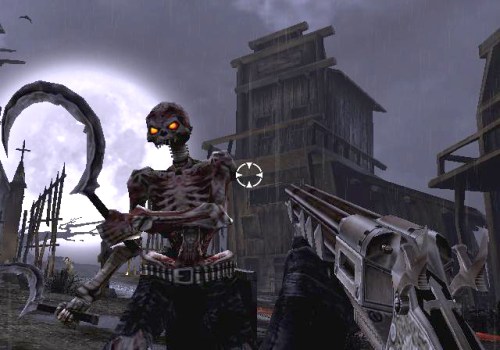
  • Rayman Legends puts the ‘form’ into platformer

    RaymanlegendsWiiUI don’t think I  have ever smiled and yelped with excitement as much as I did while playing Rayman Legends.  Everything from the absolutely beautiful art and visuals of the game, to the inspired locations, the whimsical characters and the toe-tapping musical score is designed to make your smile span ear to ear.  Michel Ancel is the Steve Jobs of smiles and Rayman Legends is quite simply his best invention yet.
    Its moment to moment platforming is brilliant, its level design is spectacular, and the game never lets up throwing new and interesting challenges for you to take head on.  It is equal parts pixel perfect platformer and accessible side scroller and is so packed full of content that you’ll see the credits roll hours before you’ve exhausted every drop of content the developers have packed into it.  Reaching the end of each level is just the first step to completing the game – Ubisoft Montpellier have crammed enough collectibles into each level to warrant at least two if not more play throughs of each level.  Some of them are deviously well hidden, while others require quick reactions to be able to reach.  Either way rescuing all of the Teensies is rewarding, and rewarded, by opening up new levels and unlockables.  If you are a completionist be warned – there will be times that your patience will be tested, particularly in the ‘time trial’ levels that require you to maintain a perfect line and pace to the end.  Of course it’s not mandatory to horde these collectibles but if you’re not shy of a challenge you’ll find yourself compelled to do so.

    For the most part Legends plays much in the same way as its predecessor, Origins (which I should mention if you’re a big fan of a large portion of its levels are remixed and included in this game).  But new to this game are the  sections where you play as Murphy and (I played the Wii U version) require clever use of the touch screen to guide  through levels.  You’ll move obstacles, rotate levels and remove hazards all using the touchscreen as the AI controlled character, for the most part, makes like a Lemming and walks to the right.  I can’t speak to how this was implemented on other consoles that don’t have a second screen but these levels make the game feel like it is at home on the Wii U.  They’re not the best sections of the game, nowhere near in fact, but the use of the touchscreen is so intrinsic to how these levels were designed that I can’t imagine playing them any other way.

    Murphy's (above) sections aren't the game's highlight but they justify the game's once Wii U exclusivity
    Murphy’s (above) sections aren’t the game’s highlight but they justify the game’s once Wii U exclusivity

    It would be remiss of me not to mention the perfectly placed cherry on top of the game that is the musical levels.  Part ‘runner’ part Sound Shapes, these levels in essence perfectly sum up the approach taken to making Legends a fun, funny, charming and beautiful game. I don’t want to go into too much detail because discovering and seeing these for yourselves is a truly unique experience . Know going in though that those half a dozen or so levels you  will have even the most jaded and angry person struggling to contain their joy and excitement at watching the level and character’s actions time perfectly with the music.

    In case you haven’t already cottoned onto it this is one absolutely stunning game.  Its unique and vibrant art style brings the fantastical to life as you make your way through levels inspired by medieval fantasy, modern day espionage and a tropical underwater paradise.  It doesn’t take a connosieur to see the effort gone into making this game as appealing on the eye as possible, as it takes on a painterly quality that no other game does.  If you thought the ‘Starry Night’ inspired level in New Super Mario Bros U was special then you’re definitely in for a treat here.  But its the little details that the artists and animators have added to the game that make it just that little bit more special.  Watching the different ways that the playable characters (of which there are many) animate and move about through the levels is a treat as they all fly, slide and run through levels with unique animations.  Many people won’t notice, but it is the little details like this that take Rayman Legends to a cracking game, to something nearing perfection to the extent that what it puts on the table is appealing to you.  If you like platform games, this game is currently right at the top of the pile.

    Every minute spent with Rayman Legends is one well spent.  If its not charming you with flashes of inspirational level and character design, it is making your jaw drop at how gorgeous it is to look at.  At its heart its a platformer but everything stacked on top of that makes it one of the must-play games of the year and I’m hard pressed to think of a game I have had more fun with than Rayman Legends.  Smiles guaranteed.

    RaymanlegendsWiiUscreen

  • NoMoreHeroesIt’s been years since I’ve played No More Heroes since which time I’ve held it up as one of the great flashes of inspiration in game design this generation.  It was balls-to-the-wall nuts, it was funny and it was the closest thing to a graphic novel gaming had seen to that date. Suda’s modern classic doesn’t try to be as pretentious or thought provoking as his other works, and that affords the game the freedom to be as bananas as it can possibly be without having to be confined to some greater narrative. Walking in the shoes of wannabe killer for hire and light-sabre totin’ Travis Touchdown was like taking a step into a carnival ride of blood and horror designed by Bill Murray and built by Audi.  It was outrageous on the outside but beneath that surface was a well designed and sturdy and third person melee-based action game.    No More Heroes was an absolute blast to play – flaws and all.

    It’s perhaps not good form to talk about the flaws before anything else but I feel they in some ways define the whole experience and so it’d be disingenuous to give them any less attention.  After the first level you’re presented with the  vibrant, colourful and vast open world of Santa Destroy, put on your Akira-style bike and left to your own devices.  Unfortunately the open world serves as nothing more than a glorified way of moving between your side activities and main missions that could’ve probably been better and more efficiently served by a menu.  Sure it is nice that there are distractions  but they’re nothing spectacular and they certainly don’t justify a largely barren open world.  In the end the open world design of the game leads to the other thorn in its side which is its forced progression through a number of side activities (read: mini-games) to access the meat of the game.  Put simply they’re for the most part not very much fun.  And it’s a shame because this overarching structure and flow of the game  will have you at times wondering whether its worth enduring these less than stellar moments. 

    The American version was bloody while Europe and Japan enjoyed stylish black clouds which I rather like
    The American version was bloody while Europe and Japan enjoyed stylish black clouds which I actually rather like

    Persevere though and you will be rewarded.   No More Heroes’ main missions are violent  trawls through  gangs of enemies themed on each level ready for you to eviscerate with your lightsabre-esque beam katana and fancy lucha libre-inspired wrestling moves.  Look at the game any more than surface deep and you’ll see that its no more than a series of elaborate boss-fights strung together with lacklustre corridor-based kill rooms, but doing so would be doing the game a disservice.  The corridors and same-y, the enemies cookie cutter and the combat repetitive.  But the combat is simple yet satisfying and looking beyond that would be missing the point.  An enemy screaming “my spleen!” as you cut him in half or  wrestle him to the ground manages to make a smile purse my lips every time.  In some ways No More Heroes more closely resembles the beat-em ups of the 16 bit era than any popular genre of the modern era. 

    Which brings me to the boss fights. Racing your way to the top of the assassin list is the player’s main pursuit in the game and the moments that lead to it are nothing short of brilliant.   While they may lack the scale of similarly ludicrous games such as Asura’s Wrath the boss battles are designed with such finesse that you cannot help but feel a certain sense of accomplishment in bringing down the next-best assassin.  While on paper they boil down to nothing more than pattern memorisation and quick reflexes, the execution of this supremely elaborate set pieces which in combination with Travis’ suite of swordplay tricks is excellent, leaving for some incredibly memorable moments.  Combine that with some extremely ridiculously cool boss character designs and you’ve got a series of ten of the best boss battles of recent times.  Make no mistake these are the main event of No More Heroes.

    The bosses are crazy at times.  Although magician Harvey Moiseiwitsch Volodarskii takes the cake.
    The bosses are crazy at times. Although magician Harvey Moiseiwitsch Volodarskii takes the cake.

    No More Heroes represented a couple of things upon its release.  The first is that  games aimed at seasoned campaigners using motion controls were possible .  The second was that ultra-violence on a Nintendo console was okay.  Definitely a product of its time, the game succeeded on both counts and to this day remains a curio amongst a back catalogue of games that range from abhorrently generic to deviously garbage.  It’s not the best game ever made but No More Heroes is a simple, accessible and most importantly outrageously fun romp that deserves to at least be tried if not finished.  Don’t look too closely and you’ll see the game for what it is – the best non 16-bit-16-bit brawler ever made.  Too bad about the sandbox.

    Note: Revisiting No More Heroes was tarnished somewhat by the sloppiness by which it was ported over to the PS3, something that should’ve resulted in the definitive version of the game.  Instead what we’ve ended up with is a technically worse game that fails to do justice to the unique motion-controller control scheme, but also looks and perform worse than the Wii game.  I’m also a bit partial to the bloodless Japanese and European version, which the PS3 eschews in favour of the uncensored US version of the game.  If you’re going to play it, seek out the Wii version.  Grasshopper Manufacture were not involved in the development of the PS3 port.