• I watched The Dark Knight Rises recently and came away with a vague feeling of disappointment. It just wasn’t quite what I wanted it to be – too much ‘realism’, far too much daytime Dark Knight (he just doesn’t work in the sunlight, does he?) and not enough fancy detective work. Considering Batman is meant to be the world’s greatest detective, he spent an awful lot of time simply walking up to people and punching them in the face. And then being a bit surprised when it was a trap.

    Don’t get me wrong, I think the Christopher Nolan films are very good, and they’ve done an admirable job to turn around the big screen fortunes of the character after the debacle of Batman and Robin. It’s just… well, it’s just not quite how I see the character. It’s not my Batman.

    I miss the slightly more fantastical characters from the comics – the immortal Ra’s Al Ghul and the undead Solomon Grundy – and I feel like the move towards more realism has taken something away. Some of the best Batman stories tend to be the ones that feature a little bit of mysticism, stories in which you’re never sure what’s quite real – although I tend to switch off as soon as aliens begin arriving from another dimension. It’s funny when you think about it – I’m quite happy to suspend my disbelief and accept that a man dresses up as a bat to fight immortal villains, but as soon as anyone pops out of another dimension or travels back in time I suddenly find it ‘unbelievable’.

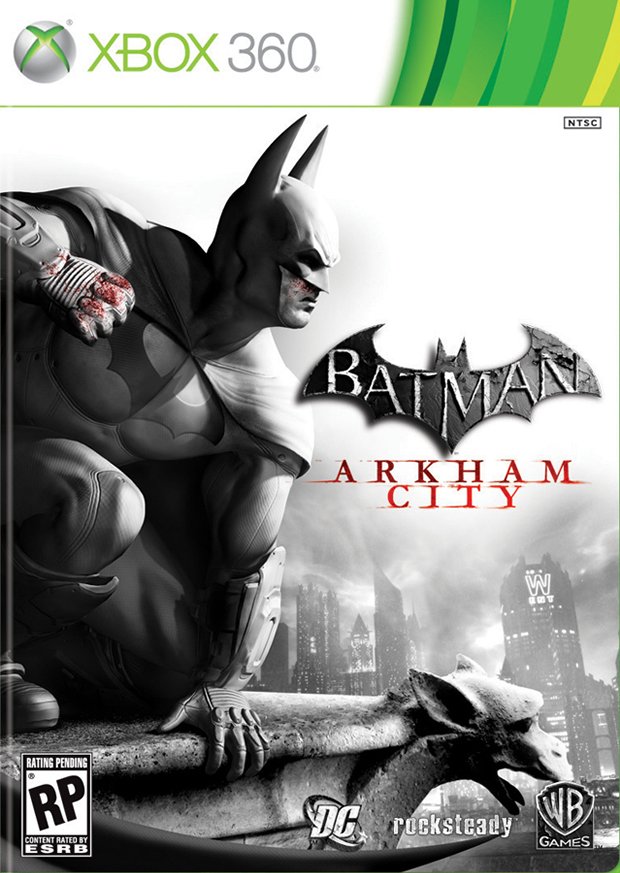
    But I suppose my point is that everyone has their own image of what Batman should be like, which is one of the strengths of the character – he’s been moulded to fit into countless forms and concepts by hundreds of different writers over the years, and he’s malleable enough to fit into all of them. Christopher Nolan was clearly influenced by the gritty Year One interpretation of Batman when he launched his film trilogy, but Batman: Arkham City… well, Arkham City is more like Batman’s greatest hits.
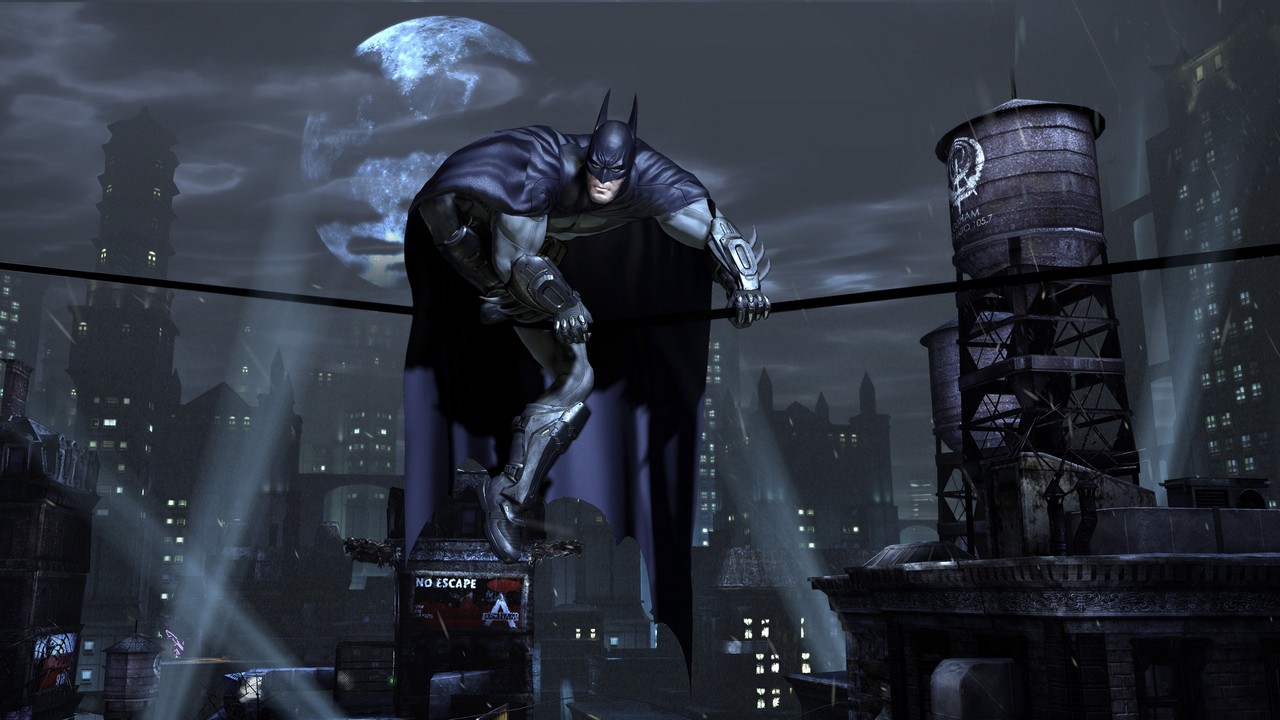
    Rocksteady have done a remarkable job in reinventing Batman for the Arkham games. They seem to have combined elements from the films and the comic books to come up with a brand new take on the character. He’s realistic, but not too realistic. Dark, but not too dark (and in fact, quite funny in places). It’s like they took all of the best bits from the character and just wrapped them up in one, and this is probably best expressed in the way you control Batman. He feels heavy and solid as you walk around, but he becomes surprisingly agile when you enter a combat situation, and his many combat moves really give you the sense you’re controlling a master of the martial arts who would barely break a sweat in putting down a room full of bad guys. Despite this though, he’s vulnerable – encounter anyone with a gun and your tactics have to change dramatically towards a more stealthy approach in a reminder that you’re controlling a superhero without any super powers. These ‘predator’ sections really focus on the fear that Batman uses as his main weapon against the villains of Gotham – as you pick off the thugs one by one, descending from the ceiling to swallow them up in the blackness of your cape and suspend them from rafters, the remaining few begin to run around in a blind panic, giving you a real sense of Batman’s ability to inspire terror. Then there are the myriads of gadgets at Batman’s disposal, the rich man’s substitute for super powers. But if anything, Batman’s real superpower is his brain, his ability to plan ahead and figure out the most fiendish mysteries, and it’s this that Arkham City focuses on again and again, and this that perhaps The Dark Knight Rises neglected to its cost. Whether you’re solving Riddler challenges or scanning a crime scene for clues, the game is constantly emphasising that fact that Batman’s greatest asset is his intelligence.
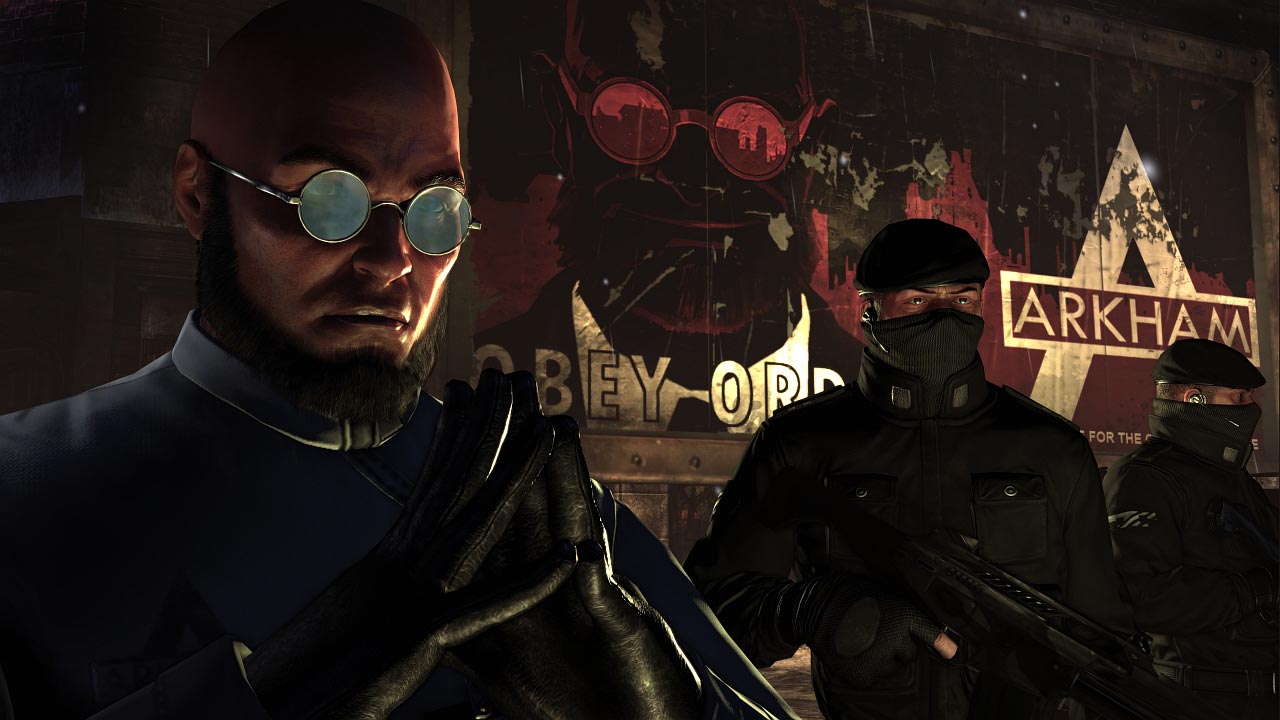
    It’s also refreshing to see the developers credit their audience with some intelligence too – there are some really cryptic puzzles hidden away, particularly some of the Easter eggs, and it’s even possible to use Batman’s tools to figure out the twist at the end of the game long before you get there (if you’re clever enough – I wasn’t). And speaking of which, extra special praise should be given to the story, which cleverly turns the previous game on its head: rather than the inmates taking over the asylum, here the asylum has taken over the inmates through the nefarious machinations of Dr Hugo Strange. In a storyline worthy of the very best Batman comics, the Dark Knight finds himself facing off against a whole series of his greatest adversaries, but what could have been a contrived device to crowbar in all of the best villains actually feels like a natural consequence of the situation the Bat finds himself in. It’s a story with countless twists and turns, along with several engaging and thought-provoking side quests, and it all ends with a genuinely shocking climax.

    Most of all though, it’s gratifying to see a developer put so much care and attention into absolutely every aspect of the gameplay: aside from the Mario games, I don’t think I’ve ever experienced a game that’s as polished and professional as this, and it’s an easy contender for the best game I’ve ever played. The only problem is, how on earth can they follow it? After improving on every single aspect of Arkham Asylum, what on earth can Rocksteady do with a third game to make it even better? As with The Dark Knight Rises, expectations for a third Arkham game are sky high, so there’s always the danger that anything Rocksteady produce will struggle to measure up…

    [Another game successfully bataranged off The Mantelpiece by Lucius.]
  • I really like life.  It’s a pretty great thing really.  But as I’m sure you’re all aware, if even only vicariously through films such as Castaway, life is nothing without the people around you.  Love them or hate them, the people you surround yourself with are what makes or breaks your enjoyment of life and henceforth your attachment to your own being.  Nearly any journey can be made worthwhile if you have decent people around you.

    Humans are interesting creatures really, we can anthropomorphise pretty much anything and as a result can emotionally connect with almost anything if we put our minds to it and as a result vehemently defend anything with conviction.   Sometimes this can lead to war, but more often than not it leads to connections that make the feeling of loss feel that much worse.  If you’ve ever seen a child lose his or her ‘security blanket’, even though its the loss of an inanimate object, to them it feels like the loss of a member of the family.

    So given that humans do become connected to things where they feel they have a personal and emotional investment, it is not surprising that video games have the potential to sink their claws into our emotions and not let go until the credits role.  Even when the things we’re becoming attached to are black magii, alien life forms or murderous sorceresses – or in actuality a bunch of pixels or polygons on a television screen.  Sometimes the human brain defies logic, but it’s what makes us special and special in equal parts.

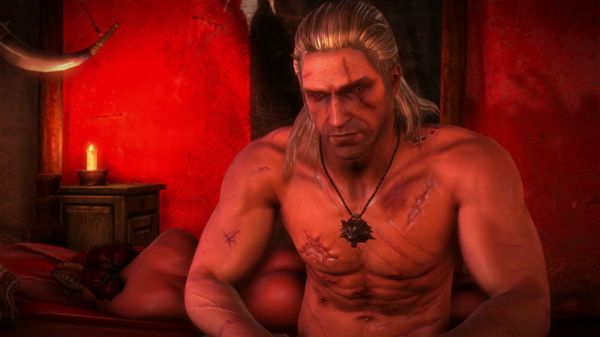
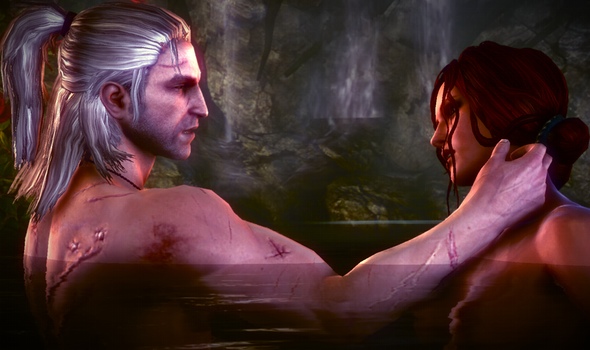
    I love your curves and polygons, baby.
    (The Witcher 2, CDPROJEKTRED, 2011)

    But what are we actually getting attached to when we play these games?  It’s easy to come away from a game and feel that you were attached to the main protagonist, the person whose shoes you walked in while playing the game.  And absolutely that may be the case, Red Dead Redemption’s John Marston had some mighty interesting and emotional boots to walk in, and coupled with the ending, there is no doubt that developer Rockstar San Diego had created a character and a narrative that really gave you a sense of agency in the outlaw’s tale.

    Does this represent the status quo though, or is it an outlier in the pantheon of video games?

    If you think about how much you know about the average video game protagonist, actually really sit down and think about it, you might be surprised as to how much time you’re spending with almost a complete stranger.  Gordon Freeman is a great example, someone who we all identify with for whatever reason but really know not a whole lot about.  Amnesia can be a curious beast and it is one of many ways that developers start you off with almost a clean slate. And while some developers will fill in the blanks throughout the course of the game, others will just leave it to your imagination and let the game mechanics do the talking to the point where you forget why your character is in the game in the first place.

    Relying on mechanics and forgetting about character development at all tends to be the case less often in Role Playing Games where it is expected that you form a bond with your character and, particularly nowadays with games with decisions and varying degrees of morality like the Mass Effect and Witcher games,  make decisions and take actions that are fitting of who you think you are reflected through your on screen avatar.  But even then that doesn’t necessarily provide you an insight into your character, rather just provides you with an insight into yourself.

    One thing that games do well however, is forge the relationship between you and the supporting cast.   Or more accurately the relationship between your character and his friends (or enemies in some cases). In a kind of a friend of yours is a friend of mine kind of way, a connection between you and your on screen counterpart is implied vicariously through the relationships forged on screen.  These relationships are often driven so hard through the narrative that any desire to keep your character alive through performing arbitrary tasks only exists as a device to keep those around him or her alive.

    But this is a problem inherent in videogames with the disposable nature of ‘life’.  We are faced with the death of our own character so much within the span of your typical game that it loses its impact.  And even when death seems permanent, like at the beginning of Mass Effect 2 with the temporary demise of Commander Shephard, there is always some loophole worked into the narrative that prevents its permanence which in some ways serves to reduce the impact of death of your character if and when it does occur.

    This is most certainly not the case with your supporting cast.  Death often is permanent and most players will go to extreme lengths to preserve those around him or her, forging an almost unbreakable bond with those characters.  Bonds which often serve to define your own character, beyond the already established relationships within the confines of the game’s narrative.  So while video games may be weak on directly developing the traits, history and motivations of your own character, this same medium is incredibly good at defining the characters around you to a point where you can start to identify with what is often, a blank slate.

    -Sir Gaulian


  • “Just beat BioShock, still processing it all”

    That was the title of a blog post on Grinding Down I stumbled across not too long ago. It still sounds odd to me when people say they’ve ‘beaten’ a video game, and it’s not something I’ve ever said myself: I’ve ‘completed’ games, but never ‘beaten’ them. As far as I can gather, it’s an American phrase* – just another one of those peculiar differences between British and American English I guess.

    Still, minor language quirk though it may be, it did get me pondering the way we think about games. The use of ‘beat’ in this context has interesting connotations: it implies that the game is a challenge to be overcome, a construct against which to test your mettle and emerge victorious. For many games this seems like a fitting description: after all, a platform game like Super Mario Bros. is ostensibly just a collection of challenges of ever-increasing difficulty. When you think about it, most games just boil down to a series of challenges, be they solving puzzles, memorising combos or levelling up your character by completing tasks.

    When all other considerations are stripped away, perhaps the overriding reason we enjoy playing games is the satisfaction we get from completing a challenge successfully. One of the first games I remember playing is Invader From Space, an old Grandstand electronic game from the 1970s that was passed down to me from my uncle (no prizes for guessing what arcade game it was based on). I remember being transfixed by the game, content to play it again and again in the hope of beating my score, and above all I remember the elation I felt when those final numbers came out a bit higher than my previous best effort.

    Games have evolved quite a bit since then, and most games have moved away from having a simple score as the badge of your achievement, but the cycle of challenge/reward is still entrenched. You might not have a high score, but completing a challenge successfully usually brings some kind of reward – perhaps a new level, a secret costume or an Achievement/Trophy. The best games tend to be the ones that balance the challenge/reward cycle most carefully – make the challenge too difficult and you’re likely to frustrate players, but make it too easy and they’ll lose interest. Likewise, the reward has to fit the effort you put in – ending a 60+ hour RPG with a screen that simply says “Game Over. Thank You For Playing!” is likely to go down like a lead balloon.

    You could argue that the ‘rewards’ you get for completing game challenges are ultimately pointless. After all, unlocking a new costume in Street Fighter IV is unlikely to help your bank balance, get you a girlfriend/boyfriend or aid you in your new job (unless you work for Capcom). Certainly, when handled badly, game challenges can come across as empty wastes of time – the tedious flag-collecting in Assassin’s Creed is a particularly good example, as it represents probably hours worth of gameplay ‘rewarded’ with a single poxy Achievement. On the other hand, completing a particularly difficult game challenge can provoke fist-pumping bursts of triumph and elation.

    The thing is, the human brain is hard-wired into the challenge/reward cycle. Every day we’re participating in a great many challenge/reward cycles, probably without even realising it. You might be taking on extra work in your office in the hope of being rewarded with a promotion. Or on a smaller scale you might reward yourself with a cup of tea and a biscuit after completing half an hour of tedious paperwork. Games just tap into that innate instinct for challenge and reward – the difference is that games might give you a chainsaw gun for completing your paperwork instead of a cup of tea. Proof once more that games are more exciting than real life.

    Perhaps we’re just addicted to that feeling of satisfaction: the sense of triumph, overcoming the odds to win through, be it in a virtual world or in real life. Beating the game.

    Which brings me back to the quote I started this post with. There’s still something a bit odd about that statement – “Just beat BioShock”. If you’re not familiar with BioShock, it’s a first-person shooter that was justly lauded for its clever and complex story, so it seems strange to say you would ‘beat’ it, in the same way you wouldn’t ‘beat’ a book. As I said at the beginning, it’s ultimately just semantics, but it also shows that you can’t consider all games in the same way – whereas some games, like Angry Birds, are almost entirely built around the challenge/reward cycle, others are not there to be beaten but rather experienced. In the next installment I’ll be looking at the increasingly complex stories within games and, importantly, the conflict between telling a story and providing a challenge.

    *Do please let me know if you think I’m wrong here: are you an American who ‘completes’ games or a Brit who ‘beats’ them? And what do people in other English-speaking countries say?

  • The chances are that if you’re reading this blog, you regard games as something more than just a teenage hobby. Most of us will have played video games to varying degrees as we grew up, and the number of gamers is growing ever larger thanks to the recent foray into the casual gaming market by companies like Nintendo, Apple and Facebook. For many people, their exposure to gaming will begin and end with the odd bout of Angry Birds while waiting for a train, but for an awful lot of people, myself included, gaming develops into a lifelong obsession.

    So why do we play games? And in particular, how and why does something that many people regard as a meaningless hobby engender so much passion, anger and devotion in so many people?

    It’s a question I often ask myself, and it’s something I’ve tried in vain to explain to many people along the way. Often when I tell someone I’m a gamer they’ll regard me with the same sort of suspicion they might reserve for a creepy old man in a toy shop; perhaps their own gaming experience began and ended with the 16-bit consoles, and they find it hard to understand why someone my age would still be occupied with something they regard as ‘childish’. But of course, gaming has moved on in unrecognisible ways since those early days: it’s like comparing the slapstick silent comedies of the 1920s with Citizen Kane from 20 years later – the two bear little resemblance to each other. The sheer breadth and complexity of modern gaming experiences is truly staggering, offering everything from casual platformers to genuinely disturbing and moving masterpieces.

    Is this art?

    It’s misleading to compare video games and films of course – the two are entirely different mediums that really have little resemblance to each other – and I’m certainly not saying that games developers have “produced a Citizen Kane“, although I have absolutely no idea what the gaming equivalent of that would be anyway. In fact, I’m not even going to get started on the “are video games art?” question, which seems like an utterly pointless exercise. The film critic Roger Ebert famously claimed that video games can never be art, which prompted an enormous backlash from gamers, but people have been asking “is X art?” for centuries and just tying themselves up in knots trying to find the answer. A famous example is Marcel Duchamp’s Fountain – a signed urinal – which caused uproar at the time and led to lots of hand-wringing over what constitutes art. Of course, the simple answer is that some things are art to some people but not to others, and the same thing could be said about video games (and indeed, not all video games could be considered as art). I will say one thing to Mr Ebert though: it’s advisable to actually play a video game before you dismiss the entire medium. Can you imagine if he was an art critic who dismissed film as “not art” without having seen a single film? This is a point he willingly conceded in a later post after receiving over 4,500 comments responding to his intended slight against gaming, although he amusingly admits he has “no desire to spend 20 to 40 hours (or less) playing a video game”.

    Is playing video games less worthwhile than watching football?

    Putting the art question to one side, I suppose the point of this is that an awful lot of people feel very strongly about video games. But why? What makes people like me happily spend “20 to 40 hours (or less) playing a video game” when other people, like Ebert, see the whole medium as little more than a waste of time? And what makes playing video games a “waste of time”? Perhaps if I’d told the person I met in paragraph 3 that I was into watching soap operas or football matches, they might nod in recognition rather than narrow their eyes in suspicion and glance around for someone else to talk to. But what makes playing video games a “waste of time” and watching football a worthwhile pursuit? Gaming can easily match the excitement and drama of watching football, not to mention the huge community following, but with the added bonus of complicated narratives and open-ended interactivity.

    Attitudes are changing, albeit slowly. Nowadays I’m more inclined to shout about my passion for gaming rather than sheepishly admit to it like a dirty secret. And more and more often the people I meet will react to the news that I’m a gamer with an excited monologue about how they’ve just finished the latest Zelda game or a fond anecdote about the time they stayed up all night playing Plants Vs. Zombies. Gaming is misunderstood by many at the same time as being incredibly important for an ever-growing community, so now seems like as good a time as any to analyse why games mean so much.

    Over the next few weeks I’ll attempt to dissect gaming down into its component parts in an attempt to work out exactly why they inspire such passion and devotion, and I’d be grateful for your own perspectives along the way.

  • Today was a sad day.  It marked the first time I had ever met someone who simply had never heard of Mega Man.  Not ‘hadn’t ever played a Mega Man game’ or ‘had only played Mega Man ZX games’, but someone who if a picture of a Mega Man game was showed to him, couldn’t tell you that it wasn’t Adventure Island (I didn’t ask him if he knew what that was).

    To embarrass him further  he thought that Mega Man was Astro Boy.  But I digress.

    The sad part is that, while Mega Man hasn’t been as relevant as it perhaps was in the 8 and 16 bit generations, Mega Man (and variations of said Man) has had more than a handful of praiseworthy entries in the enduring series.  In the last five or so years we’ve had a couple of retro Mega Man sequels in the form of Mega Man 9 and Mega Man 10, a collection of incredibly polished and punishing games that formed the Mega Man Zero series on the Game Boy Advance, and even a couple of DS games that while not soaring to the heights of the GBA games were still solid games in their own right.  In short, Mega Man has been almost as active in recent times as he was at the peak of his popularity.  Unfortunately many of the punters haven’t been paying attention.  And that’s a real shame.

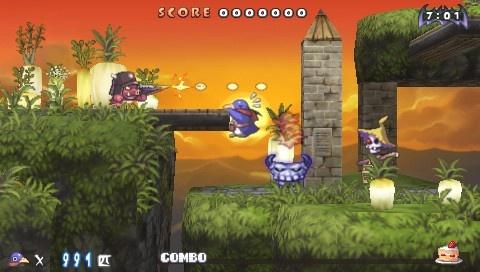
    I can understand why the Man in Blue and his Zero friend aren’t matching it pound for pound with the likes of Marcus and Dom from Gears of War – the barrier to entry is high and the game style unabashedly retro, not to mention the games being mostly confined to handheld systems for the best part of a decade.  But I simply can’t imagine a world without at the very least being exposed to one of the most iconic video game series’ of all time.  Perhaps a sign of the time, mascots and franchises at some point become irrelevant, that is a fact that is inevitable.  Thankfully the platforming genre, the very genre that Mega Man pioneered, is one that has had a revival by way of smaller game studios including the indie game space.  So at the very least games like Super Meat Boy and Prinny: Can I Really be the Hero are keeping the spirt of Mega  Man alive, even if the faces are different.

    So spare a thought for those mascots that have been and gone, and if you’d be so kind, perhaps go and try a game genre you’re not familiar with.  It may not be to your taste, but then again you may find your next favourite game.  If not of course, I’ll be lamenting all the hairs I pulled out playing the games while you young punks enjoy young luscious flowing locks playing your soft modern video games.  I kid.  My hair is amazingly plentiful.

  • It’s been just over a year since my inaugural review on A Most Agreeable Pastime, in which I heaped praise upon the doorstep of Assassin’s Creed II. It seems fitting then that this week’s review is of its sequel, Assassin’s Creed: Brotherhood, which I’ve just finished playing and very much enjoyed. Look out for a review of Assassin’s Creed: Revelations this time next year as I maintain my reputation for steadfastly remaining a good couple of years behind the rest of the gaming community – we may not be timely here on A Most Agreeable Pastime, but you could never accuse us of jumping on every fad gamewagon that rolls into town. Although I might buy a Wii U in November.

    The start of Assassin’s Creed: Brotherhood is pretty bewildering, even for someone who’s played the two previous games – I can’t imagine how confusing it would be for someone who’s new to the series. (Tip: if you are new to the series, start with Assassin’s Creed II, it’s much better than the first game in every respect.) In terms of plot, Brotherhood picks up directly where the previous game left off, and in the usual manner of sequels, all of your good work from the previous game is quickly undone within the first five minutes. Like that careless Samus Aran in the Metroid games, you manage to lose all of the precious stuff you spent the previous 20-odd hours gathering up, leaving you to start from scratch again – it’s a gaming tradition as old as time itself. Well, at least 1986 anyway.

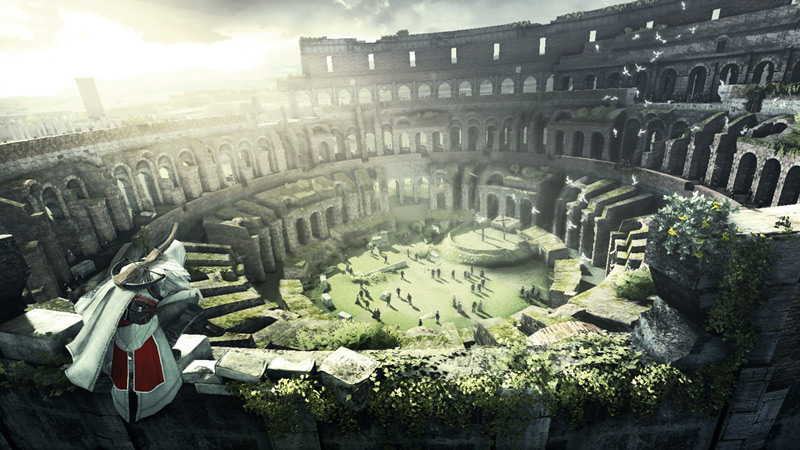
    Spot the assassin.

    Brotherhood kicks off with one of those tedious modern day sections that blight the series – as I said in my review of Assassin’s Creed II, the series could easily do without all of the modern day sections and not suffer in the slightest. In fact, it would be better if the hokey sci-fi plot and the clunky ‘modern’ sections were expunged entirely – I actually sighed when I realised another tedious segment with dull ol’ Desmond Miles was coming up. Thankfully, the designers seem to have got  the message that these sections are all but redundant – the game is bookended by two such chapters, but otherwise you remain in Renaissance Italy for the entire time, although with the option to leave the Animus at any point. Not that you’d want to.

    Once you’re thrown into the game proper though, the sheer number of innovations thrust upon you quickly becomes overwhelming. Assassin’s Creed II did a good job of expanding the gameplay by ushering in various new ways to complete missions, such as hiring courtesans to distract guards or using poison to discreetly dispatch your target, but Brotherhood takes the number of options to a whole new level. As well as various new weapons, such as a crossbow and poison darts, you can now use parachutes, summon horses and even command your own squad of assassins. There’s also the option to buy up and repair buildings across Rome and install factions of various guilds in certain buildings, and to be honest, it’s all a little overwhelming at first, even for someone who’s played through the previous games – god knows what someone who’s new to the series would make of it.

    The impressive Colosseum.

    Still, once you get the hang of things it gets thoroughly absorbing, and there’s something incredibly satisfying about watching your influence gradually spread across the map as you defeat Borgia captains and buy up property across Roma. And speaking of Rome, the scale of the city is mightily impressive – this time around, rather than spread the game across three mid-sized cities, the designers have chosen to concentrate on one enormous city, and it’s a decision that pays off well as you get to know the various districts and streets of the capital, gradually pushing further and further out from the centre. Initially I was a little disappointed with the actual look of the city – in terms of prettiness, Rome isn’t a patch on the beautiful Florence of the previous game – but on the other hand it’s an incredibly faithful reproduction of the city, right down to the half-finished dome of St Peter’s Basilica and the impressively enormous ruins of the Colosseum.

    By far my favourite addition in this game is the ability to summon your own team of assassins at any time – select your target and a quick tap of the bumper will cause a flurry of assassins to emerge from the shadows and eliminate your enemy. It’s a brilliant mechanic that never gets old, and the ability to level up your assassins by sending them away on missions brings a welcome RPG-style touch to the proceedings. Another RPG-like addition is the various goods that can be looted from treasure chests and messengers and then sold to merchants – this makes treasure hunting a much more interesting pastime than in the previous game, although I would have liked to see this idea expanded on a bit more – once you’ve completed the limited shop quests on offer, there’s not a lot you can do with your ‘treasure’.

    A quick hand gesture from Ezio (on the right) unleashes assassin vengeance. This never gets boring.

    Overall then, Brotherhood is a fine improvement on the previous entry in the series, although as ever that slightly embarrassing sci-fi hokum storyline casts its pall over an otherwise intriguing historical adventure. See you this time next year for a review of Assassin’s Creed: Revelations.

    [As belatedly reviewed by Lucius Merriweather. Another game falls from The Mantelpiece…]

  • True to form, I’ve arrived at this particular gaming party long after the other guests have left. Five years after it was first released, and four (count ’em!) sequels down the line, I’ve finally, FINALLY, got round to playing a Professor Layton game. And it was … well … all right.

    If, like me until very recently, you’ve never played a Professor Layton game, they’re basically a series of puzzles like you’d find in the back end of a Sunday newspaper, but somehow the designers have contrived to fit them into a quaint adventure story featuring a plummy English professor and his … err … young chum Luke. Actually, I was a bit confused about the relationship between those two, it all seemed a bit odd to me. I’m guessing Luke is his grandson or something, right? Right?

    Anyway, in Professor Layton and The Curious Village, the professor and his (… er ward? Let’s go with ward…) ward rock up to the decidedly curious village of St Mystere, which is shrouded in … you guessed it … mystery. Bizarrely, every person they meet is all too eager to thrust one of the aforementioned Sunday newspaper puzzles into their hands to solve, which seems decidedly at odds with the main thrust of the plot, which begins as a treasure hunt and quickly becomes a murder investigation. Yet still those villagers keep demanding to know “which is the odd card out?” and “which matchstick should I move to make the dog lie down?”. It’s all a bit bizarre really, like they decided to make a puzzle game and then tacked on an adventure story that just plays out in the background (you have no real impact on what happens, besides solving the requisite number of puzzles).

    “Luke, cover your eyes.”

    Despite the odd juxtaposition though, it sort of works purely because the characters and artwork are so charming. The art style is gorgeous – sort of Belgian comic book meets animé – and there’s a real imagination to the character designs as well. Special mention has to go to the voicework for Professor Layton too, which I thought was excellent, although Luke’s voice began to grate after a short while. In fact, Luke’s unspecified presence was an annoyance throughout – I’m surprised the Professor bothered to bring him along for all the good he does throughout the adventure. His main contribution seemed to be an unsuccessful attempt to speak to a cat.

    And while we’re on the subject of annoyances, the main ‘mystery’ of the village became painfully obvious less than halfway through the game, which rather spoiled it somewhat – like working out who the killer is halfway through an episode of Miss Marple, which gives the rest of your time spent watching it a certain weight of inevitability. I suppose they made it so obvious because the game is aimed at children, which seems apparent from the Saturday-morning-cartoonness of it all, but on the other hand the central puzzle element seems to appeal more to adults. It’s an odd mix: too kiddy for adults and too adult for kids.

    Ah, the wolf/chick/river/raft puzzle – a classic. Trust me though, after you’ve done a hundred or so of these, they start to get a bit dull.

    I quite enjoyed playing through The Curious Village, but I’ll admit that by the end I’d more than had my fill of brain teasers – I don’t think I’ll be returning for one of the many sequels. The characters and artwork are top notch, but all those maths and playing card puzzles… it brought back memories of being stuck in a caravan on a rainy family holiday to Swanage with no entertainment save for a copy of Take A Break’s Puzzle Selection and a pack of crayons. Thank god they invented video games.

    [As puzzled over by Lucius Merriweather. See The Mantelpiece for more of Lucius’s backlog of games.]
  • Today I was walking down the street and I spotted, in the distance, a shiny, gold two dollar coin.  Fearing I would look like a total cheapskate if I frantically ran over to the coin and picked it up, I casually sauntered over to the coin, hoping that no one else had spotted it, and put my foot on it.  It was conveniently located next to a wall, so it wasn’t like I needed to try and find some excuse to stand there – like pretending to look at my watch and then glance around as if I was waiting for someone (I find looking at your phone is also a good distraction) – instead I could just lean there like some kind of a hooligan with nothing better to do.  Five minutes later I figured it impossible that anyone still in the vicinity had seen the coin and so I slowly removed my shoe, bent over, and picked up the $2 coin.

    Now just to put this in perspective a $2 coin in Australia is probably JUST enough to buy you a bottle of water, provided you buy it from a supermarket.  Keeping this in mind, I knew full well that I wasn’t even going to be able to go and a 600ML bottle of Coca Cola with this bounty, but for some reason my mind was racing at the possibilities.  It felt a little dirty, like I’d killed someone and plundered the coin from their dead corpse.  But for some reason that made it feel so much sweeter.

    A few minutes later, after stopping and speaking to a few townsfolk, I headed into the store.  Behind the counter was a full-bodied man, with a bald head and a rather impressive beard.  He asked me what I was buying.  I hesitated for a minute knowing full well that the money I was about to spend wasn’t mine to spend.  But that guilt wasn’t enough to stop me from uttering the word “330ML bottle of Coke, please”.

    I walked out of the store, potion in hand, knowing what I’d done, that I’d left the house today with nothing and without so much as lifting a finger, had yielded a bottle of sweet, sweet nectar.  I twisted the bottle top off and the effervescence was surprisingly powerful, blowing my long hair away as if a sudden gust of wind has set upon the street.  I took a sip.  The sweet, sugary nectar seemed better than normal.  It seemed magical.  Suddenly rainbows came across the sky, unicorns started prancing down the street and I grew wings and started flying, soaring even, through the unnaturally blue sky.  Landing on a cloud I stopped to contemplate for a moment, and came upon the following thought –  this bottle of Coca Cola may be the best drink I have ever tasted.

    But it wasn’t that the Coke tasted any better, it was because of that ‘free’ $2 coin.

    This is a real life example of how our brain values loot, both as an active piece of equipment and as a means to acquire better goods,  in video games.  With a perceived near zero opportunity cost in acquiring that $2 coin the human brain perceives any transaction associated with it as having an incredibly large positive net benefit.

    And this is precisely why the concept of purchasing ‘loot’ with real money is unlikely to ever gain momentum with most consumers, provided that they behave in a rational manner.

  • Transformers: War for Cybertron was a decent, if not derivative shooter that lived and died by its licence.   And that’s okay, really.  The Transformers licence is a good one with a lot of potential and a hell of a lot of good lore from which to lift interesting and novel game mechanics from.  Being able to transform on the fly from a slow and cumbersome yet powerful robot, into a fast and agile vehicle is fun to the point that it would almost enough on its own to pull you through to the conclusion of the game, even if the rest of the gameplay was mediocre.  The fact that the game plays and more importantly feels pretty good is just a bonus.

    But despite feeling like a Transformers game something just felt wrong.  Not bad, just wrong.

    And then I realised what it was – the soul of the television show was missing.  Sure, Optimus Prime, Megatron and fan favourites such as Tryticon and Omega Supreme were there – but something had changed and I couldn’t help but feel that we, the transformers and I, had grown apart.

    Omega Supreme, we need to talk

    So in desperation to save the relationship I went back to the original 80’s cartoons to try and reignite the spark.  After all, surely if we’d survived the strain of a few terrible movies we could overcome anything.

    So one Friday night indoors, eight boxes of kleenex, three tubs of ice cream, a few mutilated family photos and a dozen episodes later I realised why War for Cybertron felt wrong.  There was no surfing.

    Transformers G1, Season 1 Episode 13 (Ultimate Doom Part 3)

    But its not the surfing per se, but what it represents in the Transformers Generation 1 universe.  Simply put, transformers was never meant to be serious.  Sure there was the underlying tale of good versus evil and the tug of war that plays out to determine the fate of humanity and the universe, but between that, between those defining moments such as the death of Optimus Prime and the subsequent rise of Rodimus Prime, are whimsical dialogue and situations – such as the scene where the Autobots literally surf to their next battle –  that gave the show a more lighthearted feel.  It was a children’s cartoon after all.  But it was so important in the context of the characters, and it went a long way to making the Autobots and Decepticons unique and personable and likely a reason the licence is endured.

    That soul is missing  from the game.  Sure it has explosions and enough cameos to fill an entire guest book, but the lighthearted nature of the cartoons was lost in translation, and in its place was a dark and serious tone that, while not feeling out of place necessarily, just misses the point.  And while I enjoyed the game and it was clear that the developers, High Moon Studios have a ridiculous amount of respect and love for the Transformers universe, I came away with a sense that they buckled to the pressure of conforming to a wider trend in the video game industry and relying on a dark narrative and premise to appeal to a wider audience.  Unfortunately in this case it may not have been what the audience necessarily wanted.  Either that or it had been so long since they had watched the cartoon that they’d forgotten how fun they actually were.

  • If Wonderbook is anything to go by Sony is all for getting kids to read, and that’s cool.  I’m not going to be harsh on a partnership that encourages the imagination of the next generation of authors, artists, mathematicians, astronauts and economists, because at face value I absolutely agree,  kids definitely don’t read enough.  Actually neither do adults.  Blanket statement – everyone should read more, including me.

    Getting kids into reading isn’t about making them read 900 page russian tragedies where everyone dies of starvation or disease, or the latest post-modernist novel in which the author shows off their unconventional yet interesting grasp on the english language.  It is about letting them decide what they’re interested in, where they can let their imaginations run wild and they can engage with not just the characters but the world more broadly.  And any book can do that, even those that are based on other media – even video games.

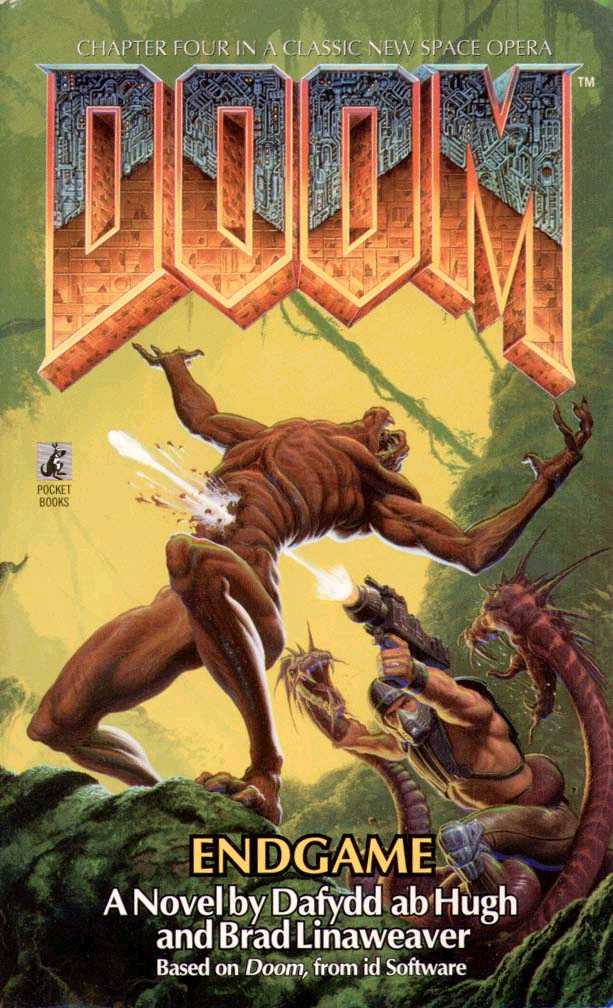
    I can remember as a kid being instantly drawn to the novels based on DOOM and honestly in hindsight there is no worse source material.  All the novel took from the games was a general premise, hell invading earth and dudes shooting demon-spawn en masse.  But as a kid I was drawn into the world because it did more than just recount the ‘story’ of the game – it took me into a fantastical world where humans were on the back foot against the most hideous of monsters.  Most importantly there were guns and a hell of a lot of killing.  I was a young boy, after all.

    What would I do if my future children came home and asked to spend their pocket money on one of these pulp novels?  Probably what any parent would do, encourage them to save that money for something bigger.   But if my children were actively engaged and excited about reading, providing the book wasn’t American Psycho, I’d do whatever I could do to harbour that enthusiasm because what starts with DOOM the novel could end with a degree in english literature and a love of the english language.

    Now I’ve been positive about the whole thing I’ll get to the whole reason I’m writing this and that is the existence of a novel based on Driver: San Francisco.  It isn’t uncommon to find novelisations of the latest and greatest video game blockbusters  while browsing through book stores.  I was okay with Assassins Creed novels.  I could learn to live with the existence of a Dead Island novel.  And I barely scraped by noticing a Battlefield 3 novel without a psychotic episode.  But Driver: Nemesis the official novel of the bestselling game?  Firstly, I’m disturbed that the book has a trailer.  An actual video trailer. That is just weird.  But secondly and more importantly, why does this book even exist?  At the best of times video games, broadly speaking, aren’t known for their excellence in storytelling.  But taking a game thats main mechanic is based on driving and thats plot is borderline absurd and making it into an actual novel with story and characters and chapters makes me want to cry.  It made me cry so much that now I want to storm back into that store and buy it.  And read it.

    And knowing my luck I’ll probably love it.  But that doesn’t make it okay.

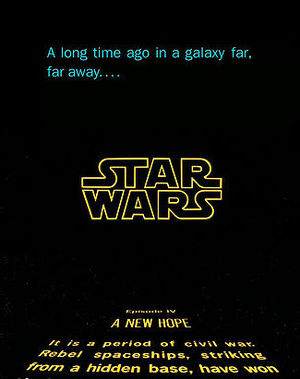
  • I am a big fan of Star Wars and despite all of the killing and talk of the ‘dark side’ I still find the original trilogy a bit of tongue-in-cheek fun that can be taken as seriously, or not seriously as you like.  I am a few years too young to remember the original films in the cinemas, but hearing that amazing John Williams score while watching a short cliff notes summary of ‘the story so far’ scroll up the screen takes me instantly back to being a flannelette wearing  kid who was allowed to stay up late to watch the films on television whenever they were on.  Of course since then this view of the Star Wars universe as seen through a child’s eyes has transformed into an understanding of the broader background and implications of the Rebels’ fight against the empire, due in no small part to a wealth of gap-filling through countless pieces of media to consume from the Star Wars extended universe.  Because of this I’ll never see the Star Wars universe the same way again – for better or worse.

    Thinking about Super Mario games for most people conjures similar happy memories of their childhood.  And with the whimsical graphics, upbeat musical score and let’s face it, plain adorable character design its pretty easy to see why.  Again as a youngster I took anything with the Mario name on it at face value, Super Mario Bros was equal to Super Mario Land was equal to Super Mario World.  Don’t worry I know better now so don’t jump down to the comments section to hurl abuse at me, but when I was younger I was nowhere near as critical (or cynical) of the media I consumed as I am now.  All I cared about were that Mario was jumping on mushrooms and collecting coins.  Or more to the point he would do this on the way to saving a princess.  Daisy, Peach, whatever.  It made no difference to me, the Mushroom kingdom and annexed territories were a great place to spend some time.  Of course as I would come to learn, not all was well in the Mario extended universe.  And I’m not just talking about Boos.

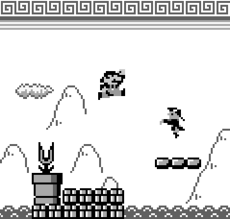
    I’m talking about the Pionpi –  those undying, spring-healed enemies that populate the third world of that kinda-Mario Game Boy Classic, Super Mario Land.  This unlikely Mario foe is derived from hopping chinese ghost/vampire/all-round bad supernatural beings  known as Jiang shi who prey on the souls of the living, and in the game they are represented accordingly.  Invincible, fast and deadly, the Pionpi for me are the one thing that, even as a kid, made me look twice to make sure I’d put the right cartridge into my brand-spanking new Game Boy.  I couldn’t even comprehend a world where Goombas, Koopa Troopas and Pionpi co-existed as friends or enemies.  The Pionpi just felt out of place, in a haunting kind of way – if only for the fact that myth mentions nothing about ‘jumping on one’s head’ as a counter for this horrifying beast.

    I guess we should just be glad that Nintendo decided not to include a specific death animation capturing the moment where the Pionpi feasts on our hero’s soul…

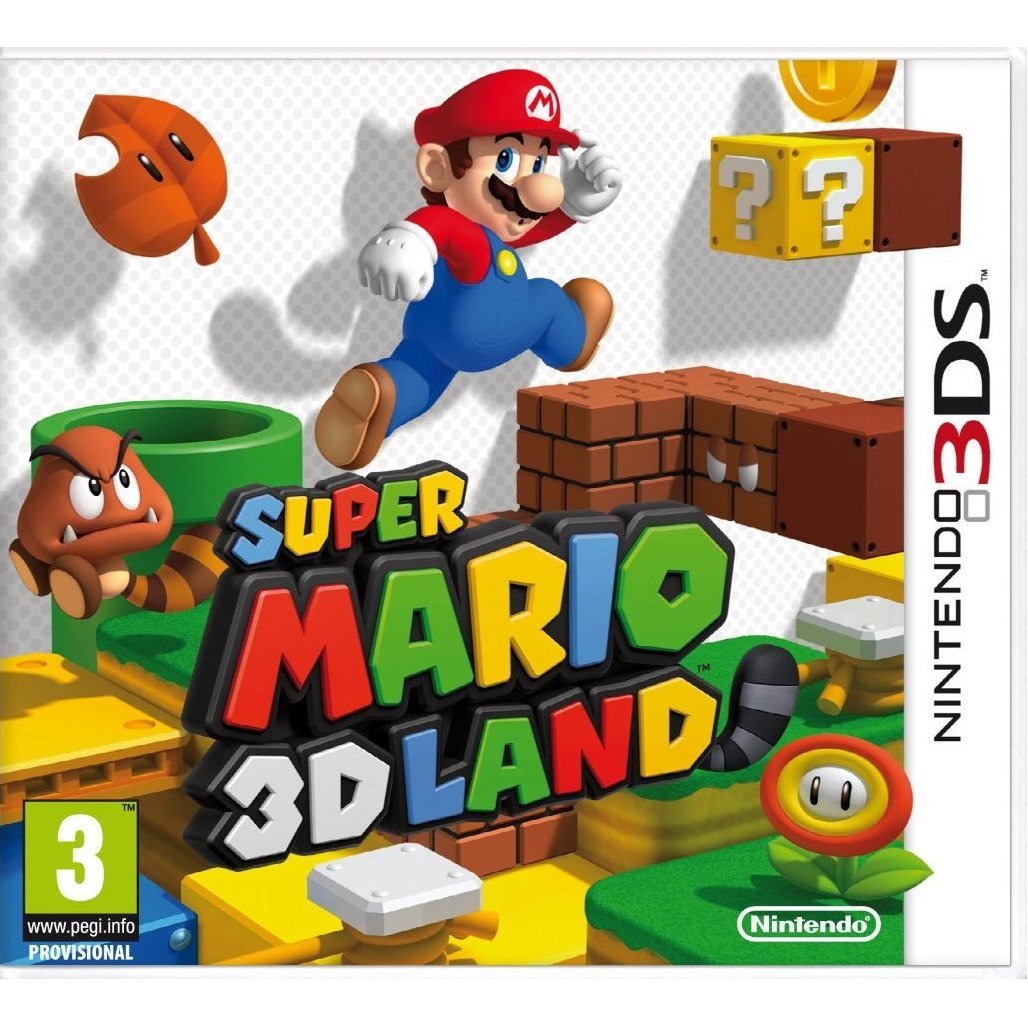
  • I found myself a little apathetic towards Super Mario 3D Land when I first heard about it. Let’s face it, there have been PLENTY of Mario games down the years, and the central concept has changed little since the 1980s, leading me to start thinking the whole platform genre is getting a bit long in the tooth. But of course, I was being a fool: Super Mario 3D Land is an absolute joy to play from start to finish, and it only goes to prove that you can always rely on Mario to keep pushing in new directions while staying true to gaming’s old school roots.

    It’s been a little while since I last played a Mario game, and frankly I’d forgotten how superbly polished they are. Often you find yourself forgiving a game for a sloppy camera or slightly iffy level design, but with Mario everything is completely spot on, all the way through the game, and if anything it gets better as you go along. Every new level throws in something new or refreshs an old idea with a new twist, and the difficulty curve is sublime: initially I thought it was far too easy, especially with the option of flying straight to the end of a level if you die several times in a row, but it turns out Nintendo were just luring me in with a false sense of security. Once you reach the ‘Special’ world, the difficulty really begins to ramp up, and the last few levels are some of the most cunningly designed and fist-shakingly difficult of the whole Mario canon. Beating the final level elicited a genuinely deserved sense of achievement.

    As in the original Super Mario Bros., you have to hit a switch to knock Bowser into the lava.

    But it doesn’t end there: if anything the game just keeps on giving. Finishing the game unlocks Luigi, who can jump slightly higher than Mario but is a bit less sure on his feet, which adds a whole new dynamic when playing through the levels. Then there are all of the hidden stars to find, well over 200 in all, and there’s also the challenge of hitting the top of the flagpole at the end of each level (a welcome throwback to the original Super Mario Bros.). Then when you’ve finally gone through every level with both characters, found every star and aced every flag, a new killer-hard level opens up that has to be the most difficult Mario level that’s ever been designed (I still haven’t beaten it… yet). All in all, despite its gentle start, Super Mario 3D Land has to be the most hardcore Mario game since Super Mario Bros. 3 (that’s the original NES Mario 3, when there was no save and you had to play the whole thing from start to finish in one go – kids don’t even know they’re born nowadays).

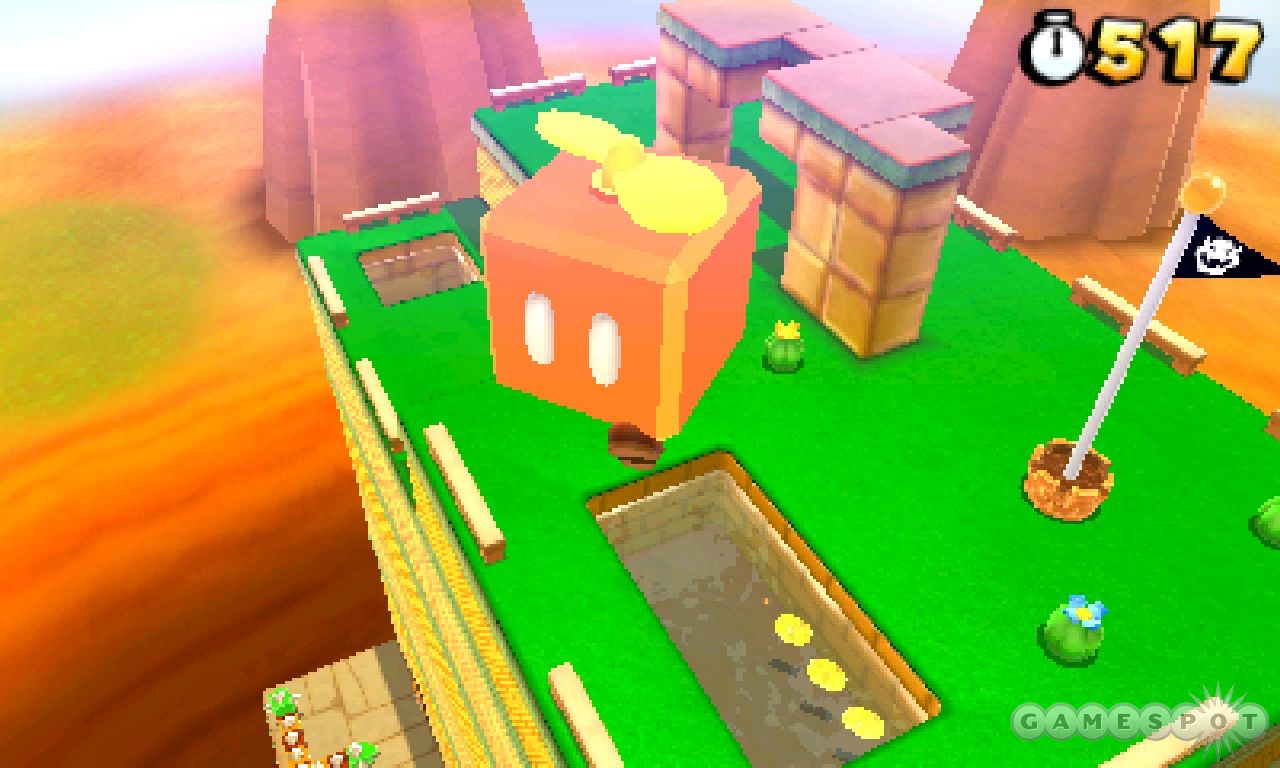
    I absolutely love the helicopter boxes. That’s the flagpole at the end of the level in the distance by the way.

    Speaking of which, I love the way the game pays homage to its 1980s forebears throughout, from the above-mentioned flagpoles to the return of the raccoon (technically, tanooki) suit, along with loads of little references scattered throughout the levels. You even get fireworks if you jump onto the flagpole with the timer ending on a 3, just like in the original game. And speaking of hidden things, the game is packed with Easter Eggs, like the weird ghost thing that appears in the trees at the end of the ghost house levels if you hang around long enough, and the Zelda sound effect that plays if you light three torches on one level. It’s a commendable way to celebrate Mario’s 25th anniversary.

    The game isn’t all about looking back though: it has one eye firmly on the future, particularly when it comes to inventive level design that really makes full use of the Nintendo 3DS. Whereas the 3D effect is all but disposable for many games, here it really adds something, particularly in helping you to judge distances to platforms a lot more easily: I found a struggled a lot more on some levels when I switched them to 2D. There are also a few levels that look truly stunning, such as a vertigo-inducing level in which the camera switches to above your head and has you falling into the screen against the backdrop of some enormous waterfalls.

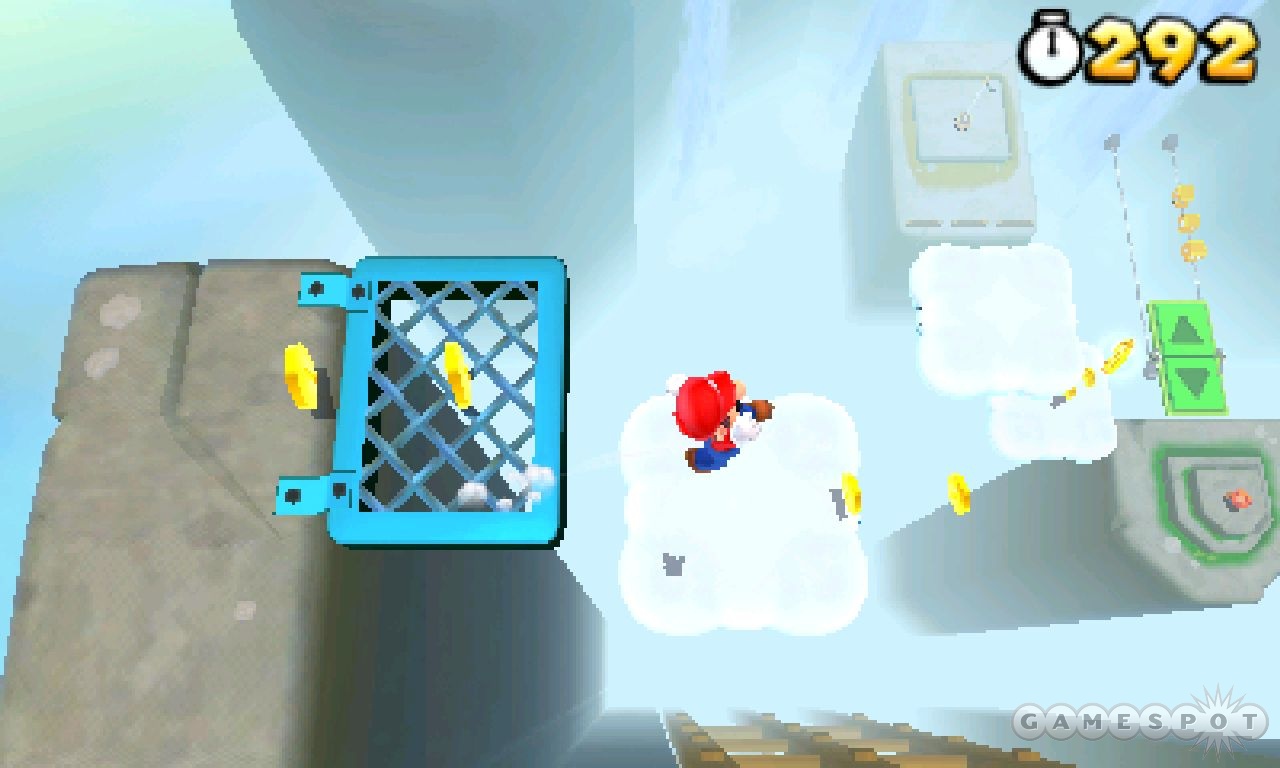
    Now imagine this in 3D.

    All in all, this game is a lesson that you should never be blasé about the latest Mario game: each one is a gameplay tour-de-force, and Super Mario 3D Land is up there with the very best Mario games – no, the very best GAMES – ever made.

    [As dictated in awe by Lucius Merriweather.]
  • In high school I had a crush on a girl named Alicia.  I thought she was pretty awesome, at the time, and as a result about 70 per cent of my teenage energy and efforts went toward trying, in vain, to impress her.  But my efforts weren’t necessary embarrassing insomuch as they were misguided.  There was no dressing to impress, wearing of cologne, buying plush hello kitty toys or flowers – a romantic I certainly was not.  That wasn’t how I was going to win her heart, no not me sir.  But I did have a plan.  You see I was convinced as a lanky, red-headed fourteen year old boy that my admittedly rather great skills at playing competitive Street Fighter would be enough for her to fall madly in love with me, and spinning bird kick herself right into my arms.  I can remember standing in the arcade smashing opponent after opponent (at least, this is my memory of this time) smugly thinking to myself that this fight, this perfectly timed super combo, would be the one that would win her over and that we’d be madly in love and get married and have children and live happily ever after.  Of course this never happened and the girl that at one point I thought I was madly in love with continued not to notice my advances and continued, perhaps even more so, to ignore the fact that I was the greatest Street Fighter player frequenting my local arcade.  Okay so girls don’t care how good you are at videogames, that’s cool, unfortunately it took me more years than it should have to realise this.

    But its okay the story isn’t all bummed out nerdy teenager.  I eventually found someone who, while she doesn’t appreciate my admittedly deteriorated Street Fighter skills, thinks I’m a pretty alright dude.  And for that I’m glad Alicia ignored two years worth of nerdy and self indulgent advances.

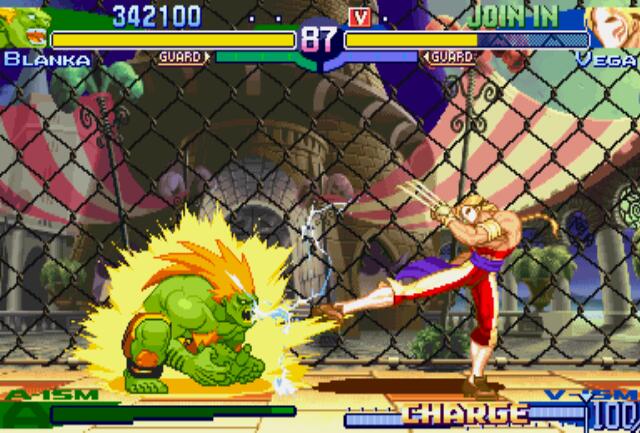
    There’s no aphrodisiac like Street Fighter Alpha
  • I watched the new Muppet Movie on Sunday night and found it to be a delightful and nostalgic trip that didn’t miss a beat for the duration of the film.  The musical numbers were spot on and the Muppets themselves were as sharp as ever, in that puppet humour kind of way.  There were even a few call backs to that eponymous 1979 classic.  Needless to say the film lived up to what I remember the Muppets being all about back when they were at the height of their popularity.

    As a pleasant surprise the plot line, which I had on watch for the ‘thing that was most likely to stuff up the movie’, was surprisingly serviceable without being obtrusive.  I mean lets face it the story of a film starring the Muppets is really just a device to watch the Muppets be as ridiculously silly and slapstick as possible, and as emotionally invested as to give rise to a tear jerker or two from Kermit the Frog.  And spoiler warning, Kermit goes ’emo’ within 20 minutes of the start of the film.  But that’s why we love him, isn’t it?

    If you are sensitive to spoilers, don’t keep reading but I implore you, see the film, and thanks for reading.

    If you haven’t seen the film the premise is simple – the Muppets need to raise the money to save their studio from certain destruction by an evil oil tycoon (is there any other type).  And that’s it really; a telethon and hilarity ensue.  The funny thing is, and i’m not sure if this is case anywhere else in the world, but I haven’t seen a telethon in about 15 years.   Which dates the Muppets somewhat, but also adds to the charm and nostalgia that comes with seeing the Muppets back in the spotlight.

    And then I thought of how boring fundraising has become since the onset of the Internet.  I mean it was fun for a little while (nerve-wracking even) to watch Camoflaj cut it really close to their deadline in trying to raise the $500,000 to fund the development of their game Republique (not too far from the end half an hour of the Muppets film), but aside from that where are the talent shows, special events and galas that back in the day made fundraising a spectacle?

    They don’t exist.  And these days all the Muppets would’ve needed was to launch a Kickstarter campaign.

    So make an effort to see the Muppets.  Even better, save it for a day where you’re a bit down on life and rest assured, you’ll come out as assured about the world as ever.  Certainly worked for me.

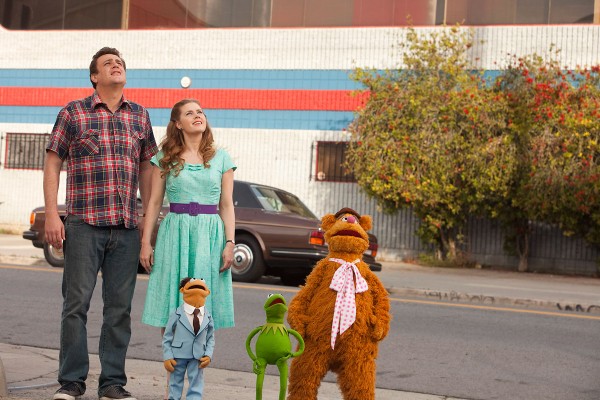
    A Kickstarter! Why didn’t we think of that?
  • This generation particularly has been plagued by the frequent drawing of comparisons between film as a medium, and video games as a medium trying to replicate film.  This isn’t a problem in and of itself –  for example literature and film are often compared as a way to tease out the differences in the devices used by both mediums to convey symbolism,meaning or the development of characters from two dimensional protagonists who act out scenes, to those that have a back story, and with that, motivation.  So the comparison between media is an absolutely legitimate form of writing, criticism and academia.

    Video games are no different in that they too have their own devices through which the developer (storyteller) chooses to tell their story.  Characters are given dimension through conversation and back story, symbolism is pervasive through visual imagery and deeper meanings or messages are often embedded into the set narrative or even the interactive decisions the player makes throughout the course of the game.  Whether the intention of the developer or not, all of the elements that make literature and film ripe for consideration and debate by academics across the world exist in their products – less obvious perhaps, but there nonetheless.

    Unfortunately the comparisons that are usually drawn between film and videogames particularly tend to focus on the more obvious film like qualities that gaming has adopted.  Scripted action sequences, high quality voice acting and the use of professional cinematographers are often used as points of discussion by the games media and by enthusiasts more broadly when attempting to legitimise video gaming as an art form or legitimate story telling device.  While these are all important points of comparison they are a natural evolution of the medium through the improvement of technology and the increased level of investment that comes from the ‘mainstreaming’ and increased interest by people generally in the industry, and while these are all incredibly important when it comes to appealing to the mass market they in many cases are nothing more than aesthetic improvements to what developers have been achieving with video games for at least two hardware generations.

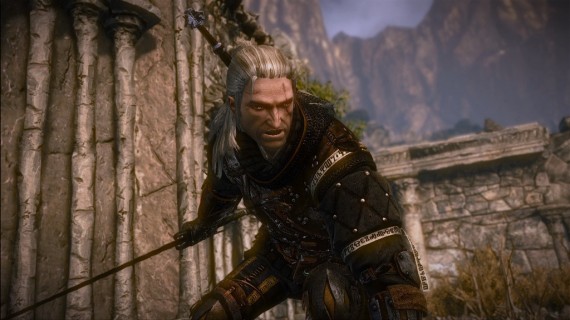
    The Witcher 2 is an example of all of the above.  The game is full of cinematography that is fit for film, action sequences that are perfectly paced and characters and a world that are deeper than you would expect from a majority of films that are released into cinemas these days.   Add on to this the adult nature of some of the themes and narrative contained in the game and you’ve got something that is ripe for comparisons with other, more mainstream media.  And the game deserves it, what it does it does well, and when playing the game you can’t help but feel that this is a game that marks a turning point in what can be expected from a video game narrative and its characters.  In and of himself the main protagonist, Geralt of Rivia, is a complex and intriguing character who seems to understand what those around him don’t, that the ‘world’ is highly political and complicated game, and that there is no right and wrong or black and white.  This dynamic is one that is developed and played on throughout the course of the game and is one very well worth experiencing, if you haven’t already.  Put simply Geralt is one of the more interesting characters you will play in a video game.

    But these aspects, the cinema like aesthetics and well-developed characters, are not the only points of comparison to film and literature.   Structure and pacing of a story are particularly important given what video games are trying to do with the introduction of complex narratives and worlds.  Video game enthusiasts have become accustomed to a narrative structure that has evolved organically from very simple and humble beginnings.  That is that video games, traditionally, were not out to tell a story but rather were to entertain through well considered and designed game mechanics and the rewards from perfecting those.  While this theorem behind game development has fundamentally shifted toward one that places near equal emphasis  on story telling to that of the mechanics that govern the player’s interaction, the structure of the story that enables the narrative to move forward has not evolved with it.  And this is just a function of the medium, in a situation whereby the storyteller doesn’t have complete control over the narrative experience by virtue of the fact that the player ultimately is in control of many of the factors that determine the way in which a story moves forward.  This is certainly a very stark contrast between film and video games when it comes to building up to a climax or resolution of a plot point, where control is taken away from the storyteller, the pace and sense of urgency can often suffer as a result.  Developers have begun to address this through instituting ‘points of no return’ in their games, where the story move forward arbitrarily and control is taken away from the player to ensure that plot points are conveyed in a meaningful way.  Essentially this is making sure the story that needs to be told is told in the way it was intended.

    Which leads to my defence of the criticisms levelled at the abrupt conclusion to the game’s final act.  While Act 3 of the game is markedly shorter than those preceding it, the expectation that it will follow the structure and duration of the former Acts is a legacy expectation of when games weren’t attempting to hit those high emotional notes at the conclusion of the game, where levels were all created equal and where plot points were few and far between and usually conveyed through non-interactive cut-scenes.

    In light of this, think about how the Witcher 2 tells its story.  If you turn the structure of the story that the developer CD Projekt Red is trying to tell upside down and consider the Third Act to be a resolution to the climax and revelations from the Act before, then it is absolutely imperative that the plot points are revealed in a deliberate and pre-determined manner.  By taking control of the pacing of the final act, the storyteller is ensuring that the sense of urgency that Geralt and those surrounding him arrived at the end of the Second Act is maintained, explained but more importantly resolved in a timely manner by the end of the Third, and final Act.

    If you consider many of the greatest films ever made, the final scenes are used to provide sound narrative backing to the climax in the scenes before it.    In that way, the Witcher 2 is the closest a video game has come to matching the narrative tone, and cinematic qualities of a film to date, because not every story ends with a bang, or with everyone and everything meeting their maker in a hail of gun fire and explosions.

  • My good friend Tom was visiting London at the weekend, and after we’d finished looking round the excellent but nausea-inducing Brains exhibition at the Wellcome Trust, Tom piped up with an absolutely capital idea:

    “Why don’t we go to the arcade? I haven’t been for years!”

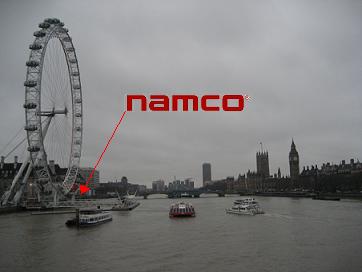
    Nice one Tom! So off we trooped to Namco Station on the South Bank, threading our way past the undulating queues for the London Eye and the hordes of tourists watching second-rate street entertainers. Well, most of them were second-rate anyway, but respect must go out to the guy playing the flaming tuba. I can picture the scene that must have occurred in flamin’ tuba guy’s flat several years previously: he’s just finished tuba practice for the day and puts the instrument down to make a cup of tea, but as he steams back into the room, a light bulb pops on above his head. He regards the tuba with a thoughtful eye, and thinks: “You know what would make this better? If it was on fire.”

    From that day forth, flamin’ tuba guy’s life changed beyond all recognition.

    Anyway, I digress.

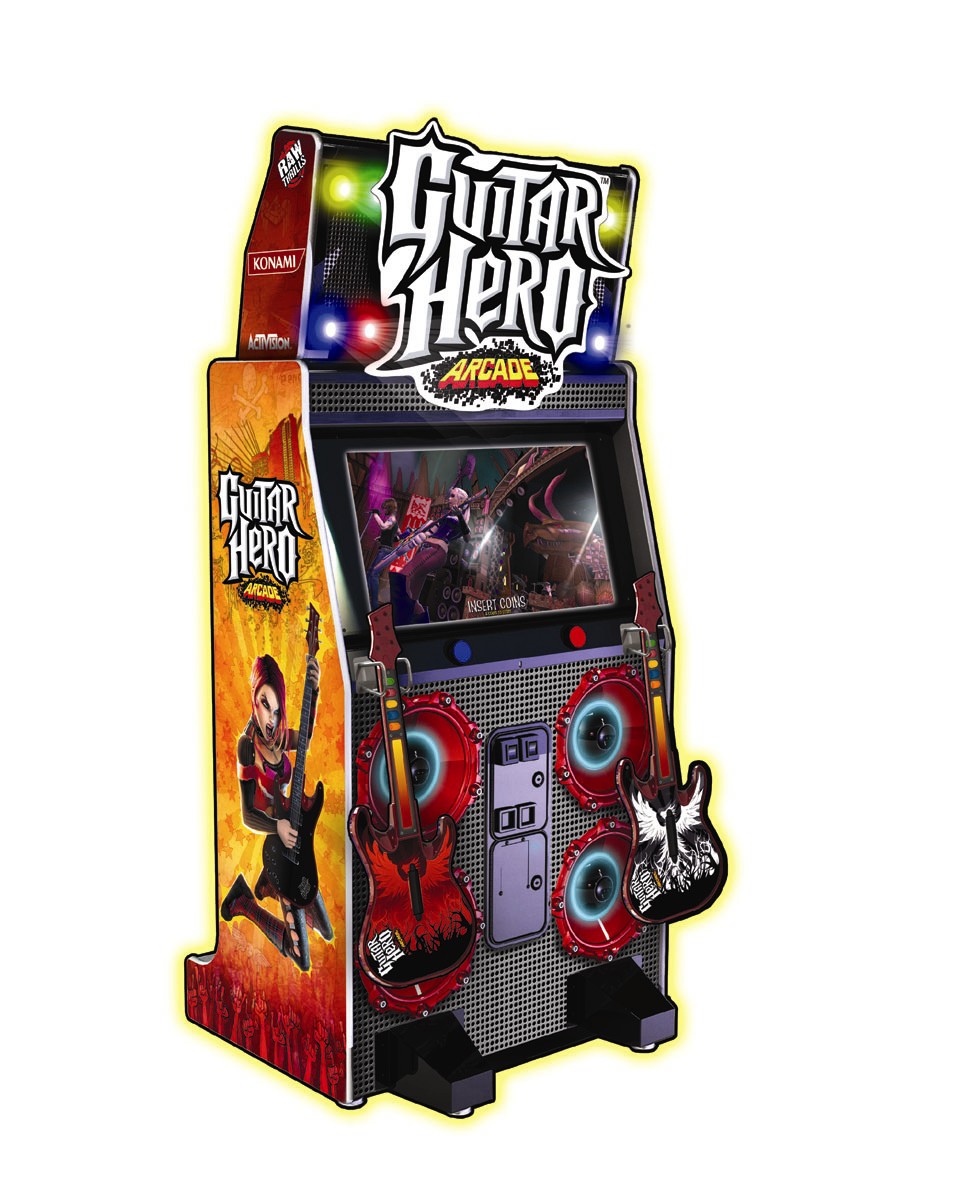
    It’s been many years since I last set foot on the hallowed ground of the arcade, so I was curious as to what I should expect. The first cabinet we came across was Guitar Hero Arcade , which sent out a clear message that the once traditional route from arcade to home conversion has well and truly been turned on its head. In fact, a good percentage of the games on show had their roots on home consoles, including Silent Hill Arcade, which incidentally looked dreadful. To be fair, we didn’t actually play on it, but we certainly weren’t enticed into spending our money on it by what we saw.

    Guitar Hero Arcade: pointless.

    I suppose the major thing the arcade had going for it in the eighties and nineties was that it allowed you to play cutting edge games that you just didn’t have access to at home – or if you did, the home conversions were usually inferior to the arcade originals. Now that home consoles can easily keep up with the technology available in the arcade, there really seems to be little point in going there except for that ‘arcade experience’ – which is the exact reason why we visited Namco Station on Sunday. But given this, converting home console games to the arcade seems a ludicrous idea: who on earth would go out and spend money on an arcade version of a game that they already own at home? If anything, converting home console games to the arcade just makes the entire concept of an arcade look outdated and pointless.

    The rest of the games on offer were a mixed bag in terms of quality, but they all had one thing in common: they were all driving or shooting games (with the sole exception of a forlorn and permanently vacant Tekken 6 cabinet). It’s sad that there’s such a lack of imagination in the arcade industry these days that a game basically doesn’t get made unless it involves driving or shooting (or preferably both). It’s fair to say that driving and shooting games have always been popular, but not at the exclusion of all other genres: after half an hour of shooting, followed by driving, followed by shooting again, I was pretty damn ready for a change. I even briefly contemplated giving Guitar Hero Arcade a go, but then I remembered I had it at home and didn’t want to waste my money.

    Like Time Crisis, but with massive robots.

    That’s not to say we didn’t have fun – in particular, Razing Storm was excellent. It’s the second spin-off of Namco’s Time Crisis series after Crisis Zone, and although it’s available on the PS3, it has something the home conversions don’t have – great big vibrating machine guns that make your hands go numb. Now THIS is what the arcade’s all about. Also, it has giant robots in it, so you’ve got two massive pluses there already.

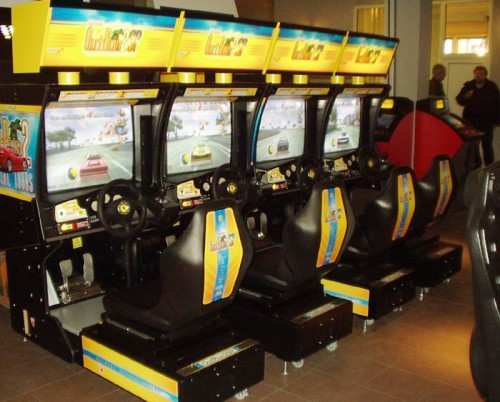
    The other big highlight was OutRun2 SP, which was simply a joy to play. It sticks closely to the OutRun formula of blue skies and branching tracks, but now with a selection of Ferraris to choose from and even more great songs  (although I was pleased that there’s still the option to play Magical Sound Shower). OutRun was one of my favourite games as a kid, so it was great to play a sequel to it that improved on the original in every way.

    OutRun2 SP: fantastic sequel to a fantastic game.

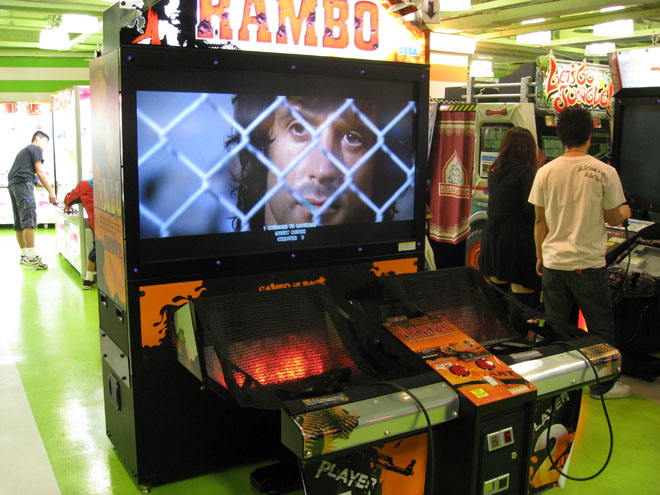
    Apart from these two gems though, the games on offer were pretty disappointing. One of the worst we played was Rambo – we should have known something was up when the attract sequence didn’t show any actual gameplay, just videos of the Rambo films. Upon sacrificing our pound coins, we quickly discovered the actual ‘game’ was basically an inferior version of Operation Wolf, but even less fun. The designers may just as well have replaced the ‘gameplay’ with digitised pictures of themselves mooning the player and shouting “SUCKERZ!!!”

    The Rambo arcade game: like a slap in the face.

    Almost as bad was Need for Speed Carbon, which is another pointless home console to arcade conversion, except this time the arcade version of the game is considerably worse than the home version. Somehow, the designers have managed to make illegal midnight street racing incredibly dull – there’s no sensation of speed and it’s almost impossible to crash, so it’s just a case of keeping your foot to the floor and waiting for the finish flag. The machine we played on was actually faulty and had become stuck on free play, but after one go we’d had enough: it was that bad.

    So the games were a decidedly mixed bag, but what was worse was the general air of decline. Several of the machines had burnt out screens, and most of the cabinets were several years old, although this is probably more a reflection of the dwindling output of the arcade industry as a whole rather than the specific arcade. More telling though was the lack of people – you’d expect an arcade in the centre of London to be heaving on a weekend afternoon, but we pretty much had the run of the place, and we certainly didn’t have to queue to get on any machines.

    It strikes me that the modern arcade doesn’t have very long for this world, strangled as it is by the twin terrors of unimaginative games and fierce competition from home consoles. If the arcade is to survive, it needs to radically reinvent itself as an ‘experience’ rather than a dingy place to play expensive games you’ve already got at home. We need a new generation of arcade games that focus on the strengths of the experience – the social aspect and the outrageous one-off thrill rides that only the arcade can provide. Come on arcade developers, use some imagination! What about a game where you go over Niagara Falls in a force-feedback barrel? A space shoot-em up where you fly on the back of an animatronic octopus? An augmented reality game where you shoot down invisible attacking monsters that only you can see? Just churning out endless driving games is nothing short of laziness. And what about catering for the old farts like me with a retro section? I’d be back in Namco Station like a shot if I knew they had an original Defender cab.

    The arcade needs saving… but who’s going to save it?

  • Is Mean Machines Magazine returning in some form?  If a tweet from video game publication luminary, Julian “Jaz” Rignall is to be believed, it may be in the works.

    Mean Machines magazine was a video game magazine published in the United Kingdom and distributed globally as far stretching as Australia.  The magazine was a lynchpin of console coverage in many parts of the world throughout the nineties, and while nowhere near certain, a return in any form would be welcomed by fans of the fun and honest coverage that the magazine was known for.   Even after the end of Mean Machines, Rignall remained prominent in the industry heading up both the successful expansion of IGN and GamePro until its final issue in late 2011.

    Rignall now maintains an incredibly insightful blog that is well worth checking out, and anyone interested in the magazine, an archive (of sorts) for the magazine Mean Machines Magazine is also maintaned online.

  • GORF on the Vic-20 is one of the most derivative games I ever played as a very, very young lad.  But what wasn’t at the time, right?  In the 1970’s and 80’s ripping stuff off was just a bi-product of an industry that was well and truly in its infancy; so much so that even the major players in the arcade ‘game’ were emulating the success of their competitors.

    GORF by arcade-savvy Midway lifted the mechanics from the ever popular Space Invaders, Galaga and Galaxian and compiled them successfully into an arcade game that proved that the West was just as capable as the East when it came to arcade shooters.  But what set GORF apart from its eastern predecessors was its distinct mission structure.  The game itself was seperated into five seperate and distinctive missions, each with a different look and feel from one another.  This isn’t to say this differentiates GORF entirely from its peers – upon completing those five missions the player continues to cycle through those levels – but it allowed it to be different enough to single-level wave based games to stand out from the crowd.

    GORF, 1981 (arcade)

    It is important to note however that GORF  wasn’t the only game at the time to employ a multi-level structure.   The same year that GORF was released to (maybe) millions of screaming fans the first entry Nintendo’s diverse and thinly spread  Donkey Kong series was also released which famously incorporated an infinitely looping set of four levels.  But GORF was relatively unique in that it brought this increasingly important level structure to a genre that, until then, largely did not deviate beyond enemy pattern changes and increasing speed and difficulty.

    The game also sported an incredible look that, even today, can be appreciated relative to the time it was released, with vibrant colours, cool explosions and interesting enemy designs that definitely continue to leave an impression.

    GORF obviously resonated with people enough to be slavishly ported directly to a number of platforms – including Commodore’s VIC 20 (almost all of my experience with the game is with the VIC-20 version). And what a port that version was.  Although it sported only four of the five levels contained in the arcade original the game itself was a fantastic home version of a refreshingly fun arcade game, which was a rarity at the time given the number of horrendous home computer versions of arcade classics.  The VIC-20 was not the most powerful of computers, but it more did more than justice to what was at the time an incredibly advanced arcade game.  Sure it didn’t look as good and some concessions had to be made to adapt the game to the far less powerful home computer, as witnessed by the more cramped stages (or compact, if you’re more kind), but the GORF gameplay experience remained in tact and as fun as ever.  It could even be said that in light of the admirable attempts to mimic some of the (then) advanced graphical techniques used, particularly the explosions and the incredibly impressive emulation of the vector-style 3D in the Space Warp level, GORF was better on the VIC-20 than it ever could’ve been in the arcade just by virtue of what it did do, rather than what it didn’t as the case may have been with the arcade cabinet.  And there were some amazing mighty large sprites that to this day still ooze character.

    Source: www.mobygames.com
    GORF, 1982 (Commodore VIC-20)

    One noteworthy improvement over the arcade version of the game surprisingly came in the audio department.  Games of this vintage are not usually pulled up for being decent representations of anything, obviously only having very primitive capabilities when it comes to producing sound.  While the arcade version rarely extended beyond the standard ‘blips’ found in games of that era such as Defender (aside from some token speech samples), the VIC-20 game was filled to the brim with ear piercingly – squeals as you fire at the enemies, and incessant hums as the aliens descend down the screen.  Of course I’m sure these are the result of the limitations of the hardware rather than purposeful improvements, but for me these sound effects are what makes the VIC-20 version so memorable.

    In an era where home computer versions of arcade games were, at best, a representation of what the original would be if your dog got the opportunity to port it, Midway did us a bit of a solid by releasing something that while not perfect at least did the original some justice.  It certainly wasn’t perfect and the fast paced arcade game play was in some ways compromised in order to bring it to Commodore’s home computer but given the hardware limitations GORF is as much an impressive an example of 8-bit computing as it is a nostalgia trip to the roots of video gaming.

    [penned by Sir Gaulian]

  • In 2011, IGN gave Ghost Trick: Phantom Detective the award for Best Game No One Played, which gives you an idea of the game’s commercial success (or lack of it). Despite positive reviews, the Nintendo DS game quickly dropped out of the Japanese charts just weeks after its release in June 2010, and Capcom cited the game’s disappointing sales as contributing to the developer’s 90% fall in income in the first fiscal quarter of 2010. Capcom have obviously decided to see whether they can claw a bit of their money back by re-releasing Ghost Trick on iPhone, and considering the price they’re charging for it, they obviously rate the game extremely highly (or they just really need the money). The initial two chapters are free, but then you hit the paywall:

    1. All Chapters: £6.99
    2. Ch. 3 – Ch. 7: £2.99
    3. Ch. 8 – Ch. 13: £2.99
    4. Ch. 14 – End: £2.99

    Yowch. This seems particularly expensive when you consider that most games on the App Store are between 69p and £1.99, and it seems even more extortionate when you consider that Capcom’s own Phoenix Wright: Ace Attorney – which is of a similar length and is even designed by the same team – is priced at £2.99. It seems Capcom are really struggling to bite the bullet and just charge sensible prices for their games, even though the increased sales volumes should actually create more profit overall – witness this article by Stuart Campbell where he reveals what happened when Capcom slashed the price of Street Fighter IV from £5.99 to 69p. Of course, compared to the price of a new DS game, £6.99 is pretty cheap, but in the impulse-buy world of the App Store, it’s an aberration.

    But despite all this moaning about Capcom’s pricing structure, I have to say that Ghost Trick was worth every penny. In fact, I would have paid even more for it, it’s that good.

    The basic gameplay is similar to the Ace Attorney games in that there are long sections of dialogue interspersed with puzzle sections. The set-up is that your character has recently been murdered, but the trauma of death has caused your spirirt to lose its memory, and the game sees you pursuing clues in an attempt to find out who you are (or rather, were). A woman finds your body, but soon afterwards she’s killed by an assassin, and it’s at this point you find out you have the ability to rewind time to 4 minutes before a person’s death in an attempt to change their fate. Unfortunately, you have no physical presence and can only manipulate certain objects in certain ways in your attempt to prevent the murder, so the game basically comes down to choosing the right objects to move at the right time (for example, causing a heavy weight to fall on the assassin’s head just as he walks under it). As the game goes on, the situations become more and more elaborate, and the solutions begin to take on a real Heath Robinson-esque feel as you set off series of chain reactions.

    The big difference between this game and the Ace Attorney series is that there’s no wandering around from location to location in an attempt to find a use for the objects in your possession: everything is already there laid out for you to use, and it’s just a case of working out how. This makes for some brilliant ‘eureka’ moments when you finally work out how to solve the puzzles, and I’m pleased they’ve managed to eliminate tedious back and forth wandering from the formula.

    But the main draw is the brilliantly bizarre characters and twisting, cliffhanger driven plot – like the Ace Attorney games, the designers have gleefully ignored realism and just gone with the craziest ideas they could think of, and it all works beautifully. The plot kept me hooked in right up to the satisfying denouement, which incidentally doesn’t disappoint. After experiencing so many lacklustre game endings, it’s wonderful to come across a game that really delivers. Buy this game, you won’t regret it.

    One last thing though: special mention also has to go to the animation, which is astonishingly fluid – have a look at the video below to see what I mean. Disney, eat your heart out.

    Penned in admiration by Lucius Merriweather

  • Pokémon SoulSilver has been driving me to madness. I’ve just failed in my fourth attempt to beat Lance, the Champion of the Johto region, and I’m now officially giving up. After 45 hours of playing time (I know, 45 hours, I could have built a small boat in that time), I realised I’m still only halfway through the game, and I just don’t have the will to carry on.

    It all started off happily enough. There’s a reason that the Pokémon games are so successful, and that’s because they’re so goddamn addictive and well made. There’s always that feeling that there’s something new around the corner – a new town to see or a new monster to fight – and it has that ‘just one more go’ factor in spades.

    When I started the game, I told myself I wasn’t going to get sucked in by the whole ‘gotta catch ’em all’ mentality: instead I would play through to the end as linearly as possible, without traipsing in circles through the long grass in an attempt to collect as many Pokémon as I could. But the damn game just sucks you in by throwing new and interesting monsters in your path at every turn, and suddenly you’re thinking, ‘Oooh, I definitely want that one, maybe if I just hang out in this cave long enough, it’ll pop up again…’, and before you know it, you’ve spent an hour wandering around in circles.

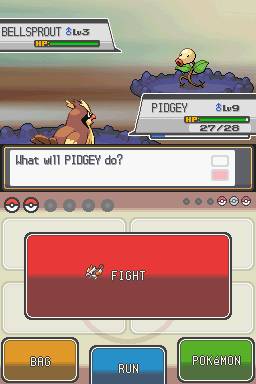
    You are going DOWN, Bellsprout.

    It is fun though – the battles with newly encountered wild Pokémon require a surprising amount of strategy as you gradually work out their weaknesses and carefully whittle down their energy until they’re weak enough to be caught. And the elation at capturing a new Pokémon after a hard fought battle! As I said, there’s a reason these games are so successful.

    But the trouble is, there’s really very little to differentiate one Pokémon game from another. Don’t get me wrong, I very much enjoyed Pokémon SoulSilver (or at least the first three quarters of it, more on that in a minute), but there’s very little to differentiate this from the only other Pokémon game I’ve played, Pokémon Ruby. I suppose you could argue that ‘if it ain’t broke, don’t fix it’, but I couldn’t help the feeling that I’ve already played this same game before.

    And while I’m moaning, I have to say that the absolute weakest part of the game is the story, or rather, the lack of it. Aside from an anaemic subplot involving the nefarious Team Rocket, there’s really no story whatsoever, presumably with the idea that collecting new Pokémon and levelling up your existing Pokémon is motivation enough to continue playing. Which it is for the most part, until you hit the grind wall…

    Sigh. Time to head back into the cave for some more grinding…

    For most of the game, I found it easy enough to get through all the various gym challenges in each city, only having to actually retry a challenge battle once or twice. Then you hit the Pokémon League at the end of the Johto region, and the gentle difficulty curve suddenly becomes a difficulty cliff. The League forces you to fight 5 intense battles in a row, and it quickly became apparent that my Pokémon were nowhere near strong enough. After my first failure, I dutifully went back into the fields and caves of Johto and sought out as many random battles as I could in an effort to raise the levels of my team. After an hour or so of grinding, I felt I was ready to face the League once more. I wasn’t.

    On my fourth attempt, and my fourth failure, I was so hacked off with the whole thing I switched off the 3DS in disgust and vowed never to play the game again.

    I know that after the League there’s a whole new region to explore that’s just as big as the first, but the thought of grinding my way through Kanto for another 45 hours just makes my heart sink. Less grinding, more fun please.

    .”]
  • I just finished Metroid Prime 3: Corruption and I’m sad. I’m sad because it was brilliant and now it’s over, and, to cap it all off, this is the last game in the Metroid Prime series. Sure, I’ll probably enjoy Metroid: Other M when I eventually get round to playing it, but will it reach the heights of the Prime series? I doubt it somehow – those games are a hard act to follow, and Metroid Prime 3 is, in my humble opinion, the best Metroid game so far.

    There. I said it. Yep, it’s better than Metroid Prime, better than Metroid Fusion, even better than, dare I say it, Super Metroid. In a nutshell, this game is ace.

    When it came out, Metroid Prime 3 was criticised for introducing too many other characters into the mix when one of the joys of Metroid games is the feeling of isolation, the sense that you’re alone on a hostile and unexplored planet. A similar criticism was rightly levelled at the Tomb Raider games, which gradually introduced more and more unnecessary characters as the series went on, and it was only after the Anniversary remake that we realised what we’d missed: the sense of being alone against the forces of evil, exploring long-forgotten ruins for the first time.

    Having read the reviews, I was a little wary of the course the designers had chosen for the third game in the Prime series, but I was pleasantly surprised. You’re thrown in with the Galactic Federation at the beginning, tasked with helping to defend a Federation planet against a rogue asteroid called a ‘Leviathan Seed’, and this part of the game helps to set up the characters that you encounter later on. After that first episode is over though, you’re pretty much left on your own for the rest of the game until the climactic finale, so the move towards introducing more characters wasn’t as disruptive as I thought: in fact, it gave the game a real boost that sets it apart from the previous games in the series.

    I loved the first Metroid Prime, but I was left slightly disappointed by the second game in the series: Metroid Prime 2: Echoes. It wasn’t a bad game by any means, but it felt very similar to its predecessor, with only the light world/dark world mechanic really setting it apart. Metroid Prime 3, however, feels like a whole new beast, thanks mostly to the new focus on plot and developing the world that Samus Aran inhabits. For the first time in a Metroid game, you’re given the chance to actually leave the planet you’re on and travel between several different planets in the same system, which provides some pleasing variety in scenery and a new and welcome sense of freedom. You can even use your ship to solve certain puzzles, which is a brilliant idea that sadly isn’t used enough in the game, but it shows the effort the designers have put in to making Metroid Prime 3 stand out from its predecessors.

    I should also mention the controls, which are some of the best I’ve ever used. It took a few minutes to get used to aiming with the Wii remote, but after that the controls became second nature. In fact, it was like a revelation. Suddenly I was wondering why all first person shooters don’t use motion controls – it just makes sense. It even had me contemplating buying one of the Call of Duty games for the Wii, although my lukewarm reaction to Modern Warfare eventually made me decide against it.

    Speaking of Call of Duty, probably the weakest segment of the game seems to be influenced by it – namely the sequence where you have to guide some demolition troopers through enemy territory. It’s a dull and frustrating segment that doesn’t really fit the atmosphere of the rest of the game, but apart from this tiny blip, the game was an absolute joy. In fact, it’s one of the few games that I can say I absolutely loved from start to finish – which is why I’m so sad it’s over.

    Thanks Retro Studios, it was a blast.

  • The beautiful(?) Exchange Shopping Centre.

    So, has GAME learned anything since its recent brush with annihilation?

    For various reasons I happened to be in Ilford on Saturday, and whilst looking round the soul-sapping Exchange Shopping Centre I noticed that the Ilford GAME had managed to survive the cull of 277 GAME stores last month. Curious to see what lessons had been learned after the company’s brief sojourn into administration, I had a quick look round, only to find that GAME’s extortionate prices remain stubbornly intact. Of note, a preowned copy of the lacklustre Wii game Disaster: Day of Crisis was on sale for £14.99, whereas just a few weeks previously the price had been slashed to £1.98. Obviously, I expect the prices to have risen again after GAME’s apocalyptic pre-administration fire sale, but their preowned prices are just ridiculous, and smack of the money-grabbing culture that’s become so indelibly associated with the brand. I mean, at the time of writing, the same game could be bought on Amazon BRAND NEW for just £9.78. Naturally, I’d expect store prices to be slightly higher than online because of the higher overheads associated with running a shop, but GAME’s prices seem to be in cloud cuckoo land – and they’re not even competitive with other stores on the high street.

    How much?!?

    Take Assassin’s Creed: Revelations for example. GAME Ilford had a preowned copy on sale for £32.99, but a few hundred metres away in CeX, the same game was on sale for just £18. And GAME Ilford were charging an astonishing £44.99 for a PREOWNED copy of Silent Hill: Downpour. Who on earth in their right mind is going to pay £44.99 for a second-hand game they could easily pick up for much less brand new? (Incidentally, I just checked the CeX website, and it’s selling Disaster: Day of Crisis for £4.)

    I realise that it’s very early days for the newly arisen GAME Group, and it will take a while for any changes made at the top to filter down to the store level – I’m sure that for the time being, all anyone cares about is shoring up the brand and avoiding any further job losses. However, GAME’s management are going to have to do something pretty drastic to turn around the fortunes of the company, because at the moment GAME is associated with exorbitant prices, poor customer service and limited game selections. If there’s a future for specialist game stores on the high street, they need to undertake a radical re-think about the kinds of services a game store should provide.

    If GAME have any hope of surviving against the might of the internet retailers, they need to provide gamers with a reason to visit a store rather than just buy online. One way they could do this is to build on the social aspect of playing games by setting up the stores as a kind of social hub where gamers could meet and exchange news, as well as competing against each other in tournaments. In the world of D&D-style role playing, Games Workshop have been doing this successfully for years, and there’s no reason why GAME couldn’t try something similar. Kids and adults alike hang out for hours on end, week after week in Games Workshop stores – imagine if GAME could do the same thing. They could set up a coffee/juice bar and perhaps give free drinks to people who pay a membership fee, and all the while there would be rolling tournaments of the lastest first person shooters or driving games. Sure, not everyone will make a purchase, but if they’re given the incentive to come back week after week, they eventually will, and if they bring their friends too, there’s even more chance that one of them will buy something. Sadly, when I worked for GAME in Watford many years ago, my store manager seemed to do everything he could to STOP the store being a pleasant place for young people to hang out in – in fact, he actually unplugged the controllers for the PS2 demo pod to stop kids from “loitering” in the shop. That kind of mentality needs to change.

    A shop with people in it: what GAME needs.

    Second, GAME need to work on their back catalogue – there’s no point just peddling the biggest new releases at the recommended retail price, as they will always be undercut by the supermarkets and online giants like Amazon. If each GAME had a huge library of older games, there would be more reason to visit the store in the first place and, importantly, more reason to linger. It’s like book shops – I know that I can find the best sellers at cheap prices in WH Smith, but I’d much prefer to browse among the curios in a Foyles bookshop, even if they’re more expensive. And, like Foyles, why not have a display carrying staff recommendations or something along the lines of ‘If You Like That, Try This…’. For example, if someone came in to buy the latest Final Fantasy, staff could pick out a related game, like Dragon Quest, and display them together – chances are the customer might walk out with two games rather than just the one they originally came in to buy.

    And speaking of staff, GAME need to capitalise on the specialist knowledge of their employees rather than just encourage them to peddle Reward Cards like a broken record. It used to be that all staff members could borrow games to play at home so that they could increase their knowledge of the products on offer, but this was axed several years ago. But how are staff supposed to give advice on which games to buy if they haven’t even played them? The management need to bring back the option for staff to play the latest games, even if it’s just a weekly after-work games night, and staff should be rewarded for their subject knowledge.

    All of these suggestions are pretty basic, but they’d make a huge difference if they were implemented. GAME needs to reinvent its stores as social ‘destinations’ rather than just anodyne environments in which to purchase overpriced new releases. If the management don’t do something fast, I’ve no doubt they’ll be heading into administration again within a year, and this time they might not re-emerge.

  • Sometimes the reach of video games surprises me.  The fact that you could pretty much take any small cultural or sporting phenomenon and there is probably a game based on it somewhere in the world is pretty amazing.   So I really shouldn’t have been surprised when I was casually browsing in a nearby second hand game store when I stumbled upon a Gaelic Football game for the PS2.  Upon further research I was, again, surprised to find that there isn’t just one Gaelic football game in the wild, but also a sequel, both developed by the now defunct Australian-based developer IR Gurus and both released for the PS2.

    If you aren’t sure what Gaelic Football (unsurprisingly) it is a game that has it’s origins in Ireland, and alongside Rugby Union, is one of the most popular sports on the Irish island.  It is played on a rectangular pitch similar to that of a Rugby with goals at either end that are basically a combination between goal posts used in rugby straddling a conventional soccer net.  However unlike Rugby and most other possession based football codes, gaelic football is played with a round ball, with the objective of the game being to either punch or kick the ball over the cross bar, or kicking the ball into the net.  It is a relatively physical sport, with full contact tackling allowed.  And with that I have written more about Gaelic Football than I have ever spoken, written or signed combined to date.  Before this, I didn’t really know how Gaelic Football worked either.

    Gaelic Games Football, PS2 (IR Gurus 2005)

    The above sounds like it has the makings for a pretty decent video game – I mean people made games out of worse.  And people were pretty pumped about it, in Ireland.

    Interestingly enough, IR Gurus were also the developers of the official video games of the Australian Football League (AFL) licence from 2003 to 2007, another niche sport thats popularity is almost entirely confined to a single country. Conveniently, AFL has a relatively large amount in common with Gaelic Football, so much so that a hybrid of the two games called ‘International Rules Football’ is played between the two nations, comprising of one national team each made up of the best players from both countries’ respective leagues.  You can’t make this stuff up.

    Also conveniently given that the games play similarly in the real world, it wouldn’t have been too much effort to develop an AFL game and Gaelic Football game in tandem.  The wonders of economic efficiency.

    And for the record I am not even a fan of either code of football, let alone an expert.  But in my humble uneducated opinion, Electronic Arts’ AFL 99 for the PS1 was an awesomely fun bad game.

    AFL Live 2006, PS2 (IR Gurus)
  • I finished Duke Nukem Forever, but there isn’t a lot I can say about it that hasn’t already been said.  There were a lot of missteps, some misguided design decisions, and a general unpolished feel to the whole experience.  This has all been said ad-nauseum across the internet, so I’m not going to bother.

    What I will say though is in spite of all that, and acknowledging that the game just isn’t very good, I found myself enjoying it more than I should have.  The crass humour didn’t hit the mark, the mechanics weren’t great, and by jove did the game go for about four hours longer than it should have, but in spite of this I found myself admitting in a conversation with a friend who had also played the game that I was actually having a good time with good old Duke’s latest adventure.

    Of course don’t mistake this for thinking in any way that DNF is any more than a disappointment.

    But the reasons for DNF being unsuccessful at what it attempts to do lay almost completely in it’s inability to decide what it wants to be.    The quest for relevancy and Duke’s ability to shape shift in order to stay relevant isn’t new.  In fact it is arguably what has helped Duke to become such an enduring franchise in the first place, remarkably at a time where some of it’s kin were fading into obscurity.  Duke was always a malleable character, someone who could move from a 2D side scroller into a first person shooter and still be as popular as ever.  In 1998, this ability to morph culminated in Time to Kill, a very successful attempt  by developer N-Space to cash in on the popularity of the third person action genre, popularised by the Tomb Raider franchise.  Time to Kill  took the essence of what Duke is, and fused it with the biggest thing in gaming at the time, a decision that resulted in what I consider to be the best Duke Nukem game, period.  The developer had committed to moving Duke on, and move Duke on it did.

    But even within the first hour or so of DNF, it never seems like the developer committed to what the game was going to be.  The gameplay of DNF screams throwback, a throwback to when Duke was relevant at the release of the phenomenally popular Duke Nukem 3D.  But the design choices thereafter seem to scream an emulation of a post-halo era game.  Having only a handful of enemies to fight at a time whose AI is clearly designed to be fought en masse just makes the game uneventful.  Combine this with the fact that the range of weapons (which was lifted almost straight from Duke 3D) is designed to carry them all at once, rather than the two at a time that the game enables, and you’ve got combat that just doesn’t feel like it belongs in the game that it’s stuck in.   And it really is this misalignment of seemingly simple development objectives that spoils  what could’ve been an adequate, if crass, distraction from the sheer volumes of shooters that take themselves way too seriously.

    After all is said and done, in pursuit of relevancy, the DNF has become an utterly in-cohesive experience that just doesn’t live up to any of the expectations people had of it after 15 years.  The sad part is that Duke himself, an enduring character from a bygone era may have reached the end of his shelf life.  There will no doubt be a sequel to DNF, but perhaps it is – to quote the last good game in the long and storied history of this bleached blonde hero – Time to Kill the franchise.

  • Sometimes silliness is okay.  If the relatively universal praise for Asura’s Wrath and its over the top action and anime influenced storyline is anything to go by, people are at the point where a bit of fun is really okay.  And if anyone knows how to do silly it’s the japanese.

    Unfortunately they also know how to do long-winded and convoluted, but I’ll get to that a bit later on.

    Ninja Blade is the epitome of silly, fusing over the top quick time event driven action sequences with simple yet mostly serviceable melee combat, to tell the tale of a modern day ninja slicing his way through parasite infested Tokyo to save the world from infection.  At least I think that’s what was going on.  I couldn’t see for all the explosions and viscera.

    And what grand explosions and viscera the game has.  But not being content with just settling for copious amounts of blood drawn from the blade of a sword, Ninja Blade outdoes the competition with some of the most ridiculous sequences I’ve ever seen in a video game.  Flying through the air, running down (or up) buildings while turning enemies into nondescript piles of blood and bones, and seemingly defying gravity while swinging around with a grappling hook is just the beginning of what the game presents to you throughout the course of the game. At one point you throw a building.  Yes, a building.  These moments alone are worth enduring a trip through Ninja Blade.

    And I say that because other than these moments, the game is rather unremarkable.  The moment to moment hack and slashing is derivative and shallow and the story may as well not exist for all the convoluted attempts to evoke an emotional response from the player in spite of the fact that the setting itself is basically just a vehicle to drive a whole lot of killing and whacky set pieces.  In addition to this the main character, Ken Ogawa,  is just not that cool, which is a problem when your main point of reference is the too good for words Ryu Hayabusa from the Ninja Gaiden series.  And this basically sums up the entire game. When compared to other games of its type, Ninja Blade just comes off as over-thought and under-developed in many places.

    Despite these shortcomings though the game is redeemed by the way in which is presents a modern ninja tale in a satisfying and interesting way.  Sure, Quick time events are no longer cool, and we’ve had better action games before and after the release of Ninja Blade.  But the point isn’t that it is better or worse than it’s competition, but more that it’s different and interesting enough to warrant the interest of anyone who is remotely interested in either ninjas, or the choreography of a good action movie.  Either way, despite the frustration and boredom you may experience at times, you’ll come away from Ninja Blade at least satisfied that you’ve seen some of the cooler things that video games as a medium have to offer.

  • I have a general fondness for the guys over at Codemasters.  What they do, they do well, particularly in the racing space.  The Dirt series and the Colin McRae series before that are some of my favourite racing games of the past 10 years, and are games that I will happily pour countless hours into to make sure I milk every last ounce of gameplay out of them before I retire them to the back of the shelf.

    In short there is definitely a precedence for Codemasters racers appealing to me.  Which is why my relationship with 2008’s Race Driver: GRID confuses the hell out of me.

    Following on from the success of the brilliant next generation debut of the studio by way of 2007’s Dirt, GRID was Codemasters’ attempt at bringing it’s long running Racer Driver series into the next generation with a bang.  And first impressions were an indication that they had pulled it off – with stunning graphics and a good mix of european touring, american muscle and japanese sports events to provide enough depth to satisfy even the most picky of race fans.  From there things went from good to great for GRID, gathering pace at the rate of a thousand knots as critics all across the internet fell in love with the game.  All was good in the cosmos, and Codemasters had yet again shown that know their way around a race track.

    Of course you can never please everyone.  I’ll be blunt – I’m not enamoured with GRID.  The handling is a little off, the progression of the career is less than exciting and the AI of your opponents on the track is infuriating to say the least.  It is the type of game that is good for an hour or so, if it happens to already in your console, you can’t be bothered getting up, and there’s nothing else on television.  It’s a heavily caveated experience that I would have no qualms in recommending people against buying.

    But despite this acknowledgement that GRID just isn’t for me, four years on, I continue to work my way through the game, race after race, championship after championship, like some kind of masochist that is addicted to the inevitable frustration that the game manifests in me.  I try taking the disc out of the tray, only to put it back in a day later, defeated by some overwhelming desire to make it to the top of the racing table.  It’s like the game is my master and I’m beholden to all of it’s darkest desires.

    Codemasters have me indoctrinated to feel compelled to play their games, even against my better judgement.  Sure, I liked Dirt and it’s two sequels, but it’s as if this allegiance to that one product released by the company has somehow given rise to an uncontrollable urge to play all of their other games until I enjoy them.  Or die trying.

    And this is the trouble with allegiance.

  • I got thoroughly into the second Phoenix Wright game this weekend, to the point where I was so gripped by the final case that I ended up staying up ’til 2am (on a SCHOOL NIGHT!) to see the blinking thing right through to the end. The game just has this way of drawing you in with its charming, quirky characters and outrageous plot lines so you just can’t wait to find out what’s coming next. Brilliant stuff.

    If you’re not familar with the games, the basic scenario is that you’re a defence lawyer who has to investigate crime scenes and come up with evidence, which you then have to present in the right situations in the courtroom. It sounds pretty dull, but if you’ve played the games, you’ll know the real driving force of the series is the ridiculous plot and the many, many twists and turns that develop as each case progresses. Interestingly, the second game seemes to have developed a wry sense of self-awareness of the increasingly outrageous ‘turnabouts’ during the court battles – at one point in the final case, the judge quips something along the lines of: “This case has completely turned around… for, what, like the fifth time?”

    I can see how Phoenix Wright: Ace Attorney: Justice For All (to give it its full, subtitle-tastic name) is not going to appeal to everyone. If you prefer action games to reading endless streams of text, then please look away now. Likewise, if you prefer your games a little more interactive, then you might be disappointed with the essential linearity of the game, which basically involves using the right object at the right time and then tapping your way through screen after screen of dialogue, before doing it all over again. But if you’re a fan of point and click adventures, you should feel right at home – in a sense, there’s very little difference between this and something like Broken Sword, except for the batshit crazy Japanese characters of course.

    Speaking of which, the localization team seem to have made the bizarre choice to make out that the game is set in America, despite the fact that the settings and most of the characters are clearly Japanese. It really confused me, as naturally I assumed that all of these traditional Japanese villages were, well, in Japan, so when one of the characters started banging on about coming from the heartland of the Southern States, I naturally assumed that that particular character was American and all of the other characters were Japanese. But then said character (Lotta Hart) went on to maintain that her home state was in the same country the game was set in – which seemed a little at odds with what was being presented on screen. After all, there can’t be that many Shinto shrines in Texas. Still, I happily ignored the odd decision to somehow make out the game was set in a Japanified America and instead focused on how in all other senses the localization team have done a cracking job. It must have been very difficult to carry across all the humour of the original game, but (bar the odd spelling mistake) the team have come up with dialogue that’s a real pleasure to read, and it even made me laugh out loud in places.

    Compared with the first Phoenix Wright game, Justice For All definitely pushes the envelope in terms of good taste and ethics. In particular, the character of Doctor Hotti, a deranged and perverted mental patient masquerading as a hospital director, comes out with some disturbing lines regarding his ‘fascination’ with women, and I found myself furrowing my brow in distaste at a few points. Likewise, on several occasions, the 8-year-old spirit medium Pearl Fey channels the spirit of a busty 27-year-old lawyer called Mia, and her body also transforms into that of Mia’s, although she’s still wearing her 8-year-old’s clothes. Which is… er… a bit weird to say the least.

    Still, it all somehow makes sense in the world of the game, which sees you defending androgynous circus magicians and samurai action heroes to name just two of the cases. Speaking of the trials, the final case deserves a special mention – it turns into a gripping marathon of a case with revelation after revelation, and it kept me hooked right up to the very end. At a certain point in the dying stages, the ludicrousness of the situation just veers off into the stratosphere, but it’s all just so much fun that I happily went along with it and kept on tapping away to see what utter madness would pop up next.

    I’ll admit that I had to resort to Gamefaqs at a few points in the game where I was just completely baffled as to what to present next, but overall I found the puzzles to be a bit more logical than the first game (or it could just be me getting used to the series’ twisted internal logic). Actually, speaking of the Gamefaqs guide I was using, I was amused and slightly confused to read the following in the ‘frequently asked questions’ section at the end:

    Q:Why do most people hate this game compared to the original?

    A:There’s only four cases to this game compared to the original’s five. Also, the first three cases in this game are complete and utter crap in many people’s eyes, making just the fourth case the only great case in this game. The original Phoenix Wright had three good cases.

    I really have no idea what they’re talking about here, as I thought that overall the game was a big improvement on the first one, and although the last case deserves extra praise, the preceding three were all thoroughly enjoyable. But hey, each to their own!

    Now, onto Phoenix Wright 3…

    [As dictated by Lucius Merriweather]

  • Rambo on the Spectrum. If you got this far without it crashing, you were doing very well indeed.

    One of the most painful memories of my youth was staring in concern as my Spectrum’s tape player wheezed and clattered along while I crossed my fingers and hoped against hope that this time -THIS time – Rambo would load. Come on Mr. Spectrum, please, do it for me! It’s the third time I’ve tried to load this game now and it’s my favourite, so please don’t just give up the ghost on me after 15 minutes like the last time or, even worse, get to the title screen and freeze me out. For the love of God PLEASE JUST LOAD!

    Does that memory sound familar? If you’re under the age of 30 then probably not, but it was a common phenomenon even in the 16-bit era that followed – ask any Amiga owner about lengthy loading times and they’ll probably dredge up memories of marathon disk swapping sessions (I remember Beneath a Steel Sky came on 15 disks – it was enough to prompt me to buy a second disk drive). You even had to put in a disk for the intro movie on Alien Breed… and then swap to a different disk to actually start the game.

    Yes kids, it REALLY DID come on 15 disks.

    Thank God for the cart-based consoles then. The SNES, Mega Drive, N64 et al were a safe haven from disk swapping and protracted loading times. Sure, the cartridges were expensive, but what a USP – just pop in the cartridge and watch it load up in a few seconds. Mana from heaven! Truly, we didn’t know how lucky we were…

    For since that high point for ‘insta-gaming’ we’ve slipped back down the slidey slope of scandalous loading times, and things are going from bad to worse. The rot began with the PlayStation and its ever so faintly rubbish CD drive: not only was this thing horribly slow, it had an awful habit of getting terribly picky about what games it would load after a couple of years of use. Eventually it got to the point where I had to – bizarrely – turn the console upside down to get it to load certain games, and often I’d be sat there carefully listening to the ‘sctritch scratch’ of the CD drive and weighing up the odds of whether I was actually going to get to play Destruction Derby today or not. Suddenly we’d gone back to the Spectrum era of ‘cross your fingers and hope for the best’.

    And then someone had the great idea of releasing Final Fantasy VII on three discs, and we were back to disk swapping again too.

    Does this look familiar? Ah, the indignities of old age…

    The PS2 era was only marginally better. The move from CDs to DVDs elminated disk swapping (at first anyway) and the DVD drive was a bit smarter than the PlayStation’s, but turning the console on its side brought a whole new element of danger to playing games. One slight knock of the PS2 could spell disaster for the game you were playing, causing the laser apparatus to gouge neat circles in the disc and render the game unreadable. It was the equivalent of knocking the cable to the tape player when you were waiting for a Spectrum game to load and then watching in horror as the whole thing crashed (at least it didn’t wipe the game though – most of the time).

    And then we move onto the current gen consoles, which are the worst offenders of the bunch. Not only do we have to look out for ‘console wobble’ (I’m not falling for that one again, my Xbox 360 is staying firmly horizontal), we’re also heading back to the bad old days of disk swapping as games programmers’ ambitions start to outstrip the available memory (PS3 owners, with their fancy blu-rays, are permitted to laugh behind their hands at this point). However, even worse than this step backwards is the all new terror of THE UPDATE.

    A friend recently popped over to visit and suggested that we have a go on Soul Calibur IV for old time’s sake. I hadn’t played on the Xbox 360 for quite a while (I’ve recently ‘rediscovered’ the Wii through games like Resident Evil: Darkside Chronicles and Metroid Prime 3), so I duly spent a good five minutes locating all of the leads and plugging them in before turning the machine on. ‘A new update is available’ the console told me. No worries I thought, I’ll just click accept, how long can it take after all?

    Quite a long time as it happens.

    And then, when the new dashboard eventually loaded, I had to wait AGAIN for an update to the actual game. At this point we both lost interest, turned off the Xbox and just watched a film instead.

    Do you know what, I really can’t be bothered with this…

    I understand that updates are a way to keep games new and interesting by adding new features post release. And I understand that they’re an essential way to fix bugs that were missed in playtesting. But they’re also bloody annoying. Whatever happened to plug and play? Whatever happened to just switching on a console and being able to play a game right there, right then?

    It seems the absolute zenith of ‘insta-gaming’ came and went with the cart-based consoles of the early nineties, and ever since then we’ve headed towards making games – and console frontends – ever more complicated and sluggish. Next time you’re sat waiting for your console to update or you’re anxiously listening to the terrifying sounds coming from your console’s DVD drive as it tries and tries again to load some enormous level from a four-disc game, just think how far we’ve come – or rather, haven’t come – from the good/bad old days of the 8-bits.

    And the bad news is that it’s only going to get worse – with internet TVs becoming more and more common, soon you’ll have to wait for your TV to update before you even get a chance to wait for your console to update…

    Witness the horror of the internet TV update. This nightmare scene confronted my friend Sam when booting up his Apple TV one day.

    [As penned in anger by Lucius Merriweather]

  • Another one bites the dust.  Game off the mantelpiece that is.  I had to resist the temptation to spell honor correctly for this entire post. For the record, it is H.O.N.O.U.R.  

    Back in 1999 I had my mind blown by a FPS on the Playstation.  That’s right, the Playstation.  Not the Nintendo 64. Not the XBOX.  And definitely not the PC.  The humble ‘bad for First Person Shooters’ Playstation 1.  That game was Medal of Honor, a World War II shooter full of nazis and guns and mission objectives, and it was fine.

    Fast forward 13 years and World War II is old and boring and those new fan-dangled middle eastern wars are all the rage.  Convenient then, that EA decided to move the focus of its ‘becoming irrelevant’ series from the doldrums of ‘not exciting anymore World War II Europe’ to the ‘not at all overused middle east’.  If you sensed sarcasm in my written voice, then you’re absolutely right. I am not at all enamoured by the sand, stone villages and ice-capped rocky terrain of the games that are seeking to be topical by setting themselves in afghan/iraq type environments full of terrorists and soldiers with cloth headwear.

    So imagine my surprise when I loved the reboot of Medal of Honor.

    Shooting nondescript people spouting out an undistinguishable dialect was more fun than it has been in any other ‘modern warfare’ title I’ve played.  The feel of the weapons was great, the set pieces were breathtaking yet still grounded in some sort of realism, and the game had enough variety to keep it interesting enough despite the admittedly same-y locales.  It sounds like a modern Call of Duty game, right?

    Wrong.  And it’s the differences that for mine made Medal of Honor a better, more well-rounded and more gritty experience than any of the recent Call of Duty games.  Unlike Call of Duty, Medal of Honor isn’t out to create a Michael Bay (Armageddon) moment, all explosions and guns and nukes and buildings toppling and cities falling.  That’s not to say that it’s trying to create Kathryn Bigelow (Hurt Locker) either.  The truth is it is striving to create something in the middle.  The explosions are as ferocious as those in Modern Warfare or Battlefield, but its the lulls between firefights that really make Medal of Honor an experience to remember.

    One mission has you playing a downed and injured soldier trying to stay out of sight of the enemy long enough to rendezvous with your scattered team members after jumping out of a helicopter that came under heavy ground fire.  Sure, you’re still killing guys, but there is a sense of vulnerability that I haven’t seen in a game of this type outside of the infamous death scene in Call of Duty 4: Modern Warfare.  As one of your squad mates asks you to decide late in the game “Bullets or broken bones?  Bones Heal.”  But this is exactly what I would imagine the sentiment of a soldier becomes when you’re facing death, and this is what Medal of Honor does better than most – create a sense of real and imminent danger.  From the realistic clouds of dust and rock that are thrown impressively into the air with every explosion to the whiz of bullets and grenades flying past your head, not a moment passes where you feel safe, comfortable.  It feels like an organic war zone where each and every soldier on both sides is willing to give his (and they’re all male) life for the cause, and for that reason it is a ferocious  and tense experience.

    The developers have taken a ‘no holds barred’ approach to delivering a tale of modern soldiers in a modern guerrilla war.  Medal of Honor isn’t a simulation of war – it doesn’t set out to be.  But it certainly doesn’t glorify it either.  Medal of Honor is fun, sure, but it’s certainly not going to have potential soldiers lining up to go to the frontline.  Which to me, means developer Danger Close has achieved something special in a genre full of machismo-fuelled depictions of war zones.

  • This isn’t the first time I’ve played Broken Sword, but it’s the first time I’ve finished it. I first played the game just before I went to university, as we had it for our family PC. However, I didn’t manage to finish it before I moved into halls, and while I was away the PC broke and the game went missing, so that was the end of that.

    Playing through it again on the iPhone, I realised I’d actually completed about 70% of the game on that first aborted attempt, but I have to admit I didn’t remember most of the puzzles, and even some of the locations, so for most of the game it was like playing it for the first time. Except now it looks a bit prettier, of course.

    Another improvement is the control system: the designers have obviously thought long and hard about how to get the most out of the iPhone touch screen, and the result is a really intuitive system. It just goes to show that point and click games are perfectly suited to iThings, and it’s great to see them getting a bit of a revival on the latest generation of technology. It certainly makes much more sense to port games like this to the iPhone rather than frenetic arcade games like the MegaDrive classic Gunstar Heroes, which I purchased recently and quickly abandoned. It’s official: ‘virtual’ touch-screen thumb sticks are THE DEVIL’S WORK and all games that use them should burn in hell for all eternity.

    Anyway, back to Broken Sword: The Director’s Cut. You may remember I played the iPhone version of Monkey Island a few months ago (see ‘Monkey Island: Not As Good As I Remember‘), and I was disappointed by the childish humour and frustrating puzzles. I’m pleased to say that Broken Sword stands head and shoulders above the Lucasarts game in both of these respects, and there are some pretty funny one-liners scattered throughout. I’m not saying it’ll have you rolling in the aisles, but there’s some excellent wry humour in there (as well as a reference to Hemel Hempstead, which made me chuckle).

    Puzzle-wise, there’s thankfully none of the frustrating jungle wandering of Monkey Island, although at some points I did find myself traipsing back and forth between locations, unsure of what to do next. Also, the game is somewhat afflicted by the curse of the point and click genre: the illogical puzzle. At several points I got so stuck I resorted to the ‘hint’ function (which is a very welcome and needed addition to the iPhone version), and I found myself rolling my eyes at the almost random combination of items I was supposed to have come up with. Generally though, the game flows along quite nicely and the story is intriguing enough to keep you interested. The Templar theme may seem a bit tired now, but as the game’s director points out in the afterword, the designers came up with the idea for Broken Sword several years before the ‘explosion’ of Templar-based entertainment in the late 1990s and early 2000s.

    However, despite my delight at being able to play through this classic game again, I still have a few doubts about the point and click genre as a whole. I’ve recently been playing through Ghost Trick: Phantom Detective, and I can’t help but feel that this game, along with the Phoenix Wright games and perhaps to a lesser extent the Professor Layton games, have taken the basic ideas behind point and clickers (story-driven gameplay, item-based puzzles) and taken them to the next level. I have to say I’m enjoying Ghost Trick a lot more than Broken Sword, mostly because of the amusingly bizarre characters and addictive puzzles. The key thing about these puzzles is that all of the elements are there in one place, it’s just up to you to work them in the right order. With traditional point and click games, however, you might find that the item you need to get through that door is something you missed 20 screens back, resulting in a lot of tedious plodding back and forth.

    Having said that, Broken Sword was released about 16 years ago, so I’m sure that in the meantime designers of point and click adventure have learned some lessons: I’m intrigued to play some more recent point and click games to see how the genre has evolved since the days of the Amiga. Have the problems of random puzzles and tedious traipsing been solved? Or are these problems inherent to the genre?

  • So, looks like GAME are in deep do-dos. Just a few days ago, GAME Group made the dramatic announcement that it’s up for sale, and their share price plunged to 0.83p (it was 296.75p in May 2008). I knew that GAME was in trouble, but it was shocking to read just how dire their financial straits really are. Over the last couple of months an extraordinary situation has developed where major games publishers have refused to supply GAME with new releases, basically because they’re worried they won’t get paid. In the words of Electronic Arts, “the financial condition of one of our major European retail partners … could lead to both increased bad debt and lost sales.”

    So for the past few weeks, GAME hasn’t stocked any of the new releases from Nintendo, Capcom, Ubisoft and Electronic Arts, which leads to the question: what on earth are they selling? And how on earth could the management let the situation dissolve to the point where the major publishers don’t actually trust the store to sell their games? If anything, it seems like the sale notice has come way too late: who in their right mind would want to buy a company that can’t even afford to buy new stock?

    I haven’t been to a GAME store for ages, as like pretty much everyone else I know, I started buying my games online some time ago and haven’t looked back. Why schlep all the way to a game store when you can buy the same game for a fraction of the price online? And trading in games is frankly a mug’s game – why flog your games for the absolute pittance they inevitably offer you in the shop when there’s the chance to cut out the middle man and sell them yourself on eBay?

    For the first time in what seems like years, I went to check out my local GAME store to see what was going on. It seemed like business as usual at first, until I noticed that the newly released Mass Effect 3 was noticeable by its absence… as were pretty much all of the new games for the past couple of months. The front bay was taken up by Modern Warfare 3 (released last November), and I suddenly realised that there were hardly any new games at all in the store – almost every shelf was taken up with preowned games, all at huge discounts. As part of GAME’s ‘Spring Clean’ sales campaign, almost everything in the shop had been reduced, with some games down to just a couple of pounds. Considering the circumstances, it felt more like a fire sale than a sales promotion.

    Sadly, I have no idea when I’ll find the time to play this.

    I have to admit I went a little crazy. Despite vowing to avoid buying any new games until I’ve finished the games already stacked up on The Mantelpiece, I ended up coming away with Assassin’s Creed: Brotherhood, Crysis 2, Vanquish, Trauma Center: New Blood, Child of Eden, L.A. Noire and Metro 2033. What can I say? I’m a sucker for a bargain. That little lot cost me just under £45 (including a brand new Child of Eden for the astonishing price of £2.98), so despite my considerable guilt at ‘falling off the wagon’ of games abstinence, I’m pretty damn pleased with my haul. OK, I have absolutely no idea when I’m going to find the time to play them, especially seeing as I’m playing fewer games these days to concentrate more on my writing, but hey, what the hell. Let’s just say I’m saving them for my retirement.

    £2.98 you say? Don’t mind if I do!

    I’ve got mixed feelings about GAME’s current financial straits. I did my time as an employee during and just after university, and it was an enjoyable job for the most part. I particularly enjoyed helping out the many confused mothers who seemed to make up about half of the customers – usually they were looking for a birthday or Christmas present for their son or daughter, but they had absolutely no idea where to start, so it was a good feeling to be able to help them out. If GAME goes belly up, I can’t see those confused mothers getting much help from the checkout staff in Tesco, but without GAME, supermarkets will be pretty much the only place on the high street to buy video games (unless you count HMV, who also seem to be in pretty bad financial shape).

    However, GAME’s main market is still the hardcore gamers, but it seems to have done everything it can to alienate them over the years. The switch to a bright, clean look no doubt appealed to confused mothers, but I’ve heard gamers describe it as ‘sterilised’ and ‘loveless’. Indeed, Sir Gaulian recently composed an ode to the wonders of cave-like, independent game stores, which are “dark, dank and chock-full of treasures and curios that are often shoved in a corner in no particular order”. I’m not so bothered about the bright layout of GAME stores myself, and indeed I much prefer them to the slightly seedy and indeed menacing appearance of ‘hardcore’ gamer shops like CEX, which seem to resemble pawn shops more than anything else. However, I hate the way that GAME dramatically reduced the back catalogue of games it stocks and instead focused almost solely on new releases, with the front half of the store often given over to just one or two titles. Like book shops, one of the joys of visiting game stores is thumbing through all of the older titles, hoping you’ll come across a real ‘find’, so if that’s taken away, the reason for visiting the store rather than buying online is gone.

    GAME’s management practices leave a lot to be desired too. When I was there, there was huge pressure to drive up sales of loyalty cards and to pressure customers into using them as often as possible and, similarly, staff were coached into encouraging buyers to purchase as many games and accessories with their consoles as possible. I suppose this is fairly typical business strategy for a high street store, but towards the end it really felt like the whole idea of providing a service to customers was going out of the window in favour of just shaking them down for as much money as possible. The worst example of this was trading in preowned games – managers would often give a very low trade-in price for a game and then slap a huge mark-up on it, often well over 100%. At least now they’ve brought in standardised prices for trade-ins, but no doubt that lust for lucre drove away many core customers, myself included.

    Will I miss GAME if it goes? Perhaps on the odd occasions when I find myself at a loose end in a shopping centre with nothing more pressing to do than browse the latest games. But when all’s said and done, what’s the point of shelling out full price for a game in a shop when you could get it for a massive discount online? And looking ahead, it seems the days of games existing as an actual physical product are numbered – in a few years time, the only game shops left will be those selling them as curios for retro collectors.

    In the meantime though, as this article points out, the lack of competition from GAME means that game prices are set to skyrocket across the board. It seems there are dark days ahead for the games-buying public…

  • Back at the start of 2011 I wrote what can only be described as a love letter to Mass Effect 2.  And what better way to celebrate the launch of Mass Effect 3 by republishing an abbreviated form of that original piece.

    Originally Published March 1 2011. 

    As a game, Mass Effect 2 just did everything right by simply iterating on the first game.  The shooting mechanic was better, the dialogue was better, it looked great, the world was as immersive as it was fantastic.  And I could go on.  But that’s not what makes Mass Effect 2 one of the greatest examples of interactive entertainment ever made.  What sticks with me the most about the game was its narrative, the way it develops and builds on characters in a way which makes you care genuinely care about them.  (If you haven’t played the game this may be a bit of a SPOILER): As much as the internet had a whole lot to say about the final boss, although it left a lot to be desired, the lead up to it was so great that it didn’t matter to me.  I’d already reached my climax.  The tension created by designating members of your teams to perform specific roles in order to keep the team alive through the self proclaimed suicide mission was real to the point where a sigh of relief would come when they survived, or in my case a real lament came when at one point made the wrong choice.  Why I chose Miranda instead of the Justicar can not be explained.  But the tension and the sense of panic made me make a decision that, in the heat of battle, led to Legion not returning to the Normandy.  It was a moment that replays in my head over and over as the Collectors took him as prey while he verbalised error messages.  I had made a mistake that had cost a life,  a decision that actually impacted me for the rest of the day, as I walked around with a deep sense of melancholy and regret in my own daily life, almost feeling as though I had let Legion down.  The worst part was it was hesitation that made me choose Miranda, a character for whom I had no affection for.  But I can’t pass the blame on her, as a leader I made the wrong decision and its something I’ll have to live with, and something that will no doubt impact Commander Shepard’s plight to save mankind in Mass Effect 3.

    As the credits rolled and I thought back to the conversations I’d had with my crew, Mordin confiding in me that he’d designed the Genophage and felt that it was for the best of the Krogan species, Thane’s acceptance that he was dying of disease an honorable man despite living the life of a contract killer, and the story of the test tube Krogan Grunt’s coming of age as he discovered his place in the Krogan community as he is accepted into the Clan led by Urdnot Wrex all came flooding back to me.  These were friends that I was going to miss.  Unlike most videogames where its the kill count that matters, or saving the world, to me it was creating and nurturing a team where we could trust each other and if it came to it, be prepared to die together as we took  the fight to the Reapers in a mission that none of the crew thought they’d return from.

    The thing is Mass Effect 2 transcends how I would normally critique a game to a point where its not the game mechanics or the graphics that matter, despite the game playing like a dream and the graphics being best in class.  Its the human connection, the stories of my journey to save mankind from the Collectors that I will tell people from years to come as if they were my own.  Its the human side that Bioware gets so right; their ability to touch parts of the human psyche that normally aren’t touched by videogames, thats what makes Mass Effect 2 a once in a lifetime experience.

    Sir Gaulian