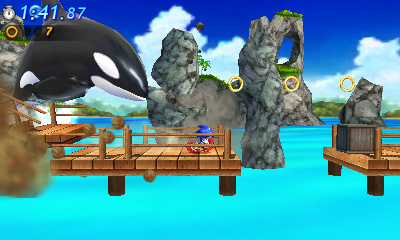
• SG_3DS_CVR SHT_2xThere seems to be no game series that is more self aware of how it has evolved over the years than Sonic. Which is why it’s so hard to understand why SEGA is still unable to troubleshoot where exactly it all went wrong with the long-running mascot’s appearances. Sonic may take his steps at a lightning pace but SEGA’s steps toward making Sonic the genre stalwart he was in 90’s are a bit like a rapidly receding glacier.  Sonic was delectable, but SEGA seem to have misplaced the recipe

    Or perhaps the recipe was just more like the avant-garde Heston than the traditional Childs.  Perhaps the recipe wasn’t as simple as it seemed.  Perhaps it was something more experiential.

    I grew up around SEGA, and in particular Sonic. Let’s be honest for anyone living as a kid through the 90’s it was hard not to.  The 16-bit era was the time where Sonic could almost literally do no wrong, to the point where he was practically ever-present, his tapping foot and waving finger seemingly on every street corner.  I vividly remember the presence of Sonic the Hedgehog games, from the first game to Sonic and Knuckles, standing idle at Mega Drive demo kiosks in Department stores music blaring across the floor.  The (then unnoticeable) flicker of the cathode ray screens was hypnotising, the bright colours of Sonic’s world mesmerising, and .  It was an exciting time to grow up alongside video games, and even though I was never an owner of the system, SEGA were an enormous part of why.

    While I never played sonic in earnest, I was around enough SEGA kids at the time to have seen the games start to finish, without even lifting a finger.  The Green Hill Zone music could be heard emanating from houses right the way across the neighbourhood as every kid and their dog strained their eyes trying to keep track of the eponymous hedgehog, as he whirled frantically through loops and zoomed left to right across the screen.  I’ve never finished any of the Mega Drive Sonic Games – and only a small handful of the subsequent ones for that matter – but the all-encompassing nature of Sonic has left an imprint on me that’s been impossible to shake.

    But by Jove, if you asked me what made Sonic so great, I’d be at a loss.

    That said, even for me there is something intangible about what made Sonic the Hedgehog special, and as someone who was merely a spectator of the phenomenon, the 3DS Sonic Generations perfectly captures that certain unidentifiable quality.  The cheese-tastic electric guitar licks and garish visual design – particularly the geometric shapes reminiscent of the side panel of an early 90’s Daihatsu Charade – are a type of faux nostalgia evoking the period rather than the game in a way that many games with 1990’s roots have left behind.  Sonic Generations successfully identifies and recreates, and then contrasts, the enormous evolution the gameplay has experienced in the past two decades.  And that’s undeniably impressive, putting old Sonic up against new Sonic is a minor stroke of genius, and one that at the very least reminded people how much subtlety there’s been in the change.  But that’s certainly not what had my radar blipping.

    While the speed is nice – and it is undeniably nice for a large proportion of those who played and loved it- there’s something a little more intrinsic that made the series so special in the nineties.  It may sound a tad wanky, but Sonic the Hedgehog isn’t just about the speed or momentum, but its about the sum total of the experience.  The look and the feel of the game – the attitude, the music, the character design, the sound effects – it all came together as a perfect storm.   In short, there is no gameplay equation that made Sonic what it was.

    And perhaps that’s where SEGA have misunderstood the appeal of Sonic.  For someone raised on a tidy diet of the more euro-centric Giana Sisters and Turrican, the speed of Sonic was always off-putting, and I came out of the nineties with a fondness for Sonic in spite of its speed.  But despite that the notion of Sonic is still an exciting one.  The jovial tune Palmtree Panic juxtaposed with the sound of Sonic’s spin dash brings back an instant feeling of jealousy for those that had SEGA consoles, bringing back memories of birthday parties and after school hangouts where of which Sonic were often a major feature.  Is it nostalgia, possibly, but for those there and then there was something undeniably appealing about the Sonic games, and that something wasn’t just running at a million miles an hour.

    So perhaps recreating 90’s Sonic games isn’t necessarily the goal.  Perhaps its about recreating everything that made it a phenomenon.  Perhaps it’s about evoking the same feeling of playing a Sonic game without evoking the mechanics that made it so.  Perhaps understanding Sonic mechanically is where SEGA is going wrong.

    Is Sonic Generations a good Sonic game?  You’re probably looking at the wrong person to answer that question.  But then again what is a good Sonic game?   In the end it doesn’t really matter.  For an entry in a series that seems to struggle with its own identity, the portable version Sonic Generations perfectly captures my own memories of Sonic.  And honestly, I don’t need the extent to which it’s Sonic quantified, I’m just glad to finally understand what all my childhood friends’ fuss was about.

    SonicGenerations3DSscreen

  • Like the rest of the gaming world, I was utterly shocked to hear this morning of the passing of Nintendo President Satoru Iwata, aged just 55. I knew he had been diagnosed with bile duct cancer last year, but recent reports suggested that the surgery had gone well and he had returned to work, seemingly on the mend. The news of his death came as a hammer blow – I’m still reeling from it.

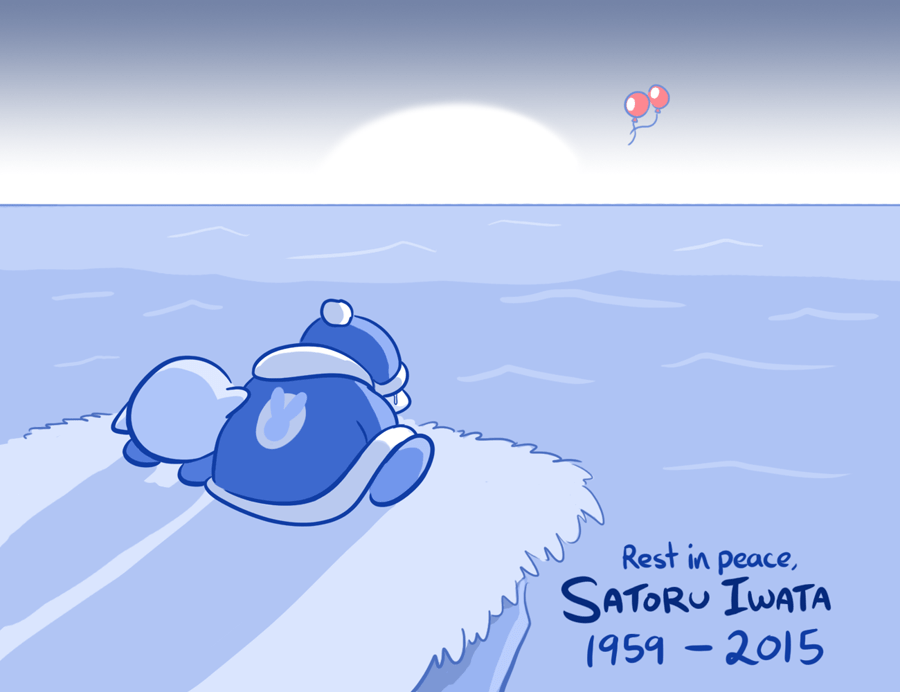
    But I’m not alone – it’s heartwarming to see the outpouring of tributes from across the world, particularly the pictures people have created. I was particularly touched by this creation by Brawl in the Family.

    2015-07-13-tributetomriwata

    To me, Satoru Iwata will always be the friendly face from the Nintendo Direct videos. I’ve written before about how brilliant these videos are (Getting Chummy with the Nintendo Prez) and how genuinely Iwata-san came across. He really showed he understood his audience and that he was a gamer too, just like them.

    Reading through several tributes to the Nintendo President today, I found out that there’s a lot I never knew about the man. I had no idea that he was one of the founders of HAL Laboratory for example, the creators of Kirby, and that he developed Balloon Fight on the NES. But reading about his illustrious past only serves to deepen the loss.

    Rest in peace, Mr Iwata. We’ll miss you.

    Satoru Iwata

    #ThankYouIwata


  • RatchetFTOD_amostagreeablepastimeAfter playing through Ratchet and Clank: Tools of Destruction I realised that, at the same time of year every year, I pull out a Ratchet game and play it start to finish.  And it always puts an enormous smile on my face.  The characters and the colourful worlds ooze the same uplifting feel that the Disney and Amblimation films I’d watch during school holidays as a kid did, so while the Ratchet games are new relatively speaking, ripping into one is a little bit like settling down and cuddling up to a nice bit of nostalgia.  And that feeling is a little bit like having a nice warm bowl of mum’s homemade soup.  Only with a tad more Lombax.

    There’s something to childhood tastes and sensibilities.  They have this uncanny ability to latch onto things, obsessing over them, and consuming them over and over and over again.  For an adult like me, deriving enjoyment from something for that long, well it’d be a bit like drawing blood from a stone.  But for kids it’s all part of being young and unaware of the finite nature of time.  They don’t need everything they consume to be the next War and Peace, they just need fart jokes and the occassional doe-eyed character getting up to a bit of shenanigans.  Ah, to be young again.

    But then you grow up.  And let me tell you a little bit about how that goes.

    Something happens to most of us in the brooding teenage years.  Suddenly the Presidents of the United States of America CD that you’d play incessantly makes way for a Nine Inch Nails album, and instead of your parents having to listen to “I will survive in my Mach 5” blaring through the plasterboard walls, they’re stuck hearing Trent Reznor insist he wants to “f**k them like an animal”.  It’s a hard time where, rather than everything seeming amazing, everything seems a little bit rubbish.  Even fart jokes lose their shine, and those doe-eyed characters with their shenanigans, well they’re just kid’s stuff.  You’re into heavy stuff now, stuff with meaning, stuff with purpose, the world sucks and you haven’t got time to muck about with bloody cartoons.

    So for years you’re floating through the world hating anything and everything, searching for that figurative War and Peace that blows your mind and changes your world view. And if it’s not that then forget about it.  Even the video games you’re playing change, as you’re attracted to games that ask the existential questions, that make you question the world and your own humanity.  “I need mature games, I’m an adult you know, I need adult stories and stuff” you insist.  “They do it poorly”, you say to yourself, “but they’re a hell of a lot better than they used to be”.  And you’re mostly right.

    And through this entire phase, there’s always mum with a nice bowl of warm soup, which somehow makes everything better.

    But in the years that follow you’ll realise that they have a long way to go.  You embarrassingly tell the story of how you thought Gears of War was “deep, man” years later.

    So why am I telling you this absolutely fictional tale about a totally fictional person?

    Well it’s winter in Australia right now, and like any Aussie worth their salt, I’m sitting inside counting down the days to summer.  They’re the three months of the year that, if I’m ever going to feel a little bit down about things, that’s when it’ll be.  Whether it’s seasonal affective disorder, or something imagined, for those three months my usual optimism gives way to an overwhelming sense of negativity, and at times, I’m only a hair’s breadth away from turning into that teenage Nine Inch Nails fan.  And mum’s soup is nowhere to be seen.  It’s cold.  It’s miserable.  And I bloody well hate it.

    But I’ve found there’s nothing quite like a nice big bowl of Lombax Soup to make Every Thing feel better. Every year.

    So thank you Insomniac Games, for being my video game equivalent of a bowl of warm soup.

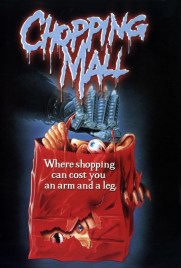
  • The first horror film I ever watched was a VHS of the less-than-B-Grade 1980’s ditty Chopping Mall.  And what a terrible film it was, combining somehow wooden and simultaneously overact lines delivering a truly retarded script, and a story that involved rampant security bots preying on the orgy-happy group of horny teens who were left in a department store over night.  Much blood was spilt and many boobs were bounced as shirts were torn away.  In short, it was a bit shit really, following the well-worn schlock horror formula to a tee.  Everything a teenage boy should love.  Not this one, though, and I distinctly remember turning to my mates as the credits rolled, face screwed up and saying “that was f**king stupid, mate”.  He snickered and smile, muttering something about how great the boobs were.

    “Fair enough”, I thought, “boobs are pretty great”.

    But despite its ridiculous lack of redeeming qualities, it played into an irrational fondness I’ve harboured for indoor shopping centres for as long as I can remember, and my secret desire to somehow be left to my own devices in one after hours.  Sure there were limbs being severed by overzealous robots with lasers, but I couldn’t help but imagine the pure shenanigans I could’ve been up to if I myself was locked in a shopping centre at night.

    I find retail to be a fascinating beast.  The myriad of ways wily business people and marketers .  The art of naming a business is one that I respect, and as far as logo designs go, well they’re practically up there with the greatest of European masters for me.  The love of the play on words harboured by small businesses, particularly by food chains, makes the occassional trip through food courts absolutely worth braving the smell of the noxious meals for.  And the branding.  Oh the branding.  I distinctly remember spotting a little Asian joint by the name of FantAsia on a trip to Brisbane and having a little chuckle to myself, not just because of the name, but also the cute little silhouetted man with a paddy hat.  It was great branding, and  it must’ve been effective, because years later I still remember that tiny Asian food store in Queen Street.   But behind all of the consumer friendly branding is a fiercely competitive and cut throat microcosm of capitalism, and the idea of that really twiddles all of my knobs.

    It was inevitable that this very strange thirst for concentrated capitalism and overworked consumerism would creep into video games.  I distinctly  remember the first time I saw a shopping mall in a screen shot for a video game – True Lies for the SNES – and how exciting a prospect that was to me.  I didn’t have an SNES, but on hearing there was a Game Boy version, my Christmas wish list practically wrote itself.  “Mum! Mum! Can I have True Lies on Game Boy for Christmas?!”.
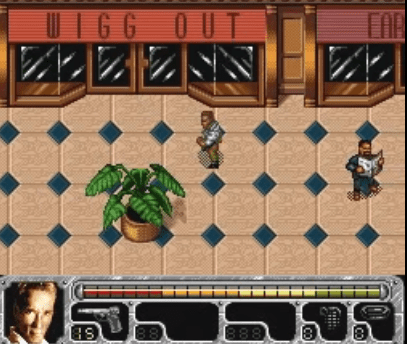
    TrueLiesSNES

    Sadly, I never did receive True Lies, and so my dream of virtual retail was to remain unfulfilled.

    But fewer years than it seems later, Duke Nukem 3D came long, and partially satiated that same desire albeit briefly.  The first levels are still the best parts of that game, placing you right in the middle of a very familiar western-civilisation playground,.  First stop was an adult book shop.  Second was an adult cinema.  Third was an arcade.  There was something exciting about visiting places that were, if not entirely familiar from experience, were at least something you could find tucked away in the sleaziest of backstreets in the night spots of any big city.  It wasn’t the sprawling mall I dreamt of, but it was a small step toward that virtual retail playground I was longing for.  Duke Nukem Forever took one step closer, and the Duke Burger area of the otherwise lacklustre shooter was a real highlight, as you wade through .  I could imagine Duke Burger in full swing – packed with flirting teenagers, obese diners, and pimply workers – and that to me was novel if not magical.

    DukeBurger

    And Duke Nukem Forever singularly highlighted the appeal to me of the depiction of retail in video games.  Just as Grand Theft Auto has done for years upon years, the world was given an edge of realism, padded out with the same meticulous details that make shopping centres sensory wonderlands.  Duke Nukem had Duke Burger, the Grand Theft Auto series has Clucking Bell and Burger Shot, even even Fallout had its own pre-apocalyptic mega store in Super Duper Mart, complete with a believable (and logical) supermarket layout, and its faux alternative-history brands like Cram and Nuka Cola.  And it was this attention to detail and the creation of worlds that extended beyond the moment-to-moment action in all of these games , in some cases some of my favourite games, that really wins over my heart.  But it’s when this is taken to the extreme, and concentrated into a melting pot of names and brands, that I get slightly giddy.

    Because while these small food retailers and supermarkets are awesome,  it’s the sprawling malls that impress me on a more intellectual level.  The perfectly designed floor plans, the sights and sounds, all preying on your senses to encourage you to open your wallets with reckless abandon.  It’s psychological warfare at its most grand, and any time you walk through the brightly lit “Entry” door into one of these labyrinths, it’s a battle of wills. And that to me is a beautiful thing.  But it isn’t just me that feels this way.  On the design and role of shopping centres in society, a report prepared for the Shopping Centre Council of Australia said that:

    Shopping centres provide safe, pleasant meeting places for the community often providing a focus for social activities. As noted previously, in recent times the shopping centre industry has sought to enhance the role of the shopping centre in the community, expanding the range of uses provided. Many shopping centres now include entertainment and leisure facilities. Others are going a step further, aiming to be the focus for the business centre in which they are located by creating ‘town square’ or ‘high street’ environments.

    And this is a sentiment echoed by state and local governments across the world, as they court developers, building it into their planning and urban renewal policies.  They may not be the most beautiful installations, nor the most cultural, but like it or not shopping centres are central parts of our society.

    I remember the elation I felt when Silent Hill 3 pitched your every day shopping centre. When teen Heather wakes up in a deserted Happy Burger, running to the phone to call her dad to apologise for not calling sooner, it perfectly captures the social role a shopping centre plays in a teenager’s life.  The place for shopping, eating, seeing friends, and courting the opposite sex.  I can imagine Heather’s Dad in the image of my own parents, sitting in a chair worried sick about the whereabouts of their oblivious hormone-fuelled teenagers.

    “I’m coming home now” she says as she hangs up the phone.  Of course then the nightmare begins.

    And that’s where Silent Hill 3’s mall really comes into its own, as the bright and ‘normal’ worlds gradually gives way to the horrific ‘other world’ that the series is known for.  But Silent Hill also perfectly captures just how much of the “place” of a shopping centre is the people.  It’s not the architecture, the bright lights, or even the logos and names that I love so dearly.  But the people that are there, both of their own free will, or at the will of others.  There’s something uniquely eerie about shopping centres when they’re empty, lifeless.  Places that are usually bustling and brimming with people of all shapes and sizes, suddenly find themselves without a soul, and without the heart the beats the blood money in and out of cash registers.

    Some, of course, would argue that the modern shopping centre is more akin to the evil and lifeless world shown in Silent Hill 3.  These days the local rags love to tell the story of the goliath shopping centre brands – the Westfields and the CFS Retail Property Trust Groups of the world – killing the little corner shops, and Saints Row II captured that all-to-common theme perfectly courtesy of its own evil mega-corp, Ultor. It was thematically perfect, not only for the world of Stillwater, but also as a commentary on the rampant state of capitalism and  more specifically corporatisation of almost every element of the western world including one of the central pillars of our market-based system itself in the trade of goods and services.

    UltorLogo

    But despite all of these brilliant realisations of the ultimate in retail trickery, none of them captured that long-held dream I’ve had of being stuck in a mall with all of the toys and tricks at my fingers tips.  That was until 2006, when Capcom unleashed Dead Rising onto the world. Dead Rising brought Willamette Parkview Mall to life, complete with believable chain stores and circular floor plan design designed to.   I’ve written about the brilliant job Capcom did at ‘placemaking’, creating a real and believable world to play in:

    From the kitsch logo designs of the chain stores scattered around the outside of a cluttered food court that at capacity wouldn’t be inviting enough to spend any time in over and above how long it takes to scoff down your meal, to the lairy turquoise and electric blue carpet and mock film advertisements that adorn the walls in the Colby’s Movieland cinema, Willamette Parkview Mall is like any other you’d find scattered around the suburbs of most western countries. It’s so real you can almost hear the parents yelling after their annoying children and the loud teenagers engaging in their post-pubescent mall-based mating rituals.

    But Dead Rising was also a not so subtle and not so original commentary on capitalism and consumerism. And while Dead Rising 2 took its less than subtle social commentary a tiny conceptual step forward with the commoditisation of Zombrex™, it didn’t capture the same gameplay magic its predecessor did, even if it did take its veiled attack on western greed to that next level. It, quite frankly, just wasn’t as fun or novel.  At least we’ll always have the Willamette Parkview Mall.

    If the brief history above has shown anything, it’s that the portrayal of large malls in video games hasn’t necessarily been in a good light. And for good reason because shopping centres aren’t pretty or enjoyable places a lot of the time, and honestly, if I could avoid them I would.  In my favourite episode of Daria, “Malled”, when asked to give an example of market “flow” in economics class, she perfectly defined malls when she answered “If we’re talking concrete [examples], I’d have to go with that repository of human greed and debasement: the mall.”  And for the most part she’s right, they’re bloody horrible places.   But there is a certain ‘speckled’ beauty to them, a certain charm, a certain attraction that makes them fascinating parts of our lives.  Sure they’re repositories of human greed, but they’re also places of aspiration and dreams, and more often than not places that give us something to strive and work for.  And that’s something every video game should strive to include.  Even if that something in the world of video games is a makeshift weapon.

    Now if you’ll excuse me, I’m heading to the local video store to rent Chopping Mall.

    Daria_Malled_amostagreeablepastime

  • My article on Russian ZX Spectrum clones – ‘The Land Where the Spectrum Lived On‘ – has just been published on Kotaku UK. This was a fascinating article to research and write, but it took an absolute age – there’s not a huge amount of information on the Russian Spectrum scene in English, so piecing together all of the various bits of info took forever.

    800px-ZXSpectrum48k

    I’ve known for a while that the Spectrum was big in Russia in the 1990s, but I didn’t know much about it, or exactly how big it was. When I heard that someone managed to port DOOM to the Spectrum, my interest was piqued, and I decided to find out more – which is how I ended up pitching this article. The many, many Russian sequels to Dizzy were probably the most interesting things I found while researching it. There are already tonnes of official Dizzy games, but if you add in the Russian sequels, the number is easily doubled.

    The other really interesting thing to come out of writing this was discovering the Dendy – a wildly successful Russian clone of the Nintendo Famicom, complete with shameless rip-offs of various Mario games. Apparently 2 million of them were sold!

    Drunk Dizzy

    (Image: credit)

    Buy The Recreated Sinclair ZX Spectrum from Amazon.

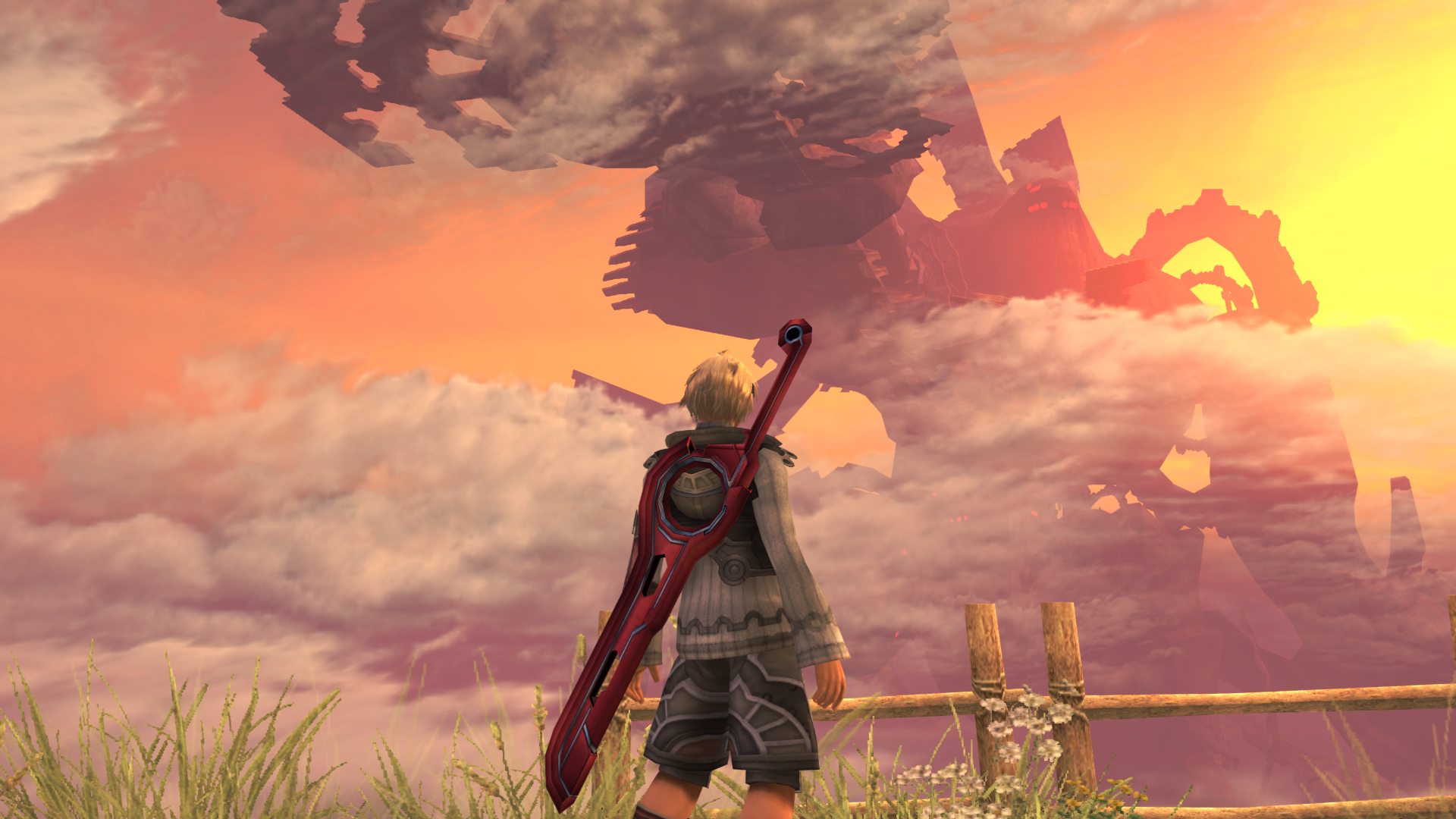
  • I’ve set myself the goal of finishing all three ‘Operation Rainfall’ RPGs, but finishing the second game on the list, Xenoblade Chronicles, is proving to be something of a challenge. I’m already 91 hours in, and the game just keeps unfolding like a never-ending carpet of multi-coloured delights… and frustrations.

    ku-bigpic

    I’ve already blithely ignored my pledge to avoid side quests in the aim of using my limited gaming time efficiently – Xenoblade has sunk its claws into me deeply, and I just can’t help but explore every inch of the beautifully realised game world, mopping up sub-quests as I go.

    It’s not like the side quests are even that interesting – mostly they involve just killing X number of Y type of monster, or collecting Z number of some random collectible. And there are ludicrous numbers of them – more than 480 quests altogether, apparently. The sheer scale is almost overwhelming.

    But the beauty of the quests is that they provide a legitimate reason to carefully explore the extraordinary game world, and this is their magic. The universe of Xenoblade, set as it is on two enormous gods locked in combat, is compelling: it’s easy to spend hours running through the beautiful landscapes, admiring the views and learning more about the world’s history. It’s easy to forget that the reason you’re doing this is to merely to track down two ice cabbages that have a woeful spawn rate of 6%.

    Xenoblade-Chronicles-Makna-Forest-Screenshot

    Occasionally the subquests do offer something a bit more interesting, however, such as a bit of character development, a bit of world lore or some ultra-rare items from a previously inaccessible game area. The game would be much improved if all of the quests were like that, and the overall number of quests was reduced. But even though there are so many, I feel compelled to complete them all, or at least as many as I can – I’m right near the end of the main game now, and to be honest, I just don’t want it to end. Part of me wants to just finish the game and move on to something else – Splatoon and Yoshi’s Woolly World arrived recently, and I’m dying to give them a go. But I keep being drawn back to Xenoblade

    Part of the reason is the clever ‘affinity’ system, whereby all of the characters appear on a sort of relationship map that gets filled in as you complete quests and talk to more people. It’s a clever way of representing the complexity of the world and the people in it, and completing the connections is an addictive pursuit. But mostly, the reason I keep plunging back into the game is that it’s such a pleasant place to spend time in.

    And come December, I get to do it all over again with Xenoblade Chronicles X

    The affinity chart - joining the dots is addictive...
    The affinity chart – joining the dots is addictive…

    Buy Xenoblade Chronicles for New Nintendo 3DS from Amazon UK.
    Buy Xenoblade Chronicles for Wii from Amazon UK.

  • Following a spate of excited pre-orders a few months back, and the many trials and tribulations I went through in trying to order a Woolly Yoshi amiibo, all of my chickens have come home to roost, so to speak. That is, a tonne of amiibos descended on my house, much to the alarm of Ms. D. (“How many more of these are coming?” were her exact words.)

    IMG_2849

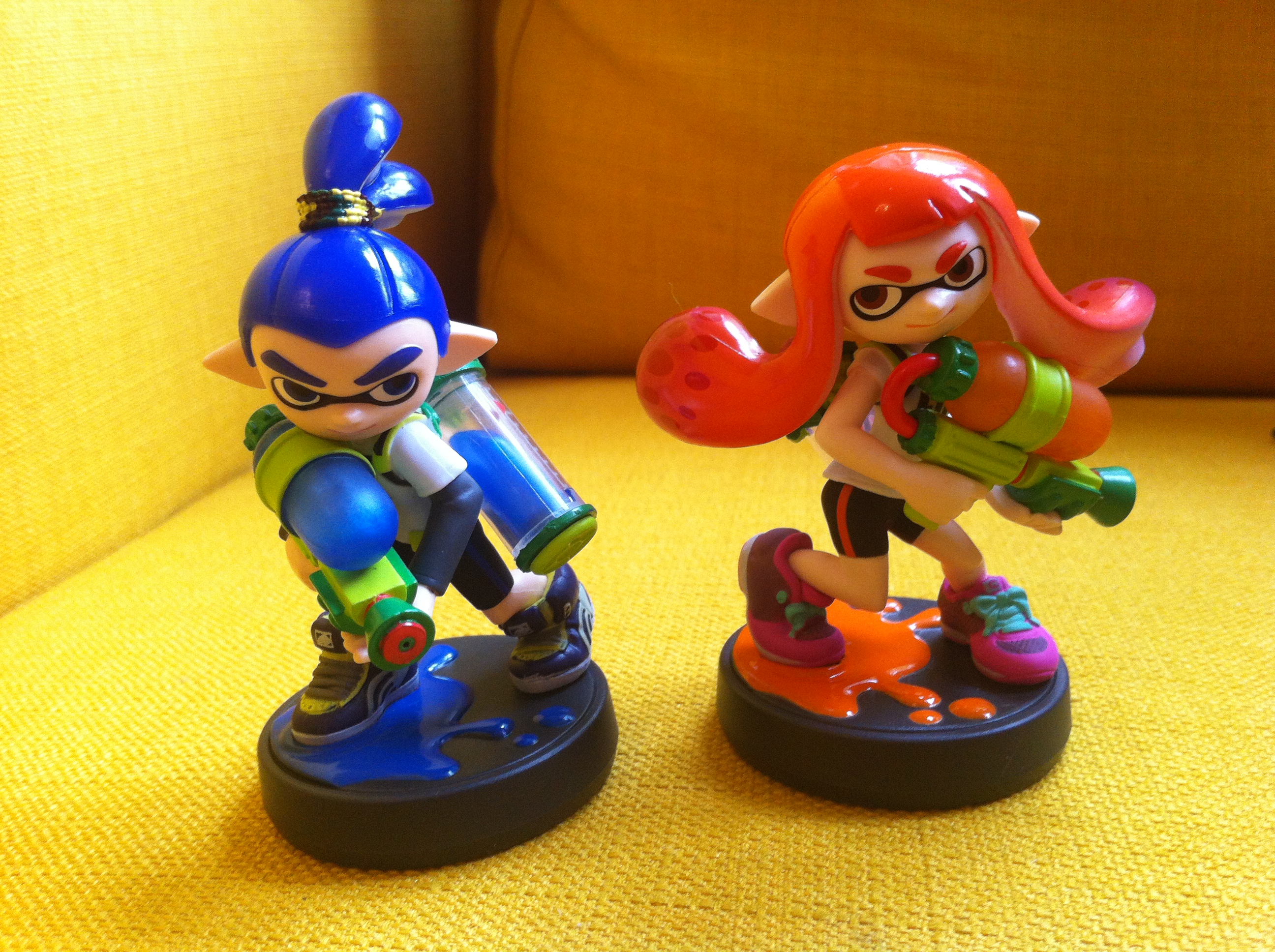
    First up were these two cheeky so-and-sos. I ended up buying Splatoon online in a moment of weakness a couple of weeks back, and I decided to nab these two Inkling amiibos while I was at it. I still haven’t found the time to play the game beyond the tutorial (the reality of parenthood bites), but at least I’ve been able to admire the craftsmanship on these two lovely figurines while burping Merriweather Jr.

    IMG_2851

    I’m particularly impressed with the detail on the back – the tiny ink canister looks great. Now if only it contained real ink…

    IMG_2866

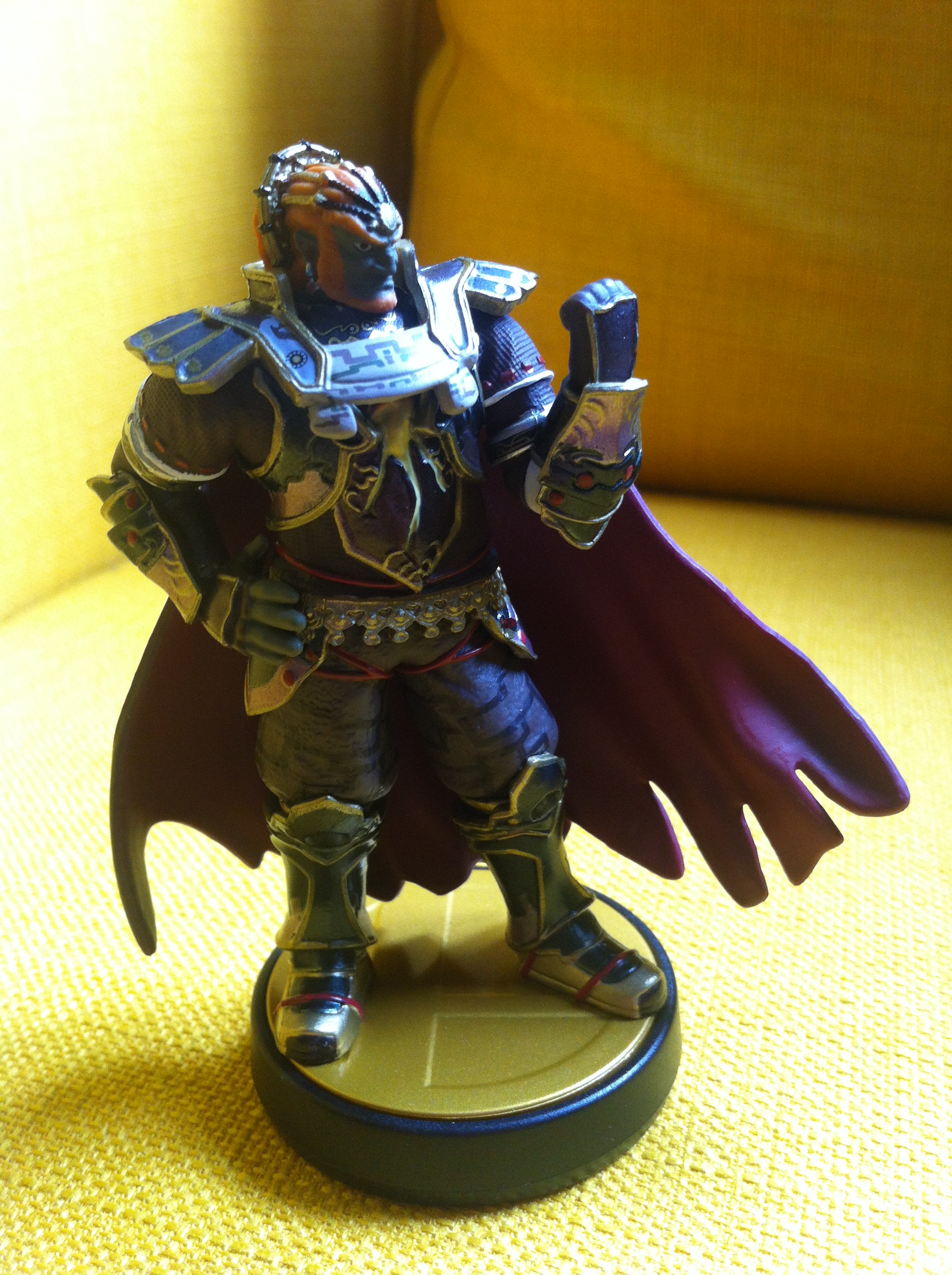
    Next to arrive was Ganondorf, another impressively detailed figure.

    IMG_2901

    He now lives next to Link on my bookshelf.

    IMG_2893

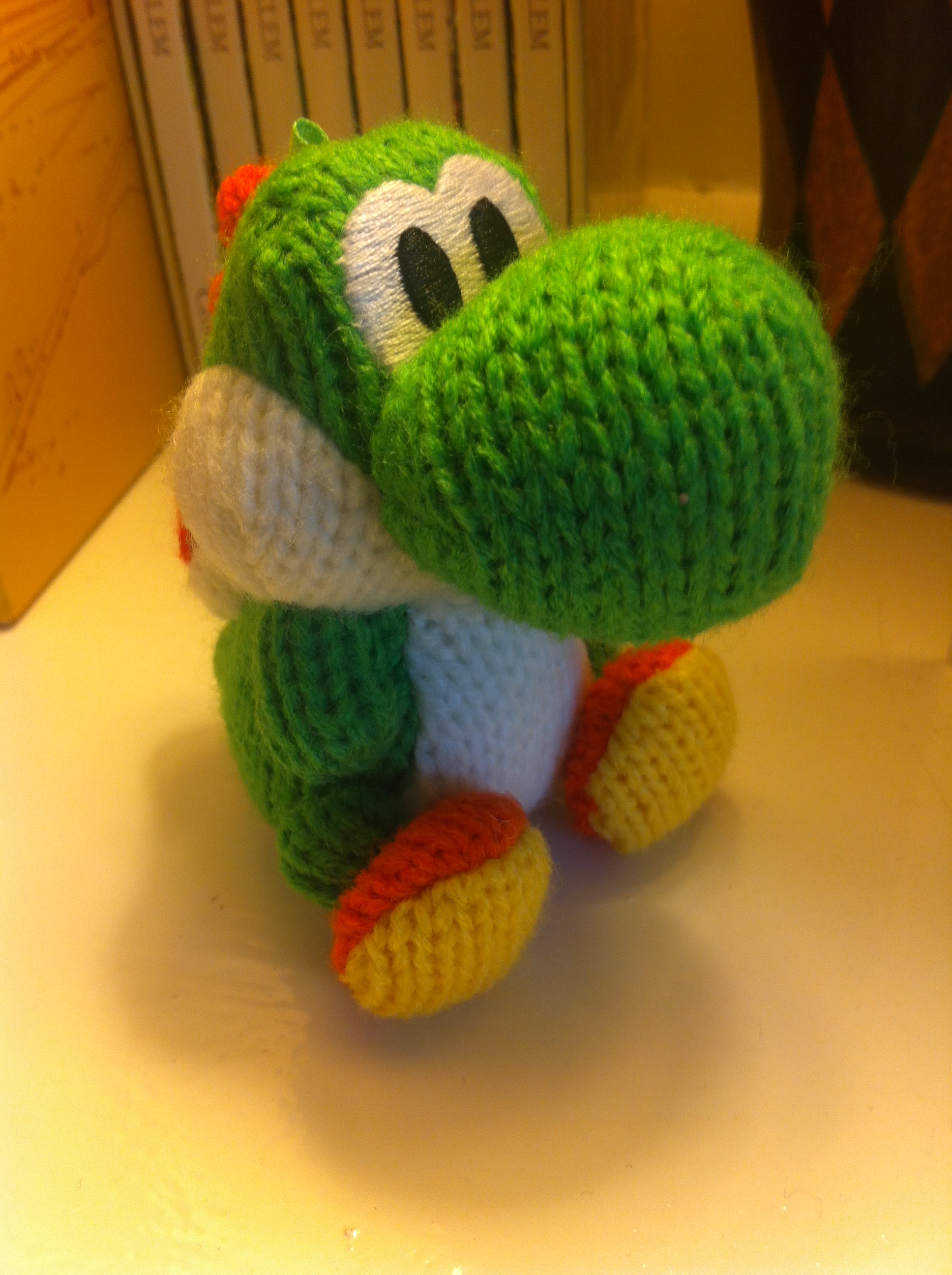
    Next was the amiibo I’ve been really looking forward to – Woolly Yoshi (a.k.a. Yarn Yoshi).

    IMG_2895

    Look how cute he is!

    IMG_2896

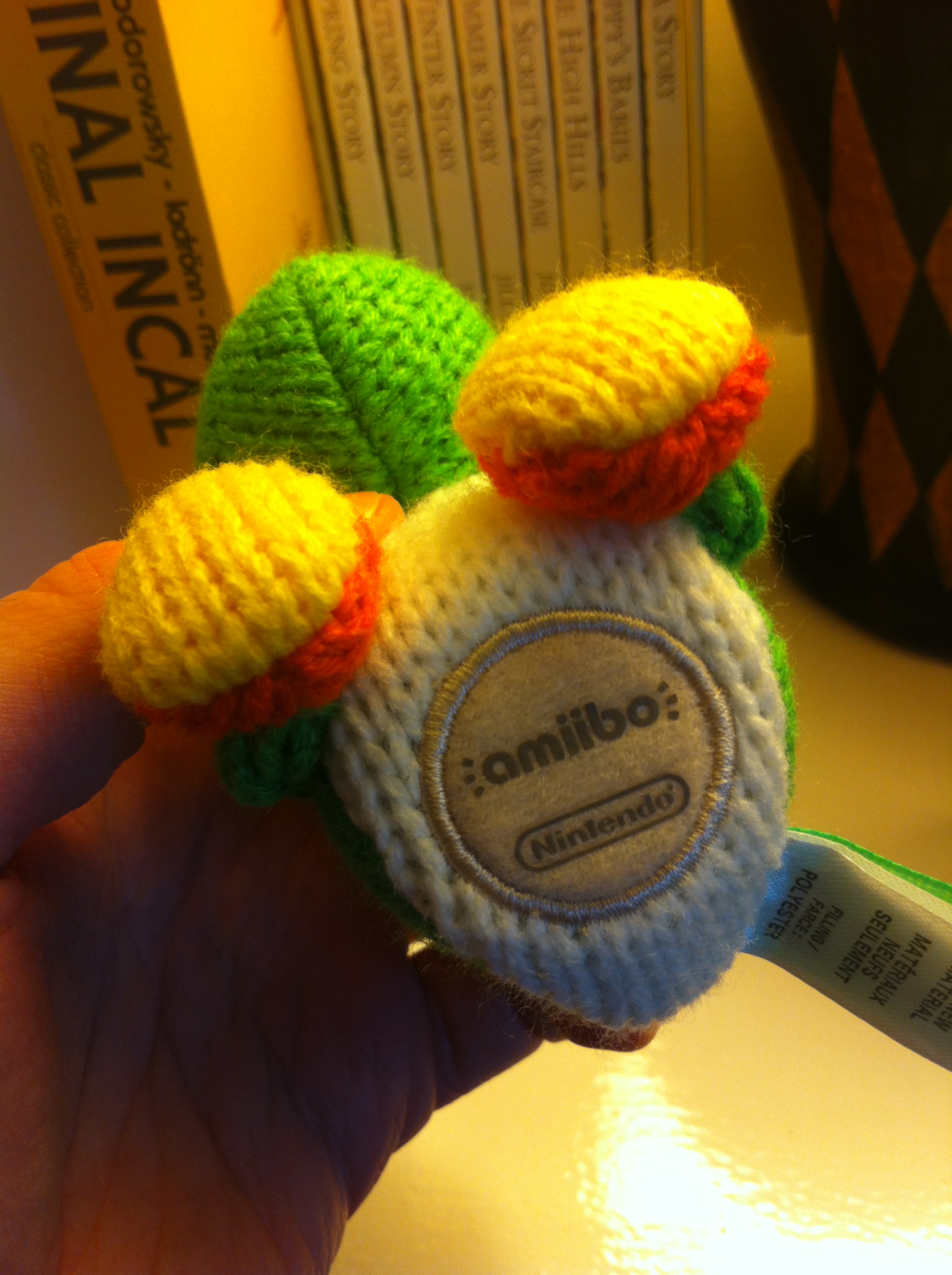
    The label is a great touch.

    IMG_2897

    At first glance it appears to be merely an ultra-cute plush toy, but look underneath and its hidden amiibo-ness is revealed…

    IMG_2898

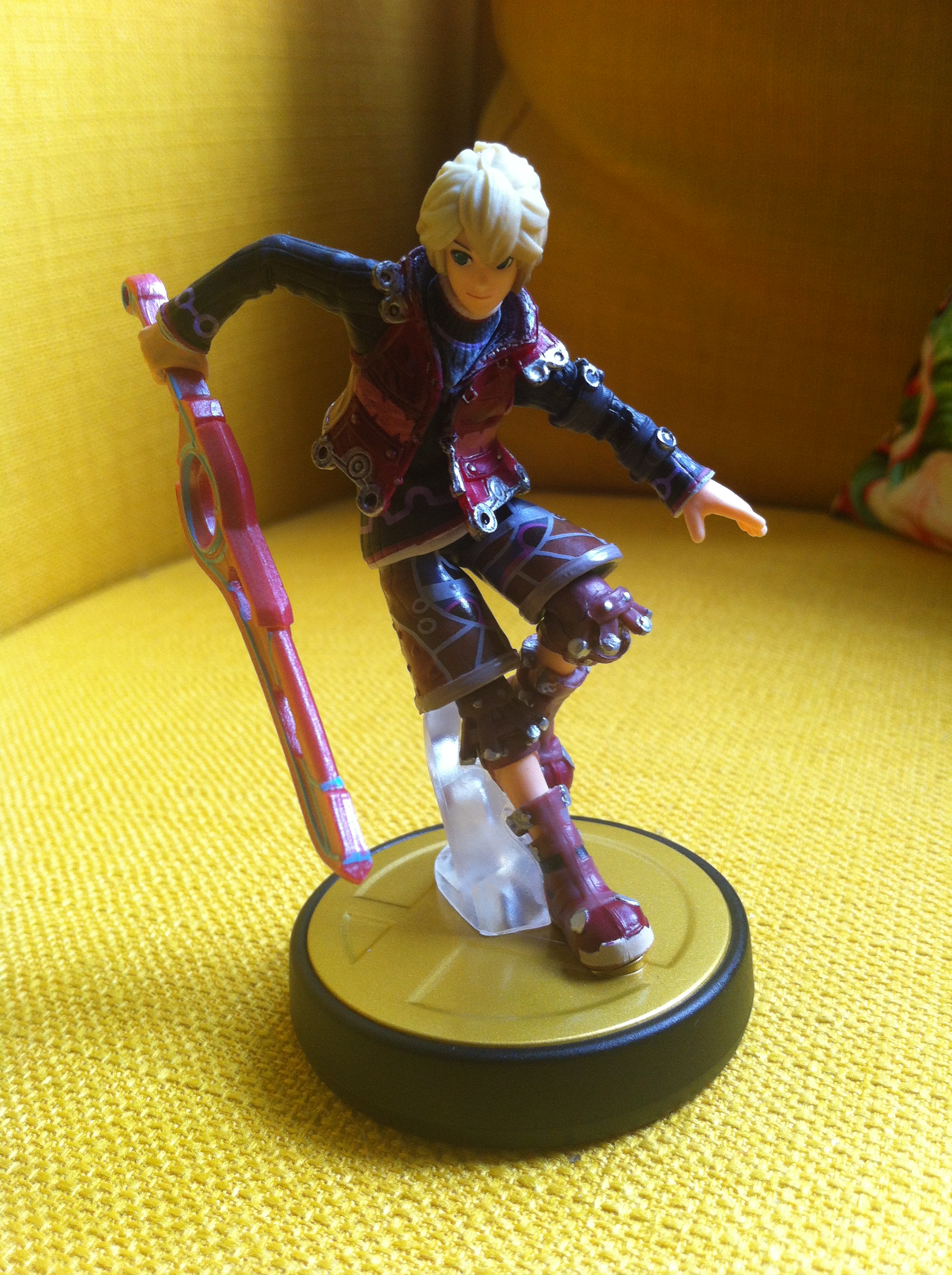
    And finally, a rather pleasant surprise. I missed out on Shulk first time around – the figure sold out pretty much immediately on release back in February. But last week a stock alert popped up in my emails saying that Nintendo had restocked the figures. By the time I clicked through to the Nintendo UK website they’d already sold out (this was only half an hour or so after the email arrived), but luckily GAME still had some in stock.

    IMG_2899

    Shulk has been going for crazy prices on Amazon and auction sites – about £70 on Amazon last time I checked, although I imagine it’s much less now the figure has been restocked. I briefly contemplated ordering Shulk in from Japan for about £40 a few months back, but I’m glad I kept my sanity and decided to wait! So pleased to finally get have this one for my collection – I’ve been playing stupid amounts of Xenoblade Chronicles recently, so it’s fitting to finally get the Shulk figure.

    IMG_2906

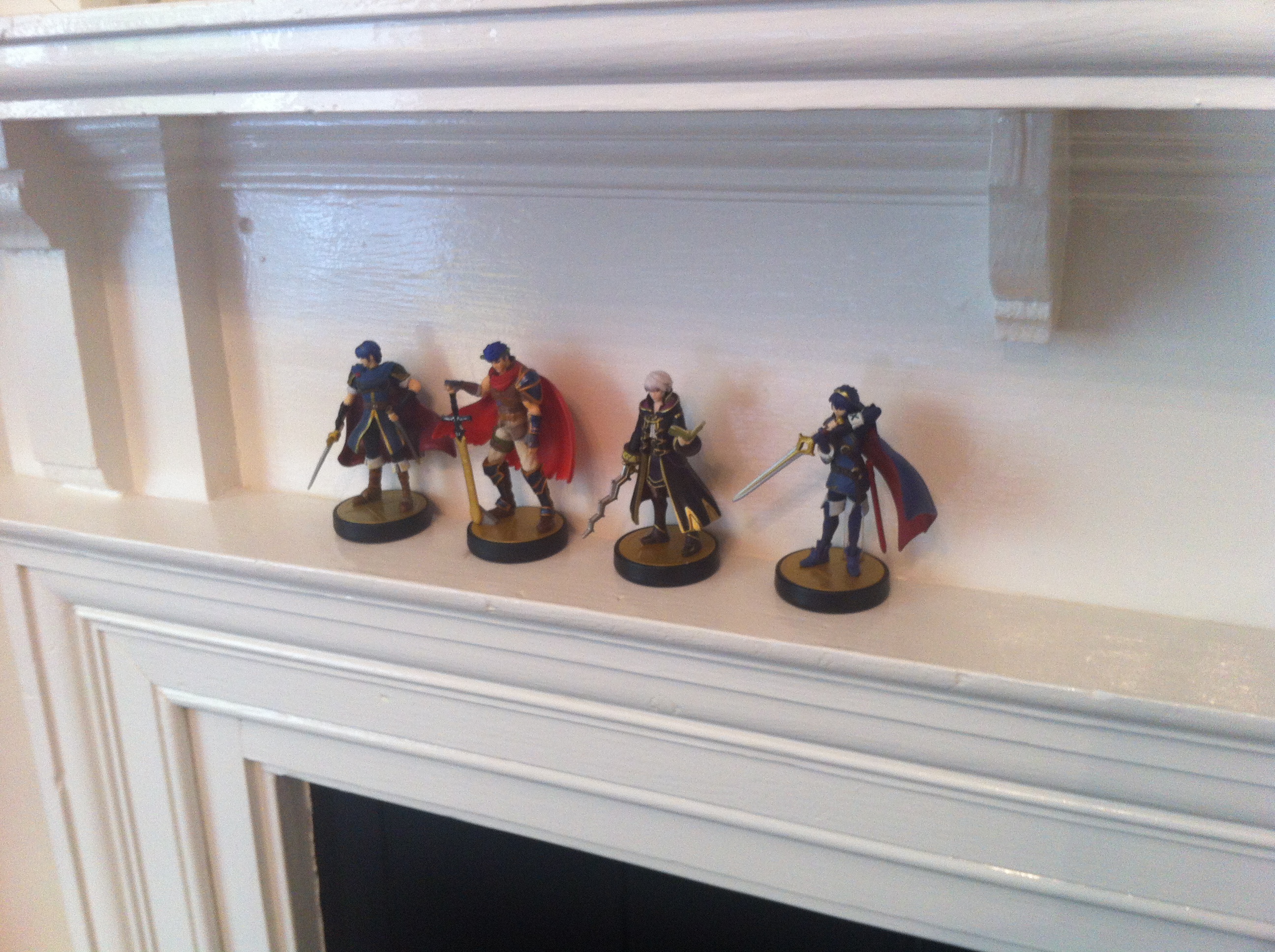
    So what next? Well I’m holding off on amiibos for the near future – the living room is starting to look a bit like a toy shop, so any future additions will have to be really special to warrant being added to my already fairly substantial collection. I’ve been tempted by a few from the next amiibo waves: specifically Chibi-Robo, R.O.B. and Duck Hunt Dog. However, I reckon I can probably live without them.

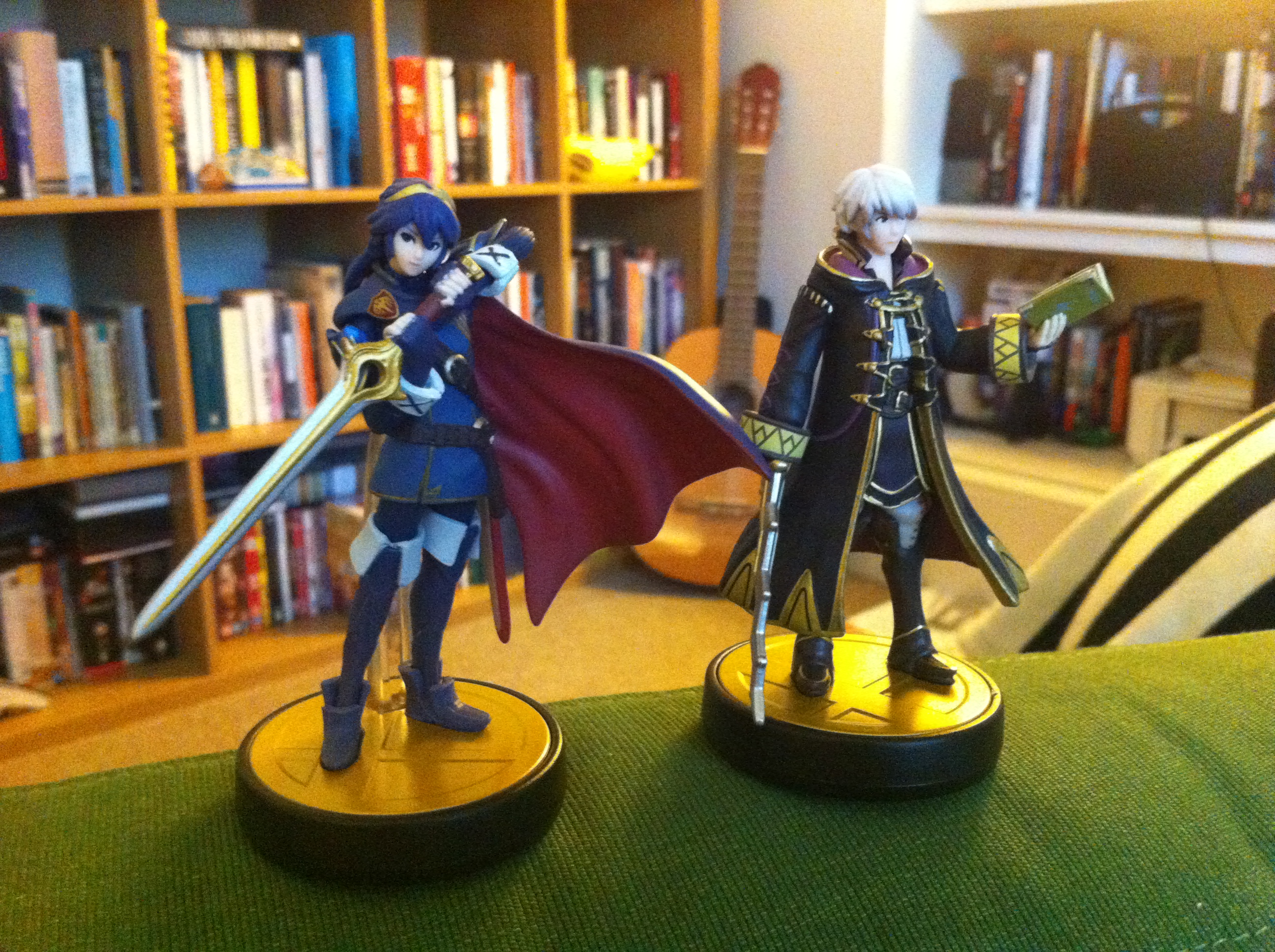
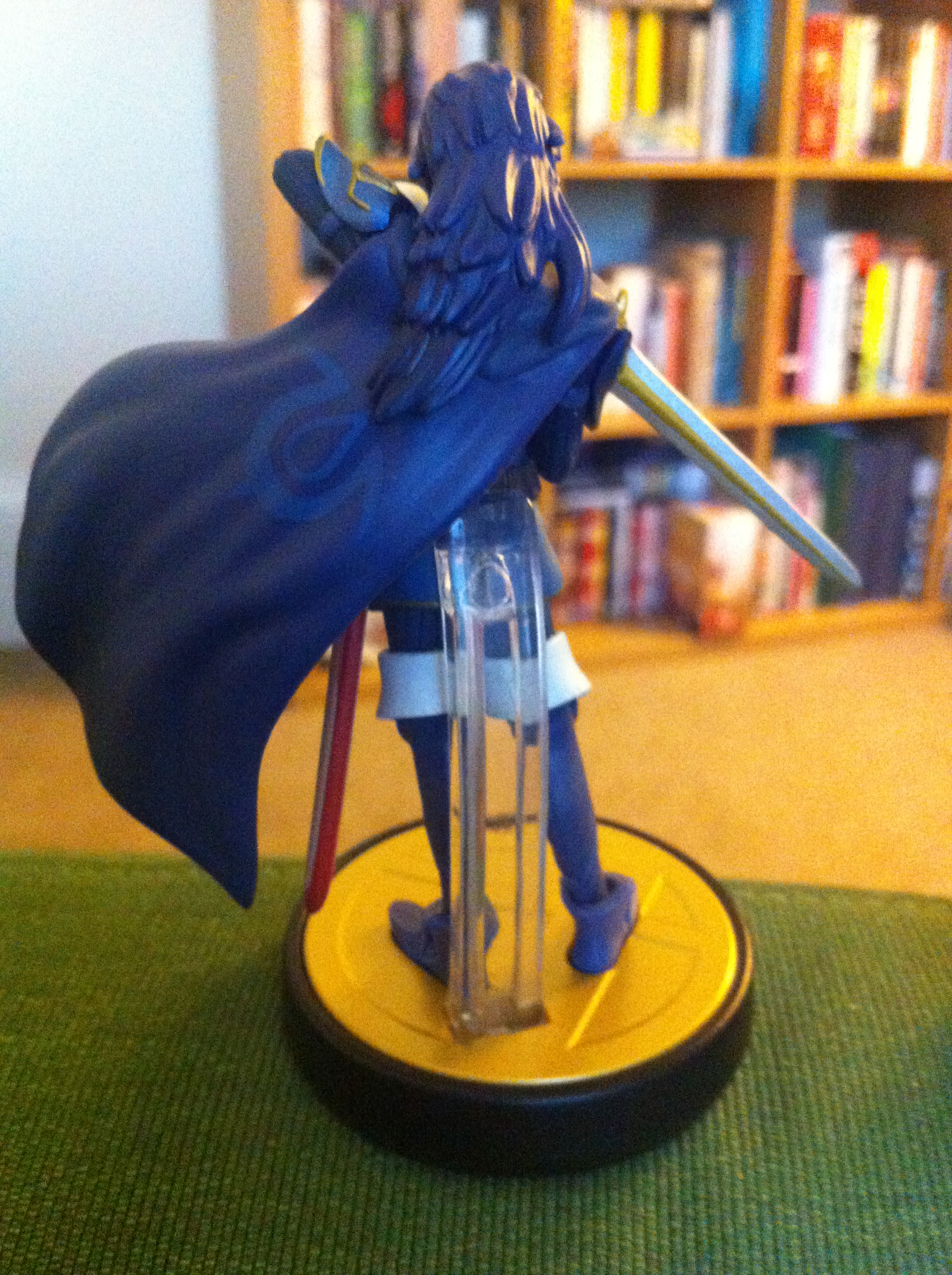
    Roy, on the other hand, is another matter entirely. I already have the other four Fire Emblem characters from Super Smash Bros. (see above), so it would be a criminal shame if Roy couldn’t join them on the mantelpiece…

    Buy Green Yarn Yoshi amiibo from Amazon UK.
    Buy Shulk amiibo from Amazon UK.

  • ArmchairWhat-ho, chums!

    You may well have noticed my conspicuous absence from this illustrious online tome over the past month or so – my endless thanks to Sir Gaulian for keeping things ticking over with a steady stream of fantastic articles. I have a good excuse for my blogging slackness, however – the birth of my son.

    [FANFARES]

    [STREAMERS]

    [FOGHORN BLAST]

    Yes, that’s right, Merriweather Jr has finally made his way into the outside world, glory be! Needless to say, he’s been keeping us all very busy these last few weeks, but things are gradually calming down now as we get used to his cheery (sometimes teary) presence.

    Needless to say, my gaming time will be rather limited from now on, but I’ll endeavour to post here as often as I can.

    Toodle-pip for now!

  • My article on the Xbox One Rare Replay collection just went up on Kotaku UK. And there’s one game I’m particularly looking forward to playing again: Solar Jetman.

    31807-solar-jetman-hunt-for-the-golden-warpship-nes-screenshot-dragging

    As I say in the Kotaku article, this NES game wasn’t hugely successful in terms of sales, but it garnered huge critical praise – and it had me hooked. Yet despite this, I never quite managed to finish the game, mostly because it’s rock hard. I still hope to finish it one day though, and hopefully if they include a way to save the game in Rare Replay, this will be a bit easier than it was back in the day. The original game had a password system so you could skip levels, but extra lives were incredibly limited – an option to reload a save game would be most welcome, if a little cheaty.

    I actually still have the original Solar Jetman cartridge – it’s the only NES game I’ve kept hold of, although I no longer have a working NES. For ages I’ve been toying with the idea of picking up another NES just to play this game again, but thanks to Rare Replay I no longe have to. Hurrah!

    eu_solarjetman

    Buy Rare Replay (Xbox One) from Amazon.

  • Pitfall2600Yeah, I’m well versed in Atari’s sordid history, allegedly bringing the gaming market to a crash. I’m also aware of the meteoric rise of Activision in that same period, driven by recognition hungry developers who more than anything, just wanted their name on the box.  I happen to also have held an Atari 2600 joystick or two in my life, admiring the stylish woodgrain panels on the front of the system, and playing a round or two of Asteroids or Centipede while admiring their simplistic charm.  But being just a tad over 30 now, it doesn’t take a mathematical genius to see that I was barely a twinkle in my parents’ eyes when the 2600 was at its peak, and so the rise and fall of that little American company that could came and went while I was still well and truly relieving myself directly into my pants.
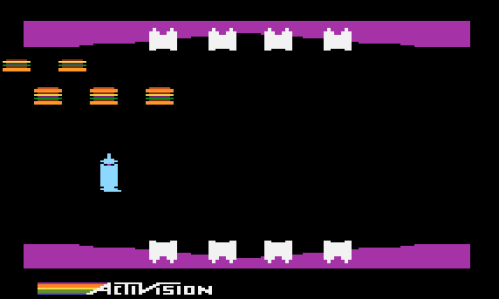
    So to say I’m not an Atari veteran is an understatement.

    But years after Atari had come and gone, and other companies had risen to take its place at the top, there I was sitting in my teenage bedroom, enjoying Activision’s classic Atari games in much the same way a mullet-sporting 80’s teen wearing stonewash jeans and a jean jacket would have.  Of course I was sitting there in the early 2000’s on hardware umpteen jigawatts more powerful, clothing that in hindsight was only slightly less embarrassing, and a television that while now is antiquated was modern for its time, earning patches and dealing with a rolling picture all the while listening to a mixtape of bands including Naked Eyes and Twisted Sister.  For that moment in time I was an 80’s teenager.

    ActivisionSpindle

    Activision Anthology on the Playstation 2 was my gateway into the time before the Euro-centric home computer boom of the 80’s, and of course the rise and rise of the Japanese console manufacturers.  It was a time of mechanically simple games that relied on charm and the pursuit of high scores, of games that required little more than quick reactions and pattern memorisation, and a time where every game courted the competitive streak and sibling rivalry in every one.  They were in many ways the formative years of video gaming as we know it today, and while the history of Atari systems and its games taken in isolation couldn’t be more uninteresting to me, I couldn’t help but be utterly mesmerised by that collection of forty-something 4k artefacts.

    I could never have imagined that, with games like Ridge Racer V and Gran Turismo 3 vying for my attention, what equates to a teeth brushing shoot ’em up of Plaque Attack would keep me glued to the screen in a ‘one more coin’ kind of way.  And in isolation they probably couldn’t have.  There was nothing particularly special about Barnstorming but I spent hours playing it, nor was playing multiplayer Ice Hockey any better than almost any subsequent sports game release.  But there I was sitting in front of the telly fixated on these video games most of which predated me, games that weren’t necessarily within my wheelhouse, and games that comprised someone else’s gaming history and nostalgia.

    That’s when I realised that the history of the medium is more than just the games themselves.  It’s a function of its time – the sights, the sounds, the tangibility – that makes people hold these experiences dear.  Just as I would always associate the games I played with a time and place, there was something intrinsically 80’s about the Atari, something that could never be separated and enjoyed in the same way out of context.  And whether it be the flickering of an old cathode ray tube in a dimly lit room or Wall of Voodoo’s Mexican Radio playing on the very latest in tape deck technology, for many, playing these very old and very simple games takes them back to a time where their whole lives were ahead of them and where technology was changing the very fabric of society. Literally if you were dedicated enough to take a polaroid of your scores to score a coveted cloth patch to show off to the world.  And Activision Anthology was a window back into that world.

    To say that the Activision Anthology was was a historical video game collection done right isn’t doing it justice.  It perfectly recreated a point in time, enabling those of us who weren’t around to live someone else’s history, and bask in everything that made that moment in video game history so special to so many people.  It allowed me to be a tourist in someone else’s video game history, into a time that I have no recollection of, and certainly no conditioned fondness for.  I don’t remember Atari, I don’t remember Safety Dance being on the radio, and I sure as hell don’t remember a time where wood-panelling was the pinnacle of home electronic design.  But for those precious few months in the early 2000’s, I could’ve sworn I did.

    PlaqueAttack2600

  • DaysOfHourLife_LogoI’m not scared on much. I balk at the ideas that spiders are to be feared, I ogle some of the most deadly snakes right in the eyes, and walk through dark alleyways at night like they’re fields full of flowers.  But the things I am scared of are stupid, inane, and quite simply irrational.  Time is one of those things. Not getting old per se, but rather that I have a limited amount of time to ration out across the things I like to do.  My brain is trained to optimise things, and well wasting time, that’s simply not an option.
    Which means I really don’t like doing things twice.

    When I first met my soon-to-be-wife, one of the first things that struck me about her, was that she would watch things over and over again.  And not just “I have seen Star Wars a hundred times”, no, there was a pile of TV shows and films that she had seen enough times to remember the script off by heart.  It was the strangest thing about her at the time, but now after a good decade and then some, it has rubbed off on me to the point where now I do the same thing.

    But when I really think about it, I wasn’t that dissimilar at times in my life, and I can’t count the number of 80’s and 90’s games I’d played through more than I care to admit.  Whether it be the Game Boy games like Balloon Kid or Radar Mission that I became enamoured with in the early nineties, or Amiga classics like Turrican or the Great Giana Sisters, my childhood was full of playing and replaying the same games ad nauseam and loving every minute of it.

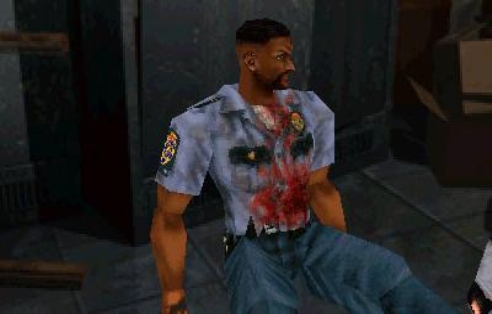
    But somewhere in the mid-to-late nineties that all changed and bar a few very special cases, I was content with playing a game to the credits, and putting it on the shelf to gather dust.  In my early twenties, while I was right at the start of my career, I became ridiculously aware of the passage of time.  If you’re not quite at that point in your life, enjoy it while it lasts, because once you hit that point your brain will start to rationalise every minute of every day.  It was at this precise moment that I realised that I’d never experience Resident Evil 2 again.  And that terrified me.

    RE2 screen

    Since that time, those same shelves have been inundated with games that have well and truly become pre played, no longer fulfilling their worldly purpose.  When I think about the great times had, the great memories collected, and the great ‘people’ I’ve met playing some of my favourite games over the past few years along, I realise that I’ll probably never relive those moments again.  I’ll never walk the halls of the USG Ishimura,  window shop in Willamette Parkview Mall, or live out Jimmy Patterson’s one-man tale of triumph behind enemy lines.  And they’re in good company, as I’ll never Escape From Colditz again, nor will I play political-god on planet Dion, or try my hand in the Killing Game Show.

    So my nostalgia for these games will have to remain just that.

    Which may be a blessing in disguise.  I find that nostalgia is a wonderful but terrifying thing, and for me, part of the appeal is knowing that those moments and experiences are lost for good in the annals of time.  It is the reason people are fascinated with the probably impossible idea of time travel, with reading history, and with reading people’s biographies from a time long past.  For me, most of the appeal of Roald Dahl’s autobiographical Boy and Going Solo were so appealing to me, was that they transported me to a specific time in history that is lost forever.  His tales of childhood debauchery in England in the 1920’s are brilliant depictions of a time that, in all likelihood, I’ll never be able to return to.  Like my own childhood it is lost forever. And much like the games I played there.

    I love the idea of everyone having their own gaming history, a biography built on their own individual game experiences.  Because amongst the stories of our real lives, many of us were living parallel lives through the games we played, visiting other worlds and meeting other people.  And while it’s certainly possible to go back in time and relive these memories, I prefer to leave most of them in the past, moments forever lost left behind by the passage of time.  Just like sands through an hourglass.

    TurricanTitle

  • fallout3xbox360“Speak to Colin Moriarty”. It was the task that will always define Fallout 3 for me. As I traversed the wasteland in search of high adventure, there it was, always sitting at the top of my quest log.  It was at around the 60 hour mark I finally made my way to Moriarty’s Saloon, took a seat at the bar next to a lady of the night, and used my way with words to convince Moriarty to tell me the whereabouts of my father.
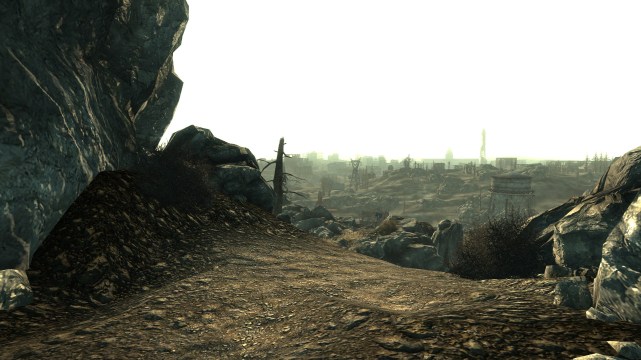
    And then the true adventure began.

    But I joke about the time it took to speak to Moriarty because it, in a lot of ways, defines my long and enduring relationship with Fallout 3.  So captured by the Capital Wasteland that simply existing in it was enough, so much so that hours were spent traipsing aimlessly about the wasteland, taking in the sights and the sounds.  It would be weird to call Fallout 3 some sort of escapism from the vicissitudes of everyday life, because it was hardly a beacon of light for humanity, but in some ways it became the game I’d go to merely to exist and explore somewhere other than the here and now.  To get away from the hustle and bustle of city life.

    If you’ve ever driven along an empty country road alone, no other cars in sight, you’ll know just how soothing spending time in your head with just the radio and the road for company is.  Fallout 3 recreates this feeling almost perfectly with walks in nature to the soothing tunes of the Ink Spots or Billie Holiday proving to be a veritable dalliance with luxury in a world that can barely offer them to its inhabitants.  Because those moments of respite, when you’re not fighting for your life against the men and mutants that want to take it from you, are some of the most relaxing video gaming has to offer.

    More than once I found myself finding a seat alongside an irradiated lake or an abandoned cabin next to a collapsed freeway and just sitting.  Sitting and starting at the screen watching the world go by.  Watching the occasional crop of dust fly by or a stranger with his lone brahmin walking alone a dusty trail way off in the distance.  Because amongst all of the despair humanity brought upon itself and if you look closely, past the derelict buildings and the mutilated corpses, post-apocalyptic Earth is a beautiful place.

    After the hours upon hours spent in the decrepit former capital of the United States, I felt as though I was actually the long wanderer.  I was the guy that rigged the election in the Republic of Dave.  I was the guy that ended poor Harold’s life in Utopia. But more importantly for me, it was me walking around in my own company, watching the sunrise and sunset. It was me enjoying the silence of the wasteland.  And as I looked I up at the stars it was easy to forget that humanity was on its last legs.  And that for me was some kind of bliss.  Who knew the end of the world could be so relaxing?

    Fallout3landscape

  • “By my deeds I honour him, V8.”

    Like the rest of the world I was pretty stunned by just how good Mad Max: Fury Road was.  As I sat there at my local cinema and watched the mutant cars duel along fury road for a good two hours, I couldn’t help but notice my cheeks starting to cramp up for the endless ear-to-ear smile planted on my face.

    But while the explosions and the gun fights were amazing moments, if I’m entirely honest, the film had me before it had even started.  Because just as the lights dimmed, and the Warner Bros logo splashed up on screen, there it was., the real reason I was sitting in a freezing cold cinema on a minus six degree Canberra night.

    It was the warm and fuzzy feeling I got at hearing the sound of the roar of a V8 engine.

    I’ve written about how, at heart, I’m a little bit of a bogan.  But watching Mad Max brought that part of me right up front and centre for the whole world to see.  As the sound of the beastly V8’s screamed from the cinema’s surround sound speakers I sat there giddy as a school girl, almost audibly squealing as the hulking great cars flew through the desert at high speed, the sound of the engines shaking the earth and my ear drums as the pursuit through the desert turned to crashing and burning.

    And it’s not any old engine that turns me into a raging pile of testosterone, it’s that specific type of car that gives me goosebumps.  I can appreciate the high pitched whine of a Formula One or a McLaren F1, but it’s the roar of a big ol’ V8 or a straight-six 186 you’d fine sitting in Aussie muscle cars in the late-70’s and early eighties that gets me excited.  They were the cars that most teenagers aspired to have at a time before Gran Turismo hit and so are an almost ingrained part of the Australian psyche and identity.

    XBFalcon73

    Sadly that era of the heavy pieces of metal propelled by even heavier engines doesn’t received the tender love and care in video games, with developers more often than not opting for the sleeker and sexier sports cars that are coming off production lines as we speak.  They’re fast, absolutely, but are they furious?  I’m not so sure.

    But when it’s done right, when a game decides to hone in on those heavy muscle cars, it’s a thing of beauty.  Vigilante 8 (and to a lesser extent its predecessor Interstate ’76) were games practically built on that American love of much the same thing, putting its array of hulking great gas-guzzling on centre stage.  The menu screens alone are not-so-subtle audio love letters to muscle cars, using the unmistakable sounds of an eight-cylinder engines, and the rickety suspension buckling under the weight of the chassis as they fall onto the screen, as cues for both car and level select.

    And the game isn’t alone in its audio slavery to muscle car-worship, the “Gentlemen, Start Your Engines” screen in Daytona USA is joined by a chorus of race-ready revs, imploring you to slam your foot on the accelerator peddle in preparation for that rolling start.  They are small touches, sure, but they capture so much of what it is to love cars.  And I’m convinced that it’s that moment, that still image accompanied by the wonderful sound of the rapid burning of fossil fuels, that left us all with the glowing first impressions of that arcade staple.  And you know what

    Because it’s one thing to look the part and games have been hitting that aspect for six for the best part of two decades.  But capturing the feel, the impact, the physicality of a petrol-swilling V8 engine is something else.  It’s the first impression you usually have of a car’s power.  It’s the thing that has women and men standing around cars, kicking tyres, patting each other on the back as the engine goes from idle to high revs and the body of the car tilts in place.  It’s this physical presence of a standing car that few games recreate, and while visions of cars in motion and the sound of screeching tyres and they grip the road for dear life is great, its the simple beauty of your favourite model revving in situ that stands above all else.

    So Gentleman, start your engines.  And let me hear that sweet purr for just a little longer.

    Gentlemen start your engines

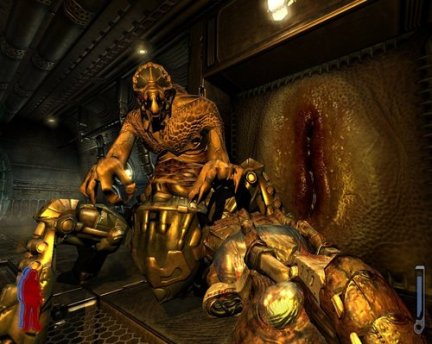
  • Prey was a lot of things when it was released. It was the next big game for the transient Xbox 360 early adopters.  It was a technically proficient shooter that promised a unique take on online multiplayer.   And it was a technical showpiece that had console gamers scrambling to buy HD televisions. But one thing it wasn’t was a great world builder.  It had some great ideas and moments, mostly created by the anti-gravity walkways that featured heavily throughout the games, but for the most part it was the sort of shiny high-tech metal-walled spaceship we’d walked through what seemed like a thousand times before.

    But those radio broadcasts. They were really something.

    Ambient storytelling isn’t new, even back in 2006, but Prey used it so brilliantly to pad out its otherwise benign world that it merits special mention.  While the game’s narrative doesn’t directly posture the alien invasion as a great threat to humanity as we know it, it’s these talkback radio broadcasts that give it a greater sense of desperation and (pardon the pun) gravity than it would otherwise have.  I was never really invested in Tommy’s quest to avenge his grandfather’s death or save his girlfriend, but the prophetic ramblings of a paranormal shock-jock and his loyal followers, well that was something to pull me down the shiny metal hallways and through the sphincter-like doors.

    It was this ‘window’ into what was happening on Earth, what ordinary people were seeing from the ground, that really drove the gravity of what was happening in Prey more broadly.  It was easy to imagine people down on earth spotting lights in the skies and tuning into their radios for updates from the authorities – or in this case famous supernatural broadcaster Art Bell – about what exactly they were to do next.  And as the calls get more and more frantic, it becomes clear that Earth is under attack, and that its people are terrified and helpless.

    PreyScreen

    And there is real life precedent for the importance – and resilience – of radio in emergencies.  While radio is perhaps not the cutting edge medium it once was, it is an enduring medium, and one that people rely on significantly in daily life.  Its reliability makes it, more than modern technologies like shared LTE networks, the second best contingency behind amateur radio.  The long distances both AM and to a lesser extent FM frequencies broadcast at mean that the towers are more likely to be out of harm, and the fact it is largely insulated from interference and congestion makes it a far more likely to have resilience during disasters.  In a disaster early warning and public announcements mean the difference between life and death in some cases, and if you’ve driven through the Australian bush, you’ve probably spotted the emergency frequency signs on the side of the road for that very reason.  While emergency services will continue their push to get access to high-value spectrum to roll out dedicated networks for operations, it’s radio that’s the equal opportunity broadcast medium used to alert the masses, and its the good ol’ wireless they’ve sat by for generations to get the latest on the world around them.

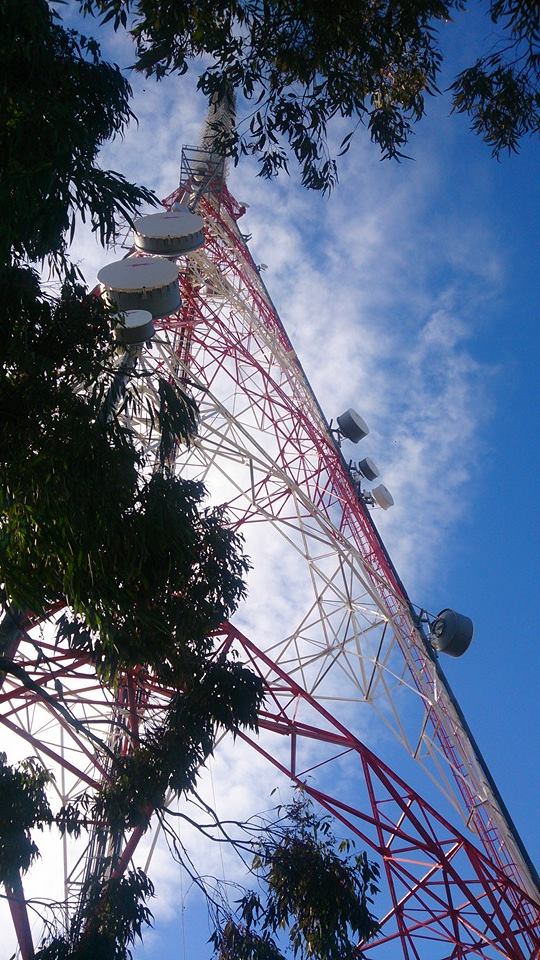
    Prey isn’t the only game to depict broadcast in times of global disaster – Fallout 3’s radio broadcasts of both Enclave propaganda and Three-Dog’s entertainment and news programming is probably a pretty decent depiction of mass communication in the end times.  Sure there’ll always be HAM radio, but without the regulators dividing spectrum rights, spectrum of (literally) every colour is up for the taking.  And at a time of civil unrest and anarchy, and when the nuclear weapons have all fallen, the power to spread messages to the masses looking for a glimpse of hope against the post-apocalyptic backdrop is the best weapon.  It’s no accident that nigh on every game has a mission where you’re tasked with either rigging up or ripping down a broadcast or communications tower.

    When the end times come, or even when it seems like it has, it’s the precious invisible roadways that both provide us with comfort and help keep us safe.  And it’s in this context of video game world building that radio broadcasts make a lot of sense as a medium both for ambient storytelling, and for mission design to drive a broader narrative.  Radio may not be as personal as unicast communication, or as sexy and impactful as the “they’re at the door” recording found by a corpse, but it does make real world sense.  And in that respect it’s one of the best narrative and mission design devices around.

    Sir Gaulian has a not-so-secret love for spectrum management has spent far too many hours gazing longingly at radio towers during his time in the industry.  He dreams of the next spectrum auction.  Follow him on twitter @oldgaulian

    10628231_10152618236492416_1830510334248228987_n
    I stood starting up at this broadcast tower for far too long before I took the picture…
  • I’ve somehow managed to float through life blissfully ignorant of the exploits of Jack the Ripper. And I for one thank my lucky bloody stars for that, because to be quite frank if Sherlock Holmes vs Jack the Ripper is any indication, Mister Ripper was a tiny bit of a dick.  It wasn’t just the whole preying on prostitutes thing, it was the calculation and callousness behind the brazen attacks, not to mention the surgical nature of the mutilations.  I can absolutely see why the people of Whitechapel were living in fear of the man.  Or men.  Or woman.  Or women.

    Welcome to 1888 I hear you say.

    There’s a part of me that wishes that wishes I remained unaware of Jack the Ripper’s exploits and that I wasn’t compelled to read more about the real life cases.  But I don’t at all regret coming to know about the socio-economic and racial issues that plagued certain parts of London throughout his time.  While the game obviously takes some liberties in writing Sir Arthur Conan Doyle’s detective duo into Jack the Ripper’s London, its parallels to the gritty world that was perhaps the catalyst for his murders are striking, and the uncensored picture it paints is one that transcends some of the the rough technical edges of and rather contrived puzzle solutions in the game.

    Perhaps it’s my Australian colonial mindset, but when one thinks of London at the turn of the century, one thinks of opulence and the height of the United Kingdom’s imperial power.  But life in Whitechapel in 1888 was far from that, and even in absence of a maniacal serial killer treating the ladies of the night as surgical subjects, day to day life seemed for most a struggle.  Sherlock Holmes vs Jack the Ripper doesn’t pull any punches in depicting the vicissitudes of life in London, from the religious persecution and racial tension between the Jewish community and the born and bred Londoners, to the mistreatment and commoditisation of lower-class young women and children, Whitechapel was far from a bastion of British imperial wealth.  And this greater understanding of the time and place in which Jack lived makes me surprised it didn’t happen more often.

    If anything Sherlock Holmes vs Jack the Ripper taught me more about why and how Jack the Ripper managed to get away with the murders, rather than who Jack the Ripper actually was.  Whitechapel at the time was far from a cohesive society, one that created the perfect storm for a calculated and for all money wealthy person to prey on the weak, and leave the segmented communities to fight amongst themselves.  While it is a great adventure game in it’s own right and an engrossing detective tale at that, Sherlock Holmes vs Jack the Ripper is more an exploration of how far society has come in the century that has passed, and how much better off we all are for it.

    But it’s also a lesson in just how fragile society is, and the immense importance of inclusion and cohesiveness, in order to ensure everyone shares in our future wealth and prosperity.  Jack the Ripper was a function of the society of the time and if we forget how far we’ve come, there’s a risk he’ll strike again, leaving a trail of blood and viscera in his wake.  And Sherlock most certainly won’t be here to stop his murderous rampage.

    Elementary.

    SHvsJTR_Frogwares

  • coinOf all the stupid things to be outraged about in the video games industry, people’s attention has turned to not whether developers are independent or not, but rather how independent they are.  It’s all a bit Blur crying foul on being called BritPop, really, as just being indie isn’t enough to appease anymore.  The traditional-modern image of the struggling indie in their basement coding away eating nothing but scraps from the floor is long gone, which perversely is a shame because the market – hell the media – need a nice sop story about people selling their houses and dipping into their kids’ trust funds to make their game.

    Something is killing the bearded indies and people are angry and they’re out for blood.

    So the pitch-fork wielding mob closes in on the not-indie-enough big names taking to Kickstarter to fund their passion projects.  What they’re trying to say amidst all of the pontification is that the big-name developers turned indie are exhausting the market’s capital, taking funds from those that really need it to fund their masterpieces, and just perpetuating the big budget publishers that brought the indie movement about in the first place.  They’re not of course, and so begins the long-winded analysis of what essentially equates to capital-gate, along with a fair share of stone throwing and pseudo-economic analysis.

    And I’m not having a bar of it.

    It’s ridiculous really, to think that people have taken to analysing sources of capital, and arbitrarily dividing available capital up according to who is more deserving on what equates a welfare scale.  Kickstarter is a great tool for budding developers to fund their brilliant idea, and directly connect with its potential market, by putting the idea out to market.  But Kickstarter isn’t investment and funders aren’t investors, and it certainly isn’t a wealth transfer mechanism to give the smaller guys a go.  Creating a hierarchy of ‘indie’ – or even excluding those with an existing profile – won’t change this.  And nor should it.

    Kickstarter is a market not a social welfare system.  And as such, unlike a social welfare system, there will be losers.  But that is no concern of yours.

    Capital?  Not quite.

  • There’s something about racing games that just click with me.  The act of driving around the same stretch of road, navigating the same corners, and veering through the same chicanes ad nauseam brings me so much inexplicable joy.  The hours i’ve dedicated to perfecting my racing line are slightly embarrassing, and my ability to push through severe bouts of hand cramp are damn near legendary, but despite the vicissitudes that come with the pursuit of speed I’m drawn to the simple act of driving around in circles.

    And around.  And around.  And around.  And around again.  Each lap your relationship and understanding of the hundreds of horsepower that you’re sitting in grows.  Every pass through a corner – Turn 1, Turn 2, Turn 3 – you’re edging ever closer to the ideal brake point as you fly through the perfect racing line.  The feel of accelerating perfectly out of a corner is unmatched, nailing the apex is a treat, and feathering on the accelerator to negotiate even the most sneaky of chicanes is near nirvana.

    I’ve always loved racing games, but my compulsion for constant improvement and pushing cars to their very limit to shave hundreds of seconds off of lap times, started with Forza Motorsport 2.  While the career mode was great, and the social aspects of the game nothing short of groundbreaking, it was the sliver of the game dedicate solely to time trials that had me gripping the controller for hours on end while somehow still falling into a semi-hypnotic state.  Corner after corner I’d feel myself edging further and further away from the ghost, and lap after lap I’d creep ever-closer to that perfect lap that would yield the perfect time.  And when I finally got there my heart would race and – almost uncontrollably – I’d sit back and punch the air with a clenched fist.  For that moment I was a race driver.

    It’s a wonderful feeling.

    There is something paradoxically soothing and calming about driving at 250 clicks, edging close to the tyre’s traction limit, and braking at the last minute to gain that crucial tenth of a second on your opponent.  Racing games have arguably been the genre to benefit the most from advances in technology, with everything from the look and feel of the cars to the behaviour of the grid when the lights go out, bringing an unprecedented level of realism to the experience.  Sitting trackside or watching motor sport on the telly is one thing, but the ability to partake in those literally breathtaking moments where there are tenths of seconds in it without the need for a super licence, well that’s quite another.  And when after 50 laps you’re edging up on the rear of the car in front, mere seconds away from a podium finish while somehow still only a mistake away from ending your race, well they’re the moments you’ll be thankful for those hours poured into learning your car and learning the track.

    So if you want to know what the appeal of racing games is, it’s that moment, it’s the pursuit of perfection.  And I’m not sure that is something that ever gets old.

    ForzaCelebration

  • DKong94AMAPWhen I was a young lad first learning to drive, like most, I had the car I was aspiring to buy.  It wasn’t my dream car mind – that was and always will be the Lancia Stratos – but rather it was the car that was a little bit special but just not out reach.  That car was the Ford KH Laser TX3 Turbo, the turbocharged hatchback that was the street legal version of the sort of car you’d see flying around dusty and dirty rally stages, and the sort of car my dad as a former police officer couldn’t help but picture wrapped around a stobie pole.  And he was adamant I wouldn’t be in it.
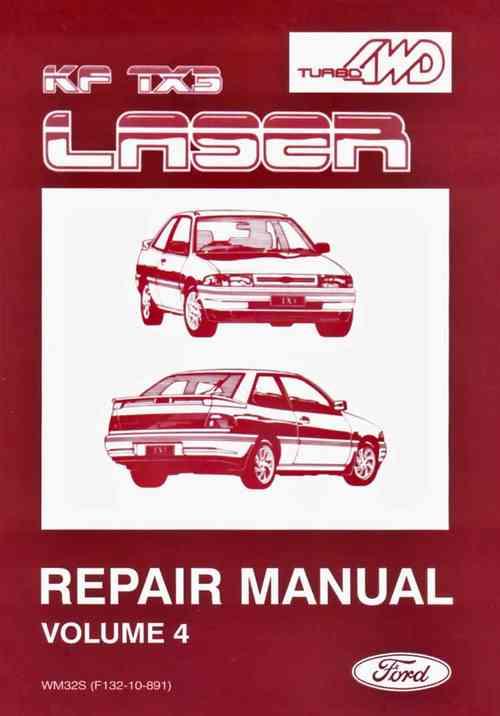
    Needless to say I never ended up with that car – instead I purchased a rather more modest 1983 Nissan Pulsar – but years later I still have a serious soft sport for Ford’s classic turbo-charged hatch. Even if it is old and quite frankly a little shitty, in much the same way most mass-produced cars are after a good thirty years, I still see it the same way I did as a bright-eyed teenager craving the freedom car ownership would bring with it.

    There is something about the one that got away, and whether it be the blood-and-guts film  your parents didn’t allow you to watch (for me it was Terminator 2) or the much desired game you just never owned.  It’s these mythical things from your childhood and early adulthood – the ones that got away – that drive a hell of a lot of our nostalgia in our older adulthood. And until the moment you finally set eyes on it or pick up a controller and delve in it’ll be something of a white whale that you’ll never stop dreaming of owning.

    That game for me was Donkey Kong for the Game Boy, which despite renting and playing to death, I never owned.  And I tell you what the moment I finally picked up 10 years after the fact was a truly sweet moment.  But it wasn’t without compromise, and in the ten years that had passed, the game certainly looked like a game that had seen a few christmases.  If I squinted though, the game was everything I dreamed it was, and I was happy as Larry playing a game I’d dreamt of playing again since before there was hair down there.

    And it was great for a game that was released in 1994.  Just like the TX3 was a great car when in 1989.  And if you contextualise things that way, you’ll never be disappointed.

    You see I’ll likely never own that automotive object of my teenage affection, but I’ll always have the desire to own one, even when rationally that would be a significant down step from the car I actually drive.  But nostalgia is a magical thing, if you let it be, and rose tinted glasses can truly be your friend and prevent your childhood memories and aspirations from being sullied.  Because when you put things in context, every game is as good as it was the day it was released.  You just need to stop saying “it hasn’t aged well”, because that game could well be someone’s TX3.

    Hasta La Vista, Baby.

    Sir Gaulian is a self-confessed bogan, a racing game fan, and the (somehow still) proud owner of a Casio Edifice Red Bull Racing watch.  He dreams of a world where the next Formula One game is a little bit more like Persona.  Yes, really.

    KFLaser

  • It’s been a pretty jam-packed 12 months or so for racing games, with Driveclub wowing some, Forza Horizon 2 wowing most, and Project Cars wowing all of those that aren’t absolutely over the genre yet.  For the most part racing games are tinkering around the edges, but they’re driving better than ever before, and certainly taking rather enormous graphical leaps toward making it at least look like you’re sitting in the driver’s seat of some of the world’s fastest cars.  And I reckon go you good thing, because no genre has traditionally said ‘technical showpiece’ better than racing games, something Gran Turismo made a point of shouting from the rooftops way back in 1997.  But that desire to have these games look as real as possible has started to grow a little sting in its tail.

    And that sting is the enormous glowing ball of hydrogen and helium gases we know as the sun.  Imagine this.  You’re driving at a cool 250km/h down, finger poised over the trigger ready to brake, gradually easing off of the accelerator, knowing there is a corner somewhere ahead:

    “It’s somewhere up here.”

    ” I can’t quite see.”

    “Bloody sun is in the way”

    “Hang on maybe if I squint….”

    And then bang.  Before you know it you’ve hit the grass, your brakes lock up, and your car plummets into the track barrier at speed.  The race is over and with it your shot at the driver’s championship.

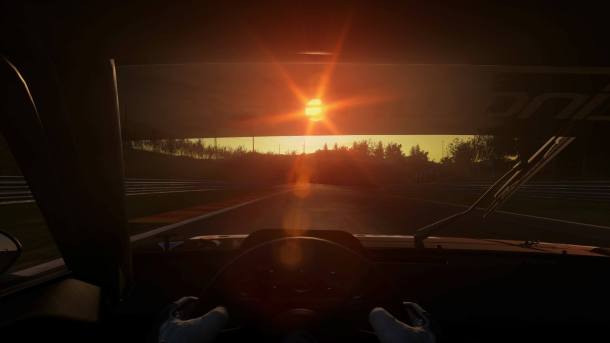
    Lens flare and natural light effects look great, don’t get me wrong, but the extent to which it’s being used has become a little bit rampant. It was something I first noticed with Driveclub, which I didn’t think was a particularly great game at the time, but it certainly looked the part due in no small part to its amazing lightning and weather effects.  Well it looked amazing, that is you could see the bloody track, what with all the glare and flare.

    And playing Project Cars – another stunner of a game – I came across the same issue.

    11269283_10153261216217416_7015002520762928640_o

    And just by way of comparison this was me in a car driving into the sun just the other day.

    Screen Shot 2015-05-16 at 7.08.38 pm

    Look, driving into the sun isn’t fun, alright?  So to all you racing game developers out there, enough with the lens flare, eh?  Or if you’re insistent on it, for whatever reason, at least let me pull out a pair of polaroid sunglasses so I can at least see the track.

  • ArmchairWhat-ho, chums!

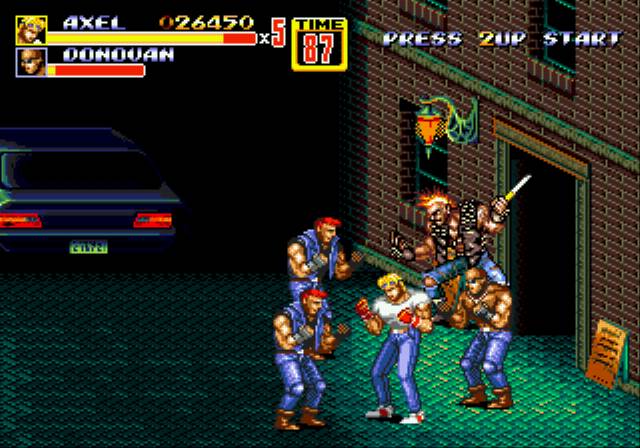
    So, Ms. D’s two lovely sisters came a-visiting recently, and we ended up chatting about their video game habits of old. It turns out that the sisters three were once enthralled by the Sega Mega Drive as youths, and would happily spend hours passing the controller back and forth through epic sessions of Streets of Rage 2, Sonic The Hedgehog and, to a lesser extent, Ecco The Dolphin (which left them “baffled” for the most part, a reaction I can empathise with).

    After hearing of this winsome Sega nostalgia, I immediately fired up the trusty old PS3 and promptly downloaded Streets of Rage 2 for a pittance – much to the sisters’ delight. There ensued a highly enjoyable evening of ass-whupping, nineties style – and I’m not sure I’ve ever seen Ms. D so enthused over a video game before. As I watched, nostalgia took its vice-like grip as the siblings were transported back to pre-puberty…

    Sadly it was an emotion I couldn’t partake of. As a Nintendo-devoted teenager, I only played on a Mega Drive a handful of times, and certainly never owned one – and it’s difficult to be nostalgic about a game you’ve never played. But having said that, it was wonderful to leap back into a simpler time, when games only required a couple of buttons and a big helping of bloody-mindedness, particularly before save games were commonplace and it was de rigeur to play through the opening levels of a game several hundred times, simply because you had no other choice.

    39216-Streets_of_Rage_2_(USA)-1

    But although I’ve never played Streets of Rage 2, I’ve heard lots of very good things about it, and I was keen to sample it for myself. And what do you know, it holds up surprisingly well for a game originally released in 1991. Yes, the gameplay is simple, but there’s just enough variety in the enemies and environments to make it engaging, and the artwork still looks fantastic. OK, some of the bad guys are recycled a little bit too much, but the combinations they’re presented in change throughout, and the final boss is fantastic.

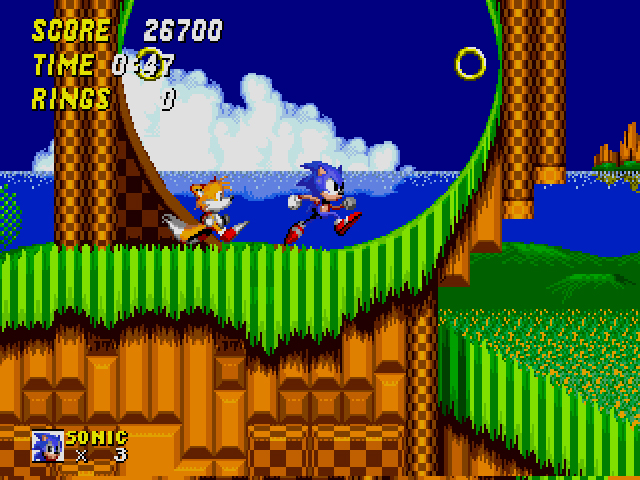
    Buoyed by the wave of retro-gaming nostalgia generated by SoR2, I went on to download Sonic The Hedgehog 2, which the sisters greeted with misty-eyed joy. Yet I struggled to warm to this one like I did to Streets of Rage. Back in the nineties, I remember playing Sonic The Hedgehog for the first time and being blown away by the speed of it. Yet very quickly it became apparent that going quickly was actually a recipe for disaster – at top speed it was impossible to see what was coming next, resulting in lots of unfair deaths from unseen spikes. So even though the game’s raison d’etre was speed, perversely it did everything it could to stop you going fast – and the same is true of the sequel. I found Sonic 2 initially fun but very quickly infuriating, and once we progressed to the later levels my long-held suspicions were confirmed: i.e. that the first levels in Sonic 1 and 2 are by far the best levels in each game, leaving little reason to progress.

    sonic-the-hedgehog-2-pc-windows-screenshots__3968_1

    Still, Ms. D remains a Sonic fan, and while charity shopping the other day I came across the critically lauded Sonic Generations for the PS3 for a mere £3. I’m hoping that both of us can enjoy this update of the old Sonic formula, and that perhaps the 3D sections fix that old Sonic problem – by actually letting you see where the hell you’re going.

    But through all this, and despite the D sisters’ Sega sentimentality, my nostalgia glands have remained dispiritingly unstimulated, purely because I’m coming to these games for the very first time. So over the weekend I decided to treat myself to an old Sega game that I HAVE played before – many times in fact.

    OutRun was a staple of my youth, being my go-to arcade game in musty waterfront arcades from Portsmouth to Porthtowan on many a family holiday. Recently released on the 3DS, 3D OutRun is an utterly wonderful update of the arcade classic, laden with subtle improvements but still retaining the enthralling gameplay of the original. As soon as I began playing I was transported right back to that beachfront arcade, the ten-year-old me peering over the top of the sweat-slicked steering wheel as I frantically stamped on the sand-covered pedals…

    Ah, there it is: that sweet, sweet, intoxicating hit of nostalgia.

    Toodle-pip for now!

    3D OutRun

  • speedball_2_brutal_deluxe_2The road to the top is a long and bloody one for Brutal Deluxe.  Week after week the boys run out onto the field and pour their heart and soul into the game, putting their bodies on the line, all for a taste of that sweet Speedball victory.  They may start as a bunch of young Division 2 upstarts and plodding veterans, but one by one they take their opponents down, on their way to glory.  Damocles. Steel Fury. Violent Desire.  They’re all notches on your belt on the brutal path to the top of Division 1.  And what a violent and satisfying path it is.

    Speedball 2 isn’t unique in the feeling of accomplishment it brings with it – there is just something about sports games that gets me.  Whether it be the number crunching of the Football Manager series, or the Master League that made Pro Evolution Soccer such a time sink for me in the Playstation 2 era, there is something to taking a bunch of wooden-spooners up the ladder to a premiership.  But Speedball 2 is a bit special in the way you do it.

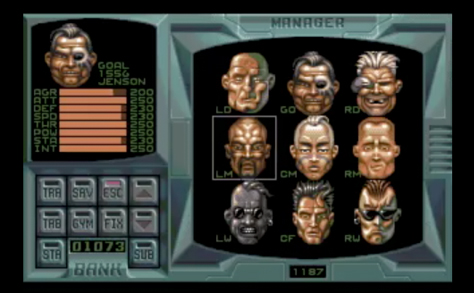
    And so you train your rag tag bunch of blokes, you work them to the bone in the gym, and buy them as many pairs of Bitmap Shades and Power Gloves you can carry.  But no matter how hard you train, no matter how much blood sweat and tears your boys poor into winning, you’ll need help from the superstars of the game. And so you pony up the big future bucks to buy the Robbens and Sneijders of the future sport world.

    They may be expensive, but it’s these mutants, these freaks of the game, that will be the difference between success and failure. And that’s worth saving your pennies and enduring some hardships early on in your Brutal Deluxe campaign for.

    I say mutants because they kinda were just that.  Blokes with bionic eyes and tattoos on their faces.  Fellas who look a bit like they’ve come from a galaxy far far away.  And a guy that looks a bit like the love child of Prince and James Brown.  While they look like a freak show though, on the metal arenas of the Speedball tournament, they’re right bloody monsters.  It was always a violent game, but with these freaks on the field the blood flowed thick and fast, along with the bodies of the heavily armoured players as they fell heavily on the steel floor.  It’s this controlled violence that set Speedball 2 apart from other sports games.

    And the moment you take to the field with your first superstar is a moment you remember.  The pace of the game changes and the game slows to a halt as the ambulance takes to the field and the game’s casualties pile up.  Winning by points is a victory, but winning by taking out the other team, well that’s an absolute drubbing.  And it’s a drubbing that becomes a distinct possibility when you’ve got bloodthirsty half-cyborgs on your side.  Speedball 2 is a blood sport after all, and when you’ve got Raw Messiah on the ropes in the final, you’ll be thankful for every drop of blood your lads are letting onto the floor.

    Ice Cream, indeed.

    Speedball2Celebration

  • XIIIPS2Video game designers have taught us, through intricately designed HUDs throwing all manner of information at the player every second, to pay attention to our surroundings.  Visual cues are more often than not integral to success, and much research and effort has gone into cramming as much vital information on screen in the most efficient way possible, to ensure that players have all the visual tools they need to stay alive.
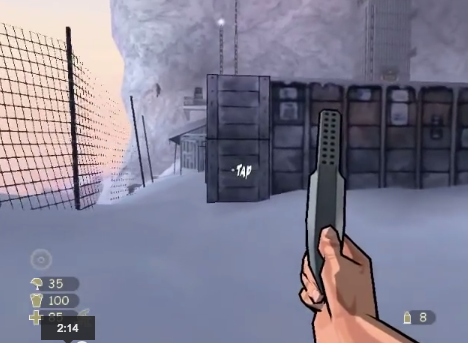

    But what about sound?   If you’ve ever tried to play a game with the sound muted you’ll know just how strange of an experience it is.  And subtitles can only go so far, because while they capture the spoken scripted tracks, it often entirely misses the ambient sound of the world around the player.  If you try it for yourself you’ll realise it’s not a trivial thing and that every genre –  from the sound of car engines roaring up behind in Forza or the ruffling of enemies in Bloodborne in a room head – immerses the player in the world and conveys amazing amounts of information through sound.

    In a lot of ways XIII was a thoroughly average Playstation 2 game.  It was, like many other games at the time, piggybacking on both the enormous popularity of shooters and the rather infectious fascination with cell-shaded graphics.  But I liked its take on the European graphic novels I grew up with and at the time it was quite the looker.  It may not have been the best shooter, but it was certainly unique, and in an era where the carbon copy was king that was enough to hold my interest.

    But what stood out to me – even at the time – was how its reliance on onomatopoeia could have potentially made it incredibly friendly to people with hearing impairments.  At times it just captured what was quite obviously happening on screen, with a BAM! here or a KABOOM! there, accompanying the sound effects pouring out of the speakers but also the action on-screen.  And this is a great way to convey the visceral nature of a game’s sound effects.  Games are a sensory experience – both visual and aural – and anything that can be done to capture or enhance the atmosphere of a game should be done.

    But it was what happened in the quieter moments that really caught my attention.  Amongst the bazooka and assault rifle fuelled action that comprised most of the game, XIII was punctuated with some simple stealth sequences, that had you sneaking rather than shooting.  Gameplay wise it was nothing special, serving more to break up the action, while playing to the game’s espionage themes more than anything else.  But where it did revolutionise things was in how it used visual cues to convey the sound of nearby enemies, which if you’ve played a stealth game, you’ll know is key to experience.  SEEING the footsteps of an enemy is a nearby room get bigger as he draws nearer, as the words Tap Tap Tap move with him, is quite the experience even for someone who can hear.  While it may have been stylistic more than functional, it was an excellent way to visually convey sound, but an even more brilliant way to make the game’s stealth mechanics accessible to everyone.  And there is no reason this model couldn’t be adopted and adapted for every genre and every aesthetic – but perhaps more importantly no reason it shouldn’t be.

    And while we always looks for new and innovative ways to give equal opportunity to people playing games, the hundreds year old answer may be staring the  interface and accessibility designers right in the face, without them knowing it.  Comic books and graphic novels may be just visual experiences, but because of this, they’ve had to find ways to visually represent .  Subtitles are the natural extension of this, but if games adopted the onomatopoeia used to convey sound where there is none, we’d improve the experience of video games for those who can’t hear them by ten fold.  It’s not just a style choice, it’s a matter of accessibility and equality of experience, and I’m all for that.

    I would love to be in a world where everyone can enjoy the atmosphere created by video games regardless of any impairments.  And the great thing is it’s not a pipe dream.  But we just need designers to find more creative ways to improve the accessibility of their games.  I’d personally love to see VROOOOM! pop up at the bottom of the screen in Forza 6 as an opponent screams toward me, so I can only imagine the difference it would make to someone with a hearing disability.

    I’d love to hear the game playing experiences of people with hearing impairments or other disabilities, so if this is you, or you know someone else please share your experiences in the comments below.

    Screen Shot 2015-05-08 at 9.27.07 pm

  • NDDaschLike Animal Crossing before it, Nintendogs well and truly worked its way into my daily routine, evoking a sense of compulsion few games have.  It wasn’t obsessions necessarily, but rather a sense of responsibility, that saw me make my real life plans around my fake life obligations.  Whether it was my civic duty to perform weed maintenance to ensure my mate Cyrano didn’t leave Snooksville, or making sure my oh-so-very fake puppies were fed, bathed and walked every day, rain or shine I was there being a good upstanding e-citizen.

    Nintendogs also cemented Nintendo’s then ugly clamshell handheld’s place as king of my video game mountain.  I would like to say that it was an impulse purchase, or the result of a perverse desire to see the handheld’s true proof of concept, but the answer it slightly less exciting than that.  I was uncharacteristically excited for Nintendogs, had premeditated which version I’d bought, and was well-versed in the ins and outs of virtual pet ownership.  I simply couldn’t wait to own my own virtual dog, and so on the day of its release, I ran down to the store and picked up my copy almost right on 9am.

    Right from the outset it was impossible not to fall in love with Nintendogs.  The promise of an actual artificial intelligence was really something special – the way the puppies bounded around the garden, running up to the screen to greet you, imploring you through their adorable eyes to take you home – it was a new level of interactivity that was damn near unprecedented.  My first dog, Snag, was a Daschund.  It took a while for him to warm to me, but within days we were bounding across the neighbourhood together like one big happy family.

    While it’s cool to pretend that Nintendogs wasn’t cool or just wasn’t my cup of tea, to the contrary, I rather liked it to the point where for a little while it was probably my most played video game.  It had the innate ability to make me drop what I was doing just to pick it up, turn it on, and be the responsible pet owner I claimed to be.  There was something very tactile, very human, about interacting with your virtual puppies.  It turned the mundane into something more, against all odds ‘gamifying’ the less exciting parts of pet ownership, and making what is conceptually the most ridiculous idea into one of the most brilliantly executed games of that decade.  Particularly when I had a real dog sitting right there outside the back door.

    CyranoAC

    But much like the Tamigotchi craze, the game wasn’t necessarily relying on complex game design or thrilling narrative to draw players in and keep them there, it was appealing to people on a far more primal level. I was boxed in by an impending sense of virtual guilt any time I’d even consider neglecting these virtual worlds.  Because like most human beings I like to do the right thing, and that wily minx Nintendogs, she preyed on my naivety.  But I’ll be damned if I didn’t love every minute of it.  Whether it was washing, walking, or (embarrassingly) talking to Snag – there was something gratifying .  And if in the off chance I missed a day, the guilt was unbearable, and i’d wind up spending twice as long with him the next day.  It, like Animal Crossing, existed as a persistent world.  And whether I was there or not, Snag was at home alone, waiting for his owner to come home and spend some quality time with him.

    Guilt as a gameplay mechanic may not sound compelling, but if I’ve learnt anything from Animal Crossing and Nintendogs, it’s that it can be an incredible motivator to stick with a game.  All too often I find it far too easy to put a game down and never return.  So many adventures have gone uncompleted, damsels or gentlemen left unsaved, and the world left in a state of disrepair or decay.  And the knowledge that no matter how long I leave it the story will be in the same place, the characters no better or worse off, and the world will be waiting for me to save, takes away any sense of urgency.  Apocalypse will always wait, but those dogs need feeding.

    So what if guilt was used as a mechanic or driver in most video games, where time spent outside of the game negatively impacted the world in the game, and the virtual blood was on your hands?  Imagine Far Cry 4 if the blood from the slaughter of innocent Kyratis at the hand of Pagan Min in your absence was on your hands, or take a sports game, where your failure to turn up to training every day impacted your team’s performance.  Most games are predicated on doing the right thing, and as Nintendogs and Animal Crossing proved, that is a strong motivator for play.  If that premise were extrapolated to matters of life or death, I can only imagine how powerful of an experience that could be.

    Guilt simply isn’t a good feeling, and any game that encourages you to avoid it simply by playing it, is something very special.  Getting you invested in a game’s world is one thing, but forcing you to live by that world is quite another.  In this respect, Nintendogs and Animal Crossing weren’t just cutesy brilliant technical showpieces, they were game design revolutionaries.

    Nintedogs

  • With every man and his dog having a rip-roaring whinge about bloody remakes, you’d be forgiven for thinking that they were as contagious and worrisome as STDs amongst first year uni students.  But put away your frangers for a minute you horny little bastard, because if you believe me, remasters and remakes may be the video game equivalent safest sex around.  Providing you choose the right games of course.  The last generation is home to an amazing range of games, many of which wouldn’t feel entirely out of place on the Playstation 4 or Xbox One, providing they had a bit of a cut and polish.

    Being the shallow bloke I am, here are nine games I’d love to play again, after a good old fashioned nip and tuck.  Now get to it, Doctor!

    F.E.A.R

    Call mFEARe utilitarian – I do live in Canberra after all – but I quite liked the endless office and warehouse buildings you traverse through the course of Monolith’s horror-shooter FEAR.  It wasn’t the most amazing technical show piece even at the time of release – and the Xbox 360 and Playstation 3 version even less so – but its functional visual design did just enough to keep things interesting.  And that was never really the draw of the game, because while it did rely to some extent on its visuals to create some of the game’s scariest moments, it was the soldiers’ eerily humanlike artificial intelligence that made FEAR such a brilliant first person shooter, and one that still plays as well now as it did then.  I don’t necessarily need an excuse to play through the game again, but a fresh coat of paint would certainly sweeten the deal.

    Dead Rising

    DeadRisingNo game from the last generation better defines ‘next generation’ than Dead Rising.  It may not do much to impress almost a decade on – particularly when compared to the most recent sequel – but at the time the combination of its brilliant art direction and the sheer number of shambling corpses on the screen made it a bit of a showpiece.  Both of its sequels made significant technical leaps, but it’s the hallowed halls of Willamette Parkview Mall that remains the best game in the series, and the game with the most to gain from a makeover.  Adding in some of the weapon crafting elements from later games would just be the cherry on top.
    Singularity

    SingularitySingularity was both a cracking playing and cracking looking game when it came out, but much like Raven’s other shooter effort Wolfenstein, fell largely on deaf ears when it was released into the wild.  A remake would give it another shot at life, and with the horsepower of the new consoles, that alternative soviet-era world could really be brought to life.  There are fewer shooters last generation that had such a unique setting as singularity, with Bioshock being the obvious point of comparison, but for mine Singularity edges it out as the more deserving of the two for some plastic surgery and a second chance at love.

    Rockstar presents Table Tennis

    RStabletennisIt’s hard to believe that Rockstar made a Table Tennis game for one console, let alone the fact that they tried it again on the Nintendo Wii a few months later.  But while Rockstar’s Table Tennis, the fabled developer’s first foray onto last generation hardware, wasn’t the most full-featured game around, it certainly played a great game of deceptively deep tischtennis.  It also looked pretty great, although some of that shine has worn away with time.  It is a game that doesn’t necessarily suffer as a result of its age, but there would certainly be no harm in giving it some graphical peptides and giving it another shot at upending the table.

    Deadly Creatures

    DeadlyCreaturesI can’t imagine how much time the animators at developer Rainbow Studios spent studying how the legs of arachnids articulate when they walk, but Deadly Creatures captures scorpion and spider movement perfectly.  And I should know, I spent the better part of my youth catching highly poisonous spiders, to much displeasure from my parents.  But strange childhood fascinations aside, Deadly Creatures’ premise is a unique one, and the world created around it creates some fantastic ‘Honey, I shrunk the Kids” moments of scale and scope, making it as close as you’re ever likely to get to experiencing the world as one of our eight-legged friends.  And I can only imagine how much more impressive that would be running on something other than the Wii.

     Vanquish

    VanquishPS3I’m not sure there is any game more deserving of belonging on more powerful hardware than Vanquish.  It was blisteringly fast in a way that few games are, and I’m no frame rate connoisseur, but running at a rock solid 60 clicks I can only imagine how much of a spectacle Vanquish would be if it was beefed up.  As one of the most visually striking and effects laden third person shooters of the generation, it’d be nice to see its rough graphical edges get a bit of smoothing out, to bring its cheesy but memorable world to life.  I can’t think of anything better than 1080/60 sliding, if i’m entirely honest.

    Midnight Club: Los Angeles

    MCLA_coverRacing games are the sort of thing that quickly become superseded, but with no new Midnight Club game on the horizon, Midnight Club: Los Angeles it is still the best in breed when it comes to arcade street racing.  And it can’t easily be topped, with brilliant core racing topped with an impressive living virtual realisation of the city of Los Angeles, that still looks and plays the part quite a number of years on.  Rockstar Games’ Rage engine got quite the workout with the last Midnight Club game, with super saturated sunny days making way for stunning artificially lit nights, and the cars shimmering as they drove through the streets of Los Angeles at speed.  It was truly something to behold when it was released.  Of course a touch up here, a spruce up there, and an entirely new soundtrack everywhere wouldn’t necessarily go astray.

    And if a remaster could include the remixed levels found in the quite impressive Playstation Portable version of the game, well that’d just be a bit of a bonus to an already spectacularly complete game, really.

    Red Faction: Guerilla

    RedFactionGuerillaBoxTwo of my favourite Playstation 2 era games were the Red Faction games, both of which were brilliant shooters, but neither of which were particularly innovative in their approach to game design.  When the sequel Guerrilla came along though, that’s exactly what it did, making enormous steps forward for not only the franchise but for the way physics and destruction are incorporated into open world gameplay.  Watching a building crumble around you, or ideally on a bunch of Ultor goons, after you’d taken your hammer to its support structure wasn’t only fun, it was a bloody revelation.  Giving the physics a good hard do over while making Mars’ dirt look a bit more detailed could only improve a game that was already fantastic.

    Ninja Gaiden Sigma

    NGSigmaBoxAs far as I’m concerned no generation of hardware is complete without Team Ninja having a crack at peddling Ninja Gaiden onto the masses.  And the Playstation 3 remake of the Xbox exclusive, Ninja Gaiden Sigma, still looked pretty good at the start of last generation due in part to the enormous  jump to high definition.  But by the time the PS Vita game rolled around, while it was impressive to see it running on the small screen, it was starting to look a little long in the tooth. But by Jove it still played as well as it did way back in 2004, and with a bit of updating, it could be brought back to its former technical glory.  A remake of a remake of a remake?  Don’t mind if I do.

    Do you have any last-gen games you’d like to see get the remake or remaster treatment?  Let us know in the comments.

    RSTableTennisScreen

  • MegaLoManiaCharactersIt’s a bloody pandemic.  Turn back the boats, lock up your wives and daughters. They’re absolutely everywhere and they’re taking over.  Of course I’m talking about remakes and remasters, the plague upon our houses, the trend that is moving the Doomsday clock’s minute hand closer and closer to midnight with every passing day.  And I’ll bet there’s more where that came from.

    But no need for alarm, because if the remakes to date are anything to go by, games over the last ten years are a bit like fine wine and get better with age.  Halo: The Master Chief Collection proved that Bungie’s hulking green Spartan is evergreen.  The Sleeping Dogs Definitive edition proved that life in Hong Kong can be even more beautifully gritty than it was on last generation’s hardware.   And perhaps the remake with the shortest lag time – The Last of Us – proved that its narrative can only get better with greater fidelity.  But most of all they all proved that a cracking experience is a cracking experience.

    It is entirely subjective of course, but in many ways it begs the question of how much of one’s enjoyment is derived from graphical fidelity.  As someone raised simultaneously on the technical brilliance that the Amiga 500 pushed at every turn and the rather more humble power of the monochromatic monster that was the Game Boy, I’ve always been a bit torn as to how important visual fidelity is to the experience as a whole.

    But if my recent experience with the first Halo game on the Xbox One – with the abundance of Ps and more frames than the Louvre – I realised that a visual overhaul may be enough to trick my brain into thinking it’s a whole new experience.  Because as soon as I’d played the game through with its original graphics, destroying the eponymous Halo in the process, I started it back up again with the new visuals.  And half way in it just feels like a new experience, while still scratching that nostalgic itch that makes one feel all warm and fuzzy inside.  Nostalgia is a bit like a drug – no matter how recent – and publishers are more than happy to be the guy peddling it.

    Of course it’s not a new thing to video games, last generation saw a fantastic array of remasters hitting the Playstation 3 and the Game Boy’s own Donkey Kong was practically a remake and remaster of Nintendo’s classic of the same name well before it was in vogue.  But the trend has gained momentum in the last couple of years, and it seems every man and his dog wants a piece of that sweet smelling cash stream.  And I’m often first in line to hand my hard earned over.

    But take we long in the tooth players out of the equation for a moment and you’ll realise that there is a wealth of game experiences out there that someone old or young is yet to experience.  Believe it or not there is someone in the world that doesn’t own an Xbox 360 – and one who perhaps doesn’t want to – that may want to experience 2006’s hottest technical showpiece that is Gears of War.  It’s a distinct possibility, now bear with me here, that game publishers aren’t solely servicing the ‘been there, done that’ crowd. It may be hard to believe, but perhaps its not about us, but about them.

    But you know what? Even if that’s not the case, video games are now old enough as a medium to warrant bringing things back, just like films and books have done for years upon years.  The better part of 40 years is a long time, and it is a near endless well of ideas to pull from, some that have been largely lost to the annals of time.  How there is no modern equivalent of Sensible Software’s Mega-Lo-Mania will forever remain a mystery to me, and in absence of some bright spark taking the initiative to remaster it, it’s a game that will sadly remain buried beneath its contemporaries and out of reach for all but the most dogged enthusiasts.

    So I say more of it.  In fact, dig a bit deeper and pull out some more obscure stuff, and give them a second chance at life.  There is no shortage of not-all-that-old games that immediately come to mind as prime candidates for a remake, with the first Dead Rising sitting proudly at the top of that list, closely followed by the twilight Playstation 2 release of the final game in the Onimusha series.  And I’m sure every  person that has ever picked up a controller has at least one game they’d put hand on heart and say “I’d love to play that again and prettier if you please”.  That’s the sign of a medium that is culturally relevant, one that has the ability to speak to anyone and everyone on different levels, and one that is able to pay homage to its roots.  And perhaps it’s the ‘everyone’ for whom these games are intended and maybe even best enjoyed by.  Even if it is the more seasoned of gamers that pay the most attention.

    In short: calm your tits mate, she’ll be ‘right.

    LastofUsRemastered

  • HALOCEAnniversaryI love The Library.  There, I said it.  Every time I play through Halo: Combat Evolved it dawns on me that it is once Master Chief makes the acquaintance of 343 Guilty Spark that the game really picks up, and becomes justifiably one of the historical cornerstones of the medium.  Being trapped in the tight corridors with the deadly Flood and its infected prey may not be the pinnacle of the tactical combat that to that point Halo had been the purveyor of, but it is during this intensely compressed period of fast-paced and twitch-based combat that Halo really comes into its own.  You may not be flanking Covenant grunts or taking down energy shields, but the change of pace that The Library brings with it is for mine, the pinnacle of first person shooting.

    Anyone who has played Halo – and I’m sure that’s close to everyone both living and deceased by now – knows that in a lot of ways The Library is trial by fire.  The Flood has barely been introduced to the player before you’re forced into close quarters combat with a foreign enemy, an enemy that attacks en masse, and an enemy that challenges you to change your approach to combat.  I could write ad nauseam about how the Halo series made weapon design and balance into an art form – and it did – but it is during The Library that it becomes incredibly obvious just how integral the weapons are to the whole experience.  What may have been your go-to weapon combination fighting the covenant may not suit your battle against the rushing kamikaze infected – 343 Guilty Spark even passes comment on it, “Puzzling. You brought such ineffective weapons to combat the Flood, despite the containment protocols””, and it is the Library’s school of hard knocks that very quickly forces you to find your feet, and discover what weapon combination works the best for you. Or die trying.

    But it is also the textbook level design that helps make the great halls of The Library not only a brilliant lesson in first person shooter weapon design and selection, but the perfect training grounds for fighting the flood .  Isolating the Flood the first time you experience them in their full force is one of the smartest design decisions of the modern era, taking the player out of the fight with the Covenant temporarily, and focusing the player on learning how to approach this entirely new enemy.  Halo is as much about knowing the opposition as it is knowing your surroundings, and it only takes a moment to recognise that intelligent and battle-hardened the Flood are not.  But The Library – complete with the scripted progressively narrowing kill rooms – is the perfect exam to test your mettle and teach you the skills you’ll need to make it through the rest of the game.  Because the moment you step out of the Library, you’ll be caught in the crossfire between two vastly different enemies, who are both hellbent on killing you.  Whether it was intentional or not the aptly named Library is the place almost singularly designed to teach you how to succeed for the rest of the game, and it is this cleverly-disguised tutorial right at the peak of the game’s storyline, that is the moment the game went from a cracking good time to a masterstroke of game design.

    As someone who has never played a Halo game online, rather opting to enjoy the cracking single-player yarn Bungie and its kin have continued to wind throughout the series, it is easy to perhaps take some of the nuance of the game’s design for granted.  But time and time again every time I play the game – and Microsoft has given me ample opportunity to do just that – it all falls into place the moment the Flood comes onto the scene.   From level design that is purpose-built, to the way it changes player expectations and behaviour, and finally the way it represents a significant tonal shift in the game’s narrative, the Library is one of the best hours of gameplay in video game history.  And it’s an hour worth studying to understand what makes it so.

    HaloCE-theLibrary

  • The Last Story was great, and so is Xenoblade Chronicles – although they’re not without their niggles. One quirk is that both games use British voice actors, which makes for a refreshing change from the usual American voices in video games. But having said that, the acting isn’t particularly, well, awe-inspiring, and in Xenoblade particularly the script is filled with repetition and lots of stating the obvious. In fact, I’ve now switched the voices over to Japanese because I just couldn’t take any more of the actors saying the same thing over and over again.

    Also, the cut scenes just work better in Japanese. The conversation structure of Japanese doesn’t properly translate to English – often there are enormous pauses in conversation, after which one character will nod and gravely say “hai” (“yes”: but really it can convey all sorts of meanings depending on context, and it’s used more extensively than “yes” in English). In the game translation, you usually end up with someone saying “I agree” after an enormo-pause, which just sounds ridiculous.

    The best Japanese to English translations tend to involve the translator reinterpreting the text and, where possible, redoing the lip sync to suit more usual patterns of English conversation. But unfortunately that’s not always possible – there was a fascinating article in EDGE issue 278 (unfortunately not available online, but discussed here and available to buy here) in which translator Alexander O Smith details the difficulty he had in rewriting the script to match the fixed lip syncs in Final Fantasy XII (most agree he did an outstanding job on the translation).

    But certainly with Xenoblade, the game just makes more sense in Japanese… if that makes sense.

    xenoblade-chronicles-dialogue

  • The number of games I want to play far outweighs the number of games I have the time to play (a subject I’ve touched on before). And with a baby soon to enter the Merriweather household, that gaming time is set to shrink even further.

    There are a few things I’m doing to make the most of the game time I have. One is to focus on shorter games in order to pack more in. Another is to avoid time-consuming subquests and DLC and just focus on the main story. And a third is to focus right down on only the genres and titles that I enjoy the most.

    There are lots of games that I’m intrigued about. I’m quite curious to play Titanfall and Sunset Overdrive, for example. But these sorts of shooters aren’t really my bread and butter – the genres I most enjoy tend to be turn-based strategy games, RPGs, point and click adventures and pretty much everything by Nintendo. So although I’ve got first-person shooters like Killzone 3 and Crysis 2 on my backlog, the chances are that they will never be played, as I’ll always choose a Zelda game or X-COM instead when I’ve got a window of playing time.

    xenoblade-chronicles-3ds-release-date

    And as part of focusing on specific genres and titles, I’ve set myself the goal of finishing the three ‘Operation Rainfall’ RPGs: The Last Story, Xenoblade Chronicles and Pandora’s Tower. These three were some of the last games to be released for the Wii, and they were the subject of a successful fan campaign, dubbed Operation Rainfall, to have them released in North America (Xenoblade Chronicles had already been released in Europe).

    I’ve already finished The Last Story (see my review), and I’m playing through Xenoblade Chronicles at the moment. Plus I bought the newly released Wii U version of Pandora’s Tower last week, so I’m well on my way to achieving my goal. Perhaps the only snag in my plan is that I’m enjoying Xenoblade a bit too much – I’ve already ignored my rule to avoid subquests, and although I’m 35 hours in, I’m nowhere near the end of the game. Still, there’s no time limit on finishing the Operation Rainfall games – it may well take a year or more if my time is truly limited. But the important thing is that it’s an easily achievable goal.

    gt_massive_thumb_PandorasTower_640x360_05-02-13

  • IMG_2607Good news everyone! With the arrival of Robin and Lucina, my set of Fire Emblem amiibos is complete! At least until they decide to release any more Fire Emblem-themed amiibos, that is.

    Lucina, of course, is one of the main characters in the recent Fire Emblem: Awakening for the 3DS, whereas Robin is the player’s character in that very same game – and until Super Smash Brothers for Wii U came out, I had no idea he/she had a name (you usually give the character a moniker at the start of the game). The amiibo is of the male version of the character – although Ms D thought he was a woman. I suppose he is a bit androgynous…

    IMG_2610As with the other Fire Emblem amiibos, I’m impressed with the level of detail on these figures – they really look great. Even Ms D admitted that they look pretty cool, even though she’s slightly concerned that tiny plastic toys are taking over the living room. She asked me how many more are arriving.

    “Just one,” I replied, “It’s Yarn Yoshi, but that one’s made out of wool, so it looks really cool… Oh, and Ganondorf as well.”

    Cue raised eyebrow.

    “Well, he needs to keep Link company…”

    IMG_2611Anyway, back to Lucina. I was surprised to see her sporting this rather comprehensive support structure, although her legs are pretty spindly, so it’s understandable. To be honest though, the support is fairly unobtrusive – unlike Link’s massive yellow pole. The less said about that, the better. Although actually I barely notice it any more – like a carpet stain that you get so used to that you’re surprised when guests point it out.

    IMG_2613

    But I digress. The main thing is that Marth, Ike, Robin and Lucina are together at last, and looking rather lovely on my mantelpiece. I’m looking forward to nabbing Codename STEAM when it’s finally released over here and zapping these characters into the game. But to be honest, that’s just a bonus feature – I mostly bought this lot just to look great on the shelf. And I’m fairly sure that’s what most amiibo collectors will say, too.

  • Dante_DMCWhen i was a young university-aged adult i wanted desperately to be a cool dad when i grew up.  By age 18 I’d met ‘the one’, which in my slightly over-studied and hormone fuelled mind, meant that I was on an accelerated path to parenthood.   In the heady days that were the early 2000’s I was listening to Punk rock and Pantera, wearing studded belts and shorts down to my knees and socks up to just thereabouts.  And it was at this height of youth that I had grandiose visions of being a 20-something father in that image, the cool dad that listened to cool music and wore cool clothes, the kind of dad my theoretical kids would think was so cool they’d never be embarrassed to bring their friends home.  Of course none of that panned out, as I grew up and grew out of that phase, largely leaving all of it behind, much to the delight of my parents and now fiancee.  Time is a wonderful thing.

    Around that same time, Capcom’s classic was on the minds of that same uni student, and the Devil May Cry series was the king of my own Playstation 2 mountain. The combination of stylish combat, amazing art design, and what was a technical marvel at the time, had me playing and replaying each entry in the series over and over again.  Every game was the same, I’d slog my way through to the end credits, and then turn around and started all over again.

    But I think what sealed the deal for me was the character of Dante himself, who was by far the coolest video game character around, and full of the kind of attitude that would appeal to any red-blooded teenage bloke hell bent of venting that testosterone from their veins.

    And people were bloody angry when Capcom went and redesigned Dante.

    He was still the same bloke, the same gun-toting sword wielding Nephilim Son of Sparda demon hunter and all that, just looked a little bit different to the guy we used to know.  Gone were the silky smooth white locks, gone was the epitome of Japanese character design circa 2001, and gone was the overly-buckled leather chest-baring ensemble.  In was a younger more modern and dare I say more masculine version of demon hunter that ditched the ornate look and feel of old Dante, and replaced it with a more casual and functional design.

    It wasn’t the biggest overhaul, it wasn’t the biggest reboot, and it wasn’t a far sight away from the original design.  But the internet wanted none of it.  They wanted the status quo.  They loved old Dante.  And hey, sure, like the rest of the internet I still have a soft spot for that sassy white-haired trench coat wearing Dante that wowed me so many years ago.  But you’d have to be blind as a platypus in water not to see that watching him run around slaying demons, what with his ‘look’ and all, was becoming a little bit like watching an old hair metal star prance about wearing mascara and a leather jacket.  And if Capcom didn’t change him, he’d be a relic of a bygone age, an embarrassing reminder of what was once cool.  Part of what made Devil May Cry so great back when it was first released was how edgy it was, but 15 years later in an age where most kids utter the “c-word” by age 10 and are sexting by age 16, Dante’s particular brand of sarcastic shenanigans was practically tame.  And tame isn’t what the game that changed so much, and inspired so many, was ever based on.

    And that needed to start with Dante.  He needed to get with the times and Capcom needed to get him there – kicking and screaming if need be.  Time goes by, and with it, what’s cool inevitably goes with it.  Much like the odd stalwart Pantera fan you sometimes see on the street, still sporting ripped up jeans and flannelette shirt and toting a bottle of Jim Beam, it was time someone pulled him aside and told him to move on.  Because I bet if he has kids at home they don’t think he’s as cool as he thinks he is.

    DanteDMC

  • There was something wonderfully magical about Viva Piñata. It was easy for tending to one’s garden to border on obsession, as building a sustainable ecosystem through both the comfort of nurture and the ruthlessness of nature, had me running home from work at lunchtime to briefly play god from the comfort of a beautifully manicured garden.  From the second my first Whirlm crawled into my garden, who I proceeded to affectionately and maturely name Bellend, Rare’s world was the place I’d go home to at the end of the day.  It was my secret garden, complete with trampoline.

    And from the humble beginnings of your first Whirlm the garden will grow and so too will the ecosystem of the creatures that inhabit it.  All manner of delightful looking creatures will stumble across your garden, sniffing around the edges, wanting to call it their home.  And it will become your life’s purpose to accomodate them, to find a way to coax a couple of heart-meltingly adorable Galagoogoos onto your land, and then to get them randy enough to have a good old root in their lavish hutch.  And by Jove you’ll have the best damn pedigree Piñata in all the land!

    But before all this, you have to learn both the wonders and vicissitudes of life, that it can be beautiful at the same time as it can be cruel.  As your ambitions as a gardener grow, and the beautiful family of four Whirlms you’ve tended to aren’t enough anymore, you’ll become ruthless in your pursuit of garden biodiversity.  First it’ll be a Sparrowmint.  And then another.  But at some point you’ll want more than just the Bellend family and a couple of Sparrowmints hopping around on your perfectly mowed lawn.  You want a Fudgehog and you want it bad.  And that’s the precise moment your mind shifts from ‘maternal’ to mega-lo-mania.

    Just moments after you’ve seen the once lone Bellend raise a family of his own, with a wife and couple of kids roaming about the garden, you’re forced to the watch the family be torn apart.  It all moves in slow motion as the Fudgehog that has been scoping the garden for days, watching the Bellend family from the outskirts of your prefab paradise, swoops in and attacks the unsuspecting littlest Whirlms.  And a bloodbath ensues – or rather a lollybath – as the Fudgehog tears into paper exteriors to get to the deliciously sweet insides.  But at tragic as it was watching the garden intruder tuck into little Bellend Junior and his sister Bellendette, that was the moment was when I realised that Viva Piñata was literally making me call the shots on nature, and decide which species would live and which would die and which I would sacrifice for the betterment of the garden.  And so while you farm your flock of adorable and fluffy Goobaa it’s impossible to not feel guilty that you’re doing it knowing full well they’re head for the slaughter at the hands of a nearby carnivore.

    For me Viva Piñata took hold of my innate desire to play god, while tapping into that little obsessive corner of my brain to keep me throughly occupied with the more micro curating of an aesthetically pleasing but functional garden.  A beautiful flower here, a lovely water-fern there, a gate to ease racial tensions everywhere.  But while the game masquerades as a nice little sim-like game with cute-as-a-button characters and myriad of items both decorative and function to fill your garden with, it is actually a game that rather covertly teaches you about the fragility of biodiversity. And the  worst part is that every step of the ecosystem’s food chain lives or dies by your choices.

    No one said playing god would be easy.

    SparrowMint - Viva

  • I could write about Doom all day. And believe me I’ve tried.  And tried again.  For me it sits right next to Wipeout as one of the games that made me sit up and pay attention to games as more than just a thing that I did when the sun went down or the ball was hit over the neighbour’s fence.  It the sort of thing that set young tongues wagging at school, sharing our stories of ultra-violent debauchery, putting into carefully crafted prose our tales of triumph against the dreaded Cyberdemon and his Barons of Hell.  There are plenty of things that define one’s childhood, and for me, Doom absolutely sits right up there next to the rather more pedestrian fandom I held for the likes of Alan Border and Ayrton Senna.

    And nothing has changed.  Doom is still great more than 20 years later simply because it had so many of those “AHAH!” moments that are hard to shake even though things have moved on.  It was nothing short of one of the most important games in my 30-odd years playing video games.  Because it seemed at every turn something was there that changed expectations about the medium.  And when there wasn’t a thing that made you go “mmmm”, the blood-soaked action was just so fast and frenzied that there was simply no time to notice.  Doom was a deserved cultural zeitgeist, and I feel ever so slightly for kids of today that don’t get the experience first hand the impact it had on the industry, and at a more personal level the sheer glee it brought to kids of my generation.

    But I’m not sure there was any one single moment in the 90’s, apart from perhaps seeing Mortal Kombat arcade machine in the flesh for the first time, that brought such unadulterated joy to scores of mollycoddled kids than hefting up the heaviest of heavy chainsaws and revving it up for the first time.  Never before, and only a handful of times since, has obtaining a melee weapon in a first person shooter been so defining.  But it was the face of the aptly named “Doom Guy” – who may or may not be named Flynn Taggart if you consider the Doom novels canon – that gave it such gravitas. His sinister but determined grin was that of a man whose odds of survival had not only been shortened, but a man who would take some semblance of glee from the chopping and maiming that was to come, who was up for the challenge.  It was Doom’s equivalent of laughing in the face of death, and as a player on the other side of the screen, it was almost like a shot of adrenaline right into the heart.

    The first thing I ever heard about Doom was that there was a chainsaw in it, that you could pick it up, and that you could use it as a weapon.  I have vivid memories of my much older brother and uncles describing in gory detail the act of cutting up an imp with the chainsaw, all the while almost taking great delight in the fact that I wasn’t allowed to play it.  “You should see the blood!” they’d say before mocking me with “but you’re not allowed to”.  And I wasn’t.  So for what seemed like a millennia I fantasised about that moment, the moment I would finally get to see the fabled chainsaw in action, the moment I’d finally play the game that all the grown-ups at family gatherings were cunningly hiding from the kids’ table.  But rest assured, when I finally did get my hands on that Chainsaw, my grin wasn’t too far off of what I was seeing on screen.  It’s a shame the wind didn’t change and preserve that moment in time.

    DOOM Chainsaw


    Do you remember smiling gleefully as the words YOU’VE GOT THE CHAINSAW NOW FIND SOME MEAT appeared on screen?  Or do you have another favourite video game moment?  Join the conversation in the comments below, or on Twitter using #MostAgreeableMoments.