• Another year, another countdown, another birthday.  And I’m boxing it all up, tying a nice little bow around it, and turning the ripe old age of 32 with a celebration of 32 BRILLIANT examples of FANTASTIC video game box art.  Join me, won’t you?


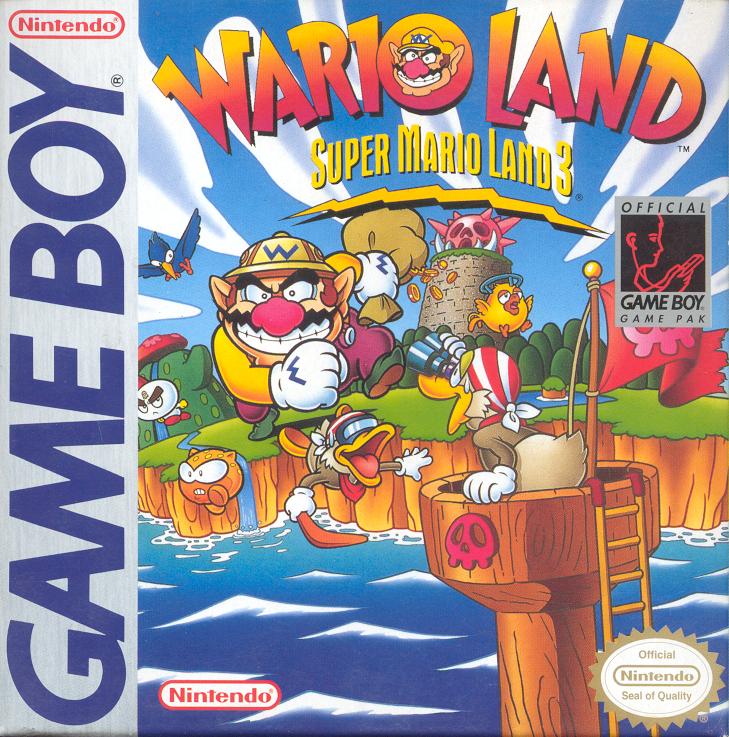
    Super Mario Land 3: Wario Land (1994) –
     Wario as a character is quite literally the closest thing I have that resembles Nintendo fandom, and while it didn’t catch on in earnest until years later, Wario Land definitely set me on that trajectory.  The box art too was a first, in that it was the first time I really got the wonder of Nintendo’s style, and of Japanese artistic direction more generally.  Even then as a committed fan of Disney I could see a certain inspiration taken from the house that Mickey built, but that there was something just a little bit off, but something that made it feel entirely different and unique.  Of course once I grew up and understood just how culturally and in some ways creatively different japan was from the United States and the United Kingdom it all made sense.  But for a majority of my childhood Wario Land was a curio, a view into the mind of a creative yet crazy individual, manifesting itself as one of the best video games ever made.

    WariolandGB

    Miss previous entries in the countdown?

    Space Ace (1983) – Transylvania (1984) – Impossible Mission (1985)Defender of the Crown (1986) – Faery Tale Adventure (1987) – F/A – 18 Interceptor (1988) – Blood Money (1989) – King of the Zoo (1990) – Lemmings (1991) – Pinball Fantasies (1992) – The Ren & Stimpy Show: Veediots! (1993)

  • Another year, another countdown, another birthday.  And I’m boxing it all up, tying a nice little bow around it, and turning the ripe old age of 32 with a celebration of 32 BRILLIANT examples of FANTASTIC video game box art.  Join me, won’t you?


    The Ren & Stimpy Show: Veediots! (1993) –
     As a kid there was almost nothing I loved more than Ren & Stimpy.  Something about the crass cartoon style and the even more crass subject matter just spoke to me in a way that few other things did.  Cartoonist John K isn’t just one of the most profound artists at least of my generation, he in some ways kick-started an drawing and animation style that definitely became pervasive throughout the 90’s, but in many ways was the forebear to much of the ‘adult’ cartoons being made today.   So influential was he that a few years ago he was a guest artist over at Stussy.   But for a large portion of my life, I’d eat up anything featuring the cat and dog duo.  Which is why Veediots! being such a thoroughly disappointing game hit so hard, because not only is the game itself based on some of the best episodes of the first series, but the cover art itself is Ren & Stimpy at their fourth-wall-breaking best.

    Veediots

    Miss previous entries in the countdown?

    Space Ace (1983) – Transylvania (1984) – Impossible Mission (1985)Defender of the Crown (1986) – Faery Tale Adventure (1987) – F/A – 18 Interceptor (1988) – Blood Money (1989) – King of the Zoo (1990) – Lemmings (1991) – Pinball Fantasies (1992)

  • Another year, another countdown, another birthday.  And I’m boxing it all up, tying a nice little bow around it, and turning the ripe old age of 32 with a celebration of 32 BRILLIANT examples of FANTASTIC video game box art.  Join me, won’t you?


    Pinball Fantasies (1992) –
     What makes this box art so special, you ask?  Well it certainly helps that the box art for Pinball Fantasies features prominent what, in my opinion, is one of the best pinball tables both real or imagined ever made.  Party Land is not only well designed from a table layout point of view, but it is also visually stunning, evoking Williams’ Funhouse if Funhouse was a bit more aesthetically fun. And that’s exactly what this box art does, it creates an air of happy-go-lucky, good old fashioned 1990’s fun.  From contrasting typeface to the blinding – almost gaudy – use of colour, the box art is one great big lesson in design that’s “so wrong it’s right”.  Oh, and just one glimpse of this box art will have me humming that attract mode tune for days.


    PinballFantasiesA500

    Miss previous entries in the countdown?

    Space Ace (1983) – Transylvania (1984) – Impossible Mission (1985)Defender of the Crown (1986) – Faery Tale Adventure (1987) – F/A – 18 Interceptor (1988) – Blood Money (1989) – King of the Zoo (1990) – Lemmings (1991)

  • Another year, another countdown, another birthday.  And I’m boxing it all up, tying a nice little bow around it, and turning the ripe old age of 32 with a celebration of 32 BRILLIANT examples of FANTASTIC video game box art.  Join me, won’t you?


    Lemmings (1991) –
     Lemmings is probably the most influential and formative video games I played as a lad.  I had a fascination with it, sometimes bordering on obsession, and would spend hours and hours memorising levels and finding the best and most efficient way through levels.  No man left behind was always my motto.  No video game box art in the history of video game box art has captured the game enclosed within better than Lemmings.  It perfectly captures both the order of the game when all goes according to plan, and the chaos when it all goes awry, in a scene that only becomes more impressive the more you look at it.  From the lollipop Lemming warning his peers of an impending cliff edge, to the poor bloke being cooked in a cauldron, it’s full of the kind of detail and European comic book visual humour you’d usually find in Where’s Wally or Asterix and Obelix.  For a game that is so intrinsically drenched in morbidity and death, it manages to set a tone that is anything but.  And it’s this messing with the audience’s expectation and perception of the rather macabre themes in the game itself that makes it such a magical piece of art.

    LemmingsBox

    Miss previous entries in the countdown?

    Space Ace (1983) – Transylvania (1984) – Impossible Mission (1985)Defender of the Crown (1986) – Faery Tale Adventure (1987) – F/A – 18 Interceptor (1988) – Blood Money (1989) – King of the Zoo (1990)

  • Another year, another countdown, another birthday.  And I’m boxing it all up, tying a nice little bow around it, and turning the ripe old age of 32 with a celebration of 32 BRILLIANT examples of FANTASTIC video game box art.  Join me, won’t you?


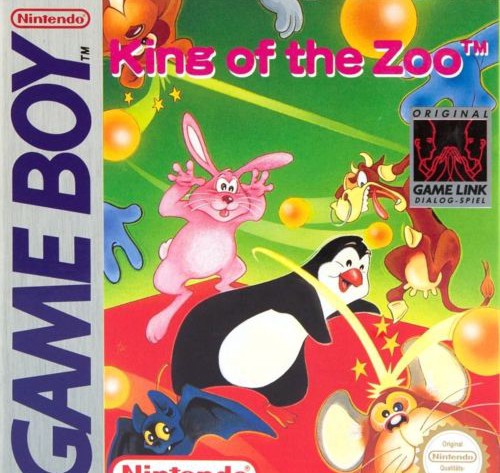
    King of the Zoo (1990) –
     I never really grew out of the ‘thinking anthropomorphic animals are cool‘ phase, but in the early 1990’s I was all about walking and talking animals.  Nestled right smack-bang in between my fandom of the stop-motion Wind in the Willows series and The Animals of Farthing Wood, King of the Zoo sat proudly in my brand-spanking new Game Boy.  Instantly grabbed by the character oozing from the animals in the box art as a youngster, King of the Zoo was a Game Boy mainstay for me for years, and knocking “Cow” out with a ball never really got old.  But as much as I love the box art, years later I spotted a Japanese copy in an antique toy store, thats box art was far superior in almost every way, not to mention being more representative of the game’s sprites.  Sprites which are, simply put, gorgeous.


    KoTZ

    Miss previous entries in the countdown?

    Space Ace (1983) – Transylvania (1984) – Impossible Mission (1985)Defender of the Crown (1986) – Faery Tale Adventure (1987) – F/A – 18 Interceptor (1988) – Blood Money (1989)

  • Another year, another countdown, another birthday.  And I’m boxing it all up, tying a nice little bow around it, and turning the ripe old age of 32 with a celebration of 32 BRILLIANT examples of FANTASTIC video game box art.  Join me, won’t you?

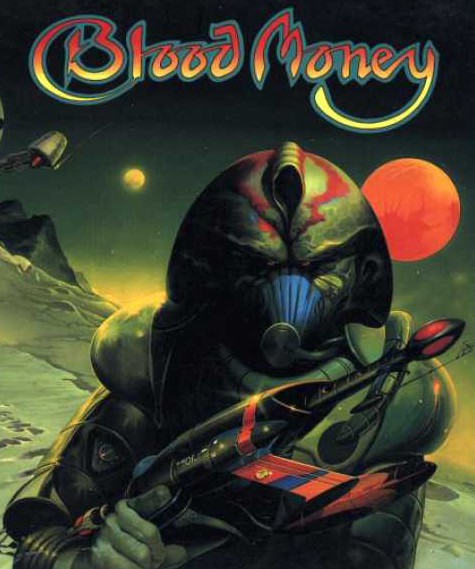
    Blood Money (1989) – There is unique, nay unmatched, about some of the art gracing the boxes of European and British games in the 1980’s and 1990’s.  Epically detailed, often disparate from what the games actually look like, box art in the early days of home computing was just that – art.  Blood Money from DMA Design was a beautiful side-scrolling shooter with striking design and stunning art, not to mention a cracking soundtrack, but the for mine the game disk could never have lived up to the brilliance of its packaging.  While the game came and went, the image of the superbly detailed sci-fi art by prolific British artist Peter Andrew Jones has always lingered, and is just the sort of thing that would have pride of place hanging on a wall in my home.

    (Peter Andrew Jones was also responsible for the cover art for one of my favourite Fighting Fantasy books, Starship Traveller)

    BloodMoneyA500

    Miss previous entries in the countdown?

    Space Ace (1983) – Transylvania (1984) – Impossible Mission (1985)Defender of the Crown (1986) – Faery Tale Adventure (1987) – F/A – 18 Interceptor (1988)

  • Another year, another countdown, another birthday.  And I’m boxing it all up, tying a nice little bow around it, and turning the ripe old age of 32 with a celebration of 32 BRILLIANT examples of FANTASTIC video game box art.  Join me, won’t you?

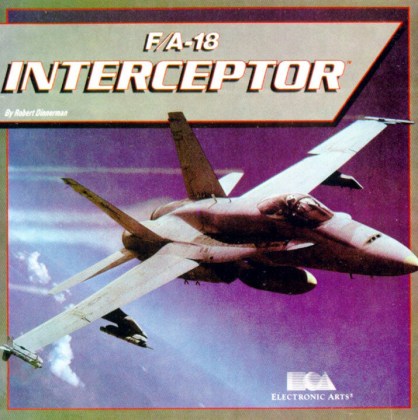
    F/A-18 Interceptor (1988) – It may not be the most exciting box art in the world, but by Jove there’s something about the form factor of a fighter that makes my hair stand on air.  I spent many an hour staring at the F/A-18 Interceptor box when I was a kid.  Not because it was a particularly spectacular looking box in its own right – it was just a fighter jet after all – but because unless my brother was at home to decipher the code wheel there was no way in hell I was jumping into the cockpit.  That said F/A-18 Interceptor introduced me to the F/A -18 fighter, which still do this day remains a bit of a personal favourite, and which kickstarted a life-long fascination with military aviation.  In fact learning that a variant of the F/A-18 is still in active service in the Royal Australian Airforce almost tipped me over the edge toward pursuing a military-service career.

    FA:18intAmiga

    Miss previous entries in the countdown?

    Space Ace (1983) – Transylvania (1984) – Impossible Mission (1985)Defender of the Crown (1986) – Faery Tale Adventure (1987)

  • Another year, another countdown, another birthday.  And I’m boxing it all up, tying a nice little bow around it, and turning the ripe old age of 32 with a celebration of 32 BRILLIANT examples of FANTASTIC video game box art.  Join me, won’t you?


    JulianFTAFaery Tale Adventure (1987) – 
    I was shit scared of Faery Tale Adventure when I was a kid, so much so that in Year 1 of Junior Primary School I wrote a story about it called “My Vivid Imagination” in which I was haunted by the ghost of the eldest and bravest brother, Julien.  He’d haunt me from outside my bedroom window, would appear on the computer monitor in the middle of the night, and would appear at the foot of my bed when I was asleep.  Strange that, because the game’s box art gave no indication of it being a horror game, insomuch as it gave the indication that it was a swords and sorcery and dragon’s your uncle fantasy game.  And of course resistance was futile, because along with my fascination with knights and castles came the obvious obsession with big hulking bloody dragons.  And honestly dragons do not come as mean-looking as the one the box of the game, what with its talons, f**k off teeth, and glowing mouth.

    History would have it though that the Faery Tale Adventure wasn’t a horror game, but so scarred was I by encountering the ghost of my brother Julian who had died only moments before, that I never did get very far.  So needless to say that big-arse dragon on the box was the only one I ever encountered.

    And Rest In Peace Julian.  I hardly knew ye.

    TheFaeryTaleAboxart

    Miss previous entries in the countdown?

    Space Ace (1983) – Transylvania (1984) – Impossible Mission (1985)Defender of the Crown (1986)

  • Another year, another countdown, another birthday.  And I’m boxing it all up, tying a nice little bow around it, and turning the ripe old age of 32 with a celebration of 32 BRILLIANT examples of FANTASTIC video game box art.  Join me, won’t you?


    Defender of the Crown (1986) –
    I’ll be honest and admit that it wasn’t until I was much older that I had any bloody idea what was going on in Defender of the Crown.  You know, something about knights, something about castles.  But as a kid that was more than slightly obsessed with medieval Europe – well just knights and castles really – I’d have been damned if I was going to not enjoy a game that featured just that on the cover.  Luckily I had a brother seven years my senior who I could watch play the game, while I just smiled and nodded in the background, pretending to know I had a clue what was going on on the monitor.  Of course years later when the household upgraded to the Amiga 500 version of the game, and my brain had somewhat matured, I saw what the fuss about the game was all about.  But really that Ezra Tucker illustrated box art is what kept me longing to play and understand the game for all those years.

    DefenderoftheCrown_C64

    Miss previous entries in the countdown?

    Space Ace (1983) – Transylvania (1984) – Impossible Mission (1985)

  • Another year, another countdown, another birthday.  And I’m boxing it all up, tying a nice little bow around it, and turning the ripe old age of 32 with a celebration of 32 BRILLIANT examples of FANTASTIC video game box art.  Join me, won’t you?


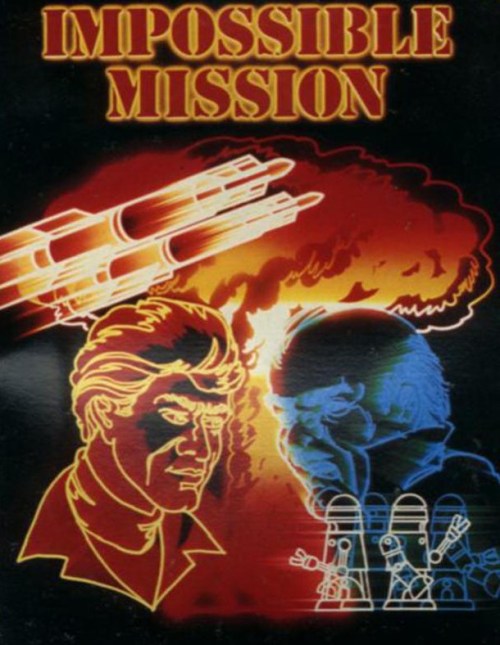
    Impossible Mission (1985) – 
    If there’s one thing synonymous with the 1980’s that’s not shoulder pads it’s nuclear weapons.  And when those nuclear weapons are made of neon, you may as well get yourself a perm and call yourself Jennifer Grey.  The box art of Epyx classic Impossible Mission wears its 1980’s heritage on its sleeve, so much so that just looking at it now gives me warm and fuzzy feelings of my childhood.  If artist Dan Flavin was less into minimalism and perspective, and more into action films, it would’ve manifested itself as Impossible Mission’s box art.

    Impossible_Mission_1985

    Miss previous entries in the countdown?

    Space Ace (1983) – Transylvania (1984)

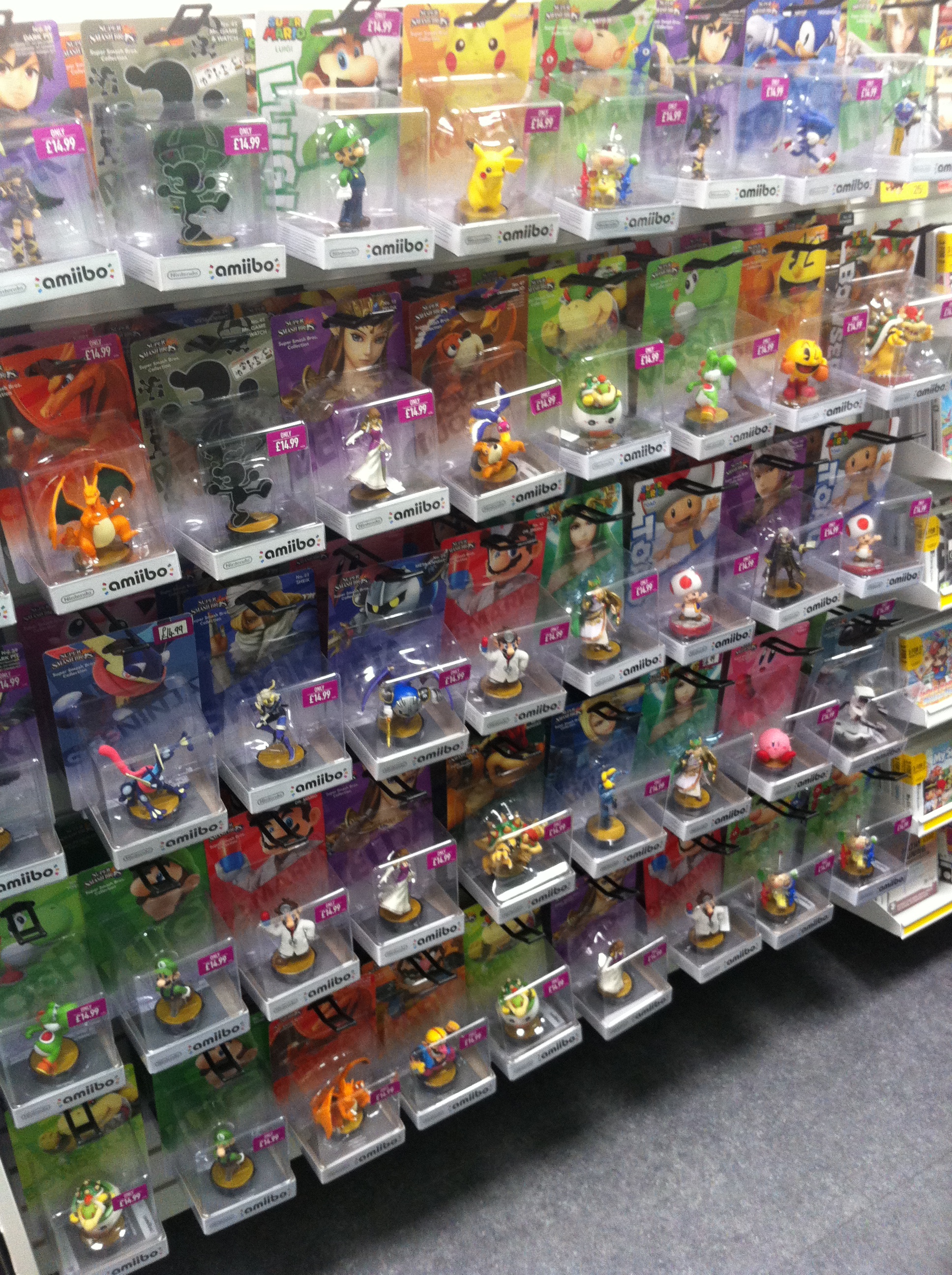
  • The last couple of times I’ve popped into GAME, I’ve been surprised at just how many amiibo are in stock. It seems that Nintendo have firmly delivered on their promise back in May to increase amiibo production. I saw all sorts of previously rare amiibo on my visits to GAME stores in Walthamstow and Edinburgh, including Greninja, Game and Watch dude and tonnes of others.

    Amiibo stand in Walthamstow GAME, mid-October.
    Amiibo stand in Walthamstow GAME, mid-October.

    After months and months of amiibo shortages, the sight of an amiibo stand packed full to bursting with the little blighters almost sent me into a frenzy. I’ve long since convinced myself that I don’t really need the likes of Duck Hunt Dog or Captain Olimar, but when I saw them dangling there,  RIPE FOR THE PICKING, I very nearly just grabbed them and dashed towards the shop counter, credit card waving in the air.

    But I didn’t. Luckily I managed to wrestle my inner child to the floor with a Self-Control TaserTM and walked briskly from the shop.

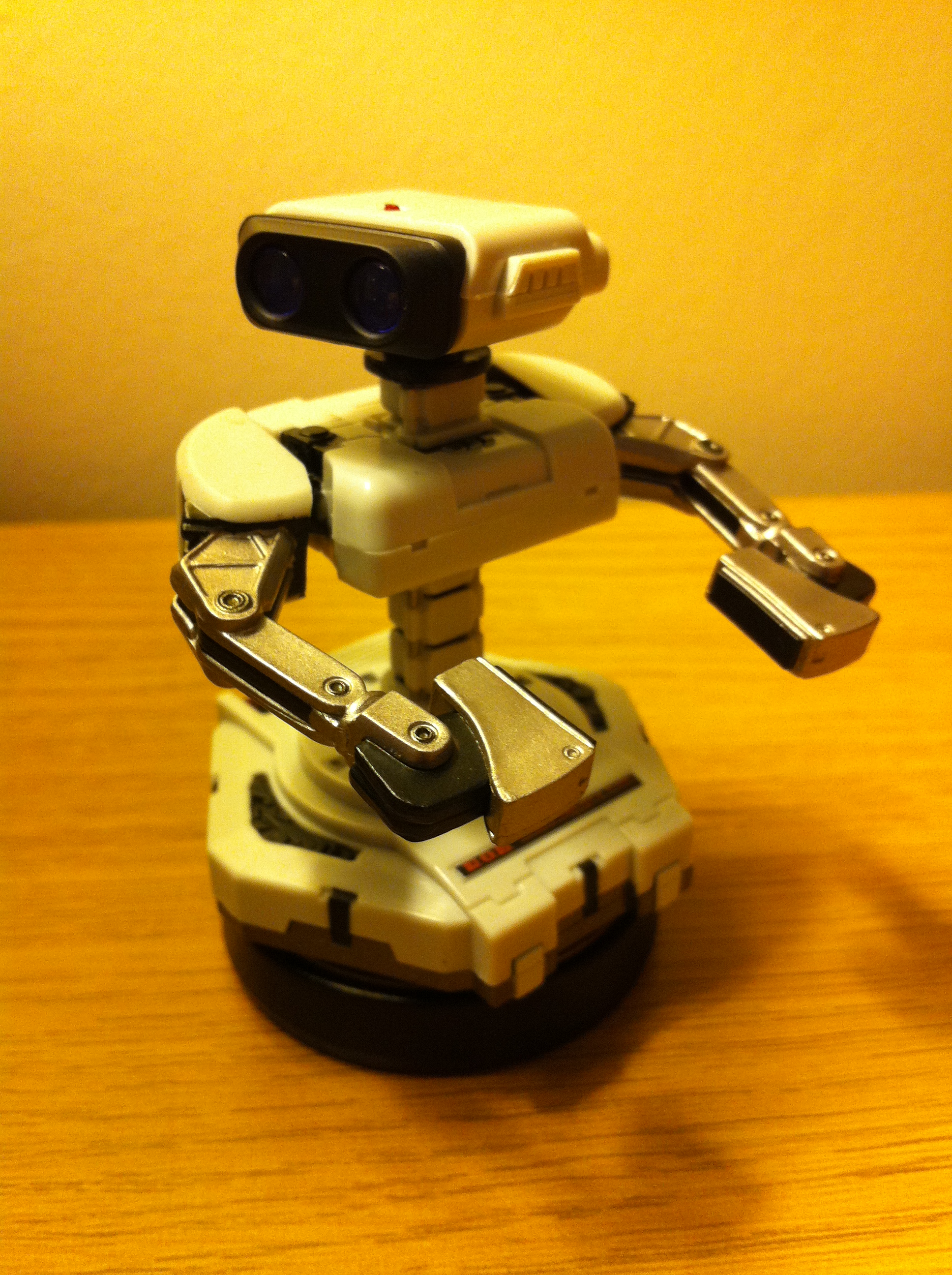
    However, one amiibo that did manage to sneak past Self-Control’s formidable (yet negotiable) defences was R.O.B.

    IMG_3304

    I pre-ordered the little fella a few months back, and he plopped through my doorstep several weeks ago, although I didn’t think to note the occasion at the time. Look at the wee scamp! He’s got a tiny On-Off switch and everything!

    IMG_3305

    I’m particularly impressed with the detail on this one. Amiibos really are lovely little things, aren’t they? Having said that, my living room is beginning to resemble a toy shop, so I’m choosing my future purchases carefully – next on the list is Roy, due for release next year.

    IMG_3308

    It seems that amiibo have been a huge success for Nintendo, with more than 21 million sold so far. Interestingly, more than half of those sales were made in the US, which leads me to wonder what the amiibo stock situation is like stateside. So, dear American readers, is it easy enough to buy amiibo over there now? Or are there still chronic shortages?

  • Another year, another countdown, another birthday.  And I’m boxing it all up, tying a nice little bow around it, and turning the ripe old age of 32 with a celebration of 32 BRILLIANT examples of FANTASTIC video game box art.  Join me, won’t you?


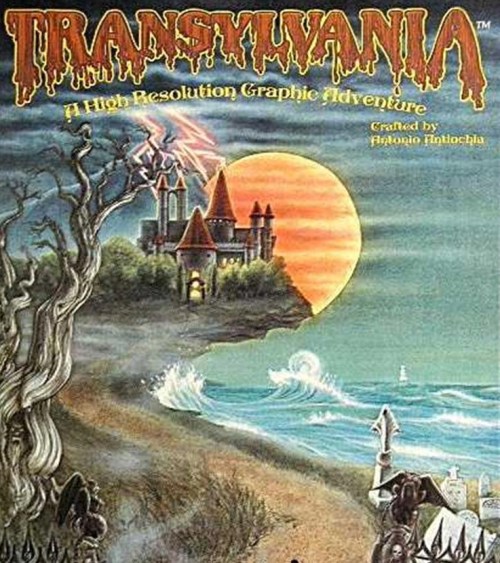
    Transylvania (1984) –
    Text-based graphic adventure Transylvania for the Apple IIE is quite possibly the first video game I became absolutely obsessed with finishing.  In the 1980’s, your stock-standard Australian school computer room was filled to the brim with Apple IIEs, and ‘computing’ lessons really just constituted piss farting around with whatever pieces of educational software the school had seen fit to purchase.  While most of the kids ran for any 5.25″ floppy disk with the name “Carmen Sandiego” in it, being the refined young gentleman I was, it was the classical painterly box art of Transylvania that drew me in.  From the bloody font to the cast iron fence surrounding the graveyard, there was just enough in the way of macabre imagery without being shit your pants scary, that appealed to my rough ‘n tumble young lad sensibilities.

    Week after week I’d plonk my arse down on that the chair (the one you don’t realise is actually really small) in front hoping to avoid death at the hands of that bloody werewolf or his ol’ mate vampire and find my way out of the virtual maze that is Transylvania.  Week after week I’d fail miserably, convinced that there was in fact no way to finish the game and rather it was the teachers’ idea of a practical joke, imagining them standing around in a circle engaging in furious laughter at the expense of the students in the teachers’ lounge every lunchtime.

    After years of being STUMPED I did eventually get there, and the moment I boarded that sailboat to safety still stands out as a precious video game moment.

    <KNOCK HERE>

    TransylvaniaAIIE

    Space Ace (1983)

  • Another year, another countdown, another birthday.  And I’m boxing it all up, tying a nice little bow around it, and turning the ripe old age of 32 with a celebration of 32 BRILLIANT examples of FANTASTIC video game box art.  Join me, won’t you?

    Space Ace (1983) – I didn’t get my greasy little mitts on Don Bluth’s Disney-alike Space Ace until much later, when it decided to be so kind as to grace the Amiga 500, but between the side art adorning the arcade cabinet and the big-box art of Ace’s adventure, it was nearly impossible to not be enamoured by the stunning artwork.  32 years on there’s still something magical about it – even if it’s 90 per cent nostalgia, 5 per cent artistic merit, and 5 per cent the fact that Borf looks like a Golden Book version of the Genie from Aladdin.  It looked pretty good in motion too, as the scores of people hunched over Amiga 500 demos of the game on loop in department stores across Australia, mouths agape in sheer wonderment, thinking “it’s never going to get better than this”, would probably testify to.

    Space Ace

  • After spending a few incredibly creepy hours with Project Zero: Maiden of Black Water for Wii U, I can safely say that it’s thoroughly enjoyable and incredibly creepy. Especially when playing it on your own with the lights down.

    The game arrived on Friday, complete with lots of lovely gear, and I managed to get in a decent playing session last night – then attempted to get to sleep with thoughts of child ghosts leaping out on me from a haunted wood. Child ghosts are just the worst, aren’t they?

    Spot the child ghost. Brrrrrrr.....
    Spot the child ghost. Brrrrrrr…..

    The game has reviewed widely varying review scores, with much of the negative criticism centring on how the game is too similar to its predecessors and lacking in innovation. But seeing as this is the first Project Zero game I’ve played, those criticisms barely apply in my case. It was actually quite refreshing to go back to old-school survival horror.

    And the controls are definitely old school – although the movement doesn’t feature Resident Evil‘s infamous ‘tank’ controls, moving your character around is just as clunky. There’s a considerable delay between pressing down to turn your character around and them actually completing the action – the people in this game all appear to be wading through treacle. Likewise, the ‘run’ is barely a trot.

    But all of this just adds to the atmosphere as far as I’m concerned – in survival horror games like this, wrestling with the controls is just part of the appeal. There’s nothing like being attacked by several ghosts at once and whipping the Camera Obscura out in a panicked attempt to fight them off – but instead looking at the floor and spinning around wildly while desperately trying to get the enemies in your viewfinder. The controls are intentionally difficult – the game wants you to fail. But importantly, it’s not impossible. I’m already getting better with practice, even though most of my attempts to fend off ghosts are more flailing than finessed.

    I like the way the game does things slowly – it’s all about slow build-ups, eerie walks through darkened forests and impending dread as you shuffle down creaking corridors. Even picking up objects takes an age as you reach down slowly to grab the item, and sometimes a ghost hand will shoot out to get you instead. It’s a cheap scare, but effective.

    And speaking of cheap scares, the game made me jump numerous times thanks to ghosts variously leaping out of cupboards or popping up behind me, although one of the most effective moments wasn’t a jump scare at all. As I was crawling down a collapsed corridor, I suddenly noticed a pair of ghostly feet dangling above me, as if they belonged to a man hanging from a noose. I quickly stood up and looked around, but there was nothing there. And nothing appeared there again, no matter how many times I went back… making me wonder whether I’d imagined the whole thing. Brrr.

    I can’t wait to dive back in and see what else the game has to offer!

    Project-Zero-Maiden-of-Black-Water-review

  • So this turned up on my doorstep this morning.

    IMG_3624

    It’s quite strange to buy a Wii U game with ’18-rated’ emblazoned all over it. It almost feels naughty.

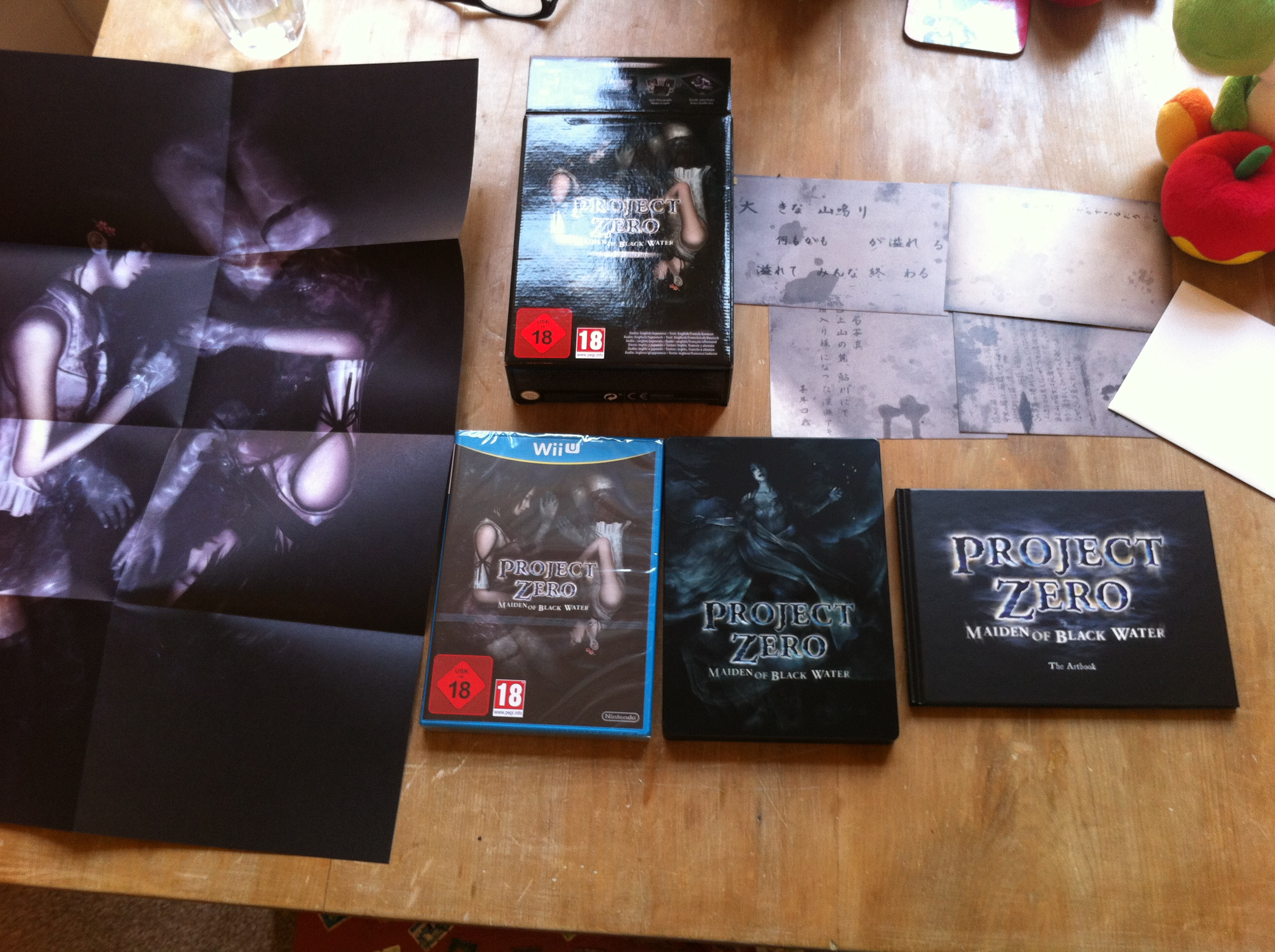
    I’m mega impressed by how much you get in the collectors’ edition, check it out:

    IMG_3625

    Look at all that: a poster, postcards, art book and steel case… oh and a cuddly Yoshi, but that just happened to be on my table. The poster is double-sided too!

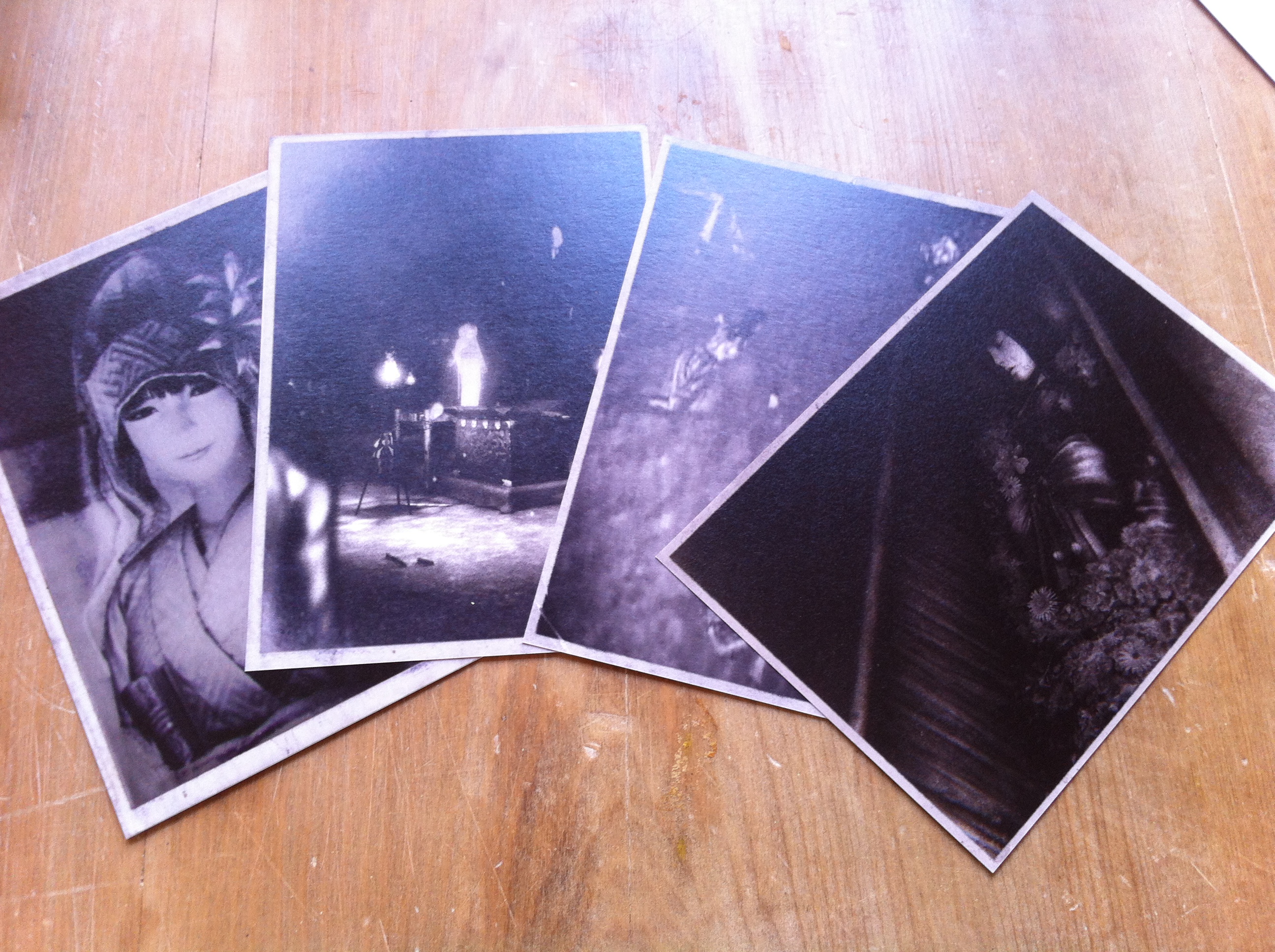
    Here’s what’s on the other side of the postcards:

    IMG_3626

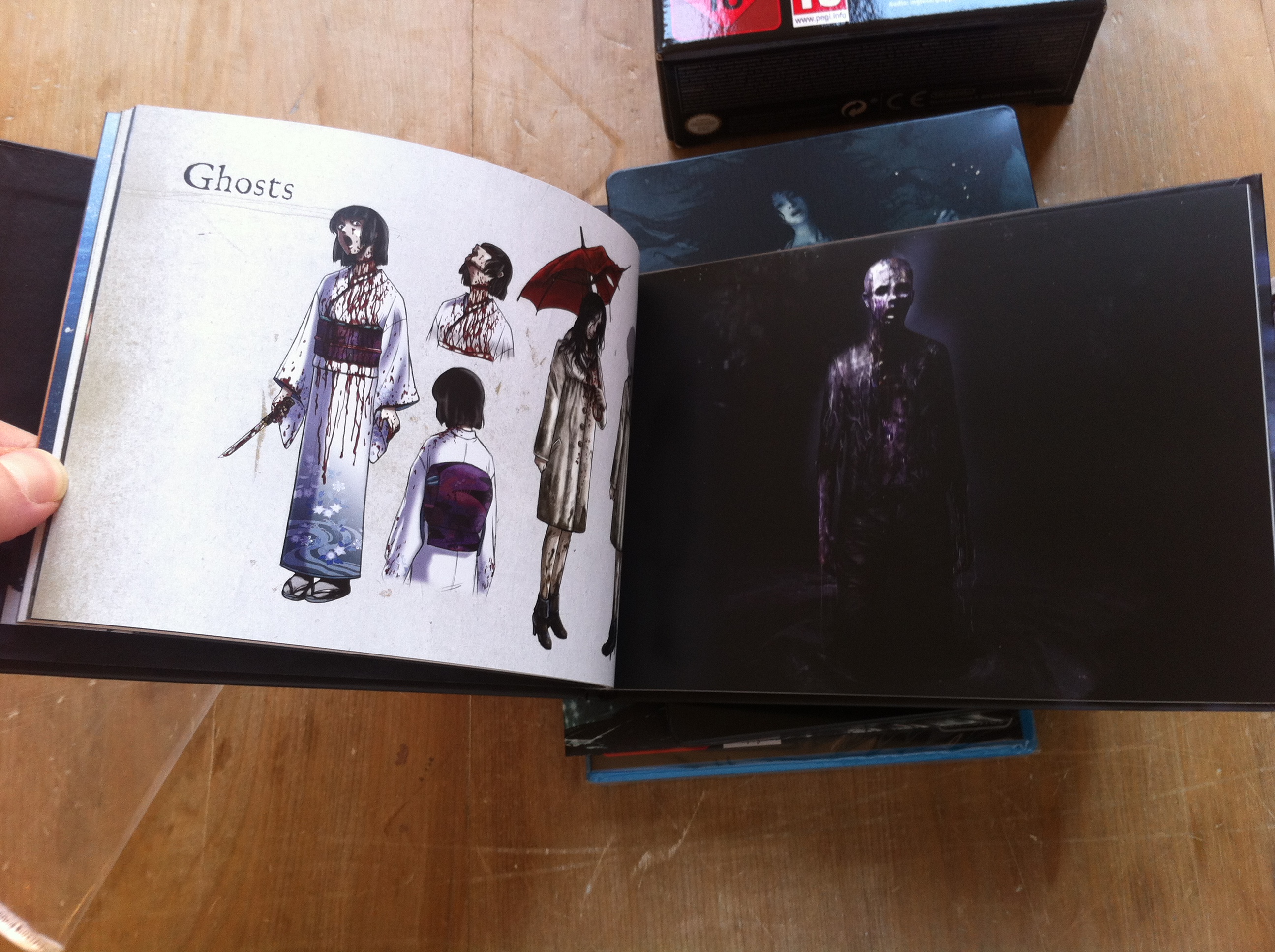
    I’m really impressed with the art book, it’s truly a beautiful thing to behold… although I’m putting it to one side for now for fear of spoilers.

    IMG_3628

    Can’t wait to play this game! Hopefully I should have some time on Sunday evening – I’ll let you know how it plays.

    Toodle pip!

  • AC_logo

    History is a sensitive topic to approach with me.  No, I’m not a denier of the holocaust or anything quite so dramatic or silly, rather I find the lens we tend to look at history through to be a tiny bit skewed.  From the outset I find it a tad odd that Australian history wasn’t taught in schools down here until the 1960’s, but perhaps even more perplexing is that what replaced it is distinctly european-centric, or to use a term that makes me blood boil, western.

    The Assassin’s Creed series has been diverse in its representation of history, venturing deep into ‘modern’ human history, from the crusade-era Middle East in the first game to the Victorian era England in Assassins Creed: Syndicate.  But despite its best efforts to represent all creeds and cultures, it too has followed a distinctly western story arc, only really daring to venture into moments in history where Europe has been at front as centre.  Even when it has ventured beyond Europe’s borders – the Crusades, the American War of Independence – the cogs of the colonial powers were there ticking away in the background.  to date it has largely been a story that stems from the origins of England’s religious imperialism in the Middle East.  They’re nice little historical points in time, but there’s nothing that makes them any more globally significant than anything that happened in other parts of the world. Parts of the world like Asia.

    Western culture is, despite its focus on multiculturalism and diversity, a teensy bit racist (for want of a better word).  The games industry is no different in that respect, taking a distinctly narrow-view on cultural and geographical boundaries, largely due to our own historical relationships.  Japan, for example, while not the first Asian nation to engage in diplomacy or trade with the western world, was arguably the first major East Asian nation to openly embrace european style cultural ideals, while China had a long standing history of trade with European and American powers, but much in line with its age-old view that it was the Middle Kingdom surrounded by barbarians, never gave way to Western ideals in the same way as its neighbour.  This has long defined our political and philosophical alliances in that region of the world.  Even in the games industry even when people refer to the east, as it were, we refer to Japan.  An eastern-developed video game is only one developed in Japan.  A Korean game is one that is trying to be Japanese.  And China is just a straight copy of what everyone else is doing. In some ways most westerners sees Asia as Japan and then the rest, a view that doesn’t do the cultural vibrancy of the area justice.

    Take Korea for example, a country that is not only the 11th biggest economy in the world, but achieved that in the short space of a few decades. But even before that Korea was an intellectual powerhouse, held together for centuries by various iterations of confucianism, that informed everything from its social structure to its legal system.  Even its oldest University, the Sungkyunkwan University, was founded on confucian values of “Humanity, Righteousness, Propriety, and Wisdom”.  So how Korea, a nation of central importance in East Asia both intellectually and in how it shaped that region of the world, gets lost in the shuffle is almost unforgivable.  A nation that for much of its history has fought occupation from its larger neighbours in Japan and China, that has fought to maintain its fascinating cultural identity and history, is something worth standing up and taking notice of.  Turns out though that wars for cultural ideals and imperial supremacy were also playing our in other parts of the world in much the same way they were in Europe.  And Assassin’s Creed is the perfect vehicle to grow that awareness of just how central Korea has been to the history of the modern world.

    You see the beauty of Assassins Creed is its versatility tells an overarching story of a war for cultural supremacy. It is a boundless story of cultural and idealistic imperialism. The format, too, is quite simple: there is an aggressor and a defender. Real life history fits this ‘pro forma’ rather nicely, as it turns out, as human history was plagued by conflict through both conflict, and the more subtle conflict of ideas.  Or in some cases the perfect storm of both.  In the context of Ubisoft’s world they have managed to squeeze their overarching narrative of a war on ideals into a significant period of cultural enlightenment (the Italian Renaissance), of revolution (the French Revolution and the United States War of Independence), and of faith (the Middle Eastern Crusades).  It is far reaching in terms of time periods, but for anyone with even an ounce of knowledge of European history, it doesn’t take a genius to connect the historical dots.

    With the historical preconditions required to throw the Assassins and Templars into conflict being so malleable; evolution, revolution or enlightenment; it’s not hard to see that Korea itself has had its fair share of both in its long history.  As recently as 1945 Korea was occupied by the Japanese, bringing to an end the long-lasting Joseon period and the enlightenment it brought with it, who engaged in something of a systematic destruction of Korea’s own cultural identity and heritage.  Even now Korea struggles to identify and proliferate its own cultural identity.

    But Korea has also had periods of significant enlightenment brought on by shifts in social expectations and ideals.  Right from the onset of the 500 year Joseon period and its confucian foundations the nation has been in a constant state of social change.   Even the introduction of the modern Korean language, Hangeul, by King Sejong the Great was intended as a great social equaliser to improve literacy amongst all classes, was wrought with opposition from Confucian scholars of the period.  Based on his own confucian ideals, which has their origins on mainland China, scholar and Minister Choe Manri wrote in 1444:

    “Within the Chinese realms, though customs may differ, but the script never deviates because of the dialectal speech. Though western barbarians such as the Mongols, the Tangut, the Jurchens, the Japanese, and the Tibetans all have their own script, but it is a matter of being barbaric and does not merit consideration.”

    This sort of struggle of ideals persisted for centuries, given rise to by the factional system of Joseon politics, which in a rather progressive way by the standards of the time arguably prevented totalitarianism and control of one political power.

    Even more recently the nation was fundamentally changed by the erosion of power of the trade unions, who to that point, had sustained significant economic and social power, mainly through their opposition to military-style governments that held power in South Korea right up until the free election held in 1987 which saw Roh Tae-woo come to power who paved the way for the modern economic powerhouse the Republic of Korea is today.  In effect there is a bounty of historical material and settings in Korea’s history that could be plundered for use in historical fiction, spanning all the way back to the 14th century through to modern day.  Korea may not have the profile of Japan or the elusiveness of China, but Korea certainly has earnt its historical chops.

    The beauty of the Assassin’s Creed series is how versatile it is how easily it can fit interesting historical settings into its overarching world.Korea quite simply is the perfect vehicle to carry Assassin’s Creed’s narrative of the challenge of ideals. I can see it now, a hooded Seonbi perched atop Dongnaeeupseong Fortress in Busan, guided by the strength of his conviction for confucian philosophy.  Or a female fighting the declining status of women in Joseon society.  Or a Korean nationalist rising against the annexation of his country by the Japanese. The possibilities are endless, and for cultural awareness and social cohesion, understanding of one of the world’s great nations can only be a good thing.  Even if the means of disseminating that information is through popular culture.

    SyndicateA_C

  • ArmchairWhat-ho, chums!

    It’s been an inordinate amount of time since our last tete-a-tete, but you can blame this dearth of communication on the heavy mantle of fatherhood, which I now carry proudly across my shoulders. As such, the lightweight blouson of gaming has been left hanging on the neglect peg, although of late I’ve had occasion to don the casual-gaming bobble hat from time to time – specifically, I’ve been ploughing my way through Pokémon Shuffle quite shamelessly, though it pains me to admit it.

    Back when the game came out, I was pretty damn rude about it, claiming it showcased the very worst of free-to-play models. I still maintain that this is true – ‘pay to win’ is completely the worst way to approach free to play – but the game itself is a lot of fun, and the way that it rations hearts (read: ‘lives’) has actually worked well for my new circumstances. I often find myself with only the odd ten minutes here and there for gaming in between work and looking after Merriweather Jr, which is just enough time to run through my five hearts and put the game to one side (I’ve yet to actually spend any money on it). Nowadays, the shorter a game is, the better.

    I’ve also been playing a lot of Super Mario 3D World and Yoshi’s Woolly World, too – both are perfect for quick bursts. And any longer gaming stints I’ve been able to wangle have been put into Code Name STEAM, which I’ve been thoroughly enjoying now I’m used to the strange mix of real-time and turn-based elements, not to mention the odd but clever choice to not include a map.

    But the game I’m really looking forward to playing comes out next Friday – Project Zero: Maiden of Black Water for the Wii U.

    Project zero maiden of black water screenshot

    It’s been fascinating to see how the game has completely divided the critics: EDGE magazine rewarded the game with an 8, high praise indeed from the famously harsh publication, whereas Eurogamer emphatically urged readers to ‘Avoid’ the title. I’m quietly confident that I’ll like the game, however: I’ve been hankering for another ‘proper’ survival horror title ever since finishing ZombiU back in 2013, and I’m disappointed with the action route that the Resident Evil series has taken of late – put it this way, Umbrella Corps has failed to set my hype gland a-pumping.

    I’ve never played a Project Zero game (aka Fatal Frame in the US), but I love the idea of hunting for ghosts with nothing but a camera, and the Wii U’s gamepad seems perfectly suited to doubling as a spirit camera. I’ll let you know how it goes after sampling the game over Halloween (and no doubt scaring myself silly while I’m at it). The collectors’ edition should be arriving on my doormat this Friday, all being well…

    Toodle pip for now!

  • X_EN_boxartI seem to always be way behind when it comes to the Pokémon franchise. The original games, Pokémon Red and Blue, passed me by on their European release in 1999 – I think at the time I dismissed them as being ‘for kids’ (I was at university at the time). But by the time Pokémon Ruby had come out for the Game Boy Advance in 2003, I’d gotten over myself somewhat. Yes the series is primarily aimed at children, but the mechanics underneath are far from childish – there’s a robust and complicated battling system here that can take years to learn and master. It’s like watching Toy Story – enjoyable for kids, but there’s a lot thrown in there for adults to like, too.

    I picked up Ruby a while after its release, and it made me finally realise that all the fuss is about. The compulsion to hunt and capture the hundreds of pocket monsters is strong, the battles are a strategic masterclass and the aesthetic has a simplistic beauty. I was hooked. I spent many hours hunting through the long grass in an attempt to find the rarest Pokémon, and I happily explored the huge game world laid out before me.

    The best bit about Pokemon X is the newly enhanced graphics for the battles, which look gorgeous.
    The best bit about Pokemon X is the newly enhanced graphics for the battles, which look gorgeous.

    But by the end I’d started to run out of steam. The final Elite battles are arduous affairs, several times more difficult than anything I’d faced previously in the game, so they required a lot of tedious grinding to enable my Pokémon to compete. One of the series’ flaws is that if you want to change up your main team, then training a new Pokémon can take absolutely forever, which limits your ability and will to experiment with different line ups. As such, you’re more than likely to stick with the same old Pokémon squad for the whole game, which can get a little dull.

    Also, the plot is practically non-existent. You’re given a Pokémon by some professor and head off to… well I’m not sure why you head off. It involves rogue Pokémon trainers or something, although to be fair, surely all Pokémon trainers are a bit rogue – the Pokémon games are essentially cock fighting but without the gambling.

    Skip forward a few years, and I picked up Pokémon SoulSilver for the DS a long time after its release (review here). In many ways it was very similar to Ruby, just with different Pokémon and better graphics. It had the same strengths and the same tiresome flaws. The Elite battles were a similarly epic slog – so much so that I stopped playing the game after I’d finished the last one, even though the whole region from Red and Blue opens up after you complete the game. I’d had enough.

    Which brings me on to Pokémon X, the third Pokémon game I’ve played (again, a long time after its release) and one of the two entries in the sixth (sixth!) generation of Pokémon games (not including all the remakes and spin offs). And it’s the same. It’s the same game again. You could basically copy my review of SoulSilver and paste it here instead.

    It did begin to grab me an hour or two in – the mega evolutions are a nice touch, even if they’re not used enough, and the old compulsion to “catch ’em all” is still there, although diminished with time. Crucially, there are simply far too many of the blighters now, so that catching them all is in no way a realistic prospect, unlike when there were just 150 or so of the damn things – an achievable target.

    Also, a lot of the new ones are frankly crap. A floating set of keys? Come on.

    KlefkiCredit: foolishfox via Reddit

    Towards the end of the game, not long after I’d captured a Pokémon reindeer that looks suspiciously like the forest spirit in Princess Mononoke, I just gave up the will to carry on. The wafer-thin ‘plot’ was sending me to sleep (just because a game is for kids doesn’t mean the story has to be simplified to the point of stupidity), and I was aware that the Elite battles were no doubt coming up, which in turn would mean possibly hours of grinding. The same old things I’d done twice before.

    I ejected the cartridge and sold the game the same day.

    I remember reading somewhere that Japanese games tend to champion iteration over innovation when it comes to sequels. There’s some unwritten rule that Japanese audiences enjoy the familiar but with tweaks to the formula, which is why there are more than a dozen broadly similar Dynasty Warriors games and why every other JRPG seems to start with a destroyed village. I don’t know how true this statement actually is, but it explains why the Pokémon games have barely changed since their inception – and why they are unlikely to change in the future.

    But until there’s some serious innovation in the series, a brave reboot that addresses the series’ flaws and gives a serious boost to the simplistic story and characters, then I’m out.

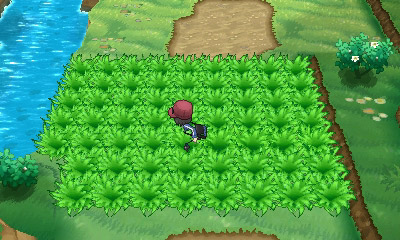
    No more fruitlessly hunting through grass for rare Pokémons for me. I'm done.
    No more fruitlessly hunting through grass for rare Pokémons for me. I’m done.
  • I’ve been a big fan of the work of William Gibson for a long time, but it was only recently I found out that his first novel, Neuromancer, was turned into a video game back in 1988. I found this especially interesting because Neuromancer (and its short-story prequel of sorts, Burning Chrome) essentially predicted the World Wide Web by having hackers navigate “cyberspace”, a phrase that Gibson coined and that would later become a synonym for the internet.

    3601-neuromancer-dos-screenshot-neuromancer-title-screen

    So, essentially, there was a game about the internet before there was an internet (well, before the World Wide Web at least). One of the first things you do in the game is download money from your online bank – a feat that wouldn’t be possible on a real-life computer for many years to come.

    But the story is more interesting than that because Gibson’s vision of cyberspace is more like virtual reality than anything else – so perhaps he did more than predict the World Wide Web, perhaps the real cyberspace will only come about once VR has reached its full potential. If that ever happens…

    Then there’s the connection between Neuromancer the game and Timothy Leary, the notorious LSD researcher who spent the 1960s evangelising the effects of psychedelic drugs. Leary’s idea of how the novel should have been turned into a game is far more interesting and bizarre than the product that eventually came out, featuring artwork by Keith Haring and appearances by Grace Jones and David Byrne, but sadly only scraps of artwork and notes remain.

    3607-neuromancer-dos-screenshot-the-house-of-pong

    I wrote up the full story for Kotaku UK, and it was a particularly interesting one since when I began I had no idea of the Timothy Leary connection. My plan had been simply to write about the 1988 Neuromancer game, so it was fascinating to find out about the game it could have been, Grace Jones and all. I also played through some of the game while researching the article, and I have to say it’s incredibly frustrating by today’s standards – thank god there was a guide on Gamefaqs to save me getting constantly stuck. But it’s also packed full of great ideas – I particularly liked the Nolan Bushnell reference in the “House of Pong”.

    Click below to read the full article:

    The 1980s Game That Predicted The Internet

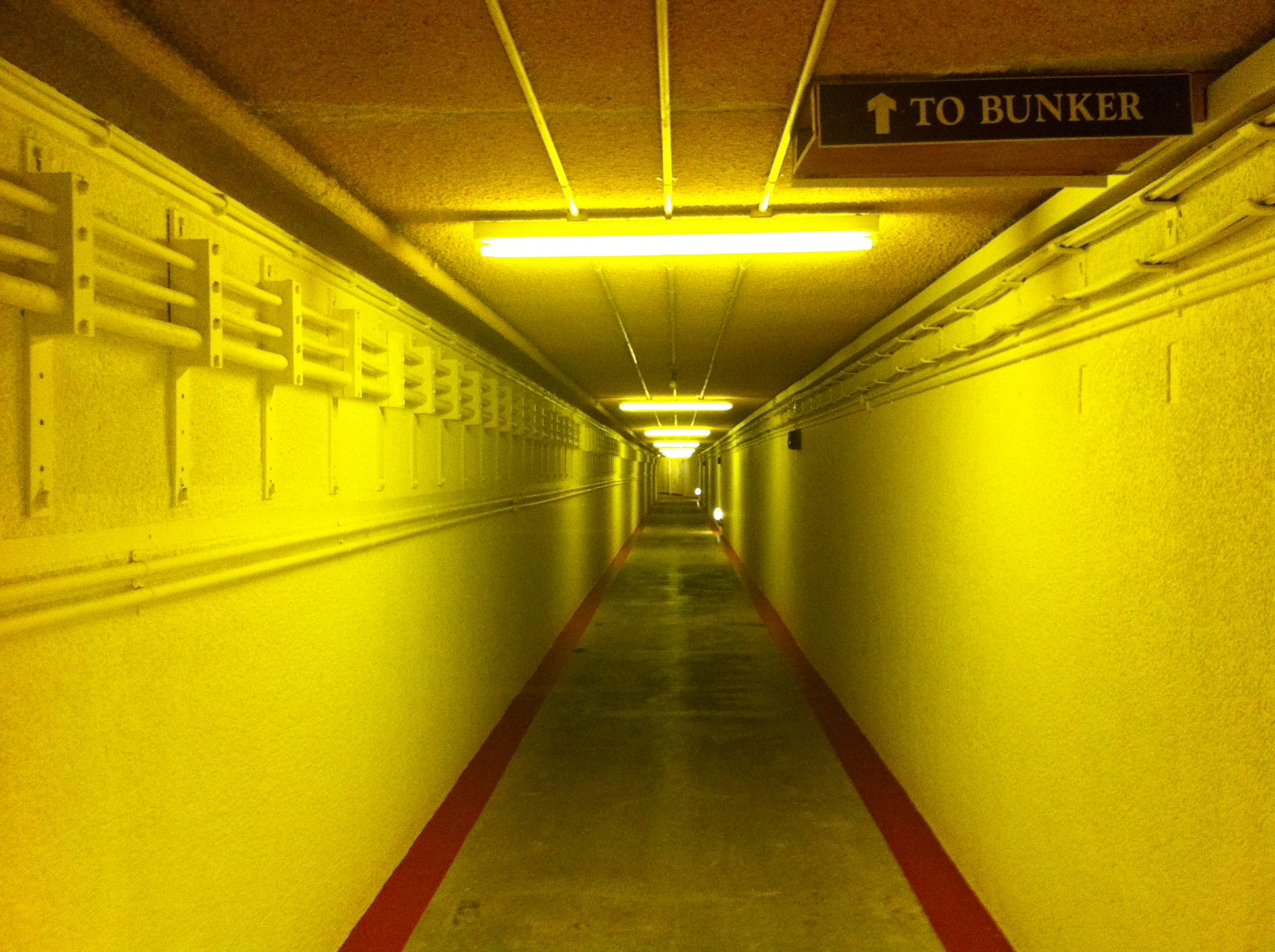
  • Back in the summer I found out that there’s a decommissioned nuclear bunker not far from where I live in Edinburgh, just at about the same time I heard the announcement of Fallout 4. It seemed like the perfect opportunity to write an article on what life in a real Fallout Vault would be like – as well as a good excuse for a day out.

    The entrance to the bunker is disguised as a farmhouse.
    The entrance to the bunker is disguised as a farmhouse.

    The bunker’s owners were kind enough to let me in for free, and I spent an enjoyable morning on one of the hottest days of the year wandering around underground, fascinated and appalled in equal measure. It still boggles my mind to think of how close we came to nuclear annihilation – close enough for the government to deem it necessary to build a network of huge regional command bunkers anyway. It’s even scarier to think that World War III could have kicked off due to a faulty missile detection system.

    The sloping tunnel down to the bunker. The kink at the end of the tunnel is to deflect the force of a blast.
    The sloping tunnel down to the bunker. The kink at the end of the tunnel is to deflect the force of a blast.

    So, what would life have been like in a real Fallout Vault? Pretty damn horrible, as it turns out. Even though the Scottish bunker is the size of two football pitches, it would have been a squeeze to fit the allotted 300 people in there, and everyone would have had to share beds by sleeping in shifts. I imagine it would get pretty stinky pretty quickly, even with the state of the art air filtration system. More to the point, morale would have been incredibly low, as the inhabitants would be all too aware of the utter devastation in the world above – and then there’s the risk of disease, along with the limited medical supplies. Definitely not as much fun as the video game, then.

    Check out the finished article below:

    Inside Scotland’s Real-Life Fallout Vault

  • RememberCapcomRemember Me is at its heart a depiction of post-democratic capitalism.  Set in Neo Paris in 2084, the story is as much about providing a word of caution about our world as it is, with the fight against what is effectively corporate slavery put right at front and centre of main protagonist character Nilin’s story.  The story itself is premised on a terrorist group’s fight against mega-corporation Memorize’s growing control over the population through its products aimed at ‘commoditising’ people’s memories, and the addiction the consumption of these goods are services causes.  And while it is a unique premise, resulting in some truly excellent sequences, its tale is a greater one about what may become humanity’s next great challenge in the breakdown of our fundamental social and economic structures.

    I’m heartened by the fact that, in most games that deal with the subject, the breakdown of democratic capitalism is represented by a proportionate breakdown in social equity. We know that there’s a growing gap between the rich and the poor, best represented by the Lorenz Curve, and on top of that a growing underclass of people who may never escape poverty because of increasing incidence of the phenomenon underemployment.  In 2014 the Australian Bureau of Statistics estimated that casual and fixed term workers comprised 40 per cent of all employed persons in the country, up 5 per cent from 2013.  As a society – nay a world – our wealth has grown exceptionally since industrialisation.  But sadly   Capitalism is a great system, but taken to its extreme and left unregulated, it faces the same problem any other failed economic form has.  Australia – like many western-style democracies – has its problems but we’re lucky that both our governments and our societies share a relatively common goal: that is to reduce social inequity.

    Growing up in a developed western-style nation, I like many others take fore granted the relative safeguards and stability that our government provides.  Sure there are bad eggs – there always will be – but the checks and balances a transparent government keep .  Having worked in regulated industries for the better of my career, I know first hand that one of governments’ central roles is to stay one step ahead of the corporations, and ensure that the freedom our systems allow aren’t exploited.  If we don’t that’s where issues of equity – not to be conflated with equality – come in.  Social inequity isn’t new, and capitalism has been the enemy of the people, particularly the economic-left.  But if there is any truth to the post-crisis western world  games tend to paint the picture of, the overwhelming prominence of capitalism is and governments’ willingness to allow its rampancy is a central theme.

    Remember Me is an excellent tale of this dynamic, depicting a world where government has been rendered either irrelevant or helpless, and corporations have been left to fill the void.  In the real world we walk a fine line between the over-creep of Government power, and the increased scope of influence of corporations.  The vision of a futuristic Neo-Paris created by Dontnod is a stark reminder of what can happen if that balance is thrown off.  What results – the surveillance state, the reduction of the value of human life, the oppression of the masses – is truly depressing.  It may seem far fetched but in some ways it is a stark reminder of the value our personal information is to the corporate world, but perhaps more importantly, how important it is for governments to regulate it.  Sure, the technology in Remember Me to extract, alter and sell memories isn’t currently feasible, but through the careful mining and correlation of the cornucopia of information we give to business on a daily basis a picture of our lives and a virtual recreation of our ‘memories’ becomes feasible.  Suddenly it’s not a far stretch to imagine a world controlled by corporations, and while often ignored by the masses, legislation like Australia’s Privacy Act 1988 becomes of central importance to our future.

    But what is perhaps most stark is how the rise of corporations as a result of the almost boundless control of information has had on inequality within society.  Bubbling under the surface is a story of just how little life is worth when the only way to measure something is through some semblance of monetary value.  How much is a human worth is the age old question, and it’s the sort of question that the conscience can never quite grapple with, even when a figure it placed on it for life insurance or compensation purposes. And then of course there’s the undercurrent of a commentary on drugs – for which  which acts as the catalyst for much of this broader discussion of social decay and who should pay the social cost of the production of goods and services.

    What is more terrifying is that the Government, in whatever form it takes, seems to have accepted the wealth gap as inevitable, accepting that humans are both slaves to the wages to their own vices.  Someone’s net worth should never be a precondition to a either a right to live or a right to access essential services, but in Remember Me, this is very much the status quo.  Slums are commonplace and death and exploitation of the poor by the rich is sadly the social norm.  As barbaric as it seems to many people, including thankfully most people living in Australia, this is a phenomenon that isn’t confined to fiction.  Remember Me paints a world left broken by deep recession, subsequent civil war, and a sustained breakdown in society.  But a question of causality, the old adage “what came first the chicken or the egg””, is a question worth asking.  Because to use an equally cliched saying, “Rome didn’t fall in a day”, and we will have no idea how close we are to social collapse until we’re looking over the cliff-face.

    I believe in the capitalist system, but by the same token, I believe in the importance of socialised government services.  I believe in Government regulation.  I believe in social conscience.  Remember Me tells the story of a world gone wrong, not just because it’s been ravaged by war and invasive technologies, but because governments have started to accept social inequality as the norm.  Capitalism won’t destroy humanity but the unwillingness of government to admit its failures just might.  Particularly when it’s what makes us intrinsically human – our emotions and memories – that is being corporatised  And in that way, while it may be a far-fetched story, Remember Me’s premise is well worth remembering.

    Remember Me is just one game tackling important issues of social justice.  Killzone: Shadow Fall touches the particularly relevant issue of human displacement and refugee settlement. 

    RememberMeScreen

  • rotaryengineanimationI find that the start of any Civilization game is always the most exciting. It’s the excitement of anticipation, of mystery, knowing that there’s a whole  world out there to explore. There is still a palpable giddiness that comes with your first military unit, your first settlers unit, your first granary, and of course your first wonder of the world.  Finding your path – a unique path – through the “new world” is an exciting experience no matter how many times you’ve done it.  But no matter how dynamic and unique each play through of Sid Meier’s anthropological epic is I start every game exactly the same way, leaving my fledgling town, nay civilisation, undefended as I go in search of new frontiers for my nation.  It may be a habit, and in some cases a bad one that leads to crushing defeat within minutes, but it’s a habit that has come to define my relationship with the series.
    While on face value it seems an entirely different proposition, I have a similar relationship with the Forza series, or perhaps more accurately console racing games of that scope generally.  Like Civilization, every first in Forza is the sort of moment you remember every time you boot the game up, from the first time you hope in your favourite Group B rally car to your first lap around de Barcelona-Catalunya in an open-wheeled monster, the first time you accelerate off of the grid is a moment to remember and cherish.  But regardless of which beasts I pilot throughout the course of the dozens upon dozens of hours I pour into these motorsport masterpieces, line-up permitting, I always start exactly the same way.

    Ever since Gran Turismo found its way into my Playstation way back in the late 90’s, introducing me to the wonder of Japanese sports cars in the process, I’ve had an at times obsessive but always irrational love of Mazda’s RX-7.  Growing up Australia’s roads were always chock full of Australian built cars, from the Torana and the Commodore to the Kingswood and the Falcon.  Even when low priced and high quality Japanese cars not only hit but took hold of the market, it was the still the Aussie beasts that ruled the road.  We were so patriotic in fact, that when the Nissan Skyline “Godzilla” had an almost untouchable run in the Australian Touring Car Championship in the early 90’s, a regulation was changed to force them out of the competition.  You had to live in a cave not to know your GTR-XU1 from your SLR-5000 or your Dick Johnson from your Peter Brock.  It was the Australian way of life, and even those who had no reaction to that awfully sweet roar of an Aussie enlarged Ford inline 6 or a Holden straight six 202, at least had an appreciation of our unique car culture.

    rx-7-advert

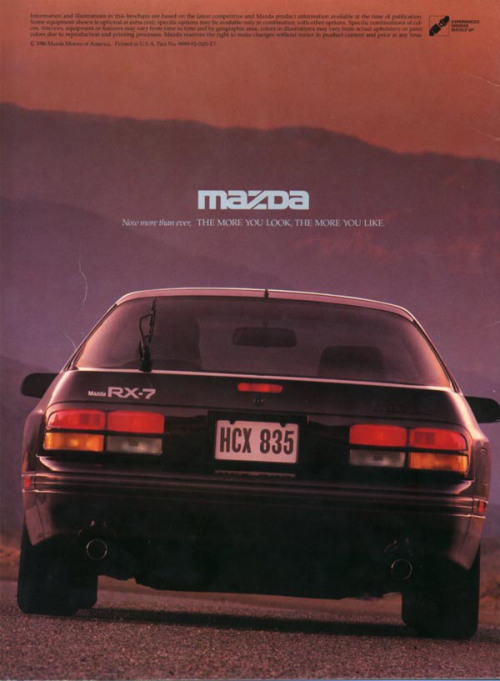
    But as soon as Gran Turismo hit – almost overnight – the roads were populated with the curvaceous beauty of the latest monster from the land of the rising sun.  Amongst them was Mazda’s long-lived sports car series, the rotary masterpiece that is the RX-7.   First built in 1978, the RX-7 went through three major design changes in its almost twenty five year history.  The first generation box look took the car through to the middle of the 1980’s, until the second generation of the RX-7 introducing a sleeker and more streamlined design the car became known for, which finally culminated in the ever-modern look of the third generation that was manufactured through to the discontinuation of the model in 2002.  While the continual evolution of the cars’ design undoubtedly made for a more aesthetically pleasing, not to mention more powerful and well-rounded sports car, each and every model of the car has something unique about it that makes it hard not to love.

    I can remember the first time I saw a 1998 Mazda RX-7 Infiniti in real life, sitting regally on the floor of the Melbourne International Motor Show, glistening in an absolutely unreal way.  Being taters deep in Gran Turismo at the time, and a second-hand RX-7 being the first car I’d bought in the game, it was like seeing my wildest video game fantasies manifest themselves in the real world.  That was the moment I fell in love with the RX-7.  And there was something about the rotary engine that someone once described to me as a ‘triangle going spastic in a box‘ that really clicked with the mechanically curious part of my brain.  The RX-7 wasn’t just a car to me, it was my first, the first Japanese designed and built car that I really fell in love with.

    Fast forward through almost 20 years of video games, and call it a habit or call it an attempt to evoke some sort of nostalgia of that first video game experience, but where I can I still make sure that the RX-7 is the first car I buy when I embark on the journey through an expertly curated and designed history of motorsport.  Sure the path through every Gran Turismo and every Forza is different, as I build my collection of cars and with it trophies, trying out new cars and new tuning settings, all in pursuit of shedding a couple of milliseconds here and there off of the lap time on any given track.  But every journey invariably begins with Mazda’s beautiful metallic beast with a heart of rotary gold.

    It may sound trite, or perhaps even overly and unjustly romantic, but my little ritual is a chance to relive that ‘first love’ over and over again, the chance to get behind the wheel of a car that I’ve harboured such adoration for for such a long time, and the chance to show what the car’s got when the rubber meets the road.  But it’s more than that, it’s about celebrating one of the ways that video games have enriched my life, and introduced me to a whole new world of motorsport.  And like much like Civilization, I have a ritual that I stick to, and one that has come to define a significant part of my enjoyment of these games.  So when Forza 6 presented me with the ability to choose my first car the choice was obvious.

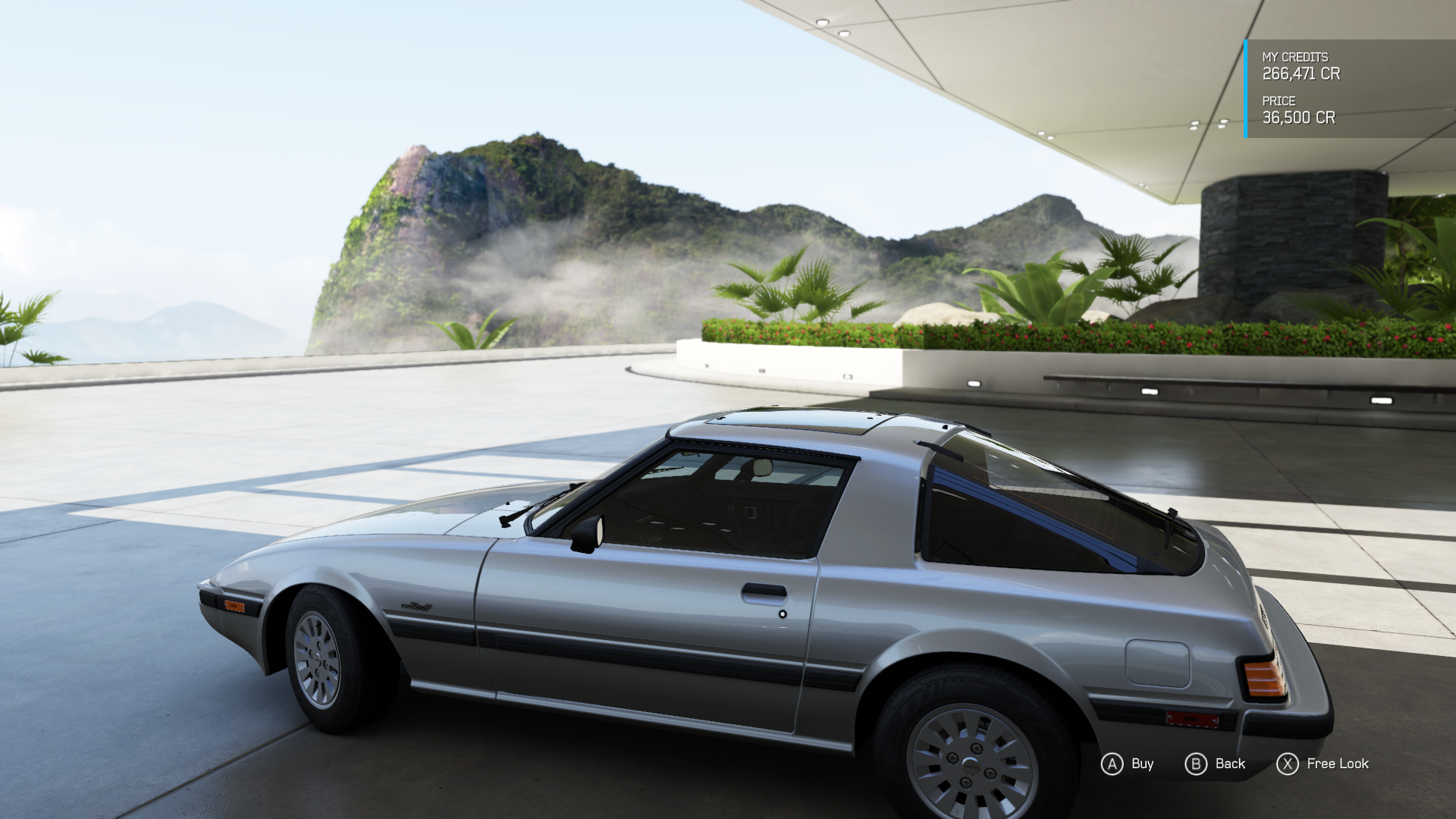
    And so there it sits in my garage where it will remain until forever and a day, my beautiful Series 1 RX-7.

    Forza6RX7

  • There’s a very good reason that cultural victory became a central part of the Civilisation (read: Civilisation) series’ vernacular, because while the first half of the 20th century was punctuated by a couple of rather large conflicts, the latter half was most certainly dominated by a global culture war at the hands of the United States.  Cultural reach was the new imperialism, and globalisation wasn’t just the shrinking of the world it was most certainly a case of cultural contagion, and seemingly every nation on Earth caught a case of the American sniffles.

    While Australia hasn’t been immune to the creep of that star-spangled banner, it has managed to some extent to maintain it’s own cultural identity, as nebulous and fragile of a concept that seems at times.  Australia is a nation settled by our indigenous people, appropriated by colonial England, and built by people from all corners of the world; and at times our pursuit of a national identity has trouble reconciling the fact that we truly are a multicultural nation.  But by and large Australia is a country built not on long-standing traditions insomuch as shared social values such as fairness and equity and for that I am incredibly grateful.  To put it in the context of video games I am glad that Grand Theft Auto’s apparently biting social commentary and sharp-tongued satire doesn’t resonate with me.

    America’s cultural monopoly isn’t just restricted to one aspect either, it’s the television, the movies, the music – all of which  I’m sure most people would posit either rightly or wrongly the nation is the tour de force of.  I once read an American writing in reference to a Korean pop album that noted that while the album was clearly influenced by American music, it simply wasn’t as good.  If that’s not the arrogance of a cultural monopoly, I don’t know what is.

    But one thing Australia shares with America, as do many nations,  is its aggregate love of sport.  As cliched and perhaps embellished as it’s become, the saying that the position Australian Cricket captain is second only to the Prime Minister gives an indication that Australians, well we love our sport. And we’ve managed to carve out a rather nice little cultural niche out of it too, undoubtedly shaped to some extent by our colonial ties to England, but also much of it our own little unique sports ecosystem.  I write this on a weekend where Australia almost literally stops to observe two football finals of different codes, one of which is uniquely Australian in AFL and another which may as well be in Rugby League, but both of will command the eyes and ears of half of the country.  It’s one of the few times of the year – probably next to the Boxing Day test – that feels like everything to that point has been building to.  And for many there’ll be a vacuum left in our schedules until the summer of international cricket rolls around in a couple of short months.

    Basically we bloody love our sport.

    Which is why I’m bemused when I see the stranglehold American sports seems to have on some aspects of good ol’ Australian society.  In clothing stores Chicago Bulls merchandise sits at front and centre, while kids run around with those silly-looking overly straight-brimmed baseball caps with teams I’ve never heard of.  And I bet they haven’t either.  The fact is “American” is culturally “chic”, ergo to be seen to identify with aspects of its culture is fashionable.  The arrival of former League star Jarryd Hayne in the NFL, and the surrounding fanfare and fixation, is only making matters worse.

    DB_Cricket14

    But the one that hits me hardest is seeing games based on strictly American sports sitting on our store shelves.  As someone who couldn’t give a rat’s arse about the NBA or the NFL, and know so few people who do, I can’t reconcile Australia’s love of its own unique sporting landscape with the high concentration of games based on another country.  American football is such a non-event here that there’s no dedicated professional league, and while basketball may enjoy popularity in amateur ranks its status as a commercially viable sport in this country is waning.  There seems to be a disparity in the ability of these sports to get bums on seats and their ability to get controllers in hands, something that can’t be explained on face value but is almost certainly a function of the cultural ‘superiority’ the United States enjoys in this country.

    Games based on Australian sports however are a relative rarity, definitely not coming yearly, if every enjoying any sort of regularity in their release.  AFL has probably had the best run at it, with no less than 20 games being released since the first game based on the sport hit the Commodore 64 in 1989, while Cricket and both Rugby League and Rugby Union being given sporadic chances to make the successful conversion to video game form.   But in recent years the prohibitive costs of development, coupled with what can only be described as a relative contraction in the Australian video game industry, has really put a dampener on any efforts to establish sports-based franchises with any sort of longevity.  Now defunct Transmission Studios, once IR Gurus, had a pretty good run with both the AFL Live series and its spiritual successor series to Shane Warne Cricket ’99, but their closure in 2009 puts a pretty poignant punctuation mark at the end of their story.  And, well, the rest is history.

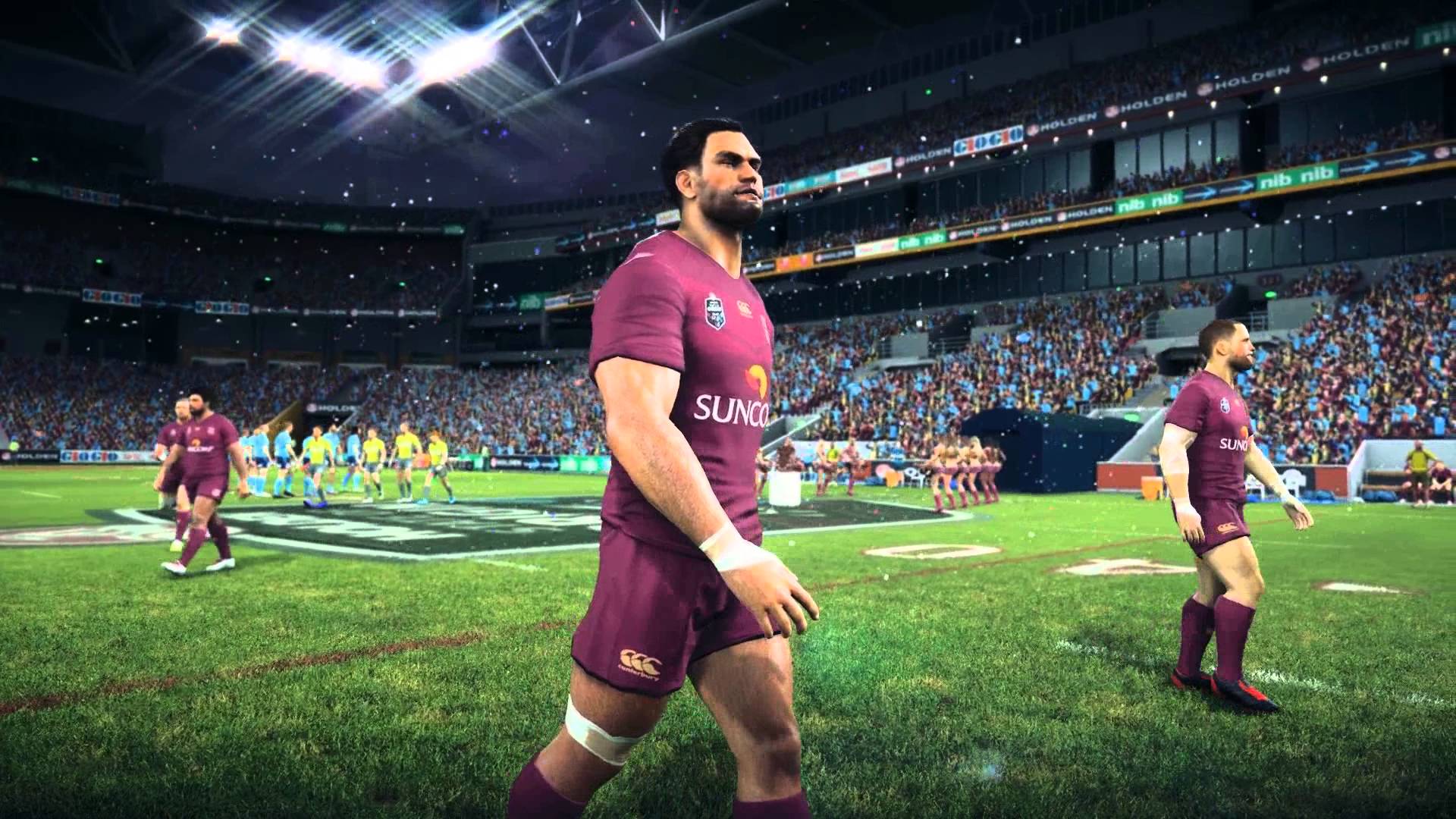
    Which is why Big Ant’s surge into the sports game market – namely the Australian branded sports game market – is such a big deal.  The renaissance of what should be a lucrative pairing between the commercial and cultural success of Australia’s profession is long overdue, born by an apparent willingness of Big Ant to put its figurative dick on the line, and make what have been to date brilliant representations of some of Australia’s favourite sporting pastimes.  Don Bradman Cricket 14 marked a return of cricket in interactive form to big boy consoles, in what was a scarily accurate representation of a sport that isn’t a natural fit for the format, and one that hopefully heralds in a new golden era of video game cricket.  Similarly Rugby League Live 3 is an almost essential take on a niche sport that, in much the same way Madden and NBA have, deserves to enjoy mainstream success outside of the sport’s relatively rusted-on fan base.  From a point of stagnation a half-decade ago, Big Ant has almost single-handedly reinvigorated the representation of Australian sports brands in video games, hopefully making the business more lucrative in the process.

    If there’s one thing you can say about sports women and men and their fans in this country is it is as much about the passion as it is the innate skills.  Big Ant Studios seem to apply this same commitment and passion to the way they approach making video games of, what I can only imagine, are the sports that take up their free time.  For me these games aren’t just examples of what the Australian games industry can do, or how well our sporting pastimes can be converted to the video game medium, it’s about ensuring our unique sporting culture isn’t ‘crowded-out’ of the video game market by the representation of American sports.   And protecting a small but significant part of our culture in the meantime.  The idea that Australian sports games play to the defined section of the game playing public that already watches the sport is one that needs to be broken, and if there was ever a developer capable of breaking down that barrier, Big Ant is it.


    NRLLive3

  • My latest Kotaku UK article is up – this time it’s a look back at all the games that made Konami great, seeing as all the indications are that they might stop supporting consoles:

    RIP Konami Console Games 1983-2015

    I should point out that the slightly melodramatic title was the doing of the Kotaku UK eds, although I quite like it – it sums up the grief and annoyance that I and many others feel that Konami no longer seem to be bothered about continuing their beloved franchises. Or coming up with new franchises, for that matter – one thing that struck me when compiling my list was that Konami’s last original franchise of note was the Boktai series, which made its debut back in 2003.

    Rakuga Kids was sauce-some. See what I did there?
    Rakuga Kids was sauce-some. See what I did there?

    There were a few games I’d almost forgotten about, too. Rakuga Kids on the N64 was one – although it will never be regarded as a classic beat ’em up, it was packed full of great characters and I have fond memories of playing it against my little sister.

    I also managed to squeeze in a reference to Nine to Five – which was also the last film we covered for 101 Films. And speaking of 1o1 Films, hopefully we’ll have some new podcasts up soon if we can finally get our arses in gear after a lengthy hiatus!

  • I’m officially an adult.  In the dying days of the Australian winter I married the most amazing person I’ve ever met after a lengthy 13 years of what Jane Austen would suitably call ‘courting’.  It was – I think it’s fair to say – the best day of my life, so to celebrate, we took a two week journey to Australia’s eastern island, travelling from the ski-heavy town of Queenstown all the way up the west coast to Greymouth, before crossing over the Christchurch and then heading home.  It was a pretty full on schedule, driving from destination to destination, on a seemingly daily basis.  And that was great, because in a relatively short two weeks, we saw a hell of a lot of what New Zealand’s south island has to offer.

    But despite being a hectic schedule, there was plenty of waiting.  Waiting to catch planes at airports.  Waiting to catch trains in Greymouth.  And in the coastal town of Hokitika, waiting for the sandfly hordes to devour my exposed legs, while keeping a campfire going on shitty damp wood.  And as the ‘loud’  flowing stream running in front of our tent kept my new wife awake, waited for the hours until we headed back to the relative civilisation that Christchurch offered.  And finally as I travelled across the admittedly breathtaking scenery that the scenic transalpine wound itself through on the way.

    Cook_fromsailortolegend_coverI knew there would be downtime going in, so in the days leading up I carefully planned what I’d need to pass those hours.  Books were the first consideration, and I had an almost romantic image of sitting on the bow of a boat as it made its way through Doubtful Sound, only the sound of its engine and the stillness of the sound as my soundtrack. So it seemed fitting that the first book to make its way into my bag was the rather heavy hardcover copy of Rob Mundle’s definitive biography of the rather brilliant Captain James Cook, Cook: from Sailor to Legend, who happened to name the fiord “Doubtful” 250 years prior to our journey, simply because he was unsure he’d be able to sail out if he and his Endeavour entered from the Tasman Sea.  Being an admirer of Cook, I’ll admit that my imagination ran wild as the boat veered into the rather choppy Tasman sea, recalling my time in the surprisingly cramped replica HMS Endeavour two years ago.

    GC_Fierce FocusOf course no trip was going to be complete without a book on Australia’s favourite pastime, and going to New Zealand, it seemed fitting that Australian cricketing great Greg Chappell’s autobiography Fierce Focus made the cut.  Why Greg Chappell, you ask?  Well because of his infamous direction to brother Trevor in 1981 to bowl the final ball of the match – with Brian McKechnie requiring a six to tie the game – underarm.  A low blow sure, but short of running around and opening wounds of New Zealand’s thrashing at the hands of Australia at the Cricket World Cup earlier this year, it felt rather good having a nice subtle pisstake of our friendly rivals across the ditch.  And if that wasn’t enough cricket reading – and seldom is it – I picked up Sachin Tendulkar’s autobiography on a whim at a bookshop in Greymouth.  Sadly the little master’s story didn’t get a look in (if you fancy learning more about cricket, i’ve written posts here and here on the matter!).

    Of course then came the decision of what games I would take to fill in those painful moments of inactivity.  I needed a line-up that catered to my fickle tastes and restricting myself to just three made for some hard decisions.  And so for a solid hour I sat cross-legged on the floor in front of the shelf housing my 3DS collection, making a mental pro and con list for taking each and every game with my on my travels. Super Smash Bros 3DS was a shoe-in, having been the game that has practically lived in my 3DS since its release, recently pulling me through the late nights of Australia’s failed Ashes campaign in England, where I reckon I clocked up a solid 30 hours of nonsensical brawling mayhem.  It’s the sort of game that I play when I can’t be arsed playing a game, and for that reason, I assumed it’d fit the bill of companion to a weary traveller.  Second, I needed something I could sink my teeth into, y’know in case I got stuck anywhere unexpectedly.  “Fire Emblem would do nicely”, i thought to myself.  Turns out I did get stuck somewhere, as freak snow hit the Haast Pass, bogging the car and stranding us in the freezing cold for a few hours.  Fire Emblem however never got a look in as we instead chose the mature option of building snowmen.

    My First Snowman

    The last game was a captain’s pick, based less on how they’d dovetail into the trip, and more because it was a flavour of the month.  Lamenting the fact that I was missing out on the launch of Hideo Kojima’s opus and finale to his long-running tale of nonsense and espionage debauchery, Metal gear Solid V, I chucked in the somewhat compromised 3DS port of Metal Gear Solid 3 as a sort of consolation.  Having struggled with the controls years ago, shelving it after only a handful of hours, I felt it was the best and perhaps only chance it’d ever have of getting a look in.

    It didn’t.  And that became the story of the trip. Because despite having ample opportunity in the hours spent periodically checking my watch waiting for the next leg of our journey, not once did I care to pick up the 3DS located conveniently in my backpack.  Not once did I think “You know what’d be better than watching New Zealanders very slowly go about their business?  A video game”.  Instead there I was staring into space, wondering why McDonalds in New Zealand sells meat pies, and all the while having an unplanned hiatus from video games.

    Two weeks later, I arrived back home, a newly married and slightly more well travelled but tired man. New Zealand is a beautiful country, with beautiful people, and if you haven’t been you’re certainly doing yourself a disservice.  But if there’s anything our two week dalliance with our beautiful neighbouring nation, it’s that there’s nowhere I’d rather be than right smack bang in the middle of Oceania on this enormous, dry and beautiful continent we call Australia.  But it also revealed something about myself and my gaming habits, while perhaps giving me a glimpse into my gaming future, or more aptly lack of it.  I left as someone who was up in arms that he’d miss the launch of Metal Gear Solid V and returned as one who hasn’t given a moment’s thought to running down to the shops and picking it up.    And as my 3DS still sits in my backpack, probably fully charged, it almost feels as if I’ve played it for the last time.  I haven’t of course but it’s hard not to think that the sun is starting to set on videogames’ place at front and centre of my free time.  And that’s a rather exciting prospect.

    TasmanSea2015_NZtrip
    Sunset over the Tasman Sea (2 September 2015)
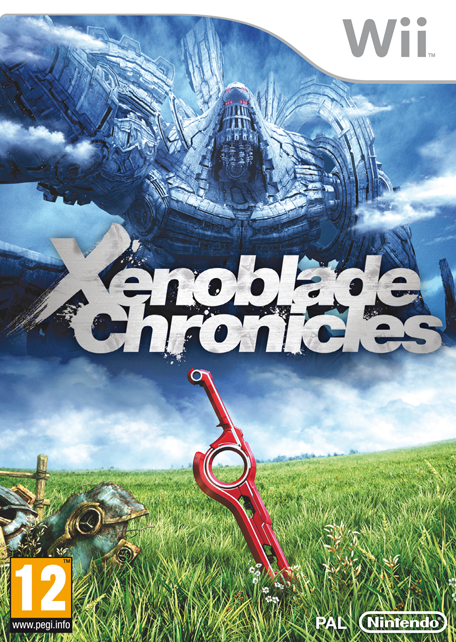
  • PS_Wii_XenobladeChronicles_PEGIMy god that game was long. After something like 116 hours, I’ve finally put Xenoblade Chronicles to bed, and now I can move on with my life.

    That description makes it sound like I had an awful time, but that’s far from the truth. I mean, I wouldn’t have bothered playing the game for so long if I wasn’t having fun. But there definitely came a point towards the end when the balance of “fun” to “unnecessary grinding” tipped too far in the wrong direction. It probably kicked in just at about the time when I was struggling to find an ice cabbage.

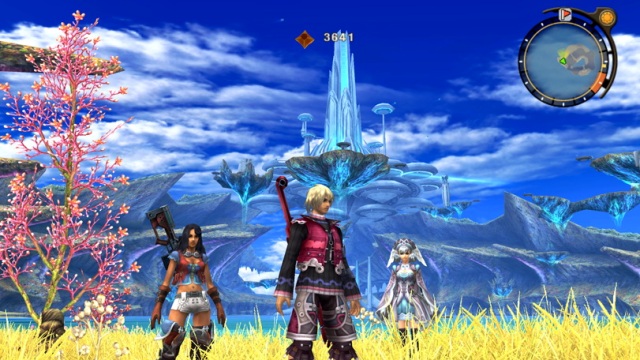
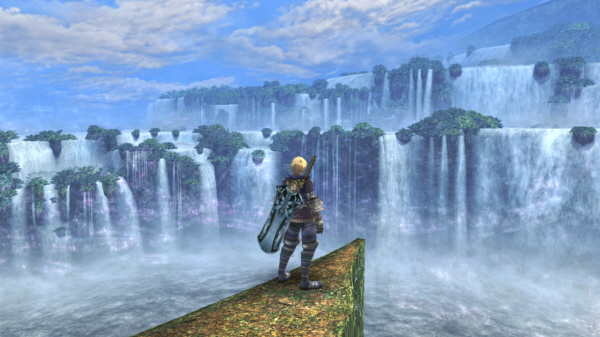
    First things first though, Xenoblade works mostly because the setting is so wonderfully ludicrous and fun to explore. The game is set on the body of an enormous giant, and scurrying along the creature’s verdant kneecap while watching the eerily glowing eyes of another enormo-giant in the distance is as epic as it sounds. In short, it’s a fun world to explore, and the game is at its best when it gives you side quests that prompt you to seek out the farthest corners of the world and encounter unique monsters. Often these quests will generate other quests, and I spent hours happily padding back and forth, filling in bits of the map and generally having a great time.

    xenoblade-chronicles-3d

    Unfortunately, however, the game overdoes it a bit on the quest front – with over 400 side quests, many of which are meaningless collect-a-thons, exasperation eventually sets in. My breaking point was the moment when I was one step away from the final bit of colony reconstruction, only to realise that the quest to get the parts I needed would involve levelling my characters from from around 80 to 90 – i.e. several hours’ worth of grinding. It seemed a shame to leave the colony unfinished, but my gaming time is at a premium now and I can’t waste it on grinding: so I bit the bullet and faced the final boss.

    Speaking of which, the ending of the game is great, and in general the story is a cut above the generic RPG fare, mostly thanks to its setting. My only major quibble is the sheer amount of similar collecting missions – if they’d just trimmed down the number of quests and kept the fairly meaty ones that actually affect the characters or story in some way, the game would have benefited.

    Unfortunately, it seems that the sequel, Xenoblade Chronicles X, has gone the other way, with an even bigger world and more quests – and I can’t help but think they won’t be able to top the setting of a world atop two giants.

    Less is sometimes more, right?

    xenoblade-chronicles-great-falls-screenshot

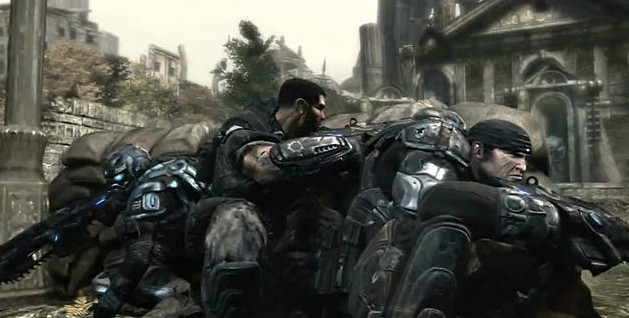
  • Gears_COGIt’s hard to explain the aura of respect that Gears of War commanded when it was released toward at the arse end of 2007, but I think it’s probably fair to characterise it as a bit of a ‘statement’. For Epic Games it was a statement that said the Unreal Engine had the horsepower to drive the next generation of games. For Microsoft it was a statement that it was its own second-coming and that it had the dog’s bollocks to take on the big boys.  Gears of War signalled, a whole year after the release of the console, the arrival of the Xbox 360 in earnest.

    All the pre-release hype and all the hopes and dreams of both developer and publisher culminated in Emergence Day.  12-11-2006.  Murals were painted and Xbox 360 Dashboard themes were downloaded.  Posters with the now iconic cog skull emblazoned across them, “EMERGENCE DAY” boldly bordering the bottom, hung from the roof of what seemed like any store that had even brushed past an Xbox 360.  Gears of War was a bonafide industry event, and its launch was Microsoft pissing to mark its territory.

    On the ground it was the game of the season, and it seemed that every little bit of information that was farted out, was met with an equal and opposite swoon from the game playing public and media.  Even I followed what was happening, sitting huddle in front of the computer monitor whenever a new trailer or screenshot hit, trying to comprehend just how a game could look that good.

    And it turned out for good reason because Gears of War was a beautiful and infinitely playable romp.  It was like the first time you spot a simultaneous equation – only for your eyes – as the sheer amount of detail screaming across the telly was almost incomprehensible.  But as your eyes adjusted it just became ‘moreish’.  The gameplay was similarly compelling and had that rare quality that the sucked time away while you were playing it.  It was the sort of game that you couldn’t imagine how things were before it, making a fair swath of of games redundant in one fell swoop.  Being introduced to Gears of War was one of many defining moments for the still fledgling industry, and with all of the gameplay innovations it brought with it, it became an important historical milestone for video games more generally.

    10 months into the 360’s life and next generation was finally here.

    Gears of War: Ultimate Edition has put the spotlight right back onto arguably the Xbox 360’s first blockbuster, and trudging up all of these nearly 10 year old memories with it.  It is a reminder of the importance of the marquee titles early on in a console’s life cycle.  The kind of impact a larger than life marketing campaign and all of the pomp and circumstances that comes with it can have, nah perhaps should have.  The importance of an event, a ticker tape parade, complete with a skywriter etching ‘IT’S HERE’ across the blue sky.

    And then I realised that it’s been 9 years for the last one.  That that’s what’s been missing from this generation.  That this generation has skipped its Emergence Day.  Because almost two years in and I still don’t feel like we’ve been properly introduced.

    GearsOfWar_Cover


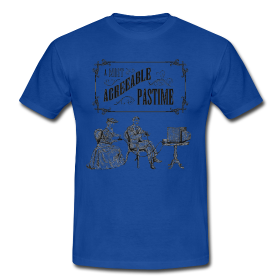
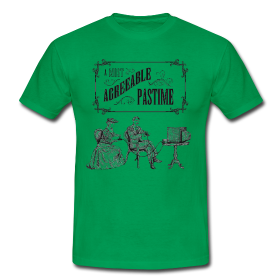
  • There’s a sale on! Use the code SAVENOW and get 15% off Most Agreeable T-shirts until 11th August!

    horizontal_uk_T-shirt banner

    Blue Most Agreeable T-shirtGreen Most Agreeable T-shirtRed Most Agreeable T-shirtWhite Most Agreeable T-shirtYellow Most Agreeable T-shirtTeal Most Agreeable T-shirt

    To order, simply click on one of the options below, according to the corner of the world in which you currently reside:


    EU flagCLICK TO VISIT THE MOST AGREEABLE EU SHOP

    1024px-Flag_of_the_United_States.svgCLICK TO VISIT THE MOST AGREEABLE US SHOP

    Flag_of_Australia_(converted).svgCLICK TO VISIT THE MOST AGREEABLE AUSTRALIAN SHOP

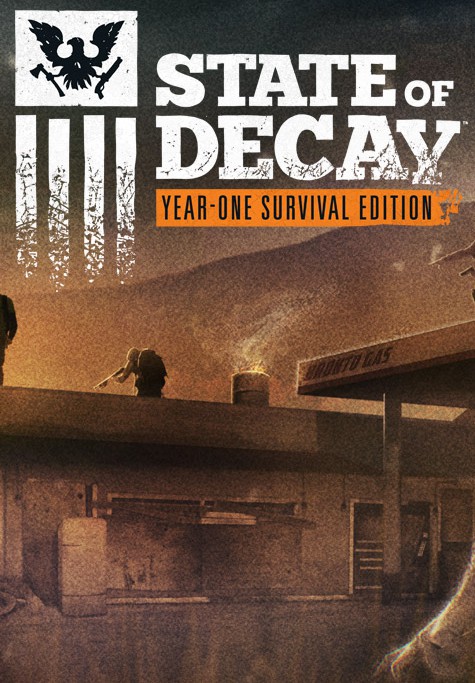
  • StateofDecay_Boxart_XB1Tales from State of Decay.

    My name is Jacob, and today is the day I die.

    Huddled cold in a public restroom, cold, tired and bleeding, waiting for my inevitable end.  It’s dark outside and I can’t see a thing.  But  I can hear them, scratching. They’re at the door.  They know I’m in here.  It’s just a matter of time until they break through.

    “It’s a simple run up to Mt Tanner and back”, my sister Lily said.  And it was, should’ve taken five minutes. But how was I to know they’d have taken over?  That they’d be there, waiting?  It was an infestation.  If only I’d known, I’d have brought Alan along.  He’s a wanker, sure, but he’s good with a gun.  I could use that right about now.

    I’d only taken a step into the Ranger Station before they swamped me, the decaying flesh on their hands tearing off as they grabbed at my arms.  There were hundreds of them in there, or at least it seemed like there were, and I didn’t stand a chance.  I had to get out of there.  I took a few down, swinging my axe, blood splatting everywhere.  But who was I kidding?   I’m not an idiot.  I couldn’t fight them all.

    So I ran.  I ran until I was out of breath. I ran until I couldn’t run anymore, and until I sure as hell couldn’t fight anymore.  Just carrying the axe is starting to feel as heavy as lead, let alone swinging the thing at one of their ugly heads.

    There was only one option.  I had to find somewhere to hide. I had to find shelter.

    And that’s how i ended up in here, trapped.

    It’s a shame it had to end this way.  Alone, huddled in a female public bathroom, of all places.  If Lily were here she’d be laughing.  “You’ve got yourself in a shit situation” she’d say.  And we’d be laughing.  How we’d laugh.

    I wish she was here.

    She’s not.  But they are.  And they’re at the door.  Banging at the door.

    I’m exhausted but I’m not scared anymore.

    I was Jacob, and today I died.

    StateofDecayXB1screen

  • What better way to proclaim your love for the WORLD’S GREATEST VICTORIAN-THEMED VIDEO GAMES BLOG than with some beautifully designed apparel?

    Thanks to our multi-talented resident designer Simon Bradbrook Esq., we’re proud to present our exclusive range of MOST AGREEABLE T-shirts, available in PREMIUM or PEASANT forms and in a RANGE OF EYE-GOUGING COLOURS to suit your sordid chromatic preferences.

    Blue Most Agreeable T-shirtGreen Most Agreeable T-shirtRed Most Agreeable T-shirtWhite Most Agreeable T-shirtYellow Most Agreeable T-shirtTeal Most Agreeable T-shirt

    To order, simply click on one of the options below, according to the corner of the world in which you currently reside:


    EU flagCLICK TO VISIT THE MOST AGREEABLE EU SHOP

    1024px-Flag_of_the_United_States.svgCLICK TO VISIT THE MOST AGREEABLE US SHOP

    Flag_of_Australia_(converted).svgCLICK TO VISIT THE MOST AGREEABLE AUSTRALIAN SHOP

  • I pitched the idea of an article about the Worlds of Power books to Kotaku UK a while ago. Little did I know how long it would take to write…

    Worlds of Power novels

    The Worlds of Power books are a series of tie-in novels based on NES games that date from the early 1990s. They’re short, aimed at kids, and not particularly great, but they were hugely successful in the United States (over a million copies sold), and they were probably what really started the video games to novels genre. They’re also deliciously weird, thanks to a few circumstances which I describe in the Kotaku article – which went live today:

    The Metal Gear Novelisation is Super Weird

    Incidentally, one of the editors added that ‘super’ in the title – to my ears it sounds a bit Famous Five. Is this how the kids speak nowadays? [Shakes head in confusion.]

    Anyway, I ordered three of the Worlds of Power books from the US, and they took forever to arrive – and by the time they did, I had a new baby and was somewhat preoccupied, as you can imagine. I’ve managed to snatch a few spare moments over the last month or so to work on the article, but this one was tough – I ended up going through two unused drafts before I hit on a format I liked. It took an AGE. Whereas previous Kotaku articles have been fairly straightforward to write, I really struggled with this one for some reason – perhaps due to a lack of sleep now Merriweather Junior is on the loose.

    Anyway, despite ordering three books – Metal Gear, Bionic Commando and Castlevania II – I only actually used Metal Gear for the article because there was so much great stuff in it. Maybe I’ll end up writing about the others sometime… once I get some sleep!

    Metal Gear novel

    Buy Metal Gear (Worlds of Power) on Amazon.

  • I decided to treat myself. I bought the rather lovely book Commodore Amiga: A Visual Commpendium from Funstock, and it is awesome.

    IMG_2956

    At 30 quid it’s not cheap, but it’s worth the money – the book comes in at around 400 pages and has beautiful colour images throughout, in addition to some fascinating developer interviews.

    IMG_2958

    I was a huge Amiga nut back in the early nineties. I inherited first an Amiga 500+ and then an Amiga 1200 from my uncle, and I dearly loved them both. My friend Alex around the corner had an Amiga 600, and we used to constantly swap Amiga games and magazines, as well as play link-up games like Stunt Car Racer (above). Great times.

    IMG_2957

    The book covers pretty much all of the major Amiga games in chronological order. I’d heard of most of them, and it was a wonderful nostalgia trip to be reminded of classics like WizkidRuff ‘n’ Tumble and Putty. But there were quite a few early games I wasn’t aware of or didn’t know much about. I was particularly intrigued by Cinemaware’s games, like It Came From The Desert (above) – I’d love to play a few of these releases that I missed out on first time around.

    IMG_2959

    There were quite a few games that I’d completely forgotten about. Bubba ‘n’ Stix (above) was one, along with Soccer Kid, Apidya, Brian the Lion and dozens of others. I remember religiously reading Amiga Power every month to keep track of the state of the Amiga scene – I seem to recall that Brian the Lion didn’t come off too well at the hands of AP‘s reviewers.

    IMG_2961

    One game that it was particularly brilliant to be reminded of was Guardian (above), a sadly obscure release from Acid Software, who I think were based in Australia as far as I can recall. Guardian was basically a 3D version of Defender, and it was incredibly fast paced and addictive. I’m surprised it hasn’t undergone a revival, to be honest.

    Anyway, Commodore Amiga: A Visual Commpendium is a truly excellent book, and a poignant reminder that the Amiga was taken from us far too soon – it really was home to some of the most innovative and fun games of its generation. I’d love to play through some of those classics again…

    Click to buy Commodore Amiga: A Visual Commpendium from Amazon or from Funstock.

    Click to buy Commodore 64: a Visual Commpendium from Amazon or from Funstock.