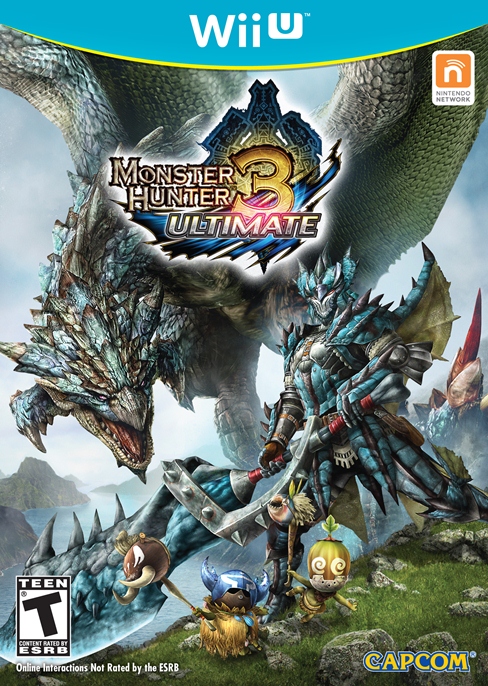
• I bought Monster Hunter 3 Ultimate for the Wii U when it was released back in March 2013, and a year and a half later I’m still playing it. In fact, I even bought the 3DS version as well, so I could play it on the move. And even after all this time, it’s still providing new surprises.

    The reason I bought the game in the first place was because my sister had been raving about Monster Hunter for years, so I thought it was about time I gave it a go myself. On loading it up, the appeal of the game was immediately obvious – the graphical style is excellent, and the monsters themselves are superbly designed. Apparently the designers spent many hours studying the movements and behaviour of wild animals and then translated this to their fictional beasts. This level of attention really shows – the monsters feel like living, breathing creatures with individual personalities, and what’s more, they’ll get tired, enraged or scared, just like a real animal being hunted.

    The battles themselves can be epic. If you’re facing a beast for the first time, your equipment and weapon might not be quite up to the task, so you’ll find yourself fleeing in panic and frantically attempting to avoid the creature’s attacks. You might eventually manage to slay or capture the monster, but it will take a long time. Yet one of the game’s greatest allures is the way that you can constantly learn and improve, and that’s not just down to gaining better weapons – improvement means learning each creature’s attacks, working out where it’s weakest and experimenting with different configurations of armor. There’s so much to learn and so much depth – if you want to know how much depth, just absorb the fact that the official strategy guide is over 500 pages long.
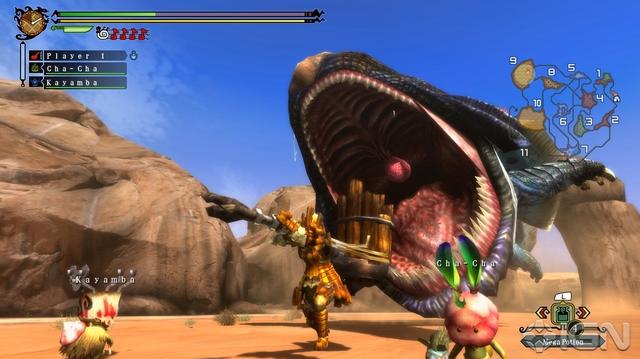
    RUN AWAY!
    RUN AWAY!

    But all this depth can be a little daunting, and Monster Hunter 3 Ultimate is ludicrously unhelpful to newcomers. There’s barely any tutorial, and the paltry in-game help on offer is buried deep within the pause menu – I only found it by accident when I was about 20 hours in. Even then, it doesn’t really tell you what you need to know. For example, a large part of the game involves hunting monsters and then crafting armour from their body parts, but knowing what this armour actually does is another thing entirely. You’re presented with a screen of baffling numbers for each armour set, with no real idea of what it all means. I just about managed to work out ‘Fire Res’, but ‘Hunger’ and ‘Potential’ left me scratching my head. Only after some exhaustive internet research have I managed to piece together what it all means. Or at least some of it.

    After about 60 hours, I still hadn’t even ventured online, as the game demands that you reach a surprisingly high level before you can go and play with the ‘big boys’. In fact, after 60 hours I’d only completed half of the quests available in Moga Village (the solo campaign area) – there is a LOT of game on offer here. And a lot of things to learn too – in fact, I played multiplayer Monster Hunter 3 Ultimate with my sister for the first time last week, and I couldn’t believe the amount of things I learned from her, even after having played the game for over a year. Things like the starting areas have secret shortcuts that take you to different areas of the map, that carving is quicker when you’re crouching and that throwing sonic bombs can cause some monsters like Diablos to pop out of the ground – things that I would never have found out by playing on my own.

    And that’s one of the game’s central appeals – the community is extremely helpful, and playing in a group adds another dimension to the gameplay. Plus, because the game is so obtuse about how it works, there’s a real sense of achievement when you learn its systems and how to beat it. And at its core, the mechanic of hunting and trapping ever bigger and scarier monsters is compelling. Every now and then you’ll hit a wall, where you’ll encounter a monster that’s so tough you’ll need to spend time forging more-specialised and more-powerful equipment to fight it. After spending possibly hours patiently collecting the various parts you need for your next bit of kit, there’s huge satisfaction to be had when you go back and finally beat the beast that stopped you. And that satisfaction never gets old.

    Big blue monsters + teamwork = great game
    Big blue monsters + teamwork = great game
  • It’s that time of year again and I find myself racing toward another birthday and to the ripe-old age of 31. In celebration I thought why the hell not have a racing themed countdown – so here we are, counting down 31 racing games that have defined my enjoyment of the genre over the last 31 years.  Enjoy!

    SuperRCProAMThe Game Boy, huh?  That little brick was a pretty amazing piece of hardware, and one that if I was asked, would probably say I’m the most fond of.  As a young chap it gave me an excitement for the technology side of video games, blown away that something so small could let me play something so big.  Sure there were compromises – the games weren’t as grand and the graphics not as great – but it was worth it just for the freedom and wonder that the system granted anyone who owned it.

    But Super RC Pro-Am was probably one of the first games that made me feel like I wasn’t missing anything from playing on the Game Boy.  It looked and sounded fantastic, and from a game play standpoint, played just as well as anything i’d have been playing on big boy systems.  I’m sure if there were Game Boy doubters out there, seeing Super RC Pro-Am in motion would’ve well and truly silenced them.

    Probably most impressive though is how chock-a-block full of content the game was.  For what is
    ostensibly one of the first racers for the system, and an portable cartridge at that, RC Pro-Am is surprisingly fully-formed racing game at times in spite of its arcade trappings.  But the key to any racing game’s success is the handling of the vehicles, and in that respect Rare quite simply created a masterpiece.  While the cars turn like they’re spinning on a central axis, the cars have a real kinetic feel to them, making them in some ways drive more like rally cars on a dirt surface than road cars on asphalt.  It is close to the best arcade handling in a game of its type, made doubly impressive by the fact that it’s running on what is ostensibly 1970’s technology.  Super RC Pro-Am was unmatched in the racing game stakes on the system, and by today’s standards, still feels good enough by modern standards to make close to being a near must-play.

    It also happened to have one of the greatest results screens I’ve ever seen in video games.

    SuperRCProAMResults

    Have fond Super RCPro-Am memories, or memories about the Game Boy in general?  Share them!  And be sure to check out #31-#25 in the countdown below.

    #31: Stunt Car Racer   #30: Badlands   #29: RVF Honda  #28: Lotus Esprit Turbo Challenge  #27: Nitro  #26: Super Grand Prix  #25 Super Cars II  #24 Super RC Pro-Am #23 Sega Rally  #22 Wipeout 2097  #21 Micro Machines V3  #20 Gran Turismo #19 Need For Speed: High Stakes  #18 Colin McRae Rally 2.0  #17 Wave Race: Blue Storm #16 Grand Prix Challenge  #15 Project Gotham Racing 2  #14 F-Zero GX  #13 Mashed #12 Burnout 3: Takedown  #11 Ridge Racer  #10 Outrun 2006: Coast 2 Coast #9 Forza Motorsport 2  #8 Motorstorm: Pacific Rift  #7 Midnight Club: Los Angeles  #6 Dirt 2  #5 Need for Speed: Hot Pursuit  #4 Shift 2: Unleashed  #3 Sonic All-Star Racing: Transformed  #2 Forza Horizon  #1 F1 2013: Classic Edition

    RCProAMCars

  • It’s that time of year again and I find myself racing toward another birthday and to the ripe-old age of 31. In celebration I thought why the hell not have a racing themed countdown – so here we are, counting down 31 racing games that have defined my enjoyment of the genre over the last 31 years.  Enjoy!

    SCIISuper Cars II is a beautiful game, and like Magnetic Fields’ other and more well-known game -Lotus Esprit Turbo Challenge – there is a certain style that makes it almost timeless.  Whether it is the relatively muted palette or the clever use of shading to give the game a sense of depth,  the game’s relatively simplistic aesthetic has an air of class about it.

    Of course on the track it’s all mines and homing missiles.  But it does it with class.

    Super Cars II is (yet another) top down racer, but one that had depth, juxtaposing the arcade style racing of many of its contemporaries with the sort of career elements you’d find in some modern racers.  Sure you’ll be flying around the track, firing off missiles at your opponents by day, but come the end of the race you’ll be grilled by the press, taking driving tests or answering to the lawyer of your wealthy uncle in the hopes of getting that cash injection to hot-up your car with new weapons or performance boost.

    Little or not, though, Super Cars II’s design philosophy was the first step in the direction toward the path Codemasters forged back with its TOCA: Race Driver series (known as V8 Supercars: Race Driver in Australia), one that saw a shift toward a more personal experience,  putting you in the shoes of the driver, and giving you a something to care about beyond the cars.  When you break it down, it’s really nothing more than a few bells and whistles rather than anything particularly deep, but as a device to give the player greater agency in the game, it was simply brilliant.  And Super Cars II was on the front line of that shift in a game design sentiment that has been increasingly pervasive across the genre.

    While at its heart it was really just a very polished and incredibly playable arcade racing game, it was the little things, the small steps forward in how racing games were designed, that made Super Cars II such an important game in the racing game history.  And a classy one, at that.

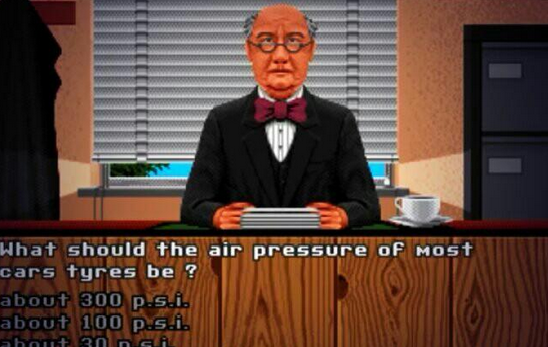
    Have fond memories of Super Cars II? Do you know what the pressure of most car tyres should be?  Tell me in the comments, and be sure to check out earlier games in the countdown below!

    #31: Stunt Car Racer   #30: Badlands   #29: RVF Honda  #28: Lotus Esprit Turbo Challenge  #27: Nitro  #26: Super Grand Prix  #25 Super Cars II  #24 Super RC Pro-Am #23 Sega Rally  #22 Wipeout 2097  #21 Micro Machines V3  #20 Gran Turismo #19 Need For Speed: High Stakes  #18 Colin McRae Rally 2.0  #17 Wave Race: Blue Storm #16 Grand Prix Challenge  #15 Project Gotham Racing 2  #14 F-Zero GX  #13 Mashed #12 Burnout 3: Takedown  #11 Ridge Racer  #10 Outrun 2006: Coast 2 Coast #9 Forza Motorsport 2  #8 Motorstorm: Pacific Rift  #7 Midnight Club: Los Angeles  #6 Dirt 2  #5 Need for Speed: Hot Pursuit  #4 Shift 2: Unleashed  #3 Sonic All-Star Racing: Transformed  #2 Forza Horizon  #1 F1 2013: Classic Edition

    SCII_Screen

  • It’s that time of year again and I find myself racing toward another birthday and to the ripe-old age of 31. In celebration I thought why the hell not have a racing themed countdown – so here we are, counting down 31 racing games that have defined my enjoyment of the genre over the last 31 years.  Enjoy!

    Surely Screen Shot 2014-11-03 at 4.38.45 pmnot another top down racer?  Why yes (…and there’s more to come).
    It’s funny how in vogue the word ‘balance’ is when it comes to speaking critically about modern video games, because it is almost the antithesis of how games were made in the early 90’s.  Super Grand Prix is at times far from a balanced racing game, something that it almost revels in just for the sake of bringing about an outrageously fun and quirky racing title.  And in many ways its this audacious design philosophy that sticks in my mind the most about the game, and why it is still worth writing about 23 years later.

    In an era of the ‘Definitive Edition’ style updates on the PS4 and Xbox One, it seems timely to document the fact that remaking games for more powerful hardware, sometimes adding new features in the process, isn’t a new trend by any stretch of the imagination.  Super Grand Prix is one such game, essentially a drastically improved Amiga 500 remake of Grand Prix Simulator on the Commodore 64, improving both the graphics and gameplay well beyond what the 0ld 8-bit computers were capable of.  It was an update that also happened to add what I consider the game’s defining feature, expanding the roster of vehicles well beyond the open-wheeled cars in the first game, to include a myriad of ridiculous vehicles that dramatically changed the tone of the game.  Gone were the pedestrian formula one style races, in were sports cars, motorbikes and drag cars.  The addition of these vehicle classes made added to the variety and gave Super Grand Prix a unique bullet point to put on the back its box.

    As did the bulldozers, monster trucks, and tanks. See what I mean about balance?

    Super Grand Prix is technically more novel than a truly fantastic racing game, but that doesn’t make it any less of a legitimately great game experience.  Like every racing game from the same era, there were technical limitations that severely constrained what these games could realistically be, even when games were striving to be the ultimate in video game realism.  But it is games like Super Grand Prix, those that worse their whimsical heart on their sleeves and threw unattainable realism out the window, that have fared better in the passage of time.  And Super Grand Prix makes no bones about being a ridiculous and over-the-top top down racer – and that is a large reason I consider it a bit of a cult classic of its time.

    Let’s face it, Codemasters have always been at the forefront of the racing genre.

    Do you remember playing Super Grand Prix?  Were you the idiot tank driver that blew the living crap out of your opponents?  Tell us in the comments below, and be sure to check out the previous entries in the countdown!

    #31: Stunt Car Racer   #30: Badlands   #29: RVF Honda  #28: Lotus Esprit Turbo Challenge  #27: Nitro  #26: Super Grand Prix  #25 Super Cars II  #24 Super RC Pro-Am #23 Sega Rally  #22 Wipeout 2097  #21 Micro Machines V3  #20 Gran Turismo #19 Need For Speed: High Stakes  #18 Colin McRae Rally 2.0  #17 Wave Race: Blue Storm #16 Grand Prix Challenge  #15 Project Gotham Racing 2  #14 F-Zero GX  #13 Mashed #12 Burnout 3: Takedown  #11 Ridge Racer  #10 Outrun 2006: Coast 2 Coast #9 Forza Motorsport 2  #8 Motorstorm: Pacific Rift  #7 Midnight Club: Los Angeles  #6 Dirt 2  #5 Need for Speed: Hot Pursuit  #4 Shift 2: Unleashed  #3 Sonic All-Star Racing: Transformed  #2 Forza Horizon  #1 F1 2013: Classic Edition

    SuperGrandPrix_Amiga

  • Forza Horizon 2 is a spectacularly beautiful game, and one that by design, caters to the car worshipers amongst us.  With everything from its massive roster of perfectly detailed cars, its bucket list challenges that have you pushing some of the world’s most exotic cars to the limit, and its focus on enjoying the act of driving rather than forever scrambling for the finish line, developer Playground Games has released what is to date the best celebration of our automotive history around.

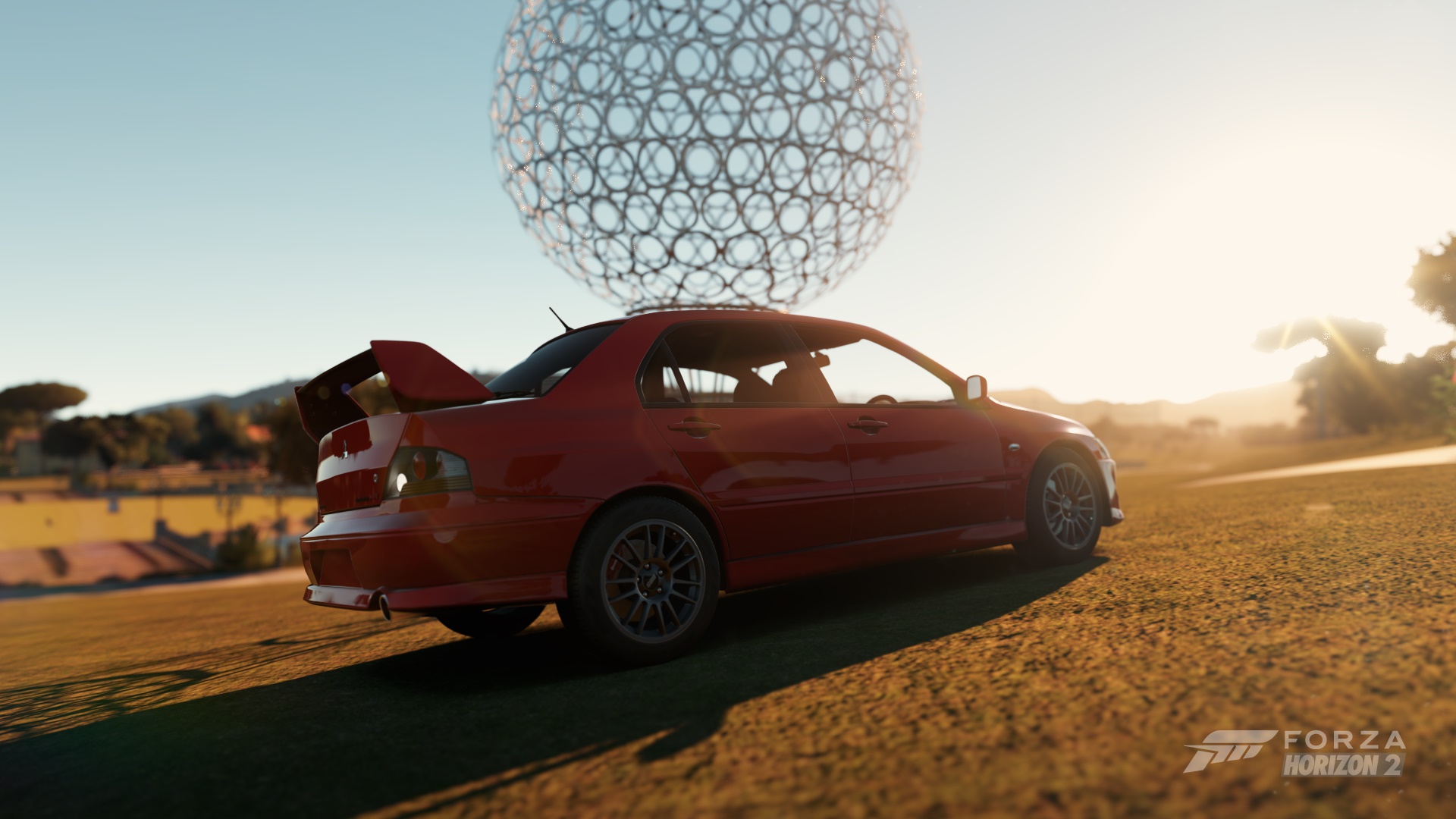
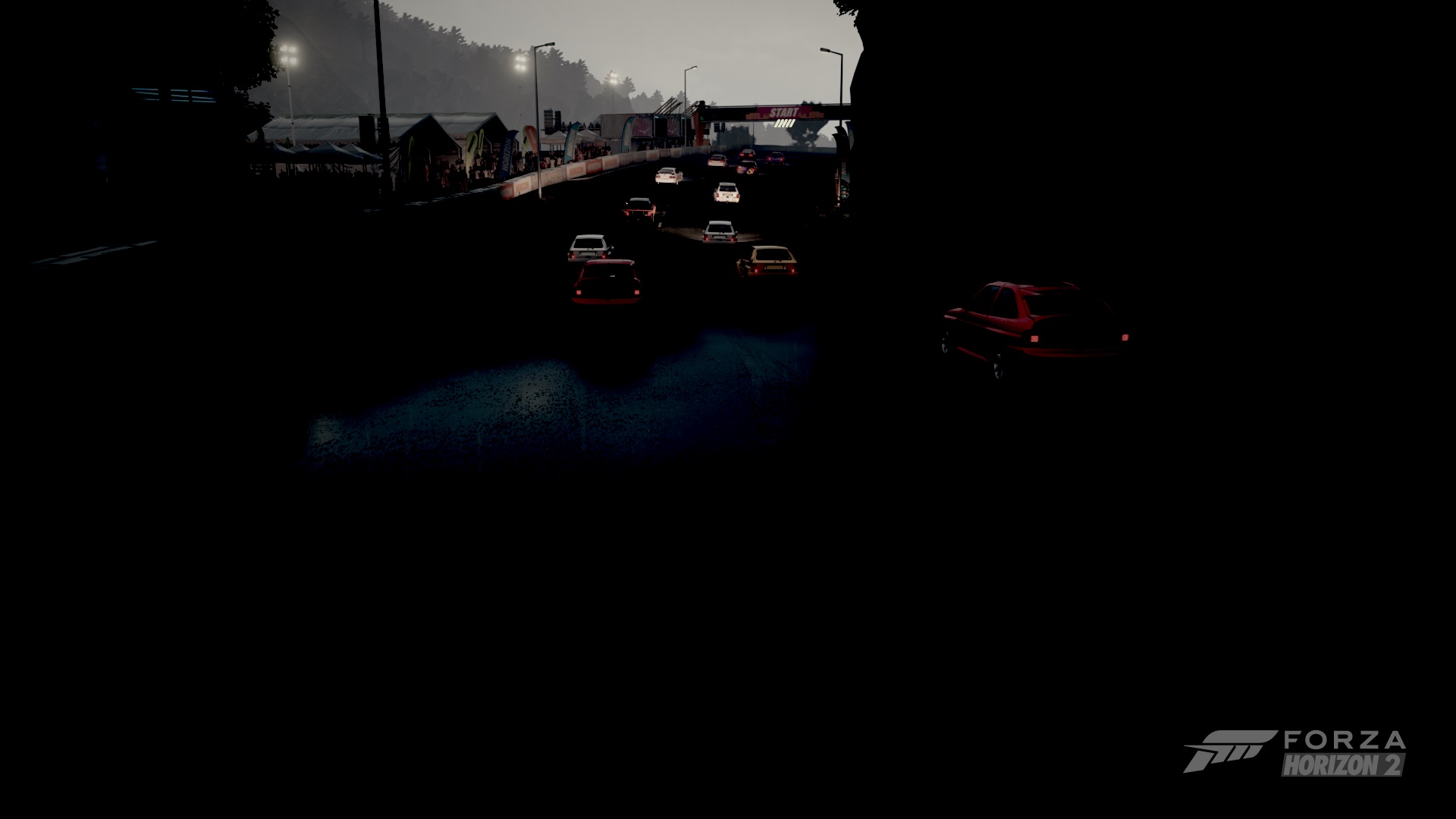
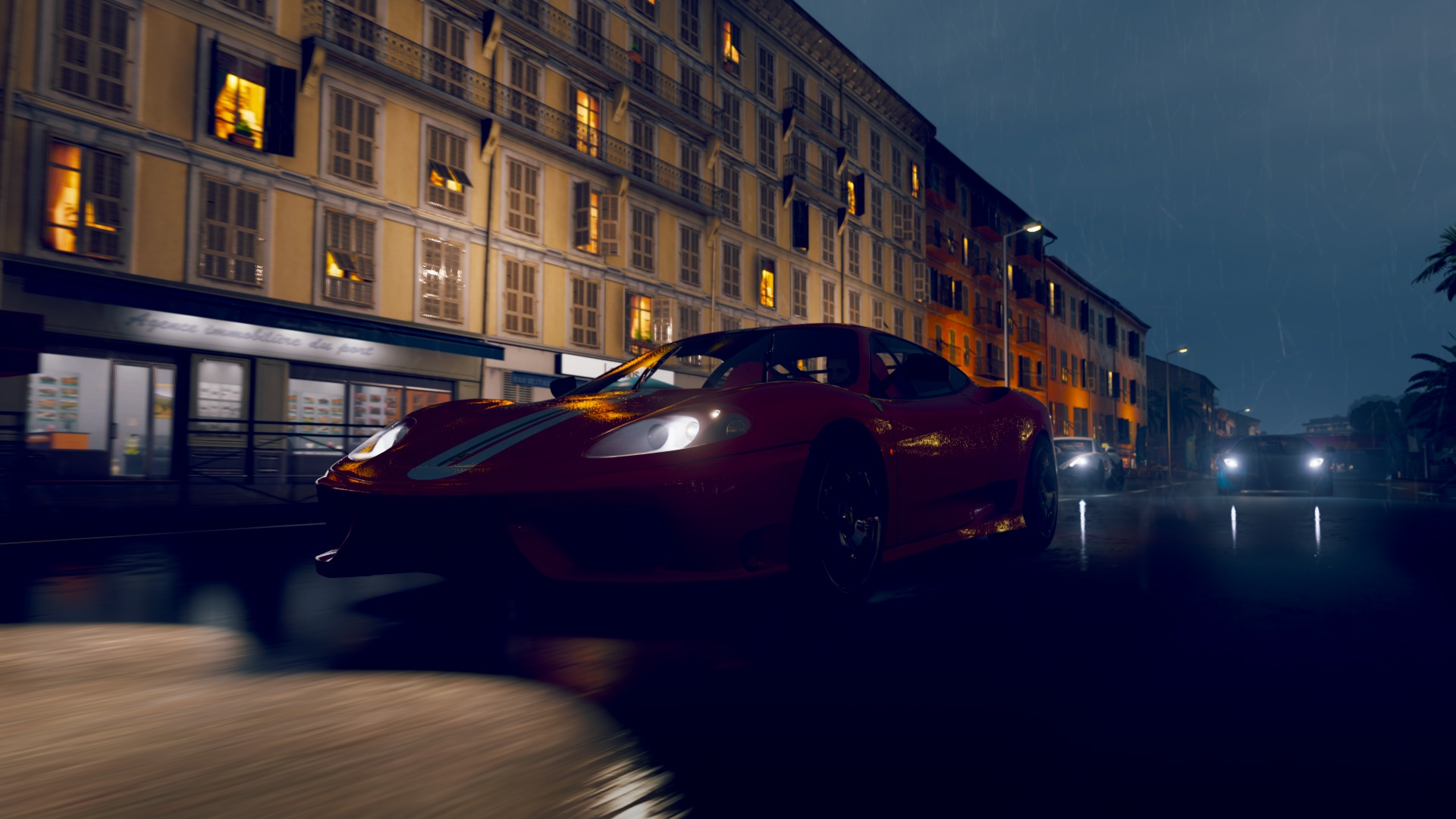
    And the photo mode in the game encourages getting enjoying and sharing this with others, and while I’ve never really been attracted to this sort of ‘extra curricular’ gaming, I must admit I’ve fallen in love with getting a bit creative and taking photos in Forza Horizon 2.

    Now i’ll be covering Forza Horizon 2 closer to the end of the year (hint hint), but for now just sit back and relax, a few choice cuts from my time thus far with Forza Horizon 2’s photo mode.

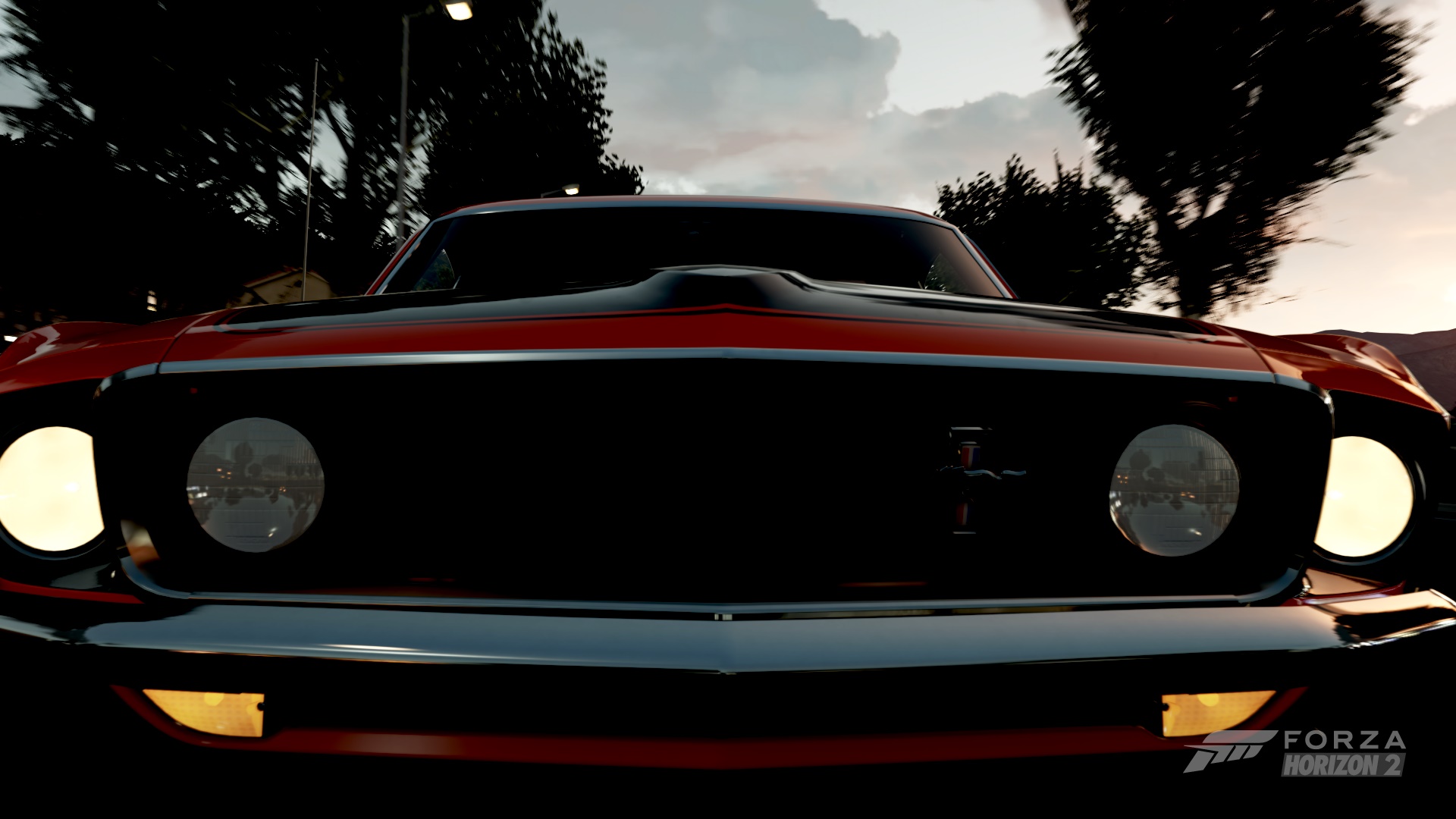
    Forza Horizon 2 (Mustang)

    Mustang_Galloping

    Lancer_Golf

    RallyStart

    Racing

    ForzaCelebration

    Mustang Finish Line

  • It’s that time of year again and I find myself racing toward another birthday and to the ripe-old age of 31. In celebration I thought why the hell not have a racing themed countdown – so here we are, counting down 31 racing games that have defined my enjoyment of the genre over the last 31 years.  Enjoy!

    NitrocharactersTop down scrolling racing games in theory just should not work, but during the 16-bit home computer era they were a dime a dozen, and more often than not succeeded in almost every respect.  Games like Nitro somehow, despite what you would think are the fundamental principles of good game design such as seeing the track ahead, throw a faecal matter in theory’s face and race to the front of the video game pack.

    The closest point of comparison for the game, while perhaps perfect, is that Nitro is a bit like Midnight Club if a nuclear bomb was dropped on its cities.  While the ‘tracks’ aren’t necessarily as open as Midnight Club’s, there is a certain level of freedom afforded to the player in getting from A to B, and in many cases going off the beaten track will prove worth it being plenty of pickups and bonuses scattered around the post apocalyptic world your racer inhabits.    The open-ish tracks are a cool feature that gave the game an entirely different feel to other games of its type.  But Nitro’s coolest feature is almost certainly one of its biggest curses, and while Nitro’s relatively open tracks do add a nice level of freedom to race how you want to, there will be times where you get lost or stuck in dead-end roads. This is definitely at its worst during the later night levels, with your path illuminated by a small patch of light emanating from your headlights.  It’s a cool effect, and it the thing I definitely remember most about Nitro, but darkness definitely isn’t when the game is at its best.  Luckily the tracks are so short (and CPU racers so slow) that even in the night tracks getting lost it won’t have too big of an impact on your race position.  But it is more frustrating than needs to be a lot of the time, even if its not game-breaking.  Nitro in a lot of ways is brilliant in spite of itself.

    Of course, like a lot of the racing games being smashed out by developers in the Amiga era, the soundtrack was absolutely brilliant.  Sounding like a cross between Pop Will Eat Itself and Daft Punk, the semi-industrial soundtrack – like the design of its characters and pervasive ‘nuclear apocalypse’ theme – places Nitro firmly in the early 1990’s.  Did I mention that Nitro (like Badlands) takes place is a dystopian post-nuclear world?  Well it does, and as you progress through the game, the tracks will take place in more and more irradiated locations, complete with green ooze streaming out of destroyed buildings, and peace signs scrawled on the pavement.  Thanks for the reminder that we were in the midst of the cold war, guys.

    Robotic Eastwood?  Cyborg Rambo? AI Bond?  What is there not to love about Nitro!  Leave your memories in the comments section, and be sure to check out past games in the countdown below!

    #31: Stunt Car Racer   #30: Badlands   #29: RVF Honda  #28: Lotus Esprit Turbo Challenge  #27: Nitro  #26: Super Grand Prix  #25 Super Cars II  #24 Super RC Pro-Am #23 Sega Rally  #22 Wipeout 2097  #21 Micro Machines V3  #20 Gran Turismo #19 Need For Speed: High Stakes  #18 Colin McRae Rally 2.0  #17 Wave Race: Blue Storm #16 Grand Prix Challenge  #15 Project Gotham Racing 2  #14 F-Zero GX  #13 Mashed #12 Burnout 3: Takedown  #11 Ridge Racer  #10 Outrun 2006: Coast 2 Coast #9 Forza Motorsport 2  #8 Motorstorm: Pacific Rift  #7 Midnight Club: Los Angeles  #6 Dirt 2  #5 Need for Speed: Hot Pursuit  #4 Shift 2: Unleashed  #3 Sonic All-Star Racing: Transformed  #2 Forza Horizon  #1 F1 2013: Classic Edition

    Nitro Amiga 500

  • It’s that time of year again and I find myself racing toward another birthday and to the ripe-old age of 31. In celebration I thought why the hell not have a racing themed countdown – so here we are, counting down 31 racing games that have defined my enjoyment of the genre over the last 31 years.  Enjoy!

    LETC titleLast year in my 30th birthday countdown, I wrote about Jaguar XJ220 mainly to avoid gushing uncontrollably about Lotus Esprit Turbo Challenge. No such luck this year because Lotus is getting the praise it well and truly deserves.  I hesitate to call Lotus the  best arcade racing game of all time – although it is somewhere up there – but it does earn the title as my favourite Amiga 500 racing game.  And if you’ve been following the countdown thus far, that is certainly no easy feat.
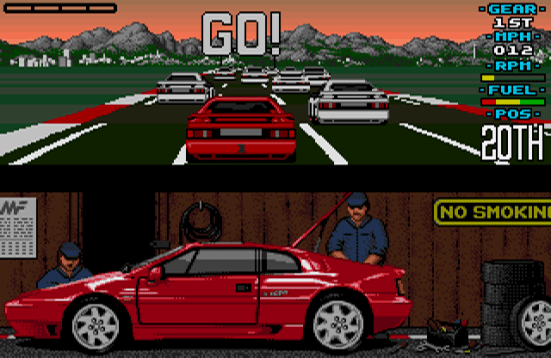
    Functionally, there really isn’t much the separates Magnetic Fields’ classic racer from games like the aforementioned Jaguar XJ220.  Gameplay takes place from behind the car, and like most of the best racers of the era, Lotus uses the same fake tricks to make it seem like you’re driving in a thoroughly 3D space.  You’re not of course, but at the time, you’d have been hard-pressed to find anyone who knew as much.

    And that’s largely because Lotus Esprit Turbo Challenge looked absolutely spectacular.  Unsurprisingly,  Lotus is still one of the best looking games to come out of that tranche of Amiga 500 games, and even by today’s standards is a bloody attractive looking game.  Tracks were super detailed with often track-specific decorations on their side, and the 20 cars on track (and often onscreen at any one time) – although all white – were far in excess of what you’d expect from a game of the era.  Compared it its console competitors – Top Gear for the SNES comes to mind – Lotus simply blows them out of the water, both looking and moving better than anything the 8-bit and 16-bit consoles had going on at the time.  Of course after the success of the original on both 8-bit and 16-bit home computers, its sequels made their way swiftly to the 16-bit consoles of the day.

    So Lotus was beautifully presented both in and outside of races – somewhat of a modus operandi of developer Magnetic Fields.  But it also happens to be the first time I can remember thinking how ‘smoothly’ a game ran, running at about as close to 60 frames per second as i’m sure a game of its time could, although that roughly halved in multiplayer, which for mine is where the game is really at its best.  Clearly the developer felt the same way, and even in single player, the game is always played on half of the screen.  While i’m sure this was largely technical in nature, it did send the message that racing against your brother or sister was the way it was ‘meant to be played’.  Luckily I had those in ready supply, so split screen Lotus was a staple of multiplayer gaming in my household in the early 90’s.

    Released a couple of years later, Lotus Esprit Turbo Challenge 2 was a significant improvement on the original game, both from a technical and a gameplay standpoint.  But despite the ambitious gameplay changes made – checkpoint racing and weather effects in Lotus Turbo Challenge 2 and track editing in Lotus 3: The Ultimate Challenge – they never quite matched the pure innovation and spectacle of the original game.  So while all three games are absolute racing gems, it is still the first game that remains the unmatched pinnacle of the series, and still one of the best arcade racers ever made.

     Did you take to the road in Lotus like Ayrton Sendup?  Perhaps you won as many races and Allain Phosphate?  Tell me about your Lotus memories in the comments! And be sure to check out past games in the countdown below.

    #31: Stunt Car Racer   #30: Badlands   #29: RVF Honda  #28: Lotus Esprit Turbo Challenge  #27: Nitro  #26: Super Grand Prix  #25 Super Cars II  #24 Super RC Pro-Am #23 Sega Rally  #22 Wipeout 2097  #21 Micro Machines V3  #20 Gran Turismo #19 Need For Speed: High Stakes  #18 Colin McRae Rally 2.0  #17 Wave Race: Blue Storm #16 Grand Prix Challenge  #15 Project Gotham Racing 2  #14 F-Zero GX  #13 Mashed #12 Burnout 3: Takedown  #11 Ridge Racer  #10 Outrun 2006: Coast 2 Coast #9 Forza Motorsport 2  #8 Motorstorm: Pacific Rift  #7 Midnight Club: Los Angeles  #6 Dirt 2  #5 Need for Speed: Hot Pursuit  #4 Shift 2: Unleashed  #3 Sonic All-Star Racing: Transformed  #2 Forza Horizon  #1 F1 2013: Classic Edition

    Lotus Esprit Turbo Chalenge screen

  • It’s that time of year again and I find myself racing toward another birthday and to the ripe-old age of 31. In celebration I thought why the hell not have a racing themed countdown – so here we are, counting down 31 racing games that have defined my enjoyment of the genre over the last 31 years.  Enjoy!

    I love the soundRVFHonda of racing motorcycles.  The high pitched squeal of a 400 cc engine at high revs is a sound your eardrums most likely won’t let you forget, at least so long as they’re still ringing from the experience.  But despite this love of the machines and my love of Motorsport in general, I’ve never really been a fan of bike racing.

    Bike racing games on the other hand, now they’re something I can get into.

    I love bike racing games, right the way up to Milestone’s most recent SBK and MotoGP licensed games.  The differences in how bikes handle on the race track as compared to their 4-wheeled counterparts, makes for absolutely fascinating and captivating racing, in many ways nothing like what you’d find in a car racer.  And the biggest difference between the two classes of racing is how weight shifting impacts your path around the track, which makes for, in the case of two-wheels, an incredibly unique and nuanced racing experience.  While weight absolutely factors into how cars handle on the road – particularly at speed – it’s all dependent on the car itself and the way you drive it.  On a bike this isn’t the case, and turning a corner isn’t just a matter of braking and taking the best possible line through the corner, it just as much about shifting your body weight to keep your bike and its tyres in the best position possible through the corner to maintain momentum and friction.  It may seem minor, but that added layer of complexity means that bike racing is an almost entirely different beast from anything with four-wheels.

    While perhaps the complexity wasn’t quite there back in the day, it was games like MicroStyle’s RVF Honda, that caught my attention and had me intrigued with the notion of taking a bike around a race track.  Sure i’d played Hang-On, but there was something more nuanced and dare I say it realistic, that really stuck with me.  It may not look like much now, but compared to its contemporaries like SEGA’s Hang-On, it was a relatively grounded take on motorcycle racing and had a level of depth that most motorcycle racing games just didn’t have at the time.  You could even overheat your engine – something that didn’t really hit mainstream racer design en masse well into the future.  It even gave you the ability to create a rider and take him through a career, saving your stats and performances, not that unlike a feature you’d see in a modern sim.  So while technically the game was relatively constrained by the limitations of the hardware available at the time, the ambition to create a thoroughly realistic racing game was there.

    The game also looked and sounded great in motion, using many of the same sorts of 3D trickery that games that came before and after it used, giving it the sense of speed you’d expect from machines capable of travelling upwards of 200 km/h.  While the detail around tracks is relatively sparse and simple, it is the animations of the rider that made it such a technical showpiece.  The way the rider would angle his bike and get his knee down to guide the bike around the corner never got old, or watching him run-start his bike after a crash, really give it the attention to detail you might not find in many games of its ilk.   Oh yeah and it sounded good as you’d roar around the track, too.

    And boy did they roar.

    Love RVF Honda or any other two-wheeled racers?  Let me know in the comments and come back tomorrow for #28 in the countdown!  And be sure to catch up with past games in the countdown below.

    #31: Stunt Car Racer   #30: Badlands   #29: RVF Honda  #28: Lotus Esprit Turbo Challenge  #27: Nitro  #26: Super Grand Prix  #25 Super Cars II  #24 Super RC Pro-Am #23 Sega Rally  #22 Wipeout 2097  #21 Micro Machines V3  #20 Gran Turismo #19 Need For Speed: High Stakes  #18 Colin McRae Rally 2.0  #17 Wave Race: Blue Storm #16 Grand Prix Challenge  #15 Project Gotham Racing 2  #14 F-Zero GX  #13 Mashed #12 Burnout 3: Takedown  #11 Ridge Racer  #10 Outrun 2006: Coast 2 Coast #9 Forza Motorsport 2  #8 Motorstorm: Pacific Rift  #7 Midnight Club: Los Angeles  #6 Dirt 2  #5 Need for Speed: Hot Pursuit  #4 Shift 2: Unleashed  #3 Sonic All-Star Racing: Transformed  #2 Forza Horizon  #1 F1 2013: Classic Edition

    RVF Honda A500

  • It’s that time of year again and I find myself racing toward another birthday and to the ripe-old age of 31. In celebration I thought why the hell not have a racing themed countdown – so here we are, counting down 31 racing games that have defined my enjoyment of the genre over the last 31 years.  Enjoy!

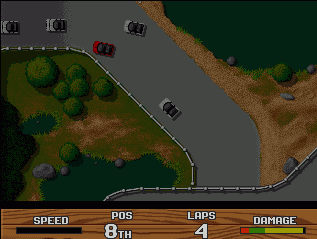
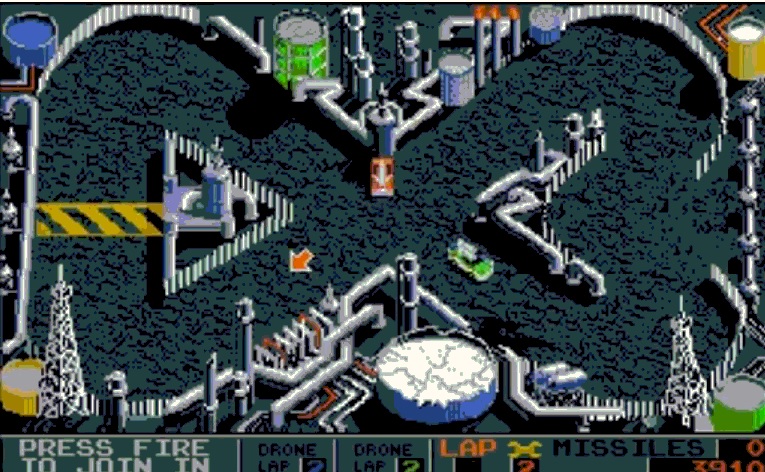
    BadlandsBadlands in a lot of ways is sort of the bastard child of Atari’s own Super Sprint and Magnetic Fields’ Super Cars II.  To put that into perspective if you’re not familiar with the Super Cars series, it’s basically Super Sprint with weapons.  Much like Super Sprint, Badlands takes place on a single-screen track, meaning you can see the entire racing field at all times.  Not that you’ve got a Formula One cohort to keep track of – there are only three opponents in any given race – but it is noteworthy in that this type of game well and truly died in the early 90’s and to my knowledge hasn’t been picked up since.

    Originating in the arcade, like most Atari games at the time, Badlands made its way to my home on the Amiga 500.  As its origins being as such, it really paled in comparison to the bigger and richer games being offered on the system at the time, offering very little in the way of depth or longevity.  But with its post-apocalyptic, almost Mad Max like aesthetic, it had a nice look and feel to it that made it a little more exciting than your standard late 80’s racer.

    The tracks are, in a lot of ways, the star attraction.  Badlands was a cracking looking game at the time, in stark contrast to the barren-ness of Sprint, with the tracks brimming with detail.  Smoke billows from smoke stacks and lava flows through rocky alcoves, and on some tracks destructible oils tankers and drums can leak oil if hit. Its stark departure from  the usually bright and oversaturated colours in racing games of the time, making way for a very reserved  palette and incredibly gritty art style,  brought the decrepit and in many ways industrial setting to life.

    Like any racing game though, it is the game’s core handling that makes it such a joy to play, even if it doesn’t quite have the frenetic feel of its kin.  Like the Sprint games before it, it is designed around the very loose steering wheel, and so the cars float around corners in an almost Ridge Racer like way.  Sure, playing with the old Competition Pro wasn’t the perfect substitute for an infinitely spinning wheel, but it felt good enough to still give the controls that insane drift feel.

    And of course weapons. It’s always fun to blow things up, and while many games followed suit over the following decade, Badlands was one of only a few games that shifted its focus away from simply being about hitting the apex to cross the line first.  Track design changed from the Sprint games to accommodate this, with the sweeping wide corners replaced with narrow claustrophobic roads and on-track hazards.  It may have seemed slower than Sprint, even when your vehicle is fully upgraded, but the ability to blow the living crap out of each other more than makes up it.

    It is a shame that this type of racing game has all but fallen off of the radar for most people.  The single-screen racer isn’t necessarily the deepest of racing experiences, and in the case of Badlands it was certainly best played with others, Badlands may not have been filled to the brim with content, but put it in context of its arcade origins, and it’s pretty easy to be sucked into what it has to offer in the game play stakes.

    Like Badlands?  Let me know in the comments and come back tomorrow for #29 in the countdown! Be sure to catch up with past games in the countdown below.

    #31: Stunt Car Racer   #30: Badlands   #29: RVF Honda  #28: Lotus Esprit Turbo Challenge  #27: Nitro  #26: Super Grand Prix  #25 Super Cars II  #24 Super RC Pro-Am #23 Sega Rally  #22 Wipeout 2097  #21 Micro Machines V3  #20 Gran Turismo #19 Need For Speed: High Stakes  #18 Colin McRae Rally 2.0  #17 Wave Race: Blue Storm #16 Grand Prix Challenge  #15 Project Gotham Racing 2  #14 F-Zero GX  #13 Mashed #12 Burnout 3: Takedown  #11 Ridge Racer  #10 Outrun 2006: Coast 2 Coast #9 Forza Motorsport 2  #8 Motorstorm: Pacific Rift  #7 Midnight Club: Los Angeles  #6 Dirt 2  #5 Need for Speed: Hot Pursuit  #4 Shift 2: Unleashed  #3 Sonic All-Star Racing: Transformed  #2 Forza Horizon  #1 F1 2013: Classic Edition

    BadLands Amiga 500


  • It’s that time of year again and I find myself racing toward another birthday and to the ripe-old age of 31. In celebration I thought why the hell not have a racing themed countdown – so here we are, counting down 31 racing games that have defined my enjoyment of the genre over the last 31 years.  Enjoy!

    SCR-RosterIt makes sense to start where it all began for me as a race fan – with what is to this day still one of the most purely entertaining racing games I think i’ve ever played.  I cannot understate how important Stunt Car Racer is both as an influence on my taste in video games, and as a game in its own right.
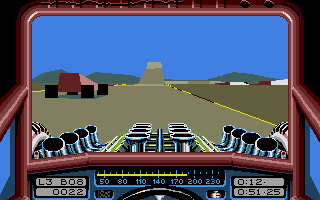
    Pitching you against some clearly late 80’s European designed opponents, Stunt Car Racer has you donning on a helmet, stepping int your open-bodied hot-rod stunt car, and driving at speed around raised and very barrierless tracks.  It is the very definition of extreme driving, where any wrong turn, over acceleration, or failed overtake, can send you careening off the track in need of a crane lift.  From the constantly changing and often severe cant of the track, to the drawbridges and jumps, Stunt Car Racer’s tracks aren’t just there for you to race opponents on, in many ways they are the opponent.  There have been so many extreme racing games since, but for mine, none have managed to come close to the exhilaration of the ‘real’ risks that Stunt Car Racer throws your way at every moment of every race.

    And part of that is because of its relatively reserved and strategic approach to racing.  Sure it’s fast, but Stunt Car Racer offers so much more than your average racer did at the time, in some ways being more akin to a modern racer than a product of its time.   I’ve always looked at racing games as, in some ways, puzzle games with a bit of extra testosterone thrown in for good measure.  Every corner is in many ways a puzzle in and of itself and the way you navigate your way through the pack, throttling on the accelerator and feathering on the brake, is a very delicate and finely balanced solution.  Stunt Car Racer embodies this sentiment in so many ways, from the intricately and near-perfectly designed twists and turns of the track, to the fine-tuned controls, winning a race (and even staying on track) always felt like being on a knife-edge.

    And it was absolutely perfect.  Throwing your car around at speed always has an inherent danger, and every time you reach for the boost button, its always with a sense of trepidation – pull it off and you’ll romp it home, but push too hard and you’ll be a pile of smoking twisted metal.  And the game isn’t exactly shy about warning you about just how fine of a line you walk, with every rough landing shown visually by a crack or (worse) hole in your car’s chassis bordering the screen.  But it is this continual tension that makes the game what it is, an exhilarating flame-spewing tight-rope walk.

    In many ways, as someone who didn’t own a Nintendo Entertainment System, Stunt Car Racer is my Excitebike –  less about pure speed than most racers, opting instead for a unique focus on navigating the tracks and maneuvering your vehicle around uneven and angled track designs. Developer Microstyle did the unimaginable at the time when it was released a technical 3D tour de force that ran smoothly and looked great, even on the less powerful home computers of the time, but who could’ve imagined just how enduring its originality would be so as to still be a one-of-a-kind racing game 31 years later.

    Play Stunt Car Racer?  Let me know in the comments and come back tomorrow for #30 in the countdown!

    #31: Stunt Car Racer   #30: Badlands   #29: RVF Honda  #28: Lotus Esprit Turbo Challenge  #27: Nitro  #26: Super Grand Prix  #25 Super Cars II  #24 Super RC Pro-Am #23 Sega Rally  #22 Wipeout 2097  #21 Micro Machines V3  #20 Gran Turismo #19 Need For Speed: High Stakes  #18 Colin McRae Rally 2.0  #17 Wave Race: Blue Storm #16 Grand Prix Challenge  #15 Project Gotham Racing 2  #14 F-Zero GX  #13 Mashed #12 Burnout 3: Takedown  #11 Ridge Racer  #10 Outrun 2006: Coast 2 Coast #9 Forza Motorsport 2  #8 Motorstorm: Pacific Rift  #7 Midnight Club: Los Angeles  #6 Dirt 2  #5 Need for Speed: Hot Pursuit  #4 Shift 2: Unleashed  #3 Sonic All-Star Racing: Transformed  #2 Forza Horizon  #1 F1 2013: Classic Edition

    StuntCarRacer01

  • DriveclubboxartI’m going to come right off the bat and say I don’t like DriveClub. I’d refrain from calling it a bad game, but it is a confused one that gets very little right.  Everything from the handling to the tracks to driver AI feels slightly off kilter to the point where nothing in the game feels as though it was developed by the same team.  In the end what we’ve got is a game that seems like a confused mish-mash of a racing game that does nothing particularly wrong, but will probably have most people asking themselves why it exists.

    And its been a bit like that in the whole lead up to the game.  What is DriveClub?  Is it an arcade racer?  Is it a simulation racer?  How will the career be structured?  The confusion prior to release was palpable.  Sadly none of these questions are answered now we have the game in our hands, and from the moment you hit the track to the moment you put the game on the shelf to gather dust, you’ll be trying to make sense of how exactly you should be driving.  Taking the racing line won’t get you the speed necessary to beat some of the times required to meet race objectives, but the cars’ handling doesn’t invite the more fast and furious style either, so you’ll constantly be wondering how the game wants you to drive.  And if you manage to make your peace with the handling of the cars, the often narrow and overly complex track design, and dumb-as-dogs-balls opponents will more than likely be the straw that breaks the camel’s back.

    DriveClub probably also isn’t going to win any awards for innovative single-player career design, but in that regard I can’t say that it make me screw my nose up in disgust at its conservatism.  Within a couple of button presses you’ll find yourself staring at a matrix of events, starting off with the slower cars, and finishing up with high-powered aerodynamic powerhouses, and aside from objectives for each event which often deviate from winning the race, you’d be hard pressed to differentiate it from what the menu for racing games looked like 15 years ago.  And its this staunch adherence to career structures of yore does work to the game’s advantage, hiding the paradoxically erratic and lethargic handling of the bulk of the game’s cars, behind the less-powerful and less-maneuverable cars found in the lower classes. After all who expects a ‘hot hatch’ to be nimbly and ably making its way around corners and through chicanes?  So to the game’s credit it did take me a while to realise that the game isn’t really my cup of tea, but once I did, by jove that was a long and hard realisation.

    Whichever way I look at it, DriveClub is a game that seems to take any opportunity to be unlikeable.  The whole thing feels like it’s been pulled in three different directions, and as a result, is stuck spinning its wheels in the middle, not going far enough in either direction to make a good go of any of them. I think we’ll see a lot of debate as to whether the online portions of the game, which have been the major selling point for the game, ostensibly being offline has resulted in the sour taste it has left in people’s mouths. Perhaps it would have.  But the ability to join clubs and what amounts to ‘levelling up together’ don’t seem to me like they’ll save what is a fundamentally flawed racing game.  Online or off, no amount of leader boards was ever going to stop DriveClub from being stuck somewhere in racing game limbo.

    I’m sure the intentions were there, and somewhere in someone’s mind at Evolution Studios, sits a bloody excellent racing game. But the developer’s seeming reluctance to make a decision about what they were setting out to achieve with this game has resulted in a confused and directionless racing game that is very hard to enjoy.  Because of this, despite the very occasional flashes of potential, DriveClub is perhaps first major letdown of the generation.

    Driveclub

  • economistsI have spent almost all of my career in public policy, and while I’m almost always surprised by some of the solutions governments put forward to policy issues, I’m never surprised by how much the work resembles playing a video game. As an economist who builds all sorts of models, and bases work on all kinds of microeconomic and macroeconomic theories, the parallels are even greater than they may otherwise be.  Needless to say regulation of the telecommunications market feels more than a little bit like an abstracted round of Super Smash Bros.

    And there’s good reason for this.  Games, however fictional take inspiration from life.  In games that slant toward economics or world-building, in a lot of ways, often try and model their mechanics after real world economic forces, and use them as key parts of their games. While the term ‘in-game economy’ has been hijacked and misappropriated by the enthusiast press, the approximated and in many ways crude representation of market forces and government edicts or policies is a great introduction to sorts of variables governments grapple with in making some of the tougher decisions that face an economy.  But they’re there and usually a pretty good abstraction of how things work in the real world.

    Even my earliest introduction to economics was in video games.  I was fascinated by and often fixated on Sid Meier’s Civilization, which even from an early age, had me calling for just one turn.  I can vividly remember scorching hot days in school holidays sitting in front of the monitor of my Commodore Amiga 500, plodding my way across landmasses big and small, learning about trade and taxation, the costs of warfare, and managing scarce resources.  Within months I writing primary school projects on the World Bank, Communism and Industrialisation.  And it’s a similar story with Maxis’ classic city-building simulation, Sim City 2000, which introduced me to the wonders of managing a government’s budgets (and just how roads and transport departments hate to lose money), and how precarious of a balancing act managing taxation with spending really is.  These were great, and in some ways crude, approximations of an fiscal management, serving the sole purpose of regulating the player against the game’s rule set, namely through constraining their budget.  They are games after all.

    But imagine if there was a game that closely and accurately resembled how a nation’s economy works, an interactive and highly modifiable (and slightly more accessible) Computable General Equilibrium model, with a game built around it.  Imagine building a nation, either one to resemble a real-life economy or an economic utopia or banana republic, and taking the reigns of a public policy maker with a job to steer your country to prosperity.  Too often we see games built with its economy shoe-horned in, often meaning the soundness and logic of the market is compromised for the sake of gameplay.  In order for an economics-heavy game to work it has to be at front and centre of the development process, something I hold out hope that what game designer Soren Johnson describes as an “Economic RTS”,  Offworld Trading Company, will achieve.  I’ve talked previously about how economics can be used to inform game design, and sung Port Royale 3’s  praises for its modelling of the closed economy, but I’m not sure I’ve ever been utterly blown away by a game’s representation of economics.  As it currently stands I think Kalypso’s Tropico series is the closest I’ve seen to an accurate representation of how real-life economies work, and even that has significant limitations.

    offworld_trading_company

    Perhaps that’s because are dynamic and living things and Government policy makers are always devising new ways, new models, and new approaches to playing in the sandpit that is the global economy – something the traditional video game business model, with their sequel and DLC plans, aren’t equipped to necessarily deal with.  But what if, like LittleBigPlanet, a game gave players the toolset to generate their own content, their own policies, and their own market interventions, and share them with other users through policy ‘modules’ that could be dropped into the games of others?  The LittleBigPlanet model would give players an ‘economic playground’ to experiment with , and with the core economies modelled, would allow them to experiment in the market.  Imagine wanting to build up your fictional nation’s automotive industry and having the tools at your disposal to see what it would take to make it viable, and the number of tariffs and subsidies it would take to keep the industry afloat, or putting limits on water extracted from water systems for irrigation to meet environmental objectives.  If you want to pursue  free trade with your regional trading partners, the world is your oyster.  If you want to tax beer, cigarettes, and other economic ‘bads’, be my guest. The possibilities are endless, and the ability for users to replicate real-world policies shortly after they’re announced by governments, and implement them on their own economies would be a massive step toward understanding the challenge faced by policymakers across the world every day.

    Criticisms aside, developers have taken enormous strides in how they incorporate economics and politics into their games, and that isn’t likely to stop anytime soon.  But giving players the freedom to manage their ‘nations’ would open up creativity in a way that no other game has before, and would offer up endless possibilities for playing around in a global market, and watching as the realistic market forces take hold.  After all, in a world where graphics and physics are getting closer and closer to resembling real life, shouldn’t this be the next great development challenge?

  • GameAndWatchWhile I have infinite memories about growing up with Nintendo handhelds, I don’t have that many video game memories that involve its iconic Game and Watch series of products.  Probably somewhat due to my age, I really missed the Game and Watch boat that most faithful Nintendo fans latch onto as their first real memory of their love affair with the house that Mario built.  Of course Nintendo’s insistence on pushing their legacy onto Game Boy owners throughout the early nineties meant that these ‘classic’ games – from Mario’s Cement Factory to Cement Factory – weren’t entirely foreign.  But as for owning them, despite considering myself a bit of a connoseuir of video games of the portable persuasion, I’ve never really felt the need to track the original physical clamshells down, probably knowing that in all likelihood they’d sit on a shelf gathering dust.  And that’s if they’re lucky, the more likely scenario is that they’d sit in a box somewhere, sight unseen.  They are a part of videogame history that i’m happy to know and acknowledge, but don’t care so much if I never set hands on one again.

    But I absolutely respect the Game and Watch line of products.  The closest I came to owning one was a Legend of Zelda GameWatch, which to mind is the only watch that does more than tell the time that I need.  In the late 80’s and early 90’s the thought that any version of the games I was playing on my Game Boy – however compromised – could fit on anything the size of a watch was a fascinating prospect.  While we’re spoilt for what we can play on seemingly any device these days, novelty was a major driving force for video game hype in the 80’s and 90’s, and portable handheld games were a huge part of this.

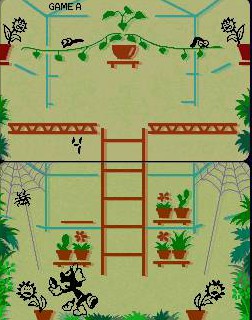
    Despite my relative lack of ‘in situ’ Game & Watch experience, I have an unmatched fondness for  Greenhouse, one of the early G&Ws released in the early 1980’s.  But this appreciation isn’t really founded in an appreciation for the game itself, but rather the role it played in my life at a point in my childhood.  Nostalgia is a funny thing that i’ve written on before, but for me fond gaming memories aren’t necessary rational recollections of the tangible act of playing a game, but rather very vivid conduits for remembering times, people and places.  Greenhouse is no different in this respect, but rather than transporting me back to a time as a child where video games helped me through a long stint in hospital.

    Greenhousescreen

    When I was six years old I had a severe eye injury that put me in hospital for what seemed like a lifetime.  As a child spending time in hospital is hard at the best of times.  Being away from family, from the familiar surroundings of your bedroom filled to the brim with toys and books, and perhaps worse still the uncertainty and inherently scary surroundings that a ward brings with it.  For me that isolation and terror was exacerbated by the fact I had to lay in a dark room for days on end with only very limited time allowed in the playroom, which as a six year old is perhaps the hardest thing in the world to do.  So for days I laid there, with my favourite toy dog for company, and my loving parents sleeping on what I can only imagine were tremendously uncomfortable foldout beds most nights.  I can remember being scared, I can remember crying uncontrollably, and I vividly remember my desperate parents trying to console me in any way they possibly could.  I wasn’t terminally ill, and while I was extremely lucky to retain the sight in my eye, there were other children I met in my time there that were far less fortunate.  But the irrational mind of a six year old isn’t one easily consoled.

    But between the fear that darkness brought and the resultant sore eyes in the morning, for that brief period I could spend in the playroom, there was Greenhouse.  A battered and old piece of technology that had probably been held in the hands of  hundreds upon hundreds of children in the decade preceding was a shining beacon of happiness that sat unassumingly amongst Lego blocks and toy cars.  Every day I would rush to the playroom to pick up that simple game, and my smile would grow wider with every bug exterminated and every plant saved.  For 30 minutes a day that simple game made me forget that I was in hospital as I strived to beat my previous day’s high-score.  Greenhouse may have been simple, and ancient even by the late 80’s, but to me it was a window to another world that I would look forward to peering through for that brief period every day.  For that stay in hospital, it wasn’t just a game to me, it was a companion that helped me restore some sense of normality and routine to what was otherwise an incredibly scary childhood experience.

    For years after Greenhouse remained a distant yet very memory in my video game history.  More recently I have played Greenhouse, in the form of the Club Nintendo Game & Watch Collection, and while the game gave me those unmatched warm and fuzzy feelings of nostalgia and familiarity, I didn’t feel the need to spend a lot of time with it – and in some ways this is how I feel about a large majority of games I enjoyed in the past.  But as a transporter to another time and place, Greenhouse is a reminder to me for how video games can act as a crutch and as escapism at our low points – but perhaps even more importantly – how important normality and high spirits are to the healing process.  So thank you Nintendo, for helping me through my time in hospital – I’m sure there are kids all around the world that have similar stories to share.

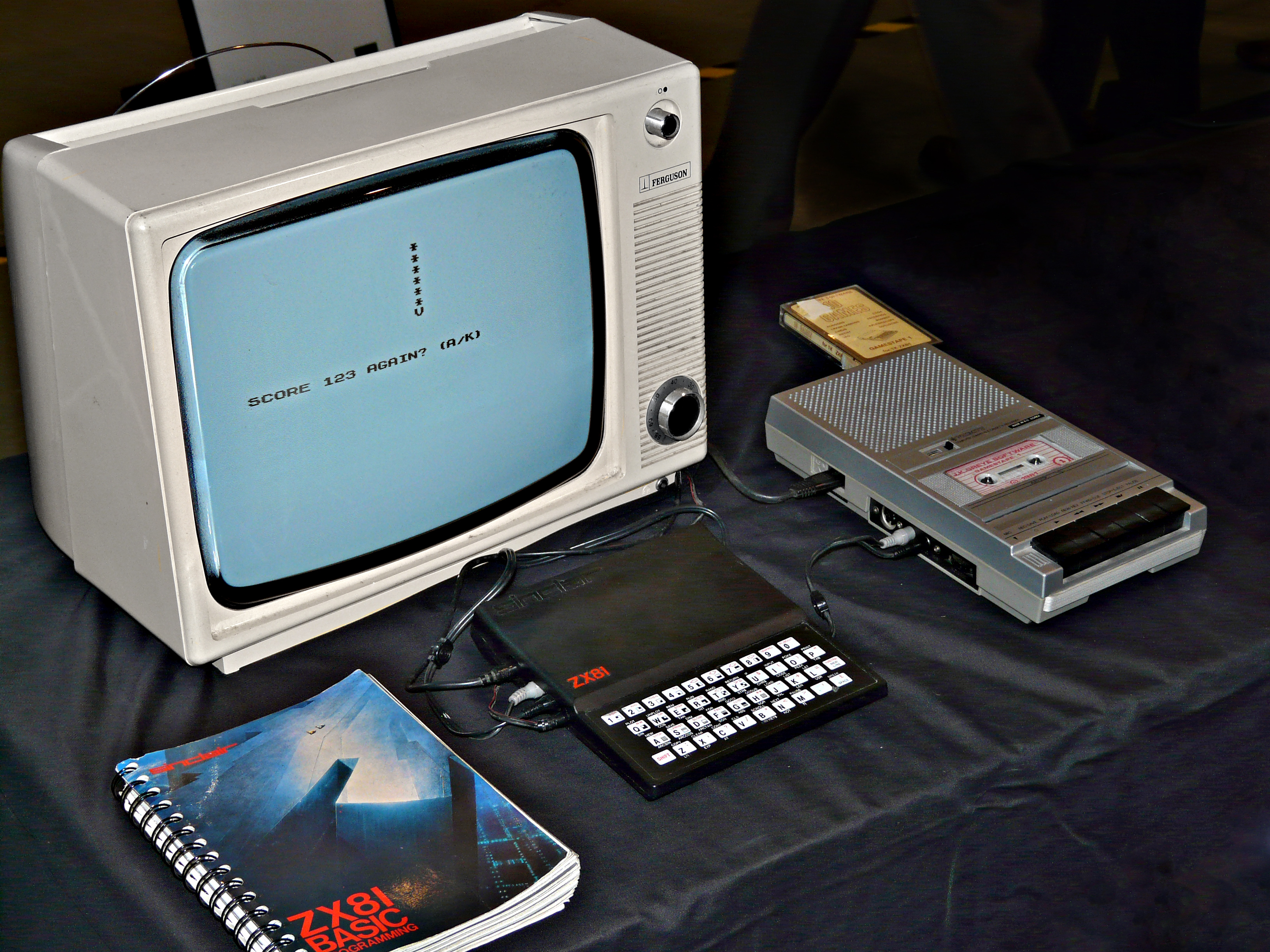
  • A Sinclair ZX81 with cassette recorder.
    A Sinclair ZX81 with cassette recorder.

    At last, the first of my articles for Kotaku UK has gone live:

    http://www.kotaku.co.uk/2014/10/13/people-used-download-games-radio

    Quite a while ago, a Dutch work colleague of mine mentioned a radio show called Hobbyscoop that was broadcast in the Netherlands in the 1980s. The DJs would play the sound of data tapes (like simple games or programs), and people at home could tape the sounds and then load the programs into their Commodores or Sinclairs. In effect, it was wireless downloading long before the existence of wi-fi.

    Suitably intrigued, I attempted to find out more about the radio show, and while doing so I found out that quite a few DJs across Europe had attempted the same thing, many of them coming up with the idea completely independently of each other. I tracked down and interviewed a few of them, and here‘s the resultant article. It was a fun piece to research: I hope you enjoy reading it as much as I enjoyed writing it!

  • There really is little point buying a game at launch when you think about it.

    For a start, you’ll be paying a premium for the privilege of owning a game on day one – up to £60 if you’re paying the RRP for a new Xbox One or PS4 game (although realistically it will probably be more like £50 or less if you shop around). And what are you getting for that money? Well, probably something that’s a bit broken. Patching a game after it’s been launched is now the norm, so the version you play at launch might be radically different – and probably worse – than the version you’d play if you waited a couple of months. The broken – and now partially fixed – loot system in Destiny is a case in point. And speaking of Destiny, I’ve no doubt that the game will be utterly transformed over the next few months as more patches and game modes are added, and it will be all the better for it. Plus in six months’ time it will be at least half the price, and probably cheap as chips secondhand.

    Is it worth paying a premium for a game that isn't at its best on launch day?
    Is it worth paying a premium for a game that isn’t at its best on launch day?

    So why on Earth would you buy a game at launch? Logically, it makes no sense. But logic has no place in the gaming bubble.

    And in fact, the premium you’re paying for that day one game is to be part of that gaming bubble – the bubble of hype and fanfare that heralds the launch of a shiny new gaming experience. Of course, this is mostly down to the marketing – the steady drip feed of information on a new game that sets hearts and minds racing on the road the launch day, whipping potential purchasers into a frenzy of excitement, ready to hand over their credit card details to gain access to the Next Big Thing in gaming. So if you pay full price for a game at launch you’re being duped by advertising, right?

    Well, perhaps not. You could argue that you’re falling into the advertisers’ and publishers’ grubby hands by succumbing to the hype, but you could also argue that all the promotion and advertisng actually makes the game experience better. Picking up a few cheap, old, secondhand games is nowhere near as exciting as getting a shiny new game that almost no-one else in the world has played, and that excitement carries over into the playing experience itself. I came sorely close to buying the just-launched Alien: Isolation today, but in the end my logical mind won out and told me to wait until it comes down in price. Yet I also know that if I’d bought and played it today, I would enjoy it more than if I bought it a year from now. That’s simply because of the added excitement of being part of the bubble – and that includes all of the excited blog posts, tweets and Twitch videos being created about the game as other people play it for the first time along with you. Playing a game at launch is paying a premium to be part of a shared experience, an exclusive club that consists of you and everyone else who’s paid to be in the bubble.

    How much would you pay to be part of the bubble?
    How much would you pay to be part of the bubble?

    There’s even more of a case to be made for massively multiplayer online games like Destiny. Yes, it was a bit broken at launch, but the multiplayer aspect means that the feeling of a shared experience was even more prominent. The people playing at launch enjoyed the thrill of discovering a new world together, but anyone joining the game a year from now will be met with probably a much-diminished and somewhat disinterested group of veteran players.

    A year from now, Destiny will be a better game. But for anyone joining in for the first time, long after the bubble has burst, it will arguably be much less enjoyable.

  • ArmchairWhat ho, chums!

    There’s change in the air. And I don’t just mean the reddening of the leaves and the plummeting of the mercury as autumn takes hold. Although if you happen to be in the southern hemisphere, like my good chum and virtual housemate Sir Gaulie, it’s more the time of year when swimming trunks are hauled out of cupboards and the air conditioning receives its ceremonial turning on.

    No, the change I’m talking of is the change in the console cycle, the inevitable business of upgrading to the next generation of newer and flashier boxes, a process that has gathered pace of late. Gaulie couldn’t wait to leap into the next gen, and even documented the shopping centre slumber party that heralded the Xbox One’s arrival in Oz. I, however, have been somewhat more reticent to upgrade, being generally underwhelmed with the range of launch games on offer, not to mention the exorbitant prices. In fact, I ended up buying a PS3 instead to catch up on all the PS3 exclusives I missed.

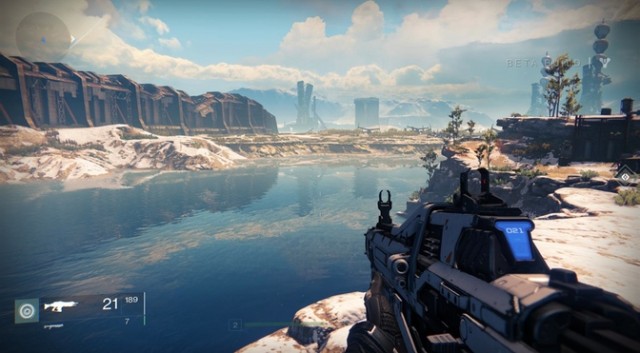
    But recently, I’ve started to catch next-gen fever. It began with the launch of Destiny – finally a truly next-gen game that I actually quite fancied playing. Of course, it’s also available on Xbox 360 and PS3, but it seems a waste to play such a beautiful-looking game on a system that can’t do it proper justice. Likewise, I’m excited about playing Alien: Isolation, which looks fantastic, but it seems a shame to settle for the last-gen version – and that’s another thing I’ve noticed recently, the subtle shift where people are slowly beginning to refer to the Xbox One and PS4 as the current generation. Change is in the air.

    So pretty... so tempting...
    So pretty… so tempting…

    So like many people, as Christmas looms I’m beginning to finally contemplate a gaming upgrade, especially as retailers have begun to offer some very reasonable console bundles: I recently spotted a PS4 with FIFA 15, Minecraft, Infamous: First Light and Wolfenstein: The New Order for £369.85 on ShopTo.net. The temptation to bag myself an early Christmas pressie was near overwhelming.

    But £369 is still a lot of money, even if it is good value, and really I could only justify a next-gen upgrade by trading in my old consoles and games. But alas! I’m still not quite done with the current – well, last – generation, as a quick look at my games backlog will show you. There’s no way I could trade in my PS3 until I’ve at least finished the Uncharted series, Ni No Kuni, Heavy Rain, Deadly Premonition, Journey… and probably others too (let me know if there are any other must-play exclusives I’ve missed). All those great games, so little time… but with the weather drawing in, at least I have an excuse to stay home and play them.

    So the next-gen upgrade is postponed yet again as I once more attempt to whittle down the backlog. But then again Destiny does look rather good… and £369 is a terribly good deal for four games… and then there’s the new next-gen only Batman game… and ARGH! The cycle of temptation begins again!

    Well, I'll HAVE to get a PS4 for the new Batman game...
    Well, I’ll HAVE to get a PS4 for the new Batman game…
  • RYSEI can’t help but feel that this autopsy culture and academisation of game design is detracting from what drew me into video games as a young lad in the 80’s and 90’s.  The sense of wonderment that came with every new game, acceptance of flaws in service of appreciating the broader entertainment, and the ability to incorporate me in stories or sequences taking place in both new and familiar locations, were key factors in capturing my attention as a boy, and maintaining it as a man.  But that wonderment and acceptance has fallen away from video game culture and in its place left a general feeling of discontent and unwillingness to overlook sometimes minor complaints in favour of appreciating a game as a whole.  As games evolve into big and beautiful opuses, sadly the conversation around them has devolved into a series of technical specs and thinly veiled shit-slinging about what games should be rather than what they are.
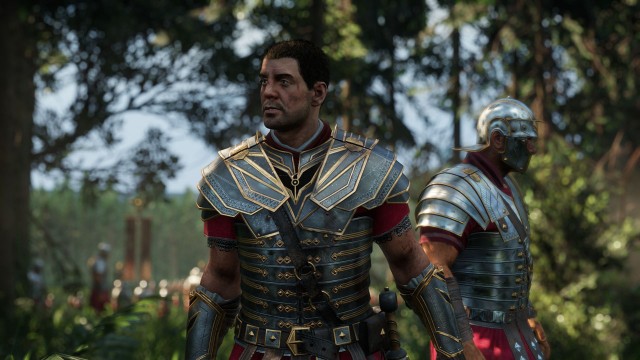
    The transition from one generation to the next is perhaps the most treacherous for a developer in navigating the minefield of thirsty and tech-savvy consumers.  Launch titles carry with them great expectations – often misinformed by sensationalised expectations drummed up by the media ever so eager to cash-in on increased traffic to their websites – that they will bring forth the ideas that will permeate through the industry and bring us the next great leap forward in gameplay.  Ryse’s rigid adherence of what came before it – albeit a beautiful rendition of it – meant that it fell prey to this very phenomenon.

    And that’s sad.  Ryse: Son of Rome isn’t a groundbreaking game – but then again why does it need to be?  It is, however, a beautiful and seemingly lovingly crafted work of historical fiction that not only does justice to the majesty of ancient Rome as a subject matter, but also delivers on its clear intention to make an epic tale of revenge and heroism.  If it’s visceral and rewarding combat, and vivid imagery of a time lost in history you want, then Ryse is a venerable Lonely Planet guide to what an idealised version of the time and place may have looked and sounded like.  As a game, it does its job and it does it well, and presents a dozen or so hours of high quality entertainment, and at launch showcased exactly why people had been holding their breath for the next generation of hardware.  And if you regulate your play sessions, as with any game, any monotony that may arise from the combat system will give way for exhilaration every time you maim a barbarian – regardless of how many time you’ve seen it.  Ryse is a simple but fun and satisfying  game that you would most likely come away from smiling and nodding at the very least.

    If you played it in a vacuum, that is.

    You see our rabid obsession with progress, with change, and with revolution, soured what was a masterful execution of the historical drama in interactive form, and detracted from what was a sensible and mature approach to fictional accounts of an incredibly influential point in human history.  In some ways, Ryse is to video games as Showtime’s Tudors was to television, a popularised and palatable retelling of history that does away with any pretenses of scholarly teachings and instead makes history interesting for everyone.  But that potential analysis and angle for critiquing the game was lost amongst counting the pixels and lines of resolution, and perhaps even more poignantly, the almost unabating search for the future of videogames inside of that Blu-Ray disc.

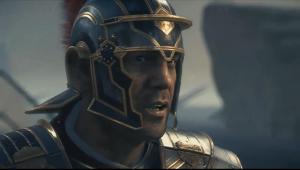
    RyseMarius

    But what is the future of video games?  They are such a new media that has changed and evolved so quickly that we are always expecting games to move forward, to change and evolve, and to bring us closer to the future of video games.   A future of games that no one can define yet they are adamant they’ll know when they get there.  So what we’ve ended up with is an impossible milestone for developers to meet purely because it is highly subjective – if you had’ve asked me in the 1990’s what games would evolve into I would’ve said Outland, and that’s clearly not what modern games for the most part have come to be.  And from that surely we can determine that the definition of what the future of video games should be is an ever changing beast.  I’m sure people playing Another World 20 years ago never envisaged the scale and scope of a game like Watch_Dogs, and in a similar fashion i’m sure there will be game experiences in 20 years from now that we can’t even begin to imagine.  To me Ryse felt like one version of the future, the future I envisaged at the dawn of the 3D age where games would look so beautiful that you could truly escape into their world, and where the people in those games were so life-like they almost jumped out of the screen.  It may not have been the future of video games people expected, but is it fair to place those expectations on a developer whose intentions may not have been aligned?

    I’m not writing this in defence of Ryse – I enjoyed it and that’s that.  I am also not writing this to detract from people that legitimately didn’t enjoy it, we’re all entitled to opinions providing they come from a genuine and informed place.  But what I am doing is writing this to raise the legitimate question as to why games are critiqued for what they don’t do rather than what they do, and how so many can justify this based on  the ‘unknown-unknowns’ of the medium’s evolution.  Perhaps it’s a bigger issue that people are having trouble articulating – frustration with how little games are changing over time for example.  But lumping one’s own internal expectation onto a game – as opaque as they may be- and then criticising it for not meeting them isn’t the way to change things for the better, and in the case of Ryse it has resulted in a one-track conversation about Ryse that has all-but dampened the potential for constructive and thoughtful discussion on what it does right.  And sadly this is a wider phenomenon that is making all discussion about video games a sick and sad state of affairs.

  • DestinylogoI would hate to be a professional game reviewer tasked with putting a score on a blockbuster like Destiny.  The sense of trepidation you’d have trying to think critically while still giving the developers benefit of the doubt on their intent is a near impossible task that I don’t envy.  That already difficult task is made even harder by the sheer aspiration and ambition of a game like Destiny, where Bungie has made no secret of their intent to redefine the shooter.  Not to mention the possibility of hordes of rabid Halo fans breathing down your neck if they think you got it wrong.

    While its nearly impossible to know what was rolling around in the heads of the developer’s esteemed designers, it seems pretty clear that the world wasn’t necessarily expecting what it got from Destiny.  Within the first 24 hours i’d seen lines of people returning the game, and critics throwing words like ‘hollow’ and ’empty’ around in their not-quite-reviews.  It was pretty clear there were some serious expectations from the general gaming populous going into Destiny – the most expensive game ever made – but that what was in the game was a little underwhelming.   Destiny had won over the wallets of players, but hadn’t quite captured the hearts and minds.

    And when you read the reviews and comments permeating through every corner of the gamer-verse, a trend emerges, and one that doesn’t paint a very favourable picture of  the fruit of Bungie’s loins.  In short, people feel that Destiny just isn’t big enough.

    Now I haven’t played Destiny, so for a comprehensive and insightful look at the game I’d suggest reading this or this, but I couldn’t help but notice many of the criticisms levelled at Bungie’s latest were also levelled at Xbox One launch title, Forza 5.  Being a launch title there was a lot riding on the fifth entry in Turn10’s top of the pile racer, and technically the game achieved everything fans could’ve asked for.  It was a beautiful game that, when the rubber hit the road, was easily the best of breed.  But the broader picture wasn’t so rosy, and Forza 5 suffered as much from its ambition as it did its omissions – at its heart though it was its light-on feature set and diminished track line-up that caused the most outrage.  Everything Forza 5 did right, and it did a lot right, was stigmatised by a perceived lack of content.  Less tracks, fewer cars, and an underwhelming career structure dragged down the review scores to make Forza 5 the worst reviewed game in the series.

    But almost 12 months on, that disappointment has subsided far removed from the hype and expectation leading up to the game, and I am still playing the hell out of a game that polarised its players.   Distant memories of turning my nose up at (a paltry) 14 tracks have been replaced of the exhilaration of thousands of laps over dozens of hours in some of the fastest cars in the world all from the comfort of my couch.  And a year on Forza 5 has become a staple of my gaming diet as the pure bliss of Forza’s underlying driving mechanics keep their numerous tendrils wrapped around me and the sweet hum of a supercharged V8 Supercar charging around Mt. Panorama lulled me into a deep sense of security.

    You see at some point my appreciation for what the game offered turned a corner and the quantity on offer became less of a point of criticism, and the logical side of my brain realised that the sheer act of playing Forza 5 was enough to keep me going.  The subtlety in the physics, the tangible excitement of hopping into another car and feeling the difference heading into the first turn of Laguna Seca – all of these things were the game’s content, and there is a hell of a lot of ways to experience the beauty of racing Turn 10 has carefully and lovingly crafted.  The content was there all along, it was just the very narrow view that consumers tend to take in quantifying it that was the problem.

    And I wonder whether we’re seeing something similar with Destiny, a game that from all reports, seems to be a mechanically sound game let down only be its emptiness.  Whether the solid shooter pedigree is enough to hold people’s attention long enough to keep people playing – like Forza 5 did with me – remains to be seen.  But a game like Destiny, even in the face of criticism, won’t go down without a fight, and as the game gets its claws into select people, as it inevitably will, Destiny may well become the game people imagined it would be.  The question is whether the core of the game is enough to ensure people stick around to discover that the content may have been there all along.

    XboxOne Holden

  • Wipeout_PS1Wipeout did a lot of things to progress the world of video games.  Aside from being a bloody fantastic futuristic racer, it was a beautiful showcase for just what videogaming in three dimensions was all about – looking not only streets ahead of its contemporaries, but in some ways like it had come from the far flung future.  At a significant time of change for the industry, and the disruption caused by the onset of CD-ROM and the potential it unlocked, Wipeout was in some ways a showpiece for the future of video games.  It is not an exaggeration to say that Wipeout truly ushered in the next generation of hardware.
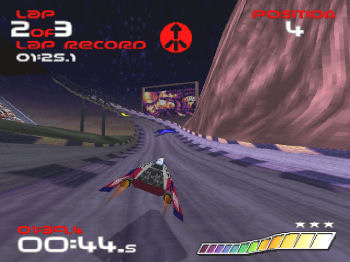
    But for me Wipeout was a far more significant video game milestone, as well as being one of the best racing games of the generation, it was the first game that broke from the traditional definition of video games into something much more.  With Wipeout, Psygnosis had successfully legitimised videogames as an artistic medium.

    While we all look fondly back at what video games were, often contrasting them with what they’ve become, I always felt that every part of those early games was developed with a very functional purpose in mind, that everything from the graphics to the music existed only within the game world and its influence was confined to those four walls.  While it may have all had artistic merit in the real world, it was never intended to transcend the television screen and influence social or cultural trends.  Indeed games were growing up alongside the enabling technology, but their influence on anything but schoolyards and retailers was limited.  They had developed as an advancement of children’s entertainment – toys – and society (including those who played them) treated them as such.

    That was until Wipeout came along.

    There was something very different about Wipeout.  Developer Psygnosis, which later became SCE Studio Liverpool, was always known for breaking new ground with the games it released, but never before had it forever redefined gamers’ expectations from the video games they played.  And while Wipeout and its sequels were brilliant futuristic racers in their own rights (modern classics, really), it wasn’t in the gameplay that the developer took its greatest strides forward.  In fact in many ways it was everything around it that, for me at least, made games so much more than just very pretty and very expensive toys.

    WipeoutPS1screen

    Wipeout was quite simply the coolest game that I had ever seen.  Everything about it oozed a sense of style that most games that had come before it could only dream of.  Wipeout took the first steps toward games as art, with everything that padded the simple act of interacting with the screen, feeling like it had come from the advertising campaign for only the hippest of brands.  The soundtrack alone was filled to the brim with notable electronic artists –  from the Prodigy to the Chemical Brothers – and was enough to rival most film OSTs, but it was the game’s heavy focus on graphic design both inside and out of the game that made Wipeout such a unique and game-changing proposition.  From the design of trackside banners in the game, to the packaging and marketing material, the designers of the game had a very consistent message to send.  And Psygnosis hadn’t just thrown together polished concept art to plonk of the cover, they had notable hired guns the Designers Republic developing the look and feel of the Wipeout brand.  It was a campaign with a message,  and that message was that the release of Wipeout was the beginning of the future.  Wipeout may not have been the first game to employ graphic design in conjunction with its art, but it was certainly the first game to put it at the front and centre of its brand identity.

    While Wipeout only got better with every entry, it is the original game that stands out as being the one that had the greatest lasting impact on the way developers, but more importantly consumers, think about video games. Whether games are art or not is a pervasive one amongst those that play them, with the case only being strengthened at the end of the Playstation 2 era with games like Shadow of the Colossus capturing the hearts and minds of almost everyone that played it.  But for me the moment I first saw and played Wipeout was the moment I realised that games are more than just toys, that they are mediums that can stand proudly alongside film and literature as beautifully curated displays of art.  Wipeout was more than just a technical step forward, it was a serious step forward toward legitimising video games as a pastime, and one that as a brand left its mark on generation after generation of players.


    Feisar


  • Fighting games have come to represent some of the craziest examples of gaming canon around.  In the 90’s the stalwarts of the arcade scene were injecting those crisp arcade screens with some of the most bizarre yet beautiful sprites to grace the relatively young industry.  For every Dhalsim there was a Kintaro.  It was a weird time for the industry, but one that so many of us remember so fondly.But progress – for a period at least – left those days in the trail of polygons.

    Tekken and Virtua Fighter ushered in an era of ultra pretty and (at the time) complicated fighting that pulled people away from those long Mortal Kombat 3 lines and wowed them with the eye-catching visuals pushed by Namco’s Arcade System 11 and SEGA’s Model 1 boards respectively.  And it wasn’t long until these were the main attraction at arcades, as the traditional fighter was pushed to the back of the floor, making way for the newest and hippest 3D fighters.  If these games didn’t kill the 2D fighter, they certainly left them wounded and bleeding, ready for the Dreamcast’s Soulcalibur to lay the final crushing blow when it was released to a blazing hot reception when it released in 1998.

    While I kept with the old guard, it was hard to not look at what these games were doing, both graphically and in terms of offering an entirely new fighting experience.  The characters moved with such fluidity – unlike anything else I’d ever seen – and the graphics for the time were what we all imagined we’d be playing in the future.  It was the future and console manufacturers knew it, with 3D fighters featuring prominently in the launches of both the SEGA Saturn and the Sony Playstation, with Virtua Fighter and Battle Arena Toshinden respectively vying to capture the imagination of would be 32-bit console owners.  But the real competitor to Virtua Fighter, as it had proven in the arcades, didn’t come to Sony’s console until later in 1995, with the arrival of Namco’s Tekken.  And it was definitely worth the wait.

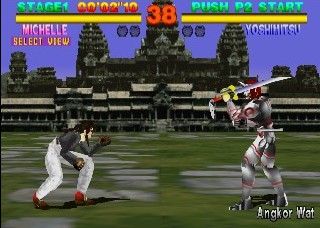
    TekkenPS1
    Welcome to the future….

    The first time I played the first Tekken way back on the Playstation I was taken aback a little bit by the roster of characters.  I shouldn’t have, because in a lot of ways it resembled the cast of characters pulled together by SEGA for its Virtua Fighter series.  But after years of larger than life sprites seen in Capcom, Midway and SNK’s offerings, Tekken’s band of ragtag brawlers came off as a little tame.

    Well nearly tame.  You see amongst all the gravity-defying hair and headbands, I found my eyes drawn to a strange character – an out of place portrait – second from the far left of the – now admittedly small – roster.  “What is he” I wondered.  “A monster?”.  His eyes glowed red and his almost slasher flick-esque would have caused nightmares in some – admittedly only to those with a weak disposition.

    That character was Yoshimitsu, a character so symbolic of Namco’s then newly-established fighting pedigree that he found himself jumping directly from the Tekken series, to the company’s wildly popular weapons-based Soulcalibur series, albeit in name only.    Before the increase in popularity of Jin Kazama, who first featured in Tekken 3, Yoshimitsu for a lot of people embodied not just the spirit of Tekken, but for some the spirit of 3D fighting games.  He may have been the monster among men, but his otherworldly presence and Namco’s seeming self awareness of the ludicrous nature of his character – including being the only character brandishing a weapon – made him something we could all relate to in order to bridge the gap from what we were used to from what 2D fighting games had become.  Yoshimitsu may not be the weirdest character in the Tekken roster these days, but by 1995 standards, he was positively freakish.

    And as time went on Tekken – much like every other fighting game series – embraced its inner weirdness in line with what every other fighting game franchise was doing at the time.  1997’s Bloody Roar, for example, had men turning into animals.  But with every step its competitors made toward regaining the sense of craziness lost in the transition to 3D, Tekken’s designers were taking two.  By Tekken 3 we had drunken Doctors and Panda Bears, and by Tekken 5 we had Devil incarnates and Angels.  Seeing a man fly out of an erupting volcano is no uncommon sight in a series that, at one point at least, could have been considered at least a little bit grounded in reality.  Tekken had found its groove and wasn’t going to let up until it had wrung every ounce of insanity out of the creative team at Namco’s development team.

    But before all of that craziness, for a brief moment, we had Yoshimitsu.  A single grain of craziness among a game that took itself rather seriously.  He defied the rules by bringing a sword to a boxing match, moved more like a monster than like a man, and likely gave his opponents nightmares well after knockout. He was Yoshimitsu – the man that arguably single-handedly kept the fighting game genre crazy.


    Yoshimitsu

  • Killzoneshadowfall[Contains spoilers of Killzone 3]

    I approach every game in the Killzone series with almost unmatched optimism.  The first game – while not perhaps the Halo-killer in terms of popularity and sales- remained the greatest shooter on that system; something that games on subsequent systems have managed to live up to for their respective consoles.  With such a great track record, expectations have always been high for the series, but Guerrilla Games (and more recently Guerrilla Cambridge) has managed to hit the high bar set by marketing and media alike to deliver fun and beautiful shooters that push the technology seemingly beyond breaking point.  Needless to say I have had more than my fair share of fun shooting at those clearly fascist-inspired red-eyed goons.

    But underneath the inspired locales and solid shooting is a more sordid tale.  Through subtle undertones, decaying environment, and direct narrative devices, Killzone paints the picture of mixed and confused morals and almost religious dedication to one’s ideals.  Just as Wolfenstein: The New Order dealt with fascism and genocide did earlier this year, the Killzone series always carefully but directly covers narrative and thematic ground most shooters don’t allude to let alone explore.  The battle between the Helghast and the Vektans is a war long fought based on ideology and history – in some ways not unlike many conflicts currently killing innocents across the globe.  In short Killzone makes me incredibly uneasy.

    Playstation 4 launch title, Killzone: Shadow Fall, is probably the most successful in injecting moral ambiguity into the heart of its narrative.  While the previous three main games in the series have toyed with themes of humanity and morality in fits and starts in its narrative, Shadows Fall is simple drenched in dread and scenes of injustices.  The  end of Killzone 3 saw the destruction of the Helghast home planet of Helghan, and what amounts to the wholesale genocide of its people.  Who is left – the refugees – have been granted asylum on the planet of their enemy, placed in encampments past a heavily guarded wall that separates them from the rest of the city’s population.  Right from the get-go, Shadow Fall paints a bleak picture of a world gone crazy, and one where human suffering is not only allowed, but perhaps condoned.   The segregation conveniently blinkers the general population, while the military maintains the tension between the two races in order to perpetuate the ‘us vs. them’ mentality of the populous.  And the random acts of aggression by Helghan soldiers, fallen prey to the propaganda of ‘terrorist groups’, gives the military just enough ammunition to maintain the fear of the populous and forward their agenda.

    KillzoneShadowsFallPS4(1)

    And from that point on, in filling the shoes of a Vektan military Shadow Marshal, you’ll never be fully comfortable with your actions, as it becomes a case of how many innocent lives are considered justifiable collateral.

    Its the construction of such a vivid and believable world that Guerrilla uses as leverage to construct a world full of ambiguity in morality.  In many ways the amazing contrast between the opulence of the Vektans and the poverty of the refugee Helghans is brought to life by carefully constructed passages and level progression – helped in large part by the incredible technical and graphical accomplishment afforded to the developer by the Playstation 4 hardware – which take you on a journey to give you a rounded view of the true cost of the conflict.  The sequences in the refugee camps where you are witness to – and in some cases can intervene – Helghans ready to end their own lives are memorable punctuations that give that player an insight into the human toll of the subjectively frivolous conflict.  It’s one thing to use graphical power to construct realistic environments, its quite another to use it to create a believable world that conveys a real sense of curiosity and empathy.

    Killzone has always been an amazingly constructed world with incredibly deep lore that uses a shooter to tell its story.  Shadow Fall is no different, and in many ways, takes what seems to be Guerrilla Games’ development modus operandi to the next level.  The strong focus on morals, and reflection of current global conflicts in its themes whether intentional or not, is a stroke of genius that makes it stand head and shoulders above other games that feature shooting as a central mechanic.  The sense of unease created both directly and indirectly is a brilliant device that Guerrilla Games uses to full effect, which rather than overlaying a binary moral mechanic over the game itself, achieves the same by attempting to alter the player’s mental and ideological state as they approach the narrative set before them.  Killzone may not be a revolution in gameplay, but its a revolution in creating a morally ambiguous path for the player.  More importantly it provides a fictional mirror through which to view (and understand) some of the most violent conflicts which are killing innocent people across the world every day.

    KillzonePS4(2)

  • ArmchairWhat ho, chums!

    Egad, it’s been a fair old while since I last penned a post, nearly three weeks by my reckoning. Still, I have plenty of excuses to hand, one of which is that I spent most of last week cycling around the D-Day beaches of Normandy, which left little time for writing about video games. Although when standing on Omaha beach, the opening of Medal of Honor: Allied Assault crossed my mind more than once.

    After reading about all the horrors and dreadful death tolls of D-Day, it still strikes me as odd to play a video game about it for fun, especially when World War 2 remains within living memory. And yet experiencing that landing scene in Allied Assault all those years ago probably gave me a better idea of what it would be like to take part in D-Day than all of the museums I visited last week. WW2 games may be long out of fashion, but I’m still undecided as to whether they are callous gamifications of a bloody struggle or essential ways to keep the memory of the price paid by so many alive for another generation – I suppose it very much depends on the sensitivity of the game.

    Another excuse for my lack of posting is of course that it’s summer and the weather’s great, so I’ve been frolicking in the great outdoors. But perhaps a more exciting excuse is that I’ve been writing a couple of pieces for Kotaku.co.uk, both of which should hopefully see the light of day in the next few weeks.

    But chief of my excuses is the fact that I’m moving out of London very soon, so the last couple of weeks has seen some frantic packing and clearing out. I’m off to Edinburgh, via a short sojourn in sunny Cannes, so there has been much frantic and increasingly desperate preparation as the moving date looms. Of course, this also provided the perfect excuse to take a long, cold look at my gaming backlog and make a judgement call on which games would be coming with me and which, ultimately, I can’t really see myself ever playing. Here are a few that missed their place in the moving van.

    Dead_Space_ExtractionDead Space: Extraction – Don’t get me wrong, this game’s fate in the clear-out pile is no indication of its inferior quality. In fact, it came close to being one of our top ten favourite Wii games of all time. But I lost my save game when quite near the end after I said goodbye to my old Wii, and I just haven’t got round to playing through it again – and as the years roll on, it’s looking unlikely I ever will. Still, a great game, especially in two player.

    fable-2-box-art-frontFable II – This was infuriating. I got Fable II for Christmas when it came out, and for some reason it kept on crashing my Xbox 360. After about 12 crashes I gave up, and not long afterwards my 360 developed the red ring of death. Coincidence? Well apparently the game was known to push the poorly cooled graphics chip pretty hard, so I’ll warrant there is probably a link there. I’ve never quite plucked up the courage to try the game again on my replacement 360, and to be honest there are several long RPGs that I’d rather play before this one, so time to give it the old heave ho.

    Mercury_Meltdown_RevolutionMercury Meltdown Revolution – I bought this years ago, and I loved it. It’s a sequel to the PSP game Mercury by British video game legend Archer MacLean, creator of Dropzone, IK+ and Jimmy White’s Whirlwind Snooker. It’s one of the few Wii games I can think of that really embraces the motion controls – you have to carefully tilt the remote to guide your blob of mercury around. I got about halfway through I think, but I haven’t played it in years, so it’s probably about time to part with it.

    sin-punishment-star-successor-box-artSin and Punishment 2: Successor to the Skies – I bought this after hearing all sorts of good things about the fabled Japan-only N64 game Sin and Punishment, and as far as shooters go it’s a very good one. But it’s also very hard, and I never managed to get further than about three levels in. Loved the bizarre characters though, and all the weird giant turtles and crabs.

    Wario_Land_The_Shake_Dimension_BoxartWario Land: The Shake Dimension – This is another Wii game that worked well with motion controls. Well, it involved a lot of shaking, anyway. It’s a pretty decent platform game, and I like Wario as a character, but to be honest I’ve been falling out of love with platformers these past few years – and if I can’t bring myself to finish New Super Mario Bros. U, then it’s unlikely I’ll get round to this game.

    Toodle-pip for now!


  • CoD GhostI am the no one that buys Call of Duty for the single player campaign.  Call me part of the problem but I buy every Call of Duty game – and more recently Battlefield game – without exception.  While people lament the lack of changes to the perk system and the recycling of old maps I, like millions of other imbeciles, rush out to retailers and plonk their cool hard cash down on the counter.  “The newest game where I shoot many people please”.
    But unlike everyone else that buys these games I don’t touch the multiplayer.  At all.  I appreciate and admire the intricate design and balance of these brilliant multiplayer shoot-fests, I find absolutely no fun in being either shot to death by swearing pre pubescents, or when I am winning, being told that I’m cheating because I’m using a weapon that is deemed to be ‘unbalanced’.  I am more than happy to accept that these parts of the games appeal to people that aren’t me.

    The single-player campaigns though, those are things of beauty.  I’ll admit that they’re iterative, if not by numbers.  But they are spectacles like almost nothing else in video games.  Sure, they don’t have the scope or ambition of their open-world competition, but from my perspective they don’t need to when they execute on what they do so brilliantly.  While there are a number of reasons why I play games, my relationship with both Call of Duty and Battlefield campaigns are the closest I get to playing games simply for their escapism.  They may offer nothing in the way of cerebral challenge, or even sometimes narrative cohesion, but what they lack in those areas they more than make up for in pure thrills and immersion.  Battlefield 3 may not have been the greatest war story ever told, but the ride to its climax was a one that isn’t easily forgotten.  Needless to say, taking down a Russian jet fighter as it strafes your unit’s position ranks pretty highly in the memorable set pieces stakes.

    With production values so high, and ambition in the immersion stakes so blue-sky, I personally find it hard to level criticism at the teams responsible for the roller coaster ride that is the modern shooter campaign. I find it perverse, not necessarily that Call of Duty and Battlefield campaigns are criticised per se, but more on the grounds on which they are.  Words like “linear”, “rote” and “predictable” are commonly used to describe the design of the admittedly short campaigns that developers allegedly shoehorn into games that – if you ask the internet – are primarily aimed at the online crowd.  But strangely, despite clearly not being the main sell-point for these games, it is the single-player motifs that define the publishers’ marketing regimes and the theme and feel of the game more broadly.  It is this strange paradox that the developers of these games find themselves in with games that focus so heavily on multiplayer being defined by aspects of their game that many people will ignore and never play.  In some ways while not as relevant as it once was, the campaigns in these games – Call of Duty particularly – is largely a legacy of the time where Call of Duty campaigns were king.  It is a legacy that the developers either can’t, or perhaps can’t afford to, shake.

    And in terms of narrative and choreography, both of these behemoth series’ have revolutionised how games have made the transition to a more cinematic age.  While Battlefield’s sojourn into single-player action is a relatively new thing, it is easy to forget that Call of Duty made its name fighting artificial intelligence on the battlefields of World War II.  Ignoring Call of Duty: Finest Hour for a moment, it is Call of Duty 2 on the Xbox 360 where the series really hit its stride, wowing gamers the world over with its great graphics and amazing set pieces.  And where that game started, Call of Duty 4: Modern Warfare really finished the fight, really cementing the series’ place in the history books with its gripping tale of global terror and its depiction of the human side of modern conflict.  It wasn’t pulitzer prize winning stuff, but it was a revolution in the way it put players into the shoes of a hollywood-style modern super soldier.

    BadCompany


    Smelling the potential to capture console players, Battlefield followed suit by inserting some semblance of a single-player mode in Battlefield 2: Modern Combat on the PS2 and Xbox – but it was with Bad Company that DICE really showed its campaign chops.  Bad Company had a great sense of humour and really captured the essence of what it is to be a Battlefield game – destructible environments, vehicular mayhem, and solid gunplay – in the form of a well-paced single-player campaign.  While Battlefield: Bad Company 2 moved away from the successes of that first game to fit more of a Call of Duty mould, it was still filled to the brim with fantastic action set-pieces that punctuated its relatively short campaign with enough explosions to shift the Earth off of its axis.  That of course was the first step in the convergence between Battlefield and Call of Duty campaigns, which despite being such different multiplayer offerings, are now fighting for the hearts and minds of single-players in a set piece arms race.  If there is an argument to be made against these games its that the convergence of the two leaves players with little in the way of unique experiences.

    But this isn’t uncommon in creative and dynamic fields like video games.  I feel like I’ve been a bit harsh on platformers lately, but many of the same sentiments can be levelled at these critical darlings.  While I stop short of calling them criticisms, the same complaints about Call of Duty and Battlefield singleplayer campaigns can be also squarely aimed at the average modern platformer.  And so it becomes simply a question of when it is okay to iterate and when it is not.  I can’t argue that the single-player campaigns of Battlefield and Call of Duty haven’t gone through any sort of revolution – but I do find myself asking “why do they need to?“.

    Perhaps Activision and Electronic Arts need to think outside the box on what these single-player campaigns should be.  Or maybe they don’t.  What it comes down to is that both DICE and the various Activision developers responsible for the Call of Duty franchise know their audience and their place in the market.  They focus on the evolution of an entertainment rather than breaking apart the very campaigns that made their games such successes all those years ago.  Call of Duty and Battlefield games don’t purport to be art – nor should they – they are aimed squarely at the audience that enjoys ridiculous and often impossible action sequences and ‘us against them’ political espionage.  They aren’t life changing experiences by any stretch of the imagination, and nor do they purport to be with all the bombast that comes with their marketing and promotional material.  But they are valid experiences that, while not perfect, don’t deserve the criticism fired at them by critics and fans alike.  Besides, if no one plays these campaigns anyway, what does it matter?

    BF4

  • SimsBustinOutI find it funny the lengths video game enthusiasts go to put people in arbitrary pigeonholes based on the games they play.  Not only is defining one’s worth on what games they play ridiculous, but from where I sit no one type of video game is more or less legitimate than any other.  As they say, beauty is in the eye of the beholder, and so the enjoyment of a videogame experiences is a function of so many exogenous variables that one man’s trash can literally be another man’s treasure.  That’s what makes games so exciting.

    If you’ve played video games long enough you’ll also know how its trends ebb and flow in a way that almost dwarves the fickleness of the fashion world.  You’ll hear the phrase “hasn’t held up well” bandied about all the time about the games of yesteryear, partly reflecting the fast pace at which the industry and technology moves, but also demonstrating just how dynamic gamers’ tastes (and tolerance levels) are.  To those that lived through them though, the memories forged by hours spent with these now ‘archaic’ trends are priceless, and you’ll seldom mention the good old days of videogaming without eliciting some sort of sentimental story from a nostalgia-filled gamer.

    Split screen multiplayer is one such artform – one that has largely died out but defined for so many their gaming memories of yesteryear. I have no doubt that anyone that was around long before Call of Duty was the behemoth that it now is has some fond memory of split screen multiplayer.  Many will cite the formative console FPS experience ,Goldeneye 007, as the zenith of that style of gaming, while others will recall the rambunctiousness of the sillier-than-balls Timesplitters series on the PS2 and Xbox.  Whatever their poison though, gamers of yore swear by those formative experiences sitting on a couch with a bunch of girls and guys, shooting the shit while they (in all likelihood) shoot the shit out of each other.  Friendships were built and rivalries formed on couches right the way around the western world as our television screens were segmented for our multiplayer pleasure.  It was the golden age of local multiplayer that so many of us lose ourselves in during daydreams of a simpler and better time. But for some split-screen gaming came to define a great age of couch cooperative multiplayer of more – dare I say it – casual experiences.

    While I indulged in those same great competitive experiences everyone else did in former generations, it was actually a more friendly game series – one that has sold millions upon millions of copies worldwide -that defined my partiality toward console local multiplayer.  That game was The Sims.  But while most people were sitting at computer desks, mouse in hand, it was actually the console games released on Playstation 2 that captured my imagination like almost no other game before it, and had me playing to all hours of the morning.  And it was the split-screen mode in the The Sims games on console, particularly The Sims: Bustin’ Out, that are home to some of my favourite gaming memories.

    SimsSplitscreenPS2

    There is a very personal quality to sitting on a couch next to someone, sharing a screen, and playing the hours away.  And that’s when you’re blowing each others’ heads off and calling each other scumbags.  So imagine that same experience when you’re working together to the same end.  There is a unique trait to The Sims series that has people clambering for the next one and proceeding to spend hours upon hours building (or ruining) the life of their virtual buddies.  It appeals to the apparent human urge to build something from nothing – and the fact that it so abstractly, but in a way closely, resembles everyday life makes it instantly relatable.

    But while playing The Sims alone is great fun, it is a whole new experience playing it cooperatively (or destructively if you’re so inclined) sitting next to friends or family.  Raising through the ranks of a social and socio-economic ladder is naturally something you do with others and so in some ways The Sims is built for social play.  Discussing the budgeting of your simoleons and your social life are key as you finely balance the lifestyle and career of the other player with the needs of your own character.  The Sims is a game about optimisation and so throwing another player and their own set of variables adds another layer of complexity to a game that already hides an incredible amount of depth below its casual appeal.  When you look at it that way, it’s easy to see what Maxis were trying to achieve with the latest Sim City and its focus on multiplayer.

    You see like real life even the smallest decision – like one to throwing a party to satisfy the social needs of your Sim – can have a serious impost on your virtual buddy and their character’s progress.  After all, waking up tired after a night of thudding techno kept you awake is no way to win that promotion at work.  And so talking about what’s happening in your Sims’ world becomes key to success and reaching your goals. That old adage that you’ve got to work to live is no truer than in The Sims, and so buying that big screen television or that kitchen renovation requires money, and of course more money requires promotions. Discussing money and career around the virtual kitchen table becomes second nature as you both strive to reach the top of the food chain in your career in order to build your dream home.  While that may not get the blood pumping the way blowing a mate’s head off does, for mine it’s a hell of a lot more satisfying discussing how you can cooperate to ‘win’ the game.

    The Sims is more complex than its detractors that decry it as casual give it credit for.  More than a game about about virtual avatars living virtual lives, it is a mathematical equation that requires a solution, and a solution that is more fun to work out with friends. But the way this cooperation parallels many of life’s decisions that makes it so unique among multiplayer games, and an experience that I personally haven’t had anywhere else.  Sadly the split-screen feature was removed from the games in The Sims 3, leaving me only with the last-gen entries in the series.  But to me its worth pulling out those dusty old consoles and booting those decade-old games up, because in my opinion, they are quite simply the best cooperative multiplayer gaming experiences around.  And bigger than that, they are a great example of how brilliant local cooperative video gaming can be, and how sad it is that they are few and far between. We can only hope that if – and that’s a big if – The Sims 4 comes to console, that we see a return of one of the franchises secret-best features.

  • The other day I took a quick peak at my playing stats on the 3DS, and I was surprised to discover that the StreetPass Mii Plaza was right up there in second place in terms of hours played. It turns out I’ve spent and inordinate amount of time gathering Miis via StreetPass and then *ahem* playing with them.

    I bought the four extra Mii Plaza StreetPass games around a year ago, so including the three original ones (Puzzle Swap and StreetPass Quest I and II), there are seven games in total. Living in London, I tend to gather Miis via StreetPass fairly regularly, and it’s always a pleasure to see that green light blinking on top of my 3DS. But the StreetPass games are a definite mixed bag… Here are my thoughts on which ones are worth buying.

    StreetPass Squad (Mii Force in US)

    StreetPass-Squad

    This is a genuinely fun little shoot ’em up in which the variously coloured Miis act as different power ups. The graphics look great in 3D, and it’s an accomplished, if simple, shooter. But having said that, it was also the first one I stopped playing, mostly because when I finished all the levels, I never really felt the need to go back to it. You can head back in to improve your high score or gather more treasure, but eventually it gets a little repetitive. Also, each level takes a while to play, so it’s probably the most time-consuming of the games, which isn’t ideal when you’ve got half a dozen StreetPass games to play through – these are meant to be bite-sized gaming chunks, after all. It’s worth a purchase then, just don’t expect to be playing it in a year’s time.

    StreetPass Garden (Flower Town in US)

    StreetPass-Garden

    In this game, you grow plants and cross-pollinate them with those of the Miis you meet to create new varieties. Surprisingly for such a dull-sounding concept, this is a brilliant and well-layered game, and it’s probably my favourite of the bunch. There’s a satisfying thrill to creating a new breed – especially the rare ones, which look like cakes and Easter eggs – and there’s more depth than you’d expect to the breeding mechanics. Plus there are tons of ‘quests’ on offer if you get bored of the main game, and plenty of ways to decorate and photograph your various gardens. A must buy.

    StreetPass Battle (Warrior’s Way in US)

    StreetPass-Battle

    This is simply scissors-paper-stone but with soldiers. And that’s it. The game never really strays beyond that level of simplicity, and it quickly becomes incredibly dull. I lost interest fairly early on, but I stuck it out to the end just to see what happened. Nothing much, it turns out. Avoid.

    StreetPass Mansion (Monster Manor in US)

    streetpass mansion

    I wasn’t sure what to make of this one at first, but it ended up becoming one of my favourites, just behind StreetPass Garden. It’s sort of an RPG where you gather, combine and level up weapons, with the aim being to reach the top of a haunted mansion. Each Mii that arrives gives you a ‘room’ that you can place in the mansion – fit two rooms of the same colour together and they make a bigger room with more loot in it. Trying to make the biggest room possible becomes addictive, and the mix of puzzles and fighting is a great recipe. The only downside is the disappointment of gathering a host of Miis in colours you don’t ‘need’, which can be frustrating. Otherwise though, a worthy purchase.

  • Regular Show is like Clerks for kids, and I am always surprised by how clever its writing is. Like a lot of Nickelodeon’s output in the mid-to-late nineties it appeals on two totally different levels, often simultaneously, to capture the hearts of the kids and the minds of (often) their parents.  While it is a genuinely funny show with great writing and excellent physical comedy –   it is Regular Show’s references to pop culture and phenomenon more familiar to anyone over the age of 30 that is most admirable, and in many respects, is what lifts the series so high above its contemporaries.  No matter where you look it brings back iconic images of our collective childhoods – from hair metal to tape decks – paying homage to multiple decades of culture built by Generations X and Y.  It is a decisive victory for the strength of the cultural milestones built by more than 20 years of youth culture.  It is a cartoon so thoroughly steeped in nostalgia that I can basically smell the Cottees Cordial and my mouldy old Competition Pro.

    And it doesn’t rely on cheap visual aesthetics to convey a convincing portrayal of life in the 80’s and 90’s, rather it is the clever use of period-specific pop culture and technological milestones that brings this nostalgia trip to life.  A reference to the 1979 cult classic film, The Warriors, is cleverly juxtaposed onto a storyline that in and of itself feels utterly modern, yet does just enough to really tickle that nostalgic itch.  It never feels the need to rub nostalgia in the face of the viewer and in doing so never feels forced – rather it feels like an homage to a time and a generation of Western culture.  And a bloody good one at that.

    TheRegularShow the warriors

    Contrast that to the treatment of nostalgia If Regular Show was a video game, sharing the same aim to bring back something iconic of our youth, it would be far less subtle (and dare I say clever) about doing so.  There’d be pixels and chiptunes and it would well and truly feel like a product of its time rather than an homage to it.  It isn’t enough to reference a time and place it must be painstakingly recreated – pixel for pixel – to be something of the era.  I have a lot of respect for this approach in some ways – but in others it places misguided (and often intrinsic) value on nostalgia over and above respect for a product of the past.  Somewhat paradoxically the game based on the licence – Regular Show: Mordecai and Rigby in 8-Bit Land  – breaks the rules seemingly set out by its source material and goes for misplaced nostalgia over clever writing.  It was created to be a product of the 8-bit generation rather than one that pays respect to the time, resulting in something that brings the weakness of the games of the time right to the forefront.  It looks the part, but unfortunately also ultimately plays the part, resulting in a shallow and cardboard representation of a decade of video games – a trap that far too many retro-style games  fall into when trying to bring back that time and place that so many of us hold dear.

    The dawn of video games was an exciting place that should be explored, restored and remembered – but few do it with the delicate touch required to elicit real feelings of nostalgia or fondness.  Rather they rely on visual and sound aesthetics to simply recreate the time, often at the expense of the sentiment required to truly do more than a decade of popular culture justice.  Regular show is more than just Clerks for kids, it is a victory for the strength of the culture built by Generation X and Generation Y, and proof of the enduring nature of the time and place we grew up in.  But it is also the template for how nostalgia should be treated within creative mediums.  The sooner the game industry catches onto how to better catch that intangible but insatiable feeling of nostalgia, the better we’ll all be for it.

    MordecaiRigby8bitland

  • ArmchairWhat ho, chums!

    There has been a fair old gap since my last communique, but of course this is only to be expected as we approach the zenith of the summer season, and thoughts turn from computer screens to outdoor recreational activities (I speak of course for myself and not for my winter-locked, Antipodean co-author Sir Gaulian). One such activity took the form of a highly entertaining outing to Longleat Safari Park, where Ms. D and I drove in stately procession around some impressive grounds while monkeys ripped off all non-essential trimmings from our motor vehicle. It was a highly entertaining day.

    As well as coming face to face with our nefarious simian cousins, I have been joyously blasting and romancing my way through Mass Effect 3, and even Ms. D has been getting into this most magnificent of gaming series. Well, I’m not entirely sure whether she’s enjoying it or whether she’s so used to the sight of me playing the game that it has become a part of daily life which it would be unthinkable to be without, even if one doesn’t have a trace of interest in it – like listening to The Archers on Radio 4. At any rate, she says it’s “comforting” to see me saving the universe one species at a time.

    Mass Effect continues to be my game of the moment, but I also worked my way to the end of Batman: Arkham Origins: Blackgate: One More Subtitle for Good Luck on the 3DS. I say ‘worked’ because it really did start to feel like a chore at the end, which is a shame because otherwise it was a very entertaining game in the Metroidvania style. Two things let it down: a dreadful map and frustrating boss fights. The former meant that one of the game’s main pleasures – hunting out secrets – was ruined because it was impossible to work out how to get anywhere. The game itself was 2.5D, meaning the controls are 2D but Batman sometimes moves into the screen, yet the map is top down, and doesn’t show levels below you. Either the map should have been in 3D or the game should have been ‘proper’ 2D, but the current combo makes for eventual frustration.

    And speaking of frustration, it was the final boss that made me give up entirely on the game in annoyance – what I call a ‘force quit’. I was right near the end, but the ludicrously precise timing needed to finish the game meant that all fun was sucked out from the experience, which is usually my signal for putting the kibosh on a game. Batman: Arkham Origins: Blackgate: Subtitleacular is by no means the only game that’s elicited a full-on force quit recently: here are a few more that have been cast aside, never to be revisited.

    Outlandscreen1OutlandSir Gaulian loved this game, and I too found it highly entertaining, particularly the joyously intuitive control system and stylish graphics. Sadly, one of the later bosses – a giant flying dragon – proved just too irritating with its ‘bullet hell’ attacks, prompting a force quit.

    Kid Icarus 3d ClassicsKid Icarus 3D Classics – I’m just about old enough to remember when the original Kid Icarus came out, although I never played it at the time. I got the 3D Classics remake as a freebie download for my 3DS, so I was looking forward to sampling this classic game, but I was baffled by how hard it was. After dozens of attempts, I couldn’t even get past the first level. Apparently the game gets a lot better, but the frustration just isn’t worth it – I dread to think how long it would take to finish.

    castlevania-nes-ingame-41834Castlevania – I’ve written about the ludicrous difficulty of this NES game before, and in the end it proved too much for me. I eventually managed to get past Frankenstein’s monster and his leaping pal Igor, but not much further.

    Liberation MaidenLiberation Maiden – This wasn’t so much a force quit as a gradual waning of interest. The fact that the game is by Most Agreeable Pastime favourite Goichi Suda was what initially made me buy it, and the story is brilliantly bizarre – the female president defends her country by hopping in a spaceship and blasting everything in sight. But after a few goes I found it quite repetitive, and I simply couldn’t muster up any enthusiasm for a return visit.

    Trauma Center New BloodTrauma Center: New Blood – This is a brilliant game, but it’s hamstrung by its obscene difficulty. I really enjoyed the first few levels, but this zany surgery simulator gets rock hard extremely quickly, even on ‘easy’. A shame, because it’s a fun – and funny – game otherwise.

    So over to you – are there any games you’ve been forced to quit?

  • MetroidSamusGrowing up I had no idea that video games were viewed as a ‘boy thing’.  I was surrounded by girls that played video games – from my sister who would physically fight me or my brother for time on the the home Amiga 500, to girls at school who would trade the latest pirated games with their friends.  Now perhaps its the innocence of youth or my ignorance around gender roles, but games to me were always something everyone of my age group loved.  I lost to as many girls at Street Fighter II as I did boys at the local arcade, and my sister had as many high scores on Pinball Dreams and Pinball Fantasies as I did.  I now have a fiancée that plays as many if not more games than me.  So it came as a bit of a shock once the world was opened up at the onset of the internet, that they were exclusively the realm of boys and men.  It’s also a shame that we inadvertently perpetuate that perception.

    Lucius wrote an incredible piece titled Why We Need Women In Video Games which discusses the very real issues of both the representation of females in videogames, and the lack of women making them.  If you haven’t read it I encourage you to do so.  There was also a discussion of the representation of women in video games journalism on the DLC podcast.  Both of those are serious issues that we as a community, and the wider industry, need to address. But this innate sexism starts at home and the way we talk about females playing video games has a serious impact on how the wider community views them.  They are more than just “wives and girlfriends” in need of a “girlfriend mode”.

    You see the treatment of women by commentators is that of bystanders that have an inherent ignorance about the hobby.  “She just walked into the room and said ‘what ARE you playing’ before going to cook dinner”.  It is the equivalent of a 1950’s view of women that just wouldn’t be accepted in any other industry.  They may as well “Move along dear and put the baby to bed”.

    It’s a problem that the video game industry is one that is dominated by a western male voice, but the bigger problem is that the collective “we” lock women out of the industry by pushing an old-fashioned stereotype – worse still – one that from my experience was never true.  When the games media talk about casual gamers, easy modes and accessibility, they’re talking about, amongst other groups, women.  It’s a narrative about women in the gaming community as second-class citizens – as laypeople – the begins at home.

    But there are plenty of women who love games and love talking about games.  At home without my fiancée I wouldn’t have played Mass Effect.  I wouldn’t have played Dragon Age.  I would have never even played The Legend of Zelda: The Ocarina of Time.  While the mainstream may struggle to either attract, retain, or perhaps boost the profile of women as intelligent and knowledgeable members of the video game community, beneath the surface is a plethora of intelligent and insightful women who love to play games  and love to share their views and opinions (the Very Very Gaming Show is a good example).  So while the mainstream gaming sites’ voice may continue to grow via carbon copies of themselves (as articulated by Samantha Allen), as consumers of the media, we have a say in how women are treated in the industry into the future. We can change the narrative by promoting women as active and equal members of our community – as people who know as much if not more than us.  Just as the sexism starts at home, we can end it the same way.

    Oh and speaking of gender roles and stereotypes and how ridiculous they are – I owned a Barbie as a young boy and I turned out fine.

    Barbie


  • For me 2004’s reboot of the Prince of Persia series, Prince of Persia: The Sands of Time, was the equivalent of a gameplay revolution.  It moved with such fluidity, combining elements of disparate genres into one massively impressive package that – quite frankly – was miles ahead of its competition, and its time.  I could talk about how fantastic the combat was, or how mind-blowing the rewind feature was, but while Sands of Time was great for all those reasons (and more), it was the Prince’s amazingly free-form and athletic traversal of the stunning persian environments that made the game stand out from the crowd.  We’d had games focusing on exploration and feats of athleticism before, with Tomb Raider being the most obvious, but we’d never seen one pull off the sensation that the world was your playground.

    Ubisoft knew that its levels and mechanics were the star of the show and kept the Prince, for the most part, silent.  The world was the main character of Sands of Time and traversing it was the plot twist.  It was clear that the focus was on making the player feel like the very best Cirque Du Soleil performer, able to push the limits of physics and human ability to the very limit, but still managing to look beautiful and elegant while doing so.  The levels were immaculately designed, almost resembling mazes, as they twist and turn in every direction.  There is a straight path but it is perfectly and organically woven into the aesthetic design of the levels, making every move the Prince makes feel superhuman.  He isn’t traversing an artificial obstacle course that has been designed to be overcome, he is traversing a world that he just shouldn’t be able to.  And so the free-running video game revolution began, and with that revolution and increased use of free-running traversal mechanics by developers of all shapes and colours, came an increasing level of complexity in level design.

    SandsofTime

    The problem is that with all of these complicated levels designed around multidimensional traversal mechanics it usually isn’t clear where you need to go – or worse – how to get there.  And so I found myself drawn out of the intricately developed world put in place by very clever level designers as I stumble from one place to another, following the pre-determined path without ever really knowing in advance how to get there.  Sure it all looks pretty, with the swinging and the wall-running and the (in some cases) smashing through brick walls to find conveniently located secret passages or alternative paths – but there is usually no coordination, thought, or planning required to progress – you just move from ledge to ledge, platform to platform, with no real idea how to get to your destination; only that eventually you’ll get there.  If you can reach it that’s probably the way to go becomes your ethos, and so you stumble through levels until you find the correct ‘solution’ to the ‘problem’ the developers have set out for you. It simply becomes a matter of blind traversal. Comparing across mediums, it is the equivalent of Indiana Jones accidentally stumbling into the grail knight’s tomb at the Biblioteca di San Barnaba in Venice, without referring to his little brown book.  It just doesn’t make sense.

    Of course fast forward to Ubisoft’s successor Assassin’s Creed and all of these problems for the most part disappear with the freedom given to players, where there more often than not isn’t only one way to get to your destination.  It was a change in game design sentiment that focused more on the movement than on the environments, and so while the environment was designed to accommodate free movement of the player, it wasn’t constrained by a greater linear level design, in turn alleviating the blind traversal issues found in early free-running inspired games.  While it is easy to be sad for what we’ve lost – namely the perfectly planned and executed level designs found in Prince of Persia games – it is easy to see what we’ve gained.  The Prince of Persia reboot and its sequels were (and are still) great games, but they were Ubisoft’s stepping stone toward the more fluid and open traversal mechanics we see today in the Assassin’s Creed series.  Ubisoft Montreal weren’t just evolutionary, they were revolutionaries – twice over.

    AC Altair

  • LotusCarIf you’ve been living under a rock for the last few months (or simply don’t care) you wouldn’t know that this Formula One season has breathed new life into the greatest motorsport on Earth.  In a similar fashion, Formula One games over the last few years have been given a fresh set of legs by the consistently great Codemasters once they started making annualised entries in the franchise from 2010 onwards, culminating in the excellent homage to racing nostalgia that was F1 2013: Classic Edition.

    But despite this amazing revitalisation of video game representation of the sport, largely as a result of the fresh set of eyes Codies brought to the franchise, really nothing has changed to make the games appeal to all but the most feverous of Formula One fans.  It is an extremely complicated and technical sport done justice by extremely difficult and technical games.  The developers have perfected the exhilaration driving in excess of 300 km/h, but if you’re not a fan of high speed circuit racing, well tough titties, these games just aren’t for you.

    That really is a shame because as documentaries and films like Senna and Rush respectively show, Formula One as a sport is as much about the off-track rivalries as the racing itself.  Whether it be Senna and Prost, Lauder and Hunt or Hamilton and Alonso, the personalities and feuds are a big part of what makes Formula One so exciting to follow. The great shame though is that Formula video games, although flirting with the idea, haven’t really paid that much attention to building in mechanics that try and replicate the thrill and excitement that rivalries bring to the sport.

    There is hope though, and certainly precedent for broadening the scope for what it means to be a sports game.  Football games for example have evolved to incorporate simulations of teamwork and team chemistry, player morale, and team management more broadly.  You could have two of the best team in the world on paper, but if they’re all selfish ball-hogs, you’ll likely never achieve the greatness that theoretically you should.  In some ways it’s about adding a regimented level of randomness to games that otherwise just about having the highest numbers.  Now this is nothing we haven’t seen before, after all Football Manager (and even Player Manager before that) has done this for years.  But incorporating it into a genre that has traditionally hasn’t been able to – or perhaps just hasn’t – left room for it is an exciting prospect that opens up new and exciting ways to infuse aspects real life into video game representations of our favourite sports.

    F12013Classic

    But there is something a little more personal about Formula One than other sports.  When Sebastian Vettel disobeyed team orders to overtake teammate Mark Webber at the Malaysian Grand Prix in Season 2013, it was the result of of tension built up over a number of races, across a number of years.  With the often larger-than-life personalities that populate the Formula One is ripe for the picking to experiment with incorporating aspects of relationship simulation.  Imagine if tensions between teammates led to erratic behaviour on track or overly aggressive entry into a corner, or the politics off-track had a tangible impact on your on-track performance.  What if the competition between engineering teams led to mistakes being made, or advantages being gained?  The implementation of post-race interviews in the series thus far has left a lot to be desired, but by integrating them into a wider ‘social-link’ system, they could form an integral and indispensable part of your pathway through the game.

    All of this could lead to something bigger and more grand than just the thrills of the rubber meeting the road.  Just like the unique relationship aspects of the Persona and Fire Emblem series opened up those genres to a wider audience, by rethinking how players progress through the career mode Formula One games, the stewards of the Formula One licence could grow its player base into more of a mainstream hit, and certainly beyond those that religiously follow the sport.

    Formula One has always been the chess of the racing world, with races being won or lost on tyre choice and pit strategy, and the precision of the drivers of these mechanical marvels.  On the surface F1 is the greatest test of human ingenuity and athleticism.  But behind the curtain it is a soap opera soaked in testosterone and petrol.  And in some ways that’s what makes Formula One so intriguing.  It’s time for game developers to capture that magic and open the world of Formula One up to a brand new audience that can’t see beyond the motorsport label.   That wouldn’t just be great for Codemasters, it would be great for a sport that over the past decade or so has waned in popularity.

    F12013screen


  • mass-effect-2-xbox-360After nearly 55 hours of shooting, exploring and chatting up aliens, I’ve finally finished Mass Effect 2. I could have finished it a lot quicker, but I was having so much damn fun that I dawdled to discover everything it had to offer. What a game.

    With a few rare exceptions, such as Minerva’s Den for Bioshock 2, I don’t tend to bother with downloadable content: a statement that I’m sure will appall most game publishers. But I became so enthralled with the depth and breadth of the Mass Effect universe that I hungrily downloaded all the extra content on offer (except of course for the pointless alternative outfits, more on those in a sec). And as soon as I’d finished the game, I happily bought all the DLC for Mass Effect 3 too. Yep EA, you got me good this time.

    It’s difficult to over-emphasise how much of an improvement Mass Effect 2 is over its prequel. I came away from Mass Effect 1 feeling frustrated: genuinely interesting stories and characters were buried beneath shoddy game mechanics and dull missions. So all credit to BioWare for taking the criticisms on board and completely overhauling the game for the sequel – every mission now feels meaningful, the combat is ten times better, the galaxy feels like a place worth exploring, the finnicky inventory system has been simplified… I could go on an on. And most important of all, the choices you make in the first game carry over to the second one, directly affecting the characters you meet and the stories that play out. This decision is a stroke of genius because it makes every choice meaningful – make a bad decision and you’re forced to live with the consequence of your actions. If a key character dies, they stay dead for the whole trilogy (I’m thankful to report that I managed to make it through the game with all characters and crew intact: phew).

    The graphics and combat mechanics have been massively improved.
    The graphics and combat mechanics have been massively improved.

    The one thing that drove my enjoyment of the game above all else was the excellent character development. The crew roster has been greatly expanded, and it was a real joy to track down characters from the previous game and see how they’re getting on. Every character has a long and detailed back story, and I could happily spend hours running around the decks of the Normandy, simply chatting to the crew. Particularly Mordin Solus, who has quickly become my favourite character, partly due to his spirited rendition of the Pirates of Penzance. And then there’s Shepard’s complicated love life, which is practically a metagame in itself. At one point I broke things off with Jack, and now she just bellows “F**K OFF!” every time I enter the room. I think I’m better off with Tali anyway.

    The only criticism I’d level at the game is that they went a little bit too far when it came to simplifying the inventory. Now Shepard and co. are limited to just one set of armour each, with an unlockable alternative colour scheme, and the array of weapons is similarly slim. Extra weapons and armour are available via downloads… but for a price, of course. This is a step too far for me: I don’t mind paying for extra missions that add story content to the game, but I draw the line at buying a few bits of clothing that should have been in the main game to start with. Very cheeky.

    Otherwise, I thoroughly enjoyed Mass Effect 2, which is easily one of the best games of the generation. Now onto number three…

    Mordin: legend.
    Mordin: legend.
  • ArmchairWhat ho, chums.

    I’ve recently returned from the mayhem that is the Glastonbury Festival of Contemporary Performing Arts, and three days on I’m still not fully recovered from the madness, a stubborn cold being the legacy of my dalliance with chaos. Needless to say, video games have been my salve in times of snot-filled hopelessness, with Mass Effect 2 continuing to act like a soothing balm. Albeit a balm dotted with awkward alien love triangles.

    What with my battles through the Glastonbury mud and my extended aimless wanderings in Mass Effect, there’s little to report on the home gaming front, and the fact that it’s actually sunny outside for once means that gaming has necessarily been pushed down the agenda. Nevertheless, I’ve been keeping a restless eye on the gaming news, and I was saddened to read today of the closure of Airtight Games, developer of the recently released Murdered: Soul Suspect.

    Looking back through the list of games released by Airtight, it’s fair to say that none reached blockbuster heights. If anything I’d class them as the ‘flawed gem’ studio: they produced a series of highly original games, but their products often had rough edges or poor implementation that stopped them from becoming truly great. Murdered is a case in point: while their contemporaries were churning out first-person shooters, Airtight decided to make a unique point and click adventure where you control a detective’s ghost. A brilliant idea (as Eurogamer said, “it feels a lot like the best game Dario Argento never made”), but the final product received mixed reviews thanks to some crude and frustrating implementation.

    Murdered-Logo

    I have a big soft spot for Airtight’s first game, Dark Void. It received fairly scathing reviews when it was released, but I actually found it a lot of fun. It takes place in an alternative 1930s and is very reminiscent of one of my favourite childhood movies, The Rocketeer, featuring a square-jawed comic-book hero with a jetpack. At the time, Airtight were keen to promote the game’s ‘vertical cover system’ (a cover system… but vertical), but frankly this was just a gimmick. The real joy in the game was the variable scale – flying through huge canyons, engaging in dog fights with your jetpack, then dropping seamlessly into a building and carrying on the fight hand to hand. It was that same sense of seamless transition that everyone got excited about in the No Man’s Sky trailer, but this was in 2010.

    Sadly this sense of variable scale was only present on a couple of levels, and the whole game was a bit of a mixed bag with some glaring bugs. The rushed ending indicated that the studio’s ambition had vastly outstripped their time and resources, but nevertheless it was a fun game that left me thinking how truly astonishing it could have been with a bit of polish. The perfect definition of a flawed gem

    I’m sad to see Airtight go – there aren’t that many studios who can point to such a varied and original roster of games. But I fear that studios such as Airtight are a dying breed – with the launch of the next-gen systems, the market is polarising between mega-studios producing safe, triple A games with ever bigger teams and tiny indie studios turning out cheap, novel games. The mid-range market is disappearing, and I for one will be sad to see it go.

    Dark Void