There really is very little to the Phoenix Wright games, but I can’t get enough of them. In essence the gameplay basically boils down to tapping through screen after screen of dialogue for about 25 hours, occasionally interspersed with the odd section where you’re required to make some leap of logic, but really it’s more like an interactive novel than a game. And that’s no bad thing: as I pointed out in my last post, big RPGs or action games aren’t really suited for handheld gaming, but a bit of light reading is exactly what I want when I’m heading somewhere on the bus.
Phoenix Wright: Ace Attorney: Trials and Tribulations is the third game in the series, and it carries on the tradition set by Phoenix Wright: Ace Attorney: Justice for All of having far too many subtitles for its own good (in Japan it goes by the rather more economical name of Gyakuten Saiban 3, or Turnabout Trial 3). Why on earth didn’t they just go with Phoenix Wright: Ace Attorney 2 and Phoenix Wright: Ace Attorney 3? It seems the unncessary subtitle is a gaming trend that’s here to stay, unfortunately. I’m playing through El Shaddai: Ascension of the Metatron at the moment, and the less said about that ludicrous subtitle the better.
Anyway, going back to Phoenix Wright, the third entry in the series turned out to be a pretty satisfying game in that it ties up a lot of the loose ends from the previous two entries, as well as providing a fitting end to the saga of the Fey clan. Not only that, you also get to play as Mia Fey and Miles Edgeworth in a couple of sections, which provides a nice change from stepping into the shoes of the blue-suited one. I won’t bother going into all of the plot details here, but suffice to say there are more outrageously complicated murder trials involving needlessly convoluted set-ups and deviously complicated backstorys, culminating in one uber-trial that seems to involve pretty much every character and plot point from the whole series. As I said, a satisfying ending.
It’s great to see a few more intriguing and bizarre characters introduced as well – Godot, the coffee-swilling masked prosecutor, is a particularly brilliant addition. I was also surprised by how attached to the main characters I’d become by the end of the third game, which I think is testament to the generally excellent writing and translation throughout the series. I spotted a few spelling errors along the way, but the dialogue made me laugh out loud on many occasions, and it’s certainly never boring. I still have a bugbear about the frankly bizarre decision to ‘set’ the game in America when all of the locations and characters are so obviously Japanese (see my previous review), but it’s easy enough to ignore this strange filip for most of the game.
All in all I had a blast with Phoenix Wright 3, and I can’t wait to get stuck into the sequel, Apollo Justice: Ace Attorney. Here’s hoping Ace Attorney 5 makes it over to the West sometime soon as well…
[As cross-examined by Justice Lucius Merriweather.]
There it sat, full of mould waiting for its next battle. It was a well made machine of war, having been to hell and back again and battled the most harsh and bloody opponents. But it was always ready, always standing to attention and willing to follow me into war. It was my Competition Pro.
It actually was full of mould.
The Competition Pro by most is regarded as the greatest joystick to grace the Amiga 500. I certainly consider it so. Everything about the controller just feels right, the feel of the stick, the tactility of the buttons, the contours of the base. A fault just could not be found. It is essentially the epitome of functional industrial design. Substance over style. And more importantly it just never broke. The Competition Pro was the victim, wrongly accused, of many-a-tantrum. Every time my beloved Brutal Deluxe fell to a lesser team, every death in Shadow of the Beast and every loss in Sensible Soccer saw my beloved thrown to the ground. Made to suffer for my shortcomings. And time after time, everytime, I came crawling back to the Competition Pro it – she – would forgive and forget, and serve me as well as it had the countless times before. This was a love affair plain and simple. But a love affair that had to end. With a new generation I saw younger, prettier models that played the games I wanted to play. And with that it ended in a flash.
Of course there have been others since. But none of them, not one has been so unconditionally loyal. And as beautiful as they have all been since my first, they haven’t had the heart and soul of the one I loved so. And sometimes that’s all that matters.
I’ve finally given up on The Legend of Zelda: Ocarina of Time 3D. I’m 11 hours in and just about to face the dreaded Water Temple, but I just can’t ever see myself finishing this otherwise excellent remake, and I’ll tell you for why.
It’s impossible to play this game on the bus.
More to the point, it was never designed to be played on the bus – it was designed to be played on a home console for hours at a time, not on a tiny screen for 15 minutes between Holloway and King’s Cross. Every time you load up the game you’re dumped back at either Link’s house or the Temple of Time, which means that the first few minutes of any gaming session are spent trying to remember what you were meant to be doing and then trekking all the way across the game world to get back to where you left off. The Sheikah Stones are a useful addition to the remake, as they provide a vision of your current objective, but even so it’s often tricky to recall exactly where you’re meant to be heading if you haven’t played in a while. Meanwhile, you’re already at Caledonian Road.
By this point you’re wondering whether it’s even worth bothering to start a dungeon, seeing as there’s only ten minutes of the journey left, and you know that when you turn off the system you’ll be back where you started again. It’s frustrating, and it just shows that the game was never meant to be played on the go.
On the plus side, it’s still as wonderful a game as it was back on the N64, and the added graphical polish makes it look better than ever. The 3D looks really good, but at the same time it gets disorienting in some of the larger caverns, as swinging the camera round too quickly often causes your eyes to lose track of the 3D effect, meaning you’re constantly having to refocus. It’s also impossible to use the 3D on a bumpy bus, as your eyes are constantly being thrown off, so for most of the time I was playing without the 3D switched on. Sadly this is still the main problem with the 3DS: its raison d’etre is 3D, but the times when you most want to play on the thing – on public transport – are also the times when the 3D doesn’t work terribly well.
Despite all of these problems, my first few hours with Ocarina of Time 3D were genuinely brilliant, and a large part of that was clearly down to nostalgia. My first glance of the freshly detailed Great Deku Tree brought back lots of happy memories of discovering the game for the first time, and that rose-tinted nostalgia stayed with me for a long way into my trip through Hyrule. Eventually though frustration set in, and I also started noticing a few niggles, such as the frankly irritating race you have to undergo to get Epona, your trusty horse. I don’t remember finding this a problem in the original, so either I’ve become less patient or I’m used to games being easier nowadays, but I was tearing my hair out trying to beat that bloody ranch owner Ingo. Even more irritating is the fact that you have to pay 50 rupees every time you fail a race, and running out of money means spending ages hunting through pots and bushes for more rupees. Annoying.
I haven’t picked up the game for probably six months now, and I’ve not had the slightest inclination to play it again, even though I use my 3DS pretty regularly. What I have been playing though is The Legend of Zelda: Link’s Awakening, which I downloaded from the Nintendo eShop a few months ago. Comparing the two games, it’s easy to see the difference in bus-friendliness: whereas Ocarina of Time is a sprawling epic, Link’s Awakening is divided into bite-size dungeons that are perfect for short journeys, and it also saves the game every time you enter a new area so that you never have to trek back to the action.
For all of these reasons I’ve decided to part with Ocarina of Time 3D: it’s still a fantastic game and a decent remake of the original, but it doesn’t suit the medium. Here’s hoping Nintendo announce a 3DS-exclusive Zelda title soon that takes advantage of the system’s strengths and avoids the pitfalls of Ocarina 3D.
[Penned with a heavy heart by Lucius Merriweather.]
It’s January, the weather’s horrible outside and no-one has any money – in other words it’s the perfect time to stay in and rattle through a few games from my epic games backlog. No doubt my Australian blogging companion Sir Gaulian is currently sunning himself in the 42 degree heat of the land down under, with games being the last thing on his mind as he tosses another shrimp on the barbie and puts his feet up on a wombat, but for me the cold weather has provided a chance to get some serious gaming time in, and I’ll post the fruits of my labours over the next few days.
The first game to be plucked off the shelf was Dishonored, which is the game I’ve been most looking forward to playing since I bought it about a month ago. I’m glad to say it didn’t disappoint.
It’s quite a brave move for Arkane/Bethesda to release a brand new IP into the world so late in the console cycle: with the Xbox 360 and PS3 in their twilight days, game sales have dwindled away, and most publishers have been relying on sequels to tried and tested mega-franchises, like Call of Duty and Assassin’s Creed, in order to generate much-needed sales. The gamble with Dishonored seems to have paid off though: it topped the charts on its release, and it’s popped up in pretty much every ‘game of the year’ list going.
In terms of actual gameplay, there’s nothing particularly new about Dishonored, and you can feel the influence of a range of games. There’s a heavy emphasis on stealth assassinations, which gives the game a feel of a first-person Assassin’s Creed, and the visual style is very reminiscent of Half-Life 2 – unsurprising really as both games share the same visual designer, Viktor Antonov. In particular, the ‘tall boys’ – biped armoured transports with spindly legs – brought to mind the Striders from Half-Life 2, and some of the later enemies are particularly reminiscent of the Combine. However, I felt the most obvious influence was from BioShock: the combination of a weapon in one hand and mystic powers in the other harks back to the plasmid/gun combo of BioShock 2, and there’s also a BioShock-like emphasis on reading and listening to the many books and audio logs scattered throughout the game in order to learn more about how the game world functions.
So perhaps you could argue that really the game is more like a greatest hits package of all the games that precede it, but even though in some sense it’s derivative, the resulting game certainly feels like a breath of fresh air. The chief reason for this is the elegantly crafted world of Dunwall – the game world feels solid and real, burdened with a great weight of history. Every visual aspect has been lovingly crafted and placed with care, backed up with reams of backstory detailing the motivations of each character and the history of the buildings you walk through. Take Greaves Lighting Oil for instance: one of the game’s brilliant conceits is that in place of crude oil, whale oil is the dominant energy resourse in Dishonored‘s world (something that actually echoes real history). Throughout the game there are references to Greaves Lighting Oil, a company that produces whale oil, and gradually you learn that the oil factory was abandoned after flooding, causing whale oil prices to rise. More than that though, you learn of the cost of industrialisation as high-tech factory ships take over and workers are sucked into the hellish conditions of the whale rendering plants, where child labour is exploited while factory bosses rake in profits. Eventually you arrive at the ruined factory building yourself and get to see at first hand the results of the economic and environmental forces that have wreaked havoc on the city.
It’s the enormous background detail like this that really sets the game apart and allows you to become fully immersed in the world it presents: a beautifully dishevelled fantasy Victorian city, dominated by steampunk machines and tainted with an undercurrent of mysticism and corruption. Visually it feels unique, despite the slight nods to Half-Life 2, and I particularly loved the art style used for the main characters, who have deeply etched, beautifully ugly faces matched with outsize hands and elaborate costumes. Just wandering through the world, admiring the view and reading its history is a delight in itself.
The other thing that makes the game feel unique is the much talked about ‘Blink’ ability, which lets you teleport short distances. It’s a brilliantly empowering tool – just point the cursor somewhere, tap the left shoulder button and you’re magically whisked across the gameworld to the disbelief of watching guards. Chaining successive Blinks allows you to zap yourself out of trouble, slip silently past guards or dart stealthily across rooftops, and it’s an ability that never grows old no matter how much you use it.
However, my absolute favourite aspect of Dishonored is the way it presents you with so many different ways to complete each meticulously crafted level. Each goal can be approached in multiple different ways, such as when you’re tasked with infltrating a high-class party to assassinate the mistress of the High Regent. First you have to get inside: but do you freeze time to sneak past the guards, hop across the rooftops to find an open window or possess a hagfish to sneak in through the sewers? Once inside you need to identify your target, but do you opt to wheedle information out of the guests or sneak through the top-floor bedrooms in the hunt for clues to her identity? As with all of the levels, I initially approached the house with the intention of gaining the ‘Ghost’ achievement for gliding through the level completely undetected, but – inevitably – I was spotted within about ten minutes, and the level quickly descended into a bloodbath, leaving the guests cowering in corners and causing my target to lock herself in her bedroom. I spent ages hunting for a key to the room before I realised I could just smash the door in with a grenade and incapacitate my victim. Job done.
I never did get that Ghost acheivement.
[As penned by a dreadfully unstealthy Lucius Merriweather.]
Meet Clint Mansell, the man responsible for parts of the Mass Effect 3 soundtrack. And what a brilliant accomplishment that was – a perfectly paced mixture of atmospheric synth punctuated some of the more poignant parts of the storyline, with the track “Leaving Earth” a particular highlight. Say what you will about Mass Effect 3, but the soundtrack is one aspect that surely cannot be criticised.
But Clint isn’t just your average video game composer. Before he scored video games (and films for that matter*) Mr Mansell was a bit of a rockstar, forming part of the English alternative rock/dance/industrial band Pop Will Eat Itself (PWEI). Far from the lingering sounds that accompanied the player’s journey in Mass Effect 3, PWEI were seemingly influenced by every genre of music to develop their highly identifiable signature sound of high adrenaline electronic rock.
And it was with PWEI that Clint Mansell saw his first video game credit in the form of a track in the soundtrack for the early Sony Playstation (and Sega Saturn) title, Loaded. And a better match could not be found, the fast paced, adrenaline fuelled sound of the PWEI track ‘Kick to Kill‘ fittingly accompanied the on screen carnage of what was easily the most violent games early on in the 32-bit era.
A far cry from his work on Mass Effect 3 indeed. But it goes to show the scope and versatility of these musicians and artists. Perhaps the next ThatGameCompany production will be scored by Lemmy Kilmister?
Loaded (Gremlin Interactive, 1994)
*On a note more fitting for my co-author’s other project, http://101filmsyoushouldhaveseen.com/, Clint Mansell he also composed the soundtracks to the both The Wrestler and one of my favourite films of all time, Moon.
That’s right. The rather excellent car combat game (that is secretly better than Twisted Metal) was ported from its native home on the Nintendo 64 and PS1, where it was incredibly accomplished technically, to the absolutely incapable Gameboy Color. Of course in the hands of the wonderful over-achievers at Vicarious Visions, who were also responsible for the brilliant Nintendo handheld incarnations of various Tony Hawk games, anything is possible and Vigilante 8 was a relatively successful scaled down port of its bigger brother console experiences. It also marked the first time the ‘modern’ car-combat genre had made its way to a portable system. A curio indeed.
Dead Space 2 is easily one of the scariest games I’ve ever played, possibly only surpassed by the original and perhaps more recently by ZombiU. I really did have to turn all of the lights on when playing it one night – it creeped the hell out of me. I think it’s the sound effects that conjure up the scary atmosphere so successfully – the clanks, moans and unexplained noises that regularly pop up as background ambiance do wonders at sending your imagination into overdrive, so every door is opened with bated breath and an itchy trigger finger.
Special mention has to go to the opening scene, which is probably the best I’ve ever witnessed in a game. The first 15 minutes is a non-stop rollercoaster ride that draws you into the game convincingly and lays down the gauntlet in terms of creating immersion while teaching you how to play. Brilliant stuff.
I also like the way that the designers have chosen to give Isaac Clarke a voice in this one: in the original Dead Space, Isaac was mute, á la Gordon Freeman in Half-Life. I can see the reasons for doing this, in the sense that having a mute character allows the player to imprint their own personality on the avatar they’re controlling, but I also think it’s quite limiting in terms of developing that character’s story. I think giving Isaac a voice really brings the character alive in this sequel, and it leads to some memorable scenes with a few other characters who are introduced along the way.
Another big improvement is the zero gravity sections, which have been beefed up considerably to allow much more freedom of movement. These sections were a particular highlight of the original, and they’re even better here.
I’m still not entirely sure about the plot though: I’m as big a fan of an obtuse and nonsensical sci-fi/horror drama as the next man, but I’m still not quite convinced that any human would willingly unleash the carnage seen in this game deliberately, no matter how crazy the religion they belong to. Is there something I’m missing? Do write in and let me know if I’m being thick here…
Anyway, apart from my slight misgivings about the plot, my only gripe with Dead Space 2 is the sudden massive increase in difficulty in the final act. The game is far from easy at the best of times, but at the end it suddenly goes completely bananas, throwing every enemy under the sun in your direction, including a Nemesis-style baddie that can’t be killed. After many, many restarts I finally got to the final boss, only to die again and again and again and again… Part of the problem was that I’d been upgrading my suit over my weapons for most of the game, so killing the final evil dude proved a little tricky with my underpowered peashooters, but even taking that out of the equation it was a pretty irritating and frustratingly difficult confrontation.
Eventually, after fifteen (fifteen!) attempts at finishing off the final boss, I did the unthinkable – I gave up and just watched the ending on YouTube.
Yes, I can already feel the scorn from your accusing eyes on my ashamed face, but sometimes you’ve just got to cut your losses and move on with the rest of your life. And at least I don’t have to listen to the noise of those scary ghost children chasing me round in circles any more. Brr.
[As penned in anguish by a visibly shaken Lucius Merriweather.]
So, seeing as we’re already in the second week of 2013, I thought it’s about bloody time I wrote something about my favourite games of 2012. Unlike in 2011, in 2012 I actually managed to play a few games in the same year that they were released, which somewhat goes against our steadfast determination to remain several years behind the trendy forefront of gaming. Still, true to form, the number of games I bought/coveted vastly outnumbered the number of games I actually had time to play, so we’re still keeping up that tradition.
Anyway, without further ado, here’s a quick run down of my favourite games from last year, as well as a few that I wish I’d had a chance to play.
The Best Games of 2012 That I Actually Played
Crimson Shroud
This one snuck in at the very end of 2012 in the form of a downloadable game for the Nintendo 3DS. After reading a favourable review of it online and being at somewhat of a loose end on Boxing Day, I decided to give it a go and was very pleasantly surprised indeed. It’s basically a recreation of a Dungeons & Dragons-style tabletop RPG, complete with dice rolling and static characters on little pedestals, but the writing is good enough to provide it with a rich atmosphere.
XCOM: Enemy Unknown
As I said not long ago, XCOM is easily my game of the year, and it has the honour of being the first game I’ve bought on the day it came out in over a decade. I’m currently waiting for the first batch of DLC to emerge before attempting a second playthrough on hard – usually I never bother going back to a game after finishing it on normal, so you can appreciate just how much I enjoyed this one.
ZombiU
Since Resident Evil went all Gears of War and Silent Hill went a bit, well, rubbish, there’s been a survival horror shaped hole in my life. Thankfully, ZombiU came along and has shown the way forward for this most beleaguered but much loved genre, so here’s hoping it spawns a few imitations in the years to come. Ubisoft also deserve high praise for making a game that absolutely scared the s**t out of me.
Spec Ops: The Line
I cannot recommend Spec Ops: The Line highly enough – finally we have a game that knows how to tell a story, as well as being damn good fun to play. If you ever need an example of an experience that could only be achieved through video games, then this is it, and I’ve been raving about it to anyone who will listen for months now.
BUBBLING UNDER: Honorary mentions should go to New Super Mario Bros. U, which has been a lot of fun to play with friends but still hasn’t fully grabbed me, and to Trine 2: Director’s Cut, which turned out to be remarkably good fun with a couple of friends on board.
The Best Games of 2012 That I Would Have Played If I’d Had The Time
Dishonored
I actually bought this in a pre-Christmas sale a few weeks back, but I still haven’t gotten around to loading it up, such has been the manic rush over Christmas. I really can’t wait to play it though: its mix of BioShock and steampunk is right up my street.
Journey
I almost, almost bought a PS3 in the January sales, but the remembrance of all of the games I’ve still yet to play stayed my hand in the end. Still, if I did buy a PS3, Journey would be the first game I’d buy for it – it really does look like nothing else I’ve seen.
The Last Story
The Wii ended its life with some absolutely corking games, and The Last Story is by all reports one of the best games to ever grace the system. I’ve had my eye out for a cheap copy of this superb RPG ever since it came out at the beginning of the year, but it has steadfastly refused to drop in price since its release, such is its popularity/rarity. If anything, prices are going UP now that it’s getting harder to find…
To The Moon
Technically this was actually released in November 2011, but I only heard about it last month through an excellent article on The Brainy Gamer, and it only became available on Steam in September 2012. Apparently it’s a real tear-jerker, and it sounds completely unlike anything I’ve ever played before, so I’m dying to give it a go.
BUBBLING UNDER:Pandora’s Tower was another game that appeared on the Wii’s death bed and looks utterly brilliant: sadly, like The Last Story, it’s still stubbornly expensive though. Finally, The Walking Dead by TellTale has been garnering heaps of praise from all over the shop for its gripping storyline, so it’s one of those games I feel like I probably should play, but in all likelihood I never will. I read the first few volumes of the graphic novel a few years back and found it thoroughly repellant and depressing, despite the well-written storyline, so I imagine the game will be more of the same. After the horrors of ZombiU, I think my nerves need a break…
[As written by Lucius Merriweather while devouring the last of the Christmas bonbons. Happy New Year everyone!]
We all talk about piracy now as it is this killer of consoles. For a while there it was the killer of the PC until steam came along. And then it was the killer of the PSP. Now people are all on about how it’s going to kill retail. Kill video games. Kill the world. Like all of a sudden this thing – this disease – has come along that is resistant to antibiotics and just can’t be treated. Torrents, Pirate Bay; these are the new public enemies number one.
Whatever. As someone who grew up with the Amiga 500, a system that practically lived and died by the ease in which its software was pirated, I’ve seen it all before. There are two things I remember most about the old A500 – the first is the iconic Amiga Workbench ‘hand’ (shown above), and the second is the mesmerising viewing of watching ‘X Copy’, a program practically designed for piracy, in action. Of course there was other software out there for the A500 designed to copy the contents of one disc to another, in fact even today there are threads and forums dedicated to discussions about the best way to copy games, but X Copy was the ONE that I can recall garnering fanfare at a release of a new iteration. Which in and of itself really is quite strange. But it embodies so much of what made the Amiga 500 so accessible (and memorable) for so many people.
Piracy, like the demo scene, was absolutely just a part of every day life for the Amiga 500. EVERY Amiga 500 owner at some point had put a disc in their 3.5″ drive that has the names of games or programs crossed out, whited out and replace countless times with the name of another. And when they put that disc in they probably remember right clicking on a screen displaying the name of the people that ‘cracked’ the game, which was more than likely a name rooted in 1980’s hair metal of the time (‘Cracked by Skid Row’ was a favourite of mine)
And these are some of the fondest memories I have of that time. Sad thing is, these are the very things that killed Commodore the company.
Call if Game of the Year, call it best games, call it whatever you like – at the end of the year we all like to sit down and take stock of the months that have passed. And by jove what a year 2012 has been. It was a cracker of a year. A real rip snorter.
And I didn’t even play Telltale’s The Walking Dead.
I did however play a whole stack of games, both new and old, even if I didn’t have as much time as I have in the past. Of course being someone who only writes about video games for a bit of a laugh – as in not professionally – it is almost impossible for me to have a comprehensive deliberation about the merits of each and every game released this calendar year. That translates roughly into an apology that Mass Effect 3 and Dishonored are not in the below list. But it also speaks reams about the quality of the games below, firstly that I spent the time to play them long enough (in most cases) to form an opinion whereby, hand on heart, I could recommend them, and secondly that they took me away from games like Mass Effect 3 and Dishonored.
So with that said, hand on heart, no bribes taken, the below are my favourite games of the year that was two-thousand and twelve.
The Most Agreeable Games of 2012
Binary Domain
I’m not surprised by what is probably my favourite game of the year, and stands proudly beside Vanquish as one of the best games to come from Japan in recent years. The story about is great, the action is great in spite of itself (it is a cover based shooter, after all) and I am ashamed to admit that by the end of it I felt absolutely invested in both the characters the game developed, but also the world of Binary Domain more broadly. Am I really a hollow child, a robot indistinguishable from a human, telling you this so that SEGA can make their money back on a game that was in the bargain bin about a week after it was released? No. But seriously, buy this game.
The Witcher 2 Enhanced Edition (Xbox 360)
Okay this is cheating a little given the Witcher 2 first came out for PCs in 2011. But my first experience with the Witcher 2 was the Enhanced Edition of the Xbox 360, and my what a memorable experience it was. Everything about the game, the characters, the political intrigue, character development and the hard to learn, harder to master combat compelled me to keep playing. It also happened to look pretty special. And forget what you read, the third act was a fulfilling closure to an amazing and expansive story. Or so I say.
XCOM: Enemy Unknown
I knew I’d love XCOM Enemy Unknown. But I didn’t know I would love it as much as I did. It is turn based strategy that felt far less rigid and far more exciting than its peers. And the macro strategy, although not particularly deep and from my experience easily gamed, added that extra level of depth to push XCOM beyond just a great damned turn-based strategy game, to one of the best games period.
Dynasty Warriors Next
You know what Dynasty Warriors Next isn’t a great game. And if I were a better man I would definitely put Wipeout 2049 on here in its place. But Dynasty Warriors Next just happens to have the honour of being my first. Yes I popped my musou cherry with what by all accounts is a pretty standard entry in the series. But that doesn’t make it any less special. Dynasty Warriors Next filled that much needed position of ‘game to play when I seriously can’t be bothered actually playing a game’ in a tumultuous year dominated by everything else but time to play video games. And for that it deserves to be here because in spite of itself, I had a romping good time mowing down hordes of mindless soliders.
Twisted Metal
This game has absolutely no right being on here. Firstly because for a game released in 2012 is feels uncannily like it was released before I properly hit puberty (I’m now 29) and secondly because I have spent a grand total of about 2 hours with it. Luckily that short time was spent playing local multiplayer because that time was priceless and demonstrated to me that the classic Twisted Metal formula, as chaotic as it is, is as fun now as it ever was. Twisted Metal isn’t the greatest game ever made. And honestly it is nowhere near the best game released this year. But sometimes technical accomplishments and refined gameplay can’t hold a candle to something that is just hands down a fantastic bloody experience. And Twisted Metal is was exactly that for me.
Honourable Mention
Mortal Kombat (PS Vita)
The Mortal Kombat ‘reboot’ was largely considered a success when it was released on consoles in 2011, with its fluid fighting and surprisingly good story mode. This all holds for the PS Vita version which retains all of that, and has the benefit of being on my favourite handheld. Yes I love the Vita. And Mortal Kombat is the embodiment of the justification for that love.
Have a favourite I missed? Tell me I’m wrong in the comments section. Or agree with me and add +1 Health to your party.
I was originally going to post something about my first impressions of the Wii U back on the day it came out (30th November), but in the end I decided I’d rather spend my free time playing on it than writing about it. Then suddenly the December party season hit, I became incredibly busy at work, and I’ve barely had time to play on it since, let alone write about it. So here we are then, the other side of Christmas, and I’m finally, finally presenting my ‘first impressions’ of the Wii U.
I’m pleased to say I’ve had a generally positive experience with Nintendo’s new wonder, although with some unexpected frustrations. At the very least my console actually works, unlike that of my unlucky blogging companion Sir Gaulian. Anyway, here’s a quick rundown of my experiences over the first few days of my Wii U ownership…
An unexpectedly busy day means that the Great Switch-On has to wait until evening. I’m amazed at just how many bits and bobs come in the box – I’ve gone for the ZombiU Premium pack, and it seems to contain a never-ending stream of cables, stands, controllers and paperwork. Setting up takes the best part of an hour, and I haven’t even turned on the console yet! When I eventually do switch the power on, the initial set up of the gamepad is quick enough, but this is just the opener for the hours of admin to come. My Mii provides the first hurdle – I decide to use the gamepad camera to create a Mii by taking a picture of my face, which hilariously results in my Mii looking more like a tiny boxer than the tall, suave Victorian gentleman I am in real life. For the sake of speed though, I decide to just go with tiny boxerman for now and vow to adjust him later. However, a few admin screens later, I realise that Mr Boxerman is going to be the ‘face’ of my console, and his ugly visage is staring out at me from every menu screen. He has to go.
At this point I realise I can just import my Mii from my 3DS, so I spend the next few minutes setting this up, only to realise afterwards that I’ve blocked the 3DS Mii from having any changes made to it. This means I have to change the settings on the 3DS Mii and then import him all over again, which involves a good 4 to 5 screens of clicking and a few more minutes of my rapidly diminishing time. Already this admin business is starting to annoy me. After I’ve eventually got my good-looking Mii onto the Wii U I’m faced with the next big hurdle – the 1 GB system update. At the moment the menu screens are looking very sparse, with a link to YouTube and Netflix and not much else. There really is very little functionality on the console without performing the update – no eShop, no Miiverse, nothing really of note. So I initiate the update.
And it doesn’t work.
All I get is an error message, so I check the internet settings to make sure they’re OK. The connection test initially fails, but when I run it again it works, so it’s probably just heavy traffic on my ISP. I try the update again and it begins working, then crashes. It’s going to be a long night…
At this point my friend Mark pops over to have a go on the Wii U, so I abandon the update for now and throw on ZombiU. Immediately the game says it needs to download an update – another bloody update! – so I click OK, but again I just get an error message after a few moments. I decide to press on without performing the update, as by now I’ve been fiddling around with the console for about 2 hours and haven’t even played any games.
ZombiU
ZombiU turns out to be a lot of fun, although devastatingly hard. I initially approach the game with the usual gung-ho attitude I reserve for first-person shooters, gleefully flinging myself into the fray and spraying bullets around liberally. Umpteen grisly deaths later though I realise that ZombiU is much more of a survival horror game than an FPS, and the scarce ammo forces you to take a much more cautious approach to fighting the zombie horde. And bloody hell is it scary – even one zombie can easily make short work of you, so coming across a whole room of them induces nothing short of panic. After a couple of hours of this we decide to rest our frayed nerves by watching The Trip on DVD. The gentle comedy of Rob Brydon and Steve Coogan is just the ticket to alleviate zombie panic.
Later, after Mark has left, I decide to try to get the console update working again. The progress bar starts creeping along, but again I receive an error message after a few minutes. I try again and the same thing happens. Either there’s a problem with my internet connection or there are some problems at Nintendo’s end, probably because of everyone trying to update their consoles at once. In all likelihood it’s a combination of both, but I’m determined to get the update working, so I keep restarting it every time I get the error. It takes a long time – probably about 2 hours in all – and my console is finally fully updated at around 1.30am. I decide to have a look at what’s in the eShop. It crashes. I decide to go to bed.
Saturday 1st December
My sisters and my youngest sister’s boyfriend Jack are heading over today to have a go on the Wii U, but before they arrive I decide to have another go on ZombiU, skipping the game update again after I receive yet another error message. Last night, Mark and I got to a bit in a supermarket, but it wasn’t very obvious where we had to go next, and this morning I’m equally confused. The objective marker says I have to go inside the supermarket, but I’ve already done this and it hasn’t changed. I wander around for a while, trying to work out what I need to do, but eventually I give up and run off to the internet for help.
Yep, apparently that game update I couldn’t download would have fixed the bug, so now I have no choice but to start all over again. Grr. On the plus side though I was doing terribly, and I was only about an hour in anyway, so it could have been a lot worse. After a few attempts I eventually manage to get the game update to work properly, then I abandon ZombiU for a bit to check out what’s going on in the eShop.
Quite a lot as it turns out. Nintendo seem to have done an excellent job of getting a huge range of content together for launch, which somewhat alleviates the otherwise painful troubles of the update saga. I spot Trine 2: Director’s Cut is on sale – I’ve never heard of the game before, but the video looks great, so I decide to take a punt on it. After a couple of unexplained error screens, I eventually manage to download the game – these error screens are really starting to get on my nerves.
New Super Mario Bros. U
My sisters like ZombiU, but they can’t get enough of New Super Mario Bros. U. I’m still not that excited about the new Mario game – it’s good, very good, but really I wanted something new in the Galaxy series, or a Mario game that takes full advantage of the Wii U’s capabilities. Having said that, Mario does look absolutely fantastic in HD, and I really like the way that the player with the gamepad can place place platforms to help/hinder the other players.
However, the surprise hit of the sibling gaming session was Trine 2, which turns out to be the perfect game to play with a bunch of people in the room. The game is a stunning-looking 2D puzzle game in the vein of the much-loved but long forgotten Lost Vikings on the SNES, and it quickly got the whole room involved. “Try putting a block on that platform over there and jumping on it.” “How about moving that pipe so the air flows upwards?” “Can you grapple onto that ledge?” It turned out to be one of those few games that are actually as much fun to watch as to play, and we probably spent more time playing on it than on anything else.
Trine 2: Director’s Cut
So all in all then, my first couple of days with the Wii U ended up being lot more frustrating than I planned, but I still think it’s a brilliant console, and I particularly love the Miiverse take on online communities. Nintendo clearly made a balls up with the enormo-update that’s required at the beginning, but once I (eventually) got that out of the way I really loved playing the three games I have. Another big update (625 Mb) followed the week after launch, and that seemed to fix most of the error screens I was getting, but it’s a real shame that these things couldn’t have been dealt with before launch: I can imagine that less tech-savvy/patient people than I might be turned off the console completely by the tiring admin involved at the start.
There are other minor niggles too, such as the long wait for pages on the home menu to load, but overall I’m very impressed with the design of the console, and the gamepad in particular. It really does feel like something entirely new, and I’m excited to see how game developers are going to take advantage of the Wii U’s unique capabilities in the future.
[As penned by a frustrated and delighted Lucius Merriweather.]
I would love to give an impression, a glowing review, an unashamed love letter to the Wii U. Unfortunately that is not possible. For almost 48 hours I have owned Nintendo’s brand spanking new console. I have played it for around two of those. Not for lack of wanting of course but the fates had other ideas, including the massive firmware update and a hardware failure that rendered the machine unplayable for more than 5 minutes at a time before it would shut itself down. In its defence when it did so I was left with a rather cool discotheque feel from the power LED blinking incessantly.
30 November 2012, 12 hours ago
After exchanging my first faulty system for a second one to what seemed like little surprised to the service assistant at EBGames, I was finding it a little hard to muster up the enthusiasm I had just over a day beforehand. The second opening of the box is not as exciting as the first and the surprise at the incredible industrial design of the gamepad just didn’t cut it on encore. And it was disappointment after disappointment, with NintendoID being locked to my old broken console I had no option but to bastardise my ‘gamertag’, and with that an inability to link my second NintendoID to my Club Nintendo account because of an arbitrary restriction.
29-30 November 2012, 40 hours ago
At the midnight launch at my local EBGames there were about 16 people , of which 13 were ponytails and 2 were girls. But the excitement was anything but palpable. There was a sense of peril in the air as people paid what was remaining on their preorder to pick up the much anticipated follow up to the runaway success-cum-dust collecting Wii. Still I stood defiant in the face of rampant trepidation and remained giddy but contained for the launch of the Wii U.
17 September 2012
I just preordered my Wii U and I can’t describe how excited I am….
Well, this is a bit of a turn-up for the books – I got home from work to discover that my Wii U has arrived A DAY EARLY. Thanks ShopTo.net! I’m not quite sure how this has happened, but I’m glad I didn’t bother queuing up at HMV on Oxford Street tonight…
Well, this is a pleasant surprise…
Sir Gaulian should also be picking up his Wii U very shortly, so check back here tomorrow to read our first impressions of the console. We’ve both gone for ZombiU and New Super Mario Bros. U, so we’ll see whether we can get some Australia-UK multiplayer going…
Like a delicious chocolate selection box, but with video games and cables.
It turns out that the Wii U is actually powered by tiny little Pikmin running around in the machine. This confirms my long-held theory that processors are a myth and that all computers actually work by a combination of magic and tiny little beings running back and forth.
Here’s the charming animation you get when you transfer your Wii save data to the Wii U – I challenge you not to smile when you watch this.
I’m not a big fan of first person shooters set in real-world conflicts. I played through the first Modern Warfare game a while back, and I found the whole thing just a little bit… distasteful. Like I said in my review, I’m not quite sure why you’d want to recreate that great war feeling in your living room.
Digital portrayals of wars all too often end up trvialising the actual conflict to the point where they’re little more than firefights between “goodies” and “baddies”, but at their very worst they can end up as propaganda-like displays of “tub-thumping jingoism“, as was the case in the recent Medal of Honor: Warfighter. However, despite my disdain for games set in modern conflicts, I was intrigued enough by the reviews of Spec Ops: The Line to buy it for myself. Why? Because this is a game that sets out to tell a story, and does it with aplomb.
The game takes Apocalypse Now and Joseph Conrad’s Heart of Darkness as its inspiration (indeed, the Colonel Kurtz-style antagonist is called John Konrad), but it shifts the setting from Vietnam and Africa to a devastated vision of Dubai in the near future. Enormous sandstorms have destroyed the city, forcing the residents to flee and leaving skyscrapers buried in the sand. Konrad’s squadron volunteer to help with the evacuation, but soon all contact is lost with them. Eventually a distress signal is received by the military, and your squad of Delta Force operatives is sent in to make contact with the survivors, but all is not what it seems…
The Dubai setting is an inspired choice, laden as it is with messages about the hubris of capitalism. The foolish opulence of the city – an aquarium in the middle of the desert! – has been reduced to tatters, with silk curtains becoming tents for refugees and silver necklaces being melted down into bullets, the only currency that matters now the apocalypse has descended. The ruined city provides some of the most memorable images I can remember witnessing in a video game, from ocean liners washed up in the desert to leaning skyscrapers half-buried in the sand, with herds of oryx leaping across burnt-out cars and abandoned suitcases.
Into this hellhole wander the hapless Delta Force trio of Walker, Lugo and Adams, and perhaps what impresses most about the game is that you’re quickly made to care about what happens to these grunts. In most war games I’ve played I can barely remember the names of any of the characters by the end, but in Spec Ops I was transfixed by the tale of these three soldiers. It helps that the voice acting is excellent, and the interactions between the three run the full spectrum from light-hearted jokes to unnerving pathos, with each soldier displaying a unique and memorable personality. Most importantly though, the characters develop and noticably change over the course of the game, which only serves to bring home how one-dimensional most other video game characters are.
I would dearly love to tell you what happens to them, but I’m afraid that to say anything about the plot would generate massive spoilers – all I can say is that you have to play this game for yourself, it really is astonishing. Perhaps what impresses most is the way that the game uses every tool at its disposal to further the narrative – even down to unexpected messages on the loading screens. The music is also excellent, a mixture of an evocative and brooding original soundtrack mixed with some classic licensed tunes from the seventies that perfectly fit with the Apocalypse Now vibe. One of the stand-out scenes occurs when you first encounter Radioman, a sort of DJ version of Dennis Hopper’s photojournalist who presides over a home-made radio station like a ringmaster of the absurd: as you infiltrate a run-down TV studio covered in bizarre grafitti he begins blasting out ‘Hush’ by Deep Purple, and suddenly all hell breaks loose. And it only gets crazier and crazier from then on in – pushing further into Dubai feels almost like drifting away into a dream.
Another thing I particularly liked about the game was the way it handled collectibles. I’m generally quite averse to going around and picking up random junk within games (I think the flags in Assassin’s Creed scarred me for life), but here the few pieces of ‘intel’ you pick up provide genuinely interesting insights into the characters in the game, and I eagerly looked out for them as I went, hungry for the secrets they reveal. This is the way to do story in video games: drip feed the good stuff.
And after all, story is Spec Ops‘ raison d’etre, and by the end I was left wondering why all games can’t tell a tale this well. Spec Ops plays on the strengths of video games in that it provides you with important choices, but it’s also sensible enough to remain mostly linear so as not to dilute the storytelling. Most important of all, because you’re the one performing the actions in the story, you’re made to feel complicit in everything that happens, for good or bad. I was moaning a few weeks back that there seems to be a general confusion in the video game industry about the best way to approach narrative in video games and that most game stories often feel almost like an afterthought, but Spec Ops clearly shows that not only can video games tell stories just as well as films or books, they can tell them in a way that simply can’t be done in any other medium.
I have never, ever liked wrestling. That is something I have worn on my sleeve as somewhat of a badge of honour as long as I can remember. The theatrical garbage, ‘the so bad it’s funny and yet somehow still bad’ acting, the stupid uniforms, the cliched wrestlers, they all scream ridiculous and bad taste. And the list goes on and on. Wrestling fans, don’t stop reading because predictably, unfortunate as it feels, I will be starting the next sentence with a but.
But recently I have come to understand what it is exactly that makes it such a worldwide phenomenon. Perhaps the theory that the number of brain cells decreases as you age is truer than I thought, or perhaps I’ve just acquired a more mature outlook on things and become more of a lover and less of a hater, but wrestling in the last 12 months has piqued my interest to a point where the massive marketing push being undertaken by THQ for WWE ’13 is raising the hairs on the back of my neck with excitement. Which is equal parts embarrassing and awesome all at the same time.
But the fact that I can be genuinely excited about something that less than 12 months ago didn’t even register in my brain as anything worth paying attention to is cause for celebration. And that is the wonderful nature of video games (and life if you want to get all existential) – their ability to both inform and entertain in ways that no other media can, often leading to new interests and obsessions.
It wasn’t until I explored professional wrestling for myself, mainly through the eyes of video games, that it really began to come alive. 2011’s WWE All Stars, my first foray into the world of simulated wrestling (in two ways), was a history lesson dressed up in bright lights and fancy effects. The game was a simple and intuitive brawler draped with enough wrestling attitude, history and nostalgia to last the average man a life time. And Delving into the storied history, the rivalries, the glitz and the glamour of the WWE was refreshing and simply balls to the wall fun. But more than that wrestling is and seems to always have been, in some ways, a microcosm of the fantastical and addictive beast that is American culture. Picked straight from the headlines the sometimes ethereal story lines, as bombastic as they can be, are a window into what was big in America and what was on the minds of the people at any point in time, in a theatrical and over the top kind of way. And as ludicrous as it can all be, it’s hard not to love what it attempts to do.
This isn’t all without caveats, however. For each piece of interesting trivia I read about the WWE, there are as many if not more that are beyond comprehension if not outright offensive or wrong. But that is exactly why video games are the absolute best way for newcomers to experience the legacy of a cultural icon. Not only because video games can pay adequate homage to the bombastic and over the top nature of wrestling by making the impossible not just possible but commonplace, but also because it allows it to be viewed through a lens that has been carefully prepared and curated by people who love the sport and want nothing more than to celebrate it. Meaning all of the low points are conveniently swept under the rug to present the WWE at the best of its game. Which really when you think about it isn’t that different from a museum or cultural institution.
WWE Legends of Wrestlemania (THQ, 2009)
So video games are both the preserver and gateway into new worlds both real and imagined. But where it all really started for me, the fascination with wrestling, was in one of those overheard conversations that make you feel like all conversations you’ve had that day are boring and benign. I’ll paint a picture – three 30-something men, obviously with professional white collar careers going by their tailored suits, skinny ties and well-polished italian leather shoes were talking about something with such excitement and investment that it was hard not to be curious about what they were talking about. I stopped and removed my headphones just far enough to hear their conversations a little better. They were talking about the latest wrestling event. One of the men proclaimed that it was better than Wrestlemania 2000. Another recounted some of the best moves as if he was telling a tale of his own victory to entranced onlookers. While the other yelled out ‘spoilers’ and begged and pleaded for his two friends to say nothing more as he couldn’t make it to their house to watch it the night before. It was this fandom, this clearly tongue-in-cheek respect that was clearly the centre piece of social interaction between this group of people that gave me a new found respect for this thing that I had been aware of and not only ignored, but derided my entire life. In a way the vigour of the conversation legitimised the pastime for me. Or rather made me jealous of what I was clearly missing out on by outright dismissing professional wrestling to that point. Video games gave me the push, but it was seeing the way the people were reacting to their passion for the WWE that made me fall off of the edge toward understanding.
Funnily enough this new found interest (rather than obsession) has not blossomed into anything resembling full on fandom. I will likely never watch a live wrestling event, follow the latest and greatest soap opera-esque story lines out of the ring, or wear a t-shirt with ‘my favourite wrestler’ emblazoned across the chest. But at the same time I won’t look down on the people that do from my ivory tower while proclaiming them to be brain dead idiots. Because like people who watch B-movies, soap operas, read comic books or listen to the spice girls mockingly, people who like wrestling likely aren’t taking it seriously and are just using it as a way to brighten up their day and connect with the people around them. And even if they are taking it all seriously, more power to them. Because if this is anything to go by, not understanding something isn’t justification for criticising it. And let this piece be a lesson in tolerance.
<written by Sir Gaulian who has since purchased five separate wrestling-based video games>
Want to know more? Try:
It fascinates me how gaming has gone from being a niche hobby to something that’s firmly ensconced in mainstream culture (even if there’s still some way to go before it gains widespread acceptance), and for evidence of this you need look no further than the burgeoning fan art community. The current generation of artists is the first one to have grown up under the spell of video games, and a quick look at deviant ART reveals no shortage of video game influences.
Some of the fan art involves interpretations of modern game heroes, but much of it also has a tint of nostalgia, and some of my favourite artwork features Link from The Legend of Zelda. In particular, I love the below interpretation of A Link To The Past, which is part of the Videogame Remakes series of pictures by Orioto. I like the way it captures the sense of forboding and the enormity of the quest to come. (You can find the original here.)
Through The Night by Orioto
Zac Gorman is deservedly famous for his video game-inspired artwork, and I particularly like the pic below, which is both funny and a little poignant. He’s used Link as his muse many, many times over the years, and I urge you to check out his excellent work with all possible haste at http://magicalgametime.com/. (You can find this Zelda pic here.)
Just one of Zac Gorman’s many excellent Zelda interpretations.
This black and white pic of Link, also by Zac Gorman, is another of my favourites – like the Orioto pic, I love the way it emphasises the frailty of the character.
Lost (in the ) Woods by Zac Gorman.
Finally, I’m also a big fan of the artwork of Link-obsessed Lara Crow over at Toastmonster. I particularly like this interpretation of Link’s remarkable ability to roll up stairs, and Lara even featured Link on her wedding invites.
Does anyone else have some amazing video game fan art they want to share?
[Penned in artistic admiration by Lucius Merriweather.]
Time blows my mind. One minute I’m a strapping young lad with my whole life ahead of me, and the next minute I’m a disillusioned nearly-thirty young man looking forward to my next cup of tea. So if that’s how I handle time imagine how I handle time travel.
Rather not well.
Which sucks because I like the idea of wibbly wobbly timey wimey stuff. Travelling around having an actual causal effect on the world around you is, well let’s face it, exciting. Too bad it’s also impossible. Or is it? Actually best not think about it, I like my brain and the thought of little bits of it oozing from my ears doesn’t really tickle my fancy. Watching it as a third party however – that might be a bit of a hoot. Wait can I even watch myself die?
In a moth to a flame kind of way, despite having a fear of all streams of time – past present, future present and past future – I am drawn to media that depicts time travel and all of the perils that lie therein. And there have been some rather good ones. But the way time travel is treated in video games is seldom full of twists and turns and a real sense of causality beyond any binary changes to one or two, or a handful at the very most, variables. Even then the effect seldoms bleeds from one causal event to another, leading to worlds which are in some cases restricted to only a handful of end-game states even where there can be up to ten times more individual changeable events. This lack of interconnectedness leads to worlds which feel contrived and where it becomes obvious that time travel only exists to serve a narrative or structural purpose within the game. That’s awesome and all, but with a concept that can be so mind blowing, it is equally as frustrating to see the treatment of time travel not evolve beyond something that is surface deep.
So why is this? Why when we have the world plus more in our games these days are we confined to such a piecemeal look into one of the most interesting sci-fi concepts around?
It’s because time travel is simply the easiest way to present the player with a variety of environments, enemies and challenges without breaking the game’s narrative. I feel like I’m mentioning the PS1 pseudo classic Duke Nukem: Time to Kill every time I write something, but there really is no better example I can think of that uses the concept of time travel simply as a way of putting you into a whole stack of unique locales. Wild West? Don’t mind it I do. Ancient Greece? Don’t forget to bring a toga. It’s cool and interesting, or was at least when it was released way back in the late nineties, but it’s not clever and never makes good use of the fact that good old Duke can go back in time in order to change the future. Beyond a few scripted events at least.
And honestly you don’t need time travel to do that. Evoking the feeling of an era and a time long forgotten doesn’t require a TARDIS or even some wizz-bang portal, it just requires intelligent thinking. And when I think intelligent thinking I instantly think of Portal 2 because to put it simply, it is bloody clever. But not just in the way you first think of it to be clever, what with all the manipulating physical space to solve puzzles and the like. It is actually a great example of how the narrative and design of the game manages to send the player back in time without ever formally doing so, which is quite a feat. Using the long forgotten test labs of Aperture Science founder Cave Johnson, complete with 1980’s decor and office design, Valve were able to send the player back in time to not only capture a time and place long before the game is actually taking place, but to also add layers upon layers of depth to the present within the construct of the game world. Sure it’s not actually involving any time travelling but that’s just the point because it does the ‘different time and place’ thing better than games that actually have you stepping back into the past or the future.
But when time travelling games get it right, they get it right. Which brings me to Shadow of Memories, which for me serves as a bit of a benchmark in time travelling video games. The underrated PS2 classic served up a smorgasbord of choices for the player to make throughout time in a quest to prevent your own murder, that all seemed to have a broader impact on other characters and the gaming world throughout multiple layers of time. And to keep things interesting as you spend time in the past time still passes in the present. It is this complex treatment of timelines, spanning multiple centuries from 1584 to 2001, that makes this adventure game stand above the rest in the time travelling stakes. Sure the game wasn’t perfect, but it served to present the player with a cohesive where there were multiple points of cause and effect that served to (whether it was real or not) shape the world around you and give you a sense of agency in the outcomes of main character Eike’s actions.
It is frustrating that developers don’t think beyond the obvious when delving into the depths of time travel. Sure, Doctor Who boggles my mind sometimes with the seemingly impossible often being the outcome. But that’s what I want. I want time travel to present to me something I have to think about for a while and even when I think I’ve worked it out, being left unsure as to whether my understanding of the complex weave of time is actually the right one. I want to walk away from a game with that feeling I get when someone tells me the universe is infinite and ever expanding, the feeling where you just can’t even contemplate something so your brain just goes into overdrive. Because time travel, like the universe doesn’t make sense in most of our minds. That doesn’t mean that video games can’t try and make sense of it.
Here’s a revelation for you: I actually bought XCOM: Enemy Unknown on the day it came out. I can’t remember the last time I paid full whack for a game on its actual release date, but I suspect it was sometime back in the dim and distant days of the Dreamcast, so this should indicate just how eager I was to get my hands on the XCOM reboot. I’m pleased to say it didn’t disappoint.
It feels a bit weird to be reviewing a game that’s only just come out – it seems to go against the whole ethos of A Most Agreeable Pastime, which has stoically remained somewhat off the gaming pulse since its inception. The last thing I want people to think is that we’re on trend, or some other such ghastly neologism. At least I can take solace from the fact that XCOM: Enemy Unknown is a remake of a game from 1994, so in that sense we’re still happily behind-the-times.
I never actually played the original game (UFO: Enemy Unknown, or X-COM: UFO Defense as it was monikered in the States), but I remember my old games blogger chum Ian spent hours playing it at university, so I was intrigued to play the reboot and see what all the fuss is about. More importantly though, I completely adored Ghost Recon: Shadow Wars (still my favourite 3DS game), which came from the mind of XCOM‘s original creator, Julian Gollop. Shadow Wars‘ only failing was in its relative simplicity, and although this perfectly suited a game designed to be played on the go, I was raring to get my teeth into the splendid complexity of the XCOM reboot.
The game does a wonderful job of easing you into its world: I never felt confused or unsure what to do next, which is an impressive feat when you consider how complicated the game can get. The controls are spot on too, and at no point did I find myself wishing for a mouse and keyboard instead of a gamepad (in fact, one journalist found he preferred to play the PC version with an Xbox pad). However, perhaps the game’s finest achievement is in its pacing – the tension gradually builds as more and more UFOs start attacking, and your resources become more and more stretched as you do your best to fight off the alien invasion. You’re constantly under pressure to make game-changing decisions, such as whether to invest money in research or in buying new equipment, or whether to gamble your men’s lives on supressing a particularly difficult but politically sensitive terror attack. The enormous level of control you have provides a sense of responsibility that’s rarely seen in video games, and it leads to some exhilariting moments as your risky decisions pay off – or lead to disaster.
Intriguingly, the points where it all goes horribly wrong are often some of the most memorable moments of the game. I remember at one point I led an assault on a Battleship-class UFO only to find myself running out of health packs halfway through and quickly being overwhelmed after underestimating the strength of the enemy forces. I attempted to struggle on to the end, but my men began dropping like flies, so my only option was to reload a previous save and hot-foot it back to the Skyranger in a Dunkirk-style all-out retreat. The aliens were surprisingly canny though, and at one point a Sectopod attempted to cut off my retreat path, leading to some heart-in-mouth moments as it targeted my beleagured troops. First shot: my ace sniper ‘Shadow’ Navarro is cut down to just two health points. Hang in there Shadow! Second shot: it’s lining up on my plucky rookie – a direct hit and she’s done for… But it’s a miss, phew! Now what’s my next move? Do I dash both of them towards the ship and hope that they’re out of range on the next turn? Or do I move them to a strategic firing position and try to take out the Sectopod? Or perhaps I should send in my Support troop with a smoke grenade to cover their retreat?
It’s the way the game creates little stories like this that makes it so compelling, and the stories are all the more rewarding because of the attachment you build up with your troops. Each soldier is fully customizable, and as they gain experience they move up the promotion ladder, unlocking various perks and stat improvements as they go. More importantly though, after they’ve served in a few missions they receive a nickname, and it’s these names that really stick in your mind: you can’t help but giving these little cartoon cut-outs personalities of their own, which makes it all the more upsetting when they ultimately perish. I was utterly distraught when ‘Boom Boom’ Martinez was cut down in the final mission after serving with me from the very beginning – in the end though, the squad had to press on without him for the sake of the mission. It was a hard decision, but it’s what he would have wanted.
These stories are helped by the fact that the aliens show a surprising degree of intelligence, and will try to flank you at every opportunity. At one point I threw my men forwards to attack a group of Mutons during a UFO assault, then watched in horror as a Chrysalid sneaked around the back to pop up out of nowhere before eviscerating one of my best soldiers. “Clever girl,” I thought. Then there was another occasion when I’d eliminated all but two aliens on a UFO, a Berserker and a Muton. Outnumbered 6 to 2, they fled into the innards of the ship and disappeared. I pursued them, only to discover they’d laid an ambush in cover, resulting in the deaths of two men before I had a chance to do anything. This all makes for a thrilling game, despite the seemingly dull emphasis on tactics and resource management. The outcome of the alien invasion is constantly on a knife-edge – one wrong decision and it could be curtains for the human race.
As I mention in the title of this post, XCOM: Enemy Unknown is easily my game of the year so far – it really deserves to sell a gazillion copies, and I was pleased to see that it’s been a firm fixture in the top ten for the past couple of weeks, as it could all too easily have slipped into obscurity in the face of the usual rush of triple A pre-Christmas releases. Buy this game now, it really is ruddy brilliant.
Perhaps the only other game that could be my contender for Game of the Year is Dishonored [sic], which also looks very good indeed. However, in the time-honoured tradition of A Most Agreeable Pastime, I expect I will just wait for a few months until it comes down in price, buy it for a tenner and then plonk it on The Mantelpiece for a couple of years before I get round to playing it. After all, we don’t want to get too contemporary.
[Penned in admiration by the doggedly anachronous Lucius Merriweather.]
I’ve done it. No going back now: the Wii U has been preordered.
Maybe it was Adam Buxton’s voiceover on the new Wii U TV ad that finally pushed me to commit – I mean, if Adam likes it, surely it must be great? Right?
Seriously though, I’m pretty excited about finally getting my hands on Nintendo’s new machine. I’ve given the servants the day off on Friday 30th November, and I’ll be sat in The Manor excitedly waiting for the delivery cart to drop off my shiny new purchase. I’ve plumped for the Premium Zombi U bundle, and no doubt this will be supplemented with New Super Mario Bros. U and Assassin’s Creed III at some point.
In the meantime though, I need to free up a bit of cash to pay for the damn thing. Time to have a bit of a games clearout – expect to see a few more games topple off The Mantelpiece over the next month as I feverishly work through my backlog in order to ship my old games off to the grasping hands of Mr. Ebay.
I finished Vanquish at the weekend – boy what a game. It’s the kind of game that’s so intense you need to take a break every half hour to imbibe a soothing cup of tea and have a lie down in order to rest your shattered senses. Never is there a pause in the action – you’re constantly bombarded from all directions with a never-ending onslaught of ever bigger and crazier enemies, with the piéce de resistance being a prolonged journey through the innards of that most welcome of Japanese gaming tropes, the giant robot. But despite the chaos exploding around me, the smile never left my face.
The key ingredient is your character’s boost slide – rather than trudging heavily between bits of cover á la Marcus Fenix in Gears of War, Sam Gideon prefers to whoosh balletically from pillar to post in his fancy white cybersuit, before boosting in close to his robot foes and punching them in the face with his bare fists. There really is nothing like laying the smack down on a robot three times your size – it’s a gameplay mechanic that never gets stale. There’s no two ways about it, this game is fun with a capital ‘fuh’.
Ooooh, that robot’s in for a smacking, just you wait.
Like all of Platinum’s games, the level of polish is phenomenal – it really is remarkable how much care and attention, and love, has clearly gone into making this game. The space station setting looks gorgeous, and it constantly throws up new and exciting vistas that had me ‘ooohing’ and ‘aaahing’ at my telly every few minutes. Even more impressive though is the fluidity of the controls, which are satisfyingly precise and intuitive, letting you pull off the most astonishing moves with the minimum effort. As Bayonetta before it shows, if there’s one thing that has clearly become Platinum’s signature besides polished graphics and out-there plots, it’s absolutely spot-on control schemes.
Special mention should go to the weapon set, which is satisfylingly diverse and features a clever levelling up system that means it’s always worth picking up whatever weapons you find. Oh, and special mention also has to go to the most gratuitous use of cigarettes in a game since Metal Gear Solid – “press LB for a smoke break” is a line you seldom find in instruction manuals. Sam’s ciggies do prove surprisingly useful though, as he can toss them from behind cover to distract enemies (a tactic that Fenix could take note of, although perhaps we shouldn’t encourage him to take up the habit).
Argh, mind… melting… need.. cup… of… tea…
Perhaps the only slight niggle I had with the game is that the ending is a little abrupt, but otherwise it’s a delight from start to finish. It’s a shame that it really didn’t achieve the sales it deserved, as it’s easily one of the best games of this console generation. The publisher, SEGA, gave the game very little promotion, and effectively torpedoed any chance it had of making an impact by releasing it in October along with the usual avalanche of triple A pre-Christmas releases. As Platinum CEO Tatsuya Minami diplomatically says, “Perhaps they did not realise how good our games were.” Ah, SEGA, what happened to you? It seems like they’ve been on a disastrous downward slide ever since the pinnacle of the Dreamcast, too reliant on trawling through their back catalogue and re-releasing new versions of old games. When they finally struck gold again by signing the four-game deal with Platinum, it feels like they let it slip through their fingers all too easily…
Here’s hoping that, financially at least, Platinum’s new relationship with Nintendo will bear more fruit.
[Another game blasted off The Mantelpiece by Lucius Merriweather.]
Lucius here, just wanted to trumpet the wonderful new wallpaper I found while chugging along the information supermotorway. I’ve put up in the Manor – it’s rather dashing don’t you think?
I have been on holidays for the last week and for a large part of that I have been sitting indoors enjoying staring at a much larger screen than the one I have at my desk at work, while the season changes rapidly from a cold Canberra winter to a smashing warm Australian spring. And don’t be like that, I wasn’t watching life pass me by, I occasionally would look out of the window at the sunshine, and sometimes even hear the birds singing if they were close enough to my balcony. So I am well aware I am alive, thank you very much, even without all the sun and the birds and the like, my bladder kindly reminded me of that fact far too often.
Because rather than spending time in the WC, I would much rather have spent that additional time on the island of Banoi fighting off hordes and hordes of bikini-clad undead in a holiday gone horribly wrong. Yes, I have been spending an inordinate amount of time with the ridiculously broken, but equally as fun Dead Island. And I would argue that it was time well spent. Roaming a pseudo open world looting dead bodies and their luggage and making-do with whatever weapons I could find to save myself from some rather unfortunate looking undead was bloody great fun. Aaaaah, the walking dead.
But a Walking Dead game this is not. There are no choices to be made and almost zero gravity to anything you do, even within the scripted story events. And when I say story events I should highlight the fact that the story is non-existent, that is when it’s not being utterly retarded. And the voice acting supporting any semblance of a story is seriously as bad as MacinTalk. Actually, it’s worse. What is that accent? Papuan? Australian? I am Australian and I don’t know where you’re from. Seriously Sinamoi what are you saying? Oh just shut up. If we ever get off this island don’t call me. And change your name, what kind of a name is Sinamoi anyway? Oh god I’d rather hang out with the zombies. And the punks. Yes, there are punks in this game.
Personal differences with the other survivors aside though I found my time with Dead Island to be a pleasant one in spite of the too numerous to mention technical glitches and all-round unpolished nature of the game. The island isn’t as sprawling as other open-worlds, nor is it as seamless as it is broken up into discreetly contained areas. But exploring the resort and its adjacent city provided just enough in the way of variety to hold my interest in the infrequent lulls between combat encounters. Sure the beaches aren’t as nice as we enjoy down here in Australia, but is does a good enough job of capturing what a beach resort should feel and look like that it was easy to get lost in the world for hours at a time. Of course just when you were starting to become immersed in the world, the unpolished technical side of Dead Island would rear its ugly head. And a rather large head it has. Not a moment would pass where something would just feel not quite right technically with Dead Island, to a point where I actually exited out to the main menu to see if a QA team was mentioned in the credits for fear that perhaps that step of the development cycle had perhaps been missed. Technical misgivings are the domain of the fantastic chaps over at Digital Foundry but lets just say that frequent texture pop-in is the least of Dead Island’s worries.
But luckily what the game is missing in technical brilliance, it more than makes up for in the gameplay it presents. At its very core the same thing that required me to spend almost 100 hours wandering the wastelands of Fallout 3 – I felt compelled to explore every nook and cranny of the island looking for weapon schematics or random survivors to save from the incredibly hungry undead. And Fallout 3 is an apt comparison for the core mechanics of the game. You collect components to make weapons, you find bottles of energy drink to replenish your health and you receive quests from poor survivors just trying to make their way in the world (read: fetch quests). But a poor man’s Fallout 3 this game is – the world isn’t nearly as open or interesting as Bethesda’s expertly crafted post-apocalyptic Washington DC, and the quests aren’t complex nor do they carry any weight in the way of narrative even for a fleeting moment. Sure there are a few interesting missions that attempt to pull at your heart strings – for example at one point a man asks you to break into his house and kill his zombified wife and daughter – but for the most part they are simply devices to send you traversing across the map in order to kill whatever enemies stand in your way.
And that is just what Dead Island is. For each if, there’s a but. But that’s okay because I wasn’t expecting this to be a triple-A release that had billions of dollars, focus testing and high-profile producers thrown at it during development. Techland have achieved a minor miracle in releasing a game that doesn’t just not suck, but actually is a great foundation for whatever that developer does with the franchise next. Sure it has it’s issues, but it has enough great stuff weaved in between them to make it a worthwhile experience.
I remember the moment when I reached the waterfall cave in the original Tomb Raider on the PlayStation and an involuntary “wow” fell from my lips. That “wow” moment has happened many times before and since in many different games: encountering my first Colossus in Shadow of the Colossus, fighting Mother Brain in Super Metroid and watching the sun set in Far Cry 2 are just a few examples, and I’m sure you have plenty of your own. In the previous entry in this series, I argued that story is an increasingly important reason as to why we play games, but we shouldn’t ignore the power of games to provide dizzying, momentous spectacles that can inspire us with awe.
The old games reviewers’ adage is that gameplay is more important than graphics, but it seems odd to separate the poorly defined concept of ‘gameplay’ from a major component of your enjoyment of the game: i.e. how it looks. If you were given the choice between two games that were identical in content but where one had bland, outdated visuals and the other had shiny, cutting-edge visuals, you would obviously choose the shiny new one – it’s the equivalent of choosing the HD version of Ico over the crumbly old PlayStation 2 version. Sure, there are arguments for playing old games in terms of ‘authenticity’ and nostalgia, but most games players want their games to look as good as possible: the drive to make games look ever better has been with us since the dawn of computing, and there’s an undeniable delight in seeing a new, graphically stunning game in motion for the first time.
The waterfall cave. Ooooooh, aaaaaah!
Going back to Tomb Raider for a second, I can remember the exact feeling as I emerged in the waterfall cave, which I think was on the second level (not long after the T-rex, another “wow” moment). I remember being impressed by the sheer scale of it and looking round for a good few minutes in an attempt to get the best viewpoint. But most of all I remember launching myself from the top of the waterfall into the pool below and accidentally discovering that Lara could swan dive. I must have tapped R1 by accident, and the joyous discovery that Lara had a ‘hidden’ move bonded me to the character even more; I spent a good long while repeatedly climbing to the top of the waterfall and launching myself off it, just to relive the pleasure of the moment.
My point is that games can provide that “wow” factor through other means than sheer graphical oomph alone: often the “wow” is in the little details that draw us further and further into the gameworld. These might be throwaway graphical flourishes, such as the miniscule animations of the townsfolk in The Settlers or Sonic tapping his foot when left alone in Sonic the Hedgehog, or they might be more substantial gameplay elements, like happily testing out the various possibilities thrown open by the Gravity Gun in Half-Life 2. It’s for this reason that I’ve called this section ‘Wonder’: one of the main reasons we play games is that they inspire a sense of wonder by transporting us to a completely different world in which anything is possible.
*WARNING* Not actual gameplay footage.
Gameworlds have come on in leaps and bounds over the past couple of decades. Once upon a time the disconnect between the box art and what actually appeared on screen was so great that it bordered on a breach of the Trade Descriptions Act. I remember being fascinated and excited by the box for Centipede on the Atari 2600, which showed a caped boy fighting head to head with an enormous centipede and spider, then being horribly disapppointed by the unrecognisable coloured squares whizzing round on the screen when I loaded it up (although graphics aside, it was a great game). Nowadays there tends to be very little difference between the pic on the box and the actual game, and this huge boost in graphical power has made it much easier for players to be drawn into the gameworld.
As such, I’d argue that the current generation of games are far more immersive than any of the previous generations, simply because the worlds they depict are more believable and interactive. Now we expect gameworlds that let us explore and interact with every object or person we find, whereas once upon a time just the inclusion of a toilet in a video game would be enough to delight and surprise any gamer who stumbled across one. “Look! It’s a toilet! In a VIDEO GAME! HA HA HA HA HA! Oh, hey, it flushes too! AMAZING!!!!!!” (Incidentally, there’s a surprisingly large amount of online articles about toilets in video games – gamers really do seem to be obsessed with them.)
Best game toilets EVER.
Anyway, discovering that a game toilet can flush brings me onto my last point: the reward of experimentation is a key aspect of video games that’s intrinsically linked to the investment of the player in the believability of the gameworld. The player constantly asks “I wonder whether I can…”, and the game has to provide the reward for that inquisition. (Yes, you CAN flush the toilet!) This is probably the key aspect that distinguishes video games from other mediums such as films and television, which are essentially passive. The best games encourage you to experiment and get lost in the fantasy world that’s been created for you to inhabit, and it’s telling that there’s a gradual trend towards more open-world games and away from the linear games of old – gamers want freedom to play the game as they choose.
And more toilets.
[As scribbled dans le salle de bain by Lucious Merriweather.]
Crysis 2 is perhaps the most intense action-based first person shooter I’ve played in a long, long time. The hit and run tactics the game basically begs, pleads and bribes you to employ are simply exhilarating to the point where long play sessions become a mentally straining experience. Enabling cloak, screwing in a silencer to my assault rifle and popping a dude in the head from behind a carefully placed piece of cover makes me feel like a real guerrilla, a real bad dude, a real super soldier on the run. An apt feeling given the game’s premise. But it also makes you feel smart, in an accomplished just worked out the solution to a maths problem you’ve been working on for the last hour kind of way.
In fact it does both so well that I couldn’t help but feel that with a few more ‘augmentations’ it could start to feel a bit more like a Deus Ex game, if Deus Ex had a partial lobotomy and suddenly grew some rather large testicles as a side effect of one of those new fandangled human enhancements.
That’s not to say that Crysis 2 is cerebrally challenged, nor that Deus Ex: Human Revolution is so smart that it’s boring. In fact I think that both are outstanding examples of their genre(s). But it makes me think that a game that treads firmly in both territories and pitches itself as both cerebral and balls-to-the-wall crazy is not a difficult proposition to imagine. In fact it really is the next logical step for first person shooters.
Crysis 2 is pretty darn great – you should play it
It’s very rare that I’ll buy a game on the strength of the box art alone. Usually a game purchase will be the end result of a meticulous information-gathering process: hours spent sifting through reviews and hearing friends’ recommendations before deciding on a game to buy, usually followed by a wait of a few months until the game’s price falls to a reasonable level. With Genji though, it was different – I just wandered into Gamestation one lunchtime, saw it was cheap and had an interesting cover, and bought it.
I know, shocking isn’t it?
What might shock you even more is that I’d never even heard of the game before I snapped it up that afternoon: it was released in 2005 when I was living in Japan, and I was a bit out of touch with the games scene at the time. Still, my time in Nippon sparked an enduring love of all things Japanese, so when I saw this game was about the origins of the samurai era (it was subtitled Dawn of the Samurai for the US release), I just couldn’t resist.
Thankfully, it didn’t disappoint. For a start, it looks stunning – I think the best way to describe the visuals is sumptuous. There’s an astonishing amount of detail on the characters’ costumes, and the colourful backgrounds almost look like old oil paintings – it’s clear that the game was a labour of love for its creators. The graphics even stand up well today, which also shows just how much power games developers were able to pull out of the PS2 by its dying days. Compare this to one of the PS2’s early games, like Smuggler’s Run, and you’d be forgiven for thinking they were running on different consoles.
It’s a shame the level of content on offer isn’t quite up to the level of the visuals, as it’s a fairly short game (you could probably finish it in 6 hours). Having said that though, it’s thoroughly entertaining from start to finish, and there’s plenty of new weapons and armour to search out along the way, which makes things a bit more interesting. And considering I only paid a couple of pounds for the game, I reckon I got more than my money’s worth.
I wish I hadn’t played it right after Bayonetta though – in terms of combat mechanics, speed and longevity, Bayonetta is light years ahead of the fairly simple gameplay of Genji. Still, I loved Genji‘s samurai setting, and I surprised myself by how much I got into the story – it actually made me want to read the novel it’s based on, The Tales of Genji. Although perhaps an 11th century Japanese novel written in courtly language might be a tad hard-going…
I also spotted that a sequel to the game (Genji: Days of the Blade) has been released for the PS3 – another game to add to the long list of ‘games I’m going to buy when I eventually get a PS3’. Still seeing as the new cheap, super-slim version of the PS3 is due out imminently, that day might not be far off.
I finished Far Cry 2 (buy on Amazon) the other day, and I have to say I was pretty disappointed. The designers took on some controversial subject matter by setting the game in an African civil war, and they really don’t do it the justice it deserves. But before I get onto that, let’s look at the positives.
For a start, this is a stunningly beautiful game. I’ll be looking at ‘wonder’ in the next instalment of ‘Why Do We Play Games?‘, and this is a prime candidate for a game that makes you go ‘wow’. The savannahs, jungles and deserts of Africa have been lovingly recreated, and the stunning visuals do a great job of really pulling you into the gameworld. One of the best aspects is the wildlife: you often find animals wandering across the road, and there’s something quite magical about driving down a deserted road late at night, only to turn a corner and startle a herd of zebra with your headlights, watching them scatter into safety of the undergrowth. The animation on the various beasts is absolutely superb – I found myself wandering after a goat for a good five minutes, just to see what it would do. It was fascinating to watch it forage among the undergrowth, occasionally letting out a plaintive bleat, and scampering away in fright if I got too close. It seems a very odd thing to admit to, but goat-watching was easily in my top five highlights of playing this game.
Still, goats aside, the landscape has such a beguiling beauty that I found myself happily roaming around with nothing on my agenda except sightseeing. I must have spent a good hour puttering along one of the rivers in a fanboat, just to admire the scenery and with no more motivation than a yearning to see what was around the next corner. The only thing that spoiled my sightseeing trip was that every now and then gangs of men would start shooting at me. For no apparent reason.
The graphics are really quite amazing, particularly the dynamic weather and day/night cycles.
And that leads me onto what is probably my biggest bugbear with Far Cry 2 – the fact that everyone, everywhere is trying to kill you all of the time. Considering that you’re meant to be an independent mercenary, it doesn’t really make sense that both sides on the civil war want to kill you on sight, particularly as you might be pulling a job for them. Surely it would make more sense to have a system like the GTA games, where rival factions can offer you missions, and as your standing improves with one side over the other, they stop shooting at you when you enter their territory. And that’s another thing that doesn’t make sense – there aren’t any territories. You’d expect that there would be a front line separating the two warring factions, but instead there’s just a tiny ceasefire zone in the centre, and outside this everyone shoots you all of the time. There’s no real way to tell the two sides apart either, and nor is there any need to, since they all just want to have a pop at you. I can only imagine that your character is wearing an incredibly racist T-shirt that inflames the sensibilities of anyone who views it.
In practice this all out war against you makes for frustration, as getting anywhere becomes a tedious episode of driving along a road for a few hundred metres until you reach a checkpoint, then bombarding it mercilessly from a distance to ensure everyone is good and dead, before repeating the same thing 3 or 4 times until you reach the start of your mission. This gets very dull after a while. Granted, there are bus stops that allow you to fast-travel between certain locations, but often these stops are miles away from where you want to go, and the general hostility towards you really discourages any exploration of the open world environment.
Not that there’s really a helluva lot to do in this open world (apart from sightseeing of course). Initially there seem to be plenty of side missions to take on, but it quickly becomes apparent that they’re all identical, simply involving travelling to a certain location and either killing some bloke or blowing something up. Rewards are either diamonds (the game’s currency) or an increase in your ‘reputation’, which means people are more likely to run away when they see you, and THEN begin shooting. Diamonds quickly become needless, as you’ll gather more than enough during the course of the main game to afford all of the weapons you require, and once I obtained the ‘good’ sniper rifle and the ‘good’ machine gun, there was no need to buy anything else. I also quickly realised that hunting for the hundreds of diamond-containing briefcases scattered across the gameworld was a complete waste of time.
Fire can spread quickly and dangerously, leading to impressive conflagrations.
The one mission type that varied slightly from the template was one in which you had to destroy a convoy: this involves purchasing some IEDs (improvised explosive devices) and then secreting them on a road before waiting for the convoy to come past. Initially it was great to discover some variation in the gameplay, but then it turns out there are eight of these missions and they’re all EXACTLY THE SAME.
Thankfully, you’re given a bit of creativity in how you approach each of the main story missions, even if they all follow the same template. This is where the use of fire really comes into its own, as you can use petrol bombs to ignite the surrounding grasslands and herd the enemy into your line of sight. Special mention has to go to the realistic depiction of fire as it creeps along the ground, igniting bushes and vehicles in its wake – the designers obviously spent a long time getting this right, and it pays off. However, apart from the creative use of fire, your options are few – just piling into an enemy camp with guns blazing is a surefire way to get killed very rapidly, and I quickly realised that the only real way to complete each mission successfully was to adopt the tactic of slowly picking off the enemy at range with the sniper rifle, which works in every single case.
One thing that elevates the game above its peers is the sound effects, particularly the explosions. A well-placed grenade will ignite a jeep with a satisfying ‘WUMPFF’, and the resulting shockwave will scatter debris over an impressive area, causing trees and bushes caught in its path to sway and buck dangerously. This little detail really adds to the experience, particularly when spreading fire starts igniting barrels and vehicles left, right and centre, leaving you flailing helplessly in a worrying maelstrom of destruction.
But whereas the sound effects are generally very impressive, the speech leaves a lot to be desired. I hesitate to say the voice acting is dreadful in this game, because I’ve heard a lot worse (I’m looking at you, House of the Dead 2), but it does sound like most of the actors phoned in their performances, and it’s painfully clear that many of them didn’t take time to read the script properly before launching headlong into it. Quite often the actor will mash together two sentences with nary a pause for breath, as if full stops are going out of fashion: it makes you wonder whether they were paid a flat fee rather than an hourly rate. The actor who plays ‘The Jackal’ is the worst offender of the lot: the EDGE review described his odd delivery as a “peculiarly hurried monotone”, which I think is pretty apt, although I’d throw in “unintelligible” as well (come back Bane, all is forgiven). In fact, most of the speech is pretty muffled and difficult to make out: all of the characters sound like they’re speaking to you from the other side of a cupboard door. I turned off the subtitles before I started the game, as I much prefer playing games without them, but within 15 minutes I found myself reluctantly turning them back on again, as despite some patient twiddling with the sound levels on my TV I just couldn’t work out what anyone was saying.
WUMPFF!!!
Another disppointing aspect is your ‘buddies’: when I heard that your colleagues could die permanently within the gameworld, I initially thought it would be something like Fire Emblem, where you’d build up a rapport with the characters, gradually uncovering more and more of their story, which would ultimately make their passing more tragic, and emphasise the horror of war. What you’re actually presented with are lifeless, cardboard cut-out characters who have little to no impact on your game experience: it’s telling that I felt more remorse after accidentally running over a zebra than when I accidentally ran over one of my ‘buddies’.
However, the fundamental problem with the game is that it’s essentially a linear and ultimately pointless experience: a bit like watching a nihilistic, 25-hour-long war film. You’re presented with the option of undertaking missions for either side, but the game forces you to take on all of the missions for both sides anyway, so the ‘choice’ is inherently pointless; in the end you’re just funnelled down a relentlessly linear path towards the same endgame, regardless of anything you’ve done in the previous 25 hours. What’s even more frustrating is that the missions you’re presented with almost all involve doing hateful things for hateful people. I found myself thinking: “Actually, I really don’t want to blow up the water supply for this already impoverished and war-torn country,” but the game gives you no option other than to carry out the mission. Your ‘buddies’ – other mercenaries – might give you the option to ‘subvert’ the mission in some way, but usually it’s just for their own personal gain and still involves destroying medical supplies or defoliating a forest or some other such horrible act. We know that being a bad guy can be fun from other games like GTA or Star Wars: Knights of the Old Republic, but the essential difference is that GTA veils itself with a black humour that distances it from reality, and Star Wars does a similar trick through the prism of science fantasy, which makes the ‘badness’ of your character more acceptable. Far Cry 2 creates a realistic depiction of a realistic African country and then commands you to carry out atrocities. This is not fun.
The game makes a ham-fisted attempt to redeem itself at the end, essentially saying “hey, look, EVERYONE in this conflict is bad, and they should all be killed”, which really doesn’t justify the previous tens of hours of gameplay. Couple this with the fact that civilians are pointedly not included in the game, and it feels like the designers are simply ducking the issues. The game developers might justify the structure by saying that they forced your character to partake in awful, amoral activites to show that people like this exist, and that ultimately war itself is pointless and amoral, but they seem to have forgotten they’re making a video game. You can get away with portraying this kind of thing in a film, which is an essentially passive medium, but video games place you in complete control of your character’s actions within the game, and by forcing your character to be a complete b**stard against your own wishes, the game designers are not only taking away your autonomy but removing the pleasure of playing too.
It’s a shame: I was really hoping for an intelligent and respectful insight into the complex reality and morality of war, but this isn’t it. Sadly, games like Far Cry 2 just serve as a reminder that most video games have a long way to go when it comes to telling a decent story.
[Another game flung from The Mantelpiece by Lucius Merriweather.]
I finally finished Bayonetta last week, just days before the announcement that the sequel is not only in development but that it’s exclusive to Wii U. Who’d have thunk it? Glad to see Nintendo have rightly but their might behind Bayonetta, although it still seems odd: a bit like finding out that Disney are producing Death Proof 2. Anyway, I’m looking forward immensely to the sequel, but I can’t imagine how Platinum can top the original, which is without doubt the most ridiculously over-the-top and insane game I’ve ever played.
Many video games tend to peak early on and then peter out a little towards the end, but Bayonetta keeps layering on the craziness and innovation right up to the game’s explosive finale, and even beyond that. The premise is outlandish enough – you play a witch who has stiletto boots with guns for heels and clothes made of her own hair. Oh, and she can form her hair into giant fists and heels to attack enemies, as well as conjuring up enormous hair beasts like tarantulas. And she looks a bit like Sarah Palin. And that’s just for starters.
“Fly me to the moon…” That song has been stick in my head for weeks.
I don’t want to spoil the craziness that follows, but I have to mention there’s a fantastic tribute to Space Harrier on one of the later levels that put a grin on my face a mile wide – it even has a remix of the original Space Harrier theme tune. And the final level just has to be seen to be believed – just when you think the game couldn’t get any more outlandish, it punches outlandish in the face and dances the can-can across its prostrate body. You just have to play it yourself, words really can’t do it justice. Oh, and it also has the greatest end credits sequence since MadWorld – I don’t want to spoil it, but I’ll just say that ALL games should end like that.
It’s refreshing to come across a video game that just manages to get so much right on so many levels, from the super slick presentation to the astonishly fluid combat. The fighting system is incredibly simple to pick up, allowing you to do incredibly flashy moves with just a few simple button presses, but at the same time it has immense depth if you want to delve into it. What’s really impressive is the precision of it all – no matter how busy the screen gets with enemies attacking from all sides, you always feel in complete control, and everything runs super smoothly. It’s like the the Ferrari of game design.
Eat hair fist, cherub-faced monster!
It’s not entirely perfect – you could perhaps argue that some of the cut scenes are a bit long, and the plot, for all its fun, doesn’t make a helluva lot of sense – but these are minor niggles in an otherwise sumptuously brilliant game. If you haven’t played it, get it now. And if you have played it, tell me about your favourite bit in the comments, I want to talk excitedly about how good the ending was.
[As penned in breathless excitement by Lucius Merriweather.]
Midnight in Paris is a great film if only because it’s an accurate commentary on an aspect of the human condition – the nostalgic and often skewed view of the past. Owen Wilson plays an aspiring novellist who romanticises a 1920’s Paris and everything surrounding it, from the writers to the artists and philanthropists, all of which he uses as inspiration to write his first great novel. It is a great story because we all do it, we are all guilty of romanticising the great aspects of the good old days while washing over the bad parts. I do it with films, I do it with music and most of all I do it with video games when deep down inside I know that Contra is nothing more than the great big stupid hulking action games that we see today that was both a product of both the technology and popular culture of the time. But I still hold it, and others like it, on a pedestal that modern action games just could never ever reach.
When was the last time a film made you cry? Even this embittered blogger can admit to a few tear-inducing moments in his film-watching past, the ending to Casablanca being one. Now when was the last time a video game made you cry? I’m guessing quite a few of you will answer ‘never’, and I for one can’t recall any times when I’ve broken down into helpless tears in front of my Xbox. I’ll admit I’ve come close a few times though: the ending to the 2008 reboot of Prince of Persia certainly brought a lump to my throat, and the BioShock 2 DLC Minerva’s Den had a denouement that packed an emotional punch (see this article for my thoughts on both).
Games have a reputation in the mainstream media for being violent and one-dimensional, and there are certainly enough violent, one-dimensional games out there to see where people can get this impression, but that’s by no means the whole story. Games are growing up. Partly that’s the result of designers pandering to an ageing gamer population – people like me who’ve been playing games since the 8-bit days and now want something a bit more mature – but it’s also down to advances in technology that allow more realistic graphics and speech. The realistic characters of today’s games are light years from the cartoon characters of the cartridge days, and realistic characters need realistic stories to go with them.
Back in the Golden Age of gaming, if you’d told your friends that you were going to buy a new NES game because of the story, they’d probably have backed away from you slowly while shaking their heads and twirling their fingers around their ears. Games used to be all about the challenge rather than the plot, which for the most part was almost incidental to the action. There were exceptions of course – throughout the eighties, text adventures ploughed a lonely, story-driven furrow from which emerged the seed of point and click adventure games, and perhaps these could be regarded as the most ‘pure’ story-led games around. But for most games, a couple of pages of scrolling text at the beginning and end was just about as much story as you were likely to get, and even that was prone to have spelling errors as a result of being translated from Japanese. Nowadays though, the story of the game is perhaps just as important as the challenge it provides, and when talking to a friend about a game, I’m more likely to ask “What did you think of the ending?” than “What was your high score?” In fact, I may even buy a game on the strength of its story alone.
The importance of the story to modern games can be seen in the way that big name writers such as Alex Garland (Enslaved) are getting involved in writing video game plots, and also in the way that famous actors like Liam Neeson (Fallout 3) are being drafted in to add life to the characters. A common complaint of video game writers is that they’re often brought in too late to make a meaningful difference to the game in progress, but I’ve no doubt that this will change in the future – I mean, it wasn’t that long ago that games didn’t have writers at all. Times they are a changing, and story is increasingly being placed at the forefront of designers’ and buyers’ minds alike, but this change is a slow process.
The story for Spec Ops: The Line raises some difficult questions.
Take Spec Ops: The Line for example. Here’s an example of a recent first-person shooter that overtly sold itself on its story – a reimagining of Joseph Conrad’s Heart of Darkness – rather than its gameplay mechanics and graphics. In fact, the lead designer actually described the multiplayer element of the game as “tacked-on bullshit” that was added by the publisher against his wishes: he believed it would have been better as an entirely single-player experience to better emphasise the storytelling. Spec Ops shows that not only are designers becoming more interested in storytelling, but also that they’re struggling against the inertia of what the industry perceives should constitute a video game. However, the fact that such an ambitious, story-driven game got made in the first place shows that there’s a desire for change.
The games industry is in an odd position right now when it comes to storytelling. We’ve moved on from the basic plots of early games, but there seems to be a general confusion about the best way forward. Many games stick to the tried and tested method of cut scenes, which neatly divide the ‘game’ from the ‘story’. However, there’s something fundamentally unsatisfying about simply forcing players to passively sit through a video of characters spouting plot points. On the one hand, the quality of acting in cut scenes has generally got a lot better over the years as designers have poured more thought and money into them, but on the other hand, it seems almost lazy to simply copy the principles of film-making across to video games, which at their core are interactive experiences that share little in common with movies. Games like Half-Life have attempted to bridge the gap somewhat by leaving players in control of their character while non-player characters deliver their plot exposition, but even this seems a poor compromise. It’s a tricky problem to solve though – how do you tell a story while leaving the player in control?
The cut scenes with Alyx in Half-Life 2 were a step in the right direction, but there’s still a long way to go.
Perhaps a better approach is to allow the player to piece together the story for themselves, to dip into the plot as much as they like or ignore it completely. Fallout 3 is an excellent showcase for how this can be achieved, as it allows players the freedom to wander the gameland as they please and discover information and stories as they go. The collectible audio tapes in BioShock are another example, as they give the player an opportunity to seek out more details about the world they’re exploring. These approaches seem much more suited than cut scenes to the medium of video games, as they emphasise discovery rather than passive consumption, but even so, it still feels like we’re in an awkward in-between stage. If the eighties and nineties were gaming’s childhood, we’re now in gaming’s adolescence, searching around for meaning and direction: learning how to tell a good story is just another one of those growing pains.
Perhaps one of the main reasons why we play games over, for example, reading a book or watching a film is that games allow us to influence their outcome. Rather than simply consuming the story, the player feels like they’re driving the story, that their actions are having an impact on the world they’re inhabiting, even if this is an illusion. The ability to say “I made that happen” is one of the most powerful attractions of video games. But balancing this freedom against telling a story is one of the most difficult challenges for developers.
This concept of player choice has exploded over the past decade, to the point where ‘linear’ is almost a dirty word among gamers. Even so, the choices we’re given are often disappointingly binary: “kill him or don’t kill him”, “take the treasure or save the girl”. Plot choices like these come across as insultingly simplistic, but this is partly due to the limitations of current computer technology, as excellently argued in this recent opinion article, “The limits of videogame interaction“. Until we can have a realistic conversation with a video game character in which we have complete freedom about what to say and how to say it, we’re always going to be confined to disappointing options like “kill him or don’t kill him”.
So perhaps in the future the whole concept of plots in video games will melt away, and instead we’ll be left to forge our own story, shaping the world we inhabit by our deeds and misdeeds. Perhaps the moment a video game makes you cry won’t be a scripted plotline, but rather it will be the time you realize you’ve accidentally (or deliberately) unleashed a heart-rending tragedy on your own gameworld, destroying the people you care about. The secret to a good story is caring about the characters who populate it, and right now video game characters are by and large little more than cardboard cut-outs. When we get to the point where we can have realistic conversations with those characters, where we begin to properly empathise with those characters, maybe that will be the time that the video game story comes into its own.
I hope you’re enjoying the series so far: I’d love to hear your own thoughts on how storytelling in games can be improved, or examples of when it’s at its best or worst. Next time I’ll be taking a closer look at gameworlds and trying to pin down that elusive but essential component of video games: wonder.
I remember when the Playstation 1 was first released. It was a different age – retailers were successful, the Australian Cricket team were on top, and video games up to that point were largely simple affairs without the inherent complexities associated with the third dimension (I actually know someone who refuses to play anything that has a third dimension). But it was also an era where, honestly, console video games hadn’t changed a whole lot. So imagine the explosion of people’s minds when, BOOM, out comes a system from Sony of all companies, with no-holds barred 3D capability, fantastic sound and, wait. What is that? Is that the controller?
You see there was something about the Playstation controller that screamed, well, advanced technology. You know when you walk through the alien ship in 2006’s Prey and see that weird alien language all over the place that you JUST CAN’T READ? Well that’s a bit how picking up the Playstation controller for the first time felt. I can remember walking up to a kiosk set up in a store with demos for Battle Arena Toshinden and Destruction Derby and being actually confused with gaming for the first time. X, O TRIANGLE, SQUARE? What does that mean? L1? I’m not sure what you’re asking me to do. Wait, hang on, so I need to go into the screen? What is this madness?
Sure I got used to it, but I can remember looking at the controller and thinking how on Earth I would ever remember button combinations that weren’t A B X and Y. And looking at a cheat code guide for a Playstation 1 game just seemed to be absolute gibberish. Similarly when developers started utilising dual stick controls for first person shooters, it took me a solid few weeks of walking into walls and making my character stare at either the roof or the floor before I felt comfortable with this new fan-dangled way of controlling my video games.
So you know what, I totally dig that people new to videogames find them just so damned complicated.
I just finished playing through Splinter Cell HD on the PS3 and what a nostalgic romp through a complicated and non-sensical global conflict it was. It was also a relatively primitive despite being less than a decade since I first played it. At the time it was somewhat of a technical marvel on each platform it hit. Sure it was at its best on the XBOX and PC, but even the PS2 and Gamecube versions were pushing the boundaries of what had been done on those systems to date. Luckily what sat underneath all of that prettiness was a solid game. On its surface Splinter Cell a stealth action game, THE stealth action game for some people. But if I were to distill the game into its core components, it really is just a puzzle game where you’re establishing the most efficient path through each level by managing a series of metrics, albeit with some pretty innovative and cool gameplay mechanics to boot. Essentially you’re trying to solve the equation for X by minimising sight, light and sound. That’s the game at its absolute most simple. And despite being rather formulaic, and almost rote in the way in which you begin to approach each scenario once you’ve been playing it for a while, it really is still to this day a solid stealth game.
I’m telling the truth, this looked AWESOME at the time
But for me what it represents is something more than just a game that was pretty, had some innovative mechanics and happened to be pretty popular. It represents a shift in what video games as a medium were expecting from their players. Players really were expected to understand the intricacies of how the game was working on the back end in order to make the most of the experience. How will the AI react to any given action? How will the game’s dynamic lighting react if I shoot the light out? What tools will the game allow me to use here? Splinter Cell wasn’t just expecting you to play the game, it was expecting to know it inside and out. And with that came a layer of complexity that went beyond a player having to grapple with superficial adversity of your on screen adversity or level design or even a difficult control scheme. Rather it was a complexity that can in some instances only ever be overcome by dedication and a prerequisite level of experience in how video games expect you to think in order to solve the problems they present you with. And with the barrier to entry never higher, you almost need to be super spy Sam Fisher to unlock the secrets of how to play a modern video game.
My finger is hovering over the pre-order button for Wii U. For the first time since the GameCube, I’m actually considering buying a console on the day it comes out.
I think what clinched it was the announcement of Bayonetta 2 as a Wii U exclusive: where Platinum Games goes I will follow. As you’re no doubt aware, both Sir Gaulian and I are more than a little fond of this left-field Japanese developer, and if they’ve put their faith in Wii U, then I will follow suit. Also, Platinum’s Project P-100 (newly christened The Wonderful 101) looks amazing, sort of like the sequel to Little King’s Story that should have been, so these two games are already a cast-iron reason to buy into Nintendo’s latest little wonder.
The Wonderful 101 (aka Project P-100) looks bloody ace. But when can I buy it?
I’m also intrigued by the new WiiPad controller (even if the name sounds like a bladder-control device). The way Ubisoft have incorporated it into the gameplay for ZombiU looks intriguing, as it forces you to look away from the TV screen to access your inventory, thus heightening the tension by giving the zombies a chance to sneak up on you. Asymmetrical multiplayer also sounds intriguing – I’d love to see it implemented in a game like Dungeon Keeper (or even Overlord), where one player positions traps and demons using the WiiPad and the others play adventurers battling their way into the dungeon. If the Wii era is anything to go by though, it’s likely to be up to Nintendo to lead the charge in terms of showing developers how to use the controller in innovative ways, and there’s the danger that third party companies will just throw out lazy Xbox/PS3 conversions and mini-game collections. Still, Ubisoft seem to be leading the innovation charge with ZombiU, so hopefully that’s a good sign for the future.
Zombie hunting in an apocalyptic London? Sign me up please.
ZombiU seems like a must-buy right about now, but the other games are hardly setting my world alight. Even New Super Mario Bros. U doesn’t really grab me that much – after the brilliance of the two Galaxy games and Super Mario 3D Land, another ‘old school’ Mario game isn’t what I was hoping for. Still, it does look quite good fun in multiplayer.
A quick look at the other games scheduled up to March is equally average:
Aliens: Colonial Marines
Assassin’s Creed III
Batman: Arkham City Armoured Edition
Darksiders 2
Disney Epic Mickey 2: The Power Of Two
Game & Wario
Game Party Champions
Just Dance 4
Lego City: Undercover
Madden NFL 13
Marvel Avengers Battle Fo Earth
Monster Hunter 3 Ultimate
NBA 2K13
Ninja Gaiden 3: Razor’s Edge
Rabbids Land
Rise Of The Guardians: The Video Game
Runner 2: Future Legend Of Rhythm Alien
Scribblenauts Unlimited
Sing Party
Sonic & All-Stars Racing Transformed
Sports Connection
Tank! Tank! Tank!
Tekken Tag Tournament 2 Wii U Edition
Warriors Orochi 3 Hyper
Your Shape: Fitness Evolved 2012
Not a lot to get my teeth into there, and a notable lack of Pikmin 3, Bayonetta 2 and The Wonderful 101, which raises the question as to when these three are likely to appear. The appearance of Assassin’s Creed III also raises the question about cross-platform titles: what reason is there to buy this game on the Wii U as opposed to the Xbox or PS3? It’ll be interesting to see how they incorporate the WiiPad controller to differentiate the Wii U release and perhaps give gamers an incentive to buy that particular version, but will it be enough to tear the hardcore away from their Achievements and Trophies? Which also leads to the question of whether Nintendo are planning an Achievement-point equivalent for the Wii U – most of the gamers I know are pretty addicted to their ‘chieves, so it would make sense for Nintendo to jump on this particular bandwagon.
‘New’ Super Mario Bros. always makes me think about that old cartoon The ‘Real’ Ghostbusters. Who were The Fake Ghostbusters?
Then there’s the backwards compatibility issue: Nintendo’s European president announced that “most” Wii games would be backwards compatible – i.e. some won’t work. This is a bit of a blow for me, as for various reasons I’m currently Wii-less, and I was hoping to play all my old games on my new Wii U. Still, I suppose I could always borrow a friend’s Wii to play the ones that don’t work – most of their Wii consoles are just gathering dust in a cupboard anyway.
I guess that’s the sad truth about the Wii – after an initial burst of excitement from hardcore gamers like me, most gamers went back to their Xboxes and Playstations as a result of the uninspiring avalanche of me-too Wii games, interpersed with the occasional spark of brilliance from Nintendo. I was guilty of this for a while too, but about a year ago I headed back to the Wii and I’ve had great fun discovering a whole raft of brilliant first- and third-party games that are exclusive to the system, and I’ve never doubted the big N since. From the software point of view, it looks like Wii U may get off to a slow start, but if it’s anything like its predecessor, it will leave behind a legacy of unique gameplay experiences that simply can’t be found anywhere else.
But do I buy it on day one, especially now I know it’s going to be £300 (yowch) for the Premium version? Decisions, decisions…
[As penned in excitement and agitation by Lucius Merriweather.]
 There really is very little to the Phoenix Wright games, but I can’t get enough of them. In essence the gameplay basically boils down to tapping through screen after screen of dialogue for about 25 hours, occasionally interspersed with the odd section where you’re required to make some leap of logic, but really it’s more like an interactive novel than a game. And that’s no bad thing: as I pointed out in my last post, big RPGs or action games aren’t really suited for handheld gaming, but a bit of light reading is exactly what I want when I’m heading somewhere on the bus.


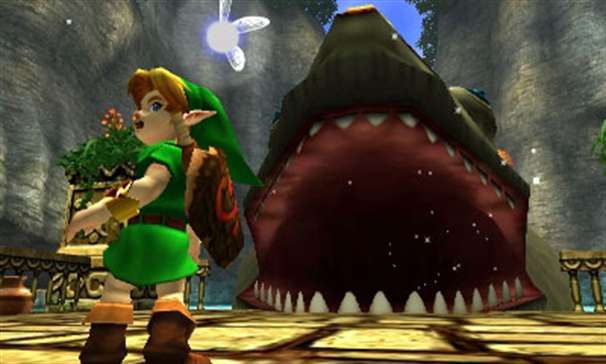
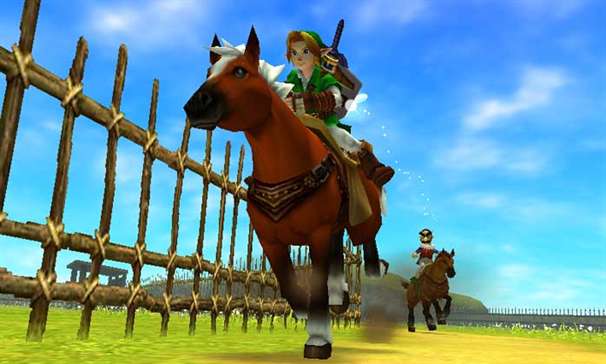
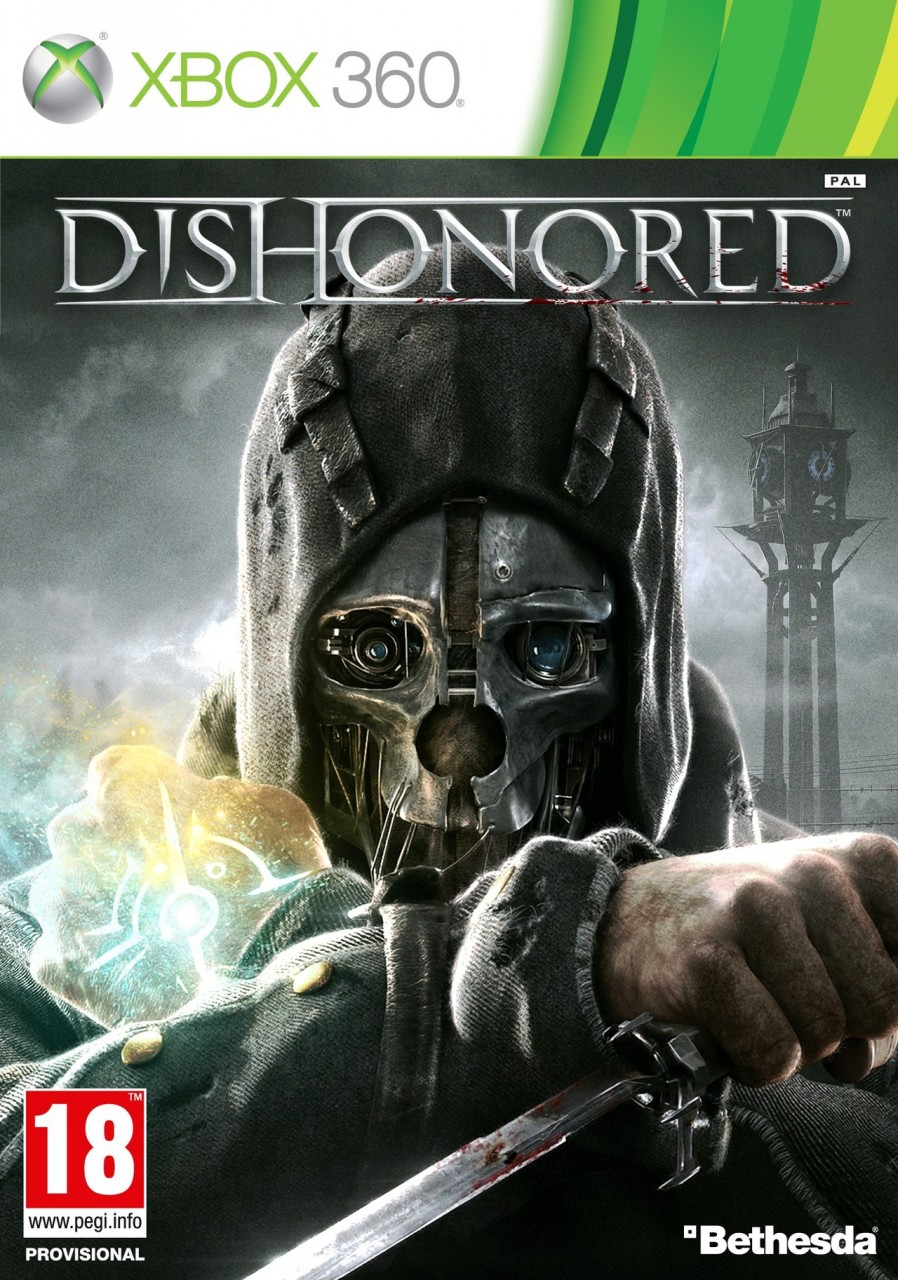
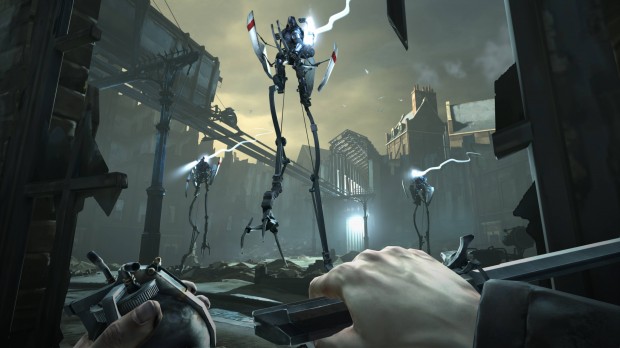
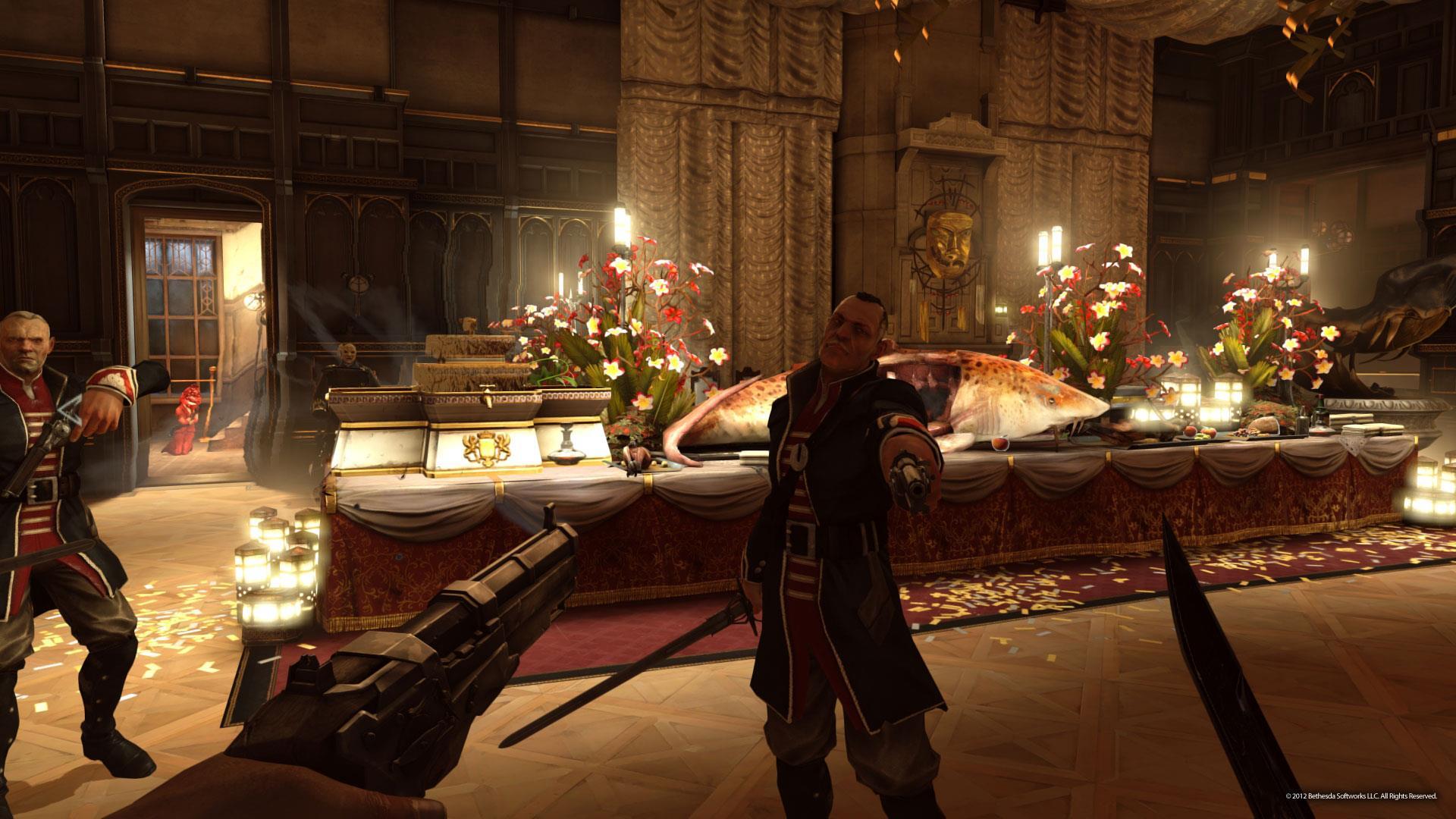


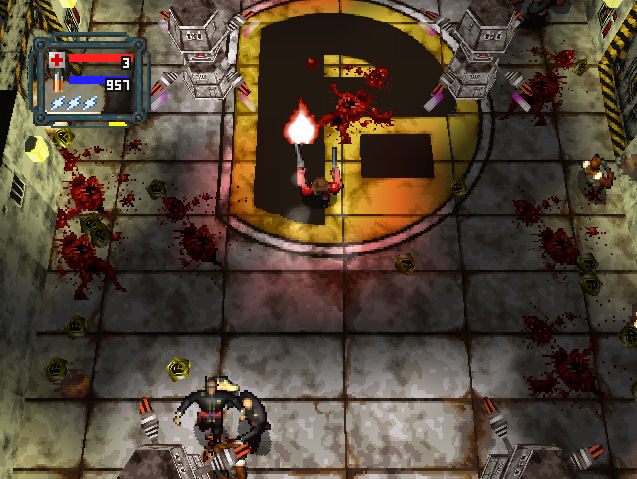




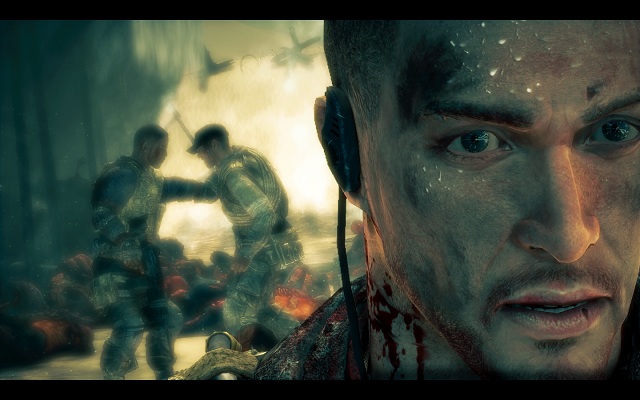


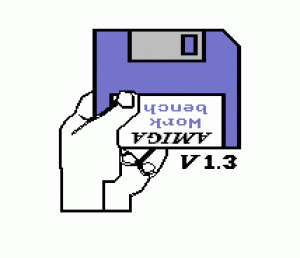
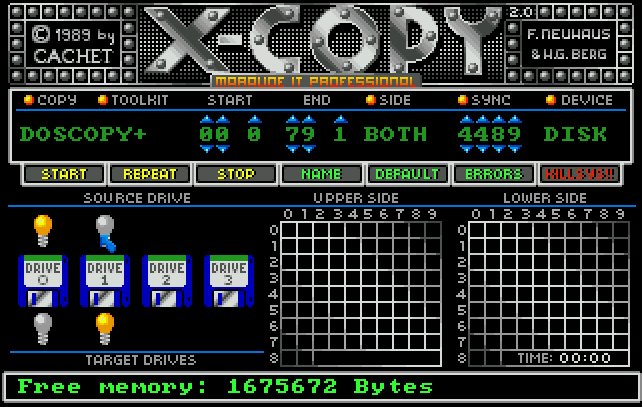
 Binary Domain
 The Witcher 2 Enhanced Edition (Xbox 360)
 XCOM: Enemy Unknown
 Dynasty Warriors Next
 Twisted Metal
 Mortal Kombat (PS Vita)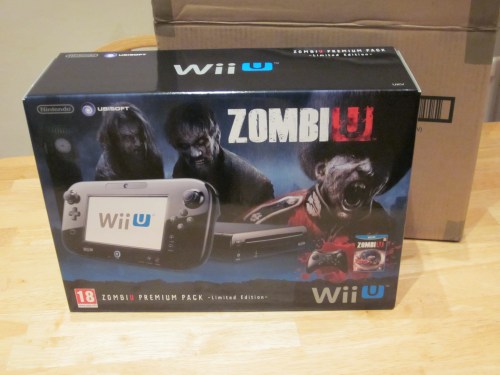
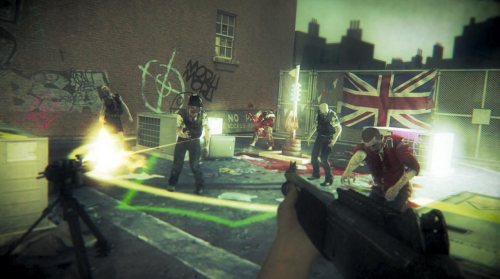


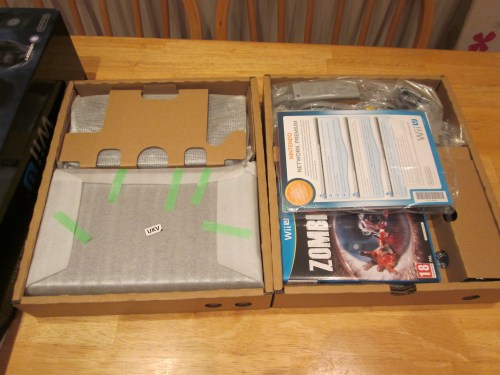
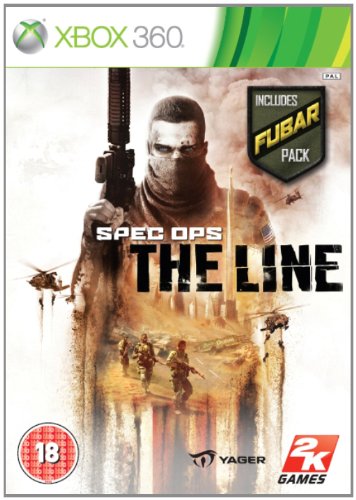
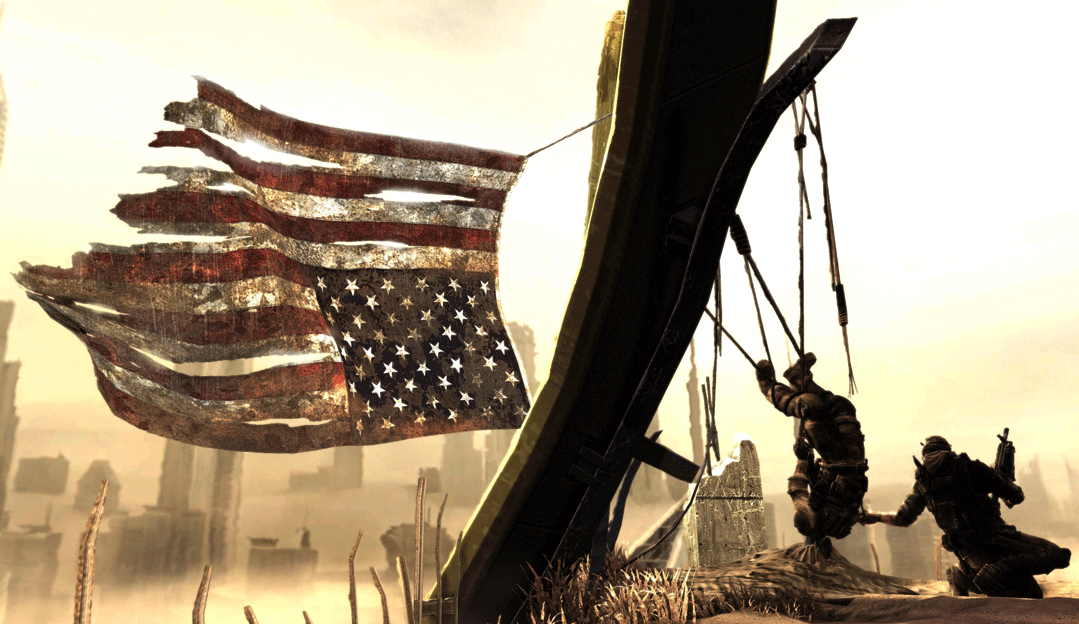


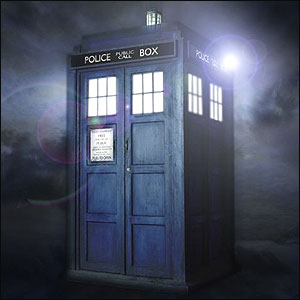
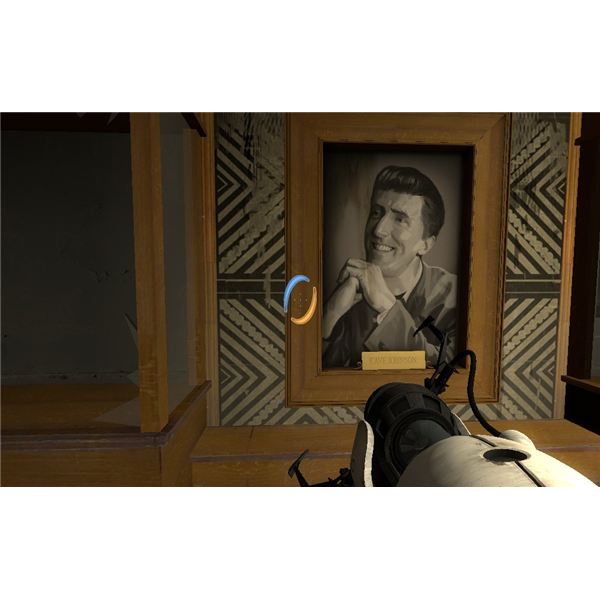


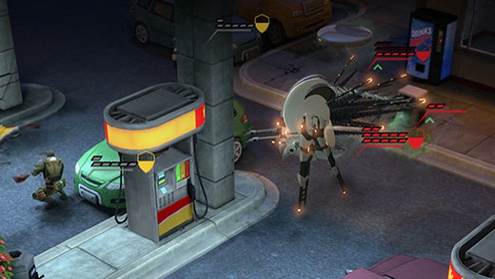

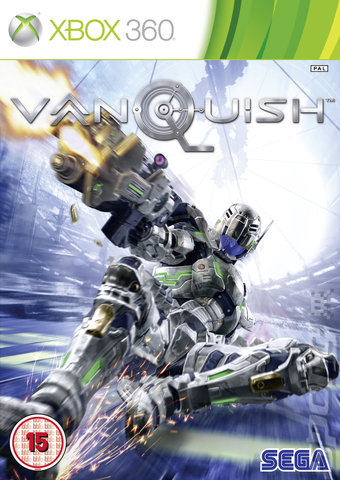
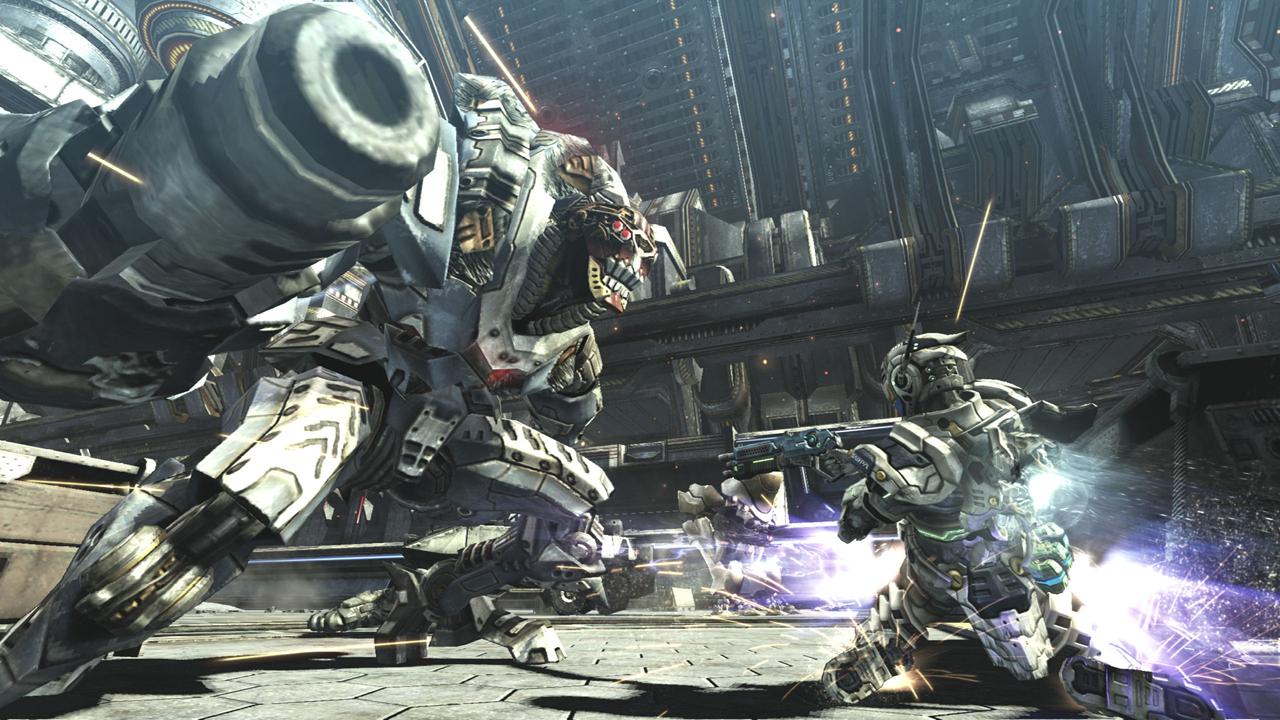
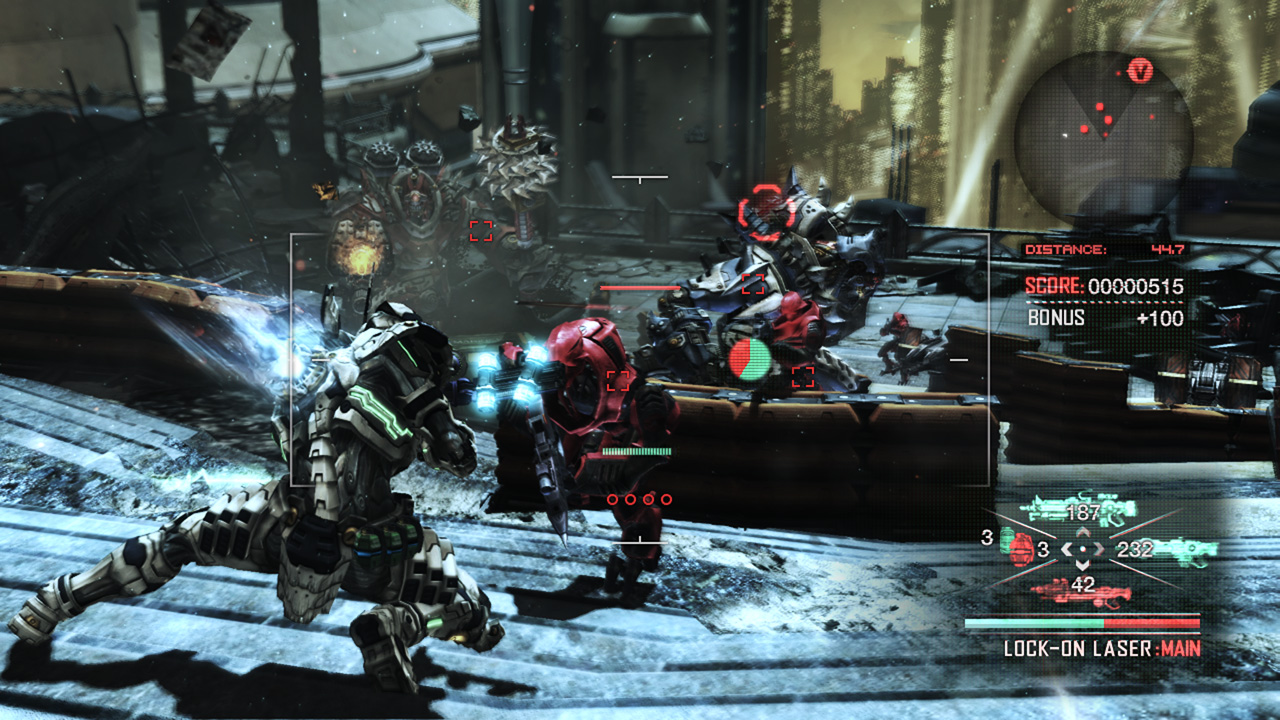
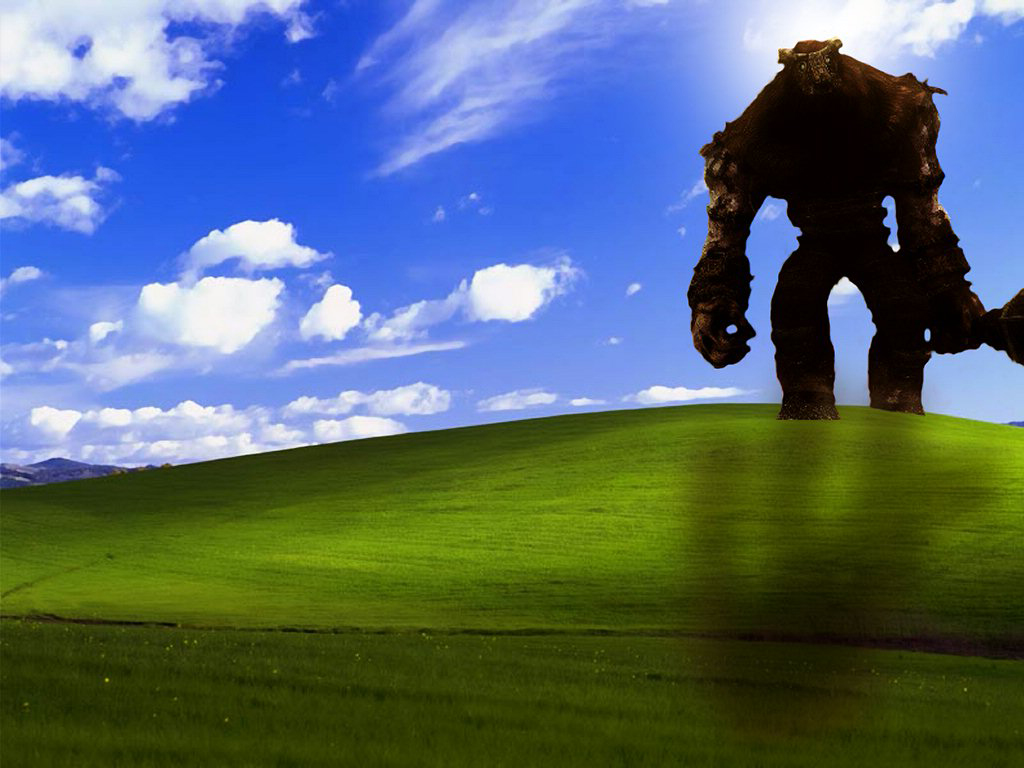

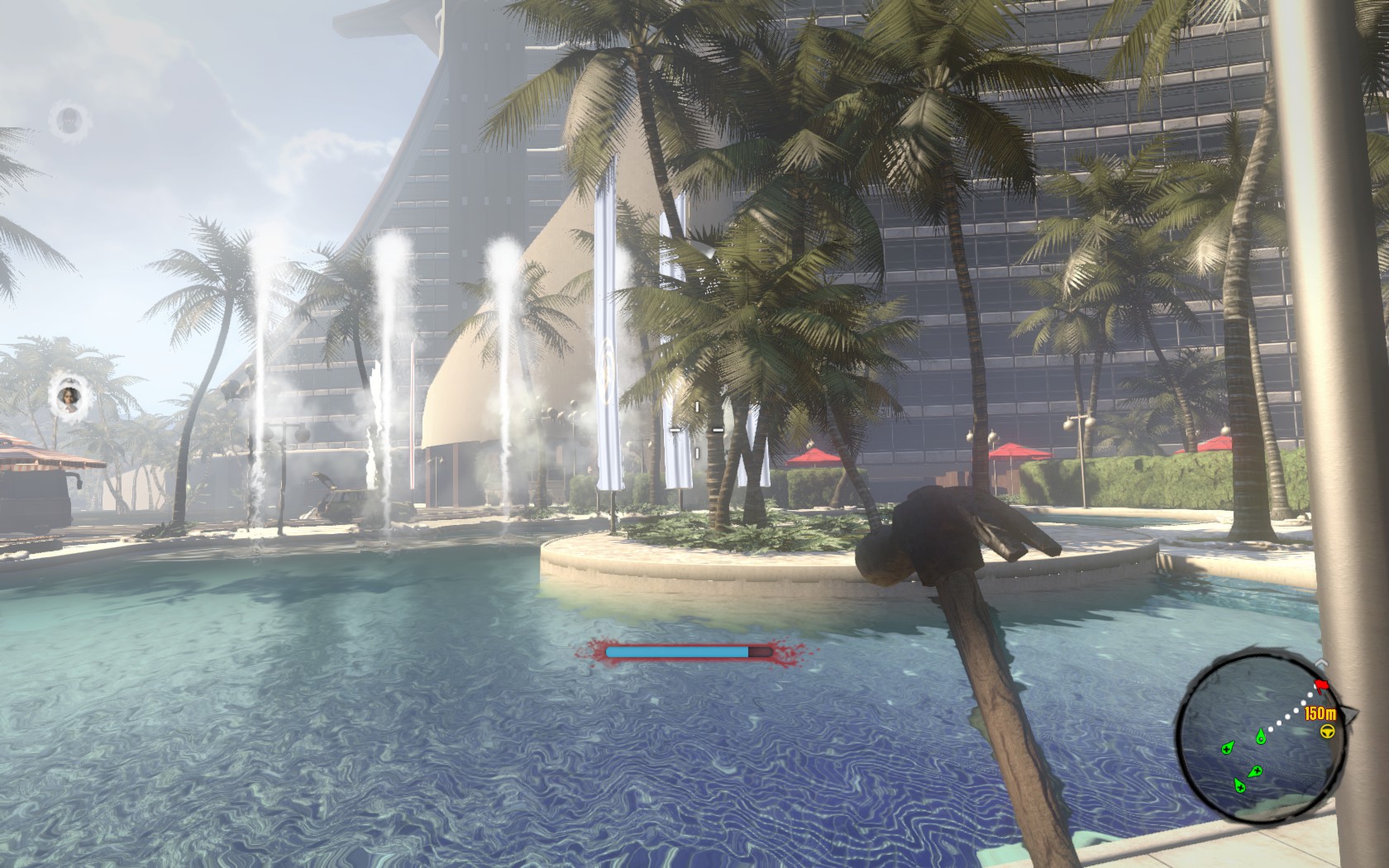
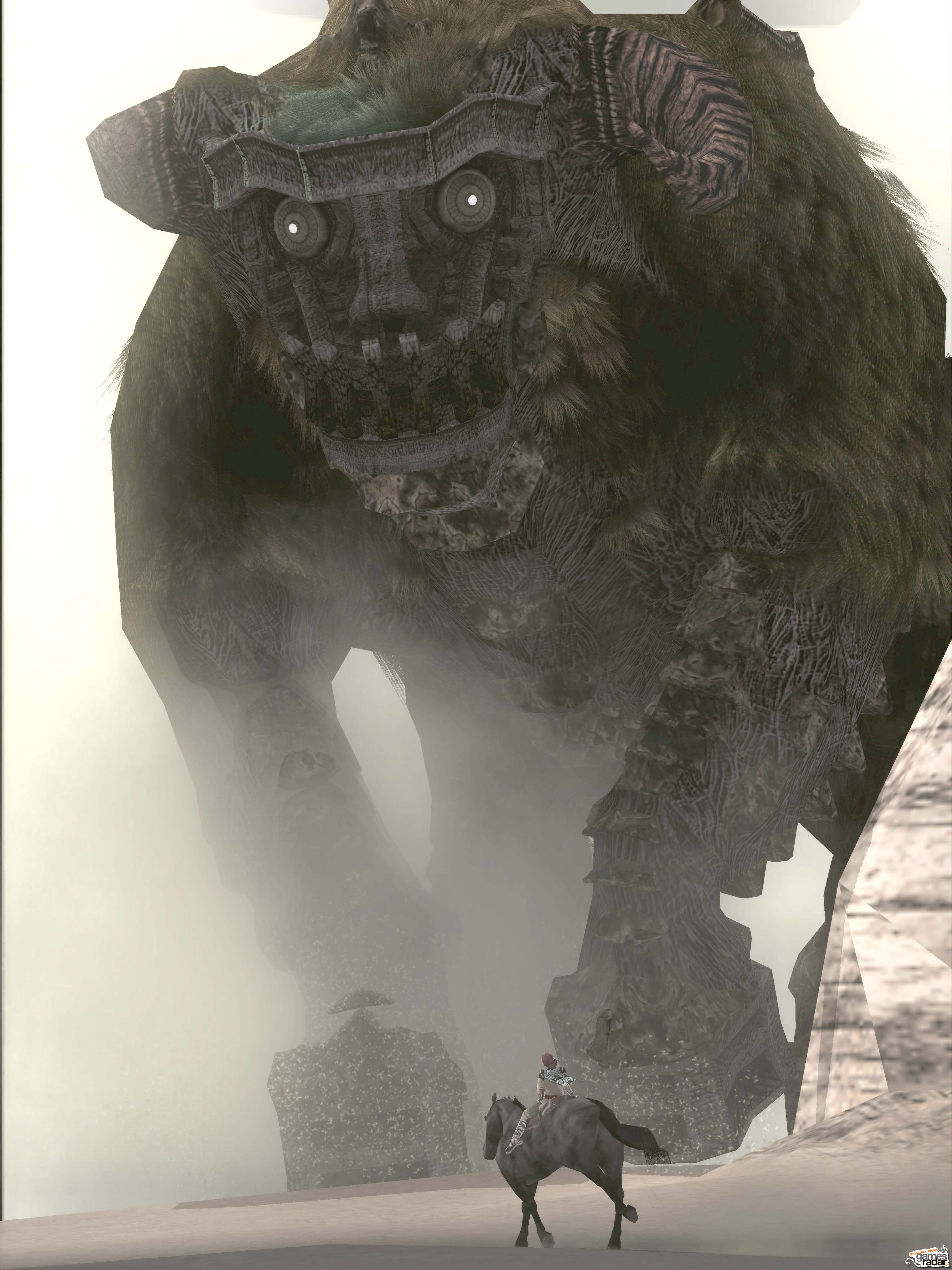
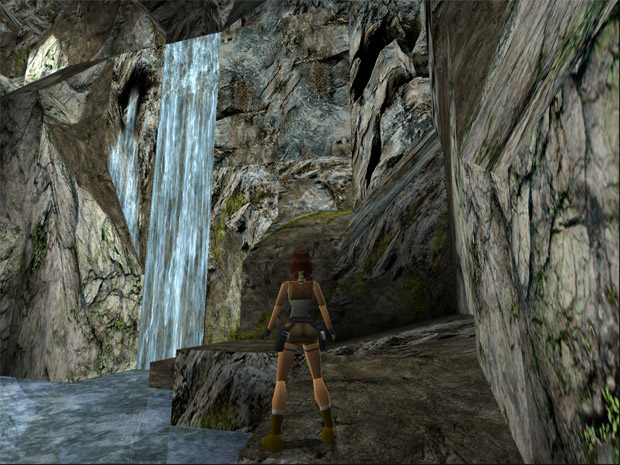
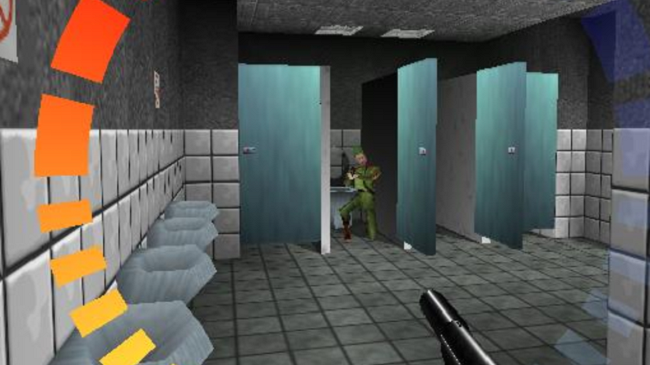
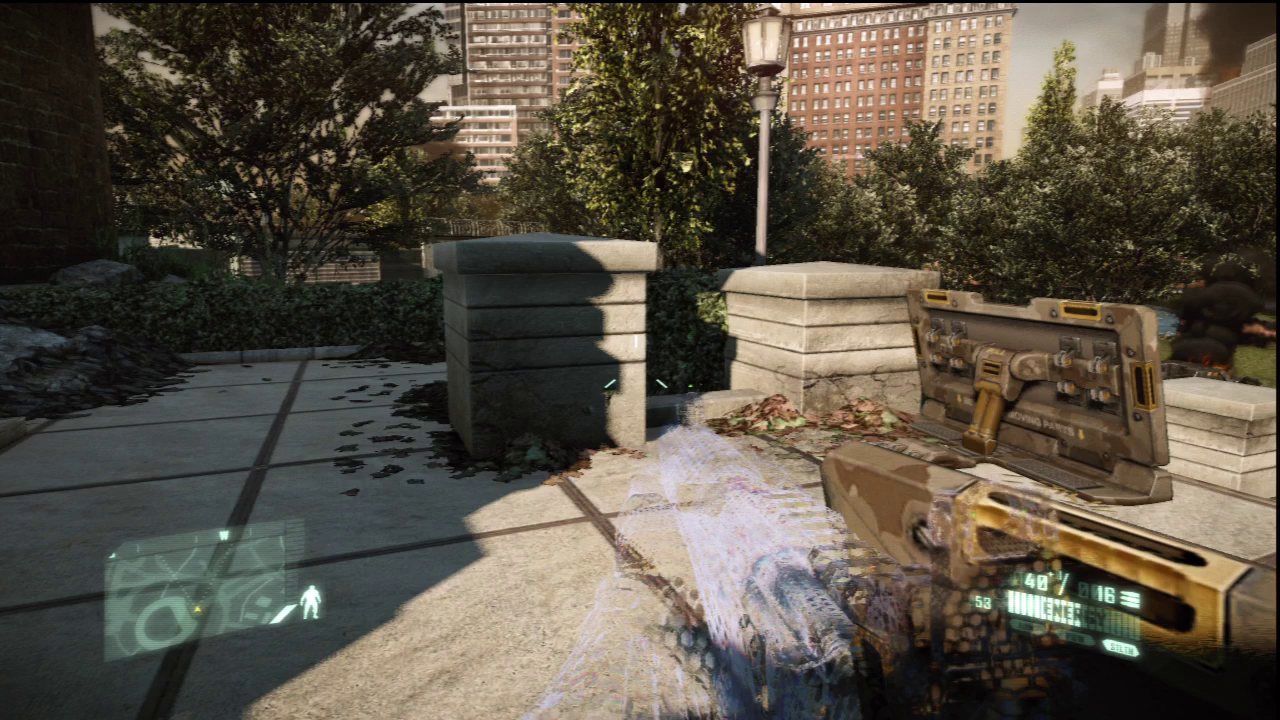


 ) the other day, and I have to say I was pretty disappointed. The designers took on some controversial subject matter by setting the game in an African civil war, and they really don’t do it the justice it deserves. But before I get onto that, let’s look at the positives.


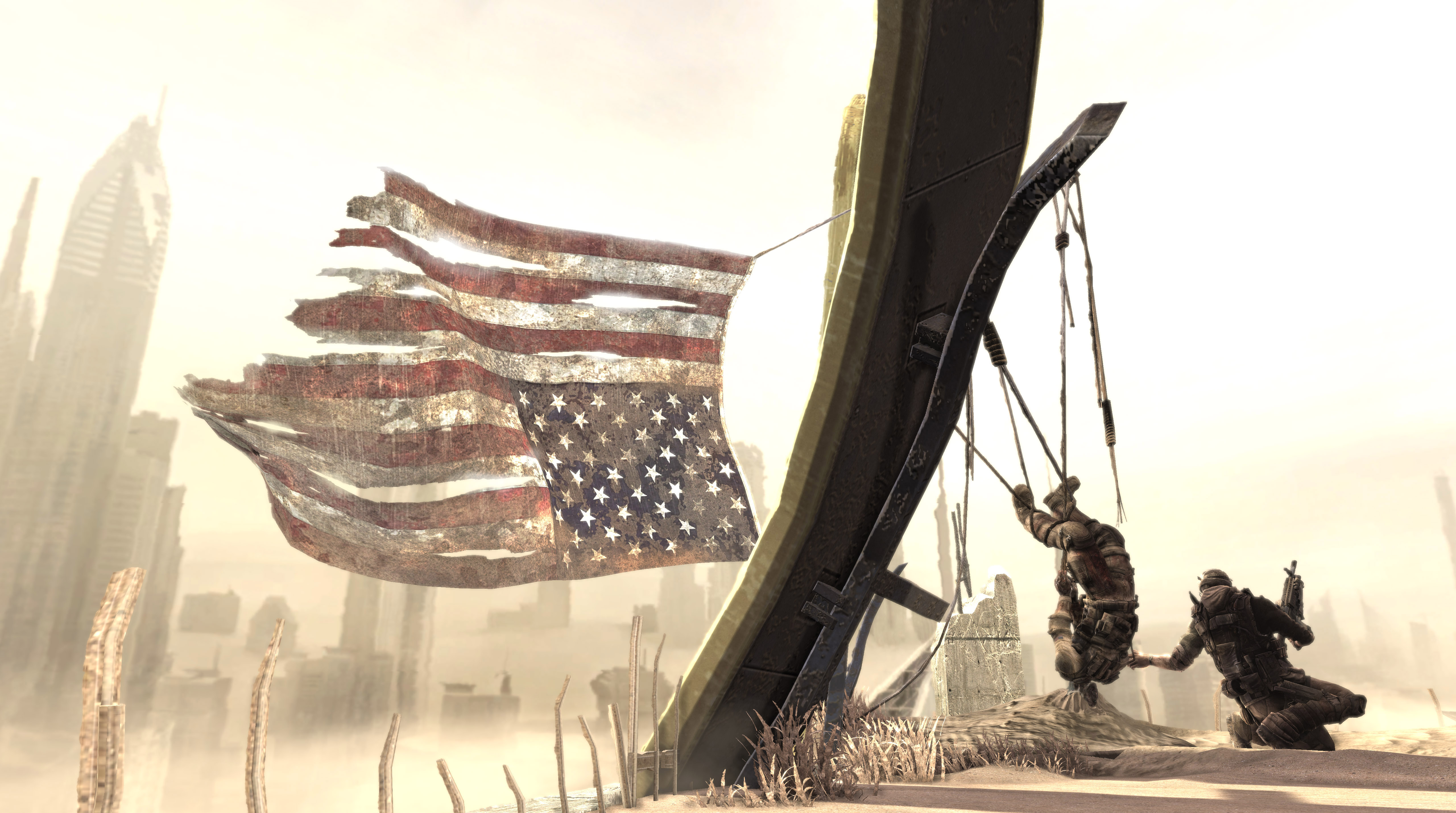

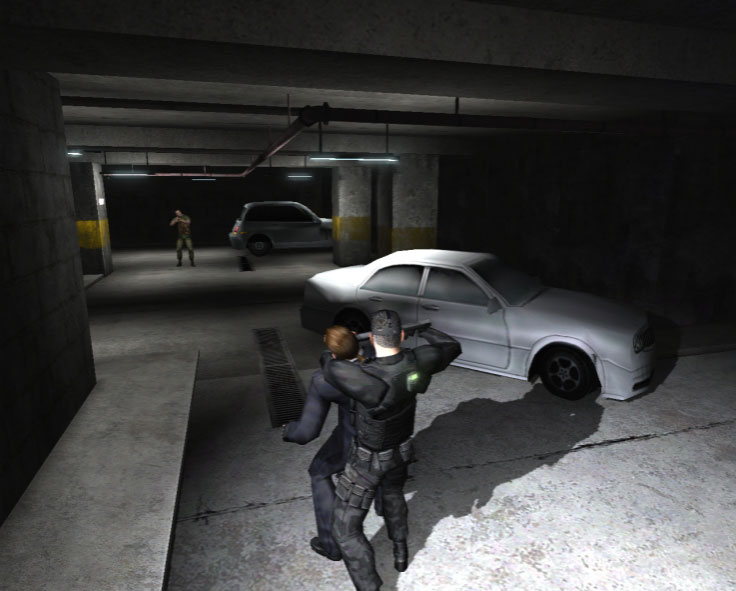


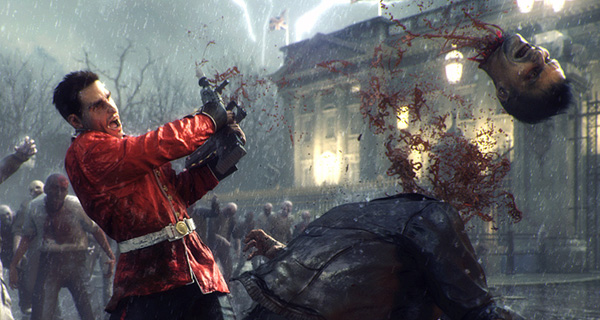

 A MOST AGREEABLE PASTIME