• You can never go back: the Play Expo Blackpool Retro Special
    Blackpool does an excellent line in faded glamour.

    I went to the Play Expo Blackpool Retro Special the other weekend, the event’s second visit to Blackpool this year. I previously attended the show a couple of years ago, when I interviewed a few of the exhibitors for articles that were later published on Kotaku UK and Eurogamer (this one on 1990s VR, this one on games and human evolution and this one on board games based on video games). But this time around I was there without an agenda – with a whole day to steep myself in crumbly old games.

    I met up with a couple of old friends, and we had a rum old time playing the Addams Family pinball table, part of the huge pinball hall. It was great to see so many pinball tables in one place – I love a bit of silver-ball action, and you rarely see pinball tables these days. They seemed to be incredibly popular, too, with all of the machines being absolutely rammed for the whole day. And the Addams Family machine had a fun gimmick whereby you sit in an ‘electric chair’ to play it, which vibrates and emits smoke when you get multiball or hit certain features. Silly, but fun.
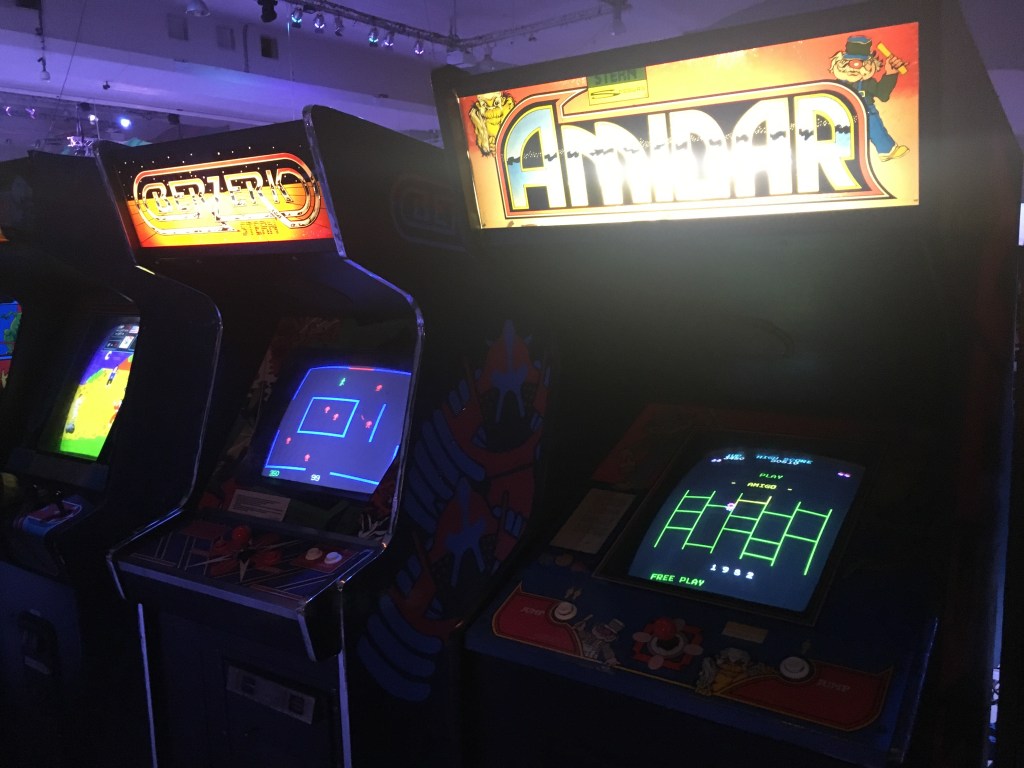
    The wealth of arcade cabinets on display was quite something to behold, and my favourites by far were the old Atari vector-display cabinets. I played a lot of Asteroids on my old Amiga, but it was amazing to see the original arcade version – the vector graphics look stunning, so bright and smooth. The game is still frustrating as hell though.

    Battle Zone was a real treat to play – again I’ve never had a chance to play on an original arcade cabinet before, and it’s easy to see why it was so mind-blowing back in the 1980s, with its smooth graphics and the funky goggles you peer through to see the action. Battle Zone definitely holds up, but one game that should definitely be left in the past is Tron – what a load of old tosh that arcade game is. It’s a series of bland mini games of mostly poor quality – why couldn’t they have done a vector version of the light-bike race instead? It seems like such an obvious choice that I’m baffled as to why they didn’t go for it. I mean, just look at how amazing the trench run in Star Wars turned out on the Atari vector machine.

    Elsewhere I had a go on the original version of Alone in the Dark, which is the first time I’ve ever got my hands on this forefather of survival horror. And my god it looks dated now. I can just about remember when these 3D filled-polygon graphics took people’s breath away, but now they look, well, comical – especially the chunky enemies with cartoonish faces. And the game is so slow! It’s amazing to look back and see just how far games have come since 1992.

    I also had a go on multiplayer Halo 2 – and I couldn’t believe how slow THAT was either. My friends and I had some epic eight-player LAN parties on Halo 2 back in the day, but it feels really basic now. I kept searching for the run button, not willing to believe it could be so slow. That said, it was still fun, just not quite as mind blowing as I remember.

    One game that does stand up today is Quake II. I’d only ever played Quake III Arena before, but I quickly settled into its prequel and spent nearly an hour blasting through multiplayer matches. This is one game that’s at least as much fun as it was 20 years ago.
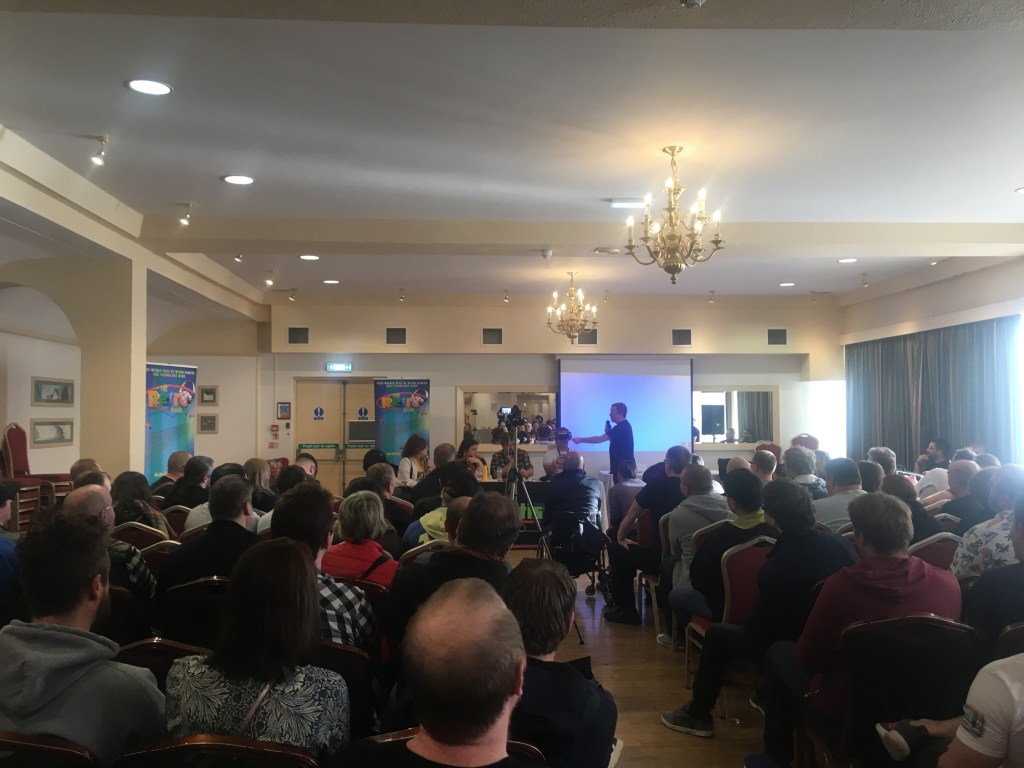
    Digitiser Live – slightly shambolic.

    I saw Mr Biffo’s Digitiser Live, too, which was a bit disappointing to be honest. It was meant to build hype for Digitiser: The Show, which starts on Sunday, but it was a mostly shambolic live panel where a lot of the jokes fell flat. Mr Biffo himself admitted that he’d barely prepared for it, and frankly, it showed. But on the positive side, the clips he played of the YouTube show looked great, and I’m looking forward to seeing the series when it airs.

    The best thing I saw by far at Play Expo Blackpool was the VR room, which had PSVR, Oculus Rift and Vive VR headsets to try out. Jeff Minter’s Polybius on PSVR was absolutely mind blowing, a super-fast, psychedelic shoot ’em up that literally had me squealing with delight. But my absolute highlight was Beat Saber on Vive, a rhythm action game with light sabers, and I was grinning like an absolute loon the whole time I was playing it. I can see this game becoming a bit of a phenomenon – it’s out on PSVR on 20th November, and I bet it will sell like hot cakes. It’s even got me thinking about buying a PSVR kit for myself, and now they’re down to around £200, I’m ready to take the plunge.

    It was great seeing so many classic games under one roof, but it also reminded me that you can never really go back to the past. I love thinking and writing about old games, yet when it comes to actually playing them again, often there’s a tinge of disappointment. And modern games are generally so much better than what’s come before that when given the choice, I’d much rather play something contemporary on my PS4 than dig out an old Amiga or Game Boy and load up something from my youth. That’s why my SNES Mini, lovely as it is, only really got a few days of play before being left on the shelf for a rainy day.

    As you can tell, I’m not really one for nostalgia – but I do love delving into the history of games.


    Follow A Most Agreeable Pastime on Twitter: @MostAgreeable
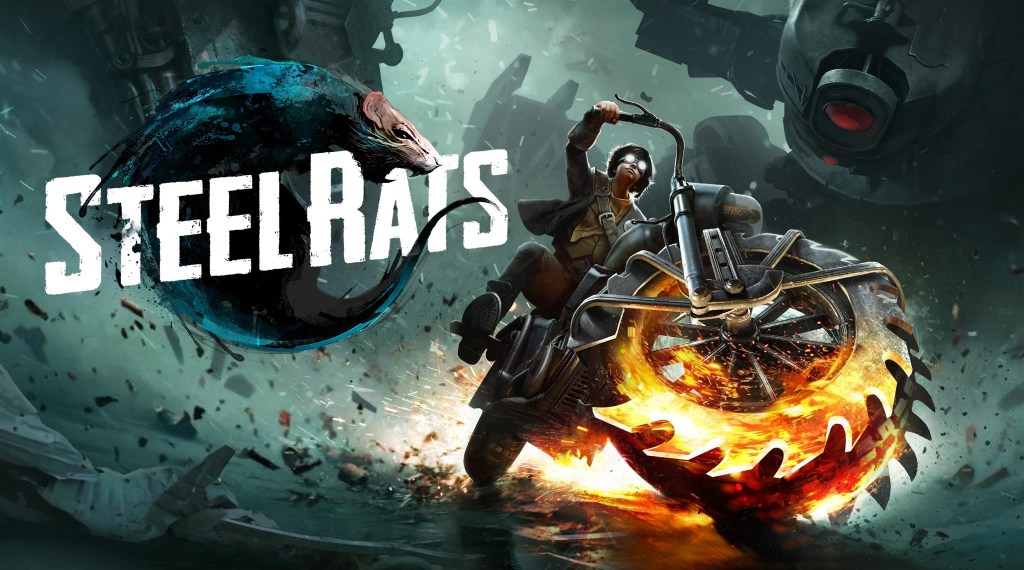
  • Review: Steel Rats (PS4)

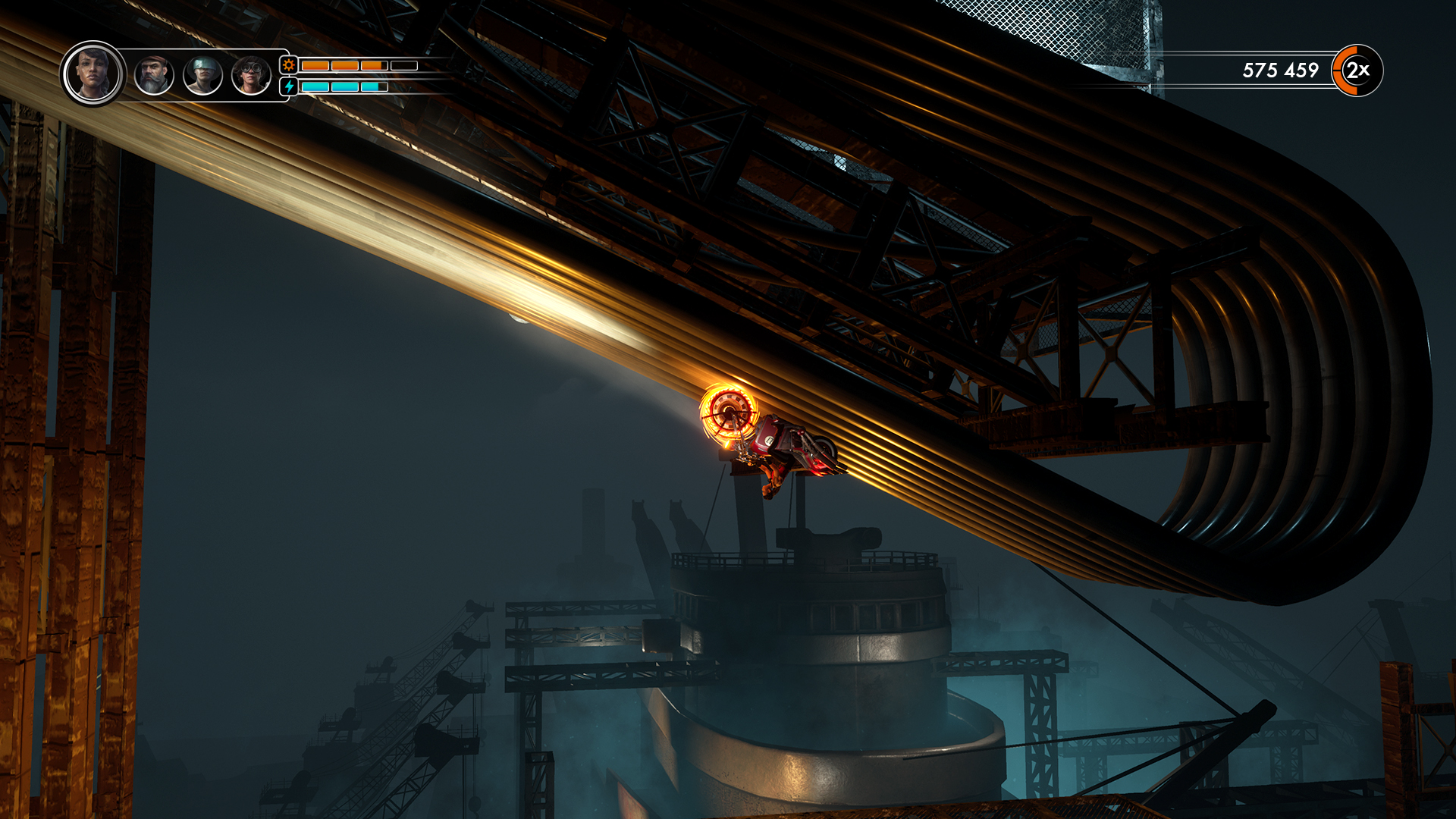
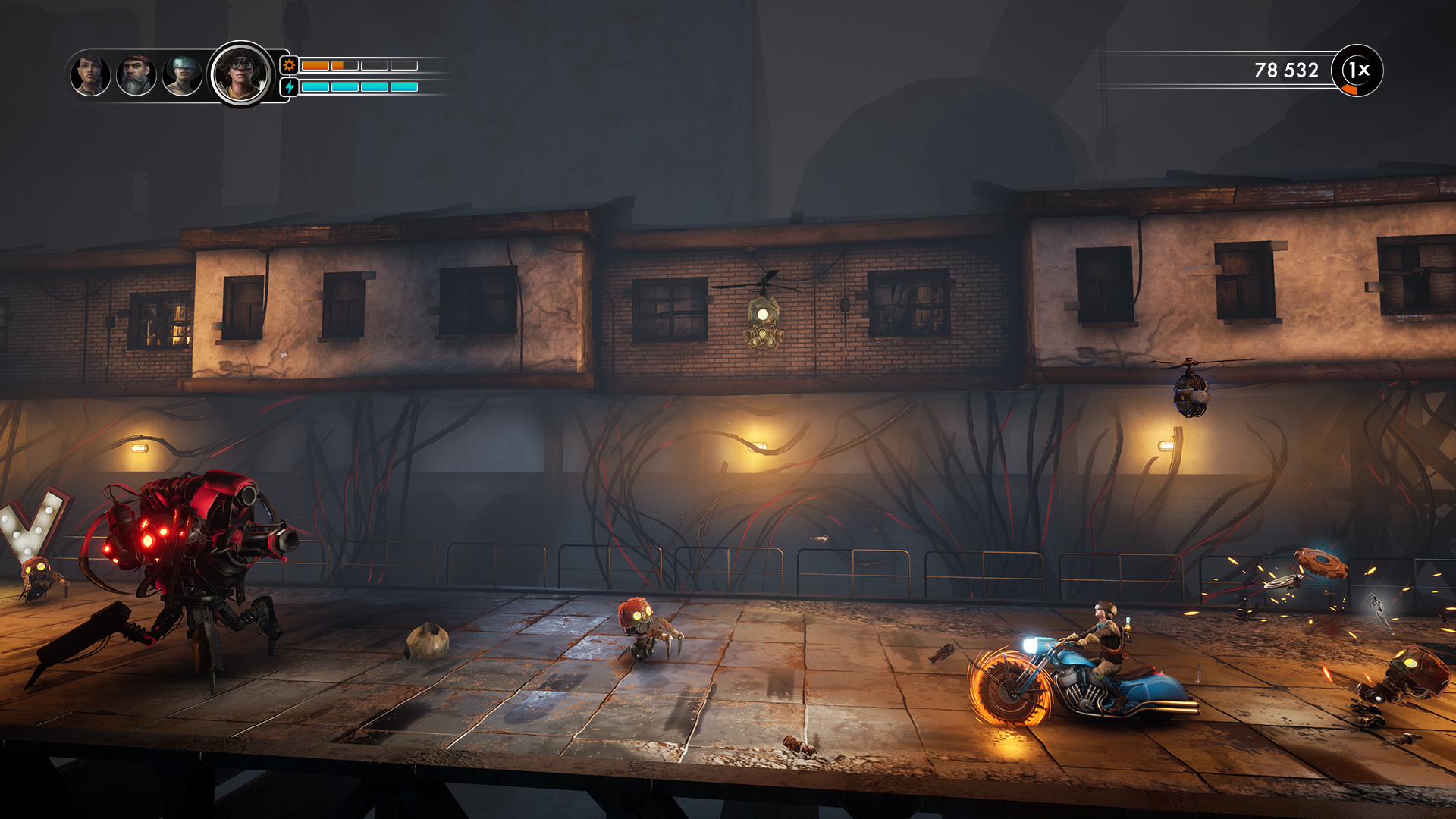
    Back in April I had an amazing time playing the Steel Rats demo at EGX Rezzed, grinning like a loon all the way through my playthrough. Your bike has a chainsaw for a front tyre! You can drive up vertical walls! It was ridiculous and wonderful, and I couldn’t wait for the release date to roll around.

    But I did worry at the time that chewing through baddie after baddie with your wheelsaw might get a little repetitive after a while – and so, sadly, does it prove. Steel Rats has a ton of brilliant ideas, the wheelsaw among them, but after you’ve played through just a few levels, you’ve pretty much seen them all.

    Still, let’s start with the good stuff. This game looks utterly gorgeous for one thing – the future-retro 1950s look is brilliant, and the levels are highly polished and deeply gorgeous. I noted the occasional frame-rate drop on PS4, but nothing that really detracted from the experience, and overall this is one super-duper-looking game. The plot is also pretty fun – a mysterious entity has been animating a junkpile on the outskirts of the retro-futuristic Coastal City, and a biker gang, the Steel Rats, sets out to tear through the army of junkbots that’s terrorising the town.

    The gang is made up of four characters, each with slightly differing abilities, and you can switch between them on the fly. James, the leader, has lots of health, while Lisa the racer has a high top speed – you get the idea. But if one of them runs out of health, they’re unavailable for the rest of the level, so essentially you have four ‘lives’. If all of the characters die, you have to start the level again from the beginning.

    The real joy of Steel Rats is the thrill of flinging your motorbike around, smashing through robots and leaping off tall buildings – basically it’s a high-octane side-scroller on a souped-up hog. The bikes handle beautifully, with tap of the circle button causing you to gracefully twist your bike around in the opposite direction, and a squeeze of the R2 trigger propelling your steed forward at alarming speed. I can’t think of another game quite like this one, but Sonic the Hedgehog is probably the closest in feel. You can barrel through many of the levels at top speed, crashing through enemies with your wheelsaw and using it to climb vertical walls and even drive along ceilings. And just like the Sonic games, it becomes increasingly hard to navigate at top speed: clipping an obstacle brings your glorious run to an embarrassing halt.

    So yes, Steel Rats is a lot of fun, and pretty damn unique – I challenge you to name another side-scrolling motorbike platformer/brawler. But it also has a bevy of flaws that conspire to take the shine off your enjoyment. For a start, although the bike handles wonderfully, the control layout is cumbersome to say the least. R2 is the throttle, and you’ll basically have that held down for almost the entirety of each level. X, meanwhile, activates the wheelsaw, which also provides a speed boost, so you’ll mostly be holding that down as well. But then jump is on the triangle button, which is a bit of a stretch when you’re also holding down X and R2 – and if you want to perform a big leap, then you’ll be needing to hold both of those buttons down to get a good run up. I fluffed many a jump by thwacking the square button as I was stretching for triangle.

    And weirdly, the charge button for your special attack is on R1 – you have to hold this button, then release it and hold the accelerator to do a dash attack. But you’ll be wanting to hold the R2 button down to accelerate anyway – there’s no point stopping dead in the middle of a fight – so basically you end up holding down R1, R2 and X (for the wheelsaw) all at the same time. It’s bonkers. What’s even weirder though is that there’s no option to change the control set up. It would make much more sense, for example, to swap the rarely used brake button to R1 and have charge on L2, but alas the controls are set in stone. Hopefully this will be fixed with a later patch.

    Special moves are also annoyingly hit and miss in terms of whether they execute. You do a dash by double tapping the X button, and this is almost essential for making big jumps, but it’s pretty tricky to pull off, and I fell to my death countless times when I couldn’t get it to work. Likewise, your ultimate attack is done by double tapping circle and holding it down, but I only managed to get this to work about 50% of the time. These moves would have been much better off having a dedicated button of their own.

    So the control scheme is a bit irritating, but the real let down is the repetition. You’ll be seeing the same enemies all the way through the game, with only a few variations on ‘big chunky robot with three legs’. And all of them are basically defeated the same way – by ramming them with your wheelsaw and mashing your special attack button, which uses up a chunk of energy from the blue bar at the top of the screen. Each character has a different special attack, but you use all of them the same way, i.e. get close and whack the button. Lisa has flame jets, James has a hammer attack and Toshi has a drone that’s useful for taking out aerial enemies, while Randall has a harpoon that is, frankly, useless. Couple this with the fact that he’s only got a tiny health bar, and you’ll understand why Randall rarely made an appearance in my playthrough.

    The game is relentlessly linear, a journey across five islands, each with between four and seven levels. Some levels have alternative routes through them, and each one has a secret hidden away somewhere that reveals a bit of lore, but generally it’s a left-to-right slog. Occasionally a level will throw up something different, like when the Killdozer, a giant robot that follows you throughout the game, relentlessly pursues you upwards through a giant mine shaft. Or when you have to chase a flying robot along a ruined freeway to retrieve some stolen some uranium rods. These levels were some of the best bits of the game, but also the worst – any error in either of them causes you to be sent back to the start, which provoked some very animal howls of frustration on my part. I was haunted by memories of the hoverbike level in Battletoads. Brrr.

    Don’t get me wrong, these chases were genuinely good fun – it’s just that they could have been so much better if they’d had some reasonable checkpoints. And it’s the same story throughout, really – great ideas that are often poorly implemented. For example, the economy is basically broken. Completing each level unlocks a set trio of upgrades for you to purchase with the junk you harvest from destroyed robots. And completing level-specific challenges provides bonus junk. But the thing is, even just charging through each level without really bothering to take on all the enemies still nets you more than enough junk to buy every upgrade as it’s unlocked – and by the end I had a massive surplus of junk with nothing left to spend it on, which means the challenges are essentially pointless. Why not tie the upgrades to the challenges instead? Or hide the upgrades within the level to provide an incentive to replay them?

    And speaking of upgrades, these are also a little underwhelming. It would have been nice, for example, to unlock alternative weapons for each character, or to have a skill tree that lets you choose how to upgrade them, but instead you’re stuck with set upgrades that, for the most part, just make the weapons you already have a bit more powerful. And speaking of the characters, they’re not really different enough to warrant swapping in and out as you play. Lisa’s slight edge in terms of speed made her quite useful during chase sequences, but otherwise I didn’t feel much need to swap between the gang members.

    It’s all over fairly quickly, too. I completed the entire game over two nights, with only a few secrets to find and a few of the specific level challenges to go back and complete – but seeing as doing these challenges will only add more junk to add to my already enormous stockpile, I don’t feel the need to go back and finish them.

    All the way through, I couldn’t help thinking what a missed opportunity this game is. It has brilliant fundamentals, with a really fun driving mechanic and excellently OTT touches like driving along ceilings. I wanted it to fully embrace that ridiculousness and turn all the dials up to 11 – to do a Bayonetta, in other words. As it is, it peaks early on and then coasts to the finish line. I was willing Steel Rats to up the ante at every turn, and I kept thinking of ways it could do it. Why not have a robot the size of a skyscraper that you have to drive up? Or a sky battle in which you leap from airship to airship? (There is one airship level, but it’s disappointingly brief.)

    And while we’re on the subject, why make the game so relentlessly linear? It would have suited a Metroidvania format really well, with you driving around the city and unlocking abilities and upgrades that let you push further on. The differences between the characters could have been made much more pronounced, too: perhaps each could have an ability that you need to progress past certain obstacles. And the limited-ammo guns you can pick up on some levels are actually more fun to use than your so-called ‘special’ abilities – why not focus the combat around those instead? Maybe one character could have a sword for close-range combat, and another could have a long-range rifle that’s better suited to different enemies. And slo-mo! Maybe you could activate slo-mo when you drive past an enemy, with a second or two to lock-on to weak points with your weapon. It would have made a change from just charging into them at every opportunity.

    As it is, Steel Rats is… well, it’s just OK. Not bad, but a long way short of brilliant. Yet with a few tweaks to the formula, a sequel could truly be something special.


    Steel Rats is available for PS4, Xbox One and PC. We reviewed the PS4 version.

    Disclosure statement: Review code for Steel Rats was provided by Swipe Right. A Most Agreeable Pastime operates as an independent site, and all opinions expressed are those of the author.

    Follow A Most Agreeable Pastime on Twitter: @MostAgreeable

  • Look at these amazing Japanese-woodblock-style gaming prints

    I just discovered the astonishing artwork of Jed Henry and Dave Bull, and I had to share it with you. They’ve been using the art form of Japanese ukiyo-e woodblock prints, but with video-game characters instead of the traditional Japanese scenes you’d expect. So here we have the Starfox team riding on clouds…

    …a Pokemon tournament…

    …and even a Mario Kart race.

    You can find out more about the artists at the Ukiyo-e Heroes website, and they have a shop with loads more of these woodprint mash-ups with video-game culture, including prints based on Metroid, Zelda and Sonic the Hedgehog. There are also a few non-video-game ones, featuring the likes of Batman and Wolverine.

    All of them look utterly amazing, and I’m already planning which ones to get for my wall.


    Follow A Most Agreeable Pastime on Twitter: @MostAgreeable
  • Two fascinating gaming books are on the way

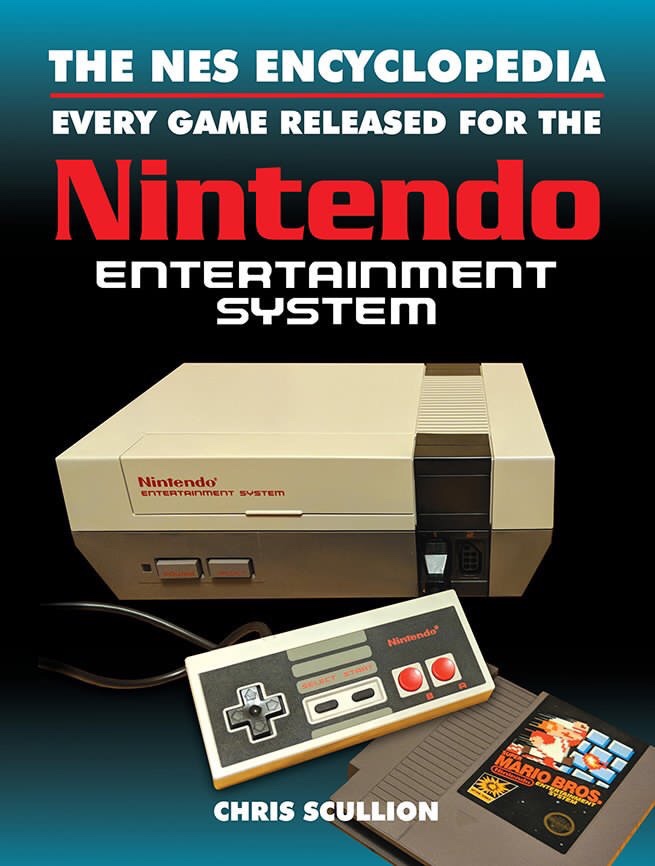
    There are two really interesting gaming books that have just gone up for preorder. First is The NES Encyclopaedia by Chris Scullion, who used to be the editor of Official Nintendo Magazine.

    It looks admirably comprehensive, featuring not only every official release for the NES, but also every unofficial one, too. Judging by Chris’s excellent and exhaustive history of the Street Fighter series over on his website Tired Old Hack, this book should be very special indeed. Check out the spread below for a taster of what to expect.

    Amazon is taking preorders for The NES Encyclopaedia right now, but it won’t be released until March 2019.


    Next up is a project that’s being crowdfunded over on Volume, a sort of Kickstarter for fancy coffee-table books. Japansoft: An Oral History is a semi-sequel to the critically well received Britsoft: An Oral History. I’ve been meaning to buy the latter for ages now, as it looks utterly fascinating, full of exclusive interviews with the coding greats of the British computer scene in the 1980s and 1990s, like David Braben, Peter Molyneux and Jeff Minter.

    Japansoft is basically the same idea, but for Japan (natch), and it’s something I’m particularly keen on reading, as I know little about the early days of Japanese gaming. I did a bit of research on 1980s Japanese games for my feature on the phenomenally popular JB Harold series, and I’d love to find out more about where the big franchises like Dragon Quest actually came from and what inspired them.

    You can back Japansoft on Volume by heading of this link – it’s currently at about £11,000 of its £15,000 target with 32 days to go.


    Follow A Most Agreeable Pastime on Twitter: @MostAgreeable
  • Win a download code for Steel Rats on PS4!

    We’ve got two EU PS4 download codes for Steel Rats to give away, courtesy of Swipe Right PR! To enter, all you need to do is follow @MostAgreeable on Twitter and retweet the below tweet. The closing date for entries is midnight on 6th November 2018. Good luck!

    I got to play Steel Rats at EGX Rezzed earlier this year, and it was one of my highlights of the show. It’s motorbikes with chainsaw wheels and nasty dieselpunk robots, and it’s ludicrous and wonderful and I love it. The game will be released on PC, Xbox One and PS4 on 7th Novembercheck out my preview to find out more. We’ll have a full review up on the site soon. Full terms and conditions for the compo are below, ‘cos we’re all professional, like.

    Ludicrous. Wonderful.

    Terms and Conditions

    1. The promoter is: A Most Agreeable Pastime.
    2. The competition is open to residents of Europe aged 12 years or over except employees/affiliates of Tate Multimedia and A Most Agreeable Pastime and their close relatives and anyone otherwise connected with the organisation or judging of the competition.
    3. There is no entry fee and no purchase necessary to enter this competition.
    4. By entering this competition, an entrant is indicating his/her agreement to be bound by these terms and conditions.
    5. Entry to the competition is by retweeting this tweet and following @MostAgreeable on Twitter.
    6. Only one entry will be accepted per person. Multiple entries from the same person will be disqualified.
    7. Closing date for entry will be midnight on 6th November 2018. After this date the no further entries to the competition will be permitted.
    8. No responsibility can be accepted for entries not received for whatever reason.
    9. The promoter reserves the right to cancel or amend the competition and these terms and conditions without notice in the event of a catastrophe, war, civil or military disturbance, act of God or any actual or anticipated breach of any applicable law or regulation or any other event outside of the promoter’s control. Any changes to the competition will be notified to entrants as soon as possible by the promoter.
    10. The promoter is not responsible for inaccurate prize details supplied to any entrant by any third party connected with this competition.
    11. The prize is as follows: the two winners will each receive one download code for the EU PS4 version of Steel Rats.
    12. The entrant must be following @MostAgreeable on Twitter in order to enter.
    13. The prize is as stated and no cash or other alternatives will be offered.The prizes are not transferable. Prizes are subject to availability and we reserve the right to substitute any prize with another of equivalent value without giving notice.
    14. Winners will be chosen at random from all entries received and verified by the promoter and or its agents.
    15. The winner will be notified by email and/or DM on Twitter within 28 days of the closing date. If the winner cannot be contacted or do not claim the prize within 14 days of notification, we reserve the right to withdraw the prize from the winner and pick a replacement winner.
    16. The promoter will notify the winner when and where the prize can be collected / is delivered.
    17. The promoter’s decision in respect of all matters to do with the competition will be final and no correspondence will be entered into.
    18. By entering this competition, an entrant is indicating his/her agreement to be bound by these terms and conditions.
    19. The competition and these terms and conditions will be governed by English law and any disputes will be subject to the exclusive jurisdiction of the courts of England.
    20. The winner agrees to the use of his/her name and image in any publicity material, as well as their entry. Any personal data relating to the winner or any other entrants will be used solely in accordance with current [UK] data protection legislation and will not be disclosed to a third party without the entrant’s prior consent.
    21. The winner’s name will be available 28 days after closing date by emailing the following address: chiefed@amostagreeablepastime.com
    22. Entry into the competition will be deemed as acceptance of these terms and conditions.
    23. This promotion is in no way sponsored, endorsed or administered by, or associated with Twitter or any other Social Network.
    24. A Most Agreeable Pastime also reserves the right to cancel the competition if circumstances arise outside of its control.

    Follow A Most Agreeable Pastime on Twitter: @MostAgreeable

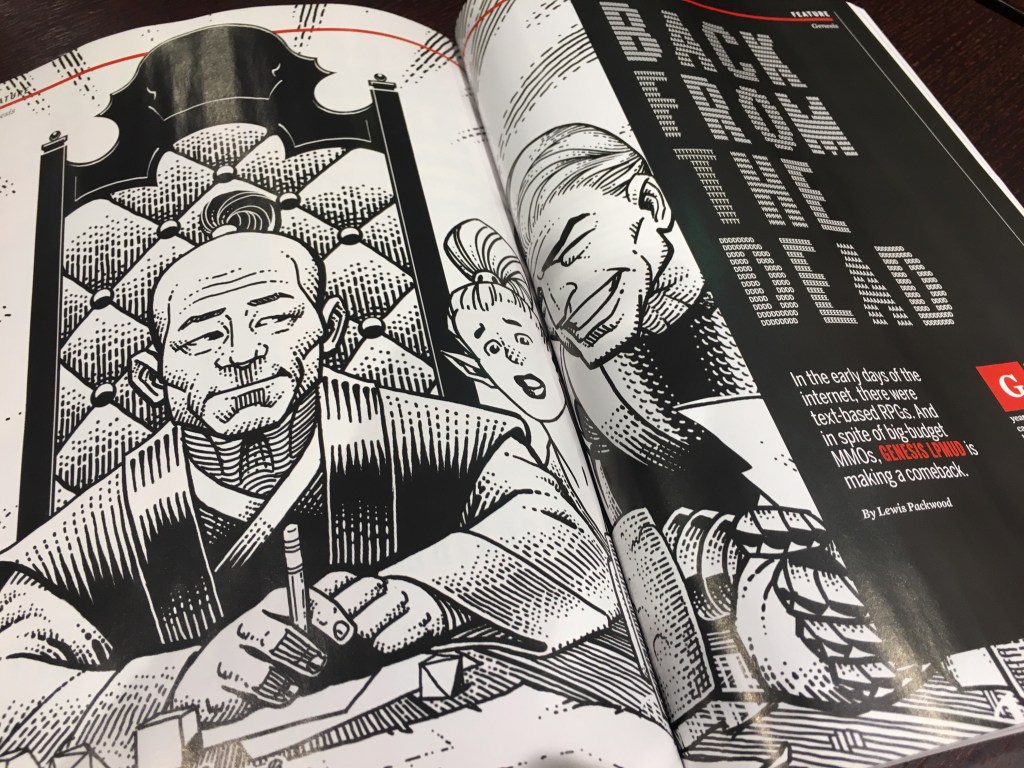
  • UPDATED: My six-page feature on Genesis LPMud is in the new issue of PC Gamer UK!

    UPDATE 2/11/18: The article is now on the PC Gamer website, head this way to read it.

    Original article 20/9/18: This is so cool! I’ve just bought issue 323 of PC Gamer UK, and there it is – a six-page feature on Genesis LPMud with my name on it. So exciting!

    I discovered Genesis LPMud years ago – it wasn’t long after I’d written my first article for Kotaku UK on the secret Douglas Adams RPG that people have been playing for 15 years. Writing that article made me wonder what the oldest online multiplayer game is, which led me to MUD, or Multi-User Dungeon.

    MUD was created at the University of Essex back in the late 1970s, and incredibly, it was an online game before the internet even properly existed. Instead it ran over ARPAnet, the precursor to the internet that was created by the American military. But the original MUD eventually closed down after around ten years.

    Genesis was a later version of MUD that was created in Sweden in the late 1980s and, excitingly, it was still going. I pitched the idea of an article on Genesis to a few publications back in 2014, but no one picked it up at the time. So I put the pitch back into my big file of article ideas, and there it sat for around four years.

    But a few months back, I heard through Twitter that the editor of PC Gamer was calling for pitches. I immediately thought of my old Genesis pitch, so I dusted it off, rejigged it a little with a clearer focus, and emailed it to the editor, Phil Savage, with fingers crossed.

    Phil was interested in the idea but wanted a clearer idea of the story, so I got in touch with Cooper Sherry, the chief administrator behind Genesis. Cooper was a dream interviewee – full of energy and excitement for the game he’d spent half his life playing, and spilling over with anecdotes about the Genesis world. I knew I had my story as soon as I spoke to him.

    So HUGE thanks to Cooper for being so helpful and committed, and big thanks to Magnus Holmgren as well for his brilliant insights – particularly the story about being tied to a chair. And I also want to shout out to Peter Spellman and Mateusz Nowak for their help – I wish I had more space to fit in Mateusz’s praise for Genesis, it was infectious. I’ve just posted off five copies of PC Gamer to Cooper in the US – he’s probably even more excited about the feature than I am!

    So yeah, go and buy issue 323 of PC Gamer UK, there’s a really interesting feature on an old text-based adventure game in there…

    If you want to try Genesis for yourself, head to www.genesismud.org.


    Follow A Most Agreeable Pastime on Twitter: @MostAgreeable

  • How do the 20 PlayStation Classic games measure up?

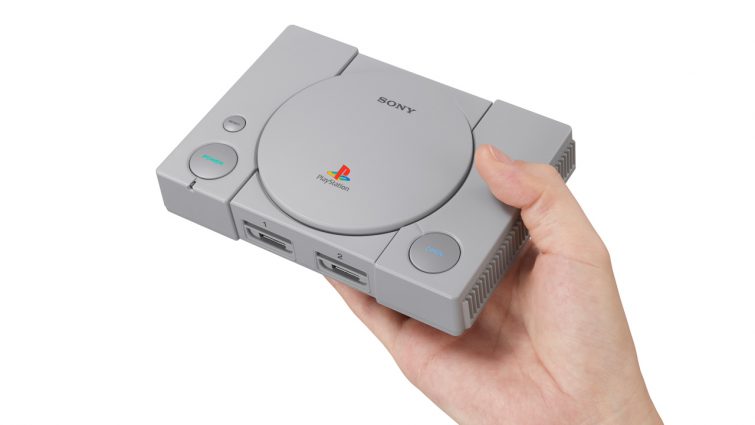
    A few weeks back, I wrote a wish list of the 15 games I’d like to see round out the PlayStation Classic roster, following the announcement of the first five titles. And now, the full line up for Sony’s retro console has been announced. It’s as follows:

    • Battle Arena Toshinden
    • Cool Boarders 2
    • Destruction Derby
    • Final Fantasy VII
    • Grand Theft Auto
    • Intelligent Qube
    • Jumping Flash!
    • Metal Gear Solid
    • Mr. Driller
    • Oddworld: Abe’s Oddysee
    • Rayman
    • Resident Evil Director’s Cut
    • Revelations: Persona
    • Ridge Racer Type 4
    • Super Puzzle Fighter II Turbo
    • Syphon Filter
    • Tekken 3
    • Tom Clancy’s Rainbow Six
    • Twisted Metal
    • Wild Arms

    So what do you think? My first reaction was, “what an odd list”. There’s a mix of a few stone-cold classics (Metal Gear Solid, Final Fantasy VII, Tekken 3, etc.), obscure puzzlers (Intelligent Qube) and downright rubbish (the poor conversion of Rainbow Six that’s really quite dreadful compared with the PC version). It’s quite strange.

    It’s interesting that several of the PlayStation launch games are included, like Jumping Flash, Battle Arena Toshinden and Destruction Derby. I wonder whether the focus on earlier PlayStation games is because the original PS controllers are included rather than Dual Shock analogue controllers? Perhaps that’s why analogue-focused games like Gran Turismo and Ape Escape don’t make an appearance. Could we be seeing a PlayStation Classic 2 somewhere down the line that comes with Dual Shocks and games that take advantage of the analogue controller? Who knows…

    It’s also weird that some series are represented by their first instalments rather than later, better ones – the sequel to Destruction Derby is miles better than the first one, for example. The same goes for Twisted Metal. It looks like Sony is focusing on the early days of the console – but then again, we have Ridge Racer 4 instead of the original, and Tekken 3 as well. Very weird.

    I’m pleased to see Syphon Filter on there, as it’s s bit of a forgotten classic. Likewise the first Persona game. And the Director’s Cut of Resident Evil is a nice touch, even if it’s been surpassed by the later REmake version. Then again, Resident Evil 2 or 3, or even the whole trilogy, would have made for a much more attractive proposition.

    All in all, it’s a bit of a mixed bag – and a bit of a missed opportunity, in my opinion. It’s disappointing that WipeOut isn’t on there, but I suspect this might be down to music licensing issues. But it’s downright strange that PaRappa the Rapper doesn’t make an appearance, especially since Sony only recently rereleased it on PS4. And no Silent Hill? Odd that it isn’t included, especially as Sony have licensed Metal Gear Solid from Konami. Why not sign up a few more games from Konami’s back catalogue? As I said, weird.

    Based on this game list, I’m not exactly clamouring to get a PlayStation Classic right now – there are a few good titles, but an awful lot of filler. Now, let’s just take another look at the wish list I came up with and dream of what could have been…

    The dream PlayStation Classic:

    • WipeOut 2097
    • Castlevania: Symphony of the Night
    • Vagrant Story
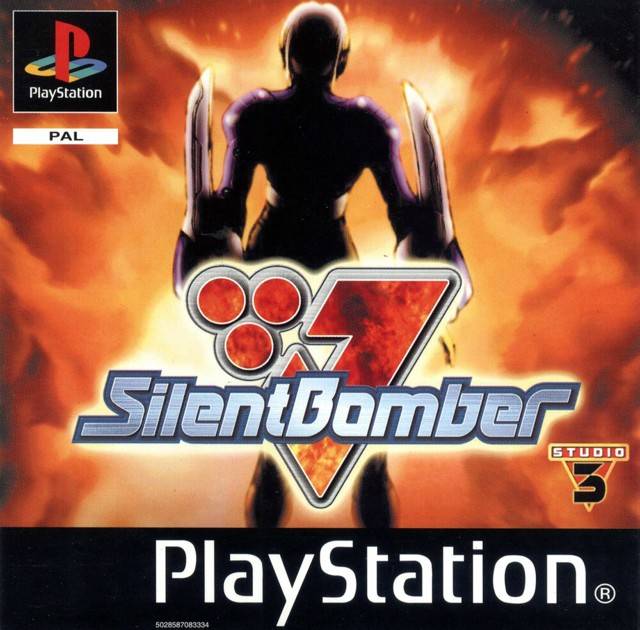
    • Silent Bomber
    • Gran Turismo 2
    • Resident Evil 2
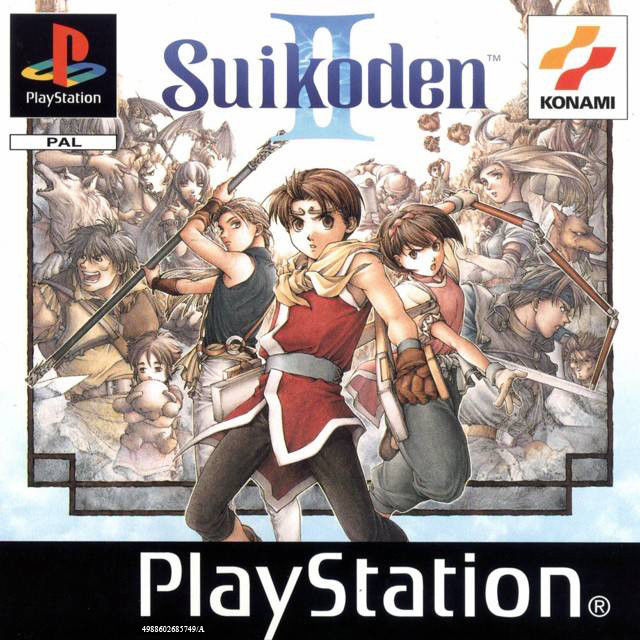
    • Suikoden II
    • Silent Hill
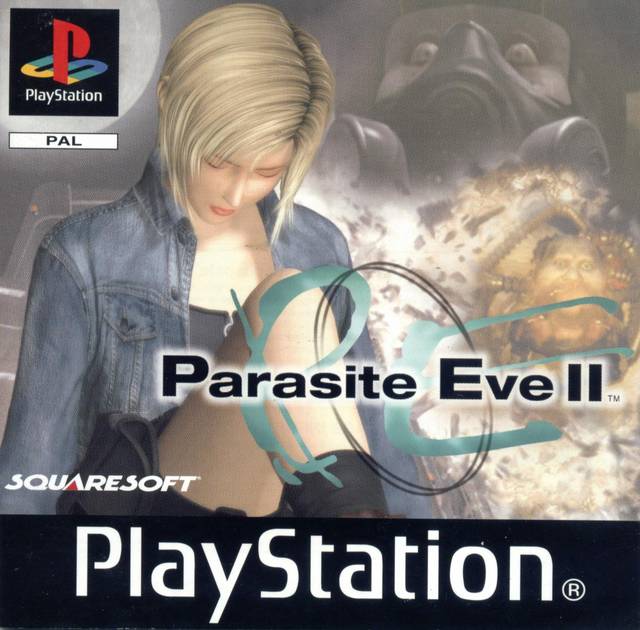
    • Parasite Eve 2
    • Tomb Raider
    • Tony Hawk’s Pro Skater 2
    • Dino Crisis
    • G-Police
    • Policenauts
    • Um Jammer Lammy
    • Tekken 3
    • Final Fantasy VII
    • Wild Arms
    • Ridge Racer Type 4
    • Jumping Flash!

    Follow A Most Agreeable Pastime on Twitter: @MostAgreeable


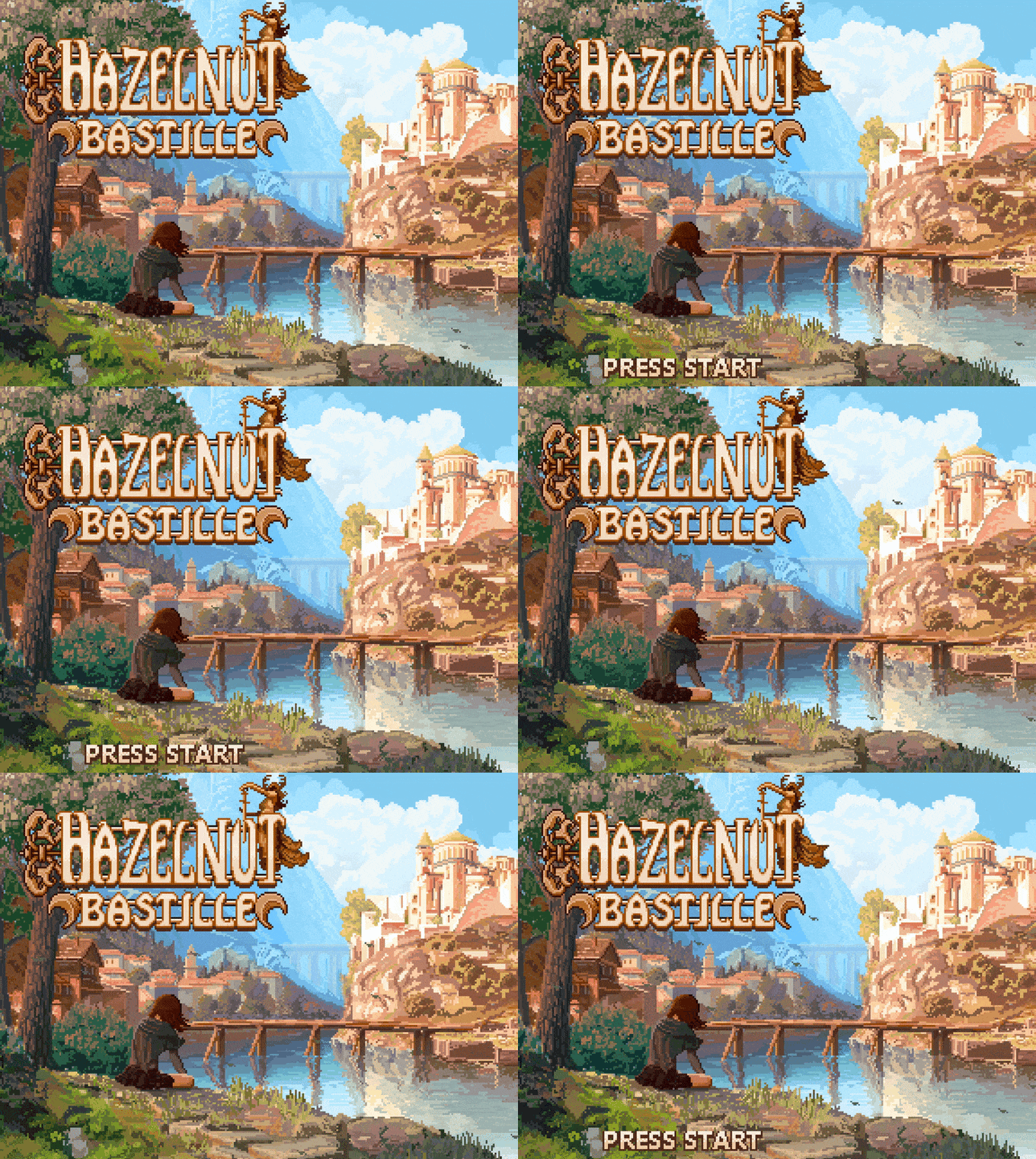
  • Hazelnut Bastille is a gorgeous-looking 16-bit-style RPG

    Here’s a really interesting Kickstarter project. Hazelnut Bastille is a Zelda-style RPG from Aloft Studios, and the graphics are absolutely stunning. It’s a beautiful homage to the 16-bit era – and even better, there’s a 2-3 hour demo available that’s a standalone adventure separate from the main game, so you can try it for yourself.

    The game itself is still a long way off – the developers estimate it will be released at the end of 2020. But the Kickstarter project is going well so far, having raised nearly $50,000 of its $65,000 goal with 29 days to go. It’s being released on PC, Mac and Linux, but there may be a Switch version in the works if they reach their $110,000 stretch goal. As ever, there’s a risk involved in backing a Kickstarter project, but this one certainly looks very promising. Check out the campaign here.


    Follow A Most Agreeable Pastime on Twitter: @MostAgreeable

  • First Impressions: The Light Keeps Us Safe

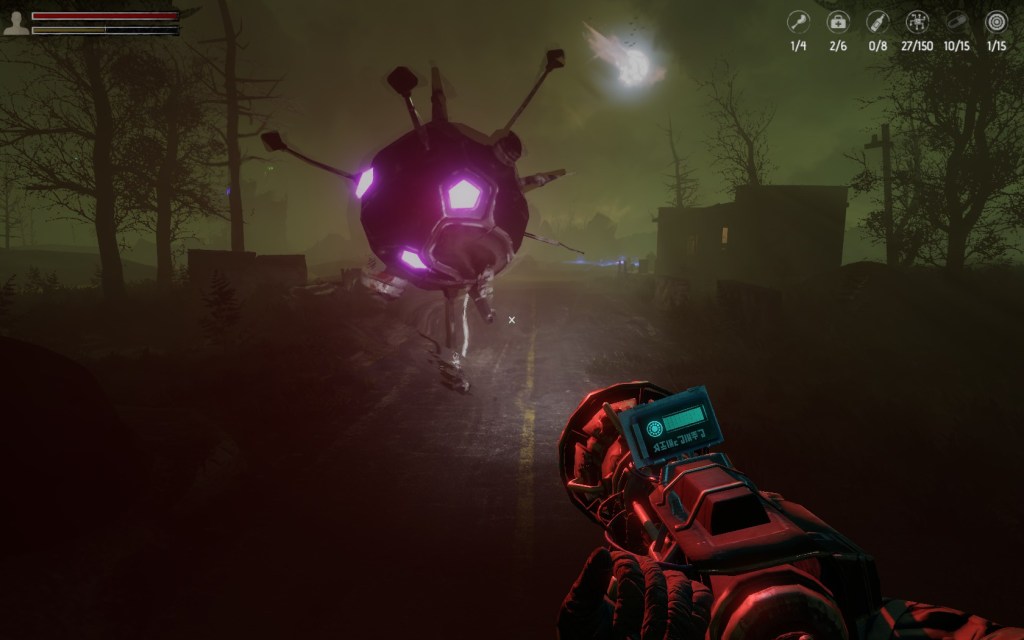
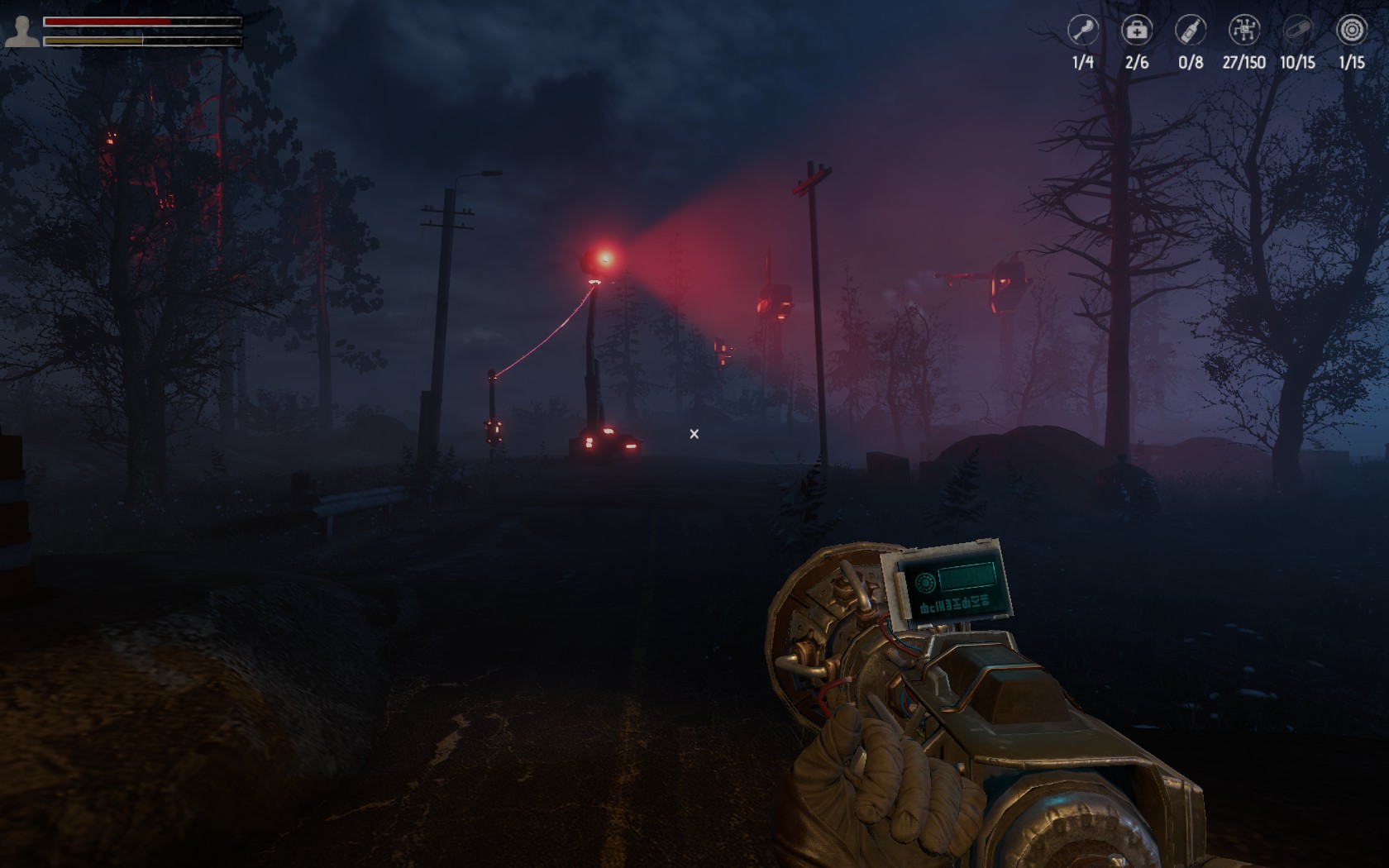
    Once I’d gone through the rigmarole of getting my new gaming PC set up, I finally managed to use it for its destined purpose – doing game reviews. And Kotaku UK sent me Early Access code for The Light Keeps Us Safe, the latest game from Big Robot, makers of the acclaimed Sir, You Are Being Hunted and The Signal From Tolva.

    And it was… Well, it’s probably better if I take your clammy hand and walk you through my first moments playing LiKUS, so you can experience it for yourself. Come on, that’s it, take my hand. Don’t be scared. I won’t hurt you. That’s it. There.

    We’re off! Now, click on this link ↓

    The Light Keeps Us Safe — Not That There’s Much To Be Scared Of

    Did you do it? Are you back?

    Hold on, where have you gone? Oh there you are, don’t wander off like that! Look, I’ve got something to tell you, so just stand there and listen. Stop chewing. What is that? Did you find that in a bin? Spit it out! I don’t have a hanky, just spit it into my hand. Oh my god, what is that? I just don’t understand you sometimes.

    Well, as I was saying, The Light Keeps Us Safe mostly involves looking in bins. Lots of them. As you’ve already discovered, you mucky urchin.

    So yeah, not particularly great right now. But given time, this could turn out to be a corker. It’s just that in its current Early Access state, The Light Keeps Us Safe is a bit too… well, early.


    Follow A Most Agreeable Pastime on Twitter: @MostAgreeable

  • Can you dig it? Graveyard Keeper Early Access Review


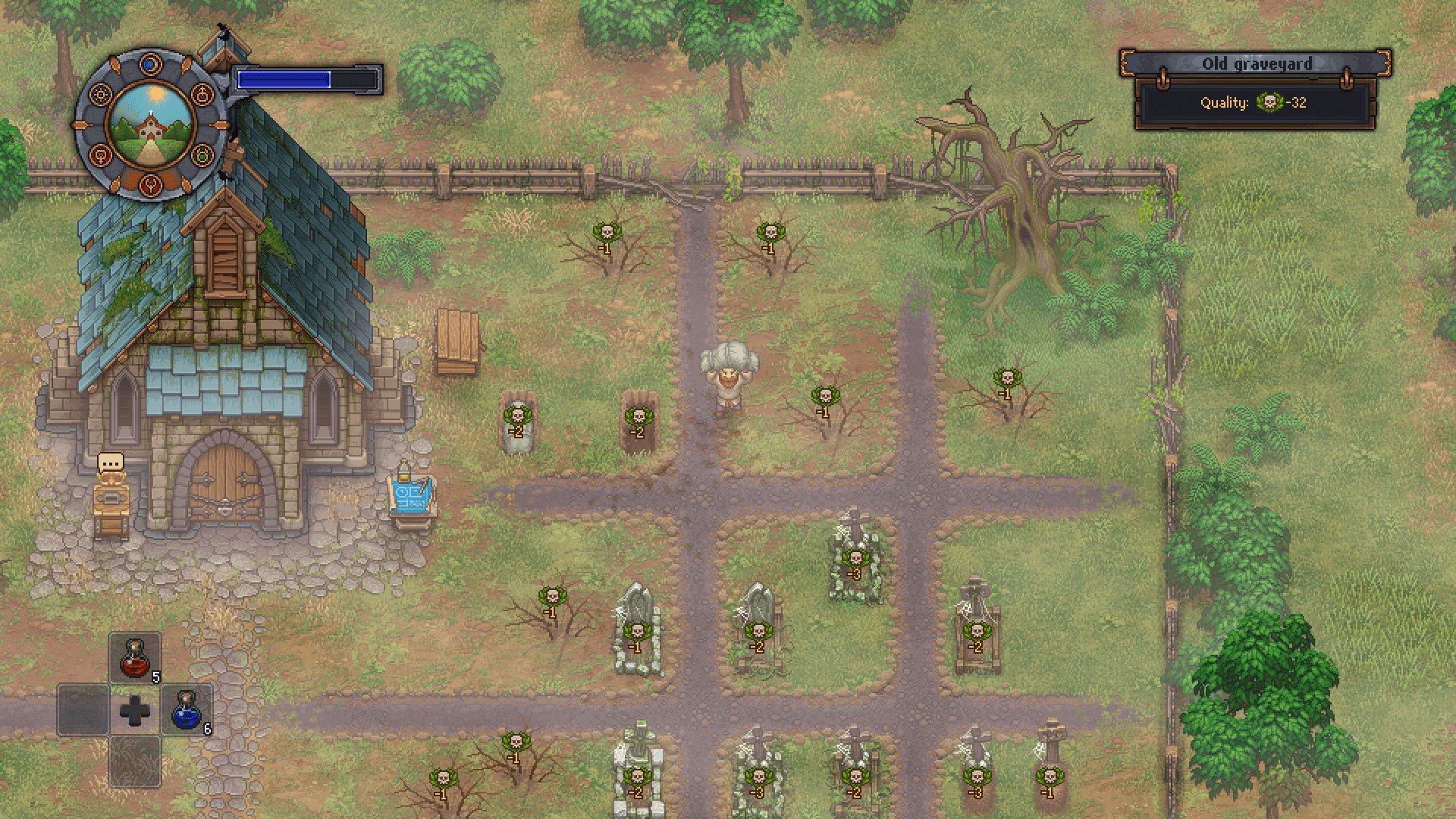
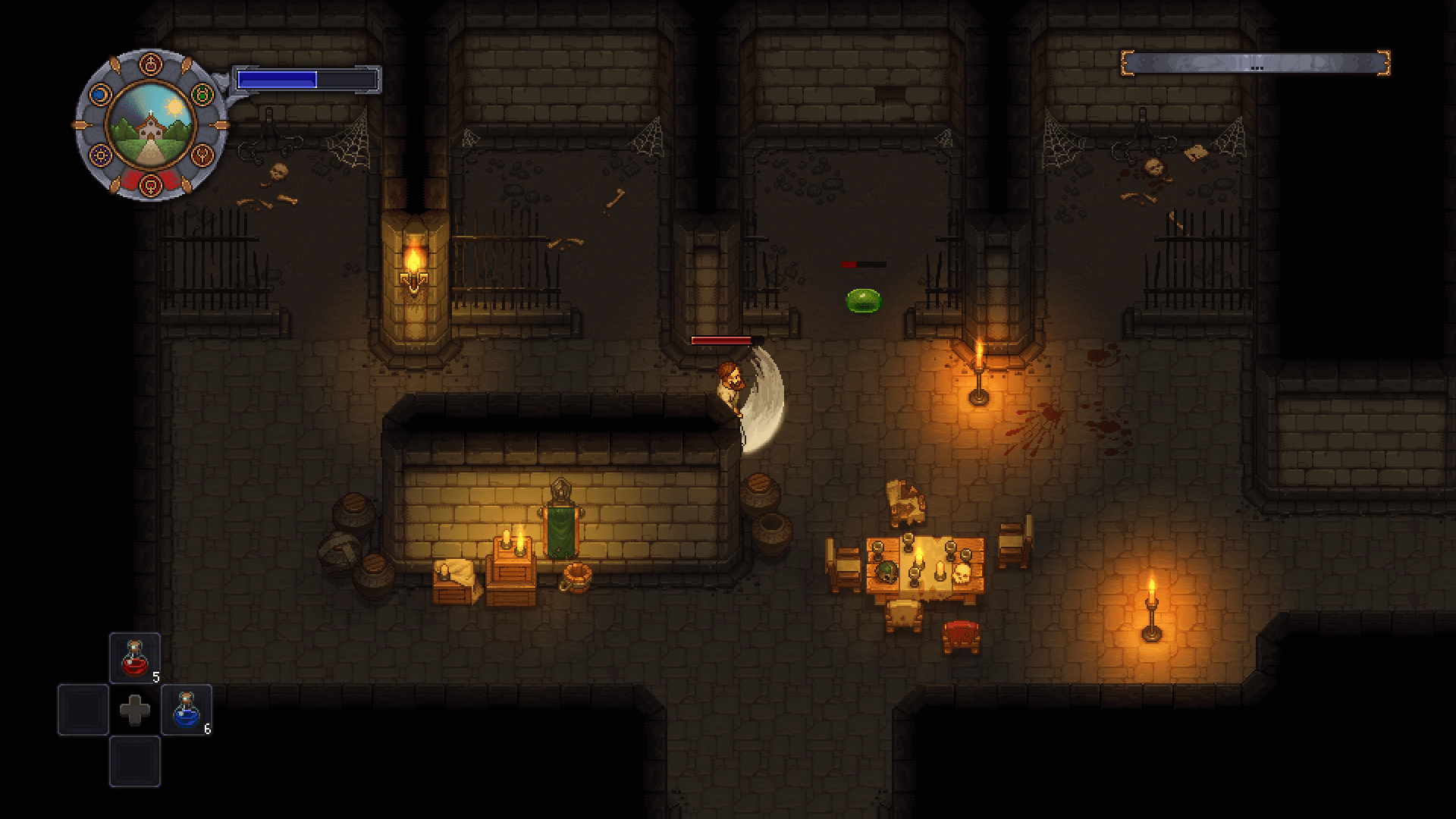
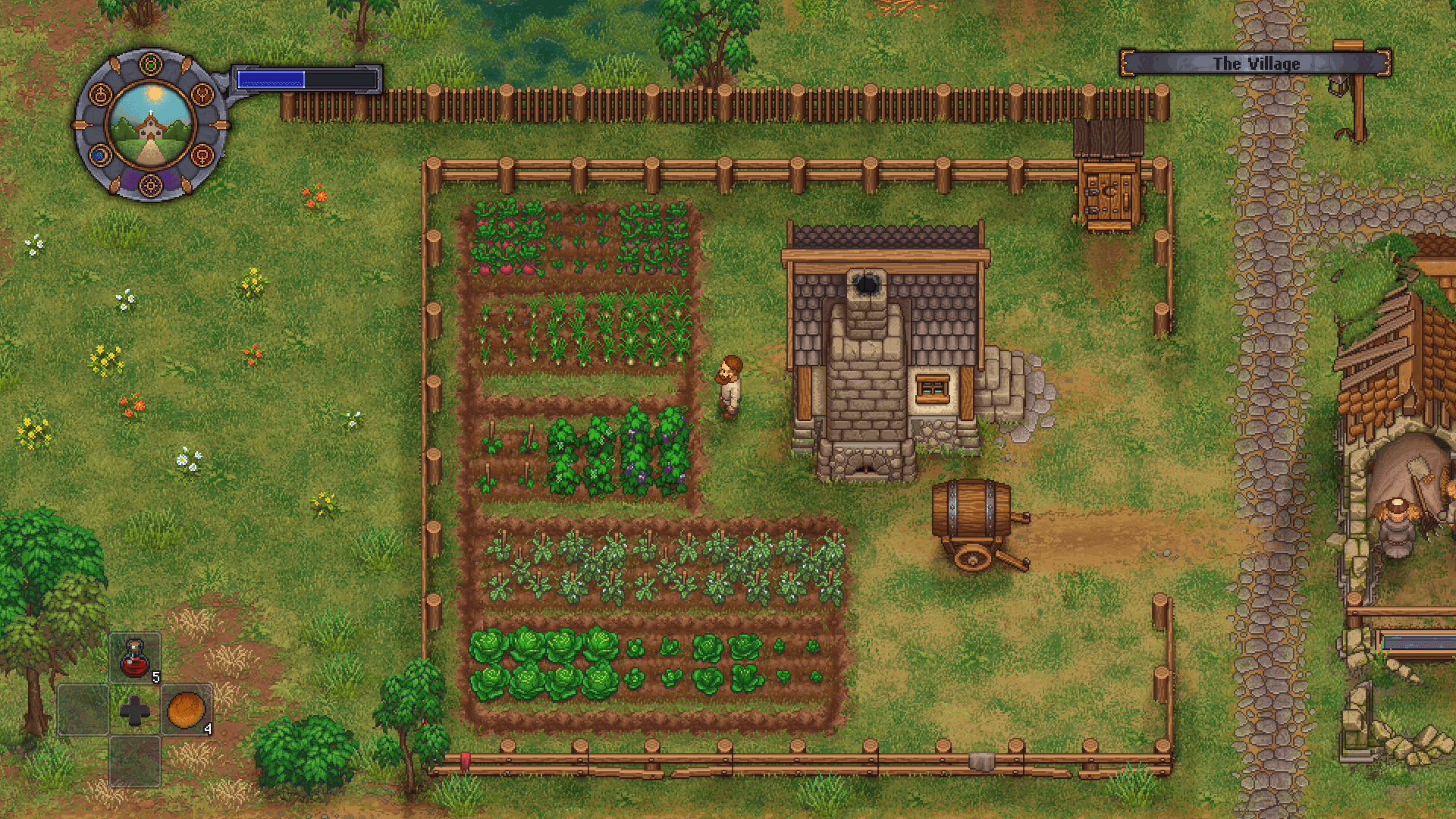
    Ever wondered what life would be like as a person responsible for gathering, preparing and interring the dead for burial? Like crafting, discovering and exploring? Like mysterious spectres, creepy dungeons, and a sardonic talking skull? Yes? Then rejoice! Graveyard Keeper is for you!

    Now, colourful introduction aside, I must admit that I’m coming into this game relatively inexperienced with other examples of its genre and style. Some of these that might pop to mind include the feted Harvest Moon and Stardew Valley, along with maybe Slime Rancher for the quirkier angle if that’s your thing. While I’ve played my fair (appallingly large) share of simulation-type games before, they have usually been along the lines of the Caesar series or The Settlers, much grander in scope and setting. That’s not meant to be a criticism, by the way, it just seems to me that ‘manage Ancient Rome’ or ‘transplant an entire civilization’ seems a bit scaled up compared with running your own little farm. Well, boy howdy I’ll eat my spade because I was more than a little bit mistaken.

    Having said that, I will refrain from eating the meat products you harvest from the cadavers and are supposed to sell. Yes, you read that correctly.

    Taking place in a small medieval-style village in a mystery location, Graveyard Keeper sets you up as just that: keeper, maintainer, and occasional exhumer, of the local… well, graveyard. After an unfortunate road traffic collision – never text and cross the road kids – you find yourself in a fog-bound limbo, with only a red-eyed figure in black for company. The figure subsequently brushes off any queries about your situation and your plaintive requests to be sent home to your love, for what appears to be date night. Then suddenly, poof! You wake up as the graveyard keeper, and you have no idea where or when you are. I found this to be very rushed, with no time to form an early connection to the protagonist or his situation. While there’s something to be said for getting straight into things, I would have liked but more lead in to help and set the tone.

    The look and feel of the retro 32-bit style is colourful and neat, and the opening screen with its macabre and lovingly animated tableau is a delight. It reminds me very much of the old Addams Family game on MegaDrive, which entertained me no end mumble mumble years ago. A day/night cycle, complete with fog, haze, torrential rain and thunder – all complete with sound effects – adds real atmosphere. This is further enhanced by the only-slightly-less-than-creepy music that plays in the background. There’s a bit of a lack of sound effects for my taste, but I’m willing to concede that what is present matches the setting nicely.

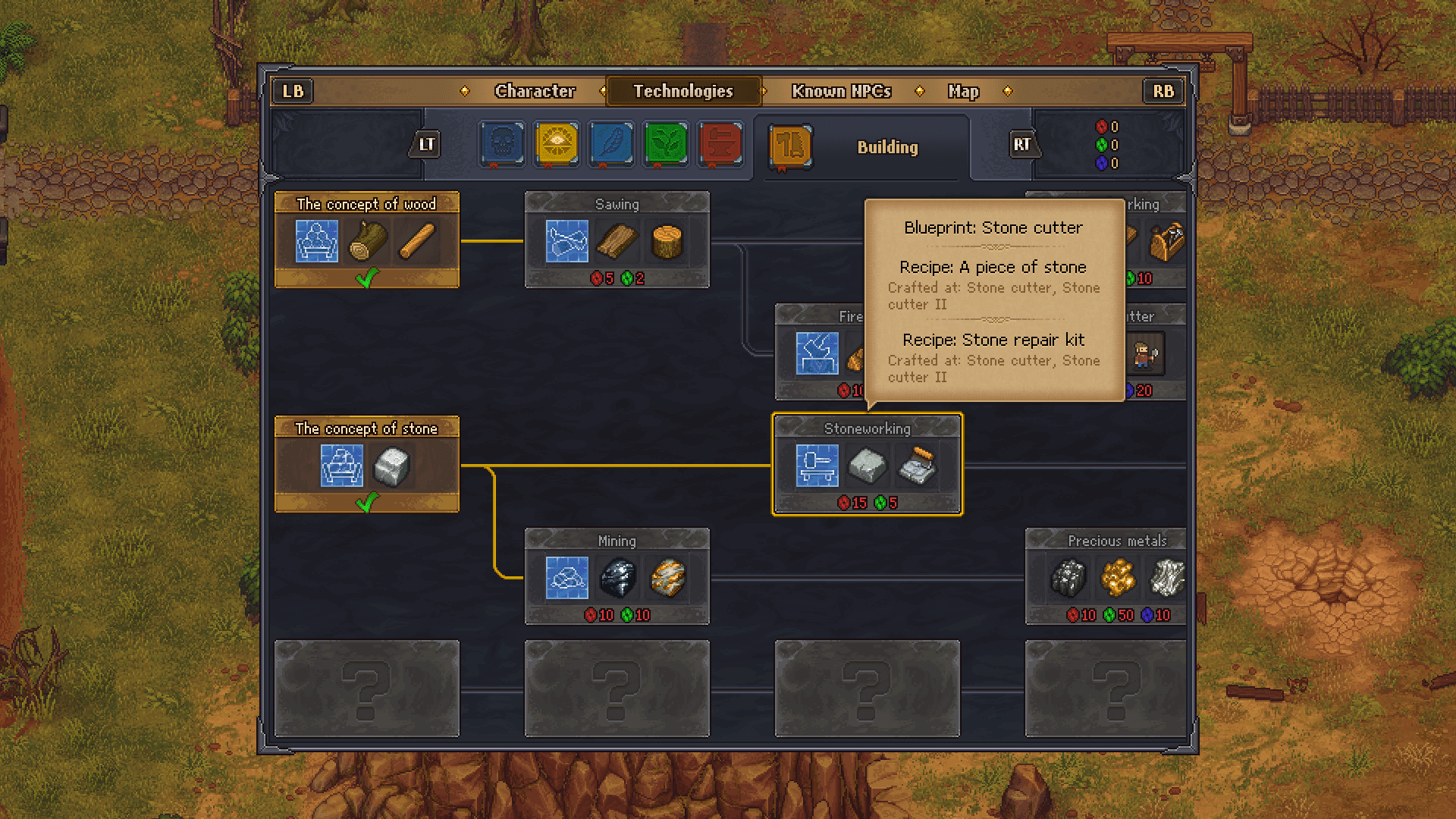
    The gameplay is pretty simple and straightforward; go here, fetch that, speak to that NPC, craft that item and so on. Initially, that is. The more you get into it, and progress up the unexpectedly complex tech-tree, things become a lot more taxing, and subsequently satisfying. Your one simple operation turns into an assembly-line-style sequence of micro-management and forward planning, part of which involves meeting NPCs at specific times on one of games’ seven days. I confess that I ended up resorting to a notebook to keep track of all these tasks, as there’s no built-in way to follow them or receive any notifications as far as I could see. Since they’re not actually missions per se and more an aspect of living your life in-game, this does make sense, but it did detract from the experience for me a little bit as it pulled me out of the action.

    This is a fun little game, that could take up a goodly chunk of your gaming time. It’s got a refreshing twist on an established and potentially overused concept, which kept me both chuckling and grimacing in equal measure. There are a few rough edges to smooth, but the emphasis is on few, which for an Early Access game is impressive. I’ll definitely be keeping my eye on my misty plot as the game continues through development, looking out for skeletons and upcoming versions as the seasons roll by.


    Graveyard Keeper – v 1.037

    Developer – LazyBear

    Publishers – tinyBuild

    Status – Early Access (played on PC via Steam)

    Disclosure statement: Early Access code for Graveyard Keeper was provided by tinyBuild. A Most Agreeable Pastime operates as an independent site, and all opinions expressed are those of the author.

    Follow A Most Agreeable Pastime on Twitter: @MostAgreeable

  • Why I want to set my PC on fire

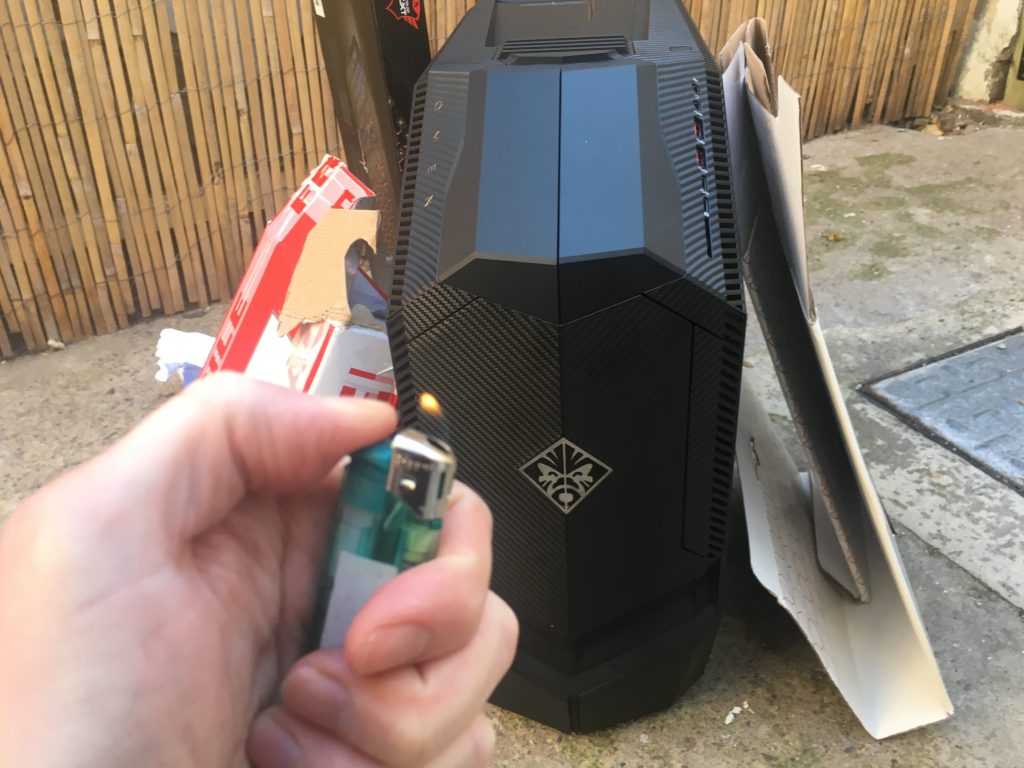
    I got a new PC this week. And now I want to set it on fire and laugh while it burns. Here’s why.

    Last week I got sent a PC game to review, but it just wouldn’t run. I’ve been doing more and more PC game reviews of late, and generally these games have worked fine on my decent-ish laptop. But not this one. It spluttered into life, crawled along for a while, and then finally gave up the ghost and died.

    “Right then, time to bite the bullet,” I thought. “I’m going to have to splash some cash and get a ‘proper’ gaming PC. My actual job depends on it. At least I can claim back the tax.”

    Cue some frantic internet searches and plenty of head scratching as I tried my best to understand what the hell all these numbers next to graphics cards actually mean. Eventually I stumbled across a helpful graph that put it all into plain English (“This one can do VR.” “This one does 4K”, etc.). But then I almost had a brain aneurysm when I saw how much all this stuff costs. Bloody hell, PCs are expensive.

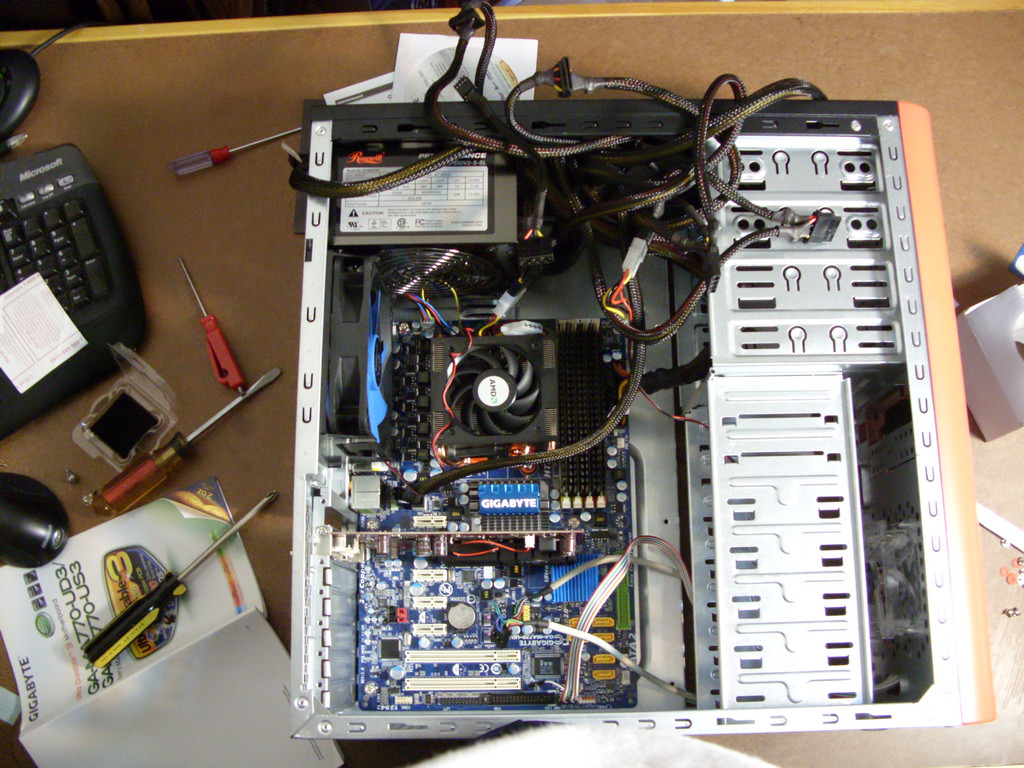
    I know I could probably save some money by building a PC myself, but (a) I didn’t have the time, as I needed to review the game right away, and (b) I don’t have the foggiest idea of how to do it. So after trawling through tech websites for hours and wincing at the prices, I eventually found a modestly powerful but reasonably priced prebuilt HP Omen desktop for £650. Intel i5 processor, 8GB RAM, Nvidia GX 1060 graphics card – it won’t set the world alight, but it will do for now.

    I reasoned I could always upgrade the components over time – and then I got all excited about which ones I could get. I finally realised why people like building PCs – it’s a game. There are levels, collectibles and rewards, not to mention puzzle solving as you try to slot all the components together and make them work. I found myself getting excited about the arrival of my new gaming PC and making a mental list of all the fancy bits and bobs I’d buy for it down the line. Hey, PC gaming is fun!

    Oh, the follies of youth. I now look back on these precious few days before the damn thing actually arrived as what I call my ‘PC gaming honeymoon period’.

    The disappointment started when I got it out of the box. This thing is HELLA ugly. It looks like a wonky tank that Batman might own, topped off with malevolent red lights. And yes, I know I chose to buy this model, but after thoroughly researching all of the PC cases available, I have concluded that every single PC case you can buy is utterly hideous. They seem to mostly be going for the teenage-boy market, all neon lights and sharp angles, like something out of The Fast and The Furious. I’ve half a mind to plonk a doily and vase of flowers on top of my overly aggro PC just to humiliate it.

    Then there was the second problem – it didn’t come with a keyboard. Now you’re probably thinking that I’m incredibly naive to imagine that my new PC would come with a device that would actually allow me to use it, but I kind of assumed that a keyboard is a given. Stupid, huh? Luckily I had a spare mouse – but with no keyboard my new PC was just sat there, useless, until I had a chance to get down the shops.

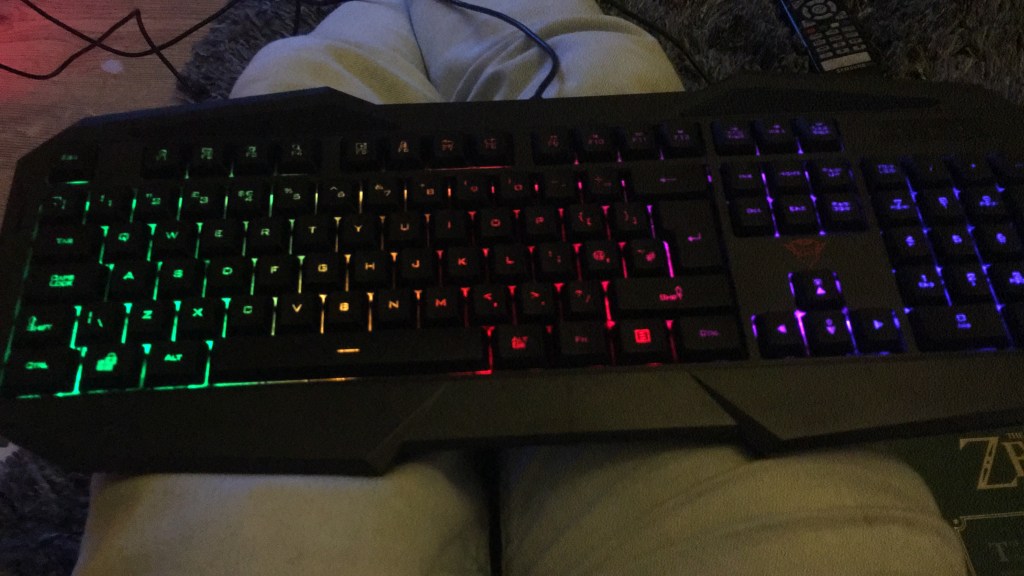
    I took a trip into town the next day, but the only keyboards the gaming shop had were those ones with the glowy backlights. What is the obsession with neon and gaming PCs? I plumped for a rainbow-coloured one in the end, on the grounds that it was the least threatening.

    Back home, I plugged the PC into my telly with the new HDMI cable I’d bought. (Oh yeah, I forgot to mention it didn’t come with an HDMI cable either. Of course it didn’t.) I switched everything on… and my TV remained stubbornly blank. An hour later, after trying every HDMI cable I had in every possible input on the TV, I ended up frantically searching Google to work out why something as simple as plugging in a cable in was so frustratingly difficult. As it turns out, a forum entry told me, the main HDMI port on prebuilt PCs is disabled, and you have to use the HDMI port next to the graphics card instead. BECAUSE OF COURSE YOU DO. Sure enough, right down the back of the PC, hidden beneath a metal overhang, I discovered the ‘real’ HDMI port.

    They don’t make this easy, do they?

    I finally fired up my HP Omen and spent the next 15 minutes telling Microsoft that no, I don’t want to share my data with them, as Windows posed the same question in half a dozen different ways. “If you want your ads to be more relevant to you, you could share all your data with us, yeah?” No thanks, I’m good. “But what about voice recognition, that would work better if you let us spy on you, right?” No Microsoft, for the last bloody time, what the hell is wrong with you? “OK, but crash reports, crash reports right, we can look at those, yeah?” Hnnnnnnnngh.

    Finally, with Windows up and running, I spent the best part of an hour downloading antivirus software, Steam, and all those other boring but essential programs you need to actually make your PC work properly. And then I spent half an hour trying to work out why the task bar was cut off on my TV, finally discovering that apparently TV manufacturers don’t like you to see the whole screen at one time, and that you have to select the special ‘Screen Fit’ picture option to actually, you know, see everything on the screen. Eventually, I booted up the game that I’d gone through all this rigmarole to play.

    And it worked fine!

    For fifteen minutes.

    And then it crashed.

    And then Windows crashed.

    And then nothing would work at all, not even the Windows Start button, despite multiple reboots.

    I saw this screen A LOT.

    This is the point where I first had thoughts of simply tipping a can of petrol over my new purchase, chucking a match, and cackling as it melted into nothing. But I resisted and went to bed instead, glowering with resentment.

    I spent the entire morning investigating and trying to solve the mystery of the recalcitrant Omen. After much deduction, I reasoned that it might be down to Windows updates. I worked out how to boot the PC in safe mode so that I could actually click on Start without the PC freezing, and began the long process of updating. It took the ENTIRE DAY. I had to restart my PC SIX TIMES.

    And then, on the evening of the third day, it worked. It finally goddamn worked. I booted up the game again, and spent a few hours playing. And it was… OK. I fiddled around with the graphics settings a little, but none of them seemed to make any appreciable difference. Maybe it’s just because my PC is underpowered, but I couldn’t really see any difference from what my PS4 could do. And yet this thing has just cost me twice as much as my PS4 and taken three days of my life.

    Not only that, it is impossible to actually play comfily using a mouse and keyboard while sitting on a sofa. I defy you to tell me a way. Sure, I could set up my PC at a desk, but that would mean buying a monitor, and I’ve already blown more than half a grand on this hideous thing. It’s sat there right now, all black and ugly, a chunky tower of disappointment. The last time I remember spending so much money and getting so little joy in return was when I renewed my car insurance.

    Just give me one reason why I shouldn’t set it on fire right now. Just one reason.


    Follow A Most Agreeable Pastime on Twitter: @MostAgreeable

  • Resonance of Fate 4K/HD Edition launches today, and it couldn’t have come at a worse time

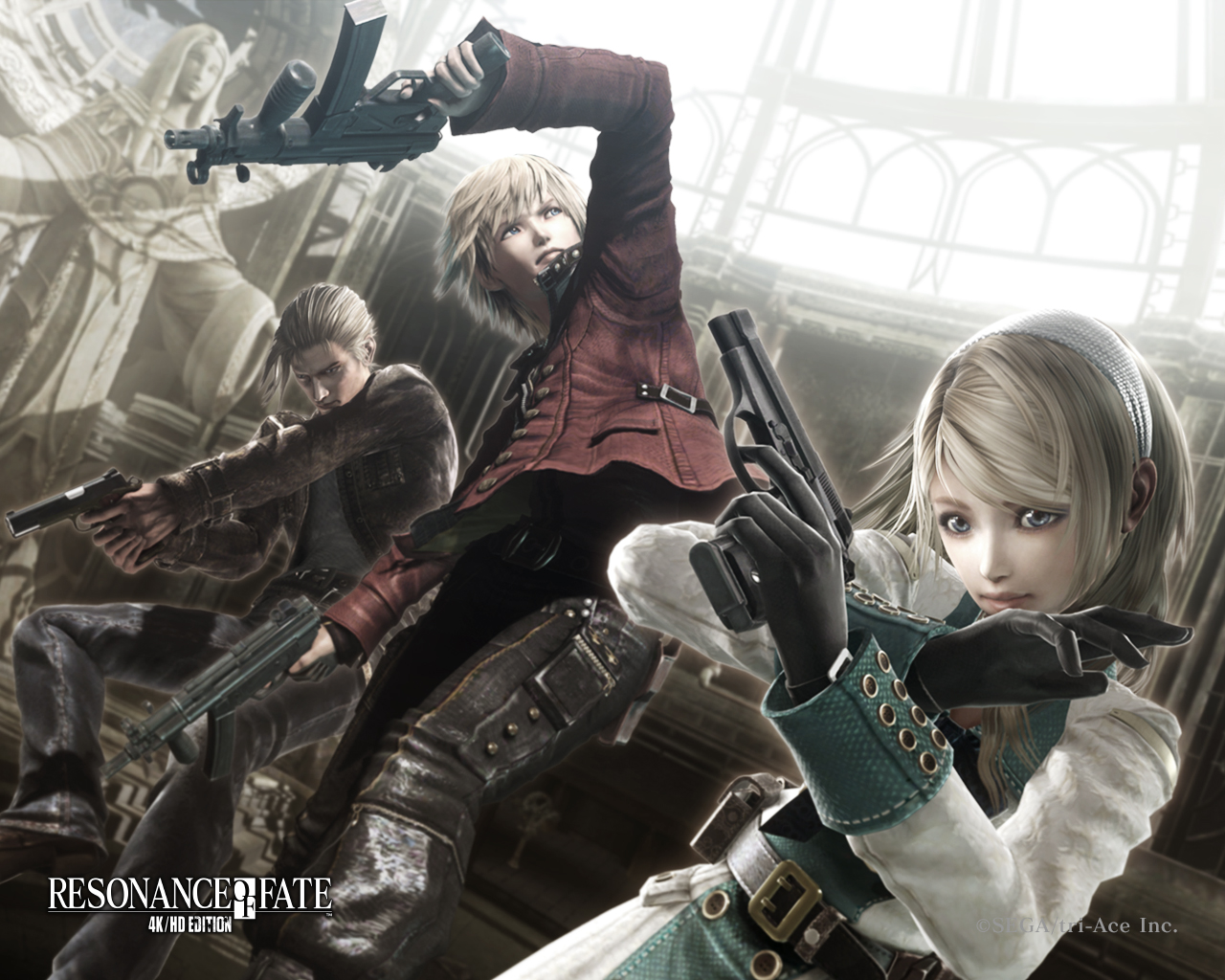
    Back in September, I was pleasantly surprised by the unexpected announcement that Resonance of Fate, a mostly overlooked but reportedly excellent JRPG from 2010, would be getting an HD remaster for PS4 and PC. It piqued my interest enough to prompt me to set a reminder for the 18th October release date in my calendar.

    Well, now the release date has rolled around, and the game looks as tantalising as ever. Rock Paper Shotgun gave Resonance of Fate HD a breathless preview earlier today, describing it as “Valkyria Chronicles as directed by John Woo”. Check out the trailer below to see what they mean.

    But this remaster couldn’t have launched at a worse time. We’re only a week away from the launch of Red Dead Redemption 2, which is probably the biggest game of this console generation. Most other publishers have wisely vacated the release dates directly around this behemoth of a game but, for whatever reason, tri-Ace seems to have ignored their lead. And for a title with very similar gameplay to the Valkyria Chronicles series, Resonance of Fate HD is also in the unfortunate position of launching just few weeks after the excellent Valkyria Chronicles 4.

    In short, I doubt many people are going to buy this, which is a real shame. I for one am still playing through VC4 (and loving it), and I’m really not in the market for buying a 60+ hour JRPG right before the release of RDR2, which itself has a story that lasts around 60 hours.

    Why couldn’t tri-Ace have released Resonance of Fate HD in the summer? I’d have happily played through this meaty JRPG back then, when new games were thin on the ground. But as it stands, Resonance of Fate is set to sink under the tsunami of pre-Christmas releases during the busiest time of year for games.


    Follow A Most Agreeable Pastime on Twitter: @MostAgreeable
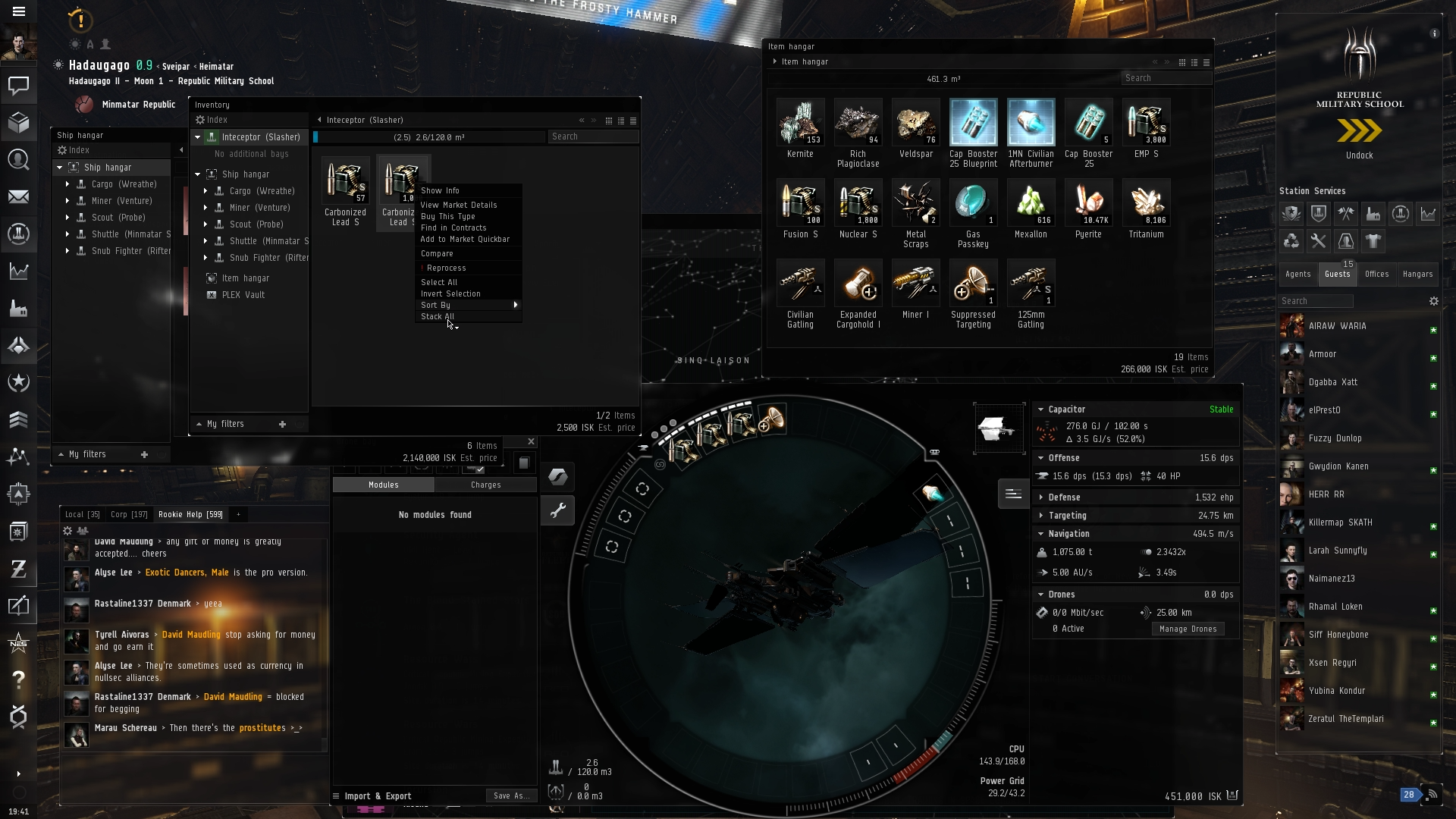
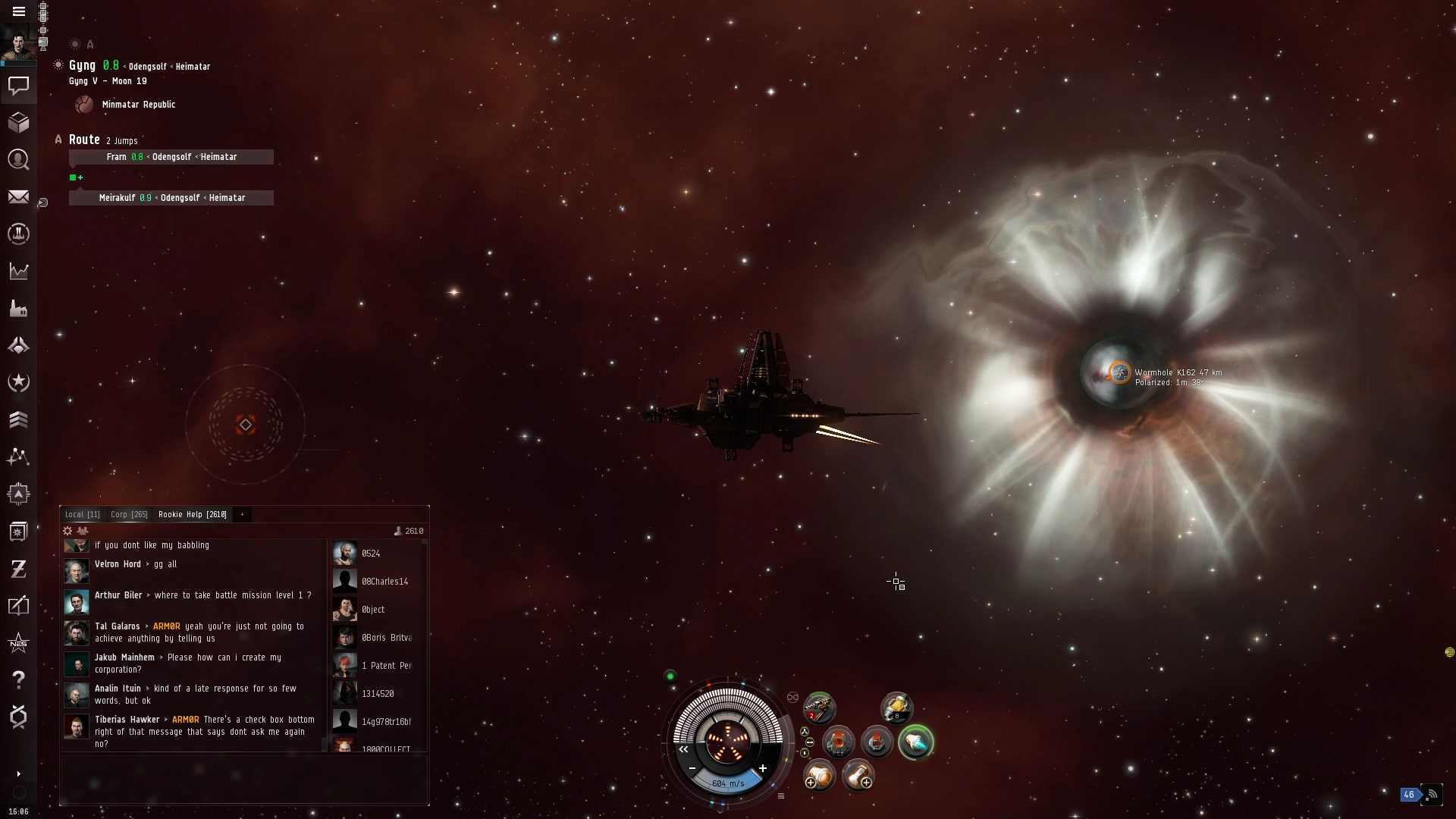
  • EVE Online: Seven Days In New Eden

    EVE Online is a game with a certain reputation. By which I mean, EVE Online has a reputation for being vast, arcane and chock full of arseholes. Much of this is based on the stories that make it out of the game and into the wider public consciousness. There’s a good chance that if you’re reading this, you would’ve heard some of these yourself. Incidents like The Bloodbath of B-R5RB or the embezzlement of billions of ISK (in-game currency) from a player-run bank have made headlines in mainstream media. As such, I’m sure I’m not alone in being curious but hesitant about giving EVE a go. After all, MMORPGs are not really my genre of choice at the best of times, given the time commitment they usually require. Especially as this is a game so dense that actual books have been written about its in-game history.

    Still though, I recently decided to paddle out into the piranha-filled waters of New Eden and see what EVE Online is really like for new players. This was largely prompted by two realisations; firstly that EVE Online is (mostly) free to play and secondly that EVE was released in May 2003 – that’s before World of Warcraft or Half Life 2. Coupled with the fact that CCP, the game’s developer, just got bought for half a billion dollars, I figured it’s probably worth a look. So, I signed up and boldly went where at least several hundred thousand people have gone before. After the fancy opening cinematic came the character creator. I decided on one of the four factions, based solely on how their ships looked, and then slapped together an avatar. Don’t expect full RPG style cheekbone depth sliders or the like here, but there are more customisation options than I expected.

    Once your character is set up, then you’re essentially free to do whatever you like right away. That said, if you’re new to EVE then you should really avoid the temptation to just throw yourself into the game and try to work it out as you go along. There is a lot to learn, far more than even the game’s tutorial missions can explain. I’m going to summarise some of what I think are the most useful points below, things that I would’ve preferred to know before I started. Although perhaps the best bit of advice I can offer comes from a space pirate of an entirely different universe – “don’t get cocky”.

    Do the Tutorials

    Despite what I just said, the tutorial missions really are a must if you’re a newbie. There are a lot of menus and mechanics to get to grips with. At one point, I tried to skip ahead and alter the equipment on my ship before the tutorial had explained how; let’s just say it didn’t go well. If you want to learn the basics then there’s really no better way of doing it. The other benefit is that the “career path” missions which follow-on from the tutorial are a great way to make money and acquire new ships. While none of these ships will provoke the envy of established players, it gives you the opportunity to try most of the main money-making options in the game at no cost. For example, you quickly learn the value of a good book while you’re mining asteroids.

    Don’t Rely on the Tutorials Teaching You Everything

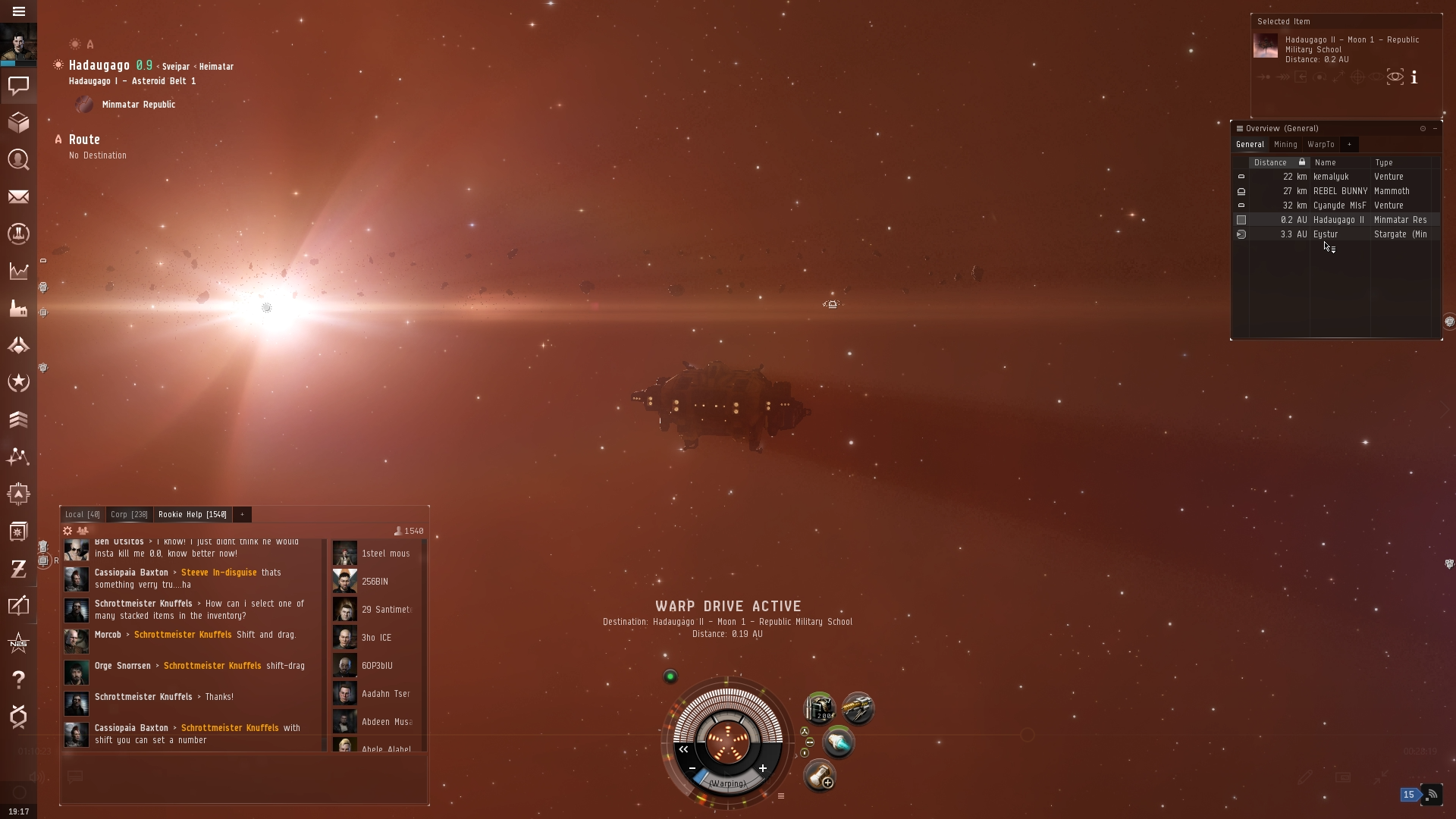
    While the tutorials are undeniably helpful, there’s a lot that they don’t tell you. Sometimes this are just oversights in the explanation; for instance the “Exploration” career path requires you to manage some probes you’ve just launched. The problem I had was I didn’t see any explanation of how to do that. After some heartfelt but very crude pleas to the gaming gods (and Google) I found the answer. Alt-P, for the record. Beyond this though, there’s just far too much in EVE to fit into a structured tutorial. Fortunately, the game’s community does a great job of filling in the gaps. I found the EVE University Wiki very helpful and there’s an active and supportive “rookie chat” in-game which acts as a Q&A for new players. It’s worth noting although that the fact the game has been running for so long means there’s a lot of out of date information online, so random internet searches are not always reliable.

    Trust No One

    This is virtually a mantra for most EVE players. CCP take a very hands-off approach to moderating player actions. You really have to do something serious to incur their wrath. As such, scamming and robbing other players can be quite a lucrative source of income. Essentially, as in real life, if someone offers you a deal that seems too good to be true, then it probably is. Similarly, if you’re in a system with a low security rating (i.e. a system with a limited or no NPC security presence) then there’s a fair chance you’ll be attacked. You get little sympathy for being foolish in EVE, so be careful. Then again, even long-standing players sometimes get tricked.

    Overall, I was pleasantly surprised by my experiences. I didn’t get shot at once. You can even do some actual science. What most impressed me though was how EVE allows players to really make the most of the freedom it provides. Too many games give players liberty without agency. They provide massive open-world sandboxes, but then don’t back that freedom up with the required mechanics. I was briefly enamoured with Elite: Dangerous at launch but soon felt it was shallow and grind-heavy. I never really got on with Skyrim as, despite the size of its world, all I could really do outside the quests was walk around fighting things. By giving you a selection of specialised starter ships, EVE lets you experience a variety of roles from the outset. Even then, that’s just a taster of what’s possible.

    I really only scratched the surface of what’s on offer. I didn’t join a corporation, for example. These are the groups of players which are key to much of what makes the game unique. Also, I only created one character, when each account can support three, further increasing the opportunities for experimentation. Ultimately, I’m still not sure I have enough free time to really make the most of EVE, but the fact the character skill training system works in real time means that at least some progress can be made when you’re not actually playing. EVE’s free offering is quite generous too. You’ll need a paid account if you want to play with the bigger ships or some of the more interesting equipment though. EVE won’t be for everyone – there’s very little hand-holding and it is certainly vast and arcane – but it’s not as hard on new players as you might think. Just don’t let anyone “borrow” your ISK…


    Follow A Most Agreeable Pastime on Twitter: @MostAgreeable
  • Video game streaming is going to change everything
    The Netflix of games is just around the corner. Photo by freestocks.org on Unsplash.

    GamesRadar asked me to write an in-depth feature on the future of video game streaming, and it made for some fascinating research. I’ve been sceptical about game streaming for a while, not least because of the high-profile failure of OnLive, but a lot has changed since the launch of that service in 2010.

    The most important change is that broadband speeds are shooting up across the world, and they’re going to get even higher as fibre-to-the-premises (FTTP) becomes more widespread. In other words, for most people, it’s now becoming more feasible to play a game running on a server hundreds of miles away rather than on a console right in front of you. And the convenience of being able to play hundreds of games for a nominal fee is a massive selling point.

    Check out the finished article below:

    Is streaming the future of video games? And can it even work?

    The one big worry, however, is how creators will get paid from a streaming service. The potential royalties could be miniscule if Spotify’s lead is anything to go by, so how can it be made to work from a financial point of view? That’s still an unsolved question…


    Follow A Most Agreeable Pastime on Twitter: @MostAgreeable
  • A lovely bit of Legend of Zelda wall art

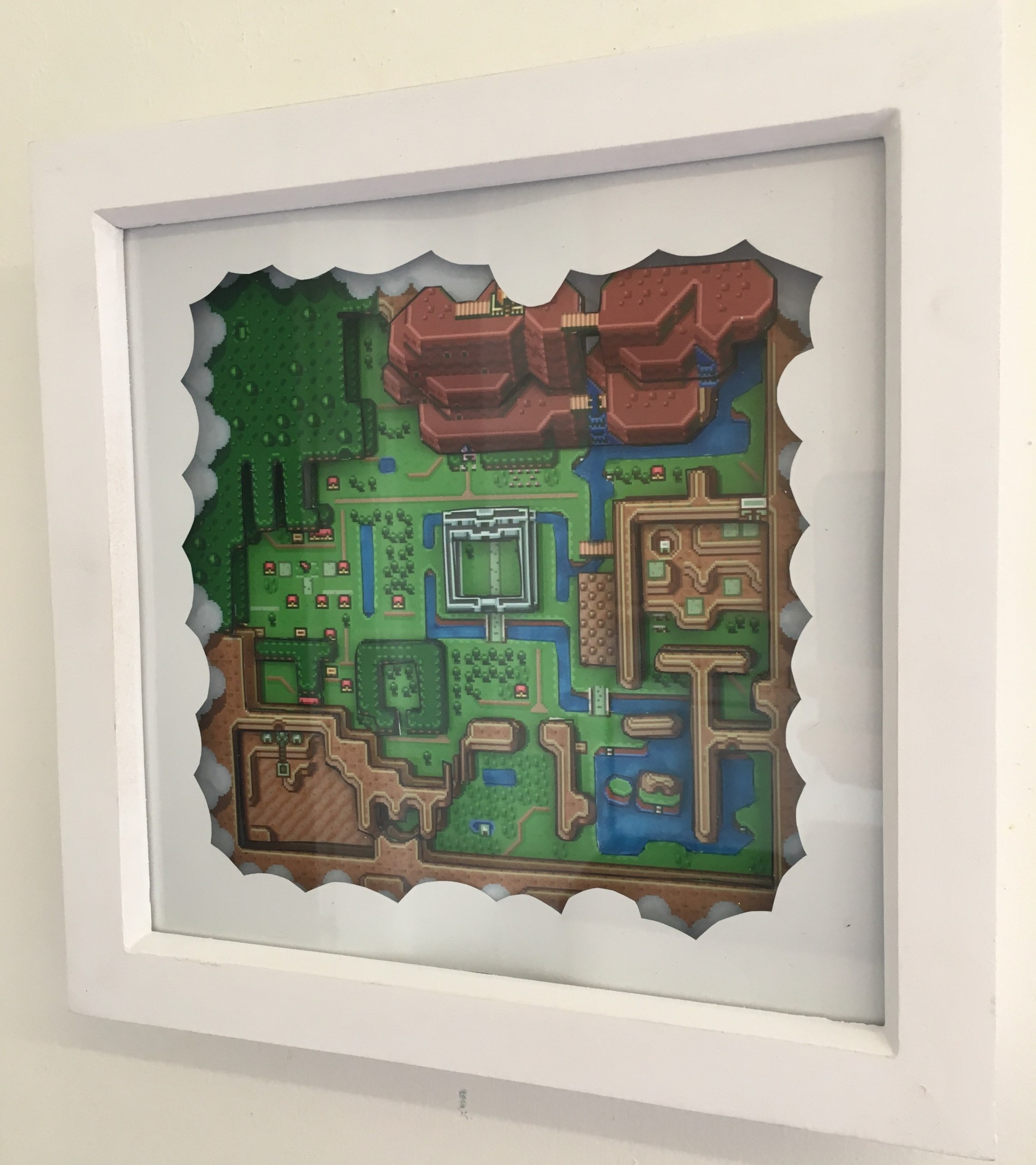
    I spotted an amazing 3D shadowbox in the latest issue of Retro Gamer, and I just had to get it for my wall.


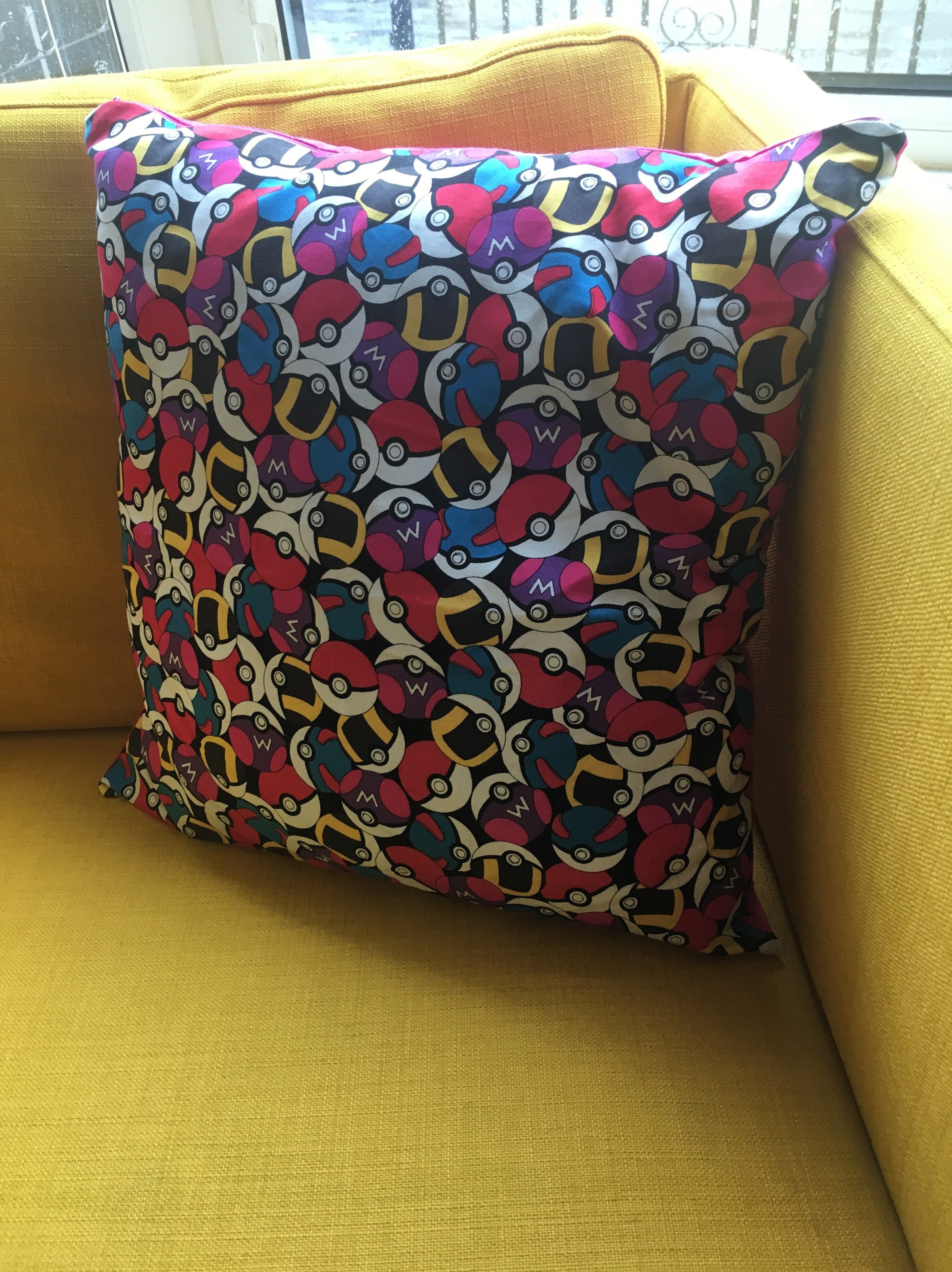
    Its a 3D papercraft map from A Link to the Past, and it’s just gorgeous. Perhaps even better than my much-loved Pokemon cushion.

    If you want one for yourself, they’re hand made by 8-Bit Boutique.


    Follow A Most Agreeable Pastime on Twitter: @MostAgreeable

  • Review: TowerFall (Switch)

    It’s easy to see the appeal of Nintendo’s Switch when it comes to being able to play anywhere. But I don’t see many folk tout how great it is as a multiplayer console. There’s something inherently charming about not just telling somebody about a competitive or cooperative game but pulling the joy-con off of its side and just playing the damn thing anytime, anywhere. I’m sure there are people who want to crab about the online experience, but for any type of local shenanigans it’s really hard to beat.

    There may be a little bias in this assessment, as I have built-in gaming buddies in the form of my kids. But I’ve seen instances where those cringe-inducing rooftop Switch parties full of trendy twentysomethings in Nintendo’s adverts aren’t far removed from the truth.

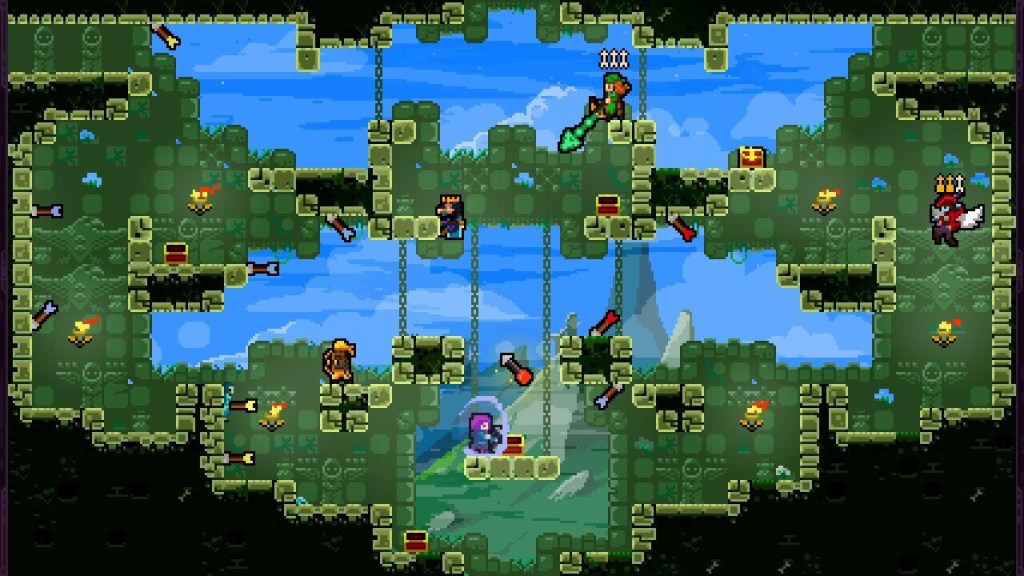
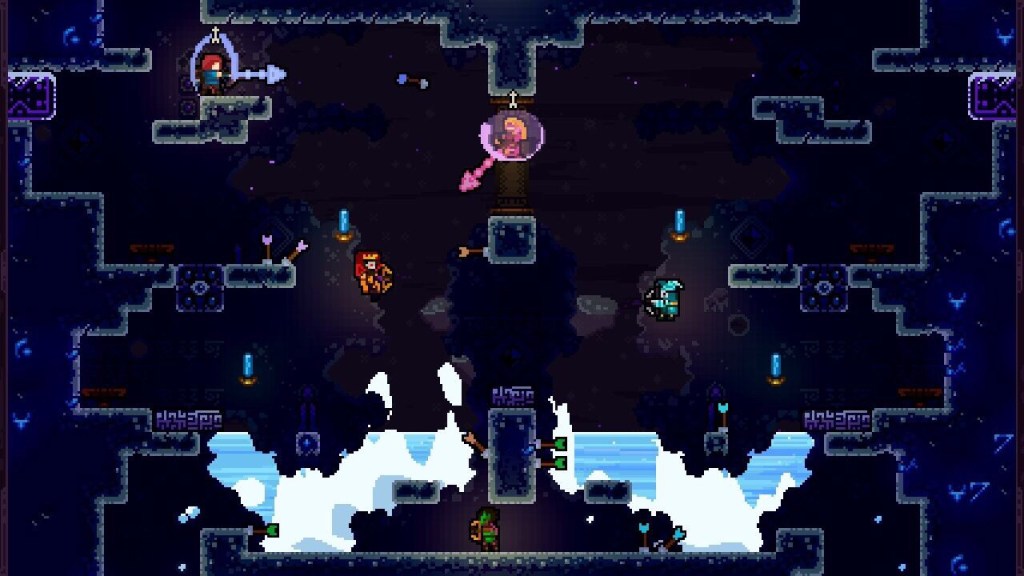
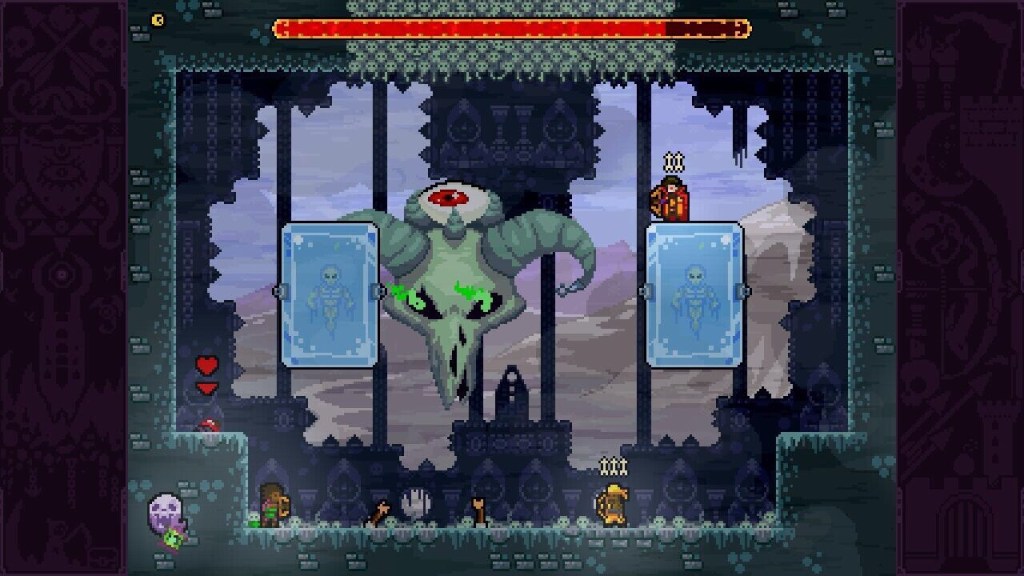
    One game that shines particularly brightly within this ethos is TowerFall. The game has you playing with up to six people in a 2D arena in which you hop, bop and shoot at each other until only one person (or in many cases, nobody) is left standing. The game has a great sense of movement, with the running and jumping being brisk and the wall-hopping and edge grabbing feeling very natural and precise. There’s a certain thrill to chasing or being chased in an enclosed space, dodging arrows and obstacles all the while. To keep the game from being an outright shootout, each player is equipped with a small set of arrows that, once loosed, must be retrieved should you miss. It gives TowerFall a wonderful sense of balance, in which exhausting your opponent’s quiver (and perhaps refilling your own) is as worthwhile a strategy as all-out pandemonium.

    More often than not the game is played out in quick rounds, with a neat rewind feature that’ll give you a replay of the final blow. Whether the win was a result of skill or sheer luck, I love to watch the replay. High-level play and humorous outcomes are always entertaining, and the briskness of everything means there’s no dawdling.

    What keeps my boys and I continually coming back to TowerFall is the amount of variables and modifiers you can apply to the different modes. The bulk of the fun is in the standard competitive scene, but there’s also a robust adventure mode that has you and friends tackling waves of enemies as they encroach upon the numerous levels. Each fiddle Of a modifier begets interesting results, and there’s never been a dull moment from anything we’ve tried. I think I’m legally obligated to mention there’s a single-player component, but it can’t hold a candle to the exploits of a good party.

    There are titans of multiplayer in the Switch’s library, from ARMS to Mario Kart 8 Deluxe to the assuredly huge Super Smash Bros. Ultimate, and TowerFall stands tall and proudly among them. It’s seen release on other systems, but for whatever reason it feels the most at home here. If you own a Switch, don’t hesitate for a second to pick up TowerFall if you’ve got a regular gaming crew, or at the very least some family and friends who like to party with a controller in their hands on occasion. You could even do it on a rooftop, if you like.


    TowerFall is available for Switch and features all of the content from TowerFall: Ascension and TowerFall: Dark World.

    Disclosure statement: Review code for TowerFall was provided by Matt Makes Games. A Most Agreeable Pastime operates as an independent site, and all opinions expressed are those of the author.

    Follow A Most Agreeable Pastime on Twitter: @MostAgreeable

  • I think I get why people like building PCs now

    I’ve never really been much of a PC gamer. I wrote about why not too long ago in my ill-fated ‘review’ of Hand of Fate 2. In a nutshell, we had a crappy family PC that never worked properly when I was growing up, and ever since then I’ve generally regarded PC gaming as a bit of a faff, and not really worth it when you could buy the same game on a console and have it just work with no effort required. That’s perhaps too simplistic an argument, but I’m sure you get the gist. I cleave to consoles, even if I sometimes flirt with PCs. Nothing heavy mind you, we never take it further than first base.

    But this week I ended up doing the equivalent of a full-on marriage proposal by buying my first ‘proper’ gaming PC. It was an act of necessity. I’ve been doing PC game reviews and previews for Rock Paper Shotgun, Kotaku UK and PCGamesN for a while, and so far I’ve just about been able to coax these games into working on my decent-ish work laptop. However, this week I got sent a game to preview that just wouldn’t work. It barely stuttered into life on my woefully underpowered PC, and then wheezed along before finally crashing. “OK,” I thought, “I really need to get a proper gaming PC, because I can’t actually do my job without one. At least I can claim back the tax.”

    There followed lots of hand-wringing and eye-widening after seeing just how much a gaming PC would cost. Seriously, these things are not cheap. Even building one yourself that’s the equivalent of a current console would easily cost more than a PS4 or Xbox One (although feel free to correct me on this, PC nerds). To get a top-of-the-range rig, you’re looking at thousands of pounds.

    But I didn’t really have much of a choice – I can’t actually do my job without one. And I need it right now, which means building one from scratch is out of the question. So after much frantic research and dithering over graphics-card specs, I finally found a bargain-basement HP Omen desktop PC from Argos for £650, about £250 less than the RRP. It won’t set the world alight, but it will do the job: Intel i5 processor, 8GB RAM, Nvidia GTX 1060 graphics card, sorted. It arrives on Monday. I reasoned that I can always upgrade the components over time if I ever get a game I can’t run.

    An HP Omen desktop. It’s so incredibly ugly for something so expensive.

    And then I found myself beginning to obsess over the upgrades I could get. “I wonder how much 16GB of RAM is?” I thought. “I’ll just have a look…” Before I knew it, I’d spent an hour poring over back issues of PC Gamer, appraising the recommended PC builds and perusing the internet to compare prices. And that’s when I suddenly realised why people like building PCs – because it’s a game.

    We know it’s a game because someone made an ACTUAL game about it – the improbably popular PC Building Simulator. Constructing a computer has all of the endorphin-releasing activities you’d find in something like an Assassin’s Creed title: a compelling objective (build the best possible PC), engrossing side quests (where to source the highest-quality components for the lowest price) and, most obviously, the element of collecting (fill your big black desktop with loads of bits). There are even puzzle elements (how do I put all these bits together?) and levelling up like in an RPG (Congratulations! You are now a level i7 1080Ti mage!).

    I get it now. I GET IT.


    Follow A Most Agreeable Pastime on Twitter: @MostAgreeable

  • Just look at it! Isn’t it great? So pleased with this purchase.

    img_9296-2225582290-1539353173700.jpg

    I bought it off Etsy, but it was the last one – and I’ve no idea where else you can get them. Shame, as I want another one! I love it almost as much as my Nier Automata/Sonic Youth T-shirt.

    Have you bought any amazing video game merchandise recently?


    Follow A Most Agreeable Pastime on Twitter: @MostAgreeable

  • From The Armchair: It Gets Better After The First 15 Hours

    What ho, chums! It’s been a while since we last sat down for one of these chats. In fact, it’s been seven months, by my reckoning. How time flies.

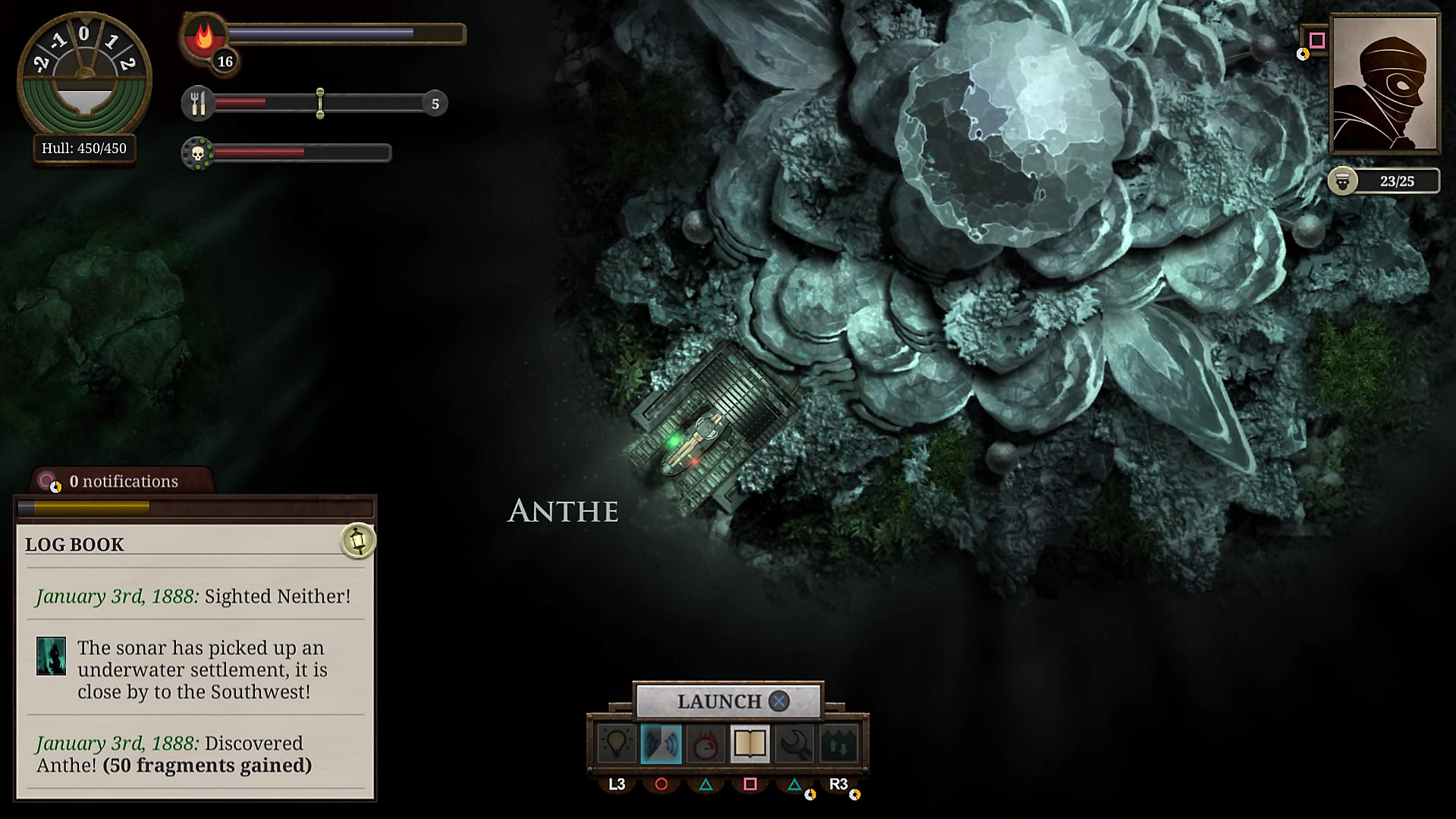
    Well, let me tell you, I just can’t get enough of that sumptuous video game, Sunless Sea. I reviewed it the other week, but I’ve kept on playing it, and it just gets better and better. Events keep popping up willy nilly – just when i think I’ve exhausted the story opportunities, something new hoves into view. And the Zubmarine! Once you get that, there’s a whole new map to explore underneath the Unterzee. It’s wonderful. And the stories! So utterly bizarre and compelling.

    I’ve got a stack of review codes waiting for my attention – including Hollow Knight and 428 Shibuya Scramble to name just a couple – but I just can’t tear myself away from Sunless Sea. I’m near the end now, and I’ll be sorry when it’s all over – there will be a long wait until the sequel, Sunless Skies, is released next year.

    BUT. The thing is, I probably would have given up on Sunless Sea after a couple of hours if I hadn’t been sent it to review. We always review games that we’ve requested code for at AMAP, even if it sometimes takes a while. We get around to everything eventually – after all, it’s only polite. But if I hadn’t had that impetus for Sunless Sea, I’ve no doubt I would have put it to one side and forgotten about it, instead delving for something else in my huge pile of unplayed games. And I would have missed out on something very special.

    As I said in the review, it has a slow and confusing start, with little explained to you and harsh penalties for failure. I quite like games that ask you to work things out for yourself, like the wonderful Hob – but that game was accessible and introduced its mechanics gradually. Sunless Sea, on the other hand, quite literally throws you in at the deep end. It was a good few hours before I had the slightest notion of what I was doing. It gets a LOT better, but you need to put a lot of time into it first.

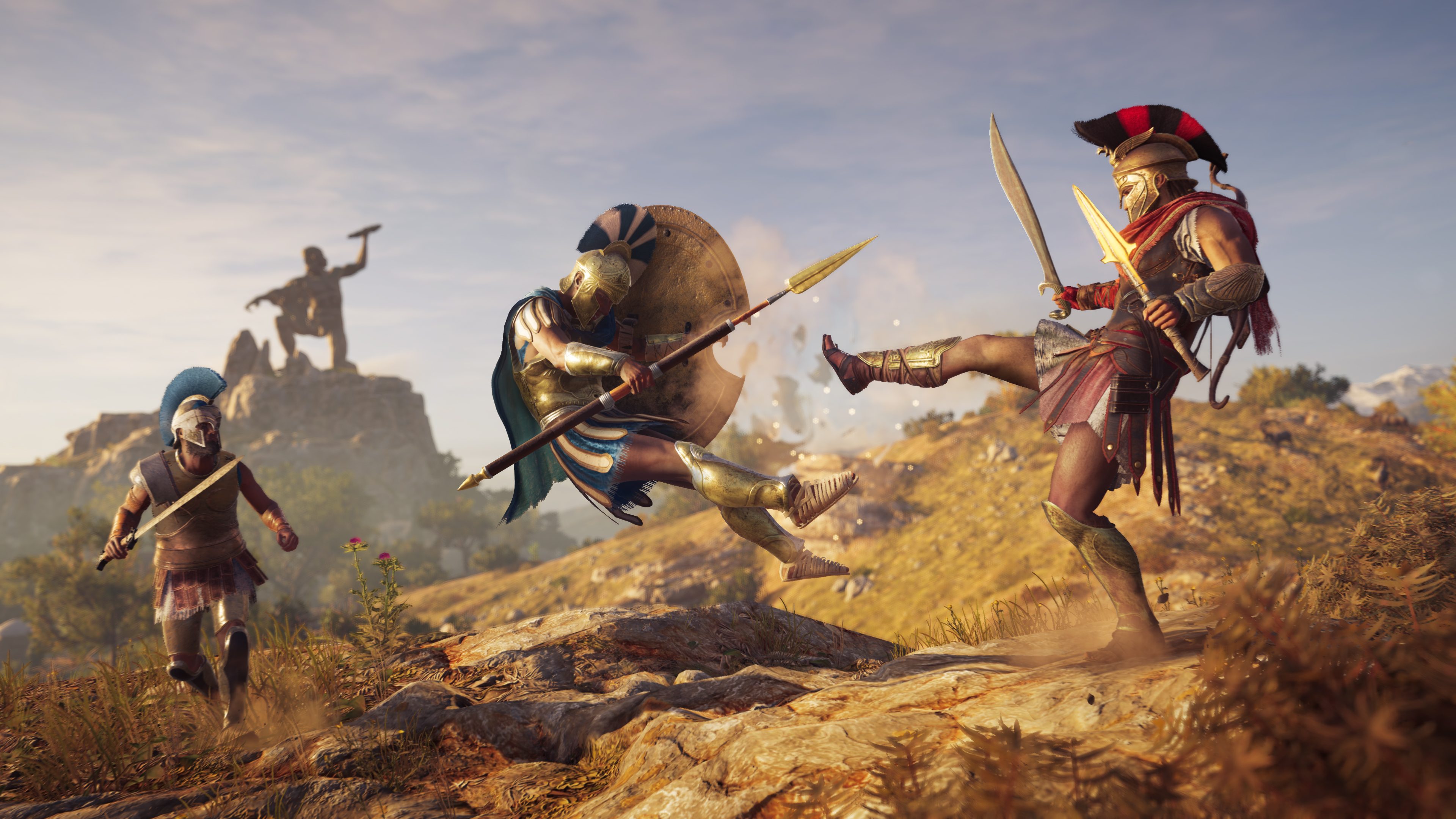
    Sunless Sea is far from the only game that requires a bit of a plod before you get to the good stuff. Just a few days ago, Polygon ran a column with the risible headline ‘Assassin’s Creed Odyssey really picks up after the first 15 hours‘. The satire website Hard Drive was quick to point out that its parody article on impossibly slow RPGs was now being recreated in real life.

    Essentially, slow build-ups like this are the fault of poor game design. If you have to play for 15 hours just to get to the good bits, then something has gone very wrong. We now live in a time where games are incredibly cheap, mostly very good and available almost instantly through digital downloads. If a game isn’t grabbing your attention after a couple of hours, then there are dozens more you could play instead – it’s not like the 8-bit/16-bit era, when games were expensive and relatively scarce, so you had to wring all the enjoyment you could out of each one. I distinctly remember completing The Flintstones on the NES, even though I didn’t enjoy it very much – it just happened to be the only game I had to play that I hadn’t already finished, and I couldn’t afford any more. That is most definitely not the case in 2018.

    Essentially, games that stuff their early hours with dull exposition, busywork and pointless subquests are disrespecting your time. Any game that just expects you to grind for hours to get anywhere is essentially saying you don’t have anything better to do. Well, you know what? There are plenty of other games I can play.

    Sunless Sea may not take as long as 15 hours to get going, but the first couple of hours could definitely do with tightening up – I’ll bet that a huge number of players will have given up after struggling to get anywhere or understand anything that’s going on in the game. I can’t wait for Sunless Skies, but I also hope that it’s a bit more respectful of my precious time.


    Follow A Most Agreeable Pastime on Twitter: @MostAgreeable

  • Review: The Banner Saga 3 (Switch)

    H2x1_NSwitchDS_BannerSaga3_image1600w

    Writing a review for The Banner Saga 3 has been a tribulation.

    It’s less about the game mechanics and design behind it, and more about your journey through the end of days. I suppose you could start the game fresh, knowing that there’s plenty of refinement and choices to be made, but I’d heartily recommend you don’t. Start from the beginning. If there’s one thing I’d implore you to do, that would be to begin your trek as the lowly Varl bill collector and watch your band grow, then shrink – and make tough decisions that often end poorly even with the best of intentions. The impact of the original game echoes through subsequent titles and helps endear you to your weary crew, unwitting heroes and bastards alike.

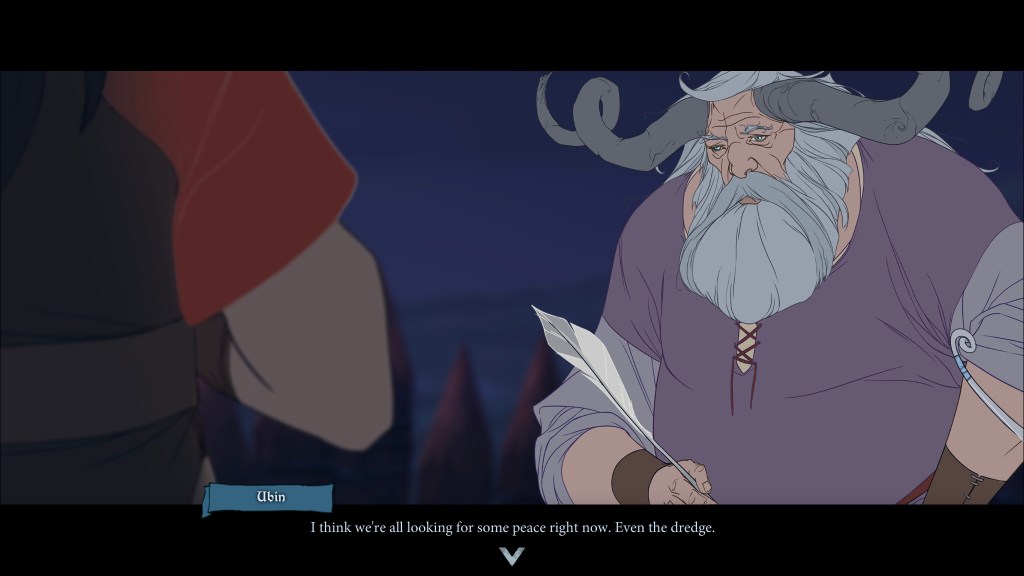
    The Banner Saga 3 continues the tradition of beautiful, hand-drawn Nordic fantasy worlds filled with curious races, copious amounts of snow and an ability to make jaws drop with its wide vistas. Its soundtrack is haunting and somber. Its voice acting sullen and heart-felt. Its thematic aesthetic feels familiar and borrowed, but also feels like it is its own thing. It’s an epic in the vein of The Lord of the Rings and A Song of Fire and Ice, and it definitely feels the part. I can’t think of many games that are as sweeping.

    The final installment of The Banner Saga is a play in two acts: those who are attempting to keep the peace in what is left of the world and those who are looking to end the madness on a lonesome and challenging journey. Regardless of whether you’re watching a caravan travel to the gates of hell or trying to stop the world’s last stronghold from becoming one, the plot and the decisions you make within are paramount. Everything has a familiar cadence; watching folk travel, partaking in gut-wrenching and uncomfortable conversations and taking part in turn-based battles on a ¾ viewpoint warzone. Beyond some new (and aggravating) enemy types, everything feels tried and true. I did get to a point where fighting felt like a slog, but my desire to see what my decisions had wrought was strong enough to pull me through.

    In a world where you’re often led by the nose to the next shiny new game, I’ve learned to slow down and appreciate those experiences. I play far fewer games than I used to, but the impact of the ones I do choose to engage in are usually fruitful. There have been things like the Mass Effect series or Fallout that give you the illusion of choice, but never completely feel within your control. Whether or not the ending of The Banner Saga 3 was predetermined or not, it at the very least felt like my own personal story. And that, my friends, is why The Banner Saga trilogy is one of the grandest choose-your-own-adventures you’ll ever partake in.


    The Banner Saga 3 is available for PS4, Xbox One, Switch, iOS, Android, Mac and PC. We reviewed the Switch version.

    Disclosure statement: Review code for The Banner Saga 3 was provided by Plan of Attack. A Most Agreeable Pastime operates as an independent site, and all opinions expressed are those of the author.

    Follow A Most Agreeable Pastime on Twitter: @MostAgreeable

  • Review: Sunless Sea: Zubmariner Edition (PS4)

    Sunless Sea is very perilous. There is a lot of peril in this game. No move can be made without a little or a lot of peril involved. It’s frustrating – and also wonderful.

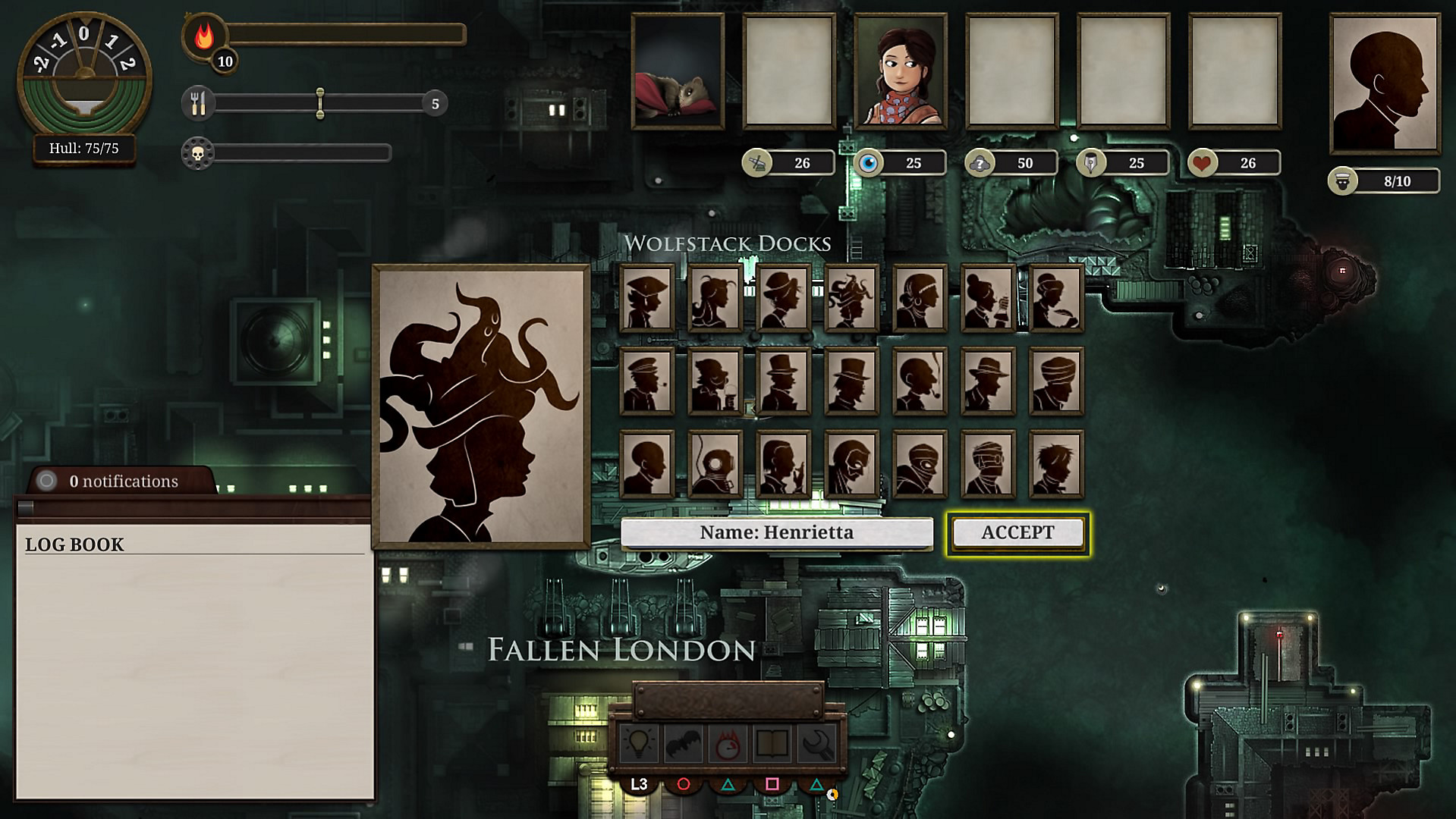
    The Zubmariner edition has just been released on PS4 ahead of a sequel, Sunless Skies, which is due in early 2019. It includes the Zubmariner DLC, which allows you to dive beneath the waves, and Sunless Sea follows on from Fallen London, a long-running browser game that’s been lauded for its sublime writing and world-building. The basic plot is that an alternative Victorian London has been transported a mile below the surface of the Earth, after an inadvisable deal Queen Victoria strikes with a mystical entity known as the Echo Bazaar. London is now perched at the edge of a vast underground expanse of pitch black water known as the Unterzee.

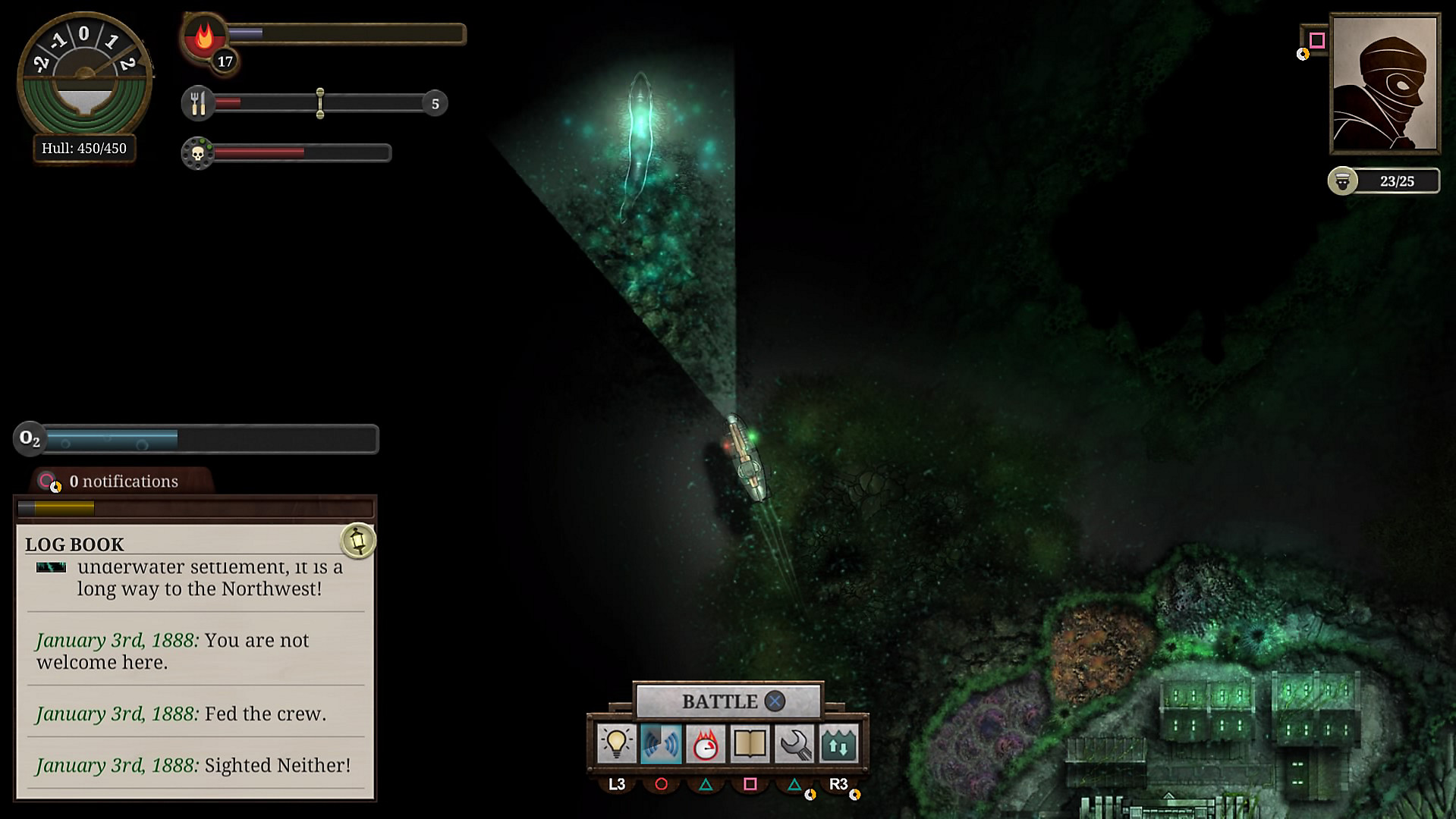
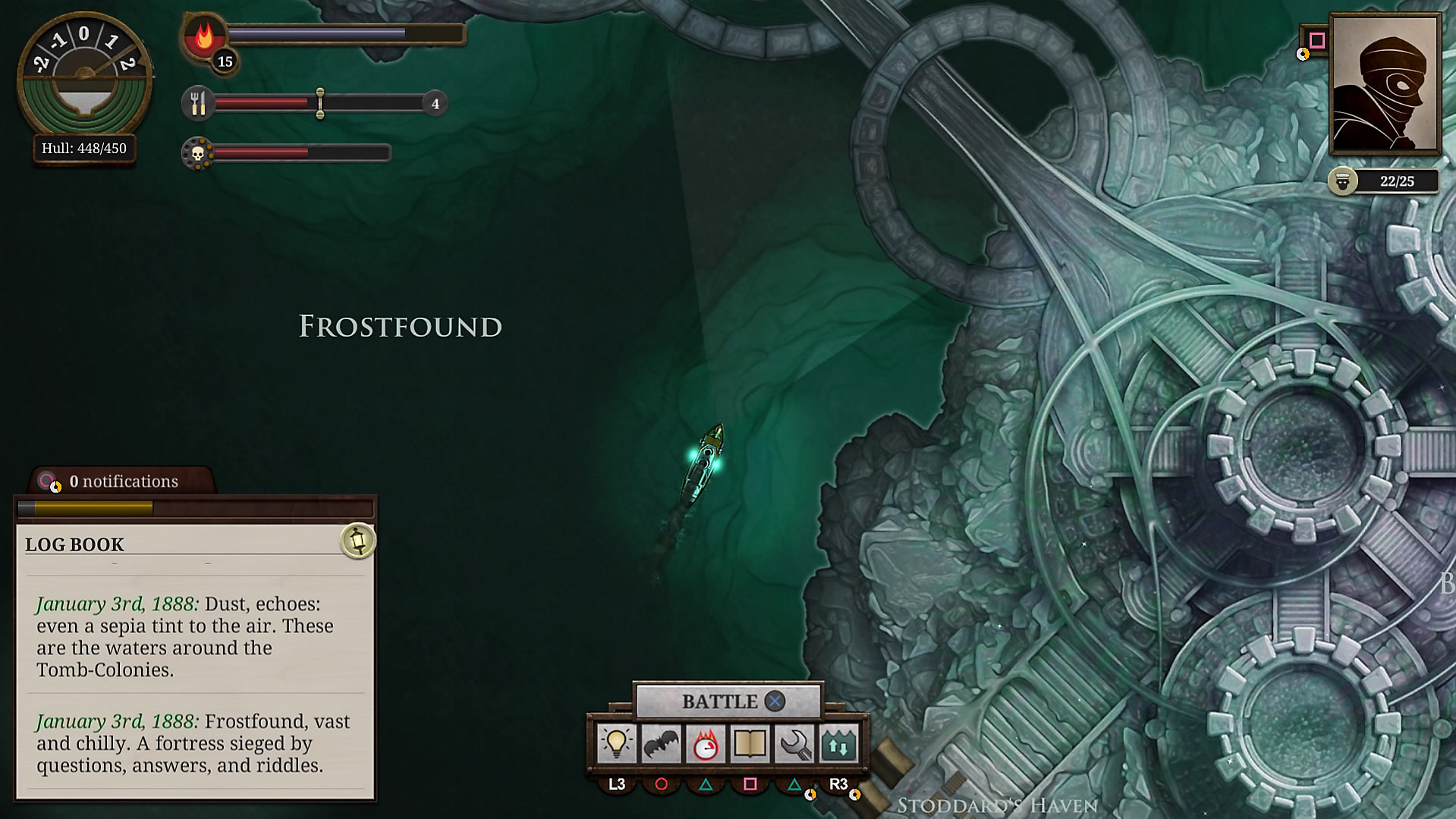
    The Unterzee appears as a vast blackness at first, and as a zee captain your aim is to fill in the map and discover the weird and wonderful islands that pepper the ocean. There’s all sorts out there, from warring guinea pigs and rats to a volcano that’s directly linked with hell. What’s more, the game is totally freeform: you choose your objective at the start, whether that’s to track down the remains of your father or write a history of the people – and THINGS – of the Unterzee, among many other options.

    The freeform nature of the game is both its greatest asset and its biggest problem. It’s an intimidating game for new players, with little guidance on what you should be doing and bizarre game systems that take a while to get used to. You have to grapple with strange stat counters like Veils and Mirrors, with little idea of what they actually mean. For the first few hours I simply sailed around with no clue about what I was doing. And then I died, because this game is brutal.

    You need to stock up on fuel and supplies before you set sail. If you run out of fuel in the middle of the Unterzee, your only option is to sacrifice some of your crew to the gods in the hope that they deliver some fuel from above. And if you run out of supplies, your crew might start eating each other. If you run out of crew, it’s game over. And as you sail around, your terror level increases, sometimes jumping up several levels as a result of terrifying encounters on the islands you visit. If it reaches 100, you go insane. Basically, venturing out into the Unterzee is very perilous indeed.

    And if your captain dies, the penalties are harsh. That character is gone, and you start out in Fallen London again as another character of your choosing, possibly a rival captain or even your dead captain’s son or daughter. You only keep a portion of your experience and some of your goods, depending on whether you made a will and bought certain upgrades. And worst of all, the map is reset, with islands moving to different places, and the whole sea once again being covered in the fog of war.

    Basically, dying is a terrible, terrible inconvenience. And not very much fun.

    Luckily, there’s also the option to enable manual saves to avoid all this resetting nonsense. The game says that you won’t get the ‘Invictus’ achievement for finishing the game if you enable manual saves, but screw that, because if I’d stuck with the autosave ‘hardcore’ option I would have had to start all over again at least four times already instead of just reloading a previous save. I am more than happy to save spam if it means not having to play through hours and hours of game all over again.

    Because that’s the thing – it takes AGES to get anywhere in Sunless Sea. Your ship is extremely slow, and it takes hours to level up your experience points and scrape together the money needed to buy ship upgrades. Having to play through all that again is madness. MADNESS I TELL YOU. These kind of autosave restarts only work well in games like Dead Cells, where at most you’ll be playing for about 45 minutes before restarting. But each experience point in Sunless Sea is hard-earned, and too painful to lose.

    At first, I spent my time in Sunless Sea trying to complete as many quests as I could in an attempt to get some money and upgrades – better guns, faster engines, that kind of thing. But I found myself getting irritated with the meagre rewards – earning money is HARD. Then I had a revelation – this game isn’t about levelling up like you’d do in a normal RPG. Rather, it’s a story you unlock a piece at a time.

    After a while, I stopped worrying about completing quests and instead just spent my time uncovering the map and enjoying the tales you uncover at each island. The story about the Pentecost apes and their search for souls. The island that attracts letters and parcels, and postal workers along with them. The Mangrove College and it’s mouldering scholars. It’s a rich and fascinating world out there in the Unterzee.

    Really, the game is one massive choose-your-own-adventure storybook. Your interactions at islands involve clicking through text, sometimes making choices, and sometimes being faced with an option that comes with a percentage chance of happening based on your experience level. But the important thing is that all those pages of text are a joy to read. Occasionally the writing veers into pretentious territory, but for the most part it does an amazing job of building up the dark and weird world of the Neath.

    After a very slow and frustrating start, Sunless Sea completely drew me in. I found myself eager to uncover every last scrap of map and see what horrors lurked there. I began venturing further and further from the safety of Fallen London, stocking up with as much fuel and supplies as I could carry, and making a rough calculation about how far I could get – and more importantly, whether it would be enough to get me back. In this sense, Sunless Sea is an excellent recreation of the pioneering voyages made during the Age of Sail, when captains ventured out into uncharted waters with little idea about what they would find. I regularly found myself heading for home with a badly mangled hill and an engine running on fumes, hoping against hope that it would be enough to see me back to port. There’s a palpable relief at setting foot in London again, selling all the booty you’ve procured for a healthy profit and relaxing in your house for a night, the terrors of the sea a distant memory.

    Although the game is mostly text based, there is a little combat action involved when meeting sea monsters or pirates out there in the Unterzee. Unfortunately these battles are pretty scrappy, with very little strategy involved save for reversing away while firing your guns as fast as you can. A timer shows your aiming accuracy – if it’s full you’ll get a definite hit, but if you fire before then, there’s a high chance you’ll miss. This means combat is a plodding affair, as you spend most of it just waiting for your guns to aim. That said, it’s quite terrifying when a monster looms out of the deep while you’re limping back home with a handful of hit points remaining on your hull, prompting a high-speed dash for safety.

    Despite many hours of play, I still haven’t yet got my hands on a Zubmarine – but I’m hooked now, and I’m determined to get one to unlock the secrets of the deep. Like everything in this game, the process of building a Zubmarine is slow, involving a gradual accumulation of the goods and knowledge you need. Still, I’m not in a hurry – I’m having too much fun just exploring the inky ocean.

    Sunless Sea is most definitely a niche title – a text-based game with a glacially slow pace certainly won’t be for everyone. And it doesn’t help that it’s bewildering at the start, with a very slow build up. But once you’ve put in the hours, it really opens up into a fascinating, freeform game that’s packed with surprises and terrifying tales.


    Sunless Sea: Zubmariner Edition is available for PS4, iOS, Android and PC. We reviewed the PS4 version.

    Disclosure statement: Review code for Sunless Sea was provided by Failbetter Games. A Most Agreeable Pastime operates as an independent site, and all opinions expressed are those of the author.

    Follow A Most Agreeable Pastime on Twitter: @MostAgreeable
  • Saying goodbye to the Wii U – Part 3: Pandora’s Tower

    After around 25 hours, I’ve finally finished Pandora’s Tower, the second game down in my attempt to see off my Wii U backlog. And what a weird and wonderful game it is.

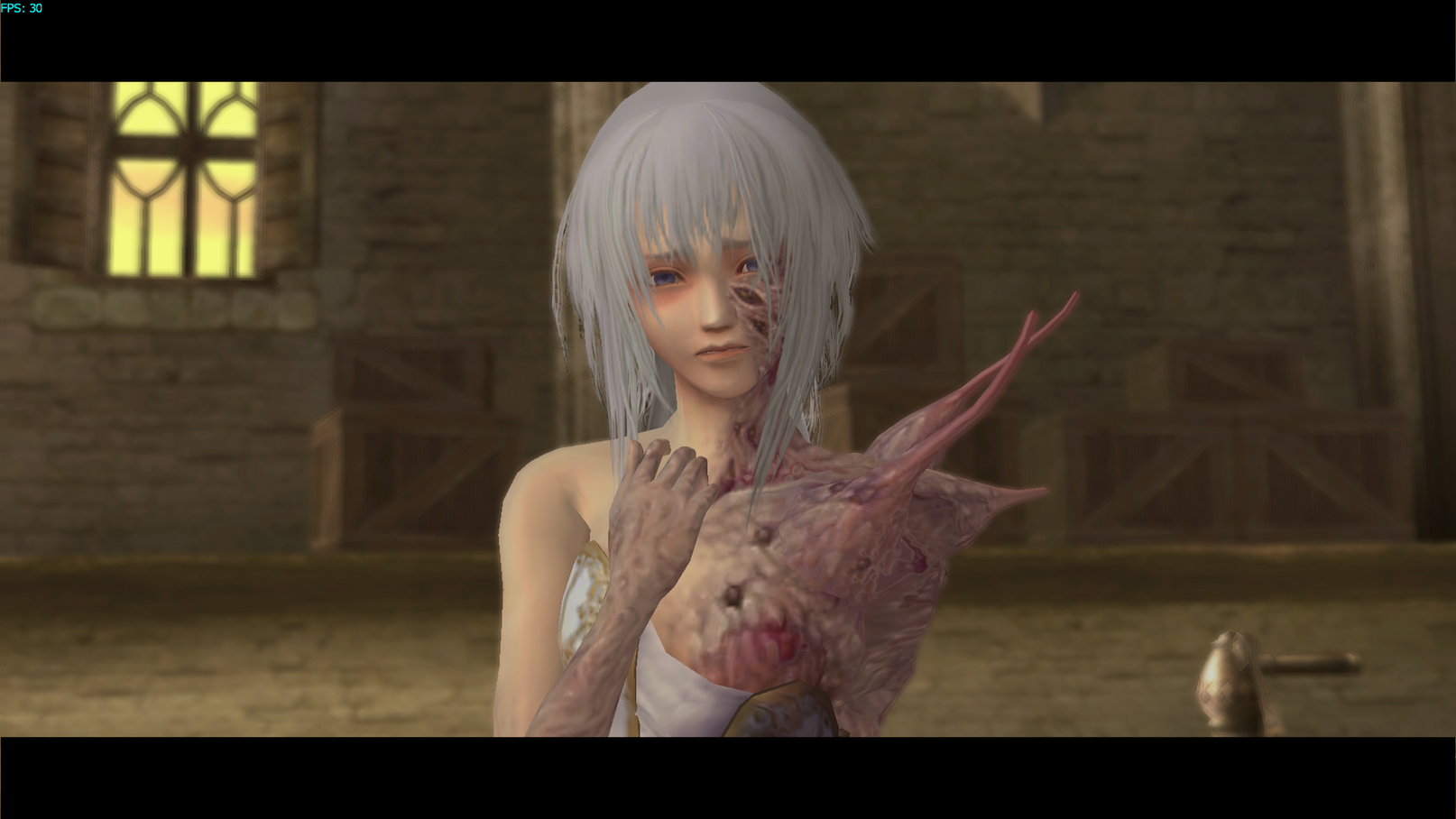
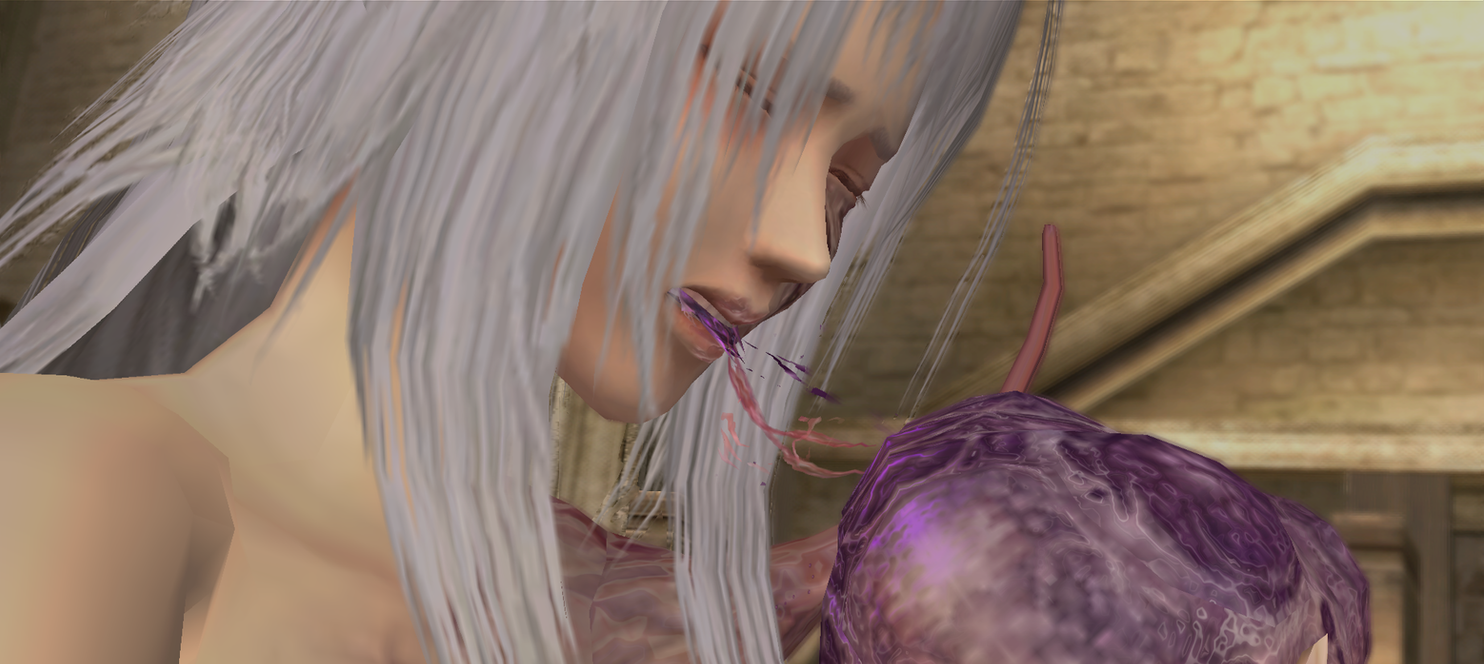
    The plot sees a wispy anime girl called Elena struck down with a curse that’s causing her to turn into a monster. A mysterious old crone called Mavda tells her that the only way to cure the curse is to eat ‘Master Flesh’ from 12 Masters (i.e. bosses) that live at the top of 12 accursed towers, which hang by chains above a chasm called The Scar. It’s the job of Aeron, Elena’s beau, to hunt down the Masters, with the help of the mystical Oraclos Chain given to him by Mavda.

    Elena in her half-transformed state.

    And the chain is really what the gameplay is built around. You can aim it anywhere on the screen by pointing with the Wii Remote, and it’s essential for latching onto ledges, swinging from hooks and pulling distant levers. It’s also pretty handy in combat: you can grab a monster with it and waggle the remote to rip the chain away again, causing damage. Or you can tie one monster to another, so that any damage you do to one is also transmitted to the other. You can even hurl smaller monsters across the room, or twirl them round and round to collide with other baddies. It’s pretty fun, if a little difficult to get to grips with at first – it took me a while to master the chain’s full move set.

    There are also the regular weapons: a sword, twinblades and a scythe, which you can level up by hunting for rare items. But to be honest I stuck with the sword for the whole game, as it was too much hassle to try to level up all three – and the sword was by far the most useful weapon.

    The towers are basically giant puzzles. The door to the Master is blocked by two or three chains – or four on the last levels – and the aim is to find your way to the root of the chains and destroy them to open the door to the boss. This generally involves pulling switches to activate lifts and so on, and even start up a ruddy great water wheel on one level, and I enjoyed puzzling my way through each edifice. The last couple of levels were undoubtedly the highlight, a fiendishly complicated dungeon split between two towers that involved warping back and forth. That said, it was disappointing to see a few ideas recycled in later towers, like the water wheel I mentioned earlier.

    Apart from the versatile Oraclos Chain, the thing that really makes Pandora’s Tower stand out is the ever-present time limit. A circle in the bottom left of the screen represents Elena’s gradual transformation into a monster, and you have to keep bringing beast flesh back to her to reset the timer. If you leave it too long, the transformation begins, and your affinity with Elena deteriorates – but you can increase the affinity by chatting with her and bringing her gifts. And you’ll need the affinity meter to be right near the top if you want to get the best of the five possible endings. I did just that, but I watched the other endings on YouTube, and my god they’re bleak. This can be a dark game at times. (You can watch all the endings here if you don’t mind spoilers.)

    The effect of all this affinity building and the transformation timer is that I ended up really caring about Elena, and hurrying back before she started to transform. It adds a nice bit of tension to the game, as you try to plan out your exploration against the clock. And I really liked the breezy conversations with Elena, even if they’re a bit schmaltzy. I also liked the way they chose a voice actor from northern England, where I live. I never got tired of hearing Elena say “mass-ter” in her broad accent.

    One other thing I liked about Pandora’s Tower is that it’s unashamedly weird. I mean, just look at Mavda, a tiny woman who carries around her deformed husband in a pot on her back. Apparently he was mutated in some sort of alchemy accident – although the game barely remarks on this odd couple.

    And then there’s the sight of Elena chowing down on beast flesh, which is frankly a little disturbing. She chews in horror at first, knowing this disgusting rite is the only way to cure the curse, but as the game goes on, she develops a strange addiction to this strange meat. It’s quite creepy.

    Then again, Pandora’s Tower does nothing but reinforce gender stereotypes. I was a bit disappointed that Elena spends the game cleaning, washing and cooking dinner while Aeron does all the adventuring. She is the archetypal anime waifu. By the end I was almost willing her to pick up a sword and save her own ass rather than relying on Aeron, or even just get a bit pissed off at the situation rather than bearing it with stoic politeness. But there you go.

    All in all though, Pandora’s Tower is a fun, weird and unique RPG from the Wii’s dying days, and highly recommended if you’re a JRPG fan. And I’m glad to have finally finished all of the Operation Rainfall games, all three of which are fantastic.

    That leaves my list looking like this:

    Wii U games:

    • Darksiders Warmastered
    • Tokyo Mirage Sessions #FE
    • The Legend of Zelda: The Wind Waker HD

    eShop and Virtual Console games:

    • Soul Axiom
    • Earthbound
    • Earthbound Beginnings
    • The Legend of Zelda: Spirit Tracks
    • The Legend of Zelda: The Minish Cap
    • Fire Emblem: Shadow Dragon

    Wii games:

    • Pandora’s Tower
    • The Legend of Zelda: Skyward Sword
    • Metroid: Other M
    • Silent Hill: Shattered Memories

    So still a long way to go to see off my Wii U backlog, but some definite progress. However, I’ll have to hold off on it for the time being to make a dent in my review backlog. I’ve currently got review code for Sunless Seas: Zubmariner Edition, Lamplight City, Hollow Knight, Valkyria Chronicles 4 and Vampyr all waiting for some attention, so that probably takes care of the next month at least! But as soon as I’m caught up, I’ll be diving back into my noble Wii U quest…

    Check out the rest of the series:

    Saying goodbye to the Wii U – Part 1

    Saying goodbye to the Wii U – Part 2: Darksiders Warmastered

    Saying goodbye to the Wii U – Part 4: THE FINAL FAREWELL


    Follow A Most Agreeable Pastime on Twitter: @MostAgreeable

  • Review: Life Is Strange (PC)


    My biggest concern with writing a retrospective review of a game that I know was well received at the time of launch is that I might not like it. While it really shouldn’t matter, as every review is just one person’s thoughts, in reality it’s a little intimidating. A negative review, even if it is my genuinely held opinion, would surely be scorned upon. A storm in a teacup perhaps, but it’s my bloody teacup. It was with no small amount of relief then that I flippin’ loved Life Is Strange.

    A game that is ostensibly a coming of age, sci-fi, crime thriller about an angst-ridden teenage girl starting college may be something of a hard sell for many. Indeed, this might have factored into the decision to release Life Is Strange in an episodic format back in 2015. The game is centred on Max Caulfield, an 18-year-old photography student. She’s recently returned to her home town of Arcadia Bay, having moved away with her family five years previously. We first meet Max while she’s seemingly dreaming of trying to find a lighthouse in a tornado, which it emerges is more than just an excellent metaphor for many of the game’s themes.

    Max’s anxiety around homework and teenage drama is apparent from her inner dialogue and a flurry of diary entries. However, this is quickly eclipsed when she witnesses the murder of a girl in the college bathroom. In the midst of this, Max discovers she has developed the ability to rewind time, snapping back to the middle of the class she just finished. She uses this power to save the girl’s life, kick-starting the events of the rest of the game. A hell of a day, for sure! It turns out the girl she saves is actually her childhood best friend, Chloe. The two fell out of touch after Max moved away, but their friendship is soon renewed as they join forces to try and find Rachel Amber, another of Chloe’s friends who recently went missing. This investigation is the driving force behind much of the game’s story.

    As an adventure game, Life Is Strange combines classic point-and-click style exploration and puzzle solving, with branching dialogue and story-changing choices. Max’s developing time rewind powers, as well as being a major plot device, are used as a mechanic for resolving the puzzles. These puzzles are quite varied, including re-running conversations until you get a favourable outcome, and playing around with time so you effectively bypass locked doors. They aren’t too tricky, with one or two exceptions, but they are good demonstrations of Max’s abilities and fit into the context of the story well.

    That story is quite the emotional roller-coaster too. Over the course of the game the narrative covers a number of themes, some of which are unusual for a video game to cover. Bullying, mental health, grief, depression and sexual violence all feature over the course of the game. It is to the developers’ great credit that not only did they choose to explore these all too real issues, but that they did so in a way that felt like natural extensions of the overarching plot. It never felt as though anything was being done purely for shock value or to sensationalise the story.

    Where Life Is Strange really shines though is in its characters. For all its timey-wimey shenanigans and its complex themes, Max and Chloe are the binary stars of the show and the game’s beating heart. Their relationship is complicated, not least because Max left town just after Chloe’s father’s death, stranding Chloe in Arcadia Bay. Their friendship is entirely believable however, and acts as the motivation for most of Max’s actions. While it is ultimately up to the player to decide just how far Max will go to keep Chloe safe, it’s clear they care deeply about each other. They are ably supported by an array of well-realised friends, enemies and acquaintances, most of whom have hidden depths. In fact, it sometimes feels like the game sets up characters to appear one-dimensional just to provide epiphanies later.

    Throughout all of this, there’s an ever-present sense of melancholy. Despite Max’s abilities, there’s a sense of inescapable loss; the feeling that no matter what, you can’t move forward without leaving something behind. In that respect, it’s the perfect allegory for adolescence. People grow up, change, move on and in the process create new worlds while destroying others. This is emphasised by heavy foreshadowing (there is always a Max, always a lighthouse), as well as a terrific soundtrack. At the same time though, there funnier, lighter moments. What I’ve described so far might sound pretty bleak, but there are teenage kicks to be had. While Max is hesitant about her new powers, Chloe absolutely isn’t and together they manage to have plenty of fun along the way. This juxtaposition of light and dark is actually one of the game’s key themes.

    Objectively speaking, the game is not without flaws. The pacing sometimes suffers as a result of some momentum-killing moments. There are a few fairly lengthy conversations which you may need to repeat before you get a good outcome. Although you can skip scenes you’ve already seen, they’re still a bump in the road. Additionally, there are a couple of stealth sections. I’m not a fan of those in general, but especially as here given you’re able to just rewind time if you get caught; it fundamentally removes any tension. Also, while the game does a great job of ensuring the choices you make are meaningful, it does equate inaction as choice. For example, I missed a choice regarding whether to sign a petition in episode one. I was then was chastised for not signing it in subsequent episodes, even though in reality I was entirely unaware of it.

    Overall though, I adored Life Is Strange. It’s a brave, gut-wrenching, tear-jerking experience with moments of real joy. I’m already considering doing my own kind of time rewind and giving it another playthrough. There’s so much that I want to go over again, little things that seemed innocuous but make more sense now I’ve finished it. The characters are so engaging that I genuinely agonised other some of the choices I had to make. With Max consistently voicing her self-doubt, few decisions ever felt like the definitely correct one. I’m intrigued by the imminent release (at time of writing) of the sequel, which although apparently a completely separate story is set in the same universe. There’s also a prequel, Before The Storm, set three years prior. After having Life Is Strange sat in my game backlog for far too long, I’m delighted I dug it out. If you haven’t played it, I would highly recommend you try it too.


    Follow A Most Agreeable Pastime on Twitter: @MostAgreeable

  • Telltale Games looks set to close

    I was shocked to read a report on VG24/7 on Friday night that Telltale Games looks set to close its doors. The company has laid off the majority of its 250 or so staff, with just a skeleton crew of 25 or so remaining to fulfil some contractual obligations.

    Telltale CEO Pete Hawley issued a statement saying:

    It’s been an incredibly difficult year for Telltale as we worked to set the company on a new course. Unfortunately, we ran out of time trying to get there. We released some of our best content this year and received a tremendous amount of positive feedback, but ultimately, that did not translate to sales.

    So it sounds like the first episode of the final season of The Walking Dead didn’t sell too well – and now it’s unclear whether that series will ever be finished. Episode 2 is (was?) set to launch in a few days.

    It also means that the The Wolf Among Us 2 and Stranger Things, two series that were slated for next year, almost certainly won’t happen. But it’s also not clear whether the studio is actually going to close – the statement above says that they’re undergoing a “majority studio closure”, not actually shutting down. What’s certain though is that hundreds of staff were, shockingly, let go suddenly without any severance pay. Ex-Telltale dev Emily Grace Buck details the whole sorry saga in a fascinating and heartbreaking thread:

    https://twitter.com/emilybuckshot/status/1043321927299813377?s=21

    The good news is that the video game industry seems to be rallying around, with other companies inviting ex-Telltale devs to seek work with them. Lots of discussion on Twitter is going on under the hashtag #Telltalejobs. I hope that everyone affected can find new work quickly.

    The news of the mass layoffs is all the more shocking because Telltale Games seemed to be turning a corner recently. Just last month the studio was talking about retiring it’s ageing Telltale Tool and coding future games in Unity. The developer had already revised its slate to release fewer but better games, and incoming CEO Hawley reduced the workforce by 90 last November in an attempt to turn the studio around.

    I’d highly recommend reading this article by The Verge from March this year, which explains what’s been going on at Telltale over the past few years. In a nutshell, the studio was blighted with poor management and constant crunch. The higher ups pursued a strategy of churning out multiple games at a time, leading to market saturation and burned-out coders, who began leaving in droves. Ex-Telltale devs went on to make the acclaimed games Firewatch and Oxenfree – imagine if they’d been free to innovate like that when they were still at Telltale.

    It’s a shame, because they’ve produced some amazing stuff over the years. The Walking Dead was a phenomenal game, and just the other week I played through the amazing Batman series they made, which has some utterly brilliant interpretations of characters from the comics. And The Wolf Among Us is an absolute classic – it’s a crying shame that the promised second series of unlikely to materialise.

    As I said above, I really hope that the talented developers from Telltale Games find new work quickly – and I look forward to seeing what they come up with next.

  • Review: The Gardens Between (Switch)

    I think it’s safe to say that many of us play games because of nostalgia. It’s not a bad thing by any means, but it’s definitely a driving force in the industry and a tangible thing that developers and publishers like to tickle repeatedly. The thing that stands out the most to me about The Gardens Between isn’t that it harkens back to any particular feelings; rather, it is a game about our memories and our fondness for some of them in one of the most interesting interpretations I’ve seen in any medium.

    The Gardens Between stars a couple of young friends who are playing in a treehouse when a storm crashes down on them. After a flash of lightning, they find themselves on the beach of a small island that’s strewn with large boxes full of toys that are slowly spilling around them. I was under the assumption that the game was something of a cooperative platformer. In actuality, the only control you have in the game is to move your characters forwards or backwards in time. It’s a neat effect; the animation is fun to watch, often so much so that I moved the frames slowly to enjoy their nuance.

    The goal of The Gardens Between is to take the girl’s lantern to the end point in order to launch onto the next stage. Doing so requires subtle manipulation of the environment to open new paths. For example, in the early part there are areas where the light gets snuffed from your lantern by a little black hole, so you must find what looks like a hopping television set and backtrack until the light is transferred to the TV as you walk by it. Then moving time forward again, the TV creature moves up and around the light-nabbing black hole as your avatars walk by it, until you meet later in the sequence, bringing the light back to you.

    I’m reticent to say much more than that, because a lot of the magic of The Gardens Between is held within these epiphanies, these “a-ha!” moments in which you realize the puzzles within are clever and intricate, and you feel like a genius when you figure them out. Just as important as the puzzles is how amazing the diorama-like stages are to look at. They’re a mix of cute little pine islands and childhood tchotchkes that contribute towards the nostalgic nature of the game as a whole. Each set of three stages represents an interconnected chain that leads to little story bits – which are wordless and still dioramas, but carry their weight in facial expressions and mannerisms.

    I came into The Gardens Between fully expecting to be charmed. But I was shocked when the whole thing just blew me away with how smart and well-designed it all is. In this day and age you often expect games to follow certain well-trodden formulas, so it’s lovely when a developer subverts those expectations with something filled with such wonderment and endearment. Definitely not an experience I’ll likely forget.


    The Gardens Between is available for Switch, PC, Mac and PS4. We reviewed the Switch version.

    Disclosure statement: Review code for The Gardens Between was provided by Stride PR. A Most Agreeable Pastime operates as an independent site, and all opinions expressed are those of the author.

    Follow A Most Agreeable Pastime on Twitter: @MostAgreeable

  • Saying goodbye to the Wii U – Part 2: Darksiders Warmastered

    I’m bidding farewell to my Wii U by playing all of the remaining games I have for it. And the first game on my list is Darksiders Warmastered.

    Darksiders Warmastered done

    Damn, Darksiders is good. I can’t believe I waited so long to play this game, it’s right up my street. I was a bit put off by its metal stylings at first – the aesthetic looks like an Iron Maiden album cover come to life – but it’s totally won me over with its Zelda-style gameplay. It borrows liberally from other sources as well, with excellent results: there’s a great Panzer Dragoon style section, and another with a heavy weapon that’s pure Gears of War. There’s even a bit that rips off Portal. In short, it’s a lot of fun.

    The aesthetic has grown on me, too. I think Kevin McClusky summed it up neatly in his review for Destructoid:

    The story takes itself completely seriously, but there’s a disconnect between the heavy-handed narrative and the exaggerated visuals, and it can be hard to tell if Darksiders is being sincere or has its tongue planted in its cheek. The use of Christian end-times mythology as a backdrop for the story works well, and the chunky, colorful Joe Madureira designs resemble decked-out characters in World of Warcraft. Everything is edgy and over-the-top; there’s not a treasure chest in the game that doesn’t have at least three skulls in its design, and War’s enormous sword is known as the “Chaoseater.” Although this can feel overblown, it’s still fun. It gives Darksiders its own charm, kind of like a kid who’s trying too hard to impress you.

    By the way, Joe Madureira also did the Battle Chasers comic, which was turned into the well-received RPG Battle Chasers: Nightwar last year – that one was also published by THQ Nordic, the same company behind DW.

    I spent several happy hours towards the end of the game mopping up all the trinkets and baubles that I missed and could now reach thanks to all the abilities I’d earned. Normally this is the kind of thing that would earn you an Achievement or Trophy, but this is the Wii U, and we don’t have Achievements here. Instead I did it just because I was having a lot of fun.

    The only slight disappointment was that the final boss was a bit of a pushover. Indeed, the first boss in the game is actually one of the hardest, bizarrely. Anyway, I can’t wait to get stuck into Darksiders II, which is downloaded and ready to go on my PS4.

    But first, I have some Wii U games to finish…

    Next up: Pandora’s Tower

    Ages ago, I decided I wanted to play through all three of the Operation Rainfall games. These were three JRPGs that were released in the dying days of the Wii and that fans successfully campaigned to be brought to the west. I’ve already finished Xenoblade Chronicles (review here) and The Last Story (review here), both of which were excellent, which just leaves Pandora’s Tower.

    Pandora’s Tower is very weird, but in a good way. I’m about a third of the way through it now, and I’m thoroughly enjoying it now that I’ve got used to the strange controls and the flow of the game – unlike many RPGs, you have an ever-present time limit, so it plays quite differently from the leisurely exploring of something like Xenoblade Chronicles.

    Look out for the next instalment of ‘Saying goodbye to the Wii U’, when I’ll look back over the strangeness of Pandora’s Tower.

    Check out the rest of the series:

    Saying goodbye to the Wii U: Part 1

    Saying goodbye to the Wii U – Part 3: Pandora’s Tower

    Saying goodbye to the Wii U – Part 4: THE FINAL FAREWELL


    Follow A Most Agreeable Pastime on Twitter: @MostAgreeable
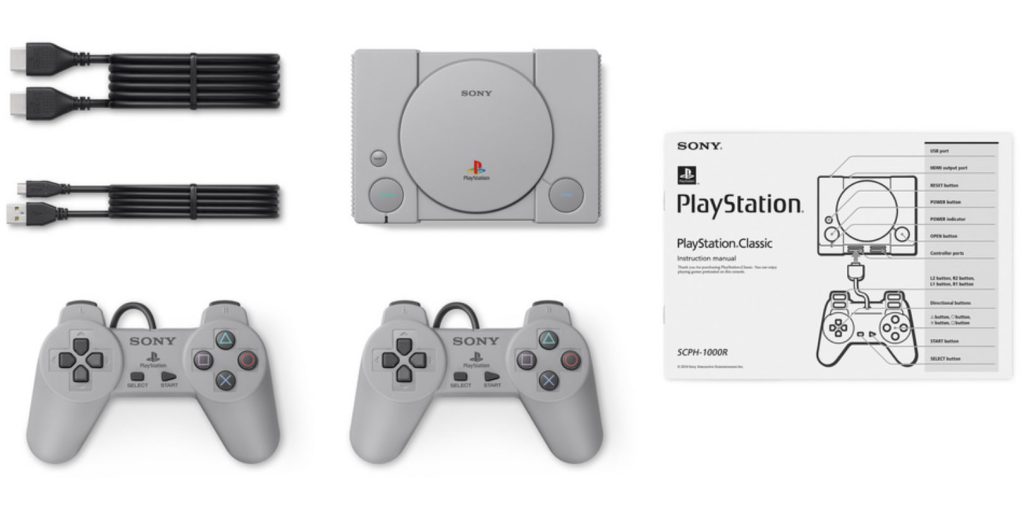
  • Review: Mini Metro (Switch)

    There’s a bit of irony in me reviewing Mini Metro; I live in the Midwest, in a place so rural that anything even resembling a subway train is no less than 913 miles away (1,469 km for everyone else using the metric system). Public transit consists of a handful of buses, a couple of taxi companies, and we just got Lyft last year. I’ve ridden on rail systems before as a kid visiting my grandparents in Germany and in a few bigger cities within the United States, but why would someone who is a veritable societal-infrastructure troglodyte have any inkling to play a game that requires you to micromanage a subway system in bustling urban areas?

    Because Mini Metro is damn smart and fun.

    Mini Metro is stark and utilitarian experience. Its visual design is probably not unlike the maps you’d see on gritty walls; nodes of different shapes denoting stations connected to each other with bright lines representing track atop a pure white or jet black background. It’s very curtly minimalist in a strangely endearing way. As you build your vast underground empire of rails, passengers can be spotted on stations in smaller, similar shapes, letting you know where this ephemeral passenger would like to travel. Thusly, you’re moving and connecting this grid that can be as simple or as complex as your imagination will let it.

    This game is made for the touch screen on the Switch, the type of experience that just feels right as you use your fingers to maneuver the track to your desired destination. Button controls are present, but they definitely feel less intuitive. For whatever reason, playing Mini Metro reminded me of a futuristic sci-fi program or movie in which it looks like a scientific genius is manipulating some software projected into thin air, but I digress.

    Rather than being the type of experience where there’s a finite goal, Mini Metro feels more like a survival game. As cities are wont to, things will start getting busy, and the map will enlarge as more passengers from new areas will want a ride to the other end of town. Soon enough you’re trying to juggle routes, or create new lines, or find some kind of short cut to help folk navigate around your berg. You just keep playing until you’re unable to keep up, things get bogged down and everything collapses. It feels like a race against time, and it’s that delicious hook that’ll keep you coming back over and over again with a “just one more time” mentality.

    Although I’ll probably never get to play Mini Metro on a proper rail system, it is worth noting that its pick-up-and-play stylings make it ideal for short gameplay bursts while travelling on whatever form of transportation you have available to you. Which is probably more forms of transport than I have in my neck of the woods.


    Mini Metro is available for Switch, PC, Mac, iOS and Android. We reviewed the Switch version.

    Disclosure statement: Review code for Mini Metro was provided by Evolve PR. A Most Agreeable Pastime operates as an independent site, and all opinions expressed are those of the author.

    Follow A Most Agreeable Pastime on Twitter: @MostAgreeable

  • The games that should be on the PlayStation Classic

    Sony have unveiled the PlayStation Classic, a barely disguised attempt to cash in on Nintendo’s success with the NES Mini and SNES Mini. My immediate impression was that although the console looks lovely, the games from that era don’t hold up as well as those from the 8-bit and 16-bit eras. Chunky polygons are nowhere near as elegant as beautiful pixel art.

    Nevertheless, there were some stonking titles on the original PlayStation. Sony have already announced five of the 20 games the console will ship with: Jumping Flash (which we nominated as one of the most underrated launch games of all time), Final Fantasy VII, Wild Arms, Tekken 3 and Ridge Racer Type 4. All brilliant games, but here are the 15 titles I’d like to see round out the roster.

    WipeOut 2097

    You’ve got to have a WipeOut game on there. The first game defined the PlayStation with its designer good looks and Chemical Brothers soundtrack. “Hey,” it said, “games are cool now, and adults can play them. Look, we got the Designer’s Republic to do the branding!”

    But yeah, 2097 was a better game all round.

    WipeOut 3 would also be acceptable here, there’s not much to choose between them.

    Castlevania: Symphony of the Night

    The game that helped to define the Metroidvania genre. It didn’t sell too well on its release, as 2D gaming was deemed old hat by then – famously, the UK Official PlayStation Magazine criticised its ‘outdated’ visuals and awarded it 7/10. Ah, the benefit of hindsight.

    The game goes for ludicrous sums on eBay now, and it’s only been ported a handful of times, so it would be amazing to see it on the PlayStation Classic.

    Vagrant Story

    From the same team that made Final Fantasy Tactics, Vagrant Story was a fondly remembered action RPG that seemingly appeared out of nowhere, wowed the few people who played it, and then disappeared into obscurity. Surely this has to be one of the most sought-after PS1 games.

    As far as I’m aware, it’s never been rereleased, so what a boon it would be if this joined the PlayStation Classic line-up.

    Silent Bomber

    I reminisced about this crazily obscure Japanese game in a feature for Kotaku UK not long ago. It seemed to sink without trace at retail – even a crass marketing campaign featuring Jordan couldn’t save it – but it’s a unique and wonderful action game with a neat USP.

    It basically takes the bombs from Bomberman but uses them in a sci-fi story set on a spaceship that can be teeth-clenchingly hard in places. The final boss fight is also utterly bonkers.

    Gran Turismo 2

    It would be unthinkable if Sony didn’t include a Gran Turismo game on the PlayStation Classic. The second game is basically like the first one but with more, more, MORE, so naturally that’s the one to pick.

    But I actually spent more hours playing the first one back in the day – gradually tweaking my car to make it more and more powerful was addictive, and such a departure from the embarrassingly basic racing games that had come before it.

    Resident Evil 2

    Man, you HAVE to have a Resident Evil title on there, you just HAVE to. The series debuted on the PlayStation, which arguably remains its spiritual home. We’d seen nothing like it before, and although you could argue that Resident Evil wasn’t the first survival horror game, it was certainly the one that popularized the genre and spawned countless imitators.

    Of the three games in the series that appeared on the PlayStation 1, Resident Evil 2 was without doubt the finest, so it’s a no brainer to include this one (pun intended). And seeing as there’s a remake of RE2 arriving soon, it would be a fine time to replay the original version.

    By the way, I did a podcast about this game AAAAAAAGES ago – check it out here.

    Suikoden II

    This highly regarded JRPG from Konami is now stupidly hard to get hold of, and its myth has only grown over time. People talk about it in hushed tones. “What? You had Suikoden II? What was it like? TELL ME GODDAMMIT!” The initial printing run was tiny, and sales of the game outside Japan were slow, so now original PAL copies are like gold dust.

    The big draw is that you can recruit around 100 characters in the game, an utterly ludicrous number. Status: MUST PLAY.

    Silent Hill

    Argh, the ghost babies. AAARGH. Silent Hill was genuinely nerve jangling and insanely creepy. The radio static that signalled the arrival of monsters always set my neck hairs standing on end, and the baddies were horrific. I mean, those nurses. And the ghost children. Don’t talk to me about the ghost children.

    Even looking at the box art is making me nervous.

    Here’s me explaining how me and my mate utterly crapped our pants while playing Silent Hill back in the day.

    Parasite Eve 2

    Yeah, let’s put another survival horror game on there! Come on, let’s go WILD!

    I never actually played Parasite Eve 2 at the time, but its reputation has grown steadily in the years since its release, and now it’s tricky to get hold of. It’s essentially Resident Evil but with RPG mechanics, which is an utterly delicious combination.

    What a treat it would be to release this game to a wider audience.

    Tomb Raider

    Surely Tomb Raider is a shoo-in for the PlayStation Classic line-up – there are few other games that are quite as influential from that era. The only tricky part is deciding which of the five games released on the PS1 to include. Tomb Raider III was generally a bit rubbish compared with the others, although still playable, and Tomb Raider Chronicles was poorly received at the time (although that’s the only one of the five I haven’t played). Tomb Raider II didn’t quite hit the highs of the original for me, mostly because the settings weren’t as interesting (even though it had that cool speedboat bit).

    That leaves the original game and number 4, Tomb Raider: The Last Revelation. TLR was an amazing return to form after the disappointing third entry, and the decision to set the whole game in just one enormous tomb was a brilliant one. But in the end I have to go with the original Tomb Raider because of this thing: DINOSAURS.

    Here’s an old review where I discuss what made the first Tomb Raider so good. (Hint: it begins with D.)

    Tony Hawk’s Pro Skater 2

    Oh my god, the hours I spent playing Tony Hawk’s Pro Skater 2 just trying to beat my friends’ high scores. We’d pass the controller after each run, gloating about particular insane tricks we’d pulled off, then watch rapt as a friend pulled off an even better set of stunts.

    And it had a brilliant sense of humour, too – I loved that Spider-Man was a hidden character. And the music! It was so, so good. I would play this again in a heartbeat.

    I reminisced about those fun times with THPS2 back on my old blog – oh, the banter!

    Dino Crisis

    Yes, it’s yet another survival horror game. And yes, I really like survival horror games.

    Dino Crisis was criticised at the time for essentially being a reskin of Resident Evil – which, to be fair, it was. But what lovely, lovely skin. And there’s nothing quite as panic-inducing as being chased down a corridor by a velociraptor. OK, the plot made no sense, but hey, DINOSAURS.

    I’d love to see a modern remake of Dino Crisis, or even a sequel, although it would be best if they ignored the frankly bizarre third game (dinosaurs in space? wut?). But until that happens, I’d happily play through the original again.

    G-Police

    I never played G-Police at the time, but I’ve heard nothing but good things about it. The fact that it’s got a cyberpunk setting makes it perfect for a re-release right now, what with all the hoo-hah about Cyperpunk 2077.

    In the game you pilot a jet helicopter in 2097 as part of a corporation’s private band of enforcers (corporations have taken over the police, all very cyberpunk, eh?), and for the time it looked absolutely stunning, really pushing the PlayStation to its limits.

    There was a sequel, too – G-Police: Weapons of Justice – and I’d really love to try both of them.

    Policenauts

    OK, confession time. I don’t like Metal Gear Solid. I tried it, hated it, and I’ve never been back. Basically I’m not a fan of stealth games – I find them boring and annoying, which is why my playthroughs of Dishonored generally involved absolutely everyone meeting a grisly death while alarms blared in the background.

    But there’s another Hideo Kojima game that I’m really interested in playing. Policenauts is a point and click adventure in the same style as Kojima’s Snatcher for the Mega CD, and as far as I’m aware, it’s never been released outside Japan. But what a coup it would be if it appeared on the PlayStation Classic! Imagine that!

    Yeah, it’s never going to happen, is it.

    Um Jammer Lammy

    In a choice between PaRappa the Rapper and Um Jammer Lammy, I’d plump for PaRappa‘s lamb-based sort-of sequel – although it would be a close-run thing.

    Chop Chop Master Onion may be one of the greatest characters ever etched onto silicon (“Kick, punch, it’s all in the mind! Now KICK!”), but the guitar playing in Um Jammer Lammy just has the edge over rapping in terms of fun factor. Also, Um Jammer Lammy is really fun to say. Umjammerlammy umjammerlammy umjammerlammy umjammerlammy umjammerlammy…

    Honourable mentions

    It was really tough deciding on these 15 games. Here are a few that almost made it:

    • Bushido Blade – super-duper samurai simulator where one hit can kill if you’re not careful. Read about why it’s so good here.
    • Colony Wars – amazing space shooter that spawned two excellent sequels and very few imitators. Follow the link for more thoughts on its greatness by my old mucker Ian.
    • Legacy of Kain: Soul Reaver – I actually played this on the Dreamcast, but until SEGA get their act together and release a Dreamcast Mini, I’ll leave it here. Utterly amazing game, MAKE A SEQUEL NOW. SOMEONE. PLEASE?
    • Syphon Filter – keep your Metal Gear Solid, this is where the action’s at. Be a cool spy with a naff name. (Gabe Logan? Really?)
    • Fear Effect – utterly class game that told an enjoyably complicated story.
    • DOOM – DOOOOOOOOOOOOOM! This was such a massive deal at the time, but it would only work on the PlayStation Classic if you could link two of them together for a bit of deathmatching, lik’ wat we used to do in de olden days.

    OK, those are my picks, what about yours? Let me know in the comments!


    Follow A Most Agreeable Pastime on Twitter: @MostAgreeable
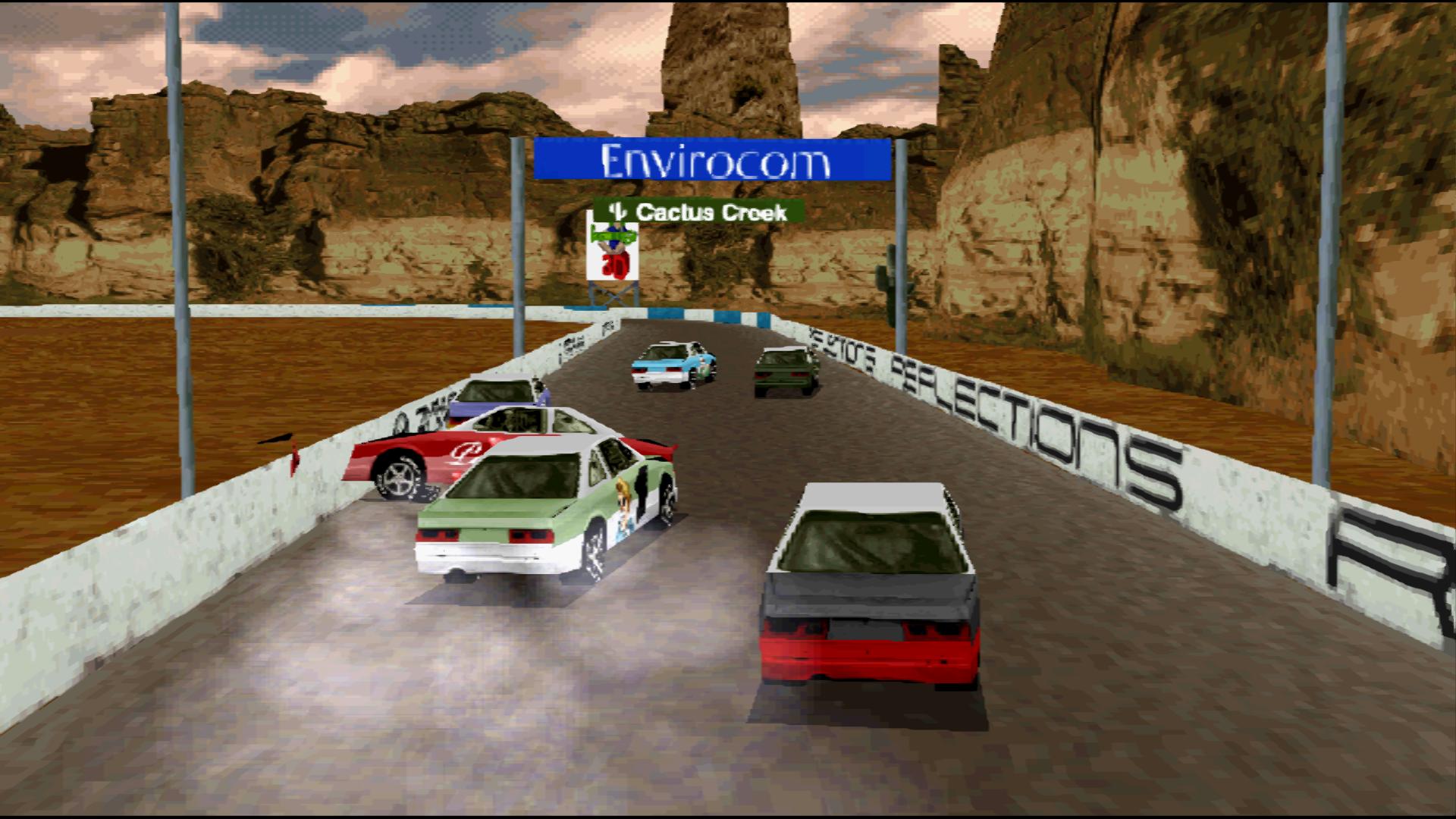
  • I’m hopelessly behind when it comes to video game sequels

    Shadow of the Tomb Raider has just been released, which only serves to remind me that I still haven’t got around to playing the Tomb Raider reboot from 2013. It’s sat there on my shelf now, staring at me with reproach.

    And this is just one of the many major video-game franchises that I’ve fallen hopelessly behind on. I played every game in the Assassin’s Creed series up to number three, which was a big disappointment. But there have been god knows how many games since then, many of which look very good indeed. Should I just pick up where I left off, and play Assassin’s Creed IV: Black Flag? Or skip the rest and just play the latest one, Assassin’s Creed Odyssey? Will I even know what’s going on if I do? I mean, we’re on something like the eleventh game by now.

    Fallout is another one. I loved Fallout 3, but I never got around to playing New Vegas – and then Fallout 4 came along and I missed that, too. And Grand Theft Auto – GRAND THEFT AUTO! That’s a big one. I played the hell out of Vice City, then missed San Andreas because it came out while I was living in Japan. Then I never got around to buying GTAIV, and then suddenly GTAV came out, and before I’ve realised it, it’s been 15 years since I last played a GTA game. Yes, I am that one living person who doesn’t own GTAV.

    I suspect I would really rather enjoy the latest Tomb Raider. And the new Assassin’s Creed. And, yes, GTAV. But keeping up with all these franchises takes an enormous amount of time. I mean, if you want to get up to speed with the Marvel movies, you could binge watch all of them over a weekend. But even playing one of the Assassin’s Creed games to completion would probably take, what, a week? Two weeks? And then there’s all the DLC to contend with…

    The sad fact is there’s just not the time to play every cool looking game that comes along. So I’m trying to make peace with the knowledge that I’m clearly not going to get around to playing all these endless sequels, even those for games I’m quite fond of. With big Christmas AAA releases, I only realistically have the time to play a handful each year – and this year, those two will be Valkyria Chronicles 4 and Red Dead Redemption 2. And if there’s time, I might leap in and play Just Cause 4, another series I’ve fallen way behind on after finishing the first one.

    So many games, so little time…


    Follow A Most Agreeable Pastime on Twitter: @MostAgreeable

  • Saying goodbye to the Wii U – Part 1

    It’s time to finally say goodbye to my Wii U. My plan is to sell it and put the money towards a Switch, so I can finally get up to date with Nintendo’s current generation games. Also, the space around my TV is looking very cluttered – time to make some room.

    I bought my Wii U on day one, and unlike a lot of people, I absolutely love it. It was my most-played console for years, and I worked my way through most of the major games for the system, like The Wonderful 101, Bayonetta 2, Pikmin 3, Super Mario World, and loads more. (Check out our top ten Wii U games here.)

    But it’s basically a dead system now, and I only have a handful of games left to play on it – some discs, some downloads, and a few old Wii games. Here’s the list:

    Wii U games:

    • Darksiders Warmastered
    • Tokyo Mirage Sessions #FE
    • The Legend of Zelda: The Wind Waker HD

    eShop and Virtual Console games:

    • Soul Axiom
    • Earthbound
    • Earthbound Beginnings
    • The Legend of Zelda: Spirit Tracks
    • The Legend of Zelda: The Minish Cap
    • Fire Emblem: Shadow Dragon

    Wii games:

    • Pandora’s Tower
    • The Legend of Zelda: Skyward Sword
    • Metroid: Other M
    • Silent Hill: Shattered Memories

    I’m unlikely to finish all of these, but I’m going to at least give them all a go. I fired up my Wii U the other night for the first time in ages – I actually had to blow the dust off it, a good indication of how little it’s been played over the past year. The sadly missed Miiverse has left a gaping hole in the console’s menu screen – where once my Mii was surrounded by others, gathered around different Miiverse communities, now he stands ever alone. Such a shame, Miiverse was great.

    Out of the above games, I’ve already started playing Darksiders Warmasteredthe last boxed title to be released for the Wii U – and I’m thoroughly enjoying it. It’s basically God of War crossed with Zelda, and that’s a thoroughly entertaining mashup. It came across as a bit too emo teenager at first, reminding me of the try-hard sequels to Prince of Persia: Sands of Time, but the voice acting really saves it. Mark Hamill is excellent as The Watcher, and Phil LaMarr, who voiced Hermes in Futurama, is wonderful as Vulgrim.

    The Wii U Pro Controller: utter bobbins.

    That said, it’s very difficult to play on the Wii U Gamepad owing to the constant button mashing and combos, so I switched to the Wii U Pro Controller, which is marginally better – but still awful. Seriously, this joypad is a black mark against Nintendo’s good name. It feels cheap, and the buttons are in a really awkward position – you have to really stretch your thumb to get to the Y button, not helped by the way the prong handles stick out into your palm. The Pro Controller came with the console, but I’ve only used it for multiplayer Mario Kart 8 up until now – and it seems I really wasn’t missing out. Thank god Nintendo saw sense and copied the excellent Xbox One pad for the Switch Pro Controller.

    I’ll keep checking in with my thoughts on the Wii U and the final few games I’ve got left to play on it over the next few weeks. Join me in bidding farewell to this quirky yet much maligned console.

    Check out the rest of the series:

    Saying goodbye to the Wii U – Part 2: Darksiders Warmastered

    Saying goodbye to the Wii U – Part 3: Pandora’s Tower

    Saying goodbye to the Wii U – Part 4: THE FINAL FAREWELL


    Follow A Most Agreeable Pastime on Twitter: @MostAgreeable

  • New gaming books!

    These two beauties just arrived in the post, and I’m very much looking forward to delving into them.

    Getting Gamers is by the psychologist Jamie Madigan, who’s behind the brilliant website The Psychology of Video Games. There are some fascinating articles on there, and I highly recommend reading it – the one on the psychology tricks behind the Steam Sales is particularly interesting.

    Jordan Erica Webber is co-author of Ten Things Video Games Can Teach Us, and I really like the gaming articles she’s done for The Guardian. She was also one of the talking heads featured in Videogames: Design/Play/Disrupt at the Victoria and Albert Museum, which I went to see last weekend. The interviews with her and other gaming folk like Rami Ismail were probably the best bit of the whole exhibition, so I’m looking forward to reading her thoughts in this book.

    I’m always on the look out for interesting books about video games, so if you’ve got any recommendations, let me know!

  • How to deal with your gaming backlog

    If you’re like me, you probably have an enormous backlog of games to get through along with an irrepressible urge to keep buying new ones. To deal with this First World problem, I put together a handy guide for PCGamesN:

    How to deal with your gaming backlog

    Please enjoy, and let me know if you have any backlog-tackling tips of your own!

    I couldn’t have done this article without the amazing help of bloggers from the following websites, so please go and check out their excellent writing: