• Review: Axiom Verge: Multiverse Edition (PS4)

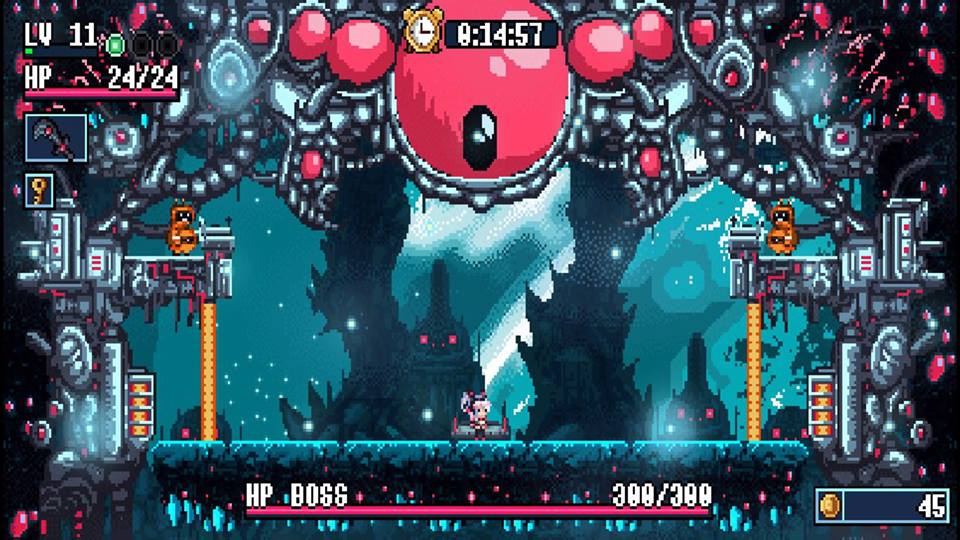
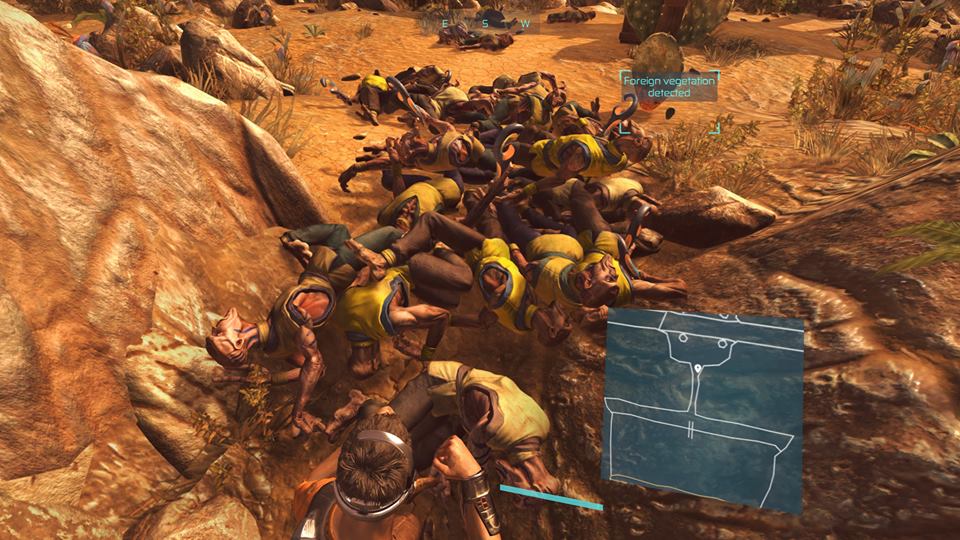
    Axiom Verge is one of the best games I’ve ever played. And if you’re a fan of 2D Metroid, you should go and buy it right now.

    A love letter to Super Metroid and its ilk, Axiom Verge took developer Thomas Happ around five years to make, and the game’s polish and depth is testament to its prolonged gestation. It originally came out digitally in 2015, but at the end of January (November 2017 in the US), Spanish publisher BadLand Games re-released it in a funky new physical edition. The standard version just includes the game, but the Multiverse Edition has a fancy art booklet with developer’s commentary, a poster, a making-of documentary and (on Switch only) a soundtrack CD. According to Happ, the explanation for why only the Switch gets a CD is that the “Nintendo Switch version is a bit more expensive than the others due to cartridge costs, so we’re including the game soundtrack on CD with that one.”

    It’s a shame that soundtrack isn’t available for every version, as the game has a cracking selection of chip tunes that stayed in my head long after I’d finished the game. But the good news is that you can buy the soundtrack separately, and I recommend you do.

    Axiom Verge is an unashamed tribute to the Metroids of days gone by – indeed, some elements are almost carbon copies of Super Metroid on the SNES, such as the metallic round doors and the distinctive pink map. But, astoundingly, the game actually tops its inspiration in many ways, particularly in the generous selection of items to find. As I noted in my review of Metroid: Samus Returns, one of the frustrations of Metroid games is that eventually you run out of interesting things to look for – you end up just tracking down missile and power-bomb expansions that you frankly don’t need (“Oh great, I can carry another five missiles now in addition to the 100 I already have…”). But Axiom Verge is packed with fascinating pick-ups, many of which aren’t essential to completing the game, but all of which are entertaining and genuinely worth finding.

    For a start, there are more than 20 unique weapons to find, all of them startlingly different. Granted, some of them are far more useful than others, but they’re all fun to use, and experimenting with a new weapon is one of the game’s great pleasures, whether it’s a ‘boomerang gun’ or a laser that carves through everything on screen. And the upgrades are similarly inspired – in particular, I loved the tiny robot drone you acquire, which you can pilot through tiny gaps and later launch into the air to access secret areas. Like most of the upgrades, it suddenly changes the way you approach the game, and causes you to rethink your approach in terms of your new abilities – a core appeal of the metroidvania genre.
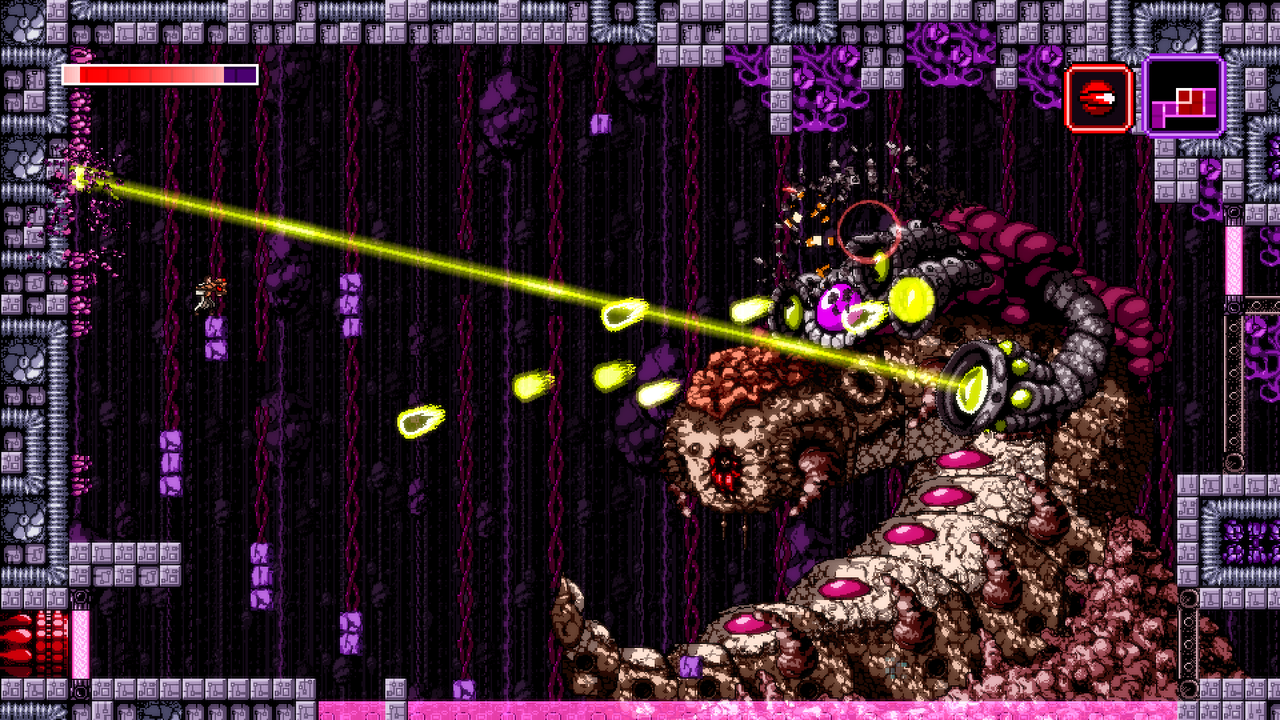
    Not everything you find is wonderful though – in particular, I found the grappling hook to be an absolute pain in the posterior to use, leading to many clumsy falls and curses. Likewise, there are an awful lot of identical health and power nodes to track down if you want to aim for 100% completion (which I did, because I was having so much damn fun playing the game). It can get a little repetitive trying to find them all, and towards the end you’re already so powerful that the final few don’t make much of the difference – except that the game also has a super hard and extremely well hidden ‘secret world’, where you need all the help you can get. Likewise, if you’re playing on ‘hard’ mode, that extra health and power becomes very useful.

    One thing the game does really well is story. It begins with an explosion in a laboratory that should have killed our protagonist, Trace. But instead he wakes up in an alien world, where he receives commands from a mysterious voice. I won’t spoil any more for you, suffice to say that it all builds up to a fantastic ending, and the complex and intriguing back story is fleshed out convincingly by a series of enigmatic notes scattered across the ten labyrinthine areas.

    Graphically, the game is clearly a homage to the 16-bit era, but there are plenty of graphical tricks that certainly wouldn’t have been possible on the Super NES, like the shimmering explosions when you defeat a boss. And speaking of bosses, these towering monstrosities are generally a joy to fight, with success depending on careful positioning and diligent learning of attack patterns. Having said that, I found most of them to be a little forgettable, somehow lacking the gravity of Ridley, Kraid and Mother Brain back in Super Metroid.

    But I’m picking up very minor niggles in an otherwise utterly wonderful game. Despite receiving Axiom Verge around two weeks ago, the main reason that I’ve only just got around to reviewing it is that I’ve been too busy playing the game itself, poking into every possible corner in order to drain every last drop of enjoyment out of it. Considering that there are so many fantastic games out there right now, the fact that I spent so long playing this one title is a good indication of how much fun it is.

    In short, you should definitely buy it. And if you do, most of the proceeds will go towards treating the developer’s ill son, as he pointed out in a recent blog post:

    “I’d just like to take a moment and give a special shout out to the publisher, BadLand Games. As you may have seen elsewhere on my blog and Twitter, I’ve tried to be pretty open about my son Alastair’s health situation. In short, he was born healthy, but the doctors failed to treat a routine case of jaundice during a critical period when he was just days old. The result was a life-long condition called Kernicterus that is characterized by severe neurological damage which robbed Alastair of much of his motor control and hearing. The reason I mention this is that after we decided to move forward with BadLand Games as the publisher, they offered to donate 75% of their share to a special fund dedicated to Alastair’s ongoing health care costs. They didn’t want to publicize it, since none of us wanted to be seen as trying to use my son’s suffering as a marketing tool for the game. I hope this doesn’t come off that way. I just wanted to thank them for their generosity in offering that up, since it was definitely something they didn’t have to do.”

    Helping a sick child AND getting one of the best games ever made? Seems like a no-brainer to me.


    Axiom Verge is available digitally for PC, PS4, PS Vita, Xbox One, Switch and Wii U. Standard and Multiverse physical editions are available for PS4, PS Vita and Switch. We reviewed the PS4 version.

    Disclosure statement: Review code for Axiom Verge was provided by Dead Good Media. A Most Agreeable Pastime operates as an independent site, and all opinions expressed are those of the author.

    [amazon_link asins=’B073ZYTG23,B07983MBGJ,B07982KJSV,B073ZWT5SQ,B06ZYXYMFT,B01M2ZIHOJ’ template=’ProductCarousel’ store=’mostagreeable-20′ marketplace=’US’ link_id=’18e82c28-0f27-11e8-940d-afc48e9cb688′]

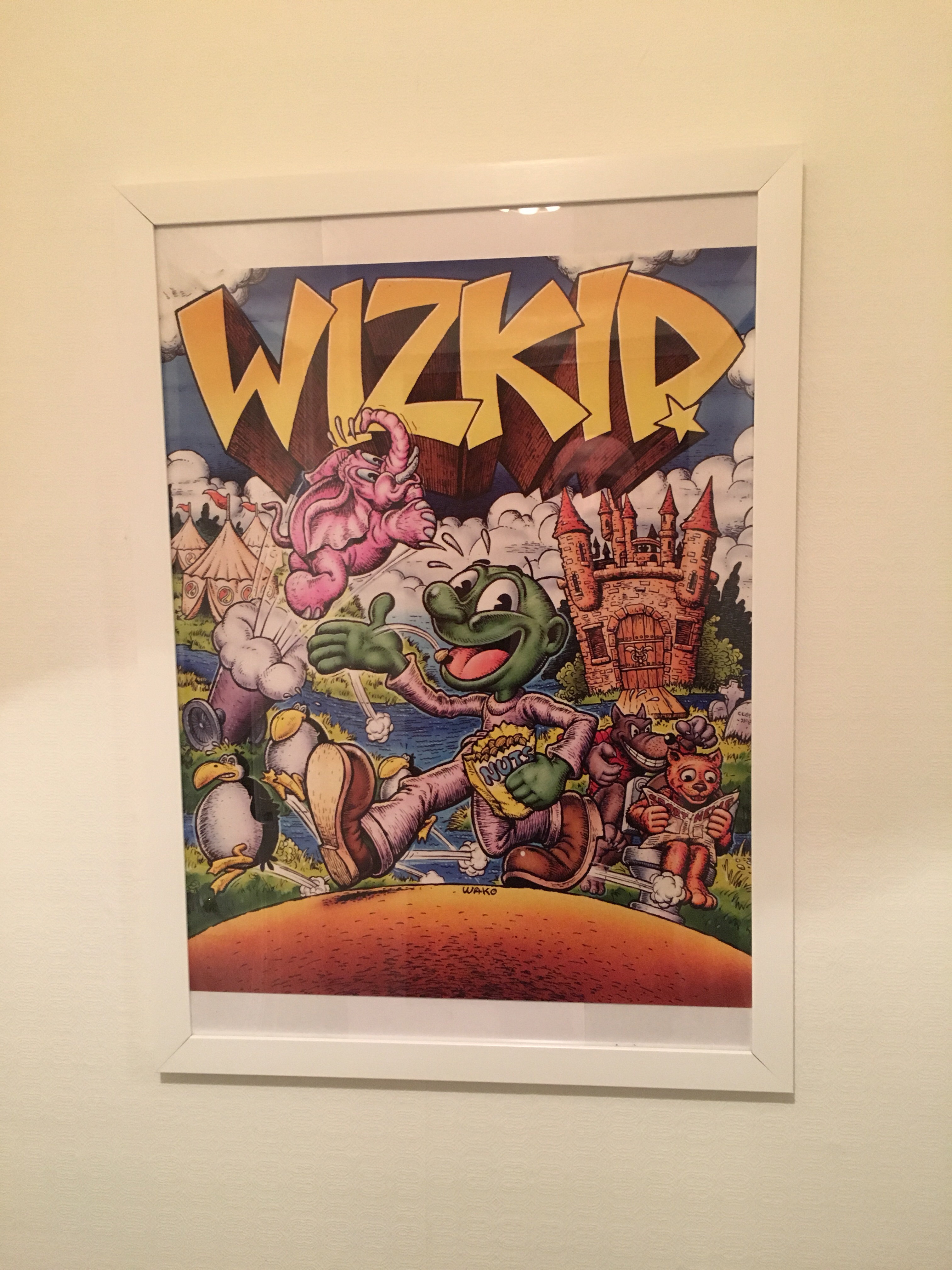
  • Wizkid’s on the wall

    My Wizkid print has arrived, and at last this magnificent piece of cover art is on the wall where it belongs.

    As I said the other week, this is easily my favourite video game cover from the late, great Bob Wakelin. RIP Bob.

  • Free delivery on Most Agreeable video game T-shirts!

    There’s free shipping on Most Agreeable T-shirts and mugs! Simply type in the coupon code SHIP18 – the offer runs until 11th February. Also, check out Mr. Biffo’s Spreadshirt Shop for some brilliant designs inspired by Digitiser: https://shop.spreadshirt.co.uk/MRBIFFO/. The code works over there, too!

    Even better, after popular demand, we now have a new range of beautiful, beautiful black T-shirts. Oooh, they’re so black. Click on the links below to go to the shop for your region.


    EU flagCLICK TO VISIT THE MOST AGREEABLE EU SHOP

    1024px-Flag_of_the_United_States.svgCLICK TO VISIT THE MOST AGREEABLE US SHOP

    Flag_of_Australia_(converted).svgCLICK TO VISIT THE MOST AGREEABLE AUSTRALIAN SHOP

  • The amazing games made in the UK

    I spent absolutely AGES writing this article for Kotaku UK:

    Which Games are Made in the UK?

    It was my most bonkers undertaking since I agreed to review every single Star Wars game. But I’m glad I did it – I made dozens of surprising discoveries, like finding out that all of the Forza Horizon games are made in Leamington Spa, or that Battalion Wars for the GameCube and Wii was created in London by the same people who made House of the Dead: Overkill.

    After starting to research which games are made in the UK, I quickly realised that there were far too many developers for me to cover in one article – and so I began the painstaking process of selecting which ones to feature. I decided to focus on the larger studios, only featuring a couple of particularly noted indie developers, and I ended up culling a few devs with less famous games. But even so, it was a huge effort to research and write – the whole thing took days.

    I’m pretty proud of the result though, and it was great to write something really positive about the games industry, rather than some swipe at the latest ‘outcry’. There are some truly talented people out there making some really amazing games.

    [amazon_link asins=’B00KVSQ848,B01GW3LRD2,B002CZ3SLO,B0055QL7AG,B00ZQB28XK,B0725QSF78,B0746XH9M9′ template=’ProductCarousel’ store=’mostagreeable-20′ marketplace=’US’ link_id=’eb4f3d3e-0829-11e8-abb0-23ba591f043e’]

  • Review: SteamWorld Dig (Switch)

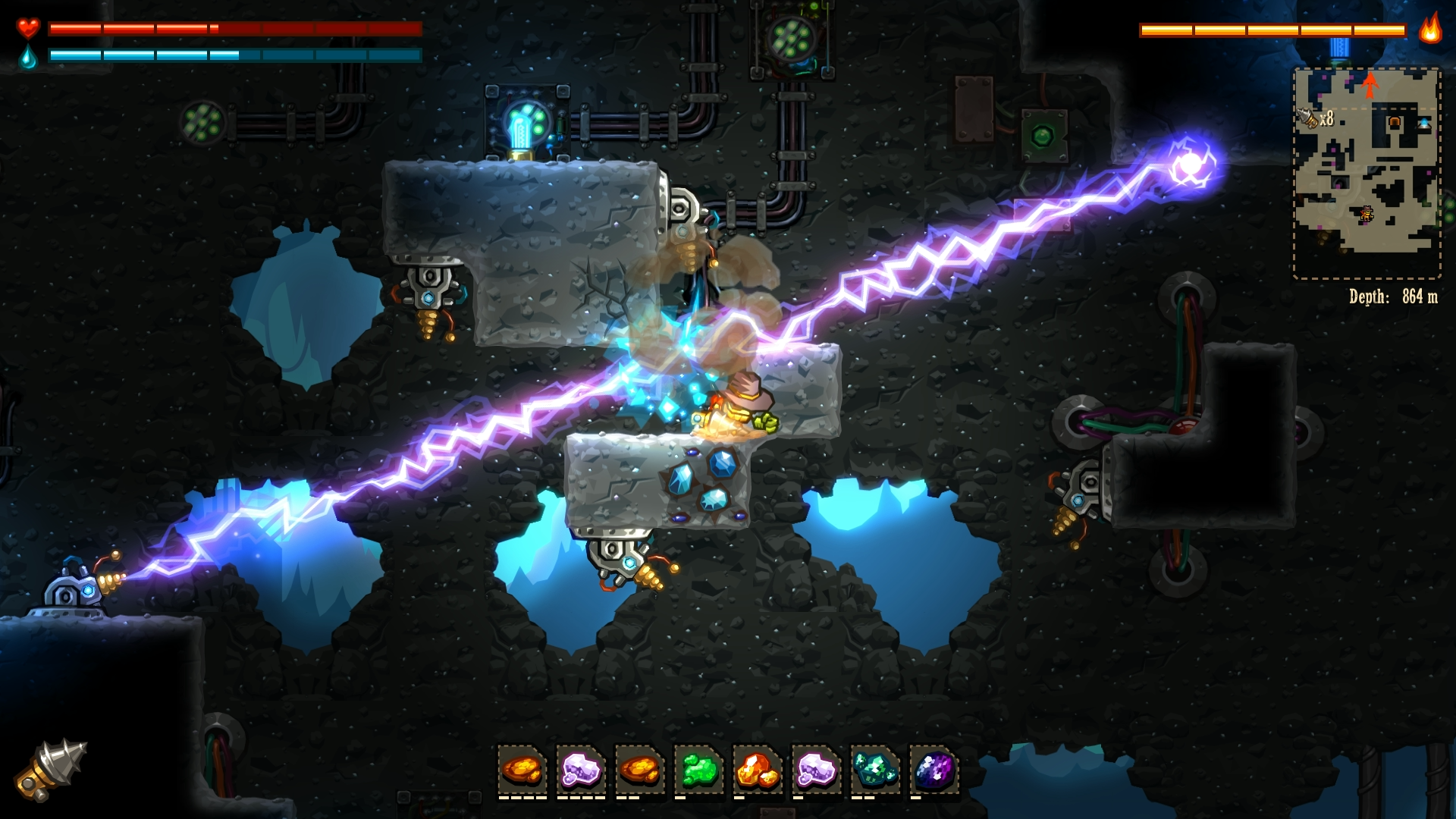
    While the debate rages on as to whether porting old games to the Switch is a Good Thing or a Bad Thing, one thing is for certain – at the very least these games won’t be lost in the annals of time and discarded systems. And now SteamWorld Dig has arrived for Nintendo’s powerhouse to round out Image & Form’s cowbot saga for Switch fans.

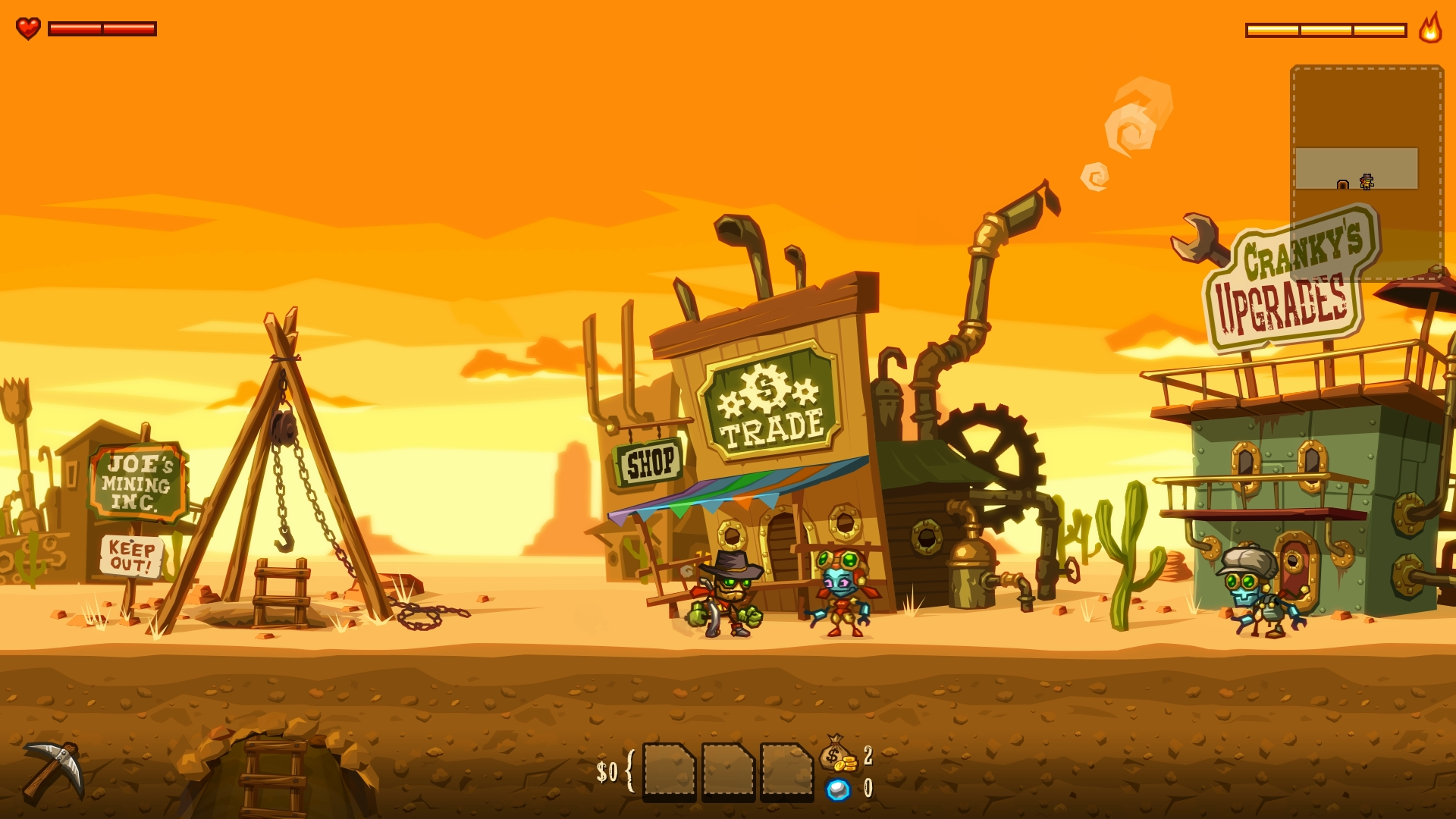
    Taking place in the ghost town of Tumbleton, our hero Rusty inherits an old mine from his deceased uncle that the townsfolk hope he reopens to keep the place alive. Not one to dally with plot exposition, Rusty promptly falls through an opening, pries a pick axe from his dead relative’s corpse and gets to work excavating ore and unearthing his uncle’s secrets.

    The gameplay loop of SteamWorld Dig is infectious: you continually dig deeper into the recesses of the mine, take your loot up to town and sell it, then invest your earnings into stronger and sturdier equipment to take back down with you on your next run. You can feel every upgrade immediately; newer pick axes crush earth or foes faster, you have a longer span of light to work with and your various pouches, health meters and water tanks hold more and more. The further down you get, the richer you become; and the longer you stay underground, the more expensive the upgrades become.

    Occasionally you’ll stumble into small alcoves with challenges that dole out rare ore, but mostly you’ll discover curiously placed platforms left by your uncle that give Rusty new powers. Useful tools like dash boots, a boost-jumping water tank and a drill are yours for the taking. Plot-wise, this confounds and slightly scares the denizens of Tumbleton, as they’ve never seen such technology and are rightly wary of it. This leads into the mystery of what exactly your uncle was up to, which is eventually revealed at the very bottom of the mineshaft. There isn’t a lot in the way of story, but it does a good job of feeding your imagination, to the point where you have to see where it goes. The shocking finale left me wanting for more – a lust that can be conveniently satiated with the sequel, also available on Switch.

    SteamWorld Dig is brilliantly paced in a way that makes it feel like you are constantly accomplishing something, even if it’s minute. While it has elements of Metroid, the game is somewhat open-ended in that your path down is determined by you. The alcoves are predetermined, but how you get there is another story. This path-making design helps build the solitude you’ll feel miles underneath the ground as you work your way to your uncle’s secret. There are three distinct areas that make you question where you’re going in ways I’d rather not spoil, and they’re all highly intriguing enough from a visual standpoint.

    As a port on Switch, SteamWorld Dig doesn’t necessarily add anything new, other than taking the HD rendition found on the Wii U and making it portable. I was curious as to how the U.I. would feel without a second screen – and the answer is it feels natural. Your pouch is displayed neatly at the bottom, and the map is small enough to fit in a corner – but still detailed enough that you can track your progress. I know saying this game takes advantage of the best of both worlds is a cliché, but seriously, it’s a sexy and portable version of SteamWorld Dig, which perhaps makes it the best one to own.

    Whether you’re yet to discover the joys of Image & Form or you’re a SteamWorld devotee who’s coveting what may be the best version of this game so far, you can’t go wrong with SteamWorld Dig on Switch.


    SteamWorld Dig is available for Steam, PS4, PS Vita, Xbox One, Switch, Wii U and Nintendo 3DS. We reviewed the Switch version

    Disclosure statement: Review code for SteamWorld Dig was provided by Image & Form Games. A Most Agreeable Pastime operates as an independent site, and all opinions expressed are those of the author.

    [amazon_link asins=’B01KBDV0L8,B01N9TD20A,B075Y9746F,B01MZBONKU,B01N1037CV,B01MY7GHKJ,B071JRMKBH,B078Y4FLCL’ template=’ProductCarousel’ store=’mostagreeable-20′ marketplace=’US’ link_id=’08664354-0822-11e8-af1a-73799cd76ecd’]

  • Spiffing Reads: The Woman Who Wants to Marry Tetris and The Cruellest Game Ever

    You might have noticed there was no Spiffing Reads last week, so instead we have a bumper edition this time around, with articles from the last fortnight. It’s a bit tough to get this column out weekly at the moment, so we’re going to switch to fortnightly for the time being. Anyway, onwards!


    The Real Story of the Woman in Love with a Tetris Cartridge (Kotaku UK)

    The other week on This Morning, a soporific UK daytime TV show, a woman was interviewed who claimed that she was in love with a Tetris cartridge and wanted to marry it. It seemed the usual tabloid TV, producers clamouring to ‘get a weirdo on’ for audiences to point and laugh at. But god bless Laura Kate Dale at Kotaku UK, who tracked down the woman in question and conducted a thorough interview that rounds out the story, and ends up becoming a fascinating exploration of ‘objectum sexuality’. Well worth a read. Lucius P. Merriweather


    https://twitter.com/P_MEN876/status/955430679646371840

    We Can’t Stop Watching This Cruel Mario Clone (Kotaku UK)

    Trap Adventure 2 is the most bastard game in existence. And it’s utterly hilarious to watch. Every time the player seems to have overcome an obstacle, another completely unfair trap pops up and kills her in an instant. It’s surely the most sadistic game ever – and brutally funny for the observer. Particularly the premature celebration right at the end of this video. L.P.M.


    Mario + Rabbids inspired the creative director of XCOM to reevaluate the genre (Polygon)

    Polygon had a nice series of articles at a few weeks ago that asked primarily game designers to reflect on games of 2017. The one by Jake Solomon, the creative director of XCOM, was particularly interesting, as he recounts his complete surprise at the announcement of Mario + Rabbids Kingdom Battle, looks at how it’s different from the XCOM games, and how he himself was inspired by it. This quote in particular is worth remembering: “The nice thing about working in a genre like turn-based tactics is that it isn’t a zero-sum game. Good tactics games create new tactics players, and then everyone in the genre benefits.” Professor GreilMercs


    Lair: What went wrong (Polygon)

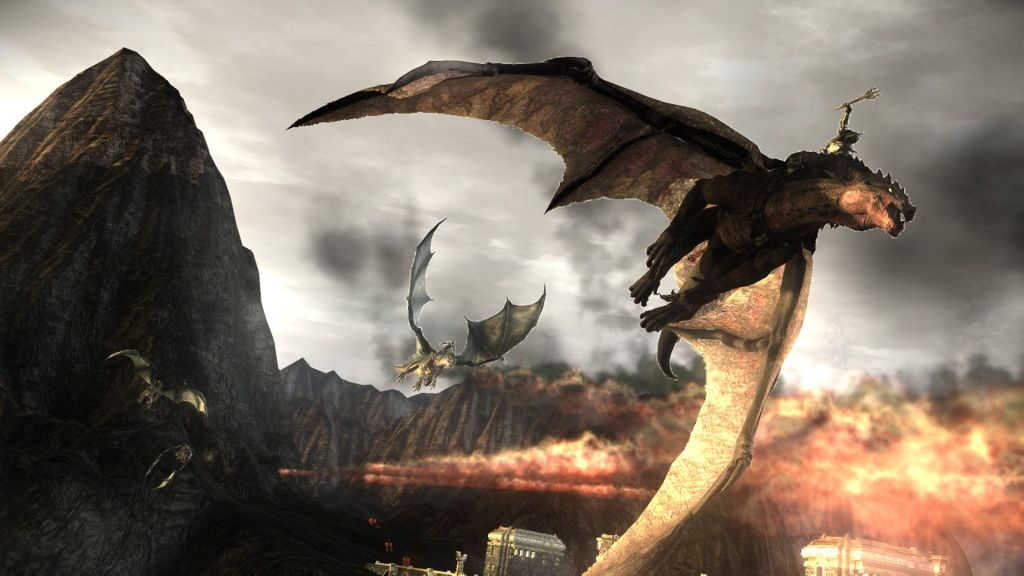
    You might remember Lair – a once promising dragon-flying game from the makers of Star Wars: Rogue Leader that utterly bombed on release, mostly due to its terrible motion controls. This lengthy article is an eye-opening look at what went wrong, a failure that ultimately led to the demise of acclaimed studio Factor 5. Lair’s creators claim that Sony forced them to put in the motion controls to promote the Sixaxis controller, even though they protested that it made the game unplayable. And quite a few disgruntled devs point the blame at the studio’s inflexible head, who apparently shouted down alternative ideas. A highly interesting dissection of how a flawed game comes to be. L.P.M.


    The story of The Crossing, Arkane’s lost game (Polygon)

    Another brilliant Polygon article looking back at what went wrong with a famous game (Polygon have really knocked it out of the park with great features recently). This time it’s all about what Arkane did before creating the brilliant Dishonored – it turns out they spent months pitching a game called The Crossing, which was eventually ditched when no publisher wanted it. The game sounds incredibly ambitious – the idea was that it would be a single-player game, but at certain choke-points the enemies would be controlled by human players, a concept the studio called ‘cross-player’. Essentially it would have amounted to making a fully fledged single player and multi-player game at the same time, so it’s no wonder that publishers balked at the idea, and you have to wonder how many people would actually want to play as the cannon fodder for some other player. Even so, it would have been a fascinating experiment. L.P.M.


    Best Of British Game Developers Publishers – An Introduction (Little Bits of Gaming & Movies)

    S. L. Perrin is working on a book about legendary British developers and publishers, and this intro is a great insight into the fantastic hubris of Imagine Software in the early 1980s. Imagine earnt an enviable reputation and quickly expanded – but they bit off far more than they could chew. The directors were blowing their money on sports cars while the debts racked up, and there’s a fantastic BBC documentary called Commercial Breaks that just happened to be there doing a piece on the company when the bailiffs moved in. The whole documentary is on YouTube, and it’s fascinating viewing – if only to see everyone smoking in the office and imagine how much it stank. L.P.M.


    Spiffing Reads is a regular feature where we pick out the best gaming articles of the week. If you’ve read anything interesting, please let us know in the comments.

    [amazon_link asins=’B071G5HZ7F,B07214P2HQ,B071WPKD5P,B071JRMKBH,B01HK5BT0W,B01I4FGW5O,B01NBR9DZB,B01I4FGW0E,B01I4FGVZU’ template=’ProductCarousel’ store=’mostagreeable-20′ marketplace=’US’ link_id=’98f2f436-074f-11e8-a77c-e3e113659b29′]

  • Bob Wakelin’s best piece of video game cover art

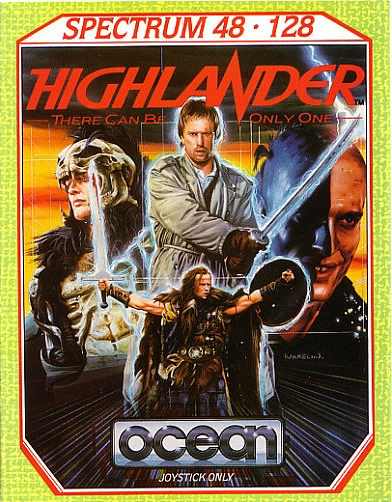
    Earlier this month, the artist Bob Wakelin sadly passed away. If you were gaming in the eighties or nineties, you were undoubtedly familiar with his work, if not his name. Bob illustrated a big chunk of the games published by Ocean, notably producing some stunning art for movie tie-ins like Highlander (one of his favourite covers, according to this Eurogamer article).

    But Bob was amazingly versatile, easily able to flip from realistic drawings of movie stars to achingly cute cartoons, as in the excellent cover for The New Zealand Story. You can see a selection of Bob’s work below, taken from a very good Bob Wakelin retrospective over on Digitiser 2000.

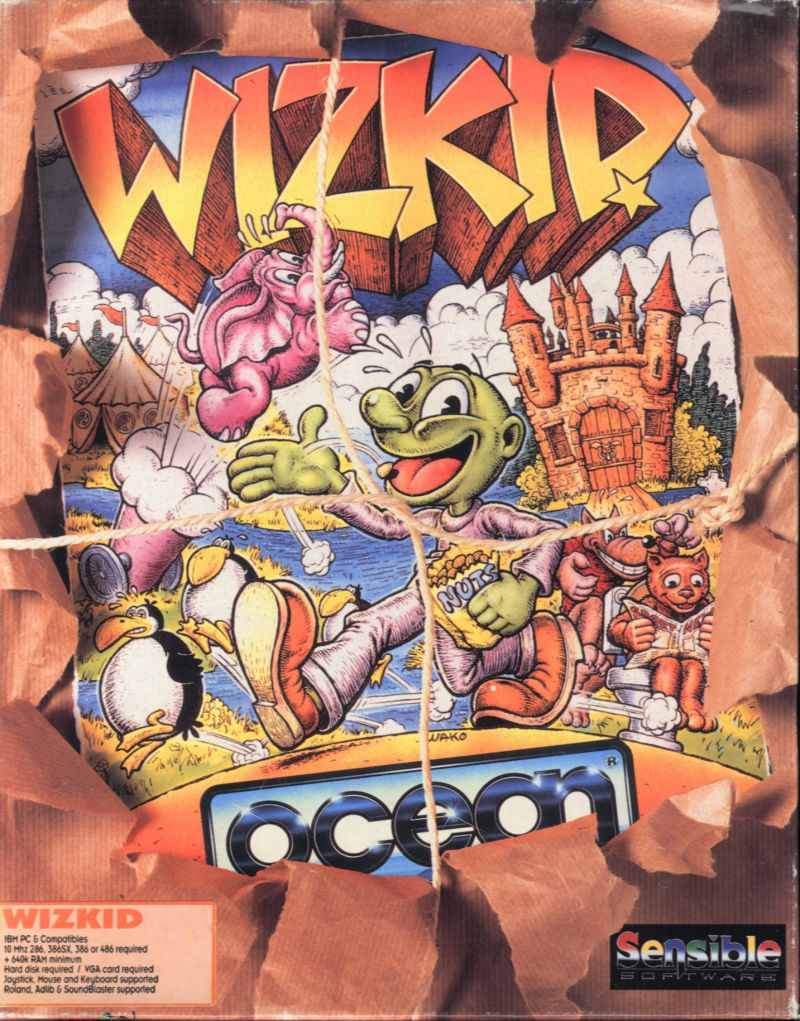
    For me, however, Bob’s best cover was undoubtedly the bizarre illustration for Wizkid by Sensible Software, an Amiga sequel to Wizball.

    The cover was inspired by the work of cartoonist R. Crumb – although as an 11-year-old, I was a bit too young to get the reference. All I knew was that it was wonderfully odd, with Wizkid affecting a strange, laid back bounce, idly eating nuts while all sorts of crazy shenanigans went on in the background. I mean look at it – there’s a cat reading a newspaper on the toilet while a wolf looms behind it, and a pink elephant being blasted out of a cannon. Meanwhile, odd-looking penguins hop nonchalantly through the scene, reminding me simultaneously of the adverts for Kia-Ora and Um Bongo, two staple lunch-break drinks of my youth (click on the links to see the vids). Both adverts seem spectacularly inappropriate in hindsight, but I can still recite them word for word. And on a similar theme, now that I’ve read R. Crumb as an adult, the cartoonist seems a spectacularly unsuitable inspiration for the cover art of a game aimed at children.

    A Robert Crumb cartoon – spectacularly unsuitable for children.

    But cat-on-a-toilet aside, there’s nothing at all offensive about the Wizkid cover – and today I can appreciate just how beautifully Bob aped Crumb’s style when creating it. Yet as a child, the cover was more than just an excellent illustration, it was a window into the game’s world, a picture of what it SHOULD have looked like if the graphics could have just been a bit better. In the eighties and nineties, the cover art of games was much more essential than it is now – it gave you a reference point for your imagination, a realistic depiction of what all those fuzzy sprites and wobbly lines were trying to achieve. Indeed, I would regularly consult the cover art while waiting for Wizkid to load, imagining the world he inhabited.

    And on that point, the cover does an admirable job of depicting things that actually happen in the game. It turns out that toilets and penguins and elephants are pretty essential features. In fact, memorably, you have to flush a toilet to unblock a volcano at one point (it’s a very weird game – check out my review from a while back).

    Indeed, the Crumb-like cover does a fantastic job of giving a feel for what the game is like. It’s a knockabout, wacky, acid trip of a game, delighting in nonsensical occurrences, thinking nothing of throwing in a digitised barking woman and an explosion of gold coins called – and I kid you not – the ‘golden shower’.

    Interestingly, the Wizkid cover is utterly different from that of its prequel, Wizball, which was also done by Bob Wakelin. The Wizball cover is far more serious, and Wizball himself looks positively scary, but then the game was also far more serious and straight-faced. I love that the different cover art styles for the two games so beautifully reflect the completely different trajectories that each game pursues.

    Why all the brown paper, Ocean?

    Sadly, when Ocean re-released Wizkid, they strangely covered up a lot of the excellent artwork with a brown paper surround. A very odd choice. It looked quite cool in its own sort of way, but I always regretted owning this version of the game rather than the clean original. I’d happily buy a framed print of the original artwork.

    In fact, sod it, I’ve done just that. A moment ago I paid a visit to The Attic Bug, which worked with Bob for many years and has a range of his prints for sale. I can’t wait to get this wonderful artwork on my wall, where it deserves to be.

    UPDATE: And it’s arrived!

    [amazon_link asins=’0993012914,B01N2GF4O6,0993012922,0995658625,0995658609′ template=’ProductCarousel’ store=’mostagreeable-20′ marketplace=’US’ link_id=’2a923636-04ef-11e8-b428-393519d7f096′]

  • 20% off Most Agreeable T-shirts!

    There’s 20% off all Most Agreeable T-shirts and mugs when you buy two or more items! Simply type in the coupon code LOVE2 – the offer runs until 28th January. Also, check out Mr. Biffo’s Spreadshirt Shop for some brilliant designs inspired by Digitiser: https://shop.spreadshirt.co.uk/MRBIFFO/. The code works over there, too!

    Even better, after popular demand, we now have a new range of beautiful, beautiful black T-shirts. Oooh, they’re so black. Click on the links below to go to the shop for your region.


    EU flagCLICK TO VISIT THE MOST AGREEABLE EU SHOP

    1024px-Flag_of_the_United_States.svgCLICK TO VISIT THE MOST AGREEABLE US SHOP

    Flag_of_Australia_(converted).svgCLICK TO VISIT THE MOST AGREEABLE AUSTRALIAN SHOP

  • The digital-only games we’ve lost – and those we’re going to lose
    Contra Rebirth is one of the games that is set to disappear when the WiiWare service shuts down in 2019.

    If you want to play an NES game from 30 years ago, it’s a simple enough proposition to track down the original cartridges and hardware. You might have a bit of trouble connecting the ageing console to a modern TV, but it’s certainly possible. And there’s always the grey area of emulation if you want to take a shortcut.

    But how easy will it be to play the games of today in 30 years’ time? In particular, will it even be possible to obtain modern digital-only releases from PSN, Xbox Live Marketplace or the Nintendo eShop? Perhaps even more pressingly, post-release patches have become the norm for modern titles, but for how long will these essential fixes remain available? Even if you have the physical disc for a PS4 game, will you still be able to download all of the patches and DLC in three decades’ time?

    Today, rather than, say, the physical integrity of an NES cartridge, the lifespan of a game is ultimately determined by the largesse of companies like Sony, Microsoft and Nintendo and their willingness to keep servers alive. And we’ve already seen a huge number of games disappear into the digital ether, seemingly with no hope of salvaging them.

    I wrote the below article for Eurogamer, taking a look at the digital-only games that have already disappeared and the ones that are set to go in the future – as well as what people are doing to preserve them:

    Where do downloadable games go when they die?

    The article has already generated lots of comment – clearly this is an issue that people feel passionate about. I’d love to hear your thoughts on it in the comments below.

    [amazon_link asins=’B078YM9ZL5,B0792MKTRP,B0716S3X98,B01EZA0D8Y,B01D9T0A1C,B071JD44NW’ template=’ProductCarousel’ store=’mostagreeable-20′ marketplace=’US’ link_id=’04e7f720-004e-11e8-8eb9-9b5ef7f17d04′]

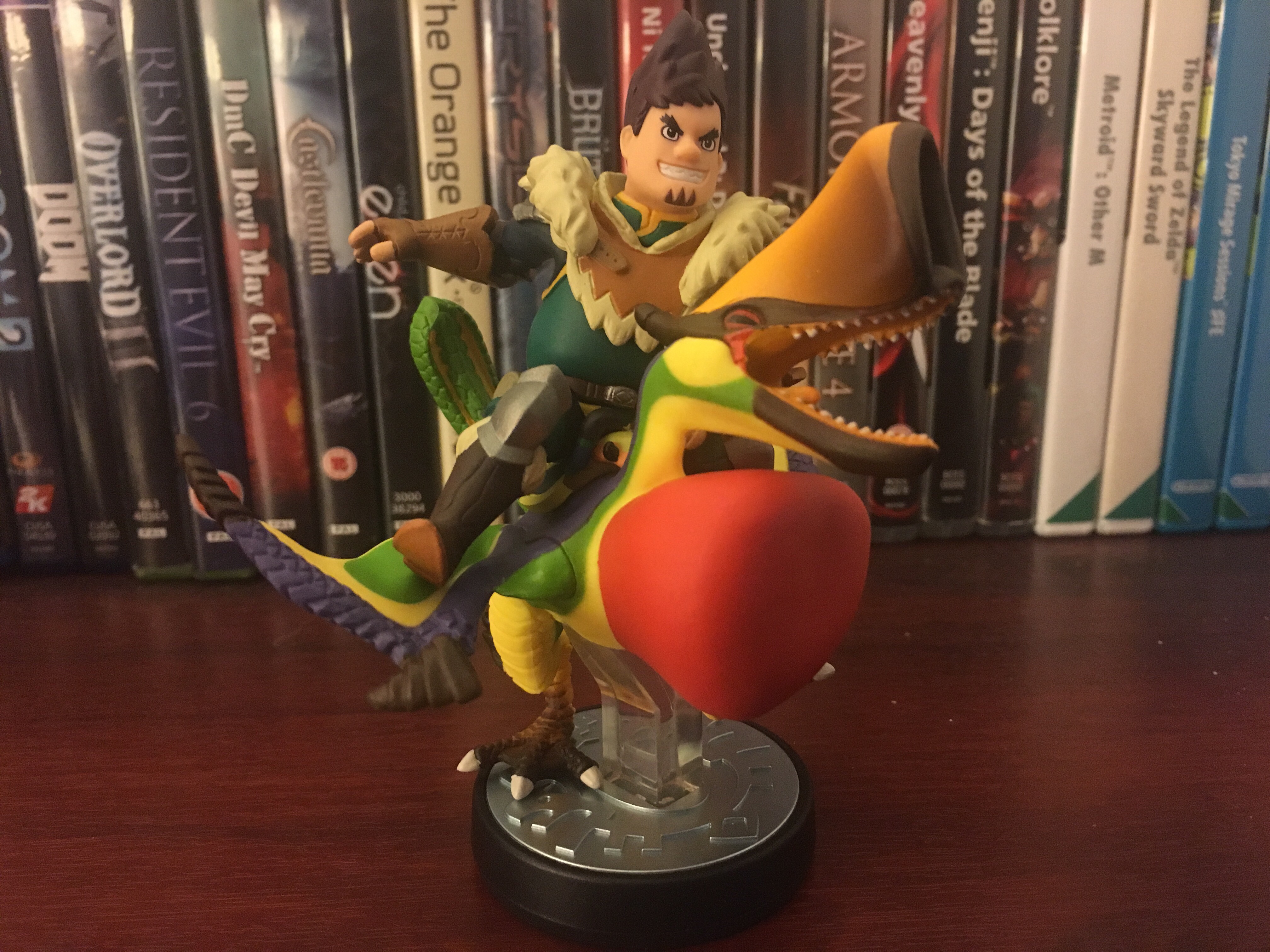
  • The Monster Hunter Stories amiibo are amazing

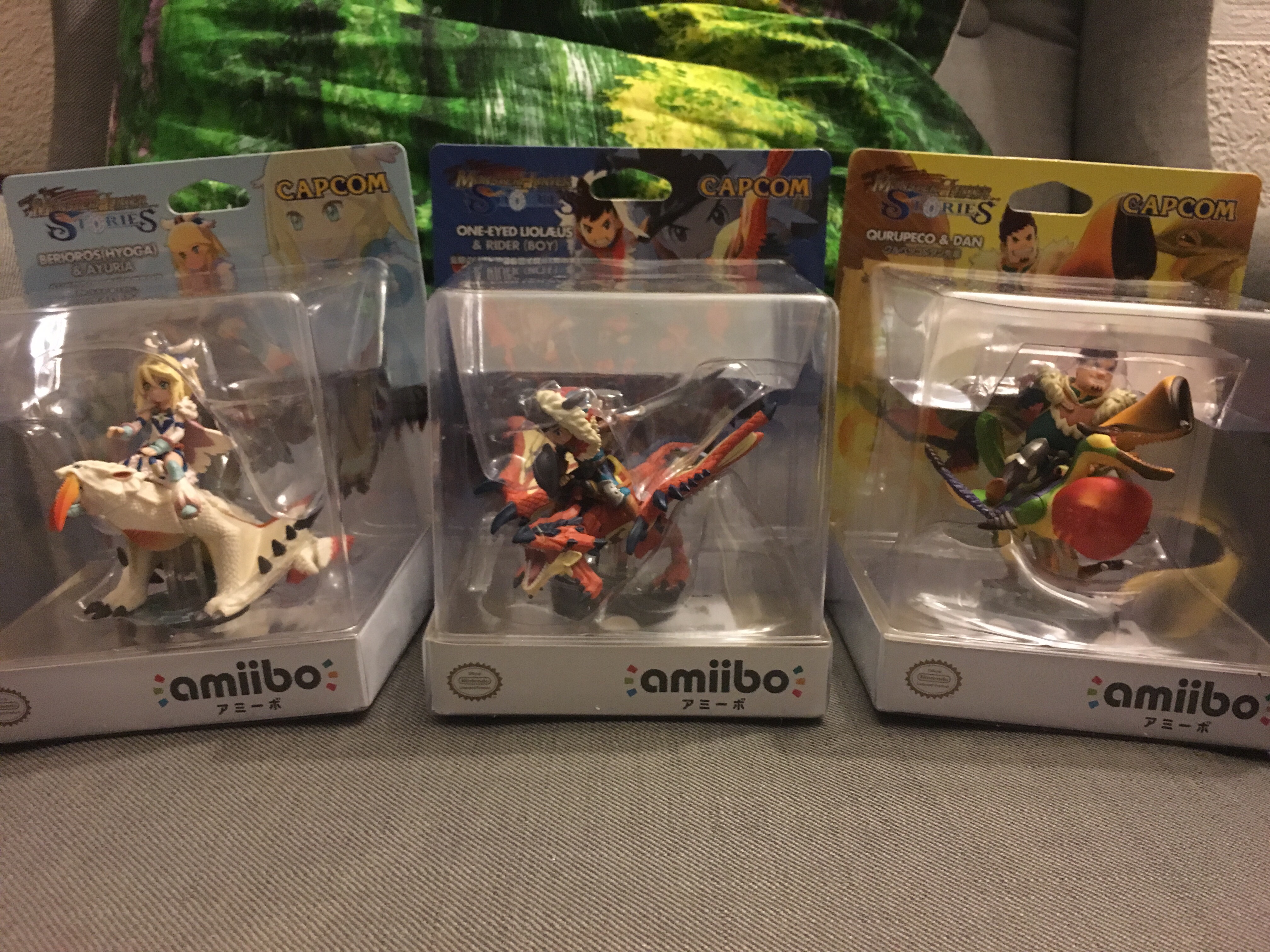
    I’m a bit of a Monster Hunter fan, as well as an amiibo nut, so I’ve been keen to get my hands on the amiibo that were released to coincide with Monster Hunter Stories on the 3DS. The only problem is that these amiibo are only available in Japan – presumably Capcom/Nintendo didn’t think they’d sell too well in Europe and the US. And seeing as Monster Hunter Stories apparently didn’t sell much outside Japan, that’s probably a reasonable call – around 0.5 million copies were shifted worldwide, with 0.35 million of those being sold in Japan.

    Luckily, I spotted a deal on Play Asia that let me scoop up three of the six Monster Hunter Stories amiibo for £25, including shipping, which is a frankly brilliant deal. And they certainly haven’t disappointed. For a start, they’re impressively big, coming in special outsized boxes. And as ever with amiibo, they’re wonderfully detailed.

    The Barioth is particularly cool. Love those huge fangs.

    But my favourite has to be Dan riding a Qurupeco – just look at this impressive beast in all its red-throated glory.

    Best of all, I discovered that you can detach the riders, so you have the option to just display the lovely monsters on their own if you like…

    …or swap the riders around so everyone gets a turn on Qurupeco. What a brilliant touch.

    Having seen how great these amiibo are, I’m now determined to complete the set by buying the remaining three. But unfortunately they’re all pretty expensive, coming in at around £18 each including shipping. I shall bide my time and wait for more bargains… But in the meantime, I should really buy the 3DS game to go along with these fantastic figurines.

    [amazon_link asins=’B01HK5BT0W,B01N9O8OLB,B01I4FGW0E,B01NBR9DZB,B01HK5II7O,B06ZXRH9KJ’ template=’ProductCarousel’ store=’mostagreeable-20′ marketplace=’US’ link_id=’115329e2-ff62-11e7-b656-83c781ce09d8′]

  • Review: World to the West (Switch)

    While developers often draw inspiration from other games, it’s not very often you see somebody try to tackle The Legend of Zelda. Bits and pieces, sure; but trying to mix that heady miasma of puzzle-laden dungeons and exploratory wonderment into anything other than a clone has to be a daunting proposition. Nintendo has made such a perfect formula that anyone who tries to replicate it often misses the mark because they change the wrong ingredient or remove a fundamental tenet.

    Rain Games attempts to recapture that adventuresome spirit with their latest game, World to the West. It unabashedly wears its love of A Link to the Past on its sleeve. But whereas other developers might stumble with trying to match its beats, World to the West takes the heart of Zelda and runs with it while adding its own spin to the mythical formula.

    And it works.

    The game is played in what feels like two acts – an introductory section where you take one (or two) of the four protagonists through a weaving story that weaves itself together nicely and a more open experience where you have access to everybody as you trail the big baddie and find hidden trinkets all the while. Each character feels distinct and powerful in their own way. You start with Lumina, the daughter of a Teslamancer who can teleport in short bursts and who accidentally triggers a device that sends her far from home. Knaus is an orphan who can dig holes and who finds himself inadvertently kidnapped and forced to work in some mines on what he thinks is the moon. Teri is the epitome of a treasure hunter who gets herself wrapped up with the unsavory antagonist of the story. Lastly, Lord Clonington is a brute of a man who is constantly out to prove he is better than everyone at everything in his own single-minded way.

    Each and every character is utterly endearing. During the first act, World to the West has a knack for deliberately moving everyone where they need to be, giving them each their own plot device to work through while also pushing the broader story of what’s going on in this mysterious place. Furthermore, you are also subtly introduced to each character’s abilities through their individual sections. They do each gain extra abilities, but as you move through the game you’ll see plenty of opportunities to bring other characters to areas that only they can reach. I loved how this tapped into that Zelda frame of thought where you want to go back and poke around a bit more. More often than not you are rewarded for your troubles.

    Eventually you’ll get the band all together, and at this point the World to the West opens up for better and for worse. There are checkpoint-like totems scattered about that serve as hubs for your party of rabble-rousers. So long as each individual hero has reached a certain totem they can teleport between them. This smartly forces the player to take each character through the different areas in the hopes they’ll spot those secret nooks and crannies only they can access. However, having to retread areas upwards of four times can be a bit dull at times, especially given the bit of loading that can happen in between. While noticeable, it doesn’t hinder the experience all that much. My desire to see what’s off the beaten path usually negated the ire of seeing a loading screen for a scant few seconds.

    At a few points in the game you are required to collect a certain amount of baubles to open gated doors. Depending on how much exploring you did, it can come as a shock to find some areas blocked off. Thankfully there are a handful of merchants throughout the world that will sell you the whereabouts of the items you need, which mitigates some of the frustration of having to go back and scour the land. It does tend to bog down the pacing at this point, but if you have a treasure-seeking mentality, it doesn’t feel like too much of a burden. The only other nit I can pick is that as far as I can tell you are forced to listen to exposition before boss battles should you fall to them and restart. Just letting players quickly jump in after a loss or at the very least letting them skip dialog would have helped immensely.

    World to the West manages to feel like an homage to A Link to the Past while adding so many new and interesting ideas that it still feels like its own thing, which is something that can’t be said of a lot of developers’ attempts. They built a world worth delving into, a story worth investing in and characters that you feel so connected to that you’ll want to experience it all.


    World to the West is available now for PC, Xbox One, PS4 and Switch. We reviewed the Switch version.

    Disclosure statement: Review code for World to the West was provided by Rain Games. A Most Agreeable Pastime operates as an independent site, and all opinions expressed are those of the author.

    [amazon_link asins=’B06XPG5RZP,B013LIFQQA,B01MY7GHKJ,B01N9QVIRV,B0721325R7,B078Y4FLCL’ template=’ProductCarousel’ store=’mostagreeable-20′ marketplace=’US’ link_id=’cc0113f4-fec3-11e7-8580-9f105faf1888′]
  • Spiffing Reads: ARMS, Nintendo Labo and the future of loot boxes

    This week on Spiffing Reads, we kick off with a welcome return for Nintendo Power.


    Nintendo Power Podcast

    This is a little old news, but still worth mentioning. Nintendo of America launched an official podcast using the Nintendo Power branding at the end of last year, which is great news for those of us who are still fans of the defunct magazine. The first episode gets the podcast off to a great start, and it features an interesting interview with the the producer and director of The Legend of Zelda: Breath of the Wild. I’m definitely looking forward to more episodes. Professor GreilMercs


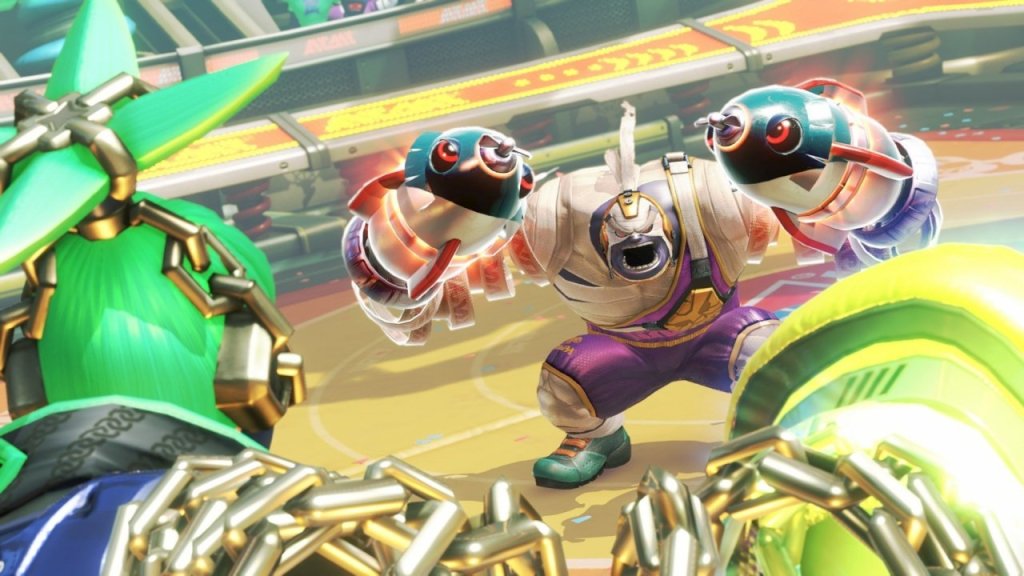
    Memorable Games of 2017 – ARMS (NintendoLife)

    NintendoLife ran a series of features of “Memorable Games of 2017”, and I was glad to see the Switch game ARMS make the cut. The more I play ARMS, the more I appreciate its depth and the more I enjoy it, a sentiment that seems to be shared by many of the people who have commented on the post. The writer also discusses how the game is easier for casual video gamers to pick up and play than a game like Smash Bros., which is something I’ll keep in mind next time I have non-gamer friends over. P.G.M.


    Regulators eye game monetisation in 2018 (GamesIndustry.biz)

    Another fantastic article from Rob Fahey, who for my money is one of the best writers in the business. He argues that publishers are sleepwalking into a disaster, blithely ignoring the gathering forces that are seeking an end to exploitative practices such as loot boxes. But if the EU or China suddenly outlaws loot boxes, this could massively affect publishers’ plans. Lucius P. Merriweather


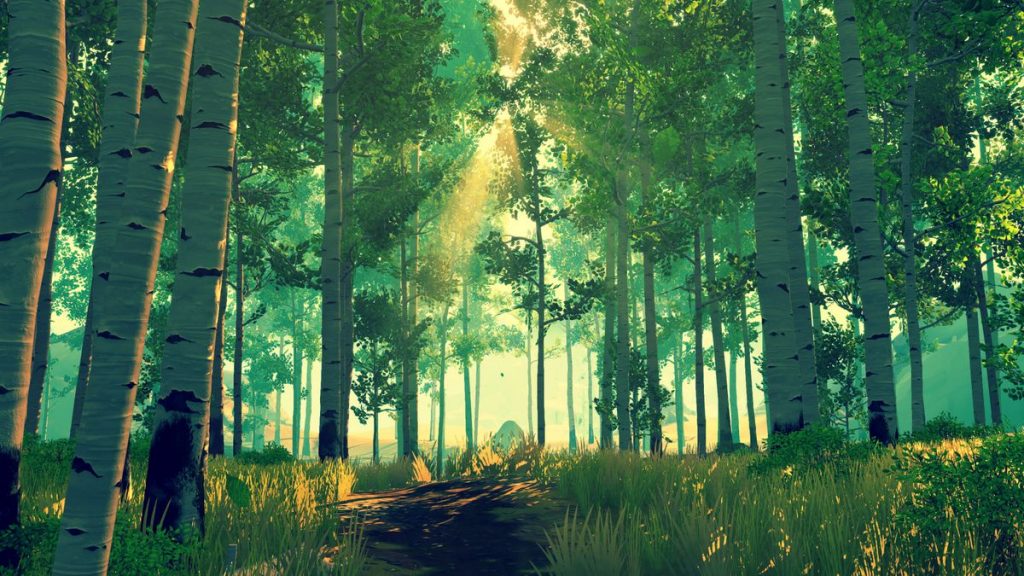
    The minds behind Uncharted and Firewatch talk candidly about surviving in the games industry (Polygon)

    Polygon has been running a series of articles in which various people in the games industry look back over 2017, and this one is undoubtedly the highlight. Industry veteran Amy Hennig, the brains behind the Uncharted series, and Sean Hanaman, creator of Firewatch, discuss a range of topics, from ageing in the games industry to how the Switch has changed the market. It was particularly interesting to see the gap between Hennig’s experience of working on a multi-million dollar game for years at a time, where the huge costs could potentially sink the studio if the game doesn’t sell, compared with Hanaman’s ability to be much more nimble with development, scrapping concepts that don’t work and trying new ones at relatively little cost. L.P.M.


    Switch’s eccentric new hardware is a link to Nintendo’s past in the most exciting way (Eurogamer)

    A great little article from Martin Robinson that puts Nintendo Labo into the context of Nintendo’s history. The idea of cardboard toys that you slot your Switch into might seem bizarre, but it makes perfect sense when you consider that Nintendo once manufactured cardboard toys – and the new product line is the perfect encapsulation of Nintendo designer Gunpei Yokoi’s famous philosophy of ‘lateral thinking with withered technology’. L.P.M.


    Spiffing Reads is a regular feature where we pick out the best gaming articles of the week. If you’ve read anything interesting, please let us know in the comments.

    [amazon_link asins=’B01MY7GL3O,B01N4N8NAL,B01MUAGZ49,B01LTHP2ZK,B01MY7GHKJ,B01N1037CV,B01MS6MO77,B01N6QJ58Y’ template=’ProductCarousel’ store=’mostagreeable-20′ marketplace=’US’ link_id=’d04a41aa-fd14-11e7-b51e-cd74c8bf5c8c’]

  • Nintendo Labo: that crazy old Kyoto company wrong-foots us all yet again

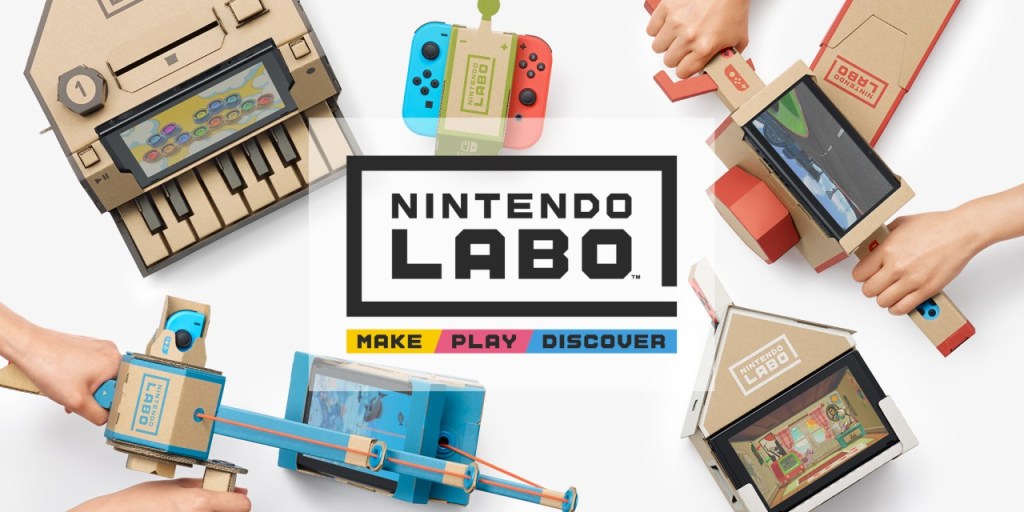
    Did you see the Nintendo Labo reveal trailer? Nuts, isn’t it? When I heard Nintendo would be making a big announcement, I certainly didn’t expect it would be cardboard toys that you could plug your Switch into.

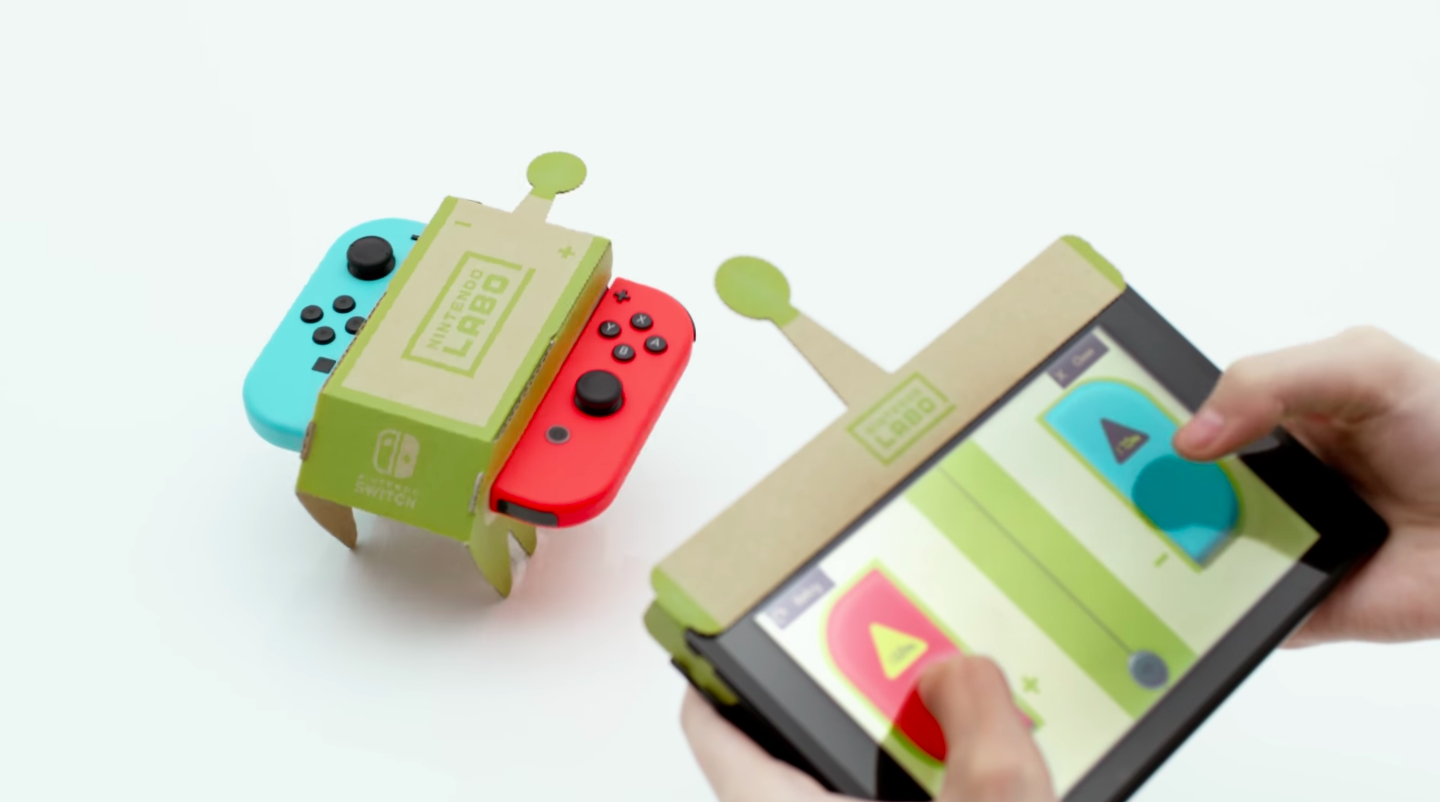
    But like all good ideas, it immediately makes you wonder ‘why didn’t anyone else think of that’? Not only does building carboard houses, pianos and robots seem like a lot of fun in itself, there’s also that added dimension of interactivity afforded by the Switch – I was particularly intrigued by the little insect robot that the Joy-Cons plug into. I mean, look at it – YOU CONTROL THE CONTROLLERS WITH THE SCREEN. The world has turned on its head, and it’s wonderful.

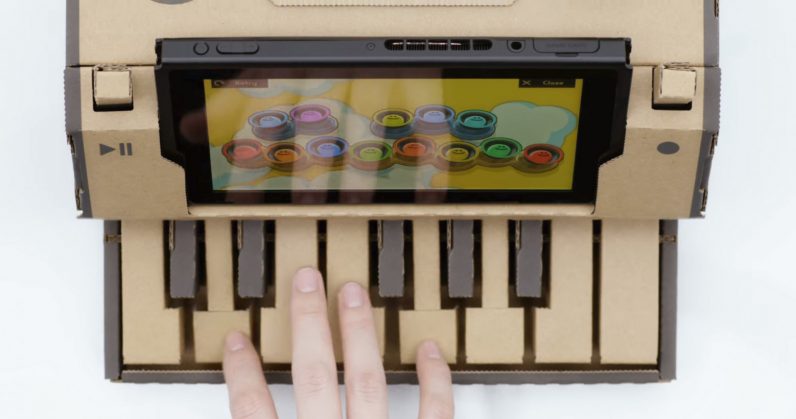
    I also like the way that the game cartridge not only gives instructions on how to build the models, but also gives detailed explanations of how they work, too. I think this will be particularly fascinating – as well as very educational for the young ‘uns. Apparently the Labo piano works by using the IR camera on the Joy-Con, which detects the presence of reflective tape attached to the keys. When the key is pressed, the tape is exposed, and the Switch creates the note. Ingenious.

    I was also impressed with just how complex some of the models are, with interlocking elastic-band pulleys and articulated cardboard joints. Just check out this still from the video of what looks like the interior of a Labo steering wheel. There’s some serious cardboard construction going on there.

    Then there’s the potential for customisation – Nintendo has already revealed a range of tape and stickers that can be used to customise each creation, but I can’t wait to see what designs the creative community can come up with. The scope for what can be done is enormous. I fully expect to be astounded by unexpected user-created designs when the sets go on sale on 20th April.

    A few people have pointed out that cardboard is inherently destructible, and that these creations won’t last long in the hands of children. But then again, cardboard can be surprisingly sturdy, and the beauty is that it’s repairable – and repairing it in clever ways just adds to the creativity. Plus, you can always get some new bits of cardboard and cut out replacement parts – or even build a whole new model.

    Nintendo Labo is going to be big. It’s the perfect thing for Switch-owning adults to do with their kids – or even without the kids. I for one can’t wait to get stuck into building my own cardboard piano.

    [amazon_link asins=’B01MY7GL3O,B01N4N8NAL,B01MUAGZ49,B01LTHP2ZK,B01MY7GHKJ,B01N1037CV,B01MS6MO77′ template=’ProductCarousel’ store=’mostagreeable-20′ marketplace=’US’ link_id=’a695c057-fd12-11e7-9b5d-2fc3a9a6874f’]

  • From The Armchair: Bye Bye Baron

    What ho, chums!

    Some sad news I’m afraid. Baron Richenbaum Fotchenstein is leaving us on account of various other commitments – his prolific and witty writing will be sorely missed on these pages. He’s promised to pop back and argue with us in the comments, but unfortunately it’s otherwise farewell for the foreseeable.

    The Baron has been an absolute stalwart reviewer, pounding out Vita, PS4 and PSVR reviews left, right and centre. Indeed, his recent review of the hard-as-nails Vita game Xenon Valkyrie is an absolute belter. He also did a brilliant round-up of the best PSVR games just after New Year, which is essential reading for anyone who’s thinking of buying that particular box of magic tricks.

    The Baron sauntered into The Manor last May full of vim and vigour, quickly firing off reviews of Strafe and Blood before embarking on a noble quest to review all of the Castlevania games. He quickly became our horror game expert, knocking out reviews of such knee-trembling greats as The Evil Within II and Observer (aka Power Hauer). He also revealed that he has an awe-inspiring games and comics collection.

    Of course, the big question now that the Baron has left the building is: who on earth is going to review all the scary games? The rest of us are far too lily-livered to do it, as revealed by our Halloween feature, in which Map claimed the scariest game he’s ever played is The Legend of Zelda: Ocarina of Time. There is no hope for us.

    The Baron says he’ll be occasionally updating his blog, Virtuanaut, so please head over there to hear about all the frightening stuff that we’re too yellow to feature on AMAP. And if you want to browse through his AMAP articles, head this way. Good luck, Baron, you’ll be missed.

    In other news, we’re still working our way through the backlog of games we accrued in the Christmas rush – personally I’m still beavering away on my review of Hand of Fate 2, despite having the review code for well over a month now. Look on this site, ye PRs, and despair! But I will certainly have to get it done before Monster Hunter World arrives on 26th January, because let me tell you, that will be the only game I’ll be playing for weeks if not months. Expect a review of it very soon.

  • Review: Xenon Valkyrie+ (Vita)

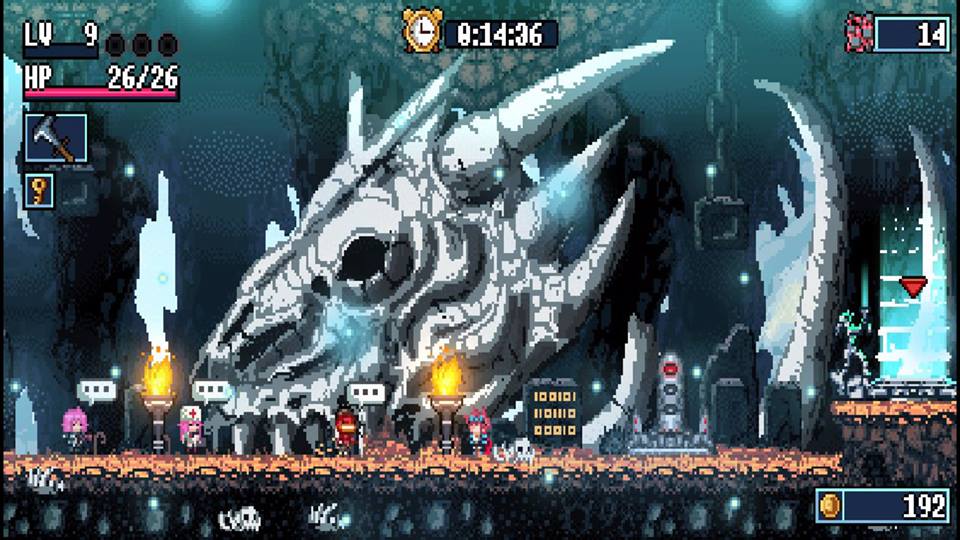
    Xenon Valkyrie+ may look all cutesy and silly on the outside, but inside lies a tough-as-nails platforming/shooting roguelite with a surprising amount of depth. It all seems simple enough when you begin, you’ll have to slash and shoot your way through four worlds, each made up of three stages, with two normal stages that have one or more mini-bosses and one big end boss stage, Naturally the stage layouts are randomly generated and the boss types are also randomly selected, though the selection pool isn’t very big. Things change enough to keep you on your toes though, and while the difficulty curve isn’t horribly steep, it does have a rather tall summit.

    Enemies start off simple enough, but get trickier and trickier in their attacks and patterns, and the environments start filling up with increasingly nasty hazards, all of which really starts biting into your humble little health pool. The key to victory here is maximum exploration and destruction. You’ll need to search levels as thoroughly as possible in order to maximize your income because you’ll desperately need the money to buy health potions and other vital items in the shops between levels, and you’ll need to kill as many enemies as possible to level up as many times as you can for those talent points that can be used to raise your health, ammo, strength, and defense. The only other help you’ll find is in the big white chest each stage holds, each of which is locked by keys that drop from minibosses. This is where you’ll find new swords and guns, though as usual with a roguelite, this is only helpful if luck is on your side.

    Destructible environments, a bit in the vein of Spelunky, can also help and hinder you along the way. The default character’s special weapon is an unlimited supply of bombs, which don’t do much damage to enemies, but can be used to make your own paths through walls, floors, and ceilings. You can make shortcuts and gain access to otherwise closed off areas, but you can also just as easily deny yourself access to these places if you’re careless in your bombing. Funny thing is, I didn’t even know how much I came to rely on the default character’s bombs until I finally moved onto another one and realized that other characters don’t have bombs, only a very limited stash of grenades. It makes things a lot tougher once you remove those bombs from the equation.

    So yeah, again, pretty tough game. The final boss in particular was a real bastard…at least I think that was the final boss. I’m not 100% sure on that yet. It took me many, many hours and many, many deaths just to finish off what appears to be the last guy with the default character, but it seems that even that was not the real end yet. There are a handful of hidden worlds, which I’ve only found two of so far (and still haven’t beaten either yet). There are two other characters available right now and there is said to be at least one more to unlock, if not several more. Each not only has their own strengths and weaknesses, but can unlock a different endings, as well as at least one of them being able to access a unique secret world. There are more weapons to be unlocked, more secret quests and items to be found, and rumor has it that a hidden ultimate weapon must be found in order to do battle with the real final boss to truly end things.

    I’m sure this sounds daunting to some, but me, I’m thrilled that there’s so much left to be done after the first victory. To me, roguelites are at their best when they give you good incentives to keep diving back in for more, because if you can just find and unlock everything there is on the first successful playthrough, then you might as well just be playing a normal game!

    So all in all, while there are some minor flaws, I’d still call Xenon Valkyrie one of the better roguelite games I’ve played for Vita (which is my favorite system to play these kinds of games on). It has solid dynamic gameplay, cool pixel art graphics, a sweet soundtrack, and a ton of secret-filled content to keep you coming back over and over again. Definitely recommended for roguelite fans!

    Xenon Valkyrie is available now digitally for Vita and Windows. 

    Disclosure statement: Review code for Xenon Valkyrie+ was provided by CowCat Games. A Most Agreeable Pastime operates as an independent site, and all opinions expressed are those of the author.

    [amazon_link asins=’B078HT728J,B0789MDXZY,B01N21YHC5,B073L9TPND,B073P1V3BY,B06WRR1M8F,B073NZZ21D’ template=’ProductCarousel’ store=’mostagreeable-20′ marketplace=’US’ link_id=’fd22480c-f5b4-11e7-aafd-a7bdb5e04fbc’]

  • Review: One More Dungeon (Vita)

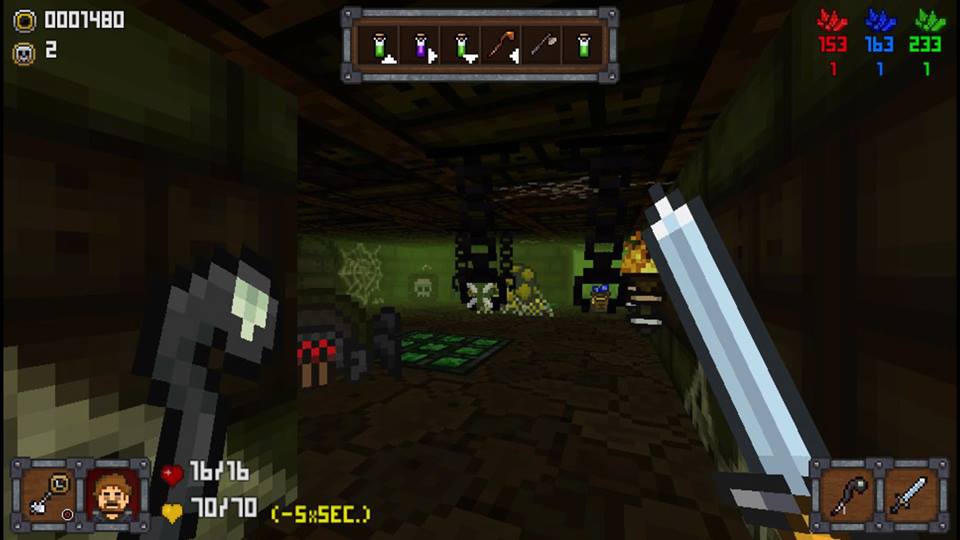
    What does happen when you mix a roguelite and a dungeon crawler? Well, in the specific case of One More Dungeon it results in an experience that’s enjoyable, but perhaps a bit undercooked. The core gameplay is fun enough, having you fight your way through nine floors of a deadly, procedurally generated dungeon.

    The combat is very simple, with a melee weapon in one hand and a ranged staff in the other, the only thing you really need to worry about is which enemies are safe to melee so you can save ammo. There will be some minor inventory management required, as you may have to switch between different staffs you’ve found due to there being three different ammo types, but that’s about it. Come to think of it, for all my worrying about running out of ammo, I never actually ran into that problem.

    Looking back, the multiple ammo types, and their corresponding elements, didn’t seem to have much effect on the game in general. Other than the fire-themed levels seven and eight, where you shouldn’t try to shoot the flaming enemies with fireballs, elemental damage types never really mattered.

    Despite the simplicity though, battles take some getting used to and can be pretty challenging. Enemies hit hard, your health pool is tiny, healing items are scarce, and if you’re not careful you can easily find yourself being swarmed by groups of enemies that are larger than you can handle. You’ll need to explore slowly and cautiously, because there could be a nasty guy just out of sight around any given corner that will jump out and take a bite out of you that you can’t afford to lose.

    As with many roguelite games, luck plays an important factor too. Sometimes you just don’t get good weapon drops or enough health items, and the disadvantages just become too stacked up to overcome. Basically, this is another game where you are definitely going to die, a lot. I’m not exactly sure how many hours I spent on it, but it probably took me at least a good twenty attempts to finally make it to the end the first time. While the game was at least fun enough to keep me coming back enough to finish it for the first time, I found that it didn’t have enough going for it to bring me back for more after that.

    While the enemies do vary between every floor or two, it’s still just the same small handful of enemy types every time with no variation or surprises. “Bosses” are also just tougher versions of normal enemies with a color swap and are the exact same every time. The final level doesn’t even have a boss, just three enemy spawning obelisks that you have to find and destroy before you’re overrun. It was a slightly disjointed and underwhelming finale for the long dungeon crawl (it also suddenly starts lagging really badly with that many enemies on the screen in the Vita version).

    There aren’t really any incentives to return for either. No extra characters, endings, weapons, or anything really to unlock to justify playing through again. You can use the points you earn to buy a limited selection of mutators, most of which seem to serve only to arbitrarily make the game much harder, and that’s about it.

    In the end, while One More Dungeon was a fun game while it lasted, its lack of post-game content for a roguelite left me feeling like this was a missed opportunity. However, if the creators learn from this and put a little more meat on the bones of a sequel, I’d be willing to jump into this world again. Despite its flaws, it’s still a pretty cool little world that I’d like to see more of.

    One More Dungeon is available now digitally for PS4, Vita, Switch, and Windows. 

    Disclosure statement: Review code for One More Dungeon was provided by Ratalaika Games. A Most Agreeable Pastime operates as an independent site, and all opinions expressed are those of the author.

    [amazon_link asins=’B073L9TPND,B01N21YHC5,B073P1V3BY,B06WRR1M8F’ template=’ProductCarousel’ store=’mostagreeable-20′ marketplace=’US’ link_id=’9cdfc8e2-f497-11e7-ad0b-b3d612b3a656′]

  • 18% off Most Agreeable T-shirts!

    There’s 18% off all Most Agreeable T-shirts and mugs until 12th January! Simply type in the coupon code NEW18.

    Even better, after popular demand, we now have a new range of beautiful, beautiful black T-shirts. Oooh, they’re so black. Click on the links below to go to the shop for your region.


    EU flagCLICK TO VISIT THE MOST AGREEABLE EU SHOP

    1024px-Flag_of_the_United_States.svgCLICK TO VISIT THE MOST AGREEABLE US SHOP

    Flag_of_Australia_(converted).svgCLICK TO VISIT THE MOST AGREEABLE AUSTRALIAN SHOP

  • Zps7eoS70Rvgn7Oe9jP5huMSbF8iXHd4

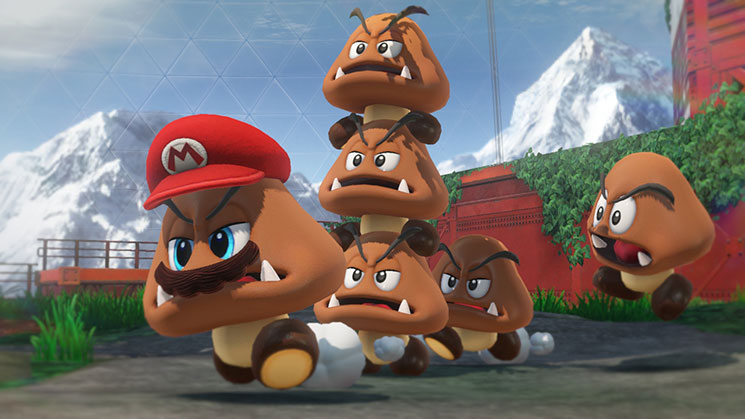
    Super Mario Odyssey has been released to universal acclaim, and it’s not hard to see why. Since Super Mario 64, Mario’s first 3-D adventure, Nintendo has tried various ways to make their 3-D games more accessible, such as dividing levels into small sections as in Super Mario Galaxy and providing clear paths to the end of the stage as in Super Mario 3D World, but for the most part Odyssey is a return to the open levels of Mario 64, something fans have been requesting for some time.

    The return to Mario 64 style levels comes with a key difference, which is in how you collect the main collectible (Power Moons in Odyssey). In previous games most of the time you would revisit each area with a specific mission to tackle. In Odyssey each kingdom is a vast area that you can explore as you like, and Power Moons can be collected in almost any order. Warp points make it easy to travel between different areas on the map, and, similarly to Nintendo’s other mammoth 2017 success, The Legend of Zelda: Breath of the Wild, there’s a satisfying density of points of interest. More often than not you’ll be in the midst of collecting coins or Power Moons when you’ll see something else that you want to check out, and before you know it hours have passed.

    R-AMCls5D18vr4O9Xq5yDtMETlb147-K

    Accompanying the open levels is Odyssey‘s brand-new hook, which is the capture mechanic. Mario can fling his cap out to a range of enemies and objects and “capture” them, a form of possession that opens up a range of different game mechanics. The majority of the captures feel overly familiar and more like re-skins of previously seen abilities (such as flying, swimming, becoming giant-sized, the fire flower, etc.) rather than all-new abilities. But the ones that are new are great fun and will make you wish the developers had dug a bit deeper to include more unique captures. It’s also disappointing that many of the captures were revealed before the game’s release rather than left as surprises for the player to discover.

    Despite all the density of the levels, with more than 830 Power Moons to find and collect it’s perhaps inevitable that many of the missions feel like filler rather than essential, such as series of missions that see you tasked with catching rabbits, racing Koopa Troopas, completing some fairly tedious minigames, etc. The game overly relies on nostalgia at times, such as sections of basic platforming presented in a 2-D 8-bit style Mario stages that otherwise don’t have much to do with the rest of the game. It also includes some 3-D platforming challenges that don’t feel nearly as satisfying as previous entries in the series, due to bland visuals and a camera that you can never quite get to be at the angle you want (unlike Super Mario 3D World‘s camera, which was always spot-on). Finding all the Power Moons without resorting to a FAQ can also be overly frustrating, even with the help of various in-game hint systems. Also, the first half of the game feels a bit underwhelming (not helped at all by the dull visuals of the first kingdom, Bonneton) and only about half of the game’s fifteen main kingdoms feel really fresh. The game is divided into two parts, with the post-game providing many new opportunities to find and collect Power Moons, which is a nice way of expanding an already expansive adventure.

    Mario platforming fans will never stop debating what the “best” Mario game is, but there’s no doubt that Odyssey is the lengthiest game in the series yet. Because of its huge scope the game feels uneven in many places, but the sheer number of things to do will ensure that every time you pick it up you’ll have fun for quite a long time. Although it definitely feels like a case of quantity over quality, this is still a fun adventure with a new sense of freedom that will appeal to many, and just enough new ideas to entertain even the curmudgeons who aren’t drawn in by the open level structure.


  • Review: Super Hydorah (Vita)

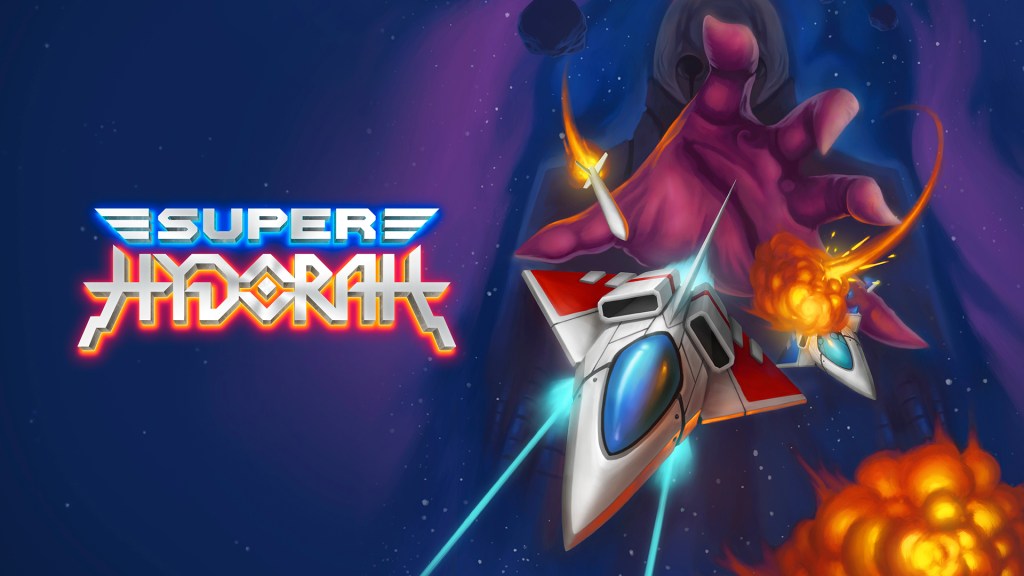
    I’ve heard tales of Loco Malito, a mysterious developer of a series of free retro games (most of which can still be downloaded at his site). I’ve heard about cult hits like The Curse of Issyos, Hydorah, and Maldita Castilla, and been meaning to try one of them out, but never got around to them. What better time to start than with a copy of his latest release, Super Hydorah, an updated and expanded version of his free classic, Hydorah. 

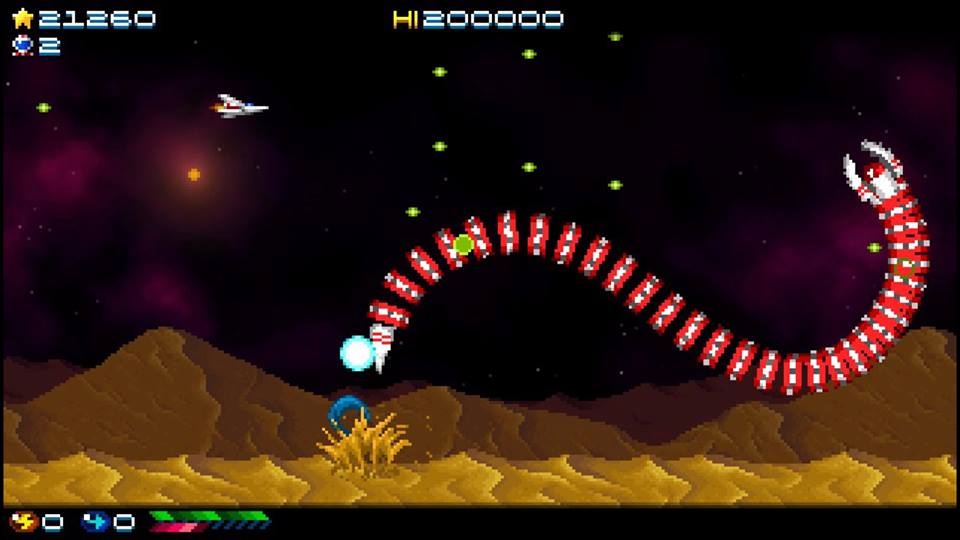
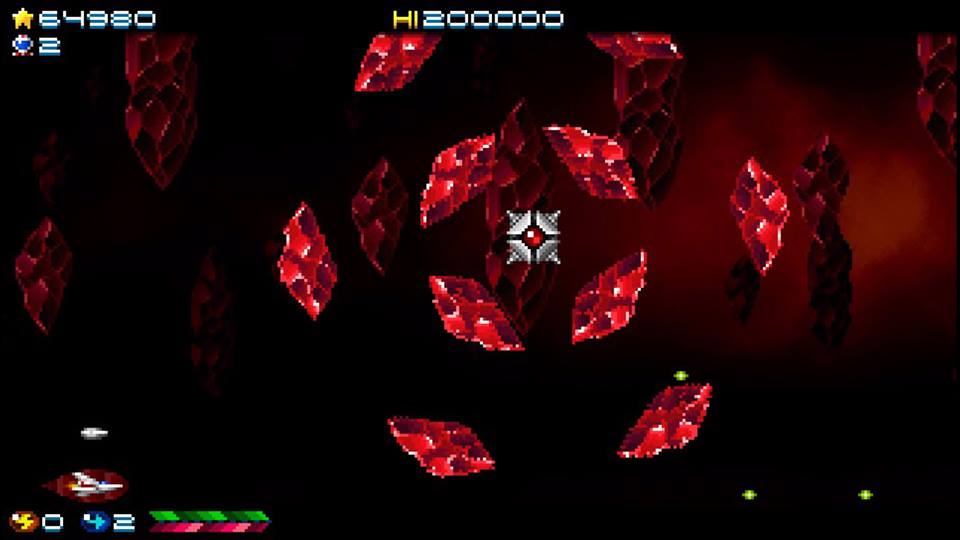
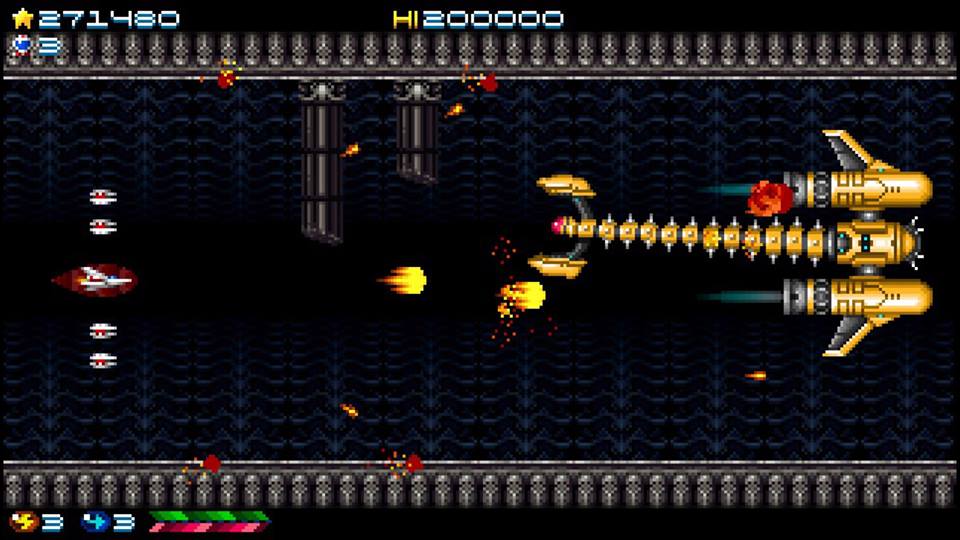
    You may notice that the game looks more than a little bit like Gradius, and maybe a bit like other classic shooters like R-Type and Darius. Well, it feels a hell of a lot like those games too. The enemies and environments are a delightfully surreal buffet of retro sci-fi design, and it all wants to kill you in many horrible ways. Much like it classic influences, your life in Super Hydorah depends heavily on your ability to snag vital ship upgrades, as well as being able to hold on to them.

    There are many different weapons, sub-weapons, and power attacks to be found and unlocked, and you can choose any number of different combinations between each level (choose carefully though, some weapons are much better for some levels than others). You also get to keep all your special weapons, unlike the old days where you’d usually lose them entirely upon death. Instead there’s a weapon upgrade system, where you can get power-up drops that will raise their power up to a certain level, and when you die you only lose a bit of your upgrade power instead of the whole weapon.

    Don’t think that this means this game is going to be any easier than those of the old days though. This is still quite a challenging game. It’s not quite Cuphead level of frustration, but it doesn’t have a “simple mode” for you to fall back to either. It’s hard, and that’s that. While you do get unlimited continues and there are a pretty generous amount of extra lives to be found, this is a game that, like its predecessors, punishes failure and kicks you while you’re down instead of offering a helping hand.

    That “forgiving” weapon upgrade system I mentioned earlier can end up digging you into quite a hole when you find yourself stuck on a particularly difficult level or boss only to be faced with the harsh reality that each death actively makes you noticeably weaker. Dying not only knocks both your weapon and sub-weapon power levels down a few notches, but also subtracts one of both your remaining power weapon uses and your speed upgrades, and continuing resets all your upgrades and your score back to zero. You basically need to learn to die as little as possible and try to avoid continuing entirely if you can, otherwise you’ll just keep getting knocked back down to a form that’s too weak to keep up with the increasing difficulty and never be able to catch up.

    The hardships don’t end there either. In a very Konami/Capcom way, if you manage to beat the game and you missed certain key things along the way, the game happily informs you that you didn’t really win and that you’re going to need to start over and destroy all of Hydorah‘s “seeds” if you want to actually win. So it turns out that the “non-linear progression” that the game lists as a feature, is really kind of pointless because you have to go back and clear out every level, including the optional ones (which are naturally the most difficult ones of all), if you want to really win. Oh well.

    When I first learned this (the hard way), I felt more than a little annoyed, but oddly enough, I found myself immediately jumping right back in and doing it all over again anyway. A challenge had been issued, and even though there were some frustrating times, the game was fun enough that I didn’t want to put it down until I had gotten that proper ending. Luckily, I found that the levels I had already beaten before were nowhere near as bad the second time around, once all the twists and patterns had been burned into my brain. Oh there were still some nasty challenges in there, like those dreaded optional levels and that particularly vicious final stage, but I pushed on and finally showed Hydorah who was boss, and in the end, I didn’t regret any of it.

    So if you’re into challenging games and classic shoot-em-ups, then Super Hydorah does indeed have what you’re looking for. Between the solid gameplay and visual design, and the sweet soundtrack, Super Hydorah feels like a lost arcade game from the 80’s that someone found buried underneath a pile of E.T. cartridges somewhere, and I mean that in the best of ways. I know I’ll definitely be moving Loco Malito’s other games up on my to-play list now (which means I should get to them in approximately 1-2 years)!

    Super Hydorah is available now for PS4, Xbox One, Vita, and Windows. 

    Disclosure statement: Review code for Super Hydorah was provided by Abylight Games. A Most Agreeable Pastime operates as an independent site, and all opinions expressed are those of the author.

    [amazon_link asins=’B078HSYMNT,B0714JC17Z,B018RS9CLO’ template=’ProductCarousel’ store=’mostagreeable-20′ marketplace=’US’ link_id=’419b38de-f1ac-11e7-a8c2-1b5c0ca9f7b6′]

  • Review: SteamWorld Heist: Ultimate Edition (Switch)

    The best way to follow up your award-winning post-apocalyptic mining adventure game with a highly-addictive gameplay loop is to make a game that’s an award-winning post-apocalyptic strategy game set beyond the first post-apocalyptic world with an equally addictive gameplay loop.

    Phew!

    SteamWorld Heist is the unconventional follow-up to SteamWorld Dig, a game that came as if from out of nowhere and charmed the living hell out of gamers everywhere with its steampunk-cum-western story about a robot who takes over his uncle’s claim, only to find a larger adventure as to what’s really been going on underground. Flash forward a few millennia and this world built upon the remains of humanity’s stupidity has blown itself up as well, stranding the cowbots in space. People are scraping by, trying to scour water in order to survive in a world that’s dominated by a regime of diesel-fueled automatons. This is where we find our ragtag band of ne’er-do-wells, led by Captain Piper Faraday, trying to eke out a living in the midst of oppression. Much like Rusty from Dig, things aren’t as they first appear.

    It’s an interesting progression system that seems similar at first blush, but fleshes itself out with more answers and a satisfying conclusion. However, plot is only part of the compulsion of SteamWorld Heist; the gameplay, even as disparate as it is from Dig, has an equally brilliant flow of completing capers, finding new crew members and upgrading/outfitting your party.

    While Dig touted its randomly generated mines, it didn’t amount to a whole lot beyond loose superficial differences in subsequent playthroughs. In Heist, each new ship you board will for the most part have different layouts that are distinguishable, making repeat plays feel markedly different. The game feels equal parts Worms and Fire Emblem, with you moving and playing your pawns in different areas or behind cover in the hopes of finding an advantageous position. When you’re ready to attack you have to manually aim at your target and hope your angle is fair. The satisfaction of pegging enemies never stops being fulfilling, even more so when you ricochet your shots off of walls and ceilings. At the worst you can fling their hats off and collect them for your own haberdashery.

    The enemy variety is solid, with many having the same options you do as far as strength, distance and trajectory are concerned. Their aim isn’t as fair, but considering some of the issues I have with the game as a whole, this turns out to not be such a bad thing. The moment to moment action in SteamWorld Heist is infectious; being both fast-paced but meticulous all the same. I appreciated the breather in between turns, but made sure to watch my foes as they are far better at strategizing advantages than they are at aiming. Each crew member you acquire levels up, which in itself is always an engaging mechanic, but this also means they have abilities such as taking extra turns or getting an extra shot by killing an opponent, which makes each worth investing your energy into and taking into battle. In addition, you can give them their own kit, armaments and hats, so you can personalize each mission to your own tastes.

    Where my interest turns to frustration is when Heist tries to up the ante and difficulty by what feels like arbitrary means. At first there are a few missions where if you don’t meet your goals or are trying to trek back to the exit, an alarm will go off and turrets or more enemies will sprout to hinder your forward advance. This in and of itself isn’t an issue, but the reliance on it within the second area and beyond make things feel like a chore. Often you’ll be trying to reach whatever the level’s McGuffin is and find yourself overwhelmed before getting to it. To further belabor the point, bosses, though few and far between, are utter bullet sponges and they constantly call in reinforcements, which often resulted in me losing chunks of my crew in a bid to outmuscle the opposition. Perhaps a little bit of level grinding and better outfitting could alleviate these issues, but the amount of moments where I felt things were a bit unfair cropped up enough to bear mention.

    Don’t let that deter you from SteamWorld Heist; even at its most devious it’s still really fun to try and balance or beat the odds against you. Whether inside your base ship or out in the field, you’ll begin to feel a fondness that almost borders on kinship with the crazy clan you find yourself in, which in turn makes you want to do the best you possibly can. The brisk pace and accessibility means that Heist is built in such a way that it shouldn’t be daunting even for the greenest of greenhorns, but it has enough layers that veteran cowbots can get something worthwhile from it too. Belly up to the bar folks, SteamWorld Heist is a game everybody should play.


    SteamWorld Heist: Ultimate Edition is available for Switch and includes all previously released DLC. The standard edition is available for Steam, PS4, PS Vita, Wii U and Nintendo 3DS. A mobile version is also available for iPhone and iPad.

    Disclosure statement: Review code for SteamWorld Heist: Ultimate Edition was provided by Image & Form Games. A Most Agreeable Pastime operates as an independent site, and all opinions expressed are those of the author.

    [amazon_link asins=’B01KBDV0L8,B00PDRZG9U,B01MZBONKU,B01N9TD20A,B01N1037CV,B01MY7GHKJ,B01MS6MO77′ template=’ProductCarousel’ store=’mostagreeable-20′ marketplace=’US’ link_id=’0bddd5b7-f14e-11e7-b272-ad632015392c’]

  • Gravity Rush 2 servers to shut down only a year after release

    Well this is a bit of surprising news. The online servers for Gravity Rush 2 on PS4, which only came out a year ago, are to shut down on 18 January. The game received generally excellent reviews, but apparently sales were well below expectations, so Sony is pulling the plug on the GR2 servers far quicker than anticipated.

    The game is mostly single player, but there are few asynchronous multiplayer components. For example, players can race ghost data of each other, as well as leave photos showing where treasure chests can be found – chests that otherwise are incredibly difficult to find. The Kotaku story has more information.

    But importantly, there are some costumes and items that can only be obtained with tokens gained in these online modes. So once the servers shut down, there will be no way to get certain outfits and talismans. Hopefully Sony will release these as free DLC, as otherwise it looks like these items will be gone forever once the servers close.

    I only just bought Gravity Rush Remastered in the PSN Winter Sale, and I’m planning on getting GR2 after I’ve finished it, so I’m a bit surprised that Sony is closing down the servers so soon after release. It just serves to highlight how ephemeral gaming can be in the digital age – whereas we can still play NES games from 30 years ago with little problem, the games with online components released today have a lifespan of only a few years. And even offline games will eventually lose access to patches and DLC once those servers get turned off.

    [amazon_link asins=’B01GW8X7N0,B0050SW1WW,B017Y97NHM,B017S3OPZM,B01BPNN5IO,B00ZQBLNP4,B075LC794Z’ template=’ProductCarousel’ store=’mostagreeable-20′ marketplace=’US’ link_id=’7b01253c-f072-11e7-9a28-01f27c883532′]

  • The games we’re most looking forward to in 2018

    Last year was a really amazing one for quality video games – we picked out our top hits for 2017 a few weeks back, but we really only scratched the surface of top-quality titles. As for most gamers, I suspect we’ll spend most of 2018 catching up with the excellent games we missed in 2017. But the good news (or possibly bad news if you’re struggling with an unassailable gaming backlog) is that there are loads more amazing video games on the way this year. We’ve selected the ones we’re most excited about.


    Lucius P. Merriweather

    Monster Hunter World (PS4, Xbox One)

    I put in a pre-order for Monster Hunter World straight after playing the amazing beta (there’s a great write-up of what makes it so good right here). Capcom has properly revitalised the series – not only does it look amazing in comparison to the earlier handheld entries, it also fixes most of the problems, notably the arcane inventory and gathering systems. Plus the elimination of loading screens during a hunt makes a huge difference, creating a seamless experience as you track an elusive beast through the varied terrain. Best of all, it’s coming out very, very soon indeed, on 26th January.

    Forgotten Anne (PC, PS4, Xbox One)

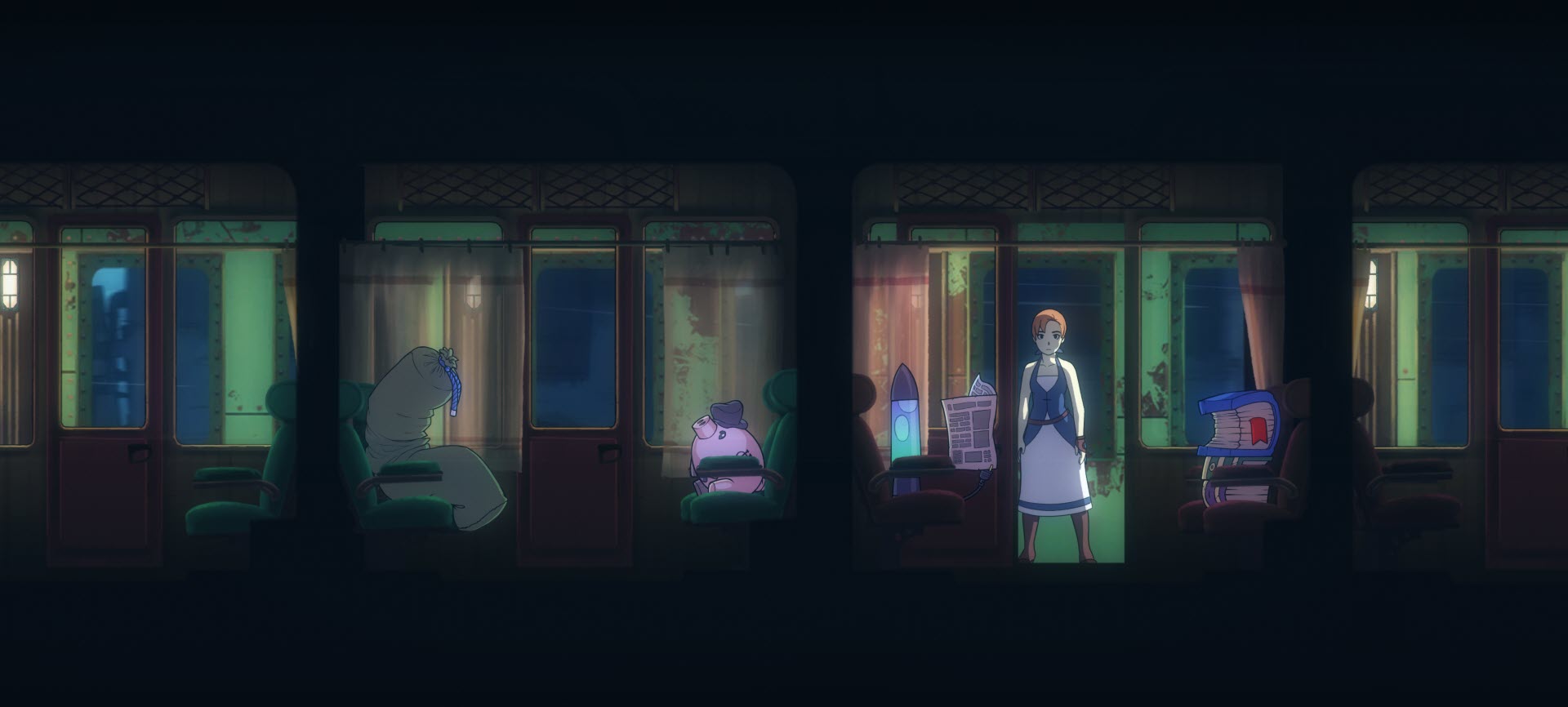
    This is a beautiful looking puzzle platformer from the Danish developer ThroughLine Games. The graphics have more than a hint of Studio Ghibli about them, and the plot similarly could have flowed from the pen of Hayao Miyazaki – The Forgotten Lands are where lost objects disappear to, and Anne must prevent a plot that could stop her returning to the real world. One to watch.

    Valkyria Chronicles 4 (PS4, Xbox One, Switch)

    Valkyria Chronicles Remastered on PS4 quickly became one of my all-time favourite games after I played it last year. Originally released on PS3, the game combines beautiful, cel-shaded visuals with complex turn-based strategy and likeable characters, all moving through a plot that kept me hooked right up until the impressive denouement. The game has seen several sequels and spin-offs, but most have been restricted to Japan or else have turned out to massive disappointments, like the critically panned Valkyria Revolution last year. But Valkyria Chronicles 4 is looking very promising indeed – set in the same time period as the original game, this sequel marks a return to the turn-based strategy set-up but is located in a different part of Europa with a different band of war heroes. If it can come anywhere near to the brilliance of the first Valkyria Chronicles, it will be a must-purchase.

    Red Dead Redemption II (PS4, Xbox One)

    Apparently Red Dead Redemption II is due out in the spring, so there’s very little time left to wait for a sequel to 2010’s Red Dead Redemption. We named the first game as the best of the generation a few years back, and at the time I said that: “I’m not sure that there’s any point in doing a follow-up because I don’t see how you could improve on the original”. It will be fascinating to see how Rockstar can possibly better a game that got so many things right first time.

    Vampyr (PC, PS4, Xbox One)

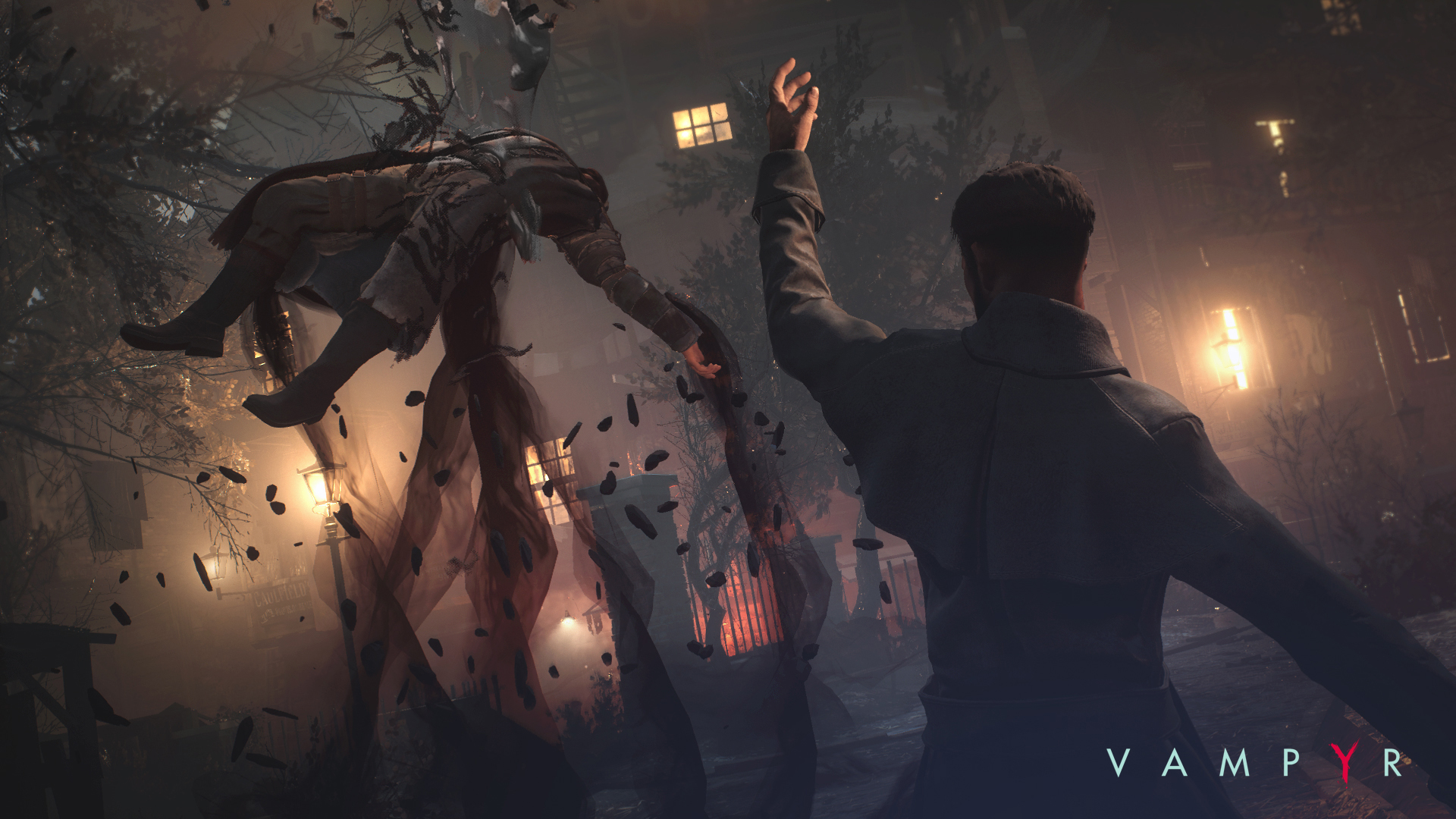
    Dontnod Entertainment (Remember Me, Life is Strange) is one of my favourite developers, so I’m certain that Vampyr will be very special indeed. Set in London during the First World War, you play a newly created vampire in the middle of the deadly Spanish influenza epidemic that claimed thousands of lives. The game promises that almost all of the non-player characters can either be helped or killed to sate your blood lust, so it will be really interesting to see how the game world changes according to the decisions you make.


    Baron Richenbaum Fotchenstein

    System Shock Remake (PC, Mac, PS4, Xbox One)

    System Shock is one of the greatest classic sci-fi RPGs of all time and has inspired several amazing game series like BioShock, Dishonored, and Prey. Revisiting this classic with modern graphics and mechanics is sure to be a ton of fun, especially with a trusted company like Night Dive Studios behind it.

    The Last of Us 2 (PS4)

    I’m excited for any good horror game in general, but if this is anything like the first one, it’ll go beyond being just another Resident Evil clone and bring an amazing story and cast of characters to the table too.

    Metro Exodus (PC, PS4, Xbox One)

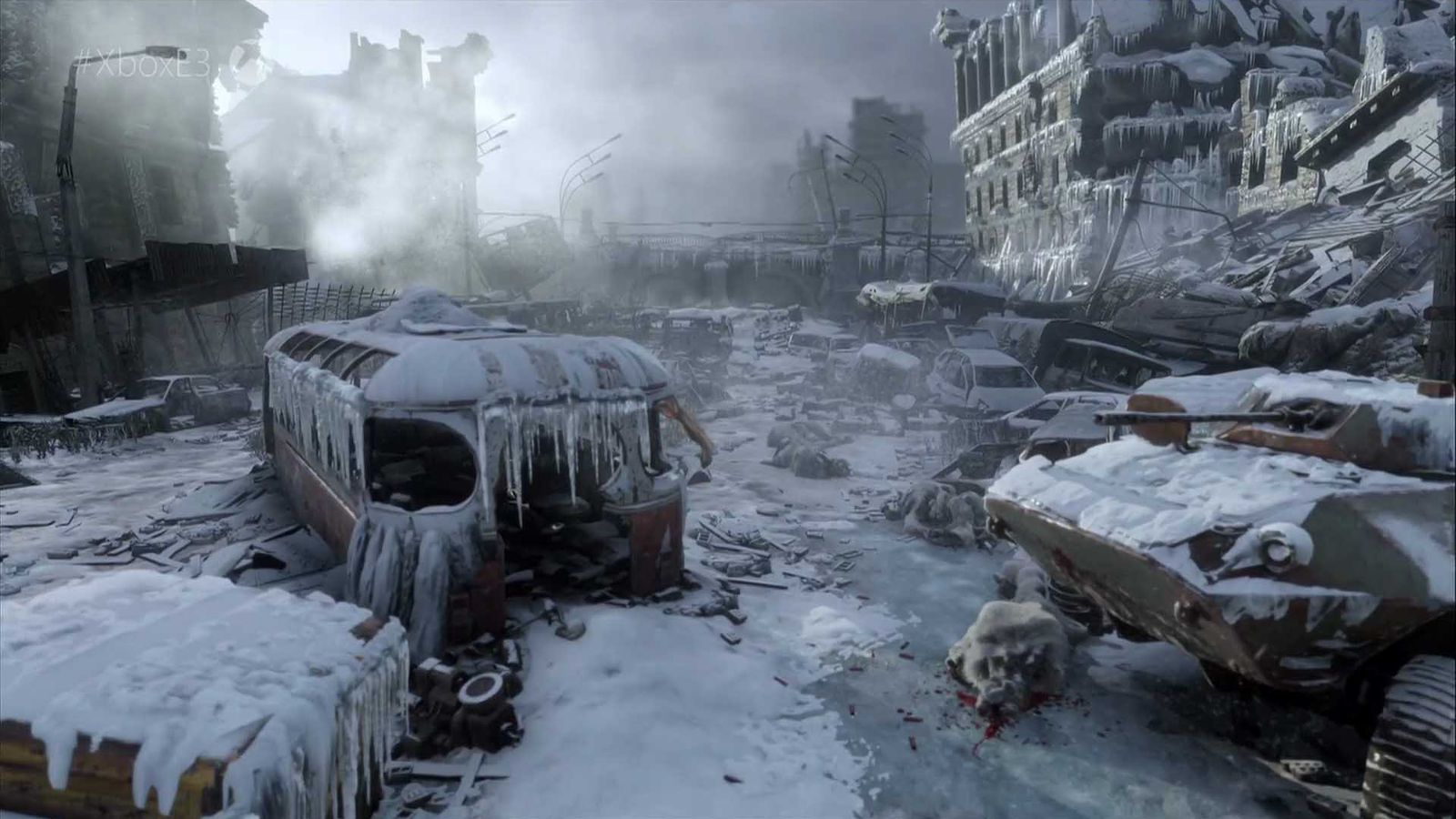
    First person horror/sci-fi shooter/RPG with amazing graphics and the third in a series of already very impressive games. This could easily end up being the game of the year.

    Pillars of Eternity II: Deadfire (PC, Mac)

    If this is anything like the first one it’ll be another tough-as-nails CRPG with great characters and an impressively deep story, as well as having a huge amount of content to play around with.

    Death Stranding (PS4)

    I have a feeling that this one won’t actually come out in 2018, but if it does it will almost certainly be one of the greatest games of the year. I suppose this is a strange thing to believe about a game that still hasn’t even shown any gameplay or told us what kind of game it even is, but the cryptic story looks so intense and unique and I have faith that Kojima has something truly special in store for us here.

    Darksiders 3 (PC, PS4, Xbox One)

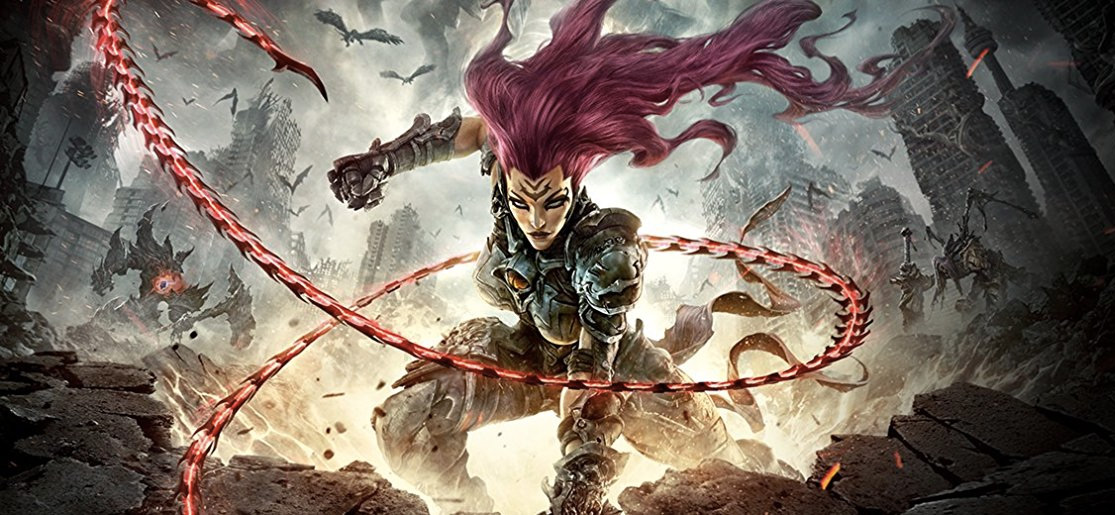
    Darksiders returns from the grave to bring us what will hopefully be another incredibly fun horror-themed Zelda clone with some extra emphasis on combat and great visual design.

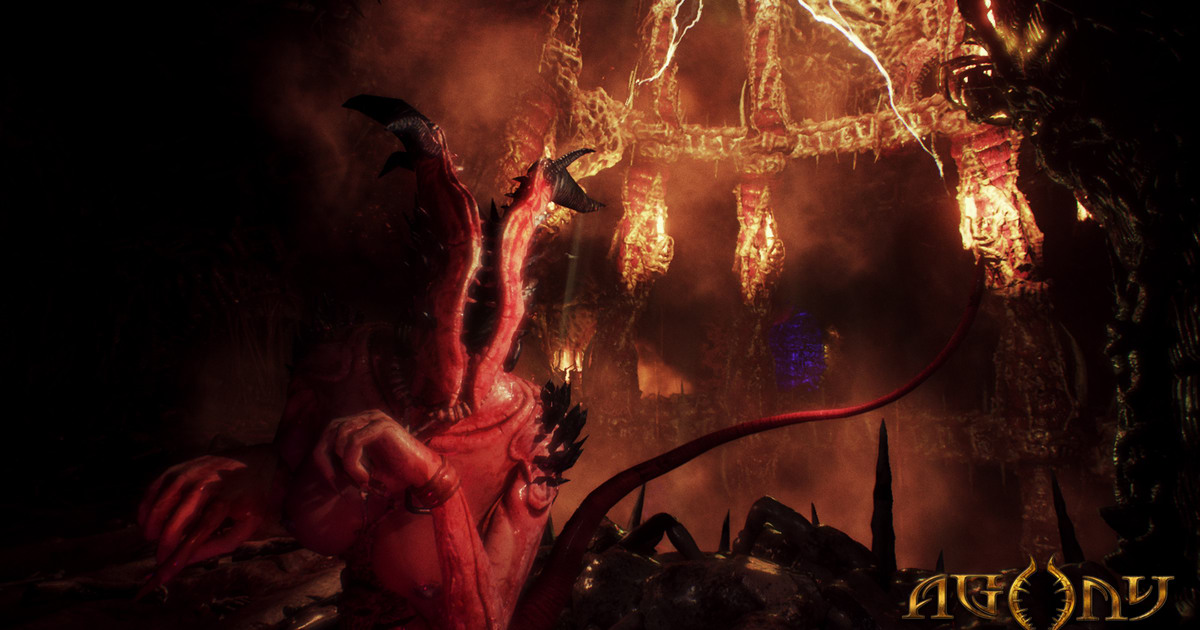
    Agony (PC, PS4, Xbox One)

    This is my most anticipated horror game of the year. Agony looks like it may be the most disturbing game ever made, with a truly terrifying looking journey into hell itself. If the gameplay is as good as the visual design then this will be one… hell of a game. [Ed’s note: I can’t believe you made that pun – you’re fired.]


    Professor GreilMercs

    Untitled Fire Emblem Game (Switch)

    Nintendo has been even more close-mouthed about their line-up for this year than ever before. Part of it was to make sure that attention was squarely focused on games that were available for the 2017 holiday season, but some part of it must also be to ensure that they have as steady and impressive a lineup for 2018 as they did for this past year.

    Without a doubt the top game I’m looking forward to is the new Fire Emblem game on Switch. Announced almost a year ago at the Switch’s debut at the start of 2017, there has been no information since. However, 2017 was a stellar year for the series, with a 3DS entry (Fire Emblem Echoes: Shadows of Valentia), a lucrative mobile game (Fire Emblem Heroes), and a Dynasty Warriors crossover (Fire Emblem Warriors), so the series has a ton of momentum going into 2018. The new Fire Emblem game is noteworthy for several reasons, not least of which because it’s the first console Fire Emblem game since Radiant Dawn on Wii more than a decade ago. Every Fire Emblem game introduces new elements, and the 3D dungeon exploration introduced in Shadows of Valentia could very well play a more significant role in the upcoming title. This is an absolutely perfect time for the developers of the series to take their cue from other Switch successes like Breath of the Wild and Super Mario Odyssey and really rethink the conventions of the series and breathe new life into the already solid Fire Emblem core gameplay.

    Nintendo Switch Online Service

    My second pick for what I’m looking most forward to in 2018 isn’t a game, but it’s Nintendo’s paid online service for Switch. Nintendo announced this service early on, but information has been limited and at times confusing. They’ve said that it will be $20 a year, which is significantly less than their competitors, and, similarly to PlayStation’s service, it will grant you access to a library of classic games (some with added online play). Nintendo has yet to introduce any Virtual-Console-like service for Switch, and hopefully there are going to be more surprises (hopefully good ones) related to the service, including its tie-in to MyNintendo, the rewards program.

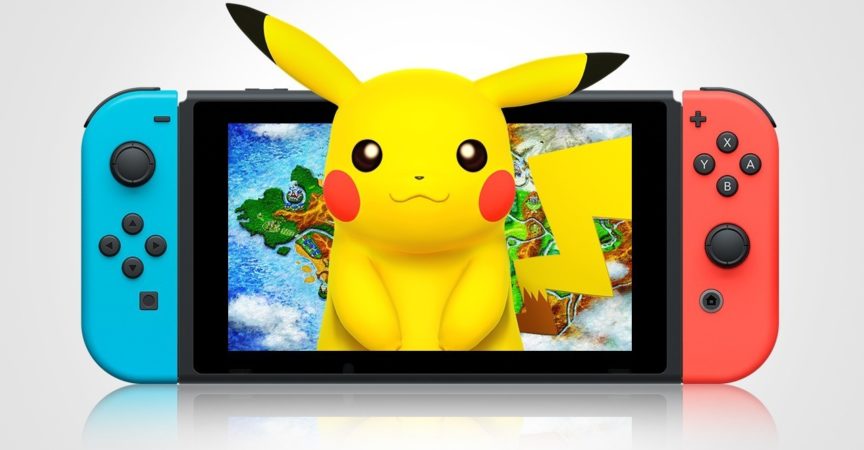
    Pokemon (Switch)

    It’s unlikely that we’ll see Metroid Prime 4 released in 2018, and it’s not clear if the next Smash Bros. iteration (or a port of the Wii U version) will be releasing this soon into Switch’s life either. So my next pick of games I’m looking forward to would be the Pokemon game for Switch. It may be a little early for this to be released in 2018, but it would put a guarantee on Switch’s sales for the year. As with the Fire Emblem game, this would be the first console Pokemon game in years, and the first mainline console Pokemon game ever, so it’ll be fascinating to see how those factor into the gameplay (other than making the visuals look amazing).

    Monster Hunter XX (Switch) – and a few Ninty surprises…

    I should sneak in a mention that I’m still holding out for a port of Monster Hunter XX for Switch that was released in Japan in August but has yet to be announced for release elsewhere. But what I’m most looking forward to in 2018 is what Nintendo will surprise us with. Even with the huge success of Switch’s debut year, this second year is still important for Nintendo. Given how poorly the Wii U did I’m sure they’re doing everything they can to make sure that 2018 continues to be as big (or bigger than) this past year. One shoo-in for a new title is a new 2D Mario game. There’s no doubt that Mario Odyssey was a huge critical and commercial success, but the audience for 2D Mario games is different (and bigger), and a new title would help build on the momentum of their smartphone game Mario Run. Similarly, a new Animal Crossing would be an obvious (and great) release for 2018, especially if it has tie-ins to their recently released smartphone game Animal Crossing: Pocket Camp. Of course, new IPs would also be great to see in 2018.

    It’s a great time to be a Nintendo fan, and since some of 2017’s biggest releases weren’t among my favorite genres, there’s a lot I’m looking forward to what Nintendo releases in 2018. Here’s to a great new year of gaming!

    [amazon_link asins=’B071G5HZ7F,B01M5DZ525,B072MK2DXV,B071JRHD7M,B01GW8Y3O2,B071RMFRFH,B01J4K4B4M’ template=’ProductCarousel’ store=’mostagreeable-20′ marketplace=’US’ link_id=’2046dfe8-efc9-11e7-b66c-23d36427b26e’]

  • From The Armchair: 2017 Achievements Unlocked!

    What ho, chums!

    As the dying embers of 2017 fall into the grate and 2018 roars into life, now is a good time to reflect on the achievements of the past year. And not just the Xbox ones, although there have been quite a few of those. (Yet having said that, it’s mostly been trophies this year as the PS4 has replaced the Xbox in my affections… but I digress.)

    We relaunched AMAP back in June with a new cast of writers, and I’ve been overjoyed at the excellent articles that have spewed forth. Particular props go to Baron Ritchenbaum Fochtenstein, Professor GreilMercs and Map Schwartzburg for their profuse and wonderful output. And it was fantastic to see the return of Sir Gaulian after his sabbatical – welcome back, Gaulie old chum. We’ve managed to put up several articles every week, which has been amazing – and hopefully we’ll be able to increase the output even more in 2018.

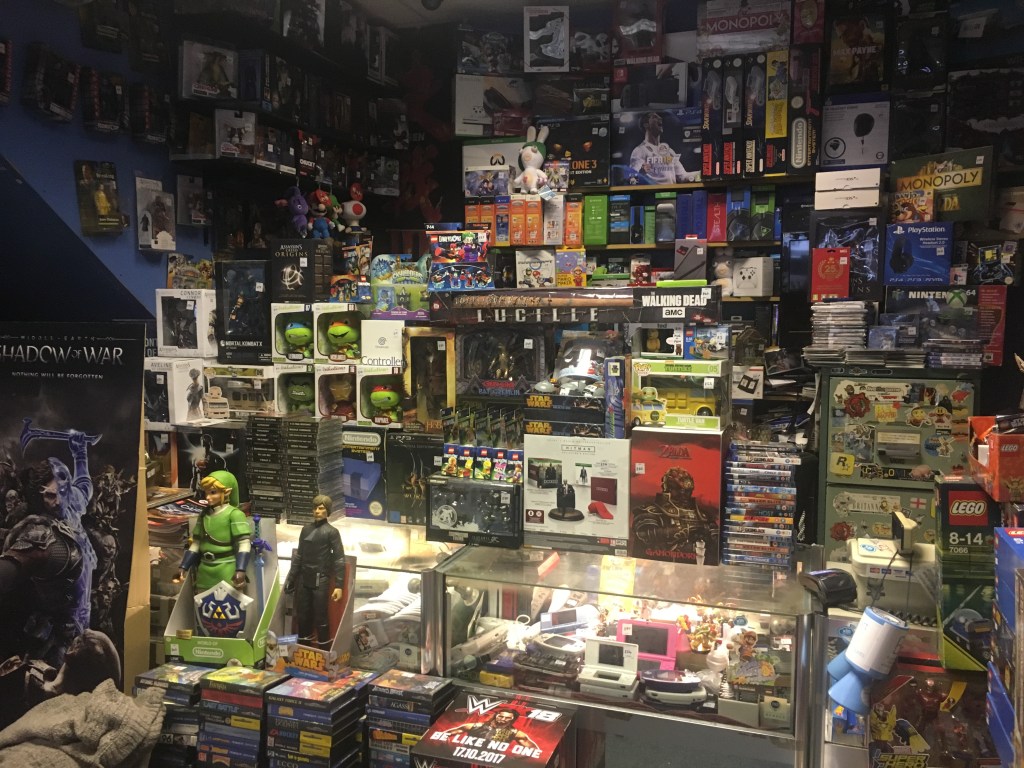
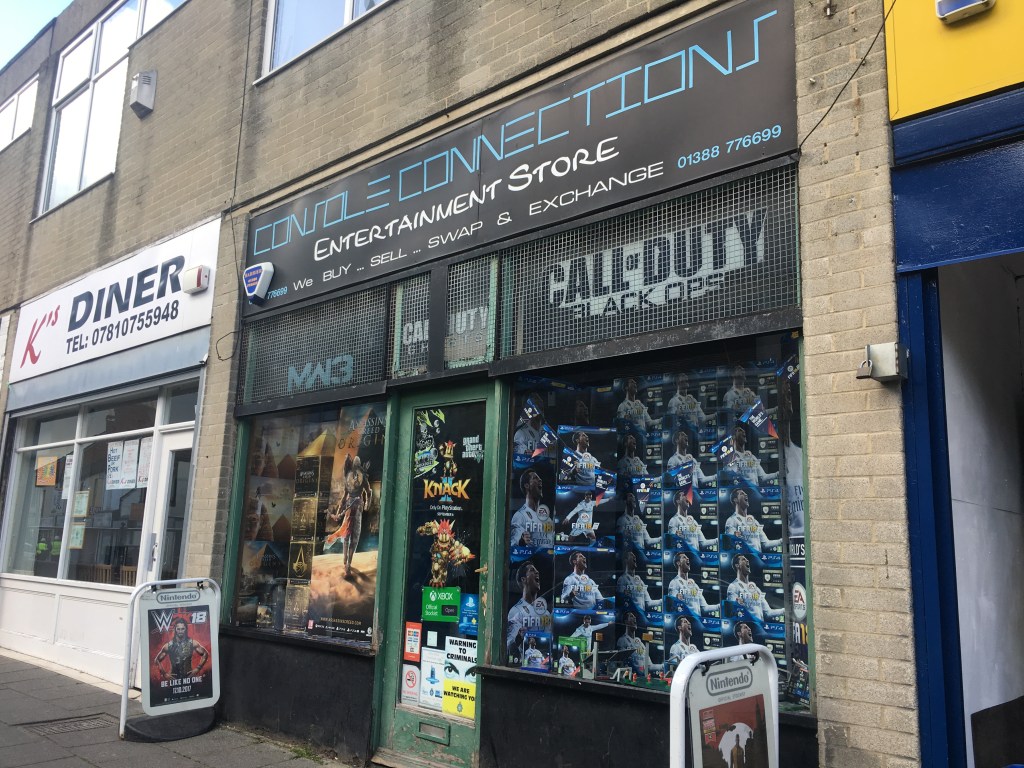
    I’ve also been proud of the writing I’ve done for mainstream game sites in 2017. I wrote my first articles for GamesRadar+ and PCGamesN this year, as well as contributing some more features for Kotaku UK and Eurogamer. My favourite was probably the feature I did on an independent game store near my home in North-East England – it was wonderful to meet Chris at Console Connections and hear his enthusiasm for video games. Here’s the full list of the articles I’ve written this year:

    Why Does Everyone Hate GAME? (Kotaku UK)

    10 of the Best Original Xbox Games to Play on Your Xbox One (Kotaku UK)

    How long have video game stores actually got left (and can they save themselves)?(GamesRadar+)

    Microtransactions and loot boxes in video games – are they pure greed or a modern necessity? (GamesRadar+)

    Your Amiga games are likely dying (Eurogamer)

    A day in the life of an independent video game store (Eurogamer)

    Studying the Thargoids: the intrepid players facing Elite Dangerous’s greatest threat (PCGamesN)

    How Elite Dangerous players saved a player stuck beyond the edge of the galaxy (PCGamesN)

    I’d really love to do some long-form articles like this for AMAP, but they take a huge amount of time in terms of interviews and research, so they’re not something I can really justify doing for free. But if we can raise some money through donations or some other mechanism, I’d love to do proper, meaty features for AMAP – it’s something I’m definitely looking into for 2018.

    One slight disappointment this year was that the Year of Zelda went a bit off the rails. I hoped to play through all the Zelda games I’d missed before getting Breath of the Wild at the end of the year – but 2017 is over and I still haven’t got a Switch, and I only managed to finish one of the games on my list before becoming irredeemably sidetracked. Ah well, there’s always next year.

    Happy New Year, everyone!

  • Top 10 PlayStation VR Games

    A little over a year later, is PlayStation VR worth it? Well, it’s certainly not cheap, it’s probably not the kind of thing you’re going to be playing every single day, and it’s a technology that’s still in its very early stages, but it sure makes for some amazing experiences anyway. Here are 10 of the best reasons so far to invest in VR.


    #10 The Brookhaven Experiment

    The Brookhaven Experiment is a very simple game, but it’s also a very effective one. It’s really just a 360 degree shooting gallery where the targets can kill you. Monsters come in deadly waves from all sides and you’ve got to be quick and accurate with your motion controllers to survive. Great monster design and a solid arsenal with tight controls make this an intensely fun action/horror experience.

    #9 Thumper

    Thumper is a crazy rhythm/action roller coaster ride where you play as a big metal bug for some reason. It’s surprisingly catchy and challenging, and the twisting tracks and the weird psychedelic voids that surround them are quite the sights to see in VR.

    #8 End Space (review)

    A space-combat sim that’s light on story and customization, but heavy on intense, tightly-designed space battles. A must-have for fans of Wing Commander and such, and hopefully a good glimpse into the future possibilities of VR gaming.

    #7 Here They Lie

    An incredibly surreal horror game that feels like you’re walking around in some kind of Cronenberg or Lynch film. The plot is near-incomprehensible, but the atmosphere and set-piece environments are pretty amazing (and a little bit disturbing).

    #6 Statik (Review)

    A VR puzzle game that contains a pile of incredibly clever and well-produced puzzles instead of just trying to dazzle you with 3D gimmicks. I wish there were more puzzle games like this.

    #5 VR Worlds

    What was thought to be just a tech demo disc, VR Worlds ended up containing some really impressive experiences. The London Heist is a fun action-thriller that has great characters and fun shootouts (and has its own full-sized game coming now), Scavenger’s Odyssey is a sci-fi shooter that feels a bit like a Metroid Prime game, and Danger Ball is a surprisingly compelling “sports” game that’s a kind of 3D battle Pong that looks like it’s taking place in the world of Tron. Oh, and those other 2 experiences are on there too.

    #4 Until Dawn – Rush of Blood

    Loosely based on Until DawnRush of Blood is a strange mix of a roller coaster and a carnival shooting gallery, all with the horror themes of Until Dawn covering everything. It’s short and basic, as rail shooters usually are, but it’s incredibly well-produced and is one hell of an exciting and great looking ride for horror/shooter fans.

    #3 Farpoint (Review)

    Not just a first-person sci-fi shooter, but the first “real” one of its kind for PSVR. Oh sure, there are plenty of first-person shooters on there, but right now almost all of them are stationary shooting gallery kind of games. Farpoint was the first to bring a full-on fps experience, complete with a story campaign and everything, and it did a damn good job of it too. It proved that this kind of game absolutely can work very well on PSVR, and hopefully won’t be the last such game we see on there! It also made perfect use of the new (at the time) Aim controller, that’s since been incorporated into other VR shooterss.

    #2 Battlezone

    This was the game that sold me on PlayStation VR when I got to try a demo of it at a Best Buy (that we had to drive an hour to because it was the closest one doing the initial VR demos!). Battlezone is a futuristic tank game with amazing visuals and impressively tight controls that I couldn’t get out of my head after I tried. I was even more surprised to find that once I finally got my hands on a copy, the game actually turned out to be an incredibly difficult rogue-lite that was apparently really meant to be played online with a co-op team, but I stubbornly refused to do so and kept pushing on solo on the easier difficulties (which were still ridiculously hard). It was a lot of fun and remains one of the best-produced VR titles I’ve ever played. I hear they’ve even included a free expansion a while back, which I’ve really got to check out one of these days.

    #1 Resident Evil 7

    This should come as no surprise. Resident Evil 7 was not just the biggest horror game to hit PSVR, but also the biggest AAA game to hit it in general. Capcom took a real chance making the latest entry in their long-running horror series entirely VR-compatible, especially with the relatively poor reception the previous game in the series saw, but they gave it their best effort and oh boy did it pay off.

    RE7 had some of the best graphics seen on PSVR, as well as having incredibly good controls in a time when PSVR was still very new and many games were struggling badly with their control schemes. Even more importantly, it was genuinely fear-inducing, even to someone as horror-desensitized as myself. It’s not just the best-produced PSVR game out there, but it’s also hands-down the creepiest game ever made (so far).


    So there you have it, the 10 best reasons to invest in PlayStation VR. Don’t worry though, there are more than just 10 reasons, these are just the very best of them, and it was harder to narrow it down to just 10 than I thought it would be (Apologies to Doom VFR and Accounting+, which I have a feeling would have made this list if I’d had the time to play them before the year ended!).

    And if you’re still on the fence about VR tech, do yourself a favor and find a store that does demos of it and try it for yourself. You might be surprised just how impressive it is when you actually try it for yourself, and if that doesn’t convince you, nothing will!

  • UPDATED: An epic Elite Dangerous rescue beyond the edge of the galaxy

    Through Twitter, I found out about an utterly crazy rescue mission in Elite Dangerous. CMDR Persera travelled 11 light years beyond the edge of the galaxy – further than anyone has gone before – but miscalculated how much fuel she had, and didn’t have enough to jump back to the nearest star. And it was all in an effort to drop off some souvenir mugs, believe it or not.

    Now the Fuel Rats – Elite’s amazing emergency service, who I’ve written about before – are on a race to find CMDR Persera and refuel her ship before her life support runs out. It’s gripping stuff. I wrote up the story for PCGamesN, check it out:

    Elite Dangerous players are trying to rescue a player stranded beyond the end of the galaxy

    All going well, CMDR Persera should be rescued late on Christmas Eve. Godspeed you, plucky rescuers!

    UPDATE!

    CMDR Persera made it back! Late on 23 December, earlier than forecast, CMDR Highwaywarrior, CMDR TheUnkn0wn1 and CMDR ABish made it to her location. More than 2,000 people watched the rescue live on Twitch. Check out the article for the full conclusion.

    Image courtesy of CMDR Highwaywarrior, one of the rescue party.

  • Review: Outcast – Second Contact (PS4)

    Outcast originally came out on Windows in 1999. I’ve always heard good things about it and it’s been on my to-play list for quite some time now, but I just never managed to get around to it. Luckily, original developer Appeal decided to remake their cult classic, so it seemed that the time was right to finally play this game.

    It really is a great looking world

    Outcast is a story about an emergency expedition to a parallel world (which oddly has very few actual parallels to our world and might as well have just been an alien planet), where naturally, things go wrong and you’re forced to quest and blast your way to victory. It’s a third person sci-fi action-RPG that feels almost like an early version of Mass Effect with a dash of fantasy thrown in, and it does have some mechanics that were pretty ahead of their time. It’s open world, non-linear, has a reputation system, and you can do optional side quests that allow you to weaken the enemy forces as a whole. These are all pretty standard features in modern games, but in 1999 this would have been pretty groundbreaking stuff, so it’s easy to see how it could have grown such a following back in the day.

    Definitely not a Stargate

    Most of the gameplay mechanics like combat, the inventory system, and the conversation system are noticeably clunky and dated, yet they still hold up remarkably well and manage to provide many hours of fun despite their age. There are a few areas that really could have used a little updating though. Boss battles in particular are overly simplistic and unpleasant even by old standards, the lack of explanation for the many different item types is a bit baffling for a modern manual-free game release, the crafting and stealth systems are almost completely useless, and it has some of the most ridiculously convoluted questlines I’ve ever seen in a game, but again, none of these flaws were big enough to dampen the fun of the core gameplay.

    Bringing peace to other cultures

    The new environments and textures are not just a simple HD remaster, but have been entirely remade and are actually pretty great looking for a modern non-AAA title. The characters however are not nearly as fun to look at. The human character models and the “aliens”, most of whom look completely identical, are really outdated looking compared to the fancy new environments and creatures, and end up standing out quite a bit.

    In fact, the characters are the worst thing about this game in general. The dialogue and voice acting is just plain awful. Even by semi-obscure 90’s PC game standards, it’s remarkably bad. Even Duke Nukem had wittier one-liners than Outcast’s hero Slade Cutter. It’s an incredibly un-funny game that persists in trying to be funny over and over again, and never pulls it off even a little bit. The conversations, even when they aren’t trying to be funny, are painfully boring and bursting with nonsensical “alien” lingo that make every chat a chore to get through. I got so sick of the horrible in-game cutscene talks that near the end of the game I just started skipping them, and this is not something I ever do. I really can’t think of a single game that I’ve done this for on a first playthrough. I even skipped the ending because I cared that little about the story at that point and was just ready for it to all be over.

    This bugged out conversation pretty much sums up the characters and plot

    I suppose that it’s something of a backhanded compliment to the gameplay that I still kept playing even with all the flaws, and having lost all will to care about any of the plot or characters. This isn’t a short game either, clocking it at 20 hours or more, so I guess I must have enjoyed it more than I didn’t, or I’d have turned it off much, much sooner. Though there were moments that really made me question my will to continue, like this:

    So what does this all mean for Outcast – Second Contact? Did I like it? Would I recommend it? I think that this is another of those games that only people who have an appreciation for older games would be able to enjoy, and even then I’d probably be a bit hesitant. It has a lot going for it and I have to admire the ambition it had for its time, but there are too many flaws to suggest that anyone rush out and play it immediately, and I wouldn’t recommend it at all to anyone who prefers modern games. I feel like a great opportunity was missed here, because if they would have put as much work into updating other areas of the game as they did with the new graphics, Outcast – Second Contact could have been something special again instead of just a rusty, creaky relic with a fresh coat of paint.

    Outcast – Second Contact is available now on PS4, Xbox One, and Windows. 

    Disclosure statement: Review code for Outcast – Second Contact was provided by Big Ben Studios. A Most Agreeable Pastime operates as an independent site, and all opinions expressed are those of the author.

    [amazon_link asins=’B073XVCH2Y,B077NSR2W2′ template=’ProductCarousel’ store=’mostagreeable-20′ marketplace=’US’ link_id=’0e4c0ad3-dee9-11e7-8d91-ef2499b1f564′]

  • Spiffing Reads: Diversity and DDR

    This week on Spiffing Reads, a couple of excellent features from Polygon…


    Why the fighting game community is color blind (Polygon)

    A look at diversity (or lack of diversity) in competitive gaming, with some theories about why the fighting game community in particular is more diverse than pretty much all other competitive gaming scenes. This is another case where the discussion in the comments is more illuminating than the article itself. Professor GreilMercs


    The rise, fall and return of Dance Dance Revolution in America (Polygon)

    I’m a semi-regular DDR player, but I’m always amazed at how great some players are at it. This article goes into the history of how Konami abandoned American DDR arcade players in the past and only recently started giving the American market more attention. This directly contributed to an American winning the DDR Konami Arcade Championship this past year, which is pretty cool to see. PGM


    Spiffing Reads is a regular feature where we pick out the best gaming articles of the week. If you’ve read anything interesting, please let us know in the comments.

    [amazon_link asins=’B00QXJFE08,B018HXA6H8,B003FG68U2,B0009Z3K12,B0000A09EL,B000GF7KAW’ template=’ProductCarousel’ store=’mostagreeable-20′ marketplace=’US’ link_id=’b432b0b8-e76a-11e7-9f06-eb84335bd074′]

  • Hand of Fate 2 gets DLC and a discount

    I really am going to get around to reviewing Hand of Fate 2 soon, I promise. I received review code for this game weeks ago, but a succession of back-to-back work deadlines has meant a string of late-night workathons in the run up to Christmas, and I simply haven’t had time to play it – or any game, for that matter.

    But what I can say is that the few bits I’ve seen so far are very good indeed, and I’m looking forward to playing through the whole thing properly over the Christmas holidays – expect a full review in the New Year. If you fancy picking up the game before then, it’s going for 10% off its normal asking price of $29.99 USD / €24.99 / $29.99 AUD in the Steam Winter Sale, which starts today.

    There’s also some fancy new free DLC – available now – which lets you use The Dealer himself as a companion character (check out the screenshots, he’s the one cosplaying as a beige Emperor Palpatine). For more info on Hand of Fate 2, check out the official site.

    [amazon_link asins=’B01LYTD5D2,B0781VST1X,B07713ZVQ4,B017S3OPZM,B01MUAGZ49,B01MS6MO77′ template=’ProductCarousel’ store=’mostagreeable-20′ marketplace=’US’ link_id=’483c297e-e694-11e7-8551-773f783f1638′]

  • The best video games of 2017

    Wow, 2017 has been an absolutely stellar year for video games. Nintendo managed to bookend the year with two of the company’s best ever games, The Legend of Zelda: Breath of the Wild and Super Mario Odyssey, while Sony spewed out the wonderful Nioh and Horizon: New Dawn at the start of the year. Persona 5 and Nier: Automata proved to be some of the best RPGs that Japan has ever produced, while the Christmas deluge of new releases was nothing short of spectacular, dropping classics like Wolfenstein II and Assassin’s Creed Origins. Then there are the countless excellent indie games, from the delightfully twee Yono and the Celestial Elephants to the rather less twee What Remains of Edith Finch.

    Sadly, despite our best efforts, the gentlemen of The Manor haven’t had time to enjoy more than a fraction of the astounding video games that 2017 hath brought (who has?), but we’ve looked back over the games we HAVE managed to play this year and picked the absolute stand-outs.


    Lucius P. Merriweather

    Wolfenstein II: The New Colossus (review)

    I loved Wolfenstein: The New Order, with its crazy mix of old school gameplay and ludicrously OTT set-ups, and its sequel manages to improve on the first game in every area. Setting the game in a Nazi-run America turned out to be surprisingly timely, and there were several digs about the current US regime stashed away in corners, but the reason I love this game most is that it combines a roller-coaster thrill ride with characters I actually ended up really caring about.

    Hob (review)

    I wasn’t even supposed to review this game. It was slated for The Baron, but I ended up requesting an EU code by accident, so it fell to me to review it in instead – and what a happy accident that turned out to be. Hob captured my imagination from start to finish, particularly thanks to its wordless world, where it’s up to the player to work out what’s happening and how to progress. It was a simple trick that kept me totally engaged – although it helped that this Zelda-a-like is a game of the highest order. I didn’t get to play Breath of the Wild this year, but I still got my fix of fantastic action RPG puzzling thanks to this little gem.

    Metroid: Samus Returns (review)

    I was utterly bowled over when Nintendo announced not one but two Metroid games at this year’s E3 – particularly because one was scheduled for release in September. I had waited around a decade for a new 2D Metroid, and now I just had to wait a matter of months! A joy from start to finish, Samus Returns rekindled my childhood memories of Super Metroid while at the same time improving on Metroid II in every way. It’s is easily one of the best games I’ve played in years – here’s hoping that Ninty don’t wait so long to release another 2D Metroid next time around.

    Hellblade: Senua’s Sacrifice

    There were ominous rumblings in the month’s leading up to Hellblade‘s release. Although the game always looked visually impressive, the previews raised questions about the combat and overall gameplay, and I was readying myself for disappointment. So what a surprise to discover that Hellblade is one of my absolute stand-out titles of 2017, a hard-hitting look at mental illness that drew me in and kept me hooked as I explored Senua’s bizarre and gruesome Dark-Ages world. And the combat actually turned out to be one of the game’s best features, funnily enough – tense stand-offs in which it’s easy to become surrounded if you’re not quick on your feet.

    Fire Emblem Heroes (feature)

    This is another game that I had reservations about before its release, but it turned out to be one of my most-played games of 2017. The simple maps are perfect for bite-sized sessions, and there’s a surprising amount of depth beneath the rock-scissors-paper combat. Indeed, the game has gathered in strength over the past year thanks to regular updates, to the point where the version that came out in February would be almost unrecognisable if stood alongside the one available now. A wonderful, wonderful time sink – especially to an FE fan like me.


    Baron Richenbaum Fotchenstein

    Resident Evil 7

    This game truly re-invented the concept of horror in video games, as well as being what is still the single best example of how amazing VR technology can be in the hands of a AAA company. I’m still impatiently waiting for other devs to bring something even slightly close to this level of quality in a horror game to VR. Someday…

    Mass Effect: Andromeda

    Even with all its flaws, most of which I still insist are greatly exaggerated, Andromeda still proved to be one of the best experiences of the year. It kept me hooked for around 100 hours and I still never got tired of it. The combat was just so fun and the worlds were so vast and beautiful (and made us feel like our upgrade to 4K was totally worth it), that even though the story didn’t quite reach the heights of the original trilogy, it was still an amazing game.

    Nier: Automata

    I’m a huge fan of the Drakengard/Nier series and this latest entry didn’t disappoint. There’s a huge amount of content, an enjoyable combat system, a ton of character customization options, and an amazing story that really makes you think. The final ending is one of the most memorable endings ever seen in a game too.

    Prey (review)

    I’m also a huge fan of Arkane Studios and their wonderful first person action-rpg games. This one had it all; horror, sci-fi, stealth, first person shooting, and a really well written plot, all in a huge and amazing looking setting. One of the most criminally underrated games of the year.

    Evil Within 2 (review)

    Again, a lot of stealth, a lot of action, a lot of gruesome horror, a great story, and a lot of great looking environments to methodically explore. It didn’t even come close to being as creepy as Resident Evil 7 (I doubt any non-VR game ever can now), but it was still an incredibly fun and well-produced horror game, which is something I can never get enough of.


    Professor GreilMercs

    Fire Emblem Heroes (feature)

    Without a doubt the game I played the most this year was Fire Emblem Heroes. My initial reaction to the game somewhat lukewarm, but the game has seen a regular series of updates that have just made the game more and more addictive (which Lucius and I discussed a few months ago). I’m still playing and enjoying the game, and somehow against all the odds all the new mechanics that have been added have been worthwhile so far. I still wish I were less compelled to be a completist with this game so that I could focus on other games, but at the same time I’m happy that the game has had so much longevity, far beyond what I’d expected.

    The Count Lucanor (review)

    This indie survival horror game was released on Steam last year but was recently released on Switch. I loved pretty much everything about the game including the story and writing, characters, and amazing pixel art. I don’t usually gravitate towards survival horror, but the fantasy setting and macabre creepiness were more fun than scary and made this game one of the most memorable ones of the year for me.

    Arms

    Although Breath of the Wild and Super Mario Odyssey have gotten the most attention this year, my favorite Switch game this year was actually Arms. I tend to enjoy new IP more than new entries in longstanding franchises, and I loved how much Arms felt like something new. Although it has a similar bright and colorful aesthetic as the Splatoon games, the core mechanics are a lot of fun and the characters are great new additions to the Nintendo roster. The game is easy to pick up, but it becomes really enjoyable once you start internalizing its rhythm and honing your strategy. Like all the best fighting games this is one that you’ll enjoy more the more you play it, and I’m looking forward to spending more time with it.

    Super Mario Run

    I had to squeeze this game in. Although it was released on iOS at the very end of last year, Super Mario Run was only released on Android this year. This was a game that I was very skeptical of even after playing the demo, but after playing the full game and spending time with all the modes I’ve found it’s one of the freshest takes on the Mario 2D formula in years and have really come to enjoy its bite-size levels. This is a game that has been great to come back to again and again and pick up for short bursts of gaming. The game feels a bit underrated and underappreciated, but surprisingly it was one of my favorite new games of the year.

    [amazon_link asins=’B072JY7NX5,B075JF372G,B01NBTWOVC,B071WPL1L8,B01GW8Y9SM,B071X7V8NR’ template=’ProductCarousel’ store=’mostagreeable-20′ marketplace=’US’ link_id=’c6fbe8e8-e68b-11e7-a5e0-b1c98375d557′]

  • Microtransactions: greed or necessity?

    There’s no denying that EA dropped the ball when it came to incorporating microtransactions into Star Wars Battlefront 2. The very fact that the publisher felt the need to pull them from the game just before launch in the wake of player outrage is testament to that.

    But why were microtransactions in the game at all? Is it purely greed? Or are microtransactions the only way that publishers can hope to turn a profit as development costs skyrocket with every new generation of console? This isn’t just EA’s problem either – practically every AAA game has additional paid-for content of some kind, whether it’s story-based DLC or simply a new hat for your character.

    I took a deep dive into the numbers behind microtransactions for GamesRadar. And when you take a look at the figures, it’s clear to see that publishers are going to be increasingly dependent on microtransactions and other additional content in the future:

    Microtransactions and loot boxes in video games – are they pure greed or a modern necessity?

    So what’s the answer? Would you be happy to pay more for full-price games? And is there a better way than microtransactions to increase revenue? I’d love to hear your thoughts!

    [amazon_link asins=’B017S3OPZM,B075LC794Z,B01K6010FM,B01L0TM25U,B078827Z42,B071Y1RXHG’ template=’ProductCarousel’ store=’mostagreeable-20′ marketplace=’US’ link_id=’01336d3a-e593-11e7-a442-2f62625222a6′]

  • Support your local independent game store!

    I pitched an article on independent game stores to Eurogamer a while back, and they were really keen to do it. Indie game stores are a bit of a dying breed – constantly being squeezed by online retailing and the switch to digital gaming (something I wrote about for GamesRadar a while back) – so it felt important to celebrate what makes them so brilliant.

    I hunted around for an indie game store near me, and I was delighted to find Console Connections in Shildon, County Durham. This shop is just flippin’ amazing, stuffed to the gunwhales with fantastic games and video game ephemera. I spent hours in there speaking to the owner Chris, but even just as I was leaving I kept spotting amazing finds, like Low G Man on the NES and Sentinel Returns on PS1, a sequel to Geoff Crammond’s seminal C64 game The Sentinel – I didn’t even know the game HAD a sequel.

    Here’s the full story on Eurogamer:

    A day in the life of an independent game store

    Since interviewing Chris, I’ve made a point of buying all my new games from the shop – and I’d encourage everyone to support their local indie game store. They can be magical places, and we’ll miss them if they disappear.

    The counter of Console Connections. Look at all that amazing stuff!
  • Second Opinion: Wolfenstein II

    I wasn’t going to write anything about this game with Sir Lucius already having done a review on it, but now that I’ve finished it, I find that my thoughts are so unexpectedly opposite to his that I can’t seem to contain myself.

    First of all, daaaaaamn it really was hard. Even just playing on Bring ‘Em On difficulty (which is their equivalent of Normal mode) was incredibly tough. There are frequent checkpoints, and you can manually save at just about any time, so you never lose much progress, but man do you die a lot along the way.

    It also took significantly longer to finish than people on the internet are saying. I guess if you do only the main story missions and don’t explore at all you can blow through it pretty quickly, but with all the secrets, side quests, and optional challenge missions, it ended up pushing near the thirty hour mark. More content than expected is always nice.

    Let’s talk about that story though. A lot of people, at least back when they revealed footage of the game, were very excited about the story and the crazy, detailed look of this alternate version of America, but having experienced it for myself, I thought the plot and characters were quite awful. It doesn’t seem to help matters that the game seems confused about whether it’s a super dark and serious drama or a wacky slapstick comedy.

    The game goes from showing us horrible Nazi atrocities, the graphically violent and racist behavior of BJ‘s father in flashbacks, and has this ongoing subplot in the first half where BJ is slowly dying due to the massive injuries he sustained in the end of the first game, and the only thing holding his guts in is this super armor he’s wearing. It’s all very dark and gloomy, and then about halfway in everything just suddenly shifts into comedy mode and the game becomes a complete parody of itself.

    It just seems to suddenly give up entirely on being serious and every cutscene and character interaction becomes some kind of contest to see who can be the most annoyingly quirky. There’s Fergus with his ridiculous robot arm that seems to somehow be sentient and childishly plotting against him, despite that making no actual sense. There’s the bizarrely stereotypical tough, sassy black woman and her cliched ufo conspiracy nut boyfriend who just won’t stop rambling incoherently. They’re all so simultaneously edgy and quirky that I found them pretty unbearable. I didn’t find myself caring for them or sympathizing with them like Sir Lucius did, I actually wished they would just die so I could stop listening to them and get back to the battling. I get that this was supposed to be like an irreverent, campy grindhouse feel, but it all feels so forced and out of place that I just wasn’t into it.

    There’s also an absolutely ridiculous plot twist in the middle that’s like something out of a bad superhero comic book (you know the one I mean if you played it), very strange and sudden transitions between locations at times, and an ending that feels kind of rushed and incomplete. It’s hard to tell if they were in a rush to finish the game, or if someone’s bosses decided the game needed more humor half way through, or if things were left kind of hanging for the sole purpose of leaving room for sequels or DLCs or what, but I just really didn’t like almost any of the non-combat content at all.

    I don’t know, a lot of people seem to like the story and characters just fine, so much that Sir Lucius and many others are calling it one of the best games of the year, so I guess maybe I’m just not quite in the target audience anymore for some reason, which is a bit disheartening to someone who’s been following the series since Wolfenstein 3D. It’s not a bad game at all, I still really liked the gameplay, but I felt like this could have been so much more and I’m a little bit disappointed if this is going to be the new direction for the series. Not enough that I won’t probably still buy another sequel someday, but enough that this series has now dropped in my mind from “need to play ASAP” to “I’ll wait until it’s on sale for 1/3 the price”.

    [amazon_link asins=’B072JY7NX5,B076YWKCV9,B074B5F8LD,B074B2CB6G’ template=’ProductCarousel’ store=’mostagreeable-20′ marketplace=’US’ link_id=’786e6781-e2a2-11e7-8c9f-d7f744a3ba86′]