• Good old Nintendo. You may remember that a while back I had my Nintendo 3DS stolen, meaning I lost all of the games I’d downloaded, including the almost-completed Link’s Awakening. Well, I’ve since received the insurance money (which came out at just £100 owing to some sneaky terms and conditions – read the small print, kids!), and I bought myself a new 3DS a couple of weeks back. I got in touch with Nintendo to see whether I’d be able to download the games I’d lost again – after providing them with a copy of the police report, they said they’d be able to help me out, and lo and behold my lost games have since been restored to me! Hurrah!

    My new 3DS is back in black.
    My new 3DS is back in black.

    Sadly, there’s nothing they could do about my game saves, which were lost with the machine, so I’ve been plonked right back at the beginning of Link’s Awakening. I was right near the end when the console was stolen, so I don’t really have the heart to play through it all again right now… Who knows though, I might get round to it some day.

    On the other hand, I’ve already got struck right back into Crimson Shroud, which I nominated as one of my favourite games of 2012, so I’m REALLY pleased to have that back.

    Nice one Nintendo.

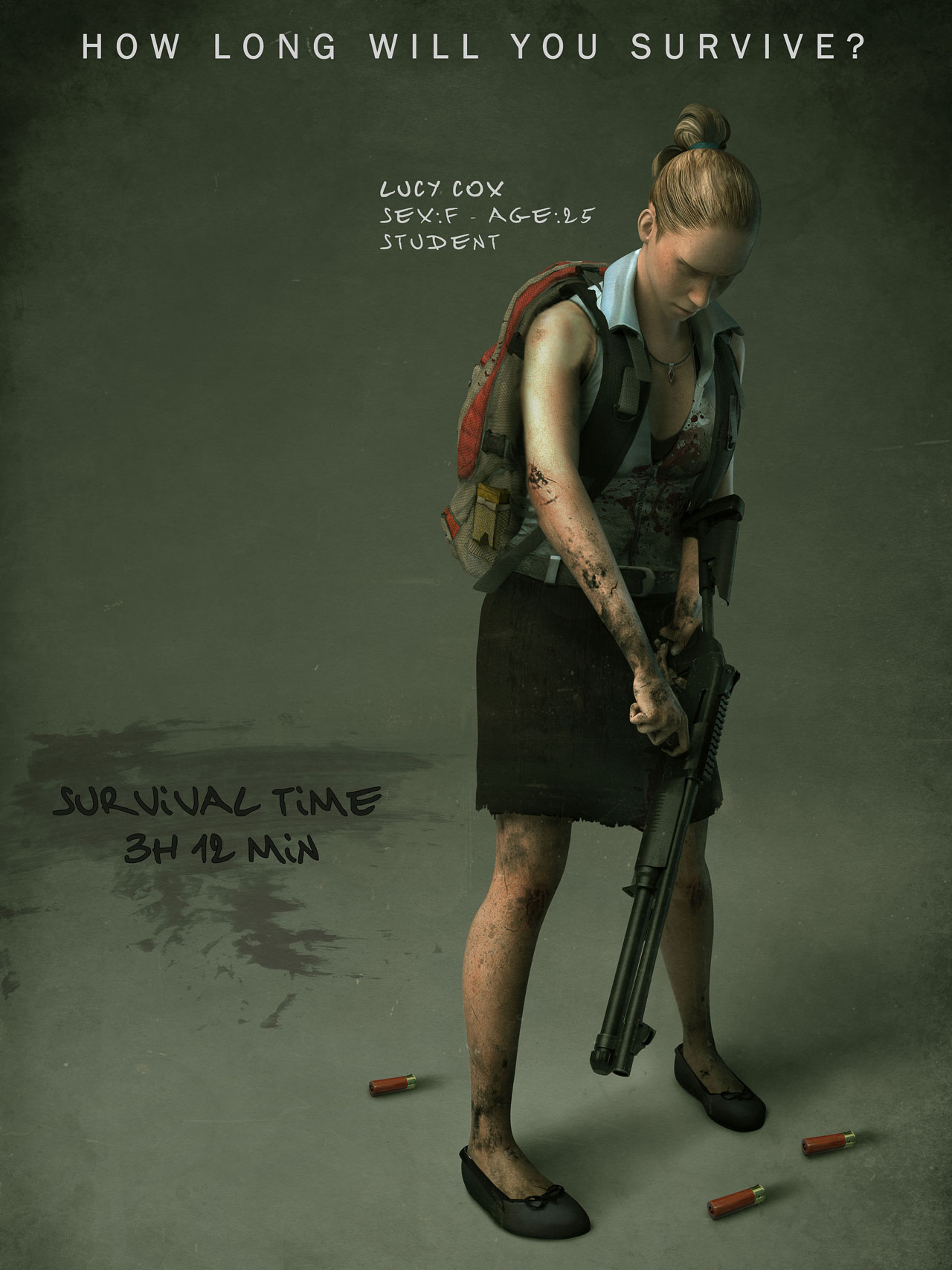
  • Not Kayla. But you get the idea.
    Not Kayla. But you get the idea.

    Kayla Mitchell died late on Tuesday night. She’d just managed to fight her way out of the Nursery after facing and defeating the horror that lurked in the basement, but she died tragically just feet from safety. Low on ammo and on health, she attempted to open a locked door between her and a manhole that led back to the protection of the safe house, but – ALAS! – as she struggled to get it open she was ambushed by four zombies and devoured.

    Kayla was the longest surviving of the string of characters I’ve played since beginning ZombiU. I can’t remember exactly how long she lasted, but it was a good three or four hours, and losing her was a real blow. It’s weird how you get attached to the survivors – Kayla in particular spent most of the time absolutely terrified, almost sobbing every time a zombie shuffled into view. It made me want to protect her and see her through to the endgame. I didn’t do a very good job.

    Now I’ve been given control of Dexter, a balding, tracksuited geezer with a profession I can’t even remember. His first task was to dispatch the now zombified Kayla. It was a sad moment.

    It’s amazing how emotionally affecting ZombiU can be – it’s certainly the most affecting video game I can remember. It’s also by far the scariest, to the point where I simply can’t play it for more than an hour a time.

    I’m getting towards the end, slowly. The Nursery was hard, and by far the scariest part of the game so far. Let’s see how Dexter gets on – maybe in time I’ll grow to like him as much as Kayla. Maybe he’ll even last to the end credits. Maybe.

  • HwoarangI grew up playing 2D fighters at a relatively competitive level.  In fact I would say that it was something that I, stupidly perhaps, was pretty proud of.  It took patience, perseverance and many many hours of practice at whichever arcade I could find at the time.  They were, in some ways, many of my greatest memories, and sometimes when I look back I shed a single, solitary tear.  Ah, the good old days.

    But now I’m a grown up.  I don’t have patience, not very often do I find myself persevering outside of Dark Souls, and I sure as hell can’t spend a multitude of hours practicing, even if arcades were still easy to come by.  All of this had led to me just simply sucking at any fighting game past Street Fighter III-3rd Strike.

    But the love and thirst for a good, well balanced and mechanically sound fighter hasn’t gone away.  After all I am a child of the halcyon days where King of Fighters sat proudly next to Street Fighter in the arcades and when crowds would gather to watch the local talent get to on-screen fisticuffs.  The problem is I have since moved away from my childhood cities, am not longer in contact with my childhood friends, and haven’t since found that special someone to share in some local competitive fighting with.  What about the internet I hear you say?  Well that is the problem – I’m just not competitive and spend literally 8 seconds of the 10 seconds a round will typically last flying around the screen unable to put up any semblance of a fighting chance.  That is no damned fun sir.

    So I have resigned to playing these games solo.  And I’m okay with that.

    It may be due to the sheer number of fighters I played on portable systems that only supported ad hoc multiplayer, if at all.  King of Fighters EX 2 basically lived in my Game Boy advance for the odd fight.  The odd experience of that brilliantly amazing fighting system.  The fighting system that does the job no matter who I’m fighting whether human, regular AI or sentient super smart going to kill me in my sleep AI.  It was a great fighting game against any measure.

    Oh but the AI doesn’t react the same way as a human does which makes it not even worth playing.  Yes the AI is stupider.  No it doesn’t react to what I’m doing the way a regular, trained and practiced human would.  But isn’t that what we are all after – us regular people who aren’t dedicating our lives to the art of fighting (games).  Aren’t we after that level that’s challenging but not frustrating?

    But some games don’t even offer a story mode that’s kind of stupid hey.  Sure a story is nice, and who doesn’t love the shenanigans of the Tekken and Dead or Alive crews, not to mention the brilliantly done Mortal Kombat story mode.  But for me that’s not the main draw.  As long as I can kick a punch a guy and  occasionally throw a fireball I’m set.  That doesn’t make me a casual gamer.  It makes me a guy with some semblance of an understanding of opportunity cost.  And the opportunity cost of practicing for hours on end to beat some 16 year old on the other end of the internet is pretty darn high, and all just to get punched in the face and humiliated.

    I used to be the guy that punched people in the face with infinite juggles and I liked being that guy.  I also continue to respect those that do have the patience and time to become the best at what they do.  Fighting games are sublime games of strategy and when played at high levels serious works of art.  At some point though I couldn’t justify it anymore.  I got a job which takes up a bit of time during the day and realised that I didn’t have the time, nor was it all worth the time investment, just to keep up with the Joneses.  I still love fighting games and the feeling I get from utterly humiliating an opponent is still as good as it was in the arcades 20 years ago.  Only difference is now I’m happy to fight someone who can’t smack talk me afterwards.

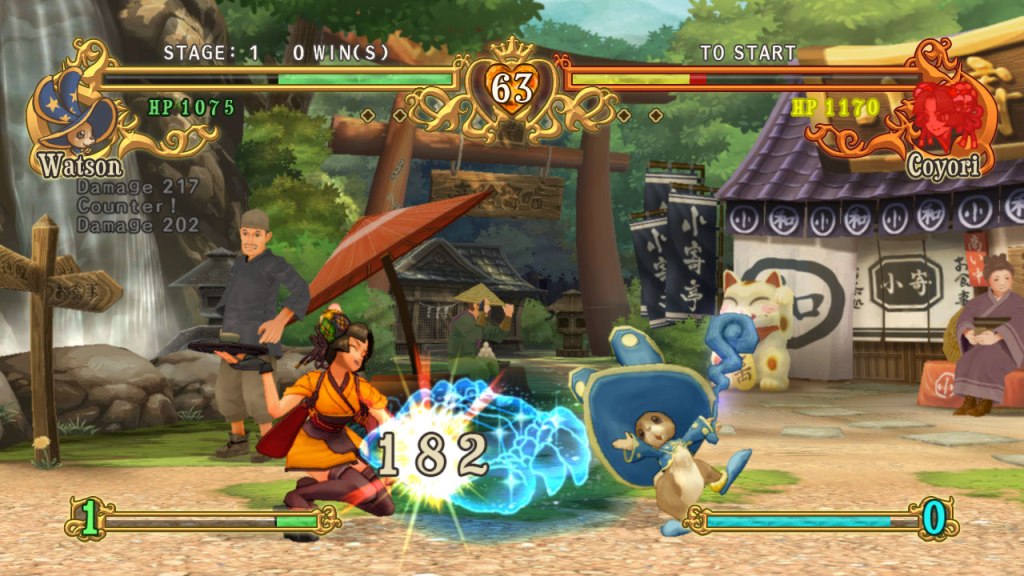
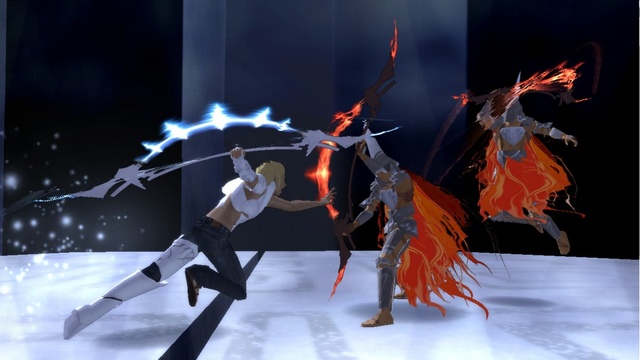
    Battle Fantasia (Arc System Works)
    Battle Fantasia (Arc System Works)

    Follow me on twitter @oldgaulian

  • DOOMlogoDOOM is one of the greatest games ever made.  It certainly is one of the most influential games ever made, and was so big of a phenomenon that every console known to man from the Super Nintendo onwards has found itself with a copy of DOOM in its lap.  The Game Boy Advance even had DOOM as a launch title in a kind of ‘hey look at us we can run DOOM on this tiny little handheld’ gesture.  And a decent transition it made.  It is almost as impressive as seeing it run on the Super Nintendo, which to this day is still one of my greatest gaming memories.  Ridiculous really, given I had access to the PC version at the time – but that really is the joy of retro gaming, finding pleasure in the strangest of things.

    DOOM SNES

    Not all DOOMs are made equal though.  The aforementioned Game Boy advance had green blood, was missing  the larger more complex enemies and had a slightly amended HUD.  Even weirder was the SNES version which always had the enemies facing the player.  All minor changes relatively speaking, particularly when considering the Nintendo 64 version creatively named DOOM 64, which was a far cry from the original featuring all new levels, new character models and a new weapon.  All of which feels incredibly strange when all of the sound effects as far as I can tell are the same as the original game.

    Whichever way you look at it, I could play pretty much any version of DOOM ’til the cows come home and be pretty content doing so.  But like a parent who has a secret favourite child, I do have a favourite version of the game.  And it is an unlikely and unpopular choice given that the PC original (and those based on that version including XBLA and BFG edition versions) is widely considered the best.  Not surprising really.  And I would agree that when all is said and done it is the best version of the game from pretty much every angle.  But best and favourite don’t always equal each other.  Just ask my parents.

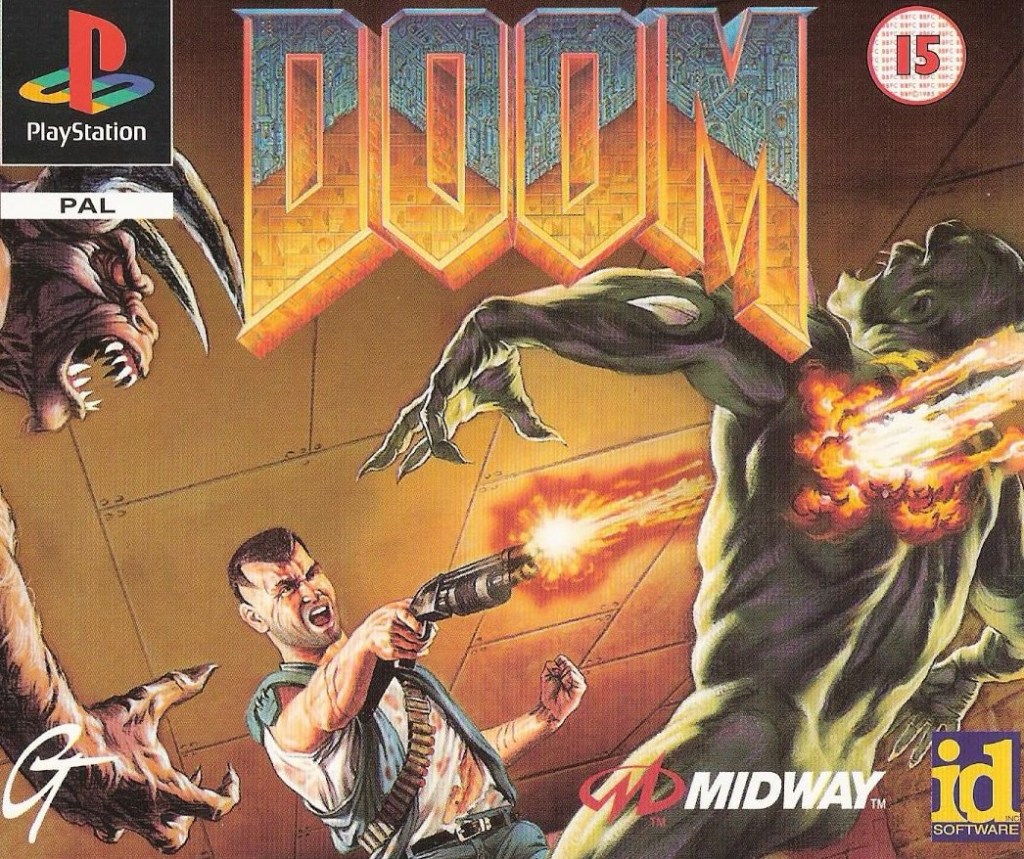
    The Playstation version is in a word unique and because of this it holds a special place in my heart.  That and it is probably the version I played the most growing up.  It is still DOOM, you are still killing Imps, Shotgun Guys and Cacodemons and you are still a UAC space marine in one hell of a predicament.  But the main difference, and the reason I like it so much, is that game took a different tonal approach which I think resulted in a far more atmospheric game than the original.  The lighting, while still a far cry from what we see today, was more advanced and used to great effect to make the game feel darker and more in line with the evils that the game is trying to convey.  That may be in part due to the fact that it came out after DOOM II (and in fact includes both games) and was able to take advantage of some of the more ‘advanced’ effects and textures featured in that sequel.  Combine that with the fact that it had a lag of 2 years from the release of the original and you’ve got more time to make it the quintessential DOOM experience.  It was more brutal, darker and more scary.  In short  it felt more late nineties as opposed to early nineties.  Even the box art was more edgy than the original.

    DOOMPS1

    From a gameplay perspective not a lot has changed.  The maps are slightly different and seemingly more open, something which is apparent even in the opening minutes of the game.  Some of the textures are slightly different, resulting in less ‘advanced’ looking walls full of circuitry and LEDs and more monastery style bricks.   Even some of the sound effects have changed.  Gone are some of the death cries of the enemies (notably the high pitched death of the human enemies) and the pistol has a more refined sound to it making it sound like an actual gun.  Unfortunately it is just a pissweak as ever and you’re better off defaulting to the chainsaw in desperate times. Probably most noticeable though is the change from the classic Robert Prince DOOM soundtrack to more atmospheric ambient sound.  Love it or hate it there is no denying that it makes it a more tense experience.  I happen to love it.

    DOOM LV2 PS1
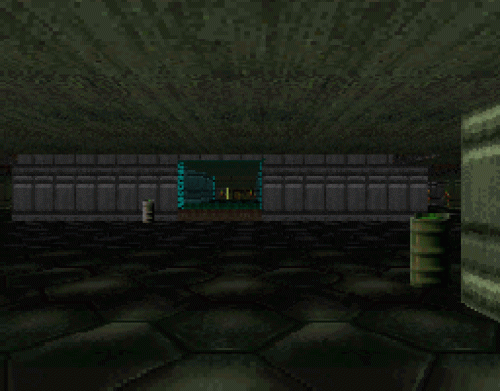
    The Playstation version of DOOM and its fancy lighting
    ...compared to the PC DOOM original.
    …compared to the PC DOOM original.

    Technically though the game has its issues.  The frame rate isn’t as high resulting in an experience that is far less frenetic than the original, and textures are just not as clear.  But all of these things do nothing to detract from what in my view is the ultimate version of the classic shooter.  I even found using the PS1 controller strangely fitted for the game, particularly with strafe being mapped to L1 and R1.   The only thing I’ll knock the Playstation version for is the unfortunate omission of the arch vile enemy from DOOM II which honestly is one of the greatest video game enemies of all time.  

    Archvile

    Of course this is all semantics and in the unlikely event that you haven’t played DOOM it is as close to essential as any game gets.  The brilliance of the game is that it even close to 20 years from the game’s original release it is as playable now as it was then.  It is still the fastest, most simple first person shooter around.  And that’s what makes it great.

    Do you have a favourite version of DOOM?  The Super Nintendo your first experience with the classic shooter?   Let us know in the comments below!

  • I actually remember the time when the house that Mario built was on top of the world.  Nintendo was a hot commodity and it was hard to come across anyone who had not played a Mario game.  It is a stretch to say that Nintendo’s success was solely built on the humble plumber, but it was a major contributing factor.  As Nintendo called it in its Australian summer catalogue, Nintendo was all about the ‘Maximum Mario’, bragging that it had sold a total of 120 million Mario games worldwide to date.:

    Maximummario

    Mario was everywhere in the 90’s, and next to the Teenage Mutant Ninja Turtles, some of my fondest memories involve playing through the latest Mario game either by myself or with a  childhood friend.  That same friend gave me this birthday card on my 13th birthday.

    Mariocard-1

    Even more telling as to how integral Mario was to growing up for many people of my generation is the message written inside:

    Mariomessage

    Eerily this card, written in 1996, is almost a sign of things to come – the unprecedented and seemingly unwavering popularity of ‘mature’ games like DOOM.  DOOM does rule, but to even to me and my friends way back in the Summer of 1995 and 1996, the love for it was secondary.  Mario was king.

    I wonder how many 13 year old boys now if given the choice would choose New Super Mario Brothers U over Call of Duty: Black Ops II?  It makes me sad to know the answer.

    Follow me on twitter @oldgaulian

  • darksiders2wiiUDarksiders 2 (Wii U) Review – Darksiders II is the best video game of the generation.  It isn’t the best experience, the best story, the best graphics or the most revolutionary gameplay of the generation.  But the now defunct (sadly) developer Vigil managed to craft an unbelievably well-rounded game that is far better than it ought to be, and far better than the sum of its parts.

    If the first Darksiders was reminiscent of a Zelda game, this is most definitely spiritually mimicking the Soul Reaver games.  And that’s okay.  The first Soul Reaver is one of my favourite games of all time.  If I were objective it would be hard to not give the gong to Darksiders II as the better of the two games.  But unlike Soul Reaver, and even the first Darksiders, I felt that this game lacked a bit of soul, a bit of urgency and more importantly a whole lot of story.  What story is there is decent, only by virtue of the fact that the world wrapped around the game is so damned intriguing.  Demons fighting angels.  A Horseman, or rider, falsely accused and sentenced to death for jumping the gun on a war between good an evil.  This is all good stuff.  But Darksiders II unfortunately does little with it and when it does the narrative is told through overly verbose dialogue that says a lot but often seems to mean nothing.  Luckily the main character Death is just so cool you’ll be willing to overlook some of the nonsense spouting from his mouth.

    Darksiders II though – quite simply – is an absolute blast to play.  The world is interesting to explore and provides enough variety to keep you pushing through to the incredibly well paced end, and the incredibly agile Death is incredibly fun to control.  Traversal, which is similar to the almost industry standard set by Prince of Persia: Sands of Time way back in 2003,  while sometimes being too imprecise leading  to unnecessary deaths is fluid and fun and makes moving from enemy encounter to enemy encounter rewarding.  And when you get there the combat is, while not the deepest or most impressive in the world, good visceral fun.  It helps that the developers borrowed liberally from action genre stalwarts, incorporating a simple combo system to make battles easy to control while still managing to look impressive, making it less Ninja Gaiden and more God of War.  Add in your block moving puzzles with some more innovative sequences involving portals and ‘clones’ later on in the piece and you’ve got a game that pretty much covers off on all bases and making it all things to all men in the process. No small feat.

    In fact it copies the template set by other games so perfectly that it has its own version of the Library from Halo.  But I won’t hold that against it.

    Darksiders II is an amazing video game that  forgets to be a whole lot of other things games have come to be known for in recent times in the process.  If you go into this knowing that, and pass off all of the flaws in story-telling and pacing, you’ve got the perfect video game – one that will make you wonder why all games can’t be more like this.  We can only hope that future games borrow from Darksiders II as liberally as it did from other games, because if they do, things can only get better.

    DarksidersIIscreen

    Follow me on twitter @oldgaulian

  • Mydinnerwithandre‘My Dinner with Andre’ is a really strange film.  The first I’d heard of it was in an episode of Community which heavily referenced it.  But it turns out that the film is a bit of a cult classic.  I watched it.  I liked it.  And I still have no idea why.  Andre was an insufferable character, and while his friend (played by Wallace Shawn) had the facial expressions of a man who almost couldn’t believe what he was hearing, in reality I’d like to think I would’ve stood up and given Andre a good beating.  There was something there though, something sincere that captured the brilliance of human communication and the intricacies of how we relate to one another.  Even though I had no direct agency in either character I was curious of the stories and views both characters were putting forward.

    It is part of the human condition that we are inquisitive.  The Doctor from the long running British sci-fi series  ‘Doctor Who’ often says that the brilliance of the human race is that we are curious and determined to survive and explore.  Whether it be learnings of economics, the arts, science, space exploration or even eaves dropping on the personal conversations of people on public transport, we are confronted every day with the opportunity to learn and grow.  Conversations are a key part of this – a likely reason My Dinner With Andre is more classic than curio.

    So while I sat there contemplating why the 1981 film was oddly compelling, I started to think about the role of conversations in a video game.  After all if a film, entirely spectatorial, can be driven entirely by the course of an almost two hour conversation, why can’t video games?  Conversations within the confines of video games are almost always devices to either drive the narrative forward or to point the player in the direction of their next mission or objective.  What if conversation was the game and what if your character grew by watching and listening to people on the world, rather than by killing.

    There are games that have tried it.  L.A Noire tried to incorporate elements of body language to inform interrogations, but its simple representation of human emotion left a lot to be desired.  Both Assassin’s Creed and Mass Effect have used eavesdropping as a direct tool for gaining information to complete or obtain new missions, but it was just the equivalent of an arrow to the next point of interest on the map.  So it is true that developers are continuing to figure out ways to better incorporate the intricacies of human communication into game design.  The problem is that this heightened sense of awareness about others (not the protagonist or antagonist) in videogames is being shoe-horned into worlds and game mechanics that are not built for it.  So what we end up with is a one-way street.

    It is the natural evolution of video game that the way that characters interact within the confines of video games will advance and improve.  It will, like it has consistently since video games came to be, help to give the player a greater sense of agency and interest in the world.  And with that it will make for better games.  Whether we will ever see human communication or our inquisitive nature explored and represented in a video game remains to be seen.  I challenge developers to make the video game equivalent of My Dinner With Andre, because it could very well be the best game ever made.

    MDWAndre

    Follow me on twitter @oldgaulian

  • NFSMWVitaNeed for Speed Most Wanted (Vita) Review – The RX Bandits summed it up really in the title of their song ‘Analog Boy’.  I like single-player video game experiences.  I don’t think co-op makes everything better.  And I haven’t held an Xbox Live Gold Account for a number of years.  Sometimes I feel like I am being left behind by a world so focused on multiplayer that it forgets how things used to be.

    Need for Speed: Most Wanted is a multiplayer game wrapped up in a single player game package.  The semblance of a single player game is there, building up your reputation to take on the ten most wanted cars in the city with a view to becoming number one.  And it is undeniably fun while you’re doing that.  But throughout the entire experience I felt I was missing something both by not having anyone on my friends list playing the damn thing and by opting to not actively participate in multiplayer. In short, what single player was there was fun, but it felt like it was the candy case on the delicious chocolate held within.

    The draw of Need for Speed: Most Wanted is pretty simple.  The pure driving pleasure created by developer Criterion is second to none in video games.  Speeding around the city feels as I imagine it should, and there is nothing more exciting than flying around the city in a  Koenigsegg Agera R with an army of police cars in hot pursuit.  It is easy to waste an hour speeding around the city with no objective just because it is easily accessible and a whole stack of fun.  Which is just the problem.  The races in the game, outside of the ten most wanted races, feel a bit by the numbers and generally unexciting particularly compared to the adrenaline fuelled cop chases.  There can be some tense moments in some of the races, but there is no mistaking the feeling that the races just exist as a mechanism to earn yourself the right to race against the most wanted cars by accumulating ‘Speed Points’.  That is if you’re not playing multiplayer and earning these points by beating ‘autolog’ records set by your friends.  So while single-player only folk will get something from the game, there is no escaping that the game feels like it has been built from the ground up for people with a lot of online friends also playing the game.

    NFSMWVitass

    Don’t let me put you off of the game, particularly if you are a Vita owner looking to bolster your collection.  The Vita version is at worst a technical accomplishment and at best a game that will live in your Vita due to its perfect pick up and play nature.  Either way Most Wanted is one of the most impressive games on Sony’s struggling handheld and one that, particularly if you can pick it up on the cheap, will give you hours of entertainment – particularly if you can look past its flaws and that fact that it is at its core a multiplayer focused high-score table.

    Follow me on twitter @oldgaulian

  • Whereas Sir Gaulian is content to just get stuck into his sports games nowadays, I’ve been getting more and more into the gaming scene recently. Over the past six months I’ve bought an unprecedented four games (X-COM, ZombiU, New Super Mario Bros. and Monster Hunter 3 Ultimate) on day one at full price, which is something I haven’t done since the days of the Dreamcast. Yes, the gaming bug has firmly gotten a hold of me again.

    The thing is though, back in those halcyon Dreamcast days I had all the time in the world to play my new purchases in between the odd lecture and a bit of student boozing. Now university is a dim and distant memory, and most of my spare time is taken up by, you know, responsible adult things. And I have to go to WORK! I know, rubbish isn’t it?

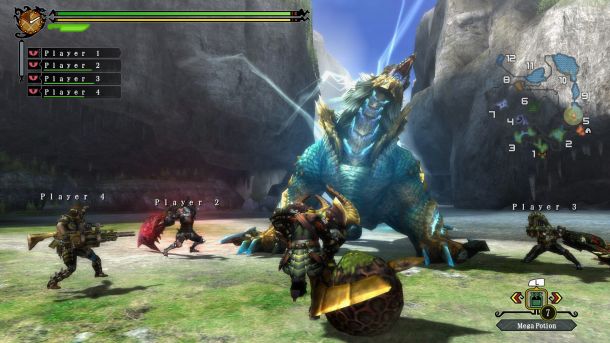
    In your FACE, monster. Yeah, you heard.
    In your FACE, monster. Yeah, you heard.

    Still, it’s the Easter weekend now (hurrah!), so what better way to relax than by  loading up Monster Hunter 3 Ultimate for the first time and hacking at a few dinosaur things for an afternoon? It’s my first foray into the Monster Hunter world, but from what I’ve seen of it, it looks very similar to Phantasy Star Online on the Dreamcast. I loved PSO, and that game also marked the first and last time I played an online RPG. It’ll be interesting to see who the online RPG has changed over the past ten or so years…

    Anyway, if you’re at a loose end and feel like laying the smack down on a few fantasy monsters together, look me up: my Wii U username is Merriweather and my Monster Hunter guild name is Lucius.

    Happy Easter everyone!

  • Donotunderestimate

    I think that everyone underestimated Sony in its entry to the console market before the Playstation hit.  But oh how we were all wrong.  Looking back at the mid 90’s when the Playstation was released, I remember the fanfare.  The kids at school talking about the absolutely mediocre Kileak: The Blood like it was the second coming of Jesus (Happy Easter all) and the lines at Playstation demo stations in retail stores pointed to something special.  Of course for the most part Nintendo kept its foot in the door by putting out some stellar releases for its systems in 1995 and beyond.  But for the most part it was all about the new kid on the block.  And Sony knew it.  All of the advertising for the Playstation painted a picture of a company that knew it was its war to lose.  The 90’s attitude that characterised the 16-bit era was replaced with a cool, edgy and confident campaign in the same vain as Sony’s market-leading products, the Walkman and the Trinitron.

    Sony was a company used to winning.

    Do Not Underestimate the CD Power of the PlaystationThe Ultimate CD Games system…The Ultimate Games, Sony brashly claimed in its pamphlet.  But I don’t even think Sony were ready for the phenomenon that the Playstation would become.

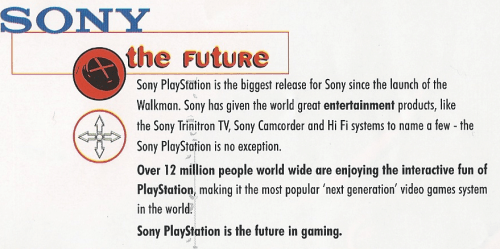
    Sony became synonymous with gaming over its reign with both the Playstation and its successor.  Brochures like the one below drove people the the new brand, driven by both Sony’s reputation as one of the world’s most reliable electronics brands, and its focus on the technological ‘wonders’ of its new system.  I’ve spoken before about how I was taken aback by Sony’s crazy new controller , but for the most part I was drawn to what Sony was bringing to the market.  It wasn’t a simple case of showing the 4-symbols now synonymous with the Playstation.  Sony had to build that trust, build an image of a reputable video game company and most of all, overthrow Nintendo and Sega as the king of the console hill.

    Sonythefuture

    And it was people like me that, and I hate to spoil the story, put Sony at the top.  Sony’s ‘mature’ new console hit at exactly the right time for me – a young lad entering his teenage years who desperately wanted to grow up.  For Sony the ‘cutting edge’ market was ripe for the picking, with the games market entering a new stage of maturity, particularly with games aimed at a young-adult market.  DOOM doesn’t know it, but it is probably a big factor in Sony’s success, opening up the mature gap in the market for Sony to drive its Playstation right into.  And drive it did.

    Of course Sony’s dominance is in no small part due to amazing support by both second and third-party developers.  But in a serendipitous combination of market demands and Sony’s predisposition to marketing its products as technical masterpieces, the Playstation found its home in the hearts and minds of a the gaming population, shipping (according a wikipedia) a total of 102.49 million units throughout its life.  And its the loyal amongst these people that Sony will be hoping to drive its success in the next generation.  Given I’ve kept this brochure until now, I think we can reliably say I will be contributing to that success.

    Sonybrochure

    Follow me on twitter @oldgaulian

  • I wouldn’t normally comment on the media circus surrounding the next generation of consoles – because to be honest I don’t really care that much – but some news from the Microsoft camp late last week got me all hot under the collar. The all-but-confirmed news that the Xbox 720 (or ‘Durango’ or whatever they decide to call it) will be ‘always online’ had me staring at my web browser in dumbfounded amazement.

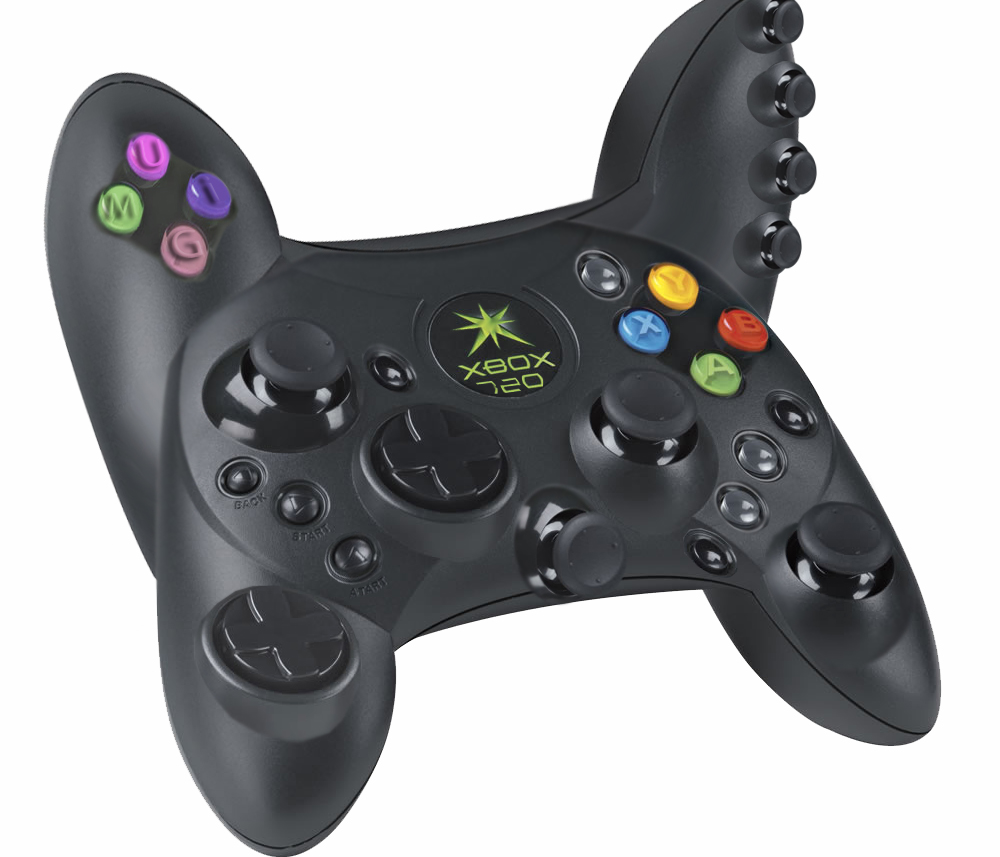
    I love this artist's impression of the Xbox 720 controller. Sadly I couldn't find the source of the image, but whoever you are. WELL DONE.
    I love this artist’s impression of the Xbox 720 controller. Sadly I couldn’t find the source of the image, but whoever you are. WELL DONE.

    Although it hasn’t been officially confirmed, this ‘always online’ business means that it’s highly likely that if your next-gen Xbox isn’t connected to the internet, you simply won’t be able to play any games, as you’ll need to be connected so that the Microsoft servers can verify that the game you’re playing is genuine and not a pirate copy. It also seems to indicate that any games you buy might be tied to your Xbox Live account, which means that second-hand games won’t work.

    This still hasn’t been officially confirmed by Microsoft of course: the ‘always online’ rumour seems now to be genuine, but we still don’t know whether Microsoft will go the whole hog and restrict the content you’re ‘allowed’ to use. However, it does seem like they’re heading down a dark alley of not-goodness.

    The disastrous launches of Diablo III and SimCity have proven that forcing players to connect to a potentially creaky server just to play the game is a not good idea, so to base a whole console around this concept seems to be asking for trouble. What if the network goes down, as happened after the PlayStation Network was hacked? What if your internet connection goes down? What if you’re moving house and can’t get connected for a month? What if you live in a rural area with limited or no broadband? In any of these cases will your shiny new next-gen Xbox be reduced to the status of an expensive under-TV ornament?

    Likewise, effectively ‘banning’ the sale of second-hand games by making them unplayable seems foolhardy in the extreme. The thinking seems to be that publishers and manufacturers are ‘losing’ sales every time someone buys a second-hand game, when this is clearly not the case. I buy second-hand games, but I also buy new ones when something particularly special catches my eye. If I couldn’t buy those second-hand games because they wouldn’t work, I wouldn’t just buy the new equivalent – I couldn’t afford it for a start. In the end, players just wouldn’t be able to play as wide a range of games as they do now, which is bad news for everyone.

    Second-hand games are an easy way to get into a series: you might buy the first couple of Assassin’s Creed games, for example, which gets you into the series enough to buy the third game new when it comes out. Or you might borrow a game from a friend and like it enough to buy the sequel. If Microsoft decides that games have to be tied to a single Xbox account, both of those options disappear.

    Then there’s the potential impact on games stores: in the UK, a huge chunk of GAME’s sales are derived from the second-hand market, so without that they’ll more than likely go under. Again.

    It seems even more bizarre that Microsoft might go down this route when Sony have confirmed that the PlayStation 4 WON’T restrict secondhand content or require an internet connection. In light of this, it would be absolute madness if Microsoft decided to restrict what their users could play, and I for one would veer towards purchasing a PlayStation 4 for this very reason.

    Although, to be honest, I’m pretty happy with my Wii U and my enormous backlog of games for now, thanks very much.

  • DirkSkeletonDragon’s Lair is kind of retarded.  Not retarded as in ‘that Downton Abbey show is retarded how good it is’ type, but the ‘i can’t even talk to you anymore you’re speaking like a retard’ type.  I know I shouldn’t use that term, and apologies in advance, but it is seriously the only way I can think to describe Dragon’s Lair.

    Now I don’t entirely hate Dirk the Daring.  I love the awesome hand-drawn art style, and the classic clumsy knight fights off badass dragon thing.  It is endearing.  And he is honestly a character that I could see fitting in a really good Wayforward Technologies side scrolling action platformer.  With talented animators and good level design, Dirk the Daring could make a mighty fine hero.  Or at least no worse than Earthworm Jim.

    It would at least be the best Dirk the Daring 2D side scroller by default though right?  Wrong.  Dirk the Daring has in fact been the star of his own side scroller on, of all things, the Game Boy.  It isn’t surprising really, given that developers were always in the habit of bringing entirely different experiences of big boy consoles to the system.  But what is surprising is that it is far, far, FAR better than its namesake.

    Dragon’s Lair: The Legend on Game Boy, rather than a very pretty game of memory like the original, was a 2D  platformer where Dirk the Daring needs to collect the parts of a shattered life stone to resurrect Princess Daphne.  Whatever, it serves its purpose.

    Dragons Lair the Legend Scr

    What I’m not telling you is that a substantial part of the game takes place on a mine cart.  And you need to collect things on it.  That require jumping.

    Of course there is good reason for the fact that the game is basically a protracted mine-cart level.  The game, developed by Motivetime Limited (who also happened to develop the under-appreciated Dr Franken), is actually a reworked version of the early ZX Spectrum  game “Roller Coaster” which was released in 1985, which unsurprisingly featured a guy riding a Roller Coaster.  Funny that.

    RollercoastZXSPec

    Obviously there is nothing wholly original about Dragon’s Lair: The Legend on Game Boy.  But it does achieve what the original Dragon’s Lair didn’t – that is present a game that is difficult because it requires skill and precision, not because you had a temporarily memory lapse, farted or sneezed.  I want to earn Dirk the Daring’s death dammit!  For what it’s worth though there is nothing else like it on the Game Boy, and while it will drive you up the wall in its (some could argue unreasonable) difficulty, once it gets its hooks into you it will keep you going for about as long as you can bear staring at the pea-soup green screen.

    Follow me on twitter @oldgaulian

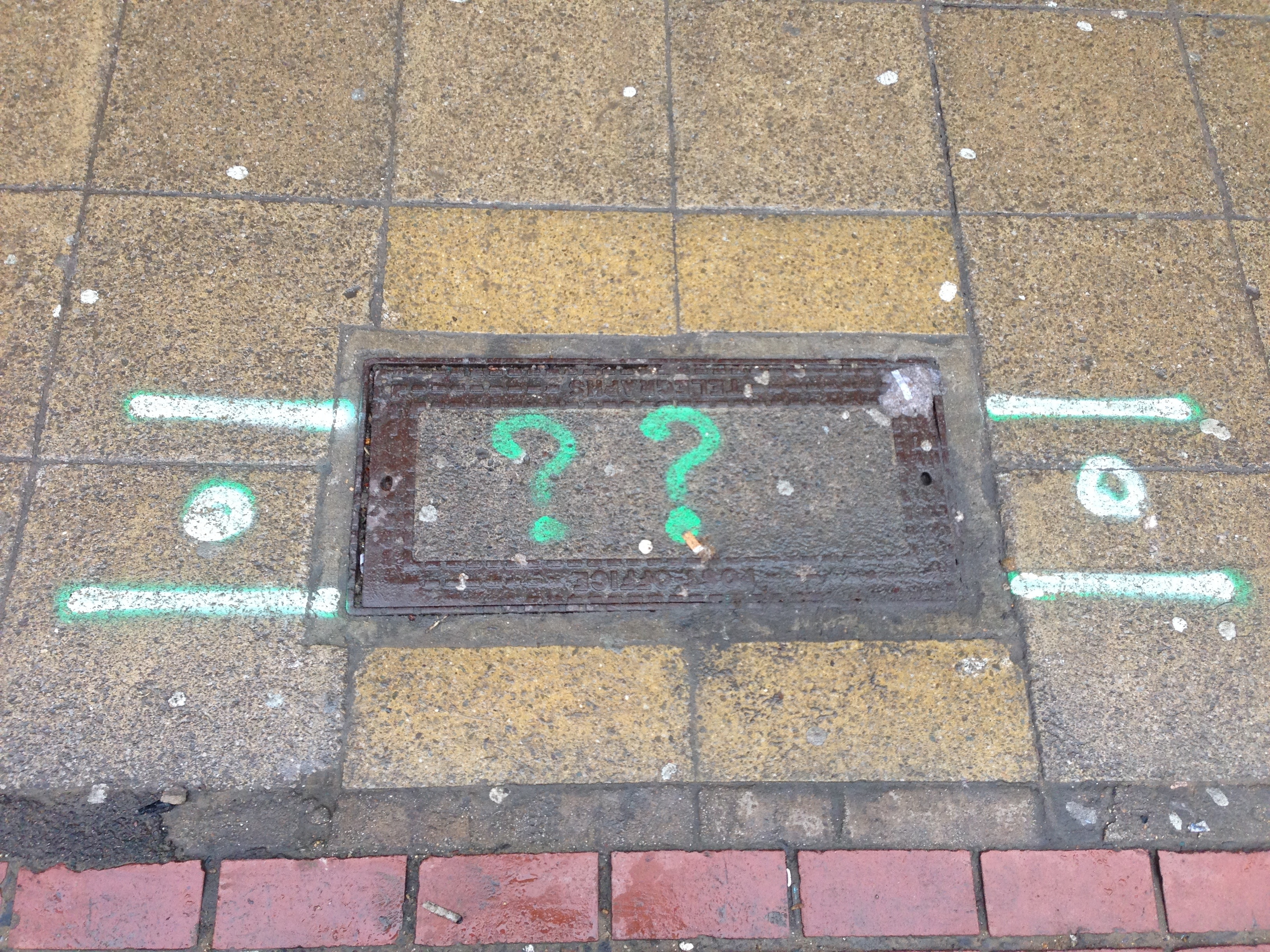
  • My co-podcaster Ian (see 101filmsyoushouldhaveseen.com) spotted this little oddity on his travels round Walthamstow. It seems the Riddler has escaped Arkham once again and has been leaving trophies a bit further afield than Gotham… Sadly, Ian didn’t have his batsuit with him, so he was unable to scan the trophy using detective vision.

    20130324-215958.jpg

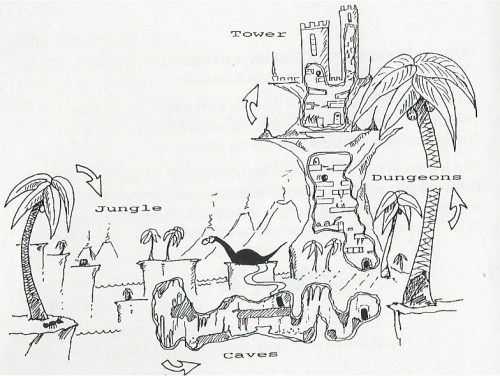
  • There is something personal about the hand-drawn art that permeated through every aspect of video game culture 20 years ago.  From magazines to box art to awesome little drawings in instruction manuals, hand-drawn art was everywhere.  Yesterday I wrote about Agro Soar, a Game Boy game based on a children’s television show in the 80’s and 90’s.  Below is the hand-drawn map for the game in the manual.  A work of art I’d say.

    AgroSoarMap

  • AgroI have always thought that Australia is a net importer of culture.  We get what I feel like almost everything, from television to music to videogames, from our english-speaking allies.  Sh!tty gangster rap?  Most definitely.  Garbage English royal tabloids? Need I ask.  Terrible child-focused television show featuring anthropomorphic animals and some random young people that constantly look like they just want to do it on set?  ABC for Kids here we come.

    But when was the last time that equally crap Australian content got sent across the various oceans to unwitting audiences in other countries?  Well apart from Neighbours, that is.

    We have Aussie Rules Football, a sport that is phenomenally big here but are no more than curios  elsewhere.  We have major celebrities here that the rest of the world wouldn’t even give a second look at unless they accidentally slipped down their pants. In the 1980’s and early 1990’s Australian children’s television was at what I would call a peak.  Right at the top of that mountain was that little guy at the top of the post.  Allegedly a wombat, Agro featured on a children’s television show for what seemed like my entire childhood.    He was nothing less than a phenomenon.  A promiscuous, rude and arrogant phenomenon.  But Australians, young and old, loved the little guy.

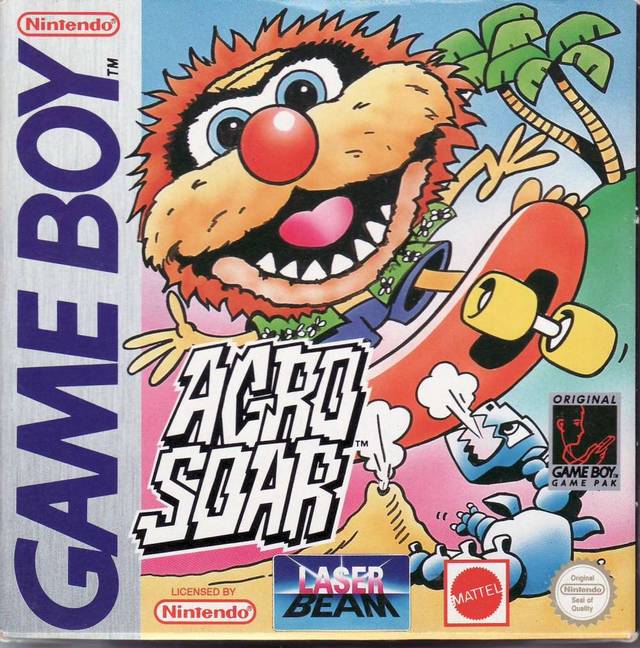
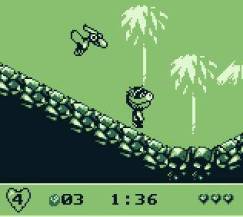
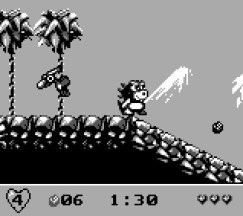
    He was so big in fact that he even appeared in his own video game.  Developed by Beam Software (later known as Melbourne House and then Krome Studios)  Agro Soar released for the Game Boy went largely unnoticed even in Australia from what I can tell, and I doubt a copy of the game has ever set foot on another country’s soil. So why did Agro have his own game?

    AgroSoar

    AgroSoarscreen

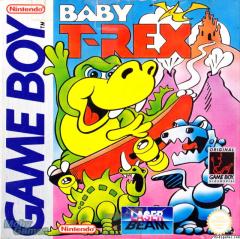
    It turns out he didn’t – which explains the ‘Agro being thrust into a prehistoric dinosaur land’ thing that never made any sense to me even as a kid.  In fact, like many other games back then, it was just a case of sprite switching of another Beam developed game.  Look familiar?

    babytrexbox

    BabyT-Rex Gameboy

    Either way the game, while not brilliant is a curio worth tracking down if you have an interest in the Game Boy.

  • NBAJamGBSometimes when I sit back and really think about how much everything, including videogames have changed since I was a kid I am blown away.  I’m nearly thirty and its only in the last 12 months or so I’ve started to feel my age.  How is this for old –  kids listening Blink 182’s album ‘Dude Ranch‘ today (released when I was 14 in 1997), are the same distance away in terms of years from what I was when I was listening to it from Black Flag’s Damaged released in 1981.  Now I love Black Flag and I love that album, but there is no denying that even then I felt like that album was ancient.  Damaged is now 32 years old and Dude Ranch, which still feels new to me and was anthemic of my youth , 16 years.  Kids, does that album sound old to you?  Because to me it sounds like modern pop punk.

    So I’m basically old.  But with that comes fond memories of how video games were back in the day.  And with that memory comes remembering that scrawling down passwords was just part and parcel of playing video games back in the day.  IGOTPINK8CIDBOOTSON ring a bell?  How about IDDQD, IDKFA, IDCLIP?  Need I mention the Konami code?

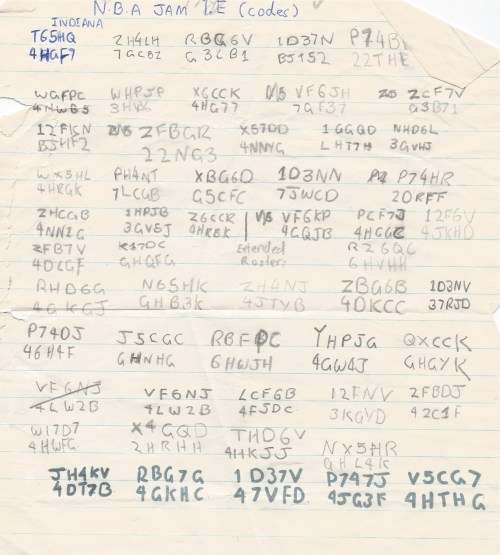
    They’re all well and good for a bit of a laugh (and a bit of cheating), but how how about actually scribbling level codes down?  I do, and today I found my 13 year old self’s scribbled progress codes for NBA Jam: Tournament Edition for the original Game Boy.

    NBAJAMGB

    Apparently I was an Indiana Pacers fan.

  • Casey Jones is just cool.  He is funny, tough and has that sense of ‘vigilante moral ambiguity’ that every guy just wishes he possessed.  I know every time I see some punk kid crossing against the lights I want to hook his legs out with a hockey stick and smash him over the head with a cricket bat.  He is so cool in fact that in the 1990 Teenage Mutant Ninja Turtles film he basically saved the film from mediocrity.

    So why haven’t we seen him in his own video game? Surely people know by now that the world loves a guy wearing a hockey mask.  

    <img class="size-full wp-image-2777" alt="” src=”https://amostagreeablepastime.com/wp-content/uploads/2012/07/caseyjones1990movie.jpg&#8221; width=”500″ height=”280″> My name is Casey Jones. I’m a friend.

    And if you say Splatterhouse, I’m going to punch you in the throat.

  •  

    CryingHoneyOuranIt is time to cry me a river.  I have a whole lot of friends that play sports games almost exclusively.  But it’s not fair in the slightest to consider these guys ‘non-core’ gamers (whatever that means) because I am talking about people I grew up with playing Adventure games in the 80’s, First Person Shooters in the 90’s and RPGs in the early 2000’s.  They are serious, knowledgeable videogame fans.

    But something changed as soon as we grew up, got girlfriends and started working on our careers.  They all moved away from narrative experiences to games with legs.  Racing games like Gran Turismo and football games like FIFA and Madden started to dominate their time.  The difference has always been that I’ve been left behind trying to play all and sundry.  And spending a lot of money doing it.  Somewhere along the way though I realised that I wasn’t having fun anymore.

    It all became a chore.  Scurrying to play a game because I felt I had to.  Because the Podcasts were telling me that that game “x” was the greatest thing since Half Life.  But not because I was dying to play something.  Similarly I was making my way through games just to get through to the next one on the pile, in some ways just wishing it would end so I could move on.  Sometimes I’d even go as far as to search out walkthroughs just to see how far through the game I was.   I wasn’t that the games were bad, I was just playing for the wrong reasons.  The worst part is it has been like this for the better part of the last decade.

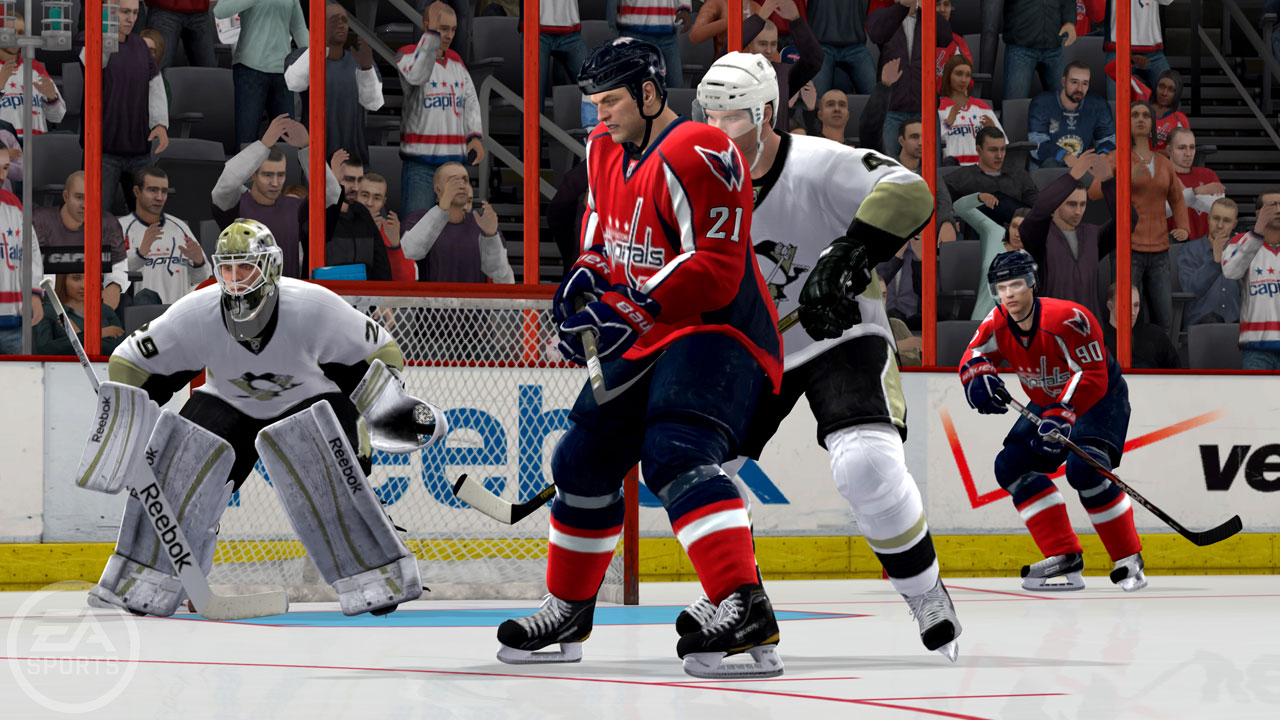
    All the while I watched these people dedicating their time to a handful of games, usually FIFA, having the time of their life.  And then something happened.  I bought the latest NHL game.  169 virtual games of ice-hockey later I am still not even giving thought to the next game I play.  And it is entirely liberating.

    nhl13screenshot

    I finally understand what it is that draws people to buying a new version of these games every year, and usually only play these games for that entire 12 months.  Take EA Sports’ NHL series for example, my 169 games has been through one ordinary season, and one year of taking a wanna-be pro through the CHL with the hopes of reaching the NHL.  To put that into some perspective, that is probably 60 odd hours into the game and I have barely scratched the surface.  I could probably play this game exclusively for the next 8 months until NHL 14 is released and be content.There is a reason that EA Sports’ franchises consistently rank in the top 10 for sales each year.

    The only non-sports related game I have played in the last 12 months I could say that for is X-COM: Enemy Unknown.

    Call it a structural change, or just me getting older, but I am starting to reconsider my gaming habits.  No – I’m not giving the finger to narrative based games, or other genres for that matter.  But what I am considering is how many games I play and buy for that matter, because the fact of the matter is I am nearly thirty, I have a career, a girlfriend and financial obligations.  And the prominent place that ALL OF THE video games have always played in my life may not exist anymore.   It is a sad revelation, but a worthwhile one, to realise that I was absolutely at the mercy of the games industry.  Ironic then that the company voted one of the worst in the world, and synonymous with the word ‘exploitation’, has been the one to make me realise that.

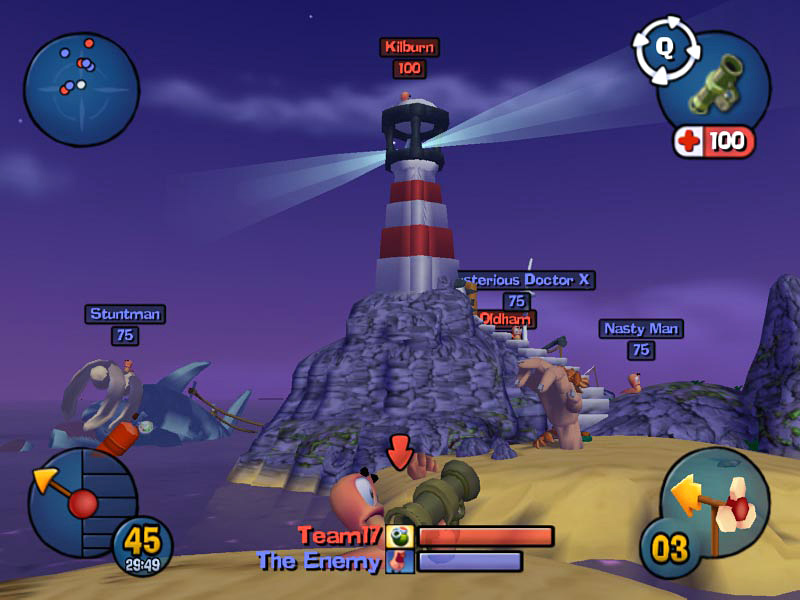
  • There is something about the simplicity of the Worms series that makes my heart sing whenever I play them.  The satisfaction of slotting that bazooka shell through an almost impossible space to win that trench-based war of attrition in the last throws of a hard fought and endured battle is near unmatched in the gaming world.  Team 17 please just throw theme packs, levels and missions at me and I will continue to buy them because, I’ll just say it – I love Worms.

    WormsXBLA

    It is less about the wildly crazy humour and attitude of the games than it is the pure mathematics that sit behind the scenes of worms.  Every shot is based on calculations of wind velocity, gravity and power, which determine how far your shot will be propelled, how far it will be blown and then how quickly it will fall the the ground.  The wonder of  Worms though is that Team 17 cleverly cover all of this up with a series of intuitive metres to make all of that easy for the brain to calculate quickly and shoot accordingly.  This isn’t rocket science, but it is clever game design that takes a game that is mechanically complex and makes it easily digestible by the people that are playing it.

    Intuitively this makes sense.  Each and every game you have played since the onset of physics engines has some sort of calculation happening behind the scenes when you press a button on your controller.  But it just so happens that in worms, it forms an integral part of the game.  Which is why when the game went 3D it lost that sleek, perfect design that made what is essentially a game of algorithms into a mainstream hit.  Not intentionally of course, but with the onset of another dimension came an additional problem, that is, how to represent 3D space in its interface to allow a conduit between the game’s mechanics and the player.

    In the end the Worms franchise lives and dies by on screen HUD.

    WormsOriginal

    Spatial awareness is something that, in real life, differs between individuals.  With that comes a varied ability to understand space.  Imagine if I told you that you needed to represent distance, the space around you, and yourself on a 2D plane.  How would you go about that?  Let’s use a 2D plane to describe the following scenario (and I apologise in advance for the terrible diagrams that follow):

    I am standing on an oval and need to throw a ball a distance of 23 metres over a wall that stands 3.5 metres tall, is 1 metre deep, with an incline of around 12 degrees averaged across that distance.  The total distance from my position to the edge of the oval facing the direction of my target is 35 metres.  Wind resistance is around -1 meter per second at 15 degrees to the right of the line to your target.

    I’ll now tell you that you have 60 seconds to solve that problem and that you can move in any direction, human mobility permitting, in order to take that shot.  Pretty difficult, isn’t it?

    Well diagrammatically my situation looks a bit like this:

    Worms calc

    Of course in reality what you are seeing is this, making it difficult to judge the distance between you, the wall, and the wall and the target:

    wormsfirstperson

    It is a bit harsh of a criticism, because Worms 3D did in fact give visual representations of all of the above aspects (as well as allowing the player to view the scenario from a birds-eye perspective), as the screenshot below shows.  Wind, height of shot and distance of shot are all displayed on-screen to give the player an indication of where to fire to hit the target.  That is all well and good.  But the problem with the game is that the key input to your shot, and the one that brings all of those disparate elements together, is represented only by a 2D bar, where the total power translating to distance fired is an unknown, and therefore it is impossible to solve s=(1-x) where x is the distance from the highest possible value to the target (assuming a known gravity).  What this means is shots in Worms 3D, at least at the beginning, are simply more error than anything else.

    Worms3D

    This is the fundamental problem with Worms 3D as a game – it attempts to layer a 3D concept onto a 3D interface, further complicated by the impact of 3D variables of a value that is only represented as a 2D image.  It is all very complicated, which is probably why I never really gravitated toward the 3D iterations of the game.  And of course the catch-22 is that any 3D visual representation of the power of the player’s shot would ruin the game as it would all-but solve s=(X)-wind, leaving the player to only solve the value for wind because X is a known value, and gravity is an inherent function of the value X.

    The answer isn’t an obvious one, and I’m keen to hear if anyone in any other game has come up with a solution to this problem, or whether they have run into similar issues of representing 3D space in a simple way.  But until this issue is solved, I am content to sit back and watch Team 17 continue to iterate and improve on the brilliant 2D entries in the series.

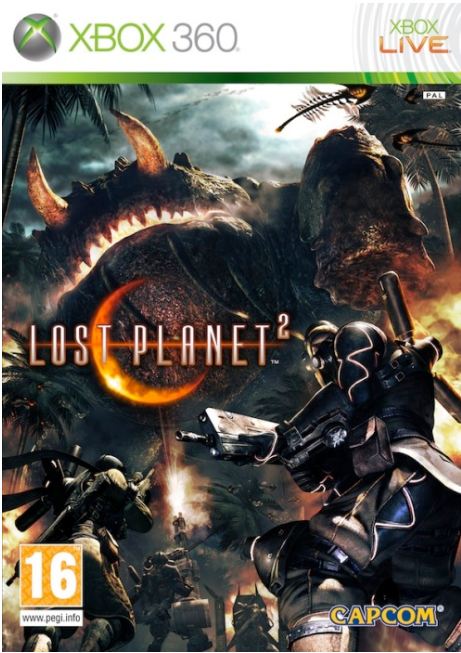
  • lost-planet-2-box-artI’m a big fan of the original Lost Planet, and I picked up Lost Planet 2 a few months back in the hope of more of the familar giant-monster bashing, robot thrashing and emo Japanese plotting involving people with strange hairstyles. Sadly, it turned out to be rubbish.

    I was aware that the sequel had been redesigned to be more of an online co-op game, but I wasn’t aware just how far the designers had gone down this route, to the point where I couldn’t actually work out how to start a single-player game from the title screen. Regular readers will probably be aware that I’m not a huge fan of online gaming, and that my Xbox Live Gold membership expired quite some time ago after I’d spent a grand total of an hour and a half online in the space of a year. Call me old fashioned, but I’m not a huge fan of being gunned down by potty-mouthed teenagers who subsequently delight in teabagging my corpse.

    So far, so good. Big glowy creatures and lots of snow.
    So far, so good. Big glowy creatures and lots of snow.

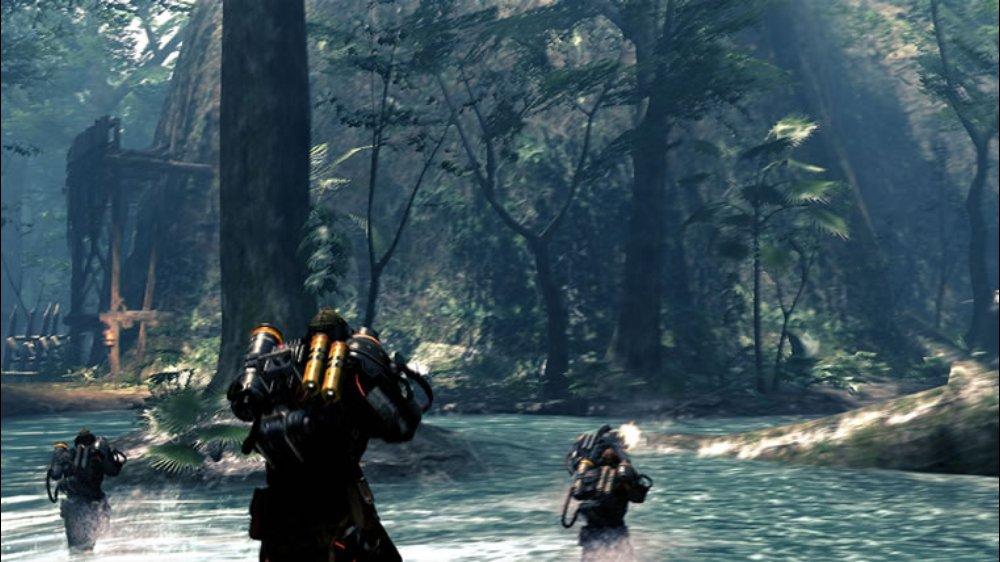
    Anyway, eventually I worked out how to start a solo game (I think it involved selecting something obtuse like ‘start new session’), and soon I was gunning down big glowy creatures just like in the first game, although this time I had a load of computer-controlled allies helping me out. I didn’t particularly want them to help out, but there they were anyway.

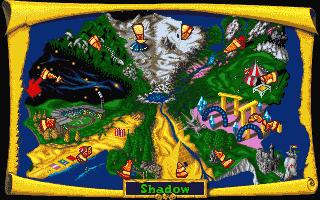
    On level 2 though, things took a turn for the worse. For some reason, I was now shooting oddly clothed humans instead of big glowy creatures. Apparently my band of oddly clothed humans had some sort of beef with these other oddly clothed humans, although I have no idea as to what that beef was. Certainly, it seemed to stray from the series template of shooting big glowy creatures. And also it took place in a jungle right next to a frozen tundra, which was a bit odd. It sort of reminded me of the level select screen on Lemmings 2, in which a single, dartboard-esque island contained landscapes ranging from ‘beach to ‘space’.

    I never did work out how a part of the island in Lemmings 2 was in space.
    I never did work out how a part of the island in Lemmings 2 was in space.

    Eventually some big glowy creatures turned up, and my AI team mates killed them for me. I didn’t really want them to, but there you go.

    Then on level 3 it all came crashing down. The big glowy creatures were conspicuous by their absence, and the entire level consisted of shooting oddly clothed humans for some reason I never quite gathered. I got told to protect some bit of switch thing. It all started to feel a bit like protecting a base in Call of Duty. But I didn’t want it to be like Call of Duty, I wanted it to be like Lost Planet. You know, with big glowy creatures. It became very dull. My unwanted team mates didn’t seem to be doing a very good job of protecting the switch thing, so the ‘enemy’ would often switch it back to a direction I didn’t want them to switch it to. Then I’d have to switch it back again. This continued for quite a while.

    After some time I finished the level. I hovered over the ‘continue to next level’ button for a short while, but the thought of playing any more of this awful rubbish filled me with dread. I ejected the disc instead and put it straight on eBay.

    How is it possible to screw up a game about shooting big glowy creatures so badly?

    Why am I in a jungle now? And why are these oddly clothed men shooting at me?
    Why am I in a jungle now? And why are these oddly clothed men shooting at me?

    [Penned in ennui by Lucius Merriweather.]

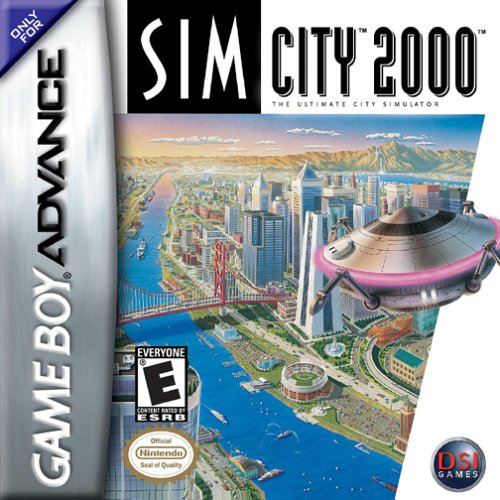
  • sim city 2000GBASim City never gets old.  Prior to the disastrous launch of the latest entry in the city-building simulator Maxis were on a ‘can do no wrong streak’.  Which is probably why we saw Sim City games make their way onto almost every platform known to man. Including the Game Boy Advance.

    That’s right the evergreen franchise made its way to what was then the radically underpowered Gameboy Advance in what was basically a stripped down version of the PC original.  And I found it to be the best way to experience the game despite being far from the best version of the game.

    If you’ve played Sim City 2000 you’ll remember that it was when the game got serious.  By that I mean it became more than just simple zoning and making sure the coverage of emergency services and standard necessary utilities covered every area of the city.  All within budget of course.  But city building was superficial and the utilities were limited to only electricity, with the only decision in that regard being whether to ruin the environment through coal or nuclear energy .

    Sim City 2000 changed all of that, not only expanding the types of buildings that could be built, as well as expanding zoning from three classes to six, it also gave you some control over what went on below the surface with subways and water requirements being added as things to consider while building your miniature metropolis.  These complexities, in addition to other improvements set Sim City 2000 worlds apart from its predecessor and brought it closer (yet still miles way) to being a real city-building sim.

    But while water was a great addition and added to the depth of the game, subways proved far too complicated to build and I for one never really got used to how they worked and so my city became a series of congested roads and highways as my sims made their way too and from work.  Think Sydney’s M4 and you’ll probably have a pretty good idea of what I made my citizens endure on a daily basis.

    The GBA version, along with a whole suite of other things, did away with the non-sensical subway system in a move that streamlined the game so to make it more portable friendly.  The GBA version of the game represents an abridged approximation of the PC game that makes it not only more simple, but more fun than the original.  It turns out that doing away with some of the additions found between Sim City and Sim City 2000 makes for a more casual oriented game, perfect for the small screen audience.  The result is a game that more closely represents the first Sim City than its sequel, but one that also maintains some of the depths of the sequel to make it almost a ‘best of’ game.  In some ways the game feels like playing the original Sim City with an expansion that adds all of the Sim City 2000 buildings.

    Simcity2000GBA

    I’ve made it sound like Sim City 2000 lives entirely in the shadow of the PC original.  And in some way it does.  But don’t think that the GBA game isn’t a solid, addictive version of the classic city-building experience.  Chances are if you picked up this version of the game you would get the same basic thrill as you remember from sitting in front of your PC with a slightly less intuitive control scheme.

    In an era of smart phones that basically make the world go ’round, the fact that Sim City is on a portable device isn’t terribly impressive – particularly given that the Nintendo DS was home to two exclusive versions of the franchise.  But back in 2003 when we still had something to aspire to in the portable video game space I found Sim City 2000’s compromises to be sensical, and endearing example of how developers had to cater to the humble specs of Nintendo’s handheld.  More heartwarming though is the fact that developers cared enough to try and give GBA owners big console and PC experiences to call their own.

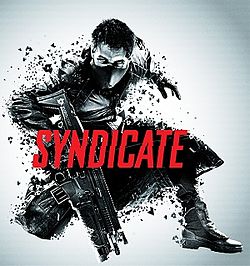
  • Syndicate coverSYNDICATE (PS3) REVIEW – It is pure madness that Syndicate exists, really.  Like XCOM last year, Syndicate is a reboot (of sorts) of a cult classic 1990’s strategy game.  Unlike XCOM however, Syndicate is a far cry from its origins, and instead is a first person shooter based on the universe.  Developed by Starbreeze –  a favourite developer of mine – Syndicate takes the dystopian corporatised future envisaged in Bullfrog’s classic strategy game and puts you in the shoes of an ‘improved’ corporate agent.  The result is an amazing, visceral first person romp through a world of cyborg humans, corrupt global corporations at war in a not-too-distant future earth.

    I’ll be straight with you, outside of the awesome ‘corporations gone mad’, the story didn’t ever really get its hooks into me.  The characters are largely lifeless and the story never really hits a narrative stride,  meaning confrontations with characters and protagonists never really mean anything outside of surviving to see the next part of the game. In some cases characters who one can only assume have some level of gravitas in the storyline are introduced, only to be killed off seconds later.  So the storytelling, the narrative, the characters, they all left me a bit cold.   But the concept, the idea of corporate sabotage and the lengths a dominant company will go to control its market and its employees, really hit the spot.  Call a case study in why businesses should be suitably regulated.

    And the concept is certainly done justice in the brilliantly exhilarating campaign.  If I were to describe the game itself I would call it a slightly-augmented first person shooter, so while it does have a few features gameplay-wise that makes Syndicate stand out from the pack (like the ability to persuade your enemies to commit suicide), at its heart is a pretty conventional first person shooter.  You look down a sight.  You shoot.  Rinse and repeat. No strategy, no squad management, and no tactics.  This is vanilla first person shootin’.

    Which all sounds rather boring and incredibly critical on paper, but what the description doesn’t do is describe the feeling of ‘rinsing and repeating’.  Last year I wrote about how Crysis 2 made you feel like a real super-soldier.  Developer Starbreeze has created a game that not only plays like it should, but feels like it should.  From the movement of your character, the momentum and the amazing feel of the weapons in your hands, taking down your enemies feels suitably badass.  But at the same time there is a real sense of chaos to the battles, that anything could happen, and that one soldier than managed to flank you could very well be the one that puts the nail in your coffin.  At the same time however I always had the feeling that the enemy felt the same way.  And that made everything feel utterly unpredictable.

    Syndicate is nowhere near a perfect game.  But it is absolutely a top class shooter and one that encourages subsequent play throughs.  Once you get over the fact that it isn’t the Syndicate you know and love you’ll find an endearing workhorse of a game that achieves just about everything it sets out to.  Just don’t go in expecting strategy.

    [Source: www.capsulecomputers.com.au]

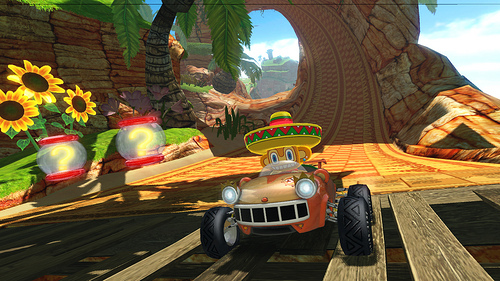
  • Sonic and Sega RacingSonic and Sega All-Stars Racing (Review)  I’m not sure if you’ve heard but kart racing is really fun.  But did you know that you don’t need balls to race?  Just ask AiAi who rolls around the track without his ball.  Or Danica Patrick*.

    Taken at face value anyone can appreciate ASR as a pretty solid racer.  It has the now-genre-standard drift and boost mechanic, a plethora of weird and wacky weapons, and an oddball cast of characters from various SEGA franchises filling a packed roster.

    So hey, Sonic and Sega All Stars Racing, released in 2008, is kind of like Mario Kart.  And by kind of like Mario Kart I mean pretty much exactly like Mario Kart with SEGA characters instead of Nintendo characters.  But that’s okay right?  We all love Mario Kart and Nintendo tend to make a s#it load of money out of the franchise don’t they?

    I’m sure this is the subject of many conversations had by SEGA executives and developer Sumo Digital in the lead up to the release of All-Stars Racing (ASR), because SEGA noticed the success that Kart racing – good and bad- has brought developers in the past and thought to themselves ‘we want some of that delicious biscuit’.  And so the ASR franchise was born.  Featuring all of your favourite (and some you’ve probably never heard of) SEGA characters (and Danica Patrick int he sequel), ASR was SEGA’s attempt at tapping into the nostalgia 30-somethings had for the once great SEGA first party titles of the Master System, Mega Drive, Saturn and Dreamcast.  And based purely on how long I’ve been playing the game for, it definitely succeeded, because for the last number of years ASR has been my go-to kart racer for multiplayer fun.

    Oh yeah and the game has single player challenges that are a pretty decent distraction for a weekend.  If you’re like me you’ll smash through them in a weekend, and be done with them.  They’re not terribly inspired, certainly not game changers, and are not something to get that excited about, but you will likely get some kicks out of them and move on.

    Samba Racing

    This sounds absolutely like an advert, and in some ways it is.  The game manages to hit all of the bullet points one has come to expect from a Kart racer.  So if you’re looking for a best in show kart racer, All Stars Racing is your bag.  It’s fast, sports a decent variety of  incredibly inspired (and fun) track design, it feels blisteringly fast, and if you dig SEGA’s more prominent franchises, you’ll get a kick out of the fan service.  Even if you’re not, as long as you don’t hold SEGA as your mortal enemy, you’ll enjoy the game simply as a bloody good time.

    In short, you’ll like it.

    *Danica Patrick appeared in the sequel, Sega All Stars Racing: Transformed, which I am playing right now and can tell you, I rather like it.

  • Hitman: Blood Money [Source: wikipedia.org]It had all gone wrong.  After making my way through the cruise ship incognito, taking out my targets in silence in the process, I had finally reached the top deck where the remaining members of the Gator Gang, and their leader, were awaiting their execution.  Disguised as a waiter, I had made my way to the Captain’s quarters carrying a cake and placed it on the table and waited.  Shortly thereafter a blood bath ensued.  Caught strangling the Captain as he ate the cake-bait, I fired upon his entourage.  One by one they went down until four bodies were on the floor.  I had to cover my tracks, and one by one I dragged the dead bodies of three of the men to the rear of the boat and threw them overboard.  The end was in sight, but while dragging the body of the fourth and last man, an unsuspecting witness carrying refreshments emerged from the stairs.  I froze.  There was no darkness to run to, or flash bang to blind the man.  Like a deer in headlights I was faced with a choice – run and leave a witness, or end an innocent man’s life.

    I dropped the body of my target, raised my gun and shot the man dead and threw his body into the river too.

    Believe me when I say that wasn’t how it was supposed to happen.

    Hitman:Blood Money is about amazing moments like these.  When things go right you feel like a god, able to take out any target no matter the level of security and walk away without witnesses and no trace of your kill.  There are no fancy gadgets to aid you, or darkness to hide in. But when things go wrong its about split second decisions to save your life, or the mission.  Because unlike the obvious comparisons in Sam Fisher or Solid Snake, if Agent 47 makes even the smallest mistake, it will likely be the last mistake he makes.  At least that is until you reload from your last save.

    For a game that is ultimately about killing people, Hitman: Blood Money, like it’s predecessors has precious little killing in it.  Sure there is the occasional collateral damage, but that is a last resort rather than a premeditated plan.  Even incapacitation isn’t a viable way to make your life easy – unlike other stealth games where incapacitation essentially equates to death providing you are prudent in covering your tracks – with the game placing an effective restriction on the number of people you can stealthily incapacitate with sedative.  It is design decisions like this that make Hitman feel incredibly deliberate in its design, which in conjunction with the intel that can be purchased with Blood Money , are how the developers try and push the player toward a style of play that shows off the sheer creativity of the game’s level design.  And that’s when Hitman: Blood Money is at its best.

    And because of all of these very deliberate decisions, Hitman: Blood Money feels like a simulation with an action game wrapping.  The gameplay is no-frills utilitarian video game design, which makes it unforgiving.  But it also encourages you to experiment, know the game’s rules, and solve the intricate assassination puzzles the developers have carefully laid out for you  Sure, you could play and finish the game by killing everything in sight. But you’d be missing out on what makes Hitman: Blood Money so spectacular.

    Hitman: Blood Money [Source: mobygames.com]

  • El Shaddai Ascension of the Metatron box artI listed El Shaddai: Ascension of the Metatron at number two in the ‘games I would have played in 2011 if I’d had the time‘, and I’ve finally, FINALLY got round to finishing it. And it was… pretty good actually. Not quite as good as it could have been, but good nonetheless.

    If you’ve never heard of it, El Shaddai is a fighting and platforming game based on an ancient Jewish text. Yes, you heard that right. It also has one of the most obtuse and bizarre titles I’ve ever heard. Next time one of your friends asks you what you’re playing at the moment, just reply “El Shaddai: Ascension of the Metatron, it’s a game based on an ancient mystical text in which you play a holy scribe tasked with capturing fallen angels to prevent a great flood.” Then watch them back away from you slowly while shaking their head.

    Blue blue jeeaaaaaans / I wear them every day / there's no par-tic-u-lar reason to change...
    Blue blue jeeaaaaaans / I wear them every day / There’s no par-tic-u-lar reason to change…

    Anyway, the Metatron of the title is Enoch, who you control for most of the game, and El Shaddai is one of the Judaic names of God. The story is based on the Book of Enoch, which is an ancient Jewish religious work detailing Enoch’s attempts to round up those naughty fallen angels and stop God from flooding the world to destroy them. You’re accompanied by Lucifel (Lucifer?), who bizarrely is always to be found chatting to God on his mobile phone – it appears Lucifel exists outside of time, so he has access to things like phones when he’s in the distant past. Presumably he also gave Enoch his blue jeans, which didn’t strike me as very 9th century BC.

    The game itself doesn’t start particularly well: in fact, the first three chapters are pretty boring. Often you’ll find yourself running for long periods through an abstract landscape with nothing to fight and only the occasional platforms to hop across – not exactly gripping. The game’s religious iconography and fighting mechanic openly invites comparisons to Bayonetta, and all through the first hour I just found myself thinking “This isn’t as good as Bayonetta, this isn’t as good as Bayonetta…”

    Ooooh, it is pretty though, isn't it?
    Ooooh, it is pretty though, isn’t it?

    Thankfully, things pick up at about the time you reach the war pigs. Good old war pigs. You see, it’s at this point that you get the final weapon of your triumvirate, and suddenly the game makes a bit more sense – there are three weapons with a scissors, paper, stone relationship, and from that point your success in battle is really determined by choosing the right weapon to use against the right enemy. It’s a clever mechanic that works really well, but it’s a shame it doesn’t get introduced until you’re over an hour in and bored stiff.

    Still, from that point onwards the game gets a lot more interesting, and the levels get a whole lot fancier too. Then initial, fairly bland levels segway into fanciful depictions of hell, bizarre futuristic cities populated with fighting motorbikes, and even child-like, crayon-drawn levels filled with bouncing dildoes. Sorry, not dildoes, Nephalim – the offspring of angels and humans. Who just happen to look a bit penis-shaped for some reason.

    These are the Nephalim. I'll let you make up your own mind.
    These are the Nephalim. I’ll let you make up your own mind.

    I loved all of the escalating craziness – it’s quite refreshing to find a game where you genuinely don’t know what’s coming next. However, I found the platform levels got a bit dull after a while, saved only by the fact that they were so visually arresting. Similarly, the fighting levels never really lived up to their promise – I was expecting to face more and more foes that would need more complex strategies to deal with them, but it never really happened. You never gain any more abilities after you retrieve your three weapons, so by the end it can feel a bit repetitive.

    The game also feels a little rough around the edges, despite its wildly imaginative visuals. The front end is bland compared to the game itself, and some parts of the game just feel a bit empty, like there should have been more things to do but they just didn’t have the time or money to put them in. El Shaddai is just crying out for a few more gameplay features – extra abilities, more varied enemies, better structured levels – but it just falls short.

    Despite its wonderful visuals and bonkers storyline, El Shaddai just can’t hold a candle to Bayonetta I’m afraid.

    [As penned in praise by Lucius Merriweather.]

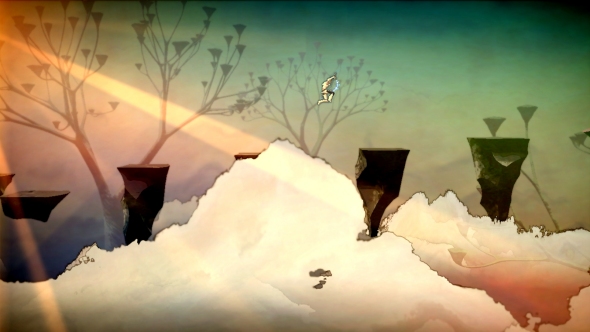
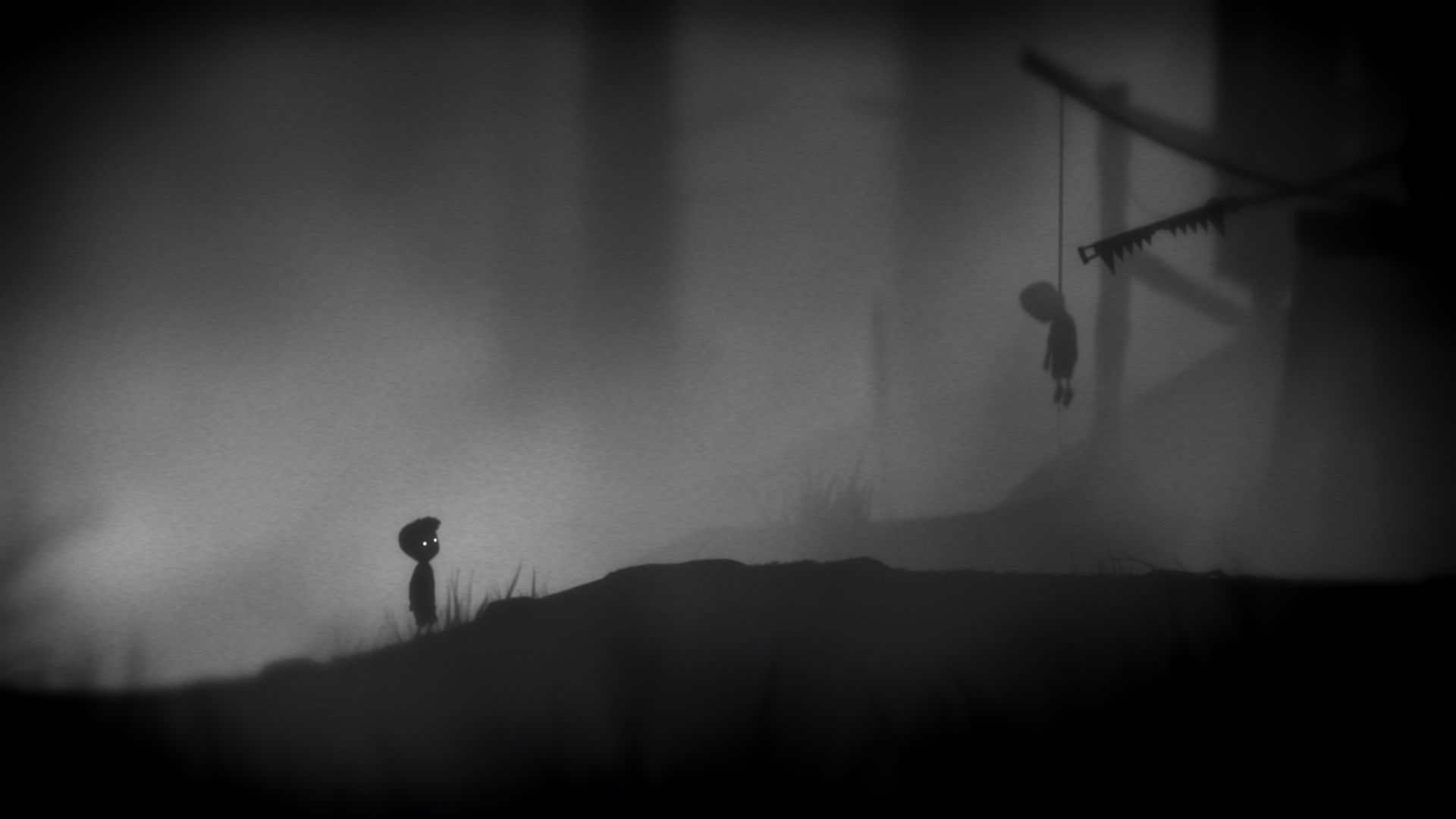
  • Limbo Box Art [Source: wikipedia.org]Limbo will likely forever haunt some part of my being.  It may not come to the forefront and manifest in me wetting my bed, experiencing night terrors, or jumping off of the Sydney Harbour Bridge, but somewhere in a dark, dank crevice of my mind Limbo is making me very, very uncomfortable.

    And that’s because there is something incredibly uncomfortable about not really knowing what is going on.  Is your character dead?  Is he alive?  Is his sister dead?  Are those kids trying to kill you your siblings?  Is that spider based on anything that actually exists?  These are all questions that are never answered throughout the course of the game.  All you know is that you are thrust into a world that is terrifyingly vivid and that everything is trying to kill you.  That is exactly why it strikes at the core of human fear of the unknown.

    But revelations or narrative are not what you will take from this game.  It is (as cliche as it sounds) the experience of overcoming the challenges the game presents and traversing a nightmarish land that is absolutely beautiful in its portrayal of a nightmare.  From the claustrophobic feel of the forest, to the surreal feel of the game’s ‘city’, they all are instantly recognisable as places we are familiar with, which makes you feel all the more uneasy to see them as deadly and foreboding places.

    The brilliance of the game is that the game evokes the feeling that you are the character on screen.  Like you are that little boy lost in a terrifying world where everything is the monster under the bed.  Like a child, you never really understand why you fear these things – the children trying to kill you, the maggots that take control of your body, or the spinning blades waiting to dismember you – but you wish you could just close your eyes and they’d disappear.  And for a grown man, experiencing that irrational, youthful and primal fear at something on a television screen is priceless.

    Lying somewhere beneath Limbo’s simplicity is a depth that most people will never discover.   Not a word is spoken through the course of the game, but the game likely says more about life and death than a game full of thousands of words of dialogue ever could.  Simply put – Limbo is a masterpiece – albeit one that I may never fully understand the full meaning of.

    LimboSC

  • The Legend of Zelda Link's Awakening DX boxI underwent a somewhat traumatic experience last weekend: while I was on holiday in France, my Nintendo 3DS was stolen from my bag. It’s the first time I’ve ever had anything nicked, and I was pretty upset about it as you can imagine. However, luckily I had travel insurance, so hopefully I won’t lose out too much financially, but it’s a pretty heavy blow in terms of game hours lost.

    There were three games taken with the 3DS – Apollo Justice, The Legend of Zelda: The Phantom Hourglass and Ridge Racer 3D –  as well as all of the games I’d downloaded onto the console. I’d barely started the three cartridge games, but on the 3DS itself I was about five hours into Crimson Shroud, and I was only two chapters from the end in The Legend of Zelda: Link’s Awakening DX. Now I face the prospect of having to start them all over again when I get my replacement console.

    Bye bye baby, bye bye...
    Bye bye baby, bye bye…

    It’s frustrating more than anything else. On Nintendo’s part, I think it’s about time they introduced personal Nintendo IDs rather than tying all purchases to a specific console, as now I’m faced with the prospect of having to pay for all of those downloaded games again. Also, some sort of cloud back-up system for game saves would be a phenomenally good idea – Apple already do it for iPhone, so perhaps Nintendo should think about following suit. I’ll bet 3DS consoles get lost, broken or stolen all the time, so it would be a great service for customers.

    I’m sure I’ll download Crimson Shroud again when I eventually get a new 3DS, but I’m not sure I can face replaying all of the many dungeons on Link’s Awakening just to see the last couple of levels. Don’t get me wrong, it’s a great game, but it’s also pretty challenging and unforgiving.

    Step wary traveller, for death lurks behind every corner.
    Step wary traveller, for death lurks behind every corner.

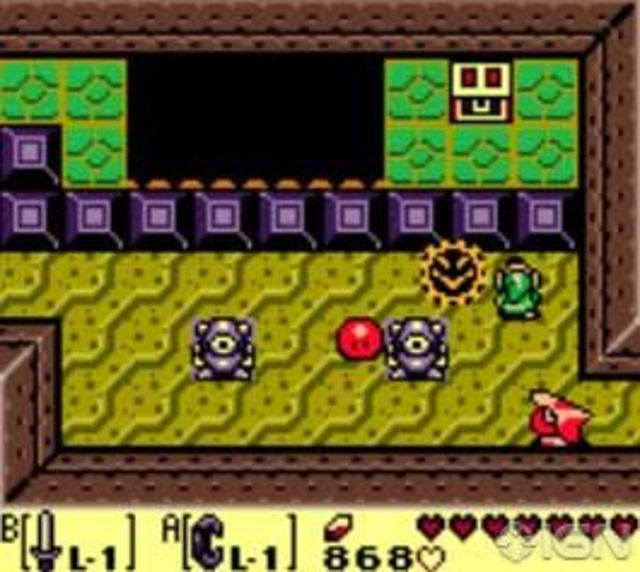
    In more recent Zelda games, death has all but been removed: losing a life as Link is a rare occurrence indeed, and even then death usually only provides a minor inconvenience. In Link’s Awakening, however, death comes swiftly and frequently – this is old-school gaming.

    Every dungeon is packed with enemies that can kill you remarkably quickly, and life-replenishing hearts are scarce on the ground, in stark contrast to the showers of hearts to be found behind every boulder in later Zelda games. Even harsher, when you restart after dying you’re given a paltry three hearts to begin with, so each resurrection is accompanied by a careful hunt for extra health. It takes a while to get used to after the mollycoddling of modern Zelda, but ultimately it’s a lot more satisfying: completing a dungeon really feels like an achievement.

    What I want to know is who's leaving all of these rupees and hearts in the grass. Careless elves?
    What I want to know is who’s leaving all of these rupees and hearts in the grass? Careless elves?

    The only real annoyance I found with the game is that the map is next to useless, and in-between dungeons I often found myself looking to a guide to find out what the hell I was meant to be doing. You may hear people moan about there being too much hand-holding and hint-giving in ‘soft’ modern games, but these people probably forget the hours and hours they spent in old-school games just wandering around with no clue as to where they should be going.

    Overall though, Link’s Awakening is a great game, and its bite-sized dungeons are perfect for gaming on the go. It’s just a shame I’ll never get to finish it…

    [Penned in melancholy by Lucius Merriweather.]

  • I woke up screaming last night.  I was being chased by a horse with what seemed like a green mohawk and steam (or smoke, it was hard to tell) coming out of its nose.

    Okay I’m lying, I just wanted an excuse to share my favourite video game box art of all time which you might remember from one of the first posts on this blog.  Feel free to share some of your favourite (sincerely or not) box art in the comments below.

    And for the record horses are actually pretty scary.

    DerbyJockey

  • Zack_&_Wiki_-_Quest_for_Barbaros'_Treasure_CoverartZack and Wiki is a wonderful, funny, charming and compelling video game that’s hamstrung by a couple of flaws so enormous that eventually they ruin it completely. Seriously, I loved this game, but it really didn’t love me back. In fact, it took delight in slapping me round the face a couple of times before stealing my wallet and laughing at my tears.

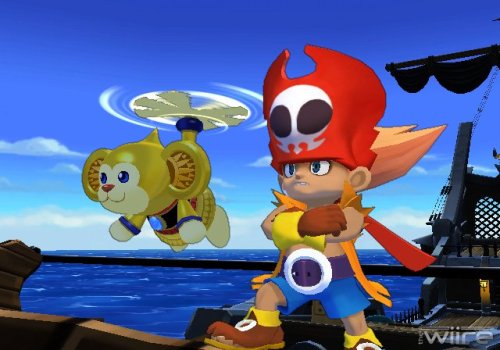
    Still, before I get onto its maddening problems, let’s look at the positive stuff. For a start, the main characters are great: in fact, the character design throughout is excellent. It’s a real shame the game sold so poorly (Capcom Director Chris Kramer described the game’s sales as “abysmal“), so there’s very little chance of them ever popping up in a sequel: who knows though, maybe they’ll crop up in Marvel Vs Capcom 4, if it ever gets made…
    Zack and Wiki screenshot 1

    As well as the character design, the graphics are excellent, with a great cartoony feel and superb animation. It’s funny too: in fact, I laughed out loud during the tutorial section, which isn’t something you can say about many games.

    Gameplay-wise it’s a sort of evolution of the classic point-and-click adventure, a genre I love. Most of the puzzles are good fun, and in particular there’s a great level set in a laboratory where you have to mix potions to make yourself shrink or turn invisible. It’s a really great idea, and there are loads of similar flights of the imagination that made me smile.

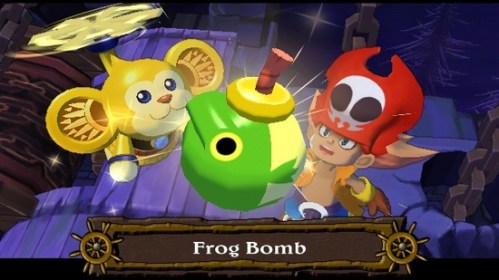
    Sadly though, the game carries on that notorious tradition of the point-and-clicker: the illogical puzzle. At a few points I became completely stuck and had to flee to Gamefaqs.com for help on a particular puzzle, only to let out a confused “Eh?” when I found out the bizarre solution. Even worse, there are a few points where the game’s internal logic is broken: for example, platforms that are fixed until you can manually move them on one level just move when you step on them on another level, and there are a few other points where the game seems to break its own rules.
    Zack and Wiki screenshot 2

    Worst of all though is the fact that the game stifles any sense of playfulness or experimentation by packing each level with various things that kill you with one hit. You might think “Oooh, I wonder what happens if I pull that lever?”, only to be plunged into a spike pit and have to start the level again from the beginning. Not fun.

    Rather than start all over again, you have the option of “reviving” at a point just before you died, but to do this you have to use a platinum ticket, which you buy in-between levels. But get this: every time you revive, you lose all of the money you collected during that level. This means that if you die right near the end of a level, you either have to complete the whole level again or revive and finish the level without any money, which then means you can’t afford to buy any more platinum ticket “lives” for the next level.

    Basically, it’s a system that punishes failure rather than rewards victory.

    By the second to last level I’d completely run out of lives and money, so my only option was to complete the whole level in one go or go back and spend an hour or so replaying through the early levels just to get a bit of cash together. The latter option was in no way appealing, so I plunged into what turned out to be by far the hardest level of the game and died again and again and again, each time having to restart from the very beginning. Eventually I just resorted to using a guide in an attempt to get to the end, but even that proved fruitless, as the introduction of some insanely tricky sword-fighting meant I couldn’t get more than two-thirds of the way through without dying and being sent back to the start.

    Zack and Wiki screenshot 4

    As you can imagine, this was utterly infuriating, and it culminated in a spectacular rage quit accompanied by a few solemn and sweary oaths directed at the now-ejected game disc. Put it this way: I’m not going back to finish it.

    Shame, despite its flaws, it’s still a great game – a few little tweaks and it would have been a classic.

    [Penned in despair by Lucius Merriweather.]
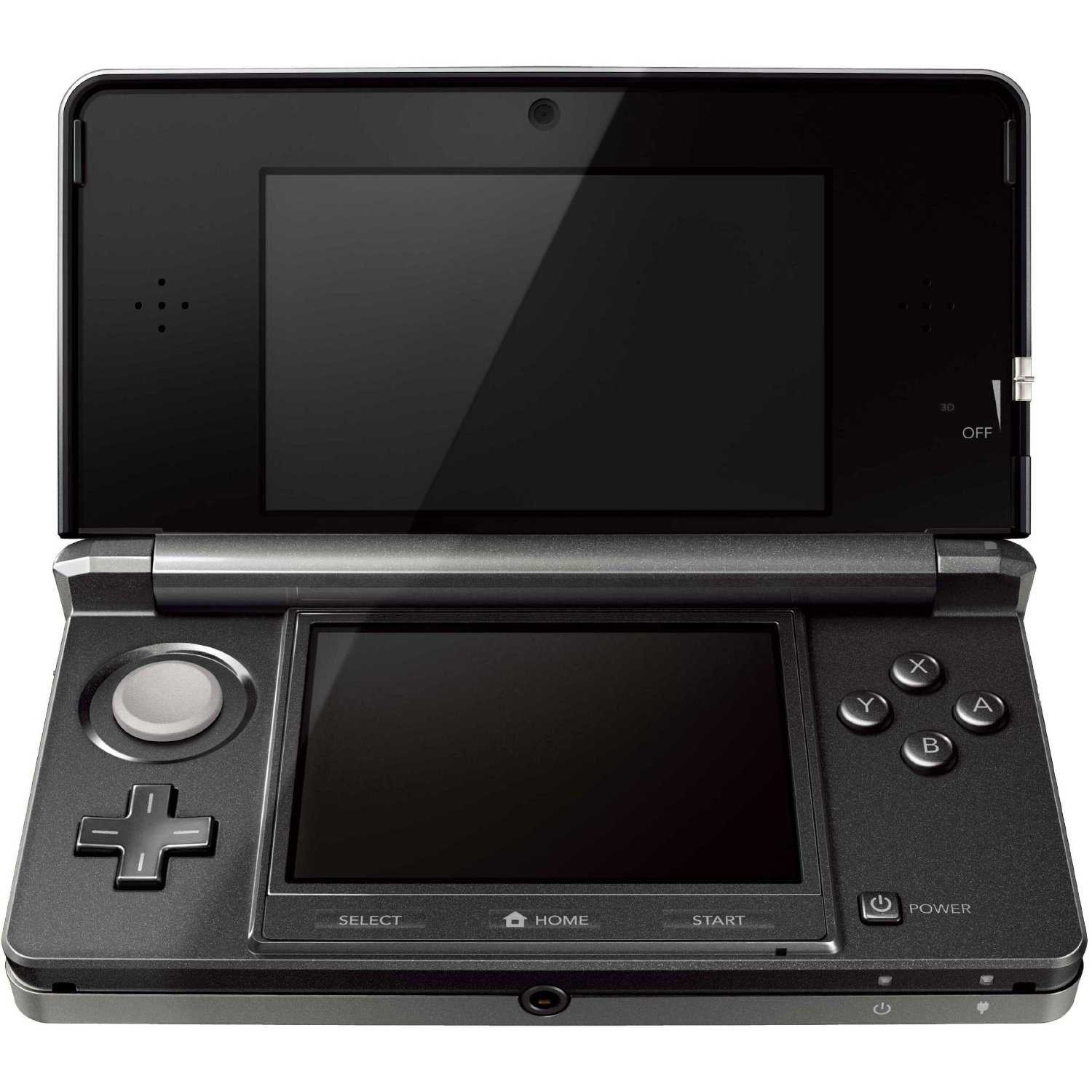
  • Satoru Iwata: adorable.
    Satoru Iwata: adorable.

    Satoru Iwata is just so… so lovable, isn’t he?

    I watched the latest Nintendo Direct presentation last weekend, and I just couldn’t get over what a brilliant marketing tool it is, mostly due to the cuddly persona of the Nintendo President, Mr Iwata. As he cheerfully whips his way through the presentation, you can’t help but mentally cheer him on, especially as he stumbles over a few hard-to-pronounce words but stoically carries on regardless. (‘The Wonderful 101‘ caused a few problems, as you can imagine – it’s hard enough to say with English as your first language.)

    Fils-Aime: no-tie lounger.
    Fils-Aime: no-tie lounger.

    I’m particularly fond of his penchant for gestures. For most of the presentation he remains in the rigid, hands-straight-by-sides posture of the professional Japanese businessman – none of this no-tie lounging that seems to have been adopted by Nintendo of America president Reggie Fils-Aime. No, Iwata-san is the very model of business-like statesmanship, which is why when he breaks out one of his trademark gestures, it’s hard not to smile. I’m not sure whether there’s someone behind the camera who holds up a sign when it’s time for him to wave his hands about, but I almost want to cheer when he starts flapping his paddles.

    As Tiny Cartridge points out, Iwata-san also seems to have developed an official gesture for when he says ‘Nintendo DIRECT’ – the ‘DIRECT’ is accompanied by a charming palms-out ‘viewfinder’ gesture, as if Mr Iwata is reaching out into your very home to touch you with his well-manicured hands. I may have to adopt this gesture in real life, although how I’m going to slip it into conversation is anyone’s guess. Maybe we’ll have to start ‘A Most Agreeable Pastime DIRECT’, in which I can tell you all about the games I haven’t had time to play.

    "Welcome to Nintendo... DIRECT!"
    “Welcome to Nintendo… DIRECT!”

    As I said at the start, the chief reason why the Nintendo Direct broadcasts are great is that Iwata-san is so lovable, so basically I just believe anything this cuddly little man says without question. I was a bit miffed about the lack of games for the Wii U and 3DS at the beginning of the year, but then Iwata-san said he was sorry about it, and that they’d been really busy, you-know-how-it-is etc etc and suddenly all was forgiven. In fact I felt a bit guilty that he’d been working so hard for my benefit. The man has a magnetic power I tells ya.

    I was sad to hear about Nintendo’s lower than expected Wii U sales figures this week (check out this interesting analysis by Eurogamer), but I wasn’t that surprised either: I love my little Wii U, but after the launch-day flood of games, there’s been an absolute drought of quality software, so no doubt that has something to do with the tail off in sales. The lack of marketing doesn’t help either – when I told my office co-workers that I was buying a Wii U, not a single one of them knew what it was, and this was during the week it was released.

    Still, the good news is that lovely Mr Iwata has promised us lots of wonderful games in the future, including two new Zeldas (hurrah!), a 3D Mario, Super Smash Bros., Mario Kart, Yarn Yoshi and a new one from the makers of Xenoblade Chronicles (which looked a lot like Monster Hunter from the clip they showed – no bad thing). Plus there was great news about an improved Virtual Console heading to Wii U, along with loads of promotions to celebrate 30 years of the Famicom, including an immediate offer to download 1987’s Balloon Fight for 30p. Bargain!

    To my shame, I’d never even heard of Balloon Fight, but it turns out to be a brilliantly addictive game: if you’re got a Wii U, download it now before the offer runs out, you won’t regret it. What’s more, it turns out that even watching other people play it is addictive too, as this compelling footage of a middle-aged Japanese man shows:

    [As fawned over by Lucius Merriweather.]

  • Australian FlagHAPPY AUSTRALIA DAY!  It’s Australia Day down under and we Australians like a good celebration.  The First Fleet arrived in Australia on 26 January 1788 and marks the date of European settlement in this great nation.  Of course on the flip side of that it marks the beginning of a rather difficult period in the history of our indigenous Australians.
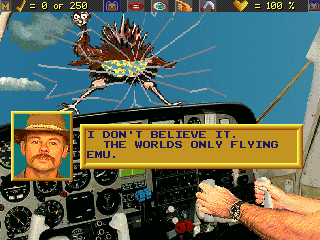

    Historical atrocities aside though, Australia is a great country.  The thing about Australians is that we’re pretty low-key on the whole patriotism thing.  Okay sometimes our Prime Minister tells Eurozone leaders to ‘get their s#!t together‘, which to be honest is somewhat justified, but by in large we don’t feel it necessary as a group to tell the world how bloody amazing we are.

    Australians are proud and patriotic, but subtly so.  In fact we are more likely to take the piss out of ourselves than to big-note our achievements.  Even in video games we have a hard time taking ourselves seriously.

    The Adventures of Down Under Dan (1995)
    The Adventures of Down Under Dan (1995) <Source: http://www.mobygames.com&gt;

    Patriotism takes many forms however, and there is of course more than one way to skin a cat as the United States of America is testament to.  A nation of great achievements, of global power and addictive culture – and Patriotic Pinball.  What better way to celebrate your nation with hitting a steel ball around a table?

    Patriotic Pinball (2003)
    Patriotic Pinball (2003) <Source: http://www.mobygames.com&gt;

    Blatant propaganda or endearing patriotism?  You decide!  Tell us your thoughts by leaving your comments below.  <Sir Gaulian>

  • If you’re like me, video games are one of many things that I spend my free time doing.  You may also be like me in that I find I am having less and less time to actually spend with games, what with all the earning money, keeping fit and domestic duties that have quietly seeped into my daily routine over the years.

    In some ways this makes me sad.  But quietly there is a part of me that is grateful that at some point real life got my attention and began to point out to me all of the things I would be missing if I sat staring at a TV screen all day.  That’s not to say that video games aren’t absolutely fantastic things that can enlighten and teach us all, because they certainly do that.  It’s just saying that other there are other things that we should all do to make us better people – in addition to video games.

    Anyone will tell you that exercise in one of those things.  Love it or hate it exercising should be an important part of all of our lives.

    For me that exercise is running, which I find incredibly rewarding.  Pushing the limits of the human body is almost (at a very long stretch) like succeeding at a very hard video game, or if you’re new to running, getting further and further into the game.  It is a challenging, rewarding, and not to mention healthy hobby.

    But if my word doesn’t get your blood pumping, there ARE WAYS you could inject some tunes into your exercise routine.  And what is better than some of your favourite video game tracks to get you started?

    Here are ten of my favourite game-related tracks to run to:

    1. Dogfight (from Ace Combat: Assault Horizon)
    2. Wheatley Science (from Portal 2)
    3. Syndicate – Skrillex Remix (from Syndicate)
    4. End of Line (from Tron Legacy)
    5. Valkyrie Run (from Warhammer 40,000: Space Marine)
    6. Fly (from Yakuza 3)
    7. option : the reporter from ch5 (from Space Channel 5)
    8. Maybe I’m a Lion (from Final Fantasy VIII)
    9. Tasso (from Infamous 2: Red Soundtrack)
    10. The Assassin Looms (from The Witcher 2: Assassins of Kings)

    I’d love to hear your suggestions, so please leave them in the comments below!  And if you’re not into real running, Bit.Trip.Runner (below) is a great little game from Gaijin Games that I wholeheartedly recommend you pick up.

    CommanderRunner