• PHOGS! review: what a good dog (dogs?)

    I can’t quite believe that PHOGS! is actually out. I first played this game at EGX Rezzed waaaaaay back in April 2018, and it’s been subject to a few delays since. But I was rather taken with it on my first play in those dim and distant pre-coronavirus days, and I am happy to say that it still oozes charm and warmth all these decades later (Is this right? – Ed).

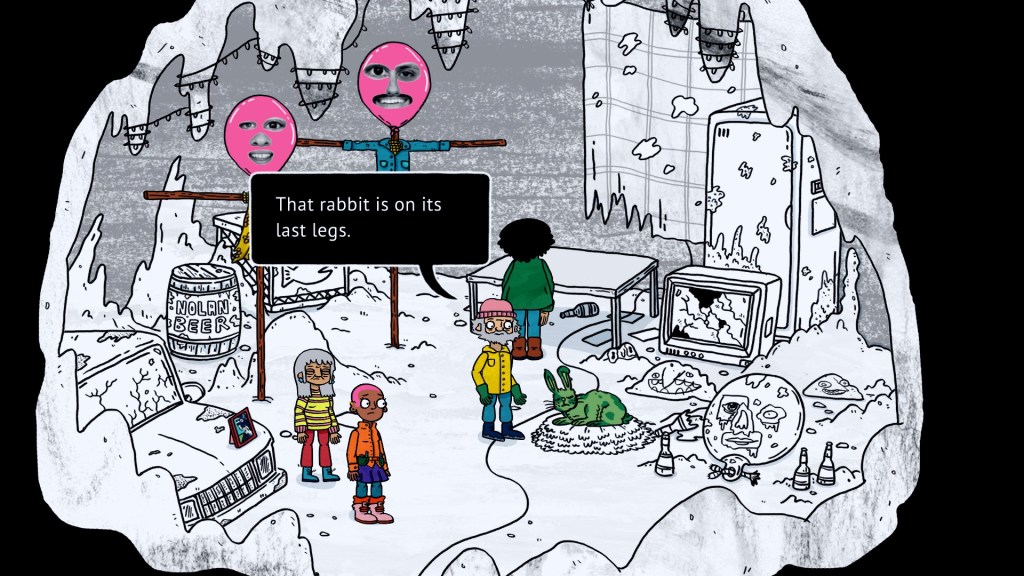
    The game’s hook lies almost entirely in its unique protagonist. Or protagonists. Or protagonist? OK, look, there’s this dog with no legs, but it has two heads – named Red and Blue – and you control each head independently using the analogue sticks on your controller. So in essence you have a sausage with two bitey ends.

    But the really fun part is that one player can control one end while another can control t’other, and thus much merriment and calamity ensues. Cleverly, two players can even share one controller, so no one has to make do with the slightly broken MadCatz joypad you bought as a cheap spare, with that chunk broken off the rubber stick and the dodgy button from when someone spilt juice on it. You know the one.

    As well as gracelessly shuffling along the ground, each lovable dog head can s-t-r-e-t-c-h to reach stuff and grab things with its dirty dog mouth (or simply bark if there’s an absence of grabbable things in the vicinity). And thus the stage is set for myriad puzzles that involve stretching and grabbing things, as well as endless enjoyably low-key arguments as you berate the other player for not going in the direction you think they should have been going in, no I know I didn’t say we should go that way but it’s obvious isn’t it, that’s the platform with the switch on it of course we should be going up there, just grab the thing grab the thing grab the thing, argh you’ve missed it and now we need to go round again.

    As you’ve probably guessed, PHOGS! is at its absolute brilliant best when playing with two. Even the most mundane actions, like navigating a narrow walkway, become iridescently exciting and enjoyably frustrating when there are two people clumsily guiding the conjoined ends of a wobbly worm dog. It’s a hoot, I tell you. Although it’s possible to play PHOGS! in single player, by using the two sticks to independently move each doghead, I’d heartily recommend you save this game for times when another human being is around, since it is approximately ten times better with two people involved. And that’s a maths fact.

    Handily, there’s an online mode for when you can’t tempt another human into your pathogen-ridden flat, or for particular times when the law forbids you from partaking in such fraternising. I haven’t actually tried doing this, but I know this mode exists because it’s right there on the title screen. Perhaps a more professional reviewer may have actually dived into this mode and scrutinised it for matchmaking, lag, and so on, but you’re stuck with me, so I guess we’ll never know any of these things.

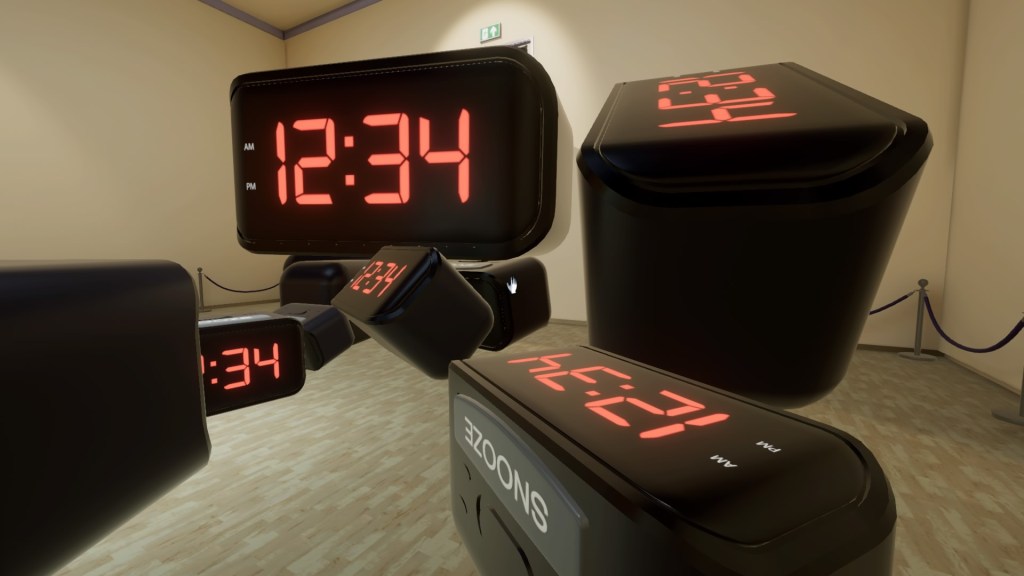
    I will also hold up my hand at this point and say I haven’t finished PHOGS!, because I am a busy man with lots of things to do, and playing video games is a disappointingly small percentage of those busy things. But I can tell you I’ve finished one of the three worlds and played a fair chunk of the other two, and generally it’s all pretty damn good. The game is at its absolute best when each new level throws up a genuine surprise, like the stage when you’re suddenly transported into a series of arcade machines. It’s that wonderful Mario feeling of being thrown a great idea, being given just enough time to be thoroughly dazzled by it, then being thrown into something else. The Party World in particular is a non-stop roller-coaster (sometimes literally) of neat ideas, and has some of the best stages in the game. There are also some very clever and funny ways to utilise your two-ended hollow dog, like turning it into an impromptu hose pipe.
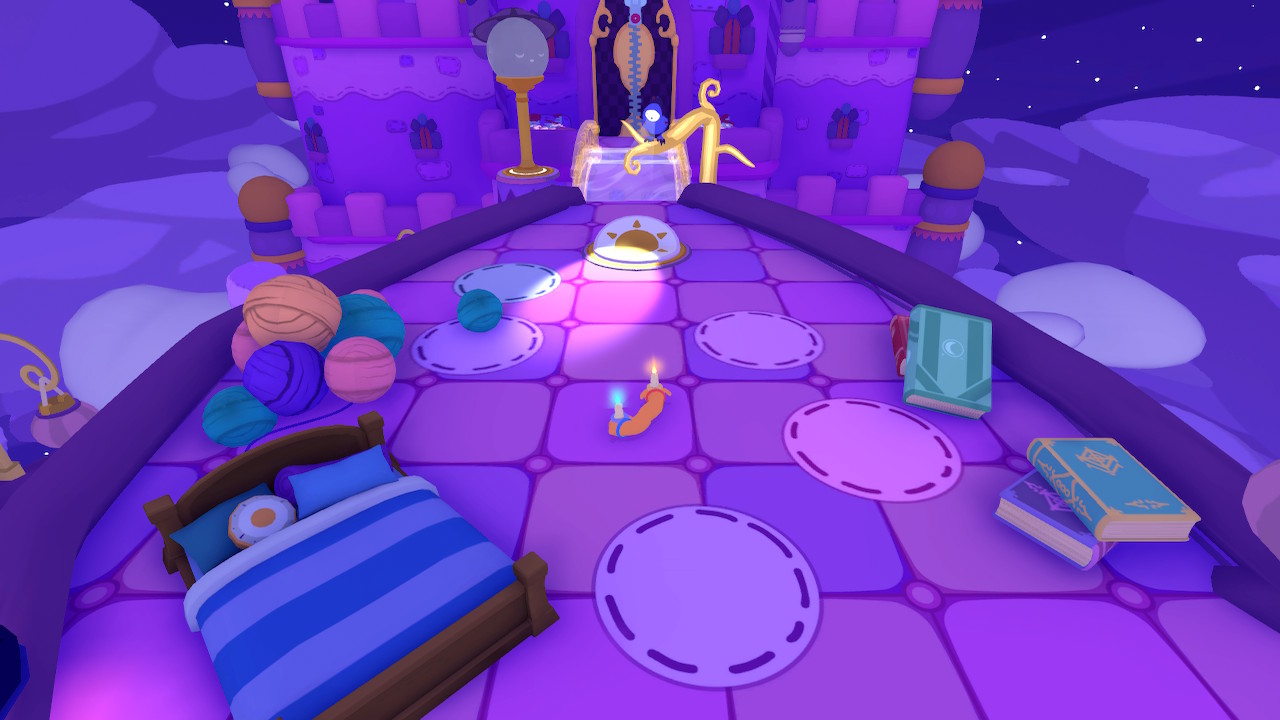
    Unfortunately, PHOGS! can’t quite keep up this relentless rate of fire from its ideas cannon throughout – the Sleep World in particular becomes a bit of a slog, with regular reuse of puzzles involving switching lights on and off. And it doesn’t help that the levels of that particular world look almost drab in comparison to the searingly bright colours of the other environs. Which prompts me to point out that for the most part this game looks utterly gorgeous – its sunny disposition certainly takes the edge off the winter gloom outside.

    Mechanically, it works pretty well, although I did find myself getting stuck behind the odd object, and the stretching can sometimes cause our doggy pals to go flailing in a bizarre arc. Although the latter is more of a hilarious feature than a bug, to be honest. No, the one thing that holds PHOGS! back from unblemished greatness is its pacing – a series of fantastic, idea-laden levels can be followed by a few slightly tedious ones with tiresome variations on the same mechanic. And I also found that the levels themselves are a bit too long. It can be hard to get through some stages with two players artlessly attempting to coordinate their respective dog ends, and often what you think is the finish actually turns out to be just the end of the first part of three separate sections to one giant level. The two-player tugging is fun, but it requires so much concentration that the game would benefit from having shorter, sharper stages with more breathing space in between.

    But forget all that, because the hats are amazing. Each level has several well-hidden golden bones to find, and these can be exchanged for some ADORABLE head gear. I love the hats sooooo much. There’s even a cat hat. And a little space helmet, and a pinwheel, and OH MY GOSH THEY’RE GREAT. More hats please, I want all the hats.

    Anyway. PHOGS! is an absolute blast with two players, and I’d highly recommend playing it if you have another human in the vicinity and you’re tired about arguing over whose turn it is to do the washing up, and instead want to argue about something else. Because low-level spats over who’s controlling which end of a physically impossible two-headed sausage dog are the key to human happiness.


    PHOGS! was developed by Bit Loom Studios, and it’s available on Switch, PC, Xbox One and PS4. We played the Switch version.

    Disclosure statement: review code for PHOGS! was provided by Coatsink. A Most Agreeable Pastime operates as an independent site, and all opinions expressed are those of the author.

    Follow A Most Agreeable Pastime on Twitter and Facebook, if you like.

  • The History of Turrican: a ten-page Retro Gamer special

    I have just received issue 214 of Retro Gamer magazine, and I am absolutely thrilled. It contains my ten-page article on The History of Turrican, which marks the first time I’ve ever written a cover feature. And what a cover! The subscriber edition above looks utterly fantastic, but to celebrate this personal milestone, I will also be hunting down the regular newsstand version once the shops open again.

    Ten pages might not sound like much, but I can assure you that it represents an enormous amount of work. Writing the article involved a trio of hour-long interviews with people like Factor 5 head Julian Eggebrecht and composer Chris Huelsbeck, as well as all of the many phone calls and emails that allowed for such things to happen. Then I had to transcribe all of that information and craft it into a 4,000-word story, as well as write four separate boxouts AND play through every version of every Turrican game for every system to get all of the screenshots for the feature. In short, it took flippin’ ages.

    But it’s all worth it to see the issue before me – I am positively tingling with pride. And there’s something magical about seeing your words etched into print. Although I like writing for websites too, magazines give a sense of tangibility and permanence – something that was brought home to me earlier this year when Kotaku UK disappeared, taking dozens of my articles with it.

    I pitched the Turrican feature quite a while ago, based on my love for Turrican II on the Amiga, and it was brilliant to revisit that game again for this article, as well as to discover some of the Turrican games I missed, like Super Turrican 2. Plus I loved hearing the stories about how these things got made. One thing that I particularly like about writing features on retro games is that the interviewees can be much more candid about events long in the past than can developers promoting a current game, who are also no doubt up to the eyeballs in NDAs. Julian Eggebrecht in particular came out with some absolute crackers in my interview with him – but you’ll have to read the feature to see what he said. And do read it if you can: I am especially proud of this one. (NB. You can order single issues or subscriptions to Retro Gamer here.)

    Finally, massive thanks to Julian Eggebrecht, Chris Huelsbeck, Audi Sorlie and Dennis Mendel for their help with the article, as well as to the folks at PR Hound and United Games for their sterling work in organising interviews and images. I’ll leave you with a trailer for the excellent-looking Turrican Flashback re-releases, which I cover in the feature and which should be arriving on Switch and PS4 in the not-too-distant future.


    Follow A Most Agreeable Pastime on Twitter and Facebook, if you like.

  • Lylat Wars: Betrayal and Regret on the Planet Aquas

    Trigger warning: The below article contains a description of a wilful deletion of high scores. Reader discretion is advised.

    Back in the day, my Nintendo 64 was, obviously, one of my most treasured possessions. In the pre-internet dark ages, it was my sole form of interactive entertainment (other than fighting with my siblings). The only slight complication was that it wasn’t technically mine as such. Ownership was shared with my younger brother, which, looking back on it, was actually a remarkably amicable arrangement. Most of the time.

    There was, however, one infamous incident that has lived long in the memory. Or, at least, it’s lived long in my memory, which is really all that matters. It all began on one unremarkable Tuesday, I assume. I went to fire up the N64 and noticed that my/our copy of Lylat Wars wasn’t there. Lylat Wars (a.k.a Star Fox 64) was one of my favourite games at the time, and, even by today’s standards, it has remarkable replayability.

    In it, you played as Fox McCloud, ace space fighter pilot. Fox, and his squad of remarkably irritating wingmen, were tasked with saving the Lylat Star System from the villainous Andross and his armada of frankly crap space ships. The exact route taken through Lylat on the way to the final showdown depended on what you did in each level. Certain planets could only be reached if secrets were uncovered, or specific criteria were met.

    Also, and most relevantly, medals were awarded for each level based on the number of enemies you shot down. In turn, these medals unlocked other modes in both single player and multiplayer. Some medals were easier to get than others. If any of your wingmen were shot down in a mission, then you wouldn’t get the medal even if you reached the kill target. This meant you couldn’t afford to shoot Falco down, or let Slippy get himself shot down, even if you really wanted to.

    Star Fox 64 review (Nintendo 64) - how does it play today ...

    Anyway…

    I asked my brother if he had seen the Lylat Wars cartridge. He only then informed me that he had leant it to a friend of his; we’ll call him Richard (because that was his name). Leaving aside the fact he hadn’t checked with me first which was probably theft, I’m sure I was pretty annoyed that I couldn’t have another crack at the harder route through Lylat, which I kept failing at. From memory, it was a good month or two before we got it back. When it returned, I eagerly plugged it back into the console and fired it up. Then I saw the star map at the start of a game.

    All my medals were gone. I checked the leaderboard. My high scores were gone too. Replaced by well below average scores from “RIC”. Richard, had wiped the game data. He had not defeated my scores with honour. No, he had cleared them, like a miserable Ferengi. A disgrace that would dishonour him, his sons, and their sons. I was watching a lot of Star Trek: TNG at the time…

    Nostalgia with Lylat Wars 64 aka Star Fox 64 (N64) | Very ...

    I was, understandably, a bit miffed. By which I of course mean I was flippin’ furious. The scores were one thing, but those medals mattered. I was well within my rights to wipe his scores, but no. I rose above. I set about regaining my medals and pushing the intruder’s scores off the board the old fashioned way. So I spent the next couple of weeks playing a lot of Lylat Wars.

    Soon, the leaderboard was uniformly mine. For the record, I topped out at 1,395 points, which I still maintain is quite good actually. The hard route fell to my onslaught. Missions I once found impossible became straightforward. Even Andross’s weird brain and eyeball form was no match for me. Medals were both restored and gained anew. Except for one.

    StarFox 64/Lylat Wars: Aquas, Lets Play! Part 3 - YouTube

    Aquas (a rare example of a fun underwater level) was a mission that was once a guaranteed source of medals for me. You had infinite bombs and no wingmen to worry about. Reaching the kill target was so easy I didn’t even have to try. That was before the Richard Affair though. Ever since, no matter how good I got, I could never regain that medal. I don’t know why. It’s in my head. Every now and then I go back and try, but my skills have dimmed. Also, the N64 is notoriously clunky, and those control sticks were not designed to last 25 years…

    And so there it sits. A watery monument to my failure to properly vet my brother’s friends. To allow him to loan my/our game to someone totally lacking a sense of morality. Perhaps that is the moral of this story, dear reader – trust no-one. Even your nearest and dearest can become pawns for the ethically bankrupt. Some would say that 20+ years is a long time to bear a petty grudge, but to them I would say, “no, you’re wrong”. My only regret is that I’m not better at Aquas.


    Follow A Most Agreeable Pastime on Twitter and Facebook, if you like.

  • Worms Rumble is off the hook

    When I first heard of Worms Rumble, a real-time, battle royale-esque entry into the seemingly immortal Worms franchise, I had my doubts. After all, previous departures from the tried and trusted 2D, turn-based, side-scrolling titles on which Worms made its name were not generally well received. However, after giving its recent open beta a go, I now think that Team17 might be on to a winner.

    For those of you who are somehow not already aware, Worms games are (usually) turn-based tactical games. You’re in command of a plucky squad of belligerent wrigglers, who are armed to the teeth with comically over-the-top weaponry. Your aim is to eliminate the enemy team(s) before they get you. They are generally excellent party games, and if you’ve never played one, then I would implore you to give it a go.

    Worms Rumble has a different focus. While the goal is still to put enemy worms in the ground (in a mean way), you’re now only controlling a single worm. Turn-based tactics are replaced by fast-paced mayhem. There are three game modes: Deathmatch, Last Squad Standing and Last Worm Standing.

    Deathmatch is a complete free-for-all, accommodating up to 32 players. Respawns are unlimited, and the winner is simply whoever has the most kills at the end of the eight-minute round. As such, there’s a heavy emphasis on playing aggressively before darting out to recover health. It’s gleefully chaotic.

    The other two modes play more like a traditional battle royale. Last Squad Standing groups players into teams of three. Parts of the map are steadily made uninhabitable with an encroaching storm, until only one team remains. You can probably guess how Last Worm Standing works…

    Worms Rumble being the kind of game it is, it should be no surprise to hear that there are lots of customisation options too. There are cosmetics and emotes for your worm, weapon skins, profile flair and voice packs. In the beta, these are all unlocked as rewards or via in-game currency. The developer has confirmed [post #12] that these coins can only be earned in game, although there will be paid DLC cosmetic packs available later.

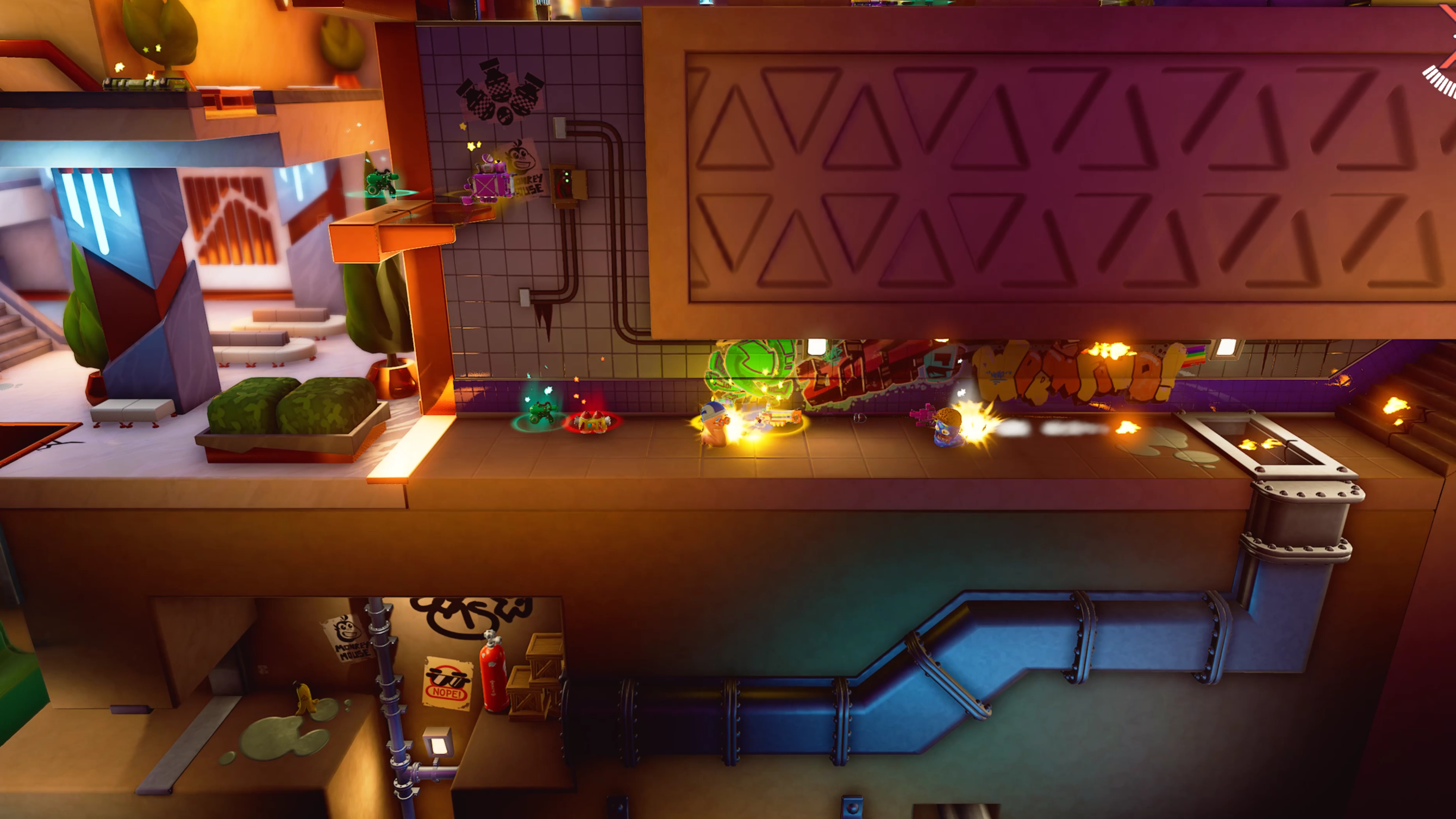
    Only one level was available in the beta, a power station/office block called Transforming Towers. There’s a lot of distinct areas and plenty of options for traversal, both horizontally and vertically. Players can move around in air ducts and through containers, out of view of players outside of them. This allows both for ambush options or a place to recover between shoot-outs. The level looked great too, with a bright, colourful art-style and lots of background detail.

    One important thing to note is that Worms Rumble allows for crossplay between PC and PlayStation. I’m always curious as to whether PC players get an advantage in such situations, especially in games requiring quick reactions. In this case, the majority of players were on console (the leaderboard indicates which players are on Steam). While PS players were definitely able to compete and win against PC players, I found that PC players generally fared better on average. For example, I didn’t see a PC player end in the bottom five in any of the rounds I played. Although perhaps that’s inevitable to a certain extent.

    Despite all the differences to the standard formula, Worms Rumble felt remarkably like a Worms game. It’s a very different experience to, say, Worms Armageddon or Worms W.M.D, but that core identity is still there. The weapons include series favourites like the Bazooka, Banana Bombs and the Sheep Launcher – although the Ninja Rope has been renamed the Grapple Gun for some reason – and the overall presentation is unmistakably Worms. You’re still able to detonate a Holy Hand Grenade in your own face. Its spirit is true to the other games in the franchise.

    I’m sure there will be some purists who will say that this is the end of Worms as we know it. Well, to those people I say “ppfffllffff”. It’s been over four years since the last Worms game came out – the longest break in the series’ 25 year history – and it’s great to see the invertebrates back in any shape or form. I certainly hope Team17 don’t abandon the standard formula altogether, but Worms Rumble is fun! Blasting around with a jet pack and firing off bazooka rounds in the general direction of enemies is always a good time. I enjoyed it a lot, and I look forward to seeing what the full release looks like come December 1st.


    Follow A Most Agreeable Pastime on Twitter and Facebook, if you like.

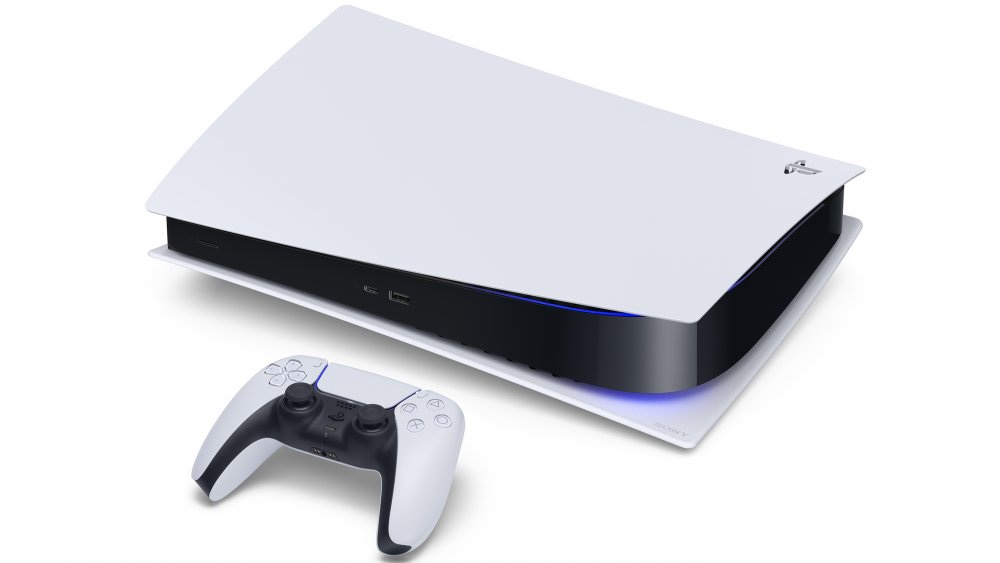
  • Oh wait, those new consoles are launching next week, aren’t they?

    Damn, these are weird times. I’m currently waiting for numbers to go up on a news website as the US election plays out its special brand of spectacle and lunacy. Meanwhile, the UK has gone into a second lockdown, and I’m trapped in another time loop for a month, doing the same things every day without change, aside from the occasional miserable trip to the supermarket. And, oh yeah, some new consoles are coming out. Next week, in fact. Huh.

    What a strange time to be launching a console. For a start, you can’t actually go and buy one from a game shop. That’s in the UK, at least. All non-essential shops are now closed, so the only option is to get them online. Or possibly from a supermarket while being scowled at for buying non-essential goods.

    No big launch day parties, none of the traditional media shots of people queuing outside stores to be the first to get their mitts on a shiny new next-generation console. And hardly anyone has even had a chance to play on these things, thanks to the lack of any gaming events for the past six months. It seems so odd the next generation launches in a week, and yet with such little fanfare. Relatively speaking.

    And then there’s the fact that neither platform has any launch games of note. I expect this wasn’t the plan. COVID-19 has caused so many delays this year, and I wouldn’t be surprised if the launch line ups were originally much fuller to start with. We already know that Halo Infinite was meant to be a launch title and that slipped – I wonder what other games were originally meant to hit the launch date?

    Weird times.

    I feel oddly removed from it all, even though I write about video games for a living. Well, partly. But I’ve actually been so busy with work recently that I haven’t even had time to play any games. November and December are always my busiest months as a freelancer, but it’s been particularly crazy this year. After the work dried up in March, it’s come back with a vengeance, like everyone is desperately trying to make up for lost time.

    All that means I don’t even have the spare bandwidth to enjoy a new console right now, even if I could afford one. And I imagine that splashing out on a PS5 or Xbox Series X may be a bit beyond many people’s budgets right now, after a tumultuous year for finances.

    Actually, I already have a massive backlog of review code that I’m trying to get through, but between work and childcare there’s just no room to fit in video games. Paradise Killer has been sat on my hard drive for weeks, and I’ve heard it’s brilliant. Hades is on there, too. And Pendragon, and Partisans 1941… Maybe I’ll have time to get through them all at Christmas. I know it’s churlish to complain about getting too many free games, but it’s just another symptom of the general feeling of being overwhelmed. Everything is a Bit Much right now.

    But hey, new consoles, eh? That’s cool. I hope I get to play them some day. Maybe I could get some mates round.

    Do you remember when you could get mates round? That was fun, wasn’t it?

    Sigh.


    Follow A Most Agreeable Pastime on Twitter and Facebook, if you like.

  • Pacer review: fast, frantic fun

    Playing Pacer was something of a novel experience for me, in as much as it’s the first time I’ve played a game that used to be a different game.

    Pacer, from R8 Games, is an anti-gravity racing game, reminiscent of such titles as Wipeout, F-Zero and Redout. More to the point, it’s very similar to Formula Fusion, an anti-grav racer that was released in 2017, withdrawn from sale in 2018, and relaunched today as Pacer. Originally Kickstarted in 2015, Formula Fusion was not particularly well received in its first incarnation, with the most pointed criticism focused on its lack of content.

    Two years and the departure of the Creative Director later, Pacer has emerged from its convalescence as a more enticing proposition. There are more tracks, more game modes and (mercifully) training missions explaining how everything actually works.

    As you’d expect, the aim of Pacer is, generally, to get your super-fast racer around the various tracks as quickly as possible. There are various game modes beyond just a straight race to the finish, some of which work better than others. Elimination sees the racer in last place eliminated every 30 seconds, whereas Destruction requires you to focus on blowing up your opponents with your vehicle’s weapons.

    More uniquely, there’s the Storm mode, which adds a little battle royale to the mix. Racers need to remain within an increasingly restricted safe area, or take damage from the eponymous disturbance. It’s a fun mode, and is a surprisingly successful addition. I didn’t enjoy the Flowmentum mode as much though. The idea is your vehicle gets faster as time elapses, with your racer taking steady damage which is only maintained by passing through gates on track. It’s a neat concept, but actually resulted in me driving as slowly as possible, which seemed opposed to the game’s general theme.

    There’s a single-player campaign, which unlocks additional tracks and cosmetic options for your vehicle as you progress. The campaign is broken into different formulae, with speeds increasing as you go along. You’ll be offered contracts with different in-game teams at each formula, with each team having their own specific objectives. This is all very surface level stuff though. You’ll need to complete all the offered contracts before you can move on, and just repeatedly finishing in first place will suffice.

    There’s online multiplayer for up to 10 players which, if Pacer can garner enough of an audience, you’d feel would be the real heart of the game. There’s no local multiplayer though, which is a bit of a shame. Surely half the fun of such titles is being able to laugh in the face of your friends as you steal victory on the line (local restrictions permitting)?

    Most importantly though, Pacer is just fun to play. There is a definite feeling of speed, which is a must for this kind of game. It feels like there’s quite a high skill ceiling too. Although I found it pretty easy to get wins in the campaign, I nonetheless spent a lot of time pinballing off walls at the higher speeds. It feels like the real competition is against the clock as opposed to the AI racers.

    It’s very satisfying when you get the laps right though. When you start to work out how much airbrake to apply on which corner, then nail the apex and boost away. For all the additional game modes and vehicle customisation, Pacer is at its best when it just lets you focus on driving fast.

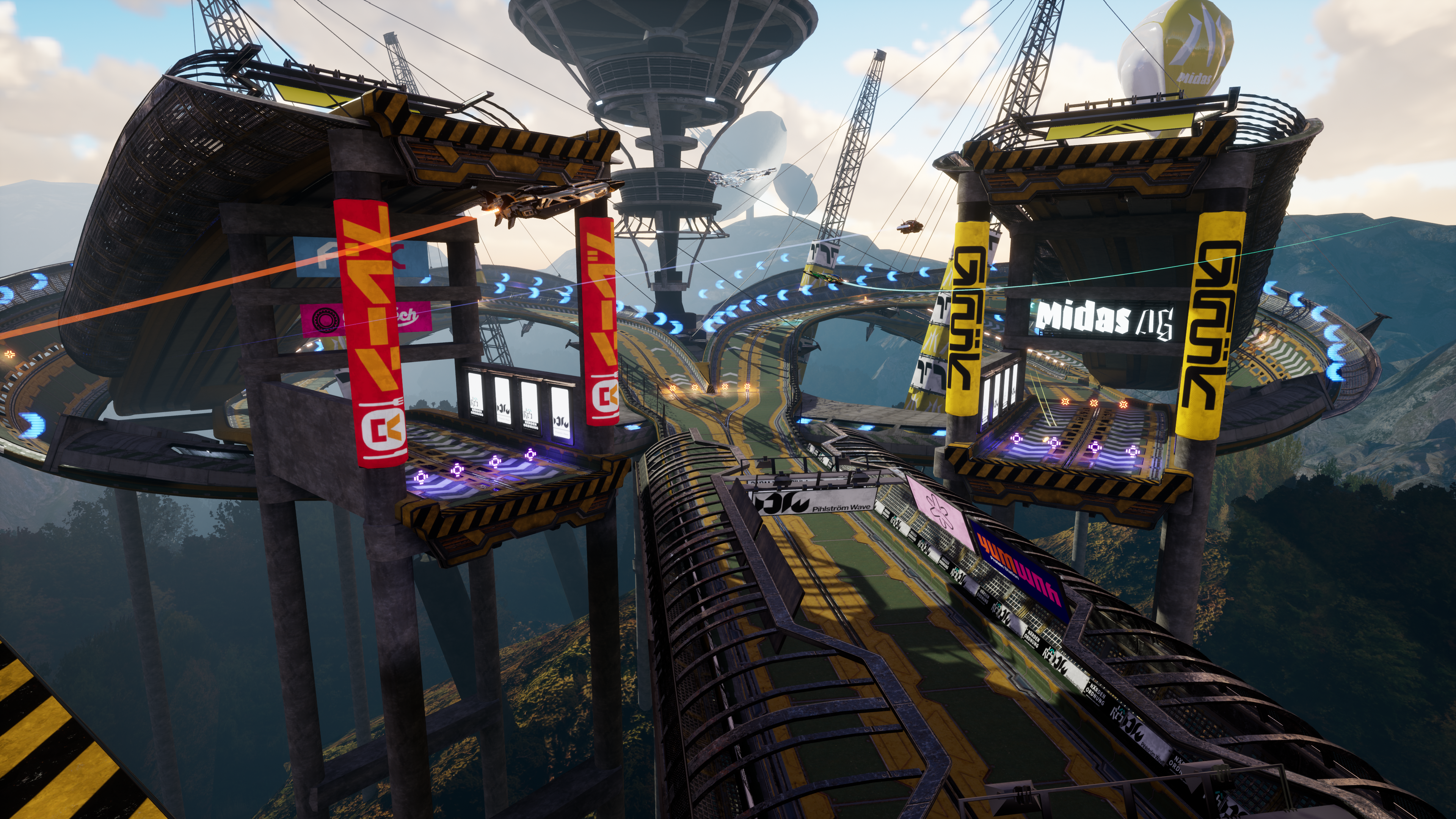
    The overall presentation is really solid, too. It’s a good-looking game. Every track has its own distinct aesthetic and feel. There’s a nice variety in design as well, with some wide, fast tracks, some twisty, narrow ones and others with a mix of different sections. The soundtrack is generally excellent, although the music often seemed absent from the races themselves (although not always). Maybe a bug, but odd either way.

    Although I am by no means a racing game aficionado, the vehicles felt like they handled well. You can unlock customisation options that alter the balance of traits like acceleration, breaking and handling, although I confess I couldn’t tell you exactly how much of an impact they were having. The different weapons are more noticeable, and have plenty of punch and variety to them. I favoured a Gauss Cannon/Cloaking Device combo, just for reference.

    You can also customise the look of your vehicle, including paint jobs, exhaust colour and other items. However, in reality, I was entirely unable to apply these changes for races. My custom performance and weapon options were available just fine, but never cosmetics. I can only assume this is a bug, as the mechanics behind the options are basically the same.

    On the whole though, I enjoyed Pacer. It’s good game to hop into, fire up a Quick Play race and just blast around a track for a while. There’s not a huge amount of depth to the content, and it’s a little lacking in personality, but it does the fundamentals very well. The online leaderboards give a constantly evolving target to the more competitive players, and if it can take off the multiplayer has a lot of potential. There seem to be a couple of bugs in regards to cosmetics and music. Regardless, Pacer brings enough high-speed shenanigans to keep you coming back for more.


    Pacer was developed by R8 Games, and it’s available on PC and PS4, with an Xbox One version due soon. We played the PC version.

    Disclosure statement: review code for Pacer was provided by Renaissance PR. A Most Agreeable Pastime operates as an independent site, and all opinions expressed are those of the author.

    Follow A Most Agreeable Pastime on Twitter and Facebook, if you like.

  • Alwa’s Legacy review: one of the finest exploratory platformers out there

    I can’t write about Alwa’s Legacy without first talking about Alwa’s Awakening.

    I don’t want to say I was dismissive about Awakening when it first came out, but it definitely flew under my radar. At some point shortly after its release, I vaguely remember the developer, Elden Pixels, wondering via a tweet whether anybody would be willing to review their game to get the word out, and I totally bit (you can find my review right here). I know that independent development is a tough row to hoe, so I felt for their plight. I liked exploratory platformers, and the art style evoked classic 8-bit, so I figured why the hell not?

    What I got was a rare moment of unbridled discovery: there was something truly special about this game. Alwa’s Awakening didn’t just look like those under-the-radar NES classics, it played like them, too! I was reminded of stuff like Castlevania II: Simon’s Quest, Faxanadu and Legacy of the Wizard – titles that aren’t necessarily the first to be talked about in discussions of classic games, but ones that hold a special place in my heart. Alwa’s Awakening struck a brilliant balance between helping the player find their way through the mystical land of Alwa while leaving enough secrets that you’d often want to peel away from the well-trodden path.

    What does any of that have to do with Alwa’s Legacy, beyond the fact that it’s a canonical sequel? Well, everything. Going in I was curious about whether Elden Pixels could make lighting strike twice. I wouldn’t be looking at this game through the same lens of nostalgia; it had to live up to its own newly minted legacy.

    Alwa’s Legacy picks up right after Awakening ends; heroine Zoe finds herself blasted out of the 8-bit land of Alwa into a new, 16-bit version. And amnesia. You know how it goes. Like a lot of Super NES sequels, Alwa’s Legacy does a brilliant job of bringing plenty of familiarity to those of us who’ve played the first game, but it ups the ante in terms of presentation and mechanical execution. Everything feels slicker, prettier and faster. While a lot of her powers have translated from game to game, Zoe now moves much more quickly in a way that feels natural. Awakening felt methodical in its approach to platforming, whereas Legacy feels like it leaves itself open to more improvisation.

    Likewise, the world of Alwa this time around is varied and colorful in a way that the first game never was. That’s not to say Alwa in Awakening looked bad in any way: I appreciate the way it thematically stuck to a more gothic visual style. It’s just that when you move to new areas in Legacy, the difference is stark and noticeable.

    Even though there is an inherent familiarity when it comes to Zoe’s move set, Elden Pixels has managed to craft loads of new and unique puzzles thanks to new enemies or environmental hazards. During my journey to the first temple, I saw what I had to do, namely pushing the block I could summon onto a button to open a gate, but I couldn’t quite suss out how to get it on there. After a bit of fiddling, I let a shielded enemy come at me, and they pushed it across the screen to where I needed it to go. And the game never let up from that ingenious beginning. New tools can be fun, but being introduced to new concepts that force you to rethink your current kit is supremely satisfying.

    The only bad thing I can really come up with to say about Alwa’s Legacy is that it felt too short; a true sign of greatness if ever there was one. Once the dust settles, I might end up thinking that its length is actually where it needed to be, but then again I gorged myself on the game and played it in much larger chunks than I think most people would. Considering I’ve replayed Awakening a few times now, I’m sure I’ll go back to Legacy, if only to reminisce or at the very least find a few more trinkets I missed the first time around. Alwa’s Legacy truly lives up to its own legacy, and manages to be one of the best exploratory platformers out there.


    Alwa’s Legacy was developed by Elden Pixels, and it’s available on PC and Switch. We played the Switch version.

    Disclosure statement: review code for Alwa’s Legacy was provided by Plan of Attack. A Most Agreeable Pastime operates as an independent site, and all opinions expressed are those of the author.

    Follow A Most Agreeable Pastime on Twitter and Facebook, if you like.

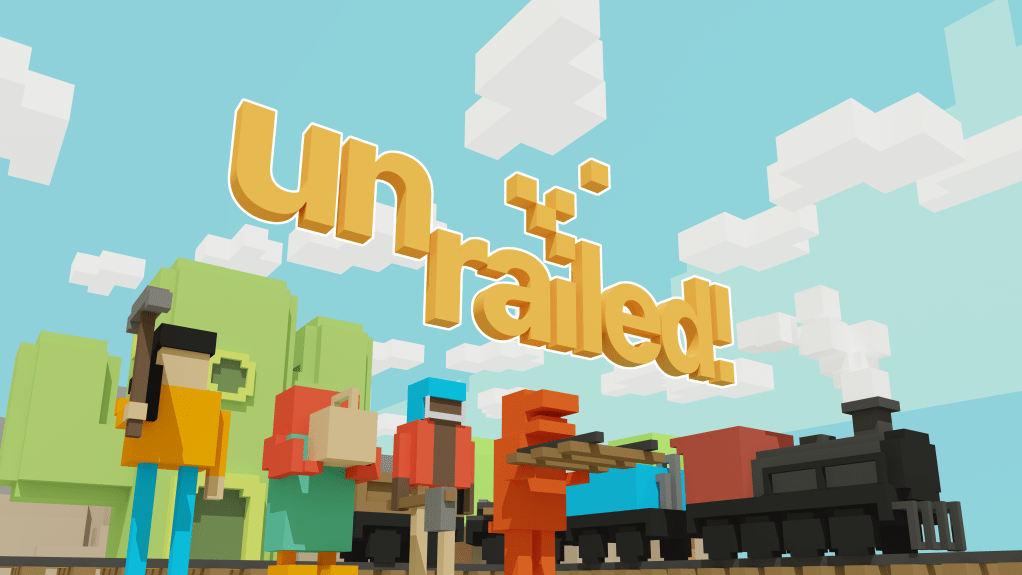
  • Unrailed review: a different kind of party game

    When most people hear the word ‘party’, they probably think of large gatherings: the type with gratuitous snacks, plenty of liquid intoxicants and a thrum of conversation. The kind of get together where you’d probably bust out a Jackbox game, Cards Against Humanity or have a rooftop soiree like in that 1-2-Switch commercial from a few years back.

    But Unrailed is a party game built for more low-key affairs: the kind involving a few buddies and a reasonably sized bowl of tortilla chips, all of you sat round a dining room table, ready to partake in board or card games. It’s best played in the company of others, straddling the line between being a pick-up-and-play type of experience and one that has just enough complexity to keep things interesting and compelling.

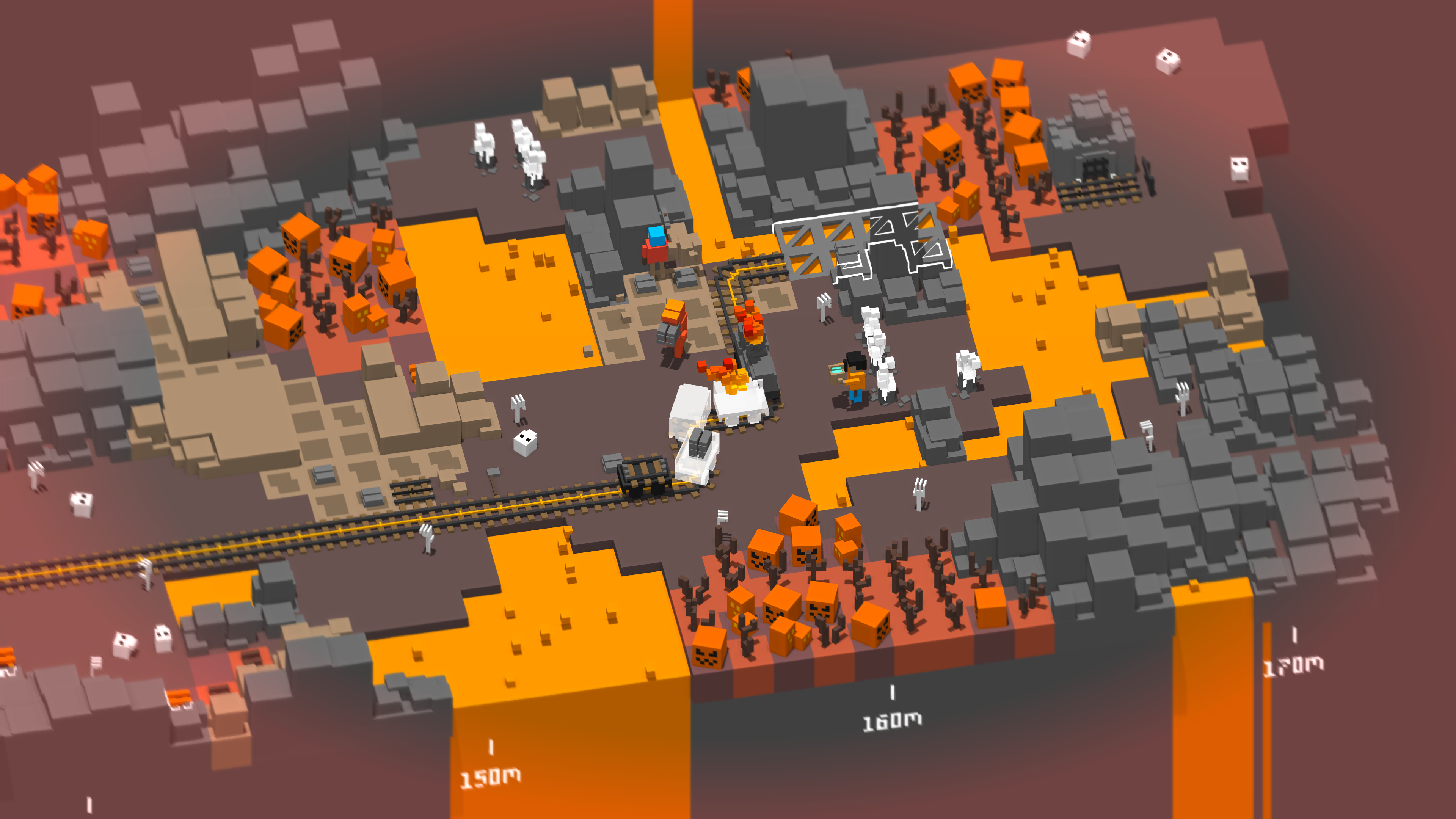
    The game is played in top-down manner, with some very fetching voxel art. You’re tasked with simply getting a slow but always moving locomotive to the next station by harvesting materials from the environment to build new train tracks and other pathways. You can only carry one tool at a time, so the major challenge of Unrailed is managing your time in such a way that you can gather the resources you need while offsetting things like bridges, random enemies and the train potentially catching on fire. Get good at it and you can do things like upgrade your train and make risky maneuvers to speed things up.

    Unrailed builds its worlds randomly, meaning each run is unique. Even without considering the different biomes you can operate in, like deserts and tundras, there’s enough variety in level layouts to ensure it never gets tiresome. More to the point, Unrailed is a fantastically frantic cooperative experience: a trick that few games get right. In order to make good momentum you need to have constant conversation and the ability to switch jobs on the fly. The way the world moves as the train does leads to sticky situations that require very fast changes in planning, which tend to get everyone stressed, but excitedly so, as you try to win the day.

    You could play Unrailed by yourself with a bot, but don’t bother – this game is meant to played with others, and I really mean that. The more people involved, the better it gets. My kids and I have been playing almost daily, forgoing a lot of other games in favour of tinkering with trains. In short, it’s a lot of fun.

    In some ways it’s unfortunate that Unrailed had to release during such trying times, when social gatherings are but a distant memory, because it’s at its best when played in the company of others. But then again, since I’m stuck at home with my family, we may as well have a blast playing a game together.

    I don’t mind big parties every now and again (probably now more than ever for obvious reasons), but there’s nothing better than spending an afternoon with a handful of family members or friends. Especially if you had the wherewithal to download Unrailed.


    Unrailed was developed by Indoor Astronaut, and it’s available on PC, Mac, PS4, and Switch. We played the Switch version.

    Disclosure statement: review code for Unrailed was provided by Renaissance PR. A Most Agreeable Pastime operates as an independent site, and all opinions expressed are those of the author.

    Follow A Most Agreeable Pastime on Twitter and Facebook, if you like.

  • The Survivalists review: multiple monkey management

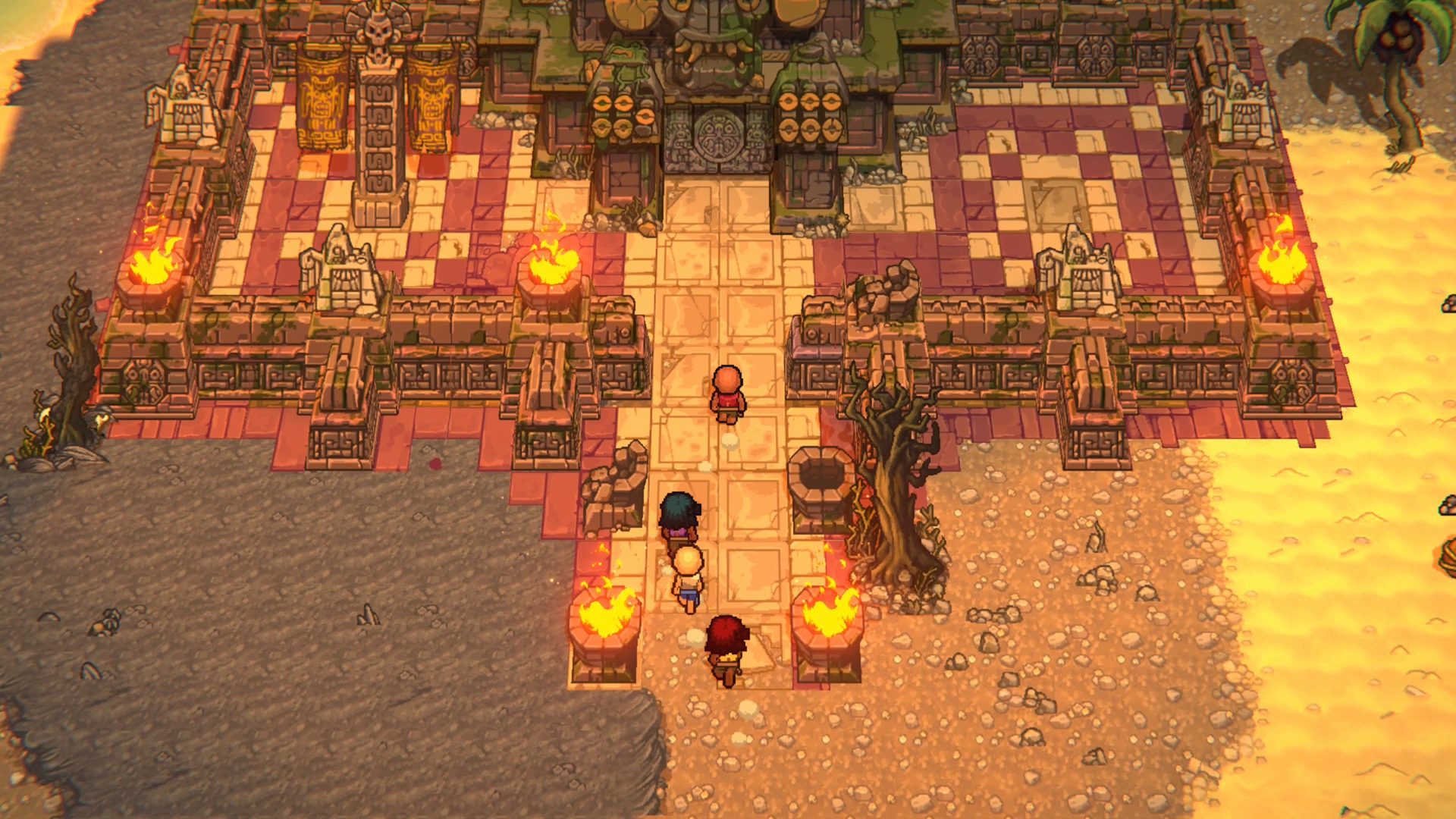
    As at the time of writing, being cast away on a desert island doesn’t sound like such a bad thing. Just me and maybe a few friends, getting away from pandemics, politics and, you know, people. All we’d have to worry about is keeping fed, sheltered and healthy. I think I could live with that. However, the premise of The Surivialists from Team17 is to escape this scenario in an attempt to return to ‘civilisation’. Whatever floats your boat, I suppose.

    Yes, the latest title from Team17, developers of all the Worms games and, more pertinently, The Escapists, would have you escape from a mysterious tropical island full of wonder and monkeys. To be fair, it’s not all sunshine and sandcastles, as there are plenty of dangers too. Orclings are out to eat you and wreck your stuff. So are some of the animals, too. Then there’s the undead pirates and hazardous environments. OK, maybe civilisation doesn’t look too bad by comparison.

    The Survivalists sits rather neatly between the ‘survive a hostile and mysterious wilderness’ of Don’t Starve and the ‘brightly-coloured resource management and exploration’ of Stardew Valley. I admit, those are quite lazy comparisons to make, but to my mind they’re also completely unavoidable. The Survivalists falls roughly between these games in terms of difficulty, too: danger isn’t as optional as it is in Stardew Valley, but nor is it as ever-present as it is in Don’t Starve.

    You begin your island adventures on a beach next to a smashed up raft, with nothing but its remaining contents and the clothes on your back. Your survival knowledge extends only far enough to put together a basic stone axe and a makeshift bed. Pretty quickly though, you’re able to start scavenging additional resources, unlocking new items and objects to build.

    This happens remarkably quickly, actually. Pretty soon you’re able to build all manner of tools, weapons, objects and structures. The types of resource that become available are so varied that inventory management swiftly ends up being a full-time job. Basic resources, including food, are not hard to come by though, so dumping the more basic items isn’t too much of a handicap if it becomes necessary.

    The aforementioned monkeys can also lend a helping hand. These practical primates can be rescued and/or recruited to your cause, and taught basic skills. For example, you can teach a monkey to chop trees or build walls, and they’ll keep doing it until they become unable to do so. As you progress, you’re able to train them for combat, which becomes particularly useful when fighting off Orcling raids, or exploring the islands’ treasure-laden crypts.

    Note that the apostrophe in that last sentence isn’t an error – it soon becomes obvious that your island is part of an archipelago. The other islands are explorable (once you build a new raft, of course), and exploration isn’t just to satisfy your curiosity: to escape the island(s), you’ll need to collect all the required keys. Notes left by previous explorers offer hints to the odd nature of your hopefully temporary home.

    All-in-all, it’s a neat if not especially original concept. There are some small quality of life changes which, if implemented, would make the whole experience more enjoyable. For example, the controls feel overwhelmingly geared towards consoles. Playing on PC, I found the keyboard/mouse set up to be astonishingly unintuitive. I gave up on them and switched to a pad, and my time with The Survivalists was all the better for it.

    Also, although you can queue the construction of multiple copies of a given item, you can only add the materials required for one copy of the item at a time. Adding materials isn’t something you can delegate to a monkey, either. That means you have to hang around and top up the workstation after each item is built.

    Aside from these minor gripes, and the faffing about involved in managing your inventory, there’s not much wrong with The Survivalists. It’s on the more forgiving end of the survival/exploration genre. Death isn’t easy to come by, and isn’t too punishing if it happens. Any items you were carrying when you expired are dropped where you fell, but you’re then immediately respawned in your base at full health. Food is relatively plentiful, and you’re healed every time you sleep in your bed.

    The Survivalists supports up to four player multiplayer too, so you can add your friends to your monkey army if you like. That means if you’ve had your fill of Zoom-based pub quizzes (and who hasn’t), then this might be a good alternative for a social life this winter. Or of course, you can stick to single-player mode and lead a horde of killer monkeys in the conquest of your own island empire. I’ll leave it to you to decide which is the more appealing prospect.


    The Survivalists was developed by Team17, and it’s available on PC, PS4, Xbox One and Switch. We played the PC version.

    Disclosure statement: review code for The Survivalists was provided by Team17. A Most Agreeable Pastime operates as an independent site, and all opinions expressed are those of the author.

    Follow A Most Agreeable Pastime on Twitter and Facebook, if you like.

  • Super-fast loading times will be the real game changer in the next console generation

    I’ve just been reading about Chris Plante’s experiences with the Xbox Series X over on Polygon, and it struck me that super-quick loading is going to be the real big difference in the next console generation. Both the Series X and the PS5 have SSDs, which are likely to dramatically speed up loading times, and the quick resume functions mean we could be playing a game seconds after turning on the console.

    Chris enthuses about the dramatic changes brought about by swift loading when it comes to revisiting the Xbox 360 classic Crackdown, and talks about switching between playing that and other 360 games in mere seconds. In my opinion, that’s the real game changer for the new consoles – and a far more appealing headline benefit than 4K visuals, something that will only affect the small percentage of us who actually own 4K TVs.

    I’ve already experienced how transformative instant loading can be with the Switch. Often I’ll be squeezing an hour or two of gaming into the small window of time between putting my son to bed and going to sleep myself. Being able to launch Super Mario Odyssey in seconds is a huge deal. Sometimes I find myself going for the Switch over the PS4 or PC, simply because I don’t want to wait for precious minutes while the machine chugs through its loading process, possibly performing an update or two as it goes.

    But consoles that load games near enough instantly? That’s hugely appealing. It means being able to squeeze in extra slivers of gaming time here and there, and being able to dip into games for a quick dabble when you only have five minutes to spare. It’s a massive plus point.

    I’ve been unfussed about upgrading to a PS5 or Xbox Series X, content to wait until the latest games stop being released on the current consoles. But super-fast loading has got me thinking I might want to join the next generation a little sooner.


    Follow A Most Agreeable Pastime on Twitter and Facebook, if you like.

  • A splendid Summer in Mara

    I reviewed Summer in Mara for issue 43 of Wireframe magazine, which you can download for free over here. And Chibig’s gentle farming-RPG was a real tonic.

    You play a young girl in charge of an idyllic island, with the aim of growing crops, planting trees and raising chickens, while gradually building more and more outbuildings, statues and other delightful home improvements. And there’s a whole blue world to explore, too, with dozens of islands to visit, scattered across serene Wind-Waker seas. Quite lovely.

    Download a PDF of the latest issue of Wireframe here.

    It’s not perfect – it can be a bit rough around the edges, and the pacing is somewhat all over the place. But what a lovely counter it is to the hell year that is 2020.


    Follow A Most Agreeable Pastime on Twitter and Facebook, if you like.

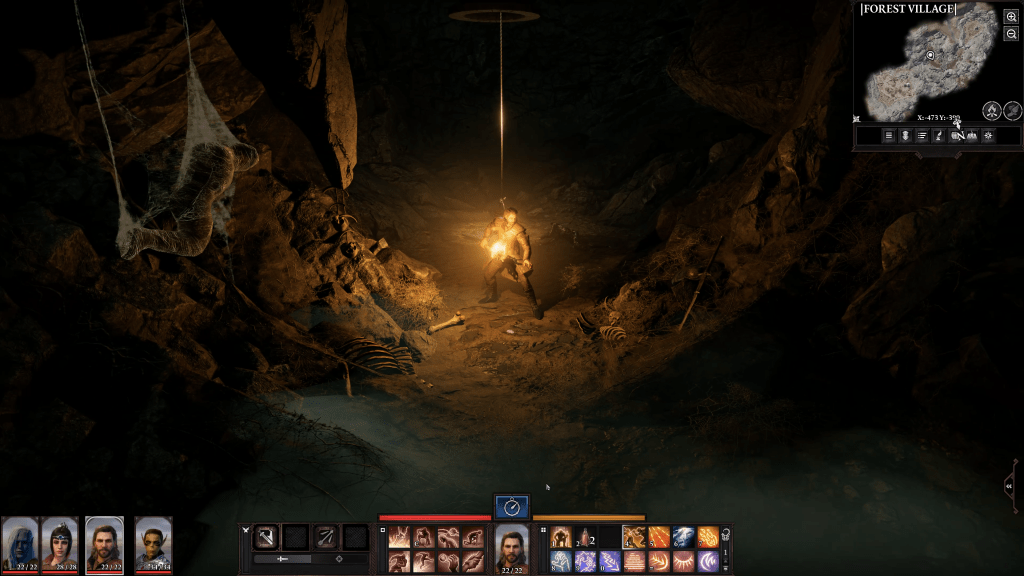
  • Baldur’s Gate III: what to expect from the long-awaited sequel

    It’s fair to say that I am very much looking forward to Baldur’s Gate III. A mere 20 years (really?) since its predecessor was released, the upcoming title from Larian Studios is an exciting prospect for both existing Baldur’s Gate fans and role-playing game aficionados more generally.

    Based on Dungeons & Dragons rules and lore, the original Baldur’s Gate games were what made the reputation of their developers, Bioware. In many ways, they became the archetype for the later games from that studio; complex, engaging stories set in an epic world, populated by interesting characters. Games which offered flexibility and choice in the decisions you made, allowing you to develop your own character and their relationships, even romances. The games were hugely successful and are still well-regarded today, particularly Baldur’s Gate II.

    Several attempts have been made at developing Baldur’s Gate III. A third entry was first announced way back in 2002, and was to be developed by Black Isle Studios. They had originally published the first two entries, and also developed Icewind Dale, another D&D-based RPG. Licensing issues meant that there’d be little to no relationship with the original titles though. Ultimately, financial problems at Black Isle owner Interplay eventually ended both the game and Black Isle itself.

    Black Isle personnel later formed Obsidian Entertainment (Fallout: New Vegas, The Outer Worlds), who also pitched for BGIII. So did InXile (Wasteland 3, Torment: Tides of Numenera) and Beamdog, who developed recent ‘enhanced editions’ of Baldur’s Gate I and II. Eventually though, Larian Studios, developer of the Divintity: Original Sin games, landed the project.

    But 20 years is a long time, particularly in video games. D&D itself has changed a lot too, and has recently experienced a resurgence in popularity. As such, Baldur’s Gate III will need to meet the expectations of a new audience, while still satisfying long-standing fans of the series. So how are they planning on doing it? Well, let’s run though what to expect:

    Fifth Edition Ruleset

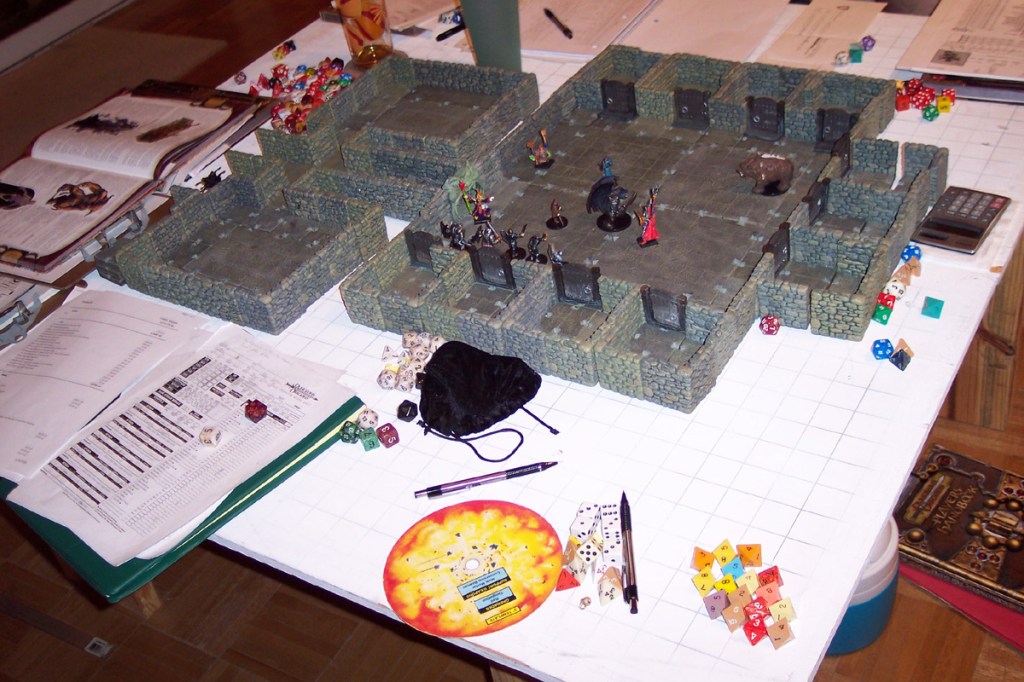
    The Baldur’s Gate games have always been based on the Dungeons & Dragons ruleset; the most venerable and venerated of all the table-top RPGs. However, those rules have altered over time. The first two games in the series were based on the ‘Advanced D&D’ Second Edition rules. Three different editions of the rules have been published since, with the Fifth Edition being in place since 2014.

    The Fifth Edition has proven wildly popular, boosted by YouTube channels like Critical Role. And of course, Stranger Things has made D&D cool – or at least ‘nerd cool’. As such, it makes complete sense for BGIII to use Fifth Edition rules. Larian seems to be trying hard to get as much of the ruleset into the game as possible, so if, like me, you’ve got into D&D in recent years, then hopefully there’ll be a lot about BGIII which is already familiar.

    The Bhaalspawn Saga Is Over

    [Spoiler alert for a 22-year-old game]

    The original titles cast your protagonist in the role of a Bhaalspawn. According to D&D lore, Bhaal is/was the God of Murder. He foresaw his own killing during the Time of Troubles – a period where all the Gods were cast out of their home planes of existence and made mortal. Being a sneaky sort, Bhaal came up with a plan to spawn as many mortal children as possible, each of whom would carry a piece of his godly essence. In time, these could be gathered and used to restore the dead God to life.

    The Throne of Bhaal expansion to BGII saw this narrative resolved, with either the protagonist ascending to godhood or the (sort of) canonical ending where your character renounces their divine heritage entirely. Regardless, Fifth Edition D&D sees Bhaal alive once more. Also, BGIII is set 100 years after the events of BGII, so in spite of the number in the game’s title, it’s not a direct sequel in terms of plot.

    That said, Larian has stated that BGIII will have references to the earlier games. Apparently you won’t have to have played them to understand what’s happening in this new instalment, but if you have then there’ll be stuff there for you to appreciate. Larian have also indicated that there will be some returning characters. The in-story time gap may rule out characters from shorter-lived races; however, established D&D human explorer Volothamp ‘Volo’ Geddarm does re-appear. Although that is apparently the result of lore-based magical shenanigans…

    A Change To Look And Feel

    The original Baldur’s Gate games, along with their D&D-based stablemates Icewind Dale and Planescape: Torment, all had a distinct appearance. This was the result of them all being built using Bioware’s Infinity Engine, and it’s a look that was deliberately replicated by Obsidian’s Pillars of Eternity series. Up to now, those games were the closest thing to a spiritual successor to Baldur’s Gate.

    However, Larian is using an updated version of the engine used for Divinity: Original Sin 2. It gives the game a very different vibe to its predecessors, and some have raised worries that BGIII will feel more like a Divinity game than a Baldur’s Gate game. However, having played and enjoyed the recent PoE and Divinity releases, the Divinity engine actually feels like a better fit for a D&D-based game.

    I believe it offers more opportunity for using your environment to get an edge, for finding clever/cheesy solutions to tricky combat – much like D&D! For example, they’ve developed it to allow players to sneak up on enemies and punt them off a high wall, which is something I’ll be doing as often as possible. It might take some getting used to, but I think it’ll be a positive change overall.

    Cinematic cut-scenes for dialogue are also a welcome introduction. This may seem like an obvious inclusion, but they weren’t in Divinity: OS2, never mind in the previous Baldur’s Gate titles. I was most amused to hear that one of the things Larian is having to ensure is that cinematics all play out properly, whether your character is a three-foot high Halfling or a six-foot Elf.

    Gather Your Party, Then Flirt With Them

    Please ignore my thumb

    As well as your own protagonist, you’ll be recruiting adventuring companions. Your fellow adventurers will of course have their own personalities and preferences. They’ll be judging your actions and decisions as you go along, and they won’t necessarily like what they see.

    Earlier entries in the series had some wonderful party NPCs – the warrior Minsc and his Miniature Giant Space Hamster, Boo, being the most beloved. Larian seem intent on ensuring that BGIII is similarly populated by interesting characters. You’ll be able to develop relationships with them, and romance is definitely on the cards.

    It remains to be seen exactly how all this will play out, although the camp seems set to be an important setting. The camp is reminiscent of a similar system in Dragon Age, another Bioware series. It’s where players and their companions get together, have a nice chat, rest, sort their gear and generally catch-up. Hopefully BGIII’s relationships won’t be quite so dependent on giving the “correct” gifts to your party members.

    Add Friends

    Multiplayer support is going to be much more extensive in BGIII. BGII did actually have a multiplayer option, although it was relatively limited in scope. Larian has form for running multiplayer in their games, with the first Original Sin game in particular set-up with full co-op in mind from the outset.

    Multiplayer won’t be available in the initial launch of early access, but it promises to enable a lot of independence for each player. For example, cut-scenes will only run for players engaged in that conversation – others can run around doing whatever they choose. That does include knifing the NPC being talked to in the back though, so maybe consider who it is you’re inviting. Nobody wants to bring a muderhobo to their pacifist playthrough.

    In Summary…

    I’m excited. You can probably tell. Baldur’s Gate III early access is (currently) due to launch on October 6th. It’s been delayed a few times, but Larian seem relatively confident about the latest date. It’s due to include the around 25 hours of content at launch, along with a limited number of races, classes and companions. I’m a little torn as to whether I want to jump in right away, or save myself for the full release. That’s some way off though, and frankly I think I’ve already waited long enough for another entry in the Baldur’s Gate series!


    Follow A Most Agreeable Pastime on Twitter and Facebook, if you like.
  • The story of WipEout

    The Sony PlayStation launched in Europe 25 years ago today, and to mark the occasion, I interviewed the creators of WipEout, the console’s most iconic launch game. You can read the full interview on GamingBible right here, and it’s a fascinating story – particularly how the music was such a part of the game’s design from the very start.

    I remember getting the PlayStation when it came out – at around £300 for just the console alone (that’s £580 in today’s money), it was the biggest birthday present I’d ever received. In fact, it ended up being a joint birthday and Christmas present, such was the extravagant expense of this new CD-based box of tricks.

    Of course, the DualShock controller was still some way off in 1995 – back in my day it was all digital, none of your fancy analogue controls.

    WipEout and Ridge Racer were my first two games, and it’s fair to say that they absolutely blew my 16-year-old mind. The step up from the 16-bit consoles was enormous, and we’ll never see anything quite like it again. After years of playing 2D console games, the transition to 3D was phenomenally exciting – I remember thinking that I now had an actual arcade in my living room.

    WipEout in particular was absolutely unlike any games before it. This was a game designed for cool twenty-somethings, with music by A-list dance acts. This was cool. And this was definitely not for kids. Suddenly, games consoles had become something more than a toy, they were almost a lifestyle accessory.

    Console launches are always exciting, but I don’t think we’ll ever see anything quite as revolutionary as the PlayStation ever again. At least until we start plugging games directly into our brains.


    Follow A Most Agreeable Pastime on Twitter and Facebook, if you like.

  • Othercide review: grimdark goth-girl grind-a-rama

    Othercide is flipping hard. Just fantastically difficult. But then you gradually tease out strategies to deal with seemingly impossible bosses, find ways to form incredibly powerful combos, and suddenly it seems doable. That taste of conquering seemingly insurmountable odds is sweet, sweet nectar indeed.

    It takes patience, though. After barely any kind of tutorial, you’re thrown straight in at the deep end to begin with. You’re initially faced with screen after screen of obtuse stats and skills, with barely any idea of what it all means. Having played many XCOM-style, turn-based tactics games in the past, I had some notion of what I should be doing – but if you’re new to the genre, this definitely isn’t the place to start.

    The story is similarly impenetrable. There’s some kind of big baddie called The Other, which has been corrupted by something called The Suffering, and you initially play some immortal guardian-type called Mother, but then Mother dies and becomes Red Mother, and she starts germinating Daughters to continue the fight, and so on and so forth. It’s basically a load of goth women fighting Junji Ito-style nightmare creatures. If you’ve ever painted your bedroom black at any point in your life, then this will be right up your street.

    Personally, I’m more into primary colours or chalk-based Farrow and Ball legacy paints, but I still appreciated the minimalist colour palette that Othercide employs. Everything is rendered in black and white, with the odd accent of red, which for the most part looks excellent – if a little murky on occasion. That said, I got a bit tired of the samey maps, with each level blurring into one another in an amorphous mass of Gothic columns and miserable statues. And the same layouts keep recurring far too often considering the amount of times you have to replay the game – but more on that in a moment.

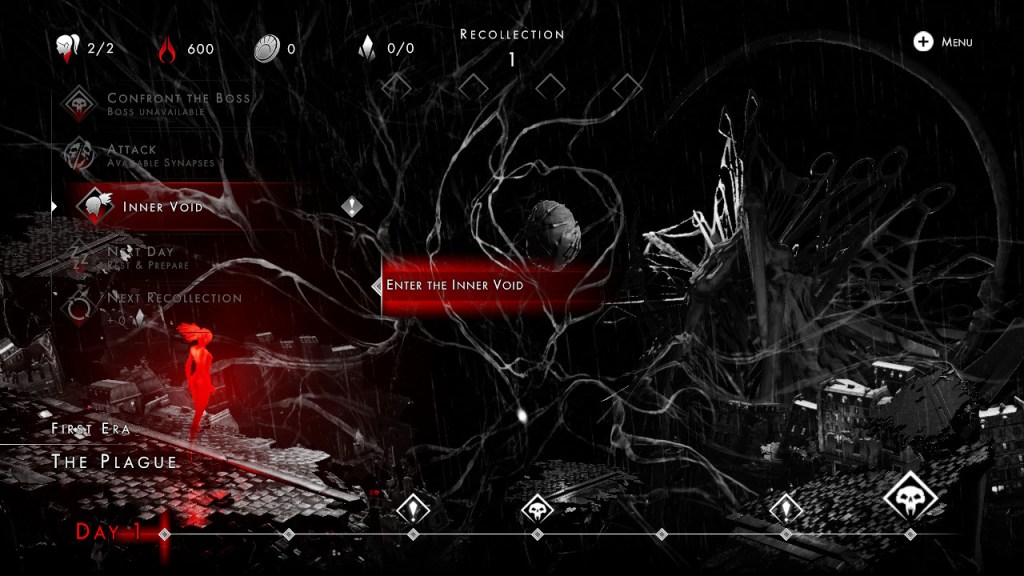
    Let’s talk about the meat of the game – the turn-based combat. Like XCOM: Chimera Squad, you have a timeline running along the bottom of the screen, showing the order in which each enemy and ally will act. Each character has 100 action points (or sometimes more), which they can use to move and attack, with each attack costing different amounts of AP. But if you go below 50 AP on your turn, entering what’s called Burst Mode, your character will be set further back on the timeline – effectively causing them to miss a turn. This sets up a neat tension whereby you constantly have to decide whether to just use 50 AP and perhaps leave your character in an advantageous position to attack on the next turn, or spend the full 100 AP to finish off an enemy, with the possibility that your character might be vulnerable to an attack while they wait for their go to come around again.

    As well as regular attacks, each Daughter has access to some reaction skills, which can trigger on the enemy’s turn. For example, the Blademaster can trigger a skill that attacks any enemy which moves within range of her. But the trouble is that these skills use hit points rather than action points – usually either 10% or 5% of the character’s total HP. And that is a problem, because health is hard to come by in Othercide.

    Any damage that the Daughters take is carried over to the next level, and the only way to regenerate health is by sacrificing another Daughter. But get this: you can only regenerate a character by sacrificing a Daughter at the same level or higher. In effect, this means you’ll have to level up a whole team of Daughters, then pick which ones to cull right before the fantastically powerful bosses that await at the end of each of the five eras. It’s a bit like The Island, where you’re raising a crop of Daughters to provide spare organs for the more favoured ones.

    The bosses themselves are obscenely powerful, regularly trashing your strategies with insanely cheaty area of effect attacks, and generally behaving like absolute bell ends. God I hate them. Basically, you will die the first time you meet a boss, and dying means starting right from the beginning of the game all over again. But all is not lost, because as you play through each level, you gain Shards, which can then be spent on Remembrances for the next run – and these Remembrances do all sorts of powerful and useful things, like letting you resurrect a certain number of Daughters, start characters off at a higher level or even skip whole eras entirely.

    Then there are Traits. These are essentially perks that each Daughter gains by meeting certain milestones, such as completing a level without taking damage. A Daughter will also gain a perk if you use another Daughter to regenerate her. Traits are the key to success, since they’re permanently attached to a character, and so you can resurrect the same Daughter again and again, adding to her Traits every time you play. One of my characters is an absolutely badass Blademaster called Sincere, who has about a dozen traits and can one-hit KO pretty much any enemy, so I make sure she gets brought along on every adventure.

    All this means that the only way to win the game is by replaying it again and again, gradually improving your favourite Daughters and unlocking more and more useful Remembrances to make your team more effective. Even so, Othercide makes you feel like you’re constantly up against it – I’m currently on my fourth playthrough, and almost all of my Daughters are running low on health, while I have very little Vitae in reserve – the stuff that lets you germinate new Daughters and equip new Memories that provide fancy modifiers. Basically, I’m not too far away from having to start another run, meaning several more hours of grinding through levels to beef up my fulsome Daughters, ready to fight the next boss – at which point they’ll probably all die and I’ll have to start again.

    That description sounds terrible, doesn’t it? But Othercide is actually very enjoyable – the constant tension that comes from having to constantly keep an eye on your characters’ health means even the most routine fight comes with a frisson of danger. One wrong move could see a Daughter being stripped of HP – and that health is very hard to get back.

    That said, considering this game is so focused on grinding, I would have liked to see more variety in the levels. After about ten hours of play time I’ve only encountered two mission types – kill everything, and survive until the timer runs down – although apparently there’s a third type where you have to safeguard a Bright Soul. The repetition in the maps is also pretty tedious, although I do like the variety in the enemies – each one has a very different style of attack and needs a different strategy. And speaking of strategies, there’s a lovely synergy between the character types – Blademaster (melee), Soulsinger (ranged) and Shieldbearer (tank), with another character type being unlocked about halfway through. You quickly work out that you can set up combos among the characters using reaction attacks, whereby you can hit an enemy multiple times when they move. Even so, it would be nice to throw some more classes and skills into the mix to add more variety to those repeated playthroughs.

    Othercide is flipping hard. Fantastically difficult. But it’s fantastically rewarding, too, if you have the time and patience to invest.


    Othercide was developed by Lightbulb Crew and published by Focus Home Interactive, and it’s available on PC, PS4, Xbox One and Switch. We played the Switch version.

    Disclosure statement: review code for Othercide was provided by Indigo Pearl. A Most Agreeable Pastime operates as an independent site, and all opinions expressed are those of the author.

    Follow A Most Agreeable Pastime on Twitter: @MostAgreeable

  • The Long Dark review: compelling story-led survival

    There’s something appealing to me about the idea of trekking through an environment, scavenging for supplies and dealing with local wildlife in a bid for survival. But for every film or book that tackles a person’s lone journey through the harsh reality of the world, there’s a game that takes the tenets of that adventurous genre and… simply makes it boring. Survival games are something I often find myself liking more in theory than in practice.

    Often it’s the lack of story that puts me off the genre. Having a narrative direct me in my travails is a bigger driving force for me than the joys of organic storytelling via small moments of discovery and failure. While I can see the appeal of games like Minecraft and Don’t Starve, I find that I get rather tired and listless after 30 minutes because the impact of their cumulative design just isn’t enough to compel me to keep going.

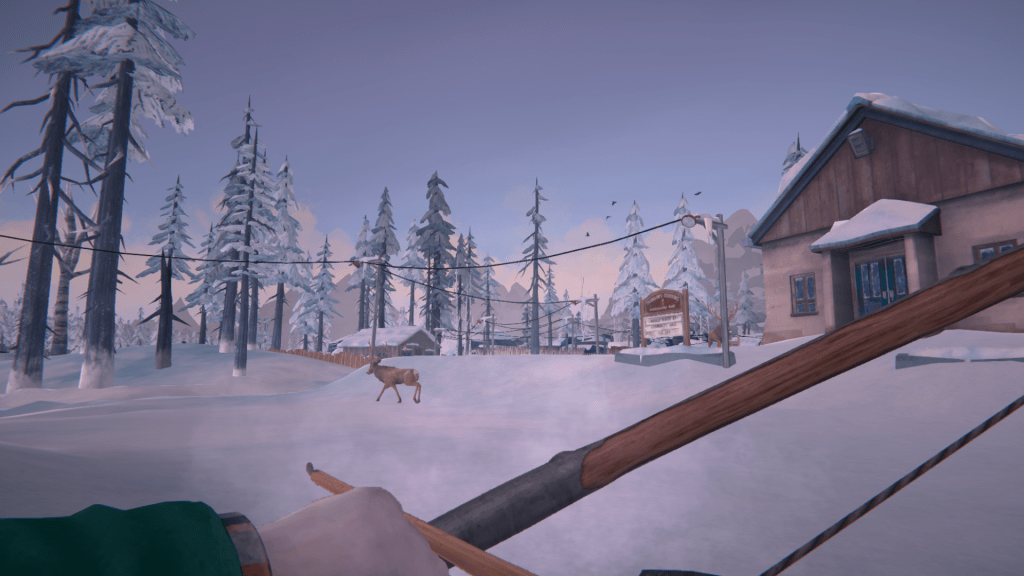
    The Long Dark by Hinterland Games is The Revenant of video games – it gives you all the drama of inching your way through dire circumstances during moment-to-moment game play while also building towards a story-driven ending that gives me the sense of closure I apparently crave.

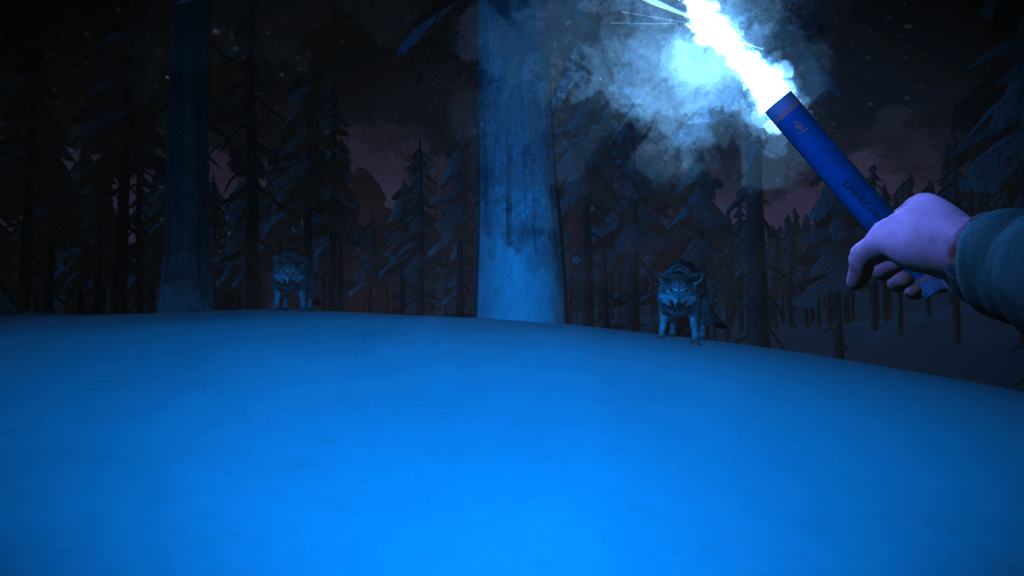
    If you wish, you can play The Long Dark as an open-expanse survival game, where you’re dropped randomly on a map and tasked with making good with what you have, finding supplies or shelter, and avoiding the vicious wildlife. It would almost make a great hiking simulator except, you know, for the dying part. To be fully transparent, I haven’t done much more than dabble in this mode because (a) I tend to drop off during this type of experience, but also because (b) the game itself does zero hand-holding, and failure is a harsh mistress.

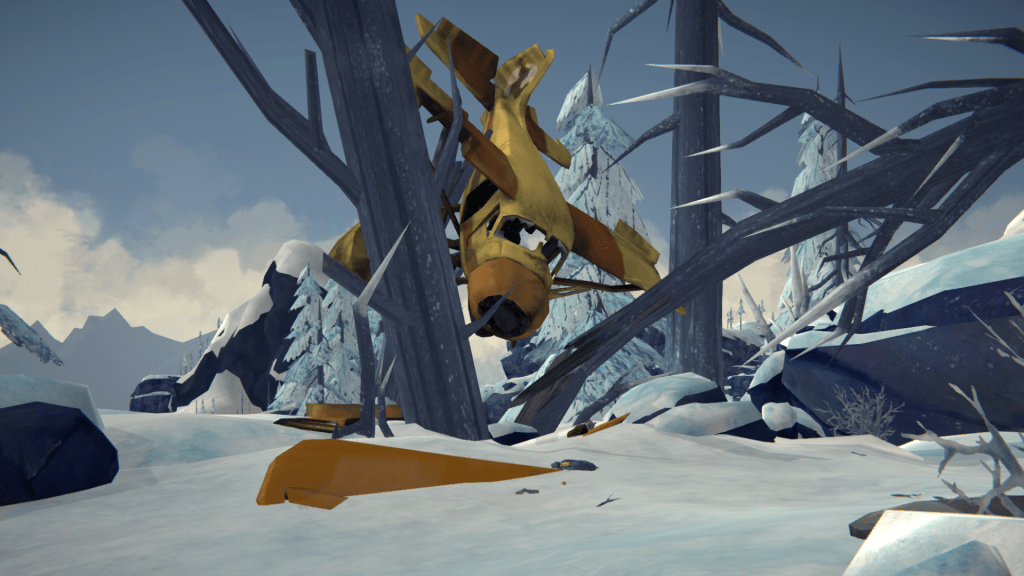
    Personally, I was interested in The Long Dark‘s campaign, titled Wintermute, where you take control of a bush pilot named Will Mackenzie as he flies Dr. Astrid Greenwood into the Canadian wilderness for reasons she won’t reveal. The game quickly builds up the mystery as you realize that there’s a previous connection between the two, and it provokes a good deal of curiosity as to what she’s carrying in her locked case and where she’s taking it to. As the pair discuss their past while flying through the snowy skies, a luminous wave engulfs them, and they crash into the middle of nowhere. Mackenzie awakens to find he fell off a cliff, with his plane mangled on the precipice, while Astrid is nowhere to be found. Enter survivalist game play with an overarching goal.

    In the beginning, the game takes its plot threads and weaves them into what basically amounts to a tutorial. Even though it gives you small tasks like finding shelter or throwing rocks at rabbits for food, it never overtly spells out to the player what they need to do. Instead, it kind of nudges you into finding your own bearings while still doling out severe consequences for mistakes. I died multiple times in quick succession, but rather than feeling a sense of frustration, it felt like the game was providing me with an understanding of what not to do until I figured out or stumbled upon the right solution. The Long Dark makes you feel accomplished for completing even the most menial tasks in a way that non-narrative survival games just don’t.

    Mackenzie talks to himself often, which goes a long way towards endearing you to him in a way a mute avatar just can’t. Furthermore, the mysteries surrounding the unassuming apocalypse you now find yourself in are both intriguing and entrancing. Unfortunately, only three of the game’s five episodes are currently available, which was a bummer at first, but realizing I have more to look forward to down the road helped me to recognize that I am completely sold on this type of survival game.

    Between the quietude of its setting, the easy-to-comprehend mechanical components that drive its structure and a story that ties it all together (if you wish to play through it, as I do), I found myself quite smitten with The Long Dark. Its grounded game play makes it understandable; its affable protagonists make it relatable. The fact that it all fits together so cohesively makes it ingenious.


    The Long Dark was developed by Hinterland, and it’s available on PC, Mac, PS4, Xbox One and Switch. We played the Switch version.

    Disclosure statement: review code for The Long Dark was provided by Hinterland. A Most Agreeable Pastime operates as an independent site, and all opinions expressed are those of the author.

    Follow A Most Agreeable Pastime on Twitter: @MostAgreeable

  • The Most Agreeable Games of the Generation

    Lewis: I’ve just been reading Eurogamer’s list of the games of the generation, and it struck me how very different it is from any list I’d make. For a start, I haven’t played six out of the top ten, and I wasn’t massively taken with Outer Wilds or Nier: Automata, to the point where I gave up on them before the end.

    So I was thinking it would be fun to make our own list – what games released since November 2013 would make your top ten?

    Off the top of my head, I can think of a few absolute standouts that have really stuck in my mind:

    • Monster Hunter World
    • Astro Bot: Rescue Mission
    • Alien: Isolation (review)
    • Valkyria Chronicles 4 (review)
    • Super Mario Odyssey
    • No Man’s Sky
    • XCOM 2
    • Hollow Knight (review)
    • Sunless Sea (review)
    • Sunless Skies (review)
    • Inside
    • Hitman
    • Control
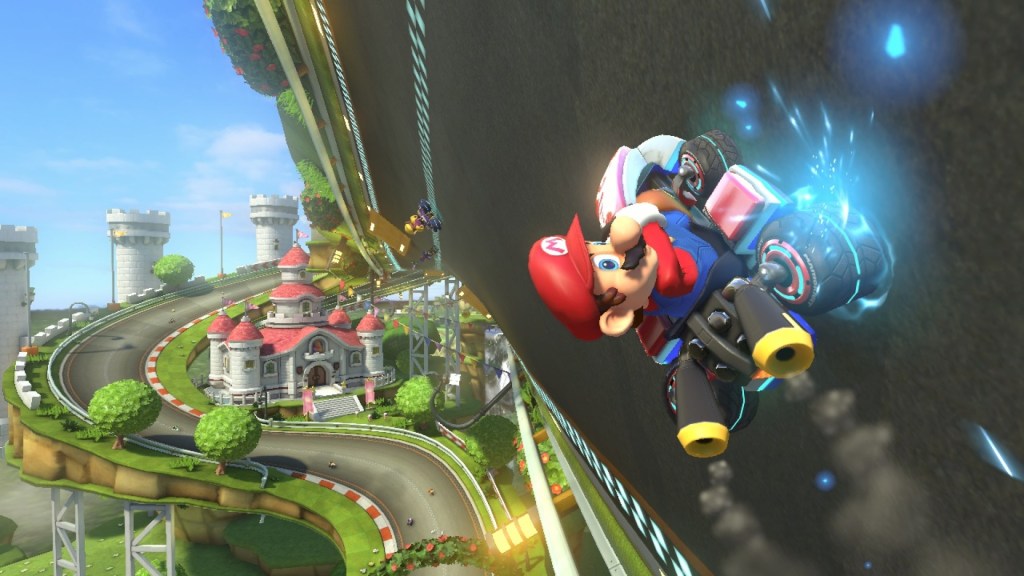
    • Mario Kart 8

    And I could probably think of a few more, but that’s already more than ten. How about you?

    James: Yeah, I’d be up for that! Seven years covers so many games! I’ve only played three in your list. If I’m picking games I consider to be excellent as opposed to ‘average’ games I just really enjoyed, I think I’d go with something like the following:

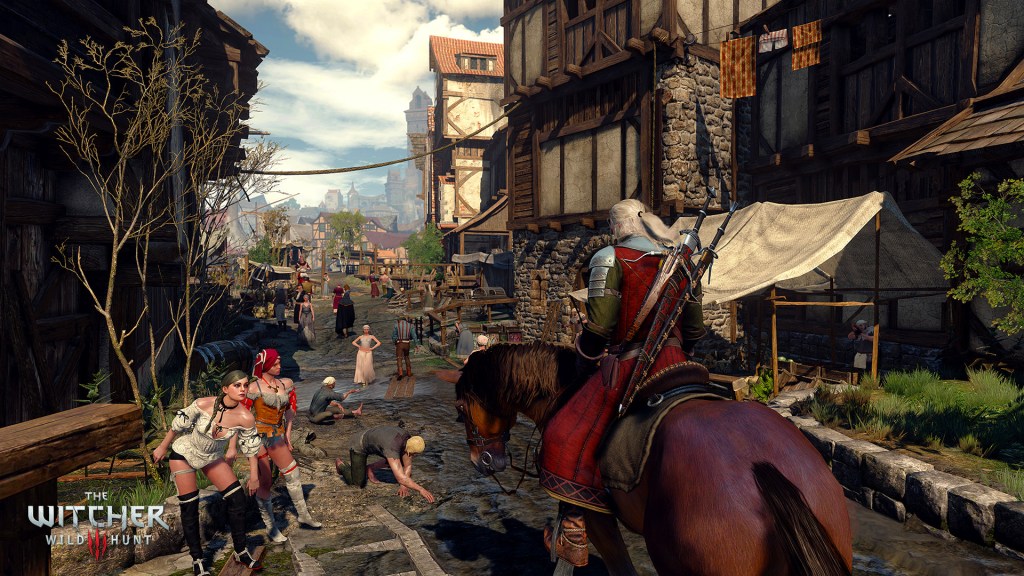
    • The Witcher 3: The Wild Hunt
    • The Legend of Zelda: Breath of the Wild
    • Life is Strange (review)
    • Wolfenstein: The New Order (review)
    • DOOM
    • Stellaris
    • Divinity: Original Sin 2
    • Pillars of Eternity: Deadfire
    • The Hex
    • Titanfall 2
    • Fall Guys?

    To be honest, I could probably come up with a really good list of universally acclaimed games I have not played!

    Lewis: That’s the trouble, isn’t it? I haven’t played Breath of the Wild or Witcher 3, but judging by their reputation, they’d probably be up there in my top ten. Then again, I’ve also ended up bouncing off games that loads of critics love, so who knows.

    Life is Strange from your list is a good example. I’ve started playing that game twice and bounced off it twice. But maybe if I kept going it would draw me in… It’s case of finding the time though, isn’t it? Like, I would love to play Pillars of Eternity, it looks fabulous, but it seems impossible to find the time for a 70-hour RPG.

    Good call on Wolfenstein: The New Order, that’s an absolute cracker, and I love its reimagining of the 1960s. It completely revitalised the Wolfenstein series after a couple of completely dreadful entries, which was seriously unexpected at the time.

    I just thought of another milestone game: Fire Emblem Awakening. Although, after checking it’s entry on Wikipedia, it seems that it came out at the start of 2013 rather than the end, so we can’t allow it. Damn. All the Fire Emblem games are great, but Awakening was a real turning point for the series, just like The New Order was for Wolfenstein. 

    James: I realised FTL: Faster Than Light is probs worth a mention as that was an absolute gem of a game! I’ve bounced off a few ‘good’ games in my time. In fact, I did with both the original Divinity: Original Sin and Pillars of Eternity – I really enjoyed both of the sequels though…

    I had fun with XCOM 2, but for some reason I didn’t find myself enjoying it as much as Enemy Within, for reasons I’m not sure I can articulate. Maybe I just got better at it and therefore felt less tension? Alien: Isolation looks terrific, but I’ve not played it because I’m a coward.

    I probably just completely overlooked Mario Kart 8, despite the fact I’ve only ever had good times playing it. Mario Kart has always just kind of been there in one form or another for so long now I think I just stopped thinking about it. Like hot water – you’d miss it if it wasn’t there…

    Matt: Tackling such a list is so daunting! Unfortunately I only game on one system, so I lack the breadth to make any truly informed decisions. Granted, I keep abreast of games culture at large, and while I see and understand the reasoning behind a lot of popular games, I don’t have the experience with them to make any obligatory ‘top ten’ choices.

    Thank you all for reminding me I have the Witcher 3 and haven’t touched it! It looks fantastic and it’s definitely in my wheelhouse, but again, I haven’t actually played it. My short list includes games that I think in some way revolutionized gaming as a whole. I love Mario Kart 8 with a fiery passion… but at the end of the day it’s still just Mario Kart.

    • The Legend of Zelda: Breath of the Wild
    • What Remains of Edith Finch
    • Super Mario Odyssey
    • Old Man’s Journey (review)
    • Super Mario Maker
    • Affordable Space Adventures
    • Dragon Quest XI
    • The Legend of Zelda: A Link Between Worlds (review)
    • Dead Cells (review)

    Beyond Witcher 3 (which I could play), games that I think would be monumental that I can’t play are Red Dead Redemption 2, Final Fantasy VII Remake and Spider-Man. It’s a lot to grok, folks!

    Lewis: Just Mario Kart? Philistine! It’s PEAK Mario Kart, an absolutely phenomenal game!

    But thank you for reminding me of Affordable Space Adventures, that was utterly superb, and one of the rare titles to actually, properly use the Wii U gamepad. What a gem, I absolutely loved playing that game.

    I also nearly put Dead Cells on my list, but in the end I find the constant restarting a little frustrating. It’s brilliant to play, and I’ve spent hours noodling around in it finding alternative routes, but even now I’ve still never got to the end. I got to the final boss once or twice, but then ended up dying and being sent straight back to the start. Grrrrr…

    James: One thing I would add is that Red Dead Redemption 2 is probably conspicuous by its absence on our lists. I played it for a bit, and although it’s clearly a technical masterpiece, I didn’t actually have that much fun with it. I found there was quite a lot of tedious faffing about which kept getting in the way. The controls were cumbersome and I actually quite disliked most of the rest of the gang (not John… never John). The constant whining that there was “no place for people like them” any more was pretty grating – people might be more accepting if you just stopped shooting and robbing them all the time. Then I hit a bug which prevented Arthur from sleeping or making camp, which cost me a load of progress, and I never went back to it…

    I just picked up God of War and Spider-Man second hand for the PS4, in anticipation of not being able to leave the house all winter. Not had a chance to fire them up yet, but I’ve heard nothing but good things about both of them.

    Abhik: I’ve been following this thread and I agree with what Matt says – such a list does sound incredibly daunting. I can never decide whether I should put in the games I have a soft spot for or the ones that deserve to define the generation in an article like this. There seems to be a glaring gap between the two. I have a personal rule of thumb, though: one that could be considered laughably simple, but I’m going to hold on to it for now. I ask myself whether the game made me smile, and with titles that I adore, the answer is an obvious “YES”. There’s always that point when you’re so fascinated with the level design or the mechanics and the overall atmosphere and vibe of the game that you know you’re going to have a great time going forward, and you can’t help but smile thinking of the brilliant investment of time and money you just made. That moment to me is more precious than any drawn-out rationale that justifies whether or not this is a ‘good’ game.

    Based on that, here’s my list:

    • Celeste (the only game I’ve bought twice)
    • The Swapper (came out in May 2013 but I had to add this, sorry)
    • FAR: Lone Sails (review)
    • Katana ZERO (review)
    • Ori and The Will of the Wisps
    • Factorio
    • Satisfactory
    • Subnautica (review)
    • Stardew Valley
    • Death Stranding
    • A Story About My Uncle
    • Shadow Tactics: Blades of Shogun
    • DOOM Eternal
    • NieR: Automata
    • Furi
    • Nex Machina
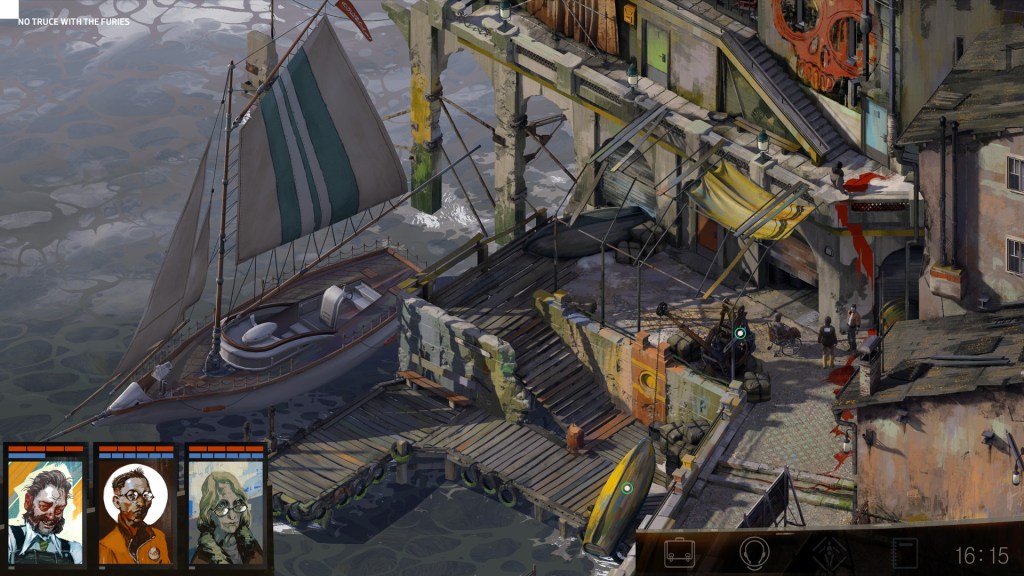
    • Disco Elysium 
    • Geometry Wars 3: Dimensions Evolved
    • Wide Ocean Big Jacket (I found out about this through AMAP and I loved everything about it)

    Inside and Baba is You (review) are both honorable mentions and I’m going to restart Control on PC because the load times on PS4 made it a pain even though the brutalist aesthetics are right up my alley. I haven’t played Alien: Isolation yet – which is odd because I have read and watched so much about the brilliant in-game AI. I should give it a try soon. 

    Oh and I forgot to mention Gris and Transistor. Beautiful games.

    Lewis: Ooooh, nice list. It’s made me think that indie games often get left out of ‘games of a generation’ discussions, which tend to focus on the ‘big’ games. But even though indie games can be short, they can have a massive impact. I remember thinking about FAR: Lone Sails for days afterwards. Your list also reminded me that I really, REALLY need to play Disco Elysium. I’ve been following that game for years, and it seems right up my street! Maybe that will be my winter lockdown game…

    And YES, I totally agree on all the Red Dead Redemption 2 points. There were so many things to love about that game, but so many irritations, too, like the absolutely mad control scheme. I ended up giving in about two-thirds of the way through, as it dragged on endlessly towards a blindingly obvious conclusion. BUT, I did have a lot of fun just losing myself in the wilderness, coming across bizarre side stories and weird Easter eggs, like the UFO and the weird death-cult shack. So mixed feelings – but my main feeling was that it needed a damn good and utterly ruthless editor to prune away the feature creep and let the core game bloom.

    James: Ah yeah – Gris and Disco Elysium were both great! Let’s just have a list of 80 games. Much easier…

    Lewis: Consensus is overrated. Let’s embrace multiplicity.


    Follow A Most Agreeable Pastime on Twitter and Facebook, if you like.

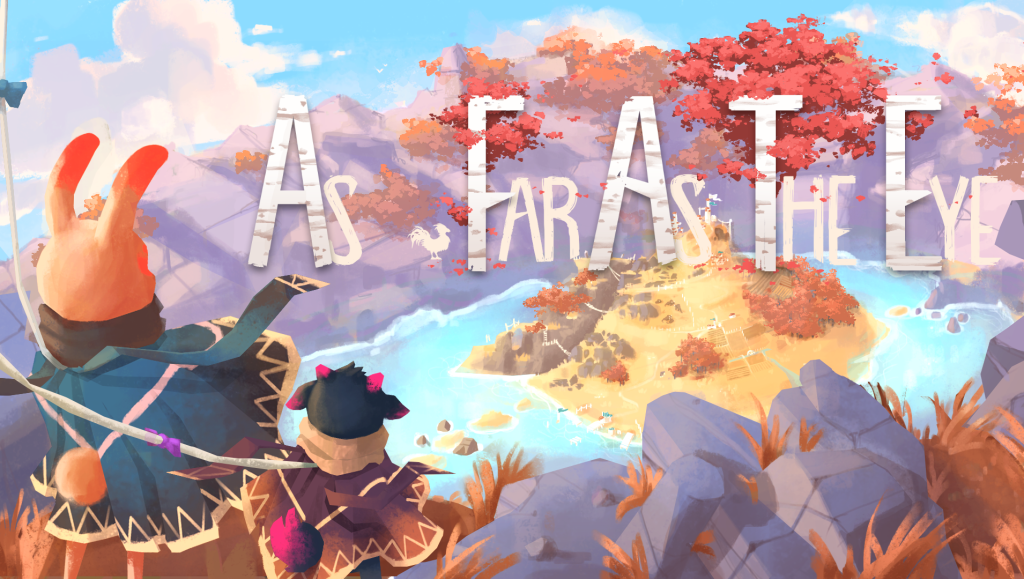
  • As Far As The Eye review: a survival/strategy game with a warm smile and a murderous heart

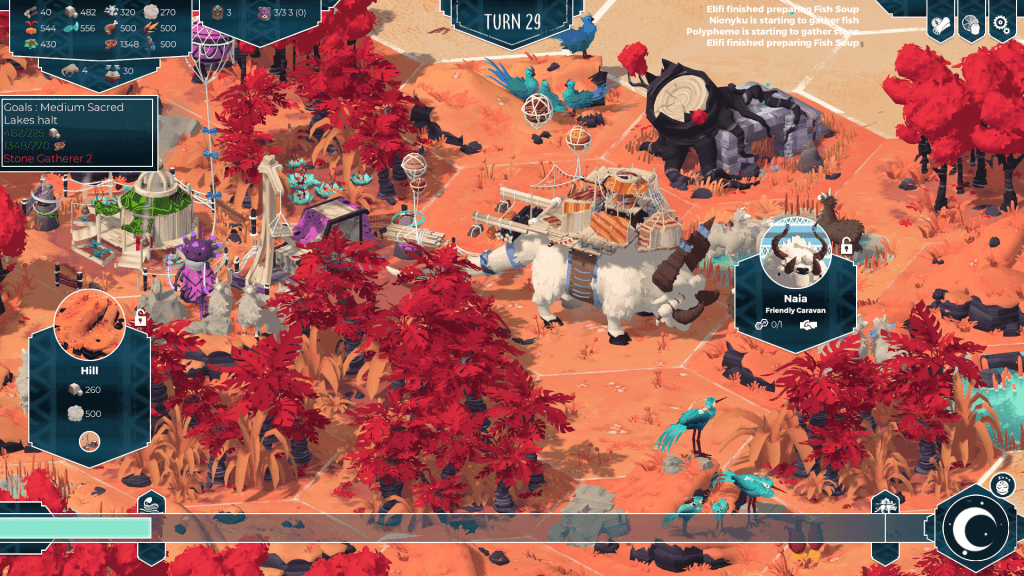
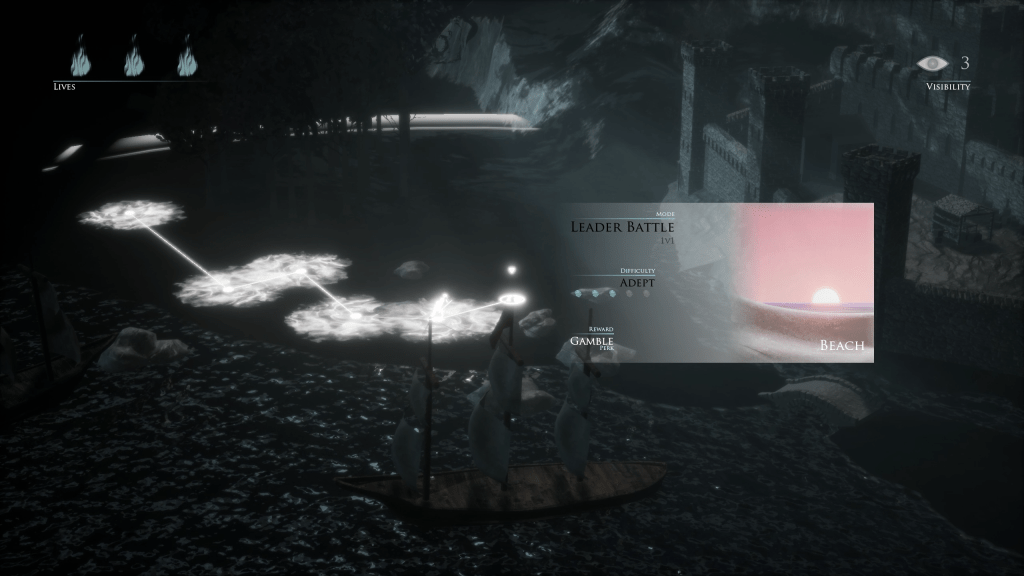
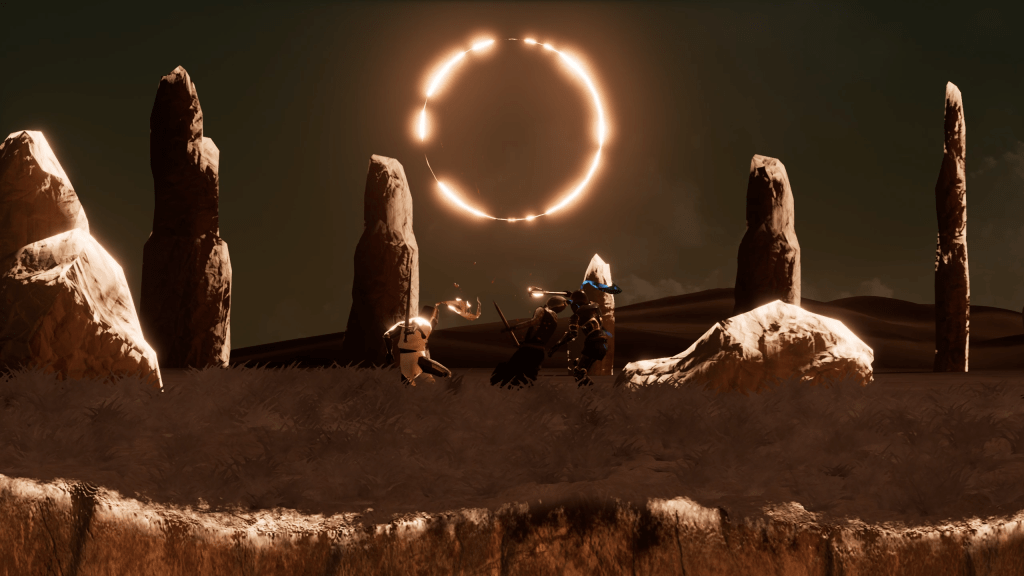
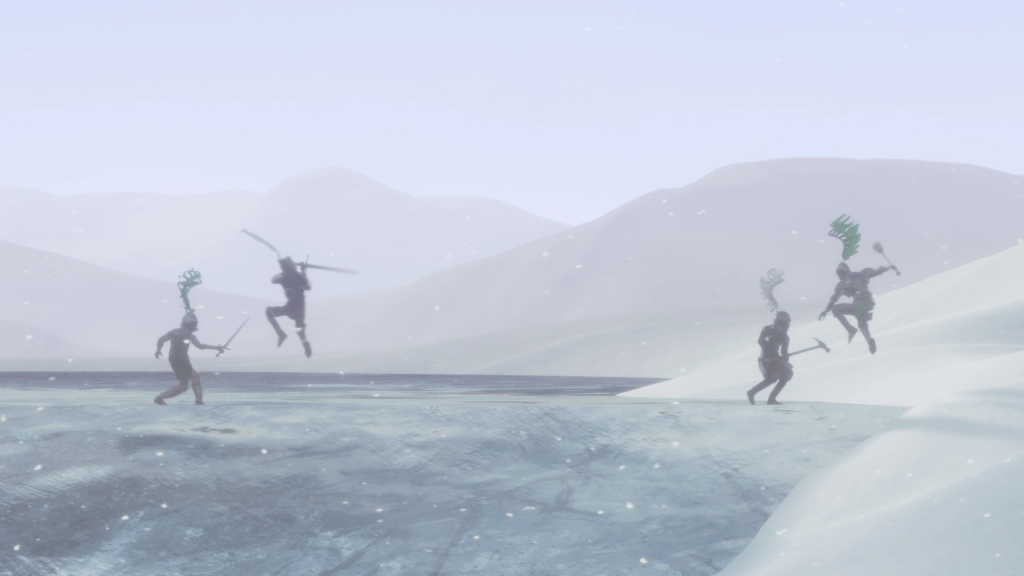
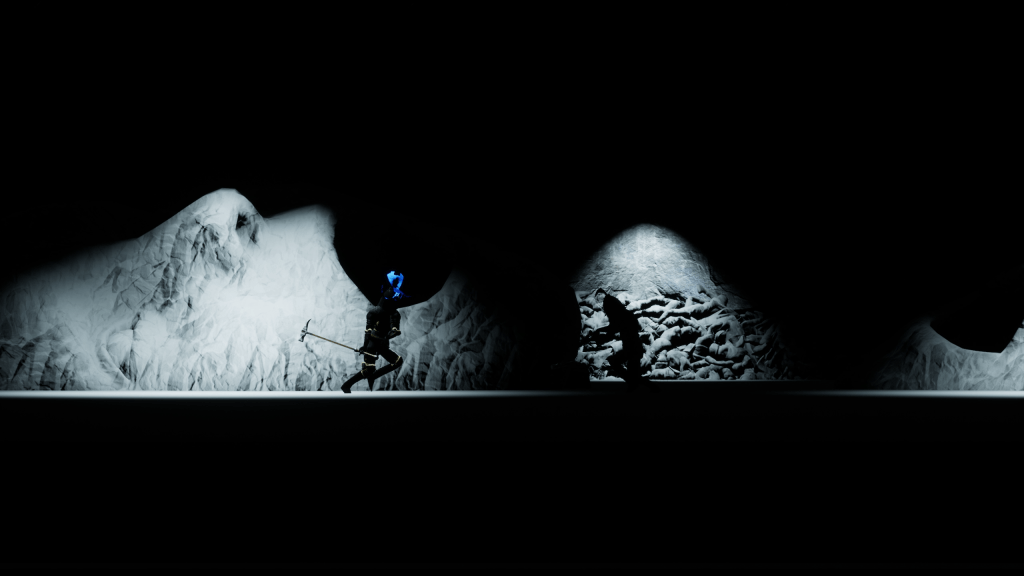
    The very first prompt in As Far As The Eye tells you that “You are the wind”, which is as zen-like an opening to a game as I can remember. Your job as the wind is to act as a guiding force for the Pupils, a race of shape-shifting nomads who are trekking to a place of safety from a coming flood. It has a lovely, warm art style twinned with pleasant but informative sound design, and it serves as a timely reminder of both the fragility and power of nature. It is also an utter, utter bastard.

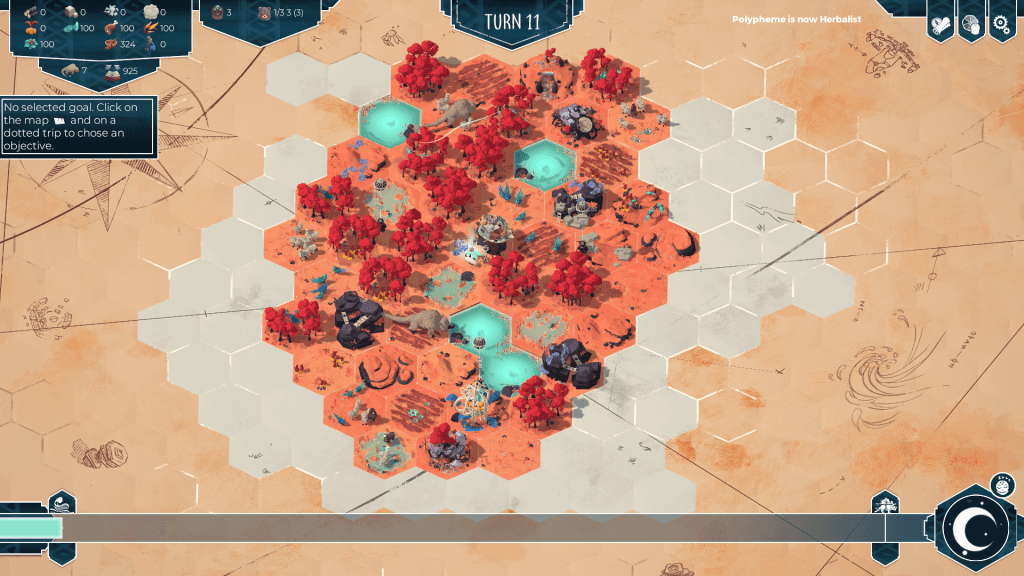
    Made by the small French developer Unexpected, As Far As The Eye’s basic premise is quite straightforward. Your Pupils are driving a caravan (the animal kind, not the behind-a-car variety) to The Eye. The Eye is the only place they can shelter from the great floods, which occur in a regular cycle and sweep away everything in their path. To get to The Eye though, Pupils will need to gather the necessary resources as they go, stopping at Halts to do so.

    Being shapeshifters, Pupils assume different animal-inspired forms to undertake different jobs. It’s a rather neat way of tracking who is doing what. The longer Pupils spend in each form, the more experience they get, which unlocks bonuses and additional options. Time spent at Halts is turn-based, with a limit on turns provided by how long it will be before the floods arrive and submerge everything and everyone still there when they show up.

    The resources your Pupils need will vary depending on what path they are to take. There are often different possible routes to choose from, depending on what resources the Halt you’re at has available. Other times, you’re forced into a single route and its resource requirements. You’ll need to construct buildings to harvest what you need from your environment. A cynic might suggest the Pupils would be better off building a boat, but let’s not dwell on that…

    Of course, every mine or farm requires resources to build it. Most of these buildings will be left behind when the Pupils move on, so those expenses are a sunk cost (literally, in this case). Pupils need housing before they can work, and you still need to keep the Pupils fed and cared for while collecting resources for your journey. As such, you’ll often be juggling immediate concerns with future needs.

    It’s not the only balancing act you’ll need to undertake. Unused resources can be carried over between Halts, but space on the caravan is limited. You’ll need to carefully consider what to take with you. Also, resources at each Halt are finite, with each source only containing a certain amount. It’s possible to build ‘mobile’ versions of each building which can be carried between Halts, but again, they take up a lot of space on the caravan.

    There is an incentive, then, to accumulate as many resources as possible at each Halt. However, there are negative consequences to stripping a Halt bare. Vagaries, random environmental events, become more common and more severe with each source of materials which you clean out. These vagaries can vary from lightning strikes and fires to floods and landslides. They can be very problematic, particularly the ‘damaged road’ vagary, which increases the amount of resources you’ll need to have before you can continue your journey.

    Perhaps the most imposing of vagaries are those of the random number generator at the heart of As Far As The Eye. Each Halt and each play-through is procedurally generated, as are the resource requirements. The plus side is that this means there’s a lot of replay value to be had. The downside is that sometimes it can make life almost impossibly difficult.

    In one run, I needed to have 750 ore before I could move the caravan on. However, the Halt only had 400 ore available, and I carried over 100 or so from the last stop. Markets can be built, enabling the trade of one resource for another; however, the exchange rate for resources is such that an implausible amount of other resources was required. I was stuck, and so were my Pupils. What I should have done is check the map for what the Halt after next required from me, but by that stage it was too late.

    It’s a testament to As Far As The Eye that I felt quite so sad about these failures. Seeing your Pupils starve or get swept away by the floods is a wrench. Even though a certain amount of luck is needed for a successful run, failure always left me with a sense that I could have done more. The example I gave above is a quite egregious instance of bad fortune. The large majority of the time it felt very much that any unsuccessful journeys were down to me.

    There’s no real narrative beyond what I’ve described above, aside from a ‘campaign’ which is really just a tutorial. Replay value comes from the randomised nature of the journeys, but also from the additional tribes to unlock. These tribes have modifiers that mix up the gameplay a bit; some tribes’ Pupils specialise in certain jobs, and the vagaries can be more or less severe. Longer journeys are available too, if you really want to get your heart broken.

    I very much enjoyed As Far As The Eye. Its cute, appealing presentation belies a challenging turn-based strategy game. Even when things were going well, it seemed as though there was always something escaping my attention. Random events can sometimes be frustrating, but they can be mitigated somewhat, as long as you manage your environment and plan ahead. The best thing I can say about it though, is that it completely sucked me in. A ‘quick 20-minute session’ invariably became 90 minutes of minimal blinking. I think I’ll need to give it some more time – allow myself to relax into it more. It really is quite charming.


    As Far As The Eye was developed by Unexpected and published by Goblinz Studio, and it’s available on PC.

    Disclosure statement: review code for As Far As The Eye was provided by Future Friends Games. A Most Agreeable Pastime operates as an independent site, and all opinions expressed are those of the author.

    Follow A Most Agreeable Pastime on Twitter: @MostAgreeable

  • Cloud Gardens! What a balm for the soul!

    Cloud Gardens has just come out in Early Access, and what an absolute joy it is to play. Not that it’s a game, as such. Well, it is a game, but it’s more about sculpture. Let me explain.

    You’re presented with a little urban diorama filled with human detritus, like, say, broken TVs and a knackered old car. Then you’re given a seed – a wisteria seed to start with, then later seeds for things like cacti and mosses. After you plop the seed onto the landscape, you’re given more rubbish to place, rubbish which has the magical property of making plants grow if you place it near a seed. Once your plants have grown sufficiently big enough thanks to all that mystical garbage energy, they’ll start putting out flowers, which you can harvest for more seeds. And after you have covered enough of the urban blight with beautiful foliage, you’re given the option to move on to the next diorama and do it all over again.

    And that’s pretty much it. The only real challenge is arranging the rubbish you’re given in an efficient way to propagate the seeds – run out of rubbish and you’re prompted to restart the level. It’s fantastically simple, but also wonderfully compelling – and before I knew it, four hours had flown by without me noticing.

    Like Hardspace: Shipbreaker, it’s a game that can easily generate a flow state whereby the passage of time seems to be suspended. But unlike that game, it’s supremely relaxing thanks to the lack of a time limit or any other real objectives. It’s just about making a lovely garden.

    Along with Townscaper, Cloud Gardens proves there is amazing scope for making games with the sole goal of creating something beautiful to look at. And considering how compelling it is, I expect to see many more games follow in its footsteps.

    Cloud Gardens is out now in Early Access, and the developer Noio Games (aka Thomas van den Berg) estimates a full release in around three months’ time.


    Disclosure statement: Early Access code for Cloud Gardens was provided by Future Friends Games. A Most Agreeable Pastime operates as an independent site, and all opinions expressed are those of the author.

    Follow A Most Agreeable Pastime on Twitter: @MostAgreeable

  • Rivals review: a unique country music detective game

    I love the premise for Rivals, a new game from Tim Sheinman. You play a writer who is working on a biography of two rival country music stars from the 2000s – and like me when I’m writing some massive longform magazine article encompassing multiple interviews and sources, she’s having a nightmare when it comes to piecing it all together. Also like me, she is clearly a bit crap on the organisation front. When did that album come out again? Did that band split up in 2001 or 2002? Goddamn, I’m sure I had it written down somewhere! [Sound of ruffling papers, followed by slosh of tea spilling onto laptop.]

    The rivals of the title are Josh and Luke, who formed a moderately successful band in high school, but then ended up falling out and embarking on separate careers with different ideas about how country music should be played. But don’t worry if you’re not into country music – this game is all about being a detective, deciphering the clues to work out the order in which events occurred so you can finish the story.

    You’re presented with a series of notes, some recorded interviews and a range of albums from Luke Jackson and his rival Josh’s band, Powderhorn. You also have a series of chapter headings with short descriptions, like ‘Powderhorn releases the album Alfa Romeo’, and the idea is to put the chapters into the right order. After you get five right, the game confirms your guesses and gives you the first page of each chapter, along with more notes and interviews.

    By carefully reading through the notes, you can gradually work out the timeline. For example, a note from a record company might describe a song from Luke’s newly released album, so you can then listen to the albums to deduce which one it’s referring to. If the note is dated, say, May 2001, then you’ll know when that album came out, which will allow you to work out other clues, like an interview mentioning an event that occurred a couple of months after the album’s release.

    The albums are little works of art in themselves, and the songs are brilliantly done, convincingly charting the career paths of two musicians with very different outlooks, all the way from jangly country music to experimental rock. And the taped interviews are excellently acted, too, even if on a couple of occasions the way a clue was worked into the dialogue felt a little forced and unnatural. Still, I’ve never felt more like a real detective than when I was spooling a tape back and forth to make sense of a passage, before landing on an eye-widening ‘Aha!’ moment that caused the penny to drop.

    Rivals is a relatively short game at around 2-3 hours, but I found myself thoroughly absorbed throughout – and I’d rather play a short game that uses my time well than a long one which pads out its run time with pointless collecting. Yet even though Rivals is relatively brief, it’s far from easy – I really had to work my grey matter to put the events in the right order, getting hopelessly stuck at one point before realising something that made it all fall into place.

    My one big criticism is that in some ways the difficulty curve is on its head. At the start you have 30 different chapters to choose from, so finding the applicable ones can take some time and deduction, whereas by the end you’re down to just five, so it’s relatively easy to know which ones go where.

    This means that the start of the game can be quite intimidating as you sift through the mountain of evidence in front of you and work out what it is you should be doing. But it’s worth persevering, because I ended up being thoroughly engrossed in the trials and tribulations of Josh and Luke. Rivals is a voyeuristic snapshot of other people’s lives, a sympathetic story of hope and failure – and in that sense it’s a very good piece of journalism indeed.


    Rivals was developed by Tim Sheinman, and it’s available on PC and Mac via Steam and itch.io. We played the PC version.

    Disclosure statement: review code for Rivals was provided by Tim Sheinman. A Most Agreeable Pastime operates as an independent site, and all opinions expressed are those of the author.

    Follow A Most Agreeable Pastime on Twitter: @MostAgreeable

  • Welcome to Elk review: an astonishingly inventive journey

    It’s going to be hard to write about Welcome to Elk, because I don’t want to spoil anything that happens. The great thrill of this game is that it constantly throws up surprises, recklessly and joyously breaking the fourth wall, and leaving you never quite sure where the narrative will take you next.

    The start sees a young woman called Frigg arrive at the island of Elk by boat, ready to take on a job as an apprentice carpenter. It’s never explicitly said where Elk is meant to be, but we know that it’s somewhere cold and remote, and hence it attracts a somewhat strange and rugged sort of resident, the kind who thrive best on the fringes of society.

    It reminds me a lot of that fantastic series Northern Exposure from the 1990s. I used to love that show so much, but it’s hard to track down these days – issues with the music rights mean that it has never been available on streaming platforms, and you can only watch it by dropping $100 or so on the DVD or Blu-ray collection. I highly recommend you do just that though, because it’s a fantastic, comforting watch, and I can’t think of another show quite like it. The plot centres around a New York doctor called Joel Fleischman who is posted, against his will, to the tiny, remote town of Cicely in Alaska. He’s not happy about being stuck in the sticks, but the residents make him feel welcome, and the oddball characters really stick in your mind. There’s Maurice the rich and cantankerous retired astronaut, Maggie the tomboy-ish bush pilot, Chris the philosophical DJ, and many more. They’re all a bit weird, but they’re happy in their lives on the edge of the world, cut off from outside influences. It’s a warm blanket of a show, a comforting, gentle slice of rural life and a catalogue of esoteric, gentle crises that could only occur in the Alaskan wilderness.

    In Welcome to Elk, Frigg is the Joel character, an outsider through whom you discover the strange tales of Elk’s residents – with the difference that unlike Joel, Frigg is ecstatic to arrive on the island and begin her new life in carpentry. But the neat twist is that all of the residents’ stories are true, or at least based on real-life tales. You even get to meet some of the actual people behind the stories, and the game is a unique mix of the real and the imagined. It’s quite unlike anything I’ve ever played before.

    Some of the tales are so outlandish that it’s hard to believe they’re true, and at other times they veer into shocking revelations. At a couple of points the game absolutely floored me with some devastating turns, twists made all the more effective by their juxtaposition with the cute, almost naive graphical style. Frigg walks with a brilliantly jaunty hop-cum-jig, and the cartoonish bright colours and stark black lines are cleverly used to highlight objects you can interact with: if something is coloured in, you can use it.

    There are all sorts of things dotted around Elk that Frigg can investigate, sometimes giving a cheeky wink to another indie game, other times providing a tiny reference to one of the island’s stories. But really this is a highly linear experience, as you’re directed from one objective to the next, clicking through line after line of dialogue. That’s not a criticism, however: the stories and characters are so compelling and memorable that I couldn’t wait to get to the next point of interest and find out what happens next. Occasionally you’ll also be given a charming and unique minigame to complete an objective, whether it’s singing karaoke or fishing for beer. These are brilliant little interludes that only get used once before being discarded, yet they’re each beautifully executed.

    I want to tell you more about Welcome to Elk and the experiences I had while playing, but I think it’s best if you discover them for yourself, fresh and without forewarning. Suffice to say it made me question what a video game can be, much like Matt felt after playing Inmost. The only real criticism I have is that I wanted it to go on for longer – as the game drew to a close after around three hours, I was pining for more, saddened that my time on Elk was drawing to an end. But what a fantastic, unforgettable place to visit.


    Welcome to Elk was developed by Triple Topping, and it’s available on PC, and Xbox One. We played the PC version.

    Disclosure statement: review code for Welcome to Elk was provided by Triple Topping. A Most Agreeable Pastime operates as an independent site, and all opinions expressed are those of the author.

    Follow A Most Agreeable Pastime on Twitter: @MostAgreeable

  • Super Punch Patrol review: Bertil Hörberg channels Streets of Rage

    When Bertil Hörberg released Gunman Clive, it quickly went from unassuming independent release to word-of-mouth darling. I was interested in it mostly because of its Western theme – a theme that was largely ignored by video games at the time. The game undoubtedly wears its inspiration on its sleeve, feeling a lot like a lost Mega Man game, but its deft level design, tight controls and ‘wanted poster come to life’ visual style made me smitten with Clive – and I was curious as to where Hörberg would venture next. After taking another dip into Gunman Clive with a sequel, he decided to take on Contra with the sublime and wonderful shooter Mechstermination Force.

    In 2020 he has made an homage to yet another classic genre – the beat ‘em up. I have a predilection towards these types of game (see my Streets of Rage 4 review), so after discovering he was going to do a ‘one person against an entire gang’-type game with the visual pastiche of Gunman Clive, I was more than ready to take on the Evil Crime Syndicate of… Sweden, I guess?

    You start off by picking one (or two) of three playable characters: Nils is your all-rounder character, Selma is the fast female and Anders is the brute/police chief. Everyone has similar controls – an attack that you can combo into, a jump and a power move that takes some of your health but allows you to do a bit of crowd control if you get overwhelmed. While this is a tried-and-true formula for these types of game, there’s something to be said for the familiarity of it and the subsequent satisfaction of being able to maximize what you know to pummel your foes.

    Where the game makes its mark (and adds its challenge) is in mastery. My first time playing on the medium difficulty had me witnessing a game over screen rather quickly; bumping it down to easy still had me scrambling to make it to the end, but then I eventually went back to medium, because Super Punch Patrol thrives on its repetition. The more you play, the more you understand the eclectic menagerie of enemies and their attacks. You take what you’ve learned and apply it to tackling the various threats you face in the optimum order. Gradually you find yourself getting better and better, deftly neutralizing enemies that might have caused a sweat on earlier attempts. You’re even rewarded for repeat playthroughs with new costumes, so there’s an incentive to go back again and again, refining your technique.

    Also worth mentioning is how the moving pencil art style works in Super Punch Patrol’s favor. We’ve seen this style before in Gunman Clive, but I think the larger world design and characters make you appreciate the beautiful wavy lines all the more. What’s more, Super Punch Patrol is full of funny little in-jokes, whether they’re references to Hörberg’s other games or pokes at the beat ‘em up genre in general. It also does a good job of giving the familiar Evil Crime Syndicate a personality, even when their attack styles are a bit of a trope. Bosses are properly huge and imposing as well as charming and memorable.

    Bertil Hörberg has performed a gaming hat trick: he’s made a lovingly crafted platformer, a challenging and thrilling side-scrolling shooter and now a knuckle-busting beat ‘em up. Super Punch Patrol is a warm blanket of a game; it didn’t need to reinvent the genre, it just needed to give you that cozy feeling of familiarity – and it has succeeded quite admirably.


    Super Punch Patrol was developed by Hörberg Productions, and it’s available on Nintendo Switch.

    Disclosure statement: review code for Super Punch Patrol was provided by Bertil Hörberg. A Most Agreeable Pastime operates as an independent site, and all opinions expressed are those of the author.

    Follow A Most Agreeable Pastime on Twitter: @MostAgreeable

  • Party Hard 2 review: Hard 2 Party

    I’ll admit that when I first saw Party Hard 2 and its premise of “party-targeting serial killer kills lots of party goers”, I immediately formed a lot of assumptions. Initially, I pictured Andrew WK running around a nightclub with a claw hammer. Or perhaps, I thought, it’s more of a top-down Hitman-a-like? Maybe it’s a wacky, anarchic satire? In reality, it isn’t really any of these things. Party Hard 2 is an unexpectedly tricky game. A homicidal puzzler that requires more patience and planning than its title and aesthetic would suggest.

    Party Hard 2 originally launched on PC in October 2018, but it has recently been released on consoles. I played the Switch version. It worked well enough in handheld mode, but some of the details are relatively small and there are no touch controls. I got on much better with docked mode.  

    The setup is that you play as Darius, a.k.a. The Party Hard Killer. Darius seems awfully cross about people having parties, and not because they’re breaching COVID restrictions. Every level requires you to kill quite a lot of people without you getting arrested or killed yourself.

    At the outset there are two characters to choose from, with two more unlockable as you complete levels using certain play styles. Each has different abilities and equipment. The story cinematics which (rather tenuously) link the missions together all centre on the Party Hard Killer, regardless of which you pick.

    The PHK, as I’ll be referring to him from now on, starts equipped with a knife and a murderous imagination. Each level has various objectives, most but not all of which involve killing people. Offing absolutely everyone is definitely one option, but the more discerning slasher can opt to kill only specific targets. Levels also have hidden objectives, which, although not required, go towards unlocking the other characters as well as additional items to use.

    Items are found scattered about the levels. They include Molotov cocktails, grenades and bear traps; usual party fare, then. A relatively limited crafting mechanic means some of these items can be combined to make others. There are also ample opportunities for environmental kills. Speakers can be rigged to explode, water coolers can be set up to electrocute people. Few are as reliable as a quick stabbing though.

    Party goers who notice something amiss (e.g. a corpse) will quickly call the police. They’ll then arrive and, generally, have a good look around before leaving. If you’re actually spotted being a naughty little murderer though, then the police will know what you look like, making successfully evading them much more difficult. The police are remarkably restrained, however; armed with just a nightstick and an irritatingly high resistance to being stabbed, they will arrest suspects rather than being all ‘American’ about it.

    Individual levels play out a little differently each time, with items and party goers distributed somewhat randomly. Sometimes, a Terminator shows up (no, really). Between this and the multiple objectives, there is a good amount of replay value in Party Hard 2. However, despite this, it can feel a little shallow in terms of gameplay options.

    What I mean by that is that, for example, the environmental kills are repeated across levels. Most levels have speakers which cause implausible explosions, most levels have badly-wired water coolers. Most levels, with a couple of exceptions, are just variations on a theme with little to distinguish them. That’s fine if you enjoy the theme, but it does get quite repetitive.

    To its credit though, Party Hard 2’s levels put on a good show. The pixel-art style is well executed (pun intended), and the synth-heavy soundtrack is something of a banger. On the other hand, the cut scenes that link the levels are a little less impressive. They’re partially animated images, with less-than-stellar voice acting narrating a pretty lightweight story.

    Essentially, Darius is on the trail of those who have done him wrong. The story is framed by an interview with his therapist for a true-crime show, with the levels playing out as flashbacks. I think they eventually give up trying to explain why massive parties are occurring at locations like hospitals, factories and laboratories. The narrative is a dark albeit over-the-top tale of revenge, but the levels themselves are rather wacky; it’s quite a jarring juxtaposition.

    My greatest frustration was just how easy it is to fail. Although your health regenerates, player characters can only absorb the bare minimum of damage. If you’ve been identified, the police are extremely persistent – the most reliable way to evade them is to exploit a shortcut, which lets you hop between points in a level. There are no mid-level saves, so if you’re killed or arrested then you need to restart, potentially costing you 10-15 minutes of progress each time for the larger levels. As such, it requires quite a lot of patience.

    Overall, these frustrations really outweighed the moments of enjoyment I derived from Party Hard 2. It’s OK. It’s a perfectly acceptable game, and maybe if you’ve got more patience than me (which is not difficult to achieve), it could be a fun game to jump in and out of. However, despite the extra objectives and options, I’m not especially interested in diving back in.


    Party Hard 2 was developed by Pinokl Games and published by tinyBuild, and it’s available on PC, Switch, PS4 and Xbox One. We played the Switch version.

    Disclosure statement: review code for Party Hard 2 was provided by tinyBuild. A Most Agreeable Pastime operates as an independent site, and all opinions expressed are those of the author.

    Follow A Most Agreeable Pastime on Twitter: @MostAgreeable

  • Arcade Club is a wonderful vision of how arcades should be done

    Waaaaaaaay back in February, I jumped in my little car for a trip to Bury, near Manchester. I was meeting with Andy Palmer, the man behind Arcade Club, which is, quite simply, phenomenal.

    The top floor is packed with classic arcade machines, then there’s another floor of more modern cabinets along with Japanese curiosities, while the bottom floor is stuffed with consoles hooked up to huge TVs, as well as a whole section devoted to VR. All of the machines are on free play, and you can spend the whole day there for £16. There’s even a bar. It is a magical place.

    Floor one is set up for tournaments on modern consoles.

    Andy also turned out to be a dream interviewee, brimming with enthusiasm for the arcade chain he’s been steering from strength to strength since 2015. His passion is abundantly clear in the carefully chosen games he has selected for the arcade floor, as well as the dedication he and his technical team out in to keep everything running. In short, he’s a lovely bloke.

    My feature on Arcade Club was due to go live on Eurogamer back in March, but then COVID-19 happened and everything was put on hold. Arcade Club had to shut its doors due to the country-wide lockdown, and the article was suddenly in limbo. But thankfully, Arcade Club pulled through it all, reopening at the end of July, and the Eurogamer feature has finally gone live.

    The repair room out the back is like an Aladdin’s cave.

    Andy has put his plans for expanding Arcade Club on hold for the time being in light of the COVID-19 crisis, but the good news is that the business is still going – and doing very well from what I hear, despite having to limit visitor numbers to comply with social distancing. Long may it continue.


    Follow A Most Agreeable Pastime on Twitter: @MostAgreeable

  • Windbound review: survival at sea

    When I was at technical college, I took a sociology class where we did a little experiment. We were told that we were all in a plane crash in the snowy climes of Alaska, and we had 20 items available but could only carry ten. We had to choose wisely what we took in order to give ourselves the best chance of survival. We started by picking our own personal ten items then deliberated as a class what we would do as a group. At the end, the professor revealed that I would have been the only person to live through the ordeal alone.

    Windbound reminds me of that class, as our heroine Kara is adrift on an uninhabited island and left to her own devices. Visually it is reminiscent of The Legend of Zelda: The Wind Waker, whereas its gameplay loop is very much Don’t Starve, but in the end Windbound feels like its own thing. It wants you to be a survivalist, but not oppressively so. You gather materials and are taught how to use them to craft items, which you then use to move yourself further and further into the game. It feels very mythical in its presentation but very grounded in its expectations. Kara feels less like a video game character and more like an actual person – diligent but ultimately frail.

    In a way this also makes Windbound feel a bit clunky. Kara’s movements are stilted, and when she’s crafting there’s a bit of disconnect because she does an arbitrary motion regardless of what she’s creating. It’s by no means a reason not to give the game a try, but it is noticeable. What drove me further and further was the sense of discovery and the momentum of progress as you work your way from island to island with new tools, a better boat, new places to explore and new wildlife to contend with. Unlike Don’t Starve, I never felt overwhelmed and under informed; you know when you’ve done your due diligence and are ready to move on.

    Windbound gives you the option of playing in a story-based manner where items and progress are only set back a little bit when you die, but there’s also a more traditional survivalist mode in which you’re set back to square one. For the sake of this review (and my sanity) I opted for the former because I wanted to get a feel for the game as a whole and see the end at least once. I may opt to play the latter down the road, because now that I know what to expect, there’s worth in challenging yourself and your knowledge to see how far you can get.

    Windbound is a good bit of fun. Don’t come into it expecting a Zelda-like experience, because it most definitely is not that – but don’t let that push you away either, because even though it doesn’t feel like a Hyrulean adventure, it does offer something similar in terms of exploration and discovery. It does a great job of making the player feel empowered in a way that few games ever do.


    Windbound was developed by 5 Lives Studios and published by Deep Silver, and it’s available on PC, Switch, PS4, Xbox One and Stadia. We played the Switch version.

    Disclosure statement: review code for Windbound was provided by Koch Media. A Most Agreeable Pastime operates as an independent site, and all opinions expressed are those of the author.

    Follow A Most Agreeable Pastime on Twitter: @MostAgreeable

  • Xbox Series S is an astonishing deal

    Microsoft has finally revealed the Xbox Series S, and the big surprise is the price – $299, or £249.99 in the UK. That’s way lower than I was expecting, way lower than anyone was expecting. To give it some context, it’s the lowest launch price for a next-generation console since the GameCube in 2002. Nintendo’s machine debuted at £129, which is the equivalent of around £210 today when adjusted for inflation.

    It’s all the more surprising when you consider that the Xbox One S All-Digital edition launched at £199/$249 just over a year ago in 2019. The disc-drive-less version of the Xbox One S was only £50 cheaper than the full-fat version, and naturally it was far less powerful than the Series S.

    Of course, the Series S is itself a less-powerful cousin of the Series X, but its stats are still pretty impressive, and it’s undoubtedly next generation. Microsoft claims it will do 1440p at 120fps, provide 4K upscaling and support DirectX raytracing. The kicker is that it only has a 512GB SSD, and it doesn’t have a disc drive, so there’s no way to play your existing Xbox One discs (that we know of yet, at least).

    By comparison, the Series X is much more graphically powerful – after scrabbling around the internet trying to find tech specs, it looks like the X will have a 12 teraflop GPU compared to 4 teraflops on the Series S. And of course the X will do native 4K (or even 8K) games and have a bigger SSD. And have a disc drive, natch.

    But do these beefy specs really matter that much to the average consumer? I only actually know one person who owns a 4K TV at the moment, and I suspect that many people will struggle to tell the difference in graphical fidelity unless they own an absolutely giant beefer of a telly.

    The price, on the other hand, is a massive game changer. Microsoft’s next-gen console is cheaper than a Nintendo Switch. £250 suddenly puts it into the realm of Christmas present rather than ‘I’ll save up for a few months to get one’. Couple that with a Gamepass subscription – which is currently £7.99 a month in the UK – and suddenly it seems incredibly appealing.

    It also leaves Sony in a bad spot. Their digital edition of the PS5 is essentially the same version as their full-fat one, so consequently the two PS5s are going to be much closer in price. That means the Series S will look like a much more appealing prospect compared with the PS5 digital edition, even if the latter is more powerful.

    But most interestingly of all, the Series S could be the real watershed moment for the rise of digital gaming. An attractive price point coupled with the amazing deal of Gamepass could see a generation of people flocking towards an all-digital console and leaving behind the days of physical media for good. Previous attempts at drive-less consoles, like the PSP Go and the Xbox One S All-Digital, were never particularly appealing, chiefly because they were so close in price to the full-fat disc drive versions. But now we have an all-digital console for a bargain price – it could be huge. And then we have xCloud, too, which has been cunningly tacked on to Gamepass Ultimate. With high-quality streaming as an option, that paltry 512GB SSD doesn’t seem like such a drawback.

    The Xbox Series S is a fantastically bold move from Microsoft, and that price point is an enormous advantage for them, particularly in these hard-hit times when money is a big issue for a lot of consumers. It will be fascinating to see how Sony responds. What a difference from seven years ago.


    Follow A Most Agreeable Pastime on Twitter: @MostAgreeable

  • Super Mario 3D All-Stars is a limited release? What cynical nonsense

    Nintendo finally showed its hand this week, revealing the much-rumoured re-release of Super Mario 64, Super Mario Sunshine and Super Mario Galaxy in a triple pack called Super Mario 3D All-Stars. This is excellent news, and it’s great to see these fantastic games make it onto Switch. Even if Super Mario Galaxy 2 is missing for some reason, which is a real shame, because it’s probably the best of the bunch. No doubt it will make its way onto Switch at some point, but it seems strange to leave it out of this compilation. Could they not fit all four games on one cartridge? Who knows.

    But then there’s this cynical nonsense about Super Mario 3D All-Stars being a limited release. Only finite numbers of the physical version will be available, and the digital version will be pulled from sale in March 2021.

    But why, though? The obvious reason is that Nintendo simply wants to drive up demand for the game, causing consumers to rush towards a purchase in fear of missing out. I’ve even been tempted myself – I’m not particularly interested in getting Super Mario 3D All-Stars, seeing as I’ve finished all these games already and don’t necessarily want to play through them again, but I also don’t want to miss out on owning a piece of gaming history. I hovered over the preorder button, then came to my senses. This is just a cynical marketing exercise, and I don’t want to be a part of it.

    Doing limited runs makes sense sometimes, like in cases where indie games with niche appeal get a small run of physical versions. That market is small, and it wouldn’t make economic sense to do huge print runs. But Super Mario 3D All-Stars is Nintendo’s main Christmas game, with huge widespread appeal. The only explanation for limiting its numbers is greed: manipulating people into buying it for fear of missing their chance. Yet it would have been a massive hit anyway. And as a result of this artificial scarcity, nefarious scalpers are already already selling their preorders of the game for more than double its RRP. Genuine fans face missing out on owning a copy because of profiteers. But don’t blame the scalpers for this situation, blame Nintendo.

    Nintendo is the richest company in Japan, and has just had a phenomenal year of sales owing to the release of Animal Crossing: New Horizons and massive demand for its console during the coronavirus lockdown. It doesn’t need the money. But limiting the availability of some of its most popular games makes the company look greedy.

    Even worse, it makes Nintendo look mean. And that’s a troubling fit for the sunshine-happy house of Mario.

  • Remembering Lure of the Temptress

    I was overjoyed to see the release of a sequel to Beneath a Steel Sky a little while back – and the media frenzy around it also gave me a chance to buttonhole Revolution head Charles Cecil for a chat about the company’s first game.

    Lure of the Temptress was released for the Amiga back in 1992, and it’s usually been thought of as a point and click that aimed to fill the gap between Sierra’s super-serious King’s Quest games and LucasArts’ all-out-for-laughs titles. But although Charles told me that his aim was very much to make a point and click that was far more light-hearted than Sierra’s series, it was interesting to find out that he’d never even played any LucasArts games at the time Temptress was being made.

    It was also fascinating to hear the story behind the game’s unusual name – but I won’t spoil that here. You can read the full story for yourself in issue 211 of Retro Gamer magazine.


    Follow A Most Agreeable Pastime on Twitter: @MostAgreeable

  • Hypnospace Outlaw review: mind-warpingly brilliant

    I have never played a game like Hypnospace Outlaw before. It is utterly fantastic, and, quite frankly, you should go and buy it right now if your budget permits.

    The game was released on PC and Mac last year after being funded on Kickstarter back in 2016, but now it’s been ported to Switch and Xbox One. I’ve been trying out the Switch version for the past few days, and to be honest, I couldn’t put it down. Like the ’90s internet it so brilliantly imitates, there’s this constant feeling that you’re on the verge of discovering something wonderful hidden away among all the naff gifs and wonky homepages.

    In the game, Hypnospace is a late 1990s operating system that you access via a headband while you’re asleep. You play an Enforcer, tasked with scouring Hypnospace’s webpages for anyone violating the code of conduct by, say, posting copyrighted content or harassing other members of the community. But the real meat of the game is leafing through the many Geocities-style web pages and marvelling at what a fantastic job the developers have done in capturing the spirit of the early internet.

    Anyone who had a MySpace page or who vividly remembers the joy of seeing a dancing hamster gif for the first time will be in absolute raptures by what Tendershoot has created here. It recalls a time when the internet was naive and still finding its feet, a time when social media didn’t exist, and instead people built wonky fan pages dedicated to their favourite band or wrote long, badly spelled essays about conspiracy theories. It’s all here: the charmingly naff homemade shop pages, the snarky hacker forums – even virtual pets.

    But even if you’re not old enough to get nostalgic about the internet of the ’90s, there’s a really solid game here to get your teeth into. As you surf through Hypnospace, you’ll gradually become involved in the evolving stories and dramas of the community you find there. And tracking down rule violations also advances the plot, which pushes the game forward a few weeks at a time. As the game unfolds, you’ll witness friendships forming, relationships breaking down and outside events having a huge impact on the people you’re keeping an eye on.

    Spotting rule violations isn’t just about mindlessly flipping through page after page, either. In reality, this is an elaborate detective game, where you’re following leads and deducing your next move. The case you’re given, whether it’s finding malicious software or deleting illegal images, might involve uncovering hidden pages that aren’t listed on the main Hypnospace zones. These pages can only be found by typing in the right search term, and you’ll have to follow a trail of clues on the main pages to work out what to type. Towards the end of the game, you’ll also need to unlock secure sites by finding well-hidden passwords or downloading secret software. The final case in particular is incredibly complex and convoluted, and you’ll feel like a genius for piecing it all together.

    Considering Hypnospace Outlaw is designed to emulate a PC desktop, I was worried that it might lose something on console, but the Switch version I played worked surprisingly well. In handheld mode, the touch screen is perfect for typing in search terms – which you’ll be doing a lot – and the analogue-stick controls stand in well enough for a mouse. That said, some of the buttons are too tiny to accurately stab with your finger, and I came away feeling that I’d rather have played it on PC with a mouse, given the choice. Although on the plus side, playing on Switch meant that I always had it near me, ready to pick up and play whenever I was struck by inspiration for a new lead on a case that had me stumped.

    I also wish that I hadn’t zoomed through it all so quickly. By the time the credits rolled, I’d only visited about a third of the webpages in the game, and I wish I’d taken more time to visit them all. Mostly this was down to necessity – I was trying to finish it in time to do a review for the console launch, and I’m particularly busy with work at the moment, which means I don’t have much time spare for playing video games. But if you buy Hypnospace Outlaw for yourself, I’d recommend playing it at a much more leisurely pace, exploring as much as you can, and paying attention to the various stories that gradually unfold across this beautifully created ’90s microcosm. The more you put in, the more you’ll get out.


    Hypnospace Outlaw was developed by Tendershoot and published by No More Robots, and it’s available on PC, Mac, Switch and Xbox One. We played the Switch version.

    Disclosure statement: review code for Hypnospace Outlaw was provided by No More Robots. A Most Agreeable Pastime operates as an independent site, and all opinions expressed are those of the author.

    Follow A Most Agreeable Pastime on Twitter: @MostAgreeable

  • Superliminal review: what a trip

    Superliminal is a game about navigating dreams, and as such it’s a place where logic has absolutely no business poking its nose in. It’s delightfully weird, constantly surprising and eminently unforgettable.

    The story is that your character is undergoing some kind of dream therapy at a clinic called SomnaSculpt. But something goes wrong, and you end up outside the therapy program, trapped in a series of ever stranger dreams. Every now and then you’ll come across a message from the therapist, telling you not to panic, but they’re not sure exactly where you’ve gone, and they’re trying to get you back. In feel, it’s very similar to Portal: an experimental setup where you end up running around behind the scenes, although in this case you’re armed with dream logic rather than a portal gun. And the corridors here are elongated and fantastically twisted hotel rooms, the perfect example of a liminal space. It’s somewhere that’s not wholly home and not wholly foreign, but some uneasy mix of the two.

    The game’s main trick is messing with perspective. If you pick up, say, an apple, you can make it huge by putting it down in the far corner of the room. It’s kind of hard to explain, but it’s basically Father Dougal’s logic made flesh in a video game. If a cow looks big because you’re holding it close to your face, it is, in actual fact, massive. Take a look at the video at the bottom of this review to see what I mean.

    Once the game has established this logic-bending perspective, it gleefully twists and plays with your expectations. There are nine dreams in total, each divided into a series of puzzle rooms, and each one brings its own set of new rules and surprises. On one level, reaching out to pick up an object spawns a clone of it instead. Another uses shadows to hide objects in plain sight. Yet another employs looping passageways that enable you to shrink yourself down or become enormous.

    I’ve just finished Ghost of Tsushima, a game that very much looks to emulate movies. I enjoyed it, but it was also mired in the tried and tested mechanics of the open-world game, and it deferentially approached the throne of cinema – and the films of Akira Kurosawa in particular – on bended knee. But Superliminal is a game that could only be a game. No other medium could so effectively convey the confusion and eeriness of being trapped in a dream, a place where doorways shrink as you approach them, everyday objects take on fantastic properties, and passages emerge in the unlikeliest of places. It’s a trip, a wonderful, transgressive trip, and the last level in particular goes all out to blow your mind with machine-gun blasts of brain-busting dream logic.

    The puzzles themselves generally aren’t too hard to solve, but often they’ll require you to shift your thinking and look at the problem from a different angle (sometimes literally). I raced through the whole game in a couple of days, and my only real complaint is that I wish it was a bit longer. Superliminal does a brilliant job of building your expectations and layering on system after system, only to mess with your head by throwing in something that doesn’t work as you expected. I’d love to see a few more levels that really go to town with this and throw the rulebook out of the window. But what we already have is an essential game – and one which I dearly wish could be played in VR. Now that would be a trip.


    Superliminal was developed by Pillow Castle, and it’s available on PC, Switch, Xbox One and PS4. We played the PS4 version.

    Disclosure statement: review code for Superliminal was provided by Evolve PR. A Most Agreeable Pastime operates as an independent site, and all opinions expressed are those of the author.

    Follow A Most Agreeable Pastime on Twitter: @MostAgreeable

  • Damn, Super Mario Bros. 3 is hard

    So here’s the scene. It’s a rainy afternoon, and my five year old is getting bored. He wants to play Lego Ninjago Movie: The Video Game with me, but although that game is pretty good, we’ve played it so much that I’m starting to get sick of it.

    So then I’m thinking, ‘Hey, maybe we could play an old Mario game from when I was a kid?’ He’s just discovered the moustachioed one through Lego Super Mario, so it would be fun to show him one of Mario’s early adventures. You know, start him from the beginning. Maybe I could educate him about video game history, show how games have evolved, that sort of thing. And old 2D games are much simpler to control than complex, modern 3D ones. After all, manipulating a game’s camera is a pretty hard skill to master when you’re five.

    I dig out Super Mario All Stars and plump for Super Mario Bros. 3, thinking that it might be a bit more accessible than the earlier two games. I show him the buttons, give him the controller, and he dies immediately by running into a Goomba. OK, I think, maybe I’ll just play for a bit to show him how it works.

    And then I died almost straight away by falling down a hole. And then again by colliding with a Koopa. And this is just on the first level.

    Back in 1990, I finished this whole game at the age of ten. I played it for HOURS with my sister. Was it always this hard? The inertia seems to be extreme, with Mario easily sliding off platforms to his doom with only the slightest touch. Running to activate flying with the raccoon suit is a hazardous activity, giving you just a fraction of a second to avoid enemies lurking just off screen. And dying sends you right back to the start of each level.

    Reader, I’m not too ashamed to say I struggled. I made it to the fourth level – the one with the forced scrolling and the platforms that drop into oblivion – before completely running out of lives. Back in the 1990s, I had memorised pretty much every stage, remembering exactly when and how high to jump, but all that muscle memory has since turned to dust.

    I have no doubt that with a bit of patience and practice I could regain some of my old Mario prowess, but frankly I found the difficulty frustrating and off putting. We turned off the machine soon afterwards and went to the cinema instead.

    Playing Super Mario Odyssey a bit later on, it’s obvious just how much more forgiving Mario games have become. ‘Lives’ have gone, replaced by infinite continues, and each level has generous numbers of checkpoints. Mario even has hit points, so one-hit deaths are a thing of the past.

    Some people may complain that games have gone soft, mollycoddling players to the point of removing all challenge. But I think they’ve just got a lot more fun. Super Mario Bros. 3 reflects the arcade game mentality of the time, when gamers were used to steep difficulty and harsh restarts. Yet those things only existed to get kids to pump their 10-pence pieces into a chip shop coin-op. It never really made sense to have those same mechanics in a home console game, especially one that didn’t even originate in the arcade.

    In a nutshell, Super Mario Bros. 3 is a lot less fun than I remember it being when I was ten. I persevered with it back then because I didn’t know any different – and since NES games cost about £50 (the equivalent of £115 today), I had to wring as much enjoyment as I could out of each one. I played every game to death, patiently mastering every level, because it might be months before I could afford another one.

    But in hindsight, Super Mario Bros. 3 is damn frustrating. I’ll take the more forgiving difficulty of the later games any time.


    Follow A Most Agreeable Pastime on Twitter: @MostAgreeable

  • Inmost review: a snapshot of what video games can be

    Sometimes my brother and I get into a debate about what games can and can’t be. In his defense, he’s a jaded former programmer who as of late has veered toward the realm of board games. In his mind, games are the enjoyment of systems and mechanics, and up to a point he’s right – that interactivity and learning is a huge part of it. But I posit that they can be so much more than that if you can get past the boundaries of classification. “I don’t play games for the stories,” he’ll often say, which is his way of ending said conversation. Games like Firewatch and What Remains of Edith Finch have that interactivity, they just don’t push mastery of a system on you. To which he’ll say – that’s not a game, it’s an interactive story.

    After finishing Inmost, I want my brother to play it. It feels like the amalgamation of our two ideologies melded into something we can both appreciate. It tells its story beautifully because the plot is very much intertwined with its systems. The moment when one of the protagonists tussled with and escaped from a creepy masked horror was when I realized that I wasn’t passively being given plot points, nor was I mindlessly running away. It was a marriage of messaging and mechanics.

    In a lot of ways, Inmost reminds me of Jordan Mechner’s original Prince of Persia. It wordlessly and deftly has you controlling the hero, and it tells its story within its gameplay moments in a very connected way. There are no levels, no dialog and no obvious ‘this is a game’ moments from beginning to end. Inmost is a little more complicated than that, but it only talks when there’s something important to say, and to drive it home, it does so while you’re controlling your avatar. Everything you do serves two masters; the mechanics and the story. To an ardent gamer, there are obvious moments when you realize the game is having you solve a puzzle or enter a combat situation, but it doesn’t take you out of the experience because it serves other purposes, too.

    Inmost does a good job of instilling not only a desire to explore its haunting world, but also to experiment within it. There are checkpoints should you fail, but you’re never set so far back that you lose the urge to continue. This, too, is part of its process, helping you discover your boundaries and how far you can push them. The “A-ha!” moments still feel good, even if you’ve tried your hand at a section a dozen times. That’s not to say anything in Inmost is punishing, because at the end of the day it follows a logic that keeps you invested in what you are doing.

    Inmost does a fantastic job of respecting your time, not just in keeping you empowered in the moment, but by telling its story in a succinct manner. I saw its conclusion in roughly four or five hours because of my inherent need to be thorough (there are baubles to collect, although they are subtly added), and I felt satisfied the whole way through. There are three interweaving stories told through three different protagonists; this keeps the story fresh and the gameplay varied, never dwelling on any idea or scene for longer than needed. It is a perfect length – neither so short that I was yearning for more nor too long that I would have wanted to hurry to the end.

    I want my brother to play Inmost because it will scratch his itch for engaging gameplay, yet it also has a story that’s genuinely interesting and worth following with more than perfunctory attention. In the press materials it says you’ll want to play the game in one sitting, which at first I scoffed at, but in the end I came close to doing exactly that, lapping it up in a couple of intense sessions. Inmost will stick with me for a very long time: not only because it’s very good, but because it’s a great snapshot of what games can be.


    Inmost was developed by Hidden Layer Games and published by Chucklefish, and it’s available on PC, Switch and Apple Arcade. We played the Switch version.

    Disclosure statement: review code for Inmost was provided by Honest PR. A Most Agreeable Pastime operates as an independent site, and all opinions expressed are those of the author.

    Follow A Most Agreeable Pastime on Twitter: @MostAgreeable

  • Griefhelm review: Saturday knight’s alright (for fighting)

    Griefhelm is a game that has a lot to admire about it. The work of lone developer Johnny Dale Lonack, it puts a more realistic spin on Nidhogg-style side-scrolling medieval duelling. In terms of gameplay then, it’s big lads in armour twatting each other with lumpy bits of metal. But there’s more to it than that.

    You play as a warrior out to prove themselves. What exactly you’re trying to prove or why is deliberately unclear, but the method for doing so is multiple fights to the death. These fights are spread across a series of visually striking environments, with victory providing various perks or items which can be used in later battles.

    The exact nature of the fights is randomly generated each time you start a campaign, and there’s an element of choice as to which fights and environments you undertake. The structure is similar to FTL: Faster Than Light, where you decide which route to select, albeit with limited information.

    The battles themselves generally take one of three basic forms: a best-of-five wins ‘Skirmish’, a wave-based ‘Horde’ mode (requiring you to defeat multiple enemies without falling) and a ‘Tug-Of-War’, where combatants need to reach the opposite end of the map. The Skirmish and Tug-Of-War are usually 1v1 duels, but they can also be 2v1, 2v2 or 1v2 handicap fights (which can piss right off, quite frankly).

    The individual duels within each battle are usually over quite quickly. Neither you nor your adversaries are able to absorb many hits. Attacks are made by adopting either a high, medium or low stance, and they’re parried by doing the same. If your defensive stance matches your opponent’s attack, you parry their strike. If not, then it’s a hit. This mandates an amount of tactical awareness.

    There are various weapons to collect, each with their own characteristics. Crucially, they’re all held and animated differently. This often means it’s not obvious which stance your enemy is in. As the most challenging enemies can move rapidly between stances, successful parries can be difficult. I tended to prefer moving out of range then darting in after my opponent had swung their weapon.

    This is about as one-sided as it gets…

    Items can be earned to improve your chances. Better (or at least different) weapons and armour are available, as are single-use ‘perks’. These perks can range from increasing health or attack speed, to letting you ride a horse into battle, which is fun, but an almost embarrassingly powerful advantage.
    You can also earn additional lives. Permadeath is a feature of Griefhelm; you start with three lives and once you run out, it’s back to the start with you. Any earned perks or equipment are lost, although there is one perk which permanently makes your current equipment available for future attempts.

    Griefhelm is a well-presented game. There are multiple environments and the majority look great, particularly those outdoors. The fighters are well animated, although they do seem able to jump remarkably high considering what they’re wearing. It sounds good, too. The music is an appropriate combination of mournful and bombastic, and the weapons clang and thump in a satisfying way.
    My biggest gripes regarding the game’s fundamentals though are with the controls and attack speeds. The two complaints are linked; weapons in Griefhelm appear designed to feel hefty. While that’s realistic, it does make attacks seem sluggish at times. That can get quite frustrating, given even a slight hesitation can be the difference between a hit and a miss.

    The controls sometimes feel a bit unresponsive too. I’m not sure if that’s because of, or as well as, the attack speed. Turning around in particular was noticeably unreliable, to the extent that I actually tested my control pad to make sure it was working properly (it was). Maybe I was subconsciously mashing too many buttons at once, or perhaps my character was mid-animation. Regardless, I can’t help but think that a faster pace, although less realistic, might have been more enjoyable.

    And that is really my biggest issue with Griefhelm. I said at the start that there’s a lot to admire here, and there is. However, I’m not sure I ever really had fun playing it.

    The single-player campaign is not long; once you’re up to speed, you can theoretically reach the end in under an hour. That will vary depending on what fights you encounter though. In my experience, my current skill level means that at least the first 20-30 minutes is something of a formality, as I carve through hopelessly outmatched opposition. After that point, there’s an increasing risk of coming up against an extremely difficult fight.

    Herein lies the problem. I tended to cruise through for half an hour or more, then encounter a foe (or foes) who repeatedly smashed me into the dirt. Then I run out of lives and had to start again, no better off than when I started. For that pattern of gameplay to be sustainable, the attempts have to be fun. For me though, there isn’t enough variation or challenge during the earlier stages for that to be the case. Too often, Griefhelm is either easy or very hard.

    It’s a bit of a shame. Griefhelm is by no means a bad game. There were a couple of bugs and some design decisions I don’t particularly agree with. For instance, some of the environments put objects or cover between the fighters and the camera; I think in order to add an extra layer of challenge. The effect though is that you can’t see your enemy unless you move – even though the AI has no such issues.

    Don’t go into the long grass!

    On the whole though, there’s not much I can definitively criticise beyond the fact that I didn’t have a great time with it. It should be noted that Griefhelm will also support four-player co-op and PvP multiplayer, both locally and online. Our illustrious editor and I gave the online PvP a go. In terms of results, let’s just say my practice really paid off. However, lopping your mates’ heads off is always a laugh and I would prefer to play more of that rather than have another run through the campaign.

    All in all, Griefhelm is a solid game, albeit one I didn’t especially enjoy. It’s an impressive bit of work for a one-person developer though. The multiplayer is quick, knockabout fun too. Admittedly, Nidhogg does that trick better, but then Griefhelm has more depth. If you’re interested in a tactical fighting game with a dose of realism, then maybe give it a look.


    Griefhelm was developed by Johnny Dale Lonack and published by Thorrnet, and it’s available on PC.

    Disclosure statement: review code for Griefhelm was provided by Renaissance PR. A Most Agreeable Pastime operates as an independent site, and all opinions expressed are those of the author.

    Follow A Most Agreeable Pastime on Twitter: @MostAgreeable