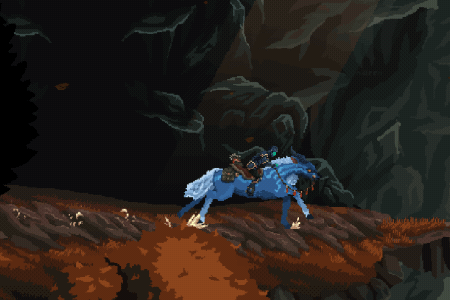
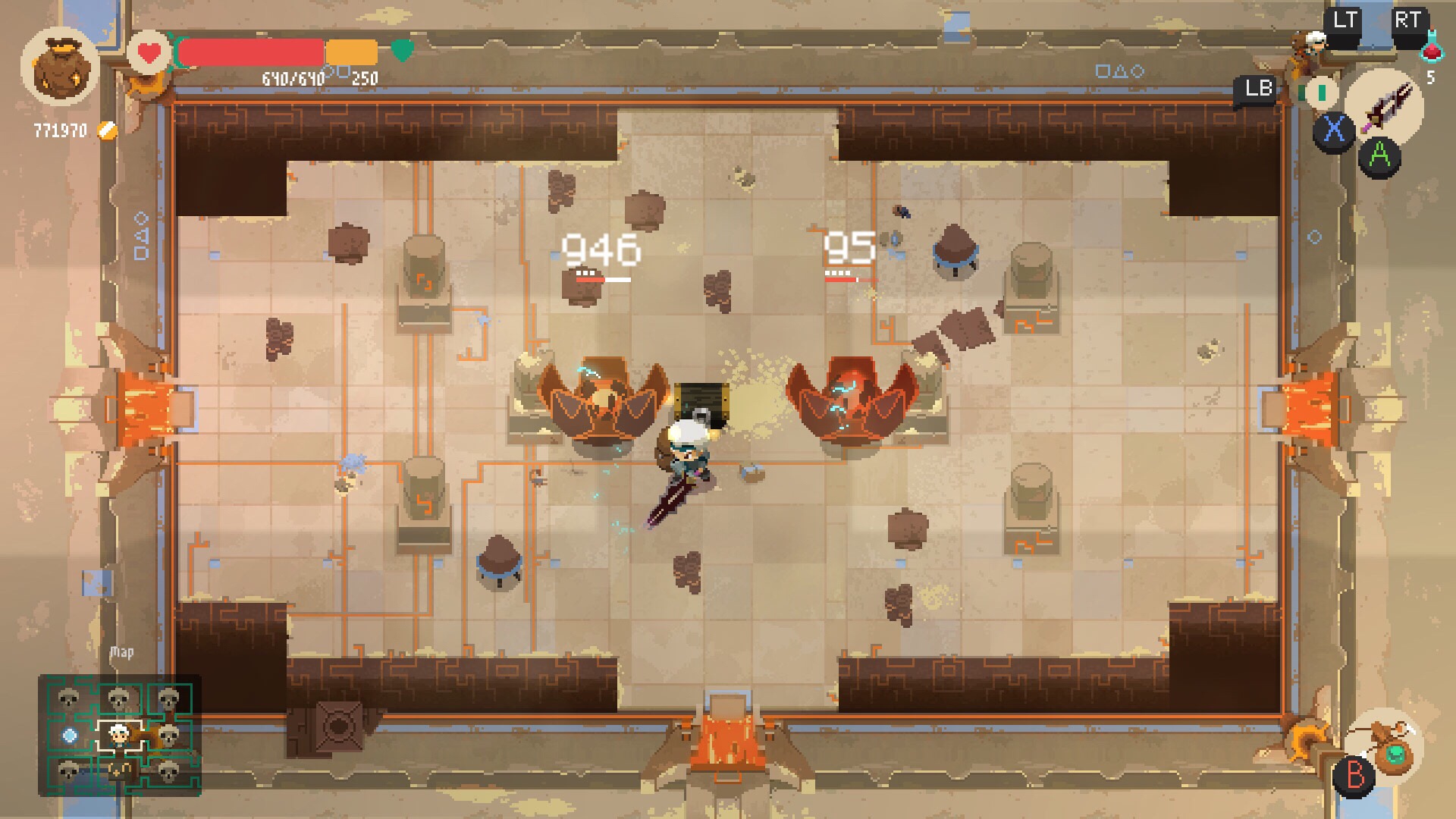
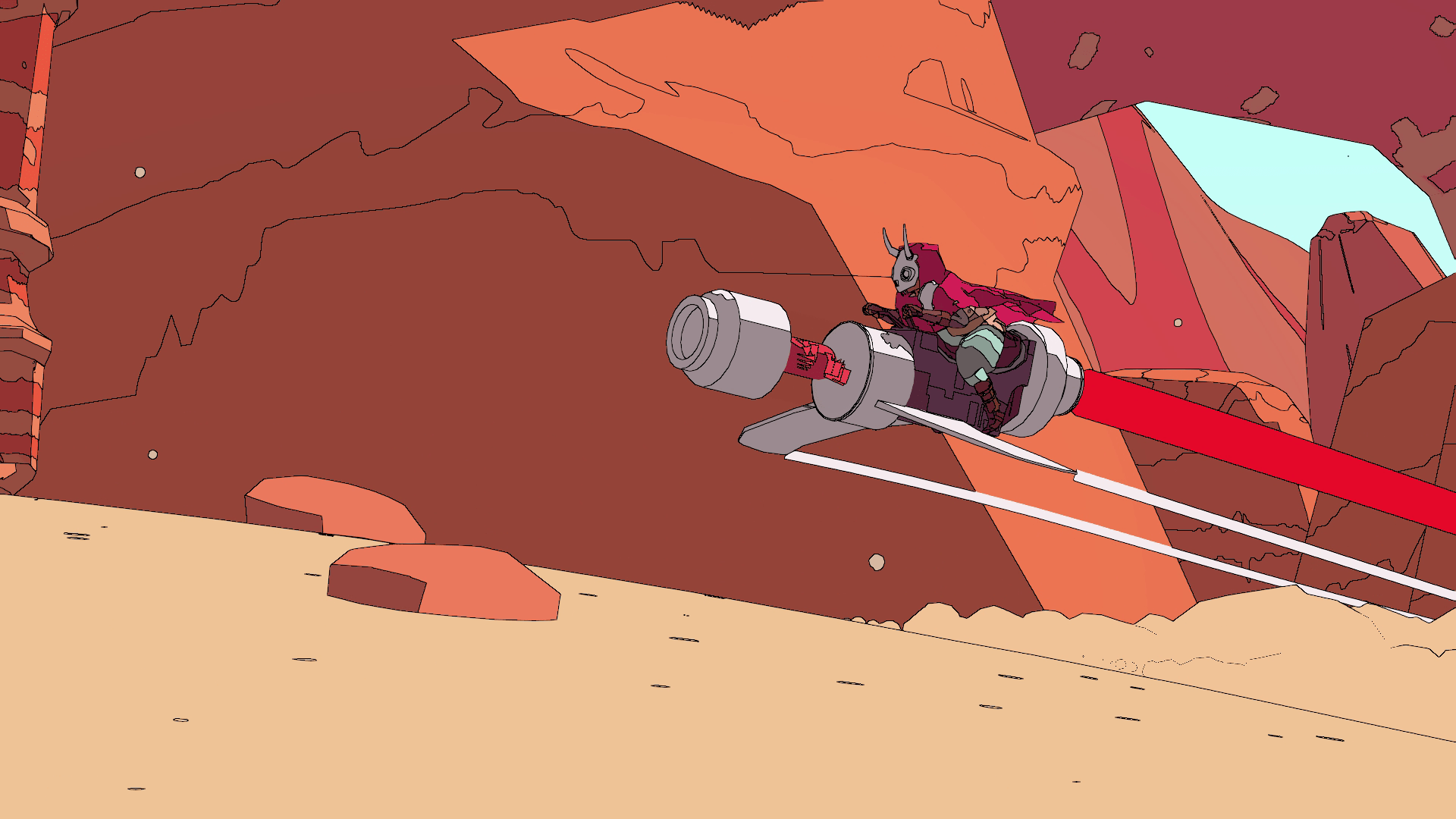
• Well this is good news. The excellent Hollow Knight, which we were talking about just the other week as one of the best modern Metroidvanias, is coming to Xbox One and PS4 on 25 September. Team Cherry dropped this lovely bombshell in a tweet:

    And even better, ‘Hollow Knight: Voidheart Edition‘ will include four expansions with tons of extra content, can’t wait! Expect a review as soon as I can get my hands on it.

  • Review: Chasm (PS4)

    This post is part of Metroidvania Month (if a bit late).

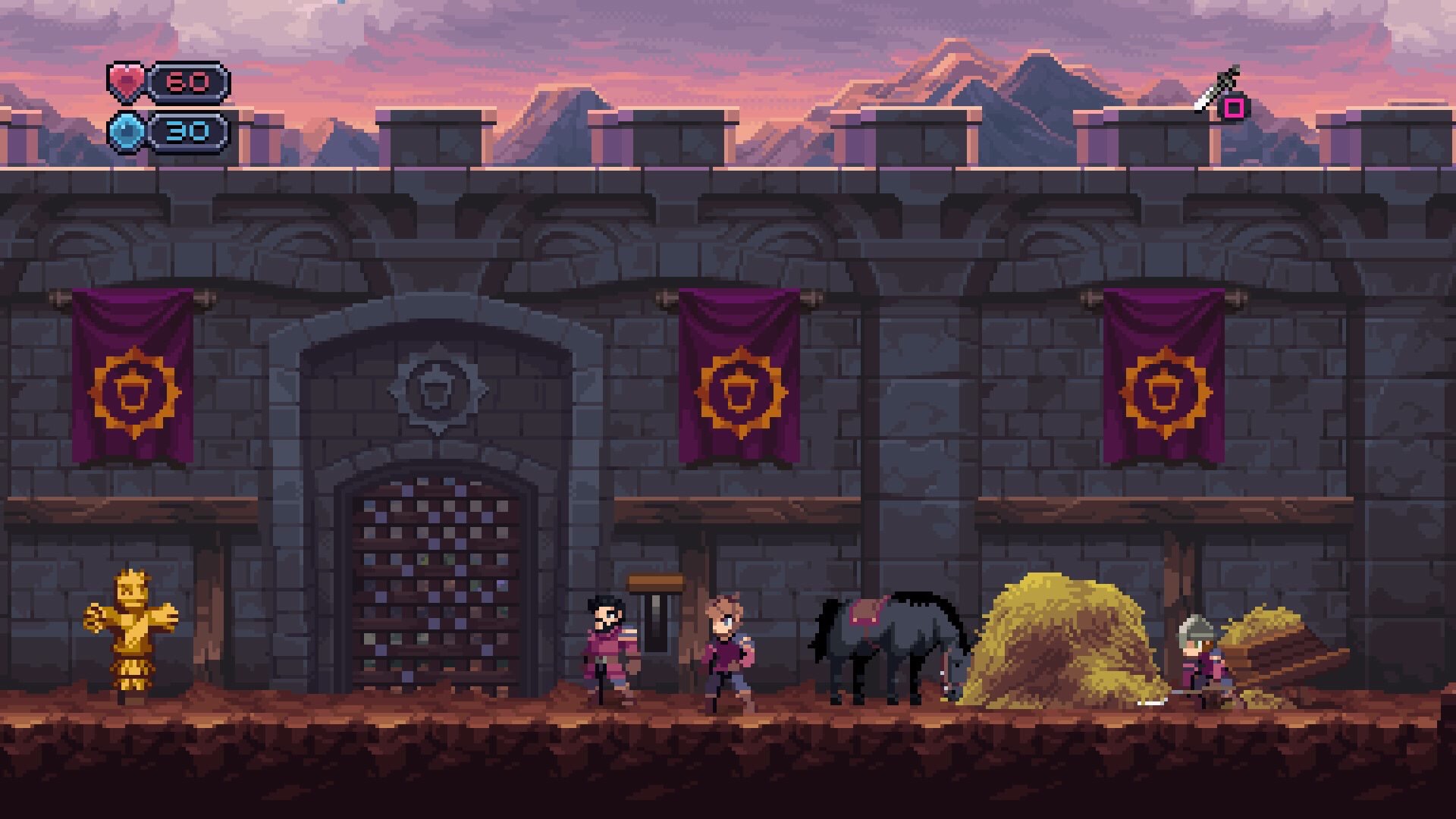
    Chasm has been years in the making, and the result is a solid, beautiful Metroidvania game that is right up there with the best in the genre.

    Whereas the recent Iconoclasts merely paid lip service to Metroidvania tropes, Chasm is very much a Metroidvania proper, with around a dozen items to find that boost your abilities and allow you to explore previously inaccessible areas. In addition, you can level up your character by defeating enemies, gradually boosting your attack, defence and magic stats.

    The game starts you off as a rookie knight who is charged with investigating the appearance of monsters at a nearby village. When you get there, you discover that all of the villagers bar the mayor have been kidnapped, apparently spirited away into the mines by foul beasts. It’s up to you to rescue them and discover the source of the monsters that are spewing forth from underground.

    Rescuing the villagers is one of the best parts of Chasm. Each one heads back to the village and provides a handy service – the blacksmith can forge weapons, for example, and another villager can brew health potions. Each of them also gives you a side quest that unlocks extra perks if you complete it. Filling up the deserted village with happy folk was probably the game’s best feature.

    In terms of actual gameplay, Chasm is decidedly old school. Health-replenishing food drops are vanishingly scarce, so you’ll spend most of your time carefully monitoring your hit points. Save rooms are scattered few and far between, and if you die, you lose all progress since your last save, getting dumped back to the title screen. This means that exploration comes with a constant state of low level anxiety over how far you are from the next save room – but this is what makes exploring in Chasm so exciting. You’re constantly questioning whether you can make it to the next save. If you take a battering in one room, you’re left with deciding between pushing on into the unknown with low health and hoping a save room is coming up soon, or doubling back to the last save – although that means fighting back through the enemies you’ve just faced, which respawn as soon as you leave the room. More than once I made it to a save room by the skin of my teeth – and many other times I didn’t make it at all.

    The weapons and abilities are pretty old school, too – there’s nothing more fancy than a sword or an axe, and the tricks you learn are the classic platform staples of things like ledge grabs and wall jumps. But despite the basic tool set, fighting is brilliant fun thanks to the varied range of enemies. There are more than 80 unique monsters to fight, and they all have slightly different attacks and stats, so you regularly come across new foes. One of the game’s great thrills is stumbling across a new baddy and gingerly working out the best strategy for dealing with them. Even better is the feeling of mastering the technique for seeing them off, and subsequently cutting swathes through bad guys that once had you cowering in fear.

    And I’m a big fan of the nifty jump-back move, which you can use to swiftly step away from sword thrusts and the like before launching a counter attack. In fact the controls as a whole are totally spot on – it’s a real joy to play.

    That said, it is hard – at least at the start. In the first couple of hours my death count was in the double figures, and the difficulty really spiked at the second boss. But then, weirdly, it gradually got easier. As you rescue more villagers, you get access to things like health potions and weapons that make the whole thing much easier to tackle – to the point where I beat the final boss on my first go, whereas earlier ones took countless retries. This didn’t spoil the game for me necessarily, but it does seem the difficulty balance isn’t quite right. And it’s also handy knowledge for new players – if you find it hard at first, don’t be put off.

    I was also a little disappointed that the various equippable armour you get doesn’t visually change your character – that particular trait seems a bit too old school. I just had to imagine that my knight was wearing a gold helmet, for example, even though he was clearly hatless. Some of the magic attacks you get are also fairly useless. I pretty much used the magic daggers throughout, and ignored fiddly ones like the magic boomerang.

    But this is mostly nitpicking. Chasm may not innovate much – we’ve seen almost all of its tricks elsewhere – but it plays brilliantly and looks utterly wonderful. The pixel art is superbly animated, and I particularly liked the massive range of enemies to fight. Plus the music is really great – I found myself humming the tunes after I switched off the game. If you’re looking for a new a Metroidvania game to add to your collection, you can’t go wrong with this one.


    Chasm is available for PlayStation 4, Vita and PC, and will be coming to Switch soon. We reviewed the PS4 version.

    Disclosure statement: Review code for Chasm was provided by BitKid. A Most Agreeable Pastime operates as an independent site, and all opinions expressed are those of the author.

  • Boundless, Minecraft, and not having anywhere near the amount of time a game demands

    I swear that some games nowadays are basically like having a second job.

    FIFA and its weekend tournaments, Destiny 2 and it’s raids… all these ‘game-as-service’ types ask you to log in regularly to keep up to date with what’s going on. But who actually has the time to keep up with them? Certainly not me, what with parenting and the myriad boring responsibilities of being an adult. Feasibly I could just about keep up with something like Destiny 2 if I played that game exclusively – but there are so many great games out there, the idea of playing one to the exclusion of all others just seems wrong.

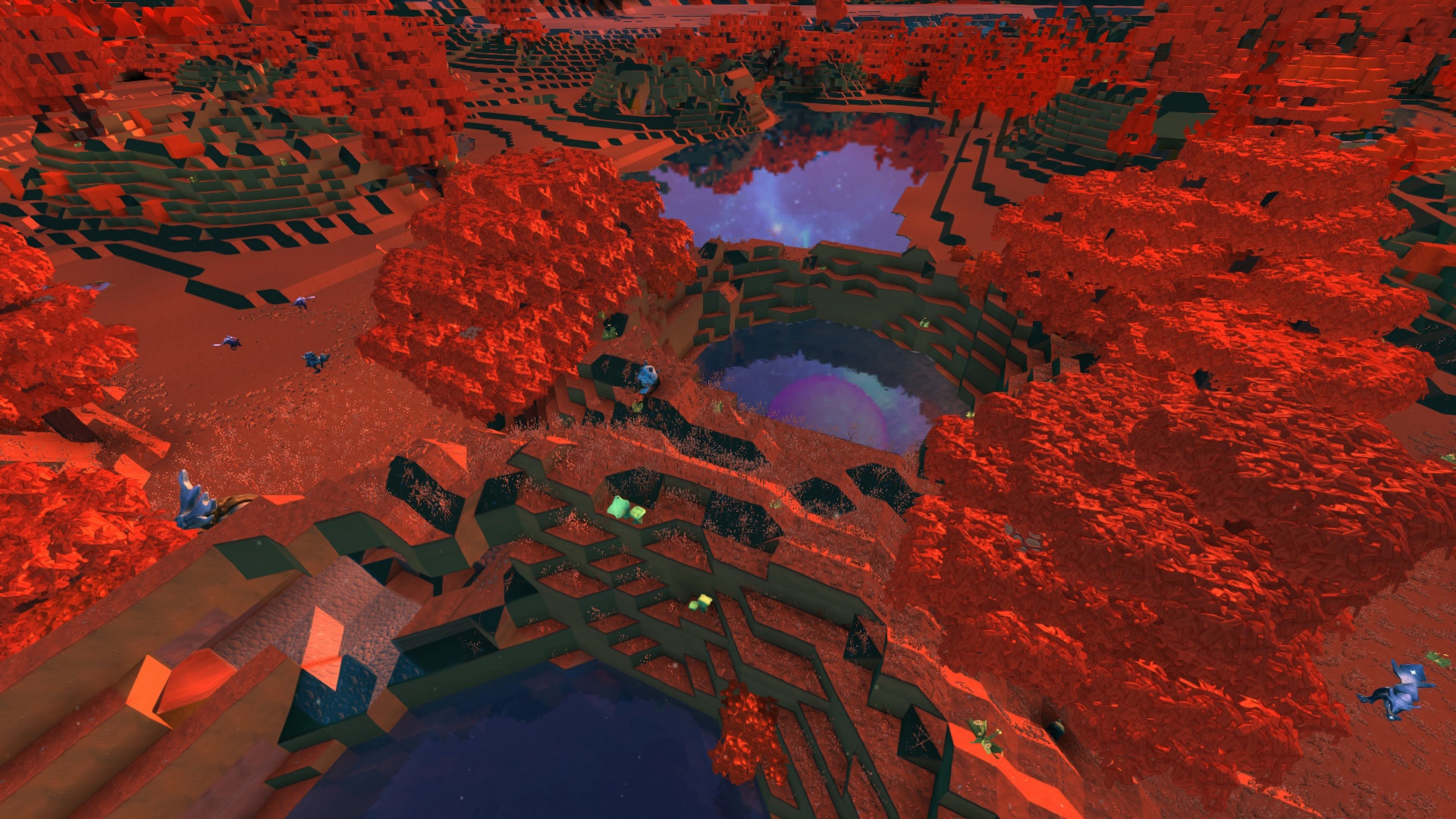
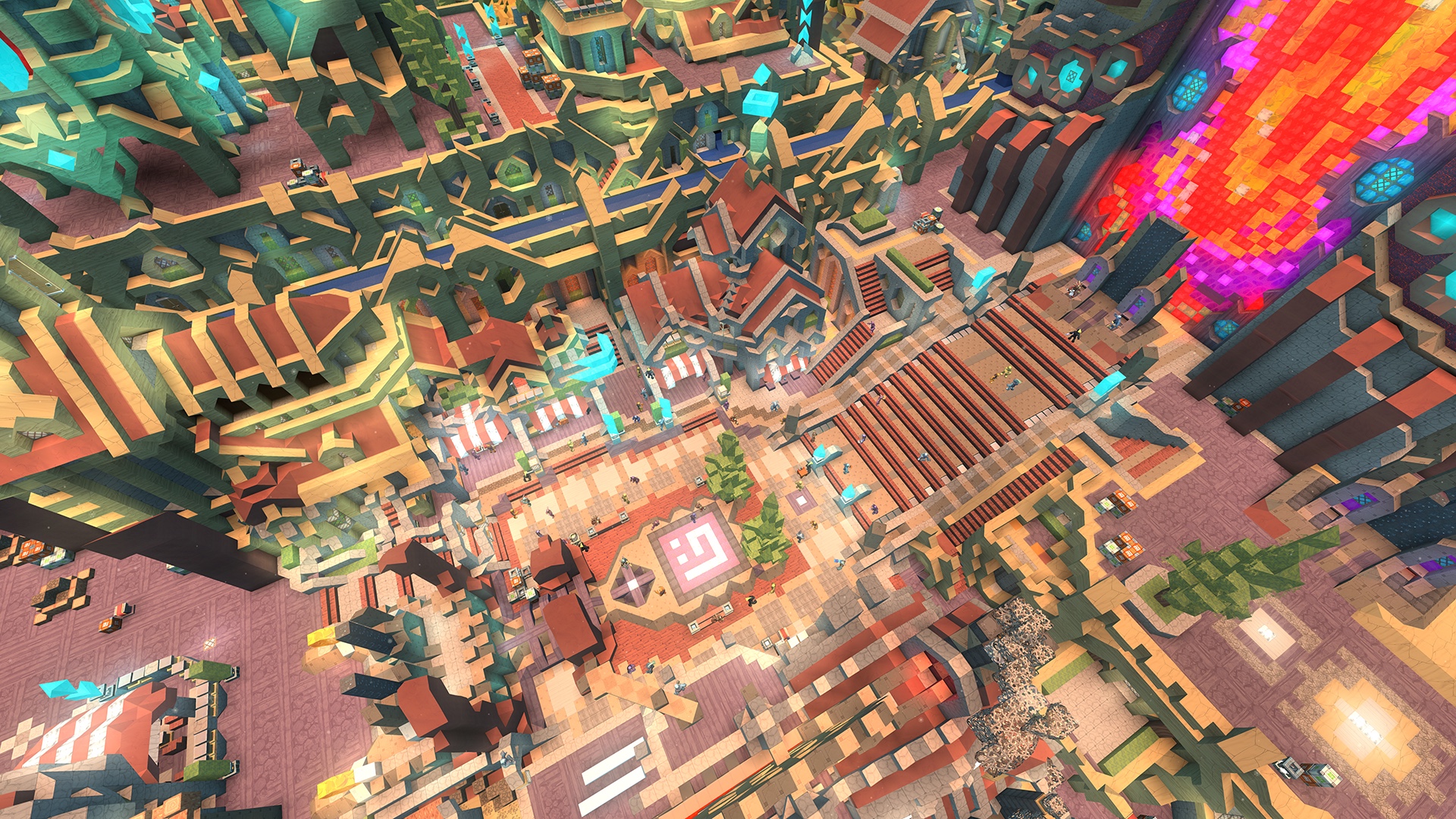
    Which leads me on to Boundless, a Minecraft homage with MMO sensibilities. It’s block-based building but in persistent, shared world, and I was invited to try it ahead of its official release tomorrow, when it will finally receive the ‘1.0’ moniker after four years in early access. I wrote up my impressions for Kotaku UK:

    Minecraft-style MMOG Boundless Bursts Out of Beta

    The long and the short of it is that the game has a terrible tutorial and character creator, but if you stick with it, the possibilities are… well, boundless. You can collaborate with other players to create huge cities, and open shops to sell rare items for huge profits. It’s pretty cool.

    But just looking at some of the superstructures people have created made me feel tired. There is absolutely no way I will have the time or commitment to make anything so grand – and in addition, the game demands that you refuel your plot-marking beacons monthly, otherwise any old player can come and mess with your stuff. All of this had my brain flashing a warning: THIS IS NOT THE GAME FOR YOU, GET AWAY.

    Where do people get the time for this? That’s what I want to know. Maybe 20 years back, with weekends yawning like an open chasm to be filled with fun, I might have been tempted to take the plunge. But nowadays I think I’ll leave this kind of stuff to the young ‘uns.

  • The big AAA games battling it out for Christmas 2018

    It’s September, which means that publishers are getting ready to unleash their biggest games ahead of the busiest sales period of the year. But who will be the winners and losers in the fight to become Christmas number one?

    Here’s a list of some of the biggest upcoming games in 2018 (via Gamespot):

    September

    • Spider-Man (PS4; 7 September)
    • Shadow of the Tomb Raider (PS4, Xbox One, PC; 14 September)
    • Valkyria Chronicles 4 (PS4, Xbox One, PC, Switch; 25 September)
    • Life is Strange 2 (PS4, Xbox One, PC; 27 September)
    • FIFA 19 (PS4, PS3, Xbox One, Xbox 360, Switch, PC; 28 September)

    October

    • Forza Horizon 4 (Xbox One, PC; 2 October)
    • Mega Man 11 (PS4, Xbox One, Switch, PC; 2 October)
    • Assassin’s Creed Odyssey (PS4, Xbox One, PC; 5 October)
    • Super Mario Party (Switch; 5 October)
    • Call of Duty: Black Ops 4 (PS4, Xbox One, PC; 12 October)
    • Starlink: Battle for Atlas (PS4, Xbox One, Switch; 16 October)
    • Soul Caliber VI (PS4, Xbox One, PC; 19 October)
    • Red Dead Redemption 2 (PS4, Xbox One; 26 October)

    November

    • Hitman 2 (PS4, Xbox One, PC; 13 November
    • Spyro Reignited Trilogy (PS4, Xbox One; 13 November)
    • Fallout 76 (PS4, Xbox One, PC; 14 November)
    • Pokémon Let’s Go Pikachu/Let’s Go Eevee (Switch; 16 November)
    • Battlefield V (PS4, Xbox One, PC; 20 November)
    • Wreckfest (PS4, Xbox One; 20 November)
    • Darksiders 3 (PS4, Xbox One, PC; 27 November)
    • Artifact (PC, Mac; 28 November)

    December

    • Just Cause 4 (PS4, Xbox One, PC; 4 December)
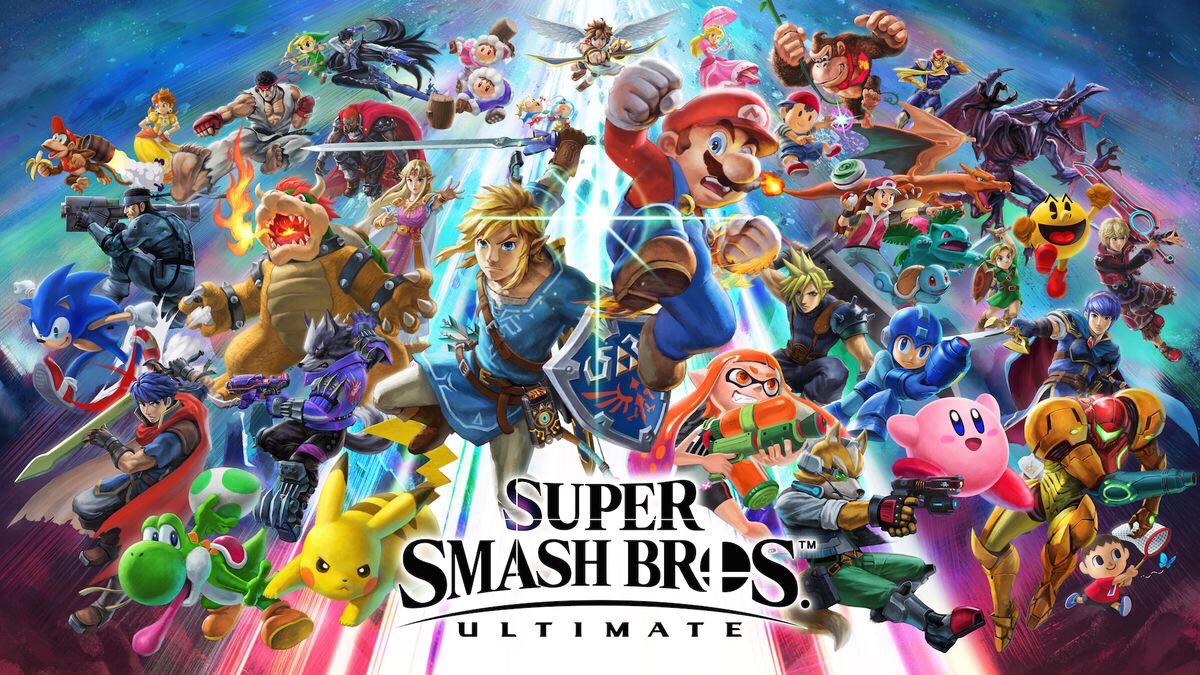
    • Super Smash Bros. Ultimate (Switch; 7 December)

    EA has recently pushed back the release of Battlefield V from October to November – a sensible move considering that it was sandwiched between Call of Duty and Red Dead Redemption 2. But word on the street is that preorders of Battlefield V are down on expectations – so another benefit of pushing back the release is that it will give EA time to drum up more interest in the game.

    There are a few things we can take for granted in the run up to Christmas. The latest FIFA game will sell like hot cakes (in the UK at least), and dominate the top of the charts for the next few months. Whereas once there were multiple football games vying for gamers’ attention, those days are long gone and are unlikely to make a comeback – even if Pro Evo continues to put up a spirited fight. Even then, the gap between FIFA and Konami’s franchise seems to be widening, with the latest Pro Evo selling 42% fewer physical copies than its predecessor.

    Likewise, the latest Call of Duty will sell by the bucketload. This series has dominated the Christmas charts for the last decade, and that shows no signs of stopping. Infinite Warfare may have underwhelmed punters a couple of years back, but that seems to have been a blip rather than a downturn in the series’ fortunes if the sales of Call of Duty: WW2 last year are anything to go by. Still, it will be interesting to see whether the lack of a traditional single-player campaign this time around will affect sales.

    And of course, there’s the annual Assassin’s Creed game – this year it’s the turn of Greece after last year’s well-received Egyptian instalment. Again, it’ll sell by the boatload, but probably won’t dislodge CoD and FIFA from the top of the charts. Forza Horizon 4 represents the annual Forza episode this year, and will also no doubt do very well, although as a console exclusive its sales will be limited.

    So far, so samey. But the big difference this year is Red Dead Redemption 2, a rare tentpole release from Rockstar. The hype for this game is through the roof, and it could easily outsell the usual big hitters. That said, it’s unlikely to replicate the phenomenal success of GTAV, which still regularly tops the charts years after its release. Then again, will ANY game ever be as successful as that one?

    There’s also Fallout 76, which is an interesting one. It’s been mostly well received and looks set to be a success, but I wonder whether the switch to an MMO style game will lose fans or attract more players. Certainly from my point of view, it doesn’t appeal as much because of this – but then again the ongoing nature of the game might keep players coming back for longer, and might make Bethesda more money in the long run. But it launches just a couple of weeks after Red Dead Redemption 2, so I’ve a feeling that game will eat into Fallout 76’s sales – especially if players are put off by the MMO aspects.

    Spider-Man will undoubtably be a big hit based on the brand alone, although the positive reviews help. But the big question is, will it outsell God Of War, Sony’s other big 2018 exclusive? Unlike God of War, it’s going up against some strong competition, and there isn’t a current Marvel film in cinemas to increase interest and boost sales. Shadow of the Tomb Raider, meanwhile, will no doubt sell well for Square Enix, but I’ve a feeling it won’t shift as many copies as the previous entry – there doesn’t seem to be much hype around it.

    Then there’s Soul Caliber VI – I’ve a strong feeling that this will sell well initially but then disappear out of the charts quite quickly. It looks good, but it may well get smothered in the end of year sales rush. Likewise for Hitman 2 and Darksiders 3 – it strikes me that they would do much better if released at a quieter time of year, rather than competing with Call of Duty and Red Dead Redemption 2.

    Nintendo have three big releases: Super Mario Party, Pokémon Let’s Go Pikachu/Let’s Go Eevee and Super Smash Bros. Ultimate. The latter will no doubt sell massively, eclipsing the sales of the Wii U entry thanks to massive hype and extreme levels of fan wish fulfilment. But the Pokemon game’s are a bit of conundrum – will the entry-level nature of the game’s put veteran players off or attract a huge new audience off the back of Pokemon Go? I’m betting on the latter, but it will be interesting to see whether they match the sales of the 3DS mainline entries. And Super Mario Party will no doubt sell more than previous entries thanks to its suitability to the Switch and local multiplayer, but it’s still very much a mid-tier Nintendo franchise, so it’s unlikely to get anywhere near the sales of Ninty’s other two big hitters.

    What else? Well, pity poor Wreckfest. The PC version reviewed remarkably well a few months back, but the console port is being sent out to die in between a bunch of big releases. As I said recently, arcade driving games like this seemed to have died a death in the charts as open-world games took their place, and I fully expect this one to flop badly, even though it’s a very good game. Time will tell.

    And then there are the wildcards. Judging by the stupendous success of the Crash Bandicoot Trilogy, which has barely left the top ten for the best part of a year, Spyro Reignited Trilogy could be Christmas 2018’s unexpected runaway hit. A few people have some reservations about the new art style, but nostalgia clearly sells, so I expect this game will do phenomenally well.

    Starlink, on the other hand, seems like a risky prospect. The toys-to-life market seems to be very much on the wane, with Disney Infinity and Lego Dimensions already giving up the ghost, so is there still an audience for a game about buying toy spaceships? It reminds me of the failed relaunch of Guitar Hero and Rock Band a couple of years back, which showed that people had clearly got tired of toy instruments. It doesn’t help that previews of the game have been a bit muted. I have a feeling that this one may very well crash and burn.

    Mega Man 11 could be a big hit, on the other hand – relatively speaking, of course. There seems to be a lot of excitement about the new game, not least from AMAP’s own Map Schwartzberg, and previews have been positive. Artifact could prove to be a bit of a phenomenon, too – Valve’s first new game in ages is sort of Hearthstone crossed with DOTA, and will no doubt sell by the bucketload for years to come.

    As for me, the games I’m most excited about are Valkyria Chronicles 4 and Just Cause 4. The first Valkyria Chronicles is one of the best games I’ve ever played, but the sequels were either PSP exclusives or never made it out of Japan, while the action-based Valkyria Revolution from last year was a major disappointment. But number four is going back to the series’ strategy roots, so I’m very excited for this one. And I had an absolute blast playing Avalanche’s Mad Max game the other month after it was given away on PS Plus, so I’m really looking forward to their latest Just Cause game. I missed the last two instalments, but playing Mad Max has really got me hankering for some vehicle-based harpooning.

    How about you? What games are you most looking forward to in the final months of 2018?

  • The best modern Metroidvanias

    This post is part of Metroidvania Month.

    Metroidvanias are making a comeback, and I couldn’t be happier. Here’s a quick rundown of some of the best modern Metroidvanias – i.e. those on current systems, and not including classic games like Super Metroid and Castlevania: Symphony of the Night.

    This list has been put together by the AMAP team as well as a few other games bloggers who have kindly contributed: huge thanks to the peeps from Geek Sleep Rinse Repeat, Drakulus, Normal Happenings and I Played The Game. The games are listed in alphabetical order rather than any sort of preference. And note that there are a few modern Metroidvanias that look excellent but that we haven’t had a chance to play yet, hence why they’re not included here: notably Chasm (review coming soon! UPDATE: review now live and Chasm added below!), Death’s Gambit and Guacamelee 2. If there are any other modern Metroidvanias that you think should be added to this list, let us know in the comments!

    Axiom Verge

    Formats: PS4, Vita, PC, Mac, Linux, Wii U, Xbox One

    Lucius Merriweather: Axiom Verge is a love letter to Metroid games of old – and in many ways it surpasses them. The garish landscapes hark back to the series’ 8-bit roots, but the music is a cut above anything you’d have heard back then – haunting chip tunes that are so good I went out and bought the soundtrack. There are tons of secrets to uncover in the vast game world, not to mention around 20 unique and varied weapons, and I had an absolute whale of a time tracking them all down. As far as I’m concerned, Axiom Verge is the peak of modern Metroidvanias, and an absolute must play for fans of the genre. Check out my review here.

    Chasm

    Formats: PC, PS4, Vita (and soon on Switch)

    Lucius Merriweather: Chasm is old school in almost every way. Dying sends you back to the title screen, the weapons are classic fantasy staples like swords rather than the fancy guns of Axiom Verge, and there’s little here that hasn’t been done before elsewhere. And yet it’s just so solidly put together it’s a joy from start to finish. The pixel art is superb, and the massive range of enemies means that combat is always enjoyable. Plus exploring is great fun thanks to the huge range of things to find, not least the many missing villagers who have been imprisoned throughout the underground labyrinth. All in all, an absolutely cracking game. Check out my review of Chasm.

    Dandara

    Formats: Linux, PC, Mac, Android, iPhone, PS4, Xbox One, Switch

    Lucius Merriweather: Dandara is a tough game, but also fair – you have the speed and agility to overcome any situation, so each time you die you’ll be left thinking ‘if only I’d moved just a little bit quicker’. It’s the sign of a good game when every time you die, you can’t wait to get stuck back in and press on a little further. And I love the movement mechanic – Dandara gets around by leaping from floor to ceiling, which makes for some dynamic battles and dizzying levels where you lose track of what’s up and what’s down. The unusual lore of the game is fascinating, too, and it’s steeped in references to Brazilian culture. I interviewed the developers about the meaning of Dandara, and you can check out my review of the game here.

    Dead Cells

    Formats: PC, Mac, Linux, Switch, PS4, Xbox One

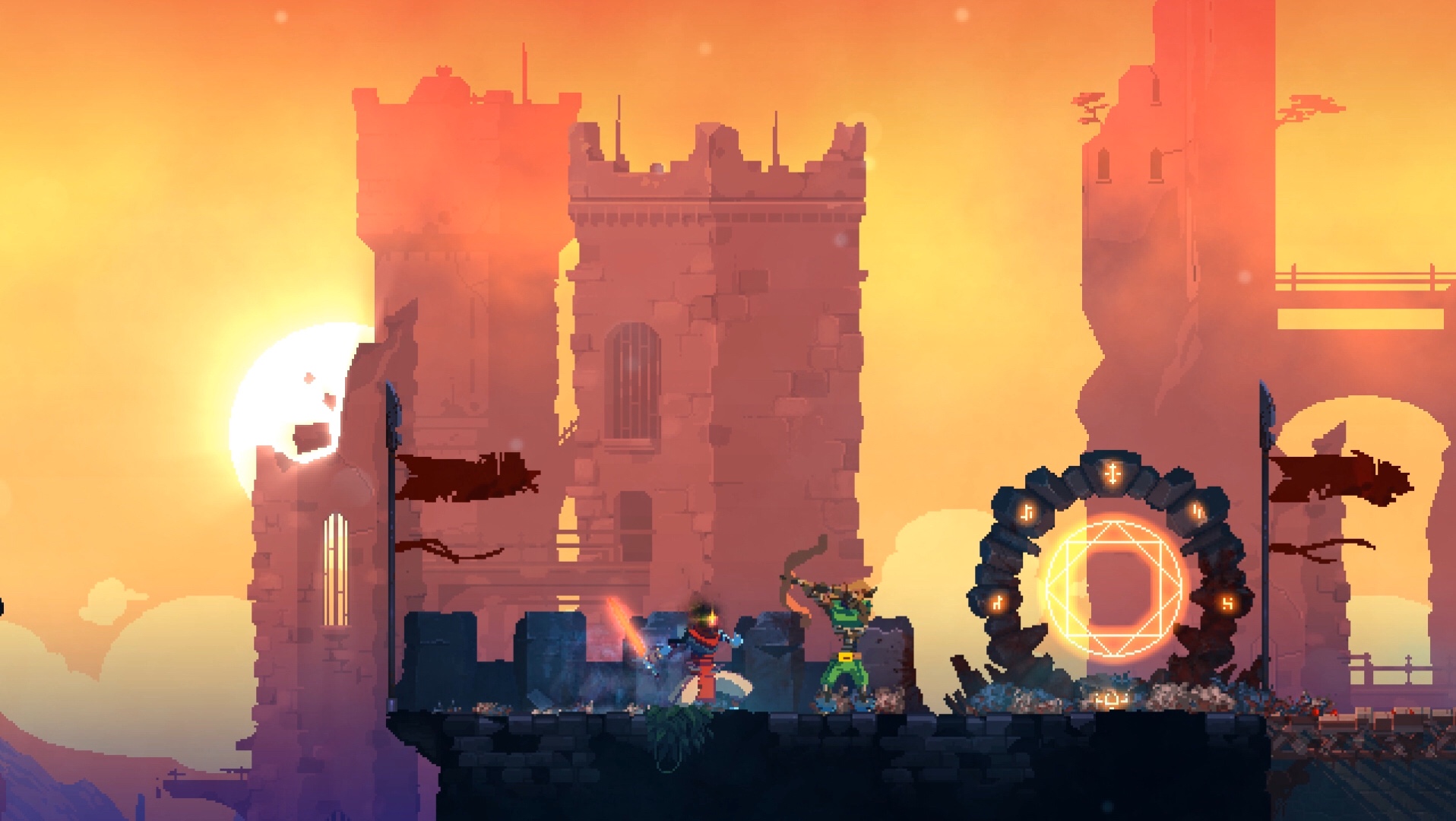
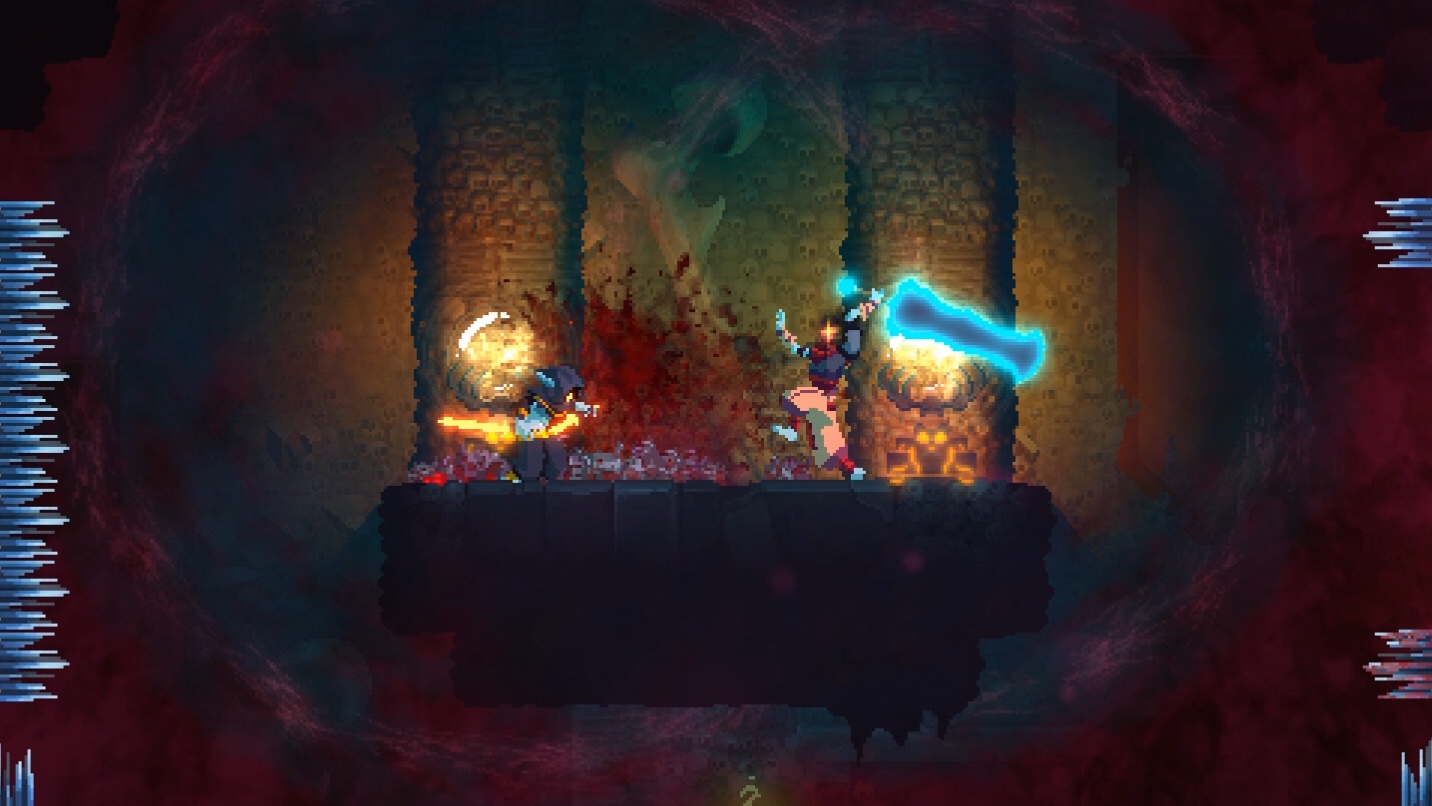
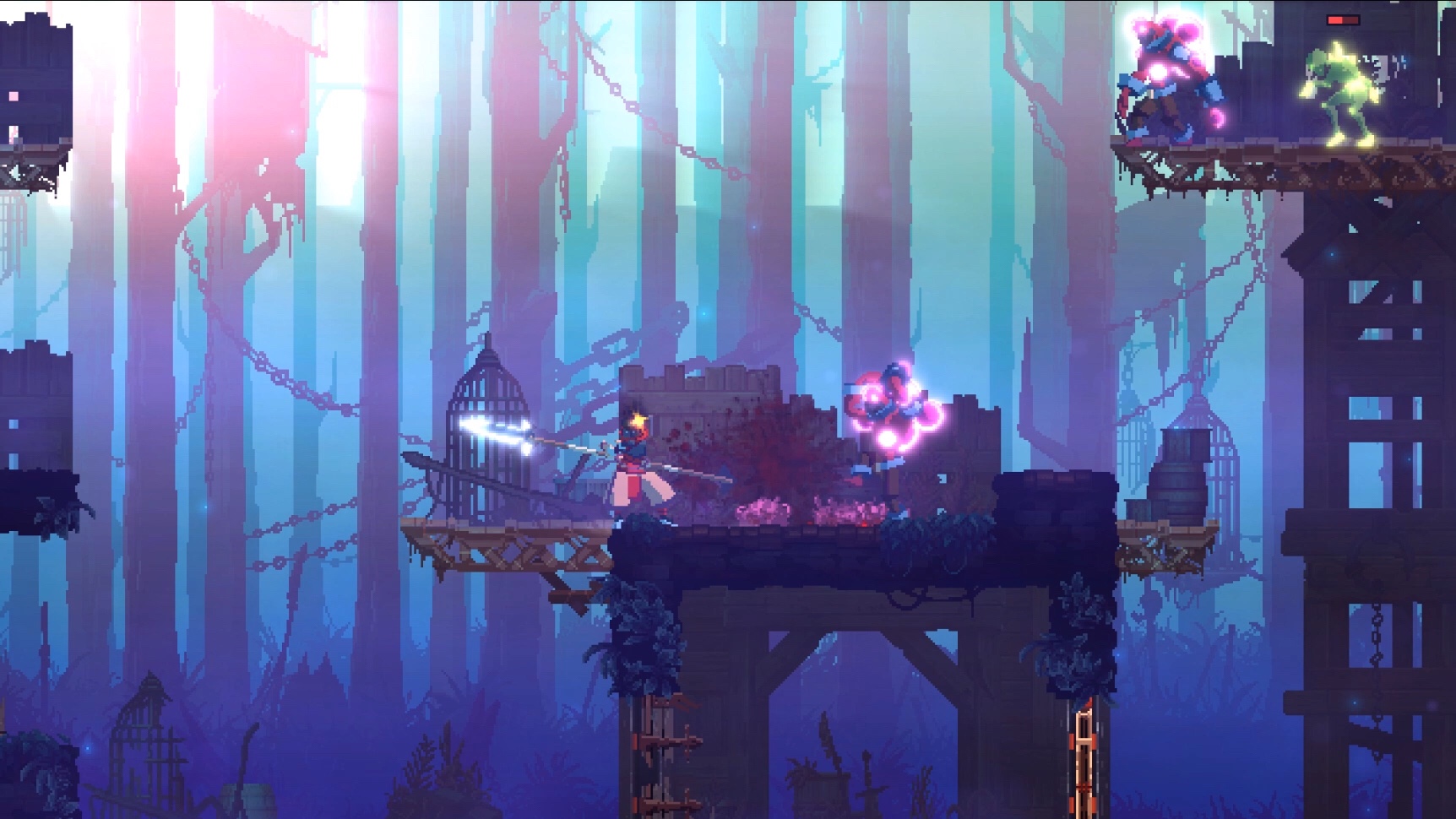
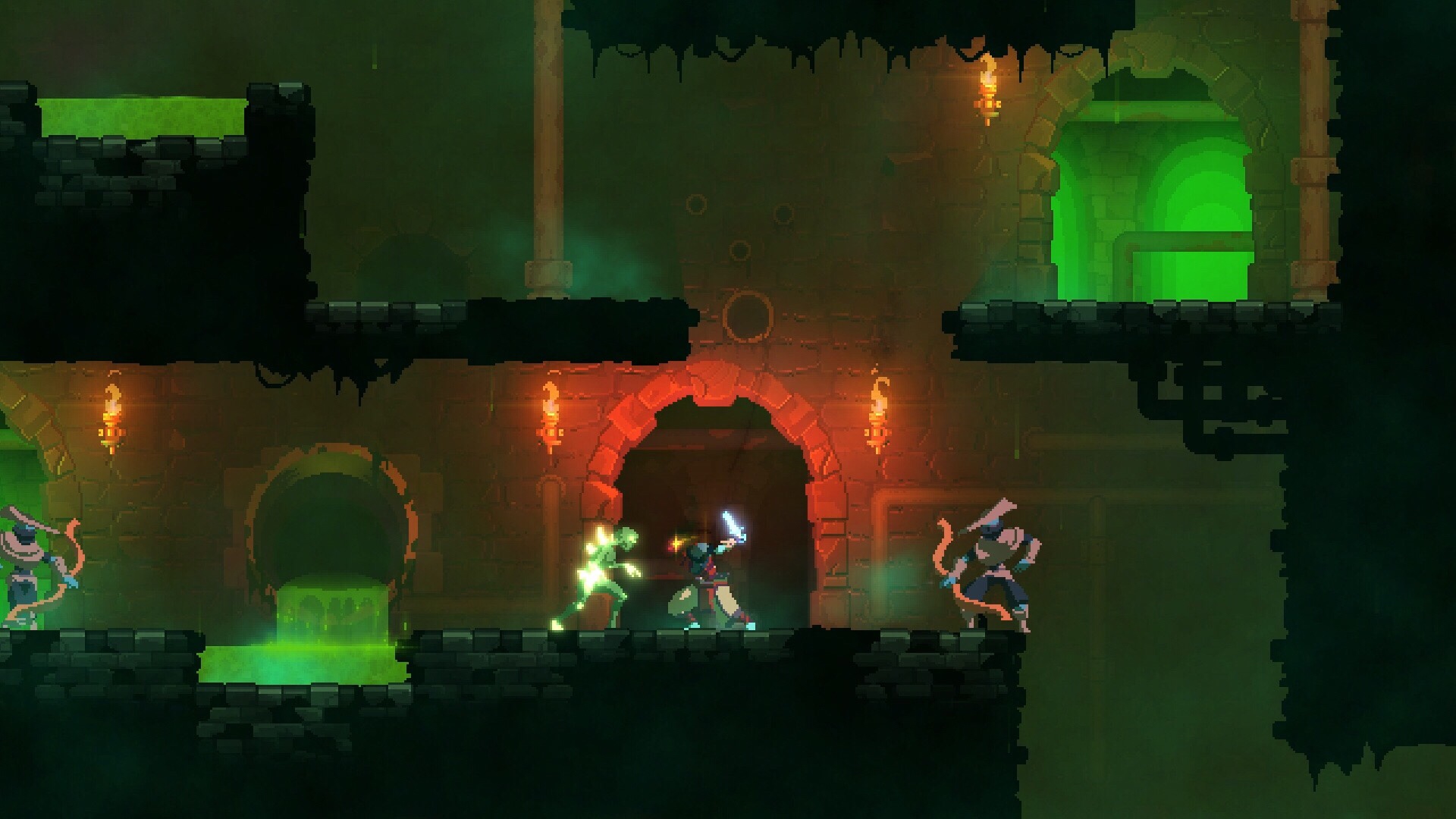
    Lucius Merriweather: Is Dead Cells a Metroidvania? There’s been plenty of discussion about this, since the game is more about repeated plays where your progress is reset each time you die. But it has that essential Metroidvania trope of gaining new abilities that let you access new areas, so I think it should definitely be included here. And what a game – the control you have over your undead avatar is pin perfect, and there’s an obscene amount of weapons and upgrades to unlock. I still haven’t got to the end, but even though I’ve played through the game countless times, I still find it compelling – which is all the recommendation you need. Check out my review of Dead Cells here.

    Forma.8

    Formats: PC, Mac, Android, iOS, Wii U, PS4, Vita, Xbox One, Switch

    Map Schwartzberg: While many games crib the inventory-based exploration of Metroid, few tackle its atmosphere. Forma.8 is a haunting, silent approach to the genre that gives the player nothing beyond a few visual cues as to what to do or where to go next. You’ll find yourself quickly endeared to our little orbular friend as he tries to find his way in a melancholic world where technology has overtaken nature, and where it slowly dawns on you that perhaps you’re on the wrong side of a conflict… Here’s a discussion with Lucius about why Forma.8 is brilliant and you should play it.

    Guacamelee

    Formats: PC, PS4, Vita, Xbox One, Wii U

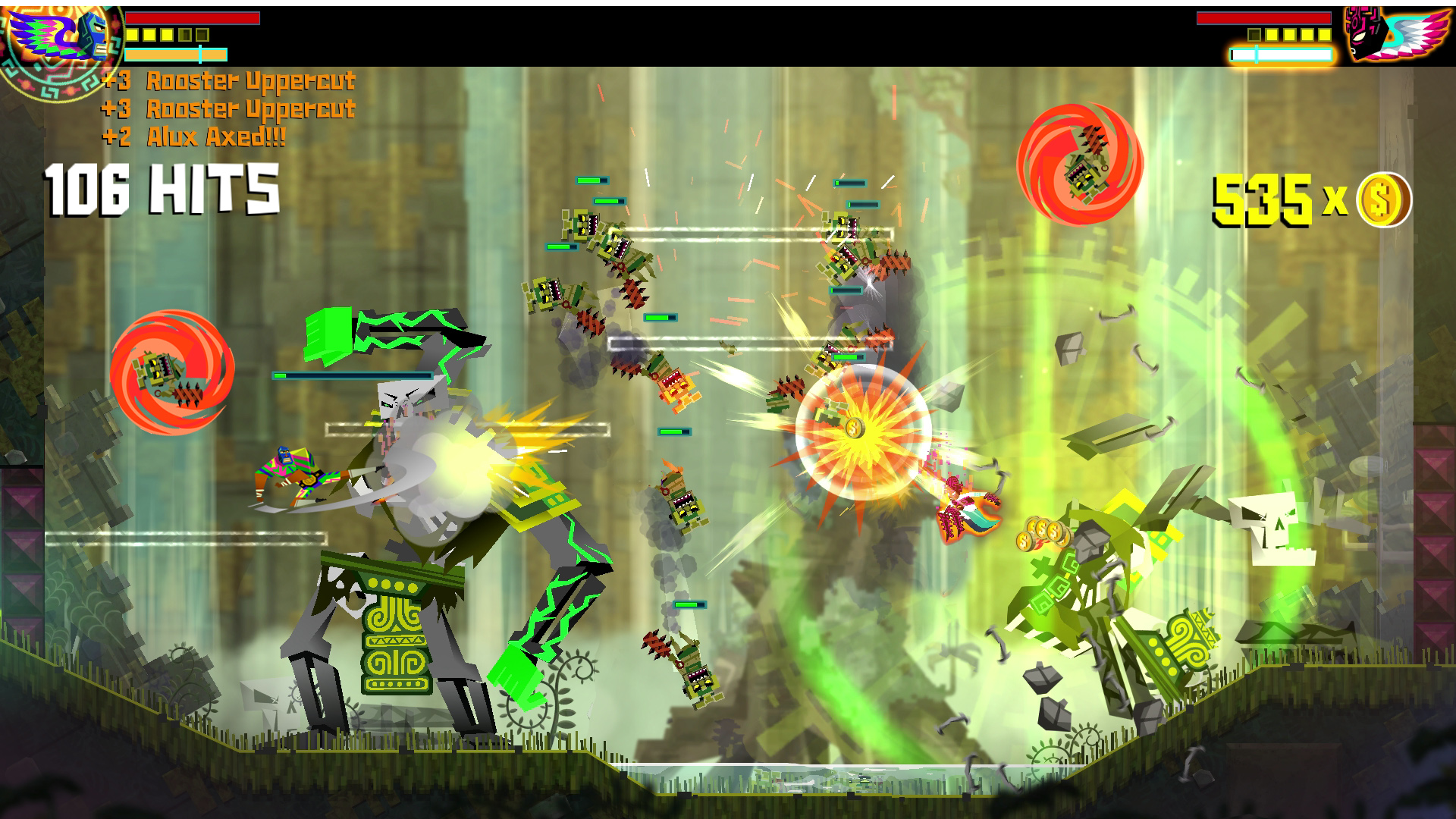
    Rob Covell (I Played The Game): Just to get this out of the way early, Guacamelee is my favourite Metroidvania game (apart from maybe Batman: Arkham Asylum if you’re counting that). You can keep your Hollow Knights and your Axiom Verges whilst I enjoy this utterly gorgeous story of undead luchadores. With a beautiful art style, fantastic characters, and a combat system that fits the game’s theme wonderfully, you have a world worth exploring. The bright colours of both the living and dead worlds bring everything (ironically) to life as you gain abilities to unlock more and more interesting environments during your quest. Of all the games mentioned here, I would implore you to try this one out. It seems like an odd duck compared to the others, but it is absolutely worth every moment you put into it.

    Hollow Knight

    Formats: PC, Mac, Switch

    Drakulus (Drakulus.com): What more can be said about Hollow Knight? It’s the best modern Metroidvania and has already become one of my favorite Metroidvania games of all time. The amazing thing is that this is Team Cherry’s first game. They created a masterpiece on their very first try, and they’re still adding free content to it. Hollow Knight can be brutal, and that could turn some people off, but if you stick with it you’ll be drawn into its beautifully dark world, memorable characters, amazing lore and, most importantly, awesome gameplay. Hollow Knight ticks all of the boxes that a great Metroidvania should have and it’s, by far, the best Metroidvania I’ve played since Symphony Of the Night. It’s that good. Check out my ten favourite Hollow Knight bosses.

    Metroid: Samus Returns

    Formats: 3DS

    Lucius Merriweather: This remake of Metroid II improves on the original in numerous ways – in particular with the addition of a nifty counter move that’s very satisfying to pull off. The backgrounds also take advantage of the 3D function to look mightily impressive, and there are some intriguing additions to the plot that possibly hint at where the series is headed. If you want a modern game that replicated the feel of classic Metroid but without the arcane annoyances of old-style gameplay, then this is highly recommended. Check out my review, and if you’ve played the game, here’s a discussion about that weird ending.

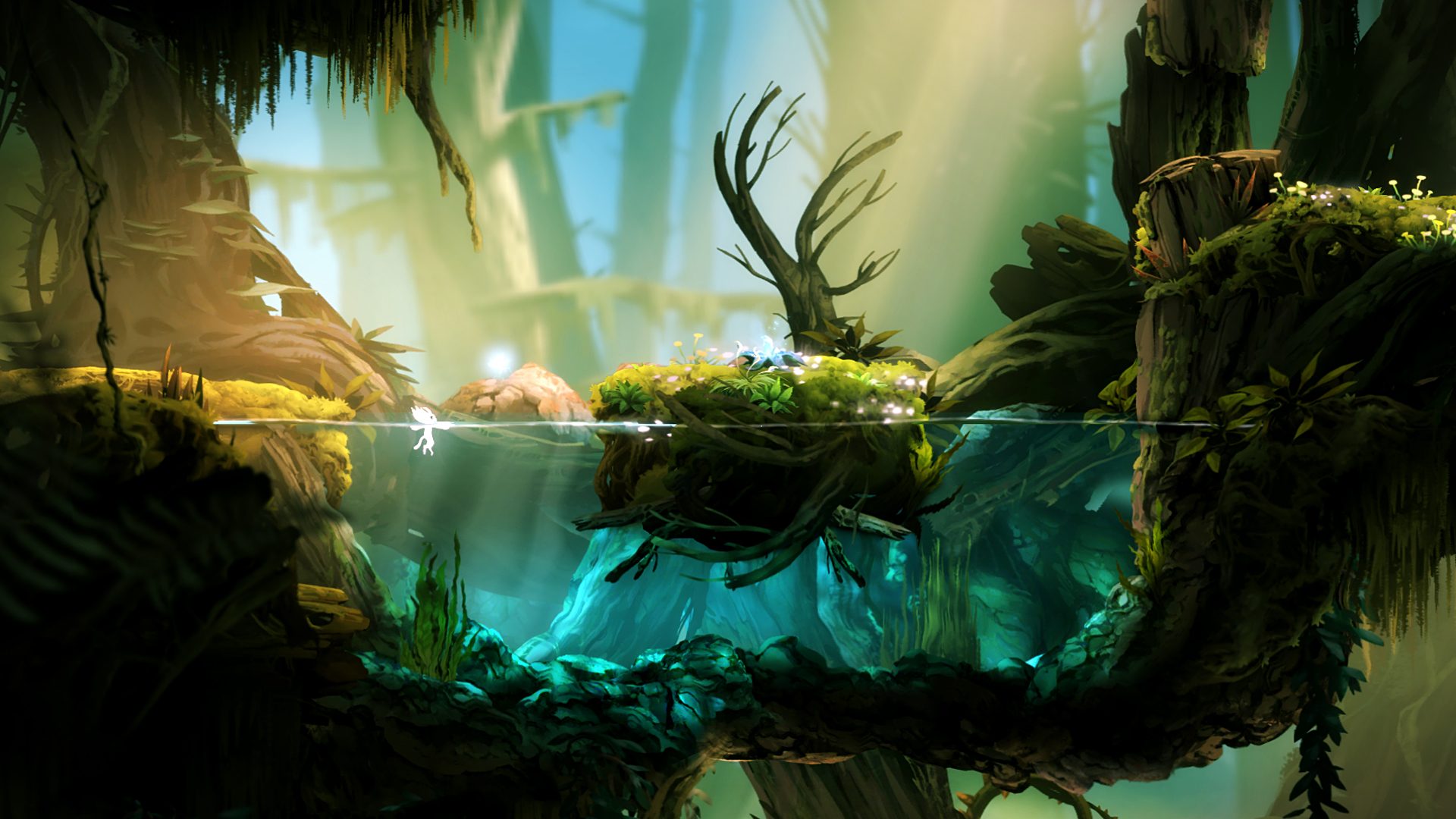
    Ori and the Blind Forest

    Formats: Xbox One, PC

    Will (Geek Sleep Rinse Repeat): Ori and the Blind Forest is easily one of my favourite games. With its beautiful score, tight responsive gameplay and stunning visuals, it’s a joy to play from start to finish. Ori manages to perfectly blend fast, fluid gameplay interspersed with challenging sections that will test your reaction speed and timing. But it never becomes overly frustrating. It’s a manageable challenge, one that you can overcome with practice and patience – and when you do, there is a great sense of achievement. Whilst there is no dialogue in the game, Ori still manages to tell a wonderful story full of a mixture of emotions that will probably have you close to tears right from the get go.

    It may not be the longest game at roughly 8 to 10 hours, but it’s a fantastic ride that’s perfectly paced the whole way through. The sense of progression is well balanced, with new skills unlocked as you play, each one opening the game up to you a little more. I personally feel that Ori and the Blind Forest set the bar for the modern Metriodvania, and it set that bar pretty high!

    SteamWorld Dig 2

    Formats: Switch, PS4, Vita, PC, 3DS

    Normal Happenings (NormalHappenings.com): “Oh, let me just pick up SteamWorld Dig 2,” I told myself during the lull between Breath of the Wild and Super Mario Odyssey. I’m very choosy about my Metroidvanias, but this was something different – a collision between accessibility and challenge that I have never seen in the genre. I found myself continuing to play the title, seemingly unaware of the progression of time. I was enamored by the personalities of Dorothy and the other characters, and I was enchanted by the dystopian worlds both above ground and below. The beautiful colour scheme of the graphics perfectly exemplify this sense of wonder. However, most important are the flawless mechanics, which are a pure joy. It may seem repetitive to be constantly digging through the dirt, but it’s that exact thing that mitigates the frustration of lesser Metroidvanias. You always feel like you are progressing, either by finding treasure or solving puzzles. All of this combines into the only Metroidvania experience I have ever had – Super Metroid included – where I was never frustrated, not even once. Check out Map Schwartzberg’s review of the first SteamWorld Dig.

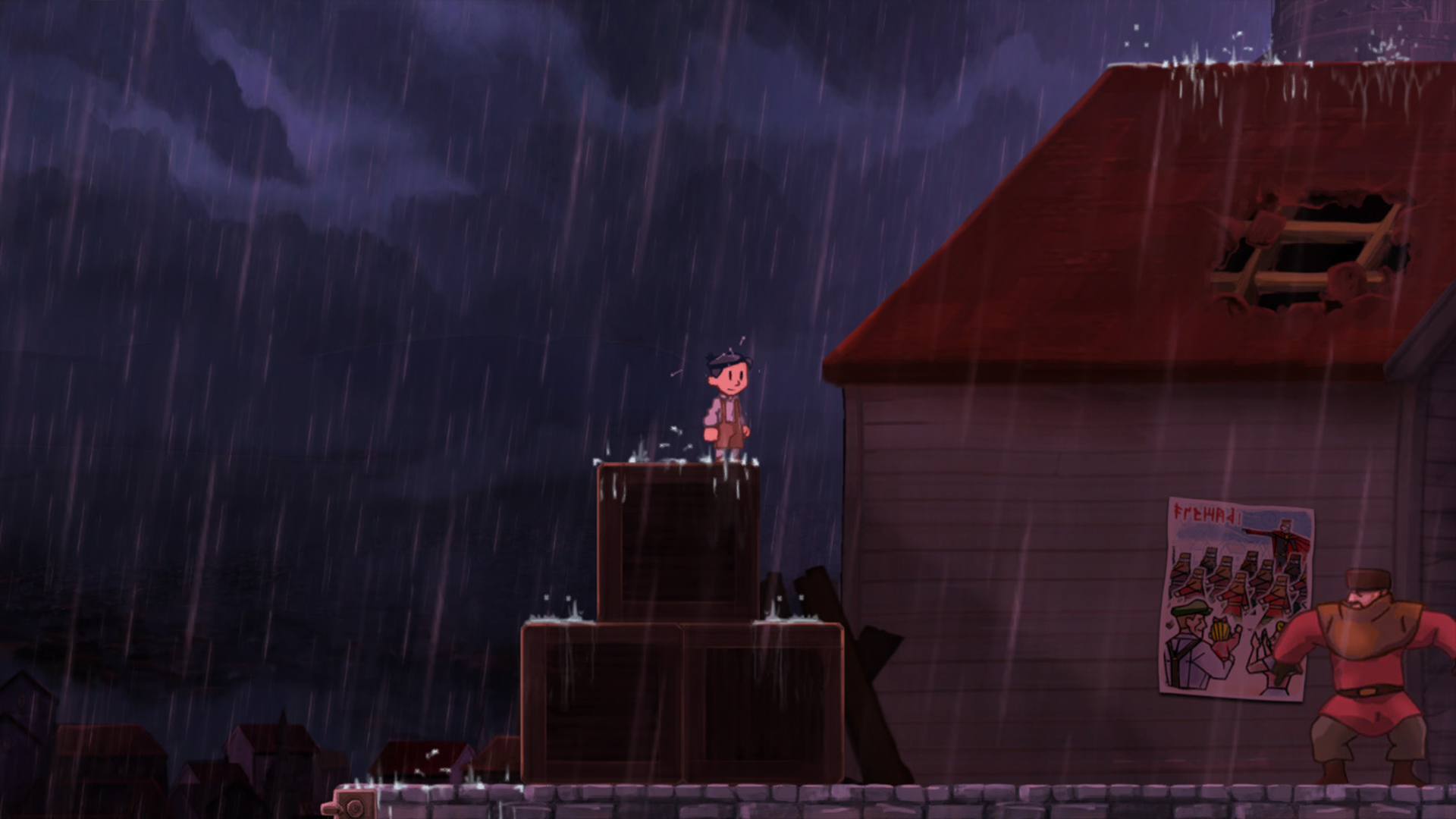
    Teslagrad

    Formats: Xbox One, PC, Wii U, Switch, PS3, PS4, Vita

    Map Schwartzberg: Teslagrad is the story of a young boy on the run who stumbles upon an old tower; then the tower teaches him a long-forgotten skill that involves magnetism and magic. More puzzle-focused than your average Metroidvania, Teslagrad sees the boy work his way further and further up the castle, learning new ways to manipulate his surroundings and discovering the atrocities of the world via very clever and silent puppet plays, innuendo and abstraction. What follows is a quiet tale of redemption and revenge that has now led Rain Games to make an entire universe based on this style. Check out my review of Teslagrad.

    And that’s it! Are there any cracking Metroidvanias we’ve missed? Let us know in the comments!

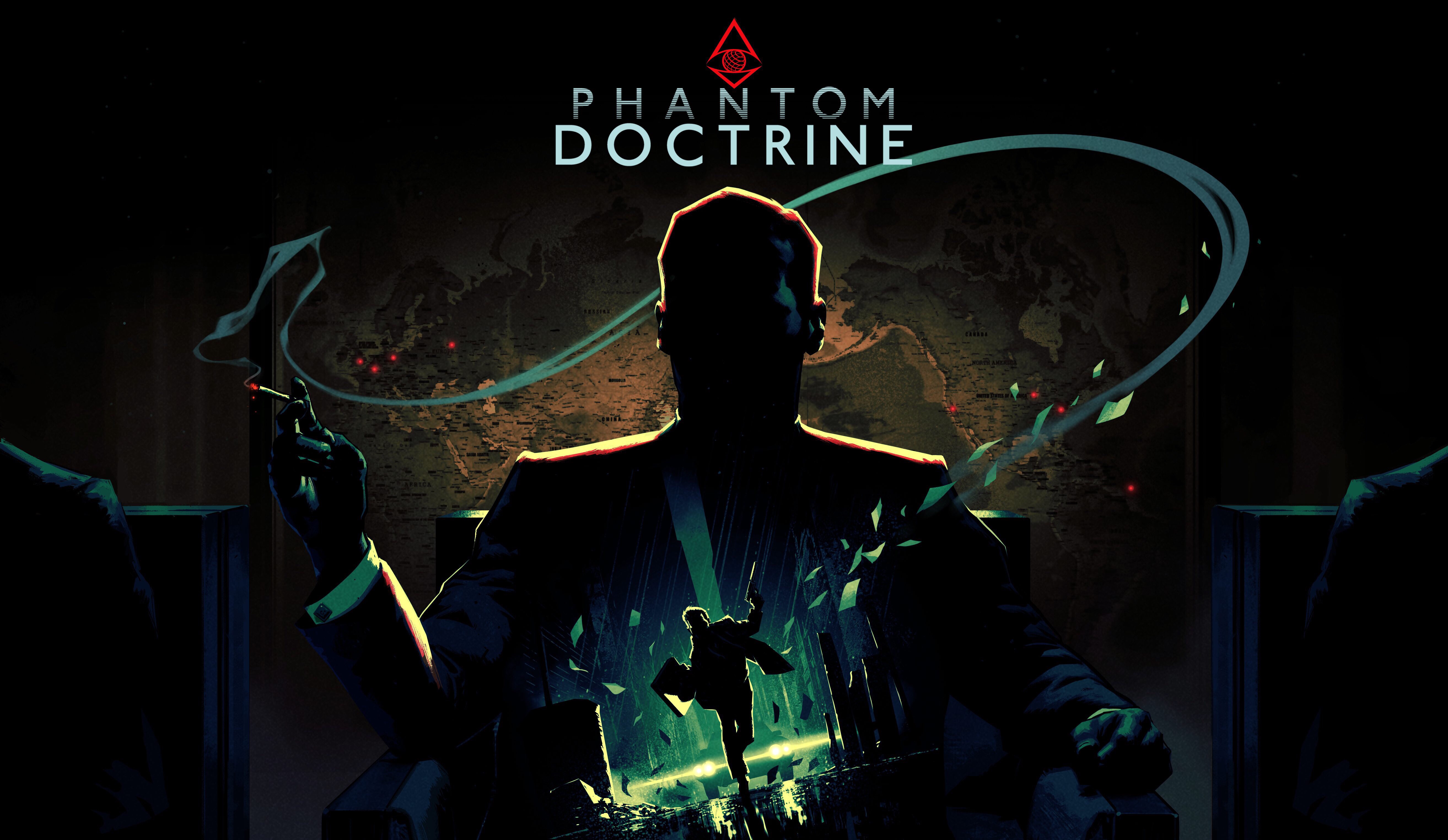
  • Review: Phantom Doctrine (PC)

    Somewhere out there, in the vast expanse of the internet, some brave, creative soul will write a review of Phantom Doctrine without mentioning XCOM; this is not that review.

    CreativeForge Games, the developers of this latest entry into the strategic/turn-based tactical genre, seem well aware that such comparisons will be made, and when the similarities between the two extend from the overarching concept down to the font used in some of the tooltips, that’s probably just as well. That’s not a criticism in and of itself; when any game nails the core structure and mechanics of a genre the way the XCOM reboot did, it’s inevitable and logical that others will take inspiration from it (see also: Battle Royale games). The real question is whether Phantom Doctrine introduces enough of its own ideas to the mix to make it stand out, to elevate it beyond being merely a reskin of an earlier game. The answer to that question is yes – for better and for worse.

    Phantom Doctrine is set at the height of the Cold War and puts you in command of The Cabal, an above top secret spy organisation made up of agents recruited from all over the world. You’re up against an emerging global conspiracy which is trying to… well, I won’t discuss the story in any great detail (as what is a good spy thriller without a few twists and turns?). Suffice to say the usual genre staples of secret plots, enemy agents and betrayals are all present. You start by selecting your protagonist’s background (CIA or KGB) and then work through a character creator. Your agent is very much part of the team and can be selected (and is occasionally required) to go on missions. It’s worth noting that if your agent avatar is killed in action, then that’s an immediate game over, something that I imagine would make the game’s ironman mode even more tense. I gave my agent a fedora because of course I did. Also, Oxfords not Brogues.

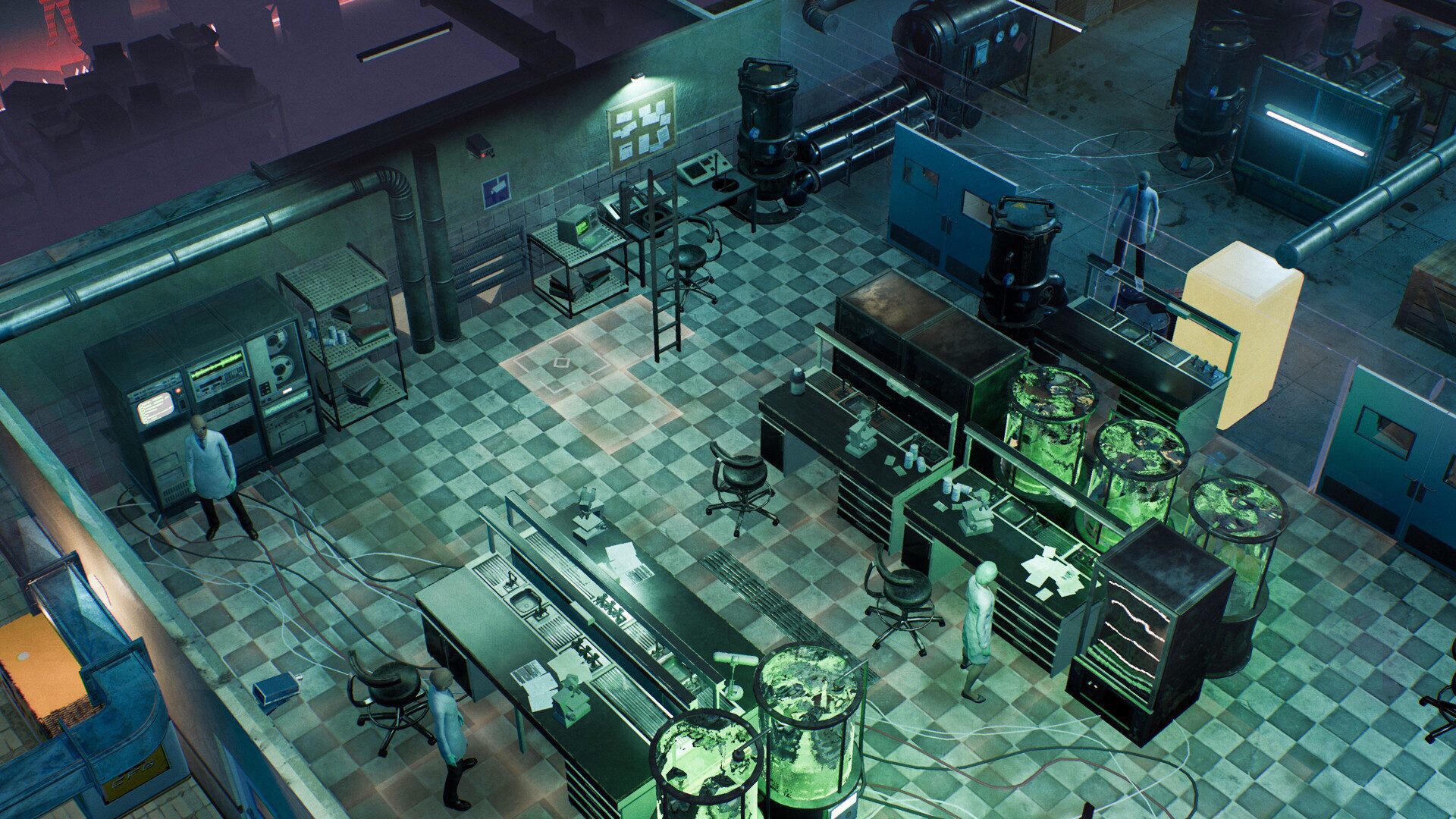
    Gameplay is split between, on the hand, the strategic business of expanding your base and managing your agents, and on the other, investigations and turn-based tactical missions. The exact objectives of the missions vary, but they generally require you to infiltrate a building, get the job done and get your team out alive. You can select and equip your agents before each mission, and completing reconnaissance ahead of an infiltration enables the use of disguises and support agents (spotters, snipers, etc.). In keeping with the spy theme, a heavy emphasis is placed on stealth. Enemies can be eliminated silently, new equipment stolen and intelligence gathered. If your agents are recognised, or if they’re noticed doing something suspicious, then the alarm is raised and combat begins. Although it takes some patience and a little forward planning, it really is very satisfying when you manage to complete a mission without being spotted; how difficult it is varies quite a lot depending on the objectives and the agents you have available, but it’s always a nice payoff.

    Unfortunately, this is in part because the combat which follows the alarm is the least enjoyable part of the game. It’s not terrible or anything, but it is unforgiving and takes some getting used to. For starters there are no hit percentages when firing. Instead, damage dealt varies depending on a number of factors. If a target is flanked or out of cover, they’ll take a lot of punishment very quickly. Given your agents are usually outnumbered, any mistake or misjudgement on your part will be good news for your agents’ tailor. Such misjudgements are easily made, too, as working out line of sight between combatants is a constant struggle, with locations spread over multiple floors with interior and exterior doors and windows. This in turn incentivises a very cautious approach. In fairness, the best summary of the main issues with combat I’ve seen is from the developers, who have published a detailed explanation, along with promises of coming improvements.

    Organisation of The Cabal is done from your base of operations. This is where you recruit, assign and develop your agents. One of the strengths of Phantom Doctrine is that it keeps your agents busy outside of missions. You constantly have to shift your people around to ensure everything is being covered. If there’s suspicious activity which needs checking out in Hong Kong but the agent you had in the area is busy training, do you move the agent you have based in Stockholm, drag someone out of the infirmary or just ignore it and hope it’s just a red herring? It’s that kind of plate-spinning balancing act which the game does well – you never seem to have quite enough agents or quite enough money. Your base is also home to the Investigation Boards. These “investigations” are essentially pretty simple matching games which serve to advance the story once you’ve gathered enough intelligence files from missions and other sources. They’re nothing too involving, but they’re more engaging and thematic than just filling a meter.

    Between the above and additional facilities that you can construct (the MKULTRA facility, which allows you to interrogate and brainwash captured enemy agents, is my favourite), there’s a lot to do apart from the missions. In fact, there’s so much available at first it’s hard to work out what you can do and where. The tutorial covers the basics of running a mission, but beyond that there’s a lot of trial and error and digging through menus involved before you fully get to grips with all of your options. Once you get there though, you can really start to mould your recruits to suit your playstyle. Agents’ stats vary quite a lot, influencing things like hit points and movement range. They also develop their own perks, which convey a number of bonuses; for my money the “actor” perk, which makes it impossible for enemy agents to see through disguises, is by far the most valuable. It means that your agent can infiltrate with virtual impunity and, if anything, is probably too useful.

    It needs to be said though that at launch Phantom Doctrine is a bit rough around the edges, and I did experience some bugs. These ranged from the camera controls freezing (which was fixable with a quick alt+tab), to losing the option to save mid-mission, to the game crashing entirely. The more serious bugs were far less common in my experience, but some patching is required. There are odd little design quirks, too; for instance, on missions your agents will be identified if they’re seen doing anything clearly suspicious, but this doesn’t seem to extend to entering a room by smashing through the window. The introductory cut scene doesn’t explain who you work for or what it is you’re trying to do, but does mention plot points you don’t hear about again until several hours later. In fact, it took me the best part of an hour to work out the name of the organisation I was meant to be running, which feels like taking the secrecy a little too far. Also, the missions all happen at night and it’s almost always raining. Aside from, I think, the very first mission after the tutorial (set in a sandstorm), it’s invariably pissing it down, whether you’re in London or Libya. Perhaps this too is the work of the global conspiracy?

    All in all, there’s a lot of fun to be had with Phantom Doctrine, but it’s not without its frustrations. Initially, the most jarring thing about it is that, despite the conceptual and presentational similarities to XCOM, it’s very much its own game and does things in its own way. Once I started to play what was in front of me rather than what I expected (especially regarding combat tactics), I enjoyed myself a lot more. There are a lot of options available to you, with most decisions having pros and cons. As such, you really have to act wisely and in a timely fashion, which is exactly how this type of game should be. At times though, it feels like there are almost too many mechanics in play at once – there are far more than I could describe here. Almost all of them are good ideas in their own right, but it takes a while to get a feel for how they all work and interact with each other. I think a little stripping down could make for a clearer, more enjoyable experience while still retaining a good level of complexity. That being said, if you’re a fan of the genre or of the Cold War setting, then there is plenty for you to enjoy.


    Phantom Doctrine is available for PC, PS4 and Xbox One. We reviewed the PC version.

    Disclosure statement: Review code for Phantom Doctrine was provided by Indigo Pearl. A Most Agreeable Pastime operates as an independent site, and all opinions expressed are those of the author.

  • I did my first article for PC Gamer!

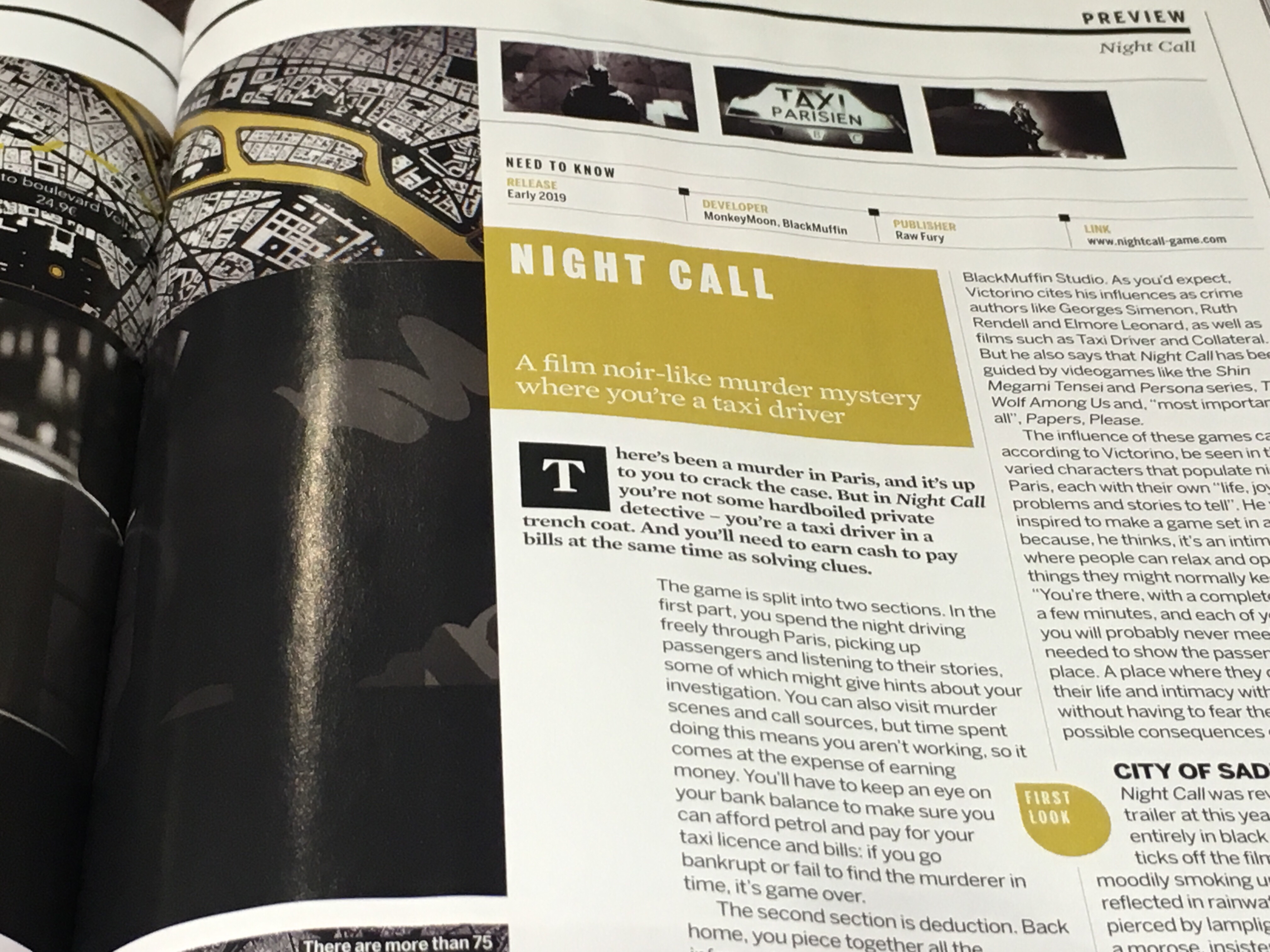
    Well this is exciting – issue 322 of PC Gamer UK features a preview of Night Call by yours truly.

    Although I’ve written plenty of features for big websites like Eurogamer, Kotaku UK and GamesRadar, this is the first time I’ve had my work published in a major games magazine. And there’s something incredibly exciting about seeing my prose in print. More people will probably read the online features I’ve done, but print still feels special – I took the brand new issue of PC Gamer up to the checkout with trembling hands.

    By the way, Night Call looks very good – a film noir crime drama set in a taxi in Paris, all framed in beautiful black and white. Check out the brilliant trailer for the game over at the official website.

    I just sent off another feature for PC Gamer, and it’s a big one. I don’t want to spoil what it’s about – you’ll have to look out for it in issue 323!

  • Review: State of Mind (PS4)

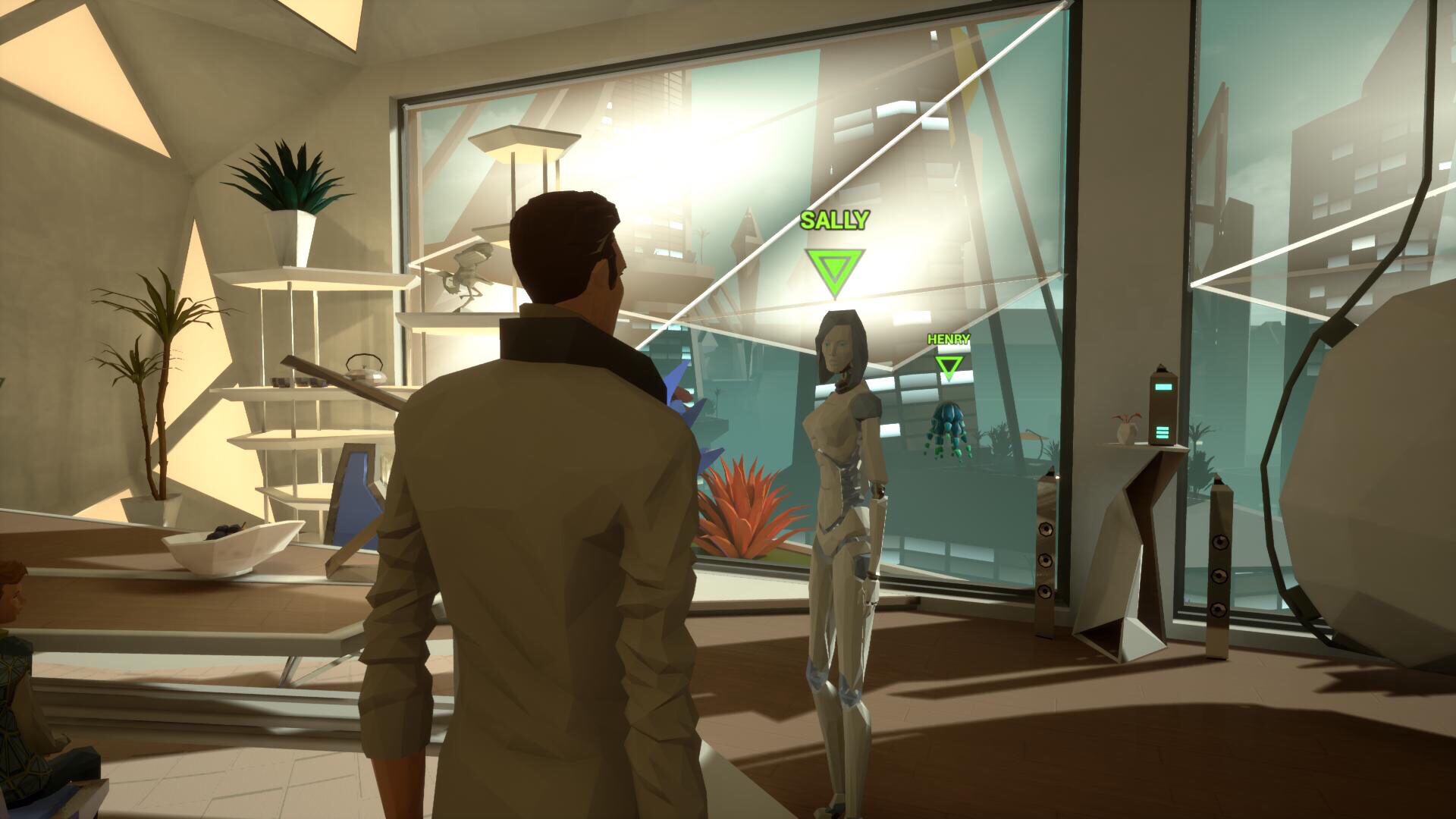
    I wrote about State of Mind a few months back, after I named it one of my top picks from EGX Rezzed. I was impressed by the distinctive low-poly graphics and the intriguing plot, whereby citizens are being involuntarily uploaded into a virtual world. But now having finished the game, I’m sad to say I’m disappointed.

    State of Mind is set in a cyberpunk-style Berlin in the year 2048, which is rife with terrorism, inequality and dealers selling illegal hi-tech software, all ruled over by a scary robot police force. Journalist Richard Nolan returns to his Berlin apartment after a car accident, only to discover his wife and child are missing, while a robot butler has mysteriously appeared in his home. Meanwhile, Adam Newman has experienced an eerily similar accident, only he lives in the pristine City5, an apparent utopia, and his wife and child are still present in an apartment that echoes Richard’s own one.

    It’s an intriguing set up, and the demo I played back in April showed lots of promise as I switched between protagonists to solve puzzles like mixing chemicals and manoeuvring drones in a section that involved infiltrating a shadowy laboratory. But it turns out that the demo was in no way representative of the main game, in which puzzles are exceedingly rare. And when they do show up, they’re incredibly simple, barely worth calling puzzles at all. In fact, the game mostly involves walking to the sole point of interest, pressing X, then watching a cut scene. Repeat ad nauseum.

    State of Mind immediately reminded me of Heavy Rain in the way that you play a father looking for a lost son, but also because you start the game pottering around a house just idly tinkering with stuff, like flicking on stereos and playing the piano. This kind of low-key domestic interaction was novel in 2010, but now it just comes across as filler. Indeed, throughout State of Mind, examining objects is generally a complete waste of time. I recently lauded the point and click game Unforeseen Incidents for the way it made clicking on objects a joy – your reward would be an amusing comment from protagonist Harper Pendrell, even if the object itself was of little use. In State of Mind, examining anything is an exercise in disappointment. Your ‘reward’ is often a single line of text that drily informs you what the object is. I usually ended up regretting having walked over to the thing in question in the first place, and quickly learned to only bother with anything that had an ‘X to interact’ label in addition to ‘Square to examine’ to save further annoyance.

    These dull descriptions feel like a missed opportunity in terms of lore building. The world of State of Mind is fascinating, but the game does little to capitalise on this or develop it. I had loads of questions about the game world, like how robots ended up replacing the police, but very few answers. The various people you meet enter and exit the story with little fanfare, and are quickly forgotten about. And there’s frustratingly little character development – I had no real idea why the game’s antagonist was building a VR city, and we barely hear anything from Richard’s wife, a key player in the story.

    The game is incredibly linear, too. Unlike, say, Heavy Rain with its multiple endings, you have zero influence on how the story plays out, save for two binary choices at the very end. And because the puzzles are so sparse and simple, the burden is entirely placed on the narrative to give you a reason to keep playing. Unfortunately, although the game goes to some interesting places, many of the revelations are so heavily telegraphed that they fall flat when finally revealed. In between, there are several dull patches of busywork where little happens.

    In essence, State of Mind is a walking simulator in the same vein as Everybody’s Gone to the Rapture, only with a light dusting of puzzles on top. But whereas Rapture kept me gripped with its strange story and intriguing cut scenes, which did a fantastic job of drawing out the motives and backgrounds of each character, the plot of State of Mind isn’t quite compelling enough to hasten you to the next point of interaction, and the characters are flat by comparison. At one point, for example, [SPOILER ALERT] a character finds out that they’ve been dating an android, yet the massive implications of this are ignored, and everyone basically just carries on regardless [END SPOILER ALERT].

    I still love State of Mind‘s distinctive low-poly graphics, but the game itself feels like a missed opportunity, a reasonably interesting story that’s hamstrung by poor pacing and character development, and a glaring lack of things to actually do. The developer, Daedalic Entertainment, is well known for its point and click adventures, and I can’t help but think that a few more ideas from that genre could have been applied to State of Mind – like combining items in an inventive way. The company describes State of Mind as a “futuristic thriller”, but this thriller is distinctly lacking in thrills.


    State of Mind is available for Switch, PlayStation 4, PC, Mac and Xbox One. We reviewed the PS4 version.

    Disclosure statement: Review code for State of Mind was provided by Renaissance PR. A Most Agreeable Pastime operates as an independent site, and all opinions expressed are those of the author.

  • Review: Cosmic Star Heroine (Switch)

    If anyone so much as mentions the name Chrono Trigger, even in hushed whispers, they’ll immediately get my attention. I often call it my favorite game of all time, and I feel as if my JRPG leanings since have been hindered because all I want to do is have that life changing moment of thrill and excitement one more time.

    I also like squat, googly-eyed, super-deformed characters a lot. Like a lot.

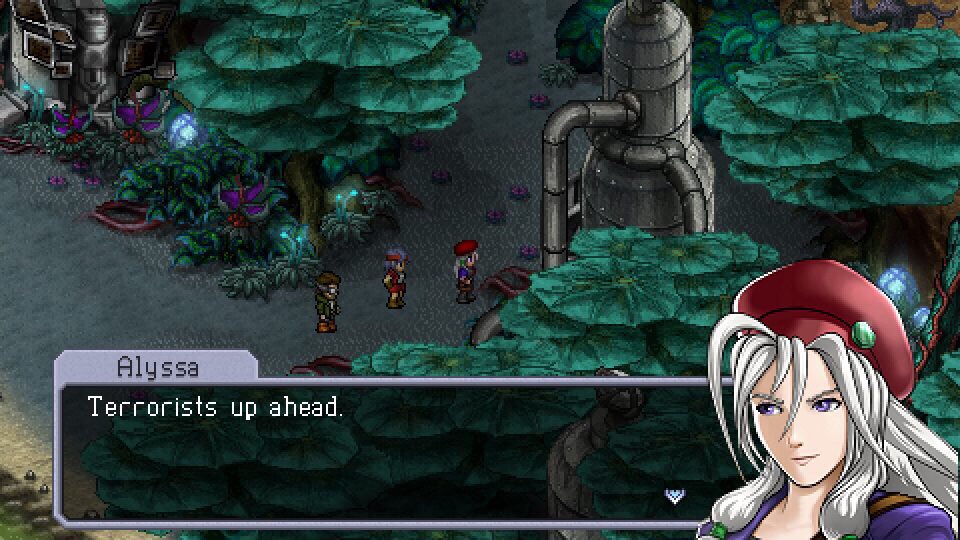
    Cosmic Star Heroine cribs the 16-bit JRPG handbook gratuitously, but that’s not a bad thing. Whether it’s the pixelated art style with minimal use of hefty cut scenes, the catchy tunes by HyperDuck SoundWorks or its unique take on the timeless active time battle system, the game is, for lack of a better comparison, chicken soup for the nostalgic soul.

    Cosmic Star Heroine falls in line with many of Squaresoft’s offerings of yore for many reasons, but the melodramatic “save the world” story drills that sense home. You begin the game as an agent for the Agency of Peace and Intelligence named Alyssa, on a mission to save some hostages at the top of a building. This section does a great job of acclimating the player in what to expect from Cosmic Star Heroine by drip feeding them the nuances of the battle system, as well as setting the tone for the world the game resides in.

    What follows is a clichéd plot in which you discover who you’re working for may not be what you think it is, and thusly striking out on your own because saving the world is the right thing to do. I’d also like to point out that the writing can at times feel a bit amateurish and ham-fisted, but I don’t really find any of what I’ve just said to be an issue. In fact, I’d even posit that it gives the game a charming quality, a love letter to yesteryear. Everybody is an archetype and that’s OK, because I’m actually endeared to characters who are tied to their social status/class. Because in reality this is all a vehicle for the superb battle system that truly makes Cosmic Star Heroine shine.

    There’s a lot to unpack with Cosmic Star Heroine’s fights. At the base level it is what you’d expect: a turn-based war of attrition that’s been a stalwart feature since God knows when. The levels of depth it goes into, however, are commendable. Rather than giving you a standard move set in which special attacks are attached to magic points and you can button-spam attacks to your heart’s content, each move can be used a set amount of times before you need to rest your character to reuse them. This gives the game an interesting balance, in which you actually do stop and think about your next move. You’ll pay attention to move order, elemental affinity, health and strategic buffing in a brand new way. To further belabor the point, you can also come back from the brink of death as you’re given one chance to make a move before being knocked out permanently, and there’s a meter that charges when you change up your battle style. It all manages to be complex but not complicated, which is why I actually strove to jump into fights rather than avoid them.

    It’s here that I realize that while I enjoy the cheesy and exaggerated plots of JRPGs, I’m actually more of a systems guy in the grand scheme of things. Cosmic Star Heroine shines in that it makes a fantastically engaging battle system so much fun that I literally could not get enough of the fights. Maybe it’s my age creeping up on me, but I appreciate being rewarded for being deliberate in my choices and discovering new ways to mix and match party members’ abilities to maximize my efficiency in any given battle. Not that the game has much in the way of grinding, but if it did I wouldn’t mind in the least.

    If you have even a passing interest in Cosmic Star Heroine, give it a try. You won’t regret it. It may not be the second coming of Chrono Trigger, but it feels pretty damn close.


    Cosmic Star Heroine is available for PC, PlayStation 4, Xbox One, Vita and Nintendo Switch. We reviewed the Switch version.

  • Review: Iconoclasts (PS4)

    This post is part of Metroidvania Month.

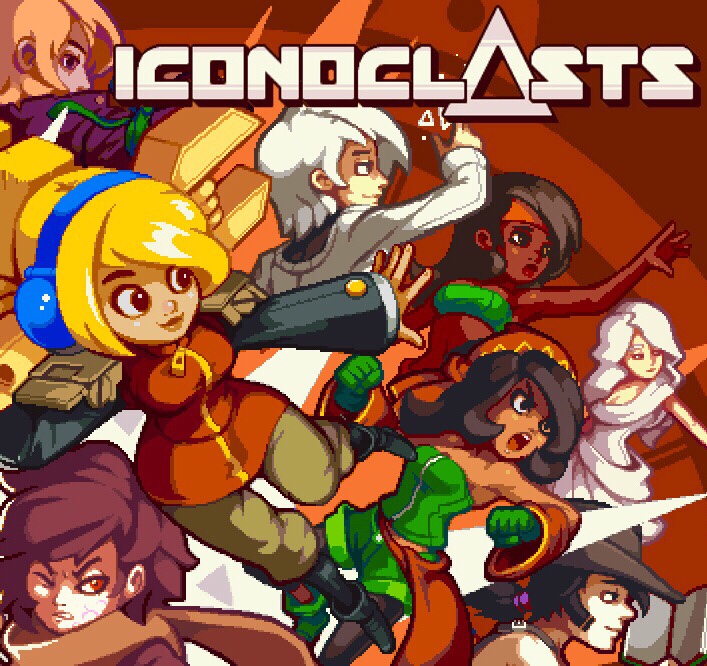
    Iconoclasts has just been released on Nintendo Switch, one of the many Metroidvanias released this month, so now seems like a good time to post my thoughts on the game. It was released to critical acclaim at the start of the year – The Guardian nominated it as one of the best games of 2018 so far – and I’ve been playing the PS4 version over the past few months. But the fact that I put off finishing it for ages is a good indication of my mixed feelings for the game.

    Iconoclasts is chiefly the work of Joakim Sandberg, who spent around 8 years making it. It’s clearly been a labour of love, and tells the story of Robin, a mechanic who finds herself going up against the religious cult that rules her planet. This cult, led by ‘Mother’, has banned citizens from using or fixing technology and has been draining the planet of ‘Ivory’, a white substance that powers their machines and can give their Agents special powers. But leeching Ivory from the planet has caused untold problems. It’s an intriguing set up, and the story explores its ramifications thoroughly – a bit too thoroughly to be honest, but more on that later.

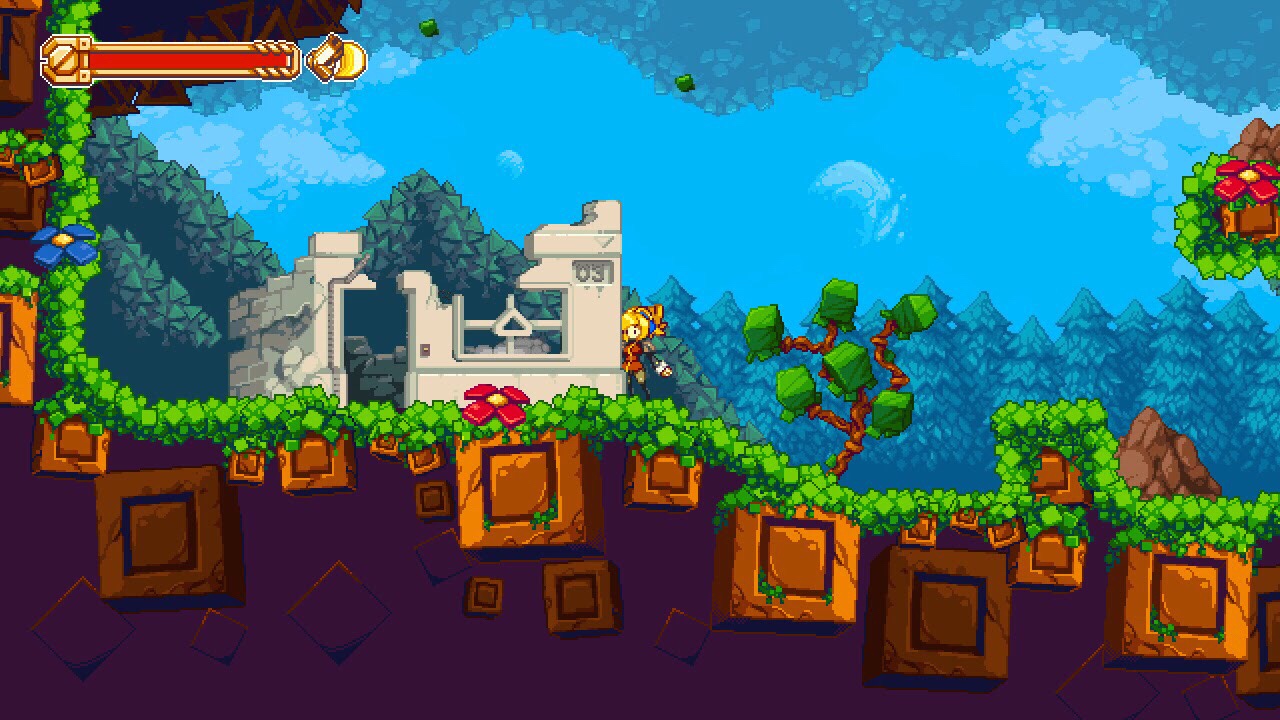
    The graphics are gorgeous, and the colours really pop from the screen. The animation, too, is beautifully vibrant – there’s a real energy in the way Robin throws herself around. But although it looks cutesy and colourful, the script is anything but, and the game goes to some dark, even brutal places on occasion. It’s an interesting juxtaposition.

    The game has been described as a Metroidvania, and indeed it follows the basic format of finding upgrades and then using them to access further sections of the game. But there aren’t that many upgrades to find: I counted three in total, not including the basic spanner and blaster you gain at the start. The vast majority of things you discover are either blueprints or one of three types of material that can be combined to craft ‘tweaks’. The blueprints provide plans for new tweaks, like the ability to hold your breath underwater for longer or to move a little faster.

    You can equip up to three tweaks at a time, but to be honest, they barely make any difference to the gameplay. Sure, being able to hold your breath for a bit longer makes the underwater sections slightly easier, but most of the time I barely noticed what tweaks I had equipped. In the end I just equipped three tweaks that let you absorb one hit without taking damage and left it like that for the rest of the game – that particular tweak seemed like the only halfway useful one.

    This basically means that there’s little point in hunting down the many treasure chests, since they mostly contain crafting materials for tweaks you don’t really need. In fact, I gave up looking for items towards the end, since finding a treasure chest was simply an exercise in disappointment. “Oh, more technium. Great. I suppose I could use it to build another tweak I won’t use…? ho hum.”

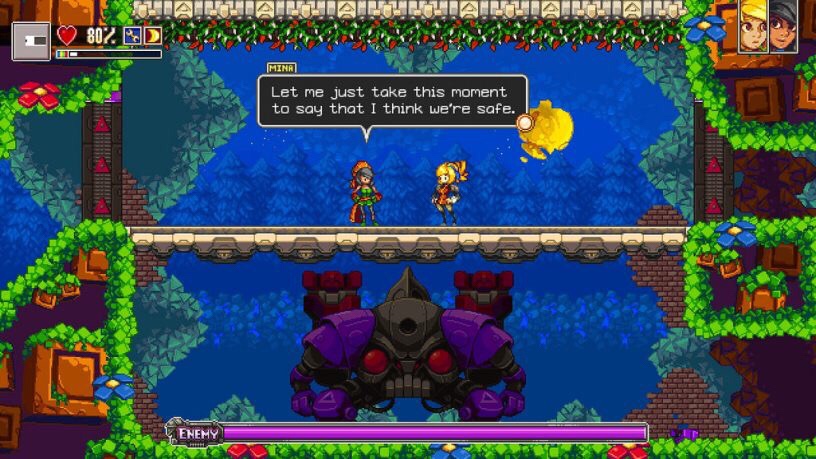
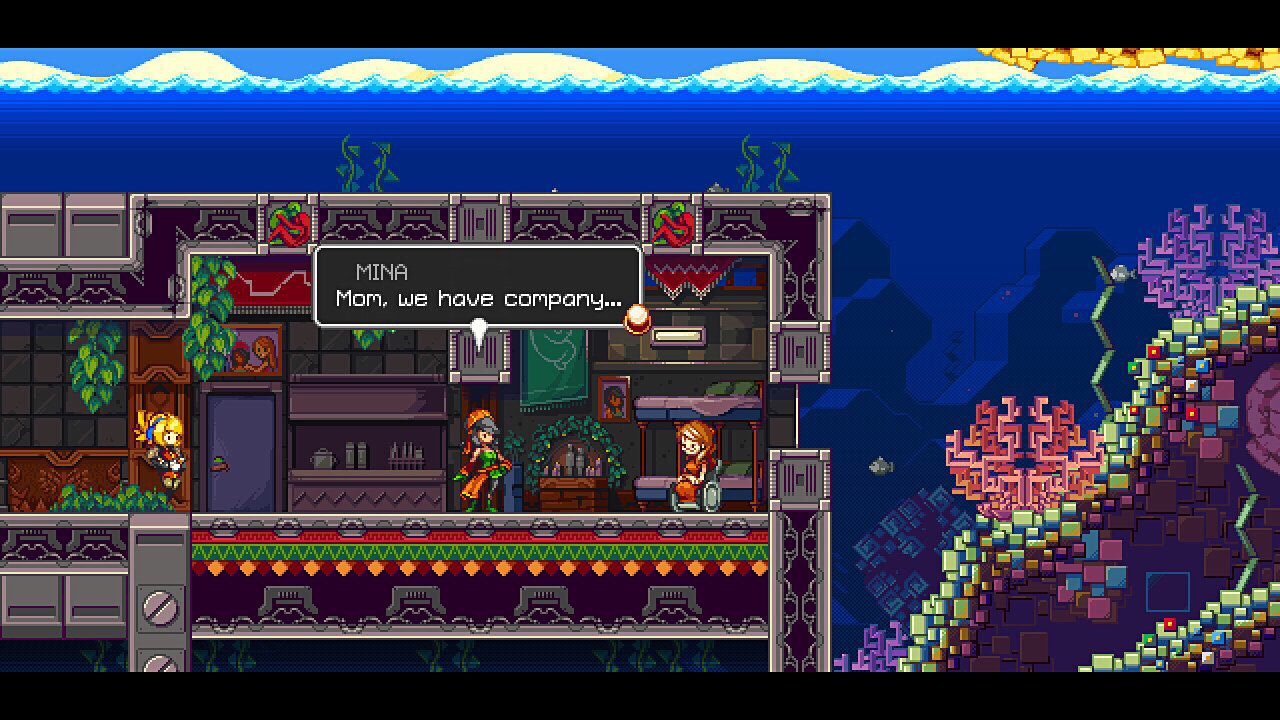
    But part of this disappointment is because I went in expecting Iconoclasts to be a Metroidvania – and it’s not, really. It’s more like a narrative platformer, with a heavy emphasis on the narrative. There are numerous characters, some of whom join you at various stages of your journey, and they talk A LOT. There are frequent points where everyone stops for a chat – sometimes the dialogue is funny, and Mina in particular gets a few lines that made me chuckle, but often it descends into the kind of agonised philosophising you’d expect of an enthusiastic student in their first year of university. The script happily employs 20 words when one will do, and by the end I was just skipping through the pages and pages of dialogue while barely reading it. And above all, the characters are all inherently unlikeable, bar Robin, who is thankfully mute. This is a problem when it comes to investing in the story – I actually found myself wishing the plot would kill my companions off.

    That’s not to say the game is bad. There are some really ingenious puzzles and fun fights, and the Tower level in particular was excellent. That one involved scaling up and down an edifice, activating different lifts in sequence to try to get to the top, while being periodically attacked by a powerful samurai-type dude. You’d often pass rooms you couldn’t reach and had to work out how to get to them, and the payoff at the end was great, a really creepy sequence in a theatre.

    But for every great bit of game design, there’s an equivalent annoyance. Many sequences involve swinging using your spanner, but it seems hit and miss whether the spanner connects with the swinging nut, resulting in many frustrating falls. And there’s a really bizarre design choice whereby you can’t enter narrow passageways that are waist height. You can crawl into passages at ground level, or jump, grab onto a ledge and crawl into narrow passages that are above head height – but trying to enter passages that are just slightly above the floor is a complete no go. There are lots of puzzles that involve manipulating the environment so you can enter passageways like this, for example by moving a box in front of them to climb on, but there’s just no logic behind why you can’t get into them in the first place.

    And the levels themselves are quite a mixed bag. Some, like the Tower, are intricate and interesting, but others, particularly towards the end, are pretty much left to right crawls. Indeed, the story takes over towards the end, and I found myself mostly walking from one conversation to another.

    All in all, Iconoclasts is a real mixed bag. The start is fantastic, but a few hours in I found myself getting frustrated with it, and only came back to finish the game reluctantly. John Walker over on Rock Paper Shotgun did an excellent job of detailing the game’s many flaws, so I highly recommend reading that for a thorough article analysis of why Iconoclasts doesn’t quite hit the mark.

    There’s a good game here, but it’s marred by inconsistency and a heavy-handed story, not to mention a tweak system that doesn’t really work. I can’t help but think that Iconoclasts could have done with a decent editor to strip out the excess weight and amp up the things that work really well. Solo development can result in some truly unique individual visions, but sometimes that vision could do with another pair of eyes to point out the flaws.


    Iconoclasts is available for Switch, PlayStation 4, PC, Mac and Vita. We reviewed the PS4 version.

    Disclosure statement: Review code for Iconoclasts was provided by Bifrost Entertainment. A Most Agreeable Pastime operates as an independent site, and all opinions expressed are those of the author.

  • Review: Pato Box (Switch)

    Pato Box is an odd duck. Literally.

    Inspired by Punch-Out!!, Pato Box looks to take Nintendo’s seminal classic and spice it up with a curious campaign of retribution, discovery and knocking vases off of tables. It’s weird in a good way.

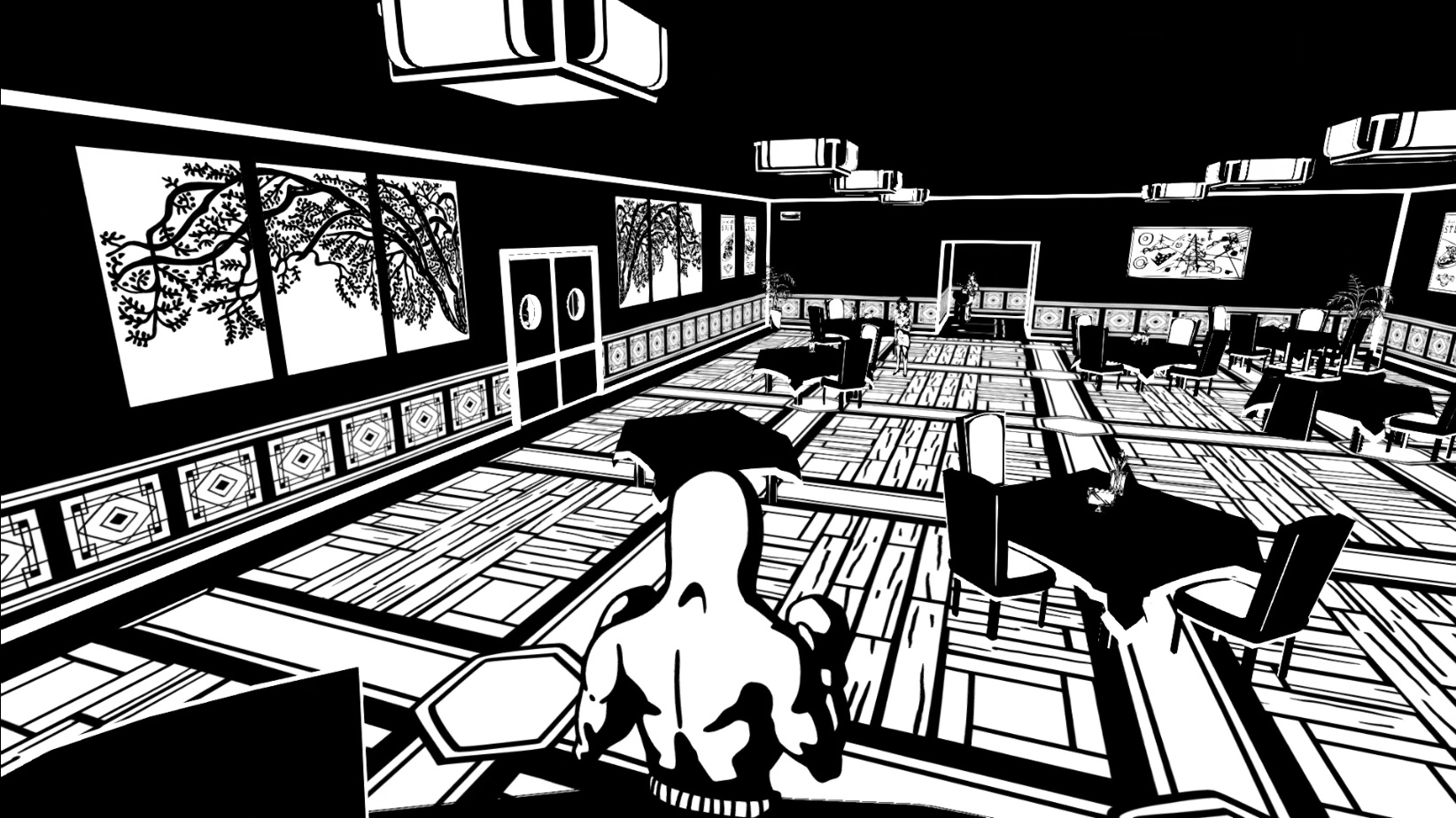
    The game begins with our titular hero being slipped a mickey in the middle of a fight, which causes him to lose. He’s then left for dead in alleyway, only to wake up in a mysterious club, where his quest for revenge begins with aplomb. The whole game is told in a neat, almost Sin City-styled monochromatic world with thick line work and a noir-esque aesthetic. It’s here that Pato Box immediately sheds its status of being a mere homage to Punch-Out!! and becomes its own beast. Er, waterfowl.

    The game plays out in two manners. First as a third-person adventure game in which Primo the duck-headed boxer scours his surroundings, talking to NPCs and being handed rudimentary chores such as avoiding spotlights while looking for clues – or the ever-present fetch quest. On its own it’s pretty stock-standard, but when mixed with intermittent fights, investigations and a quirky plot, it’s easy to look past this.

    The other portion, and the main hook of Pato Box, are the fights that Primo finds himself in on his quest to exact vengeance. Pato Box adheres to Punch-Out!!’s take on boxing, as in, it’s not really a boxing game as you get into it. Matches aren’t usually won by skill and reflexes, but rather by recognizing patterns and openings. I personally find it fun to figure out tells and execute on a well-made plan, which is why I find Pato Box so endearing. The only downside is that because of the animation style used, fights often feel a little loose, which in turn makes things also feel a little unmanageable from time to time. Luckily the menagerie of opponents and their sheer bizarreness (which, in a world where you play as an anthropomorphic duck with bulging biceps may in fact not be that out of place) give it a novelty that transcends its slipperiness.

    What you have with Pato Box is a game that is more than the sum of its parts. Nothing in particular about the game stands out, but together it gels into this cohesive, goofy and intentionally heavy-handed (pun totally intended!) journey in which you take a billed clubber and beat the snot out of equally fantastical opponents. You won’t run afowl of boredom if you give Pato Box a try.

    Sorry, I had to get one more in there. I’m good now.


    Pato Box is available for PC, Mac and Nintendo Switch. We reviewed the Switch version.

    Disclosure statement: Review code for Pato Box was provided by Bromio. A Most Agreeable Pastime operates as an independent site, and all opinions expressed are those of the author.

  • Review: Unforeseen Incidents (PC)

    Unforeseen Incidents is the best point and click adventure I’ve ever played.

    Admittedly, I haven’t played many modern examples of the genre, with The Long Reach being a recent exception, but I grew up in the golden era of point and clicks, playing amazing games like Beneath a Steel Sky and Day of the Tentacle. I love these classic games, but many of them haven’t aged particularly well – my recent playthroughs of The Secret of Monkey Island and Broken Sword, for example, left me frustrated and a bit disappointed.

    UnforeseenIncidents_1

    Unforeseen Incidents, on the other hand, avoids many of the most common flaws of the genre, and it had me hooked right until the end. I love almost everything about this game. But before I start explaining why it’s so good, I have an apology to make.

    I received a review key for Unforeseen Incidents just before it was released back in May 2018, and even though it was one of my top picks from EGX Rezzed, I didn’t get around to playing it until August. The curse of the PC struck again – as I said in my Not A Review of Hand of Fate 2, I struggle to bring myself to play games on my laptop because it’s my work machine, and I can’t wait to switch the damn thing off at the end of a long working day. But I had a day off last week, so I finally, reluctantly pulled my laptop into bed and gave Unforeseen Incidents a go – and I’m very sorry I waited this long because it’s bloody great.

    UnforeseenIncidents_3

    The game sees workshy handyman Harper Pendrell encountering a woman infected with the fatal Yelltown Fever, a disease that’s spreading through his home town. As hazard-suit-clad agents close in on her, she begs Harper to deliver a cryptic note to a journalist named Helliwell – and so starts a riveting journey into a captivating conspiracy. And I was gripped – the story ping pongs from one revelation to the next, and it kept me glued to my computer over the next few days.

    To solve the mystery, you need to do the usual point and click trick of finding items and then using and combining them in certain ways – and Unforeseen Incidents makes this effortless. A quick tap of the space bar highlights all interactive objects in a location, and using items is a simple job of dragging them from the pop-up inventory at the top of the screen onto either an object or another item. Gone are the days of pixel hunting and wondering whether you need to use, combine, push, pull, examine or, I don’t know, jiggle an item. Hoorah!

    UnforeseenIncidents_15

    There’s also very little of what Rob Covell describes as ‘moon logic’ over on I Played The Game, also known as puzzles where you have to “guess what the developer was thinking”. The puzzles in Unforeseen Incidents are mostly based on logical deduction or thorough research, like studying the pages of a herb book to find the right one to use, or gleaning clues from NPCs to work out a solution. And the very best ones make you feel like a genius for solving them. There was a particularly good one where I had to work out the log-in details for a computer, and I had a big smug grin on my face when I eventually got the answer through some exhaustive deduction.

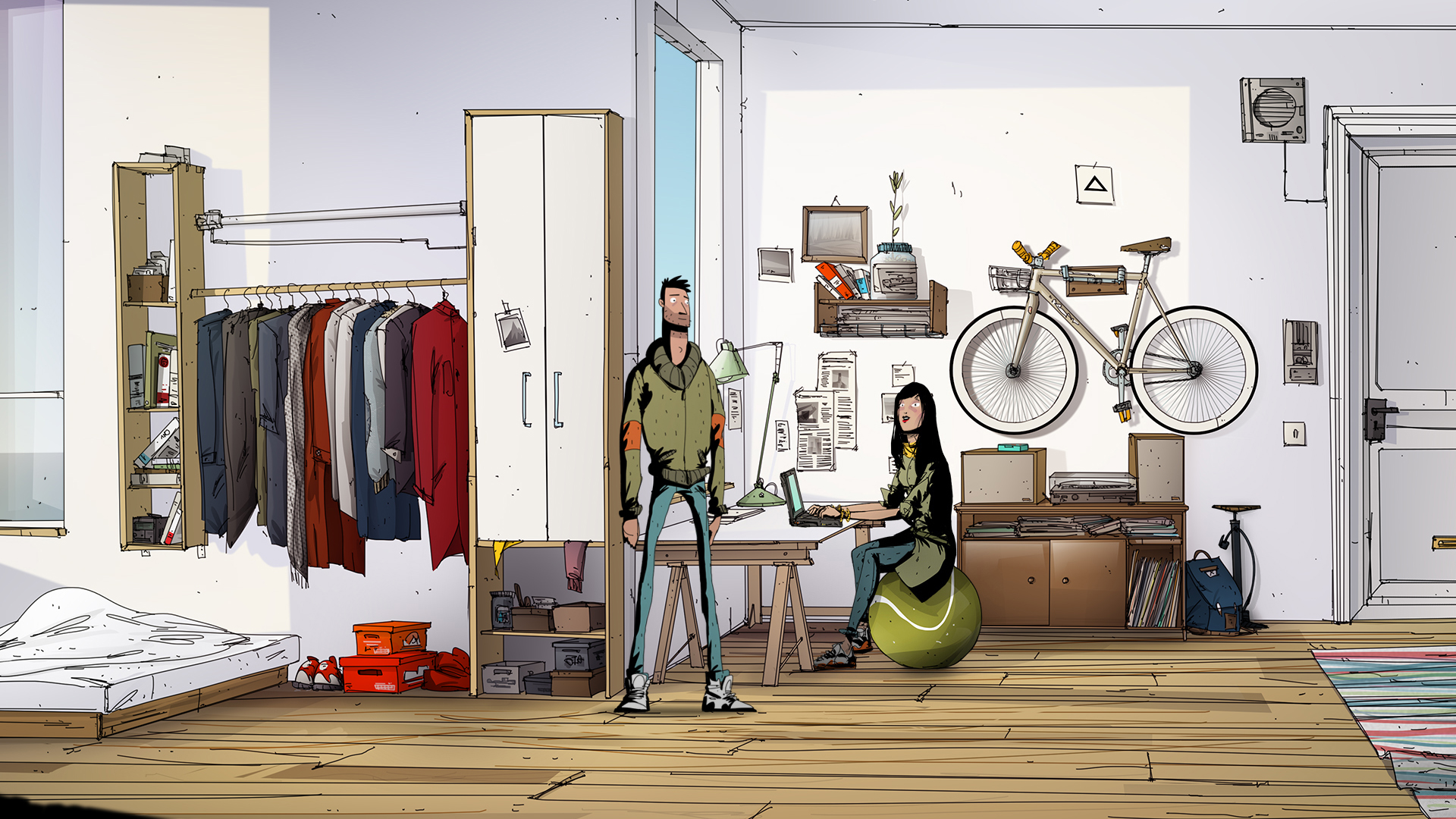
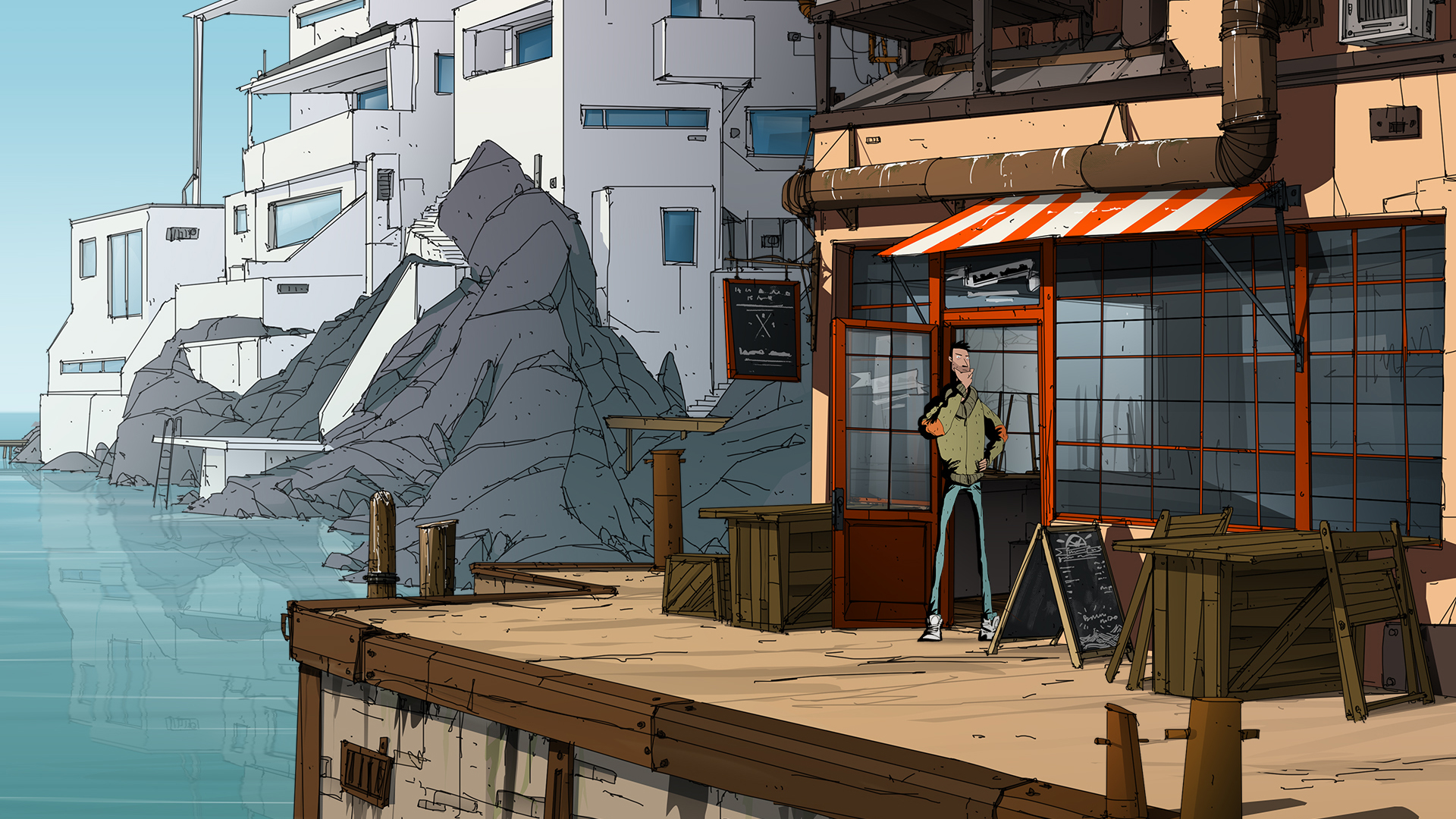
    And what’s more, Unforeseen Incidents looks utterly wonderful. I think I’m in love with the developer Backwoods’ art style – all wandering lines and exaggerated features. Harper has stick thin legs and a bizarre neck that’s thicker than his head, but it all just works so well. And the backgrounds! It was a sheer joy to discover each new screen and just drink in the gorgeous artwork. I haven’t felt like this in a point and click game since playing Beneath a Steel Sky back on the Amiga, lapping up every pixel of Dave Gibbons’ beautiful backdrops. I would seriously frame any of the screens from Unforeseen Incidents and hang them on my wall.

    The music is equally as good – wonderful, evocative tunes that really suit the atmosphere of each location. There’s a strong Twin Peaks musical vibe to be found – a connection that’s cheekily reinforced with a throwaway nod to the series about halfway through that I won’t spoil here. And the voice acting! So, so good. It’s not often that I find myself thinking “that video game voice actor is really great”, but I was doing just that throughout.

    And it’s funny, to boot. Harper has an arsenal of quips and bon mots ready to unleash whenever you click on an object, and they always put a smile on my face. Like when you click on the sign at the fancy yacht harbour and he intones: “The sign says ‘Port Nicola Yacht Club, no poor people allowed’… Just kidding”. There are some wry observations about things like cafe culture and fan stereotypes, and generally it’s just a joy to be in the company of Harper as he continues his journey.

    UnforeseenIncidents_7a

    Unforeseen Incidents isn’t perfect by any means. I encountered a bug near the end where something meant I should have died but I didn’t, and my only option was to continue from a previous save. And speaking of dying, there are at least two points where you can cark it – and generally I’m not a fan of point and clicks that force death upon the player. But at least the game has the decency to restart you immediately in the same place, so I’ll forgive it. The walking animation for a few of the characters is also bizarre, and I didn’t like the way the graphics go a bit blurry when it zooms in on the characters during conversations. And there was one puzzle I had to look up the solution for that involved pulling a lever to change something several screens away – the signposting for that one could have been a bit better. But frankly these are minor quibbles over an otherwise fantastic game.

    If you’re a point and click adventure fan, Unforeseen Incidents is a must buy – and if you’re new to the genre, it’s a brilliant place to start.


    Unforeseen Incidents is available for PC and Mac. We reviewed the PC version.

    Disclosure statement: Review code for Unforeseen Incidents was provided by Application Systems Heidelberg. A Most Agreeable Pastime operates as an independent site, and all opinions expressed are those of the author.

  • The British companies trying to crack the Chinese video game market

    I’m fascinated by the Chinese video games market – it accounts for 28% of the world’s video game revenue, yet it’s an entity almost entirely unto itself, mostly dominated by domestically produced games. But British games developers and publishers are increasingly thinking about how to market their games in China – after all, it’s an enormous potential market of more than 600 million gamers.

    I spoke to three British games companies – Coatsink, Curve Digital and Freejam – about their very different experiences of selling their games in China. Freejam’s efforts to get their game approved by the Chinese government were particularly interesting – they had to add in anti-addiction software, a chat censorship program and make changes like removing skulls from the game.

    Coatsink has launched Esper 2 in China.

    The article is up now on Kotaku UK, check it out:

    The British Games Companies Seeking Success in China

    This took an incredibly long time to produce, thanks to conducting no less than four separate interviews, and getting it down to a reasonable length was tough – there’s so much more I could have put in. I found out a lot I didn’t previously know about the Chinese games market in the process of writing this, and I’m certain I’ll be writing about it again – particularly with the impending launch of Steam China and the big question mark over whether ‘vanilla’ Steam will be outlawed in the country when that happens.

    Human: Fall Flat has been a massive hit in China for Curve Digital.
  • Review: Super Destronaut DX (PS4)

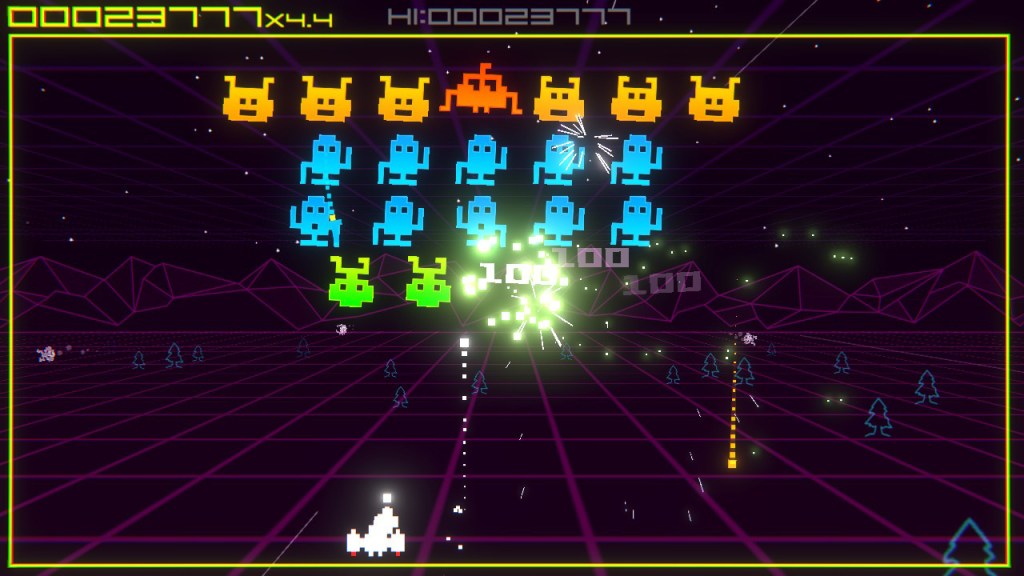
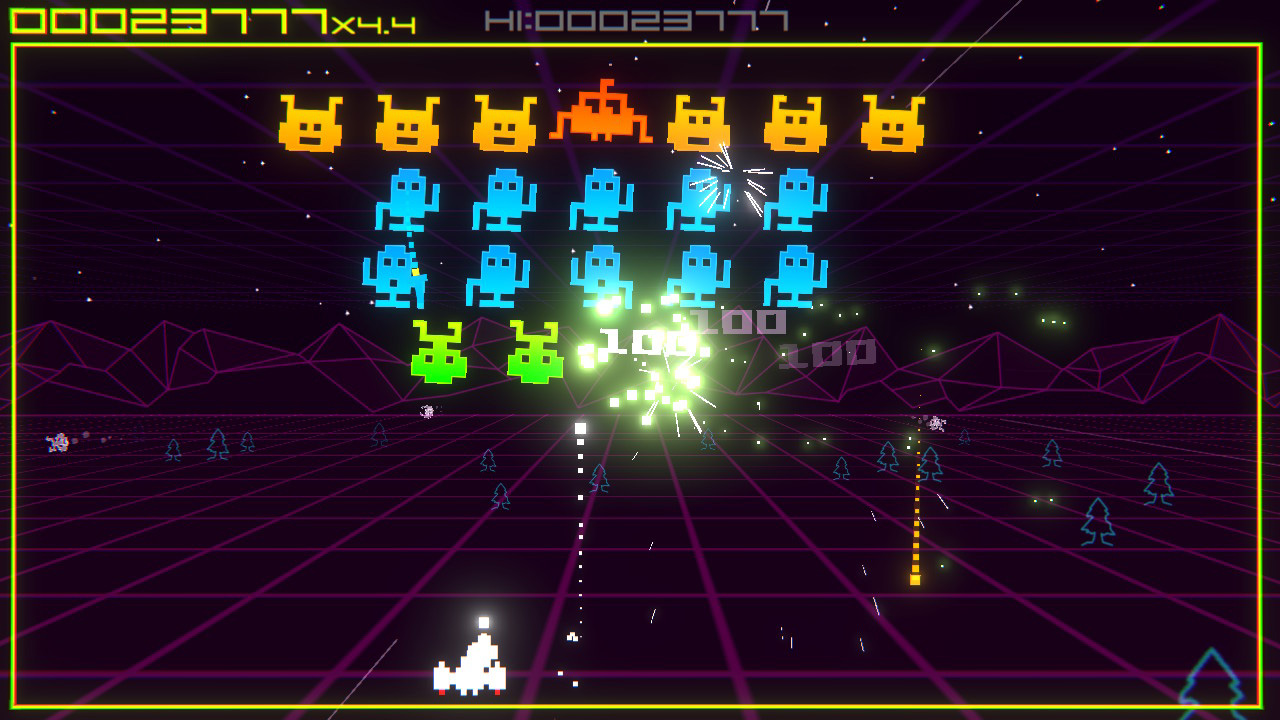
    Super Destronaut DX is basically Space Invaders, as no doubt you’ve already surmised from glancing at the screenshots on this page. It mixes up the formula a little bit, but otherwise it’s essentially the same as the classic 1970s arcade game. Although slightly worse in some cases, and better in others.

    One major difference is that the invaders take a few hits before they die, rather than popping out of existence with a single, well-timed shot. This change is no doubt because of the huge sprites, which mean there are relatively few aliens on screen – making them harder to kill prolongs the waves a bit. Each type of invader also has a different way of firing – some fire double or triple shots, while others shoot homing missiles. And sometimes there’s an orange raider at the top that gives you a power up when you destroy it – super powered lasers, for example, which tear through the aliens and allow you to quickly complete a wave.

    I quite like the music that accompanies the killing, and especially the way it slows down momentarily when you get a power up, as everything plunges into slow motion. The invaders also explode in a satisfying shower of sparks – but these sparks are also incredibly annoying because they mask the path of the alien bullets. I died numerous times because I couldn’t see a bullet until it was right on top of me.

    And speaking of dying, the action doesn’t stop at all when you lose one of your three lives – I can’t decide whether this is a good thing or bad thing. It means there’s no let up in the action, but it also makes losing a life feel almost inconsequential. The screen shake when you blow up baddies, however, is most definitely annoying. Thankfully there’s an option to turn it off in the menus – if only there was an option to turn off those bullet-masking explosions, too.

    And that’s about all there is to say about Super Destronaut DX. There’s a Challenge mode consisting of 30 levels with goals like hitting a high score within a certain time limit, but they were all pretty easy to breeze through. There’s also a Time Attack mode and Hardcore mode where you only have one life. But after an hour I’d seen pretty much everything the game had to offer – and scooped up all of the Trophies, to boot. The cynic in me suspects that these easy-to-achieve Trophies are a way to get Trophy-hunters to buy the game, as recently reported on Eurogamer.

    There’s little reason to come back to the game once you’ve nabbed those Trophies – the few tricks the game has get old very quickly, and there’s no real sense of progression. Once you’ve seen all the various colours of invader, the game has nothing new to offer – a shame, because there are so many ways you could innovate on the old Space Invaders formula. Indeed, Space Invaders Infinity Gene from 2009 did just that, with constantly evolving gameplay. At £3.99, Super Destronaut DX is certainly cheap, but it’s hard to recommend unless you’re looking for an easy way to up your Trophy collection.


    Super Destronaut DX is available for Switch, Xbox One, PlayStation 4, PC and Vita. We reviewed the PS4 version.

    Disclosure statement: Review code for Super Destronaut DX was provided by Ratalaika Games. A Most Agreeable Pastime operates as an independent site, and all opinions expressed are those of the author.

  • Review: Dead Cells (PS4)

    This review is part of Metroidvania Month.

    Dead Cells is hard, let’s get that out of the way first. You will die and die again, and each death puts you back to the very beginning of the game. I have uttered many, many choice swear words while playing Dead Cells.

    But the important thing is that every one of those deaths felt fair – I knew what I’d done wrong and vowed to do something different on my next run. And most important of all, Dead Cells is a hell of a lot of fun.

    The game starts with a squelchy green bundle of matter dropping from a pipe and then crawling towards a headless corpse, which it then reanimates. This is your avatar, and you find yourself in a prison on an island where something has gone very wrong indeed, with clues in the environment hinting there has been some sort of disease outbreak. And now the island is infested with monsters.

    At the start, you have a rusty old sword and space for a secondary weapon – you’re given the option of picking up a bow or a shield. You can also equip two skills or grenades, if you can find them – these include things like ice grenades or traps you can lay down to damage monsters and stop them chasing after you. Monsters drop gold when they die, and most levels have a shop where you can buy better weapons – but you can also find them hidden in chests and tucked away in secret rooms.

    The thing is though, you’re always torn between exploring and simply surviving. If you can get through a level, your health is topped back up to full and you can choose a helpful mutation for the next one, like a bigger health bar or more powerful combos. But each level also has various power scrolls scattered around, which boost your attack and health – for the maximum chance of survival, you need all of these, but do you risk fighting through the hordes of monsters to get them? And that’s the game in a nutshell – a perfect balance between risk and reward.

    There have been loads of occasions where I’ve been low on health but just wanted to push on a bit further to uncover some better weapons – sometimes it pays off, but if it doesn’t and you die, you’re sent right back to the beginning of the game. Sometimes you’ll meet an elite enemy that’s tough to kill but leaves behind tons of goodies – is it worth the risk of fighting, or so you press on? And sometimes you’ll come across a cursed chest with amazing treasure – but if you open it, you’ll have to kill ten enemies without taking a hit to lift the curse. These are always tough decisions because the dire penalty is restarting all over again.

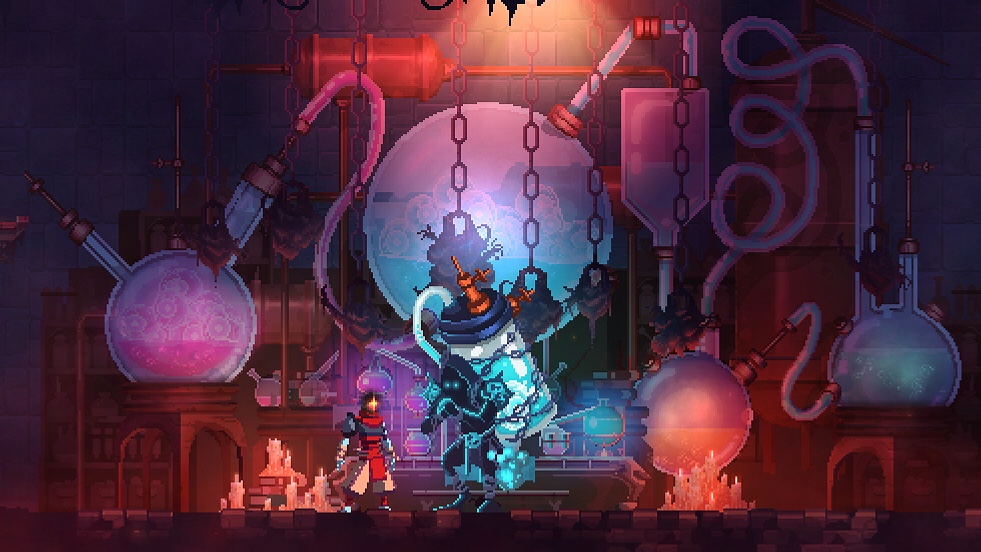
    But the good thing is that even though you’re constantly being sent back to the beginning of the game, you do gain a sense of progression. Some enemies drop the titular Dead Cells, which can be converted into upgrades at the end of each level. These are essential items such as a health flask that lets you top up your HP mid-level, or an option to unlock a random starter weapon from the selection you’ve found throughout the game. You can also find blueprints for new weapons, and there are loads to unlock. The room at the start of the game has dozens of glass vials that populate with upgrades and weapons as you unlock them – and the sheer number of these vials shows just how much there is to discover.

    The weapons themselves are key to the game’s success. There’s a big variety, from electric whips to flamethrower turrets, and all of them are fun to use. They also come with modifiers, if you’re lucky – for example, you might find a sword that sets your victims on fire, or a bow that causes bleeding. One time I found an awesome electric whip that set enemies on fire and then caused lethal flesh-eating worms to erupt from their corpse. And there’s an element of strategy in combining the weapons – for instance, once I found a sword that did an extra 100% damage to frozen enemies. Combined with a freeze grenade, it was devastating.

    But the thing is, you never know what weapons you’re going to get on any given playthrough, so there’s a strong emphasis on adaptability and improvisation. I mostly ignored the shield at first, but then I got given a broadsword to start with, and I found they paired together very nicely – the shield meant I could defend against attacks and give myself time to wield the cumbersome but powerful sword. The random weapon selection encourages you to try every type and combination, experimenting to learn their strengths. There are no dud weapons as such – every one is useful in some way.

    The levels themselves also encourage adaptability. Each one is procedurally generated, so you never quite know what’s around the corner. This helps to keep things fresh over multiple playthroughs – sometimes you’ll bump into an elite baddie you’ve never seen before, for example. And the levels themselves look utterly gorgeous – very Castlevania-esque pixel-art locations suffused with current-gen lighting and animation. Half the fun of the game is finally making it to a new level and basking in the beauty of it all.

    The Metroid influence comes in the form of permanent runes that you obtain by beating certain boss characters. These give you abilities that can be used to access new areas, often allowing you to access a second exit on that takes you to a completely different level. Your playthrough can take any number of routes through the 11 different levels according to which runes you’ve obtained, which really helps to keep the game fresh.

    And this feeling of choice extends to the way you approach the game. You might opt to be slow and methodical, searching out every last upgrade before moving to the next level. Or you might try to rush through to open the timed gates, which hide oodles of goodies but close after a set time in each playthrough. These gates offer a way to dodge your way through the first level should you get bored of playing it again and again, yet still find some decent weapons.

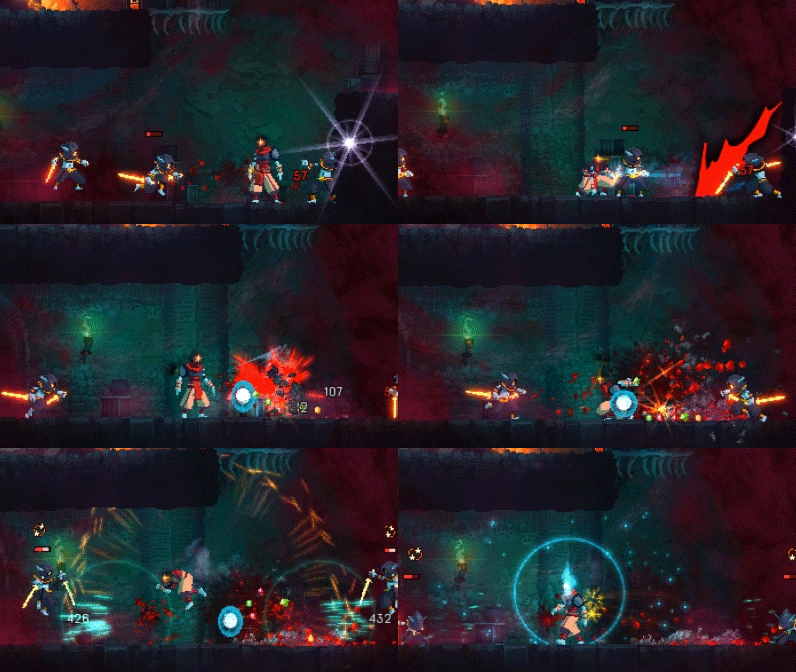
    And speaking of dodging, the control system is glorious. Combat is fluid and fast but never chaotic – you always feel like you’re the master of the mayhem that unfolds. Your sword swings have a decent crunch to them, and the roll move that lets you avoid attacks is positively balletic. I love that the designers made it so that touching an enemy doesn’t inflict damage – your health only goes down if you’re hit by one of their attacks, which are helpfully proceeded by an exclamation mark above their head. It encourages you to get right into the thick of a fight, pirouetting out of the way just before you take a hit.

    And the more you play, the better you get, picking up the skills needed to get past even the toughest enemies. For example, the dual-sword-wielding Runners on the second level killed me time and time again until I gradually worked out a way to beat them – first by trapping them and pounding them with a bow, and later by partying them with a shield and slashing at them with a sword while they were dazed. Enemies that seem impossible at first eventually become walkovers once you get your strategy worked out. And building up those skills is immensely satisfying.

    In short, Dead Cells is just an absolute joy to play. The one caveat is the difficulty I mentioned right at the start – if you shudder at the idea of dying regularly and restarting again and again, then this might not be for you. But if you don’t mind a challenge, Dead Cells will keep you coming back for ‘just one more go’ long after you probably should have gone to bed.


    Dead Cells is available for Switch, Xbox One, PlayStation 4, PC and Mac. We reviewed the PS4 version.

    Disclosure statement: Review code for Dead Cells was provided by Evolve PR. A Most Agreeable Pastime operates as an independent site, and all opinions expressed are those of the author.

  • August is Metroidvania Month

    As I said a while back, I love Metroidvanias, and I’m exceedingly happy about the sudden proliferation of them on the indie scene. We’ve had some absolute crackers over the past few years, like Dandara, Axiom Verge and Forma.8 – but the motherlode is arriving in August.

    The gorgeous Chasm.

    Chasm has just launched on PS4, Vita and PC, a Metroidvania some six years in the making, with utterly beautiful pixel-art graphics. And Dead Cells officially launches on 7 August – it was one of my top picks at EGX Rezzed back in April, and it’s been in Early Access for some time, but finally it’s getting an official release on consoles and PC. I’ve got hold of the PS4 version and it’s fantastic so far – expect a review very soon.

    Deaths’s Gambit.

    Then there’s Death’s Gambit on 14 August, a lovely looking Metroidvania with classic fantasy-style graphics that’s coming to PS4 and PC. And finally we have Guacamelee 2, a sequel from DrinkBox, the studio behind the wonderful Severed and, of course, the first Guacamelee. That’s also coming to PC and PS4. All of these games are looking very special indeed.

    Guacamelee 2.

    We probably won’t have time to cover them all on AMAP, but we’ll certainly have a review of Dead Cells, along with a look at some other Metroidvanias, like Iconoclasts from earlier this year. Happy Metroidvania month, everybody!

    UPDATE: Below are links to all our Metroidvania Month posts…

    Review: Dead Cells

    Review: Iconoclasts

    The Best Modern Metroidvanias

    Review: Chasm

  • The full story of the one-letter bug that broke the AI in Aliens: Colonial Marines

    The discovery that the woefully inept AI in Aliens: Colonial Marines was mostly down to a one-letter bug was big news to in July, being covered on Kotaku, Rock Paper Shotgun and numerous other mainstream gaming sites. I reported about the glitch for PCGamesN back in April, but James Dickinson (aka TemplarGFX), the chap who has spent the last three years fixing Aliens: Colonial Marines, originally posted about the bug last year. Here’s what he said:

    Inside your games config file (My DocumentMy GamesAliens Colonial MarinesPecanGameConfigPecanEngine.ini) is the following line of code :

    ClassRemapping=PecanGame.PecanSeqAct_AttachXenoToTether -> PecanGame.PecanSeqAct_AttachPawnToTeather

    Im sure you’ll notice the spelling mistake

    ClassRemapping=PecanGame.PecanSeqAct_AttachXenoToTether -> PecanGame.PecanSeqAct_AttachPawnToTether

    If you fix it to look like the above and then play the game, the difference is pretty crazy!

    Why is this line important? There are two reasons :

    1) AttachXenoToTether doesn’t do anything. Its basically empty or stripped

    2) AttachPawnToTether does ALOT. It controls tactical position adjustment, patrolling and target zoning

    When a Xeno is spawned, it is attached to a zone tether. This zone tells the Xeno what area is its fighting space and where different exits are. In Combat, a Xeno will be forced to switch to a new tether (such as one behind you) so as to flank, or disperse so they aren’t so grouped up etc. (*disclaimer* this is inferred opinion, I cant see the actual code only bits)

    Whenever the game tried to do this, nothing happened. Now it does!

    I caught up with James over email to find out more about this tiny mistake with huge implications, and he was kind enough to answer a few questions.

    How exactly did you discover the AI bug?

    Aliens: Colonial Marines is a game built using Unreal Engine, and like all Unreal games it has several configuration files that come with the game that tell the engine how the game the developer built works. They are similar across all games with both standard and custom sections within each file. Countless players including myself went through these files over and over and never once realized the typo was there and its significance for years.

    I was actually re-doing my mod’s customization to the INI files from the originals to try and fix a crash my mod has, and it was while I was comparing the files line by the line that I really noticed the typo. Because of all the changes I had already made to the game and the AI with my mod, I knew exactly what the line did, and the consequences of the typo.

    How much of a difference does the one-letter change make?

    I think it would be easier to try and explain how the AI works and where the typo comes into play. Please keep in mind this is somewhat inferred opinion from years of modding Aliens: Colonial Marines, I have never seen the actual code itself.

    The xeno AI works on states and rules. The AI will be in a particular state, and it will have to act according to an active set of rules. From the state and the rules, along with the individual information about any one particular AI, flags are added to the AI actor defining its personal state (things like is it crouched, on a wall, in combat, retreating, hurt, etc).
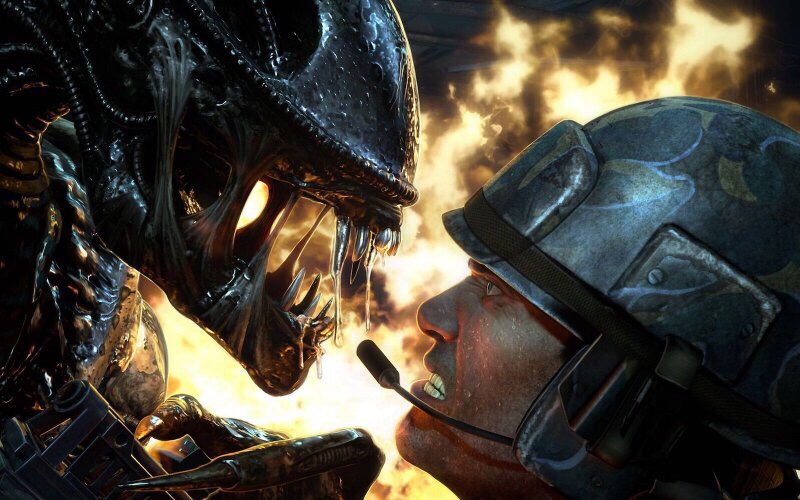
    Inside each state is a set of rules or actions that can be met or triggered by things in the game world that cause the AI to change its state or modify its flags.

    Most of these states have nothing to do with the tether system, and therefore most of the time the bug has no effect on the behavior of the AI, they will be executing ‘actions’ from their state that all occur in the immediate area (hiding behind a box, jumping onto a wall, attacking a soldier, hissing, standing up, crouching etc etc).

    Where the tether system does come into play is mainly in these scenarios:

    • Repathing – Either they cannot find a path to their target, or their target is no longer inside their zone.
    • Crowding – If too many xenos are in one zone, they will call the repath function to help spread them out and move about.
    • Retreating – When they take a certain amount of damage, they will retreat or go into stalker mode, both called repathing.
    • Stalking – When a xeno is not attacking but actively engaging you, they stalk. This means moving outside of your zone and requires tethering to work.
    • Gang Bang Scenarios – Xenos choose a target and that target info goes to a hive mind. This mind keeps track of how many xenos are attacking a target and adds the flag ‘gang bang’ to the target if too many xenos are already after it. This calls repathing or stalking or retreating if possible, and simply waits if not.

    The Gang Bang scenario is the most common and most obvious change that the fix makes, and is why some people feel the game is so different while others don’t see it.

    Pretend three xenos are attacking you. Alongside you is O’Neil and three are also attacking him. There are, however, 12 xenos in play right now. Six of them are not allowed to attack you or O’Neil as both are ‘Gang Banged’ right now. First they try and stalk, which fails due to tethering not changing (there is nowhere to stalk from in their point of view), so they try and retreat. Again there is nowhere to retreat, so they displace (this is a non-path-based movement to spread them out and hopefully fix the pathing issue by moving them). Let’s say the six are grouped together so the xeno in the middle cannot displace. He has only one option left. Wait. Stand still and try again. With the fix, stalking is now possible, as is retreating. Now the AI can do more than just displace or stand still.

    Other situations in which it becomes obvious include any large open area that you traverse (any outside scene, internal scenes where you move through lots of corridors), as the xenos need to update their tether point to follow you without you seeing. They can always follow you with direct line of sight without needing a tether change, but once you lose them they are screwed. When they lose you, they will return to the area they are tethered to, rather than popping up again in your new area.

    This also means that it is not a one-stop fix for Aliens: Colonial Marines. Fans of the game, and people who play the entire campaign, will definitely see a great improvement to gameplay, especially in some of the later levels where things are less scripted and more open.

    The multiplayer mode Bug Hunt is definitely the biggest winner when it comes to fixing the typo. Whereas a lot of the single-player game is based on scripted events and controlled scenarios, Bug Hunt is entirely dynamic AI over huge maps with many tether points and zones.

    Have you told the developers about the bug, and what did they say?

    I submitted a support request to Gearbox but never heard back. I never really expected a response anyway as the game had been abandoned for a few years by 2017.

    Have you come across any similar bugs in Aliens?

    Nothing quite as newsworthy as the typo; however, I do believe that a lot of the odd design choices in the AI were actually a result of trying to get around this bug. For example, sections of the AI that require tethering are disabled, and they work once the fix is in place and you enable them.

    Really the game suffers mostly from bad design. Its a simple Call of Duty clone with an Aliens veneer, and the fast-paced, blinged-out approach doesn’t fit Aliens. Xenomorphs don’t really lend themselves well to run-and-gun gameplay, and they were nerfed quite a lot to give it that sort of flow.

    Finally, what made you want to ‘fix’ Aliens, and how is it coming along?

    I am a HUGE Aliens fan (no suprise there) and I followed this game very closely. Like everyone else I was quite disappointed when the game came out, comparing it to the [preview] footage we were shown. However, I saw the potential in it.  The level design, weapon design, overall aesthetic and feel was spot on. It’s just the game sucked.

    What first began as trying to improve the graphics led eventually to poking around in the files themselves, looking at how everything is configured and set up. Immediately I noticed things that, to me, didn’t seem to make sense. Restrictions and strange values, or disabled features. So I started playing with them. Three years later, ACM Overhaul is what came of that!

    Unfortunately there are no real modding tools for Aliens: Colonial Marines, so I am using UE Explorer, which allows you to view some information stored in the game’s compiled files, and a hex editor to make changes to that information. It’s very slow and time consuming, as well as limiting. Unfortunately there is not much else that can be done with just these tools alone, other than further balancing and tweaking.

    How long do you think it will be before your overhaul of Aliens is finished? Or will there be an end?

    I don’t think I will ever be ‘finished’. It is a very tough game to mod that requires an inordinate amount of time to make any changes. It is quite frustrating to work with, so I head back in every now and then and see what else I can do. Like I said earlier, there is not much more that can actually be achieved through modding, but what has been done can still be tweaked a lot.
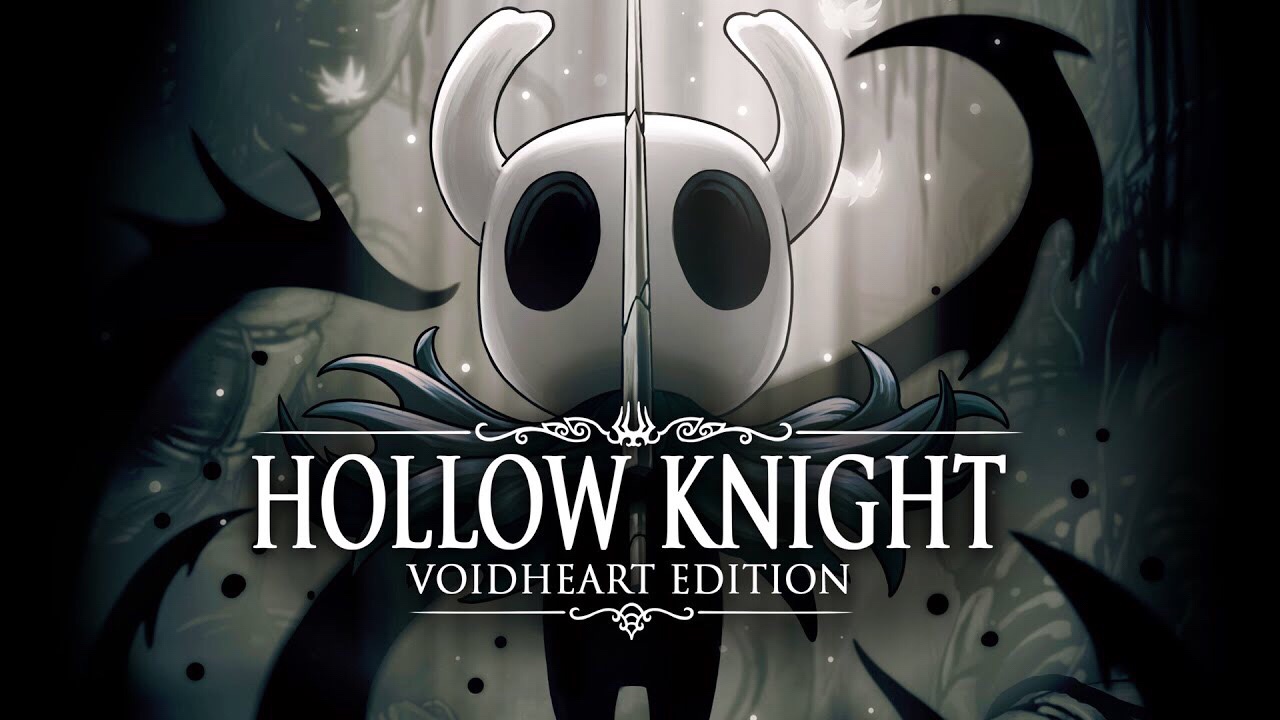
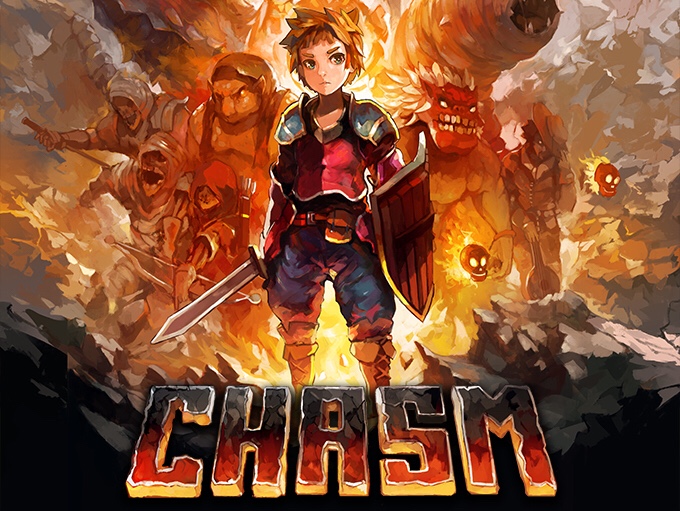
  • What if a game console came with a 3D printer?

    Today I read about the hoo-hah surrounding whether the files for a 3D-printed gun should be allowed to be distributed on the Internet. It’s disturbing stuff, the idea that anyone could just print themselves a gun, even if the current designs are, frankly, a bit rubbish and liable to blow up in your hand. But this paragraph at the end of the article got me thinking:
    Will we ever get to the point where printing a gun at home is as easy as printing a photo?

    Probably, said Max Lobovsky, CEO of Formlabs, one of the first companies to market low-cost professional 3D printers. But that won’t happen for some time.

    “In 10 or 15 years, we’ll probably have a low-cost device that can produce fairly complete firearms or other weapons,” said Lobovsky.

    OK, this is slightly terrifying. But it made me wonder – if in 10 years’ time we’ll have a low-cost 3D printer that can print guns as easily as printing a photo, what else could it make?

    I did a feature on the Casio Loopy recently, a 1990s console that had a built-in sticker printer. Now imagine there was a console with a built-in 3D printer or one that you could plug in as an accessory. Once the cost of 3D printers gets low enough and they get efficient enough, this could be a real possibility.

    Imagine winning a trophy in Smash Bros, then pressing a button and printing it out in 3D. Or a puzzle where you have to print out shapes that you need to piece together to solve it. Or perhaps you could print pieces of a toy that you could assemble.

    I’ll see you back here in 10 years’ time for the announcement of the the Nintendo 3D printer.

  • No Man’s Sky NEXT is confusing but brilliant

    I played about 50 hours of No Man’s Sky at launch, but eventually drifted away from it after the disappointing ‘ending’. But I’ve been impressed at Hello Games’ dedicated to improving the game, and the latest update – NEXT – piqued my interest enough to load up the game again. In particular, the long- awaited addition of multiplayer made me want to see how it changes the game.

    I wrote up my experiences for PCGamesN, and after a confusing couple of hours, I really got stuck into the multiplayer mode:

    No Man’s Sky NEXT is confusing, frustrating – and wonderful

    Have you played the latest update? What did you think?

  • Review: Bomber Crew (Switch)

    Playing Bomber Crew is like rubbing your tummy and patting your head and hopping on one foot and alternating winking your eyes and spinning in a circle all at the same time.

    Except it’s fun.

    At first blush Bomber Crew looks like a cartoony take on war, but don’t let the googly-eyed veneer fool you – it’s take on flight management is pure simulation, the type of thing where even the smallest misjudgment could mean the end of your randomly generated squad. Even tackling one of the jobs available, from being a gunner to an engineer to a navigator, is a challenge, let alone micromanaging the entire corps in the heat of battle.

    Bomber Crew is tough but fair; more often than not I found myself failing to remember a small bit, like putting the wheels down to land or keeping myself en route to my goal, which often led to tragedy. This is besides the heated battles, where if you don’t make needed repairs you crash or get swarmed by enemies and get blown to smithereens. It’s intense and difficult and lovely.

    If there’s anything I’d gripe about it’s that there isn’t much of a learning curve here. It’s more like a mountain that you’re expected to scale. The developers point you in the right direction, but you’ve gotta work out where the rope, crampons, harnesses and carabiners go. But, in their defence, that’s the point of the game: to figure out the nuances of being a virtual commander and being able to not only make the plan but execute it as well.

    When you do get over the hurdle of working out what every button does (and every button does do something), you begin to fall into a rhythm of expectations that you then have to apply to various scenarios. The main campaign of the game is flush with things to do, which teach you tricks and feel progressive in the way that the game expects you to do more in each and every scenario. There’s a fantastic sense of satisfaction when you’ve got a well-oiled crew working for you and you feel as if you can accomplish anything.

    What Bomber Crew lacks in narrative it makes up for in customization. From your plane to your crew you’re constantly upgrading and dolling up everything to make the experience feel unique to you. The squat heroes of your brigade come across as a little lifeless at first, but after a few missions (and perhaps a Christmas jumper for good measure), it’s easy to become endeared to your randomly generated team.

    Bomber Crew is a great game, but you have to know that its balls hard and that failure is how you learn to get better. The tenseness of trying to repair your fuselage under the duress of gunfire can be frustrating, but getting yourself through it is more gratifying because of it. You’ll have to endure feeling like a scrub a few times before you can begin feeling like an ace.


    Bomber Crew is available for PC, Mac, PS4, Xbox One and Nintendo Switch. We reviewed the Switch version.

    Disclosure statement: Review code for Bomber Crew was provided by Runner Duck. A Most Agreeable Pastime operates as an independent site, and all opinions expressed are those of the author.

  • Has the arcade driving game market died?

    I was sad to read about the commercial failure of OnRush, which has resulted in layoffs at Codemasters. OnRush reviewed really well, but that clearly didn’t translate into sales – apparently it sold only around 1,000 copies in its launch week in the UK. It reminds me of the failure of Split/Second and Blur: both were fantastic driving games, but both died a death at retail and resulted in layoffs at the developers.

    It made me wonder whether there’s a market for arcade-style driving games any more. Simulation-style games, like the Forza titles and Project Cars, seem to be surviving ok, but car games that veer off into less-serious territory generally don’t seem to do so well these days.

    Above is an interesting graph showing how the number of driving games released per year has dropped off recently. The graph was created back in 2012 by a reddit user who data mined 24,000 games. Like sports games, the driving game market seems to have consolidated around a handful of titles. For example, there used to be armfuls of football games during the PlayStation 1 era, but now it’s basically just FIFA and Pro Evo, each of which sees yearly updates. The same thing seems to have happened with driving games, with the main couple of titles receiving yearly or nearly yearly updates, and consumers sticking with their favoured titles.

    It looks like there’s a stable market for serious driving games – ones that attempt a realistic simulation. But driving games that attempt to do something a bit different, like OnRush with its vehicular combat and lack of traditional racing, seem to be struggling. I wonder whether that’s due to the Grand Theft Auto Effect.

    GTAV is now the best-selling game of all time, and it’s predecessor was no slouch, either. So if you own GTAV, with its huge amount of content – including all the races, stunts and endless online modes – why would you buy another game that is narrowly focused on driving? In GTAV you can race to your heart’s content, but you can also do tons of other stuff like bank raids and flying – so suddenly buying a game that’s just focused on driving doesn’t look like great value. Unless, of course, it’s a super-serious simulation – or something completely different from everything else, like Rocket League.

    I wonder whether the rise of GTA and similar open-world games has killed off the arcade driving market. I’m playing Mad Max at the moment, and it’s basically a fully-fledged driving game, but with layers and layers of other amazing content piled on top. It’s fantastic. And with amazing open world games like this, why would you want to go back to a game that ‘just’ does driving?

  • The final hours of Gravity Rush 2 online
    I took this screenshot not long before the servers shut down.

    Well, it’s done now. The Gravity Rush 2 servers have been shut down, and a big chunk of content has been lost.

    I’ve been rushing to sample the game’s online modes over the last few days: on Monday night I finally got to the city Jirga Para Lhao and played a few online treasure hunts. These are fun little missions where other users post a photo of a treasure chest, and you have to work out where it is in the city based on the photo. I found these missions compelling – you have to study the photo carefully, trying to position yourself to line up with details in the background, and looking out for architectural details that match the pic.

    https://twitter.com/gravrushcentral/status/1019694443077750784?s=21

    Your reward is Dusty tokens, a currency that unlocks things like extra poses, costumes and talismans, which are modifiers you can equip to give you special abilities. You can (could) also get Dusty tokens for beating challenges set by other players, or getting likes for the photos you can share. The top unlock, for 6,000 Dusty tokens, is a talisman that gives you unlimited gravity abilities. But now that the servers have been switched off, there’s no way to get these unlockables. And so far, Sony hasn’t announced a patch that would enable access to them on single player.

    But more than that, I was surprised by how much the online stuff added to the game experience. It may be peripheral, but the online content really helps to generate a sense of community. I loved seeing the creative photos other players have posted. Now any photos I take will simply languish on my hard drive.

    Here I am setting off on one of my last online treasure hunts… (Note the nifty Nier: Automata costume).

    Most of all, I’m annoyed at Sony for cutting the online content just a year and a half after the game’s release. By all accounts, the game didn’t sell as well as Sony wanted, but the fans of Gravity Rush 2 are dedicated, and hundreds of thousands of people bought the game. And of course, there are people who only discovered it late, like myself, and people who picked it up in recent PSN sales. It seems shocking to me that Sony would gut the game like this after such a short time, especially as new players keep joining the game. I mean, how much can it cost to keep the servers going?

    It’s certainly soured my opinion of the company, as I’m sure it has for many Gravity Rush 2 players. For the sake of good PR relations at the very least, the cost of keeping the servers alive would have been worth it. With this and the recent Fortnite cross play debacle, Sony has scored two spectacular and unforced own goals.

  • I’m rushing through Gravity Rush 2 before the servers shut down on 19 July

    I’m in a bit of a panic. I bought Gravity Rush 2 on Saturday after finishing (and totally loving) Gravity Rush Remastered, but I’m in a race against time to play it before the servers shut down early on 19 July. The game will still be playable after that, but loads of features, like challenge races against other players, will be gone.

    Trouble is, I’m four story missions in, and I haven’t even unlocked any of the online content yet. I only have a limited time to play, what with all the boring adult responsibilities I have, so there’s a good chance that by the end of tomorrow I might not even get a chance to sample Gravity Rush 2’s online offerings before they’re gone for good.

    Eurogamer reported on Gravity Rush Central’s campaign to get Sony to cancel the server switch off. The group has put up a graph showing that more and more people have been playing the game over the past year.

    Sony have made last-minute U-turns before, like when they cancelled the release of the creepy pick-up artist game Super Seducer just days before it went on sale. Here’s hoping they see sense and stave off the server shutdown, especially as loads more people are playing Gravity Rush 2 now. Head this way to see how you can join the campaign to save Gravity Rush 2.

  • The bizarre story of the Casio Loopy console
    The Casio Loopy. All Loopy photos courtesy of Quang Nguyen.

    I first heard about the Casio Loopy from Chris Bowman at Console Connections in Shildon – I wrote about his amazing indie shop in a previous article for Eurogamer. Chris is a keen retro game collector, and I was fascinated when he told me about an obscure Japan-only console that had a built-in sticker printer.

    With his help, I tracked down a collector who owned one, and I also interviewed Octav1us, a YouTuber who has produced a video all about the console. I spoke to her while she was filming Digitiser: The Show, the magnum opus of one Paul Rose, aka Mr Biffo off Teletext in the nineties. She says it’s been a suitably surreal experience. “The set looks awesome, it’s very weird. He’s got a dead heron and there’s a dead stoat, and there’s this horrific taxidermy, we don’t know what it is, it’s like a cat or a weasel but half of its face is caved in and it’s just sat there behind the desk. It’s a terrifying glimpse into Mr Biffo’s mind.”

    Best of all, I managed to get in touch with a couple of Casio engineers who had worked on the console back in the 90s. And they were also able to give info on how long the Casio Loopy was in production for – as far as I know, this is the first time anyone has had a definite answer to this question. In fact, there’s not a lot of information on the machine, full stop – which is partly why it’s so interesting to collectors.

    I wrote up all my findings in an article for Eurogamer:

    In the Loopy: the story of Casio’s crazy 90s console

    I’m pretty pleased with how it turned out – thanks to Chris, Octav1us, Quang and the Casio PR department for all their help with this one!

  • Better Late Than Never: Gravity Rush Remastered

    I finished Gravity Rush Remastered on PS4 less than a week before the multiplayer servers for Gravity Rush 2 are going to be switched off by Sony. I absolutely loved playing through the first Gravity Rush, and now I can’t wait to play the sequel – but it’s a real shame I won’t get to sample all of its content, like challenge races against ghosts of human opponents. It seems like certain costumes will also be lost when the servers get switched off, too. And all this only a year and a half after the game was released. Poor show, Sony.

    Anyway, Gravity Rush Remastered is a lovely update of a PS Vita game from 2012. The remaster was handled by the peerless Bluepoint Games, who also did the Shadow of the Colossus remaster, among many others – they’ve really made a name for themselves in doing up old games a treat. The artwork of Gravity Rush looks fantastic on the big screen – the city of Heksville is based on the art of Jean ‘Moebius’ Giraud, the genius behind comic books like The Incal and the inspiration for the gorgeous indie game Sable. I loved the meticulously complicated lines of the city, the vaguely Victorian style airships, the looping, ornate railway tracks.

    Heksville is suspended from the sides of the World Pillar, a stupendously high rock column that stretches out of sight. Kat, the protagonist, wakes up with no memories after apparently falling from the pillar, and discovers she has the power to manipulate gravity through her mysterious black cat companion. If you forgive the cliched amnesiac storyline, the plot that follows is endlessly intriguing.

    But by far the best thing about the game is the gravity manipulation – by tapping the R1 button, you can shift gravity in any direction, so you can fall to the tops of skyscrapers or walk along the bottom of the city. And the landscape is beautifully fit for purpose – the suspended town has all sorts of nooks and crannies that can only be reached by tumbling sideways through the air. Even better, you’re always rewarded for exploring – the city is littered with power gems that act a bit like the orbs in Crackdown, powering up your gravity and combat abilities. At first you can only manipulate gravity for a short time, but by the end you can effectively tumble through the clouds forever.

    Combat is a little disappointing. Your main attack is the gravity kick, which is later supplemented with a handful of special moves, but the cooldown on your specials is enormous. That means you spend most of the fights just spamming the gravity kick – it would have been nice to have a bit more variety in your attacks. Still, it’s fun enough.

    Another disappointment is the opaqueness of the story. As I said, the plot is intriguing, and there are all sorts of interesting hints about what’s going on. But by the time the game ends, almost nothing has been explained. I’m all for leaving questions hanging in games – there’s no need to explain everything, after all, and some of the best plots leave room for doubt. But by the time the credits rolled there were still armfuls of plot threads left unresolved, and even the most basic questions about the world were left unanswered, like what the enemies you’ve been fighting for the entire game actually are or where they come from. It almost feels like they ran out of money and just stopped before the game was finished. Maybe that’s exactly what happened.

    But this does mean that I’m hungry for answers, and I can’t wait to play Gravity Rush 2 in the hope of finding them. And if I get my skates on, I might be able to sample a bit of that multiplayer content before it’s lost forever on 19 July.

  • I spoke to Mike Pondsmith about Cyberpunk 2077

    I wrote a lengthy article for PCGamesN about the history and legacy of cyberpunk – a timely subject thanks to the upcoming release of CD Projekt Red’s Cyberpunk 2077. As part of the article, I interviewed Mike Pondsmith, creator of the Cyberpunk 2020 tabletop game that CDPR’s upcoming RPG is based on, and Bruce Sterling, one of the founders of the cyberpunk movement. Here’s the finished thing:

    Cyberpunk 2077’s warning for the world is more important than ever

    Bruce answered my questions over email, but I spoke to Mike over the phone, and it was a really fascinating chat. He had lots of opinions about the message of cyberpunk, and he also provided some interesting nuggets of info about the development of Cyberpunk 2077. My only regret is making the foolish decision to call him in America on my mobile – just got the phone bill, yowch. Must remember to buy an international calling card next time…

  • Review: SpiritSphere DX (Switch)

    What do you get when you mix the visual and thematic trappings of The Legend of Zelda, the fighting style personality of Street Fighter II and the customization options of Super Smash Bros.? Apparently tennis, as it so happens.

    SpiritSphere DX, developed by Eendhoorn and published by Fabraz, unequivocally wears its inspirations on its sleeve, but at no point does that come to define SpiritSphere DX. It takes those homages and uses them as seasoning that makes for its own, unique dish. It’s simple yet elaborate, the type of thing that’s easy to get into but unveils a certain depth as you keep playing.

    Each game is played with a character on either the top or bottom of the screen, who are tasked with sliding a sphere (which actually feels very much like table hockey) into their opponent’s goal while defending their own. The layers keep piling up as you go. Each character has a standard attack with which you can control the direction it goes, and a special attack that you must charge but adds spin and a dash for those moments where you need to make a quick save. They’re all pretty easy to pick up on, and each character you play has their own variation with which you can tune the difficulty or set up a challenge for yourself.

    The game goes one deeper by providing you with power-ups you can nab through regular play. There are also coins, but we’ll get to those in a moment. You’ll grab items that can do things like send bombs to the opposite field, which gives the game a nice sense of randomness that can even up matches against stronger opponents. Which brings us to the next layer, the varied stages and the obstacles within. Each stage is unique in shape and has things like weeds to block your net or pillars of fire the sphere will bounce off.

    SpiritSphere DX is at its best as a multiplayer game. There is a single-player campaign in which you take a selected character up against a gauntlet of ten stages (again not unlike Street Fighter II), but the AI is random, there isn’t much story beyond the witty banter between opponents before matches and there’s a boss battle that feels unfair at times. The reason you’d want to delve into this mode is because you’ll amass coins you can use to unlock new characters, new skins and variants on the sphere that change up the gameplay dramatically.

    The more choices, the merrier, as these options shine in multiplayer mode. SpiritSphere DX works well on Switch because the opportunities to play with others are plentiful. There is no online play, but this is the type of experience that is best had in the company of friends and family. Between characters, power-ups, stages and spheres you have a plethora of things to do that keep the game fresh. My preferred method of play is the Head2Head mode, which has you and another player holding the Switch with Joy-Cons attached in a sort of cocktail table manner that for whatever reason is more fun than it has any right to be.

    SpiritSphere DX is the type of game I’m glad I can access at any given moment because its pick-up-play style is perfect for everything from road trips to decompressing for a few minutes and yet still feeling a sense of accomplishment from nabbing coins to unlock new ways to play. SpiritSphere DX is the best table hockey, uh, Zelda-styled, ah, competitive game I’ve seen in a very long time.


    SpiritSphere DX is available for exclusively for Switch.

    Disclosure statement: Review code for SpiritSphere DX was provided by Fabraz. A Most Agreeable Pastime operates as an independent site, and all opinions expressed are those of the author.

  • Moonlighter updates incoming

    Well this is some lovely news. The amazing dungeon crawler/shopkeeping game Moonlighter is getting a string of excellent updates in 2018 – including the New Game+ mode I longed for in my review of the game.

    Below is the roadmap that the developers have supplied for Moonlighter updates in 2018 – and they’ve also promised even more changes in 2019. Even better, all of the updates are totally free! Oh, and there’s also talk of a Switch version sometime in the future…

    • More Stock Update — Our first update will ​ add more than 50 new rooms​ ​distributed all over the four dungeons​ making a total of ​ almost 600 room patterns available​! It’s also going to improve the look of armors and enchanted items, plus we plan to add some additional help/tutorials to explain different shop upgrades better.
    • Adventure Update — New Game+​ lets players start the whole game again with increased difficulty level. This update will also bring brand new​ Dimensional Weapons and Amulets​, powerful equipment based on an unknown and mysterious technology.
    • Companion Update — Feeling lonely in the Dungeons? Worry no more! ​Choose a companion and bring it with you on the adventure​ ! ​Each companion will be a little bit different, offering various skill sets and looks. On top of that we’re going to introduce​ the ​ Custom Game​ — a set of options that will allow you to to modify certain game parameters to create diverse experiences.
    • Trouble Update — Put your skills to the test by battling some brand new mini bosses! We’re not going to tell you anything more about them — because we want those enemies to surprise (and brutally defeat… muah ha ha ha) you during your adventures. Yup, we’re sadistic like that sometimes. We’re also going to add new​ Item Effects, boosting the game’s variety. This update should arrive sometime around Halloween — so we’re hoping to bring you some spoOOoky stuff, too!
  • Blacksad: Under The Skin is a new game based on a fantastic comic that you should definitely read

    I was most surprised to find a PR email in my inbox declaring that a Blacksad game is in the works. Blacksad is a rather wonderful comic that I discovered a few years back, and I’ve since been telling everyone I know how wonderful it is and that they absolutely must go out and buy it. But in all that time I’ve never met anyone else who has even heard of Blacksad, so I’ve developed the idea that it’s probably only known to me and about a dozen other people, part of a secret Blacksad appreciation club.

    My treasured Blacksad comics.

    Thus, when I read that a Blacksad game is being developed by Pendulo Studios and YS Interactive, my initial response was incredulity. First, how on earth did they find out about the club? Second, how on earth are they going to make a profit by selling the game to a dozen people? Of course, this is all just my personal fantasy – in fact, Blacksad is immensely popular, particularly in France, and the comic has been translated into more than 20 different languages. The club is vastly bigger than my brain perceived.

    Here’s John Blacksad in Under The Skin, in the usual amount of trouble.

    Blacksad is the work of artist Juanjo Guarnido and writer Juan Díaz Canales, who both hail from Spain and have been turning out stories about the hard-boiled private investigator John Blacksad, a black panther, since the year 2000. Guarnido once worked as an animator at Disney, and the Blacksad books are distinctly Disney-esque in many ways – they depict a world of anthropomorphic animals in an approximation of 1950s society. But rather unlike Disney movies, these animals are constantly being murdered in grisly ways and having provocative, very adult encounters with slinky femme fatales. It’s all very film noir indeed.

    The boxing club from Blacksad: Under The Skin.

    The forthcoming game, Blacksad: Under The Skin, is very much in the same vein, featuring a murder at a disreputable boxing club. Here’s the blurb:

    In 1950s New York, Joe Dunn, the owner of a humble boxing club is found hanged. At the same time, Robert Yale, his protégé and greatest hope, is reported missing. Although overwhelmed by these terrible events, Joe Dunn’s daughter, Sonia, decides to continue working towards her father’s dreams: she takes over the boxing club and calls on John Blacksad to investigate this mysterious disappearance. It’s the eve of the fight of the year and the club, which is in serious financial difficulties, will not survive Robert’s withdrawal. The investigation will lead John Blacksad to the very heart of a world in which corruption reigns supreme.

    Sounds utterly spiffing. The game is due out in 2019 for PlayStation 4, Xbox One, Nintendo Switch, PC and Mac, and the PR email promises a ‘novelesque’ adventure, whatever that means. Looks like it will be a 3D point and click game, but details are still scarce on the ground. Still, if it’s anywhere near as good as the comics, it’ll be one to look out for.

    Animal interrogation.
  • Review: Moonlighter (PS4)

    Moonlighter is a dungeon crawler with a twist – you’re not a hero, you’re a merchant with a shop to run. As the name implies, dungeon crawling is something you do as second job, a way to fill up your shop’s inventory with items pilfered from chests.

    It’s a neat twist. We’ve had games before where you play as a shopkeeper selling items to adventurers, like Weapon Shop de Omasse on the 3DS, but I can’t think of a game that combines retail with dungeon diving. And the good news is that this genre mash up works really, really well.

    The plot sees a series of mysterious dungeons suddenly appear in the landscape, and adventurers flock to raid them for their treasures. Your father, Old Pete, becomes lost in the dungeons, so it’s up to you to run the family shop, as well as to find out what happened to your dad.

    There are four dungeons that you unlock in order, and each dungeon has three levels. The dungeons rearrange themselves on each visit, so the layout will be completely different every time you explore – a good thing, as you’ll be returning multiple times. At first you’ll be too underpowered to make it very far, but you can take the items you find back to the shop and sell them to get money to buy better weapons and armour.

    So we come to the shop running part of the game, which is far more fun than it has any right to be. You place the items you’ve found on display and set a price for them – but the trouble is that you don’t know how much they’re worth. Your notebook lists the items in each dungeon in order of value, but you have to find out the ideal price for each one by watching the customers in your shop. If they grumble and walk away, the price is too high; if they’re eyes twinkle with delight, they’ve got a bargain and the price is too low. And all the while you’ve got to watch out for shoplifters and make sure the queue for the till doesn’t get too long, causing people to give up and go home. It’s brilliant.

    You can also upgrade your shop to give you more display and storage space, as well as adding special items that do things like attract more customers to your shop or repeal thieves. And the town itself can be upgraded by investing in other retailers to get them to set up shop. I loved gradually improving everything and getting my shop ticking along nicely.

    The dungeons are fun to hack and slash your way through, and there’s a neat mechanic whereby you can teleport out at any time using a pendant, but it costs some of your hard earned cash to use it and you’ll have to start all over again after you leave. It encourages you to press on as far as you can until you’ve collected enough sellable items to make it worth leaving – and the further you go into a dungeon, the better the items get. There’s also an item that lets you teleport out and return to the spot you left, but it’s very expensive to use.

    I liked the risk/reward mechanic of pressing further on for better items – if you die you lose everything in your backpack, but you keep the five items you have on your person, so it’s worth rearranging your stuff to make sure your most valuable items are in your pockets, just in case. There’s also a neat mini game involved in arranging the items in your backpack. Some cursed items can only be stored at the edges of the pack, and others might destroy the item next to them when you return to town. Some cursed objects cause the item next to them to be turned into the same object, so there’s potential to turn worthless items into expensive ones. I was constantly rearranging my stuff to try the get the best possible haul of things, discarding the cheap stuff to make way for the rare valuables. Some might hate this bit of inventory admin, but I found it fascinating. In fact the whole game is just damn fun.

    It helps that Moonlighter looks utterly gorgeous. The pixel art style is wonderfully colourful and vibrant, and the enemies are beautifully animated. I particularly loved the music as well – I found myself humming the tunes when I’d stopped playing, and there’s a really neat aural trick whereby the main town theme changes slightly to reflect the personality of the merchant you’re talking to. A hammer hitting an anvil works its way into the melody when you’re taking to the blacksmith, for example. It’s up there with in my all time list of Neat Touches in Video Games.

    The only two grumbles I have about Moonlighter are that the crafting system limits your options for changing your play style, and the game lacks a decent New Game+ mode. There are various weapon types in the game, from massive swords to a sort of combat glove, but they’re extremely expensive in terms of items and cash. That means I basically stuck with my big sword through the whole game, gradually upgrading it as I went – it was too costly to think about switching weapons, and the sword seemed to pretty much plough through everything, so I didn’t feel the need to try another weapon.

    When I finally finished the game, I was keen to keep playing – and you can, but nothing really changes after you beat the final boss. It would have been nice to see some additional challenges or longer, more challenging dungeons. Speaking of which, the game provides three difficulty options – Normal, Hard and Very Hard. Hard is the recommended difficulty, but I chose Normal because I wanted a bit of an easier time – in hindsight I would have gone for Hard, just to eke out the game for a bit longer. Because it really is a delight to play.

    If you haven’t worked it out already, I thoroughly enjoyed Moonlighter and would heartily recommend it for fans of rogue-likes – as well as budding entrepreneurs.


    Moonlighter is available for Switch, Xbox One, PlayStation 4, PC and Mac. We reviewed the PS4 version.

    Disclosure statement: Review code for The Moonlighter was provided by Evolve PR. A Most Agreeable Pastime operates as an independent site, and all opinions expressed are those of the author.

  • I spoke to the developers of Sable about their stunning indie game

    I interviewed Greg and Daniel from Shedworks for Kotaku UK – they’re the folk behind the beautiful Sable, one of the best games at E3 2018. It looks like it was spun from the pages of a 1980s French comic book.

    The pair confirmed that French comic artists Moebius was a big influence, but they also listed many diverse and unexpected inspirations from the worlds of architecture and literature. And the most surprising thing of all is that they’re both entirely self-taught developers – they learnt everything they know from YouTube and web courses.

    Check out the full interview below:

    Sable is a Beautiful Tribute to 1980s French Comics, and Much More Besides

  • Review: The Banner Saga 2 (Switch)

    As far as stories go, the middles are always underrated.

    In the beginning you have intrigue, characterization and a set-up. In the end you have development, resolution and closure. The middle is the most important part of any story, even though it doesn’t get the props it deserves. Sure, it’s a bridge between question and answer, but it gives any good story the context it needs to be a worthwhile experience.

    The Banner Saga 2 is the middle piece to a larger tale of eking out an existence in a world that is becoming ever more inhospitable. As should be of no surprise to anybody, the story for The Banner Saga 2 picks up where the first left off, with decisions and ramifications carrying over. For those who chose to skip (and I’m not sure why you would) the first chapter, there is a recap to get you up to speed and a fresh party for you to, ah, start your journey with.

    I’d like to gloss over most of the plot in general because I feel like it’s in your best interest to shape your own story. I will generalize a few things though. Firstly, the different and shifting perspectives are interesting and do a good job of waylaying your expectations as you change perspectives. There are new addendums such as different classes, enemies and controllable party members that help enlarge the world as a whole.

    Speaking of which, the grid and turn based combat system got a great shot in the arm from the aforementioned classes, enemies and controllable party members, as they add curious new elements and win conditions to the table. Whereas in the first game I felt like battles were a means to an end in pushing the plot along, here they feel more natural to the flow of things. This helped me feel even more invested in the journey than I already was because the battles and plot felt one and the same.

    Unlike the other facets of The Banner Saga 2, those moments where you take your caravan across beautiful 2D vistas feel unchanged from the first game. I enjoy these sections for how striking to the eye they are, for the feeling that you are in fact the leader of a ragtag group of survivors, and for giving you a moment of respite in between tense battles and heart wrenching story arcs. It’s that quiet moment that acclimates you to the disparate folk you are leading and gives weight to the choices you make.

    It’s worth ending on the fact that even though The Banner Saga 2 is basically a lead-up to the forthcoming third game, it does move the series forward in presentation, expands upon its battle system and gives you plenty of reason to play through the heart and soul of this story.


    The Banner Saga 2 is available for Switch, Xbox One, PlayStation 4, PC, Mac, iOS and Android. We reviewed the Switch version.

    Disclosure statement: Review code for The Banner Saga 2 was provided by Plan of Attack. A Most Agreeable Pastime operates as an independent site, and all opinions expressed are those of the author.