I’m shocked. Runic Games, the maker of the amazing Torchlight, Torchlight II and Hob, has been closed by publisher Perfect World. It’s barely been a month since Hob was released to generally rapturous reception, and I declared it to be one of the best games of 2017. Apparently that wasn’t enough.
Perfect World didn’t give a reason for the studio closure, although they told Eurogamer that the decision was made “as part of the company’s continued strategy to focus on online games as a service”. That old chestnut. Just recently I said that the death of single-player games has been greatly exaggerated, but perhaps I was being premature. I find it disheartening that publishers are all chasing after this ‘games as a service’ model – sure, the rewards are great if you can establish a loyal player base who will invest all of their time and money into your game. But it strikes me that players only have so much time, and that this strategy is necesarily a ‘winner takes all’ one – if players are devoting all of their spare hours to one game, then they will be buying fewer games overall, so the market as a whole will lose out.
I still can’t believe that Runic has been snuffed out so brutally, despite producing a run of utterly fantastic games. Does this really mean that single-player games aren’t profitable any more unless they’re packed with loot crates and what have you? It’s a sad thought.
It’s been over nine years since a rag-tag team of 17 developers helped open Runic Games. We’ve been so lucky for the community that has supported us and made us successful. Thanks to that support, we have had the chance to meet and work with the best people in the world. Our team here at Runic has released three successful games, and over that time we have seen many changes; team members got married, kids were born, but the most important thing is that we have become a family.
I’m sorry to say that today will be Runic’s last day open. Our focus is on our family here, and helping them find a new place to call home. If you are in games and looking for some of the best talent in the industry, please email jobs@runicgames.com.
For those that love the Torchlight series, there will be some news coming. And for all our fans, our community and multiplayer services will keep running even after the studio’s lights go off.
It has been an amazing experience. To my family here at Runic, I know we won’t be far from each other, and I’ll miss seeing you all every week.
You haven’t heard the last of us,
Marsh Lefler
Studio Head
I’m guessing that sales of Hob must have been disappointing for Perfect World. According to Steam Spy, Hob sold around 50,000 copies on PC, although we don’t know how well it sold on console. Either way, it doesn’t seem to have reached the stratospheric sales of the Torchlight series.
But even if it didn’t do crazy numbers, it seems callous to disband a group of developers as talented as Runic Games. Brutal, even.
I sincerely hope that the devs at Runic Games find positions with a company that truly appreciates their talents. I wish them sincere good luck.
Rambo is a very curious game. It’s not exactly what you would call accessible. As a child you might have found yourself diving into it, expecting some furiously patriotic machine-gunning, much like the cover art from the famous movie, First Blood 2: Rambo, that this game is loosely based on. Instead, you would find yourself dropped in the jungle with nothing but a knife, facing off against deadly giant wasps and snakes, and getting hopelessly lost in a world with a surprisingly complicated layout.
It’s the kind of game that a young child with a short attention span gives up on pretty quickly, only ever giving it a chance out of desperation when there’s nothing else good left to play. It’s actually a pretty good game once you get past the learning curve. It even bears a surprising resemblance to Zelda II: The Adventure of Link in a lot of ways. The art style and side-scrolling melee combat are suspiciously similar at times, as well as the NPC interaction, and Rambo even gains experience in a very similar way. It came out almost a year after Zelda II, so it seems likely that Acclaim “borrowed” a few elements.
The only thing missing is the overworld map, which Rambo makes up for with some incredibly maze-like, multi-layered environments that you pretty much need to draw your own maps for if you don’t want to get lost, especially with how often the backgrounds are recycled.
Going back to the enemies, yes, you start off fighting against wasps and snakes, and then graduate to birds, fish, and…deadly giant flamingos? Sure, why not. You need something to practice on before you’re tough enough to start fighting actual enemy soldiers, because you’re going to need to gain a few levels and find some better weapons before you can handle those guys.
Eventually you’ll get your hands on fancier weapons like exploding arrows and you really will get that machine gun someday, and you’re going to need them, because you’re going to come up against increasingly nasty, and increasingly bizarre, enemies. I guess the designers must have quickly realized that the various soldier types of enemies weren’t going to be enough to fill up a game of this size, and so on top of the large number of animal enemies, you’ll also start running into some completely nonsensical baddies like strange robots, monsters, and giant fireball-spitting spider bosses and such.
If you manage to make it through the long, treacherous maze that is Rambo, you’ll be treated to a final battle against a nasty helicopter boss and one of the most unusual endings ever seen in an NES game. 30 YEAR OLD SPOILER ALERT: After the last battle, you go back to base and meet up with the shifty Murdock character from the movie and find that your knife attack now shoots out a giant Japanese character for Ikari, which transforms Murdock into a frog when it hits him. Sure, why not.
It’s all like some kind of crazy, clumsy mixture of Zelda II and Metal Gear, but once you get the hang of it, it actually turns out to be a pretty fun little game, and one with a lot more fun content than you’d usually expect from a movie tie-in game. It’s definitely not something everyone (or probably even most people) will like, but if you enjoy a bit of the old 8-bit, then you could do a lot worse than the wacky adventures of Rambo.
It’s Friday, which means it’s time for Spiffing Reads! First up, here’s a trio of articles on the continuing fallout from EA’s closure of Visceral Games, a story that’s dominated the news for the past couple of weeks.
Jason Schreier on Kotaku did a wonderfully in-depth feature on the last few years of Visceral Games, which showed that everything isn’t quite as simple as VISCERAL = GOOD, EA = BAD. One Visceral employee saw the studio’s closure almost as a blessing: “Honestly, it was a mercy killing.” It seems things had been going wrong at the studio for years, and they just couldn’t quite get a handle on the new Star Wars game, which seemed to spiral out of control. Then again, EA’s handling of the situation hardly appears exemplary – the subtext is that Visceral were given Battlefield: Hardline to develop as a ‘punishment’ for Dead Space 3. It’s no wonder a large number of people left the studio over the past few years.
Rich Stanton at Kotaku UK looked back to Visceral’s crowning glory, Dead Space, with an impassioned look at why the game was so important and how it managed to push survival horror in a new direction. And over at Polygon they’re still analysing what Visceral’s closure means for single-player games in general – in short, one-player games will have to be really, really good to have a hope of standing out (and making money). Lucius P. Merriweather
I’ve been spending a bit more time poking around Reddit lately, and one thing I came across recently was an ongoing series of AMAs on r/NintendoSwitch that have been happening since the Switch was released. As you’d expect there’s a focus on indie games, and they have AMAs for the three indie releases I reviewed over the past few weeks (Yono and the Celestial Elephants, Inversus Deluxe and The Count Lucanor). It’s always interesting to get a peek behind the scenes, so this is great reading for fans of the games. Professor GreilMercs
This is an excellent look back at RiME, a game that we hope to review here very soon when it launches on Switch. RiME is very like Hob in that it doesn’t give you much information to work on, instead relying on the player to work out what buttons do what and where they need to be going. It’s a refreshing approach – here’s hoping more games follow this lead. L.P.M.
The warning at the start of the trailer for The Last of Us Part II that was shown at Sony’s Paris conference reads: ‘May contain content inappropriate for children’. No shit. I pretty much felt sick by the end of it – in fact it put me off the game a little. I want giraffes and a burgeoning father/daughter relationship, not psychos with claw hammers. I don’t have a problem with violent games per se, but Eurogamer makes the excellent point that this kind of troubling trailer really doesn’t fit in at a conference presentation that’s aimed at everyone. Perhaps in future, Sony and other companies should consider separating their conferences into family-friendly games and more adult presentations. L.P.M.
Spiffing Reads is a regular feature where we pick out the best gaming articles of the week. If you’ve read anything interesting, please let us know in the comments.
A Thargoid ‘flower ship’ interacts with a ‘Barnacle’. There’s all sorts of weird stuff happening in Elite these days. Pic courtesy of Gavin Baranowski.
I wrote about The Fuel Rats in Elite: Dangerous a while ago, and it was fascinating to discover how deep the game goes – and how people are playing it in very different ways. The Fuel Rats were formed spontaneously when Frontier introduced a refuelling mechanic into the game, and a group of players thought it would be fun to create a sort of space vehicle recovery service. People loved the idea, and it evolved to the point where there’s a proper hierarchy and all sorts of procedures for dispatching rescuers into the far reaches of the galaxy.
Julian at PCGamesN remembered the article, and he approached me recently about doing a sort of follow-up, where I sought out the people who are studying the Thargoids, Elite‘s newly emergent alien race. I spoke to The Fuel Rats, and they put me onto The Canonn, a 3,000-strong community of players who are dedicated to exploring the history and science of the Elite universe.
A mysterious Thargoid device, one of hundreds that The Canonn have found. Pic courtesy of Gavin Baranowski.
I was astounded by the complexity behind the recent emergence of the Thargoids. They’re not simply space invaders that Frontier have dumped into the game overnight – there’s a huge amount of back story there, and the galaxy is littered with Thargoid ruins that contain odd devices or mysterious purpose. What’s more, the Thargoids themselves have motivations.
Frontier have clearly put a huge amount of thought into how they want to introduce the Thargoids, and they’ve left a tantalising amount of loose threads that groups like The Canonn have seized on and are excitingly following. It’s mind-boggling, really – there really is a whole virtual galaxy out there, packed with all sorts of weird stuff. Take a look at the PCGamesN article to see what I’m on about:
Wheels of Aurelia is a reminder that video games have a long way to go when it comes to setting, themes and what our perception of them is in the first place. In other words, it’s an insular hobby that relies on a handful of tropes that are more interested in terms of sales than telling the player something worthwhile. I’m not knowledgeable enough to have the “are games art” debate nor do I have a horse in the race to begin with, but Santa Ragione’s little road tripping visual novel tackles a lot of disparate things in its short play sessions.
You are in control of a young lady named Lella as she travels across the west coast of Italy on the Via Aurelia for reasons unknown to the player until further down the road. Her companion from the outset is Olga, who has a personality that’s the polar opposite to our free spirited and rebellious protagonist. While you can control the car as is speeds along in an overhead view in an Italy that feels modeled after the board game Life, the point isn’t getting to your destination, rather whom you talk to and pick up along the way.
The duo can pick up various hitchhikers (which maybe wasn’t as big a deal in 1978, the time frame in which Wheels takes place) and have conversations with them. I don’t want to talk about any plot points pretty much whatsoever, as this is the bulk of the game. What I will divulge is that these conversations are very heady, even in today’s political climate. It gives the game an impact you wouldn’t normally see in a video game. What’s also curious is that it’s not beholden to explaining to you certain moments or situations that may or may not make sense to you because they weren’t world events but rather huge cultural touchstones from Italy circa 1970. It doesn’t hold the game back in any way, but I always had the feeling that maybe I didn’t answer the way I would have had I known what exactly there were talking about. I just settled for a certain tone in my replies and went with that.
As you move further down the road, Lella’s intentions are revealed and who you have with you by the end can garner one of sixteen different endings. It’s a curious study in situational awareness and social experiences that shape the adventure and make you want to play it repeatedly, which is the whole point. A trip lasts roughly thirty minutes, so you aren’t expected to invest a lot of time in it. There’s just enough to get a feel for the characters but not so much that the game starts to feel long winded. It’s bolstered by a stellar soundtrack and a neat minimalist design that you can toy with thanks to some clever filters.
The brevity of the game and replayability make Wheels of Aurelia a nice fit for the Switch, perfect for a commute or two. Or sixteen, if you stay the course! It opened my eyes to a game’s ability to have the player transfer their personality into the agency of its protagonist. It’s definitely meant for a certain mindset, and those who won’t be interested in it will probably steer clear when they read the description in the eShop anyway. But for those who want to have stirring and thought-provoking conversations while tooling up the Italian coast, rocking along to some crazy jazz/funk fusion tunes, Wheels of Aurelia is the type of game that’ll change your expectations of what a video game can be.
Wheels of Aurelia is available digitally for PS4, Xbox One, Switch, PC and iOS. We reviewed the Switch version.
Disclosure statement: Review code for Wheels of Aurelia was provided by Santa Ragione. A Most Agreeable Pastime operates as an independent site, and all opinions expressed are those of the author.
I have to confess that I’m a useless statistics junkie, and keep records of everything from the number of video games I have to the number of movies I’ve seen this year. The 3DS comes with a super handy tool for geeky people like me called the Activity Log that for each game records a bunch of useless stats, including: the number of hours played, number of times played, average time played per session, and first and last date played. I’ve recruited Lucius to join me in taking a peek at how our activity logs stack up after some six and a half years of gaming on what could very well be Nintendo’s greatest handheld yet. — Professor GreilMercs
Lucius P. Merriweather’s Most played 3DS games by time
Fire Emblem Fates, 90h 36min: My stats pale into insignificance next to the Prof’s, but I’ve racked up a decent amount of time on Fire Emblem Fates, thanks to playing through it twice. If I finally get around to buying Fire Emblem Fates: Revelations, then expect to see this stat shoot up even higher. It’s also worth noting that much of this time was probably spent replaying levels in which my favourite characters were swatted down like flies, necessitating an anxious do-over.
Fire Emblem Awakening, 85h 3min: Another Fire Emblem title, but one game this time, rather than the three separate games that form Fire Emblem Fates. The fact that I’ve spent almost the same amount of time playing Awakening is testament to just how good it is – without doubt the best game in the series, in my opinion.
StreetPass Mii Plaza, 81h 20min: I was obsessed with StreetPass for many years, eagerly feeding the Miis I scooped up into half a dozen different games – the best of which by far is the gardening one. Growing unusually shaped flowers proved to be surprisingly addictive. Sadly, this stat is unlikely to ever go up, as for some reason StreetPass Mii Plaza now gets stuck at the loading screen. Nintendo reckon they might be able to fix it if I send my 3DS off for repair, but I’ve held off for now for fear of restoking my Mii addiction.
Other notable entries: Monster Hunter 3 Ultimate and Monster Hunter 4 Ultimate also have impressive time stats, at 80h 21min and 45h 51min, respectively. The arrival of Monster Hunter World in 2018 is likely to send my social life into a nosedive for a while.
Professor GreilMercs’ Most played 3DS games by time
Pokemon Y, 320h 47min (!!!): At the top of my list is a whopping 320+ hours on Pokemon Y. I had played all the previous main Pokemon games, and on my first playthrough of Pokemon Y I didn’t even like it that much and found it to be too similar to previous entries. But what flipped the switch and turned me into an obsessive Pokemon freak was finally getting into properly training my little critters, which Pokemon X and Y made easier than ever. I spent hours Wonder Trading, checking IVs, playing the dumb training minigame, feeding my Pokemon berries to get their EVs exactly where I wanted them, and competing against the AI, not to mention the time I spent outside of the game studying stats on Bulbapedia and reading entries on Smogon. The game also made catching shinies easier than ever before (although still not that easy), what with chain fishing and the Friend Safari (another feature I sunk hours into). I became quite a shiny hunter expert, and caught quite a few legit shinies in this game (mostly from the Friend Safari). I sort of dread firing up that game again and trying to pick up where I left off for multiple reasons, but I’ll always have fond memories of my time with the game.
StreetPass Mii Plaza, 221h 12m: Like Sir Lucius I spent hours on the minigames in StreetPass Mii Plaza, but unlike him my copy works fine so I’ve been able to continue my obsession unabated. Nintendo released the games in four batches, and while I’ve 100%ed all of the first two sets of games (except for the last few flower colors and missions in Flower Town), I haven’t gotten super deep into the final batch. Perhaps I’ve been feeling a bit burnt out on the StreetPass games, or maybe it’s that my smartphone has been filling that “quick pick up and play games” niche. I continue to get a few StreetPasses every week in the wild and I have a bunch of passes stored up from Pax East, plus Mii Plaza is where I spend most of my Play Coins, so I don’t think I’ll need to retire it anytime soon. This was one of the 3DS’s many pleasant surprises for me personally, and I don’t regret the time I’ve poured into these games (except for the zombie game, which continues to frustrate me).
Animal Crossing: New Leaf, 172h 13m: I can’t say how much StreetPass has increased my time on 3DS since I wind up carrying my 3DS around a lot, but I can definitely say that I spent way more time on New Leaf than any other game in the series. The game isn’t radically different from the other games in the series, but the best addition by far is that you can set your town so that your flowers don’t die and weeds don’t appear as much when you take a break. This makes it much less of a chore to play the game after a long absence than the previous games. The game is also the first in the series to have in-game achievements, which are also somewhat addictive, and I’ve also spent a lot of time checking out people’s houses that I get through StreetPass. In a completely surprising move, Nintendo released a substantial update to the game three and a half years after its original release for free which added Amiibo support and daily missions and a completely full-fledged version of the fantastic Panel de Pon aka Puzzle League game. This is a game that I still fire up every once in awhile to catch a K.K. Slider show or see what holidays are going on, and it’s not surprising to me that it made my top 3 most played 3DS games.
Other notable games include 134h 28m on Fire Emblem: Awakening (over two playthroughs) and 125h 49m combined on Fire Emblem: Fates in its three versions (although I’m still finishing the third route, Revelations). No doubt those numbers will continue to rise, especially as I have renewed interest in playing these games since Fire Emblem Warriors was released and heavily features those two games.
Lucius P. Merriweather’s Most frequently played 3DS games
Fire Emblem Awakening, 160 plays: If we skip Notifications, Nintendo eShop and StreetPass Mii Plaza, Awakening comes in as my most frequently played game. There was a time when I was playing it daily on my commute, and I certainly remember hacking around the end game for quite a while, gradually collecting all of the special characters.
Fire Emblem Fates, 144 plays: No surprises here. Move on, nothing to see.
Pokémon Shuffle, 114 plays: I airily dismissed Pokémon Shuffle when it first emerged, decrying Nintendo’s entry into the free-to-play market and citing it as a cash-in spin-off. But then my son was born, and it turned out to be the perfect game to pick up and play for five minutes in between bouts of crying, feeding and nappy changing. Still, I gave up on it long ago once I reached the point where it essentially becomes pay to win.
Professor GreilMercs’ Most frequently played 3DS games
StreetPass Mii Plaza, 809 plays: Aside from Notifications and the Activity Log (which I monitor religiously, hence this post), I have Mii Plaza sitting at the top of my most frequently played 3DS games. No surprises there.
Nintendo Badge Arcade, 710 plays: I wouldn’t say I’m obsessed with playing Badge Arcade since I’ve exercised some restraint in actually plunking down real money (although I’ve probably spent more on the game than most people), but I do make sure to fire it up every day to snag some free badges (which has been made even easier nowadays since they’re not producing any new badges and they give you two free plays a day, on top of the one or two more you can win from the practice catcher). I’ve managed to collect almost all the Fire Emblem badges and most of the NES Remix badges without breaking the bank, although I’m sort of dreading how my spending habits will change when the inevitable announcement of its closure comes. For now I’m trying not to think about that too much and just continuing to enjoy collecting these pointless little icons covering the history of Nintendo to decorate my 3DS home screen.
Swapnote, 329 plays: After the Internet Browser, the now-defunct Nintendo Video, and the eShop apps, the next one on the list that could be considered a bit less of an app would be Swapnote. I’m a bit surprised I spent that much time on it before it shut down its online service, but I did have a group of friends who would send out notes every once in awhile, mostly just about what we were currently playing or what games had just been released. I haven’t gotten into its successor Swapdoodle as I don’t really have friends who currently play it, but it looks like it has some new and worthwhile features.
It’s no surprise, but the most played actual games are also Animal Crossing: New Leaf (207 plays) and Pokemon Y (186 plays).
Well, there you have it. We hope you enjoyed this peek into our gaming history. If you’re not obsessive number nerds like us and don’t check your 3DS Activity Log religiously, take a peek at it sometime. It might just surprise you. 😉
I have to admit that when Sir Lucius handed me this game to review, I thought that it looked a bit silly. “A simple looking 2D platformer game in VR? Nonsense”! Sir Lucius said he would let me out of the basement for one hour if I played it though, so what could I do? However, I was surprised to find that it’s actually quite well made, and contained some pretty interesting use of the PS4’s VR and motion controls.
The story of The Lost Bear is simple. You are a child that has lost your beloved stuffed bear, due to some strange little creature making off with it, and so you must journey through the creepy woods nearby to find it. Naturally, you can’t simply walk in there and pick up the bear. Treacherous terrain and strange, angry creatures will do their best to halt your progress. You’ll have to get past them using some pretty basic adventure-platformer (that’s what I’m going to call these Out of This World type games from now on) mechanics that ordinarily wouldn’t be much to write home about, but some creative inclusion of various motion controls makes things interesting. You’ll have to use your controller to do things like aiming your slingshot, manually turning cranks, and more.
Then there’s the VR features. You may ask the same question I asked myself, “What good is VR in a 2D side-scrolling game?”, and I’m still not entirely convinced of its necessity myself. VR here serves only to have you sitting in a virtual room, playing a game on a screen. It is a nice big screen, and the room is nicely detailed, even including interesting, but infrequent, 3D visual and audio effects to coincide with something happening on the screen, but it doesn’t really serve any purpose in terms of the game itself. Nothing in the actual gameplay, including all the motion control actions, require VR. The game however, cannot be played at all without VR. This is baffling to me, as this game could easily stand on its own without the VR theater gimmick, and I would imagine that the majority of non-VR PlayStation users would have been a much bigger audience than what they’ll get with the VR-only crowd, but that’s the developer’s design choice, and I can’t fault them for that too much. They’re trying something different here, and I appreciate that.
The only thing I don’t appreciate here is the length. Adventure-platformers are typically notoriously short, with an average length of around three hours, but The Lost Bear is over in a brief 45 minutes. This is one of the shortest games I’ve ever played, and while I did enjoy my time with it, I can’t help but feel that they could have done so much more here. They’ve built a nice-looking little world here and it’s already got the mechanics in it to sustain a larger variety of puzzles, so why not take it further?
I’m still not quite sure how to feel about this game in the end. It is a well-made and enjoyable experience for what it is, but I can’t imagine myself ever recommending it to anyone who was looking for a great PSVR-exclusive experience, knowing how little content and actual use of VR technology there is. For all its charm, it ultimately just falls short of feeling fulfilling.
The Lost Bear is available now digitally on PS4.
Disclosure statement: Review code for The Lost Bear was provided by Fabrik Games. A Most Agreeable Pastime operates as an independent site, and all opinions expressed are those of the author.
There’s 20% off all Most Agreeable T-shirts and mugs until 3rd November! Simply type in the coupon code 20WISHES. There’s a wide range of colours available – check the shop links below for more details.
With Halloween just around the corner, now’s a good time to look back at the scariest horror games in history. The gentlemen of The Manor have each picked out a video game that really put the willies up them.
Lucius P. Merriweather – ZombiU
It was a toss up between ZombiU and Alien: Isolation for me, but the former was the only game I can think of where I was almost too anxious to finish it.
It took me a very long time to complete ZombiU – not because it’s a particularly long game, but because I had to keep turning it off after an hour as it was making me so tense. It’s got the perfect system for developing anxiety – each character you play is unique, a member of the public who is lured in to help The Prepper investigate the origins of the zombie apocalypse. The longer they survive, the more powerful your character becomes, improving things like their aim. But it’s also incredibly easy to die – the zombies are tough to kill, and your character can only take a few hits before expiring. Get surrounded by three or four zombies and you’re basically toast.
And if you do die, you lose all the precious stuff you’re carrying. The only way to get it back is to head to the same location and hunt down your now undead former avatar. If you die before you can retrieve your stuff, it’s gone forever.
This brutal system made exploring every location a tense affair, and I’d jump a mile in the air every time a zombie unexpectedly leapt out from behind a door. And don’t get me started on The Nursery. My god, The Nursery. I literally can’t even write about it, I think I have post-traumatic shock.
Baron Richenbaum Fotchenstein – Resident Evil VII in VR
Nothing has come even close to the creepiness of Resident Evil VII in VR. The immersion and atmosphere in this game are impressive enough on their own, but once you’re dropped into that world in a way that’s as close to realistic as possible with modern technology, the effect is truly unsettling. Moments like slowly walking down the creaky, decrepit stairs to a lifelike, poorly lit basement, not knowing what was making that disgusting sound in the distance were genuinely creepy, even for someone like me who’s been almost completely desensitized to fictional horror and violence.
Non-VR runners-up would probably include Dead Space and Outlast.
Map Schwartzberg – The Legend of Zelda: Ocarina of Time
I have to be honest for a moment – I don’t play scary games. The last horror game I can recollect playing is Resident Evil 2… for the Nintendo 64. It was sure frightening, but not for the reasons than what we’re discussing here.
Without veering too far off the beaten path, I’d much rather share a moment from The Legend of Zelda: Ocarina of Time that sent more chills up my spine than any jump scare or gore fest ever could.
Shortly after discovering his lot in life, there a point where the childlike Link rushes to Hyrule in the hopes of ending Ganondorf’s reign before it even begins. As you roll up to the drawbridge the clouds begin to gray, lightning begins to crack and a heavy rain begins to pour down. Soon enough Impa, with Zelda in tow, darts past. Zelda throws the titular ocarina towards you and as you turn to watch it splash into the moat, an about face reveals the King of Thieves staring at you, evil grin on his face. Even today this first encounter with him gives me goosebumps, as you can feel the oppressive fear Link must be gripped by. Unsure, he unsheathes his weapon only to be laughed at for his gumption and is then summarily blown aside with a magical attack.
I intentionally hide under the blankets or just blankly don’t pick up spooky games, but they’ll probably never instill fear like the kind you’re never expecting.
Professor GreilMercs – The Count Lucanor, Majora’s Mask, and… Wii Fit (???)
Like Map I’m a wuss and avoid scary games, outside of the occasional Resident Evil game and the like. I don’t mind a good creepy game, though, and probably the creepiest game I’ve played in a good while is one I literally just reviewed, which is The Count Lucanor, available on various platforms. The game is macabre, and it’s truly impressive that the developers created such a wonderfully creepy atmosphere with limited pixel graphics. I recommend it to anyone looking for something a little different.
In terms of my all-time favorite creepy experience, I’d definitely have to go with The Legend of Zelda: Majora’s Mask. The game is like a funhouse mirror reflection of the world of its predecessor Ocarina of Time: it’s full of oversaturated colors, strange characters (such as the bipolar Happy Mask Salesman and a disembodied hand in the toilet), and an impending sense of doom with the moon literally looming overhead about to crash down. When Link puts on a mask and transforms (which is one of the main mechanics of the game) his transformation is accompanied by his agonized scream, which never fails to send a chill up my spine. The game culminates in a battle against Majora’s Mask, which itself is one of the creepiest bosses I’ve encountered in a game.
Lastly, I have to give a shout-out to one of the most out-of-nowhere creepiest experiences, which is tucked away inside the original Wii Fit. Alongside the much more well-known minigames such as “Soccer Heading” and “Ski Slalom” is the minigame called “Lotus Focus”. In it you’re tasked with watching a candle on-screen and sitting perfectly still on the Wii Balance Board for about two minutes. Sounds simple, right? Rather than present you with a serene Eastern setting with a babbling brook and the like, instead the game sets you in a creepy attic at night. Over the chorus of crickets your meditation will be punctuated by invisible footsteps causing the floorboards to creak, and the occasional incomprehensible whispering. As you try to keep your pulse steady, the session more often than not ends in a sudden loud bang as you move too much and trigger the end of the game. “Lotus Focus” seems out of place in Wii Fit, but it’s a fun and creepy experience that’s worth checking out if you happen to still have your Wii Balance Board and a copy of Wii Fit lying around.
So what’s the scariest game you’ve ever played? Let us know in the comments!
Megaton Rainfall is a game I’m often seeing described as a superhero game, where you have to fly around and defend cities from deadly alien invaders. This is only partially true. In reality, you actually play as a mysterious divine being, the son of a strange talking magical box that seems to be alluding to the possibility that it is God. So basically you’re space-Jesus. Sure, why not?
As the mighty space-Jesus, you start out with the abilities to fly and shoot basic energy blasts out of your hands, and the game begins with a tutorial that shows you the basics of the flight controls and takes you on a brief tour around the planet, which gives you a little taste of the massive scale of this game world. You’ll find that you can shoot up into space to cover greater distances around the world more quickly, then zip back down as you watch a tiny speck in the distance expand into a massive city that’s suddenly surrounding you.
The ease of navigating this enormous universe, especially with no loading times, is pretty impressive. There will be times where you’ll be in a battle in one city and the remaining invaders will decide to run away and try for a different city, so you’ll suddenly have to fly up into space to do a quick chase halfway around the world, then shoot back down into a different city to resume the battle, and it’s all such a simple, organic feeling process.
The combat on the other hand, that gets a little more complicated. On the plus side, space-Jesus is impervious to damage, but on the other hand, the poor, puny Earth cities are extremely vulnerable to attacks, including your own. Things start out simple enough with you having to blast away at basic enemies with your starting energy blast in a very arcade-action kind of way. Each successful mission grants you a substantial new power though, and of course, the invaders aren’t going to take that lying down so their forms and tactics immediately evolve to force you to make quick and clever use of your new abilities.
Some enemy types will be invincible to everything except their own bombs, which you have to grab and throw using your telekinetic ability. Others will burrow underground or cloak themselves in various ways. All of them are doing their best to wipe out humanity, so you’ll need to act and think quickly to save them in time, especially when even bigger, nastier threats start showing up. I don’t want to give too much of it away, so let’s just say that there are a lot of surprises in store that make for some really intense and fun fights.
I did experience slight motion sickness early on in the game, but that probably has something to do with me turning all the anti-motion-sickness options off, because I’m just not into all that quarter-turning and teleporting business. There are many preventative options for those of a queasier nature though. More anti-motion-sickness options than I’ve seen in any other VR game, actually. The game is also playable without VR too, but I feel like that would really dampen the experience.
Since this is more of an arcade-action kind of game, it’s naturally also a pretty short game, clocking in at around three hours, but I’d say that it’s still well worth the price of admission. It’s a very unique VR experience, with very solid controls and gameplay, and an impressive debut for Pentadimensional Games.
Megaton Rainfall is available now digitally for PS4 and is coming soon to Windows.
Disclosure statement: Review code for Megaton Rainfall was provided by Pentadimensional Games. A Most Agreeable Pastime operates as an independent site, and all opinions expressed are those of the author.
Tameem Antoniades (Ninja Theory co-founder and Chief Creative Ninja) said “We’re proud of our fans for showing their kindness towards others who, like our hero Senua, need our help and support to continue the good fight. Our donation to Rethink Mental Illness will impact many people’s lives in a meaningful way and help shed light on their darkness. Our small gesture has made a big difference. Thank you.”
Patents have recently leaked, revealing Activision’s plans to introduce weird microtransaction-pushing matchmaking mechanics to future multiplayer games. Other sources that claim to have read the patent documents in greater detail go on to reveal that the plans also include the creation of bots with fabricated profiles that would impersonate real players, as well as introducing entire clans of these impersonating bots. It’s unclear whether or not these bots are also intended for the purpose of microtransaction-pushing, but either way, these sure seem to be some pretty controversial plans for the future of online multiplayer games Baron Ritchenbaum Fotchenstein
Kotaku highlighted the work of Fernando Reza, an artist from LA, who has created some absolutely stunning Zelda posters inspired by war propaganda. They’re all based on actual posters that were produced in the First and Second World Wars, but here we have Ganon standing in for the Hun/Nazis, and Navi encouraging good citizens to LISTEN to warnings of spies. Amazing stuff. Head this way to order prints. Lucius P. Merriweather
Bryan Ochalla over at The Gay Gamer listed his picks for the GameBoy Mini, if such a thing were ever to be produced (and let’s hope it is). As well as the obvious choices (Super Mario Land, Tetris), he highlights some Japanese oddities (Kaeru no Tame ni Kane wa Naru) as well as some really interesting sounding games I’ve never heard of, like X, developed by Argonaut Software of Star Fox fame. I’ve asked Bryan for permission to copy his idea, so we’ll be producing an AMAP list of GB classics very soon! L.P.M.
Imtiaz at Power Bomb Attack discovered a fantastic-looking JRPG called Legrand Legacy: Tale of the Fatebounds, which is being developed by the Indonesian studio Semisoft (which incidentally is one of the worst names for a developer I’ve ever heard, but hey ho). The hand-drawn backgrounds of the game look utterly stunning, and it promises some good old traditional JRPG gameplay. Definitely one to watch. L.P.M.
Spiffing Reads is a regular feature where we pick out the best gaming articles of the week. If you’ve read anything interesting, please let us know in the comments.
With Halloween just a few days away, it’s a great time to play some horror games. And look what we have here: a new indie horror title called Bonbon by Aetheric Games in Edinburgh, UK, that successfully taps into those childhood fears of monsters stalking an empty house.
First, let’s address the elephant in the room: Bonbon is pretty much what can be described as a walking simulator, similar to games like Firewatch and What Remains of Edith Finch. I realize this is not everyone’s cup of tea, so keep this in mind when you’re deciding whether to purchase Bonbon. (Personally, I love walking simulators, or in fact any narrative-driven experience.) Second, this is not a long game, and I completed it in just over 30 minutes, taking my time and exploring everything I could. I don’t mind short games if they offer an engaging narrative and if the price reflects the length – and Bonbon has both of these covered (it’s a snip at $2.99).
So with that out of the way, let’s have a look at the game. I found Bonbon to be an extremely creepy experience – it doesn’t rely on jump scares but rather on developing an overwhelming feeling of tension and unease of what might happen. I played this game at night in a dark room, and it gave me a deeply uneasy feeling that lasted long after I had completed the game. You control a very young child (most probably a toddler), and everything in the game is experienced from this perspective, including the slow movement and the baby-like sounds made when talking. The sluggish controls could be frustrating for some, but this is clearly a design choice, as it contributes to the feeling of being a defenseless toddler.
The game is set in what would appear to be the 1980s, and as I was born in 1982 I saw a lot of familiar things, such as the dog in the picture below – I remember having that exact same Fisher-Price toy.
These elements contribute vastly to the feelings of unease, offering the player little bits of safe familiarity that intensify the threatening uncertainty of what lurks in the house.
Without spoiling too much, the antagonist of the game is Bonbon, a giant gerbil-like creature who stalks the player in a variety of situations. The game cleverly taps into the childhood idea of an imaginary monster coming to get you, with suitably dread-inducing results.
You never see any adults, but you do hear the voices of your mother and father – both parts are very well voice acted, and this adds to the feeling of isolation.
I found Bonbon to be an extremely creepy and unsettling experience, exactly what I want from a horror game. So would I recommend it? Most definitely: it’s the perfect game to play if you have 30 minutes free very late at night on Halloween, just before bed. For the very low price it offers bundles of creepiness and is definitely worth a try, especially if you were a small child in the 1980s. So pop over to Steam and grab it. And let me leave you with one more creepy screenshot.
Guest review by KillerRobotics – check out his writing over at killerrobotics.me.
Disclosure statement: Review code for this game was provided by developer Pixeljam. A Most Agreeable Pastime operates as an independent site, and all opinions expressed are those of the author.
Just in time for Halloween comes The Count Lucanor, a strange and creepy little gem that was released onto Switch’s eShop last week after previously debuting on Steam a year and a half ago (it’s also available on Xbox One, PS4 and PS Vita). The game starts off with an overly familiar setup: the protagonist, Hans, throws a tantrum on his tenth birthday because his family (consisting of his mother, dog and himself, with his father away at war) is too poor for presents or a cake. He goes off in search of adventure, and encounters several stock characters (an old lady, a merchant, and a goat keeper), but just when things are starting to get tiresome the whole setup gets completely turned upside down and you start the actual main part of the game.
In the attempt to avoid any spoilers about the story, as the surprises are what make the game so enjoyable, I’ll just say that the bulk of the game is spent inside a creepy castle where you’ve been tasked by a strange blue fairy-like creature called a kobold to guess his name. Sound familiar? One of the fun things about the game is how it seems inspired by various bits of folklore, like the fairy tale of Rumpelstiltskin, but thrown together in effective ways.
The main gameplay involves navigating the corridors of the castle and investigating its rooms. The rooms have puzzles that are pretty self-contained, and the action is typical 2-D adventure fare, such as flipping switches, pushing blocks, avoiding spikes, and picking up items such as a ladder and figuring out when and where to use them. Most of the puzzles are pretty straightforward but satisfying, although there may be one or two that will leave some people stumped for a little while. Similarly, the action is pretty basic (Hans has no weapons and can’t fight), although there are some sections that will require several attempts to get through. There’s a stealth aspect to the game, as dangerous monsters constantly patrol the castle. You’re armed with a limited number of candles and can set them on the ground to help keep track of the monsters’ movements. Oftentimes you’ll be leaving candles to light a path to a goal, and then have to collect them on your return trip, which feels like a fun callback to Hansel and Gretel’s breadcrumbs. There’s also a survival horror aspect in that you have a limited amount of coins, which are required for saving your game, and food, which you use to restore your health.
Along with the monsters, there are also various NPCs you encounter, all of whom are memorable and provide the game with a heavy dose of humor to balance out the otherwise quite macabre setting. The pixel graphics are simply stunning: every element is well designed and fully realized, and the pixel cutscenes are likewise uniformly fantastic. The music, mostly on organ, is based on music by J. S. Bach, and perfectly fits the creepy castle. The sound design is similarly great (although in a few instances the volume of some sound effects could use some adjustment).
The game does have some downsides, including Hans’ default walking speed, which is quite slow (no doubt to make running away from monsters feel more tense). Some of the translations are awkward, and I experienced several crashes even in my short playthrough, which takes three to four hours. There are alternative endings, although it’s probably not worth another playthrough to see them all.
The Count Lucanor is a game that’s enjoyable from start to finish. It has some of the most memorable characters and ambience that I’ve come across in a good while, and although it’s on the short side it feels perfectly paced and just the right length for the experience it seeks to provide. The Count Lucanor continues the trend of impressive indie games that have made their way to Switch, and I’m looking forward to more from developer Baroque Decay.
Disclosure statement: Review code for this game was provided by Merge Games. A Most Agreeable Pastime operates as an independent site, and all opinions expressed are those of the author.
Ahhh, another great horror game for Halloween. The first Evil Within was the first major horror game to grace the screens of the latest generation of consoles (and I guess PCs too, but you know what I mean!), and personally, I found it to be everything I wanted in a horror title. It was delightfully gruesome, packed full of intense, challenging combat, and it had a plot that was much darker and smarter than the Resident Evil games it so closely resembled. The Evil Within 2 continues along those same lines for the most part, but there have been a few changes to the formula that will surely make this a somewhat divisive sequel.
The original game had the protagonist, Sebastian, trapped in a twisted mental realm created by science and corrupted by the deranged thoughts of its murderous creator. This time around, Sebastianfinds himself forced to enter another mental realm created with the same technology, but on this occasion there are different people involved, and so the unreal world and its corruption have taken on entirely different forms from those of the first game.
One of the biggest changes, and one that I imagine most people will find to be the most agreeable, is the addition of larger, semi-open-world areas. These huge sections of the game, with so many little extra areas, items, and even sidequests to dive into, make this feel almost like an action-RPG at times. It often feels like they’ve taken inspiration from the modern Tomb Raider, with so many optional areas to explore and various crafting materials and collectibles to be scavenged. These locations have a much higher enemy concentration than the ones in Tomb Raider though. You won’t even be able to make it down one block of houses without running into some nasty creatures.
The sheer amount of nasties waiting for you around every corner can make things feel pretty tense and oppressive, as enemies are everywhere and just love to ambush you or block your path at every given opportunity. This, combined with the scarcity of ammunition, forces you to adopt a stealthy approach whenever possible, and that’s another large change in this sequel: it’s much more stealth-oriented than the original. Sure, there are still times when you’ll have no choice but to try to blast your way through a situation, but these kinds of encounters are greatly reduced here.
Almost entirely gone are the Resident Evil 4-style scenes where you find yourself trapped in an area as waves of enemies rush you, forcing you to furiously gunfight until they relent. There are also no more enemies with guns or any other kind of ranged weapons, so all those cover-system gun battles are a thing of the past. Again, without either of these aspects, stealth quickly becomes the best and easiest option.
At first, all this sneaking around may seem pretty nerve-wracking, but I soon realized that the enemies are actually incredibly dumb and that you can get away with a lot more than you’d usually expect from a stealth game, making it all turn out to be quite a bit easier than the original. At first when I got caught trying to sneak up on something, I’d panic and start blasting away, frantically trying to score a quick headshot before other nearby creatures noticed and joined in, and usually wasting more ammo than I’d have liked to in the process. I did this for more hours than I’d care to admit before finally realizing how generous the stealth mechanics were.
As it turns out, even if an enemy spots you and gives chase, you can just quickly sprint a pretty short distance away and duck down behind another object – it seems your terribly slow-minded pursuers don’t appear capable of object permanence. They’ll run a short distance after you, stop just short of your new hiding place and take a moment to angrily sniff the air, then forget about you entirely and turn right around to expose their back. Most of the game became pretty easy after that, and I soon found found myself becoming pretty rich in ammo, health, and other resources. Don’t get entirely complacent though, because there are still some tough parts later on that you’ll be glad you hoarded all those supplies for!
The frequent deadly death-traps of the first game have also been done away with. No more fields of bear-traps or rooms filled with instant-death-dealing, Saw-like murder machines, which I’m told were a source of a lot of frustration for many people (though I kind of liked them!). In general, this is a significantly easier game than its predecessor, though there are still several more-extreme levels of difficulty that can be attempted, if one should wish.
Like with the original, there’s a nice amount of variety in the many different locations you visit due to the constantly shifting mental landscape. The visual design of the unearthly environments, and even more unearthly creatures, is beautifully eerie and grotesque. The graphics have sure had a nice upgrade as well, with impressively seamless transitions, and an almost nonexistent gap between cutscenes and gameplay. It really highlights how amazingly far this generation has evolved in just a few years. Oh, and those awful widescreen bars have been done away with too. I know they were trying to go for “a cinematic look” in the first one with those, but it’s really not necessary when we’re living in an age where everyone and their mother has widescreen TVs.
All in all, I think it’s safe to say that The Evil Within 2 goes out of its way to be a game that’s more accessible and less punishing, as well as attempting to expand on its world and characters. I was impressed to find that despite all of these changes, the game still managed to retain its identity and feel like a natural successor. Its reinvention of itself doesn’t set any new bars in terms of scariness like Resident Evil 7 did, but it’s still an incredibly fun and well-made game that I would definitely count among the very best of modern horror games.
The Evil Within 2 is out now for PS4, Xbox One, and Windows.
I’m really excited at the news that a Director’s Cut version of the amazing Super Turrican will be bundled with the Super Nt retro console (see Polygon for the full story). But I’m perplexed that they’ve announced it with the worst game trailer of all time.
It’s not that the game looks bad in the trailer – far from it. The glimpses of gameplay footage that you can actually make out look fantastic, and reminded me of what a brilliant game Turrican was. But it’s almost impossible to concentrate on the game because of the seizure-inducing flashing screen and rapid cuts between text and gameplay. Seriously, DO NOT WATCH THIS VIDEO IF YOU HAVE EPILEPSY.
I could barely make it through the one-and-a-half minutes – it was literally hurting my eyes. I’m utterly amazed that someone made this and thought it was a good way to advertise a game…
The leaked pic of possible OG Xbox titles for Xbox One. Image from this tweet.As Eurogamer reports, a leaked image shows the first bunch of original Xbox games that will be backwards compatible with Xbox One. They are:
Dead to Rights
Fusion Frenzy
Star Wars: Knights of the Old Republic
Crimson Skies
Psychonauts
Grabbed by the Ghoulies
Bloodrayne 2
Pirates!
Ninja Gaiden Black
King of Fighters: Neowave
Red Faction 2
Prince of Persia: The Sands of Time
The list hasn’t been confirmed by Microsoft, but six of the games – Star Wars: Knights of the Old Republic, Prince of Persia, Red Faction 2, Bloodrayne 2, King of Fighters and Dead to Rights – have just popped up as downloadable titles for the Xbox 360, so it seems likely that they will be available for the Xbox One imminently.
Bunch of crackers
It’s a pretty decent mix of games. KOTOR, Psychonauts, Crimson Skies and Prince of Persia: The Sands of Time are the immediate standout titles for me. All of these still hold up well today, and if you haven’t played them yet, you really should give them a whirl. The Baron recently reviewed Observer for PS4, an excellent game about going inside the brains of strange people, but Psychonauts was doing this years ago – the Milkman level in particular was a deranged highlight.
Dead to Rights is also meant to be pretty good, although I’ve never played it myself, and Pirates! is an absolute classic. This Sid Meier game (he of Civilization fame) looked a little dated even at the time (it was a remake of an old Commodore 64 title), but it plays like a dream – and it has undoubtedly inspired the current crop of piratey games, from Sea of Thieves to Assassin’s Creed IV: Black Flag.
Sid Meier’s Pirates! is an all-time classic.Fuzion Frenzy on the other hand. Well, yeah, Fuzion Frenzy. Not quite sure why they bothered with that one.
With a deluge of independent games pouring into the Nintendo Switch eShop at a rapid rate, a quick look at the weekly releases makes you realize that publishers are trying to fill gaps in the library before someone else beats them to the punch. So far it has worked like gangbusters for most; sales have doubled or even tripled compared to sales of the same game on other, more saturated systems. With that being said, Unbox: Newbie’s Adventure is aiming to be your comfort-food 3D platformer, something to snack on until the arrival of Nintendo’s upcoming assured magnum opus Super Mario Odyssey. This begs the question – does it have what it takes to stand out beyond being just filler until something better comes along?
As kind of a parallel to Amazon and their impending drone delivery future, in Unbox the parcel service has invented self-delivering boxes to one-up the competition and save money on travel expenditure. Alarmingly, these boxes are apparently sentient and have distinct personalities. They also talk in the Rare signature Banjo-Kazooie style warble – which drives home what to expect from the rest of the experience.
There’s nothing in Unbox that reaches beyond what you discover on the first few levels. It looks very much the part of a Dreamcast or PlayStation 2 game, with the visuals lying somewhere between the blockiness of the previous generation and the expectations we have now. I actually have a soft spot for this look, but it’s mired in an apparent layer of Vaseline that’s smeared across the screen. Maybe this is for effect, but watching the trailer for the game – which was obviously filmed on another platform – shows that there is in fact a crispness that has been lost (note that the sharp screenshots in this review come from the press kit). Luckily the game has very simple textures, so it’s not unplayable by any means.
The worlds within Unbox tread familiar territory. Tropical islands, snow-capped mountains and ruinous jungles are platforming mainstays, and here they appear again as large sandbox environments that the titular Newbie must explore. There are myriad goals to attend to, such as freeing other delivery boxes from rival delivery service Wild Cards and finding golden rolls of tape among the environment’s nooks and crannies, as well as looking for stamps that you either uncover through inspection or by beating challenges. Collect enough stamps and it’s on to the next world, etc., etc. It’s all par for the course, but again welcome on a platform where this type of game isn’t (as yet) seen very often.
What’s sets Newbie apart from other googly-eyed protagonists with a penchant for obtaining useless doodads is that the way you control him is intentionally a little tough. He’s a box, so he rolls like you’d expect a box to. The challenge isn’t just collecting your laundry list of thingamabobs, but controlling Newbie himself. The world is physics based, so the randomness of perhaps not landing exactly as you intended from a jump or accidentally slipping off a cliff is part of its appeal. It’s different to be sure, but it is something you’ll grasp eventually and learn to appreciate further down the road.
While I had more fun than I expected to with Unbox: Newbie’s Adventure, I can’t help but think it’s not spectacular enough to stand out from the eShop crowd. It’s chicken noodle soup for the 3D platformer fan’s soul, but on a system manufactured by a company that made their name by practically inventing the genre, that’s not going to be enough. If you happen to see it on sale or are perhaps a little curious, you won’t be disappointed. But with Switch games on the way that take platformers to the next level, like Super Mario Odyssey and Yooka-Laylee, I wouldn’t go out of my way to pick it up.
Unbox: Newbie’s Adventure is available on Switch, PS4, Xbox One and Steam. We reviewed the Switch version.
Disclosure statement: Review code for Unbox: Newbie’s Adventure was provided by Merge Games. A Most Agreeable Pastime operates as an independent site, and all opinions expressed are those of the author.
This week saw the sad news that EA is closing Visceral Games, the studio behind the excellent Dead Space games. Visceral had been working on a new single-player Star Wars game for around three years, but EA finally decided to pull the plug on it and shutter the studio, saying that they wanted to ‘pivot’ the game to what appears to be a more multiplayer-focused experience.
Some have taken this as evidence of the death of the AAA single-player game. ‘EA’s Star Wars ‘pivot’ is a vote of no confidence in single-player games‘ screamed Polygon. ‘AAA single-player games are dying,’ declared the advertising brochure/news website Forbes. It’s certainly not great news for people who were looking forward to a lengthy single-player Star Wars game. But the death of single player games? Let’s not get ahead of ourselves.
If we rewind to 2011, video game consultant and PS4 lead architect Mark Cerny predicted that single player games would be “gone in three years”. Clearly that wasn’t the case – just this week we have the AAA single-player title Wolfenstein 2 to look forward to, for example. But he did have a point in that he predicted the rise of what he called ‘connected single-player experiences’. I’ll look at what he meant in a sec, but first let’s go back to EA and the closure of Visceral Games.
EA, studio killer
EA is the studio everyone loves to hate. They’ve gained a reputation for being all about the bottom line, and they’ve certainly shut down a lot of once-great studios over the years – the closure of Bullfrog still rankles, personally, and Visceral Games is just the latest victim in a long line. Here’s what EA executive vice president Patrick Söderlund said on the cancellation of Visceral’s Star Wars game:
In its current form, it was shaping up to be a story-based, linear adventure game. Throughout the development process, we have been testing the game concept with players, listening to the feedback about what and how they want to play, and closely tracking fundamental shifts in the marketplace. It has become clear that to deliver an experience that players will want to come back to and enjoy for a long time to come, we needed to pivot the design.
Importantly, we are shifting the game to be a broader experience that allows for more variety and player agency, leaning into the capabilities of our Frostbite engine and reimagining central elements of the game to give players a Star Wars adventure of greater depth and breadth to explore.
The subtext certainly seems to be that ‘single-player doesn’t sell’ and that ‘the marketplace’ is crying out for multiplayer. The key phrase is: “an experience that players will want to come back to and enjoy for a long time to come”. The problem with single-player games is that once a player has finished the story, there’s very little reason to play the game again. But with multiplayer games like Call of Duty and Overwatch, players will remain engaged for months if not years. And while people remain interested in your game, not only can you expect it to remain in the charts for a long time to come, you also have the chance to flog add-ons like weapon packs and maps on a rolling basis.
Games as a service
This idea of ‘games as a service’ is all the rage these days. Publishers are eyeing games like Destiny and Overwatch with envy, seeing millions of players purchasing characters, skins and add-on content over an extended period of time. An enormous barnyard of cash cows, all eager to fling their money at ways to improve their multiplayer experience. But how many games like this can the market actually sustain? Presumably, if people are spending hours and hours playing Destiny every week, they don’t have time to play many other games. And certainly you’d have to have an ocean of free time to play more than one of these gargantuan games-as-a-service. The ignominious failure of the recently released multiplayer shooter LawBreakers shows how hard it is to capture a loyal following – the online player count dropped to 10 at one point last week, just two months after its release, even though the game reviewed very well. And the rapid decline in player numbers for Battleborn, which came out almost simultaneously with the structurally very similar Overwatch, shows that there’s only so much room for mega-games that demand a huge amount of player’s time.
LawBreakers – reviewed well, but bombed in a tough-to-break multiplayer market.Amazon was one of the first companies to get into online shopping, and it subsequently came to dominate the market. Many tried to subsequently emulate Amazon’s success: all have failed to reach its heights. The story of Facebook is similar – being first can offer a huge advantage. Other social media sites have emerged since, but Facebook still dominates the market, numbering its users in the billions.
This phenomenon is called the ‘first-mover advantage’, and you can see it happen often in multiplayer games. World of Warcraft swept to dominance in the newly emerging MMO market, and no one has since got close to its user numbers. Destiny was the first game of its kind in a genre that doesn’t even have a proper name yet – let’s call it a role-playing first-person shooter MMO, for the sake of argument – and I’d be very surprised if any subsequent game in the same genre could reach its heights of success. EA is betting on Anthem, its upcoming Destiny-alike, to do big numbers, but I’ll be very surprised if it reaches anything like the player numbers of Destiny.
The point is that people only have so much time and money to commit, and once they’ve chosen an allegiance, it’s hard to get them to switch away from something they’ve invested heavily in.
It’s all about the money
But let’s go back and look at why EA – and other publishers – are so desperate to get a slice of the multiplayer pie. Cynics might argue that it’s just a question of greed. But if you take a glance at modern development costs, it’s obvious that the sums no longer add up – games cost enormous amounts to develop, but the prices don’t reflect how much they actually cost.
A recent Kotaku article suggested that a modern video game costs about $10,000 per person per month. For a big AAA game by a major studio, that means development costs alone could be anything from $50 million up to about $150 million or even more for a mega blockbuster like Destiny 2 – and that doesn’t even include the marketing budget, which can be enormous. If you divide $150 million by sales of the game at full price ($60), you come out with a figure of 2.5 million sales needed to just break even on development. But a 2015 Kotaku UK article estimated that the publisher only gets about £29.99 of a game retailing at £49.99, or 60% of the retail price. Sixty per cent of $60 is $36, so you’d actually have to sell 4.16 million copies at full price to break even on development – and of course that doesn’t include marketing costs, so the true figure is much higher.
The cost of video games has barely risen at all over the past few decades. Yet the cost of development for increasingly more powerful and complicated consoles has spiralled out of control, and sales haven’t risen in step. This means that publishers are increasingly relying on DLC and add-on content to turn a profit. No wonder we’re seeing more and more microtransactions in full-price games. Expect to see plenty more of them in the future.
There are only so many golden geese
Considering the above, it’s unsurprising that EA want to maximise their returns by aiming at as broad a market as possible with their Star Wars title – and that means multiplayer and microtransactions. But equally, there are only so many players, and they only have time to commit to a relatively small number of multiplayer games. Mega-hits like Call of Duty, Destiny and Overwatch are the exceptions rather than the rule.
Overwatch was a mega-hit, but think of poor old Battleborn. As the Highlander said, “There can only be one.”This why single-player games will remain important. Or rather ‘connected single-player games’. Going all in on a multiplayer title, like LawBreakers, is a big bet that might well not pay off. It’s hard to tear players away from established multiplayer titles, and even harder to keep them engaged for long periods of time. The rewards can be massive (look at the millions of players that PlayerUnknown’s Battlegrounds has, for example), but the risk is equally high. From a business perspective, it makes sense to attract both the single-player and the multiplayer crowd.
That’s why this year’s Star Wars Battlefront 2 has a single-player campaign, whereas it’s predecessor didn’t. The first game missed out on sales from people like me, who want to play a Star Wars game but just aren’t interested in multiplayer. A single-player only game is a risk – but equally, so is a multiplayer-only title.
This means we’re likely to see more games that are essentially single player but that have a multiplayer element. Publishers have been cutting and pasting multiplayer onto single-player games for years – the multiplayer deathmatches of Spec Ops: The Line were hastily bolted on at the publisher’s request, for instance, and the ostensibly single-player Uncharted series has had multiplayer elements for years now. But what we’re likely to see more of is seamless integration of multiplayer elements into single-player games: like Xenoblade Chronicles X did, with its regular online titan battles for high-level players, and like Dark Souls did with its message system for other gamers. In both of these games, you can totally ignore the multiplayer aspect if you so wish. But having it there means that some players will end up investing more time in the game as a result – and maybe buying the odd add-on trinket or two.
Indie schmindie
And of course, single player will continue to dominate in the indie sector. For a start, most indie devs don’t have the budget to implement online multiplayer, with its concomitant server costs and ongoing support needs. You’ll get the odd local multiplayer game, like Nidhogg, but indie games will remain dominated by outings for solo players.
And even if we look at current AAA games, it’s clear that the death of single player games is greatly exaggerated. There’s the aforementioned Wolfenstein 2, an expensive, much-hyped single-player experience. And one of 2017’s biggest hits, Horizon: Zero Dawn, was strictly single player. Likewise, a huge chunk of the Japanese games that made it to the west this year are one-player only: Resident Evil VII, Nier: Automata and Persona 5 to name a few. And Nintendo seems to care little about online multiplayer, it being conspicuously absent in The Legend of Zelda: Breath of the Wild and the upcoming Super Mario Odyssey.
Horizon: Zero Dawn – a conspicuously single-player game that sold massively in 2017.Clearly multiplayer is something that EA wants to double down on – understandably so, given the success of its online multiplayer games like Battlefield and FIFA. And I’m certain that it looks enviously at the success of Activision’s Destiny, hence why Anthem is in development. But the multiplayer ambitions of one company shouldn’t be extrapolated to the industry as a whole.
AAA single-player games may evolve to have more online multiplayer options, even if they’re optional and unobtrusive. But single-player games will live on – if only for the reason that it makes financial sense to target the large percentage of gamers who rarely, if ever, play online.
Observer is the latest game from Bloober Team, creators of the excellent horror game Layers of Fear. Layers of Fear would probably be best described as an extended tour through a heavily scripted, but very well-produced haunted house. It had amazing atmosphere, but very little interactivity, and was a very short experience. Still, it was a very enjoyable experience and from the looks of the previews, Observer seemed like it was basically just going to be Layers of Fear, but with a cyberpunk setting. I actually would have been totally fine with that having been the case, but I’m pleased to say that Bloober Team have expanded a bit on their previous design, making Observer feel like an evolution of the formula instead of being a mere clone.
Welcome to “The Stacks”
You play as Rutger Hauer, I mean Dan Lazarski, a grizzled future-cop. More specifically, Dan is an Observer, which in this cyberpunk dystopia is a specific type of cop that specializes in jacking in to your brain through your cyber-implants and digging through your secrets. Dan’s story begins with a cryptic call from his estranged son, which leads him to a run-down slum-complex, where he soon discovers a murder scene that puts him on the trail of a strange, mysterious killer. The building enters a state of quarantine-lockdown and none of the neighbors want to talk to a “leech” like you, so you’re forced to do the only thing you can to try and figure this all out, the forbidden act of jacking in to dying or dead bodies. Thus begins Dan’s descent into madness as he’s forced to navigate increasingly twisted and broken realms of sub-consciousness, at the expense of his mental barriers between fantasy and reality, and begins to learn that there’s something bigger and stranger going on than he realized.
Unlike in Layers of Fear, where you mostly just walk through a linear series of rooms and watch strange things happen, in Observer you have a bit more free rein over the environment and are given a little more to do. Investigations of various crime scenes require a little extra exploration work, a few stealth scenes in the vein of Soma/Amnesia/Outlast/etc have been added, and the number of puzzles seems to have generally increased. Overall though, despite some added depth, this game is still primarily about exploration and the experiencing of well-produced scripted events that involve psychological dangers more than physical ones. If you’re ok with that, then you’re probably going to like what you see here, because it’s incredibly well done. If you find games like Layers of Fear, Soma, or Amnesia to be not active enough for your taste, then it’s very likely that this won’t do it for you either.
Your son’s apartment
What really stands out here is the surreal design of the various mental realms that you enter. Here is where we see some truly bizarre scripted sequences that are reminiscent of those in Layers of Fear, but this time they tend to be less passive, often requiring you to solve some equally surreal puzzle in order to move on. Some may find this off-putting, as it can sometimes be pretty unclear exactly what it is the game wants you to do. Typically the solutions make no real sense, like “Oh, hey, I just needed to pick up the plug dangling from this floating monitor that’s laughing like a small child, and carry it with me so the monitor acts as a light through this dark area, and then find a socket to stick the plug in, which opens a door, where I have to find a new floating monitor child to open another door”!
This obscure dream logic will probably be a bit too obtuse for some, though for the most part I found that the game did a pretty good job of at least pointing you in the right direction with effective use of visual cues. If you just look around enough and play with every interactive thing you find, you can probably get through just about anything without much trouble. There were one or two moments where I found myself briefly stuck and unsure of what to do next, but this usually turned out to be something silly like me forgetting that you could try to hack password-locked doors. Even the rare few parts where you have to run and hide or die are pretty forgiving and simple.
Who observes the Observer?
The visual design in this is just astounding too. The portrayal of this condo, that’s simultaneously disgustingly run-down and bursting with advanced technology, and flashy lights and holograms, is about as cyberpunk as you can possibly get. Everything is amazingly detailed and bursting with a tantalizing array of colors, and this just in the “real world”. The mental realm areas are like if you took all the craziest scenes from all the best Lynch and Cronenberg movies, re-shot them all using modern movie magic, and then threw them in a blender with a copy of Blade Runner. Each one is specifically designed to reflect the psyche of the person whose mind you’re diving into, and is vastly different from person to person. The intricate visual design of these environments and the seamless transitions between these astral mazes and the real world is just beautiful.
My only complaint here is about the gradually increasing static effect that you start seeing after your first brain jacking trip. It gets stronger and stronger after each one you do, and never goes away no matter how many of those synchronizing pills you pop. I get that this is supposed to represent the continued degradation of your mental state and your cyber-implants, but the effect gets so strong that it started to become a little distracting from the otherwise great looking environments. I found myself wishing that I could dial it down a few notches so that I could see all these nice locations in all their well-rendered glory.
I think that the only other compaint I really had about the game was that Rutger Hauer wasn’t nearly as exciting as I imagined he’d be. His natural Dutch accent was slipping through almost constantly, and he was often so mumbly and/or slurry that I suspected he might have been doing his lines over the phone while knocking back a few cold ones. I suppose it’s possible that this was intentional, that this was supposed to reflect the poor mental and physical state of his character, but it usually sounded like he was more uninterested than run-down.
Dear tenants, there will be a $25 service charge for anyone found leaving guts on the walls.
Observer is also about three times longer than the very brief Layers of Fear, so that’s nice. There is a big choice to be made near the end that will lead to one of two different endings, so there’s at least one reason to go back and play it again someday. It’s not the kind of game I’m going to immediately restart from the beginning just to see that second ending, but it’s definitely one I’ll revisit someday in the future.
This is certainly an above average horror game, as well as being an excellent cyberpunk game. If you’re someone that likes passive horror games like Soma, Amnesia, and Layers of Fear, then you will surely enjoy this one too. It doesn’t quite top Soma (the king of this particular subgenre, in my opinion), but it comes awfully close and has enough of its own unique style and substance to make it an experience worth having for horror fans.
Observer is available now digitally on PS4, Xbox One, and Windows.
Imagine, if you will, a band of great heroes. The world’s best hope in times of darkness. Who came to your mind? Perhaps it was the Justice League or the Avengers, superheroes banded together to fight for justice and right. Maybe you pictured The Fellowship of the Ring, or the crew of Starship Enterprise. Now if you will continue imagining, let’s say that all those great heroes are off on some other business when a terrible threat comes to destroy the world. Who is left to stop the darkness? What barrels have had their bottoms scraped in order to put together a crew capable of saving the planet?
That’s the question 88 Heroes seeks to answer.
Overview
88 Heroes is a 2D platformer about – well, 88 heroes. When the world is threatened and its greatest protectors can’t come, these are the 88 bozos that the rest of us have to count on. When Dr H8 attacks the planet to blackmail the world’s greatest nations out of 88 octillion dollars, these heroes rise to the challenge and seek to save the world. To do it, they’ll have to traverse 88 trap-filled areas in only 88 minutes. As if that isn’t enough, they have only 88 seconds to complete each room or Dr H8 will blast them to smithereens (88 smithereens, to be exact). Your goal as the player is to guide each of the 88 heroes through these challenges in order to defeat Dr H8 and save the world. But is this challenge worth 88 seconds of your time, let alone 88 minutes or more?
I’ll specifically be reviewing the 98 Heroes Edition of the game on the Nintendo Switch. This version is the ‘definitive edition’ of 88 Heroes, including all of the DLC along with the original game. As I haven’t played the original, I’ll be speaking about the whole package from my perspective as a total newbie to 88 Heroes.
Presentation
88 Heroes is a 2D platformer styled after retro titles in the same genre. This game is not bringing photo-realistic graphics to the table, and it isn’t trying to. The visual style of the game is clearly modelled after older titles and that aesthetic works for it. These aren’t the Earth’s mightiest heroes, so the sprite art (and in some cases, pixel art) is a better fit for showing off just how goofy and ridiculous these people are.
“Azarath metrion zinthos! I mean, uh, oh, forget it.”
Each of the heroes has a distinct design that makes them instantly recognizable. These designs don’t necessarily ‘go together’ in the sense that the heroes don’t all share one grand theme. Some are fantasy heroes with swords or sorcery, some are science fiction heroes with advanced technology. Some embrace the retro vibe strongly while others feel more modern in their design. This helps each hero to feel different, and there is a pretty solid amount of design diversity – although sometimes that diversity edges a little too closely to the ‘potential racism’ mark. I’m looking at you, circus panda that doesn’t speak in complete sentences.
Enemies, like playable characters, have a good variety of designs and some feel more retro than others. Their designs suit their environment nicely. The suit-wearing lizard swordsmen protecting the office are pretty distinct from the zombified rat monstrosities that scavenge the sewers. Speaking of the environments, the game features four distinct worlds to explore and they feel separate. Each one not only has different enemies to watch out for but different traps to navigate. Every environment has different set pieces that give it a distinct flavor and it definitely amps up how deadly everything feels. I remember my first transition from the relatively benign office to the darker, grittier sewer levels – the moment you change worlds the difference in design is clear and makes an immediate impact. I liked the different environments for the most part, but I felt that the volcano world was hard to see – many of the enemies or traps blended with the red-and-metal palette of the environment itself.
An interesting visual choice for this game is that you see the whole thing from the villain’s perspective. Everything happens on Dr H8’s master screen and this adds some fun visual touches to the game. He throws confetti whenever a hero is defeated, sometimes his robot minions block off parts of the screen or disconnect it entirely, and when Dr H8 himself comes to join the fray, he disappears from the seat where he is otherwise constantly perched while you platform. It’s not a huge touch but this was a clever way to add some gags to the game.
Sound design is as important as visual presentation, and the game does well in this category too, although perhaps a bit less so. The different levels within the same world have the same theme, so those songs tend to blend together pretty quickly. What changes things up musically is that specific characters have themes of their own. Saxy Dave, for example, always brings some smooth jazz along for his adventures, while the Conga Master inspires a tune you can really shake your groove thing to.
In addition to some characters having unique themes, all characters have soundbites or voice lines to enjoy. Hearing a character’s introduction is a big part of experiencing their personality; it really sets the tone for what the hero is like. This is a nice touch in a game that has no intention of exploring these heroes on a deeper level – they are expendable, after all, so no need to get too attached. I’ll be dedicating a whole section of this review to the heroes themselves, so we’ll talk about specific good and bad examples in a few minutes.
For me, the game’s music is where the presentation fell a bit short. Most of it didn’t feel particularly memorable, and the only song from the game I tend to get stuck in my head is the theme song. The sound design doesn’t detract from the game, but doesn’t necessarily add a lot to it either. This is an easy game to play while catching up on your favorite YouTuber’s videos – I mean, er, listening to A Tale of Two Cities being read by Judy Dench. That’s right, I’m classy enough for this blog!
Don’t talk about me like that!
Story and characters
Much of the story of this game I established in the overview above – 88 heroes are tasked with defeating Dr H8 before he destroys the world (or robs it of 88 octillion dollars, I suppose). It doesn’t get more detailed than that and it really doesn’t have to. Retro-inspired 2D platformer, right? This game is very much about the gameplay and about the goofy characters that inhabit the game world, so let’s talk in more detail about the 98 heroes you’ll meet.
88 Heroes is chock full of references to the retro games which have inspired it. You know that bubble-shooting puzzle game with the dinosaur? That dinosaur is a character. The snake from Snake is a character. There are characters inspired by Mario, Indiana Jones and Aladdin, all heroes of early platforming adventures. But those aren’t the only references you’ll find here. There are references to Rick-rolling, the Harlem Globetrotters, Arnold Schwarzenegger and the Ninja Turtles. There’s a character with a Portal gun, if you like your gaming references a little more modern. And if a character isn’t a reference, their name is probably a pun that will make you groan louder than a Dad joke at a zombie convention.
Most of the character designs and their audio quips are a lot of fun. There are a few designs that are guilty of being a bit uninspired, but really only one that I consider to be flat-out bad. One cruddy design and a few mediocre ones ultimately is pretty solid for a game with almost 100 characters! Of course, a solid design from a technical perspective and a solid design from a mechanical one can be very different things, and it can be frustrating to play as a character who looks cool but can’t deliver when it comes to trying to beat a level.
My favorite character in the game is probably What? No, stop answering! That wasn’t a question! What? is a big question mark in the style of the Microsoft Office paperclip who interrupts the action of the game with quips and advice. The game doesn’t keep going while it’s talking so you can take a second to read the joke and laugh at the circumstances. Some of my favorite interruptions have been when What? told me the potential prison sentence for murdering a bad guy, or when it asked me to consider what I could have done differently when I planted it into a bubbling vat of acid.
I enjoyed many other characters as well, some for their mechanical applications and some for their design. Retro Reptile is really frustrating to play as, but it’s pretty cool to try to figure out how to get through a level while playing Snake at the same time. Batbot stops time when it stops moving, so you can carefully navigate around traps by moving tiny increments at a time, and its ability to fly enables you to skip entire sections of some levels. The Enemy blends in with the bad guys so they won’t try to attack it when it moves around the level. As you play you’ll learn more about how each character operates and develop your own preferences.
There’s really only one right choice, here.
While it’s tough to experiment with each character in 88 Mode (the main game mode), you can play around with them in Training in order to test out what they can do. While most characters are pretty simple in their applications, some have special abilities that you can only figure out by taking risks. Nibbles the Destroyer, for example, seems like he cannot attack, but can actually defeat enemies and destroy certain kinds of traps by rolling into them at top speed. Conga Master draws enemies into the conga line by passing by them. Captain President can become temporarily invulnerable by pressing the attack button while ducking. Because preserving heroes is important to ultimately completing this game, you’ll want to learn how they operate in the field. That brings us nicely to what is perhaps the most important category:
Gameplay
88 Heroes has a very simple control scheme. You move, you have a jump button and an action button, and you can hold ZL/ZR and move the control stick to look around the level. Because different characters play in unique ways, this is sometimes changed up a bit. Some characters cannot jump, others cannot duck, and some really odd ones cannot do either. Sometimes the action button is an attack, sometimes it is a shield, sometimes it is a movement ability. You’ll have to learn the nuances between each character but it isn’t as if you are learning a drastically different control scheme for each one. And if you need help, there’s always a basic description of what the character can do when they first hit the field.
As a platformer, the goal of this game is for you to run, jump, and duck your way through a level to reach the ‘other side’, or in this case an exit door that leads to the next level. There are few variations to this challenge, with the most interesting (in my opinion) being the sewer area where you have to retrieve keys to open the door. You’ll sometimes spawn right next to the door, but have to go retrieve the key and then come all the way back to open it. Most of the other areas aren’t that complex – the only challenge with the door is navigating the traps and enemies around it. Sometimes the level might be maze-like so it’s difficult to find the door, as well.
I personally am pretty awful at platformers, and I discovered that fact very quickly in this game. You have to be patient but you also can’t hesitate, because running ahead unprepared and taking too long to make a jump are both things that will get you killed in most levels. There were times where the controls (particularly the jump button) felt a bit unresponsive to me; I wasn’t able to identify if it was this game specifically or something related to the Switch, but at this point I’m contributing it to my lack of skill as a player. The further into the game you get the trickier the jumps and timing – there are sometimes very small squares of safety in an area, and when you throw in characters with weird gravity or abnormally large body shapes, you can often find yourself getting destroyed for even the slightest misstep.
The race against the clock is part of what really amps up the challenge of the game. In my most successful playthrough, I just barely made it to the early parts of the volcano with only a handful of heroes remaining. My final hero ended up being Batbot, who I described earlier as being a character that both flies and stops time when it isn’t moving. Having this character as my final living hero allowed me to clear a massive portion of the game – without having to worry about other heroes, each defeat simply gave me a game over that then immediately allowed me to retry the level. With the power to stop time, Batbot carried me through the entire volcano world and up to the very end of the space base. The thing is, I had already consumed too much time in the sewer, so by the time I got to the final three levels, I had only one second left and it became completely impossible for me to complete the game on that playthrough. In order to finish, I’d have to start over again and clear everything out faster.
This is an aspect of the game that’s really interesting but also really frustrating. The constantly ticking clock forces you to move through each level as quickly as possible, especially when you boil it down to the fact that the levels actually give you more time than you can realistically spend. Let’s look at the math again. You have 88 seconds to complete each level but only 88 minutes to complete the entire game. Since there are 88 rooms to navigate, that means you can really only spend an average of 60 seconds per room if you want to beat the game. Having almost an extra 30 seconds per level can tempt you into taking a lot more time than is truly appropriate, and once again, this isn’t helped by the fact that some characters just aren’t mechanically optimized for the experience. While some characters have specialties that make them really good in specific levels, you honestly do yourself a favor by cutting out the less-than-ideal heroes immediately with the “deton8” option instead of wasting time trying to finish the game with them in your party.
In this way, 88 Heroes is actually a pretty challenging game. The fact that you can take too much time early on and make victory impossible for yourself is pretty much a guarantee that this game will take multiple playthroughs. Like many 2D platformers, the game is about memorizing patterns and mastering your control of the character so you can muscle-memory your way through each level in as little time as possible. I described this gameplay style to my wife and she equated it to speedrunning, which I think is a pretty appropriate comparison.
I say all this to say that 88 Heroes will probably appeal to a specific type of gamer. If you enjoy repeating a level until you have mastered it, trying to beat your best time, and memorizing the patterns of traps and enemies, this game will be right up your alley. If you are someone who wants to be able to take your time so you can complete a challenge on the first go, this game will likely not appeal to you. You won’t be able to get to the end that way.
For me, that was frustrating more often than it was fun. Because I tended to struggle the most during the middle/end of the sewers, it wasn’t as if I could easily practice those levels specifically in order to get better at them. I would have to struggle my way through, get down to one last cruddy hero, and then repeat the whole office area again to get back to where I was in the sewers. Each time I was a little better at the levels I had completed before, but once I got to those later levels again my familiarity was lower because I’d only been able to practice once. I can imagine that this would be even more frustrating at even later points in the game – in my experience I was able to circumvent that somewhat by playing as Batbot, but honestly being able to just fly through most of the levels cheapened the experience a bit. At that point, platforming was no longer part of the equation – it was just about well-timed flying.
Sorry, pile of dead heroes, I’m not getting any better at this game.
Value
So let’s talk about getting your money’s worth. I played this game for free thanks to the generous folks at Reverb Inc. and the equally generous folks here at A Most Agreeable Pastime. It’s hard for me to ‘objectively’ discuss the subject of value. But having set aside some of my sparse free time to play this game for the purpose of reviewing it, I’ve invested something into it and I think I can manufacture a pretty healthy understanding of what this thing should reasonably cost.
First off, let’s look at it mathematically. 88 Heroes – 98 Heroes Edition costs $29.95 in ‘Murica Cash(TM) to buy from Nintendo on the eShop. Now that doesn’t feel completely unreasonable if we’re thinking about the fact that the game has two DLC packs included alongside the original game, right? Here’s the thing, though – the DLC characters and stages are free. This means you are playing nearly $30 for 88 levels you have to complete in 88 minutes with 88 characters. That’s not a small amount of money, particularly when you can get the regular version of this game on Steam for $15 and then just download the free DLC. Does Switch portability make it $15 more? For me personally, I would say no.
Now one thing I haven’t discussed yet when it comes to value is that there’s more than one game mode here. The classic mode is 88 Mode where you play through the levels with 88 of the 98 available heroes. There’s also the Magnificent 8, where you choose only 8 of the heroes to try and survive the whole game. And finally, there is Solo Mode, where you choose only 1 of the heroes to try and survive the whole game. While this certainly adds replayability in the form of trying to get achievements for finishing these modes, it doesn’t add replayability in the sense that you are ultimately playing the same levels over again, just with a smaller selection of characters.
These are the characters I liked to use in Magnificent 8.
“But Ian,” you might say, “you said yourself that this isn’t your kind of game. Would this game be worth $30 to someone who enjoys challenging 2D platformers with a strict time limit?” Well, that’s certainly a possibility, and it is ultimately YOUR decision as the consumer whether or not you think this game will be worth it for you. But I’m a frugal guy with a limited budget, and if I can get this exact same content for fifteen bucks on my computer and the only disadvantage is that I can’t play on the go – well, I’m willing to make that sacrifice. If you use a service like GameFly or you have a store locally that still does video game rentals, this is a Switch game that I would recommend as a ‘rent’ rather than a ‘buy’. It’s fun for what it is, but the typical player won’t get $30 of mileage out of it.
Final thoughts
88 Heroes – 98 Heroes Edition is a fun little indie gem that challenges your platforming ability with a fun and quirky cast of characters. It is overpriced on the Switch but an identical experience is available for another platform at half the price – if you’re interested in 2D platformers and my descriptions of what this game is like sounded fun to you, I fully recommend you check out the Steam version of the game. I enjoyed my time with 88 Heroes, but this isn’t my sort of game – so if you do enjoy the genre then I think there is definitely something to love here for you.
Or if you enjoy cameos. Whichever.
I want to say a big thanks to Lucius for inviting me to write this review and providing me with a free code so I could try out this game. If you’re reading this review and are not yet a follower of A Most Agreeable Pastime, I fully recommend that you rectify that immediately. There’s some great talent here and you don’t want to miss out on the other reviews they have coming up.
If you read this whole thing and thought something like “hey, this Ian guy isn’t so bad, maybe I would read his other stuff,” then you check out my blog Adventure Rules by clicking the link. I don’t do a ton of reviews but I have a lot of opinion pieces and some guides, so you can check those out if you like. Thanks for taking the time to read this review today, and I hope it helped you make a firm decision about 88 Heroes – 98 Heroes Edition!
Disclosure statement: Review code for 88 Heroes: 98 Heroes Edition was provided by Reverb Inc. A Most Agreeable Pastime operates as an independent site, and all opinions expressed are those of the author.
If you’re planning to buy 88 Heroes: 98 Heroes Edition, please order through the Amazon links below – we’ll get a little bit of cash, which we can put back into the running of the site. Ta!
This week on Spiffing Reads, we kick off with a fevered discussion on what games should be featured on the N64 Mini, should Nintendo deign to make one…
This is an awesome discussion of what games should be on the N64 Mini. I now want one so bad. Harsh decision on Space Station Silicon Valley though, surely you’ve got to have that on there, if only to see what DMA Design were up to when they were making GTA. Personally, I’d also add Rakuga Kids, although it may be a somewhat niche choice. Lucius P.Merriweather
An excellently funny read from Ellie Gibson on the wonderful Sega arcade game Jambo! Safari: “And so I tidied Jambo! Safari away into my filing cabinet of memories, in the drawer marked “Things That Probably Aren’t As Good As You Remember,” alongside the second Craig David album and Um Bongo.” Um Bongo really is rancid if you try it now, sort of like an acidic chemical cocktail. But Jambo! Safari is ace. FACT. L.P.M.
Only the best news of the year, or maybe even the whole flippin’ decade! Star Control 2 is one of the greatest games of all time and it’s going to be extremely difficult for a sequel to live up to that, but at least it’s in great hands! Baron Richenbaum Fotchtenstein
And some terrible news. Goodbye possibility of Dead Space 4 (or Dante’s Inferno 2!). I suppose it’s not particularly surprising after EA has had these horror giants working on nothing but C-list action games for the last 5 years for some unfathomable reason. Supposedly they had been working on a new Star Wars game that had been described as a “linear, story-heavy title”, which I guess is such a terrible thing for a major publisher to do these days that they needed to fire everyone and bring other people in to turn it into a multiplayer game that will no doubt be packed full of the microtransactions that everyone loves so much. Hooray. I can only hope that Visceral makes some kind of Kickstarter comeback with a new horror IP someday. B.R.F.
This is an old article, but I only started playing Splatoon 2 recently, so this is the first time I’ve come across it. I’m still sore that Miiverse isn’t on Switch and is closing soon, but Splatoon 2 has its own Miiverse-like posting mechanism that seems to be quite active. Not long after its release, the game was spontaneously flooded with posts of LGBT support, and rather than erupt into flame wars, the anti-LGBT response seems to have been a small minority. Nice to see a positive online video gaming community for once! (Additional posts have been archived here.) Professor GreilMercs
Spiffing Reads is a regular feature where we pick out the best gaming articles of the week. If you’ve read anything interesting, please let us know in the comments.
In honour of Visceral (RIP), here are a few links to classic Dead Space titles – if you order through them, we’ll get a little bit of cash, which we can put back into the running of the site. Ta!
Fire Emblem Warriors is out on 3DS and Switch today, and the Tiki and Chrom amiibos have been launched along side it. I’m still not quite sure what I think about them – they are… odd. Let’s take a closer look.
Here’s Tiki, in all her eighties anime glory. Her look seems to be based on her appearance in Fire Emblem: Shadow Dragon, but if I’m honest, I much prefer her depiction in Fire Emblem: Awakening. Actually, scratch that: the Tiki in Fire Emblem Heroes is probably the best version of the lot. Here, the divine dragon princess looks… well, a bit dated. I can’t help but imagine I’m watching an old episode of Sailor Moon.
Maybe it’s just me.
Even so, I can’t help feeling a little bit let down. The detailing is nice enough, and I like her little golden dragonstone. But what’s going on with that weird bustle/bow? Every time I look at it I can’t help thinking she’s going to step on it and fall arse over tit if she tries to walk anywhere.
Chrom seems to have adopted the most uncomfortable, least naturalistic pose possible. I feel like just screaming at him: “THAT’S NO WAY TO HOLD A SWORD!” Clearly he’s a man who favours style over practicality. Although to be honest, his style is questionable at best. Asymmetric trousers? Come on Chrom, what were you thinking? And what’s with the one bare arm?
To be fair, all of these styling details were there for his appearance in Fire Emblem: Awakening, but they were less noticeable there thanks to the low-res, cutesy graphics. Also, like all the characters in Awakening, he didn’t have any feet (which even now still strikes me as a bizarre design decision), so we never realised at the time that his choice of footwear was pixie boots.
But man, look at that steely gaze. If there’s one thing that this amiibo gets right, it’s that look of fierce determination.
Or is it lust? Now I think it’s lust.
It was unfortunate that on the day Chrom posed for sculpting there happened to be a force 8 gale blowing – but at least his cape looks suitably dramatic. He also seems to be the only Fire Emblem amiibo so far who has sensibly remembered to bring a scabbard for his sword. Presumably Lucina, Roy, et al. just have to prop their swords against the wall whenever they want to eat a sandwich or nip off for a number 2, but Chrom gets a handy holster for his weapon. I bet he also has a bum bag/fanny pack at home.
So anyway, there you go – another couple of Fire Emblem amiibos for my collection, but probably my least favourite ones so far. Certainly they’re not a patch on the two Corrins or the lovely Celica.
Still, if you’re planning to get them or Fire Emblem Warriors, please order through the Amazon links below – we’ll get a little bit of cash, which we can put back into the running of the site. Ta!
The Switch eShop has been filling up with ports of indie games released on other platforms, and Inversus Deluxe makes its way to Switch after having been previously seen on Xbox One, Playstation 4, and Steam. The game features a minimalist design and is easy to understand just by watching it for a few minutes. You play as a black or white square and you move with the control stick on the left Joy-Con and use the four buttons on the right Joy-Con shoot in four directions (up, down, left, or right). You can only move over the area that is the opposite of your color, and you can only hold five bullets at a time. Holding one of the shoot buttons for a couple of seconds releases a three-bullet shot that only depletes one bullet from your arsenal, and picking up a red dot gives you a high-speed bullet that’s difficult for your enemies to dodge. When your shots collide with squares of the same color they flip to the opposite color, simultaneously allowing you to traverse them and impeding your opponents’ progress.
The minimalist, geometric design and twin-stick shooter mechanics make it impossible to avoid comparing the game to the fantastic Geometry Wars games, and, unfortunately, the game can’t help but suffer in comparison. It feels odd to be able to move around the board in an analog fashion but only be able to shoot in the four cardinal directions. This makes sense given that a major part of the game’s design is using your ammo to carve out paths for yourself and limit your opponents’ movements, but even after playing the game for hours the core mechanics still felt awkward and constrained to me. Also, given the fast pace it’s rare that you’ll find much use for the charge shot as by the time it’s fully charged your target has already moved out of range.
The game features two main modes: arcade mode and versus mode. The arcade mode pits you against an onslaught of spawning enemies, although there’s only one type of enemy, which seems like a missed opportunity. This mode feels very much like the Geometry Wars games and features multiple stages with medals awarded for high scores. Each stage has five possible medals to earn, but the huge gap in scores required for the third vs. the fourth medals is off-putting (and I shudder to think about the requirements for the fifth medal). Quite a few of the stages also feature a confusing wraparound display: instead of wrapping around at the edges of the screens, the wraparound occurs closer in. As a result you and your enemies appear multiple times on the screen, which makes the screen unnecessarily busy and harder to follow.
The versus mode features 1 vs. 1 and 2 vs. 2 matches either against the CPU, locally, or online. As with the arcade mode, the gap between the AI at level 3 and level 4 (out of 5) is significant. This mode features many more stages than the arcade mode, which is somewhat disappointing since of the two modes it’s the one that’s less fun. In the versus mode you have to conserve your ammo as ammo drops are very rare and your ammo regenerates at a very slow rate, and the deliberateness required is at odds with the more typically twitchy shooter trappings.
The game doesn’t have much in the way of unlockables. Aside from unlockable stages, the game’s main unlockables are a huge number of emoticons for you to use when playing in versus mode, which are pretty pointless. There are also a number of 3-color palettes to replace the default black/white/red colors. These are more worthwhile, although it’s disappointing that there aren’t more arcade stages or more modes.
The game has a combo system where not missing a shot will increase your score multiplier, and it has an online leaderboard for bragging rights. The visuals are eye-catching (although the constant screen shaking whenever you destroy an enemy gets to be extremely tiresome) and a solid, albeit typical, techno soundtrack. This game works well for Switch as its arcade and versus modes can be played in co-op, and the versus mode can be played with four people with four Joy-Cons. That all this (aside from the music) is the work of Ryan Juckett, a single developer, is impressive, and despite all the negatives Inversus Deluxe should still be appealing to fans of shooters and people who like chasing high scores.
Disclosure statement: Review code for this game was provided by developer Hypersect. A Most Agreeable Pastime operates as an independent site, and all opinions expressed are those of the author.
Black – The Fall makes me realize that we really need to come up with a catchy new term to describe these games that follow in the footsteps of classic side-scrolling action-adventure-platformers like Out of This World (aka Another World) or Oddworld. Although if I had to compare it to any other single similar game, it would be last year’s Inside. It’s hard to avoid this comparison when they both have such a similar structure and feel to them, both taking place in some kind of bleak, fascist alternate future with a striking visual design, where you need to do some tricky side-scrolling platforming and puzzling to escape and survive.
Don’t get me wrong though, this is no mere clone. Black – The Fall definitely has its own distinct style and personality that set it apart from Inside and other such games.
PEDAL FOR THE MOTHERLAND!
Black – The Fall starts out much like Lucius was describing Hob‘s beginning, with absolutely no information given to you regarding the controls or the story. You’re a person that gets off an elevator in a dark building and finds yourself in a locked room with a strange bicycle and a big machine with a counter reading 9999 on it. The closed door on the other side of the room is guarded by a laser tripwire that sets off an alarm, which wakes up a nice little machine gun turret on the ceiling that immediately blasts you to shreds. There’s nowhere else to go and nothing to do but try to figure out how to hop on that bike and see what happens, so you fumble around with the controls until you figure out which button is for interacting, then start pedaling away, which causes the counter to decrement and the machine to clank and wobble as it fills a mine cart up with some unknown material and sends it on its way. I sat through this another time or two before I realized that this process was causing the door to open for a time, so I made a run for it and escaped that filthy bike room. A few seconds later, as I continued to rush down a hallway, I ran right across the path of a new turret friend and was blasted to shreds once again. This is Black – The Fall in a nutshell.
In Soviet Russia, propaganda distributes YOU!
You’ll quickly learn that you need to approach each new room with caution and be more aware of your surroundings as you start making your way through a subtle wordless tutorial of the basic mechanics of the game. The game sure doesn’t hold your hand. If you’re lucky you might get a small, vague hint in the form of a cryptic little sign in the background that depicts some kind of action you’re supposed to take. This may sound harsh, but once you get your initial bearings you start picking up the ins and outs of the game pretty quickly.
Things continue along these lines for the entire game, as you gain some interesting new tools like the “control laser” and “robo-buddy” (I have no idea what their actual names are since it never tells you), and the puzzles start getting progressively weirder and trickier. It never felt unfair though. It all felt impressively intuitive, despite the game never wanting to directly tell you anything, and there was never a puzzle I couldn’t solve as long as I remained patient and experimental.
Well, they did say it would be Black.
The puzzles were all of a very creative nature too, and with very little re-using of the same situations. Every room brought something different to the table and you never know quite what to expect each time you enter a new one. For instance, you might suddenly find yourself having to walk down a completely pitch black tunnel with deadly steam pipes blasting away that you can only avoid by listening for the audio cues. You’ll only ever run into this situation once though, which is good, because this could get pretty frustrating in larger doses.
As usual with this type of game, you’ll be able to finish it off in a mere three hours or so, but it is an incredibly well-produced and enjoyable three hours. As far as these kinds of games go, Black – The Fall definitely has what it takes to stand proudly alongside other shining examples of [whatever the hell this particular sub-genre should be called] like Oddworld and Inside.
Black – The Fall is available now on PS4, Xbox One, Windows, and Linux.
Disclosure statement: Review code for Black – The Fall was provided by Sand Sailor Studios. A Most Agreeable Pastime operates as an independent site, and all opinions expressed are those of the author.
Without an ounce of irony, the gents at A Most Agreeable Pastime give their new American correspondent the task of reviewing Wulverblade, a love letter to classic beat ‘em ups wrapped in a veneer of defending Britannia from the Roman Empire circa the first century. Luckily, what I lack in British cultural knowledge is made up for by a general interest in history and a fondness for destroying interlopers who think they can take the north.
Wulverblade – it’s like Double Dragon, but with beheadings.
I won’t pretend I know entirely what the story is about and write flowery anecdotes about actual events or knowledge drop pertinent dates, but the gist of Wulverblade has you following Caradoc and his tribe as they push their way south after discovering other Brits have sided with the Roman Empire and are letting them waltz forth and take over their land. While interesting just from a thematic standpoint, Wulverblade takes the concept and runs with it. It’s not just a backdrop, it truly is the core of the game. OK, so slashing traitors to pieces and impaling legionaries is the core of the game, but what elevates Wulverblade above other beat ‘em up homages is the context in which the action takes place.
The hand-drawn renditions of Britannia are beautifully dreary; dark green forests and grey skies, constantly filled with rain. While the action in the game remains constant, one of the things that propels you forward is seeing lush backdrops so blustery and dripping with moisture it practically puts a chill in your bones. Level design in beat ‘em ups is imperative because without something to excite the eyes, players will quickly realize they are doing the same thing over and over again. Rather than being a flat plane, the land undulates with hills and bridges and is filled with hazards such as fires and staked fences that can also be used in combat.
The other thing that draws you ever forward is a litany of historical notes, diary pages and photographs/video of still-standing ephemera that are hidden throughout the game. They are dense and break up the flow, but at the same time they’re an interesting respite from the constant hacking and slashing. It also drives home how devoted and interested the developers were about the subject to even bother to include such bonuses. I found them utterly fascinating and well designed, to the point that they were more of an impetus for me to see the end than the actual goal itself.
I should probably tackle the crux of the game, the combat, about now. It’s hard not to find parallels and tropes taken straight from Golden Axe, Final Fight and the aforementioned Double Dragon. You waltz across the battlefield, kill or maim a set amount of opponents, then an arrow (or, in this case, a sword) pushes you forward to the next murderous choke point. Fighting feels gritty, destructive and right. A game like this hinges on the impact of your hits, and each stab, slash and wet thwack you produce is cathartic. There are a few Hail Mary’s, such as being able to summon a pack of wolves once per level or going into an invincibility-inducing rage that helps you cut down foes faster while giving you health. Other helping hands include extra weapons, the ability to grapple your enemies and, of course, picking up health-giving meat from vases. It’s all familiar, but has just enough spin to make it feel unique to Wulverblade.
The only real downside to the game, and this may not be the case for everybody, is the fixed difficulty that sometimes comes across as unfair. Often you’ll find yourself surrounded by hordes of foes that will bat you around without giving you a chance to collect yourself. This in turn will force the use of cheap tactics such as cornering or leading bad guys into environmental hazards that lessen the effect of the actual combat system. Bosses are suitably verbose and scary, but tend to follow the trend of having unstoppable, un-dodgeable attacks while also funnelling lackeys to make sure you can’t truly get the upper hand. The pacing in general is slower, so being set back to either the beginning or the mid-stage checkpoint gave me pause as to whether I wanted to try to tackle it again. Bullying my way through was satisfying enough for the most part, but I always felt like there could have been a different way to go about it that would make the player feel accomplished by studying the enemy, instead of cheap-shotting their way through. Perhaps a player without any prior experience with the genre will find it a bit disheartening, but knowing that these types of design choices are the norm lessened the blow a little bit.
Did I learn a lot about the puritanical world of Britain circa 120 A.D.? Perhaps a little bit. At the very least it makes me want to wander around those ancient stone circles that still litter the land. Did I discover that I missed old fashioned knuckle-dusters where you flow down arbitrary paths ending swaths of bad guys in a cathartic pattern of violence? Absolutely! While fighting isn’t my M.O. in reality, there’s something to be said for being an underdog and working your way through the chain of command of your oppressors. Would I recommend Wulverblade to anybody that has even the slightest inkling they might be into these same things? Definitely.
Wulverblade is available now on Nintendo Switch.
Disclosure statement: Review code for Wulverblade was provided by Novy Unlimited. A Most Agreeable Pastime operates as an independent site, and all opinions expressed are those of the author.
There’s 15% off at the checkout when you buy Most Agreeable T-shirts and mugs until 19th October! Simply type in the coupon code LEAF15. There’s a wide range of colours available – check the shop links below for more details.
There’s nothing like a little breaking and entering to liven up a dull Sunday. I find myself, crowbar in hand, attempting to jemmy open the boarded-up door to the East Wing of The Manor, determined to discover its secrets.
I’d woken up in a foul mood. The carousing of last night had carried on for a goodly while longer than common sense dictated, and I’d risen with a start far earlier than I’d wanted. I’d dreamt of my late uncle: he was beckoning to me, but no matter how hard I tried to run, I couldn’t reach him.
I found myself unable to return to my slumbers, and I had a quite frightenly sore head. It felt as if my brain was attempting to digest a woollen sock stuffed with barbed wire. After half an hour of fitful tossing and turning in an effort to slumber once more, I eventually admitted defeat and slunk down to the kitchen to see what maid had left for breakfast.
The gentlemen of The Manor were still abed when I’d finished my morning fare of cold meats and boiled eggs. My addled brain could make head nor tail of the Sunday paper, and I found myself in a foul mood, unsure of how to spend this most miserable of mornings. My thoughts kept returning unbidden to the dream of my uncle, from whom I’d inherited The Manor some 20 years previously.
I inherited The Manor from my uncle, Sir Clarion Merriweather.Sir Clarion Merriweather was something of an eccentric, known for his fascination with the sciences and the mystic alike. He spent the best part of his latter years locked away in his workshop, tinkering away with his peculiar inventions and quite cutting himself off from all human contact, save for maid’s regular deliveries of hot food. Towards the end, she often found the trays untouched, the carefully prepared dinners gone stone cold beneath the cloche. It seems my uncle sustained himself on science alone – until the day his body finally succumbed.
Well, at least that’s what we presumed. The truth is that he utterly disappeared. Maid had been leaving food trays beside the workshop door, and daily she returned to find them untouched: this wasn’t unusual, so she thought nothing of it at first. But after a week had gone by, she grew concerned – it appeared my uncle had consumed neither food nor drink for seven days’ straight. Her hammering at the workshop door went unanswered, so eventually she fetched the gardener, who prided open the door with a hoe.
Maid was perplexed when Sir Clarion stopped taking his meals.They feared the worst, expecting to find my uncle’s cold body slumped against one of his machines. But they were perplexed. Sir Clarion was nowhere to be found. What’s more, all of the doors and windows were locked tight.
A year went by, and no trace of my uncle could be found. Eventually, after all avenues had been thoroughly exhausted, a tribunal was called, and Sir Clarion was officially declared dead. A will was found: in it, my uncle left The Manor in its entirety to me, but with the express instructions that the East Wing was to be sealed and that no one was to set foot in it ever again. We complied with Sir Clarion’s peculiar request – after all, The Manor was too big to tend to efficiently as it was.
The mystery of Sir Clarion’s disappearance was never solved, but I knew that the answer must lie somewhere in the abandoned East Wing. Now, with the image of my beckoning uncle reverberating around my troubled brain, I suddenly felt an overwhelming urge to lay this mystery to rest once and for all.
So here we are: with a resonating crack, the locked door to the East Wing finally yields to my crowbar, and I stumble into the dark, dusty room beyond. I can barely make out a thing, so I stumble across the room to rip the dust sheets from the windows, hacking and spluttering as I go thanks to the clouds of dust I kick up along the way.
In the pale morning light from the window, I can make out various shapes under dust sheets. I proceed to strip off the cloth, spluttering as clouds of dust are released. Beneath the sheets I find strange contortions of pipes and glass, odd contraptions whose function utterly eludes me. But eventually one of the sheets reveals a fine mahogany desk, and my hopes soar – perhaps my uncle left some notes or correspondence that may reveal the circumstances of his disappearance, and perhaps reveal the nature of his bizarre machines.
I’m certain the desk must have been searched before, but I hinge my hopes on there being some kind of hidden nook or compartment that may have been overlooked by previous investigators. After half an hour of searching, by efforts are rewarded: with a soft click, a hidden button releases a drawer stuffed with a sheaf of papers. The words of the frontispiece cause my eyebrows to fly skywards of their own accord:
‘On the Practical Construction and Use of a Temporal Manipulation Device, or Time Machine’
The Solus Project is probably best described as a survival/exploration/adventure game. You’re the last survivor of a crashed ship that was looking for a new habitable planet for humankind to relocate to, and you need to find a way to survive. Not only that, you need to communicate with your people so that you can get on with finding a new home for humanity before it’s too late. Survival and exploration with no combat isn’t usually the kind of thing that catches my attention, but I happened to have played The Ball, a previous game by developers Teotl Studios – I was quite impressed with this physics puzzler/adventure, so I thought The Solus Project would be worth checking out. It’s actually been on my PC to-play list for a year or so now – but when I saw that it was getting a PS4port with VRcompatibility, I figured that would be the version to wait for.
Don’t go swimming at night. Seriously.
My experience with this game leads me to bring you good news and bad news. The bad news is that if anyone was expecting this to be another killer title for PSVR, they’re probably going to be disappointed in that area. VRmode is controlled using dual Movecontrollers, and only dual Movecontrollers, supposedly due to some kind of performance-decreasing issue with using a standard controller in VR mode. This game doesn’t really use motion controls, so this only really serves to make controlling your actions more difficult and awkward. There is also no smooth turning option, which I understand can sometimes cause nausea for some people in VR, but I am just not a fan of weird angled turning and teleporting. These things are just too immersion-breaking for me. Finally, and probably most importantly, is that the text on the PDA device, a vital tool that you need to be keeping an eye on almost constantly to survive, would often be extremely blurry and hard to read in VR. So I ended up pulling off my headset pretty quickly, because it was all just too messy and awkward.
Hold on though, there’s still that good news to talk about! The good news is that playing with a normal controller and screen, this game exceeded all my expectations, turning out to be so much more vast and exciting than I thought a game like this could be. There may not be any combat, but there are still many, many ways to die, and with a set of very well-made survival mechanics and a massive, beautifully detailed world to explore, it never failed to keep me entertained.
Even the dirty old caves are beautiful.
Having to keep track of your food, water, sleep, and temperature levels at all times really does sound boring on paper. But when you’re out exploring in The Solus Project and feeling the pressure of all your character’s needs, it’s much more interesting than I would have thought, especially when you also have a treacherous alien environment constantly hard at work trying to whittle your stats down into the danger zones. Finding food, water and other essentials may be simple enough (at first), but carrying it all in your very limited inventory space is a problem. You’ll soon find that this little island that you start on is much bigger than you thought and that the food and water you brought with you isn’t lasting nearly as long as you’d hoped. Next thing you know, the sun’s gone down, the temperature is rapidly dropping, your supplies are low, and now that it’s dark you’re suddenly having a hard time finding your way back to your camp with all the rest of your supplies. If you’re even unluckier, some bad weather will also come your way, and if you don’t find some shelter quickly you have a pretty good chance of dying.
Sooooo many things are out to kill you: heat, cold, wetness (which leads to cold), various types of storms, lava, toxic plants, dehydration, starvation, sleep deprivation, fall damage, drowning, becoming utterly lost in the dark if you should lose your light source, and more. And the environmental hazards and supply availability tends to change a good deal from area to area, so you may think you’re prepared only to find that things have changed and you’ve brought the wrong gear for the situation. This forces you to choose between retreating to resupply or trying to push on and hope that you’ll find something useful, knowing that if you’re wrong, you’ll have gone too far to be able to turn back and survive.
Your tactics will have to change a bit depending on if you’re in an above ground or underground area, too. The above ground areas will usually have much more food and water to find, but have a great deal more environmental hazards to worry about, while the underground is nice and safe from the weather, but very short on food and water and can get extremely dark and maze-like.
One of many appearances of the ball from The Ball.
If this all sounds rather intimidating, well, I suppose it is! Managing all of this definitely has a learning curve that some may find stress-inducing. Personally, I found it all pretty exciting, but if you’d like to worry a bit less during your exploration, there is a difficulty slider that can greatly reduce or increase the level of micro-management and environmental dangers, and it can be changed at any time.
As for the environments themselves, they’re really something to see. From vast islands to sprawling cave systems to bizarre alien temples, this is one truly enormous world. Each new location contains several hours’ worth of exploration, and they’re all meticulously detailed and beautifully designed. There are also over 100 stat-increasing secret items to be found throughout the world, which is a nice, satisfying reward for all that risky exploring. It’s all enough to keep one busy for quite some time. It took me around 30 hours to finish the game in my obsessively thorough way, though it can reportedly be done in half that time if you’d rather just stick to the main objectives.
Can you unlock the mysteries of this strange alien world?
Overall, despite the ineffectiveness of the VRfeature and a small handful of technical issues (a few crashes and glitches), this is an excellent game with compelling gameplay, great graphics and enough content to make it feel it would have been worth full price – it’s an absolute steal for its low price of $20.
I absolutely recommend this for anyone into survival and/or exploration, or if you’re just looking for something pleasantly different. You can find The Solus Project right now on PS4, Xbox One, and PC.
Disclosure statement: Review code for The Solus Project was provided by Teotl Studios. A Most Agreeable Pastime operates as an independent site, and all opinions expressed are those of the author.
This week on Spiffing Reads we start off by looking back on a wonderful video-game version of Blade Runner that’s all but impossible to play nowadays, and sadly is unlikely to be rereleased.
The more I read about the 1997 Blade Runner game, the more I want to play it. It had a phenomenally ambitious premise in which each game was unique in terms of which characters were replicants, and it had a whopping 13 different endings. But because of data loss and rights issues, it’s never been re-released, which is a crying shame. Lucius P. Merriweather
After 13 years, Keith Stuart is stepping down as Games Editor at The Guardian. To mark his departure, he looked back at the advances in gaming since he started the job, and it’s fascinating to see how far we’ve come in that time, from the rise of indie gaming to the development of online communities. L.P.M.
Has it been one year already? Just about every VR game on PS4 is on sale this week. Sounds like a great time to get into VR, or pick up some classic VR titles you may have been holding out on. Battlezone, Farpoint, Here They Lie, PlayStation VR Worlds, Resident Evil 7 and The Brookhaven Experiment are all particularly excellent VR games if you’re in the market for some. Baron Richenbaum Fotchenstein
An excellent review of the Blaster Master reboot, packed with fond reminiscences of the hard-as-nails NES original. Bonus points for mentioning the weird Nintendo Worlds of Power books from the 1990s. I wrote about the Metal Gear one a while back – it was odd. We might also see some work from Obtain Potion‘s Matt Mason on this very site in the near future – WATCH THIS SPACE. L.P.M.
Looking after a newborn child is TOUGH. It’s exhausting, full of unexpected problems and it comes with a near-constant sense of anxiety. So quite a bit like playing the Switch indie game TumbleWeed then, as this beautifully written article points out. L.P.M.
While doing research for my review of Niklas Hallin’s thoroughly enjoyable game, Yono and the Celestial Elephants, I came across this video from Hallin’s dev blog where he plays a bit of the obscure Japan-only Game Boy Color release Moomin’s Tale. The video is interesting on multiple levels: in it Hallin discusses how his game was indeed inspired by Tove Jansson’s fantastic books (little known in North America but more well-known in Europe and Japan), which confirmed my suspicions, and Moomin’s Tale itself looks like a fun oddity with some great animation. Professor GreilMercs
Spiffing Reads is a regular feature where we pick out the best gaming articles of the week. If you’ve read anything interesting, please let us know in the comments.
Jesus, is it Christmas already? Feels like I’ve only just put the paddling pool away.
Anyway, as has been the tradition for the past few years, there’s a whole range of nerdy Christmas jumpers out there, and these Crash Bandicoot and Destiny jumpers are the latest entries into the fray.
I initially mistook the Destiny jumper for a depiction of a giant snowball – and I’m sure your gran will do exactly the same. I guess it’s a stealth Destiny jumper?
Anyway, the jumpers are made by Numskull, and you can see the full range here. The Street Fighter ones, which debuted a while back, are still brilliant. But I think the pick of the bunch has to be Boba Fett:
If you’re planning to buy some hideous Christmas clothing, please order through the Amazon links below – we’ll get a little bit of cash, which we can put back into the running of the site. Ta!
Universal Paperclips is a browser game in which you play an AI tasked with making paperclips. And it’s rather brilliant.
It starts off innocently enough, with you as the AI clicking buttons to make paperclips one at a time, while making sure your manufacturing levels match demand. Then you learn how to automate the process, and develop more and more computing power to make more and more paperclips, and then… well, I won’t spoil it for you, but everything escalates rather alarmingly.
The obvious comparison is to the king of clicker games, Cookie Clicker, where the joy is in producing utterly absurd numbers of cookies. But whereas Cookie Clicker is a game without an end, Universal Paperclips has a story of sorts – the whole thing takes around six hours to finish.
“I’ve always been interested in incremental games,” said Lantz in an email to GamesBeat. “I played one called Kittens Game that I really loved, and I wanted to make something like that, with lots of complex overlapping systems, only smaller and more focused. Also, I’ve been following the debate about AI safety with a lot of interest, and I thought that this would be a perfect theme for a clicker game. After all, when you play a game like this it gives you direct, first-hand experience of what it’s like to be a disembodied intelligence that is ruthlessly pursuing an arbitrary goal.”
“For me, I love the way [incremental games] make abstract mathematical relationships feel palpable, concrete,” said Lantz. “The human brain isn’t really designed to intuitively understand things like exponential growth, but a good clicker game allows you to directly engage with these numerical patterns, to hold them in your hands and feel the weight of them. And of course, a good clicker game puts you directly in touch with the raw, goal-seeking id that is a fundamental part of your psyche, and that’s a scary and sometimes wonderful place to be, at least for a little while.”
I’d highly recommend playing Universal Paperclips if you have a bit of time to spare. And don’t worry, you don’t have to play it for six hours straight – your progress is saved when you quit your browser. You can play it here.
(NB. The site was down at the time of writing, but Lutz says he’s working on getting it back up – hopefully by the time this story goes live it will be working again.)


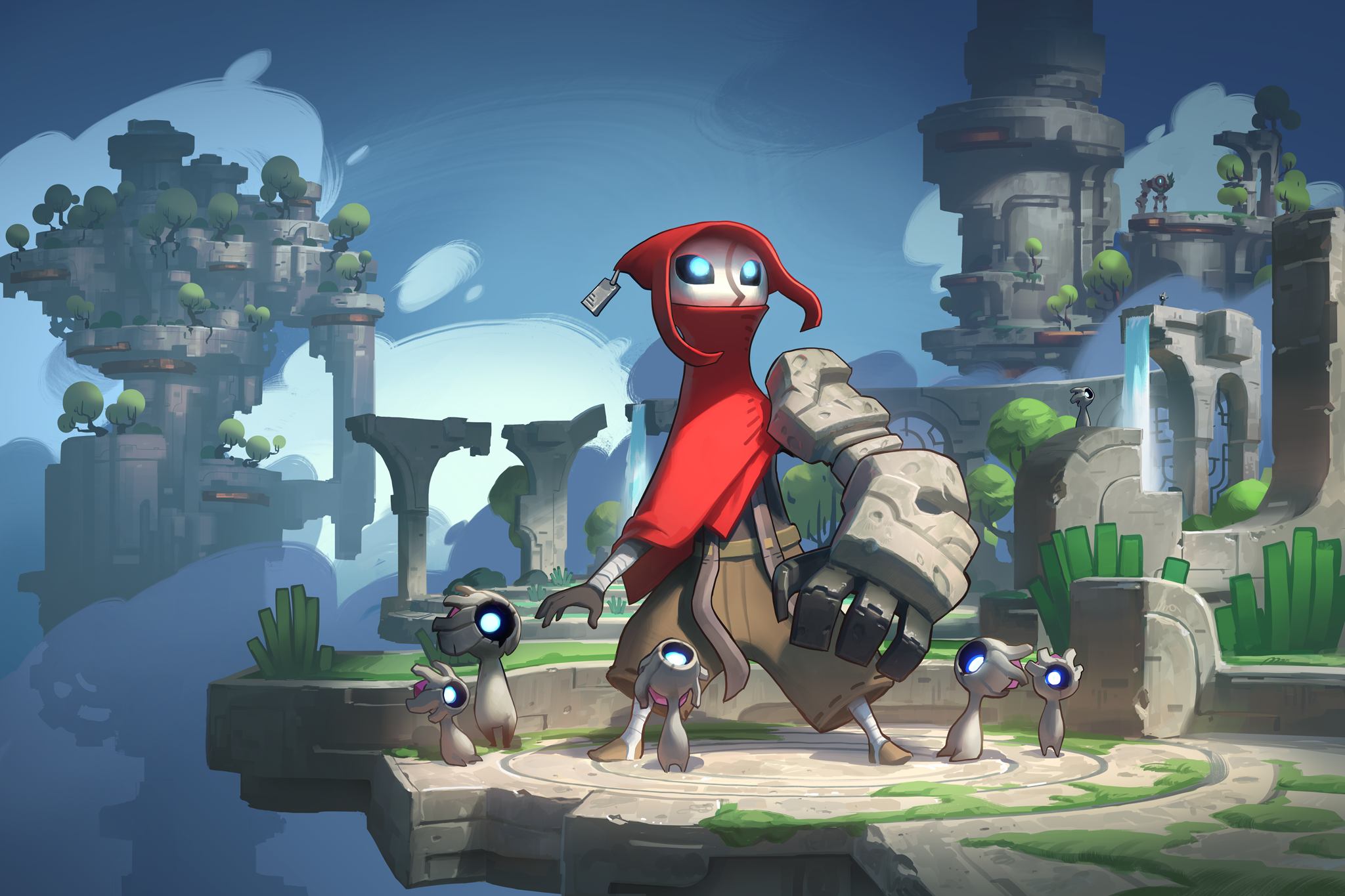
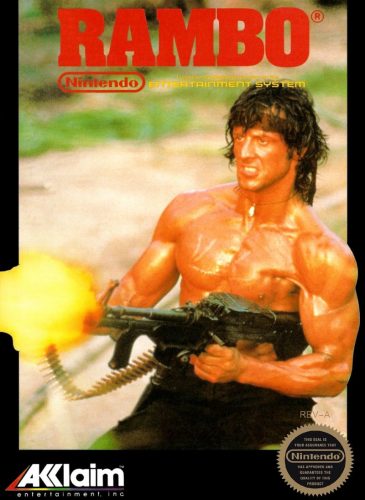

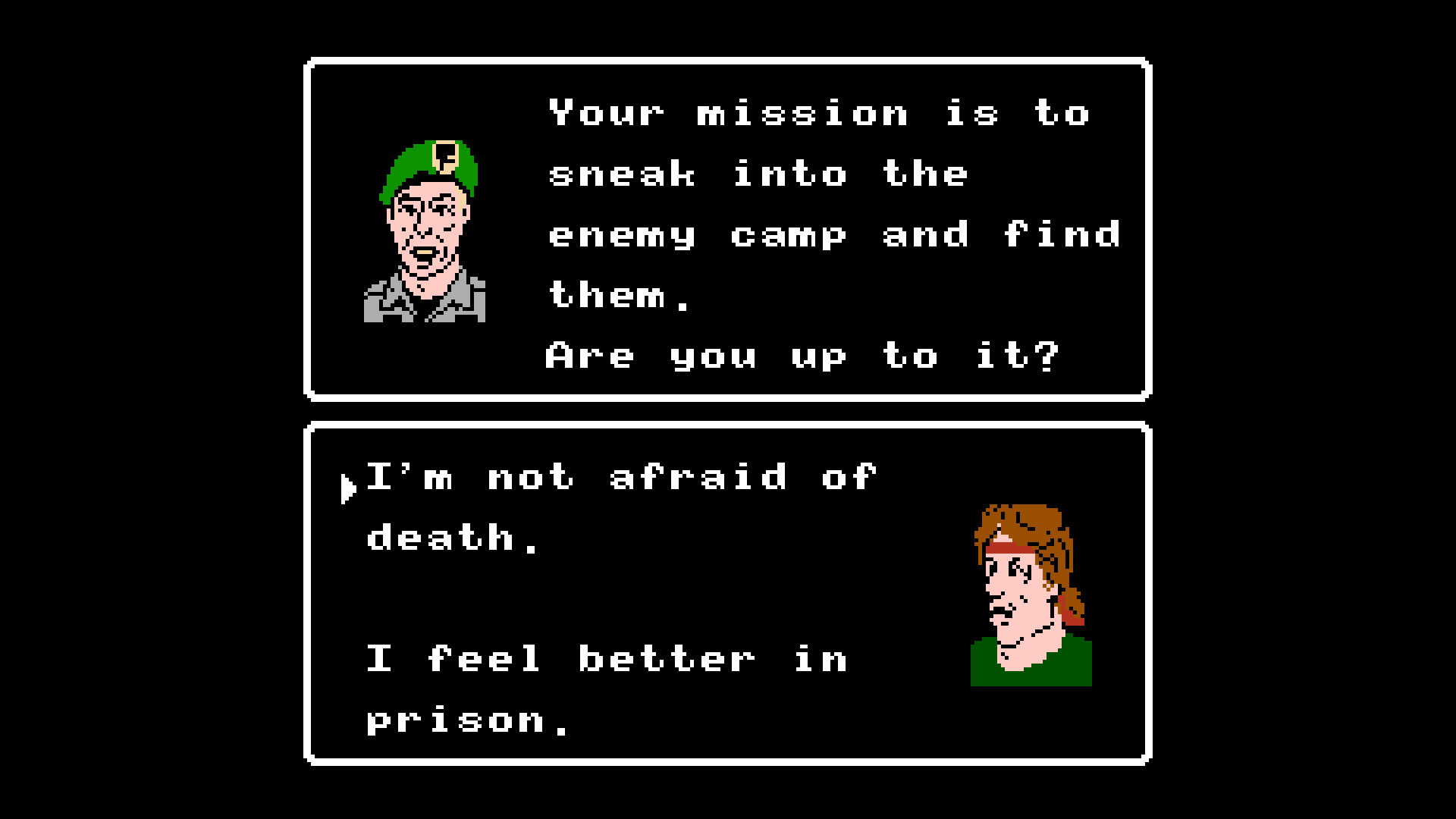

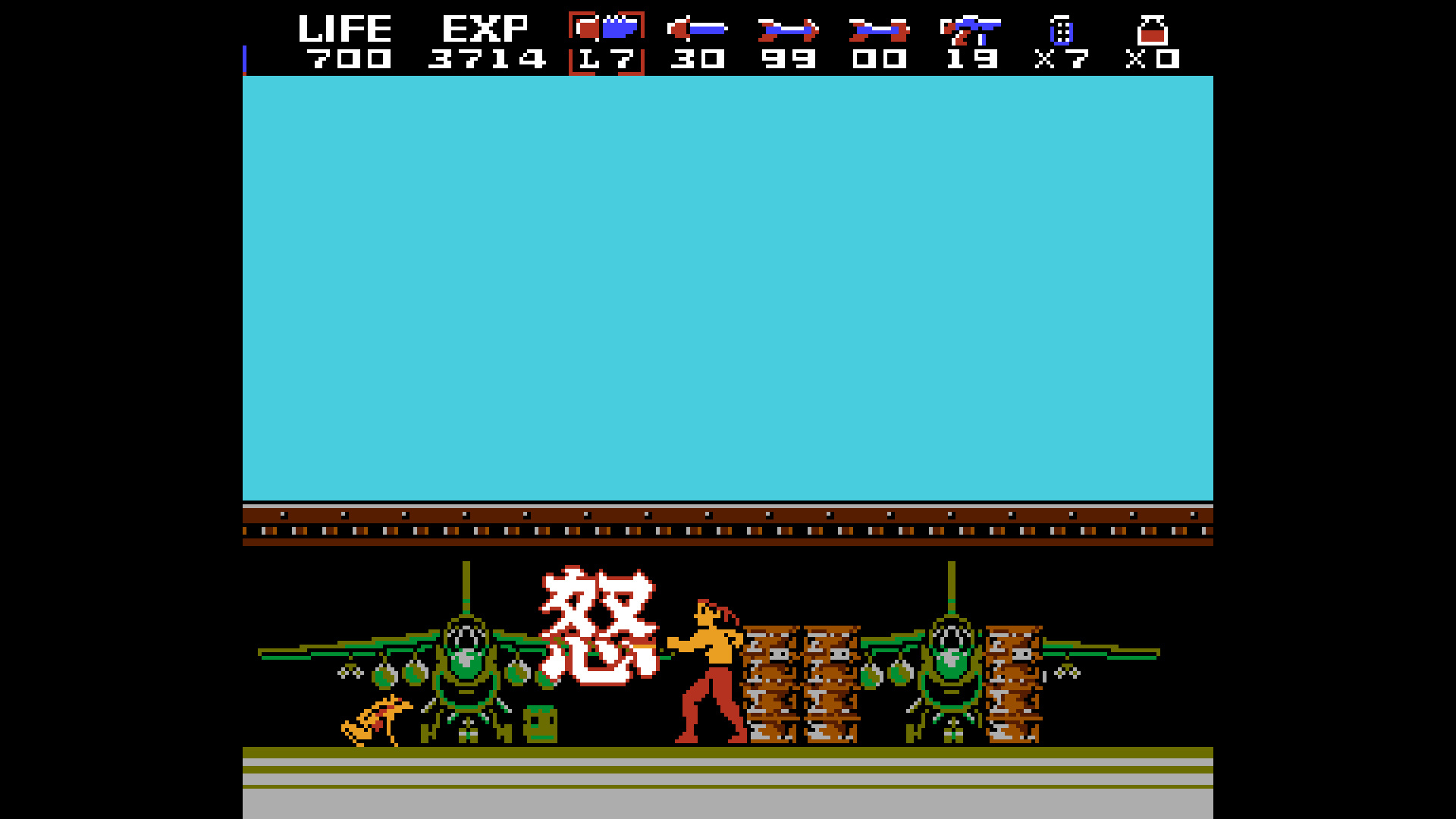


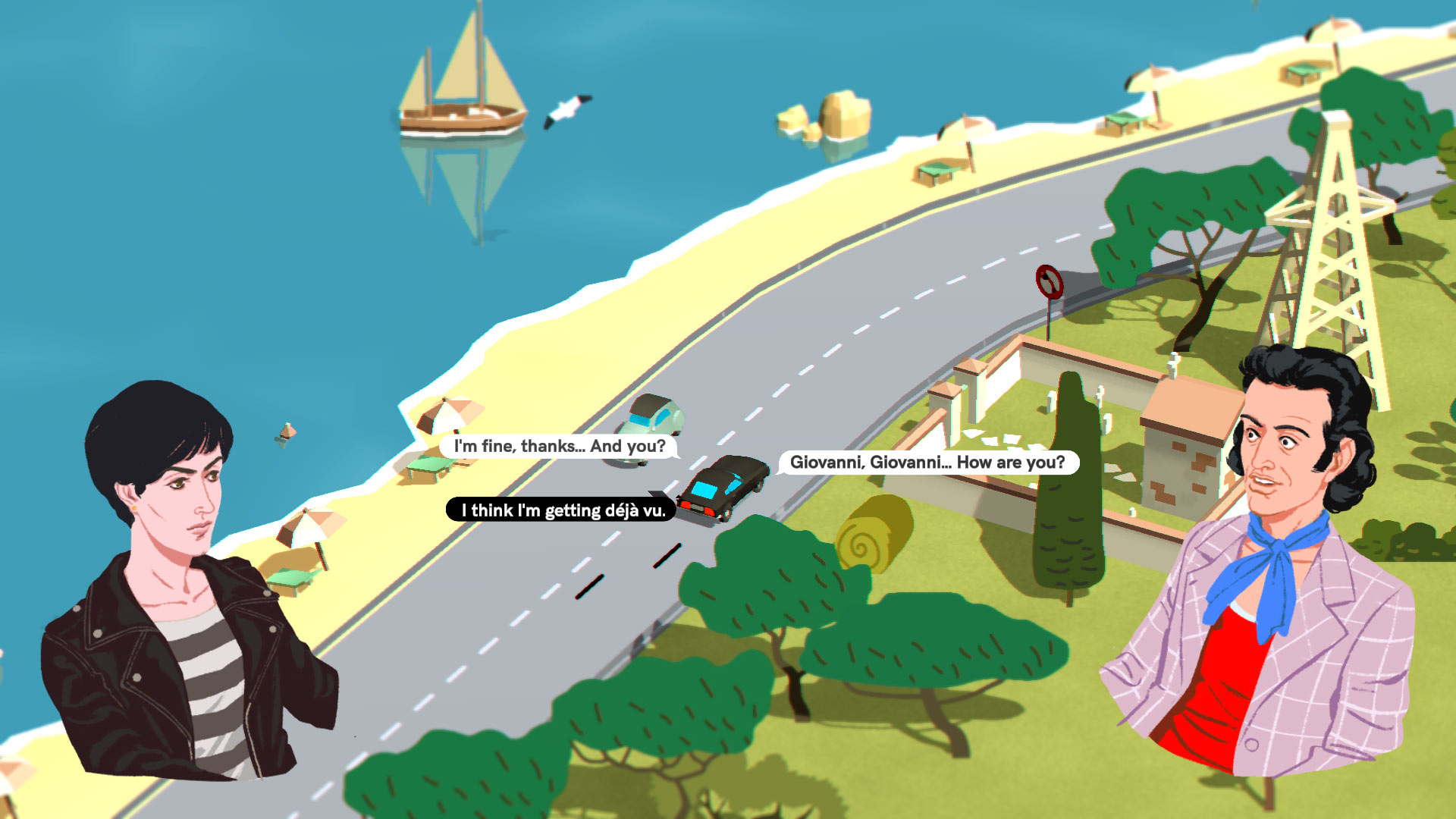

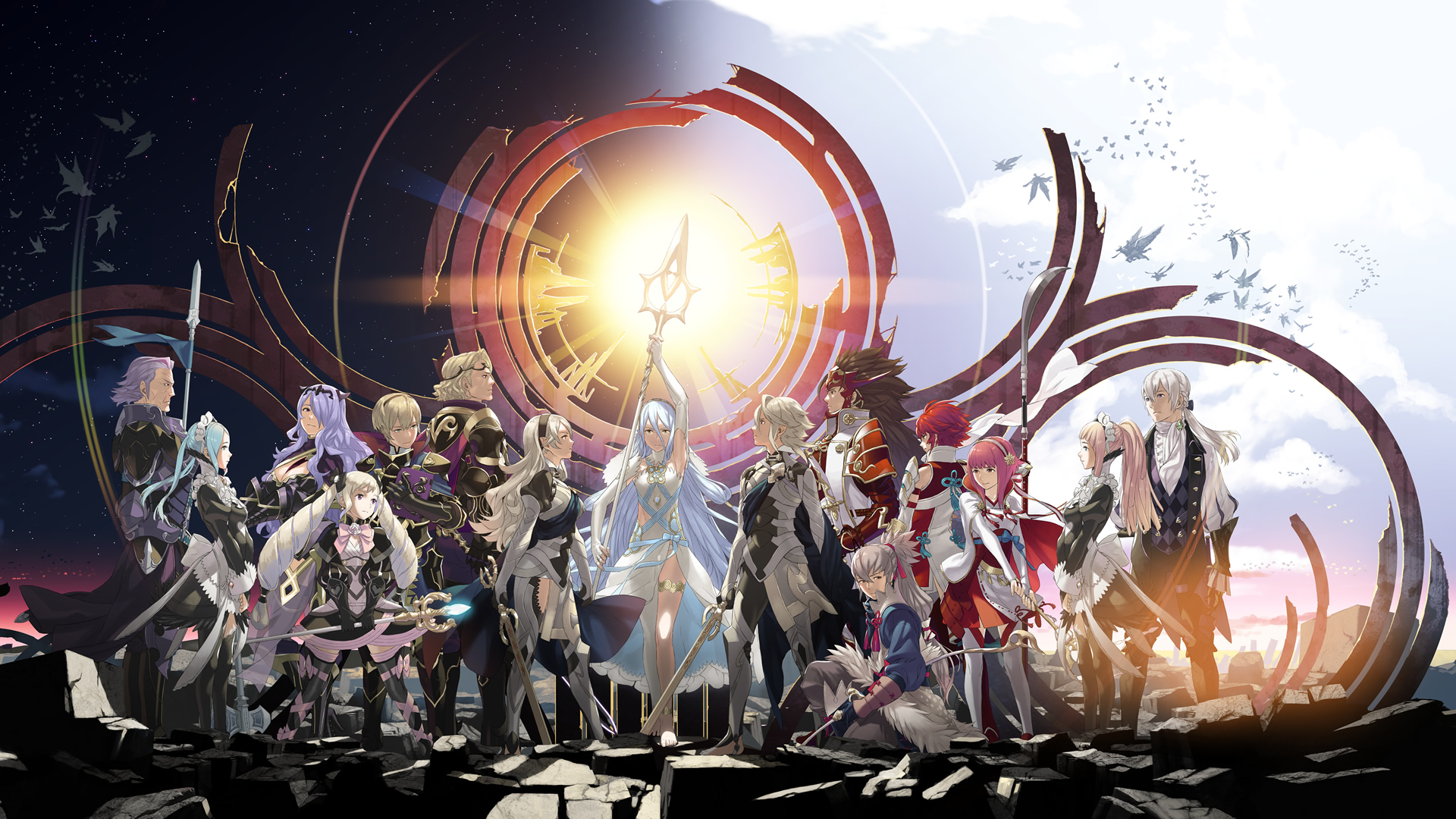










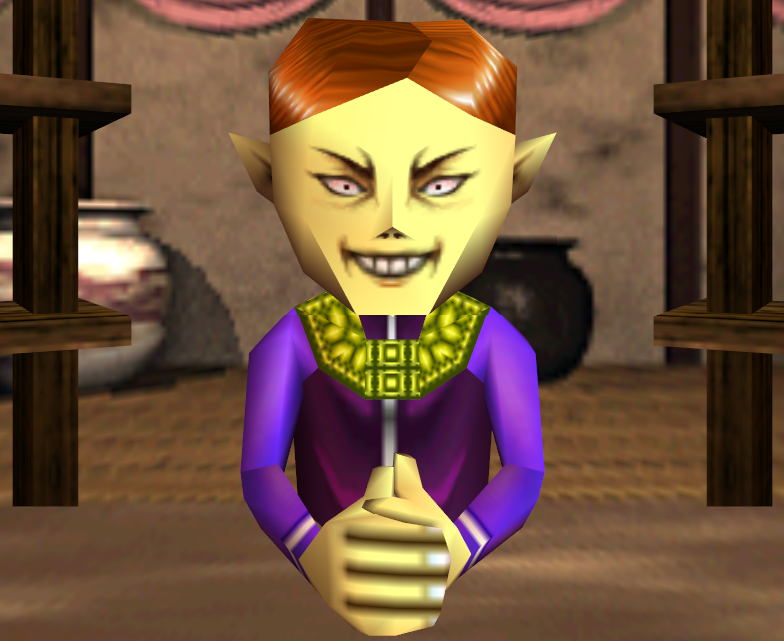

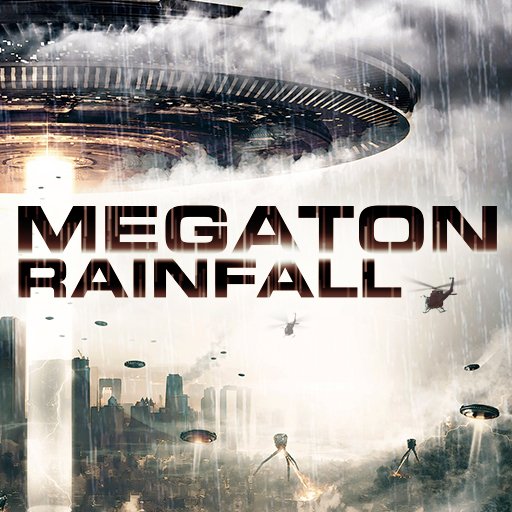


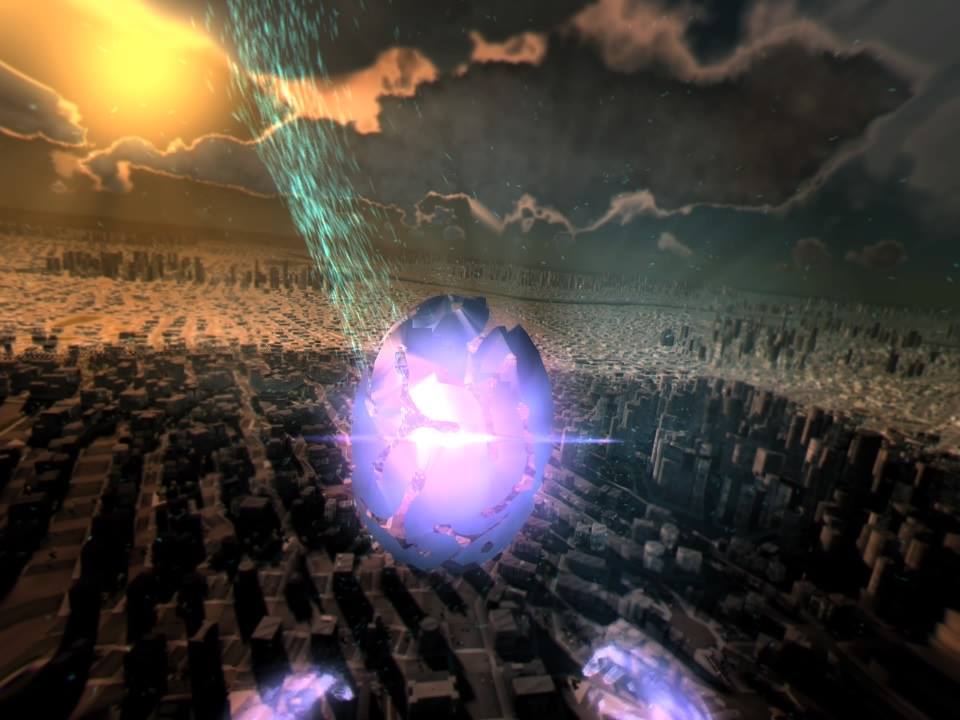
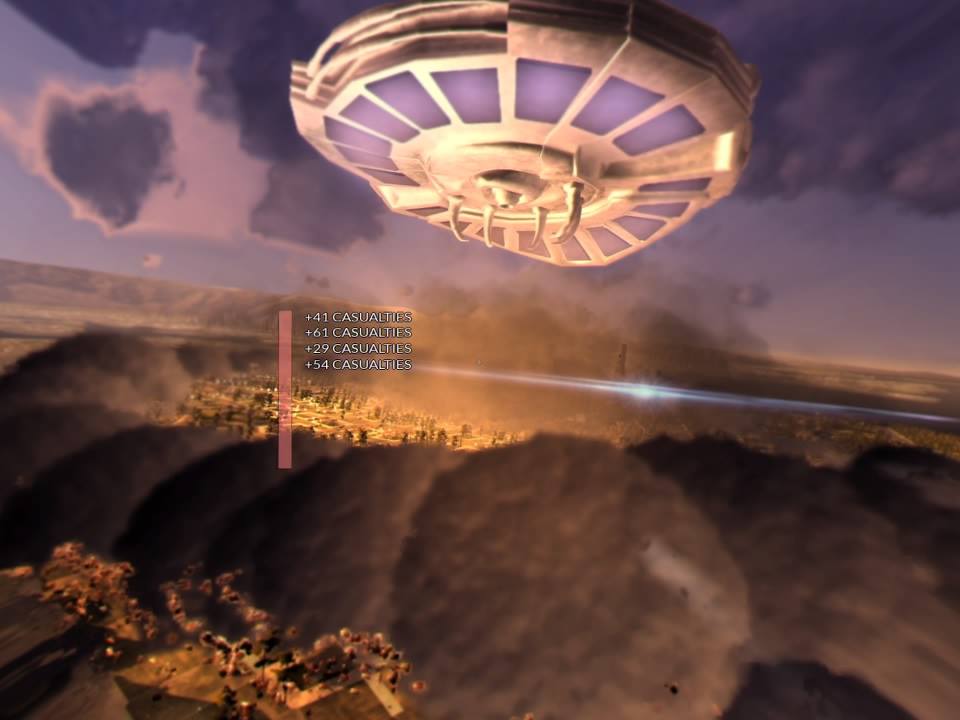







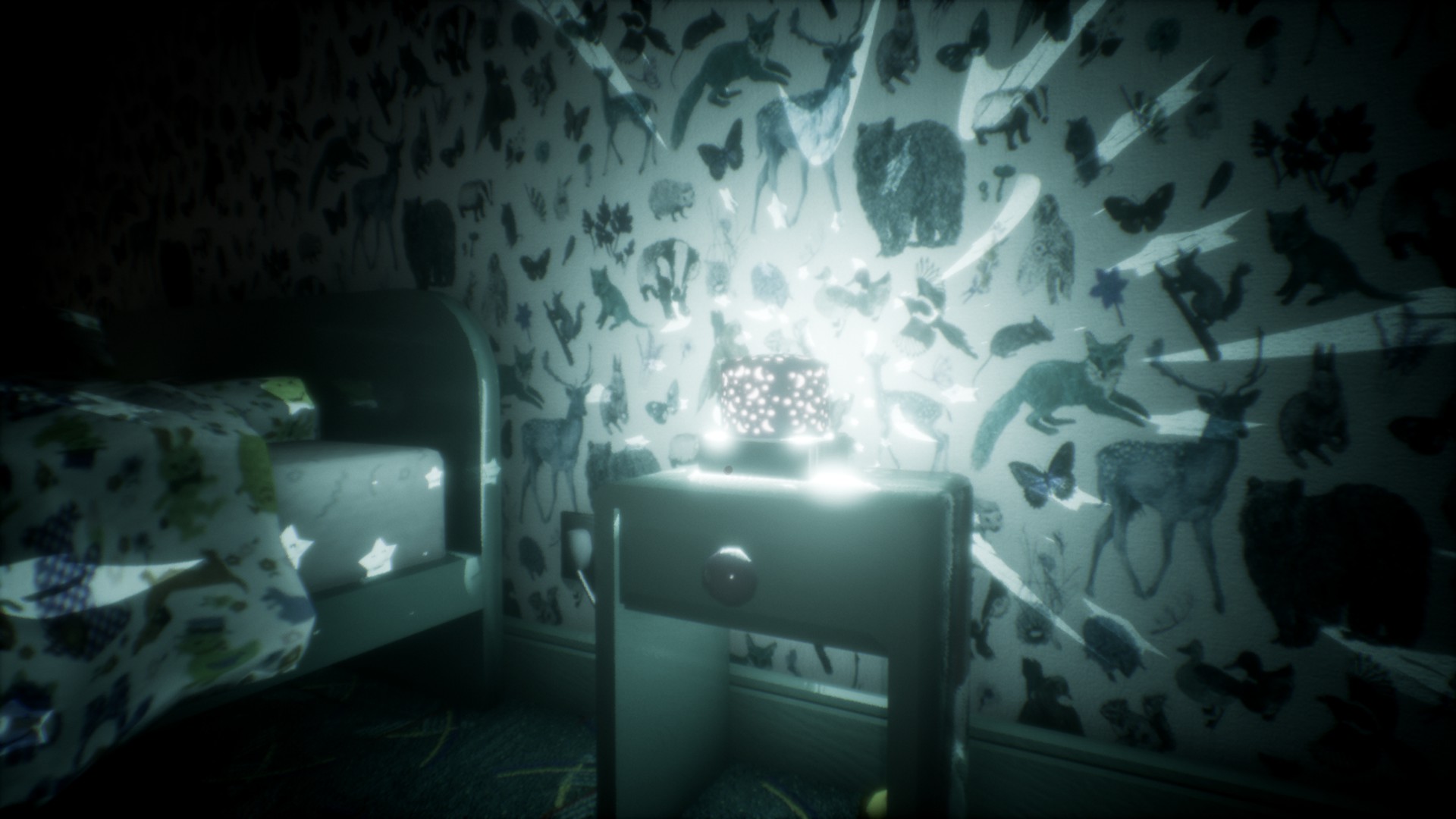
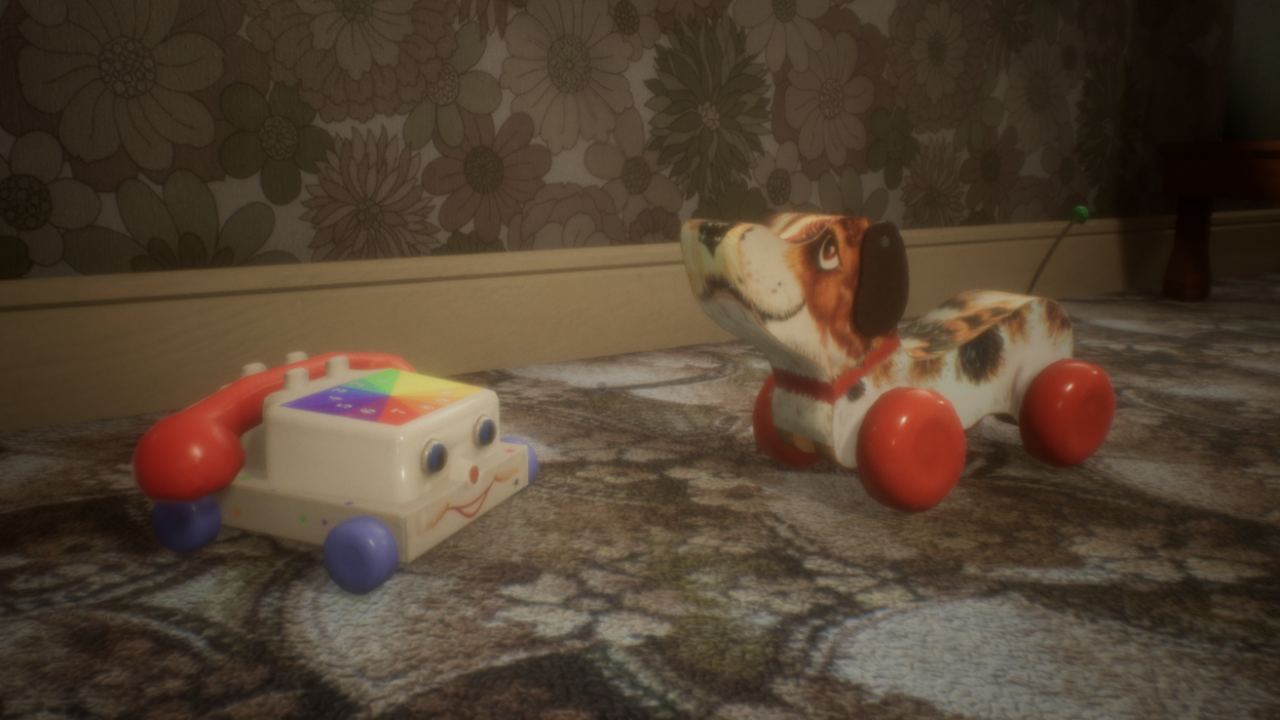


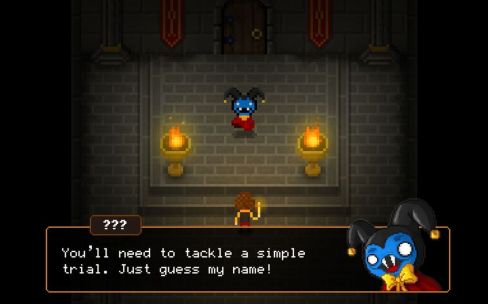

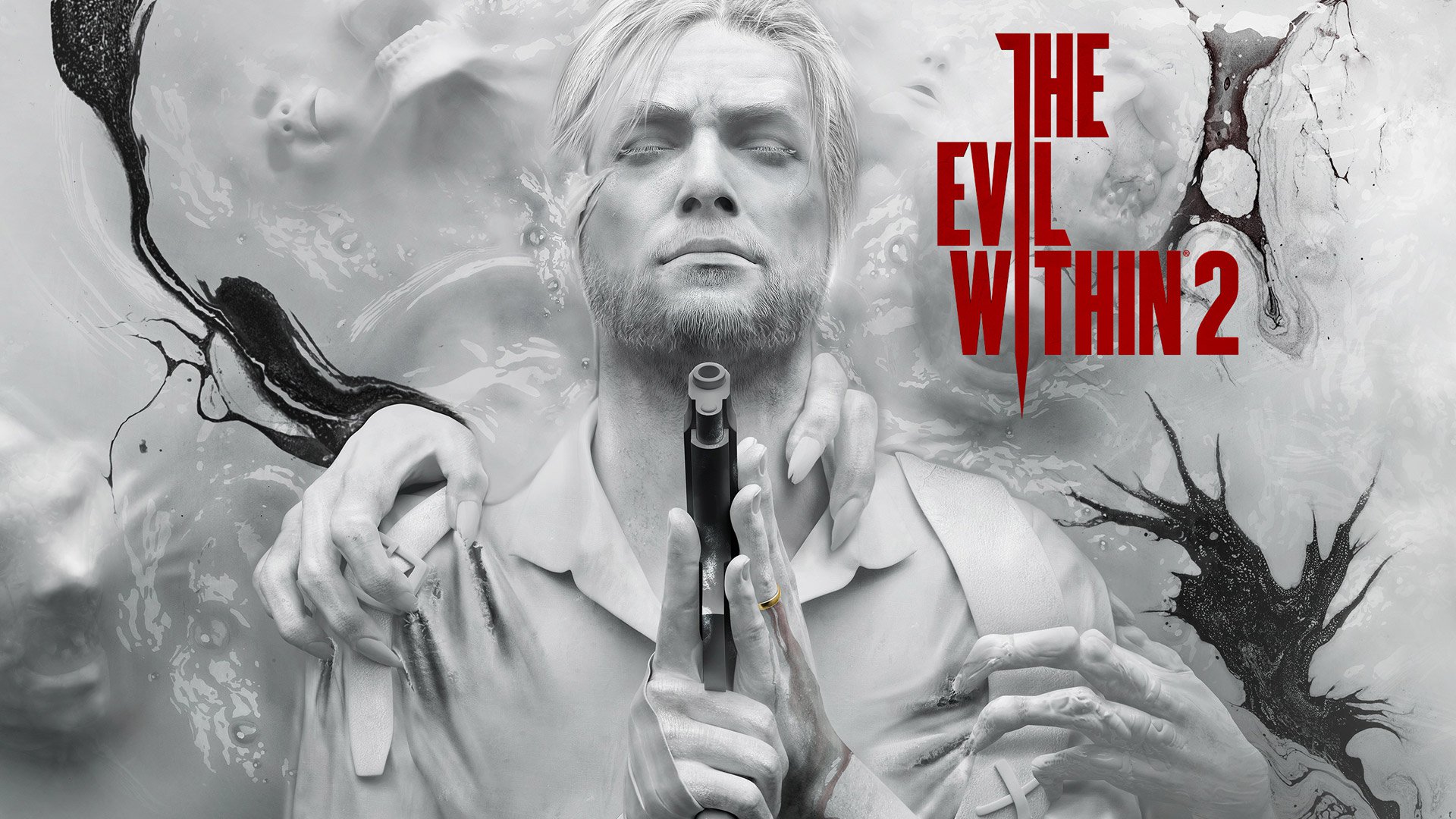

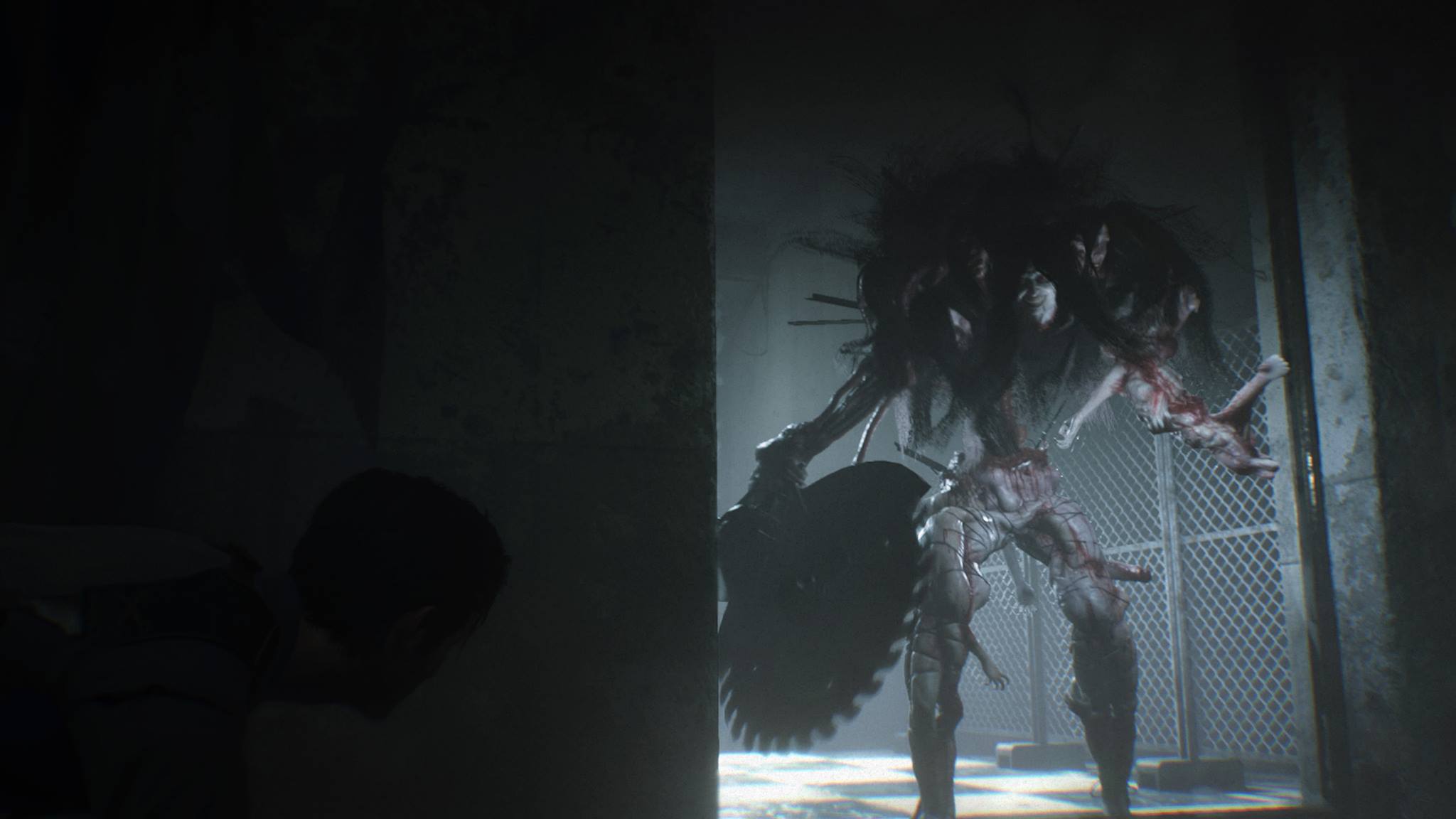
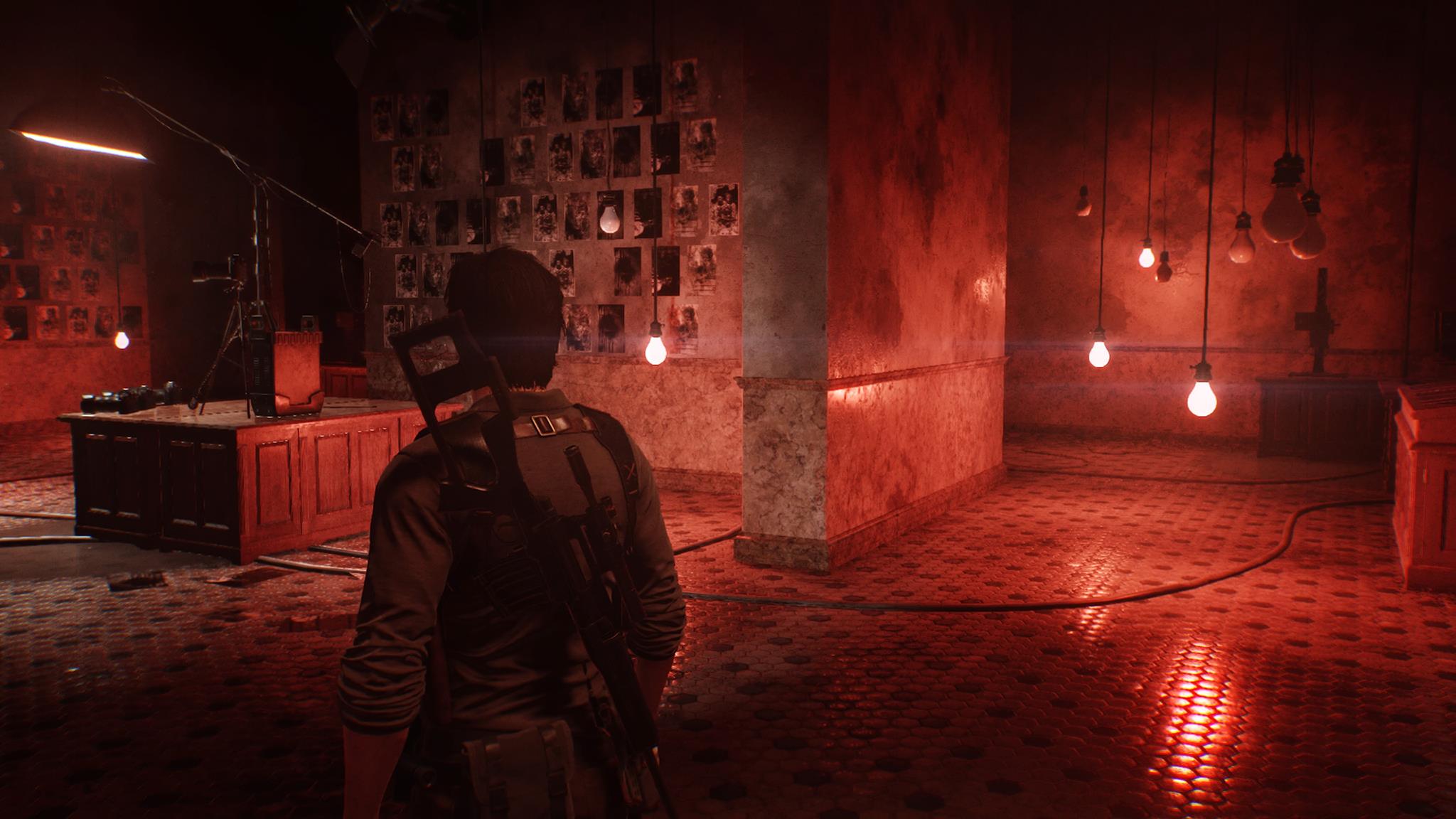


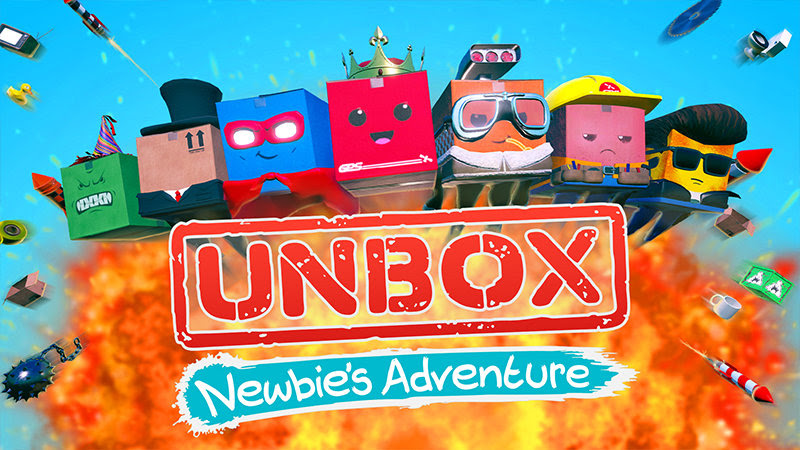
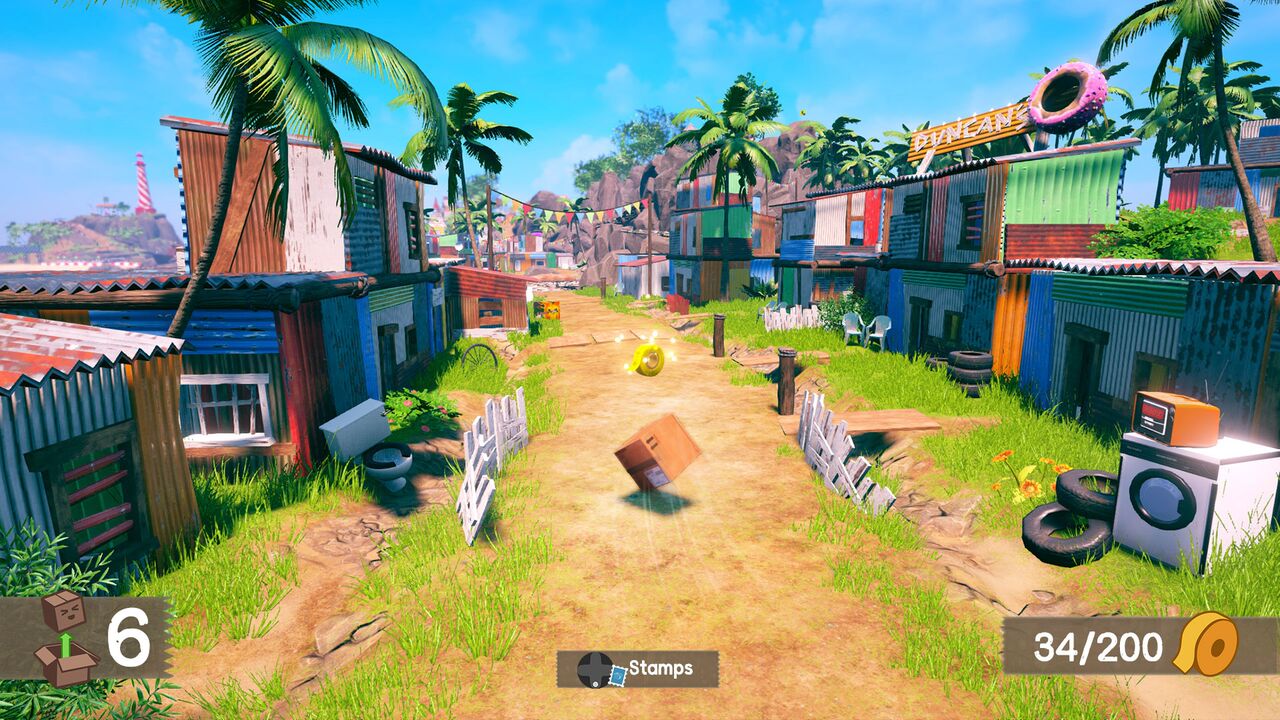
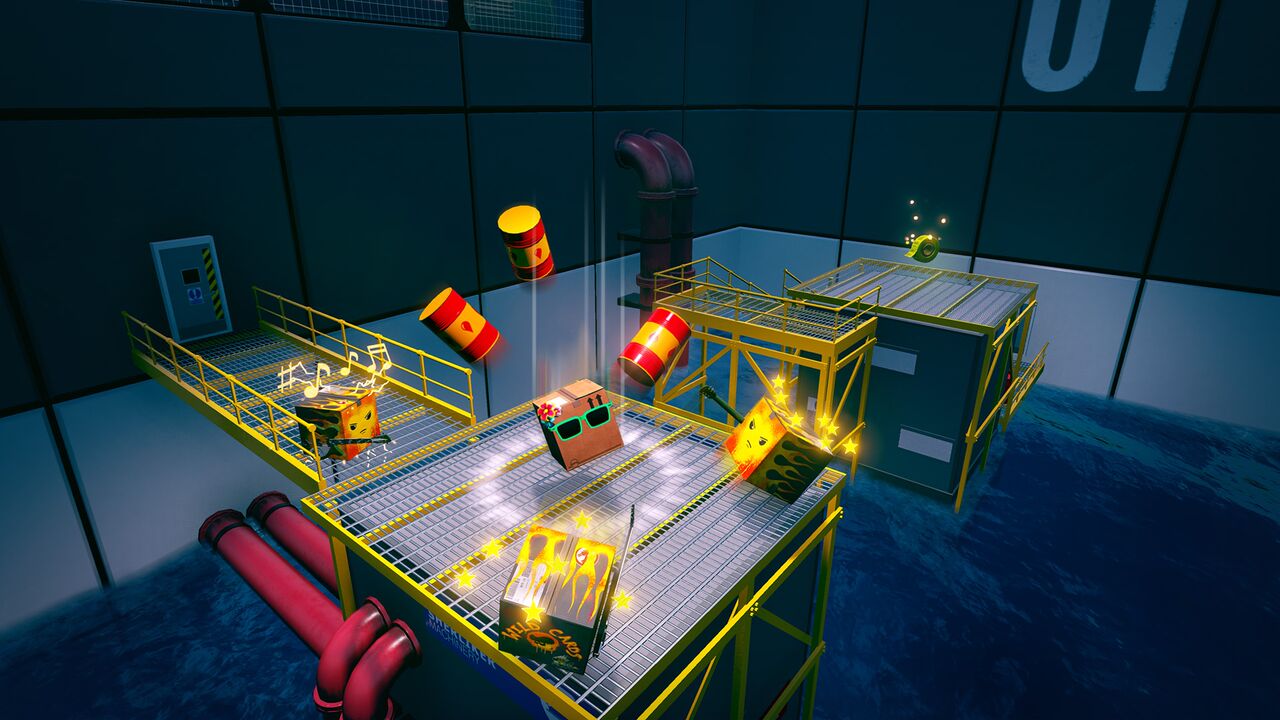


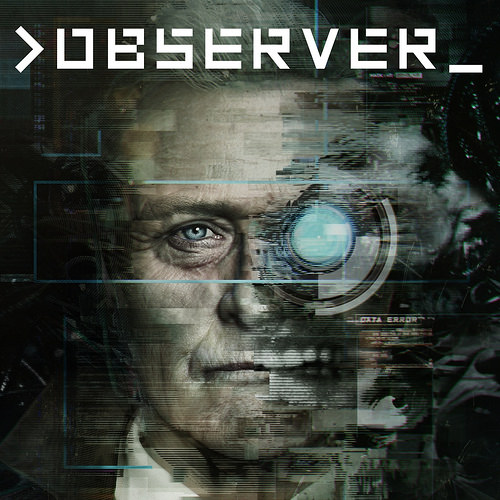
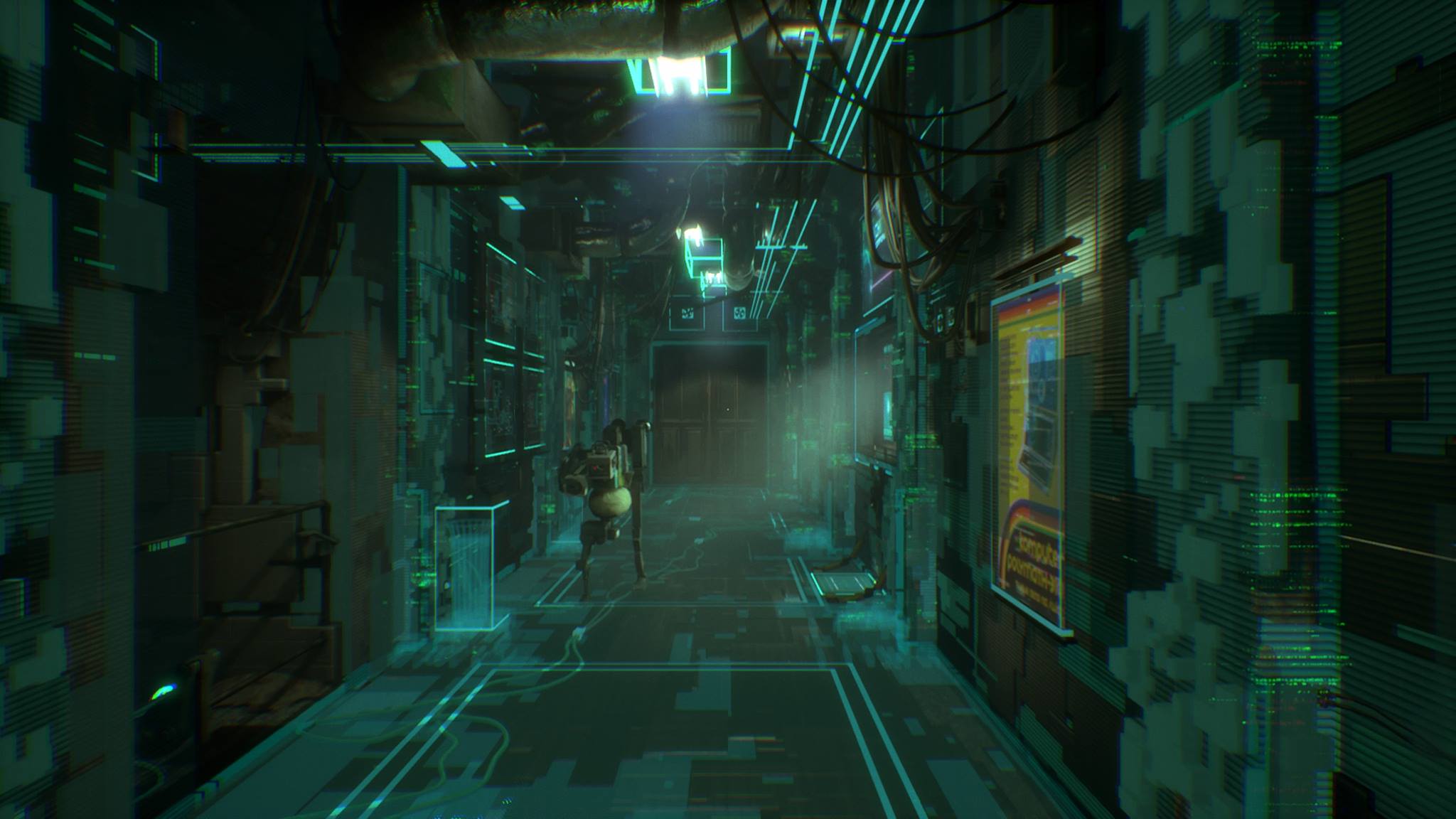


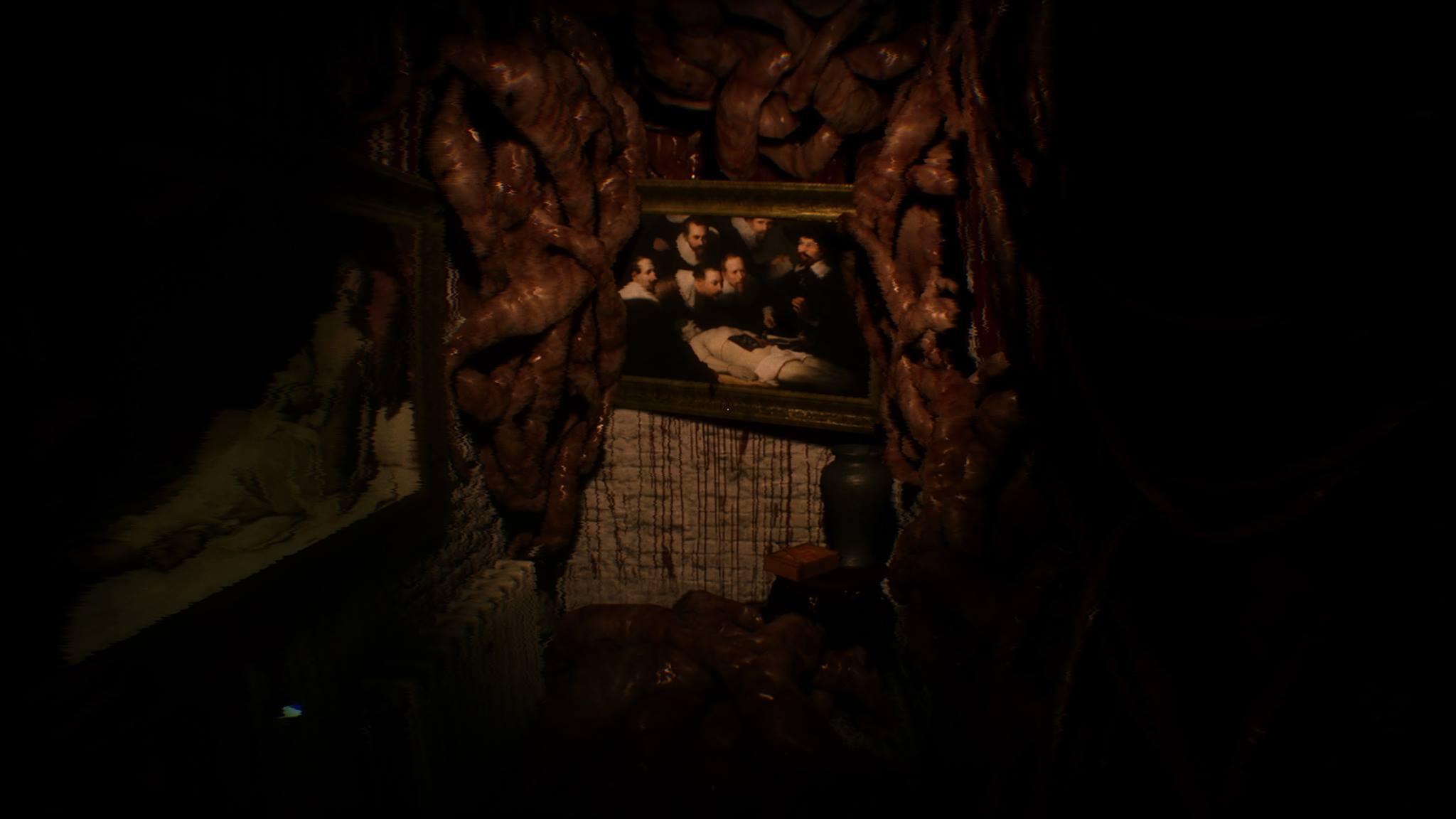

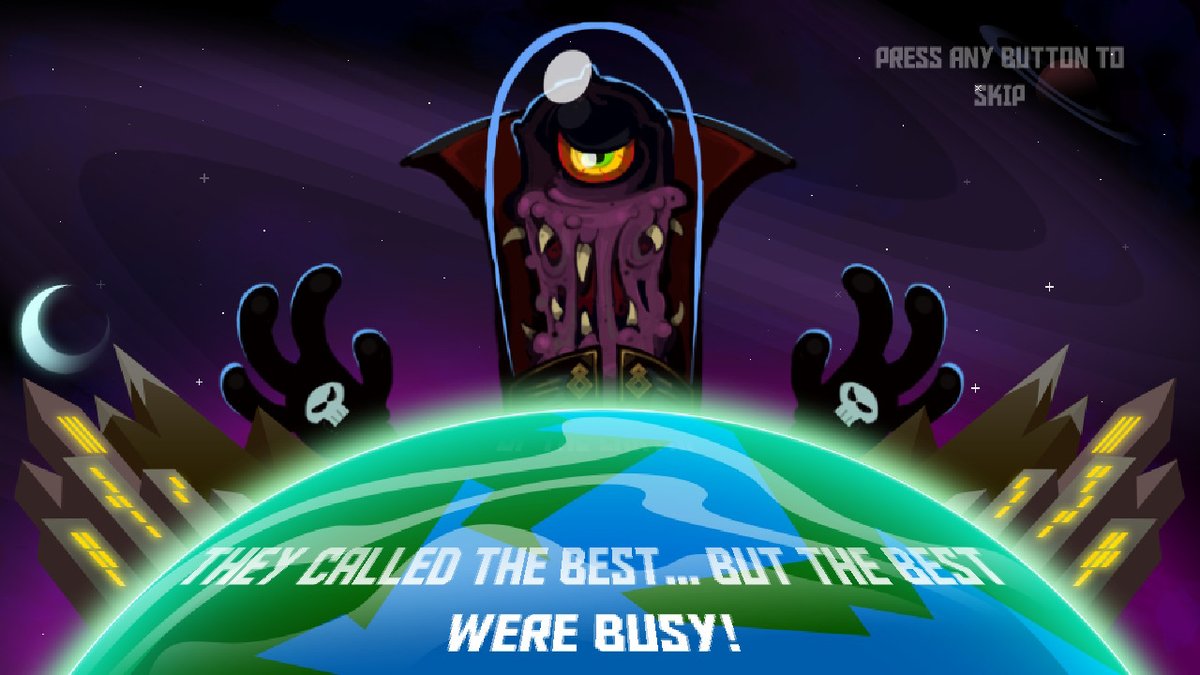






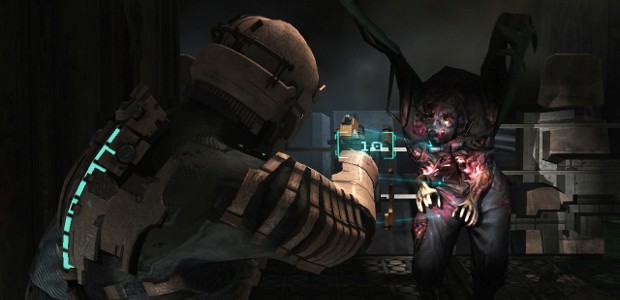











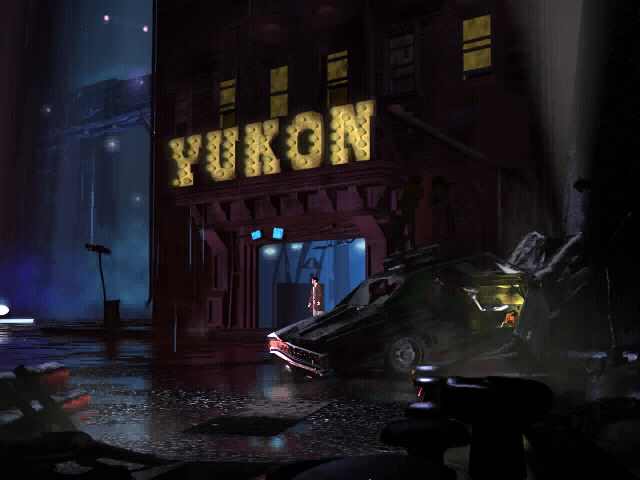


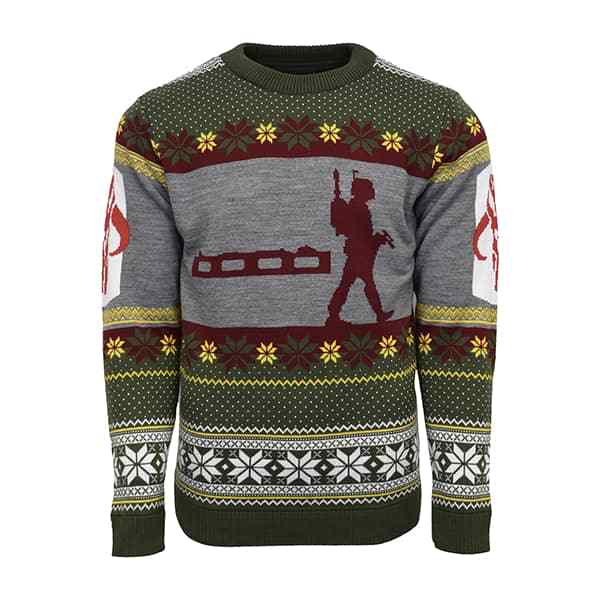

 A MOST AGREEABLE PASTIME
.png)