• Some might say video games are a true oasis

    Some might say that sunshine follows thunder.

    In 1993 the world watched as the apparent dangers of video games on society were laid bare. Even before the video games industry fronted the United States Senate to talk about video game violence there was a steady simmering of concerns about video game violence. But these were the latest manifestation of social misconception and alarmism about what video games – and before that pinball and parlour type games – were doing to social norms. 

    Mortal Kombat may have been the tipping point, but video games were certainly already in the firing line, and throughout the 90’s the proliferation of graphic and violent videogames fundamentally changed the perception of what video games could be. For better or worse.

    Looking back at some of the heavy hitters at the dawn of the home console era – Doom, Mortal Kombat, Killer Instinct, Street Fighter II – it’s easy to dismiss these tame depictions of violence as nothing more than alarmism and folly. But it was, as with anything, the beginning of the salami slicing that gave way to modern acceptance of the brutal masterpieces we see today. Without an easing of concerns around violence that we saw during the 1990s and 2000s, we wouldn’t have had the big budget beautiful sci-fi gore-fests like Calisto Protocol, or perhaps even the indie-darlings like Hades.

    Video games were scary to some for a period there. But we walked long enough and far enough, that we indeed got to some place, a place where fear for the most part evaporated and gave way to acceptance.

    What’s old is new again, though. With great power competition hitting the evening news more than some of us would like, technology is the enemy anew. Renewed interest in the potential damage of emerging gadgets and widgets has countries (and people) closing their borders, locking their doors, and hiding their loved ones in something not that unlike King Henry VIII’s reformation. Ask any national security inclined folk what they think of the ground China has made in advanced technology – or even games with the increased prevalence of mega corporation Tencent -and you’ll likely get the same response. The world is on fire.

    It’s hyperbole, sure, but you’d be forgiven for thinking the world is indeed on fire, and that technology is absolutely the enemy.

    Video games should, for all intents and purposes, be the good guys here in this tale of high technology. Even though there are games that I find too violent, without substance or taste, or just plain objectionable, I never feel as though they’re a threat to the very fabric of humanity. Fortnite, for example, may be a distilling of everything that rightly gives capitalism a bad name, but even in that case it’s the business model not the game itself that’s giving rise to social harm.

    That’s the key phrase here – social harm. If a bad video game proliferates, what are the actual harms caused? If the business model is predatory that is area that should be subject to critical debate, not necessarily the pixels and polygons.

    Critical debate is a subjective term, of course. And with the fears over violent video games largely abated – at least in popular and mainstream discourse – there was always going to be a next target. And so despite the lack of actual harms there is more hostility, suspicion, and criticism levied on video games and their creators than ever.

    It is perhaps a sign of the times that critique has been trumped largely by criticism. They’re not mutually exclusive, of course, but constructive and artful critique can and often are drowned out amongst a sea of hyperbole and idiocy.

    But that critique, discussion, exchange, and community around video games is still there – and if you look in the right places, video games are indeed a most agreeable pastime.

    The wonderful Two Point Campus and its predecessor Two Point Hospital are excellent abstractions of the absurdity of public sector service management with a healthy dose of dry British wit. The larger-than-life tales of debauchery and friendship in Ryu Ga Gotoku studio’s crime epics are wonderful explorations of the human condition. And there’s still the wonder of revisiting classics from yesteryear that, whether it be the Bitmap Brothers pixel masterpieces or the weird-in-retrospect Wario Land games, remind us just how far we’ve come and how far we still can go. From accessibility for all to the stories of minorities or culturally or gender diverse people being shared with the world – video games are an important part of humanity’s story.

    So here we are, 30 years on from the events that gave rise to games ratings writ-large, and with the world crumbling under the weight of unabated technological advancements and the spectre of great power rivalry, video games are truly a bastion of hope for technology. An oasis for artistry, narrative, and exploration for the human condition. There is no consumer device on the planet that can – unbound from pangs of nostalgia – fundamentally alter how we view ourselves as a species. But it is the one thing that art in all its manifestations can do, irrespective of how it’s delivered. Whether video games are art is almost irrelevant. It’s the fact that these expressions of who we are and what we can be, however fantastical, that make video games a true comfort.

    Video game violence for me here, really, is just the vehicle to discuss change. To explore the nature of fear and how we as humans can easily find ourselves feeling as though we need to defend ourselves. But look beyond the artificial conflict and video game are a uniting factor. Whether it’s the camaraderie some find in the technology behind games, the unabashed love for years gone by, or the sheer joy of discovering new worlds with those we love and care about – video games are something to cherish and treasure. And with that it’s good to be home amongst friends.

  • Random Access Memory: Starquake

    Welcome to a new series, Random Access Memory, where we delve into our collective unconscious and extract recollections of video games from our dim and distant past. And welcome also to Graeme Currie, who pilots us on our inaugural journey, as he remembers the 1988 Atari ST game Starquake. If you’d like to submit your own memories of a cherished game, get in touch via the Contact form at the top of the page.

    We will focus on the Atari ST version of Starquake, as this is the one I remember well, although there are many other ports of this game, and all are somewhat similar to each other. When I first came across Starquake I was very young, and I found its highly colourful graphics fascinating, with each room splashed in a different hue. I loved exploring all the various places, but would eventually end up losing all my lives: I didn’t understand the main objective, I just enjoyed exploring and trying to get to places or rooms that looked cool.

    Recently I played the game again, and I finally understood what the mission was. You have to deliver nine items to the core, but first you have to visit the core to determine what to look for. At the start of each game the items are randomised and scattered across different rooms; but there’s also another way to get items, by swapping unwanted ones at the Cheops pyramid, which can be activated using the Access credit card (remember Access?). You can only carry four items at a time, and whenever you pick up a fifth item, the first item is dropped onto the ground.

    There are a lot of enemies to watch out for that will try to kill you on sight, and certain places are impossible to reach without using hover platforms, which allow you to fly. However, when you are on the platform you cannot pick up any items; so to grab something, first you need to dismount from the platform at a docking station. Another thing is that there are teleport booths located throughout the map, and each area has its own code, so it’s best to keep a paper and pen handy for jotting down numbers.

    There are many other things to consider as well, like your health meter and your weapon and energy meters: make sure those don’t get too small, or you will be in big trouble. Also, there are extra lives dotted around the maps, and if you see one life, there are usually more to be found nearby. These little caches are a big help, as you can start losing lives very fast. But even though it’s difficult, I find Starquake fascinating, and I remember liking the way that the items are randomised, so each time you play it feels like a new game.

    The different versions of the game for the Amstrad, C64, and so on are very much the same, just with different codes for the teleport booths and slightly different colours to the rooms. If I remember correctly, there are around 512 rooms, so it can take a lot of exploring to find the items you need, although of course you can use the Cheops Pyramid to get items that you’re having no luck finding. That said, it’s tough, and I doubt that many people have completed this game – not that I’m trying to put people off playing it. But if you are one of the lucky few who have got to the end, give yourself a round of applause.


    Follow A Most Agreeable Pastime on Twitter and Facebook, if you like.

  • Chained Echoes review: a deeply charming take on classic JRPGs

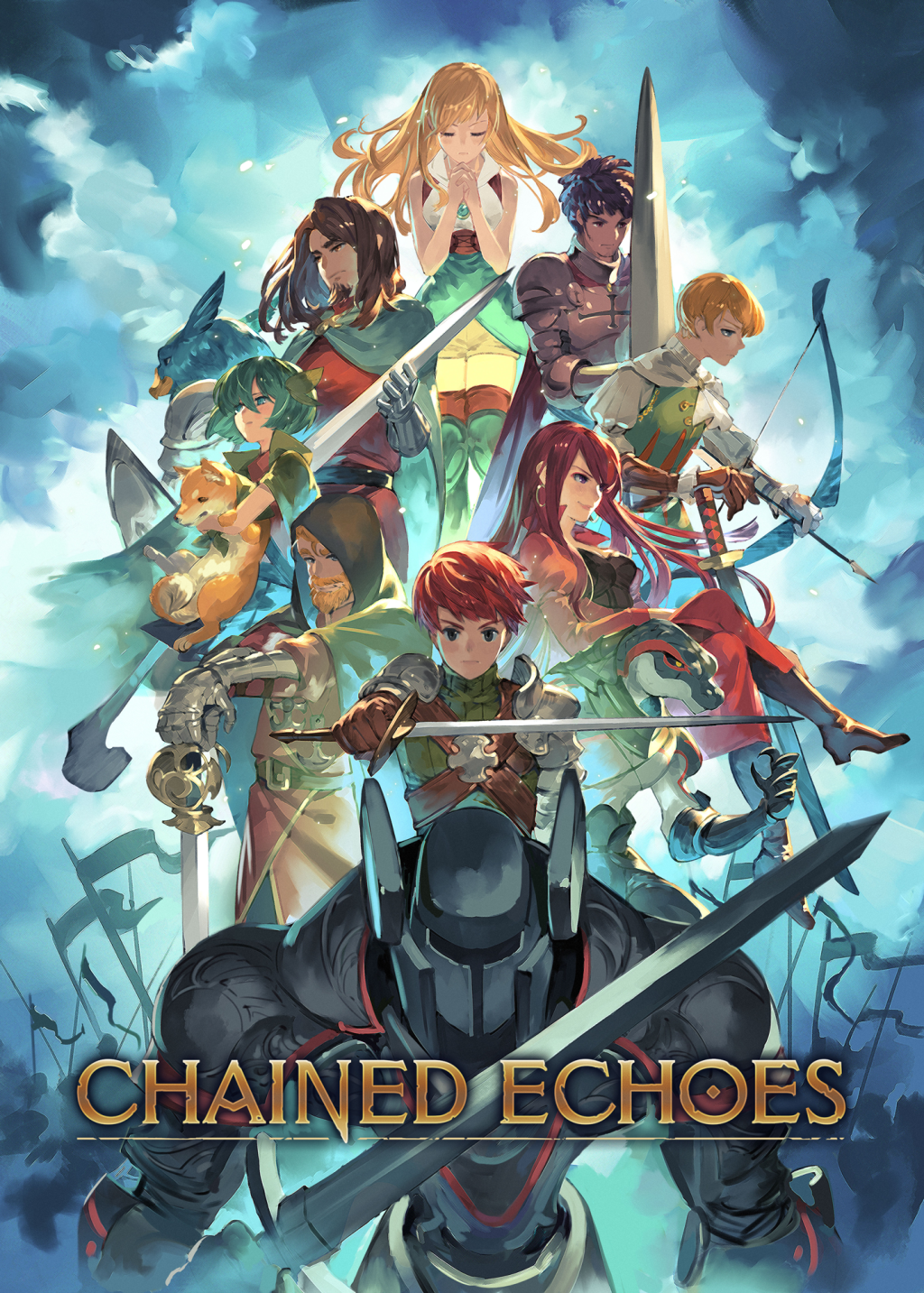
    Believe it or not, it’s really tough to find a solid retro-inspired Japanese role-playing game these days. With the exception of the Dragon Quest series, most games have moved beyond the active time battle system, chibi-looking heroes and classic tales of good versus evil. It’s to be expected, because much like everything, the genre had to inevitably evolve. When I do see independent or even middle-of-the-road publishers try to capture the magic of the 16-bit era, they are mechanically mundane, lean too heavily into anime tropes and are, for lack of a better term, utterly soulless and devoid of charm. And then this lone German guy named Matthias Linda rolled up and made the thing I was looking for. Pretty much all by himself, at that.

    Everything about Chained Echoes harkens back to something familiar; the plot points, combat system, Easter eggs and soundtrack all remind me of a more magical time in the genre, when these types of game would send my imagination soaring. That’s not to say it doesn’t try to do its own thing; as I’ll get to in a moment, the combat provides a nice layer of depth above and beyond your traditional battle system, among other things. You just don’t realize it most of the time because it’s so engaging that it just melds into the familiar, as if it’s been there all along.

    The only weakness in the entire experience is actually the plot the game wraps itself around. A fragile peace has finally been achieved in a world full of war, and someone wants to nix it all because that’s the way any culture works, it seems. You’ll bounce around between a handful of protagonists at first as their individual stories bob and weave into each other and you inch closer to the climax. Even though it is stock standard, it’s still an enjoyable romp that’s just bereft of any true surprises. The dialog tends to be a little dry and lacking in enough personal heft to make the characters truly lovable beyond their combat prowess, which takes it down a notch. But when everything else about Chained Echoes is so spectacular, it’s pretty easy to overlook the less polished parts.

    For me, the most important element is the wonderful world Linda has crafted for players to explore. It’s full of this heavy attention to detail that late-era Square games like Chrono Trigger and Final Fantasy VI had that made them so memorable. Cities are busy and packed with people, lush parks and dingy alleyways; forests have swaying trees and meandering wildlife. For the most part, running around the world is a linear thing, but there are plenty of hidden paths and crannies you can poke into to find far-off treasure that just sits there, begging for you to figure out how to reach it. I find it both charming and exhilarating.

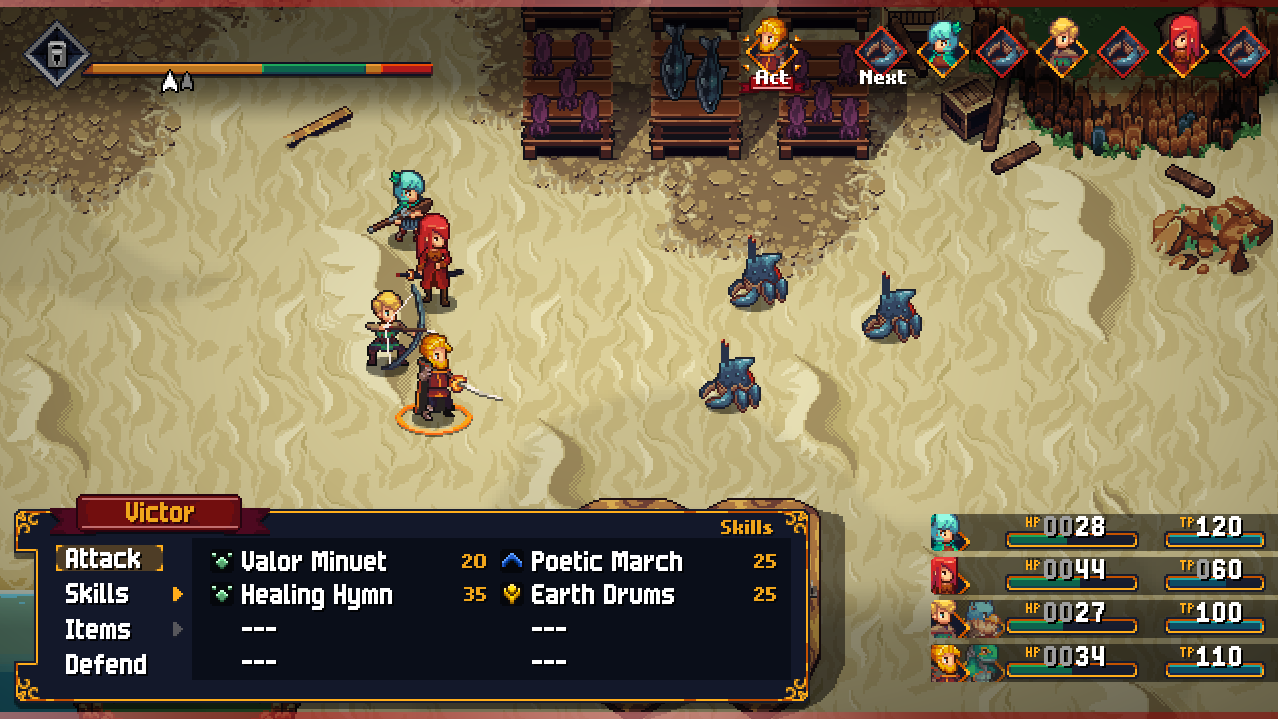
    In between those moments of gawking at landscapes are some of the finest RPG battle systems I’ve delved into in a long while. It’s a turn-based affair, where speed stats dictate which player or enemy takes their turn bashing at each other until one triumphs. The curious thing is that everything gets reset after each match, which turns off the mindset of hoarding powerful moves and whatnot, and instead lets you focus more on the battle at hand. Everything has its own traits, so there are a variety of strengths and weaknesses you can freely exploit without holding back. Furthermore, as you continue battling you’ll find that your party will synch into a Zen mode where as long as you keep an arbitrary meter leveled, everything you do has an increased effect. However, you can overload the system, so you need to use moves that will “cool down” the effect and keep you in the sweet spot. I can’t remember the last time a combat system like this has been so engaging that I even maintained my focus on battles against grunts, so kudos to Linda for making it so.

    There’s more minutiae that I could ramble on about, from the occasional mech battles to the wonderful homages to classic JRPGs. But I’d rather just sell you on Chained Echoes being an extremely solid experience that will simultaneously remind you of games of yore, while adding enough new ideas to make it feel exhilaratingly fresh.


    Chained Echoes was developed by Matthias Linda and Deck 13 Spotlight, and it’s available on PS4, PS5, Xbox One, Xbox Series, Nintendo Switch and PC. We played the Switch version.

    Disclosure statement: review code for Chained Echoes was provided by PR Hound. A Most Agreeable Pastime operates as an independent site, and all opinions expressed are those of the author.

    Follow A Most Agreeable Pastime on Twitter and Facebook, if you like.

  • Onion Assault review: beast-mode mama

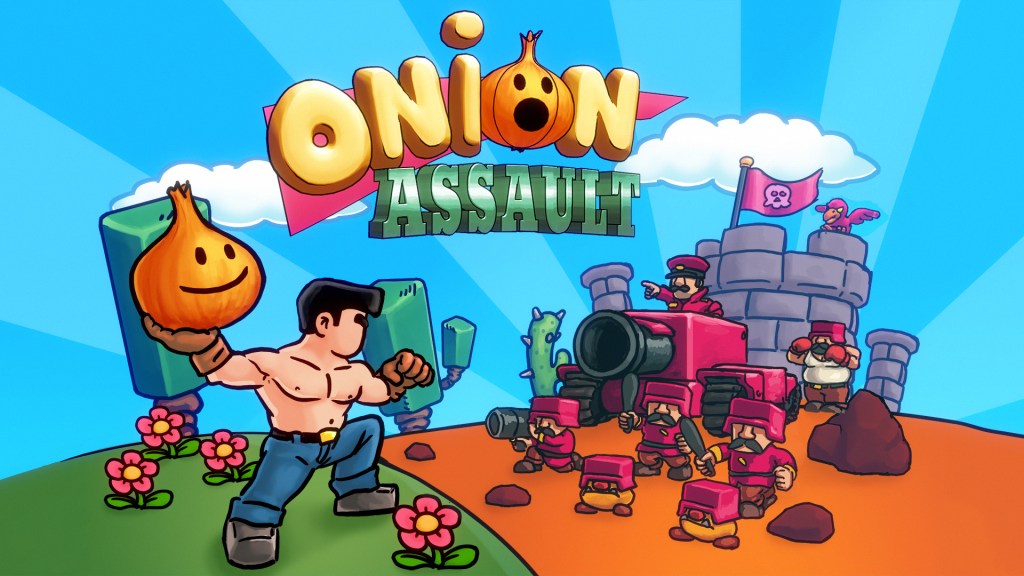
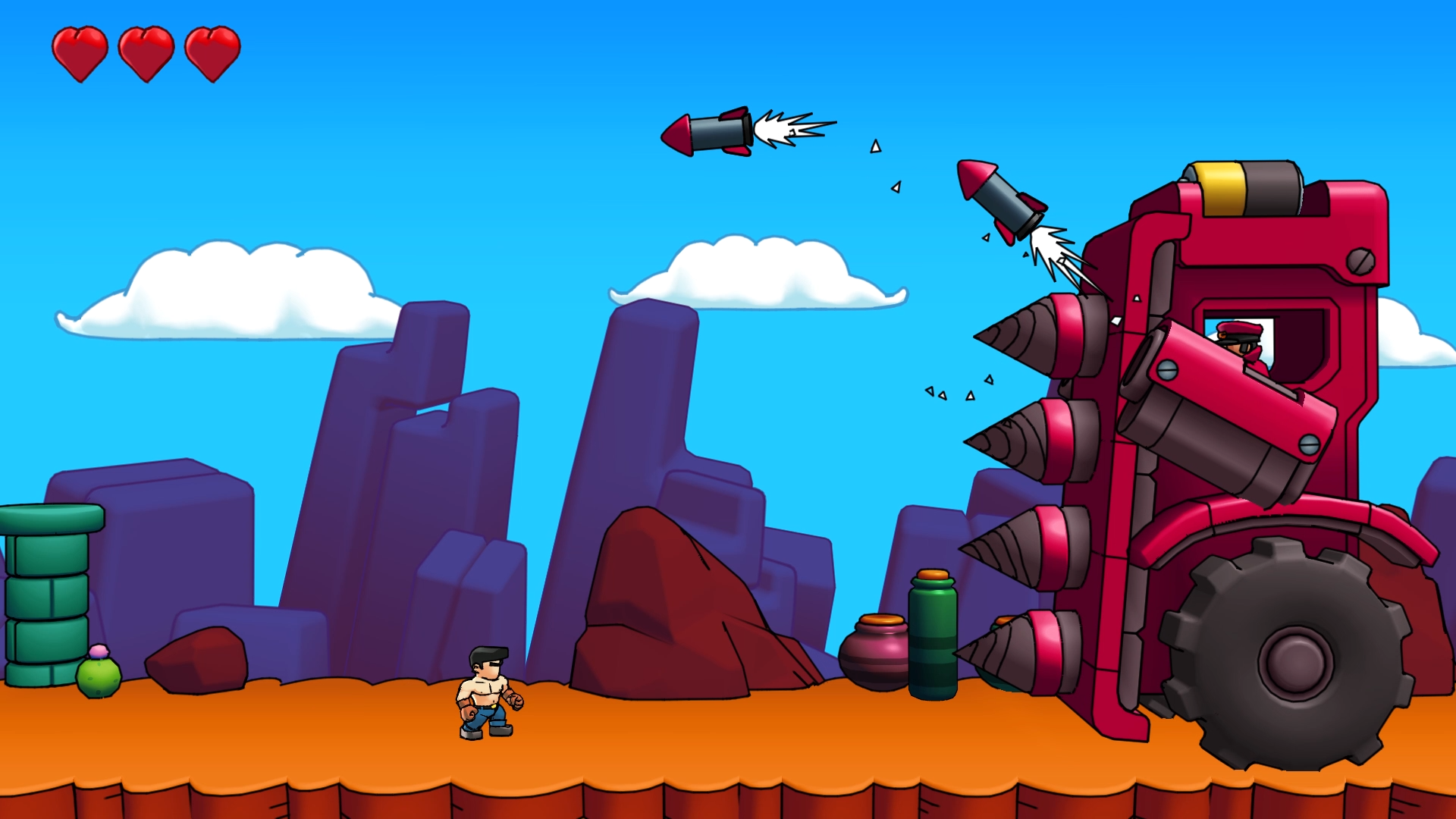
    When it comes to describing Bertil Hörberg’s games, one of two clichés immediately pop into my mind. I either call them a love letter to a classic game that he is obviously paying homage to, or I simply compare it to comfort food, because even though it doesn’t do anything particularly new, it is well-crafted and satisfying because its familiarity. I’m trying my hardest to not go down either route when talking about his new joint, Onion Assault, but I can’t help myself – it takes everything you know about Super Mario Bros. 2 and distills it into a gratifyingly solid interpretation that feels familiar enough to scratch those itches you don’t realize you have until you revisit certain concepts.

    Why bother changing a good thing?

    For reasons that don’t matter, you play as a shirtless farmer or his mom as they try to chase the (presumably) evil Croquetto Empire from the weird-ass land of Onionia for… reasons. Obviously we don’t need a moral dilemma to get to the business of platforming, but I do like that Onion Assault‘s loose plot gives us an excuse to explore disparate worlds with incongruent enemies. It seems like everything plus the kitchen sink was thrown into this game, and for the most part I think that’s the type of thing that made classic run ‘n jump games so memorable. If you can smash floating bricks and stomp on sentient fungi, then you should be able to pluck vegetables and throw them at caricatures of soldiers without batting an eyelid. The babushka mama is easily in contention for my character of the year.

    But I digress.

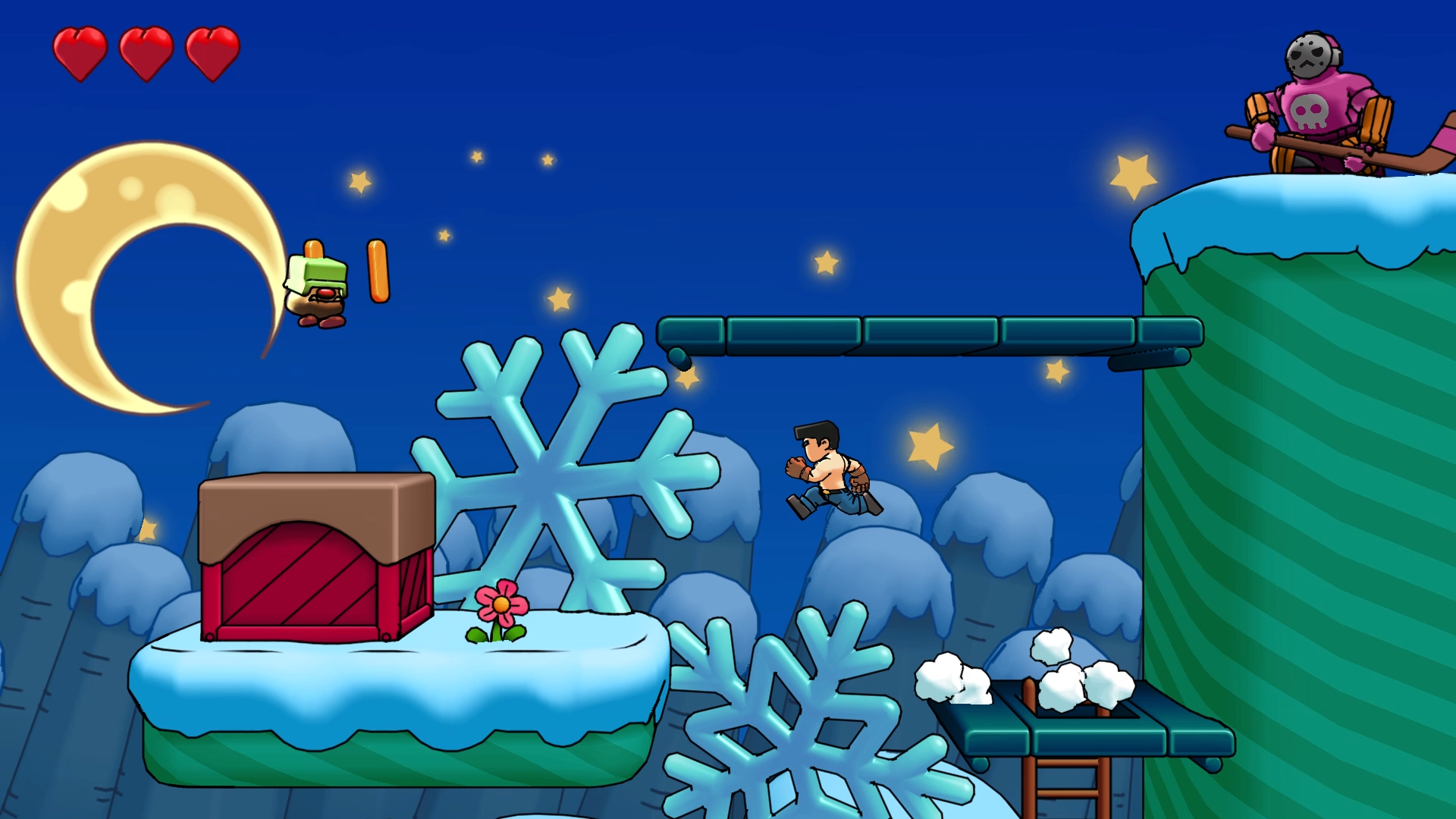
    Unlike its inspiration, Super Mario Bros. 2, Onion Assault eschews any meaningful character style choices and leaves you with a fast-paced hero that I guess would have a move set most analogous to Toad’s. Which is fine – I always use Toad anyways. While that might perceivably limit the avenues you can take or the joy of grasping a certain playstyle, what it does do is make the whole game overall a much tighter experience, in which mastering the mechanics leads to maximizing what you can accomplish. Onion Assault isn’t necessarily hard, but it’s less forgiving then a lot of games of its ilk. Checkpoints are spread a bit further out than your average platformer, and health pick-ups are much sparser. While I appreciate that kind of old-school approach, some might find it a bit off-putting.

    Where Onion Assault deviates in fascinating ways is in how it integrates small puzzles into each level. It’s nothing overly clichéd like pushing blocks or anything, but you will find yourself having to suss out how certain elements of the environment or even enemy movements can get you further in. As is customary in Nintendo’s mascot games, they can also lead you to out of reach or secret areas, wherein you can nab one of three coins strewn about each level. Furthermore, the boss battles totally lean into the things you can do while picking up object, including but not limited to jumping on projectiles to hurl them back, looking for attack patterns and even picking them up to carry them somewhere else. Even though it follows the tried-and-true ‘phase’ cadence, they’re all satisfyingly clever.

    I wouldn’t deign to call Bertil Hörberg an auteur by any stretch of the imagination, but much like Gunman Clive, Mechestermination Force and Super Punch Patrol this game has his fingerprints all over it. Which is absolutely a good thing – his games take a concept and just run wild with it while still maintaining a quality and consistency that makes me excited to play each and every release. Although he has done platformers before, it’s really nice to see someone give the stylings of Super Mario Bros. 2 a second chance, especially considering its own publisher won’t. Come for the tank-chucking, coin-nabbing hop-n-bopper; stay for the head-scarf-wearing mother who goes beast mode.


    Onion Assault was developed by Bertil Hörberg, and it’s available on PC and Switch. We played the Switch version.

    Disclosure statement: review code for Onion Assault was provided by Bertil Hörberg. A Most Agreeable Pastime operates as an independent site, and all opinions expressed are those of the author.

    Follow A Most Agreeable Pastime on Twitter and Facebook, if you like.

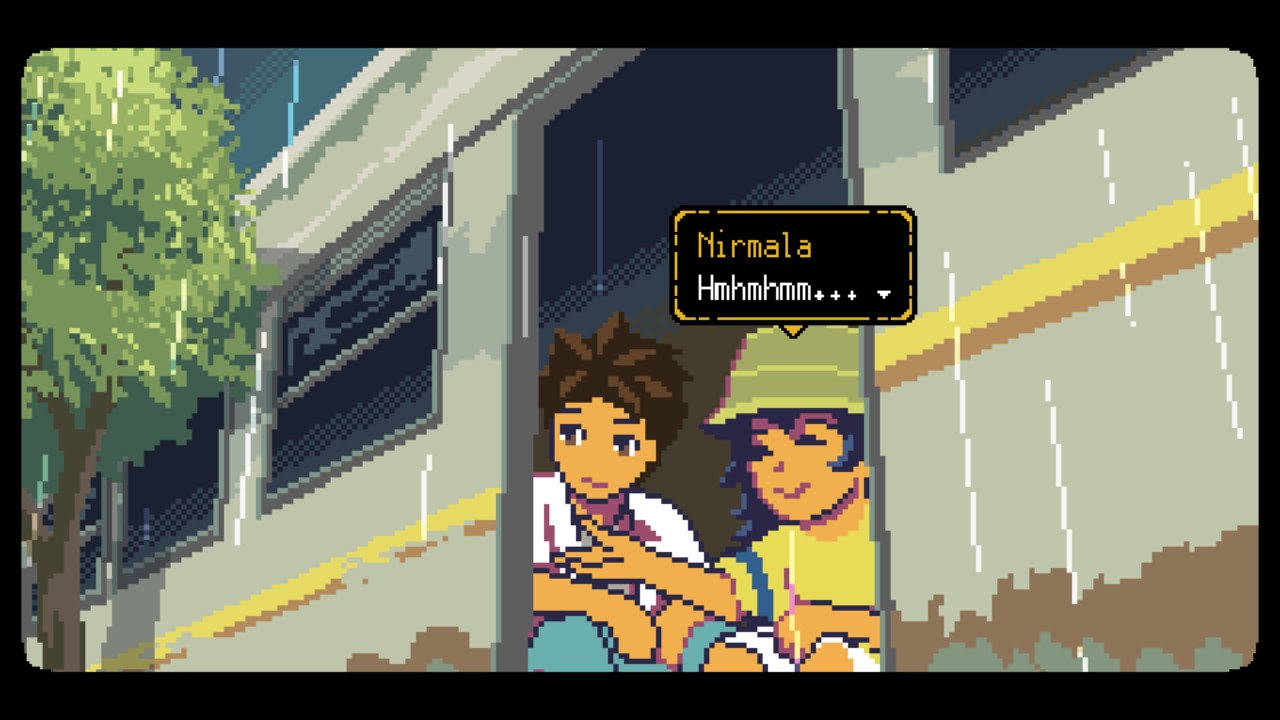
  • A Space for the Unbound is out today, and it’s fantastic

    We’re only in January, and we already have a contender for the best game of 2023. A Space for the Unbound comes out today, and I reviewed it for The Guardian, little expecting just how good it would turn out to be. It’s the first game I’ve awarded five stars to in a Guardian review.

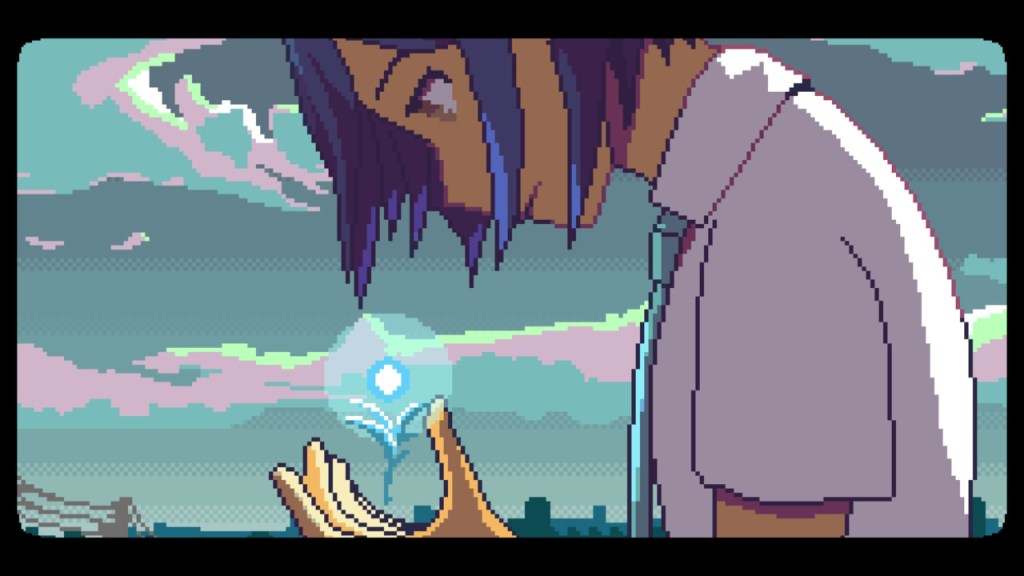
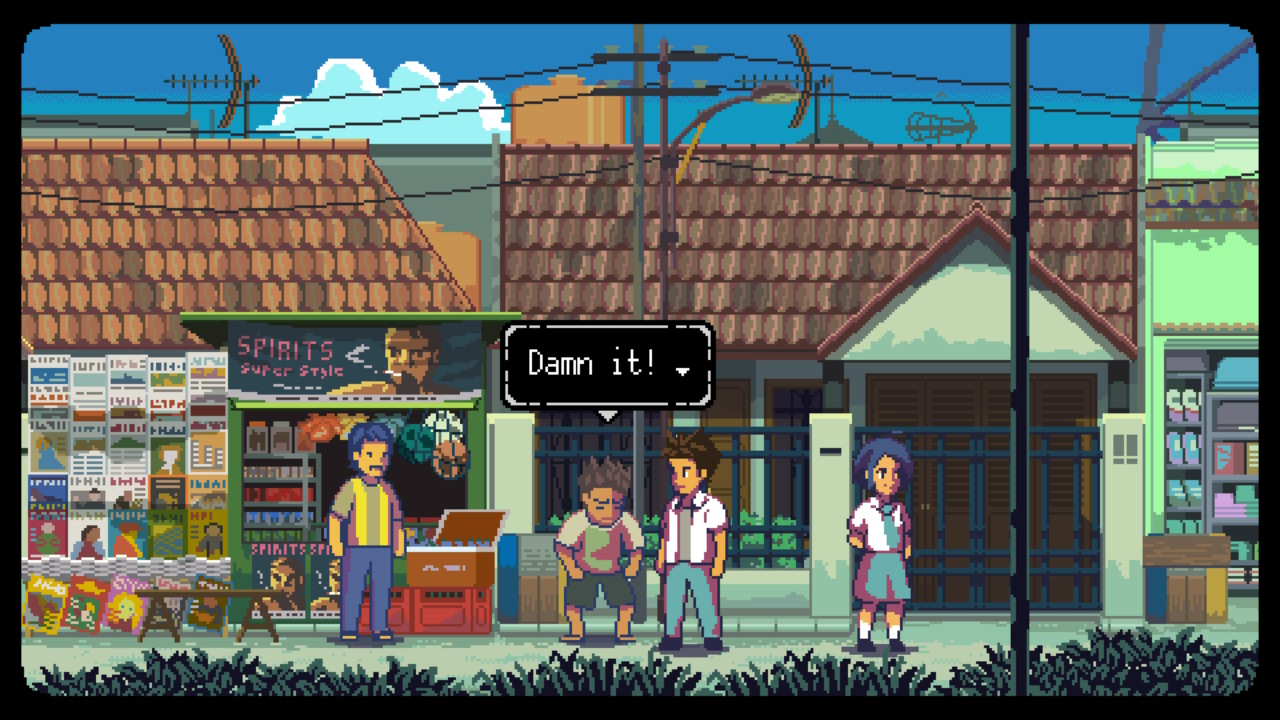
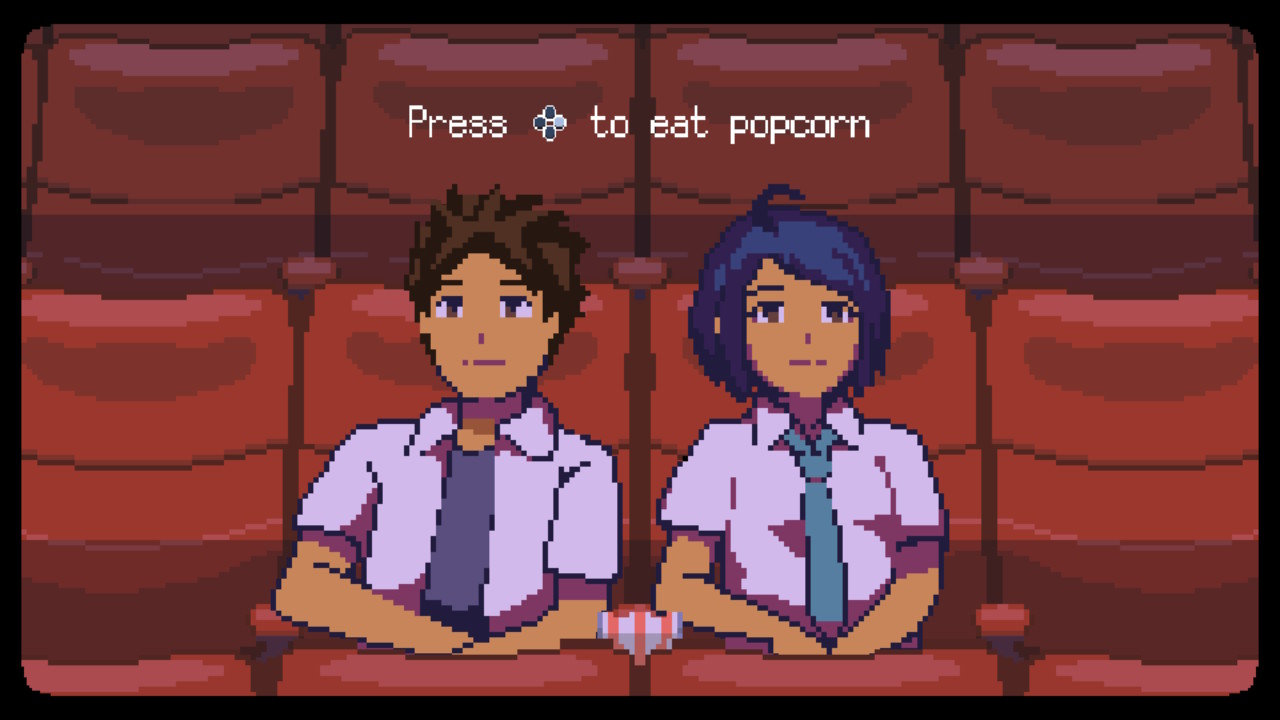
    On the surface, it’s a fairly simple concept. Essentially it’s a narrative puzzle adventure where you talk to various people in your neighbourhood, and collect various objects to use in various ways. At one point, you have to find the ingredients for a black forest gateau. But there’s so much more to it than that, so many little one-off scenes and mechanics that are dropped in, and above all, a richly layered story that will keep you guessing and constantly reconsidering the things you’ve seen and experienced.

    The game sees you playing as an Indonesian high-school student called Atwa, and the core of the story is about his relationship with his girlfriend Raya, who has suddenly developed reality-bending powers. But that’s just the tip of the iceberg, and the game eventually builds to a revelatory climax that hits like a gut punch. It’s superb, in short. I went in with low expectations, expecting a light, nostalgic adventure game in the vein of Attack of the Friday Monsters – and although A Space for the Unbound does fit that description at the start, it breaks out of the mould to wander off in some fascinating directions. It’s brilliant, in short, and the first must-play game of 2023.


    A Space for the Unbound was developed by Mojiken Studios and published by Toge Productions/Chorus Worldwide, and it’s available on PC, Mac, PS4/5, Xbox and Switch. We played the Switch version.

    Disclosure statement: review code for A Space for the Unbound was provided by Chorus Worldwide. A Most Agreeable Pastime operates as an independent site, and all opinions expressed are those of the author.

    Follow A Most Agreeable Pastime on Twitter and Facebook, if you like.

  • Lil Gator Game review: will make you smile from start to finish

    I didn’t think my game of 2022 would star a googly-eyed alligator with a trashcan-lid shield and a wooden sword, but here we are.

    In my opinion it was kind of a quiet year; not in that there weren’t good games galore, just that nothing really stuck out at me as being notable or inspiring. At least until MegaWobble introduced me to the charismatic Lil Gator (you can name him whatever you want, as is tradition in Zelda games, but I couldn’t not call him Lil Gator) and his journey to convince his sister to let loose and play. Regardless of whether his ploy works on Big Sis or not, it sure made me think about how I approached not only games, but life in general. Deep, I know.

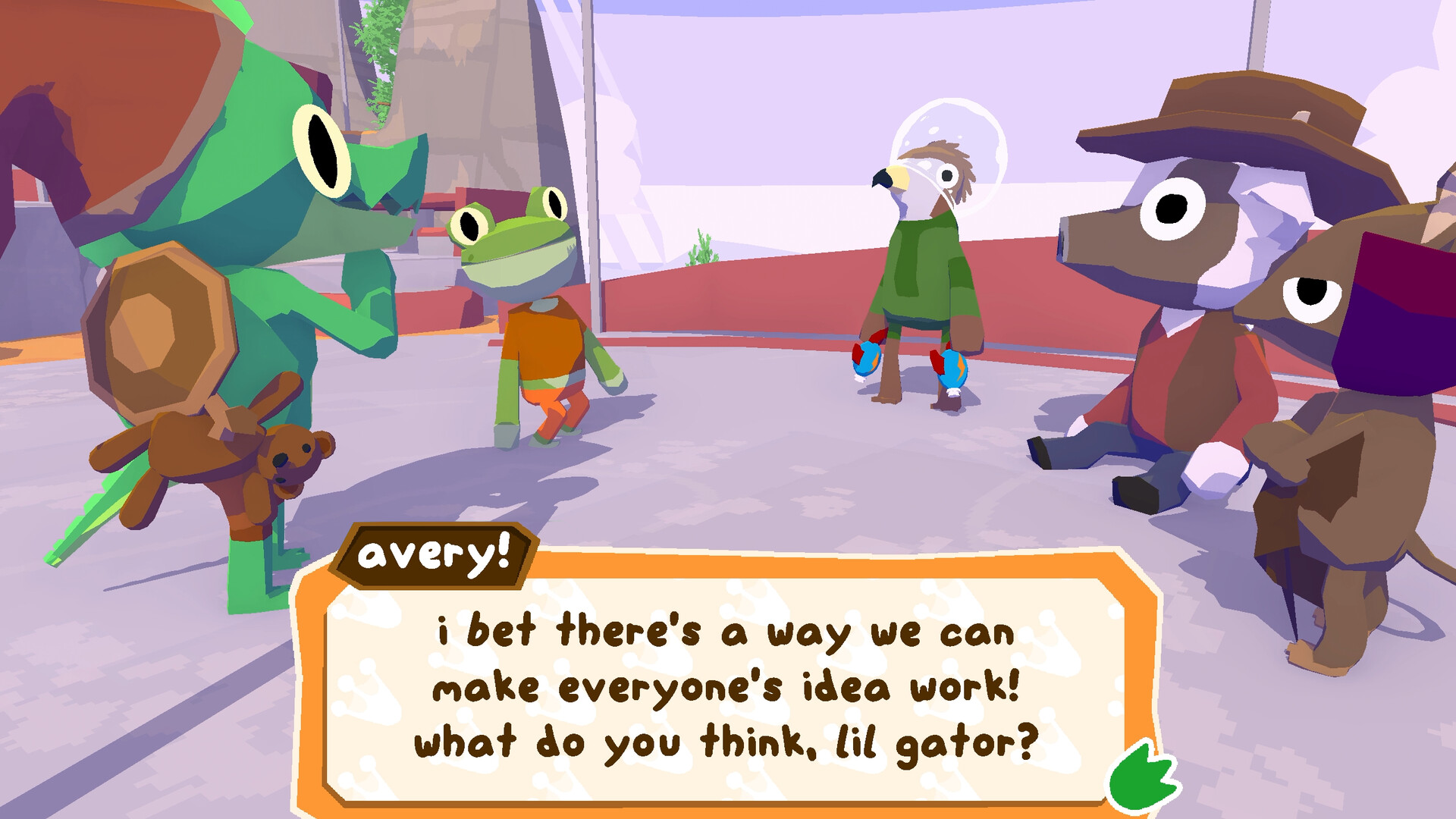
    The game opens with Lil Gator and Big Sis inventing their own LARP inspired by an adventure game they pine over in a gaming magazine. Fast forward a few years, and Big Sis is now an overly busy college student who needs to finish a project and pays no attention to her little brother. He wants to recreate their adventures of yore and devises a plan to have his tight-knit group of friends help him lure Big Sis by giving her an adventure to go on. What happens is a small tutorial teaching you how to do adventure gaming 101: find treasure, complete quests and search every nook and cranny for secrets and cardboard currency. After failing spectacularly, Lil Gator thinks big, literally, by going to a bigger island to recruit everyone to help with his cause.

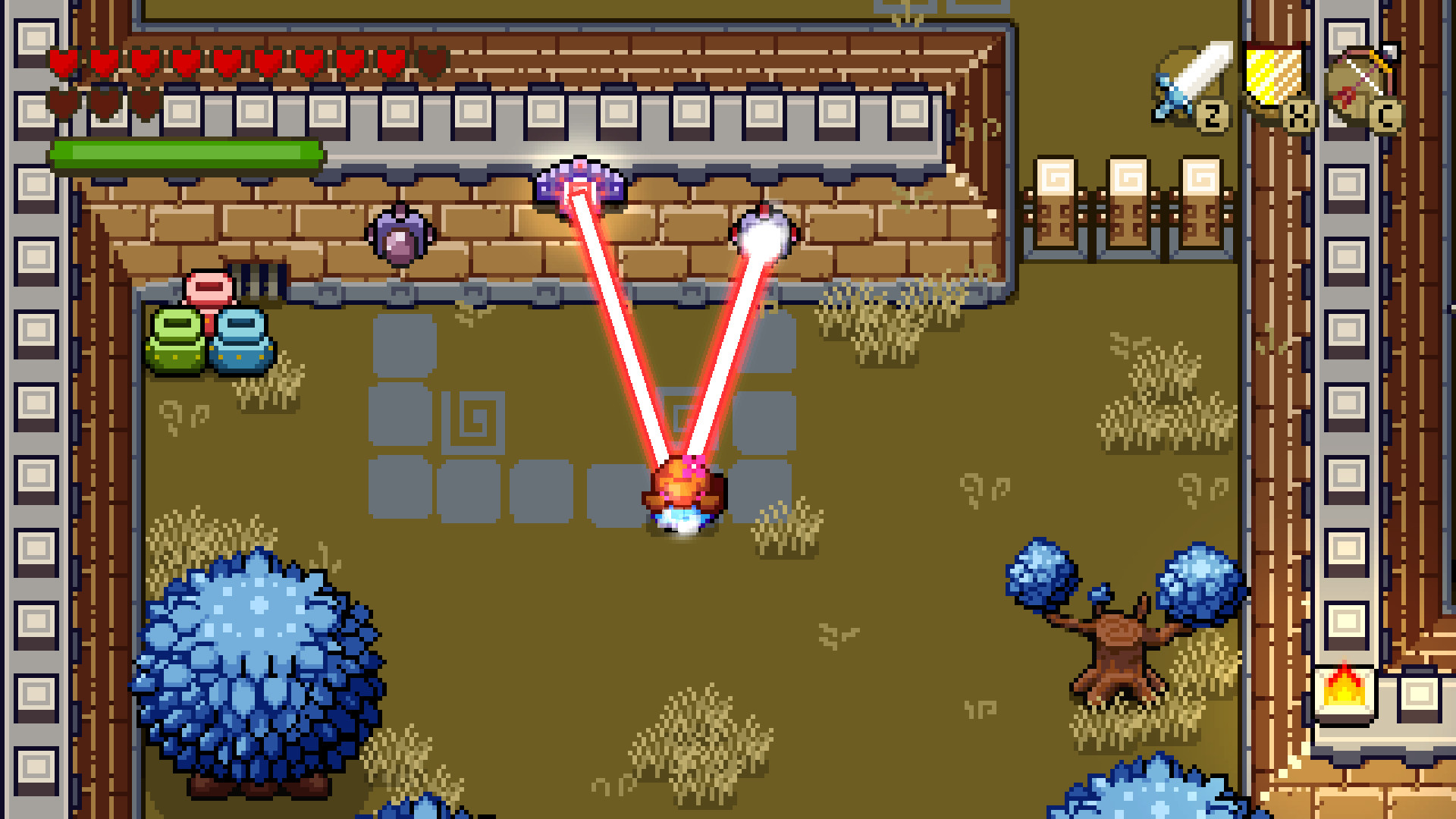
    Lil Gator Game evokes a style very reminiscent of The Legend of Zelda: The Wind Waker in its simple yet beautiful visuals and island theming. It adds a lot to the playfulness of your overall mission, feeling like something out of children’s media, and begging to be explored with the same sense of wonderment.

    There is no combat in the traditional sense; Lil Gator smashes cardboard cutouts of familiar-looking enemies such as slimes or killer venus flytraps. Considering it’s all built by a bunch of kids in a playground, they have this colorful charm to them that, while not the type of fighting some folks might be looking for, does go a long way towards making you want to seek them all out and take in the gorgeous landscapes. Quests might seem underwhelming at first, because often the people helping out are only doing so half-heartedly, but after a while you sway them into letting loose a little bit and taking part in the fun.

    This is where the endearing nature of Lil Gator Game kicks in – the important thing to remember isn’t the quest at hand but in how you talk to and nurture relationships with everyone on the island. There are three main quests (and plenty of side quests to boot) in which one of your good friends hangs out with their clique and you have to help them solve their quarrels, both group-wise and personal. You’ll help a “cool kid” raise up a tree that rooted in the wrong spot, help a “drama geek” live out their dreams of being a vampire and trick a “science nerd” into thinking their metallurgy homework would benefit the town you’re building by becoming a blacksmith.

    They’re all truly relatable moments and make the game shine. They’re situations that have real gravity and aren’t really talked about in games – and sometimes not in real life, either. Being as happy-go-lucky as it is, Lil Gator Game never side-steps its positivity, and its all the better for it. In a year that beat me down, it was a wonderful way to cap off 2022. It made me smile throughout and build a little optimism of my own.

    I am by no means a cryer, but the end of Lil Gator Game got me. I’m not about to spoil the experience because I believe everyone reading this should give it a go, but the amount of introspection and understanding quite frankly blew me away. Even in a game with so much love to give, it still manages to up the ante.

    Put whatever preconceived notions you have to rest and play Lil Gator Game. It’ll scratch that exploratory itch and melt your heart all the while.


    Lil Gator Game was developed by MegaWobble and published by Playtonic Friends, and it’s available on PC and Switch. We played the Switch version.

    Disclosure statement: review code for Lil Gator Game was provided by Playtonic. A Most Agreeable Pastime operates as an independent site, and all opinions expressed are those of the author.

    Follow A Most Agreeable Pastime on Twitter and Facebook, if you like.

  • Our Most Anticipated Games of 2023

    We’ve taken a look at our favourite games of 2022, so let’s look at what’s coming up in 2023. There are some pretty big and much-delayed AAA games that should hopefully be turning up this year, like Starfield and Hogwart’s Legacy. But for the most part, our eyes are drawn to a few of the more unusual upcoming titles…

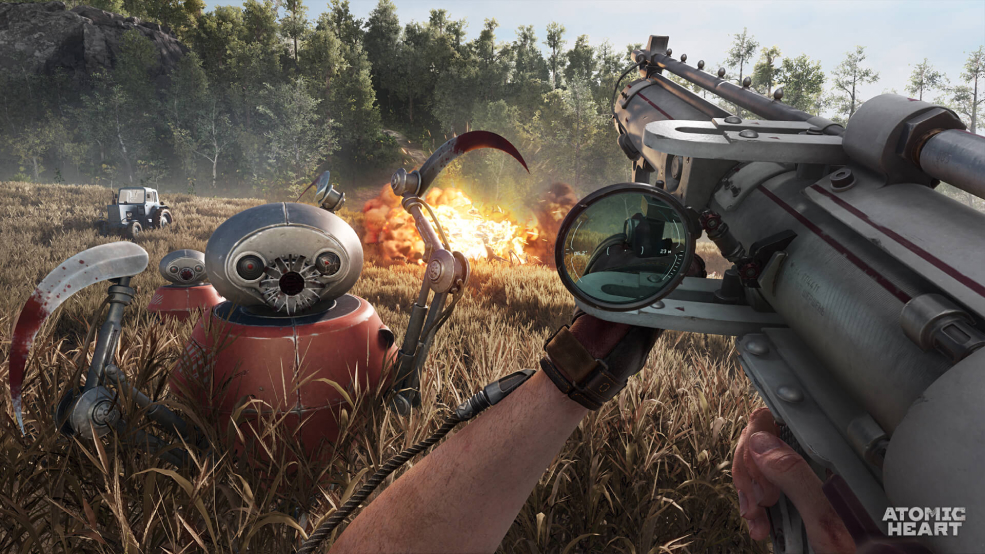
    Atomic Heart

    This first-person shooter set in alternate-reality, Soviet-esque utopia gone wrong looks absolutely bananas. The footage I’ve seen looks like a more frenetic Bioshock game, with the protagonist fighting hordes of malfunction, murderous robots as well as mutated monsters. There’s a hint of the more recent Wolfenstein games too, with its anarchic, satirical take on things.

    I’d like to see it in more detail than has been possible up to now but, with a late-February release date, that should happen sooner rather than later. James Keen

    Website

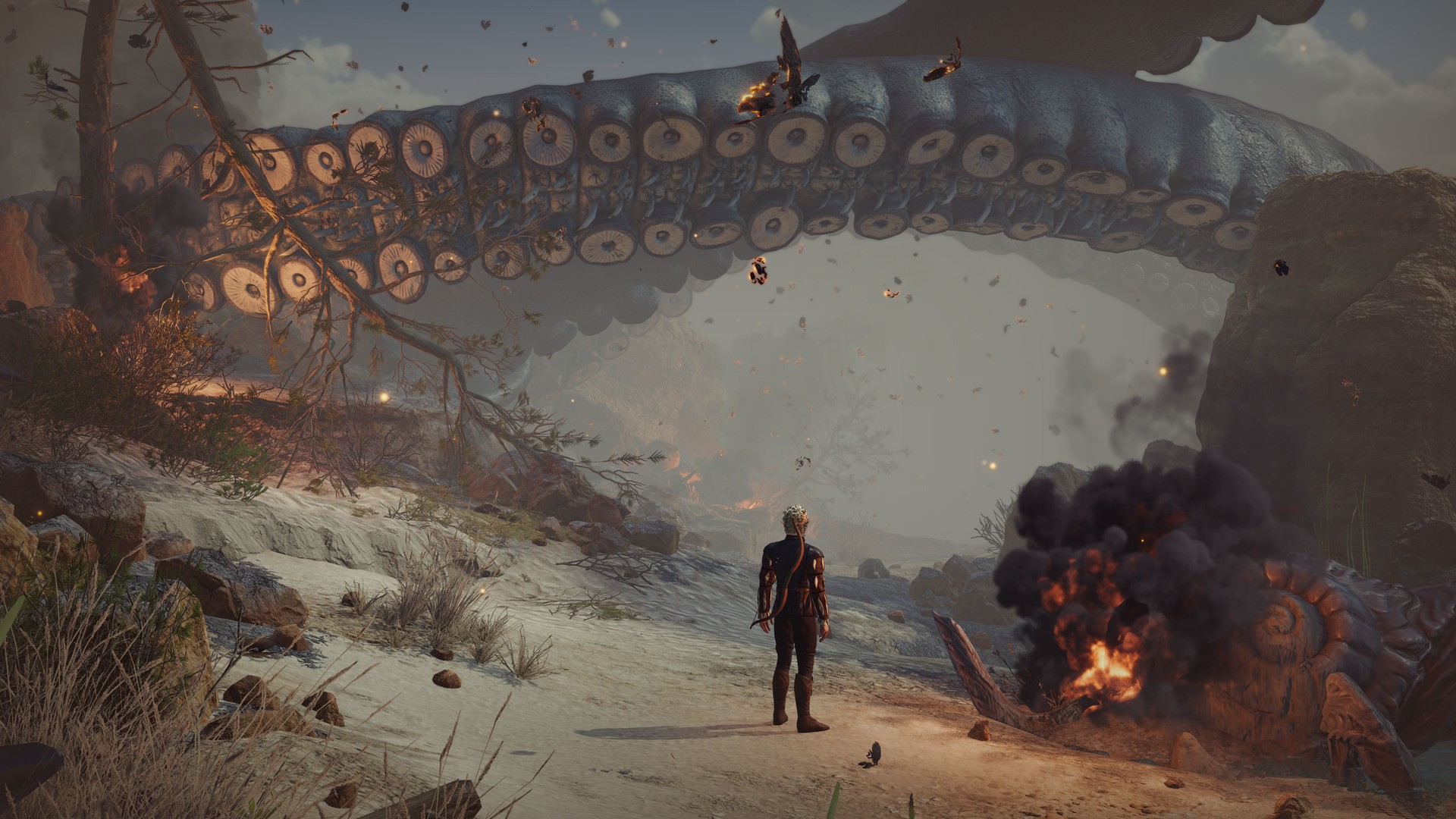
    Baldur’s Gate 3

    I’ve just checked, and I first listed Baldur’s Gate 3 in our most anticipated games list for 2021. This should indicate both how delayed it is, and how much I want it.

    I’ve adored the Baldur’s Gate series of D&D-based RPGs since the first one all of 20+ years ago. I’m also a big fan of Divinity: Original Sin II, the last big RPG from developer Larian Studios. The early access has shaped up very nicely, promising a frankly ridiculous amount of breadth and depth of choice. If it can deliver a well-written, engaging narrative alongside its myriad, overlapping mechanics for the full game, then it should be an instant classic. JK

    Steam link

    Death of the Reprobate

    I absolutely loved The Procession to Calvary by Joe Richardson, so I’m really excited for his next game, Death of the Reprobate. If it’s even half as funny as his previous work, it will be well worth the wait. I spoke to him last year about the way he likes to break the fourth wall in his point and click adventures, and I’m particularly looking forward to a few more comedy interventions from God. There’s no official release date yet, although I’m hoping we’ll see this delight plop into our Steam libraries before the year is out. Lewis Packwood

    Steam link

    Gunbrella

    It’s a gun that’s also an umbrella. Let that sink in for a while, then tell me just how excited you are to explore this new game from the makers of the brilliant Gato Roboto. LP

    Website

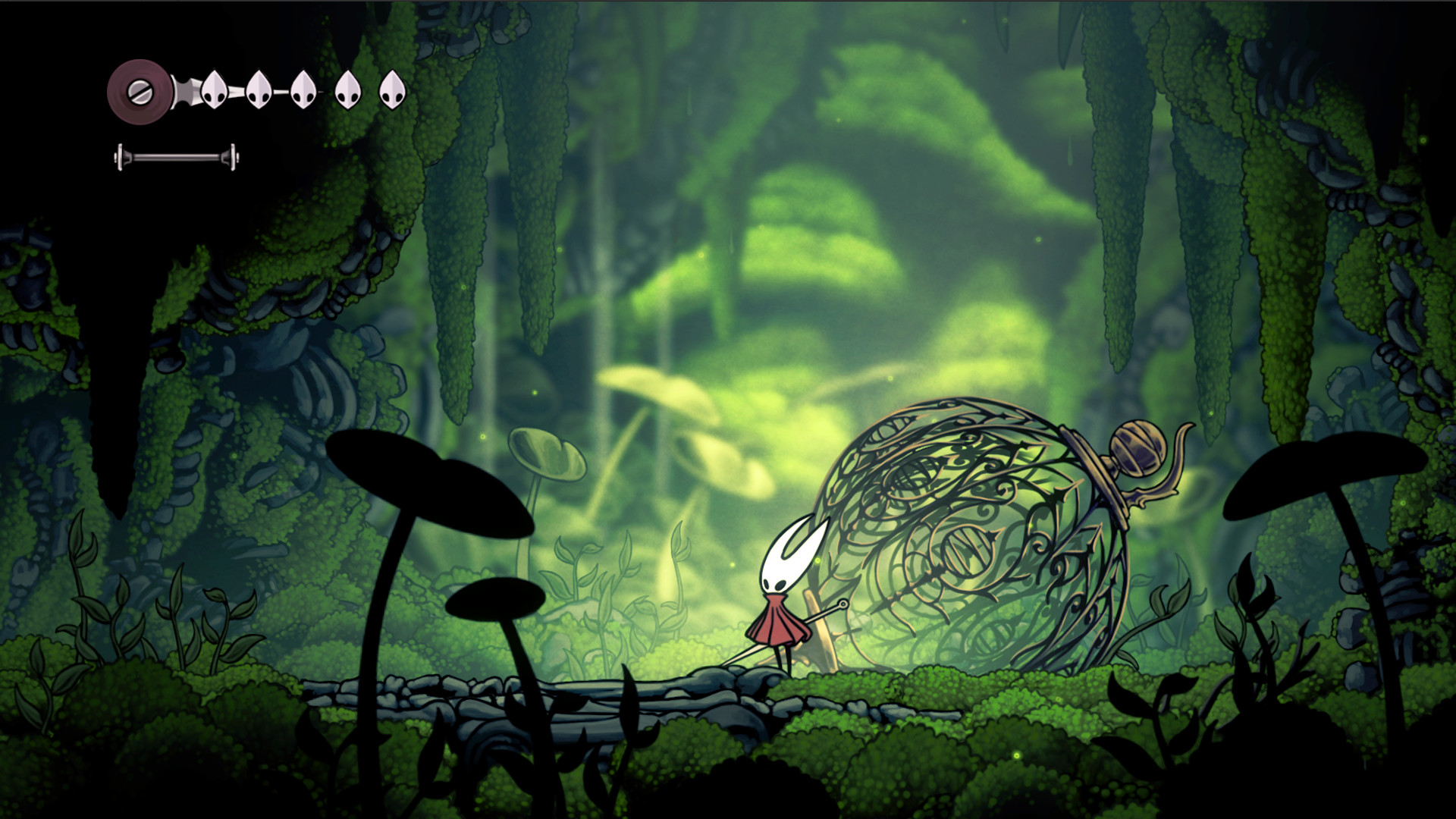
    Hollow Knight: Silksong

    Like Baldur’s Gate 3, this is another game that we were looking forward to back at the start of 2021, and that still isn’t out. Surely this is the year that Hollow Knight will finally return. Surely. Please? LP

    Website

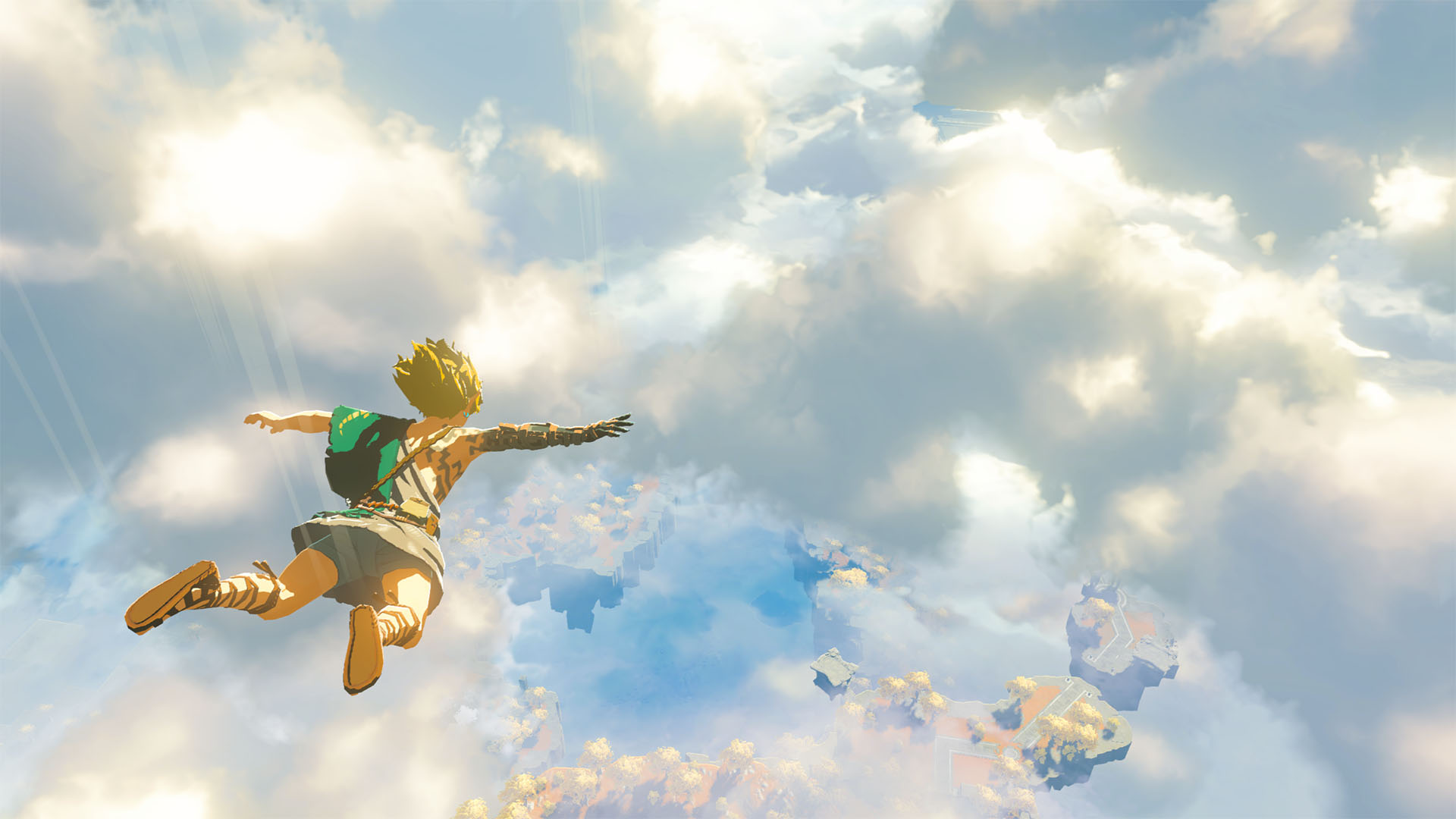
    The Legend of Zelda: Tears of the Kingdom

    With Nintendo holding it’s cards for the latter half of the year close to its chest, the obvious nod for me would be the oft-delayed but much anticipated Tears of the Kingdom. Even if a new Mario and Metroid were to magically show up, I doubt they would dull my enthusiasm for this game. There’s not a whole lot to go on from the trailers so far, but what’s been shown — a more vertically designed world, cryptic new powers, creepy new enemies — is enough to have me intrigued quite a bit. In all honesty, I’d be perfectly fine if it were just more of the same. But we all know it’ll be anything but. Matthew Mason

    It looks like Breath of the Wild, but more. JK

    Website

    Manor Lords

    Maybe it’s the unfriendly weather outside or maybe it’s the increasingly chaotic state of the world, but I’ve found myself craving a good city builder game. I’ve delved back into Cities: Skylines and Frostpunk recently, which are still great, but the Steam Next Fest demo for Manor Lords really caught my eye.

    You’re tasked with establishing and growing a small medieval village into (potentially) a bustling city. You play a regional lord and, as well as the usual resource, economic and citizen management, the final game promises close-control battles between rival town militia.

    Mechanically intuitive as well as gorgeous-looking, it’s also, implausibly, the work of a single developer. There’s no release date at the moment, so to be honest there’s every chance it won’t be a 2023 release. However, I can’t wait to give this another go so I’m erring on the side of optimism. JK

    Website

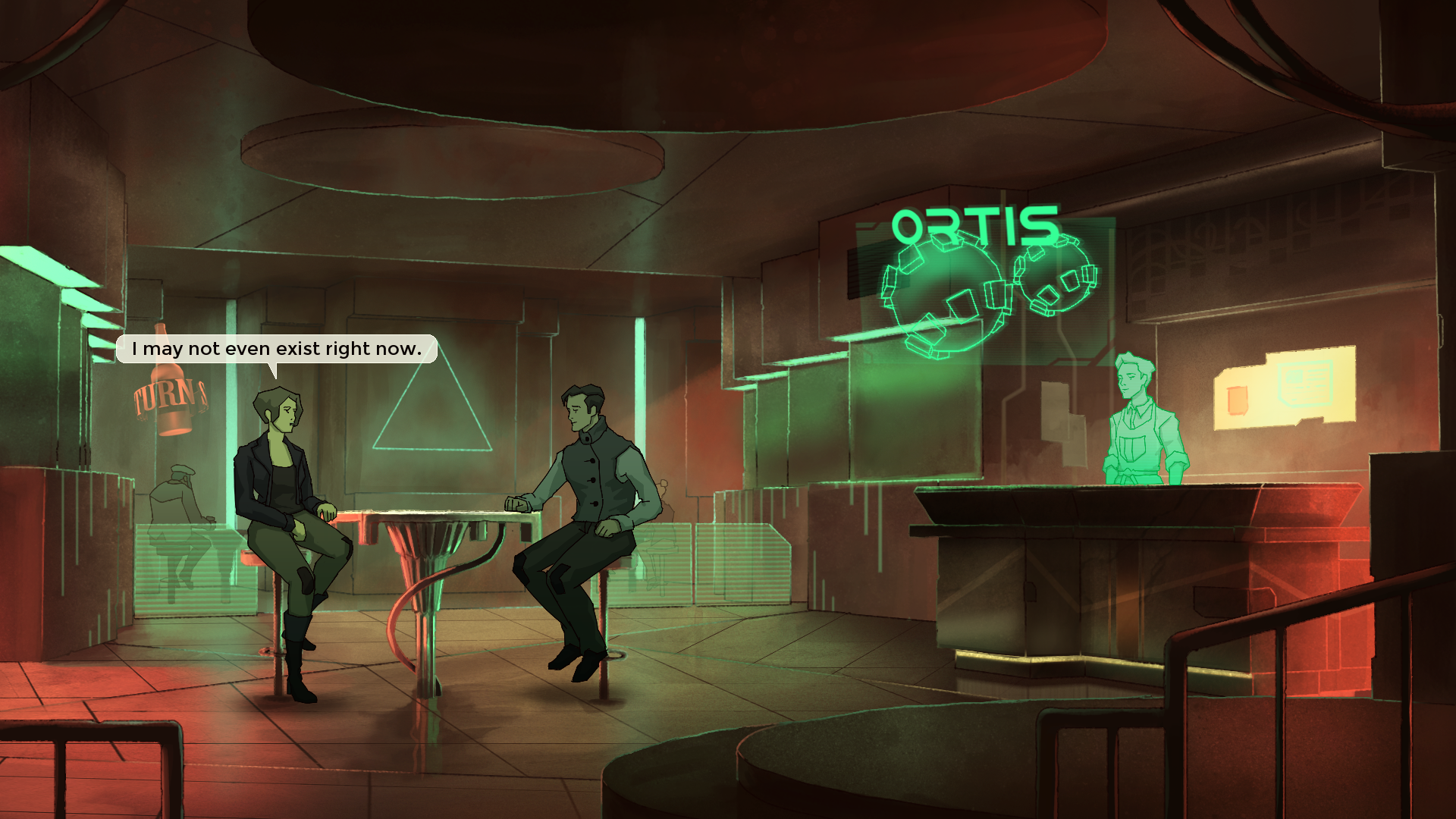
    Old Skies

    We absolutely loved Unavowed, so we’re super excited about the next point and click adventure from Dave Gilbert – Old Skies. The time-travel plot sounds like a lot of fun, and judging by Gilbert’s previous work, it will be packed with intrigue and gags in equal measure. LP

    Website

    Planet of Lana

    Planet of Lana was one of my highlights of EGX 2022, and I love the art style – shades of Ico, don’t you think? And there’s a hint of Ico in the gameplay, too, as it’s all about cooperation – in this case with your little alien cat friend. It looks promising, and I’m looking forward to a couple of lovely, chilled-out nights with this game come the spring. LP

    Website

    The Plucky Squire

    The Plucky Squire was my highlight of E3 – or rather NotE3 – in 2022, with its ingenius and delightful trailer. At first it looks like a storybook-inspired 2D platformer, then suddenly the characters burst out of the book into the 3D world beyond, and at that points all bets are off as to where this is going. LP

    Website

    The Siege and the Sandfox

    Another highlight of EGX, The Siege and the Sandfox from British studio Cardboard Sword is heavily inspired by Prince of Persia (the OG version). But this is a Metroidvania with a twist – it’s all about stealth rather than combat, so you can’t simply bump off any guards in your way. Instead, you have to find clever ways around enemies to reach the castle’s topmost tower. Sounds intriguing. LP

    Website

    Snufkin: Melody of Moominvalley

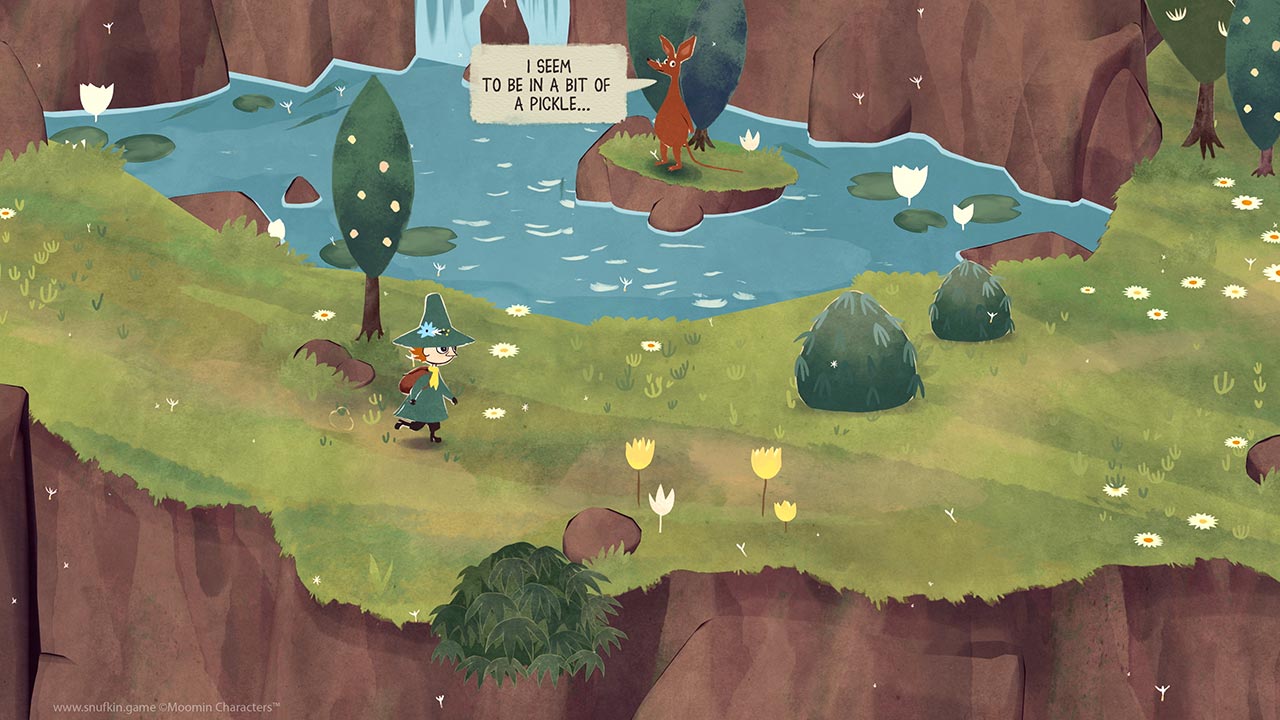
    Consdiering how popular The Moomins are, especially in Japan, it’s remarkable how few Moomins games there have been down the years – let alone good ones. Norwegian studio Hyper Games have wisely chosen to base their upcoming game around the very best Moomins character, Snufkin (I will brook no argument on this), and they’ve certainly captured the feel of Tove Jansson’s beloved creations. Here’s hoping the game plays as well as it looks. LP

    Website

    The Wolf Among Us 2

    Since Telltale Games imploded in 2018, there has followed a highly confusing saga where the rights to its games were sold off, and then an entirely new company was set up under the Telltale Games name, where around half of the staff were actually members of the original Telltale. That company is now releasing a long-awaited sequel to The Wolf Among Us, a game that was based on the Fables comics. To add more confusion, The Wolf Among Us 2 is actually a prequel, rather than a sequel. But let’s forget all that and focus on the fact that The Wolf Among Us was one of the very best games made by the Telltale of old, so there’s a good chance this follow-up will be a corker, too. LP

    Website


    Follow A Most Agreeable Pastime on Twitter and Facebook, if you like.

  • The Most Agreeable Games of 2022

    It’s been an odd old year for video games. In particular, the typically bountiful end-of-year harvest of AAA games was much sparser than usual. We got the old regulars – a new Call of Duty, a new FIFA, even a new Pokemon game – but there was little else in the way of Big Treats, as it were. It seems the knock-on effects of Covid slowing the production of big-budget games are still being felt. And it does make you wonder which big-ticket games that may have tentatively been pencilled in for 2022 several years back might now emerge in 2023, or even later.

    But we’ll talk about those another time. Right now, it’s time to look back at the games we’ve been playing in 2022 – and as you’ve no doubt come to expect from our humble website, indie games are very much front and centre. And it’s been a very good year for those, as you’ll see…

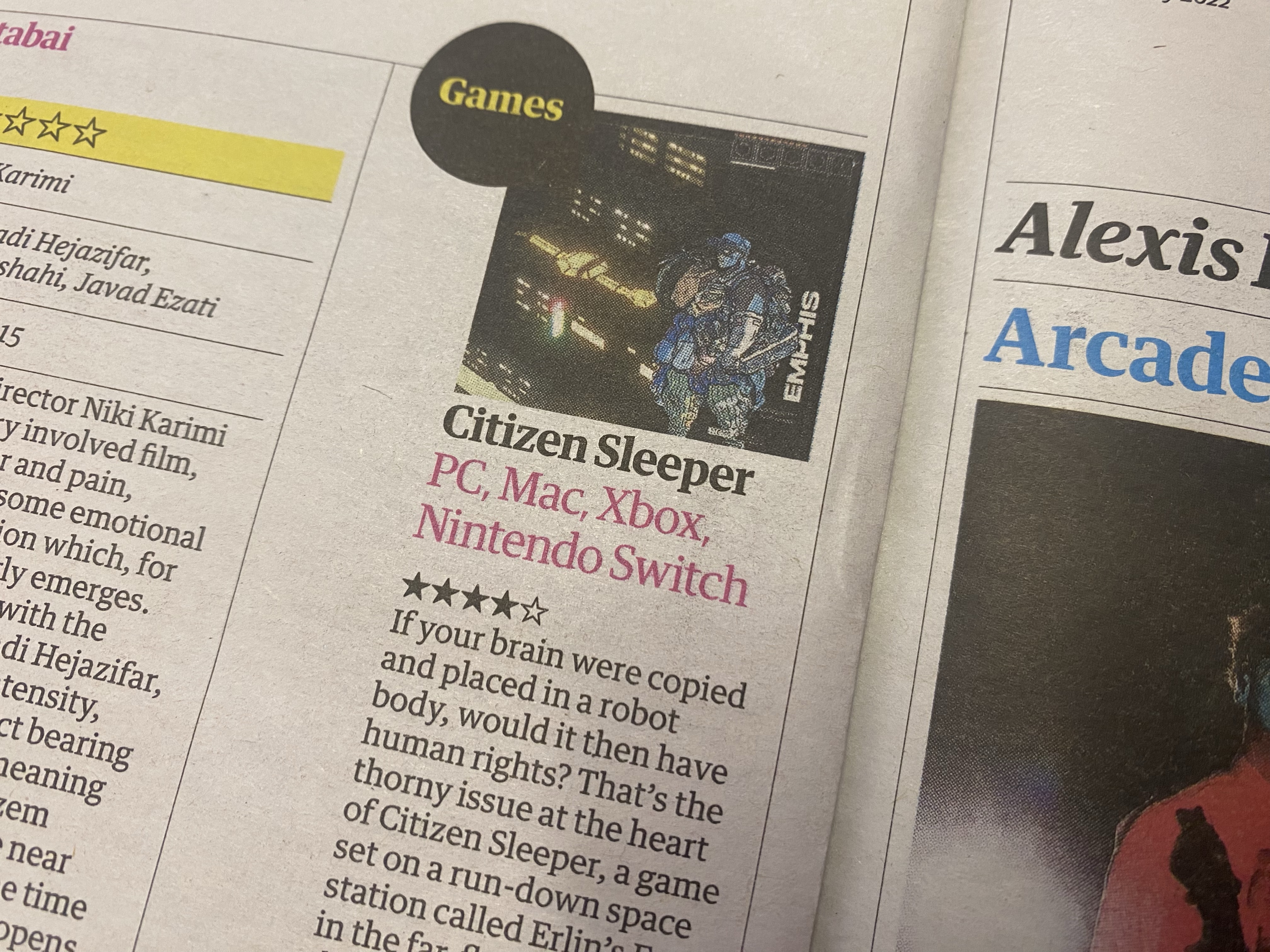
    Citizen Sleeper

    A lovely, atmospheric decision-‘em-up, where the narrative never stops branching. Hiding out on a dying space-station, you have to thrive and survive while helping others do the same (or not). A reflective, zen-like experience which has a neat little dice mechanic which adds a little extra jeopardy to your choices. Perfect for huddling into on a cold winter’s day. James Keen

    Website

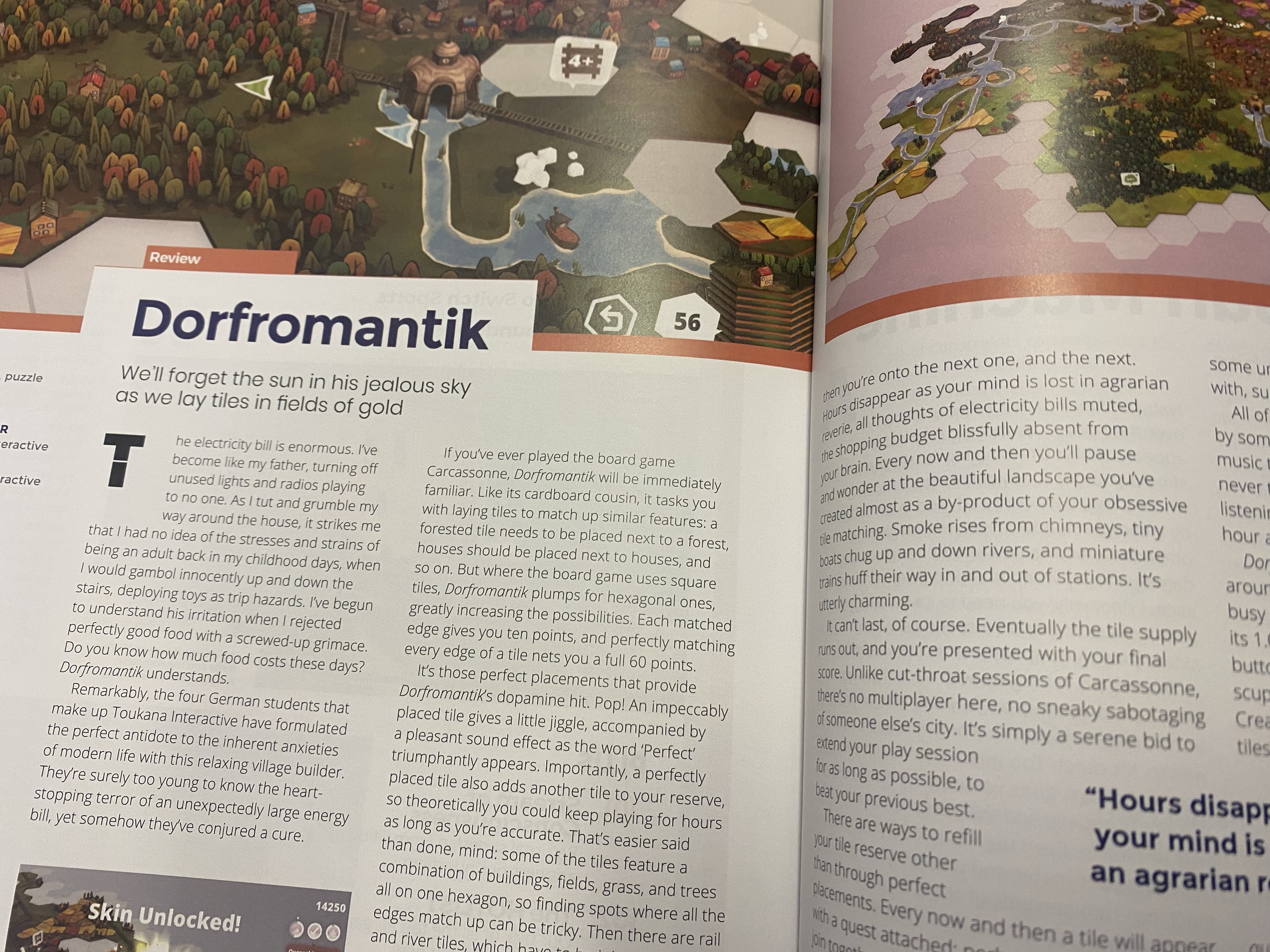
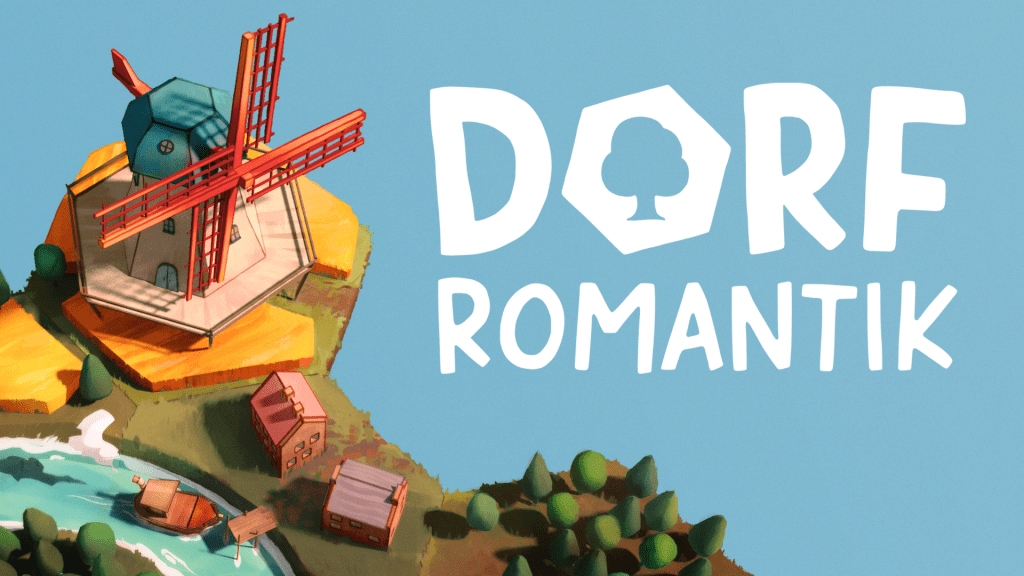
    Dorfromantik

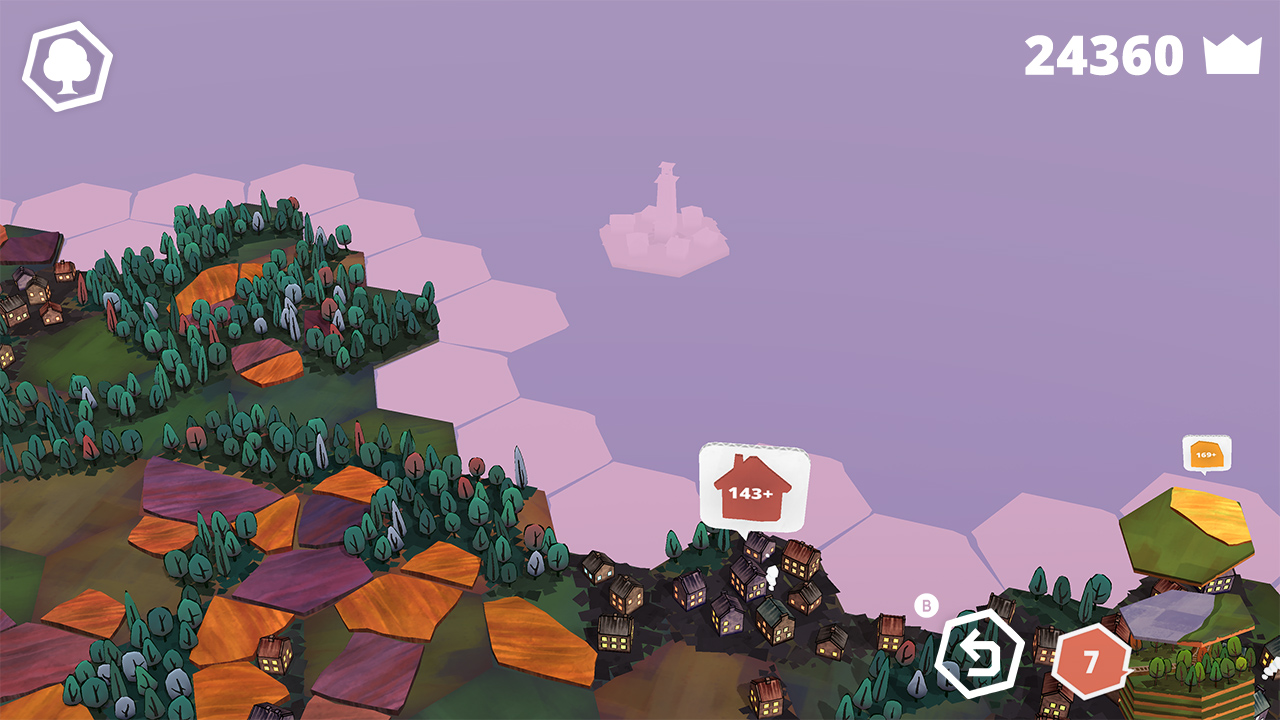
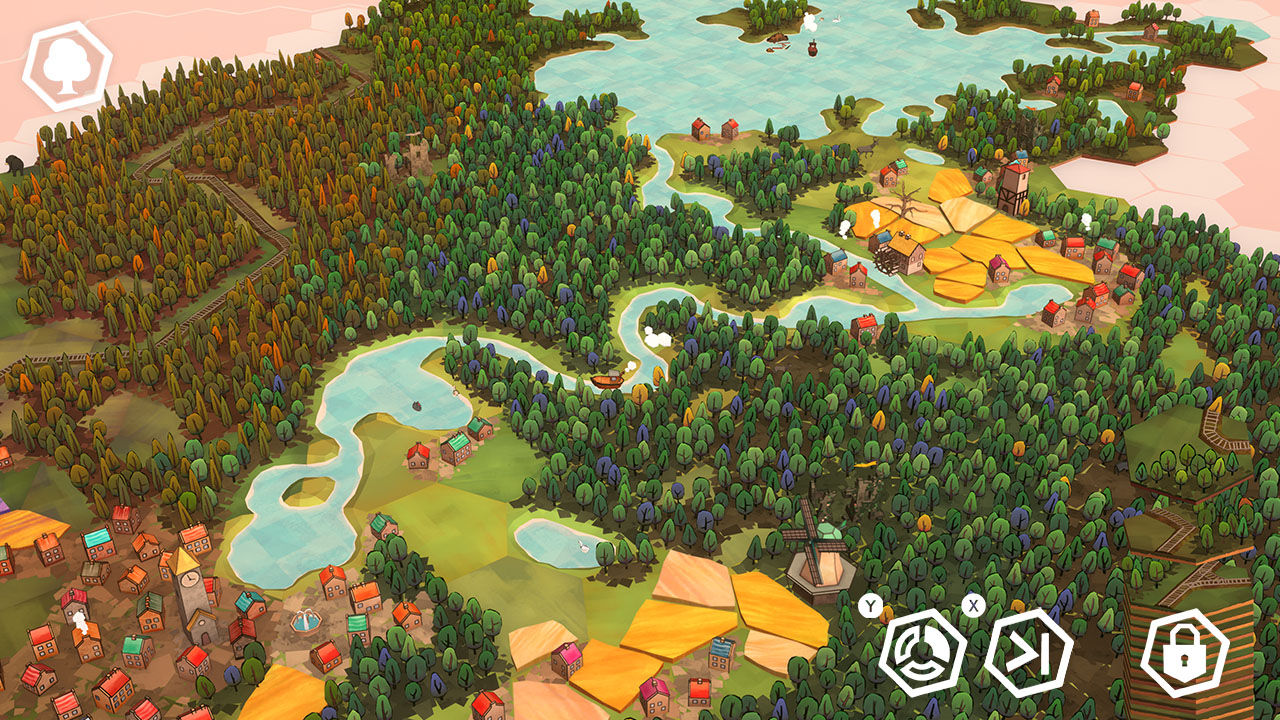
    Dorfromantik came out of Early Access towards the start of the year, and it’s a game that I find myself coming back to time and time again. It’s just so relaxing: as you lay tile after tile, pleasing agrarian landscapes emerge as if by magic, and extending your rural idyll reveals tantalising new tiles to unlock in the white wastes beyond. The perfect way to unwind after a stressful day at work. Lewis Packwood

    Website / Review

    The Excavation of Hob’s Barrow

    There have been some really fantastic point and click adventures over the past few years, and The Excavation of Hob’s Barrow is one of the most intriguing and unique. It follows the misadventures of Thomasina Bateman, a Victorian antiquarian who is invited to excavate a mysterious burial mound in a remote Yorkshire village, but naturally, all is not what it seems. If you’re fan of folk horror, this is an absolute must play. LP

    Website

    Immortality

    Sam Barlow has done it again. Or rather, done it even more. Does that make sense? What I’m trying to say is that whereas Her Story and Telling Lies proved that Barlow’s clever FMV-clip formula works wonderfully, Immortality takes that formula to a whole new level. It’s brilliantly acted, utterly compelling, and has some deliciously unexpected twists and turns that will keep you hooked to the end. LP

    Website

    Lost in Play

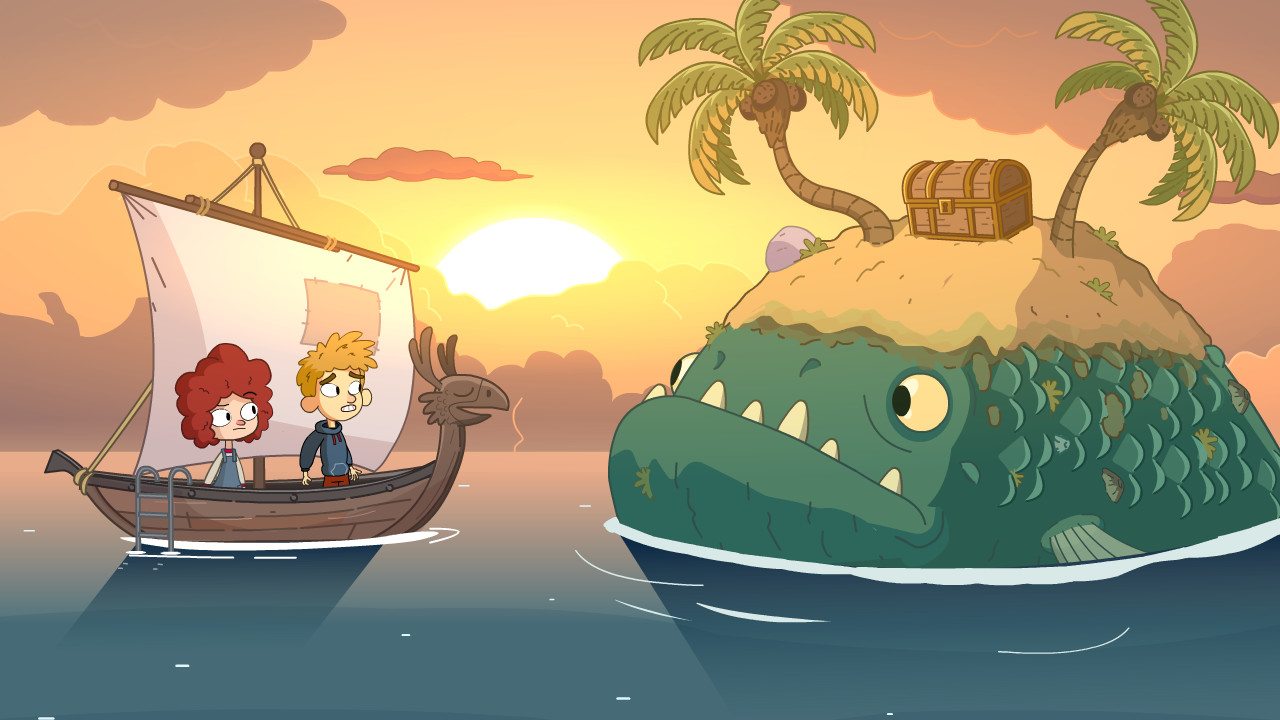
    A brilliantly funny and engaging puzzle adventure with simply gorgeous animation – it’s like watching a Saturday morning cartoon come to life. Lost in Play tells the story of two siblings who dream up a grand adventure, Muppet Babies-style, and it’s full of excellent visual gags that make ideal to watch as well as play. The perfect pass-the-pad adventure for a cosy night in on the sofa. LP

    Website

    Pentiment

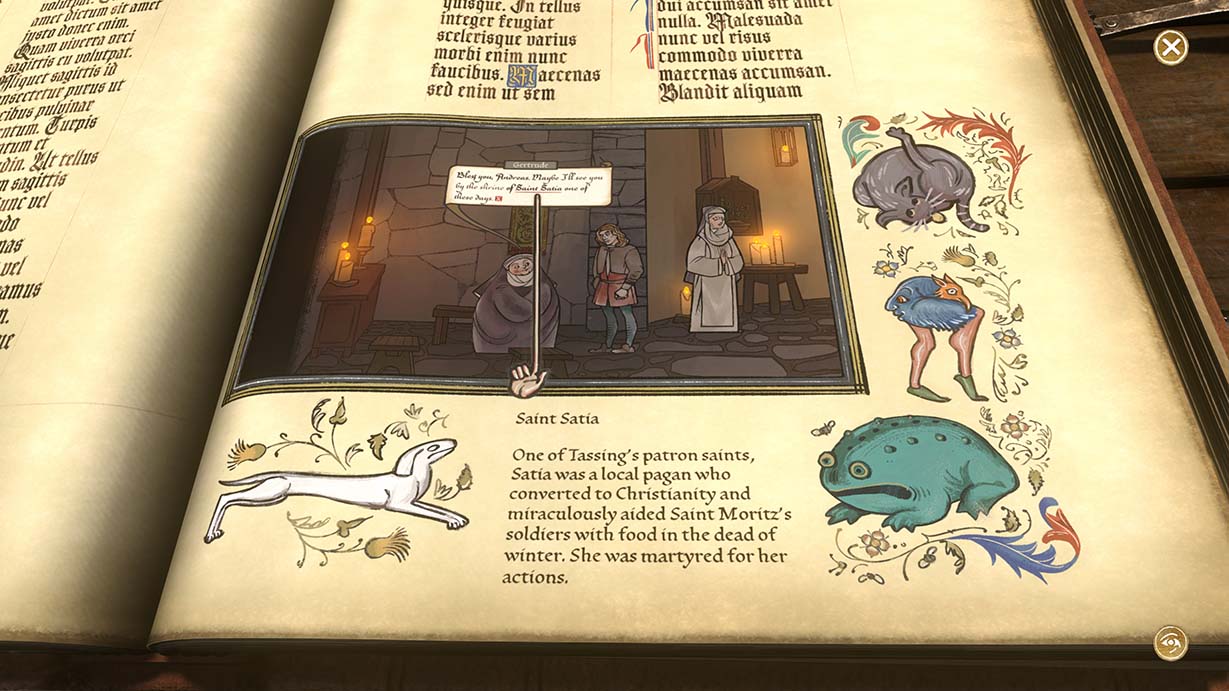
    Microsoft has been busy buying studios over the past few years, but so far, relatively few games have resulted from those purchases – and Pentiment from Obsidian is one of the more unlikely ones. But what an unsual delight it is. Set in Renaissance Bavaria, it captures the enormous social change going on in that era, from the radical teachings of Martin Luther to the peasant revolution, all set against the backdrop of a complicated murder mystery. LP

    Website

    Rollerdrome

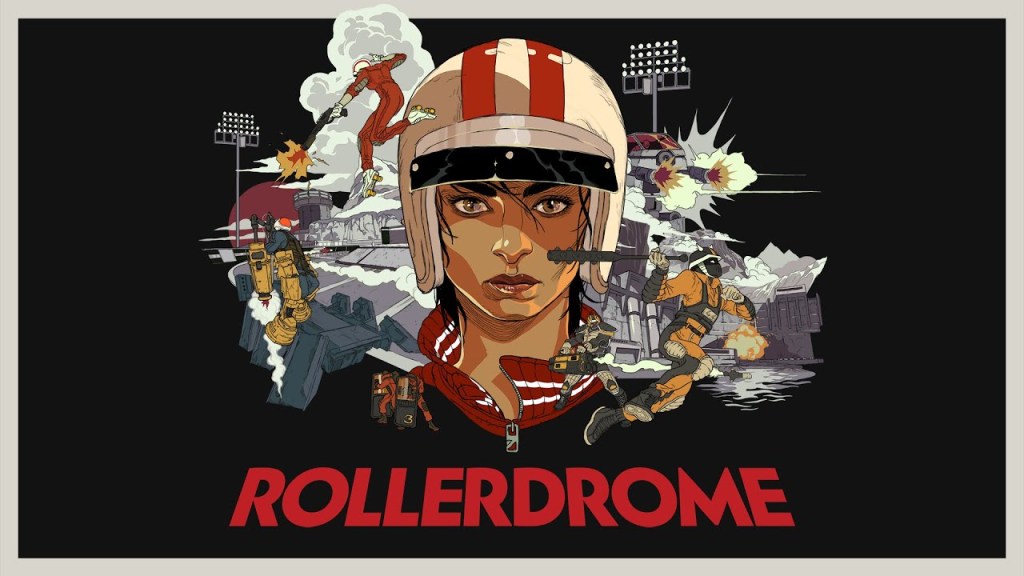
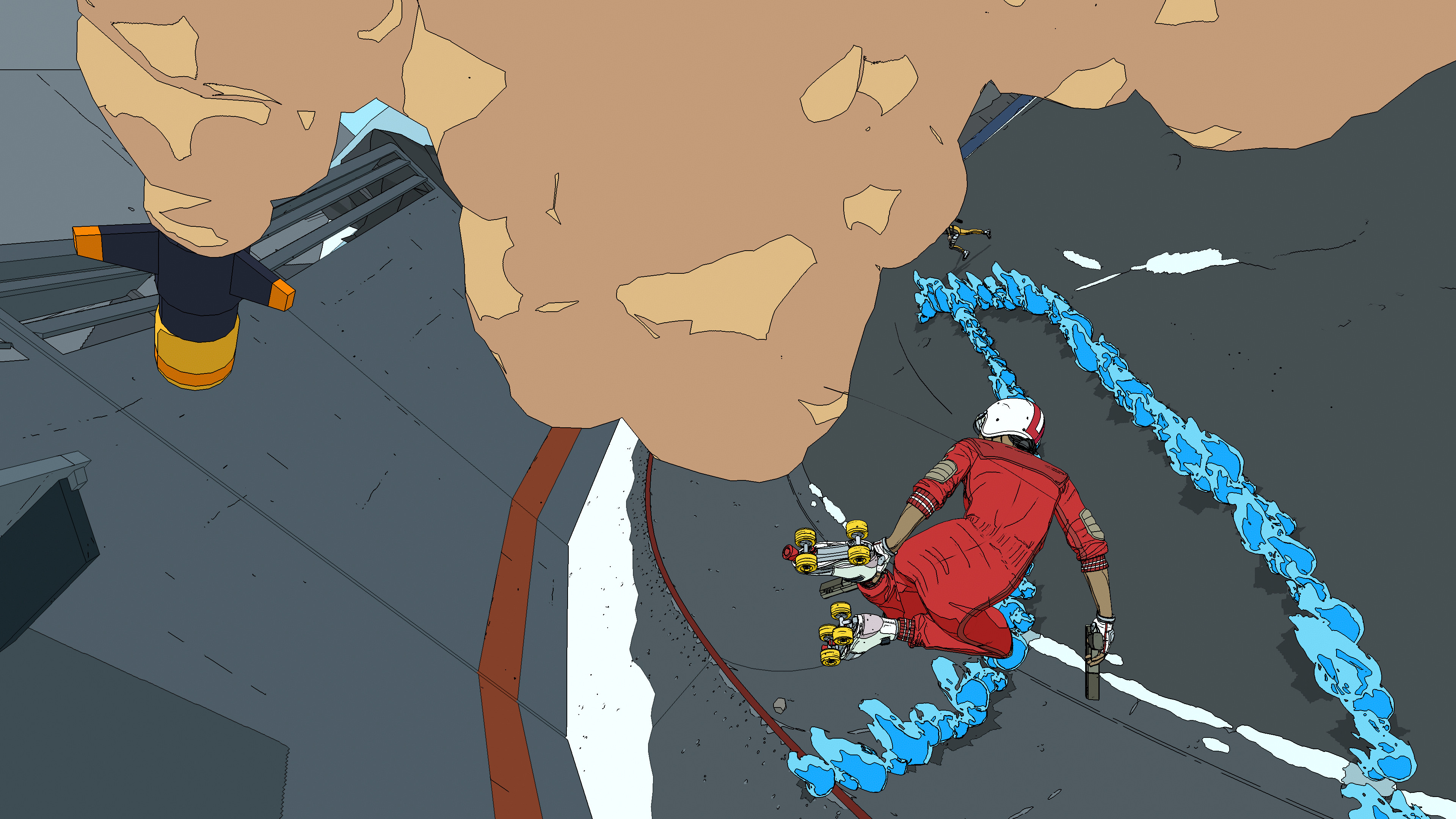
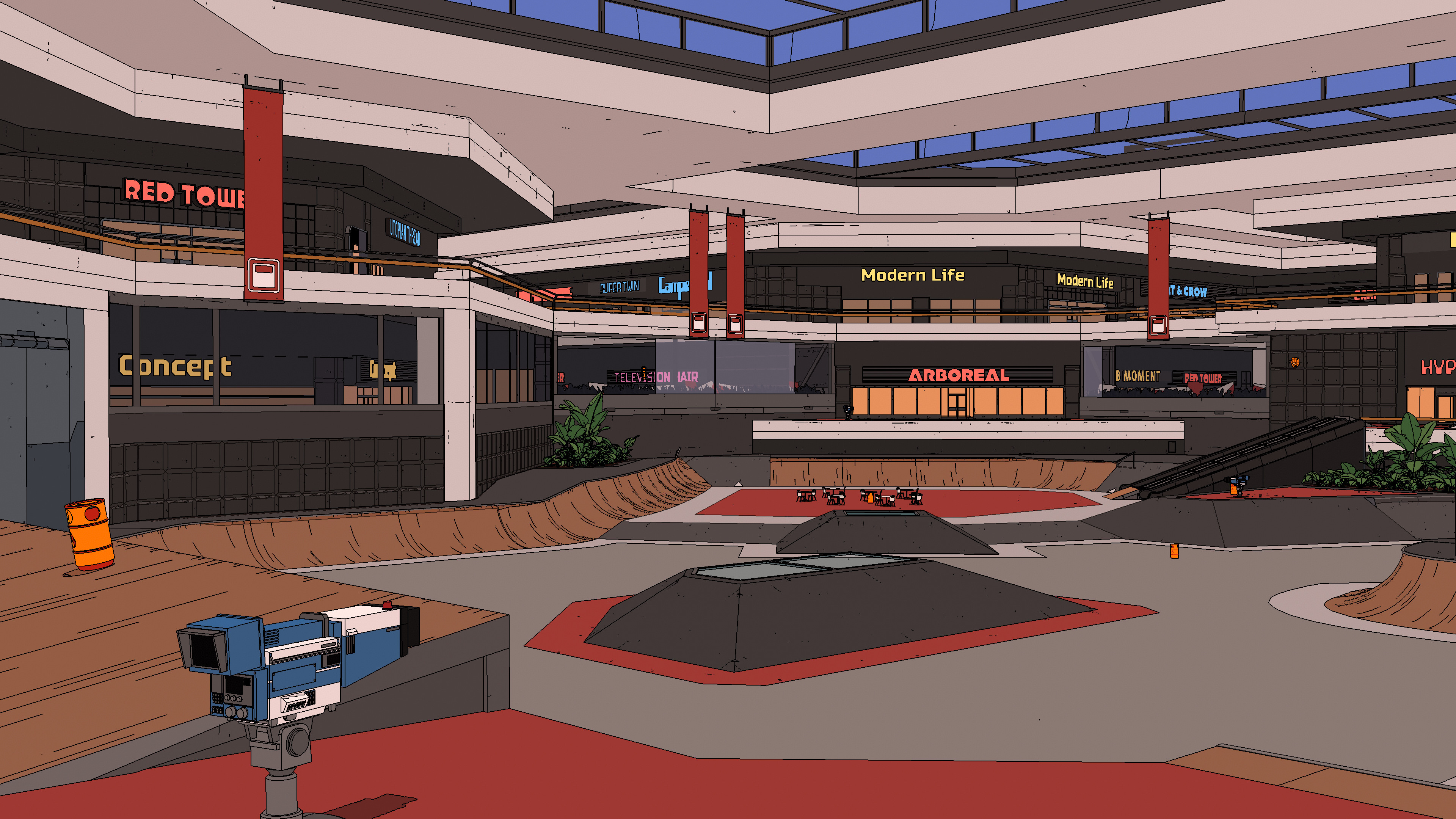
    I had a great time with this dystopian, roller-skating arena shooter. It looks lovely, the soundtrack is excellent, and pulling off long-range, slo-mo headshots while doing a backflip never gets old. I still like to hop back in to try and tick off a couple more level objectives. Give it a try. JK

    Website / Review

    Silt

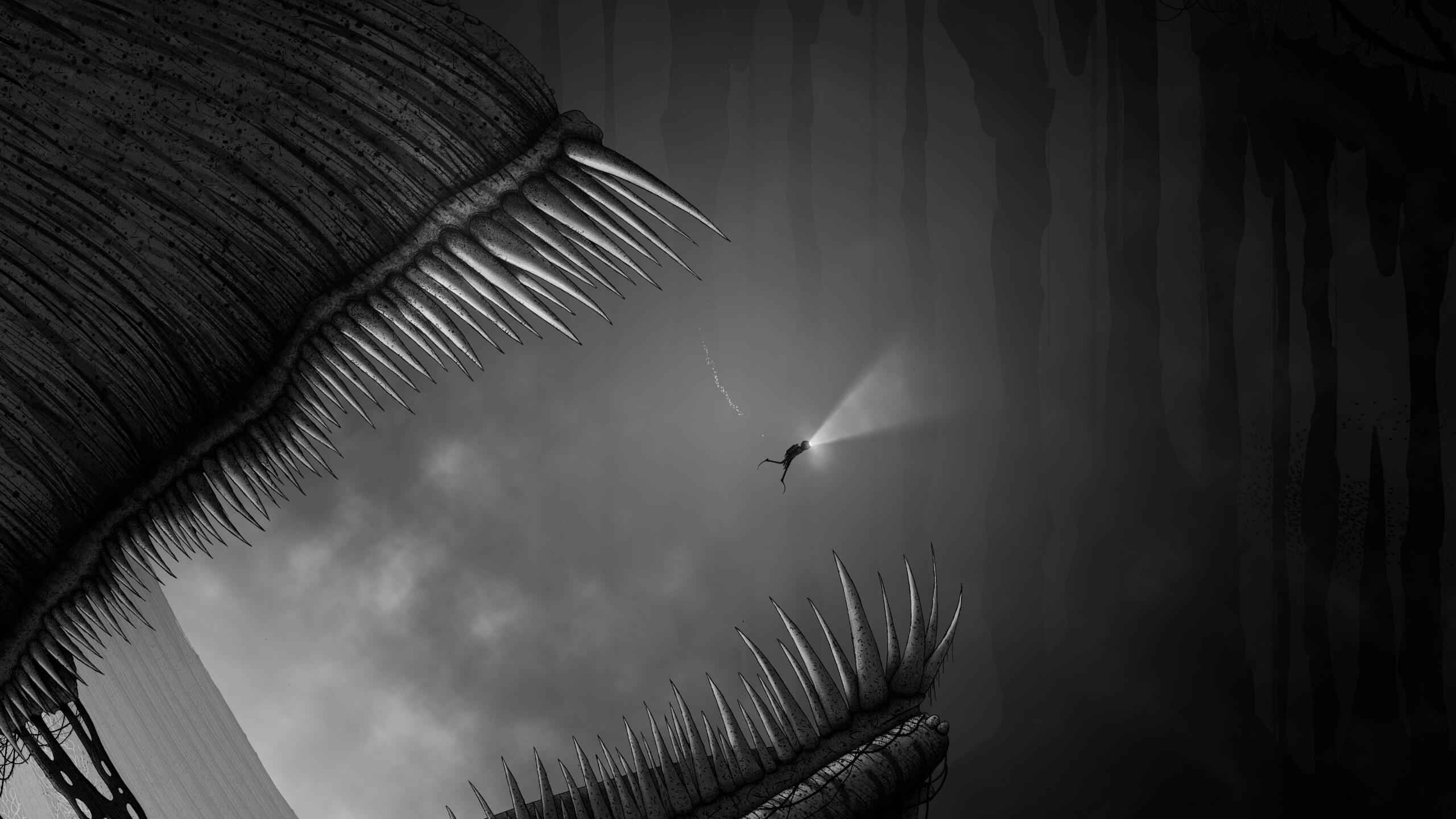
    Silt is not a perfect video game by any means. Many of the puzzles are a trifle too simplistic, and it’s disappointingly brief, clocking in at around four hours. But it’s also one of the most atmospheric games I’ve played in a long time, and its brand of underwater black-and-white horror remained stuck in my head long after I finished playing. It hints, rather than tells, and I’m still scratching my head over some of the bizarre things I saw. LP

    Website

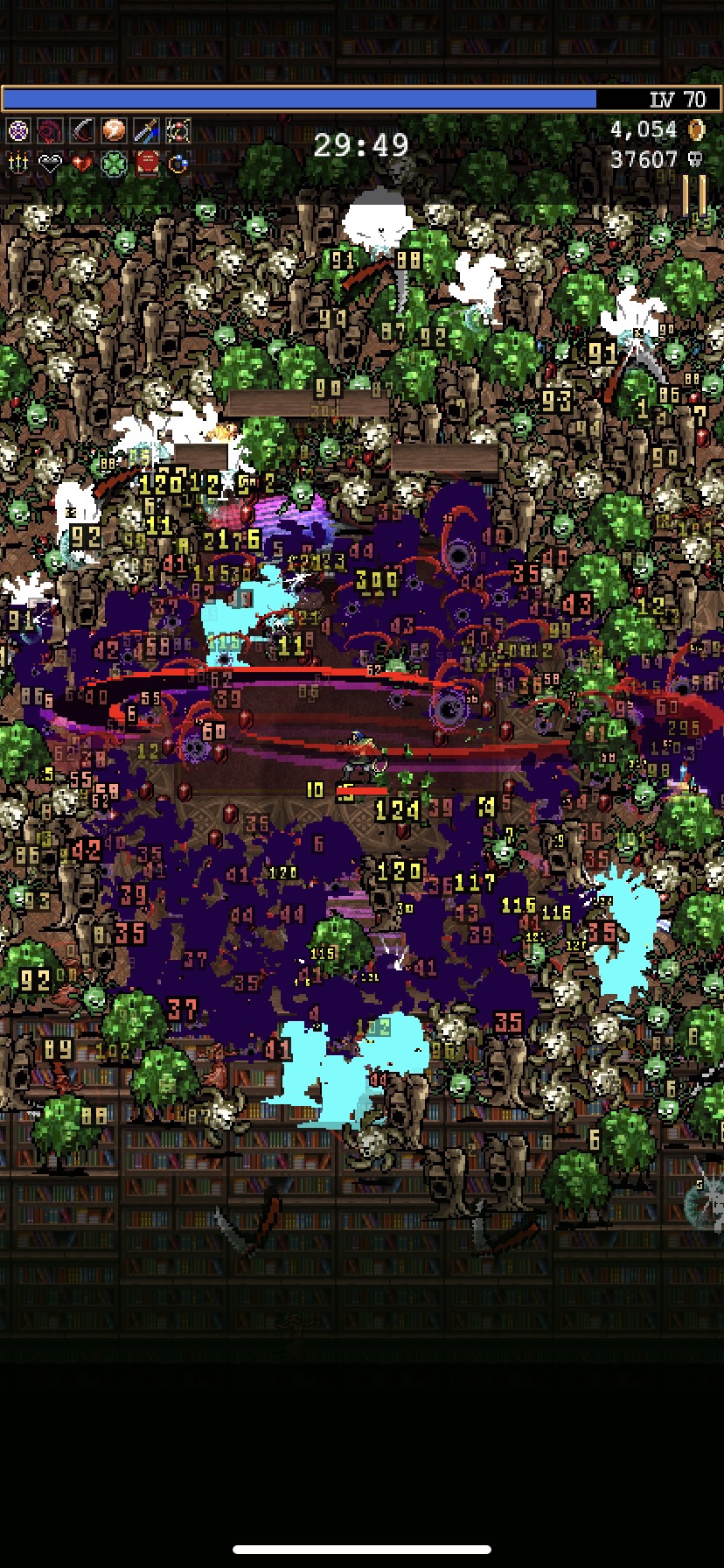
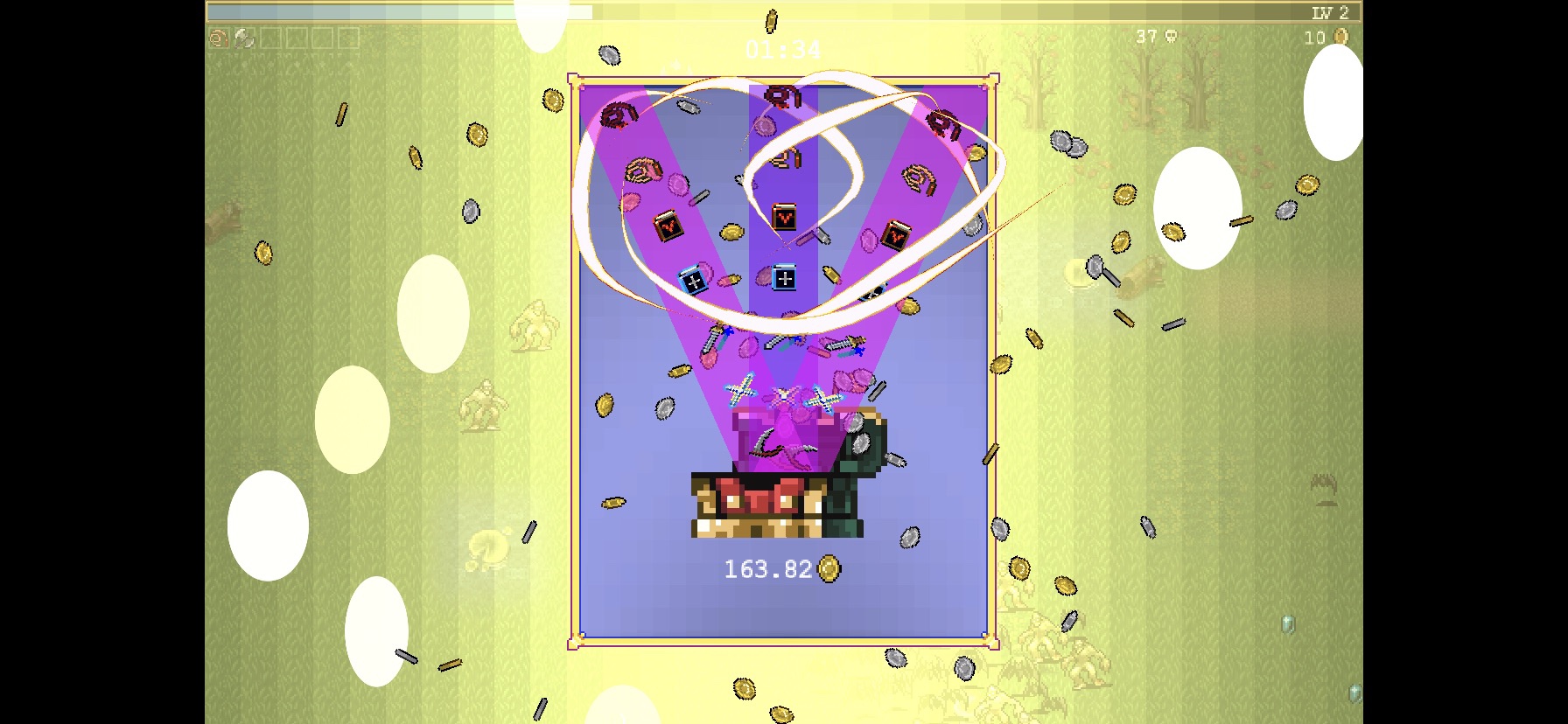
    Vampire Survivors

    What an unexpected treat this game is. Its release on Steam has been generating positive word of mouth for months, and I finally tried it for myself when it received a mobile port at around the time of the Game Awards. I was instantly hooked. How to describe it? Essentially, it’s a twin-stick shooter with only one stick (shooting is done automatically), but you level up your character and weapons near constantly. This means that by the end of one of its 30-minute levels (if you can survive that long), the entire screen is completely filled with bullets, knives, axes, spells and explosions, and enemies are throwing themselves at you in endless waves. It’s delightfully over the top, and it’s packed with endless characters, weapons and other goodies to unlock, meaning you can keep dipping in to discover something new. Plus it’s only a couple of quid, or free on mobile – so there really is no excuse not to try it. LP

    Website


    Follow A Most Agreeable Pastime on Twitter and Facebook, if you like.

  • All the stuff I wrote about video games in 2022

    Back at the end of 2021, I wrote that I had stopped almost all of my copy-editing work to focus on writing; towards the start of 2022, I finally gave up the very last vestiges of copy-editing. It’s a transition that’s been a decade in the making: I started off my career in publishing as a scientific copy-editor back in 2007, before deciding to go freelance in 2012. At first I was mostly copy-editing when I made the freelance leap, with a small dollop of writing on the side. Now I’m exclusively a writer. It’s scary, but tremendously exciting.

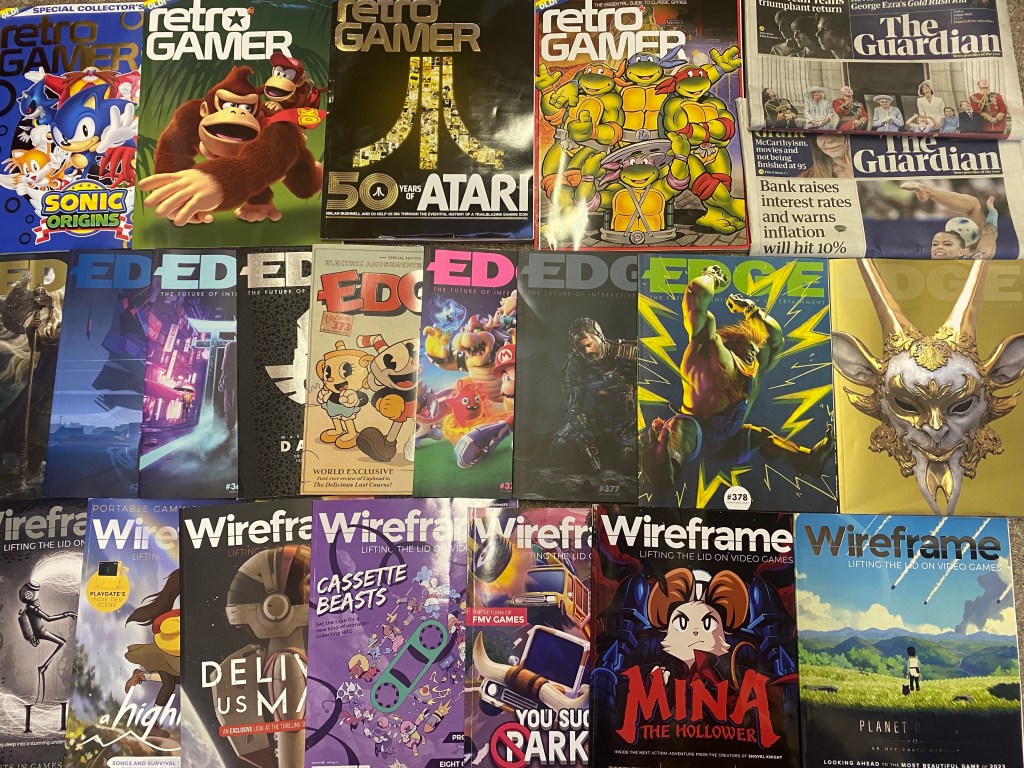
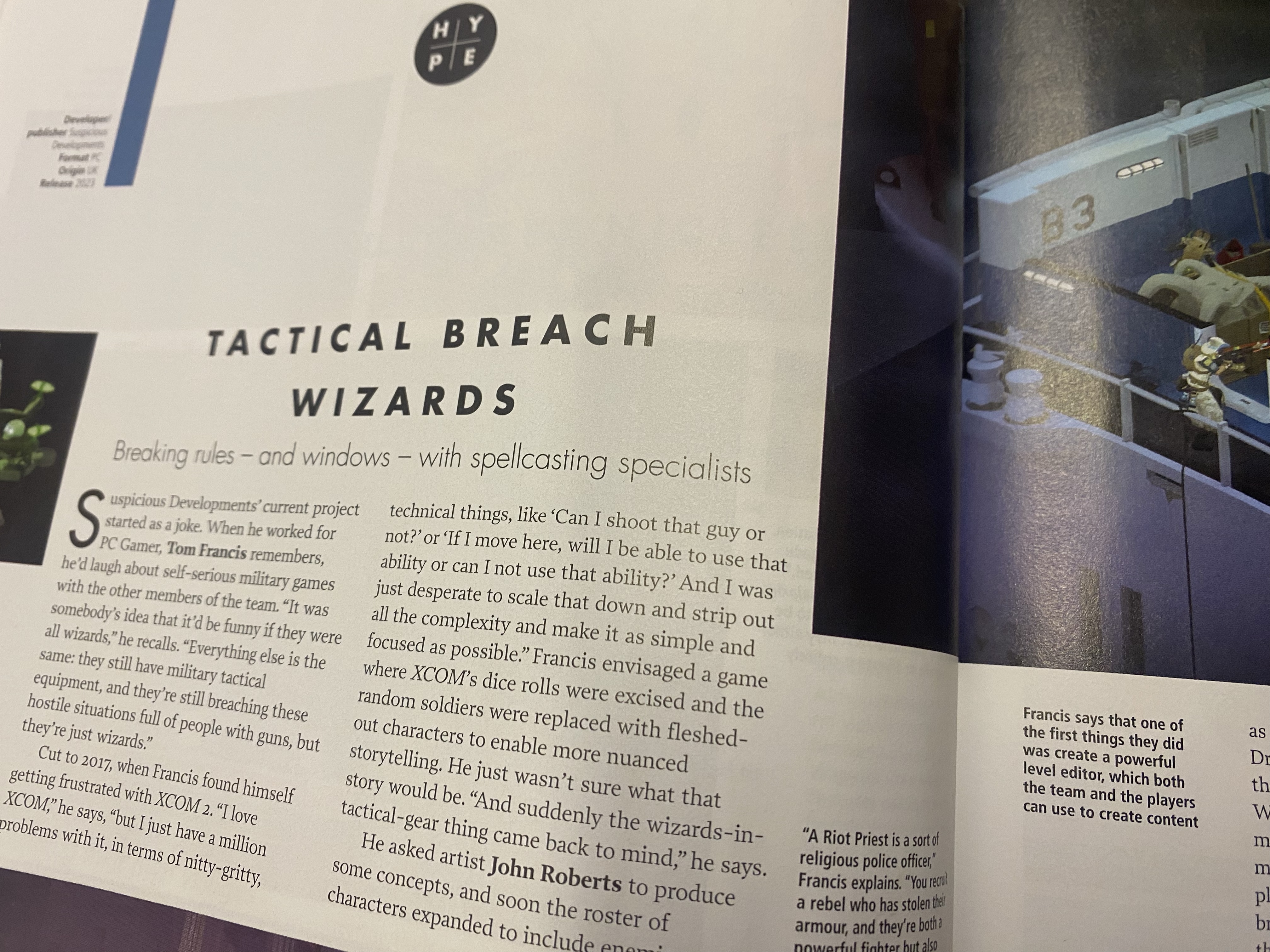
    The first half of 2022 was mostly wrapped up in working on the Secret Project I mentioned at the end of 2021. Unfortunately I still can’t talk about that just yet, but rest assured, all will be made clear in 2023. However, around that project, and particularly towards the end of the year, I’ve done a helluva lot of writing about video games. Every one of the magazines and newspapers shown in the header image contains at least one of my articles.

    In particular , I’ve written an enormous amount of stuff for EDGE this year. All together, I’ve written eight preview articles, four news articles, one review and one massive ten-page feature on game preservation. The latter was particularly exciting, as it’s long been an ambition of mine to write a feature for EDGE. Hopefully there will be many more features like it in the future.

    I’ve also done quite a few pieces for The Guardian, including reviews of Citizen Sleeper, Silt, Potionomics, A Little to the Left and Pentiment, as well as a preview of Pentiment in which I spoke to game director Josh Sawyer. One of my favourite features this year was one about Andrew Sinden bringing back the light gun for modern TVs: it’s a really inspiring story, and it got lots of great feedback. This year also marked the first time one of my Guardian pieces made it into print, as opposed to simply being published on the website. I received an e-mail saying my Citizen Sleeper review was going to be in that day’s paper, and I immediately rushed down to the newsagent to buy it in great excitement. I still get a huge kick out of seeing my words on the printed page. Perhaps the day I don’t is the day I stop writing.

    I’ve contributed a lot of stuff to the brilliant indie-focused magazine Wireframe, too (which you have no excuse not to read, since you can download PDFs of the mag for free). My reviews included FAR: Changing Tides, Dorfromantik, Sniper Elite 5, Mothmen 1966, Lost in Play, The Excavation of Hob’s Barrow and How To Say Goodbye, and I also wrote a feature on breaking the fourth wall in video games, which was an absolute hoot to make, mostly because it gave me a chance to talk to the fascinating folk behind Lair of the Clockwork God, The Procession to Calvary and OneShot. I think one of the best parts of writing features is simply having the excuse to call up interesting people and have a good old chat.

    And speaking of interesting chats, one of my favourite conversations this year was with Tom Kalinske, the former head of Sega America, when he told me how folks from Sony popped his inflatable Sonic the Hedgehog at E3 1995. That was for a feature on The Story of E3 for Retro Gamer, which took an enormous amount of time to write, but turned out wonderfully, I think. I also wrote a few other bits and bobs for Retro Gamer, including The Making of Demon Attack, The History of Legacy of Kain and an Ultimate Guide to Cannon Dancer, which is an absolutely wild 1990s arcade game that acts as an unofficial sequel to Strider, and which I only found out about the existence of this year.

    On the topic of retro gaming, one of the most exciting developments this year was the launch of Time Extension, a website from the makers of Nintendo Life that’s solely dedicated to old-school games. I’ve contributed a few articles already, including How Hideo Kojima’s Snatcher Inspired The Creation Of “Pixel Pulps”; What Do You Get If You Cross Contra With Canines? Wild Dogs, That’s What; 50 Years Of The Magnavox Odyssey, The World’s First Games Console; The Rise And Fall Of LaserDisc Video Gaming; and Sega’s Vomit-Inducing R360 Is An Endangered Species From A Different Age. The last one in particular was fascinating to write – there are now just a handful of Sega R360 machines left in the world, and only a couple (possibly just one) that can be played by the public.

    Finally, I penned a couple of articles for L’Atelier about the present and future of gaming subscription services, entitled Who’ll be the ‘Netflix of Games’? A briefing on this multiplayer arena and The ‘Netflix of Games’: Predicting what’s ahead. I do enjoy writing these insight pieces – and all being well, there should be another one coming online very soon.

    All in all, a pretty busy and exciting year, then, and I hope you’ve enjoyed reading some of the articles I’ve written over the past 12 months. Here’s to an even better and brighter 2023. And if you want to take a look at all the stuff I wrote about games in 2019, 2020 and 2021, click on the links below. See you back here next year!


    If you’re interested in reading more, head this way to find a full list of all the video-game articles I’ve ever written.

    Follow A Most Agreeable Pastime on Twitter and Facebook, if you like.

  • Dorfromantik review: a game of epiphanies

    Dorfromantik by Toukana Interactive is a game that abides to the old adage of being whatever you make it.

    I went into it under the impression that it was a charmingly relaxing digital board game – something that tickled my fancy, because quite frankly, life lately has been the opposite of that. You’re given a random set of hexagonal tiles that have villages, rivers, forests and more bordering each side, which you must match with previously placed tiles. These tiles gradually build up to create a charming little world seen from a bird’s eye view.

    At first, that’s all I did. Without any particular strategy, I just had fun building my own diorama landscapes, heeding the need to match tiles, but not really trying to topple a high score. I just went into full-on creative mode, and it was a delight. At my age you forget how to play – I mean really play, without any goal or meaning. But using Dorfromantik as a toy, combined with a healthy dose of imagination, kept me engaged for hours as I made interconnected pathways, streams and bustling bergs. And when I used up all my tiles… I just started again. There were a few nights where I’d pass the Switch to my wife, and we’d take turns building on the same world just for the hell of it. It somehow had morphed from this creative experience to a cooperative one.

    After a few days, I inadvertently unlocked a new tile by reaching a goal set by the developer. I didn’t even realize this was a thing until it happened. This triggered my brain into entering another enjoyable gaming side hobby – unlocking stuff. I soon found a list of achievements I could accomplish, and I switched over from just dinking around with Dorfromantik to willfully “gaming” it to see what other tools and doo-dads I could get. The unlocakables don’t add a tremendous amount of anything that radically changes the experience, but at the same time it’s fun to have more options to choose from, be it new tiles or themes. By all means Dorfromantik was still a soothing experience, but with an added dose of completionist motivation, it became something that pleased me from two angles.

    Then I discovered the joy of keeping score.

    Obviously there are certain score criteria needed to unlock things, but when I see this kind of stuff in other games I tend to dismiss it and enjoy whatever trips my trigger. But here… it became infectious enough that I kept dawdling with Dorfromantik well beyond its ability to give me fresh unlockables. Suddenly I went from relaxingly building worlds to min/maxing my way towards an arbitrarily “perfect” world. I didn’t even need a leaderboard to try to rise above; beating my own personal best was satisfying enough. After being someone who turned their nose up to games about score chasing, I marveled at the realization that I not only “got” it, but that I was thoroughly engaged in it of my own volition, and loving it.

    In a game that I first thought was meant to be this soothing, meditative thing.

    Even if you don’t have the same epiphanies that I did, I can say that there’s something in Dorfromantik for just about any type of player, and I truly mean that. You really do get out of it what you put in. Thankfully for me, I put my whole heart into it and came out with some unforgettable memories and an undying respect for the developers that helped facilitate that.


    Dorfromantik was developed by Toukana Interactive, and it’s available on PC and Switch. We played the Switch version.

    Disclosure statement: review code for Dorfromantik was provided by Toukana Interactive. A Most Agreeable Pastime operates as an independent site, and all opinions expressed are those of the author.

    Follow A Most Agreeable Pastime on Twitter and Facebook, if you like.

  • Blossom Tales II: The Minotaur Prince review: more of the wonderful same

    While there are plenty of reasons to fondly remember the first year of the Nintendo Switch (The Legend of Zelda: Breath of the Wild and Super Mario Odyssey being my personal favorites), one thing that really comes to mind are the multitude of independent releases that caught my eye thanks to there not being a massive glut of software on the platform. That’s not to say in the end they were inferior experiences, just that they had the breathing room to make an impression on early adopters.

    One in particular (and the obvious segue into the review proper) was Blossom Tales: The Sleeping King by Castle Pixel. It was a fetching homage to The Legend of Zelda: A Link to the Past which took that game’s pacing, overhead visuals and tool-assisted gameplay, and bundled it with a storytelling device that helped it stand on its own. Even though the encouraging word of mouth on it was constantly in my ear when it first dropped, I didn’t actually pick it up until last year. Unsurprisingly, it was still brilliant after all that time.

    So color me excited when the sequel dropped.

    The apple that is Blossom Tales II: The Minotaur Prince didn’t fall very far from the tree it was born from, but it still tastes just as good.

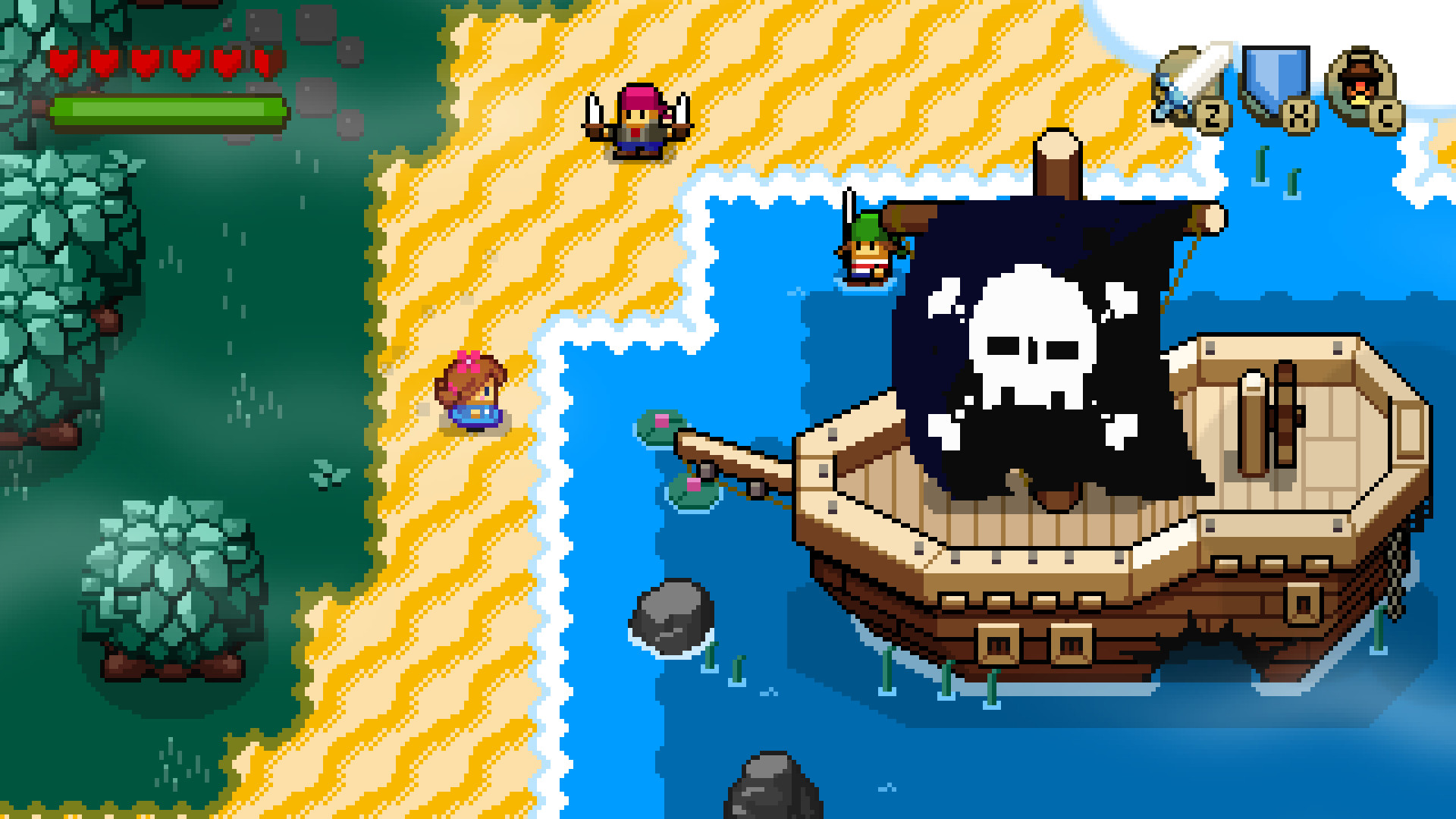
    It’s a mostly fluffy fantasy yarn in which heroine Lily (whom, like Link, is a different iteration with familiar characteristics) has to collect treasures in various fortresses and castles in order to help beat the aforementioned Minotaur King (and save her brother and the world while she’s at it). What makes the plot fun is that it’s actually a story being told by a grandfather to his grandchildren, and he inserts them into it. The serious drama is often interjected with comments from the grandchildren, who are then chided for interrupting – a mechanic that’s just as endearing as it was in the first game. Sometimes it even changes up elements of the game, although I don’t want to spoil that here.

    At first, I felt like these moments were a missed opportunity to give players the chance to affect the story, but I eventually took it with a grain of salt, because just like in actual storytelling, Grandpa knows the framework for what’s going to happen, he just needs to add the odd aside to keep the kids engaged.

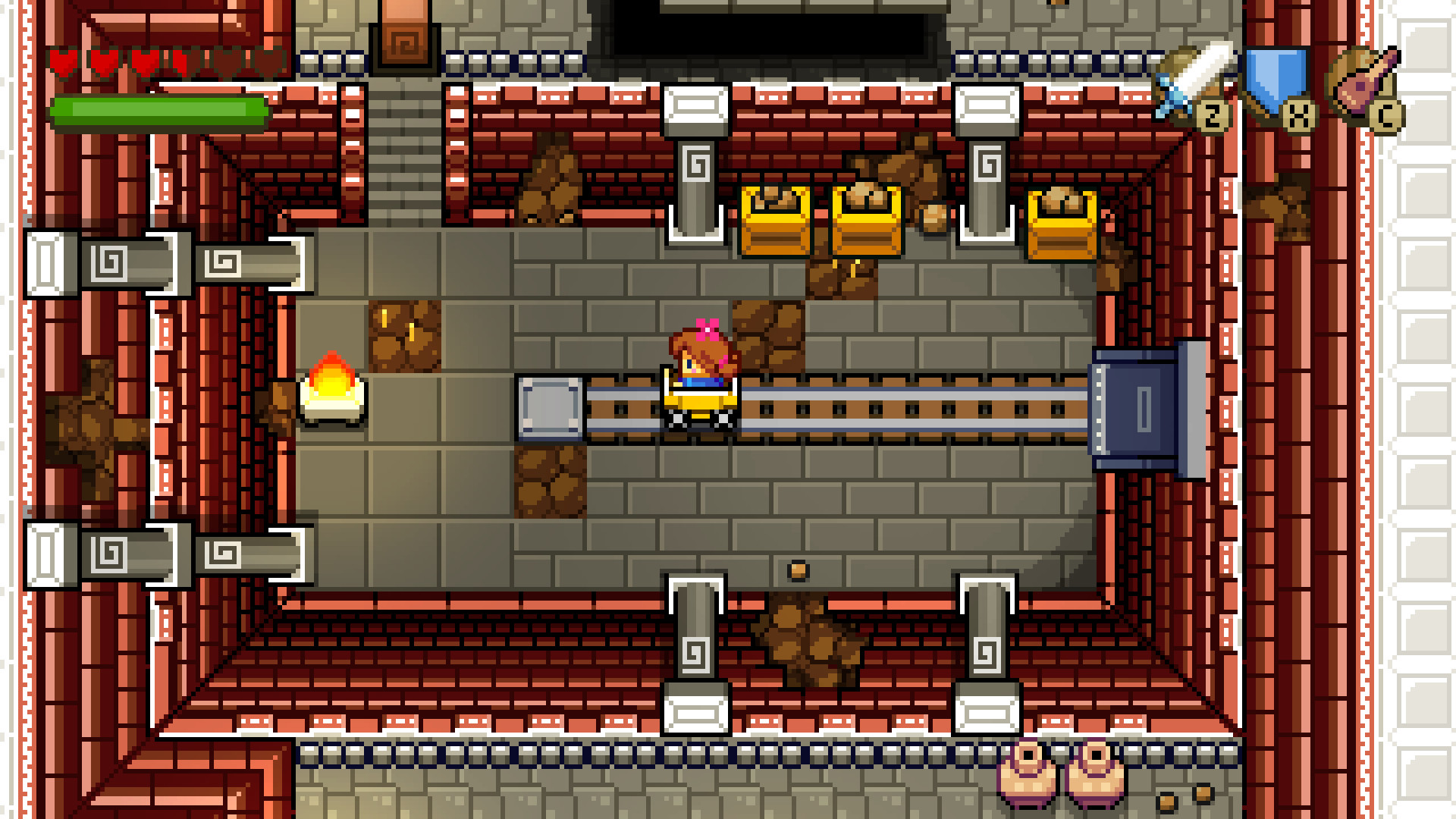
    Supplementing the cute story is a game that is unabashed in its inspiration, but competent and enjoyable enough to move beyond simply naming it a Zelda clone. The cadence is very familiar – gather a set number of McGuffins conveniently stashed in dungeons, get quirky additions to your kit that expand your ability to explore, and finally take on the big baddie, in this case the titular Minotaur King.

    Blossom Tales II doesn’t stray far from the formula of either Zelda or its prequel. To which I say: who cares? There’s a charm to its familiarity, it plays like aces, and the fourth-wall-breaking storytelling adds a lot. Excuse me while I wave my cane in the air a bit, but back in my day sequels where often just “more of the same”. And you know what? It was great! If you want to use an overwrought food analogy, it’s the literal definition of seconds – you liked what you ate, and you’ll take just a little bit more. What I’m getting at is that nobody messed with the recipe a whole lot, but it still put me in my happy place.

    The best thing I can say about Blossom Tales II is that it comes at a time when there’s a gap between releases of Zelda-likes, and Castle Pixel are so proficient at making them that it fills the hole nicely. It does what it sets out to do, is a hell of a lot of fun, and while it doesn’t light the world on fire, it also doesn’t light a dumpster fire, either. Perhaps if there’s ever a third game in the series, Castle Pixel will take Blossom Tales to a new level; but even if they don’t, and I simply get more of this charming homage, I’ll be just as exicted.


    Blossom Tales II was developed by Castle Pixel and published by Playtonic Friends, and it’s available on PC and Switch. We played the Switch version.

    Disclosure statement: review code for Blossom Tales II was provided by Playtonic. A Most Agreeable Pastime operates as an independent site, and all opinions expressed are those of the author.

    Follow A Most Agreeable Pastime on Twitter and Facebook, if you like.

  • Ship of Fools review: nautical silliness on a perpetual loop

    I’m not ordinarily a fan of rogue-like/rogue-lite games. I can’t really explain why. Perhaps it’s my competitive nature bumping up against a genre in which failure is not just a likelihood, but often mechanically necessary. I also tend to shy away from frantic, communication-heavy, co-operative games such as Overcooked, largely because I have all the patience of a starving man at a buffet. It is remarkable, then, that I found myself having fun with Ship of Fools – but inevitable that there were also some frustrations.

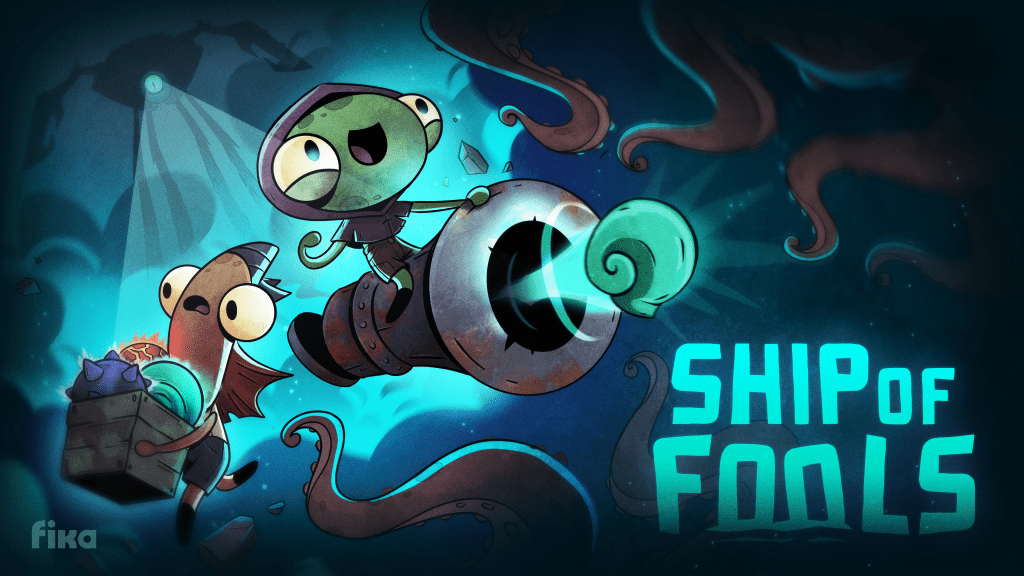
    Ship of Fools is the debut game from Fika Productions. You control the titular Fools who (repeatedly) wash up on the shores of an island lighthouse, before setting sail to battle with The Darkness (a mysterious horror, not the early-naughties band) which has settled over the seas. Of course, the Fools aren’t exactly expert sailors, and your ship isn’t exactly the Bismark, so your brave, remarkably hardy crew will probably fail a few times before they finally prevail.

    They’ll fail because, while at sea, they have to fight wave after wave of varied enemies. Ship of Fools can be played solo or with a co-op mate, either locally or online. It’s up to the two of you (or you and your automated cannon) to keep your guns loaded and firing, while managing any necessary repairs. A maximum crew of two means you’re perpetually short-handed. You can decide between you who’s doing what at any given moment, or, of course, just yell at each other and hope for the best. Given the frenetic pace of the action though, good communication is recommended, lest your ship is sunk and your Fools are left to float back to shore.

    Fortunately, all is not lost when the waves return you to the lighthouse. During and after each run you accumulate Tendrils, artefacts which you can exchange for permanent upgrades to your ship. Extra hit points, upgraded cannons, more cargo space, etc. Additional cargo space is particularly useful as, while you accumulate useful items and better ammo for you cannons, you can only keep what you can store on a cargo pedestal. Everything else is jettisoned when you navigate to the next area.

    The items you find and which ones you decide to keep can really make or break a run. The map of each stage indicates what kind of bonuses can be found in each area, but there’s a lot of variety in what which items you actually receive. There’s time pressure, too, as after every three moves The Darkness encroaches on the area you’re in, denying you access to the resources within. Once you’ve got nowhere left to go, you travel into The Darkness to battle with the area boss, which is considerably tougher than the stages which led you there.

      If all this sounds a bit grim, then allow me to clarify – Ship of Fools is very silly. The Fools themselves skip and frolic across the screen, loading seashells, ice cubes and cans of beans into their cannons. Their gormless expressions only shift from mild amusement when celebrating victory, or being clattered by their shipmate’s oar-based melee attack. The cartoony aesthetic and irreverent dialogue is well-executed and lightens proceedings considerably.

      There are, however, some aspects of the game which I’m less enamoured with. Given that this is a rogue-like, a certain amount of repetition is inevitable. While the best examples of the genre make each run feel unique, that’s not really the case here. Each attempt feels more or less the same as earlier ones, varying only in length and what you happened to be loading into your guns. Coupled with an inability to save the game mid-run, this led to repeated play-throughs becoming a little monotonous.

      This is somewhat exacerbated by a lack of variety in the environments. There are three areas to progress through (plus a final boss), and they’re played in the same order each time. After a few attempts, the first area becomes something of a formality; you’ll need the items from it later, but it’s no longer a challenge in its own right.

      This also limits the longevity of the game. For example, I’ve lost count of how many times I’ve played through FTL: Faster Than Light, but I can’t honestly say there’s much appeal to do the same for Ship of Fools. The pretty significant difficulty spikes presented by the end of area bosses will slow players down, but once they’re overcome, I don’t see much reason to go back around.

      In short then, Ship of Fools is enjoyable. Having a well-made, light-hearted but tricky couch co-op game with a low barrier to entry is always welcome. But it’s a limited experience. It’s fun while it lasts, but it won’t last terribly long. That said, I believe the price tag does reflect that, so if you’re looking for something silly to play with a friend, then maybe bear Ship of Fools in mind.


      Ship of Fools was developed by Fika Productions and published by Team17, and it’s available on PC, PS5, Xbox Series X/S and Switch. We played the PC version.

      Disclosure statement: review code for Ship of Fools was provided by Team17. A Most Agreeable Pastime operates as an independent site, and all opinions expressed are those of the author.

      Follow A Most Agreeable Pastime on Twitter and Facebook, if you like.

    • Whatever happened to the Sega R360?

      If you went to an arcade in the 1990s, you might have been lucky enough to see the Sega R360 in action. It was an utterly bonkers machine that was capable of turning the player fully upside down, more like a theme park ride than a game, and it reflected Sega at the height of its powers. It was just one of the remarkable, extravagant arcade machines that appeared in the early 1990s, at a time when 3D graphics were first becoming feasible, and every new arcade game promised something that had never been seen before.

      But what happened to the R360? Only a limited number of machines were ever made, and they’ve slowly been disappearing from arcades over the past few decades. I was curious to find out where the few remaining R360s have ended up, which is why I got in touch with Kevin Keinert, who has becoming something of a specialist at restoring these unique machines. It was fascinating to hear about his work – and you can read about what I discovered in this feature for Time Extension:

      Sega’s Vomit-Inducing R360 Is An Endangered Species From A Different Age

      Did you play on the R360 back in the 1990s? Tell us about it in the comments!


      Follow A Most Agreeable Pastime on Twitter and Facebook, if you like.

    • The fascinating world of video-game preservation: a ten-page feature for EDGE

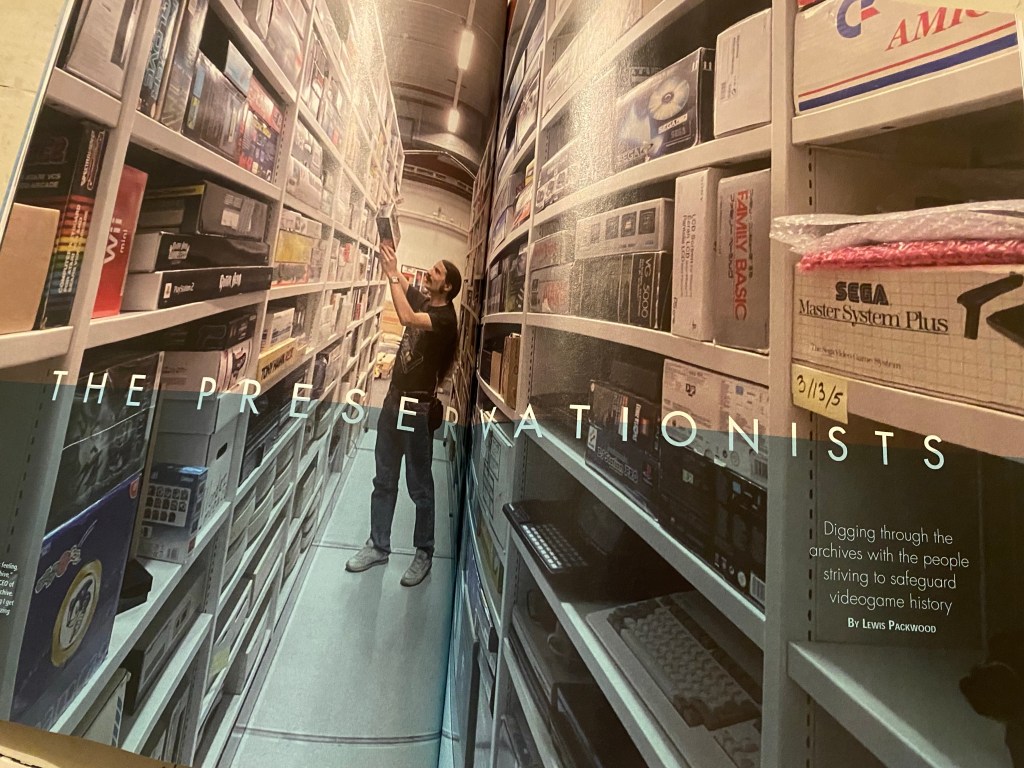
      A couple of months back, the editor of EDGE magazine asked me to write something about the current state of game preservation. That feature – The Preservationists – has now just appeared in issue 377, and it was one of the trickiest things I’ve ever had to write.

      That’s mostly down to me, though. I wanted to provide a thorough overview of the state of game preservation across the world rather than just in, say, the UK. That meant talking to a wide variety of groups across the US, Europe and Japan, including the Software Preservation Society, the UK National Videogame Museum, the Strong Museum of Play, the Game Preservation Society in Tokyo, the Video Game History Foundation and the Embracer Games Archive – which is a lot to pack into one feature. Talk about making things difficult for yourself. I ended up with nearly eight hours of recorded interviews, plus a huge body of e-mails and research, and it was an almost an impossible task to sieve through all that information and pick out just a few choice nuggets. Even though the article ended up being ten pages long, I still had to boil down hour-long interviews into just one or two paragraphs.

      I’m pleased with how it turned out, though. I think it highlights just how diligently people are working to preserve gaming history – and also how this job has mostly fallen to volunteers and non-profit organisations. It would be heartening to see the games industry itself take more of a lead when it comes to preservation. Embracer is doing that in a way with its games archive, but that’s just one company – I’d like to see the industry pool its resources and set up its own preservation initiative, in a similar way to how the Entertainment Software Association was created in the 1990s. At the very least, companies – and especially the big publishers and platform holders – should be financially supporting the societies and museums that are caring for their old games.

      If you’d like to read the article for yourself, it’s in EDGE issue 377, and you can buy a single issue using this link.


      Follow A Most Agreeable Pastime on Twitter and Facebook, if you like.

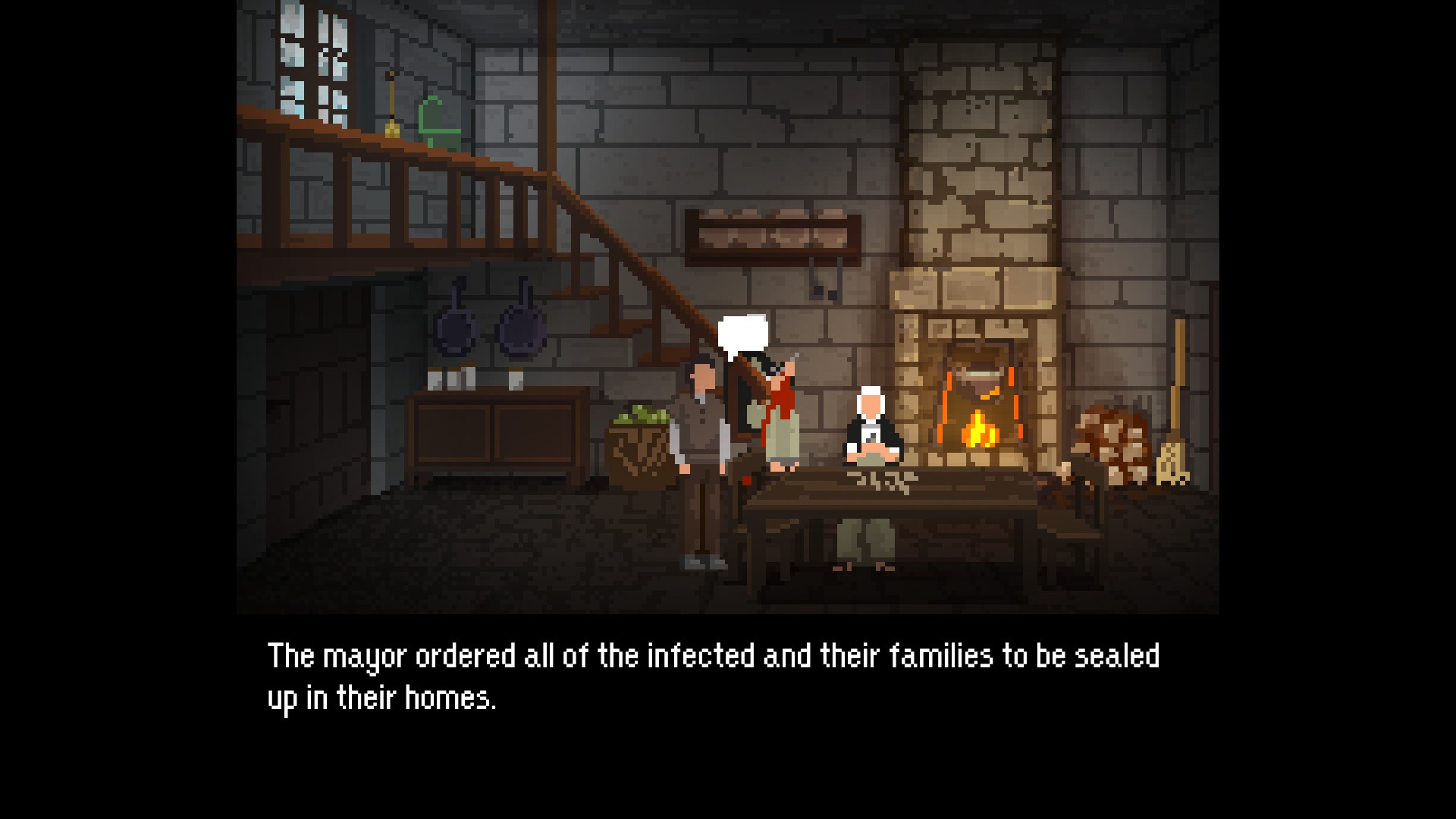
    • The Plague Doctor of Wippra review: welcome to misery hour

      I don’t quite know what to make of The Plague Doctor of Wippra. I’m not quite sure who its for.

      Usually on A Most Agreeable Pastime we have, well, an agreeable time with the games we pick for review. We don’t have the bandwidth to cover more than a handful of new titles every month, and we tend to cherry pick games that look promising, interesting and well worth our precious time. I was intrigued by The Plague Doctor of Wippra because it’s in a genre I love – point and click – and it’s from the same publisher as the excellent Unforeseen Incidents and LUNA: The Shadow Dust. But my word did I struggle to like it.

      Set during the medieval plague years in Wippra, Germany, you play as a doctor called Oswald Keller who sets out to help victims of the disease using the rudimentary medical technology of the time – yes, we’re talking leeches and hand drills, with a spot of bloodletting for good measure. However, despite his best efforts and good intentions, Oswald is met with suspicion from the fanatically religious population.

      The game takes the form of a traditional point and click adventure, with extremely pared-down pixel-art graphics – which are a bit too pared-down if you ask me. I’m all for pixel art, but here we’re looking at such a low resolution that it’s often hard to even make out what’s even being depicted. That meant when it came to finding items to pick up, I was often left pixel-hunting with my mouse, waiting to see when it changed shape to indicate that the blobby thing underneath was something I could click on. After getting tired of this, I found a setting in the menu that lets you highlight hotspots by tapping the space bar, although the game warned me that it had been designed in such a way that such hotspot highlighting wasn’t necessary. My foot it has.

      The puzzles are also somewhat exasperating, and often veer towards the moon logic end of the puzzle spectrum. Often you can see what you need to do, and seemingly have the right items, but the game wants you to perform some extra nonsense before it will let you progress. Like picking up a bloodletting hook, but then having to sharpen it on a statue(!) before using it. Or knowing that you need to use a bowl of blood to lure out some leeches from their hiding place in a wall crack, only for the game to insist you have to find some tool to smear the blood on the surface – leading to you chasing a magpie around the garden, for some reason. Puzzles should be uplifting, and finding the solution should make you feel like a little genius. But here I found myself grinding my teeth rather than feeling any kind of elation.

      And there’s no elation to be found in the plot, either. It’s a very short game that won’t take more than two hours to complete, but it’s two hours of utter misery. Nothing good happens, people die of the plague, and then it ends. I’m not sure that this is the kind of entertainment that people need or want, especially after two years of COVID hell. (Read the room, guys!) It might have been more worthwhile if there was some kind of emotional arc, some kind of meaningful relationship developed with the other characters over the course of those two hours. But most of the characters appear and disappear after spouting only a few lines of disappointingly dry dialogue, and the closest you get to developing any kind of relationship is arging with an unhelpful nun who won’t share her vinegar.

      I don’t like to dunk on developers’ work, because I know that games are hard to make. But The Plague Doctor of Wippra feels undercooked – it’s a game that desperately needs more story, more character building and a good deal less misery. I mean, even plague doctors enjoy a joke, right? As a point and click adventure, it remains steadfastly old-fashioned, adopting few of the quality-of-life improvements and innovations that the genre has seen over the past couple of decades. And we’re not exactly short of excellent point and click games these days – the past few weeks alone have seen the release of The Excavation of Hob’s Barrow and Return to Monkey Island, both of which are fantastic. Play those instead, and avoid this like… no, I won’t say it.


      The Plague Doctor of Wippra was developed by Electrocosmos and published by Application Systems Heidelberg, and it’s available on PC, Mac and Linux. We played the PC version.

      Disclosure statement: review code for The Plague Doctor of Wippra was provided by Application Systems Heidelberg. A Most Agreeable Pastime operates as an independent site, and all opinions expressed are those of the author.

      Follow A Most Agreeable Pastime on Twitter and Facebook, if you like.

    • A trip to Play Expo Blackpool

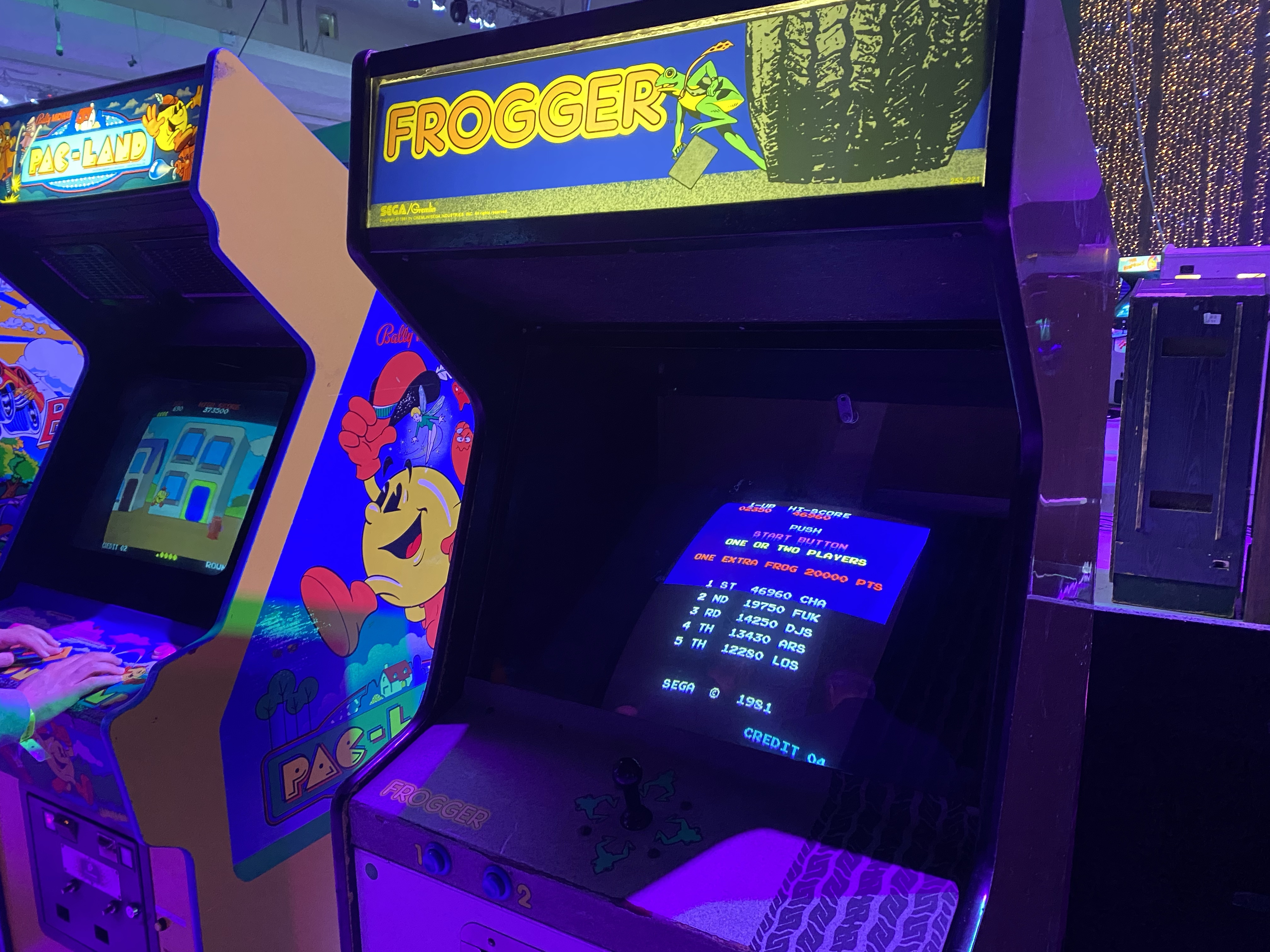
      Last weeked I took a trip to Play Expo Blackpool, an annual jaunt that’s become something I look forward to immensely, ever since my first trip in 2016. It’s a great chance to connect with members of the retro-gaming community, as well as to play some wonderfully ancient games.

      This year, the highlight was undoubtedly the talk from John Romero, who gave some fascinating insights into his early career and the development of the groundbreaking games Doom and Quake. There was also something of a surprise announcement in that he announced plans to re-release Catacomb 3D in a box set with all six games in the Catacomb series. Catacomb 3D was the first FPS to use texture mapping, so it’s something of a landmark title, although it’s little remembered now when compared with the success of other id Software games like Wolfenstein 3D and Doom.

      I also got a chance to have a quick chat with John in person, and I was fascinated to learn that he now works with Les Ellis at Romero Games. I briefly shared an office with Les when he was a game journalist at Computer and Video Games magazine and I was doing a stint as an intern after university. Les had previously worked on GamesMaster magazine, where he reviewed Doom and spent many column inches raving about how amazing it was, so it’s rather fitting that he now works alongside Doom‘s creator.

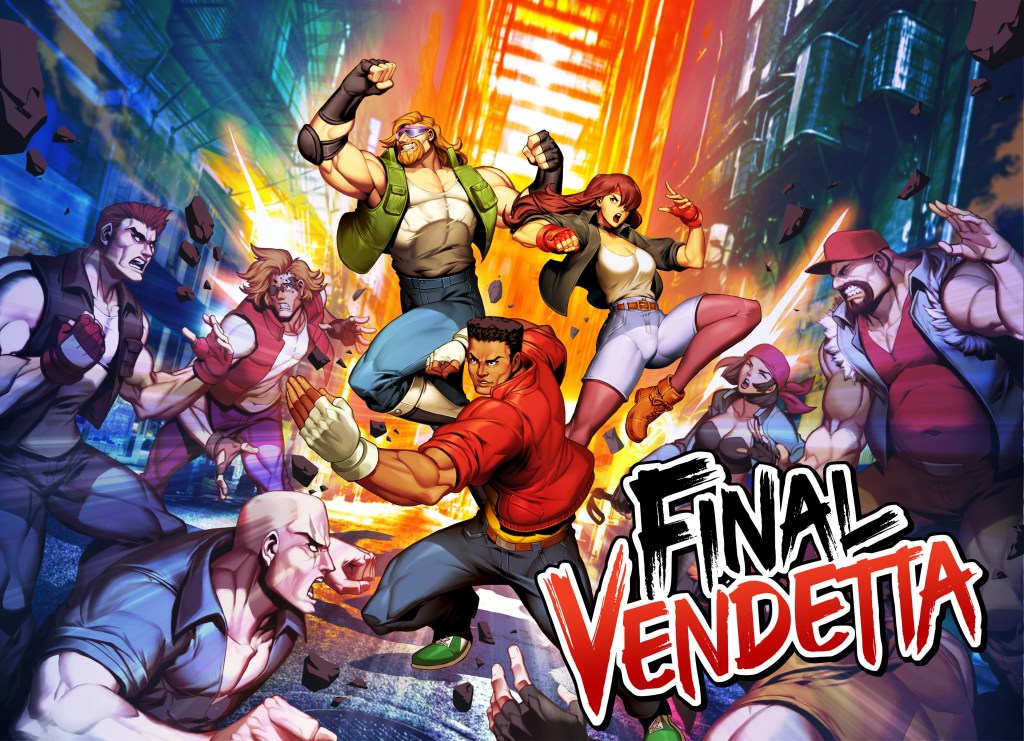
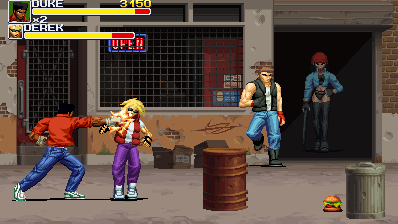
      Another highlight was a panel discussion about making new games for old systems. Among the speakers was Alistair Low, who I wrote about for Nintendo Life last year, as well as Amiga-game creator Graeme Cowie and Mike Tucker from Bitmap Bureau (who made the excellent Final Vendetta). Mike kindly sent me a code for the top-down shooter Xeno Crisis, and I’ll post my thoughts on it just as soon as I get round to playing.

      Out in the main hall, I came across some wonderfully obscure and musty retro consoles, including the beautifully ugly ColecoVision, which looks something like a cross between a VCR and a CB radio. Then there was the Binatone TV Master Mk 6 (a brilliantly orange Pong console from the mid-1970s) and the unbelievably awful Philips CDI 450. Just take a look at the controller the CDI comes with and try to imagine playing games with it. It boggles my mind to think that anyone at Philips thought this was OK.

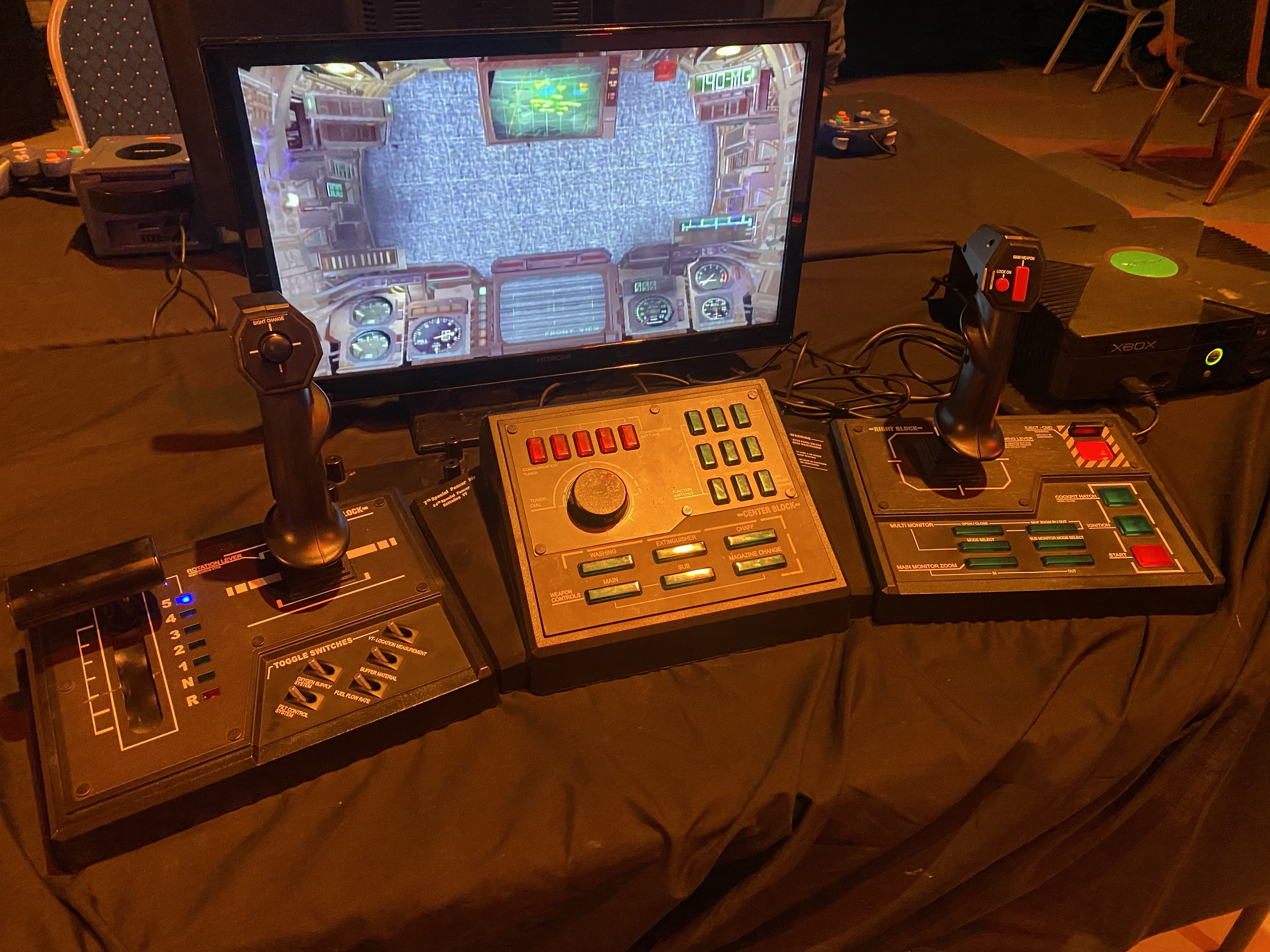
      Best of all, there was an enormous Steel Battalion controller. I remember having a go on this ridiculous thing back when it was released, and it’s still mind blowing to me that Capcom ever gave it the green light. There are pedals, too! It is a gloriously silly piece of kit, and it’s just a shame that Steel Battalion itself is a bit dull, with gameplay centred on plodding around very slowly while shooting blobs in the far distance.

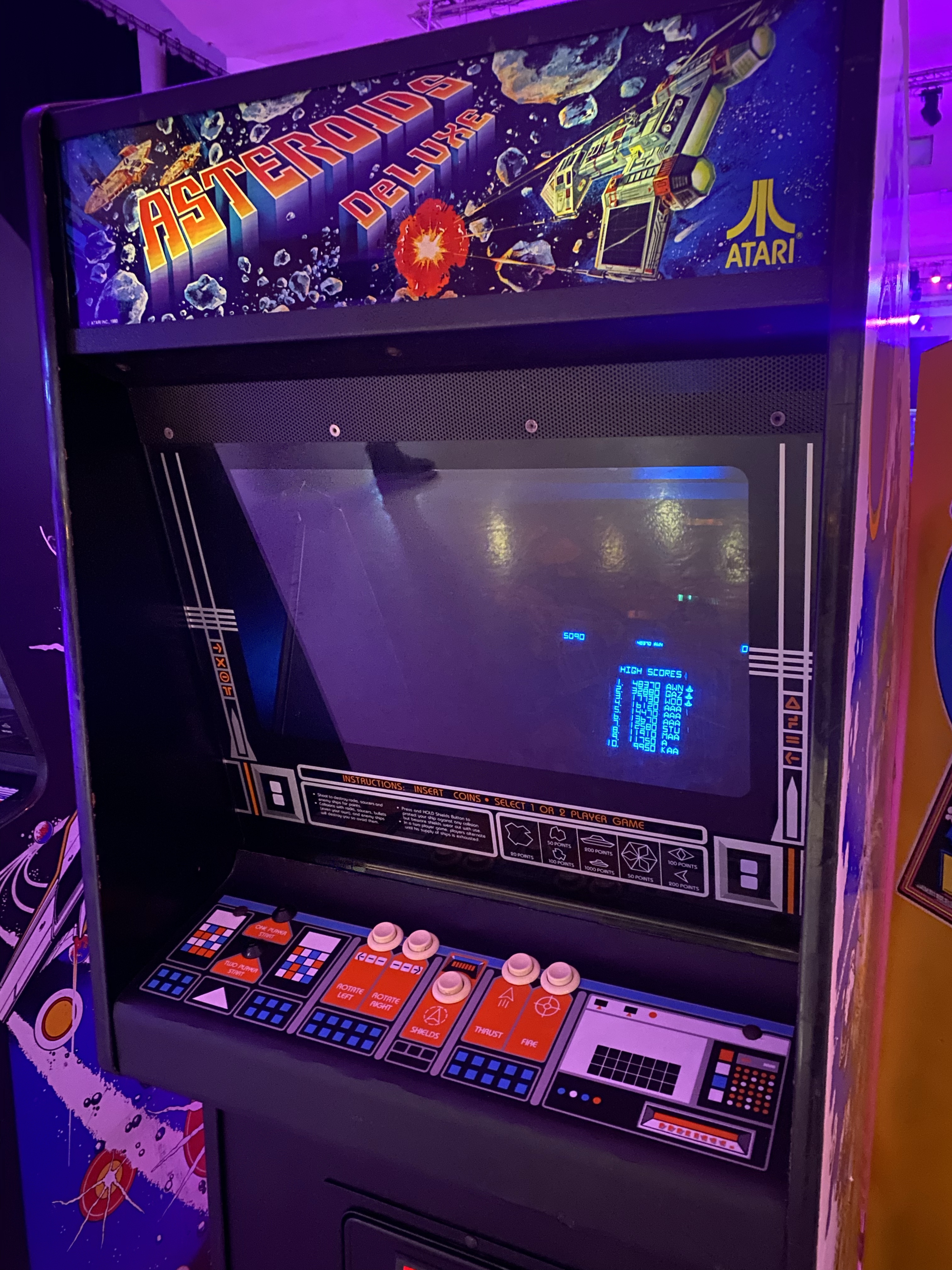
      There was also a whole slew of arcade games that I’d never seen before, and in some cases never even heard of. Vindicators from Atari was a new one on me, and featured tank controls that worked in a similar way to Battlezone, but the whole thing was instead viewed from a top-down perspective. I can see why it’s obscure, though – the game is quite slow and frustrating to play, and not a patch on the excellent vector-powered BZ. Much better were Space Duel and Asteroids Deluxe, both of which are variations on Asteroids that mix up the gameplay in fun ways, such as by introducing enemy spaceships and a simultaneous two player mode.

      All in all, it was an enormously fun trip, but as I say every year, I wish they’d move to a new venue. I think a lot of attendees have a mysterious fondness for the Norbreck Castle hotel, but in my opinion it’s a pretty shabby and depressing place that gets shabbier and more depressing every year. Still, it’s what’s inside that counts, I guess, and I couldn’t fault the line up this time around.


      Follow A Most Agreeable Pastime on Twitter and Facebook, if you like.

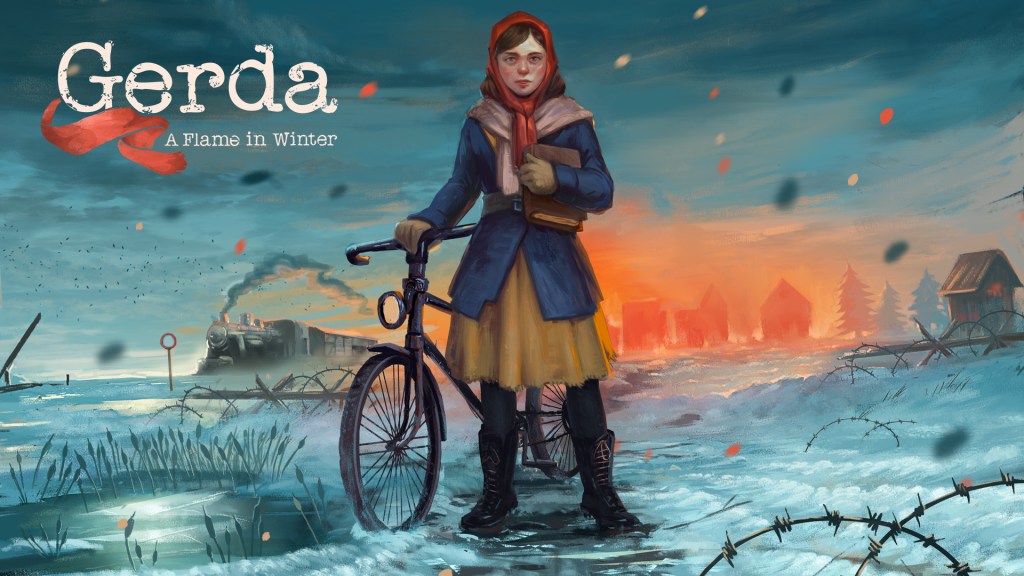
    • Gerda: A Flame in Winter review: a fascinating morality tale from the Second World War

      When I first booted up Gerda: A Flame in Winter, I thought I had it pegged within the first ten minutes of playing.

      Set in Denmark during the Second World War, you play as a compassionate and confident nurse named Gerda, who returns to her hometown to work for the local doctor during the occupation by Hitler’s forces. The burg of Tinglev sits on an often contested border with Germany, and consists of townsfolk of both German and Danish nationality. Obviously there’s a clash of ideologies, in which the Germans see the occupation as a welcome turn of events, while the Danes would prefer to retain their autonomy. Then there’s our courageous heroine, who is the offspring of both Danish and German families, and who must navigate day-to-day life with people of opposing viewpoints.

      Being both a citizen of the United States and a health-care provider (when I’m not gallivanting as an amateur games writer), I found Gerda to be a compelling protagonist – and I am well aware of what it’s like to live in a divided country. When Gerda first pulls into the train station just in time for Christmas, she’s greeted by her husband, a gracious and deliberate Dane, and her father, who recently joined a party that, while they don’t necessarily follow all the ideologies of Nazism, do feel patriotic towards Germany. It’s an interesting confrontation right from the get-go, and one that I felt was easy to navigate because of historical hindsight, but also because Gerda’s father comes off as a vaudevillian idealist who can’t think beyond his small sphere.

      As the first act flowed into the second, I thought this was going to be a game with obvious platitudes that flowed into an obvious conclusion, basically opposing the horridness of Nazism and being a good person. It’s that last part that made the game’s situations stickier than I had anticipated, and made the game as a whole incredibly captivating.

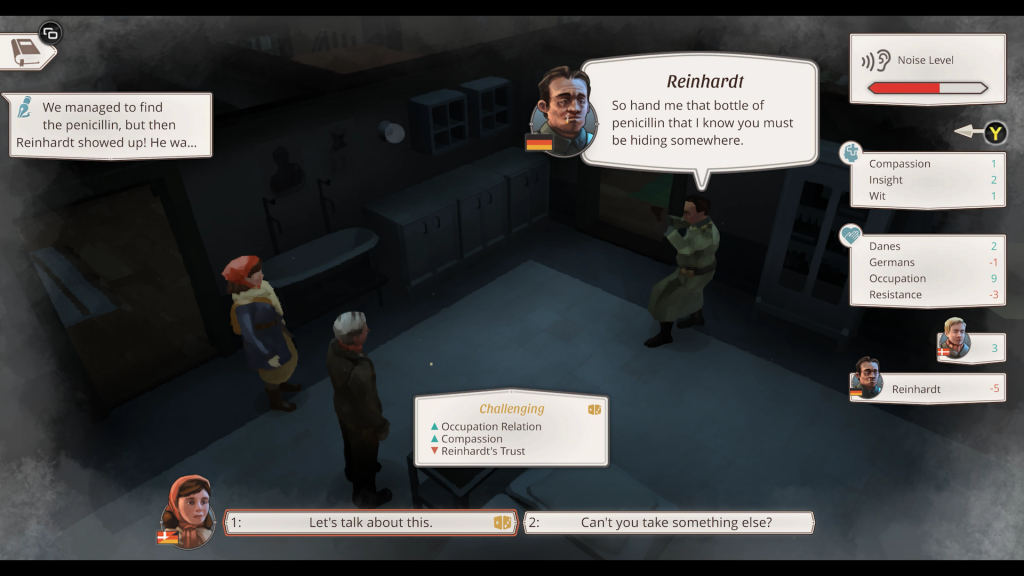
      At one point you are given a particularly murky gray choice, when a Gestapo solider is brought into the clinic you work at because the severity of his injuries meant he might not have survived the trip to a larger hospital. Adding to the drama, the physician you work for is decidedly anti-German, and you’re in the middle of checking out a local pastor who has a sore throat that makes it hard for him to speak to his congregation.

      One the one hand, I was in line with the good doctor; it was unfair of the Gestapo to barge in and demand aid simply because of who they were. On the other, the accident wasn’t the soldier’s fault, and he was indeed in very bad shape. Thus the dilemma – does all the talk of sticking it to the Nazis amount to a hill of beans when you’re put in a situation where you could literally let somebody die just because of their beliefs? As you can see, it’s not as easy as I first surmised. This was, and to some extent still is, something I deal with in my own line of work. Granted, nobody has the intent of doing harm or causing trouble, but our beliefs don’t always match.

      At the end of the day, I still serve my community by helping even those who rub me up the wrong way.

      So, Gerda turned into a very precarious visual novel/point-and-click adventure that became enthralling because the choices you make have more meaning than in your average game with a morality system. Even though the game gives you plenty of information on both the proclivities of Tinglev’s villagers and a literal numeric rating on how you stand with different factions, I mostly went with my gut. You could certainly game things if you wanted to (and if you want to see the multiple endings, this is probably a slick way to do so), but I just let the proverbial dice roll and dealt with the results.

      I wasn’t expecting Gerda: A Flame in Winter to hit as hard as it did with its morality play, but it’s a fantastic game because of it. It kept me invested in the story, not just because it goes to places a lot of games fear to explore, but because you come to find yourself endeared to Gerda herself and the citizens of the township she calls home. It’s also a fascinating way to study history, with its adherence to things that really happened, and it digs deeper than typically superficial WW2 first-person shooters. It’s a really great game, all around.


      Gerda: A Flame in Winter was developed by PortaPlay and published by DON’T NOD, and it’s available on PC and Switch. We played the Switch version.

      Disclosure statement: review code for Gerda: A Flame in Winter was provided by DON’T NOD. A Most Agreeable Pastime operates as an independent site, and all opinions expressed are those of the author.

      Follow A Most Agreeable Pastime on Twitter and Facebook, if you like.

    • The Best Games of EGX London 2022

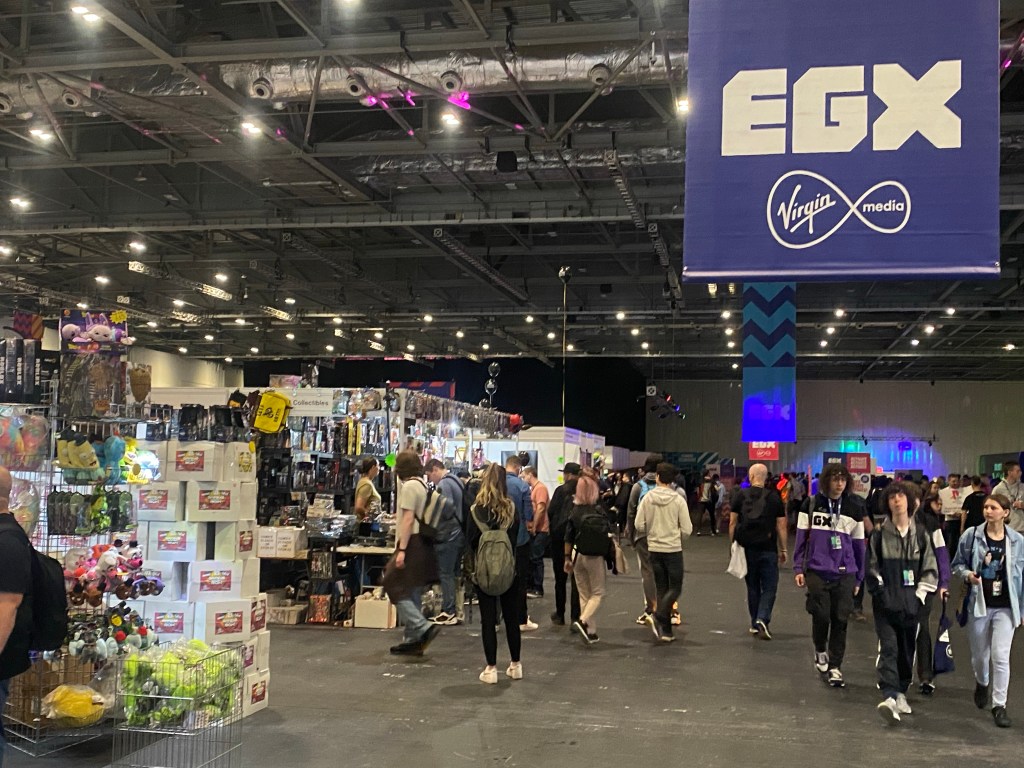
      EGX is back again, and this time it was a slightly meatier event than the condensed show of 2021. That said, this is still not EGX at full strength. Compared with the pre-pandemic EGX 2019, the show is still a shadow of its former self, much smaller and less crowded than in the past. The big publishers were noticeable by their absence: no Sony booth, no Microsoft booth, no Ubisoft, no EA… the list goes on. Nintendo had a small presence with a block of Switches playing Splatoon 3, there was a walled off area for Modern Warfare II, and Sega had a big booth showing off Sonic Frontiers – but there wasn’t much else beyond this when it came to the major publishers.

      The Sonic Frontiers booth had some of the biggest queues at the EGX London.

      It worries me. It seems that the big players are now content to present their latest games via online presentations, and feel little need to put their wares in the hands of the public. Why bother with the expense of attending a live show, when it’s cheaper to make a digital presentation that can reach far more people? Perhaps the writing is on the wall for big shows like this – we’ve already seen the behemoths of the industry slowly withdraw from E3 as the years roll by. But I hope this is a temporary lull rather than a sign of things to come, as it would be a massive shame if shows like EGX dwindled away to nothing. They’re such an important place for like-minded folk to gather, exchange news and share in the excitement the games industry has to offer. And part of me simply wonders whether the big publishers’ no-show was because very few of them have anything of note coming out in the next few months. The paucity of AAA titles releasing in the run up to Christmas 2022 is really quite unprecedented.

      Still, the indie games were the ones I was most interested in at EGX, and I’m pleased to say there were a few crackers that caught my eye. Below is my pick of the bunch.

      Dome Keeper

      Dome Keeper is out on 27 September, and it was some of the most fun I had at EGX. It’s a survival game with a neat mechanic. Your ship crashes onto a planet, leaving a dome sticking out of the ground, and your task is to excavate below the planet’s surface to uncover the precious minerals and other goodies below. But every now and then, waves of hostile creatures will attack the dome – and if they manage to destroy it, it’s game over.

      The enemies get more powerful with each wave, so you’re in a race against time to beef up your dome’s defensive and offensive capabilities using the resources you mine out from underneath. The upgrades for your dome include better laser cannons and stronger glass, but you can also upgrade your tools and abilities to make mining quicker. It’s a brilliant game of fast decisions and efficient movement: as you watch the timer tick down to the next attacking wave, you’re constantly trying to judge whether you have time to head back to the surface to man the laser cannons. Do you go deeper in search of better resources and upgrades, and risk missing the start of the wave? Or do you head back now and hope that the defences you already have will hold up? It’s tense stuff.

      Steam link: https://store.steampowered.com/app/1637320/Dome_Keeper/

      Ninja or Die

      Ninja or Die reminded me a lot of the excellent Dandara in that you can’t move, only jump – but this is a far more frantic game. You attack by jumping through enemies, and levels see you zipping back and forth between walls, taking down foes while attempting to dodge projectiles and other hazards. It’s fast and incredibly satisfying, but also pretty damn difficult, especially when things like floor spikes and swinging axes are introduced. Yet despite the difficulty – or perhaps because of it – I had a hard time pulling myself away from the demo. Ninja or Die delivers that ‘just one more go’ factor by the truckload.

      Steam link: https://store.steampowered.com/app/2090980/Ninja_or_Die/

      The Siege and the Sandfox

      I was delighted to discover that The Siege and the Sandfox is by Olly Bennett, who I interviewed a couple of years’ back for a feature on DigitalCity in Middlesborough, where he’s based. The game is a Metroidvania with a twist, in that it’s all about stealth: the aim is to get through levels without being seen by hanging off ledges, shimmying up columns and generally skulking about in the shadows. It makes for some tense gameplay as you try to edge past monsters and guards, with no way to defend yourself if caught. There’s a strong Prince of Persia vibe to it all – in terms of both the original Jordan Mechner game and Sands of Time – along with some gorgeous pixel art.

      Steam link: https://store.steampowered.com/app/653060/The_Siege_and_the_Sandfox/

      The Wings of Sycamore

      John Evelyn was behind The Collage Atlas, which I picked out as a highlight of EGX Rezzed 2019, and now he’s back with a new game that’s a cross between Pilotwings and Prop Cycle. The aim in The Wings of Sycamore is to guide rickety looking flying machines around a city to perform various tasks, like collecting objects or snapping photos, and it’s all done in John’s signature paper-art style. The flight controls feel great, but it’s still at an incredibly early stage right now, so don’t expect to see a release date any time soon. No Steam page yet, but you can follow John on Twitter.

      Eros Xavier’s Love Solutions

      One of the most novel game concepts I saw at EGX was Eros Xavier’s Love Solutions, which the developer billed as a cross between the naughtiness of Untitled Goose Game and the rearranging gameplay of Unpacking. The idea is that Cupid has got tired of getting folks together, and instead has set up an agency where people can ask him to split people up. He does that by wandering into a couple’s home and messing with their stuff in order to get them to argue with one another – so he might rearrange a prized aeroplane collection, throw away important papers or use a favourite mug. Like The Wings of Sycamore, this is super early in development and there’s no Steam page yet, but you can follow the game on Twitter.

      Abriss: Build to Destroy

      The simple hook of Abriss: Build to Destroy is smashing stuff up in a supremely satisfying way, causing gigantic edifices to disintegrate into thousands of tiny fragments. You do this by constructing various demolition machines/towers using a preset number of pieces, such as pillars, connectors and bombs, then sit back and watch the chaos ensue. Essentially it’s a puzzle game where you have to work out how to use the pieces you’ve been assigned in the most efficient way possible, but it’s a puzzle game with a wonderfully explosive solution.

      Steam link: https://store.steampowered.com/app/1671480/ABRISS__build_to_destroy/

      Planet of Lana

      Planet of Lana had a massive spot on the Thunderful stand, and it’s been featured on various livestreams and shows in the past year, so this one is already likely to be on your radar. I can confirm that it looks gorgeous, and the gameplay revolves around solving gentle puzzles with your little cat/monkey friend – in fact, it reminded me a lot of LUNA: The Shadow Dust, but where this is a platformer rather than a point and click. I’m intrigued to play more.

      Steam link: https://store.steampowered.com/app/1608230/Planet_of_Lana/


      Follow A Most Agreeable Pastime on Twitter and Facebook, if you like.

    • The fascinating story of the Magnavox Odyssey, the world’s first game console

      Last week, I realised with a start that the Magnavox Odyssey was released 50 years ago this month*. I was doing some research for a feature, and wham! There it was in black and white. September 1972. The release date of the Odyssey. Fifty years since the release of the world’s first game console.

      “Why is no one talking about this?” I wondered. We’ve heard a lot about Atari celebrating its fiftieth anniversary this year, not least with a nifty game collection charting its games down the years. But I haven’t seen anything about the Odyssey. And considering that Atari’s first game – Pong – was almost certainly directly inspired by the Odyssey game Table Tennis, that seems a little unfair. So I decided to write a tribute to the Odyssey myself.

      Image from the Video Game History Foundation

      And then I found I couldn’t stop writing, and the resulting feature ended up close to 3,000 words. There’s just so much stuff to say. The story of the Odyssey and its creator, Ralph Baer, is fascinating: like how development started way back in 1966, and early versions of the console used a light pen. And how work on the console had to keep being stopped so they could focus on defence contracts. And how Baer initially thought it could be sold to cable television companies so they could put a live feed of a tennis court behind his tennis game to make it look more interesting.
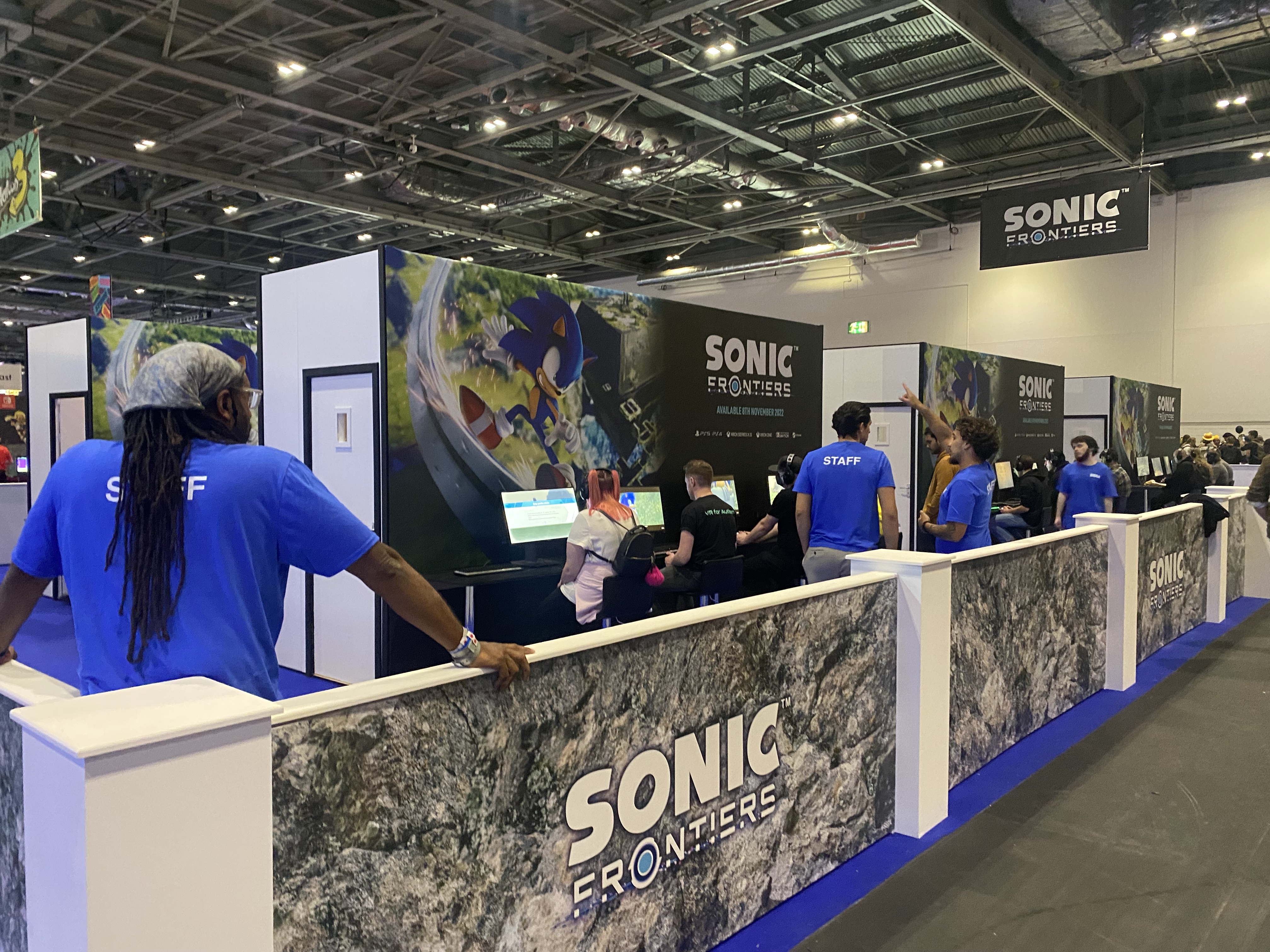
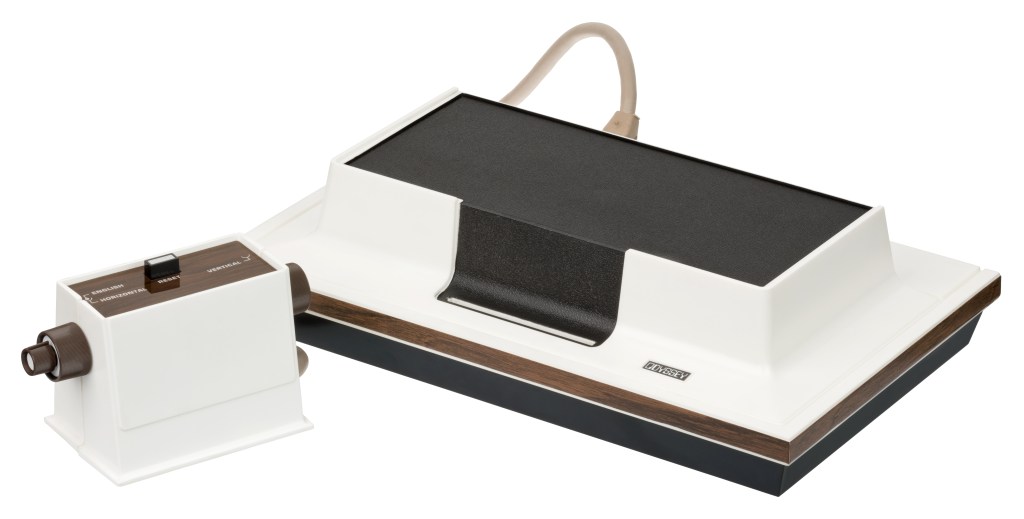
      It’s amazing stuff, and it’s a shame that Ralph Baer and the Odyssey have mostly been forgotten outside circles of retrogaming enthusiasts and game historians. Let’s try to change that.

      Enjoy the article!: 50 Years Of The Magnavox Odyssey, The World’s First Games Console

      * I should also note that some sources say August – the exact date is impossible to pin down, but the Odyssey definitely came out some time between August and September 1972.


      Follow A Most Agreeable Pastime on Twitter and Facebook, if you like.

    • Rollerdrome review: a slick and stylish skater-shooter

      I just want to make it clear from the outset that this is going to be an overwhelmingly positive review. I bloody loved Rollerdrome, so if you’re looking for a sassy, cynical takedown designed to generate clicks, then this isn’t it. I’m sure somebody out there will dislike Rollerdrome, but that person is no friend of mine.

      Anyway, to business. Rollerdrome is from the same developer/publisher combo (Roll7 and Private Division, respectively) as the very well received OlliOlli World. Aside from the fact that both games feature competitive skating and a comic-book aesthetic, they are really quite different to one another.

      It’s not hard to trace Rollerdrome’s primary influences: the Tony Hawk franchise, and the 1975 dystopian action movie Rollerball. You are cast as protagonist Kara Hassan. You’re a rookie entrant in this year’s Rollerdrome championship; a sport which sees participants compete in gladiatorial combat on roller-skates, for what I’m sure are completely rational reasons.

      Competitors enter a skate arena armed with a small selection of firearms to battle ‘house players’, who teleport in to try and eliminate you. The main catch, aside from being heavily outnumbered, is that the only way to gain ammunition and reload your weapons is to perform skate tricks. The more elaborate the trick, the more points are scored and the more ammo is awarded.

      One advantage that you do have is ‘Reflex Time’, which is Rollerdrome’s take on Bullet Time. You can periodically slow down time in order to line up shots, or just take a look around to check what’s happening where. Checking your surroundings is doubly important, as your combo count is driven by killing enemies in quick succession. Game progress is driven by clearing stages and completing challenges (more on those shortly), but you’re also awarded a score for each run. Those scores are entered into global leader boards, and combos are the difference between a sold C and a personally unobtainable S rank.

      Rollerdrome is one of those ‘easy to learn, hard to master’ kind of games. The controls are pretty straightforward, the tutorial is solid and the first couple of stages aren’t very taxing. What makes it tough is just the amount of stuff that happens all at once. Shooting enemies, dodging attacks, performing tricks, weapon selection, and maintaining combos. Oh, also sometimes you’ll have to avoid skating into an abyss. On the plus side, at least you’ll always land on your feet – you can’t faceplant off a botched flip. You can get hit by a rocket though, so pros and cons.

      In short, it’s pretty hectic. Fortunately, Roll7 seems to have anticipated that people might struggle and, rather than leaving players to ‘git gud’, they’ve made a selection of assists available. These include infinite ammo, slower game speed and even invincibility. There’s enough variety and flexibility to allow you to tailor your experience to one that you personally find challenging, but achievable. 

      That said, I found the default difficulty curve to be pretty fair. I often found the first couple of runs at a level to be short and brutal. However, I generally adapted to each level’s increase in ‘stuff occurring’ quite quickly. It was telling that when I went back to earlier levels after clearing later stages, I found them remarkably easy.

      Backtracking through earlier stages will probably be required too, as you’ll need to complete a certain number of level challenges in order to progress to later phases of the competition. These vary from achieving a certain score, to using or not using certain weapons, to performing certain tricks, etc. It adds to the replayability, as well as giving something for completionists to work on.

      Aside from the action, there are narrative breaks before each competition phase. These are small, self-contained first-person scenes, which allow you to interact with objects in order to get a feel for the world that Kara inhabits. In summary, it’s looking awfully dystopian outside. It seems like there are some shadowy government and/or corporate figures who have a vested interest in making sure this year’s championships go a certain way… These segments aren’t particularly extensive, but it adds a welcome layer of depth to proceedings.

      Although society may look bleak, Rollerdrome itself looks anything but. I love the comic book art-style and clear, bold colours. What’s most impressive though is how the design is both stylish and easy to parse; despite the amount of activity on screen, I was still able to distinguish all the individual elements. I could make out the various threats, bonuses and environments without too much trouble.

      The soundtrack by Electric Dragon is a dark, funky, synth banger, too. The game sounds great in general, even if I personally prefer a bit more crunch in my shotgun noises. However, the rapid-fire crack of Kara’s dual pistols over the top of that soundtrack just sounds very, very cool.

      I honestly struggle to think of negatives. The fact that some levels are set in quite similar environments is maybe a little disappointing. They’re different layouts, but aesthetically similar. It’s not an egregious flaw, but entirely unique levels would’ve been good, especially as you’ll have to replay them a few times anyway.

      There is a lot of replayability though! Once you’ve completed the main campaign, you unlock ‘Out For Blood’, which is essentially a New Game+ mode. The same levels but with harder challenges, tougher opponents and a snazzy black jumpsuit for Kara. Given the achievement for completing the first of these stages is called “Welcome to Rollerdrome”, one suspects that this is the experience the developers really intended.

      I said at the start I can’t imagine anyone disliking Rollerdrome. That’s not strictly true, as I can understand why someone might find it too challenging. Even after practice, it can sometimes be a struggle to find your rhythm, or get frustrated with it. Once you find you your flow, however, Rollerdrome is irresistible. You find yourself chaining combos and stringing tricks together in an absurd bullet-time ballet. It’s very stylish, very fun and I wholeheartedly recommend it.


      Rollerdrome was developed by Roll7 and published by Private Division, and it’s available on PC, PS4 and PS5. We played the PC version.

      Follow A Most Agreeable Pastime on Twitter and Facebook, if you like.

    • Souldiers review: a beautiful mix of Metroidvania and Dark Souls

      There are a lot of implications when you deign to call your game Souldiers, with its clear nod to the legacy of Dark Souls. Essentially, Souldiers is a 2D Metroidvania that adopts many of the sensibilities of From Software’s hit series. The laziest observation one could make is that this is simply a game designed to be brutally hard; but that’s overly simplistic, and ignores the intricacies that underpin the Dark Souls games, some of which Souldiers attempts to reproduce in 2D. So is the Souls nomenclature apt here, or is it just a fiddly – and empty – piece of wordplay?

      Souldiers opens with a heavy dose of political intrigue, where your platoon is sent on a sketchy-feeling assignment at the behest of an equally sketchy member of the king’s retinue. Surprise! It goes south when you all plummet into a hole, are buried and summarily killed off. However, this is a fantasy-tinged experience, so you are given an option to travel to a place called Terragaya at the behest of a Valkyrie for an all-new adventure. It’s an interesting set-up that doesn’t lead you anywhere particularly special, but it’s an entertaining enough yarn to at least be a means to an end. Rather than taking up the sword of the captain of said army, you get to choose between three classes: swordsman, archer or wizard.

      Each class has abilities in line with what you’d expect, each with their own particular move sets and progress trees to boot. But beyond the differences in combat suites, the way each character moves is the same: which is to say that they provide a very satisfying platforming feel that sees you maneuvering with a heavy but controllable jump, a dodge-roll that is damn near mandatory in most instances and the ability to cling to ledges just out of reach. The obvious upgrades flow at a decent rate, and while they’re all familiar, they still give you that boost in confidence to venture further into the world – or back into some previously unreachable nooks and crannies.

      On the combat side, there’s a lot more strategy to be learned here than in your average exploratory platforming game. Most of the time it’s very deliberate; a nice callback to the clever naming. You can’t just attack willy-nilly without looking for openings, which means that the game is more defensively minded than many other Metroidvanias. To add another layer of complexity, you have the ability to switch your attack elements (air, sand, lightning, etc.) on the fly by using the right analog stick. There’s something very pleasing about watching your hero swap elements almost instantly as you try to maximize your damage output by using the right one against the right foe. The bestiary is a great resource for figuring who is weak to what, but with enough experimenting and good old fashioned experience you’ll find that the game’s challenge is minimized. Hm, very Souls-ian.

      The world of Souldiers has to be one of the best 2D environments I’ve seen in a game of this ilk. It’s detailed in very smart ways that don’t necessarily distract the eye but definitely give the game a distinct sense of place. Unfortunately, after its brilliant opening – where you’re in a lush field with floating islands in the background – you’re then stuck in a cave for a few hours, but beyond that you get to explore gritty deserts, sun-drenched forests and dense mines. It’s beautifully constructed with plenty of memorable landmarks (and save points), meaning it’s rare to become totally lost.

      The reviewer in me should probably point out the interminable load times, but I find it difficult to complain about that because the wait is worth it to have such a huge and fantastic world to explore. Beyond the aforementioned elemental control, there isn’t much in Souldiers that you haven’t seen before in Metroidvanias past and, yes, in Souls-likes, but what is here is so well fashioned that its familiarity is comforting and empowering. Developer Retro Forge gets the pass – their game is as advertised with its cleverly punny name.


      Souldiers was developed by Retro Forge and published by Dear Villagers, and it’s available on PC and Switch. We played the Switch version.

      Disclosure statement: review code for Souldiers was provided by Plan of Attack. A Most Agreeable Pastime operates as an independent site, and all opinions expressed are those of the author.

      Follow A Most Agreeable Pastime on Twitter and Facebook, if you like.

    • From The Armchair: The Rare Luxury of Playing Video Games

      What ho, chums!

      Long time no speak, eh? In fact, I just checked, and remarkably the last time I spoke to you ‘From The Armchair’ was way back at the end of 2019. My, my, what a lot has changed since then. Not least my armchair.

      Alas, I’m afraid I haven’t been giving this glorious website of ours the attention it deserves of late. You see, I’ve spent the best part of the year working on an absolutely wonderful Secret Project that I’m afraid I can’t tell you about just yet – but all will be revealed in a few months’ time. Suffice to say, it’s very exciting indeed. And it’s also been incredibly time consuming, hence the lack of attention to this dear old website from yours truly. Mea culpa. It’s all worth it though, I assure you. And thankfully, good old Mr. Mason has been holding up his end wonderfully well with a parade of top-notch reviews of sometimes obscure but always interesting indie games – so hats off to Mr. Mason for his sterling work.

      Anyhoo, work on the Secret Project has now wrapped up (for the time being at least), which has finally given me the chance to indulge in some good old-fashioned video gaming. These days I often find myself writing about video games a lot more than actually playing them – and typically the only video games I play are ones which I’ve been asked to review. What with all the tiresome adult responsibilities that go with middle age, there is little free time in which to cut loose for a few hours with a game of my own choosing – let alone with some of the gargantuan 100-hour-plus monsters we’re treated to these days. As much as I loved the original Xenoblade Chronicles, for example, I despair at ever finding the time to play through the just-released Xenoblade Chronicles 3.

      However! Successfully completing the Secret Project provided me with a couple of days’ respite, a glorious window in which to play whatever I chose without a care in the world. And instead of plucking one of the many, many unplayed games from my heaving Steam library of shame, I opted to purchase a little title called Spiritfarer that I’ve had my eye on for some time, and that was handily reduced in the Switch summer sale.

      Spiritfarer is the third game from Montreal-based Thunder Lotus, the talented folks behind Jotun and Sundered, and it retains the developer’s trademark lush animation and vibrant colour scheme. But whereas the first two Thunder Lotus games focused on hectic, screen-filling combat, here they’ve gone for a completely different approach – what they call a cosy management game about death.

      It begins with Charon – the mythical being who ferries souls to the afterlife across the River Styx – resigning his post, leaving it up to you, a young girl called Stella, to take his place. As Stella, your aim is to pick up the various souls dwelling on islands across the seas (the Styx is more like an ocean in this imagining) and then fulfil their final requests before delivering them onwards. Mostly those requests involve building them a lovely house on board your boat and cooking their favourite meal, but they also tend to have unfinished business to do with unfulfilled relationships and psychological dramas that are a bit more complex to solve. Still, it all tends to boil down to a mix of exploration and careful resource management, as you grow crops, tend animals, weave fabrics, refine ore and expand your boat to accomodate more and more guests and useful buildings. You know the score: get a thing, use it to build another thing, then use that to get more things. The things just keep piling up, and every thing makes me happier.

      It’s quite lovely, you see, and an easy way to lose hours and hours in blissful tinkering and serene sailing. There’s no rush to do anything – these lost souls literally have all the time in the world. It’s quite, quite relaxing. But there’s a curious note of melancholy, too, since eventually all of your guests will, at one point or another, ask to move on to the next life. Having got used to their foibles and daily greetings, your boat can feel achingly empty once a long-resident guest departs. It’s quite the moment, and unlike anything I’ve encountered in a video game before. To advance, you have to say goodbye. What’s the point of doing all these errands for people, you may be thinking, if that person simply disappears, leaving nothing behind but the house you spent so long building for them? But then you could say the same thing about life in general. For such a colourful, charming game, it invites some unsettling thoughts about the way we spend our time on this earth. In a nutshell, Spiritfarer is enchantingly, morbidly beautiful, and you simply have to play it.

      Toodle-pip!


      Follow A Most Agreeable Pastime on Twitter and Facebook, if you like.

    • Avenging Spirit review: possession-based platformer finally resurrected

      It feels like the sky’s the limit when it comes to retro game re-releases these days. From a preservation standpoint, it’s a fantastic opportunity for players to try out obscure, quirky and sometimes secretly impactful things that have otherwise been lost to time. I never thought I’d see someone bring back stuff like Bill & Ted’s Excellent Video Game Adventure or Plumbers Don’t Wear Ties, for example, but here we are. Even the most obscure retro titles are fair game for re-issues.

      Now, Ratalaika Games has seen fit to delve into Jaleco’s archives and resurrect the recondite arcade game Avenging Spirit for our gaming pleasure. The game is probably better known (well, as a cult classic anyway) from its charming Game Boy port, but here we are finally presented with the arcade original – and it’s definitely worth sinking a few virtual coins into. The unusual and ambitious concept behind it still feels unique in this day and age, while remaining eminiently playable and entertaining.

      The story goes that you and your girlfriend are out for a romantic stroll, when seemingly out of the blue some mobsters jump you, pump you full of lead and take off with your partner. It turns out that your paramour is the daughter of a paranormal investigator that the mob are after, and they plan to use the unlucky lady as leverage. Luckily for you, said investigator finds your ghost and instructs you to rescue his daughter by possessing the on-screen enemies until you reach the final showdown. How’s that for a set-up?

      Avenging Spirit takes the form of an action platformer where, as mentioned above, you possess the various enemies in a stage in order to progress. These include commandos, robots, amazons and even vampires with a predilection for flashing you. The range of enemies isn’t huge, but there are variations that not only have a different palette but different abilities and attacks. You not only have to manage your own life bar but that of your host; the moment they go down, you need to find a new bad guy to possess post haste, because your life will dwindle when you’re a mere apparition. However, there isn’t a lot of strategy involved, because you can’t exit a host without them dying first, so your typical next step is to simply dive into the nearest one, whether you jive with their playstyle or not.

      In its brisk five stages, this proves to not really be an issue, because the novelty of having a gaggle of different play styles is neat, and in the end they all have something to offer that makes the game fun. Also worth noting is that there are two endings; one in which you find three keys hidden in the stages and end up saving the girlfriend, and one in which you take on the boss without rescuing her. (That said, even the good ending is strangely morose.) Having multiple endings is an interesting concept for an arcade game, but also one that perhaps artifically extends the game somewhat, because you have to venture beyond the main path to find the aforementioned keys.

      While presentation-wise Ratalaika did a great job bringing Avenging Spirit home, the rest of the package is pretty bare minimum. The user interface is very perfunctory in that it feels not unlike the dipswitches old arcade machines would have – there’s hardly much pizzazz to it. However, it does have some key features that I like to see in retro re-releases, such as the ability to choose versions from different regions and being able to rewind your game. I feel like it was a missed opportunity to add the aforementioned Game Boy port, but what’s here is still enjoyable, if sparse.

      I don’t know that I would go out of my way to call Avenging Spirit a classic by any stretch of the imagination, but what it does, it does well, and it’s still engaging even to this day. The novelty remains, well, novel, because beyond a few examples, there aren’t a lot of games that have tried the whole “possess different things for different gameplay possibilities” thing. And at a bargain price of around $6, it’s certainly worth giving up a day’s coffee to take Avenging Spirit for a whirl.


      Avenging Spirit was developed by Jaleco and published by Ratalaika Games, and it’s available on PS4, PS5, Xbox and Switch. We played the Switch version.

      Disclosure statement: review code for Avenging Spirit was provided by PR Hound. A Most Agreeable Pastime operates as an independent site, and all opinions expressed are those of the author.

      Follow A Most Agreeable Pastime on Twitter and Facebook, if you like.

    • Final Vendetta review: beat ’em up homage with a few new tricks of its own

      Just as I was about to put the finishing touches to my review of Final Vendetta – Bitmap Bureau’s love letter to beat ‘em up belt scrollers – something miraculous happened. My largest complaint about the game was addressed in an update! Slightly annoyingly, this meant I had to rewrite my review, but that minor annoyance was a price well worth paying for an update that significantly improves the game. I’ll explain exactly how it improves it in a minute, but in summary, I was initially disappointed about the game’s inaccessibility, when otherwise it was an extremely well-crafted experience – and now I don’t have to worry about that anymore. For the sake of thoroughness I ran through the game again in the way I had originally intended to – with my son in co-op and without the restrictions initially levied on the game.

      Final Vendetta is an unabashed homage to scrolling beat ’em ups like Streets of Rage, Final Fight and Double Dragon. You and a friend can pick one of three heroes (quick and springy Claire Sparks, former wrestler Miller T. Williams or streetwise Duke Sancho) as they try to save their friend, and the city at large, from the pithily named Syndic8. To do so you’ll need to battle through such familiar thug hangouts as alleys, subway cars, warehouses and nightclubs, bashing palette-swapped cronies and chowing down on questionable road meat all the while. Any attempt to name drop all the Easter eggs and tributes would be a fool’s errand; just know that the many references to beat ’em ups past will make you smile in between being surprised by the game’s surprisingly deep and satisfying combat.

      Each fighter’s move set has all the bells and whistles you’ve come to expect, from drop kicks to crowd-clearing special moves and then some. What separates Final Vendetta from the clones are a couple of obvious but never-before-implemented tricks that change up the cadence of fights and empower the player. Most of the time, belt-scrollers use the rusty design choice of overwhelming the player and forcing them to use “quarters” to keep the game rolling without a whole lot of strategy. In all honesty I still find these games really fun despite knowing that, but in order for the genre to evolve, they have to do something else.

      The biggest game changer in Final Vendetta is the ability for you to block attacks with the press of a button. It sounds silly when I write it down, but the first time that I was able to stop a hit instead of getting knocked down – then coming back with a combo of my own – felt really, really good. It has practical uses, too: more than once I set myself up to use the powerful counter-attack move by holding out on the baddy I was fighting so that other enemies could wander in and I could knock them all about.

      The other new addition is simply that you now have the ability to kick your opponents while their down. Dirty pool, you say? When you’re a vigilante who’s taking on an entire gang by yourself, I say poppycock! It’s nice to be able to do something with grounded opponents other than wait for them to get up. There were also instances where I finished someone off before his buddies could come along and ruin my day, which added yet another layer of stratagem to the proceedings. Neither this nor the block feel like an epiphany, but with hindsight (and having played more beat ‘em ups than is probably healthy) it’s easy to see how great these additions are.

      In my first draft, all of this wonderful design and loving adulation was tamped down by how tough the developers were on the player. The standard mode gave you no continues, which meant playing through the entire game on one credit – a steep challenge even for the best of them. I tried it a couple of times with my kids and didn’t get very far, so they lost interest; and playing on my own, it took me a couple dozen attempts before I could complete it. While I enjoyed learning the ins and outs of the game, the difficulty was offputting for my kids, and it hampered my opinion of Final Vendetta. I don’t mind taking on a challenge, but not everybody can dedicate time to mastering a game.

      And what do you know – they listened. Now there’s an easy mode replete with continues, and soon enough my kids and I were trashing phone booths for loot, crushing heads and defending London like the overpowered neighborhood watch that we were. And you can play it in onw-credit mode to feel like a badass. And play it on an even harder difficulty besides! When everybody gets what they want, everybody wins. Now I can unequivocally give Final Vendetta my seal of approval.


      Final Vendetta was developed by Bitmap Bureau and published by Numskull Games, and it’s available on PS4, PS5, Xbox, PC and Switch. We played the Switch version.

      Disclosure statement: review code for Final Vendetta was provided by Numskull Games. A Most Agreeable Pastime operates as an independent site, and all opinions expressed are those of the author.

      Follow A Most Agreeable Pastime on Twitter and Facebook, if you like.

    • The new Monster Hunter Rise Sunbreak amiibo are amazing

      These beauties arrived in the post the other day – a clutch of new amiibo to coincide with the release of Sunbreak, the new expansion for Monster Hunter Rise. I haven’t picked up Sunbreak yet – I’m too busy to get stuck into a massive chunk of DLC at the moment – but I couldn’t resist ordering the amiibo. And it’s a good thing I popped in a preorder straight away, as they sold out on the Nintendo store almost immediately.

      The amiibo craze might have waned somewhat, but I’m glad we’re still getting the odd release here and there, because they are lovely things. And the level of detail on these new Monster Hunter amiibos is phenomenal. Keep them coming, Capcom!

    • Wonder Boy Collection review: solid games but sparse extras

      I’m a sucker for a really good retro game compilation. At this point, they’re so prolific that it’s no long about nostalgia, but instead about the sheer appreciation that someone out there is willing to collect, catalog and re-release gaming’s history. That being said, because there are so many of them, the novelty has faded, and now there are expectations about not just the games included in a collection, but also the presentation and ease of use. At this point I’ve seen it all, from sterling examples with more bells, whistles and production artwork than you have time to parse, to lazy ports that barely function, let alone have any quality of life features.

      Where does the Wonder Boy Collection belong on the scale? Let’s talk about the games included, then their presentation, and we’ll see where they rank, shall we?

      Wonder Boy (1986)

      First up is the eponymous Wonder Boy, a subtle variation on the then-burgeoning platforming genre that begat so many offshoots and sequels it’s truly hard to fully grasp its multi-branched history. No, seriously, it’ll hurt your brain!

      The original Wonder Boy has you racing through levels while avoiding and/or destroying foes and collecting fruit. Because this is an arcade title, rather than giving you a traditional timer, instead your life bar will continuously tick away unless you keep moving AND nosh on some flora. In many ways this feels like a precursor to endless runners, not so much in overall design, but in the fact that you must keep going no matter what. Don’t want to waste your coin, now do you?

      Wonder Boy in Monster Land (1987)

      Wonder Boy in Monster Land is the black sheep of the family. Much like Zelda II, it very much feels like a stopgap between the simplistic design of the original game and the exploratory (fine, Metroidvania!) stylings of later games.

      It’s still linear by design, meaning that you go from level to level, but you do curious things like level up, buy gear and visit shops or bars. It’s weird not because it tries to do something different, but in that it wants you to explore and fight enemies to earn gold for power-ups… but on a timer. If that all sounds antithetical… well, it is.

      It’s a neat experiment that’s easier to grok thanks to save states, but it’s best appreciated for its link in an evolutionary chain than perhaps as an actual game.

      Wonder Boy in Monster World (1991)

      Beyond Adventure Island (don’t ask!), my first true dalliance with this series was with the Genesis/Mega Drive game Wonder Boy in Monster World. This game takes the route that the series would become known for by getting you acclimated with your warrior and leading you to a town/hub, then branching out into other stages.

      It feels a little regressive compared with the previous game because you don’t get to swap between animal forms, and it has some extremely obtuse and poorly explained moments, but it’s still very playable. More importantly, it’s filled with a lot of the charm that pulled me into the clutches of original developer Westone’s fandom.

      Monster World IV (1994)

      Monster World IV is perhaps the pinnacle of the series. Everything about it seems to gel: the look, the progression and the learning curve. Rather than mince a lot of words I’ll point you in the direction of our review of the remake, which is the same game in fancy sheep’s clothing. Here’s a quick summary, though – it’s good.

      For as fun as all these games are in their own right, they also highlight that this is by no means a comprehensive package. It’s a nice package for those looking to dabble in the series a bit, but it’s missing quite a few gems that could have given players more bang for their buck. I was also a little disappointed by how utilitarian the overall UI is, almost bordering on feeling like you’re using a sketchy ROM emulator. It works for what it is, but it lacks the kind of pizazz that’ll get you in the mood to play through these games.

      Even though the wrapping is a little lackluster, Wonder Boy Collection is a solid entry-point to this quirky, meandering and endlessly charming series.


      Wonder Boy Collection is published by ININ Games and Bliss Brain, and it’s available on PS4 and Switch. We played the Switch version.

      Disclosure statement: review code for Wonder Boy Collection was provided by PR Hound. A Most Agreeable Pastime operates as an independent site, and all opinions expressed are those of the author.

      Follow A Most Agreeable Pastime on Twitter and Facebook, if you like.

    • Grapple Dog review: a nail-bitingly brilliant platformer

      Grapple Dog by Medallion Games makes no pretenses about what it’s about: it’s all in the title. You play a happy-go-lucky pup named Pablo, and you’re going to save the world with the use of an almighty grappling hook! But it’s so much more than that. I went into Grapple Dog thinking it was an indie (and cute!) riff on Capcom’s Bionic Commando, but that sells the experience short by, well, a long shot.

      For reasons that are thinly veiled with Saturday morning cartoon reasoning, our hero Pablo finds himself unwittingly unleashing a robot named Nul while on the hunt for clues about the mythos of a magnanimous inventor. Fortunately for him he comes across an ancient artifact in the form of a grappling hook from said inventor, which lets him conveniently escape his predicament and begin his hunt for the angry Nul. The MacGuffins leading you ever onwards consist of four more relics such as a rotary phone and a light bulb that you must collect for reasons before Nul nabs them.

      For the most part, platformers aren’t known for their prose and, in all honesty, I didn’t give much credence to the story here beyond it giving you some kind of motivation. But as you get further into the game, the world expands a bit, because each new world has its own set of denizens that you can talk to (and glean tutorials from) and you can jump into your boat and talk to the friendly crew in between levels. Both of these frankly unnecessary moments of dialog are incredibly endearing and honestly helped me feel a bit more invested in what I was doing. Even more curious is that the deeper in you go, the more insight you gain into Nul’s reasonings, and you find that all is not as it seems. What happens next is… some very earnest discussions between Pablo and Nul that came across as surprisingly heartfelt. It doesn’t amount to a hill of beans in terms of the overall experience, and doesn’t lead into anything other than a set-up for a potential (hopefully!) sequel, but it’s a more substantial chunk of story than is usual in most games of this ilk, and I was a bit surprised by it.

      But who’s reading this to understand the plot of a platforming game, am I right!?

      In that regard Grapple Dog holds its own in a world full of Marios, Sonics and Shovel Knights. While I was quick to compare Pablo to Bionic Commando‘s Rad Spencer, the truth of the matter is that Pablo’s so much more maneuverable, to the point where it’s constantly fun to play the game. At first I was a little put-off by the fact that you can only swing in predesignated spots, but as the game progresses, most of the world ends up being made of the swingable tiles. The rationale is to get the player acclimated to what you can and cannot do in the first few worlds, because later on your feet barely touch the ground. I mean that quite literally – you need to put up or shut up in the later and bonus stages. Luckily for us, moving Pablo is a joy; his walking and jumping feel perfect, and linking it all together with his grapple hook has you feeling very much like a superhero.

      You don’t see very many games in this genre that have such a fantastic learning curve. With hindsight I could see how my skills were deliberately honed through training, because while I felt the first world led me by the nose a bit, by the last I was surprised at what I was capable of doing. Again, the momentum and cadence of movement is extremely satisfying to the point where I didn’t mind the extra challenge, not only because it all feels completely fair, but also because it felt completely doable. Grapple Dog is a game that made me finally understand the speedrunning aspect of video gaming, because mastery feels so good.

      Grapple Dog went from “cute indie platformer” to “nail-bitingly brilliant platformer” subtly but quickly at the same time. Everything gelled in a way that few games can accomplish, from its super-fun controls to its clever and engaging level design. Rarely are games this wonderfully made, especially with a small crew. Add to that the charming cast and colorful world, and you have the makings of what could (and should!) be a franchise.


      Grapple Dog was developed by Medallion Games and published by Super Rare Games, and it’s available on PC and Switch. We played the Switch version.

      Disclosure statement: review code for Grapple Dog was provided by Super Rare Games. A Most Agreeable Pastime operates as an independent site, and all opinions expressed are those of the author.

      Follow A Most Agreeable Pastime on Twitter and Facebook, if you like.

    • Ocean’s Heart review: a lovable Zelda-like

      Ocean’s Heart plays like an interactive piece of fan fiction for the Legend of Zelda, which I mean in the most flattering way. You can see and feel so many nods to the adventures of Link, but at the same time they don’t distract from the journey you’re on with heroine Tilia. It’s a loving homage to a certain era of adventure game that wears it’s, ahem, heart on its sleeve – and I couldn’t help but become smitten by it. It’s a little rough around the edges, which isn’t too surprising considering it’s the product of solo developer Max Mraz, but it all comes across as charming and succinct rather than blatant and lazy.

      Ocean’s Heart shows it’s adventuresome spirit rather quickly, as you’re tasked with searching for your missing father, who himself went out hunting for a gang of pirates that ransacked your home island. The game acclimates you to its stylings quickly as Tilia has to run an errand for dear old dad that ends with you getting your obligatory sword before venturing forth. Ocean’s Heart does a great job of teaching you the tricks of the trade by just letting you experiment with things, surreptitiously setting up obstacles instead of holding your hand. It helps the player to build confidence in their own abilities, and overall the game provides a fun sense of swashbuckling.

      After leaving your sister to take care of the family saloon, you arrive at a port, where you’re given a couple of different directions to head off in, with a healthy smattering of side quests to boot. I know it’s cliché at this point to say that Ocean’s Heart is more about the journey than the destination, but the plot is predictable and really only serves to move you along. The swashbuckling and excitement of exploration are much more effective motivators to play than finding out where dear old dad ended up.

      Ocean’s Heart borrows liberally from the Zelda playbook, but what really stuck out was the diversity of locales and their (relatively) realistic feel. There are sequoia-tinged forests, along with European-looking fields with windmills, and dreary coastlines replete with rain. Ocean’s Heart has a much more muted palette than Zelda, and it’s all the better for it, since it gives the game a heavy dose of personality that carried the experience for me.

      Beyond that, Ocean’s Heart plays very much like a medley of ideas from the house of Nintendo, so take from that what you will. I personally like the familiarity, and it’s all executed so well that it came across more as a homage than a rip-off. There’s absolutely nothing wrong with using a template so long as you’re incorporating those ideas into your own ones instead of stealing them whole-heartedly. Are these moments noticeable? Yes. Do they detract from the experience overall? Nope! I was too busy having a fun old time exploring every nook and cranny of this intriguing world.

      Ocean’s Heart is a gem of a game. To use another overwrought cliché, it’s very much comfort food – but rather than being an original family recipe, it’s more like a well-known favourite from an independent restaurant with its own distinct spin on the classics. There are very few Zelda-likes that are this well put together.


      Ocean’s Heart was developed by Max Mraz and published by Nordcurrent Labs, and it’s available on PC adnd Switch. We played the Switch version.

      Disclosure statement: review code for Ocean’s Heart was provided by Nordcurrent. A Most Agreeable Pastime operates as an independent site, and all opinions expressed are those of the author.

      Follow A Most Agreeable Pastime on Twitter and Facebook, if you like.

    • Lock-On goes from strength to strength

      Issue 3 of Lock-On is here, and its an absolute beauty. I wrote a while back about this wonderful new trend for high-quality gaming periodicals, and I’m seriously impressed that Lost in Cult – the folks behind Lock-On – have been able to keep up the quality and output of this magazine, with its blend of considered writing and beautiful bespoke artwork. I backed the first two volumes on Kickstarter, but I met the editors of Lock-On at WASD recently, and they kindly offered to send me the third volume for free. Receiving it through the post took me right back to my childhood, with that same sense of excitement as when an issue of TOTAL!, Amiga Power or GamesMaster would be dropped off by the postie, and I couldn’t wait to tear open the packaging and see what delights lay inside.

      What really sets Lock-On apart is the stunning artwork that’s commissioned for each and every article, which is something you don’t really see very often – if magazines or websites feature bespoke art, it tends to be a one-off or occasional thing, but here there’s a full-on feast of wonderful images created from scratch to accompany the writing. And the smell! It seems weird to get all excited about this, but it has this beautiful new-book smell you don’t usually get with magazines. Basically, what I’m saying here is that Lock-On is a full-on sensory experience.

      Another thing I love is the range and breadth of the writing. Lock-On has the advantage that it’s not beholden to the whims of SEO algorithms or demands from advertisers – without the need to be mindful of page clicks, the editors can commission features on some of the most niche and interestingly obscure corners of the gaming world. I was particularly pleased to see a feature on the cult GameCube title Doshin The Giant, for example, and there are other pages devoted to obscure horror games and various indie things. The big one is Sable, of course, which graces the cover this time around, but the vast majority of issue 3 is devoted to a deep dive into the wonderful and much-missed Sega Dreamcast.

      I loved the extensive detail the issue goes into about the Dreamcast, covering everything from the VM to Seaman, and I particularly like how many writers draw on personal memories of, say, saving up for an import Dreamcast or encountering one in the wild for the first time. In places, it feels like the editors have brought the personal and relatable language of blogging to a print publication, but these more-intimate pieces are combined with more technical ones and highly insightful interviews. One of my favourites is an article by Jörg Tittel about the developer No Cliché and their unfinished Dreamcast game Agartha, which provided a brilliant behind-the-scenes peek into the wildly creative culture at Sega in the late 1990s.

      What else can I say? Lock-On is a beautiful thing, and I cannot recommend it highly enough. You can buy the first three issues over at Lost in Cult, and they’re also working on a book called A Handheld History, which naturally I preordered straight away. Go on, treat yourself.

    • Gibbon: Beyond the Trees review: thrilling brachiation

      Slowly but steadily, video games are stretching the limits of how we define them in incredible and inventive ways. They can convey a lot of ideas, from the mechanical and systematic to the literary and emotional. With Broken Rules’ Gibbon: Beyond the Trees, we can add another important link to the medium’s evolutionary chain – games as a form of activism.

      Gibbon is undeniably and intentionally cute. Using the studio’s signature painterly style, Broken Rules creates a warm and vibrant atmosphere in the jungles of Southeast Asia for the game’s adorable ape family, and a short but poignant vignette drives home this family’s love and adoration for each other.

      The game then proceeds to teach you the all-important lesson of how to be a monkey (well, technically an ape). Rather than giving you full control of the protagonist, Pink, you instead guide her momentum and cadence. There’s a button that propels you forward, another for swinging, and a bit further down the road you discover that you can backflip. It doesn’t take long for everything to coalesce and feel natural. Swinging (or what I now know is called brachiation) becomes sublimely delightful. Soon enough you’re climbing, jumping, sliding and pinging off your partner in what feels like a very balletic display of kineticism.

      All of these things make the gibbon family very endearing, which is good not only because, well, you want your protagonist to be likeable (most of the time), but having that affection helps you as a player take notice when things stop being idyllic and start getting real. At no point does Gibbon ever stray too far from its combo-laden swinging, but the situations you find yourself in give you poignant reminders of the struggles that befall wildlife through no fault of their own. You’ll see instances of the effects of global warming, deforestation and poaching in dramatic and stark fashion. It really gave me pause for thought, especially knowing the apes’ plight is no fault of their own. Gibbon conveys its message wordlessly, remaining startling and tender all the while.

      Gibbon is an interesting bridge between folks reading about and actually seeing the devastating effects of humanity’s actions. While Gibbon does go back to being a little more light-hearted with its post-game mode – because after all, it is a game – it does an admirable job of raising awareness on the whole. As a game it’s very enjoyable, and as an interactive bit of advocacy, it’s brilliant. But I wouldn’t expect any less from Broken Rules, because they are excellent at marrying an engaging experience with thought-provoking storytelling.

      Come to Gibbon: Beyond the Trees to live a few moments as a beautiful, howling ape – stay for the opportunity to learn something that you may use to change the world.


      Gibbon: Beyond The Trees was developed by Broken Rules, and it’s available on PC, Switch and Apple Arcade. We played the Switch version.

      Disclosure statement: review code for Gibbon: Beyond The Trees was provided by Future Friends Games. A Most Agreeable Pastime operates as an independent site, and all opinions expressed are those of the author.

      Follow A Most Agreeable Pastime on Twitter and Facebook, if you like.

    • The best games of WASD

      If you’ve not heard of WASD before, it’s the new games show that everyone’s talking about and that no one knows how to pronounce (wazzed?). It’s taken the old springtime slot of EGX Rezzed down in London’s Tobacco Docks, after Rezzed became EGX Birmingham and then became, well, cancelled. Back in January, the organiser stated that many of its partners and brands were not yet ready to return to live events because of COVID, although they have plans to try again next year.

      Thankfully WASD was still able to go ahead this week, and I was able to attend on Thursday and Friday. I’m pleased to say that it’s basically Rezzed in all but name – which is good, because Rezzed was my favourite of all the game shows, and I know it was dear to a lot of other people’s hearts, too. That said, WASD was about half the size of Rezzed, covering just one floor instead of two, and it was definitely a lot quieter than Rezzed shows of old. It seems that exhibitors and the general public are still a little reluctant to head back to live shows just yet – although hopefully WASD will go from strength to strength in years to come.

      It’s good to be back at Tobacco Docks.

      As well as catching up with old industry friends and acquantainces, I spent a good few hours trudging around the various booths to sample the latest games. Here’s my pick of the best games from the show.

      How To Say Goodbye

      The art style of How To Say Goodbye is absolutely gorgeous – it’s all based on illustrated books from the mid-20th century, and the eye-catching colour palette and stylised line drawings really made it stand out from the crowd. The game tasks you with helping a recently deceased man negotiate the afterlife by solving puzzles, which involve tugging at conveyor-belt-like tiles to line up various objects in clever ways. It’s the work of Paris-based developers Florian Veltman and Baptiste Portefaix, and it was one of the most unique titles I saw at WASD – definitely one to watch.

      Steam Link: https://store.steampowered.com/app/1709700/How_to_Say_Goodbye/

      To Hell With The Ugly

      Like How To Say Goodbye, this is another title from French publishers Arte France, and it has similarly beautiful and highly stylised graphics. To Hell With The Ugly is based on a novel by Boris Vian, and it takes the form of a 1950s film-noir point and click adventure, with all sorts of bar fights, plot twists and enduring mysteries. I enjoyed the demo I played, although it needs a little work on signposting, since there were a few times where I was left with absolutely no idea what to do next, instead having to rely on the PR fellow to point out what to do.

      Steam Link: https://store.steampowered.com/app/1455450/To_Hell_With_The_Ugly/

      Golf Gang

      Golf Gang is the work of Lazy Monday Games, a Scottish studio founded by two brothers, and it slots right into that Fall Guys genre of chaotic multiplayer mayhem. You and a group of friends take control of anthropomorphic golf balls and battle to get to the end of a twisting course by holding the mouse button and pulling back to power up shots. Cleverly, coming first doesn’t guarantee victory – you also get points for taking the least amount of shots, so there’s a lovely tension between trying to bag the points for coming first and trying to keep below par.

      Steam Link: https://store.steampowered.com/app/1151050/Golf_Gang/

      Mothmen 1966

      Billed as a ‘Pixel Pulp’, Mothmen 1966 is a visual novel that’s designed to be finished in a couple of hours, and it’s all done in a highly distinctive visual style reminiscent of eighties PC graphics. The story is centred around paranormal occurences during the 1966 Leonid meteor shower, and the demo had me absolutely hooked. The writing is superb, and I can’t believe I have to wait until later this year to find out what happens next. This one is headed to PlayStation, Xbox and Switch as well as PC.

      Steam Link: https://store.steampowered.com/app/1755030/Mothmen_1966/

      Schim

      The Curios section was WASD’s equivalent of Rezzed’s Leftfield Collection, and Schim was the standout title from that little cubby hole of weird games. You have to guide a tiny frog-like spirit from shadow to shadow, manipulating certain parts of the world along the way to create more shadows and open up routes.

      Steam Link: https://store.steampowered.com/app/1519710/SCHiM/

      Coffee Talk Episode 2: Hibiscus and Butterfly

      The gaming world was shocked to learn of the passing of Mohammad Fahmi, creator and writer of Coffee Talk, in March this year. He worked on that game while he was at Toge Productions, but later left to form his own studio, Pikselnesia, and was working on Afterlove EP at the time of his death. Somewhat confusingly, now we have Coffee Talk Episode 2, which has been created by Toge Productions without Fahmi’s involvement. A strange turn of events indeed – but I was impressed with the brief segment I played of this sequel.

      Steam Link: https://store.steampowered.com/app/1663220/Coffee_Talk_Episode_2_Hibiscus__Butterfly/

      The Unliving

      Team17 is publishing The Unliving, which played a bit like a cross between Overlord and Diablo. You have to raise an army of the undead, which you command to go and kill the living – and once your foes are dead, you can raise them up to join the swelling ranks of your zombie army. The demo I played was a bit buggy, mind, so hopefully they’ll get those kinks ironed out before release.

      Steam Link: https://store.steampowered.com/app/986040/The_Unliving/

      Card Shark

      Card Shark is being published by Devolver Digital, and it tells the tale of a mute youth being taught the ways of cheating and trickery in eighteenth-century France, over a series of high-stakes card games. There are around 28 minigames to master, including false shuffles and deck switching, and I had a thoroughly good time pulling the wool over my opponents’ eyes.

      Steam Link: https://store.steampowered.com/app/1371720/Card_Shark/


      Follow A Most Agreeable Pastime on Twitter and Facebook, if you like.

    • Not Tonight 2 review: the Un-United States

      I’ve struggled to work out how I feel about Not Tonight 2. There is a great deal that I like about it: the dystopian American setting, the multiple protagonists, the farcical satire of its writing. Its core gameplay is borrowed straight from Papers Please, a game which I enjoyed a lot, but with a much broader narrative underpinning it all. And yet there was something about it which I struggled to connect with.

      But first, the basics. Not Tonight 2 is a follow up to 2018’s first instalment, and swaps the alternate-timeline version of Brexit Britain for a politically divided United States. By that I mean actual, separate post-civil war governments as opposed to the standard political divisions. Broadly speaking, the Democrat-leaning states have formed the Alliance, with Republican states now under control of The Martyrs. Oh, and Montana is in Canada now.

      The game follows three protagonists, Malik, Kevin and Mari, who are all trying to rescue their friend Eduardo, after he was snatched off the Seattle streets by The Martyrs during a protest. The three need to find and deliver various identity documents to the Martyr detention centre in Miami in order to secure Eduardo’s release. To do so, each will need to undertake country-spanning road trips.

      In order to earn money for their journeys, they’ll need to take jobs as bouncers in each of their destinations. Conveniently enough, those jobs also invariably put them in touch with people who can help them with their quest. As bouncers, Eduardo’s friends are tasked with checking driving licences, as well as following any other special instructions. These instructions usually manifest in one of a selection of mini-games, which add a bit of variety to proceedings.

      The bouncer jobs make up most of the gameplay. However, there are also some more ‘choose your own adventure’-style dialogue choices too. Sometimes, these allow for different actions to be taken, other times they effectively test your memory by asking you to correctly recall elements of earlier conversations. Those conversations are with a wide selection of characters, many of whom are quite, quite mad.

      I found the writing to be the most enjoyable part of Not Tonight 2. It’s a satirical take on current social issues, which uses a parallel timeline as a caricature of reality. It’s not subtle about the points it’s making, but then satire doesn’t need to be. Racism, religious intolerance, policing and capitalism and more besides are all addressed. The three protagonists are easy to root for, too, although that’s not least because they’re probably the most sympathetically written characters in the game.

      In fact, I think my only notable criticism of the writing would be that so many of the other characters are portrayed as being stupid and/or detached from reality. It drives an unevenness in the game’s tone, which tends to alternate between the serious and the silly; thoughtful conversations with relatives, followed up by negotiations with a level 5 wizard/mage. It’s by no means a deal-breaker and I’m glad the game has a sense of humour, but it does feel a bit misplaced sometimes.

      Despite all the undoubted positives, I found myself bouncing off Not Tonight 2 a bit. I enjoyed the over-arching story and the more narrative aspects, but when it came to the actual core gameplay I enjoyed myself less. Although the extra mini-games mix things up a bit, ultimately I just got bored of checking driving licences! That’s quite a big issue, given that’s the majority of the game.

      I ended up feeling as though the bouncer jobs were roadblocks on the journey, rather than engaging experiences in their own right. In that sense, I was at least in tune with the feelings of the protagonists, although I’m not sure that was the point. No matter which protagonists arrived in which city, the routine was the same; a contact leads to a job (or vice versa), which leads to some help, which leads to a second job at the same venue with an extra complication.

      It’s hard not to think that Not Tonight 2 would’ve been more enjoyable if it had moved even further beyond the structure laid down by the first game. Three protagonists might have been a good opportunity for different playstyles. But then, that’s effectively asking it to be a different game, which probably isn’t terribly fair.

      Ultimately, Not Tonight 2 has a lot going for it. It’s refreshing to see a game take on current affairs in a genuinely satirical fashion. That’s as opposed to the Grand Theft Auto version of satire, which is essentially just pointing to things that exist and shouting about them. The bright pixel-art and irreverent tone helped to ensure it didn’t get too bogged down in its actually quite heavy themes. I enjoyed the story it was telling, even if I didn’t always enjoy how it was telling it.


      Not Tonight 2 was developed by PanicBarn and published by No More Robots, and it’s available on PC.

      Disclosure statement: review code for Not Tonight 2 was provided by No More Robots. A Most Agreeable Pastime operates as an independent site, and all opinions expressed are those of the author.

      Follow A Most Agreeable Pastime on Twitter and Facebook, if you like.