• The Kotaku UK ed asked me to take a look at the best free-to-play games on console, as a way f0r people to quickly expand their game libraries if they received a new games machine for Christmas. Here’s the resulting article, which came out on Boxing Day:

    The Best Free Games For Your New Console

    After researching what was out there, I was surprised by the breadth and depth of the free-to-play scene on consoles. It barely existed a few years ago, but now there’s a wide variety of games, many of which are extremely professional – it’s not all match-three puzzlers.

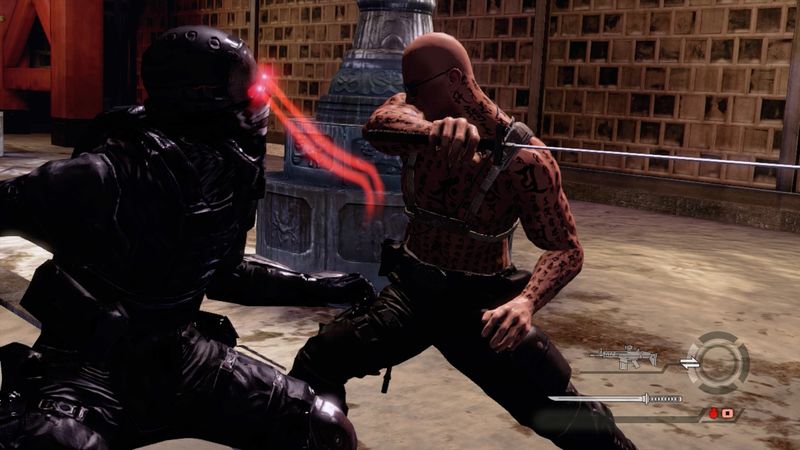
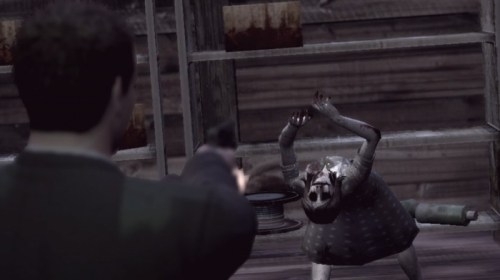
    Let It Die - wonderfully bizarre. Note the cameo from 'Uncle Death'.
    Let It Die – wonderfully bizarre. Note the cameo from ‘Uncle Death’.

    Warframe and SMITE are excellent and gorgeous-looking multiplayer violence ’em ups, but the newly released Let It Die from Suda51 is the most blood-soaked of them all, with layers of wonderful bizarreness to top it all off – as you’d expect from the creator of Killer7 and Lollipop Chainsaw.

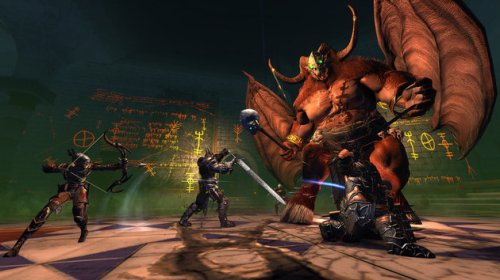
    But perhaps the most interesting was Neverwinter, a full-on PC style Dungeons and Dragons RPG. It had tonnes of content, and it just goes to show how the gap between the PC space and the console arena is narrowing, especially as titles start to offer crossplay between the different platforms. Whatever you think about free-to-play, it’s a fascinating time to be a gamer.

    Neverwinter is proper D&D on console.
    Neverwinter is proper D&D on console.
  • Not a huge amount has caught my Spiffing Reads eye over the past couple of weeks, hence the thin selection below. We’re well into the season of end-of-year lists, gift guides and reviews of AAA games, none of which makes for particularly thrilling reading – unless a hugely anticipated game gets a critical mauling, of course. But so far, this year’s Christmas games seem to be a pretty good crop, with the only real news being relatively poor sales of some long-awaited titles.

    Anyhoo, we’ll be farting out some end-of year lists of our own in due course, but in the meantime, cast your peepers over these beauties.

    hd2ss_9_28_2-jpg

    Where did all the strategy go? (Eurogamer)

    I have fond memories of playing through Hidden & Dangerous on the Dreamcast, a game where every move was fraught with danger, and the tension was stretched so tight you could cut it with a blunt spoon. The one fly in its camouflage ointment was that your team mates’ AI was terrible – they couldn’t be trusted with grenades, for example, as they blew themselves up with alarming regularity. Still, I miss strategic war games like this one, especially as bombastic FPSs like Call of Duty hold little appeal now my reactions are withering with age.

    3-1024x576

    The Colossus That Casts No Shadow (Kotaku UK)

    This is a superbly written article by @SamMGreer (check out her work at http://sammgreer.tumblr.com, she’s definitely one to watch). It manages to sum up everything that makes Shadow of the Colossus work so well, and laments how few games have managed – or attempted – to copy the formula. A spiffing read, indeed.


    Spiffing Reads is a regular feature where we pick out the best gaming articles of the week. If you’ve read anything interesting, please let us know in the comments.

  • Will Final Fantasy XV make its development costs back?

    Short answer? I doubt it. Although it might just scrape through.

    Kotaku has reported that Final Fantasy XV sold 670,471 copies in Japan at retail in its first week. That might sound a lot, but it’s well down on the sales figures of previous entries. Final Fantasy XIII sold 1,516,532 copies in Japan in its first week, Final Fantasy XII sold 1.8 million and Final Fantasy X sold 1.7 million. Meanwhile, the behemoths that are Final Fantasy VII and VIII sold 2.03 million and 2.5 million, respectively, in their first week on sale in Japan.

    final-fantasy-xv_cover_2016

    Admittedly, the 670,471 figure doesn’t include digital sales, and Square Enix noted that the game has broken the record for first-day digital sales in Japan. But even with those included, it seems unlikely that Final Fantasy XV topped the million mark – which must be worrying for Square Enix, considering that the game cost millions to make and was in development for ten years. And then there’s the huge marketing push in recent weeks, which will no doubt have cost a pretty penny.

    There are no official figures on the total cost of development and marketing for Final Fantasy XV, but at a guess it’s likely to be above $100 million. Final Fantasy XV director Hajime Tabata revealed earlier this year that the game needs lifetime sales of 10 million copies to recoup its development costs, which, to quote this Kotaku article, is “more than any Final Fantasy game has ever sold except Final Fantasy VII, almost twice as much as The Witcher 3 has sold so far, and twice as much as Metal Gear Solid V has sold to date”.

    Judging by the initial sales in Japan, it seems like it will be hard for them to get anywhere near the 10 million figure needed.

    final_fantasy_xv_key_art_characters_in_battle

    However, it’s not all bad news. In the UK, Final Fantasy XV was the second-fastest-selling game in the Final Fantasy series to date, and worldwide, the game’s combined shipments and digital sales topped 5 million (note that’s shipments, not sales). So it seems that although the latest Final Fantasy game has seemingly underperformed in its native Japan, it has benefited from a strong following in the rest of the world.

    The lower than expected Japanese sales aren’t particularly surprising. The country has seen a shift away from consoles towards mobile gaming in recent years, even though the gaming sector continues to grow in size overall. And it’s seeming increasingly unlikely that PS4 sales in Japan will eclipse Japanese sales of the PS3, even though the PS4 is selling like hotcakes everywhere else – the latest global sales figures put global PS4 sales north of 50 million.

    There’s also the waning popularity of the Final Fantasy series as a whole in Japan, as shown by the gradual decline in sales figures through the years. And the switch to real-time combat in Final Fantasy XV could have put off many Japanese fans, even if it might appeal more to gamers in the west – but this is just speculation.

    Whatever the reasons behind the sales figures, it will be interesting to see where Square Enix takes the series next – and I wouldn’t be surprised if the next numbered Final Fantasy entry was exclusive to mobile. Square Enix might not go the whole hog and mostly abandon console development, like Konami did, but it would make sense for them to follow the money. The majority of their revenue came from mobile last year, and with mobile development costs so much lower than console, it makes sense to invest less yet make more money.

    After the years of development and spiralling costs for Final Fantasy XV, I’d be surprised if Square Enix took such a big risk again for number 16.

  • I didn’t have time to post Spiffing Reads last week, so this week we have a bumper double issue of the spiffingist reads from the past two weeks, starting off with an insight into how a game idea can end up going nowhere.

    the-ant-man-my-year-in-development-hell-147947748791

    The Ant Man: my year in development hell (Eurogamer)

    It must be heart-breaking to pour your heart into creating and developing a game idea, only for it to go nowhere. Often we never hear about the failed projects that never even get to the official announcement stage, so this is an interesting look behind the curtain.

    Fail Forward: How Television Fails At Discussing Games (Rock Paper Shotgun)

    Games get short shrift in mainstream media, that’s pretty much a given. But it was depressing to see how partisan the BBC was in its depiction of games in the recent ‘Make it Digital’ season.

    xktqcku8onfzlo1zu3xn-620x349

    The Best Way To Play New Steam Hit Icey Is To Ignore The Instructions (Kotaku UK)

    Clever. Very clever. This narrator of this game tells you where to go, but you’re free to ignore him and choose your own path – at which point he becomes exasperated and the plot of the game changes significantly.

    Excellent Fan Film Captures the Horror of Majora’s Mask (Kotaku UK)

    The production values of this fan film based on the Legend of Zelda: Majora’s Mask are simply astonishing. And it made me think again about the mask itself, as well as the characters of Skull Kid and the Happy Mask Salesman. Is the latter basically Gollum?

    juice-jam

    Should games and politics ever mix? (Eurogamer)

    Another cracking article from Ellie Gibson, echoing some of my thoughts about Trump, Brexit and the craziness that is 2016 – I just want to bury my head in games and forget about it all.

    titanfall-2

    Weak AAA launches are a precursor to industry transition (GamesIndustry.biz)

    Why I think big console game sales are down (Eurogamer)

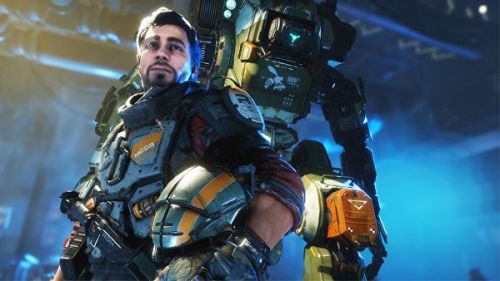
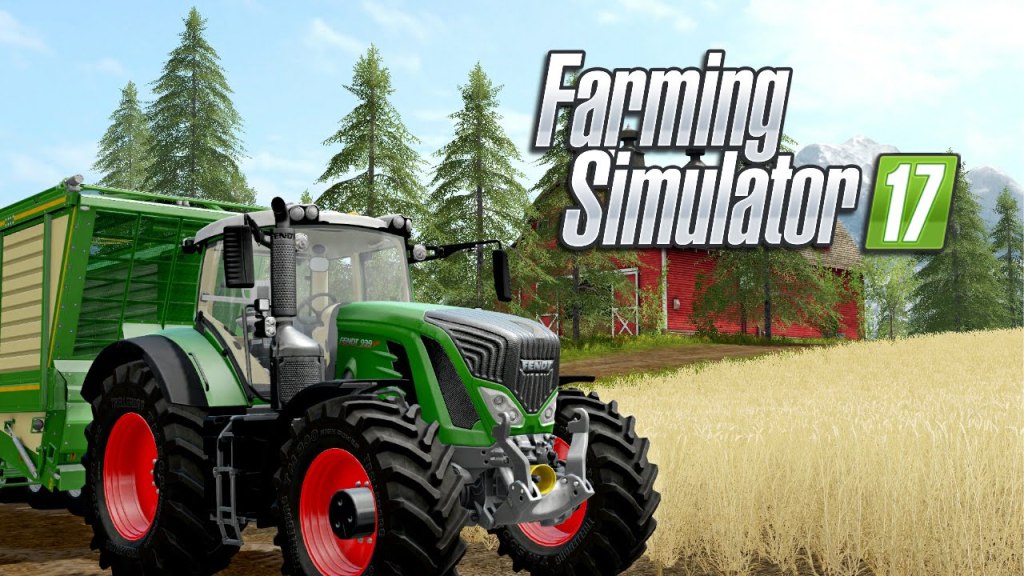
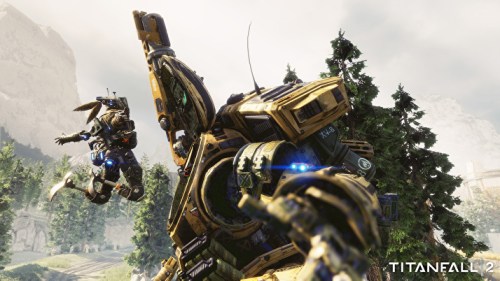
    A pair of thoughtful articles on why sales of AAA games like Watch Dogs 2, Titanfall 2 and Dishonored 2 are so low. For my two cents, I think there’s a sense of lethargy in the industry at the moment, a growing discontent with FPS after FPS, interspersed with the odd GTA clone. The success of Farming Simulator 17 shows there’s scope for trying something different – and older gamers are a viable, rich target market. It’ll be interesting to see whether the Nintendo Switch can attract both older gamers and millenials…

    wbsjv8rmceh5op3l3uc7

    Overwatch Outfits, As Reviewed By People Who Know Fashion (Kotaku UK)

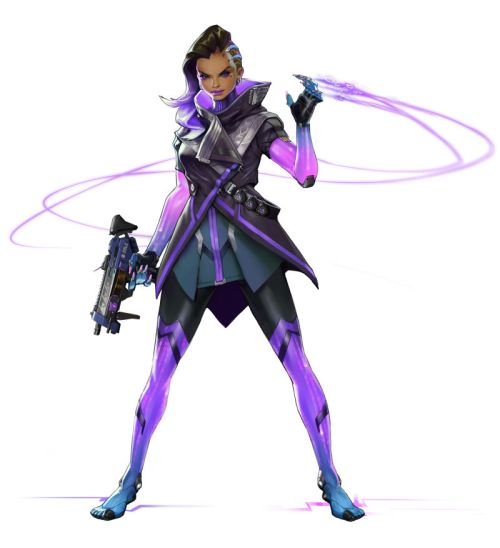
    This is an excellent follow-up to an article on video game fashion by Kotaku Australia. It made me chuckle, and it’s interesting to hear an expert take on some of the OTT outfits that are commonplace in games.

    4107

    What Gamergate should have taught us about the ‘alt-right’ (The Guardian)

    Finally, a fascinating article by Shut Up & Sit Down‘s Matt Lees that links Gamergate with Trump and the rise of the alt-right. The signs were there all along…


    Spiffing Reads is a regular feature where we pick out the best gaming articles of the week. If you’ve read anything interesting, please let us know in the comments.

  • 7169_frontIt turns out quite a few people do, judging by the comments on the story I wrote for Kotaku UK: Silent Bomber: A Forgotten PlayStation Classic

    I’m surprised so many people remember it, to be honest. It sold less than 75,000 copies worldwide, and I’ve hardly heard anything about it since its release back in 1999. But it seems it was cherished by the few people who got to play it – and it really is a cracking game.

    CyberConnect2 went on to develop the Naruto games and lately they’ve been working on the remake of Final Fantasy VII. Meanwhile Silent Bomber has only resurfaced once, being released on PSN in Japan a few years back. No sign of a rerelease over here, but we live in hope. And seeing the positive response from readers of the above article, a European PSN release would probably be well received.

    It seems unlikely that CyberConnect2 will ever make a sequel to the excellent but chronically under-selling Silent Bomber. But I thought I’d send them a tweet, just to check.

    //platform.twitter.com/widgets.js

    And if you want to see the game make a return, I suggest you do the same.

    silent-bomber-explosion

  • I’ve never been a particular fan of the Final Fantasy games.

    Don’t get me wrong, I’ve tried to be.  I once collected pretty much all of the Final Fantasy games from I up to VIII with the intention of playing through them all. But I never did it.

    I played through about half of IV and quite enjoyed it, but I couldn’t get more than an hour or two in to Final Fantasy VII before giving up. The same happened for Final Fantasy X. The bum-numbingly long cut scenes killed a lot of the enjoyment for me – the same reason that I drifted away from Metal Gear Solid (another game I really wanted to like). I ended up giving the games to my sister in the end.

    final-fantasy-xv_cover_2016

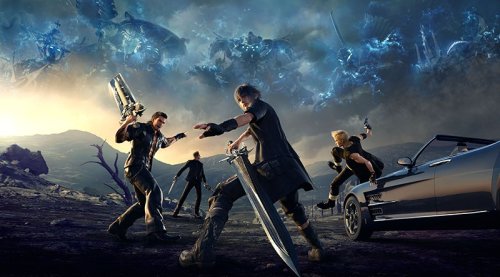
    Now, a decade since its inception, Final Fantasy XV is finally on shop shelves. And from the viewpoint of an outsider looking in, it’s really bizarre. The cover depicts what looks like a Japanese boy band, who appear to be sponsored by Brylcreem. They clutch what surely must be foam swords, judging by the way they’re flinging them about. Of course, massive swords are a hallmark of the series, but they just look so odd in the hands of the members of SMAP.

    The cast of Final Fantasy XV, a.k.a. SMAP.
    The cast of Final Fantasy XV, a.k.a. SMAP.

    Even more bizarrely, according to the trailer, they seem to be using swords against enemies with guns. What’s that old adage about bringing a knife to a gun fight? And they seem to be in a modern setting, but there’s dragons.

    What the fuck is going on in this game?

    Still, it does look pretty.

  • The No Man’s Sky Rebirth

    After happily pottering around No Man’s Sky for weeks, I finally hit a plateau and decided to check out the end game. It turns out it’s utter balls.

    I whizzed through all of the Atlas stations, as I’d already hit all of the Journey Milestones to access them, and after visiting the tenth and final one… well, not much happened. I won’t give it away, but it was underwhelming to say the least. After that disappointment, I thought I’d research the other questline – the journey to the centre of the universe – to see whether it was worth the hours of my time it would take to get there. According to this vitriolic article, which reveals exactly what you find, it most definitely isn’t.

    So I popped the game back onto The Mantelpiece, and I was just considering whether to sell it when the announcement of a huge update appeared last weekend. And I mean huge. The so-called Foundation update, which is a pleasing nod to the Isaac Asimov book series, comes in at more than 2GB and adds huge amounts of stuff. Check out the video below to see what I mean.

    I’m impressed by the sheer amount that they’ve added to the game in this update, and it has met with a glowing reception in write ups from Eurogamer and Kotaku. There’s also promise of plenty more in future tweaks, not least the rumoured addition of land vehicles. The end game may still be underwhelming, but the scope for cosmic pottering has been amplified enormously.

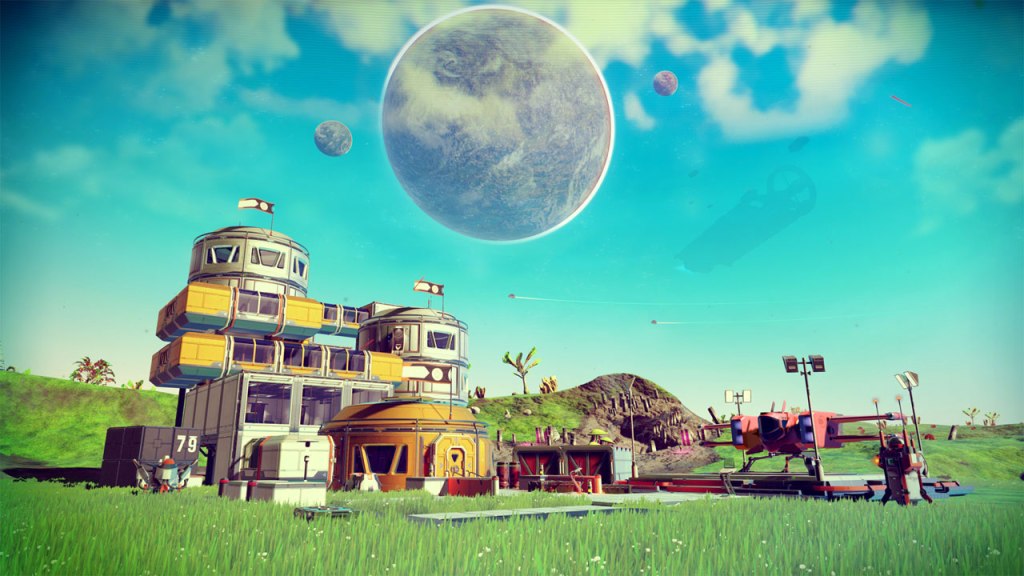
    Last week, I wrote that one of the joys of No Man’s Sky is that it’s essentially a giant space shed in which I can dawdle about and generally pass the time in a pleasantly unguided fashion. But now, thanks to the addition of base building, I can now ACTUALLY BUILD A GIANT SPACE SHED. And a greenhouse, too. It’s like they read my mind.

    Sheds in space! Bring. It. On.

    2a0189c33-cf31-c455-ba5f524bf9455c33

  • Video-game pottering is big business

    I wrote yesterday about how as I’m getting older, I find myself craving games that are just a bit slower and relaxing. It turns out I’m not the only one.

    As an article on Eurogamer today reveals, Farming Simulator 17 has smashed sales records, selling double the amount of the previous game, and debuted at number one in the all formats sales charts in Germany. And this comes after big AAA games like Titanfall 2 and Watch Dogs 2 have failed to meet sales expectations.

    It seems that there a plenty of people like me who would rather potter around a field (or planet) than engage in exhausting, non-stop gunplay. There’s more to life than shooting off machine guns.

    More to the point, there’s a whole generation of ageing gamers who still want to dabble in gaming but are perhaps put off by the whining teenager stylings of games like Watch Dogs. The greying pound is strong in video gaming.

    well-at-least-one-games-smashed-sales-expectations-this-year-148006396285

  • From The Armchair: Old Man Lucius

    ArmchairWhat ho, chums!

    Friends, I’m growing old. As I near the end of my fourth decade on this planet, my listening predilections are veering from rock and roll towards radio plays, and my shoes are getting comfier and less fashionable with every passing year. I’m wholeheartedly embracing it – bring on the grey hairs, I say. I now actively look forward to receiving new socks and slippers for Christmas.

    One change I’ve noticed is that my choice of games is getting more sedate as my body withers into middle-aged podginess. My extended time with No Man’s Sky has been so relaxing because that game is essentially an enormous galactic toolshed, and I’ve been pottering around it happily while avoiding doing the dishes. One of my biggest regrets so far in life is that I don’t own a shed of my own, but thankfully gaming can fill the void with virtual sheds like this one, in which I can make useless things and let my mind wander freely.

    No Man's Sky is essentially a space shed.
    No Man’s Sky is essentially a space shed.

    I’ve also been playing a lot of Fire Emblem: The Sacred Stones on the Wii U, a Virtual Console version of the old Game Boy Advance game. (God knows why they didn’t release this portable game on the 3DS as well, Nintendo works in mysterious ways sometimes.) I think turn-based strategy games are probably my all-time favourite game genre, simply because they give me the space to sit and ruminate on what I want to do next. It’s truly relaxing, and these days that’s what I really play games for – to take a break, and lose myself in another realm. Or shed.

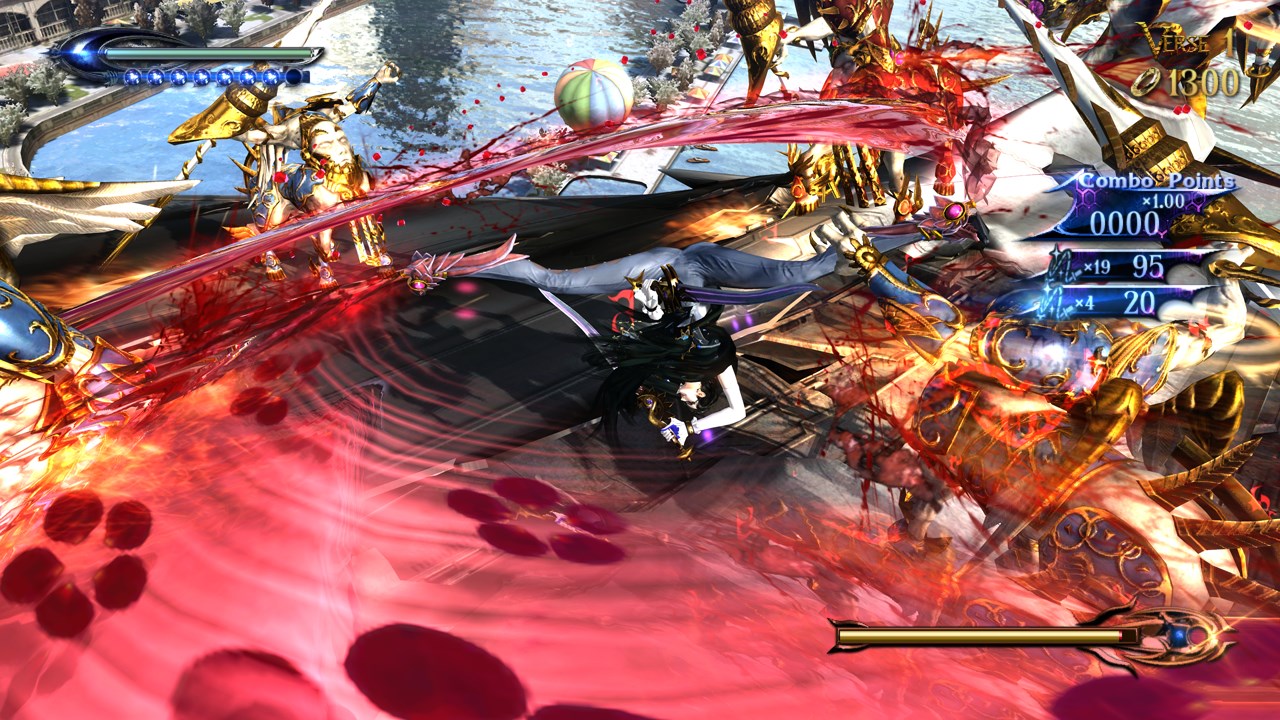
    Which brings me to Bayonetta 2. I finally finished the game this week, and I think it’s brilliant – right up there with the first one, and between them they represent the absolute pinnacle of the hack ‘n’ slash genre. Superbly crafted, ambitious in scope, incomparable in depth and simply gorgeous to look at. But quite often I found I was simply too exhausted to play it.

    Bayonetta 2: exhausting.
    Bayonetta 2: exhausting.

    I’d often fire up the Wii U and thrash through a level or two, only to turn it off about an hour  and play something a bit less taxing on the old thumbs and fingers. Bayonetta 2 is a game that demands lightning reflexes and constant attention, and my ageing brain is far too addled with years of coffee and biscuit abuse to take that kind of strain for long. An hour is about the limit before my failing cortex demands a game that has in-built coffee breaks – i.e. turn-based strategy.

    I’m already glancing through my game collection and mentally discarding titles that look like they might be a bit too much like hard work. Crysis 2 seems like it might require too much running around. Child of Eden is basically a headache inducer. Zone of the Enders needs to just slow down and smell the roses once in a while.

    Phew, all this typing is hard work. I think I’ll just close my eyes for a few minutes…

  • Meet the Most Helpful People in Elite: Dangerous

    ed-fuelrats3d_poster3

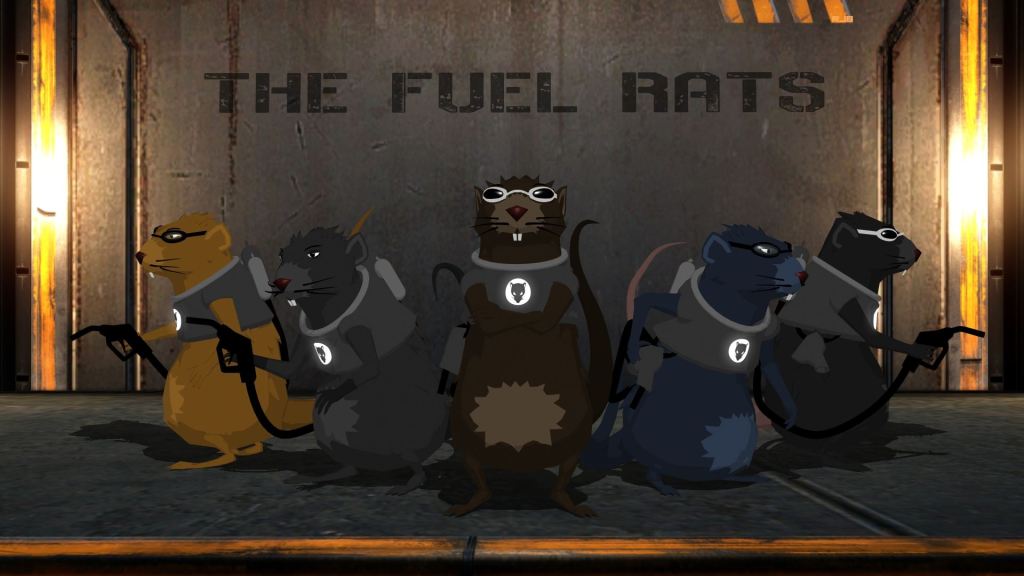
    My uncle has been a fan of Elite since the first game came out in the 1980s, and the other day he dropped me a line to tell me about a group called the Fuel Rats. Perhaps I’d be interested in writing a story on them?

    I took a look at their website, and I was immediately intrigued. This group is dedicated to rescuing stranded Elite pilots anywhere in the galaxy – and sometimes they go to extreme lengths to save them. In one case, a Fuel Rat flew for seven hours straight to get to someone who was helplessly floating in space, their fuel tanks diminished. Another rescue took a total of three days. It makes a welcome change from tales of griefers causing chaos.

    I spoke with two of the Rats, Marcus and Kerenn: both were really helpful and had some fantastic stories to tell. Have a look at the finished article on Kotaku UK to find out what they had to say:

    The Most Helpful Pilots in the Galaxy

    And if you ever find yourself stranded in Elite: Dangerous, head over to www.fuelrats.com and send out the ‘Ratsignal’ – help will soon be on its way.

    Now, before you go, luxuriate in the deep bass voice of RadLock Recursion as he guides you through his 200th Fuel Rats rescue:

  • Spiffing Reads: Devil’s Third and Bye-Bye Wii U

    This week on Spiffing Reads, it’s (almost) all about the Wii U, long may it rest in peace.

    img_5993

    The ups, downs and future of Tomonobu Itagaki’s Devil’s Third (Polygon)

    Devil’s Third came out on the Wii U last year to less than glowing reviews. It’s torturous development history over 8 years and across numerous publishers makes for a fascinating story. It may not have turned out to be the best game in the world, but you have to admire Tomonobu Itagaki’s tenaciousness in getting the damn thing finished.


    Farewell Then: Wii Barely Knew U (Kotaku UK)

    Production of the Wii U is coming to an end, after the machine failed to live up to sales expectations and struggled to find an audience. Still, it’s well loved in my house, where it gets used daily for Netflix, iPlayer and occasional bouts of Bayonetta 2.

    Housing Ladder arcade game has players dodging buy-to-let investors (The Guardian)

    Before there were video game arcades, there were arcades packed with electro-mechanical machines. Now this artist is making electro-mechanical machines that carry statements about 21st-century living.


    Spiffing Reads is a regular feature where we pick out the best gaming articles of the week. If you’ve read anything interesting, please let us know in the comments.

  • Spiffing Reads: VR Arcades, Zero Wing and Capcom vs Square Enix

    This week on Spiffing Reads, we start start off with how the games industry has finally woken up and listened to some of my amazing ideas.

    viveland___projectcars

    Why VR arcades could be virtual reality’s salvation (Polygon)

    Back in 2012, I visited an arcade for the first time in years, and found it to be a thoroughly dispiriting experience. The endless driving and shooting games showed a desperate lack of imagination, and I put out a call for developers to make the arcade into an more of an ‘experience’: “What about a game where you go over Niagara Falls in a force-feedback barrel? A space shoot-em up where you fly on the back of an animatronic octopus? An augmented reality game where you shoot down invisible attacking monsters that only you can see?” Well, four years later, someone finally listened. The latest VR arcades in the Far East sound phenomenal – here’s hoping we see them in the UK soon.

    zero-wing-japanese-ending

    Zero Wing had 32 weird secret endings in Japan (Legends of Localization)

    The line “All your base are belong to us” has long been held up as a legendarily terrible example of Japanese to English translation, and is emblematic of the often quite shoddy translation work (and poor game scripts) in the 1980s and 90s. The line came from the shoot ’em up Zero Wing, but only now has it been revealed that the Japanese version of the game had 35 different endings (the English version had 3) – and they were all utterly bonkers. Example: “After I beat you, I’m gonna clean-clean the world. And then I want to build even more bases!”

    final_fantasy_xv_key_art_characters_in_battle

    Square Enix and Capcom march towards contrasting futures (GamesIndustry.biz)

    Another great feature from Rob Fahey, who wrote a scathing report on Electronic Arts last week. This time, he’s looking at the business strategies of Square Enix and Capcom, and it makes for fascinating reading. I was surprised at just how much money Square Enix is making from mobile: “Last year, its mobile revenues overtook its revenue from console games. This year so far, it’s made more money from mobile games than from console games and MMOs (its third largest business segment) combined.”


    Spiffing Reads is a regular feature where we pick out the best gaming articles of the week. If you’ve read anything interesting, please let us know in the comments.

  • ArmchairWhat ho, chums!

    I’ve finally reached what I suppose is the No Man’s Sky plateau: I’ve maxed out the slots in my exosuit and multitool, I’ve almost maxed out my spaceship, and I’m starting to notice a fair bit of repetition in the planets I’ve been visiting. After my initial fever of exploration, it feels like the game is winding down into the all-too-familiar.

    As the scathing criticism that the game has received from some reveals, it’s clearly not for everyone. Even our own Sir Gaulian bounced off the game hard. But I’ve found it to be right up my street. It’s just so relaxing – I’m essentially pottering around space, doing whatever I feel like and satisfying my insatiable curiosity about what’s around the next corner. It’s wonderful. I can happily spend hours just pootling around planets and scanning weird animals.

    But sadly, the returns I’m getting from it are getting weaker and weaker. The animal scanning is getting less and less rewarding as I notice the same creature parts recycled again and again. But even so, occasionally the game will throw up something truly odd that demands my attention. Just the other night, I came across these huge bear-like things that fluttered around on utterly tiny wings – something truly unlike anything I’d seen before. Yet these kinds of discoveries are becoming rarer and rarer.

    It was a bit like this thing, but without the weird legs and face...
    It was a bit like this thing, but without the weird legs and face…

    It’s time to start winding down and aiming to put this thing to bed. I’m still eons away from the centre of the universe, but before I committed to gathering the necessary resources to head there, I thought I’d check to see whether it’s worth my time. It turns out it probably isn’t. So instead I’ve rejoined the Atlas Path, and already my game has been reinvigorated by a few all-new sights and encounters. It helps that I’ve already maxed out most of my exploration stats, so I can speed through the path to something that acts as a conclusion of sorts.

    It’s been a fun ride.

  • I ran out of time on Friday, so Spiffing Reads is a bit late this week. But just as packed full of goodness as ever.

    Illustration: Sam Woolley
    Illustration: Sam Woolley

    Why I Play (Kotaku UK)

    “Playing video games is, for me, part of a lifelong rejection of boredom.” Keza MacDonald, the chief ed of Kotaku UK, went on maternity leave last week, but she penned a rather brilliant article before she went. Take a look, it’s really rather good.

    20-years-on-the-tomb-raider-story-told-by-the-people-who-were-there-147756192256

    20 years on, the Tomb Raider story told by the people who were there (Eurogamer)

    This actually came out more than a week ago, but it’s so good I had to include it. It’s incredibly long, but well worth reading – the Tomb Raider saga, with its soaring highs and crushing lows, is emblematic of 90s gaming and the rise of big publishers.

    finishing-final-fantasy

    Finishing Final Fantasy (Eurogamer)

    A surprisingly revealing look inside the offices of Square Enix as the developers rush to finish Final Fantasy XV, a game that’s been a decade in the making. I love the huge diorama they’ve made of the game world.

    pokemoncostume-0

    This working Pokemon Go app costume is the most amazing creation you’ll see this year (Polygon)

    Genius. Just genius. Make sure to watch the video.

    714x-1

    Titanfall is a victim of chest-beating pride (GamesIndustry.biz)

    Some scathing criticism of EA and Respawn for scheduling Titanfall 2’s release a week after Battlefield 1 and a week before Call of Duty: Infinite Warfare. “Respawn Entertainment, which will likely bear the brunt of any hardship resulting from the now-uncertain status of the Titanfall franchise … likely approved of the release date for reasons that are also more to do with dick-measuring than with commercial good sense; launching a week ahead of the new SF Call of Duty game from their old studio, Infinity Ward, would be a chance to prove that they’d surpassed their old franchise and a final two fingers to the publisher who humiliatingly kicked them out of their old studio six years ago.” Yowch.


    Spiffing Reads is a regular feature where we pick out the best gaming articles of the week. If you’ve read anything interesting, please let us know in the comments.

  • I pitched an article on board games based on video games months and months ago, but it’s only just been published on Eurogamer. It turned out to be a much bigger undertaking than I thought.

    img_5291
    My confused face sums up XCOM The Board Game.


    My initial idea was to do a round up of all of the video-game-themed board games on the market, but a bit of reasearch revealed that there are far more of them than I realised – the board game scene really has exploded in recent years. So I revised my goals, and instead decided to pick just a handful of the more well known ones. But even this proved tricky.

    The trouble with board games is that you need a group of people to play them with, as well as someone who knows the rules, not to mention a full evening or two spare to play them thoroughly. As hyou’ll see in the article, fulfilling these criteria wasn’t always easy:

    Video games remade in cardboard

    I ended up reviewing three games in the end – XCOM, Street Fighter II and The Witcher – but there are plenty more that I could have done, like the Civilization and Portal board games. Hopefully I can cover them in a follow-up article…

  • This week on Spiffing Reads, we start off with more analysis of the Nintendo Switch reveal trailer – but this time from a perspective of just making stuff up.

    nintendo_switch_2-0-0

    Nintendo Switch’s best, most revealing meme is antisocial ‘Karen’ (Polygon)

    This genuinely made me laugh out loud. In the Nintendo Switch trailer, one Internet wag dubbed the bob-haired lady who brings a Switch to a neighbour’s party as ‘Karen’, and since then a whole meme community has sprung up around her. “Oh shit, Karen brought her stupid Nintendo thing to the party again. We’re DRINKING, Karen. We’re having CONVERSATIONS.”

    black-mirror-playtest

    Has a Black Mirror episode predicted the future of video games? (The Guardian)

    I’ve never actually seen an episode of Black Mirror. Charlie Brooker’s opus sounds utterly fascinating, but even the very idea of some of the episodes just creeps me out. In the latest, a future AR game taps into the player’s darkest fears to present them with things they find utterly terrifying – but interestingly, a few games have already explored similar ideas. This lengthy article explores how games have tried to get to know their players, and there are some fascinating details that I had no idea about. It also made me even more determined to seek out the underrated Silent Hill: Shattered Memories for the Wii.

    20161025160842_1-jpg

    My Summer Car is the most hardcore driving game yet (Eurogamer)

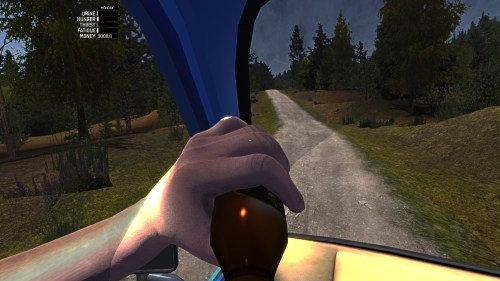
    There seems to be a thriving market for hardcore, off-kilter drive ’em ups these days. After Spintires – a hugely popular game about driving old Russian trucks through mud very, very slowly – comes a game about constructing an old banger from spare parts and driving it through the Finnish countryside while drinking beer and flipping the bird at other drivers. I’m not sure it’s the kind of game I’d personally want to play, but I’m very glad that it exists in the world.

    yxdy7g9nvf69h1ihowes

    VR Developers Add “Superpower” to Their Game to Fight Harassment (Kotaku UK)

    This is something I hadn’t really considered until now – ‘online harassment’ can reach a whole new level in connected VR worlds. This is the story of how one woman had her first experience of VR totally ruined by someone who ‘groped’ her. Obviously the groping was only with virtual hands, but I can imagine how uncomfortable the experience must have been, especially as there is no way to physically defend yourself – apart from taking the VR headset off. I suspect this story is just the beginning, especially if social media moves into VR, as Facebook envisages…

    bethesda-logo

    Review code, the ‘media’, YouTubers and all that shite (Tired Old Hack)

    The story that Bethesda plans to hold back review code for games journalists until the very last minute was everywhere this week. As many have already pointed out, that restriction doesn’t seem to apply to YouTube ‘influencers’, who are receiving review code weeks in advance of release. This is an interesting take on the issue by industry veteran Chris Scullion, formerly of CVG.


    Spiffing Reads is a regular feature where we pick out the best gaming articles of the week. If you’ve read anything interesting, please let us know in the comments.

  • 999 the novel

    One game I forgot to mention in yesterday’s article on my rediscovery of mobile gaming was 999: The Novel – although it’s debatable whether it should be called a game at all.

    I’ve been interested in trying out the games in the Zero Escape series for a while. Zero Time Dilemma, the third game, came out for the 3DS earlier this year to glowing reviews, and the second game, Virtue’s Last Reward, went on sale in the eShop at about the same time. I promptly snapped it up, but I wanted to start the series off at the beginning, with the clunkily titled 999: Nine Hours, Nine Persons, Nine Doors. Unfortunately, this DS game is fairly tricky to get hold of (and expensive, too), but I found out that there’s also an iOS version.

    However, the iOS version is a bit different. The DS game is billed as a ‘visual novel adventure’, where you explore a sinking ship as part of a sadistic game organised by the mysterious Zero. At several points you have to solve puzzles to escape rooms, and every now and then you have to decide which door to take, with the story changing according to your choices.

    The iOS game keeps all the same dialogue and door choices, but it completely strips out the puzzles – instead the screen just goes black and says something like “They were able to solve the puzzle and open the door”. So essentially, the whole ‘game’ is just clicking through dialogue and choosing one of two or three doors at about five points.

    999 the novel watch

    I’m used to playing visual novels like the Ace Attorney series, where essentially you’re just looking for the right line of dialogue to proceed, or the right object to present. But as I discovered when writing this article about the J.B. Harold games, in Japan this series would more likely be considered as an ‘adventure game’. Over there, visual novels are pretty much what the name implies – novels with pictures, and very little in the way of interaction.

    So 999: The Novel on iOS is a visual novel in the strict sense – writing and pictures and not much else. I wasn’t entirely sure what to make of it at first.

    Without any interaction other than the odd door choice, the writing is forced to hold up on its own – and quite often it comes across as a bit clunky. The storytelling has an unfortunate penchant for melodrama, and quite often characters will annoyingly repeat themselves, or parrot what someone else has just said. Frequently, people will launch into long and bizarre anecdotes that seemingly have little connection with anything else, like the time someone eagerly describes a series of crystal experiments. I also felt the loss of the puzzles – it felt like my agency had been taken away.

    But having said that, I did start getting into it after a while. After getting my first ‘bad’ ending, I became curious as to how things would have turned out if I’d gone another way, and I found myself getting more and more into the story. Eventually, I saw all of the endings the game had to offer, including the so-called ‘true’ ending. The story gets more and more ludicrous as the game goes on, but the characters are likeable, and I enjoyed the rollercoaster ride of revelations.

    gaming-999-the-novel

    But is it really a game? I found myself pondering this after I’d finished it. The only interaction is limited to five or so choices, so calling it a ‘game’ is really pushing the definition. But then again, there is a metagame in the sense that working out which routes offer the better endings is part of the challenge. More to the point, it felt like a game thanks to the graphic style and, well, clunky dialogue, to be honest. Nothing tells you that you’re playing a game more than making apologies on behalf of the designers for lacklustre writing. It’s a sad fact that as gamers, we’re willing to overlook cheesy scripts because they’re pretty much the norm for our genre – just look at Uncharted. And just last night while playing Bayonetta 2, a critically lauded game, I found myself wilfully disregarding the dreadful acting of that irritating squirrel character, not to mention the sometimes painful script. Often, playing games feels like watching your own child act in a school play – you’re willing to forgive their lack of finesse just because you want them to succeed.

    So yes, 999 doesn’t have the best script in the world, but at least it has an interesting story. And it just about qualifies as a game, in my opinion. But it did make me wonder what the minimum amount of interaction would be for a piece of digital entertainment to qualify as a game. If you only made one choice, would it still be a game? If all you were doing was tapping through dialogue without making any choices at all, would that still be a game?

    I’d probably say ‘no’ for the above two options, but that also made me wonder what threshold 999: The Novel had to cross for it to become a game in my mind. Is five choices the minimum needed for it to feel like a game? What if it only had four choices? Or three?

    My mind flies back to the legendary Advanced Lawnmower Simulator, an April Fool gag perpetrated by the editors of Your Sinclair. The ‘game’ involved holding down one button to make your character mow the lawn – and that was it. It elicited howls of laughter from the youthful me at the time.

    But is it a game? Unequivocally, I’d say yes. But if something as simple as that can be considered a game, then surely anything could?

    advanced-lawnmower-simulator-4

  • ArmchairOne consequence of getting sucked in by Pokemon Go is that I’ve ‘rediscovered’ mobile gaming, to an extent – just as Eurogamer predicted. Bar the odd game of Threes, I’d pretty much given up on mobile games before this summer, but the Pokemania earlier this year prompted me to see what else the App Store had to offer.

    I’d been put off before by various scrounging free-to-play games that constantly needled me for money. Plants vs. Zombies 2 was a prime offender in this category. I absolutely adored the first game, but the sequel switched to free to play and consequently walled off the more interesting stuff behind microtransactions – a sure way to kill all the enjoyment. Pokemon Go, for its sins, also adopts the free-to-play model, but in a much more acceptable way – everything is available to everyone, but those who choose to pay can get it a little quicker. Still not as satisfying as a one-off fee, but a decent compromise.

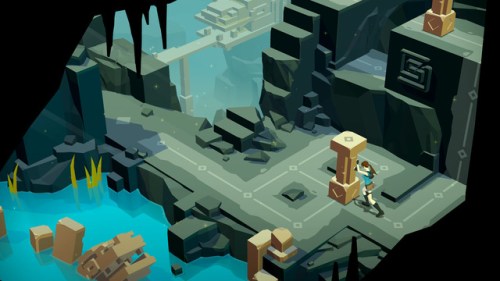
    Thank heavens, then, for Square Enix’s ‘Go’ series – not to be confused with Pokemon Go, which cheekily seems to have ripped off the ‘Go’ suffix. (The first in the series, Hitman Go, came out back in 2014, so it pre-dates Pokemon Go by at least 2 years. But I presume that it was too difficult to copyright the word ‘go’, as King found out when they tried to copyright the word ‘saga’, as in Candy Crush Saga.) Lara Croft Go and Hitman Go were recently bundled together and put on sale on the App Store, so I quickly snapped them up. One price, everything included – lovely.

    lara-croft-go-3

    I’ve yet to play Hitman Go, but Lara Croft Go has been an absolute delight. I wasn’t sure how well Tomb Raider would translate to a slow-paced puzzle game, but it’s managed to keep the feel of the series intact while offering an interesting new style of gameplay. Each level gradually introduces a new puzzle element – salamanders that follow you around, for example, or torches that repel monsters – and these elements neatly combine and intertwine as the game goes on, so by the end there are some real head scratchers to solve. On the strength of this, I can’t wait to play through Hitman Go – and I’ll almost certainly pick up Deus Ex Go, the latest in the series.

    I’ve also been playing Really Bad Chess, which I sought out on the strength of this recommendation. It’s free to play with adverts, but you can pay to get rid of them – again, a good compromise, and much better than locking away content for cash. The game itself is a very basic representation of chess, but with the twist that you have a seemingly random mix of pieces. For example, on my first game I found I had four queens, while the computer opponent had 5 knights.

    4ktdg5k

    As a result of this simple change, the games are enjoyably chaotic, and it made me completely rethink how I approached the game. Interestingly, despite having four queens, I still lost that opening game – it turns out that having a phalanx of knights is awesome for defence if they’re arrayed together. The game also progresses pleasingly, just like Lara Croft Go – as your rank increases, the computer starts off with better and better pieces, while your own pieces get progressively worse.

    If you’ve played any amazing mobile games recently, let me know!

  • It’s been a quiet week on the blog thanks to some crazy work schedules, but as always we’ve got a few Spiffing Reads for you. Of course, the big news this week was a certain console announcement…

    Nintendo Switch Reveal – ALL EASTER EGGS, Analysis & Things Missed (IGN)

    Everyone everywhere has been writing about the newly revealed Nintendo Switch – and I’ll post my own thoughts on it sometime soon. But my favourite bit of coverage was probably this in-depth video from IGN that digs as much info as it can out of the launch trailer. There are some interesting observations about the new Mario game… Also, it was great to hear a bit of White Denim on the trailer, Nintendo has good music taste!

    img_5881

    At home with Tomb Raider’s Lara Croft: ‘There was probably too much murder’ (The Guardian)

    This article actually came out last week, but I missed it at the time – and it’s just too good not to share. The wonderful Ellie Gibson interviews Lara Croft for the 20th anniversary of Tomb Raider, and it’s bloody hilarious.

    img_5882

    Block ops: How everything fell into place for Tetris (Eurogamer)

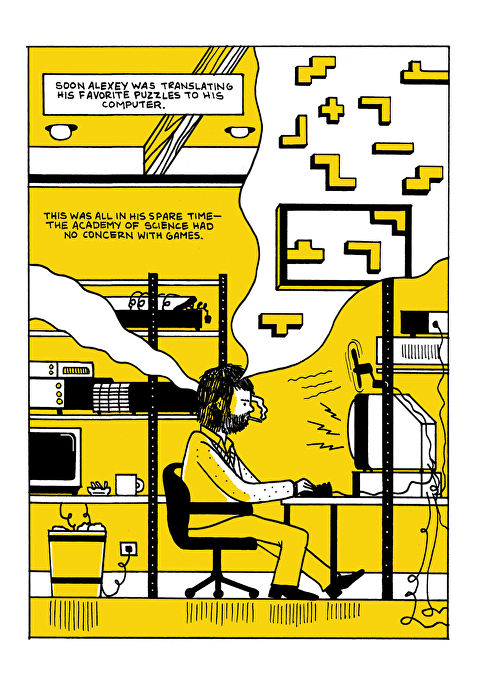
    Box Brown has written a graphic novel about the origin of Tetris, and it looks darn good. In fact, I’ve had this on pre-order for about six months, so I can’t wait to finally read it!


    Spiffing Reads is a regular feature where we pick out the best gaming articles of the week. If you’ve read anything interesting, please let us know in the comments.

  • This week on Spiffing Reads, we look into a spooky AI future – and a forgotten past of suicidal game disks.

    img_5842

    The Video Game Horror Of Westworld (Kotaku UK)

    The new HBO version of Westworld looks rather excellent. I was a big fan of the original film, and it seems like they’ve done a great job of expanding on the original concept – i.e. murderous robots with feelings. As this article points out, the series’ do-anything-you-like western theme park isn’t a million miles away from most video games – but what if the virtual characters you’re gunning down could think and feel? Which brings me on to…

    img_5843

    Video games where people matter? The strange future of emotional AI (The Guardian)

    Several groups have been working on AI that responds emotionally – or at least a simulation of emotion. This excellent long read gives a taste of where we’ve been and where we’re going. What if all those civilians in GTA games had hopes, dreams and expressed genuine terror? Or, more scarily…

    img_5844

    Is our world a simulation? Why some scientists say it’s more likely than not (The Guardian)

    …what if we actually are those video game citizens, but we just don’t know it? The idea that our universe is a huge simulation has been proposed numerous times before, but it’s unlikely to go away any time soon. For one thing, like the existence of god, it’s basically impossible to prove that it’s NOT true, even if it seems unlikely. More to the point, it would explain why all the physical laws in our universe slot together so nicely.

    img_5845

    The self-destructing game of 1986 (Polygon)

    I found this utterly fascinating. Back in the eighties, someone wrote a game that gave you just one shot at finishing it – if you failed, the game essentially committed digital suicide, and wouldn’t let you play it ever again. It’s a fascinating concept, and I’m surprised no one has tried it again, especially in the current age of the indie renaissance. Suddenly, Dark Souls looks positively benign.


    Spiffing Reads is a regular feature where we pick out the best gaming articles of the week. If you’ve read anything interesting, please let us know in the comments.

  • GTRXU1.jpgAustralia’s car industry is dying. As the gradual removal of tariffs kicked off by Prime Minister Hawke began to bite, and in more recent times fiscal prudence forcing Governments to question financial support, the car industry was at a cross-roads. And by the end of 2017 our once great car manufacturing sub-sector will be in Australian history’s rear-vision mirror. Toyota, Holden and Ford, all gone.

    In short: neoliberalism and the laissez-faire hasn’t been kind to Australia’s car industry.

    I was one of those people who questioned Government’s insistence on supporting an industry that was for all intents and purposes, uneconomic. And economic theory – nay economic sense – backs that assertion. Australia’s high wage costs, lack of economies of scale, cost of inputs and decline of sales of domestically-built vehicles all contributed to an industry that in aggregate couldn’t compete with cheap imports. So policymakers and industry cut their losses and pulled out of Australia. Rightly or wrongly Australia will no longer a car-producing nation.

    Forza Horizon 3 and its Australian setting is a celebration of an industry – but more important a culture – that is a ghost of its former self. I’ve written before about how intertwined car culture is in Australia’s psyche and I’m convinced a lot of that is to do with just how unique it is. Yell “Brockie” from the footpath anywhere in Australia, much less my hometown of Adelaide, and it’ll undoubtedly be acknowledged with “yeah mate!” or “Legend!” from passersby. And flash a photo of his GTR-XU1 and it might induce convulsions.

    But, like a lot of things in this great southern land, these things are all pretty much unknown to the rest of the world. The moment you step into the 2016 HSV Maloo GTS to ‘upgrading’ to a Holden Torana A9X it becomes clear that Horizon 3 pays homage, not just to our country’s natural beauty,  but its unique automotive scene too. A scene that – with the last Ford Falcon already rolling off the line in Geelong and the last Australian built Commodore due in 2017 – is at risk of disappearing altogether. And taking everything built around it, with it.

    And its for this very reason I’m lamenting the loss of our automotive industry. Because while it may not be economic, cultural output seldom is. And Forza Horizon 3 makes it very clear that, above all else, our car culture is something we should value and cherish as uniquely Australia


    lj_torana_ad

    Quick Offloads are short posts when we need to get things off of our chests – or bonnets in this case – but don’t want to make a federal issue out of it.  But feel free to play armchair economist, neoliberal critic or rip-roaring union commie in the comments section. Or, y’know, just pay your respect to the Australian car industry, R.I.P.

  • Like probably everyone reading this blog, I struggle to keep up with all of the new game releases. And in recent years, I’ve found it harder and harder to keep on top of even a fraction of the great games that are coming out.

    My gaming backlog

    It made me wonder whether this was simply because I have much less time as a responsible adult and father, or whether the number of new releases has actually grown exponentially. I decided to go in search of some cold, hard statistics – and some of the numbers involved are truly eye opening. Here’s the write-up I did for Kotaku UK:

    Are There Really Too Many Good Video Games To Play?

    So, what do you think? Are you able to keep on top of all the latest games? What’s your strategy for dealing with the modern deluge of games? Let me know in the comments!


  • This week on Spiffing Reads, it’s all sex and VR. So a bit like the Brosnan-starring The Lawnmower Man, then.

    img_5826

    The best – and very worst – sex scenes in video game history (The Guardian)

    When it comes to sex scenes in video games, it seems that Bioware is one of the only developers that has even come close to actually creating, well, sexy ones. Even then, there’s still a long way to go – I’m thinking of that disappointing Talia bed scene in Mass Effect (which incidentally, someone has tried to fix). Still, it sounds like CD Projekt Red are giving Bioware a run for their money with the steamy scenes in The Witcher III, a game I’m intrigued to play (and not just for the unicorn sex, honest).

    img_5827

    Virtual reality’s driving force (Eurogamer)

    Reports suggest that sales of Oculus Rift and Vive have flatlined after an initial surge, and it’s anyone’s guess as to how successful PlayStation VR will be. There’s a real worry that VR will just turn out to be a fad like Microsoft’s Kinect – initially captivating in its cleverness, but let down by lightweight games and ultimately deemed too fiddly and pointless. Still, even if the VR resurgence flounders, I can see driving-game fans – like our very own Sir Gaulian – giving it a long-term future. The same audience that will happily shell out for a force-feedback steering wheel is also likely to stump up for a VR headset – and judging by this report, driving games are at least one genre where VR really makes a massive difference.

    img_5828

    “We’re definitely at the point where something’s gotta give” (GamesIndustry.biz)

    It’s astonishing to hear Amy Hennig recounting the crazy working hours she did at Naughty Dog. Essentially she worked 80-hour weeks for years at a time. Reading this made me think how AAA game development just isn’t sustainable any more – games are getting bigger and bigger, and so are dev teams, but the game prices and schedules remain the same. If the only way that game developers can get games out on time and on budget is to work hundreds of hours of unpaid overtime, then something is clearly not working.


    Spiffing Reads is a regular feature where we pick out the best gaming articles of the week. If you’ve read anything interesting, please let us know in the comments.

  • I didn’t really like Bioshock a decade ago. In many ways it felt like a bloody cracking world in want of a game and story that did it justice. I got that it was trying to be cutting, but in most respects, it just felt incredibly forced. Andrew Ryan’s speeches sounded like the sort of economic dogmatist that you’d see head into the corridors of power in the name of conservatism – and even with my economic conservative leanings I find those most dogmatic about the discipline are the ones that understand it the least. In other words Andrew Ryan was just your standard economic madman; just not a particularly deep or well-written one.

    Playing through the remaster in 2016 though – well that’s completely changed my perspective on it. Fact is Bioshock could not be more relevant right now. Because Donald Trump is trying to make the United States into quasi-Rapture.

    And the catalysts for his rise in popularity on the back of his policies aren’t much different, either. He argues for low tax. He is defending good old hard-working American values and American jobs against the centralists in People’s Republic of China. The world is in economic turmoil and Trump believes he’s the one to save the United States from itself. “Is a man not entitled to the sweat of his own brow? “No” says Washington. It belongs to the poor”

    What was that about not paying taxes making one smart, Donald?

    The slow decline of the house that neoliberalism built. Near-zero inflation in a low-rate world. Slow growth. The rise of China. We’re in unprecedented economic territory. And just as the limitations of Keynesian economics were exposed in the high-inflation era of the 1970’s and 1980’s, we’re beginning to reach the limit of our current suite of economic tools. To quote former Bob Hawke in the late 1970’s, “it would seem to me…economics has reached a crisis point”.

    We need to have conversations about perpetual economic growth. About population growth. About most of the fundamental assumptions that underpin our economic systems. About the effects of low cash rates on asset prices. The list goes on.

    The scary thing is, the backlash against Trump’s lunacy means that sadly, we may never have them.

    bioshock

    Quick Offloads are short posts when we need to get things off of our chests but – quite honestly – can’t be arsed writing the General Theory of Employment, Interest and Money. And on issues of economic management, well it’s probably best I keep my mouth shut. But please, would you kindly take potshots in the comments?


  • A short one this week, kicking off with some retro-gaming nostalgia.

    game-genie-game-boy

    Game Genie declassified: That summer I played 230 Game Boy games (Eurogamer)

    Do you remember the Game Genie? It emerged after Codemasters worked out a way to get around Nintendo’s restrictions on who could produce NES software by bypassing the infamous 10NES lockout chip. This resulted in various ‘plug-thru’ game cartridges that required an official cart to be plugged into them to work, and later some unofficial carts with a switch that overrode the lockout chip by, well, zapping it (you can see some of the cart designs here). But another thing that emerged from all this mucking around with Nintendo hardware was the Game Genie – Codemasters realised that you could intercept the data between the cartridge and the machine and change some of the values, and the NES version was followed up with versions for the Game Boy and Mega Drive. Typing codes into the Game Genie would get you things like infinite lives or continues, or allow you to skip levels. But I never knew how they came up with those codes until reading this article – it turns out it was a teenager who played hundreds of games all summer.

    meeting-the-winners-of-knightmare-the-dark-souls-of-childrens-tv-615-body-image-1474816789-size_1000

    Meeting the Winners of ‘Knightmare’, the ‘Dark Souls’ of Children’s TV (Vice)

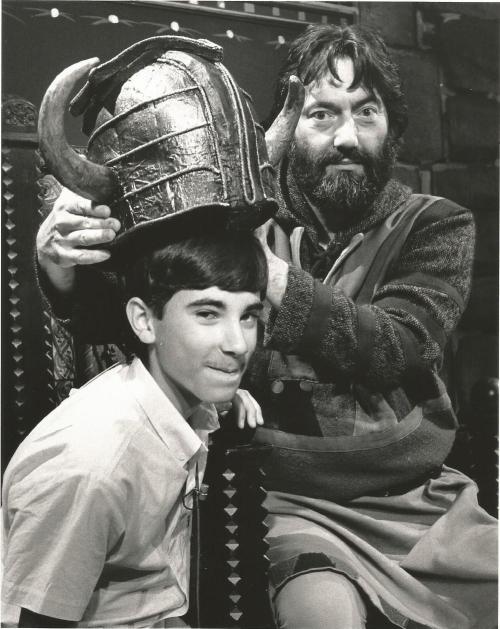
    I used to love watching Knightmare. It was a ridiculously hard children’s TV show where kids were sent to explore a CG dungeon while blindfolded – their friends had to guide them through the various traps and perils. I don’t ever recall anyone finishing the dungeon, but it seems that at least some people did make it through, and it’s interesting to hear their stories of the show. Also see this excellent old Guardian article on the making of the show.

    battan-dont-get-fired-320

    A Smartphone Game That Captures the Futility of “Work-Life Balance” (The New Yorker)

    Always interesting to read a take on video gaming from the mainstream media. This article focuses on the satirical game Don’t Get Fired!, which lambasts office working practices in Korea. Doesn’t sound like a Dark Souls beater to me, but how wide gaming’s net has become that we can see such esoteric topics emerging in video game form…


    Spiffing Reads is a regular feature where we pick out the best gaming articles of the week. If you’ve read anything interesting, please let us know in the comments.

  • ArmchairWhat ho, chums! This week I was excited to read about the new game Virginia – or rather to read a tiny bit about it and then completely avoid reading any more for fear of spoilers (it appears that the game relies heavily on keeping its surprises hidden). Yes, Virginia is yet another must-buy indie game to add to the many notable recent releases, such as Firewatch, Everybody’s Gone to the Rapture and The Witness. We truly are spoiled for choice when it comes to quality indie titles these days…
    Anyway, the Eurogamer review of Virginia compared the game to Twin Peaks, that wonderful early-90s TV show helmed by David Lynch:

    Intuition. Intuition is an interesting one. It’s everywhere in the kind of TV fiction tradition that Virginia belongs to, but it’s nowhere in most narrative video games where every player must be treated as a generic entity to be prodded through the gauntlet with tips, rewards, and brisk, formative punishments, like a sort of space chimp. It’s a reminder that most narrative games do not have the ambition to do any justice at all to one central character – the player. (And if they do, they generally fumble it.)

    And yet look what intuition gives you when you get it right. It gives you Dale Bartholomew Cooper, FBI Special Agent on a dangerous mission to Twin Peaks. He’s a figure that looms over Virginia, much as Twin Peaks itself looms over Virginia’s town of Kingdom. And yet it can be hard to pinpoint why this is exactly. There’s the agency, of course, and the investigation at hand and the coffee in diners and the occasional glimpses of the artfully inexplicable. But there’s something deeper: that world that runs on intuition rather than reason, and wrapped up inside that world a wonderful and refreshing absence of ironic distance.

    This is what people always get wrong about David Lynch. He’s witty, perhaps, but he’s never ironic, and he’s never removed himself from the center of things to mock and smirk from the wings. He means it, every bit of it, and his strange world is all the more frightening because it does not seem to be strange to him. What would it be like to be inside that head, eh? And what sort of reticule might allow you to make the best of what you saw in there?

    Or, to put it in other words, Virginia is a marvel crammed into a neat two-hour running time, and you must play it.

    I came to Twin Peaks fairly late on, after I’d seen several of David Lynch’s films, and I was amazed by how ahead of its time it was. Well, perhaps ahead of its time is the wrong phrase – there’s very little like it out there even now. The mix of the mundane and the downright weird, the humour weaved into an overarching theme of terrifying malevolence, the characters so far along the scale of quirkiness to be almost caricatures… It’s simply brilliant. Watch it, if you haven’t already.

    A damn fine cup of coffee.
    A damn fine cup of coffee.

    Anyway, reading this reference to Twin Peaks inspired me to take a break from planet exploration and dive back into Deadly Premonition: Director’s Cut, a PS3 game that’s heavily influenced by David Lynch’s show. And I mean HEAVILY influenced, right down to the coffee and the Log Lady (although here she’s got a pot).

    In some ways, it’s a hard game to love. ‘Rough around the edges’ is too kind a way to describe it – it basically looks like a PS2 game, with production values so low you can see the joins held together with sticky tape. Driving around town is a good example – the cars have a top speed of about 50 mph, and once you reach it, you’re treated to an engine-sound loop that evokes an asthmatic lawnmower, cycling endlessly over and over. And the handling is simply atrocious, like fighting a supermarket trolley with a bent wheel.

    deadlypremonition2

    But if you can look past things like this, the game is an absolute gem – especially if you’re a Twin Peaks fan. The writer and director, SWERY, has meticulously recreated the TV show with recognizable but different-enough-so-they-don’t-sue characters and locations, and exploring it all is a joy. The dialogue is deliciously bizarre, especially the interminable monologues about Hollywood B movies from Dale Cooper stand-in Agent Francis York Morgan.

    And speaking of B movies, Deadly Premonition is one of the last of a dying breed of ‘B games’. This type of ‘middle-budget game’ was everywhere back in the PS1 and PS2 days, with cheap and cheerful titles like Destroy All Humans! doing pretty well. But since the PS3 era we’ve seen the rise of the console indie scene, which has split the market between AAA titles and low-budget, super-cheap indie games. This has killed the market for mid-price games stone cold dead. Games like Dark Void and Dark Sector, both of which I enjoyed despite their flaws, simply wouldn’t get made now.

    Still, at least the spark of originality is burning brightly in the indie scene. And we have a new love letter to Twin Peaks in the form of Virginia. It’s just a shame that the constraints of indie budgets mean this particular letter is necessarily short – by comparison, Deadly Premonition is more like a love encyclopaedia.

    “Do you feel it, Zach? My coffee warned me about it.”

    Click the link to buy Twin Peaks or Deadly Premonition on Amazon, and we get a little cash. Ta!

    screenshot_x360_deadly_premonition001

  • t-boneI’ve made no secret of my completely out-of-control love for 2014’s Watch Dogs. I think it’s tops. The art, the social commentary, the meta-ness of it all – just thinking about it makes me want to invade virtual Chicago’s privacy all over again.

    And you know what? I even quite liked Aiden Pearce. He was brooding, sure, but understandably so. We all get the shits when we’ve have a bad day at work – well try being sort of responsible for the death of your niece. Yeah. You’d be rocking in the corner while the sound of daytime TV plays in the background, quite frankly. Heartless pricks.

    But if I had to pick, I’d say the game’s expansion Bad Blood is the best that game got. Not just because it was a sampler of all the best things about Watch Dogs with peak-ier peaks. Not just because its writing makes Aiden Pearce into something of a demigod, which is hilarious. But because Pearce associate and cTOS old boy Raymond “T-Bone” Kenny is a bloody fantastic character. Sure he may look like a complete and utter twat, but once you get past the dreads and the septum piercing, there’s a lot to love about the hippie x hacker.

    And I’ll admit that I had a bit of an EXO fan-girl moment when T-Bone makes an appearance in the latest story trailer for Watch Dogs 2. “You’re talking to Blume public enemy number one, son”. Shivers, mate. Shivers.

    Now fingers and hobbit-like toes crossed Aiden Pearce makes an appearance.


    Quick Offloads are short posts when we need to get things off of our chests but – quite honestly – can’t be arsed writing War and Peace. But please, feel free to write War and Peace in the comments below. We’d like that.

  • This week on Spiffing Reads, we begin with an eye-opening behind-the-scenes look at a certain 3D vampire series.

    castlevania-lords-of-shadow-2

    “We got caught in a s***storm” (Eurogamer)

    This interview with the developers of Castlevania: Lords of Shadow is fascinating. It’s interesting to hear how the two LoS games were by far the most successful Castlevania games in terms of sales, even though LoS 2 underwhelmed reviewers. Also interesting to hear the developers’ reactions to those poor reviews, and how much of a shock it was. Oh, and the boss’s evasive reaction to being asked about where the funding is coming from for their next project spoke volumes… A studio stretched too far? After all, self-publishing is a big gamble.

    laura_d-e1474273955107

    Five most underrated female characters in videogames (Very Very Gaming)

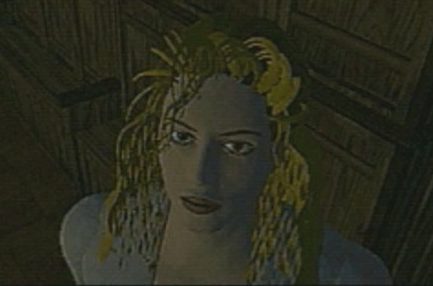
    I highly enjoyed this post, especially as I hadn’t even heard of half of the video-game females listed here. It also gave me a hankering to track down the game D, as it sounds batshit mental.

    360x200

    Nintendo raises the banner for premium mobile gaming (GamesIndustry.biz)

    The author labels Nintendo’ as a “latecomer to a battle that was lost some time ago” in terms of the companies plans to use premium prices rather than adopt the free-to-play model. But if any company can do it, Nintendo can. And things aren’t as clear-cut as they seem – Nintendo also seem to be embracing in-app purchases, according to some.

    6ba5b79866ac4f06a71bc6aa4016e72a-0

    Pokémon Go fans are hungry for some more minor text fixes (Polygon)

    I love me a meme, and this cracked me up. After Niantic frustrated everyone by dragging their heels when it came to fixing the game’s many technical issues, instead offering up update after update with only ‘minor text fixes’, the Pokemon Go community has taken the phrase to heart. The reddit forum even translates ‘edited’ to ‘minor text fixes’.

    n3ukgamsbl8qv9lcc03t

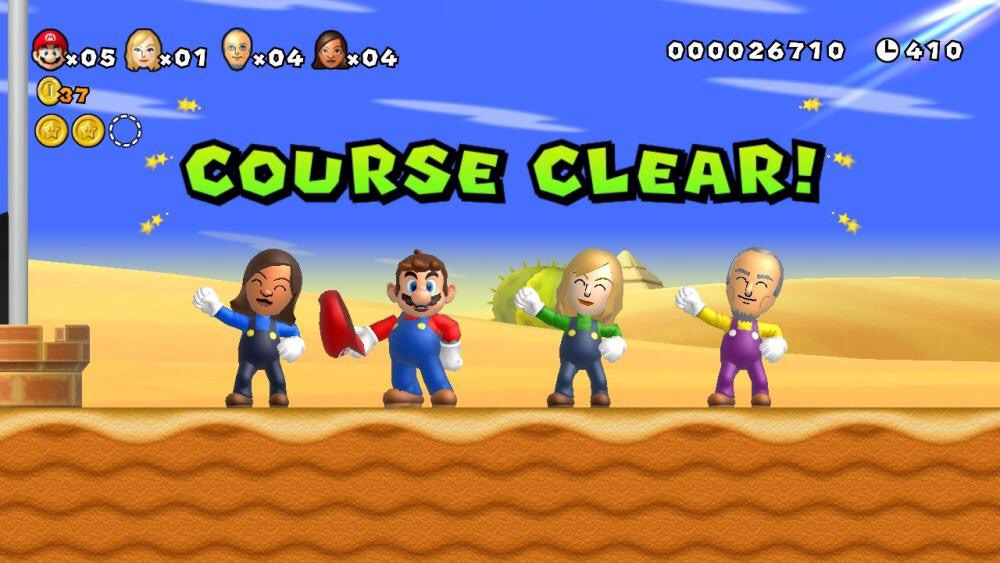
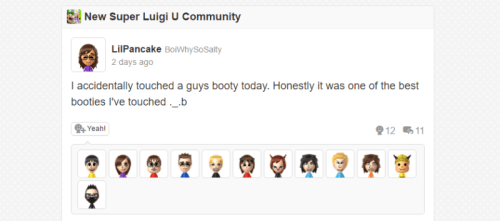
    Luigi’s Miiverse Has Become A Shitposter’s Paradise In 2016 (Kotaku UK)

    Thanks to Very Very Gaming for bringing this one to my attention last week. The normally innocuous Miiverse has something very odd happening on the New Super Luigi U page, where people seem to have gathered to post random nonsense.

    scream5

    10 VINTAGE GERMAN ATARI ADS EXPLAINED (Digitiser 2000)

    And finally, something to get your grin muscles working. “The boy on the right suspects that there is something going on between his girlfriend and his father, but lacks the strength of character to confront them directly.”


    Spiffing Reads is a regular feature where we pick out the best gaming articles of the week. If you’ve read anything interesting, please let us know in the comments.

  • Seriously. I just can’t put the damn thing down.

    There’s always just one more ridge to look over, just one more animal to scan, just one more planet to explore. It’s one of the most addictive games I’ve played in a long while.

    a6kotya

    I’ll start out with a plan in mind: say, I want to find some platinum to craft a health upgrade. But while I’m hunting for that, I come across a massive chunk of gold, so I stop to mine that. Then I’ll spot another gold chunk, so I’ll mine that too. Now I’m wondering how much gold there is in the area, so I shoot off into a cave to look for more, and before I know it I’ve spent 15 minutes just wandering the cave networks to see where they go. Then I pop out miles away from my spaceship, and happen to spot a question mark hovering over a nearby lake. So I dive down to take a look, and I find an abandoned building. But on my way back to the surface I spot some fish I’ve never seen before, so I stop to scan them. Then I realise I only need two more animals to complete the set on the planet, so I scan around for some more as I walk back to my spaceship. But my search comes up fruitless, so I decide to climb back into my spaceship and head up to a space station to sell all the gold I’ve farmed. But as I head into space I’m ambushed by space pirates, and my ship is destroyed. I respawn in the space station, and luckily I have the gold in my exosuit, so it’s not lost. While I’m selling the gold, I notice that the selling price of Dynamic Resonators is double the galactic average, so I head into the docking bay to buy up all the resonators I can from pilots who are coming to land. Then I sell them for a huge profit, and after doing this a few times, I have enough to buy a new ship. I wait around for a particularly cool-looking ship to arrive with more slots than my old one, and eventually one that looks like the Vipers from Battlestar Galactica turns up. So I buy it, and it has a more-powerful hyperdrive, and then I’m thinking about which star system to explore next…

    And in the meantime, I still haven’t got any platinum. But I’m just having far too much fun exploring to care.


    Quick Offloads are short posts when we need to get things off of our chests but don’t necessarily want to waste too many words on them. But please add your words in the comments below.

  • Just a trio of articles on Spiffing Reads this week, kicking off with a comeback from Sonic in an unlikely quarter.

    How Sonic the Hedgehog’s weirdo Twitter account could bring him back from the brink (Polygon)

    clffti5veaeyiqp
    Most corporate Twitter accounts are harmlessly banal, and the same was true of the official Sonic the Hedgehog account – until Aaron Webber took over. Now Sonic’s famed ‘attitude’ is very much in evidence, and we get plenty of cheeky digs at other games and companies, such as this zinger on the disappointing launch of Mighty No. 9: “Congrats on the launch, ! It’s better than nothing.” Yowch.

    It’s interesting to draw back the curtain on corporate social media and see the attention to detail and sheer strategy that goes into every post. Long gone are the days when a social media manager was just someone doubling up on their day job and firing off the odd tweet.

    HOW BIASED ARE GAMES JOURNALISTS? – by Mr Biffo (Digitiser 2000)

    narrow

    Answer: just as biased as everyone else. Mr Biffo has given several takes on this subject in the past, but it’s always fascinating to read his well-formed opinions. Certainly games journalists aren’t any more biased than regular journalists or film critics – but perhaps video game fans are more vocal than most. Well, some are, at least.

    Link’s Awakening: Rendering the opening cutscene (KZone)

    6-diff-honzwave-rain

    This is a fascinating look at all the coding tricks that went into making that impressive cut scene that begins The Legend of Zelda: Link’s Awakening on the Game Boy. Man, they worked that little grey box hard to pull this off. I’ll admit to getting lost in the technical details about halfway through, but I can appreciate the skill that went into this.


    Spiffing Reads is a regular feature where we pick out the best gaming articles of the week. If you’ve read anything interesting, please let us know in the comments.

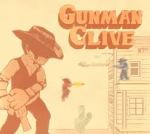
  • gunman-cliveIt’s a great name, isn’t it? I can’t think of many video-game heroes with the name Clive, although there should definitely be more. In fact, the only famous Clives I can think of are Clive Anderson and Clive James. But where are all the young Clives? ARE there any young Clives?

    And now I’m thinking about a video game starring Clive James. It would see him questing about the Outback meeting B-list celebrities and gently mocking them as he delivers satirical monologues. It would be called Clive James on Video Games in honour of his long-running ITV television show Clive James on Television, and it would feature appearances by Dame Edna Everage, Keith Floyd and Margarita Pracatan. It would be beautiful.

    clive-james-and-margarita-pracatan

    Gunman Clive is not that game. But it is beautiful nonetheless.

    It’s basically Mega Man but in the Old West, although that description doesn’t really do it justice. It starts off with the usual cowboys shooting from behind wooden crates, but quickly escalates to the point where you’re fending off bomb-dropping pelicans and giant robots. It’s charmingly bonkers.

    The game is the work of one man, Bertil Hörberg, who worked on the excellent Bionic Commando Rearmed – and we even get a cheeky nod to that game with one of the bosses. It’s pretty short – you could probably finish the whole thing in an hour – but it only costs a couple of quid, and there’s a really special character to unlock at the end.

    gunman-clive-train

    These 2D platformer-y things usually aren’t my cup of tea, but Gunman Clive just nails the controls and level design so well that it became a joy to play. Dying causes you to start again at the beginning of the level, but the levels are so short that it doesn’t cause frustration, and the difficulty curve is spot on. The art style, too, is wonderful, all sepia tones and sketchbook lines that look great in motion.

    Yet despite creating a little gem of a game, Hörberg seems to be fairly humble about his achievement. In the gameplay trailer, he describes the game as “a generic oldschool sidescroller” with “weird artsy-looking 3D graphics” and “lots of brown”.

    For the record, Bertil, I love brown. More please.

  • This week on Spiffing Reads, we start off with a mid-life crisis.

    147280387662

    Pokémon Go, mid-life crisis and me, by Ellie Gibson (Eurogamer)

    “I will be 40 next year, and I am in the midst of a mid-life crisis. How do I know this? It’s not because my idea of a party is staying in with a good Merlot and my complimentary copy of Waitrose Weekend. It’s not because I sometimes put Radio 6 Music on extra loud, in the hope my cool young neighbours will think I’m still a hep cat. And it’s not because I have multiple sexual fantasies about being trapped in a lift with the tall one out of the Making A Murderer lawyers. Although all these things are true.”

    “No, my friends, it’s much worse than that. The other day, I bought a Pokémon Go T-shirt.”

    To be fair, it IS a cool T-shirt.

    ciu2yzbog2ypu4e2zucz

    Six Novels That Could Become Great Video Games (Kotaku UK)

    If nothing else, this article has now expanded my ‘to read’ list considerably. I’d love to see a game based on the City Watch Discworld novels. And Consider Phlebas by Iain M. Banks sounds mightily intriguing.

    dreamcast-shave-advert-the-barber-pierre-santino-620x349

    After More Than a Year of Searching, Fans Have Found the Elusive Dreamcast Barber (Kotaku UK)

    Remember that old Dreamcast advert where a group of barbers compete at shaving heads in an attempt to sell the world on online gaming? Well, this guy decided to track down the guy from the ad, and ended up finding out all sorts of interesting stuff along the way…

    metroid-prime-656x369

    Metroid Prime director on making the game, Nintendo’s influence, leaving Retro (Nintendo Everything)

    This is actually a news story on a Game Informer podcast where they spoke to Mark Pacini, who was a key figure in the creation of Metroid Prime. The most interesting titbit is that Nintendo pushed for the scanning system to be included in that game, but Retro Studios were initially resistant, seeing it as more of an action game. How different it could have been…

    gell4_orig

    A TRIBUTE TO STEVE JOBS (Digitiser 2000)

    And finally, this made me chuckle far, far too much.


    Spiffing Reads is a regular feature where we pick out the best gaming articles of the week. If you’ve read anything interesting, please let us know in the comments.