• ArmchairWhat ho, chums!

    Well, what a wonderful week I’ve had. I downloaded Affordable Space Adventures for the Wii U on Saturday, and it has proved to be an instant hit in the Merriweather household, with even the normally video-game-reticent Ms. D singing its praises.

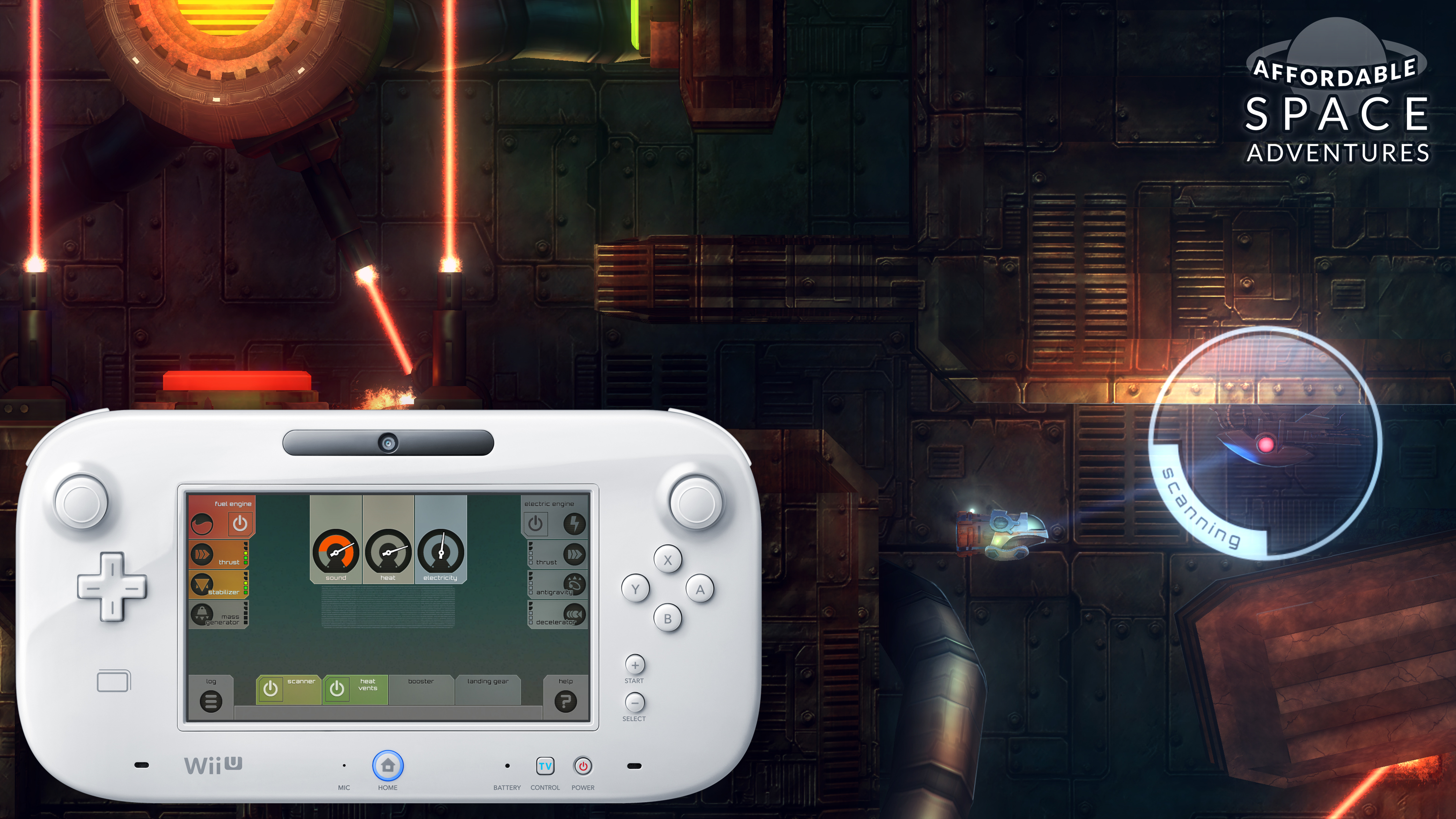
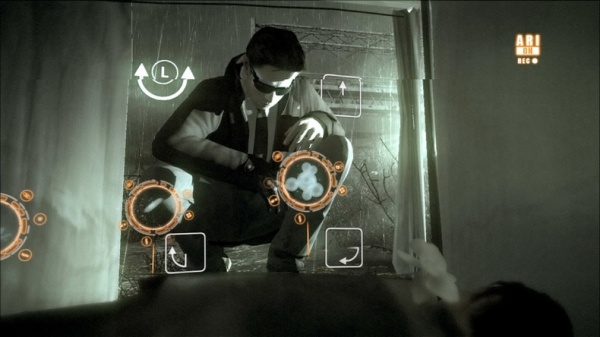
    The game is one of those rare beasts – a Wii U title that actually uses the Wii U gamepad’s capabilities. Apart from the launch games ZombiU and NintendoLand, I can’t think of a single game that has properly taken advantage of the Wii U’s unique control scheme and its opportunities for asymmetrical multiplayer, but Affordable Space Adventures does just that to great effect. The gamepad screen acts as the engineering console, an essential display that lets you divert power to various functions of the ship. This is the key to getting past enemies and obstacles – and at some points you need to switch the engine off completely to avoid detection. Steering the ship, on the other hand, is taken care of by the left stick, and the right stick is devoted to scanning. The game even requires you to pitch the gamepad to alter the angle of your ship – if it used the camera and had amiibo support as well, it would pretty much tick off all the gamepad’s functions.

    The engineer takes care of the dials on the gamepad screen, while the pilot steers the ship (on the right).
    The engineer takes care of the dials on the gamepad screen, while the pilot steers the ship (on the right).

    But the really brilliant thing about this game is the cooperative multiplayer, in which one player does steering (using a Wii remote and nunchuk), another does the scanning, and the third acts as engineer (if you’re playing with just two people, the engineer does the scanning too). Not since Trine 2 have I had so much fun romping through a game in coop – having to work as a team adds immensely to the game’s appeal, and leads to some brilliant eureka moments as a puzzle clicks into place (along with some utterly hilarious fails).

    “What are you doing? I wasn’t ready yet!”

    “TURNTHEENGINEOFF! TURNTHEENGINEOFF!”

    “Give me thrust! Give me thrust! Nooooooooo!”

    All in all, I can’t recommend this game highly enough. If you have a Wii U, get it now. And if you don’t have a Wii U, why the hell not? Seriously, there are so many unmissable games on it and it’s only, what, 200 quid? Come on.

    And speaking of affordable fun, I also downloaded Box Boy! for the 3DS at the weekend for a shade under a fiver. It’s a Game Boy-style minimalist puzzle platformer that does a wonderful job of creating a genuinely charming character from very few parts. Just a box with legs, in fact. It’s also highly addictive, and I’ve been playing it whenever I have a few minutes to spare. In fact, the short levels are perfectly suited for quick bursts of play between bus stops. The game itself isn’t particularly long, or even amazingly challenging, but I’ve loved every minute of it, and like Affordable Space Adventures, it comes highly recommended.

    Toodle pip for now!

    Box Boy - I love the Game Boy-style minimalist graphics.
    Box Boy – I love the Game Boy-style minimalist graphics.
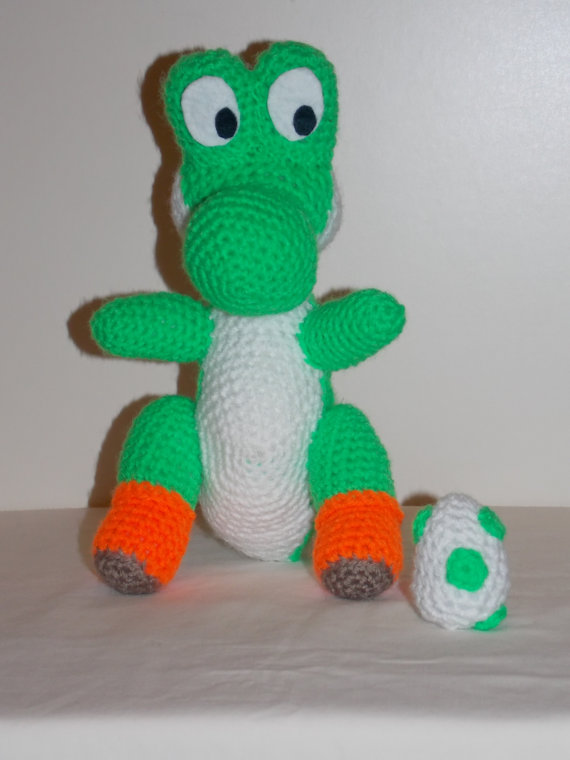
  • NOVEL_ura_0613Success! After the ups and downs of the past few days, I’ve finally managed to pre-order a Yarn Yoshi amiibo.

    I received a tip-off from this Reddit forum that GAME are taking in-store pre-orders for old yarn-face himself, even though you can’t currently pre-order through the website. So after confirming this was the case with my local GAME store, I hot-footed it into town and gleefully handed over my £5 deposit to the piercing-adorned sales clerk. He told me that the Yarn Yoshi pre-orders had been “going crazy”, so I’m glad I got in now – sounds like they might not be available for long.

    The shop assistant still didn’t have the exact price for the amiibo, but if it follows GAME’s usual pricing it will be a cheeky £14.99, a good £4 higher than the RRP. I’ve noticed that quite a few retailers have hiked up their amiibo prices in response to the demand – as my economics-expert blogging-buddy Sir Gaulian would say, that’s basic economics for you.

    I also pre-ordered Yoshi’s Woolly World from GameSeek for a bargain £25. I was originally going to pre-order the version of the game with the Yarn Yoshi amiibo included from GAME at the same time as ordering the amiibo. But seeing as the standalone game has an RRP of £44.99 (and GAME tends to stick with the RRP), my guess is that this version would cost at least £50 in store, so it will probably work out cheaper to get the amiibo and game separately.

    Getting that amiibo pre-order in has made me immensely happy. Part of me is appalled that a grown man like myself can get so excited about a fluffy toy that’s essentially for children. But then again, who cares? I’ve got a Yarn Yoshi amiibo, hurrah!

    UPDATE: Just after I posted this, pre-orders went live on GAME’s website and ShopTo – typical! Still, looks like I saved a bit of money by ordering the amiibo and game separately – as predicted, the version of Yoshi’s Woolly World including the amiibo is going for £49.99. But the amiibo on its own is a cheeky £19.99! I guess that wool don’t come cheap…

    UPDATE 2: Yarn Yoshi has arrived!

  • Playing through the original Halo again its hard to not be transported back to early in the new millenium.  It was the sort of game that made jaws drop at the time, from the way light reflected off of the shiny surfaces in a way I at least hadn’t thought possible on a console, to the sheer scale and scope of the titular Halo world, it just felt streets ahead of anything we’d seen on consoles before. Sure the Playstation 2 had been wowing us with some pretty great games, but something about Halo felt futuristic and special.  And with the controller in hand it was pretty clear that Halo was indeed Combat Evolved.

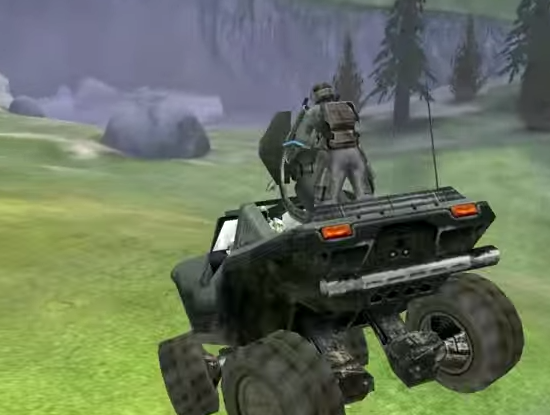
    But while the seemingly perfect weapon balance and revolutionary control scheme were game changers – world beaters even – it was something far more simple that caught my attention. Mere moments an epic battle through the Pillar of Autumn, sheer seconds after you’re forced to crash land onto the mysterious Halo, an unassuming UNSC drop ship swoops into view and with it brings one of the most powerful and symbolic pieces of Halo ‘paraphernalia’ in the series decade-plus history.  And as you approach the precious four-wheeled cargo, the isolation and rapidly fading sense of hope that the vast alien landscape evokes abates,   As you slip behind the wheel of the greatest in military hardware suddenly it all feels like you could survive.  And as the explosive power of the rapid fire mounted gun on the rear of the vehicle leaves a lasting ringing in your ears, you know you’ll survive.

    Welcome to the Warthog, Chief.  Welcome to the war.

    There is no feeling quite like the first time you slide around a natural rock formation at speed, or send yourself and your passengers flying airborne over a canyon or a rapidly running river.  The way the rather pedestrian Volkswagen Kübelwagen lookalike handles is unforgettable, with its loose suspension and all-wheel drive making it feel more world rally championship than modern warfare, and its high speed making every moment behind the wheel feel like a desperate dash to save a life.  Hooning from skirmish to skirmish in the Warthog, while your adoring comrades take aim and rip through any grunt or elite covenant soldiers that get in your way, brought with it an almost unrivalled sense of power.  The Warthog turned the trained Spartan soldier into a feared guerrilla warrior, and to me, those first moments behind the wheel were the foundation of the Master Chief I came to know over following games.

    As someone who fell off of the Halo wagon shortly after finishing the fight with Halo 3, I am pleasantly surprised by how many of my fond memories of a game that changed the way the world looked at console shooters have been proven true.  Everything from the roaring sound of the MA5 echoing through the compromised corridors of the Pillar of Autumn, to the strategic advantage on the battlefield provided for by the rather deceptively powerful covenant weapons, it all changed my expectation for what a console shooter, nay game, could and should be.  But it was the unassuming vehicle that are the basis for my fondest memories of the game, and there has been nothing in any shooter since that has quite matched the feeling of taking the battle to the convenant on all fours.  And it’s nice to know that these moments still make Halo the same special experience it was a good 14 years later.  Combat evolved, indeed.

    Halo_Warthog

    Did you have warm and fuzzy feelings taking control of the Warthog for the first time?  Or do you have a favourite video game moment?  Join the conversation in the comments below, or on Twitter using #MostAgreeableMoments.

  • Regular readers will already be familiar with my current obsession of obtaining a Yarn Yoshi amiibo. Sadly, that dream seems further away than ever this afternoon – I just learned that preorders for Yoshi’s Woolly World – including a Yarn Yoshi amiibo – went up on Zavvi’s site on Saturday and sold out almost immediately. Currently, GAME and Zavvi are the only UK websites offering the Yarn Yoshi amiibos for sale, and it appears that both have already sold out.

    It seems there are plenty of people in the UK who are just as desperate as I am to get their hands on one of these woolly wonders.

    So, I suppose the only option now is to wait for preorders to come up on another retailer, like ShopTo or Amazon, and hope they don’t sell out immediately. It’s not looking good though – apparently they went on sale on Amazon’s German site a few days ago and sold out within 15 minutes.

    15 minutes! Flippin’ ‘eck.

    So perhaps my best option is just to convince myself I never really wanted one of these adorable Yoshi amiibos anyway. I mean, I’ve already got Toad, Link, Marth and Ike, with Robin, Lucina and Ganondorf on the way – the living room is beginning to resemble a toy shop as it is.

    But then again, Toad’s looking awfully lonely over there next to the Wii U. He could really do with a woolly companion of some kind…

    I suppose I could get one of these as an alternative. It's not quite the same though.
    I suppose I could get one of these as an alternative. It’s not quite the same though.
  • TestMatchCricketGame1In case you’re not aware, cricket is a pretty big deal down here. Over the Aussie summer it takes over this rather large island nation, with every advertisement sporting crickets past and present spruiking any and every company’s products, every news bulletin seemingly topped and tailed with news of Michael Clarke’s hamstring or the latest musings on the hilarious collapse of English Cricket, and people of all ages dragging their metal stumps and Kookaburra Bats out of their sheds to have a hit of backyard cricket with the kids down the road.  It’s a wonderfully magical time of year and one of the reasons I love living in this country.

    But the even more telling sign that summer and cricket had arrived, were the distinctive voices of the men that commented the game on the telly for most of the modern era, certainly all of my lifetime.  Yesterday we sadly lost another of these cricket icons, former Australian cricket captain and leader of the Channel 9 commentary team, Richie Benaud.  Growing up, Richie Benaud was almost omnipresent throughout summer, with his rather unique voice on every television in every shop, “that’s a marvellous shot” he’d say after the batsman played a beautiful cover drive for four.  Richie was more than just a former cricketer, or the voice of summer, he was a cult icon and in many ways the embodiment of Australia’s love for sport. 

    And the country’s love affair with sport makes gods out of men and the great minds of sports broadcasting – Richie Benaud, Tony Greig, Bill Lawry, Ian Chappell – are often at front and centre of the cricket-loving public’s minds.  Sure growing up watching the sport it was the likes of Dean Jones, Allan Border, David Boon and Merv Hughes that entertained on the field and had us hooking the ball over the neighbour’s fence in the backyard.  But rest assured that when that ball was caught one-hand one-bounce by your sister or edged to the automatic wicket-keeper, the cries of impersonating Bill Lawry’s “GOT HIM” or Richie Benaud’s “Marvellous Catch” could be heard across the neighbourhood. Unless you’d caught a blinder a short leg that is, in which case you’d “pulled a Boonie“.  But the fact still remains that the voices of cricket were as much a part of the sport for most Australian kids – and adults no less – than they guys in their whites out in the middle.

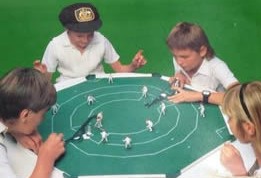
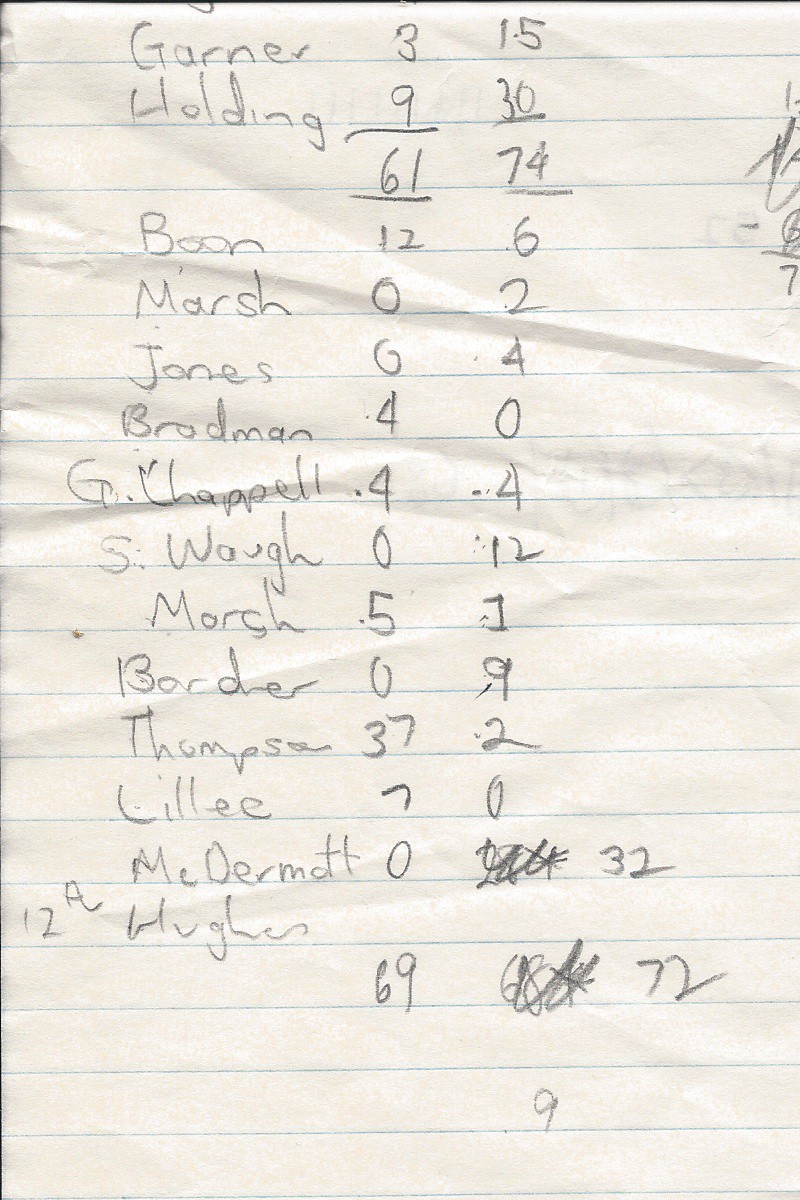
    While cricket video games have had some time in the sun – Shane Warne ’99 is still a classic – they’ve never quite clicked in the same way a simple board game by the name of Test Match.  Dubbed “the authentic all-action cricket game” on the box,  Test Match was taken very seriously in my household, and I’d hate to think house many hours were spent laying on the floor or sitting at the table ‘bowling’ a ball bearing down a ramp toward the batsman.  We’d prepare the green-felt surface with the same tender love and care Damien Hough would curating the Adelaide Oval pitch, we’d make sure the boundary was long on every end, and once the game had begun we’d carefully place our fielders in the slips in the hopes we’d catch the batsman’s outside edge.  It was a highly tense and competitive environment, with all focus concentrated on the field, hoping for the odd nick to the catcher or for the ball to knock over middle stump.  The battles of Test Match were always fierce and often long, and as frustrations on both size continued to rise, so too did the sledging.  We are Australian, after all. 20150411_150757 But the battle began even before the teams were out in the middle, even before the field was prepared, as we’d fight over which legends of the game we’d have in our teams.  Even though they were nothing more than names on a scoreboard, they represented something we’d hope would give us the competitive edge,  that somehow Shane Warne would make runs at the end of the order or Viv Richards would go on to make a double century.  A team of legends would bring us Test Match glory, we thought.  But the real fight was always over whose team Richie Benaud would captain. I pulled out my old Test Match Board game today and found pages upon pages of scoresheets that accumulated over years, each one littered with famous names from cricket past.  Joel Garner. Rodney Marsh.  Ian Chappell  Graham Gooch.  Shane Warne.  Even the current Australian coach, Darren Lehmann gets a guernsey in later years.  But the one thing most of the matches between greats of the game is that, somewhere, Richie Benaud’s name is on the scorecard.  Before every match and before every toss of the coin, there was guaranteed to be fighting over Richie.  It may have been symbolic, but to us, it meant something real.

    Scan 151010004
    This sadly was not his day

    So here’s to our great national pastime, getting out into the sun, having a hit out in the nets.  But more importantly here’s to Richie, the voice of cricket, and the most prized player in Test Match history.  What a marvellous innings.

    I highly recommend something great I read the other day about the difficulties of an Aussie expat living in Canada adjusting to life without Aussie sport.  If you’re not across cricket, I also recommend reading something I wrote a while back about how cricket isn’t baseball, because it’s really, really not.

    Scan 151010005

  • OK, so I think I’m getting a bit obsessed with obtaining a Yarn Yoshi amiibo. Tantalisingly, GAME have uploaded pictures of said amiibo, and yet there’s no option to pre-order. Have they gone already? Am I too late? If not, when do the pre-orders start? Why am I so obsessed with a woolly plastic toy?

    Because it’s awesome, that’s why.

    And I’m not alone in my thinking – just take a look at these crazed Yarn Yoshi hunters tweeting Nintendo. There’s a lot of love in the room for that woolly figurine. Not to mention a lot of crazy fan desperation.

    Now excuse me while I continue to scour the internet for clues as to when pre-orders will start.

    Yarn-Yoshi-amiibo-790x459

  • ArmchairWhat-ho, chums! Since my last missive back in January, events have continued apace. The expected arrival of Merriweather Junior is now mere weeks away, after which I expect all gaming exploits will cease, at least for a time. So in the run up to the big day I’ve been luxuriating in my precious gaming time, all too aware that my consoles will soon be entering into a period of neglect – but for the very best of reasons, of course.

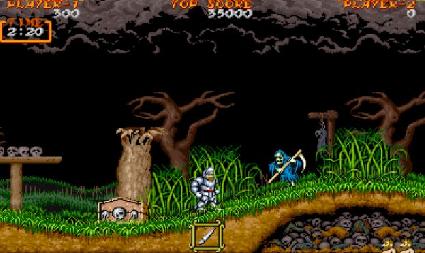
    Junior’s impending arrival isn’t the only big news – Ian of 101 Video Games That Made My Life Slightly Better fame got married, and the stag do was suitably gaming focused, featuring bouts of Mario Kart 8, Super Smash Bros., Street Fighter II and Super Ghouls and Ghosts (the latter two thanks to a tiny MegaDrive emulator that plugged into the TV). MK8 proved a big hit, but Super Smash Bros. for Wii U mostly provoked frowns and much scratching of heads as everyone playing tried desperately to work out where they were on the screen and what the hell they were doing. After only a few rounds of utter confusion we decided to give up and play Street Fighter II instead, which remains a stone cold classic after all these years. Indeed, long dormant muscle memories were reawakened as attendees – some of whom haven’t picked up a pad in years – suddenly recalled how to execute a Dragon Punch or pummel their opponent with a Spinning Pile Driver. It was gaming nostalgia at its best.

    One game that I’d rather see left in the past, however, is Super Ghouls and Ghosts. This game was pre-loaded on the MegaDrive emulator along with Street Fighter II, and it proved utterly infuriating – but we couldn’t stop playing it. We took to passing the game pad from player to player, and alternately cheering as someone got a little bit further and booing as one of the viciously unfair enemies topped our hero. But for the hours of investment, there was very, very little gain – we barely got anywhere, although my blood pressure certainly advanced a few levels. On the basis of this, I’m fairly certain I won’t enjoy Bloodborne.

    ghouls_n_ghosts_vcmm_lg
    Super Ghouls and Ghosts – utterly infuriating.

    Which reminds me, Bloodborne’s spiritual predecessor, Demon’s Souls, was on sale on the PlayStation store over the weekend for the very tasty price of £3.99. I was sorely tempted to pick it up and see what all the fuss was about, but two things made me stop: first, if it’s anywhere near as hard as Super Ghouls and Ghosts I may end up destroying furniture; and second, I’m avoiding any particularly long games for the foreseeable future. With a little one on the way, I doubt I’ll have time for many 60-hour+ RPGs, and I already have several chunky games to finish.

    But on that basis I did pick up Zone of the Enders: HD Collection. Both of the games in this collection are notoriously short and easy, which was the reason I never bought them when they originally came out for the PS2. Yet now it’s the very reason I decided to purchase them – I need games that I can quickly pick up and play in the few short hours when I’m not doing responsible adult things. Also, zoomy shooty mech games are right up my street, and I’ve wanted to play ZOE since it came out nearly 15 years ago.

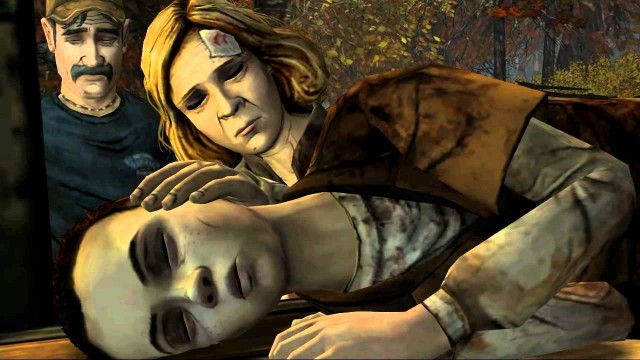
    Speaking of short games, I thoroughly enjoyed the first episode of The Wolf Among Us, and I can’t wait to play through the rest of the series. TellTale’s episodic format is perfect for time-poor gamers like me, and as an added bonus, Ms. D quite enjoys watching me play them too. I also finished season two of The Walking Dead, which was very good – if not quite as good as the first. It began well, but Ms. D and I agreed that the last couple of episodes dragged on for far longer than they should have.

    And finally, when I’ve not been playing through TellTale adventure games, I’ve been desperately trying to get to the end of Xenoblade Chronicles before Junior is born. I won’t lie to you – it’s not looking good. I’ve read it takes 60 hours to finish the main quest and around 100 hours to complete all the side quests too – currently I’m only 12 hours in, and the baby is due in less than six weeks. I’ve been thoroughly enjoying the game so far, but will I ever get to finish it? Watch this space…

    Xenoblade Chronicles is a fantastic game, but very, very long...
    Xenoblade Chronicles is a fantastic game, but very, very long…
  • I’ve recently been playing through Xenoblade Chronicles for the first time, and I’ve been thoroughly enjoying it (well, apart from a few minor niggles, but more on that in a later post). After spending so much time in the company of Shulk and his mates, I began thinking how great it would be to have a Shulk amiibo to put next to Marth, Ike and Link on the mantelpiece. But of course, actually obtaining a Shulk amiibo is easier said than done.

    The Shulk amiibo - nice if you can get it.
    The Shulk amiibo – nice if you can get it.

    Amiibo Shulk has been sold out in every single UK store for some time, and the only way to obtain it is through resellers on Amazon, eBay or similar sites, where it currently goes for around £40 or more. Importing the figure from Japan is slightly cheaper, but it still costs a lot more than the figure’s £10.99 RRP. For a while I seriously considered importing one myself, but even in my throes of mindless fandom, I still couldn’t justify the cost.

    I’m sure there are many, many people like myself who actually wouldn’t mind one or two more amiibos of their favourite characters but just can’t get hold of them for a reasonable price. And now, as people cotton on to the fact that their only chance of getting hold of certain amiibos is to preorder them before they come out, the shortages are getting worse. I preordered Robin and Lucina to complete my Fire Emblem set back in February, and it’s a good thing I did – both have been ‘sold out’ for months, even though they won’t be released until the end of April.

    If anything, the situation is even worse in America, where amiibo supplies have far, far outstripped demand. This fascinating Wired article sets out the situation over there, warning that the amiibo bubble could catastrophically burst if Nintendo doesn’t do something to deflate it, mostly by creating more stock and ensuring steady supply. This expletive-ridden Gamesradar article gives an idea of the intense frustration that amiibo collectors in the States face every time a new wave is announced.

    Yep, I'll take all of these, please. Here, just take my wallet.
    Yep, I’ll take all of these, please. Here, just take my wallet.

    And speaking of new amiibo waves, there are a couple that caught my eye in the latest Nintendo Direct, not least the utterly adorable Yarn Yoshi amiibo (made of real yarn!) and the Captain Olimar figurine (anything to do with Pikmin is a guaranteed purchase from me). But already I’m stressing out about obtaining these two figures. If previous experience is anything to go by, to stand any chance of getting them I’ll have to check the usual retail sites every day and make a pre-order as soon as possible. Yet these figures aren’t even ‘special editions’! Just thinking about it all is giving me amiibo fatigue…

    I hope Nintendo can start manufacturing these things in decent quantities, otherwise many dedicated customers – me included – are going to start giving up on collecting them. Not only that, I’d like to see some better uses for them in games – surely there must be some dedicated amiibo software around the corner? I’m guessing something like Skylanders Trap Team, where the figures are essential to the game. Although of course there’s no point in releasing something like that if the amiibos themselves are impossible to come by…

    But enough of this whinging, I’m going to finish with a pic of my newly arrived Toad amiibo. Doesn’t he look happy?

    At least Toad's happy.
    At least he can smile about all this.
  • Agent_47_Barcode

    Games that spend so much time encouraging the player to do so little are always walking that fine line between boredom and rewarding.  If you can imagine being the guy(s) and girl(s) in the team charged with designing the levels, their only brief being to “make the player stop and think”, you’ll appreciate just how difficult a task that is.  The modern player has an itchy trigger finger, is bloodthirsty, and is used to paying their way out of difficult situations.  If you’re making a stealth game, your job is to break them, to make them think, to change their habits.  And old habits die hard.

    And so we’ve seen a marked decline in the number of stealth-exclusive games sneaking their way into our libraries.

    The making of a stealth game is a fine art.  More than just games about crouching in the shadows, garrotting folk from behind, and hiding their bodies out of sight; these games are intricately designed puzzles with multiple paths through to even more solutions. Sandboxes in the true sense of the world, the best stealth games are designed to encourage the player to think about their environment carefully, plan their approach (the planning phase), and execute with precision (the execution phase).  Keeping someone in that planning phase of course, is the mark of a great game design.

    A while back I wrote about the complexity of stealth games, and said that:

    It represents a shift in what video games as a medium were expecting from their players.  Players really were expected to understand the intricacies of how the game was working on the back end in order to make the most of the experience.  How will the AI react to any given action?  How will the game’s dynamic lighting react if I shoot the light out?   What tools will the game allow me to use here?  Splinter Cell wasn’t just expecting you to play the game, it was expecting to know it inside and out.  And with that came a layer of complexity that went beyond a player having to grapple with superficial adversity of your on screen adversity or level design or even a difficult control scheme.  Rather it was a complexity that can in some instances only ever be overcome by dedication and a prerequisite level of experience in how video games expect you to think in order to solve the problems they present you with.

    But with this increase in complexity comes the design challenge of keeping the player engaged long enough to learn the game world’s rules.  In a game where the average player probably spends half their time waiting patiently with their breath held, holding the attention of the player, and harbouring the often much maligned patience through purposeful design, is the key to having them enjoy the brilliant maze the developer has designed.  Any slight lapse and the average player will dash for the door, reach for their gun, and go out in a blaze of glory.  Not that there’s anything wrong with that – many games pride themselves on the choices of approach they give players – but if you’ve designed your game around the silent type you’ve just lost your player.

    SC_Conviction

    The tricks that games use are many and varied, but almost every single one revolves around creating a world where your player wants to exist, one where being immersed in what is going on around the character is just as interesting as what happens when you hit the next checkpoint.  There has to be an imperative to survey your surroundings, there has to an impetus to stop and think, and there has to be a reason to stay there long enough to plot your next move.  I still fondly remember the first time I heard a couple of guards having informal chit chat for the first time in Splinter Cell, and how immersive that made the world, how it put a veneer of realism and personality on a game that for all intents and purposes is a set of rules and regulations over and above a realistic or enchanting world.

    So when a guard I was shadowing was mumbling to himself the key code to a door leading to a room I desperately wanted to get into, it was a pretty amazing and rewarding moment, not to mention a great positive reinforcement for how the developers intended the game to be played.  Splinter Cell was made with complex rules in mind right from the beginning, and everything the game does from then on in, is aimed at showing the player the ropes.  They’re intelligent design through and through – but the game really excels at providing both audio and visual incentive to encourage the player to sit back and learn the game’s design rather than charge head first and learn by dying.  Dark Souls Splinter Cell is not.

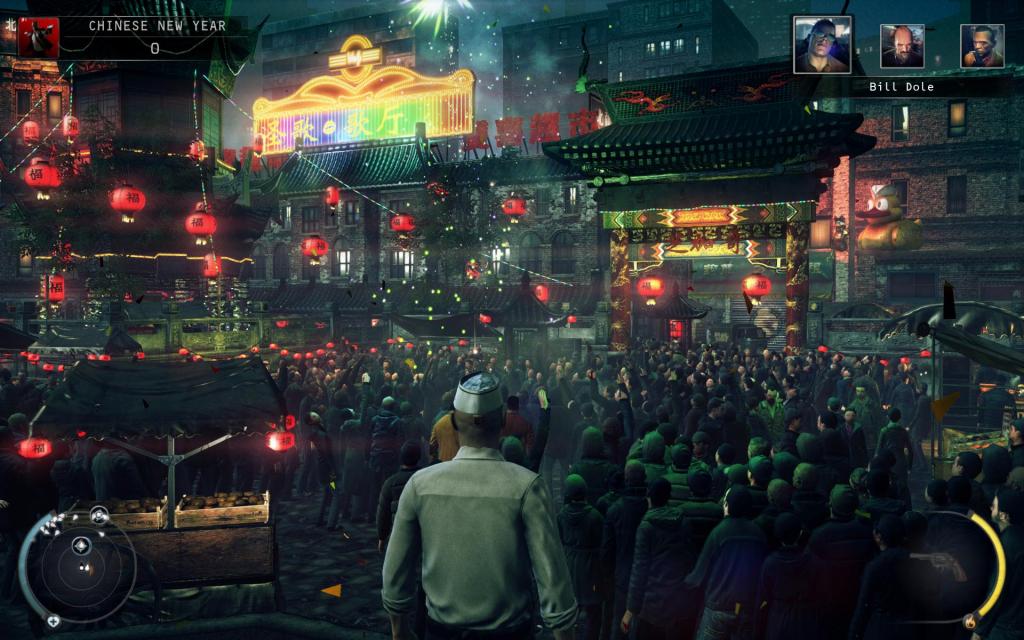
    Of course there are games that rely more heavily on hiding in plain sight, creating worlds and environments full of life and movement, where you can blend in and move freely as long as you follow the game’s rules.   The Hitman games are the best example of this, creating vibrant, populated and interesting worlds where Agent 47 can hide in plain sight, disguising himself according to the people around him and moving about – albeit restrictedly.  In the latest Hitman game, Hitman: Absolution, I’m not sure there is anyone that wasn’t sitting mouth agape upon walking into the Chinatown level, wanting to absorb every sight sound (and almost) smell of the night markets.   But while it employs a less binary approach to ‘hiding’ than Splinter Cell or similar games – where staying hidden behind cover keeps you concealed – in essence the ‘planning’ phase of the game is the same, hiding somewhere out of sight and surveying the world and your best plan of approach.  And both games rely on keeping the player effectively idle gameplay wise for long periods of time, and the creation of atmosphere to make sure their patience doesn’t waiver.

    It’s no accident that Stealth games have, since the days of the Xbox version of Splinter Cell, been at the forefront of graphics, allowing the developers to not just cast fancy lighting and shadows on walls, but to create worlds that were nothing short of visual spectacles, places that were interesting to be in.  Even when guns weren’t being fired or grown men strangled incognito.

    HitmanAbsolution_Screen

    The other important aspect of stealth game design is quarantine – areas where it is clear that remaining idle is ‘safe’ – to ensure that players aren’t caught napping between the ‘planning’ and ‘execution’ phases.  But that’s simply a matter of intelligent level design over and above anything else, and ensuring that the player knows where and when they hit one of these areas.  And for the foreseeable future, both in terms of engaging the imagination of the player, stealth games will continue to rely on this format, aided heavily by both audio and visual cues.  But what if they took a different approach to stealth?  What if the games were based on anticipation and understanding rather than observation?  In the past I wrote that:

     What if games took this same logic and applied it to a game scenario?  Stealth games at present are about watching and reacting, often in a quick and decisive manner.  But what if they were more about predicting enemy movement in relation to an environment?  What if you had the time to assess the environment carefully and then make a decision before setting things into motion?  Imagine Lemmings where they have free will, or the Incredible Machine where instead of being bound by the laws of physics you’re bound by the laws of human nature and behaviour.  It would be a paradigm shift that could potentially give the stealth game a new genre.  It would take ‘understanding a game’s rules’ to a whole new level, in much the same way stealth games have done in the past.

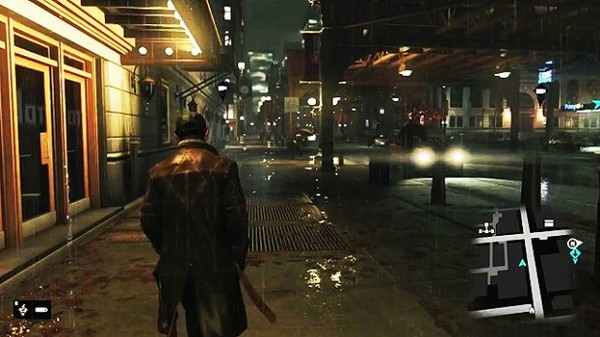
    Of course taking the predictability out of the world requires one of two things: firstly that the game’s reproduction of human behaviour is wholly realistic, or secondly, that the game provides a “way out” in the case that things go pair shape.  While the former is somewhat of a pipe dream for the moment, an increasingly large number of games have explored the latter, with great success.  Watch_Dogs for example is from the school of thought that has stealth as an option rather than a pre-requisite, encouraging players to think their way through scenarios if possible, but provide enough firepower and agility to escape if discovered.  It is games like this, and perhaps to a lesser extent The Last of Us which relies more traditionally on stealth, that are the modern evolution of a genre that has been outgrown by its audience.  It perhaps isn’t as nuanced, but the game design challenges remain just as prevalent, and perhaps steeper than in the traditional representation of the genre.  Convincing players to take up the option of sticking to the shadows over out and out aggression is a far steeper challenge than teaching them that if they don’t they’ll die.  Because let’s face it, shooting someone in the head is the new equivalent of running to the right of the screen.

    Stealth games have changed, but in a lot of ways the design of these worlds just as with early more ‘orthodox’ representations of the genre, are finely tuned eco systems.  From the moment you step into the world created by any one of these games, you’re playing by the rules set out by the developer.  And while the rules and the stakes have changed, the need to convey those rules to the player is just as important, and is the difference between how they’ll experience the game you’ve set out for them.  Sneaking may not be as in-vogue as it once was, but with smart game and level design, it can be just as rewarding as it was a decade ago.  Now for that next step

    Watch_Dogs_Screen

  • For some time now, the UK music chart has combined numbers for streaming with physical and digital sales. The UK game chart, on the other hand, only counts physical sales, and as a consequence it bears little resemblance to the reality of what games are actually the most popular.

    Chart1_V21
    Courtesy of MCV

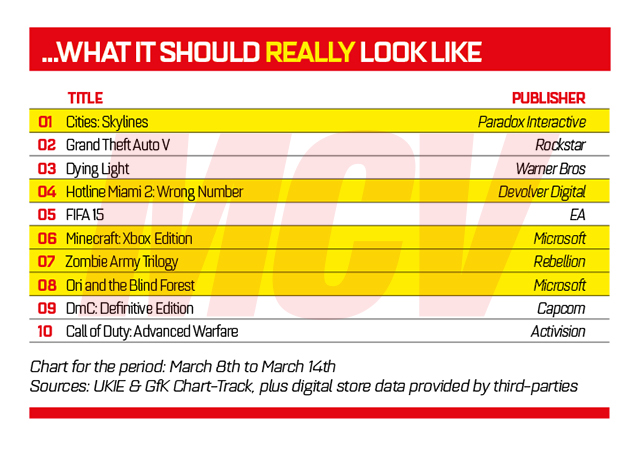
    This week, trade publication MCV attempted to cobble together their own chart based on a combination of digital sales and physical sales, and the difference between their chart and the ‘official’ one was astounding. For a start, Cities: Skylines was number one and Hotline Miami 2 was number four, yet neither game appeared on the official chart at all.

    MCV says that attempts have been made to create a combined digital and physical chart before, but they have ultimately failed – mostly due to a reluctance from publishers to share data. But there seems little point in continuing with the current charts when they’re so wildly inaccurate. In fact, Kotaku UK have taken a stand and vowed not to report the official charts because, in their words, they’re ‘bullshit’.

    I agree: and I’d rather live in a world where Hotline Miami 2 beats sales of FIFA and Call of Duty. Which makes me wonder: how have other recent indie games fared against the so-called ‘big’ gaming franchises?

    Courtesy of MCV
    Courtesy of MCV
  • Little Inferno launched alongside the Wii U, but I only picked it up recently in a sale – and what a fantastic little game it is. It’s the sort of thing I imagine Tim Burton would make if he ever turned his attention from films to video games.

    Little Inferno

    Conceptually, it’s defiantly odd. You’re presented with a fireplace – the Little Inferno Entertainment System – and you can order all sorts of bizarre things to throw into it and burn. Burning things gives you money – hey, why not? – which you then use to buy more things to throw into the flames.

    The thing that glues it all together is the intensely weird narrative, which involves the unsettling Tomorrow Corporation, a weatherman in a balloon, and the exceedingly creepy girl next door who sends you more and more bizarre messages. Very little is revealed about the background of the game world or why you’re sat there throwing things into a fire (along with everyone else in the world, it seems), which is all for the good – it’s left to your imagination to paint in the blanks.

    The things you’re given to burn are wonderfully strange. They include a ‘sleeping idol’ that emits a baleful, low-pitched drone when you burn it; a clutch of spider eggs; a blowfish; menopause pills; and even the moon, which has its own gravitational field. It’s all very weird.

    There are plenty of digs at consumer culture here, along with some knowing nods about the addictiveness of video games (“I just can’t stop staring into the fire…”), but for the most part it’s willfully obtuse, which is fine by me. Little Inferno is very short, but it’s also highly entertaining and pretty much unique – and most definitely worth seeking out if you’re a Wii U owner.

    Little Inferno screenshot

  • Like most kids that grew up in Australia in the 80’s and 90’s, I was a very active kid. Sure, video games were there and I liked them, but you were more likely to find me kicking the footy around or having a knock or two of backyard cricket before dinner, than you were to find me sitting in front of the telly transfixed on whatever game was gripping the neighbourhood at the time.  I loved my Game Boy, I loved my Amiga 500, and later on I loved my Playstation, but there’s always been a niggling little something in the back of my mind that made me think I could be spending my time more wisely, like time gaming was time wasted.

    And that continued into my teenage years, where again games were there, but they were never at front and centre.  While there were games that absolutely captured me, I made a conscious decision that they wouldn’t be what defined me, that it was the poorer cousin to the other things that made up who I was.  Sure, there were the moments where we’d all get together and huddle around the old-arse telly, passing ’round the old Xbox Duke controller where we’d take turns striking each other down with light sabres Jedi Knight style, engaging in the great Australian pastime of sledging while doing so.  But that was usually when the first signs of dehydration were starting to hit after hours upon hours of cricket at the school oval across the road in 40 degree weather.  Games were almost always an afterthought, and quite frankly, we’d all much rather have been bowling the odd bouncer at each other’s heads or watching the ball sail back over the bowler, than engaging in a venerable frag-fest.

    The fact is, while I’ve always played video games, I have always held a level of contempt toward the people that play them.  While I have a perhaps inordinate level of respect for professional sportsmen and women who dedicate their lives to being the best in the nation, I find those that do the same in pursuit of being the best at ‘e-sports’ misguided.  In my country sport is almost a cultural lynchpin, it is the thing that holds so much of our social fabric together, bringing people together in a way nothing else can.  And the art of the analysis that follows is practically worthy of a nobel prize.  While I sit here internally praising the greatest minds of the cricket world – the way Shane Warne analyses the game of cricket in such minute detail – I am simultaneously thinking about just how much of the analysis of the video game industry is either (1) personal selfishness being passed off as financial analysis, or (2) pointless ranting in the service of legitimising the medium.   The internet has perhaps exacerbated my personal contempt for video game culture and is something that is increasingly impacting both how I play video games and how I choose to write about them.  But really it’s this pervasive negativity about everything that is making me disengage from the internet altogether.

    So where does that leave me?  Well it leaves me in a position where I’m finding it increasingly more difficult to care about the video game industry.  It leaves me in a position where I’m starting to disengage from any semblance of social media.  But most importantly it’s taking away my drive to play video games the way I used to – and perhaps even more importantly driving me away from wanting to write about them.  And that’s a hard thing to come to grips with. So as the summer of cricket in Australia comes to an end, and the Super Rugby season hits full swing, I find myself thinking about where video games fit in to it all.  Whether they’re a main attraction or just a sideshow, a consolation prize, something to pass the hours during the odd month there is no sport on in the country.  And then and only then I’ll be able to answer one very simple question. Is this the end?

    10372177_10152891610832416_342564314534306846_n
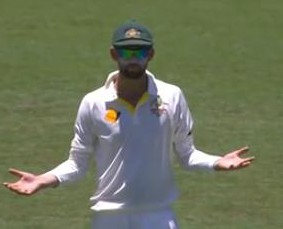
    What the f**k, mate?
  • I just read on Eurogamer that Borderlands: The Handsome Collection is getting a 16 GB day one patch on Xbox One.

    16 GB.

    That’s actually bigger than the hard drive on my Xbox 360 (that’s right, I never upgraded, and somehow I’ve managed to make it this far through judicious deleting and a reliance on physical media).

    borderlands

    It’s not much better on PS4, where the day one patch is 8.3 GB. But the astonishing thing is that this game isn’t a brand-new entry in a mega franchise that the publishers are desperately pushing to get out for Christmas. It’s a re-release of Borderlands 2 and Borderlands: The Pre-Sequel, the latter of which came out first in October 2014. So why couldn’t this 16 GB of data be included on the game disc?

    The publishers say that the main reason is that it’s to include the Claptastic Voyage DLC, which came out too recently to be included on the disc. But they also say that the patch addresses “various bugs” and they “strongly recommend” that all players download it.

    So why not just delay the game by a week or two, giving the devs time to add this “essential” patch to the game itself, rather than force players to sit through a lengthy download process when they attempt to play the game? 16 GB will easily take a couple of hours to download for most people, and could even take all night for some people with slow internet connections. And let’s not forget those unlucky few who have download limits on their internet supply, for whom this patch could end up costing a pretty penny.

    Why inflict this annoyance on your customers? Is it so important to meet the Easter deadline? Or is the reason more coldly financial – was this game rushed out to be released before the end of the tax year in April, and therefore bolster the publisher’s profit margin for 2014/15?

    There’s been a worrying trend for bigger and bigger day one patches recently. Patches are a boon in terms of providing the ability to fix bugs that creep through to the finished version, but increasingly they’re used as an excuse to release games in an unfinished state. And in the case of Borderlands: The Handsome Collection, we’re not even talking about a new game.

    I’m tired of waiting for an enormous patch to download whenever I play a new game – it’s time that publishers started thinking of their customers more than their profit margins.

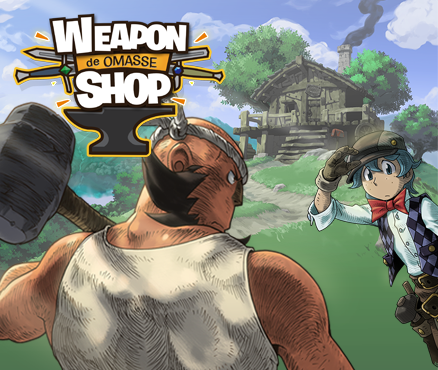
  • TM_3DSDS_WeaponShopDeOmasseI picked up Weapon Shop de Omasse for a pittance in a Nintendo eShop sale a few months back, and I’ve dipped into it a few times over the past few months. It’s the perfect example of a game with a winning idea that’s let down by poor execution.

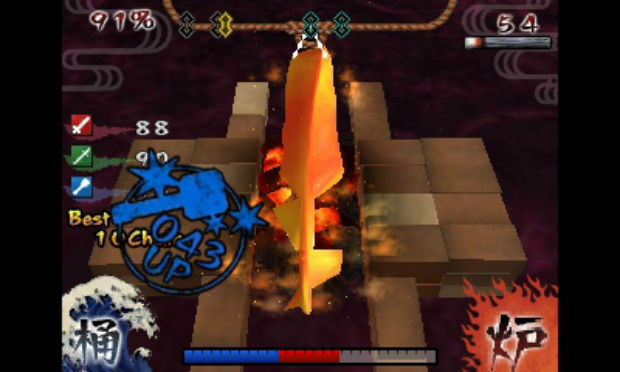
    The set up is that you’re an apprentice in a fantasy weapon shop, and it’s your job to supply would-be adventurers with the right swords, axes and cudgels for the job. You forge the weapons through a rhythm-action mini game, and the more accurately you time your hits, the more powerful the weapon, and thus the greater the chance that your customers will be successful in their quests.

    It’s a neat twist on the old RPG formula, and my initial experience with the game was great, but it quickly gets ludicrously repetitive. New weapons are introduced periodically, but the way you create them is the same, and – most frustratingly – the actual forging minigame feels annoyingly imprecise. It seemed almost random as to whether the weapon would come out ‘dull’ or a ‘masterpiece’. There’s also little room for emerging complexity – new metals and ores are introduced, but they don’t seem to have any impact on the game, and you can safely ignore them with no effect on the gameplay.

    One thing I did like was the slightly naff humour of the game. The game was created by Japanese comedian Yoshiyuki Hirai, and with its laughter soundtrack and regular outbreaks of applause and boos, the game felt like one of those ubiquitous Japanese panel shows, where guests pop on, eat something ludicrous or watch an amusing video and then engage in asinine banter. Despite having only the faintest grasp of Japanese, I used to love watching these shows when I lived in Japan – perhaps because they were so different to the TV I grew up on. So if nothing else, the game reminded me of some happy times back in Nippon.

    However, despite its best attempts at humour, Weapon Shop de Omasse quickly became unforgivably dull after the first few hours. I stuck with it in the hope that the ending might offer an amusing conclusion, but if anything the game gets worse as it goes along, and the ending is horribly disappointing. Rather than redeem the game, it made me question why I’d bothered to stick with it.

    ES2-620x

  • WilametteThe moment you step into the corridor that leads into the vast and open plaza that is the setting for Dead Rising, you are in Willamette Parkview Mall.  From the lazy Sunday afternoon muzak that plays across the loud speakers, the way the light pours in through the large pane glass windows onto the expensive but daggy patterned floor tiles, to even the more simple of things like the way the virtual mall is designed, it all perfectly depicts a place we’ve all been to at some point in our lives.  It isn’t a place designed around a game premise, it is a place that just happens to be a perfect place for a game premise. You see Dead Rising’s developers created, or perhaps recreated, the perfect real life environment.  Put the zombies aside for a moment, and if you can briefly put aside shoving a shower head in a zombies head and run blood straight from their brain, and the mall feels like a living a breathing public space.

    From the outset the game’s artists have created even the smallest details in painstaking detail.  From the kitsch logo designs of the chain stores scattered around the outside of a cluttered food court that at capacity wouldn’t be inviting enough to spend any time in over and above how long it takes to scoff down your meal, to the lairy turquoise and electric blue carpet and mock film advertisements that adorn the walls in the Colby’s Movieland cinema, Willamette Parkview Mall is like any other you’d find scattered around the suburbs of most western countries. It’s so real you can almost hear the parents yelling after their annoying children and the loud teenagers engaging in their post-pubescent mall-based mating rituals. SeafoodDR But as someone that worked part time in a supermarket while I was at University, it was Seon’s Food and Stuff located in the still under construction North Plaza, that really grabbed me and tickled my nostalgic fancy.  From the kind of cool but still a bit ‘by committee’ decor and discombobulating layout of the store, to the ridiculously energy inefficient spread of the dairy produce areas, it had all the hallmarks of your modern day one-stop shop supermarket that made it feel almost real.  Need MEATS or SEAFOOD?  Well look no further, Seon’s got you covered.  If you can’t find what your after, our friendly manager Steven Chapman will be able to assist you, to make sure you go away a happy customer.  When he’s not trying to kill your with an armed trolley, that is.  I did say almost real.

    Seldom does a game come along where I feel like I ‘know’ its world inside and out, where I’m not constantly looking over a mini map, or even worse entering a menu to find out where I need to go. Even Dead Rising’s sequels never quite gave me that same level of familiarity, and although I came to love both Fortune City and Los Perdidos, they never quite matched how well I came to know that bustling shopping mall in Colorado.  When Otis said there was a man in North Plaza, I knew exactly where he meant.  When he told me there was a bloke that needed rescuing in Al Fresca Plaza I didn’t even need to stop at the information desk and ask for directions.

    It’s a rare thing when a game accurately represents the world around you and accurately captures those minor details you often take no notice of in the real world.  But it’s quite another when the game makes you feel like you’re somewhere you know like the back of your hand.  Dead Rising does both, and if it wasn’t for the zombie apocalypse taking place in the halls and plazas of Willamette Parkview Mall, I’d swear it was located somewhere close to my childhood home in suburban Adelaide.

    Have a favourite place in a video game?  One that you spent so much time in it began to feel like home? Tell us in the comments. Seon'sFoodandStuff

  • The big gaming news this week was that Nintendo are going to start making games for smartphones in coordination with the mobile games company DeNA. Speculation has been rife, and many have been pointing to DeNA’s reliance on free-to-play games as a worrying sign of things to come. Want to play as Super Mario? Pay $5 for a super mushroom or $15 for a pack of five – that kind of thing.

    Image courtesy of Kotaku
    Image courtesy of Kotaku

    I can’t really blame Nintendo for moving into the smartphone market – analysts (and Nintendo’s shareholders too, I expect) have been all but demanding that Nintendo makes a foray into this potentially lucrative market, especially as sales of the Wii U have been relatively lacklustre. Particularly in Japan, there’s been a sharp move away from console gaming towards mobile gaming, so it makes sense for Nintendo to move into this area.

    Nintendo has said that it sees its mobile games as complementing its console titles: the mobile games will be new, standalone titles that will presumably be expected to channel users towards the company’s own-brand consoles, or at least raise awareness of its IP, like Mario and Zelda. So in theory us loyal Wii U and 3DS owners have nothing to fear – we’ll still be getting the usual, brilliant games, and we can safely ignore any watered-down mobile offerings that appear on mobile phones.

    In theory, anyway. Of course, there was the recent debut of the free-to-play game Pokemon Shuffle on 3DS, which could indicate that Nintendo sees free to play as the way forward – or at least as an important part of its strategy – on its own consoles as well as on mobile. It’s not the first free to play 3DS game that Nintendo has made (Steel Divers: Sub Wars came out a while back), but it appears to be the most successful – it’s already been downloaded over a million times.

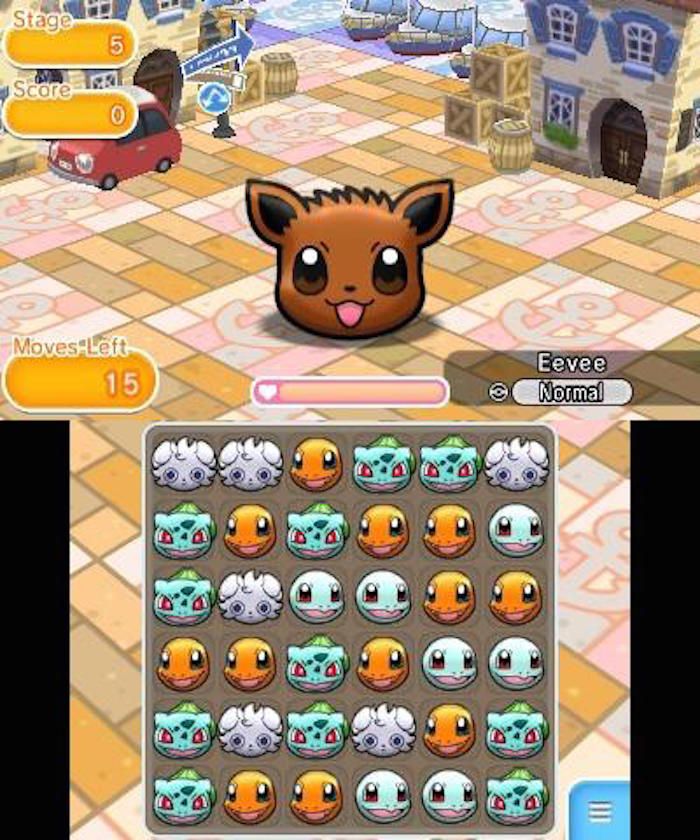
    I’ve been diving into Pokemon Shuffle on and off over the past couple of weeks, and overall it left me a little deflated. It’s actually a fun little game – the presentation is excellent, and there’s room for a bit of strategy in the match-three gameplay, plus the music is fantastic – but it showcases the worst model of free to play, where the user is constantly nagged to spend money. Each level costs a ‘heart’ to play, and each heart takes half an hour to recharge. Use all five hearts and you’ll be asked whether you want to pay to get another one and continue playing. There are two problems with this. One, it’s just so damned annoying to have your play session interrupted by someone demanding money, and it ruins an otherwise pleasurable experience. And two, it assumes that the user is an idiot. Why on earth would I want to pay real money for something that I could get for free by waiting half an hour?

    Pokemon Shuffle - Ready Wallet, Player One.
    Pokemon Shuffle – Ready Wallet, Player One.

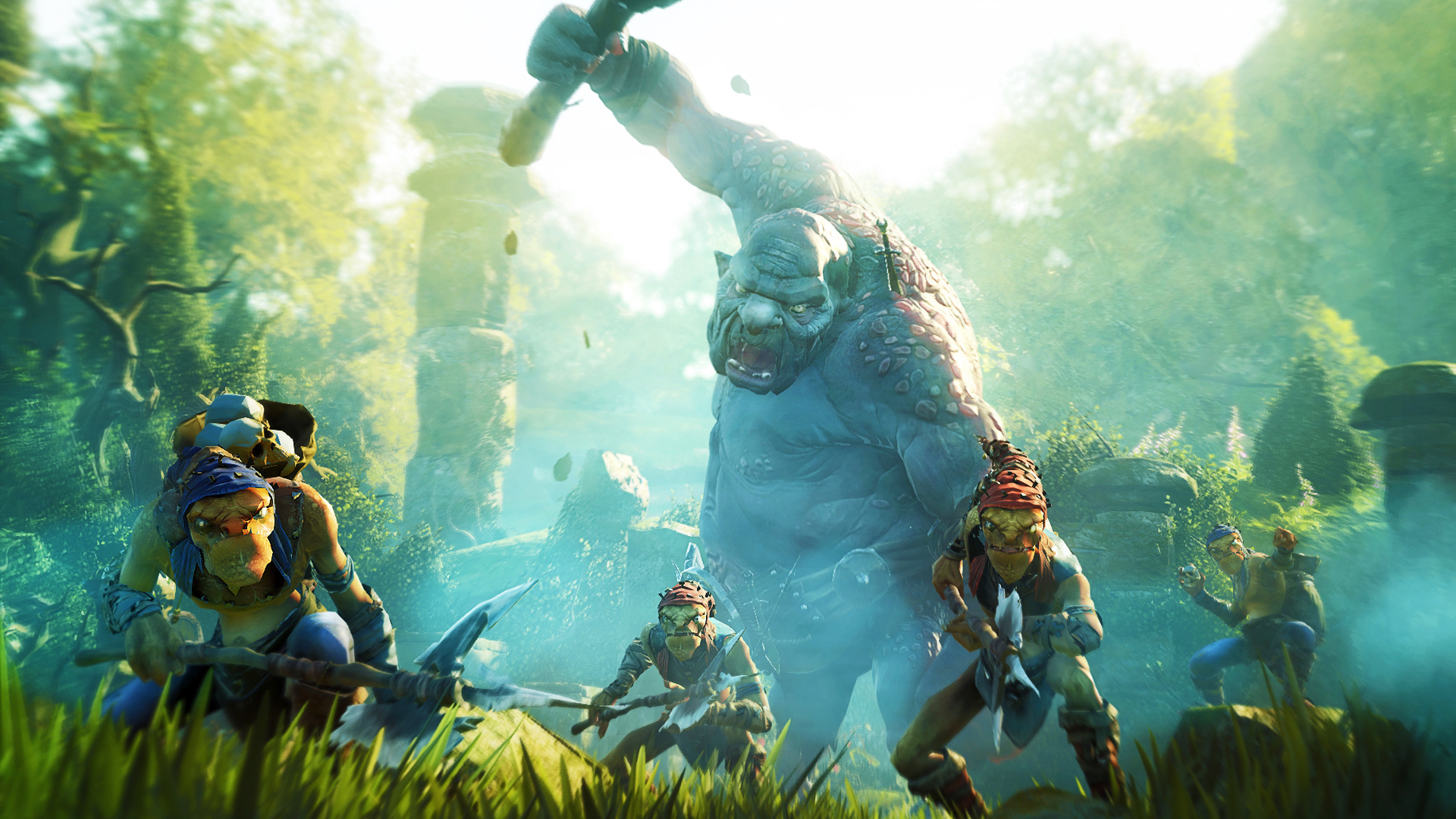
    I’m not against free to play when it’s done well, but I don’t particularly like f2p games that are both annoying and assume I’m stupid. Lionhead’s upcoming Fable Legends gives a good example of how f2p should be done: it’s completely free to play, but if there’s a particular character or costume you like, you can pay to keep that character or costume permanently, otherwise they are rotated every month. It’s a fantastic idea: the user feels like they’re actually getting something tangible for their money rather than just time or expendable items. Buying coins or hearts in Pokemon Shuffle, on the other hand, feels like throwing money down a well.

    I’m hoping that Nintendo’s new mobile games follow the example of Fable Legends, although judging by Pokemon Shuffle, there’s a good chance they’ll follow the ‘bad’ model of free to play. This certainly won’t hurt Nintendo in a financial sense, but it might tarnish their good reputation – a reputation that was on a high at the end of last year thanks to a slew of rock-solid games that launched with zero online issues, unlike their competitors. As we know, reputations are hard to forge, but easy to lose.

    Still, we don’t know anything for sure just yet: Nintendo might not even go with free to play on their mobile titles, or they might use a very fair free to play system. But if they go down the ‘bad’ free to play route, expect plenty of articles like this one, where angry parents lambast Nintendo for ‘allowing’ their kids to spend X thousands of pounds on ‘free’ mobile games.

    Here’s hoping that Pokemon Shuffle was just a one-off experiment.

    Fable Legends gives an idea of how f2p should be done.
    Fable Legends gives an idea of how f2p should be done.
  • Another of my articles for Kotaku UK went up over the weekend – The Dungeons and Dragons Session that Became a Real-Life Phenomenon. A few people have been complaining about the ‘click-baity’ title – in my defence I should say that my original title was “The DnD session that became a Japanese phenomenon”, but one of the eds at Kotaku must have changed it. It could have been worse of course – as Luke Young points out in the comments, the properly click-baity title would have been: “One group of friends sat down to play Dungeons and Dragons, you wouldn’t believe what happened next!”

    Anyway, controversial title aside, I was pleased with how the article turned out. It was fairly tricky to write seeing as most of the info available was in Japanese, with just the odd English site here and there. Huge thanks goes out to Jessica Vincent of Eiyuu Kishi Den, who gave me some invaluable information about the Lodoss War role-playing scene.

    If you’re interested in reading some of the other articles I’ve written for Kotaku UK and Eurogamer, check out my gaming portfolio: http://lewispackwood.com/gaming/

    Deedlit-the-elf

  • This post contains major spoilers for Telltale Games’ The Walking Dead: Season 1.

    Episode 3 PalinDVDcoverof Michael Palin’s seminal travel adventure series, Around the World in 80 Days, makes for some of the most compelling television ever put to air.  In his bid to follow in Phileas Fogg’s footsteps, as told in the Jules Verne literary classic of the same name, he finds himself crossing the Black Sea on a rickety old dhow: sleeping on the deck, shitting off the stern, and eating ‘freshly’ cooked rice ‘delights’ from a communal bowl with his hands.  Sure sounds like an adventure to me.

    It was the people he met though, that made it such a brilliant piece of television, and an utterly memorable 40 minutes of human interest.  If there was ever any doubt as to Michael Palin’s personality, his presence, his humility, just watching the way he interacts with the humble and the impoverished will put that doubt the rest.  The way he bonds with these people, learns from them and teaches them, crossing cultural boundaries is what sticks in the memory.  And it’s these connections he builds over the course of less than an hour of television that sticks with you long after his journey is over and the credits role.  Conversation is an art, and an art that can bridge any spurious notion of nationality, gender, or religion.  And Around the World in 80 Days is conversation at its very best.

    What does this have to do with video games?  Bear with me.

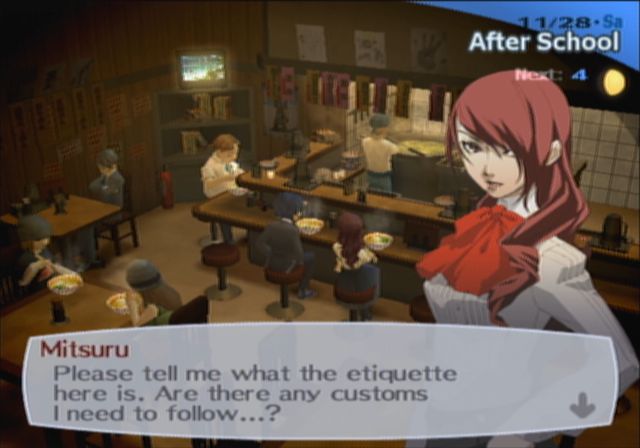
    I can think of only a handful over the last few generations, that have really managed to build in the idea of tangible relationships.  The first was Persona 3, which managed to juxtapose the fantastical ‘world saving’ premise, with the mundane of the real world.  A game where building up relationships – often through simple acts like sharing a bowl of ramen- weren’t only interesting but were integral parts of the game.  It was character building at its very best, and it was through the art of conversation – often on everyday parts of life – that you really were able to build very personal relationships with these people.
    Persona3

    But the second, and this is where it gets really interesting, is the recent XCOM: Enemy Unknown where character building is right at the heart of the game’s mechanics.  But it’s not through dialogue, or through scripted conversations, that Firaxis build character connection, rather its through the time spent building the traits and skills of these characters.  The first time you lose a character you’ve had with you since the beginning is heartbreaking, and almost as if in the movies, a montage of all of his or her triumphs run through your mind.  It’s character building at its most simplistic, as their level and rank reflect your relationship with them, but they’re an individual with a name and a history and that’s enough to form ‘real’ bonds.

    And then of course there’s Mass Effect and The Last of Us – but I probably don’t need to go there.

    Games have improved in their storytelling, this there is absolutely no doubt about.  You just have to look at Lucius’ recent piece on Heavy Rain to see that. But when was the last time a game felt more about the people you met along the way, perhaps even bonded with, more than it was the gameplay or the destination?  While I wrote a scathing assessment of Telltale Games’ adventure game efforts recently, I have to give them credit for putting the characters front and centre, often at the expense of any cohesive journey or direction.  When it works, it absolutely works, with Episode 3 of The Walking Dead Season 1 being a masterclass in killing off key characters.  But when it doesn’t, it feels like it is trying to build players’ emotional connections with characters, so that when the inevitable downfall comes it pulls at the heart strings.  Killing a kid was one thing, and at your own hand at that, but killing off characters does not in itself make for emotional connections or strong characters.  Fool me once, Telltale Games…

    DuckTTGWalkingDead

    And I’m not sure television is much better.  Look at Game of Thrones, a television show (and books if you’re that way inclined) that doesn’t pull its punches when it comes to putting characters in uneasy situations, and having them share in journeys across the great land of Westeros.  There’s the guy that gets his head cut off, the guy that gets his bollocks removed, oh and the guy that falls down a mountain.  Did I mention that guy that pushes that woman into the hole in the mountain?  While Game of Thrones may have a plethora of complex characters, full of political intrigue and rambunctious backstory, I couldn’t tell you any of their names.  So while they may be fleshed out to the nth degree, there’s never really any chance to feel connected to these people, and so in the event of misfortune my most emotive response is usually “well that’s unfortunate”.  Not sad.  Not heartbreaking.  Not even immoral.  Unfortunate.  People dying is sad, but like anything else, it is all too easy to become desensitised to tragedy.  And when you don’t carry any agency in the outcomes on screen one way or another, when the people are so despicable and incomprehensible in their motives, it is quite simply hard to give a rat’s.

    But it’s not just games.  It’s a broader problem with pop culture mediums, and one that has me losing rapid interest in most of them, in favour of more personal stories told in books or documentaries.  Watching Michael Palin’s documentary series now, they all have on thing in common, and that they convey something very human.  Sure, they purport to be great adventures, great journeys, great travels across the world, but what they really are are tales of human interest.  It’s about the people he meets – the people travelling on roof of the train in Africa in Pole to Pole or the blind man that give him a close shave in  Mumbai – and the trip from point A to point B is merely a device to tell these tales.  Telltale Games gets this, and while often falls a bit short in the personality department, understands the importance of ‘people’ over ‘place’ or ‘premise’.  But across the industry the human interest story is covered up by blood and smoke and the explosions and weaponry tend to take centre stage, as the games’ heroes often go from hopeless to hero, and rise from the ashes to save the world.  Some of that is great, after all, we all love a spectacle.  Sometimes though, just sometimes, it is nice to stop and have a chat.  Get to know the people around you, because it is these stories that are the heartwarming stories of triumph or heartbreak that will endure long after the war is won.

    After all, it is the stories of Anne Frank and the Oscar Schindler that have touched more people in the years after World War II, than a story about the tanks rolling across the Western front ever will.  In the same way, bringing it back to Around the World in 80 Days, it is Michael Palin’s ability to connect with people from every walk of life that makes it timeless television coming up on 30 years later.  Video games have come a long way, both in the portrayal of characters, and building player connection with them.  But it’s got a long way to go, and like other mediums, writers of narrative need to stop relying on shock and awe to try and build connection with the people on screen.  Because as humans, it’s the simple things that allow us to connect with one another, rather than the big sweeping narratives that permeate through a majority of the games we play.  The conversations we have with one another, bonding over the things we all share as part of the same greater race, is the greatest part of any story in any medium.  And I’m convinced that the first game to truly nail this, will perhaps be the greatest piece of interactive entertainment ever made.

    This isn’t the first time I’ve written about the importance of characters and conversation.  But have I missed any games that get character building right?  Am I right off the mark?  Is Game of Thrones the brilliant piece of literary fiction everyone seems to think it is?  Let me know in the comments!

  • We’ve known for a long time that gaming is no longer the preserve of sweaty, bedroom-bound teenage males (if indeed it ever was). But I was intrigued to read this article on Kotaku UK about just how much the gaming demographic has changed over the years.

    This was probably the most interesting part for me:

    The gender split is pretty equal no matter where you look. On handheld consoles, the split is male 55%, female 45%. On console, it’s 60% male and 40% female. On mobile it’s 55% female 45% male. Even when you split gamers out into “core” and “casual” based on money and time spent on games, whether on console or mobile, the gender split remains pretty close – a slightly greater percentage of the most casual players are women, and a slightly greater percentage of the most “core” players are men.

    Although it’s been common knowledge for quite some time that at least half of the people who play games these days are women, the way games are represented in marketing tends to be very male-oriented. For example, I don’t think that the advertisers of Call of Duty: Advanced Warfare had a female audience in mind when they crowbarred Emily Ratajkowski into this advert for apparently no reason whatsoever:

    Then again, perhaps you could argue that Call of Duty is predominantly aimed at males. Sadly there are no statistics in the article to back up or refute that particular generalization, but it does point out that women list ‘Action’ and ‘Shooter’ games as their second and third favourite genres, so it seems fair to assume that a great many of CoD players are women.

    One commenter notes that he has “never heard” a woman’s voice while playing Destiny online, and suggests that it might be because women might feel uncomfortable with pressure and rudeness from males in online games. ‘CG’ responds to this comment:

    As a female gamer … I avoid online gaming, because I rarely get a positive experience. I think there are probably a few people like me out there, who are hard to find because we don’t speak up.

    So perhaps there are far more women playing first person shooters than the marketers think, it’s just they choose to play offline. I certainly tend to avoid the general horrendousness of online gaming, and I’m a man. (Monster Hunter is an exception – everyone who plays Monster Hunter is utterly lovely.)

    A typical line dancing scene in Monster Hunter.
    A typical line dancing scene in Monster Hunter.

    It’s heartening to see that the gender divide has shrunk so dramatically over the years – now it’s time for the world, and games marketers and designers in particular, to catch up with reality. I’ve moaned at length before on how women get a raw deal in games, thanks to a lack of female lead characters and a shockingly low number of female developers. Hopefully that will start to change in the same way as the gaming demographic has shifted.

    Finally, it was also interesting to note that the average age of gamers is now 31. As a consequence, many more games these days seem to be aimed at the more mature market, and this has left a yawning gap in the market for games aimed at 9- to-15-year-olds. Almost all of the big franchises, such as Assassin’s Creed and Tomb Raider, have at least a 15 rating, so there’s a big gap between ‘kiddie’ games and ‘adult’ games that is up for grabs, as noted in this fascinating article.

    Tomb Raider for Xbox 360 was an 18 - for camparison, the original game was rated 13+.
    Tomb Raider for Xbox 360 was an 18 – for comparison, the original game was rated 13+.
  • I have finished three JRPGs in my life.  The first, Final Fantasy VIII way back in the late nineties, blew me away.  It was cinematic, it was touching, it was a hell of a lot of fun.  Its 2000 sequel was the second, which raised the bar by presenting what I still to this day is one of the best ensemble casts to grace a video game screen, while hooking me in with simple yet engrossing battle system.  The third, more recently over the summer of 2008, was the fantastic Persona 3.

    As recent as that seems, that’s coming up on seven years ago now, seven years that have gone by without seeing those ever elusive credits scroll, without ever seeing the always long-winded and often poorly translated story to its undoubtedly fitting conclusion.  Sure, I’ve dabbled, even enjoyed the odd JRPG over the years.  But no game since that crazy tale of teenage life in Japan has held my attention long enough to grind past the first misstep.  I lost my whole party in Dark Spire in one fell swoop way back in 2009 and shelved it indefinitely.  Which by the way I’m still incredibly bitter about. While perhaps more akin to the more western style of roleplaying game I played and loved in my youth – Eye of the Beholder and Bards Tale – it is a pretty good indication of what the genre is up against in vying for my attention.

    But I’d still make excuses as to why I wasn’t playing them.  “I just don’t have the time, what with my job and my social life, and my responsibilities.  God forbid I have kids, am I right?!” I’d say.  “I just don’t start them because, bloody hell, that’s one hell of a time commitment I just can’t afford”.  I’d use any excuse to justify why I wasn’t playing them, but it was the severe reduction in free time that came with moving out of home and into full time work that best corroborated my story.  “Just give me something quick and dirty”.

    Of course, I’d then go and spend 30 hours with the latest Far Cry game.  I was lying to myself.

    And for a long time I stuck to that story, that idealised version of myself, almost to the point where anyone that came to know me probably thought that up until 2005, I was a sucker for the old Japanese role playing game.  They may have even thought me to be a bit of an expert in the area, not of my doing of course, but it was probably an easy assumption to make.  It’s irrational I know, almost as if I’m clinging to some version of me that I desperately wanted to be, the version of the video game fan I saw on the internet in the mid-2000s, where anyone worth their salt was playing the latest opus from the East.  If you hadn’t played Chrono Trigger, you were the gaming equivalent of a Luddite  And I kept up appearances with that persona (ahem) for a long time, buying seemingly every worthwhile title that hit that market, even searching high and low for the more obscure ones to add to my collection.  Games that still sit there on my shelf, largely untouched, definitely unfinished.  Resonance of Fate sitting alongside the seemingly thousands of entries in Namco’s Tales series, gathering dust, while I pillage and plunder the games from around them.

    Which brings us to now, seven years and one console generation later, and still no more JRPG notches on my belt.  And that’s sad on some levels because I simply love the idea of JRPGs.  They’re usually thematically beautiful games that, more often than not, take me on a grand and sweeping journey to fantastical worlds to meet even more fantastical people while fighting my way through fantastical bestiaries.  They offer an amazing cerebral challenge, taxing the brain in a way that no other genre tends to, and in the best cases, offers the same sort of satisfaction I can imagine Napoleon got upon decimating the armies of his foes.  But there is almost nothing about the act of playing them that gets me excited.  Which is weird, because when it comes to accumulating them, I’m quick to the draw.  It’s like I’m almost hedging my bets in the hopes that one day, just one of these days, I’ll decide that JRPGs are the best thing since Vegemite and pour hours upon hours into traipsing through dungeons while assuming the role of an unlikely hero.

    Problem is I’m not sure I’ll ever be that bloke.  But I think I’m finally actually okay with that.

    Persona3

    I’ve developed a bit of a fascination with how people create and often curate their video gaming identities. Want to know more?  Try:

    The Great Videogame retcon: how the internet has Americanised our gaming history

    Beware the retrogaming illuminati (and don’t let videogames define you)

    2006: A Spacial Odyssey – how objectivity is ruining the Nintendo Wii’s Legacy

  • MKlogoI found myself replaying 2011’s Mortal Kombat the other day.  Not because I wanted to relive some sort of crazy bloodlust, not because I wanted to hear Scorpion’s “Get Over Here!” one more time before the new game, not even because I wanted to get myself hyped for what I think is one of the smoothest and most intuitive fighting games of last generation.  I started playing it again to refresh my memory on the lore of Mortal Kombat.  Yes, you heard that right, the story of Mortal Kombat.
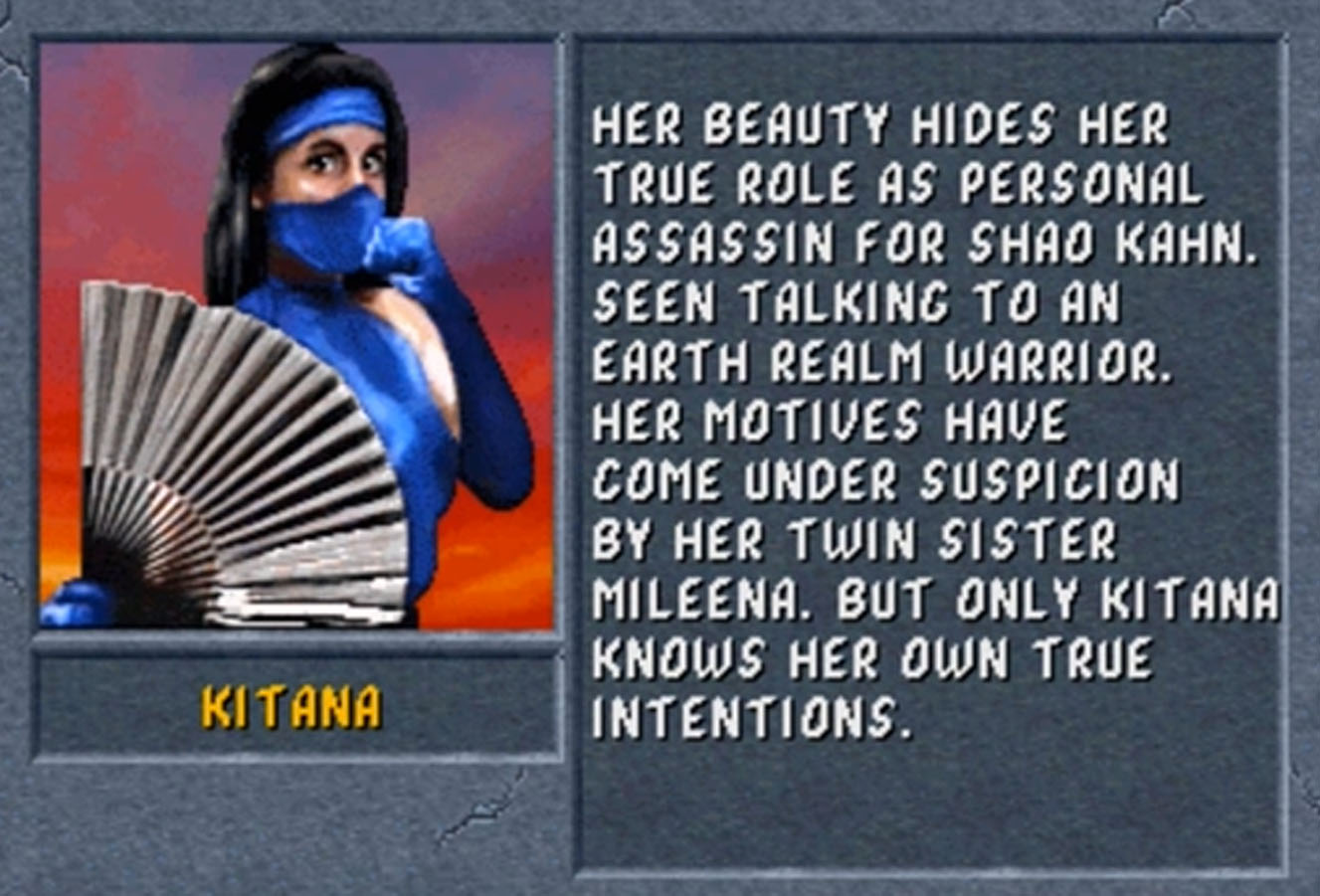
    It’s hard to comprehend now, but when I was a young’n, I took the story of Mortal Kombat very seriously.  Fighting games weren’t the highly competitive tournament headliners they are today, rather they were a great way to pissfart around with a couple of friends, while perversely enjoying the violence play out on screen.  But for my pre-pubescent male tastes, it was the characters and the world of Mortal Kombat that captured me more than any other.  Sure we liked Killer Instinct and Primal Rage – quite a bit in fact –  but I can’t ever remember giving a flying you know what about where Glacier or Blizzard came from.  They were cool looking characters that caused all sorts of grievous bodily harm, and for most of us, that’s all that mattered.  And our childlike enthusiasm for Mortal Kombat’s characters and story was brought to front and centre every recess, every lunch, and every afternoon as we’d wait for our parents to file into the school gates and pick us up.  We all had our favourites, and we’d argue to the death in favour of our favourite Lin Kuei ninja, and take each other to task on where we stood on whether Mileena or Kitana was the ‘best’ female ninja.  It was trivial, sure, but it was also a defining part of our video gaming childhood.

    KitanaMKII

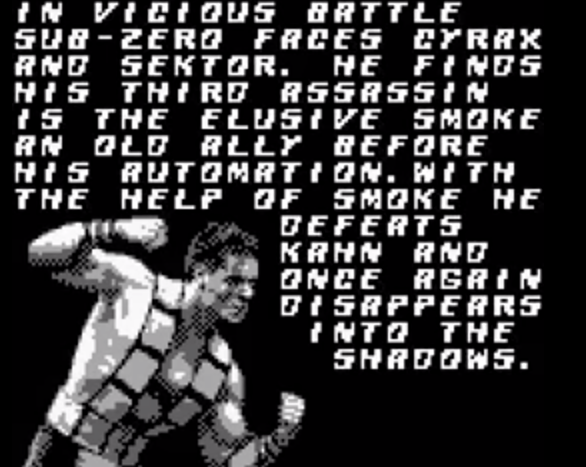
    Strangely, there really wasn’t much to go on in the way of story, apart from those character splash screens that briefly popped up on the off chance the arcade machine was in attract mode. But somehow, from those few sentences, we knew everything. We knew Kitana was a double-agent. We knew Sub Zero wasn’t really Sub Zero in Mortal Kombat 2 but his brother. And we had more theories about what exactly Noob Saibot was than you could poke a stick at.  Perhaps it was our childlike enthusiasm, the very same enthusiasm that had us coming up with wild theories about the universe of Doom, but we knew seemingly more about these characters than one could gather from the scant few paragraphs.  You know, on the rare occasion no one was on the machine

    But the much anticipated home releases of the Mortal Kombat games were our chance to fully explore the lore at our own pace.  I can vividly remember playing through the not completely awful Game Boy version of Mortal Kombat 3 through to the end with every character, only to painstakingly transcribe the endings with my horrendous 12 year old hand-writing, and share with friends at school the next day where we’d sneak into the teachers’ lounge to use the photocopier.  These stories, the tales of Earthrealm’s continued struggle against Outworld, were something that as kids we bonded over.  They were as relevant to our collective pop-culture conscious as Robotech or Spiderman, our cultural touchstone, our more than slightly less well-written Dickens.

    Which is why I think Mortal Kombat (9, is it?) had such an impact, solidifying lore and hearsay people of my age have retained in our brains since our youth.  It was great to see the automation of Lin Kuei ninjas Cyrax and Sektor, Kuai Ling assuming the name of his brother as he seeks vengeance against Scorpion, and the moment Kabal becomes, well, Kabal complete with Darth Vader like breathing apparatus.  These were moments in the timelines of these characters that I’d held in my brain – hopefully not at the expense of more useful information – for close to two decades.  The memories came flooding back, and old rivalries were reborn, and suddenly the storyline of Mortal Kombat that I’d held so dearly as a kid, mattered again.

    Just the other night I found myself engaged in a rather serious but incredibly juvenile argument with a friend about, of all things, whether Kitana or Mileena was the better female fighter.  It was an probably an almost straight up carbon copy of arguments we had as 12 year old kids, and one that still seemed as relevant as it did to our pre-pubescent minds.  For that reason Mortal Kombat X, with all its offspring of Mortal Kombat characters shenanigans, is basically our extended universe.  And I can’t wait.

    And just for the record, it is, and always will be Kitana.

    MK3-GB-ending-SubZero

  • It doesn’t take long to get me ranting and raving about how bloody fantastic the film Moon is. In addition to being a thoughtful science fiction film, spearheaded by an amazing performance by the always excellent Sam Rockwell, it is also a beautifully shot film with a colour palette that does a shitload with very little. Space is one hell of an isolated place, and the incredibly utilitarian look of the Sarang combined with the sparseness and contrast of the moon’s surface against the blackness of space, is incredibly effective not to mention visually striking.  In my books it’s nigh on being the perfect theoretical depiction of life in space.  And that’s high praise for a medium that has the equivalent of a rip-roaring erection for the extra-terrestrial.

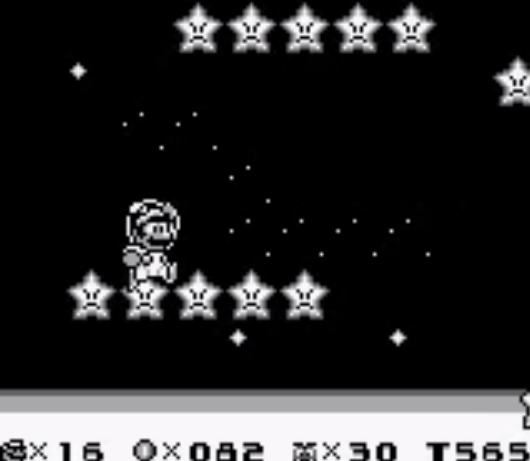
    Video games, like film, too have a fascination with the great expanse above our atmosphere. While utilitarian by virtue of its technical constraints, Super Mario Land 2 for mine captures that same sparseness one would expect from the moon.  As undoubtedly one of the prettiest games on the Game Boy, it may seem a bit strange to talk about the least graphically impressive part of the game, but there’s just something about the Space Zone that hits all of my lo-fi space-loving buttons.  The (incredibly) limited colour palette works to create one mighty desolate lunar world, while at the same time capturing the beauty of the ‘universe’ that has had humanity gazing up at the stars probably since the moment we evolved to have eyes.  It is entirely accidental, of course, but the monochromatic constraints of the Game Boy delivered the same amazing minimalist vision of space that Duncan Jones’ film so beautifully captured.

    Although snot green wasn’t necessarily the most flattering of base colours, the high contrast on screen was enough for the mind’s eye to fill in the blanks, at least that was until the Game Boy Color with all its fancy palette swapping madness perfected the picture.  It was finally the picture of black and white perfection I’d pictured all along.  While the Pumpkin Zone levels had the same effect, with the way the various shades of grey – not quite 50 – are used to give the sensation of light peering in through windows or the gradual fading of light from wall-mounted torches, it isn’t quite as special as the graphical contrast between the moon’s surface and the star-spangled vacuum that is beautiful nothingness.

    (It’s starting to sound a bit like I have a rip-roaring erection for the moon, isn’t it?)

    In many ways all of humanity’s views of what it’s like to be on the surface of the moon come from that still pretty bloody amazing 1969 footage of the first man to set foot on our great celestial sidekick.  But it’s an incredibly strong visual image that, until we have our own visual reference, is going to form the basis of any attempts to recreate it.   It’s a beautiful image, really, and one that captures humanity’s imagination almost like no other.  But while more modern games may do a better job of it – Gran Turismo 6’s bizarre but unbelievably striking journey to the moon comes to mind – I’ll always have an unrivalled fondness for Nintendo’s constrained but artistically beautiful vision of a man walking on the moon.  Low-gravity and all.

    SuperMarioLandSpaceWorld


  • Heavy Rain box artMy first impressions of Heavy Rain weren’t great. After a protracted installation session, I was wholly underwhelmed by the game’s glacier-slow and mind-numbingly tedious opening (see earlier post). However, Sir Gaulian assured me that the game picks up, and I’m glad I stuck with it.

    For a start, it’s a film noir thriller, and I’m a sucker for film noir: over at 101 Films You Should Have Seen… Probably, we’ve eagerly covered all sorts of representatives of the genre, from the 70s noir revival Chinatown to the 90s sci-fi noir Dark City, with a bit of Lynchian psycho-horror noir thrown in for good measure. Heavy Rain is noir to its core, and it delivers a satisfying and convoluted story that throws in plenty of twists and red herrings to keep you on your toes. It’s also paced particularly well: although it starts off a bit too slow, the action builds nicely towards a breathtaking and satisfying crescendo.

    The controls are a bit of a sticking point, however. I believe the aim of the control scheme was to mimic the actions taking place on screen: for example, to make Madison Paige put on lipstick, the game directs you to slowly move the analogue stick in a semi-circle. For most of the time you’ll be wandering around just matching inputs like this, but every now and then an action sequence will pop up where you have to match the command that appears within seconds to, say, dodge a punch. So, a bit like Dragon’s Lair, then. Later on, the consequences of missing these commands can be serious – your character can die permanently, and in fact I ended up doing a few quick restarts in an attempt to get Jayden through to the finale.

    Sam Douglas is excellent as private detective Scott Shelby.
    Sam Douglas is excellent as private detective Scott Shelby.

    I have mixed feelings about this control system. If the aim of the controls was to develop more of a connection between your input and what happens on screen, then I think it has failed. If anything, the controls drive a wedge between the player and the game – I never really felt like I was controlling what was happening, more like a monkey pressing buttons in expectation of a reward. As such, it was more difficult to develop an attachment to the character I was ostensibly meant to ‘be’. Also, the decision to control walking by holding down R2 and then pressing in a direction with the left analogue stick is absurd. For the life of me I can’t work out why they didn’t just map movement to the analogue stick alone: why make us press R2 as well? It’s certainly not more immersive: half the time I found myself walking into walls as I wrestled with the controls.

    However, I did quite enjoy the action sequences in the end. I’m not normally a fan of QTEs in games, but here there were some moments where my heart was really pounding as I desperately tried to follow the prompts on screen, knowing that if I failed, my character might not make it to the end of the game. There prompts are also set at a very well-thought-out level of timing – just forgiving enough to make them possible at first try, but still hard enough to make you really concentrate.

    But, again, I did feel that in some way I was being robbed of control. The ‘decisions’ I made in the game often just game down to how quickly I mashed a button, so really it was more about reactions than decisions. I think the TellTale games did this a little better, providing you with clear, timed choices. L.A. Noire also bears some striking similarities to Heavy Rain, but I prefer the way that the former approaches controls: in that game you always feel like you’re in complete control of what’s happening, whereas in Heavy Rain there’s sometimes a bit of a disconnect.

    There’s also a bit of unintentional comedy, not least with the whole ‘Press X to Jason’ thing, as well as a highly gratuitous shower scene that seemed to serve absolutely no purpose as far as I could see. But overall I enjoyed the game a lot more than I thought I would – it’s certainly a daring experiment, and I can see how other games have been hugely influenced by it.

    The alternative reality glasses that FBI agent Jayden uses are a great idea - they could make a whole game using this mechanic.
    The alternative reality glasses that FBI agent Jayden uses are a great idea – they could make a whole game using this mechanic.
  • AmigaFarCry4The following contains spoilers of Far Cry 4’s plot.

    Amidst the civil war raging in Kyrat is a more subtle but just as important war, one where tradition is being pitted against progress.  On the surface it is a war of ideals.  The people of Kyrat’s resistance, the Golden Path, isn’t just at war with Pagan Min, it’s at war with its past and its cultural foundation.  And through the eyes of Ajay Ghale, you are caught in the middle, choosing between the purity of Sabal’s ties to the traditional Kyrat, and the progressive views held by the Amita.  You’ll be choosing whether to harvest drugs to build the economy, or to destroy the crops to uphold the values of the resistance.  It is very much a game built on morals and standards, answering the question of “progress, but at what cost?”.  It adds a layer of narrative complexity, sitting right alongside its portrayal of culture and religion

    But hidden underneath all of that, Far Cry 4 presents an incredible exploration of sexism and gender roles, and what is means to have a society built on male superiority.  More importantly, it made me question my own values and inherent gender biases.

    Am I sexist?  

    Do I have a gender bias?

    These questions forced me to take a very uncomfortable look at myself.  And what I found wasn’t flattering.

    I chose my side early on, justifying my siding with the male leader of the Golden Path, the charismatic Sabal, on my fierce opposition to drugs. Amita was forward-thinking, considering about economic autonomy once Kyrat was a free state, and the vast poppy crops would bring that autonomy.  It was rational, but was it moral?  Progress?  Sure. But again at what cost.    I didn’t necessarily agree with restoring Kyrat to a time where child brides were commonplace, the so-called “dark ages, but nor did I condone an economy built on illicit drugs. And so I found it easy to justify my decisions, feeling like I was making the right decisions even when I saw logic in Amita’s arguments.  It was an uneasy, but logical moral choice, and one I was happy to ‘live’ with.

    “I was six years old when my parents told me I had to marry.  Six.  That’s the world Sabal is fighting for”

    – Amita

    But it was once the issue of gender came up directly that I started to think that maybe, just maybe, I was making my decision based on the person and not the ideal.  And the further I played, the more I committed to Sabal’s traditional version of Kyrat, the more I realised that it wasn’t about what was “right” for the people, it was about playing favourites. Sure  I found Sabal more sincere, less emotional, and more rational.  But perhaps more importantly I found Sabal more appealing.

    “Do you think it was easy?  Being the first woman in the Golden Path?”

    – Amita

    And it was the point where gender roles came into it that I realised that perhaps it was the fact that Sabal was male played a part in his appeal.  Amita’s appeals for progress suddenly started falling on deaf ears, and her appeal to my own sense of gender equity and fairness through confiding in me of her plight of being the first woman in the golden path, started to feel desperate.  “She’s trying to get sympathy, but she’s wrong”, I thought, justifying my position through what I considered an emotional weakness.  “Isn’t she?”.

    It wasn’t until Sabal verbalised my views that I fully realised just how sexist my thought process was:

    “…And I bet she cried on your shoulder.  Did she give you that sop story about being the first woman in the Golden Path?…She didn’t fool you did she brother?”

    – Sabal

    It was a sop story, an appeal to my emotions, and in my mind whether I knew it or not, Amita’s strength was weakened by her stories of ingrain sexism. To me, Sabal was the strong male leader, the person not basing his decisions on emotions, not caught up on the internal fight he was having to prove himself or his gender.  He appealed to the very masculine view of society, one that favoured males in positions of powers, and as the stronger and more rational gender.  But this wasn’t a conscious decision making process, rather an almost automatic and inherent gender bias that affects my decision making process. Whether Sabal was or wasn’t morally right was irrelevant, it was that he was a male that swayed my decision to back him.  And that’s absolutely wrong.

    So am I sexist?  I’ve come to realise that the answer may sadly be a very uncomfortable “yes”.  But not because I don’t believe in equality for women, or very strongly dismiss traditional gender roles in society, but because sexism and stereotyping based on gender is so heavily but subtly ingrained in society that it’s almost impossible not to inadvertently take on some of the biases.  I’m not proud of any gender bias I may have – in fact I outwardly oppose it – but I’m glad that a video game was able to force me into a moment of introspection.  Even if it meant realising a less than flattering aspect of my personality.  Sexism is everywhere and Far Cry 4 is perhaps the smartest exploration of gender identity around.

    SabalFarCry4


  • FarCry4The following may contain mild spoilers of Far Cry 4’s plot.  For the hypersensitive, consider yourself warned.

    I grew up in a very unreligious household.  There was no anti-religious sentiment – after all I was only a generation removed from the anglo-christian upbringing of my grandparents in Europe – but there was certainly a dearth of religious text and learnings in the house.  In fact that’s pretty commonplace in Australia, a country where I know more people that have never been to church than those who have, and where religion isn’t something that defines us for a society.  It’s an upbringing that I’m proud of in some respects, but one that in other ways, has left me with a significant hole in understanding of the world around me.  Religion is derided in many corners of the modern world, but it would be remiss of anyone to admit to its importance as a building block toward the modern freedom and civil obedience we en masse enjoy in the western.  And in some parts of the world it’s still an enormous part of their culture and identity.

    In the current global climate it’s a difficult thing to understand, and as someone who has no point of reference, I find it slightly unnerving the unwavering devotion of one’s self to religious idealism and beliefs.  When manifested in its physical form, as a proponent of the protection of human history, I understand the outrage at the irreversible destruction of ancient religious artefacts and places.  But protection of these very same places as the destruction of spiritually relevant landmarks with personal and intrinsic value is not something I can understand. Australian society may place significant value on the intrinsic (and monetary) value of places, but we lack the sort of spiritual connection to land and places that many societies have, including the strong inbuilt connection our own indigenous people have to this country.  We may sympathise but I’m not sure we’ll ever empathise.  It’s just the nature of modern western society.

    My time in Far Cry 4’s Kyrat, a place steeped in religious connection to the land and to the people, opened my eyes to spiritual devotion.  It’s no secret that I think Far Cry 4 offers an interesting insight into other cultures, but that vein of rich world building runs deeper than it appears, arguably overshadowing the amazing action experience the game delivers.  Kyrat is a world of political oppression, of dictatorship, but more importantly one of religious persecution.  It’s not uncommon for tyrannical leaders to use religion as a tool to indoctrinate or persecute populations, and the charismatic Pagan Min is no different.  He holds onto power by outlawing religion, by disempowering the population, and through military might through those that oppose him.  For a man that has so little air time in the game itself, Pagan Min is one of the most defined video game characters in recent memory, mostly due to the brilliant ambient and environmental storytelling.  Everything from the notes found around the world, to the Government sanctioned ramblings of religious prohibition permeating the airwaves, Kyrat is an oppressed society and its people have lost part of their spirit.

    And conversations with Golden Path leaders Amita and Sabal reveal a people that are fighting not only against a maniacal dictator, but are fighting to protect their own religious identities and their own spiritual connection with Kyrat.  And it’s the missions that revolve around the latter that really hit the fact home that religion is intrinsic to the social fabric of Kyrat.  Nothing hit that home like watching the destruction of age-old religious icons, the sleeping saints, at the hands of Pagan Min’s military, as they watch with glee at crumbling statues.  Or desperately repelling the attack on the Chal Jama monastery against waves of heavily armed men intent on destroying the home of the nation’s polytheistic religion.  The plight of the people Kyrat already provided the motivation to fight for freedom, but nothing compared to the desperation protecting the nation’s religious identity and spirituality evoked, or the sense of satisfaction at succeeding to do so.  It wasn’t just fighting for a thousand year old statue, or an ancient place of worship, but rather it was protecting the spirit of the people and their connection to the life they live.

    And it was at that moment I understood, perhaps not empathised, but at least understood the plight of societies where religion is intrinsic to their identity.   It gave the fight meaning, it gave the fight context, but most of all it gave the world a level humanity I’ve seldom experienced in a video game.  I’m not a religious person, and in all likelihood will never be, but it’s amazing that a game that prides itself on being a shooter above all else could give me a greater insight into the importance of religion in the fabric of some societies.  I’ll always remember the charismatic Pagan Min and his sprawling battle with the Golden Path rebellion. But for me Far Cry 4 will always be about fighting to protect the freedom of the people of Kyrat and the importance of protecting religious freedom, both in the game, and in real life.

    Far Cry® 4_20141123110056


  • I was in London the other week for work, and after reading about a bar called ‘Loading’ in Dalston on Kotaku UK, I was keen to see the place for myself. Ian (of 101 Films You Should Have Seen fame) and I headed along one Thursday evening to check it out.

    IMG_2387When we walked in, it was fairly quiet, but there were a few tables occupied by dedicated board game players who were engrossed in their gaming, and the bar gradually filled up as the evening wore on. The bar has an impressive selection of up-to-date board games, including the newly released X-COM board game, which I’ve been dying to play. As dedicated X-COM fans, we were tempted to play it there and then, but really it’s a game that requires a team of people. Maybe next time.

    The cocktail list was pretty hilarious. Apparently they sometimes take commissions from publishers to make new cocktails based on upcoming games, which seems like an ingenious marketing ploy. We opted for ale in the end, but I couldn’t help but admire some of the brilliant punnery on the menu. Earthworm Gin has to be my favourite.

    Newest_Menu-2Downstairs is where the real action happens. Not only have they got an Xbox One and PS4 with a tonne of games, there’s a Super NES tucked in the corner with a collection of fantastic cartridges that made our eyes bulge. We spent a goodly chunk of time playing Micro Machines, but I was amazed by the broad selection of games available, including a few absolute classics that I’d almost forgotten about, like Rock ‘n’ Roll Racing and Teenage Mutant Ninja Turtles: Tournament Fighters.

    It was quite odd to be playing the SNES again. There’s a satisfying mechanical quality to it that is entirely missing from modern gaming machines. The spring-loaded pop as you press the cartridge eject button has no equivalent on the latest consoles – as we head further and further into the digital future, this kind of satisfying physicality is becoming all but lost. It was also gratifying to play games that loaded almost instantly – no waiting around for OS systems to boot up or patches to download, just straight into the gaming.

    The Holy Grail.
    The Holy Grail.

    Probably the highlight, however, was an arcade cabinet that had dozens and dozens of classic 1980s games, all set on free play. After dabbling with Ms Pac Man and 1942, we ended up getting settled into an intense high score contest on Galaga that must have gone on for at least 3 hours. It was a sharp reminder of just how addictive and brilliant that game is, and how online leaderboards are really no substitute for standing next to a mate and jeering/applauding their high score attempts.

    Ian attempts to beat my high score on Galaga.
    Ian attempts to beat my high score on Galaga.

    It was interesting to see the broad range of people that were in the bar. There were some seriously geeky-looking chaps on the ground floor who were very much into whatever game they were playing on their laptops (I think it was Hearthstone), but elsewhere there was a mix of pretty normal-looking young men and women, mostly playing card games like Fluxx. Interestingly, there were also some laddish types in suits who spent most of the evening playing FIFA on the Xbox – a good indication of how games appeal across a broad spectrum these days.

    All in all it was a fantastic place to go for a drink, and I’m hoping the idea of gaming bars catches on across the country – I wish there had been places like this when I was at university. The only trouble I could see was that we spent so much time playing the games that drinking was almost an afterthought – I think we only had about three pints in the whole evening. Perhaps that’s the trouble with running a gaming bar, everyone’s just having too much fun…

    They even had a DOOM Piano, although unfortunately it wasn't turned on. If you look closely, you can see that the various keys control firing, strafing, etc.
    They even had a DOOM Piano, although unfortunately it wasn’t turned on. If you look closely, you can see that the various keys control firing, strafing, etc.
  • Election_PicFlickI feel like we’re only a small sneeze away from having opinion polls in the games industry.  It’s a popularity contest, a preferred Prime Minister racer, a two-party preferred poll.  It’s indies versus the mainstream, hardcore versus the casual, high flyer versus the new comer.  And with the bankrolling of large publicly listed companies, the games industry has become a political machine.

    The products of the companies are increasingly being sidelined in favour of clever public relations and marketing campaigns, or worse, unrelenting onslaughts of charisma.  They say the right things, at the right time, to the right people.  And there is no shortage of people to spread the message, and the media fights for its share of the declining readership and advertising revenue.  The games industry isn’t immune to the impact of the 24 hour news cycle, and it’s forcing developers to fight over every bit of air time, in a war of the gaming public’s mindshare.

    Their mindshare and, of course, part of their contestable discretionary income.

    After months of hard campaigning and clever catch phrases release day is here. The voting public go to their local retailer to cast their vote. It’s finally election day, with the pollsters counting up the votes, delivering their verdict.  Years of hard work comes down to this.  A single number.  The number that will decide the next few years for the team.  Succeed and there’s a mandate for future projects.  But fail and it’s back to the drawing board.

    Of course along the way there are always slip ups.  The private uttering of the “f-word” or the “c-word” that the microphone picks up, lofty promises that don’t stand up to journalistic scrutiny, or uncertainty over the price of downloadable content in the future.  It all comes down to messaging, developing a product that the public will buy, and ultimately about how marketable a product, a team, an individual is.  In the blink of an eye it can all come crashing down, approval ratings plummet, and the competition starts to look like a viable alternative.

    With shareholders involved, risk aversion sets in, and business as usual means appealing to the greatest number of people possible.  It’s less about ideals, and more about hoteling’s law, positioning yourself as close to the opposition as possible with a few token differentiators.  In Australian politics this is the Labor and Liberal parties.  In video games this is Electronic Arts and Activision.   For some though, this convergence of the party political leads to disillusionment and disenfranchisement with the major players.  What then?

    The rise of the micro party, the indie developer, the little guys that stand for principles and ideals.  The Australian political landscape has been peppered by these throughout its history, from the rise of the Democrats in the mid to late nineties to the recent revival of the Greens movement achieving record votes across all jurisdictions.  For games it’s the rise of the meteoric rise of indies, out to capture that point of differentiation the major publishers and developers and missing, to restore people’s faith in the industry.  For some, like Vlambeer, it’s an organic extension of their core beliefs and success comes accordingly.  But for others, it’s about living up to a myth, about living up to being the ‘alternative’, for being about ideals unencumbered with the need to deliver to shareholder expectations, instead trading on consumer goodwill and buy-in.  Kickstarter is just the tangible manifestation of this.

    And for the latter, the cycle continues, as they feed the 24 hour news cycle hoping to grab attention and mindshare of the consumer.  Just like the big businesses it becomes about PR and messaging, massaging the media vying for that next headline.  The election cycle begins at the Kickstarter campaign and ends once the product ships.  Succeed and you’re a god.  But fail and you’re media fodder and political collateral.

    And that’s sadly been the story for 22Cans, and Peter Molyneux’s approval rating couldn’t be lower.

  • The wait is over. I finally have my hands on a limited edition Monster Hunter 4 new 3DS XL, and it’s beautiful. I mean, look at it. So, so shiny. It excites.

    And not only is it a looker, it’s a powerful beast, too. Already I’ve noticed that it loads games considerably faster than the old version, and I no longer have to wait precious seconds while the game icons populate the menu screens. A small change, but a definite improvement.

    It's so... so... SHINY.
    It’s so… so… SHINY.

    Perhaps the biggest improvement, however, is the 3D. The new 3DS now tracks your eyes and adjusts the 3D effect to compensate: no longer does the image begin doubling or blurring in response to the slightest tilt of your head, and this has made an enormous difference. Whereas before I might only turn on the 3D once in a blue moon, now I have it on all the time. And I’m impressed by how robust the tracking is – turn your head away and then back and the screen readjusts in a fraction of a second to realign with your eyes. Finally the 3DS lives up to its name.

    It’s great to have a second analogue stick too – the right-hand ‘nubbin’ works like the mouse pointer on an old IBM Thinkpad, and it’s surprisingly responsive considering that it doesn’t move. It works brilliantly with Monster Hunter, and the positioning of the stick is much more intuitive than the clunky old 3DS Circle Pad Pro, which used to give me gamer’s claw after long sessions. That clumsy experiment in pad design can now safely be consigned to the dustbin of gaming history.

    But although I’m impressed with my new 3DS, the process of buying it and setting it up was unnecessarily tortuous. I preordered it from GAME to take advantage of their offer on trading in my old 3DS, and on Friday afternoon I headed down to the store armed with a type 0 screwdriver, a new microSD card and a PC for transferring the SD cards (for more on the ridiculous hoops new 3DS owners are forced to jump through, see this post).

    The store was incredibly busy. Then when I got to the front of the queue, I was informed that customers were being told that they would have to pay the full cost of the new 3DS and then come in the next day to trade in their old 3DS because the transfer process takes “4 hours” ( a figure seemingly plucked out of thin air). I disputed this, saying that actually it’s much quicker if you transfer using a PC, and that even if I was to do the transfer by Wi-Fi, Nintendo say that transferring 4GB would take around 2 hours. But they insisted, and said that the Wi-Fi in the store was “patchy”. By this point I was getting a bit annoyed at the thought of having to come back the next day (Valentine’s Day, no less). But then the store assistant said I would be getting “credit” when I came back to trade in my old 3DS.

    “Hold on, credit?” I said. “I thought I was getting cash?”

    I explained that I didn’t want credit, as I wasn’t planning to spend 70-odd pounds in GAME in the near future – times are tight, after all, and I already have a mountain of games to play. This discussion went on for some time, until eventually the manager came over and said that actually I would be getting cash, and the store assistant was misinformed.

    That wasn’t the only misinformation floating about, either. When I schlepped back into the store the next day, I found out that I would be getting £55 for the 3DS, not the £85 I was told originally (when I preordered, I was told I would get the £209.99 special edition for £124.99 when I traded in, but it turns out the assistant was reading the price for trading in against the regular new 3DS XL, not the special edition). And then I got told I’d have to trade in the power cable for my old 3DS as well. This despite the fact that on two previous occasions I’d been told by assistants in the same shop that I’d be able to keep the cable to use with my new 3DS XL (which doesn’t come with one).

    Eventually they relented on the cable, but by this point I was already feeling pretty put out after having to go back to the store a second time and having to argue my case both times. I don’t appreciate being made to feel like I’m in the wrong, especially when I’m right. As I watched the store assistant turn his back to me and start fiddling around with my 3DS (presumably to test it, although he didn’t say that, he just turned around unannounced and left me staring at his back for five minutes), I was left astounded that despite the chain almost being thrown into financial oblivion a while back, GAME still hasn’t improved its notoriously poor customer service. Indeed, when I worked there many years ago, the attitude from management was very much that customers were there to be shaken down for every penny they’re worth.

    Setting up my new 3DS was fairly tricky (involving a 16-step process, followed by downloading MH4U again), but it was a damn sight easier than buying the bloody thing in the first place.

  • BrokenSword2It was probably about 10 years ago that people were crying out for a return of the Adventure game.  Driven by a perception that a bit of creative bankruptcy had perhaps set in, and the release of the stylus-driven Nintendo DS seemingly a perfect fit for the genre, all eyes were turning to the past in search of a nice bit of nostalgia and a life jacket to save us from drowning in first person shooters.  As sincere as it was at the time, I’m not sure anyone was in any way shape or form cheering for the genre’s rise back to the top of the pile, and if they were like me they were probably caught a bit off guard by just that eventuating.

    I have never made it any sort of secret about the fact that  The Secret of Monkey Island is one of my favourite games, probably a product of the fact that it was an enormously popular genre at the time and that it was ridiculously funny game that really appealed to my childhood sensibilities.  But whether the game holds up or not is another story, and if my recent attempts to play through it are anything to go by, it may not be the timeless comedic classic people like me thought it would be. It’s still good, very good in factbut perhaps not great (although I’m not quite as negative as Lucius on the matter).

    And things only got worse as things went on as puzzles went from slightly offbeat to nonsensical.  While things weren’t much better for its peers, it was LucasArts that suffered most from what was either the ambition or misguidance of making intricate and overly clever sequences.  Stumbling upon intricate solutions to difficult problems was always the draw for playing these games, but as trial and error became more and more prevalent, it became less and less satisfying. That mentality behind the design of these games hit its peak at Grim Fandango, and so while it may have been a swansong for the genre, it was also the best sign yet that adventure games had well and truly passed their prime. So while it is a classic, it is certainly a heavily caveated one.

    Somehow though, the Broken Sword series managed to sidestep the minefields everyone else seemed to willingly walk into, while still maintaining what made adventure games such an appealing prospect for more than a decade.  It was intelligent and thoughtful without being obscure, and funny without the need to be weird. Fast forward a few years to the Game Boy Advance, and an unlikely port of Broken Sword to the portable system fixed streamlined the game’s control system, for mine making it at the time the definitive version of the game, and possibly the best example of the genre. Direct control of the character wasn’t a new thing, but the ability to cycle through points of interaction with the GBA shoulder buttons was a welcome addition.  Broken Sword was never devilishly difficult, but in working with the limitations of Nintendo’s handheld, the developers managed to sow the seeds of a silent revolution that wouldn’t begin in earnest until much later.  It became a journey, something akin to a good Tintin novel.  And so while it was an admirable – nay masterful – attempt at keeping adventure games relevant by bringing them to an enormous and diverse GBA audience, the genre disappeared.

    For a while at least.  Telltale Games is credited with bringing back the genre from the brink of extinction, and while 2012’s Walking Dead was the first big mainstream hit, for years it had been leading the charge in a miniature renaissance for the genre.  Zombies were big, the Walking Dead was bigger, and Telltale Games was practically hitching a ride on a pile of already free-flowing money.  Adventure games were back and they were bigger than before.

    But for me, something was missing.  While the rest of the world fell in love with The Walking Dead, I found myself struggling to claw my way through episodes.  I played through Episode 1 over a lazy Sunday afternoon and left unfulfilled.  A year later, again on a lazy Sunday afternoon, I played my way through Episode 2.  By Episode 3 I decided it was all over.  “I like the Walking Dead comics.  I should love this”  I thought to myself.  With everything that killed adventure games in their heyday fixed, from the clunky interface to the shithouse puzzles, it seemed like a done deal.  So what went wrong?

    Quite simply it was bloody obvious.  The solutions to puzzles were bloody obvious.  The story beats were bloody obvious.  The character relationships were bloody obvious.  I never felt like I was outsmarting the game in so much as I was going along for a ride, with the only real points of interest being the choices that were made throughout the course of the game.  It was a Choose Your Own Adventure game come to life.  But without agency in the characters all I was left with was a story that brought no surprises.

    The revival of the genre left me with somewhat of a bitter taste in my mouth.  While the things that drove me away from the genre were gone, a vacuum had formed around the absence all the things that made adventure games so special in the first place, leaving something that resembled a visual novel more than an adventure game.  And a predictable one at that.  After years of being an adventure game apologist I’ve finally come to realise that we can never go back to those heady days where adventure games were king.  But if the way forward means stripping the brain out entirely and replacing it with heart then, for me at least, adventure games as a mainstream genre died out long ago.

    At least I’ll always have that copy of Broken Sword for the Game Boy Advance.

    BrokenSwordCinematic

  • I’ll never forget the summer of 2006-07. I remember day after day of 40 degree weather making it impossible to keep cool.  I remember sleepless nights tossing and turning in a loft apartment that practically transformed into an oven throughout the course of the day.  I remember my first Christmas away from home and eating a roast turkey sitting on the floor of our still rather empty apartment.

    But most of all I remember that first summer with the Nintendo Wii.

    NintendoWiiBy the time the launch of the Wii rolled around in November 2006 it felt like anticipation for the launch of the console formerly known as the Revolution had been building for decades.  We’d known for a couple of years that it was going to be heavily focused on motion control, but exactly what that meant was a nebulous concept that was so bloody hard to grasp that it led to many struggling see it as anything but a misguided attempt to recapture mindshare of the console market.  But scepticism was far from my social circles, and for most people I knew it was such a radical idea that they were already a captured audience, sick to death of the already saturated talk of tech specs and resolution, and ready for the future of video games.  Whether the Wii delivered on those expectations is irrelevant, because that first morning and indeed that first summer following its release, I was absolutely enamoured by the little console that could.

    It was a very tangible first few hours with the unorthodox controller – the Wii Remote – almost literally feeling my way through every nook and cranny of the system’s interface.  The novelty almost outweighed the practical applications early on, as the mind boggled at everything from the way the wii remote rumbled as the cursor hovered above the home menu’s icons, to watching it rotate as I twisted my wrist.  It was the sort of thing you’d call people just to tell them just how amazing it all – or in my case sent a low res video of the shenanigans to a friend from my then rather fancy Sony Ericsson K600i.

    When I finally grew tired of the menu and turned my attention to actually playing something, Wii Play was the first cab off the rank, with the packed in controller proving too tempting to resist ripping into the box, and the idea of playing a faux air hockey game weighing heavily in its favour.  Hindsight will see it described it as nothing more than a subsidised second controller packed in with a superficial proof of concept for the system, but for anyone experiencing it for the first time straight from the rather orthodox controller of the Xbox 360, it was an amazing eye opener to just what Nintendo was thinking when it put pen to paper and designed the machine.  The description of how amazing a game feels had taken on a new meaning.  The revolution was here and it was pretty bloody spectacular.

    Then, like everyone else, I was enraptured by Wii Sports.

    Like the rest of the world Wii Sports was in regular rotation that summer, as refuge from the scorching sun became heated rounds of tennis and bowling.  Bowling in particular brought competition to a whole new level, with sledging hitting all new levels, and carpet being literally shredded to pieces by the rather intense dragging of our feet in our follow-through.  Of course, we knew that there were natural limits to the Wii remote’s motion control, but somehow the exaggerated action made it just that much more fun, as we picked each others’ techniques to pieces or sat on the sidelines watching with such elation that it simply didn’t matter.

    And it didn’t matter.  For the first time in a long time it didn’t matter who was or wasn’t playing games, and while the protective ‘hardcore’ trembled in fear at the idea that their pastime was being invaded, for many of us it was incredibly inclusive time for the industry at a time where its game design template and its media ran a real risk of isolating segments of the market.  There was something about the Wii that united people under a common banner, one that didn’t distinguish between ‘boy’ and ‘girl’ games, or ‘casual’ or ‘hardcore’ games.  They were games, they were fun, and while they perhaps weren’t the calculated or polished games gracing other systems, they managed to shed the air of intimidation and pretentiousness that had almost by chance grown out of the sub-culture.  For a brief moment there was equality.

    Of course speak to anyone now and they’ll tell you a very different story, as the very real physical sensation and sense of elation moves further and further into the distance.  The talk of high sales is caveated by mentions of lacklustre software and gimmicky shovelware, of lack of third party support and of superficial use of the motion controller.  The numbers tell a story of a ridiculously successful trend that burnt brightly but briefly.  But subjectively and emotionally, the Wii was so much more than the objective look at its failures.  For how we remember those first moments with the system feeling our way through a new way of playing, for the excitement booting up every new game just to see how it used the Wii remote brought, and for the overdue social element it brought to video games.  We as a collective may have played more hours on the Xbox 360 and the PS3, but if I were to put a time value on those moments I shared with my Wii, I became far richer from waving my arms around like a loony in the presence of friends and family.

    So while history of the Wii is being written based on the objective history of the Wii, it’s important for us to stand back for a moment, and remember just how exciting and potential-filled those moments with Nintendo’s fifth home console were.  And that even if that potential wasn’t fully realised it changed the industry for the better, one that harkened back to the true origins of video games as an inclusive and at times social pastime, and one that put the artificial construct of the ‘hardcore gamer’ that developed in the 90’s back in its box.

    And that’s the way it should be.

    WiiSports

  • Gravity“I’ve always liked Sandra Bullock”, said the world of cinema upon flocking to cinemas to see Alfonso Cuarón’s sci-fi ‘magnum opus’, Gravity, elevating that to a vocal scream once she was robbed of a Best Actress Oscar at the 86th Academy Awards.  “I think that with her role in Gravity finally has the role to show her acting chops”, they all said.
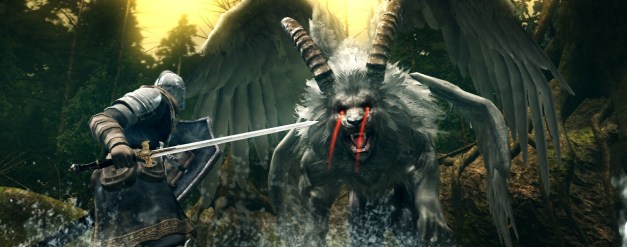
    They seemed to have forgotten that she had previously won best actress for The Blind Side only a few years before.

    “I’ve always liked FromSoftware”, said the world of video games upon playing Demon’s Souls, upon obsessing about Dark Souls, and upon heaping caveated praise on Dark Souls II.  “I think that they’ve finally found their niche” they all said.

    They seemed to have forgotten that FromSoftware had been a successful developer, most notably of the Armored Core series, since 1986.

    Sandra Bullock has always been likeable, the problem was she hadn’t featured in the kinds of productions the film-going bourgeois talked about in pretentious riddle, gleefully taking hipster pride in oblique discussion about scripts that already make little obvious sense.  I think Two Weeks Notice is a delightfully entertaining romantic comedy, that Speed is an adrenaline fuelled action film, and that The Blind Side is a pretty good feel good sporting drama.  Sandra Bullock has always been a respectable and entertaining actress, but she was never speaking to the audience that hold the reigns of that pop culture discussion, or at she wasn’t least until the high grossing sci-fi epic hit and captured the imagination of even the harshest of film critics.

    As someone who has casually enjoyed the long-running Armored Core series, who was partial to Ninja Blade, and who enjoyed 3D Dot Game Heroes as a Zelda layman, I can say with some level of certainty the same holds for the well-aged japanese developer.  FromSoftware has always been workmanlike in its development efforts, and because of that, I’ve always found its work to be at worst endearing and at best flawed masterpieces.  Demon’s Souls and Dark Souls may have appealed to the latent desires of fans of brutally difficult role-playing games, but it wasn’t a rebirth of the storied developer, rather a stroke of luck that saw them gain respect of even the most hardened game fan.

    It’s an odd comparison, but for both Sandra Bullock FromSoftware, it’s the curse of being under the watchful eye of often ridiculously insular but judgemental pop culture circles that has seen them not really gain critical respect until they push out a product that resonates with the tastemakers, with the illuminati. It’s weird that the opinions of others adds an air of legitimacy and respectability to artists across all mediums, but it’s a fact of life, and one that rules both industries even if from behind the scenes.

    And it shouldn’t.  With Gravity and the Souls series respectively earning them the kudos of the internet, on both counts being received with orgasmic delight, a greenlight was effectively given to follow with interest and await their next release.  But it shouldn’t have taken appealing to the right people to get there.  I’ve always liked Sandra Bullock.  I’ve always respected FromSoftware.  Difference is I didn’t need to be told that’s okay.  And nor should you.DarkSouls2

  • PolariumI’ve never paid for a day of Xbox Live Gold  in my life.  It looks weird to see that written down, given the ridiculously important role online implementation and features have played in defining consoles in recent years, but it’s a truth I think is worth acknowledging publicly.  Games have moved on but what’s become abundantly clear is that I haven’t.

    When I think about how games have changed over the years I get a bit excited.  The technological jumps they’ve made, the amazingly intelligent thought being put into how they’re made, and the fact that there are people going to painstaking efforts to recreate the real world down to the finest levels of detail.  Games quite simply aren’t the things that they once were, and if I could bring the childhood version of myself forward in time to play the games I’m enjoying as an adult, I can only imagine how low his draw would drop.  And if he made it back to the 1990s he’d be telling his friends just how much better the games of the future are.

    But in many ways, at least for him in 20+ years’ tastes, they’ve changed for the worse.  And for me that begins and ends with the rather rapid and insidious onset of online competition.  From the more active online multiplayer, to the asymmetry of leaderboards, the need developers feel to steep their games in competition at every turn is a real turn off.  From the unpleasantness of a Call of Duty match, to competing with an seemingly infinite bunch of randoms in the Pinball Arcade, it just has never quite been my cup of tea. While I will admit that it is all conceptually brilliant, and in execution even more so, the impersonal nature of online competition has never quite done it for me.

    And that’s because competition to me is something entirely different from what the internet has turned it into.  I think back to the looks of bewilderment of my siblings when I beat their high scores in Pinball Dreams, or the running tally of high scores a childhood friend of mine kept on his fridge to keep track of the fierce game of Game Boy Tetris leapfrog he was playing with his Dad.  It was these relatively tangible measures of success that kept games in rotation for years upon years, and kept people engaged in active battle with each other, hoping one day to claim final bragging rights.  In the game these numbers were benign, but when given life by the way we traded them in the real world to elicit reactions from our friends and family, they became priceless measures of our success.  The hours poured into memorising block fall patterns or building up multipliers on Nightmare or Steel Wheel were worth it for the moment you got to break the news to the poor person you just toppled from the peak of the high score table.

    Case in point for me, when I think back to the early days of the monstrosity that was the first Nintendo DS, my mind automatically shifts to the three years war of Polarium I had with my now fiancée.  Day after day, night after night, we would beg and plead with each other to have a go, hoping to pull the tug of war struggle in our favour.  A war that was ultimately proven as fruitless.  As time went on and fortunes turned and her intellect and skill proved better than mine, the battle was over and the war won, and despite half-hearted attempts since her place on the Polarium high score table has been etched in stone.  It is still to this day one of my fondest gaming memories.

    The thing is in all of the above cases I knew what I was up against.  I knew that my then girlfriend kept the same work hours as I did, I knew that my siblings were at school in the day just as I was, and my friend knew that his dad could only really play late at night once he’d gone to bed.  To be frank I don’t really care whether the basement dwelling pimple-faced XxXiamthabestXxX has an itchier trigger finger than me in Call of Duty, and nor do I have the drive or want to get one, particularly when it means pouring hours upon hours into getting it.  It is a meaningless comparison that can never be standardised, and one that as online digs its claws further into each and every experience, becomes more and more pervasive.  Online can be great in the right hands, but with seemingly every modern developer scrambling to assemble some kind of online leaderboard, it is starting to lose sight of when, where and why it is a good piece of game design.

    So I’m firmly rooted in the games industry of yesteryear, where I was keeping tabs of high scores via notepad scribbles, and where high score leaderboards had some real life currency.  But I do care if someone I know manages to topple me from my ivory tower atop the ‘local leaderboard’.  The playing field was level and those numbers at the top of the screen meant something.  Just as a petrol station in Sydney charging Australian dollars doesn’t compete with one in Beirut charging Lebanese pounds, we were choosing battles that were personally relevant to us, trading on a currency that was legal tender in our world.  Call me old fashioned but for me online will never give that same sense of satisfaction.

    PinballDreams_SteelWheel