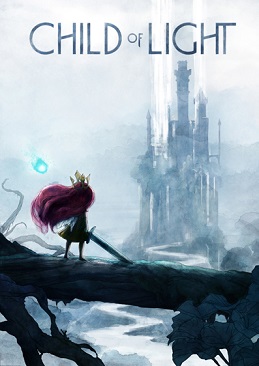
• child_of_light_artMy first impressions of Child of Light weren’t that great. I’d realised that week that I just don’t particularly get on with 2D platformers any more, and after half an hour of jumping around I was ready to give up after “the same old platforms and puzzles reared their ugly heads”.

    But I’m glad I went back to it, because it actually turns out to be a fun little game.

    Of course, really it’s not a platformer at all, it’s a 2D RPG, and soon after the point at which I initially gave up I received the gift of flight in the form of tiny fairy wings. This turned out to be a literal game changer, completely removing the need for leaping about – and it made the game much more fun as a result. By drifting lazily through the levels on my tiny wings, I had more space to appreciate the real beauty of the hand-drawn artwork in that game. And it really is a stunner. “A fairy-tale storybook come to life” is the phrase at the forefront of my mind – and in fact the game presents itself as a tale of a fantasy kingdom being retold.

    Also, it has the best hair animation I’ve ever seen. Your tresses float along behind you as if carried on some invisible current, an effect that even drew coos of appreciation from the normally cynical Mrs Merriweather.

    2536619-009_1400596010

    Speaking of Mrs Merriweather, she did enquire at one point why I was playing a “girl’s game”. I considered the evidence. Yes, I was controlling a princess with fairy wings. Yes, one of the members of my party was an adorably cute mouse called Robert with a tiny hunting bow. Yes, I had fabulous hair. Hmmm.

    At that point I did what any red-blooded male would do under the circumstances… and berated her for her narrow-mindedness when it came to gender divisions. I am fully in touch with my feminine side, and it thinks that mouse is  SO GODDAMNED CUTE I COULD JUST EAT IT ALL UP.

    Ahem.

    Going back to the game, it’s not all hairstyles over substance. The turn-based battle system is pretty nifty, with a well-implemented skill tree that had me carefully considering my strategy and play style as I chose which path to go down. The battle system itself relies on a meter that shows a ‘wait phase’ and an ‘attack phase’ – you can line up attacks at the beginning of the attack phase, but if you get hit between the start and the end of the attack phase, your attack is cancelled and your character gets pushed back down to the wait phase. Of course, you can inflict the same annoyance on enemies, too. It’s certainly not a new system – I’m certain I’ve played a game that used something like this before, possibly Skies of Arcadia – but it works really well.

    col-001

    One thing that doesn’t work well is the game’s insistence in presenting dialogue in tortuous rhyme. It raised a small smile at first, but then when the characters carried on speaking in rhyming couplets after the first few interactions I had the horrendous realisation that the designers intended to keep this up for the ENTIRE GAME. I wonder whether at any point, as the script writers were struggling to come up with yet another rhyme for an awkward word, they said to the person next to them: “Hey, maybe this rhyming thing was a bad idea? Maybe we should just, you know, stop?”

    This was probably met with the rejoinder: “NO PHILIP! We’ve come so far, we can’t possibly stop now! I’M GOING TO SEE THIS THING THROUGH TO THE BITTER END, SO HELP ME GOD. Now, what’s a rhyme for ‘attack phase’?”

    The game is also a little bit on the short side – roughly 10 hours or so. Reading online, this seems to have annoyed people who picked up the game for full price at launch, but as far as I’m concerned, the shorter the better. My precious gaming time is at a premium these days. (And it helps that I bought it on sale.)

    Now if you’ll excuse me, I have some woodland creatures to level up.
    Buy Child of Light on Amazon and we get a little cash. Ta!

  • Finally, more than two years after its launch, I’ve bought a PS4. Hurrah!

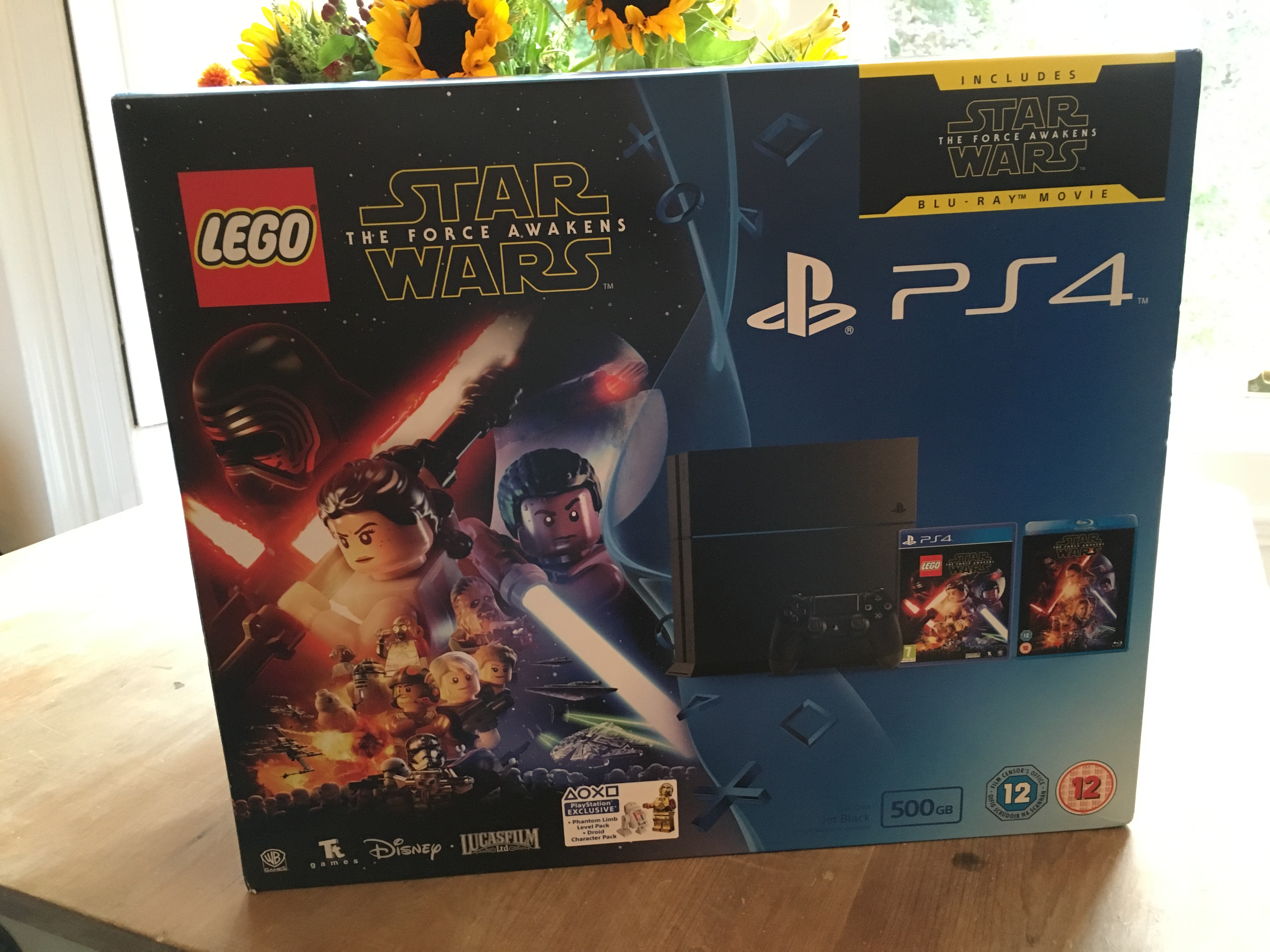
    After blitzing my way through my backlog and selling a ton of games, I had the cash to hand. I spotted a sweet deal – a 500GB PS4 with No Man’s Sky, Lego Star Wars: The Force Awakens, The Force Awakens Blu-ray and and extra controller for £269 – and I decided to treat myself for my birthday (which was last weekend). Hello current console generation, I’m here!

    IMG_5641

    Now, in some ways this is probably the worst time to buy a PS4 – on Wednesday Sony is going to officially announce the much-leaked PS4 Slim and PS4 Neo, so prices for first-gen PS4s are likely to plummet. But in the end I decided that prices probably won’t drop much lower than the deal I got. And anyway, I’ve waited so damn long that I JUST CAN’T WAIT ANY LONGER.

    Also, it was my birthday, and I was determined that my treat would be the chance to go and explore undiscovered planets. It was either that or go-karting.

    Speaking of No Man’s Sky, I’m having an absolute blast with it so far – I’m currently in the Led Zeppelin II galaxy and I’ve just had my first encounter with space pirates. Which didn’t go too well. Better shields is the next thing on my shopping list…

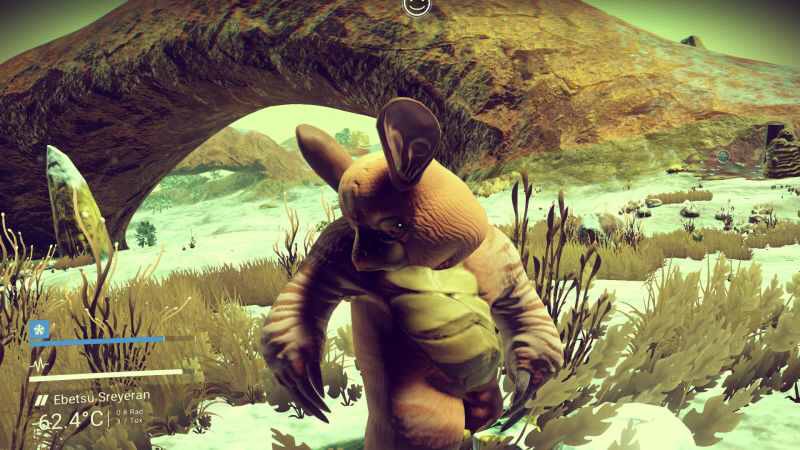
    I’ll post more thoughts on the game later, but safe to say I’m having a whale of a time. My strategy is currently to ping about between the first couple of star systems in order to max out my ship, a bit like this guy who spent 30 hours on the first planet. Even on a single planet, there’s just so much to see – I keep telling myself “I’ll just see what’s over this ridge”, and before I know it hours have passed, along with countless ridges. I’m sure the novelty will wear off eventually, but for the time being I’m in spacehog’s heaven.

  • This week on Spiffing Reads, we start with a look back at when running a games magazine basically meant dicking about.

    bass fishing

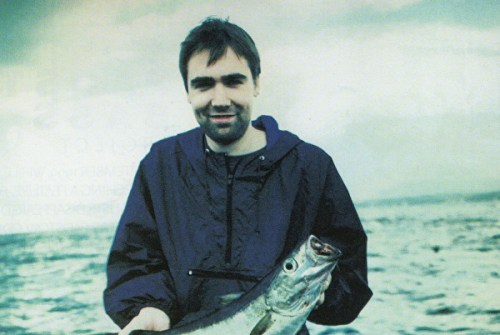
    When bass fishing features go wrong: a cautionary tale (Eurogamer)

    I used to be an avid games magazine reader. But like most gamers, I now rely on the internet for most gaming news and reviews (I still have a subscription to the excellent Retro Gamer though). Still, I miss the times when magazines ran ridiculous features with only a tenuous link to the games they were meant to be covering, like when Amiga Power hired a BB gatling gun for a feature on DOOM clones. And then there’s this classic tale of an ill-advised sea fishing trip in tentative relation to a certain Sega game.

    izfqz0rccclmalwrpcpy

    The helplessness of Clock Tower (Kotaku UK)

    I’ve never played the SNES game Clock Tower, but after reading this I’m inspired to give it a go. It sounds wonderfully macabre and quite unlike anything else from that era – an RPG where your only option is to run away.

    apb-009

    What happened to gaming’s Waterworld? (Eurogamer)

    I remember reading a feature about APB in Edge magazine many years ago, and thinking that it sounded like an amazing concept. It’s heartbreaking to read how the game struggled through years and years of development, never quite finding its feet, and eventually causing the closure of Realtime Worlds. Sad to think it was only live for three short months – a real kick in the teeth for all the people who worked on it, and a reminder that today’s online games necessarily leave little to no legacy when servers shut down.

    MassEffect_3-720x404

    THE AMAZING SURVIVAL STORY OF TANTALUS, THE STUDIO THAT PORTS YOUR FAVOURITE GAMES (IGN)

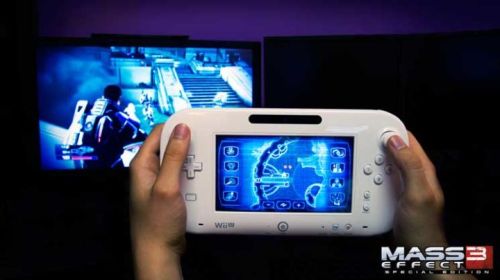
    Another story of a games studio struggling through difficult times, but this one has a happy ending. Australian studio Tantalus weathered the financial storms of 2007-09, and unlike many other Oz devs, survived to tell the tale. And I had no idea that an Australian studio ported both Mass Effect 3 and The Legend of Zelda: Twilight Princess to the Wii U! Good work, people.

    scul1s

    My New Thing Is Making Sculptures In No Man’s Sky (Rock Paper Shotgun)

    Because why not? I like the idea of spending your entire time in No Man’s Sky just sculpting out a planet full of Barbara Hepworth style sculptures. Or you could just make a wonky Thwomp and the ghosts from Pac-Man, like this guy did.

    super mario bros wii coin world

    Feature: A Close Look at New Super Mario Bros. Wii Coin World (Nintendo Life)

    I had no idea this existed. In 2011, Nintendo teamed up with Capcom to produce a four-player arcade game that’s part slot machine, part mini-game-a-thon. Weird.

    oeozyapmiwn1aohqslai

    Deus Ex Gets Air Vents All Wrong, According To An Architect (Kotaku UK)

    I love it when people get disproportionately serious about games. I’m also a big fan of deep dives into mundane topics. So this article is like manna from heaven – and I learned a thing or two about the practicalities of civilian architecture to boot.

    20160812191004_1

    Asperger’s, Obsession and Quitting No Man’s Sky (Let’s Play Video Games)

    This was actually written a couple of weeks back, but I only just stumbled across it, so I thought I’d include it here. A touching tale of when otherwise satisfying gameplay loops go wrong.


    Spiffing Reads is a regular feature where we pick out the best gaming articles of the week. If you’ve read anything interesting, please let us know in the comments.

  • I wasn’t really sure what to expect from today’s Nintendo Direct, seeing as Nintendo have said they won’t be revealing the NX just yet, even though it’s supposedly imminent. So what would they be showing then? Surely the pipes for the 3DS and Wii U must be a little dry right now as development swaps to the NX? Well, yes and no. There was nothing to really set the world alight in the presentation, but a few things made me sit up and notice, and even perhaps let out the odd ‘ooooooh’.

    • The reveal that The Legend of Zelda: Skyward Sword is out to download RIGHT NOW from the Wii U virtual console only served to make me chastise myself for the fact that I still haven’t gotten around to playing this game, DESPITE OWNING IT SINCE LAUNCH. I am mentally moving it up in the ‘to play’ order in my head as I write this.
    • zelda amiibosThose Zelda 30th anniversary amiibos were a nice surprise, and yet more fuel for my amiibo addition. To be honest, none is as cool as the Wolf Link amiibo that came out a little while back, not to mention the stonkingly brilliant Breath of the Wild amiibos that are on their way, but Ocarina Link is pretty cool. Look at him there, all wistful.

    • crrmmkewiae0w1bjpg-2c51a9_765wSpeaking of amiibos, the Poochy amiibo is just taking cuteness to the next level. I’m tempted to get it just to sit next to Yarn Yoshi on my shelf, even though I wasn’t too fussed about Yoshi’s Woolly World as a game.
    • Oooooh, another StreetPass Mii Plaza update! So now you can have 100 Miis in your plaza instead of just 10? And you can opt to skip most of the dialogue? And there are five new games that have been designed to be played in extremely short bursts? It’s like they read my mental tick list of all the things I wanted them to do to improve this. OK, the 3DS is going back into my bag, we’re-a-going Mii hunting.
    • 20160901_084223Ever Oasis is without doubt my highlight of the presentation. It’s from Grezzo, who did the wonderful 3DS conversion of Majora’s Mask, and Koichi Ishii, creator of the Mana series, is behind it. I love the idea of expanding your desert oasis and attracting more people to live there – building up bases and getting people to live in them was one of my highlights of Xenoblade Chronicles.
    • Now this was a surprise – a 2D Pikmin game for the 3DS. Looks kind of interesting, but I can’t help feel it might simplify the gameplay a little too much. And now it’s billed as an ‘action game’ rather than the puzzle/resource gathering game of old. Hmmm. I’m all for more Pikmin games, as I loved the first three, but I’m currently not sold on its reinvention as a 2D platformer thing. Guess we’ll have to wait and see how it turns out…
    • I’m looking forward to the rerelease of Dragon Quest VII – I’ve never played a Dragon Quest game, and I reckon it’s about damn time I tried one. I remember when Dragon Quest VIII was released when I was living in Japan, and pretty much the whole country stopped just to play that game. Happily, that’s coming to the 3DS as well in 2017 – nice to know there’s another one lined up if I enjoy number seven.
    • Phoenix Wright: Ace Attorney – Spirit Justice is obviously a must buy when it’s released on 8th September. Shame they seem to have skipped out on releasing the Sherlock Holmes one in the west though.
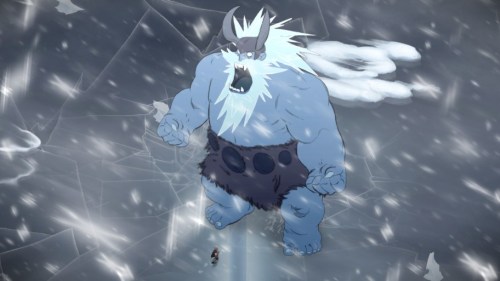
    • WiiUDS_JotunValhallaEdition_03_image912wOut of all the indie games in the line-up, the one that stood out by a country mile was Jotun: Valhalla Edition. The hand-drawn graphics look amazing. Apparently it came out for PC last year, but this is the first time I’ve heard of it. I’ve no idea whether it’s any good or not, but I’m tempted to buy it for the graphics alone.

    So, despite no news of the NX, it turns out there’s plenty of upcoming Nintendo games that I wouldn’t mind getting my hands on – not to mention some tasty-looking amiibos. So much for whittling down the backlog.

    Anyway, here’s the whole presentation if you want to give it a watch:

  • A while back, I was curious as to which games have sold the most overall, so I found myself browsing through a list of the best-selling titles of all time. It included the usual suspects – Super Mario, Call of Duty, etc. – but one name jumped out at me: J.B. Harold.

    691159-murder-club-sharp-x1-screenshot-intro-the-dead-guy-is-bill

    I’d never heard of the J.B. Harold series of adventure games before, despite the fact that they’ve supposedly sold 20 million copies. But it’s hardly surprising that I’ve never heard of them, as the games never made it to Europe, despite their popularity in Japan and their western setting. The first game has been ported to everything from the Turbografx-CD to the Nintendo DS to the iPhone, yet it still hasn’t been released in my home country.

    I wrote about the series for Kotaku UK, and it was particularly interesting to join up the connections between this game and Dragon Quest, Hideo Kojima and Level-5. You can read the article by clicking the link below:

    The 20-Million-Selling Game Series You’ve Never Heard Of

  • This week on Spiffing Reads we start off with that old bone of contention – mainstream press railing on about how games rot your brain.

    doom skeleton

    Why Mainstream Reporting on Video Games is Still Often So Negative (Kotaku UK)

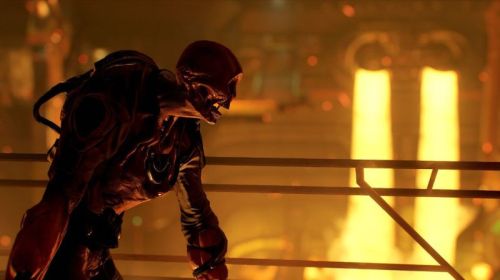
    A brutal but enlightening look at why games still get bad coverage in the mainstream press. Short answer: negative stories get more hits, and most mainstream journalists still don’t understand video games.

    lemmy

    I Played No Man’s Sky With an Astronomer to Separate its Science Fiction from Facts (Kotaku UK)

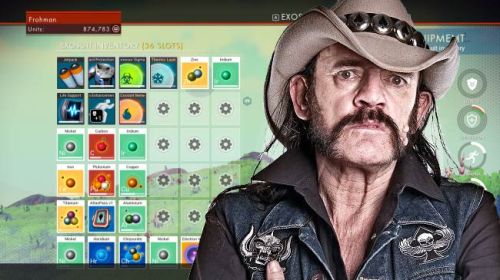
    I did an article for Kotaku UK a while back where I compared No Man’s Sky to the actual universe, but having an actual astronomer talk through the game is fascinating, and well worth a read. I love the fact that ‘Lemmium’ in the game references the real-life efforts to have an element named after Motorhead’s Lemmy.

    13988037_10154449595825909_3285532537234490894_o.0.0

    No Man’s Sky is the new Destiny (Polygon)

    This article makes the excellent point that often the game we see at launch bears little resemblance to the game we end up with perhaps a year down the line, thanks to transformative updates. It reminds me of something I wrote a while back about how the head says it makes sense to wait and buy games many months after launch, when the problems have been fixed and they’re cheaper – but the heart just wants to jump in to the bubble of excitement around launch day.

    _90901989_handsome-weeping-boys-5--ry

    The ‘handsome weeping boys’ paid to wipe away your tears (BBC News)

    OK, I admit, this has nothing to do with video games, but it’s fascinating. A company is trying to bring Japanese office workers closer together by making them cry while a ‘handsome weeping boy’ dries their tears. Gimmicky, yes, but it also gives an insight into the formality of Japanese office culture.

    super breakout

    Ten times the Atari VCS promised too much (Digitiser 2000)

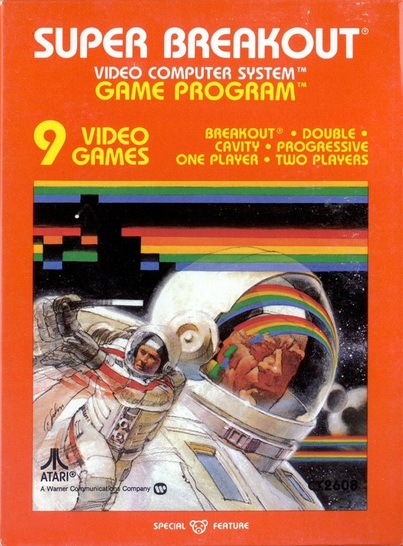
    I love this article. It reminds me of times spent gazing at the fantastic artwork of games like Centipede, and trying to transpose the blocky graphics into something resembling the box art in my head while playing.


    Spiffing Reads is a regular feature where we pick out the best gaming articles of the week. If you’ve read anything interesting, please let us know in the comments.

  • I’ve always found the notion that there’s a natural split between people that like Call of Duty and Battlefield and people that don’t more than a little bit rubbish. I’ve written before about how manufactured gaming culture is; and nothing demonstrates the arbitrary split between the self-proclaimed intelligentsia and the rest more than the vitriol from the ‘nerd’ side of the fence and the most popular shooters in the world.

    It’s no secret that I happen to be a bit of a fan of the campaigns of the world-beating shooters that dominate the sales charts for much of the year. And although i’m lagging behind a tad, having played both Battlefield:Hardline and Call of Duty Advanced Warfare recently, I can say they’re bloody good examples of why in their own ways. They’re both good looking, adrenaline pumping actions games, held together by threadbare storylines that do just enough to make the twists and turns somewhat meaningful.

    Much to my surprise they also both share something in common with a lot of people whose skin crawl at the very mention of their names: a deep reverence for Star Wars borne out through clever references to the 1977 original.

    So to those who feign some level of superiority over choice or taste in video games, and critique others for theirs, I say this: Are we not human? If we pick [Call of Duty or Battlefield], do we not bleed?

    Quick Offloads are short posts when we need to get things off of our chests but don’t necessarily want to waste too many words on them. But please add your words in the comments below.

  • A while back I wrote about my worries that the new version of Prey from Arkane Studios and Bethesda might be lacking the anarchic sense of humour that made the original so memorable. Well, maybe I shouldn’t have worried after all.

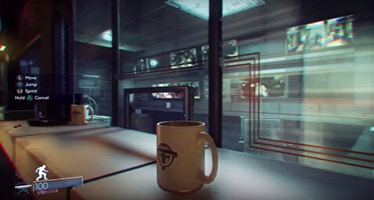
    As revealed in a new Gamescom trailer, the new game lets you turn into a coffee cup. Good work, everyone. 

    See that mug? That’s you, that is.
  • This week on Spiffing Reads, we kick off with a look at how magic in video games is in need of a radical overhaul.

    elemental magic

    Putting the magic back into magic in fantasy games (Eurogamer)

    It amazes me just how influential the ideas of Tolkien are in the modern age. We still have countless video-game dungeon adventures with elves, orcs and familiar magic spells, like fireballs. But as this article shows, various novels have very different ideas about how magic can be represented, and video games could well learn from them. China Mieville, for example, imagines a much grittier form of magic powered by fossil fuel. And another example (which isn’t discussed in this article) is the representation of magic in the Rivers of London series by Ben Aaronovitch (Amazon link), where performing spells actually rots your brain.

    logos

    Modern Game Logos Are Rubbish (Digitiser 2000)

    A cracking article that compares modern logos for games like The Last of Us and Battlefield with logos of old. Gosh darn it, modern logos are bland aren’t they? Most seem to be some sort of minor variation on the Impact font, probably in some misguided attempt to appear ‘grown-up’ and appeal to everyone. But they just end up being forgettable.

    mirrormoon

    Playlist: The games that shaped No Man’s Sky (Eurogamer)

    I was well aware of the debt that No Man’s Sky owes to Elite, but there are several space-exploration titles here that I’d never even heard of before. Captain Blood from 1988 sounds especially interesting.

    japanese fax machine

    It’s 2016 and I’m Buying a New Japanese Fax Machine (Kotaku UK)

    When I lived in Japan, I distinctly remember having to fax someone to get tickets for an event. Bizarrely, faxes are still prominent in the country, as this great article expounds on. I also remember that in 2004, all the kids I taught had minidisc players rather than mP3 players, you could still buy VHS players and cassette walkmans in department stores, and practically no one used debit cards – everything was done in cash. Even buying stuff on Amazon involved posting off cash or postal orders as I recall. Japan – incredibly advanced and staunchly traditional, all at the same time.

    dead-space7_1811190b

    Cognitive Dissonance and Contradictory Beliefs in the “Dead Space” Series (Philosophy and Video Games)

    The first Dead Space game was so bloody good, wasn’t it? And Isaac’s ongoing visions of Nicole were one of the very best things about it.


    Spiffing Reads is a regular feature where we pick out the best gaming articles of the week. If you’ve read anything interesting, please let us know in the comments.

  • ArmchairThe traditional ‘summer games drought’ comes as something of a relief for those, like I, who are imbued with a phenomenal gaming backlog. It’s a chance to dust off some unplayed titles and finally give them some time in the gaming spotlight before the inevitable deluge of games arrives in time for Christmas.

    Then again, the summer games droughts of today are nothing like those in the past – even during the hottest months (or coldest months, if you’re down under), we still have a steady dripfeed of decent games thanks to the astonishing proliferation of games in recent years. A couple of titles have piqued my interest recently – notably Fire Emblem Fates and Tokyo Mirage Sessions: FE. In fact, I was most annoyed to have missed out on buying the lovely special edition of the latter (Amazon link here), only learning of its existence after it had sold out. I don’t normally go in for these types of thing, but I loved the Project Zero: Maiden of Black Water special edition, and I’m most miffed that the Tokyo Mirage Sessions one evaded my grasp – and now goes for silly money.

    Look at it. It's so beeeaaauuuutiful.
    Look at it. It’s so beeeaaauuuutiful.

    Still, I’ll get around to buying both games eventually – along with No Man’s Sky, which I’m fairly certain I’ll enjoy, even if it utterly failed to float Sir Gaulian’s boat. And speaking of No Man’s Sky, one reason that I’m racing through my backlog is to sell my finished games and put the money towards buying a PS4, so I can finally, FINALLY, join the current generation.

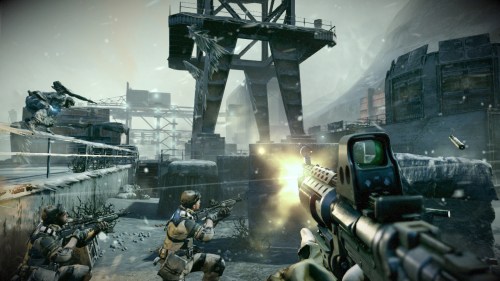
    I wrote about Journey and Uncharted 2 earlier this week after finishing them, but I’ve also dipped back in to Killzone 3, which came bundled with my PS3. I’d previously played about two-thirds of it before eventually drifting away, and I headed back in last week with the idea of finishing it. But in the end I decided I just didn’t have the patience to see the whole thing to the end. It’s an odd game really – despite being set in space, it feels more like a Call of Duty game thanks to its preoccupation with military tech, and the way it features lots of soldiers shouting at each other in military speak. It also reminded me a little of Gears of War, except the protagonists are instantly forgettable, unlike Marcus Fenix and company. It also sorely lacks great big ugly aliens.

    Pew pew pew pew pew pew!
    Pew pew pew pew pew pew!

    Still I was grinning at the ludicrousness of the Helghast, a.k.a. Nazis in space. The ridiculousness of the setting made it feel like an entertaining B movie, along the lines of Iron Sky. I was also impressed with the graphics, which still look astonishingly good after five years. But in the end, as I fought my way through various factories and corridors, I just realised I wasn’t enjoying myself very much. It felt like a battle of attrition, lacking the light touch of Halo’s better entries, and not sufficiently OTT to rival Gears of War‘s better moments.

    It’s basically just OK. Not bad, but not amazingly good either. And judging by my reaction to it, I doubt I’ll bother playing Killzone 2, which I picked up for an absolute pittance a couple of years ago.

    Last week I also dived into Sonic Generations, which is reputed to be one of the better Sonic games of recent years. The hook this time is that you get to play as classic Sonic on 2D levels as well as modern Sonic in 3D, the latter with his trademark skinny legs and beach-ready tummy.

    "Where are we going?" "Do you mean direction-wise, or as a franchise?"
    “Where are we going?” “I don’t know!” “That’s the problem!”

    It’s no secret that Sega have struggled to recreate the highs of 1990s Sonic games, but I’m of the opinion that even those early efforts weren’t all that great. They were fun to play at the time, but ultimately the gameplay is incredibly shallow. And the concept also seems to be fundamentally flawed – the main fun to be had is in going really fast, but going at any sort of speed in the 2D levels means that you simply can’t see any obstacles in your way. Sonic Generations‘ solution is to feature lots of on rails segments where you travel at phenomenal speeds but basically have little or no control of where you’re going.

    I played through the first few levels, and they were pretty good fun, but I felt my interest fade very quickly. I bought the game a while back, thinking that perhaps this would be the one that might finally make me ‘get’ Sonic. But I’m still mystified as to the appeal. And as I finally realised a while ago, I just don’t like 2D platformers that much.

    So, having knocked off a few games from The Mantelpiece, I’m scanning the teetering pile for my next target. I’m on a roll now – could this finally be the year when I clear out my gaming backlog? Possibly. Although there’s always the danger that I’ll just end up buying more… Ooooh, look, Virtue’s Last Reward is down to £9.99 on the Nintendo eShop!

  • I knew something was wrong when my wife didn’t want to explore the galaxy in No Man’s Sky when I offered. “No thanks” she said, “let’s watch Bill & Ted’s Excellent Adventure“.

    And after two days with the game I was about ready to watch its bogus sequel.

    Planet one was a boring mess of a place that had me trek 30 minutes to shoot a rock and collect a mineral. Not that I minded at the time; every grand journey starts with a monotony of sorts. Just read The Fellowship of the Ring. But Lord of the Rings didn’t have seven hours of Hobbits piss-farting around in the Shire. Sure you’ll travel the galaxy and see new things, – but in No Man’s Sky you’ll never feel like you left Bag-End.

    Perhaps it’s my fault.  I made the mistake of taking No Man’s Sky out for a game of Pro Evolution Soccer 2016. But when I picked up the cover and reflected on my first few hours with the game I didn’t want to put it back in. And from there it went straight to the back of the shelf where it’ll probably sit gathering dust forever after.

    I don’t want to labour on if the game is objectively good or bad. So here you go: No Man’s Sky is utterly boring. Whether fifteen blokes situated somewhere in Guildford made the game or not is completely and utterly irrelevant. I’ve seen teams of five model entire economies and teams of two review multiple-hundreds of pages of legislation. Video games aren’t magical. They’re not special. And making them isn’t any harder than any other job on the planet. And if they’re treated and critiqued as if they are then we’re all missing the bloody point.

    In short: No Man’s Sky isn’t going anywhere near the pool room.

    Quick Offloads are short posts when we need to get things off of our chests but don’t necessarily want to waste too many words on them. But please add your words in the comments below.

    This isn't an animal...

  • Journey-coverI’ve played Flow and Flower before – two of Thatgamecompany’s earlier games, both imbued with an ethereal feel and gameplay unlike anything I’d seen. More a meditative experience than traditional titles, they teeter on the fine line between art project and bona fide video game. Both were compelling in their own ways, but I didn’t feel the need to revisit them.

    Journey, on the other hand, feels more like a regular video game, collectibles and all. Yet it still has an ethereal quality that marks it out as other – and stirs more emotions in its short timespan than most other games manage in tens of hours. Upon finishing, my first motivation was to start it all over again.

    The simple gameplay is beautifully explained without the need for words of any kind (indeed, I was irritated by the regular appearance of ‘Saving’ in the top corner, a needless use of a word when the game otherwise does so elegantly without them). A mysterious mountain looms in the distance, and your simple task is to guide your berobed avatar towards it. That’s it. Holding down the X button will launch your avatar into the air, and you can fly for as long as the patterned symbols on your scarf remain lit. Certain collectibles make your scarf longer, and allow you to fly for longer. Holding down the O button elicits a sort of chant that can activate objects.

    18971Bridges_2

    The game mostly sees you hunting for objects to activate in order to unlock the path forward, and really there’s very little more to it. But it does an astounding job of creating a strong worldfeel, and of drawing out intense highs and lows of emotion. At one point you find yourself surfing down an enormous sand dune in the company of some playful fabric eel things, skimming through archways and leaping off rocks for the sheer fun of it, and it’s simply joyous. Later, you find yourself trapped in a scary underworld being hunted by monsters, and the feeling of menace and fear is palpable.

    One of the chief ways in which the game draws out these emotions is through the sumptuous orchestral music – the original soundtrack is phenomenal, and was rightfully nominated for a Grammy award. The graphics are similarly stunning, and the sweeping use of colour – from the descent down the dunes in the golden sunset to the creepy blue caves of the underworld – really affects how you feel about the game.

    I love the way it never explains itself, too. You’re left to make up your own mind about what the journey represents, and what the various things you encounter actually mean. It’s a refreshing change from tiresome cut-scene exposition, and all the better for it. I’m a big fan of leaving things unexplained – the world would be better off without midichlorians and better with far more films like David Lynch’s Mulholland Drive.

    Journey-PS3-Screenshot

    I was worried that because the game came out four years ago, I wouldn’t be able to experience one of its signature features – meeting other people who are playing at the same time, and wordlessly teaming up with them on your shared journey. However, I did manage to bump into a handful of other players, and it was fascinating to wonder what they were thinking. Was this their hundredth playthrough, or their first? Where were they in the real world? All I had to go on were their movements – was that straight line sprint for a collectible an indication that they were an old hand at this game? Did they play it every night, perhaps as some part of their daily routine?

    Like reasoning through the mystery of the game itself, I loved the way I had to impose my own meaning on the actions of others. And although I perhaps wouldn’t go so far as to pronounce Journey as profound, it’s certainly unlike anything I’ve ever played before.


    Better Late Than Never is a regular series in which we play through landmark games many years after their debut, after missing them the first time around. Does the praise heaped on these famous games hold up in hindsight?

  • uncharted-2-box1A few minutes into Uncharted 2, and it’s already apparent that it’s leagues ahead of the previous game, both in storytelling and finesse. After a meeting in a beach bar with some old associates, Nathan Drake finds himself persuaded to join a museum heist in Istanbul – an opener that immediately draws attention to the ‘Among Thieves’ subtitle. It’s a bold statement – Nathan is unequivocally a bad man, a man who thinks nothing of stealing for profit. Yet as the game goes on to show, he’s a somewhat less bad man than the other bad men and women who dog his every step. And later on he finds himself torn between the archetypal ‘bad girl’, who shares his thirst for adventure and questionable morals, and the ‘good girl’ who perhaps reflects his better side.

    It’s a much more fulfilling plot than the mostly black and white storytelling of the first game, the latter being a much more basic set up in which bold adventurers journey in search of El Dorado. One of my favourite parts of Uncharted 2 is when the two rival women in Nathan’s life finally meet, which leads to some wonderfully sharp dialogue – a domestic crisis played out under gunfire and across a quest for the mythical kingdom of Shambhala.

    The game's cold opening is brilliant.
    The game’s cold opening is brilliant.

    But it’s not just the story that makes this game stand out above its predecessor – the set pieces and locations are fantastic. The very start of the game sees Nathan clambering up the ruined carriage of a derailed train, which is hanging precariously off the side of a snowy mountain cliff for unknown reasons. We then cut to the beach bar scene, and realise that the derailed train is a flashforward to something that must happen much later on. As a cold opener (pun intended) it’s fantastic, and I like the way that it builds expectations for what’s to come. When the train section of the game does eventually arrive, it’s easily the stand-out part of the entire game, a pitched battle along the length of a train that winds its way through jungles and up into the Himalayas, all the more exciting because you know how it must turn out.

    And it’s not the only memorable set piece – the scenes in war-torn Nepal are beautifully evocative and wonderfully drawn, and the Istanbul heist is brilliantly tense. Then there’s an exciting chase scene involving a seemingly unstoppable tank, as well as some eerily beautiful (and huge) ruined temples imbued with ancient machinery – even if these are defiantly copying a page torn out of the Tomb Raider textbook.

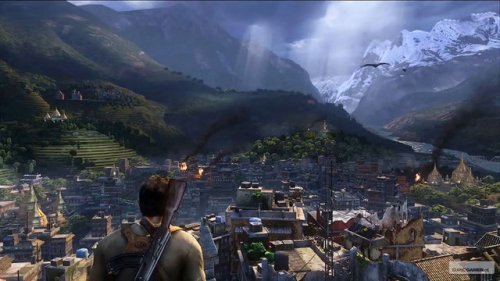
    The Himalayan village provides some stunning views.
    The Himalayan village provides some stunning views.

    The controls are improved too, making gunfights much more enjoyable and less frustrating than in the original game. Yet gunfights still occur far too frequently for my taste, and Drake steadily mows down an absurd number of people for someone who is essentially a wise-cracking treasure hunter. His good-natured humour and murderous intent seem somewhat uncomfortable bedfellows.

    The finale, too, rubbed me up the wrong way. The eventual denouement comes as something of a letdown, a tedious ring o’ roses with a bullet-sponge bad guy that’s more frustrating than exciting. It felt more like a need to fill a hole on a design spreadsheet that said ‘INSERT FINAL BOSS FIGHT HERE’, and it amazes me that video games still feel the need to throw in end-of-game bosses even if this doesn’t fit with the nature of the game. Bosses are a relic from eighties’ shoot ’em ups, yet they still get dragged in to all sorts of modern titles as a matter of course. I fondly remember how Banjo Kazooie subverted this trend by switching out the expected final boss fight for a quiz show. I’m not saying that there should have been a quiz at the end of Uncharted 2, but the point is that there are many ways of ending a game that don’t have to involve ploughing bullets into an overpowered boss.

    It really is a stunning game that clearly pushes the PS3.
    It really is a stunning game that clearly pushes the PS3.

    When all’s said and done, Uncharted 2, like its predecessor, is a big dumb old adventure game that would never win an Oscar for its plot. But in terms of sheer fun and spectacle, it trumps the first Uncharted in every single way. And even if the characters feel a little cartoonish at times, I found myself caring about what happens to them – a seemingly simple requirement that many other, lesser games regularly fail to achieve.


    Better Late Than Never is a regular series in which we play through landmark games many years after their debut, after missing them the first time around. Does the praise heaped on these famous games hold up in hindsight?

  • Welcome to Spiffing Reads, our weekly round up of the best games writing, which this week kicks off with an alternative take on Sonic.

    From @BadSonicFanArt on Twitter
    From @BadSonicFanArt on Twitter
    Sonic boom: Ellie Gibson on nostalgia, novelty, and that 9/10 (Eurogamer)

    The ever-brilliant Ellie Gibson penned this meandering article on her expectations for Sonic Mania, interspersed with parenting metaphors, and ex-boyfriends whose reading material of choice is the FHM Top 100 Women pullout. “Sometimes I worry I’ve read so many video game press releases I’ve started to talk like them. A few years ago, for example, I remember saying to my husband, “I think we should leverage the success of our existing legacy brand to extend the franchise in an exciting new direction.” It was only when he saw I was wearing a new nightie he realised I wanted another baby.”

    prey screenshot polygon

    Why is Arkane’s upcoming Prey game a Prey game at all? (Polygon)

    Arkane has confirmed that the new Prey game will have basically nothing to do with the original – something that I’m a little sad about, as it seems to be missing some of the anarchic sense of humour that made the first game so memorable. So why call it Prey at all then? According to Arkane, it’s because “the name is cool” and it shares some “loose thematic concepts” with the original. Although those shared concepts don’t stretch to include anti-gravity walkways and “vagina doors”.

    the-making-of-head-over-heels-14704131746

    The making of Head Over Heels (Eurogamer)

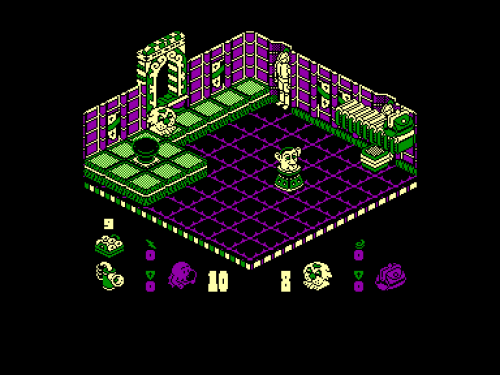
    An interview with John Ritman, creator of the ever-wonderful 8-bit classic Head Over Heels. I loved the Amiga version of this game back in the 1990s, and it’s fascinating to find out how this bizarre game came into being – Prince Charles Daleks and all. I never finished it back in the day, but I’ve been inspired to return…

    no man's sky screenshot

    Patch the process (Rami Ismail)

    Rami Ismail of Vlambeer (creators of brilliant games such as Luftrausers and Ridiculous Fishing) gives a fascinating look behind the scenes of releasing a game on consoles – and gives some inkling of how a game like No Man’s Sky can end up with an enormous day-one patch thanks to outdated publishing processes. The checklist of things that a game has to have to pass the certification process is illuminating, including a few things that I’d never have thought of: “Some of these make a lot of sense (don’t crash), and some of these are reasonable (if you leave the main menu open for 24 hours, is the game still smooth?), and some of them sound obscene (if you rapidly plug and unplug the controller, does the game know what to do?).”

    And finally, how cool is this Resident Evil cosplay?

    ot6t9y0j8jzuure842zi-620x349

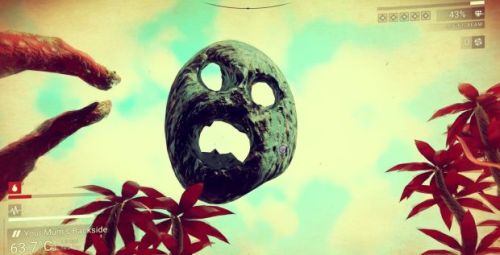
    And make sure to check out some of these utterly bizarre creatures that people have found in No Man’s Sky


    Spiffing Reads is a regular feature where we pick out the best gaming articles of the week. If you’ve read anything interesting, please let us know in the comments.

  • This week on our weekly roundup of the best games writing, we start with a look at the crazy time that Nintendo’s been having lately…


    Nintendo’s roller-coaster week (GamesIndustry.biz)

    A look back at an important week for Nintendo, with their share price peaking and then diving in relation to Pokemon Go, and leaked reports revealing the nature of the Nintendo NX. And speaking of which, the author offers some interesting thoughts on that console’s future: “if it’s going to succeed, Nintendo needs to create something truly new, truly desirable and truly innovative. Many consumers have responded to the NX rumours by lamenting that they want Nintendo to do something more like a “normal” console; my concern is the opposite, that NX as described in existing reports actually doesn’t go far enough or innovate sufficiently to differentiate itself from the competition.”


    Pokemon Go Is Over, ‘Because ‘Satan’ Has Conquered Westboro Baptist Church (Pedestrian)

    The Pokemon gym at Westboro Baptist Church – yes, the one whose website is named ‘godhatesfags.com’ – has been conquered by a Magmar named ‘Satan’ with 666 CP. This comes in the wake of the church branding the previous gym leader – a Clefairy called ‘Loveislove’ – as a ‘sodomite’.


    Digital Draughts: Uncharted 4 with Heavy Seas’ Plank IV (Games I Made My Girlfriend Play)

    An excellent review of both Uncharted 4 and a highly suited beer – Plank IV of the Uncharted Waters series. After reading this I can’t wait to play the fourth game – I’ve just finished Uncharted 2. And I also want a drink.


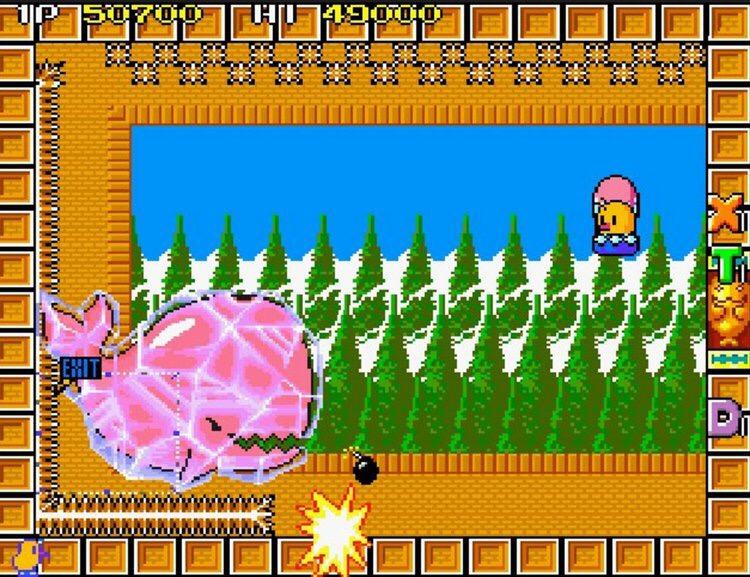
    List of whales in video games (Sunset Surfers)

    Important work, and I’m glad someone has finally done it. You’ll be amazed at how frequently whales crop up in gaming.


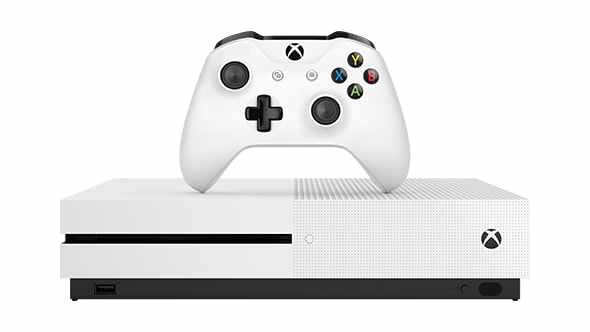
    Thinking inside the box: why I don’t like the new Xbox One S – By Mr Biffo (Digitiser 2000)

    At the end of the day, for all its improvements in design, the Xbox One S is still, well, just a box. Where have all the interesting console designs gone?


    Spiffing Reads is a regular feature where we pick out the best gaming articles of the week. If you’ve read anything interesting, please let us know in the comments.

  • AlmostFamousWhen I first watched Cameron Crowe’s Almost Famous – ashamedly more recently than I care to admit – I was instantly jealous of the people the characters in the film were based on. When I sit down and listen to Led Zeppelin II  I am instantly transported to a time where teenagers grew up with their backs glued to shag carpet in their bedroom while a crackling vinyl record spins in the corner. When I listen to The Who or Jimi Hendrix I invariably comment to my wife that “I’d love to go back in time and be at Woodstock 1969” because that’s the time the music industry for mine was at its most exciting.
    This period in rock music is a bonafide cultural zeitgeist, paving the way for almost every band that has come since. The people that were there at the time were witnessing some of the who would be the most important musicians of all time playing some of the most important songs of all time.

    I want to be part of a zeitgeist.

    To place myself in a point in music history: I was just old enough to remember Nirvana’s Smells Like Teen Spirit being played on the Australian Broadcasting Commission’s enduring Rage programme, but wasn’t really old enough to understand just how important they were in the scheme of things. And the remainder of the 90’s was when Australian rock really hit its stride – with soon to be mainstays  You Am I, Something For Kate, Regurgitator and Grinspoon really coming into their own.

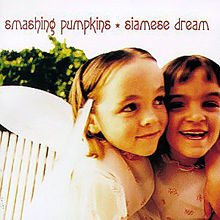
    Despite this though I grew up fascinated by music and in awe of the people that made it. My first real music love was the Smashing Pumpkins. I still vividly remember hearing Siamese Dream single Disarm on my not-so-great-sounding clock radio for the first time. The unforgettable nasal drawl of Billy Corgan was hauntingly beautiful, coming to life amidst a symphony of acoustic guitars and an arranged string orchestra. And that was it, I was hooked.

    When I finally bought the album not long after hearing Disarm for the first time it was practically on constant rotation. I’d wake up and play it while I was getting dressed for school in the morning and fall asleep to it playing on repeat. Siamese Dream – and subsequent Smashing Pumpkins albums for that matter – was a soundtrack for a period of my life.

    SiameseDreamCovertwins
    Still one of the greatest albums of all time.

    But that wasn’t the moment I fell in love with the art of music. That moment came much later when I was laying on the floor of my bedroom – probably brooding – listening to track 7 on the album. Soma is an incredible song in almost every way; building from a slow and sombre affair to a bona fide hard rock anthem . It was that very moment that music went form being something that just kind of happened to something that was a work of art and passion. It was probably the first song I ever had a serious conversation with a friend about; one I distinctly remember devolving into praise for its brilliant pacing and progression. And that guitar solo; well that just takes the cake.

    In 1998 I saw the Smashing Pumpkins (sans drummer Jimmy Chamberlin who was replaced by Matt Walker) at Melbourne Park in what I would’ve described as the best moment of my then-young life. Those larger-than-life character who I’d idolised for so long were less than 100 metres away, playing the songs that had accompanied me as I grew into an adult. As I looked around the crowd peppered with black ZERO t-shirts and shaved bald heads it hit me that this was a shared moment we’d all remember and treasure for years to come.

    But despite how much those couple of hours meant to me and thousands of others it still didn’t feel like I felt a cultural zeitgeist should.

    Watching the fervour around Pokemon GO I can’t help but feel that this thing – this game – somewhat resembles the sort of zeitgeist. Sure, they’re not sneaking into a Kiss concert à la Detroit Rock City, but people are doing some pretty mental and/or stupid things to ‘catch ’em all’ as it were. But despite this is feels like a bunch of people connecting through something rather than because of something; like a bunch of people who want to be a part of something. These people aren’t drawn together because they share the same interests or passions necessarily, they’re drawn together because Pokemon GO is the next big disposable thing. Whether I’m right or not, one thing is for sure;  it’s a phenomenon.

    I don't get it.
    I don’t get it.

    And here’s the thing:  I have never associated that feeling of being a ‘part of something’ with video games. Make no mistake; I’ve had great times with video games. Playing Pro Evolution Soccer 5 waiting for the next match of the 2006 FIFA World Cup to play out was epic. Playing Persona 3 FES all day every day over a hot Melbourne summer was brilliant. Days playing Forza Motorsport 6 are memorable. But they’re not the sorts of things I would ever clamber over people to experience, or find groups of like-minded people to share them with. And even if you did it’s a culture that likes to be at odds with itself much of the time that it probably wouldn’t be much fun.

    I was inspired to write this, in part because of Lucius’ fascination with Pokemon Go, but also because I’ve been reflecting a lot on how we capture culture in a world that moves so quickly. Who will remember cult Australian music show Recovery except for those who saw it, for example? Or what it was like sitting in the local independent record store, The Muses, when it held a listening party for the long-awaited Tool album Lateralus?

    But everyone knows about Woodstock 1969 and when the Beatles came to Australia in 1964.

    Perhaps I’m searching for something that will never happen. Perhaps my expectations are out of whack. Perhaps, even, I’m romanticising a point in time I could never understand. Who knows. But one thing I do know is this: in 2010 I saw Glassjaw live in Melbourne; a moment I’d been waiting for for a decade. The moment they came on – opening their set with a sneaky rendition of Cosmopolitan Bloodloss – the few dozen sweaty blokes down the front held onto each others’ shoulders and screamed the words to the song right back at singer Daryl Palumbo. That is a moment that will stay with me forever.  I didn’t know these blokes from a bar of soap but we were connected by sharing something we loved. I just wish I could have that same feeling with millions more people. But not because an app told me to.

  • Welcome to Spiffing Reads, our weekly round-up of the best games writing. This week, the big story is Eurogamer’s leak of details for the upcoming Nintendo NX.

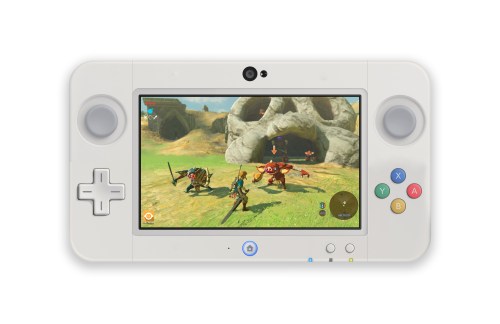
    Nintendo NX mockup by NeoGAF's Pittree.
    Nintendo NX mockup by NeoGAF’s Pittree.

    NX is different, and different is Nintendo’s best option (Eurogamer)

    Part of me wants Nintendo to release a super-powerful console, one that will have third-party publishers rushing back, that will put the wind up Sony and Microsoft, and that will see Nintendo competing with the big boys again, just like in the 1990s. I’d love to only have to buy one console that I could play everything on, rather than having a Nintendo machine as my ‘second console’ (although to be honest, the Nintendo Wii U is really my first console, seeing as I’ve played on it more in the past couple of years than on anything else). But as this article argues, the route Nintendo has chosen with the NX might be its only option – and the quirkiness of the hardware reflects the company’s ethos.

    How Nintendo’s NX Could Go Very Wrong or Very Right (IGN)

    So far, so obvious – the NX will either succeed or… um, well, it won’t. But the writer makes some good points about no longer having to worry about which machine – portable or home console – to release franchises on. One machine for everything has a lot of appeal.

    xbox-one-s

    Microsoft rolls the dice in a huge Xbox gamble (GamesIndustry.biz)

    Will the announcement of Project Scorpio put people off from buying the Xbox One S? We’re in uncharted territory here, the first time a more powerful console refresh has been announced mid-generation. It’s interesting to note that Microsoft is measuring success in ‘monthly active users’ rather than sales figures – an indication of its priorities in terms of a unifying Xbox gaming platform across multiple devices, including PC.

    25ashiwashi

    Foot Hell: Ashi Wash Introduces Awful Japanese Spirit (Rock, Paper, Shotgun)

    Did you know there’s a Japanese spirit called an Ashiarai Yashiki that takes the form of a giant, disgusting, disembodied foot that breaks into your house and demands that you clean it? Well, now there’s a game about said disgusting foot ghost. “It has the very worst toenails I’ve ever seen in a video game.”

    Can too much choice be a bad thing? (Eurogamer)

    “Too many choices are painful, but losing choices is also painful. This is gives us insight into a couple of notorious game design traps. In five minutes you can find five Early Access Unity games from talented, inexperienced developers making something like their favourite game but with MORE FEATURES MORE OPTIONS MORE WEAPONS.”

    The Legend of Zelda: Breath of the Wild Brings Borrowing Full Circle (US Gamer)

    An old NES game called Crystalis borrowed heavily from The Legend of Zelda, but added a few ideas of its own. Now the new Zelda game is borrowing ideas from the borrower.

    sonic mania

    Why I Was Completely Wrong About Sonic The Hedgehog – By Mr Biffo (Digitiser 2000)

    “However, stripping the nostalgia out of the equation leaves me wondering how good Sonic The Hedgehog – the original – actually was in the first place. I find myself questioning whether it was all style and branding over substance. Maybe Sonic has never been that good.”

    Unofficial Totoro GIFs Make the Internet a Better Place (Kotaku UK)

    Just because Totoro.

    Pokémon Go transforms Republican convention into gym full of rare catches (The Guardian)

    “Despite numerous attempts to take the stage, my comparatively puny Pidgeot was forced from the convention floor with the speed and humiliation of a Rick Perry presidential campaign.”

    magikarp

    Pokémon Go Players Are Trolling Gyms With Magikarp (Kotaku UK)

    Childish, but very, very funny.

    Pokemon GO and the good things that can come from a bad UI (Gamasutra)

    Pokémon Go’s lack of hand holding may be one of its strengths, but there are still loads of things that could be done to improve its design – and Chris Furniss makes some cracking suggestions here. “Let’s either move the Transfer button up to a more accessible location, or better yet how about a long press on a Pokemon brings up a menu of common actions, including Transfer.” Yes, Chris, YES.


    Spiffing Reads is a regular feature where we pick out the best gaming articles of the week. If you’ve read anything interesting, please let us know in the comments.

  • preylogo-610

    At E3 in June, Bethesda revealed footage of a long-awaited sequel to Prey. The teaser trailer arrived ten years after the release of the original, a game that itself was in development for nearly ten years.

    But the game previewed by Bethesda isn’t actually Prey 2 at all. In fact, in a follow-up video released this week, the developers claim that “Prey is not a sequel, it’s not a remake, it has no tie with the original”. Rather, it’s a ‘reimagining’ of the first Prey – and in fact it looks like a completely different game.

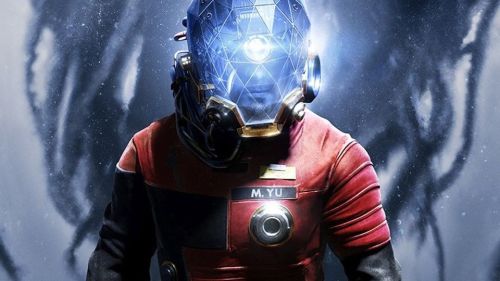
    In the trailer, we see footage of a man named Morgan repeatedly waking up in his apartment, and gradually looking more and more worse for wear each time. There’s the insinuation that he’s become part of some dreadful experiment, and we have gameplay footage of some eerie, black, smoke-like aliens scuttling around and looking creepy. We end with a sinister computer voice greeting Morgan and suggesting that it’s about to reveal some terrible truth.

    All well and good – but I’m baffled as to how this links to the previous game in any way at all. In fact, the developers explicitly say that it doesn’t. So why is it called Prey? The cynic in me suggests it might be a case of slapping a brand on something to boost sales, a la Metroid Prime: Federation Force. But even if that isn’t the case, the footage released so far seems far distant from the spirit of the first game.

    It all just feels slightly off.

    The spirit of Duke

    3D Realms, the makers of Duke Nukem 3D, helmed the development of the original Prey, and the mark of the Duke is all over that game. Not that it features titty bars and a cigar-chompin’ muscle museum for a lead, more in the sense that it’s surprisingly playful for a game with an outwardly grim plot.

    An organic spaceship called The Sphere is harvesting life forms throughout the Galaxy to either mulch into fodder or genetically and cybernetically manipulate into becoming slaves – so a bit like Mass Effect then, except that Prey came out a year before that game. But whereas Mass Effect is all shiny spaceships and galactic politics, Prey is like a B movie horror film, complete with gags and grisly effects. Near the very beginning, for example, you discover what’s been happening to some of the kidnapped humans – an enormous steel machine spattered with blood is winching the screaming victims into position and then skewering them with ridiculously large spikes, before clamping a metal hood over them and chewing up the remains. It’s hideous and shocking… But also kind of funny. It’s funny because it’s just so ludicrously over the top. (Skip to the 5:00 mark in the video below to see what I mean.)

    There are moments like that all the way through Prey. It was an astonishingly good looking game at the time of its release, a proper AAA title in terms of graphics, but it had an anarchic, OTT sensibility that gave it a real indie feel – like a genre movie made by a bunch of uni kids that ended up becoming a mega hit.

    It’s also very, very silly – and it knows it. At one point early on you get shrunk down and placed on a tiny planet with its own microgravity inside a display case. Then a guard spots you and decides to give chase by shrinking himself down too, and so ensues a Benny Hill style pursuit as you circle around and around this tiny sphere. Can you imagine the same thing happening to Commander Shepherd? (Skip to the 5:30 mark in the vid below.)

    Another example is the gravity walkways – white paths that let you walk up walls and across ceilings. They don’t really make any practical sense whatsoever, but they’re an awful lot of fun, especially when you’re attempting to fight enemies above and to the side of you. It leads to a pleasing sense of vertigo as you quickly lose track of which way is up.

    Basically, the game embraces fun at every turn, while giving realism a sideways squinty look – and it’s all the better for it. I mean, one of the weapons is a lobbable crab.

    Inflated spleens with fangs.
    Inflated spleens with fangs.

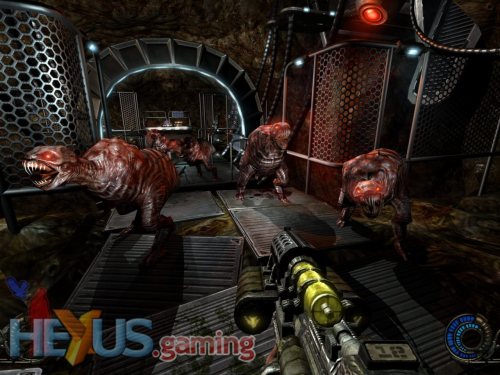
    Which brings me back to Duke Nukem 3D, a game that doesn’t even know the definition of realism but that probably has ‘FUN’ tattooed across its buttocks in magenta. Prey has the Duke’s DNA running right through it – even the aliens bear a passing resemblance to DN3D’s space pigs. In particular, the weird dog things that look like an inflated spleen with fangs could be right out of a Duke Nukem game.

    What makes you worry?

    All of which makes me worry that the new Prey sequel/remake/reimagining could be missing the point of what made the original so good. The trailer is breathtaking in its sincerity, a super-serious set-up for what looks like a space conspiracy thriller. Its enemies are dark, mysterious and scary. It doesn’t look like the sort of game that has lobbable crabs in it.

    Yep, that's a tossable crab.
    Yep, that’s a tossable crab.

    More to the point, it doesn’t look like anything particularly new. One of the delights of the original game was the depth of ideas – the gravity walkways, the puzzles with portals (a full year before Portal made a whole game about them), the shrink ray, the fact that you could leave your body and enter the ghost realm to nip through walls and pull switches. I mean, you’ve got a bloody spirit animal – how many first person shooters do you see that in? It’s also worth mentioning that the main character Tommy was a Native American, and it’s still the only game I can think of that has a Native American in the lead. Indeed, Tommy’s voice actor, Michael Greyeyes, praised the sensitivity with which the character was conceived, comparing it with the way Hollywood regularly relegates indigenous cultures into a “single pan-Indian construct”.

    In other words, the original Prey was a breath of fresh air, something noticeably different from what went before. The impression I get from the ‘reimagining’, on the other hand, is of a game that doesn’t seem to offer anything new – and that might very well be taking itself a bit too seriously.

    Hey, wait! It might be good!

    Of course, this is all just mere speculation based on a tiny scrap of game footage. I’m sure that Arkane Studios know what they’re doing, and judging by how well Dishonored turned out, the franchise is probably in safe hands. The trailer is just what the studio and publisher want to show us, after all – the spleen dogs and shrink rays could be just out of shot.

    Next-gen coffee in the Prey trailer.
    Next-gen coffee in the Prey trailer.

    One point from the trailer that did make me think of the original was the loving detail that’s been put into Morgan’s apartment. It put me in mind of the ludicrously detailed bar that the original game opened with, featuring a fully working jukebox, flushing toilets, a massive mirror (something that was impressive at the time) and even a fully playable arcade machine with a reworked version of Pac Man called Rune Man. Indeed, so much work had clearly been put into that bar, which features in the game for all of five minutes, that I wouldn’t be surprised if it was one of the reasons why the original Prey took so long to make.

    Seeing Morgan wake up, grab a coffee and look in the mirror (mirrors again!) got me wondering whether that toilet is flushable, whether you can play around with that coffee machine and whether there’s a fully playable version of Rune Man on his laptop, just out of sight. Perhaps there are still plenty of silly, OTT touches – we just haven’t seen them yet.

    There’s nothing wrong with being serious – and in fact the original Prey had a shocking twist near the end – but it would be a shame if this remake forgot to add the fun.

  • I’ve been playing Pokémon Go for more than a week now, and I’ve yet to earn any Pokécoins whatsoever. I’m level 10, I’ve filled up a good chunk of the Pokédex, and I’ve fought in my fair share of gym battles, but I’ve yet to receive any sort of Pokécash for my troubles. It’s getting a bit frustrating.

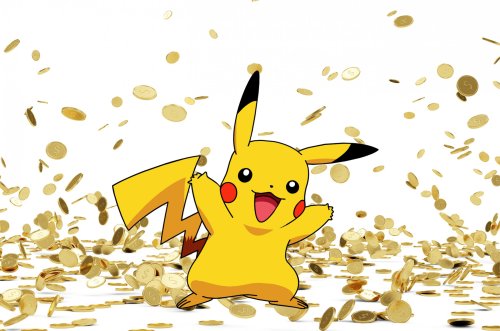
    A suspiciously rich Pikachu.
    A suspiciously rich Pikachu.

    There are various items you can buy with Pokécoins in the Pokémon Go shop – really useful things like extra egg incubators, storage upgrades and lures to attract Pokémon. Most of the items in the game can be picked up for free at Pokéstops, locations in the real world which spit out three to six random items every time you visit them. But as far as I know, lures and storage upgrades can only be obtained via the shop (or if they do appear as free item drops, they’re incredibly rare).

    You can buy Pokécoins, of course, with prices ranging from 79p for 100 to £79.99 for 14,500. But – supposedly – you’re also able to earn them in-game by holding onto gyms. For each Pokémon you have installed in a gym run by your team at the end of each day, you earn 20 Pokécoins. It’s a pretty paltry amount considering that the cheapest item in the shop costs 80 Pokécoins, and that earning those meagre 20 Pokécoins is colossally difficult.

    I partly blame my choice of Team Instinct. When you reach level 5, you’re asked to choose a team to join: Team Mystic (blue, mascot Articuno), Team Valor (red, mascot Moltres) and Team Instinct (yellow, mascot Zapdos). The decision was purely made on the fact that I like the colour yellow, and I’m rather fond of the legendary electric-type Pokémon Zapdos on the basis that it looks like an evolved version of Snoopy’s mate Woodstock.

    Zapdos: an evolved version of Woodstock.
    Zapdos: an evolved version of Woodstock.

    Seems like I chose the underdogs, though.

    People are already making fun of Team Instinct’s leader on Twitter, and a quick scan of the gyms near my house reveals that all of them are controlled by Valor or Mystic. Occasionally one will turn yellow briefly, and I’ll dutifully drop one of my Pokémon in to defend it, but within half an hour said Pokémon will be unceremoniously kicked out. EVERY. SINGLE. TIME.

    I even spent a good while taking down a gym in the park the other day and installing my all-conquering Snorlax as its supreme leader, only for it to turn red again THE VERY MOMENT I WALKED AWAY. It’s basically impossible for me to earn any Pokécoins.

    It turns out that Team Instinct are very much the Liberal Democrats of the Pokémon world - perennially in third place.
    It turns out that Team Instinct are very much the Liberal Democrats of the Pokémon world – perennially in third place.

    The way gyms work is that if you keep training your Pokémon at your own team’s gym, you can level it up to allow you to install more Pokémon in it. At level 9, the maximum, 9 Pokémon can be placed in a gym, and any attacking trainer will thus have to defeat 9 Pokémon in a row with their team of 6 Pokémon.

    The thing is, the highest gym level I’ve seen is level 4, and it’s relatively trivial for a trainer with sufficiently powerful attacking Pokémon to take down any gym. The number of Team Instinct gyms in Edinburgh may be vanishingly small, but I see the Valor and Mystic gyms regularly changing colour too. Which means that NO ONE is earning any Pokécoins, because gyms have to be controlled by one team for at least a 20-hour stretch (I’ve heard it’s 21 hours) to pay out any money.

    I very much doubt that this Weepinbell will last long at this level 2 gym.
    I very much doubt that this Weepinbell will last long at this level 2 gym.

    The only way to really earn Pokécoins is to get together with a group of high-level players on your team, then pick a single gym and tirelessly boost it up to level 9, installing extremely powerful Pokémon. Then it would be a case of returning regularly to keep the gym prestige topped up and stop it falling to another team.

    But this basically means that only really high-level players have any hope of earning Pokécoins, and they also need a group of similarly high-level friends on the same team. But right now, so many people are playing Pokémon Go and constantly taking down each others’ gyms that it’s absolute carnage out there and no one is getting a Poképenny.

    "Daddy, what did you do in the Pokémon Wars?"
    “Daddy, what did you do in the Pokémon Wars?”

    In other words, if I want that damn storage upgrade, I’m going to have to damn well pay for it.

    And yes, I know the game is free, and it’s ridiculous to be complaining about not getting free stuff in a free game, BUT I’M DOING IT ANYWAY.

  • FeyenoordI’ve played Pro Evolution Soccer every year since I was a teenager who was just about to start studying at uni. To put that into some context I am now in my early thirties and have been working in my (perhaps poorly) chosen career for more than a decade.

    That’s a lot of life stages Pro Evolution Soccer has been around for and with how good the game has been in recent years there’s no sign of it going anywhere. Unless Konami decides to do a Konami and decide its done with video games again, that is. Bar that though I don’t see myself dropping off the PES bandwagon any time soon.

    For good reason too; the PES 2016 has delivered a plethora of “oh yeah” moments this year. Perhaps more than any game since PES5 way back when.

    Sure the Euro 2016 update may have been a great way to retcon the miserable road the Netherlands have had since the World Cup, but taking my beloved Feyenoord to the top of the Eredivisie is still where it’s at for me.

    And taters deep into Tits McGee’s tenure at the club, things are going from strength to strength at De Kuip. Captain Kuyt is having a whale of a year, Korean import Yun Il-lok is running rampant in the midfield, and the defence is rock solid backing up the safe as houses Vermeer. Life is good sitting at the top of the table and well clear of second-placed PSV Eindhoven.

    And it’s goals like the one below that win matches, as a sneaky cross finds the head of Vilhena, and the back of the net. Nothing left to say but “What. A. Header!”, really.

    https://twitter.com/SaundoAU/status/756431975544610817

    No other games deliver quite the same feeling sports simulations do. Which is why no matter what else is sitting underneath the telly waiting to be played, I’ll always find time to get my virtual sport on. Even if they don’t quite capture the magic and unpredictability of the sports they’re based on.

    Still, if this is as good as it gets for the time being, that ain’t half bad.

  • Welcome to Spiffing Reads, a new section on A Most Agreeable Pastime where every Friday we list gaming articles that have caught our eye this week. We’re always on the lookout for interesting gaming sites, so if you’ve found a brilliant blog, or you’ve read something amazing this week, please share it in the comments. OK, here we go!

    behold-the-kickmen-trailer-620x349

    First Footage of the Football Game From the Man Who Knows Nothing About Football (Kotaku UK)

    I love the idea behind Behold the Kickmen – it’s wonderfully silly. After you’ve watched the video in this link, make sure to click the first link and have a read of the original story – Dan Marshall’s responses to tweets are priceless.

    How the internet was invented (The Guardian)

    Despite the fact that I use the internet every day, I only had the vaguest of ideas of how it came to be. Well, this is how, as it turns out.

    The Unexpected Joy of Repetition in Video Games (Kotaku UK)

    Games are often criticised for lengthy grinding or repetition. But sometimes this is also why we play them.

    captain n

    10 Video Game Cartoons That You’ve Completely Forgotten About (Digitiser2000)

    I fondly remember Captain N: The Game Master – essentially a massive advert for Nintendo, but fun nonetheless. It took me a long time to work out what game Mother Brain was from, having never heard of Metroid when I first watched it. And in those pre-Internet days, it took even longer to work out where the mysterious Eggplant Wizard hailed from.

    Car crash trauma depicted in VR (BBC News)

    The emergency services team in Leicestershire is doing their best to scare the crap out of young drivers with VR footage of car accidents.

    Premium Early Access (Aidy’s Gaming Rambles)

    Some well made points here in an incisive article. Why should gamers pay full price for games that are unfinished or light on features at launch? Perhaps we need an equivalent of Steam’s Early Access on consoles.

    17052450297_4a910f5106_o.0.0

    I’ve Had Enough of 90’s Gaming Nostalgia (OnlySP)

    There’s something of a love affair with the 1990s in gaming at the moment, particularly with the launch of Mighty No. 9 and Pokémon Go. But is this a case of rose-tinted spectacles?

    Actually, Pokémon Go isn’t really a Nintendo game (Eurogamer)

    This article on Eurogamer took a fascinating look at who actually owns Pokémon Go and how Nintendo is involved in it all. I presumed that Nintendo was behind the game, but it’s not quite as simple as that…

    And speaking of Pokémon Go, here’s a round up of the most interesting Pokémon stories I came across this week:

    Can you learn anything playing Pokemon Go? (Videogamer.com)

    Pokédex Battery Case is The Most Authentic Way to Play Pokémon Go (Kotaku UK)

    Pokémon Go Is Bringing People Together (Kotaku UK)

    The 7 stages of Pokemon Go addiction (VG24/7)

    Finally, here are a couple of bits of Pokémon Go fan art that caught my eye. The first is a series of alternative loading screens from artist Magdalena Proszowska – click the link to see them all.

    magda-proski-poke02-s

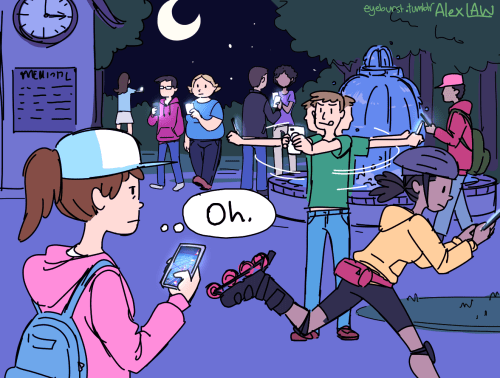
    And finally, this brilliant Pokémon Go comic strip by Alex Law:

    tumblr_oaa7t7O5u11s25tzoo3_500tumblr_oaa7t7O5u11s25tzoo1_500

    tumblr_oaa7t7O5u11s25tzoo2_500


    Spiffing Reads is a regular feature where we pick out the best gaming articles of the week. If you’ve read anything interesting, please let us know in the comments.

  • metroid_federation_force

    Metroid Prime: Federation Force has come in for a bit of a kicking from Nintendo fans, which seems to have taken the company somewhat by surprise. In hindsight, perhaps it shouldn’t have come as such a shock.

    By all accounts it looks like quite a fun game – a cooperative 3DS shooter with added cosmic football for good measure. But as a Metroid game it falls somewhat short of expectations. Fans have been clamouring for a new Metroid game for years – the last entry in the series was the divisive Metroid: Other M back in 2010, and there was an expectation that a new Metroid game might arrive for the Wii U, perhaps one that took advantage of the second screen for scanning and shooting. That expectation peaked this year, which is the 30th anniversary of the Metroid series. What better time to bring out a new game, perhaps even one that could beat the high of Metroid Prime?

    Well, we did (or will) get a new game in 2016 – but it’s a co-op shooter that has nothing to do with Samus Aran, and doesn’t really seem to have much in common with any of the other games in the series. Cue the sound of a deflating balloon.

    To be fair, Federation Force does have a precedent of sorts. Metroid Prime Hunters was a first-person shooter for the DS with a multiplayer element, but it wasn’t amazingly well received – and it has the lowest sales for any entry in the series, bar the Metroid Prime Trilogy rerelease. So it’s probably not the best route to go down if you’re planning a new Metroid game.

    MPFF-Gameplay

    But as I said above, as a game in it’s own right, Federation Force looks quite fun. If it was launched as a new IP, I suspect it would have received a much warmer reception. But launching a new, untested IP is a risky business for a company – attaching the game to a brand is a much safer bet, and will probably result in much higher sales.

    I mean, you only have to look at Pokémon Go to see the logic of this. The game is essentially a reskin of Ingress, a game released by Niantic in 2012 that seems to have been modestly successful, but that pales into insignificance nest to the phenomenal success of Pokémon Go. Nifty game + appropriate branding = ker-ching!

    I suspect what may have happened in the case of Federation Force is that it never started out as a Metroid game. This is just a hunch, but I reckon one of the dev teams at Nintendo came up with a fun coop shooter, and at some point someone decided it needed to be attached to a brand to generate sales. Looking at Nintendo’s brands, very few of them fit with the model of a first-person shooter – many are just too ‘kiddy’ to fit with the game’s ethos. Metroid is one of the few brands that can be coaxed into becoming a coop shooter, so it’s no surprise that Federation Force ended up as a Metroid game.

    But of course, it has left fans who were hoping for a ‘full-fat’ Metroid game disappointed. And many have pointed out that coop shooting is very much against the ethos of Metroid, which built its reputation on solo exploration. I mean, it even spawned its own genre – Metroidvania – and the fact that Federation Force isn’t a ‘Metroidvania’ game seems to indicate that perhaps the branding isn’t so appropriate after all. Sure, Metroid is ‘adult’ and ‘scifi’, unlike many of Nintendo’s other brands, but it’s also synonymous – literally – with Metroidvania-style exploration.

    Then again, that’s not to say brands can’t be diversified. I mean, look at the insane range of games that Mario has appeared in, everything from tennis to football to art packages. There’s undoubtedly room for diversifying the Metroid brand across other genres – but in this case that comes at the expense of the Metroidvania-style game that fans have patiently been waiting more than six years for (or nine years if you want to skip Other M and go back to Metroid Prime 3, the last first-person game).

    Perhaps it’s a case of right brand, wrong time. If Federation Force was released soon after an entry in the ‘main’ Metroid series, I have no doubt it would be warmly welcomed. But coming when it does, thrown out into the hot white ball of hungry Metroid fans’ pent-up frustration, it’s no wonder that people were upset – it’s the equivalent of flinging meagre crumbs from the high table.

    tabane-federation-force-spot2

    Will this anger hit sales? Possibly. Would the game have sold more if it had been launched as a new IP rather than a Metroid game? Probably not, but who knows? As it is, Federation Force has given Nintendo’s reputation a bit of a knock – and reputation is much harder to measure, and harder to accumulate, than games sales.

    Still, I’m sure all will be forgotten and forgiven as soon as a new ‘proper’ Metroid game is announced – and I’m sure Nintendo knows that, too.

    Buy Metroid Prime: Federation Force on Amazon (and we get a little bit of cash if you do).

  • I love old advertisements and marketing material. They in many ways embody a time and place better than anything else around; mainly because they’re specifically designed to capture and appeal to society’s psyche en masse. In the 1990’s video games were at the cutting edge of consumer trends and so are cracking little depictions of what was ‘cool’ at the time. Nintendo’s own marketing efforts around the Game Boy are some of my favourites and are nothing short of brilliant if not cringeworthy. And of course everyone remembers the all-encompassing “Mortal Monday” marketing push behind the arrival of Mortal Kombat on home consoles.

    But having looked through a metric shit-tonne of old retail advertisements for video games in the 1980’s and 1990’s, I can unequivocally say that they absolutely take the cake in a shithouse kind of way. So shithouse that it’s hard not to love them.

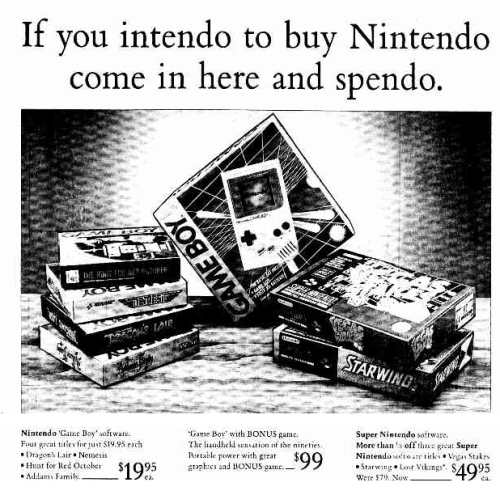
    So what rhymes with Nintendo?

    GB_1994_ad

    I can imagine a marketing executive at the Grace Bros. Department store went home proud as punch on the day he thought up this little ditty. Well done, son.

    On a side note: the weird-but-surprisingly-bonza Dragon’s Lair branded version of ZX Spectrum game Rollercoaster for a cool $19.95 is a right bargain!

    Source: [1994 ‘Advertising.’, The Canberra Times (ACT : 1926 – 1995), 7 September, p. 15, viewed 18 July, 2016]

  • I think the PS Vita is a speccy piece of kit. And being a bit partial to the odd handheld system since the days of the Game Boy I’ve amassed quite the game collection. Problem is my Vita never fulfils its life purpose to be, well, portable.

    It all started off okay, and at a time where the 3DS was gathering dust, there I was on the bus with my brand-spanking-new portable system playing a shiny new Wipeout game. All was good in the portable gaming cosmos as it had always been. But after a while I just fell off  – or perhaps fell out of the habit of – taking it with me. Sure, I’d play it at home in front of the telly while the cricket or whatever was on, but it never managed to find its way into my bag as I’d rush out of the door in the morning.

    For good reason too,  because while the system itself was friendly enough for short bursts the games largely were not. Sure like the Playstation Portable before it, the Vita was great for 2D fighting games, which in turn are bloody cracking on-the-go. But you can only beat the crap out of a bloke so many times before it gets old. At which point I’d reach for something with a little more meat on it to get my gnashers into.

    And what a catalogue the PS Vita has accumulated over the years. It’s so good that, between Experience Inc’s prolific output of old-school dungeon crawlers and one-off classics like Killzone: Mercenary, I have never really been left wanting. Which is why it’s so disappointing that I’ve never really let it soak in the sun in the great outdoors, instead confining it to the bedside table, relegating it to a somewhat nocturnal existence.

    That is until I splurged on the remake of the second Earth Defence Force; aptly titled Earth Defense Force 2: Invaders From Planet Space. Now I’ve come to really enjoy the Earth Defense Force series since its ballsy budget release on the then-futuristic Xbox 360 not terribly long after its release. Earth Defence Force 2017 was an outright cracker  of a game that ought to have been downright shithouse.  It’s kitsch-as-hell premise combined with its absolutely brainless gameplay resonate with me much more than I care to admit; particularly when anything more than “aim and shoot” is just a bridge too far for my brain to deal with. Whether it is shooting ants or spiders, or any of the myriad of 1950’s sci-fi inspired alien machines, it never really strays beyond being a quick and dirty arcade shooter. And sometimes that’s fair dinkum all I’m after.

    And here’s the thing: Earth Defense Force really feels like it’s in its element on a handheld. Despite most of my history with the series being confined to my telly, its short missions and mindless action are absolutely perfect distractions for travelling or just the odd minute or two of downtime throughout the day. Earth Defense Force 2 may have been born as a budget home console game, but after the 15 or so hours I’ve spent preventing the destruction of Earth in the palm of my hands, I might find it hard going back to the big-boy console games.

    At a time where mobile gaming is ridiculously relevant, and Pokemon Go is ‘the shit’ so to speak, it’s good to be enjoying a favourite pastime from long ago. For years I’ve been searching for the game that would spark that natural affinity I have for handheld systems. Earth Defense Force 2 on the PS Vita fits that bill perfectly. It may not be as fancy as Pokemon Go, or as simple as a smartphone game, but it is reminiscent of the sorts of games that made portable games so appealing in the first place. I’ll freely admit that Earth Defense Force 2 isn’t the greatest game in the world, but at the right time and in the right place, it can be the perfect game to whet your portable gaming appetite.

    EDF2 Vita

  • For pretty much the entirety of yesterday afternoon I was locked out of Pokémon Go thanks to server problems. Every time I tried to log in, I was hit with the ‘Unable to authenticate’ error message, and it didn’t resolve itself until the evening. It’s pretty frustrating, and the lack of updates from the developer is also annoying. It’s hardly the first time it’s happened.

    Not only that, it seems my version of the game is afflicted by a fairly common bug – the three-step glitch – which means that all of the Pokémon are shown as three steps away. This makes tracking them basically impossible.

    img_5342
    Apparently all of the local Pokémon are three steps away – but nearer Pokémon should have fewer steps underneath them.

    I’m sure that these glitches and server issues will be fixed fairly quickly, but I’d appreciate some updates and assurances from Niantic in the meantime. It’s been a pretty rocky start for Pokémon Go in terms of stability issues, but the fact that people are persevering in spite of this shows the strength of the game’s appeal. The below tweet from Kotaku UK editor Keza MacDonald pretty much sums up the situation.

    https://twitter.com/kezamacdonald/status/755080035355197440

  • I was struck by just how many people I saw playing Pokémon Go on my cycle into work – I spotted at least ten people walking around, glued to their phones, occasionally pausing to do a telltale swipe towards an imaginary monster. Then again, this is nothing compared to the huge mobs filmed in New York’s Central Park, all rushing to catch a rarely seen Vaporeon.

    But still, there’s plenty of evidence of the phenomenon that is Pokémon Go on the (occasionally) sunny streets of Edinburgh. Indeed, the UK servers crashed at the weekend, such is the demand to play the game – and it’s the first time I can remember a mobile-game server outage making it into the main pages of The Guardian.

    But is the game, you know, actually any good? I downloaded it on Sunday and went on my first Pokémon-hunting expedition today – and it was pretty damn fun. Looking down at your phone to discover the world around you is filled with invisible monsters, gyms and Pokéstops is quietly thrilling. It’s the doorway to a hidden world, and what’s not to love about that? No wonder people are going nuts about it.

    The game itself is pretty simple – just walk about and wait for the telltale buzz that tells you a Pokémon is near, then time your swipes carefully to land a Pokéball on its bonce, and you’re done. I’ve managed to catch all of the creatures I’ve found so far, so I don’t know whether I’ve just been lucky or whether you can always capture a Pokémon when you hit it with a Pokéball, regardless of its strength or the Pokéball level.

    In fact, my confusion about this is a good indication of just how little the game tells you about what you’re supposed to be doing – after a very brief intro from Professor Willow, you’re pretty much left up to your own devices with few explanations. To be frank, after the tedious hand-holding of the main Pokémon games, it’s a real breath of fresh air. I still don’t know how gyms work, or candy, or evolutions, but I’m looking forward to figuring it out on my own.

    I’m still only on level 3, with just a handful of Pokémon to my name, but I’m looking forward to many a lunch break spent scouring the park for pocket monsters. And judging by the groups of twenty-somethings roaming the Meadows with their phones outstretched today, I won’t be the only one.

    edinburghpokemongo-620x413

  • Ghostbusters-2016

    I’m off to see the new Ghostbusters film tonight. I’m cautiously optimistic that it will be good after reading a four-star review in The Guardian, in which the reviewer was at pains to point out that the movie is a damn sight better than the bafflingly mediocre trailer. Seems this could be one instance where for once the best bits of the film aren’t just stuffed into the trailer, leaving the main feature sagging empty.

    For the record, I think it’s a really interesting move to go for an all-female cast, and I’m intrigued to see how the film turns out. I would have loved to see Ghostbusters III with the return of the original cast – but with the death of Harold Ramis in 2014 that is never going to happen. And judging by the ongoing concerns that Bill Murray had about the scripts for the third movie – which he kept refusing to take part in – perhaps it’s just as well that it didn’t happen.

    But that version of Ghostbusters III actually DID happen, in a way. Ghostbusters: The Video Game, released in 2009, not only reunited the original cast (with the notable exceptions of Sigourney Weaver and Rick Moranis), it also offered a plot that paid homage to the first two films at the same time as pushing things forward with new characters. There’s a great feature on the making of the game over at Kotaku UK.

    ghostbusters 2009 video game library

    Considering it was based on a film license, Ghostbusters: The Video Game was surprisingly brilliant – clearly a lot of love went into making it, as evidenced by the involvement of the principal actors (including a brilliant turn by William Atherton as the odious Walter Peck). The ‘busting’ mechanics work a treat, with the proton beams crackling and sparking just like in the films, as you wrangle ghosts into traps. The collectibles, too, are worthy of a mention – whereas many games are content to let you gather several hundred identical objects (I’m looking at you, Assassin’s Creed), Ghostbusters saw you collecting unique haunted artefacts, each with an interesting and often funny backstory. Shock horror: a video game with collectibles that are actually worth collecting.

    Back in 2010, I did a podcast with Ian over at 101 Video Games that gave this game its dues – you can have a listen here (or get it through iTunes here).

    Ghostbusters: The Video Game from 2009 - the Ghostbusters III that never happened.
    Ghostbusters: The Video Game from 2009 – the Ghostbusters III that never happened.

    Although it’s probably too much to expect really good games to be made from film licenses, I’m still shocked by how poorly Ghostbusters has been served as a game franchise over the years. The 2009 game was a triumph, but it’s very much the exception to the rule. Digitiser2000 has a run down of all the Ghostbusters games released over the years, and it’s pretty much wall-to-wall dross.

    Many people seem to hold the 1984 C64 game in high regard, but I remember thinking it was thoroughly awful back in the eighties. It did that weird thing that a lot of eighties film licenses did (e.g. Batman, Robocop, Live and Let Die), where each level was essentially a completely different game in a completely different style. Rather than providing variety, this portmanteau approach just irritated me – and it meant the quality of the game varied wildly from level to level.

    I still don’t know why they insisted on this approach. Surely it’s more work to create such wildly varying gameplay? It would make more sense to concentrate on one format – say a driving game – and just make that really, really good, rather than spread the developers’ talents thinly.

    Of course, the other approach that film licenses tend to take is to rush out something utterly slapdash in time for the film’s release – which sadly seems to be the case with the 2016 Ghostbusters game, judging by the scathing reviews.

    As I said above, there’s only ever been one good Ghostbusters game – and it came out in 2009.

  • MAIN-Pokemon-Go

    This quote from a Eurogamer article published today really leapt out at me:

    “And you could even argue – justifiably, I think – that Pokémon Go is in the process of rehabilitating mobile gaming itself with a whole sector of gamers that had grown disenchanted with it, and who form a natural constituency for Nintendo’s games. (People like the readers, and authors, of this website.)”

    It’s bang on the money. When I got my first smartphone – an iPhone 4 –  I approached the App Store like a kid in a sweet shop, and spent many months happily sampling games like Angry Birds, Tiny Wings and Jetpack Joyride, while revisiting classic games like Monkey Island, Secret of Mana, Gunstar Heroes and Broken Sword. But gradually I became disenchanted with the games on offer, and in the past year I’ve drifted away from the mobile gaming scene entirely.

    There are multiple reasons why. Many of the classic games don’t hold up terribly well on mobile: for example, Gunstar Heroes and Secret of Mana were nigh on unplayable using the touch screen. Monkey Island, on the other hand, worked brilliantly with the touch screen, but the game itself wasn’t as funny or clever as I remember it being when I was 14.

    Games that are built for specifically for mobile phones tend to veer between being too ambitious and involved, and thus not suited to short sessions on a small screen, or they’re too simple and repetitive, failing to keep my interest for very long. One of the only games that I’ve kept coming back to is Threes, which was one of my games of the year in 2014, and I’m still playing it now. But that game is very much the exception, rather than the rule – I can’t think of any other mobile games I’ve played in the past few months.

    And then, of course, there’s microtransactions and free to play. I’m not entirely against free-to-play games (indeed, I warmed to Pokémon Shuffle after a while), but when every game you play is constantly nagging you to buy stuff, it does wear you down after a while. It’s certainly made me wary of downloading ‘free’ games from the App Store – and one of the main things that attracted me to Threes was that I could buy it outright.

    Pokémon Go is, of course, free to play, and comes with those dreaded microtransactions. But despite this, I’m planning to download it, because it seems to be one of the few ‘proper’ games that also takes advantages of the strengths of the mobile format. There’s a solid base for a game here, along with plenty of scope for long-term play – I mean, how many Pokémon are there now? But it also plays to mobile’s strengths in that it enables short play sessions and utilises functions that are unique to phones. It seems to be the occupy the perfect space between ‘proper’ games and bitesize ‘gaming on the go’.

    And it’s pretty much laser-targeted to my demographic – older gamers with a nostalgia for Pokémon but who aren’t necessarily that into mobile games. Yet it also appeals to kids who want to hunt for Pokémon in the playground with their friends. No wonder it’s raking in an estimated $1 million to $2.3 million a day.

  • 99443-uncharted-drake-s-fortune-playstation-3-front-coverI finally got around to getting a PS3 in December 2013, and since then I’ve been gradually playing through some of the system’s exclusives. But with the recent release of Uncharted 4 on PS4, I thought it was high time for me to finally sample this series for myself. So I dutifully loaded up the first game, Uncharted: Drake’s Fortune.

    I remember that when this game came out in 2007, Sony was playing catch-up with Microsoft. The PS3 had launched about a year after the Xbox 360, and sales were slow to start. Sony was in need of killer platform exclusives to line up against Microsoft’s impressive roster of games (Uncharted went head to head with Halo 3). At the time, I pretty much dismissed Uncharted as ‘Tomb Raider with a bloke’, a seemingly desperate attempt to cash in on the well-worn subgenre of Indiana Jones-style adventure. But even if it struck me as entirely unoriginal, there was no denying that Uncharted was exceedingly pretty. I remember cooing at screenshots of the rusting submarine in the jungle and thinking it was an impressive showcase for the PS3 – as well as an iconic image.

    Uncharted Drakes Fortune submarine

    Seeing that submarine in the game itself was no less impressive. And having seen that image so many times in the intervening decade, I had the strange sensation that I’d been there before, even though it was my first time playing the game. Having said that, few of the other locations really stand out in my mind now that I’ve finished Uncharted – it’s all a blur of jungles and ruins, with only the creepy medieval labyrinth sticking out as something that seemed unlike anything I’d seen before.

    Playing the game itself was something of a chore at first. I’d gone in expecting it to be just like Tomb Raider – which it pretty much is, when it comes to leaping about on ruins – but the shooting sections are completely different. I ran into my first gunfight with pistols blazing, leaping about all over the place, just like I’d do in Tomb Raider – and I died very quickly. Getting through the shooty bits felt like a war of attrition, and by the point that I got to a huge jungle clearing stuffed full of seemingly endless guards, I was ready to give up on the game. The controls felt clunky, and I kept standing up by accident instead of sneaking around in cover, plus I learned that the only way to win most fights was to stay behind a wall and carefully pick off the bad guys. Which felt pretty boring, to be honest.

    uncharted drakes fortune cover shooting

    But not long after I almost gave up, something clicked. I gradually began to work out when I should stay in cover and when to risk rushing the enemy. I started getting better at placing grenades where I wanted them to go, and using height to my advantage. I began to realise that the gunfights were puzzles with various solutions, some easier than others. I still had to restart some of them many, many times, but I was actually starting to enjoy them, rather than willing them to end.

    There are still too many gun battles, though: the kill count in this game is nothing short of astronomical. I must have murdered thousands of mercenaries by the end. Nathan Drake is essentially a one-man army, a tooled-up, beefcake hero of the sort to be found gracing the covers of straight-to-video eighties action flicks. Whereas the gunfights in Tomb Raider were occasional, and often against exotic animals or supernatural beings, Uncharted sees you mowing down fields of soldiers. It doesn’t really make any sense.

    And another example of logic being thrown out of the window is the way that the bad guys keep showing up in locations that are meant to be inaccessible. You spend a large part of the game solving puzzles and leaping across chasms to reach secret chambers that the enemy supposedly doesn’t know about, only to find an army waiting for you. It’s ludicrous.

    But then again, the game itself never tries to be anything less than a hokey old adventure story, a tale of derring-do with a suitably square-jawed hero. Having said that, I was impressed with the characterisation – Nathan, Sully and Elena come across as likeable leads, and Drake drops some genuinely brilliant quips. And the story is told with aplomb, much unlike the Tomb Raider games. Whereas I barely understood what was happening in any of the first five Tomb Raiders, let alone the motivation of Lara Croft and her various nemeses, I always knew where I was going and why throughout Uncharted.

    That’s not to say the story is going to win any prizes, mind you. If you’ve seen Raiders of the Lost Ark then you’ll have a pretty good idea of what to expect. As I watched the final scenes of the game play out, I remarked to Mrs Merriweather that the storytelling and characterisation in this game were better than in many I’ve played. She regarded the cheesey dialogue being exchanged, the narrow escape, the almost kiss, the turnaround ending, the sail off into the sunset, and declared: “This is rubbish”.

    uncharted ending

    I’ve got to admit she has a point. We could have easily been watching any old action flick from the eighties, but with mouth movements that don’t quite match up to the dialogue, and skin that appears unnaturally shiny. The script may be better than most games of its time, but it’s hardly Oscar-worthy – and us gamers have put up with so many shitty stories for so long that our standards have been suitably lowered.

    But as a popcorn flick, an action romp, a swashbuckling adventure with a likeable lead, Uncharted undoubtedly works – just switch your brain off at the door.


    Better Late Than Never is a regular series in which we play through landmark games many years after their debut, after missing them the first time around. Does the praise heaped on these famous games hold up in hindsight?

  • pokemon go

    When I’m not writing video game articles, I’m probably doing scientific copy editing, and it was in just such a capacity that I found myself subbing news articles for New Scientist earlier this week. One of the articles was on Pokémon Go, because of course it was – that’s pretty much the only thing anyone seems to be talking about on UK news outlets this week (apart from, you know, the fact that we now have a new prime minister and the country is teetering on the edge of Brexit-fuelled economic meltdown).

    The slightly longer online version of the New Scientist article (which I didn’t edit) is here, but the print version I worked on had the trimmed down title of “Pokémon return”. The opening line was “It’s the 90s all over again”.

    Now, clearly Pokémon Go has been an enormous success in the few days it’s been on sale. And it has obviously sparked a similar wave of fanaticism and devotion to when the original Red and Blue games shipped in the 1990s. But it was quite strange for me to read about Pokémon ‘returning’ – they never went away.

    There’s been a top-selling Pokémon game pretty much every year since the series’ debut, and two of the most recent entries, Pokémon X/Y and Pokémon Omega Ruby/Alpha Sapphire, sold a pretty damn impressive 14.7 million and 11.8 million units, respectively. As of February 2016, the Pokémon series has sold a staggering 279 million copies – and that figure doesn’t even include spin-offs. Pokémon Centers regularly draw huge crowds in Japan, and fans always go crazy at the announcement of new Pokémon.

    So, all in all, it sounds quite odd to my ears when Pokémon are described as ‘returning’. But then again, I’m pretty plugged in to the gaming scene – as far as the mainstream press is concerned, and the regular people on the street, they probably haven’t heard anything about Pokémon since 1998. And Pokémon Go is certainly a brilliant filler of column inches as we lurch forward into the newspaper ‘silly season’, what with tales of armed robberies at Pokéstops, Pokémon hunters finding dead bodies, and all sorts of other crazy stuff.

    Hey fellow Pokémon fans, we’re mainstream again!

  • Most agreeable

    Happy Birthday us! On this very day five years ago, Sir Gaulian and I first embarked on our grand Victorian gaming adventures – and what a merry time it’s been.

    Many of the Victorian stylings have been dropped along the way, and the ambitious Choose Your Own Adventure game I started to create using nothing but various WordPress pages was quickly abandoned (although bits of it are still out there if you know where to look) – yet we’re still going strong. Arguably stronger than ever, I reckon.

    It’s interesting to take a look back through the stats and see some of the hits and misses we’ve had along the way. Visitor numbers got off to a slow start back in 2011, but the article ‘Bikini Warriors: The Sorry State Of Female Representation in Video Games’ was one of our biggest early hits, along with retrospectives on Psi-Ops and Shadow of the Colossus, as well as a look at ‘musou’ games.

    2012 saw Sir Gaulian’s excellent time-travel post ‘Past Present, Future Present and Past Future‘ rack up an enormous number of hits after it was featured on ‘Freshly Pressed’, and my controversial thoughts on CoD Modern Warfare – ‘This Is Just A Modern War Song‘ – also proved popular. The following year, Sir Gaulian scored another hit with ‘The Two Dollar Coin‘, a musing on the value of gaming ‘loot’, and my review of the failings of Far Cry 2 also racked up the views.

    In 2014, ‘ZombiU: The Scariest Game I’ve Ever Played‘ topped the hit chart, followed by Sir Gaulian’s wonderful ‘Stealth games can learn from human behaviour in public toilets‘, while in 2015 we had our best year yet, with total yearly page views smashing through the 20,000 barrier for the first time. A couple of posts stood head and shoulders above the rest in terms of hits, namely ‘BJ Blazcowicz, the Nazis and the Aryan race: how Wolfenstein: The New Order tackles the rise of the far right‘ and ‘Big Ant Studios is swarming America’s cultural monopoly‘, followed by a look at Amiga piracy – ‘The hand and the pirate‘ – and ‘The Gentlemen decide: the most agreeable games of the generation (Xbox 360, PS3)‘, in which we spent many enjoyable hours deciding the merits of our favourite games.

    This year, meanwhile, the most popular post so far is ‘Microsoft, I’m so confused‘, which got picked up by N4G as part of their E3 coverage and accrued some, ahem, ‘heated’ comments from Xbox fans.

    Here’s looking forward to the next five years – we’re hoping to make the site even bigger and better in the future. And if you want to look back to see where we’ve been, I’ve activated the Archives in the side column so you can do just that. Thanks to all our regular readers, and thanks especially to those who have been with us since the beginning. See you in 2021!

    Lucius & Sir Gaulian

  • DOOMPS1“You get what you’re given” was a pretty common parental phrase in my household growing up. Living with two siblings – both of whom had white-hot tempers – ensuring fights over that extra serve of custard or that extra lamb chop were prevented rather than contained. Because of this I’m a pretty easy-going chap who really just takes things as they come.

    I tend to take that same philosophy to video games, and as long as they’re entertaining, job well done as far as I’m concerned. I don’t need to fiddle with things not called inverted look, and I almost always assume that the people that made the game know best. I’m the same with game control and rarely if ever visit the menu that deals in all things interface. I just took what I was damn-well given.

    But there was one game where I’d manually go in and customise the controls. Doom on PlayStation is still to this day one of my favourite games and one that I spent an inordinate amount of time with as a lad. But looking back it’s a reminder of a couple of things that did my head in at the time. The first was that passwords are huge pains in the arse that had no place on a system that has memory cards (unless the password happens to be IGOTPINK8CIDBOOTSON). And the second was that I was picky-McGee about the controls.

    DOOM_PS1_Passwords
    My diligence in writing down codes is unmatched

    And that’s mainly because the default controls were – aside from the perfectly fine shoulder buttons – absolutely shithouse. It’s like they got one of those idiots pretending to play games on the telly to actually come into the studio and design the control scheme.


    Utterly stupid, really
    Utterly stupid, really

    Here’s why. Let’s just assume you’re a normal standard everyday human being with the angle of your right thumb being about 135° from the horizontal. Graphically that looks like this:

    135-angle

    Given this, it becomes clear that there are only two combinations of buttons that make it comfortable to do two actions at the same time: X and Square, and Circle and Triangle. Using the default controls, those two action combinations are Strafe On and Run; and Open door and fire weapons. Problem is, there are only a three actions that you would frequently want to do at any time in Doom: running, strafing and shooting.

    Since strafing is taken care of on the shoulder buttons, that leaves two actions: running and shooting. Problem is this would require your thumb to be at a 45° angle which – unless you’re double-jointed – is physically impossible. Basically, the default controls in PlayStation Doom make no sense at all.

    45degrees

    Firstly I’d start with triangle, which if you consider X as the default thumb position, is the furthest distance away. Given “strafe on” is effectively duplicated on the shoulder buttons, it would never be in use and so accessing it quickly was never going to be an issue. The second-least used action – or at least used urgently or in tandem with another action- is open door/use item and so was on circle.

    That left the two remaining and arguably two most frequent and most-often mutually inclusive actions in the game (excluding strafe): run and shoot. Given the angle and bend of the thumb, it is easier to hold X while pressing square than it is to do the reverse. Considering the relationship between running and shooting, you are more likely to shoot while running, than run while shooting. And so it becomes pretty obvious that run will be X and shoot on square. And so like some sort of pedantic little shit I’d go in and change the controls before every session.

    It seems like a simple anatomy, But the more I think about why I preferred the Doom controls the way I customised them, the more I realised just how much thought goes into deciding control schemes and how we interact with the game.  Obviously I think PlayStation Doom’s were a bit rubbish, but the fact that have never felt the need to change any others is an outright bloody miracle, making control designers the unsung heroes of the games industry.

    And so I tip my hat to all of you.

    If you’re a pedant like me and have any weird control schemes, let me know in the comments below. 

    Club Doom