• The Forza Motorsport series has ballooned in terms of content over the last couple of iterations to include the likes of Formula E and NASCAR racing. Both of which I’ve ignored. This is generally because I find the idea of driving around ’round and ’round an oblong shaped track not particularly enticing. I’m sure there’s something to NASCAR: I’m just not sure someone raised watching Formula 1 and Touring cars will ever understand just what that something is.  Throw the sleep-inducing white-noise of a Formula E’s electric motor in the mix and it’s a decent way to fall asleep and not much else. Ask a women or man who loves the sound of a petrol-guzzling V8 engine what it sounds like and – if they’re like me – they’ll probably tell you it sounds like a Formula One with a serious case of laryngitis.

    Not much to see here, then. Well so I thought until I was engaged in an epic 20-minute battle between two other same-spec cars on the Daytona International Speedway. There were tenths or hundredths of seconds in it with any slight mistakes in racing line or grip would see the leader forfeit first-place. Suddenly I’d never been so excited to be behind the wheel of my ABT Schaeffler Audi Sports Formula E car.

    This all culminated in a swift inside overtake by the bloke in second-place at the end of the penultimate lap. Naturally, as I thumped the lounge next to me, I felt a bit like a frustrated Niki Lauda watching James Hunt sail by. As I gained my composure though – only a hair’s breadth away from the tail of first place – I realised if I pulled off the lap of my life I could take the lead back.

    Rush (2013) aka one of the best films ever made.
    Rush (2013) aka one of the best films ever made.

    And so I drove for my virtual life. Hands gripped tightly on the controller, I’ve never felt so fixated on a video game in my life. Finger on the throttle, I steered the car to within an inch of the perfect racing line, never more than a couple of centimetres from the back of the car in front.  On the last bend I spotted my chance and veered ever so slightly to the inside, knowing that any slight loss of tyre traction would slow me down. I was gaining ever so slowly but it was largely out of my control as I kept the car at top speed hoping the metres gained on that last bend would be enough.

    And it was. Just. As I took the lead just before the finish line in a photo finish.

    So drained was I after the race that I called it a night and headed off to bed. It’s no secret that I love shedding tenths of seconds off of lap-times, but this epic Formula E showdown was really something else.  So while I won’t be watching NASCAR or Formula E anytime soon, I certainly won’t be shying away from their events in Forza Motorsport anymore. Here’s to trying new things.

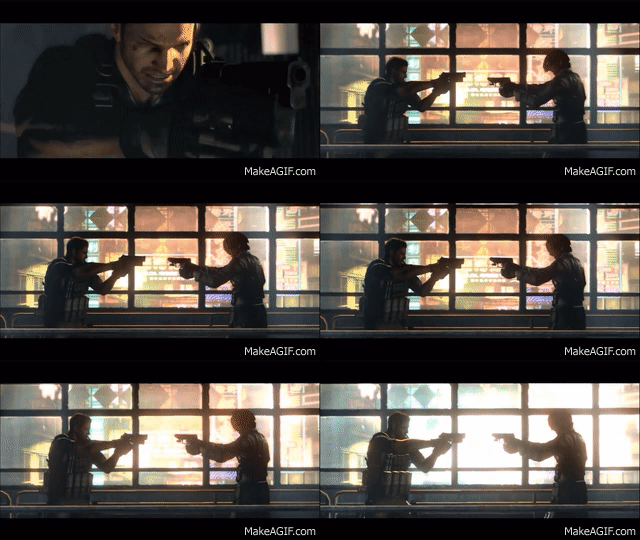
  • A couple of days ago I wrote about how it’s Resident Evil’s characters that make it so damned special; and how Resident Evil 6 is just one fantastical way to pack in as many of them from the game’s history as possible. It’s no secret that Leon and Chris have their own rather lengthy seperate campaigns in the game, but that doesn’t make the moment their paths cross over any less great. The fact that it’s the enigmatic Ada Wong that causes them to have respective guns pointed at respective heads makes it just that much more – well – fan service-y.

    “Welcome to 2012”.

    Now I’m all caught up with the series it’s time to look ahead to Resident Evil 7. And Only time will tell if Capcom can bring this level of exuberance and ridiculousness to its more sensible-looking sequel. It’d be a shame if they leave this legacy behind – even if it is mad as a cut snake.

    Resident_Evil_6_Leon_and_Chris_Cutscene

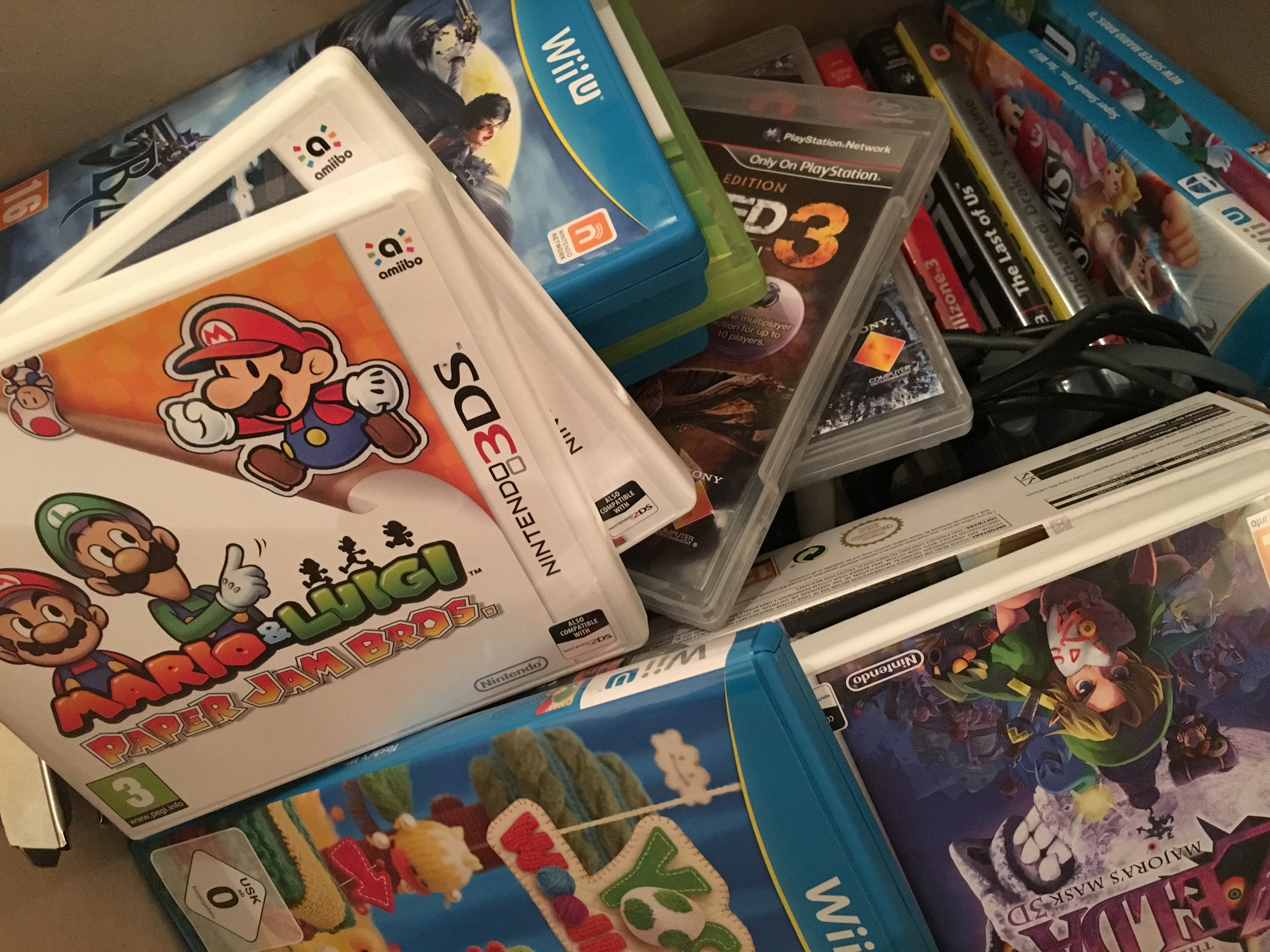
  • ArmchairAfter realising the other week that actually I don’t really like 2D platformers very much, no matter their illustrious provenance, I decided it would be a good time to have a bit of a clear out of the games cupboard… ahem, I mean The Mantelpiece.

    First for the eBay pile was New Super Mario Bros. U, a game that I feel like I should really love, but that in fact elicits little more than a shoulder shrug on the few occasions I play it. I bought it on launch day at the same time I got my Wii U, and I wasn’t that impressed then – three and a half years on, I’ve barely gone back to it, and my opinion hasn’t changed. As I said in my post the other day, it just feels like the 2D platformer has been done to death, and it has to take a really novel idea to get me interested in playing through another one. (Interestingly though, I loved Super Mario 3D World and the Galaxy games – clearly my platformer apathy is confined to two dimensions.)

    While I was feeling ruthless, I decided to get rid of Super Smash Bros. for Wii U as well. I had a blast with the game when it first arrived back in December 2014, but I haven’t been back to it since then, except for taking it along to Ian’s stag do last year, where it went down like a lead balloon as everyone tried to work out what the hell was going on. I think the Smash Bros. games tend to appeal more to people who’ve grown up playing them against mates and tend to play that way now – I, on the other hand, only played my first Smash Bros. game as an adult (all my mates were into Street Fighter II back in the day), and the few times I’ve tried to introduce people to the game have met with disaster.

    Which one am I again?
    Which one am I again?

    It’s got me wondering whether the Smash games are actually any good. I enjoyed my brief time with Super Smash Bros. for Wii U, but I realised that was mostly for nostalgia reasons, as I gathered trophies of gaming heroes from my childhood and played through levels from my favourite SNES games. In terms of the actual gameplay though… well, it all feels a bit floaty, confusing, repetitive and, above all, unfair. In multiplayer there’s just so much happening on screen at one time that it can be difficult to even pick out your character, so it’s no wonder that my friends were left confused. Whereas SFII offers tense, constricted matches that come down to split-second skill, Smash Bros. just seems to be free-floating chaos.

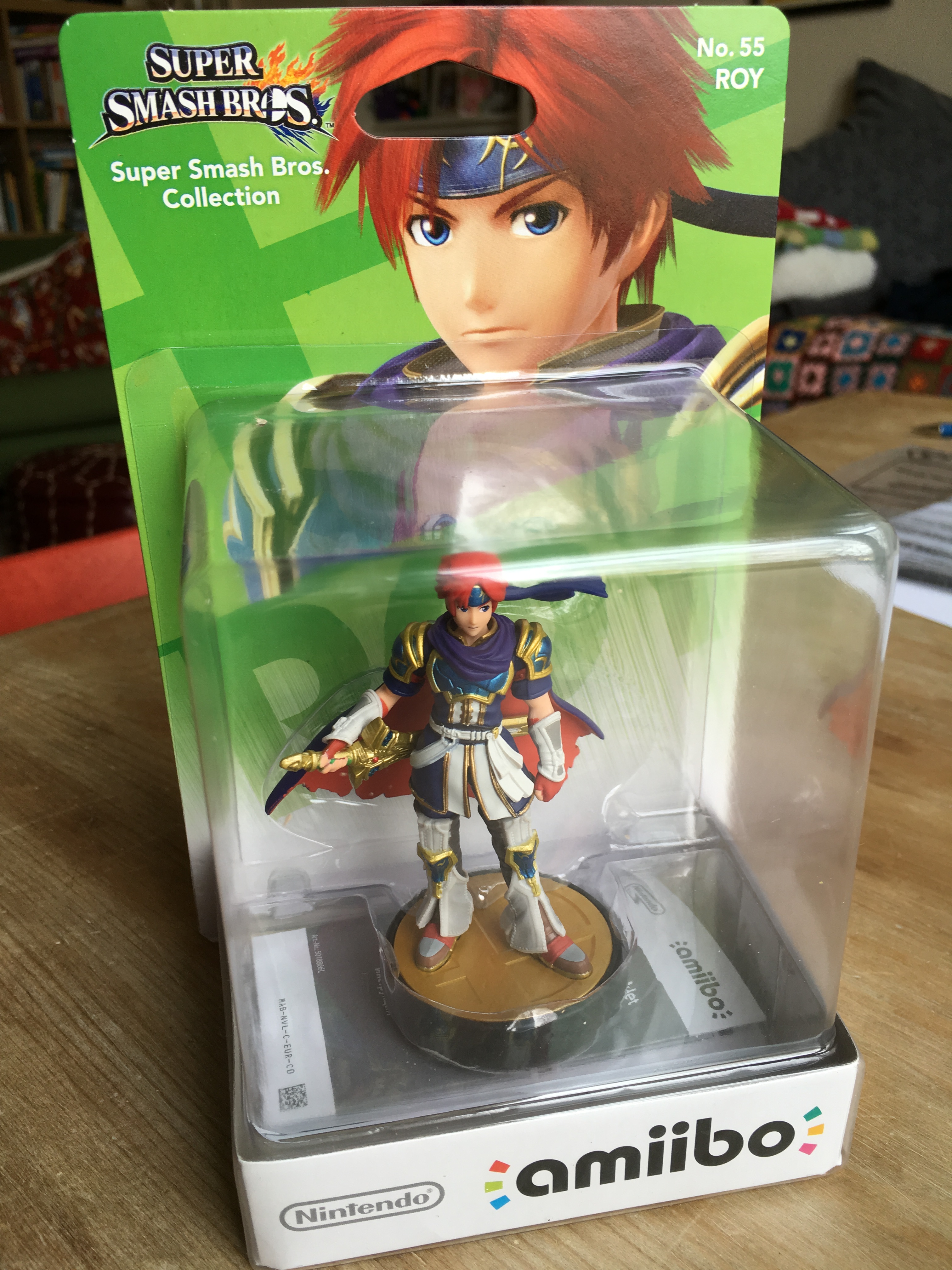
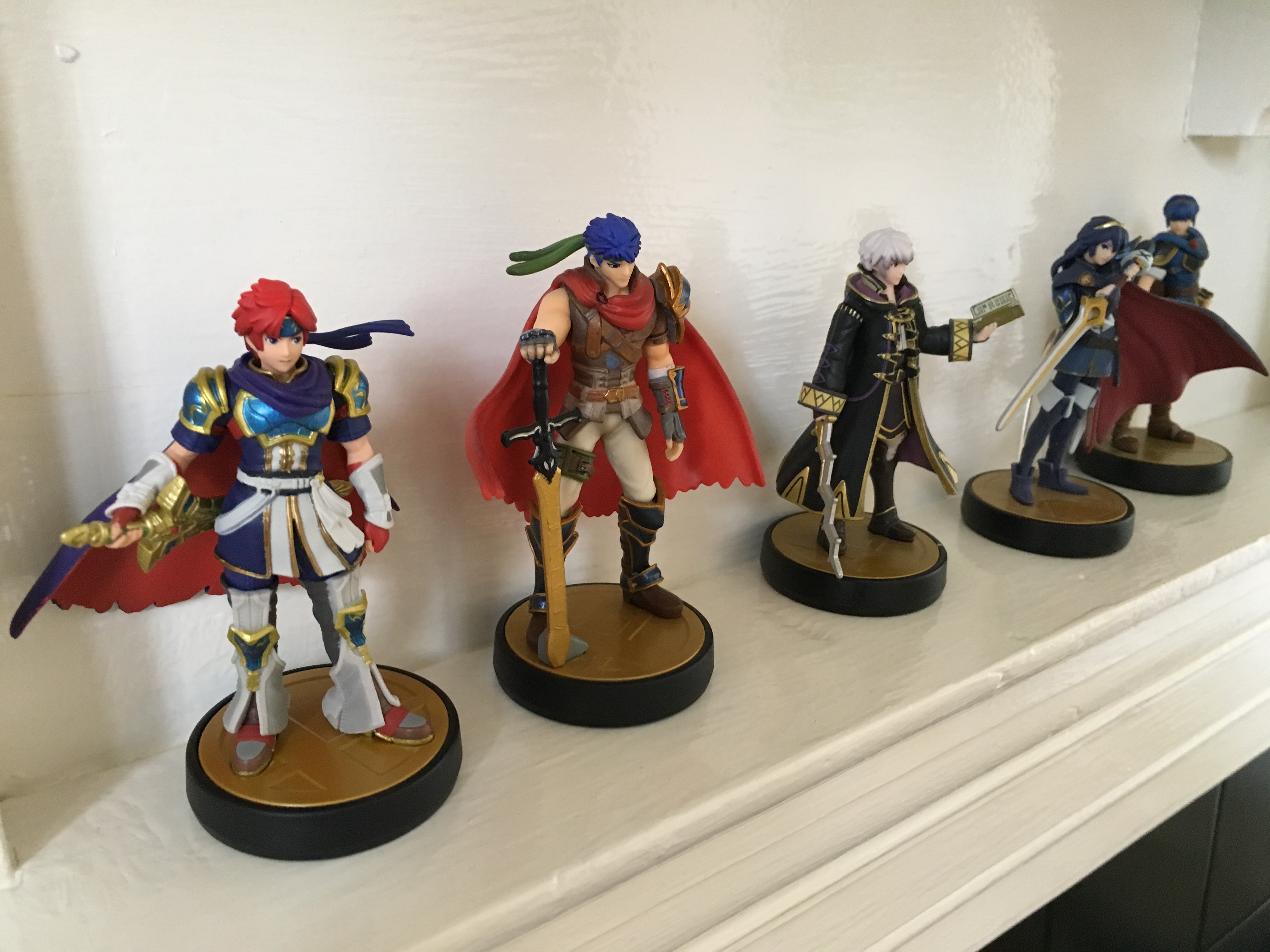
    Admittedly, I am quite shit at it. But I also don’t have the patience or interest to put in the hours to get good. And while writing this, I’ve just realised that I get far more excited about the Smash Bros. amiibo than the game itself.

    Anyway, while we’re here, I might as well mention a few more games that I’ve given up on after realising that I don’t actually like them very much. Kirby’s Adventure on the Wii U Virtual Console is naturally top of the list, for obvious reasons, i.e.: 2D PLATFORMER = NOT THAT BOTHERED. I’m also tempted to give up on Child of Light, which I picked up in the eShop anniversary sale just a couple of weeks ago. Despite my known apathy towards 2D platforming, I thought I’d give the game a go because it looks so gosh darn beautiful – and because technically you’re flying so it’s not really a platformer. But after just half an hour I could feel my willingness to play gradually slip away as the same old platforms and puzzles reared their ugly heads…

    But... But it's so pretty!
    But… But it’s so pretty!

    Aero Porter is a fun little 3DS puzzler that has you sorting out airport baggage carousels, of all things. It starts off brilliantly, and I found myself drawn in as the puzzling gets more and more complex. But I hit a massive wall several levels in, when suddenly it got excruciatingly hard and I just couldn’t get any further. Shame really, it’s a really neat idea for a game, but the difficulty curve needs some serious tweaking.

    NES Remix is a fantastic idea for a game, and I’ve had hours of fun playing through snippets of 8-bit classics. Most of these games would be an utter chore to play through on their own, but in 10-second chunks they are wonderfully addictive. Having said that, Mario Bros. is still utterly awful, and is far surpassed by Super Mario Bros. – I’m sure the only reason it appears in this compilation is because of the name, as even 10 seconds of it is 10 seconds too much. NES Remix 2 is just as good as the first game, but I’ve pretty much run out of steam with both of them now – now hurry up and do a SNES Remix, Nintendo.

    Scenes like this are what make NES Remix such great fun.
    Scenes like this are what make NES Remix such great fun.

    Finally, Swords and Soldiers for Wii U is a conversion of a smartphone game that received glowing reviews on its Wii U debut, but that I’ve struggled to love. The game’s humour is great, and I like the art style, but the gameplay just seems to involve furious tapping and scrolling, and not much in the way of real strategy. It’s not a patch on the wonderful Plants vs. Zombies, for example, and I found my interest waning to zero about a third of the way through.

    And on that note, which games have failed to hold your interest for the full furlong?

    Ninja monkeys! Oh you guys.
    Ninja monkeys! Oh you guys.
  • ResiEvil

    I have an inkling that Resident Evil 2 may have been the first game I ever preordered. Sure I’d looked forward to games before – even pored over every detail in catalogues before release – but Resident Evil was my first foray into the sort of bona fide fandom where I cared about the characters on the screen so much I would lay down a few bucks in advance to see it continue. So where Capcom – and its shambling horde – went I would follow.

    And despite various trajectory changes I was right up there along for the ride. While there is no doubt in my mind that Resident Evil 2 is where the series hit its peak, I’ve found something to love in every entry, and from the Nemesis of RE3 to Terragrigia of RE:Revelations I’d be there playing along with rabid fervour.

    That was until Resident Evil 6 came along, which between releasing right around the time of my XCOM fixation and the horribly negative reception it received at release, couldn’t manage to compel me enough to commit to playing it. So there it sat neglected on my shelf for almost half a decade as the only Resident Evil game I’d not played since 1996. It seemed I’d fallen out of love with the series I’d loved so much for so long.

    Capcom’s rediscovered love for Resident Evil with its remastering of the last three numbered games – on its 20th Anniversary no less – has presented the perfect opportunity to rekindle my not-dead-just-sleeping love for the series. And while starting with Resident Evil 6 seems a completely non-sensical place to start, for me it was picking up right where i left off in the hope that I’d spark something magical in my brain.

    13603516_10154251083732416_2448658083021641937_o

    And wow did it do just that. The impossible situations, the ridiculous over-the top mutations (I think the Tyrannosaurus Rex mutation is my favourite thing in the series, ever), the rambunctious dialogue; the memories quickly came flooding back of the many joyous hours I’d had with the series. It may have started as a quaint little survival horror game, but regardless of how over-the-top Resident Evil 6 is, it is still chock-bloody-full of those oh-so-sweet ingredients.

    But – and I’m happy to have shit smeared in my face for this – its the characters that made me crack a fat for the series. And Resident Evil 6 is filled to the brim with not-so-minor cameos from the pantheon of the scarily incestuous and intertwined Resident Evil universe. Chris, Leon, Jill, Claire, Barry, Albert : they’re the fabric that holds the universe together. Don’t even get me started on how excited I was the moment a now-very-much-adult Sherry Birkin appeared.

    In the years Between 1998 when the first Resident Evil is set and its fifth sequel’s 2012 setting there is a recurring theme of unlikely reunions.  How Chris and Leon manage to both be after Ada Wong  in Resident Evil 6 is beyond any sort of reasonable logic. And how Ada Wong continues to cross paths with Leon is ridiculous in its probability that they both should buy lottery tickets. And then there’s the brilliant way in which the most super of super villains, Albert Wesker, manages to somehow find his way into masterminding these ridiculous plots up until his timely death. Even his son Jake manages to get in on the action as a main playable character.

    13580611_10154251083627416_4556017765607080471_o

    Resident Evil may be a slave to its own characters and lore, but what it does with it all never feels like it’s just running on the fumes of what equates to official fan fiction. It’s silly, absolutely, but it feels like the writers of the games are absolutely self-aware about just how much it feels like a ridiculously violent soap opera at times. I’m sure the guys in charge of the series know the sort of reverence fans have for its characters, and viewed through that lens, each and every game feels like a vessel to deliver cool and pulpy stories for them to star in. Take the guns and ultra-violence away and it’s basically Neighbours and Albert Wesker is Paul Robinson.

    So after years of playing Resident Evil it’s impossible to come to any conclusion on the series other than “it is what it is”.  I’ve never asked Capcom to explain its art to me and nor should they have to. But years later I find myself with a new found respect for the decisively action-heavy turn the series took after Resident Evil 4. For starters it makes sense that what starts as an isolated incident turns into a catastrophe over time when not contained. But when you look it as a character-driven serial it becomes clear that the package the action comes in matters diddly to the overall experience. Resident Evil was the first game I played where I cared about the plight of the characters; and that’s a legacy worth celebrating.

    13558932_10154251083727416_5171022273111140567_o


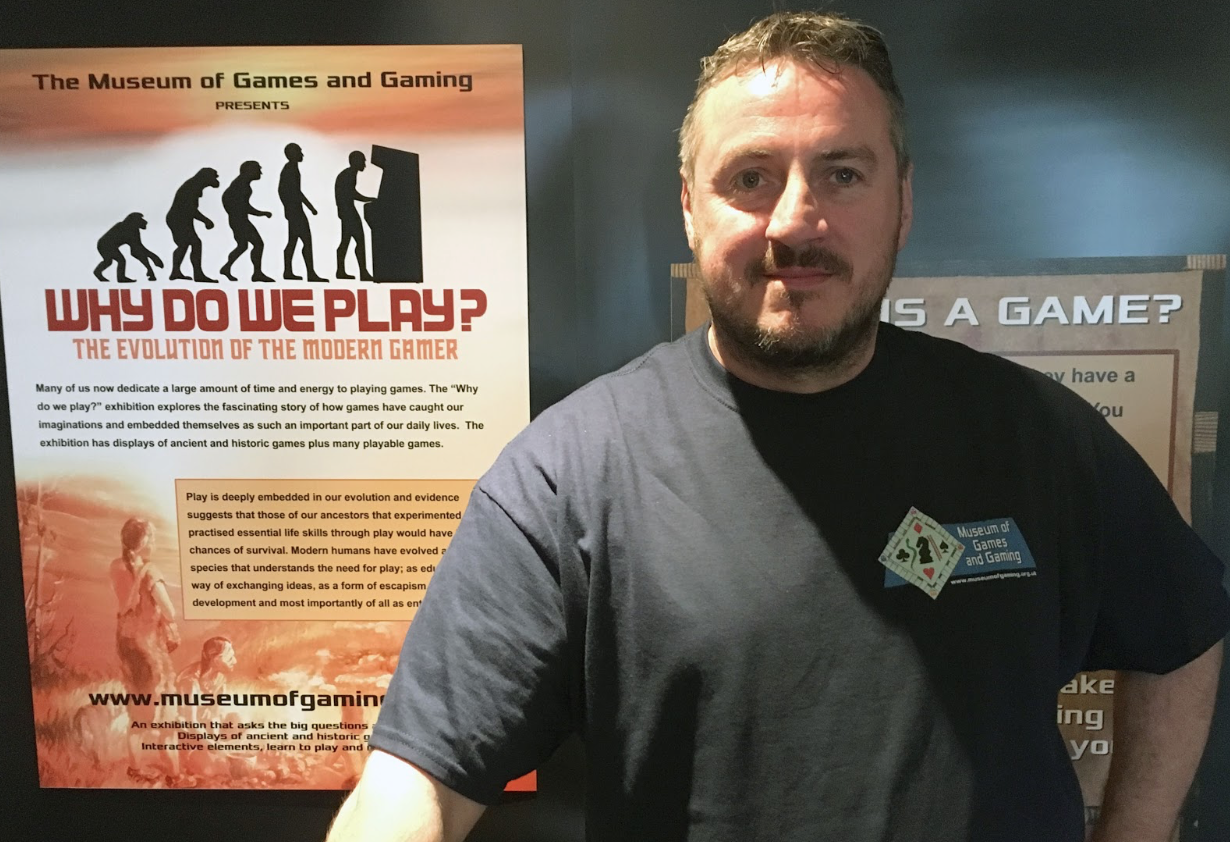
  • I had a fascinating chat with Phil Robinson of the Museum of Games and Gaming while I was at Play Expo Blackpool the other month, and it really got me thinking about where this urge to play video games actually comes from. Sure, games are fun, but why are they fun?

    Phil put together an exhibition called ‘Why do we play?’ for the expo, taking on the formidable task of dissecting the evolutionary reasons for why we play games, and creating a timeline of gaming that stretches from the earliest strategy games scratched in sand right up to the sophisticated video games of today. And there are a surprising number of parallels that can be drawn between those early games and our modern equivalents.

    I wrote up the interview for Kotaku UK – you can take a look at the full thing here: 

    How Our Caveman Instincts Explain Why We Play Video Games

    Phil Robinson of the Museum of Games and Gaming
  • I spent most of yesterday in shock after discovering that the UK had voted to leave the European Union. In the weeks leading up to the election, it seemed clear that the Remain camp was in the lead, and despite a late surge in support for the Leave campaign, I went to bed on Thursday feeling reassured that we would probably stay in the EU. Waking up to the news that we had in fact voted to leave, that David Cameron has resigned as Prime Minister and that the stock markets were plunging, possibly signalling the start of a new recession, left me wandering around all morning like a zombie, as Mrs Merriweather and I exchanged expressions of disbelief.

    "YOU MANIACS!" This was pretty much how I felt yesterday.
    “YOU MANIACS!” This was pretty much how I felt yesterday. But with the Palace of Westminster in the place of the Statue of Liberty, obvs.

    As you’ve probably guessed already, this post has absolutely nothing to do with video games, but the events of the last few days have left me in such a profound state of grief that I felt the need to express some of it. Yesterday saw the first stages of the grieving process – shock followed by denial. I kept wondering whether it was all just a mistake, and surely with such a narrow margin of victory – 52% to 48% on a 72% turnout – they’d almost certainly have to hold another referendum. But this is just clutching at straws – Brexit is happening, even though practically no MPs or senior figures wanted it.

    The denial eventually gave way to anger at the people who voted Leave. This was compounded by reading stories about Leave voters who didn’t really understand the consequences of voting Leave and now regret it. In a way it’s hardly their fault – the Leave and Remain campaigns were universally dreadful, full of scaremongering, exaggeration and downright lies, with very few considered facts. (One particularly egregious lie was that the NHS would get £350 million a week if we left the EU, a falsehood that was plastered across the Remain ‘Battle Bus’ but that was quickly backpedalled on after the election.)

    As a result of the lack of reliable information, it seems that many people just ‘voted with their gut’. It was telling that one of the trending search terms on Google yesterday was ‘What is the EU?’, which suggests that many people voted to leave something that they didn’t understand in the first place.

    In a way it doesn’t surprise me that the UK voted to leave the European Union. Growing up, I was surrounded by lots of anti-Europe sentiment, and the country is characterised by ‘island thinking’ – indeed, the Germans call us ‘Inselaffen’, or ‘island apes’. (Whether they mean that in a good-natured way or not probably depends on who’s saying it.) As I got older and went to university, I noticed the anti-Europe sentiment less and less, chiefly because I was surrounded by people who were generally liberal, often foreign and who took great advantage of the benefits of free travel and work in the European Union. It’s telling that the two places that I’ve lived in the UK since leaving university – first London and now Scotland – were also the two regions (along with Northern Ireland) that voted to remain in the EU. I think one of the reasons that I’m so shocked about the Leave result is that I have surrounded myself with people who naturally want to vote Remain. But there’s clearly real anger against Europe in other parts of the country, anger that I haven’t been aware of in my daily life.

    Meanwhile, in Germany...
    Meanwhile, in Germany…

    But I’m angry now. It feels like my future – and more importantly, my son’s future – has been wrested away from me by people who may or may not have understood the real consequences of what they were voting for. An inevitable next step will be yet another referendum on whether Scotland will leave the union. With Scotland voting by 62% to 38% to stay in the EU, and with anti-Westminster feeling already high in the country, it seems almost a foregone conclusion that Scotland will break away in order to retain its EU ties. So soon I may need a passport to visit my relatives in England.

    Then there’s the economic fears – $2 trillion has already been wiped off the markets, and it seems like we’re heading into another recession, all because people wanted to ‘take back control’, whatever that means. And god knows what’s going to happen to the housing market, which means our future plans will probably be put on hold as we wait to see what happens.

    Both Mrs Merriweather and I have spent time studying and working in Europe, and it makes me sad that our son won’t have the same opportunities that we did. It’s particularly galling that it seems to be mostly older people who voted in favour of Leave, when they’re not the ones who will have to deal with the consequences. Around 60% of over-65s voted Leave, whereas 75% of 18-24-year-olds voted Remain. Retirees with their own home will be affected very little by the vote, but the economic fallout and loss of EU rights will have a massive effect on people who are just starting their careers.

    “Silly Walk Off a Cliff,” by Barry Blitt (and yes, John Cleese was in favour of Leave).
    “Silly Walk Off a Cliff,” by Barry Blitt (and yes, John Cleese was in favour of Leave).

    I have several friends who work in places like Germany and France right now, and no doubt they’re worrying about their future and whether they will have to seek citizenship to remain in their jobs (and to keep the benefits they currently enjoy as EU citizens). Many of my friends in Edinburgh are from mainland Europe, and there’s a pervading feeling of uncertainty about their future status. Basically, no one knows what’s going to happen – we’re on a roller-coaster into the unknown.

    So, I’m still pretty angry at the moment. No doubt at some point this will resolve itself into resignation, the final stage of the grieving process. But there’s still plenty of anger floating around the country at this point, and it feels like the UK is more divided now than at any point I can remember. In the nineties, politics moved towards the centre, but in the past decade we’ve seen parties – and people – shift further and further to either the left or the right. Especially so now, with the resignation of David Cameron leaving the Tories in the hands of the right-wingers.

    With such deep division, I can only envisage more uncertainty and conflict ahead.

  • For many years Sensible Soccer was the long-dormant football game I dreamt about in a haze of nostalgia. That was until ten years ago in 2006 – along with two other blokes at work – I was eagerly awaiting the revival of the series via a new entry from developer Kuju. I still remember the days leading up the release; emails shared in the office about our ye olde experiences with one of the pinnacles of video game soccer. At least the one not named Pro Evolution Soccer 5, which was a slight obsession of ours at the time. Excitement does not do justice to the emotions we were feeling on Sensible Soccer eve.

    And disappointment doesn’t do justice for our reactions the day after. I remember the despondent look on one of the lads’ faces as he aired his grievances with the not-so-great rebirth of the series. Shaking his head he couldn’t find the words to say anything more than “So. What the bloody hell happened there, then?”. I vowed never to be lulled into a false sense of nostalgia-fuelled security from that day forward.

    But here I am almost a decade to the day later waiting in anticipation for another classic football game revival.

    Kick Off was the other  ye olde football game in constant rotation in my house. My brother and I would challenge each other until our fingers were demented and callus-covered or frustration boiled-over into a bit of good-old-fashioned rough and tumble on the bedroom floor. Problem was – for me at least – for years I wasn’t much good at the game.  And try as I might I just could never master the game well enough to beat my brother.

    Screen Shot 2016-06-22 at 10.04.48 PM.png

    Days and nights were spent honing my skills against the computer. With every goal my skills would grow and along with it my confidence. Kick-Off was a fast paced game that required skill, precision – and practice. Sure it wasn’t as friendly as Sensible Soccer, but there was a certain accomplishment that came from mastering it that was unrivalled.

    Finally after a decent-length training montage, I beat my brother once. And then twice. And then probably a third time. I had ‘mastered’ Kick Off.

    And so here I am, a solid two decades, later waiting for the aptly named Kick Off Revival to relive former glories. After stumbling upon the watching the developer’s diary I’m confident I won’t be disappointed.  Now, and I’m not usually one who wants to know how the sausage is made, but Dino Dini’s development journey for Kick Off Revival is story worth hearing. And simply as reassuring as it gets that Revival will rekindle old love.

    Two words:”One Button”.

    As I’ve written before on here before, Dino Dini is nothing short of a legend to those of us who grew up with home computers – namely those beginning with “Commodore” – in the 1980’s an 1990’s. So it’s good to know he hasn’t forgotten his roots.

    See Dino Dini’s Developer Diaries below. 

  • I was playing through Yoshi’s Woolly World the other day, and about halfway through the second world I put the controller down and decided I’d probably never come back to it. There’s nothing wrong with the game per se – and I love the way everything has been lovingly reworked in wool – but I just realised that I wasn’t particularly enjoying myself. It felt like I was going through the motions.

    In short, it felt like I’d seen everything in the game many, many times before.

    Love the wool. Not that bothered about the game.

    Woolly World came in for a bit of criticism at its release for failing to offer much innovation over its various prequels, so you could argue that it’s just not a particularly original game. But then again, I felt the same way after playing, and quickly abandoning, Yoshi’s Island on the DS. And I barely made any headway into Donkey Kong Country Returns 3D before I gave it the old heave ho, bored to tears. Most damningly of all, I’ve barely played New Super Mario Bros. U since I bought it at the launch of the Wii U some three years ago. I’ve played the game with friends, who seemed to love it, but I’ve been unable to work up much enthusiasm for playing it solo. And we’re talking about a game that’s supposedly one of the best in the 2D platforming genre.

    Basically, I’ve come to realise that I just don’t like 2D platformers that much – a realisation that actually came as a bit of a surprise, since some of my first and fondest gaming memories are playing through the first three Super Mario Bros. games with my sister. I spent hours happily exploring each level of those games, so there was clearly a time when I loved 2D platformers. Nowadays though? Meh.

    I think my apathy is partly due to the fact that the mechanics of these games have barely changed in the 30-odd years I’ve been playing them. It’s still the same old mix of moving platforms, spikes, slippy-slidey ice worlds and head jumping. I suppose you could argue that there are plenty of games whose mechanics have barely changed (beat ’em ups, for one) but that still remain relevant; however, with 2D platformers I feel like I’m playing the same game again and again and again, just with a different skin each time.

    You know that feeling you get when everyone else loves something and you just can’t see the appeal?

    Thanks to the resurgent indie scene and smart phone proliferation, gaming is awash with 2D platformers at the moment, but I don’t think you can blame this glut of games for the staleness of the genre – its corpse was going off long before the indies resurrected it. I’m as surprised as anyone by how 2D platforming has undergone such a resurgence – once Super Mario 64 came out, I, like everyone else, saw the writing was on the wall for 2D platforming. But against all odds, it has clung onto life. Yet even back in the nineties, it was starting to feel like all of the decent ideas for platformers had been used up. There are only so many ways to skin a cat, after all.

    I can already feel the readership of AMAP swelling to launch an impassioned defence of 2D platformers, and I’ll certainly concede that there are a few gems among the tiresome 2D fool’s gold. For example, I recently played Never Alone, which is a platformer based around  the Inupiaq culture of Northern Alaska, and I was captivated by it. The mix of gaming and cultural insights felt refreshing, and the artwork was beautiful, plus I liked the way that you were required to switch with your fox companion to solve puzzles. The setting, too, was brilliantly original. But then I realised that I liked it despite it being a 2D platformer. It was a wonderfully inventive idea wrapped around the decaying skeleton of decades-old game mechanics.

    It feels a bit sad to realise that a genre I grew up with just doesn’t hold any excitement for me any more. But on the other hand, it’s almost a relief to let go. 2D platformers are a bit like an old friend from school who still wants to hang out every once in a while, even though you now have nothing in common. I feel like I’ve just plucked up the courage to delete them from my Facebook friends list.

    Never Alone is a wonderful game – just a shame about all the platforms.
  • Whereas Sir Gaulian has been revelling in the resurrection of some of his old favourite games at this year’s E3, I’ve been struggling to find much to get excited about, with the exception of the surprisingly different take on Zelda that Nintendo has been showcasing. However, one thing that everyone seems to be talking about is Microsoft’s announcement of Project Scorpio and their new strategy whereby all Xbox ‘exclusives’ will also be available on PC. And to top it all off, they’ve announced the Xbox One S, a slimmer version of the Xbox One with slightly more power.

    I’m just a bit baffled by it all.

    Project Scorpio - so what's this all about, then?
    Project Scorpio – so what’s this all about, then?

    I mean, what’s my incentive to buy an Xbox One S, when a more powerful Xbox will be available in 18 months’ time? Presumably it would be wiser to wait for the better machine. But then again, the statements coming from Microsoft seem to suggest that Scorpio users will only notice much of a difference if they have a 4K TV. Furthermore, they’ve said that there won’t be Scorpio exclusives, so Xbox One buyers ‘won’t get left behind’. But then what’s the point of upgrading if the games won’t be significantly different? Rich Stanton makes a good summation of the mixed messages coming out of Microsoft’s slack mouth here, and Mr Biffo makes some good points in this article. Basically, it’s hella confusing.

    I presume it will work a bit like the New Nintendo 3DS – slightly more powerful specs will mean faster loading times and improved frame rates. But the New 3DS also boasted other features that made it a worthy upgrade, such as eye-tracking 3D and an extra thumbstick. What will Scorpio have, apart from tarted-up versions of Xbox One games?

    I also presume that the huge boost in power will add massively to the price – the Digital Foundry report suggests that it will cost significantly more than the PlayStation Neo. So for all that extra cash, I’m guessing that buyers will want some serious improvements in their games, not just slightly shinier versions of XBone titles. I’m also guessing that the massive spec upgrade is chiefly to do with enabling Microsoft to jump on the VR bandwagon. But buying the Scorpio in addition to a VR set-up is going to be massively expensive in comparison to the rival VR offering from Sony, which will work on a bog-standard PS4. But maybe Microsoft’s VR system will work on the basic Xbox One as well? Who knows – it’s all a bit unclear at the moment.

    I’m also baffled by the news that all Xbox One games will be on PC as well – which seems to be removing any reason for PC owners to buy an Xbox. It would make more sense if a PC exclusives were made available on Xbox One – for example, if Steam could be brought to Xbox. That would be a huge plus point for the console, as I’m sure there are plenty of people like me who want to play more PC-exclusive titles but really can’t afford/can’t be arsed to assemble a PC gaming rig. I’ve got a basic laptop with a few Steam games on it, but I barely play them – the laptop is for work, I do my gaming on consoles in the living room.

    I have to say though, the Xbox One S is a marked improvement on the design of the Xbox One. Nice grills, MS.
    I have to say though, the Xbox One S is a marked improvement on the design of the Xbox One. Nice grills, MS.

    In summary, will someone please explain what the hell Microsoft’s strategy is here? Judging by the confusing and seemingly contradictory statements from Xbox’s Phil Spencer and other Microsoft representatives, even the company doesn’t seem to be entirely sure (it’s eerily reminiscent of the PR nightmare the company faced after the Xbox One reveal three years ago). The early announcement of Project Scorpio will surely make people think twice about buying an Xbox One over the next 18 months. Wouldn’t it have made more sense to hold back on Scorpio to give sales of the Xbox One S a chance? Or even hold back the Xbox One S to launch with or just after Scorpio as an ‘entry-level’ machine? And why cripple your console sales by saying your exclusives won’t be exclusive any more?

    And, perhaps most importantly, what’s the point of Scorpio anyway? It’s seemingly designed for people with 4K TVs – but hardly anyone has one of these, and I’d be surprised if there was a massive stampede to get them by the end of 2017. A recent Polygon analysis pointed out that “you’d need to sit no farther than 6.5 feet from a 50-inch TV to be able to see any benefits of 4K resolution over 1080p”, so really they’re only going to appeal to the tech-savvy and people who sit with their noses pressed against the telly. HDTVs took off rapidly because they were a huge improvement over CRT TVs and standard definition. I very much doubt there will be a similar rush to upgrade to 4K. Which could leave Scorpio with a very tiny audience share indeed – and why I suspect that this talk of ‘no Scorpio exclusives’ will quickly be outed as an untruth.

  • KratosI am a creature of habit. I like routine so much in fact that if I don’t walk the same way around the Parliamentary triangle at lunch, or eat the same thing at the same time each day, I feel like it puts my entire day into disarray.  It’s a strange little character trait to be sure – and a pervasive one at that – but thankfully not one that has tended to encroach on how I play video games.

    I’ve written before about how I am envious of the types of people that play the same game year in-year out.  The people that buy FIFA in September of every year like clockwork and play for an entire year without even so much as a wandering eye, for example. To them the incremental improvements are enough to keep them on their toes – if they even notice them that is – as long as it doesn’t compromise the core experience they’ve enjoyed for the past however many years.  Predictability is what these people are after and the $70 in cold hard Aussie dollars is worth the price of entry.  Oh how I long to be one of the FIFA faithful.

    Although I may be closer than I think.

    The reemergence of more than a handful of familiar games at E3 over the last couple of days has cemented an important thing about what I want from video games – something that I came to realise both while I was recently having guilty fun with the DOOM reboot(?) and while I play through 2006’s Dead Rising and its lesser Wii spin-off Dead Rising: Chop ’til you Drop more often (and regularly) than I care to admit.

    CTUDWii

    When it comes to gaming I’m not after anything new or anything revolutionary. In fact, when it comes to videogames I’m after the familiar – reboots of classic games, retakes on old names, remasters of old faves.

    I had a conversation with a friend of mine this afternoon who had been watching the events of E3 unfold over the last few days. When he asked what looked good, I started rattling off a few little ditties that had caught my eye: Crash Bandicoot 1-3 Remastered, Dead Rising 4, God of War and Forza Horizon 3 featuring right at the top of my list.

    He agreed and we started lamenting the fact that there was no sign of Red Dead Redemption 2 yet.

    But it was at this point that I had a vivid flashback to a conversation I’d had with another friend 10 years ago at practically the same time of year in pretty much exactly the same spot.

    Dead Rising.

    God of War II.

    Forza Motorsport 2.

    It was an odd realisation that with all the shiny new game experiences that are unleashed upon the world ever year, the things I’m craving are ones that I’ve played before.  The God of War reboot looks to be an interesting take on a familiar theme.  Dead Rising 4 sees a welcome return of Frank West and the Willamette Parkview Mall that I love so dearly. And Forza Horizon 3 is a prettier version of an iteration of a spin-off I’ve been enjoying for the better part of my adult life.

    Quite simply I would be happy playing new versions of old games or old ideas ad infinitum.  I’ve been a relatively strong advocate for remakes and remasters as a way to introduce old games to new audiences, I realised that I’d just be happy to be reliving old favourites rather than embracing new characters and mechanics.

    Combine the fact that I’m a terribly nostalgic person with the fact that I don’t deal well with change and you’ve normally got a recipe for disaster. But if you’re the video game industry willing to draw from the well just one more time, well I’m pretty much your ideal customer.  So while everything old is new again, I could not be happier.

    DeadRising

  • 60a973cdc93f4af5db265ca3bc84890dI still distinctly remember the hours that followed walking out of the cinema after seeing “Moon”. Still struggling to come to terms with the notion of ‘created memories’, while walking along the iconic Chapel Street the friend I caught the film with started to entertain the notion of teleportation, referring to an article he’d read recently. And while it was a stunning day in Melbourne – the sun searing on the asphalt as Melbourne’s deeply entrenched culture freely flowing all around – I was too busy contemplating “it all” to take much notice. And by “it all” I really mean it. He may not have known it at the time, but this innocuous conversation between two friends on a high after watching a bloody good film, has haunted me in the years since.

    It started off innocently enough.

    “So teleportation is possible, but with one pretty significant caveat” he said.

    I expected it to be something small. You know, a sort of ‘technicality’ that would render it a rather pointless technology, even if it were feasible.

    “What, I can’t choose where or when I teleport to?” I snickered, gesturing down a side street that got us to his house quicker.

    He laughed off my dismissive response, “No. I’m pretty sure it’s okay between fixed points in time and space. It’s just that it’d kill you”

    “Right” I laughed, “so it doesn’t really work at all”.

    “Yeah it does. Your genetic makeup and all your memories are transported to the destination. It’s just that it is a carbon copy of the ones that left. You are at the destination – or at least everything you are. But the you you knew isn’t you – if you catch my drift” he explained, obviously feeling a bit more comfortable with the subject that I was, “would you do it?”

    “I’m not sure mate, I mean it’s not really me, is it?” I told him, still not really quite sure what to make of the situation.

    “But you wouldn’t know,” he asserted, “the you at the other end is for all intents and purposes, you. It’s still you, and it thinks it is the you that transported from the other end” he asserted.

    “But it’s not. It’s not me at all. In fact I no longer exist.”

    I had to think hard about what I’d just said and so the rest of the walk back to his apartment was a decidedly silent and somber affair.  The idea that I could exist – or rather a carbon copy of me with my memories and my genetic make up – without it necessarily being “me” twisted my mind in impossible ways. Like Moon’s thematic undertone, he had twisted my ideas of what being a conscious human being with memories meant, and whether “me” as I know it is unique to any other clone of me that could theoretically exist. It was fair to say I was probably the most confused I’ve ever been.

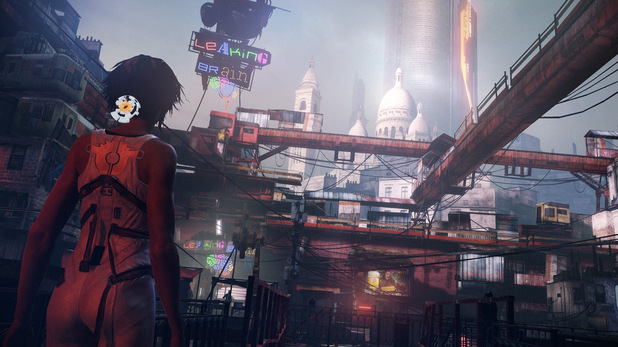
    My recent play through of The Talos Principle – where you play a cyborg avatar tasked with solving puzzles in eden-like worlds – gave me very similar confused feelings that verged on an existential crisis. Being forced to question my own views on consciousness and humanity wasn’t something I was prepared for necessarily, rather expecting that the game’s puzzles would test my brain in a more lateral way. And there were times where the game’s ‘chambers’ – somewhat reminiscent of Portal’s setup – did stretch the grey-matter to find a solution. After all organising blocks, light beams, fans and ‘ghosts’ in a series of increasingly difficult and multi-staged puzzles certainly isn’t for the dedicated. But it was the narrative that drove the game forward – namely my interactions with seemingly sentient computer terminals called “Milton”, the game’s equivalent of “GERTY” – that at times kept me frozen on the spot in search of answers. Answers that I ultimately cannot answer.

    While the puzzles are what you strive to complete, Milton is your main interface with the game’s world, the key catalyst for your inevitable distrust of voice-in-the-sky Eloheim, and a database of all of the world’s knowledge and carrier of the world’s story. It is through accessing these terminals between puzzles that you discover most of what the game’s world is as you try and discover what the purpose of this world is.

    It is no happy accident that these conversations Milton also happened to be the part that forced me not only to think philosophically about not just the game’s world but also our world more broadly. Through positing questions and putting forward ideas, Milton effectively shapes your view of that world, and puts forth a reasonable set of assumptions on which to base your own opinions. In the beginning Milton was happy to hold my hand through the world and tell me what to believe.

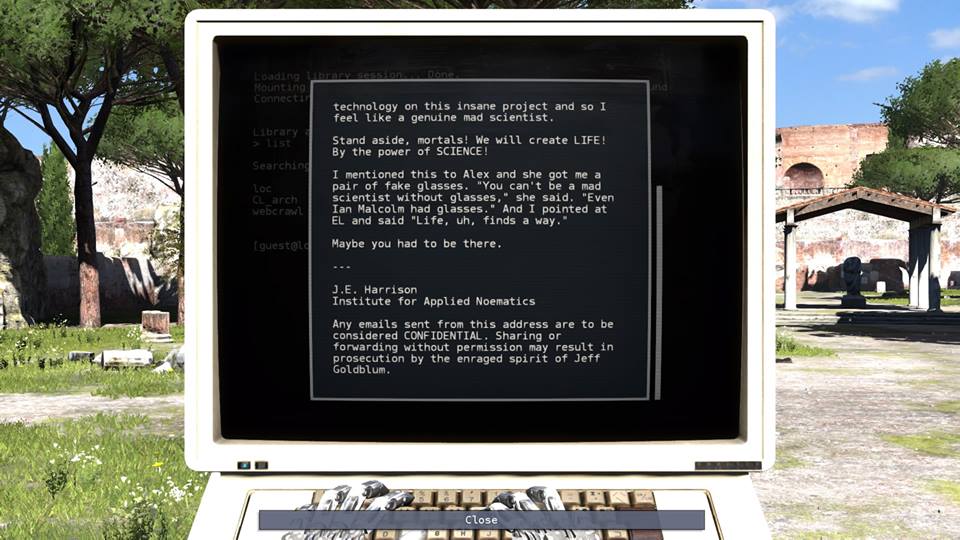
    And so at the start, I felt utterly comfortable with the game’s surface-level treatment of philosophy.   The fact that Dr. Ian Malcolm from Jurassic Park is as close as I’ve ever come to any sort of philosophical thinking really meant that anything deeper than surface level philosophical questions were a bit beyond my comprehension.  “Life finds a way” was about as deep as I’ve ever needed to delve and so an early reference to Jeff Goldblum’s famous line lulled me into a (false) sense of security.
    TalosPrinciple(3)

    But as I went on, I was absolutely outclassed and outmuscled by the game’s narrative approach to positing philosophical questions. Upon being asked by Milton a series of questions about what it is to be ‘human’ it was fast to point out the inconsistencies in my responses:

    TalosPrinciple(1)

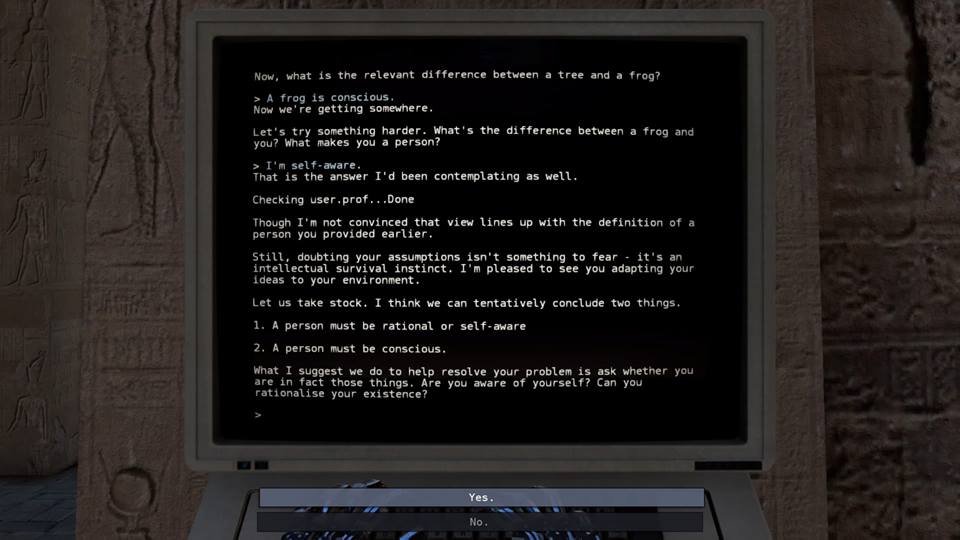
    It may have been all smoke and mirrors, but being lectured on humanity by a computer within a computer was unsettling, particularly when my views on it seemed to be so inconsistent. If it was all a ruse, it was a bloody good one, and it had successfully made me question by core belief system and cognitive thought processes. But things only go more complex from there and it didn’t hold back on the philosophy, remembering everything I’d answered to that point and probing more deeply as the game went on, in a way that was more informed than a logic test:
    TalosPrinciple(2)

    Knowing that I was empathising with a cyborg avatar to convince an artificial intelligence of its humanity automatically put into question my own beliefs about what it mean to be a ‘conscious human’ – but the fact that Milton was never shy to point out the incongruous nature of my responses to its questions made me start to question whether I may not be as consistent and rational as I thought. Not to mention whether I had a thoroughly anthropocentric view of consciousness.  After all, what really is the difference between me and a frog? Touche, Milton.

    Then he started to question my ‘purpose’ in the game world, and in fact, whether there was anything beyond the world. The “god-like” Eloheim had promised me everlasting life if I were to follow his instructions, but Milton was calling into question my faithfulness to the voice in the sky. It was an obvious question – but one that I usually take fore granted in video games – but could it really be the case that the sole purpose of the world and indeed me was to solve the challenges the game throws at me. It was as much a subtle commentary on game design as it was on the wider world, but one that distilled neatly into one simple question: what is the purpose of this world?

    The Talos Principle asked questions I’d never considered before and I wasn’t prepared for them. These questions haunted me vividly for the days while – and the weeks after – playing the game. Like a broken record they’d repeat in my brain: “what is my purpose?” and “why is this world this way”?  And each day I’d be no closer to an answer than I was the day or week before. The game may have been fantastical fiction, but its questions were equally relevant in my own context.

    Confusion was beginning to spiral into an existential crisis of sorts – one brought on by a video game no less. If it was the intention of developers to get players thinking more deeply, the Talos Principle had done its job.

    But while facing a faux existential crisis is obviously not something to brush off, I find some comfort being forced to question ‘what it is to be human’ or ‘what it is to be “me”‘.  If it has felt a bit like I’m rambling incoherently, it’s because I am, because none of it makes any sense to me.  It wasn’t that I didn’t have the wherewithal to overcome its many hurdles and crash my way through to the credits of the game – quite the contrary – I finished up playing the game practically over the course of a weekend. It was that a video game had asked me questions that I’d never felt compelled to answer before.  And that I know in my heart of hearts I’ll likely never be able to answer.

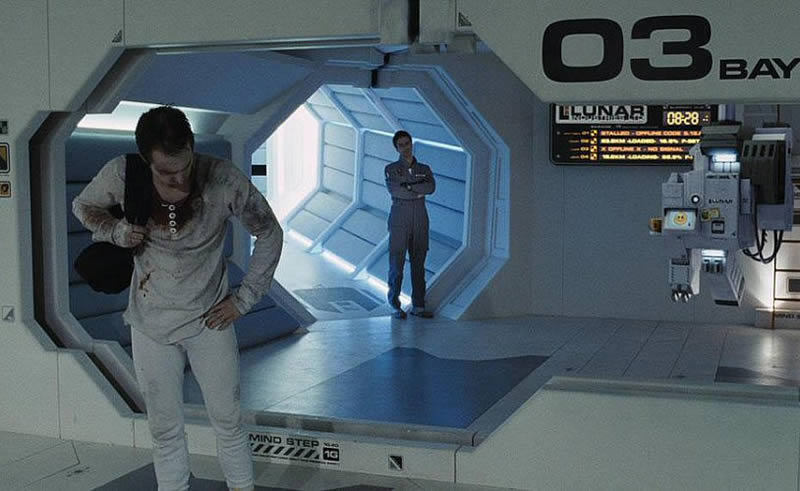
    In the same way that Moon is a great piece of filmmaking that gives me goosebumps whenever I watch it, The Talos Principle is the sort of game experience I’m not sure I’ll ever leave behind.  Not just because of its ‘workmanlike’ approach to how it’s puzzles are designed in such a way that they gradually build your understanding of how you can solve them, but because it forced me to actually think about the world in a more deep and meaningful way. I am not a religious man, but having an answer to these sorts of existential queries must be a big appeal for people, even if it does seem outlandish at times. The fact that the world all takes place in some sort of an artificial construct even seems like a logical conclusion the more you think about it – an idea that Elon Musk seems to champion while he’s not saving the world from itself from somewhere in California.

    If nothing else, The Talos Principle opened my eyes to the importance of the theory of knowledge, in broadly understanding the world. I have a friend at work who likes to tease me about solipsism and the fact that I can’t prove that he or anything else for that matter exists. I usually laugh it off in the same way I’d laugh at trying to quantify the size of the universe. But The Talos Principle made that line of questioning make sense, and I’m grateful for that.
    Moon_Film

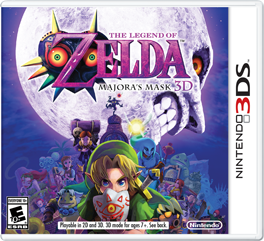
  • Majora's MaskMajora’s Mask 3D is now officially my favourite Zelda game.

    I never got around to playing the N64 original, although I remember my sister raving about it at the time. I seem to recall that it came in for some criticism for reusing a lot of the assets and game engine from Ocarina of Time, and the fact that it came out at the very end of the N64’s lifespan probably didn’t do it any favours in terms of reaching a wider audience. By the time of Majora’s Mask‘s European release in November 2000, I’d long since fallen in love with the Dreamcast, and I was happily hoovering up every SEGA game on offer. It wasn’t until the launch of the GameCube in 2002 that I drifted back towards Nintendo.

    But it seems that during my Dreamcast love-in I really missed out on something rather special over on the waning N64. Majora’s Mask may share assets with Ocarina of Time – and in fact it’s a rare direct sequel in the Zelda canon, following on from the events of OoT – but in every other respect it’s utterly distinct from every other Zelda game out there, not least because Zelda isn’t even in it.

    Link, there's something... not quite right about you. I can't put my finger on it...
    Link, there’s something… not quite right about you. I can’t put my finger on it…

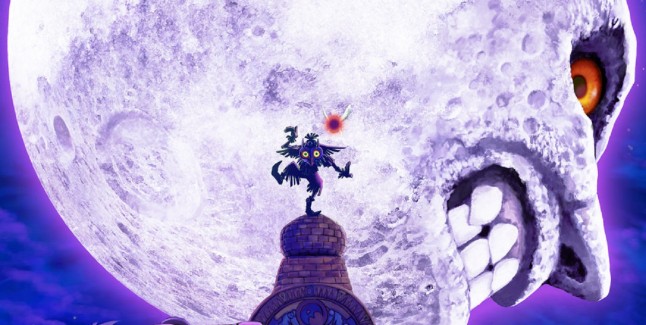
    For a start, it’s dark. Whereas Twilight Princess was dark in a literal sense, as well as having the whiff of teenage angst about it, Majora’s Mask is dark in the sense that bad things happen to good people quite regularly. Oh, and the world is going to end because a massive evil moon is about to smash into it.

    You can help the people of Termina with their problems, but at the end of the game’s three-day cycle, as the moon is just about to smash into Clock Town, you’re forced to got back in time and start over again, with everything reset except for a few key items in your possession. That means all of your good work is undone over and over again. At the end, I had the sudden realisation that although I’d managed to cease the tyranny of Majora’s Mask, all of the other terrible tragedies in the game had still unfolded in that time line, because it’s impossible to help everyone in the space of three days. The cows still get stolen from Romani’s Ranch. The robber still steals the bomb bag from the old lady. The Goron elder still remains trapped in ice. It’s the first time I’ve ever felt ennui at the end of a Zelda game.

    And in fact, the ending itself is a bit melancholy. There’s no punch-the-air triumph. It’s all just… well, sad. And then there’s the fact that the masks you wear contain the spirits of dead people. And when you put them on, Link literally screams as his body transforms. Every. Damn. Time.

    Interestingly, Skull Kid actually has a cameo in Ocarina of Time.
    Interestingly, Skull Kid actually has a cameo in Ocarina of Time.

    Majora’s Mask is also downright weird. It feels like the designers have been given total free reign to run with the strangest characters and ideas they could think of after the success of the relatively strait-laced Ocarina of Time. There’s a dead dancer who gives you a blank mask with a tiny version of his head poking out of it. There’s a huge, masked blacksmith who only communicates in grunts. There’s aliens. There are giants who are seemingly all legs and noses. There’s the utterly mysterious Happy Mask Salesman. There’s a ghost that lives in a toilet bowl. And of course there’s Tingle, the 40-year-old would-be fairy in a green unitard.

    In short, it’s bloody brilliant.

    And although I never played the N64 game, I’m extremely impressed with the job Grezzo have done with this remake after seeing some comparisons of it with the original. The 3D works wonderfully, and the graphics have been given a complete overhaul. But perhaps more importantly, they’ve made some very sensible tweaks to remove some of the frustrations of the N64 game, like giving you the invisibility-granting Stone Mask right when you need it, rather than just after the frustrating stealth section in which it would have been really kinda useful.

    I simply couldn’t get enough of Majora’s Mask 3D. Whereas I eventually wandered away from Ocarina of Time 3D, leaving it unfinished, I spent tens of hours hunting out every last secret in MM3D – and I still want more.

    Bravo, Nintendo. Bravo.

    Buy The Legend of Zelda: Majora’s Mask 3D from Amazon.

  • ArmchairAs I said a while back, I’ve been getting back into Batman recently. I’ve read a few more Batbooks since that last post, and they’ve reflected the general trend for Batman stories veering wildly between genius and utter rubbish, with the tales being told in the main ‘canon’ Batman storyline generally being overstuffed and hamstrung by the need for continuity.

    I read the second volume of Gotham City Sirens, for example, which works off the brilliant premise of taking three iconic females – Catwoman, Poison Ivy and Harley Quinn – and giving them some time in the spotlight. I particularly liked the idea that they’re trying to wean Harley off her obsession with the Joker, and I liked the development of her character in the way she uses her background in psychiatry to manipulate people. But the concept gets diluted because it all has to be woven into the main storyline, with more and more plot threads and characters thrown in for the hell of it. And it all ends up being so inconsequential – at three separate points, one of the ladies vows to kill one of the other characters, but of course they don’t because it’s a comic book and main characters never (or almost never) get killed in comic books. So you end up just nodding and smiling knowingly whenever such vendettas are proclaimed. “Oh yeah, you’re going to kill so-and-so are you? Well let’s just see how that turns out. Oh, it turns out you didn’t kill them! Quelle surprise.” Oh, and the potentially interesting plot line of Poison Ivy being romantically attracted to Harley gets thrown in and then never returned to, which seems like a wasted opportunity for character development.

    gotham city sirens

    Batman: Harvest Breed, on the other hand, showed more potential in the sense that as a one-shot it could escape the canon and tell a standalone story. Unfortunately, it was awful. It quickly descended into far-fetched tales of witchcraft and a portal to Hell being opened in Gotham, and it really didn’t feel like a Batman story at all.

    Batman: Absolution, however, was utterly brilliant. It goes to show that when done well, mixing Batman and religion really works wonderfully, and it weaved a gripping tale where Batman is forced to question his own motives when a terrorist seeks redemption through good deeds as a missionary. The stand-out sequence has to be the main antagonist pouring out a tale of childhood woe, interspersed with cuts to Batman’s world-weary, uncaring thoughts. This Batman is ruthless, unbending, a terrifying force of nature.

    I loved the painterly artwork of Batman: Absolution.
    I loved the painterly artwork of Batman: Absolution.

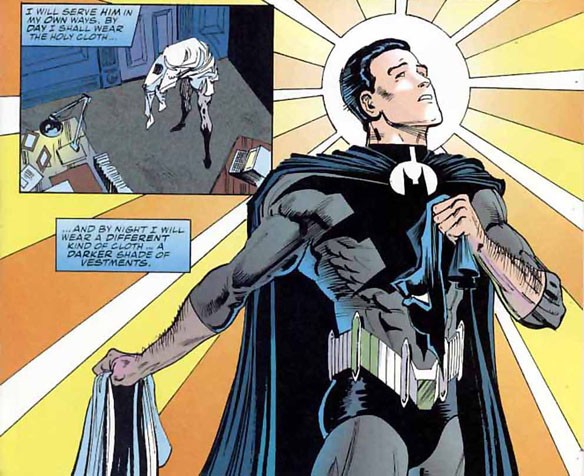
    Batman: Holy Terror, the opening tale of the Batman: Elseworlds collection, also goes to show how religion can work well in the Batman universe, set as it is in an alternative United States ruled by a fundamental Christian sect. Bruce Wayne emerges as a vicar by day, vigilante by night, and its a tale that comes across as genuinely intriguing and often shocking. Sadly, the other stories in the volume that I’ve read so far can’t measure up to the brilliance of the opener. Batman as the Lone Ranger is as rubbish as that concept sounds. And Robin 3000, although fairly interesting, owes a huge debt to The Incal, next to which it pales into insignificance.

    Vicar by day, vigilante by night.
    Vicar by day, vigilante by night.

    A pleasant surprise came in the form of Batman: Knight and Squire. This British version of Batman had the potential to be utterly naff, but the writers lovingly embraced the cheesiness of the concept, telling a tale that rarely took itself seriously but also had some surprising moments of pathos. The author lovingly acknowledged inspirations from classic British comics, and cleverly avoided Knight coming across as a pale imitation of the American Batman by openly acknowledging that Knight, and the rest of the cast, are pale imitations of their American counterparts – which ends up being a central tenet of the storyline. It’s clever, postmodern, and above all very, very funny.

    81+0D5nCO4L

    If you have any more recommendations for Batbooks, I’d love to hear them!

    Buy Gotham City Sirens Volume 1 on Amazon.
    Buy Batman: Harvest Breed on Amazon.
    Buy Batman: Absolution on Amazon.
    Buy Elseworlds Batman on Amazon.
    Buy Batman Knight And Squire on Amazon.
    Buy The Incal on Amazon.

  • Last year, I jokingly predicted in this Kotaku UK article that there’d be a new Metal Gear Solid game in 2016 – but it would be a pachinko game.

    Guess what? There’s a new Metal Gear Solid coming out in 2016 – and it’s a pachinko game.

    Oh Konami, what happened?

  • At Play Expo Blackpool I met up with Simon Marston, who’s something of a Virtuality megafan. His garage is stuffed full of 199os VR kit, and he’s become an expert at keeping these fragile machines running.

    He brought along his two Virtuality 1000 series VR pods to the show, and he reckons that these are the last two working examples of this model in existence, although one of them continued to play up throughout the day, and may well be on its last legs unless he can find a vital replacement part. The 1000 series is based on an Amiga 3000 and dates from the turn of the 1990s, whereas the later 2000 series was based on a 486 PC and was produced in greater numbers.

    Here I am, entering the world of 1990s VR.
    Here I am, entering the world of 1990s VR.

    It was fascinating to experience 1990s VR after all this time. I remember playing on one of these machines many years ago, but as I was only young at the time, I remember that my fragile noodle neck struggled under the weight of the headset and I was quite confused about what was going on. Going back to the machines as an adult, I was pretty damned impressed at how good the tracking is – despite the low frame rate and chunky polygons, the experience was incredibly immersive. They were definitely onto something back then.

    Is it me, or do I look like an Alien in this shot?
    Is it me, or do I look like an Alien in this shot?

    In the end though, it was the price that did these things in – each machine cost several tens of thousands of pounds, not to mention the cost of an attendant to help people into and out of the things, and arcade owners had to charge an accordingly high price to punters.

    I wrote about my meeting with Simon for Kotaku UK:

    The Man Who is Keeping 1990s Virtual Reality Machines Alive

    He’s truly the font of all knowledge on 1990s VR – you can catch up with him on Facebook or visit his website here.

    The VR genius that is Simon Marston.
    The VR genius that is Simon Marston.
  • 13178858_10154120255997416_9038126142346035337_nI find it comforting just how quickly I fell back into old habits playing id Software’s rebooted and somewhat reimagined Doom. Innovation to video game mechanics – the nuts and bolts that make the things tick – move at such a rate of knots that it’s easy to forget to often simple joys of what came before.  Doom in this case is what came before, and on spending a good chunk of time with the new game, I’m starting to wonder why we left it behind.
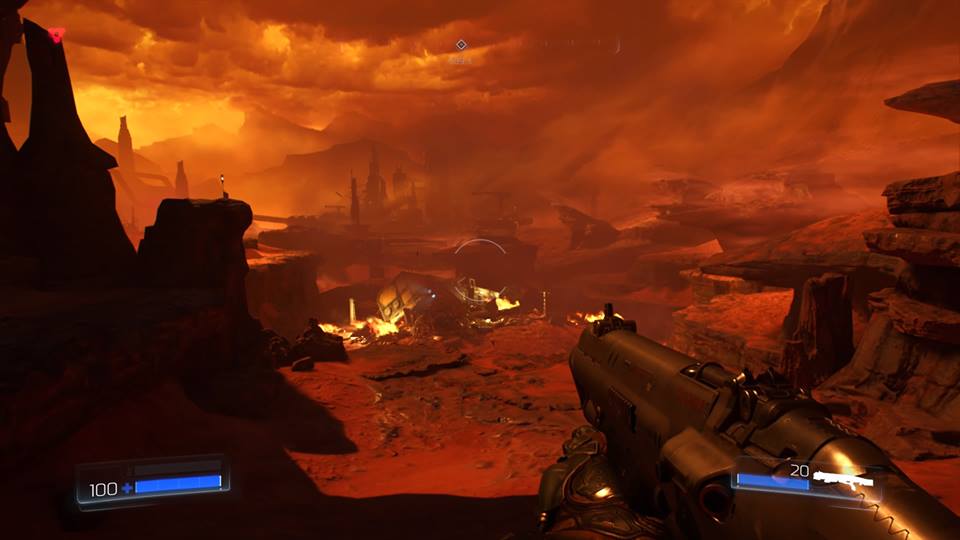
    Doom is quite simply the same as it ever was. It’s prettier sure, and there are some more modern day trappings sprinkled across the top, but Doom is now as Doom was then. It’s impossible to know what would or could’ve been, but I can’t help but feel that if the Masters of Doom had the latest technology in the 90’s, this is what they would’ve unleashed upon an unwitting society.  It’s fast, it’s violent, it’s frenetic, and it’s fantastic.  From the moment the first zombie-soldier shuffles on to the screen, it feels just as it did more than 20 years ago. The masters may have changed, but Doom is back in a big way.

    I’m amazed at how much I missed the simplicity of the series – where the action more often than not reigned supreme. Getting from A-B is a pleasure:  the enemies are fun to fight, the weapons are distinct and memorable, and the top-notch level design is maze design at its best. Doom isn’t about telling a grand story or about engaging the player on an emotional level (there is a premise, but I hesitate to call it a story), it’s about tapping into our primal instinct to survive. Minute to minute the pace of the game requires a “don’t think, just shoot” mentality, and as levels came and levels passed, after a few hours of play I realised that Doom is exactly what I wanted from video games.

    It was at that point I realised that the game at no point asked me to reload my weapons. Thousands upon thousands of rounds were spent on hundreds and hundreds of enemies and not once had I stopped and reloaded in preparation for the next encounter. I had felt overwhelmed and I had felt like the odds were stacked against me, but not once did I feel like the mechanics of the game were imposing that sense of dread.  Doom is a game that respects your time and respects your ability, and in that sense despite being filled with nostalgia for those of us that were around in the 90’s, is the most modern video game I think I’ve played, lest I call it ‘post-modern’ in its design.

    Doom doesn’t feel like it’s striving to be anything more a bloody good video game. . The modern video game has conditioned us all to look for an explicit progression path, dangling the carrot of a new enemy or a new perk in front of our eyes at every corner. It teaches us to look forward to the next thing rather than enjoy the here and now. Doom doesn’t pander to modern tastes, rather serves as a keen reminder that videogames are fundamentally about the connection between our hands and our eyes. It isn’t deep, it isn’t smart, and it doesn’t feel the need to introduce new mechanics or new enemies to players right to the death. But it knows that what it has ‘in the moment’ is enough to keep you wading through the giblets and playing right through the very end. Doom knows its a video game and it is better for it.

    (Doom isn’t the first reboot of a 90’s id Software classic I rather enjoyed; I found Wolfenstein: The New Order  quite excellent albeit for different reasons)

    DOOM_Mars

  • ArmchairThe other day, I took Merriweather Jr down to the local library for ‘Bookbugs’, a sort of pre-school jamboree involving singing, hollering and general high-jinks. Afterwards, we tarried a while, and he selected a few cardboard books to borrow that he especially liked the taste of.

    I decided to get in on the borrowing action, too, but the thought of all the many, many unread books on my shelf at home deterred me. Free time is at a premium these days, and I’m lucky if I can finish one novel a month, let alone one a week. But then I spied the graphic novel section. “Aha! Picture books! Something I can read in one sitting while the babe naps – just the ticket!”

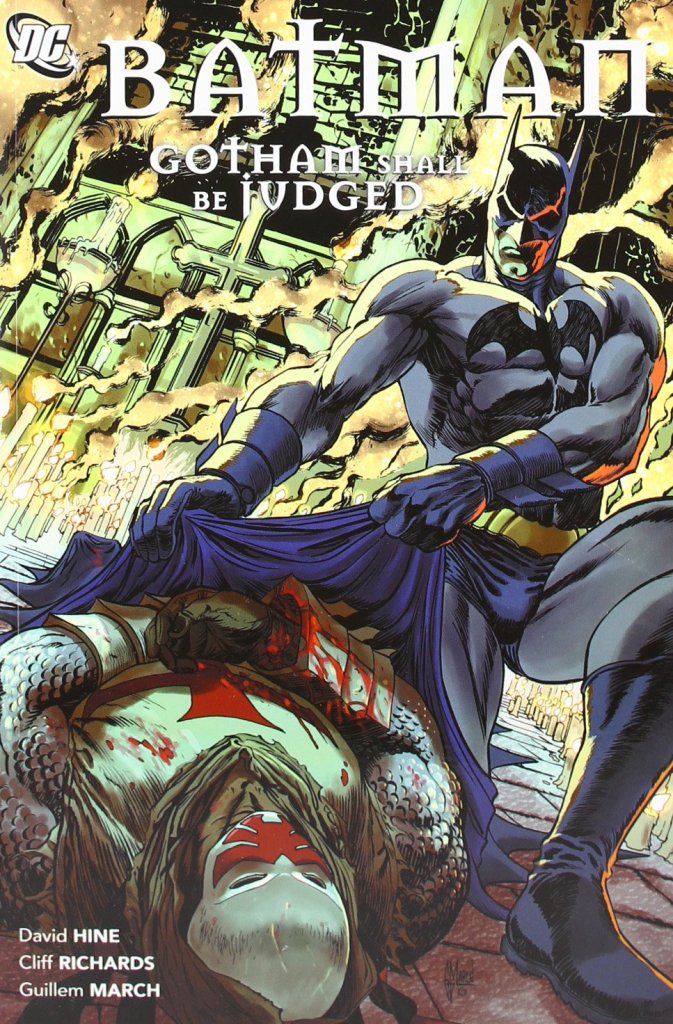
    I helped myself to various pictorial tomes, including a couple of Batman volumes: Batman R.I.P. and Batman: Gotham Shall Be Judged. The former is a particularly famous Grant Morrison story, where Batman’s mind is driven to the point of no return by a group of ne’er do wells walled the Black Glove. But in a delightful twist, Batman has already prepared for this eventuality and has developed a ‘back-up personality’ in the form of the ‘Batman of Zur-en-arrh’. One of my favourite aspects of Batman is the idea of a master detective with a mind so finely honed that he plans for every possible outcome, so I love the idea that he even plans for what happens if his mind is destroyed.

    The Batman of Zur-en-arrh. Mental.
    The Batman of Zur-en-arrh. Mental.

    But otherwise Batman R.I.P. left me cold – being part of the mainstream Batman canon, every other sentence contained tortured references to various other things that happened in previous issues and other comics. As such, it felt like walking into a movie halfway through – a problem that plagues mainstream DC and Marvel comics. It also felt very ‘comic-y’ in the sense that it was incredibly cheesy and silly – one of the villains is a mime artist for chrissakes. Altogether it came across as a bit naff, save for the clever/ridiculous idea of Batman’s back-up psyche.

    Gotham Shall Be Judged was a bit more interesting and more up my street. It features Azrael, a sort of holy version of Batman with magical swords and a set of ancient, sentient armour. But unlike Batman, Azrael is willing to execute those he deems to be wicked in the eyes of God, and the mixture of superheroes and religion works very well. There are still too many annoying cross-references with other comics for my liking, but overall I thought it was much better than Gotham R.I.P.

    Batman_-_Gotham_Shall_Be_Judged

    Both graphic novels were a bit of a mixed bag really, but then again I’ve always found Batman stories to be a bit patchy – as prone to veering off into theatrical nonsense as to generating moments of genuine pathos. In a way it was unfortunate that the first Batman graphic novel I read was The Dark Knight Returns – by going in at Batman’s high point, everything I read afterwards could only disappoint.

    But I’ve always loved how versatile Batman is as a character – his story can be moulded in all sorts of ways and still work, whereas by comparison, his DC stablemate Superman feels quite one-dimensional. Batman is essentially an absolute nutcase, which is what makes him compelling.

    One version of the Batman mythos that has consistently hit all of the right notes is that of the Arkham series of video games. In fact, I’d go so far as to say that the Arkham games provide the definitive version of Batman – sufficiently grounded in reality but with snatches of the fantastic, as well as the best ever version of The Joker, voiced by Mark Hamill.

    batman arkham origins

    After reading through the Batman stories above, I was itching to get a bigger Batman fix, so I finally took down Batman: Arkham Origins from The Mantelpiece and began playing. I’ve been putting off playing it until now because I know it will take a while to complete (and time is at a premium these days), and because it garnered lukewarm reviews at the time of release, with most reviewers arguing that it’s essentially ‘more of the same’.

    Well, sometimes more of the same is just what’s needed, and immersing myself in Arkham Origins felt like stepping into a comfortable old pair of slippers. Oooh, those slippers are comfy. So nice and snug. Mmm-mmm.

    Origins is very similar to Arkham City, but that’s no bad thing – and it’s been so long since I played that game that I relished the chance to glide through the streets of Gotham again. The plot is also pretty good, with a few unexpected twists here and there, although I think they went a bit overboard with the Riddler trophies this time around. Sometimes less is more, right guys?

    The artwork in Batman: Year 100 is just phenomenal. Check out more at http://paulpope.com/batman-100/
    The artwork in Batman: Year 100 is phenomenal. Check out more at http://paulpope.com/batman-100/

    Anyway, I’m enjoying my mini Batman renaissance – and I’ve already been back to the library to snag a few more Batbooks. One of them is Batman: Year 100, which I think might have actually overtaken The Dark Knight Returns as my favourite Batman story. The artwork by Paul Pope is just fantastic, and I love how he re-imagines the character in a very different setting where he seems more vulnerable than ever before – and he even leaves open the question of whether the main character is actually Batman. Brilliant stuff.

    So, what’s your favourite Batman tale?

    Buy Batman Year One Hundred from Amazon UK.

  • As promised, I thought I’d write up a few thoughts on my visit to the wonderful Play Expo Blackpool just over a week ago. It was a crazily hectic day in the end, as I rushed around trying to interview people and type up my notes, but I did manage to find some time to check out some of the exhibits and play a few games.

    The Norbreck Castle Hotel.
    The Norbreck Castle Hotel.

    The exhibition took place at the Norbreck Castle Hotel, a bizarre pink and beige fortress that looms up in front of the beach like a sort of shabby Disneyland. You get the impression that the hotel has seen better days – not least from the copious amounts of missing letters on the sign outside.

    The sign for the conference centre is more like a giant game of outdoor Hangman.
    The sign for the conference centre is more like a giant game of outdoor Hangman.

    Things were much more impressive inside, however. The main room was essentially a giant arcade, packed to the brim with fantastic old coin-ops. I made a a beeline for the Defender cabinet, as I loved the Amiga conversion but I’ve never played the arcade original.

    Arcade heaven.
    Arcade heaven.

    Defender was as brutally difficult as its reputation suggests – and much harder than the Amiga conversion thanks to its needlessly complicated control system. In the Amiga version, you change the direction of your ship by simply moving left or right on the joystick, but in the arcade version you have to press a ‘reverse’ button to change direction. Similarly, on the Amiga you speed up your ship by simply holding in the direction you want to go, but in the arcade version you have to press a ‘thrust’ button. Then there are other buttons for hyperspace and smart bombs – the first few times I played, I was tying my hands in knots just trying to move my ship around.

    I just about got the hang of it in the end – but getting to the second wave felt like an enormous achievement. And all told, I think the Amiga conversion is far more enjoyable thanks to the controls – a conclusion that I’m sure many will argue with.

    A Megadrive dev kit, complete with Primal Rage.
    A Megadrive dev kit, complete with Primal Rage prototype board.

    One of the highlights of the day was meeting with Phil Robinson, who previously worked for Psygnosis and had a hand in the Primal Rage conversion for the Megadrive. He even brought the game’s prototype board along to the show. I mentioned that a certain Primal Rage megafan and co-blogger of mine would be very jealous that I got to meet him…

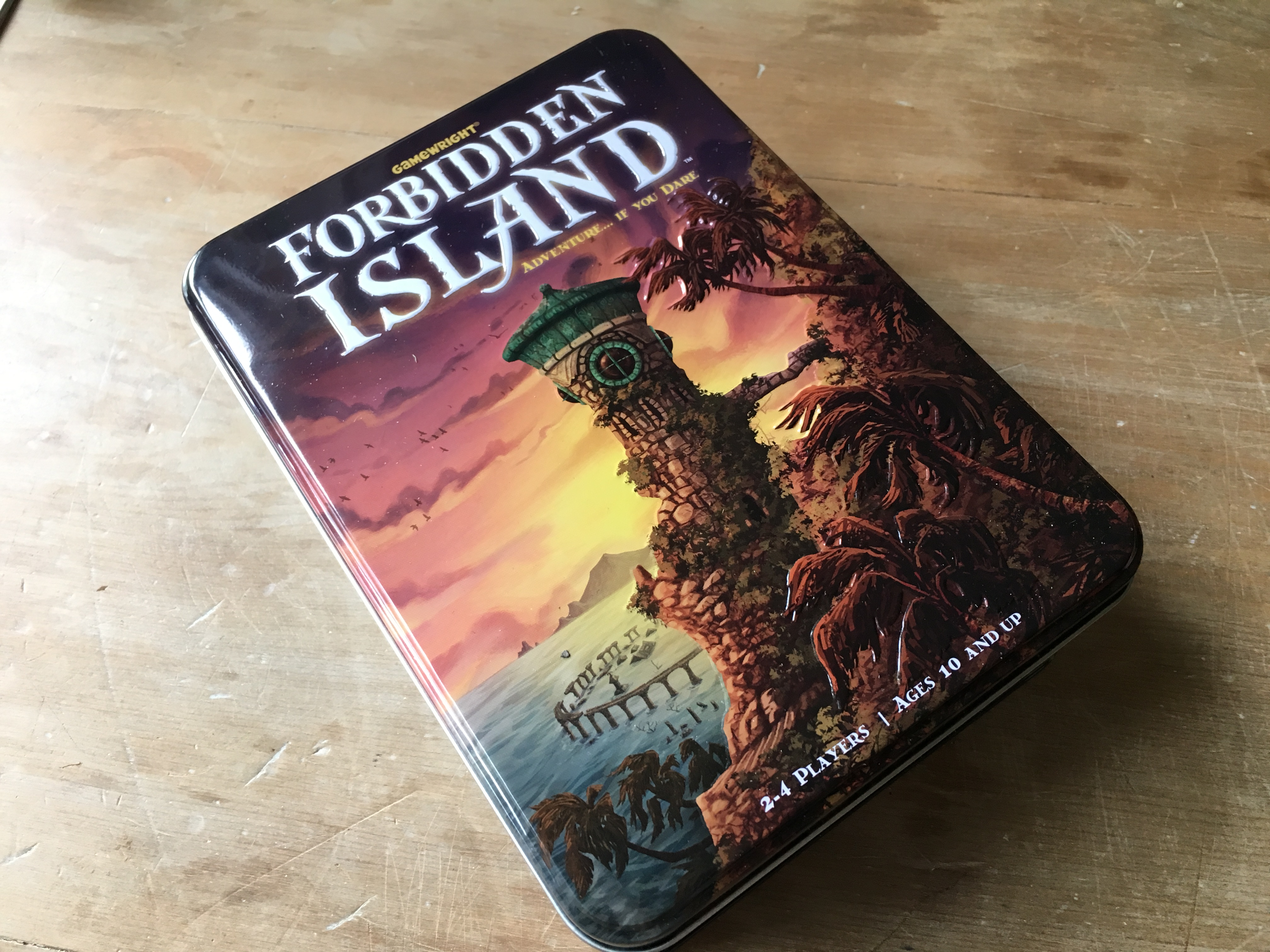
    One disappointment was that I wasn’t able to track down the Virtual Boy that was supposed to be somewhere at the show – I suppose I’ll have to wait a while longer to play on Nintendo’s white elephant. But I did end up spending an enjoyable hour or so in the board game area chatting to various board-game aficionados, and receiving plenty of useful recommendations in the process. It took an enormous amount of willpower to resist buying some of the amazing board games on sale: I came very close to dropping nearly £50 on Fury of Dracula, but in the end I settled on the rather less expensive Forbidden Island, from the same guy who made Pandemic. (I’ve played it since, it’s ace.)

    IMG_4770

    A major highlight came during the Spectrum talk. Henrique Olifiers (of I Am Bread and Surgeon Simulator fame) gave a really interesting talk about the Spectrum mod scene, and highlighted some of the fascinating games that are coming out of Russia (something I’ve written about before). But then he dropped a bombshell.

    IMG_4720
    Henrique Olifiers is on the right.

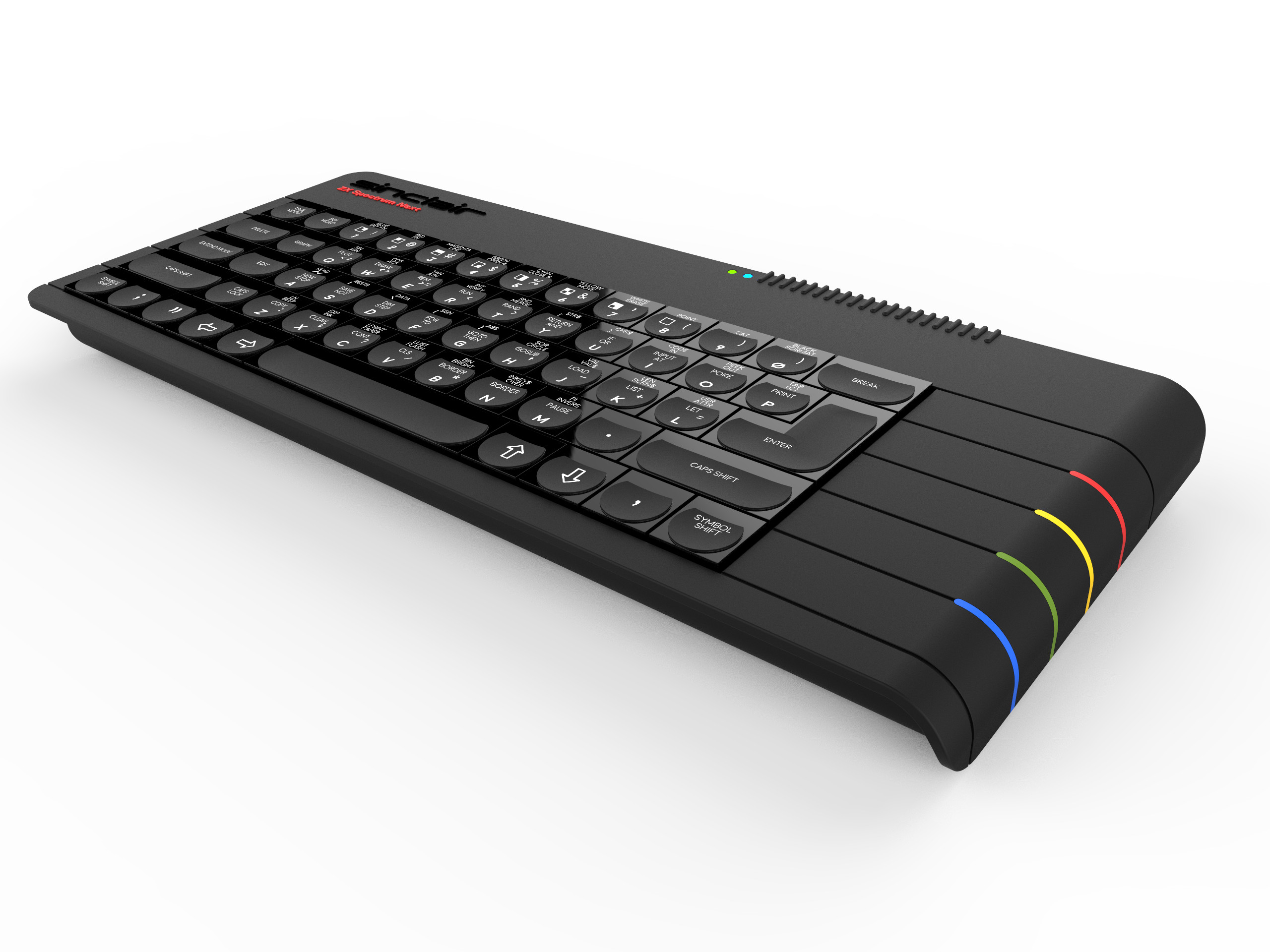
    Turns out he’s been working on a new version of the Spectrum with the original Spectrum designer Rick Dickinson, and he gave the official worldwide reveal of the system right there – the room exploded with excitement. The new system is compatible with all of the various expansions that have been built in Russia and elsewhere, and it has that all-important HDMI port, along with lots of various other bells and whistles. More importantly, it looks beautiful. You can check out the official page here – a Kickstarter is coming soon.

    The beautiful ZX Spectrum Next, Image from http://www.specnext.com/
    The beautiful ZX Spectrum Next, Image from http://www.specnext.com/

    So all in all, a pretty exciting day – and it made me think I really should go along to these events more often, if only to meet so many people who are just as passionate about games as I am.

    Buy Forbidden Island from Amazon UK.

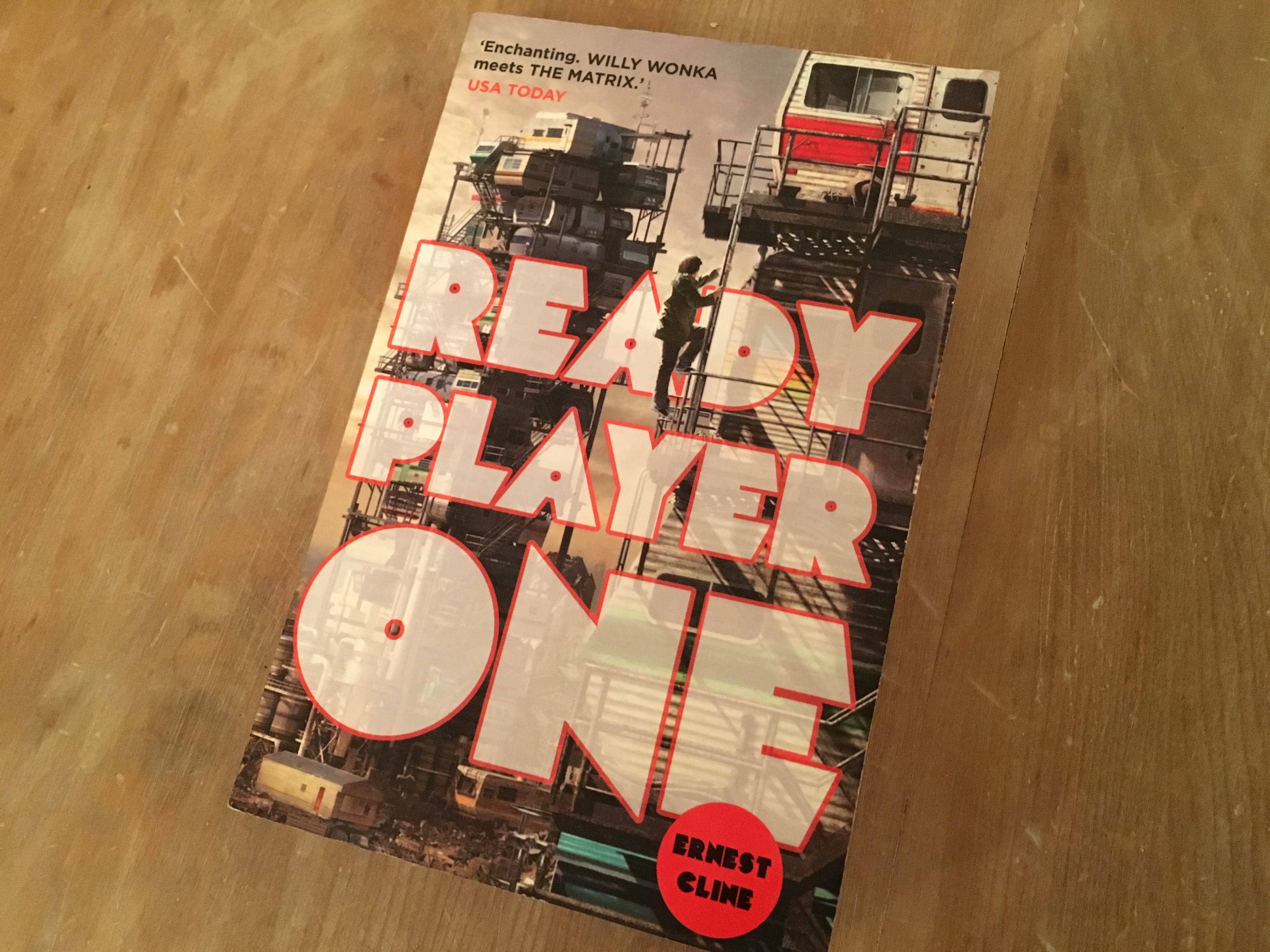
  • I read Ready Player One for the first time a couple of months ago, and I loved it. It’s unashamedly packed with references to 1980s games, films and TV shows, and it even feels like a good old-fashioned eighties hero fantasy movie in the way it’s structured. The fact that Steven Spielberg has signed on to direct the film version seems too perfect for words.

    ready player one paperback

    It got me thinking though – what with all of the hoo-hah about VR at the moment, how near are we to creating a persistent online VR world like the OASIS in Ready Player One? We’ve got pretty decent VR headsets now – things that were only on the drawing board when the book was written about five years ago – but what about all the haptic gizmos that Wade uses in the book? And would a persistent, online VR world even be possible with current technology?

    It was fun finding out, and I wrote it all up for this article for Kotaku UK:

    How Far Away is the Technology of Ready Player One?

    I was particularly bemused by the crazy force feedback chair that someone has developed to play racing games – and the ultrasound-based Haptoclone is just spooky, frankly. But lag seems to be the main thing that would hold up an online VR world right now – broadband needs to improve before we can all lose ourselves in the OASIS…

    Buy Ready Player One from Amazon UK.
  • I’m off to Play Expo Blackpool on Saturday, for what promises to be a hectic but fun-packed day of gaming – of both the retro and future flavours.

    blackpool-2016-on-white-locations-30I have a few potential articles lined up based on some of the people and games being shown at the expo, so it’s going to be a bit of a mad rush to get round it all and make all of my appointments. (Can’t say much about them right now, unfortunately, but check back soon.) Still, I’m hoping there will at least be time to hear the talk by Henrique Olifiers (of I Am Bread fame) on the history and future of the ZX Spectrum.

    I’m also dead keen to have a go on the Defender arcade cabinet. I played the Amiga conversion to death when I was a kid, but I’ve never had a chance to play on the original, so that will be a real treat. They also have a Virtual Boy at the Expo, so I’ll be making a bee line for that when I can. I’ve always been interested in having a go on Nintendo’s curious commercial failure.

    If you’re going to be at the exhibition and want to say hi, please leave a note in the comments – always interesting to meet AMAP readers! I’ll report back next week on how my day went…

  • logo

    When I heard that there are around 18 quintillion planets in the upcoming No Man’s Sky for PS4, it got me thinking – how does that number compare with the number of planets in the actual Universe? Then I started wondering whether the various procedurally generated creatures in the game would actually be likely to turn up on bona fide alien planets – and whether it’s likely that aliens exist at all.

    Much, much research later, I present the result:

    No Man’s Sky Versus the Actual Universe

    The article went up on Kotaku UK this morning, and judging by the excited comments, people are mega-hyped for this game. From what I’ve seen, it really does look like something special – but I wouldn’t want to be Sean Murray right now. So much expectation resting on his shoulders!

    Regardless of whether the game turns out to be, ahem, a game-changer or merely a hype-bubble, it was fascinating to find out more about the crazy statistics for just how damn big the Universe is. At a bare minimum, there are 200 billion galaxies out there…

    I’ll just leave you with this image of galaxies at the edge of the observable Universe, courtesy of the Hubble Telescope.

    800px-NASA-HS201427a-HubbleUltraDeepField2014-20140603

  • There’s a sale on! Use the code HAPPYAPRIL and get 15% off Most Agreeable T-shirts until 12th April!

    newsletter_uk

    Blue Most Agreeable T-shirtGreen Most Agreeable T-shirtRed Most Agreeable T-shirtWhite Most Agreeable T-shirtYellow Most Agreeable T-shirtTeal Most Agreeable T-shirt

    To order, simply click on one of the options below, according to the corner of the world in which you currently reside:


    EU flagCLICK TO VISIT THE MOST AGREEABLE EU SHOP

    1024px-Flag_of_the_United_States.svgCLICK TO VISIT THE MOST AGREEABLE US SHOP

    Flag_of_Australia_(converted).svgCLICK TO VISIT THE MOST AGREEABLE AUSTRALIAN SHOP

  • I thoroughly enjoyed TellTale’s take on The Walking Dead. The second season lost its way towards the end, with a final episode that dragged on forever towards a tepid conclusion, but overall I loved the characterization and tense atmosphere.

    But for my money, The Wolf Among Us is even better.

    Fables_Telltale_Logo

    For a start, the film-noir-style set up appeals to me more than the post-apocalyptic survival tropes of The Walking Dead. (Over at 101 Films You Should Have Seen, we’re big fans of film noir in all its forms… except Brick, which we hated. I was perplexed to discover that the film’s director, Rian Johnson, is going to head up the next Star Wars film. Let’s hope the stars don’t mumble their way through it like they did in Brick. Anyway, I digress…)

    The Wolf Among Us is based on the Fables comics, in which characters from fairy tales are forced to flee from their native land and set up a new home in New York. Thanks to glamour spells, the various trolls and monsters are able to pass for humans in the Big Apple, and the Big Bad Wolf, aka Bigby Wolf, is installed as sheriff to keep the fables in line. The game itself tells an original story set decades before the comics start, in 1986. And as an original piece of storytelling, it’s wonderfully intricate and brilliantly realised.

    The details are what make it so compelling. There’s tension from the off, as animal fables that can’t afford expensive glamour spells are forced to relocate to The Farm – a place in upstate New York that’s billed as somewhere that fables can be free to act as they want… as long as they don’t leave. Obviously, the fables who are sent there view it as more of a prison, but the powers that be – in this case, Ichabod Crane and Snow White, who run the ‘Business Office’ – see it as more of an administration problem.

    2749417-wolfamongus3

    The differing viewpoints of those in charge versus the fables struggling to get by at the bottom is a theme that is constantly referred back to through the five episodes, and it all builds to a satisfying climactic confrontation. Bigby, Snow and Crane see themselves as protectors, but fables who are forced to resort to prostitution and various other criminal activities see them as little more than uncaring enforcers.

    It’s a dark, dark world, and it’s intriguing to watch the characters you know from childhood scraping a living in the grim streets of 1980s New York. Beauty and the Beast are constantly bickering as they attempt to adjust to living in a cramped apartment after experiencing the high life, and Tweedledum and Tweedledee have carved out a new career as sinister criminal goons with an unclear agenda.

    The voice acting is superb throughout, and the characters are wonderfully developed. In particular, its gratifying to see Bigby struggle against his dark past, and you’re constantly presented with the choice to give in to his violent instincts or show compassion. The choices you make feed into the finale, in which the way you’re perceived by other fables can significantly affect the final confrontation.

    Special mention also has to be given to the final twist, which had me scurrying to internet forums to see theories on what was really going on all along. I won’t give it away, but it’s a devilishly clever conclusion that had me rethinking everything that went before.

    The wolf among us

    And now I want more – but the jury’s out on whether a second season is in the offing. Internet chatter seems to indicate that there may be a problem with the rights, and TellTale certainly haven’t confirmed whether it will be coming back. I sincerely hope it will, but there’s always the danger that, like The Walking Dead, the second season might not quite top the highs of the first.

    In the meantime, I’m keen to work my way through the Fables comics – although seeing as there are 22 volumes (not including spin offs), each of which costs about a tenner, it’s looking like an expensive proposition.

    Buy The Wolf Among Us (PS4) from Amazon UK.

  • My Roy amiibo finally arrived this morning – and only three days late. Ooooh, GAME UK whyIoughta… [shakes fist]. To be fair, they sent it out on Thursday morning, so it’s probably more Royal Mail to blame. But everyone loves to take a pop at GAME sometimes, don’t they? *mumble mumble preowned prices mumble mumble extortionate mumble mumble*

    Roy amiibo in box

    Anyway, as ever I’m impressed by the level of detail on the amiibo figurines, they really are great little things. Roy’s mega flares are the standout this time around – just look at those glorious bad boys.

    roy amiibo

    Yes sirree, my Fire Emblem amiibo set is shaping up nicely – just Corrin to go!

    fire emblem amiibo collection

  • Things have been quiet on the amiibo front of late. The last one I bought was R.O.B. back in November, although before that there was a relative flood of them through my front door in summer.

    roy-amiibo

    And now another one is due to arrive. Tomorrow, Roy will join my other four Fire Emblem amiibo – and eventually Corrin from Fire Emblem Fates will complete the set, whenever she goes on sale. I’m a Fire Emblem fan, in case you can’t tell.

    The irony of all this is that even though all of these amiibos come from the Super Smash Bros. Collection, I’ve barely played the actual game they’re meant to work with: I sunk a few hours into Super Smash Bros. for Wii U back when I bought it in December 2014, but I don’t think I’ve played it since then. Except, that is, when I took it to a stag do last year and pretty much everyone hated it, labelling it “too confusing”. They’ve got a point.

    Pretty much the same thing happened with Super Smash Bros. Brawl on the Wii – I played and enjoyed it for a few hours, but then never went back. I guess fighting games just don’t really hold the appeal for me that they once did.

    Tiny plastic figurines, on the other hand, have me enthralled.

  • In case you haven’t heard, there’s a new Nintendo console on the way. The NX, as it’s codenamed, will probably be available by the end of the year, and we’re likely to see some sort of big reveal at around the time of E3 in June – or even earlier. The word on the street is that it will be some sort of console/handheld hybrid.

    And all across the internet, Nintendo fans are wringing their hands with worry.

    It’s a peculiar thing, really. You wouldn’t sit there worrying if, say, Samsung released a new TV and it wasn’t as good or sold as well as the company hoped. But games consoles create rabidly loyal followers, and Nintendo fans are more rabid than most – me included.

    The NX - it almost definitely won't look anything like this.
    The NX – it almost definitely won’t look anything like this.

    It seems the fashion these days is to spout your opinion on exactly what Nintendo SHOULD be doing in order to ‘save’ the company, a pastime that I myself have previously partaken in. The thing is though, Nintendo is doing absolutely fine. They have absolutely tons of money, they regularly turn a profit, and they have an extremely loyal fanbase. They’re not about to go belly up, in other words. I mean, look at the queues for the opening of a new Pokemon Center in Japan the other day.

    But there’s also the pervasive feeling that Nintendo’s crown has been slipping over the past few years. Whereas once it led the gaming market, now it ploughs its own furrow separately from the ‘big boys’ of Sony and Microsoft. This isn’t necessarily a bad thing, since Nintendo offers very different gaming experiences that you simply can’t get anywhere else. But for fan boys like me, there’s the nagging worry that the company is being left behind.

    There’s that word again: worry. It’s so strange to be worrying about a highly successful international company. But perhaps it’s not so strange in a way. I’ve heavily invested in Nintendo products over the years: I grew up with the NES, SNES and Game Boy, and I’ve owned almost every Nintendo machine along the way. The company is very much part of my identity, and because of that, I want them to succeed, weird as that sounds.

    Or this.
    Or this.

    Which brings me to the NX. And frankly, I’m not quite sure where they’re heading with this one.

    If it’s an ‘all-in-one’ console and handheld, then surely Nintendo are cannibalizing their own market. Rather than buy a separate handeld and home console, Nintendo fans will instead just buy the one machine – which must mean that’s a hardware sale Nintendo has missed out on, right? Rather than buying two machines, customers will just buy one. And I don’t see how that’s going to help the company’s bottom line.

    There I go worrying about the company again. But from a consumer’s point of view, this is fantastic news – no more annoying separation of console and handheld. And it IS annoying – especially when Nintendo releases Game Boy Advance games solely for the Wii U when they would be a perfect fit for the 3DS. (I have a particular axe to grind about that one – why can’t I play Advance Wars and Minish Cap on my 3DS, huh Nintendo?)

    But zooming out to the bigger perspective, it’s easy to think that the NX will tread the same path as the Wii U before it – eagerly purchased by Nintendo fans but largely ignored by the larger gaming community. Nintendo machines have become niche buys – a ‘second console’ to fit alongside a PS4 or Xbox One rather than a primary purchase. Which is OK I suppose. But wouldn’t it be great to have a Nintendo console on which you can play all of the big third-party titles – your Fallouts and Assassin’s Creeds – as well as the unique Nintendo ones? And surely the company could hugely expand their market if they attracted more mainstream gamers?

    And I guess in that statement you have the core reason behind the wringing of hands across the internet. At some point, Nintendo went from being mainstream to being niche. And if you’re a fan, you want to see them leading the pack, not picking up the crumbs that other consoles leave behind.

    Who knows what this possible NX controller patent is all about...
    Who knows what this possible NX controller patent is all about…
  • This time last year, I had a bit of a rant about Nintendo jumping onto the free-to-play bandwagon. I suggested that Pokémon Shuffle was an example of “the worst model of free to play, where the user is constantly nagged to spend money”, and I suggested that the upcoming Fable Legends “gives a good example of how f2p should be done”.

    pokemon-shuffle-169

    Well, what a difference a year makes. Fable Legends has now switched from being “upcoming” to being “never-coming” after Microsoft pulled the plug and shut down Lionhead Studios for good measure (boo!), while I’ve spent a good chunk of the past 12 months sinking a surprisingly huge amount of time into the very game that I singled out as “the worst model of free to play”. I’ve just checked, and in total I’ve been playing Pokémon Shuffle for 39 hours and 12 minutes, making it the fifth most played game on my 3DS.

    I suspect I’m not alone in sinking so much time into this fairly slight game. Apparently Pokémon Shuffle has been downloaded more than 4 million times now, and judging by the amount of people I see playing it on Streetpass, it’s a fairly full time hobby for a lot of people. But I wonder how many of them have shelled out actual money for the game’s features? Even if it’s just a tiny percentage, I suppose it will still lead to a tidy profit for Nintendo – you can see why the company wants to pursue f2p.

    And to be honest, after all my ranting, Pokémon Shuffle really isn’t all that bad in terms of demanding your money. I’ve managed to play through most of the game without paying anything, and unlike many other free to play games, it doesn’t scream out for your cash every five minutes. Plus I’ve been impressed with the regularly updated content and competitions – the designers have certainly made an effort to keep the Pokémon flowing, as it were.

    It’s also a very well-made game – it’s home to the expected level of Nintendo polish, and the central mechanic of collecting Pokémon is as addictive as ever. Without the hook of attempting to capture the beasts after successfully beating their puzzles, it wouldn’t be half as compelling – attempting to fill out the Pokédex is still a major draw. Plus the music is excellent, and I found myself humming along to the accordion-soaked mega-evolution tune quite happily.

    Chespin pokemon shuffle

    The game also proved perfect after my son was born last year. Suddenly my gaming time dwindled to near zero, but I often found myself with five minutes to spare here and there – often at 3am in the morning – and Pokémon Shuffle was the perfect game to fill the gap. The fact that you are limited to five goes before you have to wait for your hearts to ‘recharge’ didn’t really matter, as by that point there would more than likely be some sort of baby-related business to sort out – or I would have fallen asleep. It also helps that you can play the game one-handed with the stylus, for the times when a baby happens to be asleep in your other arm. And the fact that it’s all pretty simple and requires little brainpower or dexterity is also a bonus, as severely interrupted sleep has tended to rob me of both of those faculties.

    However, I think I’m pretty much finished with the game now – by this point I’m up against opponents that seem impossible to defeat without buying items or levelling up my Pokémon to obscene levels, and I just don’t have patience to spend hours grinding, or the willingness to throw money at the game. I suppose its simplicity is both its brilliance and its curse – its lightweight charm was perfect for filling a niche in my life, but this lightweight nature is also the reason that I don’t feel justified in investing any money into it. Perhaps if it just cost a couple of pounds to start with I wouldn’t have had any qualms about buying it – but then again Nintendo probably made far more money by making it free to play.

    Either way, I’ve hit a wall – and I don’t feel like paying to climb over it.

  • Mario-Luigi-Paper-Jam-BrosDoes anyone have idea why they changed the name of this game in Europe and Australia? It was simply called Mario & Luigi: Paper Jam in the United States, which is a great little pun considering it features the characters from the Paper Mario universe causing chaos in the Mario & Luigi world. But Mario & Luigi: Paper Jam Bros.? Does that even make sense?

    They did the same thing with the previous game in the Mario & Luigi series, Mario & Luigi: Dream Team, which became Mario & Luigi: Dream Team Bros. when it crossed the pond (and flew down under). Again, a seemingly pointless and nonsensical name change. I can only imagine it was done to avoid some sort of copyright infringement, but I can’t think what that infringement could have been.

    Anyway, name gripes aside, I’ve been looking forward to playing through Paper Jam, which is only the second Mario & Luigi title I’ve played after the Game Boy Advance original, and – shock horror – the first game featuring Paper Mario that I’ve ever played. The SNES game Paper Mario: The Thousand Year Door has shamefully been on my ‘to do’ list for about a decade now – but enough about gaming backlogs, I feel like I’ve done them to death recently.

    My first impressions of Paper Jam were overwhelmingly positive – the humour I remember from GBA Mario & Luigi is very much intact, and the addition of Paper Mario really elevates the gameplay, introducing more mechanics that involve the three characters together, such as trio attacks and various origami-inspired trio moves. It’s utterly charming, and I had a big grin plastered across my face for the first hour or two.

    396px-3DS_Mario_LuigiPaperJam_scrn01_E3

    But after that initial charm spike, the graph of the gameplay embarks on a long, steady, downward slope as repetition and ultimately boredom set in. Ploughing through the various enemies in the game involves using the same attacks again and again and again, and by the end I was desperate for some more variety or for more interesting twists in the story. And speaking of the story, despite the addition of paper antagonists, everything pretty much unfurls exactly as you’d expect it to, as it has done in countless previous Mario titles. Bowser > Princess kidnap > Castle assault > You know the rest.

    The trio attacks and bros. attacks can be a lot of fun, involving various intricate button presses, but they also take ages – and by the end I found myself shying away from using them for normal enemies because I knew they would take so long to execute. You spend most of the game with the same handful of attacks, too, with the last few seemingly becoming available in a flurry towards the end. Unfortunately, some are way easier and more powerful than others, so I found myself sticking with the same old attacks again and again while others barely got used.

    By the end, I was actively avoiding enemies because I was just so sick of going through the same old battle animations. Even worse is the fact that each area tends to be filled with the same type of enemy, so you can find yourself fighting something like ten Hammer Bros. in a row and doing the same thing each time. But the bosses are a different matter – they actually tended to be a lot more fun to fight because they could take you down so easily, which meant a degree of tactics was required rather than simply repeating the same old thing. Having fewer regular baddies and more bosses would have been a big improvement, as would increasing the depth and variety of the regular fights.

    It’s all a bit too linear as well. You end up going through each area twice as part of the story, but there’s little of that excitement you get from Metroidvania-type games, where exploring previous areas unlocks all sorts of goodies. A few experience-point-adding beans can be dug up in previous levels once you’ve found the drill move, but they’re hardly worth the bother. If only the designers had hidden more substantial things throughout the levels that would make exploration more worthwhile – perhaps they could have added hidden costumes for the main characters, like the fun ones in Zelda: Triforce Heroes, or maybe there could have been many more trio and bros. attacks that were hidden rather than simply handed out as the story progressed.

    And then there’s the amiibo support, which actually kind of breaks the game. Tapping a Mario-series amiibo lets you use a unique and often very powerful move in battle, such as completely restoring your HP. What’s more, this doesn’t actually count as a move in the turn-based gameplay, and you can tap as many amiibos as you like during a battle, as long as you don’t tap the same one twice. All this means that an already easy game is made even easier.

    Paper Jam is far from being a bad game, but after it’s initial promise it ends up running out of ideas and becoming distinctly average. I loved the start, but by the very end I actually felt relieved it was all over. Never a good sign.

    I forgot to mention the papercraft battles. Well, they're, ahem, pretty lightweight (pun intended).
    I forgot to mention the papercraft battles. Well, they’re, ahem, pretty lightweight (pun intended).
  • Regular readers will already be familiar with our “gaming piles o’ shame” over there on The Mantelpiece. Sir Gaulian’s backlog is mightily more impressive than mine, but both are nothing to be sniffed at. Put simply, we have far more games than we have time to play them.

    This is a frustrating situation to be in. We have all those brilliant games sitting there, but there just simply isn’t the time to sit and play through them all, especially considering that some of the longer ones may well take 50 hours or more to finish. That’s great value for money, but terrible if you want to sample everything good that’s out there.

    A sample of my current gaming backlog. I really must get around to playing through the Uncharted games one of these days...
    A sample of my current gaming backlog. I really must get around to playing through the Uncharted games one of these days…

    It’s also a source of anxiety. There are just so many great games that are worthy of my time and that I really want to play, but I can only play a fraction of them, and I fret about which game to move onto next because I know that some will perhaps never get their time in the sun. It’s a subject I’ve touched on before. Some might call this a ‘first world dilemma’, but I think that would be dismissing it a bit too easily… there’s always some deep-seated reason for genuine human emotion.

    I decided to dig into the psychology of gaming backlogs. Not much has been written on the subject, but there was plenty on how people get backlogs in the first place – i.e. the psychology of selling – and there were a few interesting things about how people deal with the similar matter of never being able to read all of the worthwhile books that have been published. I put it all together and put it into this article for Kotaku UK:

    Why We Feel So Bad About Gaming Backlogs

    It all got pretty deep by the end.

    But judging by the comments, it’s a subject that quite a few people have thought about and indeed worry about. So many games, so little time…

  • 11933458_10153537383462416_5024428238482388977_nA Most Agreeable Pastime turns five in June and I’m incredibly proud of what we’ve built here. I’m lucky to have an incredibly talented co-author on whoms coat tails I have so joyously ridden on for half of a decade. For every post I’ve written I’ve certainly become a better writer, due in no small part to the excellent benchmark Lucius has set in his writing. I’ve always found time to contribute to this incredible place we’ve built even when life continues to change at an incredibly rapid pace and with it my priorities.
    It’s been a while coming but it’s time for me to take a step back. This isn’t goodbye but it’s certainly farewell.

    Well, for the next year at least.

    It probably won’t come as surprise to some of you that I’m writing this. In fact in March last year I wrote a post titled “Is This The End?“.  Reflecting on my honeymoon way back in September I wrote on how video games had begun to take a back seat. That has only intensified in recent months. I’ve found video games have become a device to write about other things – like my love for cricket or cars – sometimes even drawing a very long bow to write about Korean musicians.

    Video games have indeed become a less important part of my life and I feel like my writing has really reflected that. In fact one of my favourite posts, a thinly veiled tribute to Richie Benaud, has almost nothing to do with video games. It also happens to be one of my favourite things I’ve written on here. That speaks volumes.

    But it’s not just changing tastes.  My work has also increasingly encroached on my spare time, and as anyone in the research field knows, it’s all too easy to find yourself throwing your all into writing what seems like that career-defining paper.  Add on to that the fact that I’ve slowly but surely developed an interest in Korean economics and politics and I haven’t got much more ‘pontification’ capacity. I’m even planning on writing a book about it, something I wouldn’t have even contemplated 12 months ago.

    Basically, life happens and things change. And if i’ve learnt anything it’s best to not resist change.

    In short it’s been a long time coming.

    This certainly feels like goodbye. Even if it’s not forever.

  • remember-me-pal-box-xbox-360Dontnod Entertainment is clearly a developer to watch. They scored a well-deserved hit with 2015’s Life is Strange, as noted in my end of year list, but it’s worth looking out 2013’s Remember Me to get a glimpse of the studio’s early brilliance.

    The game struggled to find a publisher at first – infamously, several publishers said no to the project because the main character was female. According to creative director Jean-Maxime Moris:

    We had some [companies] that said, ‘Well, we don’t want to publish it because that’s not going to succeed. You can’t have a female character in games. It has to be a male character, simple as that.’

    We wanted to be able to tease on Nilin’s private life, and that means for instance, at one point, we wanted a scene where she was kissing a guy. We had people tell us, ‘You can’t make a dude like the player kiss another dude in the game, that’s going to feel awkward.’ (via Eurogamer)

    It’s a shocking exposé of the biased, outmoded thinking that goes on behind the scenes at games publishers, as well as the contempt in which gamers are seemingly held – as if we’re incapable of imagining ourselves in a body of the opposite gender, something that female gamers are forced to do quite regularly thanks to the dominance of male lead characters. The fact that millions of men already play as Lara Croft in Tomb Raider seemingly has had little influence on the games industry as a whole. This glimpse behind the scenes also reveals a publishing mindset that still thinks video games are predominantly played by men, even though this is blatantly not the case and hasn’t been so for quite a while.

    remember me tower

    So, the very fact that Remember Me was released with a female lead – a mixed race, sensibly attired female lead, no less – is cause for celebration. Even though it really, really shouldn’t be in this day and age. But until we get representative diversity in the gaming characters we’re given to play, until the day that playing a game with a female lead character – or a black lead character, or a gay lead character, or any one of the many poorly represented groups in gaming – is so typical as to be utterly banal, until that day we should celebrate every victory of equality and sense over biased, lazy stereotyping.

    And seeing as we’re on the subject of female leads, Nilin proves to be an exceptionally well-crafted character. I’ve played many games where by the end I’ve all but forgotten the main character’s name, but by the end of Remember Me I found myself genuinely caring about what happened to the troubled Nilin and her dysfunctional family. She’s a character with doubts, strong yet vulnerable, utterly reliant on the resistance group that guides her, yet never altogether trusting of anybody. She’s interesting, in other words.

    And the same could be said of the game’s setting – in fact the developers’ inspired vision of a future Paris is probably the game’s biggest draw. The futuristic towers built on the decaying remains of the sunken, flooded capital are stunning, and I felt compelled to find out more about everything that happened to this once-proud city. It’s the look of it more than anything else, perhaps – the colour palette is vibrant where other futuristic games, like Deus Ex: Human Revolution, are stark. It practically looks like a Renoir watercolour in places.

    That’s not to say it’s original – far from it. We’ve seen the towers of the elite built over the slums of the poor many times before, notably in Beneath a Steel Sky. Likewise, the amnesiac protagonist has been a trope since the year dot. But it works here because it’s all done with such care, such confidence, such elan. The attention to detail throughout is just exquisite, from the traditional Montmarte cafés with robot waiters to the vending machines for happy memories.

    remember me cafe

    And speaking of memories, these are the game’s raison d’etre. In a dystopian future, memories can be wiped, inserted or traded as currency. The people are addicted to experiencing happiness and wiping out bad thoughts, but the game explores this to its logical extremes, culminating in a prison where the prisoners’ memories are confiscated when they enter and returned when they leave – in other words, they spend their sentence utterly unaware of their crime. I recommend reading Sir Gaulian’s excellent article for more on the social and economic consequences of the corporatization of memory.

    As a ‘memory hunter’, at several points you have to steal or remix memories from NPCs, and the remixing in particular is a delight. A scene will play out in the character’s head, and your job is to rewind and remix it to make them think something else. It’s a really clever and original idea that is sadly used far too little in the game, but it works wonderfully when it appears.

    Another clever idea is that Nilin has customisable combos with various regenerative, powerful or chaining attacks that can be switched around and bought in a menu screen. I don’t recall seeing anything like it before, and it comes across as a brilliant idea at first. But towards the end I found myself relying on the same set of combos again and again, and ultimately the combat lacked the depth of the carefully balanced combo lists of other brawlers like Bayonetta.

    Other criticisms are that the ending was a little flat compared to the rest of the game, and the plot got a little confusing in places. But all in all I thoroughly enjoyed my 10 or so hours with the game – and I’d thoroughly recommend searching it out for something a little different.

    remember-me-sacre-coeur

  • The world of Mad Max is a disgustingly grotesque and decrepit wasteland. But despite the apparent vicissitudes that a fecund Earth gives rise to, there is something strangely comforting about the desolate world, and amongst the death and despair there is an overwhelming beauty to the wastes. As the belching roar of the mechanical gods echo in the distance and the screams of the broken ring out across the plains, and as I observed humanity tearing itself apart in order to survive, I felt strangely comfortable and disconcertingly at home at the end of the world.

    Whether it’s because I was surrounded by familiar accents and right hand drive cars, or because Mad Max’s sweeping vistas and sparse landscapes were strangely familiar, I found myself pulling over to the side of the road and hopping out of the car to take in the sites and sounds of the world. With my trusty petrol-fuelled steed by my side, I would embark on day trips with only the water in my flask for company, roaring through the countryside in pursuit of the perfect sunset as the daylight fell below the wasteland. And as I sat atop a cliff overlooking a toxic stretch of earth while night fell, it made the perfect backdrop for a portrait with the Magnum Opus, exhaust and flames spewing into the carbon soaked atmosphere. Beauty is in the eye of the beholder, as they say.

    But it was also the people that inhabited the world that turned the beauty of the world into something more. Witnessing humanity’s stubbornness in the face of seemingly inevitable death is testament to its desire to live. Finding worship and salvation in the most unlikely of things, old gods replaced with new ones, gods that are more relevant to the new humanity. Gods of divine making are replaced with those borne by humanity’s past triumphs. The roar of a V8 is the sound of god, and its messenger his driver, a Saint. Belief hadn’t gone away, it just changed shape, to better reflect the new human relationship. In a world where killing was systematic, people uniting around things of their own making and finding common ground in the past achievements of their collective species, well it was inexplicably comforting. So much so that it wasn’t long before I was finding worship in my own mechanical angel. The world was broken, humanity desolated, but in my car I started to see hope.

    I saw a lot of contemporary humanity and modern day Earth in the world Max Rockatansky inhabits. The landscape was bruised and broken and its people and their belief systems were forcing them into almost inevitable conflict and bloodshed. But despite this, despite the systematic killing and the almost unassailable end of life on Earth, and despite the agreement of mutual destruction of humanity and its world, there remains an impossible beauty to be witnessed and an unbreakable optimism for the future. Let’s just hope it doesn’t take the total annihilation of the Earth to start to appreciate what we as a species have achieved in manufacture, all the while appreciating the all-encompassing beauty of our world.